

Submitted:
04 July 2024
Posted:
09 July 2024
You are already at the latest version
Abstract
Seeds of Arazá and Acai, in addition to the byproduct of the Sacha inchi seed, after the extraction of the oil known as Sacha Inchi oil press-cake (SIOPC), are considered wastes and often discarded; however, they have valuable potential as sources of nutrients and bioactive compounds. We aimed to analyze, the bromatological, and chemical composition of these three byproducts of the fruit industry. Further cytotoxic, antioxidant, and antihypertensive activities of extracts ethanol: water were evaluated through in vitro tests. The Bromatological test showed that SIOPC had a low protein content (8.1%), while AS had a high fiber content (48.9%), however, were poorest in nutrients Ethanol: water extracts from all seeds exhibited diverse profiles of secondary metabolites, with significant concentrations of polyphenols (155.88 µg gallic acid/100 mg dry weight), flavonoids (411.69 µg quercetin/100 mg dry weight), and carotenoids in AS (43.66 µg ß-carotene/100 mg dry weight). AS and ACS extracts excelled in ABTS and DPPH radical scavenging assays, and AS showed high α-glucosidase inhibition, previously unreported in the literature. The results suggest that both seeds and extracts are sources of nutritional and bioactive metabolites with high antioxidant and hypoglycemic activity. that could be used in the food industry and the health sector. These by-products underline the importance of sustainable harnessing these sources of the native Amazonian Region
Keywords:
Eugenia stipitata
; Euterpe oleracea
; Plukenetia volubilis
; non-communicable diseases
; bioactive compounds
; byproducts
1. Introduction
The Amazon rainforest, spanning eight South American countries (Bolivia, Brazil, Colombia, Ecuador, Guyana, Peru, Suriname, and Venezuela), is a vital source of food for the people living within and around it. Its rich biodiversity includes a wide variety of native fruits, as well as non-native fruits that have been cultivated and adapted for local use by indigenous communities. These fruits are primarily harvested from the wild or grown on small farms, and are typically sold and consumed in local markets. This provides essential income for around 200,000 families, who rely on the commercialization of native fruits for 10% of their household income [1].
Amazonian fruits, namely açaí (Euterpe oleracea), Arazá (Eugenia stipitata), and Sacha inchi (Plukenetia volubilis), have garnered increasing global demand due to their notable nutritional profiles. However, the escalating production of these fruits, largely driven by the juice industry, results in a substantial accumulation of by-products, including seeds, peels, and residual pulp. These by-products constitute an estimated 30-40% of the total fruit production [2]. The continued growth of the fruit industry exacerbates the issue of agro-industrial by-product accumulation, presenting a significant economic hurdle as current strategies for their valorization remain inefficient.
Hailing originally from Brazil, açai has attained recent popularity owing to its rich reservoir of antioxidants, healthful fats, and dietary fiber,[3] however in the processing steps to obtain açaí pulp, generate a large volume of agro-industrial residues, mainly composed of seeds. This is a resource few explored but rich in bioactive components that correspond near to 50% form the total biomass of the Açai fruit [4]. Arazá, also recognized as “guayabo”, is a native fruit of the Peruvian Amazon rainforest, distinguished by its elevated levels of vitamin C, dietary fiber, and minerals like iron and calcium [2]. The AS takes 30% of the fruit volume, 22% of fresh weight, and 84% of dry matter [5], however, studies about its nutritional and bioactive potential are still scarce. Lastly, Sacha inchi, indigenous to the Peruvian Amazon, stands out for its wealth of omega-3 fatty acids, antioxidants, and proteins [6]. Oil is the first product of Sacha Inchi seed, rich in alpha-linoleic, linoleic acids, gamma- and delta-tocopherol. The main by-products after oil extraction are the shell and the press-cake (SIOPC), representing up to 70% of the raw seeds. It contains important amounts of bioactive compounds, such as proteins, carbohydrates, minerals, and lipids [7]
Agro-industrial byproducts derived from native fruit-bearing trees, such as AS, ACS, and SIOPC, have garnered increasing attention in scientific research due to their rich and diverse composition of bioactive metabolites. These compounds, including polyphenols, flavonoids, and other phytochemicals, have demonstrated promising bioactivities in numerous studies, suggesting potential applications in various industries6,7. For instance, research has shown that SIOPC, exhibits potent antioxidant and anti-inflammatory properties, making it a valuable ingredient in functional foods and nutraceuticals (Gutiérrez et al., 2021). Similarly, extracts from AS and ACS possess antioxidant antimicrobial and antitumor activities, highlighting their potential in pharmaceutical development [8].
This study aims to comprehensively evaluate the chemical and nutritional composition of seed extracts obtained from Amazonian fruit-bearing trees. Additionally, the research investigated the cytotoxic, antioxidant, antidiabetic, and antihypertensive properties of ethanol: water extracts of these byproducts. By delving into the complex characteristics of these native plants, this study seeks to uncover their potential applications in promoting human health and well-being, ultimately contributing to the development of novel and effective health-promoting products.
2. Results
2.1. Bromatological characterization
The results of the nutritional and elemental composition of the three species are shown in Table 1. The Sacha inchi seed showed the highest percentage of dry matter protein, followed by Acai with 5.04%, and Arazá 4.96%. The highest fat content was obtained by Sacha inchi while for the other species, the content was between 0.16 and 4.43%. A range of 2.27–48.9% of total fiber was observed, highlighting the % of the fiber found in Acai having 48.9%
2.3. Quantification of Metabolites
The presence of carbohydrates, proteins, polyphenols, flavonoids and carotenoids is evident in the quantitative results of the ethanolic extracts of the three species. Polyphenols stood out as the most representative metabolites, with values ranging from 99.32 to 155.88 µg of gallic acid/100 mg of dry weight, closely followed by flavonoids, which were the main components within the polyphenols. Carbohydrates were detected in all three extracts, consistent with the findings of total fiber reported in the bromatological analysis. β-carotenoids were quantified between 0.29 and 0.38, except in the case of Arazá, where 43.66 µg of β-carotene/100 mg of dry weight were recorded. Protein was detected in all three extracts, showing the highest presence in the Sacha Inchi extract (0.744 ± 0.2). For Arazá and Açaí, the detected values were 0.067 and 0.053, respectively.
2.4. Phenolic Profile
Table 3 presents the chemical profile of extracts from Amazonian fruits. The presence of different phenols was evidenced in the three evaluated extracts, with catechin, caffeic acid, ferulic acid, and p-coumaric acid being commonly found.
2.5. Cytotoxic Activity: Cell Viability Reduction of MTT in Leukocytes
The results show that all the extracts evaluated (ACS, AS, and SIOPC) present some degree of cytotoxic activity on leukocytes compared to the control (Figure 1). However, the magnitude of cytotoxicity varies between the extracts, with the AS extract (84.29% ± 0.4) having the lowest cytotoxic effect, and the ACS extracts (75.79% ± 0.2) and SIOPC (79.54% ± 0.3) showing moderate cytotoxic effects.
2.6. Antioxidant Activity (AOX)
Six concentrations of the ethanol extracts were evaluated: Acaí, Arazá, and Sacha inchi seed water, obtaining the inhibition of the two evaluated radicals, DPPH and ABTS (Table 5).
The IC50 values indicates that the extracts present a greater inhibition of the ABTS radical, the most effective extract to inhibit this radical, was the Arazá extract with an IC50 DE 13.09 followed by Acaí and the least effective was the extract of Sacha inchi (IC50= 858.24). Regarding the results obtained in the inhibition of the DPPH radical, the results coincided with those found for the inhibition of ABTS, finding then that Arazá and Acaí were the most effective while Sacha inchi showed the highest IC50.
2.7. Hypoglycemic Activity
In Figure 2 and Figure 3, the results of the inhibition of diabetes-related digestive enzymes are observed.
Figure 2 and Figure 3 depict the behavior of the four concentrations of each evaluated extract. In all cases, a dose-dependent response was observed, where higher concentrations led to increased enzyme inhibition. Regarding α-amylase, the extracts showed results very similar to the control, while for α-glucosidase, the control consistently exhibited a significant difference compared to any concentration of the evaluated extracts.
2.8. Inhibition of ACE In Vitro
In Figure 4, the results of angiotensin-converting enzyme (ACE) inhibition are presented.
Figure 4 illustrates the dose-dependent inhibition of angiotensin-converting enzyme (ACE) by the extracts. All three extracts exhibited a dose-response relationship with similar results overall. However, ACS extract demonstrated significantly greater inhibition of ACE compared to the other two extracts. In contrast, AS extract exhibited the lowest inhibition under the assay conditions.
3. Discussion
The chemical and proximal composition of the AS, ACS, and SIOPC extracts shown in Table 1 is generally comparable to some of the parameters for AS reported previously regarding ash, protein, ether extract, and mineral content, except for the fiber content reported [5]and much lower than reported by [10], which was 33.74%. For ACS, the greatest differences were found in fiber content, which were lower than what was reported by [4], who reported a fiber content of 86%, while [11]reported a total fiber content of 55.81%. SIOPC is generally recognized as an important source of protein, which can range between 30 and 60% [12,13,14]. This fraction has high nutritional potential and has been used both for characterizing the different protein fractions it contains [15] and for incorporation into food formulations for humans and animals [13,16] [17]. Unlike these reports, we found a low protein content (8.1%), while the other parameters fall within previously reported ranges. These differences are likely related to environmental and agronomic factors, as well as byproduct handling, since it is a material that is not valued within the production chain, often abandoned, or left under uncontrolled conditions, affecting its chemical composition.
Regarding the presence and quantity of secondary metabolites, as shown in Table 1, the most abundant metabolite groups in all analyzed by-products were phenols, corresponding with the values of polyphenol and flavonoid content presented. AS showed the highest total phenol content (155.88 ± 6.12), and SIOPC had an intermediate total phenol content but the highest flavonoid content (92.11 ± 4.52). ACS had a polyphenol content of 99.32 ± 8.87 and an intermediate flavonoid content. These results are higher than previously reported for all by-products analyzed in this study. Rawdkuen et al., 2016 reported total phenol content of 0.51 mg GAE/g for SIOPC, half of what was found in our study, and for ACS, Alves et al., 2022 found appreciable concentrations of tannins and anthocyanins, but no carotenoids were detected. Furthermore, the content of phenolic compounds showed that kaempferol was higher for ACS, the content of catechin was higher for AS and the content of ferulic acid was higher for SIOPC. Unlike the results shown by [18] , the content of these metabolites was lower in this study.
Additionally, low antioxidant capacity was found by the FRAP and ABTS methods, contrasting with the good antioxidant capacity observed in this study. Finally, for AS, our results show a lower total phenol content than reported by Álvarez et al., 2018 for AS samples from the Colombian Andean Region, although the antioxidant capacity by DPPH and ABTS methods was comparable to our findings. It is important to highlight that the content and type of phenols found in these three by-products vary depending on the type of study and analytical technique used for identification, making comparisons somewhat challenging. Additionally, differences related to the extraction method used, the type and polarity of the solvent, or the mixture of solvents used in the extraction also exist. Nonetheless, studies have reported higher phenol content in AS, ACS, and SIOPC compared to other parts of the plant or fruit pulp, and the presence of phenolic acids, flavonoids, and other polyphenols, some of which were identified in the samples we analyzed.
The research we present advances with the evaluation of cytotoxic, antidiabetic, and antihypertensive activities, providing a more comprehensive view of the potential of these by-products in nutraceutical and pharmacological applications [19]. The cell viability results exceed 70%, indicating that the identified chemical compounds were not toxic to the cells used. Previous research has indicated that the chemical compounds present in these extracts generally lack cellular toxicity [20] and have even been described as protective against oxidative stress and inflammation [21], an aspect related to the observed antioxidant capacity and its incidence in the reduction of diseases and biochemical markers associated with the onset of metabolic diseases [22] . However, further studies using more specific cell models should be conducted to gain more detailed knowledge of the toxic potential of the extracts used.
The hypoglycemic activity was dose-dependent for the inhibition of α-Amylase and α-Glucosidase enzymes, comparable to acarbose, a drug commonly used in the control of type 2 diabetes mellitus that acts as a reversible inhibitor of α-Glucosidase, thereby controlling the intestinal absorption of simple monosaccharides [23]. This inhibition mechanism has been reported for phenolic compounds such as flavonoids in various studies [24] [25]. Studies with ACS extracts performed on rats reduced blood glucose, insulin resistance, leptin, and IL-6 levels, and increased the expression of insulin signaling proteins, among other positive related effects [26]. Similarly, methanolic extracts of the whole fruit showed inhibition of α-Amylase and α-Glucosidase enzymes, comparable to acarbose [27]. On the other hand, ACS extracts have shown to be effective in blood pressure control through various mechanisms at the endothelial, renal, and antioxidant function levels [28], which is consistent with the ACE inhibition results presented in this study. There are no reports on the hypoglycemic and ACE inhibitory activity of AS, although the latter was very low. However, studies related to the fruit show that phenolic compounds of the flavonoid type are associated with its antidiabetic capacity [10] making this work the first report regarding these effects. By-products such as Shell and Husk derived from Sacha Inchi have also shown considerable inhibition of ACE and α-Glucosidase enzymes, but low inhibition of α-Amylase, likely related to their phenol content [29]. Similarly, protein hydrolysates from the seed obtained with pepsin and Flavourzyme, with molecular weight ranges between 1-3 KDa, were effective in inhibiting α-Amylase and α-Glucosidase enzymes, showing their potential application as functional foods [30]. In contrast, this study showed that SIOPC extracts exhibit high inhibitory potential of ACE under in vitro conditions.
Based on the results obtained from both the chemical and bromatological characterization and the evaluation of biological activities, the demonstrated potential of extracts derived from Amazonian fruit seeds is emphasized. The potential nutritional and pharmacological effects are supported by representative contents of nutrients, minerals, and bioactive compounds, especially phenolic compounds. This study highlights the importance of valuing these species in the development of nutraceutical and pharmacological products, thereby contributing to the utilization, especially of ACS, AS, and SIOPC, which, despite increasing research on their nutritional and bioactive uses, are still considered by-products. Particularly, AS is a by-product with very few studies exploring its chemical composition and bioactive potential, making the results generated from this research an important basis for the development of future studies on this by-product.
4. Materials and Methods
4.1. Extract Preparation
The seeds of the three Amazonian fruits (Acaí; Arazá; and Sacha inchi) were obtained from byproducts of processing companies of these fruits in the city of Florencia, department of Caquetá (Colombia). They were dried in an oven (48 h, 40 °C) and ground. Then they were stored to determine the nutritional value of each species and prepare the extracts. The extraction was carried out by ultrasound with pulses of 59 seconds and 10 seconds of rest, with a power of 50 and for a time of 15 minutes. For this, 20 g dry seeds were used and cut (crushed) into small pieces that were mixed with a mixture of ethanol: water (70:30) in a 1:20 ratio. Subsequently, the extracts were concentrated in a rotary evaporator, eliminating most of the ethanol, and finally, they were lyophilized for later use.
4.2. Nutritional Value and Mineral Element Composition
The nutritional value (protein, fat, ash content, and dietary fiber) was determined according to AOAC procedures[31]. Macro-Kjeldahl method (N × 6.25) was used to determine the protein content. The crude fat was determined using a Soxhlet apparatus, extracting the sample with petroleum ether. Ash content was estimated by incineration at 600 ± 15 °C for 5 h. Dietary fiber was analyzed by a gravimetric method. Mineral constituents comprising potassium (K), magnesium (Mg), iron (Fe), calcium, copper (Cu), manganese (Mn), zinc (Zn), and phosphorus (P) were determined by an Atomic Absorption Spectrophotometry (SHIMADZU AA-6300)
4.3. Characterization and Quantification of Metabolites
4.3.1. Analysis of Phenolic Profile
The [32] technique. et al. (2020) was followed without modification for the study of phenolic profile. Before, injecting the extract into high-performance liquid chromatography (HPLC) (with previously described conditions and a gradient elution method), 0.5 g of dry seeds with acid were mixed with methanol. The HPLC chromatogram was obtained by means of wavelength detections for the detection of flavonoids at 338 and 368 nm and phenolic acid at 280 and 325 nm.
4.3.2. Qualitative Chemical
Subsequently, the extracts were characterized by drop-by-drop chemical tests that allowed us to determine the presence of chemical compounds such as polyphenols (Folin Ciocalteu test), carbohydrates (Molish and Benedict test), flavonoids (Shinoda test), terpenes (Lieberman and Salkowski test), saponins (Foam and Rosenthaler test), tannins (ferric chloride and gelatin-salt) and alkaloids (Tanred, Dragendorff, Valser, and Mayer test)[31].
4.3.3. Quantification of Metabolites
- ○
- Carbohydrate Quantification: Total carbohydrates were quantified using the Antrone method[33]. An Antrone reagent was prepared by dissolving 0.2 g of Antrone in 100 mL of concentrated sulfuric acid (98%). An anhydrous glucose curve was used as the standard, and absorbance was measured at 625 nm.
- ○
- Total Carotenoids: Carotenoids were extracted using a hexane-acetone solution. β-carotene was used as a standard to create a calibration curve. Absorbance was measured at 450 nm.
Protein Determination: The Bradford method was used with a BSA standard and sodium phosphate buffer. Absorbance was measured at 590 nm and 450 nm.
4.4. Bioactivities
4.4.1. Cytotoxicity: Cell Viability Measurement Using MTT (3-(4,5-dimethylthiazol-2-yl)-2,5-diphenyltetrazolium Bromide, a Tetrazole) Assay
Blood samples were taken after informed consent was obtained. For this, the leukocytes were separated following the protocol of [22]; four concentrations of the extracts were used (156.25 to 1250 μL/mL). For the assay, microplates were used with 25 μL of leukocytes + 25 μL of extracts + 50 μL of MTT, which were mixed and incubated at 37 °C for 1 hour. After this time, DMSO [23] was added, and it was stirred for 10 minutes to dissolve the formazan crystals. Finally, the microplates were read at 570 nm. This assay was performed to assess the viability of the cells [24]. Each sample was measured in triplicate. The mean and standard deviation were calculated. The means of the viability obtained for each of the extracts were used for the graphs.
4.4.2. Antioxidant Activity (AOX)
ABTS Radical Cation Decolorization Assay
The ABTS assay was based on the method of[36], slightly modified by[37]. Briefly, a radical solution (3.5 mM ABTS and 1.25 mM potassium persulfate) was prepared in sterile water and left to stand in the dark for 24 h. This solution was then diluted with ethanol at 70% to obtain an absorbance of 0.7 ± 0.02 at 734 nm. For the AOX analysis, it was mixed in the ratio 1:49; extract: radical. It was found to be between 25 and 200 mg/L. The change in optical density was measured in a spectrophotometer (Thermo, Evolution 260) at 734 nm after 6 min. The ABTS scavenging capacity of Et-AME was compared with the standard Trolox curve between 0.0312 and 1 µg/mL. AOX was calculated as the percentage inhibition of absorbance by the following formula:
where AABTS is the absorbance of ABTS radical in sterile water and A6min is the absorbance of ABTS radical solution mixed with sample extract/standard. Each sample was measured in triplicate. The mean and standard deviation were calculated.
DPPH Radical Cation Decolorization Assay
The methodology proposed by [38] was followed with some modifications. A 0.5 mL aliquot of a 0.02% DPPH solution, in ethanol (99%) was added to 0.5 mL of each Et-AME. The mixture was stored in the dark (30 min) and the absorbance at 517 nm against a blank (solvent and DPPH) was measured. The standard curve was prepared with Trolox (0.0039 to 0.0625 μg/mL). The percentage inhibition of DPPH of the test sample and known solutions of Trolox were calculated by the following formula:
where A0 is the absorbance of DPPH radical in ethanol (blank) and A is the absorbance of DPPH radical solution mixed with sample extract/standard. Each sample was measured in triplicate. The mean and standard deviation were calculated.
4.4.3. Hypoglycemic activity
Inhibitory Activity of α-Glucosidase Enzyme
The α-glucosidase enzyme (0.075 units) was mixed with the extract at different concentrations (50-200 μg/mL). Subsequently, 3 mM p-nitrophenyl glucopyranoside (pNPG) was added as a substrate, and the reaction mixture was homogenized to initiate the reaction[39]. The reaction mixture was incubated at 37°C for 30 minutes, and the reaction was stopped by adding 2 mL of Na2CO3. The α-glucosidase activity was determined by measuring the release of p-nitrophenol from pNPG at 400 nm[40]. The inhibitory activity of α-glucosidase was calculated using the following formula:
Inhibitory Activity of α-Amylase Enzyme
The α-amylase enzyme was mixed with different concentrations of the extracts (50-200 μg/mL). A 0.5% starch solution was added as a substrate to initiate the reaction. The reaction mixture was incubated at 37°C for 5 minutes and then terminated by adding 2 mL of DNS reagent (3.5 dinitrosalicylic acid). The reaction mixture was heated for 15 minutes at 100°C and then diluted with 10 mL of distilled water in an ice bath[39]. Finally, the α-amylase activity was determined by measuring the absorbance at 540 nm[40]. The inhibitory activity of α-amylase was calculated using the following formula:
4.4.4. Inhibition of ACE in vitro
To 100 mL of the substrate HHL (prepared in 0.1 M sodium borate buffer, with 0.3 M NaCl at pH 8.3), 40 μL of each sample to be evaluated are added. Subsequently, 2 mU of the ACE enzyme (EC 3.4.15.1, 5.1 U/mg), dissolved in 50% glycerol, is added. The reaction is carried out at 37°C for 30 minutes. The enzyme is deactivated by lowering the pH, adding 150 mL of 1 N HCl. The formed hippuric acid is extracted with 1000 μL of ethyl acetate. After agitation and subsequent centrifugation at 4,000 x g for 10 minutes at room temperature, 750 μL of the organic phase is taken. This volume is evaporated by heating at 95°C for 15 minutes. The residue of hippuric acid is dissolved in 800 μL of distilled water, and after shaking, it is measured at 228 nm. The ACE activity is calculated as the amount of soluble protein needed to inhibit 50% of the enzyme. The activity of each sample is determined in triplicate.
Where: Abs control: Absorbance of hippuric acid formed after the action of ACE without inhibitor; Abs blank: Absorbance of HHL that has not reacted and that has been extracted with ethyl acetate; Abs sample: Absorbance of hippuric acid formed after the action of ACE in the presence of inhibitory substances.
4.5. Statistical Analysis
The data were analyzed using analysis of variance (ANOVA) to compare the mean for each concentration and replicates, with a significance level of 95%, using the LSD test. Furthermore, a probabilistic model was conducted to determine the IC50 of the Et-AME using Stat graphics® Plus 5.1 statistical program. The graphs were created using the statistical software package OriginPro 2023.
5. Conclusions
This research analyzed three Amazonian fruit seeds, evaluating their nutritional value, chemical profile, cytotoxicity, and pharmacologically relevant bioactivities. The obtained results underscore the exceptional potential of these native species in terms of nutritional value, attributed to their significant contributions of proteins, fibers, and minerals. Furthermore, the chemical composition analysis revealed a notable coincidence in the presence of biologically important metabolites, such as polyphenols, flavonoids, and β-carotenes, compounds widely recognized as precursors to diverse biological activities. The cytotoxicity assessment showed no significant evidence of adverse effects in any of the analyzed extracts, however further studies will be done to support their potential use in pharmacological and nutraceutical applications.
Concerning the antioxidant activities, diverse outcomes were observed in the extracts, such as their capacity to stabilize ABTS and DPPH radicals, with the AS extract excelling in the former and the ACS extract in the latter. In the realm of digestive enzyme inhibition, the AS extract exhibited significant inhibition with the lowest IC50 values, even when compared to the control. In the context of antihypertensive activity, the SIOPC extract demonstrated a high inhibitory potential for ACE under in vitro conditions. The results of this study underscore the remarkable potential of seed extracts from native Amazonian species, not only in terms of nutritional value but also in their bioactive properties. These findings emphasize the utility of these native seeds, both nutritionally and pharmacologically, promoting their utilization and contributing to sustainable usage in a circular economy context. Furthermore, the hypoglycemic and antihypertensive activities suggest that these extracts could be beneficial in managing metabolic diseases. Overall, this research highlights the importance of exploring and valuing these Amazonian seed extracts for the development of nutraceutical and pharmacological products.
Author Contributions
C.C.P.J. and L.N.C.A investigation, methodology, data curation, and writing—original draft preparation; J.J.M.A. and W.M.-A. supervision, writing, review, and editing. All authors have read and agreed to the published version of the manuscript.
Funding
This work was supported by grants from the Fondo de Ciencia, Tecnología e Innovación - FCTeI del Sistema General de Regalías-SGR. “Aprovechamiento de frutales amazónicos con propiedades funcionales y su potencial en la elaboración de productos alimenticios y cosméticos Caquetá” identified with the code BPIN 2020000100031.
Institutional Review Board Statement
Not applicable.
Informed Consent Statement
Not applicable.
Data Availability Statement
The data presented in this study are available on request from the corresponding author. The data are not publicly available due to specific ethical and privacy considerations.
Acknowledgments
The authors greatly appreciate the financial support provided by the Universidad de la Amazonia and the University of Tolima.
Conflicts of Interest
The authors declare no conflicts of interest. The funders had no role in the design of the study; in the collection, analyses, or interpretation of data; in the writing of the manu-script; or in the decision to publish the results.
References
- B. A. Rojano, I. C. Zapata Vahos, A. F. Alzate Arbeláez, A. J. Mosquera Martínez, F. B. Cortés Correa, and L. Gamboa Carvajal, "Polifenoles y actividad antioxidante del fruto liofilizado de palma naidi (açai colombiano)(Euterpe oleracea Mart)," Revista Facultad Nacional de Agronomía Medellín, vol. 64, no. 2, pp. 6213-6220, 2011.
- I. A. Neri-Numa et al., "Evaluation of the antioxidant, antiproliferative and antimutagenic potential of araçá-boi fruit (Eugenia stipitata Mc Vaugh—Myrtaceae) of the Brazilian Amazon Forest," Food Research International, vol. 50, no. 1, pp. 70-76, 2013.
- L. Barros et al., "The powerful in vitro bioactivity of Euterpe oleracea Mart. seeds and related phenolic compounds," Industrial Crops and Products, vol. 76, pp. 318-322, 2015.
- P. S. Melo, M. M. Selani, R. H. Gonçalves, J. de Oliveira Paulino, A. P. Massarioli, and S. M. de Alencar, "Açaí seeds: An unexplored agro-industrial residue as a potential source of lipids, fibers, and antioxidant phenolic compounds," Industrial crops and products, vol. 161, p. 113204, 2021.
- Álvarez, A.; Jiménez, .; Méndez, J.; Murillo, E. Chemical and biological study of Eugenia Stipitata mc vaugh collected in the Colombian Andean region. Asian J. Pharm. Clin. Res. 2018, 11, 362–369. [CrossRef]
- R. Chirinos, G. Zuloeta, R. Pedreschi, E. Mignolet, Y. Larondelle, and D. Campos, "Sacha inchi (Plukenetia volubilis): A seed source of polyunsaturated fatty acids, tocopherols, phytosterols, phenolic compounds and antioxidant capacity," Food chemistry, vol. 141, no. 3, pp. 1732-1739, 2013.
- E. G. Torres Sánchez, B. Hernández-Ledesma, and L.-F. Gutiérrez, "Sacha inchi oil press-cake: physicochemical characteristics, food-related applications and biological activity," Food Reviews International, vol. 39, no. 1, pp. 148-159, 2023.
- Lima, R.S.; de Carvalho, A.P.A.; Conte-Junior, C.A. Health from Brazilian Amazon food wastes: Bioactive compounds, antioxidants, antimicrobials, and potentials against cancer and oral diseases. Crit. Rev. Food Sci. Nutr. 2022, 63, 12453–12475. [CrossRef]
- Chaiyama, V.; Keawsompong, S.; LeBlanc, J.G.; LeBlanc, A.d.M.d.; Chatel, J.-M.; Chanput, W. Action modes of the immune modulating activities of crude mushroom polysaccharide from Phallus atrovolvatus. Bioact. Carbohydrates Diet. Fibre 2020, 23, 100216. [CrossRef]
- Araujo, N.M.P.; Arruda, H.S.; Farias, D.d.P.; Molina, G.; Pereira, G.A.; Pastore, G.M. Plants from the genus Eugenia as promising therapeutic agents for the management of diabetes mellitus: A review. Food Res. Int. 2021, 142, 110182. [CrossRef]
- V. M. Alves et al., "Provenient residues from industrial processing of açaí berries (Euterpe precatoria Mart): nutritional and antinutritional contents, phenolic profile, and pigments," Food Science and Technology, vol. 42, p. e77521, 2022.
- Rawdkuen, S.; Murdayanti, D.; Ketnawa, S.; Phongthai, S. Chemical properties and nutritional factors of pressed-cake from tea and sacha inchi seeds. Food Biosci. 2016, 15, 64–71. [CrossRef]
- D. Vásquez-Osorio, G. A. Hincapié-Llanos, M. Cardona, D. I. Jaramillo, and L. Vélez-Acosta, "Formulación de una colada empleando harina de Sancha Inchi (Plukenetia Volubilis L.) proveniente del proceso de obtención de aceite," Perspectivas en nutrición humana, vol. 19, no. 2, pp. 167-179, 2017.
- Chirinos, R.; Aquino, M.; Pedreschi, R.; Campos, D. Optimized Methodology for Alkaline and Enzyme-Assisted Extraction of Protein from Sacha Inchi (Plukenetia volubilis) Kernel Cake. J. Food Process. Eng. 2016, 40. [CrossRef]
- Torres-Sánchez, E.; Hernández-Ledesma, B.; Gutiérrez, L.-F. Isolation and Characterization of Protein Fractions for Valorization of Sacha Inchi Oil Press-Cake. Foods 2023, 12, 2401. [CrossRef]
- D. C. V. Osorio, J. D. J. Ramírez, G. A. H. Llanos, and L. M. V. Acosta, "Desarrollo de galletas empleando harina de Sacha Inchi (Plukenetia volubilis l.) obtenida de la torta residual," UGCiencia, vol. 23, pp. 101-113, 2017.
- S. Vélez Pérez, "Exploración de la sacha inchi (Plukenetia volubilis) como fuente de proteína para uso en nutrición animal en Colombia," Universidad EAFIT, 2013.
- F. F. de Araújo et al., "Chemical characterization of Eugenia stipitata: A native fruit from the Amazon rich in nutrients and source of bioactive compounds," Food Research International, vol. 139, p. 109904, 2021.
- H. Escalante, J. Orduz, H. Zapata, M. Cardona, and M. Ortega, "Atlas Del Potencial Energético de La Biomasa Residual En Colombia; Universidad Industrial de Santander: Bucaramanga, Colombia, 2011," Google Scholar.
- da Cunha, F.A.B.; Waczuk, E.P.; Duarte, A.E.; Barros, L.M.; Elekofehinti, O.O.; Matias, E.F.F.; da Costa, J.G.M.; Sanmi, A.A.; Boligon, A.A.; da Rocha, J.B.T.; et al. Cytotoxic and antioxidative potentials of ethanolic extract of Eugenia uniflora L. (Myrtaceae) leaves on human blood cells. Biomed. Pharmacother. 2016, 84, 614–621. [CrossRef]
- Zhang, H.; Tsao, R. Dietary polyphenols, oxidative stress and antioxidant and anti-inflammatory effects. Curr. Opin. Food Sci. 2016, 8, 33–42. [CrossRef]
- Demirci-Çekiç, S.; Özkan, G.; Avan, A.N.; Uzunboy, S.; Çapanoğlu, E.; Apak, R. Biomarkers of Oxidative Stress and Antioxidant Defense. J. Pharm. Biomed. Anal. 2022, 209, 114477. [CrossRef]
- A. E. Martin and P. A. Montgomery, "Acarbose: An α-glucosidase inhibitor," American journal of health-system pharmacy, vol. 53, no. 19, pp. 2277-2290, 1996.
- Yang, J.; Wang, X.; Zhang, C.; Ma, L.; Wei, T.; Zhao, Y.; Peng, X. Comparative study of inhibition mechanisms of structurally different flavonoid compounds on α-glucosidase and synergistic effect with acarbose. Food Chem. 2021, 347, 129056. [CrossRef]
- Li, H.; Yang, J.; Wang, M.; Ma, X.; Peng, X. Studies on the inhibition of α-glucosidase by biflavonoids and their interaction mechanisms. Food Chem. 2023, 420, 136113. [CrossRef]
- G. F. de Bem et al., "Antidiabetic effect of Euterpe oleracea Mart.(açaí) extract and exercise training on high-fat diet and streptozotocin-induced diabetic rats: A positive interaction," PLoS One, vol. 13, no. 6, p. e0199207, 2018.
- Pallerla, P.; Posani, H. IN-VITRO ANTIDIABETIC ACTIVITY OF STANDARDIZED ACAIBERRY EXTRACT. J. Adv. Sci. Res. 2022, 13, 41–45. [CrossRef]
- A. G. Schauss, "Advances in the study of the health benefits and mechanisms of action of the pulp and seed of the Amazonian palm fruit, Euterpe oleracea Mart., known as “Açai”," Fruits, Vegetables, and Herbs, pp. 179-220, 2016.
- Kittibunchakul, S.; Hudthagosol, C.; Sanporkha, P.; Sapwarobol, S.; Temviriyanukul, P.; Suttisansanee, U. Evaluation of Sacha Inchi (Plukenetia volubilis L.) By-Products as Valuable and Sustainable Sources of Health Benefits. Horticulturae 2022, 8, 344. [CrossRef]
- S. Suwanangul, M. A. Alashi, R. E. Aluko, W. Tochampa, and K. Ruttarattanamongkol, "Inhibition of α-amylase, α-glucosidase and pancreatic lipase activities in vitro by sacha inchi (Plukenetia volubilis L.) protein hydrolysates and their fractionated peptides," Maejo International Journal of Science & Technology, vol. 15, no. 1, 2021.
- J. Harborne, "Methods of plant analysis," in Phytochemical methods: a guide to modern techniques of plant analysis: Springer, 1973, pp. 1-32.
- P. Temviriyanukul et al., "The Effect of Sacred Lotus (Nelumbo nucifera) and Its Mixtures on Phenolic Profiles, Antioxidant Activities, and Inhibitions of the Key Enzymes Relevant to Alzheimer’s Disease," Molecules, vol. 25, no. 16, p. 3713, 2020.
- Dimler, R.J.; Schaefer, W.C.; Wise, C.S.; Rist, C.E. Quantiative Paper Chromatography of D-Glucose and Its Oligosaccharides. Anal. Chem. 1952, 24, 1411–1415. [CrossRef]
- Georgé, S.; Brat, P.; Alter, P.; Amiot, M.J. Rapid Determination of Polyphenols and Vitamin C in Plant-Derived Products. J. Agric. Food Chem. 2005, 53, 1370–1373. [CrossRef]
- Liu, M.; Li, X.Q.; Weber, C.; Lee, C.Y.; Brown, J.; Liu, R.H. Antioxidant and Antiproliferative Activities of Raspberries. J. Agric. Food Chem. 2002, 50, 2926–2930. [CrossRef]
- Van den Berg, R.; Haenen, G.R.M.M.; van den Berg, H.; Bast, A.A.L.T. Applicability of an improved Trolox equivalent antioxidant capacity (TEAC) assay for evaluation of antioxidant capacity measurements of mixtures. Food Chem. 1999, 66, 511–517. [CrossRef]
- C. G. Conde, X. Y. Rueda, and G. G. S. Patiño, "Evaluación de la actividad antioxidante del aceite esencial foliar de Calycolpus moritzianus y Minthostachys mollis de Norte de Santander," Bistua: Revista de la Facultad de Ciencias Básicas, vol. 10, no. 1, pp. 12-23, 2012.
- Braca, A.; Sortino, C.; Politi, M.; Morelli, I.; Mendez, J. Antioxidant activity of flavonoids from Licania licaniaeflora. J. Ethnopharmacol. 2002, 79, 379–381. [CrossRef]
- Miller, G.L. Use of Dinitrosalicylic Acid Reagent for Determination of Reducing Sugar. Anal. Chem. 1959, 31, 426–428. [CrossRef]
- P. Thangaraj, "Anti-diabetic Activity," in Pharmacological Assays of Plant-Based Natural Products, T. Parimelazhagan Ed. Cham: Springer International Publishing, 2016, pp. 139-143.
Figure 1.
Viability cellular.
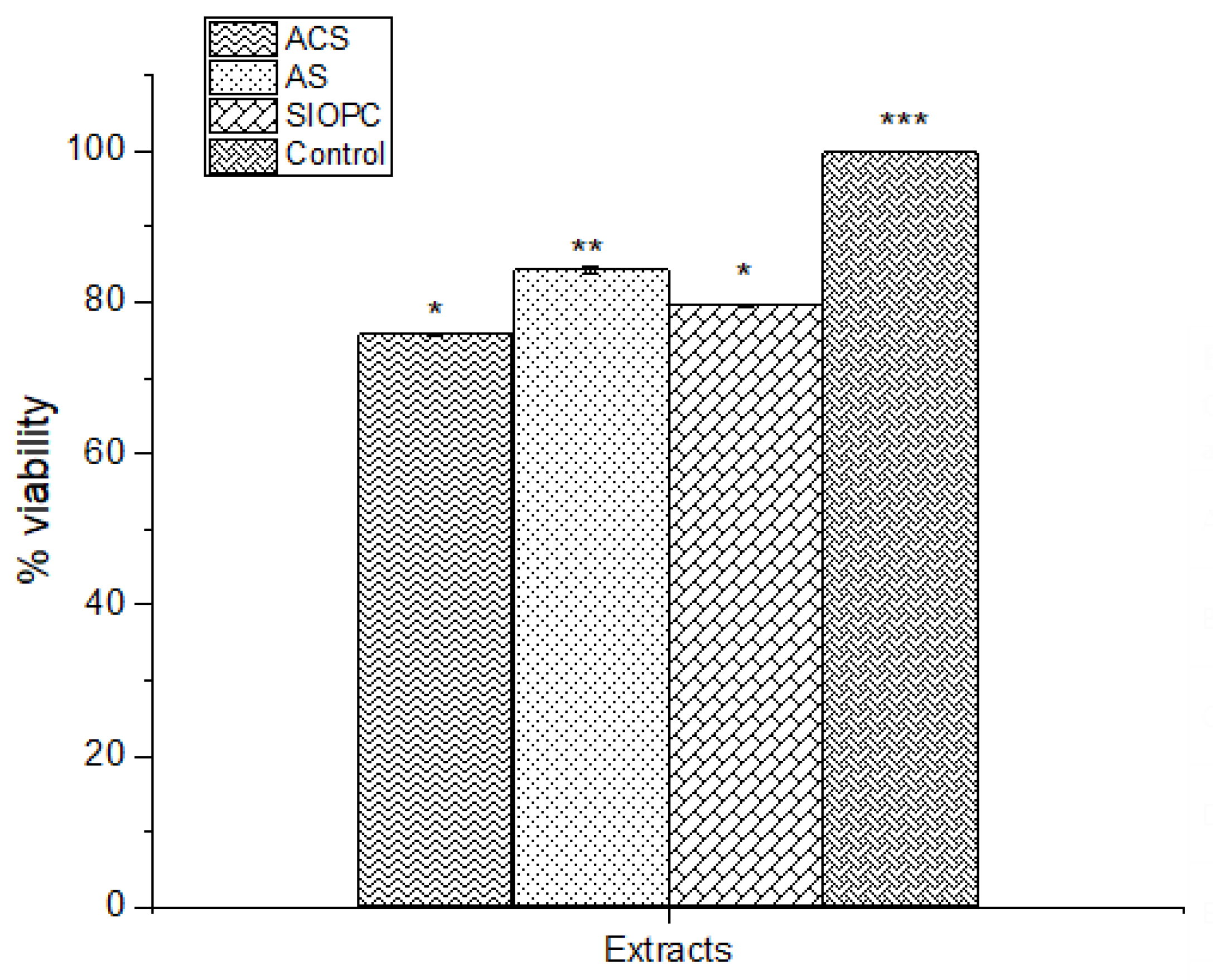
Figure 2.
% inhibition of α-Amylase enzyme by extracts from Amazonian fruits.
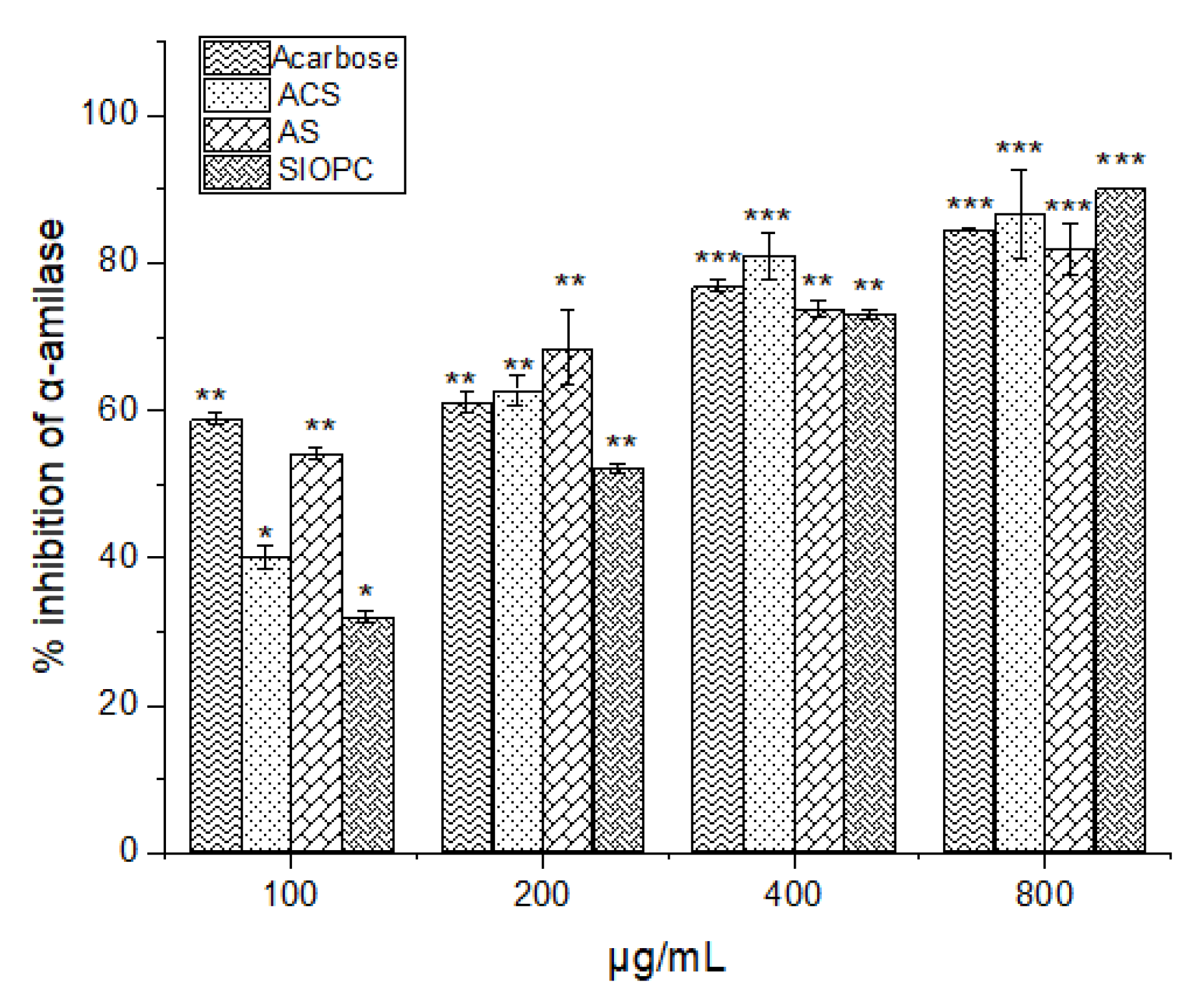
Figure 3.
% inhibition of α-Glucosidase enzyme by extracts from Amazonian fruits.
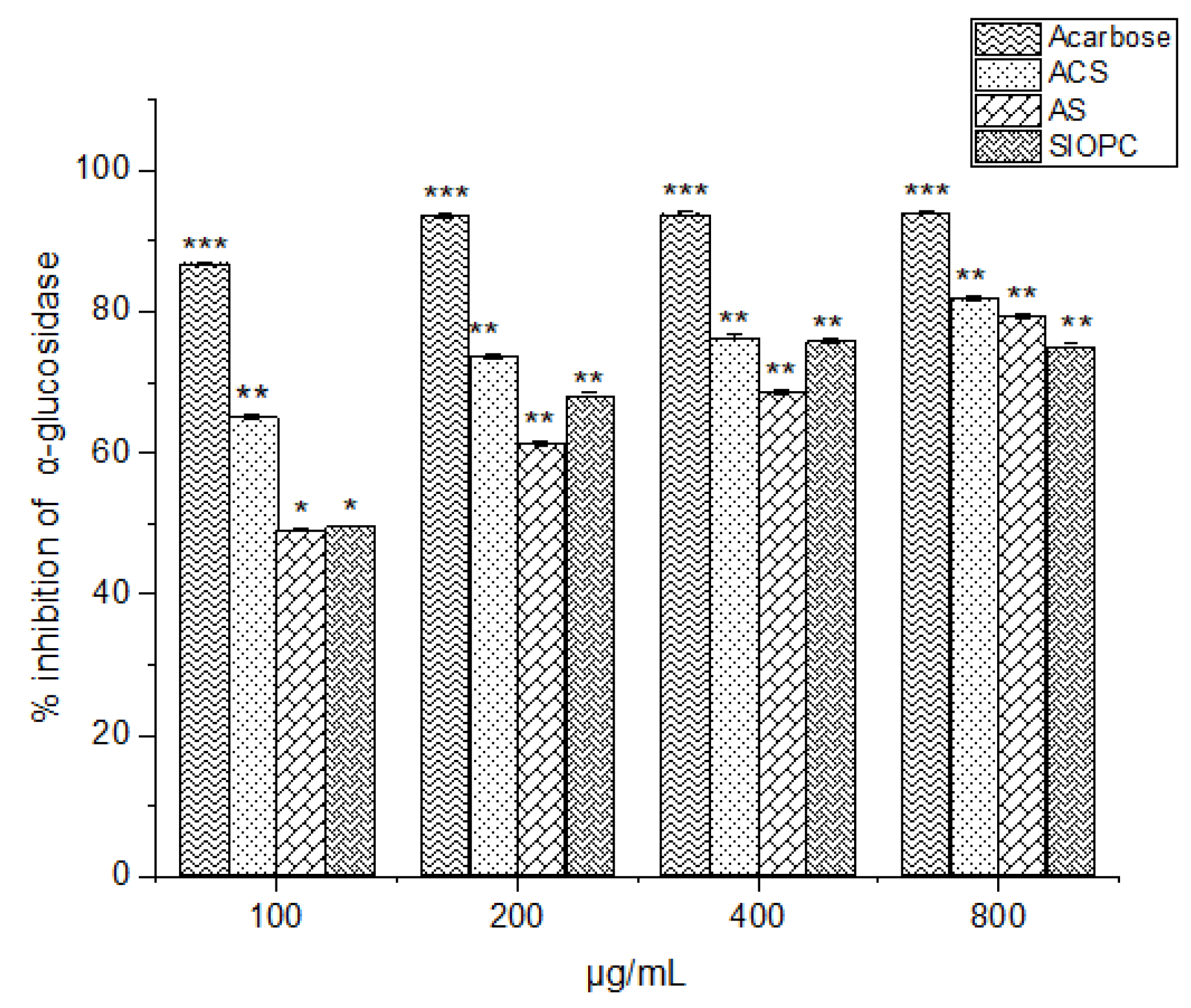
Figure 4.
Percentage inhibition of angiotensin-converting enzyme (ACE) from Amazonian fruit seeds extracts.
Figure 4.
Percentage inhibition of angiotensin-converting enzyme (ACE) from Amazonian fruit seeds extracts.
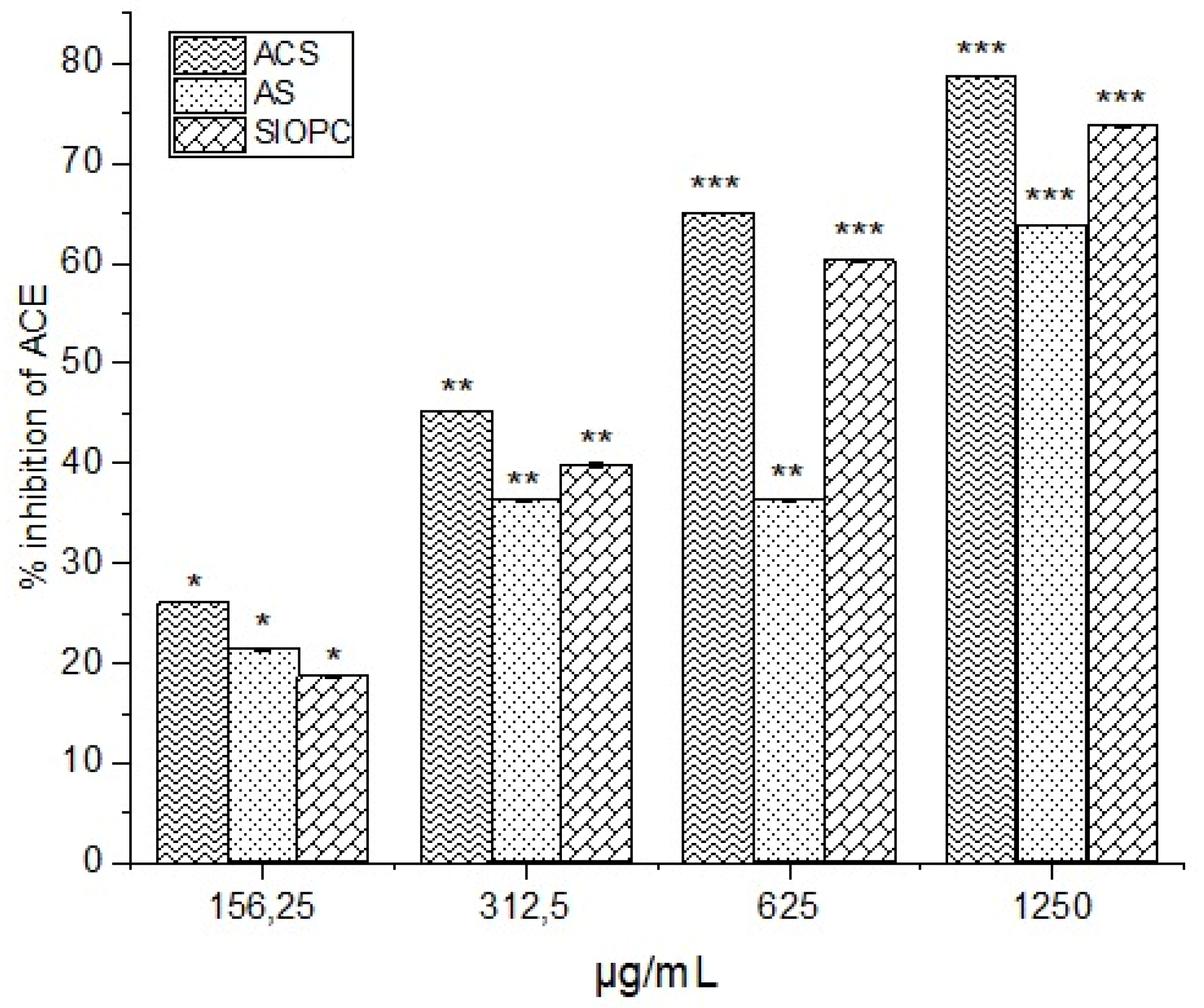

Table 1.
Bromatological characterization of the seeds.
| Seeds | ACS | AS | SIOPC |
|---|---|---|---|
| % Ash | 2,3 | 0,82 | 3,2 |
| %Crude protein | 5,04 | 4,96 | 8,1 |
| Ethereal extract | 4,43 | 0,16 | 33,9 |
| % Crude fiber | 48,9 | 2,27 | 13,5 |
| % Nitrogen | 0,5 | 0,78 | 1,3 |
| % Ca | 0,21 | 0,16 | 0,57 |
| % Mg | 0,03 | 2,27 | 0,17 |
| Na (mg/kg) | <0,03 | 1,02 | 75,5 |
| % K | 0,10 | 0,01 | 0,43 |
| Fe (mg/kg) | 22,7 | 20,2 | 34,5 |
| Cu (mg/kg) | 6,0 | 0,07 | 7,6 |
| Mn (mg/kg) | 141,2 | 21,6 | 7,4 |
| Zn (mg/kg) | 16,0 | 14,0 | 26,4 |
| B (mg/kg) | <0,03 | 5,51 | 31,3 |
| % P | 0,08 | 13,5 | 0,5 |
| % S | 0,04 | <0,03 | 0,05 |
| Carbohydrates μg glucose/100 mg dry weight | 45,39 ± 0,1 | 13,80 ± 0,1 | 21,07 ± 0,1 |
|
Polyphenols μg gallic acid/100 mg dry weight |
99,32 ± 8,87 | 155,88 ± 6,12 | 110 ± 2,61 |
|
Flavonoids μg quercetin/100 mg dry weight |
74,77 ± 1,29 | 41,68 ± 8,13 | 92,11 ± 4,52 |
|
ß- Carotenoids μg ß-carotene/100 mg dry weight |
0,31 ± 1,2 | 43,66 ± 1,5 | 0,38 ± 1,3 |
Table 3.
Phenolic profile of Amazonian fruit seeds.
| Phenolic compounds | ACS | AS | SIOPC |
|---|---|---|---|
| Concentrations (µg/100 g DW) | |||
| Catechin | 1.78 ± 0.14a | 90.02 ± 2.51ª | 101.79 ± 7.11ª |
| Quercetin | 2.11 ± 0.23b | ND | 84.08 ± 2.35b |
| Myricetin | 4.56 ± 0.11c | ND | ND |
| Kaempferol | 34.90 ± 1.02d | ND | ND |
| Caffeic acid | 12.93 ± 1.47e | 10.57 ± 1.05b | 35.37 ± 6.02c |
| Syringic acid | ND | ND | ND |
| p-Coumaric acid | ND | 38.27 ± 1.13c | 127.64 ± 4.43d |
| Ferulic acid | 0.83 ± 0.37f | ND | 148.42 ± 8.26e |
All data are shown as mean ± SD of triplicate experiments. Values in the same column/group followed by different letters significantly differ by LSD Fisher test (p < 0.05). DW: dry weight; ND: not detected.
Table 5.
IC50 [9] of the ethanolic extracts of seeds to inhibit the DPPH and ABTS radicals.
Table 5.
IC50 [9] of the ethanolic extracts of seeds to inhibit the DPPH and ABTS radicals.
| Seeds | DPPH | ABTS |
|---|---|---|
| IC50 | IC50 | |
| ACS | 52,37 ± 1,4a | 21,31 ± 1,6b |
| AS | 70,78 ± 1,8b | 13,09 ± 1,7a |
| SIOPC | 7212,85 ± 2,4c | 858,24 ± 2,5c |
Disclaimer/Publisher’s Note: The statements, opinions and data contained in all publications are solely those of the individual author(s) and contributor(s) and not of MDPI and/or the editor(s). MDPI and/or the editor(s) disclaim responsibility for any injury to people or property resulting from any ideas, methods, instructions or products referred to in the content. |
© 2024 by the authors. Licensee MDPI, Basel, Switzerland. This article is an open access article distributed under the terms and conditions of the Creative Commons Attribution (CC BY) license (http://creativecommons.org/licenses/by/4.0/).
Copyright: This open access article is published under a Creative Commons CC BY 4.0 license, which permit the free download, distribution, and reuse, provided that the author and preprint are cited in any reuse.


