Preprint
Article

This version is not peer-reviewed.

Temporal Changes in Ruminal Microbiota Composition and Diversity in Dairy Cows Supplemented with a Lactobacilli-Based DFM

Submitted:

18 December 2024

Posted:

19 December 2024

You are already at the latest version

Abstract

The current study examined the effects of lactobacilli-based direct-fed microbial (DFM) supplementation on the microbiota composition and diversity in ruminal fluid samples collected from dairy cows. Over 18 months (September 2021 through January 2023), the rumen bacterial and archaeal communities of fifty cows, supplemented with the DFM (DFM; n = 25) or serving as un-supplemented controls (CON; n = 25), were examined using 16S rRNA gene amplification and sequence analysis of DNA extracted from ruminal samples. Microbial diversity was assessed through alpha- and beta-diversity metrics (p<0.05). Linear discriminant analysis effect size (LEfSe) analysis was performed to identify taxa driving the changes seen in the microbiota between experimental groups and temporally within each group (p<0.05). Bacillota and Bacteroidota were the major bacterial phyla, while Methanobacteriaceae was the predominant archaeal family. Bacterial genera such as Eubacterium_Q, Atopobium sp. UBA7741, and Sharpea were significantly more abundant in the DFM group, while Bacillus_P_294101 and SFMI01 had higher abundance in the CON group. The results also indicated significant temporal variations in ruminal microbial diversity, with specific taxa exhibiting different abundances between the DFM and CON groups. This study provides insights into how DFM feed additives can modulate the ruminal microbiota in dairy cows, revealing specific microbial shifts in response to supplementation.

Keywords: 
;  ;  ;  ;  

1. Introduction

The rumen of dairy cows is a complex and vital ecosystem responsible for breaking down plant material and extracting essential nutrients for maintenance and production. This process is driven by a diverse microbial community consisting of bacteria, protozoa, phages, anaerobic fungi and archaea. These microbes ferment fibre, produce essential nutrients, and detoxify harmful substances [1,2]. Bacteria, particularly from Bacillota and Bacteroidota, dominate, while archaea and eukaryotes (protozoa and anaerobic fungi) form smaller portions of the community [3]. Most of these microbes reside in the solid phase of the digesta, with genera like Succiniclasticum and Prevotella playing key roles in fermentation [4]. The ruminal microbiota offer valuable insights into digestive health and the microbial dynamics that influence digestion, complementing the understanding provided by the rumen itself [4]. A common nutritional problem in ruminants is reduced feed efficiency due to imbalanced gut microbiota, leading to poor digestion and nutrient absorption. The experimental direct-fed microbial (DFM) formulation addresses this issue by introducing specific strains of probiotics that restore microbial balance, enhance enzymatic activity, and improve fibre breakdown. This targeted intervention promotes better nutrient utilisation, improving feed efficiency and overall animal health [5,6].
Recent research has highlighted the critical role of microbiota in livestock health, significantly influencing digestion, nutrient absorption, and overall production efficiency [3,7]. Zeineldin et al., [7] reported that cows with a wide variety of microbial species in the rumen experienced better overall health and productivity. Furthermore, maintaining microbial diversity through appropriate dietary management and DFM supplementation can enhance immune function and ultimately contribute to the sustainability of dairy farming practices. Ogunade, et al. [8] examined the effects of different dietary interventions on ruminal microbiota composition but not on fermentation end-products or energy status of the experimental steers. The fiber-enriched diet serves as a substrate for microbial growth, and the DFM provides targeted microbial supplementation to maximise the fermentation and digestion process. Interactions between diet and age play a critical role in shaping the composition of the gut microbiota, driving changes in microbial populations [9,10]. Evidence suggests that dietary interventions can effectively modulate microbial communities, promoting improved health outcomes in cattle [11]. Optimising the diet can boost beneficial microbial populations, thereby enhancing digestive efficiency. Feed additives like DFMs are added to modulate the gut microbiota, aiming to enhance the health and productivity of dairy cows [12].
Lactobacilli-based DFM supplementation influenced microbial populations in the digestive tract to potentially enhance fermentation efficiency and nutrient absorption [13]. Further investigation is warranted to better understand the functional implications of these changes and their long-term effects on the health and productivity of dairy cows. Despite its potential advantages in improving ruminant production and health, the impact of DFM supplementation on the rumen microbiota composition and diversity in dairy cows remains largely unexplored. Further research is needed to provide insights on ways to optimise DFM interventions and improve the health and productivity of dairy cows. This study aimed to analyse the microbial communities in the ruminal fluid samples (with digesta) of DFM-supplemented and un-supplemented (control) cows. Through a comparative analysis of these microbial communities over time, the research sought to elucidate the temporal dynamics and identify specific taxa influenced by the DFM supplement. The hypothesis was that supplementation with the DFM would lead to beneficial shifts in the ruminal microbiota by changing the diversity and composition. This study enhances understanding of how dairy cows' ruminal microbiota composition and diversity are altered over time when supplemented with a lactobacilli-based DFM.

2. Materials and Methods

Study Location, Study Herd, and Study Animals

The complete details of the study location, herd, production performances, and study design have been published elsewhere [14]. This longitudinal, negatively controlled study, with a randomised design blocked on treatment groups, was conducted at a commercial dairy farm in Harrisville, Queensland, Australia, from September 2021 to January 2023. The milking herd, comprising approximately 350 Holstein cows, included the randomly selected study cows. The cow herd was managed in two groups for housing, feeding, and milking. Both groups followed a partial mixed ration (PMR) feeding system, where cows received a mixed ration on a covered feed pad during the day and grazed pasture at night. The composition of the mixed ration provided once daily consisted mainly of maize or barley silage, lucerne hay, soybean silage, canola meal, and barley or wheat grain. An additional 1.5 kg of grain was fed twice daily during milking. All cows in the study had free access to both water and their allocated pasture. Typical of Southeastern Queensland dairy production systems, the study cows were managed as two separate groups such that the pasture allowance (up to 6 kg of DM/cow per day) and the PMR feed were sufficient for the maintenance and production requirements of a 600-kg cow producing 35 L of milk/d. The target dry matter intake (DMI) was 21 to 22 kg/cow/day. The pasture consisted of an 80:20 mix of ryegrass (Lolium perenne) and white clover (Trifolium repens). The chemical analysis of the total ration is reported elsewhere [14]. The study farm had 11 well-defined grazing paddocks that were similarly managed concerning grazing time, rotation frequency, and the irrigation program. Each of these 11 paddocks was subdivided along its length to create 22 paired grazing subpaddocks, each approximately 1.5 ha in size. The paired subpaddocks were grazed for approximately 2 d, and then the cows moved to the next pair of subpaddocks according to the grazing rotation program. If required, the grazing period on any pair of subpaddocks was adjusted based on the consumption pattern of the cows. Both groups were housed in a single dry lot partitioned to provide separate feeding and loafing areas and free access to water. The DFM group received an additional 10 mL/cow/day of a DFM supplement (manufacturer recommended dose), top-dressed onto their mixed ration using a 2 L manual pressure sprayer (245 kPa maximum pressure, Aqua Systems Australia). The DFM contained approximately 3.5 × 10⁹ CFU/mL each of three live bacterial strains: Lentilactobacillus buchneri Lb23, Lactocaseibacillus casei Lz26, and Lactocaseibacillus paracasei T9. The control group was not supplemented and received a PMR diet only. For this study, assuming a difference of 50% in microbiome structure, an alpha 2.5%, power 80%, no change in rumen microbiome structure the control group, a change in the rumen microbiome structure in the DFM group of 50%, and a difference of 15% is negligible, the minimum number of animals in each group was 20. We further inflated the sample size by 25% to account for any loss of follow-up. A total of 50 Holstein cows (average body weight 590±67 kg), including both primiparous and multiparous cows, were randomly selected based on parity and days in milk (DIM), and assigned into two groups: control (n = 25) and DFM (n = 25).

Sample Collection

Cows were securely restrained in a chute with their heads manually restrained. An oral speculum, an oro-ruminal sampling tube, and a manually operated pump (Double action hand pump, Wanderer) were used to collect approximately 200 mL of ruminal fluid from each cow approximately 3 hours post-diurnal feeding (9:00 a.m.). Samples were collected at approximately 2-month intervals at 8 points of time throughout the study, covering all stages of lactations. The fluid was collected into an Erlenmeyer vacuum filter flask. Ruminal fluid samples (with digesta) were placed into sterile 5 mL polypropylene flat-bottom tubes (Interpath, Melbourne, Australia) and stored at -20°C before being transported to the laboratory on dry ice for analysis.

Quality Control and Sequence Read Counts

To provide a sufficient representation of the taxa present, a minimum read count of 30,000 for all bacteria and 5,000 for archaea was used. Those samples that fell below the required sequencing depth (n =12 Bac) were re-sequenced. FastQC (Version0.12.0) was used to assess read quality and determine whether trimming was needed (http://www.bioinformatics.babraham.ac.uk/projects/fastqc/).

DNA Extraction and PCR

DNA was extracted from ruminal samples using the Maxwell® RSC Fecal Microbiome DNA Kit (Promega) following the manufacturer’s standard protocols, including a bead beating step on a FastPrep machine at 4m/s for 1 min, twice, with a 5 min break between cycles. The V3-V4 region of the 16S rRNA gene was amplified for all bacteria and archaea (sequences provided in Table 1). Thermocycling conditions were: 95oC/5 min: 30 cycles of 98oC/20 s; 55oC/15 s; 72oC/1 min: hold at 4oC (3-step PCR) for bacteria; 95oC/5 min: 30 cycles of 98oC/20 s; 72oC/1 min: hold at 4oC (2-step PCR) for Archaea. In a second PCR, sequencing indexes were added to the amplicons using 96 forward indexes from the Nextera XT Index 1 plate (Illumina, New York, USA) and three reverse indexes (R97, R98, R99), creating 288 unique index combinations. Negative controls were included in both the target amplification and in the indexing PCRs. Library purification, mixing and sequencing followed the Illumina 16S Metagenomic Sequencing Library preparation document (#15044223). Paired-end sequencing (2 × 300 bp) was performed using the MiSeq Reagent Kit v3 (600 cycle, Illumina).

Statistical and Bioinformatic Analysis

Denoising and trimming the raw data was done using the DADA2 plugin [18] within the QIIME2 platform [19]. DADA2 was then used to produce representative sequences and amplicon sequence variants (ASV), filtering by sample and feature. ASVs were then merged with metadata for further analysis (feature-table). Final representative sequences were compared against the 16S database, GreenGenes2 [20], using the feature-classifier. Multiple sequence alignment was used to group the sequences with the highest homologies, masking was used to remove errors and ambiguous sequences, and a phylogenetic tree was produced using Fasttree (Version 2.1). MicrobiomeAnalyst v2.0 [21] was used for further analysis, with the feature table, taxonomy, metadata and phylogenetic tree files from QIIME2. Alpha and beta-diversity metrics were calculated to assess the microbial diversity within and between samples over time and with or without the DFM supplement. Alpha-diversity analysis measured the Chao1 [22], Observed [23], and Shannon [24] indices. Beta-diversity analysis, via principal component analysis (PCoA; [25]) and non-metric multidimensional scaling (NMDS; [26]), compared the effect of the DFM supplement at the different experimental time points. The linear discriminant analysis effect size (LEfSe) was used to identify which taxa most likely drove the differences between groups. Both alpha- and beta-diversity and LEfSe were performed at the genus level with statistical significance set at a p-value ≤ 0.05.
To test for associations between longitudinal changes in alpha diversity over time and for the different treatment groups, we performed linear mixed-effects (LME) regression analysis for each diversity index. This accounted for subject-specific variation by using cow ID as a random effect whilst allowing identification of longitudinal differences in alpha/beta diversity due to treatment group by using that category as a fixed effect. The LME models were fitted with a first-order autoregressive correlation. Fitted residuals were assumed to follow a normal distribution with a mean of zero and a variance of σ2. Overall model fit was based on The Akaike information criterion (AIC), Bayesian information criterion (BIC) and visual assessment of Pearson’s residuals against fitted values, Q-Q standardised residuals against standardised normal quantiles violated the normality assumption [27]. All analyses used nlme and lme4 [27,28] statistical packages in R (R team) [29].

3. Results

Bacterial Microbiota

The sequencing of the bacterial V3-V4 region of the 16S rRNA gene produced 18,443,231 raw reads, with reads per sample ranging from 32,339 to 233,255 (mean 59,302). For archaea ruminal samples, sequencing generated 3,513,714 raw reads, with reads per sample ranging from 5,011 to 129,376 (mean 8,378). After filtering the mean number of reads per sample was 52, 004 and 7,948 for total ruminal and archaeal samples, respectively. The number of amplified sequence variants (ASVs) identified was 38,140 for ruminal and 1186 for archaeal samples. The proportion of Bacillota over time ranged from 33 to 54%, with Bacteroidota ranging from 42 to 50%. Other phyla that comprised a smaller proportion of the ruminal microbiota included Actinomycetota (2.2%), Fibrobacterota (2.2%), Patescibacteria 3.8%), Pseudomonadota (3.6%), Spirochaetota (2.3%) and Verrucomicrobiota (1%). The relative abundance of ruminal microbial communities in CON and DFM samples across different months from April 2021 to June 2023 was graphed for visual display (Supplementary Figure S1). Overall, there are visible differences in the microbial community structure between CON and DFM groups. Over time, some taxa were consistently more abundant in samples from the DFM group than in samples from the CON group.
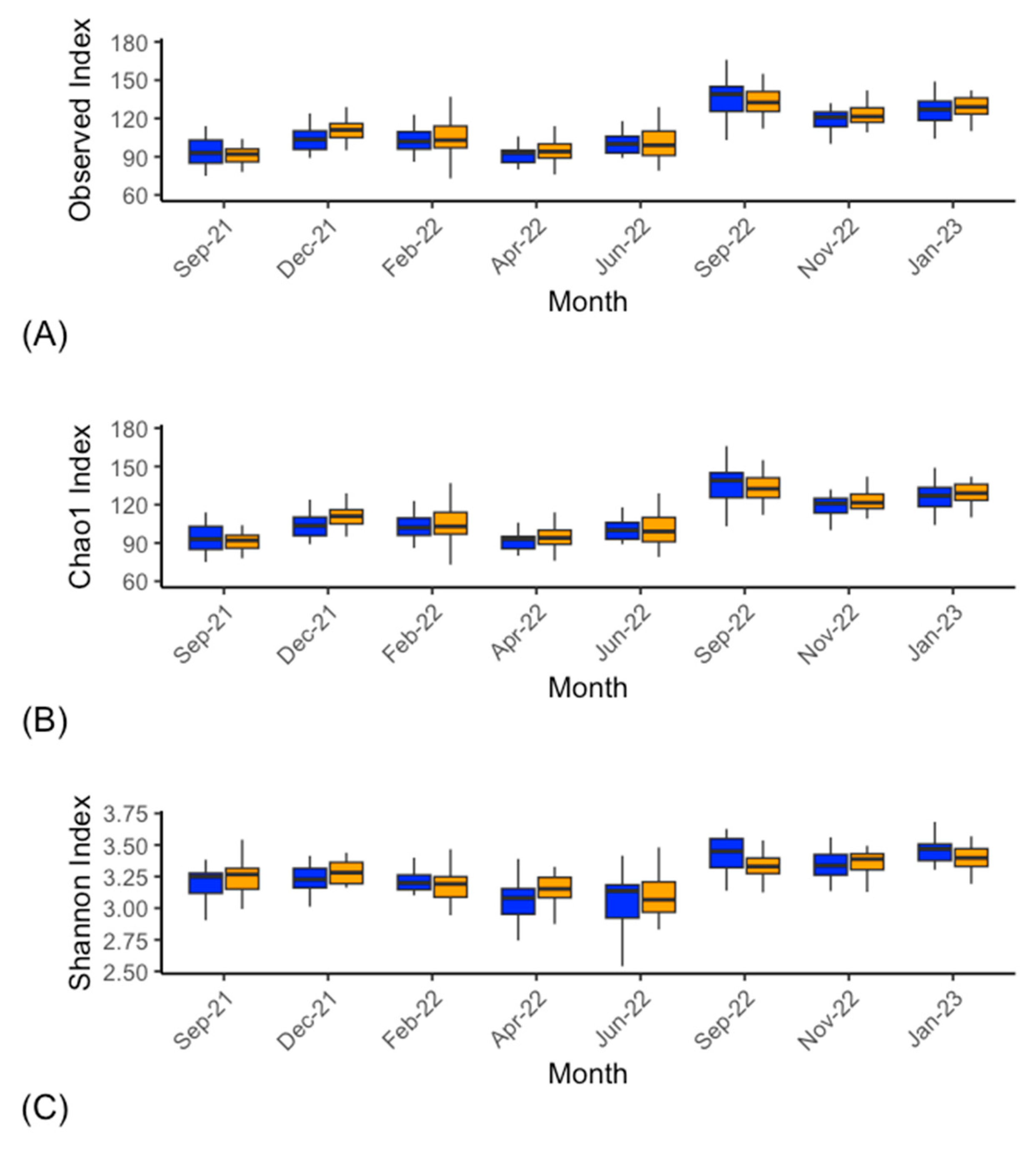
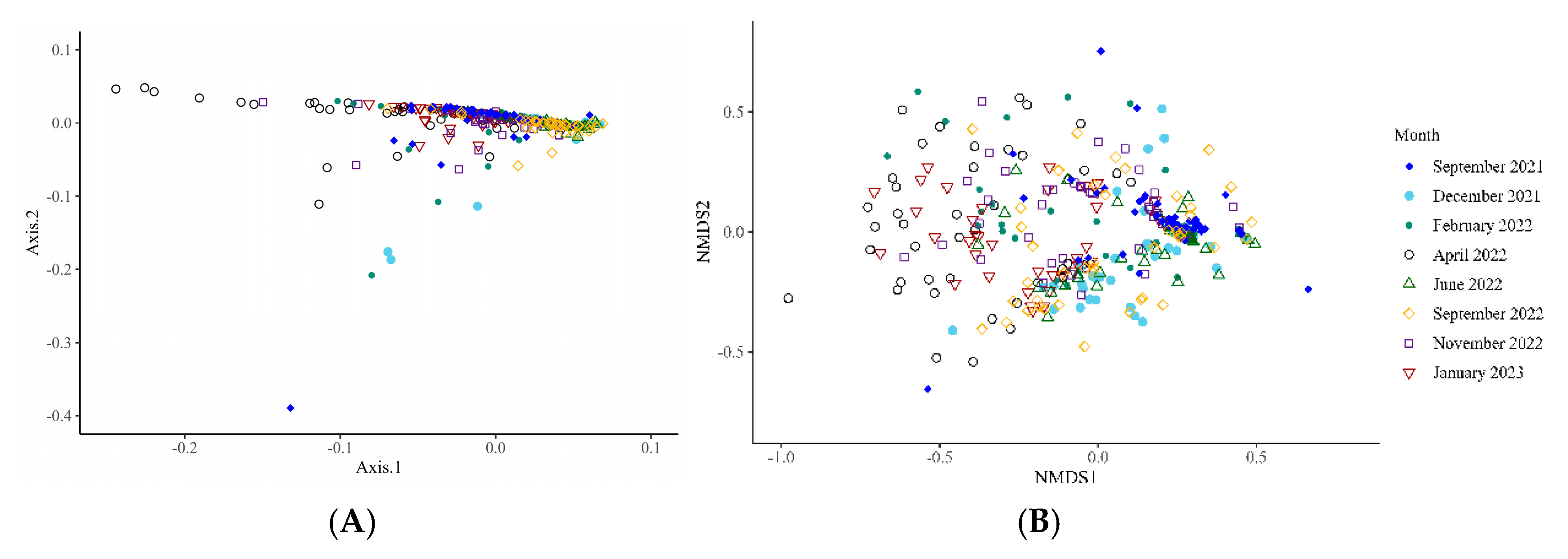
Bacterial alpha-diversity (genus level) differed within the CON and DFM samples for Shannon diversity indices at various time points, including September 2021 (p = 0.01), September 2022 (p = 0.04) and January 2023 (p = 0.01). The other indexes (Observed; p > 0.05 and Chao1; p > 0.05) did not differ at any time points from September 2021 to January 2023 (Figure 1; Supplementary Table S1). Ruminal bacterial diversity tested at the genus level using beta-diversity analysis, differed significantly over the study period across six-time points from September 2021 to January 2023 except for April 2022 (p = 0.11) and November 2022 (p = 0.21) (Figure 2; Supplementary Figure S2: Supplementary Table S2).
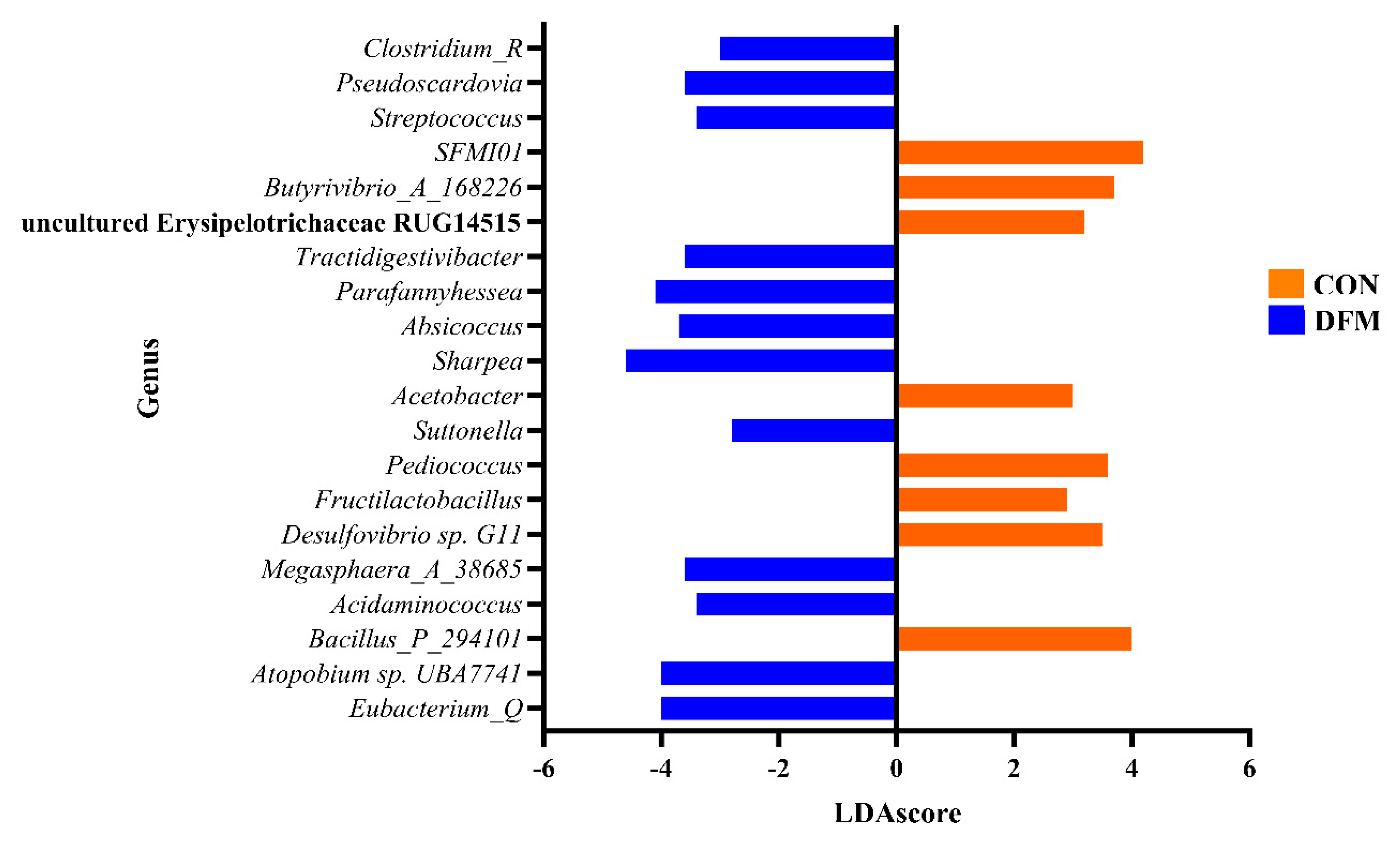
Figure 3 presents the significant differences in the abundance of various genera between the CON and DFM groups. Genera such as Eubacterium_Q, UBA7741, and Sharpea are significantly more abundant in the DFM group. At the same time, Bacillus_P_294101 and SFMI01 show higher abundance in the CON group with positive LDAscores. The results highlight significant shifts in microbial community structure between the CON and DFM groups, with several genera showing marked differences in abundance (p ≤ 0.05).

Archaeal Microbiota

The abundance data for pooled CON and DFM samples over time identified three families, Methanobacteriaceae (99.3%), Methanomethylophilaceae (0.69%) and Methanosarcinaceae (0.001%) within the Methanobacteriota.
The archaeal alpha-diversity analysis at the genus level from the CON and DFM cows over various time points demonstrated significant differences in the Observed and Chao1 indices in the September 2021 (p ≤ 0.01), April 2022 (p ≤ 0.01) and January 2023 (p ≤ 0.01) samples. Signifcant differences in September 2021 (p ≤ 0.01), December 2021 (p ≤ 0.01), April to September 2022 (p ≤ 0.01) were observed for the Shannon index (Figure 4; Supplementary Table S3).
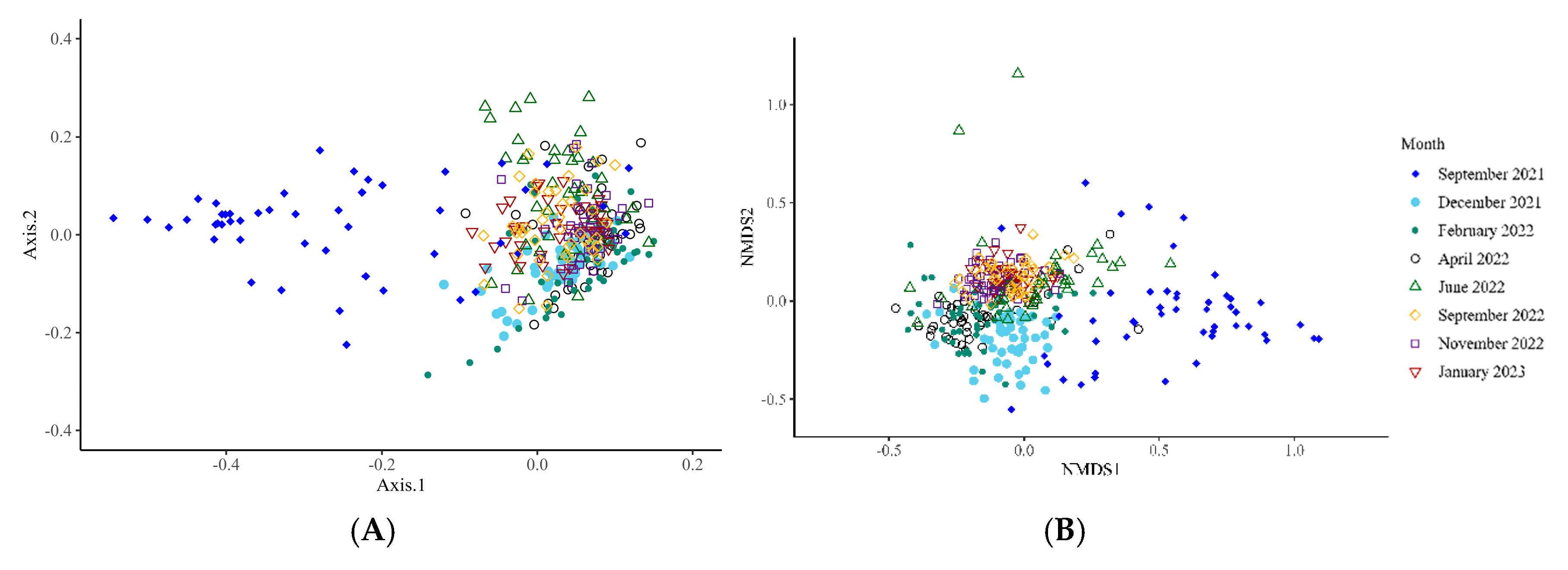
The beta-diversity analysis at the genus level of archaea identified no significant differences (p > 0.05) at any time point between the CON and DFM cows (Figure 4; Supplementary Table S4, Supplementary Figure S3). The beta-diversity did significantly vary over time.
Figure 4. Alpha diversity analysis (genus level) within the archaea of ruminal fluid of CON (blue) and DFM (orange) cows. Observed (A) and Chao1 (B) and Shannon index (C). For individual time point statistics, refer to Supplementary Table S3. The bars across each box represent the median whilst the top and bottom whiskers represent the upper and lower quartiles respectively.
Preprints 143327 g004
Figure 5. Beta-diversity analysis (genus level) of the archaea of ruminal fluid over the time points investigated. F-value: 17.7; R2: 0.3; p-value: 0.001; Stress: 0.2. The microbial diversity of the archaea changes significantly over time. F-value: 17.73, R2: 0.27, p-value: 0.001, Stress, 0.16. Panels A and B, respectively, display the principal component analysis and non-metric multidimensional scaling plots of the data.
Preprints 143327 g005

4. Discussion

In the present study, Firmicutes and Bacteroidetes were the predominant phyla in the rumen fluid samples of dairy cows, with other less prevalent phyla, including Actinomycetota , Fibrobacterota, Patescibacteria, Pseudomonadota, Spirochaetota, and Verrucomicrobiota. These findings are consistent with previous studies [3,30]. Prevotella was the predominant genus (29%) within the phylum Bacteroidota in the rumen, which is crucial for protein degradation and starch utilisation [31]. Henderson et al. [32] noted that while the microbiota of ruminants from different geographic regions varied, a core microbiota could be identified. This core included the seven most abundant bacterial groups, including Prevotella, Butyrivibrio, Ruminococcus, and unclassified members of Lachnospiraceae, Ruminococcaceae, Bacteroidales, and Clostridiales. These groups were present in all samples regardless of species, diet, or geographical location but did vary in abundance. Their study encompassed a variety of ruminant species, including cattle, buffalo, bison, sheep, goats, deer, giraffes, and camelids.
The dominance of Bacillota and Bacteroidota among rumen microbiota sampled in this study is consistent with previous studies [33]. Temporal variations observed in the current study indicated that external factors, such as diet, environment, and management practices, significantly influence microbial communities [34]. Additionally, the lack of significant differences in alpha diversity between DFM-supplemented and control cows indicates that DFM supplementation does not drastically alter overall microbial diversity [35]. This observation is consistent with other studies examining the effect of feed additives like DFMs on ruminal microbiota in which subtle changes are typical rather than any dramatic shifts in microbial diversity [36]. This indicates that the supplement impact is nuanced and more likely to affect specific taxa rather than the entire microbial community [37,38]. Beta-diversity analysis and LEfSe results suggest that the DFM supplement influenced specific microbial taxa [39,40], supporting the conclusion that while overall diversity remained stable, the supplement altered the abundance of certain bacteria. Such changes in microbial composition could impact fermentation processes and nutrient absorption in the cows. Consequently, optimising the digestive processes has the potential to improve cattle health and productivity. Finally, the beta-diversity analysis and LEfSe results indicate that the DFM supplement influences the composition of specific microbial taxa within the rumen, as demonstrated by genera like Prevotella, which had significant changes in abundance. The result aligns with prior research suggesting that DFM selectively promote or inhibits specific microbial populations, thereby impacting the overall fermentation process [41]
Recent studies have supported similar effects in response to various dietary interventions and feed additives [42,43]. These outcomes underline the dynamic responses of microbial communities to external interventions and bring to focus the risk of significant implications for animal health (enhanced nutrient absorption and immune responses). This emphasises the importance of comprehending and optimising the rumen microbial balance in ruminant nutrition [7]. The observed changes in specific microbial taxa in this study, such as the increase in Prevotella abundance among DFM-supplemented cows, may carry significant functional implications with the potential to influence enhancing complex carbohydrate degradation and improve nutrient absorption [31,44]. Similarly, alterations in the abundance of other key genera (such as Ruminococcus and Succiniclasticum) could have implications for the breakdown of fibre and the production of short-chain fatty acids crucial to the energy metabolism of dairy cows [45,46]. The findings underline the intricate complexity of the interaction between microbial composition and metabolic processes in the rumen and serve further to highlight the importance of understanding and optimising microbial communities to achieve enhanced animal performance [47,48].
Archaea constituted approximately 2.5% of the ruminal microbiota [49], higher than that observed in the present study. Previous research has indicated that the bacterial community in the rumen is taxonomically richer than the ruminal archaea, reflecting a pattern of similar and limited diversity of the archaeal populations when compared to bacteria, also found in the current study [32]. The archaeal microbiota, particularly members of the Methanobacteriaceae family, play a pivotal role in ruminal fermentation by driving methanogenesis, which balances hydrogen levels but contributes to energy losses and greenhouse gas emissions [50]. Exploring the impact of DFM supplementation on archaeal populations is essential, as DFMs may alter substrate availability or interspecies interactions, potentially mitigating methane production and improving rumen efficiency [51].
The temporal changes observed are crucial to understanding the adaptability and resilience of the microbial community in response to external interventions, like the DFM supplement. This study unveiled significant temporal variations in microbial diversity, consistent with previous research. This finding highlights the dynamic nature of the ruminal microbiota, and the potential influence of diet, environment, and management practices. These fluctuations suggest that the relative abundances of the core rumen and ruminal microbial groups fluctuate over time, in turn, potentially affecting the fermentation efficiency and overall health of cattle [52,53]. Therefore, continuous monitoring and effective management practices are required to optimise rumen microbial balance. Further research should explore the functional implications of these microbial shifts to elucidate the long-term effects of DFM supplements on dairy cows. Comparative studies across various breeds, diets, and geographic regions would provide a more comprehensive understanding of the core microbiota and the drivers of the fluctuations. Valuable insights into the factors influencing microbial dynamics in dairy cows may be discovered, allowing improved tailoring of management practices that optimise animal health and productivity compatible with local breed(s), geography, ration ingredients, and other inputs. The findings of this study offer valuable insights into how the DFM supplement often affects the microbiota composition and diversity in dairy cows. There are significant potential implications for animal health and productivity due to improved knowledge of the complexity of the ruminal microbiota. All this serves to emphasise the potential role of DFMs in the planned and controlled modulation of microbial communities in livestock.
To advance this study's findings, future research should prioritise longitudinal studies investigating the persistence of any effects of the DFM supplement on microbial community structure and function. Employing metagenomic and metabolomic approaches for functional analysis would offer deeper insights into the functional roles of the affected microbial taxa. Comparative studies across diverse breeds, diets, and geographic locations would facilitate a comprehensive understanding of the core ruminal microbiota and its variations, elucidating broader patterns and influences. Furthermore, the study focused on temporal variations in microbial diversity, but the study design did not account for potential seasonal effects or diet changes during the 18-month period that could influence microbial composition. While 16S rRNA sequencing provides insights into microbial taxonomy, it does not capture functional activities or metabolic pathways, limiting understanding of how microbial shifts impact cow health and production. Furthermore, not all microbial communities were identified using current databases. Expanding microbial databases and improving taxonomic classification methods are essential for accurately characterising microbial communities and their functional roles. In particular, upgrading bacterial and archaeal databases is crucial for better understanding fungal microbiota. Collectively, these efforts would enhance our understanding of how DFM supplementation shapes microbial communities, influences functional dynamics, and informs targeted strategies to optimise animal health, productivity, and welfare in cattle production systems. Finally, the results of this study can only be extrapolated to dairy herds similar to the study animals with similar settings. Although the study has strong internal validity, the external validity is limited. Therefore, the results cannot be generalised to the larger dairy cow populations.

5. Conclusions

This study demonstrated that a lactobacilli-based DFM supplement over an extended period alters the composition and diversity of the ruminal microbiota in dairy cows. The temporal change of ruminal microbiota was mainly explained by calendar month, which highlights the dynamic nature and potentially other factors that influenced temporality that were not accounted for in this study. Future research using metagenomic and metabolomic approaches and comparative studies across different breeds, diets, and geographic locations is recommended for a better understanding of the supplement's impact.

Supplementary Materials

The following supporting information can be downloaded at the website of this paper posted on Preprints.org.

Author Contributions

Conceptualisation and methodology, J.I.A., B.E.C., R.B., T.O., and R.J.M.; validation and formal analysis, B.E.C., R.J.M., J.I.A; data curation, B.E.C., J.I.A.; writing—original draft preparation, J.I.A. B.E.C., R.J.M., M.M.H; writing—review and editing, J.I.A., M.M.H., R.J.M., R.J., and B.E.C.; supervision and project administration, J.I.A.; funding acquisition, J.I.A., T.O., R.J.M. All authors have read and agreed to the published version of the manuscript.

Funding

“This research was partially funded by Terragen Biotech Pty Ltd., and funding number is PRJ00000354.”

Institutional Review Board Statement

The production animals animal ethics committee of the University of Queensland approved the procedures used in this study (2020/AE000364).

Data Availability Statement

If necessary, a corresponding author will be provided on request.

Acknowledgments

We thank Tredegar Park, Paul Roderick’s farm and all the staff involved for their technical support. This research was supported by The University of Melbourne’s Research Computing Services and the Petascale Campus Initiative, thanks to Associate Professor Paul Ramsland for inclusion in his project.

Conflicts of Interest

M.S. was employed by Terragen Biotech Pty Ltd, which funded this study and assisted in the administrative component of this multiyear study. All remaining co-authors declare no conflict of interest. The funders had no role in the design of the study, analyses, or interpretation of data, in the writing of the manuscript, or in the decision to publish the results.

References

  1. Samtiya, M.; Soni, K.; Chawla, S.; Poonia, A.; Sehgal, S.; Dhewa, T. Key anti-nutrients of millet and their reduction strategies: An overview. Acta Scientific NUTRITIONAL HEALTH (ISSN: 2582-1423) 2021, 5.
  2. Anil Kumar, P.; Salem, A.Z.; Kumar, S.; Dagar, S.S.; W Griffith, G.; Puniya, M.; R Ravella, S.; Kumar, N.; Dhewa, T.; Kumar, R. Role of live microbial feed supplements with reference to anaerobic fungi in ruminant productivity: A review. 2015.
  3. Bickhart, D.; Weimer, P. Symposium review: Host–rumen microbe interactions may be leveraged to improve the productivity of dairy cows. Journal of dairy science 2018, 101, 7680-7689. [CrossRef]
  4. Deusch, S.; Camarinha-Silva, A.; Conrad, J.; Beifuss, U.; Rodehutscord, M.; Seifert, J. A structural and functional elucidation of the rumen microbiome influenced by various diets and microenvironments. Frontiers in microbiology 2017, 8, 1605. [CrossRef]
  5. Elghandour, M.M.; Salem, A.Z.; Castañeda, J.S.M.; Camacho, L.M.; Kholif, A.E.; Chagoyán, J.C.V. Direct-fed microbes: A tool for improving the utilization of low quality roughages in ruminants. Journal of Integrative Agriculture 2015, 14, 526-533. [CrossRef]
  6. Chaucheyras-Durand, F.; Durand, H. Probiotics in animal nutrition and health. Beneficial microbes 2010, 1, 3-9. [CrossRef]
  7. Zeineldin, M.; Barakat, R.; Elolimy, A.; Salem, A.Z.; Elghandour, M.M.; Monroy, J.C. Synergetic action between the rumen microbiota and bovine health. Microbial pathogenesis 2018, 124, 106-115. [CrossRef]
  8. Ogunade, I.M.; McCoun, M.; Idowu, M.D.; Peters, S.O. Comparative effects of two multispecies direct-fed microbial products on energy status, nutrient digestibility, and ruminal fermentation, bacterial community, and metabolome of beef steers. Journal of Animal Science 2020, 98, skaa201. [CrossRef]
  9. Rinninella, E.; Raoul, P.; Cintoni, M.; Franceschi, F.; Miggiano, G.A.D.; Gasbarrini, A.; Mele, M.C. What is the healthy gut microbiota composition? A changing ecosystem across age, environment, diet, and diseases. Microorganisms 2019, 7, 14.
  10. Flint, H.J.; Duncan, S.H.; Scott, K.P.; Louis, P. Links between diet, gut microbiota composition and gut metabolism. Proceedings of the Nutrition Society 2015, 74, 13-22. [CrossRef]
  11. Williams, A.R.; Myhill, L.J.; Stolzenbach, S.; Nejsum, P.; Mejer, H.; Nielsen, D.S.; Thamsborg, S.M. Emerging interactions between diet, gastrointestinal helminth infection, and the gut microbiota in livestock. BMC Veterinary Research 2021, 17, 1-9. [CrossRef]
  12. Ban, Y.; Guan, L.L. Implication and challenges of direct-fed microbial supplementation to improve ruminant production and health. Journal of Animal Science and Biotechnology 2021, 12, 109. [CrossRef]
  13. Lopez, M.B. In-Vivo Assessment of a Direct-Fed Microbial on Lactation Performances, Blood Biomarkers, Ruminal Fermentation and Microbial Abundance in Transition to Mid-Lactation Holstein Cows; South Dakota State University: 2023.
  14. Ramirez-Garzon, O.; Al-Alawneh, J.I.; Barber, D.; Liu, H.; Soust, M. The Effect of a Direct Fed Microbial on Liveweight and Milk Production in Dairy Cattle. Animals 2024, 14, 1092. [CrossRef]
  15. Takahashi, S.; Tomita, J.; Nishioka, K.; Hisada, T.; Nishijima, M. Development of a prokaryotic universal primer for simultaneous analysis of Bacteria and Archaea using next-generation sequencing. PloS one 2014, 9, e105592. [CrossRef]
  16. Gohl, D.M.; Vangay, P.; Garbe, J.; MacLean, A.; Hauge, A.; Becker, A.; Gould, T.J.; Clayton, J.B.; Johnson, T.J.; Hunter, R. Systematic improvement of amplicon marker gene methods for increased accuracy in microbiome studies. Nature biotechnology 2016, 34, 942-949. [CrossRef]
  17. Bahram, M.; Anslan, S.; Hildebrand, F.; Bork, P.; Tedersoo, L. Newly designed 16S rRNA metabarcoding primers amplify diverse and novel archaeal taxa from the environment. Environmental microbiology reports 2019, 11, 487-494. [CrossRef]
  18. Callahan, B.J.; McMurdie, P.J.; Rosen, M.J.; Han, A.W.; Johnson, A.J.A.; Holmes, S.P. DADA2: High-resolution sample inference from Illumina amplicon data. Nature methods 2016, 13, 581-583. [CrossRef]
  19. Bolyen, E.; Rideout, J.R.; Dillon, M.R.; Bokulich, N.A.; Abnet, C.C.; Al-Ghalith, G.A.; Alexander, H.; Alm, E.J.; Arumugam, M.; Asnicar, F. Reproducible, interactive, scalable and extensible microbiome data science using QIIME 2. Nature biotechnology 2019, 37, 852-857. [CrossRef]
  20. McDonald, D.; Jiang, Y.; Balaban, M.; Cantrell, K.; Zhu, Q.; Gonzalez, A.; Morton, J.T.; Nicolaou, G.; Parks, D.H.; Karst, S.M. Greengenes2 unifies microbial data in a single reference tree. Nature biotechnology 2023, 1-4. [CrossRef]
  21. Dhariwal, R.; Henriquez, M.A.; Hiebert, C.; McCartney, C.A.; Randhawa, H.S. Mapping of major Fusarium head blight resistance from Canadian wheat cv. AAC Tenacious. International Journal of Molecular Sciences 2020, 21, 4497. [CrossRef]
  22. Chao, A. Nonparametric estimation of the number of classes in a population. Scandinavian Journal of statistics 1984, 265-270.
  23. Simpson, G.G.; Simpson, L. The meaning of evolution: a study of the history of life and of its significance for man; Yale University Press: 1949; Vol. 23.
  24. Weaver, W. The mathematical theory of communication; University of Illinois Press: 1963.
  25. Jolliffe, I.T.; Cadima, J. Principal component analysis: a review and recent developments. Philosophical transactions of the royal society A: Mathematical, Physical and Engineering Sciences 2016, 374, 20150202. [CrossRef]
  26. Rabinowitz, G.B. An introduction to nonmetric multidimensional scaling. American Journal of Political Science 1975, 343-390. [CrossRef]
  27. Bates, D. lme4: Linear mixed-effects models using S4 classes. R package version 0.999375-33. http://CRAN. R-project. org/package= lme4 2010.
  28. Bates, D.M. lme4: Linear mixed-effects models using S4 classes. (No Title) 2007.
  29. Team, R.C. RA language and environment for statistical computing, R Foundation for Statistical. Computing 2020.
  30. Dill-McFarland, K.A.; Weimer, P.J.; Pauli, J.N.; Peery, M.Z.; Suen, G. Diet specialization selects for an unusual and simplified gut microbiota in two-and three-toed sloths. Environmental Microbiology 2016, 18, 1391-1402. [CrossRef]
  31. Flint, H.J.; Duncan, S. Bacteroides and prevotella. In Encyclopedia of Food Microbiology: Second Edition, Elsevier Inc.: 2014; pp. 203-208.
  32. Henderson, G.; Cox, F.; Ganesh, S.; Jonker, A.; Young, W.; Janssen, P.H. Rumen microbial community composition varies with diet and host, but a core microbiome is found across a wide geographical range. Scientific reports 2015, 5, 14567. [CrossRef]
  33. Li, J.; Zhan, S.; Liu, X.; Lin, Q.; Jiang, J.; Li, X. Divergence of Fecal Microbiota and Their Associations With Host Phylogeny in Cervinae. Frontiers in Microbiology 2018, 9, doi:10.3389/fmicb.2018.01823. [CrossRef]
  34. Shade, A.; Gregory Caporaso, J.; Handelsman, J.; Knight, R.; Fierer, N. A meta-analysis of changes in bacterial and archaeal communities with time. The ISME journal 2013, 7, 1493-1506. [CrossRef]
  35. Goldsmith, K.E. The Effect of Supplementing Native Rumen Microbes on Milk Production of Dairy Cattle; Michigan State University: 2022.
  36. O'Hara, E.; Neves, A.L.; Song, Y.; Guan, L.L. The role of the gut microbiome in cattle production and health: driver or passenger? Annual review of animal biosciences 2020, 8, 199-220. [CrossRef]
  37. Bartenslager, A. Investigating microbiomes and developing direct-fed microbials to improve cattle health. 2020.
  38. Dankwa, A.; Humagain, U.; Ishaq, S.; Yeoman, C.; Clark, S.; Beitz, D.; Testroet, E. Bacterial communities in the rumen and feces of lactating Holstein dairy cows are not affected when fed reduced-fat dried distillers’ grains with solubles. Animal 2021, 15, 100281.
  39. Alawneh, J.I.; Ramay, H.; Olchowy, T.; Allavena, R.; Soust, M.; Jassim, R.A. Effect of a Lactobacilli-Based Direct-Fed Microbial Product on Gut Microbiota and Gastrointestinal Morphological Changes. Animals 2024, 14, 693. [CrossRef]
  40. Wang, X.; Tsai, T.; Wei, X.; Zuo, B.; Davis, E.; Rehberger, T.; Hernandez, S.; Jochems, E.J.; Maxwell, C.V.; Zhao, J. Effect of Lactylate and Bacillus subtilis on growth performance, peripheral blood cell profile, and gut microbiota of nursery pigs. Microorganisms 2021, 9, 803. [CrossRef]
  41. Pitta, D.; Pinchak, W.; Dowd, S.; Dorton, K.; Yoon, I.; Min, B.; Fulford, J.; Wickersham, T.; Malinowski, D. Longitudinal shifts in bacterial diversity and fermentation pattern in the rumen of steers grazing wheat pasture. Anaerobe 2014, 30, 11-17. [CrossRef]
  42. Kalebich, C.C.; Cardoso, F.C. Effects of direct-fed microbials on feed intake, milk yield, milk composition, feed conversion, and health condition of dairy cows. In Nutrients in Dairy and their Implications on Health and Disease, Elsevier: 2017; pp. 111-121.
  43. Davies, S.J.; Esposito, G.; Villot, C.; Chevaux, E.; Raffrenato, E. An Evaluation of Nutritional and Therapeutic Factors Affecting Pre-Weaned Calf Health and Welfare, and Direct-Fed Microbials as a Potential Alternative for Promoting Performance—A Review. Dairy 2022, 3, 648-667. [CrossRef]
  44. Oyebade, A.O. Effects of Bacterial Direct-Fed Microbial Supplementation on Rumen Fermentation, Rumen and Plasma Metabolome, and Performance of Lactating Dairy Cows. University of Florida, 2021.
  45. Zeng, H.; Guo, C.; Sun, D.; Seddik, H.-e.; Mao, S. The ruminal microbiome and metabolome alterations associated with diet-induced milk fat depression in dairy cows. Metabolites 2019, 9, 154. [CrossRef]
  46. Huang, S.; Ji, S.; Yan, H.; Hao, Y.; Zhang, J.; Wang, Y.; Cao, Z.; Li, S. The day-to-day stability of the ruminal and fecal microbiota in lactating dairy cows. Microbiologyopen 2020, 9, e990. [CrossRef]
  47. Russell, J.B.; Rychlik, J.L. Factors that alter rumen microbial ecology. Science 2001, 292, 1119-1122. [CrossRef]
  48. Janssen, P.H.; Kirs, M. Structure of the archaeal community of the rumen. Applied and environmental microbiology 2008, 74, 3619-3625. [CrossRef]
  49. Malik, P.K.; Trivedi, S.; Kolte, A.P.; Sejian, V.; Bhatta, R.; Rahman, H. Diversity of rumen microbiota using metagenome sequencing and methane yield in Indian sheep fed on straw and concentrate diet. Saudi J Biol Sci 2022, 29, 103345, doi:10.1016/j.sjbs.2022.103345. [CrossRef]
  50. Hook, S.E.; Wright, A.-D.G.; McBride, B.W. Methanogens: methane producers of the rumen and mitigation strategies. Archaea 2010, 2010, 945785. [CrossRef]
  51. Morgavi, D.; Forano, E.; Martin, C.; Newbold, C.J. Microbial ecosystem and methanogenesis in ruminants. animal 2010, 4, 1024-1036. [CrossRef]
  52. Noel, S.J.; Olijhoek, D.W.; Mclean, F.; Løvendahl, P.; Lund, P.; Højberg, O. Rumen and fecal microbial community structure of Holstein and Jersey dairy cows as affected by breed, diet, and residual feed intake. Animals 2019, 9, 498. [CrossRef]
  53. Kibegwa, F.M.; Bett, R.C.; Gachuiri, C.K.; Machuka, E.; Stomeo, F.; Mujibi, F.D. Diversity and functional analysis of rumen and fecal microbial communities associated.
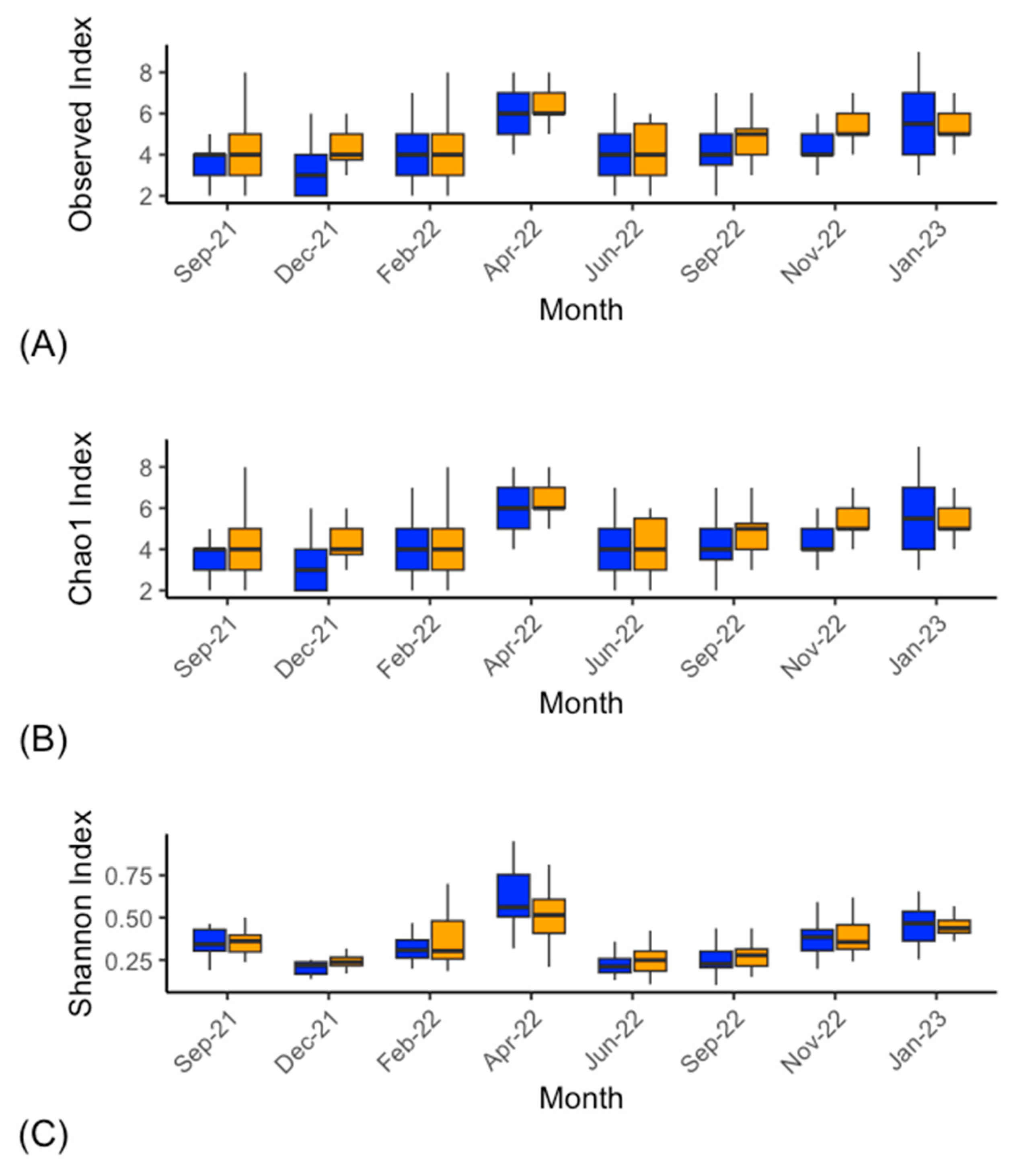
Figure 1. Bacterial alpha-diversity analysis (genus level) within ruminal fluid from CON (blue) and DFM (ornage) cows sampled across the study. Observed (A) and Chao1 (B) and Shannon index (C). This indicates that there were significant differences in diversity across the time points. Statistics for individual times points can be found in Supplementary Table S2. The bars across each box represent the median whilst the top and bottom whiskers represent the upper and lower quartiles, respectively.
Preprints 143327 g001
Figure 2. Bacterial beta-diversity (genus level) analysis of ruminal fluid across eight time points from September 2021 to January 2023. Microbial diversity differed significantly over the 16 months of the trial. Panels A and B, respectively, display the principal component analysis and non-metric multidimensional scaling plots of the data.
Preprints 143327 g002
Figure 3. Linear discriminant analysis effect size (LEfSe) analysis of ruminal fluid from CON compared with DFM cows. LDAscore is the linear discriminant analysis effect size score, significant at a p-value of < 0.05 and a false discovery rate of <0.2.
Preprints 143327 g003
Table 1. Primers used to amplify the V3-V4 region of the 16S rRNA gene from bacteria (Bac) and archaea (Arch) [15,16,17].
BacF 16S GTCTCGTGGGCTCGGAGATGTGTATAAGAGACAGGGACTACHVGGGTWTCTAAT
BacR 16S TCGTCGGCAGCGTCAGATGTGTATAAGAGACAGCCTACGGGAGGCAGCAG
ArchF 16S TCGTCGGCAGCGTCAGATGTGTATAAGAGACAGGYGCASCAGKCGMGAAW
ArchR 16S GTCTCGTGGGCTCGGAGATGTGTATAAGAGACAGHGCYTTCGCCACHGGTRG
Disclaimer/Publisher’s Note: The statements, opinions and data contained in all publications are solely those of the individual author(s) and contributor(s) and not of MDPI and/or the editor(s). MDPI and/or the editor(s) disclaim responsibility for any injury to people or property resulting from any ideas, methods, instructions or products referred to in the content.
Copyright: This open access article is published under a Creative Commons CC BY 4.0 license, which permit the free download, distribution, and reuse, provided that the author and preprint are cited in any reuse.
Prerpints.org logo

Preprints.org is a free preprint server supported by MDPI in Basel, Switzerland.

Subscribe

Disclaimer

Terms of Use

Privacy Policy

Privacy Settings

© 2025 MDPI (Basel, Switzerland) unless otherwise stated