1. Introduction
Accidents involving fire are capable of causing catastrophic injuries and devastation. In recent years, there has been a significant increase in fire incidents around the globe, particularly in developing nations. Due to the randomness, complexity, and probability of fire [
1]. The Emirate of Sharjah is considered the third Emirate in UAE in terms of area, which covers 2,600 square kilometres. Almost 19% of the UAE population live in Sharjah. According to the Sharjah government 1.5 million tourists visit Sharjah annually. The UAE Ministry of Interior established stringent safety standards to ensure that all UAE facilities comply with safety regulations, such as installing fire detection systems, defining evacuation plans/routes and exits, providing fire equipment in the facilities, removing, or safely storing hazardous materials, and regulating building designs and materials. The Ministry of the Interior established laws, rules, and penalties [
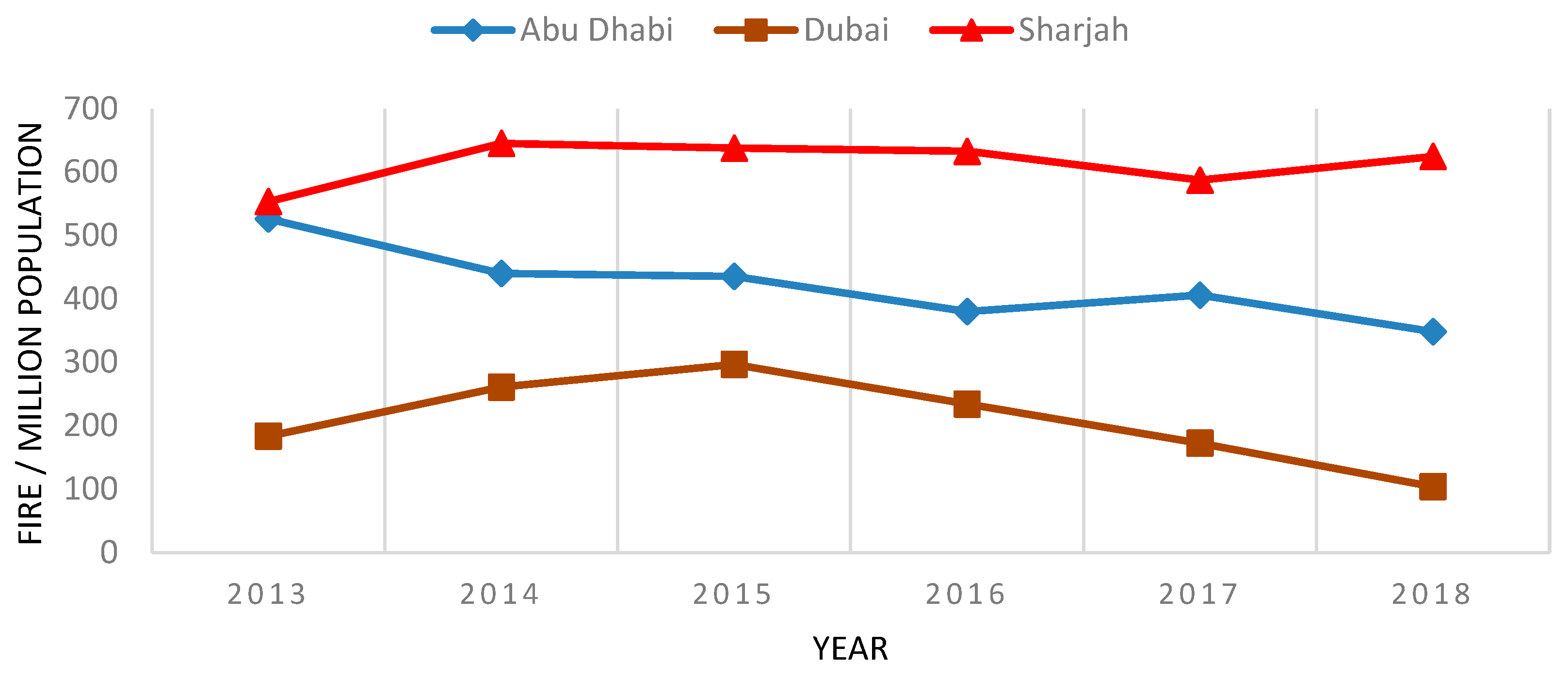
2]. The rate of fire incidents in the Emirate of Sharjah increased in comparison to other Emirates within the UAE from 2013 to 2018 [
3], Fire accident is a real problem affecting the society in the Emirate of Sharjah, and the life of people will be at high risk. Also, fire accidents will affect the economy of the Emirate of Sharjah because it has a direct impact on the real estate market, industrial activities and business reputation which eventually leading to decrease in the competitiveness of the Emirate in the region.
While all the UAE Emirates are controlled by the same Federal Fire System Framework, the diversity of industrial activities in the Emirate of Sharjah may require extra arrangements to reduce the fire accident. Meanwhile, the existing management framework still lacks to mitigate the fire accidents in residential buildings, and other sectors.
Fire safety regulations require a building to maintain certain safety specifications, either in prescriptive or performance-based form, to protect human lives and properties from a fire [
4].To mitigate fire hazards in buildings, fire regulations and standards provide guidelines on the management of fire mitigation measures for the minimum loss of human life and damage to property [
5].
In 2019 the Government of the Emirate of Sharjah has decided to establish a new General Directorate of Civil Defense in the Emirate of Sharjah [
6]. According to that Amiri Decree, the Civil Defense activities is now monitored by the Emirate of Sharjah local government instead of the Federal Government. However, the new Directorate of Civil Defense in the Emirate of Sharjah is still using the federal Fire Management System (FMS) framework.
According to the report of the UAE Ministry of Interior, the annual average number of fire accidents from 2013 to 2018 in the Emirate of Sharjah was 722 accidents. The population of the Emirate of Sharjah in the year 2018 was 1.2 million. The rate of fire accidents in 2018 was 624 accidents per million of the people. It is considered a high rate compared to other neighboring Emirates.
The Emirates of Abu Dhabi, Dubai, and Sharjah have population equivalent to 90% of the total population of the UAE. The Emirate of Abu Dhabi recorded a rate of 348 fire accidents per million of people in the year 2018. The Emirate of Dubai recorded a rate of 104 fire accidents per million people in the same year. Despite the highest number of the population in Dubai, which is equivalent to 36% of the population of the UAE, Dubai recorded the lowest rate of fire accidents among the three Emirates as shown in
Figure 1
The Emirate of Sharjah has the lowest population among the three Emirates, which amounts to 19% of the total population of the three Emirates, but the fire accident rate per million of people in the Emirate of Sharjah was the highest among the three Emirates. The Emirate of Sharjah was ranked second in the number of annual fire accidents, after the Emirate of Abu Dhabi which has 35% of the UAE population. The percentage of fire accidents in the Emirate of Sharjah from 2013 to 2018 was 22% of the total fire accidents in the United Arab Emirates. The highest number of accidents in the Emirate of Sharjah was in 2014 when 753 fire accidents were recorded, the lowest number was 648 fire accidents in 2013, and the average annual number of fire accidents in the mentioned period was 722 fire accidents. The average annual fire accident rate per million population in the Emirate of Sharjah from 2013 to 2018 was about 613 fire accidents.
During a fire accident environmental changes within a building are directly responsible for a significant number of fatal injuries that are reported in many previous fire accidents [
7].
The Emirate of Sharjah recorded 32 deaths due to fire accidents for the period from 2013 to 2018, equivalent to 26% of the total number of deaths in the UAE, and 486 injuries, equivalent to 31% of the total number of injuries in the UAE. Emirate of Dubai, which has the highest population density recorded 25 deaths, equivalent to 21% of the total number of deaths in the UAE.
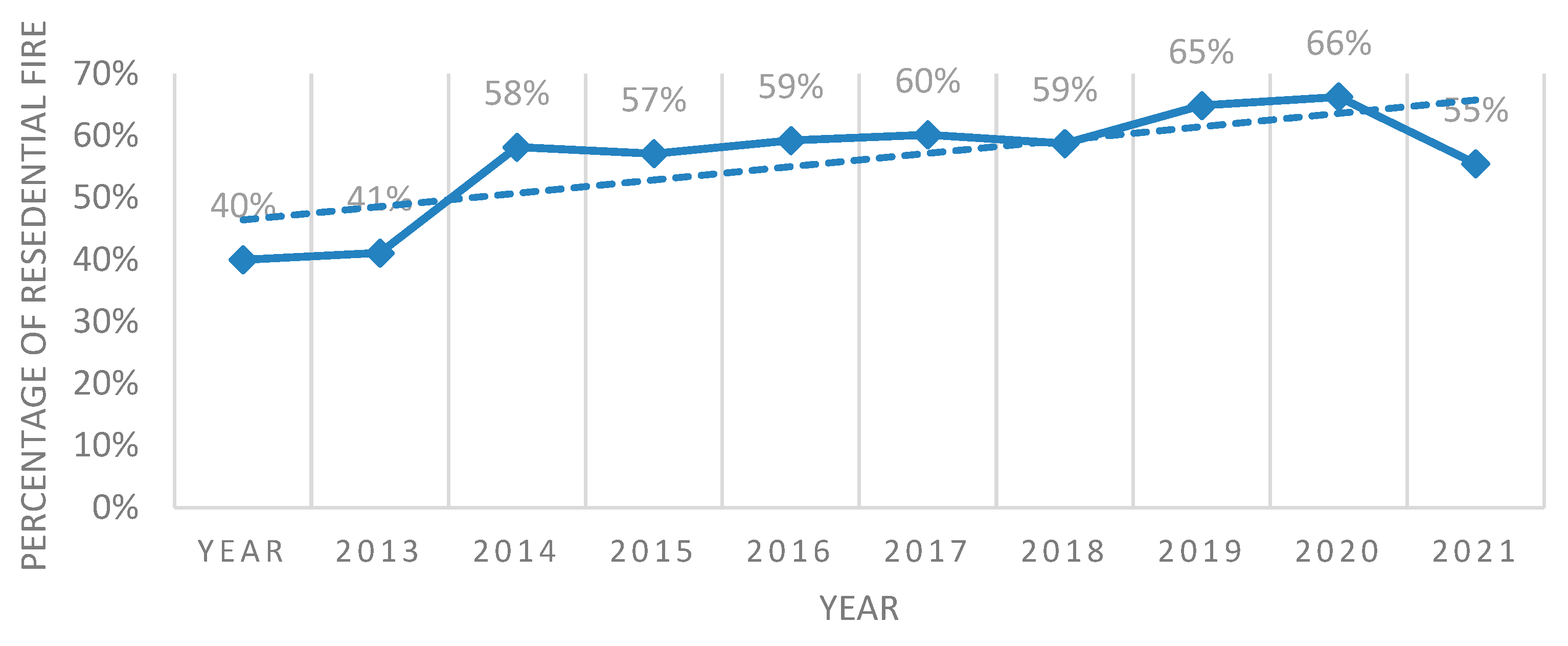
Owing to the high rate of fire accidents in residential buildings in the Emirate of Sharjah, accounting for 55% of the total fire accidents, the performance and efficiency of the Fire Management Systems (FMS) employed in the Emirate of Sharjah are analyzed based on the UAE Ministry of Interior database for 2013 to 2021, which catalogues fire accidents in the Emirate of Sharjah.
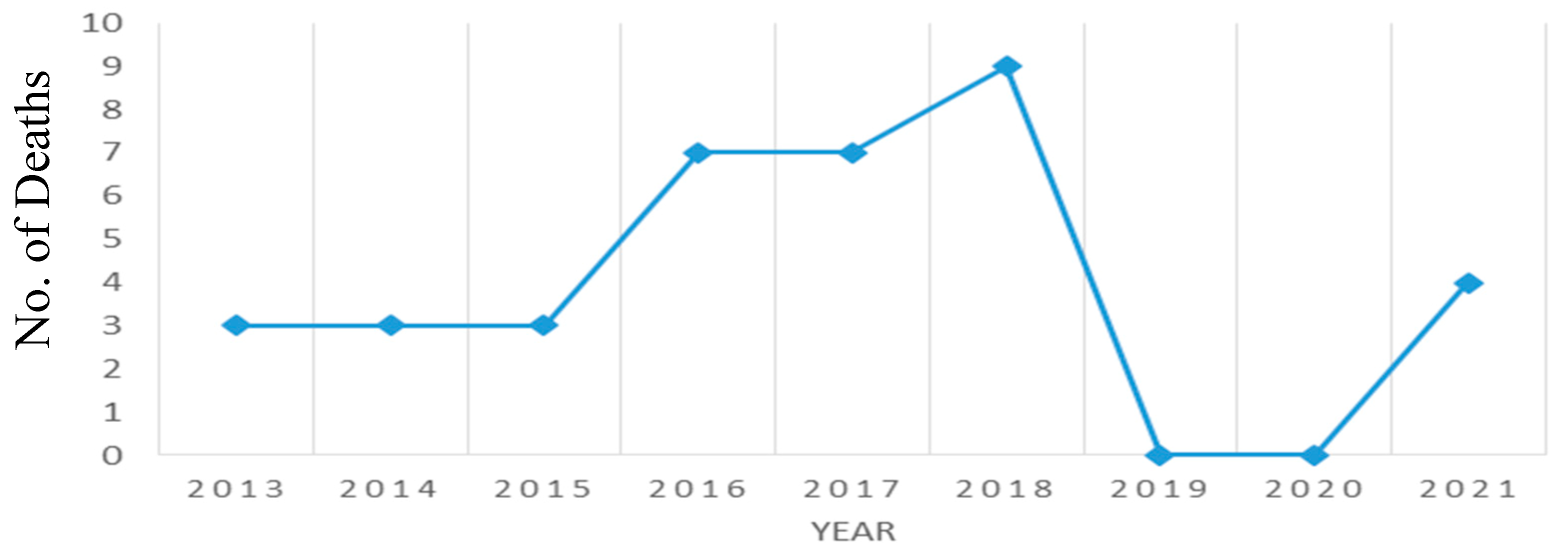
When reviewing the overall rate of fires in the Emirate of Sharjah, we found that the number of deaths due to fires continued to increase from 2013 to 2018, despite the measures implemented by the safety authorities in the Emirate. The date rate was zero in 2019 and 2020 and increased in 2021, as shown in
Figure 2.
During 2013–2018, an increase in the number of fire accidents is observed, as shown in
Figure 3. The number of fires in the residential sector is the highest compared with those in other sectors in the Emirate, such as the industrial sector. The percentage continues to increase until it reaches 67% of total fire accidents in the Emirate in 2021.
During 2013–2021, the average number of fire accidents in the residential sector accounts for 55% of all fire accidents in all sectors, as shown in
Figure 2 [
8]. Owing to the importance of the residential sector, understanding some of the challenges related to fire incident prevention in residential buildings is necessary, based on the economy of the Emirate of Sharjah, good reputation that has been built in the field of real estate development, and impact of fire incidents on the Emirate this study contributes to this understanding. The fire safety performance of buildings required by regulations includes several aspects, such as prevention of ignition, safe egresses, assistance to fire-fighting activity, prevention of structural collapse, and prevention of fire spreading to adjacent buildings [
9],
The challenges facing the fire management system in residential buildings in the Emirate of Sharjah are as follows: There is no framework expressed in a single document called the Fire Framework in the Emirate of Sharjah. Rather, it consists of federal and local legislation issued at different times and administrative practices that were applied by different leaders. The developed framework is intended as a first step toward establishing a performance-based approach to evaluate the expected cost of fire and the optimum investments in fire safety for structures [
10], Fire safety principles rely on ‘fire resistance’ [
11]. The developed framework can be used as a model for the improvement of currently implemented performance improvement initiatives [
12].
The intense competition in the real estate sector between the different emirates in the United Arab Emirates contributes to the lack of tightening of restrictions, legislation, and requirements for fire protection. The great diversity of the population, who come from 200 different nationalities around the world.
2. Methods
Interviews, questionnaires, and Focus Group Discussion were chosen as the instruments to meet the objectives of this research. From academic studies, journals, technical reports, and official publications, data were compiled. The research findings were confirmed by the opinions of the Subject Matter Experts (SMEs). The methodological framework for this study consists of eight step processes: Formulate the dissertation problem statement, containing the finalised subject, objectives, and scope of the investigation. Conduct a full and exhaustive literature study according to the research issue. Select the approaches and methods of data collecting. Collecting data. Analyze the gathered data. Validate acquired data using Subject Matter Experts. Develop the framework using the information from the data analysis and the opinions of the Subject Matter Experts and implement the necessary tools and theories. Validate the proposed framework with the assistance of Subject Matter Experts.
The aim of this research will be achieved through the following objectives:
Identify the factors affecting the performance of the FMS for the residential buildings in the Emirate of Sharjah. Evaluate the factors affecting the performance of the FMS for the residential buildings in the Emirate of Sharjah. Develop an improved framework that enhances the performance of the FMS for the residential buildings in the Emirate of Sharjah. Validate the developed improved framework that enhances the performance of the FMS for the residential buildings in the Emirate of Sharjah.
The research questions will be formulated as follows: What are the factors that affecting the performance of the FMS for residential buildings in the Emirate of Sharjah? What are the critical factors that affect the performance of the FMS for the residential buildings in the Emirate of Sharjah? How to improve the performance of the FMS for the residential buildings in the Emirate of Sharjah? What is the validity of the improved solution that enhances the performance of the FMS for the residential buildings in the Emirate of Sharjah?
The study will be carried out in the Emirate of Sharjah, including all residential buildings, including High Rise Buildings (HRBs), villas, hotels, and any property used for residential purposes. Data will be collected from the Regulatory Authority, the Licensed Body from the Regulatory Authority, and Residents of the Emirates of Sharjah.
The outcome of this study is a framework that will help the Sharjah Civil Defence Authority (SCDA) to improve their current residential building FMS and hence minimises the number of fire accidents in the Emirate of Sharjah. Eventually the proposed framework will help the government of the Emirate of Sharjah to improve the reputation of the Emirate of Sharjah in terms of safety among other Emirates.
The framework will contribute to mitigate the rate of death resulting from fire accidents in the Emirate of Sharjah and will also improves the Emirate preparedness to the climate change and other emergencies which may affect life of people due to the fire risk.
3. Results
The research has successfully met all its objectives aimed at enhancing the FMS in the Emirate of Sharjah. The study's conclusions are consolidated to back the four research goals specified for this study.
3.1. First Research Objective
“Identify the factors affecting the performance of the FMS for the residential buildings in the Emirate of Sharjah.” An extensive literature review and discussion with the subject matter experts in the field of fire in the Emirate of Sharjah were conducted to achieve the first research objective. In response to the first research question, “What are the factors that are affecting the performance of the FMS for residential buildings in the Emirate of Sharjah?”, the answers to this research question were obtained by reviewing scientific studies published in fire-related journals. Nineteen factors affecting the fire management systems were identified in general, and they were classified into four main categories: human factors, management factors, technical factors, and others. The factors identified are fire regulations, fire enforcement regulations, facility management and policies, fire R&D, fire data analysis and availability, accident investigation, public and contractor attitudes, rescue speed, staff assignment, human behavior, fire training, fire knowledge, fire society culture, fire technology, lack or improper maintenance, fire equipment, building design, combustible materials, and climate change.
To find out the factors affecting the performance of FMS in the Emirate of Sharjah, specifically, the factors identified from the literature review were presented to 16 fire Subject Matter Experts (SMEs) in the FMS from different sectors in the Emirate of Sharjah to validate the relevancy of the factors to the context of the Emirate of Sharjah. The SMEs excluded some factors derived from the literature review and added new factors. The factors derived from the literature review currently affecting the FMS in the Emirate of Sharjah and validated by the SMEs are fire regulations, fire enforcement regulations, facilities management and policies, accident investigation, public/contractor attitude, rescue speed, resource allocation, human behavior, fire training, fire knowledge, fire society culture, fire technology, lack or improper maintenance, fire equipment, building design, and combustible materials. The newly added factors are government structure, urban planning, and urbanization.
3.2. Second Research Objective
“Evaluate the factors affecting the performance of the FMS for the residential buildings in the Emirate of Sharjah.” To achieve the second objective, two tools were used for the analysis: the Failure Mode Effect and Criticality Analysis (FMECA) and the Iceberg. FMECA was used to identify the critical factors affecting the FMS in the Emirate of Sharjah, and the Iceberg Model was used to discover the patterns of behavior, supporting structures, and mental models that underlie a particular event in the FMS in the Emirate of Sharjah.
The answer to the second research question, "What are the critical factors that affect the performance of the FMS for the residential buildings in the Emirate of Sharjah?" was achieved via consulting with the subject matter experts in the field of fire in the Emirate of Sharjah. Nineteen factors affecting the fire management system in the Emirate of Sharjah were identified, twelve critical factors were identified based on the criticality of the associated risk. The critical factors identified were fire regulations, fire enforcement regulations, accident investigation, rescue speed, human behavior, fire training, fire knowledge, fire society culture, lack of or improper maintenance, building design, combustible materials, and urbanization.
Five patterns were studied using the Iceberg Model, and it was discovered that 68% of fire accidents took place geographically in four SCDA centers. Data collected from the four centers was analyzed, and it was found that 49% of the residential buildings in the four SCDA centers are outside the scope of the SCDA and include villas that are used for commercial purposes or to house citizens. Another pattern shows that 85% of the causes of the fire accidents were not identified, and the investigation of the fire accidents is carried out by the public prosecution only for the purposes of compensation for insurance companies. Another pattern revealed that the average response time to fire accidents for seven years (2013 to 2019) increased from 4.98 to 6.87 minutes, and the average period for the fire extinguishment increased from 19.99 to 25.34 minutes. Analysis of the results shows that 62% of the fire accidents occurred during the night, and 80% of the residential buildings do not comply with the SCDA's fire requirements.
3.3. Third Research Objective
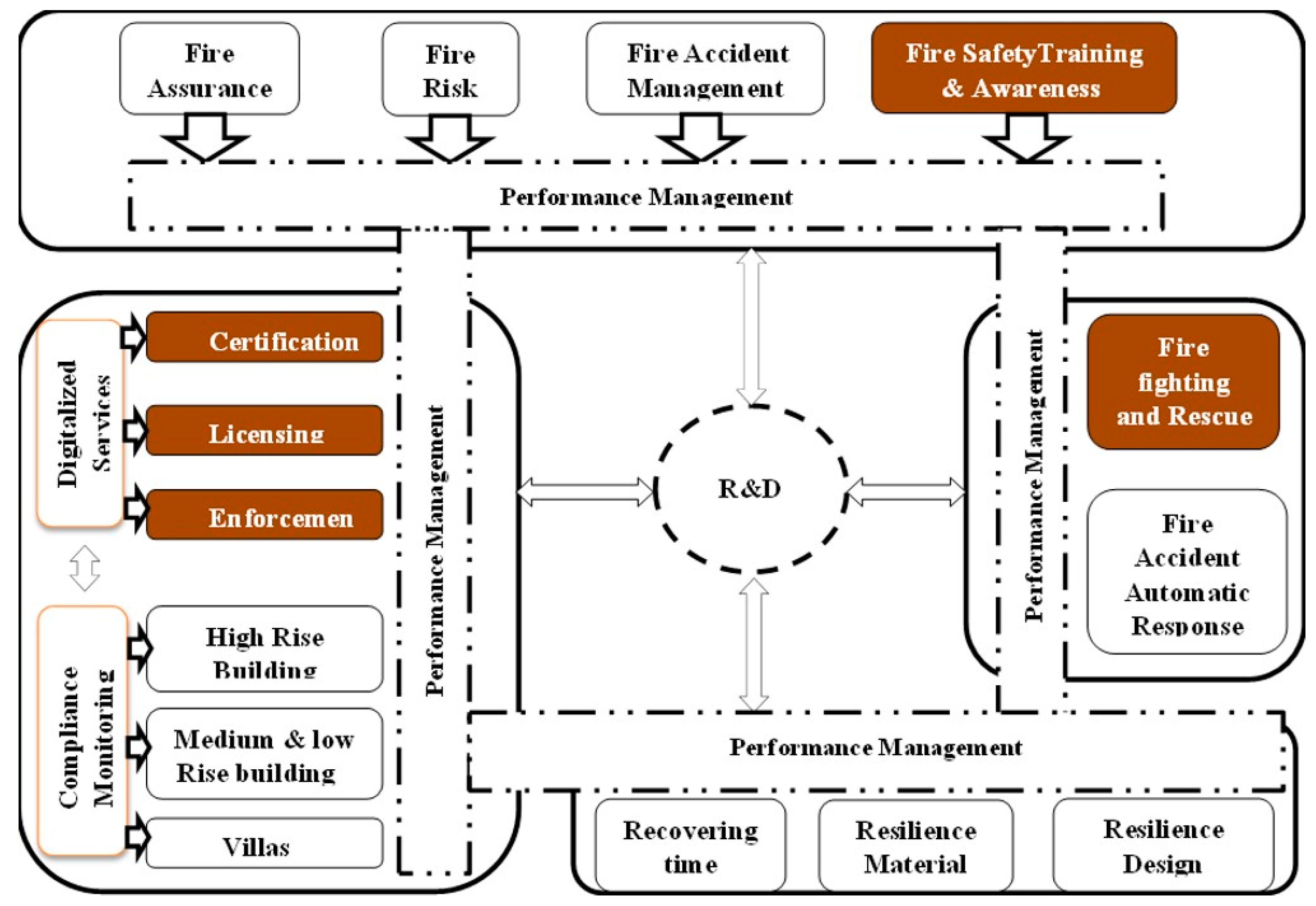
“Develop an improved framework that enhances the performance of the FMS for the residential buildings in the Emirate of Sharjah.” The aim of this dissertation is to develop an improved FMS framework that enhances the performance of the existing FMS in the Emirate of Sharjah. To answer the research question, “How to improve the performance of the FMS for the residential buildings in the Emirate of Sharjah?”, the proposed improved framework was developed based on the literature review, subject matter expert opinions, and benchmarking with the best practices. System Thinking Theory was adopted to look at the wholes and relationships among all the framework elements (stakeholders and their respective agencies) and develop the effective actions. The proposed improved framework includes four main components: two existing elements, which are the protection and response (reactive system), and to make the FMS preventive and eventually proactive, two new components were added, which are the response and resilience. Each element contains some components; the prevention component includes six elements: fire assurance, fire risk, accident management, training and awareness, R&D, and performance management. The protection element includes three components: the compliance system, the High-Rise Building (HRB) self-compliance indicator, and digitalized services. The response element includes four components: the automated fire response system, response effectiveness, and the early warning system; 24/7 Aman, HRBFI compliance, and the resilience component.
3.4. Fourth Research Objective
The fourth objective of this research is “to validate the developed improved framework that enhances the performance of the FMS for the residential buildings in the Emirate of Sharjah.” The proposed improved framework was assessed via SMEs using the Delphi Technique. The members of the panel concluded that the proposed improved framework that enhances the performance of the FMS for the residential buildings in the Emirate of Sharjah is feasible, suitable, usable, and useful. Furthermore, suggestions and comments from SMEs were considered and used to improve the proposed improved framework as shown in
Figure 4.
4. Conclusions
This study contributes to the existing knowledge related to FMS in both theory and practice. For the Theoretical Contributions shown in the list of general factors affecting the FMS in the Emirate of Sharjah. The model of identification of general factors affecting the FMS through an extensive review of the literature and proper collaboration with the subject matter experts is carried out to conclude the general factors, specifically factors related to the Emirate of Sharjah, to assist the Sharjah government and researchers in understanding the factors affecting the FMS in the Emirate of Sharjah and in other places with similar context.
Proper methodology was selected to evaluate the failure modes for the general factors affecting the FMS in the Emirate of Sharjah. Proper communication with the subject matter experts was conducted and presented as a model for FMS factors identification.
A detailed study was conducted as a model on the FMS in the Emirate of Sharjah to identify the critical factors affecting the FMS related to residential buildings. Thus, the method adopted in this study (System Thinking Theory) could be replicated to identify the causes of any events and propose solutions.
In Practical Contributions The development of a framework to improve the FMS in the Emirate of Sharjah. The main contribution of this study to knowledge is the development of the proposed framework for the existing FMS in the Emirate of Sharjah. The aim of the improved framework is to guide the Sharjah Government through a structured and procedural approach to improve the current performance of FMS in the Emirate of Sharjah.
The developed framework can be implemented as a model for managing the fire system in an effective and sustainable manner in an area classified as one of the hottest regions of the globe and in areas with similar context. The developed framework presents a model for the method of transforming fire management systems from reactive to preventive and eventually to proactive. It can be used as a model for continuous improvement and achieving high performance. The framework includes tools for continuous improvement through feedback loops. To get the maximum value, the framework combines the rationing of existing administrative systems and the use of the Fourth Industrial Revolution (IR4.0) concept via reducing human intervention, increasing interconnectivity, and getting live data to automate and optimize the decision-making process.
The proposed framework includes a high-rise building fire indicator tool that can be used to measure the level of compliance of high-rise buildings with the requirements of fire system management legislation, and at the same time, it provides the minimum requirements for compliance. Through this indicator, it is possible to know the high-rise buildings that are exposed to fires and have a stronger wall of protection from fire risks.
The development of the Response Efficiency Indicator tool, this indicator is considered a model for measuring the efficiency of the response variables. The most important variables are firstly, the percentage of residential towers that comply with the requirements of the Emirate of Sharjah fire legislation; secondly, the geographical distance of the residential tower from the nearest Civil Defence fire station; and thirdly, the height of the tower in terms of the number of residential floors. The increase in the height of the residential tower increases the level of compliance required by the legislation; the taller towers need a higher compliance rate for the success of the response, and the towers at a far distance from the firefighting station need a higher compliance rate than those close to the fire stations. The model is a tool that can be used by the SCDA and the owners of residential buildings to determine the minimum required level of compliance, based on the geographical location, the number of residential floors in the tower, and other variables.
Recommendations for Future Work
To elaborate on the novel findings from this study, the following recommendations for future research are presented:
Investigate the operational mechanisms of private sector entities within the Emirate of Sharjah's FMS (Fire Management System). This exploration should delve into the specific procedures implemented by these entities and the qualifications held by their employees.
Examine the fire regulations pertaining to private residences, including villas, with the aim of incorporating them into the jurisdiction of the Sharjah Civil Defence Authority.
Extend similar research endeavours to other Emirates in the UAE to identify any gaps. By analysing federal data from the UAE, the proposed framework in this study can be refined and enhanced.
Author Contributions
Musab Omar: Writing – original draft, Visualization, Investigation, Conceptualization, Data curation. DR.ABDELGADIR MAHMOUD: Supervision, Methodology, review & Validation, all authors have read and agreed to the published version of the manuscript.
Funding
This research received no external funding.
Informed Consent Statement
Study did not involve humans.
Data Availability Statement
The data presented in this study are available on reasonable request from the corresponding author.
Conflicts of Interest
The authors declare no conflict of interest.
References
- Yang, P.; Tan, X.; Sun, H.; Chen, D.; Li, C. LES field model-based fire accident reconstruction with the OED method and its experimental validation. Fire Saf. J. 2013, 58, 74–83. [Google Scholar] [CrossRef]
- Yagoub, M. and A.M. Jalil, Urban fire risk assessment using GIS: Case study on Sharjah, UAE. International Geoinformatics Research and Development Journal 2014, 5, 1–8. [Google Scholar]
- UAE.MOI, UAE Ministry of Interior report 2019. 2019.
- Himoto, K.; Suzuki, K. Computational framework for assessing the fire resilience of buildings using the multi-layer zone model. Reliab. Eng. Syst. Saf. 2021, 216, 108023. [Google Scholar] [CrossRef]
- Yang, R.; Zang, Y.; Yang, J.; Wakefield, R.; Nguyen, K.; Shi, L.; Trigunarsyah, B.; Parolini, F.; Bonomo, P.; Frontini, F.; et al. Fire safety requirements for building integrated photovoltaics (BIPV): A cross-country comparison. Renew. Sustain. Energy Rev. 2022, 173, 113112. [Google Scholar] [CrossRef]
- Sharjah, T.E.o. The Emirate of Sharjah Amiri Decree No.14 of 2019. 2019. 2019.
- Smith, T.D.; Hughes, K.; DeJoy, D.M.; Dyal, M.-A. Assessment of relationships between work stress, work-family conflict, burnout and firefighter safety behavior outcomes. Saf. Sci. 2018, 103, 287–292. [Google Scholar] [CrossRef]
- UAE.MOI, The United Arab Emirate Ministry of Interior Report 2021. 2022.
- Himoto, K. Conceptual framework for quantifying fire resilience – A new perspective on fire safety performance of buildings. Fire Saf. J. 2021, 120, 103052. [Google Scholar] [CrossRef]
- Ni, S.; Gernay, T. A framework for probabilistic fire loss estimation in concrete building structures. Struct. Saf. 2020, 88, 102029. [Google Scholar] [CrossRef]
- Cowlard, A. , et al., Some considerations for the fire safe design of tall buildings. International Journal of High-Rise Buildings 2013, 2, 63–77. [Google Scholar]
- Osman, M.I.; Mohammad, R.; Yusof, S.; Chelliapan, S. Development of an operational excellence framework for organisational performance improvement in the Sudanese aviation industry. J. Ind. Eng. Manag. 2021, 14, 681–700. [Google Scholar] [CrossRef]
|
Disclaimer/Publisher’s Note: The statements, opinions and data contained in all publications are solely those of the individual author(s) and contributor(s) and not of MDPI and/or the editor(s). MDPI and/or the editor(s) disclaim responsibility for any injury to people or property resulting from any ideas, methods, instructions or products referred to in the content. |
© 2024 by the authors. Licensee MDPI, Basel, Switzerland. This article is an open access article distributed under the terms and conditions of the Creative Commons Attribution (CC BY) license (http://creativecommons.org/licenses/by/4.0/).