Preprint
Data Descriptor

This version is not peer-reviewed.

Deep Learning Workflow and Dataset for Deep Learning Image Classification of Ulcerative Colitis and Colorectal Cancer

A peer-reviewed article of this preprint also exists.

Submitted:

31 December 2024

Posted:

03 January 2025

Read the latest preprint version here

Abstract

Inflammatory bowel disease (IBD) is a chronic inflammatory condition of the gastrointestinal tract characterized by the deregulation of immuno-oncology markers. IBD includes ulcerative colitis and Chron disease. Chronic active inflammation is a risk factor for the development of colorectal cancer (CRC). Deep learning is a form of machine learning that is applicable to computer vision, and it includes algorithms and workflows used for image processing, analysis, visualization, and algorithm development. This publication describes a dataset of histological images of ulcerative colitis, colorectal cancer (adenocarcinoma), and colon control. The samples were stained with hematoxylin and eosin, and immunohistochemically analyzed for LAIR1 and TOX2. The methods used for collecting and producing the data, analysis using convolutional neural networks (CNNs), where the dataset can be found, and information about its use are also described. This paper is the companion manuscript of the recently published article “Ulcerative Colitis, LAIR1 and TOX2 Expression, and Colorectal Cancer Deep Learning Image Classification Using Convolutional Neural Networks” published in Cancers 2024, 16, 4230. https://doi.org/10.3390/cancers16244230.

Keywords: 
;  ;  ;  ;  ;  ;  ;  ;  ;  ;  ;  

1. Summary

1.1. Ulcerative colitis

Inflammatory bowel disease (IBD) is a chronic inflammatory condition of the gastrointestinal tract with systemic repercussions that is characterized by relapsing and remitting episodes of inflammation [1,2]. IBD includes two types: ulcerative colitis, which affects the colon, and Chron disease, which can affect any part of the gastrointestinal tract from the mouth until the perianal area [1,2,3,4,5,6,7,8,9].
The causes and pathogenesis of inflammatory bowel disease are unclear. However, it appears to be a combination of factors from the environment, including the microbiome [10,11], genetic susceptibility [12,13], and immune system (both systemic and gut) [13,14,15,16]. The prevalence of inflammatory bowel disease has increased globally in recent decades, particularly in industrialized countries [17,18,19,20,21]. Clinical risk factors include smoking [22], low physical activity, low fiber intake, high fats, and low vitamin D [23], sleep deprivation, previous acute gastroenteritis, antibiotic use, and early life exposures [24].
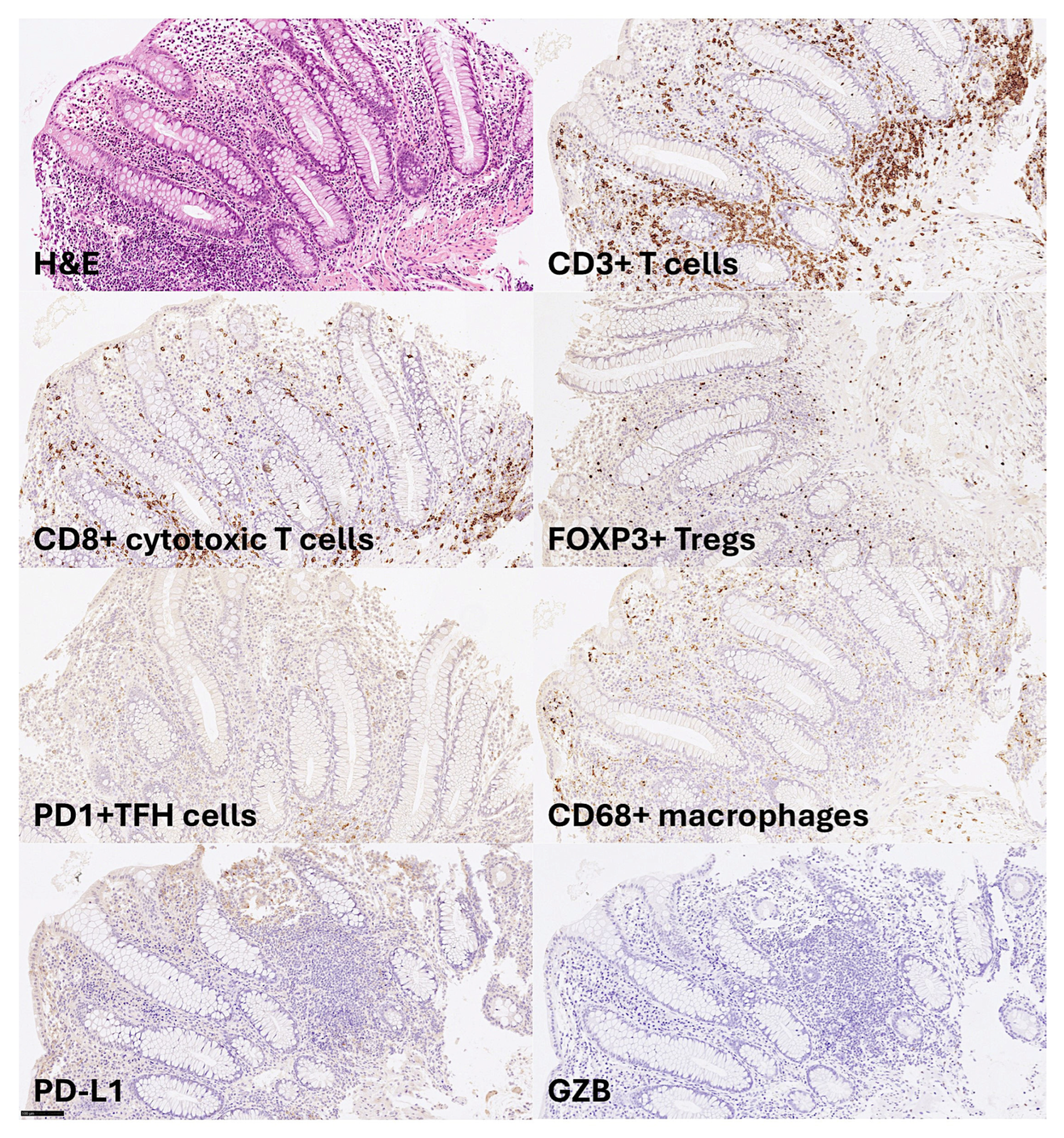
In normal conditions and in healthy status, the intestinal barrier is kept thanks to the mucus layer and epithelial cells that create bonds using the tight junctions. This barrier is supported by the presence of IgA and several antimicrobial factors. The immune response is initiated by dendritic cells that acquire, process, and present the antigens to B and T cells (lymphocytes) [25]. The cause of ulcerative colitis is still not completely understood. Ulcerative colitis is associated with a damage of the barrier of the mucosa, with an alteration of the microflora and the generation of an uncontrolled immune reaction. Several subsets of CD4-positive T cell are believed to participate in the pathogenesis of ulcerative colitis including Th1, Th2, Th9, Th17, Th22, TFh cells, and Tregs [26,27].Th9 are associated with continuous apoptosis of the enterocytes and inhibit mucosal healing [25,28]. IL-13 and NK/T cells are also involved in the epithelial injury [25]. Innate immune cells contribute to the cytokine production and continuous inflammation [14,15,29]. The injury of the mucosa is associated with dysbiosis [30], which is defined by an alteration of the composition of the mucosa, with changes of the diversity, increased potentially pathogenic bacteria, and reduced beneficial bacteria [31]. Figure 1 shows an example of ulcerative colitis and immunohistochemistry of the cells involved in the pathogenesis.
The disease activity of ulcerative colitis is being recorded to properly treat patients and perform clinical trials. Usually, the severity is classified as mild, moderate, and severe. The available classifications include the Mayo [32], Montreal [33], Truelove, and Witts classifications [34]. The grade of mucosal inflammation can be assessed using endoscopy to record the degree of mucosal ulceration and the extent of disease. This can be graded using the Mayo score [32] and Baron score. The degree of histological severity can be evaluated using the Geboes score [35].
Microscopic (histologic) evaluation of ulcerative colitis shows active chronic colitis in patients with untreated disease. Disease activity is defined by neutrophil infiltration of the lamina propria, cryptitis, crypt abscess, and ulceration. The inflammation is limited to the mucosa and submucosa. Compared with Crohn disease, this condition is associated with a lack of transmural inflammation, granuloma, and fissuring ulcers. Dysplasia may be present in long-term disease [36,37,38].
Disease activity can be evaluated using various parameters. Inactive disease lacks neutrophils. If the activity affects less than 50% of the mucosa, it is called mild. When it is > 50% and there are crypt abscesses, it is called moderate. Finally, severe activity is characterized by surface ulcerations and erosion [39].
The first-line therapy for the induction and maintenance of remission of mild to moderate UC is 5-aminosalicylic acid [40]. The initial therapy for ulcerative colitis is topical mesalamine, which is available as a suppository or enema, and it is recommended in cases of ulcerative proctitis or proctosigmoiditis. If topical mesalamine is not tolerated, an alternative therapy is topical glucocorticoids (i.e. hydrocortisone). A combination of 5-ASA and rectal mesalamine may be used for left-sided or extensive colitis. The 5-ASA formulations include mesalamine, sulfasalazine, and diazo-bonded 5-ASA. Patients who do not respond may subsequently be treated with glucocorticoids such as budesonide, which may escalate to prednisone or biological agents (anti-TNF, anti-integrin, anti-IL12/23, S1P modulators, JAK inhibitors) [40,41,42,43]. Patients who do not respond to oral glucocorticoids may require intravenous glucocorticoids. In some cases, surgery is performed [40,41,42,43]. Fecal microbiota transplantation is also available [44].
Figure 1. Pathogenesis of ulcerative colitis and cells of the immune microenvironment. Ulcerative colitis is a chronic inflammatory condition that affects the colon. The incidence of ulcerative colitis has been increasing in the last decades. The pathogenesis is multifactorial including genetic predisposition and an alteration of the immune tolerance and homeostasis of the mucosa. Several immune cells are involved. This figure shows the immunohistochemical staining of CD3-positive T lymphocytes, CD8-positive cytotoxic T lymphocytes, FOXP3-positive regulatory T lymphocytes (Tregs), PD-1-positive follicular T helper cells (TFH), and CD68-positive macrophages.
Preprints 144664 g001

1.2. Colorectal cancer

Colorectal cancer (CRC) is a common disease characterized by environmental and genetic factors. It is the third most frequently diagnosed cancer worldwide [45]. There are several factors associated with early onset of CRC, including hereditary syndromes (familial adenomatous polyposis and Lynch syndrome), metabolic dysregulation, history of CRC in first-degree relative; alcohol consumption, lack of regular use of nonsteroidal anti-inflammatory drugs (NSAIDs), and vitamin D intake. Other known risk factors of CRC include inflammatory bowel disease (ulcerative colitis and Crohn disease), abdominopelvic radiation, obesity, diabetes mellitus, insulin resistance, red and processed meat, and tobacco [46,47,48,49]. The diagnosis is usually made by colonoscopy, and treatment includes surgical resection, adjuvant chemotherapy, and postoperative radiation therapy [46]. Adenocarcinoma is the most common histological subtype of CRC. Adenocarcinoma is a glandular neoplasm. Most CRC cases are moderately differentiated with simple, complex, or slightly irregular tubules, and loss of nuclear polarity. The glands are often cribriform, with necrosis, inflammatory cells, and marked desmoplasia [50,51,52].

1.3. Computer vision for deep learning image classification

Image processing involves algorithms and workflows used for image processing, analysis, visualization, and algorithm development. Computer vision workflows [53] with deep learning include several types of functions, such as image classification, object detection, and instance segmentation, automated visual inspection, semantic segmentation, and video classification [54,55,56].
A pretrained neural network that has already learned how to extract the characteristics of natural images can be used as a starting point to handle new images. Using a pretrained image classification network [57], the learning time is shorter, and training is usually easier. The transfer learning process takes layers from an already trained neural network and calibrates the parameters on a new dataset [54,55,56,58,59,60,61,62,63,64,65]. The analysis includes a series of steps, including preprocessing the data, import pre-trained networks from platforms such as TensorFlow 2 [66], TensorFlow-Keras [67], Pythorch [68], and ONNX [69], building network, selecting training options, improving the network performance by tuning hyperparameters, visualizing and verifying network behavior during and after training, and exporting the network to other platforms if necessary[54,55,56,58,59,60,61,62,63,64,65].
The most important features of a neural network are accuracy, speed, and size. A good neural network is characterized by being fast and having good performance (i.e. accurate). Neural networks that are accurate in ImageNet can be used to classify other images using transfer learning or feature extraction. Among the various neural networks, the best examples are GoogLeNet, ResNet-18, NobileNet, ResNet-50, ResNet-101, and Inception-v3 [56].

1.4. Dataset and research project description

Ulcerative colitis is a chronic inflammatory bowel disease associated with a high risk of colorectal cancer. This study used convolutional neural networks and computer vision to classify histological images of ulcerative colitis, colorectal cancer (adenocarcinoma), and colon control.
The series included 35 patients with of ulcerative colitis, 18 with colorectal cancer, and 21 with colon control. Hematoxylin and eosin (H&E) glass slides were converted into high-resolution digital data by high-speed scanning. The whole-tissue slides were split into image patches of 224×224 pixels at 200× magnification and 150 dpi, and the ResNet-18 network was retrained to classify the 3 types of diagnosis. This transfer learning experiment also used other pretrained CNNs for performance comparison, and the gradient-weighted class activation mapping (Grad-CAM) heatmap technique was used to understand the classification decisions.
Additionally, immunohistochemical analysis of two new immuno-oncology markers, LAIR1 and TOX2 were analyzed in ulcerative colitis to differentiate between mesalazine-responsive and steroid-requiring patients. LAIR1 an inhibitory receptor that plays a constitutive negative regulatory role in the cytolytic function of natural killer (NK) cells, B-cells and T-cells [70,71,72]. TOX2 is a new marker similar to PD-1 in the co-inhibitory pathway [70,73].
Statistical analyses showed that steroid-requiring ulcerative colitis was characterized by higher endoscopic Baron and histologic Geboes scores and LAIR1 expression, but lower TOX2 expression in isolated lymphoid follicles. The CNN managed to classify the 3 diagnoses with >99% accuracy and the Grad-CAM confirmed which parts of the images were relevant for the classification. In conclusion, the study showed that CNNs are essential tools for deep learning image recognition.
These results were published as preprints [74].
This paper is the companion manuscript of the recently published article “Ulcerative Colitis, LAIR1 and TOX2 Expression, and Colorectal Cancer Deep Learning Image Classification Using Convolutional Neural Networks” published in Cancers 2024, 16, 4230. https://doi.org/10.3390/cancers16244230.

2. Data Description

The dataset contains image patches of ulcerative colitis, colorectal cancer, and colon control. The image patches were split from whole-tissue images and had a size of 224 × 224. The original magnification of the images was 200× and a dpi of 150. The image patches are anonymized. After splitting the images, the patches were filtered. The filtering criteria were as follows: (1) image patches of not 243×243 size; (2) image patches less than 5-31 KB that usually do not contain tissue; (3) image patches that did not contain diagnostic areas based on histopathological criteria; (4) image patches with artifacts such as broken and folded tissue and wrongly stained. Steps 3 and 4 are medical specialist in pathology curated.
The investigations were carried out following the rules of the Declaration of Helsinki of 1975 (website: https://www.wma.net/policies-post/wma-declaration-of-helsinki/; last accessed on December 12, 2024), revised in 2008. Approval from an ethics committee was obtained before undertaking the research (protocol code IRB14R-080, IRB20-156, and 13R-119).

3. Methods

3.1. Hematoxylin and eosin (H&E) staining

H&E staining is widely used in histological and cytological applications, both in fixed paraffin-embedded and frozen tissue sections. Hematoxylin produces an intense blue staining of the nuclei. Eosin stains the cytoplasm, collagen, muscle, and erythrocytes in light pink/rose. Staining was performed using a Leica ST5010-CV5030 integrated stainer workstation (Leica Biosystems K.K., Shinjuku, Tokyo, 169-0075, Japan).

3.2. Score evaluation

The endoscopic scores for chronic inflammatory bowel disease were evaluated using the Baron Score, which classifies mucosal changes into 3 grades. Ulcerative colitis histological assessment was performed using the Geboes score. Table 1 and Table 2 present the Baron and Geboes scores, respectively.

3.3. Immunohistochemistry

The immunohistochemistry of LAIR1 and TOX2 was performed using a Bond-Max fully automated immunohistochemistry and in situ hybridization staining system following the manufacturer’s instructions (Leica Biosystems K.K.). Visualization of the primary antibody bound to the tissue sections was performed using BOND Polymer Refine Detection (DS9800, Leica Biosystems K.K.). Coverslipping was achieved using a Leica CV5030 fully automated glass coverslipper (Leica Biosystems K.K.).
The primary antibody targeted the leukocyte-associated immunoglobulin-like receptor (LAIR1/CD305) created by the Monoclonal Antibodies Core Unit, located at the Spanish National Cancer Research Center (CNIO: Centro Nacional de Investigaciones Oncologicas; C/ Melchor Fernandez Almagro, 3, E-28029 Madrid, Spain). LAIR1 is a rat monoclonal antibody, clone JAVI82A, antigen used: RBL-1-LAIR1-MYCDDK transfected cells and last booster with LAIR1 recombinant (Gln22-His163, with a C-terminal 6-His tag); isotype IgG2a; reactivity, human; localization, membrane.
The primary antibody TOX2 targeted the TOX High Mobility Group Box Family Member 2 and was also developed by CNIO. Properties: clone name TOM924D, rat monoclonal, IgG2b K, antigen HIS-SUMO-hTOX2-Strep-tag2 full-length protein, human reactivity, nuclear localization.
Rabbit Anti-Rat IgG Antibody (H+L), Mouse Adsorbed, Unconjugated (#AI-4001-.5, Vector Laboratories, Inc., Newark, CA 94560, United States) was used as a linker between primary antibodies and BOND Polymer Refine Detection.

3.4. Whole-slide imaging

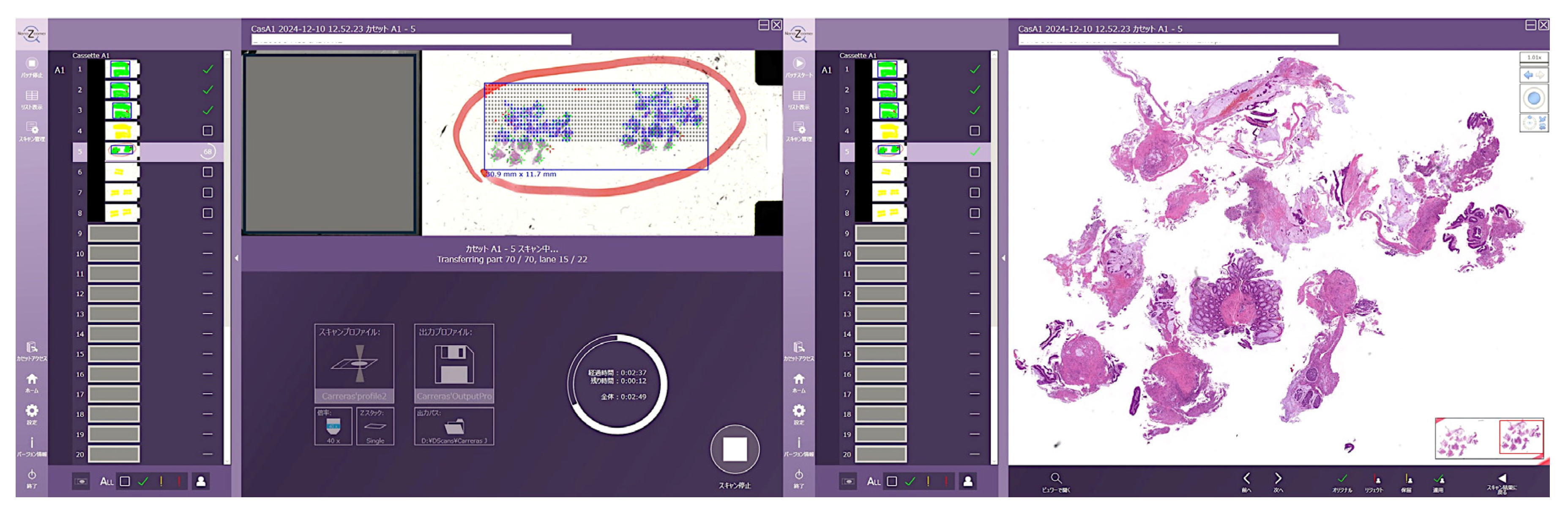
Whole-slide imaging was performed using a Hamamatsu NanoZoomer S360 scanner (Hamamatsu Photonics K.K., Hamamatsu City, 431-3196, Japan) that rapidly scanned glass slides to convert them to digital data, NZAcquire 1.2.0 software (Hamamatsu Photonics K.K.), and a Dell Precision 5820 Tower equipped with an Intel(R) Xeon(R) W-2135 CPU @ 3.70 GHz 3.70 GHz, 32.0 GB RAM, 64 bits workstation system. The operating system was Windows 10 Pro for Workstations (version 1803, build 17134.1).
The acquisition method was performed following the manufacturer’s instructions. The scan was batch scan-type, at 400× magnification, and single z stack. The number of focus points was defined automatically using NZAcquire software.
Figure 1. Whole-slide imaging. The glass slides were converted to digital data using a Hamamatsu NanoZoomer S360 scanner that scanned the slides at 400× magnification.
Preprints 144664 g002

3.5. Digital image quantification

Conventional immunohistochemical analysis was performed using digital image quantification with Fiji software, as previously described [75,76,77,78]. In summary, quantification was performed in the blue stack, min and max thresholds were set, pixels were measured, and percentages were calculated.

3.6. Image classification using CNNs

A convolutional neural network (CNN) was designed based on transfer learning from ResNet-18; and trained to classify the 3 types of image patches; ulcerative colitis (n= 9,281), colon control (n = 12,246), and colorectal cancer (n = 63,725). The CNN was also trained to differentiate between mesalazine-responsive and steroid-requiring ulcerative colitis based on H&E, LAIR1, and TOX2 staining (Figure 2).
The data were partitioned into a training set (70% of the image patches) to train the network, a validation set (10%) to test the performance of the network during training, and a test set (20%) as a holdout (new data) to test the performance on new data.
The order of the images was randomized to ensure that the network learned the classes at a more even rate. As transfer learning (adjustment of a pre-trained network) was performed on ResNet-18, the fully connected and classification layers were removed and replaced with new layers with an output size of 2. Augmentation was not performed during training. To avoid overfitting, the initial learning rate was set to 0.001. The number of maximum epochs was set to five [74].
Data normalization was applied to the input images: imageInputLayer (an image input layer inputs 2-D images to a neural network and applies data normalization), and batchNormalizationLayer (a batch normalization layer normalizes a mini-batch of data across all observations for each channel independently. To speed up training of the convolutional neural network and reduce the sensitivity to network initialization, batch normalization layers are used between convolutional layers and nonlinearities, such as ReLU layers. Layer = batchNormalizationLayer (Name, Value) creates a batch normalization layer and sets the optional TrainedMean, TrainedVariance, Epsilon, Parameters and Initialization, Learning Rate and Regularization, and Name properties using one or more name-value pairs. After normalization, the layer scales the input with a learnable scale factor γ and shifts it by a learnable offset β) [79,80].
The trained network was characterized by 71 layers. The first layer was the “ImageInputLayer”, and the last one the “ClassificationOutputLayer” (Table 3).
To train the network using the specified options and training data, the following code was used:
[net, traininfo] = trainNetwork(augimdsTrain,lgraph,opts);
The training options were as follows:
opts = trainingOptions("sgdm",...
  "ExecutionEnvironment","auto",...
  "InitialLearnRate",0.001,...
  "MaxEpochs",5,...
  "Shuffle","every-epoch",...
  "Plots","training-progress",...
  "ValidationData",augimdsValidation);
Table 4. Design and training parameters
ResNet-18-Based CNN Training (70%) Validation (10%) Training Options
Input type: image patches
Output type: classification
Number of layers: 71
Number of connections: 78
Observations: 59,677
Classes: 3
Ulcerative colitis: 6497
Colorectal cancer: 44,608
Colon control: 8572
Observations: 8525
Classes: 3
Ulcerative colitis: 928
Colorectal cancer: 6372
Colon control: 1225
Solver: sgdm
Initial learning rate: 0.001
MiniBatch size: 128
MaxEpochs: 5
Validation frequency: 50
Iterations: 2330
Iterations per epoch: 466
Additional detailed training options
Import images: augmentation options, none.
Solver: momentum, 0.9.
Learn rate: LearnRateSchedule, none; LearnRateDropFactor, 0.1; LearnRateDropPeriod, 10.
Normalization and Regularization: L2Regularization: 0.0001; ResetInputNormalization, yes; BatchNormalizationStatistics, population.
Mini-Batch: Shuffle, every-epoch.
Validation and Output: ValidationPatience, Inf; OutputNetwork, last-iteration.
Gradient Clipping: GradientThresholdMethod, I2norm; GradientThreshold, Inf.
Hardware: ExecutionThreshold, auto.
Checkpoint: CheckpointPath, n/a; CheckpointFrequency, 1; CheckpointFrequencyUnit, epoch.
Based on transfer learning of ResNet-18. Convolutional neural network, CNN.
In this study, the image patches of the three diagnoses were pooled and later split into training, validation, and test sets. However, this strategy can create an information leak. Therefore, an additional independent series of 10 cases of colorectal cancer (adenocarcinoma) were classified to confirm the performance of the trained CNN (based on ResNet-18 architecture). In this analysis, each patient was analyzed independently [74].
Of note, other types of CNNs were tested in this study. LAIR1 and TOX2 biomarkers were included into the CNN training in an independent analysis from the H&E staining. A differentiation between steroid-requiring (SR) and mesalazine-responsive ulcerative colitis using LAIR1 and TOX2 immunohistochemistry.
The performance parameters were the following: accuracy, precision, recall, F1-Score, specificity, and false positive rate.
The performance of ResNet-18 was compared with the one of other CNNs under same experimental conditions, including DenseNet-201, ResNet-50, Inception-v3, ResNet-101, ShuffleNet, MobileNet-v2, NasNet-Large, GoogLeNet-Places365, VGG-19, EfficientNet-b0, AlexNet, Xception, VGG-16, GoogLeNet, and NasNet-Mobile.

3.7. Computational requirements

All analyses were performed using a desktop computer equipped with an AMD Ryzen 9 7950X CPU (AMD Japan Ltd., Marunouchi, Chiyoda-ku, Tokyo, Japan), 128 Gb of RAM, and an Nvidia GeForce RTX 4090 graphics card (Nvidia, Minato-ku, Tokyo, Japan; ROG Strix GeForce RTX® 4090 OC Edition 24GB GDDR6X).

3.8. Limitations

This project has the limitation of the number of cases. In future, the series will be expanded and the trained network retrained to improve the parameters and adapt to different types of images and experimental conditions.
This project has not used the most state-of-the-art CNNs. The aim of this study was to translate the methodology to routine diagnosis. Therefore, reliable and simple methodology was needed. On the other hand, the strength of the study was the pathologist-curated histological dataset of images.

4. Results

This paper is the companion manuscript of the recently published article “Ulcerative Colitis, LAIR1 and TOX2 Expression, and Colorectal Cancer Deep Learning Image Classi-fication Using Convolutional Neural Networks” published in Cancers 2024, 16, 4230. https://doi.org/10.3390/cancers16244230. The abstract is the following:
Background: Ulcerative colitis is a chronic inflammatory bowel disease of the colon mucosa associated with a higher risk of colorectal cancer. Objective: This study classified hematoxylin and eosin (H&E) histological images of ulcerative colitis, normal colon, and colorectal cancer using artificial intelligence (deep learning).
Methods: A convolutional neural network (CNN) was designed and trained to classify the three types of diagnosis, including 35 cases of ulcerative colitis (n = 9281 patches), 21 colon control (n = 12,246), and 18 colorectal cancer (n = 63,725). The data were partitioned into training (70%) and validation sets (10%) for training the network, and a test set (20%) to test the performance on the new data. The CNNs included transfer learning from ResNet-18, and a comparison with other CNN models was performed. Explainable artificial intelligence for computer vision was used with the Grad-CAM technique, and additional LAIR1 and TOX2 immunohistochemistry was performed in ulcerative colitis to analyze the immune microenvironment.
Results: Conventional clinicopathological analysis showed that steroid-requiring ulcerative colitis was characterized by higher endoscopic Baron and histologic Geboes scores and LAIR1 expression in the lamina propria, but lower TOX2 expression in isolated lymphoid follicles (all p values < 0.05) compared to mesalazine-responsive ulcerative colitis. The CNN classification accuracy was 99.1% for ulcerative colitis, 99.8% for colorectal cancer, and 99.1% for colon control. The Grad-CAM heatmap confirmed which regions of the images were the most important. The CNNs also differentiated between steroid-requiring and mesalazine-responsive ulcerative colitis based on H&E, LAIR1, and TOX2 staining. Additional classification of 10 new cases of colorectal cancer (adenocarcinoma) were correctly classified.
Conclusions: CNNs are especially suited for image classification in conditions such as ulcerative colitis and colorectal cancer; LAIR1 and TOX2 are relevant immuno-oncology markers in ulcerative colitis.

Author Contributions

Conceptualization, J.C.; methodology, J.C., G.R. and R.H.; software, J.C.; formal analysis, J.C.; primary antibodies, J.C. and G.R.; writing—original draft preparation, J.C.; writing—review, J.C. and R.H.; funding acquisition, J.C. and R.H. All authors have read and agreed to the published version of the manuscript.

Funding

This research was funded by the Ministry of Education, Culture, Sports, Science, and Technology of Japan; and KAKEN grants 23K06454, 18K15100, and 15K19061. R.H. is funded by the University of Sharjah (grant no: 24010902153) and ASPIRE, the technology program management pillar of Abu Dhabi’s Advanced Technology Research Council (ATRC), via the ASPIRE Precision Medicine Research Institute Abu Dhabi (VRI-20–10).

Institutional Review Board Statement

The study was conducted in accordance with the Declaration of Helsinki, and approved by the Institutional Review Board (Ethics Committee) of TOKAI UNIVERSITY, SCHOOL OF MEDICINE (protocol code IRB14R-080, IRB20-156, and 13R-119).

Informed Consent Statement

Informed consent was obtained from all participants.

Data Availability Statement

All data, including methodology, are available upon request to Joaquim Carreras (joaquim.carreras@tokai.ac.jp). Data is located at Zenodo CERN and OpenAIRE Open Science repository: Carreras, J. (2024). Image dataset (Version 1) [Data set]. Zenodo. https://doi.org/10.5281/zenodo.14429385. The samples are anonymized and all metadata is erased. The data is under license Attribution-NonCommercial-NoDerivatives 4.0 International (CC BY-NC-ND 4.0) (Website: https://creativecommons.org/licenses/by-nc-nd/4.0/deed.en; last accessed on December 30, 2024).

Acknowledgments

None.

Conflicts of Interest

The author declare no conflict of interest.

References

  1. Hodson, R. Inflammatory bowel disease. Nature 2016, 540, S97. [Google Scholar] [CrossRef]
  2. Sairenji, T.; Collins, K.L.; Evans, D.V. An Update on Inflammatory Bowel Disease. Prim Care 2017, 44, 673–692. [Google Scholar] [CrossRef]
  3. Bruner, L.P.; White, A.M.; Proksell, S. Inflammatory Bowel Disease. Prim Care 2023, 50, 411–427. [Google Scholar] [CrossRef] [PubMed]
  4. Din, S.; Wong, K.; Mueller, M.F.; Oniscu, A.; Hewinson, J.; Black, C.J.; Miller, M.L.; Jimenez-Sanchez, A.; Rabbie, R.; Rashid, M.; et al. Mutational Analysis Identifies Therapeutic Biomarkers in Inflammatory Bowel Disease-Associated Colorectal Cancers. Clin Cancer Res 2018, 24, 5133–5142. [Google Scholar] [CrossRef] [PubMed]
  5. Halliday, G.; Porter, R.J.; Black, C.J.; Arends, M.J.; Din, S. c-MET immunohistochemical expression in sporadic and inflammatory bowel disease associated lesions. World J Gastroenterol 2022, 28, 1338–1346. [Google Scholar] [CrossRef] [PubMed]
  6. Hemmer, A.; Forest, K.; Rath, J.; Bowman, J. Inflammatory Bowel Disease: A Concise Review. S D Med 2023, 76, 416–423. [Google Scholar]
  7. Khor, B.; Gardet, A.; Xavier, R.J. Genetics and pathogenesis of inflammatory bowel disease. Nature 2011, 474, 307–317. [Google Scholar] [CrossRef]
  8. Porter, R.J.; Arends, M.J.; Churchhouse, A.M.D.; Din, S. Inflammatory Bowel Disease-Associated Colorectal Cancer: Translational Risks from Mechanisms to Medicines. J Crohns Colitis 2021, 15, 2131–2141. [Google Scholar] [CrossRef]
  9. Zhang, Y.Z.; Li, Y.Y. Inflammatory bowel disease: pathogenesis. World J Gastroenterol 2014, 20, 91–99. [Google Scholar] [CrossRef]
  10. Singh, N.; Bernstein, C.N. Environmental risk factors for inflammatory bowel disease. United European Gastroenterol J 2022, 10, 1047–1053. [Google Scholar] [CrossRef]
  11. Qiu, P.; Ishimoto, T.; Fu, L.; Zhang, J.; Zhang, Z.; Liu, Y. The Gut Microbiota in Inflammatory Bowel Disease. Front Cell Infect Microbiol 2022, 12, 733992. [Google Scholar] [CrossRef]
  12. Jarmakiewicz-Czaja, S.; Zielinska, M.; Sokal, A.; Filip, R. Genetic and Epigenetic Etiology of Inflammatory Bowel Disease: An Update. Genes (Basel) 2022, 13. [Google Scholar] [CrossRef] [PubMed]
  13. Graham, D.B.; Xavier, R.J. Pathway paradigms revealed from the genetics of inflammatory bowel disease. Nature 2020, 578, 527–539. [Google Scholar] [CrossRef] [PubMed]
  14. Saez, A.; Gomez-Bris, R.; Herrero-Fernandez, B.; Mingorance, C.; Rius, C.; Gonzalez-Granado, J.M. Innate Lymphoid Cells in Intestinal Homeostasis and Inflammatory Bowel Disease. Int J Mol Sci 2021, 22. [Google Scholar] [CrossRef]
  15. Saez, A.; Herrero-Fernandez, B.; Gomez-Bris, R.; Sanchez-Martinez, H.; Gonzalez-Granado, J.M. Pathophysiology of Inflammatory Bowel Disease: Innate Immune System. Int J Mol Sci 2023, 24. [Google Scholar] [CrossRef] [PubMed]
  16. Lu, Q.; Yang, M.F.; Liang, Y.J.; Xu, J.; Xu, H.M.; Nie, Y.Q.; Wang, L.S.; Yao, J.; Li, D.F. Immunology of Inflammatory Bowel Disease: Molecular Mechanisms and Therapeutics. J Inflamm Res 2022, 15, 1825–1844. [Google Scholar] [CrossRef] [PubMed]
  17. Kaplan, G.G.; Windsor, J.W. The four epidemiological stages in the global evolution of inflammatory bowel disease. Nat Rev Gastroenterol Hepatol 2021, 18, 56–66. [Google Scholar] [CrossRef]
  18. Agrawal, M.; Jess, T. Implications of the changing epidemiology of inflammatory bowel disease in a changing world. United European Gastroenterol J 2022, 10, 1113–1120. [Google Scholar] [CrossRef]
  19. Narula, N.; Wong, E.C.L.; Dehghan, M.; Mente, A.; Rangarajan, S.; Lanas, F.; Lopez-Jaramillo, P.; Rohatgi, P.; Lakshmi, P.V.M.; Varma, R.P.; et al. Association of ultra-processed food intake with risk of inflammatory bowel disease: prospective cohort study. BMJ 2021, 374, n1554. [Google Scholar] [CrossRef]
  20. Burisch, J.; Zhao, M.; Odes, S.; De Cruz, P.; Vermeire, S.; Bernstein, C.N.; Kaplan, G.G.; Duricova, D.; Greenberg, D.; Melberg, H.O.; et al. The cost of inflammatory bowel disease in high-income settings: a Lancet Gastroenterology & Hepatology Commission. Lancet Gastroenterol Hepatol 2023, 8, 458–492. [Google Scholar] [CrossRef]
  21. Buie, M.J.; Quan, J.; Windsor, J.W.; Coward, S.; Hansen, T.M.; King, J.A.; Kotze, P.G.; Gearry, R.B.; Ng, S.C.; Mak, J.W.Y.; et al. Global Hospitalization Trends for Crohn's Disease and Ulcerative Colitis in the 21st Century: A Systematic Review With Temporal Analyses. Clin Gastroenterol Hepatol 2023, 21, 2211–2221. [Google Scholar] [CrossRef]
  22. Wijnands, A.M.; Elias, S.G.; Dekker, E.; Fidder, H.H.; Hoentjen, F.; Ten Hove, J.R.; Maljaars, P.W.J.; van der Meulen-de Jong, A.E.; Mooiweer, E.; Ouwehand, R.J.; et al. Smoking and colorectal neoplasia in patients with inflammatory bowel disease: Dose-effect relationship. United European Gastroenterol J 2023, 11, 612–620. [Google Scholar] [CrossRef] [PubMed]
  23. Ham, N.S.; Hwang, S.W.; Oh, E.H.; Kim, J.; Lee, H.S.; Park, S.H.; Yang, D.H.; Ye, B.D.; Byeon, J.S.; Myung, S.J.; et al. Influence of Severe Vitamin D Deficiency on the Clinical Course of Inflammatory Bowel Disease. Dig Dis Sci 2021, 66, 587–596. [Google Scholar] [CrossRef] [PubMed]
  24. Mark A Peppercorn, Adam S Cheifetz. Definitions, epidemiology, and risk factors for inflammatory bowel disease. In: UpToDate, Sunanda V Kane (Ed), Wolters Kluwer. (Accessed on December 11, 2024.).
  25. Ungaro, R.; Mehandru, S.; Allen, P.B.; Peyrin-Biroulet, L.; Colombel, J.F. Ulcerative colitis. Lancet 2017, 389, 1756–1770. [Google Scholar] [CrossRef] [PubMed]
  26. Gomez-Bris, R.; Saez, A.; Herrero-Fernandez, B.; Rius, C.; Sanchez-Martinez, H.; Gonzalez-Granado, J.M. CD4 T-Cell Subsets and the Pathophysiology of Inflammatory Bowel Disease. Int J Mol Sci 2023, 24. [Google Scholar] [CrossRef]
  27. Cui, G.; Yuan, A.; Sorbye, S.W.; Florholmen, J. Th9 and Th17 Cells in Human Ulcerative Colitis-Associated Dysplastic Lesions. Clin Med Insights Oncol 2024, 18, 11795549241301358. [Google Scholar] [CrossRef]
  28. Gerlach, K.; Lechner, K.; Popp, V.; Offensperger, L.; Zundler, S.; Wiendl, M.; Becker, E.; Atreya, R.; Rath, T.; Neurath, M.F.; et al. The JAK1/3 inhibitor tofacitinib suppresses T cell homing and activation in chronic intestinal inflammation. J Crohns Colitis 2020. [Google Scholar] [CrossRef]
  29. Mitsialis, V.; Wall, S.; Liu, P.; Ordovas-Montanes, J.; Parmet, T.; Vukovic, M.; Spencer, D.; Field, M.; McCourt, C.; Toothaker, J.; et al. Single-Cell Analyses of Colon and Blood Reveal Distinct Immune Cell Signatures of Ulcerative Colitis and Crohn's Disease. Gastroenterology 2020, 159, 591–608.e510. [Google Scholar] [CrossRef]
  30. Shmuel-Galia, L.; Humphries, F.; Lei, X.; Ceglia, S.; Wilson, R.; Jiang, Z.; Ketelut-Carneiro, N.; Foley, S.E.; Pechhold, S.; Houghton, J.; et al. Dysbiosis exacerbates colitis by promoting ubiquitination and accumulation of the innate immune adaptor STING in myeloid cells. Immunity 2021, 54, 1137–1153.e1138. [Google Scholar] [CrossRef]
  31. DeGruttola, A.K.; Low, D.; Mizoguchi, A.; Mizoguchi, E. Current Understanding of Dysbiosis in Disease in Human and Animal Models. Inflamm Bowel Dis 2016, 22, 1137–1150. [Google Scholar] [CrossRef]
  32. Schroeder, K.W.; Tremaine, W.J.; Ilstrup, D.M. Coated oral 5-aminosalicylic acid therapy for mildly to moderately active ulcerative colitis. A randomized study. N Engl J Med 1987, 317, 1625–1629. [Google Scholar] [CrossRef] [PubMed]
  33. Silverberg, M.S.; Satsangi, J.; Ahmad, T.; Arnott, I.D.; Bernstein, C.N.; Brant, S.R.; Caprilli, R.; Colombel, J.F.; Gasche, C.; Geboes, K.; et al. Toward an integrated clinical, molecular and serological classification of inflammatory bowel disease: report of a Working Party of the 2005 Montreal World Congress of Gastroenterology. Can J Gastroenterol 2005, 19 Suppl A, 5A–36A. [Google Scholar] [CrossRef]
  34. Truelove, S.C.; Witts, L.J. Cortisone in ulcerative colitis; final report on a therapeutic trial. Br Med J 1955, 2, 1041–1048. [Google Scholar] [CrossRef] [PubMed]
  35. Geboes, K.; Riddell, R.; Ost, A.; Jensfelt, B.; Persson, T.; Lofberg, R. A reproducible grading scale for histological assessment of inflammation in ulcerative colitis. Gut 2000, 47, 404–409. [Google Scholar] [CrossRef] [PubMed]
  36. Fabian, O.; Kamaradova, K. Morphology of inflammatory bowel diseases (IBD). Cesk Patol 2022, 58, 27–37. [Google Scholar] [PubMed]
  37. Feakins, R.M. Ulcerative colitis or Crohn's disease? Pitfalls and problems. Histopathology 2014, 64, 317–335. [Google Scholar] [CrossRef]
  38. El-Zimaity, H.; Shaffer, S.R.; Riddell, R.H.; Pai, R.K.; Bernstein, C.N. Beyond Neutrophils for Predicting Relapse and Remission in Ulcerative Colitis. J Crohns Colitis 2023, 17, 767–776. [Google Scholar] [CrossRef]
  39. Gupta, R.B.; Harpaz, N.; Itzkowitz, S.; Hossain, S.; Matula, S.; Kornbluth, A.; Bodian, C.; Ullman, T. Histologic inflammation is a risk factor for progression to colorectal neoplasia in ulcerative colitis: a cohort study. Gastroenterology 2007, 133, 1099–1105, quiz 1340–1091. [Google Scholar] [CrossRef]
  40. Gros, B.; Kaplan, G.G. Ulcerative Colitis in Adults: A Review. JAMA 2023, 330, 951–965. [Google Scholar] [CrossRef]
  41. Russell D Cohen, Adam C Stein. Management of moderate to severe ulcerative colitis in adults. In: UpToDate, Sunanda V Kane (Ed), Wolters Kluwer. (Accessed on December, 2024.).
  42. Jana Al Hashash, Miguel Regueiro.Medical management of low-risk adult patients with mild to moderate ulcerative colitis. In: UpToDate, Kristen M Robson (Ed), Wolters Kluwer. (Accessed on December 11, 2024.).
  43. Le Berre, C.; Honap, S.; Peyrin-Biroulet, L. Ulcerative colitis. Lancet 2023, 402, 571–584. [Google Scholar] [CrossRef]
  44. Marshall, D.A.; MacDonald, K.V.; Kao, D.; Bernstein, C.N.; Kaplan, G.G.; Jijon, H.; Hazlewood, G.; Panaccione, R.; Nasser, Y.; Raman, M.; et al. Patient preferences for active ulcerative colitis treatments and fecal microbiota transplantation. Ther Adv Chronic Dis 2024, 15, 20406223241239168. [Google Scholar] [CrossRef] [PubMed]
  45. Global Cancer Observatory. International Agency for Research on Cancer. World Health Organization. Available online: https://gco.iarc.fr/ (accessed on 13 December 2023).
  46. Finlay A Macrae. Epidemiology and risk factors for colorectal cancer. In: UpToDate, Richard M Goldberg, David Seres (Eds), Wolters Kluwer. (Accessed on December 12, 2024.).
  47. Baidoun, F.; Elshiwy, K.; Elkeraie, Y.; Merjaneh, Z.; Khoudari, G.; Sarmini, M.T.; Gad, M.; Al-Husseini, M.; Saad, A. Colorectal Cancer Epidemiology: Recent Trends and Impact on Outcomes. Curr Drug Targets 2021, 22, 998–1009. [Google Scholar] [CrossRef]
  48. Dekker, E.; Tanis, P.J.; Vleugels, J.L.A.; Kasi, P.M.; Wallace, M.B. Colorectal cancer. Lancet 2019, 394, 1467–1480. [Google Scholar] [CrossRef]
  49. Patel, S.G.; Karlitz, J.J.; Yen, T.; Lieu, C.H.; Boland, C.R. The rising tide of early-onset colorectal cancer: a comprehensive review of epidemiology, clinical features, biology, risk factors, prevention, and early detection. Lancet Gastroenterol Hepatol 2022, 7, 262–274. [Google Scholar] [CrossRef]
  50. Sullivan, B.A.; Noujaim, M.; Roper, J. Cause, Epidemiology, and Histology of Polyps and Pathways to Colorectal Cancer. Gastrointest Endosc Clin N Am 2022, 32, 177–194. [Google Scholar] [CrossRef] [PubMed]
  51. Yokoyama, S.; Watanabe, T.; Fujita, Y.; Matsumura, S.; Ueda, K.; Nagano, S.; Kinoshita, I.; Murakami, D.; Tabata, H.; Tsuji, T.; et al. Histology of metastatic colorectal cancer in a lymph node. PLoS One 2023, 18, e0284536. [Google Scholar] [CrossRef] [PubMed]
  52. Nagtegaal, I.D.; Hugen, N. The Increasing Relevance of Tumour Histology in Determining Oncological Outcomes in Colorectal Cancer. Curr Colorectal Cancer Rep 2015, 11, 259–266. [Google Scholar] [CrossRef]
  53. Gulsoy, T.; Baykal Kablan, E. FocalNeXt: A ConvNeXt augmented FocalNet architecture for lung cancer classification from CT-scan images. Expert Systems with Applications 2025, 261. [Google Scholar] [CrossRef]
  54. Taatjes, D.J.; Bouffard, N.A.; Barrow, T.; Devitt, K.A.; Gardner, J.A.; Braet, F. Quantitative pixel intensity- and color-based image analysis on minimally compressed files: implications for whole-slide imaging. Histochem Cell Biol 2019, 152, 13–23. [Google Scholar] [CrossRef]
  55. Hofener, H.; Homeyer, A.; Weiss, N.; Molin, J.; Lundstrom, C.F.; Hahn, H.K. Deep learning nuclei detection: A simple approach can deliver state-of-the-art results. Comput Med Imaging Graph 2018, 70, 43–52. [Google Scholar] [CrossRef]
  56. MathWorks. MATLAB for Artificial Intelligence. Design AI models and AI-driven systems. Available online: https://www.mathworks.com/ (accessed on 12 December 2024).
  57. Ewaeed, N.A.; Abed, H.N.; Abed, S.N. Detecting and Classifying Household Insects in Iraq by using Transfer Learning Models. Journal of Advanced Research in Applied Sciences and Engineering Technology 2025, 50, 21–33. [Google Scholar] [CrossRef]
  58. Xu, H.; Usuyama, N.; Bagga, J.; Zhang, S.; Rao, R.; Naumann, T.; Wong, C.; Gero, Z.; Gonzalez, J.; Gu, Y.; et al. A whole-slide foundation model for digital pathology from real-world data. Nature 2024, 630, 181–188. [Google Scholar] [CrossRef]
  59. Das, N.; Das, S. Attention-UNet architectures with pretrained backbones for multi-class cardiac MR image segmentation. Curr Probl Cardiol 2024, 49, 102129. [Google Scholar] [CrossRef] [PubMed]
  60. Jiang, X.; Hu, Z.; Wang, S.; Zhang, Y. Deep Learning for Medical Image-Based Cancer Diagnosis. Cancers (Basel) 2023, 15. [Google Scholar] [CrossRef]
  61. Weller, J.H.; Scheese, D.; Tragesser, C.; Yi, P.H.; Alaish, S.M.; Hackam, D.J. Artificial Intelligence vs. Doctors: Diagnosing Necrotizing Enterocolitis on Abdominal Radiographs. J Pediatr Surg 2024, 59, 161592. [Google Scholar] [CrossRef] [PubMed]
  62. Khan, H.A.; Jue, W.; Mushtaq, M.; Mushtaq, M.U. Brain tumor classification in MRI image using convolutional neural network. Math Biosci Eng 2020, 17, 6203–6216. [Google Scholar] [CrossRef]
  63. Karimi, D.; Dou, H.; Gholipour, A. Medical Image Segmentation Using Transformer Networks. IEEE Access 2022, 10, 29322–29332. [Google Scholar] [CrossRef]
  64. Wang, X.; Yang, S.; Zhang, J.; Wang, M.; Zhang, J.; Yang, W.; Huang, J.; Han, X. Transformer-based unsupervised contrastive learning for histopathological image classification. Med Image Anal 2022, 81, 102559. [Google Scholar] [CrossRef]
  65. Lama, N.; Kasmi, R.; Hagerty, J.R.; Stanley, R.J.; Young, R.; Miinch, J.; Nepal, J.; Nambisan, A.; Stoecker, W.V. ChimeraNet: U-Net for Hair Detection in Dermoscopic Skin Lesion Images. J Digit Imaging 2023, 36, 526–535. [Google Scholar] [CrossRef]
  66. TensorFlow. Available online: https://www.tensorflow.org/ (accessed on 12 December 2024).
  67. TensorFlow Keras Basic image classification. Available online: https://www.tensorflow.org/tutorials/keras/classification (accessed on 12 December 2024).
  68. PyTorch, get started. Available online: https://pytorch.org/ (accessed on 12 December 2024).
  69. ONNX, open neural network exchange. Available online: https://onnx.ai/ (accessed on 12 December 2024).
  70. UniProt, C. UniProt: the Universal Protein Knowledgebase in 2023. Nucleic Acids Res 2023, 51, D523–D531. [Google Scholar] [CrossRef]
  71. Peng, D.H.; Rodriguez, B.L.; Diao, L.; Chen, L.; Wang, J.; Byers, L.A.; Wei, Y.; Chapman, H.A.; Yamauchi, M.; Behrens, C.; et al. Collagen promotes anti-PD-1/PD-L1 resistance in cancer through LAIR1-dependent CD8(+) T cell exhaustion. Nat Commun 2020, 11, 4520. [Google Scholar] [CrossRef] [PubMed]
  72. Van Laethem, F.; Donaty, L.; Tchernonog, E.; Lacheretz-Szablewski, V.; Russello, J.; Buthiau, D.; Almeras, M.; Moreaux, J.; Bret, C. LAIR1, an ITIM-Containing Receptor Involved in Immune Disorders and in Hematological Neoplasms. Int J Mol Sci 2022, 23. [Google Scholar] [CrossRef] [PubMed]
  73. Xu, W.; Zhao, X.; Wang, X.; Feng, H.; Gou, M.; Jin, W.; Wang, X.; Liu, X.; Dong, C. The Transcription Factor Tox2 Drives T Follicular Helper Cell Development via Regulating Chromatin Accessibility. Immunity 2019, 51, 826–839. [Google Scholar] [CrossRef] [PubMed]
  74. Carreras, J.; Roncador, G.; Hamoudi, R. Ulcerative Colitis, LAIR1 and TOX2 expression and Colorectal Cancer Deep Learning Image Classification Using Convolutional Neural Networks. Preprints 2024, 2024110211. [Google Scholar] [CrossRef]
  75. Carreras, J.; Kikuti, Y.Y.; Bea, S.; Miyaoka, M.; Hiraiwa, S.; Ikoma, H.; Nagao, R.; Tomita, S.; Martin-Garcia, D.; Salaverria, I.; et al. Clinicopathological characteristics and genomic profile of primary sinonasal tract diffuse large B cell lymphoma (DLBCL) reveals gain at 1q31 and RGS1 encoding protein; high RGS1 immunohistochemical expression associates with poor overall survival in DLBCL not otherwise specified (NOS). Histopathology 2017, 70, 595–621. [Google Scholar] [CrossRef]
  76. Carreras, J.; Kikuti, Y.Y.; Hiraiwa, S.; Miyaoka, M.; Tomita, S.; Ikoma, H.; Ito, A.; Kondo, Y.; Itoh, J.; Roncador, G.; et al. High PTX3 expression is associated with a poor prognosis in diffuse large B-cell lymphoma. Cancer Sci 2022, 113, 334–348. [Google Scholar] [CrossRef]
  77. Carreras, J.; Yukie Kikuti, Y.; Miyaoka, M.; Hiraiwa, S.; Tomita, S.; Ikoma, H.; Kondo, Y.; Shiraiwa, S.; Ando, K.; Sato, S.; et al. Genomic Profile and Pathologic Features of Diffuse Large B-Cell Lymphoma Subtype of Methotrexate-associated Lymphoproliferative Disorder in Rheumatoid Arthritis Patients. Am J Surg Pathol 2018, 42, 936–950. [Google Scholar] [CrossRef] [PubMed]
  78. Carreras, J.; Kikuti, Y.Y.; Roncador, G.; Miyaoka, M.; Hiraiwa, S.; Tomita, S.; Ikoma, H.; Kondo, Y.; Ito, A.; Shiraiwa, S.; et al. High Expression of Caspase-8 Associated with Improved Survival in Diffuse Large B-Cell Lymphoma: Machine Learning and Artificial Neural Networks Analyses. BioMedInformatics 2021, 1, 18–46. [Google Scholar] [CrossRef]
  79. Carreras, J. Celiac Disease Deep Learning Image Classification Using Convolutional Neural Networks. J. Imaging 2024, 10, 200. [Google Scholar] [CrossRef]
  80. MathWorks. Batch normalization layer. Available online: https://www.mathworks.com/help/deeplearning/ref/nnet.cnn.layer.batchnormalizationlayer.html (accessed on 28 July 2024).
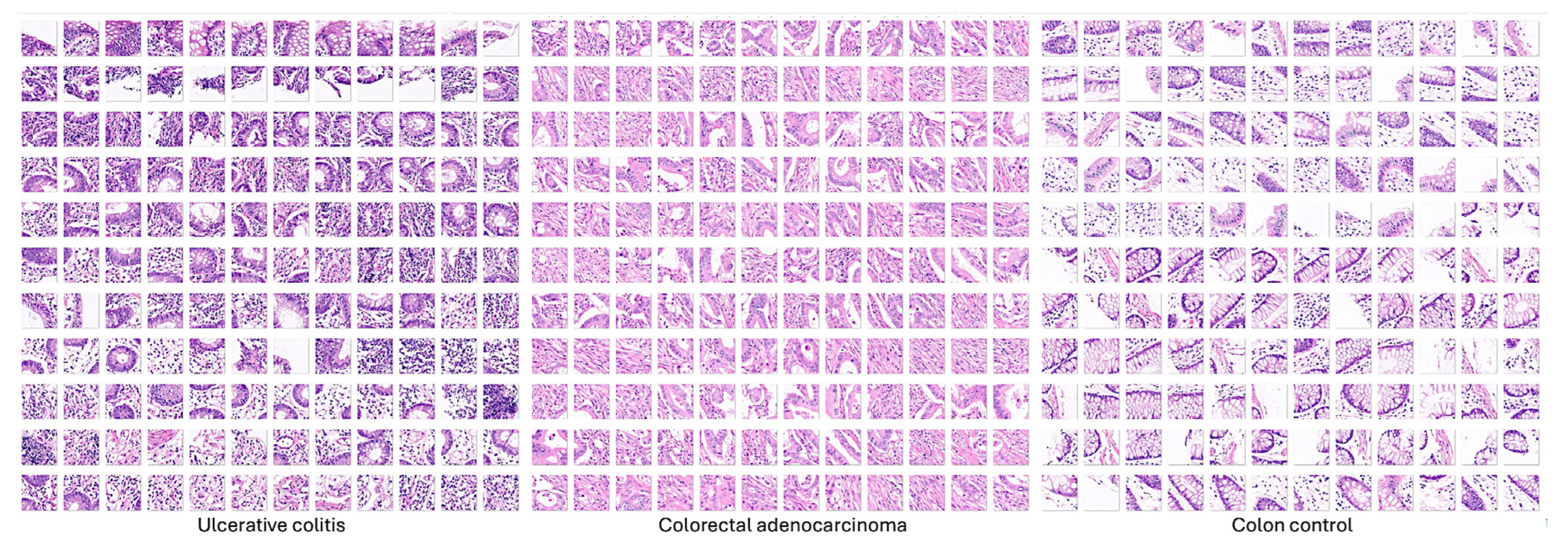
Figure 2. Image patches of ulcerative colitis, colorectal cancer (adenocarcinoma), and colon control.
Preprints 144664 g003
Table 1. Endoscopic Baron score
0 Normal: matte mucosa, ramifying vascular pattern clearly visible, no spontaneous bleeding, no bleeding to light touch.
1 Abnormal, but non-hemorrhagic: appearance between 0 and 2.
2 Moderately hemorrhagic: bleeding to light touch, but no spontaneous bleeding ahead of the instrument on initial inspection
3 Severely hemorrhagic: spontaneous bleeding ahead of instrument at initial inspection and bleeding to light touch
Table 2. Histologic Geboes score
Grade 0 Structural (architectural changes)
Subgrades
0 No abnormality
0.1 Mild abnormality
0.2 Mild or moderate diffuse or multifocal abnormalities
0.3 Severe diffuse or multifocal abnormalities
Grade 1 Chronic inflammatory infiltrate
Subgrades
1 No increase
1.1 Mild but unequivocal increase
1.2 Moderate increase
1.3 Marked increase
Grade 2 Lamina propria neutrophils and eosinophils
2A Eosinophils
2A.0 No increase
2A.1 Mild but unequivocal increase
2A.2 Moderate increase
2A.3 Marked increase
2B Neutrophils
2B.0 No increase
2B.1 Mild but unequivocal increase
2B.2 Moderate increase
2B.3 Marked increase
Grade 3 Neutrophils in epithelium
Subgrades
3.0 None
3.1 < 5% Crypts involves
3.2 < 50% Crypts involves
3.3 > 50% Crypts involves
Grade 4 Crypt destruction
Subgrades
4.0 None
4.1 Probable — local excess of neutrophils in part of crypt
4.2 Probable — marked attenuation
4.3 Unequivocal crypt destruction
Grade 5 Erosion or ulceration
Subgrades
5.0 No erosion, ulceration, or granulation tissue
5.1 Recovering epithelium + adjacent infl ammation
5.2 Probable erosion focally stripped
5.3 Unequivocal erosion
5.4 Ulcer or granulation tissue
Table 3. Trained network layers.
(Start)
1x1 ImageInputLayer
1x1 Convolution2DLayer
1x1 BatchNormalizationLayer
1x1 ReLULayer
1x1 MaxPooling2DLayer
1x1 Convolution2DLayer
1x1 BatchNormalizationLayer
1x1 ReLULayer
1x1 Convolution2DLayer
1x1 BatchNormalizationLayer
1x1 AdditionLayer
1x1 ReLULayer
1x1 Convolution2DLayer
1x1 BatchNormalizationLayer
1x1 ReLULayer
1x1 Convolution2DLayer
1x1 BatchNormalizationLayer
1x1 AdditionLayer
1x1 ReLULayer
1x1 Convolution2DLayer
1x1 BatchNormalizationLayer
1x1 ReLULayer
1x1 Convolution2DLayer
1x1 BatchNormalizationLayer
(Continuation)
1x1 Convolution2DLayer
1x1 BatchNormalizationLayer
1x1 AdditionLayer
1x1 ReLULayer
1x1 Convolution2DLayer
1x1 BatchNormalizationLayer
1x1 ReLULayer
1x1 Convolution2DLayer
1x1 BatchNormalizationLayer
1x1 AdditionLayer
1x1 ReLULayer
1x1 Convolution2DLayer
1x1 BatchNormalizationLayer
1x1 ReLULayer
1x1 Convolution2DLayer
1x1 BatchNormalizationLayer
1x1 Convolution2DLayer
1x1 BatchNormalizationLayer
1x1 AdditionLayer
1x1 ReLULayer
1x1 Convolution2DLayer
1x1 BatchNormalizationLayer
1x1 ReLULayer
1x1 Convolution2DLayer
1x1 BatchNormalizationLayer
1x1 AdditionLayer
1x1 ReLULayer
1x1 Convolution2DLayer
1x1 BatchNormalizationLayer
1x1 ReLULayer
1x1 Convolution2DLayer
1x1 BatchNormalizationLayer
1x1 Convolution2DLayer
1x1 BatchNormalizationLayer
1x1 AdditionLayer
1x1 ReLULayer
1x1 Convolution2DLayer
1x1 BatchNormalizationLayer
1x1 ReLULayer
1x1 Convolution2DLayer
1x1 BatchNormalizationLayer
1x1 AdditionLayer
1x1 ReLULayer
1x1 GlobalAveragePooling2DLayer
1x1 FullyConnectedLayer
1x1 SoftmaxLayer
1x1 ClassificationOutputLayer
(End)
The CNN was designed using a transfer learning strategy and ResNet-18.
Disclaimer/Publisher’s Note: The statements, opinions and data contained in all publications are solely those of the individual author(s) and contributor(s) and not of MDPI and/or the editor(s). MDPI and/or the editor(s) disclaim responsibility for any injury to people or property resulting from any ideas, methods, instructions or products referred to in the content.
Copyright: This open access article is published under a Creative Commons CC BY 4.0 license, which permit the free download, distribution, and reuse, provided that the author and preprint are cited in any reuse.
Prerpints.org logo

Preprints.org is a free preprint server supported by MDPI in Basel, Switzerland.

Subscribe

Disclaimer

Terms of Use

Privacy Policy

Privacy Settings

© 2025 MDPI (Basel, Switzerland) unless otherwise stated