Preprint
Article

This version is not peer-reviewed.

Diastolic Function Evaluation in the Personalized Exercise Prescription Program for Solid Organs Transplanted Subjects: Is Atrial Strain Useful?

A peer-reviewed article of this preprint also exists.

Submitted:

30 November 2024

Posted:

02 December 2024

You are already at the latest version

Abstract

Introduction: solid organs transplanted recipients (OTR) have been recently involved in exercise prescription programs in order to reduce the high prevalence of cardiovascular diseases. The normal systolic and diastolic cardiac function is fundamental to personalize the prescription. Diastolic dysfunction can be associated to an higher risk of cardiovascular events and left atrial (LA) strain is an emerging parameter in the evaluation of diastolic compromising, especially in subjects with preserved ejection fraction. Left atrial (LA) strain has never been explored in this category. The study aimed to evaluate the contribution of the LA strain in the assessment of diastolic function of OTR and its potential contribution in the exercise program. Materials and Methods: 54 solid OTR (liver and kidney transplanted) regularly trained for at least 12 months in an home based partially supervised model at moderate intensity estimated by cardiopulmonary exercise test, underwent a complete echocardiographic analysis. Measured variables included left ventricle systolic function (ejection fraction: EF), diastolic function (E/A and E/E’), LA indexed volumes, LA peak atrial longitudinal strain (PALS) and LA peak atrial contraction strain (PACS). The data were compared to 44 healthy subjects (HS). Results: OTR showed an overweight condition (BMI: 25.79 ±2.92 vs 22.25±2.95). Both groups showed a preserved systolic function (EF: OTR 63.1±3.5% vs HS 66.9±6.1; p<0,001) while diastolic standard parameters were significantly different (E/A: 1.01±0.4 vs 1.960.74; p<0.001; E/E’: 9.2±2.7 vs 6.91.3; p<0.001, in OTR and HS respectively) despite normal. LA strain was significantly lower in OTR vs HS (4C PALS: 33.7±9.7 vs 45.4; p<0.001 and 4C PACS: 15.9±6.7 vs 11.67.5; p=0.006; 2C PALS: 35.3±11.1 vs 47.614.9; p<0.001; 2C PALS: 17.4±4.9 vs 13.2; p=0.001, in OTR and HS respectively). A specific correlation of 2 and 4 chamber PACs and PALs with BMI has been observed (R for 4C PALS -0.406** and 2C PALS -0.276*). Conclusions: These findings suggest that the coexistence of increased body weight in asymptomatic OTR patients can exacerbate the impairment of LA strains. LA strain detection could be useful in the personalized exercise program for OTR especially if asymptomatic subjects and with elevated cardiovascular risk profile, to potentially manage the exercise program in the long term. Larger studies will confirm the role in an eventual structured clinical score index.

Keywords: 
;  ;  

1. Introduction

Exercise prescription represents a non pharmacological treatment for several not communicable diseases [1,2,3,4], due to its peculiar mechanisms of reducing the inflammation process and the cardiovascular risk. Solid organs transplanted subjects are an emerging category, recently involved in the personalized exercise programs [5,6,7] that are conducted in parallel with drugs treatment. After transplantation, mortality risk for acute events is higher if compared to general population [8]. Many causes can be recognized, and among them the prolonged period of sedentarism with the long exposure to the multiple pharmacological treatment, are the most important aspects. The tailored exercise prescription requires therefore a special attention to the cardiovascular systo-diastolic parameters and also to the body composition, especially in those subjects suffering of a subtle multiorgan dysfunction. Diastolic dysfunction is in fact associated with increased cardiovascular mortality [9] and the modifications of atrial deformation properties are related to the atrial function compromise [10]. Atrial strain is one of the emerging parameters in the evaluation of diastolic function particularly in the categorization of subjects with preserved Ejection Fraction (EF) [11,12]. A correct cardiological screening is therefore important for them [13], as well the importance of evaluating the diastolic function is relevant, especially in obese or overweight patients [14]. Multiple echocardiographic parameters are used to differentiate and to identify the diastolic dysfunction [15], however no data regarding atrial strain analysis has been investigated especially in this category.
The study is aimed at evaluating the contribution of diastolic function study in deep by the parameters assessing the atrial function in asymptomatic liver and kidney transplant recipients, regularly following an exercise prescription program. The data were compared to a healthy active group.

2. Materials and Methods

2.1. Protocol Study

A group of 54 solid organ transplant recipients (OTR), 39 liver and 15 kidney transplanted (14 women and 40 men, mean age 59.43±8.75 yo), were retrospectically investigated and enrolled in the study from 2021 up to 2023. They were clinically stable, asymptomatic and in absence of recent arrhythmic acute events. The causes of liver transplantation were previous HCV liver cirrhosis (85%), or in the other cases sclerosing cholangitis (7%) or primary biliary cirrhosis (8%). In the group of kidney transplantation, the main causes were a history of polycystosis (60%), pyelonephritis (2%), glomerulonephritis (8%), Berger’s nephropathy (5%) and congenital single kidney (15%). Comorbidities, such as diabetes, arterial hypertension or other metabolic diseases, were not a reason for exclusion. Included transplanted subjects had mild or moderate hypertension and were on antihypertensive treatment (calcium channel blockers, alpha-blockers, ACE inhibitors or ARBs) and immunosuppressive therapy, including drugs such as calcineurin inhibitors (Ciclosporin or Tacrolimus), in combination with Mycophenolate or Everolimus and steroids (Methylprednisolone). All they were screened for a tailored mixed (aerobic and counter-resistance) exercise program established at moderate power. The intensity, duration and frequency of exercise were estimated by cardiopulmonary exercise test (CPET) in all subjects and planned following the general ACSM guidelines [16]. CPET was conducted at least at the 1 aerobic threshold established by the VO2 value [17]. The exercise prescription consisted of mixed physical activity (aerobic and counter-resistance) at least 3 times a week for 30 min of aerobics with an intensity of about 60% of the maximal heart rate. The aerobics session was followed by counter-resistance exercises including at least 8 groups of body muscles. It was suggested to train as fast walking at the range of the heart rate identified or in alternative to follow a specific training lessons. The modality of training was also possible by an online registered lessons, available by mobile phone using a specific QR code. In this term, the exercise program prescribed could be considered an “home based program”, however partially supervised. All OTR were included after at least 12 months of personalized exercise prescription program.
Control group was composed of 44 healthy active subjects (HS), regularly training and not following a specific exercise prescription program. In any case, the level of physical activity of both groups was assessed and compared by the IPAQ questionnaire [18], which also helped in confirming the adhesion to the program for OTR. The Karvonen Formula was used to calculate the aerobic exercise and adjusted for eventual use of betablockers [19]. The local Independent Ethics Committee approved the study (study ID: ISRCTN66295470, Tuscany, Italy) that was developed according to the ethical parameters established in the Declaration of Helsinki (1964) and its later amendments [20].

2.2. Echocardiographic Exam

All the subjects were submitted to an echocardiographic exam. The myocardial function was assessed by transthoracic echocardiography using the MyLABX8 Esaote echocardiograph equipped with a cardiac probe single Cristal Px15 for adults at 1-5 MHz.
Two certified cardiologists were involved in the acquisition of the images and an average value after at least 3 repeated measurement were used. The standard systolic and diastolic parameters were considered following the ASE guidelines [21]. For the standard parameters the following measures were considered: diameters (left ventricle end-diastolic diameter LVEDD) and thicknesses (interventricular septum IVS and posterior Wall PW) of the left ventricle, LV cardiac mass, indexed left atrial volume (LA volume). In regards of the diastolic function, the mitral inflow pattern (wave E/A ratio, deceleration time), annular mitral septal and lateral TDI with E/e’ ratio were considered. The mitral E/e′ ratio was calculated and considered as a reliable index of LA and filling pressures. Diastolic function was classified as normal or abnormal with impaired relaxation (grade 1), pseudo-normal (grade 2) or restrictive (grade 3). In the case of valvular heart disease, its severity was evaluated according to the ASE 2015 guidelines [21].
For the quantification of LA size, LA size 2C and 4C views were captured excluding the pulmonary veins and LA appendage from LA tracing. The plane of mitral annulus was used as inferior border A mild enlargement of the LA was defined as LA volume ≥29 mL/m2, a moderate as ≥34mL/m2, and a severe as ≥40 mL/m2 [22]. The acquisition of the images for the strain calculation were captured and later processed by X-strain Speckle Tracking software (ESAOTE x-strain) included in the echo-MyLab and dedicated to the specific chamber strain quantification. Among the inclusion criteria a quite good acoustic window, suitable for the acquisition of echocardiographic parameters was fundamental. LA dimension was measured at the end of LV systole, when this chamber get to its maximum size during cardiac cycle, as recommended [22].

2.3. Strain Analysis

All subjects completed the echocardiographic examination with the evaluation of myocardial deformation parameters, by using a dedicated software (XStrain TM - ESAOTE - Genoa, Italy) specific to the atrial strain.
According to the criteria established in the EACVI/ASE consensus document [23], it was possible to obtain the overall study and the average of myocardial deformation by acquiring the images in full cycle and high frame rate. Particularly for the atria strain analysis, starting from the QRS marker, after cycle acquisition, the two phases of reservoir and contraction, peak atrial longitudinal strain (PALS) and peak atrial contraction strain (PACS), measures of atrial reservoir and atrial active conduit, respectively were considered as reported in literature [24,25].

2.4. Cardiopulmonary Test

The CPET was conducted on the basis of the guidelines [16,17,26,27,28] using an electromagnetic brake cycle ergometer (Ergoline) and a specific gas measurement machine (COSMED Quark CPET, Albano Laziale, Rome, Italy). Each participant was invited to avoid strenuous physical training the day before the test and to abstain from consuming solid foods or carbohydrate-rich drinks for three hours before the test. The test was performed in the morning under controlled conditions (temperature: 18–24 ◦C; humidity: 30–60%). The ramp protocol for cardiopulmonary testing was tailored based on gender and body composition to aim for muscle exhaustion between 8 and 12 min. An oro-facial mask connected to a gas-measuring device was used. Exhaled CO2 and O2 consumption were measured breath by breath. The lowest possible increase in watts (1, 2, or 5 watts) was set for each ramp to achieve the most linear increase in load and, therefore, a more physiological response. After 3 min of warming up by cycling without load at 50 rpm, the test followed these steps: at the start of the actual effort, cycling was required at a cadence between 60 and 80 rpm until muscle exhaustion. The test concluded when participant could no longer maintain their cycling cadence despite verbal encouragement. The test was considered maximal if at least two of the following criteria were met: Respiratory Exchange Ratio (RER) > 1.10, maximum heart rate > 85% according to age, and a plateau oxygen consumption (increase < 150 mL・min−1) in the last 30 s of the test. The test was stopped early in the presence of cardiovascular signs and symptoms (complex ventricular arrhythmias, drops in systolic blood pressure, dizziness, etc.). Continuous monitoring included a 12-lead ECG and oxygen saturation. During the test, various parameters were measured, including oxygen consumption (VO2), carbon dioxide production (VCO2), tidal volume (VT), respiratory rate (RF), minute ventilation (VE), heart rate (HR), and workload (WR). The lactate threshold was determined using the V-slope and ventilator equivalents approach. Other variables analysed included the relationship between oxygen consumption and heart rate (VO2/HR, a measure of stroke volume), the relationship between oxygen consumption and workload (VO2/W slope, a measure of circulatory efficiency), and the product of VO2 peak (mL/kg/min) and systolic blood pressure (a measure of circulatory strength). For the present investigation the VO2 max value was considered as expression of normal heart’s performance in the two groups.

2.5. Statistical Analysis

The Shapiro-Wilk test was used to assess the normal distribution of data. Due to their asymmetric distribution, differences between groups were tested by the Mann–Whitney's U-test and relationships between variables by the Spearman correlation coefficient. All calculations used IBM-SPSS® version 26.0 (IBM Corp., Armonk, NY, USA, 2019). A two-sided p-value <0.05 was considered significant.

3. Results

Data are expressed as mean ± standard deviation and are expressed in Table 1. The BMI values resulted higher in the ORT group (OTR BMI 25,79±2,92 vs HS BMI 22,25±2,45 with P <0.001). Both groups showed a sufficiently active level of physical activity, although significantly higher in HS (IPAQ: OTR 1053.87±1024.30 vs HS 1974.45±1438.87 METs/week, p = 0.02). Regarding the CPET parameters, only the VO2 max was considered to plan the exercise program and therefore to estimate the differences. The value of VO2 max was significantly diverse in the two groups, as expected (VO2 max: 22.90±7.30 vs 38.87±28.65, p = 0.01; VO2 max (%): 85.3±23.62 vs 91.74±12.43, p = 0.02, in OTR and HS respectively).
Regarding the echocardiographic parameters, the main morphological (IVS, PW, LVEDD) and systolic parameter as the EF resulted normal without significant differences between the groups. It has been confirmed the preserved EF also in ORT.
Diastolic parameters were in the normal range for both groups although E/E1 ratio showed an higher value in OTR, despite not yet pathological (E/E1 septum 9.93±3.06 vs 6.91±1.31, p < 0.001; E/E1 lateral 7.63±4.66 vs 5.11±1.34, p = 0.02, in OTR and HS respectively). E/E1 ratio resulted to be associated to a prolongation of relaxation time, as in case of slight diastolic impairment. The absolute LA strain value, obtained by 4 and 2 C, was in the range of normality for all and not significantly different in both, even if slightly enlarged in the healthy active subjects (HS) compared to the OTR.
More evidence regarding the diastolic function emerges from the correlations of the LA strain parameters (PALS and PACS from 4c and 2C) with all the other variables considered. It has been showed a significant association of the LA strain with values of the standard echo diastolic function, despite these are not yet pathological (Table 2). This confirms the major sensibility of the atrial longitudinal strain (PALS) in the early phase of the diastolic impairment not detectable by the standard evaluation at least in this category (Table 2). Particularly evident is the correlation of PALS with BMI, in asymptomatic OTR in presence of normal systo-diastolic function. This underlines major reservoir impairment in presence of overweight.
The analysis of the correlation of the same parameters with all the variables in the two groups considered separately, showed as the correlation of the LA strain is maintained in OTR (Table 3) particularly for the contraction phase (PACS).
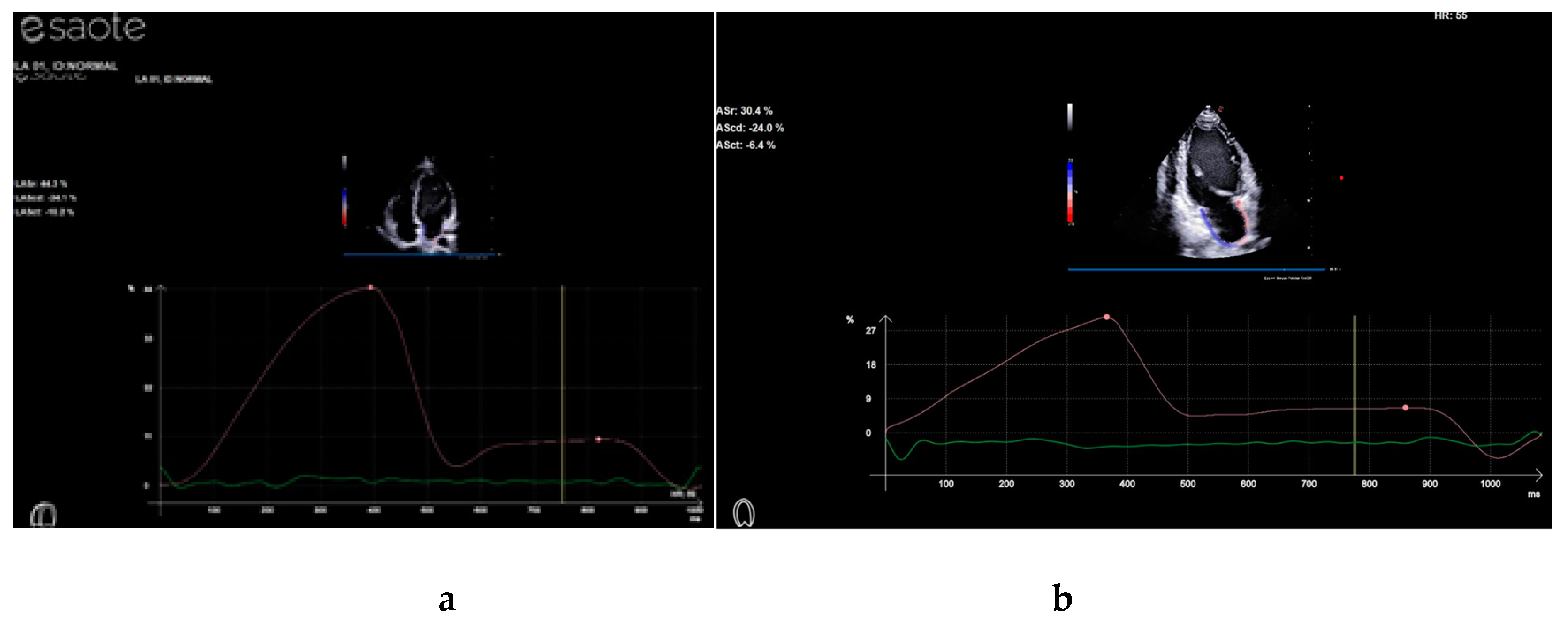
Figure 1. Demonstration of LA longitudinal myocardial deformation dynamics by 2-dimensional speckle-tracking echocardiography. A representative case of a subject from 4 (a) and 2 (b) chamber views. PALS indicates peak atrial longitudinal strain and PACS indicates peak atrial contraction strain.
Preprints 141395 g001

4. Discussion

Personalized exercise is one of the most crucial point of the non pharmacological treatment in many not communicable chronic diseases especially in those in whom the cardiovascular risk is high [1,2,3,4,5,6,7]. The transplanted subjects are a peculiar category with higher cardiovascular mortality despite the transplantation. Systolic function has been largely studied, as consequence of the importance to detect a potential cardiotoxicity due to the long term exposition to the immunosuppressive therapy [5,6,7] and the necessity to maintain a range of mixed exercise therapeutically active.
On the contrary, the diastolic function, strongly related to the mortality and fundamental in the physiological response for the adequation of the cardiac adaptation, has not been extensively studied in this category.
The elevated coexistence of comorbilities in transplanted induces to focus on the potential impact of parameters related to a prolonged sedentarism like BMI, with the most recent cardiovascular parameters linked with diastolic impairment and among them the atrial strain. Previous studies by RMN [29] have investigated this new aspect referring the importance to highlight the atrial function especially in type 2 diabetes with overweight. Despite some limits of the present investigation, due to the small sample investigated, different age of the subjects and the incomplete evaluation of the strain analysis where some data of the conduit phase data are missing, the results obtained are in agreement with the current literature as consequence the reduced LA reservoir and pump found in OTR and the evident correlation with the BMI. The clinical impact in term of daily use of LA strain in an outpatient setting will need a more accurate analysis including also a long term evaluation. A potential inclusion of LA strain in a dedicated multiparametric analysis for OTR, should be considered to better investigate some reduction of exercise’s tolerance period, particularly when the systolic function is preserved and the exercise program needs to be modified or implemented.

5. Conclusions

The modulation and the personalized management of the intensity of physical activity addressed to a therapeutic effect as a drug in OTR, is of recent interest in sports medicine particularly for the missing dedicated guidelines in this category and for the strong potential negative effect in case of particular frailty. There are however some evidence in literature of the importance to start in the early time after transplantation with indications regarding nutritional and physical activity for a correct lifestyle [30]. Some other data have been found in the same category for the importance of the systolic deformations parameters of the LV chamber in a long term evaluation [31]. The role of LA strain could complete evaluation of the cardiac function and eventually give information of the eventual restoring of the normal heart performance in case of a reduced risk profile.

Author Contributions

Conceptualization LS, SG, CF and MB; methodology LS, MO, MC, RP; formal analysis LS, MO, MC, RP; investigation LS, MO, MC, RB.; data curation and statistics: LS, MO, VB; writing—original draft preparation LS and MO.; writing—review and editing LS, MO, MB, CF; supervision LS and SG. All authors have read and agreed to the published version of the manuscript.

Funding

This research received no external funding.

Institutional Review Board Statement

The local Independent Ethics Committee approved the study (study ID: ISRCTN66295470, Tuscany, Italy) that was developed according to the ethical parameters established in the Declaration of Helsinki (1964) and its later amendments.

Informed Consent Statement

Informed consent was obtained from all subjects involved in the study. Data were anonymized.

Data Availability Statement

Data are available in the Sports Medicine Center's dataset as part of sport and lifestyle reconditioning programs.

Acknowledgments

none.

Conflicts of Interest

The authors declare no conflicts of interest.

References

  1. Hansen D, Niebauer J, Cornelissen V, Barna O, Neunhäuserer D, Stettler C, Tonoli C, Greco E, Fagard R, Coninx K, Vanhees L, Piepoli MF, Pedretti R, Ruiz GR, Corrà U, Schmid JP, Davos CH, Edelmann F, Abreu A, Rauch B, Ambrosetti M, Braga SS, Beckers P, Bussotti M, Faggiano P, Garcia-Porrero E, Kouidi E, Lamotte M, Reibis R, Spruit MA, Takken T, Vigorito C, Völler H, Doherty P, Dendale P. Exercise Prescription in Patients with Different Combinations of Cardiovascular Disease Risk Factors: A Consensus Statement from the EXPERT Working Group. Sports Med. 2018 Aug;48(8):1781-1797. [CrossRef] [PubMed]
  2. Hansen D, Abreu A, Ambrosetti M, Cornelissen V, Gevaert A, Kemps H, Laukkanen JA, Pedretti R, Simonenko M, Wilhelm M, Davos CH, Doehner W, Iliou MC, Kränkel N, Völler H, Piepoli M. Exercise intensity assessment and prescription in cardiovascular rehabilitation and beyond: why and how: a position statement from the Secondary Prevention and Rehabilitation Section of the European Association of Preventive Cardiology. Eur J Prev Cardiol. 2022 Feb 19;29(1):230-245, Erratum in: Eur J Prev Cardiol. 2024 Sep 20;31(13):e102. [CrossRef] [PubMed]
  3. Luan X, Tian X, Zhang H, Huang R, Li N, Chen P, Wang R. Exercise as a prescription for patients with various diseases. J Sport Health Sci. 2019 Sep;8(5):422-441. Epub 2019 Apr 18. [CrossRef] [PubMed]
  4. Pedersen BK, Saltin B. Exercise as medicine - evidence for prescribing exercise as therapy in 26 different chronic diseases. Scand J Med Sci Sports. 2015 Dec;25 Suppl 3:1-72. [CrossRef] [PubMed]
  5. Gitto S, Golfieri L, Gabrielli F, Falcini M, Sofi F, Tamè MR, De Maria N, Marzi L, Mega A, Valente G, Borghi A, Forte P, Cescon M, Di Benedetto F, Andreone P, Petranelli M, Morelli MC, De Simone P, Lau C, Stefani L, Vizzutti F, Chiesi F, Marra F; MEDITRA Research Group. Physical activity in liver transplant recipients: a large multicenter study. Intern Emerg Med. 2024 Mar;19(2):343-352. Epub 2023 Nov 20. [CrossRef] [PubMed]
  6. Polara G, Montagnoli A, Palazzo R, Orlandi M, Mascherini G, Corsi M, Falconi E, Stefani L. Cardiorespiratory Performance in Kidney and Liver Transplant Recipients: The Dilemma to Combine Lifestyle and Fitness. J Funct Morphol Kinesiol. 2024 Feb 29;9(1):44. [CrossRef] [PubMed]
  7. Orlandi M, Bini V, Leone B, Zappelli E, Pedrizzetti G, Stefani L. Home-based exercise program improves normal right ventricle function in renal transplant recipients. J Sports Med Phys Fitness. 2022 Mar;62(3):412-417. Epub 2021 Oct 15. [CrossRef] [PubMed]
  8. Carvalho MVH, Kroll PC, Kroll RTM, Carvalho VN. Cirrhotic cardiomyopathy: the liver affects the heart. Brazilian Journal of Medical and Biological Research 2019;52. Yoon KT, Liu H, Lee SS. Cirrhotic Cardiomyopathy. Curr Gastroenterol Rep 2020;22:45. [CrossRef]
  9. Diastolic dysfunction and preserved Ejection Fraction JACC Cardiovasc Imaging. 2020 Jan;13(1 Pt 2):245-257. [CrossRef]
  10. G.Di Salvo. Atrial myocardial deformation Circulation. 2005;112:387-395. [CrossRef]
  11. Silva MR, Sampaio F, Braga J, Ribeiro J, Fontes-Carvalho R. Left atrial strain evaluation to assess left ventricle diastolic dysfunction and heart failure with preserved ejection fraction: a guide to clinical practice : Left atrial strain and diastolic function. Int J Cardiovasc Imaging. 2023 Jun;39(6):1083-1096. Epub 2023 Feb 24. [CrossRef] [PubMed]
  12. Mandoli GE, Sisti N, Mondillo S, Cameli M. Left atrial strain in left ventricular diastolic dysfunction: have we finally found the missing piece of the puzzle? Heart Fail Rev. 2020 May;25(3):409-417. Orlandi G, Sofi F, Moscarelli L, Cirami L, Mancini S, Stefani L. Exercise Prescription in Renal Transplant Recipients: From Sports Medicine Toward Multidisciplinary Aspects: A Pilot Study. J Funct Morphol Kinesiol 2020;5:10. [CrossRef] [PubMed]
  13. Orlandi G, Sofi F, Moscarelli L, Cirami L, Mancini S, Stefani L. Exercise Prescription in Renal Transplant Recipients: From Sports Medicine Toward Multidisciplinary Aspects: A Pilot Study. J Funct Morphol Kinesiol 2020;5:10. [CrossRef]
  14. M Alonso Gómez Left atrial strain improves echocardiographic classification of diastolic function in patients with metabolic syndrome and overweight-obesity,Angel, Int J Cardiol. 2022 February 01; 348: 169–174. [CrossRef]
  15. Nagueh SF, Smiseth OA, Appleton CP, et al. Recommendations for the Evaluation of Left Ventricular Diastolic Function by Echocardiography: An Update from the American Society of Echocardiography and the European Association of Cardiovascular Imaging. J Am Soc Echocardiogr. 2016; 29:277–314. [CrossRef] [PubMed]
  16. Gary Liguori, ACSM's Guidelines for Exercise Testing and Prescription, American College of Sports Medicine (ACSM), ISBN/ISSN: 9781975150181, Publication Date: April 8, 2021.
  17. ATS/ACCP Statement on Cardiopulmonary Exercise Testing This Joint Statement of the American Thoracic Society (ATS) and the American College of Chest Physicians (ACCP), March 1, 2002 and by the ACCP Health Science Policy Committee, November 1, 2001.
  18. Hallal, P.C.; Victora, C.G. Reliability and validity of the international physical activity questionnaire (IPAQ). Med. Sci. Sports Exerc. 2004, 36, 556. [CrossRef]
  19. Yabe H, Kono K, Onoyama A, Kiyota A, Moriyama Y, Okada K, et al. Predicting a target exercise heart rate that reflects the anaerobic threshold in non beta-blocked hemodialysis patients: The Karvonen and heart rate reserve formulas. Therapeutic Apheresis and Dialysis 2021;25:884–9. [CrossRef]
  20. Goodyear MDE, Krleza-Jeric K, Lemmens T. The declaration of Helsinki. BMJ. 2007;335:624–625. [CrossRef]
  21. Lang RM, Badano LP, Mor-Avi V, Afilalo J, Armstrong A, Ernande L, et al. Recommendations for Cardiac Chamber Quantification by Echocardiography in Adults: An Update from the American Society of Echocardiography and the European Association of Cardiovascular Imaging. Journal of the American Society of Echocardiography 2015;28:1-39.e14. [CrossRef]
  22. Lang RM, Bierig M, Devereux RB, Flachskampf FA, Foster E, Pellikka PA, Picard MH, Roman MJ, Seward J, Shanewise J, Solomon S, Spencer KT, St. John Sutton M, Stewart W; American Society of Echocardiography’s No-menclature and Standards Committee; Task Force on Chamber Quantification; American College of Cardiology Echocardiography Committee; American Heart Association; European Association of Echocardiography, European Society of Cardiology. Recommendations for chamber quantification. Eur J Echocardiogr. 2006;7:79–108. [CrossRef]
  23. Badano LP, Kolias TJ, Muraru D, Abraham TP, Aurigemma G, Edvardsen T, D'Hooge J, Donal E, Fraser AG, Marwick T, Mertens L, Popescu BA, Sengupta PP, Lancellotti P, Thomas JD, Voigt JU; Industry representatives; Reviewers: This document was reviewed by members of the 2016–2018 EACVI Scientific Documents Committee. Standardization of left atrial, right ventricular, and right atrial deformation imaging using two-dimensional speckle tracking echocardiography: a consensus document of the EACVI/ASE/Industry Task Force to standardize deformation imaging. Eur Heart J Cardiovasc Imaging. 2018 Jun 1;19(6):591-600; Erratum in: Eur Heart J Cardiovasc Imaging. 2018 Jul 1;19(7):830-833. [CrossRef] [PubMed]
  24. D’Ascenzi F, Cameli M, Padeletti M, Lisi M, Zacà V, Natali B, Malandrino A, Alvino F, Morelli M, Vassallo GM, Meniconi C, Bonifazi M, Causarano A, Mondillo S. Characterization of right atrial function and dimension in top-level athletes: a speckle tracking study. Int J Cardiovasc Imaging. 2013;29:87–94. [CrossRef]
  25. Kurt M, Wang J, Torre-Amione G, Nagueh SF. Left atrial function in diastolic heart failure. Circ Cardiovasc Imaging. 2009;2:10–15.;Appleton CP, Kovács SJ. The role of left atrial function in diastolic heart failure. Circ Cardiovasc Imaging. 2009;2:6–9. [CrossRef]
  26. Guazzi, M.; Arena, R.; Halle, M.; Piepoli, M.F.; Myers, J.; Lavie, C.J. Focused update: Clinical recommendations for cardiopulmonary exercise testing data assessment in specific patient populations. Circulation 2012, 126, 2261–2274.
  27. Ney, M.; Haykowsky, M.J.; Vandermeer, B.; Shah, A.; Ow, M.; Tandon, P. Systematic review: Pre- and post-operative prognostic value of cardiopulmonary exercise testing in liver transplant candidates. Aliment. Pharmacol. Ther. 2016, 44, 796–806. [CrossRef]
  28. Guazzi, M.; Bandera, F.; Ozemek, C.; Systrom, D.; Arena, R. Cardiopulmonary exercise testing: What is its value? Am. Coll. Cardiol. 2017, 70, 1618–1636. [CrossRef]
  29. Shen MT, Guo YK, Liu X, Ren Y, Jiang L, Xie LJ, Gao Y, Zhang Y, Deng MY, Li Y, Yang ZG. Impact of BMI on Left Atrial Strain and Abnormal Atrioventricular Interaction in Patients With Type 2 Diabetes Mellitus: A Cardiac Magnetic Resonance Feature Tracking Study. J Magn Reson Imaging. 2022 May;55(5):1461-1475. Epub 2021 Sep 22. [CrossRef] [PubMed]
  30. Mascherini G, Corsi M, Falconi E, Cebrián-Ponce Á, Checcucci P, Pinazzi A, Russo D, Gitto S, Sofi F, Stefani L. Unsupervised Exercise Intervention vs. Adherence to a Mediterranean Diet Alone: The Role of Bioelectrical Impedance Vector Analysis and Cardiovascular Performance in Liver-Transplanted Recipients. Nutrients. 2024 Jan 5;16(2):190. [CrossRef]
  31. Minetti E, Klika R, Ingletto C, Mascherini G, Pedrizzetti G, Stefani L. Changes in global longitudinal strain in renal transplant recipients following 12 months of exercise. Intern Emerg Med. 2018 Aug;13(5):805-809. Epub 2018 Jun 20. [CrossRef]

Table 1. General and echocardiographic data.
OTR (n=54) HS (n=44) P
Age (yo) 59.43±8.75 36.52±12.24 <0.001
BMI (kg/m2) 25.79±2.92 22.25±2.45 <0.001
IPAQ (METs/week) 1053.87±1024.30 1974.45±1438.87 0.02
VO2 max (mL/kg/min) 22.90±7.30 38.87±28.65 0.01
VO2 max (%) 85.3±23.62 91.74±12.43 0.02
IVS (mm) 9.81±1.1 9.49±0.94 Ns
PW (mm) 9.61±1.22 9.30±0.86 Ns
LVEDD (mm) 50.52±4.60 49.31±3.61 Ns
EF (%) 64.39±5.37 67.09±6.44 0.05
LVMI (gr/m2) 100±21.4 87.62±14 Ns
E/A 1.01±0.44 1.96±0.74 <0.001
IVRT (ms) 85.67±20.26 71.83±26.60 0.01
DTc (ms) 219.15±79.00 195.86±38.47 Ns
E/E’ septum 9.93±3.06 6.91±1.31 <0.001
E/E’ lateral 7.63±4.66 5.11±1.34 0.02
LA Volume (ml) 24.32±8.65 27.22±11.25 Ns
4C PALS (%) 33.45±9.57 45.36±14.19 <0.001
4C PACS (%) 15.88±6.80 11.95±7.48 0.003
2C PALS (%) 35.45±11.26 47.55±14.97 <0.001
2CPACS (%) 17.29±5.09 13.16±6.79 0.001
Legend: BMI body mass index; VO2 max and VO2 max (%): absolute and relative Oxygen volume consumption; IVS: interventricular septum; PW: posterior wall; LVEDD: left ventricle end-diastolic diameter; EF: ejection fraction; LVMI: left ventricle cardiac mass; IVRT: isovolumic relaxation time; DTc: deceleration time; PALS: peak atrial longitudinal strain and PACS: peak atrial contraction strain in 2- and 4- chamber views.
Table 2. Correlations of the LA strain parameters with echocardiographic and anthropometric data.
4c PALS p 4c PACS p 2c PALS p 2cPACS p
Age -0.436** 0.000 0.224* 0.029 -0.496** 0.000 0.338** 0.003
BMI -0.406** 0.000 0.086 0.410 -0.276* 0.013 0.188 0.101
IVS -0.009 0.933 0.035 0.737 0.000 0.999 0.132 0.254
PW 0.113 0.266 0.228* 0.026 0.097 0.394 0.187 0.103
LVDD 0.076 0.458 0.174 0.092 0.101 0.374 0.141 0.221
EF 0.184 0.069 0.025 0.808 0.080 0.478 0.118 0.305
E 0.040 0.696 -0.190 0.066 0.287** 0.010 -0.198 0.085
A -0.463** 0.000 0.286** 0.005 -0.362** 0.001 0.295** 0.009
E/A 0.378** 0.000 -0.315** 0.002 0.415** 0.000 -0.346** 0.002
IVRT -0.291** 0.004 0.062 0.552 -0.091 0.421 0.178 0.122
DTc 0.033 0.747 0.149 0.152 -0.016 0.885 0.171 0.136
E' septum 0.267** 0.008 -0.245* 0.017 0.396** 0.000 -0.376** 0.001
E/E' septum -0.355** 0.000 0.136 0.194 -0.336** 0.002 0.227* 0.048
E' lateral 0.206 0.169 -0.059 0.702 0.354* 0.027 0.055 0.740
E/E' lateral -0.574** 0.000 -0.097 0.542 -0.253 0.143 0.130 0.456
LA Volume -0.028 0.786 -0.076 0.466 0.155 0.172 0.057 0.622
4c PALS 1.000 0.170 0.100 0.446** 0.000 -0.094 0.416
c4c PACS 0.170 0.100 10.000 -0.066 0.561 0.527** 0.000
2c PALS 0.446** 0.000 -0.066 0.561 10.000 0.183 0.111
2c PACS -0.094 0.416 0.527** 0.000 0.183 0.111 10.000
Legend: BMI body mass index; IVS: interventricular septum; PW: posterior wall; LVEDD: left ventricle end-diastolic diameter; EF: ejection fraction; IVRT: isovolumic relaxation time; DTc: deceleration time; PALS: peak atrial longitudinal strain and PACS: peak atrial contraction strain in 2- and 4- chamber views. *. Significance <0.05; **: significance <0.001.
Table 3. Correlations and comparison of the LA strain parameters with echocardiographic and anthropometric data of OTR vs HS.
OTR HS
4c PALS 4c PACS 2c PALS 2c PACS 4c PALS 4c PACS 2c PALS 2c PACS
Age R ,000 -,025 -,233 -,112 -,347* ,108 -,213 ,308
p ,999 ,861 ,138 ,487 ,021 ,495 ,200 ,068
BMI R -,243 -,133 -,159 -,312* -,202 ,092 -,130 ,315
p ,077 ,341 ,316 ,047 ,189 ,561 ,437 ,061
IVS R ,056 ,148 ,187 ,058 ,058 -,161 -,107 ,181
p ,687 ,291 ,237 ,719 ,708 ,309 ,523 ,290
PW R ,048 ,227 ,236 ,143 ,311* ,154 -,011 ,176
p ,730 ,102 ,132 ,373 ,040 ,330 ,948 ,304
LVEDD R ,201 ,246 ,126 ,013 ,070 ,121 ,127 ,293
p ,144 ,076 ,427 ,933 ,650 ,444 ,447 ,083
EF R ,221 -,024 -,122 ,148 -,009 ,220 ,127 ,257
p ,108 ,866 ,441 ,357 ,955 ,162 ,449 ,130
E/A R -,057 -,165 -,002 -,207 ,406** ,032 ,375* -,006
p ,682 ,238 ,990 ,193 ,007 ,840 ,020 ,970
IVRT R -,090 ,004 ,015 -,009 -,247 -,076 ,017 ,212
p ,517 ,976 ,925 ,956 ,111 ,637 ,918 ,214
DTc R ,084 ,106 ,145 ,221 ,125 ,017 ,051 -,067
p ,545 ,449 ,359 ,164 ,424 ,914 ,761 ,700
E/E' set R -,119 -,148 -,169 ,020 -,081 ,027 ,190 ,138
p ,393 ,290 ,286 ,900 ,609 ,869 ,261 ,430
E/E' lat R -,459 -,262 -,159 -,090 -,414* -,105 ,060 ,038
p ,055 ,293 ,588 ,759 ,035 ,626 ,797 ,871
LA volume R -,263 -,071 ,130 ,118 ,088 ,019 ,131 ,141
p ,057 ,617 ,418 ,470 ,572 ,906 ,431 ,413
4c PALS R 1,000 ,488** ,215 ,376* 1,000 ,183 ,338* -,174
p ,000 ,172 ,016 ,246 ,038 ,311
4c PACS R ,488** 1,000 ,128 ,398* ,183 1,000 ,138 ,433**
p ,000 ,418 ,010 ,246 ,414 ,009
2C PALS R ,215 ,128 1,000 ,629** ,338* ,138 1,000 ,248
p ,172 ,418 ,000 ,038 ,414 ,145
2C PACS R ,376* ,398* ,629** 1,000 -,174 ,433** ,248 1,000
P ,016 ,010 ,000 ,311 ,009 ,145
Legend: BMI body mass index; IVS: interventricular septum; PW: posterior wall; LVEDD: left ventricle end-diastolic diameter; EF: ejection fraction; IVRT: isovolumic relaxation time; DTc: deceleration time; PALS: peak atrial longitudinal strain and PACS: peak atrial contraction strain in 2- and 4- chamber views. *. Significance <0.05; **: significance <0.001.
Disclaimer/Publisher’s Note: The statements, opinions and data contained in all publications are solely those of the individual author(s) and contributor(s) and not of MDPI and/or the editor(s). MDPI and/or the editor(s) disclaim responsibility for any injury to people or property resulting from any ideas, methods, instructions or products referred to in the content.
Copyright: This open access article is published under a Creative Commons CC BY 4.0 license, which permit the free download, distribution, and reuse, provided that the author and preprint are cited in any reuse.
Prerpints.org logo

Preprints.org is a free preprint server supported by MDPI in Basel, Switzerland.

Subscribe

Disclaimer

Terms of Use

Privacy Policy

Privacy Settings

© 2025 MDPI (Basel, Switzerland) unless otherwise stated