Preprint
Article

This version is not peer-reviewed.

Prognostic Value of Hemodynamic Parameters Obtained During Right Heart Catheterization in Patients with Cardiac Resynchronization Therapy Devices

A peer-reviewed article of this preprint also exists.

Submitted:

29 December 2024

Posted:

01 January 2025

You are already at the latest version

Abstract

Background/Objectives: Cardiac resynchronization therapy (CRT) is one of the interventional methods of heart failure (HF) treating, with the criteria for CRT device implantation based on the value of left ventricular ejection fraction, New York Heart Association (NYHA) functional class, QRS duration and electrocardiographic morphology. Pulmonary hypertension is an important factor influencing the prognosis of patients with heart failure, but its influence on CRT is not fully understood. Aim: The main aim of the study was to determine the prognostic value of baseline right heart catheterization (RHC) derived parameters on the response to CRT. Methods: It was a single centre study with retrospective analysis of data of 39 non-ischemic HF patients. Clinical, biochemical, echocardiographic, electrocardiographic and hemodynamic data were obtained before the CRT device implantation, and after 6 months of follow-up non-invasive re-assessment was performed. Various criteria for the response to CRT were assessed along with the correlation between the baseline parameters. Results: After follow-up a significant difference was found in the reduction of symptoms associated with heart failure, an increase in the distance achieved in the six-minute walk test distance (6MWT) and a reduction of N-terminal pro-brain natriuretic peptide (NT-proBNP) concentration as well as improvement of left ventricular function assessed in echocardiographic examination. Among all parameters assessed, the baseline higher value of transpulmonary gradient (TPG) and pulmonary vascular resistance (PVR) most often had a significant negative impact on meeting the criteria of response to CRT. Conclusions: The results of the analyses show that the initial assessment of pulmonary hemodynamics may be crucial in predicting the response to CRT in patients with non-ischemic cardiomyopathy.

Keywords: 
;  ;  

1. Introduction

Cardiac resynchronization therapy (CRT) is one of the interventional methods of heart failure treating, with proven effectiveness in reducing morbidity and mortality in selected patients. According to current guidelines the indication criteria for CRT implantation are based on the value of left ventricular ejection fraction, New York Heart Association (NYHA) functional class, QRS duration and appropriate ECG morphology, however, the factors predisposing to a good response to resynchronization therapy are more complex. Patients with non-ischemic HF aetiology, longer QRS duration and left bundle branch block (LBBB) morphology, some echocardiographic patterns such as apical rocking or septal flash, have a better response to CRT. [1,2] CRT improves left ventricular function, but the importance of pulmonary circulation parameters and right ventricular function in patients with heart failure on the prognosis and symptoms cannot be ignored.
Pulmonary hypertension due to left heart disease (PH-2) is a common condition associated with heart failure, leading to a worse prognosis regardless of the severity of left ventricular (LV) dysfunction. The prevalence of PH-2 in patients with HF varies depending on the studied population and the severity of left ventricular dysfunction. Parameters that have the main impact on the development of PH-2 are LV filling pressures and degree of mitral regurgitation, therefore appropriate heart failure therapy may reduce pressures in the pulmonary circulation, depending on the advancement of pulmonary arteries remodelling. [3,4] The parameter taken into account in the assessment of pulmonary hypertension in patients with CRT most often was pulmonary arterial systolic pressure (PASP) obtained from echocardiography. Literature data support the fact that an increase in the PASP value at the time of CRT implantation is an unfavourable prognostic factor, and that a decrease in PASP during CRT therapy is a factor reducing the risk of hospitalization or death. [5] Patients with higher PASP also have the chance to improve LVEF to a greater extent than those with a lower value, however the PASP value does not have a statistically significant impact on reverse LV remodelling.[6,7]
Data on the effects of right heart catheterization (RHC) derived parameters on CRT are limited. RHC in patients with left-sided heart failure is used mainly in qualifying patients for heart transplantation, but it can also be useful in the assessment of valvular and congenital heart defects as well as in the differential diagnosis between restrictive cardiomyopathy and constrictive pericarditis or for myocardial biopsy. [8] Searching for the new prognostic factors for the patients treated with CRT is particularly important because they belong to a group at high risk of adverse cardiovascular events and RHC is a valuable tool for assessing cardiovascular function. It is important to note that baseline assessment of right ventricular (RV) function using echocardiographic parameters such as tricuspid annular plane excursion (TAPSE), basal strain, fractional area change (FAC), or right ventricle ejection fraction (RVEF) does not correlate with response to CRT and improvement of LV function. [9]
It should be emphasized that there is no unified criterion for the response to CRT, various clinical or laboratory parameters can be taken into account, although reverse left ventricular remodeling evaluation by echocardiography is most often used. The literature provides many parameters with different predictive value. One of the most commonly used parameters is LV end-systolic volume (LVESV) reduction ≥15%, although it has been shown that several percentage cut-offs of LVESV changes displayed an independent prognostic value for prognosis. A significantly better prognostic value for reducing the risk of cardiovascular death is demonstrated by an LV ejection fraction (LVEF) increase of >10 U and an LVEF increase of ≥1 category [severe (LVEF 30%), moderate (LVEF 31–40%), mild LV dysfunction (LVEF 41–55%), and normal LV function (LVEF 56%)]. [10]
Aim of the study was evaluation of usefulness of hemodynamic parameters of pulmonary circulation as predictors of positive response to cardiac resynchronisation therapy, assessed by commonly used criteria, in 6-month follow-up.

2. Materials and Methods

It was a single centre study with retrospective analysis of data of heart failure patients hospitalized in 2nd Department of Cardiology, Faculty of Medical Sciences in Zabrze, Medical University of Silesia in Katowice, between 2009-2016.

2.1. Study Population

From the entire population of 155 patients suffering due to non-ischemic cardiomyopathy, with invasive evaluation of right heart hemodynamic parameters according to qualification to heart transplantation, 39 of them meet criteria to the CRT therapy (Figure 1).
The inclusion criteria were: age over 18 years during hospitalization, meeting the criteria required for implantation of CRT device including symptomatic HF defined as NYHA functional class above II, LVEF ≤35% and having the left bundle branch block [LBBB] QRS morphology with QRS duration ≥130 ms, hemodynamically stable and undergoing optimal pharmacotherapy for heart failure for at least three months consisting of angiotensin converting enzyme inhibitors (ACE-I), angiotensin receptors blockers (ARB), beta-blockers (BB) and mineralocorticoid-receptor antagonists (MRA). The exclusion criteria for the study were: age below 18 years, ischemic LV dysfunction, and lack of RHC measurements.
The study was approved by the Ethics Committee of Silesian Medical University (NN-6501-31/05). Written, informed consent was obtained from all enrolled patients before screening.
Baseline patient assessment: clinical assessment included physical examination, pharmacological treatment, six-minute walk test distance (6MWT), echocardiography, electrocardiography and right heart catheterisation. Concentration of N-terminal pro-brain natriuretic peptide (NT-proBNP) was determined by the routine technique.

2.2. Echocardiography

Transthoracic echocardiography (TTE) images were acquired in standard views recommended by the American Society of Echocardiography and the European Association of Cardiovascular Imaging and were performed by the use of a Vivid 7 ultrasound system (GE Medical Systems) before the CRT device implantation and also within 2 days and 6 months after the procedure. The examination included left ventricle end-diastolic diameter (LVEDD) and end-systolic diameter (LVESD) measured in parasternal long axis view as well as left ventricle end-diastolic volume (LVEDV) and LVESV assessed with Simpson's biplane method of discs from two and four chamber views and subsequently LVEF was calculated. Pulsed, continuous-wave, and colour Doppler imaging techniques were used to evaluate valves function as well as atrioventricular and interventricular dyssynchrony. The aortic velocity time integral (VTI) was measured in the five-chamber view by pulse wave Doppler technique by tracing the VTI spectral display profile of the aorta to asses left ventricle stroke volume. Diastolic filling time (DFT) defined as time from the beginning of E-wave to the end of A-wave was evaluated and presented as percentage of the RR-interval (DFT/RR %). Interventricular mechanical delay (IVMD) was measured in the LV and RV outflow tracts, and calculated as the time difference between the onset of the QRS to the onset of aortic ejection and from the onset of the QRS to the onset of pulmonary ejection respectively.

2.3. Right Heart Catheterization

All patients underwent RHC prior the CRT device implantation by the use of Swan-Ganz catheter (Star Edwards Lifesciences) administered under local anesthesia (1% Lignocaine) via the right jugular vein into the pulmonary artery. After stabilization of circulation the following parameters were measured: right atrium pressure (RAP), systolic and diastolic right ventricular pressures (RVs, RVd), systolic and diastolic pulmonary artery pressures (sPAP, dPAP) and pulmonary artery wedge pressure (PAWP). Cardiac output was measured by thermodilution method using rapid bolus injection of 10 cc of cold saline. Systolic (sAP) and diastolic (dAP) systemic arterial pressure were measured non-invasively. Hemodynamic parameters were acquired five times – mean values were used for final evaluation. Acquired data enabled calculation of mean pulmonary artery pressure (mPAP), mean systemic arterial pressure (mAP), transpulmonary gradient (TPG), pulmonary vascular resistance (PVR), total pulmonary resistance (TPR), systemic vascular resistance (SVR) and stroke volume index (SV) using the following formulas: mPAP = dPAP + [ sPAP – dPAP ] / 3, mAP = dAP + [ sAP – dAP ] / 3, TPG = mPAP – PAWP, PVR = TPG / CO, TPR = mPAP / CO, SVR = (mAP – RAP) / CO, SV = CO / HR. Blood pressure parameters were expressed in millimeters of mercury (mmHg], CO as liters per minute (L/min], and heart rate as a number of heart beats per minute (bpm). Measured parameters of resistance were expressed in Wood’s units (WU) and SV in millilitres (mL).

2.4. CRT Device Implantation and Optimization

Devices implantations were performed under local anesthesia with standard techniques. Leads (coronary sinus, right atrial, right ventricular) were implanted via left subclavian veins. Within 24 hours after CRT device implantation, routine follow-up investigations were performed, which included impedance, sensing and threshold measurements. Atrio-ventricular delay (AVD) was adjusted to optimize LV diastolic filling which was assessed by the use of pulsed-wave Doppler echocardiography. The goal was to maximally extend mitral inflow without the premature termination of A-wave. Interventricular asynchrony was determined as described previously and IVMD was adjusted between 0-80 ms to gain the minimal value and the maximal VTI.

2.5. The Responder Criteria

The tested criteria of positive response for CRT were: increase of 6MWT distance at least 10%, reduction of NT-proBNP concentration at least 30%; reduction of NYHA functional class at least 1, reduction of LVEDV at least 15%, reduction of LVESV at least 10%, 15% or 30%, and also assessed LVEF increase at least 5%, 10% and 15%.

2.6. End of Study

The study was completed after 6 months of follow-up. Patient evaluation included: clinical assessment included physical examination, electrocardiography, pharmacological treatment, six-minute walk test distance (6MWT), echocardiography, N-terminal pro-brain natriuretic peptide concentration.

2.7. Statistical Analysis

The Shapiro-Wilk test shown nonlinearity distribution of continuous data, therefore they were presented as a median with the first and third quartiles (Q1;Q3) and were compared with the Wilcoxon test. Categorical data were presented as absolute numbers and percentages and compared using Chi-square test. Linear logistic regression analysis was used to identify variables associated with response to resynchronization therapy. The results of the regression were reported as odds ratio with corresponding 95% confidence intervals (CI) and p < 0.05 were considered as statistically significant. The receiver operating characteristic (ROC) curve was determined for TPG and PVR with calculation of the area under the curve (AUC) and determination of the intersection point of the curves for sensitivity and specificity. Data were presented with 95% confidence intervals. Spearman’s rank correlation was used for assessing the dependency between LVEF after 6 months of resynchronization therapy and TPG or PVR. Statistical analysis was performed using Statistica 13.3 (TIBCO Software Inc., Krakow, Poland).

3. Results

The study included a group of 39 patients (8 female) with a mean age of 50.20 ± 8.20 years. Alle patients survive study follow-up. The patients were predominantly in NYHA II or III functional class. The baseline (before CRT implantation) echocardiographic, electrocardiographic and hemodynamic data are presented in Table 1.
After 6 months the improvement in cardiac synchrony assessed by electrocardiographic and echocardiographic parameters resulted in a significant reduction in the dimensions of the left ventricle and improvement in its contractility. A statistically significant reduction in symptoms associated with heart failure (assessed in NYHA classes) was found, as well as an increase in the distance achieved in the 6WMT and a reduction of NT-proBNP concentration (Table 2).
Depending on the criterion of response to therapy (responder), the size of the groups varied. The largest group was the group of patients with an increase in LVEF above 5% absolute value, the least frequent was the increase of the six-minute walk test distance above 10% of the initial value (Table 3).
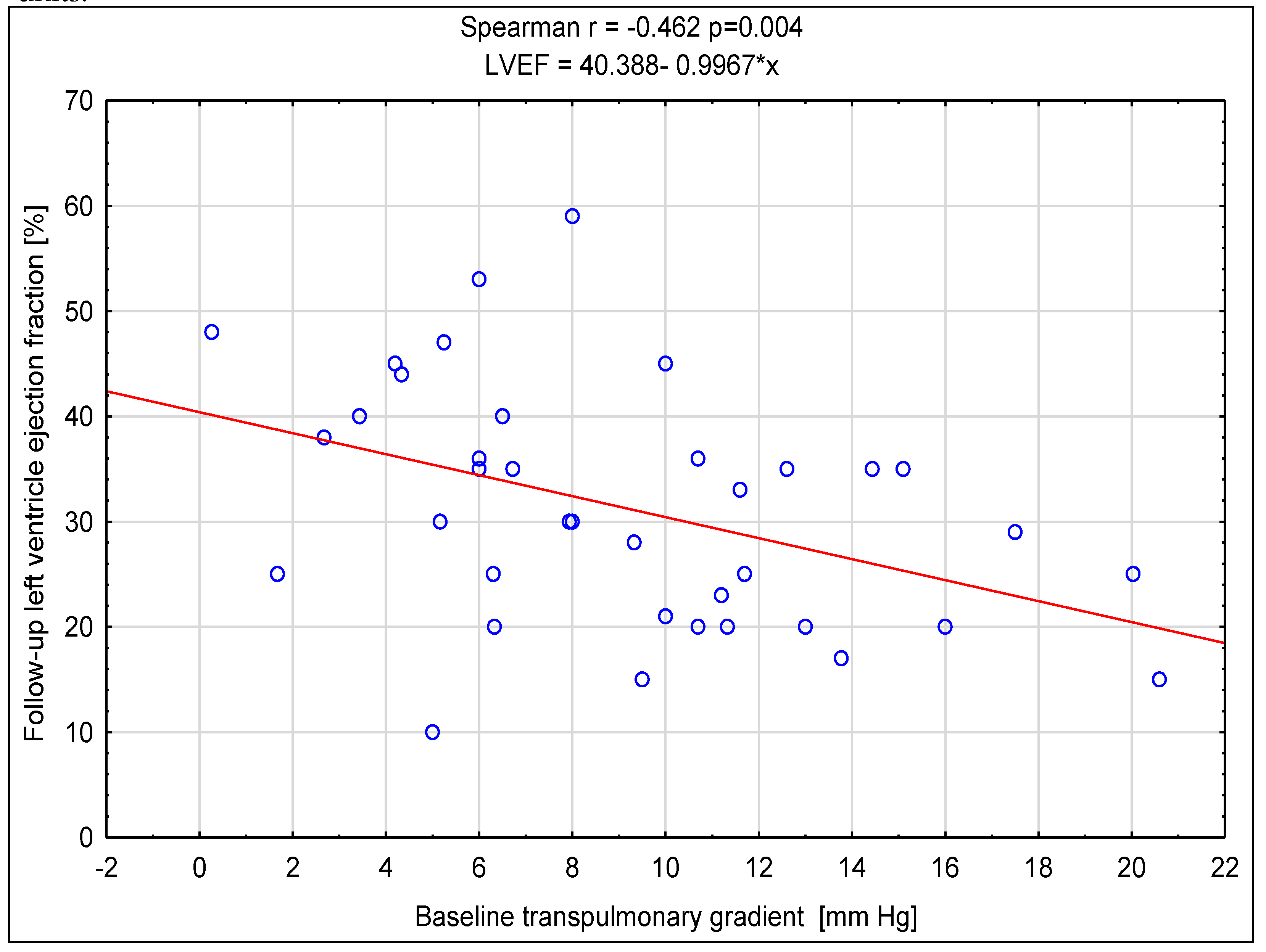
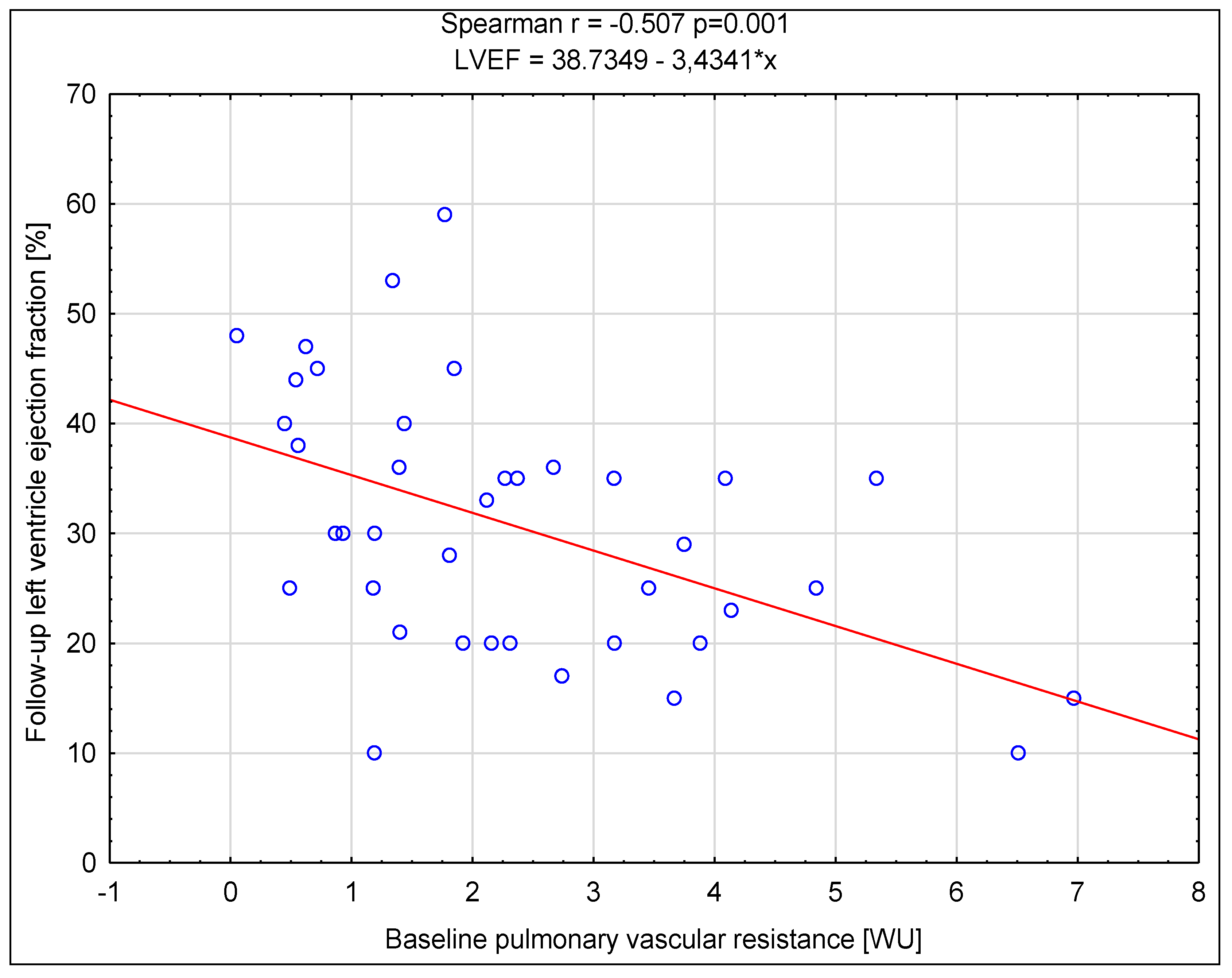
Regardless of the selected criteria for response to resynchronization therapy, TPG and PVR were the variables whose initial value most often had a significant impact on meeting these criteria. Baseline data such as NYHA functional class, NT-proBNP concentration, QRS complex width, DFT/RR, LVEDD and LVEF, as well as SV, PAWP or CO had no significant impact on the fulfilment of any of the criteria on being a responder (Table 4). Results of ROC analysis for TPG and PVR are presented in Table 5. Using the Spearman’s rank correlation coefficient, a moderate negative relationship between LVEF value 6 months after CRT implantation and the baseline PVR and TPG values was found (Figure 2 and 3).

4. Discussion

Among the analyzed data, the vast majority of clinical, electrocardiographic and echocardiographic parameters as well as NT-proBNP concentration showed no predictive value for the response to CRT. The distance achieved in 6MWT and some hemodynamic parameters showed an association with some criteria of the response to CRT, and among them TPG and PVR seem to have the best predictive value. To better understand these results, it is worth to analyze the changes occurring in the pulmonary circulation in patients with HF. Long-term exposure to elevated end diastolic pressure in the left ventricle leads to the increase of retrograde perfusion in pulmonary veins and the development of post-capillary PH ("passive" PH), in subsequent stages to overload of the capillaries and pulmonary arteries and the addition of a "reactive" PH component, and in the final stage of HF to right ventricular dysfunction. [11] TPG defined as the difference between mPAP and PCWP is the gradient between the mean pressure in the pulmonary arterial bed and the mean pressure in the left atrium. The study showed that the increase of TPG shows a negative correlation (r = - 0.462; p = 0.004) with the improvement of LVEF after CRT device implantation, which can be explained by the fact that the increases in the "reactive" PH component reflects to a bigger left ventricle remodelling in these patients. It should be remembered that the relationship between TPG and CO may show a linear relationship in a certain range of values, but it is usually difficult to predict, that is why PVR is a much more universal and repeatable parameter, because the relationship between CO and TPG is linear, independent of the left atrial pressure, which translates into a stable PVR value. [12] In the conducted analysis, PVR showed a better negative correlation with LVEF improvement than TPG (r = - 0.507; p = 0.001).
The relationships between the parameters obtained in RHC and CRT should be considered in two ways, on the one hand they have this prognostic value for the response to CRT, on the other hand CRT implantation also has a significant impact on pulmonary circulation and right ventricular function. Data available in the literature regarding the influence of parameters obtained during RHC on the prognosis of CRT are limited. It was proven that patients with TPG > 12 mmHg measured within 6 months before CRT implantation have a significantly increased risk of reaching the composite endpoint (HR: 3.0; 95% CI: 1.4-6.3; p=0.004) and of all-cause mortality (HR: 3.2; 95% CI: 1.3-7.4; p=0.009) and also a tendency towards less improvement of NYHA class in a 2-year follow-up period compared with patients with TPG <12 mm Hg.[13] It was also found that there is an inverse relationship between the increase in PVR values ​​and the response to resynchronization therapy, defined as the detection of LV reverse remodelling or improvement in the NYHA class. [14] An interesting parameter combining the assessment of right ventricular function and invasive measurements of pulmonary vascular pressures is the right ventricular to pulmonary arterial (RV-PA) coupling ratio (single-beat end-systolic elastance of RV/PA elastance: Ees/Ea), which was considered as an independent prognostic factor, and at baseline Ees/Ea value of ≥ 1 was associated with an 86% response rate to CRT. [15] Some effects of CRT may be visible immediately after device implantation, e.g. reduction of resting and stress sPAP, while other effects should be expected as chronic CRT effects (reverse remodelling) become apparent. Interestingly, long-term CRT mainly affects the RV function during exercise, its ability to cope with increased load, which can be determined by the exercise-induced increase in TAPSE (pre-CRT = 19 ± 5 mm versus post-CRT = 23 ± 7 mm; p = 0.003) and the TAPSE/sPAP ratio reduction (pre-CRT 1.1 ± 0.3 mm/mmHg versus post-CRT = 0.84 ± 0.133 mm/mmHg; p < 0.001). Resting TAPSE after 6 months is comparable to that before CRT implantation. [16] There have also been attempts to use CRT in patients with PAH, but the results were mixed and it has never been officially recommended. [17,18] Invasive PAP measurement may also be important in the care of patients with implanted CRT – in the subgroup analysis of the CHAMPION trial, modifications to pharmacotherapy based on the results obtained from the implanted PAP sensor reduced the rate of hospitalizations by 30% over the 18-month follow-up period compared to the group with usual HF care. [19]
The study has several limitations that should be mentioned. First of all, it is the size of the group. Another limitation may be the lack of a more accurate assessment of right ventricular function and pulmonary circulation in echocardiography.

5. Conclusions

CRT is an important and effective method of treating patients with cardiac dyssynchrony, but not every patient benefits from the device implantation (non-responders). Optimizing the indications for CRT and searching for new prognostic factors is crucial in this aspect. In our work, we wanted to draw attention to the right ventricular function and pulmonary circulation, which is the hemodynamic link between the right and left ventricles. The initial value of TPG and PVR are significantly associated with the response to CRT, and a more accurate assessment of these parameters in a larger population may be an important direction for further research. It is difficult to consider the obtained results in the aspect of qualifying patients for CRT based on the measurements obtained from RHC; they will not replace the classic assessment of dyssynchrony in an echocardiographic examination, but they may facilitate the answer to the question who will respond to the therapy.

Author Contributions

Conceptualization, W.J. C.W. A.T.; methodology, K.B. W.J.; software, W.J. B.Z.; validation, K.B. M.M.; formal analysis, C.W. T.K.; investigation, C.W. A.T. W.J.; resources, K.B. W.J.; data curation, B.Z. M.M.; writing—original draft preparation, K.B. B.Z. ; writing—review and editing, K. B. M.M.; visualization, W.J. K.B. .; supervision W.J. C.W. A.T. T.K. ; project administration, W.J. C.W. A.T.; funding acquisition, W.J. T.K. All authors have read and agreed to the published version of the manuscript.

Funding

This research was funded by the Silesian Medical University, grant number BNW-1-115/K/3/K

Institutional Review Board Statement

The study was conducted in accordance with the Declaration of Helsinki, and approved by Ethics Committee of Silesian Medical University (NN-6501-31/05).

Informed Consent Statement

Informed consent was obtained from all subjects involved in the study.

Conflicts of Interest

The authors declare no conflicts of interest.

References

  1. Authors/Task Force Members:; McDonagh TA, Metra M, Adamo M, Gardner RS, Baumbach A, Böhm M, Burri H, Butler J, Čelutkienė J, Chioncel O, Cleland JGF, Coats AJS, Crespo-Leiro MG, Farmakis D, Gilard M, Heymans S, Hoes AW, Jaarsma T, Jankowska EA, Lainscak M, Lam CSP, Lyon AR, McMurray JJV, Mebazaa A, Mindham R, Muneretto C, Francesco Piepoli M, Price S, Rosano GMC, Ruschitzka F, Kathrine Skibelund A; ESC Scientific Document Group. 2021 ESC Guidelines for the diagnosis and treatment of acute and chronic heart failure: Developed by the Task Force for the diagnosis and treatment of acute and chronic heart failure of the European Society of Cardiology (ESC). With the special contribution of the Heart Failure Association (HFA) of the ESC. Eur J Heart Fail. 2022 Jan;24(1):4-131. [CrossRef] [PubMed]
  2. Glikson M, Nielsen JC, Kronborg MB, Michowitz Y, Auricchio A, Barbash IM, Barrabés JA, Boriani G, Braunschweig F, Brignole M, Burri H, Coats AJS, Deharo JC, Delgado V, Diller GP, Israel CW, Keren A, Knops RE, Kotecha D, Leclercq C, Merkely B, Starck C, Thylén I, Tolosana JM. Corrigendum to: 2021 ESC Guidelines on cardiac pacing and cardiac resynchronization therapy: Developed by the Task Force on cardiac pacing and cardiac resynchronization therapy of the European Society of Cardiology (ESC): With the special contribution of the European Heart Rhythm Association (EHRA). Europace. 2022 Apr 5;24(4):699. Erratum for: Europace. 2022 Jan 4;24(1):71-16. [CrossRef] [PubMed]
  3. Georgiopoulou VV, Kalogeropoulos AP, Borlaug BA, Gheorghiade M, Butler J. Left ventricular dysfunction with pulmonary hypertension: Part 1: epidemiology, pathophysiology, and definitions. Circ Heart Fail. 2013 Mar;6(2):344-54. [CrossRef] [PubMed]
  4. Kalogeropoulos AP, Georgiopoulou VV, Borlaug BA, Gheorghiade M, Butler J. Left ventricular dysfunction with pulmonary hypertension: part 2: prognosis, noninvasive evaluation, treatment, and future research. Circ Heart Fail. 2013 May;6(3):584-93. PMCID: PMC3662027. [CrossRef] [PubMed]
  5. Shalaby A, Voigt A, El-Saed A, Saba S. Usefulness of pulmonary artery pressure by echocardiography to predict outcome in patients receiving cardiac resynchronization therapy heart failure. Am J Cardiol. 2008 Jan 15;101(2):238-41. [CrossRef] [PubMed]
  6. Wang D, Han Y, Zang H, Yu H, Wang S, Wang Z, Jing Q. Prognostic effects of pulmonary hypertension in patients undergoing cardiac resynchronization therapy. J Thorac Dis. 2010 Jun;2(2):71-5. PMCID: PMC3256451. [PubMed]
  7. Stern J, Heist EK, Murray L, Alabiad C, Chung J, Picard MH, Semigran MJ, Ruskin JN, Singh JP. Elevated estimated pulmonary artery systolic pressure is associated with an adverse clinical outcome in patients receiving cardiac resynchronization therapy. Pacing Clin Electrophysiol. 2007 May;30(5):603-7. [CrossRef] [PubMed]
  8. Callan P, Clark AL. Right heart catheterisation: indications and interpretation. Heart. 2016 Jan;102(2):147-57. Epub 2015 Dec 23. [CrossRef] [PubMed]
  9. Sharma A, Bax JJ, Vallakati A, Goel S, Lavie CJ, Kassotis J, Mukherjee D, Einstein A, Warrier N, Lazar JM. Meta-Analysis of the Relation of Baseline Right Ventricular Function to Response to Cardiac Resynchronization Therapy. Am J Cardiol. 2016 Apr 15;117(8):1315-21. Epub 2016 Jan 28. [CrossRef] [PubMed]
  10. Aimo A, Fabiani I, Vergaro G, Arzilli C, Chubuchny V, Pasanisi EM, Petersen C, Poggianti E, Taddei C, Pugliese NR, Bayes-Genis A, Lupón J, Giannoni A, Ripoli A, Georgiopoulos G, Passino C, Emdin M. Prognostic value of reverse remodelling criteria in heart failure with reduced or mid-range ejection fraction. ESC Heart Fail. 2021 Aug;8(4):3014-3025. Epub 2021 May 18. PMCID: PMC8318429. [CrossRef] [PubMed]
  11. Kalogeropoulos AP, Vega JD, Smith AL, Georgiopoulou VV. Pulmonary hypertension and right ventricular function in advanced heart failure. Congest Heart Fail. 2011 Jul-Aug;17(4):189-98. Epub 2011 Jul 21. [CrossRef] [PubMed]
  12. Naeije R, Vachiery JL, Yerly P, Vanderpool R. The transpulmonary pressure gradient for the diagnosis of pulmonary vascular disease. Eur Respir J. 2013 Jan;41(1):217-23. Epub 2012 Aug 30. [CrossRef] [PubMed]
  13. Chatterjee NA, Upadhyay GA, Singal G, Parks KA, Dec GW, Singh JP, Lewis GD. Pre-capillary pulmonary hypertension and right ventricular dilation predict clinical outcome in cardiac resynchronization therapy. JACC Heart Fail. 2014 Jun;2(3):230-7. Epub 2014 Apr 30. [CrossRef] [PubMed]
  14. Li J, Qian Z, Qiu H, Jiang Z, Wang Y, Zhao H, Zhang H, Zhou Y, Hou X, Li X, Zou J. Correlation between cardiac resynchronization response and pulmonary artery hemodynamic parameters. Zhong Nan Da Xue Xue Bao Yi Xue Ban. 2020 Jun 28;45(6):715-721. English, Chinese. [CrossRef] [PubMed]
  15. Schmeisser A, Rauwolf T, Ghanem A, Groscheck T, Adolf D, Grothues F, Fischbach K, Kosiek O, Huth C, Kropf S, Lange S, Luani B, Smid J, Schäfer MH, Schreiber J, Tanev I, Wengler F, Yeritsyan NB, Steendijk P, Braun-Dullaeus RC. Right heart function interacts with left ventricular remodeling after CRT: A pressure volume loop study. Int J Cardiol. 2018 Oct 1;268:156-161. Epub 2018 Mar 8. [CrossRef] [PubMed]
  16. Martens P, Verbrugge FH, Bertrand PB, Verhaert D, Vandervoort P, Dupont M, Tang WHW, Janssens S, Mullens W. Effect of Cardiac Resynchronization Therapy on Exercise-Induced Pulmonary Hypertension and Right Ventricular-Arterial Coupling. Circ Cardiovasc Imaging. 2018 Sep;11(9):e007813. [CrossRef] [PubMed]
  17. Rasmussen JT, Thenappan T, Benditt DG, Weir EK, Pritzker MR. Is cardiac resynchronization therapy for right ventricular failure in pulmonary arterial hypertension of benefit? Pulm Circ. 2014 Dec;4(4):552-9. PMCID: PMC4278617. [CrossRef] [PubMed]
  18. Oktay AA, Mandras SA, Shah S, Kancharla K, Shams OF, Pascual MI, Morin DP. First in human: the effects of biventricular pacing on cardiac output in severe pulmonary arterial hypertension. Heart Vessels. 2020 Jun;35(6):852-858. Epub 2019 Dec 2. [CrossRef] [PubMed]
  19. Varma N, Bourge RC, Stevenson LW, Costanzo MR, Shavelle D, Adamson PB, Ginn G, Henderson J, Abraham WT; CHAMPION Investigator Group. Remote Hemodynamic-Guided Therapy of Patients With Recurrent Heart Failure Following Cardiac Resynchronization Therapy. J Am Heart Assoc. 2021 Feb;10(5):e017619. Epub 2021 Feb 25. PMCID: PMC8174266. [CrossRef] [PubMed]
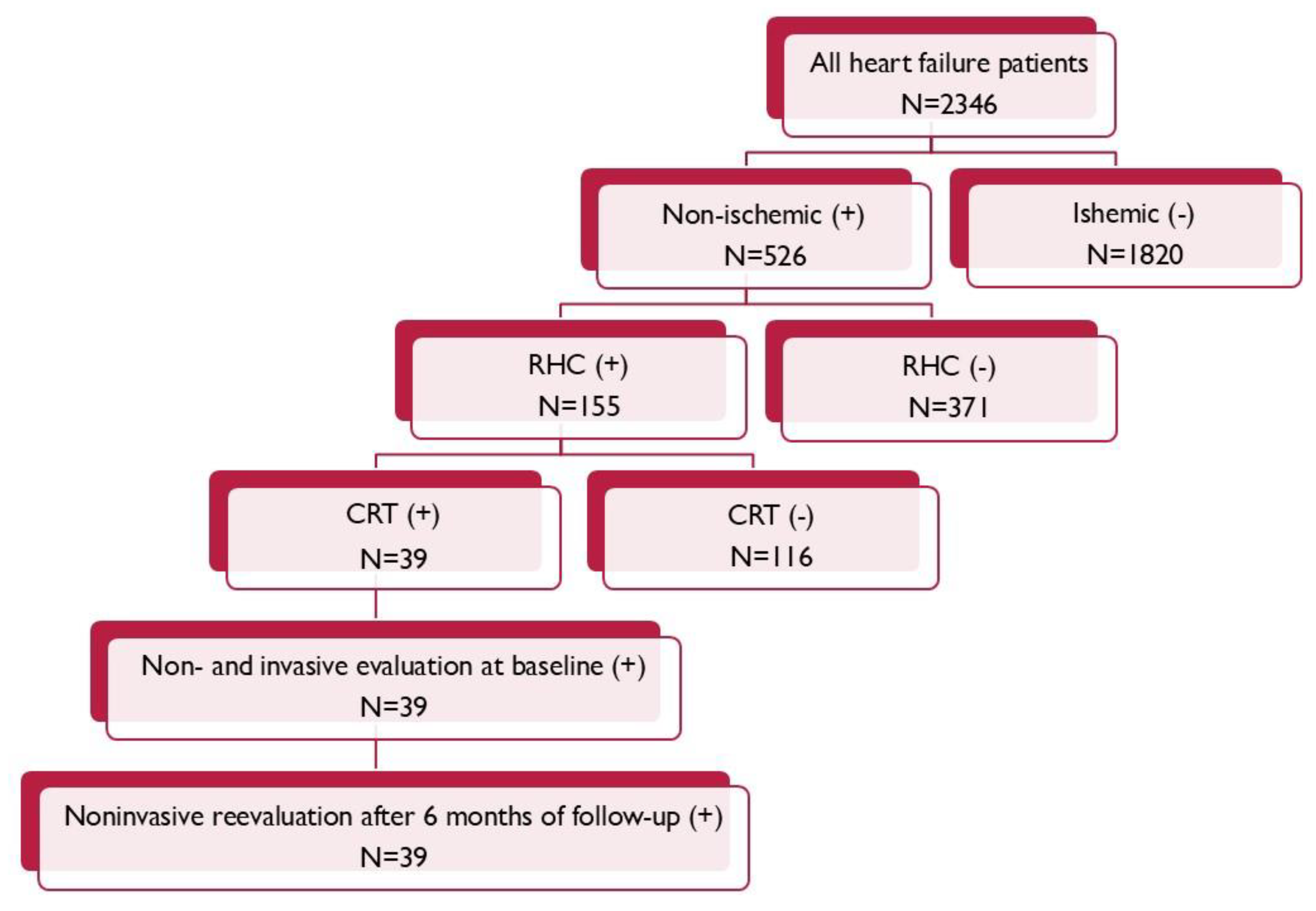
Figure 1. Patients flow chart.
Preprints 144477 g001
Figure 2. Dependency between left ventricle ejection fraction after 6 months of cardiac resynchronization therapy and transpulmonary pressure gradient value before cardiac resynchronization therapy.
Preprints 144477 g002
Figure 3. Dependency between left ventricle ejection fraction after 6 months of cardiac resynchronization therapy and pulmonary vascular resistance value before cardiac resynchronization therapy.
Preprints 144477 g003
Table 1. Baseline characteristic of all studied group.
Evaluated Parameters Median (Q1Q3)
n (%)
General characteristic
Population size 39 (100%)
Female – n (%) 8 (20,50%)
Age at HF onset [years] 52.46 (43.16; 55.75)
NYHA II 17 (43.59%)
NYHA III 21 (53.85%)
NYHA IV 1 (2.56%)
NT-proBNP [pg/ml] 1041 (275.0; 1863)
6MWT [m] 465.0 (409.0; 547.0)
Hypertension 14 (35.89%)
Diabetes mellitus 6 (15,38%)
Electrocardiographic and echocardiographic data
PQ interval duration[ms] 200.0 (180.0; 220.0)
QRS complex duration[ms] 160.0 (160.0; 180.0)
DFT / RR [%] 44.00 (38.00; 47.00)
IVMD [ms] 67,00 (45,00; 75,00)
LVEDD [mm] 69.00 (64.00; 78.00)
LVESD [mm] 61.00 (55.00; 70.00)
LVEDV [ml] 230.0 (189.0; 280.0)
LVESV [ml] 170.0 (140.0; 220.0)
LVEF [%] 22.00 (17.00; 25.00)
Hemodynamic data
sPAP [mmHg] 39.00 (32.00; 54.75)
dPAP [mmHg] 23.33 (16.00; 31.60)
mPAP [mmHg] 28.60 (20.33; 40.00)
sAP [mmHg] 125.0 (112.0; 135.0)
dAP [mmHg] 78.00 (71.67; 90.0)
mAP [mmHg] 92.00 (85.50; 103.3)
HR [min] 78.00 (70.00; 8.00)
SV [ml] 60.88 (42.47; 80.40)
PAWP [mmHg] 20.00 (14.00; 28.50)
RVs [mmHg] 40.00 (33.00; 56.00)
RVd [mmHg] 8.00 (5.00; 10.00)
PVR [WU] 1.92 (1.18; 3.46)
TPG [WU] 9.33 (6.00; 12.61)
TPR [WU] 6.20 (3.75; 10.68)
SVR [WU] 19.45 (13.97; 22.42)
RAP [mmHg] 8.00 (5.00; 12.00)
CO [l/min] 4.51 (3.40; 5.40)
6MWT - six-minute walk test distance; CO – cardiac output; dAP - diastolic arterial pressure; DFT / RR - diastolic filling time to RR-interval ratio; dPAP – diastolic pulmonary artery pressure; HF – heart failure; HR – heart rate; Q1 – lower quartile; Q3 – upper quartile; IVMD – interventricular mechanical delay; LVEDD - left ventricular end-diastolic diameter; LVEF - left ventricular ejection fraction; LVESD - left ventricular end-systolic diameter; LVEDV - left ventricular end-diastolic volume; LVESV - left ventricular end-systolic volume; NT-proBNP - N-terminal pro-brain natriuretic peptide; NYHA - New York Heart Association functional class; mAP – mean arterial pressure; mPAP – mean pulmonary artery pressure; PAWP – pulmonary artery wedge pressure; PQ / AVD – PQ interval to atrio-ventricular delay ratio; PVR– pulmonary vascular resistance; RAP – right atrium pressure; RVd - right ventricular disatolic pressure; RVs - right ventricular systolic pressure; sAP - systolic arterial pressure; SD - standard deviation; sPAP – systolic pulmonary artery pressure; SV – stroke volume; SVR - systemic vascular resistance; TPG – transpulmonary pressure gradient; TPR - total pulmonary resistance; WU – Wood’s units.
Table 2. The influence of resynchronization therapy on selected functional, laboratory, electrocardiographic and echocardiographic parameters.
Baseline
Median (Q1-Q3)
n%
Follow-Up
Median (Q1-Q3)
n%
Wilcoxon Test
Chi-Square Test
P
NYHA I/II 17 (43.59%) 34 (87.18%) <0.001
NYHA III/IV 22 (56.41%) 5 (12.82%) <0.001
6MWT [m] 465.0 (409.0 – 547.0) 515.5 (462.0 – 567.5) <0.001
NT-proBNP [pg/ml] 1041 (275.0 – 1863) 587 (104 – 1420) 0.018
QRS complex [ms] 160.0 (160.0 – 180.0) 160.0 (140.0 – 160.0) <0.001
AVD [ms] 200.0 (180.0 – 220.0) 95.00 (70.00 – 120.0) <0.001
DFT / RR [%] 44.00 (38.00 – 47.00) 48.00 (44.00 – 51.00) 0.002
IVMD [ms] 67.00 (45.00 – 75.00) 15.00 (8.00 – 35.00) <0.001
LVEDV [ml] 230.0 (189.0 – 280.0) 170.0 (137.0 – 240.0) <0.001
LVESV [ml] 170.0 (140.0 – 220.0) 117.0 (80.00 – 170.0) <0.001
LVEDD [mm] 69.00 (64.00 – 78.00) 63.00 (57.00 – 74.00) 0.004
LVESD [mm] 61.00 (55.00 – 70.00) 53.00 (46.00 – 67.00) <0.001
LVEF [%] 22.00 (17.00 – 25.00) 30.00 (21.00 – 38.00) <0.001
6MWT - six-minute walk test distance; CRT - cardiac resynchronization therapy; DFT / RR - diastolic filling time to RR-interval ratio; Q1 – lower quartile; Q3 – upper quartile; IVMD – interventricular mechanical delay; LVEDD - left ventricular end-diastolic diameter; LVEF - left ventricular ejection fraction; LVESD - left ventricular end-systolic diameter; LVEDV - left ventricular end-diastolic volume; LVESV - left ventricular end-systolic volume; NT-proBNP - N-terminal pro-brain natriuretic peptide; NYHA - New York Heart Association functional class; AVD – PQ programmed by atrio-ventricular delay.
Table 3. The size of subgroups depending on various criteria of response to resynchronization therapy.
Responder Nonresponder
6MWT ↑ ≥10% 10 (25,64%) 29 (74,36%)
NT-proBNP ↓ ≥30% 16 (41,03%) 23 (58,97)
NYHA ↓ by I 13 (33,33%) 26 (66,67%)
LVEDV↓ ≥15% 19 (48,72%) 20 (51,28%)
LVESV↓ ≥10% 23 (58,97%) 16 (41,03%)
LVESV↓ ≥15% 21 (53,85%) 18 (46,15%)
LVESV ↓ ≥ 30% 16 (41,03%) 23 (58,97%)
LVEF ↑ ≥5% 27 (69,23%) 12 (30,77%)
LVEF ↑ ≥10% 25 (64,10%) 14 (35,90%)
LVEF ↑ ≥15% 25 (64,10%) 14 (35,90%)
6MWT - six-minute walk test distance; LVEDV - left ventricular end-diastolic volume; LVEF - left ventricular ejection fraction; LVESV - left ventricular end-systolic volume; NT-proBNP - N-terminal pro-brain natriuretic peptide; NYHA - New York Heart Association (NYHA) functional class.
Table 4. The chance of meeting selected response criteria to cardiac resynchronization therapy. Univariable linear regression analysis of clinical, laboratory, echocardiographic and hemodynamic parameters.
6MWT
↑ ≥10%
OR, 95% CI, p
NT-proBNP
↓ ≥30%
OR, 95% CI, p
NYHA
by I
OR, 95% CI, p
LVEDV
↓ ≥15%
OR, 95% CI, p
LVESV
↓ ≥10%
OR, 95% CI, p
LVESV
↓ ≥15%
OR, 95% CI, p
LVESV
↓ ≥30%
OR, 95% CI, p
LVEF
↑ ≥5%
OR, 95% CI, p
LVEF
↑ ≥10%
OR, 95% CI, p
LVEF
↑ ≥15%
OR, 95% CI, p
Female 0.786
0.126-4.885
p=0.789
0.438
0.087-2.196
p=0.299
1.000
0.195-5.125
p=1.000
0.218
0.037-1.306
p=0.085
0.250
0.049-1.281
p=0.086
0.333
0.066-1.684
p=0.169
0.327
0.055-1.948
p=0.204
0.857
0.166-4.438
p=0.849
1.158
0.228-5.882
p=0.855
1.158
0.228-5.883
p=0.855
Age
[years]
0.989
0.902-1.085
p=0.812
0.930
0.851-1.016
p=0.098
0.999
0.917-1.088
p=0.973
0.981
0.904-1.064
p=0.626
0.952
0.873-1.039
p=0.256
0.956
0.879-1.041
p=0.284
0.921
0.841-1.008
p=0.064
0.942
0.854-1.038
p=0.212
0.952
0.869-1.042
p=0.267
0.943
0.860-1.035
p=0.202
NYHA 1.342
0.294-6.136
p=0.695
0.788
0.201-3.099
p=0.725
1.784
0.427-7.456
p=0.412
0.491
0.117-2.052
p=0.313
0.326
0.074-1.446
p=0.127
0.311
0.069-1.402
p=0.116
0.565
0.132-2.416
p=0.426
0.435
0.099-1.899
p=0.252
0.251
0.053-1.193
p=0.072
0.556
0.135-2.289
p=0.400
6MWT
[m]
0.882
0.785-0.991
p=0.028
1.061
0.981-1.146
p=0.124
1.057
0.977-1.143
p=0.156
1.103
1.008-1.207
p=0.028
1.102
1.004-1.211
p=0.035
1.123
1.017-1.239
p=0.018
1.094
1.003-1.193
p=0.035
1.045
0.962-1.134
p=0.282
1.079
0.988-1.179
p=0.078
1.047
0.967-1.133
p=0.243
NT-proBNP
[pg/ml]
1.005
0.938-1.077
p=0.890
0.962
0.903-1.025
p=0.218
0.976
0.914-1.043
p=0.461
0.938
0.873-1.009
p=0.074
0.946
0.884-1.012
p=0.093
0.951
0.890-1.017
p=0.126
0.949
0.884-1.020
p=0.141
0.951
0.891-1.015
p=0.118
0.943
0.881-1.009
p=0.078
0.974
0.917-1.035
p=0.378
QRS
[ms]
0.998
0.961-1.036
p=0.907
1.002
0.970-1.036
p=0.888
0.982
0.947-1.019
p=0.320
1.009
0.976-1.043
p=0.592
0.992
0.958-1.026
p=0.623
1.006
0.973-1.040
p=0.722
1.008
0.975-1.043
p=0.623
1.014
0.978-1.051
p=0.448
1.026
0.988-1.065
p=0.165
1.016
0.981-1.053
p=0.360
PQ
[ms]
1.005
0.977-1.033
p=0.741
0.965
0.932-0.998
p=0.029
0.993
0.967-1.020
p=0.590
0.980
0.952-1.008
p=0.134
0.992
0.966-1.019
p=0.526
0.994
0.970-1.020
p=0.654
0.981
0.955-1.008
p=0.152
0.980
0.950-1.011
p=0.179
0.988
0.962-1.015
p=0.369
0.988
0.962-1.015
p=0.369
DFT/RR
[%]
0.959
0.859-1.071
p=0.444
0.946
0.859-1.043
p=0.249
0.984
0.890-1.087
p=0.738
0.998
0.915-1.090
p=0.971
0.989
0.902-1.084
p=0.803
0.963
0.877-1.057
p=0.410
1.009
0.921-1.107
p=0.838
1.003
0.910-1.104
p=0.955
0.985
0.898-1.082
p=0.750
0.977
0.890-1.073
p=0.617
IVMD
[ms]
0.993
0.962-1.026
p=0.677
1.005
0.977-1.033
p=0.732
0.997
0.968-1.026
p=0.821
1.016
0.987-1.046
p=0.270
1.037
1.001-1.074
p=0.038
1.039
1.002-1.077
p=0.031
1.017
0.987-1.049
p=0.248
1.024
0.991-1.057
p=0.136
1.031
0.997-1.066
p=0.061
1.015
0.985-1.045
p=0.310
LVEDD
[mm]
1.012
0.938-1.092
p=0.752
0.956
0.891-1.026
p=0.199
0.980
0.912-1.053
p=0.571
0.963
0.899-1.032
p=0.273
0.942
0.875-1.014
p=0.101
0.946
0.880-1.017
p=0.122
0.946
0.878-1.018
p=0.127
0.918
0.844-0.999
p=0.039
0.893
0.816-0.978
p=0.012
0.963
0.897-1.035
p=0.290
LVEF
[%]
1.051
0.924-1.197
p=0.433
1.048
0.934-1.177
p=0.409
1.146
0.993-1.322
p=0.054
1.016
0.907-1.137
p=0.781
1.057
0.938-1.191
p=0.349
1.048
0.933-1.178
p=0.411
1.088
0.961-1.231
p=0.169
1.024
0.905-1.159
p=0.692
1.023
0.909-1.152
p=0.698
1.019
0.906-1.147
p=0.742
sPAP
[mmHg]
0.966
0.914-1.021
p=0.207
0.956
0.910-1.004
p=0.060
0.951
0.900-1.005
p=0.063
0.970
0.926-1.016
p=0.182
0.954
0.909-1.002
p=0.053
0.952
0.906-1.000
p=0.044
0.913
0.854-0.975
p=0.005
0.944
0.894-0.996
p=0.029
0.951
0.904-1.000
p=0.044
0.962
0.916-1.009
p=0.100
dPAP
[mmHg]
0.936
0.851-1.028
p=0.154
0.924
0.851-1.003
p=0.050
0.926
0.847-1.013
p=0.081
0.970
0.903-1.043
p=0.399
0.955
0.886-1.028
p=0.207
0.955
0.887-1.028
p=0.208
0.875
0.789-0.971
p=0.009
0.901
0.823-0.986
p=0.019
0.901
0.825-0.984
p=0.017
0.938
0.867-1.014
p=0.097
mPAP
[mmHg]
0.946
0.874-1.024
p=0.156
0.935
0.873-1.002
p=0.048
0.933
0.865-1.007
p=0.067
0.968
0.910-1.030
p=0.294
0.950
0.891-1.014
p=0.113
0.949
0.890-1.013
p=0.106
0.887
0.811-0.970
p=0.007
0.917
0.850-0.989
p=0.020
0.922
0.857-0.991
p=0.023
0.946
0.885-1.012
p=0.093
SV
[ml]
1.022
0.989-1.056
p=0.173
1.022
0.992-1.053
p=0.136
1.010
0.981-1.040
p=0.469
0.984
0.957-1.013
p=0.267
1.010
0.982-1.039
p=0.469
1.006
0.979-1.035
p=0.641
1.021
0.991-1.052
p=0.150
1.029
0.994-1.065
p=0.091
1.021
0.989-1.053
p=0.184
0.946
0.885-1.012
p=0.093
PAWP
[mmHg]
0.954
0.872-1.043
p=0.284
0.959
0.888-1.035
p=0.269
0.961
0.886-1.043
p=0.329
1.022
0.949-1.101
p=0.546
0.983
0.913-1.060
p=0.648
0.991
0.921-1.066
p=0.800
0.939
0.865-1.020
p=0.124
0.934
0.857-1.019
p=0.112
0.947
0.874-1.027
p=0.176
1.016
0.986-1.047
p=0.295
PVR
[WU]
0.597
0.314-1.132
p=0.102
0.534
0.308-0.924
p=0.020
0.561
0.307-1.025
p=0.052
0.689
0.437-1.088
p=0.098
0.657
0.417-1.034
p=0.060
0.625
0.388-1.007
p=0.046
0.329
0.146-0.741
p=0.006
0.537
0.320-0.902
p=0.015
0.543
0.324-0.908
p=0.016
0.587
0.361-0.955
p=0.026
TPG
[mmHg]
0.924
0.788-1.084
p=0.314
0.860
0.738-1.001
p=0.044
0.840
0.704-1.002
p=0.046
0.769
0.632-0.936
p=0.007
0.844
0.723-0.985
p=0.026
0.802
0.673-0.956
p=0.011
0.688
0.532-0.890
p=0.003
0.830
0.706-0.976
p=0.020
0.805
0.678-0.956
p=0.011
0.838
0.716-0.981
p=0.023
RAP
[mmHg]
0.812
0.659-1.000
p=0.043
0.863
0.726-1.025
p=0.083
0.754
0.603-0.943
p=0.010
0.817
0.676-0.986
p=0.030
0.934
0.797-1.094
p=0.381
0.907
0.771-1.067
p=0.224
0.863
0.725-1.027
p=0.087
0.939
0.795-1.110
p=0.447
0.964
0.822-1.130
p=0.638
0.943
0.801-1.110
p=0.466
CO
[l/min]
1.486
0.925-2.385
p=0.090
1.520
0.946-2.445
p=0.074
1.216
0.792-1.867
p=0.354
0.923
0.613-1.390
p=0.692
1.365
0.860-2.167
p=0.172
1.360
0.864-2.143
p=0.169
1.502
0.947-2.382
p=0.074
1.637
0.923-2.903
p=0.081
1.383
0.853-2.244
p=0.174
1.515
0.894-2.567
p=0.110
6MWT - six-minute walk test distance; CI – confidence interval; CO – cardiac output; DFT/RR - diastolic filling time to RR-interval ratio; dPAP – diastolic pulmonary artery pressure; IVMD – interventricular mechanical delay; LVEDD - left ventricular end-diastolic diameter; LVEF - left ventricular ejection fraction; LVEDV - left ventricular end-diastolic volume; LVESV - left ventricular end-systolic volume; NS – non-significant; NT-proBNP - N-terminal pro-brain natriuretic peptide; NYHA - New York Heart Association (NYHA) functional class; mPAP – mean pulmonary artery pressure; OR – odds ratio; PAWP – pulmonary artery wedge pressure; PVR– pulmonary vascular resistance; RAP – right atrium pressure; sPAP – systolic pulmonary artery pressure; SV – stroke volume; TPG – transpulmonary pressure gradient; WU – Wood’s units.
Table 5. Receiver operating characteristic curve analysis results for pulmonary vascular resistance and transpulmonary pressure gradient.
Cut Off Value Specificity/Sensitivity [%] AUC 95% CI
PVR [WU]
6MWT ↑ ≥10% 1.42 70.0 0.703±0.098 (0.511-0.896)
NT-proBNP ↓ ≥30% 1.80 68.4 0.734±0.08 (0.577-0.892)
NYHA ↓ by I 1.81 61.5 0.683±0.086 (0.514-0.853)
LVEDV↓ ≥15% 1.81 66.7 0.692±0.088 (0.520-0.864)
LVESV↓ ≥10% 2.12 69.2 0.709±0.086 (0.541-0.877)
LVESV↓ ≥15% 1.92 71.8 0.73±0.082 (0.569-0.891)
LVESV ↓ ≥ 30% 1.80 75.0 0.823±0.069 (0.688-0.959)
LVEF ↑ ≥5% 2.16 66.7 0.765±0.081 (0.606-0.925)
LVEF ↑ ≥10% 2.16 68.0 0.757±0.081 (0.599-0.915)
LVEF ↑ ≥15% 2.12 64.2 0.737±0.08 (0.580-0.894)
TPG [mmHg]
6MWT ↑ ≥10% 7.93 61.0 0.619±0.11 (0.404-0.834)
NT-proBNP ↓ ≥30% 8.0 69.2 0.717±0.084 (0.552-0.882)
NYHA ↓ by I 7.93 69.2 0.701±0.086 (0.533-0.869)
LVEDV↓ ≥15% 8.0 79.5 0.821±0.074 (0.676-0.966)
LVESV↓ ≥10% 9.5 79.7 0.749±0.086 (0.58-0.918)
LVESV↓ ≥15% 9.33 77.0 0.784±0.08 (0.628-0.941)
LVESV ↓ ≥ 30% 7.93 81.9 0.856±0.065 (0.729-0.983)
LVEF ↑ ≥5% 10.0 74.5 0.765±0.083 (0.603-0.928)
LVEF ↑ ≥10% 9.8 72.0 0.783±0.077 (0.632-0.933)
LVEF ↑ ≥15% 9.78 70.0 0.753±0.08 (0.597-0.909)
6MWT - six-minute walk test distance; AUC – area under the curve; CI – confidence interval; LVEF - left ventricular ejection fraction; LVEDV - left ventricular end-diastolic volume; LVESV - left ventricular end-systolic volume; NT-proBNP - N-terminal pro-brain natriuretic peptide; NYHA - New York Heart Association (NYHA) functional class; PVR– pulmonary vascular resistance; TPG – transpulmonary pressure gradient; WU – Wood’s units.
Disclaimer/Publisher’s Note: The statements, opinions and data contained in all publications are solely those of the individual author(s) and contributor(s) and not of MDPI and/or the editor(s). MDPI and/or the editor(s) disclaim responsibility for any injury to people or property resulting from any ideas, methods, instructions or products referred to in the content.
Copyright: This open access article is published under a Creative Commons CC BY 4.0 license, which permit the free download, distribution, and reuse, provided that the author and preprint are cited in any reuse.
Prerpints.org logo

Preprints.org is a free preprint server supported by MDPI in Basel, Switzerland.

Subscribe

Disclaimer

Terms of Use

Privacy Policy

Privacy Settings

© 2025 MDPI (Basel, Switzerland) unless otherwise stated