Preprint
Article

This version is not peer-reviewed.

How the Implement of Ideological and Political Education of Ecological Civilization (IPE-EC) Could Influence the Academic Performance of Students Major in Environmental Science

Submitted:

26 November 2024

Posted:

27 November 2024

You are already at the latest version

Abstract

Promoting active learning and research is vital for improving students' academic performance. This research underscores the significant influence of Ideological and Political Education on Ecological Civilization (IPE-EC) in shaping students' environmental awareness and enhancing their academic outcomes. The results showed that the incorporation of IPE-EC into university curricula has significantly increased the frequency of related educational sessions and the number of relevant courses, thereby deepening students' grasp of ecological concepts and boosting their environmental awareness and involvement. Further model analysis reveals a synergistic relationship between IPE-EC and academic success in enhancing GPA-A. Coupling analysis shows an upward trend in the coordination effects between the two systems, indicating a shift in the primary drivers of academic improvement from mere accumulation of academic achievements to motivation influenced by IPE-EC. These findings provide theoretical insights into optimizing the implementation of ideological and political education within higher education institutions.

Keywords: 
;  ;  ;  
Subject: 
Social Sciences  -   Education

1. Introduction

Talented individuals, especially college students, are crucial for societal development and the advancement of multidisciplinary studies within universities. Environmental science, as a prime example of an interdisciplinary field, aims to train future researchers and managers who will play a significant role in ecological protection [1,2,3,4]. This necessitates that environmental science students acquire diverse skills from various disciplines, including physics, chemistry, statistics, and microbiology [5]. Despite considerable improvements in the environmental science curriculum, enhancing students’ academic performance remains a significant challenge. In China, nearly 35% of students face the risk of failing out of college due to poor performance in professional exams [4] Similarly, in the United States, only 40% of college students complete their bachelor’s degrees within four years [6,7]. To address this issue, college administrators have implemented strategies to strengthen students’ professional abilities. It is well understood that achieving high academic performance, such as excelling in exams or publishing papers, is largely due to increased proficiency in professional skills and knowledge [8]. Traditionally, professional education relies on a passive "learn after being taught" model, which often results in inefficient learning and diminished student motivation. Therefore, fostering proactive learning and research is essential for enhancing students' academic capabilities.
To address the aforementioned challenges, ideological and political education (IPE) has been integrated into the college curriculum as a novel form of political guidance [9]. IPE encompasses political concepts and moral norms aimed at establishing ideological and ethical standards aligned with societal needs [10]. Since the 18th Party Congress, the importance and role of IPE in the ideological and political work of universities have been further emphasized and reinforced [11]. Additionally, the high-quality development of higher education in the new era presents opportunities for enhancing IPE within universities. Currently, the modes of IPE are evolving. To shape individual values and uphold social responsibilities, IPE now places significant emphasis on students' academic achievements [12]. The updated content includes political education, career guidance (IPE-CG), ecological civilization education (IPE-EC), and fostering emotional resonance. Implementing IPE-EC has been shown to facilitate the understanding of basic environmental protection principles and increase college students' interest and commitment to environmentally responsible behaviors [4,13]. Given the intensifying ecological and environmental challenges, China has advanced its national strategy from basic environmental protection to the broader concept of ecological civilization.
By incorporating IPE-EC, students become more aware of national priorities, which positively impacts their career planning. China has undertaken extensive campaigns to promote ecological civilization, with many universities offering dedicated courses or integrating these concepts into traditional curricula [14,15]. However, it is essential to investigate to what extent does this approach influence their academic outcomes?
The internal relationships between IPE-EC and academic performance of students are generally effectiveness-based and can be evaluated by estimating coupling level of the two system [16,17]. For handling complex data, machine learning techniques are increasingly applied to environmental challenges. These approaches have shown high accuracy in evaluating the effectiveness of IPE education [7]. Models such as multiple stepwise linear regression (MSLR) are often favored for their user-friendly nature. It was reported that by employing partial redundancy analysis, the teaching strategy and academic self-concept (ASC) were found be responsible for enhancing the academic performance of students major in medicine [18,19]. Despite its widespread use, MSLR is limited by interactions between variables and the complexities of non-linear causal relationships [20]. Furthermore, conventional machine learning models may have difficulty accurately assessing the impact of qualitative IPE-EC factors on academic outcomes. As a result, in multivariate statistical analysis, it is crucial to integrate models that thoroughly consider the comprehensive influence of IPE-EC on students' academic performance.
Besides, as the IPE-EC and academic performance are two independent system containing several variables, the interacts between the two systems are dominant mechanisms when assessing the effect of IPE-EC on the which can be further investigated.
Coupling analysis is a robust method used to evaluate the coordination between two systems [21]. By thoroughly understanding the functions of elements within each system, this analysis can assess the synergistic or antagonistic interactions between factors from different systems [22]. A research regarding the effect of IPE on academic performance suggested that significant correlations were found between academic self-concept and academic performance of students major in medical [23]. In addition, a research regarding the feedback of IPE based on 15000 questionnaires of 200 universities in China indicated that university students who with the cognition of ecological civilization show a stronger willingness to implement environmental protection behavior [4]. Recently, teaching the concept of ecological civilization in IPE in Colleges and universities has become trend work [24]. However, by far, few study have investigated the relationships between IPE-EC and academic performance from the perspective of coupling analysis. In this context, we hypothesize that IPE-EC exert a decisive influence on the academic achievements of students specializing in Environmental Science. By model study and coordination analysis, this work aims to investigate the effects of IPE-EC on academic performance of college students, identifying the predominant factors belong to IPE-EC and reveal the underlying mechanism.

2. Materials and Methods

2.1. Data and Variables Selection

In this study, other than data collected by questionnaire, we sampling the data of postgraduate students major in Environmental Science studying in Chongqing University from the Educational Administration System (EAS). Totally 156 samples were selected from 2019-2022. The Dataset includes two categories, one refer to the practise of IPE-EC, another refer to the academic achievements of students.Research manuscripts reporting large datasets that are deposited in a publicly available database should specify where the data have been deposited and provide the relevant accession numbers. If the accession numbers have not yet been obtained at the time of submission, please state that they will be provided during review. They must be provided prior to publication.

2.1.1. IPE-EC Variables

In order to evaluate the performance of IPE-EC, four quantitative factors were selected in this study. The first kind IPE-EC variables is the average time each student receiving education of ecological civilization (AT); The second factor is the number of curriculum involve IPE-EC (NC); By collecting student’s attitude in conjunction with related classification from the literature [25]. The recognition levels (RE) are ranked from 1 (lowest degree of recognition)-10 (highest degree of recognition). In addition, the willingness to act participate environmental protection behavior (WT) are also been quantified from 1-10.

2.1.2. Academic Variables

The academic variables includes the comprehensive GPA of all curriculum (GPA-A), GPA of core professional curriculum (GPA-C), the number of paper publish regarding to Environmental Science (PA) and the average number of times a student take part in academic activities (ANC). The above factors can fully represent the academic performance.

2.2. Machine Learning Models

2.2.1. The Multiple Stepwise Lineal Regression Model

In this study, multiple linear regression (MLR) was initially employed to evaluate the impact of IPE-EC factors on GPA-A (dependent variable). Statistically significant variables were then incorporated into the multiple regression model, as presented in Equation (1).
Preprints 140876 i001
where Yi is the GPA of students. The parameters a and C are regression coefficients and constant; X represents the chosen elements related to ideological and political education.

2.2.2. Neural Network (NN)

Neural networks (NN) are composed of interconnected nodes that simulate the biological nervous system, with model outputs generated from input data (Mikkonen et al., 2018). A typical NN model includes neurons, connections, weights, and activation functions. Training the data includes both forward propagation and back propagation processes. The output of each neuron in this layer is calculated (Eq. 2) and passed to the next layer. This process is repeated iteratively until the final layer produces an output. During back propagation, the output error is assessed and the contribution of each output to error is further determined by Eq. 3. The network's connection weights are subsequently updated in response to the calculated error gradient. (Eq. 4).
y ( n ) = F a i = 0 k w i n · x i n + b
w i n = E r r o r i w i n
w i n + 1 = w i n l r · w i n
where xi(n) is the input factors; wi(n) is the weight; b and Fa are the bias and activation function; y(n) is the output at discrete-time n.

2.2.3. Support Vector Regression (SVR)

This model constructs a hyperplane that minimizes the distance between all data points in a dataset. The training dataset of this model is presented as , .where N represent the size of the training dataset, with X as the input sample space and Y as the true corresponding values. The predicted values of the dependent variables are calculated using Equation 5.
f x = W T φ x + b
where f x is the predicted value; By reducing the discrepancy between the predicted and actual values over the training dataset (Eq. 6), where W and b are determined.
R f = C 1 N i = 1 N L ε y i , f x + 1 2 W T W
In this formula, the empirical risk is measured through Eq. 7; represents the flat risk, and are both the fitting parameters;
L ε y i , f x = 0 ,   i f f ( x ) y i < ε f ( x ) y i ε , o t h e r w i s e  

2.2.4. Gradient Boosted Regression Trees (GBRT)

The Gradient Boosting Regression Tree (GBRT) algorithm is an ensemble method renowned for its corrective and reinforcement capabilities. It constructs the model iteratively by integrating multiple decision trees. This model primarily contains two components: Regression Trees and Gradient Boosting. Regression Trees are employed to predict continuous values. The GBRT algorithm iteratively builds a series of regression trees, with each tree correcting the errors of its predecessor. The final prediction is the cumulative result of all the trees. Gradient Boosting iteratively enhances the model by ensuring that each subsequent tree addresses the residuals of the previous ones, thereby refining the overall accuracy.

2.2.5. Model Constraint

To keep the outputs of each model within an acceptable range, a post-constraint adjustment was employed to refine the results. This adjustment prevents the output values from exceeding the dataset's upper limits or falling below the lower bounds. Utilizing this post-constraint strategy enhances the robustness and clarity of the models. In addition, a grid search technique was used to optimize the setup of the machine learning models. Full details on the grid search process (Text S1) and the software utilized (Table S1) are provided in the Supplementary Materials.

2.3. Coupling Analysis

The coordination degree of IPE-EC and academic performance of students major in Environmental Science was investigated by coupling analysis. Trough this approach, a model was build to assess the level of coordination development between IPE-EC and academic performance. Coupling degree denotes the interactions of the elements in multiple systems to realize the relationship between systems. By establishing the relevant index system of IPE-EC system and academic system, the comprehensive development evaluation model and the coupling coordination degree model are constructed, and the coupling relationship and between the two systems are analyzed. The detail information of data processing was described in Supplementary Materials.

2.3.1. Development of Comprehensive Evaluation Model
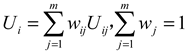
The coordination level between IPE-EC elements and students' academic performance in this study was assessed using an integrated evaluation model. Before measuring the coupling degree of the two systems, the comprehensive estimation index is calculated by Eq. 8
Preprints 140876 i002
in which is the comprehensive estimation index of system;is the effectiveness coefficient, representing the contribution of factor i to system j.

2.3.2. Construction of the Coupled Degree Model
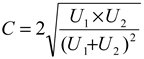
After obtaining the comprehensive estimation index of IPE-EC and academic performance, the coupling degree is calculated by the coefficient model:
Preprints 140876 i003
where C is the coupling degree, Ui is the comprehensive estimation index
According to the classification criteria, the coupling degree is divided into 6 level which are Extremely uncoupled (0<C≤0.1); Low level of coupling (0.1<C≤0.3); Moderate level of coupling (0.3<C≤0.5); High level of coupling (0.5<C≤0.7); Extremely coupling (0.7<C≤1)

3. Results and Discussion

3.1. The Carry Out of IPE-EC and Academic Performance from 2018-2023

With the implementation of “Guidelines for ideological and political construction of university courses, Ministry of Education, China, 2020”, the IPE-EC has been widely merged into annual teaching process in universities of China. In this study, the carry out situation of IPE-EC during curriculum teaching and academic performance of students major in Environmental Science in Chongqing University are shown in Figure 1a. The average times a students receiving IPE-EC has been increased from 1.7 to 3.8 along with a sharp ascending number of curriculum involving IPE-EC (CU) by nearly 3.7 times. The variation of these two kinds of objective indicator indicate that as an directory ideological theory, IPE-EC has deeply merged into the process of higher education in college. In the report of 20th national Congress of the CPC, the development of ecological civilization has became the one of the main tasks of IPE. As a result, the importance of safeguarding the ecological environment has reached an unparalleled height. Generally, the content of IPE-EC including the education of ecological outlook, ecological responsibility, and ecological ethics that aim to strengthen the sense of ecological civilization among students in college. Therefore, the apparent increase of AT and CU may improve their sense of environmental protection and sustainable development. This was proved by the value of RE, which are pivotal factors estimating the achieving degree of IPE-EC. According to [26]. the approaches to achieving ecological civilization goals involve establishing ecp-friendly, low-carbon and circular systems, alongside resource preservation and environmental safeguarding. The increasing recognition of IPE-EC could trigger a virtuous cycle of establishing ecological concern and conducting environmental protection behavior [27,28]. Moreover, through questionnaire survey, the willingness to act environmental protection behavior (WEB) steady rise from 5 to 9 which suggest that the implementation of IPE-EC will promote the production of pro-environment behavior. In addition to examining carry out situation of the IPE-EC, this study analyzed the academic performance of students major in Environmental Science from 2018 to 2023. The results show that the average score of GPA calculated according to all curriculum increases from 2018-2022, while a slight decline in 2023. A similar trend was observed for core course GPA averages. Notably, there has been nearly a fourfold increase in the average number of environmental science-related papers published per student over the past five years. Furthermore, the average participation in academic activities per student has increased by approximately 1.4 times. These results suggest a significant improvement in student academic performance during the implementation of IPE-EC. As indicated by previous studies, the accumulation of environmental knowledge could promote the practice of environmental behaviors, thereby embodying the purpose of IPE-EC [29]. However, whether a correlation between the promotion of academic performance of environmental science students and conduct of IPE-EC is still unclear.

3.2. Relationships Between IPE-EC and Academic Factors

In order to further reveal the relationships between IPE-EC and academic performance, in this part, the correlations among each factors were investigated. As shown in Table 1, significant positive correlation is found between CU and AT (p<0.01), this result indicate that during the teaching process, the school emphasizes promoting ecological civilization ideological and political education primarily through integrating ecological civilization principles into core courses. Furthermore, there is a significant correlation between RE and WEB, consistent with previous research indicating a positive association between environmental reflection and the adoption of environmental behaviors [30,31]. Notably, our study found no significant correlation between academic performance and IPE-EC in 2018. These results imply that while IPE-EC enhances students' awareness of environmental education, its influence on academic performance lacks clear support in the early stage of IPE-EC. However, it was worth noting that significant correlation was found between GPA-A and CU in 2023. Additionally, AC is also significantly correlate with RE and CU, indicating that increasing recognition of IPE-EC could favor the initiative of students to participate academic activities related to environmental protection. Previous study indicated that enhancing comprehension of environmental issues heightens the probability of individuals engaging in eco-friendly behaviors [32], and the ascended levels of ecological concern and reflection correspond to heightened motivation among individuals to engage in environmentally responsible actions. Consider the above theory, the results of our study further suggest that the improving efficiency of RE (reflected by ecological concern and reflection) can extend to academic performance. Therefore, the continuous input of IPE-EC during teaching process have a positive effect in improving students’ academic ability.

3.3. Investigate the Effect of IPE-EC on Academic Performance by Model Study

The aforementioned results of correlation analysis proved that there are logical relationships between IPE-EC and academic performance which enable the possibility to identify the dominant factors. Therefore, model study was further used to identified the dominant factor determining the academic ability of students. In this study, MSLR model was firstly employed and the GPA-A was set as quantitative index representing the academic ability of individual. As shown in Table 3, six model was build between GPA-A and influence factors from 2018-2023. In model 1and 2, GPA-C, PA and AC are contribute to the variation of GPA-A, indicating that in the early stage of IPE-EC, the improvement of academic ability is still mainly attribute to the course performance with determine coefficient of 0.55 and 0.34, and IPE-EC show negligible effects on academic performance. However, from 2020 to 2023, the contributions of IPE-EC to the enhancement of students' academic capabilities have become increasingly evident, and the value of R2 indicating a moderate goodness-of-fit and robustness. Therefore, it is more likely that academic factors should be involved together with IPE-EC ingredients to describe the variation of GPA-A.
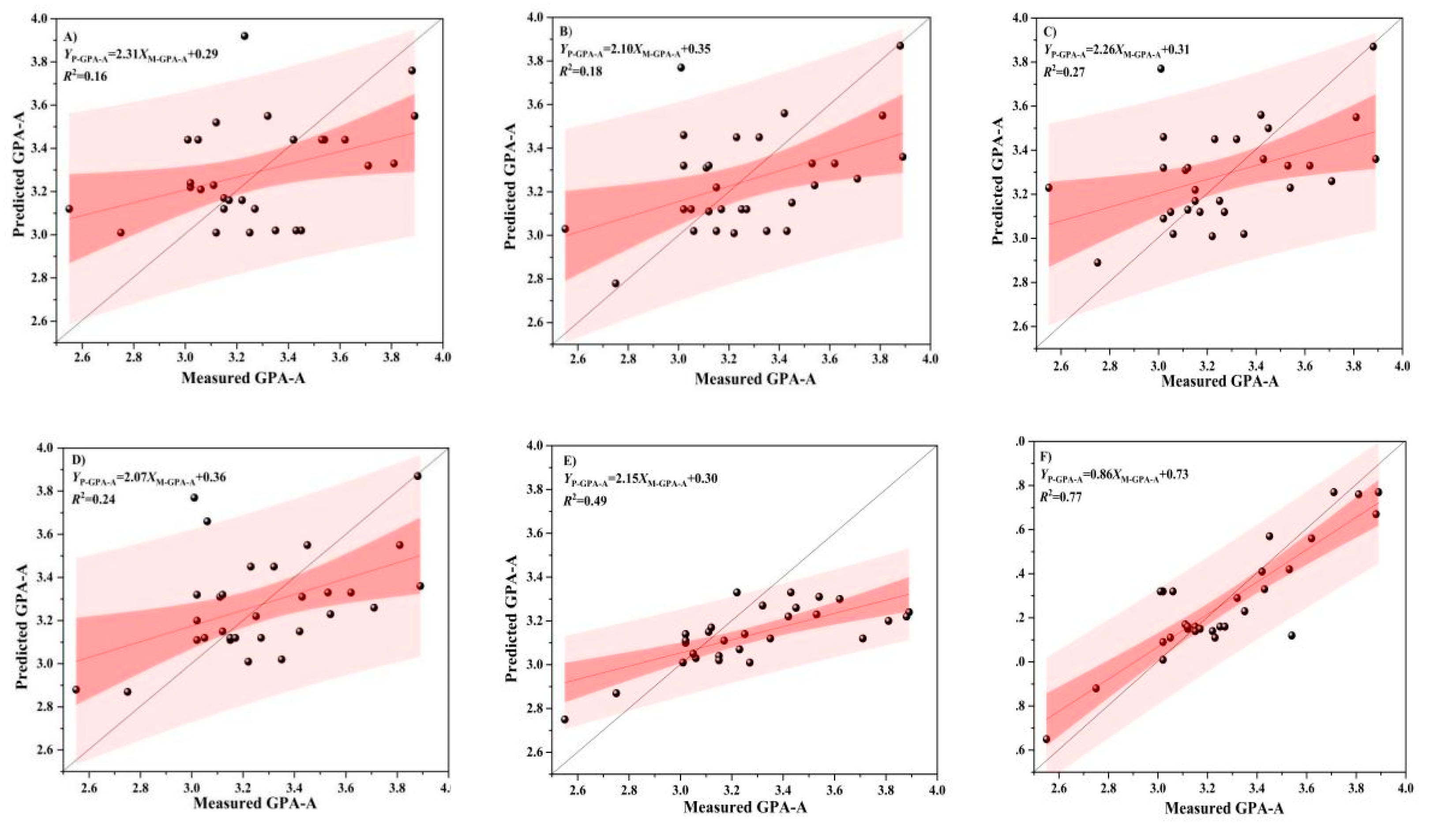
The prediction of GPA-A based on MSLR model is presented in Figure 2. Accurate predictions based on linear assumptions often necessitate not only robust but also distinct relationships between variables and their dependencies [33]. In this study, the value of R2 increased from 0.16 to 0.77 suggesting a increasing accuracy of prediction. In the year from 2018 to 2020, there are averagely 23.2% of the predicted values fell within the 95% prediction intervals (reflecting the deviations between the fitted line and the 1:1 line), indicating the unsatisfactory of model prediction which is also consistent with the previously mentioned model prediction results. Interestingly, in the year of 2022 and 2023, the percentage of the predicted values fell within the 95% prediction intervals based on model 5 and 6 is significantly higher than former years. The results of MSLR model accentuate the fact that except for grades and academic achievements, factors associated with IPE-EC may play important roles in determining the academic performance of students major in Environmental Science.
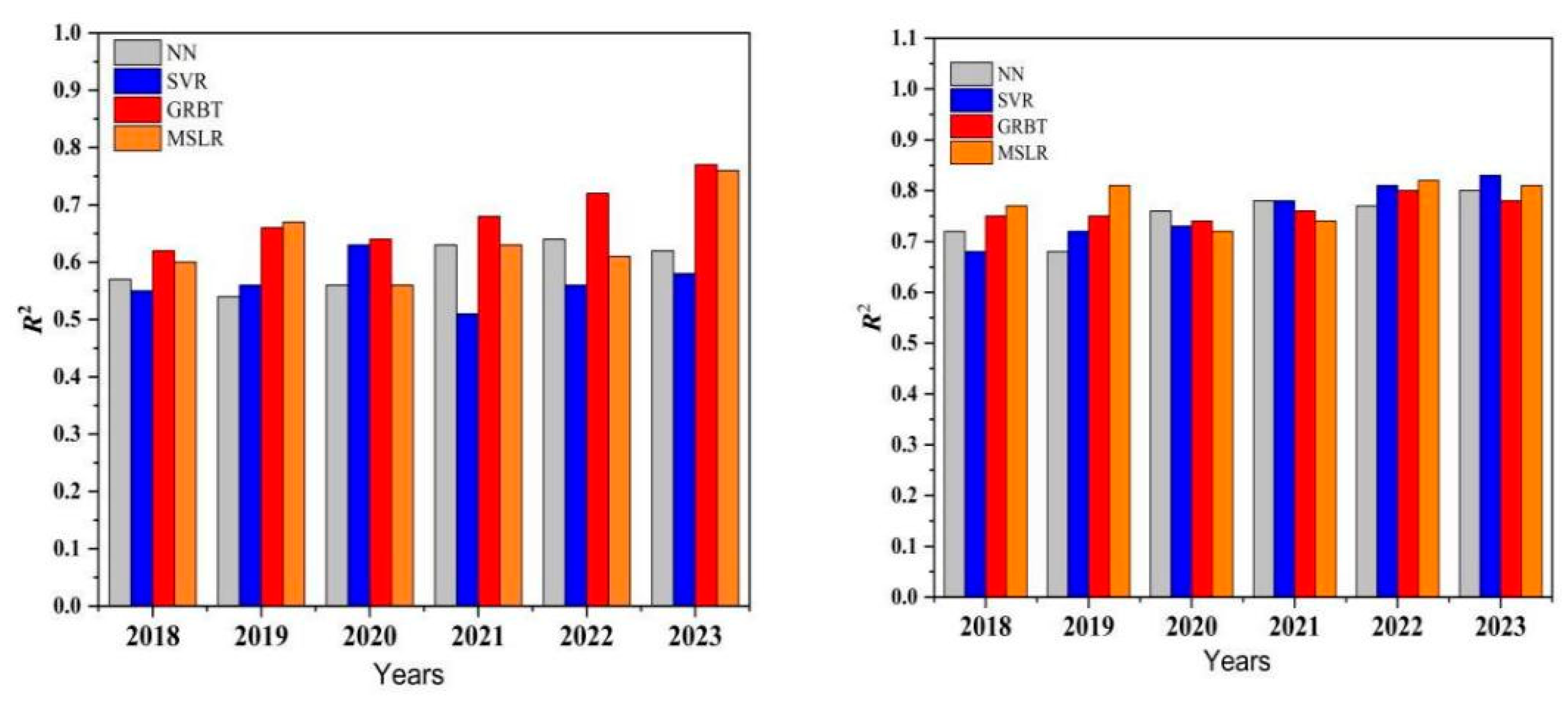
This study compares various machine learning models, excluding the multiple stepwise linear regression (MSLR) model, for predicting students' GPA-A. The key hyperparameters for the four models are detailed in Table S2. As shown in Figure 3a, neural networks (NN), support vector regression (SVR), and gradient boosted regression trees (GBRT) demonstrated superior accuracy (R2) in predicting GPA-A compared to MSLR, indicating their higher effectiveness. The evaluation revealed that the overall determination coefficients were below 0.8, suggesting that some predictions might deviate from the theoretical range. Figure 3b illustrates the performance of the models after applying post-constraints, resulting in improved accuracy for the machine learning models. The post-constrained MSLR model achieved an R2 of 0.81. Nonetheless, the gains from post-constraint adjustments were modest, indicating that predictions exceeding the theoretical range are infrequent.The core focus of ideological and political education in the Ecological Civilization course is to guide students through value orientation, enabling them not only to acquire professional knowledge but also to understand the significance of this knowledge for societal and personal development [34,35,36]. Influenced by the principle of "learning for practical application", students develop clearer learning objectives and heightened motivation [37]. This theory elucidates the observed enhancement of students' academic abilities through the integration of ecological civilization ideological and political education.

3.4. Coupling Analysis Between IPE-EC and Academic Performance

The above investigation accentuated an indispensable role of IPE-EC in improving academic performance of students. However, in the section of model study, GPA-A was considered as the sole dependent variable. As two independent system, the effect of IPE-EC on academic performance should be further evaluate from the coupling analysis. By employing the entropy method, the weights of indicators for IPE-EC and ecological environment systems were determined. These weights were used to calculate the comprehensive evaluation indices, U1 (for IPE-EC system) and U2 (for academic system). Subsequently, the obtained values were substituted into the coupling coordination degree model to compute the coupling degree (C), comprehensive evaluation index (T), and coupling coordination degree (D) for the two systems. The results are presented in Table 4. The value of U1 increase by 1.96 times from 2018 to 2023 which suggest that the progressive implementation of IPE-EC has led to a deeper understanding of the "ecological civilization" concept among Environmental Science students. This inference is also supported by the observed improvements in RE and WEB. Furthermore, it is worth noting that although the academic achievements of students show considerable increase, the value of U2 show no significant improvement. Previous study indicated that the intensity of extrinsic motivation is positively associated with students' academic achievements [6], which in turn imply that solely depending on the school's catalytic influence on students' academic output is not the most effective way to enhance their academic capabilities [38]. Moreover, as the extrinsic motivation is generally originate from intrinsic social value, the implementation of IPE-EC can provide stable support of academic motivation of students major in Environmental Science.

4. Conclusions

This study underscores the significant influence of Ideological and Political Education on Ecological Civilization (IPE-EC) on students' environmental awareness and academic performance from 2018 to 2023. Integrating IPE-EC into the curriculum has notably increased both the frequency of related sessions and the number of courses, deepening students' understanding of ecological principles and enhancing their environmental awareness and engagement. Model study further reveal a synergistic effect of IPE-EC and academic achievements on improvement of GPA-A. In addition, the ascending trend of coordination effects between the two system by coupling analysis confirm that the driving force for enhancing academic performance of students has pivot from by accentuating the accumulation of academic achievements only to concern the motivation trigger by IPE-EC. The results of this study offer theoretical support for improving the implementation of ideological and political education in university.

Supplementary Materials

The following supporting information can be downloaded at the website of this paper posted on Preprints.org.

Author Contributions

Hongcheng Bai: Writing original draft, Investigation, Visualization, Formal; Xing Wang: Writing review &editing, Project administration, Funding acquisition.

Funding

This study was funded by the National Key Research and Development Program of China (2019YFC1805502) and Chongqing Postdotoral Science Foundation (XmT2020171 and cstc2021jcyj-bsh0224).

Institutional Review Board Statement

Not applicable.

Informed Consent Statement

Not applicable.

Data Availability Statement

Data and Materials included in this manuscript can be available by permission of the corresponding author.

Acknowledgments

This work is support by Chongqing University, Chengdu University and Yibin University.

Conflicts of Interest

The funders had no role in the design of the study; in the collection, analyses, or interpretation of data; in the writing of the manuscript; or in the decision to publish the results.

References

  1. Radek Č.Language and ideology: quantitative thematic analysis of New Year speeches given by Czechoslovak and Czech presidents (1949–2011). Quality & Quantity, 2014, 48, 899-910.
  2. Somerville RCJ. Is learning about climate change like having a colonoscopy. Earths Future. 2014, 2(2), 119-121.
  3. Zhang T; Lu X; Zhu X; Zhang J. The contributions of AI in the development of ideological and political perspectives in education. Heliyon, 2023, 9: e13403.
  4. Liu S; Luo L. A Study on the Impact of Ideological and Political Education of Ecological Civilization on College Students’ Willingness to Act Pro-Environment: Evidence from China. Int. J. Environ. Res. Public Health, 2023, 20, 2608.
  5. Paton C. Competition and integration: the NHS future forum's confused consensus. British Journal of General Practice, 2012, 2-12, 62(596), 116-117.
  6. Sun Y. Strategies for Ideological and Political Education in Colleges and Universities Based on Deep Learning. Computational Intelligence and Neuroscience, 2022, 5322677, 1-9.
  7. Huang J; Aldada A. Analysis and Research on Influencing Factors of Ideological and Political Education Teaching Effectiveness Based on Linear Equation. Applied Mathematics and Nonlinear Sciences, 2022, 4: 1-11.
  8. Keskimäki I. Eupha president's column: Equity, solidarity and Eupha. European Journal of Public Health, 2018, (2), 212-213.
  9. Miao J.H; Tao W, Qi Y. Research on the Innovation of College Students' Ideological and Political Education based on the Synergetics Theory. EDUCATIONAL SCIENCES: THEORY & PRACTICE, 2018, 18(5), 2478-2485.
  10. Cheng P. Evaluation Method of Ideological and Political Classroom Teaching Quality Based on Analytic Hierarchy Process. Scientific Programming, 2022, 6554084.
  11. Wang S. On the Optimization of Ideological and Political Education Environment. Journal of Education Research, 2022, 1(5), 371-375.
  12. Zhang X; Shi W. On the Integration and Innovation of the Ideas of Environmental Protection and Ecological Civilization in Ideological and Political Education in Colleges and Universities. Academic Journal of Humanities & Social Sciences, 2019, 2(4): 26-31.
  13. Xu L. Ideological and Political Function Modeling of College Music Education Based on Improved Neural Network. International Journal of e-Collaboration, 2023, 19(4): 1-14.
  14. ALSHANQITI A, NAMOUN A. Predicting Student Performance and Its Influential Factors Using Hybrid Regression and Multi-Label Classification. ACCESS, 2020, 8: 203827-203844.
  15. Bao J; Zhang C. Construction of a Psychological Counseling System for Ideological and Political Education in Universities. SHS Web of Conferences, 2023, 171, 01024.
  16. Mikkonen H.G; Dasika R, Drake J.A; Wallis C.J; Clarke B.O; Reichman S.M. Evaluation of environmental and anthropogenic influences on ambient background metal and metalloid concentrations in soil. Sci. Total Environ, 2018, 624: 599-610.
  17. Zhou X.Y; Wang X.R. Impact of industrial activities on heavy metal contamination in soils in three major urban agglomerations of China. J. Clean. Prod, 2019, 230: 1-10.
  18. Li C; Sun G; Wu Z; Zhong H; Wang R; Liu X; Guo Z; Cheng J. Soil physio-chemical properties and landscape patterns control trace metal contamination at the urban-rural interface in southern China. Environ. Pollut, 2019, 250: 537-545.
  19. Gao J; Zou C; Li W; Ni Y; Liao F; Yao L; Sui J; Vengosh A. Hydrochemistry of flowback water from Changning shale gas field and associated shallow groundwater in Southern Sichuan Basin, China: implications for the possible impact of shale gas development on groundwater quality. Sci. Total Environ, 2020, 713: 136591.
  20. Tao H; Liao X; Li Y; Xu C; Zhu G; Cassidy D.P. Quantifying influences of interacting anthropogenic-natural factors on trace element accumulation and pollution risk in karst soil. Sci. Total Environ, 2020, 721: 137770.
  21. Aktan O; Toraman C. The relationship between Technostress levels and job satisfaction of Teachers within the COVID-19 period. Education and Information Technologies, 2022, 27: 10429-10453.
  22. Carbonaro B; Serra N. Towards mathematical models in psychology: A stochastic description of human feelings. Mathematical Models & Methods in Applied Sciences, 2002, 12(10), 1453-1490.
  23. Higgs E.J. The statistical big bang of 1911: Ideology, technological innovation and the production of medical statistics. Social History of Medicine, 1996, 9(3), 409-426.
  24. Hao H. Analysis of Ecological Environment Problems and Countermeasures in Ideological and Political Education in Colleges and Universities. Journal of Environmental and Public Health, 2023, 10, 9479881. [CrossRef]
  25. Maloney K; Young J.A; Faulkne S.P; Hailegiorgis A; Milheim L.E. A detailed risk assessment of shale gas development on head water streams in the Pennsylvania portion of the Upper Susquehanna River Basin, U.S.A. Sci. Total Environ, 2018, 610-611: 154-166.
  26. Wang F. Exploration of Ideological and Political Education in Reading Class for English Majors. SHS Web of Conferences, 2023, 168, 01024. [CrossRef]
  27. Green M; Somerville M. Sustainability education: researching practice in primary schools. Environmental Education Research, 2014, 21(6), 832–845.
  28. Ouyang S; Zhang W; Xu J; Rashid A.M; How S.P; Hassan A.B. Unmasking the challenges in ideological and political education in China: A thematic review. Heliyon, 2024, 10, 29176.
  29. Hansen M.H; Li H; Svarverud R. Ecological civilization: Interpreting the Chinese past, projecting the global future. Global Environmental Change, 2018, 53, 195-203.
  30. Giunta C.J. Review of teaching the nature of science: Perspectives and resources. Journal of Chemical Education, 2014, 91(1), 15-16.
  31. Nurudeen M; Abdul-Samad S; Owusu-Oware E; Koi-Akrof G.Y; Tanye H.A. Measuring the effect of social media on student academic performance using a social media influence factor model. Education and Information Technologies, 2022, 28: 1165-1188.
  32. Pan Y; Tu K. Method Innovation of Undergraduate Ideological and Political Education Based on Network Environment. Procedia Engineering, 2011, 15: 2752-2756.
  33. Wang S. On the Optimization of Ideological and Political Education Environment. Journal of Education Research, 2022, 1(5), 371-375.
  34. Gagnon M.P; Ouimet M; Godin G; Rousseau M; Labrecque M; Leduc Y; Abdeljelil B.A. Multi-level analysis of electronic health record adoption by health care professionals: A study protocol. Implementation Science, 2010, 5(1), 30.
  35. Engelen A; Brettel M. A cognitional perspective on the role of the R&D department within the organization. Journal of Product Innovation Management, 2012, 29(3), 489-505.
  36. Deng Z; Chen Y; Jiang F; Zhang Y; Zhao L. Spatio-temporal study on coupling coordination between urbanization and eco-resilience in the Erhai Lake Basin. All Earth, 2024, 36:1, 1-20.
  37. Hu M.C. Evolution of knowledge creation and diffusion: the revisit of Taiwan’s Hsinchu science park. Scientometrics, 2011, 88(3), 949-977.
  38. Shadpour S; Shafqat A; Toy S; Jing Z; Attwood K; Moussavi Z. Developing cognitive workload and performance evaluation models using functional brain network analysis. npj Aging, 2023, 9(22): 1-11.
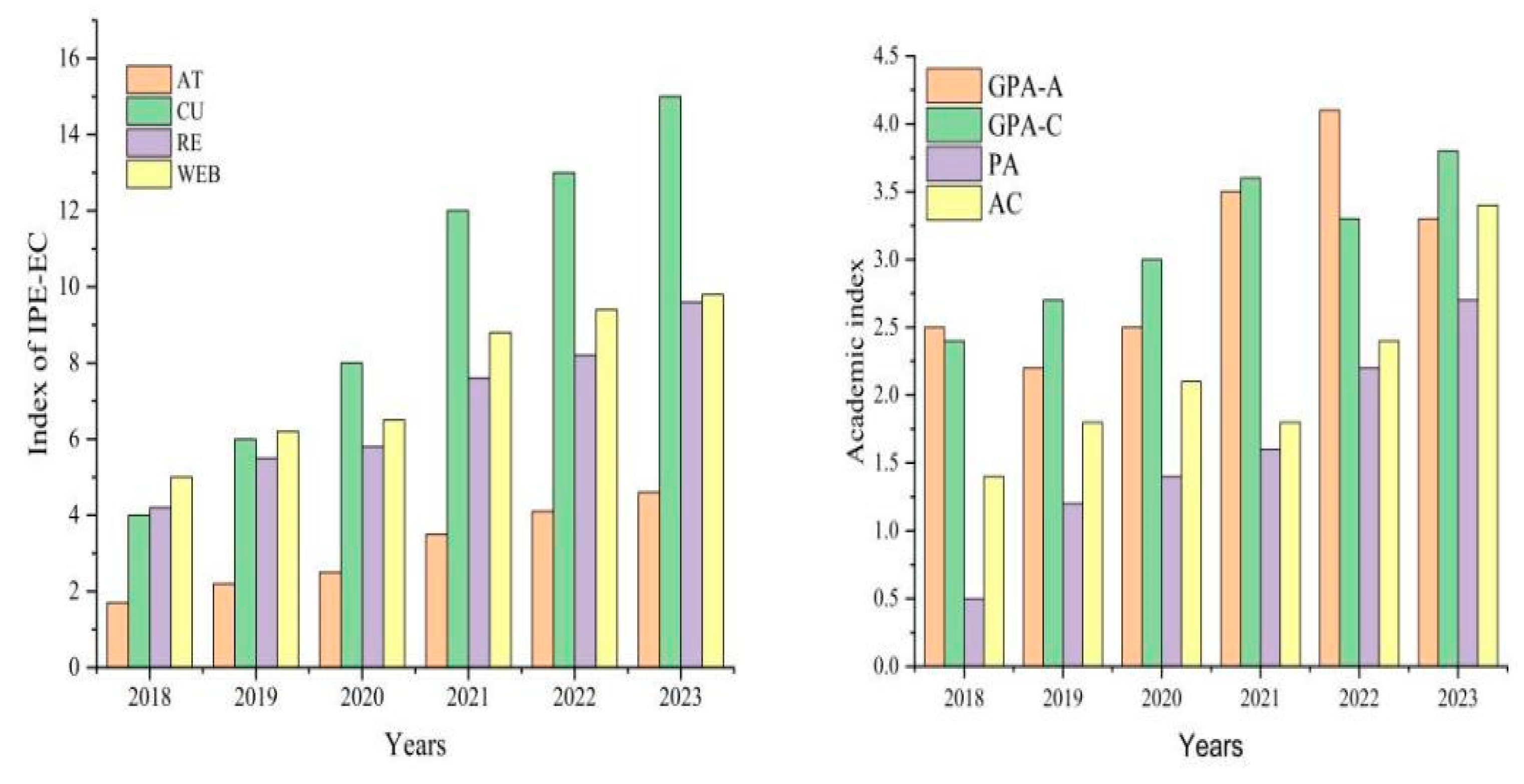
Figure 1. The carry out of IPE-EC and academic performance from 2018-2023; AT: Average times a students receiving IPE-EC; CU: Number of Curriculum involving IPE-EC; RE: Recognition of IPE-EC to students; WEB: Willingness to act environmental protection behavior; GPA of all curriculum (GPA-A); GPA of core professional curriculum (GPA-C), the number of paper publish regarding to Environmental Science (PA) and the average number of times a student take part in academic activities (AC).
Preprints 140876 g001
Figure 2. The prediction of GPA-A by MSLR model; A) the year of 2018; B) the year of 2019; C) the year of 2020; D) the year of 2021; E) the year of 2022; F) the year of 2023.
Preprints 140876 g002
Figure 3. The performance of machine learning models regarding the effect of IPE-EC to students’ academic performance.
Preprints 140876 g003
Table 1. Correlation matrix between IPE-EC and academic performance of students in 2018.
AT CU RE WEB GPA-A GPA-C PA AC
AT 1
CU 0.567** 1
RE 0.446 0.357 1
WEB 0.155 0.181 0.354* 1
GPA-A 0.266 0.242 0.182 0.132 1
GPA-C 0.070 0.119 0.148 0.064 0.352* 1
PA 0.089 0.104 0.058 0.054 0.249 0.352* 1
AC 0.086 0.175 0.264 0.022 0.138 0.258* 0.213 1
Table 2. Correlation matrix between IPE-EC and academic performance of students in 2023.
AT CU RE WEB GPA-A GPA-C PA AC
AT 1
CU 0.517** 1
RE 0.511* 0.427* 1
WEB 0.155 0.181 0.354* 1
GPA-A 0.311 0.342* 0.182 0.132 1
GPA-C 0.270 0.119 0.348* 0.264 0.484* 1
PA 0.189 0.116 0.048 0.054 0.220 0.349* 1
AC 0.306 0.375* 0.414* 0.222 0.324* 0.358* 0.477* 1
Table 3. MSLR model for prediction of GPA-A of students.
MSLR model R2
1(2018) lgGPA-A=0.55GPA-C+0.041PA+0.033AC 0.62
2(2019) lgGPA-A=0.34GPA-C+0.15PA+0.004AC 0.70
3(2020) lgGPA-A=0.44GPA-C+0.21AT 0.76
4(2021) lgGAP-A=0.30GPA-C+0.15CU+0.043AT 0.74
5(2022) lgGAP-A=0.035RE+0.044AT+0.242CPA-C+0.005AC 0.81
6(2023) lgGAP-A=0.044RE+0.017AT+0.201CPA-C+0.052AC 0.86
Table 4. The coupling degree between IPE-EC and academic performance of students.
Year Comprehensive evaluation indices, U1 Comprehensive evaluation indices,U2 Comprehensive evaluation indices between U1 and U2 (T) Coupling degree
(C)
Coupling classification
2018 0.4901 0.7396 0.6148 0.5834 Low level of coupling
2019 0.5387 0.7285 0.6336 0.5146 Low level of coupling
2020 0.7160 0.7380 0.7274 0.6654 Moderate level of coupling
2021 0.8483 0.7354 0.7618 0.6766 High level of coupling
2022 0.8193 0.7838 0.7715 0.7437 Extremely coupled
2023 0.8223 0.7444 0.7933 0.7782 Extremely coupled
Disclaimer/Publisher’s Note: The statements, opinions and data contained in all publications are solely those of the individual author(s) and contributor(s) and not of MDPI and/or the editor(s). MDPI and/or the editor(s) disclaim responsibility for any injury to people or property resulting from any ideas, methods, instructions or products referred to in the content.
Copyright: This open access article is published under a Creative Commons CC BY 4.0 license, which permit the free download, distribution, and reuse, provided that the author and preprint are cited in any reuse.
Prerpints.org logo

Preprints.org is a free preprint server supported by MDPI in Basel, Switzerland.

Subscribe

Disclaimer

Terms of Use

Privacy Policy

Privacy Settings

© 2025 MDPI (Basel, Switzerland) unless otherwise stated