

Submitted:
20 November 2024
Posted:
22 November 2024
You are already at the latest version
Abstract
Applying nitrogen fertilizers in agriculture can cause uncontrolled gas emissions such as N2O and CO2, leading to global warming and serious climate changes. In this study, we evaluated the greenhouse gas emissions (GHGs) that are concomitant with applying different rates of N ferti-lization, i.e., 50, 75, 100, and 125% of the recommended dose for two cultivars (Balady and Sids-40) of Allium sativum L. grown under three planting dates (15 September, 1 October, and 15 October). For this purpose, two field experiments were carried out during the two growing seasons of 2020/2021 and 2021/2022. Treatments were arranged in a split–split plot design with three replicates; planting dates were set up in the main plots; nitrogen levels were conducted in the submain plots, and garlic varieties were in the sub-subplots. The obtained results can be summa-rized as follows: Planting on 15 September significantly increased vegetative growth parameters (i.e., plant height, number of leaves plant−1, plant fresh and dry weights) and total bulb yield, in both seasons. Application of the highest rate of N (125%) gave significantly higher records for vegetative growth parameters, while the 75% nitrogen treatment appeared to give the highest total bulb yield in both seasons. Means of plant growth characteristics and total bulb yield were significantly increased by the cultivation of the Balady cultivar. In addition, results show that GHGs were positively correlated with increasing the rate of N fertilization. It could be recom-mended that planting on 15 September and fertilizing with 75% N fertilizer from the recom-mended dose for Balady cultivar achieve maximum yield and its components.
Keywords:
garlic plant
; climate change
; nitrogen treatments
; greenhouse gas emissions
1. Introduction
The growth and development of garlic (Allium sativum L.) are mainly affected by environmental conditions such as soil, photoperiod, and temperature, as well as agricultural practices, i.e., planting date, cultivar, fertilization, and irrigation, among others, influence the growth, yield, and bulb quality of garlic [1].
Garlic is the second most popular crop after onions, it is a flowering plant of the Alliaceae family [2] and is one of the most important vegetable crops in Egypt. Production of global garlic stood at about 28 million tons and the garlic area reached 1.6 million hectares [3]. Egypt ranks as the fourth leading country in the world after China, India, and South Korea for garlic production [3]. It is cultivated for both local consumption and export, and it is used in the pharmaceutical industry. Garlic has many medical values, such as antibacterial, antifungal, anticancer, lowering of blood sugar, blood lipids, and blood platelet aggregation, as well as power supplies; it is also used as an insecticidal [4,5]. So, increasing the productivity of garlic and its quality are important goals that usually depend on many factors including planting time and nitrogen fertilization; in this regard, planting time plays an important role in the growth, yield attributes, and bulb yield of garlic [6].
In Egypt, the growth period of garlic is centered in the autumn season because it prefers mild weather. As a result, only early-planted crops can utilize the full advantages of the cool period. However, farmers cannot always adopt early planting due to climatic limitations and cropping patterns. For this reason, plants are exposed to increasingly high temperatures before the initiation of clove and during the period of growth and development [7]. So, the yield becomes low, and sometimes a percentage of plants fail to initiate bulbs at all. Garlic growth is mostly affected by the time of planting, since a short photoperiod and low temperature encourage vegetative growth, while a long photoperiod and high temperature encourage bulb production. The date of sowing influences the garlic bulb's growth and development. According to [8], the planting period is a critical aspect that influences garlic development and output. Early garlic planting resulted in huge bulbs, which resulted in higher weight. Therefore, a study was undertaken to find the effect of planting time on the growth, development, yield, and yield attributes of two newly released garlic varieties.
Nitrogen (N) is an important element for increasing the yield and quality of vegetables such as garlic. Nitrogen availability is very important for plant growth as it is a major part of the chemical chlorophyll, which plays a significant role in the process of photosynthesis [9,10]. As the level of N increased, the growth trend of the number of leaves, leaf length, and plant dry matter increased [11]. The higher N content promotes vegetative growth and enhances high protein content while reducing anthocyanin synthesis [12]. The application of N in optimum quantity is a prerequisite for getting a higher yield of garlic [13]. Sebnie et al. [14] have shown that a dose of N of 92 kg ha−1 is essential for economic garlic yield. Reddy et al. [15] recommended an N dose of 150 kg ha−1 to obtain the desired plant height, bulb size, and yield, while [16] recommended an N rate of 125 kg ha−1 to obtain more cloves of garlic. Zaman et al. [17] tested various N levels on garlic and recommended a rate of 150 kg ha−1 for economically acceptable garlic yield, while [18] recommended 100 kg N ha−1 to obtain more cloves of garlic. However, [19] noted that under extreme nitrogen deficit conditions, the N dose can be increased to up to 400 kg ha−1 to obtain a quality garlic product.
Recently, [20] reported variations in plant vigor among six garlic genotypes tested, and Sids-40 recorded the highest plant vigor compared with the other varieties. On the other hand, it became clear from the results of another study conducted by [1] that the Balady cultivar showed significant improvement in growth and yield parameters compared with Sids-40.
The academic and applied research emphasized that lots of fertilizers are lost through leaching with drainage water, leading to environmental pollution; this phenomenon is highly remarked under the conventional methods of fertilizing. So, increasing the efficiency of fertilizer use will be very effective, which is applied through sustainable agriculture, to mitigate climate change [21]. Agricultural soil is the largest anthropogenic N2O source, and 80% of atmospheric N2O increase is attributed to food production [22]. The usage of nitrogen fertilizer in agriculture is still increasing [23]. At present, agricultural production is ranked second to industrial production as a source of greenhouse gases and it accounts for about 35% of the total emissions [24]. Soil N2O emissions dominated by N application account for over 70% of the global emissions from agricultural production [25]. In grain cropping systems, continuous planting increases the frequency of N fertilizer inputs, and excess N residues accumulate in the soil to increase the soil N2O emission flux [26]. Therefore, this study aims to evaluate the effect of planting time and determine the influence of nitrogenous fertilizer levels on the performance of two garlic varieties and their relationship to nitrous oxide emissions from the soil.
2. Materials and Methods
2.1. Site Description and Soil Type
A field experiment was conducted at a private farm in El-Horriya Village, West El-Fashn Area, Bani Swaif governorate (28°48′58′′ N 30°43′25′′ E), Egypt (Figure 1), during the two winter seasons of 2020/2021 and 2021/2022 to study the effect of planting dates and different cultivars on the growth, yield, and chemical composition of garlic fertilized by different rates of N fertilizer.
Table 1 shows the mean weather factors (i.e., air temperatures, relative humidity, wind speed, and solar radiation for the 2020/2021 and 2021/2022 seasons) that were obtained from the Central Laboratory of Meteorology, Ministry of Agriculture and Land Reclamation, Egypt, for this area of study. The irrigation water had a pH of 7.11 and an electrical conductivity of 0.84 dS m−1. The main physical and chemical properties of the studied soil were determined in situ and at the laboratory at the beginning of the field trial, before cultivation, by the standard methods outlined by [27]. The experimental soil had a sandy texture (Typic Torripsamments) with conventional tillage, 0.83% organic matter, available N (11.6 mg kg-1), available P (4.91 mg kg-1), available K (60.3 mg kg-1), a pH of 7.81, and an ECe of 2.82 dS m−1.
2.2. Experimental Design
The experiment included three planting dates (D): 15 September (D1), 1 October (D2), and 15 October (D3), which were combined with two cultivars (V), i.e., Balady (V1) and Sids-40 (V2), of Allium sativum under four nitrogen levels, 50, 75, 100, 125%. The recommended dose was 100 units of N by the Egyptian Ministry of Agriculture for garlic cultivation. The experimental design (Figure 2) was a split–split plot design with three replications. Planting dates were distributed in the main plot, nitrogen treatment was applied in subplots, and cultivars were allocated in sub-subplots. Each experimental plot included four ridges 5 m in length and 70 cm in width with an area of about 11.2 m2, where three ridges were planted, and the fourth one was left without planting as a guard ridge between plots.
2.3. Planting Technique
Garlic seeds (cloves) for each cultivar were planted on 15 September, 1 October, and 15 October in the first and second seasons, respectively. Individual cloves of garlic were planted in a spacing of 30 cm × 10 cm between rows and plants, respectively, and covered lightly by soil. Regarding the two studied cultivars, the Balady cv. seems to be a local variety grown in Egypt for its intense aroma, ripe cloves with white covering scale, and relatively long storability. Sids-40 cv. has its primary source in China, and it boasts huge cloves that are easy to peel and has mature cloves with white skin and purple vertical stripes. Both cultivars were obtained from the Sids Research Station of the Agricultural Research Center (ARC) in Giza, Egypt. Regarding the soil preparation before planting, adding 20 m3 of cattle manure fertilizer, 400 kg superphosphate, and 50 kg ammonium sulfate per acre is recommended (1 ha= 2.4 acre). As for nitrogen fertilization, the following treatments were applied: 50, 75, 100, and 125% of the recommended dose. Horticultural practices that were commonly applied in garlic management were followed based on the recommendations of the Ministry of Agriculture in Egypt.
2.4. Measurements
2.4.1. Vegetative Growth and Leaves Chemical Composition
A sample of three plants from each plot was collected after 135 days of planting to assess the number of leaves per plant, plant height, plant leave area, and fresh and dry leaf weights. Moreover, the collected plant leaves were sampled and separated into two groups, one was kept fresh to determine proline content according to the method of [28] modified by [29]. Total chlorophyll was measured using a chlorophyll meter SPAD-502Plus (Infitek, China). The other group was oven-dried at 70 °C for 48 h and digested by H2SO4/H2O2 mixture according to the method described by [30]. Total nitrogen in leaves was determined using the Kjeldahl method by the Kjeldahl system (Vapodest, Germany) according to the procedure described by [30], total phosphorus was determined by the citric acid and ammonium molybdate method using the Spectrophotometer (UV-visible-160A, Shimadzu, Japan) according to [31], and total potassium in plant leaves was determined using the Flame photometer (Jenway, UK) as described by [31].
2.4.2. Yield Parameters
At the full maturity stage (190 days from the clove sowing), the bulbs were harvested with three samples of each experimental plot to determine the yield and its component characters, i.e., total yield, bulb diameter, bulb neck diameter, average clove weight, and number of cloves per bulb, in addition to the bulbing ratio, average bulb weight, fresh and dry bulb weight, and cloves dry matter percentage.
2.4.3. Biochemical Components in Bulbs
According to [32], the ascorbic acid (vitamin C) of the bulb was determined in the fresh bulbs following the 2, 6, dichlorophenol indophenol visual titration method. Total soluble solids (TSS) in the juice extracted from ground bulbs expressed as Brix value were determined by digital refractometer as well. Total sugars and carbohydrates in bulbs were determined as glucose after acid hydrolysis and spectrophotometrically determined using a Spectrophotometer [33]. Catalase (CAT; EC 1.11.1.6) activity was assayed according to the method of [34]. The total soluble phenol in garlic bulbs was first determined using the method described by [35]. Determination of the free amino acid composition method was used by [36].
2.4.4. Nitrogen Use Efficiency (NUE)
It was determined by dividing the bulb yield ha−1, by the nitrogen quantity/ha, and expressed as bulb kg N kg−1 according to [37].
2.4.5. Calculating Greenhouse Gas Emissions from Soil
Both nitrification and denitrification reactions produce the intermediate gaseous nitrous oxide (N2O) through microbial activities in the soil; eventually, this gas is released into the atmosphere. The emission of N2O from the field was estimated at the end of the experiment according to [38] and ensuring the validity of the results using this equation under the Egyptian conditions by [39]; the following equation was adopted:
where: F: Mass of N applied from synthetic fertilizer, kg N ha−1; N2OMW: Ratio of molecular weight of N2O to 2N, kg N2O (kg N)−1
N2O emission = [1.47 + (0.01 × F)] × N2OMW × N2OGWP
N2OMW = (14 × 2 + 16)/(2 × 14) = 1.57
N2OGWP: Global Warming Potential for N2O, kg CO2-e (kg N2O)−1
Global Warming Potential (GWP) was calculated to reflect how long it remains in the atmosphere, on average, and how strongly it absorbs energy. Gases with a higher GWP absorb more energy than gases with a lower GWP and thus contribute more to global warming. The GWP value of 298 for N2O used in the protocol (N2OGWP) is the 100-year value used in the most recent IPCC fourth assessment report according to [40]. The CO2-e equivalents emission for each gas (CO2, N2O, and CH4) were summed together to give total CO2-e.
2.5. Profitability
The economic analysis was performed by calculating the cultivation cost for different agro-inputs, i.e., soil preparation, hiring, electricity, irrigation, seedlings purchase, fertilizers, pesticides, labor, and other mandatory experimental requirements. The returns of applying treatments were calculated (LE ha−1) based on the local market price according to [41].
2.6. Statistical Analysis
All data collected were subjected to analysis of variance (ANOVA) to test treatment effects for significance using the Statistix 10 software package (2013). The differences among means for all traits were tested for significance at the 5% level according to [42].
3. Results
3.1. Vegetative Growth Parameters
Data in Table 2a for the first season and Table 2b for the second season (in the supplementary materials) showed the vegetative measurements mean (plant height, No. of leaves plant−1, leaves area, and leaves fresh and dry weights) at different planting dates and nitrogen treatments of two Allium sativum varieties during the studied seasons of 2020/2021 and 2021/2022, respectively. The results obtained showed that the planting dates significantly differentiated vegetative growth parameters. The tallest plants were obtained from planting garlic sets on 15 September, while the shortest plants were obtained from planting on 15 October in the studied first season, and the results reveal that the studied vegetative growth parameters, i.e., No. of leaves per plant, plant height, and fresh and dry leaves weights increased significantly with increasing nitrogen levels of up to 125% of the nitrogen level. The Balady cultivar significantly improved in all the studied parameters compared with Sids-40.
Concerning the effect of planting date (15 September, 1 October, 15 October), results in (Tables 2a and b) show that plant height and fresh weight were significantly affected by planting date. Still, the effect on plant dry weight was insignificant. Generally, the highest values of plant growth parameters were recorded on the late planting date (October 15). On the other hand, the lowest values for plant growth parameters were recorded on the early planting date (September 15).
Vegetative growth parameters were increased significantly with the increase in nitrogen rates in both seasons (Tables 2a and b). Expanding the application dose of nitrogen fertilizer up to 125% significantly increased plant growth, i.e., plant height and fresh weight plant−1, but had an insignificant effect on dry weight per plant.
The results show that the effect of garlic cultivars on vegetative traits was significant, as it was found that the Balady cultivar showed a significant improvement in all studied variables compared with the Sids-40 cultivar, except for plant height and number of leaves.
Regarding the interaction between the different treatments, the results show that the best vegetative growth was achieved at the late sowing date by applying 125% N to the Balady cultivar. The interaction between the planting dates, nitrogen level, and two study cultivars had a significant effect on the vegetative growth parameters in both seasons (Tables 2a and b). The interaction between planting dates on 15 September and fertilizing garlic plants with a 75% nitrogen level for the Balady cultivar gave the highest values for vegetative growth parameters in both seasons, followed by the interaction between cultivation in the first season and fertilized garlic plants with 50% of the nitrogen level of the Sids-40 cultivar.

Table 2a.
Vegetative measurements mean (plant height, leaves area, and leaves fresh and dry weights) at different planting dates and nitrogen treatments of two Allium sativum varieties during the studied season of 2020/2021.
Table 2a.
Vegetative measurements mean (plant height, leaves area, and leaves fresh and dry weights) at different planting dates and nitrogen treatments of two Allium sativum varieties during the studied season of 2020/2021.
| Planting dates | N levels | Cultivars | Cultivars | Cultivars | Cultivars | ||||||||
| Balady | Sids-40 | Mean | Balady | Sids-40 | Mean | Balady | Sids-40 | Mean | Balady | Sids-40 | Mean | ||
| Plant Height (cm) | Plant Leaves Area (cm2) | Leaves Fresh Weight (g) | Leaves Dry Weight (g) | ||||||||||
| 15th Sep. | 50% | 48.12±0.35 K | 71.24±1.19 E | 59.68±5.2 CDE | 486.44±8.33 L | 535.02±17.76 JK | 510.73±13.96 F | 48.76±0.66 DE | 32.23±0.81 IJ | 40.49±3.73 DE | 7.23±0.06 FG | 5.18±0.03 M | 6.20±0.46 F |
| 75% | 50.96±0.36 IJK | 74.58±1.21 D | 62.77±5.31 A | 524.73±5.95 JKL | 582.69±8.1 HI | 553.71±13.72 A | 47.33±0.38 E | 32.56±0.73 HIJ | 39.95±3.32 A | 7.29±0.1 FG | 6.01±0.17 L | 6.65±0.3 A | |
| 100% | 52.34±0.6 IJ | 77.53±2.1 BCD | 64.94±5.72 B | 524.29±4.52 JKL | 607.43±20.62 FGH | 565.86±20.85 B | 49.35±0.93 CDE | 34.24±1.27 FGHI | 41.8±3.45 B | 6.9±0.49 GHI | 6.32±0.06 KL | 6.61±0.26 B | |
| 125% | 58.43±0.67 G | 75.99±1.11 BCD | 67.21±3.97 C | 584.9±7.52 HI | 630.69±14.06 EFG | 607.79±12.48 D | 51.8±1.36 BC | 35.01±0.82 FGHI | 43.4±3.82 BCD | 8.27±0.05 D | 7.29±0.05 FG | 7.78±0.22 D | |
| Mean | 52.46±1.16 F | 74.83±0.94 C | 63.65±2.44 C | 530.09±11.01 D | 588.96±12.65 C | 559.52±10.24 C | 49.31±0.62 B | 33.51±0.53 D | 41.41±1.7 C | 7.42±0.19 C | 6.20±0.23 E | 6.81±0.19 C | |
| 1st Oct. | 50% | 49.51±0.83 JK | 75.78±0.24 BCD | 62.65±5.89 DE | 501.55±6.26 KL | 555.95±21.45 IJ | 528.75±15.74 EF | 47.15±0.62 E | 31.22±0.28 J | 39.18±3.58 DE | 7.84±0.07 DE | 5.95±0.02 L | 6.89±0.42 E |
| 75% | 53.25±0.91 HI | 74.8±0.92 CD | 64.03±4.85 E | 554.34±1.49 IJ | 600.51±11.38 FGH | 577.43±11.53 FG | 49.73±0.36 CDE | 33.8±1.18 GHIJ | 41.77±3.61 F | 8.11±0.02 D | 6.47±0.05 IJK | 7.29±0.37 F | |
| 100% | 55.78±1 GH | 78.1±1.02 BC | 66.94±5.03 B | 587.41±12.83 GHI | 655.51±16.67 DE | 621.46±17.9 C | 51.57±1.39 BCD | 34.78±0.84 FGHI | 43.18±3.82 BC | 8.73±0.03 C | 7.11±0.05 GH | 7.92±0.36 C | |
| 125% | 63.52±1.33 F | 82.16±0.99 A | 72.84±4.23 C | 681.14±7.12 D | 767.93±10.58 BC | 724.53±20.23 D | 53.03±0.81 B | 36.35±0.86 FG | 44.69±3.77 BCD | 9.81±0.14 B | 8.11±0.03 D | 8.96±0.39 D | |
| Mean | 55.51±1.61 E | 77.71±0.93 B | 66.61±2.49 B | 581.11±20 C | 644.97±24.81 B | 613.04±16.95 B | 50.37±0.76 B | 34.04±0.67 D | 42.2±1.77 B | 8.62±0.23 B | 6.91±0.24 D | 7.77±0.24 B | |
| 15th Oct. | 50% | 53.24±0.73 HI | 78.71±0.91 B | 65.97±5.72 CD | 538.07±9.43 JK | 657.01±4.84 DE | 597.54±27.01 DE | 50.35±0.92 BCD | 34.85±1.09 FGHI | 42.6±3.52 CD | 8.17±0.02 D | 6.36±0.03 JKL | 7.26±0.41 E |
| 75% | 56.15±0.69 GH | 77.06±1.06 BCD | 66.6±4.71 E | 589.46±3.64 GHI | 636.72±27.24 EF | 613.09±16.21 GH | 51.53±0.88 BCD | 35.35±0.73 FGH | 43.44±3.65 F | 8.75±0.07 C | 6.78±0.05 HIJ | 7.77±0.44 F | |
| 100% | 57.93±0.79 G | 84.33±1.32 A | 71.13±5.94 F | 630.91±8.78 EFG | 755.5±7.31 C | 693.21±28.32 H | 52.97±0.84 B | 34.86±0.74 FGHI | 43.92±4.08 EF | 9.69±0.03 B | 7.59±0.36 EF | 8.64±0.5 G | |
| 125% | 69.42±1.48 E | 63.65±2.44 C | 76.85±3.44 CD | 797.37±17.68 AB | 559.52±10.24 C | 814.28±13.05 D | 56.65±1.12 A | 41.41±1.7 C | 46.91±4.38 BCD | 10.45±0.11 A | 6.81±0.19 C | 9.67±0.35 D | |
| Mean | 59.18±1.9 D | 71.24±1.19 E | 70.14±2.52 A | 638.95±29.68 B | 535.02±17.76 JK | 679.53±20.67 A | 52.88±0.82 A | 32.23±0.81 IJ | 44.22±1.86 A | 9.27±0.26 A | 5.18±0.03 M | 8.34±0.28 A | |
| N fertilization * Cultivars | N fertilization * Cultivars | N fertilization * Cultivars | N fertilization * Cultivars | ||||||||||
| 50% | 75.24±1.17 B | 75.24±1.17 B | 62.77±3.11 D | 582.66±20.52 D | 582.66±20.52 D | 545.67±14.04 D | 32.76±0.67 F | 32.76±0.67 F | 40.76±1.99 D | 5.83±0.17 G | 5.83±0.17 G | 6.79±0.26 D | |
| 75% | 53.45±0.82 E | 75.48±0.67 B | 64.47±2.72 C | 556.18±9.58 E | 606.64±11.89 C | 581.41±9.61 C | 49.53±0.68 C | 33.9±0.61 EF | 41.72±1.95 C | 8.05±0.21 C | 6.42±0.13 F | 7.24±0.23 C | |
| 100% | 55.35±0.91 D | 79.99±1.34 A | 67.67±3.09 B | 580.87±16.17 D | 672.81±23.21 B | 626.84±17.68 B | 51.3±0.76 B | 34.63±0.5 E | 42.96±2.07 B | 8.44±0.43 B | 7.01±0.21 E | 7.72±0.29 B | |
| 125% | 63.79±1.7 C | 80.81±1.37 A | 72.3±2.32 A | 687.8±31.28 B | 743.27±30.37 A | 715.54±22.19 A | 53.83±0.92 A | 36.18±0.47 D | 45.0±2.2 A | 9.51±0.33 A | 8.1±0.23 C | 8.8±0.26 A | |
| Mean | 55.72±1 B | 77.88±0.71 A | 583.38±14.26 B | 651.35±15.07 A | 50.85±0.49 A | 34.37±0.34 B | 8.44±0.18 A | 6.84±0.17 B | |||||
Means followed by the same letter within the column are not significantly different (p < 0.05).
3.2. Crop Measurements
Data in Tables 3a and 3b for crop measurement means (neck diameter, bulb diameter, bulbing ratio, and bulb fresh and dry weights) at different planting dates and nitrogen treatments of two Allium sativum varieties during the studied seasons of 2020/2021 and 2021/2022 were found in the supplementary materials. Also, Data in Tables 4a and 4b for crop measurement means (No. of cloves per bulb, total yield, chlorophyll readings, cloves dry matter, and ascorbic acid content of bulb) at different planting dates and nitrogen treatments of two Allium sativum varieties during the studied seasons of 2020/2021 and 2021/2022 were found in the supplementary materials. In general, the maximum total bulb yield was recorded from planting on 15 September, while the minimum values were recorded from planting on 15 October.
The total yield significantly decreased as nitrogen fertilizer rates decreased in both seasons (Tables 4a and b). The lowest total bulb yield was produced from the lowest rates of nitrogen level (50%). In contrast, the highest total bulb yield was obtained from the 75% nitrogen treatments, in both seasons, and the nitrogen level of 125% did not achieve the highest productivity values.
The results show that the Balady cultivar showed a significant improvement in yield characteristics compared with the Sids-40 cultivar, where the Balady cultivar excelled in all traits except for the number of bulbs, as the Balady cultivar is characterized by a large clove size and a small number of bulbs in both seasons (Tables 3a, b and 4a, b).
The interaction between planting dates and nitrogen sources significantly affected yield and its components, as well as average bulb weight in both seasons (Tables 3a, b and 4a, b). The interaction between planting dates on 15 September and fertilizing garlic plants with a 75% N level gave the highest values of total yield, exportable, and marketable yields, as well as average bulb weight in both seasons, followed by the interaction between planting on 1 October and fertilizing garlic plants with a 100% N level. That was found in the Balady cultivar more than in the Sids-40 cultivar.
3.3. Chemical Components of Garlic Leaves and Bulb
Data in Tables 5a and 5b for chemical measurement means (catalase activity, proline content, total soluble phenol, total sugars, and total carbohydrates) at different planting dates and nitrogen treatments of two Allium sativum varieties during the studied seasons of 2020/2021 and 2021/2022 were found in the supplementary materials. Also, Data in Tables 6a and 6b for chemical measurement means (total soluble solids of bulbs, amino acids, protein, and N, P, and K contents) at different planting dates and nitrogen treatments of two Allium sativum varieties during the studied seasons of 2020/2021 and 2021/2022 were found in the supplementary materials. Obtained data show that planting dates on 15 September gave the highest values for the chemical components of the garlic bulb, as well as N, P, and K uptake by garlic plants. On the other hand, plasnting on 15 October had the lowest values in this respect.
Fertilizing garlic plants with 125% of N gave the highest values of the chemical components of the garlic bulb, in addition to N, P, and K concentrations in the leaves. Data in Tables 5a, b and Tables 6a, b show that values of chemical components under investigation increased with increasing nitrogen levels. It may be due to the concentration effect, which increases osmotic potential inside plant cells to increase nitrogen uptake. Balady cultivar showed higher values of the studied components in plant leaves than the Sids-40 cultivar due to the genetic differences between them. Moreover, results show that planting dates on 15 September gave the highest values for the concentrations of nitrogen, phosphorus, and potassium in the leaves, with two cultivation varieties in both seasons. On the other hand, planting on October 15 had the lowest values in this regard.
3.4. Greenhouse Gas Emission from Nitrogen Fertilization and Nitrogen Use Efficiency
The balanced greenhouse gas (GHG) emissions differed according to the different applied nitrogen fertilization amounts (Table 7 and Figure 3). After neglecting another factor and working only with the applied nitrogen levels and the mean yield of the sowing dates and cultivars at each nitrogen level, the highest amount of total N2O and total CO2-eq was obvious at the highest applied nitrogen level (125%) with 14.4 and 4300 kg ha−1, respectively, in addition to the carbon dioxide equivalent per kg of crop in the first and second seasons by 213 and 227 g kg−1, respectively. The highest average productivity appeared at a nitrogen level of 75% at 21.5 kg ha−1 in the first season and at a nitrogen level of 75% at 20.6 kg ha−1 in the second season. However, the lowest GHG emissions, total N2O and CO2 equivalent (kg ha−1), and the CO2 equivalent per kg yield at the first and second seasons (g kg−1 yield) were manifested at the lowest applied nitrogen level (50%) with 5.80, 1720, 91, and 96, respectively, as well as the lowest mean yield, which was also presented at the 50% nitrogen level with 18.9 and 17.9 kg ha−1 at the first and second seasons, respectively [43,44]. As for nitrogen use efficiency, treatment of 125% gave the highest nitrogen use (14.88 and 15.8) per kg of crop for the first and second seasons respectively, and the use of lower fertilization levels gave the lowest nitrogen use (6.35 and 6.69) per kg of garlic crop for the first and second seasons respectively [45]. This is also illustrated in Figure 2, where the higher the levels of nitrogen fertilization, the higher the N2O emissions.
3.5. Profitability
Table 8 shows the effect of experimental treatments on the economic return of the Allium sativum crop, where the cost of producing a hectare of the Balady variety of garlic amounted to EGP 26400 and a hectare of the Sids-40 variety amounted to EGP 29760 (1 US Dollar= EGP 15.7 in the studied two seasons at the harvesting date). The increase in nitrogen fertilization led to an increase in the cost, as it reached 125% with the level of nitrogen fertilization, costing EGP 31800 for the Balady variety and EGP 35160 for the Sids-40 variety. Compared with the other treatments, the benefits (net income) from using the different treatments were higher than from cultivating the Balady variety. Reducing nitrogen fertilization positively impacted the economic return compared with increasing fertilization levels (125% N) and delaying the planting date positively affected the economic return, as the planting date of the half of October achieved the best net income. The smallest relative increase in income was obtained by early planting and the use of high levels of nitrogen fertilization. From the above, we conclude that planting the Sids-40 variety and rationalizing the use of nitrogen fertilization led to improved garlic net income and incremental income during the late planting date compared with the other treatments.
4. Discussion
The early planting date gave the best vegetative growth, and these results are in line with those reported by [46] for onion and by [47,48,49,50,51,52] for garlic. These results are mainly due to low average temperature at the late transplanting date during the growth season, reflecting increases in plant growth and resulting in a good canopy able to enhance photosynthesis, hence increasing dry matter accumulation and in turn increasing total bulb yield/ ha. These results are supported by those of [6,53].
The earliest planting gave the highest plant height, probably because the plants received a long cool period and shorter day length, which enhanced the vegetative growth of the plant before the formation of bulbs. This result is in harmony with the findings of [54]. They reported that in early planting, plants attained higher vegetative growth, which possibly led to the development of the largest bulbs. The tallest plants were obtained at the highest nitrogen rates (125%), while the shortest plants were obtained from the lowest nitrogen treatment. Similar results were obtained by [6,55].
The early planting date in September encouraged vegetation growth, suitable temperatures during September and October gave the best growth, and that is reflected in the yield. The largest bulb size from early planting contributed the highest yield. Smaller bulbs and lower yields were obtained from the late planting date, which did not revive the long cool growing period that was essential for the proper development of negative growth for garlic [2,54].
The total bulb yield, bulb diameter, and average clove weight significantly increased with 75% N fertilizer rates. These results are in accordance with those obtained by [18], who found that garlic yield enhanced with increasing the level of nitrogen fertilization up to 200 kg N acre−1 in clay loam soil, and this means that garlic yield correlated positively with N fertilization. These results may be attributed to the increase in the application of mineral fertilizers increasing plant height, number of leaves per plant−1, and fresh weight/plant, which increased total bulb yield. These results are in agreement with those obtained by [56,57,58,59,60].
Nitrogen is one of the crucial nutrients for the growth and development of crops that, if not consumed in sufficient quantities, will limit plant growth [61]. On the other hand, it has been reported that excessive consumption of N in the soil has a negative effect on crop growth and production. Also, the abundance of soil N stimulates the production of new leaves from the terminal meristem of the stem and lateral buds of older leaves. It ultimately increases the yield of aerial parts [62]. Also, N is one of the main components of organic compounds such as amino acids, proteins, and nucleic acids. Its deficiency delays phenological development in vegetative and reproductive stages. Applying the right amount of N fertilizer can significantly increase biomass, and N appears to maintain leaf surface survival; as leaf surface durability increases, the duration and rate of leaf photosynthesis also increase, allowing the plant to produce more dry matter [63].
The effect on N, P, and K uptake by bulbs and leaves may be due to these treatments increasing total dry weight/plant. These results agree with those reported by [11,54] for garlic. Nitrogen levels had a significant effect on N, P, and K uptake by bulbs and leaves and N, P, and K total uptake by plants.
The cumulative effect on N, P, and K concentration by bulb and leaf may be due to these treatments increasing total dry weight per plant−1. These results are consistent with those reported by [64,65] for garlic. The shortage of N decreases leaf size, which is the cause of the lower amount of light absorption and light use efficiency for plant photosynthesis that leads to decreased biological yield and vice versa [66]. N intake should be commensurate with plant needs. Excessive use of N, due to many factors that affect its total amount in the soil such as leaching, low N efficiency, and lack of plant use of excess N, increases N loss in the soil [67]. Therefore, proper management means providing the optimal N required by the plant to use it.
Given the effect of varieties on growth and yield, we find the superiority of the Balady cultivar. The Balady cultivar gave higher values than Sids-40, which may be due to genetic variations [1]. On the other hand, the highest amounts of vegetative measure were revealed mostly at the fertilization levels of 100–125%, and for yield, the highest values were shown at 75% nitrogen levels. At the applied nitrogen levels of 75%, not only was the yield higher but the GHG emissions decreased, the rate of the GHG emissions increase was higher than the rate of the nitrogen fertilization increase, and this result agrees with that of [39], who reported that the increase in the application rate of fertilizer revealed a double increase in GHG emissions than the increase in yield. In general, as in Table 5, the increase in the nitrogen level always faced an increase in the N2O emissions, as the emissions of N2O positively correlated with the fertilizer N rate [68,69,70]. However, the increase in N2O emissions caused by the applied nitrogen levels was not matched with an increase in total yield in both seasons but was compensated by an increase in nitrogen use per unit of production.
Physiological mechanisms controlling N utilization in plants under different N management practices are crucial to improving N utilization efficiency, as well as reducing excess fertilizer application while maintaining acceptable yields and environmental quality [71]. Efficiency in uptake and utilization are the two components of NUE. In low N conditions, uptake efficiency is more important than utilization efficiency [72]. Nitrous oxide emissions create an adverse environmental impact in the form of nitrate, which is more mobile than any other nutrient [61]. It is, therefore, essential that nitrogen be used efficiently to reduce the risk of unproductive and polluting N loss in cropping systems and increase their productivity and profitability [72]. The authors of [73], in a study on NUE, found that the lowest NUE is obtained in the case where the highest amount of N fertilizer is used. The highest value for NUE was observed in treatments that did not receive fertilizer, or the amount of fertilizer received was low.
This study examines how planting date, nitrogen fertilizer application rate, and garlic variety affect factors such as plant growth, bulb size, chemical components, quality, and yield. By finding that the earliest planting date and a moderate nitrogen application rate (75% of recommended) led to the highest yield with lower cost and higher return, as well as lower greenhouse gas emissions compared with higher nitrogen rate applications. This research offers valuable insights for farmers. These practices can potentially improve garlic production while reducing environmental impact [74,75,76].
5. Conclusions
The highlights of this study show that sowing date and cultivars are among the critical factors determining the yield and quality of garlic. The earlier sown garlic (15 September) will grow longer before bulb initiation, resulting in larger plants producing large bulbs and yield. Nitrogen fertilizer plays a vital role in plant growth and development. Nitrogen deficiency reduces plant growth and ultimately reduces yield. The GHG emissions increased with the increase in the applied N fertilizer; nevertheless, the total yield started to decrease at the 125% nitrogen level in both seasons. This demonstrates that the application of the N fertilizer will certainly increase the GHG emissions but not necessarily increase the yield. Therefore, optimal fertilization management alongside optimal planting dates and the appropriate variety will contribute to obtaining the highest yield while preserving the environment. In our study, it is recommended to plant on 15 September and fertilize with 75% N level for Balady cultivar to achieve maximum yield and its components.
Supplementary Materials
The following supporting information can be downloaded at the website of this paper posted on Preprints.org.
Author Contributions
Conceptualization, N.M.T., N.A.B., A.A.H., S.S.S., K.G., Y.A.E.-G., and A.F.A.-H.; methodology, N.M.T., S.H.A.-E., Y.A.E.-G., and M.G.S.; investigation, F.A.H., M.G.S., and A.F.A.-H.; resources, N.A.B., A.A.H., K.G., S.F.L., and Y.N.A.; writing—original draft preparation, N.M.T. and S.H.A.-E.; writing—review and editing, S.S.S., S.H.A.-E., F.A.H., M.G.S., and A.F.A.-H. All authors provided critical feedback and helped shape the research, analysis, and manuscript. Also, all authors discussed the results and contributed to the final manuscript. All authors have read and agreed to the published version of the manuscript.
Acknowledgments
The authors extend their appreciation to the researchers supporting project number (RSP2024R229), King Saud University, Riyadh, Saudi Arabia.
Funding
This work was funded by the researchers supporting project number (RSP2024R229), King Saud University, Riyadh, Saudi Arabia.
Data Availability Statement
All data generated or analyzed during this study are included in this published article.
Conflicts of Interest
All the authors declared that they have no competing interests.
Consent for Publication
Not applicable.
References
- Taha, N.M.; Abd-Elrahman, S.H.; Hashem, F.A. Improving yield and quality of garlic (Allium sativum L.) under water stress conditions. Middle East J. Agric. Res. 2019, 8, 330–346. [Google Scholar]
- Kaur, K.; Kaur, A.; Singh, M. Effect of planting time and planting methods on the performance of garlic (Allium sativum L.) under Punjab conditions. Pharma Innov. J. 2022, 11, 2431–2435. [Google Scholar]
- FAO. World Food and Agriculture Statistical Yearbook 2022; FAO: Rome, Italy, 2022. [Google Scholar]
- Alam, K.; Hoq, O.; Uddin, S. Medicinal plant Allium sativum. A review. J. Med. Plant Stud. 2016, 4, 72–79. [Google Scholar]
- Alsup-Egbers, C.; Byers, P.; McGowan, K.; Trewatha, P.B.; McClain, W.E. Effect of three planting dates on three types of garlic in southwest Missouri. Hort Technol. 2020, 30, 273–279. [Google Scholar] [CrossRef]
- Mohamed, A.; El-Damarany, A.; Marey, R. Effect of planting dates and fertilization on yield and yield components of onion (Allium cepa L.) grown from Sets. J. Plant Prod. 2018, 9, 1031–1044. [Google Scholar] [CrossRef]
- Sultana, A.; Debsharma, S.K.; Mondal, S.; Maniruzzaman, S.; Islam, M.; Rahim, M.A.; Haque, M.A. Effect of planting time on growth and yield of garlic (Allium sativum L.) genotypes. Asian J. Res. Crop Sci. 2022, 7, 2–12. [Google Scholar] [CrossRef]
- Murmu, D.; Hembram, T.; Das, A.; Das, B. Influence of planting time and spacing for growth and yield of garlic (Allium sativum L.). J. Pharmacogn. Phytochem. 2019, 8, 1054–1056. [Google Scholar]
- Gashaw, B. Evaluation of different rates of NPS on growth and yield performances of garlic (Allium sativum L.) in Cheha District, Gurage Zone, Ethiopia. Int. J. Agron. 2021, 2021, 7742386. [Google Scholar] [CrossRef]
- Kevlani, L.; Leghari, Z.; Wahocho, N.A.; Talpur, K.H.; Ahmed, W.; Jamali, M.F.; Kubar, A.A.; Wahocho, S.A. Nitrogen nutrition affect the growth and bulb yield of garlic (Allium Sativum L.). J. Appl. Res. Plant Sci. 2023, 4, 485–493. [Google Scholar] [CrossRef]
- Amare, G.; Mamo, T. Effects of nitrogen and NPS fertilizer rates on fresh yield of garlic (Allium sativum L.) at Debre Berhan, Ethiopia. J. Agric. Crops 2020, 6, 113–118. [Google Scholar] [CrossRef]
- Liu, X.; Xu, W.; Du, E.; Pan, Y.; Goulding, K. Reduced nitrogen dominated nitrogen deposition in the United States, but its contribution to nitrogen deposition in China decreased. Proc. Natl. Acad. Sci. USA 2016, 113, E3590–E3591. [Google Scholar] [CrossRef]
- Mulatu, A.; Tesfaye, B.; Getachew, E. Growth and bulb yield garlic varieties affected by nitrogen and phosphorus application at Mesqan Woreda, South Central Ethiopia. Sky J. Agric. Res. 2014, 3, 249–255. [Google Scholar]
- Sebnie, W.; Mengesha, M.; Girmay, G.; Feyisa, T. Response of garlic (Allium sativum L.) to nitrogen and phosphorus under irrigation in Lasta district of Amhara Region, Ethiopia. Cogent Food Agric. 2018, 4, 1532862. [Google Scholar] [CrossRef]
- Reddy, K.; DeBusk, W.; DeLaune, R.; Koch, M. Long-term nutrient accumulation rates in the Everglades. Soil Sci. Soc. Am. J. 1993, 57, 1147–1155. [Google Scholar] [CrossRef]
- Talukder, A.; Rahim, M.; Anwar, H. Effects of planting time and different levels of nitrogen on the growth and yield of garlic. Bangladesh J. Train. Dev. 2000, 13, 159–166. [Google Scholar]
- Zaman, M.; Hashem, M.; Jahiruddin, M.; Rahim, M. Effect of nitrogen for yield maximization of garlic in old brahmaputra flood plain soil. Bangladesh J. Agric. Res. 2011, 36, 357–367. [Google Scholar] [CrossRef]
- Ahmed, S.; Hemada, A.; Toney, H. Response of garlic plants to the application of two bio-fertilizers and four mineral nitrogen levels. Minia J. Agric. Res. Develop. 2012, 32, 593–611. [Google Scholar]
- Diriba-Shiferaw, G.; Nigussie-Dechassa, R.; Kebede, W.; Getachew, T.; Sharma, J. Bulb quality of garlic (Allium sativum L.) as influenced by the application of inorganic fertilizers. Afr. J. Agric. Res. 2014, 9, 778–790. [Google Scholar] [CrossRef]
- Usman, M.G.; Fagam, A.; Dayi, R.U.; Isah, Z. Phenotypic response of two garlic varieties to different nitrogen fertilization grown under irrigation in Sudan Savannah ecological zone of Nigeria. Int. J. Agron. 2016, 2016, 2495828. [Google Scholar] [CrossRef]
- Liu, D.; Dong, H.; Ma, C.; Mo, Q.; Liu, B.; Irshad, A.; Li, H.; Yang, B.; Ding, R.; Shayakhmetoya, A. Inhibiting N2O emissions and improving environmental benefits by integrating garlic growing in grain production systems. Agric. Ecosyst. Environ. 2023, 347, 108371. [Google Scholar] [CrossRef]
- Change, I.C. The physical science basis, 2013. https://www.ipcc.ch/report/ar5/wg1/ (last accessed: 04/07/2024).
- Water, W.C. WMO greenhouse gas bulletin, 2019. https://library.wmo.int/records/item/58687-no-15-25-november-2019?offset=5 (last accessed: 04/07/2024).
- Shukla, P.R.; Skea, J.; Calvo Buendia, E.; Masson-Delmotte, V.; Pörtner, H.O.; Roberts, D.; Zhai, P.; Slade, R.; Connors, S.; Van Diemen, R. Climate Change and Land: An IPCC special report on climate change, desertification, land degradation, sustainable land management, food security, and greenhouse gas fluxes in terrestrial ecosystems, 2019. https://www.ipcc.ch/site/assets/uploads/2019/11/SRCCL-Full-Report-Compiled-191128.pdf.
- Adu-Poku, D.; Ackerson, N.O.B.; Devine, R.N.O.A.; Addo, A.G. Climate mitigation efficiency of nitrification and urease inhibitors: Impact on N2O emission–A review. Sci. Afr. 2022, 16, e01170. [Google Scholar] [CrossRef]
- Zhang, Y.; Yu, Q. Identification of current research intensity and influence factors of agricultural nitrogen loss from cropping systems. J. Clean. Prod. 2020, 276, 123308. [Google Scholar] [CrossRef]
- Klute, A. Water retention: Laboratory methods. Methods of soil analysis: Part 1. Phys. Mineral. Methods 1986, 5, 635–662. [Google Scholar]
- Troll, W.; Lindsley, J. A photometric method for the determination of proline. J. Biol. Chem. 1955, 215, 655–660. [Google Scholar] [CrossRef]
- Peters, W.; Beck, E.; Piepenbrock, M.; Lenz, B.; Schmitt, J.M. Cytokinin as a negative effector of phosphoenolpyruvate carboxylase induction in Mesembryanthemum crystallinum. J. Plant Physiol. 1997, 151, 362–367. [Google Scholar] [CrossRef]
- Chapman, H.D.; Pratt, P.F. Methods of analysis for soils, plants and waters. Soil Sci. 1962, 93, 68. [Google Scholar] [CrossRef]
- Jackson, M. Soil Chemical Analysis Prentice; Hall. Inc.: Englewood Cliffs, NJ, USA, 1958; Volume Voulne 498, pp. 183–204. [Google Scholar]
- Kalra, Y.P. Soil pH: First soil analysis methods validated by the AOAC International. J. For. Res. 1996, 1, 61–64. [Google Scholar] [CrossRef]
- DuBois, M.; Gilles, K.A.; Hamilton, J.K.; Rebers Pt Smith, F. Colorimetric method for determination of sugars and related substances. Anal. Chem. 1956, 28, 350–356. [Google Scholar] [CrossRef]
- Dhindsa, R.; Plumb-Dhindsa, P.; Thorpe, T. Leaf senescence correlated permeability, lipid peroxidation and decreased levels of superoxide dismutase and catalase. J. Exp. Bot. 1981, 32, 93–101. [Google Scholar] [CrossRef]
- Park, J.-H.; Park, Y.K.; Park, E. Antioxidative and antigenotoxic effects of garlic (Allium sativum L.) prepared by different processing methods. Plant Foods Hum. Nutr. 2009, 64, 244–249. [Google Scholar] [CrossRef]
- Lee, J.; Harnly, J.M. Free amino acid and cysteine sulfoxide composition of 11 garlic (Allium sativum L.) cultivars by gas chromatography with flame ionization and mass selective detection. J. Agric. Food Chem. 2005, 53, 9100–9104. [Google Scholar] [CrossRef]
- RB, C. Plant response to mineral element toxicity and deficiency. Breed. Plants Less Favourable Environ. 1982. [Google Scholar]
- Neville, M. Nitrogen fertilizer management for nitrous oxide (N2O) mitigation in intensive corn (Maize) production: An emissions reduction protocol for US Midwest agriculture. Mitig. Adapt. Strateg. Glob. Chang. 2010, 15, 185–204. [Google Scholar]
- El-Beltagi, H.S.; Hashem, F.A.; Maze, M.; Shalaby, T.A.; Shehata, W.F.; Taha, N.M. Control of gas emissions (N2O and CO2) associated with applied different rates of nitrogen and their influences on growth, productivity, and physio-biochemical attributes of green bean plants grown under different irrigation methods. Agronomy 2022, 12, 249. [Google Scholar] [CrossRef]
- Change, I.C. Mitigation of climate change. Contrib. Work. Group III Fifth Assess. Rep. Intergov. Panel Clim. Chang. 2014, 1454, 147. [Google Scholar]
- CIMMYT. From Agronomic Data to Farmer Recommendation, An Economic Workbook; CIMMYT: México-Veracruz, Mexico, 1988; pp. 31–33. [Google Scholar]
- Waller, R.A.; Duncan, D.B. A Bayes rule for the symmetric multiple comparisons problem. J. Am. Stat. Assoc. 1969, 64, 1484–1503. [Google Scholar]
- Awadelkareem, W.; Haroun, M.; Wang, J.; Qian, X. Nitrogen interactions cause soil degradation in greenhouses: Their relationship to soil preservation in China. Horticulturae 2023, 9, 340. [Google Scholar] [CrossRef]
- Ayaz, M.; Feizienė, D.; Tilvikienė, V.; Feiza, V.; Baltrėnaitė-Gedienė, E.; Ullah, S. Biochar with inorganic nitrogen fertilizer reduces direct greenhouse gas emission flux from soil. Plants 2023, 12, 1002. [Google Scholar] [CrossRef]
- Tayel, M.; El-Dardiry, E.I.; Shaaban, S.; Sabreen, K.P. Effect of injector types and irrigation and nitrogen levels on: III-cost analysis of garlic production. J. Appl. Sci. Res. 2010, 6, 822–829. [Google Scholar]
- Mohanty, B. Effect of planting time on the performance of onion cultivars. Veg. Sci. 2001, 28, 140–142. [Google Scholar]
- Jamroz, M.; Ishtiaq, M.; Nisar, N.; Niaz, M.; Jamiher, B.; Iqbal, J. Effect of different planting dates and spacing on growth and yield of garlic cv. Bianco. J. Biol. Sci. 2001, 1, 206–208. [Google Scholar]
- Mohammad, I.A.; Gad, A.; Bardisi, A.; Mohsen, A. Effect of planting dates and nitrogen sources on dry weight, yield and nitrogen use efficiency of garlic plants grown under South Sinai governorate conditions. Zagazig J. Agric. Res. 2018, 45, 1855–1869. [Google Scholar] [CrossRef]
- Rahim, M.; Chowdhury, M.; Anwar, H.; Alam, M. Effect of planting dates on the growth and yield of garlic germplasm. Asian J. Plant Sci. 2003, 2, 171–174. [Google Scholar] [CrossRef]
- Vidya, G.; Padma, M.; Rajkumar, M. Effect of planting time and plant densities on yield, quality and cost of production in garlic (Allium sativum L.) cv. Jamnagar. Asian J. Hortic. 2013, 8, 552–555. [Google Scholar]
- Youssef, N.; Tony, H. Influence of different planting date on the performance of new garlic genotypes grown under El-Minia Governorate conditions. Nat. Sci. 2014, 12, 112–119. [Google Scholar]
- Choudhary, K. Effect of Sowing Time and Sulphur Levels on Growth Yield and Quality of Garlic (Allium sativum L.). Master’s Thesis, Sri Karan Narendra Agriculture University, Jobner, India, 2015. [Google Scholar]
- Shalaby, G.; El-Muraba, A.; Kandeel, N.; Gamie, A. Effect of some cultural practices on onion bulbs production grown by sets. 3.-planting date direction of ridges and cultivars. Assiut J. Agric. Sci. 1991. [Google Scholar]
- El-Zohiri, S.; Farag, A. Relation planting date, cultivars and growing degree-days on growth, yield and quality of garlic. Middle East J. Agric. Res. 2014, 3, 1169–1183. [Google Scholar]
- Barker, A.V.; Pilbeam, D.J. Handbook of Plant Nutrition; Blume, H.P., Page, A.L., Miller, R.H., Keeney, D.R., Eds.; CRC Press: Boca Raton, FL, USA, 2015; Methods of soil analysis; 2. Chemical and microbiological properties, 2. Aufl. 1184 S., American Soc. of Agronomy (Publ.), Madison, Wisconsin, USA, gebunden 36 Dollar. Wiley Online Library.
- Yadav, R.; Sen, N.; Fageria, M.; Dhaka, R. Effect of nitrogen and potassium fertilization on quality bulb production of onion. Haryana J. Hortic. Sci. 2002, 31, 297–297. [Google Scholar]
- Boyhan, G.E.; Torrance, R.L.; Hill, C.R. Effects of nitrogen, phosphorus, and potassium rates and fertilizer sources on yield and leaf nutrient status of short-day onions. HortScience 2007, 42, 653–660. [Google Scholar] [CrossRef]
- Morsy, M.; Marey, R.; Karam, S.; Abo-Dahab, A. Productivity and storability of onion as influenced by the different levels of NPK fertilization. J. Agric. Res. Kafr El-Sheikh Univ. 2012, 38, 171–187. [Google Scholar]
- Kandil, A.A.; Sharief, A.E.; Fathalla, F.H. Effect of organic and mineral fertilizers on vegetative growth, bulb yield and quality of onion cultivars. Crop Prod. 2013, 2, 91–100. [Google Scholar]
- Mahmoud, E.; El-Gizawy, E.; Geries, L. Effect of compost extract, N2-fixing bacteria and nitrogen levels applications on soil properties and onion crop. Arch. Agron. Soil Sci. 2015, 61, 185–201. [Google Scholar] [CrossRef]
- Fathi, A.; Farnia, A.; Maleki, A. Effects of nitrogen and phosphorous biofertilizers on yield and yield components of corn AS71 in Dareh-shahr, Iran. J. Crop Ecophysiol. 2013, 7, 105–114. [Google Scholar]
- Fathi, A. Role of nitrogen (N) in plant growth, photosynthesis pigments, and N use efficiency: A review. Agrisost 2022, 28, 1–8. [Google Scholar]
- Fathi, A.; Zeidali, E. Conservation tillage and nitrogen fertilizer: A review of corn growth and yield and weed management. Cent. Asian J. Plant Sci. Innov. 2021, 1, 121–142. [Google Scholar]
- Ibrahim, A.S.; Ali, A.A.; Farag, F.M. Interaction effects of planting date or/and clove weight on growth, yield, storability and severity of downy mildew disease on two garlic cultivars. Egypt. J. Agric. Res. 2020, 98, 214–239. [Google Scholar] [CrossRef]
- El-Dissoky, R.; Gahwash, M. Effect of mineral nitrogen fertilization and some organic materials on garlic yield and soil fertility under different irrigation intervals. J. Soil Sci. Agric. Eng. 2018, 9, 359–371. [Google Scholar] [CrossRef]
- Nasim, W.; Ahmad, A.; Hammad, H.M.; Chaudhary, H.J.; Munis, M.F.H. Effect of nitrogen on growth and yield of sunflower under semi-arid conditions of Pakistan. Pak. J. Bot. 2012, 44, 639–648. [Google Scholar]
- Ghobadi, R.; Ghobadi, M.; Honarmand, S.; Farhadi, B.; Mondani, F. Study the responses of some leaf physiologic characteristics to different water and nitrogen levels in grainy maize (Zea mays L.). Iran. J. Field Crops Res. 2018, 16, Fa583–Fa597. [Google Scholar]
- Drury, C.; Yang, X.; Reynolds, W.; McLaughlin, N. Nitrous oxide and carbon dioxide emissions from monoculture and rotational cropping of corn, soybean and winter wheat. Can. J. Soil Sci. 2008, 88, 163–174. [Google Scholar] [CrossRef]
- Dusenbury, M.; Engel, R.; Miller, P.; Lemke, R.; Wallander, R. Nitrous oxide emissions from a northern great plains soil as influenced by nitrogen management and cropping systems. J. Environ. Qual. 2008, 37, 542–550. [Google Scholar] [CrossRef]
- Halvorson, A.D.; Del Grosso, S.J.; Reule, C.A. Nitrogen, tillage, and crop rotation effects on nitrous oxide emissions from irrigated cropping systems. J. Environ. Qual. 2008, 37, 1337–1344. [Google Scholar] [CrossRef]
- Sharma, L.K.; Bali, S.K. A review of methods to improve nitrogen use efficiency in agriculture. Sustainability 2017, 10, 51. [Google Scholar] [CrossRef]
- Khan, A.; Tan, D.K.Y.; Afridi, M.Z.; Luo, H.; Tung, S.A.; Ajab, M.; Fahad, S. Nitrogen fertility and abiotic stresses management in cotton crop: A review. Environ. Sci. Pollut. Res. 2017, 24, 14551–14566. [Google Scholar] [CrossRef]
- Gaudin, A.C.; Janovicek, K.; Deen, B.; Hooker, D.C. Wheat improves nitrogen use efficiency of maize and soybean-based cropping systems. Agric. Ecosyst. Environ. 2015, 210, 1–10. [Google Scholar] [CrossRef]
- Lela, K.M.; El-Sebaay, A.S.; Abd-Elrahman, S.H.; Elbordiny, M.M. Nitrogen management in a sandy loam soil grown with cucumber plants and fertilized by vermicompost. Asian J. Agric. Biol. 2024, 2023137. [Google Scholar] [CrossRef]
- Abdelkader, M.A.; El-Gabry, Y.A.; Sayed, A.N.; Shahin, M.G.; Darwish, H.A.; Aboukota, M.E.; Hashem, F.A.; Abd-Elrahman, S.H. Evaluation of physio-biochemical criteria in maize inbred lines and their F1 hybrids grown under water-deficit conditions. Ann. Agric. Sci. 2022, 67, 220–231. [Google Scholar] [CrossRef]
- Abd-Elrahman, S.H.; Hashem, F.A.; Farag, A.A. Mitigation of heat stress effects on snake cucumber plants by silicon additions and rice straw soil cover. Commun. Soil Sci. Plant Anal. 2022, 53, 759–772. [Google Scholar] [CrossRef]
Figure 1.
A field experiment map (El-Horriya Village, West El-Fashn area, Bani Swaif governorate, Egypt).
Figure 1.
A field experiment map (El-Horriya Village, West El-Fashn area, Bani Swaif governorate, Egypt).
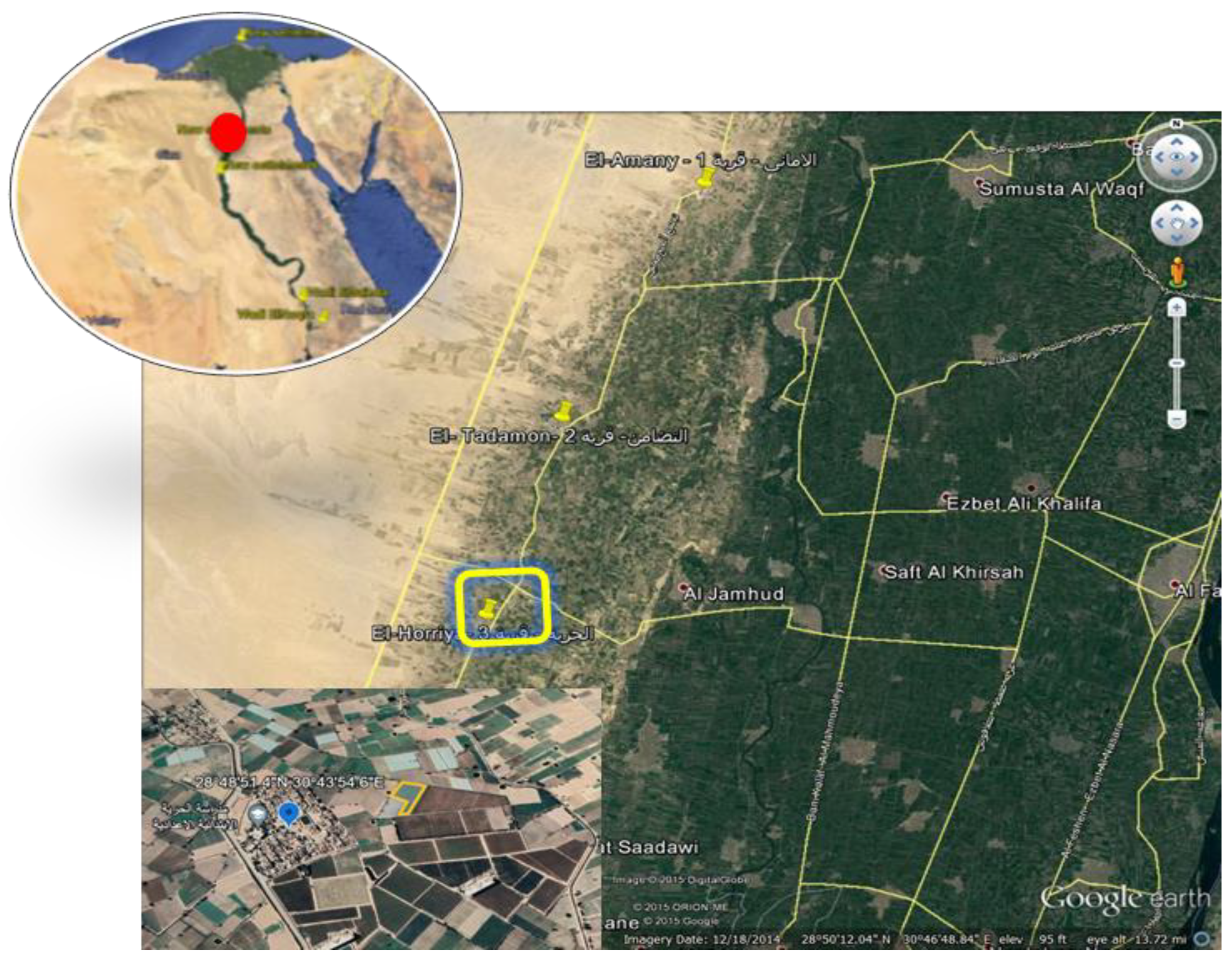
Figure 2.
The experimental design of two cultivars of Allium sativum with three replicates during the two studied seasons.
Figure 2.
The experimental design of two cultivars of Allium sativum with three replicates during the two studied seasons.
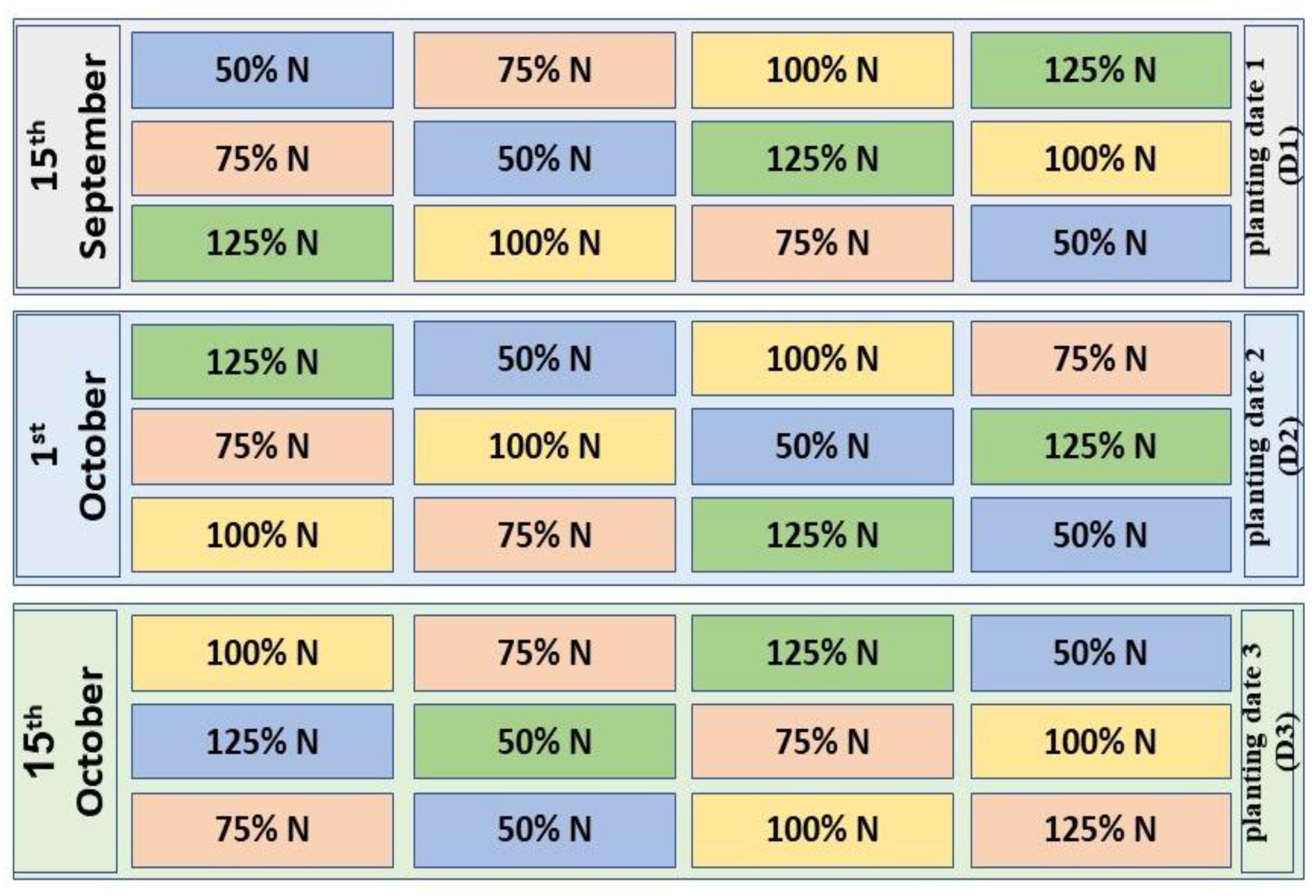
Figure 3.
Greenhouse gas emissions (CO2 equivalent) and nitrogen use efficiency under different N fertilization rates (i.e., 50, 75, 100, and 125% of the recommended garlic cultivation dose) as affected by total yield per hectare.
Figure 3.
Greenhouse gas emissions (CO2 equivalent) and nitrogen use efficiency under different N fertilization rates (i.e., 50, 75, 100, and 125% of the recommended garlic cultivation dose) as affected by total yield per hectare.
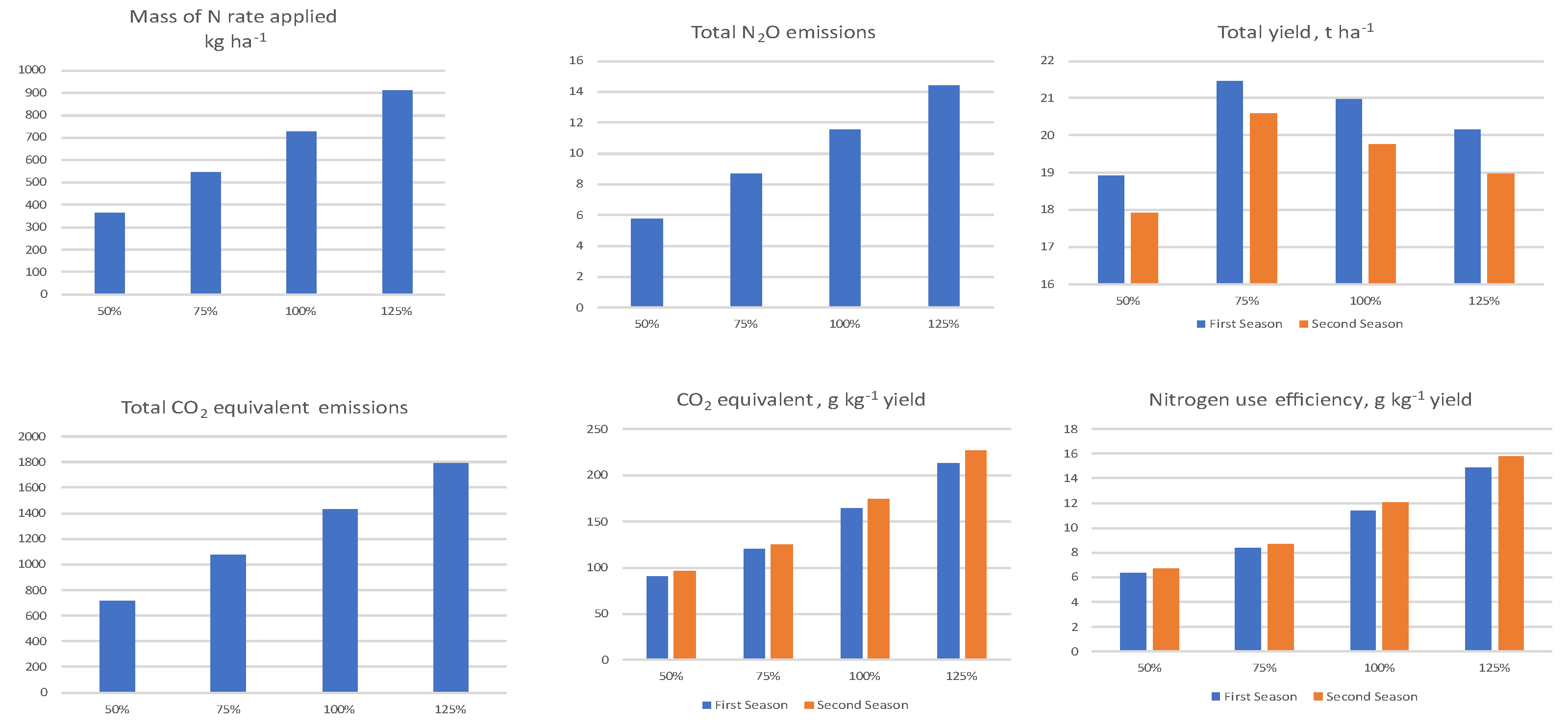
Table 1.
Means of climatic parameters during Allium sativum growth and development at the experimental site (2020/2021 and 2021/2022 seasons).
Table 1.
Means of climatic parameters during Allium sativum growth and development at the experimental site (2020/2021 and 2021/2022 seasons).
| Air Temperature (°C) | Solar Radiation (W m−2) | Relative Humidity (%) | Wind Speed (m s−1) | ||||||
|---|---|---|---|---|---|---|---|---|---|
| Date | Avg | Max | Min | Avg | Avg | Max | Min | Avg | Max |
| 2020/2021 | |||||||||
| September 2019 | 28.5 | 39.9 | 20.8 | 149 | 51.8 | 90.7 | 12.7 | 2.7 | 5.3 |
| October 2019 | 24.4 | 36.2 | 13.5 | 124 | 53.4 | 89.2 | 18.3 | 2.0 | 5.5 |
| November 2019 | 19.2 | 30.5 | 10.3 | 86 | 59.1 | 92.2 | 18.3 | 1.0 | 4.8 |
| December 2019 | 14.5 | 22.7 | 9.84 | 128 | 63.4 | 93.8 | 30.6 | 0.9 | 4.1 |
| January 2020 | 11.6 | 24.9 | 7.91 | 152 | 54.0 | 95.0 | 13.3 | 0.8 | 3.6 |
| February 2020 | 13.7 | 29.5 | 8.48 | 178 | 55.6 | 92.8 | 14.1 | 0.9 | 4.3 |
| 2021/2022 | |||||||||
| September 2020 | 28.7 | 39.5 | 20.9 | 218 | 51.1 | 85.9 | 20.4 | 1.3 | 4.3 |
| October 2020 | 23.2 | 35.5 | 14.5 | 147 | 59.5 | 95.2 | 19.7 | 1.1 | 3.9 |
| November 2020 | 20.4 | 35.8 | 10.0 | 124 | 54.3 | 97.5 | 12.2 | 1.0 | 3.8 |
| December 2020 | 14.6 | 24.4 | 8.39 | 111 | 63.7 | 96.0 | 25.9 | 1.1 | 3.7 |
| January 2021 | 11.7 | 20.1 | 7.25 | 130 | 54.9 | 88.1 | 26.6 | 0.8 | 3.0 |
| February 2021 | 14.2 | 29.0 | 9.39 | 158 | 64.2 | 99.5 | 13.9 | 0.9 | 4.3 |
Table 7.
Greenhouse gas emissions (CO2 equivalent) from nitrogen fertilization as affected by Allium sativum total yield ha−1.
Table 7.
Greenhouse gas emissions (CO2 equivalent) from nitrogen fertilization as affected by Allium sativum total yield ha−1.
| Nitrogen level (%) |
Mass of N rate applied | Total yield | Total N2O | Total CO2 Equivalent | CO2 equivalent | Nitrogen use efficiency | |||
|---|---|---|---|---|---|---|---|---|---|
| kg ha−1 | emissions | emissions | g kg−1 yield | g kg−1 yield | |||||
| kg ha−1 | First season | Second season | kg ha−1 | kg ha−1 | First season | Second season | First season | Second season | |
| 50% | 364 | 18.9 | 17.9 | 5.8 | 1720 | 91 | 96 | 6.35 | 6.69 |
| 75% | 545 | 21.5 | 20.6 | 8.7 | 2580 | 120 | 125 | 8.39 | 8.74 |
| 100% | 727 | 21.0 | 19.8 | 11.5 | 3440 | 164 | 174 | 11.44 | 12.14 |
| 125% | 909 | 20.2 | 19.0 | 14.4 | 4300 | 213 | 227 | 14.88 | 15.82 |
Table 8.
An economic analysis of Allium sativum cultivars under the effect of the studied treatments during the two studied seasons of 2020/2021 and 2021/2022.
Table 8.
An economic analysis of Allium sativum cultivars under the effect of the studied treatments during the two studied seasons of 2020/2021 and 2021/2022.
| Planting Dates | Nitrogen Levels | Cultivars | Yield | Grass Income | Total Cost | Net Income | Incremental Income | Yield | Grass Income | Total Cost | Net Income | Incremental Income |
|---|---|---|---|---|---|---|---|---|---|---|---|---|
| ton ha−1 | hectare | Cost EGP | EGP ha−1 | EGP ha−1 | ton ha−1 | hectare | Cost EGP | EGP ha−1 | EGP ha−1 | |||
| First Season | Second Season | |||||||||||
| 15 September | 50% N | Balady | 21.60 | 118800 | 26400 | 92400 | -9996 | 20.21 | 111144 | 26400 | 84744 | -6696 |
| Sids-40 | 14.88 | 148800 | 29760 | 119040 | 16644 | 14.33 | 143280 | 29760 | 113520 | 22080 | ||
| 75% N | Balady | 26.21 | 144144 | 28200 | 115944 | 13548 | 22.90 | 125928 | 28200 | 97728 | 6288 | |
| Sids-40 | 17.28 | 172800 | 31560 | 141240 | 38844 | 16.10 | 161040 | 31560 | 129480 | 38040 | ||
| 100% N | Balady | 24.07 | 132396 | 30000 | 102396 | 0 | 22.08 | 121440 | 30000 | 91440 | 0 | |
| Sids-40 | 16.49 | 164880 | 33360 | 131520 | 29124 | 14.93 | 149280 | 33360 | 115920 | 24480 | ||
| 125% N | Balady | 22.90 | 125928 | 31800 | 94128 | -8268 | 20.66 | 113652 | 31800 | 81852 | -9588 | |
| Sids-40 | 15.79 | 157920 | 35160 | 122760 | 20364 | 14.40 | 144000 | 35160 | 108840 | 17400 | ||
| 1 October | 50% N | Balady | 22.44 | 123420 | 26400 | 97020 | -5376 | 20.83 | 114576 | 26400 | 88176 | -3264 |
| Sids-40 | 16.18 | 161760 | 29760 | 132000 | 29604 | 15.14 | 151440 | 29760 | 121680 | 30240 | ||
| 75% N | Balady | 21.70 | 119328 | 28200 | 91128 | -11268 | 24.10 | 132528 | 28200 | 104328 | 12888 | |
| Sids-40 | 18.96 | 189600 | 31560 | 158040 | 55644 | 17.09 | 170880 | 31560 | 139320 | 47880 | ||
| 100% N | Balady | 24.65 | 135564 | 30000 | 105564 | 3168 | 23.21 | 127644 | 30000 | 97644 | 6204 | |
| Sids-40 | 18.10 | 180960 | 33360 | 147600 | 45204 | 16.44 | 164400 | 33360 | 131040 | 39600 | ||
| 125% N | Balady | 23.66 | 130152 | 31800 | 98352 | -4044 | 22.92 | 126060 | 31800 | 94260 | 2820 | |
| Sids-40 | 17.33 | 173280 | 35160 | 138120 | 35724 | 15.72 | 157200 | 35160 | 122040 | 30600 | ||
| 15 October | 50% N | Balady | 22.85 | 125664 | 26400 | 99264 | -3132 | 21.82 | 119988 | 26400 | 93588 | 2148 |
| Sids-40 | 15.50 | 155040 | 29760 | 125280 | 22884 | 15.22 | 152160 | 29760 | 122400 | 30960 | ||
| 75% N | Balady | 26.93 | 148104 | 28200 | 119904 | 17508 | 25.25 | 138864 | 28200 | 110664 | 19224 | |
| Sids-40 | 17.71 | 177120 | 31560 | 145560 | 43164 | 18.10 | 180960 | 31560 | 149400 | 57960 | ||
| 100% N | Balady | 24.77 | 136224 | 30000 | 106224 | 3828 | 24.43 | 134376 | 30000 | 104376 | 12936 | |
| Sids-40 | 17.76 | 177600 | 33360 | 144240 | 41844 | 17.62 | 176160 | 33360 | 142800 | 51360 | ||
| 125% N | Balady | 24.62 | 135432 | 31800 | 103632 | 1236 | 23.04 | 126720 | 31800 | 94920 | 3480 | |
| Sids-40 | 19.90 | 198960 | 35160 | 163800 | 61404 | 18.19 | 181920 | 35160 | 146760 | 55320 | ||
| Average price EGP 5500 ton−1 Balady, EGP 10,000 ton−1 Sids-40 | The average cost for Farmyard manure is EGP 3840 ha−1 | The average cost for mineral fertilizer is EGP 7200 ha−1 | ||||||||||
| The average cost for seeds is EGP 5760 ha−1 Balady, EGP 9120 ha−1 Sids-40 | The average cost for pest control is EGP 7200 ha−1 | The average cost for agricultural labor is EGP 3600 ha−1 | ||||||||||
Disclaimer/Publisher’s Note: The statements, opinions and data contained in all publications are solely those of the individual author(s) and contributor(s) and not of MDPI and/or the editor(s). MDPI and/or the editor(s) disclaim responsibility for any injury to people or property resulting from any ideas, methods, instructions or products referred to in the content. |
© 2024 by the authors. Licensee MDPI, Basel, Switzerland. This article is an open access article distributed under the terms and conditions of the Creative Commons Attribution (CC BY) license (http://creativecommons.org/licenses/by/4.0/).
Copyright: This open access article is published under a Creative Commons CC BY 4.0 license, which permit the free download, distribution, and reuse, provided that the author and preprint are cited in any reuse.


