

Submitted:
17 September 2025
Posted:
18 September 2025
You are already at the latest version
Abstract
Nitrogen is one of the most essential nutrients for agricultural crops, and optimizing nitrogen fertilization enables the achievement of high yields and improved quality. In this context, the aim of the study was to identify the nitrogen form that significantly influences wheat yield, as well as the cultivars that respond positively to specific form of nitrogen fertilization, in order to provide recommendations regarding cultivar selection and the appropriate technological approach for chernozem soils in southern Romania. Over a period of three years (2021–2024), 36 winter wheat cultivars were tested under three distinct fertilization conditions: nitrate nitrogen, ammonium nitrogen, and nitrate + ammonium nitrogen, each applied in three different rates: 120 kg/ha a.s. (active substance), 150 kg/ha a.s., and 170 kg/ha a.s. The comparative performance of each cultivar relative to the others was evaluated using the Newman-Keuls multiple range test. The coefficient of variation (CV) of the obtained yields was used to determine yield stability, and its correlation with yield levels allowed for the identification and recommendation of cultivars that simultaneously demonstrated high yields (above average) and good or moderate stability. Among the tested cultivars, Sacramento was identified as the most productive, showing statistically significant superiority compared to both controls under all nitrogen fertilization treatments.
Keywords:
nitrate nitrogen
; ammonium nitrogen
; chernozem soil
; yield
; wheat
1. Introduction
At the global level, the Earth’s population continues to follow an upward trend, which requires an increase in agricultural crop production in order to avoid food insecurity. However, the intensification of agricultural activities over the past decade has also generated several negative environmental consequences, manifested through climate change, resource depletion, and energy shortages [1].
In the context of this demographic explosion, ensuring food security remains a pressing issue that can be addressed by maintaining and increasing agricultural productivity—a goal that largely depends on the adoption of new technologies and agricultural practices. Among these, the use of fertilizers plays a pivotal role.
Nitrogen fertilization is a commonly applied agricultural management strategy that positively influences both the yield and quality of crops, including cereals. However, optimizing nitrogen fertilization remains a challenge, as improper nitrogen management can have adverse effects on crops and environmental quality [2]. Nitrogen (N) is a key factor in increasing crop yield, significantly influencing leaf area development, light interception, photosynthetic efficiency, and the accumulation of dry matter in crop plants [3].
Due to the high effectiveness of nitrogen fertilization in enhancing yield, nitrogen fertilizers have been widely recommended in recent years for use in modern wheat production, contributing to increased productivity. This has even led to the common perception that applying more nitrogen results in higher yields [4,5,6].
Nitrogenous fertilizers have contributed to increased yields, especially in major crops such as wheat [7]. N is one of the three essential macronutrients required for plant development and is a key component of many essential plant compounds, including amino acids, nucleotides, proteins, and particularly enzymes involved in critical metabolic processes [8]. N is also a major structural element of chlorophyll and is present in certain plant hormones, either directly or as N-containing derivatives [9].
Nitrogen availability is a limiting factor for wheat yield [10], and there is significant variability among wheat cultivars in terms of nitrogen uptake and utilization for yield formation [11]. Therefore, applying the appropriate nitrogen rate is a fundamental means to enhance grain yield, nitrogen uptake, and use efficiency. However, nitrogen losses through volatilization can reduce both yield and nutrient-use efficiency in wheat [12,13].
Previous and recent studies have shown that a large portion of granular nitrogen applied to the soil may be lost through leaching (nitrate nitrogen) or volatilization (ammonium nitrogen) [14]. As a result, researchers have recommended compensating for these losses through the use of stabilized urea-based nitrogen fertilizers [15,16,17,18].
Ammonium nitrogen (NH4+-N) and nitrate nitrogen (NO3−-N) are the main forms of nitrogen absorbed by plants, together comprising approximately 70% of total cation and anion uptake [19]. Ammonia nitrogen, which includes ammonia (NH3) and free ammonium ions (NH4+), is an important chemical component in agriculture and biotechnology, with its speciation depending primarily on the pH of the surrounding environment [20].
Although nitrate (NO3−-N), ammonium (NH4+-N), and amide (NH2-N) forms of nitrogen are used in fertilization, nitrate is the most readily absorbed form by plant roots. The other forms must undergo biochemical transformations in the soil—except in cases where cereals [22] and grasses [23,24] selectively absorb ammonium nitrogen.
Nitrate nitrogen is the most immediately available form of synthetic nitrogen fertilizer for plant roots. Other forms must be converted by soil microorganisms into nitrate before becoming plant-accessible. Because of its rapid mobility, nitrate nitrogen is easily leached from the soil, which is why it is frequently applied as a top dressing during crop development. Numerous studies have investigated the effects of various nitrogen fertilizers on wheat yields, with results differing according to fertilizer form, application timing, and environmental conditions [7,25,26].
Due to its strong efficacy in yield enhancement, nitrogen fertilizer has been broadly recommended for use in wheat production [27,28]. However, excessive nitrogen application drastically reduces nutrient use efficiency and poses serious environmental and ecological risks [1,2]. High nitrogen inputs result in significant nitrogen losses to groundwater, further diminishing efficiency [29].
Despite wheat’s global importance in terms of cultivated area, geographic distribution, and total output, relatively few studies have investigated how different nitrogen forms are absorbed by this crop [10,30,31]. Both ammonium and nitrate nitrogen are predominant forms of mineral nitrogen in soils; however, nitrate tends to dominate under favorable conditions. Ammonium, whether added directly or released via mineralization of organic matter, is typically rapidly nitrified into nitrate. The ammonium-to-nitrate ratio in soil depends on the nitrification rate, which is inhibited under acidic or anaerobic conditions [32].
Some researchers estimate that global nitrogen consumption would need to reach 236 million tonnes to support the 70%–110% increase in cereal production required to meet food demands for a projected global population of 8.0 to 10.4 billion by 2050 [33].
High concentrations of ammonia (e.g., above 0.5 µmol/L) can have significant environmental impacts [34]. Although determining the optimal nitrate level in soils remains difficult, reducing its accumulation is considered essential [32,35,36]. In general, wheat seedlings exhibit distinct physiological responses depending on the nitrogen form supplied [37,38,39,40]. Many studies have demonstrated that mixed nitrogen forms often result in superior plant growth indices in wheat, maize, and other species [41,42,43].
Effective nutritional management requires detailed knowledge of the agronomic characteristics of the soils in a given farm and the specific nutrient requirements of the cultivated plants, as well as the ability to identify deficiency symptoms in a timely manner. In winter wheat, nutrient uptake begins to increase significantly in the spring, particularly at the onset of stem elongation [44,45].
Under future climate scenarios characterized by elevated CO2 concentrations, the use of nitrification inhibitors may be recommended to delay the conversion of ammonium to nitrate, thus preserving nitrogen in the ammonium form for longer periods in dryland cropping systems where nitrate dominates [46].
Optimizing nitrogen fertilization not only enhances yield and grain quality but also improves economic returns and reduces environmental pollution [47,48].
In this context, the present study presents the results of nitrogen fertilization trials conducted on 36 winter wheat cultivars, using three forms of nitrogen (nitrate, ammonium, and nitrate + ammonium), each applied in three rates, on chernozem soil located in Caracal, southern Romania.
2. Results and Discussion
2.1. Influence of Cultivar (Factor A) on Yield
When analyzing the individual influence of Factor A—cultivar on yield, based on the difference from control 1 (Ct1) – the most commonly grown wheat cultivar Glosa (72.19 Q (Quintals)/ha), and from control 2 (Ct2) – the average yield of all tested cultivars (70.03 Q/ha), the cultivars can be grouped into several categories (Table 1), as follows:
- Cultivars with statistically significant yield increases compared to both controls: Rubisko, Sacramento, Centurion, Activus, Crișana;
- Cultivars with statistically significant yield increases compared to Ct2: Vivendo, Litera;
- Cultivars with statistically significant yield reductions compared to both controls: Combin, Aspeckt, Pitar, Dacic, Biharia, Miranda, Alex;
- Cultivars with statistically significant yield reductions compared to Ct1: Tika-Taka, Papillon, Boema, Arezzo;
- Cultivars with no statistically significant differences compared to either control: Apexus, Solindo, Basilio, Chevignon, Sosthene, Sothys, Aurelius, Sophie, Voinic, Ursita, Abund, Sofru, Gabrio, Sphere, Ciprian, Certiva.
The average yields ranged from 84.18 Q/ha for the cultivar Sacramento to 55.08 Q/ha for the cultivar Dacic.
Other results show that wheat varieties exhibit different yield potentials and responses to environmental conditions, which directly influence overall productivity [49]. While wheat yield is genetically determined, it is significantly affected by climatic conditions during the growing season and by the agricultural technologies employed [50]. Selecting the appropriate variety for a specific region and its prevailing environmental conditions is essential for optimizing both yield and grain quality. Climate change, along with disease resistance, further emphasizes the importance of variety selection. Moreover, adopting wheat variety mixtures can become a major strategy among farmers, potentially reducing pesticide dependence in current cropping systems [51].
The yields presented above (Table 1) were obtained under varying levels of favorability for wheat cultivation, depending on climatic conditions across the study years. In the 2021–2022 agricultural year, growing conditions were less favorable, with total precipitation below normal levels – 364 mm. In contrast, the 2022–2023 season offered favorable conditions for wheat development, while the 2023–2024 season was characterized by moderate stress conditions for the crop.
2.2. The Effect of Nitrogen Form (Factor B) on Yield
Factor B (nitrogen form) significantly influenced wheat yield (Figure 1). When fertilization was carried out exclusively with ammonium nitrogen, the yield decreased significantly, reaching 68,3 Q/ha. Although a slight yield increase was observed in the treatment combining nitrate nitrogen + ammonium nitrogen, the difference was not statistically significant.
Similar findings have been reported in other studies examining the effects of ammonium nitrogen. For instance, a study conducted in Poland [47] revealed that the average yield of winter wheat fertilized solely with ammonium nitrogen was 2.7–4.2% lower than the yield obtained following the application of other nitrogen fertilizer forms. In some dryland areas of China, wheat exhibited better responses to nitrate nitrogen in most cases, while in others, no significant difference was found between nitrate and ammonium nitrogen in terms of yield performance [52]. The authors concluded that the superiority of nitrate nitrogen over ammonium nitrogen in influencing wheat yield depends on the cumulative nitrate content in the soil. Specifically, nitrate nitrogen outperforms ammonium nitrogen only in soils with low cumulative nitrate concentrations at the rooting depth [52].
The results of a study examining the effects of different nitrogen fertilizers (urea, ammonium nitrate, ammonium sulfate, and calcium ammonium nitrate) on wheat growth and yield indicated that ammonium nitrate exhibited comparable beneficial effects, while ammonium sulfate and calcium ammonium nitrate had relatively weaker impacts on wheat productivity [7]. At wheat maturity, the correlation between cumulative nitrate nitrogen (0–100 cm soil layer) and total biomass, as well as biomass increase due to nitrogen addition, was the strongest [32]. Another study reported that nitrate nitrogen led to the highest yields and yield increases, followed by the ammonium:nitrate combination in a 1:2 ratio, while ammonium nitrogen alone resulted in the lowest performance [52].
Findings reported by [39] suggest that wheat and maize plants performed better under mixed nitrogen forms than under single-form applications. Specifically, in single nitrogen treatments, wheat seedlings supplied with nitrate-N demonstrated better growth than those receiving ammonium-N. Plants receiving only ammonium-N showed slender plant height and fewer tillers, whereas those supplied with nitrate-N were characterized by slightly reduced height, but more tillers and greater aboveground biomass. Moreover, under elevated CO2 (eCO2) conditions, wheat seedlings receiving mixed N supply exhibited a significant increase in carbon concentration in root exudates and a relatively lower nitrogen concentration [39].
Field and pot experiments investigating the effects of ammonium and nitrate on wheat yield consistently showed that nitrate application or nitrate–ammonium combinations led to higher wheat yields compared to ammonium alone [53,54]. However, ammonium had a positive effect on wheat root activity and improved the nitrogen recovery rate [55].
Other authors have reported that applying ammonium or nitrate nitrogen alone may induce pH changes in the growth medium, leading to cation–anion imbalances, whereas their simultaneous application can regulate both cell and rhizosphere pH [56,57]. The combined application not only helps maintain the availability of nutrients, such as phosphorus and micronutrients, but also contributes to protecting the soil environment [57].
In general, regarding the morphological development of wheat, ammonium-N supply primarily affected maximum root length and tiller number. The negative effect of ammonium-N on root length was found to be more pronounced under ambient CO2 (aCO2) conditions [39].
Additionally, recent studies have highlighted the critical role of nitrogen forms in modulating host–pathogen interactions and in shaping the wheat rhizosphere microbiome composition [58].
2.3. The Effect of Nitrogen Dose (Factor C) on Yield
The applied nitrogen dose (Factor C) had a substantial impact on yield (Figure 2). Higher doses resulted in yields that were significantly lower than the yield obtained with the 120 kg/ha a.s. dose, regardless of the nitrogen form used.
The results are consistent with those reported by other authors, who have shown that high nitrogen doses and excessive nitrogen application lead to reduced yield and increased nitrogen losses in the wheat–soil system [59,60]. Recent studies have indicated that a dose of 180 kg N ha−1 was the most effective for improving wheat growth, physiological efficiency, and grain yield, with 135 kg N ha−1 also showing favorable results. In contrast, higher doses (225 and 270 kg N ha−1) resulted in diminished performance, suggesting a threshold beyond which nitrogen becomes counterproductive [60]. Similarly, increasing nitrogen application from 70 to 130 kg ha−1 had a positive effect on wheat yield in experiments conducted in Poland on rendzina soils [61].
On the other hand, according to [7], urea applied at 240 kg/ha resulted in the tallest plants (92.5 cm), followed by ammonium nitrate at the same rate (88.4 cm). Furthermore, urea at 240 kg/ha led to a grain yield of 5300 kg/ha, while ammonium nitrate achieved a slightly higher yield of 5400 kg/ha at the same application rate [7].
Previous research has emphasized the importance of optimizing nitrogen management in wheat cultivation. Strategies such as split nitrogen application at different growth stages have been shown to improve yield while minimizing environmental risks, including nitrogen losses, water contamination, and greenhouse gas emissions [62,63].
In contrast to nitrate N, ammonium N has been shown to exhibit toxicity to plants [53]. Visibly, this toxicity manifests through inhibited growth, reduced leaf area and biomass, delayed and restricted root development, and the formation of fine or dark-colored roots [30].
Optimizing nitrogen fertilization not only enables high and high-quality yields, but also ensures economic profitability and contributes to environmental protection [47,48]. The search for strategies to help farmers optimize nitrogen fertilizer use is of global importance [64]. Nitrogen ranks second only to precipitation as the most frequent limiting factor for yield; when nitrogen supplied to wheat is not used efficiently, it may be lost from the cropping system to the surrounding environment [65].
2.4. Influence of the Cultivar × Nitrogen Form Interaction (Factor A × Factor B)
The interaction between the cultivar and the form of nitrogen fertilizer applied is of particular significance. Its impact is considerable, as cultivars exhibit differentiated responses. The wide range of cultivars tested revealed remarkable variability in their behavior depending on the nitrogen form used, when compared both to the reference cultivar Glosa (Ct1) and to the mean performance of all cultivars (Ct2). In the experimental design, cultivars were denoted as C = cultivar. These findings provide valuable guidance, especially in practical scenarios where a specific form of nitrogen is available, and the objective is to select the most suitable cultivar for optimal performance.
Among the cultivars tested, three were distinguished by their stable performance, demonstrating equivalence with the control in all three nitrogen treatments (Figure 3). In other words, the cultivars Sosthene (Figure 3a), Ciprian (Figure 3b), and Certiva (Figure 3c) exhibited comparable productivity to both Glosa and the average of the 36 wheat cultivars assessed, across all fertilization regimes: nitrate nitrogen (Magnisal), ammonium nitrogen (ammonium sulfate) or combined nitrate and ammonium nitrogen (ammonium nitrate).
Although ammonium nitrogen did not provide the most favorable conditions for fully expressing yield potential, several cultivars—including Vivendo (Figure 4a), Litera (Figure 4b), Centurion (Figure 4c), Activus (Figure 4d), Sophie (Figure 4e), and Ursita (Figure 4f)—demonstrated significantly higher productivity than both the reference cultivar Glosa and the overall mean under this nitrogen form. The cultivar Tiberius also showed superior performance, although only in comparison with the general average (Figure 5).
Overall, the most productive cultivar was Sacramento (Figure 6a), which demonstrated significantly higher yields than both controls under all nitrogen fertilization regimes. A similar trend was observed for Rubisko (Figure 6b), although this superiority was not evident under ammonium nitrogen fertilization.
At the opposite end of the spectrum, cultivars with inferior productivity compared to both reference points, regardless of the nitrogen form applied, were Combin (Figure 7a) and Dacic (Figure 7b).
The cultivars Tika-Taka and Pitar were inferior only to Glosa across all nitrogen fertilizer forms (Figure 8a,b).
The cultivars Aurelius, Aspekt, Abund, Sphere, Miranda, Alex, and Arezzo were unable to efficiently utilize ammonium nitrogen, with significant yield reductions compared to both reference controls (Figure 9a–g).
Among the tested cultivars, Papillon, Solindo, Chevignon, Aurelius, Vivendo, Centurion, Activus, Abund, Sphere, and Crișana responded very favorably to ammonium nitrate (a combination of nitric and ammonium nitrogen in equal parts), achieving significantly higher yields than both controls. Some of these cultivars are graphically represented in Figure 10a–d.
The calculation of the coefficient of variation (CV%) for all yield values obtained from each cultivar—whether grown under fertilization with nitrate nitrogen, ammonium nitrogen, or both forms across all tested doses—allowed us to highlight variants based on their stability and, implicitly, the degree to which they were influenced by the form of nitrogen fertilizer applied. Accordingly, the results suggested that the cultivars Certiva, Litera, and Boema were stable (coefficient of variation below 10%), indicating a minimal influence of the nitrogen form on their performance.
In contrast, the cultivars Aurelius, Sphere, Voinic, Arezzo, Pitar, Biharia, Dacic, and Miranda exhibited coefficients of variation exceeding 20% (indicating instability), which reflects a substantial influence of both the nitrogen fertilizer form and the applied doses (Figure 11).
Similar findings on the stability of wheat cultivars have been reported by other researchers. Analysis of variation coefficients showed that, regardless of wheat species, cultivars were stable under fertilization with 150 kg N·ha−1, with CV values ranging between 4.81% and 6.18% [61]. However, variation exceeding 20% (instability) was observed for certain traits such as gluten elasticity, grain vitreousness, and total ash content [61].
The results concerning the correlation between yield and the variability index revealed a determination coefficient (R2) of 29.3%. In the quadrant representing the desired interaction—cultivars with high yield and low variability index, defined by the mean values of these two traits—Sacramento, Vivendo, Centurion, Litera, and Certiva stood out under the pedo-climatic conditions of Caracal (Figure 12). The yields were represented as the average values obtained across the three nitrogen fertilization variants, differentiated by nitrogen form.
The Newman-Keuls test confirmed several results demonstrating the extent to which one cultivar is more productive compared to another winter wheat cultivar tested on the Chernozem soil at Caracal. Thus, the cultivar Sacramento outperformed the cultivars Dacic, Pitar, Aspekt, Miranda, Combin, Alex, Biharia, Boema, Tika Taka, Papillon, Arezzo, Tiberius, Aurelius, Abund, and Sphere, regardless of the nitrogen form and dose applied (Table 2).
The cultivar Rubisko was superior to Dacic, Pitar, Aspekt, Miranda, Combin, and Alex under the same testing conditions. Similarly, Activus showed higher productivity compared to Dacic, Pitar, Aspekt, Miranda, and Combin. The cultivar Crișana also exceeded the productivity of the aforementioned cultivars. Additionally, Vivendo and Centurion demonstrated comparable superiority.
The cultivar Litera performed better than Dacic, Pitar, and Aspekt. Conversely, Dacic was inferior in yield compared to several other cultivars, namely: Chevignon, Ciprian, Sophie, Certiva, Solindo, Sothys, Glosa, Ursita, Apexus, Gabrio, Sosthene, and Basilio.
All other tested cultivars not previously highlighted were at a similar production level, indicating the diversity available when selecting cultivars.
Similar findings were reported by other authors who tested multiple durum wheat cultivars [66]. The Newman-Keuls test identified four significantly different groups regarding productivity. The cultivar GTA in the first group was characterized by the highest average yield of 5.46 ± 0.22 t·ha−1, while the cultivar Wahbi in the fourth group ranked last, with the lowest grain yield of 3.32 ± 0.16 t·ha−1 [66]. According to other studies, the Newman-Keuls test revealed two distinct homogeneous groups, with group (a) containing the highest averages favoring conventional tillage, while no-tillage recorded the lowest averages in group (b) [67].
3. Materials and Methods
Over a period of three years (2022–2024), 36 winter wheat cultivars were tested under field conditions on Chernozem soil at Caracal, Romania. The experiment involved three different nitrogen fertilization regimes: nitrate nitrogen, ammonium nitrogen, and a combination of nitrate + ammonium nitrogen. Each nitrogen form was applied at three different doses: 120 kg/ha a.s., 150 kg/ha a.s., and 170 kg/ha a.s. The three nitrogen forms were supplied through the following fertilizers: Magnisal (containing 11% nitrate nitrogen), ammonium sulfate (21% ammonium nitrogen) and ammonium nitrate (33.5% total nitrogen: 16.75% nitrate nitrogen + 16.75% ammonium nitrogen).
The objective of this study was to identify the form of nitrogen with the most significant effect on yield, determine which cultivar responds positively to a specific nitrogen form, analyze the interaction between nitrogen form and cultivar to recommend both the optimal cultivar and the appropriate fertilization strategy and assess the optimal nitrogen dose when evaluated independently. All of these were analyzed under the specific edaphoclimatic conditions of the Chernozem soil in the Caracal region of Romania.
The experiment was conducted on a typical argic Chernozem (non-calcareous), characterized by a well-defined profile and insignificant variability in physical, hydrological, and chemical properties. This deep soil, with a loam to clay loam texture, developed from aeolian deposits (loess and loess-like carbonate materials). The texture is silty clay loam in the upper 70 cm and silty loam below, resulting in a medium bulk density throughout the soil profile.
Meteorological data, based on an 79-year average, indicate a mean annual temperature of 11.1 °C (0.6 °C in winter, 10.8 °C in spring, 22 °C in summer, and 11.4 °C in autumn), and an average precipitation of 389.5 mm during the wheat vegetation period (October–June).
During the three experimental years, rainfall varied considerably:
- In the 2021–2022 agricultural year, conditions were unfavorable, with below-average precipitation (364 mm).
- In 2022–2023, total precipitation reached 464.6 mm, supporting favorable wheat development, though the growing season was accompanied by high temperatures, with maximum values reaching 38.7 °C.
- In 2023–2024, water stress was present, but mitigated by abundant rainfall in May, during the grain-filling phase.
Statistical interpretation of results was based on the Least Significant Difference (LSD) method for a three-factorial experimental design, where Factor A was the cultivar, Factor B the nitrogen form, and Factor C the nitrogen dose.
The influence of each individual factor (cultivar, nitrogen form, and dose) on yield was assessed, as well as the interaction effect between cultivar and nitrogen type, using two controls for comparison: Control 1 (Ct1), represented by the cultivar Glosa, and Control 2 (Ct2), represented by the average of all tested cultivars. A result was considered significant at P > 5%, with the corresponding threshold value (LSD) being 5.64 Q(Quintals)/ha for the Chernozem soil at Caracal.
The relative performance of each cultivar in comparison to all others was assessed using the Newman-Keuls test.
The coefficient of variation (CV%) of yield, regardless of nitrogen form or dose, was used to assess yield stability. Its correlation with productivity enabled the identification of cultivars that simultaneously exhibited high yields (above average) and good to moderate stability, suitable for recommendation.
4. Conclusions
The analysis of individual factors—as well as the interaction between the first two (cultivar and nitrogen form)—highlighted their strong influence on yield performance. Yield variability was significant, ranging from 84.18 Q/ha in the Sacramento cultivar to 55.08 Q/ha in the Dacic cultivar.
Consistent with numerous global studies, the results obtained on the Chernozem soil at Caracal showed that when fertilization was performed only with ammonium nitrogen, yields declined significantly. In the variant fertilized with ammonium nitrate (a combination of nitrate and ammonium nitrogen), a slight increase in yield was observed, although it was not statistically significant compared to fertilization with nitrate nitrogen alone.
Among the wide assortment of tested common winter wheat cultivars (36 cultivars of diverse origin), only one cultivar—Sacramento—was significantly superior to both controls under all nitrogen forms evaluated.
The optimal recommended nitrogen dose, regardless of nitrogen form, was 120 kg a.s./ha. Yields obtained at the higher tested doses were significantly lower.
Author Contributions
Conceptualization, G.P. and E.R.; methodology, G.P. and R.A.P; validation, C.A.R. and A.L.O.; investigation, R.A.P and D.F.M.; writing—original draft preparation, G.P. and E.B.; writing—review and editing, E.B. and E.R.; visualization, C.A.R. and A.L.O.; supervision, G.P and E.R. All authors have read and agreed to the published version of the manuscript.
Funding
This research received no external funding.
Data Availability Statement
All the relevant data are presented in the manuscript.
Conflicts of Interest
The authors declare no conflicts of interest.
References
- Vejan, P.; Khadiran, T.; Abdullah, R.; Ahmad, N. Controlled release fertilizer: a review on developments, applications and potential in agriculture. J. Control Release 2021, 339, 321–334. [Google Scholar] [CrossRef]
- Tedone, L.; Alhajj Ali, S.; Verdini, L.; De Mastro, G. Nitrogen management strategy for optimizing agronomic and environmental performance of rainfed durum wheat under Mediterranean climate. J. Clean. Prod. 2018, 172, 2058–2074. [Google Scholar] [CrossRef]
- Srivastava, R.; Panda, R.; Chakraborty, A.; Halder, D. Enhancing grain yield, biomass and nitrogen use efficiency of maize by varying sowing dates and nitrogen rate under rainfed and irrigated conditions. Field Crop Res. 2018, 221, 339–349. [Google Scholar] [CrossRef]
- Chen, X.; Cui, Z.; Fan, M.; Vitousek, P.; Zhao, M.; Ma,W. ; Wang, Z.; Zhang,W.; Yan, X.; Yang, J. Producing more grain with lower environmental costs. Nature 2014, 514, 486–491. [Google Scholar] [PubMed]
- Ju, X.; Xing, G.; Chen, X.; Zhang, S.; Zhang, L.; Liu, X.; Cui, Z.; Yin, B.; Christie, P.; Zhu, Z.; Zhang, F. Reducing environmental risk by improving N management in intensive Chinese agricultural systems. Proc. Natl. Acad. Sci. 2009, 106, 8077–8078l. [Google Scholar] [CrossRef] [PubMed]
- Duan, J.; Shao, Y.; He, L.; Li, X.; Hou, G.; Li, S.; Feng, W.; Zhu, Y.; Wang, Y.; Xie, Y. Optimizing nitrogen management to achieve high yield, high nitrogen efficiency and low nitrogen emission in winter wheat. Sci. Total Environ. 2019, 697, 134088. [Google Scholar] [CrossRef] [PubMed]
- Hussain, A.; Azeem, N.; Riaz, T.; Khan, T.Y.; Pehlwan, B.; Amjad, T.; Muzammal, M.; Sani, I.A.; Umm-E-Habiba; Sarfraz, B. Impact of Various Nitrogenous Fertilizers on Wheat Crop Yield and Growth. IJBR 2025, 3, 364–369. [Google Scholar] [CrossRef]
- Richardson, A.E.; Barea, J.; Mcneill, A.M.; Claire, P.C. Acquisition of phosphorus and nitrogen in the rhizosphere and plant growth promotion by microorganisms. Plant Soil 2009, 321, 305–339. [Google Scholar] [CrossRef]
- Gong, X.; Li, L.; Qin, L.; Huang, Y.; Ye, Y.; Wang, M.; Wang, Y.; Xu, Y.; Luo, F.; Mei, H. Targeted metabolomics reveals impact of N application on accumulation of amino acids, Flavonoids and phytohormones in tea shoots under soil nutrition deficiency stress. Forests 2022, 10, 1629. [Google Scholar] [CrossRef]
- Fradgley, N.S.; Bentley, A.R.; Swarbreck, S.M. Defining the physiological determinants of low nitrogen requirement in wheat. Biochem. Soc. Trans. 2021, 49, 609–616. [Google Scholar] [CrossRef]
- Belete, F.; Dechassa, N.; Molla, A.; Tana, T. Effect of nitrogen fertilizer rates on grain yield and nitrogen uptake and use efficiency of bread wheat (Triticum aestivum L.) varieties on the Vertisols of central highlands of Ethiopia. Agric. Food Secur. 2018, 7, 78. [Google Scholar] [CrossRef]
- Fageria, N.K. Nitrogen harvest index and its association with crop yields. J. Plant Nutr. 2014, 37, 795–810. [Google Scholar] [CrossRef]
- Yaseen, M.; Ahmad, A.; Naveed, M.; Ali, M.A.; Shah, S.S.H.; Hasnain, M.; Ali, H.M.; Siddiqui, M.H.; Salem, M.Z.M.; Mustafa, A. Subsurface-Applied Coated Nitrogen Fertilizer Enhanced Wheat Production by Improving Nutrient-Use Efficiency with Less Ammonia Volatilization. Agronomy 2021, 11, 2396. [Google Scholar]
- Dal Molin, S.J.; Ernani, P.R.; Soldatelli, P.; Cassol, P.C. Leaching and Recovering of Nitrogen Following N Fertilizers Application to the Soil in a Laboratory Study. Commun. Soil Sci. Plant Anal. 2018, 49, 1099–1106. [Google Scholar] [CrossRef]
- Azeem, B.; Kushaari, K.; Man, Z.B.; Basit, A.; Thanh, T.H. Review on Materials & Methods to Produce Controlled Release Coated Urea Fertilizer. J. Control. Release 2014, 181, 11–21. [Google Scholar] [CrossRef]
- Thapa, R.; Chatterjee, A.; Johnson, J.M.F.; Awale, R. Stabilized Nitrogen Fertilizers and Application Rate Influence Nitrogen Losses under Rainfed Spring Wheat. J. Agron. 2015, 107, 1885–1894. [Google Scholar] [CrossRef]
- Barčauskaite, K.; Braziene, Z.; Avižienyte, D.; Silva, M.; Drapanauskaite, D.; Honer, K.; Gvildiene, K.; Slinksiene, R.; Jancaitiene, K.; Mazeika, R.; et al. Mechanochemically Synthesized Gypsum and Gypsum Drywall Waste Cocrystals with Urea for Enhanced Environmental Sustainability Fertilizers. J. Environ. Chem. Eng. 2020, 8, 103965. [Google Scholar] [CrossRef]
- Swify, S.; Mažeika, R.; Baltrusaitis, J.; Drapanauskaitė, D.; Barčauskaitė, K. Review: Modified Urea Fertilizers and Their Effects on Improving Nitrogen Use Efficiency (NUE). Sustainability 2024, 16, 188. [Google Scholar] [CrossRef]
- Caicedo, J.R. Effect of total ammonia nitrogen concentration and pH on growth rate of duckweed (Spirodela polyrrhiza). Water Res. 2000, 34, 3829–3835. [Google Scholar] [CrossRef]
- Timmer, B.; Olthuis, W.; Berg, A.V.D. Ammonia sensors and their applications—a review. Sens. Actuators B 2005, 107, 666–677. [Google Scholar] [CrossRef]
- Masclaux-Daubresse, C.; Daniel-Vedele, F.; Dechorgnat, J.; Chardon, F.; Gaufichon, L.; Suzuki, A. Nitrogen uptake, assimilation and remobilization in plants: challenges for sustainable and productive agriculture. Ann. Bot. 2010, 105, 1141–1157. [Google Scholar] [CrossRef] [PubMed]
- Tabuchi, M.; Abiko, T.; Yamaya, T. Assimilation of ammonium ions and reutilization of nitrogen in rice (Oryza sativa L). J. Exp. Bot. 2007, 58, 2319–2327. [Google Scholar] [CrossRef] [PubMed]
- Yuan, L.; Loque, D.; Kojima, S.; Rauch, S.; Ishiyama, K.; Inoue, E.; Takahashi, H.; von Wiren, N. The organization of high-affinity ammonium uptake in Arabidopsis roots depends on the spatial arrangement and biochemical properties of AMT1-type transporters. Plant Cell 2007, 19, 2636–2652. [Google Scholar] [CrossRef]
- Duan, F.; Giehl, R.F.H.; Geldner, N.; Salt, D.E.; Von Wiren, N. Root zone–specific localization of AMTs determines ammonium transport pathways and nitrogen allocation to shoots. PLoS Biol. 2018, 16, e2006024. [Google Scholar] [CrossRef]
- Liu, J.; Ma, K.; Ciais, P.; Polasky, S. Reducing human nitrogen use for food production. Sci. Rep. 2016, 6, 30104. [Google Scholar] [CrossRef]
- Souza, L.A.; Tavares, R. Nitrogen and stem development: a puzzle still to be solved. Front. Plant Sci. 2021, 12, 630587. [Google Scholar] [CrossRef] [PubMed]
- An, H.; Owens, J.; Stoeckli, J.; Hao, X.; Beres, B.; Li, Y. Nitrous oxide emissions following split fertilizer application on winter wheat grown on Mollisols of Southern Alberta, Canada. Geoderma Reg. 2020, 21, e00272. [Google Scholar] [CrossRef]
- Pan, W.L.; Kidwell, K.K.; McCracken, V.A.; Bolton, R.P.; Allen, M. Economically optimal wheat yield, protein and nitrogen use component responses to varying N supply and genotype. Front. Plant Sci. 2020, 10, 1790. [Google Scholar] [CrossRef]
- Wang, L.; Xin, J.; Nai, H.; Zheng, X. Effects of different fertilizer applications on nitrogen leaching losses and the response in soil microbial community structure. Environ. Technol. Innov. 2021, 23, 101608. [Google Scholar] [CrossRef]
- Cramer, M.D.; Lewis, O.A.M. The influence of NO3−and NH4+nutrition on the carbon and nitrogen partitioning characteristics of wheat (Triticum aestivum L.) and maize (Zea maize L.) plants. Plant Soil 1993, 154, 289–300. [Google Scholar] [CrossRef]
- Plett, D.C.; Holtham, L.R.; Okamoto, M.; Garnett, T.P. Nitrate uptake and its regulation in relation to improving nitrogen use efficiency in cereals. Semin. Cell Dev. Boil. 2018, 74, 97–104. [Google Scholar] [CrossRef]
- Miao, Y.F.; Wang, Z.H.; Li, S.X. Relation of nitrate N accumulation in dryland soil with wheat response to N fertilizer. Field Crops Res. 2015, 170, 119–130. [Google Scholar] [CrossRef]
- Meng, Q.; Yue, S.; Hou, P.; Cui, Z.; Chen, X. Improving yield and nitrogen use efficiency simultaneously for maize and wheat in China: a review. Pedosphere 2016, 26, 137–147. [Google Scholar] [CrossRef]
- Li, D.; Xu, X.; Li, Z.; Wang, T.; Wang, C. Detection methods of ammonia nitrogen in water: A review. Trends Anal. Chem. 2020, 127, 115890. [Google Scholar] [CrossRef]
- Jun, F.; Hao, M.; Malhi, S.; Malhi, A. Accumulation of nitrate N in the soil profile and its implications for the environment under dryland agriculture in northern China: A review. Can. J. Soil Sci. 2010, 90, 429–440. [Google Scholar] [CrossRef]
- Muhammad, I.; Lv, J.Z.; Yang, L.; Ahmad, S.; Farooq, S.; Zeeshan, M.; Zhou, X.B. Low irrigation water minimizes the nitrate nitrogen losses without compromising the soil fertility, enzymatic activities and maize growth. BMC Plant Biol. 2022, 22, 159. [Google Scholar] [CrossRef]
- Deepika, K.U.; Shivani, N.; Sweta, K.; Ravi, P.S.; Gurumurthy, S. Response of wheat plants to different levels and forms of nitrogen. New Agriculturist 2015, 26, 47–57. [Google Scholar]
- Liu, X.; Wang, S.; Deng, X.; Zhang, Z.; Yin, L. Comprehensive evaluation of physiological traits under nitrogen stress and participation of linolenic acid in nitrogen-deficiency response in wheat seedlings. BMC Plant Biol. 2020, 20, 501. [Google Scholar] [CrossRef]
- Dong, L.; Li, Y.; Li, P.; Liu, Y.; Ma, F.; Hao, X.; Guo, L. Growth Response of Wheat and Maize to Different Nitrogen Supply Forms under the Enrichment of Atmospheric CO2 Concentrations. Agronomy 2023, 13, 485. [Google Scholar] [CrossRef]
- Chen, K.; Xue, W.; Di, X.; Sun, T.; Gao, W.; Sun, Y. Effects of nitrogen forms on Cd uptake and tolerance in wheat seedlings. Sci. Total Environ. 2024, 936, 173451. [Google Scholar] [CrossRef]
- Ochieng’, I.O.; Gitari, H.I.; Mochoge, B.; Rezaei-Chiyaneh, E.; Gweyi-Onyango, J.P. Optimizing Maize Yield, Nitrogen efficacy and grain protein content under different N forms and rates. J. Soil Sci. Plant Nutr. 2021, 21, 1867–1880. [Google Scholar] [CrossRef]
- Kim, T.; Mills, H.A.; Wetzstein, H.Y. Studies on effects of nitrogen form on growth, development, and nutrient uptake in pecan. J. Plant Nutr. 2002, 25, 497–508. [Google Scholar] [CrossRef]
- Lyu, X.; Liu, Y.; Li, N.; Ku, L.; Hou, Y.; Wen, X. Foliar applications of various nitrogen (N) forms to winter wheat affect grain protein accumulation and quality via N metabolism and remobilization. Crop. J. 2022, 10, 1165–1177. [Google Scholar] [CrossRef]
- Antošovský, J.; Škarpa, P.; Ryant, P. The effect of nitrogen-sulphur fertilizer with nitrification inhibitor on winter wheat (Triticum aestivum L.) nutrition. Heliyon 2024, 10, e33035. [Google Scholar] [CrossRef] [PubMed]
- Grzebisz, W.; Szczepaniak, W.; Przygocka-Cyna, K.; Biber, M.; Spiżewski, T. The Sources of Nutrients for the Growing Ear of Winter Wheat in the Critical Cereal Window. Agronomy 2024, 14, 3018. [Google Scholar] [CrossRef]
- Subbarao, G.V.; Nakahara, K.; Ishikawa, T.; Ono, H.; Yoshida, M.; Yoshihashi, T.; Zhu, Y.; Zakir, H.A.K.M.; Deshpande, S.P.; Hash, C.T.; et al. Biological nitrification inhibition (BNI) activity in sorghum and its characterization. Plant Soil 2012, 366, 243–259. [Google Scholar] [CrossRef]
- Tabak, M.; Lepiarczyk, A.; Filipek-Mazur, B.; Lisowska, A. Efficiency of Nitrogen Fertilization of Winter Wheat Depending on Sulfur Fertilization. Agronomy 2020, 10, 1304. [Google Scholar] [CrossRef]
- Xin, Y.; Tao, F. Optimizing genotype-environment-management interactions to enhance productivity and eco-efficiency for wheat-maize rotation in the North China Plain. Sci. Total Environ. 2019, 654, 480–492. [Google Scholar] [CrossRef] [PubMed]
- Uddin, R.; Islam, M.S.; Ullah, M.J.; Hore, P.K.; Pau, S.K. Grain growth and yield of wheat as influenced by variety and sowing dater. Bangladesh Agron. J. 2015, 18, 97–104. [Google Scholar] [CrossRef]
- Niță, S.; Niță, L.; Imbrea, F.; Hînda, I.A.; Bătrîna, S.; Botoș, L. Study of quantitative and qualitative indicators in wheat. Sci. Papers Ser. A, Agron. 2024, LXVII, 581-586.
- Vestergaard, N.F.; Jørgensen, L.N. Variety mixtures of winter wheat: a general status and national case study. J. Plant Dis. Prot. 2024, 131, 1127–1136. [Google Scholar] [CrossRef]
- Wang, Z-H. ; Miao, Y-F.; Li, S-X. Effect of ammonium and nitrate nitrogen fertilizers on wheat yield in relation to accumulated nitrate at different depths of soil in drylands of China. Field Crops Res. 2015, 183, 211–224. [Google Scholar] [CrossRef]
- Li, S.X.; Wang, Z.H.; Stewart, B.A. Responses of crop plants to ammonium and nitrate N. Adv. Agron. 2013, 118, 205–398. [Google Scholar]
- Yi, F.; Chen, M.C.; Liu, J.R. Effect of N forms on dry matter accumulation and distribution after blooming. Chin. Agric. Sci. Bull. 2009, 25, 78–81. [Google Scholar]
- Ma, X.M.; Wang, Z.Q.; Wang, X.C.; Wang, S.L. Effect of N forms on root system and N recovery rate of wheat for special utilization. Chin. J. Appl. Ecol. 2004, 15, 655–658. [Google Scholar]
- Dyhr-Jensenl, K.; Brix, H. Effects of pH on ammonium uptake by Typhalatifolia L. Plant Cell Environ. 1996, 9, 1431–1436. [Google Scholar] [CrossRef]
- Hinsinger, P.; Plassard, C.; Jaillard, B.; Tang, C.X. Origins of root-mediated pH changes in the rhizosphere and their responses to environmental constrains: a review. Plant Soil 2003, 248, 43–59. [Google Scholar] [CrossRef]
- Maywald, N.J.; Mang, M.; Pahls, N.; Neumann, G.; Ludewig, U.; Francioli, D. Ammonium fertilization increases the susceptibility to fungal leaf and root pathogens in winter wheat. Front. Plant Sci. 2022, 13, 946584. [Google Scholar] [CrossRef]
- Wang, D.; Xu, Z.; Zhao, J.; Wang, Y.; Yu, Z. (2011). Excessive nitrogen application decreases grain yield and increases nitrogen loss in a wheat–soil system. Acta Agr Scand Sect B-Soil Pl. 2011, 61, 681–692. [Google Scholar]
- Hafiza, B.S.; Ishaque, W.; Akhtar, M.; Shani, M.Y.; Azmat, M.; Bauerle, W.L.; Rahimi, M.; Ashraf, M.Y. Optimizing Nitrogen Management for Sustainable Wheat Production in Semi-Arid Subtropical Environments: Impact on Growth, Physio-Biochemical, and Yield Attributes. Nitrogen 2025, 6, 36. [Google Scholar] [CrossRef]
- Leszek, R.; Bobryk-Mamczarz, A.; Kiełtyka-Dadasiewicz, A. Hulled Wheat Productivity and Quality in Modern Agriculture Against Conventional Wheat Species. Agriculture 2020, 10, 275. [Google Scholar] [CrossRef]
- Yadav, M.R.; Kumar, R.; Parihar, C.M.; Yadav, R.K.; Jat, S.L.; Ram, H.; Meena, R.K.; Singh, M.; Verma, A.P.; Kumar, U. Strategies for improving nitrogen use efficiency: A review. Agric. Rev. 2017, 38, 29–40. [Google Scholar] [CrossRef]
- Anas, M.; Liao, F.; Verma, K.K.; Sarwar, M.A.; Mahmood, A.; Chen, Z.-L.; Li, Q.; Zeng, X.-P.; Liu, Y.; Li, Y.-R. Fate of nitrogen in agriculture and environment: Agronomic, eco-physiological and molecular approaches to improve nitrogen use efficiency. Biol. Res. 2020, 53, 47. [Google Scholar] [CrossRef]
- Thorburn, P.J.; Biggs, J.S.; Puntel, L.A.; Sawyer, J.E.; Everingham, Y.L.; Archontoulis, S.V. The nitrogen fertilizer conundrum: why is yield a poor determinant of crops’ nitrogen fertilizer requirements? Agron. Sustain. Dev. 2024, 44, 18. [Google Scholar] [CrossRef]
- Cossey, D.A.; Thomason, W.E.; Mullen, R.W.; Wynn, K.J.; Woolfolk, C.W.; Johnson, G.V.; Raun, W.R. Relationship between ammonium and nitrate in wheat plant tissue and estimated nitrogen loss. J. Plant Nutr. 2002, 25, 1429–1442. [Google Scholar] [CrossRef]
- Boudersa, N.; Chaib, G.; Atoui, A.; Cherfia, R.; Bouderbane, H.; Boudour, L. Assessment of biological and agronomic diversity of seven durum wheat varieties cultivated in the Northeastern region of Algeria. Biodiversitas 2021, 22, 1025–1036. [Google Scholar] [CrossRef]
- El Mezoued, D.E.; Benkhelifa, M.; dos Santos, D.R. Comparative study of the evolution of soft wheat (Triticum aestivum L.) installed in no-tillage and conventional tillage. Wulfenia, 2017, 24, 63–73. [Google Scholar]
Figure 1.
The Effect of Nitrogen Form (Factor B) on Yield.
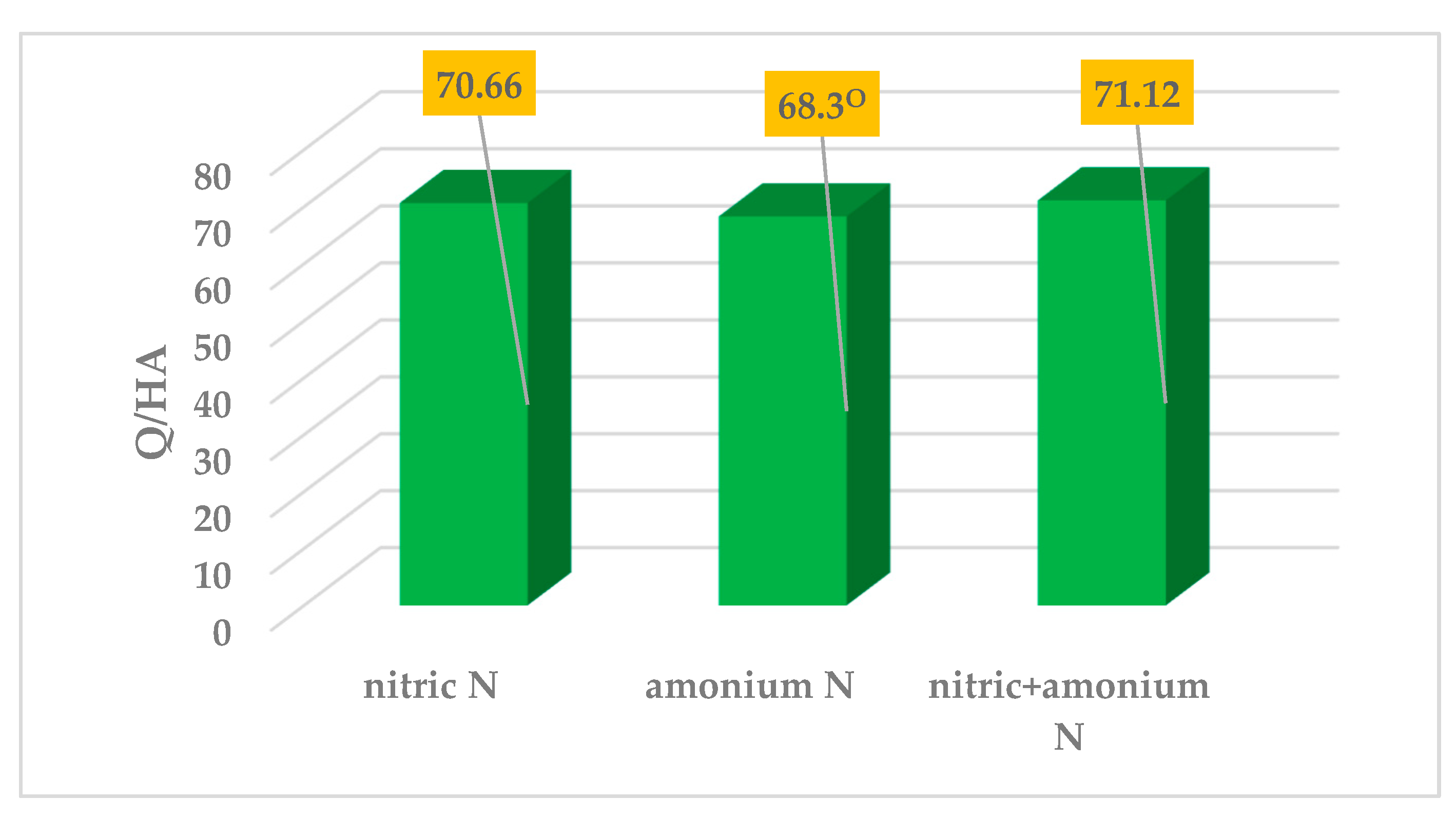
Figure 2.
The effect of Factor C (nitrogen dose) on wheat yield.
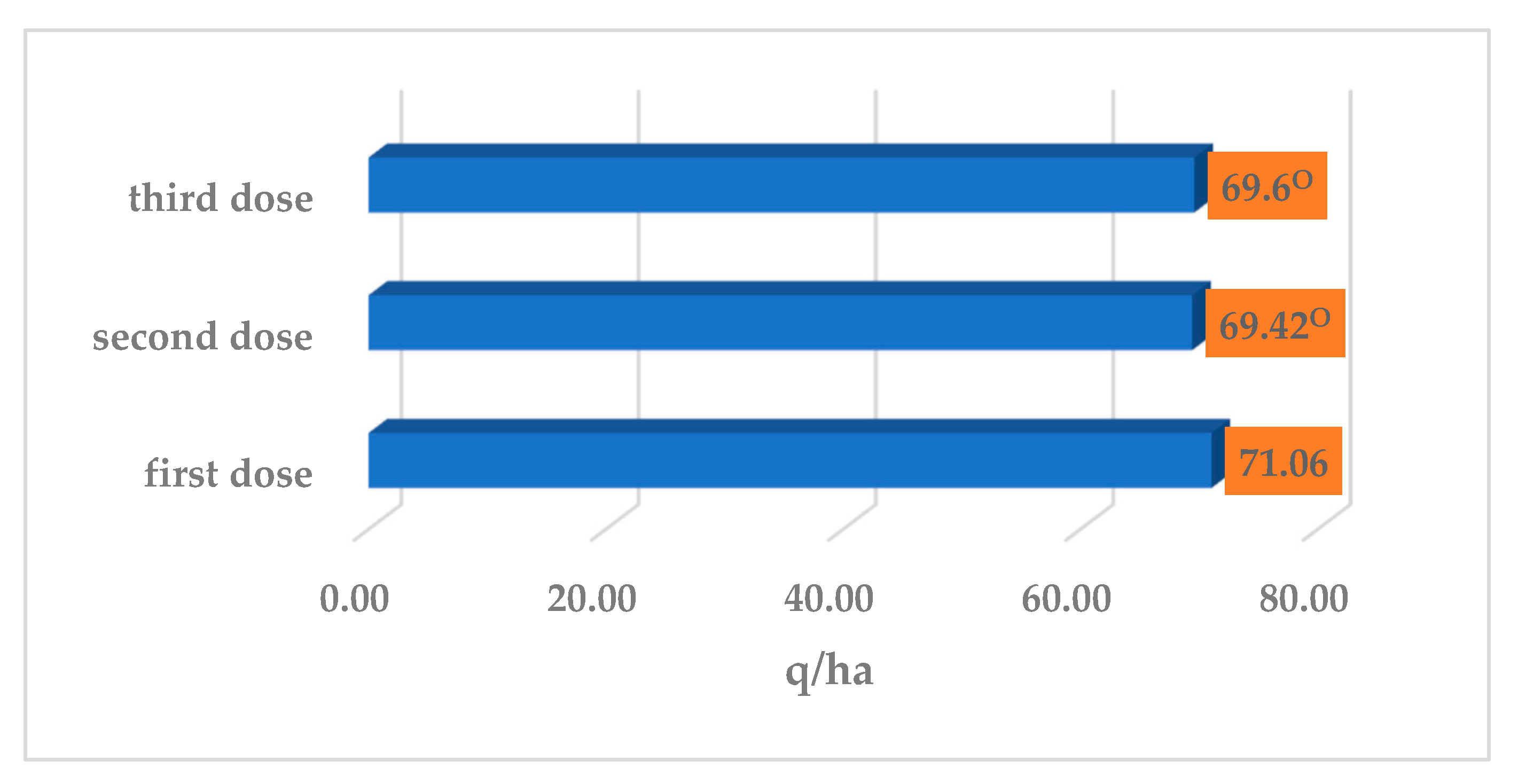
Figure 3.
Results regarding the interaction between cultivar and nitrogen form applied. (a) Performance of cultivar Sosthene; (b) Performance of cultivar Ciprian; (c) Performance of cultivar Certiva.
Figure 3.
Results regarding the interaction between cultivar and nitrogen form applied. (a) Performance of cultivar Sosthene; (b) Performance of cultivar Ciprian; (c) Performance of cultivar Certiva.
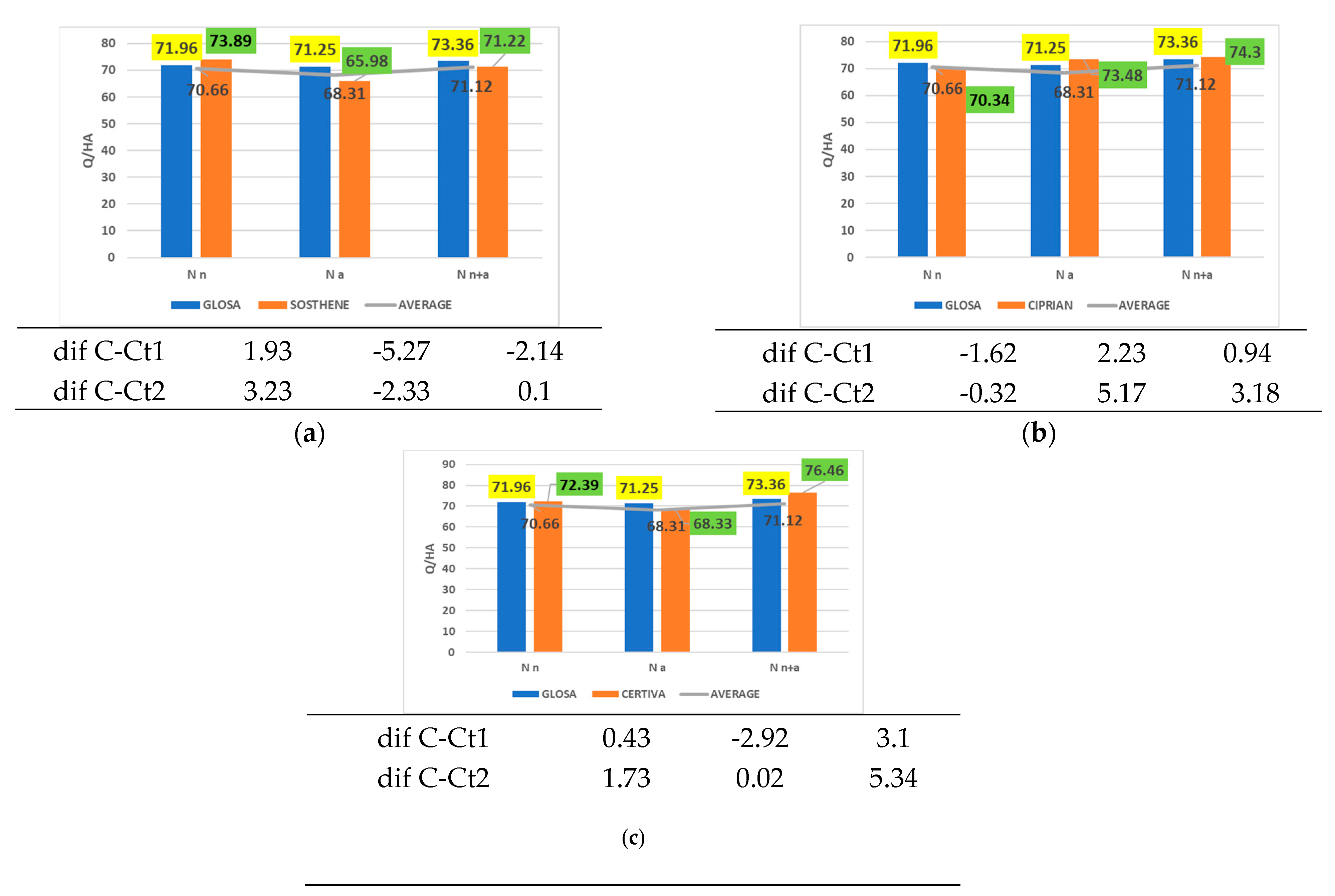
Figure 4.
Results regarding the interaction between cultivar and form of nitrogen fertilizer applied. (a) Performance of cultivar Vivendo; (b) Performance of cultivar Litera; (c) Performance of cultivar Centurion; (d) Performance of cultivar Activus; (e) Performance of cultivar Sophie; (f) Performance of cultivar Ursita.
Figure 4.
Results regarding the interaction between cultivar and form of nitrogen fertilizer applied. (a) Performance of cultivar Vivendo; (b) Performance of cultivar Litera; (c) Performance of cultivar Centurion; (d) Performance of cultivar Activus; (e) Performance of cultivar Sophie; (f) Performance of cultivar Ursita.
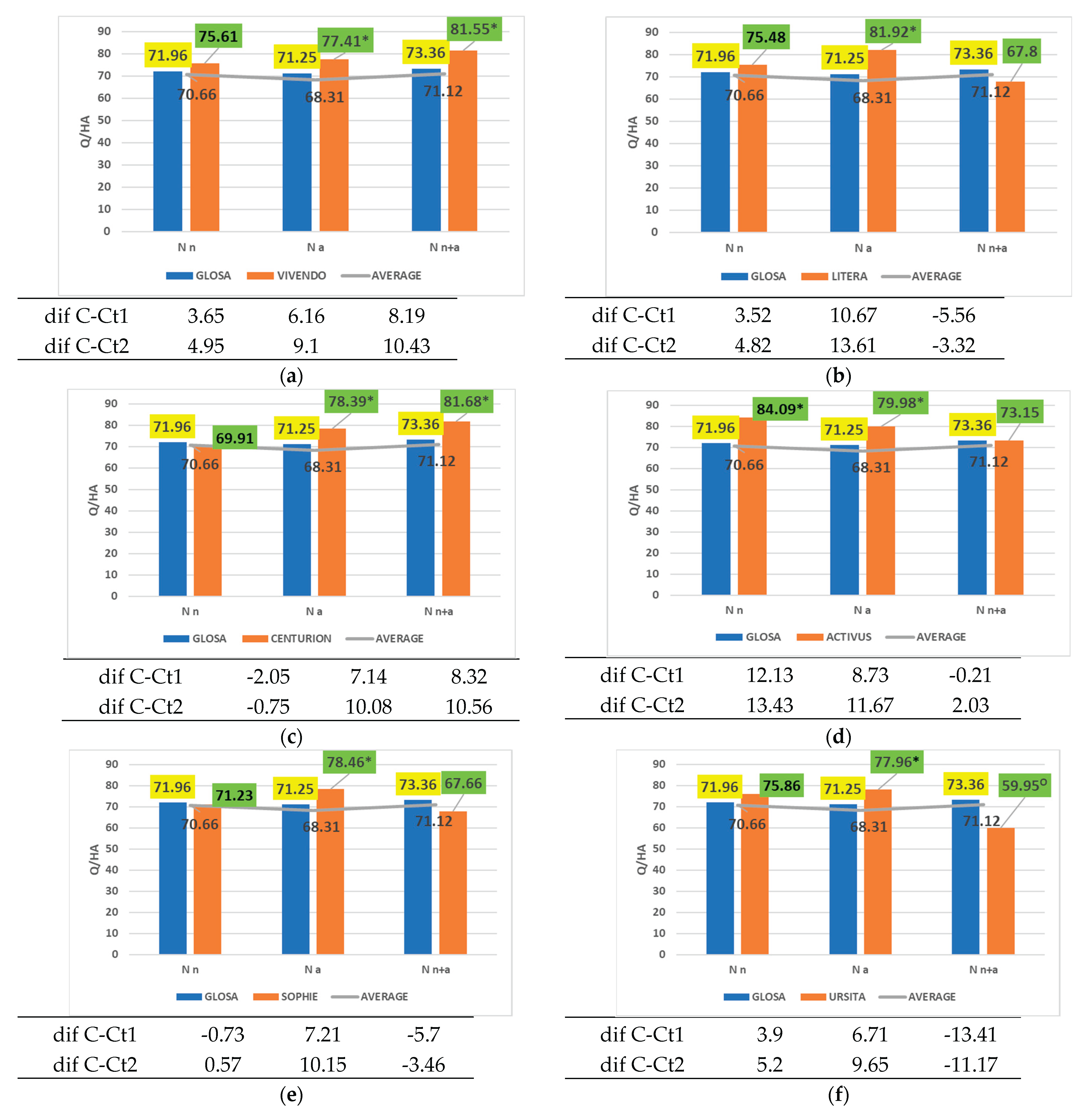
Figure 5.
Results regarding the cultivar × nitrogen form interaction for the Tiberius cultivar.
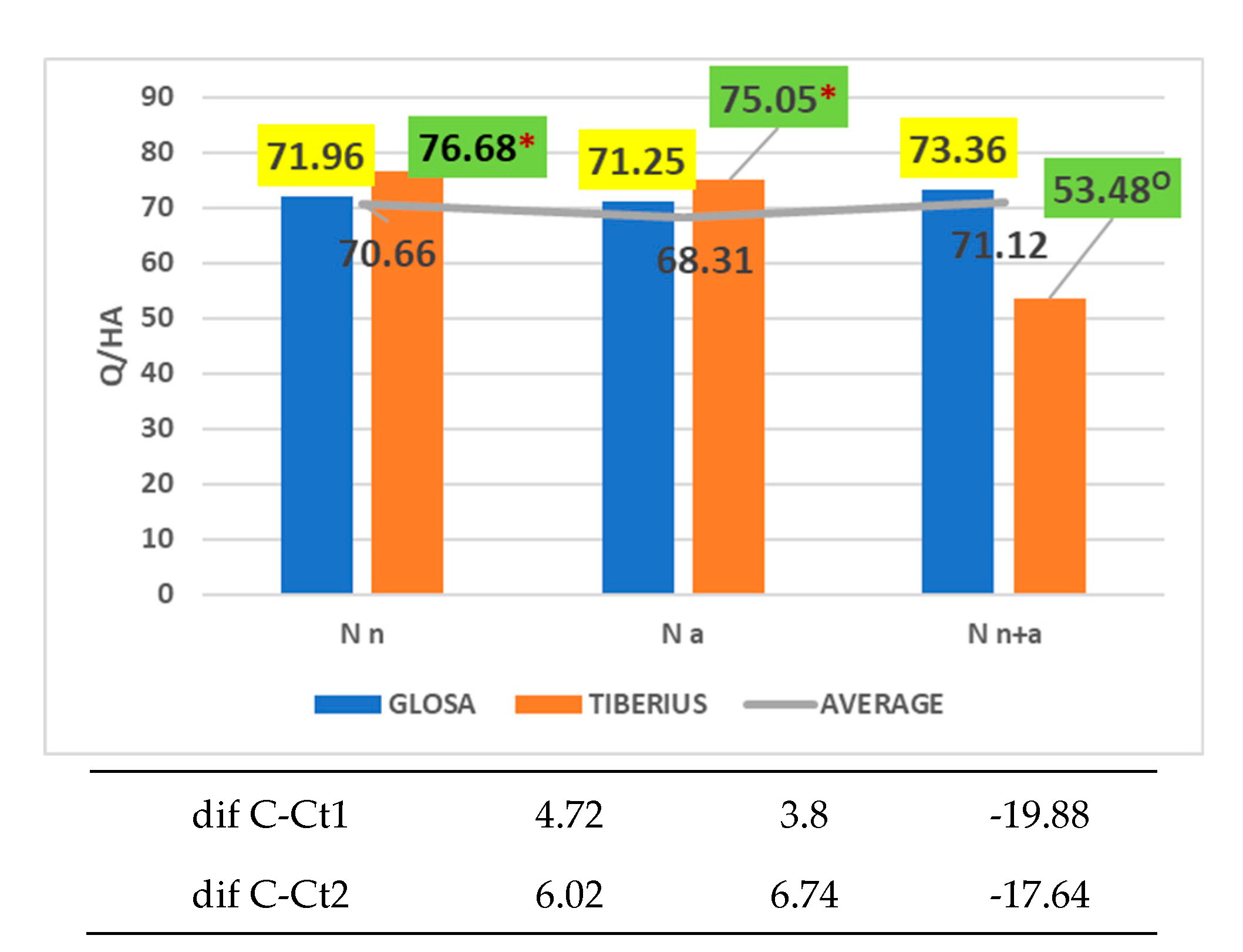
Figure 6.
Results regarding the interaction between cultivar and nitrogen form applied. (a) Performance of cultivar Sacramento; (b) Performance of cultivar Rubisko.
Figure 6.
Results regarding the interaction between cultivar and nitrogen form applied. (a) Performance of cultivar Sacramento; (b) Performance of cultivar Rubisko.
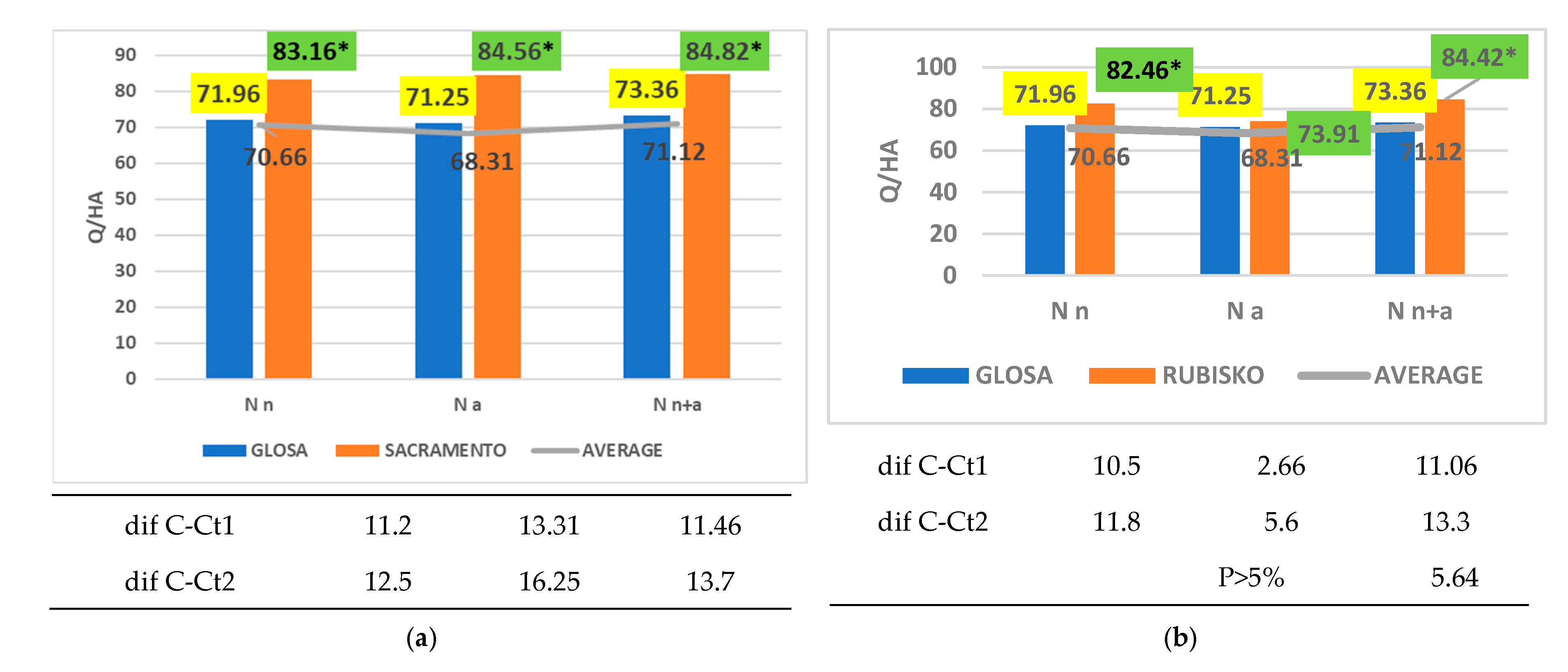
Figure 7.
Results regarding the interaction between cultivar and nitrogen form applied. (a) Performance of cultivar Combin; (b) Performance of cultivar Dacic.
Figure 7.
Results regarding the interaction between cultivar and nitrogen form applied. (a) Performance of cultivar Combin; (b) Performance of cultivar Dacic.
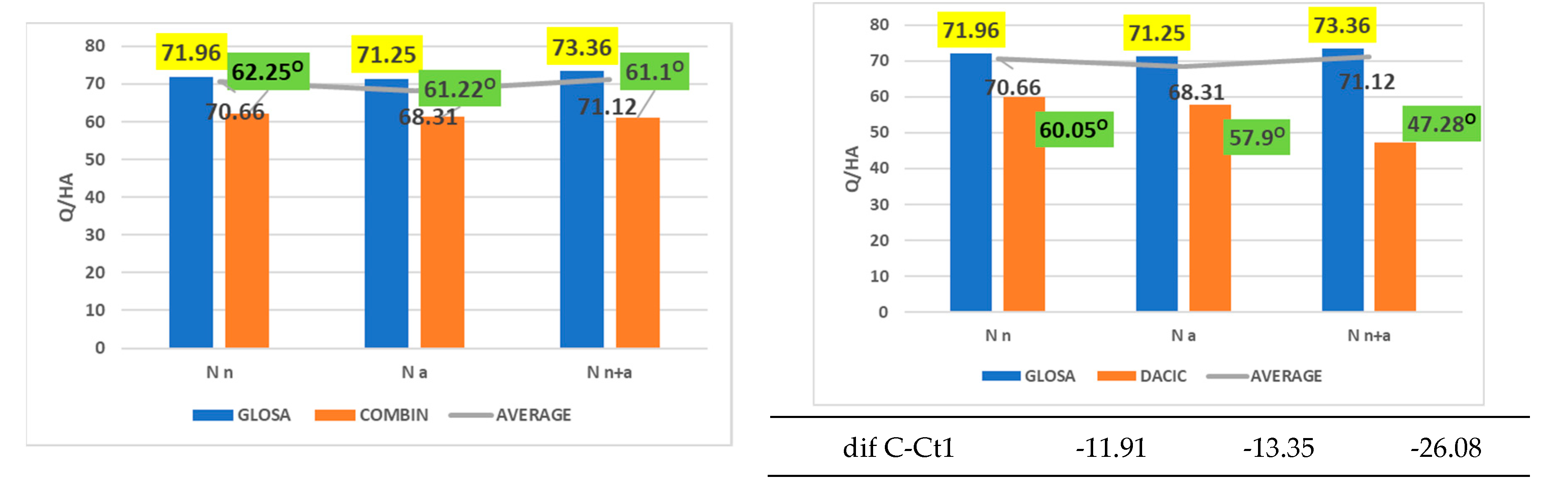

Figure 8.
Results regarding the interaction between cultivar and nitrogen form applied. (a) Performance of cultivar Tika Taka; (b) Performance of cultivar Pitar.
Figure 8.
Results regarding the interaction between cultivar and nitrogen form applied. (a) Performance of cultivar Tika Taka; (b) Performance of cultivar Pitar.
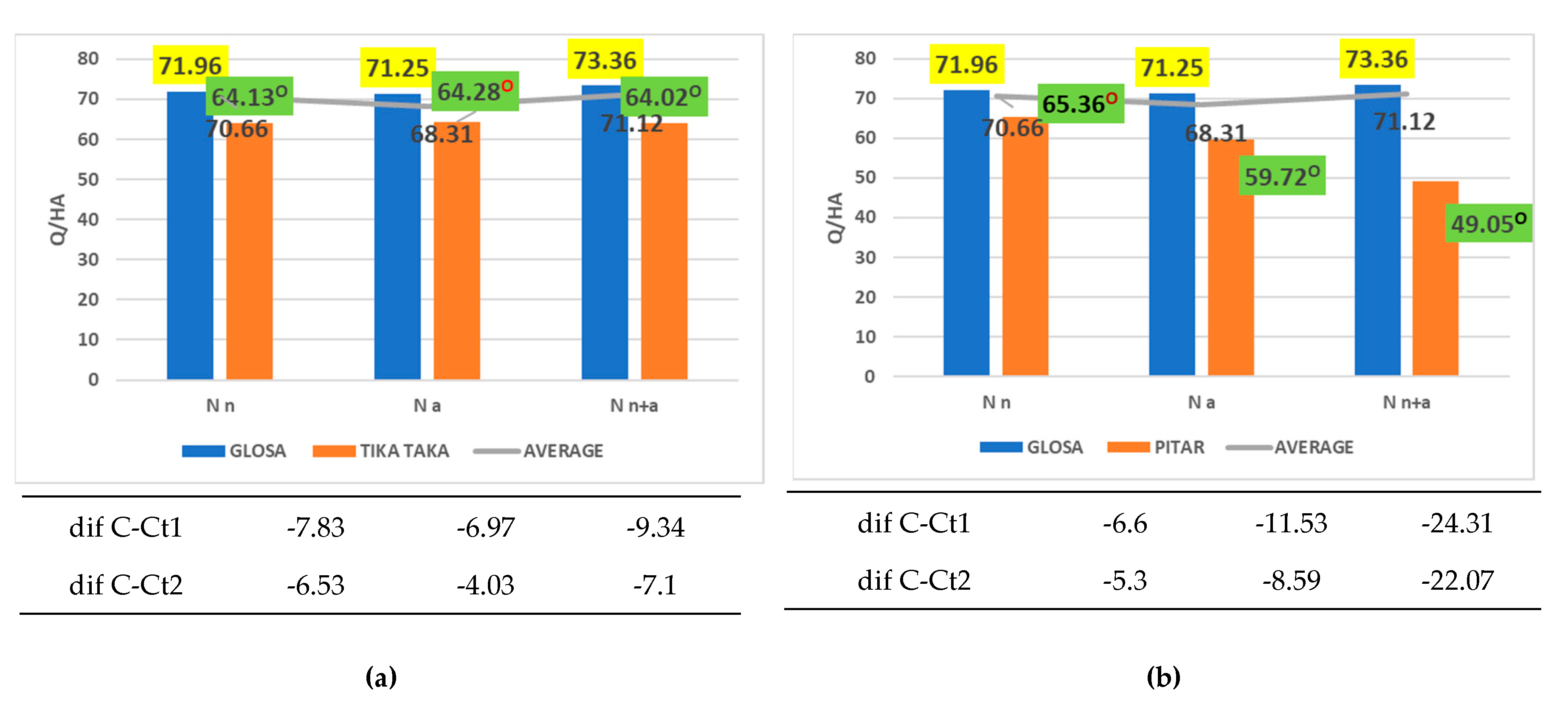
Figure 9.
Results regarding the interaction between cultivar and form of nitrogen fertilizer applied. (a) Performance of cultivar Aurelius; (b) Performance of cultivar Aspekt; (c) Performance of cultivar Abund; (d) Performance of cultivar Sphere; (e) Performance of cultivar Miranda; (f) Performance of cultivar Alex; (g) Performance of cultivar Arezzo.
Figure 9.
Results regarding the interaction between cultivar and form of nitrogen fertilizer applied. (a) Performance of cultivar Aurelius; (b) Performance of cultivar Aspekt; (c) Performance of cultivar Abund; (d) Performance of cultivar Sphere; (e) Performance of cultivar Miranda; (f) Performance of cultivar Alex; (g) Performance of cultivar Arezzo.
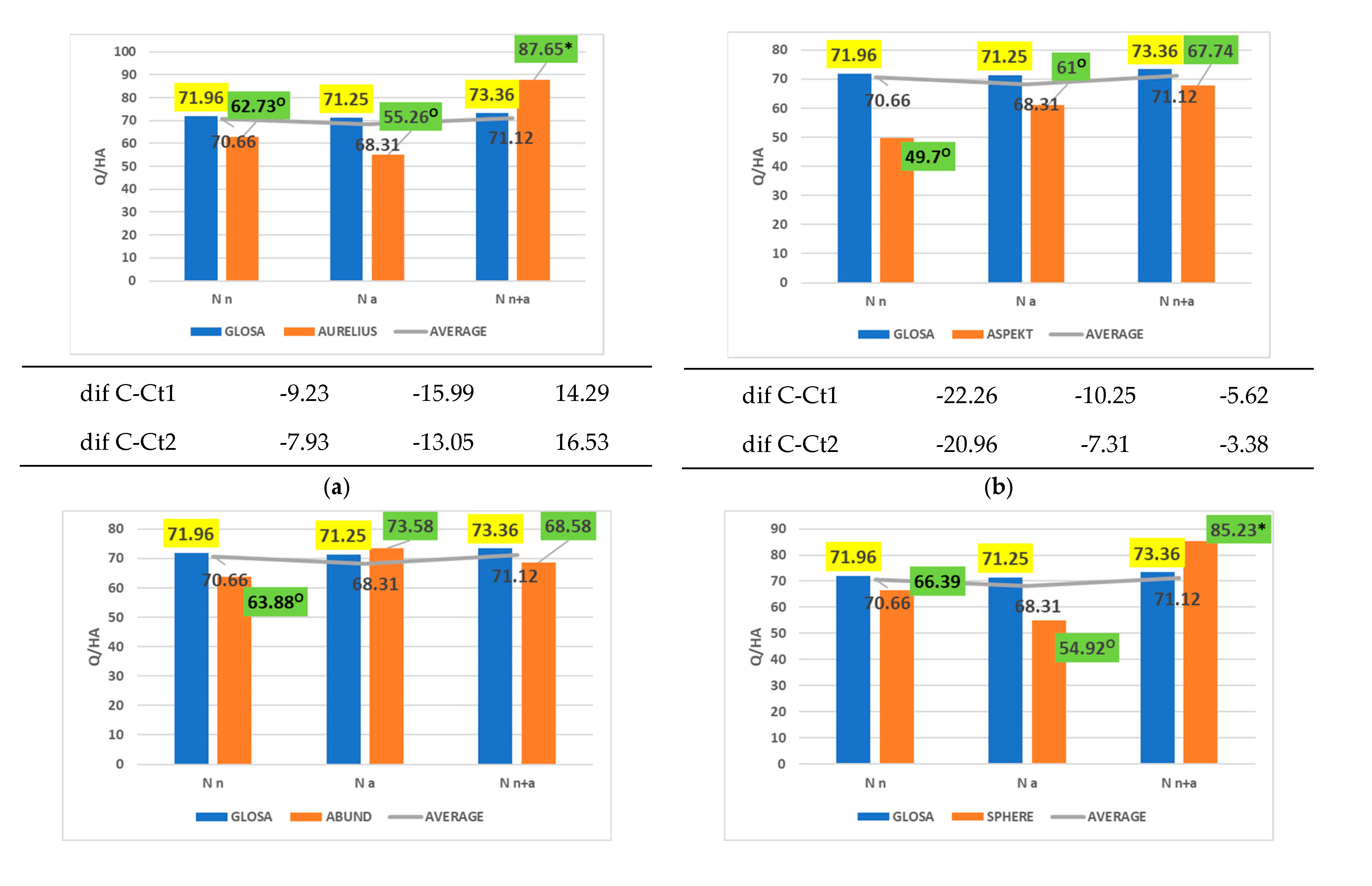
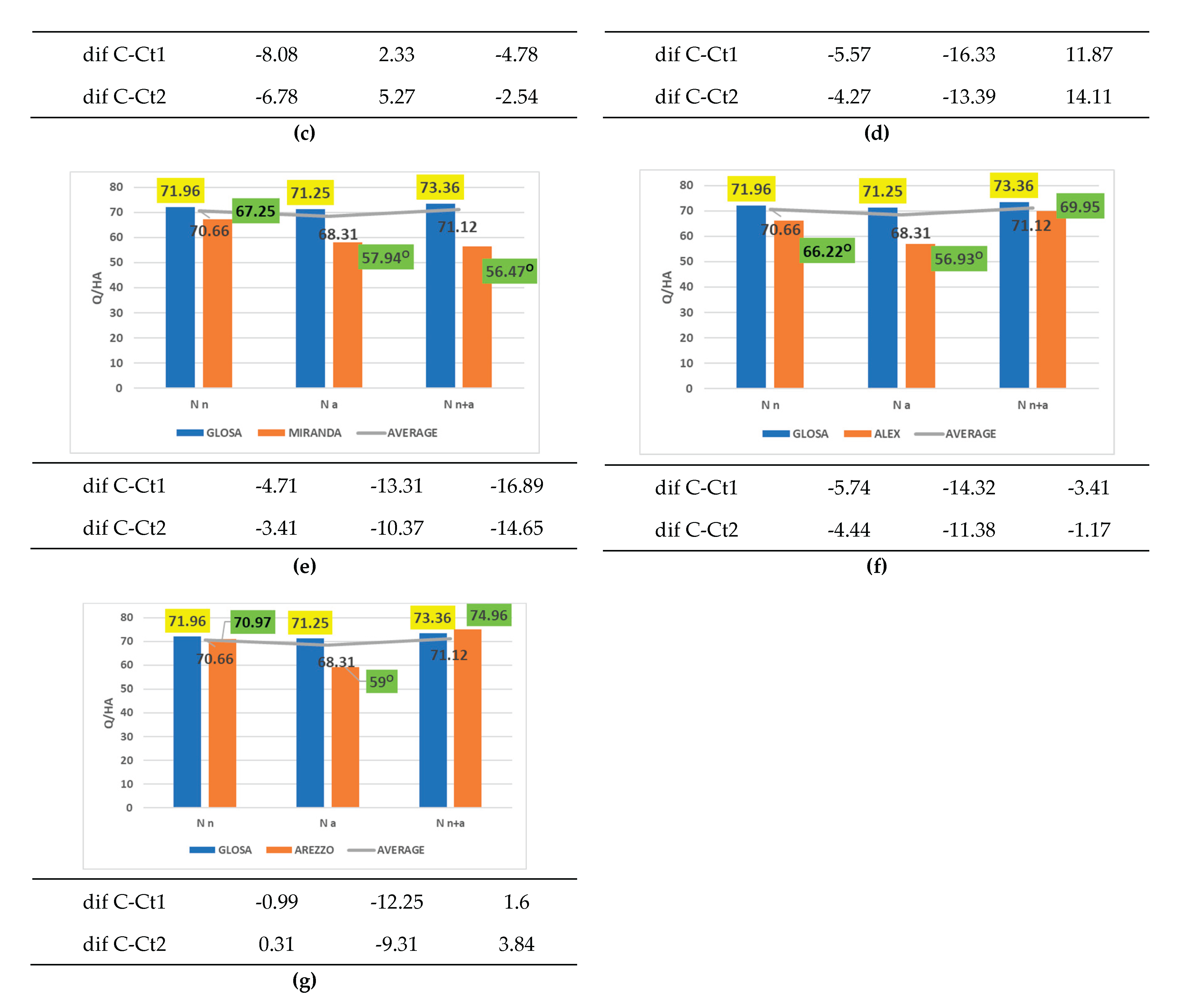
Figure 10.
Results regarding the interaction between cultivar and nitrogen form applied. (a) Performance of cultivar Papillon; (b) Performance of cultivar Solindo; (c) Performance of cultivar Chevignon; (d) Performance of cultivar Crișana.
Figure 10.
Results regarding the interaction between cultivar and nitrogen form applied. (a) Performance of cultivar Papillon; (b) Performance of cultivar Solindo; (c) Performance of cultivar Chevignon; (d) Performance of cultivar Crișana.
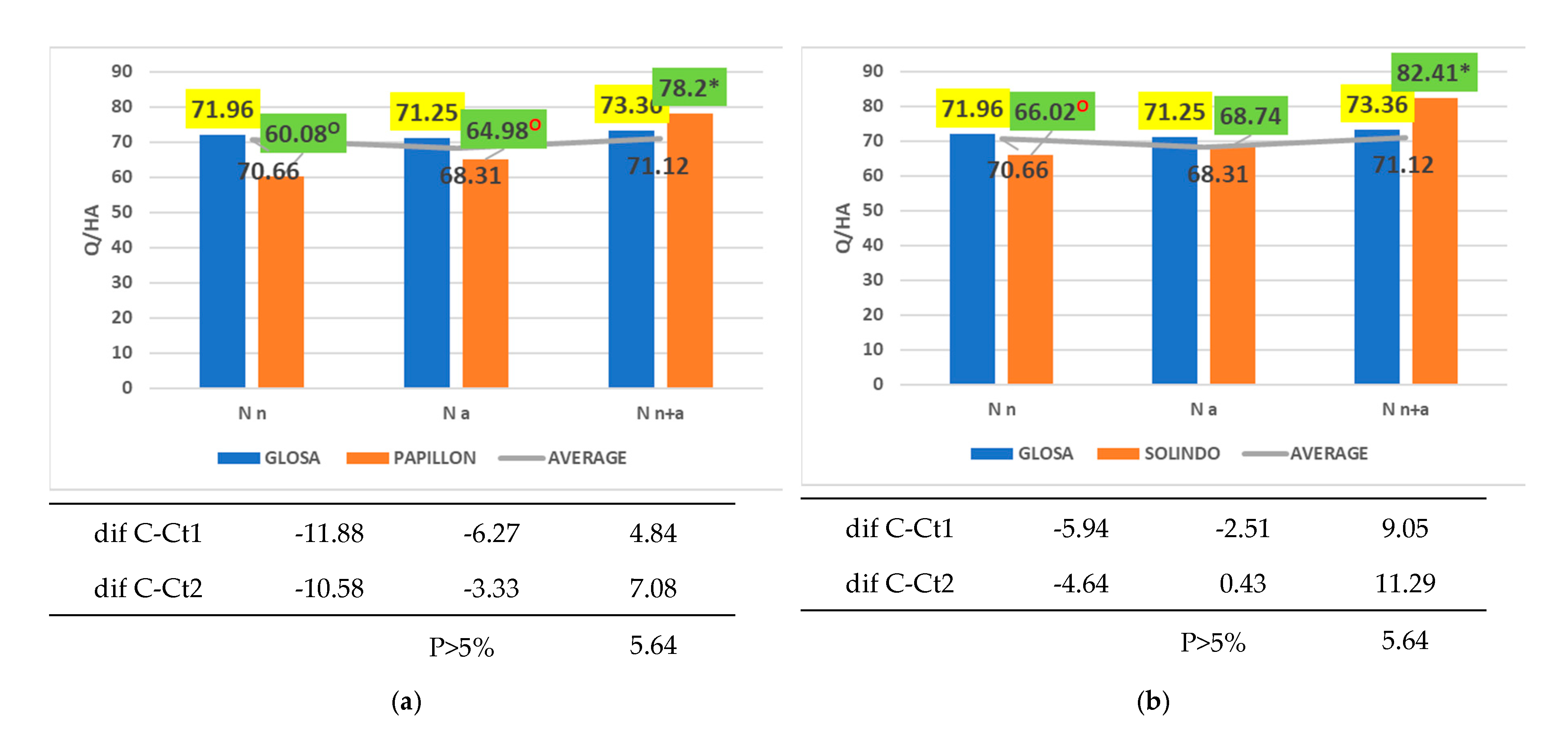
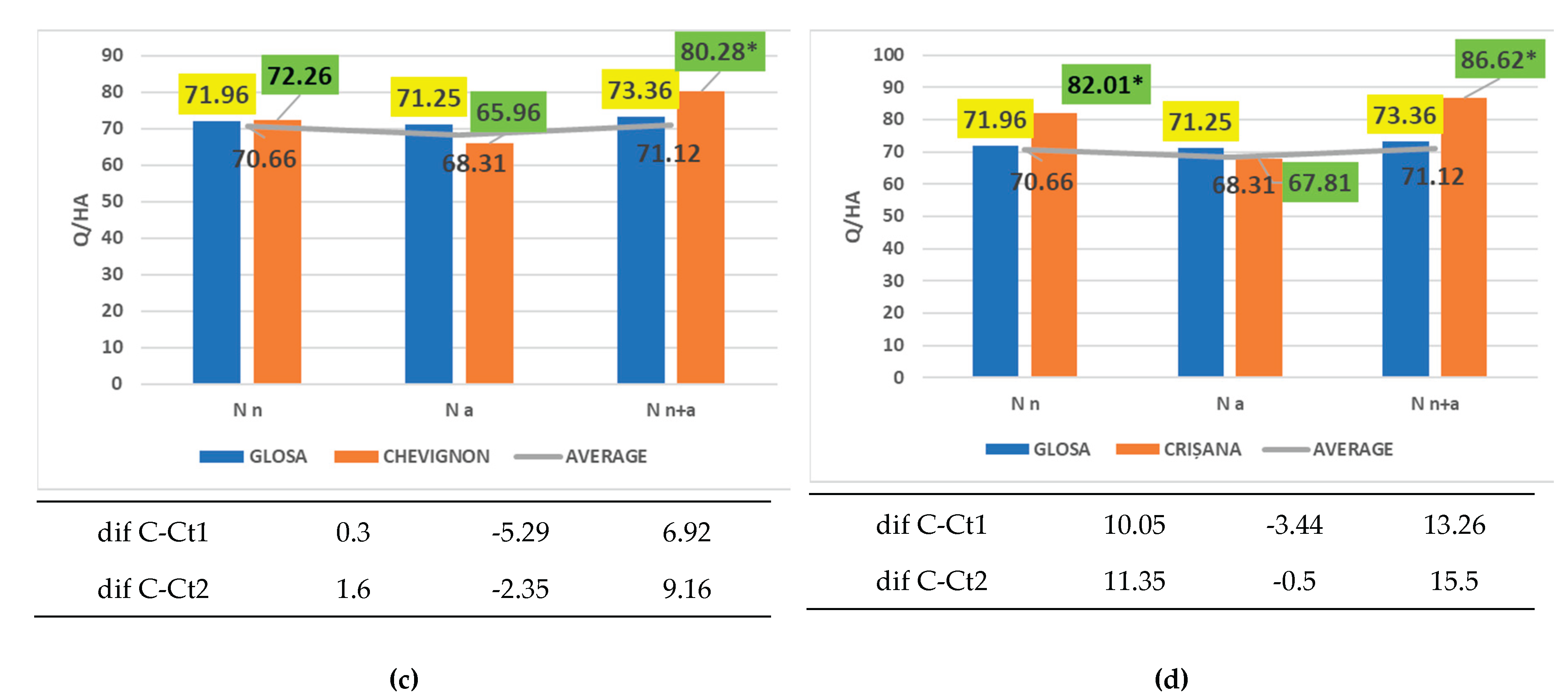
Figure 11.
Results regarding the stability of the tested cultivars.
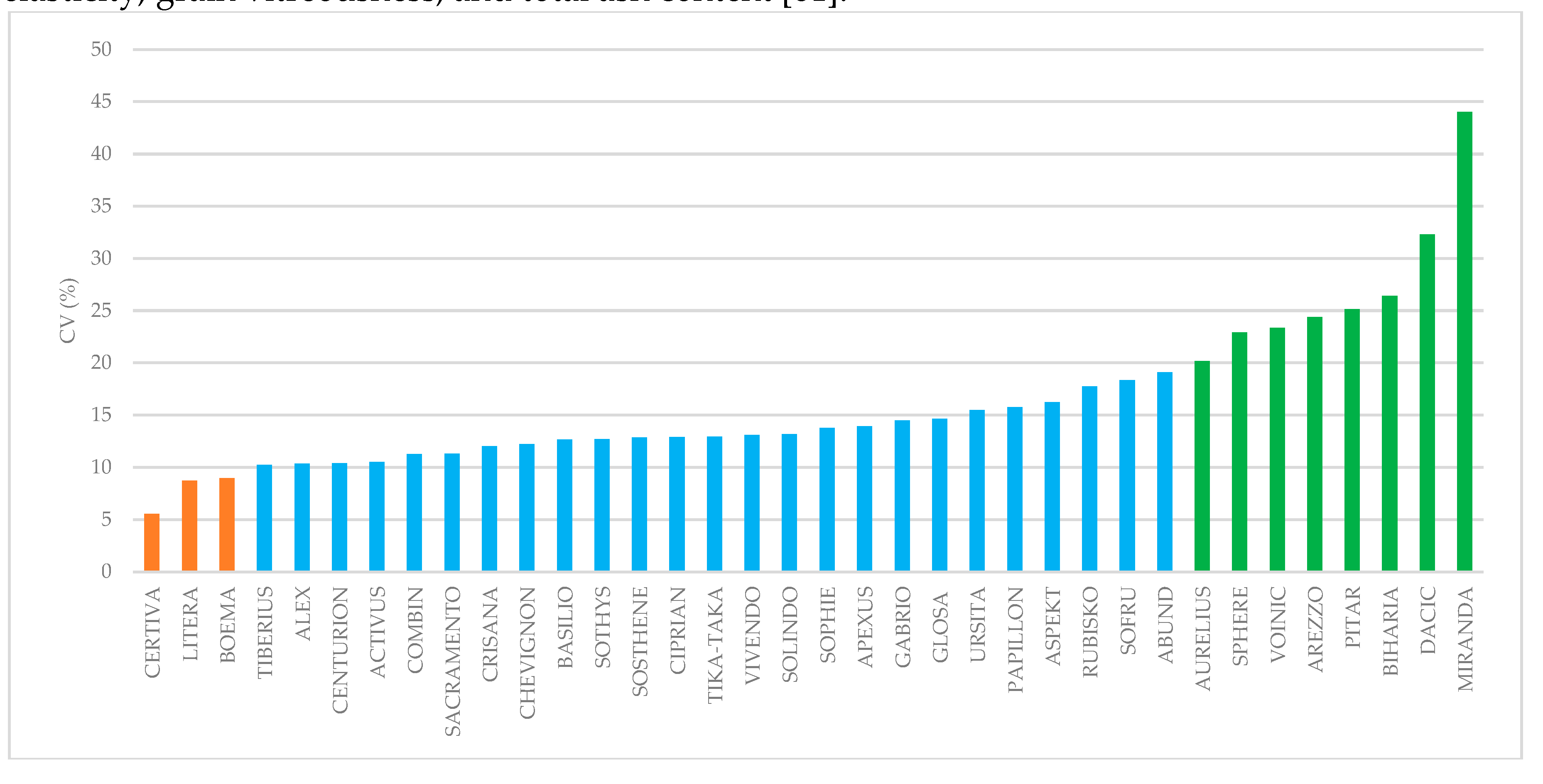
Figure 12.
Correlation between yield and variability index of the tested cultivars.
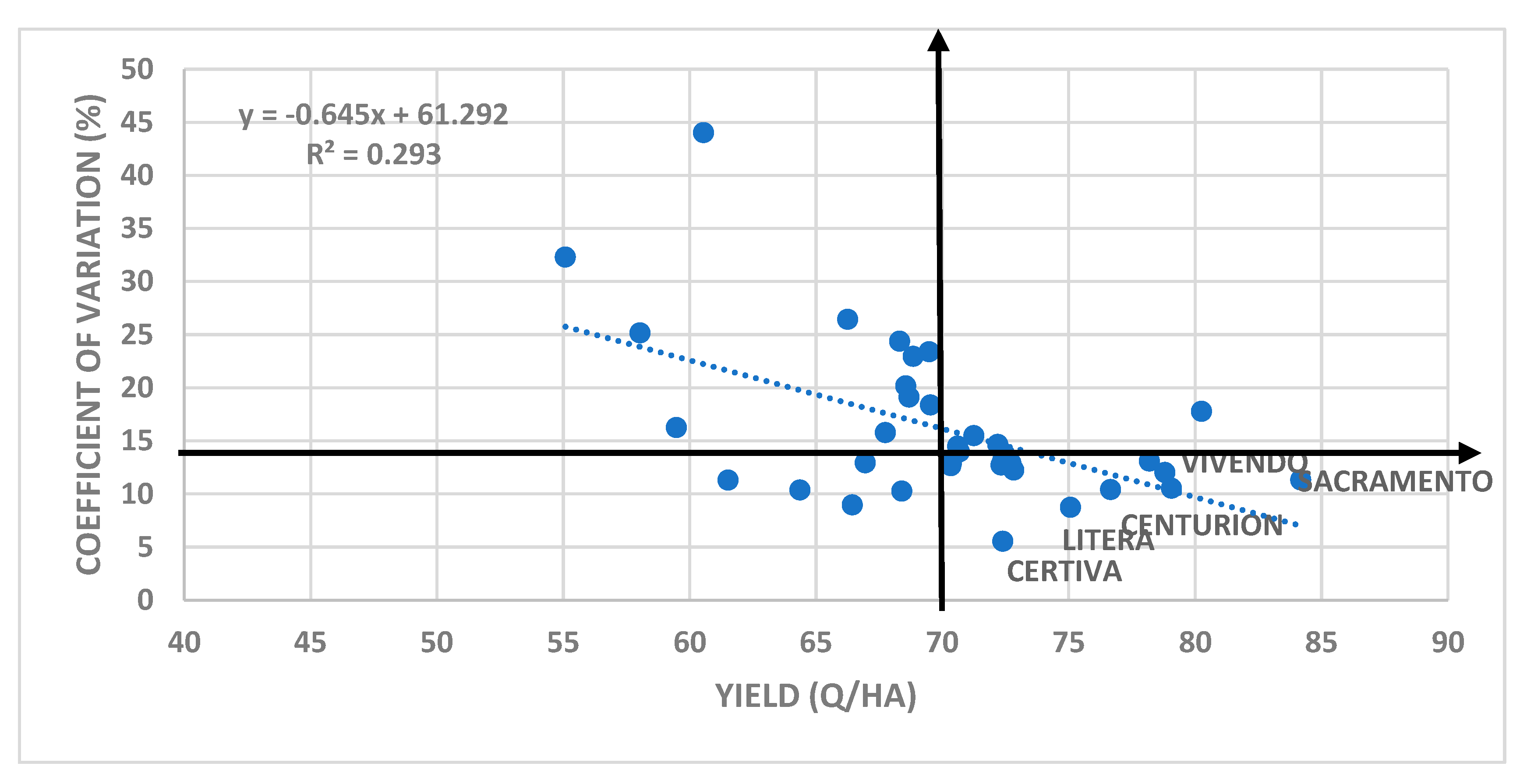

Table 1.
The individual effect of Factor A – cultivar, on wheat yield.
| Cultivars | Yield Q/Ha |
Difference Ct1 |
Semnification | Difference Ct2 |
Semnification | |
|---|---|---|---|---|---|---|
| 1 | GLOSA (Ct 1) | 72.19 | 0 | 2.16 | ||
| 2 | RUBISKO | 80.26 | 8.07 | *** | 10.23 | *** |
| 3 | APEXUS | 70.68 | -1.51 | 0.65 | ||
| 4 | TIKA-TAKA | 66.95 | -5.24 | o | -3.08 | |
| 5 | PAPILLON | 67.75 | -4.44 | o | -2.28 | |
| 6 | SOLINDO | 72.39 | 0.2 | 2.36 | ||
| 7 | COMBIN | 61.52 | -10.67 | ooo | -8.51 | ooo |
| 8 | BASILIO | 70.34 | -1.85 | 0.31 | ||
| 9 | CHEVIGNON | 72.83 | 0.64 | 2.8 | ||
| 10 | VIVENDO | 78.19 | 6 | 8.16 | *** | |
| 11 | SOSTHENE | 70.36 | -1.83 | 0.33 | ||
| 12 | LITERA | 75.07 | 2.88 | 5.04 | * | |
| 13 | BOEMA | 66.44 | -5.75 | oo | -3.59 | |
| 14 | SOTHYS | 72.32 | 0.13 | 2.29 | ||
| 15 | SACRAMENTO | 84.18 | 11.99 | *** | 14.15 | *** |
| 16 | AURELIUS | 68.55 | -3.64 | -1.48 | ||
| 17 | ASPEKT | 59.48 | -12.71 | ooo | -10.55 | ooo |
| 18 | CENTURION | 76.66 | 4.47 | * | 6.63 | * |
| 19 | ACTIVUS | 79.07 | 6.88 | ** | 9.04 | *** |
| 20 | SOPHIE | 72.45 | 0.26 | 2.42 | ||
| 21 | TIBERIUS | 68.4 | -3.79 | o | -1.63 | |
| 22 | VOINIC | 69.48 | -2.71 | -0.55 | ||
| 23 | URSITA | 71.25 | -0.94 | 1.22 | ||
| 24 | ABUND | 68.68 | -3.51 | -1.35 | ||
| 25 | SOFRU | 69.53 | -2.66 | -0.5 | ||
| 26 | GABRIO | 70.61 | -1.58 | 0.58 | ||
| 27 | PITAR | 58.04 | -14.15 | ooo | -11.99 | ooo |
| 28 | SPHERE | 68.85 | -3.34 | -1.18 | ||
| 29 | DACIC | 55.08 | -17.11 | ooo | -14.95 | ooo |
| 30 | BIHARIA | 66.26 | -5.93 | oo | -3.77 | o |
| 31 | MIRANDA | 60.55 | -11.64 | ooo | -9.48 | ooo |
| 32 | ALEX | 64.37 | -7.82 | ooo | -5.66 | oo |
| 33 | CIPRIAN | 72.71 | 0.52 | 2.68 | ||
| 34 | CRISANA | 78.81 | 6.62 | ** | 8.78 | *** |
| 35 | CERTIVA | 72.39 | 0.2 | 2.36 | ||
| 36 | AREZZO | 68.31 | -3.88 | o | -1.72 | |
| Average (Ct2) | 70.03 | |||||
| dl5% | 3.74 | |||||
| dl1% | 5.31 | |||||
| dl0.1% | 7.69 |
Table 2.
Results of the Newman-Keuls test showing how the yield of each cultivar compares with all other cultivars.
Table 2.
Results of the Newman-Keuls test showing how the yield of each cultivar compares with all other cultivars.
| Indicatif |
Indicatif value |
Control |
Wheat varieties |
Q/ha | DACIC | PITAR | ASPEKT | MIRANDA |
|---|---|---|---|---|---|---|---|---|
| C 36 | DACIC | 55.08 | ||||||
| Q2,72 | 12.03 | C 35 | PITAR | 58.04 | 2.96 | |||
| Q3,72 | 12.67 | C 34 | ASPEKT | 59.48 | 4.40 | 1.44 | ||
| Q4,72 | 13.05 | C 33 | MIRANDA | 61.10 | 6.02 | 3.06 | 1.62 | |
| Q5,72 | 13.35 | C 32 | COMBIN | 61.52 | 6.44 | 3.48 | 2.04 | 0.42 |
| Q6,72 | 13.60 | C 31 | ALEX | 64.37 | 9.29 | 6.33 | 4.89 | 3.27 |
| Q7,72 | 13.77 | C 30 | BIHARIA | 66.26 | 11.18 | 8.22 | 6.78 | 5.16 |
| Q8,72 | 13.94 | C 29 | BOEMA | 66.44 | 11.36 | 8.40 | 6.96 | 5.34 |
| Q9,72 | 14.07 | C 28 | TIKA-TAKA | 66.95 | 11.87 | 8.91 | 7.47 | 5.85 |
| Q10,72 | 14.15 | C 27 | PAPILLON | 67.75 | 12.67 | 9.71 | 8.27 | 6.65 |
| Q11,72 | 14.15 | C 26 | AREZZO | 68.31 | 13.23 | 10.27 | 8.83 | 7.21 |
| Q12,72 | 14.32 | C 25 | TIBERIUS | 68.40 | 13.32 | 10.36 | 8.92 | 7.30 |
| Q13,72 | 14.32 | C 24 | AURELIUS | 68.55 | 13.47 | 10.51 | 9.07 | 7.45 |
| Q14,72 | 14.49 | C 23 | ABUND | 68.68 | 13.60 | 10.64 | 9.20 | 7.58 |
| Q15,72 | 14.49 | C 22 | SPHERE | 68.85 | 13.77 | 10.81 | 9.37 | 7.75 |
| Q16,72 | 14.58 | C 21 | VOINIC | 69.48 | 14.40 | 11.44 | 10.00 | 8.38 |
| Q17,72 | 14.58 | C 20 | SOFRU | 69.53 | 14.45 | 11.49 | 10.05 | 8.43 |
| Q18,72 | 14.66 | C 19 | BASILIO | 70.34 | 15.26 | 12.30 | 10.86 | 9.24 |
| Q19,72 | 14.66 | C 18 | SOSTHENE | 70.36 | 15.28 | 12.32 | 10.88 | 9.26 |
| Q20,72 | 14.75 | C 17 | GABRIO | 70.61 | 15.53 | 12.57 | 11.13 | 9.51 |
| Q21,72 | 14.75 | C 16 | APEXUS | 70.67 | 15.59 | 12.63 | 11.19 | 9.57 |
| Q22,72 | 15.05 | C 15 | URSITA | 71.26 | 16.18 | 13.22 | 11.78 | 10.16 |
| Q23,72 | 15.05 | C 14 | GLOSA | 72.19 | 17.11 | 14.15 | 12.71 | 11.09 |
| Q24,72 | 15.05 | C 13 | SOTHYS | 72.32 | 17.24 | 14.28 | 12.84 | 11.22 |
| Q25,72 | 15.05 | C 12 | SOLINDO | 72.39 | 17.31 | 14.35 | 12.91 | 11.29 |
| Q26,72 | 15.05 | C 11 | CERTIVA | 72.39 | 17.31 | 14.35 | 12.91 | 11.29 |
| Q27,72 | 15.05 | C 10 | SOPHIE | 72.45 | 17.37 | 14.41 | 12.97 | 11.35 |
| Q28,72 | 15.05 | C 9 | CIPRIAN | 72.71 | 17.63 | 14.67 | 13.23 | 11.61 |
| Q29,72 | 15.05 | C 8 | CHEVIGNON | 72.83 | 17.75 | 14.79 | 13.35 | 11.73 |
| Q30,72 | 15.05 | C 7 | LITERA | 75.07 | 19.99 | 17.03 | 15.59 | 13.97 |
| Q31,72 | 15.05 | C 6 | CENTURION | 76.66 | 21.58 | 18.62 | 17.18 | 15.56 |
| Q32,72 | 15.05 | C 5 | VIVENDO | 78.19 | 23.11 | 20.15 | 18.71 | 17.09 |
| Q33,72 | 15.05 | C 4 | CRISANA | 78.81 | 23.73 | 20.77 | 19.33 | 17.71 |
| Q34,72 | 15.05 | C 3 | ACTIVUS | 79.07 | 23.99 | 21.03 | 19.59 | 17.97 |
| Q35,72 | 15.05 | C 2 | RUBISKO | 80.26 | 25.18 | 22.22 | 20.78 | 19.16 |
| Q36,72 | 15.05 | C 1 | SACRAMENTO | 84.18 | 29.10 | 26.14 | 24.70 | 23.08 |
| Indicatif | Indicatif | Control | Wheat | q/ha | COMBIN | ALEX | BIHARIA | BOEMA |
| value | varieties | |||||||
| C 36 | DACIC | 55.08 | ||||||
| Q2,72 | 12.03 | C 35 | PITAR | 58.04 | ||||
| Q3,72 | 12.67 | C 34 | ASPEKT | 59.48 | ||||
| Q4,72 | 13.05 | C 33 | MIRANDA | 61.10 | ||||
| Q5,72 | 13.35 | C 32 | COMBIN | 61.52 | ||||
| Q6,72 | 13.60 | C 31 | ALEX | 64.37 | 2.85 | |||
| Q7,72 | 13.77 | C 30 | BIHARIA | 66.26 | 4.74 | 1.89 | ||
| Q8,72 | 13.94 | C 29 | BOEMA | 66.44 | 4.92 | 2.07 | 0.18 | |
| Q9,72 | 14.07 | C 28 | TIKA-TAKA | 66.95 | 5.43 | 2.58 | 0.69 | 0.51 |
| Q10,72 | 14.15 | C 27 | PAPILLON | 67.75 | 6.23 | 3.38 | 1.49 | 1.31 |
| Q11,72 | 14.15 | C 26 | AREZZO | 68.31 | 6.79 | 3.94 | 2.05 | 1.87 |
| Q12,72 | 14.32 | C 25 | TIBERIUS | 68.40 | 6.88 | 4.03 | 2.14 | 1.96 |
| Q13,72 | 14.32 | C 24 | AURELIUS | 68.55 | 7.03 | 4.18 | 2.29 | 2.11 |
| Q14,72 | 14.49 | C 23 | ABUND | 68.68 | 7.16 | 4.31 | 2.42 | 2.24 |
| Q15,72 | 14.49 | C 22 | SPHERE | 68.85 | 7.33 | 4.48 | 2.59 | 2.41 |
| Q16,72 | 14.58 | C 21 | VOINIC | 69.48 | 7.96 | 5.11 | 3.22 | 3.04 |
| Q17,72 | 14.58 | C 20 | SOFRU | 69.53 | 8.01 | 5.16 | 3.27 | 3.09 |
| Q18,72 | 14.66 | C 19 | BASILIO | 70.34 | 8.82 | 5.97 | 4.08 | 3.90 |
| Q19,72 | 14.66 | C 18 | SOSTHENE | 70.36 | 8.84 | 5.99 | 4.10 | 3.92 |
| Q20,72 | 14.75 | C 17 | GABRIO | 70.61 | 9.09 | 6.24 | 4.35 | 4.17 |
| Q21,72 | 14.75 | C 16 | APEXUS | 70.67 | 9.15 | 6.30 | 4.41 | 4.23 |
| Q22,72 | 15.05 | C 15 | URSITA | 71.26 | 9.74 | 6.89 | 5.00 | 4.82 |
| Q23,72 | 15.05 | C 14 | GLOSA | 72.19 | 10.67 | 7.82 | 5.93 | 5.75 |
| Q24,72 | 15.05 | C 13 | SOTHYS | 72.32 | 10.80 | 7.95 | 6.06 | 5.88 |
| Q25,72 | 15.05 | C 12 | SOLINDO | 72.39 | 10.87 | 8.02 | 6.13 | 5.95 |
| Q26,72 | 15.05 | C 11 | CERTIVA | 72.39 | 10.87 | 8.02 | 6.13 | 5.95 |
| Q27,72 | 15.05 | C 10 | SOPHIE | 72.45 | 10.93 | 8.08 | 6.19 | 6.01 |
| Q28,72 | 15.05 | C 9 | CIPRIAN | 72.71 | 11.19 | 8.34 | 6.45 | 6.27 |
| Q29,72 | 15.05 | C 8 | CHEVIGNON | 72.83 | 11.31 | 8.46 | 6.57 | 6.39 |
| Q30,72 | 15.05 | C 7 | LITERA | 75.07 | 13.55 | 10.70 | 8.81 | 8.63 |
| Q31,72 | 15.05 | C 6 | CENTURION | 76.66 | 15.14 | 12.29 | 10.40 | 10.22 |
| Q32,72 | 15.05 | C 5 | VIVENDO | 78.19 | 16.67 | 13.82 | 11.93 | 11.75 |
| Q33,72 | 15.05 | C 4 | CRISANA | 78.81 | 17.29 | 14.44 | 12.55 | 12.37 |
| Q34,72 | 15.05 | C 3 | ACTIVUS | 79.07 | 17.55 | 14.70 | 12.81 | 12.63 |
| Q35,72 | 15.05 | C 2 | RUBISKO | 80.26 | 18.74 | 15.89 | 14.00 | 13.82 |
| Q36,72 | 15.05 | C 1 | SACRAMENTO | 84.18 | 22.66 | 19.81 | 17.92 | 17.74 |
| Indicatif | Indicatif | Control | Wheat | Q/ha | TIKA-TAKA | PAPILLON | AREZZO | TIBERIUS |
| value | varieties | |||||||
| C 36 | DACIC | 55.08 | ||||||
| Q2,72 | 12.03 | C 35 | PITAR | 58.04 | ||||
| Q3,72 | 12.67 | C 34 | ASPEKT | 59.48 | ||||
| Q4,72 | 13.05 | C 33 | MIRANDA | 61.10 | ||||
| Q5,72 | 13.35 | C 32 | COMBIN | 61.52 | ||||
| Q6,72 | 13.60 | C 31 | ALEX | 64.37 | ||||
| Q7,72 | 13.77 | C 30 | BIHARIA | 66.26 | ||||
| Q8,72 | 13.94 | C 29 | BOEMA | 66.44 | ||||
| Q9,72 | 14.07 | C 28 | TIKA-TAKA | 66.95 | ||||
| Q10,72 | 14.15 | C 27 | PAPILLON | 67.75 | 0.80 | |||
| Q11,72 | 14.15 | C 26 | AREZZO | 68.31 | 1.36 | 0.56 | ||
| Q12,72 | 14.32 | C 25 | TIBERIUS | 68.40 | 1.45 | 0.65 | 0.09 | |
| Q13,72 | 14.32 | C 24 | AURELIUS | 68.55 | 1.60 | 0.80 | 0.24 | 0.15 |
| Q14,72 | 14.49 | C 23 | ABUND | 68.68 | 1.73 | 0.93 | 0.37 | 0.28 |
| Q15,72 | 14.49 | C 22 | SPHERE | 68.85 | 1.90 | 1.10 | 0.54 | 0.45 |
| Q16,72 | 14.58 | C 21 | VOINIC | 69.48 | 2.53 | 1.73 | 1.17 | 1.08 |
| Q17,72 | 14.58 | C 20 | SOFRU | 69.53 | 2.58 | 1.78 | 1.22 | 1.13 |
| Q18,72 | 14.66 | C 19 | BASILIO | 70.34 | 3.39 | 2.59 | 2.03 | 1.94 |
| Q19,72 | 14.66 | C 18 | SOSTHENE | 70.36 | 3.41 | 2.61 | 2.05 | 1.96 |
| Q20,72 | 14.75 | C 17 | GABRIO | 70.61 | 3.66 | 2.86 | 2.30 | 2.21 |
| Q21,72 | 14.75 | C 16 | APEXUS | 70.67 | 3.72 | 2.92 | 2.36 | 2.27 |
| Q22,72 | 15.05 | C 15 | URSITA | 71.26 | 4.31 | 3.51 | 2.95 | 2.86 |
| Q23,72 | 15.05 | C 14 | GLOSA | 72.19 | 5.24 | 4.44 | 3.88 | 3.79 |
| Q24,72 | 15.05 | C 13 | SOTHYS | 72.32 | 5.37 | 4.57 | 4.01 | 3.92 |
| Q25,72 | 15.05 | C 12 | SOLINDO | 72.39 | 5.44 | 4.64 | 4.08 | 3.99 |
| Q26,72 | 15.05 | C 11 | CERTIVA | 72.39 | 5.44 | 4.64 | 4.08 | 3.99 |
| Q27,72 | 15.05 | C 10 | SOPHIE | 72.45 | 5.50 | 4.70 | 4.14 | 4.05 |
| Q28,72 | 15.05 | C 9 | CIPRIAN | 72.71 | 5.76 | 4.96 | 4.40 | 4.31 |
| Q29,72 | 15.05 | C 8 | CHEVIGNON | 72.83 | 5.88 | 5.08 | 4.52 | 4.43 |
| Q30,72 | 15.05 | C 7 | LITERA | 75.07 | 8.12 | 7.32 | 6.76 | 6.67 |
| Q31,72 | 15.05 | C 6 | CENTURION | 76.66 | 9.71 | 8.91 | 8.35 | 8.26 |
| Q32,72 | 15.05 | C 5 | VIVENDO | 78.19 | 11.24 | 10.44 | 9.88 | 9.79 |
| Q33,72 | 15.05 | C 4 | CRISANA | 78.81 | 11.86 | 11.06 | 10.50 | 10.41 |
| Q34,72 | 15.05 | C 3 | ACTIVUS | 79.07 | 12.12 | 11.32 | 10.76 | 10.67 |
| Q35,72 | 15.05 | C 2 | RUBISKO | 80.26 | 13.31 | 12.51 | 11.95 | 11.86 |
| Q36,72 | 15.05 | C 1 | SACRAMENTO | 84.18 | 17.23 | 16.43 | 15.87 | 15.78 |
| Indicatif | Indicatif | Control | Wheat | Q/ha | AURELIUS | ABUND | SPHERE | |
| value | varieties | |||||||
| C 36 | DACIC | 55.08 | ||||||
| Q2,72 | 12.03 | C 35 | PITAR | 58.04 | ||||
| Q3,72 | 12.67 | C 34 | ASPEKT | 59.48 | ||||
| Q4,72 | 13.05 | C 33 | MIRANDA | 61.10 | ||||
| Q5,72 | 13.35 | C 32 | COMBIN | 61.52 | ||||
| Q6,72 | 13.60 | C 31 | ALEX | 64.37 | ||||
| Q7,72 | 13.77 | C 30 | BIHARIA | 66.26 | ||||
| Q8,72 | 13.94 | C 29 | BOEMA | 66.44 | ||||
| Q9,72 | 14.07 | C 28 | TIKA-TAKA | 66.95 | ||||
| Q10,72 | 14.15 | C 27 | PAPILLON | 67.75 | ||||
| Q11,72 | 14.15 | C 26 | AREZZO | 68.31 | ||||
| Q12,72 | 14.32 | C 25 | TIBERIUS | 68.40 | ||||
| Q13,72 | 14.32 | C 24 | AURELIUS | 68.55 | ||||
| Q14,72 | 14.49 | C 23 | ABUND | 68.68 | 0.13 | |||
| Q15,72 | 14.49 | C 22 | SPHERE | 68.85 | 0.30 | 0.17 | ||
| Q16,72 | 14.58 | C 21 | VOINIC | 69.48 | 0.93 | 0.80 | 0.63 | |
| Q17,72 | 14.58 | C 20 | SOFRU | 69.53 | 0.98 | 0.85 | 0.68 | |
| Q18,72 | 14.66 | C 19 | BASILIO | 70.34 | 1.79 | 1.66 | 1.49 | |
| Q19,72 | 14.66 | C 18 | SOSTHENE | 70.36 | 1.81 | 1.68 | 1.51 | |
| Q20,72 | 14.75 | C 17 | GABRIO | 70.61 | 2.06 | 1.93 | 1.76 | |
| Q21,72 | 14.75 | C 16 | APEXUS | 70.67 | 2.12 | 1.99 | 1.82 | |
| Q22,72 | 15.05 | C 15 | URSITA | 71.26 | 2.71 | 2.58 | 2.41 | |
| Q23,72 | 15.05 | C 14 | GLOSA | 72.19 | 3.64 | 3.51 | 3.34 | |
| Q24,72 | 15.05 | C 13 | SOTHYS | 72.32 | 3.77 | 3.64 | 3.47 | |
| Q25,72 | 15.05 | C 12 | SOLINDO | 72.39 | 3.84 | 3.71 | 3.54 | |
| Q26,72 | 15.05 | C 11 | CERTIVA | 72.39 | 3.84 | 3.71 | 3.54 | |
| Q27,72 | 15.05 | C 10 | SOPHIE | 72.45 | 3.90 | 3.77 | 3.60 | |
| Q28,72 | 15.05 | C 9 | CIPRIAN | 72.71 | 4.16 | 4.03 | 3.86 | |
| Q29,72 | 15.05 | C 8 | CHEVIGNON | 72.83 | 4.28 | 4.15 | 3.98 | |
| Q30,72 | 15.05 | C 7 | LITERA | 75.07 | 6.52 | 6.39 | 6.22 | |
| Q31,72 | 15.05 | C 6 | CENTURION | 76.66 | 8.11 | 7.98 | 7.81 | |
| Q32,72 | 15.05 | C 5 | VIVENDO | 78.19 | 9.64 | 9.51 | 9.34 | |
| Q33,72 | 15.05 | C 4 | CRISANA | 78.81 | 10.26 | 10.13 | 9.96 | |
| Q34,72 | 15.05 | C 3 | ACTIVUS | 79.07 | 10.52 | 10.39 | 10.22 | |
| Q35,72 | 15.05 | C 2 | RUBISKO | 80.26 | 11.71 | 11.58 | 11.41 | |
| Q36,72 | 15.05 | C 1 | SACRAMENTO | 84.18 | 15.63 | 15.50 | 15.33 | |
Disclaimer/Publisher’s Note: The statements, opinions and data contained in all publications are solely those of the individual author(s) and contributor(s) and not of MDPI and/or the editor(s). MDPI and/or the editor(s) disclaim responsibility for any injury to people or property resulting from any ideas, methods, instructions or products referred to in the content. |
© 2025 by the authors. Licensee MDPI, Basel, Switzerland. This article is an open access article distributed under the terms and conditions of the Creative Commons Attribution (CC BY) license (http://creativecommons.org/licenses/by/4.0/).
Copyright: This open access article is published under a Creative Commons CC BY 4.0 license, which permit the free download, distribution, and reuse, provided that the author and preprint are cited in any reuse.


