

Submitted:
21 November 2024
Posted:
25 November 2024
You are already at the latest version
Abstract
The Dynamic Motor Intervention Model (DyMIM) proposes three domains. The first domain refers to the cognitive base, called "I KNOW" and is composed of cognitive and motor schemas. The second domain refers to the content of "Who I am" and is called "I AM". It contains beliefs, preferences, and the emotions one experiences when engaging in motor experiences. The third domain is called "I DO" and refers to motor patterns and motor responses and is the point of convergence between actual and perceived motor competence. The distinguishing feature of this intervention model is its emphasis on motor representations as the central reference point. Motor representations, however, not only consist of cognitive-motor information but are decisively shaped by the emotional imprints of the developing individual's engagement with the movement. This intervention aims to facilitate children with developmental disorders to advance the I KNOW, I AM, and I DO domains. The underlying mechanism for this development is the formation of motor representations, which are shaped by the provision of appropriate motor experiences (depending on the age, the capabilities and abilities of the individual, the family, and the social environment) in a context that enhances self-confidence (motivation).
Keywords:
motor intervention
; motor schemas
; motor representations
; «I KNOW»
; «I AM»
; «I DO»
; developmental disorders
1. Introduction
Motor development is an extremely dynamic process, determined by the constant
interaction of the individual with the environment. Recent theoretical directions, such as
dynamical theory [1,2], build on older approaches, like those of A. Gesell and M. McGraw [3]. These newer theories emphasize the interaction between various factors and view development as a continuous process, albeit one that is not linear [4]. Children’s behavior depends on the demands of a task as well as acquired knowledge and experience, social context, and physical status.
The proposed intervention model is based on these principles of dynamic theory. Its philosophy derives from cognitive theory, like Piaget’s, mental representations, general and specific domain theory [5,6], and incorporates Knowledge-Based Theory [7]. Considers dominant theoretical models, which have, however, been operationalized by many researchers [7,8,9].
According to these theories acquisition of motor skills depends on the children’s knowledge of their motor activity. Children create innumerable cognitive-motor patterns, which are enriched as the child interacts with the environment. They create cognitive representations of the motor skills they perform, and the motor response depends on its organizational and environmental constraints, their experience, and their perception and feeling about the action.
The theories provide a dynamic framework for understanding how interventions shape the concept of development, as well as offering insights into the definition of a disorder and its underlying causes. The way an intervention model is developed reveals the “explicit and implicit theories of development” [4] (p. 256). How we think about development, therefore, affects how we approach intervention, as the intervention process itself is a developmental process, aimed at changing behavior.
This model adopts a holistic approach, emphasizing that no single factor is more important than any other; together, they aim to enhance motor skills. A key distinction of this intervention model is its focus on motor representations as the central element of the approach. These motor representations encompass not only cognitive-motor information but are also significantly influenced by the emotions experienced by individuals as they engage with movement.
2. Theoretical Background
2.1. Schema—Mental Processes—Mental Representations
According to Piaget, cognitive development is a process that occurs because of biological maturation and interaction with the environment. Action is central to Piaget’s theory and is considered the source of knowledge. Perception and language are linked to action but are viewed as subordinate to it [10]. Action is first physical and then internalized and becomes functional (operational) in thought. This means that physical action is transformed into mental action.
In his theory, he explains how children construct a mental model of the world. As they develop, they act mentally on their environment by transforming the objects [10]. For Piaget there are two levels of action: the first is physical movement, as evidence of sensorimotor patterns, and with the onset of representation, as mental action [10]. The dominant mechanisms in his theory are accomodation and assimilation, cognitive processes that act as feedback in the development of cognitive schemas [5,8].
Cognitive schemas are units of learning and communication where accomodation and assimilation are based. They begin as reflexive movements and are then transformed into complex cognitive schemas, the mental syllogisms [11]. ‘‘Schemas are not the derivatives of a continuous activity that is inherent in them, but rather schemas are the successive moments where this activity crystallizes and takes form” [12] (p. 21).
Mental representations in Piaget’s theory appear during the sensorimotor period and involve “re-representation, i.e., action on thought that produces or reproduces mental content” [13] (p. 156). For Piaget, mental representation begins with the emergence of symbolic function and is evident in symbolic play, dreams, mental search, drawing, etc. [10]. In later years, however, Piaget himself called the symbolic function semiotic, as he wanted to place symbols and the symbolic function within a larger theoretical framework, that of the theory of sign [10,13]. The semiotic function places within a mental space a system of representations that allow action to take place at a mental level. Thus, physical actions such as pushing, pulling, and rotating can be mentally realized through representations without the need for physical action [10].
Particular attention was paid by Piaget and his colleagues to the strategies used in the process of concept acquisition, procedural knowledge, and semantic function during the proactive intelligence stage [14]. The problem-solving process was considered the most important process and was responsible for cognitive development in all domains. This was a central idea, not only in Piaget himself but also in neo-Piagetians, e.g., Inhelder [5,14].
In Piaget’s theory, structural changes in different areas of cognitive development are thought to occur simultaneously. That is, his theory understands development as a general field [14]. In recent years, however, a different theoretical model has been developed, that of the specific field [14]. The development of cognition is closely connected to the content of each field. A domain is defined as a set of representations related to a specific cognitive area, such as physics or mathematics, etc. Knowledge and skills are therefore considered to be linked to specific domains and therefore do not transfer automatically and can grow disparately. This view is supported by different researches that state that knowledge does not occur in a synchronized way, it does not have equal access to all contents [15] and growth may follow different paths between different fields [16]. That is, knowledge is a combination of fields that are heterogeneous in terms of content [14]. Domain-specific theory can explain the disparities in performance between different domains or the heterogeneity in the cognitive profiles of children with disabilities or disorders, e.g., intellectual disability, dyslexia, developmental motor coordination disorder, etc. Therefore, while it provides satisfactory answers regarding the separation between domains, it does not seem to be able to explain the correlation between domains, which Piaget’s theory manages to explain very well [14].
Sternberg (1989), as well as Siegler (1989), considered that this conflict between general field theory and special field theory is misleading [17,18]. Both researchers were more interested in seeing how general field and special field knowledge work together, rather than which knowledge is more important. Sternberg (1989) considers the question of whether the representation of information and its processing is general or domain-specific to be meaningless. More important is the question of in what ways the representation of information and its processing is a general domain and in what ways it is a special domain and why [17]. Siegler (1989), who dealt with strategy choice, states that the processing of choosing a strategy is the same between different domains. What is different is the results of this processing or the choice of strategy. These are based on domain-specific knowledge. Together, then, the properties of the general domain and the domain-specific can and do produce adaptive behaviors across many domains [18].
This approach establishes the principle that environmental demands shape knowledge concepts, processes, and strategies, with new knowledge being integrated into existing understanding. While concepts are always specific to their domains, the transfer of these concepts between different domains relies on certain processes and strategies. Therefore, although processes initially arise in response to specific environmental needs, they can also be applied to new domains [14].
Experience is crucial in determining expertise. Individuals with limited domain-specific schemas, along with few general or domain-specific strategies and procedures, are categorized as beginners. Individuals who possess numerous concepts, procedures, and strategies are viewed as experienced. Experienced and novices differ in terms of the precision, flexibility, complexity, and consistency of knowledge and the type of processes and strategies they use. Thus, the development of cognitive competence can be seen as a progression of the individual from the novice level to the experienced level [14]. This is illustrated by the fact that younger children seem to have difficulty in processes like anticipation, monitoring, reality testing, and coordinating and controlling conscious strategies [19]. Failures in planning, monitoring, and supervision are thought to be largely responsible for failure in knowledge transfer at early ages, as is the lack of relevant declarative knowledge regarding field memory [19]. The two types of metacognition (executive control and declarative knowledge), self-regulation in the learning process and conscious control in the learning process were also thoroughly addressed by Piaget and his colleagues [19].
Piaget’s theory of cognitive development provides a large theoretical foundation on which many theories have been built. This is evident in the way they are developed. The starting point and the end point are the same. The path is what changes. This is the point that Sternberg and Siegler emphasized. This is why they highlighted the points that both theoretical directions best explain. No single theory can fully explain cognitive development. It is crucial to understand where children’s thinking is similar and where it differs. This understanding will help develop teaching models that build their cognitive foundations and lead them to success.
2.2. Theory of Wall, McClements, Bouffard, Findlay & Taylor (1985)
Wall and colleagues [7,20] proposed a model for the study of motor development in which knowledge of motor activity and its effect on the acquisition of new motor skills are central. This knowledge is developed in conjunction with physical development and the changes the body undergoes. This model of the cognitive approach to motor development considers that genetic predisposition plays a special role in it, but equally important is the role of experience in the development of action knowledge [21]. The set of cognitive schemas that children acquire as they mature, constitutes the cognitive base, i.e., a database that organizes, processes, stores, interprets, and selects the information to be used in each situation [19].
Researchers have argued that the cognitive-motor base of the individual is divided into three types of knowledge:
1) procedural knowledge, refers to “the acquisition and maintenance of motor cognitive schemas that control and guide the performance of skills” [20] (p. 24); is responsible for action in its essence. It is the knowledge of the specific and general characteristics of the action, but also the requirements for it [21]. The central element of procedural knowledge is metacognitive skills, i.e., self-regulatory behaviors [20] that aim to control knowledge [22]. They are parts of executive functions or metacognitive strategies and perform functions such as: orienting/monitoring the demands of a task, planning the steps for processing the task, controlling, and monitoring cognitive processes in case of failure, and finally, evaluating the outcome of processing [22,23].
2) declarative knowledge, is the knowledge related to children’s abilities or weaknesses in performing motor skills. It is accumulated through experience and consists of real concepts and abstract ideas about the world. Fundamentally, it consists of the knowledge of motor patterns, which are retained in memory for a long time [20]. An essential aspect of declarative knowledge is metacognition, which refers to the awareness of one’s knowledge. This concept arises from long-term memory [7,20,22] and is influenced by the interplay between the individual, the task, and the strategies employed [24].
It consists of “explicit and implicit knowledge, ideas, beliefs or theories about oneself or others as cognitive beings, and their relationships to a variety of cognitive tasks, goals, actions or strategies” [22] (p. 4). Metacognition relates to the world of objects through the function of monitoring and control [24]. On one hand, it creates a representation of knowledge through monitoring processes; on the other hand, it exercises control over knowledge based on that representation [22]. Baker and Brown [25] further developed the concept of metacognitive knowledge by emphasizing the difference between static and strategic knowledge. Static knowledge refers to what one can say in words about knowledge, while strategic knowledge refers to the strategies one uses to solve a cognitive activity. Such strategies are planning, controlling, and monitoring [23].
3) Affective-emotional knowledge develops as children interact with their environment and gain experiences. It relates to an individual’s self-confidence and self-esteem, as well as the recognition of what they can and cannot achieve [7,20,22]. It consists of metacognitive experiences, which are present in working memory [22] are the products of monitoring good functioning, and have qualitative characteristics, such as pleasant or unpleasant. They are influenced by task’s requirements, e.g., how much effort or time they require or the success/failure of the product. Metacognitive experiences contain the emotions one feels when engaged in a project, e.g., feelings of difficulty or satisfaction [24]. The emotions help the individual recognize the ease or challenges faced when processing information.They also relate to the match or mismatch between the goal and the actual circumstances, as well as whether the solution satisfies the individual’s goals or interests [24].
2.3. Motivation Theories—Motor Competence
The motivation to participate or continue to participate in an activity or task is influenced by the children’s perception of their competence in these activities or tasks [26]. When the results of the effort are positive, the individual experiences feelings of competence, competence, satisfaction, and joy. These feelings motivate children and increase perseverance. The opposite happens when the results of the effort are negative.
Harter [27,28] developed a theoretical framework (Competence Motivation Theory), where importance is given to perceived and actual motor competence. According to this theory, children are intrinsically motivated to master specific domains. Thus, they achieve and gain control and demonstrate competence over their environment [27]. This control and competence over the environment in turn increases satisfaction and joy. If children do not believe they are adequate in some areas, they will have negative feelings, and this will decrease their motivation. In this theoretical model, Harter linked internalized self-regulation skills such as self-judgment, empowerment, a sense of self-worth, and the ability to set goals [27,28]. She posits that four (4) psychological constructs influence perceived competence: a) past experiences, b) outcome-related challenge or difficulty, c) reinforcement received from significant others, and personal interactions created with them [26].
She shares Piaget’s view that the structure and content of efficacy change at each cognitive stage [27], so the development of perceived effort has a direct link to the stages of cognitive development as developed in Piaget’s theory [26].
The second motivational theory is J. G. Nicholls’, according to which there are two definitions of success [29]: individuals who are more focused on the ‘task’ define success in terms of ‘effort’ and ‘mastery’. This reflects an undifferentiated conception of competence, i.e., for these individuals’ effort equals competence [29]. On the other hand, some individuals are more ‘ego’ focused, i.e., they differentiate the concept of competence from effort. Their evaluation of their effort is based on “weighted” information. They therefore consider themselves to have succeeded if they show superior ability compared to their peers. The comparison is based on them and not on the fact that they have put in more effort or shown personal improvement [29]. Nicholls used stage theory, like Piaget’s, to clarify development and the schemas relating to effort and ability [30]. More specifically, he used the properties of stages to establish the developmental succession of stages [31].
For Nicholls, there are four (4) developmental levels regarding the perception that children have of the difficulty of a task:
The first level is more “egocentric”. Thus, children assess the level of difficulty based more on their subjective perception of whether they can perform an activity [31].
In the second level, children demonstrate an increased ability to process objective information when assessing task difficulty. This estimation continuously transits from difficult to easy [31].
In the third level, children develop a “weighted” understanding of difficulty. This means they assess a task based on how easy or how difficult it is for others to complete the same task [31].
The fourth level involves a clear distinction between ability and effort [32].
Younger children are more task-oriented because they are not yet cognitively mature to perceive a more nuanced knowledge of competence. As they progress towards adolescence and adulthood, however, they can develop a differentiated knowledge of competence and are thus considered more ego-oriented. They are more able to grasp three important concepts: 1) the differentiation of effort from skill, 2) the differentiation of incidental activities from skill-dependent activities, and 3) the understanding that some tasks are more difficult than others. They base their assessment on the number of people who have successfully completed the task [29]. High effort with low performance on an easy task indicates low skill, often leading to giving up. In contrast, when faced with a difficult task, low performance seems to bother them less. Younger children, on the other hand, do not seem to be bothered by difficulties and for them, effort is the main indicator of competence [31]. When they begin to understand themselves and become more ego-oriented, they become more able to compare themselves to their peers.
Actual motor competence refers to the acquisition of fundamental motor skills (gross and fine motor skills) [33] for children to move successfully in their environment. Motor competence is important and appears to be related to children’s future engagement in physical activity, fitness, and obesity [34,35]. Perceived motor competence is the knowledge and belief children have about their motor ability [26]. The motor domain is particularly important in understanding competence, mainly because the manifestation of skills is evident [31]. Low motor competence or failure to perform a task, especially when manifested in front of peers, makes children feel ashamed and creates a desire to avoid motor activities. Low perceived motor competence leads to low actual motor competence [36,37].
Research has shown that there are differences between actual motor competence and perceived motor competence [34,38,39], especially in the developing ages. This can be explained by the four (4) psychological constructs of Harter’s theory, the four (4) developmental levels related to the perception that children have of the difficulty of a task from Nicholls’ theory, and finally it is related to children’s cognitive development.
3. Dynamic Motor Intervention Model
3.1. Introduction
A dynamic system of intervention views developing children as the product of ongoing interactions between themselves and their environment. This perspective suggests that these interactions play a crucial role in enhancing children’s cognitive development by creating new cognitive schemas and enriching or reshaping existing ones. Additionally, these interactions affect children on an emotional level, influencing aspects such as their sense of challenge and motivation. Cognitive schemas start from simple and then become highly complex, as children transform, through continuous and seamless interaction with the environment, from novice to skilled manipulators of their knowledge [21]. Children naturally start to build mental models intuitively, and gradually develop them through more complex cognitive processes [23].
The environment is filled with various stimuli, and children’s interactions with this environment help shape their mental representations. These mental images encompass both abstract and concrete concepts that make up the world around them. They contain not only cognitive elements but also emotional imprints. These emotional imprints interfere with mental images and depending on their sign (positive or negative emotional imprints), they either encourage or discourage individuals from engaging with related experiences or stimuli [22]. The level of emotional investment varies among children. It is influenced by their perceptions, attitudes, and expectations, along with the direct and indirect influences of their family, social environment, and the broader socio-cultural context in which they are raised.
As infants mature neurologically, they are able to move, e.g., crawling, walking, etc., and thus expand the scope of exploration. While they move, they confront motor problems that require immediate action and resolution. This process feeds chain reactions not only in the rapid formation of new motor patterns but also in their continuous reconfiguration [21].
Motor patterns expand as motor representations are classified from the most immature to the most mature. Infants seem to choose from a large repertoire of motor representations, even within the same motor pattern, to solve effectively any motor problem they encounter. The trial-and-error method is the most common process of dealing with cognitive-motor problems. It is a strategy, which is very often followed not only by infants but also by older children to reach satisfactory problem-solving responses. As they grow older, they exchange this more intuitive strategy with more complex ones, such as calculating the requirements of the task, monitoring their energy, verbal reporting of the process, calculating the difficulties of the task, etc. [22]. They also acquire active learning strategies such as repetition, categorization, explanation, and retrieval mechanisms from memory, like encoding, and storing information [19]. The trial-and-error method is a fundamental approach that older children and adults often use when they face a problem for the first time and lack a systematic way to solve it.
The trial-and-error method is often observed in children with motor disorders, as they may struggle to select the appropriate motor responses. This difficulty can stem from several factors, including the possibility that these children might adopt ineffective strategies due to their disorders, experience dysfunction in cognitive processes, or possess a limited range of motor representations that hinder their ability to effectively tackle new or more complex motor challenges. As individuals progress from less mature to more mature motor behaviors, knowledge of emotions—referring to the emotions embedded within cognitive-motor schemas—plays a crucial role. This understanding helps individuals cope with and resolve motor-related challenges. Self-confidence and self-esteem depend entirely on acknowledging emotions. As individuals mature, the variety of motor representations and strategies they develop play a crucial role in this process. Ultimately, the depth of their cognitive-motor foundation significantly impacts their self-confidence and self-esteem [21].
As a person develops from an infant to a toddler, then to a child and ultimately an adult, their early emotional experiences related to motor skills influence how they engage in physical activities. Feelings of competence or incompetence, satisfaction or dissatisfaction, and the ability to persevere through challenges or to give up are rooted in these initial motor experiences and the formation of foundational motor skills.
The process of motor knowledge is influenced by many factors, such as family, social environment, or culture. Even children without disorders can have a weak cognitive-motor foundation, often due to inadequate motor schemas, which are hampered by negative emotions.
The significance of developing motor cognition has been widely researched, and all studies conclude that different types of cognition (verbal, cognitive, and motor) are interconnected rather than functioning independently. They share common brain structures and naturally follow common cognitive processes [40]. The human brain is an amazing machine that uses its separate parts to respond holistically to the challenges of the environment.
The development of an intervention model must take into account the holistic functioning of the brain and address the challenges faced by the individual, regardless of whether they have a disorder.
3.2. Methodology
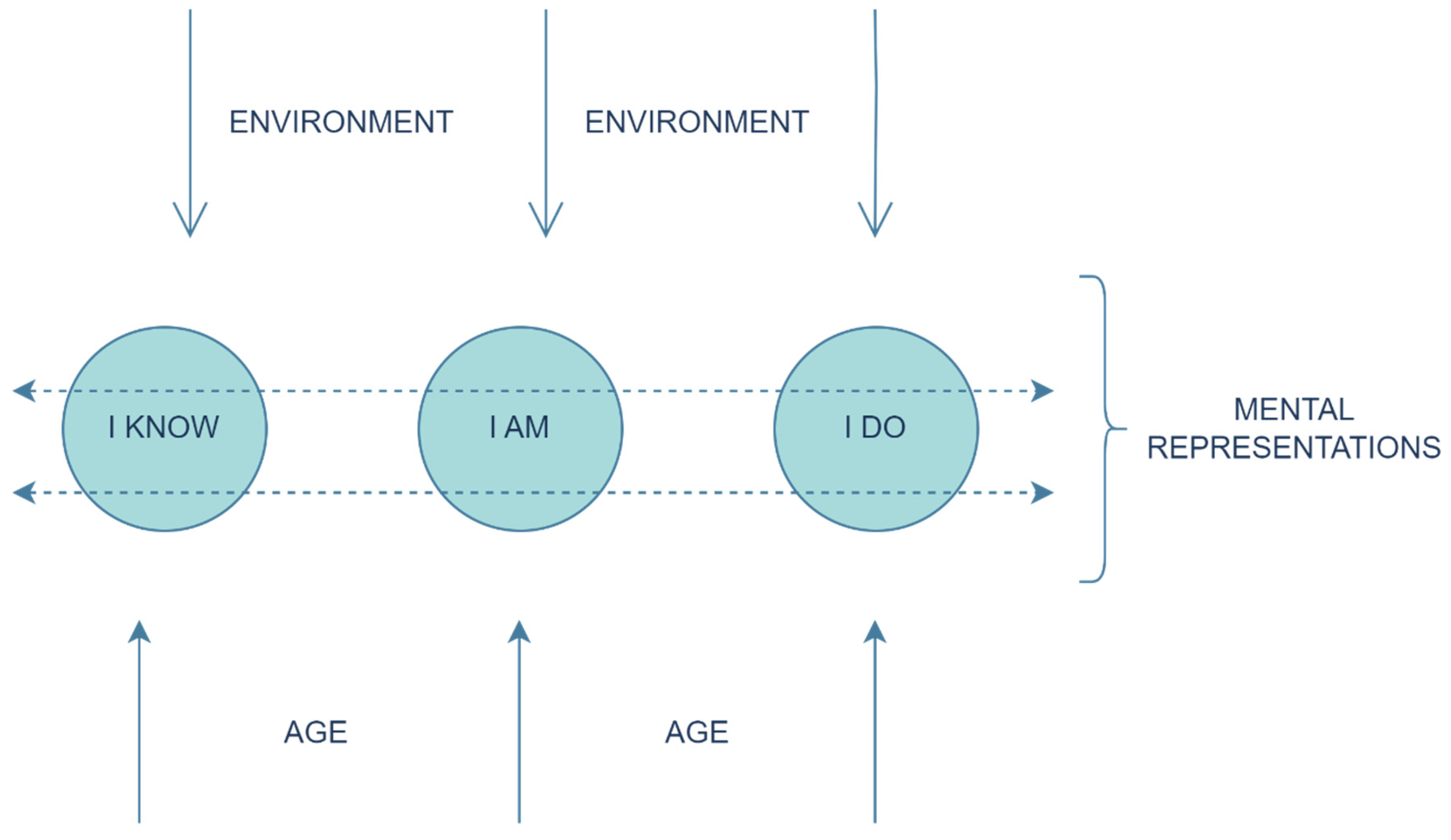
This intervention model encompasses three domains (circles), with motor representations as the central element of the intervention (Figure A1, Appendix A).
The first domain (circle) relates to the “I KNOW” process; the knowledge of motor patterns possessed by children. This progresses from simplicity to complexity, as individuals gain experience, repeat actions, and experiment in new environments, leading to a deeper and more lasting understanding. This domain also involves ‘metacognitive knowledge’. ‘‘Ideas, beliefs, theories about the self, tasks, strategies, goals, and cognitive functions such as memory and attention—executive functions—are part of this process’‘ [22] (p. 4). The content of “I KNOW” can be identified with actual motor competence, i.e., the set of motor skills that have been learned and are necessary for the whole life.
The second domain (circle) concerns “I AM” and consists of attitudes, beliefs, and actions. It reflects the emotional intensity, whether positive or negative, that a person experiences while moving through and exploring their environment. The “I AM” domain includes the “metacognitive experience”, i.e., ‘‘feeling of familiarity, feeling of difficulty, feeling of knowledge, the feeling of certainty, the feeling of satisfaction, judgments (opinions)/appraisals, judgment (view) of learning, source of information memory, estimation of effort, estimation of time, on-line specific knowledge (specific knowledge, demonstrated at the moment of action), characteristics of the task, processes employed (working)’’ [22] (p. 4). The content of “I AM” can be identified with perceived motor competence as it relates to what I think I know and how I feel about it.
The third and last domain (circle) is related to “I DO” and relates to motor programs. The child begins with the ability to repeat existing knowledge. Then, they acquire specific skills for each movement. Ultimately, they develop skills that enable them to create new knowledge, generalize these skills to similar situations, and synthesize the appropriate skills for application in real life. It includes “Metacognitive skills”, i.e., ‘‘conscious, purposeful activities and use of strategies for effort allocation, time allocation, orientation/monitoring of task prerequisites/requirements, planning, controlling, and regulating cognitive processing, evaluation of the processed result’‘ [22] (p. 4). This domain includes cognitive and affective aspects, making it the point where actual and perceived motor competence meet, which is directly influenced by both internal and external motivation.
To do something requires that I need to know it and I feel that I can do it. A person’s confidence and self-esteem can bridge the gap between ‘‘I KNOW’‘ and ‘‘I AM’‘, provided they are in a stimulating and rich learning environment that motivates them.
Motor representations serve as a crucial link between the aforementioned domains. As cognitive elements, they impact our sense of “I KNOW” and contribute to our actual motor competence. As affective elements or signs, they influence our sense of “I AM,” shaping our perceived motor competence. These representations are interconnected in a cycle that affects both self-confidence and self-concept, acting as either motivators or barriers to motor experiences.
Ultimately, they also shape our actions, influencing “I DO.” This cycle represents the intersection of actual and perceived motor competence. The quantity, quality, and emotional significance of motor representations play a critical role in determining the effectiveness of both the design of various motor programs and the execution of motor responses.
The generality or specificity of motor representations, along with the individual’s selections at any given moment, influences their experiences and affects their ability to respond quickly and accurately to the motor demands of their environment [21,41]. This highlights the growing significance of experience in this context. The classification of individuals as ‘novice’ or ‘experienced’ is not strictly tied to their age, although age does have some influence. Instead, this classification is more related to the amount of motor experience a person has and the maturity with which they cognitively process and evaluate that experience (feedback) [41]. Executive control of movements is influenced by processes such as anticipation, monitoring, reality-checking, and the coordination and control of implicit learning strategies [5,19].
Age plays a significant role for beginners, particularly during infancy, toddlerhood, and early childhood, as it’s considered “normal” to be a beginner during these stages. At this age, constant interaction with the environment, along with growth and maturation, helps improve a child’s skills and allows them to gradually transition to a more experienced level.
However, if a child remains stuck at the novice level, it may indicate one of three issues: 1) a lack of motor experience, 2) the presence of motor disorders, or 3) a combination of both factors.
What does the motor representation reflect each time? The motor skill children possess or the one children think they possess? How accurate or inaccurate are children’s motor representations, and what factors influence this? The overlap between perceived motor proficiency and actual motor proficiency can help identify motor-proficient children. These children often possess a strong cognitive-motor base, well-developed executive functions, and advanced metacognition. They are capable of effectively responding to motor challenges in their environment, selecting the appropriate set of motor representations (outlined in a motor program) to address specific motor problems. Additionally, they demonstrate executive competence in both general and specialized movements, while fully understanding how they achieved their outcomes.
The methodology aims to bridge the gap between perceived motor competence and actual motor competence, thereby fostering appropriate motor representations for each child’s age and skill level.
According to the proposed model, novice individuals will have fewer motor representations, which will be less developed and more generalized. Consequently, beginners will possess a limited “I KNOW” cycle, resulting in a restricted motor repertoire and actual motor proficiency.
On the other hand, the “I AM” cycle, which reflects perceived motor competence, varies with age. Younger children often perceive themselves as competent regardless of their actual abilities. In contrast, older children are more capable of comparing themselves to their peers, which helps them better understand their successes and failures. This age group is also more susceptible to criticism from important figures in their lives. In this case, “I AM” (perceived motor competence) is directly correlated with “I KNOW” (actual motor competence). While they are not identical, they have a significant positive or negative correlation.
If a motor experience causes positive feelings in children (‘‘I AM’‘), then they tend to repeat it (thus practicing ‘‘I DO’‘) and in this way enrich their motor knowledge
(‘‘I KNOW’‘) with valuable experiences.
Children with developmental disorders, such as those experiencing issues with cognitive processes like attention (‘‘I KNOW’‘), have a challenging time enriching their motor patterns with new experiences (‘‘I DO’‘). This difficulty impacts their perceived motor competence (‘‘I AM’‘).
The final stage of the intervention involves the three domains (circles) overlapping one another, similar to the experienced individuals. The goal is to achieve alignment between actual motor competence and perceptual competence. While the intervention can focus on one area at a time—depending on factors such as age, experience, or specific disorders—the effects are interconnected; improvements in one area directly influence the others. This is because cognitive representations, which serve as the medium for the intervention, permeate all three domains without exception.
4. Discussion
The purpose of this intervention is to develop the domains of “I KNOW,” “I AM,” and the domain expressed by “I DO.” This development is supported by motor representations, which are formed, modified, and enriched through appropriate motor experiences tailored to the individual’s age, abilities, family circumstances, and social environment. The intervention unfolds in a context that fosters children’s self-confidence and motivation.
If any of the mentioned domains are dysfunctional due to intrinsic factors—such as immaturity, intellectual disabilities, or autism spectrum disorders—or environmental factors, like a lack of motor experience, this limits both the quantity and quality of motor representations. The way a person chooses to act is based on evaluation and naturally considers all the effects of related cycles. Additionally, two important elements of the intervention are the significant factors in the environment—such as experiences, opportunities for interaction with the environment, the socio-economic status of parents, and parental expectations—and age.
Concerning the environment, this intervention aims to provide children with new, age-appropriate experiences. It seeks to educate parents and create a motivating environment that allows children to continually develop their motor skills through various representations.
The intervention focuses on different developmental domains depending on the age of the child. The reinforcement of various domains at each age is linked to the child’s developmental potential. For instance, for younger children, the goal of the intervention may be to enhance motor skills by introducing new patterns (‘‘I KNOW’‘) and to create an environment that allows children to express themselves through movement (‘‘I DO’‘). Younger children generally consider themselves quite competent and do not seem to be influenced by the demands of the task or by previous failures. Self-assessment, self-regulation, estimation of time, experience, difficulty, etc. are metacognitive processes less developed at younger ages (‘‘I AM’‘). As children grow older, however, they handle their knowledge better and more effectively, use strategies consciously, and deal with problems systematically (‘‘I KNOW’‘). The intervention should now incorporate the “I AM” factor because the emotional impact of their experiences on motor patterns is more significant. Children have greater empathy for both their strengths and weaknesses and they are more affected by their failures. Additionally, the environment—comprising peers and significant others—plays a crucial role in this process.
For children with developmental disorders, it is crucial to identify the specific factors that create the most challenges for them, regardless of their age. This assessment enables interventions to be tailored to address these difficulties, allowing the child to engage in learning without barriers. Each component of the intervention is recognized as valuable. Challenges in one area can affect the functioning of others, making it essential to focus on motor representations as a central aspect of the model.
Children’s experience, whether as a beginner or as an experienced individual, influences both the strategies they choose and the motor responses they make in reaction to stimuli. Selecting the appropriate motor response that addresses a motor problem relies on the richness of the child’s cognitive-motor skills. In contrast, choosing strategies is linked to the development of metacognition. Identifying children in beginner and experienced categories enhances teaching methods by clarifying differences in perceived and actual motor competence.
This intervention methodology does not solely focus on teaching motor skills in a specific way. Instead, the goal is to provide children with a wide range of experiences and variations of the same motor skill, allowing them to adapt their movements to different environments. This approach enriches their motor patterns with diverse representations.
Choosing the appropriate motor representation, along with gaining experience, can be enhanced through teaching strategies, such as verbal descriptions and demonstrations of the motor skill. These strategies are beneficial in developing metacognition, which is our ability to recognize and understand what we know.
Internal motivation, which includes self-evaluation, self-improvement, personal goals, desires, preferences, and enthusiasm, along with external motivation—such as stimuli, encouragement, teaching strategies, and feedback—significantly influences children’s actual motor competence. These factors help children gradually learn to self-regulate their motor behavior, pay closer attention to the characteristics of their environment and the demands of specific tasks, choose their motor responses more carefully, and understand precisely what they need to do. In each situation, children form a plan of action, stick to it, monitor the development of this plan, evaluate it, and if necessary, adjust it [42].
The above processes are related to metacognition [42], where children learn to recognize all the stages of the learning process, choose the strategies that are most useful to them in each situation, and of course recognize how and when to apply these strategies [42].
The different environments in which children move and develop should encourage their active participation in learning. They need to be given the necessary incentives and materials to enable children to solve problems on their own. When the classroom environment is supportive rather than critical, children’s imagination and their instinctive disposition to discover new learning, new personal limits, and new mistakes are activated.
It is important to intervene and show children that it’s not sufficient to simply do what they believe they can; they must also do it correctly. Additionally, if they think they can’t accomplish something, they may not even attempt it, regardless of their actual abilities.
5. Conclusions
The proposed intervention program is designed to address the needs of the developing children. The motor challenges or problems that children face vary at each stage of development. As children grow, they encounter new demands from their environment, which influences their knowledge and skills. The intervention program must follow this dynamic process of development and respond to these constant changes. Children should be encouraged to participate in motor activities that allow them to explore their environment freely. Specialists involved in this intervention model must tailor the program to each child’s needs based on their motor skills. They should design a variety of fun exercises that engage children and motivate them to experiment with new movements. This approach will not only help children enjoy playtime but also enable them to develop skills that enhance their movement and overall performance.
Funding
This research received no external funding.
Conflicts of Interest
The authors declare no conflicts of interest.
Appendix A
Figure A1.
Dynamic Motor Intervention Model (DyMIM).
References
- Kelso, J. A. S. Dynamic patterns: The self-organization of brain and behavior, 1st Ed. The MIT Press, 1995.
- Thelen, E.; Kelso, J. S.; Fogel, A. Self-organizing systems and infant motor development. Developmental Review, 1987, 7(1), pp. 39–65. [CrossRef]
- Thelen, E. Motor development as foundation and future of developmental psychology. International Journal of Behavioral Development, 2000, 24(4), pp. 385–397. [CrossRef]
- Thelen, E. Dynamic Systems Theory and the Complexity of Change. Dialogues, 2005, 15(2), pp. 255-283. [CrossRef]
- Inhelder, B.; Sinclair, H.; Bovet, M. Learning and the Development of Cognition, 1st ed. Massachusetts: Harvard University Press, 1974.
- Fustana, A. The Cognitive Base and Representation of Intelligent Learners. In proceedings of the 4ου Panhellenic Conference of Education Sciences, Athens, Greece, 20- 22/6/2014, p. 615- 624. [CrossRef]
- Wall, A.E.; McClements, J; Bouffard, M.; Findlay, H.; Taylor, M.J. Approach to Motor Development: Implications for the Physically Awkward. Adapted Physical Activity Quarterly, 1985, 2, pp. 21- 42.
- Siegel, L.S.; Brainerd, C.J., Eds. Alternatives to Piaget: Critical Essays on the Theory, 1st ed. New York: Academic Press, 1978.
- Chi, M. T. H.; Roscoe, R. D. The processes and challenges of conceptual change. In Reconsidering conceptual change: Issues in theory and practice, 1st ed.; M. Limon; L. Mason, Eds.; Dordrecht, Netherlands: Kluwer Academic Publishers 2002; pp. 3-27.
- Beilin, H.; Fireman, G. The foundation of Piaget’s theories: mental and physical. Advances in child development and behavior, 1999, 27, 221-246. [CrossRef]
- Paraskevopoulos, I. Developmental Psychology. Volume 1: Prenatal period—infancy. Athens, 1985.
- Maratou, O. Notes for the course of Developmental Psychology,University of Athens, 1990.
- Müller, U.; Sokol, B.; Overton, W.F. Reframing a Constructivist Model of the Development of Mental Representation: The Role of Higher-Order Operations. Developmental Reports, 1998, 18, pp.155- 201. [CrossRef]
- Roth, D.; Slone, M.; Dar, R. Which Way Cognitive Development? Piagetian and the Domain-Specific Research Programs. Theory & psychology, 2000, 10(3), pp. 353-373. [CrossRef]
- Chi, M.T.H. Knowledge structure and memory development. In Children’s thinking: What develops?, 1st ed.; R. Siegler, Ed.; Hillsdale, NJ: Erlbaum, 1978; pp. 73-96.
- Demetriou, A.; Efklides, A. Structure and sequence of formal and postformal thought: General patterns and individual differences. Child Development, 1985, 56, pp. 1062-1091. [CrossRef]
- Sternberg, R. J. Domain-Generality versus Domain-Specificity: The Life and Impending Death of a False Dichotomy. Merrill-Palmer Quarterly, 1989, 35(1), pp. 115–30. http://www.jstor.org/stable/23086427.
- Siegler, R. S. How domain-general and domain-specific knowledge interact to produce strategy choices. Merrill-Palmer Quarterly, 1989, 35(1), pp. 1–26.
- Brown, A.L.; Bransford, J.D.; Ferrara, R.A.; Campione, J.C. Learning, Remembering, And Understanding. Technical Report No. 244, Center for the Study of Reading, University of Illinois, 1982, pp 1- 257. Retrieved 01/06/2018 from https://www.ideals.illinois.edu/bitstream/handle/2142/17511/ctrstreadtechrepv01982i00244opt.pdf.
- Koutsouki, D. Special physical education: Theory and practice; Athens, 1997.
- Koutsouki- Koskina, D. The effect of instruction on tracking performance at two levels of skill: A knowledge- Based Approach, Doctoral dissertation, Alberta CA: University of Alberta, 1986.
- Efklides, A. Metacognition and affect: What can metacognitive experiences tell us about the learning process? Educational Research Review, 2006,1, p.p. 3-14. [CrossRef]
- Reeve, R. A.; Brown, A. L. Metacognition reconsidered: implications for intervention research. Journal of abnormal child psychology, 1985, 13(3), pp. 343-356. [CrossRef]
- Efklides, A. Metacognitive experiences in problem solving: Metacognition, motivation, and self-regulation. In Trends and prospects in motivation research, 1st ed.; A. Efklides; J. Kuhl; R. M. Sorrentino, Eds.; Kluwer Academic Publishers, 2001, pp. 297–323. [CrossRef]
- Baker, L.; Brown, A. L. Metacognitive skills and reading. In Handbook of Reading Research; P. D. Pearson; R. Barr; M. L. Kamil; P. Mosenthal, Eds; New York: Longman, 1984; pp. 353-394.
- Rudisill, M. E.; Mahar, M. T.; Meaney, K. S. The relationship between children’s Perceived and actual motor competence. Perceptual and motor skills, 1993, 76(3), pp. 895-906. [CrossRef]
- Harter, S. Effective Motivation Reconsidered: Toward a Developmental Model. Development, 1978, 21(1), pp. 34-64. [CrossRef]
- Harter, S. The Perceived Competence Scale for Children, Child Development, 1982, 53(1), pp. 87-97. [CrossRef]
- Fry, M.D; Duda, J.L. A Developmental Examination of Children’s Understanding of Effort and Ability in the Physical and Academic Domains, Research Quarterly for Exercise and Sport, 1997, 68(4), pp. 331-344. [CrossRef]
- Nicholls, J. G. The Development of the Concepts of Effort and Ability, Perception of Academic Attainment, and the Understanding That Difficult Tasks Require More Ability. Child Development, 1978, 49(3), pp. 800-814. [CrossRef]
- Fry, M. D. (2000). A developmental examination of children’s understanding of task difficulty in the physical domain. Journal of Applied Sport Psychology, 2000, 12(2), pp. 180–202. [CrossRef]
- Folmer, A. S.; Cole, D. A.; Sigal, A. B.; Benbow, L. D.; Satterwhite, L. F.; Swygert, K. E.; Ciesla, J. A. Age-related changes in children’s understanding of effort and ability: implications for attribution theory and motivation. Journal of experimental child psychology, 2008, 99(2), pp. 114-134. [CrossRef]
- Clark, C.C.T.; Moran, J.; Drury, B.; Venetsanou, F.; Fernandes, J.F.T. Actual vs. Perceived Motor Competence in Children (8–10 Years): An Issue of Non-Veridicality. J. Funct. Morphol. Kinesiol. 2018, 3, 20. [CrossRef]
- Liong, G. H. E.; Ridgers, N. D.; Barnett, L. M. Associations between Skill Perceptions and Young Children’s Actual Fundamental Movement Skills. Perceptual and Motor Skills, 2015, 120(2), 591-603. [CrossRef]
- Stodden, D.F; Goodway, J.D.; Langendorfer, S.J.; Roberton, M.A.; Rudisill, M.E.; Garcia, C.; Garcia, L.E. A Developmental Perspective on the Role of Motor Skill Competence in Physical Activity: an emergent relationship. Quest, 2008, 60(2), pp. 290-306. [CrossRef]
- Duncan, M. J.; Jones, V.; O’Brien, W.; Barnett, L. M.; Eyre, E. Self-Perceived and Actual Motor Competence in Young British Children. Perceptual and motor skills, 2018, 125(2), pp. 251-264. [CrossRef]
- Estevan, I.; Barnett, L. M. Considerations Related to the Definition, Measurement and Analysis of Perceived Motor Competence. Sports Med., 2018, 48(12), pp. 2685-2694. [CrossRef]
- Almeida, G., Luz, C., Martins, R., & Cordovil, R. Differences between Estimation and Real Performance in School-Age Children: fundamental movement skills. Child Development Research, 2016, 1-7. [CrossRef]
- Farmer, O.; Belton, S.; O’Brien, W. The Relationship between Actual Fundamental Motor Skill Proficiency, Perceived Motor Skill Confidence and Competence, and Physical Activity in 8–12-Year-Old Irish Female Youth. Sports, 2017, 5, 74. [CrossRef]
- Diamond, A. Close Interrelation of Motor Development and Cognitive Development and of the Cerebellum and Prefrontal Cortex. Child Development, 2000, 71, pp. 44-56. [CrossRef]
- Chi, M. T. H. Two Approaches to the Study of Experts’ Characteristics. In The Cambridge handbook of expertise and expert performance, 1st ed.; K. A. Ericsson, N. Charness, P. J. Feltovich, & R. R. Hoffman, Eds.; Cambridge University Press, 2006; pp. 21-30. [CrossRef]
- Kryza, K. Practical Strategies for Developing Executive Functioning Skills for ALL Learners in the Differentiated Classroom. In Handbook of Executive Functioning; 1st ed; Goldstein, S. & Naglieri, J.A., Eds.; Springer, New York, NY, 2014; pp. 523–554. [CrossRef]
Disclaimer/Publisher’s Note: The statements, opinions and data contained in all publications are solely those of the individual author(s) and contributor(s) and not of MDPI and/or the editor(s). MDPI and/or the editor(s) disclaim responsibility for any injury to people or property resulting from any ideas, methods, instructions or products referred to in the content. |
© 2024 by the authors. Licensee MDPI, Basel, Switzerland. This article is an open access article distributed under the terms and conditions of the Creative Commons Attribution (CC BY) license (http://creativecommons.org/licenses/by/4.0/).
Copyright: This open access article is published under a Creative Commons CC BY 4.0 license, which permit the free download, distribution, and reuse, provided that the author and preprint are cited in any reuse.


