

Submitted:
16 November 2024
Posted:
20 November 2024
You are already at the latest version
Abstract
Sri Lanka is a biodiversity hotspot with a rich history of embodying traditional medical practices in its cultural values. Despite this, the nation still stands behind in the global nutraceutical industry due to inadequate research-based evidence for the safety and efficacy of these compounds. This paper discusses the importance of supporting industry advancement while acknowledging existing barriers, promoting basic research needs, developing new research strategies, and fostering regional cooperation in science in light of the Sri Lankan BICOST IX technical report and an overview of the literature. Phytochemically monitored plant cultivation systems, postharvest technologies, globally accepted research practices to ensure safety and efficacy, human resource capacity development, and modernising laboratories with cutting-edge technologies are strongly recommended for policy-level recognition. In general, formal science brokering can effectively communicate these recommendations at the decision-making level, which is currently lacking in the system.
Keywords:
BICOST
; Biodiversity
; Bioresources
; Herbal Products
; Nutraceuticals
; Safety‐Efficacy
; Science – Diplomacy
; Science for Policy
; Sustainable Economic Development
; Traditional Medicine
Introduction
Nutraceuticals, a term coined by combining the words “nutrition” and “pharmaceuticals”, is defined by Health Canada as “a product isolated or purified from foods that are generally sold in medicinal forms not usually associated with foods” and that have the potential to have health benefits and prevent diseases (Jain & Ramawat, 2013). As a result of fundamental lifestyle modifications, there has been a distinct increase in the global incidence of noncommunicable diseases (DeFelice & perspective, 2005). The increase in healthcare costs has shifted the focus to preventive care, leading to growing preferences for functional foods and supplements (Saini, Malik, Kumar, Bhatt, & Research, 2020). Healthy supplements such as nutraceuticals derived from plants, microbes and other botanicals have started to emerge as a globally demanding industry with a market value of USD 409 billion in 2023, and this value could reach USD 597 billion in 2027(Chopra et al., 2022; Jayaweera, 2023).
Sri Lanka is a country in South Asia that has been recognised as a biodiversity hotspot due to the vast diversification of its flora and fauna. Sri Lankan bioresources, which possess distinctive medicinal properties, have been used in traditional medicine for more than 4000 years(Kotagama, 2008). The emerging trends in developing pharmaceuticals and nutraceuticals from these natural resources have captured the interest of scientists, and over a decade of research have proven that Sri Lankan herbal plants are promising natural resources with antidiabetic, antilipidemic, and antioxidant properties that can be applied in novel preventive interventions as nutrient supplements (Siriwardena, Wijesundara, & Karunarathna, 2015). In Sri Lanka, the Ministry of Health launched a number of indigenous medicine initiative projects to increase public awareness of the benefits of nutraceuticals as a strategy to reduce the prevalence of complications of noncommunicable diseases (Bulathgama, Lakshman, & Bulugahapitiya, 2022; Peduruhewa, Jayathunge, Liyanage, & Manatunga, 2023; promotion, 2021).
Sri Lanka customs statistics state that the country’s export revenue for nutraceuticals is USD 36 million (NASTEC, 2023). However, despite the availability of native bioresources, Sri Lanka still stands in a lower position on the ladder of the global nutraceutical market due to inadequate research-based evidence for the safety and efficacy of these formulations, particularly in in vitro and in vivo studies, which hinders the global pathway for Sri Lankan nutraceutical products (P. K. Perera),(Karunaratne, 2021).
The authentic source of the raw materials, the compound's purity, the existence of additional active compounds, quality, the absence of scientific evidence, deceptive advertising, heavy metal contamination, and interactions between medications and supplements are all factors that greatly influence the performance of the sector (Siddiqui & Moghadasian, 2020). Therefore, tackling them at the science and policy interface will undoubtedly improve the sustainability of the industry since these factors are not only within the scientific regulatory context but also within the societal context. While addressing these issues, lessons learned from other countries, particularly from the Global South, would have great potential to strengthen the system at the national level (Mendoza, 2020; Muhammad, Awaisu, & Medicines, 2008).
In the Global South, countries, particularly South, Southeast Asia and Latin America, have tremendous potential to contribute to the world nutraceutical industry (Chaurasia, Pati, Padhi, Jensen, & Gavirneni, 2022).
Regional cooperation is the best approach for promoting science, technology, and innovation (STI) activities at the national level in the Global South by laying the foundation for research centres, bilateral projects, mobility programmes, and capacity-building activities for scientists(Echeverría King, González, Andrade-Sastoque, & Analytics, 2021).
The Biennial Conference on Science and Technology (BICOST) is one of the core mandated activities of the National Science and Technology Commission of Sri Lanka (NASTEC), the apex body for advising the Government of Sri Lanka (GoSL) on policies and plans for the development of science and technology across these disciplines, including its applications to stimulate economic growth (GoSL, 1994). Accordingly, the 9th BICOST was held in March 2023, and four technical reports (TRs) were produced as an output of the conference to make available a set of policy recommendations to the GoSL (Shahmy, 2023; Silva et al., 2024). The TR titled “Nutraceuticals and lead medicinal compounds derived from Sri Lankan bioresources” draws attention to the importance of understanding the status of the current nutraceutical industry in Sri Lanka and proposes directives on the advancement of the industry from the perspective of research and development (R&D) at policy interfaces. The TR discusses the importance of the sector while acknowledging the existing barriers, promoting basic research needs, and introducing new research strategies to lead the sector towards sustainable socioeconomic development in the country (NASTEC, 2023).
The objective of this prospective work is to discuss in detail the extrapolated findings and highlight the significance of the recommendations proposed in the TR in light of the global literature, including south-to-south cooperation in science.
Methodology:
To compile BICOST-IX’s TR, information was gathered through literature reviews, government institutional database exploration, sources from leading academics and researchers, and industry by a group of experts assigned by NASTEC. The information gathered was analysed and extrapolated in the TR under the sections “global and local market positioning of the industry,” “cultivation and postharvest technology,” “the research needs for identification of compounds,” “safety and efficacy tests (pre- and clinical studies), standardisation,” industrial research needs, recent advancements in the industry, and commercialisation."
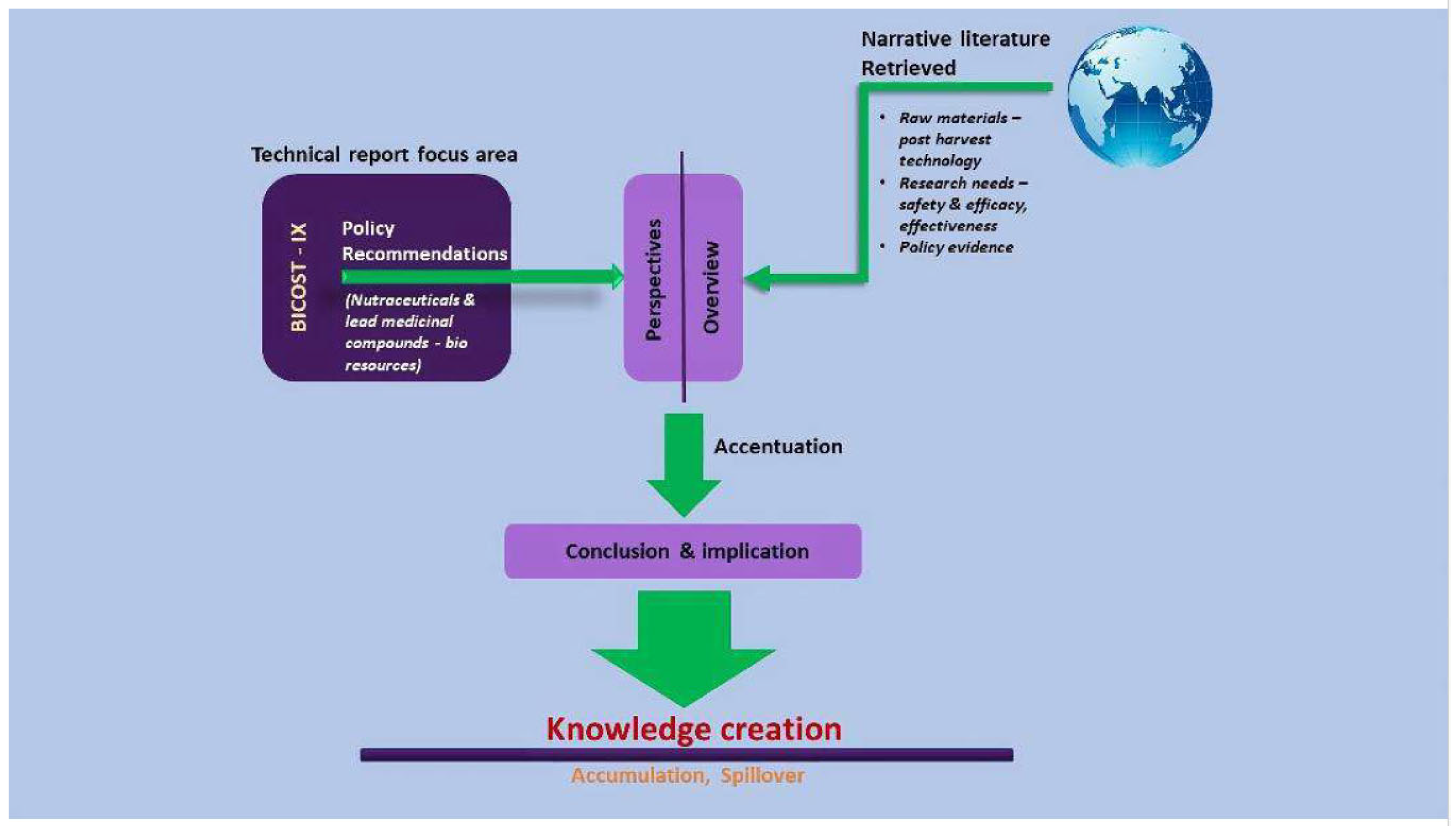
To conceptualise the TR findings while ensuring the flow of information and accentuation by the overview of the retrieved narrative literature, we synthesised them under the two sections “Cultivation and Post-Harvest Technology of Herbal Raw Materials” and “An Overview of Research Needs and Clinical Trials in the Nutraceutical Industry” derived from some published work (Parveen, Parveen, Parveen, Ahmad, & sciences, 2015; Puri et al., 2022) (Figure 1).
Discussion:
I. Cultivation and Postharvest Technology of Herbal Raw Materials
The availability of high-quality plant raw materials is vital for producing standardised nutraceutical products. Hence, the quality of raw materials should be maintained from the primary stages of cultivation and postharvest technological procedures(Chandra, Stanford, Fletcher, Walker, & Drugs, 2019). According to the Good Agricultural and Collection Practices (GACP) guidelines for medicinal plants published by the World Health Organisation (WHO), plants should be subjected to research to identify the most favourable cultivation method(G. WHO, 2003). Research on the best cultivation method for TRs through trial cultivation could address this issue(NASTEC, 2023). Nevertheless, to obtain high-quality medicinal plants, the whole cultivation process should be monitored, and harvesting should be performed during the optimal season (Selmar, Kleinwächter, & Products, 2013; W. H. O.-. WHO, 2003). Furthermore, standardisation issues that result from commercialisation and variations caused by environmental changes indicate the need to define phytochemical profiles of plant raw materials(Kumari & Kotecha, 2016). There have been many studies carried out in the region on the establishment of phytochemical profiles, and more comparative studies are needed to obtain a better understanding of suitable extraction techniques, with implications for a clearer and more meaningful comparison of the techniques and solvents used for the extraction of various phytochemicals(Kumar et al., 2023). Policy-level interventions and directives could accelerate collaborative dialogue efforts with regional partners in this regard (Sandhu & Indo-Pacific, 2020).
The quality of the ingredients used in commercial herbal medications has been evaluated, mainly to guarantee their safety. Maintaining phytochemical consistency critically depends on the authenticity and homogeneity of the herbs, as well as on stringent physical processing and extraction manufacturing protocols. Good Manufacturing Practice (GMP) before and during the manufacturing process, Good Plant Authentication and Identification Practice (GPAIP), GACP, and Good Laboratory Practice (GLP) in the analysis must all be implemented and followed(Govindaraghavan, Sucher, & Behavior, 2015; Kunle et al., 2012).
Sri Lanka is able to allocate a budget estimate of Rs. 2 million (USD 6200) in 2023 for a new village-level herbal agri-programme expecting to encourage youth in the commercial cultivation of herbal plants. In addition, under a city herbal forest programme, those would expect to create 500 herbal forests to boost the industry. The authorities are expected to reduce the import expenses spent on raw material imports by Rs. 1000 million (USD 3 million) through this initiative (MoF, 2023). Until and unless the projects adhere to internationally accepted standard practices, the project’s desired deliverables are in question. Hence, the TR urges the industry to adhere to such practices, while calling on the relevant agencies to strengthen the practices to ensure that the phytochemically monitored herbal plant cultivation system is systematically adopted by the industry.
Ensuring that the quality of the raw materials is free from cross-contamination has a significant impact on the safety of the products(Gulati, Ottaway, Jennings, Coppens, & Gulati, 2019; Haji, Kerbache, & Al-Ansari, 2022; Mtewa et al., 2020). The TR emphasises that raw material collection, cleaning, drying, and storage should be equally monitored to avoid cross-contamination (NASTEC, 2023). The National Institute of Post Harvest Management (NIPHM) in Sri Lanka has conducted development projects on using appropriate methods of packaging to reduce the postharvest loss caused during transport(NIPHM, 2020). These applications could be tailored to meet industry needs. A number of advanced laboratory facilities, including the NIPHM, could be utilised for phytochemical testing of post harvesting raw materials. However, the country needs some collaborative effort to link such national facilities centrally with the regional partners to incubate, accelerate, and spillover the impact to enable a conducive innovation culture in the sector(Cameron, 2022; Galvez, 2022).
II. An overview of Research Needs and Clinical Trials in the Nutraceutical Industry
The use of novel technologies for the isolation of bioactive phytochemicals from Sri Lankan herbal plants to determine their nutraceutical value and to create specific phytochemical profiles to maintain a standard library of nutraceutical products for standardisation still lags behind due to limited instrumentation, technology, and legal provisions. However, in this regard, the National Research and Development Framework of Sri Lanka (NRDF) 2016–2020 and the WHO Traditional Medicine Strategy 2014–2023 collectively urge the updating of the National Ayurveda Pharmacopoeia to reflect the authentication of herbs, minerals, and other ingredients and finished products that have yet to materialise(NASTEC, 2016; WHO, 2013). In an analysis performed through Scopus in 2015, research related to medicinal plants was found to be the dominant research area in Sri Lanka(Dissanayake, 2015). Almost a decade later, Sri Lanka was still a minor-scale nutraceutical manufacturer. However, recently, the National Research Council of Sri Lanka (NRC) has selectively declared five research grants for the development of the nutraceutical industry, and the National Science Foundation of Sri Lanka (NSF) has introduced a special grant scheme in which novel technologies from indigenous medicines have been identified as a priority area(NSF, 2022). The NRC takes a further step in the process of prioritising nutraceuticals and lead medicinal compounds as one of the areas for research for public‒private partnership (PPP) grants based on the TR recommendation to call the grant scheme in 2023(NRC, 2023-2024). These positive developments in the sector can ensure the quality of nutraceuticals from the laboratory to production, at least to some extent. However, there is a need to update the Auyrveda pharmacopoeia to provide an authentic phytochemical profile and set standards for end-product quality checks, which are high priorities for work robustness(Rungsung, Dutta, & Hazra, 2013). It is also necessary to address the funding to sustain them on a long-term basis, not only by depending on the state but also by extending them to attract international competitive grants, which is a globally known strategy (Asase, 2023; Evans, Miklosik, & Du, 2023; Rungsung et al., 2013; Rybnicek & Königsgruber, 2019). The state-funded institution here is encouraged to adopt this model but needs legislative support from the government on lobbying to reach global audiences (Lathrop & Ruma, 2010).
Sri Lanka still lacks sector-dedicated preclinical laboratory-accredited facilities that adhere to GLP, xerography models, and other modern technologies required for novel product discoveries and efficacy testing at the preclinical level. The situation could worsen because there has been a gap in the fund allocations for their development in the national budgets until recently (MoF, 2023). This finding urges policymakers to recognise the significance of research at every key step in the chain of value creation in the nutraceutical industry and to incentivise research in the sector; however, effective policy brokering is needed to sustain such research (Jost, Birringer, & Herzig, 2022). Despite this, in 2024, the national budget allocated a total of SLR 8 billion (US$ 260 million) for research and development (R&D), which is the highest ever allocated in Sri Lanka’s history, technological advancement, and innovation activities across the sectors to foster economic growth and support overall progress and social wellbeing (Saliya, 2023). This would enable the allocation of such preclinical laboratory facilities, at least at state higher education institutions. However, it again recalls the need for a greater commitment from interested parties to negotiate—effective policy brokerage with decision makers—where there is no formal established system in Sri Lanka yet, even though the NASTEC is mandated to establish it (Shahmy, Munagamage, Perera, & Fernando, 2022; Shahmy, Perera, Munagamage, & Fernando, 2021). In other words, in general, the need to establish a system of science advice—the holistic science evidence synthesis and brokering national system in Sri Lanka—is urgent. Together, the academic industry, policymakers, and decision bodies play a negotiating role in improving the nation in terms of STI(Gluckman, Bardsley, Kaiser, & Communications, 2021).
As the TR indicates, the Formulary Committee (FC) of the Department of Ayurveda (DoA) in Sri Lanka serves as a legislative body in the sector for implementing rules and regulations for the standardisation of herbal products. The products are assessed according to guidelines published by the WHO, Sri Lanka Standards Institution (SLSI), and DoA under the FC directive. Accordingly, raw material authentication, identification of marker compounds, physico-chemical parameters, determination of shelf life, microbial purity, determination of foreign matter, extractive values, heavy metals, total ash value, and pesticide residues are the main quality parameters applied in nutraceutical product standardisation in Sri Lanka(NASTEC, 2023). The parameter tests are conducted locally by Sri Lanka Accreditation Board (SLAB)-certified quality testing laboratories; currently, such certified facilities for nutraceuticals are confined to only one public sector institution, the Industrial Technology Institute (ITI), and two private sector entities. Despite this, in general, the sector here lacks cost-effective, adequate facilities with advanced spectroscopic and chromatographic analysis technologies for active ingredient quantification. The high costs of tests in laboratories equipped with such technologies have placed emerging small-scale industries in financial boundaries, retarding industrial development. Therefore, the GoSL should strengthen the services available from existing facilities equipped with such advanced technologies across disciplines and establish an incentivised price range for quality testing that is within reach for the industry, particularly for startups(NASTEC, 2023). Another dominant factor related to the development of the nutraceutical industry is the availability of internationally approved in vitro and in vivo research evidence related to the products. This mainly applies to efficacy, safety, and effectiveness—toxicology studies and clinical trials. For example, when introducing new products to international markets in the USA, Japan, China, and the EU, the products should adhere to the efficacy and toxicological regulations implemented by their local authorities and provide clinical trial and toxicological testing evidence of the product to enable market penetration (Komala et al., 2023; Patel, Dufour, & Domigan, 2008). Establishing a link between academia, industry, research institutes, and government agencies within the national ecosystem that can be systematically extended to international players could be a long-term strategy for developing infrastructure in this regard (UNCTAD, 2015).
Clinical trial regulations for nutraceutical products have yet to be declared in Sri Lanka. However, adhering to the clinical trial guidelines of the National Medicines Regulatory Agency (NMRA) and WHO guidelines on clinical trials for herbal medicines, obtaining approval from the clinical trial evaluation committee (CTEC), and registering with the Sri Lanka Clinical Trial Registry (SLCTR) or any other WHO-certified trial registry are prerequisites for conducting nutraceutical clinical trials in Sri Lanka. Adopting this procedure ensures research transparency while promoting international study (P. Perera, Jhalani, Kim, & Grant, 2021).
PPP joint ventures are among the best ways to sustain funding for research on establishing safety profiles in the chain of product development. Leading local research universities such as the University of Colombo (UOC) and the University of Sri Jayewardenepura (USJP) have adopted such a strategy for a number of projects (W. A. S. S. Weerakoon, Perera, Samarasinghe, Gunasekera, & Suresh, 2020). This mode should be extended to harness its maximum capacity with global partnerships(de Vrueh & Crommelin, 2017; Tilburt & Kaptchuk, 2008).
Addressing regulatory gaps in the efficacy and safety profiles of nutraceutical products through a series of proactive research projects by dedicated institutions is a fundamental need for sector advancements, but such research is very limited in Sri Lanka. According to a review by the WHO on health research related to traditional medicine, the government has taken some initiatives to establish public research facilities such as the ITI and Bandaranaike Memorial Ayurveda Research Institute (BMARI)(WHO, 2021). Although BMARI was established as a cutting-edge research facility for studies related to herbal medicine, the full potential of this institution is highly questionable. Despite the availability of instrumentation and regulation standards, skilled human resources are scarce(WIckramarathne, Sudasinghe, Wanigasekara, Perera, & Ranasinghe, 2020). The ITI initiated a postgraduate research programme to develop human capital in herbal research (ITI, 2015), and the NSF has supported projects in research by offering training scholarships. However, the postpandemic economic crisis impacted the continuation of these programmes (NSF, 2023).
ITI is growing as a quality testing and research laboratory facility that, to some extent, resolves the problems encountered by the local nutraceutical industry. The ITI has successfully developed a number of nutraceutical products, which sheds some light on the darkness of the R&D sector of nutraceuticals in Sri Lanka (Ranasinghe et al., 2017). However, it remains unclear whether the services provided by ITIs are priced in a way that makes them accessible to all segments of the nutraceutical industry.
Taken together, these factors strongly suggest that a system be established to sustain funding through other sources as opposed to depending solely on state funds. As a result, research funding institutions in Sri Lanka may establish joint mechanisms to obtain funds from potential overseas partners (D. Weerakoon & Perera, 2014). The ability of countries in the sector to produce high-quality nutraceutical products for the global competitive market is highly perceived (Kamal & Dir, 2015; MIDA, 2020).
Conclusion and Implications:
The global demand for nutraceuticals made from natural bioresources has increased because of consumer concerns about social and environmental sustainability. However, inadequate research adhering to the gold standard in nutraceutical manufacturing processes has impeded the overall growth of the industry in Sri Lanka. Phytochemically monitored agricultural systems, postharvest technologies, internationally recognised in vitro and in vivo research practices, human resource capacity development, and modernising laboratories with cutting-edge technologies are all strongly recommended by the TR for policy-level recognition. In addition, our perspective on the literature overview concludes that capital funding for start-ups, extending cooperation beyond borders, a well-established institutional framework, legal provisions, and a national policy brokering mechanism in general can all enhance the overall performance of the sector.
The findings of this perceptive work are within the scope of producing evidence for research-based industry development, but future work needs to focus more on how this gathered evidence could be utilised at the country’s decision-makers' level since it is not straightforward (Kano, Hayashi, & Policy, 2021).
Limitations
This paper adopted a narrative review technique that has inherent limitations in terms of objectivity, completeness of the literature search, and interpretation of findings. In addition, the subject of this work is evolving rapidly in the global arena, and this paper may not fully draw a conclusion at this stage. However, this paper aims to write a perspective on the TR while scrutinising its findings at the science-policy interface that would facilitate some scholarly dialogue in the pursuit of knowledge generation (Green, Johnson, & Adams, 2006).
Data Availability Statement
The data underlying this study are available in the article and in its online supplementary material.
Acknowledgements
We are grateful to the Chairperson and the members of the Technical Committee (TC) on Nutraceutical and Lead Medicinal Compounds from Sri Lankan Bio Resources at BICOST-IX for their knowledge, experience, collaborative effort, and advice in compiling a technical report (TR) that was well received and provided pragmatic recommendations. We would also like to thank the stakeholders who helped improve the TR. If not, this piece of scientific communication would not have been published on the basis of the factual, verified content in the TR. The BICOST IX 2023 TR on nutraceuticals and lead medicinal compounds derived from Sri Lankan bioresources subjected to this prospective work is available at https://osf.io/r5u9p
Conflicts of Interest
The authors declare that no competing interests exist.
Abbreviations
BICOST IX- 09th Biennial Conference on Science and Technology
BIMARI- Bandaranayke International Memorial Ayurvedic Research Institute
CTEC- Clinical Trial Evaluation Committee
DoA- Department of Ayurveda
FC- Formulary Committee
ITI- Industrial Training Institute of Sri Lanka
GACP- Good Agricultural and Collection Practices
GLP: Good laboratory practice
GMP: Good Manufacturing Practice
GoSL-Government of Sri Lanka
GPAIP: Good Plant Authentication and Identification Practice
NASTEC- National Science and Technology Commission of Sri Lanka
NIPHM: National Institute of Post-Harvest Technology of Sri Lanka
NMRA- National Medicines Regulatory Authority
NRC: National Research Council of Sri Lanka
NRDF: National Research and Development Framework
NSF- National Science Foundation of Sri Lanka
PPP- Public‒private partnership
R&D: Research and Development
SLA, Sri Lanka Accreditation Board
SLCTR- Sri Lanka Clinical Trial Registry
SLSI- Sri Lankan Standard Institution
STI- Science-Technology-Innovation
S&T- Science and Technology
TC- Technical Committee
TR- Technical Report
UOC- University of Colombo
USJP- University of Sri Jayewardenepura
WHO: World Health Organisation
References
- Asase, A. J. F. i. P. (2023). Ghana’s herbal medicine industry: prospects, challenges and ways forward from a developing country perspective. 14, 1267398.
- Bulathgama, U., Lakshman, N., & Bulugahapitiya, V. P. (2022). Recent Trends in Functional Foods and Nutraceuticals as Health-Promotive Measures: A Review. Applied Bio-Systems Technology.
- II(I), 11-33.
- Cameron, A. (2022). Building an Innovation Hotspot: Approaches and Policies to Stimulating New Industry: CSIRO PUBLISHING.
- Chandra, S., Stanford, D., Fletcher, E., Walker, L. A. J. T. S., & Drugs, R. o. N. D. C. (2019). Raw Materials Production and Manufacturing Process Control Strategies. 175-190.
- Chaurasia, S., Pati, R. K., Padhi, S. S., Jensen, J. M., & Gavirneni, N. J. D. S. (2022). Achieving the United Nations Sustainable Development Goals-2030 through the nutraceutical industry: A review of managerial research and the role of operations management. 53(4), 630-645.
- Chopra, A. S., Lordan, R., Horbańczuk, O. K., Atanasov, A. G., Chopra, I., Horbańczuk, J. O.,... Banach, M. J. P. R. (2022). The current use and evolving landscape of nutraceuticals. 175, 106001.
- de Vrueh, R. L., & Crommelin, D. J. J. P. r. (2017). Reflections on the future of pharmaceutical public‒private partnerships: from input to impact. 34(10), 1985-1999.
- DeFelice, S. L. J. R. o. f. f., & perspective, n. a. g. (2005). The nutraceutical health sector: a Point of view. 201-212.
- Dissanayake, H. N. K. (2015). Medicinal plant research in Sri Lanka : A scientometric study based on Scopus database. Collnet Journal of Scientometrics and Information Management, 9(2), 225-234.
- Echeverría King, L. F., González, D. A., Andrade-Sastoque, E. J. F. i. R. M., & Analytics. (2021). Science diplomacy in emerging economies: a phenomenological analysis of the colombian case. 6, 636538.
- Evans, N., Miklosik, A., & Du, J. T. J. H. (2023). University-industry collaboration as a driver of digital transformation: Types, benefits and enablers. 9(10).
- Galvez, E. (2022). Scaling up inclusive innovations in agrifood chains in Asia and the Pacific: Food & Agriculture Org.
- Gluckman, P. D., Bardsley, A., Kaiser, M. J. H., & Communications, S. S. (2021). Brokerage at the science–policy interface: from conceptual framework to practical guidance. 8(1), 1-10.
- Science and Technology Development Act 1994/11, (1994).
- Govindaraghavan, S., Sucher, N. J. J. E., & Behavior. (2015). Quality assessment of medicinal herbs and their extracts: Criteria and prerequisites for consistent safety and efficacy of herbal medicines. 52, 363-371.
- Green, B. N., Johnson, C. D., & Adams, A. J. J. o. c. m. (2006). Writing narrative literature reviews for peer-reviewed journals: secrets of the trade. 5(3), 101-117.
- Gulati, O. P., Ottaway, P. B., Jennings, S., Coppens, P., & Gulati, N. (2019). Botanical nutraceuticals (food supplements and fortified and functional foods) and novel foods in the EU, with a main focus on legislative controls on safety aspects. In Nutraceutical and functional food regulations in the United States and around the World (pp. 277-321): Elsevier.
- Haji, M., Kerbache, L., & Al-Ansari, T. J. P. (2022). Food quality, drug safety, and increasing public health measures in supply chain management. 10(9), 1715.
- ITI. (2015). Annual Report of Industrial Technology Institute of Sri Lanka Retrieved from ITI: http://www.iti.lk/images/isc/publication/Annual%20Report%202015.pdf (date accessed March 20th, 2024).
- Jain, N., & Ramawat, K. G. J. N. p. (2013). Nutraceuticals and antioxidants in prevention of diseases. 2559-2580.
- Jayaweera, J. (2023). Current trends and technologies in nutraceutical industry. In Herbs, Spices and Their Roles in Nutraceuticals and Functional Foods (pp. 347-360): Elsevier.
- Jost, S., Birringer, M., & Herzig, C. J. J. o. F. F. (2022). Brokers, prestige and information exchange in the European Union’s functional food sector–A policy network analysis. 99, 105309.
- Kamal, N., & Dir, Z. C. J. J. o. C. B. (2015). Accelerating the growth of the bioeconomy in Malaysia. 21(2).
- Kano, H., Hayashi, T. I. J. E. S., & Policy. (2021). A framework for implementing evidence in policymaking: perspectives and phases of evidence evaluation in the science-policy interaction. 116, 86-95.
- Karunaratne, V. J. V. J. o. S. (2021). Potential pharmaceutical applications of endemic plants: When will Sri Lanka understand the economic value chain? , 24(02).
- Komala, M. G., Ong, S. G., Qadri, M. U., Elshafie, L. M., Pollock, C. A., & Saad, S. J. F. (2023). Investigating the Regulatory Process, Safety, Efficacy and Product Transparency for Nutraceuticals in the USA, Europe and Australia. 12(2), 427.
- Kotagama, S. (2008). Biodiversity conservation in Sri Lanka. Paper presented at the Proceedings of International Forestry and Environment Symposium.
- Kumar, A., P, N., Kumar, M., Jose, A., Tomer, V., Oz, E.,... K, S. J. M. (2023). Major phytochemicals: Recent advances in health benefits and extraction method. 28(2), 887.
- Kumari, R., & Kotecha, M. (2016). A review on the Standardization of herbal medicines. International Journal of Pharma Sciences and Research, 07(02), 97-106.
- Kunle, Oluyemisi, F., Egharevba, Henry, O., Ahmadu, Peter, O. J. I. j. o. b., & conservation. (2012). Standardization of herbal medicines-A review. 4(3), 101-112.
- Lathrop, D., & Ruma, L. (2010). Open government: Collaboration, transparency, and participation in practice: " O'Reilly Media, Inc.".
- Mendoza, R. L. J. H. M. Q. (2020). Cross-country experiences and lessons in nutraceutical health marketing in the United States, China, and India. 37(4), 281-299.
- MIDA. (2020, 09-2020). Nutraceutical, Health Supplements and Traditional Medicines in Malaysia. MIDA.
- MoF. (2023). National Budget for What for Whom 2023. Retrieved from Treasury GoSL: https://www.treasury.gov.lk/api/file/bcb4fc90-96ea-4edc-8f69-a097b85c1a32 (date accessed March 20th, 2024).
- Mtewa, A. G., Chikowe, I., Kumar, S., Ngwira, K. J., Lampiao, F. J. F. F., Nutraceuticals: Bioactive Components, F., & Innovations. (2020). Good manufacturing practices and safety issues in functional food industries. 613-628.
- Muhammad, B. Y., Awaisu, A. J. A. J. o. T., Complementary,, & Medicines, A. (2008). The need for enhancement of research, development, and commercialization of natural medicinal products in Nigeria: Lessons from the Malaysian experience. 5(2), 120.
- NASTEC. (2016). National Research and Development Framework -NRDF 2016-2020. Colombo: NASTEC Retrieved from https://www.nastec.gov.lk/reports/nrdf (date accessed March 20th, 2024).
- NASTEC. (2023). Nutraceuticals and Lead meedical compounds derived from Sri Lankan bioresources (ISBN978-955-8630-29-7). Retrieved from https://osf.io/r5u9p (date accessed March 20th, 2024).
- NIPHM. (2020). Annual Report 2020. Retrieved from https://www.parliament.lk/uploads/documents/paperspresented/1674035955033416.pdf (date accessed March 20th, 2024).
- NRC. (2023-2024). PRIVATE-PUBLIC PARTNERSHIP PROGRAME. Retrieved from https://www.nrc.gov.lk/index.php/private-public-partnership-programe/ (date accessed March 20th, 2024).
- NSF. (2022). Technology Grant schemes. NSF Grants. Retrieved from http://www.nsf.ac.lk/index.php/technology-grant-schemes (date accessed March 20th, 2024).
- NSF (Producer). (2023, 03 10). Overseas Special Training Programme (OSTP): Special Call. National Science Foundation. Retrieved from http://www.nsf.ac.lk/index.php/grant-support/capacity-building/short-term-training (date accessed March 20th, 2024).
- Parveen, A., Parveen, B., Parveen, R., Ahmad, S. J. J. o. p., & sciences, b. (2015). Challenges and guidelines for clinical trial of herbal drugs. 7(4), 329.
- Patel, D., Dufour, Y., & Domigan, N. J. J. P. P. S. (2008). Functional food and nutraceutical registration process in Japan and China. Similarities and differences. 11(4), 1-11.
- Peduruhewa, P., Jayathunge, K., Liyanage, R., & Manatunga, D. J. M. A. t. A. E. T. i. t. F. o. C. i. S. L. (2023). Creating Opportunities for Rural Economic Development and Food Security in Sri Lanka by Contributing Under utilized Plants to the Global Food System. 50.
- Perera, P., Jhalani, M., Kim, S., & Grant, S. (2021). A review of traditional medicine research in Sri Lanka: 2015–2019. World Health Organization.
- Perera, P. K. Invited Guest talk: Current Scenario of Ayurveda and Traditional Medicine in Sri Lanka.
- promotion, S. m. o. i. m. (2021). Performance report for 2021. Retrieved from.
- Puri, V., Nagpal, M., Singh, I., Singh, M., Dhingra, G. A., Huanbutta, K.,... Sangnim, T. J. N. (2022). A comprehensive review on nutraceuticals: therapy support and formulation challenges. 14(21), 4637.
- Ranasinghe, P., Galappaththy, P., Constantine, G. R., Jayawardena, R., Sirimal Premakumara, S., Premakumara, S., & Katulanda, P. (2017). Cinnamomum zeylanicum (Ceylon cinnamon) as a potential pharmaceutical agent for type-2 diabetes mellitus: study protocol for a randomized controlled trial. Trials, 18, 446.
- Rungsung, W., Dutta, S., & Hazra, J. (2013). Pharmacognostical Approach towards Authentication and Quality Evaluation of Medicinal Plants-A Compendious Description. Research Journal of Pharmacognosy.
- Phytochemistry, 5(2), 77-83.
- Rybnicek, R., & Königsgruber, R. J. J. o. b. e. (2019). What makes industry–university collaboration succeed? A systematic review of the literature. 89(2), 221-250.
- Saini, A., Malik, A., Kumar, M., Bhatt, S. J. I. J. o. S., & Research, T. (2020). Nutraceuticals are for healthy life. 9(2), 150-162.
- Saliya, C. A. J. A. a. S. (2023). Budget, Taxation Turmoil and Policy Blunders: Case of Sri Lanka.
- Sandhu, H. J. A.-A. G. C. D., & Indo-Pacific, C. i. (2020). Health Sector Cooperation in Asia-Africa Growth Corridor. 153-163.
- Selmar, D., Kleinwächter, M. J. I. C., & Products. (2013). Influencing the product quality by deliberately applying drought stress during the cultivation of medicinal plants. 42, 558-566.
- Shahmy, S. (2023). Sri Lanka’s 9th Biennial Conference on Science and Technology (BICOST IX)—2023 Technical Outputs [Press release]. Retrieved from https://vidyaenews.mostr.gov.lk/editors-picks/sri-lankas-9th-biennial-conference-on-science-and-technology-bicost-ix-2023-technical-outputs/ (date accessed March 20th, 2024).
- Shahmy, S., Munagamage, T., Perera, W., & Fernando, S. (2022). A proposed National Science Advice System to the Government of an Emerging Economy in South Asia. Research Gate - Preprint. [CrossRef]
- Shahmy, S., Perera, W. R. T. S., Munagamage, T., & Fernando, S. (2021). New horizon for data-driven Science for Policy -A proposed system to generate robust scientific evidence. Paper presented at the 4th International Conference- INGSA 2021, Canada. https://www.researchgate.net/publication/361791859_New_horizon_for_data-driven_Science_for_Policy_-A_proposed_system_to_generate_robust_scientific_evidence (date accessed March 20th, 2024).
- Siddiqui, R. A., & Moghadasian, M. H. J. N. (2020). Nutraceuticals and nutrition supplements: Challenges and opportunities. 12(6), 1593.
- Silva, S., Piyumali, K., Perera, R. T. S., Kaluarachchi, K., Munagamage, T., Ahammed, R.,... Karunaratne, V. J. C. E. (2024). Assessing the biennial conference on science and technology (BICOST IX) 2023 technical output on renewable energy, energy storage, and green hydrogen in line with UN SDG commitments. 8(2), 85-88.
- Siriwardena, A., Wijesundara, S., & Karunarathna, V. (2015). A review of studies on bioactive compounds isolated from Sri Lankan flora. J.Natn.Sci.Foundation Sri Lanka, 43 (41): 11-33.
- Tilburt, J. C., & Kaptchuk, T. J. J. B. o. t. W. H. O. (2008). Herbal medicine research and global health: an ethical analysis. 86, 594-599.
- UNCTAD. (2015). Policies to promote collaboration in science, technology and.
- innovation for development: The role of science, technology .
- and innovation parks (TD/B/C.II/30). Retrieved from Geneva: https://unctad.org/system/files/official-document/ciid30_en.pdf (date accessed March 20th, 2024).
- Weerakoon, D., & Perera, N. (2014). The role of Sri Lanka in enhancing connectivity between South Asia and Southeast Asia.
- Weerakoon, W. A. S. S., Perera, P. K., Samarasinghe, K., Gunasekera, D., & Suresh, T. S. (2020). Acute and Subchronic Oral Safety Profiles of the Sudarshana Suspension. Evidence-based complementary and alternative medicine.
- WHO. (2013). WHO traditional medicine strategy: 2014-2023: World Health Organization.
- WHO. (2021). A review of traditional medicine research in Sri Lanka: 2015–2019. doi:https://iris.who.int/handle/10665/347359 (date accessed March 20th, 2024).
- WHO, G. (2003). WHO guidelines on good agricultural and collection practices (GACP) for medicinal plants.
- WHO, W. H. O.-. (2003). WHO guidelines on good agricultural and collection practices [GACP] for medicinal plants: World Health Organization.
- WIckramarathne, M., Sudasinghe, S. R. S. N., Wanigasekara, T., Perera, K., & Ranasinghe, P. (2020). Institutional Review on Bandaranayake Memorial Ayurveda Research Institute (BMARI). Retrieved from.
Figure 1.
Methodology Diagram, Information Gather, Accuracy, Conclusion Draw, Knowledge Creation (Image Credit: Ms. Sajini Dickmadugoda).
Figure 1.
Methodology Diagram, Information Gather, Accuracy, Conclusion Draw, Knowledge Creation (Image Credit: Ms. Sajini Dickmadugoda).
Disclaimer/Publisher’s Note: The statements, opinions and data contained in all publications are solely those of the individual author(s) and contributor(s) and not of MDPI and/or the editor(s). MDPI and/or the editor(s) disclaim responsibility for any injury to people or property resulting from any ideas, methods, instructions or products referred to in the content. |
© 2024 by the authors. Licensee MDPI, Basel, Switzerland. This article is an open access article distributed under the terms and conditions of the Creative Commons Attribution (CC BY) license (http://creativecommons.org/licenses/by/4.0/).
Copyright: This open access article is published under a Creative Commons CC BY 4.0 license, which permit the free download, distribution, and reuse, provided that the author and preprint are cited in any reuse.


