

Submitted:
23 May 2023
Posted:
24 May 2023
You are already at the latest version
Abstract
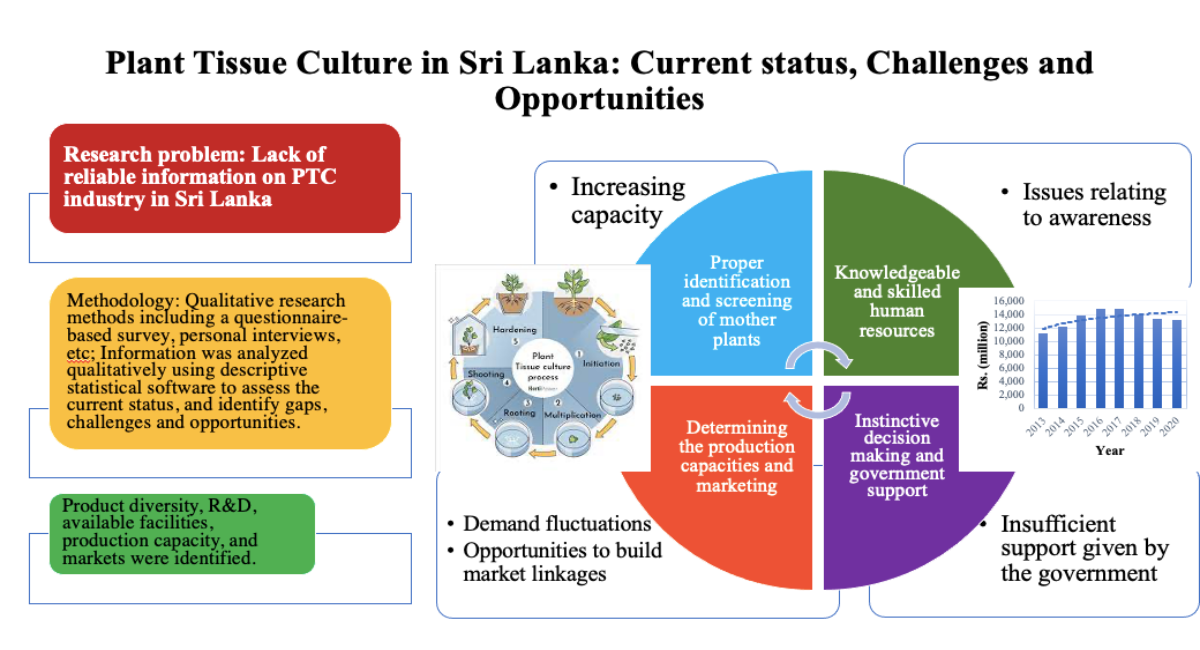
Lack of reliable information on PTC industry in Sri Lanka is hampering the advancement of the technology. Hence, this study attempted to assess the current status of PTC industry in Sri Lanka in order to ascertain the type and the level of interventions needed to broaden the horizons of the industry. Data of last 05 years were collected through qualitative research methods including a questionnaire-based survey, personal interviews, etc. and personal interviews to identify product diversity, R&D, available facilities, production capacity, and markets. Information was analyzed qualitatively using descriptive statistical software to assess the current status, and identify gaps, challenges and opportunities. COVID pandemic and the economic crisis had a heavy toll on the PTC industry. Six major challenges experienced by business owners were identified as increasing capacity, opportunities to build market linkages, demand fluctuations, issues relating to awareness and insufficient support given by the government. Proper identification and screening of mother plants, determining the production capacities and marketing, knowledgeable and skilled human resources, were identified as important contributory factors for success. Development strategies identified mainly include instinctive decision making and government support. Embracing the significant trade achievements through resource reallocation, prioritization and improvisation processes at individual, family group, inter-organizational levels and across these levels need to be regulated through a responsible authority. These interpretations and recommendations of this research can be utilized both by the policy makers and public and private sector organizations for decision making purposes targeting commercial scale advancements.
Keywords:
Industry
; micropropagation
; plant tissue culture
; Sri Lanka
1. Introduction
Since early 1990s, Sri Lanka has been gaining ground progressively in plant tissue culture (PTC) sector especially with the state-of-the-art technology [1]. A wide range of plants are mass propagated through PTC by both public and private institutes and organizations for both domestic and overseas markets. Currently, Sri Lanka’s TC plant exports depend on some specific popular varieties. Limitations in the product assortment is identified as a major barrier in expanding the export-oriented floriculture sector as well [2].
The beginning of PTC research in Sri Lanka is traced back to the early 1970s, initiated by the researchers of crop research institutes who were trained abroad in this relatively latest field at that time. Until early 1980s, research was mainly confined to crop research institutes and focused mainly on developing PTC propagation protocols. The Central Agricultural Research Institute (CARI) of the Department of Agriculture (DoA), the Department of Export Agriculture, Faculty of Agriculture of the University of Peradeniya and most crop research institutes were equipped with PTC facilities and extensive research was undertaken during early 1980s. The Department of National Botanic Gardens was the first institution to establish a micro propagation laboratory in Sri Lanka [3]. The first commercial tissue culture laboratory was established by the Ceylon Tobacco Company during early 1980s for mass propagation of orchid plants and other crops. Since 1990s the commercial production of TC plants started making a rapid progress for plants having a high commercial value such as strawberries orchids, anthurium, foliage plants, etc. [4]. The techniques used in commercial production of plants have been optimized for high proliferation rates with lesser variations.
The export profile of TC plants indicates the need for market expansion, especially to the Middle East, Europe, Japan and Singapore. In order to reach these markets some major constraints in production must be addressed. Among these constraints, the non-availability of quality planting material in sufficient quantities to produce export grade products and high cost of production and export are important factors to be addressed. The under-exploited market and untapped potential for exports are mainly attributed to the non-availability of adequate quantities of the desired variety of export grades and also the relatively high costs. Although a few commercial enterprises operate on large scale exports, due to the limited capacity majority of exporters depend on the products from small-scale producers, middle-collectors, and agents. Hence, there is a high chance in product quality variations. Further, majority of small producers are not commercially oriented for an export market due to the lack of high-level on-site technology, credit facilities and knowledge on marketing strategies and thus, there is a high need of technology transfer, input supply and introducing marketing linkages to increase non-traditional agricultural exports.
This study has been conducted with the objective to document the current status, challenges and opportunities in order to explore the facilities, practices and potential of commercial production of quality planting material that will determine the prospects for improved commercial production of TC plants. Moreover, lack of information on PTC sector in Sri Lanka is a huge drawback for the improvement and development of this sector, therefore, the information gathered through this study would be highly useful for the policy makers in decision making with regard to a successful PTC related income generation procedure.
2. Results
2.1. Participant Details and Other Information Collected
According to the collected information 27 companies were found to be involved in PTC sector in Sri Lanka and among them mainly 04 companies were identified as large-scale companies which produce more than 01 million plants per annum. It was recorded that the majority of these companies have continued their business for more than five years.
The data collected for the year of establishment, market, total workforce, education qualifications of the employees, and total lab area (sqft) of selected 10 companies are given in the Table 2. The codes were used in place of company names to protect their property rights.
2.2. Range of Plant Products (Varieties) Propagated during 2020–2022
The surveyed data presented in Table 3 highlight that a majority of the growers are supplying their PTC products to the local market, while a few supplies to the international market. Banana, foliage, aquatic plants and strawberry are supplied to both local and international markets. Among the countries the propagated plants exported are USA, Canada, UK, Netherlands, Germany, Poland, Switzerland, Qatar, Pakistan, Maldives, Japan, Thailand, Australia, Israel, South Africa, South Korea, Denmark & Russia. Further, these companies have been continuing their business for more than five years and received Rs. 27,467,220.00 worth of government assistance during 2019 to 2020 for PTC activities.
2.3. Contribution to the Gross National Income (GNI) and Gross Domestic Production (GDP)
According to the Central Bank Reports (2014 – 2016), plant propagation and related activities have contributed to the Gross National Income (GNI) and Gross Domestic Production (GDP) as shown in Figure 1 and Table 4. A negative contribution to the growth of GDP in 2021 was observed. Moreover, a significantly increased value of 0.7% contribution from plant propagation and related activities to the GDP in 2018 and an average of 0.2% is reported during 2019 to 2021.
Performance analysis relating to GNI for the period 2013 – 2020 showed that the GNI increased most significantly during 2015-2018 in comparison to 2013 and 2014. A considerable decrease of GNI is observed during 2019 and 2020.
2.4. Contribution of Public Institutes to the PTC sector of Sri Lanka
The Department of National Botanic Gardens was the first institution to establish a Micro propagation laboratory in Sri Lanka [3]. Currently, research and routine plant tissue culture production on floricultural plants are undertaken at this laboratory for Exacum spp., Memoecylon ceylanicum, Cryptocoryne spp., Acrotrema spp., Impatience spp., Didymocarpus humboldtianus, Osbekia spp., Anoectochiles setaceus, and Keudrickia walkeri. Moreover, monthly training programs on tissue culture with theory and practical demonstration are conducted for individuals interested in initiating a tissue culture facility of their own. Further, this department facilitates demonstrations on tissue culture for school children and supports to conduct undergraduate and postgraduate research projects.
The Department of Agriculture (DoA) functioning under the Ministry of Agriculture is one of the largest government departments with a high-profile community of agriculturists and agricultural scientists and a network of institutions covering different agro-ecological zones island wide. Agricultural research, technology dissemination, seed and planting material production and distribution and regulatory services are the major functions of this department. The DoA is mainly consisted of 16 institutes and centers related to agriculture. PTC related activities carried out different institutes of DoA are summarized below in Table 5.
The public university system that includes 16 universities are engaged in plant tissue culture research. Research mainly focuses on developing novel protocols for the micropropagation of various economically important plants and mutation breeding Further, Bandaranayake Memorial Ayurveda Research Institute is involved in mass propagation and conservation of local medicinal plants.
Majority of the PTC Producers have been registered in Association of Sri Lanka Growers of Plant Tissue Culture (ASGROPTIC) which was formed in 2019, at Sri Lanka Institute of Information Technology (SLIIT) as an outcome of a research project conducted by School of Natural Sciences, SLIIT, funded by World Bank offered through AHEAD Operations [19].
3. Discussion
Analysis of data gathered from the thought-provoking interviews, revealed 06 major challenges experienced by business owners. During the last 05 years, when coping up with the COVID pandemic and financial crisis that the country has been going through, the PTC industry faced many constraints and challenges. Even though the industry is passing 50 years since its establishment in Sri Lanka in 1970, still the industry is observed and experienced with certain drawbacks in key areas of its development due to the challenges described below.
3.1. Drawbacks
3.1.1. Capacity
Capacity of a tissue culture business is very important to compete in the market. Proper identification of mother plants and having a clear idea about the capacities of production and marketing are mandatory. Due to the high capital investment and cost of production, it has been difficult to reach the expected targets in profit making. Timely understanding about the requirement of the market and increasing the capacity of the business ensuring a continuous supply are major challenges in this context.
DGM of CM 02 stated that “Due to lack of proper coordination between and among the PTC growers in Sri Lanka, there are certain issues emerged. One of them is that most of newly emerging companies do not have the capability for providing high quantities of plants to the market. There is a surplus of certain plant varieties while scarcity of certain other varieties in the market. Therefore, proper decision making and establishing a proper mechanism to coordinate these companies are very important in this context.”
Further capital investment of establishing a PTC business has increased due to the financial crisis Sri Lanka is going through currently threatening emergence of new establishments while it has been a challenge to maintain the production capacity of existing middle level establishments. Forex trading has become problematic due to government restrictions on purchasing and export. There are only 3-4 large scale producers who have an annual production capacity of more than 01 million plants. Therefore, there should be proper procedures in place for newly established companies to increase their capacities.”
3.1.2. Opportunities to Build Market Linkages
Strong market linkages are major contributory factors for the development of this sector. As there are only few companies reported to have well-built relationships with the international market and get along successfully in the business, there is a high requirement of searching and linking with both local and global markets to bring extra income to the country. Entrepreneurs emphasized the need to establish strong networking and cooperation among laboratories, PTC companies, markets, and the relevant authorities in order to cater for the demand with a continuous supply of the products (Pers. Com. MD of CM 01, PM 2 & 4, CEOs of CM 09 and CM 10).
3.1.3. Demand Fluctuations
The COVID- 19 pandemic and financial crisis resulted in high price fluctuations of fuel and transport making it difficult to predict the cost of production. As global trade was affected due to pandemic, the demand for most of the products fluctuated mainly downwards. Restrictions on imports/exports and elevated freight charges aggravated the situation. The small- scale production facilities were the most affected. The situation is changing and currently, there is a high demand in both local and international markets. Locally the highest demand is for PTC banana since the market price for banana has increased and farmers are shifting from other crop cultivations to banana cultivation. Also to meet the increased demand, the majority of the companies involved in the study stated that they are in the process of expanding their laboratory facilities to meet the demand (Pers. Com. MD of CM 01).
3.1.4. Issues Relating to Awareness
Adequate and exact knowledge on conducting PTC related research and business is a challenge. It has been identified that there are certain growers who initiate their business without proper knowledge on certain important aspects of the industry, and hence could not survive for long in the business (Pers. Com. MD of CM 04). Capabilities and knowledge of human resource management, production, hand-on experience on techniques, engineering and business management are important aspects to be thorough specially by the owners of the business.
Policymakers (PM 1 and 3) also stated that some producers do not have enough training to start a PTC business. Their decision-making ability at crucial and urgent situations and their behaviors when dealing with international market highly affects the foreign exchange earnings to the country. Knowledgeable human resources are available since TC plant production methods have been introduced into secondary level school curriculum and NVQ level 4 syllabuses during recent past. Hence, technical expertise can be easily generated by providing intensive training for this cohort of youth. Although there are a number of government institutes providing basic knowledge and training needed for a start-up, microfinancing, development of market linkages, etc. need to be addressed. Accordingly, government policies should be developed, or existing policies should be aligned to facilitate these businesses. Considerable number of employees depend on this type of businesses and moreover, closing of these businesses affects many families as well.
3.1.5. Insufficient Support Given by the Government
The common perception of all the participants about the government involvement for the development of the PTC industry is the lack of support from the government side. The fragmented nature of the government institutes and the ministries involved in the industry i.e. ministries of Agriculture, Trade, Science and Technology, Environment, etc. make it difficult for the industries to foster timely purchases, imports, and exports, etc. One good example raised was the purchase of ethanol for sterilization purposes. Although Sri Lanka produces ethanol in adequate quantities, lack of coordination between different government agencies retard the purchasing process (Pers. Com. MD of CM 01). Currently electricity is expensive in Sri Lanka. To maintain a sterile environment, plant house facilities, etc. PTC industry put a high demand on electricity. Chemicals used in culture media preparation are also costly. Government intervention to provide electricity, water, chemicals, etc. at a reasonable subsidized cost is important for the survival of the industry (Pers. Com. CEO of CM 06).
Although the capital cost of establishing a PTC industry is very high, it takes 3-5 years to cover such expenditure and start making profit. Hence, for initial establishment and for further improvement of the laboratory conditions, government support in the form of loan facilities offered at very concessional rates would advance the sector. The current interest rates of the bank loans are high and bank procedures are very stringent. There is no special credit line allocated for the sector. When government is in a financial crisis situation it will not be easy to provide all these concessions, but the sector need the government to understand the importance of this arena and provide at least basic requirements and procedure and policy establishment that does not demand financial pressures. (Pers. Com. PME, CM 03). The government has to move beyond their certain decisions and regulations and have a national focus on the requirement of the industry to increase foreign income level. The scientific research on this industry should be increased to reach the international customer expectations. Proper loan schemes need to be formed to support at crisis and pandemic situations” (Pers. Com. CEO of CM 10).
3.1.6. Instinctive Decision Making
As an emerging technology, the PTC has a great impact on both agriculture and industry. Some of the businesses handle the demand in a very effective way while few cannot. The root cause found to be the inability of instinctive decision making and market prediction. Self-reflection to identify weaknesses and strengths and informed market prediction are the most crucial factors during a crisis situation.
3.2. Development Strategies Identified
Based on the weakness identified, development strategies have been identified for the sustenance and betterment of the industry.
3.2.1. Product Diversification
During post-covid period the industries moved ahead with a variety of plants offering a flexible selection for the customers. Research and development can play a big role in this so that the industry will not stagnate with less choice. Being a tropical country with a huge selection of plant varieties, it is not difficult to introduce new species to the market. Further mutation breeding for novel characters of the existing plants is a good approach to introduce novelty into the industry. Hence, diversification and value addition should make the priorities in the industry. Taking risks in any industry is very challenging and a wrong move could jeopardize one’s industry. Hence, most of the small-scale industries opt for treading with caution using the traditional varieties. Developing a platform to link research and development of academic institutes, where such research are being carried out, with the industry is the need of the time.
3.2.2. Government Support
Embracing the significant trade achievements through resource reallocation, prioritization and improvisation processes at individual, family group, inter-organizational levels and across these levels need to be regulated through a responsible authority. Making available the right technologies, venturing into new markets, facilitating additional capital requirement for value addition to the products needs government intervention. Providing state lands and uneconomic lands on lease to entrepreneurs, establishment of Export Promotion Villages under sponsorship by Export Development Board (EDB), provision of subsidies and credit facilities are needed to be considered. Establishment of medium scale commercial farms by entrepreneurs can be encouraged and more importantly, small farmer participation through linkage with large commercial farms and/or exporters need to be encouraged.
During past few years, EDB and other related authorities have taken initiatives to assist the growers/ exporters to promote new/innovative products to the international market through a World Bank project received to Sri Lankan government for agriculture sector modernization. This identified export-oriented PTC sector as a potential area to be assisted. Further, National Botanical Gardens is engaged in developing new floriculture varieties and EDB is assisting the grower/exporters to commercialize these products aiming the international market. A National Committee for Floriculture Research & Developments consisting of public & private industry stakeholders has been established to streamline the resources and set up research priorities for the industry. An Annual Symposium is organized by the Sri Lanka Council for Agriculture Research Policy (SLCARP) and Department of National Botanic Gardens (DNBG) providing an opportunity to present important floriculture and tissue culture research findings done by the scientists attached to universities and research institutions to the industry stakeholders. EDB initiated a new HS code for the TC plants to assist the TC plant exporters from 2022. Yet it was emphasized by the industries that these initiatives taken by the government have not properly reached the PTC growers and still there are some gaps that need to be addressed. Follow-up of these initiatives and exploring new dimensions in this industry are very crucial for the developmental strategies. Also at this juncture, providing post-crisis support from the government is required to cope with the financial condition of local small growers Pers. Com. PM 2). It is stressed that policy level discussions should be held between the industry and government sector with a high scale of transparency. Government officials need to be more aware on the importance of the development of this PTC sector as an income generating industry. Finally, the majority of the participants suggested and insisted on establishing a prominent and active government authority to mitigate challenges and increase the potential of this industry.
4. Materials and Methods
Methodology of the study is mainly based on information retrieval from published sources, and websites, conducting interviews with persons engaged in TC work in public and private sectors and obtaining feedback through a structured questionnaire. The study was conducted during December, 2022 to April 2023. Data were collected from 10 PTC growers (Table 2) from private sector establishments situated in 09 districts (Colombo, Kegalle, Kandy, Nuwara Eliya, Gampaha, Kalutara, Badulla, Kurunegala and Matara) and the samples were selected randomly. Information on government institutes engaged in PTC research and production were collected from respective websites and published literature. Information on constraints such as finance, land, technology, planting materials, institutional supports and other factors for qualitative analysis were collected through direct and open-ended questionnaires and interviews.
Considering the emergence of saturation of themes and aspects, the number of interviews conducted was decided as per Saunders et al., 2017 [5]. The sampling was done purposively; eight to ten is recommended as an appropriate number of participants [6] and opportunism and convenience were contributing factors in choosing the purposive sample for this study [22]. As Creswell & Creswell (2018) reported participants’ engagement and willingness to share their information and experiences during the PTC related operations and management were obtained [7]. Accordingly, ten in-depth interviews were conducted representing ten PTC businesses. Three in-depth interviews with policymakers were conducted to triangulate our data and findings (Table 1). Adhering to the country’s current transportation issues, online video conferencing application (Zoom) was used as the interview platform. Since the commercial growers and the policy makers preferred not to expose their identities, they have been coded for convenience and to respect their privacy.
Interviews were conducted by directing questions of open-ended nature and used a semi-structured protocol. The reliability of the study was guaranteed and protected objectivity when developing the protocol [8]. The protocols were developed allowing the participants to tell their stories on PTC business and in-depth discussions were conducted on firms’ performance during operations, challenges, coping strategies (internal and external) and lessons learned.
According to the Constructivist Grounded Theory Approach (CGTM), the given overarching research aims were achieved [9]. CGTM, a research method that focuses on generating new theories through inductive analysis of the data gathered from participants rather than from pre-existing theories. This helps to maintain an active interaction with the research participants enabling interpretation of participants’ views and opinions meaningfully. The study reviewed existing literature to understand strategies used by businesses during their operations. The interviews were recorded and transcribed verbatim to obtain the data for the analysis. The analysis of data and information was initiated with reading and re-reading of the transcribed interview to gain an appreciation and familiarize the situations followed by a free textual analysis which was performed to highlight the potential significant points. The highlighted points were then categorized to form common clusters of meaning. The holistic reflective analysis of these categories led to the emergence of themes and sub themes [10] that appeared to be salient to a particular interview (intra-case themes) which was followed by a meta-level analysis across the interviewees (inter-case themes). The analytical findings include direct quotations from the empirical material generated from the interviews to enable the reader to obtain a detailed view of the participants’ voices. The output of the survey and other relevant information are summarized in the results and discussion section.
5. Conclusions
Our findings mainly pointed to the fact that this industry do not have a methodical approach to manage any crisis situation. An environment that is based on cohesion, flexibility, communication, collaboration and government support needs to be established to deal with business issues. However, Mokhbar et al. (2017) indicated that businesses mostly fail at the initiation due to the lack of capability to plan its progression and transitioning phase of the business [21]. Each component of the business need to be carefully planned and updated. Otherwise the chances of collapsing the business are high which will drastically affect the stakeholders such as employees, suppliers, creditors and so on and create a public scandal. Thus, in a dynamic environment, strategic planning needs to be oriented to the long-term sustainability performance, analyze all investments and risk associated and focus on capital preservation and short-term drive actions. All these notes mean that PTC businesses should be evaluated to understand the future growth predictions, and it should be executed through a professional risk assessment and evaluation authority. Thus, government investigations need to protect PTC businesses to maintain continuous foreign exchange earnings and to protect employees’ social wellbeing. The proper international channels need to be developed for PTC producers and incentive schemes to be developed to improve the available PTC plant producers’ laboratories. Financial assistance already given through the agriculture modernization project has only granted assistance to a limited number of PTC producers. Continuous monitoring of such assisted facilities need to be conducted for long term sustainability of the establishments. Land has been identified as a main requirement for expansion of production. Mother stocks maintenance, plant house and warehouse facilities, etc. puts a heavy demand on land. Being a small country the land is a restricted resource. Introducing other alternatives such as vertical gardening, hydroponics/aeroponics, etc. may lessen the demand for land, yet with a further increase in the capital investment. Also, a chain of suppliers can be established by large scale companies by subcontracting certain components of production, creating more opportunities for economic growth. Careful monitoring of the quality of such subcontractors need to be established to prevent any market failures. Further, Sri Lanka owns a high genetic diversity of food crops and ornamental plant varieties where most of the species fall under underutilized crops. Developing an export-oriented PTC sector with regular inputs of new plant varieties and innovative products targeting international market is very critical and important to bring an additional income for small growers and foreign exchange to the country.
Author Contributions
Conceptualization by C.M. Nanayakkara, methodology by C.M. Nanayakkara, Chandra Padmini & Duwini Padukkage, formal analysis, Duwini Padukkage; writing-original draft preparation, C.M. Nanayakkara & Duwini Padukkage; writing-review and editing by C.M. Nanayakkara, Chandra Padmini & Duwini Padukkage. All authors have read and agreed to the published version of the manuscript.
Data Availability Statement
All authors agree with MDPI Research Data Policies.
Acknowledgments
We acknowledge Sri Lanka Council for Agricultural Research Policy (SLCARP) and Dr M.T. K. Gunasekare of Ministry of Plantation Industries for providing support in data collection.
Conflicts of Interest
The authors declare no conflict of interest.
References
- Available online: https://www.srilankabusiness.com/floriculture/floriculture-products-related-organizations.html; https://www.srilankabusiness.com/floriculture/tissue-cultured-plants.html (accessed on 15.02.2023).
- Beneragama, C., Peiris, S. Research and development and innovations in floriculture: lessons from the market giants for developing countries like Sri Lanka. Acta Horticulturae. 127-138. [CrossRef]
- Available online: https://www.botanicgardens.gov.lk/service/micro-propagation/ (accessed on 16.02.2023).
- Reginald, J. S. Plant Tissue Culture in Sri Lanka; A report on the industry, Commercial Small Farm Development Agricultura Cooperative Development Project (ACDI) Colombo, Sri Lanka, Financed with Resources Provided by USAID/Sr Cooperative Agreement Mo. (1990) 383-0101-A-00-006.
- Saunders, B.; Sim, J.; Kingstone, T.; Baker, S.; Waterfield, J.; Bartlam, B.; Jinks, C. Saturation in qualitative research: Exploring its conceptualization and operationalization. Quality & Quantity, (2017). 52(4), 1893–1907. [PubMed]
- Smith, J. A.; Eatough, V. Interpretative phenomenological analysis. In G. M. Breakwell, S. Hammond, C. Fife-Schan, & J. A. Smith (Eds.), Research Methods in Psychology. Sage (2006).
- Creswell, J. W.; Creswell, J. D. Research Design: Qualitative, Quantitative and Mixed Methods Approaches (5th ed.). SAGE Publications, Inc, (2018).
- Yin, R. K. Case Study Research: Design and Methods. Sage publications (2003).
- Charmaz, K.; Belgrave, L. L. Thinking about data with grounded theory. Qualitative Inquiry, (2019). 25(8), 743–753. [CrossRef]
- Clarke, V.; Braun, V. Thematic analysis. The Journal of Positive Psychology, (2017). 12(3), 297–298. [CrossRef]
- Central Bank Reports of Sri Lanka 2013, 2014, 2015, 2016, 2017, 2018, 2019, 2020 and 2021.
- Available online: https://doa.gov.lk/hordi-research-programs-2016/ (accessed on 17.03.2023).
- Available online: https://cri.gov.lk/en/tissue-culture-division/ (accessed on 15.02.2023).
- Available online: https://www.tri.lk/plant-breeding/ (accessed on 22.02.2023).
- Available online: http://www.rrisl.gov.lk/depart_e.php?depid=8 (accessed on 25.03.2023).
- Available online: http://www.iti.lk/en/key-divisions/research-development/food-technology/technologies-available.html (accessed on 21.02.2023).
- Available online: https://www.nifs.ac.lk (accessed on 10.12.2022).
- Available online: https://dea.gov.lk/?TSPD_101_R0=08b8f4acecab20004d4214764c2743d1ef6450a90eaa5e922027bae2f1cdac6b301655bebab6a719087a79d30914300031b2ee8e991f46e84b81032c3108b8280df5a2952458125d032fa05afe5d9beaa4c74051eaea976c35dcbf13e3f05504 (accessed on 17.02.2023).
- Available online: https://www.sliit.lk%20tissue%20culture (accessed on 23.03.2023).
- Available online: http://www.slcarp.lk (accessed on 18.03.2023).
- Mokhbar, M.; Gi Gi, T.; Abdul Rasid, S. Z.; Vakilbashi, A.; Mohd Zamil, N.; Woon, S. Y. Succession planning and family business performance in SMEs. Journal of Management Development, (2017). 36(3), 330–347. [CrossRef]
- Patton, M. Q. Qualitative Evaluation and Research Methods. Sage Publications. (1990).
- Available online: https://doa.gov.lk/hordi-division1-plant-breeding-research-and-publications/ (accessed on 10.02.2023).
- Available online: https://doa.gov.lk/spmdc-home-new/ (accessed on 11.02.2023).
- Available online: https://doa.gov.lk/fcrdi-rardckilinochchi-subdivisions-plantbreeding/ (accessed on 11.02.2023).
- Available online: https://doa.gov.lk/rrdi_div_biotechnology/ (accessed on 12.02.2023).
Figure 1.
Gross National Income from Plant Propagation by Industrial Origin at Current Market Prices (a) Based on the GDP estimates (base year 2010). Source: Central Bank Reports 2014 – 2021.
Figure 1.
Gross National Income from Plant Propagation by Industrial Origin at Current Market Prices (a) Based on the GDP estimates (base year 2010). Source: Central Bank Reports 2014 – 2021.
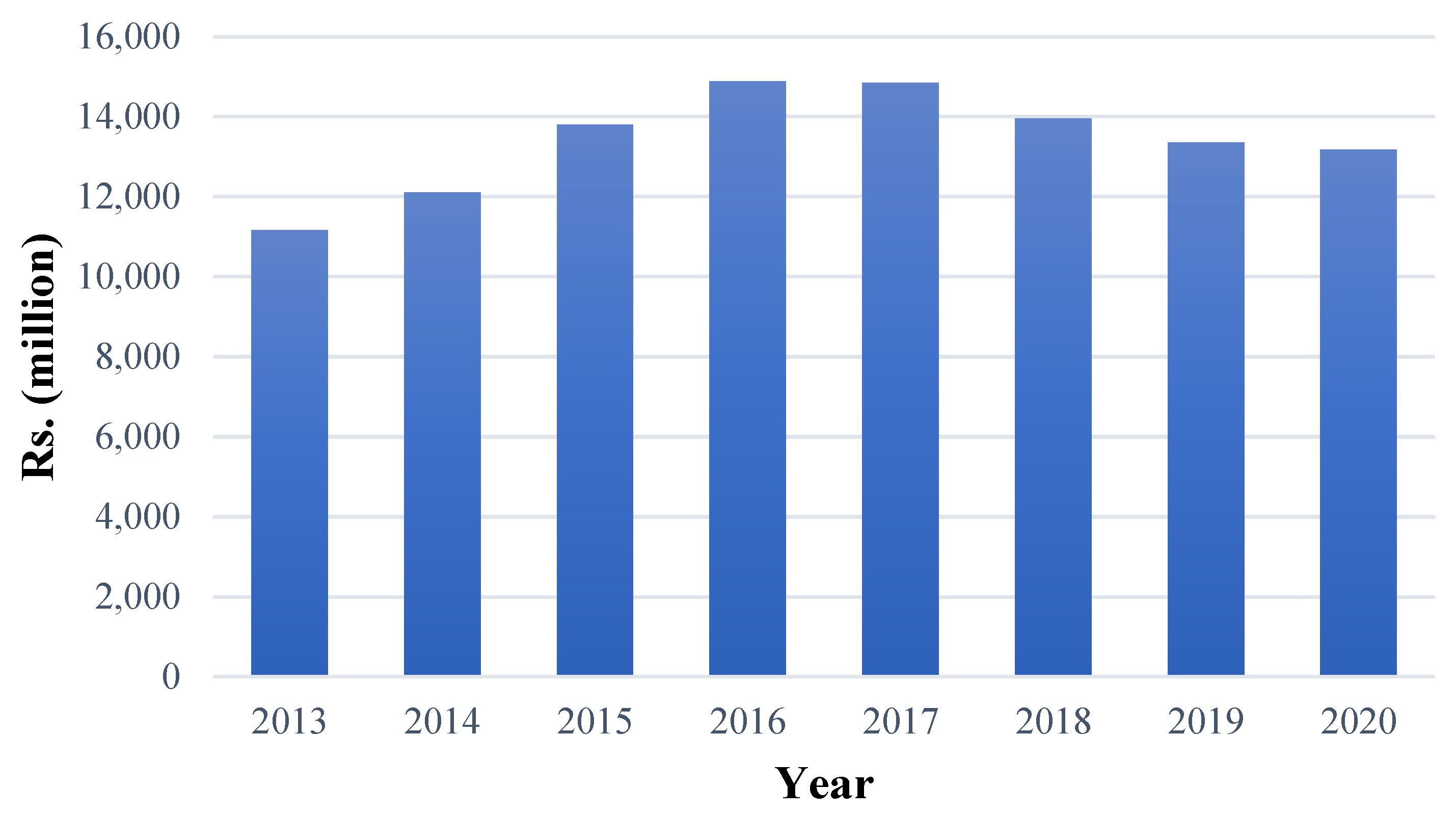

Table 2.
Participant details of exporters and local producers, capacity and other information.
| Interview Code |
Interview was held with | Gender | Education level | Year of establishment | Business with (market) | No. of employees | Education qualifications of employees | Initial space of the lab (sqft) | Present extent of the lab (sqft) | Registration of the company | Membership at any association related to PTC |
|---|---|---|---|---|---|---|---|---|---|---|---|
| CM 01 | MD | Male |
Degree | 2009 | Local | 03 | Mgt: BSc, Opt: Undergraduate, NVQ level 5/6 | 700 | 3200 | Business Seed Act | ASGROPTIC |
| CM 02 | DGM | Male |
Degree | 2006 | International and local | 120 | Mgt: MSc, MBA, BSc, Opt: Below O/L, O/L, A/L, NVQ level 5/6 | 2,500 | >10,000 | Business Seed Act | ASGROPTIC |
| CM 03 | PME | Male |
Degree | 2004 | International and local | 70 | Mgt: MSc, MBA, BSc Opt: A/L, NVQ level 5/6 |
3,000 | 20,000 | Business Seed Act | ASGROPTIC |
| CM 04 | MD | Female | Degree | 2018 | Local | 05 | Mgt: BSc Opt: A/L |
600 | 800 | Business Seed Act | ASGROPTIC |
| CM 05 | CEO | Male | Degree | 2015 | International and local | 08 | Mgt: MPhil, BSc Opt: A/L |
1500 | 6,000 | Business Seed Act | ASGROPTIC |
| CM 06 | CEO | Male | Degree | 2017 | Local | 05 | Mgt: BSc Opt: NVQ level 5/6 |
2,500 | 3,000 | Business Seed Act | ASGROPTIC |
| CM 07 | CEO | Male | Degree | 1999 | Export | 40 | Mgt: MSc, BSc Opt: Diploma |
2,000 | 5,000 | Business Seed Act | ASGROPTIC |
| CM 08 | CEO | Male | Degree | 2018 | Local | 06 | Mgt: BSc Opt: A/L |
1,500 | 1,500 | ASGROPTIC | |
| CM 09 | MD | Male | Degree | 2007 | Local | 07 | Mgt: BSc Opt: A/L, NVQ 5/6 |
2,000 | 8,000 | Business Seed Act | ASGROPTIC |
| CM 10 | CEO | Male | Degree | 2018 | Local | 08 | Mgt: BSc Opt: A/L |
1,500 | 7,500 | Business Seed Act | ASGROPTIC |
Note: Chief Executive Officer (CEO); Managing Director (MD); Production Management Executive (PME); Deputy General Manager (DGM); Association of Sri Lanka Growers of Plant Tissue Culture (ASGROPTIC); Management staff (Mgt); Operators (Opt); Company (CM).
Table 3.
Range of plant products (varieties) propagated during 2020-2022 for local and international markets.
Table 3.
Range of plant products (varieties) propagated during 2020-2022 for local and international markets.
| TC crop | Anthurium | Orchid | Banana | Foliage | Gerbera | Pineapple | Aquatic plants | Spices | Bamboo | Vanilla | Ginger | Aloe Vera | Strawberry |
|---|---|---|---|---|---|---|---|---|---|---|---|---|---|
| No. of companies engaged | 05 | 06 | 08 | 01 | 01 | 01 | 03 | 01 | 01 | 01 | 02 | 01 | 02 |
| Market (International/ Local) | Local | Local | Int/ Local | Int/ Local | Local | Int | Int/ Local | Local | Local | Local | Local | Int | Int/ Local |
Table 4.
Gross Domestic Product of Plant Propagation by Industrial Origin at Constant (2010) Prices.
Table 4.
Gross Domestic Product of Plant Propagation by Industrial Origin at Constant (2010) Prices.
| Year | 2016 | 2017 | 2018 | 2019 | 2020 | 2021 |
|---|---|---|---|---|---|---|
| Growth (%) | -0.2 | 0.4 | 0.2 | 9.2 | 0.4 | -4.8 |
| Contribution to Growth (%) | -0.1 | 0 | 0 | -0.02 | 0 | -0.01 |
| As a Percentage of GDP (%) | 0.1 | 0.1 | 0.7 | 0.2 | 0.3 | 0.2 |
Source: Central Bank Reports 2016 – 2021.
Table 5.
PTC related activities of some selected public institutes.
| No. | Institute | Major activities on PTC research |
|---|---|---|
|
01 |
Department of Agriculture [12,23,24,25,26] |
Seed Certification & Plant Protection Centre; Plant Genetic Resources Centre In-vitro conservation of germplasm. Rresearch on various aspects of in-vitro conservation and utilization of plant genetic resources. |
|
Field Crops Research and Development Institute (Sub centers are: Grain Legume and Oil Crops Research and Development Centre, Regional Agriculture Research & Development Centre, Agriculture Research Stations, Adaptive Research Centre) Conducts awareness program, provide research facilities for external parties such as universities, agriculture schools, technical colleges and schools; Optimization of protocol for plant regeneration research on inter-specific hybridization and embryo rescue techniques | ||
|
Seed and Planting Material Development Centre Basic and certified seed potato production using tissue culture technique, distribution of seed and planting materials | ||
|
Horticultural Crops Research and Development Institute (Sub Centers are: Regional Agriculture Research and Development Center, Agriculture Research Station (regional), Agriculture Research and Development Center, Adaptive Research Units (regional), Food Research Unit) Anther culture technology development for bell pepper, and Gerbera, conducting awareness programmes on tissue culture techniques and training programs for farmers, students and officers | ||
|
Rice Research and Development Institute Apply advanced technologies to solve important issues in Sri Lankan rice cultivation through developing rice varieties for biotic, abiotic stresses tolerance and quality aspect to cater due national demand: Provides research facilities and conducts awareness programmes for external parties. | ||
| 02 | Coconut Research Institute - CRI – Lunuwila [13] | Development of in vitro technologies for clonal propagation mainly using ovary derived calli and dihaploid plant production via anther culture, exchange and in vitro conservation of germplasm for crop improvement. Two major breakthroughs in coconut tissue culture are (i) Development of a protocol for in vitro plant regeneration using unfertilized ovary, (ii) Development of a protocol for production of dihaploid plants via coconut anther culture, both mark the milestones in the history of coconut tissue culture Also, ‘Dikiri, coconut a Sri Lanka variety that has a very thick and soft kernal is a delicacy among people. Development of a reliable embryo rescue technique for Dikiri coconut is another task of CRI |
| 03 | Tea Research Institute - TRI – Talawakele [14] | Development of high yielding tea cultivars incorporated with other desirable characteristics that are suitable for various tea growing agro-ecologies in Sri Lanka. Development of embryo rescue protocols for wide hybridization programmes is in its main research agenda. |
| 04 |
Rubber Research Institute – RRI - Agalawatthe [15] |
Attempting to re-initiate somatic embryogenesis and to evaluate the effect of different parameters that significantly influence somatic embryogenesis in high yielding clones of Hevea grown in Sri Lanka Recently developed protocols for somatic embryogenesis and plant regeneration have opened up new avenues and tools for genetic transformation aiming increased rubber biosynthesis and timber volume, resistance to diseases, various abiotic stresses, etc. |
| 05 | Industrial Technology Institute (CISIR) under the Ministry of Industries [16] | Involved in rice tissue culture and successfully developed tissue culture protocols for and traditional rice varieties of Sri Lanka. Offers a wide range of tropical and temperate tissue cultured plants with an incomparable quality. |
| 06 | National Institute of Fundamental Studies – NIFS – Kandy [17] | Mass propagation of dry forest tree species through micropropagation for restoration of degraded forests with species which have high economic value and threatened species that were selected to increase their density in dry forests to ensure their ecological restoration and increase biodiversity. Further, involves in mass propagation of Stevia rebaudiana, a natural sweetener and a valuable medicinal plant aiming at promoting the use of Stevia derivatives as an alternative to sugars in the food industry |
| 07 | Department of Export Agriculture [18] | Mass propagation of export agriculture crops: pepper, cinnamon, ginger, turmetic, garcinia, agarwood |
Table 1.
Interviewee profile of policy makers.
| No. | Status of the policy maker | Organization | Gender | Code |
|---|---|---|---|---|
| 01 | Director | Government | Male | PM 1 |
| 02 | President | Floriculture Association of Sri Lanka |
Male | PM 2 |
| 03 | Coordinator | Government | Female | PM 3 |
| 04 | Agri business specialist | Government | Female | PM 4 |
Disclaimer/Publisher’s Note: The statements, opinions and data contained in all publications are solely those of the individual author(s) and contributor(s) and not of MDPI and/or the editor(s). MDPI and/or the editor(s) disclaim responsibility for any injury to people or property resulting from any ideas, methods, instructions or products referred to in the content. |
© 2023 by the authors. Licensee MDPI, Basel, Switzerland. This article is an open access article distributed under the terms and conditions of the Creative Commons Attribution (CC BY) license (http://creativecommons.org/licenses/by/4.0/).
Copyright: This open access article is published under a Creative Commons CC BY 4.0 license, which permit the free download, distribution, and reuse, provided that the author and preprint are cited in any reuse.


