Preprint
Article

This version is not peer-reviewed.

Fermented Palm Kernel Cake Enhances In Vitro digestion of Tropical Forage fibers and Reduces Methane Production

Submitted:

01 November 2024

Posted:

07 November 2024

You are already at the latest version

Abstract

Agro-industrial lignocellulosic waste can be bioconverted to fungal biomass and then utilized as an alternative feed for ruminants, with potential for ruminal methane (CH4) mitigation. This study evaluated the changes in the enzymatic expression and nutritional value of palm kernel cake fermented with Pleurotus ostreatus (FPKC), as well as the differences in the in vitro fermentation parameters and methane production in diets based on tropical forages with the inclusion of FPKC and/or tropical forage legumes. The highest activity of laccases and cellulases occurred on day 13 with values of 0.75 ± 0.09 U/g and 266.7 ± 20.8 U/g, respectively. The biological pretreatment decreased (p< 0.05) the contents of neutral detergent fiber (NDF), acid detergent fiber (ADF) and lignin by 29%, 20.5% and 46.6% respectively, while those of crude protein (CP) increased by 69.6%. The inclusion of FPKC and legumes increased (p<0.05) the degradation of DM (DMD), NDF degradability, ADF degradability and CP degradability in the range of 16.9% to 17.3%, 10.9% to 23.8%, 25.7% to 27.5 % and 11.6% to 30.4%, respectively. Production of acetate decreased (p < 0.05) and that of propionate increased (p < 0.05), resulting in a low A:P ratio in the FPKC diets. The total synthesis of CH4, CH4/g incubated DM and mL CH4/g degraded DM decreased (p< 0.05) in the diets with FPKC and legumes between 15% to 24.3%, 15.6% to 24.9% and 27.3% to 35.9%, respectively. In conclusion, the combination of FPKC with legume species in tropical diets for ruminants reduces in vitro methane emissions.

Keywords: 
;  ;  ;  ;  ;  

1. Introduction

Enteric fermentation is one of the most important sources of greenhouse gases (GHG) in the Agriculture, Forestry and Other Land Use (AFOLU) sector, with 3.0 gigatons CO2-eq emitted annually, which represents 23% of AFOLU emissions and 7% of total net anthropogenic GHG emissions worldwide [1] in the form of methane, a greenhouse gas with a global warming potential ≈ 25-28 times that of CO2 [2]. The most significant emissions of enteric CH4 occur in tropical developing areas, such as those in South Asia, Africa and Latin and the Caribbean [1], the magnitude of which is related to the low nutritional quality of the forages fed to animals, particularly during the dry season, when diet is characterized by low availability and high content of structural carbohydrates and lignin complexes. All of this reduces their degradability; increases the production of short-chain fatty acids, such as acetate [3]; increases metabolic hydrogen (H2), a main substrate in the formation of CH4 by methanogenic archaea [4]; and is associated to losses in ruminal feed efficiency that range between 2% and 12% [5].
Nowadays, the need to implement feeding practices to increase nutrient degradability in the rumen and to reduce CH4 emissions per unit of product obtained has become of upmost importance [6], as well as the increase of the productive performance of a animals; thus guaranteeing food security for a constantly growing population while reducing CH4 emissions by at least 24 to 37%, supporting global efforts to limit global warming under 2 °C [7]. Therefore, mitigation strategies should focus on optimizing the nutritional quality of diets, as it is achieved through the inclusion of forage legumes [8,9]. Agro-industrial byproducts can also be a promising option of adequate nutritional potential for inclusion in ruminant diets. One of these byproducts, palm (Elaeis guineensis Jacq.) kernel cake, is a residual lignocellulosic biomass widely available during palm oil production that has been used as a source of protein and energy for livestock feeding [10]. However, its efficient use in ruminant diets may be limited by its lignin content (17.3% DM) and other anti-nutritional compounds that can negatively affect rumen degradability and fermentation, with negative implications for animal productivity [11,12,13].
Under a biorefinery and circular bioeconomy approach, biological pretreatment to remove lignin from plant residues is a cost-effective strategy that adds value to lignocellulolytic material for inclusion in ruminant diets [14], in an environmentally sustainable process [15]. White rot fungi, such as Pleurotus ostreatus, have been widely studied in their ability to degrade, depolymerize and modify cell wall structural components in different lignocellulolytic oil palm residues, such as palm kernel cake [16], empty fruit racemes [17], palm kernel flour [18], and palm kernel pulp [19]. There is a great interest in the bioconversion of these byproducts to fungal biomass, of high protein and low lignin contents to offer ruminants an alternative, highly digestible feed with potential for reducing enteric methane emissions [20].
This research was carried out to evaluate the effect of including palm kernel cake pretreated with P. ostreatus on the dynamics of fermentation and in vitro methane production, to test the hypothesis that the incorporation of fermented palm kernel cake in tropical diets for ruminants would improve the degradation of fibrous components in the diet and reduced enteric methane synthesis.

2. Materials and Methods

2.1. Ethical Considerations

The Animal Care and Use Committee of Universidad Nacional de Colombia (CICUA-013) approved the use, handling and treatments of animals in the study.

2.2. Solid State Fermentation of Palm Kernel Cake

The palm kernel cake was obtained from oil palm (E. guineensis) plantations in the department of Cesar, Colombia. The samples were subjected to drying and then grinding to a length of approximately 2 mm using a Thomas Model 4 Wiley® mill. The solid phase biological pretreatment was carried out in polypropylene bags, using a mixture (DM basis) with 98% palm kernel cake, 1% urea and 2% calcium carbonate, at 60% humidity and 5.5 pH value, sterilized at 121 °C and 120 W/KA pressure for 15 min [21]. Subsequently, the substrate was inoculated at 4% (three replicates) with 4-mm, P ostreatus pellets, and then incubated for 13 days at 30 °C under dark conditions. Bags were covered with an adhesive membrane to allow gas exchange during the incubation time, after which the residues were dried at 50 °C for 48 h.

2.3. Spectrometric Analysis of Enzyme Activity

Endo-1,4-β-glucanase activity was determined by the DNS method at 540 nm [22]. Carboxymethyl cellulose (CMC) at 1% in 50 mM sodium citrate buffer (pH=4) was used as a substrate, and 500 µL of enzyme extract was added. A calibration curve was constructed using glucose (in a range from 0.0 to 1.0 mg/ml). For the quantification of laccase activity, 1 mM ABTS (2,2-azino-bis (3-ethylbenzothiazoline-6-sulfonate) in 47.6 mM sodium citrate buffer at pH 4.5 was used, to which 500 μL of enzyme extract was added [23,24]. The oxidation of ABTS was monitored at 436 nm to 30 °C. One unit of laccase activity was defined as the enzyme required to oxidize 1 μmol of ABTS in 1 min. All experiments were performed in duplicate in a spectrophotometer (P1 Spectrophotometer, Mapada Instruments Co., Ltd., Shanghai, China).

2.4. Scanning Electron Microscopy (SEM) Analysis

The structural change of the palm kernel cake was observed on day 13th of fermentation. Samples were dried and coated with a thin layer of gold for 30 sec, using an SEM sputter device, and fixed to the sample holder. Images were taken with a Thermo Scientific Apreo scanning electron microscope (SEM) (Quanta 250 FEG, FEI Co., Salt Lake, UT, USA).

2.5. Formulation of Experimental Diets

The diets evaluated in this study (Table 1) were formulated based on the DMI of animals grazing in a conventional system with Guinea grass (Megathyrsus maximus) or silvopastoral systems with Guácimo (Guazuma ulmifolia) or Leucaena (Leucaena leucocephala) [25,26] with the incorporation of palm kernel cake biofermented by the fungus P. ostreatus at 20% of inclusion [27].
All forages were harvested during the dry season from the Motilonia Research Center of the Colombian Agricultural Research Corporation (AGROSAVIA), Agustín Codazzi, Cesar, Colombia (10°00'07''N, 73° 14'51''W; 160 masl) using the manual hand-pluck method. After drying, samples were grounded to an approximate length of 2 mm.

2.6. Chemical Composition of Palm Kernel Cake, Individual Forages and Experimental Diets

In the case of M. maximus and the shrub forages G. ulmifolia and L. leucocephala, the content of dry matter (DM), crude protein (CP), neutral detergent fiber (NDF) and acid detergent fiber (ADF) was determined by near-infrared spectroscopy (NIRS). In addition, the degree of bioconversion after solid state fermentation of the palm kernel cake was determined in terms of organic matter (OM), ash (CEN), ether extract (EE), CP, ADF, NDF and lignin (LIG) was determined by NIRS [28].

2.7. Short-Term (48-h) In Vitro Rumen Fermentation

An in vitro experiment was carried out using the gas technique [29]. The diets (Table 1) were passed through a 600 µm sieve and 0.5 g of sample was placed in 110 mL vials. Subsequently, 50 mL of a mixture of culture medium and rumen inoculum preheated to 39 °C were added at a ratio of 4:1 buffer to ruminal fluid, maintaining a supply of CO2 to maintain the anaerobiosis of the system. Rumen fluid was obtained from a Holstein cow fit with a permanent rumen cannula that was fed a Kikuyu grass (Cenchrus clandestinus) diet. Ruminal fluid was collected 2 h after feeding, filtered through four layers of cheese cloth, placed in a container previously heated at 39 °C, and quickly transported to the Ruminal Biotechnology laboratory (BIORUM) for incubation.

2.8. In Vitro Rumen Degradability of Nutrients and Ammoniacal Nitrogen (N-NH3) Quantification

After 48 h of fermentation, samples were washed with 40 mL of McDougall artificial saliva and subsequently rinsed in a commercial washing machine. The calculation of rumen degradability (%RD) was carried out using the gravimetric method. The %RD of diet DM was determined by dividing the amount of degraded DM (calculated as the difference between incubated and residual DM) by the amount of incubated DM multiplied by 100.
In the residual DM, the percentage of NDF and ADF was determined as proposed by [30] and the %RD of NDF (NDFD) and ADF (ADFD) was calculated as the ratio between degraded NDF or ADF and incubated NDF or ADF. The degradability of crude protein (CPD) was determined after detachment of rumen microorganisms with methylcellulose solution [31,32]. The quantification of ammonia (N-NH3) in ruminal fluid was carried out using the potentiometric method with ISE NH3 selective electrode (Metrhom model SM703). A calibration curve was obtained using solutions with concentrations of 2, 4, 6, 10, 14, 18, 22 and 34 ppm of ammonium.

2.9. Gas and Methane (CH4) Volume Measurement

The volume of gas produced was measured through a dry process gasometer (Model DC-1C, Shinagawa Corporation, Japan), and the pH was measured using a pH-meter (Metrohn model 704). The quantification of CH4 was carried out by gas chromatography in a Shimadzu GC-2014 equipment with FID detector in a GC-Solution data station and manual injection with 25 μL VICI® syringes. A Stabilwax® - DA of 30 m length, 0.53 mm internal diameter and 0.25 μm film thickness column was used. The standard used was 9.99% gaseous methane in grade 5 nitrogen balance certified by Cryogas instrumental analysis. Chromatographic conditions were carrier gas: Nitrogen 42 mL/min and injector temperature: 250 °C.

2.10. Determination of the Concentration of Volatile Fatty Acids (VFA)

An aliquot of 0.8 mL of the samples was placed in Eppendorf tubes along with 0.5 mL of a deproteinizing and acidifying solution composed of 10% metaphosphoric acid and 0.06% crotonic acid in 0.5 N HCl. Subsequently, the tubes were subjected to three centrifugation cycles at 14000 rpm for 13 min at a temperature of 4 °C (Mikro 320R, Hettich Zentrifugen®). Next, 1 mL of the supernatant liquid was taken and transferred to a vial for subsequent chromatographic analysis.
The VFA profile, acetic acid (AA), propionic acid (PA) and butyric acid (BA) was determined by gas chromatography in a Shimadzu model GC-2014 equipment, using automatic injection, a Stabilwax® - DA capillary column of 30 m length, 0.53 mm internal diameter and 0.25 µm film thickness and a flame ionization detector (FID). The standards used were acetic, propionic, isobutyric, butyric, valeric acid analytical grade from Fluka®. Chromatographic conditions were carrier gas: Nitrogen 42 ml/min and injector temperature: 250 °C. The acetate/propionate (A/P) ratio was also calculated.

2.11. Experimental Design and Statistical Analysis

For each variable evaluated, the assumptions of normality (Shapiro-Wilk test, p˃0.05) and homogeneity of variances (Bartletts / Levene test, p˃0.05) were analyzed and data was subjected to an analysis of variance (ANOVA), under a completely randomized design. The general linear model was:
Y=μ+Ti+ ei
where, Y = response variable, μ = general mean, Ti = effect due to the treatment, ei = experimental error of the ith treatment.
When the ANOVA was significant (p<0.05), the differences between treatments were compared using the Duncan test with a significance level of 5% (p≤0.05). All statistical analyzes were run in the statistical program R version 4.3.0. [33].

3. Results and Discussion

3.1. Cellulase and Laccase Enzyme Activity

The enzyme activities evaluated varied depending on the type of enzyme and solid-state fermentation time (Figure 1 (A-B)). The cellulase activity (Figure 1A) increased significantly from d 11 (0.41 ± 0.03 U/g) to d 13 (0.75 ± 0.09 U/g) of fermentation. In turn, laccase activity (Figure 1B), presented an exponential behavior throughout the evaluated time, reaching the highest activity on d 13 (266.7 ± 20.8 U/g).
The production of lignocellulolytic enzymes by species of the genus Pleurotus sp. growing in fibrous plant biomass have been reported by several authors [34,35]. Nuraini et al. [36] reported a 4% increase in cellulase activity from day 7 to 11 in oil palm residues fermented with P. ostreatus. Naidu et al. [37] observed the highest cellulase activity in white rot fungi 21 days after inoculation in oil palm byproducts. This pattern of increase in cellulase enzymatic activity could be associated to the time necessary for fungi to remove lignin and access components such as cellulose and hemicellulose, thus releasing more cellulosic enzymes as fermentation progresses.
The low production of cellulases observed in this study suggests that P. ostreatus does not rely on cellulose as an energy source during the first days of fermentation, increasing the activity of these enzymes only when much of the lignin in the substrate is removed [3]. This is in agreement with what was proposed by [38], that basidiomycete fungi do not depend on primary sources to produce oxidative enzymes.
Angelo et al. [39] pointed out that extending the incubation period beyond 15 days when fermenting substrates for animal nutrition purposes using P. ostreatus, leads to a decrease in the amount of cellulose, given that once the removal of lignin begins, cellulose is exposed to degradation, decreasing in proportion by up to 27.3% between days 30 to 45. Hence, Astudillo – Neira et al. [3] suggested that a 14-day fermentation period using P. ostreatus is suitable to improve the nutritional value of lignocellulosic feedstuffs for ruminant feeding purposes. This is important in the context of bioconverting lignocellulosic materials for ruminant nutrition because increasing the availability of fermentable carbohydrates is highly desirable. The pretreatment using Pleurotus sp. is effective for the biodelignification of oil palm residues, and it does not significantly impact the digestible sugar content.

3.2. SEM Analysis

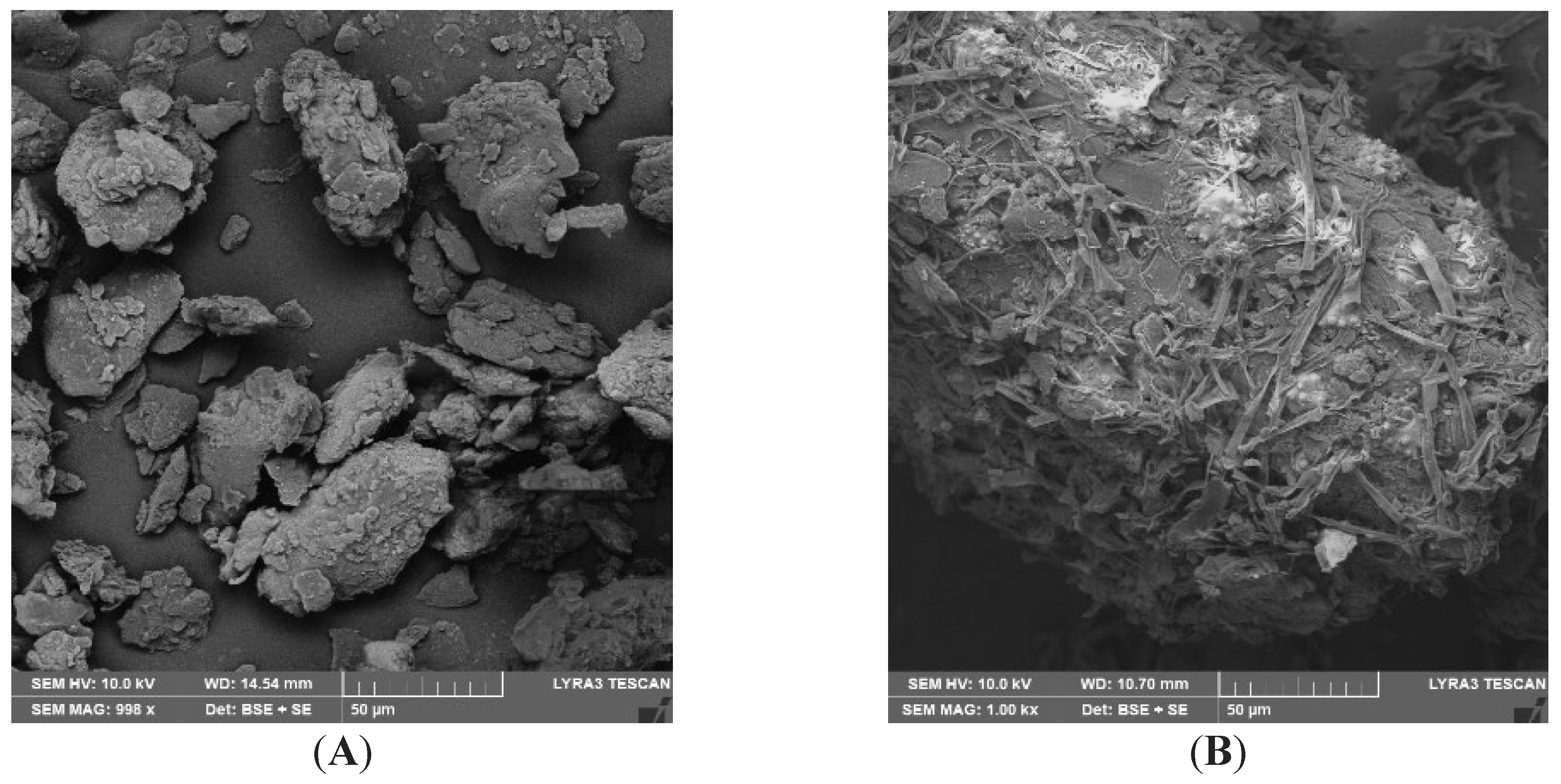
The morphological changes in the structures of the untreated and P. ostreatus-treated cake are presented in Figure 2. The untreated cake exhibits minimal deterioration of the fibrillar structure with a rough and compact appearance (Figure 2A). Such morphology is linked to the grinding process of the lignocellulosic material and the application of CaCO3 before the fermentation process. In contrast, the fermented substrate (Figure 2B) is characterized by a prominent network of hyphae colonizing and penetrating the palm kernel cake through surface pores of variable diameters, possibly due to the progressive elimination of lignin [40], thereby altering the structural organization and porosity of the external fibers [41]. According to Suksong et al. [42], fungal pretreatment increases the surface area of the biodegraded materials, exposing the cellulose components and increasing the susceptibility of the biodegraded materials to the enzymes of microorganisms in the rumen [43].

3.3. Analysis of the Chemical Composition of the Substrates and Diets Evaluated

After 13 d of solid-state fermentation of palm kernel cake by P. ostreatus, the fractions of OM, NDF, ADF, LIG and EE decreased 3.1, 32.2, 20.5, 46.6 and 45.2% respectively compared to untreated (before) palm kernel cake (Table 2).
The optimal use of raw palm kernel cake as animal feed is considerably limited due to its high contents of NDF, lignin and oils that have low fermentation and degradation ruminal. Therefore, reducing the amount of lignin in lignocellulosic biomass allows the organized crystalline structure of cellulose to be exposed, which in turn facilitates fiber degradation in the rumen [44]. Treatment of palm kernel cake with P. ostreatus helps rupture the cellulose-hemicellulose-lignin complex because of the action of the laccase enzymes produced by the fungus.
The decrease in EE (45.2%) is most likely subjected to the ability of P. ostreatus to produce lipolytic enzymes [45] that hydrolyze fats adhered to the surfaces of substrates [41] or can be caused by biologically active phenolic compounds present in P. ostreatus, like lovastatin which is known to have potent inhibitory effects on lipids [46]. Moftah et al. [13] suggested that the removal of residual oil from palm kernel cake through solid-state fermentation using basidiomycete fungi improves the availability of glucose in the substrate, which could increase both DMD and the synthesis of organic acids in the rumen.
The CP increased by 69.65% in FPKC compared to the untreated palm kernel cake (Table 2). The increase in CP content could be the result of the mycelial growth of fungi, which is rich in proteins [20] and approximately 70% of the nitrogen present in P. ostreatus is in the form of protein [47]. Falaye et al. [48] suggested that the increase in crude protein may be due to the ability of fungi to produce enzymes that improve the bioavailability of protein trapped within plant cell walls, whereas da Silva et al. [38] reported that the enzymes secreted during fungal metabolism constitute a source of soluble proteins in the biomass colonized by fungi. Similar results were reported by Nuraini et al. [36], who observed a 26.8% increase in crude protein levels in palm oil sludge after fermentation with P. ostreatus for 11 days, attributing the increase to the conversion of soluble carbohydrates in the colonized substrate into mycelial protein or unicellular protein by the growing fungus.
The chemical composition of the experimental diets is presented in table 3. In the diets with the inclusion of 20% FPKC, a significant increase (1,14 to 1,54x) in the crude protein (CP) content compared to the control is evident.
The values for Neutral Detergent Fiber (NDF) and Acid Detergent Fiber (ADF) decreased by 6.04% to 13.4% and from 12.0% to 18.7%, respectively, in the diets CS-L, CS-G, CS-NFPKC, CS-FPKC, CS-L-FPKC, and CS-G-FPKC when compared to the control diet (CS). These reductions are attributed to a substitution effect, where structural components in the basal diets were replaced with higher quality additives. This effect is partly due to biodelignification and the incorporation of protein from Pleurotus ostreatus into palm kernel cake, which appears to be a promising strategy for enhancing the nutritional value and optimizing the digestibility of nutrients from fibrous substrates. Additionally, the inclusion of legume foliage, which is rich in protein and low in fiber, contributed to these improvements (see Table 3). Ibarra – Rondón et al. [8], when including L. leucocephala and G. ulmifolia in grass-based diets, observed increases of up to 40.5% in CP and decreases of 21.4% of NDF and 14.6% of ADF. Thus, the addition of both legumes and agro-industrial by-products fermented with white rot fungi (WRF) could increase livestock productivity, since it increases the supply of protein and usable sugars in the diet. Consequently, WRF treatment of palm kernel cake would improve its value as livestock feed, by a combined effect of reduced fiber lignification, increased protein, and improved diet degradability.

3.4. Gas Production, Methane Synthesis and Parameters of Short-Term In Vitro Ruminal Fermentation

In Table 4, the results observed after the short-term ruminal fermentation are reported for the production of methane (CH4), volatile fatty acids (VFAs), ammonium in rumen liquid (N – NH3), and ruminal degradation of components in diets formulated from M. maximus and its mixtures with FPKC, G. ulmifolia and L. leucocephala.
The DMD, NDFD, ADFD and CPD increased (p<0.05) between 16.9 to 17.3%, 10.9 to 23.8%, 25.7 to 27.5% and 11.6 to 30.4% respectively, in the diets with the inclusion of PKC fermented or non-fermented and legume foliage (CS-L, CS-G, CS-NFPK, CS-FPKC, CS-L-FPKC and CS-G-FPKC) compared to the control (CS). This observed increase in the degradability of these fractions could be associated with the lower contribution of structural carbohydrates and greater contribution of CP, thus providing complementary nitrogen for microbial growth, which results in greater rumen disappearance of organic components [50]. These results are consistent with those reported with Azzahra et al. [16], who found that treatment of palm kernel cake with P. ostreatus improves digestibility of organic components at the ruminal level, which was linked to the previous degradation of lignocellulosic complexes through fungal enzymatic action. Additionally, Ibarra – Rondón et al. [8], when adding L. leucocephala and G. ulmifolia to grass-based diets, observed increases of up to 40.5% in the contents of CP and decreases of 21.4% and 14.6% in those of NDF and ADF, respectively. This led to an increase in the degradability of the fibrous components of the diets.
The synthesis of acetate, butyrate, and the A:P ratio decreased (p<0.05), while propionate increased (p<0.05) in the diets with the addition of PKC fermented or non-fermented and legume foliage. The production of VFA from carbohydrate fermentation represents from 70% to 80% of the energy reserves of ruminants and is an indicator of feed degradability [51]. Azzahra et al. [16] reported that VFA production is highly influenced by diet quality and degradability, and also reported an increase in VFA concentrations in diets with greater availability of non-structural carbohydrates. Greater propionate and lower acetate synthesis in diets with PKC fermented or non-fermented and legume foliage suggests the modulation of rumen microbial activity, through the incorporation of H2 for propionate biosynthesis [52]. Increases in propionate production in the rumen have several benefits, as it acts as a precursor in gluconeogenesis through hepatic metabolism [53]; it is part of a metabolic pathway that consumes H+, and thus, reduces ruminal methanogenesis [54].
The production (mL) of net methane, CH4/g incubated DM (CH4 g/iDM) and mL CH4/g degraded DM (CH4 g/dDM) decreased (p< 0.05) between 15 to 24.3%, 15.6 to 24.9% and 27.3 to 35.9% in diets with the inclusion of legume shrubs and PKC fermented or non-fermented, with respect to the diet without inclusion (CS). Compared to CS-NFPKC and CS-FPKC, the addition of forage legumes in CS-L-FPKC and CS-G-FPKC diets reduced (p<0.05) the production of methane (mL) either measured as total, per g of incubated DM (CH4 g/iDM) and per g of degraded DM (CH4 g/dDM). The synergistic effect in the reduction of methane production with the forage shrubs is possibly due to the secondary compounds that favor propionate-producing bacterial species [55,56]. The above is important not solely because of the observed reductions in GHG emissions but would economically benefit producers, due to increased animal production responses and/or greater efficiency in the use of feeds.
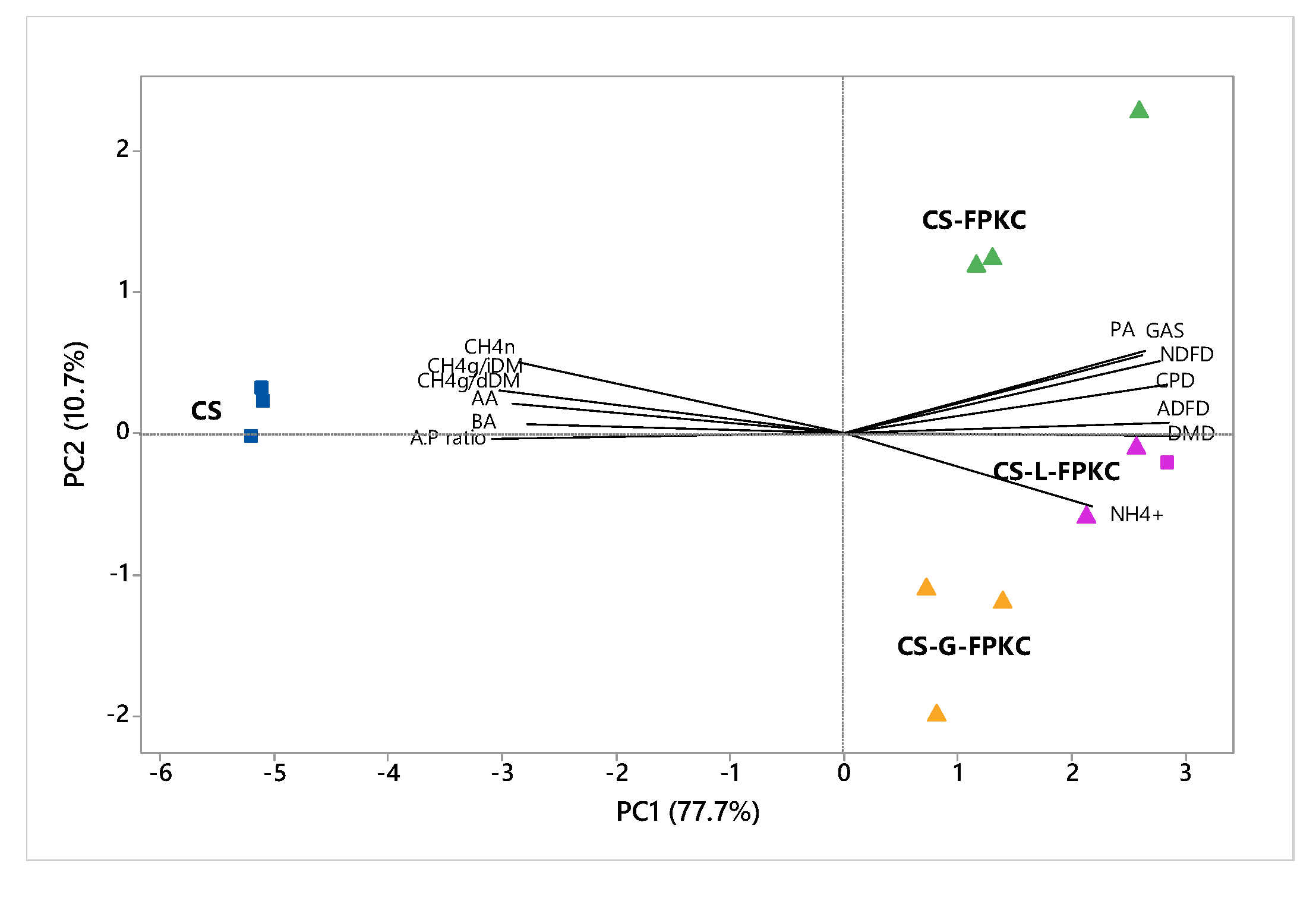
As these reductions in CH4 production can be examined through correlation analysis among nutritional constituents in the evaluated diets, a principal component analysis (PCA) offers an approach to identify patterns among variables and understand their interactions (Figure 3). The PCA shows that 88.4% of the correlations between the formulated diets (CS-L, CS-G, CS-NFPK, CS-FPKC, CS-L-FPKC and CS-G-FPKC) and the rumen fermentation parameters are explained by components one (77.7%), and two (10.7%).
The control diet (CS) was characterized as producing greater butyric acid (BA), acetic acid (AA), CH4 g/iDM, CH4 g/dDM and total methane (CH4n) as well as having the highest acetate:propionate ratio (A:P ratio). In diets that included either fermented or non-fermented palm kernel cake (PKC) and legume foliage (CS-L, CS-G, CS-NFPK, CS-FPKC, CS-L-FPKC, and CS-G-FPKC), there was an observed increase in variables related to ammonium (NH4+) production. Additionally, improvements were noted in dry matter digestibility (DMD), neutral detergent fiber digestibility (NDFD), acid detergent fiber digestibility (ADFD), crude protein digestibility (CPD), propionic acid synthesis (PA), and gas production (GAS).
The increase in CH4 yield observed in the CS diet can be attributed to the higher proportion of structural carbohydrates in terms of NDF and ADF contents when compared to the other diets (see Table 2). For Maweu et al. [57], the contents of NDF and ADF are positively correlated with the production of CH4. Likewise, Archimède et al. [58] suggested that high dietary content of structural carbohydrates and lignified cell walls, as that of tropical grasses, there is a concomitant increase in methane emissions.
According to do Amaral et al. [59], the use of palm kernel cake as a supplement in conventional livestock diets can reduce the synthesis of CH4 per kilogram of DM, NDF and ADF ingested, demonstrating its efficiency as a bioactive compound, given that it is a source of fatty acids (oleic, myristic and palmitic) that can modulate ruminal biohydrogenation. However, there are few studies where the effect of adding biodegraded agro-industrial byproducts with Pleurotus sp on methane production of ruminant diets has been evaluated.
The concentration of AA and BA is directly related to methane production, with Yanibaba et al. [60] indicating that the production of these VFA promotes the formation of methane, by releasing dihydrogen, since the biosynthesis routes of these VFAs generate 4 and 2 moles of H2, per mole of fermented glucose, respectively. Consequently, methane emissions increase, as H2 hydrogen is the main substrate in methanogenesis [61]. On the other hand, the negative correlations between CH4 production (CH4 g/iDM, CH4 g/dDM and CH4n) and propionate concentration, as well as the direct relationship between the A:P ratio and CH4; corroborates that the propionic pathway redirects the H2 produced in the ruminal fermentation process, consuming electrons from H2, and thereby inhibiting or limiting the formation of CH4 [62]. Johnson and Johnson [63] found that the A:P ratio is a determining factor in the production of CH4, pointing out that proportions close to 0.5 reduce all the losses of metabolizable energy in the form of methane, while A:P ratios between 0.9 and 4 cause energy losses of up to 33.3%. The negative correlations between DMD, ADFD, NDFD and CPD with methane production suggest an increase in efficiency and synthesis of microbial protein, thereby indicating the use of dietary energy for the metabolism of high-value byproducts, such as VFAs, particularly propionate.
In general, the reductions in methane synthesis found in this study can be explained in three ways: first, the presence of secondary compounds, such as tannins and saponins found in L. leucocephala and G. ulmifolia, which are part of the experimental diets, has been shown to have anti-methanogenic properties. These compounds can alter the communities of archaea and ruminal protozoa, both directly and indirectly involved in enteric methane emissions [64].
Second, through the production of lovastatin, a secondary metabolite synthesized by fungi of the genus Pleurotus sp. that inhibits the enzyme (3S)-hydroxy-3-methylglutaryl-coenzyme A (HMG-CoA) reductase, which plays a key in the synthesis of isoprenoid ether lipids through the mevalonate pathway, precursors in the biological formation of cell membranes of methanogenic archaea [46]. Lovastatin can also limit coenzyme F420, which participates in the transfer of electrons during methanogenesis, thereby significantly reducing methane production, by up to 38% [65]. Candyrine et al. [10] found average contents of 850 mg of lovastatin per kilogram of DM when analyzing samples of palm kernel cake fermented with basidiomycete fungi, which favored the production of propionate.
Third, the presence of chitin and glucosamine, components of fungal cell walls, that can modulate ruminal fermentation when used as feed additives in ruminant nutrition [66]. Jayanegara et al. [67] showed that including chitin sources in ruminant pastures reduces methane production between 12.3 and 60% per g of digested OM. Asiegbu et al. [68] reported that chitin and glucosamine improved the degradability of lignocellulolytic materials treated with fungi such as Pleurotus sp. with potential reduction in CH4 synthesis.

4. Conclusions

The combined inclusion of FPKC with either Leucaena leucocephala or Guazuma ulmifolia in diets based on tropical grasses may help to optimize nutrient degradation and mitigate methane production in vitro.

Author Contributions

A.I.-R: conceptualization, resources, methodology, data analysis, writing of the original draft, writing, review and editing. L.R.-O: methodology, data analysis. P.F.-C: formal analysis, writing of the original draft, resources. D.D.-S: original draft writing, revision. R.B.-R: conceptualization, writing of the original draft, review and editing. J.E. M.-R: writing, review and editing. All authors have read and agree with the published version of the manuscript.

Informed Consent Statement

Not applicable.

Data Availability Statement

Data are contained within the article.

Acknowledgments

The authors would like to thank the people at Corporación Colombiana de Investigación Agropecuaria (AGROSAVIA) and its Centro de Investigación Motilonia for their support and assistance in the forage sampling for this study from research projects in silvopastoral systems of the dynamic research agenda through an agreement made with the National University of Medellín, Colombia. The views expressed in this document may not be taken as the official views of these organizations.

Conflicts of Interest

The authors declare no conflicts of interest.

References

  1. Nabuurs, GJ.; Mrabet, A.; Abu Hatab, M.; Bustamanye, H.; Clark, P.; Havlik, J.; House, C.; Mbow, KN.; Ninan, A.; Popp, S.; et al. Agriculture, Forestry and Other Land Uses (AFOLU). in Climate Change 2022 - Mitigation of Climate Change; Malley, Cambridge University Press, Cambridge, UK, and New York, NY, USA. 2022, 747–860. [CrossRef]
  2. United Nations Environment Programme. An Eye on Methane – The road to radical transparency: International methane Emission Observatory. Nairoi, Africa, 2023. https://wedocs.unep.org/handle/20.500.11822/44129.
  3. Astudillo-Neira, R.; Muñoz-Nuñez, E.; Quiroz-Carreno, S.; Avila-Stagno, J.; Alarcon-Enos, J. Bioconversion in Ryegrass-Fescue Hay by Pleurotus ostreatus to Increase Their Nutritional Value for Ruminant. Agriculture 2022, 12, 534. [Google Scholar] [CrossRef]
  4. Kamke, J.; Kittelmann, S.; Soni, P.; Li, Y.; Tavendale, M.; Ganesh, S.; Janssen, PH.; Shi, W.; Froula, J.; Rubin, EM.; et al. Rumen metagenome and metatranscriptome analyses of low methane yield sheep reveals a Sharpea-enriched microbiome characterised by lactic acid formation and utilisation. Microbiome 2016, 4, 56. [Google Scholar] [CrossRef] [PubMed]
  5. Johnson, DE.; Ward, GM. Estimates of animal methane emissions. Environ. Monit. Assess. 1996, 42, 133–141. [Google Scholar] [CrossRef]
  6. Gómez Palencia, L.; Sánchez Pulido, A.; Moreno Quitian, H.; Torres Triana C., F. y Manrique Luna, D. Intensidad de Emisiones por Unidad de Producto para la Ganaderia Bovina en Colombia. 2021. Available: https://biocarbono.org/wp-content/uploads/2021/09/03-intensidad-emisiones-unidad-producto-ganaderia-bovina-colombia.pdf.
  7. Calvin, K.; et al. IPCC, 2023: Climate Change 2023: Synthesis Report. Contribution of Working Groups I, II and III to the Sixth Assessment Report of the Intergovernmental Panel on Climate Change [Core Writing Team, H. Lee and J. Romero (Eds.)]. IPCC, Geneva, Switzerland. 2023. [CrossRef]
  8. Ibarra-Rondón, AJ.; Fragoso-Castilla, PJ.; Giraldo-Valderrama, LA.; Mojica-Rodríguez, JE. Effect of tropical forage species in silvopastoral arrangements on methane production and in vitro fermentation parameters in a RUSITEC system. Rev. Colomb. Cienc. Pecuarias. 2022, 35, 217–232. [Google Scholar] [CrossRef]
  9. Molina-Botero, IC.; Arroyave-Jaramillo, J.; Valencia-Salazar, S.; Barahona-Rosales, R.; Aguilar-Pérez, CF.; Ayala, A.; Arango, J.; Ku-Vera, JC. Effects of tannins and saponins contained in foliage of Gliricidia sepium and pods of Enterolobium cyclocarpum on fermentation, methane emissions and rumen microbial population in crossbred heifers. Anim Feed Sci Technol. 2019, 251, 1–11. [Google Scholar] [CrossRef]
  10. Candyrine, SCL. ; Mahadzir, MF.; Garba, S.; Jahromi, MF.; Ebrahimi, M.; Goh, YM.; Samsudin, AA.; Sazili, AQ.; Chen, WI.; Ganesh, S.; et al. Effects of naturally-produced lovastatin on feed digestibility, rumen fermentation, microbiota and methane emissions in goats over a 12-week treatment period. PLoS One 2018, 13, 7–e0199840. [Google Scholar] [CrossRef]
  11. Castillo-Vargas, JA.; Mezzomo, R. Effects of palm kernel cake on nutrient utilization and performance of grazing and confined cattle: a meta-analysis. Trop Anim Health Prod. 2023, 55, 110. [Google Scholar] [CrossRef] [PubMed]
  12. Santos, LV.; Silva, RR.; Silva, FF.; Silva, JW.; Barroso, DS.; Silva, AP.; Souza, SO.; Santos, MC. Increasing levels of palm kernel cake (Elaeis guineensis jacq.) in diets for feedlot cull cows. Chil J Agric Res. 2019, 79, 628–635. [Google Scholar] [CrossRef]
  13. Moftah, B.; Lah, T.; Nawi, A.; Kadir, M.; Aliyu-Paiko, M. Maximizing Glucose Production From Palm Kernel Cake (Pkc) From Which Residual Oil Was Removed Supercritically Via Solid State Fermentation (Ssf) Method Using Trichoderma Reesi Isolate Pro-A1. Internet J. Microbiol. 2012, 10, 1. [Google Scholar]
  14. Fitriyah, F.; Aziz, MA.; Wahyuni, S.; Fadila, H.; Permana, IG.; Priyono. ; Siswanto. Nutritional improvement of oil palm and sugarcane plantation waste by solid-state fermentation of Marasmiellus palmivorus. IOP Conf. Ser.: Earth Environ. 2022, 974, 012121. [Google Scholar] [CrossRef]
  15. Nasir, JA.; Chand, N.; Naz, S.; Alhidary. IH.; Khan, RU.; Batool, S.; Zelai, NT.; Pugliese, G.; Tufarelli, V.; Losacco, C. Dietary Oyster Mushroom (Pleurotus ostreatus) Waste Inhibits Experimentally Induced Eimeria tenella Challenge in Japanese Quails Model. Animals 2023, 13, 3421. [Google Scholar] [CrossRef] [PubMed]
  16. Azzahra, YR.; Toharmat, T.; Prihantoro, I. Bio-processing Plantation by-products with White Oyster Mushroom (Pleurotus ostreatus) to Improve Fermentability and Digestibility Based on Substrate Type and Fermentation Time. Buletin Peternakan 2022, 46, 228. [Google Scholar] [CrossRef]
  17. Lee, AML. ; Chin, CF.; Seelan, JS.; Chye, FY.; Lee, HH.; Rakib, MR. Metabolites profiling of protein enriched oyster mushroom (Pleurotus ostreatus (Jacq.) P. Kumm.) grown on oil palm empty fruit bunch substrate. LWT 2023, 181, 114731. [Google Scholar] [CrossRef]
  18. Nurhabiba, Nuraini. ; dan Mirzah. Performance of Broiler Given Palm Oil Waste Fermented with Pleurotus Ostreatus In Ration. Quest J Res Agric Anim Sci. 2021, 8, 43–48. [Google Scholar]
  19. Panngoen, P.; Leksawasdi, N.; Rachtanapun, P.; Chakrabandhu, Y.; Jinsiriwanit, S. Integration of white rot mushroom cultivation to enhance biogas production from oil palm kernel pulp by solid-state digestion. Front Energy Res. 2023, 11, 1204825. [Google Scholar] [CrossRef]
  20. Isaac, BO.; Egigba, GO.; Bamikole, MA.; & Ezenwa, IV.; & Ezenwa, IV. ; Chemical Composition and in vitro Fermentation of Raw and Biodegraded Oil Palm Pressed Fibre (PPF) and PPF-Based Diets. Int Res J Appl Sci Eng Technol. 2022, 8, 5. [Google Scholar]
  21. Rubiano-Orozco, LA.; Castro-Pacheco, Ac.; Jiménez-Rojas, F.; Fragoso-Castilla, Pj.; Ibarra-Rondón, Aj.; Rodríguez-Jiménez, DM. Evaluación de la actividad lignocelulolítica de hongos cultivados en subpro- ductos de la palma de aceite (Elaeis guineensis). Biotecnol Sect Agropecu Agroind. 2024, 22, 70–86. [Google Scholar] [CrossRef]
  22. Gao, L.; Guo, Q.; Xu, R.; Dong, H.; Zhou, C.; Yu, Z.; Zhang, Z.; Wang, L.; Chen, C.; Wu, X. Loop optimization of Trichoderma reesei endoglucanases for balancing the activity–stability trade-off through cross-strategy between machine learning and the B-factor analysis. GCB Bioenergy. 2023, 15, 128–142. [Google Scholar] [CrossRef]
  23. Durán-Sequeda, D.; Suspes, D.; Maestre, E.; Alfaro, M.; Perez, G.; Ramírez, C.; Pisabarro, AG.; Sierra, R. Effect of Nutritional Factors and Copper on the Regulation of Laccase Enzyme Production in Pleurotus ostreatus. J. of Fungi. 2021, 8, 7. [Google Scholar] [CrossRef]
  24. Valdés, S.; Cristian Garita, C.; Esquivel, C.; Villegas, LR. Aislamiento y Purificación de La Enzima Lacasa: Evaluación de Su Potencial Biodegradador En Residuos Agrícolas. Rev Soc Mex Biotecnol Bioingen. 2020, 24, 2. [Google Scholar]
  25. Estrada López, I.; Esparza Jiménez, S.; Albarrán Portillo, B.; Yong Angel, G.; Rayas Amor, A.; García Martínez, A. Evaluación productiva y económica de un sistema silvopastoril intensivo en bovinos doble propósito en Michoacán, México. CIENCIA ergo sum 2018, 25, 1–13. [Google Scholar] [CrossRef]
  26. Mejia Diaz, E.; Mahecha Ledesma, L.; Angulo Arizala, J. Consumo de materia seca en un sistema silvopastoril de Tithonia diversifolia en trópico alto. Agronomía Mesoamericana 2017, 28, 389. [Google Scholar] [CrossRef]
  27. Mozin, S.; Hatta, U.; Tantu, R.; Tahir, M.; Damayanti, AP.; Sundu, B. Crude Enzymes Produced by Fungi Improved Performance, Feed Digestibility, and Breast Percentage of Palm Kernel Meal-Fed Broilers. AIP AIP Conf. Proc. 2023, 2628, 140003. [Google Scholar] [CrossRef]
  28. Ariza Nieto, C.; Mayorga Mogollón, OL.; Parra Forero, DM.; Camargo Hernández, DB.; Buitrago Albarado, CP.; Moreno Rodríguez, JM. Tecnología NIRS para el análisis rápido y confiable de la composición química de forrajes tropicales. Corp Colom Invest Agropecu (Agrosavia). 2020. [Google Scholar] [CrossRef]
  29. Theodorou, MK.; Williams, BA.; Dhanoa, MS.; Mcallan, AB.; France, JA. Simple gas production method using a pressure transducer to determine the fermentation kinetics of ruminant feeds. Anim Feed Sci Technol. 1994, 48, 185–197. [Google Scholar] [CrossRef]
  30. Van Soest, PJ.; Robertson, JB.; Lewis, BA. Methods for Dietary Fiber, Neutral Detergent Fiber, and Nonstarch Polysaccharides in Relation to Animal Nutrition. J Dairy Sci. 1991, 74, 3583–3597. [Google Scholar] [CrossRef]
  31. Huntington, JA.; Givens, DI. Studies on in Situ Degradation of Feeds in the Rumen: 1. Effect of Species, Bag Mobility and Incubation Sequence on Dry Matter Disappearance. Anim. Feed Sci. Technol.. 1997, 64, 227–241. [Google Scholar] [CrossRef]
  32. Whitehouse, NL.; Olson, VM.; Schwab, CG.; Chesbro, WR.; Cunningham, KD.; Lykos, T. Improved Techniques for Dissociating Particle-Associated Mixed Ruminal Microorganisms from Ruminal Digesta Solids. J Anim Sci. 1994, 72, 1335–1343. [Google Scholar] [CrossRef]
  33. R Core Team. A Language and Environment for Statistical Computing_. R Foundation for Statistical Computing, Vienna, Austria. Preprint at 2023. https://www.R-project.
  34. Rueda, AM.; López, Y.; Vincent, AT.; Létourneau, M.; Hernández, I.; Sánchez, CI.; Molina, D.; Ospina, SA.; Veyrier, FJ.; Doucet, N. Genome sequencing and functional characterization of a Dictyopanus pusillus fungal enzymatic extract offers a promising alternative for lignocellulose pretreatment of oil palm residues. PLoS One 2020, 15, e0227529. [Google Scholar] [CrossRef]
  35. Azmi, MA.; Yusof, MT.; Zunita, Z.; Hassim, HA. Enhancing the utilization of oil palm fronds as livestock feed using biological pre-treatment method. IOP Conf. Ser.: Earth Environ. Sci. 2019, 230, 012077. [Google Scholar] [CrossRef]
  36. Nuraini, Djulardi, A. ; Trisna, A. Palm oil sludge fermented by using lignocellulolytic fungi as poultry diet. Int J Poult Sci. 2017, 16, 6–10. [Google Scholar] [CrossRef]
  37. Naidu, Y.; Siddiqui, Y.; Idris, AS. Comprehensive studies on optimization of ligno-hemicellulolytic enzymes by indigenous white rot hymenomycetes under solid-state cultivation using agro-industrial wastes. J Environ Manage. 2020, 259, 110056. [Google Scholar] [CrossRef]
  38. da Silva, EA.; Mendes, TD.; Pacheco, TF.; Wischral, D.; dos Santos, DC.; Mendonça, S.; Camassola, M.; de Siquiera, FG.; Souza, MT. Colonization of oil palm empty fruit bunches by basidiomycetes from the Brazilian cerrado: Enzyme production. Energy Sci Eng. 2022, 10, 1189–1201. [Google Scholar] [CrossRef]
  39. Angelo, NR.; Rudiyansyah. ; & Gusrizal, G. Microbial Degradation of Lignocellulose in Empty Fruit Bunch at Various Incubation Time. J Trop Biodivers Biotechnol. 2022, 7, jtbb69743. [Google Scholar] [CrossRef]
  40. Fithri, L.; Puspaningsih, N.; Asmarani, O.; Ni’matuzahroh. ; Dewi, G.; Arizandy, RY. Characterization of Fungal Laccase Isolated from oil palm empty fruit bunches (OPEFB) and Its Degradation from The Agriculture Waste. Biocatal Agric Biotechnol. 2020, 27, 101676. [Google Scholar] [CrossRef]
  41. Arbaain, ENN. ; Bahrin, EK.; Ibrahim, MF.; Ando, Y.; Abd-Aziz, S. Biological pretreatment of oil palm empty fruit bunch by Schizophyllum commune ENN1 without washing and nutrient addition. Processes 2019, 7, 402. [Google Scholar] [CrossRef]
  42. Suksong, W.; Wongfaed, N.; Sangsri, B.; Kongjan, P.; Prasertsan, P.; Podmirseg, SM.; Insam, H.; O-Thong, S. Enhanced solid-state biomethanisation of oil palm empty fruit bunches following fungal pretreatment. Ind Crops Prod. 2020, 145, 112099. [Google Scholar] [CrossRef]
  43. Nur-Nazratul, FMY. ; Rakib, MRM.; Zailan, MZ.; Yaakub, H. Enhancing in vitro ruminal digestibility of oil palm empty fruit bunch by biological pre-treatment with Ganoderma lucidum fungal culture. PLoS One 2021, 16, e0258065. [Google Scholar] [CrossRef]
  44. Rusli, ND.; Ghani, AA.; Mat, K.; Yusof, MT.; Zamri-Saad, M.; Hassim, HA. The Potential of Pretreated Oil Palm Frond in Enhancing Rumen Degradability and Growth Performance: A Review. Adv Anim Vet Sci. 2021, 9, 811–822. [Google Scholar] [CrossRef]
  45. Dedousi, M.; Melanouri, EM.; Diamantopoulou, P. Carposome productivity of Pleurotus ostreatus and Pleurotus eryngii growing on agro-industrial residues enriched with nitrogen, calcium salts and oils. Carbon Resour. Convers. 2023, 6, 150–165. [Google Scholar] [CrossRef]
  46. Cateni, F.; Gargano, ML.; Procida, G.; Venturella, G.; Cirlincione, F.; Ferraro, V. Mycochemicals in wild and cultivated mushrooms: nutrition and health. Phytochem. Rev. 2022, 21, 339–383. [Google Scholar] [CrossRef]
  47. Jaworska, G.; Berna, E. Comparison of amino acid content in canned Pleurotus ostreatus and Agaricus bisporus mushrooms. Veg. Crops Res. Bull. 2011, 74, 107–115. [Google Scholar] [CrossRef]
  48. Falaye, AE.; Ajani, EJ.; Emikpe, BO.; Folorunso, LA. Incidence and Prevalence of Naturally Occuring Fungi on Palm Kernel Sludge and Its Attendant in Vitro Digestibility. Int. Food Res. J. 2018, 25, 1647–1654. [Google Scholar]
  49. Alshelmani, MI.; Kaka, U.; Abdalla, EA.; Humam, AM.; Zamani, HU. Effect of feeding fermented and non-fermented palm kernel cake on the performance of broiler chickens: a review. World's Poult. Sci. 2021, 77, 377–388. [Google Scholar] [CrossRef]
  50. Pazla, R.; Jamarun, N.; Agustin, F.; Zain, M.; Arief. ; Cahyani, NO. Effects of supplementation with phosphorus, calcium and manganese during oil palm frond fermentation by Phanerochaete chrysosporium on ligninase enzyme activity. Biodiversitas 2020, 21, 1833–1838. [Google Scholar] [CrossRef]
  51. Wang, K.; Xiong, B.; Zhao, X. Could propionate formation be used to reduce enteric methane emission in ruminants? Sci. Total. Environ. 2023, 855, 158867. [Google Scholar] [CrossRef]
  52. Chen, J.; Harstad, O. M.; McAllister, T.; Dörsch, P.; Holo, H. Propionic acid bacteria enhance ruminal feed degradation and reduce methane production in vitro. Acta Agric. Scand. A Anim. Sci. 2020, 69, 169–175. [Google Scholar] [CrossRef]
  53. Rathert-Williams, A. R.; McConnell, H.L.; Salisbury, C.M.; Lindholm-Perry, AK.; Lalman, D.L.; Pezeshki, A.; Foote, A.P. Effects of adding ruminal propionate on dry matter intake and glucose metabolism in steers fed a finishing ration. J Anim Sci. 2023, 101, 1–10. [Google Scholar] [CrossRef]
  54. Beauchemin, KA.; Ungerfeld, EM.; Eckard, RJ.; Wang, M. Review: Fifty years of research on rumen methanogenesis: Lesson learned and future challenges for mitigation. Animal 2020, 14, S2–S16. [Google Scholar] [CrossRef]
  55. Soltan, YA.; Morsy, AS.; Lucas, RC.; Abdalla, A. L. Potential of mimosine of Leucaena leucocephala for modulating ruminal nutrient degradability and methanogenesis. Anim Feed Sci Technol. 2017, 223, 30–41. [Google Scholar] [CrossRef]
  56. Araujo, G.; Peixoto, N.; Arruda, H.; de Paulo, D.; Molina, G.; Pastore, G. Phytochemicals and biological activities of mutamba (Guazuma ulmifolia Lam.): A review. Food Res. Int. 2019, 126, 108713. [Google Scholar] [CrossRef]
  57. Maweu, AN.; Bebe, BO.; Kuria, SG.; Kashongwe, OB. In-vitro digestibility and methane gas emission of indigenous and introduced grasses in the rangeland ecosystems of south eastern Kenya. Reg Environ Change. 2024, 24, 7. [Google Scholar] [CrossRef]
  58. Archimède, H.; Eugène, M.; Marie Magdeleine, C.; Boval, M.; Martin, C.; Morgavi, DP.; Lecomte, P.; Doreau, M. Comparison of methane production between C3 and C4 grasses and legumes. Animal Feed Sci. Technol. 2011, 166–167, 59–64. [Google Scholar] [CrossRef]
  59. do Amaral Júnior, JM.; Guerreiro Martorano, L.; de Souza Nahúm, B.; Gomes de Castro, VC.; Fernandes Sousa, L.; de Carvalho 891 Rodrigues, TCG. ; Rodrigues da Silva,JA.; da Costa Silva, AL.; Lourenço Júnior, J.; Berndt, A.; Maciele e Silva, AG. Feed Intake, Emission of Enteric Methane and Estimates, Feed Efficiency, and Ingestive Behavior in Buffaloes Supplemented with Palm Kernel Cake in the Amazon. Biome 2022, 9, 1053005. [Google Scholar] [CrossRef]
  60. Yanibada, B.; Hohenester, U.; Pétéra, M.; Canlet, C.; Durand, S.; Jourdan, F.; Boccard, J.; Martin, C.; Eugène, M.; Morgavi, DP.; Boudra, H. Inhibition of enteric methanogenesis in dairy cows induces changes in plasma metabolome highlighting metabolic shifts and potential markers of emission. Sci Rep. 2020, 10, 15591. [Google Scholar] [CrossRef]
  61. Sauvant, D.; Giger-Reverdin, S.; Serment, AA.; Broudiscou, L. Influences des régimes et de leur fermentation dans le rumen sur la production de méthane par les ruminants. INRA Prod. Anim. 2011, 24, 433–446. [Google Scholar] [CrossRef]
  62. Kim, M.; Masaki, T.; Ikuta, K.; Iwamoto, E.; Nishihara, K.; Hirai, M.; Uemoto, Y.; Terada, F.; Roh, S. Physiological responses and adaptations to high methane production in Japanese Black cattle. Sci Rep. 2022, 12, 11154. [Google Scholar] [CrossRef]
  63. Johnson, KA.; Johnson, DE. Methane Emissions from Cattle. J. Anim. Sci. 1995, 73, 2483–2492. [Google Scholar] [CrossRef]
  64. Sun, J.; Zhao, G.; Li, MM. Using nutritional strategies to mitigate ruminal methane emissions from ruminants. Front. Agric. Sci. Eng. 2023, 10, 390–402. [Google Scholar] [CrossRef]
  65. Ábrego-Gacía, A.; Poggi-Varaldo, HM.; Robles-González, V.; Ponce-Noyola, T.; Calva-Calva, G.; Ríos-Leal, E.; Estrada-Bárcenas, D.; Mendoza-Vargas, A. Lovastatin as a supplement to mitigate rumen methanogenesis: an overview. J. Anim. Sci. Biotechnol. 2021, 12, 123. [Google Scholar] [CrossRef]
  66. Shah, AM.; Qazi, IH.; Matra, M.; Wanapat, M. Role of Chitin and Chitosan in Ruminant Diets and Their Impact on Digestibility, Microbiota and Performance of Ruminants. Fermentation 2022, 8, 549. [Google Scholar] [CrossRef]
  67. Jayanegara, A.; Novandri, B.; Yantina, N.; Ridla, M. Use of black soldier fly larvae (Hermetia illucens) to substitute soybean meal in ruminant diet: An in vitro rumen fermentation study. Vet World. 2017, 10, 1439–1446. [Google Scholar] [CrossRef] [PubMed]
  68. Asiegbu, FO.; Morrison, IM.; Paterson, A.; Smith, JE. Analyses of fungal fermentation of lignocellulosic substrates using continuous culture rumen simulation. J. Gen. Appl. Microbiol. 1994, 40, 305–318. [Google Scholar] [CrossRef]
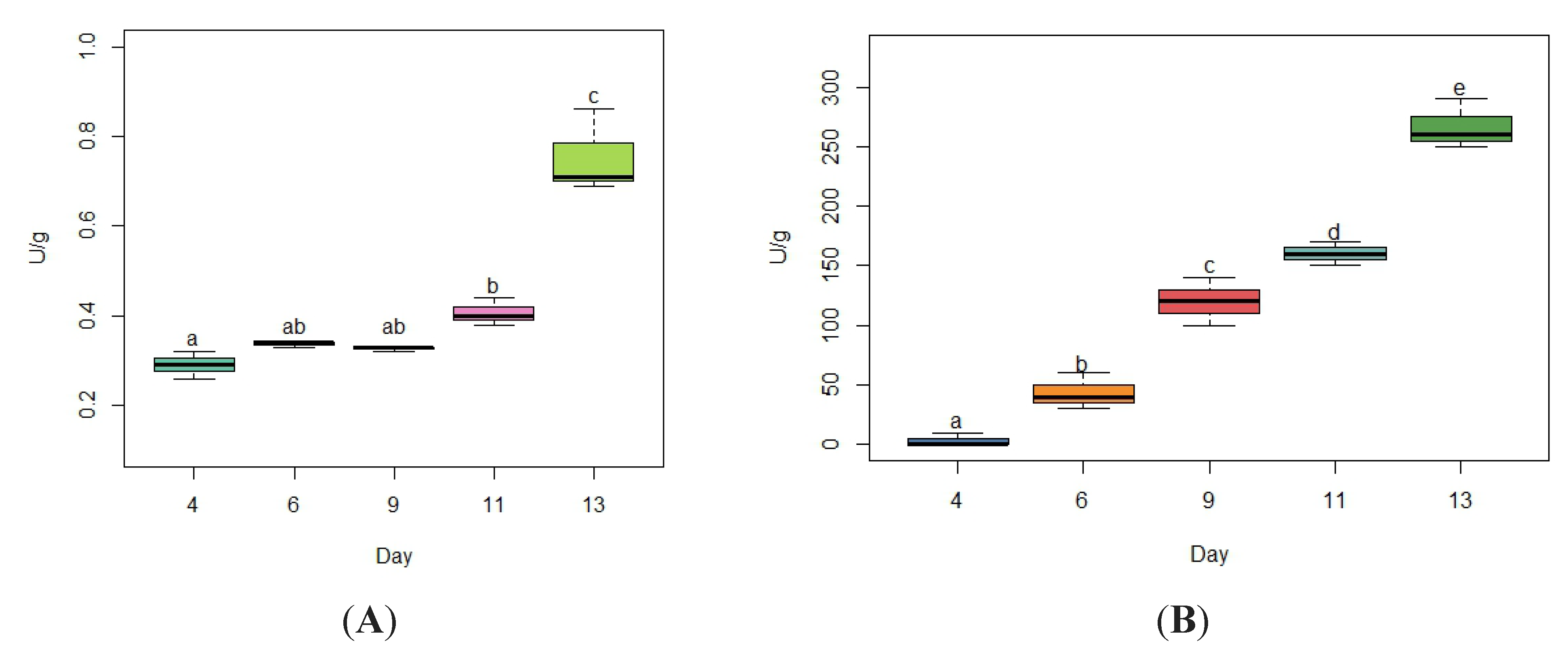
Figure 1. Cellulase (A) and laccase activity (B) (U/g) of P. ostreatus during solid-state fermentation of palm kernel cake. Source: Own elaboration.
Preprints 138318 g001
Figure 2. Scanning electron microscope (SEM) images (1.00 kx magnification) of palm kernel cake (A) before and after 13 days of fermentation (B). Source: Own elaboration.
Preprints 138318 g002
Figure 3. Principal component analysis among the variables included in this study.
Preprints 138318 g003
Table 1. Level of inclusion (%) of different feeds in experimental diets.
Diets Megathyrsus
maximus
Leucaena
leucocephala
Guazuma
ulmifolia
NFPKC FPKC
CS 100 - - - -
CS-L 70 30 - - -
CS-G 70 - 30 - -
CS-NFPKC 80 - - 20 -
CS-FPKC 80 - - - 20
CS-L-FPKC 70 10 - - 20
CS-G-FPKC 70 - 10 - 20
CS = 100% Megathyrsus maximus; CS-L = 70% CS + 30% L (Leucaena leucocephala); CS-G = 70% CS + 30% G (Guazuma ulmifolia); CS-NFPKC = 80% CS + 20% Palm kernel cake Non-fermented (NFPKC); CS-FPKC = 80% CS + 20% Palm kernel cake fermented with P. ostreatus (FPKC); CS-L-FPKC = 70% CS + 10% L + 20% FPKC; CS-G-FPKC = 70% CS + 10% G + 20% FPKC. Source: Own elaboration.
Table 2. Chemical composition of palm kernel cake before and after fermentation with P. ostreatus.
Chemical composition (% DM) Before After
OM 92.44 89.65
ASH 3.44 6.47
EE 12.46 6.83
CP 15.95 27.05
NDF 73.0 49.5
ADF 40.32 32.08
LIG 14.5 7.74
OM: organic matter, ASH: minerals, EE: ether extract, CP: crude protein, NDF: neutral detergent fiber, ADF: acid detergent fiber, LIG: Lignin. Source: Own elaboration.
Table 3. Chemical composition of the experimental diets.
Parameters, % DM Diets
CS CS-L CS-G CS-NFPKC CS-
FPKC
CS-L-
FPKC
CS-G-FPKC
CP 9.36 16.1 14.7 15.25 10.75 14.41 12.81
NDF 66.00 56.0 60.7 59.72 62.01 59.82 57.12
ADF 37.99 30.8 34.9 32.84 33.43 31.85 30.88
CS = 100% Megathyrsus maximus; CS-L = 70% CS + 30% L (Leucaena leucocephala); CS-G = 70% CS + 30% G (Guazuma ulmifolia); CS-NFPKC = 80% CS + 20% Palm kernel cake Non-fermented (NFPKC); CS-FPKC = 80% CS + 20% Palm kernel cake fermented with P. ostreatus (FPKC); CS-L-FPKC = 70% CS + 10% L + 20% FPKC; CS-G-FPKC = 70% CS + 10% G + 20% FPKC. Source: Own elaboration.
Table 4. In vitro rumen fermentation parameters and nutrient degradability of experimental diets after 48 h of incubation.
PARAMETERS DIETS p - Value
CS CS-L CS-G CS-
NFPKC
CS-
FPKC
CS-L-
FPKC
CS-G-
FPKC
% DMD 51.4±0.95a 59.5±0.96 b 59.52±1.05b 50.0±1.23 a 60.0±3.87 b 60.6±1.07 b 60.5±2.32b <0.001
% NDFD 45.6±0.85a 51.1±1.53 b 50.2±0.32 b 44.9±1.31a 56.5c ±4.21 55.2c ±1.21 50.6±1.04b <0.001
% ADFD 40.0±3.53a 47.2b±1.78c 47.7c±0.64b 43.7±1.29ab 51.0±4.75c 50.4±1.34c 50.3±0.98c 0.0007
% CPD 50.5±0.81a 66.3±1.58b 57.8±0.84c 53.5±1.05d 63.0±3.58b 65.9±0.93b 56.4±0.65c <0.001
pH 6.54±0.08 6.57±0.005 6.62±0.06 6.65±0.03 6.64±0.07 6.6±0.04 6.62±0.05 0.18
N – NH3 (mg /dL) 14.5±0.18a 15.9±0.48ab 14.9±0.64a 14.6±0.4a 15.3±0.23ab 17.2±0.43c 16.1±1.27bc <0.001
Acetic acid (mmol/L) 20.4±1.14a 16.1±0.69bc 16.4±0.49bc 16.2±1.2bc 16.8±0.55b 15.2±0.4c 16.4±0.5bc <0.001
Propionic acid (mmol/L) 7.6±2.28a 8.76±0.39b 8.93±0.78b 9.72±0.07cd 10.1±0.23ec 9.22±0.31bc 8.61±0.25b <0.001
Butyric acid (mmol/L) 3.73±0.40a 2.78±0.05b 2.64±0.26b 2.62±0.20b 2.62±0.2b 2.68±0.15b 2.76±0.2b <0.001
Acetate/propionate ratio 2.65±0.13 1.88±0.15 1.89±0.23 1.70±0.13 1.68±0.04 1.69±0.02 1.81±0.09 <0.001
Gas produced (mL) 85.8±2.25a 95.7±0.5b 95.2±1.13b 88.1±2.03c 98±1.61b 96±1.46b 89.8±0.88c <0.001
CH4 produced (mL) 14.0±0.07a 11.6±0.53b 11.4±0.49b 12.5±0.62c 11.9±0.22b 10.8±0.27d 10.6±0.32d <0.001
mL CH4/g incubated DM 28.1±0.13a 22.2±0.3b 22.7±0.92b 23.6±0.96c 23.7±0.43c 21.6±0.55d 21.1±0.64d <0.001
mL CH4/g degraded DM 54.6±1.26a 36.3±1.5b 37.5±3.4b 38.8±1.6bc 39.7±1.81bc 35.7±1.40cd 35.0±2.01d <0.001
CS = 100% Megathyrsus maximus; CS-L = 70% CS + 30% L (Leucaena leucocephala); CS-G = 70% CS + 30% G (Guazuma ulmifolia); CS-NFPKC = 80% CS + 20% Palm kernel cake Non-fermented (NFPKC); CS-FPKC = 80% CS + 20% Palm kernel cake fermented with P. ostreatus (FPKC); CS-L-FPKC = 70% CS + 10% L + 20% FPKC; CS-G-FPKC = 70% CS + 10% G + 20% FPKC. Values represent mean ± standard deviation. a-e: means in each row with the same letter or without letters do not differ according to the Duncan test (p<0.05). DMD: dry matter degradation; NDFD: neutral detergent fiber degradation; ADFD: acid detergent fiber degradation; CPD: crude protein degradation; pH: Hydrogen potential; N-NH3: Ammoniacal nitrogen. Source: Own elaboration.
Disclaimer/Publisher’s Note: The statements, opinions and data contained in all publications are solely those of the individual author(s) and contributor(s) and not of MDPI and/or the editor(s). MDPI and/or the editor(s) disclaim responsibility for any injury to people or property resulting from any ideas, methods, instructions or products referred to in the content.
Copyright: This open access article is published under a Creative Commons CC BY 4.0 license, which permit the free download, distribution, and reuse, provided that the author and preprint are cited in any reuse.
Prerpints.org logo

Preprints.org is a free preprint server supported by MDPI in Basel, Switzerland.

Subscribe

Disclaimer

Terms of Use

Privacy Policy

Privacy Settings

© 2025 MDPI (Basel, Switzerland) unless otherwise stated