

Submitted:
06 November 2024
Posted:
06 November 2024
You are already at the latest version
Abstract
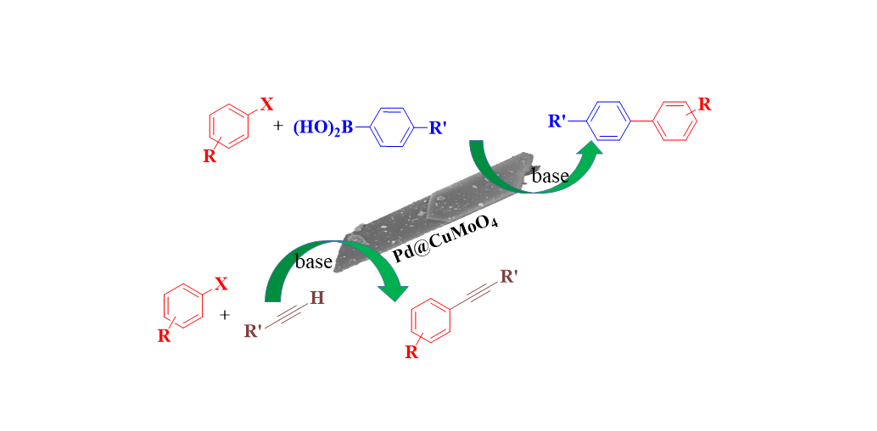
This study investigates the preparation, characterization, and catalytic activity of a novel palladium-doped copper molybdate polyoxometalate (Pd@CuMoO4). Using a mere 19 ppm of palladium, Pd@CuMoO4 demonstrated excellent yields in both Suzuki-Miyaura and Sonogashira-Hagiwara coupling reactions of aryl halides with boronic acids and alkynes, respectively. The synergistic effects between the different metals in this catalyst were confirmed to be responsible for its high catalytic performance. Additionally, Pd@CuMoO4 was successfully recovered and recycled multiple times in the Suzuki-Miyaura reaction with minimal loss of activity. The structural integrity of the reused catalyst was evaluated through various analytical techniques.
Keywords:
Polyoxometalate
; Palladium
; Suzuki
; Sonogashira‐Hagihara
; synergistic effects
1. Introduction
Synergistic effects arising from the combined action of different metal centers in multimetallic catalysts often result in enhanced efficiency for various organic transformations. Positive cooperativity among metals occurs when the binding of one metal enhances the substrate's affinity for another, likely due to electron sharing within the bi- or multimetallic system. This phenomenon contributes to the unique reactivity observed in both homogeneous and heterogeneous catalysts [1,2,3,4].
Homogeneous and heterogeneous catalysts have their own strengths. Heterogeneous catalysts are easily recovered by filtration, enabling product purification and catalyst recycling. However, leaching of the active metal catalyst into the reaction solution can sometimes occur, making the distinction between homogeneous and heterogeneous catalysis less clear [5,6,7].
Polyoxometalates (POMs) are inorganic polyanions with a well-defined structure, consisting of metal ions linked by oxyanions to form a large, closed framework [9]. Polyoxometalates (POMs) are promising catalysts for various organic transformations due to their unique structure and redox activity. Multi-metallic POMs can offer enhanced catalytic performance compared to monometallic ones. A common preparation method involves depositing one metal onto another, similar to platinum catalysts supported on carbon or alumina. The proximity between metal centers in these materials likely facilitates improved catalytic properties through direct metal-metal interactions [8,10,11,12,13,14].
Copper molybdate (CuMoO4) is an inorganic compound with valuable applications in catalysis, photocatalysis, and electrochemistry, thanks to the synergistic effects between copper and molybdenum [16,17]. CuMoO4 is a versatile material with applications in catalysis, photocatalysis, and electrochemistry. Its redox properties and the ability of molybdenum to change oxidation states contribute to its catalytic efficiency in selective oxidation reactions. CuMoO4 also exhibits photocatalytic activity for degrading organic pollutants under visible light, and has potential in energy storage systems like lithium-ion batteries due to its conductive properties and capacity for charge storage [15,18].
Carbon-Carbon coupling reactions are essential for synthesizing various organic compounds, including pharmaceuticals, agrochemicals, and other valuable molecules. These reactions involve joining two hydrocarbon fragments to form a new carbon-carbon bond. Examples include the Mizoroki-Heck, Suzuki-Miyaura, Sonogashira-Hagihara, Stille, and Negishi reactions [19,20,21,22,26].
The Suzuki-Miyaura reaction is a palladium-catalyzed coupling of aryl halides or pseudo halides with organoboron compounds in the presence of a base. This method provides an efficient and clean way to selectively form carbon-carbon bonds [23,24,25,27]. The Sonogashira-Hagihara reaction is a valuable tool for coupling terminal acetylenes with aryl or vinyl halides, leading to the formation of aryl alkynes and conjugated enynes. These compounds are important building blocks for various products, including pharmaceuticals, agrochemicals, and other materials. The reaction typically uses palladium catalysts with copper(I) co-catalysts, making it a promising candidate for the development of palladium-copper bimetallic nanoparticle catalysts [19,26,28,29,30].
2. Results and Discussion
2.1. Preparation and Characterization of Pd@CuMoO4
The steps for preparation of Pd@CuMoO4 are summarized in Scheme 1.
The morphological and physical properties of Pd@CuMoO4 was studied by different techniques and analyses such as transmission electron microscopy (TEM), scanning electron microscope (SEM), X-ray photoelectron spectroscopy (XPS), energy dispersive X-ray analysis (EDX), EDX-mapping and X-ray diffraction (XRD).
The XPS of Pd@CuMoO4 was investigated in the Cu, Mo, and Pd regions. In the XPS spectrum of copper, Cu 2p3/2 and Cu 2p1/2 core-levels are detected because of the minor peaks centered at 932.7 and 952.21 eV, which are related to copper(I), and the peaks observed at 934.4 and 954.3 corresponding to copper(II) species. Peaks located at 941.1, 942.4 and 962.1 eV are satellite peaks [31,32,33,34]. XPS in Mo region showed 3d core-levels with a distinct doublet centered at 232.3 and 235.4 eV. The energy difference of this doublet (3.2 eV) and location of peaks confirm oxidation state of Mo6+ (Figure 1) [35,36].
XPS of Pd@CuMoO4 at Pd region confirmed the presence of Pd showing Pd3d core levels which split into 3d5/2 (located at ~ 337.6 eV) and 3d3/2 (centered at ~ 342.8 eV). These data perfectly matched with a palladium(II) state [37].
SEM and TEM images of Pd@CuMoO4, captured at different magnifications, revealed a well-defined rectangular or tetragonal cubic structure, characteristic of the polyoxometalate compound (Figure 2).
2.2. Catalytic Performance of Pd@CuMoO4
The catalytic performance of Pd@CuMoO4 was initially evaluated in the Sonogashira-Hagihara reaction using iodobenzene as a model substrate. A comprehensive study of various parameters, including solvent, base, catalyst amount, temperature, and reaction duration, was conducted (Table 1). Several Pd@CuMoO4 loadings in solvents such as polyethylene glycol (PEG), dimethylformamide (DMF), and a 1:1 mixture of EtOH and H2O produced different efficiencies in this reaction. The results demonstrated that with 10 mg of catalyst and DABCO as a base in DMF at 80 ℃, the product was obtained in 96% yield, while at 60 ℃ the yield decreased to 83% after 24 h (Table 1, entries 1 and 2). However, lowering the temperature to 30 ℃ the chemical yield was reduced to a 68% (Table 1, entry 3). Increasing the catalytic amount to 15 mg and using DABCO as a base, 97% and 45% yields were obtained during 24 and 12 h, respectively (Table 1, entries 4 and 5). Using other solvents such as PEG 200 and aqueous ethanol or other bases such as K2CO3, yields were not improved (Table 1, entries 6-10). Therefore, for the reaction of iodobenzene with phenylacetylene, the highest yield was obtained when DABCO was used as a base, at 60 ℃, and 15 mg of Pd@CuMoO4 in DMF as solvent (containing 19 ppm of Pd). Under similar conditions, CuMoO4 exhibited poor yield and lower efficiency than the reaction performed with Pd@CuMoO4 (Table 1, entry 11). Also, using the same amount of homogeneous PdCl2, a 70% yield of diphenylacetylene was obtained indicating the important role of Pd and CuMoO4 in the overall catalytic activity (Table 1, entry 12).
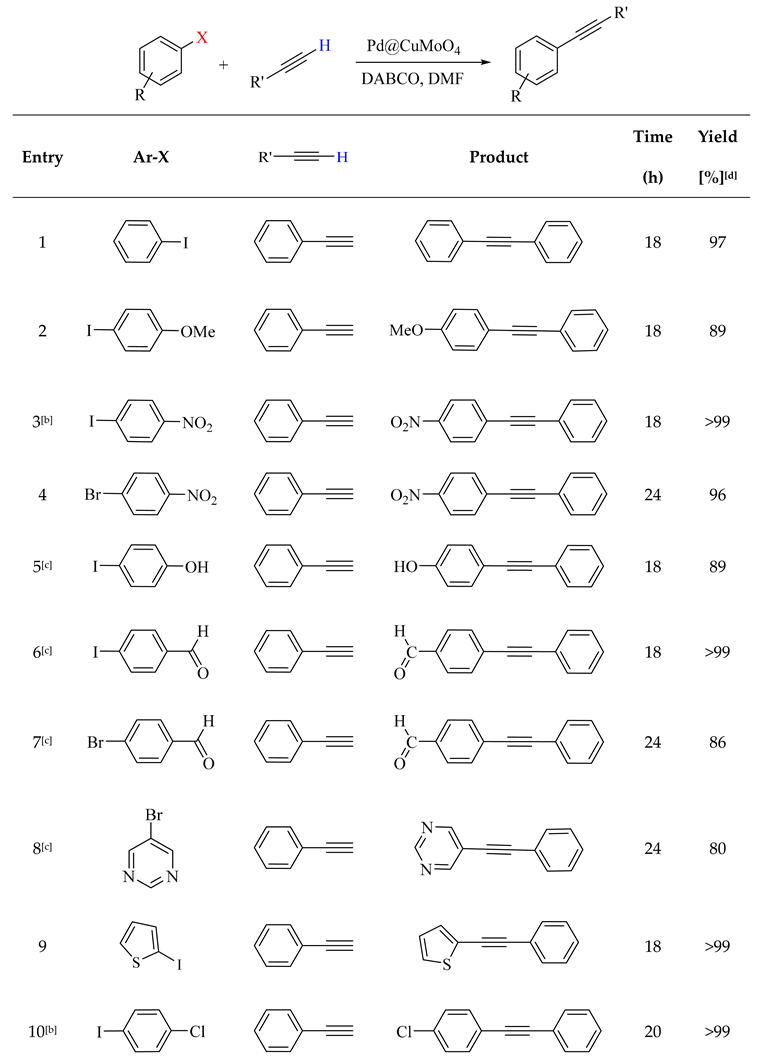
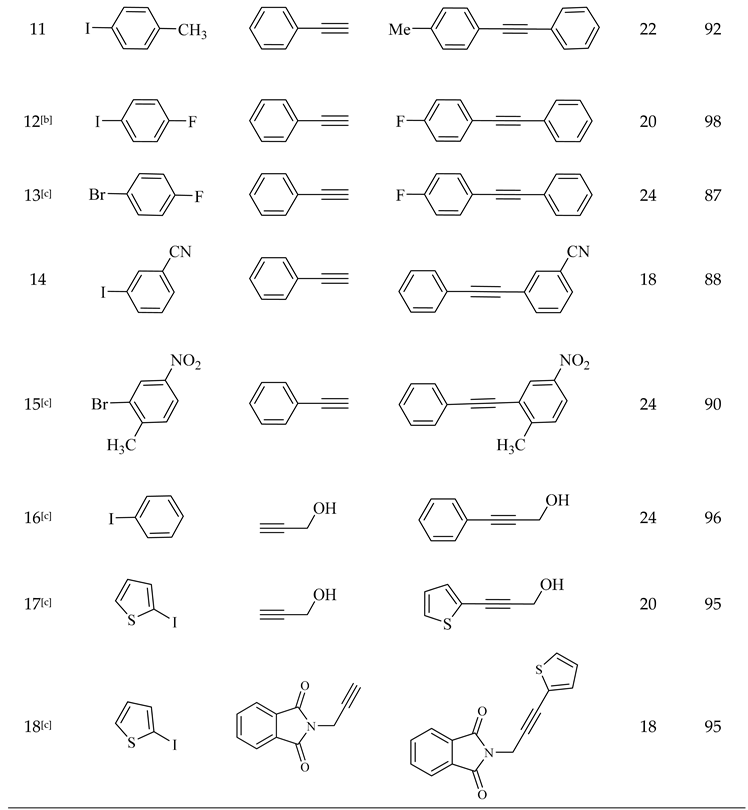
Using the optimized reaction conditions, the Sonogashira-Hagihara reaction was further explored with a broad range of aryl halide derivatives and three different terminal alkynes (Table 2).
The results showed that aryl halides containing electron-donating groups such as CH3, OH, and OCH3 as well as with electron-withdrawing groups like F, Cl, Br, I, CN, NO2, CHO, and COCH3 gave very good to excellent yields of the desired products. Compounds with iodine as the leaving group facilitated the Sonogashira-Hagihara reactions, owing to iodine's superior leaving power compared to bromine (Table 2). Additionally, the Sonogashira-Hagihara reaction of heterocyclic compounds such as 2-iodothiophene and 5-bromopyrimidine afforded excellent and very good yields, respectively (Table 2, entries 9, 17, 18, and 8). It should be noted that the optimal conditions employed 15 mg of catalyst, 0.3 mmol (33.6 mg) of DABCO as base, and 1.5 mL of DMF as solvent.
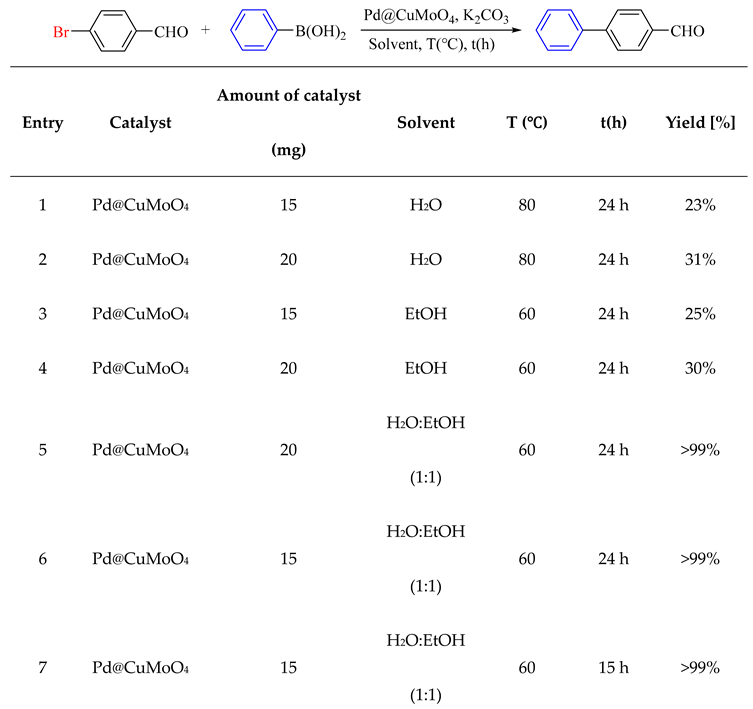
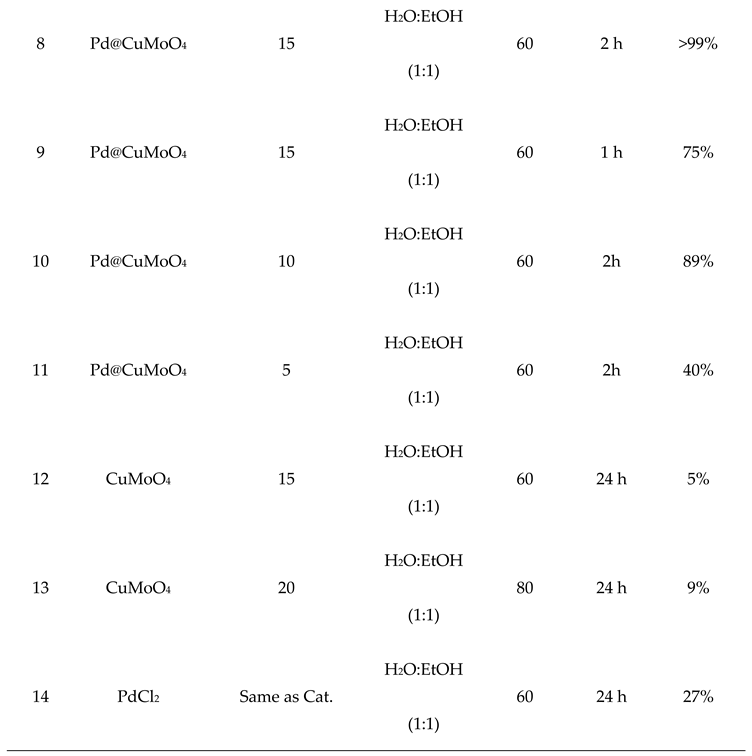
To expand the catalytic activity of Pd@CuMoO4, its efficiency in the Suzuki-Miyaura coupling reaction was assessed. To optimize the conditions, 4-bromobenzaldehyde was selected as the model compound and various parameters, such as amount of catalyst, temperature, solvent, and reaction time, were investigated. Conducting the reaction in pure water at 80 ℃ with 15 mg of catalyst for 24 h, a 23% conversion was achieved (Table 3, entry 1). Increasing the catalyst amount to 20 mg the yield was not ameliorated (Table 3, entry 2). In addition, using EtOH as a solvent the desired product was not satisfactorily obtained (Table 3, entries 3 and 4). Subsequently, a 1:1 mixture of H2O and EtOH was tested. This solvent combination effectively improved reaction efficiency, leveraging the synergistic properties of both solvents. Polarities and features of water-EtOH mixture created favorable conditions for the solubility of both organic and inorganic reactants, enhancing the reaction rate and yield (Table 3, entry 5). Reducing the catalyst amount resulted in minimal changes in efficiency, suggesting that the catalyst maintains high efficacy even at lower concentrations (Table 3, entry 6). When the reaction time was shortened from 15 to 2 h, the yield remained high (Table 3, entries 7 and 8). However, the yield decreased in reaction times shorter than 2 h (Table 3, entry 9). To optimize the catalyst loading the reaction was performed using 10 and 5 mg of the catalyst. Results showed that in both cases lower yield were obtained after 2 h (Table 3, entries 10 and 11).
Therefore, the optimal conditions for the carbon-carbon Suzuki-Miyaura coupling reaction of 4-bromobenzaldehyde with phenylboronic acid were identified as follows: a 1:1 H2O-EtOH solvent mixture, 15 mg of Pd@CuMoO4 catalyst (19 ppm Pd in the reaction mixture), temperature of 60 ℃, and a duration of 2 h (Table 3, entry 8). Atomic absorption analysis confirmed that the 15 mg of Pd@CuMoO4 catalyst contained 19 ppm of palladium, a key factor in accelerating the reaction.
Under these optimal conditions, the performance of the Pd@CuMoO4 catalyst was compared to the CuMoO4 bimetallic compound in the Suzuki-Miyaura reaction of 4-bromobenzaldehyde with phenylboronic acid. Results indicated that the efficiency of the reaction using CuMoO4, under identical conditions, was only 5%, and increasing the temperature the yield was not improved (Table 3, entries 12 and 13). Further evaluation by adding palladium salt homogeneously to the reaction medium resulted in a yield of 27%, demonstrating a significant synergistic effect between palladium and CuMoO4 in the catalyst composition (Table 3, entry 14).
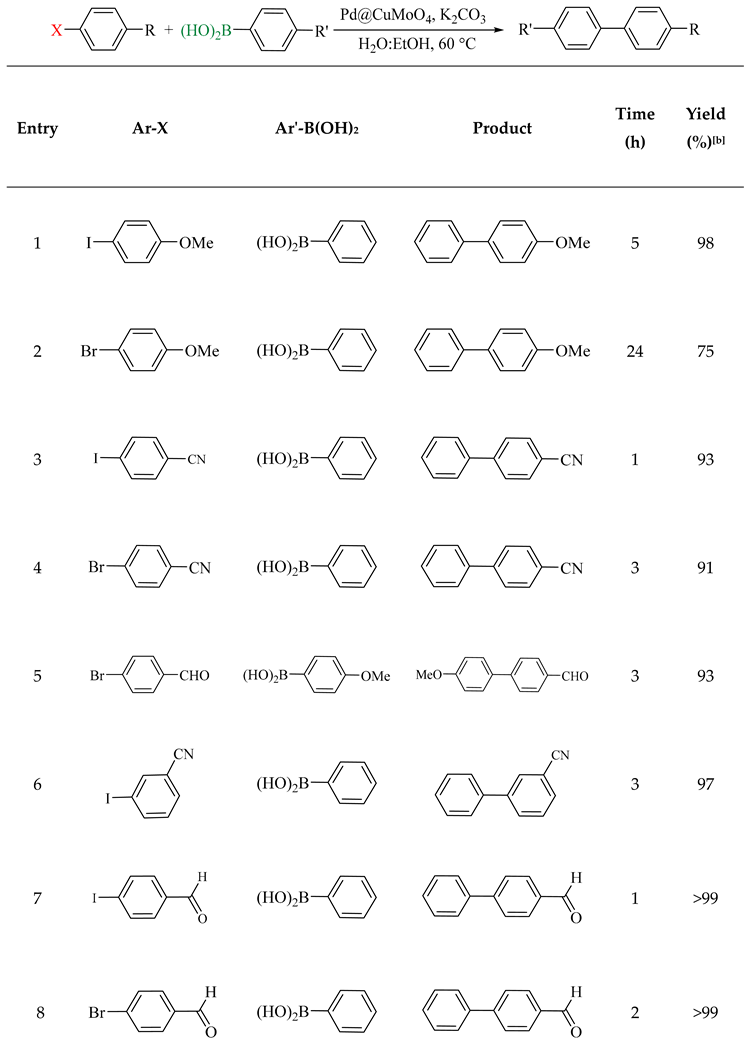
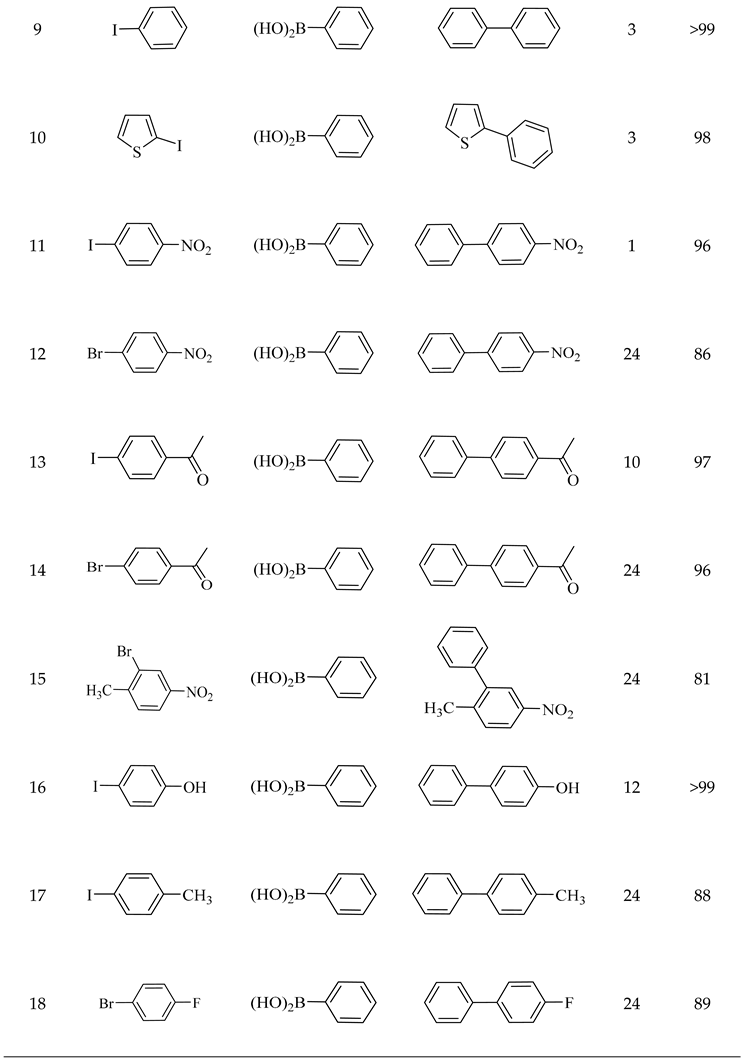
Having established optimal conditions, the Suzuki-Miyaura reaction was explored with a wide range of aryl halides together with aryl boronic acids (Table 4). Aryl halides containing both electron-donating and withdrawing groups were appropriate to run this Suzuki-Miyaura reaction furnishing the corresponding biaryls in very good to excellent yields.
Notably, the Suzuki reaction of the heterocyclic compound 2-iodothiophene was performed efficiently in a short reaction time (Table 4, entry 10). All reactions were conducted under optimal condition at 60 ℃ using 15 mg of catalyst.
3.3. Recyclability of Pd@CuMoO4
The recyclability of the Pd@CuMoO4 catalyst in the Suzuki-Miyaura and Sonogashira-Hagihara reactions under optimal reaction conditions were studied and the progress of the reactions were followed by gas chromatography. After each reaction cycle, the catalyst was removed, washed, dried, and reused for the next cycle (Figure 4). Thus, the catalyst can be recoverable and recyclable for 7 runs with very small decreasing in its efficiency, while in the 8th run the yield decreased to 83-85%.
In order to find information about stability of the reused catalyst after 8th run in the Suzuki-Miyaura reaction, morphology and physical properties were studied by TEM, SEM, XPS, and EDX-Mapping. In Figure 5, TEM and SEM images shows the presence of tetragonal cubic structures with some elongation in polyoxometalate structures.
Also, EDX confirm presence of Pd, Cu and Mo as main elements of the recovered catalyst Pd@CuMoO4 after 8th runs. Here, these elements are uniformly distributed in the structure (Figures S3 and S4). Finally, XPS of the reused catalyst in the Pd, Cu and Mo regions showed very similar pattern to the pristine catalyst indicating high stability of the Pd@CuMoO4 during Suzuki-Miyaura coupling reaction (Figure 6).
3. Materials and Methods
3.1. Materials
Palladium(II)chloride (PdCl2), copper(II)nitrate trihydrate Cu(NO3)2·3H2O, sodium molybdate dihydrate (Na2MoO4·2H2O), aryl halides, boronic acids, alkynes and solvents were purchased from Merck, Sigma Aldrich, Across, and TCI companies. The physical morphologies were investigated by a transmission electron microscope (TEM, EOL JEM-2010) and a field emission scanning electron microscope (FE-SEM, JEOL JSM 840). X-ray photoelectron spectroscopy (XPS) measurements were performed in a VGMicrotech Multilab 3000 spectrometer, equipped with an Al anode. The SEM mapping was measured by Hitachi S3000 N. The crystallographic structures of the products were examined by X-ray diffractometer (XRD) with Cu Kα radiation (λ = 0.154 Å).1H NMR and 13C NMR spectra were recorded at 400 MHz and 100 MHz, respectively on a Bruker Avance. Reactions were monitored by GC in a Varian CP-3800 apparatus.
3.2. Preparation of Pd@CuMoO4 Nanostructures
To a 50 mL flask, Cu(NO3)2·3H2O (2.4 mmol, 582 mg), Na2MoO4.2H2O (2.35 mmol, 484 mg), and H2O (20 mL) were added and the resulting mixture stirred until obtaining a homogeneous solution. In another flask, PdCl2 (0.08 mmol, 15 mg) was sonicated in H2O (3 mL) until complete solution and added to the solution containing Cu(NO3)2·3H2O and Na2MoO4·2H2O. The final mixture was stirred for 10 minutes at room temperature. Afterwards, the mixture was transferred to an autoclave reactor and placed at 150 ℃ for 6 h. Finally, the mixture was subjected to centrifugation, and the resulting solid was washed several times with water and ethanol, and dried in an oven for 24 h, obtaining 385 mg Pd@CuMoO4.
3.3. General Procedure for the Suzuki-Miyaura Reaction
Aryl halide (0.2 mmol), boronic acids (0.3 mmol), K2CO3 (0.3 mmol, 41.4 mg), catalyst (15 mg), H2O (0.75 mL), and EtOH (0.75 mL) were added to a 5 mL round-bottomed flask and the reaction mixture was stirred at 60 ℃ for the required reaction time. After completion of the reaction, which was monitored by GC, the organic phase was extracted by ethyl acetate (3×3 mL), and the pure product was obtained by column or plait chromatography using hexane and ethyl acetate as eluents.
3.4. General Procedure for the Sonogashira-Hagihara Reaction
Aryl halide (0.2 mmol), alkyne (0.3 mmol), DABCO (0.3 mmol, 33.6 mg), Pd@CuMoO4 (15 mg) and DMF (1.5 mL) were added to a 5 mL flask and the reaction mixture was stirred at 60 ℃ for appropriate reaction time. The progress of the reaction was followed by GC. After completing the reaction, the organic phase was extracted by ethyl acetate (3×3 mL), and the pure product was obtained by column or plait chromatography using hexane and ethyl acetate as eluents.
4. Conclusions
In summary, CuMoO4 comprising very low amount of palladium (Pd@CuMoO4) was prepared, characterized and applied as catalyst. Pd@CuMoO4 catalyzed Sonogashira–Hagihara and Suzuki-Miyaura coupling reaction of aryl iodides and bromides at 60-80 °C and very good to excellent yields of desired products were achieved. Contents of Pd in all reactions were in the range of 15-20 ppm. This catalyst was successfully recycled in Suzuki-Miyaura reaction for 7 runs and catalyst preserved its activity.
Supplementary Materials
The following supporting information can be downloaded at the website of this paper posted on Preprints.org. Figure S1. EDX image of Pd@CuMoO4; Figure S2. XRD pattern of Pd@CuMoO4; Figure S3. EDX mapping image of recycled Pd@CuMoO4; Figure S4. EDX image of recycled Pd@CuMoO4 in the Suzuki-Miyaura reaction of 4-bromebenzaldehyde with phenylboronic acid; Characterization data of Sonogashira-Hagihara and Suzuki-Miyaura coupling reaction’s products.
Author Contributions
Conceptualization, M. G.; Methodology, M. G.; validation, H. K. and M. G.; formal analysis, M. G. and J. S.; investigation, H. K.; resources, M. G. and J. S.; data curation, H. K. and M. G.; writing—original draft preparation, M. G.; writing—review and editing, J. S.; visualization, M. G. and J. S.; supervision, M. G.; project administration, M. G.; funding acquisition, M. G. and J. S. All authors have read and agreed to the published version of the manuscript.
Data Availability Statement
Not applicable.
Acknowledgments
The authors are grateful to the IASBS Research Council and Alicante University for their support of this work. This work is based upon research funded by Iran National Science Foundation (INSF) under the project no. 4024819. The authors also would like to thank the Ministerio de Ciencia, Innovación y Universidades (RED2018-102387-T, PID2019-107268GB-100), Universidad de Alicante, and Generalitat Valenciana (IDIFEDER/2021/013) for the financial support of this work.
Conflicts of Interest
The authors declare no conflict of interest. The funders had no role in the design of the study; in the collection, analyses, or interpretation of data; in the writing of the manuscript; or in the decision to publish the results.
References
- Buchwalter, P.; Rosé, J.; Braunstein, P. Multimetallic catalysis based on heterometallic complexes and clusters. Chem. Rev. 2015, 115, 28–126. [Google Scholar] [CrossRef] [PubMed]
- Jiang, H.L.; Xu, Q. Recent progress in synergistic catalysis over heterometallic nanoparticles. J. Mater. Chem. 2011, 21, 13705–13725. [Google Scholar] [CrossRef]
- Guczi, L. Mechanism of reactions on multimetallic catalysts. J. Mol. Catal. 1984, 25, 13–29. [Google Scholar] [CrossRef]
- Gholinejad, M.; Oftadeh, E.; Shojafar, M.; Sansano, J.M.; Lipshutz, B.H. Synergistic effects of ppm levels of palladium on natural clinochlore for reduction of nitroarenes. ChemSusChem. 2019, 12, 4240–4248. [Google Scholar] [CrossRef] [PubMed]
- Davies, I.W.; Matty, L.; Hughes, D.L.; Reider, P.J. Are heterogeneous catalysts precursors to homogeneous catalysts? J. Am. Chem. Soc. 2001, 123, 10139–10140. [Google Scholar] [CrossRef]
- Kalz, K.F.; Kraehnert, R.; Dvoyashkin, M.; Dittmeyer, R.; Gläser, R.; Krewer, U.; ... Grunwaldt, J.D. Future challenges in heterogeneous catalysis: Understanding catalysts under dynamic reaction conditions. ChemCatChem 2017, 9, 17–29. [CrossRef]
- Samaniyan, M.; Mirzaei, M.; Khajavian, R.; Eshtiagh-Hosseini, H.; Streb, C. Heterogeneous catalysis by polyoxometalates in metal–organic frameworks. ACS Catal. 2019, 9, 10174–10191. [Google Scholar] [CrossRef]
- Stamate, A.E.; Pavel, O.D.; Zavoianu, R.; Marcu, I.C. Highlights on the catalytic properties of polyoxometalate-intercalated layered double hydroxides: Rev. Catal. 2020, 10, 57. [Google Scholar] [CrossRef]
- Taghizadeh, M.; Mehrvarz, E.; Taghipour, A. Polyoxometalate as an effective catalyst for the oxidative desulfurization of liquid fuels: A critical review. Rev. Chem. Eng. 2020, 36, 831–858. [Google Scholar] [CrossRef]
- Hill, C.L. Progress and challenges in polyoxometalate-based catalysis and catalytic materials chemistry. J. Mol. Catal. A Chem. 2007, 262, 2–6. [Google Scholar] [CrossRef]
- Proust, A.; Thouvenot, R.; Gouzerh, P. Functionalization of polyoxometalates: Towards advanced applications in catalysis and materials science. Chem. Comm. 2008, 1837–1852. [Google Scholar] [CrossRef] [PubMed]
- Kalyani, V.; Satyanarayana, V.S.V.; Singh, V.; Pradeep, C.P.; Ghosh, S.; Sharma, S.K.; Gonsalves, K.E. New Polyoxometalates Containing Hybrid Polymers and Their Potential for Nano-Patterning. Chem. Eur. J. 2015, 21, 2250–2258. [Google Scholar] [CrossRef] [PubMed]
- Wu, L. Organically encapsulated polyoxometalate catalysts: Supramolecular composition and synergistic catalysis. In Encapsulated Catalysts. 2017, (pp. 1-33). Academic Press.
- Wang, S.S.; Yang, G.Y. Recent advances in polyoxometalate-catalyzed reactions. Chem. Rev. 2015, 115, 4893–4962. [Google Scholar] [CrossRef]
- Ali, N.U.H.L.; Manoharan, S.; Pazhamalai, P.; Kim, S.J. CuMoO4 nanostructures: A novel bifunctional material for supercapacitor and sensor applications. J. Energy Storage. 2022, 52, 104784. [Google Scholar] [CrossRef]
- Hassani, H.O.; Akouibaa, M.; Rakass, S.; Abboudi, M.; El Bali, B.; Lachkar, M.; Al Wadaani, F. A simple and cost-effective new synthesis method of copper molybdate CuMoO4 nanoparticles and their catalytic performance. J. Sci.: Adv. Mater. Devices. 2021, 6, 501–507. [Google Scholar] [CrossRef]
- Alabada, R.; Ayub, A.; Ajaj, Y.; Bhat, S.I.; Alshammari, R.H.; Abduldayeva, A.; ... Mohamed, R.M. A new approach to the synthesis of CuMoO4 nanoparticles with mechanistic insight into the sunlight-assisted degradation of textile pollutants and antibacterial activity evaluation. J. Alloys Compd. 2024, 977, 173400. [CrossRef]
- Ahmed, J.; Ahamad, T.; Alshehri, S.M. rGO supported CuMoO4 nanoparticles: Synthesis, characterization, and electrocatalytic oxygen evolution reaction. New. J. Chem. 2023, 47, 13903–13910. [Google Scholar] [CrossRef]
- Olekszyszen, D.N.; Albuquerque, B.L.; Silva, D.D.O.; Tripodi, G.L.; de Oliveira, D.C.; Domingos, J.B. Core–shell PdCu bimetallic colloidal nanoparticles in Sonogashira cross-coupling reaction: Mechanistic insights into the catalyst mode of action. Nanoscale. 2020, 12, 1171–1179. [Google Scholar] [CrossRef]
- Buskes, M.J.; Blanco, M.J. Impact of cross-coupling reactions in drug discovery and development. Molecules. 2020, 25, 3493. [Google Scholar] [CrossRef]
- González-Sebastián, L.; Morales-Morales, D. Cross-coupling reactions catalysed by palladium pincer complexes. A review of recent advances. J. Organomet. Chem. 2019, 893, 39–51. [Google Scholar] [CrossRef]
- Cheng, L.J.; Mankad, N.P. C–C and C–X coupling reactions of unactivated alkyl electrophiles using copper catalysis. Chem. Soc. Rev. 2020, 49, 8036–8064. [Google Scholar] [CrossRef] [PubMed]
- Sun, B.; Ning, L.; Zeng, H.C. Confirmation of Suzuki–Miyaura cross-coupling reaction mechanism through synthetic architecture of nanocatalysts. J. Am. Chem. Soc. 2020, 142, 13823–13832. [Google Scholar] [CrossRef] [PubMed]
- Suzuki, A. Organoborane coupling reactions (Suzuki coupling). Proc. Jpn. Acad. Ser. B. 2004, 80, 359–371. [Google Scholar] [CrossRef]
- Fihri, A.; Bouhrara, M.; Nekoueishahraki, B.; Basset, J.M.; Polshettiwar, V. Nanocatalysts for Suzuki cross-coupling reactions. Chem. Soc. Rev. 2011, 40, 5181–5203. [Google Scholar] [CrossRef]
- Kadu, B.S. Suzuki–Miyaura cross coupling reaction: Recent advancements in catalysis and organic synthesis. Catal. Sci. Technol. 2021, 11, 1186–1221. [Google Scholar] [CrossRef]
- D'Alterio, M.C.; Casals-Cruañas, È.; Tzouras, N.V.; Talarico, G.; Nolan, S.P.; Poater, A. Mechanistic aspects of the palladium-catalyzed Suzuki-Miyaura cross-coupling reaction. Chem. Eur. J. 2021, 27, 13481–13493. [Google Scholar] [CrossRef]
- Reina, A.; Dang-Bao, T.; Guerrero-Ríos, I.; Gómez, M. Palladium and copper: Advantageous nanocatalysts for multi-step transformations. Nanomater. 2021, 11, 1891. [Google Scholar] [CrossRef]
- Biffis, A.; Centomo, P.; Del Zotto, A.; Zecca, M. Pd metal catalysts for cross-couplings and related reactions in the 21st century: A critical review. Chem. Rev. 2018, 118, 2249–2295. [Google Scholar] [CrossRef]
- Khosravi, F.; Gholinejad, M.; Sansano, J.M.; Luque, R. Low-amount palladium supported on Fe-Cu MOF: Synergetic effect between Pd, Cu and Fe in Sonogashira-Hagihara coupling reaction and reduction of organic dyes. Mol. Catal. 2022, 522, 112199. [Google Scholar] [CrossRef]
- Gholinejad, M.; Naghshbandi, Z.; Sansano, J.M. Zeolitic imidazolate frameworks-67 (ZIF-67) supported PdCu nanoparticles for enhanced catalytic activity in Sonogashira-Hagihara and nitro group reduction under mild conditions. Mol. Catal. 2022, 518, 112093. [Google Scholar] [CrossRef]
- Gholinejad, M.; Naghshbandi, Z.; Sansano, J.M. Co/Cu bimetallic ZIF as New heterogeneous catalyst for reduction of nitroarenes and dyes. Appl. Organomet. Chem. 2020, 34, e5522. [Google Scholar] [CrossRef]
- Jiang, J.; Liu, X.X.; Han, J.; Hu, K.; Chen, J.S. Self-supported sheets-on-wire CuO@ Ni (OH) 2/Zn (OH) 2 nanoarrays for high-performance flexible quasi-solid-state supercapacitor. Processes. 2021, 9, 680. [Google Scholar] [CrossRef]
- Li, X.; Kong, W.; Qin, X.; Qu, F.; Lu, L. Self-powered cathodic photoelectrochemical aptasensor based on in situ-synthesized CuO-Cu2O nanowire array for detecting prostate-specific antigen. Mikrochim. Acta. 2020, 187, 325. [Google Scholar] [CrossRef] [PubMed]
- Ali, N.U.H.L.; Manoharan, S.; Pazhamalai, P.; Kim, S.J. CuMoO4 nanostructures: A novel bifunctional material for supercapacitor and sensor applications. J. Energy Storage. 2022, 52, 104784. [Google Scholar] [CrossRef]
- Yadav, A.A.; Hunge, Y.M.; Kang, S.W. Chemical synthesis of a microsphere-like copper molybdate electrode for oxygen evolution reaction. Surfaces and Interfaces. 2021, 26, 101425. [Google Scholar] [CrossRef]
- Khosravi, F.; Gholinejad, M.; Sansano, J.M. Carbon derived from orange peel waste for preparation of benign bimetallic catalyst in organic reactions. Inorg. Chem. Commun. 2024, 164, 112412. [Google Scholar] [CrossRef]
- Sadeghi, M. Investigation of the structural, optical and magnetic properties of CuMoO4 nanoparticles synthesized through a sonochemical method. J. Mater. Sci.: Mater. Electron. 2016, 27, 5796–5801. [Google Scholar] [CrossRef]
- Xu, L.; Wu, X.C.; Zhu, J.J. Green preparation and catalytic application of Pd nanoparticles. Nanotechnol. 2008, 19, 305603. [Google Scholar] [CrossRef]
Scheme 1.
Preparation of Pd@CuMoO4.
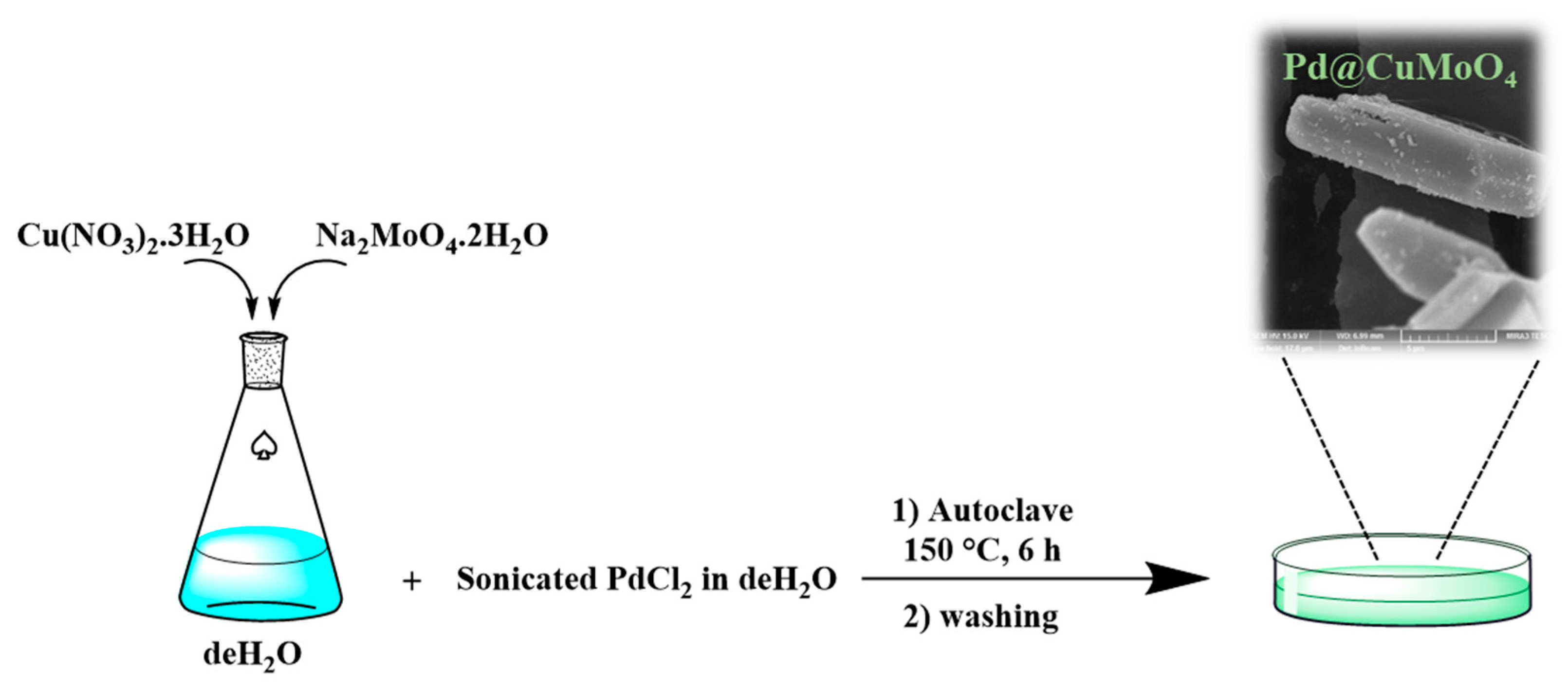
Figure 1.
XPS spectrum of Pd@CuMoO4 catalyst, (a) all elements, (b) Mo 3d, (c) Pd 3d, (d) Cu 2p.
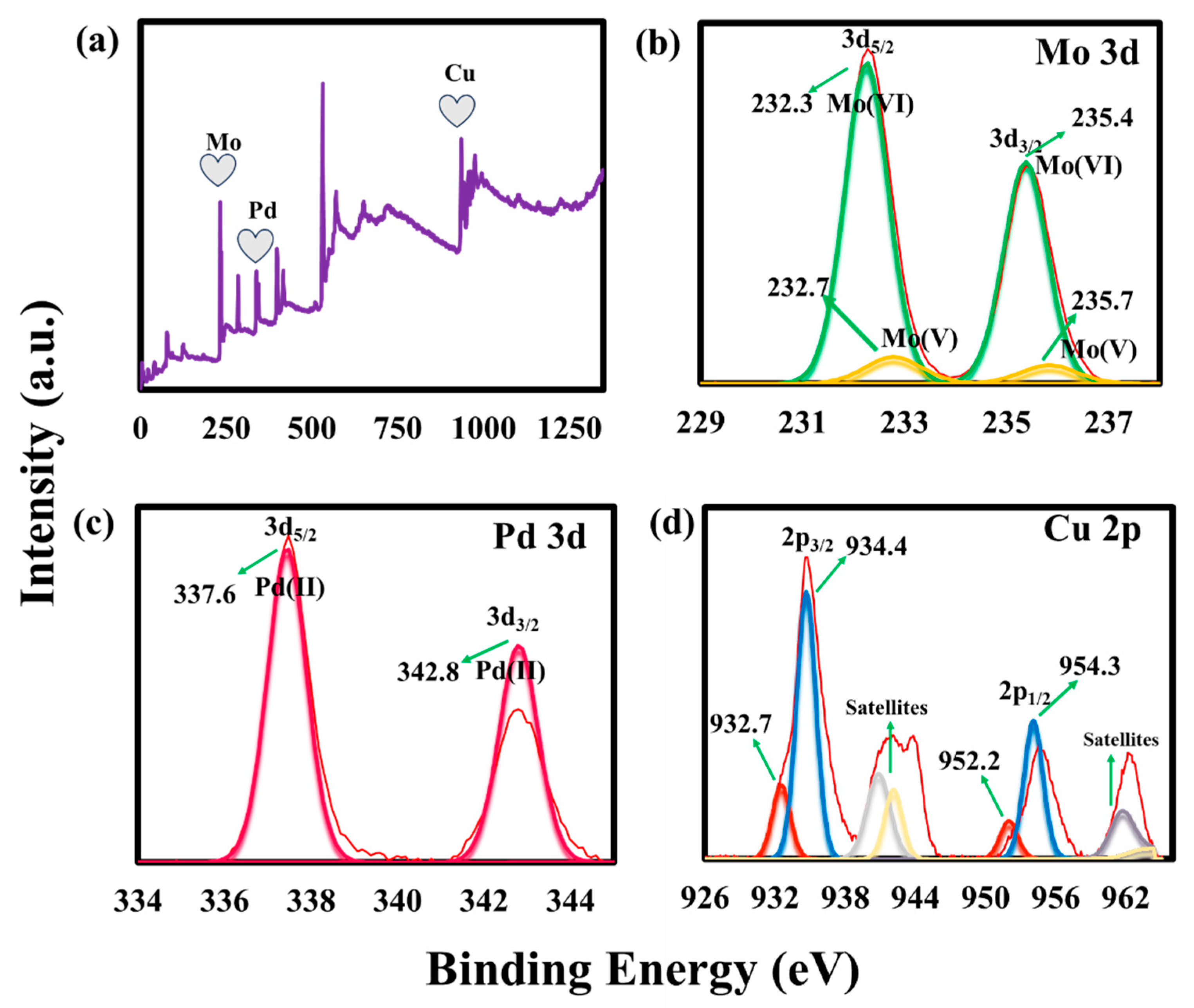
Figure 2.
SEM (a and b) and TEM (c and d) images of Pd@CuMoO4.
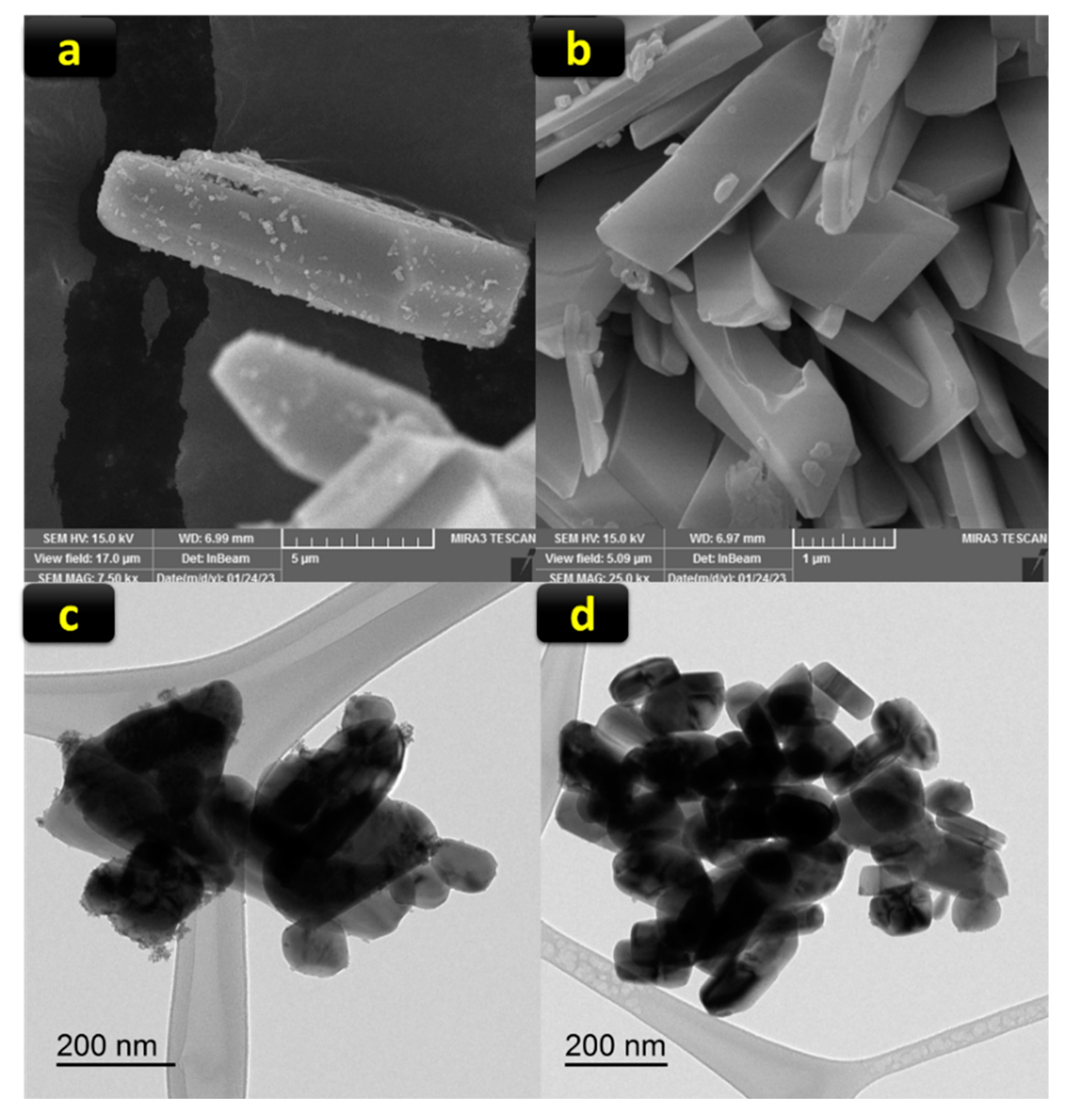
Figure 3.
EDX-mapping image of Pd@CuMoO4.
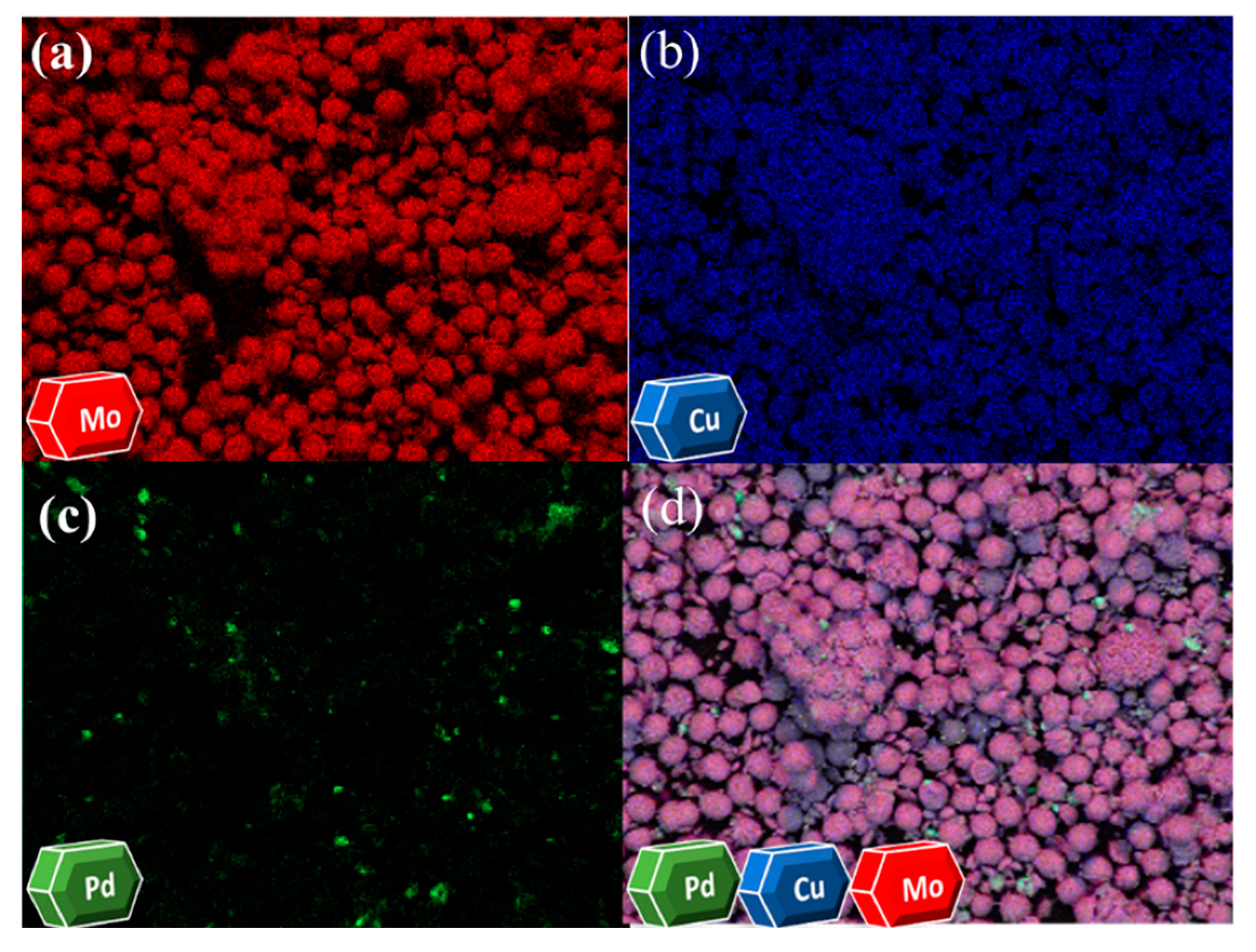
Figure 4.
Reusability of the Pd@CuMoO4 catalyst in the (red) Suzuki-Miyaura coupling reaction of 4-bromobenzaldehyde with phenylboronic acid and (blue) Sonogashira-Hagihara reaction of iodobenzene with phenylacetylene.
Figure 4.
Reusability of the Pd@CuMoO4 catalyst in the (red) Suzuki-Miyaura coupling reaction of 4-bromobenzaldehyde with phenylboronic acid and (blue) Sonogashira-Hagihara reaction of iodobenzene with phenylacetylene.
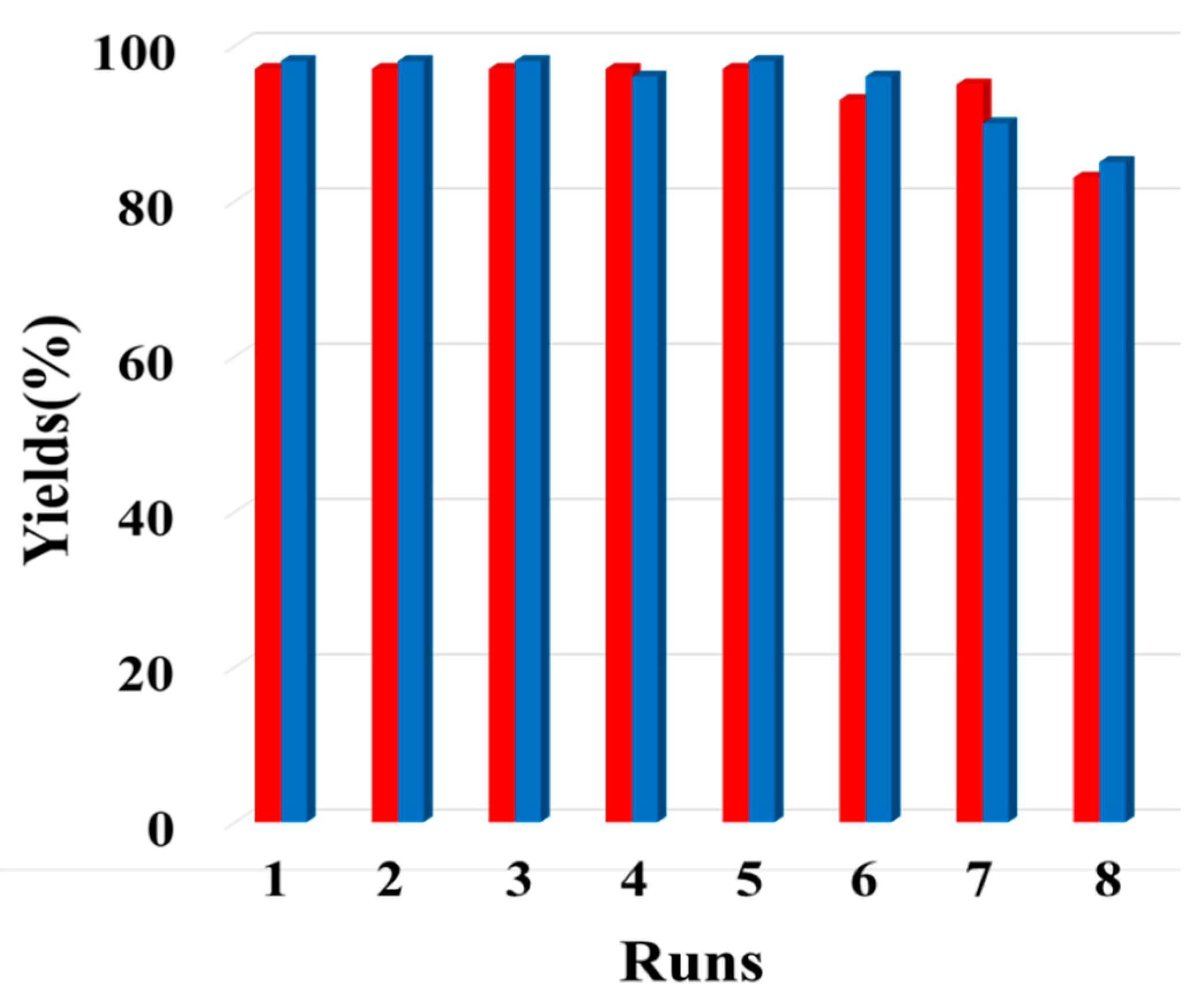
Figure 5.
SEM (a, b) and TEM (c, d) images of recycled Pd@CuMoO4 catalyst.
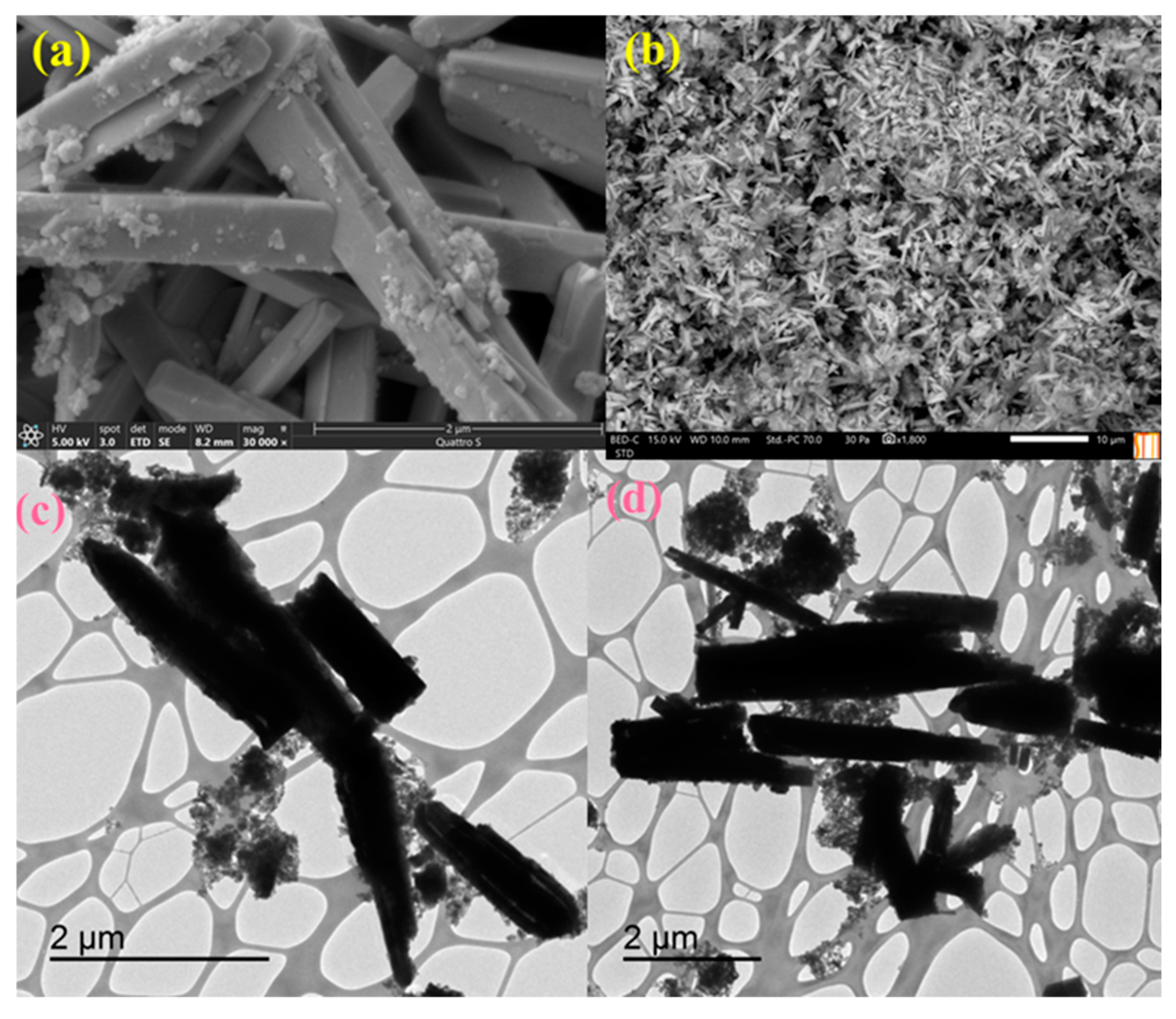
Figure 6.
XPS spectrum of recycled Pd@CuMoO4 catalyst (a) all elements, (b) Mo 3d, (c) Pd 3d, and (d) Cu 2p.
Figure 6.
XPS spectrum of recycled Pd@CuMoO4 catalyst (a) all elements, (b) Mo 3d, (c) Pd 3d, and (d) Cu 2p.
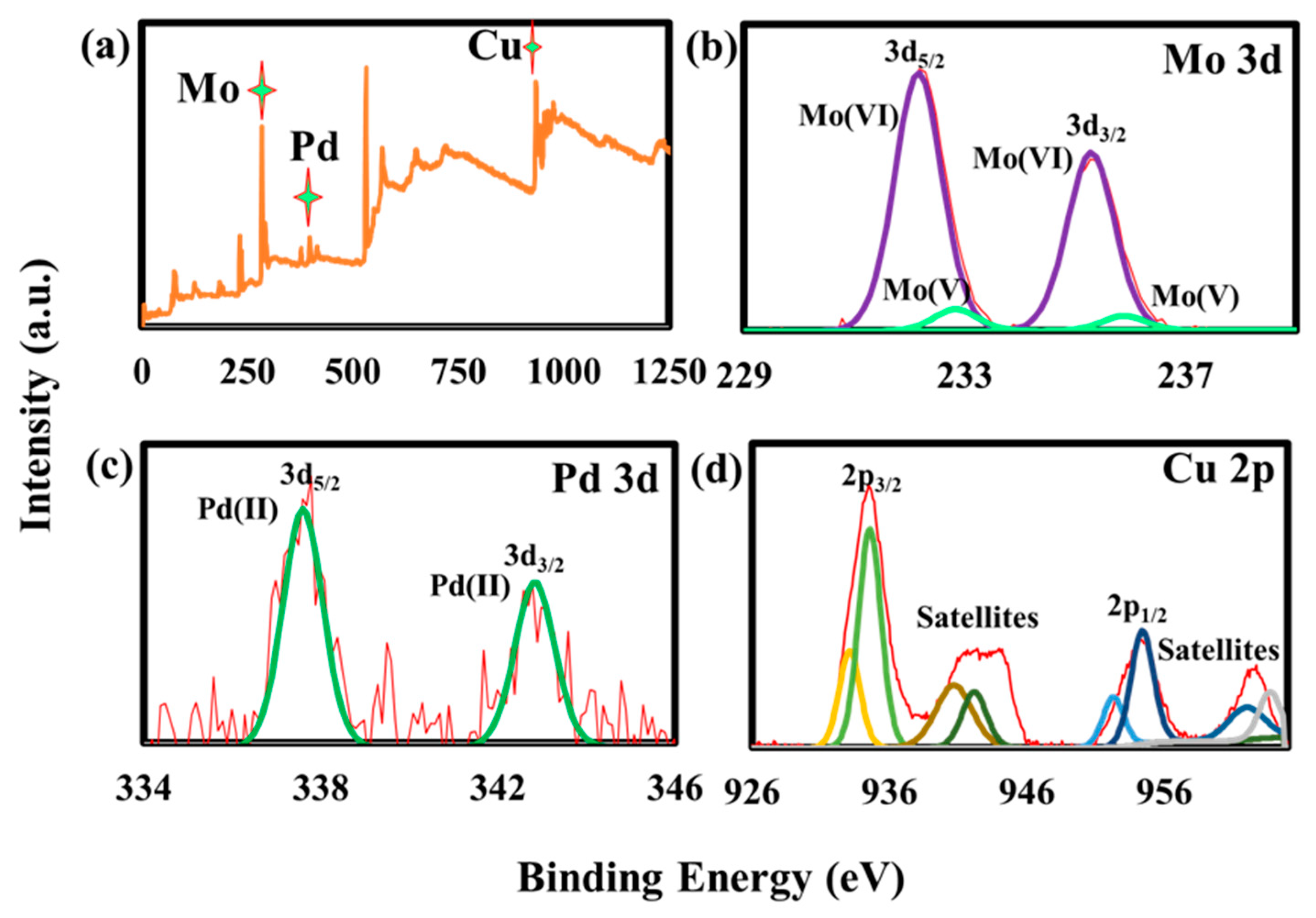

Table 1.
Optimization of Sonogashira-Hagihara reaction for compound Iodobenzene using Pd@CuMoO4 catalyst.
Table 1.
Optimization of Sonogashira-Hagihara reaction for compound Iodobenzene using Pd@CuMoO4 catalyst.
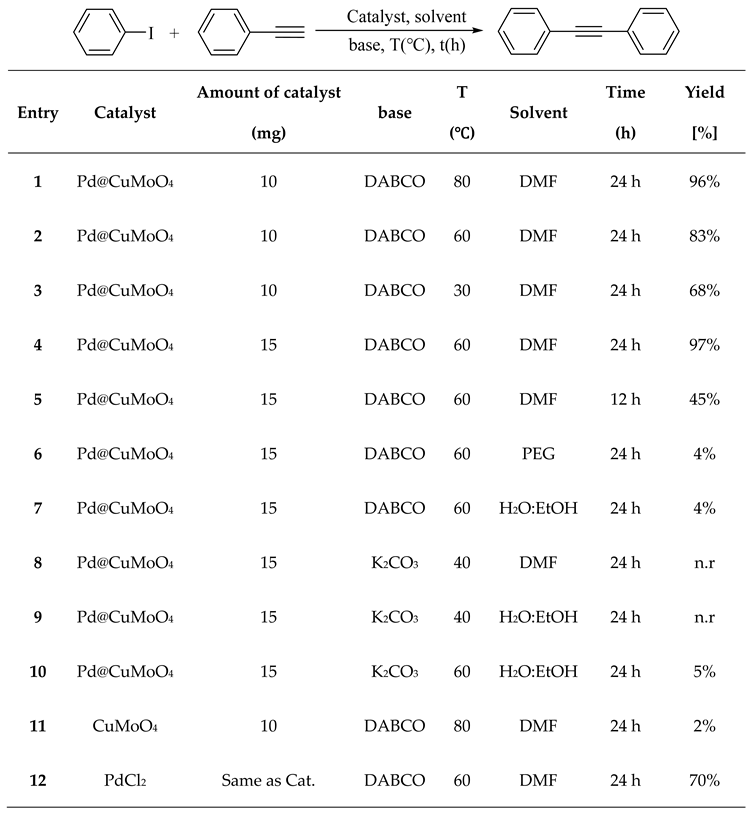 |
Table 2.
Sonogashira-Hagihara reaction of aryl halides and three different terminal alkynes catalyzed by Pd@CuMoO4[a].
Table 2.
Sonogashira-Hagihara reaction of aryl halides and three different terminal alkynes catalyzed by Pd@CuMoO4[a].
|
[a] Reaction conditions: Catalyst (15 mg, 19 ppm Pd), DMF (1.5 mL), ArX (0.2 mmol), Alkyne (0.3 mmol), DABCO (0.3 mmol, 33.6 mg) at 60 ℃ under argon atmosphere. [b] Reactions were performed at 70 ℃. [c] Reactions were performed at 80 ℃. [d] GC yields.
Table 3.
Optimization of Suzuki-Miyaura reaction for compound 4-bromobenzaldehyde using Pd@CuMoO4 catalyst.
Table 3.
Optimization of Suzuki-Miyaura reaction for compound 4-bromobenzaldehyde using Pd@CuMoO4 catalyst.
|
Table 4.
The Suzuki-Miyaura cross-coupling reaction of aryl halides with aryl boronic acid using the Pd@CuMoO4 catalyst[a].
Table 4.
The Suzuki-Miyaura cross-coupling reaction of aryl halides with aryl boronic acid using the Pd@CuMoO4 catalyst[a].
|
[a] Reaction conditions: aryl halide (0.2 mmol), aryl boronic acid (0.3 mmol), K2CO3 (0.3 mmol), solvent (1.5 mL), catalyst (19 ppm Pd). [b] GC yields.
Disclaimer/Publisher’s Note: The statements, opinions and data contained in all publications are solely those of the individual author(s) and contributor(s) and not of MDPI and/or the editor(s). MDPI and/or the editor(s) disclaim responsibility for any injury to people or property resulting from any ideas, methods, instructions or products referred to in the content. |
© 2024 by the authors. Licensee MDPI, Basel, Switzerland. This article is an open access article distributed under the terms and conditions of the Creative Commons Attribution (CC BY) license (http://creativecommons.org/licenses/by/4.0/).
Copyright: This open access article is published under a Creative Commons CC BY 4.0 license, which permit the free download, distribution, and reuse, provided that the author and preprint are cited in any reuse.


