

Submitted:
05 November 2024
Posted:
05 November 2024
You are already at the latest version
Abstract
(1) Background: This paper examines the organizational readiness of Polish energy enterprises in the face of these challenges, exploring factors [1-2] that influence their ability to undertake exploratory innovation and meet the demands of the energy-climate nexus. The study aims to investigate the organizational readiness of Polish energy enterprises, focusing on their capacity to explore and adopt innovative solutions in response to the dual pressures of advancing energy technologies and addressing climate imperatives [3-4]; (2) Methods: briefly describe the main methods or treatments applied; (3) Results: The model illustrates the impact of each interaction among the three types of affordances, presenting a corresponding set of results specific to digital affordances and entrepreneurial dynamics.; (4) Conclusions: Furthermore, it offers policy recommendations to support the sector’s adaptive capacity and proposes frameworks for energy firms to enhance their exploration capabilities in response to both market and regulatory imperatives [5]. The research objective is to assess the current state of organizational readiness among Polish energy enterprises for implementing and scaling new technologies that contribute to both enhanced energy efficiency and resilience to climate change [6-7].
Keywords:
organizational readiness
; Energy climate nexus
; technology entrepreneurship
1. Introduction
In the contemporary landscape characterized by volatility, uncertainty, complexity, and ambiguity (VUCA), the ability to adapt to organizational change has emerged as a fundamental imperative. Organizations are increasingly required to develop dynamic capabilities that enable them to navigate and respond effectively to rapidly evolving circumstances. This adaptation is not merely a response to isolated changes but has become a systemic necessity for maintaining competitiveness and resilience in an ever-shifting environment. The COVID-19 pandemic accelerated the development of digital technologies (e.g., the Internet of Things, artificial intelligence, digital platforms), leading to the rapid digitization of numerous processes and an extraordinary pace of innovation acceleration [8,9,10].
Business organizations are undergoing significant transformations in their operational environments. Managers play a crucial role in navigating these changes to foster adaptability and enhance alignment with new circumstances. Organizational change is an ongoing process that profoundly impacts overall effectiveness and efficiency. By strategically responding to these variations, managers can facilitate smoother transitions and promote resilience within their organizations [11,12,13]. The accelerating global shift towards sustainable energy and stringent climate targets poses a dual challenge for the energy sector: maintaining operational resilience while fostering technological innovation. In this context, technology entrepreneurship within the energy sector has emerged as a key driver of competitiveness, with an increasing emphasis on the capacity for exploration and the rapid adoption of advanced technologies. For energy enterprises, navigating the "energy-climate nexus" requires a nuanced approach to organizational readiness, where adaptability to technological advancements is paralleled by a commitment to climate action [6,7]. This challenge underscores the importance of aligning corporate strategies with not only market demands but also evolving regulatory pressures, particularly within regions bound by ambitious climate policies [14]. Organizational readiness plays a decisive role in this transformative process, as it reflects a company’s ability to mobilize resources, integrate new technologies, and foster innovative business models. In the energy sector, high organizational readiness is increasingly essential to withstand the pressures imposed by both technological and regulatory advancements [15,16]. Yet, many enterprises face significant barriers—ranging from compliance with complex climate regulations to talent acquisition and resource management—hindering their capacity for exploration and adaptation to novel technological ecosystems. The readiness to explore, adopt, and scale technological solutions remains critical in this dynamic environment, where resilience and innovation intersect [17,18].
The obligations of EU law concerning energy affordances and climate impacts, as established within the European Union framework, have been systematically integrated into the policies of EU Member States [19,20]. European policymakers envision a society driven by green energy affordances, which are progressively embedded in the economic and legal landscape in alignment with shared European values [3].
This paper examines the organizational readiness of Polish energy enterprises in the face of these challenges, exploring factors [2] that influence their ability to undertake exploratory innovation and meet the demands of the energy-climate nexus. By evaluating the structures, processes, and resource allocation strategies in place, this study aims to identify key drivers and constraints of readiness within the sector. Furthermore, it offers policy recommendations to support the sector’s adaptive capacity and proposes frameworks for energy firms to enhance their exploration capabilities in response to both market and regulatory imperatives.
The study aims to investigate the organizational readiness of Polish energy enterprises, focusing on their capacity to explore and adopt innovative solutions in response to the dual pressures of advancing energy technologies and addressing climate imperatives. The research objective is to assess the current state of organizational readiness among Polish energy enterprises for implementing and scaling new technologies that contribute to both enhanced energy efficiency and resilience to climate change.
2. Literature Review
The organizational readiness has been defined and measured in different ways. Some definitions and measures focus on the characteristics of individuals within an organization. Another, attention is directed toward macro-level factors, including collective commitment and collective efficacy, framing organizational readiness for change as a "comprehensive attitude" that integrates organization-wide determinants [21]. Organizational readiness refers to the relationship between people, processes, systems, and performance measurement. It requires synchronization and coordination, without which no implementation can succeed. Therefore, the organization must have processes and people in place to coordinate efforts and communicate changes. The organization (both its people and management) must be prepared to embrace changes, or more accurately, to be ready to adopt them [22,23]. Change is a continuous process of learning and adaptation. The goal is to transform the organization and shift people’s mindset. Acceptance of climate change is particularly significant from the perspective of employees in energy companies. The changes being introduced are often not embraced by communities in the initial phase, which is why preparing employees of these companies for upcoming legislative changes is crucial. Previous analysis focus on assessing the alignment of goals at different management levels with the overall mission of the energy companies, from the perspective of organizational readiness. A key issue arises when the interests of middle managers or employees are in conflict with those of the organization, which can make it difficult to identify such discrepancies [24]. This type of misalignment can be subtle, and the motivations of certain groups within the organization may be directed toward goals that do not necessarily support the company’s mission but instead stem from individual or group interests.
In 2002, Simpson proposed a process model for programmatic change, detailing the integration of new technologies or knowledge within a program [25,26]. This model delineates stages that encompass initial exposure to the new technology, adoption, exploratory implementation, and eventually, routinized practice. Upon reaching full implementation, this structured approach facilitates the transition towards a sustained transfer process, thereby enabling systematic program enhancement and refinement. Woodman [27] identified variability as the first dimension of organizational readiness, referring to the extent to which individual characteristics undergo transformation during the change process. In implementing organizational change, it is essential to specify the dimensions along which this variability will occur. Among the factors of organizational readiness in enterprises, Klein defines motivational readiness of leaders and staff members (characterized by perceived need and pressure for change) alongside personal attributes (such as professional development, effectiveness, influence, and adaptability) and organizational climate factors (e.g., mission clarity, personnel cohesion, communication, and openness to change) as well as institutional resources that facilitate innovation implementation. However, Klein [28] identifies motivational readiness as the critical component of organizational readiness, despite its susceptibility to external influences. Armenakis et al. [29] identified key characteristics of organizational readiness for implementing change. These include, firstly, resistance to change, followed by the credibility of change agents, and finally, the importance of balancing urgency with individual and organizational preparedness for change. Shea et al. [30] conceptualize organizational readiness as encompassing both a commitment to change and the likelihood of successful change outcomes. This readiness is defined by the organization’s collective determination or motivation to pursue change, coupled with a shared confidence in its capacity to effectively implement the intended transformation. Conversely, some studies conceptualize organizational readiness for change as a distinct factor tailored to particular changes or types of change [31,32,33]. Individual companies, in their efforts to enhance organizational readiness, undertook the adoption of newly implemented quality initiatives in response to shifts in the external environment, including regulatory changes [26]. For instance, Backer [5] characterizes organizational readiness as a specific mindset reflecting both the recognition of the need for innovation and the organization’s capacity to engage in technology transfer.

Table 1.
Definition of organizational readiness for change.
| Conceptual Definition | Authors and Years |
|---|---|
| People’s beliefs, attitudes, and intentions regarding extent to which changes are needed and organization’s capacity to make those changes | Armenakis et al. (1993) |
| State of mind about the need for innovation and the capacity to undertake technology transfer | Backer (1995) |
| State of mind that is the precursor of actual behaviors needed to adopt an innovation (or to resist it) | Backer (1997) |
| Conceptualized in terms of an individual’s perception of a specific facet of his/her work environment: the extent to which the organization is perceived to be ready to take on large-scale change | Eby et al. (2000) |
| Preparation for and support of the change by organization’s members |
Armenakis et al. (2002) |
| The extent to which staff are aware of the need for change, understand the extent and implications of the change, and are motivated toward achieving the change |
Hailey et al. (2002) |
| An organization’s plan for change and its ability to execute it | Narine et al. (2003) |
| Capacity to implement change designed to improve performance | Deveraux et al. (2006) |
| Beliefs among employees that they are capable of implementing a proposed change the proposed change is appropriate for the organization, the leaders are committed to the proposed change, and the proposed change is beneficial to organizational members | Holt et al. (2007) |
| The extent to which organizational members are psychologically and behaviorally prepared to implement organizational change | Weiner et al. (2008) |
| A shared psychological state in which organizational members feel committed to implementing an organizational change and confident in their collective abilities to do so | Weiner (2009) |
| The degree to which those involved in a change initiative are individually and collectively primed, motivated, and technically capable of executing the change | Hannon et al. (2017) |
| Shared resolution by organizational members to implement change | Al-Maamari et al. (2018) |
Source: elaborated by the author based on literature research.
Entrepreneurs aspire to embrace and adapt to change [34,35]. To maximize the success of their initiatives, they employ measures of organizational readiness for change [36]. In their 2008 study, Weiner et al. [37] identified 43 instruments designed to measure organizational readiness for change. These instruments were subsequently assessed according to Trochim’s classifications of validity and types of reliability.
Figure 1.
7S model to support organizational performance. Source: elaborated by the author based on [38].
Figure 1.
7S model to support organizational performance. Source: elaborated by the author based on [38].
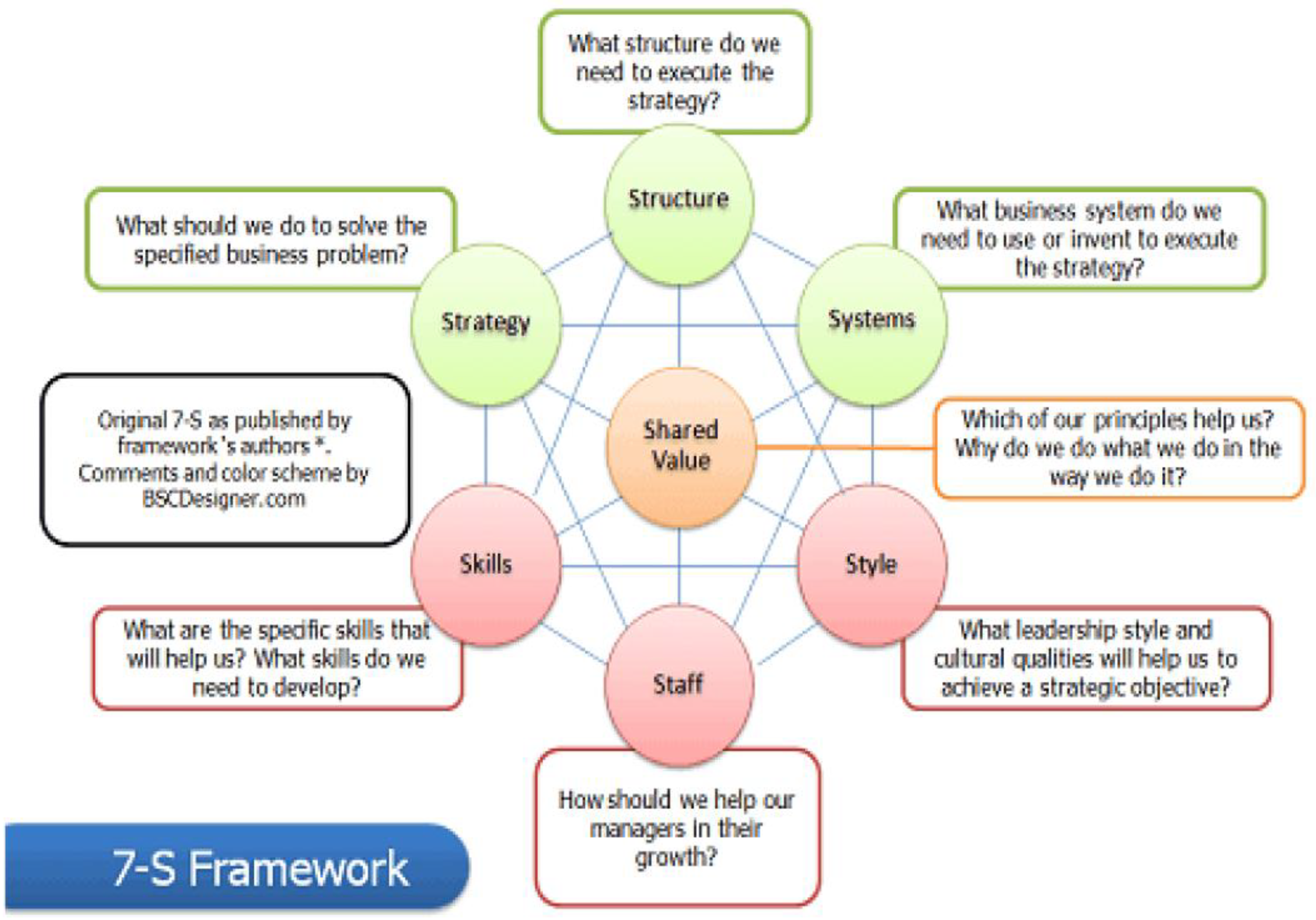
Factors and components of readiness to support change activities can be identified based on the 7S McKinsey [39]. This model show framework with seven components: shared value, structure, systems, style, staff, strategy, skills. Every from there are parts has question about their specific, like: how should we help our managers in their growth? Or, what should we do to solve the specified business problem? Answers to the questions constitute assumptions about the success factors of organizational readiness.
Figure 2.
From readiness for change to organizational readiness for change. Sources: elaborated by the author based on literature research.
Figure 2.
From readiness for change to organizational readiness for change. Sources: elaborated by the author based on literature research.
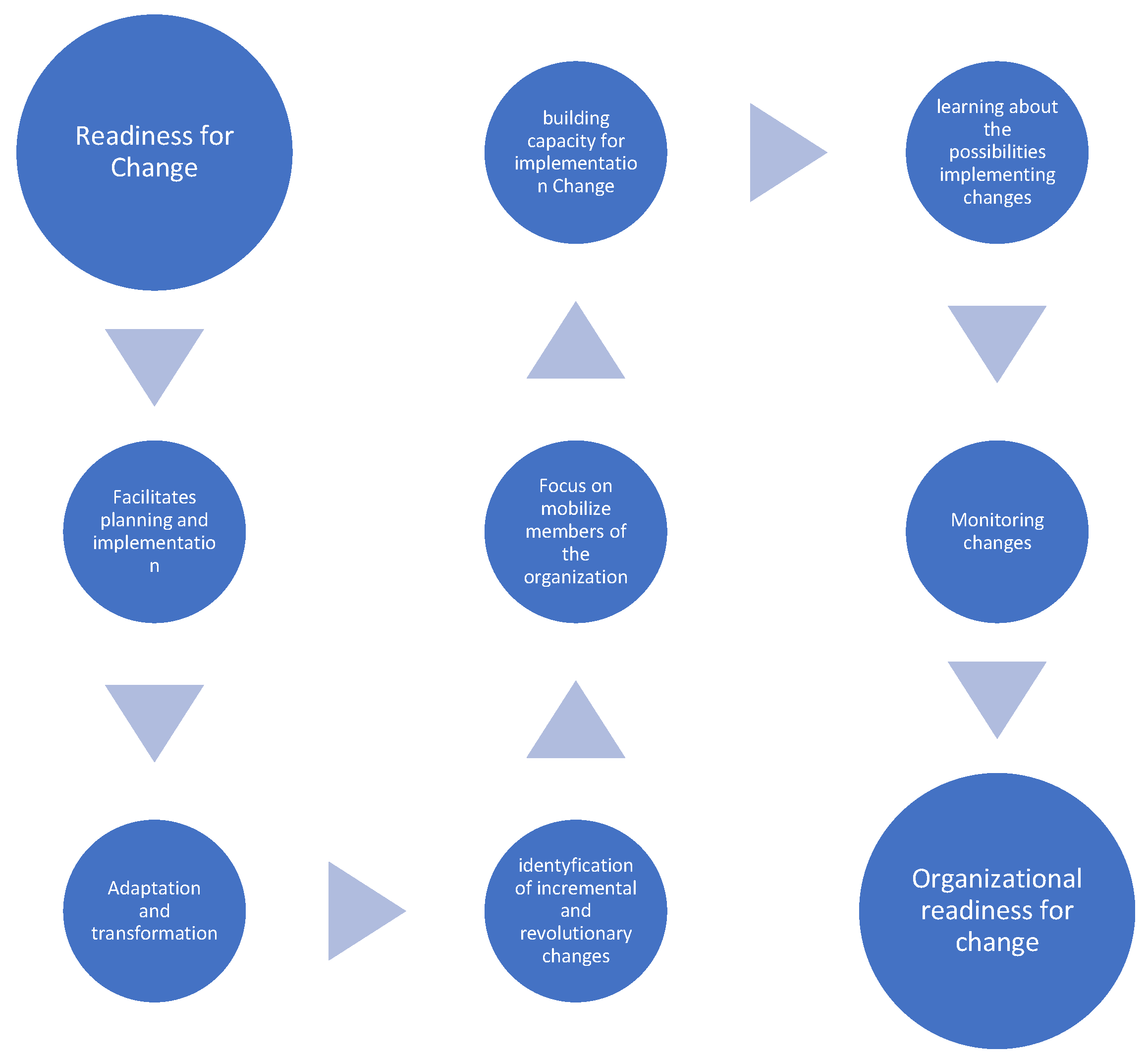
For several years, researchers have sought to identify critical success factors for implementing organizational change within turbulent and dynamic environments [40]. Readiness for change and organizational capacity for change are two key constructs designed to aid organizations in navigating change effectively. Of the two, organizational capacity for change is a more recent and less empirically examined concept, and it is frequently conflated with readiness for change.
3. Methodology
The proposed study adopts a mixed-method approach based on the triangulation of research methods. It includes quantitative research through survey techniques conducted with 120 middle- and senior-level managers from Polish energy enterprises. The aim of the quantitative research is to measure key factors for organizational readiness for change, specifically: initial digital readiness (perceived appropriateness of the proposed change), initial management readiness (perceived management support for the proposed change), and initial operational readiness (perceived personal capability to implement and perceived personal benefits of the proposed change). The theory of organizational readiness for change is a multi-faceted framework developed by change management scholars, underscoring the critical importance of fostering organizational readiness as a precursor to successful change initiatives. This theory delineates several strategies aimed at cultivating such readiness, highlighting key determinants of implementation capability. These determinants include task demands, resource availability, and situational factors, all of which interact to influence an organization’s capacity to effectively engage with and adapt to change. By understanding and addressing these elements, organizations can enhance their readiness and, consequently, their likelihood of successful change implementation [41]. The qualitative research is grounded in 5 case studies of selected Polish energy companies with varying levels of organizational readiness and engagement in technology entrepreneurship, analyzing organizational practices, challenges, and success factors. The objective is to evaluate these firms’ capabilities to explore and implement innovative solutions in response to the pressures from both advanced energy technologies and the necessity of climate action. The qualitative research also incorporates in-depth interviews with 20 person like decision-makers, business leaders, and industry experts to gain insights into the influence of regulatory and market factors on organizational readiness, resource allocation, structural flexibility, and exploratory activities conducted under the dual pressures of advanced energy technologies and climate regulations.
There are expect interdependences between the three organizational readiness, and therefore simultaneously model with three dependent variables, including high growth rates, net entry and survival. The factors of high growth may also facilitate survival rate and net entry [42,43]. Common approach to modeling jointly determined indicators is to employ a system of seemingly unrelated regression equations (SURE), in which the equations are interconnected solely through their error terms [44]. The study aims to investigate the organizational readiness of Polish energy enterprises, focusing on their capacity to explore and adopt innovative solutions in response to the dual pressures of advancing energy technologies and addressing climate imperatives. The research objective is to assess the current state of organizational readiness among Polish energy enterprises for implementing and scaling new technologies that contribute to both enhanced energy efficiency and resilience to climate change [45].
H1: Organizational readiness success factor like digitals and management affordances facilitate entrepreneurial dynamics (net entry, survival, and high growth).
Although diversity, management support and personnel capability to implement are positively related with the entry of new businesses and high growth [43], recently research highlights the role of digital affordances in identification entrepreneurship opportunities [46,47,48]. The authors highlight that the digitization process directly supports organizational readiness and also shapes the locus of entrepreneurial opportunities as entrepreneurial cognition. Firstly, digital affordances reduce asset specificity and enhance the operational efficiency of manufacturing value chains [49]. Secondly, digitalization promotes direct contact between stakeholders and entrepreneurs, reducing the number of face-to-face meetings, which leads to the elimination of intermediaries and lower transaction costs. Third, the adoption of digital technologies enables greater collaboration and customer retention. In conclusion, leveraging digital affordances—such as Internet access, business and social digital networks, data sharing, and e-commerce—facilitates accelerated opportunity recognition for entrepreneurs and enhances the speed of market entry. This acceleration is further supported by streamlined data collection processes (e.g., through tools like Google Forms, surveys, and Google Analytics) as well as more efficient commercialization, testing, prototyping, and adoption of new products [50]. The direct relationship between business performance outcomes [51].
H2. Operational, management and digital affordances should facilitate this entrepreneurship dynamics (net entry, survival and high growth).
Attention is thus directed towards examining why the complementary effect of digital affordances on entrepreneurial outcomes at the regional level is likely to exceed that of technological affordances (i.e., high-tech intensive technologies). Entrepreneurs who cultivate digital affordances and acquire advanced digital skills are generally better positioned to navigate current and future market challenges (e.g., financial crises, demand shocks, the COVID-19 pandemic) compared to those who primarily adopt other forms of technology. Digital technologies necessitate skills frequently embedded in tacit knowledge, as opposed to industry-specific technologies, which predominantly rely on codified knowledge [52]. Entrepreneurs are particularly susceptible to uncertainties, with external shocks often leading to abrupt suspension or disruption of innovation activities. However, this vulnerability is less pronounced in digitally-enabled ventures that capitalize on the digital readiness of individuals engaged with the internet across business, leisure, and e-commerce domains. To mitigate market uncertainties and risks, entrepreneurs increasingly adopt digital technologies to build resilience and access diverse new markets, a defining characteristic of successful startups and scale-ups within digital markets. The complementary effects among digital, human, and cultural affordances are likely to surpass those associated with industry-specific technologies (i.e., technological affordances), as a greater number of customers and suppliers increasingly utilize digital platforms for connectivity. This shift is expected to yield cost reductions, foster enhanced collaboration and engagement, accelerate interaction speeds, and facilitate more efficient customer relationship management.
Initial organizational readiness Dependent Variables
Figure 3.
Conceptual model representing factors influencing the organizational readiness of energy entrepreneurship. Source: elaborated by the author.
Figure 3.
Conceptual model representing factors influencing the organizational readiness of energy entrepreneurship. Source: elaborated by the author.
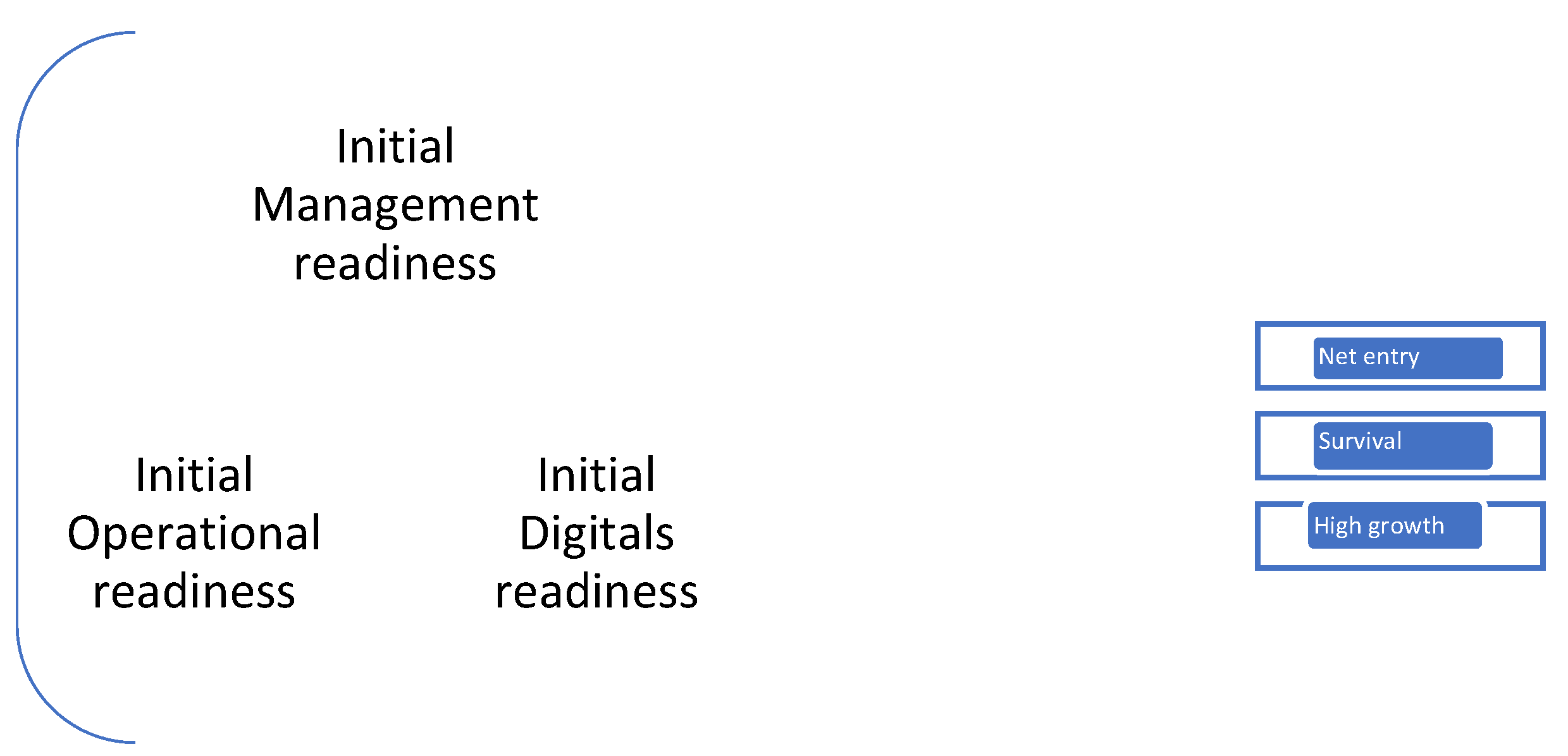
The conceptual model represents the following factors influencing the organizational readiness of energy entrepreneurship: initial digital readiness: perceived appropriateness of the proposed change; initial management readiness: perceived management support for the proposed change; initial operational readiness: perceived personal capability to implement the proposed change and perceived personal benefits of the proposed change.
Based on the analysis of existing definitions of key factors for successful organizational readiness for change (Table 2), the following factors have been identified in this study key factors of initial organizational readiness: perceived appropriateness of the proposed change (digital readiness), perceived management support for the proposed change (management readiness), perceived personal capability and personal benefit to implement the proposed change (operational readiness).
Table 2.
Key factors of successful organizational readiness for change.
| Dimensions | Construct Level | Citation Authors |
|---|---|---|
| 1. Organizational climate 2. Staff attributes 3. Motivation for change 4. Adequacy of resources |
The first level | Lehman et al. (2002) |
| Unidimensionality | The first level | Simpson et al. (2007) |
| Organization structural attributes (e.g. resources, processes, structure, skills) Organization members’ beliefs and mindsets Commitment, communication and culture |
The first level | Meliyanti (2015) |
| 1. Propensity for risk taking 2. Teamwork 3. The extent to which organizational leaders and member maintained a futuristic orientation 4. The extent to which individuals and subunits worked together to accomplish organizational goals. 5. Flexibility 6. Changes in organizational structure 7. Rewards for innovation |
The second level | Ingersoll, et al. (2000) |
| Organizational members agreement and willingness to work toward the change goal | The second level | Jansen et al. (2004) |
| 1. Perceived appropriateness of the proposed change 2. Perceived management support for the proposed change 3. Perceived personal capability to implement the proposed change 4. Perceived personal benefits of the proposed change |
The second level | Holt et al. (2007) |
Source: elaborated by the author based on literature research.
4. Results and Discussion
Organizational readiness is critical in driving successful change within energy companies, especially given the complexity and scale of the transformations they frequently undergo. While many energy companies implement changes following detailed analyses, they often encounter barriers and delays in executing their programs. These obstacles are rarely isolated incidents; rather, they stem from a broader lack of organizational preparedness to harness the value of integrated frameworks for assessment, reporting, and performance-based change initiatives. In essence, organizational readiness represents the capacity of an organization to effectively manage and sustain change, particularly by leveraging performance metrics. The model illustrates (Table 3) the impact of each interaction among the three types of affordances, presenting a corresponding set of results specific to digital affordances and entrepreneurial dynamics. Hypothesis H1, which states that organizational readiness success factor like digitals and management affordances facilitate entrepreneurial dynamics (net entry, survival, and high growth), is not supported. There is find a negative and significant effect of these factors on firm’s survival rate. The relationship between net firm entry and high-growth is not statistically significant.
Table 3.
Average marginal effects (dy/dx) across the three organizational readiness outcomes.
| Variables | Survival (0.1)* | Survival (0.05)** |
High growth (0.1)* |
High growth (0.05)** |
Net entry (0.1)* | Net entry (0.05)** |
|---|---|---|---|---|---|---|
| Perceived appropriateness of the proposed change (initial digital readiness) | 0,044 | 0.109 | -0.001 (0.00) | -0.001 (0.00) |
0.003 | 0.001 |
| Perceived management support for the proposed change (initial management readiness) | 0.109 | 0.208 | -0.001 (0.00) | -0.001 (0.00) |
0.004 | -0.001 (0.00) |
| Perceived personal capability and personal benefit to implement the proposed change (initial operational readiness) | 0.113 | 0.126 | -0.001 (0.00) | -0.001 (0.00) |
0.001 | - 0.025 |
Note: *0.1 and **0.05 significance level. Marginal effects were calculated with margins based on estimation on the same sample. Delta-method standard error calculation is used. Source: elaborated by the author based on survey.
H2, which states that operational, management and digital affordances should facilitate this entrepreneurship dynamics (net entry, survival and high growth), is partly supported. There is a positive effect of complementarities driven by digital affordances management support for the proposed change (β = 0.208, p < 0.05) (Table 3). There is find that complementarities with digital affordances do not have a statistically significant effect on net entry and high growth firms. Having discussed the results related to main hypotheses, there is turn to the discussion of pairwise complementarities within spatially embedded affordances with operational, management and digital affordances. There is found a combination of digital, management and operational had a negative effect on net entry (β = -0.001, p < 0.05). This seems to be the channel by which digital affordances may exert a negative effect within construct on startup survival rates. This result may reflect a mismatch between digital skills and technology, to the organizational readiness. We find a negative effect of personal capability to implement the proposed change (operational) in model on net entry and high growth firms. The effect is weaker in magnitude (β = - 0.029, p <0.05 and β = - 0.1, p < 0.05 and p < 0.1) than the personal capability to implement the proposed change for survival. However, we should note one peculiarity when interpreting these results. This means that the reduction in the rate of high growth businesses may not necessarily be a negative phenomenon.
The analysis on qualitative research illustrates the diverse approaches of Polish energy enterprises to technology entrepreneurship and the implementation of innovations (Table 4). Decision-makers, business leaders, and industry experts assessed the level of organizational readiness of Polish energy enterprises, their structural flexibility, and resource allocation for exploratory activities.
A high level of organizational readiness is typically supported by collaboration with technological partners and access to external financing, which constitutes a significant success factor. However, these enterprises also encounter substantial challenges, primarily regarding the integration of new technologies, resource management, and regulatory compliance, all of which impact the pace of transformation in the face of advanced energy technologies and climate pressures.
Table 4.
The level of organizational readiness among Polish energy enterprises for implementing advanced energy technologies and incorporating European regulatory solutions addressing climate action.
Table 4.
The level of organizational readiness among Polish energy enterprises for implementing advanced energy technologies and incorporating European regulatory solutions addressing climate action.
| Determinants | PGE (Polska Grupa Energetyczna) | Tauron Polska Energia | Energa (Grupa Orlen) | Enea | Grupa Azoty (energy segment) |
|---|---|---|---|---|---|
| Organizational Readiness Level | High. PGE demonstrates a mature management structure and a strong readiness to invest in renewable energy technologies and digitalize its operations; | Moderate. Tauron is undertaking innovative programs and gradually enhancing investments in new technologies; however, the organizational structure necessitates greater flexibility; | High. Energa, as part of the Orlen Group, possesses robust financial support and access to resources, enabling investments in pioneering technological solutions; | Average. Enea is interested in investing in new technologies; however, limited resources may affect the pace and scope of the implemented changes | High. Grupa Azoty actively invests in research and development and collaborates with academic institutions, which enhances its readiness to implement advanced solutions; |
| Challenges | Key challenges include ensuring compliance with stringent EU regulations and attracting skilled employees specializing in advanced technologies; | Regulatory barriers and protracted decision-making processes hinder the pace of development. Additionally, adapting technology to meet the needs of a large and diverse customer base presents a significant challenge; | The primary challenges include the integration of innovative projects with existing systems and the management of risks associated with substantial investments in the development of smart grid networks; | The lack of sufficient funds and qualified personnel hampers the implementation of innovations. Additionally, there is a need to enhance efficiency in resource management; | A significant challenge lies in the high costs associated with low-emission technologies and the need to integrate energy management systems within the company’s extensive structure; |
| Success Factors | The ability to establish partnerships with research institutions and access to European funding, which supports the development of projects in renewable energy and energy storage; | Investments in digital transformation, which enhance operational efficiency and enable more accurate demand forecasting, as well as the development of renewable energy infrastructure, including wind power plants; | Partnerships with industry leaders in technology and the development of smart grids and energy management systems support the optimization of energy distribution and enhance efficiency; | Focusing on infrastructure modernization and the development of monitoring and management systems facilitates better demand management and minimizes energy losses; | Access to funding and international collaboration facilitate the development of pilot projects in low-emission technologies and energy storage, while also supporting the achievement of established climate goals |
Source: elaborated by the author based on qualitative research.
According to respondents in the energy sector, organizational readiness is defined as a state in which both leadership and employees are prepared to: measure improvements in performance, identify opportunities to generate benefits, implement changes in processes, consequently, drive behavioral change, monitor improvements in relation to process and behavioral changes.
These are the foundational elements of readiness that enable organizations to move beyond the initial analysis stage and into the successful execution and realization of value from their strategic initiatives.
The qualitative research also incorporates in-depth interviews with 20 person like decision-makers, business leaders, and industry experts to gain insights into the influence of regulatory and market factors on organizational readiness, resource allocation, structural flexibility, and exploratory activities conducted under the dual pressures of advanced energy technologies and climate regulations. There are different dimensions to organizational readiness, which can be assessed through three key areas of focus, which decision-makers, business leaders, and industry experts pointed out in depth interviews:
- Initial Management Readiness: This refers to the overall preparedness of the organization as a whole, including the alignment of its culture, leadership, and workforce toward embracing and executing change. It involves having clear communication channels, strong leadership commitment, and an engaged workforce that understands and supports the strategic objectives.
- Initial Digital Readiness: This focuses on the preparedness of specific programs or initiatives within the organization. It involves having the necessary resources, tools, and plans in place to ensure the successful implementation of new processes, technologies, or strategies. Program readiness ensures that each initiative is fully supported and that teams have the capacity and capabilities to deliver results.
- Initial Operational Readiness: This aspect pertains to the day-to-day operational capability of the organization to adapt to new processes and systems. It includes the readiness of infrastructure, such as IT systems and operational frameworks, to support the changes being introduced. Operational readiness ensures that the practical, on-the-ground implementation of changes is smooth and that any potential disruptions are minimized.
Together, these three areas form a holistic view of organizational readiness [53]. For energy companies, the ability to measure performance improvements, seize opportunities for benefits, adjust processes, and sustain behavioral change is essential in achieving long-term success. Without these components in place, even the most well-intentioned change initiatives may falter, as the organization lacks the internal alignment and preparedness to capitalize on its strategic efforts.
One of the first considerations in assessing management readiness is the support of the program leader. This individual has the unique ability to influence both senior management, securing their endorsement, and other stakeholders, generating interest and engagement. These stakeholders, in turn, either facilitate the implementation of the program or stand to benefit from its successful execution. The program leader acts as a crucial bridge between the change initiative and the broader organizational structure, ensuring alignment across levels. Evaluating management readiness focuses significantly on how effectively the impact of the project is communicated. This involves not only defining key performance metrics but also setting clear expectations that, as opportunities for business improvement are identified, these managers will take an active role in implementing the necessary process changes. This includes fostering behavioral change within teams and, if needed, making personnel decisions that align with the organization’s strategic objectives. Senior leaders and managers must be fully aware of their roles in the change process. They are expected to champion the initiative, guide their teams through the transition, and ensure that the change is embedded within the organization. Their support can often determine whether a project thrives or fails. This is particularly true in energy companies, where change initiatives often have broad implications—spanning regulatory compliance, technological updates, and sustainability goals—requiring a concerted effort from leadership to navigate complex operational and cultural shifts [54,55]. The research show, that as Weiner’s research [56] readiness of management is not only about passive endorsement but active engagement. Leaders must: understand the strategic importance of the change and communicate its value to their teams, be equipped to handle resistance and foster a positive environment for change, ensure that performance metrics are clearly defined and linked to tangible business outcomes, lead by example in modifying processes and adopting new behaviors, make difficult decisions regarding resource allocation, team restructuring, or personnel changes when necessary to align with the strategic direction.
Management readiness is a cornerstone of organizational readiness [57]. It ensures that the leadership team is not only prepared but also actively committed to guiding the organization through change. The study results confirmed, that without the readiness of management, even well-designed initiatives can struggle to gain traction. Just like Armenakis et al. [58], leadership plays a key role in driving the process from planning to execution, aligning the change initiative with long-term organizational goals, and fostering a culture that is adaptive and responsive to new challenges and opportunities. Therefore, assessing management readiness is essential to gauge the true potential for successful change implementation. Organizational readiness refers to the overall preparedness of the organization as a whole, including the alignment of its culture, leadership, and workforce toward embracing and executing change. It involves having clear communication channels, strong leadership commitment, and an engaged workforce that understands and supports the strategic objectives [59,60,61].
In conclusion, from Armenakis [57], organizational readiness in energy companies goes beyond just planning and analysis; it is about building the internal capacity to manage and sustain change. It requires synchronization across leadership, programs, and operations to ensure that changes are not only implemented but also embedded in the organizational culture and processes for lasting impact. The same conclusion like Uluskan [26] and Thundiyil [27] that one of the key strategies to ensure the success of transformation initiatives is to involve a greater number of employees in the change process. This inclusion not only promotes a sense of ownership but also enhances engagement and increases the likelihood of success. Organizational readiness, combined with a supportive culture, forms the foundation for any initiative, including those aimed at driving Key Performance Indicators (KPIs) [62,63,64]. Only a handful of leading energy producers have successfully achieved a state of readiness, highlighting the challenge but also the competitive advantage it can offer [65,66]. Readiness processes are designed to implement revised practices that enhance business efficiency. These processes include several critical components:
- The ability of the business to identify and prioritize issues and establish relevant KPIs.
- The readiness of IT infrastructure and applications to support dynamic KPI initiatives.
- The deployment of effective change management processes to modify practices and behaviors, ensuring the achievement of KPI targets.
Integrated business strategies and clearly defined objectives are necessary to achieve breakthrough performance levels. In the energy sector, these are especially crucial given the industry’s complexities, such as regulatory compliance, environmental sustainability, and technological advancement [67,68,69]. Organizational readiness helps companies navigate these complexities by ensuring that they are agile, aligned, and able to adapt to both internal and external changes [70,71,72].
In conclusion of research, fostering a state of organizational readiness not only drives the successful implementation of new strategies but also allows energy companies to remain competitive and responsive to emerging challenges. Without a well-coordinated effort to align people, processes, and systems with the company’s broader goals, it becomes increasingly difficult to maintain efficiency and achieve sustainable success in the long term.
5. Conslusions
Organizational readiness is of paramount importance in energy companies, particularly in the context of rapidly evolving market dynamics, regulatory environments, and the increasing pressure for sustainable transformation. Properly defining roles, responsibilities, and the relationships between functions and specific positions, either before or immediately after the introduction of a new structure, is essential in reducing confusion, anxiety, and resistance. This clarity is critical for the successful implementation of changes, as it helps to align the workforce with the strategic direction of the company and minimizes disruption. Findings present intriguing and unexpected implications for societal entrepreneurship policies and strategic managerial decision-making [73,74]. The results of the quantitative-qualitative research enabled the identification of recommendations from the expert groups regarding Polish national policy aimed at supporting the energy sector in the process of implementing advanced energy technologies and the legal requirements of European climate policy [75,76]. The first, there is increase funding for research and development. Establish dedicated funds for the research and development of innovative energy technologies and support for demonstration projects. The second, there is promote inter-sectoral collaboration. Encourage partnerships between energy enterprises, research institutions, and universities to facilitate the exchange of knowledge and resources. The third, there is enhance access to EU Funds. Streamline access to EU funding programs, particularly for projects related to renewable energy and energy efficiency. The fourth, there is simplify regulatory procedures. Reduce bureaucratic hurdles associated with the implementation of new technologies to expedite decision-making and implementation processes. The fifth, there is educational Campaigns. Organize training programs and informational campaigns aimed at businesses to raise awareness about the benefits of adopting advanced technologies. The sixth, there is support for small and medium enterprises (SMEs). Create financial and advisory support programs for SMEs in the energy sector to facilitate their access to new technologies. The seventh, there is promote innovative business models. Encourage firms to explore new business models based on sustainability and technological innovation. The eighth, there is monitoring and evaluation of progress. Implement a monitoring system to track the adoption of technologies and progress in meeting climate commitments, identifying and addressing potential difficulties. The ninth, there is tax incentives for investments in low-emission technologies. Introduce tax breaks and other incentives for companies investing in environmentally friendly technologies. The tenth, there is collaboration with international organizations. Engage in international initiatives and programs related to sustainable development and exchange best practices in the field of energy technologies.
In-depth interviews conducted with senior and middle management allowed for the identification of recommendations for energy companies to enhance their organizational readiness. The first, there is assessment and analysis of organizational readiness. Regularly conduct assessments of organizational readiness to identify areas for improvement and potential challenges. The second, there is fostering a culture of innovation. Create an environment conducive to innovation by being open to new ideas, encouraging creativity, and rewarding employees for innovative approaches. The third, there is training and employee development. Invest in training programs that enhance skills related to new technologies and change management. The fourth, there is technology integration. Develop strategies for integrating new technologies with existing systems to enhance operational efficiency. The fifth, there is change management. Implement formal change management processes to facilitate smooth adaptation to new technological solutions. The sixth, there is collaboration with technology partners. Establish strategic partnerships with technology firms to leverage their expertise and experience. The seventh, there is enhancing organizational flexibility. Design an organizational structure that allows for rapid adaptation to changing market and technological conditions. The eighth, there is monitoring technological trends. Systematically track trends in energy technologies to remain informed about innovations and changes in the industry. The ninth, there is risk management. Develop risk management plans to mitigate negative impacts associated with the implementation of new technologies. The tenth, there is feedback and communication. Establish a system for regular communication and feedback within the organization, allowing employees to share their ideas and experiences related to innovations.
Author Contributions
Conceptualization, W.C.G.; methodology, W.C.C.; software, M.B.; validation, W.C.G.; formal analysis, W.C.G.; investigation, W.C.G.; resources, W.C.G.; data curation, W.C.G.; writing—original draft preparation, W.C.G.; writing— W.C.G.; visualization, M.F.; supervision, W.C.G.; project administration, W.C.G.; funding acquisition, M.B., M.F. All authors have read and agreed to the published version of the manuscript.” Please turn to the CRediT taxonomy for the term explanation. Authorship must be limited to those who have contributed substantially to the work reported.
Funding
This research was funded by University of Lomza.
Data Availability Statement
Data sharing not applicable.
Conflicts of Interest
The authors declare no conflicts of interest.
References
- of Organizational Change Management, vol. 15, 183. 1108. [CrossRef]
- Treuer, K., Karantzas, G., McGabe, M., Konis, A., Davison, T.E., O’Connor D. 2018. Organizational factors associated with readiness for change in residential aged care settings, BMC Health Services Research, vol. 18, 77. [CrossRef]
- Amendola, M., Lamperti, F., Roventini, A., Sapio, A.2024. Energy Efficiency Policies in an Agent-Based Macroeconomic Model. Structural Change and Economic Dynamics, vol. 68, pp.116–132. [CrossRef]
- Hassan, Q., Viktor, P., Al-Musawi, T.J., Mahmood Ali, B., Algburi, S., Alzoubi, H.M., Khudhair Al-Jiboory, A., Zuhair Sameen, A., Salman, H.M., Jaszczur, M. 2024. The Renewable Energy Role in the Global Energy Transformations, Renewable Energy Focus, vol.48, 100545. [CrossRef]
- Backer, T.E.1995 Assessing and enhancing readiness for change: Implications for technology transfer, NIDA Research Monograph, vol.155, pp.21-41.
- Hashemizadeh, A., Ju, Y., Abade, F.Z.B. 2024. Policy design for renewable energy development based on government support: A system dynamics model. Applied Energy, vol. 376, 124331. [CrossRef]
- Di Foggia, G. Beccarello, M. 2024. European Roadmaps to Achieving 2030 Renewable Energy Targets. Utilities Policy, vol.88, 101729. [CrossRef]
- Dempsey, M., Geitner, L., Brennan, A., McAvoy, J.2022. A Review of the Success and Failure Factors for Change Management. IEEE Engineering Management Review, vol. 50, pp. 85–93. [CrossRef]
- Øygarden, O., Mikkelsen A.2020. Readiness for Change and Good Translations. Journal of Change Management, vol. 20, pp. 220–246. [CrossRef]
- Lausier, M., Lemieux, N., Montreuil, V.L., Nicolas, C.2020. On the transposability of change management research results: A systematic scoping review of studies published in JOCM and JCM, Journal of Organizational Change Management, vol. 33, pp.859–881. [CrossRef]
- Kelly P., Hegarty J., Barry J., Dyer K.R., Horgan A. (2017), A systematic review of the relationship between staff perceptions of organizational readiness to change and the process of innovation adoption in substance misuse treatment programs. Journal of Substance Abuse Treatment, vol. 80, pp. 6–25. [CrossRef]
- Billsten J., Fridell M., Holmberg R., Ivarsson A. (2018), Organizational Readiness for Change (ORC) test used in the implementation of assessment instruments and treatment methods in a Swedish National study. Journal of Substance Abuse Treatment, vol. 84, pp.9–16. [CrossRef]
- Alolabi A., Ayupp K., Dwaikat M.A. (2021), Issue and implications of readiness to change, Administrative science, vol.11, 140. vol.11, 140. [CrossRef]
- Llorca, M. Rodriguez-Alvarez, A. 2024. Economic, environmental, and energy equity convergence: Evidence of a multi-speed Europe? Ecological Economics, vol. 219, 108133. [CrossRef]
- Rosin, A.F., Proksch, D., Stubner, S., Pinkwart, A.2020. Digital new ventures: assessing the benefits of digitalization in entrepreneurship. Journal of Small Business Strategy 30 (2), pp.59–71.
- Faulks B., Yinghua S., Khudaykulov A., Jumanov A. (2023), Exploring organizational Readiness to change and learn: A Scival analysis from 2012 to 2021, Journal of International Business Reseach and Marketing, vol. 7(4), 18-22. [CrossRef]
- Hultman J., Hultman K.2018. Self and Identity: Hidden Factors in Resistance to Organizational Change, Organization Development Journal, vol. 36, pp.13-29.
- Wulandari R.D., Supriyanto S., Qomaruddin M.B., Damayanti N.A., Laksono A.D. (2023), Role of leaders in building organizational readiness to change-Case study at public health centers in Indonesia, Problems Perspectives Management, vol.18, 1–10. [CrossRef]
- Standal, K., Leiren, M.D., Alonso, I., Azevedo, I., Kudrenickis, I., Maleki-Dizaji, P., Laes, E., Di Nucci, M.R., Krug, M. 2023. Can Renewable Energy Communities Enable a Just Energy Transition? Exploring Alignment Between Stakeholder Motivations and Needs and EU Policy in Latvia, Norway, Portugal and Spain. Energy Res. Soc. Sci, vol. 106, 103326. [CrossRef]
- Rodríguez-Segura, F.J., Osorio-Aravena, J.C., Frolova, M.2023. Terrados-Cepeda, J.; Muñoz-Cerón, E. Social Acceptance of Renewable Energy Development in Southern Spain: Exploring Tendencies, Locations, Criteria and Situations. Energy Policy, vol. 173, 113356. [CrossRef]
- Miake-Lye I.M., Delevan D.M., Ganz D.A. (2020), Unpacking organizational readiness for change: an updated systematic review and content analysis of assessments, BMC Health Services Research, vol. 20, 106. [CrossRef]
- Wang, T.Y., Chien, S.C.2007. The influences of technology development on economic performance—the example of ASEAN countries. Technovation 27 (8), pp. 471–488.
- Verhoef, P.C., Broekhuizen, T., Bart Y., Bhattacharya, A., Dong J.Q., Fabian, N., Haenlein M.2021.Digital transformation: a multidisciplinary reflection and research agenda. Journal of Business Research, vol. 122, pp. 889–901. doi.org/10.1016/j.jbusres.2019.09.022.
- McGuire D., Hutchins K. (2006), A Machiavellian analysis of organizational change. Journal of Organizational Change Management, vol.19, 199-209. [CrossRef]
- Lehman, W.E.K., Greener, J.M., Simpson, D.D.2002. Assessing organizational readiness for change, Journal of Substance Abuse Treatment, vol. 22, pp.199. [CrossRef]
- Uluskan, M., McCreery, J. K., Rothenberg, L.2018. Impact of quality management practices on change readiness due to new quality implementations, International Journal of Lean Six Sigma, 9(3), 351–373. [CrossRef]
- Thundiyil T.G., Manning M. (2017), Richard W. Woodman: Creativity and Change, The Palgrave Handbook of Organizational Change Thinkers, 1461-1479. [CrossRef]
- Klein, K. J., Conn, A. B., Sorra, J. S.2001. Implementing computerized technology: an organizational analysis. Journal of Applied Psychology, vol. 86, pp. 811 – 824. [CrossRef]
- Armenakis, A.A., Harris, S.G., Mossholder, K.W.1993.Creating readiness for organizational change, Human Relations, No. 46, pp. 685. [CrossRef]
- Shea, C. M., Jacobs, S. R., Esserman, D. A., Bruce, K., Weiner. B. J. 2014. Organizational readiness for implementing change: A psychometric assessment of a new measure. Implementation Science, vol. 9(1). [CrossRef]
- Arif, M., Zahid S., Kashif, U., Ilyas, Sindhu, M.2017. Role of leader-member exchange relationship in organizational change management: Mediating role of organizational culture, International Journal of Organizational Leadership, 6(1), pp.32–41. [CrossRef]
- Leslie, H.H., West R., Twine, R., Masilela N., Steward, W.T., Kahn, K., Lippman, S.A. 2020. Measuring organizational readiness for implementing change in primary care facilities in rural Bushbuckridge, South Africa, International Journal of Health Policy and Management, x(x), pp.1-7. [CrossRef]
- Inuwa, M., Suzari, B.A.R.2020. Lean readiness factors and organizational readiness for change manufacturing smes: the role of organizational culture, Journal of critical reviews, vol 7 (5), pp.2394-5125. [CrossRef]
- Estrin, S., Korosteleva, J., Mickiewicz, T.2020. Schumpeterian entry: innovation, exporting, and growth aspirations of entrepreneurs. Enterpreneursip Theory and Practice, vol. 46 (2). [CrossRef]
- Guerrero M., Heaton S., Urbano D.2021. Building universities’ _intrapreneurial capabilities in the digital era: the role and impacts of Massive Open Online Courses (MOOCs), Technovation, vol. 99, 102139. [CrossRef]
- Ciarli, T., Kenney, M., Massini, S., Piscitello, L. 2021. Digital technologies, innovation, and skills: emerging trajectories and challenges, Research Policy, vol. 50 (issue 7), 104289. [CrossRef]
- Weiner, B.J., Amick, H., Lee, S.Y.2008.Conceptualization and measurement of organizational readiness for change: a review of the literature in health services research and other fields, Medical Care Review, Vol. 65, No. 4, pp. 381. [CrossRef]
- Nugrogo, B.2022.Literature reviews: McKinsey 7S model to support organizational performance, Technion Social Sciences Journal, vol. 38, pp.1-9. [CrossRef]
- Putri, A.D.2021. Analysis of Company Capability Using 7S McKinsey Framework to support Corporate Succession, Manajemen Bisnis, vol. 11 (1), pp.45-53. [CrossRef]
- Embriyono, A.B., Sukoco, B.M.2020. Managerial cognitive capabilities, organizational capacity for change, and performance: The moderating effect of social capital, Cogent Business & Management, vol. 7, 1843310. [CrossRef]
- Rismansyah A, M., Hanafi, A., Yuliani. 2021. Readiness for organizational change, Avances in Economics and Management Research, vol. 210, pp. 360-368. [CrossRef]
- Coad, A., Frankish, J., Roberts, R.G., Storey, D.J.2013. Growth paths and survival chances: an application of Gambler’s Ruin theory. Journal of Business Venturing 28 (5), pp.615–632. [CrossRef]
- Audretsch, D.B., Belitski, M., Korosteleva, J.2021. Cultural diversity and knowledge in explaining entrepreneurship in European cities. Small Business Economy 56 (2), pp. 593–611. [CrossRef]
- Roodman, D.2009. Estimating Fully Observed Recursive Mixed-Process Models with Cmp. CGD. SSRN Working Paper 1392466. [CrossRef]
- Burnes B. (2020), The Origins of Lewin’s Three-Step Model of Change. Journal of Applied Rafferty Behavioral Science, vol. 56(1), pp. 32–59. [CrossRef]
- Rafferty A.E., Jimmieson N. L., Armenakis A.A.2013., Change Readiness: A Multilevel Review. Journal of Management, 39(1), pp. 110–135. [CrossRef]
- Ahmed, Q.A.M, Kassim, R.M., Raju, V., Tahitah A.A., Ameen A.A., Abdulrab, M. 2018. Factors affecting individual readiness for change: A conceptual framework. International Journal of Management and Human Science (IJMHS) 2, pp. 13–18. URL: http://www.ijmhs.org/index.aspx.
- Hannon, P. A., Helfrich, C. D., Chan, K. G., Allen, C. L., Hammerback, K., Kohn, M. J., Parrish, A.T., Weiner, B. J., Harris, J. R.2017. Development and pilot test of the workplace readiness questionnaire, a theory-based instrument to measure small workplaces’ readiness to implement wellness programs. American Journal of Health Promotion, vol.31(1), 67. [CrossRef]
- Jo, Y., Hong, A.J. (2023), Development and validation of a readiness for organizational change scale, Sage open, vol. 13(4), pp.1-14. [CrossRef]
- Eby, L. T., Adams, D. M., Russell, J. E., Gaby, S. H.2000. Perceptions of organizational readiness for change: Factors related to employees’ reactions to the implementation of team-based selling. Human Relations, vol. 53(3), 422. [CrossRef]
- Jansen, K.J.2004. From persistence to pursuit: A longitudinal examination of momentum during the early stages of strategic change, Organization Science, No. 15, 289. [CrossRef]
- Blichfeldt, H., Faullant, R.2021.Performance effects of digital technology adoption and product & service innovation – A process-industry perspective, Technovation, vol. 105(5), 102275. [CrossRef]
- Ford, J. K., Lauricella, T. K., Van Fossen, J. A., Riley, S. J. (2021), Creating energy for change: The role of changes in perceived leadership support on commitment to an organizational change initiative. The Journal of Applied Behavioral Science, vol. 57(2), pp. 153–173. [CrossRef]
- Samal A., Patra S., Chatterjee D. (2021), Impact of culture on organizational readiness to change: context of bank M&A. Benchmarking: An international journal, vol. 28(5), pp. 1503–1523. [CrossRef]
- Kurniawati E.P., Widoatmodjo S. (2023), Readiness for organizational change: workplace and individual factors at PT TBK (JV company), Asian Journal of Social and Humanities, vol. 2, pp. 1917-1925. [CrossRef]
- Weiner, B.J.2009. A theory of organizational readiness for change, Implementation Science, vol. 4(67), 6. [CrossRef]
- Holt, D.T., Armenakis, A.A., Field, H.S., Harris, S.G. 2007. Readiness for organizational change: The systematic development of a scale, Journal of Applied Behavioral Science, No. 43, 236. [CrossRef]
- Armenakis, A.A., Bernerth, J.B., Pitts, J.P., Walker, H.J.2007. Organizational change recipients’ beliefs scale: Development of an Assessment Instrument, The Journal of Applied Behavioral Science, vol. 43(4), pp.403-505. [CrossRef]
- Audretsch, D.B., Beliski, M.2021.Towards an entrepreneurial ecosystem typology for regional economic development: the role of creative class and entrepreneurship, Regional Studies, vol. 55(4), pp. 735-756. [CrossRef]
- Simpson, D.D., Joe, G.W., Rowan-Szal, G.A.2007. Linking the elements of change: Program and client responses to innovation, Journal of Substance Abuse Treatment, 33, pp. 204. [CrossRef]
- Jansen, K.J.2004. From persistence to pursuit: A longitudinal examination of momentum during the early stages of strategic change, Organization Science, No. 15, pp. 289.
- Ingersoll, G., Kirsch, J., Merk, S., Lightfoot, J.2000. Relationship of organizational culture and readiness for change to employee commitment to the organization, Journal of Nursing Administration, vol. 30, pp.14-15. [CrossRef]
- Hailey, V.H., Balogun, J.2002. Devising context sensitive approaches to change: The example of Glaxo Welcome, Long Range Planning, vol. 35, 159. [CrossRef]
- Narine, L., Persaud, D.2003. Gaining and maintaining commitment to large-scale change in healthcare organizations, Health Services Management Research, nr 16, 182. [CrossRef]
- Menyhért, B. 20024. Energy poverty in the European Union. The art of kaleidoscopic measurement. Energy Policy, vol. 190, 114160. [CrossRef]
- Rapsikevicius, J., Bruneckiene, J., Lukauskas, M., Mikalonis, S.2021. The Impact of Economic Freedom on Economic and Environmental Performance: Evidence from European Countries. Sustainability, vol. 13, 2380. [CrossRef]
- Mladenova, I. 2022. Relation between organizational capacity for change and readiness for change, Administrative Science, vol. 12, 135. [CrossRef]
- Romadona, M.R. 2019. Organizational Readiness to Change in Research Institute Case Studies, Proceedings of the International Conference on Industrial Engineering and Operations Management Bangkok, Thailand, March 5-7. http://www.ieomsociety.org/ieom2019/papers/527.pdf. 5 March.
- Czemiel-Grzybowska W.2022. Conceptualization and Maping of Predictors of technological Entrepreneurship Growth in a Changing Economic Environment (COVID-19) from the Polish Energy Sector. Energies, vol.15, nr 18, 6543. [CrossRef]
- Skowronek-Mielczarek, A., Czemiel-Grzybowska, W., 2015. Entrepreneurship research in the Poland, Technological and economic Development of Economy, vol. 23, nr 3, 504-519. [CrossRef]
- Walicka, M., Czemiel-Grzybowska, W., Żemigała M. (2015). Technology entrepreneurship – state of the art and future challenges, wol.3, nr 4, pp.10-21. [CrossRef]
- Ratajczak-Mrozek, M., Czemiel-Grzybowska, W., Pavlakova-Docekalova, M., Thompson, C.2024. Sustainable Development of Smart Cities Through Municipal Waste Incinerators: the Examples of AI in Technological Entrepreneurship, Engineering Management in Production and Services, after review.
- Devereaux, M.W., Drynan, A.K., Lowry, S., MacLennan, D., Figdor, M., Fancott, C.2006. Evaluating organizational readiness for change: A preliminary mixed-model assessment of an interprofessional rehabilitation hospital, Healthcare Quarterly, vol. 9, pp.66-74. [CrossRef]
- Czemiel-Grzybowska W., (2023). Trendy rozwoju zrównoważonej przedsiębiorczości technologicznej opartej na sztucznej inteligencji, Akademia Zarządzania, vol. 7(4), 126-137. [CrossRef]
- Arnéguy E., Ohana M., Stinglhamber F. (2020), Overall justice, perceived organizational support and readiness for change: the moderating role of perceived organizational competence. Journal of Organizational Change Management, vol. 33(5), pp. 765-777. [CrossRef]
- Cyrek, M., Cyrek, P., Bieńkowska-Gołasa, W., Gołasa P.2024.The Convergence of Energy Poverty across Countries in the European Union, Energies, vol. 17(19), 4957. [CrossRef]
Disclaimer/Publisher’s Note: The statements, opinions and data contained in all publications are solely those of the individual author(s) and contributor(s) and not of MDPI and/or the editor(s). MDPI and/or the editor(s) disclaim responsibility for any injury to people or property resulting from any ideas, methods, instructions or products referred to in the content. |
© 2024 by the authors. Licensee MDPI, Basel, Switzerland. This article is an open access article distributed under the terms and conditions of the Creative Commons Attribution (CC BY) license (https://creativecommons.org/licenses/by/4.0/).
Copyright: This open access article is published under a Creative Commons CC BY 4.0 license, which permit the free download, distribution, and reuse, provided that the author and preprint are cited in any reuse.


