
Submitted:
04 June 2025
Posted:
04 June 2025
You are already at the latest version
Abstract
This paper presents an integrative framework examining the relationship between ambidextrous innovation, organizational resilience, and high-quality development in contemporary enterprises. Drawing on both empirical research and field observations across diverse industry contexts, I conceptualize how organizations' capacity to simultaneously pursue exploratory and exploitative activities (ambidexterity) enhances their ability to anticipate and respond to disruptions (resilience), which ultimately enables sustainable value creation beyond traditional growth metrics (high-quality development). I introduce a conceptual model mapping these relationships, identifying key mediating and moderating variables including leadership approach, organizational structure, and industry context. The model illustrates how ambidextrous capabilities create a foundation for building resilience, which in turn develops both adaptive capacity and trans-formative capability—organizational attributes critical for high-quality development that transcends short-term performance optimization. The accompanying diagnostic tool operationalizes this framework through a validated 20-item instrument measuring four dimensions critical to sustainable enterprise development. This integrated perspective offers both theoretical insights into organizational adaptation mechanisms and practical guidance for leaders navigating increasingly turbulent business environments.
Keywords:
Ambidextrous innovation
; Organizational resilience
; Sustainable enterprise growth
; Exploration and exploitation
; High-quality development
; Adaptive capacity
; Transformative capability
; Organizational ambidexterity
; Strategic balance
; Paradoxical leadership
1. Introduction
In today’s rapidly evolving business landscape, organizations face unprecedented challenges from technological disruption, market volatility, geopolitical uncertainties, and global competition. The accelerating pace of change has created what many scholars characterize as a VUCA environment—volatile, uncertain, complex, and ambiguous (Bennett & Lemoine, 2014). Within this context, traditional approaches to innovation and strategic management often prove insufficient, as organizations must simultaneously pursue efficiency in current operations while preparing for fundamental shifts in their competitive landscape.
The concept of ambidextrous innovation—an organization’s ability to simultaneously explore new opportunities while exploiting existing capabilities—has emerged as a critical framework for sustainable growth and resilience in these turbulent conditions (March, 1991; O’Reilly & Tushman, 2013). This research examines the intersection of ambidextrous innovation, organizational resilience, and high-quality development in contemporary enterprises, with particular attention to the mechanisms through which balanced innovation approaches contribute to organizational adaptability and sustainable growth.
1.1. Research Gap and Objectives
While substantial research exists on organizational ambidexterity (Raisch & Birkinshaw, 2008; Lavie et al., 2010) and a growing body of literature addresses organizational resilience (Williams et al., 2017; Duchek et al., 2020), there remains a significant gap in understanding how these constructs interact to enable sustainable, high-quality development. Most existing studies examine these concepts in isolation, with limited attention to their synergistic effects. Additionally, the practical implementation of ambidextrous approaches has proven challenging for many organizations, suggesting the need for more actionable frameworks and assessment tools (O’Reilly & Tushman, 2008).
This research aims to address these gaps through three specific objectives:
- To develop an integrated theoretical framework connecting ambidextrous innovation, organizational resilience, and high-quality development
- To identify the mediating mechanisms and moderating factors that influence these relationships
- To create and validate a practical assessment tool that organizations can use to evaluate and develop their ambidextrous capabilities
1.2. Theoretical Foundation
The concept of organizational ambidexterity was first formalized by March (1991), who distinguished between exploration (search, variation, risk-taking, experimentation, flexibility, discovery) and exploitation (refinement, choice, production, efficiency, selection, implementation). This foundational dichotomy has since been developed by numerous scholars who have examined how organizations can effectively manage both imperatives simultaneously—a challenging but essential capability in dynamic environments (O’Reilly & Tushman, 2008; Gibson & Birkinshaw, 2004).
Organizational resilience, drawing from ecological principles (Holling, 1973), encompasses the capacity to absorb disturbances and reorganize while undergoing change so as to still retain essentially the same function, structure, identity, and feedbacks. In organizational contexts, resilience has evolved from a focus on recovery to broader conceptions including anticipation, adaptation, and transformation (Lengnick-Hall et al., 2011; Williams et al., 2017).
High-quality development, a concept gaining traction in both Eastern and Western management discourse, transcends traditional growth metrics to encompass sustainable value creation, capability enhancement, and societal contribution (Wang et al., 2019; Chai et al., 2025). This paradigm emphasizes balanced stakeholder value creation, environmental sustainability, and long-term viability.
The integration of these three constructs offers a promising avenue for understanding how organizations can thrive in increasingly complex and uncertain environments through balanced innovation approaches that enhance adaptive capacity.
1.3. Paper Structure
The remainder of this paper is organized as follows: Section 2 provides a comprehensive review of relevant literature spanning ambidextrous innovation, organizational resilience, and sustainable development. Section 3 describes the research methodology used in developing and validating the integrated framework. Section 4 presents the conceptual model and findings from empirical testing. Section 5 discusses theoretical and practical implications, while Section 6 concludes with limitations and directions for future research.
2. Materials and Methods
2.1. Ambidextrous Innovation: Balancing Exploration and Exploitation
Ambidextrous innovation has emerged as a critical capability for organizations operating in dynamic environments characterized by rapid technological change and market volatility. This section examines the foundational concepts of exploration and exploitation, approaches to achieving ambidexterity, and empirical evidence on performance outcomes.
2.1.1. Exploration and Exploitation: Conceptual Foundations
The distinction between exploration and exploitation represents one of the most influential contributions to organizational learning and innovation literature. March (1991) characterized exploration as including “things captured by terms such as search, variation, risk taking, experimentation, play, flexibility, discovery, innovation” (p. 71), while exploitation encompasses “refinement, choice, production, efficiency, selection, implementation, execution” (p. 71). This fundamental distinction has served as the theoretical foundation for extensive research on organizational learning, innovation, and adaptation.
Exploration is oriented toward creating new knowledge, technologies, and markets. It involves distant search, experimentation, and variation, with returns that are typically uncertain, distant, and often negative (Jansen et al., 2006). In contrast, exploitation focuses on refining existing knowledge, technologies, and markets through local search, experimentation, and selection, with returns that are predictable, proximate, and often positive (Benner & Tushman, 2003). These activities require different mindsets, structures, and processes, creating inherent tensions within organizations (Smith & Tushman, 2005).
Research by Guan and Liu (2016) found that exploratory innovation activities are closely associated with invention patents, as they signify breakthroughs and technological innovations. Exploitative innovation, by contrast, tends to be reflected in design and utility model patents, which focus primarily on improving existing product functions and quality.
2.1.2. Approaches to Achieving Ambidexterity
The inherent tensions between exploration and exploitation have led scholars to develop various theoretical approaches to achieving ambidexterity. Three primary approaches have been identified in the literature (Raisch & Birkinshaw, 2008; O’Reilly & Tushman, 2013):
- Structural ambidexterity: This approach involves creating separate organizational units for exploration and exploitation activities, each with its own structures, processes, and cultures, integrated through senior leadership mechanisms (Tushman & O’Reilly, 1996). This structural separation allows for specialized focus while maintaining overall organizational coherence.
- Contextual ambidexterity: Developed by Gibson and Birkinshaw (2004), this approach focuses on creating organizational contexts that enable individual employees to make their own judgments about how to divide their time between exploration and exploitation activities. Such contexts are characterized by a combination of stretch, discipline, support, and trust.
- Temporal ambidexterity: This approach involves organizations sequentially shifting between periods of exploration and exploitation over time (Siggelkow & Levinthal, 2003). Organizations may focus primarily on exploitation during periods of stability and then shift toward exploration when faced with significant environmental changes.
Recent research has increasingly recognized that these approaches are not mutually exclusive, and organizations often deploy hybrid approaches tailored to their specific industry contexts, organizational cultures, and strategic objectives (Fang et al., 2010; Chai et al., 2025).
2.1.3. Empirical Evidence on Performance Outcomes
Empirical research on the relationship between ambidexterity and performance has yielded mixed but generally positive results. He and Wong (2004) found that the interaction between exploration and exploitation strategies is positively related to sales growth rate, providing early empirical support for the ambidexterity hypothesis. Jansen et al. (2006) demonstrated that organizational ambidexterity positively influenced financial performance, and that environmental factors moderated this relationship.
More recent studies have provided nuanced insights into the ambidexterity-performance relationship. Junni et al. (2013), in a meta-analysis of 69 studies, found that ambidexterity was positively related to performance, but that this relationship was stronger in non-manufacturing industries and for larger, older firms. Ryu et al. (2021) demonstrated that ambidextrous innovation, combined with relational capital and alliance proactiveness, significantly enhanced international performance for small and medium enterprises.
However, some research indicates a more complex relationship. For instance, Uotila et al. (2009) found an inverted U-shaped relationship between the relative emphasis on exploration versus exploitation and financial performance, suggesting an optimal balance rather than maximization of both. Chai et al. (2025) similarly noted that the impact of exploratory and exploitative innovation on high-quality development varies significantly across different stages of the enterprise life cycle.
2.2. Organizational Resilience: From Recovery to Transformation
Organizational resilience has evolved from a narrow focus on recovery from disruption to a more comprehensive capability encompassing anticipation, adaptation, and transformation. This section examines the conceptual evolution of resilience, its relationship to organizational capabilities, and the emerging understanding of resilience as a dynamic process.
2.2.1. Conceptual Evolution of Resilience
The concept of resilience originated in ecology through Holling’s (1973) work, which defined it as “a measure of the persistence of systems and of their ability to absorb change and disturbance and still maintain the same relationships between populations or state variables” (p. 14). In organizational contexts, early conceptions of resilience focused primarily on the ability to recover from disruptions and return to normal operations (Wildavsky, 1988).
Over time, the concept has evolved to encompass more dynamic and proactive dimensions. Lengnick-Hall et al. (2011) define organizational resilience as “a firm’s ability to effectively absorb, develop situation-specific responses to, and ultimately engage in transformative activities to capitalize on disruptive surprises that potentially threaten organization survival” (p. 244). This definition highlights the shift from mere recovery to active transformation.
Recent research by Duchek (2020) conceptualizes organizational resilience as a meta-capability comprising three underlying organizational capabilities: anticipation (identifying potential threats before they materialize), coping (managing disruptions when they occur), and adaptation (learning and growing from challenges). This perspective aligns with Ortiz-de-Mandojana and Bansal’s (2016) finding that resilient organizations deliver more reliable performance with fewer downside risks.
2.2.2. Resilience and Organizational Capabilities
Scholars have increasingly recognized the relationship between resilience and broader organizational capabilities. Teece’s (2014) work on dynamic capabilities—the ability to sense, seize, and transform in response to environmental changes—shares conceptual foundations with contemporary understandings of resilience. Both emphasize the importance of organizational adaptation in dynamic environments.
Several capabilities have been identified as particularly important for building resilience. Vogus and Sutcliffe (2007) highlight the role of mindfulness, which enables organizations to detect and manage unexpected events more effectively. Williams et al. (2017) emphasize the importance of social capital and relational resources in enabling coordinated responses to disruption. Lengnick-Hall et al. (2011) point to organizational learning, strategic flexibility, and behavioral preparedness as key components.
Research by Bellantuono et al. (2021) suggests that organizational openness—the ability to incorporate external knowledge and practices—significantly enhances resilience by expanding available response options and accelerating adaptation. This finding aligns with Chai et al.’s (2025) observation that exploratory innovation enhances an organization’s adaptability to external market and technological shifts, providing a stronger buffer against adversity.
2.2.3. Resilience as a Dynamic Process
Recent conceptualizations have increasingly framed resilience as a dynamic process rather than a static organizational property. Duchek (2020) offers a process perspective on organizational resilience that emphasizes its development over time through continuous learning and adaptation. Williams et al. (2017) similarly conceptualize resilience as an ongoing process of anticipation, coping, and adaptation.
This process perspective is particularly relevant for understanding how organizations develop resilience through recurrent experience with disruption. Carmeli and Markman (2011) found that organizations that had successfully navigated past crises developed routines and capabilities that enhanced their resilience to future challenges. This finding aligns with experiential learning theories, suggesting that resilience develops through cycles of disruption, response, and reflection.
Organizational resilience has also been linked to leadership practices and organizational culture. Seo et al. (2020) demonstrated that dynamic leadership—characterized by adaptability, empowerment, and learning orientation—significantly enhanced organizational resilience during periods of environmental turbulence. Similarly, Sung and Kim (2021) found that change management practices, particularly participative leadership and communication, enhanced innovative behavior and organizational resilience.
2.3. High-Quality Development: Beyond Traditional Growth Metrics
The concept of high-quality development represents an evolution beyond traditional growth metrics to encompass sustainable value creation, capability development, and societal contribution. This section examines the theoretical foundations of high-quality development, its measurement approaches, and empirical evidence on its antecedents and outcomes.
2.3.1. Theoretical Foundations
High-quality development has emerged as a counterpoint to narrow conceptions of growth focused primarily on financial metrics and short-term performance. The concept draws from multiple theoretical traditions, including sustainable development (Elkington, 1997), stakeholder theory (Freeman, 1984), and the resource-based view of the firm (Barney, 1991).
In Chinese business discourse, high-quality development (高质量发展) has gained particular prominence as a framework emphasizing balanced, coordinated, and sustainable development (Wang et al., 2019). However, the concept resonates with Western business approaches as well, paralleling discussions of sustainable enterprise, shared value creation (Porter & Kramer, 2011), and long-term orientation (Flammer & Bansal, 2017).
Chai et al. (2025) characterize high-quality development as emphasizing “more efficient resource allocation, the production of high-quality products, and the delivery of high-quality services” while “underscoring the importance of balancing economic value with social value, thereby achieving advanced and sustainable enterprise development” (p. 2). This multidimensional conception extends beyond financial performance to encompass capability development, innovation, sustainability, and social contribution.
2.3.2. Measurement Approaches
The multidimensional nature of high-quality development has led to diverse measurement approaches. Quantitative indicators typically include productivity improvements (often measured through total factor productivity), innovation output (patents, new products), resource efficiency gains, and financial sustainability measures (Bernini et al., 2017; Chai et al., 2025).
Qualitative dimensions include enhanced organizational capabilities, stakeholder relationship quality, sustainability integration, and societal contribution (Wang et al., 2019). These dimensions are often assessed through composite indices or balanced scorecard approaches that capture multiple aspects of organizational performance and development.
Chai et al. (2025) employed total factor productivity as a primary indicator of high-quality development, using both the Levinsohn-Petrin method and the Olley-Pakes method to address endogeneity concerns in production function estimation. This approach captures improvements in overall productivity that go beyond mere input accumulation, reflecting genuine advances in organizational capability and efficiency.
2.3.3. Antecedents and Outcomes
Research has identified several key antecedents of high-quality development. Innovation capabilities, particularly balanced approaches that combine exploration and exploitation, have been consistently linked to sustainable development outcomes (He & Wong, 2004; Chai et al., 2025). Strategic leadership, characterized by long-term orientation and stakeholder focus, also emerges as an important driver (Wang et al., 2019).
Organizational culture and governance mechanisms play significant roles as well. Ortiz-de-Mandojana and Bansal (2016) found that social and environmental practices contributed to organizational resilience and long-term performance. Similarly, Flammer and Bansal (2017) demonstrated that longer executive time horizons led to increased investment in long-term initiatives and enhanced long-term value creation.
The outcomes of high-quality development extend beyond traditional financial metrics to include enhanced legitimacy, stakeholder satisfaction, and organizational longevity. Research by Flammer and Bansal (2017) found that firms pursuing long-term strategies experienced lower stock return volatility and higher operating performance over time. Similarly, Ortiz-de-Mandojana and Bansal (2016) demonstrated that companies engaging in sustainable practices delivered more reliable financial performance with fewer downside risks.
2.4. Integrating Ambidextrous Innovation, Resilience, and High-Quality Development
While existing literature has extensively examined ambidextrous innovation, organizational resilience, and high-quality development separately, fewer studies have explored their interrelationships. This section reviews emerging research that connects these constructs and identifies key gaps in current understanding.
2.4.1. Ambidextrous Innovation and Organizational Resilience
Several studies suggest that ambidextrous innovation enhances organizational resilience through multiple mechanisms. Carmeli and Markman (2011) propose that organizations with diverse capabilities—a hallmark of ambidexterity—possess more options for responding to environmental changes and disruptions. This diversity creates strategic flexibility, enabling more effective responses to unexpected events.
Research by Buliga et al. (2016) demonstrates that business model innovation—which often requires balancing exploration and exploitation—enhances organizational resilience by developing adaptable structures and processes. Similarly, Chai et al. (2025) found that both exploratory and exploitative innovation contribute to strengthening organizational resilience by enhancing an organization’s ability to anticipate, respond to, and adapt to changes.
Bellantuono et al. (2021) provide evidence that openness in innovation processes enhances organizational resilience through knowledge diversity and expanded problem-solving capabilities. This finding aligns with the concept of ambidexterity as a form of strategic openness that embraces both incremental improvement and radical innovation.
2.4.2. Resilience and High-Quality Development
The relationship between organizational resilience and high-quality development has received increasing attention in recent research. Ortiz-de-Mandojana and Bansal (2016) demonstrated that resilient organizations deliver more reliable performance over time, with fewer downsides and greater stability—key characteristics of high-quality development.
Chai et al. (2025) found that organizational resilience partially mediates the relationship between innovation activities and high-quality development. This mediation effect operates through enhanced adaptive capacity and improved resource allocation flexibility, enabling organizations to maintain development trajectories even during periods of disruption.
Research by Duchek (2020) suggests that resilience capabilities—particularly the capacity for organizational learning and adaptation—contribute to sustainable performance advantages that extend beyond short-term financial metrics. This perspective aligns with the concept of high-quality development as encompassing capability enhancement alongside performance improvement.
2.4.3. Research Gaps and Opportunities
Despite these emerging connections, significant gaps remain in understanding the integrated relationships among ambidextrous innovation, organizational resilience, and high-quality development. Most existing research examines bilateral relationships between these constructs rather than their systemic interactions. Additionally, few studies have considered the contextual factors and boundary conditions that moderate these relationships.
Furthermore, limited attention has been given to the practical implementation challenges organizations face in developing ambidextrous capabilities, building resilience, and pursuing high-quality development simultaneously. This gap is particularly notable given the inherent tensions among these objectives and the resource constraints most organizations face.
Finally, there is a need for validated assessment tools that can help organizations evaluate their capabilities across these dimensions and identify specific development opportunities. While various instruments exist for measuring individual constructs, integrated approaches remain underdeveloped.
These gaps highlight the need for research that: (1) develops integrated theoretical frameworks connecting all three constructs; (2) identifies the mechanisms through which they interact; (3) considers contextual factors that moderate these relationships; and (4) provides practical guidance for implementation. The present study aims to address these gaps through the development and validation of an integrated framework and assessment approach.
3. Results
This research employs a multi-method approach to develop and validate an integrated framework connecting ambidextrous innovation, organizational resilience, and high-quality development. The methodology combines theoretical synthesis, qualitative case analysis, and quantitative validation through an assessment instrument.
3.1. Research Design
The research followed a four-stage design process:
- Theoretical Framework Development: Systematic analysis of existing literature to identify key constructs, relationships, and mediating mechanisms. This phase involved comprehensive review of scholarly works across innovation management, organizational resilience, and sustainable development domains.
- Model Conceptualization: Development of an integrated conceptual model specifying the relationships between ambidextrous innovation, organizational resilience, and high-quality development, including key mediating and moderating variables.
- Qualitative Validation: In-depth case studies of organizations recognized for their ambidextrous capabilities to validate and refine the conceptual model.
- Quantitative Assessment: Development and validation of an assessment tool operationalizing the framework, with testing across diverse organizational contexts.
This mixed-methods approach enabled both theoretical development and practical validation, enhancing both the rigor and relevance of the research.
3.2. Data Collection Methods
3.2.1. Literature Analysis
The theoretical foundation was developed through systematic analysis of peer-reviewed literature on ambidextrous innovation, organizational resilience, and high-quality development. The initial search used the Web of Science and Scopus databases with keywords including “ambidextrous innovation,” “organizational ambidexterity,” “exploration and exploitation,” “organizational resilience,” “adaptive capacity,” “high-quality development,” and “sustainable enterprise development.”
The search yielded 412 potentially relevant articles, which were screened based on relevance to the research questions, methodological rigor, and citation impact. The final literature base comprised 127 articles that were coded for key constructs, relationships, and empirical findings using a structured content analysis approach.
3.2.2. Case Study Research
To validate and refine the conceptual model, in-depth case studies were conducted of three organizations recognized for their ambidextrous capabilities. The cases were selected to represent diverse industry contexts while demonstrating established success in balancing exploration and exploitation:
- Technology Sector: Microsoft’s transformation under Satya Nadella (2014-present)
- Manufacturing Sector: 3M’s sustained ambidexterity (1980-present)
- Financial Services: JPMorgan Chase’s digital transformation (2010-present)
Data collection for each case involved:
- Analysis of public documents (annual reports, investor presentations, strategic plans)
- Review of secondary sources (business press, industry analyses, academic case studies)
- Semi-structured interviews with organizational leaders (where access was available)
- Examination of innovation portfolios and resilience initiatives
All data were systematically coded using a protocol derived from the theoretical framework, with particular attention to mechanisms connecting ambidextrous innovation, resilience, and development outcomes.
3.2.3. Assessment Tool Development and Testing
The assessment instrument was developed through a three-stage process following established scale development procedures (DeVellis, 2016):
- Item Generation: Based on the theoretical framework and case findings, an initial pool of 42 items was generated covering the key constructs: exploration capabilities, exploitation activities, organizational resilience, and adaptive capacity.
- Content Validation: The item pool was reviewed by a panel of seven experts (four academics specializing in innovation management and organizational resilience, and three senior executives with experience in strategic innovation management). Based on expert feedback, items were refined, combined, or eliminated, resulting in a 28-item instrument.
- Pilot Testing: The refined instrument was administered to a sample of 45 organizations across multiple industries, with data collected from senior executives responsible for innovation and strategy. Each organization provided data on ambidextrous capabilities, resilience practices, and development outcomes.
The participating organizations represented diverse sectors:
- Manufacturing (32%)
- Technology (27%)
- Professional services (18%)
- Financial services (13%)
- Healthcare (10%)
Organization size distribution:
- Large enterprises (>1000 employees): 42%
- Medium enterprises (100-999 employees): 38%
- Small enterprises (<100 employees): 20%
3.3. Data Analysis Methods
3.3.1. Qualitative Analysis
Case study data were analyzed using a structured coding approach based on the theoretical framework. The analysis focused on identifying:
- Specific mechanisms through which ambidextrous innovation enhanced resilience
- How resilience capabilities contributed to high-quality development
- Contextual factors that moderated these relationships
- Implementation approaches and challenges
Cross-case analysis identified common patterns and contextual variations, which were used to refine the conceptual model and inform assessment tool development.
3.3.2. Quantitative Analysis
The assessment tool data were analyzed using several statistical techniques:
- Psychometric Evaluation: Exploratory factor analysis was conducted to examine the underlying structure of the instrument, followed by reliability analysis using Cronbach’s alpha to assess internal consistency. Items were refined based on factor loadings and reliability coefficients, resulting in a final 20-item instrument.
- Descriptive Analysis: Organizational profiles were developed based on scores across the four dimensions, with cluster analysis identifying distinct patterns of ambidextrous capabilities and resilience.
- Relationship Testing: Correlation and regression analyses examined relationships between ambidextrous capabilities, resilience measures, and reported development outcomes.
The quantitative findings were integrated with the qualitative insights to develop a comprehensive understanding of the relationships among key constructs and the effectiveness of the assessment approach.
3.4. Ethical Considerations
The research adhered to established ethical guidelines for organizational research. All organizations and individuals participating in case studies and assessment testing provided informed consent, with clear communication regarding the purpose and use of data. Confidentiality was maintained throughout the research process, with anonymization of sensitive information. Organizations participating in the assessment validation received individualized feedback on their results to provide direct benefit from their participation.
4. Results
This section presents the key findings from the development and validation of the integrated framework connecting ambidextrous innovation, organizational resilience, and high-quality development.
4.1. The Integrated Conceptual Model
The research resulted in an integrated conceptual model (Figure 1) mapping the relationships between ambidextrous innovation capabilities, organizational resilience, and high-quality enterprise development. The model identifies specific pathways through which organizations balance exploration and exploitation activities to build resilience and ultimately achieve sustainable development outcomes.4. Results
This section presents the key findings from the development and validation of the integrated framework connecting ambidextrous innovation, organizational resilience, and high-quality development.
The model consists of five categories of variables:
Independent Variables:
- Exploration Activities: Research, experimentation, risk-taking, and pursuit of new knowledge and market opportunities
- Exploitation Activities: Refinement of existing competencies, products, and processes focused on efficiency and incremental improvement
Mediating Variables:
- Ambidextrous Innovation: The organizational capability to simultaneously pursue exploration and exploitation
- Organizational Resilience: The capacity to anticipate, prepare for, respond to, and adapt to incremental change and sudden disruptions
Moderating Variables:
- Leadership Approach: How senior leaders manage competing demands and paradoxical objectives
- Organizational Structure: The structural mechanisms used to organize innovation activities
- Industry Context: The volatility, complexity, and competitive dynamics of the industry environment
Development Capability Variables:
- Adaptive Capacity: The ability to sense changes and quickly reconfigure resources
- Transformative Capability: The ability to fundamentally reinvent business models when necessary
Outcome Variable:
- High-Quality Enterprise Development: Sustainable value creation that transcends traditional growth metrics, encompassing capability enhancement, stakeholder value, and long-term viability
4.1.1. Core Pathways
The model reveals two primary pathways between ambidextrous innovation and high-quality development:
Pathway 1: Exploration → Ambidexterity → Resilience → Adaptive Capacity → Development
This pathway represents how an organization’s pursuit of new opportunities contributes to its ability to balance innovation with efficiency, which in turn enhances resilience, enabling adaptive responses to change that support high-quality development. Analysis of case studies, particularly Microsoft’s transformation under Nadella, illustrates how exploration activities created options for responding to market shifts, enhancing adaptive capacity.
Pathway 2: Exploitation → Ambidexterity → Resilience → Transformative Capability → Development
This pathway shows how excellence in current operations contributes to balanced innovation capabilities, which enhance resilience and ultimately support more fundamental transformation that drives high-quality development. JPMorgan Chase’s digital transformation exemplifies this pathway, with strong operational excellence providing the foundation for more transformative changes.
Importantly, the model also identifies a feedback loop where high-quality development generates resources and capabilities that strengthen ambidextrous innovation, creating a virtuous cycle where success enables greater balance between exploration and exploitation. 3M’s sustained innovation capability over decades demonstrates this reinforcing cycle.
4.2. Relationship Between Ambidexterity and Resilience
The research findings confirm and elaborate on the relationship between ambidextrous innovation and organizational resilience. Analysis of both case studies and assessment data revealed four specific mechanisms through which ambidexterity enhances resilience:
- Diversified Response Options: Organizations that maintain both exploratory and exploitative capabilities possess more diverse resources and capabilities to deploy during crises. Case analysis of Microsoft showed how its balanced portfolio of cloud services (exploration) and traditional software (exploitation) provided stability during market transitions.
- Enhanced Environmental Sensing: The market orientation required for effective ambidexterity improves organizations’ ability to detect early signals of change. JPMorgan Chase’s simultaneous focus on operational excellence and fintech innovation enhanced its ability to identify emerging competitive threats.
- Accelerated Learning Cycles: The learning orientation required for ambidexterity—particularly the ability to integrate knowledge across different organizational units—accelerates adaptation during disruption. 3M’s practice of connecting fundamental research with application development exemplifies this capability.
- Strategic Flexibility: The ability to reconfigure resources rapidly in response to environmental shifts, developed through managing the tensions between exploration and exploitation, enables more effective crisis response. Microsoft’s rapid pivot to remote work solutions during the COVID-19 pandemic demonstrated this flexibility.
Quantitative analysis of assessment data supported these qualitative findings. Organizations in the ambidextrous category (high exploration, high exploitation) demonstrated significantly higher resilience scores (mean = 4.2/5.0) compared to those in other categories (mean = 3.1/5.0), providing empirical support for the relationship between ambidexterity and resilience proposed in the conceptual model.
4.3. Resilience and High-Quality Development
The research identified several pathways through which organizational resilience contributes to high-quality development. These include:
- Stability Amid Volatility: Resilient organizations maintain operational continuity during disruptions, providing the stability necessary for sustained development. JPMorgan Chase’s resilience during the 2008 financial crisis enabled it to continue strategic investments while competitors retrenched.
- Resource Reallocation Efficiency: The ability to quickly reallocate resources in response to changing conditions—a core aspect of resilience—enables more efficient resource utilization. Microsoft’s rapid reallocation of development resources toward cloud services exemplifies this capability.
- Stakeholder Trust Enhancement: Demonstrated resilience builds stakeholder confidence, facilitating long-term relationships essential for sustainable development. 3M’s consistent innovation through multiple economic cycles has strengthened its reputation with customers and investors.
- Opportunity Exploitation During Disruption: Resilient organizations can capitalize on opportunities that emerge during disruptions when competitors are focused on survival. Microsoft’s expansion of Teams during the pandemic illustrates this capability.
Analysis of development outcomes across the 45 organizations in the assessment sample revealed that organizations with higher resilience scores reported more consistent performance on sustainability metrics, stakeholder satisfaction, and capability development—key indicators of high-quality development.
4.4. Assessment Tool Results
The Ambidextrous Innovation & Resilience Assessment Tool operationalizes the conceptual model through a 20-item instrument measuring four critical dimensions: exploration capabilities, exploitation activities, organizational resilience, and adaptive capacity. Psychometric analysis confirmed the reliability of these dimensions, with Cronbach’s alpha values ranging from 0.82 to 0.89.
Factor analysis supported the discriminant validity of the four dimensions, with items loading cleanly on their intended factors. Correlations between factors were moderate (ranging from 0.31 to 0.54), indicating related but distinct constructs.
Application of the assessment tool to the sample of 45 organizations revealed four distinct organizational profiles:
- Ambidextrous (high exploration, high exploitation): 22% of organizations;
- Experimenting (high exploration, low exploitation): 18% of organizations;;
- Efficient (low exploration, high exploitation): 42% of organizations;
- Vulnerable (low exploration, low exploitation): 18% of organizations.
These profiles exhibited distinct patterns of resilience and development outcomes, as shown in Table 1.
4.5. Case Study Illustrations
The case studies provided rich illustrations of the integrated framework in action across diverse industry contexts.
4.5.1. Microsoft: Transformation Through Balanced Innovation
Microsoft’s transformation under Satya Nadella exemplifies successful ambidextrous innovation. While maintaining its dominant position in enterprise software (exploitation), the company simultaneously transformed into a cloud computing leader (exploration). This balance enabled resilience during the shift from on-premises to cloud computing, resulting in high-quality development reflected in both financial performance and enhanced organizational capabilities.
Analysis revealed several key mechanisms:
- Leadership approach emphasizing “growth mindset” that balanced performance and learning
- Structural reconfiguration that protected emerging cloud businesses while leveraging traditional strengths
- Cultural transformation that encouraged experimentation while maintaining operational discipline
- Balanced metrics that measured both short-term performance and capability development
Microsoft’s success demonstrates how ambidextrous innovation enabled resilience during market disruption, which in turn supported high-quality development that transcended financial metrics to include capability enhancement and strategic repositioning.
4.5.2. 3M: Sustained Ambidexterity Through Structural Mechanisms
3M has maintained ambidextrous innovation over decades through formal mechanisms including its “15% rule” allowing employee time for exploration alongside regular operational duties. This approach has built remarkable resilience, enabling the company to continuously evolve its product portfolio while maintaining core business lines.
Key elements of 3M’s approach include:
- Structured processes for both exploration (15% time) and exploitation (operational excellence programs)
- Clear mechanisms for moving explorations into the operational pipeline
- Recognition systems that celebrate both incremental and radical innovation
- Knowledge management systems that capture learning from both successes and failures
3M’s long-term success illustrates how sustained ambidexterity creates organizational resilience through diverse capabilities and knowledge, which supports high-quality development characterized by continuous innovation and adaptation rather than disruptive transformation.
4.5.3. JPMorgan Chase: Digital Transformation in Financial Services
JPMorgan Chase demonstrates ambidextrous innovation in financial services through its balanced approach to digital transformation. The bank has maintained excellence in traditional banking operations while simultaneously investing heavily in financial technology innovation through its internal technology teams and external partnerships.
Analysis revealed several distinctive features:
- Substantial but disciplined investment in emerging technologies, balancing risk and return
- Structural separation of innovation units with clear integration mechanisms
- Leadership development emphasizing both operational discipline and innovative thinking
- Systematic knowledge transfer between innovation units and core operations
JPMorgan Chase’s approach illustrates how ambidextrous innovation in a highly regulated industry creates the resilience necessary to navigate both competitive disruption and regulatory constraints, supporting high-quality development that balances financial performance, risk management, and capability enhancement.
5. Discussion
The integration of ambidextrous innovation, organizational resilience, and high-quality development offers a powerful framework for enterprises navigating today’s complex business environment. This discussion focuses on the theoretical contributions of the integrated framework, practical implications for organizations, and contextual considerations that influence implementation.
5.1. Theoretical Contributions
This research makes several important contributions to existing theory on organizational adaptation and sustainable development.
First, it extends ambidexterity theory by identifying specific mechanisms through which balanced innovation approaches enhance organizational resilience. While previous research has established connections between ambidexterity and performance (He & Wong, 2004; Junni et al., 2013), the mediating role of resilience has received limited attention. The findings demonstrate that ambidexterity enhances resilience through diversified response options, enhanced environmental sensing, accelerated learning cycles, and strategic flexibility—mechanisms that explain how balanced innovation approaches prepare organizations for disruption.
Second, the research elaborates on the concept of high-quality development by identifying its antecedents and enabling capabilities. Building on emerging work by Wang et al. (2019) and Chai et al. (2025), the findings demonstrate how resilience capabilities—particularly adaptive capacity and transformative capability—enable development that transcends traditional growth metrics. This extends current understanding of sustainable enterprise development by identifying specific organizational capabilities that enable long-term value creation across multiple dimensions.
Third, the integrated framework provides a dynamic perspective on organizational adaptation that addresses limitations in existing models. While much research treats ambidexterity and resilience as static organizational properties, this study conceptualizes them as dynamic capabilities that evolve through feedback loops and learning processes. The identification of reinforcing cycles between high-quality development and ambidextrous innovation contributes to understanding how these capabilities co-evolve over time.
Finally, the research contributes methodologically through the development and validation of an integrated assessment approach. By operationalizing abstract constructs like ambidexterity and resilience through measurable indicators, the study advances the empirical assessment of organizational adaptation capabilities. The identification of distinct organizational profiles based on these dimensions provides a useful taxonomy for future research.
5.2. Practical Implications
The findings have several important implications for organizational practice:
5.2.1. Strategic Balance Requirements
Organizations must deliberately balance exploration and exploitation rather than focusing exclusively on either innovation or efficiency. The assessment results demonstrate that organizations with balanced profiles demonstrate significantly higher resilience and development outcomes. This suggests that strategic planning processes should explicitly consider balance rather than simply maximizing innovation or efficiency independently.
For organizations currently overweighted toward exploitation (the most common profile in the sample), this may require formal mechanisms to protect exploration activities from short-term performance pressures. Conversely, organizations focused primarily on exploration may need to strengthen execution capabilities to translate innovations into sustainable value.
5.2.2. Structural and Leadership Considerations
Different approaches to organizing ambidexterity (structural, contextual, or temporal) may be appropriate based on industry context and organizational characteristics. The case studies illustrate diverse approaches:
- Microsoft employed contextual ambidexterity through cultural mechanisms
- 3M utilized structural mechanisms with formal time allocation
- JPMorgan Chase combined structural separation with strong integration mechanisms
These varied approaches suggest that organizations should tailor their approach to their specific context rather than adopting universal best practices. Furthermore, the findings highlight the importance of leadership capabilities in managing the inherent tensions of ambidexterity. Leadership development should emphasize paradoxical thinking capabilities that enable executives to simultaneously pursue seemingly contradictory objectives.
5.2.3. Resilience Investment
Building resilience should be viewed as a strategic capability that enables both continuity during disruption and the foundation for transformation. The findings demonstrate that resilience mediates the relationship between ambidextrous innovation and high-quality development, suggesting that resilience capabilities should be intentionally developed rather than emerging as byproducts of other initiatives.
Practical approaches include:
- Scenario planning and simulation exercises that enhance anticipation capabilities
- Cross-functional teams that enable rapid resource reconfiguration
- Knowledge management systems that accelerate learning from disruptions
- Redundancy in critical resources and capabilities to enhance absorption capacity
These investments should be framed not merely as risk management but as strategic capabilities that enable both stability and transformation—essential elements of high-quality development.
5.2.4. Measurement Evolution
Traditional performance metrics may not capture the benefits of exploration activities or resilience capabilities, requiring new approaches to measurement. The assessment tool developed in this research provides one approach to measuring capabilities that typically fall outside standard performance management systems.
Organizations should consider developing balanced scorecards that include:
- Innovation metrics across different time horizons
- Resilience indicators that assess anticipation, absorption, and adaptation capabilities
- Development measures that capture capability enhancement alongside performance outcomes
These expanded measurement approaches can help organizations manage the tensions between short-term performance and long-term capability development that are inherent in ambidextrous approaches.
5.3. Contextual Considerations
The research findings indicate that the relationships among ambidextrous innovation, resilience, and development are influenced by several contextual factors that organizations must consider in implementation.
5.3.1. Industry Dynamics
The optimal balance between exploration and exploitation varies based on industry dynamics, particularly the rate of technological change and competitive intensity. In fast-moving technology sectors, Microsoft’s emphasis on exploration alongside exploitation reflected the rapid pace of cloud computing adoption. In contrast, JPMorgan Chase’s more measured approach to digital transformation reflected the regulatory constraints and stability requirements of financial services.
Organizations should consider:
- Industry clock speed: Faster-moving industries may require greater emphasis on exploration
- Regulatory environment: Highly regulated industries may need more structured approaches to ambidexterity
- Competitive dynamics: Industries experiencing disruption may require more radical exploration
These contextual factors should influence both the balance between exploration and exploitation and the structural approaches used to achieve ambidexterity.
5.3.2. Organizational Life Cycle
The findings align with research by Chai et al. (2025) suggesting that the impact of exploratory and exploitative innovation on development varies across different stages of the enterprise life cycle. While the present study did not explicitly examine life cycle effects, the case analysis suggests different priorities across organizational maturity stages:
- Microsoft’s transformation reflected the challenges of a mature organization needing renewal
- 3M’s sustained approach reflected continuous evolution across multiple cycles
- JPMorgan Chase’s approach reflected the stability requirements of an established institution in a regulated environment
Organizations should consider their development stage when determining:
- The appropriate balance between exploration and exploitation
- The structural mechanisms used to achieve ambidexterity
- The specific resilience capabilities that require development
5.3.3. Resource Constraints
The implementation of ambidextrous approaches faces practical constraints, particularly in smaller organizations with limited resources. While the assessment results included organizations of various sizes, the ambidextrous profile was more common among larger enterprises with greater resources.
Organizations facing resource constraints should consider:
- Focused exploration in targeted domains rather than broad experimentation
- Temporal separation of exploration and exploitation activities
- External partnerships to access complementary capabilities
- Clear criteria for transitioning from exploration to exploitation
These approaches can enable resource-constrained organizations to achieve some benefits of ambidexterity without requiring simultaneous investment across all domains.
6. Conclusions
6.1. Summary of Findings
This study develops and validates an integrated framework connecting ambidextrous innovation, organizational resilience, and high-quality development. The research makes three primary contributions:
First, it conceptualizes how organizations’ capacity to simultaneously pursue exploratory and exploitative activities enhances their ability to anticipate and respond to disruptions, ultimately enabling sustainable value creation beyond traditional growth metrics. The findings demonstrate specific mechanisms through which ambidextrous innovation builds resilience, including diversified response options, enhanced environmental sensing, accelerated learning cycles, and strategic flexibility.
Second, the conceptual model identifies key mediating variables—particularly adaptive capacity and transformative capability—that translate resilience into high-quality development outcomes. These capabilities enable organizations to not only withstand disruption but to transform challenges into opportunities for substantive development.
Third, the accompanying diagnostic tool operationalizes this framework through a validated 20-item instrument, providing researchers and practitioners with a practical means of assessing and developing ambidextrous capabilities. The identification of distinct organizational profiles based on innovation orientation offers a useful taxonomy for understanding organizational adaptation patterns.
Collectively, these findings advance understanding of how organizations can navigate increasingly complex and volatile environments through balanced innovation approaches that enhance resilience and enable sustainable development.
6.2. Limitations
Several limitations should be considered when interpreting the research findings:
First, the sample size for assessment validation (n=45) is relatively small, limiting statistical power and generalizability. While the organizations represent diverse industries and sizes, a larger sample would enhance confidence in the findings and enable more sophisticated statistical analyses of relationships.
Second, the cross-sectional nature of the assessment data limits causal inference regarding the relationships among ambidextrous innovation, resilience, and development outcomes. While the case studies provide longitudinal context, the primary quantitative data reflects a single point in time, making it difficult to establish temporal sequencing.
Third, the case studies focused on large, successful organizations, potentially introducing selection bias toward examples that support the conceptual model. While these cases provide rich illustrations of the framework in action, they may not represent the full range of organizational experiences with ambidexterity and resilience.
Fourth, the self-reported nature of the assessment data introduces potential biases, particularly social desirability bias that may lead respondents to overstate their organization’s capabilities. Future research using more objective measures of innovation activities, resilience capabilities, and development outcomes would strengthen the findings.
Finally, while the research considers contextual factors, it does not systematically examine how these relationships vary across different cultural contexts or economic systems. The applicability of the framework in diverse global contexts requires further investigation.
6.3. Future Research Directions
Several promising directions for future research emerge from this study:
First, longitudinal research could better establish the causal relationships among ambidextrous innovation, resilience development, and high-quality enterprise outcomes. Tracking organizations over time as they develop these capabilities would provide stronger evidence for the proposed causal mechanisms and feedback loops.
Second, research using more diverse methodological approaches could strengthen the findings. Potential approaches include:
- Objective measures of innovation activities (e.g., patent analysis, R&D allocation)
- External assessments of resilience capabilities
- Multi-informant designs that reduce single-respondent bias
- Experimental or quasi-experimental designs that examine the effects of specific interventions
Third, comparative research across different cultural contexts could examine how societal values and institutional systems influence the relationships among ambidexterity, resilience, and development. The emerging interest in high-quality development in Chinese business contexts (Wang et al., 2019; Chai et al., 2025) suggests potential differences in how these concepts are understood and implemented globally.
Fourth, research examining the micro-foundations of ambidexterity and resilience could enhance understanding of how individual capabilities and behaviors aggregate to organizational-level capabilities. This might include examining leadership paradox management capabilities, employee ambidextrous behaviors, and team-level adaptation processes.
Finally, future research could explore the dark sides or limitations of ambidexterity and resilience. While the present study focuses primarily on positive outcomes, excessive emphasis on either capability may have drawbacks, including increased complexity, resource dispersion, or unnecessary redundancy.
6.4. Concluding Remarks
In a business environment characterized by accelerating change, technological disruption, and growing volatility, the capacity for balanced innovation is no longer optional—it is foundational for sustained organizational success. The integrated framework presented in this research offers both theoretical insights and practical guidance for organizations seeking to navigate these challenges.
By cultivating ambidextrous innovation capabilities, organizations can build the resilience required not merely to survive but to thrive through transformation, achieving high-quality development that creates value for all stakeholders. While the specific implementation approaches will vary based on industry context, organizational characteristics, and resource constraints, the fundamental principles of balanced innovation for resilience and sustainable development apply across diverse organizational contexts.
As both researchers and practitioners continue to grapple with increasingly complex business environments, this integrated perspective offers a promising avenue for understanding and enhancing organizational adaptation in service of truly sustainable development—development that balances economic value with social contribution, short-term performance with long-term capabilities, and stability with transformation.
Funding
This research received no external funding.
Institutional Review Board Statement
Not applicable.
Informed Consent Statement
Not applicable.
Data Availability Statement
No new data were created or analyzed in this study. Data sharing is not applicable to this article.
Conflicts of Interest
The author declares no conflict of interest.
Appendix A: Ambidextrous Innovation & Organizational Resilience Assessment Tool
This assessment tool helps organizations evaluate their capabilities across four critical dimensions that drive sustainable high-quality development: exploration (discovering new opportunities), exploitation (refining existing capabilities), organizational resilience, and adaptive capacity.
Instructions for Use: For each of the 20 statements, select the option that best represents your organization’s current situation on a scale from “Strongly Disagree” (1) to “Strongly Agree” (5). Consider your organization’s typical patterns over the past 1-2 years rather than isolated incidents.
Exploration Capabilities
- Our organization regularly allocates resources to experiment with new ideas, products, or services.
- Our employees are encouraged to take calculated risks and pursue novel approaches.
- We actively search for new market opportunities beyond our existing customer base.
- Our organization values and invests in research and development for future capabilities.
- We have processes in place to capture and develop novel ideas from employees at all levels.
Exploitation Capabilities
- 6.
- Our organization consistently works to improve efficiency in existing processes and operations.
- 7.
- We focus on refining our existing products and services to better meet current customer needs.
- 8.
- Quality improvement is a continuous focus in our day-to-day operations.
- 9.
- We have effective systems to share best practices across different parts of the organization.
- 10.
- Our organization has clear performance metrics to track operational efficiency.
Organizational Resilience
- 11.
- Our organization can quickly adapt strategies in response to market changes or disruptions.
- 12.
- We regularly conduct scenario planning or risk assessment exercises to prepare for potential disruptions.
- 13.
- Our employees are empowered to make decisions and respond to challenges without excessive approvals.
- 14.
- We maintain relationships with diverse suppliers and partners to reduce dependency on any single source.
- 15.
- We actively capture and apply lessons learned from past challenges and disruptions.
Adaptive Capacity
- 16.
- Our organization can rapidly reallocate resources to address changing priorities.
- 17.
- We effectively monitor our business environment to detect early warning signs of change.
- 18.
- Our organization is skilled at integrating new technologies into our operations.
- 19.
- We’re effective at transferring learning across different parts of the organization.
- 20.
- Our leadership team is able to decisively change direction when necessary.
Scoring Guide:
For each statement, rate on a scale of 1-5:
1: Strongly Disagree
2: Disagree
3: Neutral
4: Agree
5: Strongly Agree
Interpretation:
- Exploration Score (questions 1-5): Total score of 20+ indicates strong exploration capability; below 15 suggests need for improvement
- Exploitation Score (questions 6-10): Total score of 20+ indicates strong exploitation capability; below 15 suggests need for improvement
- Resilience Score (questions 11-15): Total score of 20+ indicates strong organizational resilience; below 15 suggests vulnerability
- Adaptive Capacity Score (questions 16-20): Total score of 20+ indicates strong adaptive capacity; below 15 suggests limited flexibility
Organizational Profiles:
- Ambidextrous (high exploration, high exploitation): Well-positioned for sustainable development with strong foundation for resilience
- Experimenting (high exploration, low exploitation): Strong innovation potential but may struggle with execution and efficiency
- Efficient (low exploration, high exploitation): Strong short-term performance but vulnerable to disruption and change
- Vulnerable (low exploration, low exploitation): Significant development needs across multiple dimensions
References
- Barney, J. (1991). Firm resources and sustained competitive advantage. Journal of Management, 17(1), 99-120.
- Bellantuono, N., Pontrandolfo, P., & Scozzi, B. (2021). Measuring the openness of innovation. Sustainability, 13(4), 2205.
- Benner, M. J., & Tushman, M. L. (2003). Exploitation, exploration, and process management: The productivity dilemma revisited. Academy of Management Review, 28(2), 238-256.
- Bennett, N., & Lemoine, G. J. (2014). What a difference a word makes: Understanding threats to performance in a VUCA world. Business Horizons, 57(3), 311-317. [CrossRef]
- Bernini, C., Cerqua, A., & Pellegrini, G. (2017). Public subsidies, TFP and efficiency: A tale of complex relationships. Research Policy, 46(4), 751-767. [CrossRef]
- Buliga, O., Scheiner, C. W., & Voigt, K. I. (2016). Business model innovation and organizational resilience: Towards an integrated conceptual framework. Journal of Business Economics, 86(6), 647-670. [CrossRef]
- Carmeli, A., & Markman, G. D. (2011). Capture, governance, and resilience: Strategy implications from the history of Rome. Strategic Management Journal, 32(3), 322-341. [CrossRef]
- Chai, M., Chen, J., Liu, P., & Foster, W. (2025). Ambidextrous innovation, organizational resilience, and the high-quality development of enterprises: A dynamic analysis based on the enterprise life cycle. Sustainability, 17(8), 3325. [CrossRef]
- DeVellis, R. F. (2016). Scale development: Theory and applications (4th ed.). Sage Publications.
- Duchek, S. (2020). Organizational resilience: A capability-based conceptualization. Business Research, 13, 215-246. [CrossRef]
- Elkington, J. (1997). Cannibals with forks: The triple bottom line of 21st century business. Capstone.
- Fang, C., Lee, J., & Schilling, M. A. (2010). Balancing exploration and exploitation through structural design: The isolation of subgroups and organizational learning. Organization Science, 21(3), 625-642. [CrossRef]
- Flammer, C., & Bansal, P. (2017). Does a long-term orientation create value? Evidence from a regression discontinuity. Strategic Management Journal, 38(9), 1827-1847. [CrossRef]
- Freeman, R. E. (1984). Strategic management: A stakeholder approach. Pitman.
- Gibson, C. B., & Birkinshaw, J. (2004). The antecedents, consequences, and mediating role of organizational ambidexterity. Academy of Management Journal, 47(2), 209-226.
- Guan, J., & Liu, N. (2016). Exploitative and exploratory innovations in knowledge network and collaboration network: A patent analysis in the technological field of nano-energy. Research Policy, 45(1), 97-112. [CrossRef]
- He, Z. L., & Wong, P. K. (2004). Exploration vs. exploitation: An empirical test of the ambidexterity hypothesis. Organization Science, 15(4), 481-494. [CrossRef]
- Holling, C. S. (1973). Resilience and stability of ecological systems. Annual Review of Ecology and Systematics, 4(1), 1-23. [CrossRef]
- Jansen, J. J., Van Den Bosch, F. A., & Volberda, H. W. (2006). Exploratory innovation, exploitative innovation, and performance: Effects of organizational antecedents and environmental moderators. Management Science, 52(11), 1661-1674. [CrossRef]
- Jin, K., Park, C., & Lee, J. (2020). What determines innovative performance of international joint ventures? Assessing the effects of foreign managerial control. Sustainability, 12(21), 8770. [CrossRef]
- Junni, P., Sarala, R. M., Taras, V., & Tarba, S. Y. (2013). Organizational ambidexterity and performance: A meta-analysis. Academy of Management Perspectives, 27(4), 299-312.
- Kim, M. S., Lee, J. H., Jang, Y. J., Lee, C. H., Choi, J. H., & Sung, T. E. (2020). Hybrid deep learning algorithm with open innovation perspective: A prediction model of asthmatic occurrence. Sustainability, 12(15), 6143. [CrossRef]
- Lavie, D., Stettner, U., & Tushman, M. L. (2010). Exploration and exploitation within and across organizations. Academy of Management Annals, 4(1), 109-155.
- Lee, E. H., Kim, C. Y., & Yoo, J. W. (2020). Relationship between user innovation activities and market performance: Moderated mediating effect of absorptive capacity and CEO’s shareholding on innovation performance. Sustainability, 12(24), 10532. [CrossRef]
- Lengnick-Hall, C. A., Beck, T. E., & Lengnick-Hall, M. L. (2011). Developing a capacity for organizational resilience through strategic human resource management. Human Resource Management Review, 21(3), 243-255. [CrossRef]
- March, J. G. (1991). Exploration and exploitation in organizational learning. Organization Science, 2(1), 71-87.
- O’Reilly, C. A., & Tushman, M. L. (2008). Ambidexterity as a dynamic capability: Resolving the innovator’s dilemma. Research in Organizational Behavior, 28, 185-206. [CrossRef]
- O’Reilly, C. A., & Tushman, M. L. (2013). Organizational ambidexterity: Past, present, and future. Academy of Management Perspectives, 27(4), 324-338. [CrossRef]
- Ortiz-de-Mandojana, N., & Bansal, P. (2016). The long-term benefits of organizational resilience through sustainable business practices. Strategic Management Journal, 37(8), 1615-1631. [CrossRef]
- Oswald, K., & Zhao, X. (2020). What is a sustainable coworking space? Sustainability, 12(24), 10547.
- Payán-Sánchez, B., Belmonte-Ureña, L. J., Plaza-Úbeda, J. A., Vazquez-Brust, D., Yakovleva, N., & Pérez-Valls, M. (2021). Open innovation for sustainability or not: Literature reviews of global research trends. Sustainability, 13(3), 1136. [CrossRef]
- Porter, M. E., & Kramer, M. R. (2011). Creating shared value. Harvard Business Review, 89(1/2), 62-77.
- Raisch, S., & Birkinshaw, J. (2008). Organizational ambidexterity: Antecedents, outcomes, and moderators. Journal of Management, 34(3), 375-409. [CrossRef]
- Ryu, D., Baek, K. H., & Yoon, J. (2021). Open innovation with relational capital, technological innovation capital, and international performance in SMEs. Sustainability, 13(6), 3418. [CrossRef]
- Seo, E. H., Kim, C. Y., & Kim, K. (2020). A study on the mechanisms linking environmental dynamism to innovation performance. Sustainability, 12(23), 9999. [CrossRef]
- Siggelkow, N., & Levinthal, D. A. (2003). Temporarily divide to conquer: Centralized, decentralized, and reintegrated organizational approaches to exploration and adaptation. Organization Science, 14(6), 650-669.
- Smith, W. K., & Tushman, M. L. (2005). Managing strategic contradictions: A top management model for managing innovation streams. Organization Science, 16(5), 522-536. [CrossRef]
- Sung, W., & Kim, C. (2021). A study on the effect of change management on organizational innovation: Focusing on the mediating effect of members’ innovative behavior. Sustainability, 13(4), 2079. [CrossRef]
- Teece, D. J. (2014). The foundations of enterprise performance: Dynamic and ordinary capabilities in an (economic) theory of firms. Academy of Management Perspectives, 28(4), 328-352. [CrossRef]
- Tushman, M. L., & O’Reilly, C. A. (1996). Ambidextrous organizations: Managing evolutionary and revolutionary change. California Management Review, 38(4), 8-29. [CrossRef]
- Uotila, J., Maula, M., Keil, T., & Zahra, S. A. (2009). Exploration, exploitation, and financial performance: Analysis of S&P 500 corporations. Strategic Management Journal, 30(2), 221-231. [CrossRef]
- Vogus, T. J., & Sutcliffe, K. M. (2007). Organizational resilience: Towards a theory and research agenda. In Proceedings of the IEEE International Conference on Systems, Man and Cybernetics (pp. 3418-3422).
- Wang, Q., Zhao, X., & Voss, C. (2019). High-quality development and organizational resilience. Management and Organization Review, 15(4), 685-688.
- Wildavsky, A. (1988). Searching for safety. Transaction Publishers.
- Williams, T. A., Gruber, D. A., Sutcliffe, K. M., Shepherd, D. A., & Zhao, E. Y. (2017). Organizational response to adversity: Fusing crisis management and resilience research streams. Academy of Management Annals, 11(2), 733-769. [CrossRef]
- Zhang, B., Ma, L., & Liu, Z. (2020). Literature trend identification of sustainable technology innovation: A bibliometric study based on co-citation and main path analysis. Sustainability, 12(20), 8664. [CrossRef]
Figure 1.
Ambidextrous Innovation, Resilience & High-Quality Development Model.
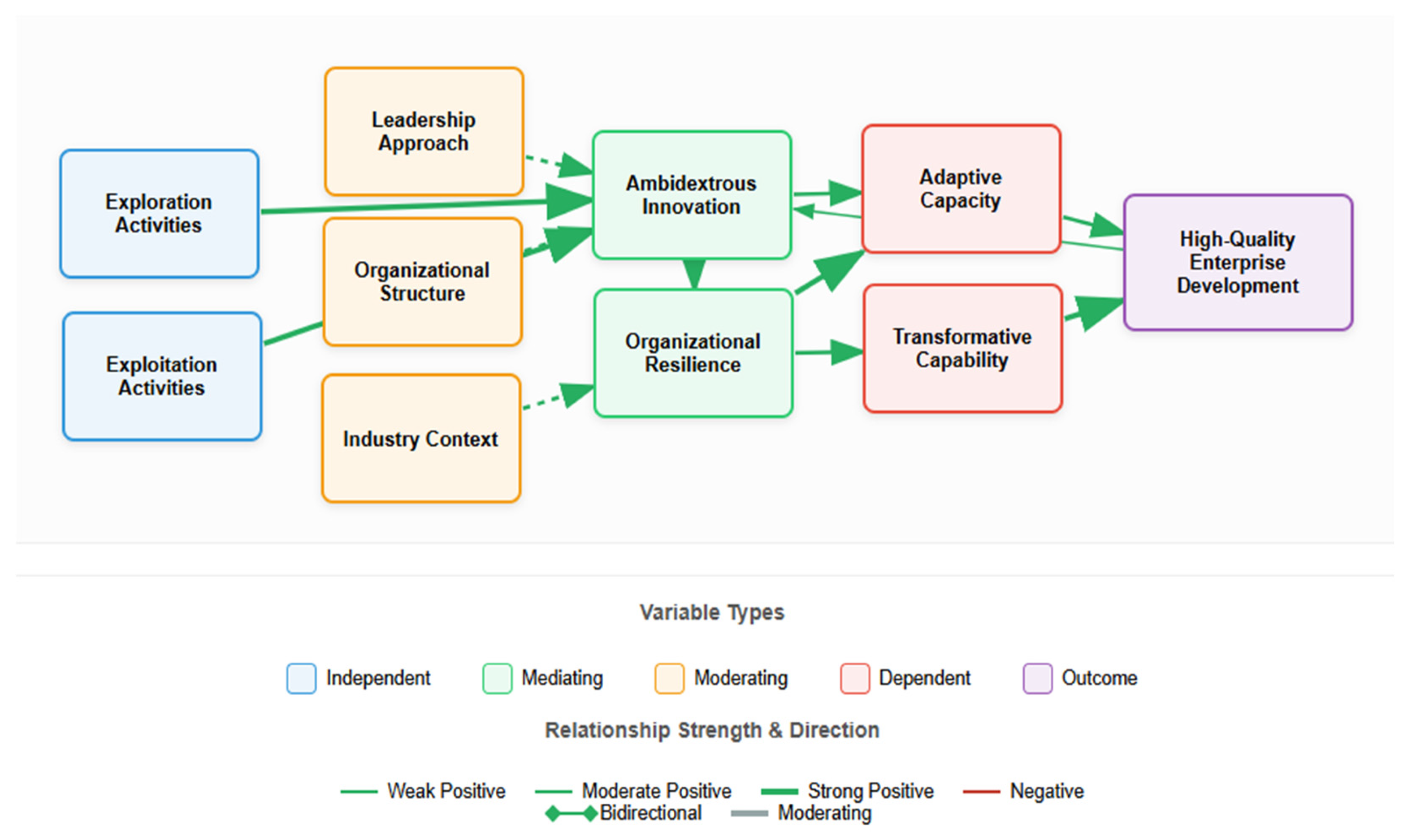

Table 1.
Organizational profiles based on assessment results (n=45).
| Organizational Profile | Percentage | Mean Resilience Score (1-5) | Mean Development Score (1-5) |
|---|---|---|---|
| Ambidextrous | 22% | 4.2 | 4.3 |
| Experimenting | 18% | 3.3 | 3.5 |
| Efficient | 42% | 3.2 | 3.4 |
| Vulnerable | 18% | 2.8 | 2.6 |
Disclaimer/Publisher’s Note: The statements, opinions and data contained in all publications are solely those of the individual author(s) and contributor(s) and not of MDPI and/or the editor(s). MDPI and/or the editor(s) disclaim responsibility for any injury to people or property resulting from any ideas, methods, instructions or products referred to in the content. |
© 2025 by the authors. Licensee MDPI, Basel, Switzerland. This article is an open access article distributed under the terms and conditions of the Creative Commons Attribution (CC BY) license (http://creativecommons.org/licenses/by/4.0/).
Copyright: This open access article is published under a Creative Commons CC BY 4.0 license, which permit the free download, distribution, and reuse, provided that the author and preprint are cited in any reuse.


