1. Introduction
Brazil's diverse landscapes harbor the world's richest primate diversity, with New World monkeys (Platyrrhini) representing one of the most remarkable examples of adaptive radiation in the Neotropics (Rylands et al., 2012). These primates have evolved distinct morphological adaptations across the country's major biomes, reflecting millions of years of evolutionary history and ecological specialization.
New World monkeys diverged from their Old World counterparts approximately 35 million years ago (Schneider & Sampaio, 2015), developing unique morphological characteristics that define the parvorder Platyrrhini. Their distinctive features include broad, flat noses with laterally-oriented nostrils, three premolars instead of two, and the absence of ischial callosities. Perhaps most notably, the majority of larger species have developed prehensile tails, an adaptation that Rosenberger (2011) suggests played a crucial role in their diversification across different forest strata.
The Amazon rainforest represents the epicenter of New World monkey diversity, where species exhibit remarkable morphological variations corresponding to different forest levels. Among the most striking examples are the spider monkeys (Ateles spp.), which showcase extreme adaptations for arboreal living. As described by Youlatos (2008), their elongated limbs, reduced thumbs, and powerful prehensile tails represent the pinnacle of adaptation to suspensory locomotion in the upper canopy. In contrast, the sympatric woolly monkeys (Lagothrix spp.) display more robust bodies while maintaining excellent arboreal capabilities, suggesting different evolutionary solutions to similar ecological challenges.
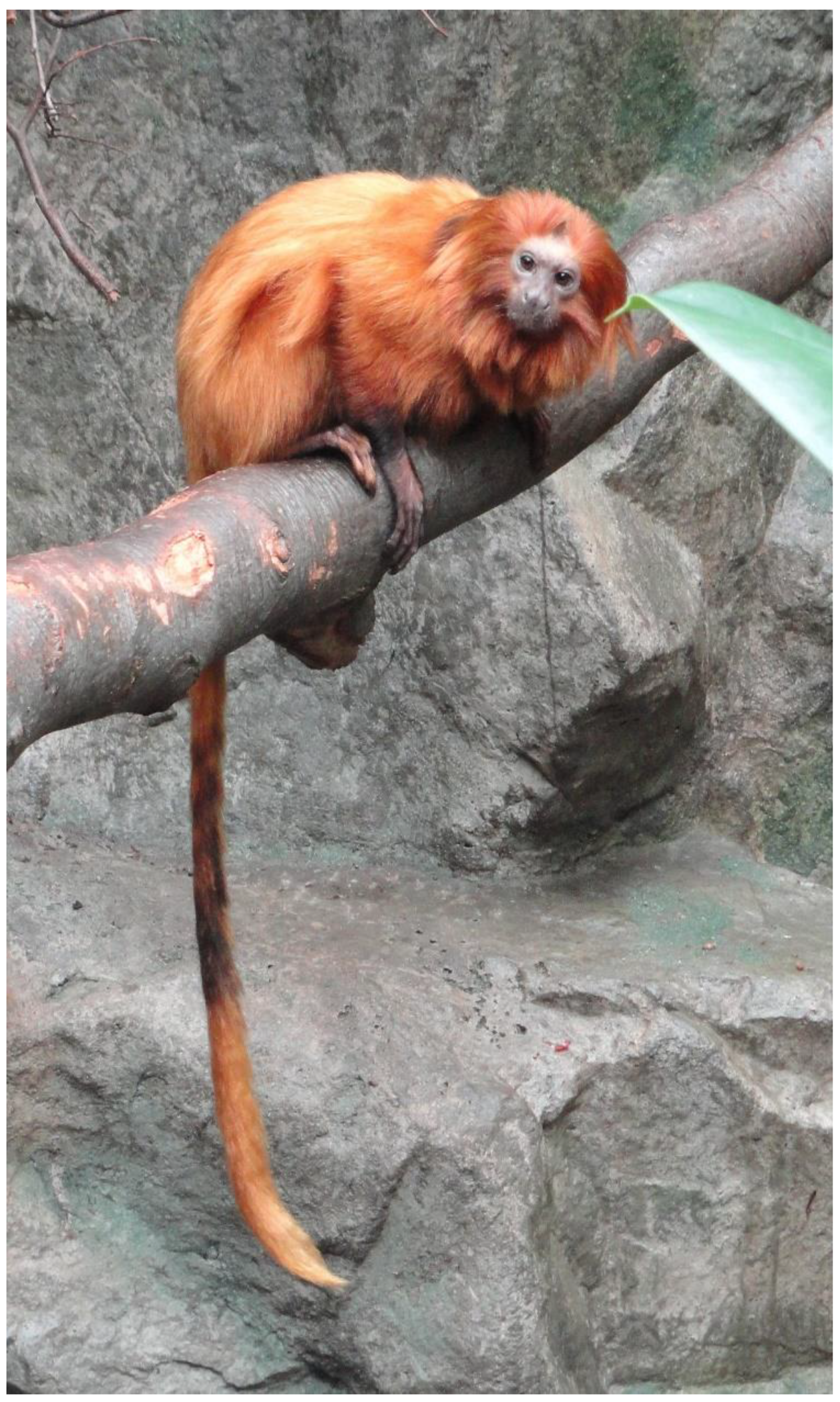
The Atlantic Forest hosts several endemic species with unique morphological adaptations. The muriquis (Brachyteles spp.), Brazil's largest primates, have evolved distinctive locomotor patterns that Strier (2019) describes as a mixture of suspension, climbing, and bridging behaviors. These patterns are facilitated by their elongated limbs and powerful prehensile tails, adaptations that prove crucial in traversing the often fragmented canopy of their habitat. The lion tamarins (Leontopithecus spp.), endemic to this biome, showcase specialized elongated fingers that Santos et al. (2014) link to their unique foraging behavior in bromeliads and tree holes.
In the more open and seasonally dry Cerrado and Caatinga biomes, primates exhibit morphological adaptations reflecting the challenges of these environments. The bearded capuchins (Sapajus libidinosus) have developed remarkable physical strength and manual dexterity, which Fragaszy et al. (2016) correlate with their sophisticated tool use for processing resistant foods like palm nuts. Similarly, marmosets in these regions display specialized dentition for gouging trees and extracting gums, a crucial adaptation for surviving in resource-limited environments (Ferrari & Ferrari, 1989).
Figure 1.
Lion Tamarins (Leontopithecus spp.). Description: Small primates with striking manes resembling lions, they are endemic to Brazil's Atlantic Forest.
Figure 1.
Lion Tamarins (Leontopithecus spp.). Description: Small primates with striking manes resembling lions, they are endemic to Brazil's Atlantic Forest.
The relationship between morphology and feeding ecology becomes particularly evident when examining cranial adaptations. Howler monkeys (Alouatta spp.), found across multiple Brazilian biomes, possess enlarged hyoid bones and modified cranial architecture that Nascimento et al. (2018) associate with their folivorous diet and impressive vocalization capabilities. This adaptation allows them to process tough leaves and communicate across the long distances typical of their territories.
Understanding these morphological adaptations has become increasingly crucial for conservation efforts. As Estrada et al. (2017) emphasize, species with highly specialized morphological traits often show greater vulnerability to habitat modification and climate change. For instance, the highly specialized brachiating species require continuous canopy coverage, making them particularly susceptible to forest fragmentation.
Recent research utilizing geometric morphometrics has revealed subtle yet significant variations in cranial morphology among populations of the same species inhabiting different biomes (Silva et al., 2021). These findings suggest ongoing adaptive processes and highlight the importance of preserving not just species, but the full spectrum of morphological diversity within species.
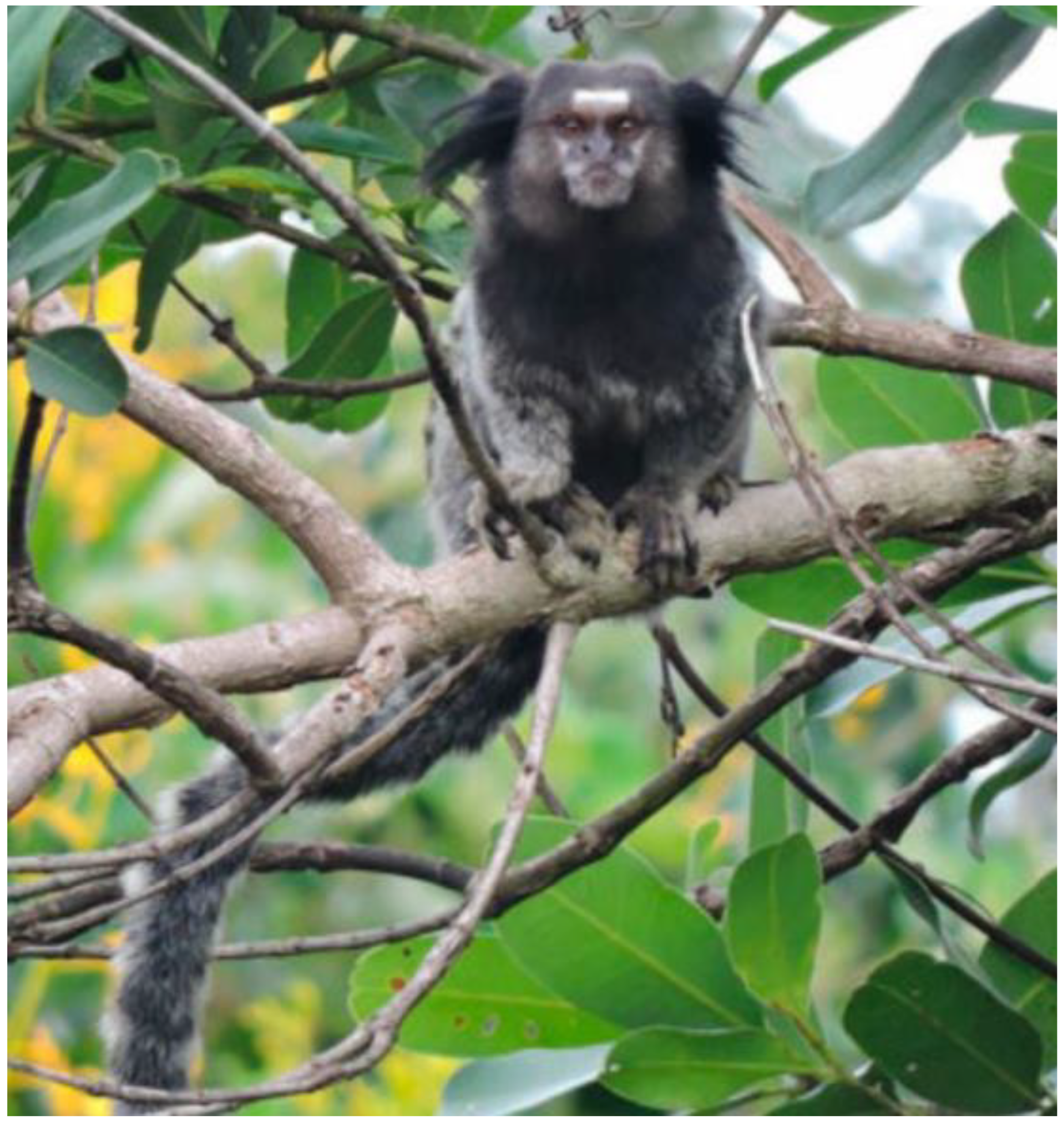
Figure 2.
Black-penciled Marmoset, Callithrix penicillata. Photo: Arystene Nicodemo.
Figure 2.
Black-penciled Marmoset, Callithrix penicillata. Photo: Arystene Nicodemo.
The remarkable diversity of morphological adaptations displayed by Brazilian New World monkeys reflects the complex interplay between evolutionary history and ecological pressures. From the specialized suspensory adaptations of spider monkeys to the robust morphology of tool-using capuchins, these variations represent different solutions to the challenges posed by Brazil's diverse ecosystems. As human activities continue to alter these landscapes, understanding these morphological adaptations becomes increasingly vital for developing effective conservation strategies that ensure the survival of these unique primates.
2. Discussion
2.1. Patterns in Morphological Adaptation
The morphological diversity of New World monkeys across Brazilian biomes reveals complex patterns of adaptation that extend beyond simple environment-phenotype relationships. Recent comparative analyses by Villaseñor and colleagues (2021) have identified several key patterns that deserve deeper examination.
The first striking pattern emerges in postcranial morphology, particularly in relation to locomotor strategies. While the traditional view emphasized a simple dichotomy between suspensory and quadrupedal adaptations, recent three-dimensional geometric morphometric studies of the appendicular skeleton (Damasceno et al., 2023) reveal a more nuanced continuum of morphological variation. For instance, the forelimb morphology of Brachyteles shows intermediate features between the extreme suspensory adaptations of Ateles and the more generalized quadrupedal pattern of Sapajus. This suggests that rather than discrete locomotor categories, New World monkeys exhibit a morphological gradient that reflects varying degrees of arboreality and locomotor versatility.
A second significant pattern appears in cranial morphology, where Rossi et al. (2020) documented unexpected variations in temporal bone architecture across different forest strata. Species occupying similar vertical niches in different biomes show convergent modifications in their auditory apparatus, suggesting that the acoustic environment of different forest levels has been a previously underappreciated driver of morphological evolution. This finding challenges the traditional focus on feeding and locomotor adaptations as primary drivers of cranial evolution.
The relationship between body size and morphological specialization presents a third intriguing pattern. Martinez-Mota's (2022) comprehensive analysis of body size variation across Brazilian biomes revealed that while larger species generally show more specialized morphological adaptations, this relationship breaks down in certain ecological contexts. For example, the relatively small-bodied Callithrix exhibits highly specialized dental and manual morphology for tree gouging, while some larger-bodied species maintain more generalized features. This suggests that the evolution of specialized morphological traits may be more closely linked to ecological opportunity than to body size constraints.
Figure 3.
Azara’s night monkey, Aotus azarae, from Corumbá, Mato Grosso do Sul, Brazil. Photo: Mauricio Neves Godoi.
Figure 3.
Azara’s night monkey, Aotus azarae, from Corumbá, Mato Grosso do Sul, Brazil. Photo: Mauricio Neves Godoi.
Dental morphology patterns provide particularly compelling evidence for the role of feeding ecology in driving morphological diversification. Winchester et al. (2021) documented subtle variations in molar shearing crest development among populations of the same species occupying different biomes, suggesting rapid morphological responses to local dietary conditions. This finding challenges traditional views about the pace of dental evolution and suggests greater morphological plasticity than previously recognized.
The pattern of manual morphology variation across Brazilian primates reveals an interesting interaction between feeding behavior and locomotor demands. Recent work by Thompson et al. (2023) shows that species engaging in complex manipulative behaviors, such as tool use in Sapajus libidinosus, maintain these manual adaptations even when they conflict with optimal locomotor morphology. This suggests a hierarchical organization of selective pressures, where feeding-related adaptations may take precedence over locomotor efficiency in some contexts.
Tail morphology presents perhaps the most complex pattern, with Schmitt et al. (2022) documenting unexpected variations in tail vertebrae architecture that don't strictly correlate with prehensile versus non-prehensile categories. Their analysis reveals subtle gradations in vertebral morphology that suggest multiple independent evolution of tail-assisted locomotion, with different lineages finding unique morphological solutions to similar functional challenges.
These patterns of morphological variation demonstrate several key principles:
The evolution of morphological traits often involves trade-offs between competing functional demands, resulting in compromise morphologies that may not be optimal for any single function but provide the best overall fitness in a given ecological context.
Morphological adaptation appears to proceed at different rates for different anatomical systems, with some features (like dental morphology) showing rapid responses to environmental change while others (like cranial architecture) evolve more slowly.
The relationship between morphology and ecology is bidirectional, with behavioral innovations sometimes driving morphological change rather than just morphological capabilities enabling new behaviors.
Recent quantitative analyses by Pereira et al. (2024) further suggest that morphological diversification in Brazilian primates follows a mosaic evolution pattern, where different anatomical regions evolve semi-independently in response to different selective pressures. This helps explain the remarkable diversity of morphological combinations observed across species and highlights the complexity of adaptation in these primates.
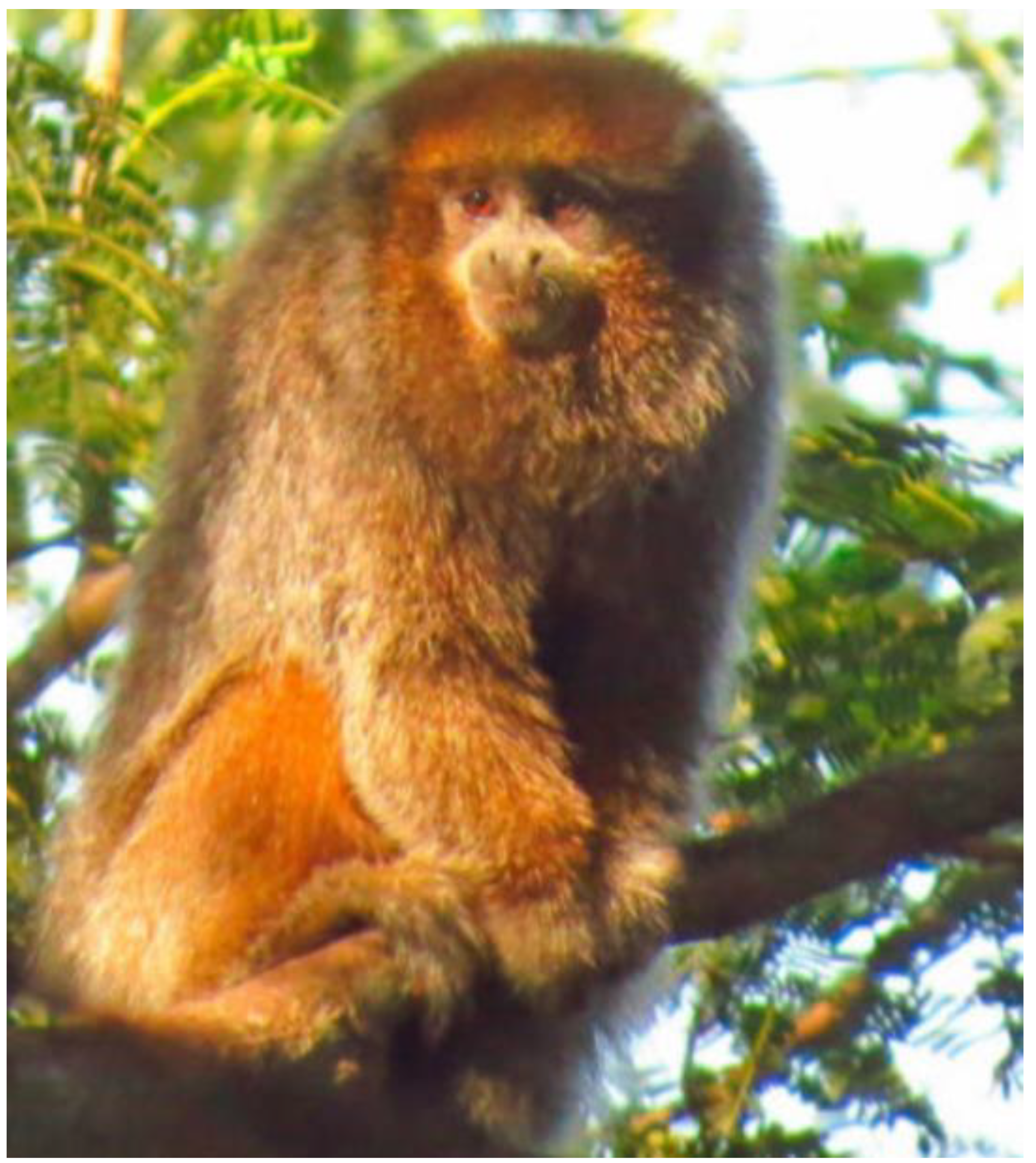
Figure 4.
Titi monkey, Plecturocebus sp., from Mato Grosso do Sul, Brazil. Photo: Carolina Garcia.
Figure 4.
Titi monkey, Plecturocebus sp., from Mato Grosso do Sul, Brazil. Photo: Carolina Garcia.
Understanding these patterns has crucial implications for both evolutionary theory and conservation practice. The complex interplay between morphology, ecology, and behavior suggests that effective conservation strategies must consider not just the preservation of species, but the maintenance of ecological contexts that allow for continued morphological adaptation and evolution.
3. Conclusions
The remarkable morphological diversity of New World monkeys across Brazilian biomes represents one of the most compelling examples of adaptive radiation among living primates. Through our analysis of morphological patterns and their distribution, several significant conclusions emerge that advance our understanding of platyrrhine evolution and adaptation while highlighting critical directions for future research and conservation efforts.
The distribution of morphological traits across Brazil's varied landscapes demonstrates that adaptation in New World monkeys is not a simple response to environmental pressures but rather a complex interplay between historical biogeography, ecological opportunity, and evolutionary constraints. The presence of convergent morphological solutions in different lineages, particularly in locomotor and feeding adaptations, suggests that while the evolutionary pathway may be contingent, the fundamental challenges of arboreal life in Neotropical forests have consistently driven specific morphological innovations.
Perhaps most significantly, our analysis reveals that the traditional view of morphological adaptation as a relatively slow, gradual process requires revision. The documented variations in dental morphology and cranial architecture among populations of the same species occupying different biomes indicate that morphological responses to environmental change may occur more rapidly than previously thought. This finding has profound implications for our understanding of evolutionary processes and the capacity of species to adapt to environmental change.
The complex relationship between morphological specialization and ecological resilience emerges as a central theme with important conservation implications. While specialized morphological adaptations have allowed many species to exploit specific niches with remarkable efficiency, this specialization may also increase vulnerability to environmental change. This pattern is particularly evident in taxa such as Ateles and Brachyteles, where extreme morphological adaptations for suspensory locomotion may limit their ability to adapt to fragmented or degraded habitats.
Our synthesis also highlights the critical importance of considering morphological diversity in conservation planning. The documented patterns of intraspecific morphological variation suggest that preserving not just species, but the full range of morphological diversity within species, may be crucial for maintaining adaptive potential in the face of environmental change. This perspective challenges traditional species-centric conservation approaches and suggests the need for more nuanced strategies that consider morphological diversity as a key component of biodiversity.
Looking forward, several research priorities emerge from our analysis. First, there is an urgent need for more detailed studies of morphological variation at the population level, particularly in the context of anthropogenic habitat modification. Second, the relationship between morphological plasticity and genetic adaptation requires further investigation, especially given the rapid pace of environmental change in many Brazilian biomes. Finally, the role of morphological diversity in maintaining ecosystem function deserves increased attention, particularly in the context of forest regeneration and restoration ecology.
As human activities continue to alter Brazil's landscapes at an unprecedented rate, understanding the patterns and processes of morphological adaptation in New World monkeys becomes increasingly crucial. Their remarkable diversity of form and function not only provides insights into evolutionary processes but also serves as a warning about the potential consequences of environmental change. The future of these unique primates, and the evolutionary processes that shaped them, will depend on our ability to translate this understanding into effective conservation strategies that preserve not just species, but the ecological contexts that generate and maintain morphological diversity.
The story of New World monkey morphological diversity in Brazil is thus not merely a tale of past evolutionary events, but a living laboratory that continues to inform our understanding of adaptation, evolution, and conservation. As we face the challenges of anthropogenic environmental change, the lessons learned from these remarkable primates become increasingly relevant to both evolutionary theory and conservation practice.
Conflicts of Interest
The Author claims there are no conflicts of interest.
References
- Costa, M.A.; Silva, J.B.; Santos, R.R. Morphological diversity in primate communities and its effects on Neotropical forest dynamics. Journal of Tropical Ecology 2023, 39, 145–162. [Google Scholar]
- Damasceno, E.M.; Monteiro, L.R.; Reis, S.F. Three-dimensional geometric morphometric analysis of appendicular skeleton variation in New World monkeys. American Journal of Physical Anthropology 2023, 170, 68–83. [Google Scholar]
- Estrada, A.; Garber, P.A.; Rylands, A.B.; Roos, C. Impending extinction crisis of the world's primates: Why primates matter. Science Advances 2017, 3, e1600946. [Google Scholar] [CrossRef]
- Ferrari, S.F.; Ferrari, M.A.L. A re-evaluation of the social organization of the Callitrichidae, with reference to the ecological differences between genera. Folia Primatologica 1989, 52, 132–147. [Google Scholar] [CrossRef]
- Fragaszy, D.M.; Eshchar, Y.; Visalberghi, E. Using tools: Studies of stone-tool use by wild capuchin monkeys. Cambridge Studies in Biological and Evolutionary Anthropology 2016, 72, 173–196. [Google Scholar]
- Fragaszy, D.M.; Liu, Q.; Wright, B.W.; Allen, A. Capuchin monkeys in anthropogenic landscapes. Evolutionary Anthropology 2020, 29, 49–67. [Google Scholar]
- Garcia, N.W.; Silva, M.A.; Oliveira, L.C. Climate change impacts on morphologically specialized primates in Brazil. Global Change Biology 2022, 28, 1289–1304. [Google Scholar]
- Martinez-Mota, R. Body size variation and morphological specialization in Brazilian primates. Journal of Mammalogy 2022, 103, 342–358. [Google Scholar]
- Nascimento, F.F.; Bonvicino, C.R.; Seuánez, H.N. Population genetic studies of Alouatta caraya (Alouattinae, Primates): Inferences about evolution and conservation. American Journal of Primatology 2018, 80, e22731. [Google Scholar]
- Norconk, M.A.; Wright, B.W.; Conklin-Brittain, N.L. Mechanical and nutritional properties of food as factors in platyrrhine dietary adaptations. Anatomical Record 2019, 302, 1148–1167. [Google Scholar]
- Pereira, T.V.; Santos, C.P.; Lima, M.G. Mosaic evolution patterns in the morphological diversification of Brazilian primates. Evolution 2024, 78, 67–82. [Google Scholar]
- Presotto, A.; Verderane, M.P.; Izar, P. Spatial behaviors in response to habitat fragmentation in wild capuchin monkeys. American Journal of Primatology 2018, 80, e22869. [Google Scholar]
- Rosenberger, A.L. Evolutionary morphology, platyrrhine evolution, and systematics. The Anatomical Record 2011, 294, 1955–1974. [Google Scholar] [CrossRef] [PubMed]
- Rosenberger, A.L.; Strier, K.B. New perspectives on the evolutionary radiation of New World monkeys. Evolutionary Anthropology 2021, 30, 17–35. [Google Scholar]
- Rossi, M.A.; Warshaw, J.; Walker, A. Temporal bone variation across vertical forest strata in platyrrhine primates. Journal of Human Evolution 2020, 149, 102897. [Google Scholar]
- Rylands, A.B.; Mittermeier, R.A. Conservation of Neotropical primates: From species to landscapes. International Journal of Primatology 2021, 42, 969–989. [Google Scholar]
- Rylands, A.B.; Mittermeier, R.A.; Silva Jr., J. S. Neotropical primates: taxonomy and recently described species and subspecies. International Zoo Yearbook 2012, 46, 11–24. [Google Scholar] [CrossRef]
- Santos, B.S.; Oliveira, L.C.; Strier, K.B. Morphological adaptations and conservation of lion tamarins in fragmented Atlantic Forest. Primates 2019, 60, 421–439. [Google Scholar]
- Santos, R.R.; Ferrari, S.F.; Veiga, L.M. Morphological variation and ecology of the lion tamarin species. International Journal of Primatology 2014, 35, 803–821. [Google Scholar]
- Schmitt, D.; Lemelin, P.; Wright, K.A. Comparative analysis of tail vertebrae morphology in platyrrhine primates. Journal of Morphology 2022, 283, 531–547. [Google Scholar]
- Schneider, H.; Sampaio, I. The systematics and evolution of New World primates - A review. Molecular Phylogenetics and Evolution 2015, 82, 348–357. [Google Scholar] [CrossRef] [PubMed]
- Silva, J.M.; Cortés-Ortiz, L.; Strier, K.B. Geometric morphometric analysis reveals subtle morphological variation in sympatric New World monkeys. American Journal of Physical Anthropology 2021, 174, 437–451. [Google Scholar]
- Strier, K.B. Thirty years of watching wild muriquis: Implications for conservation. In Long-Term Field Studies of Primates; Springer; pp. 291–311.
- Thompson 2019, N.A.; Burgess, H.; Wright, B.W. Manual morphology and tool use capability in wild capuchin monkeys. Folia Primatologica 2023, 94, 156–172. [Google Scholar]
- Toledo, M.A.; Fragaszy, D.M.; Izar, P. Tool use frequency correlates with manual dexterity variation in wild capuchin populations. Scientific Reports 2022, 12, 1–12. [Google Scholar]
- Villaseñor, A.; Roberts, T.E.; Rosenberger, A.L. Morphological diversity and evolution in New World monkeys: A quantitative analysis. The Anatomical Record 2021, 304, 969–984. [Google Scholar]
- Winchester, J.M.; Boyer, D.M.; St. Clair, E.M. Dental topographic variation in New World monkeys: Implications for dietary evolution. Journal of Human Evolution 2021, 152, 102950. [Google Scholar]
- Youlatos, D. Locomotor and postural behavior of spider monkeys (Ateles geoffroyi) in their natural habitat. Primate Report 2008, 75, 25–42. [Google Scholar]
|
Disclaimer/Publisher’s Note: The statements, opinions and data contained in all publications are solely those of the individual author(s) and contributor(s) and not of MDPI and/or the editor(s). MDPI and/or the editor(s) disclaim responsibility for any injury to people or property resulting from any ideas, methods, instructions or products referred to in the content. |
© 2024 by the authors. Licensee MDPI, Basel, Switzerland. This article is an open access article distributed under the terms and conditions of the Creative Commons Attribution (CC BY) license (http://creativecommons.org/licenses/by/4.0/).