
Submitted:
08 March 2024
Posted:
08 March 2024
You are already at the latest version
Abstract
This study employs Principal Component Analysis to examine cranial measurements obtained from both extant and fossil specimens spanning 38 species and comprising over 300 individuals within the subfamily Cervinae. Our findings elucidate craniometric distinctions among cervids characterized by varying body sizes and certain evolutionary adaptations. While our results generally corroborate previous assertions regarding the limited craniometric variability among plesiometacarpal deer, they also unveil specific cranial adaptations within certain genera and species. The Principal Component Analysis of craniometric data revealed that giant and large-sized deer display significantly broader ecomorphological diversity in cranial shape compared to small-sized deer. Secondly, small-sized deer exhibit greater uniformity in their cranial shape, appearing densely clustered on the factorial map. Thus, we conclude that body size imposes ecological constraints, limiting the available niches due to eco-physiological factors. The study demonstrates that endemic insular deer do not evolve consistent craniometric features attributable to insular isolation, while the cranial proportions of medium-to-small sized deer delineate a ubiquitous morphological archetype characteristic of numerous cervid taxa spanning diverse phylogenetic lineages and sharing comparable body sizes. This group of "Dama-like" deer, characterized by similar body size, metabolic rates, ecological needs, and cranial morphometry, is referred to here as the fundamental eco-physiological type, typical of warm regions within the Palearctic and Oriental biogeographic realms..
Keywords:
plesiometacarpal deer
; cranial measurements
; biometry
; principal component analysis
; evolution
; fundamental body size
1. Introduction
Craniological material holds crucial importance in the taxonomy and systematics of cervids, as it provides most of the essential characteristics used in zoological classification. The implication of craniometrics in cervid taxonomy generally carries a more nuanced meaning, as cranial morphology in deer, unlike in other ruminants, has consistently been considered conservative and less diversified [1,2,3,4]. It was commonly assumed that cervids followed the evolutionary trend typical of ruminant herbivores, transitioning from small-sized forms with a relatively long braincase and short splanchnocranium to larger forms with a shortened braincase and elongated splanchnocranium [4,5,6].
Vislobokova [2] delineated general evolutionary trends in cervid cranial shape at the subfamily level, noting an increase in splanchnocranium length and neurocranial shortening from the most primitive cervids (subfamilies Dremotheriinae and Lagomerycinae) to the most advanced deer (Cervinae and Capreolinae). Mejaard and Groves [7] cautiously suggested that elements of skull shape, as determined by morphometrics, could be used to reveal phylogenetic relationships among deer species within the subfamily Cervini, although they acknowledged that the use of this type of data might be challenging due to the broad size variation within a species.
Lowe and Gardiner [8] endeavored to utilize craniometric data to distinguish subspecies of red deer. However, their findings did not support the concept of subspeciation in Red deer based on the measured skull features. Put simply, they found no significant differences or discontinuities among the various subspecies sampled.
In a separate attempt, Markov and Danilkin [9] proposed the use of absolute and relative craniometric measurements to differentiate modern subspecies of Eurasian elaphine deer (Cervus elaphus and Cervus canadensis). However, their conclusions were contradicted by molecular phylogenetic data [10,11]. Consequently, the value and significance of craniometric data in cervids remain unclear. It’s uncertain to what extent these data can be utilized in cervid taxonomy and systematics. Additionally, it’s unknown whether cervid craniometric data can provide insights into cranial ecomorphology, antler weight, or specific evolutionary processes, such as adaptation to insular environments, often considered a form of specific insular “paedomorphosis” involving general changes in cranial proportions [12,13].
The current study proposes the utilization of Principal Component Analysis to explore morphometric cranial diversity among deer of the subfamily Cervinae, employing craniometric data. It aims to elucidate the potential significance of cranial measurements in cervid taxonomy, systematics, ecomorphology, and the description of evolutionary processes. The focus of the study is directed towards the subfamily Cervinae due to its representation by a nearly intact initial evolutionary radiation, unlike the Capreolinae, and its abundant availability of craniological material in the fossil record [4].
Special attention is devoted to the comparative craniometry of the most specialized representatives of cervines included in the study. This focus aims to facilitate a comprehensive analysis of cranial morphology specialization within a taxonomic group traditionally considered conservative in cranial morphology.
Top of Form
2. Materials and Methods
The craniological material comprises over 300 skulls of both modern and fossil representatives of the subfamily Cervinae. The fossil and modern osteological specimens utilized in this study are curated at various institutions, including the Institute of Zoology of the State University of Moldova (IZM), Republic of Moldova; the Institute of Zoology of the University of Wroclaw (IZW), Poland; the Museum of Geology and Paleontology of the University of Florence (MGUF), Italy; the Muséum national d’Histoire naturelle (MNHN), Paris, France; the Museum of Paleontology of the Department of Earth Sciences (MPS), University of Rome “Sapienza”, Italy; the Natural History Museum “Grigore Antipa” (NHMB), Bucharest, Romania; the Natural History Museum of London (NHML), United Kingdom; the Natural History Museum “La Specola” (NHMF), University of Florence, Italy; the Paleontological Museum of the University “Claude Bernard” Lyon 1 (PMUL), France; the Faculty of Geography and History of the University of Barcelona (FGUB); and the State Museum of Natural History of Stuttgart (SMNH), Germany.
Some cranial measurements of Cervus elaphus are adapted from Heptner and Tzalkin [14], while cranial measurements for Candiacervus ropalophorus are adapted from Schilling and Roessner [15]. Detailed information regarding cranial specimens, their collection numbers, institutions of curation, and measurements can be found in Table S1 of the Supplementary Materials.
The following cranial measurements were obtained:
- Condylobasal length of the skull (CBL): Measured from the prosthion point to the posterior edges of the occipital condyles;
- Condylodental length of the skull (L_P2_occiput): Measured from the anterior edge of the P2 alveolus to the posterior edges of the occipital condyles;
- Length of basioccipitale (L_basiocc): Measured from the posterior edge of the occipital condyles to the suture between basioccipital and basisphenoid;
- Length of the upper tooth row (L_P2_M3): Measured from the anterior edge of the P2 crown to the posterior edge of the M3 crown;
- Length of the upper molar series (L_M1_M3): Taken as the maximal value from the anterior edge of the M1 crown to the posterior edge of the M3 crown;
- Length of the upper premolar series (L_P2_P4): Taken as the maximal value from the anterior edge of the P2 crown to the posterior edge of the P4 crown;
- Length of the anterior part of the skull before the tooth row (L_P2_prosth): The distance between the anterior edge of the alveolus of P2 and the prosthion point;
- Length of the posterior part of the skull (L_M3_occ_cond): The distance between the anterior edge of the alveolus of M3 and the posterior edge of the occipital condyles;
- Length of the braincase (L_bregma_inion): The distance between the bregma point and the inion point;
- Occipital breadth (W_occiput): Measured as the maximum breadth of the occiput;
- Occipital height (H_occiput): Measured from the basicranium to the opisthocranion;
- Breadth of occipital condyles (W_occ_cond);
- Length of face (L_orbit_prosth): Measured from the anterior edge of the orbits to the prosthion;
- Length of the splanchocranium (L_bregma_prosth): Measured from bregma to the prosthion;
- Skull breadth at M3 (W_at_M3): The measurement taken between the alveolar edges in the middle of the right and left M3;
- Skull breadth at P2 (W_at_P2): The measurement taken between the alveolar edges in the middle of the right and left P2;
- Breadth of the muzzle (W_rostrum): Measured behind the upper canines or at the suture between the maxillary and premaxillary bones;
- Breadth above orbits (W_at_orbits): Measured above the orbital centers;
- Frontal breadth (W_frontal; in males only): Measurement taken at the frontal constriction before the pedicles;
- Breadth of the neurocranium (W_braincase): Measurement taken behind the pedicles in males and as the maximal breadth of the braincase in females;
- Diameter of the orbit (D_orbit; vertical);
- Length of the frontal suture (L_front_sut): From bregma to nasion;
- Length of the nasalia (L_nasal): From nasion to rhinion
Some skulls, particularly fossils, exhibit varying degrees of incompleteness. The majority of specimens analyzed in this study are from male individuals, with female specimens included only when their measurements provided valuable insights minimally influenced by sexual dimorphism. Mean values of cranial measurements for species and subspecies (for instance, in the case of red deer Cervus elaphus, which is represented by subspecies with significantly different body sizes) were utilized for analysis. While certain species are represented by only a single specimen or a small sample size, the behavior of data from these cases within the context of the entire dataset suggests that this limitation has minimal impact on the study’s results. The correlation matrix, based on all craniological material, both complete and fragmentary, demonstrates, with few exceptions, a very high correlation among cranial measurements (Figure 1).
Due to the high degree of correlation among most cranial measurements, linear and multilinear regressions were employed to estimate missing measurements in certain specimens or samples. A step-by-step imputation strategy was implemented: initially, data were imputed for measurements with fewer missing values, followed by those with the highest number of missing data points. This sequential approach to imputation was based on data completeness and the functional or topological relationships among measurements. Overall, the imputation process preserved the initial structure of relationships within the data (Figure 2).
For further analysis, only species that retained more than 50% of their cranial measurements were included in the study. The selected deer species encompass various evolutionary specializations, including extinct giant forms (Megaloceros giganteus and Praemegaceros obscurus), modern and extinct Palearctic species, less specialized modern species from the Oriental zoogeographic realm, and modern and extinct insular deer (Rusa timorensis, Cervus elaphus siciliae, Praemegaceros cazioti, Candiacervus ropalophorus). Some species, such as Praemegaceros verticornis, were included despite having less complete original data to assess their position among other genera and species. For data analysis, Principal Component Analysis (PCA) was utilized as the most effective multivariate analysis in this context. Certain cranial measurements were further examined by plotting their relative values against condylobasal length. The analysis was conducted using the Python programming language within the Jupyter Notebook environment. The Jupyter Notebook, along with craniometric data (CSV and EXCEL files) and supplementary figures, is available in the Supplementary Materials.
3. Results
The cranial measurements of all specimens collectively exhibit a very high degree of correlation, thus supporting Geist’s statement [4] that cervids, particularly the subfamily Cervinae, possess a relatively conservative and uniform cranial shape. This finding is particularly intriguing as the database encompasses nearly the entire evolutionary diversity of cervids, including modern ‘primitive’ Muntiacus, continental giants like Megaloceros, and both modern and extinct insular small-sized deer. It suggests that despite variations in body size, antler weight, and dentition specialization, deer generally share similar skull shapes and proportions throughout their evolutionary history.
The results indicate that body size is often the primary characteristic distinguishing species. However, there are two measurements that exhibit lower (moderate) correlation with others: the length of the interfrontal suture and the length of the premaxillary bones measured from P2 to the prosthion point. The reduced correlation of these measurements with other craniometric characteristics is attributable to different factors in each case.
The length of the interfrontal suture is associated with the degree of caudal extension of the nasal bones. This caudal extension of nasal bones represents an advanced morphological feature [2] that evolved independently in several evolutionary lineages among deer species of varying body sizes. Short nasal bones that do not reach the level of the anterior edges of the orbits represent a primitive morphological condition found in species such as Cervus and Muntiacus [6]. Conversely, significant caudal extension of nasal bones evolved independently in several species with small body sizes, such as fallow deer Dama dama, the extinct Axis-like Metacervocerus rhenanus, and the giant deer Megaloceros giganteus.
The relative length of premaxillary bones is an exosomatic feature representing a feeding adaptation and is therefore morphologically more variable than other parts of the skull.
The observed moderate correlation between braincase breadth and braincase length, measured as the distance between the bregma point and the inion (Figure 1, Figure 2), is intriguing as it indicates a certain diversity in braincase shape within the subfamily Cervinae. Vislobokova [2] posited that the evolution of the family Cervidae is characterized by the evolutionary shortening of the braincase. Primitive, unspecialized forms of deer typically exhibit elongated oval-shaped neurocrania and a relatively short facial portion of the skull, while the most advanced deer display a relatively short braincase and a long splanchnocranium. The analyzed data in the present study indicate that cervine species often considered the most primitive (such as Muntiacus reevesi, Muntiacus muntjak, and Hyelaphus porcinus) are actually characterized by relatively advanced short braincase proportions, where the braincase breadth behind the pedicles exceeds the bregma-inion distance. On the other hand, the two evolutionary most specialized species within Cervinae, Dama dama and Megaloceros giganteus, retain elongated braincases, with the bregma-inion measurement surpassing the braincase breadth behind the pedicles.
The Principal Component Analysis is particularly well-suited for this study, as the first two principal components, capturing 94% of the data variance, retain the maximum variance. Consequently, the first factorial plane adequately represents the data (Figure 3). The variable factor map confirms the varying degree of positive correlation between all cranial measurements (Figure 4). The positioning of species on the factorial plane is influenced by the contribution of their cranial breadth and length measurements. Unexpectedly, the resulting plot cloud exhibits complexity, yet it is perfectly explainable.
The Factorial Plan depicts a distinctive zigzag-shaped distribution of species (with Megaceroides algericus as a single exception), revealing the variability in the craniometric parameters of deer within the subfamily and indicating the trajectory of evolutionary changes in skull morphology (Figure 3). The upper left end of the dot cloud is characterized by generally robust skull proportions, notably broad frontals, and a relatively short muzzle, as seen in Megaloceros giganteus. Interestingly, Praedama giulii also demonstrates a trend toward this region of the dot cloud. The craniometric data for Praedama giulii can be considered relatively comprehensive, as they are based on a complete female skull from Untermassfeld and male cranial fragments of Praedama dupuisi, which apparently is a senior synonym of P. giulii.
Figure 3.
Factorial plane 1: distribution of deer species following Principal Component Analysis of craniometric data.
Figure 3.
Factorial plane 1: distribution of deer species following Principal Component Analysis of craniometric data.
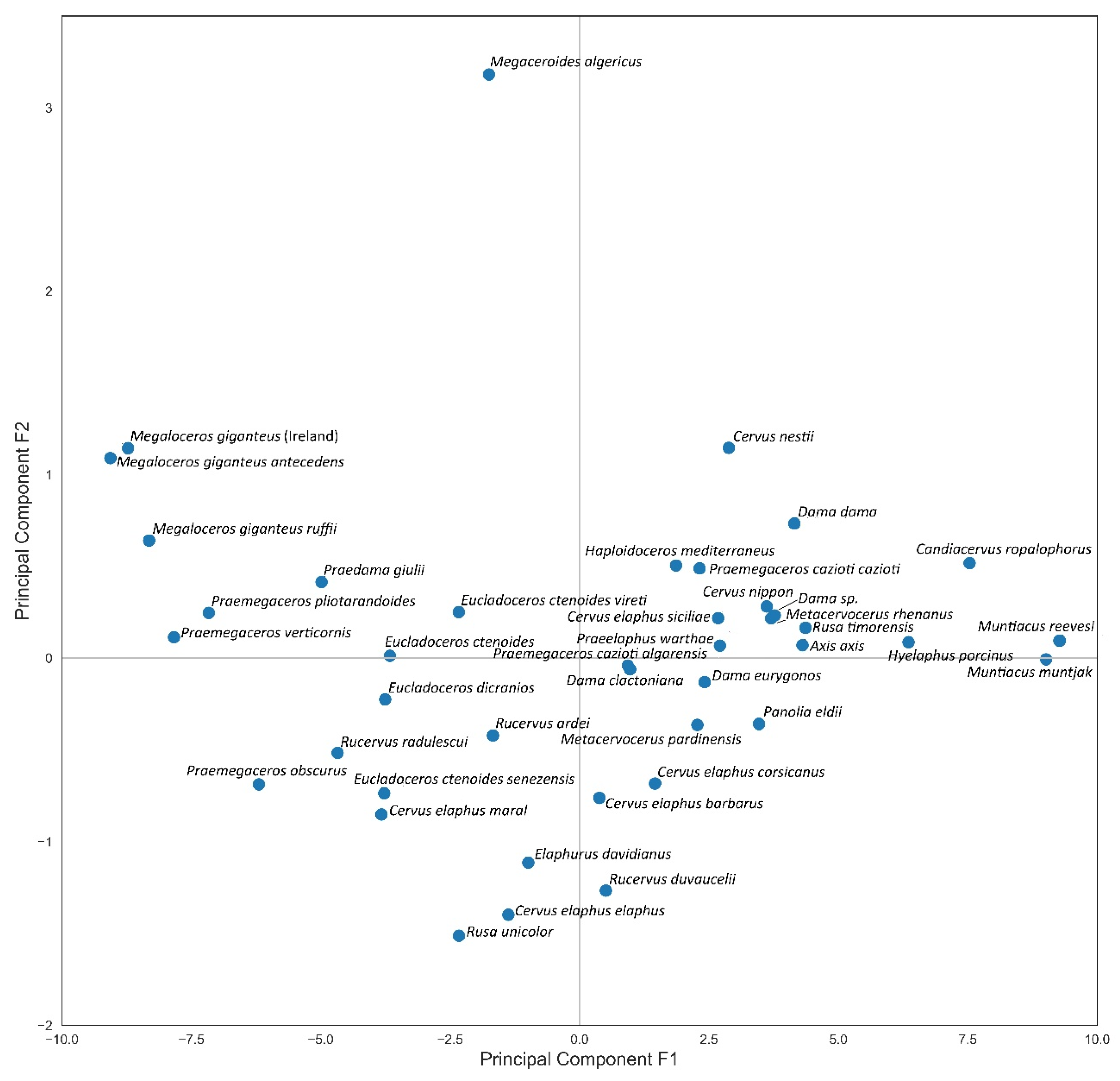
As we traverse the dot cloud from Megaloceros to Elaphurus davidianus, Cervus elaphus, and Rusa unicolor, we encounter large-sized deer with relatively slender and elongated cranial proportions, particularly noticeable in the elongated facial part of the skull. Towards the right side of the plot, the transition from Cervus elaphus elaphus and Rusa unicolor to small subspecies of red deer leads to a diverse group of “Dama-like” deer. This group comprises small-sized deer, including modern tropical species from Southeast Asia, modern and fossil Mediterranean continental species, and endemic insular deer.
If we regard the distribution of closely related species and genera, we observe that they show a V-shaped distribution on the factorial plane. Both the phylogenetic branch comprising Metacervocerus, Praedama, Megaloceros, and Dama, and the branch including Rusa, Cervus, Eucladoceros, Praemegaceros, and Candiacervus exhibit this V-shaped distribution pattern.
Figure 4.
Variable factor map of cranial measurements used in Principal Component Analysis.
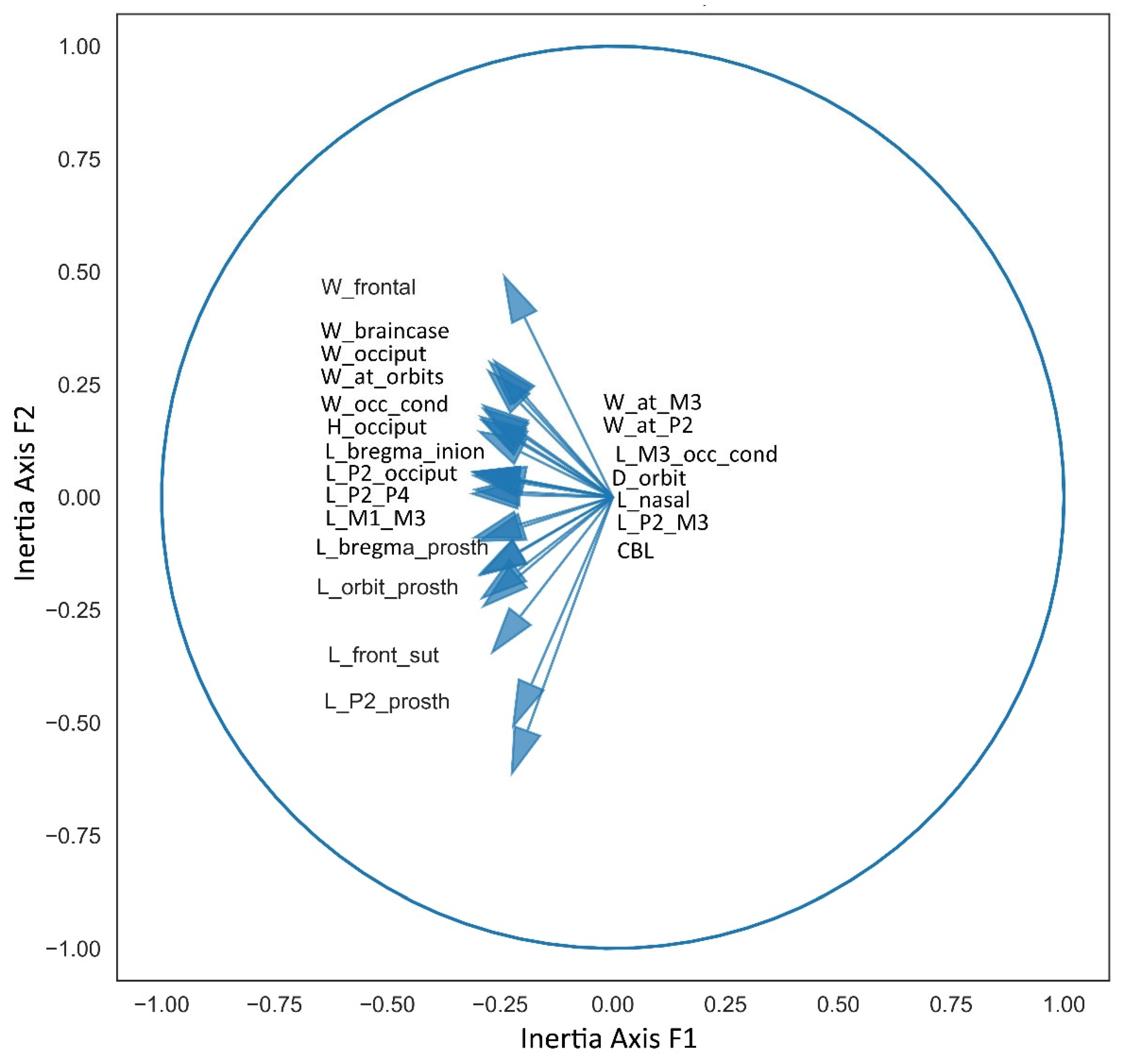
The extreme position of Muntiacus at the left extremity of the factorial plane mirrors its small size; however, the skull proportions of species within the genus Muntiacus are rather close to the average type of the subfamily Cervinae.
The outlier position of Megaceroides algericus is determined by the predominant importance of its breadth measurements, particularly the breadth of the frontlet and the breadth of the braincase, with very insignificant length parameters, especially the length of the facial part, such as P2—prosthion length and orbit—prosthion distance.
A closer examination of the ratios between certain measurements provides a better understanding of the evolutionary or ecomorphological significance of some features. Of particular interest is the ratio between the bregma-inion distance and the bregma-prosthion distance, which exhibits a step-like distribution when plotted against the condylobasal length (Figure 5). Small-sized deer (below 100-120 kg of body mass) have this index varying between 32 and 38%, suggesting that the bregma point is somewhat shifted rostrally. In large-sized and giant deer, this ratio is below 32%, indicating a caudal shift of the bregma point. Several factors may influence the position of the bregma point, such as the relative length of the rostrum or the shortening or elongation of the orbitofrontal portion of the skull; however, this characteristic is clearly related to body size. Perhaps this is a better characteristic for demonstrating Vislobokova’s observation on the shortening of the braincase and elongation of the splanchnocranium in more advanced (large-sized) deer. However, one possible cause of the caudal shifting of the bregma point in large-sized deer could be the increase in frontal bone size and robustness related to the increased weight of antlers and the increased robustness of pedicles. The transition from a more rostrally positioned bregma point to its more caudal position is not linear and has a rather broken, step-like character, possibly mirroring a certain biomechanical threshold. The position of the bregma point has no taxonomical significance and may vary within a genus or even between subspecies of the same species. This is evident in the subspecies of red deer: the insular subspecies Cervus elaphus siciliae has a more rostral position of the bregma point, unlike all other subspecies of Cervus elaphus. A similar difference can be observed in the Corso-Sardinian species Praemegaceros cazioti, where the less specialized nominotypical subspecies has a caudally shifted bregma point, presumably similar to its larger continental form, while in the more specialized P. cazioti algarensis, the bregma point is shifted rostrally.
The relationship between the position of the bregma and the relative length of the facial part of the skull is not so straightforward. The relative length of the splanchnocranium is a feature related to the degree of evolutionary specialization of the skull in cervids: large body size is positively correlated with a relatively longer splanchnocranium in deer [2]. However, the analyzed data do not show such a clear relationship. Generally, the relative length of the face, measured from the anterior edge of the orbit to the prosthion in most studied cervids (including Muntiacus and Megaloceros), varies from 55% to 65% and rather represents a species-specific feature that is not correlated with body size. Extreme shortening of the face is recorded only in Megaceroides algericus, with the facial portion attaining less than half of the condylobasal length, and in the highly specialized insular dwarf Candiacervus ropalophorus, which has a facial length attaining only 30% of the condylobasal length (see Supplementary Materials).
The relative breadth of the frontal bones, plotted against the condylobasal length, does not show a clear relationship with antler size (Figure 6). Megaloceros giganteus from Ireland is characterized by the broadest frontal bones among the large-sized deer with more or less heavy antlers. However, the relatively broadest frontal bones are found in specialized cervids, primarily in the North African endemic species Megaceroides algericus, which shows the broadest frontal bones, in accordance with the generally short and broad proportions of its skull (Figure 6). Exceptionally broad frontal bones are also characteristic of some insular forms like Praemegaceros cazioti and Cervus elaphus siciliae.
The relative breadth of the muzzle, measured at the upper canines or the premaxillary/maxillary suture, is moderately positively correlated with condylobasal length (Figure 7), but this relationship between measurements is likely due to increased cranial robustness in larger deer. However, there are some interesting exceptions that may have ecomorphological significance. Eucladoceros ctenoides senezensis is characterized by a relatively narrow muzzle, approximately 14.5% of the condylobasal length. Megaceroides algericus, on the other hand, is characterized by the broadest muzzle among cervids, approximately 26.5% of CBL. It is also necessary to note the unusually broad muzzle in the insular red deer Cervus elaphus siciliae, approximately 23% of CBL.
4. Discussion
4.1. Craniometric Diversity within the Subfamily Cervinae
The distribution pattern of species on the factorial map suggests several conclusions regarding the relationship between body size and ecomorphological diversity. Firstly, giant and large-sized deer display significantly broader ecomorphological diversity in cranial shape compared to small-sized deer. Secondly, small-sized deer exhibit greater uniformity in their cranial shape, appearing densely clustered on the factorial map. Thirdly, there is a gap in the continuum of cranial morphology that contributes to the V-shaped distribution of cervid species on the factorial map (Figure 3).
The first two observations can be attributed to the unique digestive physiology of ruminants. Body size in ruminants imposes a corresponding rate of metabolism, which is lower in larger species and higher in smaller species [16].
The complex anatomy of the four-chambered stomach includes the rumen, which serves as the primary site for microbial fermentation of ingested feed in ruminants. The duration of fermentation depends on the quality of forage, particularly the relative content of cellulose fibers in the ingested plant material. Fermented food particles can progress through the digestive tract via the reticulum only if they are small enough. Lower-quality forage increases fermentation time in the rumen, and in species with high metabolism, such as small ruminants, animals may experience starvation despite their rumen being filled with low-quality, hard-to-ferment forage [16]. This limitation in forage quality is even more stringent in small male cervids, which require high-quality forage each year for antler growth.
As a result, smaller deer have a narrower range of digestible food resources, primarily limited to higher-quality forage. This eco-physiological constraint results in reduced diversity of cranial shape among small-sized cervids, which are adapted to similar forage, feeding height, and biomes. Given that cervid dentition and postcranial bones are even more uniform, distinguishing fragmentary remains of small cervids with similar body sizes becomes challenging. Differential and taxonomically meaningful characters become very subtle. As a result, the taxonomy and systematics of the so-called “small-sized deer” or “Dama-like deer” remain subjects of long-lasting debates and disagreements [17,18,19,20].
In contrast, large and giant deer exhibit broader tolerance to forage quality due to their lower metabolic rates. Consequently, larger deer can occupy more diverse ecological niches, such as the modern large-sized tropical forest-dwelling Rusa unicolor, the extinct giant woodland dweller Praemegaceros obscurus, and the giant open landscape inhabitant Megaloceros giganteus.
The narrower availability of ecological niches in smaller cervids likely contributes to lower diversity in cranial shape. Conversely, the broader ecological tolerance of large and giant deer enables them to occupy a wider range of ecological niches, which underpins the greater diversity in cranial shape observed in large-sized deer.
The cause of the observed gap within the eco-morphological continuum of cervid cranial shape is not yet clear. It may be attributable to biomechanical limitations or ecological constraints.
The alignment of the skull craniometric characteristics of Muntiacus with the average type of the subfamily Cervinae is interesting because we do not find here a specific “primitive”, “archaic”, or paedomorphic craniometric condition that could be expected in very small tropical deer. This serves as one more argument in favor of the viewpoint that Muntiacus is a quite specialized genus characterized, besides the extreme reduction of lateral digits, by typical Cervinae cranial proportions, including a relatively short braincase.
4.2. Craniometric Features of Giant Deer
One of the most interesting results is the cranial shape specialization observed in Megaloceros, which deviates from Vislobokova’s [2] rule of ‘larger body size–longer splanchnoranium’. According to the position of the giant deer on the factorial map, it seems that the facial portion of Megaloceros giganteus is relatively shorter than expected for a deer of such size (Figure 3). However, the relative length of the muzzle, measured between the orbit and prosthion with respect to condylobasal length, in the giant deer Megaloceros giganteus is actually the same as in Praemegaceros obscurus. It measures 56.8% in the only complete skull of Praemegaceros obscurus (IGF4024 from Pietrafitta); in Megaloceros giganteus, this index varies between 54.1% and 59.4% (34 individuals, with a mean value of 56.9%).
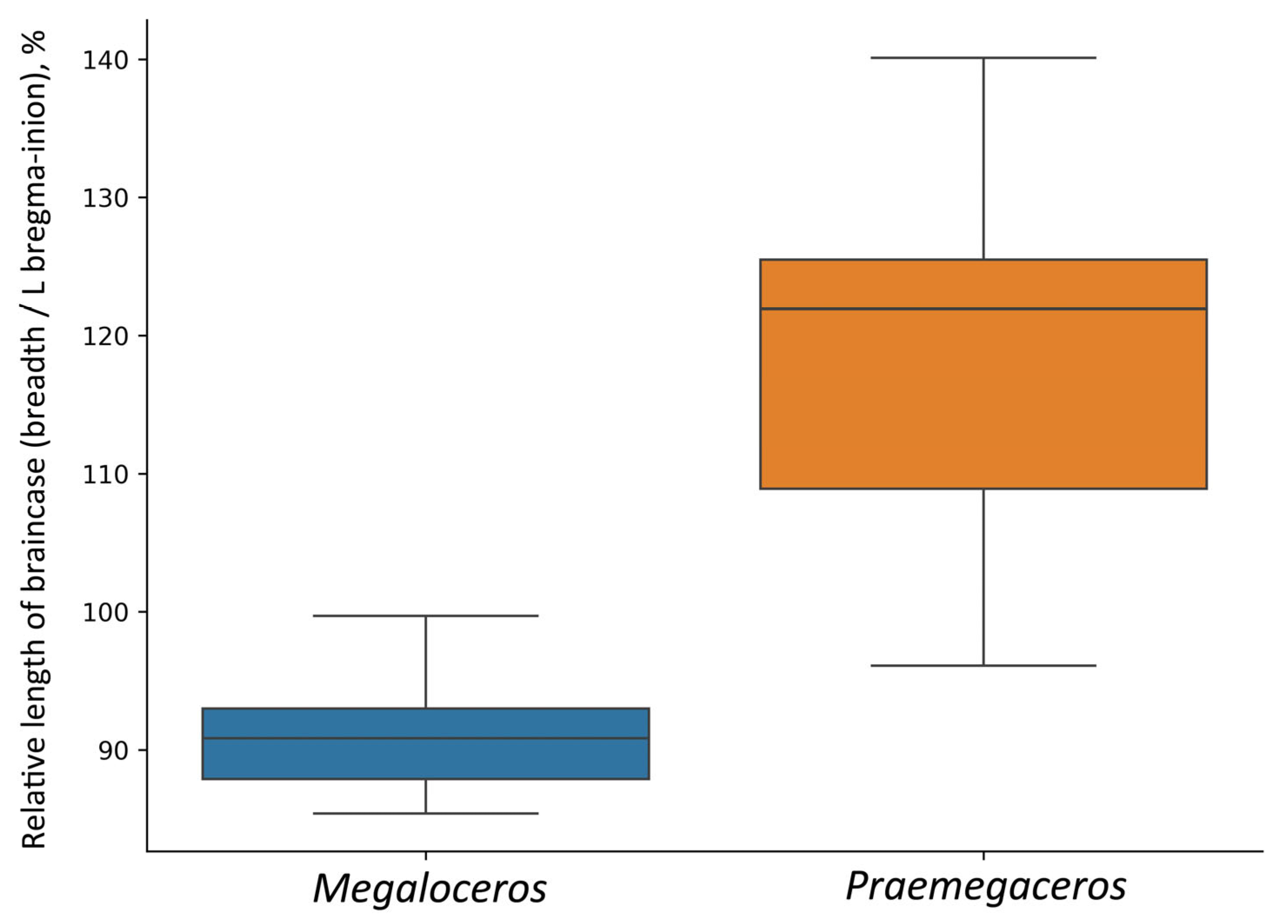
Partially, this could be related to the relatively long and unflexed braincase (Figure 8). Thus, the relative length of the braincase, expressed as a ratio of bregma–inion length to braincase breadth, ranges from 96.1% to 140% in Praemegaceros (with 22 individuals belonging to P. obscurus, P. pliotarandoides, and P. verticornis; the mean value being 118.2%), while in Megaloceros giganteus, this ratio ranges from 85.4% to 99.7% (with 42 individuals, females excluded; the mean value being 90.9%) (Figure 9). Overlapping values are represented by a very young individual of Praemegaceros verticornis (Nr 1/229, Sucleia, Moldova) and an old individual of Megaloceros giganteus (SMNS18360, Murr, Rhine Valley, Germany).
Partially, the small relative length of the splanchnocranium in Megaloceros giganteus is related to its shortened orbitofrontal portion, a feature that distinguishes the giant deer from the long-muzzled Cervus elaphus and Elaphurus davidianus. Thus, the anterior edge of the orbit in Megaloceros giganteus is situated above M3 (Figure 8), while in red deer and Pere David’s deer the downward projection of the anterior edge of orbit falls far behind M3. However, the bregma point in giant deer is shifted caudally, as in all large-sized deer with a relatively long face (Figure 5). Possibly, this feature is related to the increased size of the heavy antlers-bearing frontal bones, which are also relatively broad, especially in the giant deer from Ireland. The pedicles in giant deer maintain the common length and position observed in cervids; however, the frontal bones between pedicles are reinforced by extreme thickening, forming a strong bulge that creates a specific concave shape of the forehead before the pedicles [21].
Figure 9.
Relative length of braincase in Megaloceros and Praemegaceros, calculated as the ratio of braincase breadth behind pedicles to bregma-inion distance.
Figure 9.
Relative length of braincase in Megaloceros and Praemegaceros, calculated as the ratio of braincase breadth behind pedicles to bregma-inion distance.
The most significant evolutionary specialization of Megaloceros giganteus is its cranial pachyostosis, where the bones of the skull are significantly thickened compared to other cervid species. This adaptation most likely serves as a mineral storage mechanism necessary for the rapid growth of large antlers, particularly in environments with short vegetation periods [22]. The cranial pachyostosis results in several specific features of the giant deer’s skull morphology. For instance, advanced ossification of the vomer, previously misunderstood as a feature aligning plesiometacarpal Megaloceros with telemetacarpal representatives of the subfamily Capreolinae, characterized by a completely ossified vomer dividing the choanae. This feature is plesiomorphic for telemetacarpal deer and is not related to pachyostosis. Other cranial features associated with pachyostosis in giant deer include a reduced size of the foramen ovale, extremely reduced or completely closed ethmoidal openings, and the extreme thickening of mandibles, sometimes reaching an almost circular cross-section [22,23].
Despite these adaptations, cranial pachyostosis has had minimal influence on the general cranial shape and proportions of Megaloceros giganteus. Specific morphological specializations include the strong caudal extension of nasal bones beyond the level of the anterior edges of the orbits [23]. However, in many aspects, the cranial morphology of the giant deer remains primitive: the braincase remains unflexed, relatively long, and narrow of compared to the genus Praemegaceros (Figure 9). These morphological features, according to Vislobokova [2], are primitive among cervids.
4.3. Specialization of Cranial Morphology in Megaceroides
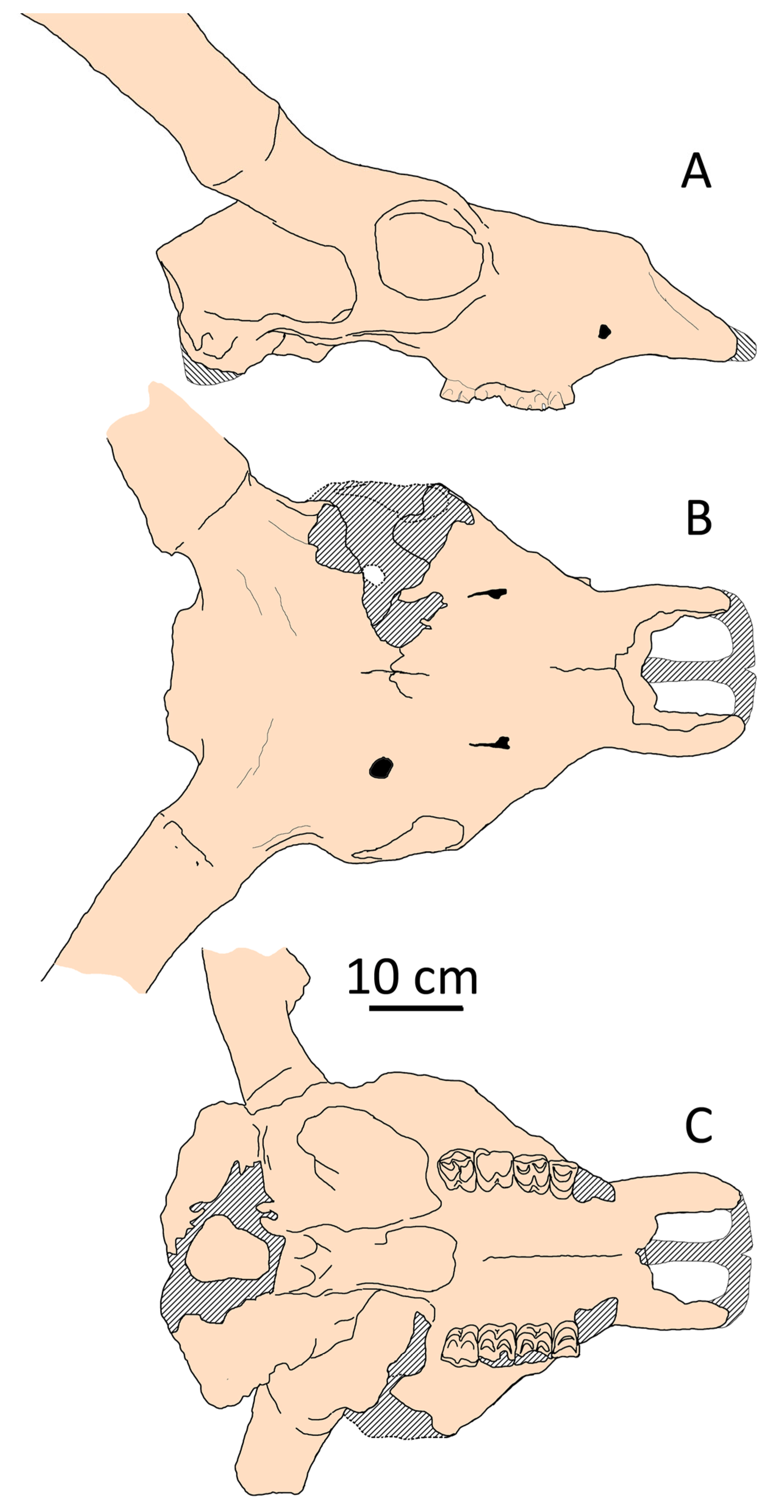
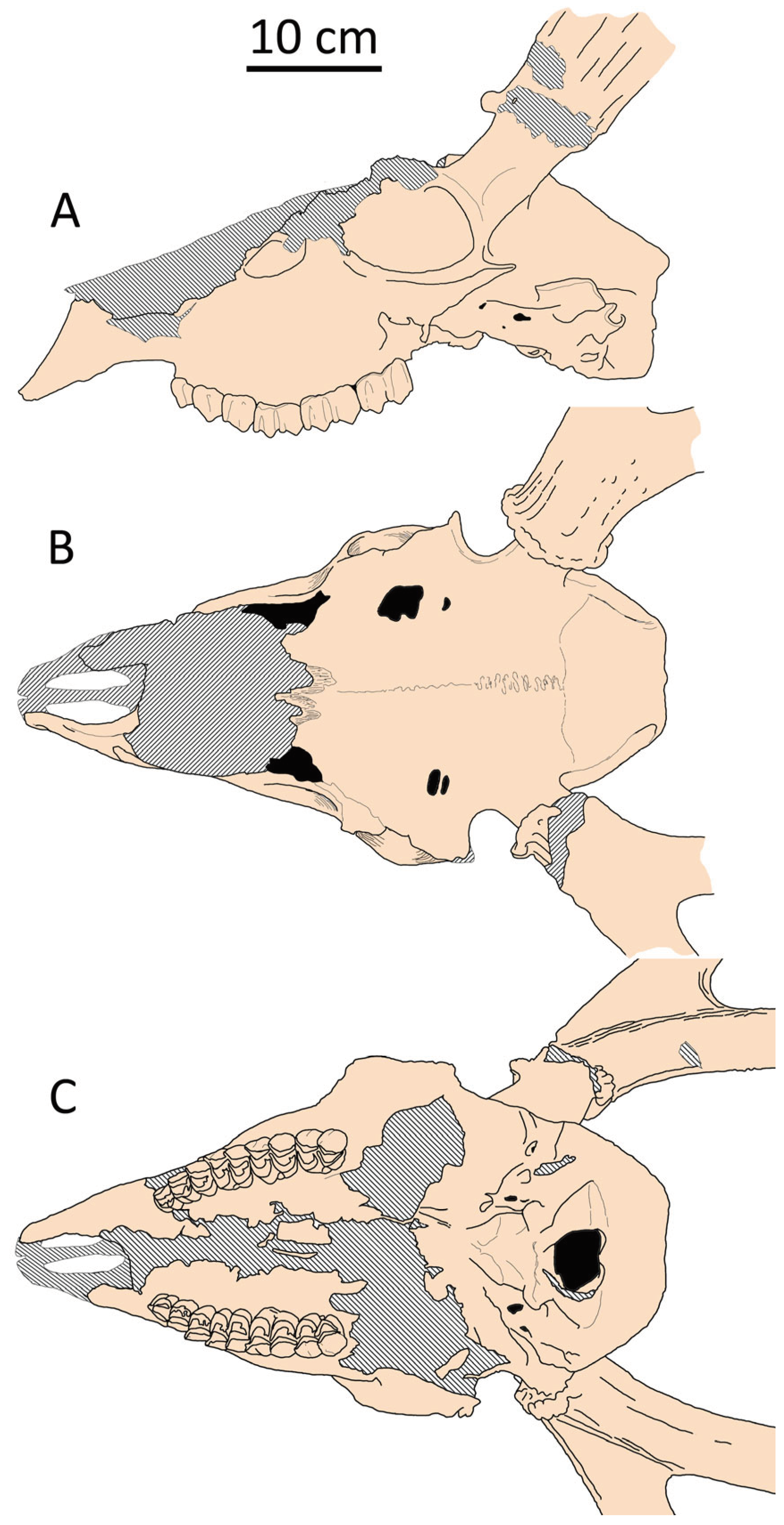
Among cervid species, one of the most intriguing is Megaceroides algericus from the Late Pleistocene of Northwestern Africa, which occupies an outlier position on the factorial plane (Figure 3). This medium-sized endemic relative of Megaloceros giganteus exhibits unique characteristics compared to other representatives of the subfamily Cervinae (Figure 10). Similar to Eurasian Megaloceros giganteus, Megaceroides algericus displays significant cranial and mandibular pachyostosis [24,25]. However, the cranial pachyostosis in Megaceroides serves a different adaptive purpose. Unlike Megaloceros, Megaceroides lacks a frontal bulge, with frontals appearing notably flat and broad, and its neurocranium exhibits moderate flexion. The overall cranial pachyostosis is more pronounced in Megaceroides: eye socket rims are markedly thick, premaxillary bones are exceptionally broad and robust, and bone suture obliteration occurs early. In contrast, the zygomatic arches are thin and fragile, while cheek teeth are brachyodont and significantly reduced in size, particularly the third upper and lower molars [25]. Megaceroides’ outlier position is attributed to its distinctive cranial shape, characterized by a broad and flattened braincase and frontals, and a relatively short muzzle—the shortest among continental deer (Figure). The facial portion between the orbits and prosthion is notably short, not exceeding half the length of the condylobasal measurement. The combination of a robust and broad skull with small cheek teeth and fragile, thin zygomatic arches is highly unusual, suggesting specific eco-morphological adaptations that differ significantly from those of most cervids. It’s noteworthy that Megaceroides algericus is the only cervid species to have successfully entered and established itself on the African continent. The dispersal of Megaceroides algericus into Africa occurred during the Middle Pleistocene via the East-Mediterranean dispersal route, indicating a lengthy evolutionary process in Northwestern Africa, which allowed for extreme specializations distinguishing this deer from Eurasian Cervinae.
The primary obstacle to cervid dispersal into Africa is ecological competition with the diverse and rich community of African bovids, which have evolved high ecomorphological specializations, posing strong competition for less specialized and opportunistic Cervidae [4]. Consequently, successful cervid dispersal into Africa would require adaptation to a marginal ecological niche unoccupied by local African bovids. The combination of an extremely pachyostotic, broad, and flattened skull with small and partially reduced cheek teeth, along with thin zygomatic arches, may be interpreted as an adaptation to a periaquatic or semiaquatic ecological niche rich in soft, nutritious water plants but also fraught with the constant danger of attacks by dangerous water predators such as crocodiles [25]. The broad premaxillary bones indicate an adaptation to feeding on soft water plants. Thus, the extremely thick and hard cranial bones serve as a protective helmet, a preadaptation inherited from its Eurasian predecessor, Megaloceros giganteus, with initially different adaptation significance.
Figure 10.
Cranial shape of Megaceroides algericus from Guyotville (now Ain-Benian), Algeria (NMNH, ‘‘Collection Arambourg’’, no number): A, side view; B, dorsal view; C. palatal view.
Figure 10.
Cranial shape of Megaceroides algericus from Guyotville (now Ain-Benian), Algeria (NMNH, ‘‘Collection Arambourg’’, no number): A, side view; B, dorsal view; C. palatal view.
4.4. Insular Deer
The analyzed data comprise craniometric measurements of several species that are either considered insular or presumed to have been insular: modern Rusa timorensis from the islands of Java, Bali, and Timor; modern Cervus elaphus corsicanus from Corsica and Sardinia; the Late Pleistocene Cervus elaphus siciliae from Sicily; Praemegaceros cazioti from the Late Pleistocene of Corsica and Sardinia; and Candiacervus ropalophorus from the Late Pleistocene and Holocene of Crete. The results obtained did not reveal a specific “morphological syndrome” unique to all endemic insular deer.
The evolution of deer in conditions of insular isolation has long been recognized as a distinctive mode of evolution characterized by a suite of particular adaptations, forming a syndrome of responses to insular isolation. Among these adaptations, researchers often cite diminished body size, reduced and simplified antlers, shortened limb bones, abbreviated splanchnocranium, and generally paedomorphic cranial features [12,15,26,27]. Researchers have paid particularly close attention to Pleistocene insular deer of the Mediterranean. Azzaroli [12] proposed that all extinct Mediterranean insular deer belonged to only two genera: Megaloceros and Cervus. Radulescu and Samson [28] suggested that all extinct endemics from the Mediterranean islands should be grouped into a special genus, Nesoleipoceros. However, subsequent studies revealed that the taxonomic situation in Pleistocene endemic deer of Mediterranean islands is highly complex, with more than two phylogenetically distant lineages that independently colonized Mediterranean islands [26,27,29,30]. Do insular cervids indeed follow a specific, predefined evolutionary trajectory across all cervid lineages that colonized islands? This study seeks to provide an answer.
Cervus elaphus corsicanus. Some Mediterranean insular deer, as noted by Azzaroli [12], indeed belong to the genus Cervus. Two insular forms of red deer are included in the present study: modern Cervus elaphus corsicanus and extinct Cervus elaphus siciliae. Cervus elaphus corsicanus is one of the smallest modern forms of the red deer, characterized by simplified antlers with a diminished number of antler tines (missing bez tine and simplified crown), and a somewhat shorter facial portion of the splanchnocranium compared to the largest subspecies of red deer like Cervus elaphus maral [6,14]. According to Flerov [6], C. elaphus corsicanus is actually not an insular deer and should be synonymized with Atlas deer Cervus elaphus barbarus. This opinion was confirmed by archaeozoological studies [31] and genetic studies [32], which demonstrated that modern red deer from Corsica and Sardinia were introduced by humans. The mitochondrial haplotype of Corso-Sardinian red deer and North Africa reveals their relationship with the indigenous red deer population from the central part of the Italian Peninsula [30]. Therefore, C. elaphus corsicanus is a diminished form of the continental red deer. On the factorial plane, the Corso-Sardinian red deer is situated close to Atlas red deer, and both cervid forms are placed among continental deer (Figure 3). According to our results, C. elaphus corsicanus and C. elaphus barbarus show very close cranial characteristics: moderate breadth of occiput with respect to condylopremolar length, much narrower than in many insular deer; frontal bones are moderately narrow and slightly narrower than in C. elaphus elaphus and C. elaphus maral. However, the frontal bones of Corsican and Atlas deer are significantly narrower than in other fossil Mediterranean deer and significantly narrower than in specialized insular endemic deer, such as C. elaphus siciliae and Praemegaceros cazioti. So, the craniometric data reveal the close cranial resemblance between supposed “insular” C. elaphus corsicanus and continental C. elaphus barbarus, thus confirming the possible synonymy between those two subspecies, if we still can speak about subspecies taking into account their artificial translocation from the Italian Peninsula [31,32]. Geist [4] characterized the cranial shape of Atlas red deer as exhibiting paedomorphism. So, the craniometric data reveal that C. elaphus corsicanus maintains cranial shape and proportions characteristic of continental deer and therefore does not show specific insular adaptations. The relative length of the facial part in C. elaphus corsicanus is very close to that of continental red deer C. elaphus elaphus. Concerning the simplified shape of antlers, they are known to be very sensitive to limited ecological resources [33], therefore the diminished and simplified antlers of Corsican deer rather represent a phenetic response to environmental conditions than a genuine evolutionary adaptation to insular isolation. The body size of both C. elaphus barbarus and C. elaphus corsicanus generally corresponds to the size of continental Cervinae from the same latitudes (such as Cervus nippon, Panolia eldii, etc.), and therefore we cannot speak about a particular body size reduction.
Cervus elaphus siciliae. Craniometric features of C. elaphus siciliae reveal a distinct pattern suggestive of deep evolutionary transformation. This subspecies of red deer evolved in geographic isolation on Sicily Island during the Middle and Late Pleistocene. It is characterized by a diminished body size (approximately 80 kg) and reduced size of antlers, although they typically retain all elements such as brow, bez, trez, and crown tines. The three-pointed crown of C. elaphus siciliae indicates its relation to crowned forms of red deer, akin to C. elaphus maral or Cervus elaphus aretinus. On the factorial map, this deer is positioned among insular species like Praemegaceros cazioti and Rusa timorensis, as well as Mediterranean continental small-sized deer like Dama dama and Haploidoceros mediterraneus.
As noted by Gliozzi et al. [34], the braincase of C. elaphus siciliae is relatively short and shares proportions with continental European red deer forms. The authors also observed a notably narrow and high occiput, along with a relatively short muzzle in this insular deer. According to our data, the relative length of the face in C. elaphus siciliae, measured as the distance between the anterior edges of the orbit to the prosthion, closely resembles that of Cervus nippon, Rusa timorensis, and Dama dama. Remarkably, C. elaphus siciliae is the only subspecies of red deer with a rostrally shifted bregma point (Figure 5). One of its most striking morphological features is the relatively broad frontals, broader even than those of giant deer from Ireland (Figure 6). Some features of C. elaphus siciliae suggest an adaptation to grazing: the relative breadth of the rostrum is extreme for cervines, reaching approximately 23% of the condylobasal length (Figure 7). Additionally, premaxillary bones are square-shaped, while maxillary bones exhibit strongly developed rugosity for the attachment of musculus masseter [34]. The ecomorphological features of C. elaphus siciliae are quite similar to those seen in Praemegaceros (Nesoleipoceros) cazioti from the Late Pleistocene of Corsica and Sardinia.
Praemegaceros cazioti. Praemegaceros (Nesoleipoceros) cazioti evolved from the giant continental deer Praemegaceros (Nesoleipoceros) solilhacus, which is known from the Early Middle Pleistocene of Europe [26]. The evolutionary relationship between the continental giant P. solilhacus with large palmated antlers (approximately 400 kg in body mass [23]) and the insular Corso-Sardinian endemic P. cazioti is primarily inferred from the similarity of antler shape, and both species are classified within the subgenus Nesoleipoceros of the genus Praemegaceros. Praemegaceros cazioti is characterized by a significantly reduced body size (estimated body mass approximately 80-100 kg [26]) and a vestigial character of antler palmation. Thus, during the evolutionary transition from P. solilhacus to P. cazioti, the lineage of Nesoleipoceros experienced a 4-5 fold reduction in body size.
Unfortunately, we do not have at our disposal a complete skull of P. solilhacus, but the cranial material of the better-known Praemegaceros obscurus [35] can provide insight into the cranial transformations during the reduction in body size as an adaptation to insular isolation.
Both subspecies, P. cazioti cazioti and P. cazioti algarensis, are positioned among “Dama-like” deer on the factorial plan (Figure 3). The frontal bones in Praemegaceros cazioti are flat and relatively very broad, comparable in breadth to those of C. elaphus siciliae (Figure 6). Unlike C. elaphus siciliae, P. cazioti is characterized by an exceptionally broad occiput (Figure 11), comparable to that of Megaceroides algericus in its relative breadth calculated to premolar-occipital length (excluding the variable part of the skull between P2 and prosthion). A similarly broad occiput is also observed in Rusa timorensis. The functional significance of such extreme occipital breadth is not immediately evident. Geist [4] explained the relatively broad occiput in Hyelaphus porcinus as having a functional role in accommodating strong neck muscles needed to stabilize the animal’s head during fast locomotion through tall and dense grass. While the occiput in hog deer is indeed relatively broader than in most cervines, it is not as extremely broad as in P. cazioti and R. timorensis. Perhaps the relatively broad occiput in P. cazioti is another morphological remnant from its giant ancestor. However, the presence of this feature in R. timorensis suggests that this morphological peculiarity may have a more complex evolutionary origin.
The nasal bones in P. cazioti are short, with their posterior edge not reaching the line connecting the anterior edges of the eye sockets [26]. The area of musculus masseter insertion is clearly defined and extends forward until the level of M1. The orbitofrontal region is shorter compared to continental species of the genera Eucladoceros and Praemegaceros [26,36,37]; in lateral view, the anterior edge of the orbit is situated at the level of M2. The premaxillary bones are broad, robust, and square-shaped [36,37,38], resembling those of Cervus elaphus siciliae, suggesting similar adaptations to grazing (Figure 12). One of the most interesting morphological features of P. cazioti cazioti is the more caudal position of the bregma point (Figure 5), indicating the retention of some characteristics typical of giant continental deer.
However, the grazing adaptations in P. cazioti cazioti are still moderate and do not significantly alter its craniodental morphology [26]. Thus, the upper cheek tooth-row exhibits a relative length typical of cervinae, remaining below 30% of the condylobasal skull length. The skull proportions of P. cazioti cazioti from Coscia (Corsica) remain largely similar to those of P. obscurus from Pietrafitta, except for a slightly shorter face, which nonetheless maintains a similar relative length compared to mainland deer of similar size. Both insular P. cazioti cazioti and mainland small-sized species share similarities in the position of the upper tooth row, the relative length of the P2-prosthion distance, and the relative length of the upper dentition [26,36,37,38].
Praemegaceros cazioti algarensis from Dragonara (Sardinia) exhibits more evolved grazing adaptations: its square-shaped praemalillare are notably broad; the area of musculus masseter insertion is extensive, bordered with prominent ribs, and extends forward until the level of P4 [37,38]. The upper tooth row is relatively long, reaching 33.7% of the condylobasal length, and the cheek teeth have remarkably higher crowns, classified as mesodontous [26,37]. The orbitofrontal portion is very short, with the anterior edge of the orbit positioned at the level of the posterior edge of M2 (when projected onto the upper tooth row plane), and the distance between P2 and the prosthion is notably short (24.5% of the condylobasal length). Unlike P. cazioti cazioti, the bregma point in P. cazioti algarensis is shifted rostrally, as observed in all small-sized deer (Figure 5). The difference in the position of the bregma point between P. cazioti cazioti and P. cazioti algarensis is likely related to the shortening of the facial part: the relative length of the muzzle, measured from the anterior edges of the orbits to the prosthion with respect to the condylobasal length, is 56% in the former subspecies and approximately 50% in the latter.
The morphological and craniometric similarities between C. elaphus siciliae and P. cazioti should be considered more as a convergence than parallelism. Both deer exhibit exceptionally broad frontal bones, a trait likely inherited from their large-sized or giant ancestors as a consequence of significant body size reduction. This disproportionally broad feature of the frontal bones may share a similar nature to that observed in Megaceroides algericus. Thus, in small-sized deer, disproportionally broad frontal bones may serve as an indicator of considerable evolutionary size reduction.
Candiacervus ropalophorus. The genus Candiacervus encompasses insular deer native to Crete, which have undergone extreme reduction in body size and significant cranial shape transformation due to evolution in isolated island conditions [12,15,27,29]. The body size of Candiacervus species falls between that of Hyelaphus and Muntiacus. Possibly, the genus Candiacervus evolved from the continental giant deer Praemegaceros obscurus or Praemegaceros verticornis. The evolutionary relationship between Candiacervus and Praemegaceros is apparent from the antler shape of Candiacervus listeri, considered the less specialized representative of the genus Candiacervus, which retains key characteristics of antler morphology from its continental precursor. The antlers of Candiacervus listeri preserve all structural elements seen in Praemegaceros [23,28,35], including the dorsal (outer) tine, middle tine, and the sharp bend in the area of the posterior tine, albeit reduced in C. listeri [27]. Additionally, C. listeri maintains the shape and position of compressed and divergent pedicles [27] observed in advanced continental Praemegaceros [23].
The antlers of Candiacervus ropalophorus are the most specialized within the genus, retaining only the middle tine and featuring a very long beam with a mace-shaped distal end [27]. This deer exhibits advanced cranial adaptations to insular conditions, positioning it somewhat marginally on the factorial map, though not as an extreme outlier (Figure 3).
Candiacervus ropalophorus is characterized by a significantly reduced relative length of the facial part of the skull [15]. The measurement from the orbit to the prosthion point attains 30% of the condylobasal length, representing an outlier value among cervines, where the relative length of the face typically ranges from 50 to 65%. The position of the bregma point is strongly shifted rostrally, with the ratio of bregma-inion to bregma-prosthion amounting to 38%, which is also an extreme value among Cervinae, shared only with Rusa timorensis (Figure 5). The relative length of the cheek teeth attains 30% of the condylobasal length, a common value among representatives of the subfamily Cervinae.
Frontal bones in C. ropalophorus are flat, with moderately diverged and backward-pointing pedicles, resembling those in continental advanced Praemegaceros. However, frontal bones are relatively very narrow, showing the lowest value among Cervines. Possibly, the peculiar narrowness of frontals in C. ropalophorus is related to the shortened and diminished facial portion of the cranium. Similarly, C. ropalophorus has the narrowest rostrum among Cervinae, although its premaxillary bones are square-shaped, as seen in other endemic Mediterranean insular deer with grazing adaptations.
Among the morphological peculiarities of the splanchnocranium in C. ropalophorus, one can notice its very low profile. This morphological peculiarity is shared with Praemegaceros cazioti (Figure 12) and is supposed to be related to the diminished volume of the nasal cavity. One plausible explanation for this peculiar feature in insular deer is their diminished olfactory capacities in the absence of carnivores in the insular ecosystem [26]. The braincase of C. ropalophorus is relatively short, as in continental Praemegaceros [15], while its occiput maintains a normal relative breadth for cervinae (Figure 11).
Thus, our study could not reveal a universal type of insular dwarfed deer, as each insular species inherits specific morphology from its continental ancestor and is characterized by its own degree of evolutionary adaptation to insular conditions. The character and completeness of the local insular fauna (the so-called “balanced insular faunas”, i.e., faunas containing predators, that is very rare in endemic insular faunas) are another important factors that shape the evolution of insular deer [13,39]. However, we can recognize some common morphological and craniometric features that mark the evolutionary diminishment of body size, such as disproportionately broad frontal bones and occiput in the early stages of evolutionary insular dwarfing, as well as the progressive shortening of the splanchnocranium and rostral shift of the bregma point.
4.5. “Dama-Like” Deer
The body size, similar to that of modern fallow deer, appears to hold pivotal importance in the subfamily Cervinae, and likely within the entire cervid family. This body size is common among continental species inhabiting warm latitudes of the Holarctic and the Oriental zoogeographic realm (Croitor). In the examples of insular deer discussed in this study, we have observed that body size reduction—especially in the early stages of evolution under insular isolation—can lead to deer reaching a size similar to that of fallow deer. However, insular isolation is not a prerequisite for evolutionary body size reduction to this extent. Examples from the continental paleontological record also exist. One such example is Haploidoceros mediterraneus, a small to medium-sized deer that evolved in the northwestern Mediterranean region during the Middle and Late Pleistocene (Croitor et al., 2020). The genus Haploidoceros underwent at least three million years of evolution in the warm and relatively dry conditions of the Pliocene in Western Europe and in the Mediterranean conditions of the Pleistocene glacial refugium of the Iberian Peninsula. Based on cranial variables, its body mass is estimated to be around 70-80 kg [40], considerably smaller than its presumed ancestor, Rucervus (Arvernoceros) ardei, with a body mass of approximately 180 kg [41]. Therefore, the evolution of the Haploidoceros lineage involved roughly a two-fold reduction in body mass. This reduction in body size appears to be an adaptation to the ecological niche of “Dama-like” deer within the Early Pleistocene Mediterranean ecosystems.
H. mediterraneus is characterized by unusually specialized antlers, consisting solely of a very long sickle-shaped beam and a single large basal tine [40]. The evolutionary reasons for antler simplification in Haploidoceros are not yet understood. The craniodental morphology of H. mediterraneus is also peculiar and does not provide a straightforward answer regarding the species’ dietary specialization. The relatively large cheek teeth (32-33% of condylobasal length) and short diastema in H. mediterraneus from Cova del Rinoceront (Spain) resemble the grazing adaptations of P. cazioti. However, the shape of narrow and pointed premaxillary bones (Figure 13) differs from the broad and rectangular-shaped premaxillaries of P. cazioti. The premaxillary bones of H. mediterraneus are even narrower and more pointed than those of fossil and modern fallow deer (Figure 13), approaching those of specialized browsers. Thus, the masticatory apparatus of H. mediterraneus represents several superimposed morphological adaptations resulting in an unusual combination of features: relatively large cheek teeth and narrow, pointed premaxillary bones, akin to browsing herbivores. The protruding telescopic (or tube-shaped) orbits are a distinguishing morphological feature of H. mediterraneus. The development of tubular orbits is most likely related to the long hair on males’ heads and necks, which could serve as protection against rivals’ simplified antlers during intraspecific combat [40]. Among other advanced cranial morphological specializations are short and diverged pedicles and a flexed braincase (Figure 13). However, despite numerous highly specialized morphological features, the skull of H. mediterraneus maintains generalized proportions characteristic of most less specialized small-sized Cervinae and is grouped with small-sized deer like Axis and Dama on the factorial plane (Figure 3).
The term “Dama-like deer”, proposed by Di Stefano and Petronio [19], carries deeper significance, as it refers to an eco-morphological type of small-sized deer that evolved independently in several phylogenetic lineages due to common eco-physiological and biomechanical constraints shared by all cervids. However, despite the similarity in craniometric characteristics, the systematic position of these small-sized deer can be deduced from morphological details of their skull, dentition, and antlers, which hold taxonomic and systematic significance [20].
The “Dama-like deer” represents a fundamental eco-physiological type among cervids, encapsulating key ecological and physiological traits relevant to their roles within ecosystems. This concept describes a set of characteristics essential for optimal metabolism, reproduction rates, and antipredator strategies tailored to specific ecological conditions. Associated with this eco-physiological type are distinct craniometric features influenced by shared ecological niches and food resource characteristics.
Given that the ecological and evolutionary strategy of the Cervinae subfamily often revolves around nutrient-rich foraging grounds, this fundamental eco-physiological type holds universal significance, occupying a central position within cervid diversity. However, external factors such as predation pressure, changes in food quality, and interactions with other herbivores can lead to the evolution of various forms within the cervid lineage, including giant forms, small Muntiacus-like forms, or other eco-physiological types, depending on the new ecological niches they inhabit. Yet, when these external pressures diminish, cervid lineages tend to revert to their fundamental eco-physiological type, as, for instance in the case of endemic Mediterranean small-sized cervids discussed in the present study.
Thus, the “Dama-like” deer represents the fundamental eco-physiological type prevalent in warm latitudes, including the Mediterranean biome. The presence of several species of similar body size in the paleontological record has sparked prolonged debates and taxonomical uncertainties. Azzaroli [17] proposed a radical taxonomical solution by grouping all deer of small-medium body size into the genus Pseudodama. However, these cervids exhibit varying degrees of cranial shape specialization and antler evolution, displaying different stages of morphological and ethological development [20]. For instance, the modern fallow deer (Dama dama) showcases the most advanced cranial morphology among cervine species [4]. Similarly, the antler shapes of small-sized deer display a wide diversity, ranging from the highly complex palmated antlers of fallow deer to the simpler three-tined antlers in Axis axis [4].
Thus, while “Dama-like deer” share similar eco-physiological and feeding adaptations, they each possess distinct evolutionary histories, biological characteristics, and behavioral traits. Therefore, the fundamental eco-physiological type should not be conflated with parallelism or convergence but should be viewed as the central, pivotal amalgamation of ecological and physiological characteristics within the deer taxonomic group.
5. Conclusions
The results obtained support earlier findings regarding the conservative nature of cranial shape in cervines [2,4], highlighting a relatively low degree of craniodental specialization compared to bovids or even representatives of the subfamily Capreolinae, which exhibit a deeper level of cranial morphological diversification [4,42]. This fundamental conservatism in cervid cranial morphology reflects their generally opportunistic ecological strategy [4].
Body size remains the primary eco-morphological specialization in Cervinae, facilitating ecological partitioning among sympatric deer species [43]. Differences in body size are crucial for paleontologists in identifying sympatric fossil deer species from fossil faunas, as this approach remains reliable and methodologically straightforward [44]. Modern unmodified faunas rarely contain sympatric deer of the same body size, underscoring the importance of body size for ecological partitioning among deer species [4].
The Principal Component Analysis of craniometric data revealed that giant and large-sized deer display significantly broader ecomorphological diversity in cranial shape compared to small-sized deer. Secondly, small-sized deer exhibit greater uniformity in their cranial shape, appearing densely clustered on the factorial map. Thus, we conclude that body size imposes ecological constraints, limiting the available niches due to eco-physiological factors that restrict the range of food resources. Large-sized and giant deer exhibit broader ecological tolerance to food resources and can occupy a wider variety of ecological niches, resulting in a broader craniometric diversity. Conversely, smaller deer face more limited ecological niches, leading to more uniform craniometric characteristics, aligning with the perception of cervids having conservative and uniform cranial morphology.
The concept of the fundamental eco-physiological type elucidates the phenomenon of “Dama-like” deer, frequently evolved species across various cervid lineages with a body mass around 70-90 kg. These deer species may have different evolutionary history and diverse biological and ethological adaptations. The “Dama-like” fundamental eco-physiological type is characterized by body mass that ensures optimal metabolism, reproduction rates, and antipredator strategies within specific ecological conditions. Additionally, this eco-physiological type is associated with specific craniometric characteristics dictated by similar ecological niches and food resource traits. In the Mediterranean biome, “Dama-like” deer represent the fundamental eco-physiological type, evolving equally in continental climate refugia and on isolated islands.
Supplementary Materials
The following supporting information can be downloaded at the website of this paper posted on Preprints.org.
Funding
This research received no external funding.
Conflicts of Interest
The author declare no conflict of interest.
References
- Lydekker, R. Deer of all lands: A history of the family cervidae living and extinct; Rowland Ward Ltd.: London, 1898; 329p. [Google Scholar]
- Vislobokova, I.A. The fossil deer of Eurasia. Transact. Paleont. Inst. 1990, 240, 1–208. (In Russian) [Google Scholar]
- Köhler, M. Skeleton and Habitat of recent and fossil Ruminants. Münch. Geowiss. Abh. (A) 1993, 25, 1–88. [Google Scholar]
- Geist, V. Deer of the World: Their Evolution, Behaviour, and Ecology; Stackpole Books: Mechanicsburg, PA, USA, 1998; pp. 1–421. [Google Scholar]
- Gentry, A.W.; Rössner, G.E.; Heizmann, E.P.J. Suborder Ruminantia. In The Miocene Land Mammals of Europe; Rössner, G.E., Heissig, K., Eds.; Verlag Dr. Friedrich Pfeil: München, Germany, 1999; pp. 225–258. [Google Scholar]
- Flerov, K.K. Musk deer and deer. In The Fauna of USSR. Mammals 1(2); Novikov, G.A., Ed.; Academy of Sciences of USSR: Moscow-Leningrad, USSR, 1952; pp. 1–256. (In Russian) [Google Scholar]
- Meijaard, E.; Groves, C.P. Morphometrical relationships between South-east Asian deer (Cervidae, tribe Cervini): Evolutionary and biogeographic implications. J. Zool. 2004, 263, 179–196. [Google Scholar] [CrossRef]
- Lowe, V.P.W.; Gardiner, A.S. A re-examination of the subspecies of Red deer (Cervus elaphus) with particular reference to the stocks in Britain. J. Zool. 1974, 174, 185–201. [Google Scholar] [CrossRef]
- Markov, G.G.; Danilkin, A.A. Geographic craniometrics variability and intraspecific taxonomy of the red deer (Cervus elaphus L.) in Palearctic. In Advances in Deer Biology: Proceedings of the 4th International Deer Biology Congress, 30 June–4 July, 1998; Zomborszky, Z., Ed.; Pannon University of Agriculture Faculty of Animal Science: Kaposvár, Hungary, 1999; pp. 119–120. [Google Scholar]
- Polziehn, R.O.; Strobeck, C. Phylogeny of Wapiti, Red Deer, Sika Deer, and Other North American Cervids as Determined from Mitochondrial DNA. Mol. Phylogenet. Evol. 1998, 10, 249–258. [Google Scholar] [CrossRef]
- Ludt, C.; Schroeder, W.; Rottmann, O.; Kuehn, R. Mitochondrial DNA phylogeography of red deer (Cervus elaphus). Mol. Phylogenet. Evol. 2004, 31, 1064–1083. [Google Scholar] [CrossRef]
- Azzaroli, A. Il nanismo nei cervi insulari. Palaeontogr. Ital. 1961, 56, 1–32. [Google Scholar]
- Sondaar, P.Y. Insularity and its effects on mammal evolution. In Major patterns in Vertebrate evolution; Hect, M.N., Goody, P.L., Hect, B.M., Eds.; Plenum Press: New York, USA, 1977; pp. 671–707. [Google Scholar]
- Heptner, V.G.; Zalkin, V.I. Deer of the USSR (Systematics and Zoogeography). Trans. Study Fauna Flora USSR, Moscow Soc. Nat. 1947, 10, 1–176. (In Russian) [Google Scholar]
- Schilling, A.M.; Roessner, G.E. New skull material of Pleistocene dwarf deer from Crete (Greece). CR Palevol 2021, 20, 141–164. [Google Scholar] [CrossRef]
- Janis, C. The evolutionary strategy of the Equidae and the origins of rumen and cecal digestion. Evolution 1976, 30, 757–774. [Google Scholar] [CrossRef]
- Azzaroli, A. The cervid genus Pseudodama n.g. in the Villafranchian of Tuscany. Palaeontogr. Ital. 1992, 79, 1–41. [Google Scholar]
- Vos, J. de; Mol, D.; Reumer, J.W.F. Early Pleistocene Cervidae (Mammalia, Artiodactyla) from the Oosterschelde (the Netherlands), with a revision of the cervid genus Eucladoceros Falconer, 1868. Deinsea 1995, 2, 95–121. [Google Scholar]
- Di Stefano, G.; Petronio, C. Systematics and evolution of the Eurasian Plio-Pleistocene tribe Cervini (Artiodactyla, Mammalia). Geol. Rom. 2002, 36, 311–334. [Google Scholar]
- Croitor, R. Early Pleistocene small-sized deer of Europe. Hell. J. Geosci. 2006, 41, 89–117. [Google Scholar]
- Azzaroli, A. Critical Remarks on some Giant Deer (genus Megaceros Owen) from the Pleistocene of Europe. Palaeontogr. Ital. 1979, 71, 7–16. [Google Scholar]
- Lister, A.M. The evolution of the giant deer, Megaloceros giganteus (Blumenbach). Zool. J. Linn. Soc. 1994, 112, 65–100. [Google Scholar] [CrossRef]
- Croitor, R. Taxonomy and systematics of large-sized deer of the genus Praemegaceros Portis, 1920 (Cervidae, Mammalia). Cour. Forsch.-Inst. Senckenberg 2006, 256, 91–116. [Google Scholar]
- Hadjiouis, J. Megaceroides algericus (Lydekker, 1890), du gisement des Phacochères (Alger, Algérie). Etude critique de la position systematique de Megaceroides. Quaternaire 1990, 3-4, 247–258. [Google Scholar]
- Croitor, R. Systematical position and paleoecology of the endemic deer Megaceroides algericus Lydekker, 1890 (Cervidae, Mammalia) from the late Pleistocene-early Holocene of North Africa. Geobios 2016, 49, 265–283. [Google Scholar] [CrossRef]
- Croitor, R.; Bonifay, M.F.; Bonifay, E. Origin and evolution of the late Pleistocene island deer Praemegaceros (Nesoleipoceros) cazioti (Depéret) from Corsica and Sardinia. Bull. Mus. Anthropol. Préhist. Monaco 2006, 46, 35–68. [Google Scholar]
- van der Geer, A.A.E. Uniformity in variety: Antler morphology and evolution in a predator-free environment. Palaeontol. Electron. 2018, 21.1.9A, 1–31. [Google Scholar] [CrossRef]
- Radulescu, C.; Samson, P. Sur un nouveau cerf megacerin du pleistocene moyen de la depression de Brasov (Roumanie). Geol. Rom. 1967, 6, 317–344. [Google Scholar]
- Kuss, S.E. Die pleistozänen Hirsche der ostmediterranen Inseln Kreta, Kasos, Karpathos und Rhodos (Griechenland). Ber. Naturf. Ges. Freiburg i. B. 1975, 65, 25–79. [Google Scholar]
- Abbazzi, L.; Bonfiglio, L.; Marra, A.; Masini, F. A revision of medium and small sized deer from the Middle and Late Pleistocene of Calabria and Sicily. Boll. Soc. Paleontol. Ital. 2001, 40, 115–126. [Google Scholar]
- Vigne, J.-D. Les mammifères post-glaciaires de Corse. Étude archéozoologique. Supplément Gall. Préhist 1988, 26, 1–337. [Google Scholar]
- Doan, K.; Zachos, F.E.; Wilkens, B.; Vigne, J.D.; Piotrowska, N.; Stanković, A.; Jędrzejewska, B.; Stefaniak, K.; Niedziałkowska, M. Phylogeography of the Tyrrhenian red deer (Cervus elaphus corsicanus) resolved using ancient DNA of radiocarbon-dated subfossils. Sci. Rep. 2017, 7, 2331. [Google Scholar] [CrossRef] [PubMed]
- Bubenik, A.B. Epigenetical, morphological, physiological, and behavioral aspects of evolution of horns, pronghorns, and antlers. In Horns, pronghorns, and antlers: evolution, morphology, physiology, and social significance; Bubenik, G.A., Bubenik, A.B., Eds.; Springer New York: New York, NY, USA, 1990; pp. 3–113. [Google Scholar]
- Gliozzi, E.; Malatesta, A.; Scalone, E. Revision of Cervus elaphus siciliae Pohlig, 1893, Late Pleistocene endemic seer of the Siculo-Maltese District. Geol. Rom. 1993, 29, 307–353. [Google Scholar]
- Azzaroli, A.; Mazza, P. Large early Pleistocene deer from Pietrafitta lignite mine, Central Italy. Palaeontogr. Ital. 1993, 80, 1–24. [Google Scholar]
- Caloi, L.; Palombo, M.-R. Functional aspects and ecological implications in Pleistocene endemic cervids of Sardinia, Sicily and Crete. Geobios 1995, 28, 247–258. [Google Scholar] [CrossRef]
- Caloi, L.; Palombo, M.-R. Il megacerino di Dragonaria: interpretazione funzionale di alcuni caratteri cranici. Geol. Rom. 1995, 31, 29–40. [Google Scholar]
- Caloi, L.; Malatesta, A. Il Cervo Pleistocenico di Sardegna. Mem. Ist. Ital. Paleontol. Uman. 1974, 2, 162–247. [Google Scholar]
- Palombo, M.R. Insular mammalian fauna dynamics and paleogeography: A lesson from the Western Mediterranean islands. Integr. Zool 2018, 13, 2–20. [Google Scholar] [CrossRef] [PubMed]
- Croitor, R.; Sanz, M.; Daura, J. The endemic deer Haploidoceros mediterraneus (Bonifay) (Cervidae, Mammalia) from the Late Pleistocene of Cova del Rinoceront (Iberian Peninsula): origin, ecomorphology, and paleobiology. Hist. Biol. 2020, 32, 409–427. [Google Scholar] [CrossRef]
- Croitor, R. A description of two new species of the genus Rucervus (Cervidae, Mammalia) from the Early Pleistocene of Southeast Europe, with comments on Hominin and South Asian ruminants dispersals. Quaternary 2018, 1, 17. [Google Scholar] [CrossRef]
- Gustafson, E.P. An Early Pliocene North American deer: Bretzia pseudalces, its osteology, biology, and place in cervid history. Bull. Mus. Nat. Hist. Univ. Oregon 2015, 25, 1–75. [Google Scholar]
- Kaiser, T.M.; Croitor, R. Ecological interpretations of early Pleistocene deer (Mammalia, Cervidae) from Ceyssaguet (Haute-Loire, France). Geodiversitas 2004, 26, 661–674. [Google Scholar]
- Heintz, E. Les cervidés villafranchiens de France et d’Espagne. Mém. Mus. Natl. Hist. Nat., Sér. C, Sci. Terre 1970, 22, 1–303. [Google Scholar]
Figure 1.
Correlations of craniometrical data in the studied total sample of cranial material before missing data imputation.
Figure 1.
Correlations of craniometrical data in the studied total sample of cranial material before missing data imputation.
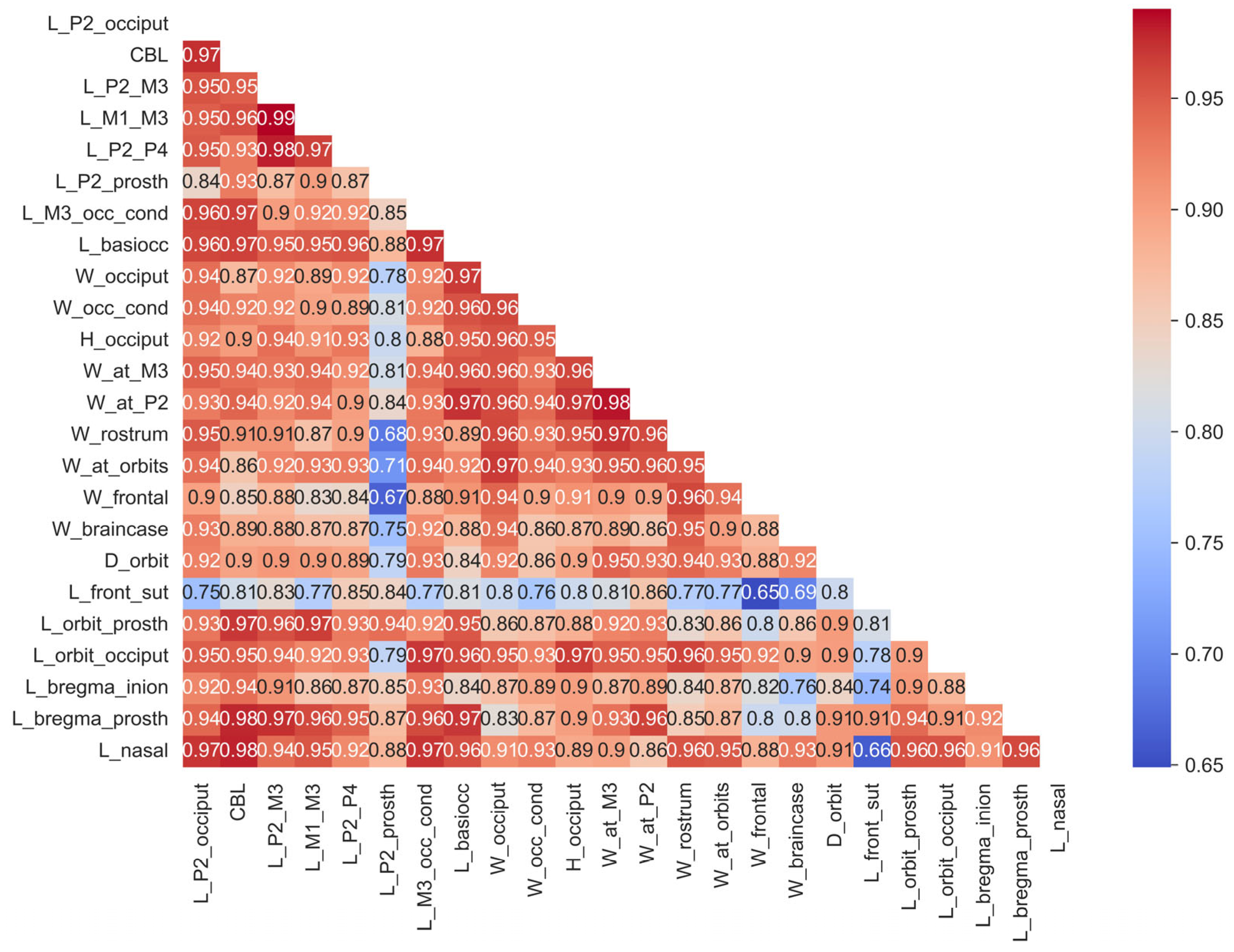
Figure 2.
Correlations of craniometrical data in the studied total sample of cranial material after missing data imputation.
Figure 2.
Correlations of craniometrical data in the studied total sample of cranial material after missing data imputation.
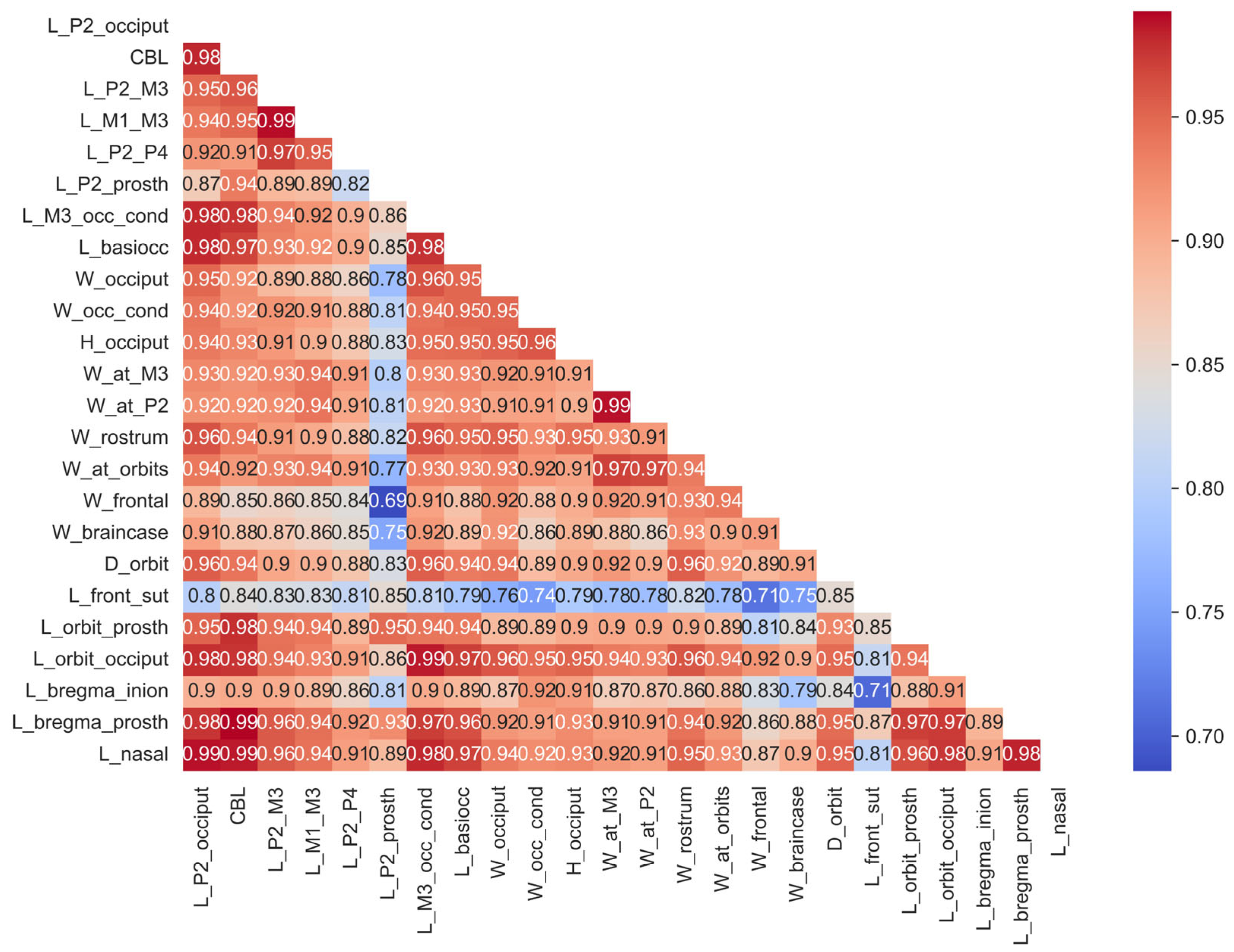
Figure 5.
Bregma position in various deer species: ratio of bregma-inion to bregma-prosthion measurements plotted against condylobasal length.
Figure 5.
Bregma position in various deer species: ratio of bregma-inion to bregma-prosthion measurements plotted against condylobasal length.
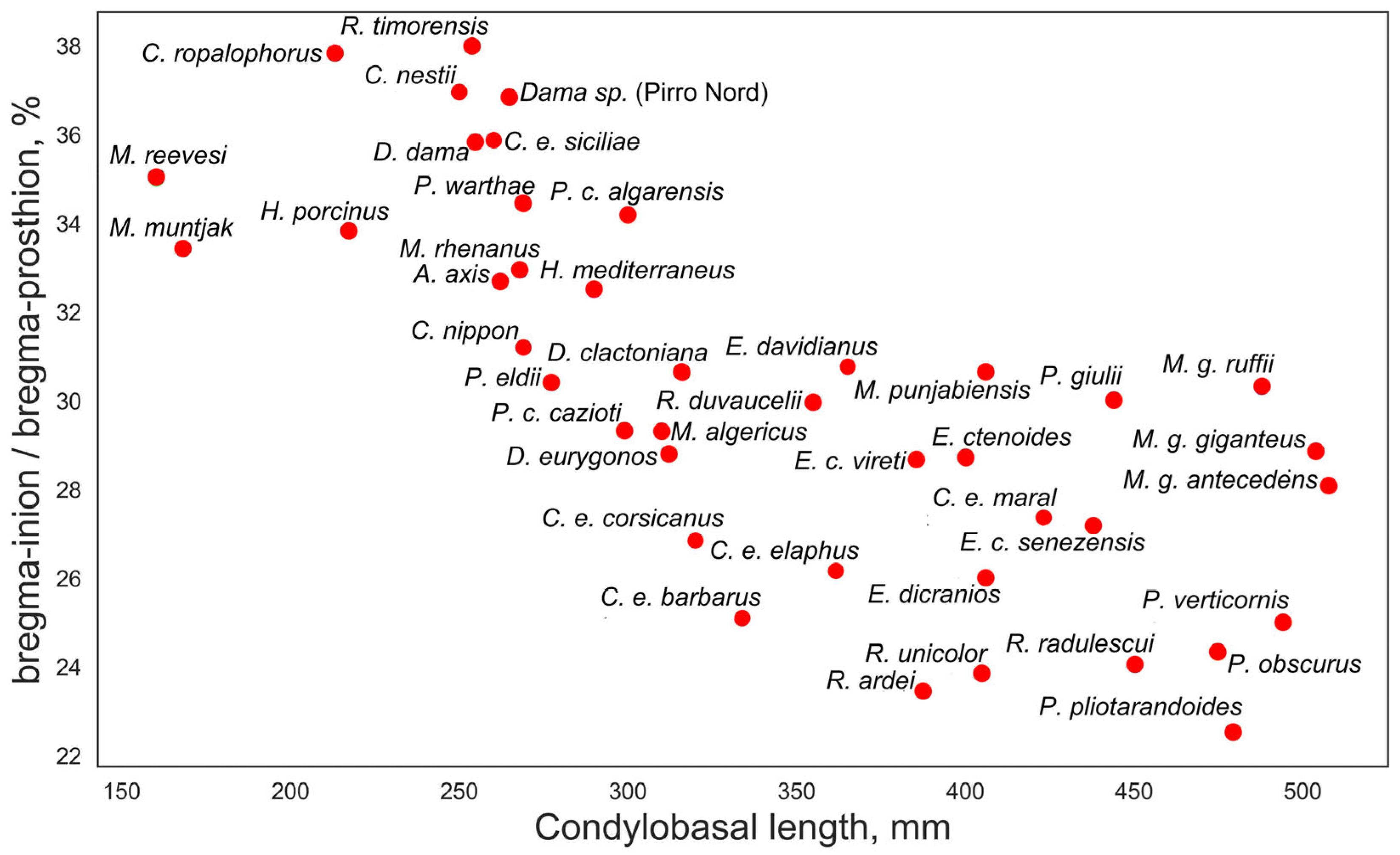
Figure 6.
Relative frontal breadth: ratio of frontal breadth at constriction to cranial length from upper second premolar to posterior side of occipital condyles plotted against condylobasal length.
Figure 6.
Relative frontal breadth: ratio of frontal breadth at constriction to cranial length from upper second premolar to posterior side of occipital condyles plotted against condylobasal length.
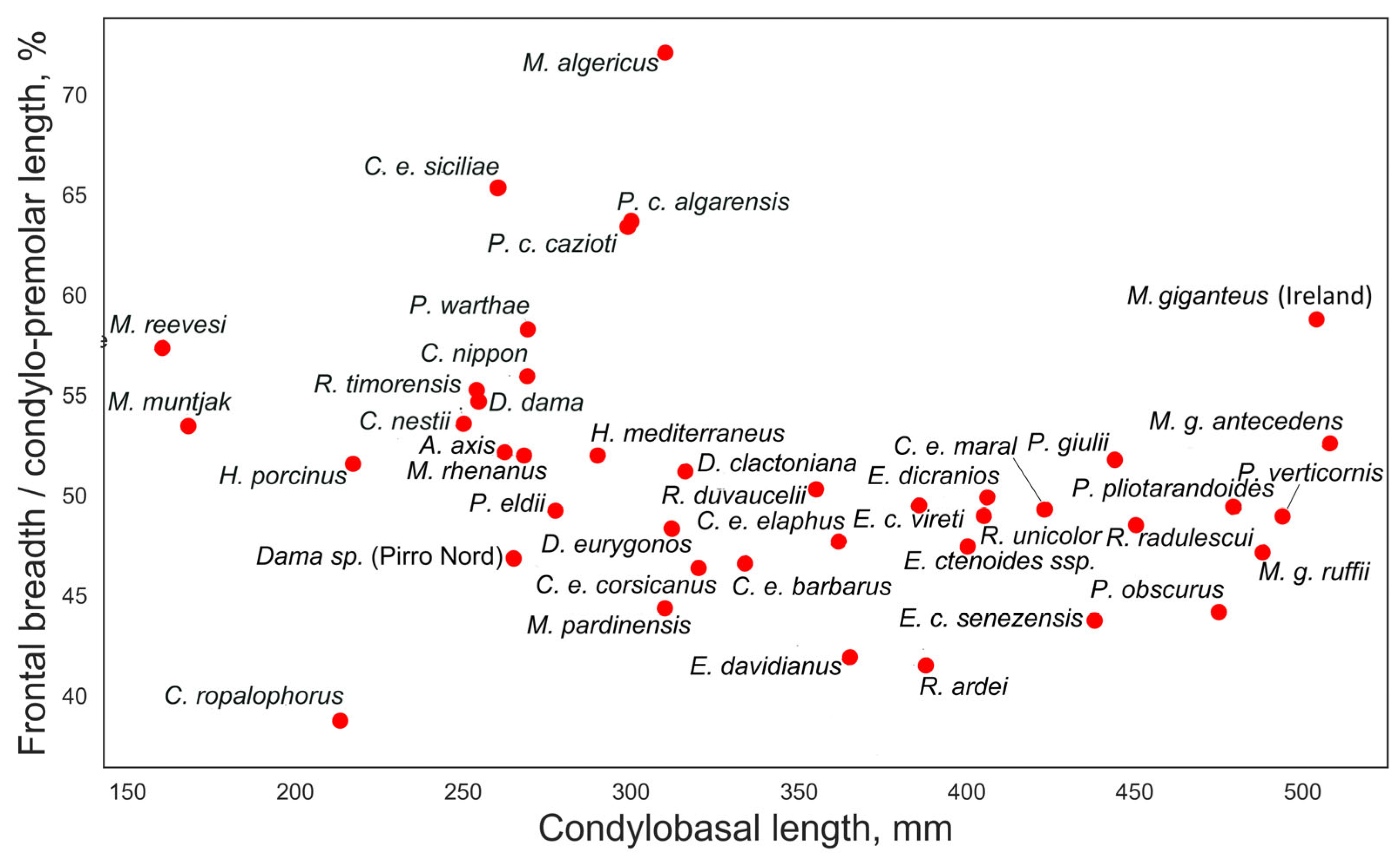
Figure 7.
The relative breadth of rostrum, calculated as the ratio of rostrum breadth to condylobasal length, plotted against condylobasal length.
Figure 7.
The relative breadth of rostrum, calculated as the ratio of rostrum breadth to condylobasal length, plotted against condylobasal length.
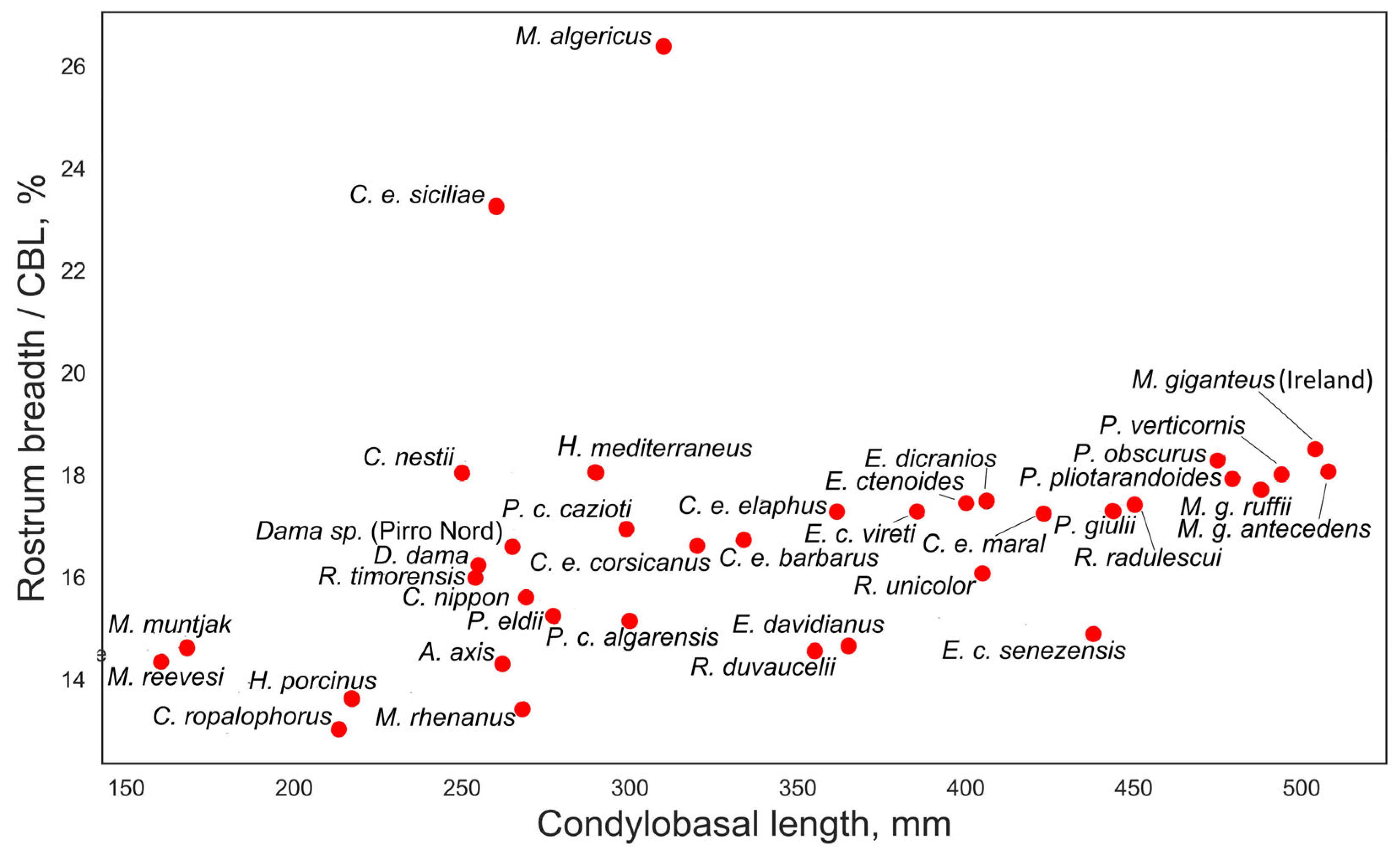
Figure 8.
Cranial shape of Megaloceros giganteus from Brühl (Koller), Rhine Valley, Germany (SMNH, collection number 166.16.17.11.80.37): A, side view; B, dorsal view; C. palatal view.
Figure 8.
Cranial shape of Megaloceros giganteus from Brühl (Koller), Rhine Valley, Germany (SMNH, collection number 166.16.17.11.80.37): A, side view; B, dorsal view; C. palatal view.
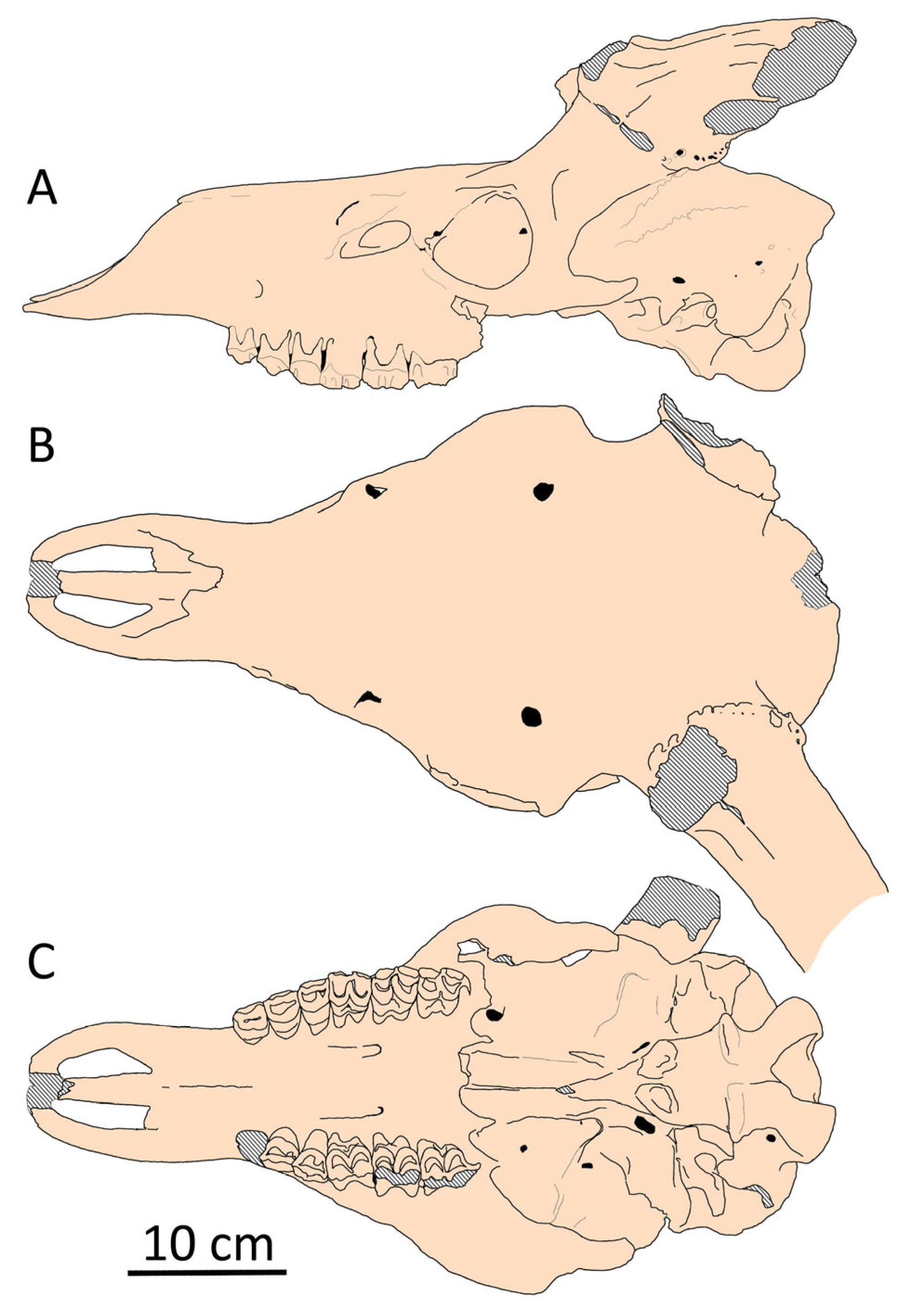
Figure 11.
Relative breadth of occiput calculated as the ratio of occipital breadth to cranial length measured from P2 to the posterior side of occipital condyles, plotted against condylobasal length.
Figure 11.
Relative breadth of occiput calculated as the ratio of occipital breadth to cranial length measured from P2 to the posterior side of occipital condyles, plotted against condylobasal length.
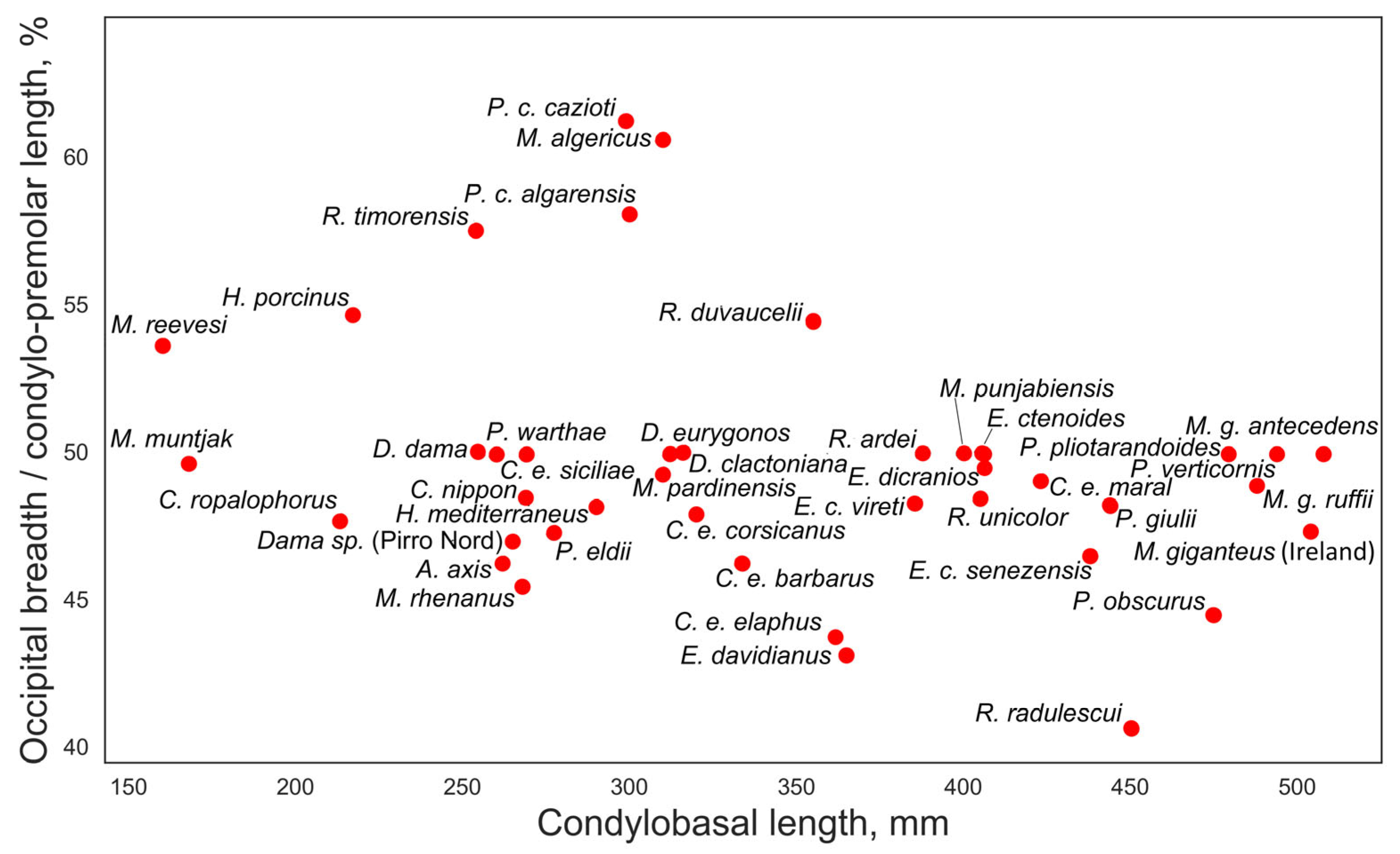
Figure 12.
Cranial shape of Praemegaceros cazioti cazioti from Coscia (Corsica): A, side view (MNHN, no number); B, dorsal view (Cos-6930; adapted from Croitor et al., 2006); C. palatal view (MNHN, no number).
Figure 12.
Cranial shape of Praemegaceros cazioti cazioti from Coscia (Corsica): A, side view (MNHN, no number); B, dorsal view (Cos-6930; adapted from Croitor et al., 2006); C. palatal view (MNHN, no number).
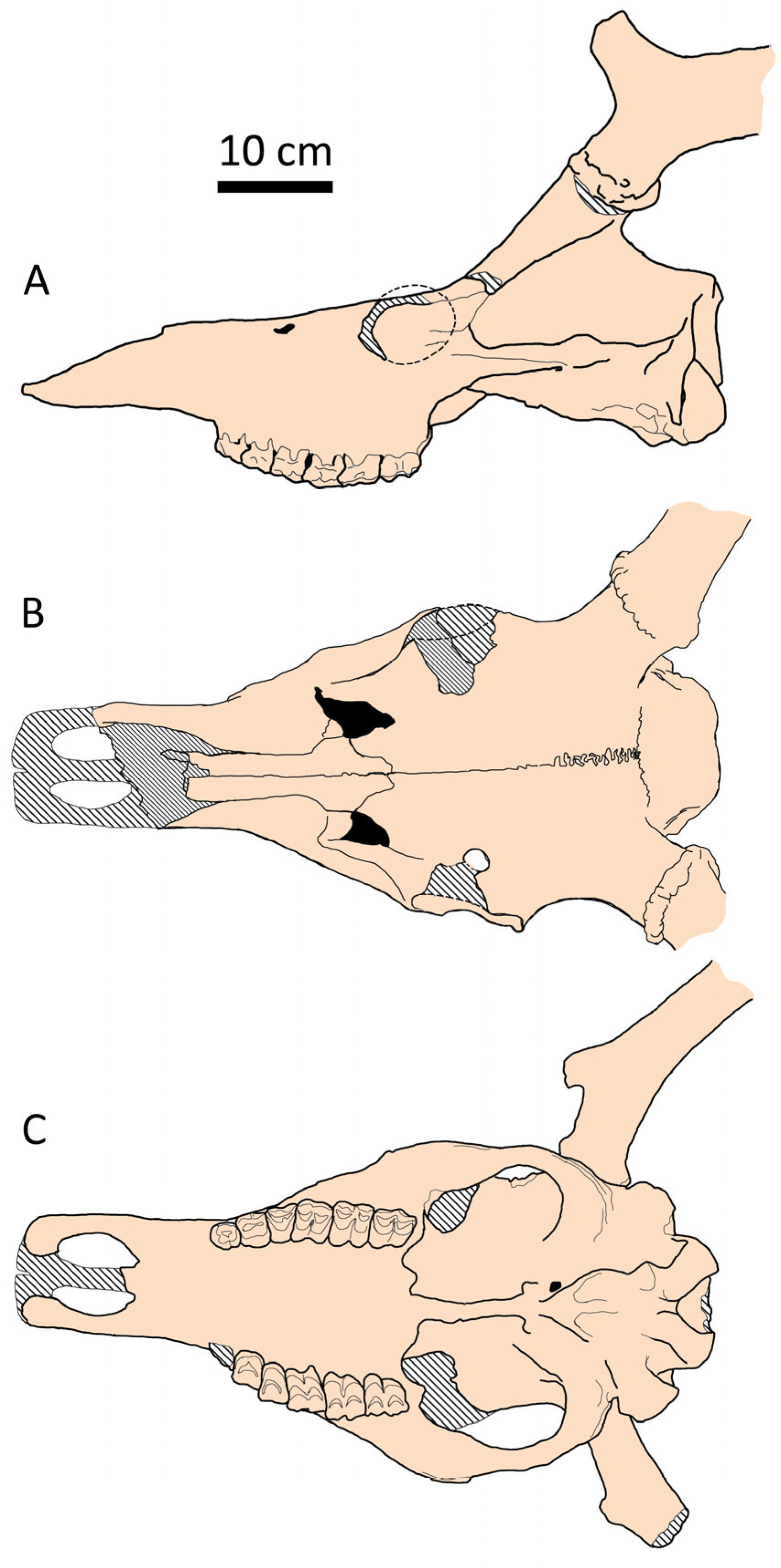
Figure 13.
Cranial shape of Haploidoceros mediterraneus from Cova del Rinoceront, Spain (CR-2413, FGUB): A, side view; B, dorsal view; C. palatal view.
Figure 13.
Cranial shape of Haploidoceros mediterraneus from Cova del Rinoceront, Spain (CR-2413, FGUB): A, side view; B, dorsal view; C. palatal view.
Disclaimer/Publisher’s Note: The statements, opinions and data contained in all publications are solely those of the individual author(s) and contributor(s) and not of MDPI and/or the editor(s). MDPI and/or the editor(s) disclaim responsibility for any injury to people or property resulting from any ideas, methods, instructions or products referred to in the content. |
© 2024 by the authors. Licensee MDPI, Basel, Switzerland. This article is an open access article distributed under the terms and conditions of the Creative Commons Attribution (CC BY) license (http://creativecommons.org/licenses/by/4.0/).
Copyright: This open access article is published under a Creative Commons CC BY 4.0 license, which permit the free download, distribution, and reuse, provided that the author and preprint are cited in any reuse.


