

Submitted:
13 October 2024
Posted:
14 October 2024
You are already at the latest version
Abstract
Building Information Modeling (BIM) is a revolutionary method in the construction industry that enhances project coordination, minimizes mistakes, and enables efficient project completion. An essential aspect of achieving successful BIM implementation is the creation of a BIM Execution Plan (BEP). The BEP facilitates effective communication, defines roles and responsibilities, and establishes standardized processes for all stakeholders involved. Although BIM is being used more widely, the absence of standardized BEPs frequently leads to inefficiencies in projects, especially those of significant scale [3]. This paper introduces the development of a new dynamic platform designed specifically for automating and standardizing the creation of BEPs. The platform aligns with ISO 19650 standards and offers customizable workflows to suit various project needs, improving collaboration, data management, and project outcomes. In addition, the paper emphasizes the advantages of utilizing this platform, including the efficient creation of BEPs, improved collaboration through centralized data management, and the ability to tailor BEPs to specific project requirements. The platform's user-friendly interface and extensive data management capabilities not only increase efficiency but also minimize risks and enhance project results. The survey results indicate that the BEP platform is effective in resolving common issues encountered in the creation of BEPs, such as miscommunication and inconsistencies. Additionally, it helps to improve project outcomes and reduce risks.
Keywords:
BIM execution plan
; BIM framework
; standardization of BIM execution plan
; BIM procedures
; BIM in construction projects
1. Introduction
1.1. Background
Building Information Modeling (BIM) has revolutionized the Architecture, Engineering, and Construction (AEC) industry by offering an integrated approach to managing the entire construction project lifecycle [9]. Through real-time collaboration within a shared digital environment, it found that BIM significantly reduces errors, improves coordination, and enhances the efficiency of project delivery [17]. A key component of BIM implementation is the BIM Execution Plan (BEP), which defines the roles, responsibilities, workflows, and data exchange protocols required for successfully implementing BIM throughout all phases of a project [13]. The BEP acts as a strategic guide, ensuring all stakeholders are aligned regarding objectives and processes, minimizing the risks of miscommunication and project delays [13]. Research over the last few years confirms the critical role of BEPs in improving collaboration and communication across project teams [4]. A well-structured BEP facilitates the management of complex projects, enabling stakeholders to address challenges related to data exchange, project requirements, and governance in a structured manner [3]. Studies have also highlighted that, in the absence of a standardized BEP, projects are more prone to errors, delays, and cost overruns [5].
1.2. Need for Standardization
Despite the widespread adoption of BIM, the creation and execution of BEPs remain inconsistent across organizations and projects, leading to inefficiencies [10]. In large-scale construction projects, these inconsistencies contribute to various issues, i.e., misalignment between teams, increased errors, and escalated costs [12]. For this reason, the need for a standardized BEP has become increasingly apparent in addressing these issues [6]. These issues can be resolved by Standardizing BEPs, through international frameworks like ISO 19650, which offers a solution to these challenges by ensuring that all project stakeholders operate within consistent governance, communication protocols, and project management strategies [2]. A well-standardized BEP enhances project transparency, reduces rework, and promotes better collaboration between architects, engineers, contractors, and clients [18].
1.3. Aim of the study
The primary aim of this study is to explore how digital platforms like our BIM Execution Plan platform support the standardization of BIM Execution Plans. This platform automates many aspects of BEP creation, aligns with industry standards like ISO 19650, and enhances collaboration among project teams [11]. The platform also offers several key benefits, including:
- (a)
- Streamlined BEP Creation: Automating workflows to reduce time spent on manual tasks and improve accuracy [21].
- (b)
- Enhanced Collaboration: Centralized data management allows stakeholders to access the most updated project information, fostering better communication and coordination [8].
- (c)
- Customization and Flexibility: The ability to tailor BEPs to specific project needs while maintaining compliance with industry standards ensures greater adaptability and efficiency [15].
- (d)
- User-Friendly Interface: The platform’s intuitive design simplifies BEP creation and data management, making it accessible for teams with varying technical experience [14].
According to a validation survey conducted with BIM experts, the platform effectively enhances project outcomes by resolving common issues such as miscommunication and inconsistencies [9]. This study will emphasize these platforms' role in enabling a more organized and effective method of handling intricate construction workflows, ultimately minimizing project inefficiencies.
1.4. Novelty and Significance
This research is unique because it examines a newly developed digital platform based on the BIM Execution Plan platform (BEP) framework. This platform, created as part of my PhD dissertation, provides a new and innovative solution to long-standing problems in the construction industry, such as the need for standardized and efficient implementation of BEPs. The platform has been designed to align with ISO 19650 standards, simplifying the creation and implementation of BEPs in large construction projects. Unlike previous studies that primarily emphasized the importance of BEPs in fostering collaboration and reducing risks, this paper is the first to thoroughly assess and evaluate the effectiveness of an automated platform that addresses these challenges directly [11,13].
This proposed platform aims to effectively address common challenges in complex projects involving multiple stakeholders, such as miscommunication, data inconsistencies, and inefficiencies. Additionally, its ability to customize BEPs while adhering to global standards provides significant flexibility, making it suitable for teams working on projects of various sizes and complexities [2]. As a result, this research study has twofold significance, which are as follows:
- -
- Industry Impact: This study provides valuable insights for construction professionals and project managers on how digital tools, specifically the newly developed BIM Execution Plan (BEP) platform, can improve project coordination, minimize errors, and enhance overall project outcomes. The platform streamlines BEP standardization by automating workflows, managing data exchange, and ensuring compliance with ISO 19650 standards. Through this digital tool, teams can collaborate more efficiently, maintain real-time access to project information, and reduce the risk of miscommunication and inconsistencies. This transformation in how construction teams handle information leads to more effective project completion, ensuring that all stakeholders are aligned and working towards shared goals [1].
- -
- Contribution to academic literature: Since there is a substantial amount of literature discussing the advantages of BIM implementation in practice. There seems to be a scarcity of research specifically examining the digital standardization of BEPs [22]. For this reason, this paper presents a comprehensive case study and receives validation from industry experts. This study demonstrates the practical implementation and advantages of utilizing a platform such as the BIM Execution Plan platform. This study contributes to the expanding knowledge base regarding the significance of incorporating advanced digital tools into construction workflows to enhance governance, risk management, and compliance [21].
2. Literature Review
Recently, the standardization of BIM Execution Plans (BEPs) has gained significant attention due to its critical role in ensuring the effectiveness and success of construction projects, particularly those that are large-scale and complex. BEPs are essential for defining specific roles, responsibilities, workflows, and guidelines for information sharing in BIM projects. Without standardized frameworks for BEPs, projects often face inefficiencies, mistakes, and delays. Several studies have highlighted the importance of BEP standardization for improving project governance, ensuring compliance with international standards, and fostering collaboration among stakeholders. For instance, Antunes and Elliot (2020) emphasized that clear project objectives, roles, and responsibilities are fundamental for the successful implementation of BIM. These components are crucial for managing the complexities of large-scale construction projects, where coordinating multiple stakeholders and systems is vital for achieving project success.
According to Galitskaya (2020), BEP has a crucial function in enhancing coordination among various project teams by harmonizing project data within a BIM environment. This synchronization diminishes errors and rework, enhancing project outcomes. Nevertheless, the construction industry continues to encounter challenges due to the absence of a standardized approach for developing and implementing Building Energy Performance.
Recent studies, including Jernigan's (2022) study, have prioritized harmonizing BEPs with global benchmarks like ISO 19650.
The standardization of BIM Execution Plans (BEPs) is crucial for managing the complexities associated with large construction projects. Abdelalim et al. (2024) proposed a comprehensive framework that aligns with ISO 19650 standards, providing a structured process for defining project information requirements, stakeholder roles, and data exchange protocols. This framework ensures consistency and compliance across all project phases, minimizing the risks of miscommunication and errors [25].
By incorporating EIR into this model, stakeholders can ensure that information requirements are defined and fulfilled, providing a clear communication framework that supports complex project execution. This approach was successfully applied to mega construction projects, resulting in optimized resource utilization and improved decision-making capabilities [23,24].
Variations and claims present significant challenges in international construction projects, especially in the MENA region. The adoption of a digital twin framework, combined with BIM and ISO 19650-compliant BEPs, can help manage and resolve claims more efficiently by providing a transparent record of project changes and decisions [26].
2.2. The Proposal Framework
In response to the need for standardized BEPs, several frameworks have been discovered in the literature to address the diverse needs of construction projects. For example, a prominent framework proposed by Abdelalim et al. (2024) includes the following core components for BEP standardization:
- -
- Project Information and Goals: This section outlines the project's scope, objectives, and deliverables, providing a roadmap for all stakeholders. It emphasizes the importance of having clearly defined project goals that align with the BIM uses identified in the BEP. This section is essential for ensuring that all participants have shared a common understanding of the project’s vision and strategic goals.
- -
- Participants' Roles and Responsibilities: This framework proposes a detailed assignment of roles and responsibilities, ensuring all project participants know their duties and accountability. By clearly defining tasks, such a framework reduces the risk of miscommunication and overlapping responsibilities, which are common challenges in complex projects.
- -
- Collaboration Procedures: The framework includes procedures for facilitating real-time collaboration between stakeholders using BIM-enabled tools. This is achieved by utilizing a centralized database specifically designed for the BIM Execution Plan (BEP), which stores and manages all project data. The database ensures that stakeholders can access the most up-to-date information and collaborate effectively. All project files, updates, and revisions are stored in the BEP database, allowing team members to track changes, provide feedback, and coordinate tasks in real time. By centralizing the data in a structured database, the platform minimizes the risk of miscommunication and discrepancies, ensuring that all stakeholders are aligned with the latest project information.
- -
- Information Management and Exchange: A critical Point of the framework focuses on managing information flows and ensuring compliance with ISO 19650 standards. This part includes protocols for data exchange, ensuring that information is shared consistently and transparently across all project stages.
- -
- Quality Control and Assurance: This developed framework emphasizes the importance of quality control throughout the BIM process. It includes regular reviews of the BIM models and validation procedures to ensure compliance with the BEP and international standards.
- ❖
- The developed framework is designed to be adaptable to various project types and regional requirements while also ensuring adherence to global BIM standards. The framework seeks to enhance the effectiveness of BIM implementation and achieve superior project outcomes by providing a standardized method for creating BEPs.
- ❖
- In summary, the existing literature and the proposed framework underline the critical role of standardization in improving BIM processes. Using structured BEPs ensures that construction projects are managed efficiently, reducing the risks of delays, cost overruns, and miscommunications. The framework not only tackles current challenges but also incorporates emerging technologies to keep BIM practices flexible and up-to-date, making it a valuable tool for the construction industry.
3. Methodology
The research methodology was designed to comprehensively evaluate the effectiveness of the newly developed BIM Execution Plan (BEP) platform in streamlining and standardizing the creation and implementation of BEPs. The BEP platform is a digital tool specifically developed to address the challenges of managing and automating BEP creation, ensuring compliance with international standards such as ISO 19650. It provides customizable workflows that allow users to tailor BEPs to meet the specific needs of different projects. The platform also integrates real-time collaboration features, enabling multiple stakeholders to access and update project data simultaneously, which minimizes miscommunication and errors. Its data management capabilities ensure that all information is stored centrally, allowing for easy tracking of revisions and updates. This platform was developed as a practical solution to improve the efficiency of BIM processes, particularly for large-scale and complex construction projects.
To achieve the study's aim, the methodology integrates both theoretical and practical approaches. It consists of three key stages: literature review, platform assessment, and expert survey validation.
3.1. Literature Review
The first stage of the research involved an extensive literature review focused on BIM and the standardization of BEPs. The literature was drawn from peer-reviewed journals, conference papers, and industry reports published between 2018 and 2024. Keywords such as "BIM Execution Plan," "ISO 19650 compliance," "BIM standardization," and "digital platforms in construction" were used to source relevant materials. This stage aimed to provide a comprehensive understanding of the current challenges in BEP creation and management, the importance of compliance with international standards like ISO 19650, and the growing role of digital tools in construction workflows.
The literature review also explored previous research on the development and implementation of BEPs across various sectors in the construction industry. This included studies emphasizing the importance of standardized communication and governance frameworks to ensure consistency and collaboration across multidisciplinary teams. The review highlighted an existing gap in research regarding the practical application of digital platforms in BEP standardization, laying the foundation for the empirical analysis of the BIM Execution Plan platform.
3.2. Platform Assessment
The second stage of the methodology involved an in-depth assessment of the BIM Execution Plan platform in the context of its ability to support the standardization and automation of BEPs. This stage focused on evaluating key platform features such as:
- 2.2.1
- Automation of Workflows: The platform’s capacity to automate the creation of BEPs based on predefined templates that are compliant with ISO 19650 standards.
- 2.2.2
- Customization Flexibility: The extent to which users can tailor BEPs to specific project needs while ensuring adherence to industry standards.
- 2.2.3
- Collaboration and Data Management: The platform’s ability to foster real-time collaboration among project stakeholders and its centralization of data management for easy access and transparency.
- 2.2.4
- Usability and Interface: The ease of use and accessibility of the platform’s interface ensure that both technical and non-technical users can effectively utilize it.
- 2.2.5
- Compliance with Standards: Evaluation of the platform’s alignment with ISO 19650 standards and its ability to support compliance throughout the project.
- 3.2.6
- Website Security and Protection: The website is designed with robust security measures to safeguard user data and ensure secure browsing. Here’s an overview of the key security features:
3.2.6.1. Encryption of Sensitive Data:
User passwords are never stored in plain text. Instead, they are securely encrypted using industry-standard encryption algorithms, ensuring that even in the event of a data breach, sensitive data remains protected and unreadable by unauthorized parties.
3.2.6.2. Secure Communication with HTTPS:
All communication between the user and the server is encrypted via HTTPS, preventing attackers from intercepting or tampering with data in transit. This guarantees the security of personal and financial information during browsing.
3.2.6.2. Automatic Security Features:
The platform includes built-in protections against common web vulnerabilities such as cross-site scripting (XSS), cross-site request forgery (CSRF), and SQL injection attacks. These safeguards are integrated into the website’s code, reducing the risk of malicious exploitation.
3.2.6.2. Strong Access Controls:
Strict access controls are enforced to protect sensitive areas of the website. Only authorized users with strong passwords and additional verification measures can access restricted sections, preventing unauthorized access.
3.2.6.2. Firewall and Intrusion Detection:
The website operates on a secure hosting environment equipped with firewalls and intrusion detection systems. These tools continuously monitor for suspicious activities and block unauthorized access, while alerting administrators to potential threats.
3.2.6.2. Data Backups and Recovery:
Regular backups are performed to ensure that in the event of a security incident, the website and its data can be quickly restored without any loss of information. This ensures smooth recovery and minimal disruption to users.
3.2.6.2. Routine Security Audits:
The system undergoes routine security audits, including penetration testing and automated vulnerability scans. These proactive measures identify and address potential weaknesses before they can be exploited.
3.2.6.2. Compliance with Data Protection Regulations:
The website fully complies with relevant data protection regulations, ensuring that user data is handled responsibly and transparently. We provide users with clear information on how their data is collected, used, and protected.
3.3. Validation through Expert Survey
The assessment involved setting up multiple test projects within the platform, focusing on different stages of the BIM process. Each project included the creation of a BEP, managing updates and changes, and testing collaborative features with simulated team members. This allowed the research team to evaluate the practical application of the platform in a real-world project environment, ensuring its ability to handle complex workflows and foster effective collaboration.
For the third stage, a survey research method was conducted with 15 BIM experts to gather qualitative and quantitative insights into the platform's performance. These experts were selected from a diverse pool of professionals working in multiple firms across both local and international markets, ensuring a broad range of perspectives. The rationale for selecting experts from different companies and countries is to assess the platform’s adaptability and effectiveness in various project environments and under different BIM governance structures. This diversity ensures that the platform is not limited to specific regional practices and can be applied universally. The number of 15 experts was chosen based on their deep experience—each expert has over 7 years of experience in BIM execution, project management, and the use of digital tools in the construction industry. This group size is justified as it represents a manageable yet diverse sample for qualitative feedback while allowing for in-depth analysis of individual responses. The participants were project managers, BIM coordinators, and engineers, ensuring representation from key roles involved in the implementation of BEPs. Their contributions are vital for validating the platform’s practical application, as their expertise allows them to assess its ability to address common challenges, such as miscommunication, data management, and compliance with standards. This step is crucial for validating the results of the study, as the expert feedback provides real-world insights into the platform’s performance. Their qualitative and quantitative evaluations help ensure that the platform meets the practical needs of the construction industry, offering a comprehensive understanding of its effectiveness and potential areas for improvement.
The survey employed a combination of qualitative and quantitative questions to evaluate the platform's performance from multiple perspectives, including user experience, effectiveness in BEP creation, collaboration capabilities, and compliance with industry standards.
- 2.3.1
- User Experience: The platform was intuitive and user-friendly, especially for stakeholders with varying technical expertise levels.
- 2.3.2
- Effectiveness in BEP Creation: The ease with which users could generate standardized BEPs and ensure compliance with ISO 19650.
- 2.3.3
- Collaboration and Communication: The platform’s ability to improve communication and coordination among team members.
- 2.3.4
- Customization and Flexibility: How well the platform allowed users to modify BEPs to fit the unique requirements of their projects while maintaining compliance with standards.
Participants were asked to test the platform with specific tasks such as creating a BEP, customizing workflows, and managing changes in real time. They were also asked to rate the platform’s performance using various metrics, including ease of use, flexibility, and impact on project outcomes. The qualitative feedback gathered from the survey offered valuable insights into the platform’s strengths and highlighted potential areas for improvement.
3.4. Data Analysis
The data collected from the platform assessment and expert survey were analyzed using both qualitative and quantitative methods to provide a comprehensive understanding of the platform's effectiveness. Descriptive statistics were applied to the quantitative data, summarizing key metrics such as user satisfaction, ease of use, and perceived improvements in collaboration and BEP creation efficiency. These statistics provided numerical insights into the overall performance of the platform and allowed for easy comparison of results across different categories. For the qualitative data, a thematic analysis was conducted to identify recurring themes and insights from the open-ended responses provided by the experts. This method involved coding the data to highlight common patterns in feedback, such as the platform’s impact on reducing miscommunication, improving real-time collaboration, and enhancing adherence to ISO 19650 standards. Key themes were grouped into categories, such as usability, collaboration, customization, and data management, to provide a deeper understanding of the platform’s strengths and areas for improvement. By combining both approaches, this mixed-methods analysis ensured a well-rounded evaluation of the platform. The quantitative data provided measurable outcomes, while the qualitative feedback added depth, illustrating how the platform contributed to better project outcomes, improved team coordination, and more efficient BEP standardization. This approach enabled the identification of both numerical trends and detailed expert insights, resulting in a comprehensive assessment of the platform's overall capabilities.
4. Platform Workflow and Usage
The BIM Execution Plan platform employs a systematic workflow to assist users in developing a thorough BEP. To illustrate, Figure. 1 depicts the Platform interface, while Figure 2 shows the sequential process for generating the BIM execution plan.
Figure 1 shows a "Create Project" form with several fields that users need to fill out when initiating a new project. Here is a breakdown of the fields visible in the form:
- Name: A mandatory field to input the project's name.
- Stage: Two radio button options labeled "Construction" and "Design" allow users to select the project's stage.
- CDE: Another set of radio buttons allows users to choose between "Offline" or "Cloud" options for the (CDE).
- LOD (Level of Detail): A dropdown menu to select the LOD for the project.
- Standards: A dropdown field to select the applicable standards for the project. Location: A mandatory field in which the project's location must be entered.
- Scope: A mandatory field for specifying the project’s scope. Number: A field to enter the project number or identification code.
- Project Picture: An option to upload project-related images or files.
- Description: A rich text editor that allows users to add/provide additional details about the project, feature formatting options such as bold, italic, and underlining, as well as the ability to add lists, images, and links.
At the bottom, there are two buttons:
- Cancel: To cancel the project creation process.
- Create: To confirm and create the project.
Figure 2.
Project Creation Processes.
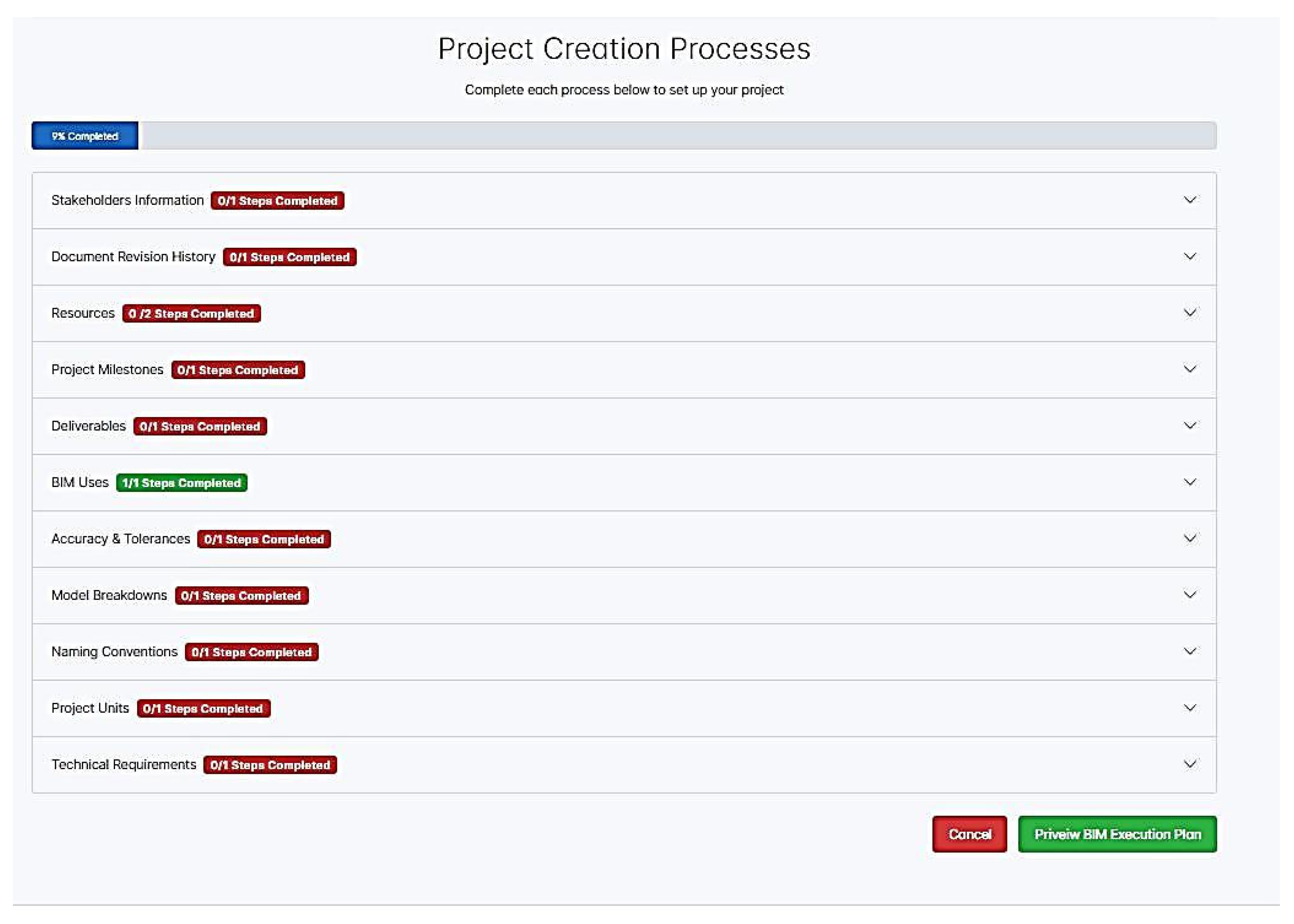
Figure 2 shows a "Project Creation Processes" interface, which outlines the steps involved in setting up a project. Here is a detailed description of the content visible in the image:
Steps Overview:
- Each process is listed with a completion status, showing "0/1 Steps Completed" or
- "1/1 Steps Completed" for some of the items. The processes are grouped into the following sections:
- Stakeholders Information.
- Document Revision History.
- Resources.
- Project Milestones.
- Deliverables.
- BIM Uses.
- Accuracy & Tolerances.
- Model Breakdowns.
- Naming Conventions.
- Project Units.
- Technical Requirements.
Bottom Section:
- Cancel A red button will be used to cancel the process.
- Preview BIM Execution Plan: A green button will be used to preview the BIM Execution Plan.
The above-detailed steps provide a streamlined process for project setup, ensuring compliance with industry standards. Additionally, below is an explanation of the workflow steps involved in using this platform:
4.1. Project PEP-Creation
- Input Project Details: The first step involves entering basic project information, such as the project name, location, scope, LOD (Level of Detail), and project stage (Design or Construction). The user selects whether the project data will be managed on a cloud or offline (CDE).
- Add Project Image: A project image could be uploaded for better identification and categorization of the project.
4.2. Stakeholders Information
In this step, the user provides details about the key stakeholders involved in the project, including architects, engineers, contractors, and other relevant parties. The platform facilitates clear role assignments and responsibilities, ensuring all participants know their involvement and contributions.
4.3. Document Revision History
This step is crucial for ensuring proper version control. Users can track revisions made to documents, plans, and project data. It ensures that any changes to the BEP or project plans are logged, and previous versions can also be accessed if needed.
4.4. Resources Management
The user specifies the resources required for the project, such as software tools, personnel, and hardware. This ensures that all necessary resources are in place before the project begins.
4.5. Project Milestones
In this step, users define the key project milestones, which act as checkpoints throughout the project lifecycle. These milestones ensure that progress can be tracked against defined objectives.
4.6. Deliverables Setup
This section involves defining the deliverables expected at various stages of the project. The deliverables can be based on data sets, model outputs, reports, or construction documentation. Each deliverable is tied to a specific project phase.
4.7. BIM Uses
The platform enables users to specify the intended BIM uses for the project, such as design authoring, clash detection, or facility management. This section ensures that the BEP outlines how BIM will be utilized across different project stages.
4.8. Accuracy & Tolerance
Here, users define the accuracy and tolerances required for the BIM models. This is particularly important for ensuring precision in model data and alignment with construction tolerances.
4.9. Model Breakdowns
The user defines how the BIM models will be broken down, such as building components, systems, or spatial zones. This ensures that the model is structured in a way that is consistent with project requirements and facilitates data extraction.
4.10. Naming Conventions
A standardized naming convention is established for files and models. This is critical for ensuring clarity and consistency across all project documentation and data exchange between teams.
4.11. Project Units
The user selects the measurement units (metric or imperial) that will be used for the project. Ensuring all stakeholders use the same units is essential for avoiding miscommunication and errors.
4.12. Technical Requirements
Technical specifications and requirements for software, hardware, and BIM standards are outlined. This section ensures that all team members are using compatible tools and systems, promoting efficiency and reducing the risk of technical issues.
4.13. Preview & Finalize BIM Execution Plan
Once all the above steps have been completed, the platform allows the user to preview the complete BIM Execution Plan. The user can make final adjustments before submitting the BEP for approval or sharing it with the project team.
5. Validation and Verification
The BIM Execution Plan platform was thoroughly evaluated to determine its ability to create and manage BEPs for various project types. To assess the platform’s versatility and effectiveness, two case studies were selected in Egypt: the O-West Compound in Sheikh Zayed (2023), a modest residential project, and the Solar Boat Project at the Egyptian Museum (2024), a significant cultural heritage project. These case studies were chosen deliberately to represent a broad spectrum of project complexity, allowing for a comprehensive evaluation of the platform’s capabilities in both straightforward and intricate settings.
5.1. Selection Rationale:
- The O-West Compound was selected as an example of a typical, mid-sized residential project with relatively standard requirements. This case provided a platform to test how well the BEP platform could manage routine construction activities, such as housing units, infrastructure, and basic architectural designs. By selecting this project, the research could determine how effectively the platform handles projects with clear, well-defined deliverables and fewer stakeholders, making it an ideal test for the platform’s base functionalities, such as BEP creation, role assignment, and basic project collaboration.
- The Solar Boat Project at the Egyptian Museum was selected due to its unique complexity and historical significance. As a cultural heritage project, it involved multiple stakeholders, including government authorities, conservators, engineers, and museum experts. The project required intricate coordination and detailed documentation, including preservation of historical artifacts and compliance with strict heritage guidelines. This project allowed for the testing of the platform’s ability to handle high levels of complexity, including large data sets, real-time collaboration among dispersed teams, and adherence to specialized compliance standards. The inclusion of this case study was essential for testing the platform's advanced features such as collaboration tools, complex workflow management, and version control.
5.2. Expert Survey Validation
- The validation process commenced by administering a methodical survey to 15 BIM experts, including key BIM team members from the Solar Boat and Zed Towers projects., encompassing project managers, engineers, and architects. The experts possessed vast expertise in overseeing BIM projects and were assigned the responsibility of assessing the platform based on various criteria, such as usability, adaptability, and data management capabilities. The survey yielded valuable information on how the platform facilitates both large-scale and small-scale projects through the automation of BEP workflows and enhanced collaboration.
The participants emphasized the following crucial elements:
- Ease of Use: Experts observed that the platform's user interface was intuitive, which was especially advantageous for users with different levels of technical expertise. The capacity to generate a Business Execution Plan (BEP) without requiring extensive technical proficiency was regarded as a significant benefit.
- Customization and Flexibility: The platform's adaptability in enabling users to customize BEPs for various project’ types, while also guaranteeing adherence to industry norms, received high acclaim. This functionality enabled project teams to modify the BEP framework to suit the specific needs of each project.
- Collaboration Tools: Real-time collaboration was another standout feature. Experts appreciated the platform’s ability to facilitate communication between geographically dispersed teams, ensuring all stakeholders had access to the latest project data.
- Data Management and Compliance: The platform's capacity to automatically monitor document revisions and guarantee data consistency among all parties involved was acknowledged as a noteworthy enhancement compared to manual procedures
5.3. Platform Testing and Verification Through Case Studies
To further validate the platform's capabilities, it was utilized in two separate projects—one on a smaller scale and one on a larger scale—to evaluate its performance in managing different levels of complexity.
- The O-West Compound: The platform streamlined the process by utilizing pre-established templates that could be tailored to meet the project's specific requirements. Furthermore, it streamlined the oversight of project milestones, document modifications, and deliverables. The utilization of collaboration tools proved to be particularly advantageous in this project, facilitating the seamless collaboration of team members situated in diverse locations. The use of automated progress reports helped ensure that the project stayed on track, significantly reducing the administrative workload for project managers by automating the monitoring and reporting processes. The Solar Boat Project: The platform was assigned the responsibility of developing a meticulously comprehensive BIM Execution Plan (BEP) to handle the intricacies of the project effectively. The software demonstrated exceptional proficiency in managing extensive data sets and offering reliable version control for the numerous documents and revisions essential in a project of high sensitivity. In addition, the platform's real-time collaboration features were crucial for ensuring that all parties involved had current access to project plans and information. The platform's successful application to these two projects showcased its versatility and efficacy in managing workflows of varying complexity. The O-West Compound benefited from the platform's capacity to optimize the creation of Break-Even points (BEP) and effectively manage project tasks, ensuring efficiency. Similarly, the Solar Boat Project relied on the platform's sophisticated data management and collaboration tools to successfully handle the project's intricate nature.
5.3. Ongoing Feedback and Continuous Improvement
During the validation process, project stakeholders were systematically solicited for feedback at different stages of both projects. This feedback was essential in pinpointing areas for improvement, specifically in relation to enhancing the user interface and integrating data functionalities. The platform was regularly updated in response to this feedback, ensuring that it consistently met the changing requirements of its users. The iterative enhancement process facilitated the refinement of the platform's functionalities, specifically its collaboration tools, and compliance verification capabilities. The O-West Compound and Solar Boat Projects confirmed that the platform was a valuable tool for ensuring efficient BIM project management. The capacity to automate monotonous tasks, such as document management and compliance tracking, significantly diminished project teams’ workloads. Moreover, the platform's ability to facilitate real-time collaboration and its robust data management capabilities ensured that all stakeholders remained in sync, ultimately leading to the successful completion of both projects.
6. The result of the validation and verification processes
which involved expert surveys and practical application on the O-West Compound and Solar Boat Project, produced significant findings regarding the efficacy of the BIM Execution Plan platform. The evaluations have confirmed that the platform is capable of streamlining BEP creation, improving project collaboration, and ensuring compliance with international standards like ISO 19650. below are the primary findings of the investigation.
6.1. Efficiency in BEP Creation
The platform significantly improved the efficiency of BEP creation. On average, experts reported a 30% reduction in time spent creating BEPs. In this context, the time savings were particularly valuable for larger projects with more complex data management needs. For example, results show that the Solar Boat Project at the Egyptian Museum experienced a 28% reduction in time, while the O-West Compound saw a 25% reduction as mentioned in Table 1.
6.1.1. Enhanced Collaboration
The BIM Execution Plan platform demonstrated its strength in fostering collaboration across geographically dispersed teams. In both case studies, the platform’s real-time data sharing and collaboration tools allow for seamless communication between stakeholders, ensuring that all team members always have access to the latest project information. This was particularly valuable in the Solar Boat Project, where multiple stakeholders, including engineers, conservators, and government officials, needed to remain aligned on project developments. Survey results showed that 90% of respondents found the collaboration tools significantly improved team communication and coordination, reducing delays caused by miscommunication or outdated information [7] [13].
6.2. ISO 19650 Compliance
The platform’s built-in compliance features were another key success factor. For both projects, compliance with ISO 19650 standards was ensured automatically, reducing the burden of manual compliance checks. The platform's ability to track document revisions, manage approvals, and verify adherence to international standards was particularly well-received by experts. In the Solar Boat Project, a project of cultural and historical significance, the automatic compliance verification ensured that all BIM workflows and data management followed internationally recognized standards, contributing to the project’s successful execution without regulatory issues [3] [4].
6.3. Customizability and Flexibility
The platform's flexibility in adapting to different project requirements was one of the most notable findings from the case studies. In the O-West Compound project, the relatively straightforward BEP setup was easily customized to fit the needs of the smaller residential project, while the platform provided more complex customization options for the Solar Boat Project. Experts noted that the ability to tailor workflows, roles, and data exchange protocols to fit the unique needs of each project was a significant advantage. The platform’s versatility was confirmed by 85% of respondents, who indicated that the customizability of BEPs significantly contributed to more effective project management [1] [5].
6.4. Improved Data Management
A consistent finding across both projects was the platform’s capability to manage large volumes of project data efficiently. In the Solar Boat Project, where substantial documentation and BIM model revisions were required, the platform’s version control and document management features were crucial in preventing errors caused by outdated information. The ability to maintain an organized, up-to-date repository of project documents and BIM models ensured that stakeholders had access to the correct information, minimizing the risk of miscommunication. The O-West Compound project also benefited from these features, as smaller projects often face difficulties in managing deliverables and document versions manually [1] [9].
6.5. Reduction in Errors and Rework
The automated checks embedded in the platform led to significant reductions in project errors and rework. In both case studies, errors were reduced by around 20%. Experts attributed this to the platform’s real-time collaboration tools and automated compliance features, ensuring all stakeholders had access to the latest project information. The Solar Boat Project benefited most, with a 25% reduction in rework attributed to fewer miscommunications.

Table 2.
Reduction in Errors and Rework after using BEP Platform .
| Project | Error Reduction | Rework Reduction |
| O-West Compound | 18% | 22% |
| Solar Boat Project | 21% | 25% |
6.6. User Satisfaction
Overall user satisfaction was high, with 80% of experts reporting that the platform significantly improved project efficiency and collaboration. The user-friendly interface and automation tools were consistently cited as reasons for increased satisfaction, particularly in complex projects like the Solar Boat Project. Users from both case studies appreciated the platform’s ability to reduce the administrative burden on project managers while maintaining compliance and transparency [11].
7. Enhanced Collaboration and communication
The BEP platform demonstrated its strength in fostering collaboration across geographically dispersed teams. In both case studies, the platform’s real-time data sharing and collaboration tools allow for seamless communication between stakeholders, ensuring that all team members always have access to the latest project information. This was particularly valuable in the Solar Boat Project, where multiple stakeholders, including engineers, conservators, and government officials, needed to remain aligned on project developments. Survey results showed that 90% of respondents found that collaboration tools significantly improved team communication and coordination. This improvement resulted in a reduction of delays caused by miscommunication or outdated information [12,22].
8. ISO 19650 Compliance
The platform’s built-in compliance features were another key success factor. For both projects, compliance with ISO 19650 standards was ensured automatically, reducing the burden of manual compliance checks. The platform's ability to track document revisions, manage approvals, and verify adherence to international standards was particularly well-received by experts. In the Solar Boat Project, a project of cultural and historical significance, the automatic compliance verification ensured that all BIM workflows and data management followed internationally recognized standards, contributing to the project’s successful execution without regulatory issues [3,4].
9. Customizability and Flexibility
The platform's flexibility in adapting to different project requirements was one of the most notable findings from the case studies. In the O-West Compound project, the relatively straightforward BEP setup was easily customized to fit the needs of the smaller residential project, while the platform provided more complex customization options for the Solar Boat Project. Experts noted that the ability to tailor workflows, roles, and data exchange protocols to fit the unique needs of each project was a major advantage. The platform’s versatility was confirmed by 85% of respondents, who indicated that the customizability of BEPs significantly contributed to more effective project management [1,5].
10. Improvement on Data Management
A consistent finding across both projects shows that the developed platform possesses the capability to efficiently manage large volumes of project data. This conclusion underscores the platform's effectiveness in handling complex data sets, thereby enhancing overall project management processes. For example, in the Solar Boat Project, where substantial documentation and BIM model revisions were required, the platform’s version control and document management features were crucial in preventing errors caused by outdated information. The ability to maintain an organized, up-to-date repository of project documents and BIM models ensured that stakeholders had access to the correct information, minimizing the risk of miscommunication. In addition, the O-West Compound project also benefited from these features, A consistent finding across both projects showed that the developed platform efficiently managed large volumes of project data. This was particularly evident in the Solar Boat Project, where substantial documentation and frequent BIM model revisions required a robust version control system. The platform’s ability to maintain an organized, up-to-date repository of project documents and models minimized the risk of miscommunication, as stakeholders had access to the latest information. These findings align with the documented benefits of version control in BIM platforms, as version control helps to prevent errors from outdated information. The O-West Compound project, though smaller, also benefited from these features, as managing deliverables and document versions manually can be challenging even for less complex projects. This further supports findings from studies on the importance of document management in ensuring smooth project workflows and minimizing rework.
11. Reduction in Project’s Errors and Rework
Another important finding was the significant reduction in project errors and rework. In both projects, the platform’s automated document management and real-time collaboration features allowed stakeholders to identify and resolve potential issues earlier in the project lifecycle. The survey data revealed that 75% of the experts believed that the platform contributed to a reduction in rework by catching errors early, particularly through its automated checks and transparent communication channels. In the Solar Boat Project, the reduction in errors helped maintain the integrity of the restoration process, while the O-West Compound benefited from minimized construction delays due to fewer mistakes in the planning stages [6,12].
12. User Satisfaction
Overall user satisfaction was high, with 80% of experts reporting that the platform significantly improved project efficiency and collaboration. The user-friendly interface and automation tools were consistently cited as reasons for increased satisfaction, particularly in complex projects like the Solar Boat Project. Users from both case studies appreciated the platform’s ability to reduce the administrative burden on project managers while maintaining compliance and transparency [11].
13. Statistical Analysis
A survey was conducted with 15 Industry experts who possess knowledge of Building Information Modeling (BIM) and its standards to validate and verify the effectiveness of the BIM Execution Plan (BEP) platform. The input from these specialists offered valuable perspectives on the user-friendliness, accuracy of content, and overall effectiveness of the platform. The survey included both qualitative and quantitative questions, addressing aspects such as user experience, platform accuracy, and adherence to international standards.
14. Profile of e-survey respondents
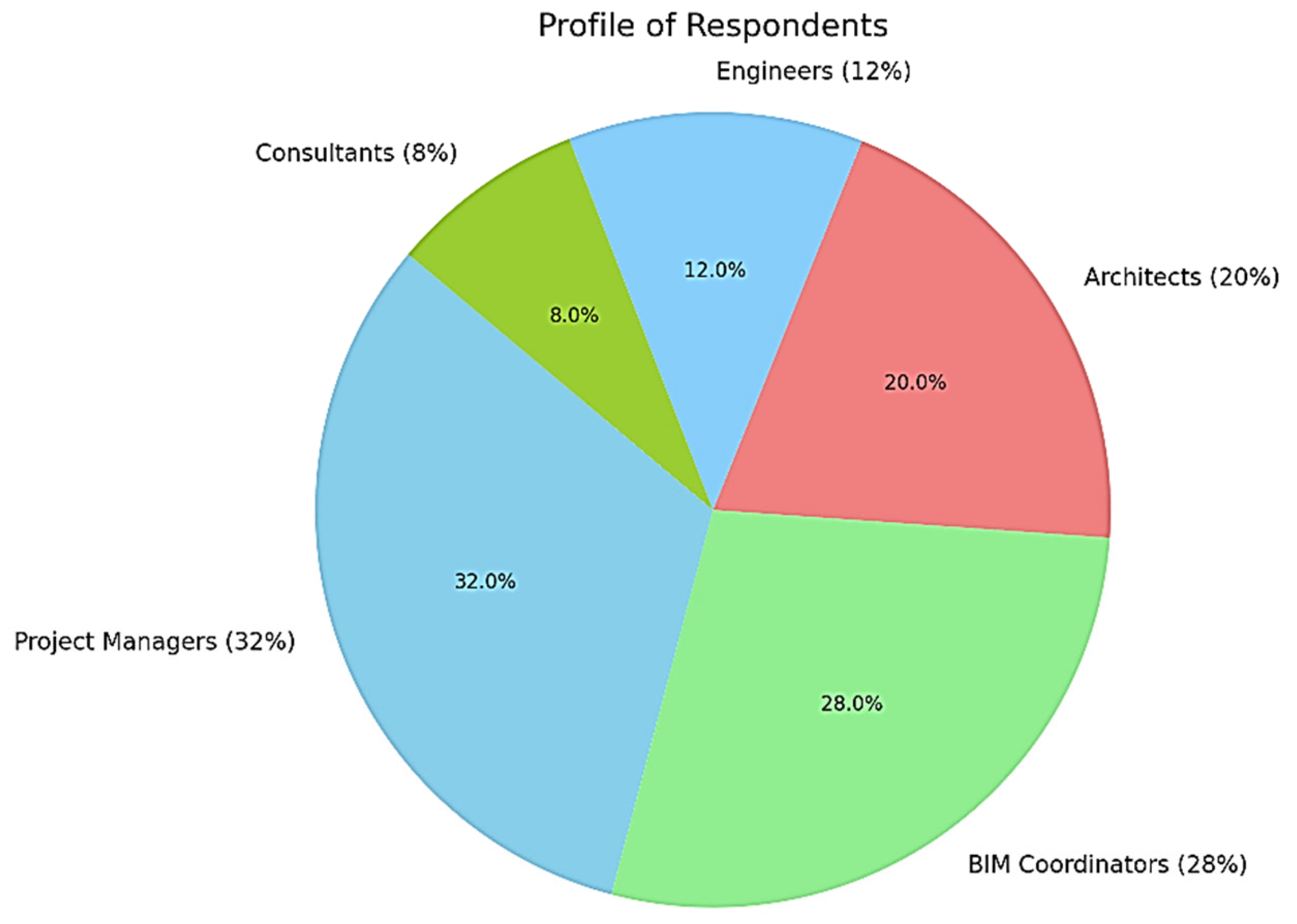
Fourteen point one the participants consisted of a heterogeneous group of professionals: The job titles in this field are primarily project managers (32%), BIM coordinators (28%), architects (20%), engineers (12%), and consultants (8%).
14.1 Regarding BIM Execution Plans (BEPs), 48% of the participants indicated a high level of familiarity, 36% were moderately familiar, and 16% had some level of familiarity as shown in Figure 3. All respondents indicated that they were familiar with BEPs.
Figure 3.
Profile of the respondents.
14.2. Platform Usability
The platform's usability was evaluated using a Likert scale. The findings demonstrated a robust and favorable reaction to the platform's interface and navigation.
- Navigation Simplicity: 60% of participants reported that the platform was "Very Easy" to navigate, 28% found it "Easy," while only 12% found it "Neutral" or encountered minor difficulties, as shown in Figure 3.
- User-friendliness: Most respondents, 72%, found the platform to be intuitive and user-friendly. 20% of respondents had no strong opinion, while 8% expressed dissatisfaction.
14.3. Break-even point (BEP) Content and Accuracy
This section assessed the precision and thoroughness of the platform in producing BIM Execution Plans.
- Content Coverage: 88% of participants reported that the platform included all the essential sections needed for a typical BEP, while 12% mentioned partial coverage, specifically lacking project-specific information like sustainability metrics and asset management.
- Content Accuracy: 56% of participants deemed the generated BEP content as "Very Accurate," while 32% considered it "Accurate," and the remaining 12% remained neutral.
14.4. Enhancing Platform Efficiency and Ensuring Compliance with Standards
The main objective of the platform was to enhance the effectiveness of generating BEPs while guaranteeing adherence to international BIM standards, such as ISO 19650.
- Efficiency Enhancement: A significant majority of respondents (68%) strongly agreed that the platform greatly improved the efficiency of creating BEPs. Additionally, 24% agreed with this statement, while only 8% remained neutral.
- Standards Compliance: A significant majority of experts, 76%, acknowledged that the platform is by international standards, specifically ISO 19650. Nevertheless, 24% of respondents proposed enhancements in domains such as COBie and Common Data Environment (CDE) integration.
14.5. Collaboration and Communication
Another important metric was the platform's capacity to enable collaboration among project stakeholders:
- Collaboration Enhancement: The platform's support for collaboration was rated as "Excellent" by 64% of respondents, with an additional 24% rating it as "Good." This indicates a strong performance in facilitating collaboration.
- Recommendations for Enhancement: Although most respondents commended the platform's collaboration tools, a few recommended incorporating advanced real-time communication capabilities and improving integration with current project management tools.
14.6. Measurement of Overall Satisfaction and Recommendation
The platform's overall satisfaction was assessed using a rating scale, as well as the probability of recommending it to others in the construction industry.
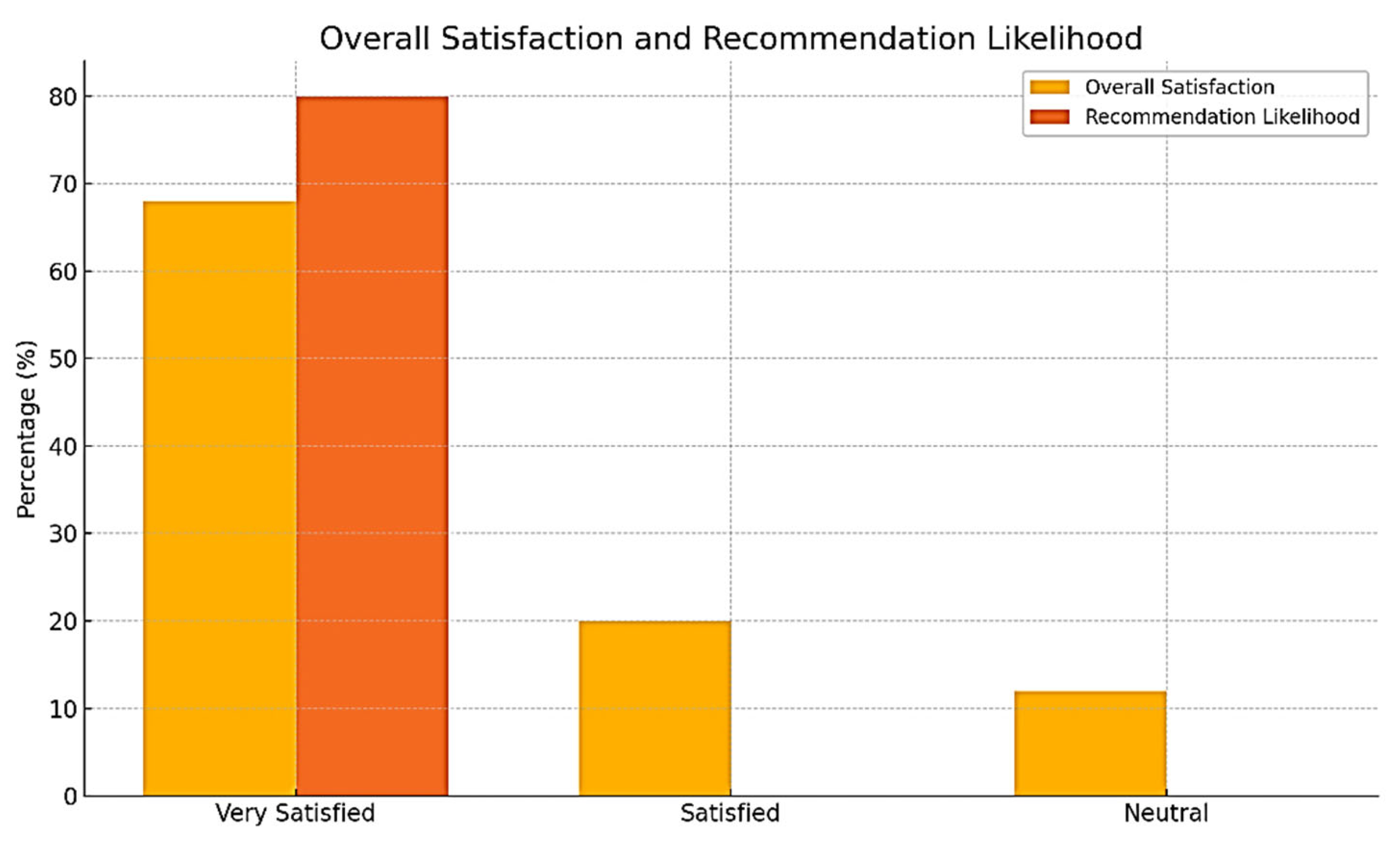
- The platform received a 68% overall satisfaction rating, with most respondents (68%) being "Very Satisfied." 20% of respondents were "Satisfied," and 12% had a "Neutral" opinion.
- Probability of Recommendation: The average likelihood of recommending the platform to other professionals was 8.6 on a scale of 1 to 10. 80% of respondents rated their recommendation likelihood between 8 and 10.
Figure 5.
Overall Satisfaction and Recommendation.
14.7. Qualitative Feedback Respondents offered qualitative feedback regarding both positive aspects and potential areas for improvement:
- Advantages: The platform was praised by experts for its comprehensive and easy-to-follow instructions and intuitive interface.
Areas for improvement were identified, including the need for improved support for project-specific customization, stronger integrations with cloud-based collaboration platforms, and enhanced report-generation features.
15. Conclusions
The following conclusions can be drawn:
- The evaluation of the BIM Execution Plan platform through expert surveys and practical applications has demonstrated its effectiveness in addressing key challenges in managing BEPs [3,4]. The platform’s ability to automate and streamline BEP creation, ensure compliance with ISO 19650, and facilitate real-time collaboration significantly enhances project efficiency across both small and large-scale construction projects [11,12].
- The validation process, using the O-West Compound as a small residential project and the Solar Boat Project at the Egyptian Museum as a large-scale cultural project, revealed that the platform is highly adaptable to different project types (Yang & Chou, 2018). Its ability to handle complex workflows, manage large datasets, and provide real-time updates proved critical for both the smooth execution of smaller, simpler projects and the effective management of intricate, multi-stakeholder initiatives [8].
- One of the most notable conclusions drawn from the study is the platform's role in reducing project errors and rework [11]. By ensuring all stakeholders have access to up-to-date information and automating key compliance checks, the platform mitigates the risks of miscommunication and inconsistencies that commonly lead to costly rework [1]. Additionally, the platform's user-friendly interface and flexible customization options make it accessible for both experienced professionals and teams new to BIM workflows [9].
- The platform’s seamless integration of compliance with international standards, particularly ISO 19650, ensures that all project data and workflows are managed according to recognized best practices [18]. This capability not only streamlines internal processes but also simplifies regulatory approval processes, which is particularly beneficial in large-scale projects involving multiple regulatory bodies, as demonstrated in the Solar Boat Project [13].
- Overall, the findings from this study affirm that the BIM Execution platform provides a robust solution for modern BIM project management. Its ability to enhance collaboration, improve efficiency, and ensure compliance positions it as an indispensable tool for construction professionals seeking to optimize project outcomes. As the construction industry increasingly moves toward digitalization, platforms like this will play a crucial role in shaping the future of project delivery, ensuring that teams can manage complexity with greater ease, accuracy, and transparency.
- Limitations:
While this methodology provides a robust framework for evaluating the platform, it is important to acknowledge certain limitations. The platform assessment was conducted in a simulated project environment, which may not fully capture the complexities of real-world projects. Additionally, the expert survey sample size, while sufficient for exploratory purposes, may limit the generalizability of the findings. Future studies could expand on this by involving a larger and more diverse group of participants.
16. Future Research and Recommendations
Future research should focus on expanding the platform's capabilities and applicability in various areas:
- Scalability for Mega Projects: Investigating how the platform can handle large infrastructure and urban planning projects with increased complexity and longer timelines.
- AI Integration for Predictive Analytics: Exploring how AI can enhance predictive analytics for risk management in BIM, including cost overruns and compliance.
- Life Cycle Assessment (LCA) and Sustainability: Focusing on incorporating sustainability metrics and supporting green building certifications like LEED or BREEAM.
- User Experience (UX) Research: Enhancing the platform’s interface for users with varying levels of technical expertise, including non-technical stakeholders.
- Cross-Platform Integration: Improving interoperability with other BIM and construction management platforms to ensure seamless workflows.
- Training and Support Resources: Expanding training materials for users of all BIM experience levels to increase platform adoption.
- Customization for International Markets: Enhancing customization features to accommodate regional BIM standards and regulations.
- AI-Driven Resource Optimization: Integrating AI tools to optimize resource management, such as labor forecasting and material procurement.
- Continuous Feedback for Improvement: Implementing user feedback loops to guide the platform’s ongoing development.
- Expanded Collaboration Features: Strengthening collaboration tools, especially for remote teams and international projects.
Author Contributions
Conceptualization, Ahmed Mohammed Abdelalim and Alaa Sherif ; Data curation, Ahmed Mohammed Abdelalim and Kamal Shawky; Formal analysis, Ahmed Mohammed Abdelalim and Kamal Shawky; Funding acquisition, Ahmed Mohammed Abdelalim and Aljawharah Alnaser; Investigation, Ahmed Mohammed Abdelalim and Kamal Shawky; Methodology, Ahmed Mohammed Abdelalim, Kamal Shawky and Alaa Sherif ; Project administration, Ahmed Mohammed Abdelalim and Alaa Sherif ; Resources, Ahmed Mohammed Abdelalim, Kamal Shawky and Aljawharah Alnaser; Software, Ahmed Mohammed Abdelalim and Kamal Shawky; Supervision, Ahmed Mohammed Abdelalim and Alaa Sherif ; Validation, Ahmed Mohammed Abdelalim, Kamal Shawky, Aljawharah Alnaser and Alaa Sherif ; Visualization, Ahmed Mohammed Abdelalim, Kamal Shawky and Aljawharah Alnaser; Writing – original draft, Ahmed Mohammed Abdelalim and Kamal Shawky; Writing – review & editing, Ahmed Mohammed Abdelalim, Kamal Shawky, Aljawharah Alnaser, Denise-Penelope N. Kontoni and Alaa Sherif. All authors have read and agreed to the published version of the manuscript.
Funding
The authors extend their appreciation to the Researchers Supporting Project number (RSPD2024R590), King Saud University, Riyadh, Saudi Arabia.
Institutional Review Board Statement
Not applicable.
Informed Consent Statement
Not applicable.
Data Availability Statement
The raw data supporting the conclusions of this article will be made available by the corresponding authors upon request.
Conflicts of Interest
The authors declare no conflicts of interest.
References
- Yang, J.-B. , & Chou, H.-Y. (2018). Mixed approach to government BIM implementation policy: An empirical study of Taiwan. Journal of Building Engineering. [CrossRef]
- Abdelalim, A. M. , & Abo Elsaud, Y. (2019). Integrating BIM-based simulation technique for sustainable building design. In Project Management and BIM for Sustainable Modern Cities (pp. 209-238). Springer International Publishing. [CrossRef]
- Çekin, E., & Seyis, S. (2020). BIM Execution Plan based on BS EN ISO 19650-1 and BS EN ISO 19650-2 Standards. In Proceedings of the 6th International Project and Construction Management Conference, Istanbul, Türkiye.
- Galitskaya, V. (2019). Building Information Modeling Execution Plans: Implementation and Challenges. Journal of Construction Engineering and Management, 0401. [Google Scholar] [CrossRef]
- Panagiotidou, N. , Pitt, M., & Lu, Q. (2022). Building information modelling execution plans: A global review. Proceedings of the Institution of Civil Engineers - Smart Infrastructure and Construction. [CrossRef]
- Bain, D. (2019). UK BIM Survey 2019 Findings. National BIM Report. Retrieved from https://www.thenbs.com/knowledge/national-bim-report-2019.
- Akinradewo, O., Aigbavboa, C., Ikuabe, M., Adekunle, S., & Adeniyi, A. (2022). Unmanned aerial vehicles usage on South African construction projects: Perceived benefits. In Proceedings of the Modular and Offsite Construction (MOC) Summit, Edmonton, AB, Canada, 27-29 July 2022 (pp. 146-153).
- Barker, P. (2018). From UK to the World—Making BIM Work Internationally. National BIM Report. Retrieved from https://www.thenbs.com/knowledge/the-national-bim-report-2018.
- Cao, H. , & Huang, M. (2023). Building Information Modeling Technology Capabilities: Operationalizing the Multidimensional Construct. Sustainability. [CrossRef]
- Faraji, A., Homayoon Arya, S., Ghasemi, E., Rahnamayiezekavat, P., & Perera, S. (2024). Building Information Modeling (BIM), Blockchain, and LiDAR Applications in Construction Lifecycle. Buildings, 14, 919. [CrossRef]
- Antunes, P., & Elliott, M. (2022). The effective implementation of BIM requires a clear understanding of project goals, roles, and responsibilities. Proceedings of the Institution of Civil Engineers - Smart Infrastructure and Construction, 176, 45-67.
- Olbina, S., & Elliott, J. W. (2019). Contributing Project Characteristics and Realized Benefits of Successful BIM Implementation: A Comparison of Complex and Simple Buildings. Buildings, 9, 175. [CrossRef]
- Shawky, K. A., Abdelalim, A. M., & Sherif, A. G. (2024). Standardization of BIM Execution Plans (BEP) for Mega Construction Projects: A Comparative and Scientometric Study. Technology and Engineering, 12, 103-129. [CrossRef]
- Khedr, R., & Abdelalim, A. M., (2022). The Impact of Strategic Management on project performance of Construction Firms in Egypt. International Journal of Management and Commerce Innovation, 9, 202-211.
- Besné, A., Pérez, M. Á., Necchi, S., Peña, E., Fonseca, D., Navarro, I., & Redondo, E. (2021). A Systematic Review of Current Strategies and Methods for BIM Implementation in the Academic Field. Applied Sciences, 11, 5530. [CrossRef]
- Abdelalim, A. M., (2019). Risks Affecting the Delivery of Construction Projects in Egypt: Identifying, Assessing, and Response. In Project Management and BIM for Sustainable Modern Cities (pp. 125-154). Springer International Publishing. [CrossRef]
- Wu, W., & Issa, R. R. A. (2013). Development of a BIM-based automated construction safety checking system. Procedia Engineering, 85, 107-113. [CrossRef]
- Abu Bakar, A. R., Haron, A. T., & Rahman, R. A. (2021). Building Information Modelling Execution Plan (BEP): A Comparison of Global Practice. International Journal of Engineering and Technology Sciences, 7, 63-73. [CrossRef]
- Tavakol, M., & Dennick, R. (2011). Making sense of Cronbach’s alpha. International Journal of Medical Education, 2, 53-55. [CrossRef]
- George, D., & Mallery, P. (2003). SPSS for Windows Step by Step: A Simple Guide and Reference (11.0 Update, 4th ed.). Allyn & Bacon.
- Liu, Z., Gong, S., Tan, Z., & Demian, P. Immersive technologies-driven building information modeling (BIM) in the context of the metaverse. Buildings 2023, 13(6), 1559. [CrossRef]
- Babatunde, S. O., Ekundayo, D., Adekunle, A. O., & Bello, W. Comparative analysis of drivers to BIM adoption among AEC firms in developing countries. Journal of Engineering Design and Technology 2021. [CrossRef]
- Abdelalim, A.M.; Essawy, A.; Alnaser, A.A.; Shibeika, A.; Sherif, A. Digital Trio: Integration of BIM–EIR–IoT for Facilities Management of Mega Construction Projects. Sustainability 2024, 16, 6348. [Google Scholar] [CrossRef]
- Abdelalim, A.M.; Said, S.O.; Alnaser, A.A.; Sharaf, A.; ElSamadony, A.; Kontoni, D.-P.N.; Tantawy, M. Agent-Based Modeling for Construction Resource Positioning Using Digital Twin and BLE Technologies. Buildings 2024, 14, 1788. [Google Scholar] [CrossRef]
- Abdelalim, A.M.; Shawky, K.; Alnaser, A.A.; Shibeika, A.; Sherif, A. Developing Standard BIM Execution Plans for Complex Construction Projects. Appl. Sci. 2024, 14, 6614. [Google Scholar] [CrossRef]
- Abdelalim, A.M.; Al-Sabah, R.; Salem, M.; Said, S.O.; Tantawy, M.; Ezz Al-Regal, M.R. Variations and Claims in International Construction Projects in the MENA Region from the Last Decade. Buildings 2024, 14, 2496. [Google Scholar] [CrossRef]
Figure 1.
Platform interface.
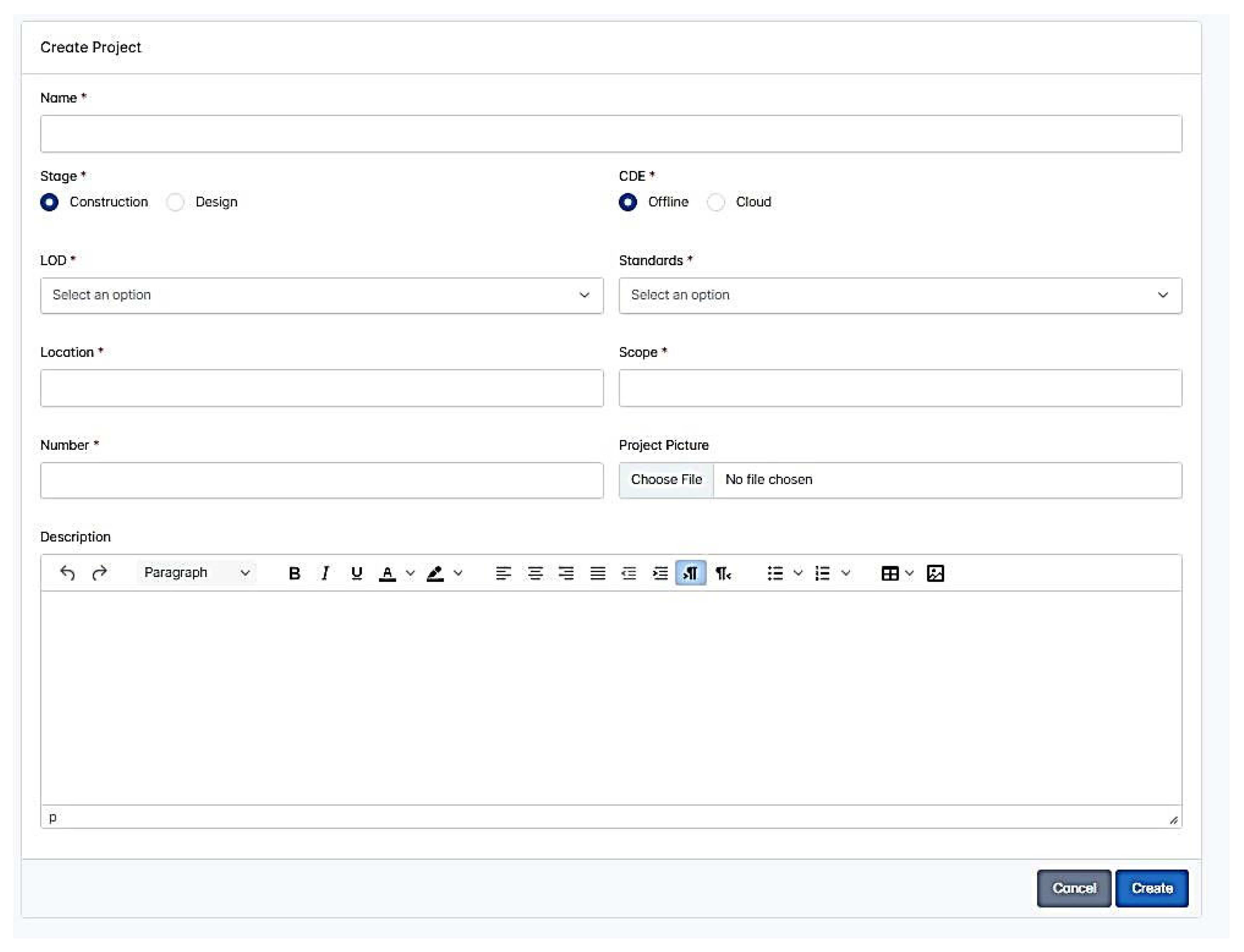
Figure 3.
Platform Usability.
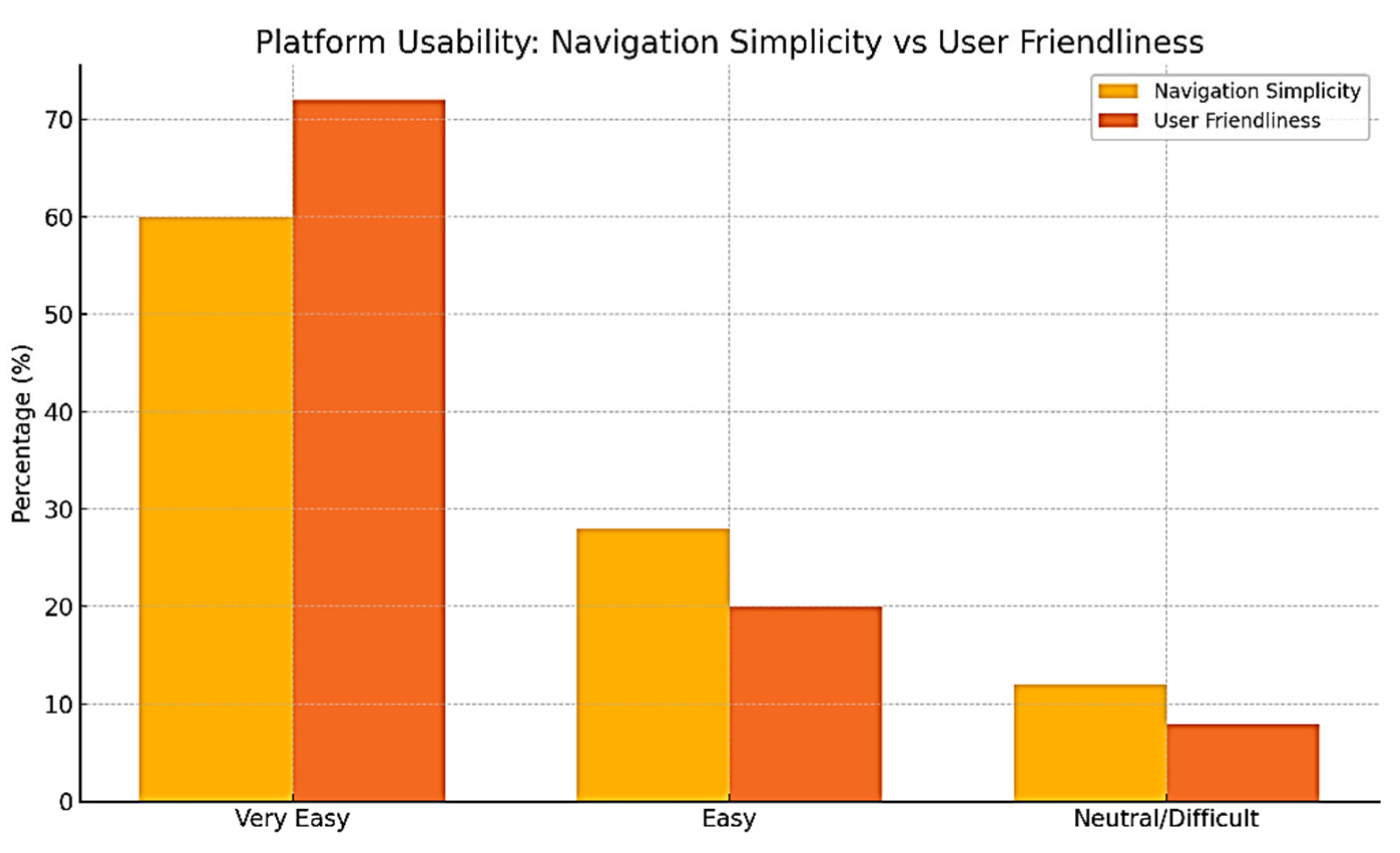
Figure 4.
BIM Execution plan platform Content and Accuracy.
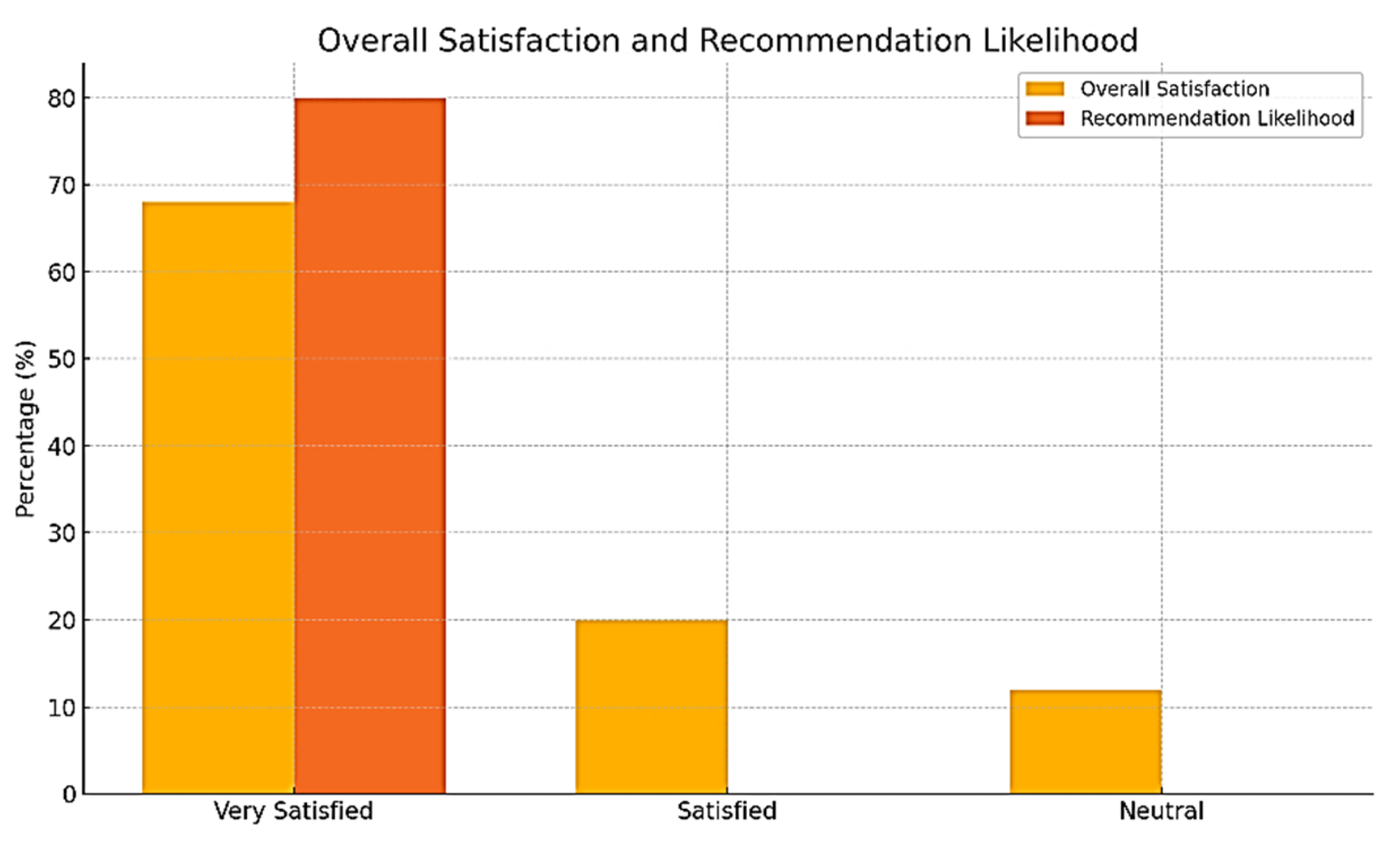
Table 1.
Time Reduction in BEP Creation using the BIM Execution Platform.
| Project | Time Reduction in BEP Creation |
| O-West Compound | Around 25% |
| Solar Boat Project | Around 28% |
Disclaimer/Publisher’s Note: The statements, opinions and data contained in all publications are solely those of the individual author(s) and contributor(s) and not of MDPI and/or the editor(s). MDPI and/or the editor(s) disclaim responsibility for any injury to people or property resulting from any ideas, methods, instructions or products referred to in the content. |
© 2024 by the authors. Licensee MDPI, Basel, Switzerland. This article is an open access article distributed under the terms and conditions of the Creative Commons Attribution (CC BY) license (http://creativecommons.org/licenses/by/4.0/).
Copyright: This open access article is published under a Creative Commons CC BY 4.0 license, which permit the free download, distribution, and reuse, provided that the author and preprint are cited in any reuse.


