

Submitted:
05 December 2024
Posted:
09 December 2024
You are already at the latest version
Abstract
Building Information Modeling (BIM) is a revolutionary method in the construction industry that enhances project coordination, minimizes mistakes, and enables efficient project completion. An essential aspect of achieving successful BIM implementation is the creation of a BIM Execution Plan (BEP). The BEP facilitates effective communication, defines roles and responsibilities, and establishes standardized processes for all stakeholders involved. Although BIM is being used more widely, the absence of standardized BEPs frequently leads to inefficiencies in projects, especially those of significant scale [3]. This paper introduces the development of a new dynamic platform designed specifically for automating and standardizing the creation of BEPs. The platform aligns with ISO 19650 standards and offers customizable workflows to suit various project needs, improving collaboration, data management, and project outcomes. In addition, the paper emphasizes the advantages of utilizing this platform, including the efficient creation of BEPs, improved collaboration through centralized data management, and the ability to tailor BEPs to specific project requirements. The platform's user-friendly interface and extensive data management capabilities not only increase efficiency but also minimize risks and enhance project results. The survey results indicate that the BEP platform is effective in resolving common issues encountered in the creation of BEPs, such as miscommunication and inconsistencies. Additionally, it helps to improve project outcomes and reduce risks.
Keywords:
BIM Execution plan
; BIM Execution Plan Automation
; Construction Collaboration Platforms
; BIM procedures
; Automated Workflow Standardization
1. Introduction
Building Information Modeling (BIM) is a transformative approach in the construction industry, enabling enhanced communication, streamlined workflows, and data-driven decision-making. Despite these advantages, effective implementation of BIM Execution Plans (BEPs) remains a persistent challenge. Current practices are often time-consuming, error-prone, and inconsistent, particularly in large-scale projects. These issues disrupt collaboration, hinder compliance with ISO 19650, and contribute to project delays and cost overruns. The Architecture, Engineering, Construction, and Operations (AECO) industry faces persistent challenges in achieving efficiency, consistency, and collaboration, particularly in complex and mega-construction projects. Building Information Modeling (BIM) has emerged as a transformative approach to address these issues, offering improved communication, data sharing, and decision-making capabilities across diverse stakeholders. Central to successful BIM implementation is the BIM Execution Plan (BEP), a critical document that establishes project goals, workflows, roles, responsibilities, and information exchange standards. BEPs provide the foundation for aligning multi-disciplinary efforts, ensuring data consistency, and mitigating risks associated with project complexity their importance, the development and implementation of BEPs remain inconsistent across the industry [26]. Current practices are often manual, time-intensive, and error-prone, leading to inefficiencies and an inability to fully comply with international standards such as ISO 19650. These shortcomings are particularly pronounced in mega-projects, where diverse stakeholders and disciplines must collaborate seamlessly to ensure success. Non-standardized BEPs result in fragmented workflows, misaligned objectives, and increased project risks, undermining the potential of BIM as a tool for digital transformation in the construction sector [23,24].
The lack of standardized BEPs is a significant obstacle to effective project management. Surveys and empirical analyses have identified several critical gaps:
- Fragmented Workflows: BEPs often fail to integrate information cohesively across teams and platforms, resulting in miscommunication and inefficiencies.
- Non-Compliance: Many BEPs do not fully align with ISO 19650, leading to consistencies in documentation and execution.
- Manual Processes: Current BEP relies heavily on manual input, which is not only labor-intensive but also prone to errors that can disrupt project timelines and quality.
These challenges are exacerbated in regions as rapidly developing countries, where projects range from residential and commercial developments to complex infrastructure and heritage restoration. Addressing these issues requires overcoming region-specific barriers, aligning local practices with global standards, and leveraging technological advancements.
- Importance of BEPs in BIM Adoption
BEPs are BIM adoptions by providing a structured approach to project management. They establish clear protocols for data exchange, risk mitigation, and role delineation, ensuring that all stakeholders operate within a unified framework. This significance is amplified in mega-construction projects, where the complexity of tasks and the volume of information necessitate meticulous coordination. Studies underscore the importance of integrating BEPs early in project lifecycles to prevent misaligned objectives, communication breakdowns, and increased costs. However, the flexibility to accommodate local practices and project-specific needs is equally critical to their success [16].
- Potential of Automation in Standardizing BEPs
Non-standardized BIM Execution Plans (BEPs) can lead to significant project inefficiencies. A study by PlanGrid and FMI Corp. found that miscommunication and poor project data account for 48% of all reworks on U.S. construction jobsites, resulting in substantial labor costs. (plan Grid, Construction Disconnected 2018 Report)
This highlights the critical need for standardized BEPs to enhance communication and data management, thereby reducing rework and associated costs [33].
Automation presentation to the challenges of BEP standardization. By automating the creation and management of BEPs [28], project teams can achieve the following:
- Enhance Efficiency: Automated workflows significantly reduce the time required for BEP generation, minimizing manual input and associated errors.
- Ensure Compliance: Integrated validation mechanisms ensure alignment with ISO 19650 and BIM Standards, fostering consistency and reliability.
- Foster Collaboration: Real-time data synchronization and integration across BIM platforms enhance interdisciplinary decision-making.
Recent advancements in digital tools and frameworks have facilitated the creation of automation platforms capable of addressing these issues. Chot not only guarantees standardization but also improves adaptability to various project types and scales, offering a scalable solution for managing intricate construction workflows.
- Overview of the Proposed Platform
This study presents an innovative automation platform aimed at optimizing BEP compliance with ISO 19650. The platform utilizes:
- Dynamic BEP Templates: Customizable templates tailored to meet both international standards and project-specific requirements.
- Real-Time Data Integration: Seamless synchronization with BIM tools such as Revit, Navisworks, and cloud-based platforms to facilitate efficient data exchange.
- Compliance Verification: Built-in mechanisms for validating adherence to global standards, enhancing the credibility and utility of BEPs.
- Research Objectives
This study aims to:
- Investigate the inefficiencies and inconsistencies in current BEP practices.
- Evaluate the potential of automation to address these challenges through case studies on mega-construction projects.
- Advance theoretical frameworks in project governance and collaborative management by integrating automation into BEP workflows.
- How does the proposed digital platform streamline BEP creation and improve efficiency?
- To what extent does the platform enhance stakeholder collaboration and communication?
- How effectively does the platform ensure compliance with ISO 19650 standards?
2. Literature Review
2.1. Project Governance and Collaborative Management
Project governance provides a structured framework for decision-making, accountability, and the alignment of objectives in complex projects. It ensures that all stakeholders operate under clearly defined roles and responsibilities, enabling efficient communication and risk mitigation. Collaborative management, on the other hand, emphasizes the coordination and integration of diverse teams, especially in multi-disciplinary projects like those in the Architecture, Engineering, Construction, and Operations (AECO) industry. Together, these frameworks offer a theoretical lens to analyze and address the inefficiencies observed in Building Information Modeling (BIM) Execution Plans (BEPs)[17,21].
Studies in project governance highlight its relevance in ensuring that projects are delivered on time and within scope while adhering to predefined quality standards. Effective governance models integrate tools, processes, and people, forming the backbone of successful project delivery. Collaborative management complements this by fostering an environment of mutual understanding and cooperation, which is particularly critical in BIM workflows where multiple disciplines, technologies, and stakeholders intersect.
However, both governance and collaboration face challenges in their practical implementation, especially when dealing with inconsistent BEP structures. For instance, while governance frameworks provide high-level direction, they often lack specificity in addressing the operational intricacies of BEP development. Similarly, collaborative management tends to focus on interpersonal and organizational dynamics without fully considering the technical complexities of integrating data from diverse BIM tools presents a comprehensive study on the development and standardization of Building Information Modeling Execution Plans (BEPs) tailored for complex construction projects. It identifies critical gaps and inefficiencies in current BEP practices, particularly in aligning with global standards such as ISO 19650. The study integrates a Scientometric analysis of 36 BEP documents, highlighting trends and best practices, and proposes a robust, adaptable framework. The Development Framework includes key components like definition sections, management protocols, and technical requirements, emphasizing compliance, data security, and advanced technologies such as IoT and digital twins. Empirical validation through a survey of 87 industry professionals highlights the framework's effectiveness in fostering collaboration, technology integration, and quality assurance. The findings underscore the importance of standardized workflows to enhance efficiency, compliance, and project outcomes in the Architecture, Engineering, Construction, and Operations (AECO) industry. Recommendations include early integration of BEPs, stakeholder engagement, and alignment with regional standards to address the unique challenges of mega-projects and future-proof BEPs through advanced technologies [25].
The "Developed Framework" outlines the structured components of a Building Information Modeling (BIM) Execution Plan (BEP) for large-scale construction projects. The framework is systematically organized into several main sections, each concentrating on specific elements of BIM execution planning. The steps are delineated in the table, presented in a simplified manner for enhanced comprehension [13,25].
The subsequent stages of the established framework are as follows:
- Definition
- BIM Project Execution Plan Overview
- Project Information
- Management
- Project Goals / BIM Uses
- Model Process & Project Standards (Methods & Procedure)
- Quality Assurance / Quality Control (QA/QC) Plan
- Collaborations
- Technical Requirements
2.2. Challenges in BEP Development
The development of BEPs is fraught with inefficiencies and inconsistencies that hinder their effective implementation. Current practices often rely on manual processes that are time-intensive, error-prone, and lack scalability. These manual approaches make it difficult to standardize workflows and ensure adherence to international standards like ISO 19650.
Key challenges in BEP development include:
- Fragmented Information Sharing: BEPs often fail to integrate information cohesively across teams, resulting in miscommunication and data silos.
- Inadequate Stakeholder Involvement: Many BEPs are developed without fully engaging all relevant stakeholders, leading to gaps in execution and oversight.
- Lack of Adaptability: Traditional BEP frameworks are often rigid and unable to accommodate the unique requirements of different projects or regions.
These challenges underscore the need for innovative approaches that streamline the BEP development process while ensuring consistency and compliance.
2.3. Challenges in BEP Standardization
Standardizing BEPs is essential for ensuring consistency and interoperability among projects, though it poses its own challenges. The variability in project requirements, stakeholder expectations, and technological capabilities complicates the establishment of a universal approach [12,14].
Diverse Standards and Practices: Although ISO 19650 provides a global framework for information management, its adoption varies across regions and industries. This inconsistency leads to variations in BEP structure and content, complicating cross-project collaboration [15,17].
- Technological Barriers: The use of different BIM tools (e.g., Revit, Navisworks, AutoCAD) creates interoperability issues, making it difficult to integrate data into a unified BEP framework.
- Cultural and Organizational Resistance: Stakeholders often resist adopting standardized processes due to a lack of understanding or perceived loss of flexibility. This resistance is particularly strong in regions where traditional methods dominate.
Addressing these challenges requires a combination of technical solutions, such as automation platforms, and change management strategies to foster stakeholder buy-in.
2.4. Potential of Automation in BEP Creation
Automation has emerged as a transformative solution for addressing the inefficiencies and inconsistencies in BEP creation. By leveraging digital tools, automated workflows significantly enhance the efficiency, accuracy, and standardization of BEPs, ensuring better compliance with international standards and fostering improved collaboration among stakeholders [28].
2.4.1. Enhancing Efficiency:
Automation reduces the time required to generate BEPs by streamlining repetitive and manual tasks. Dynamic templates and pre-configured workflows allow teams to produce comprehensive BEPs quickly, minimizing resource expenditure [29].
2.4.2. Ensuring Compliance:
Integrated compliance checks within automation platforms ensure that BEPs adhere to ISO 19650 and other relevant standards. These features eliminate discrepancies and enhance the credibility of documentation.
2.4.3. Fostering Collaboration:
Automation facilitates real-time data integration and synchronization across BIM platforms, enabling seamless information sharing among diverse teams. This improves cross-disciplinary coordination and reduces errors arising from miscommunication.
3. Scalability and Adaptability:
Automated BEP tools can adapt to various project requirements, from small-scale residential developments to large-scale infrastructure projects. Their scalability ensures that even the most complex projects benefit from standardized workflows. Recent advancements in automation technologies, such as AI-driven analytics and cloud-based platforms, further amplify these benefits. By enabling real-time monitoring, predictive adjustments, and enhanced data visualization, automation not only addresses the current challenges in BEP creation but also sets the stage for future innovations in BIM workflows, Theoretical Implications From a theoretical perspective, the challenges in BEP development and standardization highlight the intersection of project governance, collaborative management, and digital transformation. By applying these theoretical frameworks, researchers and practitioners can better understand the root causes of inefficiencies and develop solutions that are both scalable and adaptable.
3.1. Project Governance:
The lack of standardized BEPs reflects a governance gap, where high-level frameworks fail to translate into operational workflows. This underscores the need for tools that bridge the gap between strategic direction and day-to-day execution.
3.2. Collaborative Management:
The fragmented nature of BEP workflows illustrates the importance of fostering collaboration across teams and disciplines. Theories in collaborative management suggest that real-time data sharing and transparent communication are critical for overcoming these challenges.
3.3. Role of Technology in Governance:
The integration of automation into BEP workflows represents a shift in how governance frameworks are applied in practice. By reducing manual input and ensuring compliance with standards, automation enhances the governance of BIM processes, providing a model for future research and practice.
4. Methodology
The Methodology section provides a comprehensive framework for understanding how project governance and collaborative management principles are applied in the development of a platform for automating and standardizing BIM Execution Plans (BEPs). By aligning theoretical foundations with practical implementation, this section outlines the strategies employed to address inefficiencies in current BEP workflows while ensuring compliance with ISO 19650 standards [27].
In complex construction projects, successful execution depends on the integration of structured governance and effective collaboration. Project governance establishes the framework for accountability and decision-making, ensuring that all project activities align with predefined objectives and deliverables. On the other hand, collaborative management fosters seamless communication and coordination among multidisciplinary teams, promoting adaptability and trust. These complementary approaches form the backbone of the proposed platform, designed to enhance efficiency, reduce risks, and facilitate standardized workflows.
The Platform Design section bridges the gap between governance principles and collaborative management, showcasing how these theories are operationalized to create a scalable solution. By embedding real-time collaboration, standardized workflows, and automated accountability mechanisms, the platform addresses critical challenges in BEP implementation, such as data inconsistencies, delays, and miscommunication.
Finally, the methodology emphasizes the significance of integrating governance and collaboration for BEP standardization and automation. By connecting strategic objectives with operational workflows, the proposed platform not only advances academic discourse but also offers practical solutions for digital transformation in the Architecture, Engineering, Construction, and Operations (AECO) industry. This innovative approach demonstrates how project governance and collaborative management can be harmonized to drive efficiency and compliance in modern construction projects.
4.1. Project Governance
Project governance is the cornerstone of structured decision-making and accountability within projects, guaranteeing that all activities are consistent with the established objectives and deliverables. It offers a formalized framework for the management of communication pathways, roles, and responsibilities, all of which are essential in the execution of intricate construction projects. The focus of project governance in the context of BEPs is on:
4.1.1. Clear Objectives Definition:
Governance structures guarantee that the BEP is explicitly in accordance with project objectives, including the facilitation of data exchange, the assurance of collaboration among stakeholders, and the adherence to ISO 19650 standards. Accountability Mechanisms: Governance reduces ambiguities and guarantees that each stakeholder comprehends their role in the BIM process by assigning roles and responsibilities.
4.1.2. Risk Mitigation:
Inconsistencies in data sharing or delays in task completion, which are potential risks in BEP workflows, are identified by structured governance, which also provides mechanisms to effectively address them.
The platform developed for BEP automation is subject to rigorous operational efficiency and reliability standards because of the governance framework. The study endeavors to create a scalable solution that is in accordance with strategic project objectives and meets the operational requirements of BIM workflows by integrating governance principles into the platform's design [28].
4.2. Collaborative Management
Collaborative management emphasizes the importance of communication, coordination, and information sharing among diverse teams and stakeholders, which are essential components of successful BIM implementation. In the context of BEPs, collaborative management focuses on:
4.2.1. Facilitating Multi-Disciplinary Collaboration:
BIM workflows involve multiple disciplines, such as architects, structural engineers, MEP specialists, and contractors, each with distinct responsibilities and data requirements. Collaborative management ensures that these teams can work together seamlessly by providing a unified framework for communication and data sharing.
4.2.2. Enhancing Transparency and Trust:
Open communication channels and transparent workflows foster trust among stakeholders, reducing conflicts and enhancing decision-making. For example, a well-structured BEP developed through collaborative management ensures that all stakeholders have access to real-time updates and clearly defined protocols for data exchange.
4.2.3. Promoting Adaptability:
Construction projects are dynamic, with frequent changes in scope, timelines, and resource allocation. Collaborative management enables teams to adapt to these changes efficiently by providing flexible workflows and decision-making processes. Collaborative management theories underscore the need for platforms that integrate real-time data sharing and enable seamless interaction across BIM tools. The platform proposed in this study incorporates these elements, facilitating better communication and coordination among stakeholders, which are crucial for achieving standardized and efficient BEP workflows.
4.3. Platform Design: The Integration of Collaborative Management and Project
4.3.1. Governance
The proposed automation platform for BEPs is founded on the integration of collaborative management principles and project governance. The platform addresses the fundamental inefficiencies observed in current BEP practices by integrating the dynamic adaptability of collaborative management with the structured accountability of project governance.
4.3.2. Standardized Workflows with Flexibility:
Collaborative management offers the flexibility to modify these workflows to meet the unique requirements of each project, while governance principles guarantee that they are standardized and consistent with ISO 19650.
4.3.3. Real-Time Collaboration:
The platform promotes collaborative decision-making and guarantees that all stakeholders agree with project objectives by facilitating real-time data synchronization across multiple BIM tools.
4.3.4. Accountability Mechanisms That Are Automated:
The platform incorporates governance principles into its built-in features for the purpose of assigning roles and tracking responsibilities, thereby guaranteeing accountability at each stage of the BIM process.
4.3.5. Improved Risk Management:
The platform reduces risks associated with data inconsistencies, delays, and miscommunication by integrating the proactive problem-solving approach of collaborative management with the predictive capabilities of project governance.
4.4. Significance to BEP Standardization and Automation
This study employs project governance and collaborative management theories to connect strategic objectives with operational workflows in BIM projects. These frameworks establish the theoretical basis for comprehending the origins of inefficiencies in current BEP practices and the potential for their resolution through automation. The design of the proposed platform conforms to these frameworks, guaranteeing that it enhances efficiency and compliance while promoting collaboration and adaptability, essential for the success of contemporary construction projects. This research, anchored in these theoretical constructs, enhances the academic discourse on project governance and collaborative management, while providing practical solutions for digital transformation in the AECO industry. Future applications of this framework may extend beyond BEPs to include broader dimensions of project lifecycle management, thereby augmenting the integration of governance and collaboration in digital workflows [30,31].
4.4. Structural and Operational Insights into the BEP Automation Platform
Effective implementation of a BIM Execution Plan (BEP) platform requires clear architectural design, well-defined workflows, and intuitive user interactions. To communicate the proposed platform’s functionality and adaptability, a series of detailed diagrams have been created, each addressing a critical aspect of its operation.
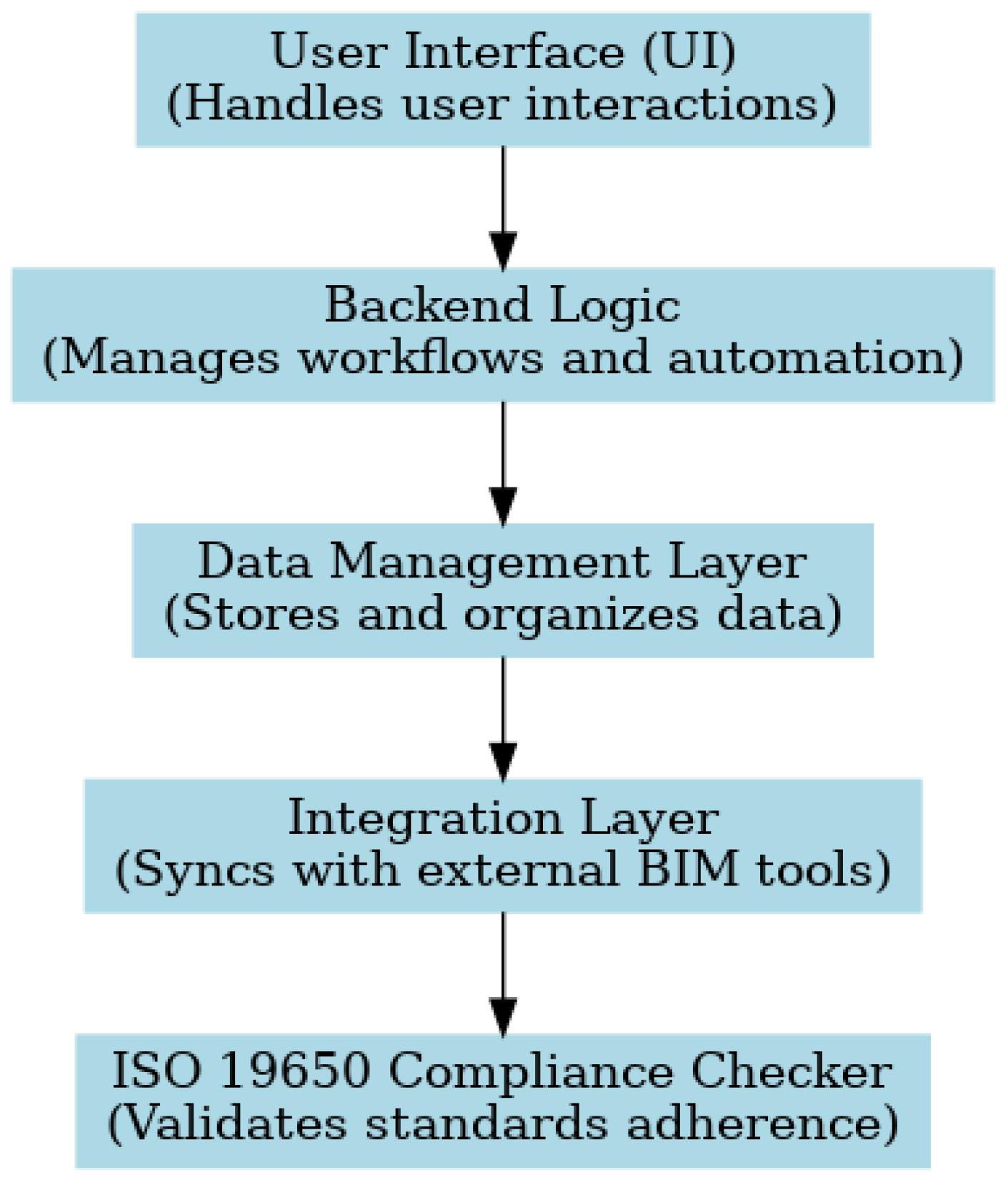
- The Platform Architecture Diagram highlights the platform's layered structure, showcasing how its components work together to ensure seamless workflows and compliance with ISO 19650 standards as in Figure 1.
- The Key Workflow Diagram maps the step-by-step process of creating a standardized BEP, emphasizing structured inputs, stakeholder collaboration, and accuracy in outputs.
- The User Interface Workflow Diagram captures the user journey, from authentication to real-time collaboration, ensuring an intuitive and efficient user experience.
These diagrams serve as visual aids to understand the platform's core principles and their application in streamlining BIM workflows. Each diagram is paired with a detailed description, offering insights into its role within the broader system.
4.4.1. Platform Architecture Diagram with Labels
Figure 1 outlines the architecture of the proposed BIM Execution Plan (BEP) platform. It demonstrates the platform's layered design, starting with the User Interface (UI), which facilitates user interactions. The Backend Logic automates workflows and manages processes, while the Data Management Layer handles data organization and version control. The Integration Layer ensures seamless synchronization with external BIM tools like Revit and Navisworks. Lastly, the ISO 19650 Compliance Checker validates that all workflows align with international standards, ensuring project compliance.
Figure 1.
Platform Architecture Diagram.
4.4.2. Key Workflow Diagram with Labels
Figure 2 illustrates the step-by-step process for creating a standardized BIM Execution Plan (BEP) using the platform. It begins with Inputting Project Details, followed by defining Stakeholders and Roles, establishing Project Milestones, and configuring BIM Model Specifications such as LOD and tolerances. The workflow then applies Standardized Naming Conventions to ensure consistency before generating and reviewing the final BEP in the Preview and Finalize step. This structured approach ensures efficiency and accuracy in BEP creation.
4.4.3. User Interface Workflow Diagram
Figure 3 illustrates the user interaction flow within the platform. Starting at the Login Screen for user authentication, it progresses to the Dashboard, which provides an overview of active projects. The Project Creation Form allows users to input detailed information step-by-step. Through the Collaboration Tools, team members can share data and collaborate in real-time. Finally, the BEP Preview module enables users to view, edit, and export finalized BIM Execution Plans, ensuring a seamless and user-friendly experience.
4.5. Data Analysis
The data collected from the platform assessment and expert survey were analyzed using a mixed-methods approach to provide a robust evaluation of the platform’s effectiveness. Descriptive statistics summarized key quantitative metrics, including user satisfaction, ease of use, and improvements in collaboration and BEP creation efficiency. These statistics offered numerical insights into the platform's performance and enabled comparison across assessment categories.
For qualitative data, a thematic analysis was employed to identify recurring themes and insights from expert feedback. Responses were coded to reveal patterns in areas such as miscommunication reduction, real-time collaboration enhancement, and ISO 19650 compliance. Key themes were categorized under usability, collaboration, customization, and data management, providing a deeper understanding of the platform’s strengths and areas for improvement.
The combination of quantitative metrics and qualitative insights ensured a comprehensive evaluation. Quantitative data provided measurable indicators of platform performance, while qualitative feedback offered contextual depth, illustrating the platform’s impact on project outcomes, team coordination, and BEP standardization.
4.6. Workflow Steps in Project Creation
4.6.1. Project Creation
- Input Project Details: Users enter basic project information, including the project name, location, scope, Level of Detail (LOD), and project stage (Design or Construction). Users also select whether project data will be managed in the cloud or offline (CDE).
- Add Project Image: An optional feature to upload a project image for easy identification and categorization.
4.6.2. Stakeholders Information
Users provide details about key stakeholders, including architects, engineers, contra tors, and other relevant parties. The platform facilitates role assignments and clarifies responsibilities, ensuring each participant understands their involvement and contributions.
4.6.3. Document Revision History
This step enables effective version control by allowing users to track document revisions, ensuring changes to the BEP or project plans are logged. It also supports easy access to previous document versions if needed.
4.6.4. Resource Management
Users specify project resources, such as software, personnel, and hardware requirements, to ensure that all necessary resources are in place prior to project commencement.
4.6.5. Project Milestones
Users define key project milestones to serve as checkpoints throughout the project lifecycle, allowing progress tracking against defined objectives.
4.6.6. Deliverables Setup
Users define deliverables expected at various project stages, such as data sets, model outputs, reports, or construction documentation, with each deliverable linked to a specific phase of the project.
4.6.7. BIM Uses
The platform allows users to specify intended BIM applications, such as design authoring, clash detection, or facility management, to outline how BIM will be utilized throughout the project.
4.6.8. Accuracy & Tolerance
Users set the accuracy and tolerance requirements for BIM models, ensuring alignment with project specifications and construction tolerances.
4.6.9. Model Breakdowns
The user defines the breakdown structure for BIM models, such as by building components, systems, or spatial zones, to facilitate structured data extraction in line with project requirements.
4.6.10. Naming Conventions
A standardized naming convention is established for all project files and models to ensure clarity and consistency in documentation and data exchange.
4.6.11. Project Units
Users select the measurement units (metric or imperial) to be used, ensuring consistency across all stakeholders and reducing the risk of miscommunication or errors.
4.6.12. Technical Requirements
Technical specifications for software, hardware, and BIM standards are outlined to ensure compatibility across team members' tools, enhancing efficiency and minimizing technical issues.
4.13. Preview & Finalize BIM Execution Plan
Once all steps are complete, the platform allows the user to preview the full BIM Execution Plan. Final adjustments can be made before submitting the BEP for approval or sharing it with the project team.
This structured workflow ensures that all essential project data is captured, standardized, and aligned with industry best practices, enhancing the efficiency and reliability of BIM implementation.
5. Validation and Verification
To validate the proposed BIM Execution Plan (BEP) platform, two diverse construction projects were selected: O-West Compound in Sheikh Zayed City and the Solar Boat Restoration Project at the Egyptian Museum. These projects represent distinct scales and complexities, providing a robust evaluation of the platform’s adaptability and performance.
5.1. Selection Rationale
5.1.1. O-west Project
Project Overview:
The O-West Compound is a medium-scale residential development located in Sheikh Zayed City, Egypt. Spanning 20 hectares, the project includes the construction of housing units, recreational areas, and supporting infrastructure. The total budget was approximately 6 billion Egyptian pounds, with a planned duration of 48 months.
Stakeholders Involved:
The project brought together architects, structural engineers, MEP consultants, and contractors, with a total team size of 45. It was managed by a leading Egyptian real estate developer.
BIM Uses:
- Modeling Authoring: Creation of accurate 3D models for all disciplines.
- Coordination: Detection and resolution of clashes between systems.
- BOQ: Automated quantity takeoff for cost estimation.
- IFC Drawings: Interoperable formats for collaboration.
- Shop Drawings: Generation of detailed drawings for construction.
- 4D: Time simulations for construction scheduling.
- 5D: Integration of cost estimation with project schedules.
- VR: Virtual reality walkthroughs for client presentations.
- Facility Management: Integration of BIM data for operational use post-construction.
- Challenges Encountered:
- Coordinating workflows across geographically dispersed teams.
- Ensuring compliance with ISO 19650 for data exchange and naming conventions.
- Managing multiple revisions and maintaining version control for BIM models.
The O-West Compound was selected for its typical residential nature, which allowed the platform to showcase its effectiveness in streamlining standard construction workflows while managing moderate complexity.
Figure 4.
O-West Project photos.

5.1.2. Solar Boat Project
Project Overview:
The Solar Boat Project is a heritage restoration initiative at the Egyptian Museum, volving the preservation of an ancient wooden solar boat. The project was technically demanding, requiring precise coordination among specialists. The budget was approximately $15 million Dollar, with a duration of 60 months.
Stakeholders Involved:
Key stakeholders included museum experts, archaeologists, conservators, structural engineers, and government bodies, with a core team of 30 members.
BIM Uses:
The platform was utilized for advanced BIM applications, including:
- Modeling Authoring: Development of accurate 3D models.
- Coordination: Interdisciplinary clash detection and resolution.
- BOQ: Quantity takeoff and cost tracking.
- IFC Drawings Review: Ensuring interoperable formats align with project standards.
- LOD 350: Detailed modeling for construction and assembly.
- Shop Drawings: High-detail drawings for execution.
- As Built: Documentation of final project conditions.
- Laser Scanning: Integration of point cloud data for accurate modeling.
- AIM: Asset information modeling for managing museum resources.
Challenges Encountered:
- Handling sensitive historical data with precision.
- Managing a diverse team with varying levels of BIM expertise.
- Aligning with strict heritage preservation standards and ISO 19650 compliance.
This project was chosen for its technical complexity and stakeholder diversity, providing an ideal environment to evaluate the platform’s capabilities in real-time collaboration, advanced compliance verification, and managing large datasets.
Figure 5.
Solar Boat Project photos.

5.2. Expert Survey Validation
A structured survey was conducted with 15 BIM experts, including project managers, engineers, and architects from the Solar Boat and O-West projects. These experts, who possessed substantial experience in BIM workflows, were tasked with evaluating the platform based on its usability, adaptability, and data management capabilities. This survey provided key insights into the platform’s performance across various project types and scales.
Key feedback elements included:
- Ease of Use: Experts noted the platform’s intuitive interface, which simplified BEP creation for users across different technical levels.
- Customization and Flexibility: The platform’s adaptability in enabling tailored BEP frameworks for different project requirements was highly valued, ensuring compliance with industry standards while accommodating unique project needs.
- Collaboration Tools: Real-time collaboration capabilities were praised for facilitating seamless communication across geographically dispersed teams, ensuring all stakeholders had timely access to the latest project data.
- Data Management and Compliance: The platform’s automated document tracking and version control features were recognized as major improvements over manual workflows, enhancing data consistency and regulatory compliance.
5.3. Platform Testing and Verification Through Case Studies
To further validate the platform's capabilities, it was utilized in two separate projects—one on a smaller scale and one on a larger scale—to evaluate its performance in managing different levels of complexity.
- The O-West Compound: The platform streamlined the process by utilizing pre-established templates that could be tailored to meet the project's specific requirements. Furthermore, it streamlined the oversight of project milestones, document modifications, and deliverables. The utilization of collaboration tools proved to be particularly advantageous in this project, facilitating the seamless collaboration of team members situated in diverse locations. The use of automated progress reports helped ensure that the project stayed on track, significantly reducing the administrative workload for project managers by automating the monitoring and reporting processes. The Solar Boat Project: The platform was assigned the responsibility of developing a meticulously comprehensive BIM Execution Plan (BEP) to handle the intricacies of the project effectively. The software demonstrated exceptional proficiency in managing extensive data sets and offering reliable version control for the numerous documents and revisions essential in a project of high sensitivity. In addition, the platform's real-time collaboration features were crucial for ensuring that all parties involved had current access to project plans and information. The platform's successful application to these two projects showcased its versatility and efficacy in managing workflows of varying complexity. The O-West Compound benefited from the platform's capacity to optimize the creation of Break-Even points (BEP) and effectively manage project tasks, ensuring efficiency. Similarly, the Solar Boat Project relied on the platform's sophisticated data management and collaboration tools to successfully handle the project's intricate nature.
5.4. Ongoing Feedback and Continuous Improvement
During the validation process, project stakeholders were systematically solicited for feedback at different stages of both projects. This feedback was essential in pinpointing areas for improvement, specifically in relation to enhancing the user interface and integrating data functionalities. The platform was regularly updated in response to this feedback, ensuring that it consistently met the changing requirements of its users. The iterative enhancement process facilitated the refinement of the platform's functionalities, specifically its collaboration tools, and compliance verification capabilities. The O-West Compound and Solar Boat Projects confirmed that the platform was a valuable tool for ensuring efficient BIM project management. The capacity to automate monotonous tasks, such as document management and compliance tracking, significantly diminished project teams’ workloads. Moreover, the platform's ability to facilitate real-time collaboration and its robust data management capabilities ensured that all stakeholders remained in sync, ultimately leading to the successful completion of both projects.
6. The result of the validation and verification processes
which involved expert surveys and practical application on the O-West Compound and Solar Boat Project, produced significant findings regarding the efficacy of the BIM Execution Plan platform. The evaluations have confirmed that the platform is capable of streamlining BEP creation, improving project collaboration, and ensuring compliance with international standards like ISO 19650. Below are the primary findings of the investigation.
6.1. Efficiency in BEP Creation
The platform significantly improved the efficiency of BEP creation. On average, experts reported a 30% reduction in time spent creating BEPs. In this context, the time savings were particularly valuable for larger projects with more complex data management needs. For example, results show that the Solar Boat Project at the Egyptian Museum experienced a 28% reduction in time, while the O-West Compound saw a 25% reduction as mentioned in Table 1.
6.1.1. Enhanced Collaboration
The BIM Execution Plan platform demonstrated its strength in fostering collaboration across geographically dispersed teams. In both case studies, the platform’s real-time data sharing and collaboration tools allow for seamless communication between stakeholders, ensuring that all team members always have access to the latest project information. This was particularly valuable in the Solar Boat Project, where multiple stakeholders, including engineers, conservators, and government officials, needed to remain aligned on project developments. Survey results showed that 90% of respondents found the collaboration tools significantly improved team communication and coordination, reducing delays caused by miscommunication or outdated information [7,13].
6.2. ISO 19650 Compliance
The platform’s built-in compliance features were another key success factor. For both projects, compliance with ISO 19650 standards was ensured automatically, reducing the burden of manual compliance checks. The platform's ability to track document revisions, manage approvals, and verify adherence to international standards was particularly well-received by experts. In the Solar Boat Project, a project of cultural and historical significance, the automatic compliance verification ensured that all BIM workflows and data management followed internationally recognized standards, contributing to the project’s successful execution without regulatory issues [4,27].
6.3. Customizability and Flexibility
The platform's flexibility in adapting to different project requirements was one of the most notable findings from the case studies. In the O-West Compound project, the relatively straightforward BEP setup was easily customized to fit the needs of the smaller residential project, while the platform provided more complex customization options for the Solar Boat Project. Experts noted that the ability to tailor workflows, roles, and data exchange protocols to fit the unique needs of each project was a significant advantage. The platform’s versatility was confirmed by 85% of respondents, who indicated that the customizability of BEPs significantly contributed to more effective project management [1,5].
6.4. Improved Data Management
A consistent finding across both projects was the platform’s capability to manage large volumes of project data efficiently. In the Solar Boat Project, where substantial documentation and BIM model revisions were required, the platform’s version control and document management features were crucial in preventing errors caused by outdated information. The ability to maintain an organized, up-to-date repository of project documents and BIM models ensured that stakeholders had access to the correct information, minimizing the risk of miscommunication. The O-West Compound project also benefited from these features, as smaller projects often face difficulties in managing deliverables and document versions manually [9,30]
6.5. Reduction in Errors and Rework
The automated checks embedded in the platform led to significant reductions in project errors and rework. In both case studies, errors were reduced by around 20%. Experts attributed this to the platform’s real-time collaboration tools and automated compliance features, ensuring all stakeholders had access to the latest project information. The Solar Boat Project benefited most, with a round 23% reduction in rework attributed to fewer miscommunications as mentioned in Table 2.
6.6. User Satisfaction
Overall user satisfaction was high, with 80% of experts reporting that the platform significantly improved project efficiency and collaboration. The user-friendly interface and automation tools were consistently cited as reasons for increased satisfaction, particularly in complex projects like the Solar Boat Project. Users from both case studies appreciated the platform’s ability to reduce the administrative burden on project managers while maintaining compliance and transparency [11].
7. Enhanced Collaboration and communication
The BEP platform demonstrated its strength in fostering collaboration across geographically dispersed teams. In both case studies, the platform’s real-time data sharing and collaboration tools allow for seamless communication between stakeholders, ensuring that all team members always have access to the latest project information. This was particularly valuable in the Solar Boat Project, where multiple stakeholders, including engineers, conservators, and government officials, needed to remain aligned on project developments. Survey results showed that 90% of respondents found that collaboration tools significantly improved team communication and coordination. This improvement resulted in a reduction of delays caused by miscommunication or outdated information [12,22].
8. ISO 19650 Compliance
The platform’s built-in compliance features were another key success factor. For both projects, compliance with ISO 19650 standards was ensured automatically, reducing the burden of manual compliance checks. The platform's ability to track document revisions, manage approvals, and verify adherence to international standards was particularly well-received by experts. In the Solar Boat Project, a project of cultural and historical significance, the automatic compliance verification ensured that all BIM workflows and data management followed internationally recognized standards, contributing to the project’s successful execution without regulatory issues [4,33].
9. Customizability and Flexibility
The platform's flexibility in adapting to different project requirements was one of the most notable findings from the case studies. In the O-West Compound project, the relatively straightforward BEP setup was easily customized to fit the needs of the smaller residential project, while the platform provided more complex customization options for the Solar Boat Project. Experts noted that the ability to tailor workflows, roles, and data exchange protocols to fit the unique needs of each project was a major advantage. The platform’s versatility was confirmed by 85% of respondents, who indicated that the customizability of BEPs significantly contributed to more effective project management [1,31].
10. Improvement on Data Management
A consistent finding across both projects shows that the developed platform possesses the capability to efficiently manage large volumes of project data. This conclusion underscores the platform's effectiveness in handling complex data sets, thereby enhancing overall project management processes. For example, in the Solar Boat Project, where substantial documentation and BIM model revisions were required, the platform’s version control and document management features were crucial in preventing errors caused by outdated information. The ability to maintain an organized, up-to-date repository of project documents and BIM models ensured that stakeholders had access to the correct information, minimizing the risk of miscommunication. In addition, the O-West Compound project also benefited from these features, A consistent finding across both projects showed that the developed platform efficiently managed large volumes of project data. This was particularly evident in the Solar Boat Project, where substantial documentation and frequent BIM model revisions required a robust version control system. The platform’s ability to maintain an organized, up-to-date repository of project documents and models minimized the risk of miscommunication, as stakeholders had access to the latest information. These findings align with the documented benefits of version control in BIM platforms, as version control helps to prevent errors from outdated information. The O-West Compound project, though smaller, also benefited from these features, as managing deliverables and document versions manually can be challenging even for less complex projects. This further supports findings from studies on the importance of document management in ensuring smooth project workflows and minimizing rework.
11. Reduction in Project’s Errors and Rework
Another important finding was the significant reduction in project errors and rework. In both projects, the platform’s automated document management and real-time collaboration features allowed stakeholders to identify and resolve potential issues earlier in the project lifecycle. The survey data revealed that 75% of the experts believed that the platform contributed to a reduction in rework by catching errors early, particularly through its automated checks and transparent communication channels. In the Solar Boat Project, the reduction in errors helped maintain the integrity of the restoration process, while the O-West Compound benefited from minimized construction delays due to fewer mistakes in the planning stages [6,12].
12. User Satisfaction
Overall user satisfaction was high, with 80% of experts reporting that the platform significantly improved project efficiency and collaboration. The user-friendly interface and automation tools were consistently cited as reasons for increased satisfaction, particularly in complex projects like the Solar Boat Project. Users from both case studies appreciated the platform’s ability to reduce the administrative burden on project managers while maintaining compliance and transparency [11].
13. Statistical Analysis
A survey was conducted with 15 Industry experts who possess knowledge of Building Information Modeling (BIM) and its standards to validate and verify the effectiveness of the BIM Execution Plan (BEP) platform. The input from these specialists offered valuable perspectives on the user-friendliness, accuracy of content, and overall effectiveness of the platform. The survey included both qualitative and quantitative questions, addressing aspects such as user experience, platform accuracy, and adherence to international standards.
14. Profile of e-survey respondents
Fourteen point one the participants consisted of a heterogeneous group of professionals:
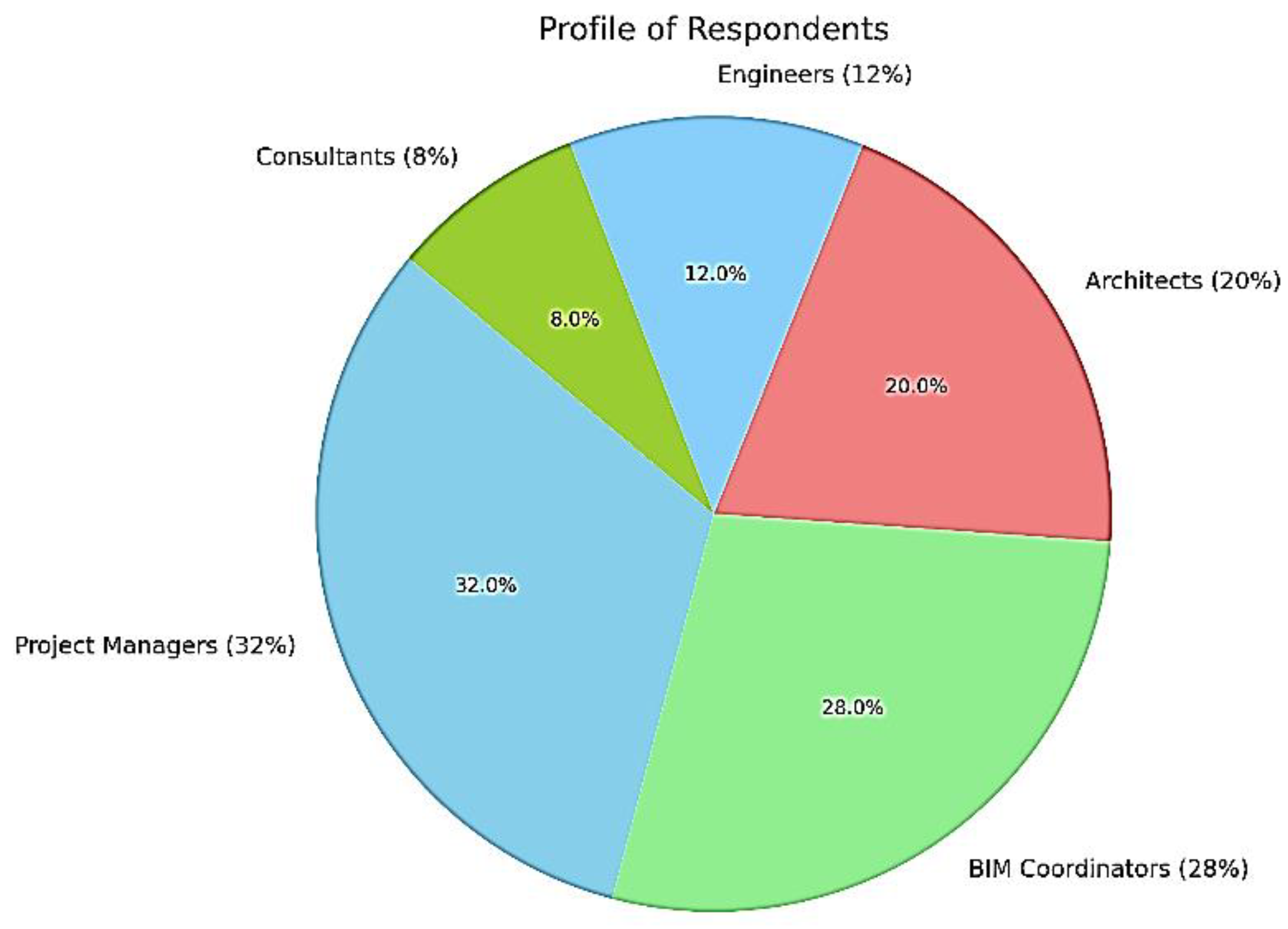
The job titles in this field are primarily project managers (32%), BIM coordinators (28%), architects (20%), engineers (12%), and consultants (8%).
14.1 Regarding BIM Execution Plans (BEPs), 48% of the participants indicated a high level of familiarity, 36% were moderately familiar, and 16% had some level of familiarity as shown in Figure 3. All respondents indicated that they were familiar with BEPs.
Figure 5.
Profile of the respondents.
14.2. Platform Usability
The platform's usability was evaluated using a Likert scale. The findings demonstrated a robust and favorable reaction to the platform's interface and navigation.
- Navigation Simplicity: 60% of participants reported that the platform was "Very Easy" to navigate, 28% found it "Easy," while only 12% found it "Neutral" or encountered minor difficulties, as shown in Figure 6.
- User-friendliness: Most respondents, 72%, found the platform to be intuitive and user-friendly. 20% of respondents had no strong opinion, while 8% expressed dissatisfaction.
Expert Survey Details
A structured survey was conducted with 15 BIM experts from the O-West and Solar Boat projects. The participants’ demographics are summarized in Table 1.

Table 1.
Expert Survey Demographics.
| Parameter | Details |
| Years of Experience | Average: 10 years |
| Roles in BIM Projects | Project Managers (30%), BIM Coordinators (40%), Architects (20%), Engineers (10%) |
| ISO 19650 Familiarity | High (50%), Moderate (30%), Low (20%) |
The survey gathered quantitative and qualitative feedback on platform usability, adaptability, and data management capabilities.
14.3. Break-even point (BEP) Content and Accuracy
This section assessed the precision and thoroughness of the platform in producing BEP
- Content Coverage: 88% of participants reported that the platform included all the essential sections needed for a typical BEP, while 12% mentioned partial coverage, specifically lacking project-specific information like sustainability metrics and asset management.
- Content Accuracy: 56% of participants deemed the generated BEP content as "Very Accurate," while 32% considered it "Accurate," and the remaining 12% remained neutral as shown in Figure 7.
14.4. Enhancing Platform Efficiency and Ensuring Compliance with Standards
The main objective of the platform was to enhance the effectiveness of generating BEPs while guaranteeing adherence to international BIM standards, such as ISO 19650.
- Efficiency Enhancement: A significant majority of respondents (68%) strongly agreed that the platform greatly improved the efficiency of creating BEPs. Additionally, 24% agreed with this statement, while only 8% remained neutral.
- Standards Compliance: A significant majority of experts, 76%, acknowledged that the platform is by international standards, specifically ISO 19650. Nevertheless, 24% of respondents proposed enhancements in domains such as COBie and Common Data Environment (CDE) integration.
14.5. Collaboration and Communication
Another important metric was the platform's capacity to enable collaboration among project stakeholders:
- Collaboration Enhancement: The platform's support for collaboration was rated as "Excellent" by 64% of respondents, with an additional 24% rating it as "Good." This indicates a strong performance in facilitating collaboration.
- Recommendations for Enhancement: Although most respondents commended the platform's collaboration tools, a few recommended incorporating advanced real-time communication capabilities and improving integration with current project management tools.
14.6. Measurement of Overall Satisfaction and Recommendation
The platform's overall satisfaction was assessed using a rating scale, as well as the probability of recommending it to others in the construction industry.
- The platform received a 68% overall satisfaction rating, with most respondents (68%) being "Very Satisfied." 20% of respondents were "Satisfied," and 12% had a "Neutral" opinion.
- Probability of Recommendation: The average likelihood of recommending the platform to other professionals was 8.6 on a scale of 1 to 10. 80% of respondents rated their recommendation likelihood between 8 and 10 as shown in Figure 8.
14.7. Qualitative Feedback Respondents offered qualitative feedback regarding both positive aspects and potential areas for improvement:
- Advantages: The platform was praised by experts for its comprehensive and easy-to-follow instructions and intuitive interface.
Areas for improvement were identified, including the need for improved support for project-specific customization, stronger integrations with cloud-based collaboration platforms, and enhanced report-generation features.
15. Conclusions
The proposed BIM Execution Plan (BEP) automation platform demonstrates its significant potential to address the critical challenges in managing BEPs for complex construction projects. Through rigorous validation, including its application in the O-West Compound and Solar Boat Project, the platform has proven to be a valuable tool in streamlining BEP creation, enhancing collaboration, and ensuring compliance with international standards such as ISO 19650.
Key findings highlight the platform’s ability to reduce BEP creation time by up to 30%, significantly decreasing manual effort while improving efficiency and accuracy. Its integration of automated compliance verification ensures adherence to ISO 19650, simplifying the often-tedious process of manual checks and improving overall project governance. Furthermore, the platform’s robust collaboration tools foster seamless communication among geographically dispersed teams, reducing delays caused by miscommunication and outdated information.
The adaptability of the platform to projects of varying scales and complexities, from residential developments to culturally significant restoration initiatives, underscores its versatility. Features such as dynamic templates, real-time data synchronization, and customization capabilities make it a highly effective solution for managing the intricacies of modern BIM workflows.
Overall, the platform's contributions extend beyond operational improvements. By aligning BEP workflows with global standards and providing innovative tools for real-time collaboration, it paves the way for more efficient, transparent, and compliant project execution. These advancements mark a critical step forward in leveraging technology for the digital transformation of the construction industry, making the platform an indispensable resource for industry professionals.
Emphasized Impacts:
- Enhanced Efficiency: Significant time savings and error reduction in BEP processes.
- Improved Collaboration: Seamless communication across multidisciplinary teams.
- ISO 19650 Compliance: Automated adherence to international standards, reducing compliance-related risks.
Future research should focus on extending the platform’s capabilities, including the integration of predictive analytics, cross-platform interoperability, and advanced sustainability metrics. These enhancements will further solidify the platform's role as a cornerstone for advancing BIM processes in the global construction industry.
Limitations:
While this methodology provides a robust framework for evaluating the platform, it is important to acknowledge certain limitations. The platform assessment was conducted in a simulated project environment, which may not fully capture the complexities of real-world projects. Additionally, the expert survey sample size, while sufficient for exploratory purposes, may limit the generalizability of the findings. Future studies could expand on this by involving a larger and more diverse group of participants.
16. Future Research and Recommendations
Future research should focus on expanding the platform's capabilities and applicability in various areas:
- Scalability for Mega Projects: Investigating how the platform can handle large infrastructure and urban planning projects with increased complexity and longer timelines.
- AI Integration for Predictive Analytics: Exploring how AI can enhance predictive analytics for risk management in BIM, including cost overruns and compliance.
- Life Cycle Assessment (LCA) and Sustainability: Focusing on incorporating sustainability metrics and supporting green building certifications like LEED or BREEAM.
- User Experience (UX) Research: Enhancing the platform’s interface for users with varying levels of technical expertise, including non-technical stakeholders.
- Cross-Platform Integration: Improving interoperability with other BIM and construction management platforms to ensure seamless workflows.
- Training and Support Resources: Expanding training materials for users of all BIM experience levels to increase platform adoption.
- Customization for International Markets: Enhancing customization features to accommodate regional BIM standards and regulations.
- AI-Driven Resource Optimization: Integrating AI tools to optimize resource management, such as labor forecasting and material procurement.
- Continuous Feedback for Improvement: Implementing user feedback loops to guide the platform’s ongoing development.
- Expanded Collaboration Features: Strengthening collaboration tools, especially for remote teams and international projects.
Author Contributions
Conceptualization, Ahmed Mohammed Abdelalim and Alaa Sherif; Data curation, Ahmed Mohammed Abdelalim and Kamal Shawky; Formal analysis, Ahmed Mohammed Abdelalim and Kamal Shawky; Funding acquisition, Ahmed Mohammed Abdelalim, Mohamed Salem and Manal Al-Adwani; Investigation, Ahmed Mohammed Abdelalim and Kamal Shawky; Methodology, Ahmed Mohammed Abdelalim and Kamal Shawky; Project administration, Ahmed Mohammed Abdelalim; Resources, Ahmed Mohammed Abdelalim and Mohamed Salem; Software, Ahmed Mohammed Abdelalim and Kamal Shawky; Supervision, Ahmed Mohammed Abdelalim and Alaa Sherif; Validation, Ahmed Mohammed Abdelalim, Kamal Shawky, Mohamed Salem, Manal Al-Adwani and Alaa Sherif; Visualization, Ahmed Mohammed Abdelalim, Kamal Shawky, Mohamed Salem and Manal Al-Adwani; Writing – original draft, Ahmed Mohammed Abdelalim and Kamal Shawky; Writing – review & editing, Ahmed Mohammed Abdelalim, Kamal Shawky, Mohamed Salem, Manal Al-Adwani and Alaa Sherif.
Funding
No Funding is available.
Data Availability Statement
The raw data supporting the conclusions of this article will be made available by the corresponding authors upon request.
Conflicts of Interest
The authors declare no conflicts of interest.
References
- Yang, J.-B., & Chou, H.-Y. (2018). Mixed approach to government BIM implementation policy: An empirical study of Taiwan. Journal of Building Engineering, 20, 337-343. [CrossRef]
- Abdelalim, A. M., & Abo Elsaud, Y. (2019). Integrating BIM-based simulation technique for sustainable building design. In Project Management and BIM for Sustainable Modern Cities (pp. 209-238). Springer International Publishing. [CrossRef]
- Çekin, E., & Seyis, S. (2020). BIM Execution Plan based on BS EN ISO 19650-1 and BS EN ISO 19650-2 Standards. In Proceedings of the 6th International Project and Construction Management Conference, Istanbul, Türkiye.
- Galitskaya, V. (2019). Building Information Modeling Execution Plans: Implementation and Challenges. Journal of Construction Engineering and Management, 145, 04019012. [CrossRef]
- Panagiotidou, N., Pitt, M., & Lu, Q. (2022). Building information modelling execution plans: A global review. Proceedings of the Institution of Civil Engineers - Smart Infrastructure and Construction, 176, 126-147. [CrossRef]
- Bain, D. (2019). UK BIM Survey 2019 Findings. National BIM Report. Retrieved from https://www.thenbs.com/knowledge/national-bim-report-2019.
- Akinradewo, O., Aigbavboa, C., Ikuabe, M., Adekunle, S., & Adeniyi, A. (2022). Unmanned aerial vehicles usage on South African construction projects: Perceived benefits. In Proceedings of the Modular and Offsite Construction (MOC) Summit, Edmonton, AB, Canada, 27-29 July 2022 (pp. 146-153).
- Barker, P. (2018). From UK to the World—Making BIM Work Internationally. National BIM Report. Retrieved from https://www.thenbs.com/knowledge/the-national-bim-report-2018.
- Cao, H., & Huang, M. (2023). Building Information Modeling Technology Capabilities: Operationalizing the Multidimensional Construct. Sustainability, 15, 14755. [CrossRef]
- Faraji, A., Homayoon Arya, S., Ghasemi, E., Rahnamayiezekavat, P., & Perera, S. (2024). Building Information Modeling (BIM), Blockchain, and LiDAR Applications in Construction Lifecycle. Buildings, 14, 919. [CrossRef]
- Antunes, P., & Elliott, M. (2022). The effective implementation of BIM requires a clear understanding of project goals, roles, and responsibilities. Proceedings of the Institution of Civil Engineers - Smart Infrastructure and Construction, 176, 45-67.
- Olbina, S., & Elliott, J. W. (2019). Contributing Project Characteristics and Realized Benefits of Successful BIM Implementation: A Comparison of Complex and Simple Buildings. Buildings, 9, 175. [CrossRef]
- Shawky, K. A., Abdelalim, A. M., & Sherif, A. G. (2024). Standardization of BIM Execution Plans (BEP) for Mega Construction Projects: A Comparative and Scientometric Study. Technology and Engineering, 12, 103-129. [CrossRef]
- Khedr, R., & Abdelalim, A. M. (2022). The Impact of Strategic Management on project performance of Construction Firms in Egypt. International Journal of Management and Commerce Innovation, 9, 202-211.
- Besné, A., Pérez, M. Á., Necchi, S., Peña, E., Fonseca, D., Navarro, I., & Redondo, E. (2021). A Systematic Review of Current Strategies and Methods for BIM Implementation in the Academic Field. Applied Sciences, 11, 5530. [CrossRef]
- Abdelalim, A. M. (2019). Risks Affecting the Delivery of Construction Projects in Egypt: Identifying, Assessing, and Response. In Project Management and BIM for Sustainable Modern Cities (pp. 125-154). Springer International Publishing. [CrossRef]
- Wu, W., & Issa, R. R. A. (2013). Development of a BIM-based automated construction safety checking system. Procedia Engineering, 85, 107-113. [CrossRef]
- Abu Bakar, A. R., Haron, A. T., & Rahman, R. A. (2021). Building Information Modelling Execution Plan (BEP): A Comparison of Global Practice. International Journal of Engineering and Technology Sciences, 7, 63-73. [CrossRef]
- Tavakol, M., & Dennick, R. (2011). Making sense of Cronbach’s alpha. International Journal of Medical Education, 2, 53-55. [CrossRef]
- George, D., & Mallery, P. (2003). SPSS for Windows Step by Step: A Simple Guide and Reference (11.0 Update, 4th ed.). Allyn & Bacon.
- Liu, Z., Gong, S., Tan, Z., & Demian, P. Immersive technologies-driven building information modeling (BIM) in the context of the metaverse. Buildings 2023, 13(6), 1559. [CrossRef]
- Babatunde, S. O., Ekundayo, D., Adekunle, A. O., & Bello, W. Comparative analysis of drivers to BIM adoption among AEC firms in developing countries. Journal of Engineering Design and Technology 2021. [CrossRef]
- Abdelalim, A.M.; Essawy, A.; Alnaser, A.A.; Shibeika, A.; Sherif, A. Digital Trio: Integration of BIM–EIR–IoT for Facilities Management of Mega Construction Projects. Sustainability 2024, 16, 6348. [CrossRef]
- Abdelalim, A.M.; Said, S.O.; Alnaser, A.A.; Sharaf, A.; ElSamadony, A.; Kontoni, D.-P.N.; Tantawy, M. Agent-Based Modeling for Construction Resource Positioning Using Digital Twin and BLE Technologies. Buildings 2024, 14, 1788. [CrossRef]
- Abdelalim, A.M.; Shawky, K.; Alnaser, A.A.; Shibeika, A.; Sherif, A. Developing Standard BIM Execution Plans for Complex Construction Projects. Appl. Sci. 2024, 14, 6614. [CrossRef]
- Abdelalim, A.M.; Al-Sabah, R.; Salem, M.; Said, S.O.; Tantawy, M.; Ezz Al-Regal, M.R. Variations and Claims in International Construction Projects in the MENA Region from the Last Decade. Buildings 2024, 14, 2496. [CrossRef]
- Ajayi, S. O., Oyebiyi, F., & Alaka, H. A. (2023). Facilitating compliance with BIM ISO 19650 naming convention through automation. Journal of Engineering, Design and Technology, 21(1), 108–129. [CrossRef]
- Vycital, M., & Jarský, C. (2020). An automated nD model creation on BIM models. Organization, Technology and Management in Construction, 11, 2218–2231. [CrossRef]
- Valinejadshoubi, M., Moselhi, O., Iordanova, I., Valdivieso, F., Shakibabarough, A., & Bagchi, A. (2024). The development of an automated system for a quality evaluation of engineering BIM models: A case study. Applied Sciences, 14, 3244. [CrossRef]
- Zhang, N., Wang, J., Al-Hussein, M., & Yin, X. (2022). BIM-based automated design of drainage systems for panelized residential buildings. International Journal of Construction Management. [CrossRef]
- Wu, S., Zhang, N., Xiang, Y., Wu, D., Qiao, D., Luo, X., & Lu, W.-Z. (2022). Automated layout design approach of floor tiles: Based on building information modeling (BIM) via parametric design (PD) platform. Buildings, 12, 250. [CrossRef]
- Kavaliauskas, P., Fernandez, J. B., McGuinness, K., & Jurelionis, A. (2022). Automation of construction progress monitoring by integrating 3D point cloud data with an IFC-based BIM model. Buildings, 12, 1754. [CrossRef]
- Zhang, C., Kumar, D., Li, H., Zhou, R., Lv, L., & Tian, J. (2023). Development of a BIM-enabled automated cost segregation system. Buildings, 13, 1805. [CrossRef]
Figure 2.
Platform Key workflow.
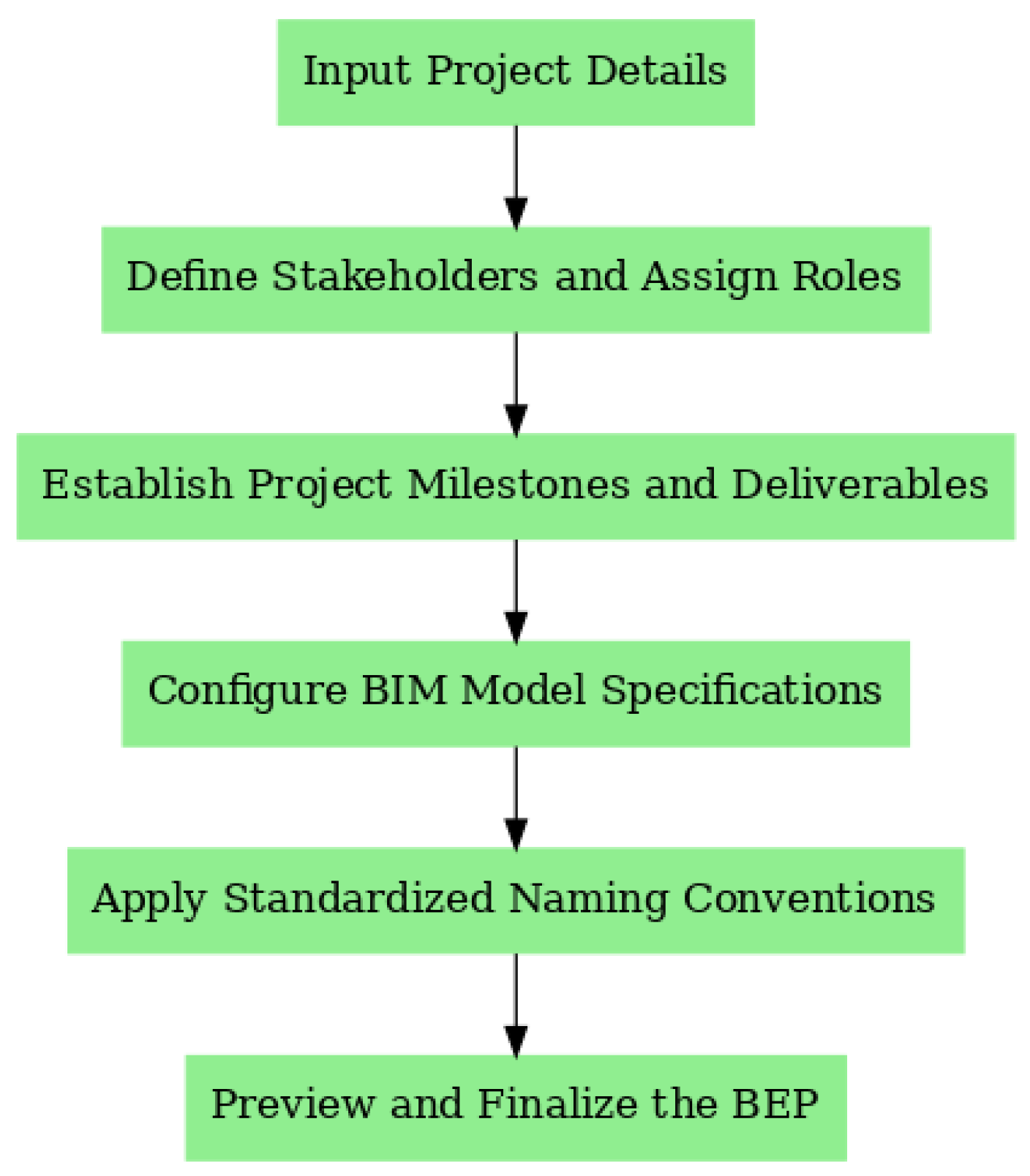
Figure 3.
Platformer user interface.
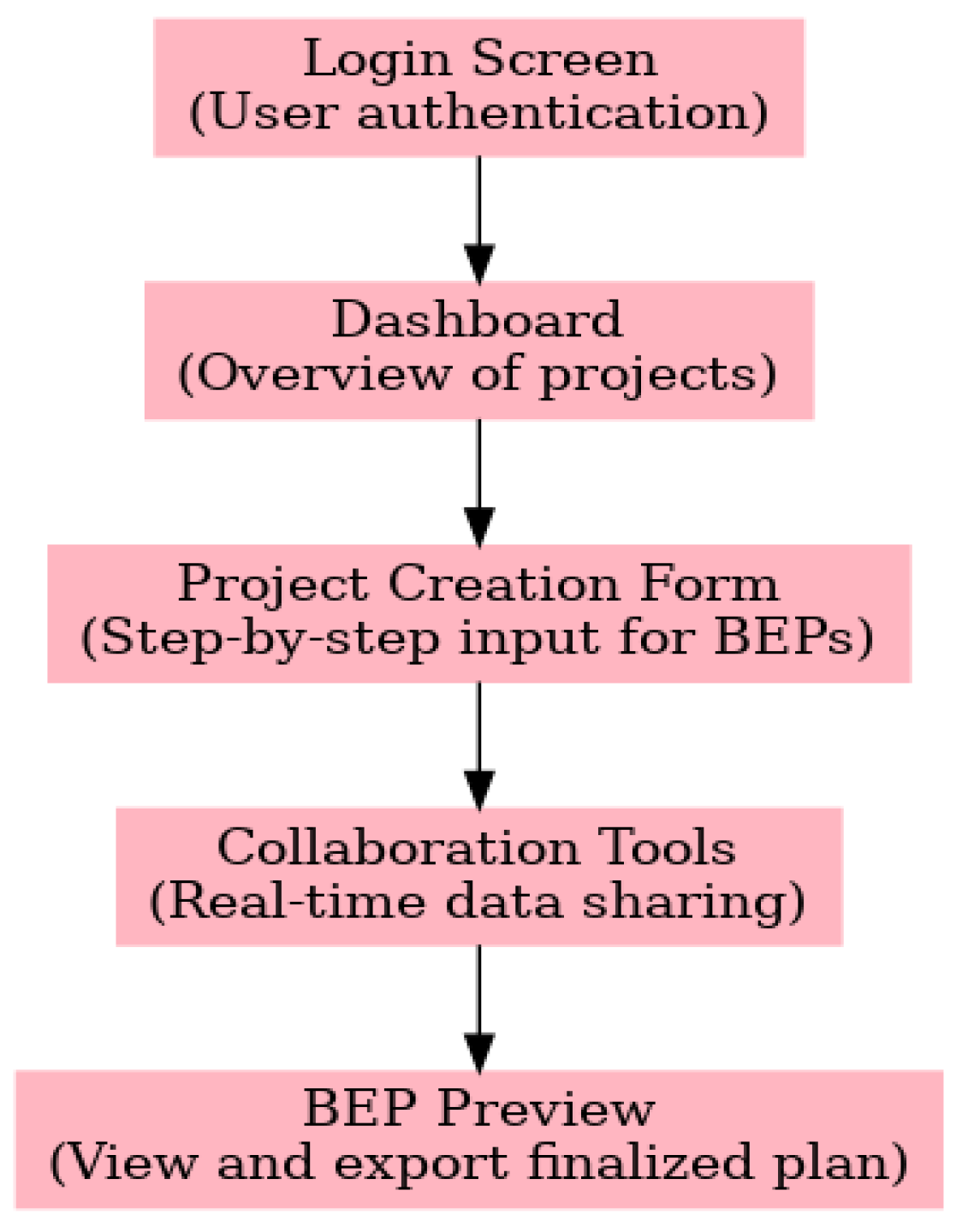
Figure 6.
Platform Usability.
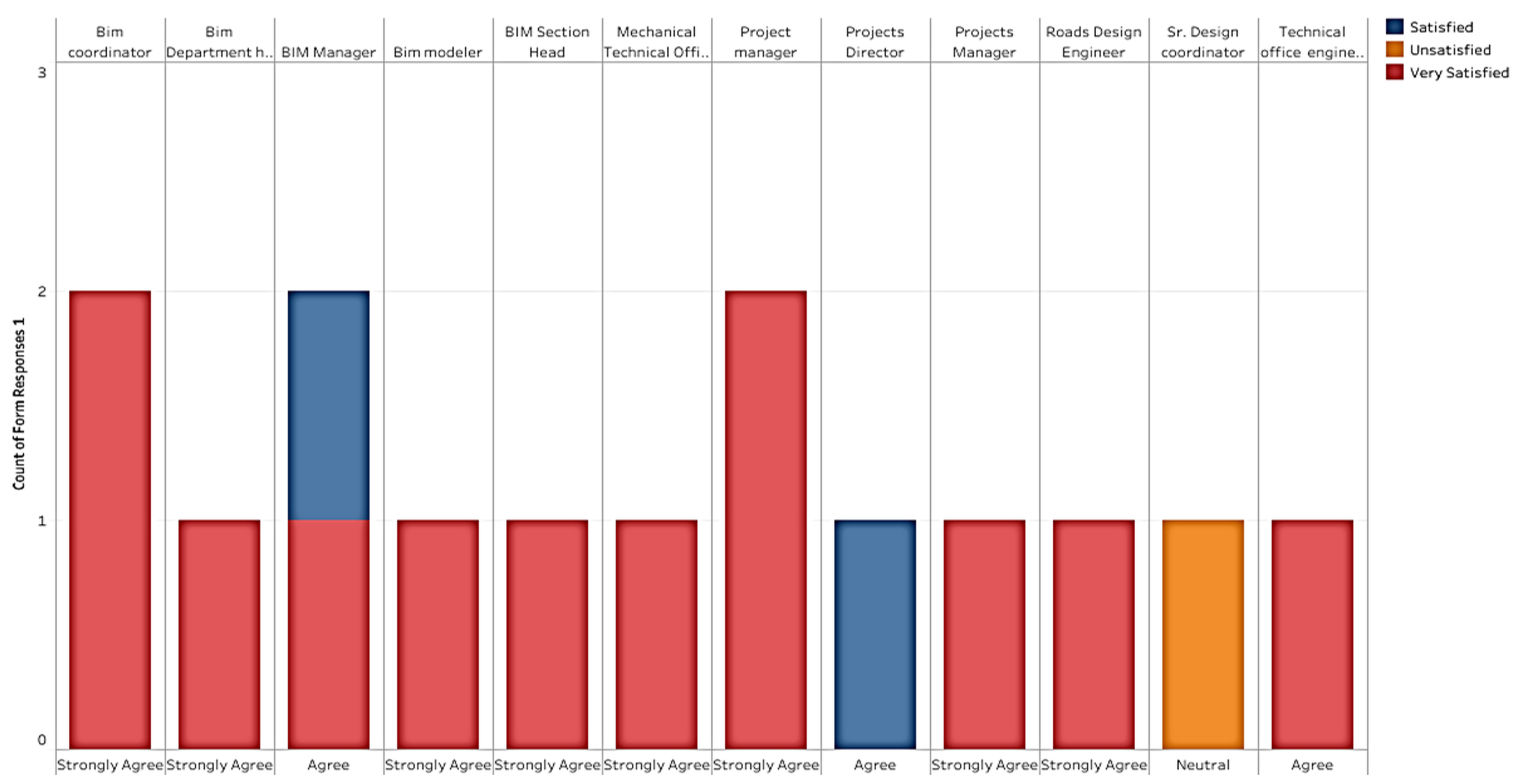
Figure 7.
BIM Execution plan platform Content and Accuracy.
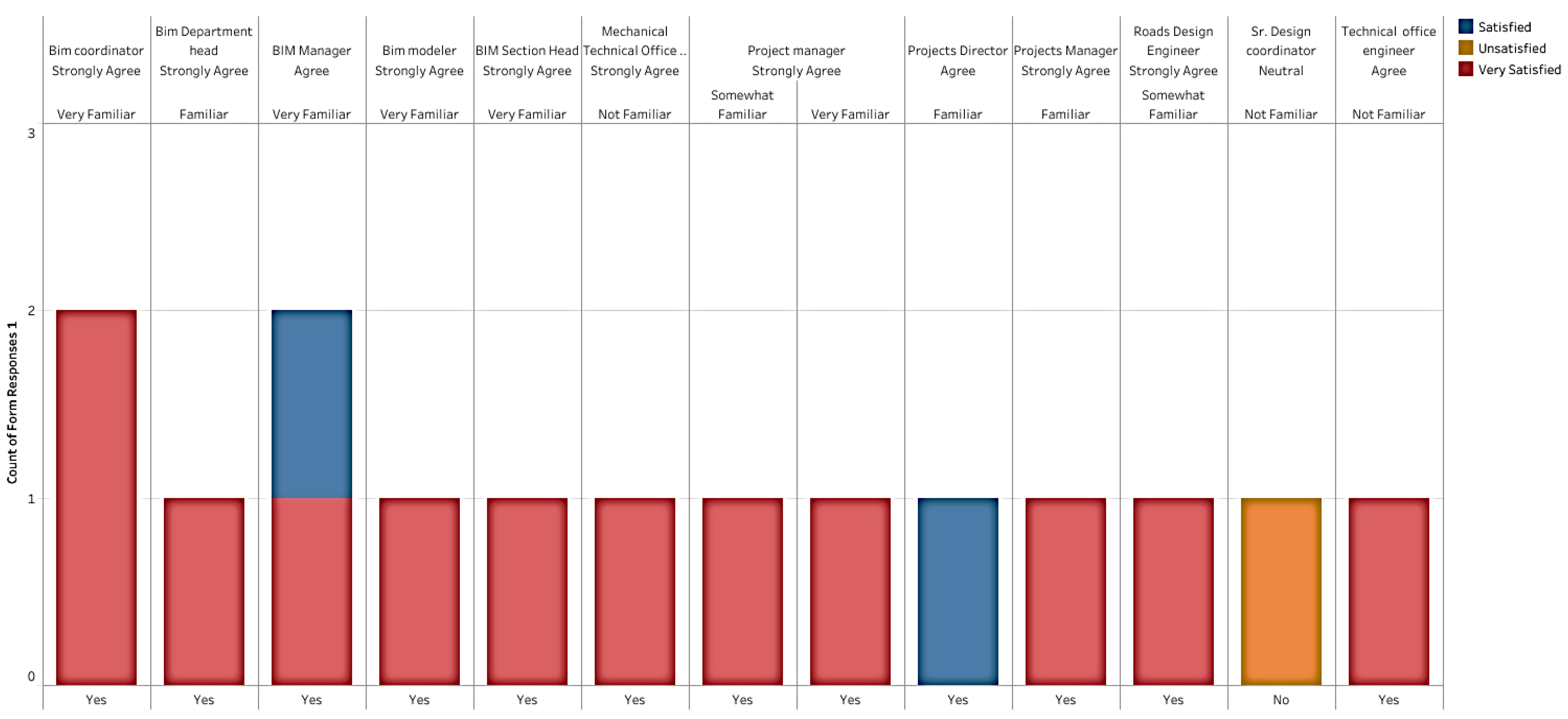
Figure 8.
Overall Satisfaction and Recommendation.
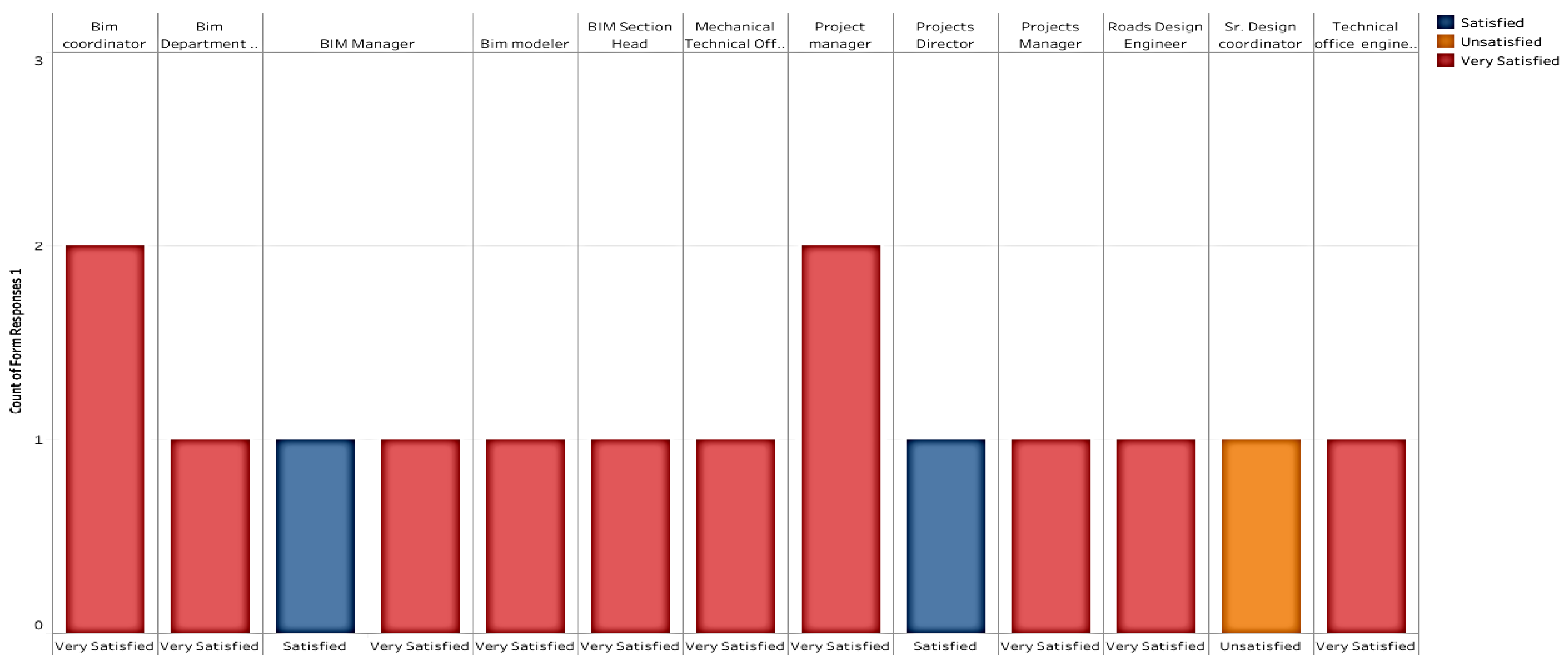
Table 1.
Time Reduction in BEP Creation using the BIM Execution Platform.
| Project | Time Reduction in BEP Creation |
| O-West Compound | Around 25% |
| Solar Boat Project | Around 28% |
Table 2.
Reduction in Errors and Rework after using BEP Platform.
| Project | Error Reduction | Rework Reduction |
| O-West Compound | 18% | 22% |
| Solar Boat Project | 21% | 25% |
Disclaimer/Publisher’s Note: The statements, opinions and data contained in all publications are solely those of the individual author(s) and contributor(s) and not of MDPI and/or the editor(s). MDPI and/or the editor(s) disclaim responsibility for any injury to people or property resulting from any ideas, methods, instructions or products referred to in the content. |
© 2024 by the authors. Licensee MDPI, Basel, Switzerland. This article is an open access article distributed under the terms and conditions of the Creative Commons Attribution (CC BY) license (http://creativecommons.org/licenses/by/4.0/).
Copyright: This open access article is published under a Creative Commons CC BY 4.0 license, which permit the free download, distribution, and reuse, provided that the author and preprint are cited in any reuse.


