

Submitted:
25 September 2024
Posted:
26 September 2024
You are already at the latest version
Abstract
This study investigates the impact of positive childhood experiences (PCEs) on the subjective well-being (SWB) of college students, with psychological resilience as a mediator. A total of 1104 students from four universities in Yunnan Province, China, participated in the study. Using the Positive Childhood Experiences Scale, the Connor-Davidson Resilience Scale (CD-RISC), and the Subjective Well-being Scale, data were collected and analyzed through descriptive statistics and mediation analysis using SPSS and the PROCESS macro. Results indicate that PCEs significantly enhance SWB, and this relationship is partially mediated by psychological resilience. Specifically, psychological resilience accounted for 49.4% of the mediating effect between PCEs and SWB. These findings highlight the importance of fostering resilience to improve well-being in educational contexts. The study provides practical implications for educational interventions aimed at promoting mental health and well-being among college students.
Keywords:
Positive Childhood Experiences
; Subjective Well-being
; Psychological Resilience
; College Students
; Mental Health
1. Introduction
Subjective well-being (SWB), as a crucial indicator of psychological health, reflects an individual’s overall evaluation of life satisfaction and emotional state [1]. Recent years have seen an increasing interest in SWB research due to its close ties to psychological health. High levels of SWB are not only linked to positive mental health but also significantly impact academic achievement, social relationships, and future career development [2]. However, surveys indicate that college students, particularly in China, exhibit lower levels of subjective well-being, facing challenges such as academic pressure, employment stress, and societal expectations, which have increasingly contributed to psychological health issues [3,4]. Given these findings, it is of paramount importance to explore the factors that influence college students’ subjective well-being and the underlying mechanisms.
Positive Childhood Experiences (PCEs), sometimes referred to as Benevolent Childhood Experiences (BCEs), include beneficial experiences that occur before the age of 18, such as positive relationships with parents and other adults, family routines, and a sense of security within the home environment [5,6]. Research suggests that these experiences can have long-lasting positive effects on an individual’s mental health and well-being in adulthood [7].According to theories in developmental psychology and positive psychology, emotional support and a sense of security obtained during childhood form the foundation for developing trust and autonomy, which play a crucial role in mental health and well-being in adulthood. These positive childhood experiences not only directly enhance subjective well-being but may also influence well-being indirectly through other psychological mechanisms [6]. For instance, emotional support and security within the family can provide a stable psychological foundation, thereby maintaining higher levels of well-being in adulthood.Specifically, support and emotional bonds in the family environment play a key role in the development of an individual’s mental health and well-being [8].
Research has found that emotional support from parents and family members during childhood can enhance an individual’s self-esteem and self-confidence, traits that contribute to higher life satisfaction and overall well-being in adulthood [9]. Additionally, positive social interactions during childhood, such as friendly relationships with peers and support from teachers, are crucial for the development of emotional and social skills. These factors also positively impact subjective well-being in adulthood [10]. Individuals with positive childhood experiences are more likely to maintain high levels of well-being in adulthood and demonstrate greater resilience when facing life challenges [11].Doğan and colleagues explored the relationship between positive childhood experiences and well-being, finding that positive childhood experiences significantly predict happiness and life satisfaction [12].Positive experiences foster better health and well-being in adulthood. Based on the above, the research hypothesis of this paper is proposed:
H1: Positive childhood experiences positively predict subjective well-being among college students. The more positive childhood experiences a college student has, the stronger their subjective well-being.
Psychological resilience refers to an individual’s ability to swiftly recover and maintain mental health when faced with stress and adversity. This capability encompasses not only coping skills and strategies but also emotional regulation, problem-solving abilities, and positive self-perception. Resilience is a crucial component of mental health, as high levels of resilience enable individuals to better adapt to various life challenges, maintaining psychological stability and well-being [13].Several factors influence psychological resilience, including genetic factors, personal traits, social support, and environmental influences. Theoretically, the environment and events an individual experiences during their development play a crucial role in the formation and development of their resilience.Bronfenbrenner’s ecological systems theory posits that family and social environments play a crucial role in fostering an individual’s psychological resilience [14]. Additionally, Seligman’s positive psychology theory emphasizes that positive environments and experiences can significantly enhance an individual’s psychological capital, including optimism, confidence, and resilience [15].
Empirical research further substantiates the impact of positive childhood experiences on psychological resilience. The study by Bethell et al. demonstrates that emotional support and a sense of security obtained during childhood can significantly enhance an individual’s psychological resilience. These positive experiences help individuals develop the ability to cope with stress and challenges, enabling them to better manage various adversities in adulthood [6]. Other studies have also found that emotional support within the family and positive parent-child relationships can enhance an individual’s self-esteem and self-confidence. These traits, in turn, contribute to increased psychological resilience in adulthood [16].Research among Chinese college students has shown that emotional support from family and adaptability significantly enhance an individual’s psychological resilience by increasing peer support and positive psychological capital [17].Consequently, this study posits the following research hypothesis:
H2: Positive childhood experiences are significantly positively correlated with psychological resilience among college students. In other words, college students with more positive childhood experiences exhibit higher levels of psychological resilience.
Psychological resilience is also considered an important protective factor in maintaining high levels of well-being [18]. Resilience provides individuals with emotional regulation and problem-solving strategies, enabling them to maintain stable emotional states when faced with stress. This ability helps reduce the impact of negative emotions, enhance the experience of positive emotions, and thereby improve an individual’s subjective well-being [19].High levels of psychological resilience can help individuals better manage academic pressure, employment stress, and societal expectations by adjusting their emotions and adapting to their environment, thereby maintaining higher subjective well-being [20]. For instance, Hsieh and Chang found that individuals with high resilience are better able to sustain high levels of well-being when facing life’s challenges [21].
Additionally, psychological resilience enhances subjective well-being by fostering the establishment and maintenance of social support networks. Social support provides individuals with sources of emotional support and assistance. Individuals with high resilience are more adept at building and sustaining positive social relationships, which contribute to their overall well-being [22].These positive social interactions further enhance an individual’s subjective well-being. Ma’s research supports this view, indicating that psychological resilience can partially mediate the relationship between academic stress and subjective well-being by strengthening social support networks, thereby improving college students’ subjective well-being [23]. Based on this, the study proposes the hypothesis:
H3: Psychological resilience is significantly positively correlated with subjective well-being among college students.
Positive childhood experiences significantly predict self-esteem and psychological resilience. These experiences not only directly influence self-esteem and resilience but can also indirectly affect resilience by enhancing self-esteem. This suggests that focusing on the positive aspects of childhood is effective in promoting psychological resilience. Research indicates that psychological resilience is positively correlated with well-being [24].
Resilient individuals experience higher levels of well-being and have a lower risk of developing psychopathology [25]. For example, Chen found that psychological resilience has a direct and positive effect on subjective well-being among Chinese college students [26]. Positive childhood experiences can enhance psychological resilience, thereby improving subjective well-being in college students [27].
Based on this understanding, it is clear that promoting positive childhood experiences is essential for developing resilience, which in turn contributes to higher subjective well-being. Therefore, this study proposes the hypothesis:
H4: Psychological resilience mediates the relationship between positive childhood experiences and subjective well-being among college students. This means that positive childhood experiences enhance psychological resilience, which subsequently increases subjective well-being.
In light of the foregoing, this study constructs the hypothesis model as shown in Figure 1.
2. Materials and Methods.
2.1. Participants and Procedures
This study employed a cluster random sampling method targeting college students from four universities in Yunnan Province, China. A total of 1,220 questionnaires were distributed, and after excluding patterned responses and invalid questionnaires, a total of 1,104 valid responses were obtained, yielding an effective response rate of 90.49%. The participants’ ages ranged from 18 to 24 years (M = 19.67, SD = 3.48). The sample included 306 male students (27.7%) and 798 female students (72.3%). The data were collected through an online platform (“Questionnaire Star”), and participation was voluntary and anonymous.
Ethical approval was waived for this study as it involved anonymous, non-invasive survey data collection, in accordance with the guidelines of Yunnan Normal University. The survey did not collect any personally identifiable or sensitive information, minimizing potential risks to participants. All participants provided informed consent, and they were informed of their right to withdraw from the study at any time without any consequence.
2.2. Measures
The study utilized three standardized scales to measure Positive Childhood Experiences (PCEs), Psychological Resilience, and Subjective Well-being (SWB). All measures were administered in Chinese, with previously validated versions of the scales.
2.2.1. Positive Childhood Experiences Scale
The Positive Childhood Experiences Scale, developed by Narayan et al.. [5], consists of 10 items measuring positive experiences before the age of 18. These items are categorized into three domains: self-awareness, supportive relationships, and positive, predictable life events. Respondents rate the frequency of these experiences on a binary scale (0 = “no”, 1 = “yes”). A total score is calculated, with higher scores indicating a greater number of positive childhood experiences. The scale has demonstrated good reliability and validity in previous studies.
2.2.2. Psychological Resilience Scale
Psychological resilience was measured using the Connor-Davidson Resilience Scale (CD-RISC) [28]. The CD-RISC consists of items assessing resilience across several domains, including adaptability, personal competence, and the ability to cope with stress. Respondents rate each item on a 5-point Likert scale (0 = “not true at all”, 4 = “true nearly all the time”), with higher scores indicating greater resilience. The scale has been widely validated across different populations and has shown good internal consistency in the current study (Cronbach’s α = 0.89).
2.2.3. Subjective Well-Being Scale
Subjective well-being was assessed using the Satisfaction with Life Scale (SWLS) [29]and two additional scales measuring positive and negative affect. The SWLS comprises 5 items assessing global life satisfaction on a 7-point Likert scale (1 = “strongly disagree”, 7 = “strongly agree”). The Positive and Negative Affect Schedule (PANAS) was used to measure positive and negative emotions. Scores from the negative affect scale were reverse-coded, and an aggregate SWB score was calculated by summing the life satisfaction and positive affect scores. Higher total scores indicate higher subjective well-being. The scale has shown good reliability (Cronbach’s α = 0.87) in this sample.
2.3. Statistical Analysis
Data were analyzed using SPSS 25.0 and the PROCESS macro for mediation analysis. Descriptive statistics were computed to provide an overview of the sample characteristics. Pearson’s correlation coefficients were used to examine the relationships between PCEs, resilience, and SWB. A mediation model (Model 4 of Hayes’ PROCESS macro) was employed to test the mediating role of psychological resilience in the relationship between PCEs and SWB. Bootstrap resampling (5,000 samples) was used to estimate confidence intervals for the indirect effects, and a 95% confidence interval was applied to determine significance.
3. Results
This section may be divided by subheadings. It should provide a concise and precise description of the experimental results, their interpretation, as well as the experimental conclusions that can be drawn.
3.1. Common Method Bias Test
Since this study relied on self-reported questionnaires, there was a potential risk of common method bias. To assess this risk, Harman’s single-factor test was conducted. An exploratory factor analysis was performed on all items from the three scales. The results revealed that eight factors had eigenvalues greater than 1, with the first common factor accounting for 30.78% of the total variance, which is below the critical threshold of 40%. Therefore, it can be concluded that common method bias is not a serious concern in this study.
3.2. Descriptive Results and Correlation Analysis
Table 1 presents the descriptive statistics and correlation analysis for positive childhood experiences (PCEs), psychological resilience, and subjective well-being (SWB) among the sample of 1,104 college students. The results reveal significant positive correlations among all variables.
The correlation between positive childhood experiences and psychological resilience was 0.42 (p < 0.01), indicating that students with more positive childhood experiences tend to have higher levels of resilience. Similarly, the correlation between positive childhood experiences and subjective well-being was 0.45 (p < 0.01), suggesting that positive childhood experiences are positively related to well-being. Moreover, the correlation between psychological resilience and subjective well-being was 0.63 (p < 0.01), indicating a strong positive association between resilience and subjective well-being.
These findings demonstrate that positive childhood experiences are associated with both higher psychological resilience and greater subjective well-being. Additionally, psychological resilience appears to be strongly linked to subjective well-being, suggesting that resilience may play a critical role in promoting well-being among college students.
The table provides the mean values, standard deviations, and correlation coefficients for positive childhood experiences, psychological resilience, and subjective well-being. The significant positive correlations suggest that students with more positive childhood experiences exhibit higher levels of resilience and well-being, and that psychological resilience is strongly related to greater well-being.
3.3. Mediation Analysis of Psychological Resilience
To examine the mediating role of psychological resilience in the relationship between positive childhood experiences (PCEs) and subjective well-being (SWB), we applied Model 4 of Hayes’ PROCESS macro [30]with a bootstrap resampling of 5,000 samples. Positive childhood experiences were used as the independent variable, psychological resilience as the mediating variable, and subjective well-being as the dependent variable.
The results showed(Table 2 and Figure 2) that positive childhood experiences significantly predicted subjective well-being (β = 3.15, p < 0.001). When psychological resilience was included as a mediator, the direct effect of positive childhood experiences on subjective well-being remained significant (β = 1.60, p < 0.001). Furthermore, positive childhood experiences significantly predicted psychological resilience (β = 3.21, p < 0.001), and psychological resilience was also a significant predictor of subjective well-being(β = 0.49, P < 0.001).
These analysis suggest that psychological resilience partially mediates the relationship between positive childhood experiences and subjective well-being, indicating that individuals with more positive childhood experiences tend to have higher psychological resilience, which, in turn, enhances their subjective well-being.
Further analysis of the mediation model (Table 4) demonstrated that the indirect effect of psychological resilience was significant (Effect = 1.56, 95% CI [1.29, 1.85]), accounting for 49.4% of the total effect. The total effect of positive childhood experiences on subjective well-being was 3.15 (95% CI [2.78, 3.52]), while the direct effect was 1.60 (95% CI [1.25, 1.94]). Since the confidence intervals for both the direct and indirect effects did not include zero, this indicates that psychological resilience serves as a partial mediator in the relationship between positive childhood experiences and subjective well-being.
4. Discussion
This study, through a survey of college students from four universities in Yunnan Province, verified the relationships between positive childhood experiences (PCEs), psychological resilience, and subjective well-being (SWB). Specifically, it examined the mediating role of psychological resilience between PCEs and SWB. The results indicated that positive childhood experiences significantly enhanced students’ subjective well-being by boosting their psychological resilience. This finding highlights the importance of early positive experiences for mental health and well-being in adulthood. The insights gained are crucial for understanding and improving college students’ mental health.
4.1. Experiences and College Students’ Subjective Well-being
The results of this study indicate a significant positive correlation between positive childhood experiences and college students’ subjective well-being. Moreover, positive childhood experiences can significantly predict subjective well-being in college students. In other words, the more positive childhood experiences an individual has, the stronger their subjective well-being. This finding is consistent with previous research results [12].Happiness and well-being are not only related to the present but also to the past. Family and educational factors during childhood are crucial to an individual’s happiness in adulthood [6,31].Positive childhood experiences not only have a direct impact on an individual’s current psychological state but also influence their subjective well-being in adulthood through long-term cumulative effects. These experiences shape an individual’s coping mechanisms, enabling them to manage emotions and solve problems more effectively when faced with life’s stresses and challenges, thereby maintaining a higher level of well-being.
The study found that college students who experienced more positive events during childhood had significantly higher levels of subjective well-being compared to their peers with fewer positive childhood experiences. This suggests that positive childhood experiences not only have a protective effect on mental health but also directly enhance emotional well-being and life satisfaction. This finding aligns with Ma’s research results [23], further confirming the long-term positive impact of positive childhood experiences on subjective well-being.
This finding has important implications for enhancing the mental health and well-being of college students. Educators and family members should prioritize emotional support and positive interactions during early childhood, creating a safe and supportive environment for growth. Such efforts not only contribute to well-being during childhood but also have a profound impact on mental health and life satisfaction in adulthood.
4.2. The Relationship between Positive Childhood Experiences and Psychological Resilience
The results of this study show that positive childhood experiences significantly influence the psychological resilience of college students. This finding is consistent with existing literature, emphasizing the critical role of positive experiences during childhood in shaping an individual’s ability to cope with stress and adversity [6].
Firstly, positive childhood experiences provide emotional support and a sense of security, laying a solid foundation for an individual’s psychological resilience. Research indicates that emotional support within the family, stable parent-child relationships, and positive social interactions contribute to the development of effective emotional regulation strategies and problem-solving skills. These abilities are core components of psychological resilience, enabling individuals to maintain mental health and emotional stability when facing various stresses and challenges in life [27].
Secondly, positive childhood experiences enhance psychological resilience by boosting an individual’s self-esteem and confidence. Self-esteem and confidence are crucial psychological resources that help individuals maintain a positive attitude and coping ability in the face of adversity. Individuals who receive more emotional support and positive interactions during childhood tend to exhibit higher self-esteem and confidence in adulthood, which in turn makes them more resilient and adaptable when confronting life challenges [32].
These findings suggest that fostering positive childhood environments can have long-term benefits for emotional and psychological health.
4.3. The Relationship between Psychological Resilience and Subjective Well-being
The results of the study indicate a significant positive correlation between psychological resilience and the subjective well-being of college students. Psychological resilience positively influences subjective well-being, meaning that individuals with higher psychological resilience tend to have stronger subjective well-being. This finding is consistent with existing literature, emphasizing the critical role of psychological resilience in enhancing emotional well-being and life satisfaction [19].Psychological resilience provides strategies for emotional regulation and problem-solving, enabling individuals to maintain a stable emotional state when facing stress and adversity. This ability helps to reduce the impact of negative emotions, enhance the experience of positive emotions, and thereby improve subjective well-being. Individuals with high psychological resilience are more likely to find positive solutions in the face of stress and difficulties, maintaining mental health and a positive outlook on life [13].
This result is consistent with research conducted by other scholars in China [26,33]. A survey of college students in Shanxi Province indicated that psychological resilience has a predictive effect on subjective well-being; that is, the better the psychological resilience, the stronger the subjective well-being [34]. Therefore, college students should focus on their psychological qualities during their studies, striving to cultivate resilience and a positive, optimistic attitude, thereby further enhancing their subjective well-being.Institutions should focus on promoting resilience-building strategies, such as mindfulness training and emotional support systems, to enhance students’ well-being.
4.4. The Mediating Role of Psychological Resilience
Research indicates that psychological resilience acts as a partial mediator between positive childhood experiences and subjective well-being. This suggests that positive childhood experiences not only directly influence college students’ subjective well-being but also affect it indirectly through psychological resilience. In other words, individuals with more positive childhood experiences tend to have higher psychological resilience, which in turn leads to stronger subjective well-being in adulthood. This finding that positive childhood experiences predict psychological resilience is consistent with the findings of Sagkal et al [35].Positive parenting practices can provide children with ample care, support, and encouragement, which in turn fosters positive emotional experiences and psychological well-being for the child [36].Positive parenting practices, as well as good peer relationships and a supportive school environment, all play crucial roles in the development of an individual’s psychological resilience.
In the relationship between positive childhood experiences and subjective well-being, psychological resilience serves as a partial mediator. Support from parents and peers, along with a positive school environment, can enhance psychological resilience, thereby enabling individuals to experience greater happiness. This finding is consistent with the research results of Calvo et al. They found that factors such as psychological resilience and self-esteem mediate the relationship between family and educational factors and well-being [31].
Positive childhood experiences and psychological resilience collectively influence the subjective well-being of college students. Therefore, educational institutions should actively offer psychological courses during college education to cultivate healthy and positive psychological qualities and further enhance psychological resilience. Additionally, attention should be given to individual growth experiences, particularly by strengthening and promoting positive growth experiences. This requires the concerted efforts of families, students, and society.
5. Limitations and Future Research Directions
Although this study explored the mediating role of psychological resilience between positive childhood experiences and subjective well-being, there are still some limitations.
Firstly, participants’ reports of positive childhood experiences are retrospective self-reports, which may be subject to recall bias. Future research could employ additional methods, such as interviews and experimental approaches, to further validate the reliability of the findings.
Secondly, the cross-sectional data used in this study cannot determine causal relationships between variables. Future research could adopt a longitudinal study design to track changes in psychological resilience and well-being across different developmental stages, thereby further validating the long-term impact of positive childhood experiences on mental health.
Thirdly, the study subjects were limited to college students from four universities in Yunnan Province, China, which may limit the geographic and demographic representativeness of the sample, potentially affecting the external validity of the findings. Future research could expand the sample scope to include students from more regions and various types of universities to enhance the generalizability of the results.
Lastly, this study only explored the mediating role of psychological resilience between positive childhood experiences and subjective well-being. However, there are many other mediating factors that can influence subjective well-being. Future research could explore other positive psychological concepts as mediators in the relationship between positive childhood experiences and subjective well-being, such as self-esteem, emotion regulation, self-efficacy, and self-concept. Additionally, further research could focus on identifying more specific aspects of positive childhood experiences within family and school environments that foster psychological resilience, providing information for better future interventions.
6. Conclusion
This study empirically analyzed and verified the relationships between positive childhood experiences, psychological resilience, and subjective well-being, particularly focusing on the mediating role of psychological resilience between positive childhood experiences and subjective well-being. The results indicated that positive childhood experiences not only directly enhance college students’ subjective well-being but also further improve it by increasing psychological resilience. This finding provides a theoretical foundation and practical guidance for enhancing the mental health and well-being of college students.
Author Contributions
YH: Writing-original draf,Writing-review & editing, Investigation, Conceptualization,Validation. FY: Writing -review & editing, Methodology, Investigation, Conceptualization,Data curation,Software.KY: Writing-review & editing, Software, Data curation, Conceptualization,Project administration.
Funding
The author received no financial support for the research, authorship, and/or publication of this article.
Institutional Review Board Statement
Ethical review and approval were waived for this study due to the following reasons: (1) The study involved a fully anonymous questionnaire that did not collect any personal identifiable information or sensitive data, thus minimizing potential risks to participants; (2) The research was non-invasive, relying solely on self-reported data related to positive childhood experiences, psychological resilience, and subjective well-being, without any physical or medical interventions; (3) All participants provided informed consent and were informed of their right to withdraw from the study at any time without consequence; (4) According to the ethical guidelines of Yunnan Normal University, research that involves anonymous, non-invasive surveys without the collection of sensitive personal data does not require formal ethical approval.
Informed Consent Statement
Informed consent was obtained from all subjects involved in the
study. In accordance with Italian privacy law, the researcher ensured the anonymity and privacy of all participants.
Data Availability Statement
Research data are available by writing to the author.
Acknowledgments
The author would like to thank all the schools and students who participated in our data collection
Conflicts of Interest
The author declares no conflicts of interest.
References
- Diener, E. Subjective well-being - The science of happiness and a proposal for a national index. American Psychologist 2000, 55, 34–43. [Google Scholar] [CrossRef] [PubMed]
- Coffey, J. K. Cascades of Infant Happiness: Infant Positive Affect Predicts Childhood IQ and Adult Educational Attainment. Emotion 2020, 20, 1255–1265. [Google Scholar] [CrossRef] [PubMed]
- Gao, Z.; Wang, Q. Employment pressure of Chinese college students and its alleviating strategies. In SHS Web of Conferences; EDP Sciences, 2023; Vol. 180, p. 02032. [Google Scholar] [CrossRef]
- Lei, F.; Chung, E.; Eng, L. S. Factors affecting mental health among Chinese college students: a preliminary review of literature. Journal of Cognitive Sciences and Human Development 2022, 8, 175–185. [Google Scholar] [CrossRef]
- Narayan, A. J.; Rivera, L. M.; Bernstein, R. E.; Harris, W. W.; Lieberman, A. F. Positive childhood experiences predict less psychopathology and stress in pregnant women with childhood adversity: A pilot study of the benevolent childhood experiences (BCEs) scale. Child Abuse & Neglect 2018, 78, 19–30. [Google Scholar] [CrossRef]
- Bethell, C.; Jones, J.; Gombojav, N.; Linkenbach, J.; Sege, R. Positive childhood experiences and adult mental and relational health in a statewide sample: associations across adverse childhood experiences levels (vol, e193007, 2019). Jama Pediatrics 2019, 173, 1110–1110. [Google Scholar] [CrossRef]
- Crandall, A.; Miller, J. R.; Cheung, A.; Novilla, L. K.; Glade, R.; Novilla, M. L. B.; Magnusson, B. M.; Leavitt, B. L.; Barnes, M. D.; Hanson, C. L. ACEs and counter-ACEs: How positive and negative childhood experiences influence adult health. Child Abuse & Neglect 2019, 96, Article. [Google Scholar] [CrossRef]
- Welsh, D. H. B.; Botero, I. C.; Kaciak, E.; Kopanicova, J. Family emotional support in the transformation of women entrepreneurs. Journal of Business Research 2021, 137, 444–451. [Google Scholar] [CrossRef]
- Ramakrishnan, J. L.; Garside, R. B.; Labella, M. H.; Klimes-Dougan, B. Parent Socialization of Positive and Negative Emotions: Implications for Emotional Functioning, Life Satisfaction, and Distress. Journal of Child and Family Studies 2019, 28, 3455–3466. [Google Scholar] [CrossRef]
- Lee, H.; Boyd, R.; Slack, K. S.; Mather, R. S.; Murray, R. K. Adverse Childhood Experiences, Positive Childhood Experiences, and Adult Health. Journal of the Society for Social Work and Research 2022, 13, 441–461. [Google Scholar] [CrossRef]
- Morris, A. S.; Hays-Grudo, J. Protective and compensatory childhood experiences and their impact on adult mental health. World Psychiatry 2023, 22, 150–151. [Google Scholar] [CrossRef]
- Doğan, T.; Aydın, F. T. Do Happy Children Become Happy Adults? Journal of Human & Society/İnsannsan ve Toplum 2021, 11. [Google Scholar] [CrossRef]
- Masten, A. S.; Lucke, C. M.; Nelson, K. M.; Stallworthy, I. C. Resilience in development and psychopathology: Multisystem perspectives. Annual review of clinical psychology 2021, 17, 521–549. [Google Scholar] [CrossRef] [PubMed]
- Bronfenbrenner, U. The ecology of human development: Experiments by nature and design; Harvard university press, 1979. [Google Scholar]
- Seligman, M. E. Flourish: A visionary new understanding of happiness and well-being; Free Press, 2011. [Google Scholar]
- Ma, C.; Ma, Y.; Wang, Y. Parental Autonomy Support and Mental Health among Chinese Adolescents and Emerging Adults: The Mediating Role of Self-Esteem. International Journal of Environmental Research and Public Health 2022, 19. [Google Scholar] [CrossRef] [PubMed]
- Yu, J.; Wang, Y.; Tang, X.; Wu, Y.; Tang, X.; Huang, J. Impact of family cohesion and adaptability on academic burnout of Chinese college students: serial mediation of peer support and positive psychological capital. Frontiers in psychology 2021, 12, 767616. [Google Scholar] [CrossRef] [PubMed]
- Yalçın, S. B.; Çarkıt, E.; Koçakoğlu, M. G. The mediating role of resilience between career adaptability and life satisfaction. Journal of Teacher Education and Lifelong Learning 2022, 4, 99–109. [Google Scholar] [CrossRef]
- Liang, H.; Baek, J. The Research of Relationship among the Stress, Resilience and Subjective Well-being of University Students. Applied & Educational Psychology 2023, 4, 1–7. [Google Scholar] [CrossRef]
- Wu, Y.; Sang, Z.-q.; Zhang, X.-C.; Margraf, J. The relationship between resilience and mental health in Chinese college students: a longitudinal cross-lagged analysis. Frontiers in psychology 2020, 11, 108. [Google Scholar] [CrossRef]
- Hsieh, S.; Chang, Y.-H.; Yao, Z.-F.; Yang, M.-H.; Yang, C.-T. The effect of age and resilience on the dose–response function between the number of adversity factors and subjective well-being. Frontiers in Psychology 2024, 15, 1332124. [Google Scholar] [CrossRef]
- Chang, Y.-H.; Yang, C.-T.; Hsieh, S. Social support enhances the mediating effect of psychological resilience on the relationship between life satisfaction and depressive symptom severity. Scientific reports 2023, 13. [Google Scholar] [CrossRef]
- Ma, C. The academic stress and subjective well-being of graduate nursing students: The mediating role of resilience. Journal of Advanced Nursing 2023, 79, 2654–2663. [Google Scholar] [CrossRef]
- Satici, S. A. Psychological vulnerability, resilience, and subjective well-being: The mediating role of hope. Personality and Individual Differences 2016, 102, 68–73. [Google Scholar] [CrossRef]
- Meng, X.; Fleury, M.-J.; Xiang, Y.-T.; Li, M.; D’Arcy, C. Resilience and protective factors among people with a history of child maltreatment: a systematic review. Social Psychiatry and Psychiatric Epidemiology 2018, 53, 453–475. [Google Scholar] [CrossRef] [PubMed]
- Chen, C. The Role of Resilience and Coping Styles in Subjective Well-Being Among Chinese University Students. Asia-Pacific Education Researcher 2016, 25, 377–387. [Google Scholar] [CrossRef]
- Kocaturk, M.; Cicek, I. Relationship Between Positive Childhood Experiences and Psychological Resilience in University Students: The Mediating Role of Self-Esteem. Journal of Psychologists and Counsellors in Schools 2023, 33, 78–89. [Google Scholar] [CrossRef]
- Connor, K. M.; Davidson, J. R. T. Development of a new resilience scale: The Connor-Davidson Resilience scale (CD-RISC). Depression and Anxiety 2003, 18, 76–82. [Google Scholar] [CrossRef]
- Diener, E.; Emmons, R. A.; Larsen, R. J.; Griffin, S. The Satisfaction with Life Scale. Journal of Personality Assessment 1985, 49, 71–75. [Google Scholar] [CrossRef]
- Hayes, A. F. Introduction to mediation, moderation, and conditional process analysis: A regression-based approach; Guilford publications, 2017. [Google Scholar]
- Calvo, V.; D’Aquila, C.; Rocco, D.; Carraro, E. Attachment and well-being: Mediatory roles of mindfulness, psychological inflexibility, and resilience. Current Psychology 2022, 41, 2966–2979. [Google Scholar] [CrossRef]
- Chen, Y.; Hua, K.; Huang, C.; Zhou, G.; Wang, J. Adverse Childhood Experiences and Psychological Well-Being in Chinese College Students: Moderated Mediation by Gender and Resilience. Frontiers in Psychiatry 2021, 12, Article. [Google Scholar] [CrossRef]
- Cui, H.; Zhang, Y. The mediating role of psychological resilience in the relationship between family support and subjective well-being. Chinese Journal of Health Psychology, 2013, 21, 869–872. [Google Scholar] [CrossRef]
- Zhang, l. A Study on the Current Status and Relationships of Life Events, Psychological Resilience, and Subjective Well-being among Left-behind Children; Shanxi Normal University: Shanxi, 2014. [Google Scholar]
- Sagkal, A. S.; Ozdemir, Y. Strength-based parenting and adolescents’ psychological outcomes: The role of mental toughness. Journal of Psychologists and Counsellors in Schools 2019, 29, 177–189. [Google Scholar] [CrossRef]
- Platt, I.; McFaul, C.; Tytherleigh, M. Parents’ Role in Positive Education and Positive Psychology Parenting. In Positive Education at All Levels: Learning to Flourish; Emerald Publishing Limited, 2024; pp. 111–129. [Google Scholar]
Figure 1.
Hypothetical Model of Positive Childhood Experiences.
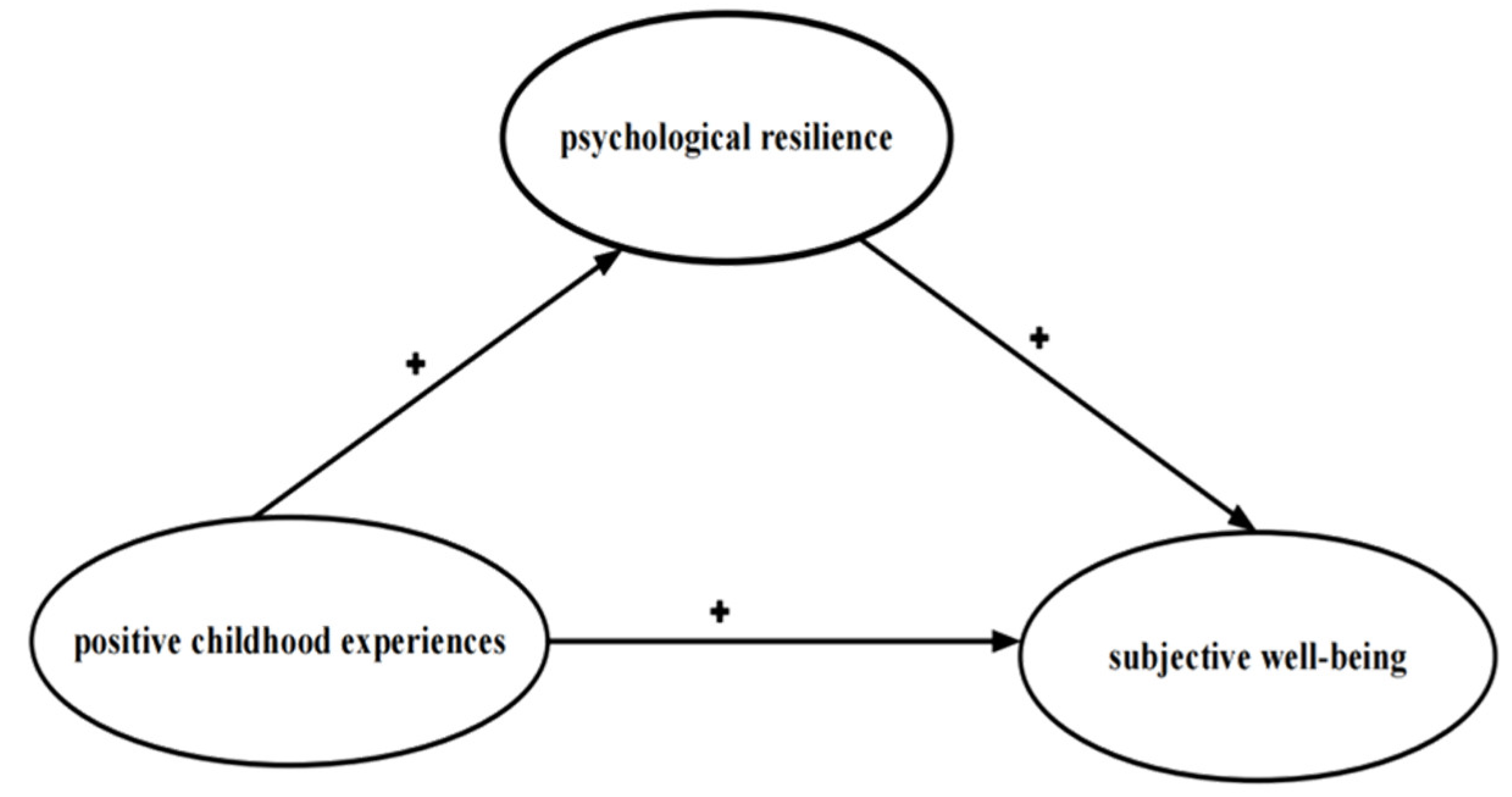
Figure 2.
illustrates the path diagram of the mediating effect of psychological resilience on the relationship between positive childhood experiences and subjective well-being.
Figure 2.
illustrates the path diagram of the mediating effect of psychological resilience on the relationship between positive childhood experiences and subjective well-being.
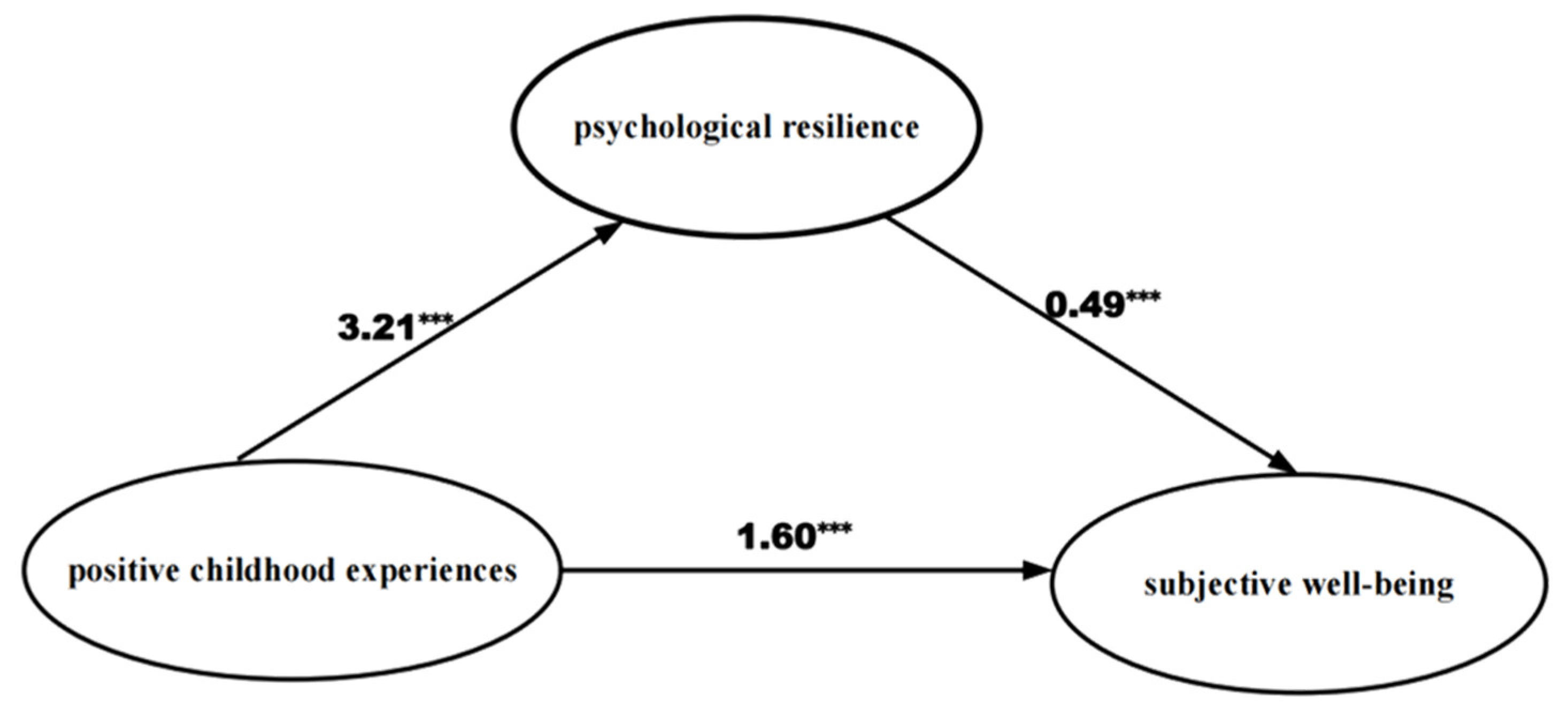

Table 1.
Descriptive Results and Correlation Analysis of Positive Childhood Experiences, Psychological Resilience, and Subjective Well-being (n = 1104).
Table 1.
Descriptive Results and Correlation Analysis of Positive Childhood Experiences, Psychological Resilience, and Subjective Well-being (n = 1104).
| Variable | Mean ± SD | 1 | 2 | 3 |
|---|---|---|---|---|
| 1.Positive Childhood Experiences | 8.28±2.06 | 1 | ||
| 2.Psychological Resilience | 82.17±15.88 | 0.42** | 1 | |
| 3.Subjective Well-being | 81.00±14.44 | 0.45** | 0.63** | 1 |
*p < 0.05, **p < 0.01, ***p < 0.001. The same notation applies to the following tables.
Table 2.
Regression Analysis of Positive Childhood Experiences, Psychological Resilience, and Subjective Well-being.
Table 2.
Regression Analysis of Positive Childhood Experiences, Psychological Resilience, and Subjective Well-being.
| Variables | Subjective Well-being | Psychological Resilience | Subjective Well-being | |||
|---|---|---|---|---|---|---|
| β | t | β | t | β | t | |
| Positive Childhood Experiences | 3.15 | 16.72*** | 3.21 | 15.19*** | 1.60 | 9.16*** |
| Psychological Resilience | 0.49 | 21.51*** | ||||
| R | 0.20 | 0.42 | 0.66 | |||
| R2 | 0.20 | 0.17 | 0.44 | |||
| F | 279.50*** | 230.59*** | 429.71*** | |||
Table 4.
Decomposition of Total Effect, Direct Effect, and Indirect Effect.
| Item | Effect | Boot SE | Boot LLCL | Boot ULCL | Relative Effect Value |
|---|---|---|---|---|---|
| Total Effect | 3.15 | 0.19 | 2.78 | 3.52 | |
| Indirect Effect | 1.56 | 0.14 | 1.29 | 1.85 | 49.40% |
| Direct Effect | 1.60 | 0.17 | 1.25 | 1.94 |
Disclaimer/Publisher’s Note: The statements, opinions and data contained in all publications are solely those of the individual author(s) and contributor(s) and not of MDPI and/or the editor(s). MDPI and/or the editor(s) disclaim responsibility for any injury to people or property resulting from any ideas, methods, instructions or products referred to in the content. |
© 2024 by the authors. Licensee MDPI, Basel, Switzerland. This article is an open access article distributed under the terms and conditions of the Creative Commons Attribution (CC BY) license (http://creativecommons.org/licenses/by/4.0/).
Copyright: This open access article is published under a Creative Commons CC BY 4.0 license, which permit the free download, distribution, and reuse, provided that the author and preprint are cited in any reuse.


