

Submitted:
18 September 2024
Posted:
19 September 2024
You are already at the latest version
Abstract
Several degraded ecosystems worldwide need to attain a stable vegetal cover after mandatory active restoration; thus, plants soil, and soil biodiverse microbes can be taken into consideration for a successful mission. Among environmental and biological variables, interactions with soil and its microorganisms are critical for permanent plant establishment. Thus, advances in the use of microbial management such as inoculation of mycorrhizas and bacteria become a modern aspect of active restoration programs. New strengths have increased worldwide since most plant species, including grasses, associate to mycorrhizae, Thus, a high percent of restored areas, which were degraded due to the increasing mining or conventional agriculture, rest to be monitored. This study shows current reports on active restoration of degraded landscapes as well as the methodology required for a successful ecosystem restoration. Active restoration has been recognized as the best method to restore tropical forests; however, the higher cost of active restoration, which requires planting seedlings, direct seeding, root inoculation of microorganisms or mitigation of disturbances, which aid the recovery process despite monitoring. On the other hand, the spontaneous recovery of trees that colonize and establish in abandoned fields or natural disturbances, named natural regeneration, is less targeted and can require more time to achieve results. We conducted a web of science search of recent published articles on restoration and analyzed them. We confirmed the important role of AMF on root colonization and soil AMF spores as drivers of restoration of main ecosystems according to previous results from restored sites in Brazil. In the restored sites AMF (more than 8 species) was generally found, while in preserved sites dominated Gigaspora, Scutellospora and Acaulospora, restored sites presented relevant AMF richness as well as the preserved sites. Root colonization by AMF in experimental mined sites was high. Vesicles were frequent in restored sites.; however, colonization intensity was generally the same despite treatments. In general, in the control treatments, values of root colonization remain high.
Keywords:
ecological restoration
; plants
; degraded lands
; rhizosphere engineering
; mycorrhizas
1. Introduction
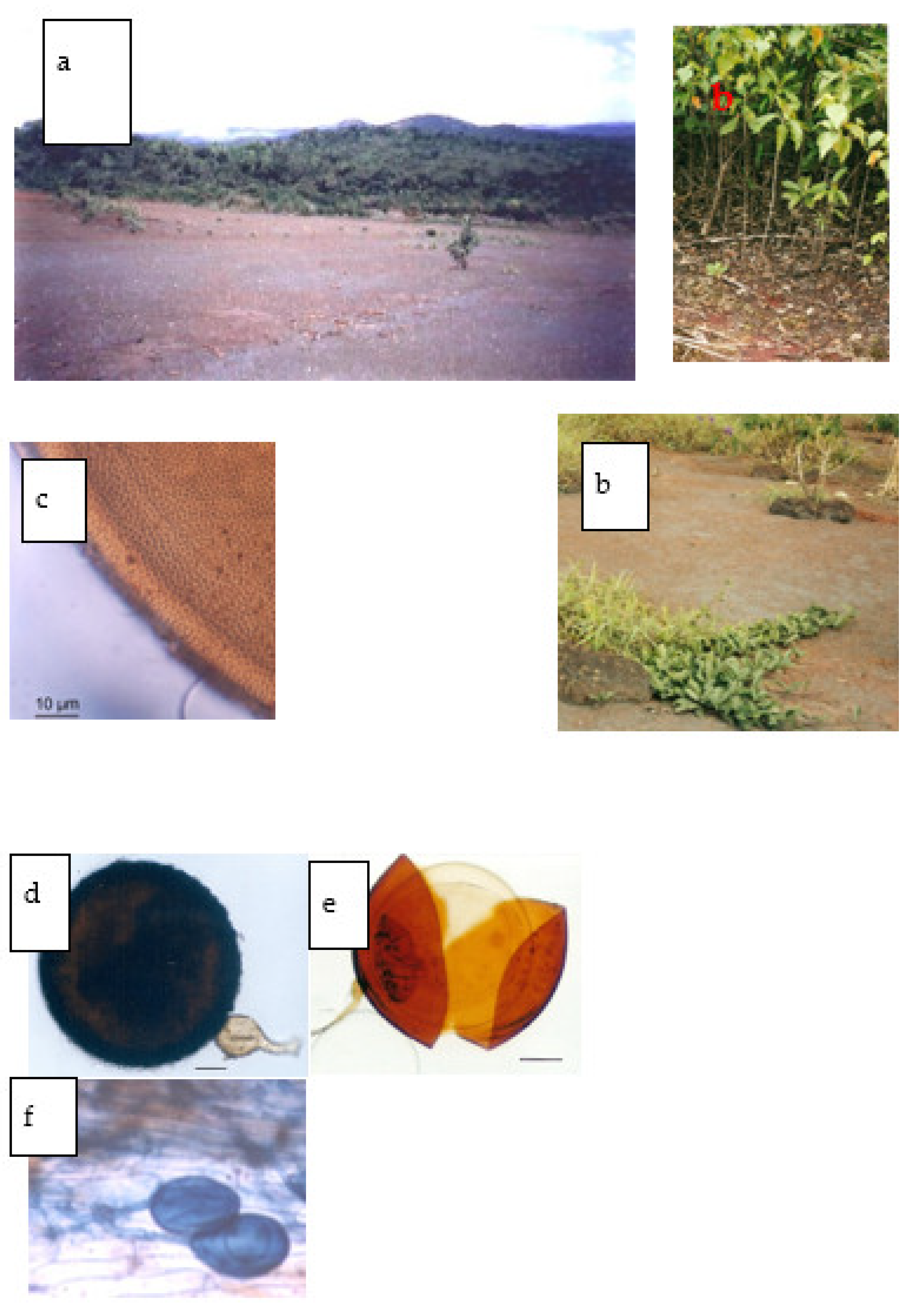
The expanding disturbance on natural ecosystems via mining, logging, grazing, and wildfires need promptly restoration as they are not adequately protected or managed. thus, restoration proposals are addressed to integrate native species, creating ecosystem functions to mitigate soil erosion, floodings among other ecosystem services. Ecological restoration is a multiphase procedure, with different stages: to assess to the site and conditions, to identify and analyze the causes of disturbance and methods for stop them, are evaluated. It is also required to prepare objectives for the biota, and microbiota and continuously comparation to reference sites (similar pristine adjacent ecosystems) It is also required to check for historical pre-disturbance communities, and species best adapted to changing climate conditions; besides eliminate sources of disturbance. It is also needed to control livestock and invasive plant species in riparian areas, despite to checking soil properties (pH, Organic Matter, Base saturation, P content, which are crucial to facilitate nutrient cycles.[1]. These days, it is more accepted to restore landscapes with ecologically sustainable plant covers. As plants affect the soil physical and chemical properties, modifying the soil microbiota (especially the symbiotic microorganisms). With increased mining and ecosystem degradation, mechanisms for restoration of degraded ecosystems have been renovated [2]. In parallel with the increasing estimation of biodiversity, which has been disclosed longtime, active restoration has been recognized as the best method to restore forests [3]; however, the high-cost active restoration requires planting seedlings, direct seeding, root inoculation of microorganisms or mitigation of disturbances, which aid the recovery process despite monitoring plants. On the other hand, the spontaneous recovery of trees that colonize and establish in abandoned fields or natural disturbances, named natural regeneration, is less targeted and can require more time to achieve results. There is also pronounced research on the microorganisms associated to native plants in undisturbed ecosystems (considered a reference) [4,5]. Additionally, Holl and Aide [6] have recommended to evaluate some analyses, such as possibility of passive restoration, specific goals of the project, available resources, and landscape type, before selecting the most suitable restoration method. The use of arbuscular mycorrhizae (AMF) in restoration of degraded ecosystems provides a source of data for restoration programs; however, plant symbiosis remains inadequately manipulated as ecological restoration was for a long time most phytocentric, disregarding belowground [7] and the intricated soil ecology [8]. Additionally, the brief restoration projects are generally insufficient to evaluate complete plant progress and associated microbial changes, while the soil properties are also imperceptibly modified. Fortunately, rhizosphere engineering has emerged as a biotechnological approach, using microbial biofertilizers, and plant growth promoting rhizobacteria (PGPR) to increase plant productivity and survival, as pointed by Yadav et al., 2023) [9], In parallel, restoration practices need to include these advances for improvement of sustainable plant covers. Restoration science needs continue scientific evidence, as projects need to deal with conservation and reintroduction of rare species, required for ecological, and economic health, thus, relevant for conservation of the higher biodiverse terrestrial biomes [10]. Also, appropriate environmental conditions for native fauna, preserving wildlife diversity enhancing the conservation of trees and other organisms present in the ecosystems; however, the management of restored sites has supplied scientific information from few species [11]. Thus, active restoration needs effective strategies for conservation of biodiversity, including endangered endemic species, exclusive habitats and landscapes, hotspots, and biota with relevant ecosystem services [12]. While areas of priority for habitat restoration were reported [13], habitat indicators relevant for restoration have not been fully recognized. In the present study, we surveyed the current information on ecological restoration, with respect to the benefits of plant rhizosphere engineering. as there is a need for more scientific information on restoration practices of specific strategic sites, priority areas need to be recomposed and compared to one or more reference sites to involve some common variations. In this sense, researchers continue to debate on the effective specific techniques to evaluate the restoration success [14]. It was also shown that wider spacing can increase growth of native species in restored forests. However, studies on tree species used in forest recovery are incipient as little is known about the characteristics of growth of native species. In Brazil, the selection of fast-growing symbiotic trees has resulted in successful restoration [15]. Also mined sites in degraded rupestrian fields (Figure 1) deserve urgent conservation, and restoration through plantations of endemic endangered native species [16]. Fragmented sites presented low resilience, restricting the viable restored populations. In this sense, Pagano et al. [5]. showed that the use of AMF in restored sites, for recovering riparian forests together with, the soil aggregation is relevant in restoration approaches as the stability of soil macroaggregates depend on the growth and decomposition of roots and mycorrhizas, improving soil aggregation as investigated by Rillig et al. [17]. Moreover, some indicators of soil health and thus, of restored soils, include soil organic matter, soil organic carbon (SOC), soil nutrients, and soil microbial communities. Increasing native species richness can be a viable strategy for restoration, which also benefit from grasses and forbs to address functional roles of herbaceous species [19]. Moreover, it was also stressed the need of better understanding the interactions between vegetation, fauna, soil microbiota and soil properties, soil microbes, which are crucial for plant species establishment and stability; however, required information remain unknown. Restoration can be improved by reintroducing mycorrhizal fungi from the native plant microbiomes, such as in grassy ecosystems [20]. have compiled the current information of ecological restoration in Brazil. Despite the great demand for restoration of different ecosystems, few analyses were carried out in the megadiverse biomes. (Guerra et al., 2020) [21]. Plantations provide goods and services, improving financial benefits, from wood and other products [22]. Additionally, AMF (spores and hyphae) also provide C input in the restored soils with woody species through environmental services as incremented C fixation with mycorrhizal inoculation of the seedlings used for revegetation [23].
Figure 1.
(a) Active restoration of vegetation in mined rupestrian fields and reference sites (b) in Brazil, (c) AMF spores recovered from rhizospheric soils with native plantations (c ) Acaulospora spinosa) and (d) Scutellospora coralloidea, (e) Scutellospora biornata and (f) root colonized by AMF (photos by M. Pagano).
Figure 1.
(a) Active restoration of vegetation in mined rupestrian fields and reference sites (b) in Brazil, (c) AMF spores recovered from rhizospheric soils with native plantations (c ) Acaulospora spinosa) and (d) Scutellospora coralloidea, (e) Scutellospora biornata and (f) root colonized by AMF (photos by M. Pagano).
Regarding the benefits of soil microbiota as biofertilizers and soil amendments, it has been shown that AMF are supported by both terrestrial and aquatic plants and that most plants in natural and managed ecosystems depend on the mycorrhizal fungi, being of high interest for ecological restoration and conservation of natural ecosystems. AMF can increase the uptake of phosphorus (P), nitrogen and other nutrients by the plant [24]. Some reports have compiled the potential of soil amendments (compost, biochar, and Arbuscular mycorrhizal fungi (AMF) for restoration of disturbed sites, pointing out the rhizosphere as “hot spot” of microbial activity, as investigated by Nannipieri et al. [24], Thus, linking plant and soil microbiota is fundamental for rehabilitation efforts in most biomes. Moreover, non-nutritional properties of this symbiosis, such as reducing plant diseases, modifying water relationships, as informed Subramanian et al. [25]; or stabilizing soil structure receive more recent attention motivated on their contribution to soil structure, improving soil aggregation, due to their contribution in aggregate stabilization [26]). As AMF are specialized to both their biotic and abiotic environments soil properties and plant species need to be studied in restoration projects, to improve the management of AMF in field situations. Initially, mycorrhizae were commonly used in restoration due to their benefit for plant growth [27], then, their role in reinforcing soil structure in both physical-chemical way, as the extraradical hyphae involve soil and particles, which stabilize soil aggregates, was highlighted receiving more attention. Biotic (disease, herbivory and/or the presence of competitors) and abiotic stresses (nutrient deficiency and drought) can affect both plant and microbial fitness. As soil microorganisms are influenced by abiotic conditions (soil type and soil water content) to perform soil analysis is crucial for predicting their establishment and design possible long-term interactions. Firstly, a diagnostic procedure aids to identify anthropogenic disturbances in degraded sites. Then, to enhance soils and control invasive species, weeds, ants and grazer fauna is crucial for the success of restoration. In general, native plants are known to be more mycotrophic (dependent on mycorrhiza). Diagnostic protocols identify barriers to ecological succession being the basics for repairing degraded soils. To check the suitability of the microsites for native plant establishment and growth [17], the Presence of barriers, such as soil or substrate degradation, exotic aggressive grasses, and/or intense herbivory or seed predation; besides presence of soil seed bank, sprouts, seedlings and saplings of native tree and shrub species is prioritized; Also, relative abundance levels of life forms (e.g., herbs, shrubs, trees), successional groups (pioneer or non-pioneer) and presence of adjacent forest fragments and seed rain can be estimated. It was also pointed the necessity to include different life forms, restoration techniques and studies using reference areas to measure restoration success [21]). In this sense, the presence of different types of plant functional groups as well as different plant symbioses (such as mycorrhiza, Rhizobium, etc.) and their combinations is crucial for the development of restoration practices. However, there are other fungal species living in soil presenting good capacity for soil restoration such as Trichoderma sp., Aspergillus spp., Mucor sp., as well as some mushrooms. The use AMF can influence plant growth, seedling survival, rhizosphere effect, being of most priority to select species for restoration objectives. Regarding ecological restoration in Brazil, the treated biome Atlantic Forest is the most investigated(with the highest number of papers reported). This is due to its high biodiversity and priority for restoration. In this context, it is useful to investigate natural and synthetic soil microbial communities, for successful plant growth under different scenarios [28]. In the present work we explore current needs for microbial solutions (specially, mycorrhizae) in disturbed ecosystems, how these solutions are being developed and applied, and the potential for new biotechnology advances to adapt and target microbes for restoration. In this regard, it was estimated that mycorrhizal inoculation can increase plant species richness of restored sites by 30%, promoting establishment of target species in a rapid establishment of the vegetation cover [29]. Plant composition commonly differs markedly between reference and restored sites, typically (lower plant diversity and specific plant functional groups in restored sites. The State of Minas Gerais is characterized by a hilly relief with elevations ranging to 2,890 m, and its natural vegetation needs urgent strategies for conservation as this fragile region has suffered human impacts on a large scale, and its conservation actions must be developed to protect fauna and flora. Highland fields, also termed rupestrian fields, have shrubby, tortuous and sclerophyllous vegetation or open grasslands and replace the Cerrado (savanna) vegetation at 1,000 m altitude, where plants grow in stones, in sandy soils and present adapted vegetation. Typical transition forests composed predominantly of Eremanthus spp. (Asteraceae) are commonly found.
2. Material and Methods
We conducted in July 2024 a web of science, and Google search of recent published articles on mycorrhizas and restoration and analyzed them. We also took results from our previous studies conducted at a restored highland field (43°26′W, 19°53′S) 1100 m a.s.l., in São Gonçalo do Rio Abaixo, Minas Gerais State, Brazil. and in an undisturbed adjacent site. The study site is located in the State of Minas Gerais, characterized by a hilly relief with elevations ranging from 79 to 2,890 m, and its natural vegetation needs urgent strategies for conservation. This fragile region has suffered human impact on a large scale, and conservation actions must be developed to protect fauna and flora. The vegetation of Highland fields, also termed rupestrian fields, have shrubby, sclerophyllous vegetation or open grasslands and replace the Cerrado (savanna) vegetation at 1,000 m altitude. Plants grow in stones, in sandy soils and present varied adaptations (Giulietti and Pirani, 1988). Typical transition forests composed predominantly of Eremanthus spp. (Asteraceae) are commonly found. a highland region the extreme southern part of Espinhaço Range, is called “Quadrilátero Ferrífero”, due to exposed iron oxide deposits, providing habitat for many saxicolous plant species. This is a region with high biodiversity, presenting endemic endangered species. Soils are highly erodible, shallow, acid, nutrient-poor, and have excessively drained sand. The mycorrhizal associations of native species growing at highland field were investigated.
2.1. Experimental Design
The experiment was set up in a degraded area used to keep iron-ore products. Eremanthus incanus and Centrosema coriaceum plants were cultivated in the experimental site (0.6 ha), where Seedlings were transplanted during the rainy season in 2001-2002 and mixed with other 4 plant species. The experimental design consisted of 12 replicate blocks (each 24 x 6 m). Two plants per plot randomized by species within the plot (2-m spacing between seedlings) were used. mixed plantations in proportions of 2:10 (2 plants of E. incanus mixed with 10 plants of other 4 species / plot) was surveyed. Complete fertilization (except for phosphorus) + inoculation of AMF was employed. Complete fertilization consisted in P (218 kg ha-1 triple superphosphate, K (2 Kg/ ha-1), KCl, Mg (4.5 kg/ ha-1 MgSO47H2O, Zn (13.6 kg ha-1) as ZnSO47H2O, Mo (1.5 kg/ ha-1), as Mo7O24H2O, urea (222 kg ha-1) and was applied at the beginning of the plantation. For inoculated treatments 50% of phosphorus fertilization was used. Arbuscular mycorrhizal fungi were inoculated in greenhouse by placing into each pot, 1 ml of suspension composed by 100 spores ml-1 in a total of 3 species (Gigaspora margarita, Dentiscutata heterogama and Glomus etunicatum) using 33% of each species. Mycorrhizal fungi used were from the UFMG collection.
2.2. Site and Soil Characteristics
Soil samples were collected in 2003 from an undisturbed site in a highland field of southeastern Brazil, Minas Gerais State. Soil samples were kept in plastic bags, labeled, sealed and transported to the IMA (Instituto Mineiro de Agronomia) Agropecuary Chemical Laboratory (Brazil). Soils were air-dried and sieved with a sifter of 2 mm. Organic matter and phosphorus content (colorimetric method) was also determined. Potassium (K+), calcium (Ca2+), magnesium (Mg2+) and sodium (Na+) were determined by atomic absorption spectrometry (Atomic Absorption spectrophotometer 6800, Analytical Instruments Division Kyoto Japan, SHIMODZOU corporation, www.shimodzou.com).
Soil texture was determined by the hydrometer method and soil pH was measured in H2O. Exchangeable K, Mg and Ca were determined by atomic-absorption spectrometry using 1N ammonium acetate as extracting solution. Exchangeable Al was extracted with 1M KCl solution and determined by titration with NaOH. Rhizospheric soils were collected for analysis of AM spores. Spores were extracted from 100 g soil. AM spores were recovered from soil samples of each treatment in the field, separated by wet sieving, decanting and sucrose centrifugation (Pagano and Scotti 2009), and analysed data were expressed as number of spores/ 100g dry soil. Only healthy spores were counted. Each spore type was mounted sequentially in PVLG (polyvinyl-lacto-glycerol) and Melzer’s reagent for identification. Identification was based on spore color, size, surface ornamentation and wall structure, with reference to the descriptions provided by the international collection of vesicular and AMF (http://invam.caf.wvu.edu) and the original species descriptions. Number of species were counted, square rooted transformed and statistically analyzed, and means were compared by Tukey test (P< 0.05).
3. Results
The results confirmed the important role of AMF as drivers of restoration of main ecosystems from Brazil, based on our previous results, in restored sites the main AMF families occurring were Glomeraceae (Septoglomus constrictum being a common species) while in preserved sites Acaulosporaceae and Gigasporaceae also occurs, restored sites presented lower AMF species richness than that from preserved sites [30] (Figure 1). In general, bare soils, before restoration, did not contain any AM fungal propagule. The soil was sandy loam (at the surface), strongly acid, and presented very low P content (Table 2). The soil texture showed low content of clay and high percent of silt.
In the present study a total of seven articles were investigated (Table 1), and more recent reports were included in the analysis, besides our own investigation. The papers were published in scientific journals between 2009 and 2024, with the largest number of papers in 2023. Among them, common plant species of highland regions in Brazil, such as Eremanthus incanus presented high AM root colonization both in restored and undisturbed sites. Moreover. This plant species presented Arum-type colonization and frequent production of vesicles (Figure 1f), with ten AMF species retrieved from its rhizosphere. (Acaulospora spinosa, Acaulospora elegans, Acaulospora. foveata, Acaulospora sp., Gigaspora margarita, Glomus sp., Dentiscutata biornata, Dentiscutata. cerradensis, Dentiscutata sp. and Racocetra verrucosa). These results revealed AMF as a common component in highland vegetation in Brazil and useful for restoration purposes. In general, from the obtained reports, most studies used one reference area for comparing the restoration success. Also, the most studied organisms are plants (trees, followed by fungi according to Asmelash et al. [31]. Regarding the restoration of agroecosystems it was inadequately investigated, appropriate management of livestock and other herbivores, tree cutting and, invasive species and the reintroduction of native grasses via seeding or transplants being crucial for the restoration of these biomes as highlighted by Buisson et al. [20]. grassy biomes are less recognized by the conservation goals reflecting confused ecology, and conservation values of the grassy vegetation. Although many ecosystems within the grassy biomes might benefit from ecological restoration, most restoration strategies are incompatible with grassland biodiversity. Disturbed soils usually show little or no native AM occurrence. First, the best approach to inoculate a restoration site is with topsoil (stored in an adjacent local). As it has been shown propagules of native AMF (extraradical hyphae, spores, auxiliary cells), other soil organisms, organic matter, fine roots, and native seeds are present in topsoils. On the other hand, if topsoil is not accessible e.g., due to storage space restrictions, AMF may be added to disturbed soils using other procedures. Commercial inoculum, which usually contains only one species of AMF such as Glomus intraradices, is generally applied; however, the establishment of local collections to develop site specific native AM inoculum is more commonly considered as pointed by Chaudhary and Griswold 2001) [27]. and more appropriated. In this regard, it has become the custom to use spores or soil as inoculum. For monitoring restored sites, the determination of infective propagules including spores recovered from rhizospheric soils and roots (stained for AM colonization) of plants growing in the degraded and reference soils, are required. Among other indices, abundance of AMF spores and percent root colonization can be evaluated to compare the restored site with reference sites and, after statistical analyses, would assist restoration success with time. Usually, elaborated analysis (cluster analysis, PCA) based on the presence of AMF species in the studied sites, can show changes in AMF composition with site (Pagano et al. 2011), or including soil attributes from the different sites (Figure 2). Interestingly, Gelviz-Gelvez et al. (2015) [32] included mycorrhization as a suitable ecological attribute for long-term ecological restoration, among plant cover, abundance, and tolerance to future climate changes. Moreover, AMF and specific rhizobia inoculation can increase plant growth and survival, when inoculated. In Brazil, efficient strains were selected and used as rhizobial inoculum for several native species. This double inoculation improved survival of those plant species. In general, at least Three AMF families were found in the rhizosphere soils. Some AMF were indicators of mature forest areas (Glomus sp., Glomus microcarpum, and Acaulospora mellea). Figure 1 shows the changes in vegetal cover in a landscape over time, as a consequence of active restoration of degraded (mining tailings) rupestrian field ecosystems. In the procedure to use AMF for restoring disturbed ecosystems, after evaluation of a diagnostic of degraded sites (a) and establishment of 2 or more undisturbed sites (b), restoration can be achieved by introduction of topsoil or plantations. AMF inoculation can be performed on host plants or by inoculation of health soil (c). Monitoring the restored sites: determination of infective propagules including spores recovered from rhizospheric soils. Interestingly, in arid regions the introduction of AMF has improved restoration by using selected plantations. In dry deciduous woodlands such as those from Brazil most trees associate with mycorrhizas, pointing out their value for restoration as AMF occurrence follows the physicochemical characteristics of the soil and the host plant development and secondarily, the successional stage. It is also relevant the multiple symbioses plant- AMF- rhizobium, as AMF improves the N2-fixing symbiosis providing P to the plant besides potentializing N2 fixation), the resulting tripartite symbiosis create an efficient strategy to accelerate ecological restoration [16]. In this sense, the compatibility between native rhizobia and AMF species can be tested in greenhouse conditions. The requirements of native plantations need to be more studied for soil fertilization as in general, reduced fertilization and inoculation of symbionts is the common practice. Leguminosae associate with rhizobia and AMF. Therefore, the plant species chosen have consequences that affect the conservation of mycorrhizal species. Native AMF can colonize plants in natural conditions lost with disturbance, requiring more management. Therefore, AMF dependent plant hosts must be selected over mycorrhizal- independent hosts. The need for more information on mycorrhizal fungi development and function in Brazil was stressed by Braghirolli et al. [23]. AMF management for higher sporulation can increase carbon fixation in soil as spores present a higher C contain. AMF is an important piece that should be included in restoration programs. Detailed works are invaluable; and will provide important evidence of the fungal -plant association. Figure 1 shows colonized roots of planted native species and AMF spores recovered from their rhizospheric soils. However, AM colonization is generally evident in all plant roots collected at restored and native vegetation [5], Table 1). Restoration specialists have started inoculating AMF to degraded soils with the objective of promote plant growth, accelerate ecological succession, or attain desired plantations. As restoration efforts require a better understanding of successional processes, the soil microbiota succession must also be studied. Regarding AMF and ecological succession, there is controversial reports. Restoration is related to ecological succession. In Brazil, AMF root colonization of native trees decreased with the advance of ecological succession due to a decrease in using AMF for nutrient acquisition in late successional plants. Opposite, early successional plant species can present higher root colonization and response to inoculation, which agrees with the ecological theory as fast growth pioneer species will need fast nutrient cycling. On the other hand, the mycorrhizal dependent plants are mature trees; however, there are still few field studies to compile information. In field studies by Pagano et al. [5], aseptate intra and intercellular hyphae and vesicles, were observed in most of plant samples. Root colonization varied from about 77% in the revegetated area, 58 to 60 % in the degraded area and 66 % in the preserved one. AM colonization was higher in the preserved and revegetated areas, intracellular aseptate hyphae and vesicles were the most frequent AM structures present in the preserved area, roots from various species) showed high colonization (66 %) and abundance of arbuscules, whereas the percent of vesicles was low (10 %). Levels of vesicles found in roots differed significantly between sampling sites. Generally, lower AMF diversity is found in the degraded areas and the highest richness, in the preserved areas. Only species of Scutellospora and none of Gigaspora occurred in the degraded areas, thus contrasting with the preserved sites. (Table 3). This is in line with the higher values of soil chemical content (Figure 2).
Figure 2.
PCA showing active restoration of vegetation in mined rupestrian field and reference sites.
Figure 2.
PCA showing active restoration of vegetation in mined rupestrian field and reference sites.
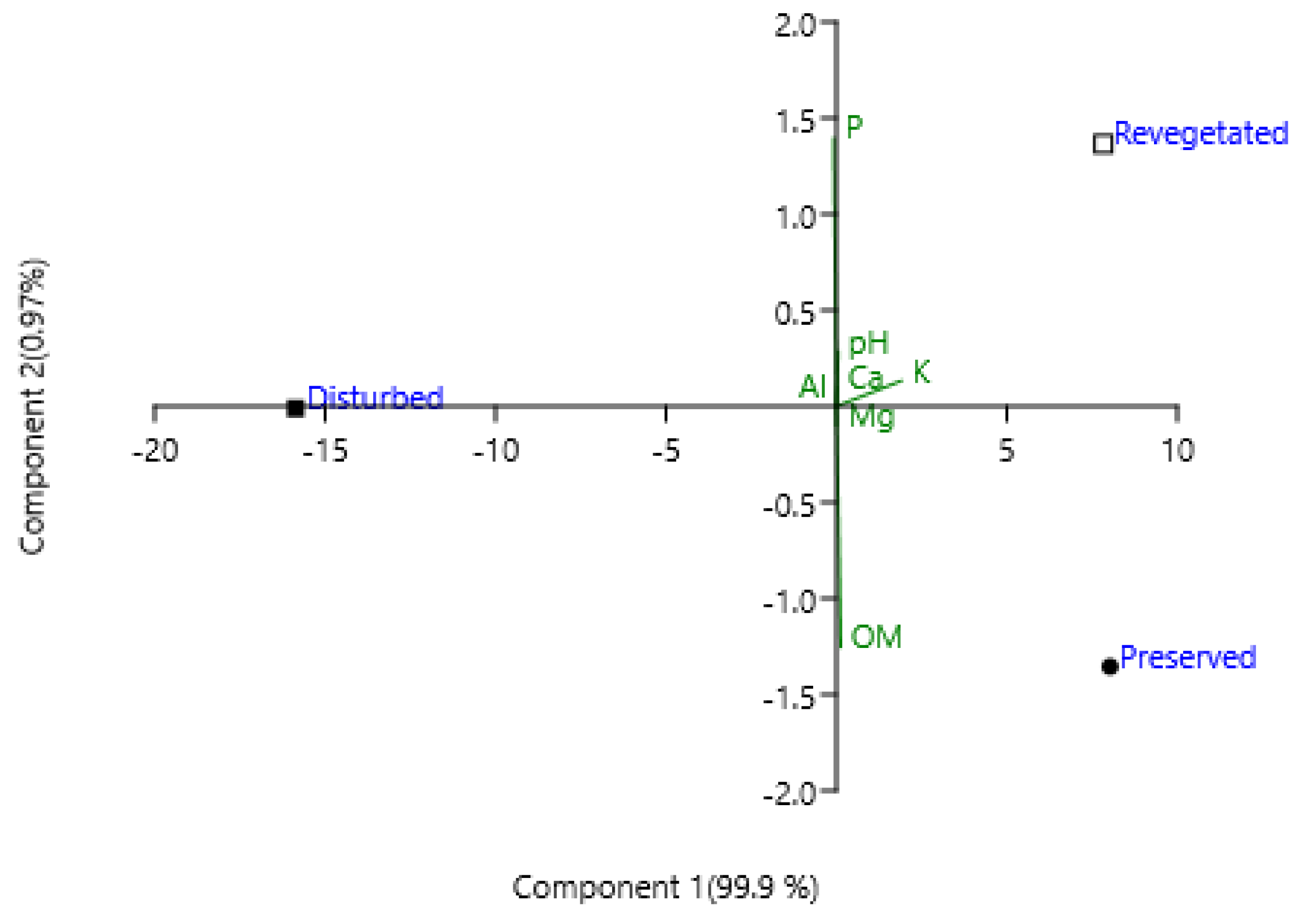

Table 1.
Recent reports dealing with mycorrhizae in ecological restoration.
| AMF plant restoration | Country | AMF | Reference |
|---|---|---|---|
| History of restoration | Review | [1] | |
| Restoration of riparian forest. | Brazil | Eight species | [5] |
| Soil microbiome | Review | NI | [28] |
| Riparian forest | Brazil-Review | NI | [23] |
| Mined ecosystems | Brazil | Twenty-one species | [34] |
| Mined ecosystems | Brazil | seven species | [30] |
| AMF managed environments | Review | NI | [31] |
| Mycorrhizal inoculation | [29] | ||
| Brazil | Succession of AMF | [34] | |
| Grassy biomes | NI | [20] | |
NI = Not Informed.
Table 2 shows the results of Chemical analysis of soil properties after transplanting in the revegetated site, compared to disturbed and preserved ones. The disturbed site presented low OM content and elements such as Ca and K). The preserved site presented more OM, Ca, and K. Mg content was low in the three sites.
Table 2.
Chemical analysis of soil properties after transplanting in revegetated sites, compared to disturbed and preserved ones.
Table 2.
Chemical analysis of soil properties after transplanting in revegetated sites, compared to disturbed and preserved ones.
| Site | pH | Al3+ | Mg2+ | K | P (dag kg-1 | OM (dag kg-1) | Ca+2 |
|---|---|---|---|---|---|---|---|
| Preserved | 5.4 | 0.86 | 0.16 | 31.7 | 2.0 | 2.5 | 0.46 |
| Revegetated | 5.8 | 0.2 | 0.08 | 8 | 4.0 | 0.71 | 0.3 |
| Disturbed | 4.9 | 0.19 | 0.18 | 5.14 | 10 | 0.04 | 0.16 |
Site: Study site pH (H2O) Al3+ (cmol dm-3).
Table 3.
AMF species detected in the rhizosphere of native plants used for revegetation after cultivation in an iron-ore mined site (deposit).
Table 3.
AMF species detected in the rhizosphere of native plants used for revegetation after cultivation in an iron-ore mined site (deposit).
| Site | Acaulospora delicata | Acaulospora laevis | Acaulospora mellea | Acaulospora spinosa | Gigaspora margarita | Scutellospora cerradensis | Scutellospora verrucosa |
|---|---|---|---|---|---|---|---|
| Preserved | + | + | + | + | + | - | - |
| Revegetated | - | - | + | + | + | + | + |
| Disturbed | - | - | - | - | - | - | - |
Ecological restoration has been underpinned on the cultivation of native plant species, which perform better when inoculated with the appropriated bacteria and fungi. Usually, uninoculated or inoculated transplants are used but soil microbes are increasingly focused for benefit restoration [29]. In the interactions between plants and microorganisms, soil microorganisms, such as mycorrhizas and Rhizobia, facilitate plant establishment underneath adverse circumstances. Benefits of mycorrhizal inoculation to ecological restoration depend on plant functional type, restoration context and time.
Most reported studies used only one reference area for comparing restoration success, and the most examined organisms were plants (81%), (trees > fungi > birds, invertebrates, mammals, and reptiles. as noticed by Guerra et al. [21]. Other related studies such as the behavior of AMF in ecological succession are crucial to understand the restoration process. Recent findings by da Silva et al. [35]. showed that besides soil attributes, the successional stages of plant species can influence the structure of arbuscular mycorrhizal communities in the Brazilian Atlantic Forest. They found ~40 AMF species, elevated root colonization and spore number in the early secondary forest, besides several exclusive species recorded in the mature forests. Thus, the distribution of AMF communities was influenced by different successional stages besides soil attributes.
4. Discussion
As some restoration projects resulted unsuccessful, understanding their causes and mechanisms are of most interest, in this sense, it is known that AMF biotechnology can guarantee the restoration success of degraded sites (Asmelash et al., 2016). AMF also improve soil properties, above and belowground biodiversity and tree, and seedlings survival. About 80% of surveyed plants growing on mining sites are colonized by AMF as estimated by Matias et al. [30]. also found high AMF root colonization (40 to 90% in uninoculated and inoculated native plants, respectively, in restored mining sites. It is known that AMF effects are greater when multiple AMF inoculum is applied than single inoculum. Moreover, several reports concluded that the use of native AMF consortia has better results. than single AMF species as remarked by Hoeksema et al. [33]. In this sense, we support the use of native AMF species obtained from degraded, preserved sites borders and cultivated in pots for multiplication before root inoculation. This AMF Inoculation can be tested for compatibility with other plant-soil microorganisms.
5. Conclusions
Environmental disturbances affect plant-soil associated microorganisms either in number, and diversity, however, restoration efforts mitigate disturbances, increase soil organic matter improving soil structure and maintaining soil communities associated to plant species. Soil microbes, and especially the interactions between plants and microorganisms such as mycorrhizal symbiosis together with Rhizobium, protect the plant under stressful hostile conditions. Several efforts to enhance advantages from mycorrhizae in restoration were reported to achieve maximum understanding of soil microorganisms and their associations as well as the selection of benefic microbiota during plant succession. We addressed AMF occurrence in different preserved and restored ecosystems, and questions related to ecological succession. Consequently, further research is necessary on plantations for restoration of degraded sites, especially in riparian, dry forest and many threatened ecosystems.
Our findings indicate that some chemical elements (Mg and Ca) were associated to preserved sites, and characteristically low levels of available P and K in the soil of the disturbed site (Figure 2).
References
- Vaughn, K. J., Porensky, L. M., Wilkerson, M. L., Balachowski, J., Peffer, E., Rig nos, C. & Young, T. P. (2010) Restoration Ecology. Nature Education Knowledge 3,10, 66.
- Chazdon, R.L. 2008. Beyond deforestation: Restoring forests and ecosystem services on degraded lands. Science, 320, 1458–1460. [CrossRef]
- Crouzeilles, R. , Ferreira, MS, Chazdon, R.L. Sansevero, J.B. B., Monteiro, L,. Latawiec, A., Strassburg, BN. Ecological restoration success is higher for natural regeneration than for active restoration in tropical forests. Science Advances, 2017 3, 11. [CrossRef]
- Harris, J. 2009. Soil Microbial Communities and Restoration Ecology: Facilitators or Followers? Science, 325, 573–574. [CrossRef]
- Pagano, MC; Correa, EJA; Lugo, MA.; Duarte, NF. 2022. Diversity and benefits of arbuscular mycorrhizae in restored riparian plantations. Diversity 14, 11, 938. [CrossRef]
- Holl, K.D., Aide, T.M. When and where to actively restore ecosystems? Forest Ecol. and Manage., 2011, 1558-1563. [CrossRef]
- Kardol, P., Wardle, D.A. 2010. How understanding aboveground-belowground linkages can assist restoration ecology. Trends in Ecology and Evolution, 25, 670–679. [CrossRef]
- Callaham, M., Rhoades, C. R., Heneghan, L. 2008. A striking profile: soils knowledge in restoration management and science. Restoration Ecology, 16, 604–607. [CrossRef]
- Yadav, A. K., Ahmad, R 2023.Rhizosphere engineering for semiarid tropics: prospects and bottlenecks, Review 2023-09-22. [CrossRef]
- Albrecht, M.A., Guerrant E.O., Maschinski J., Kennedy, K.L. 2011. A long-term view of rare plant reintroduction. Biological Conservation, 144, 2557–2558. [CrossRef]
- Larjavaara A Review on Benefits and Disadvantages of Tree Diversity. M. The Open Forest Science Journal, 2008, 1, 24-26,2005, 310 Science, 1629-1632 www.sciencemag.org.
- Margules, C.R. Pressey R. L. Systematic conservation planning. Nature, 405 (2000), 243–253.20. [CrossRef]
- Fonseca, C.R. Venticinque, E. M. Biodiversity conservation gaps in Brazil: A role for systematic conservation planning Perspectives in Ecology and Conservation, 16, 2, 2018, 61-67.63. [CrossRef]
- Aronson, J., Brancalion, P. H. S., Durigan, G., Rodrigues, R. R., Engel, V. L. et al. 2011. What Role Should Government Regulation Play in Ecological. Restoration? Ongoing Debate in São Paulo State, Brazil. Restoration Ecol, 19, 6, 690–695. [CrossRef]
- Chaer, G. M., Resende, A.S., Campello, E.F.C., de Faria, S.M., Boddey, R.M. 2011. Nitrogen-fixing legume tree species for the reclamation of severely degraded lands in Brazil. Tree Physiol., 31, 139–149. [CrossRef]
- Rodrigues, RR, Lima, RAF, Gandolfi, S. André G. Nave. On the restoration of high diversity forests: 30 years of experience in the Brazilian Atlantic Forest.
- 18, Rillig, MC, Wright, SF, Eviner, VT. 2002. The role of arbuscular mycorrhizal fungi and glomalin in soil aggregation: comparing effects of five plant species. Plant soil, 2002. [CrossRef]
- Fynn, R.W.S.; Wragg, D.; Morris, C.D.; Kirkman, K.P.; Naiken, J. Vegetative traits predict grass species’ invasiveness and the invasibility of restored grassland. Afr. J. Range For. Sci. 2009, 26, 59–68. [CrossRef]
- Buisson, A Fidelis, Overbeck, G.E., I. B. Schmidt, G Durigan, G., Young T. P., Swanni T. Alvarado, André J. Arruda, Sylvain Boisson, William Bond10, A et al. A research agenda for the restoration of tropical and subtropical grasslands and savannas 2020 Restoration Ecology, 2021, 29 (S1), pp. e13292. ff10.1111/rec.13292ff. ffhal-02982495f. [CrossRef]
- Guerra, A., L., Reis,K. L. K., Borges,G. F. L., Alves Ojeda, PT., Pineda, DAM., Camila Oliveira Miranda, C. O., Maidana, DPF, TMR. Patrícia Sayuri Shibuya, C.M. Marques, M. Laurance, SGD, Garcia, LC.2020. Ecological restoration in Brazilian biomes: Identifying advances and gaps. Forest Ecology and Management, 2020, 117802. [CrossRef]
- Koziol, L, Bever,J D. The missing link in grassland restoration: arbuscular mycorrhizal fungi inoculation increases plant diversity and accelerates succession.
- Perring, M. P., R. J. Standish, J. N. Price, M. D. Craig, T. E. Erickson, K. X. Ruthrof, A. S. Whiteley, L. E. Valentine, and R. J. Hobbs. 2015. Advances in restoration ecology: rising to the challenges of the coming decades, Ecosphere 6(8):131. Advances in restoration ecology: Rising to the challenges of the coming decades. [CrossRef]
- Braghirolli, F.L., Sgrott A.F., Pescador R., Uhlmann A., Stürmer, S.L. 2012. Arbuscular Mycorrhizal Fungi in Riparian Forest Restoration and Soil Carbon Fixation. R. Bras. Ci. Solo, 36, 733-743. [CrossRef]
- Nannipieri, P., Ascher, J.; Ceccherini, M.T.; Landi, L., Pietramellara, G., Renella, G. 2003. Microbial diversity and soil functions. Eur. J. Soil Sci., 54, 655–670. [CrossRef]
- Subramanian, K.S., Charest, C., Dwyer, L.M., Hamilton, R.I., 1995. Arbuscular mycorrhizas and water relations in maize under drought stress at tasseling. New Phytologist 129, 643–650. [CrossRef]
- Rillig, M.C., Mummey, D.L., 2006. Mycorrhizas and soil structure. New Phytologist, 171, 41–53. [CrossRef]
- Chaudhary, B., Griswold, M. 2001. Mycorrhizal Fungi - A Restoration Practitioner’s Point of View. Ecesis, Newsletter of the California Society for Ecological Restoration – SERCAL. p. 4.
- Jansson, J. K., McClure, R., Egbert., R.G. “Soil microbiome engineering for sustainability in a changing environment.” Nature Biotechnology 41.12 (2023): 1716-1728. 28. [CrossRef]
- Neuenkamp, L., Prober, S.M., Price, J.N, Zobel, M. M., Standish, R.J. 2019. Benefits of mycorrhizal inoculation to ecological restoration depend on plant functional type, restoration context and time. Fungal Ecology,40,2019, 140-149. [CrossRef]
- Matias, SR, MC Pagano, FC Muzzi, CA Oliveira, AA Carneiro, SN Horta, Effect of rhizobia, mycorrhizal fungi and phosphate-solubilizing microorganisms in the rhizosphere of native plants used to recover an iron ore area in Brazil . European Journal of Soil Biol 45 (3), 259-266. [CrossRef]
- Asmelash, F, Bekele, T Birhane, E. The Potential Role of Arbuscular Mycorrhizal Fungi in the Restoration of Degraded Lands. Front. Microbiol., 7.
- Jansson, JK, Mc Clure, R. Egbert, RG.2023. Soil microbiome engineering for sustainability in a changing environment Nature biotechnology Review article. [CrossRef]
- Gelviz-Gelvez,S. M. Numa P. Pavón, Patricia Illoldi-Rangel, Claudia Ballesteros-Barrera, Ecological niche modeling under climate change to select shrubs for ecological restoration in Central Mexico, Ecological Engineering, 74,2015, 302-309. [CrossRef]
- Hoeksema, JD, V. Bala Chaudhary, VB., Gehring,C A. S, Johnson, NC et al. A meta-analysis of context-dependency in plant response to inoculation with mycorrhizal fungi. Ecol Letters (2010) 13: 394–407. [CrossRef]
- Souza, RG. , Silva, DKA , Oliveira,JRG., Goto,BT., Silva,FS, EV.S.B. Sampaio Maia,L.C. Use of mycorrhizal seedlings on recovery of mined dunes in northeastern Brazil Pedobiologia, 55, 6, 2012, 303-309. [CrossRef]
Disclaimer/Publisher’s Note: The statements, opinions and data contained in all publications are solely those of the individual author(s) and contributor(s) and not of MDPI and/or the editor(s). MDPI and/or the editor(s) disclaim responsibility for any injury to people or property resulting from any ideas, methods, instructions or products referred to in the content. |
© 2024 by the authors. Licensee MDPI, Basel, Switzerland. This article is an open access article distributed under the terms and conditions of the Creative Commons Attribution (CC BY) license (https://creativecommons.org/licenses/by/4.0/).
Copyright: This open access article is published under a Creative Commons CC BY 4.0 license, which permit the free download, distribution, and reuse, provided that the author and preprint are cited in any reuse.


