

Submitted:
28 August 2024
Posted:
28 August 2024
You are already at the latest version
Abstract
As urban areas expand and populations grow, environmental challenges such as the urban heat island effect, air pollution, and light pollution intensify. The urban heat island effect exacerbates extreme heat conditions, leading to prolonged periods of unhealthy and hazardous environments for both humans and other species. This study investigates the thermal environment associated with the urban heat island effect, focusing on the role of trees in mitigating this issue. Using ENVI-met simulations, the study examines various factors influencing tree cooling effectiveness, including seasonal variations, building shading, transpiration rates, tree placement, and spacing. A new tree-planting strategy is developed based on these findings, aiming to enhance thermal comfort. The study compares the thermal environment of sidewalks under the new tree-planting scheme with the existing arrangement across different months. Results indicate that the new scheme reduces UTCI temperatures by 2.2°C on the hottest day, 0.97°C on the coldest day, and 1.52°C annually in the study area of Los Angeles, demonstrating that the cooling benefits of trees in hot weather outweigh the potential drawbacks in cold weather, highlighting its potential to mitigate the urban heat island effect.
Keywords:
Urban Heat Island (UHI)
; thermal environment
; ENVI-met
; UTCI
; tree cooling effect
; seasonal variations
; tree planting strategy
1. Introduction
The Urban Heat Island (UHI) effect, where urban areas experience higher temperatures than their rural surroundings, is a growing concern in densely populated cities. This phenomenon is expected to intensify with global warming, particularly in cities like Los Angeles, one of the most urbanized areas in the United States [1]. The city’s Mediterranean climate and extensive development lead to temperature differentials of 5 to 10 degrees Fahrenheit between downtown and suburban areas during summer [2].
The UHI effect increases energy consumption due to higher demand for cooling systems, leading to elevated greenhouse gas emissions and energy costs [3]. It also poses significant public health risks, especially for vulnerable populations, by increasing heat-related illnesses [5]. Environmental impacts include accelerated ground-level ozone formation and degraded aquatic ecosystems due to warmer urban runoff [5,6]. Overall, the UHI effect contributes to local warming, creating economic burdens from increased energy use and infrastructure stress [3].
In Los Angeles, the UHI effect is exacerbated by the replacement of vegetation with heat-absorbing materials like concrete and asphalt. Addressing the UHI effect requires effective cooling strategies, with urban tree planting emerging as a promising solution. Trees provide shade, enhance evapotranspiration, and improve air circulation, thereby reducing ambient temperatures [7].
Research indicates that trees can reduce near-surface air temperatures in American cities by approximately 3.06°C, with shading being more effective at night than during the day [8]. However, the effectiveness of trees in cooling urban areas depends on factors such as tree characteristics, spatial conditions, and local climate.
Key factors influencing tree cooling include leaf density, canopy size and shape, and tree height. Higher leaf density enhances transpiration, larger canopies provide greater shade, and taller trees create broader cooling areas [9,10,11]. Shadows from buildings can limit direct sunlight to the canopy, reducing its cooling efficiency [12]. Tree location and arrangement are critical; planting trees on the south and west sides of buildings can allow the canopies to more effectively reduce direct sunlight reaching the ground, thereby lowering the ambient temperature [13,14]. Proper spacing of trees ensures maximum shading without overlapping canopies [15].
Climate factors such as humidity, air temperature, and wind speed significantly influence tree cooling effects. In drier climates, transpiration is more effective, and higher air temperatures enhance cooling [16].
Finally, street tree coverage plays a crucial role in cooling. A 10% increase in coverage can lower pedestrian-perceived temperature by 0.22°C, but when the increase in vegetation coverage is less than 5%, it has no impact on pedestrian comfort [17]. Optimal tree spacing varies by city, with some benefiting from closely spaced trees and others from more scattered placements [18]. In shallow street canyons, street trees can reduce daytime temperatures by 0.2-0.6°C, with maximum cooling during heat waves. However, in deep canyons with high-rise buildings, the cooling effect is diminished as tree shade is blocked [19].
The purpose of this study is to investigate how strategic urban tree placement can optimize cooling effects in downtown Los Angeles. By analyzing tree characteristics, spatial conditions, and local climate, this research aims to develop a tree-planting scheme that effectively reduces outdoor temperatures and mitigates the UHI effect. This study will also quantify and compare the year-round cooling benefits of strategically placed trees, evaluating the positive effects during hot months against the potential adverse impacts during colder periods. Distinct from most existing research, which primarily emphasizes the benefits of tree cooling at specific moments in hot conditions, this study provides a more holistic understanding of the cooling effects of trees across all seasons. The findings will offer critical insights for optimizing street tree planting and urban planning in Los Angeles and other urban environments.
2. Materials and Methods
A methodology was established to study a specific site in Los Angeles, involving establishing a base urban model, preliminary study, developing two techniques for simulation result analysis, and conducting a full site study.
2.1. Establish a Base Urban Model
2.1.1. Build the Modeling in ENVI-Met
The study area, located in downtown Los Angeles and bounded by South Hope St. to the east, West Olympic Blvd. to the south, Flower St. to the west, and West 9th St. to the north, it was selected for its diverse tree species and abundant arrangement options. (Figure 1). The urban model was developed using ENVI-met, a microclimate modeling software well-suited for simulating urban thermal environments, particularly in the context of thermal environment analysis related to trees.
The height of buildings and trees within the study area was determined through Google Earth 3D mapping and integrated into ENVI-met. Building and pavement materials were modeled based on field observations. The comprehensive details on the model construction and material input specifications are provided in Appendix A, Figure A1, Figure A2.
2.1.2. Input Climate Data into ENVI-Met
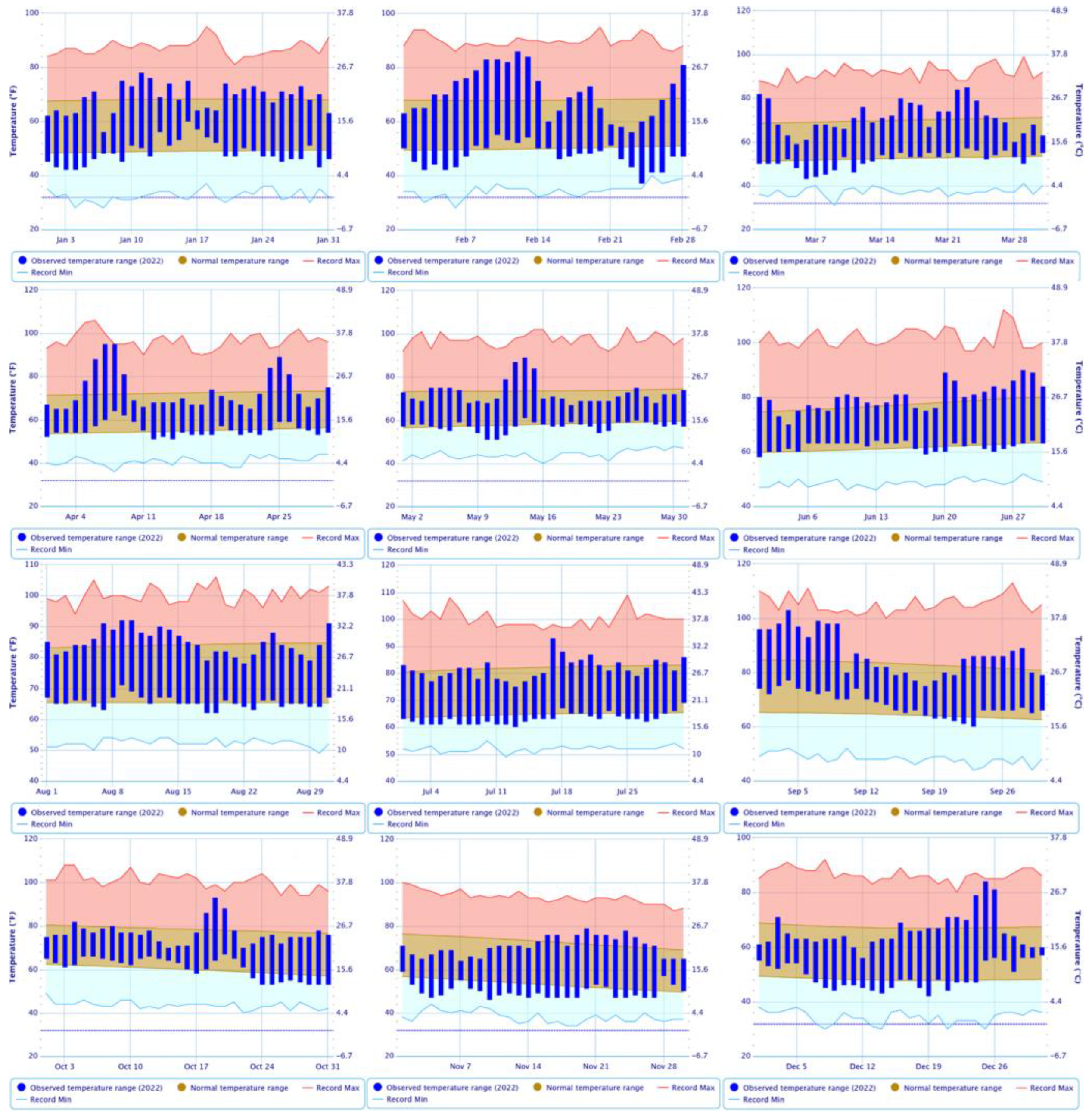
Climate data, including hourly air temperature, humidity, wind speed, wind direction, and cloud coefficient, were sourced from the National Weather Service for downtown Los Angeles in 2022 (Figure 2). The hottest and coldest days of the year, along with an average climate day for each month, were selected to minimize the number of simulations required while maintaining accuracy. These climate profiles were used to generate ENVI-met simulation files for subsequent analysis. Appendix Figure A3 and Figure A4 outline the procedure for creating the ENVI-met climate file for the hottest and coldest days, while Appendix Figure A5 provides the monthly climate data.
2.1.3. Research Questions
The full site analysis primarily investigates the following two research questions:
- Research question 1: Analyze how much the new tree scheme cools the average UTCI of a sidewalk area compared to existing conditions in study area by adjusting the tree positions while keeping the number and species unchanged (Figure 3).
- Research question 2: Identify the months when trees provide greater or smaller benefits in terms of cooling effect, as well as the times when they potentially exert a negative impact.
The Universal Thermal Climate Index (UTCI) is a human biometeorology parameter used to assess the relationship between the outdoor environment and human well-being. It describes how the human body experiences atmospheric conditions like air temperature, humidity, wind, and radiation. [20]
2.2. Preliminary Study
The five variables affecting tree cooling capacity in the preliminary study: date, building shade, transpiration, tree location, and spacing. The date variable will be simulated with average monthly climate data to determine which months show a more obvious cooling effect. The other four factors will be analyzed just using simulations from the hottest and coldest days of the year to evaluate their impact on tree cooling during extreme weather.
2.2.1. Date Analysis
Date analysis will simulate a blank field and a single tree to determine the effect of a tree’s cooling ability on its surrounding when only date changes (Figure 4).
2.2.2. Building Shade Analysis
The building shade simulation will compare the impact of a tree on surrounding temperatures in an area fully covered by building shadow throughout the day to assess the proportion of the tree’s cooling ability attributed to the building’s shade (Figure 5).
2.2.3. Transpiration Analysis
Transpiration analysis will use the same scenario as the building shade analysis to determine if tree transpiration significantly influences its cooling after excluding the tree’s shade effect (Figure 5).
2.2.4. Tree Location Analysis
Tree location analysis simulates the cooling effect of trees positioned in 8 directions around a building: east, south, west, north, southeast, northeast, southwest, and northwest (Figure 6). Meanwhile, the spacing between each tree is sufficiently large to ensure that the shadows and cooling areas of individual trees do not interfere with each other.
2.2.5. Tree Spacing Analysis
2.3. Numeric Techniques
2.3.1. Monthly Average Climate Day Method
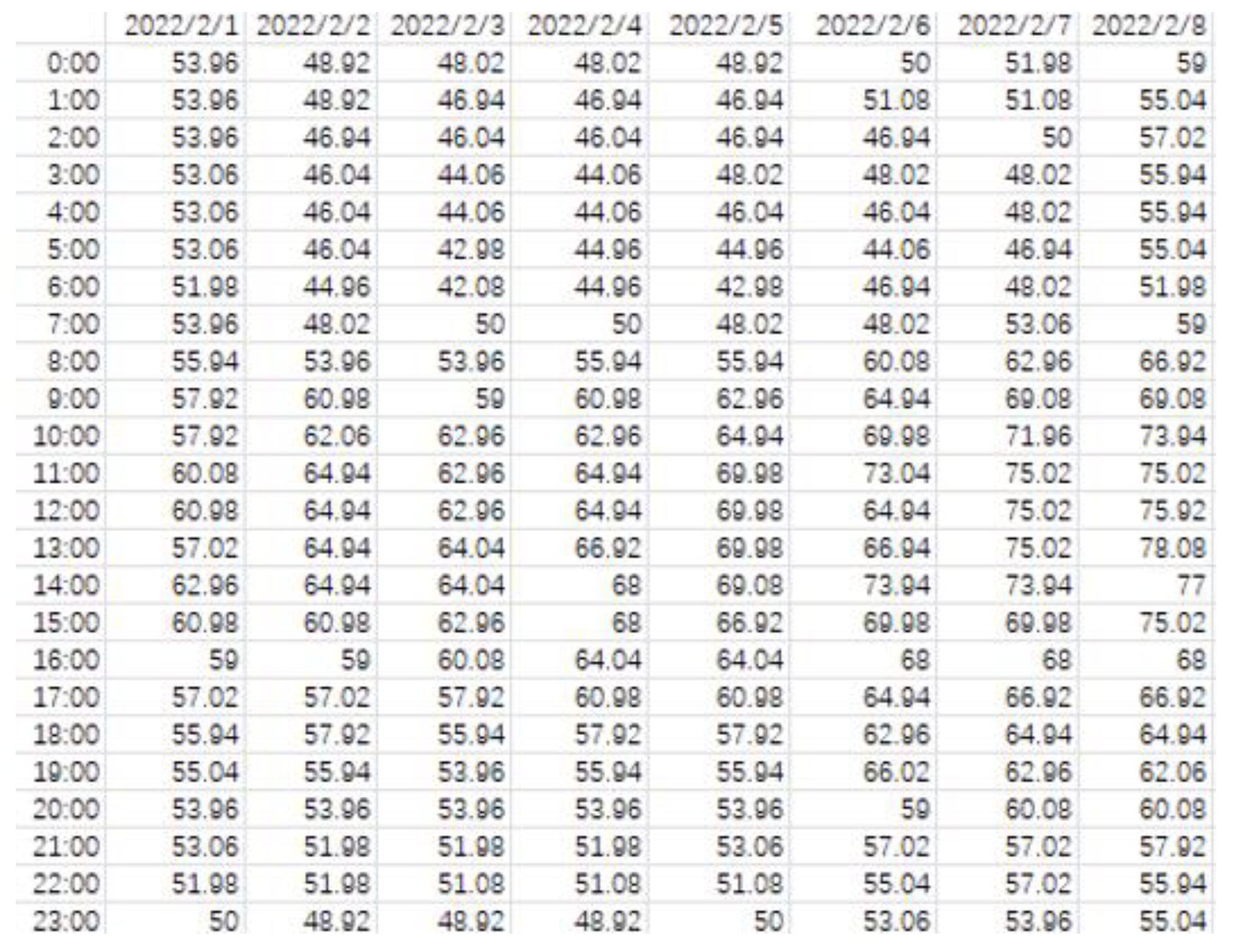
Given the time-consuming nature of ENVI-met simulations, a monthly average climate day method was employed. This involves averaging the hourly climate data of each day in a month to create an "average climate day" for that month, thereby reducing simulation time with minimal data error. The detailed calculation procedure of the method is thoroughly discussed in the Appendix Figure A6, Figure A7 and Figure A8.
2.3.2. Pixel Counting Method
The pixel counting method was applied for studying the average temperature of the sidewalk in full-site analysis. This method involves counting pixels of different colors representing various UTCI values in the sidewalk area, which are then tallied and used to calculate the average UTCI, assessing the site’s thermal comfort level. The detailed calculation procedure of the method is thoroughly discussed in the Appendix Figure A9, Figure A10 and Figure A11.
2.4. Full Site Study
The full-site study simulates an entire block under three tree-planting scenarios—no trees, existing trees, and proposed trees—across the coldest, hottest, and monthly UTCI diagrams at the 1.4-meter level in sidewalk areas at 12pm. This focus on the 1.4-meter plane at noon is due to pedestrians’ highest usage of street areas during the daytime and their sensitivity to temperature variations at this height. These scenarios will be used to calculate the average sidewalk UTCI, allowing for an analysis of the monthly cooling performance of existing and proposed tree schemes to determine which months the proposed scheme outperforms, thereby assessing its potential to provide enhanced thermal comfort throughout the year.
3. Results (Preliminary Studies)
The preliminary studies use ENVI-met to investigate the cooling capacity of trees by comparing UTCI indices at a height of 1.4m. The analysis focuses on five factors to improve tree cooling ability: date, building shade, transpiration, location, and spacing.
3.1. Date Comparison (No Tree Comparing with One Tree)
This section compares UTCI data in the simulated area under three conditions—the hottest and coldest days of the year (at 10 am, 12 pm, and 2 pm), and the average climate date of each month—using a simulation with only one tree (Figure 10). Since the cooling capacity of trees benefits hot weather but have negative effects in cold weather [21], the aim is to determine if the cooling effect of trees is more beneficial in hot weather than it is harmful in cold weather.
3.1.1. Hottest Day Comparison
On the hottest days, the UTCI at the tree’s center decreased by 9-10°C and in the shaded area by 2.5-3°C, with the tree’s shade extending about 15 feet (Figure 11).
3.1.2. Coldest Day Comparison
On the coldest days, the UTCI in the tree’s center decreased by 10-11°C, slightly more than on the hottest days. The UTCI in the shaded area dropped by about 2°C, slightly less than on the hottest day (Figure 12). However, the influence area of the tree’s shade on the surrounding UTCI is significantly smaller on the coldest day compared to the hottest day.
3.1.3. Graph of Hottest and Coldest Day Comparison
On the hottest day, when the maximum air temperature is higher, the tree’s cooling ability is stronger, but this phenomenon is not evident on the coldest days (Figure 13 and Figure 14). Although the central area’s cooling effect is stronger on the coldest day, the tree’s cooling impact area is much larger on the hottest day, leading to a greater reduction in average UTCI. This indicates that the positive cooling benefits on hot days outweigh the side effects on cold days, making the overall benefit of the tree greater than its harm.
3.1.4. Graph of Each Month Comparison
The cooling effect at the tree center remained stable across all months, while the cooling in the surrounding area exhibited significant variation. Enhanced cooling within ten feet of the tree was observed during periods of higher average temperatures, particularly between June and September (Figure 15).
3.2. Building Shade Comparison
This section analyzes the relationship between a tree’s cooling capacity and building shade. It simulates the tree’s cooling effect at 10 am, 12 pm, and 2 pm on the hottest and coldest days of 2022 when the tree is entirely within the building’s shade (Figure 16).
3.2.1. Hottest Day Comparison
When the tree is completely shaded by a building, its ability to reduce the surrounding UTCI weakens significantly. The UTCI difference between the tree’s center and the surrounding area from 10 am to 2 pm is about 0.8 to 1.6°C, much lower than the 9.49°C difference when the tree is fully exposed to the sun. This indicates that the tree’s cooling ability decreases significantly when its shading effect is blocked by the building shadow (Figure 17).
These simulations show that on the hottest day of the year, when the tree is entirely in the building’s shadow, the UTCI reduction drops from about 9.75°C to 1.3°C, resulting in an 87% decrease in the tree’s cooling capacity.
3.2.2. Coldest Day Comparison
On the coldest days, when the tree is fully shaded by the building, its ability to reduce the surrounding UTCI weakens significantly. The UTCI at the tree’s center and surrounding areas barely changed, much lower than the 10.5°C difference observed when the tree is fully exposed to the sun. This indicates a significant decrease in cooling ability when the tree’s shading effect is blocked, with the reduction in cooling being even greater than on the hottest day. The detailed UTCI diagram comparison of the coldest day at 10am,12pm,2pm is introduced in Appendix Figure A12.
These simulations reveal that on the coldest day of the year, when the tree is entirely in the building’s shadow, the UTCI reduction drops from about 10.5°C to 0.7°C, resulting in a 94% decrease in the tree’s cooling capacity.
3.2.3. Graph of Cooling Ability Reduction Comparison
The tree’s cooling ability varies greatly between full sun exposure and complete building shade. Building shadows significantly reduce the tree’s cooling effect, indicating that shade is the primary mechanism for lowering surrounding temperatures. In cold weather, the reduction in cooling ability is more pronounced, suggesting that trees rely more on their own shade to cool in colder conditions, with less contribution from other cooling methods compared to hot weather (Figure 18).
3.3. Transpiration
This section focuses on the impact of transpiration on a tree’s cooling ability. Trees cool primarily through canopy shading and transpiration [22]. By excluding the shading effect, the influence of transpiration on the surrounding environment can be isolated. In the previous section, the simulations excluded the effect of tree shading. Therefore, the results from that section can be directly used to analyze the transpiration effect (Figure 19).
3.3.1. Hottest Day Comparison
The temperature at the center of the tree is 1.1°C lower than the UTCI without the tree, even though the tree is fully shaded by the building (Figure 20). This reduction isn’t due to shading, so it must be attributed to other reasons, primarily the tree’s transpiration.
For the same reasons, the analysis in the previous section shows that on the hottest day of the year, the tree’s cooling capacity in its central area is 1.1°C at 10 am, 1.16°C at 12 pm, and 0.99°C at 2 pm.
3.3.2. Coldest Day Comparison
However, comparative analysis reveals that in winter, the presence of a tree in the shadow of buildings has very little impact on the surrounding temperature (Figure 21). The cooling effect of tree transpiration in winter is minimal, around 0.4°C, indicating that tree transpiration is significantly weaker in cold weather than in hot weather.
3.3.3. Transpiration Effect Comparison
It is evident that transpiration significantly reduces temperature in hot weather but has minimal cooling effect in cold weather (Figure 22). Given that cooling in cold weather is a negative effect, the results show that transpiration’s positive impact far outweighs its negative effect.
The threshold for most people to detect temperature change is around 0.5 to 1°C. The cooling effect of tree transpiration on surrounding UTCI during the hottest and coldest days is very close to this range. This means the body can barely perceive the influence, but it cannot significantly alter a person’s assessment of thermal comfort in the environment.
3.4. Tree Location Comparison
This section will simulate the cooling effect of trees on UTCI at eight locations around a building (east, south, west, north, northeast, southeast, northwest, and southwest) at sunrise, 12 pm, and sunset on the hottest and coldest days of the year (Figure 23). By analyzing the building’s shadow, the tree’s cooling benefits throughout the year can be assessed. Since shade is the primary cooling mechanism, determining whether trees in different locations can provide more shade during daylight will be key to evaluating their effectiveness in reducing UTCI.
3.4.1. Hottest Day Comparison
At sunrise, trees on the west, north, and northwest sides of the building are entirely within its shadow, resulting in a weaker cooling effect. Trees on the southwest and northeast sides provide more shade, leading to better cooling. At noon, trees on the north, east, and northeast sides are in the building’s shadow, so their cooling effect is poor. Trees in the other five positions are unaffected by the shadow and show similar cooling abilities, reducing UTCI by about 4-4.5°C. At sunset, trees on the south, east, and southeast sides are shaded and have less cooling capacity, while those on the southwest and northeast sides provide more shade and thus have a better cooling effect (Figure 24).
After analyzing the building shadow on the hottest day, the tree at point E, located on the southwest side, was not affected by the shadow all day and had the best cooling effect. The tree on the northeast side had the longest exposure to the shadow and the poorest cooling effect. Points A and D, near point E, were also unaffected during peak sunshine and had the second-best cooling capacity, with point A slightly outperforming point D due to less shadow influence when temperatures were higher. Similarly, points F and H performed better than points B and C, with F slightly better than H, and B slightly better than C (Figure 25).
3.4.2. Coldest Day Comparison
At sunrise, trees on the west, north, and northwest sides of the building are fully shaded by the building, resulting in less cooling. Trees on the southwest and northeast sides provide more shade and thus cool better. At noon, trees on the north, east, and northeast sides are shaded by the building, leading to poor cooling, while those in the other five positions have similar cooling abilities, reducing UTCI by about 5-5.5°C. At sunset, trees on the south, east, and southeast sides are shaded and have less cooling capacity, while the tree on the southwest side provides more shade and thus cools better. The detailed UTCI diagram comparison of the coldest day at 8am,12pm,17pm is introduced in Appendix Figure A13.
The tree’s cooling effect on the coldest day is similar to that on the hottest day. The cooling capacity ranked from strongest to weakest is E, A, D, F, H, B, C, and G (Figure 26).
Despite a larger temperature difference on the coldest day, trees on the hottest day cool a larger area due to provide more shade area. Thus, the positive cooling effect of trees in Los Angeles during hot weather outweighs the negative effect in cold weather.
3.4.3. Whole Year Comparison
The analysis of building shade and tree positions throughout the year yielded similar results to those on the coldest and hottest days. The cooling capacity of trees is ranked from strongest to weakest as E, A, D, F, H, B, C, and G (Figure 27).
Given that cooling trees has more positive benefits than harm, and that Los Angeles spends more time in hot weather than cold weather throughout the year, the best locations for trees around buildings in downtown Los Angeles are ranked from best to worst as E, A, D, F, H, B, C, and G (Figure 28).
3.5. Trees’ Spacing Analysis
This section compares the UTCI of tree species with medium trunks, medium height, medium crown size, and dense leaf density at 12 pm on the hottest day under three conditions: canopies separated by 15 feet, touching canopies, and overlapping canopies, to analyze how tree density and arrangement can maximize cooling effectiveness.
Simulations found that the average UTCI temperature around trees was lowest when canopies did not overlap, slightly higher when canopies were close, and highest when canopies overlapped. Proper spacing maximizes the shaded area, while large overlaps waste trees; shading, reducing the cooling effect of trees (Figure 29).
3.6. Proposed Tree Layout
Based on the analysis of factors affecting tree cooling capacity, the original tree distribution can be redesigned to enhance cooling. The new planting scheme focuses on the thermal comfort of the sidewalk area, so only the trees around the building and sidewalk are relocated, while trees in the middle of the block remain unchanged as they have minimal impact on the sidewalk’s thermal environment.
First, trees with broad canopies and tall heights are placed in the lower left corner of the building to provide maximum shade, following the priority order from the previous study. Medium-crowned trees with moderate shade capacity are then positioned on the left and lower sides of the site. Smaller landscape trees with the least shade capacity are placed on the upper and right sides, where they are more likely to be fully covered by the building’s shade. Additionally, tree spacing should be moderate—close enough to maximize shade without excessive overlap, and not too far apart to avoid wasting prime cooling locations. Meanwhile, ensuring that all areas of the sidewalk are covered by trees to meet the needs of pedestrians and residents for green space (Figure 30). The 2D map of the new scheme of trees can be found in the Appendix Figure A14.
3.7. Summary
The five conclusions that can improve the cooling ability of trees through several preliminary simulations.
a) Time Factor: Trees provide more shade and have greater cooling ability in summer compared to winter.
b) Shading: Trees primarily cool through canopy shading, but building shadows can significantly reduce this effect. It’s important to maximize tree shade while minimizing overlap with building shadows.
c) Transpiration: Tree transpiration also contributes to cooling and is not affected by building shadows. Transpiration effect is more effective during hot weather, but its cooling effect is much weaker than shading and has minimal impact on the thermal environment and human comfort.
d) Location: Trees on the south side of a building have the best cooling effect, while those closer to the north side are less effective.
e) Canopy Spacing: Trees cool best when their canopies are spaced apart without overlapping.
4. Results (Full Site Research)
This chapter presents the simulation and analysis results for three scenarios: no trees, existing trees, and the new tree planting plan proposed in last section. These scenarios are examined at different times on the hottest and coldest days of 2022, as well as under average monthly climate conditions (Figure 31). The UTCI values are compared to evaluate the enhancement in thermal comfort provided by the new tree planting scheme, relative to the existing scheme, across each month of the year (Figure 32) [23]. The model of no trees and existing trees are introduced in the Appendix Figure A15 and Figure 16
4.1. No Trees vs Existing Trees vs New Trees (Hottest Day)
This section compares the full site UTCI diagrams and analyzes the average UTCI of the pedestrian area under three conditions to determine if the new scheme improves UTCI more effectively than the existing scheme at the full site level.
4.1.1. Three Conditions UTCI Comparisons
4.1.2. Pedestrian Area Average Temperature Analysis (12pm)
At 12 noon on the hottest day of the year, the UTCI at 1.4 meters in the sidewalk area was 43.22°C with no trees, 40.71°C with existing trees, and 38.51°C with the new tree plan. This shows that relocating trees without changing their number or species reduces the UTCI by 2.2°C. All three conditions fall under the very strong heat stress level. The detailed calculation of the average UTCI under tree conditions, using the pixel counting method, is thoroughly presented in Appendix Figure A17, Figure A18 and Figure A19.
4.2. No Trees vs Existing Trees vs New Trees (Coldest Day)
On the coldest days of the year, the average UTCI in the full site sidewalk area is 23.42°C with no trees, 20.51°C with existing trees, and 19.54°C with the new tree plan. The new scheme cools the area 0.97°C more than the existing one. Comparing the results from the hottest and coldest days, the simulations show that the new tree plan’s positive summer effects outweigh its negative winter effects (Figure 36). All three conditions fall within the no thermal stress level. The detailed UTCI comparisons of three trees conditions are introduced in the Appendix Figure A20, Figure A21 and Figure A22.
4.3. Existing Trees vs New Trees (Full Site Monthly Comparison)
This section compares the average UTCI value of the sidewalk area at 12 noon each month under existing trees and new trees, identifying the months when the new trees significantly impact the thermal environment and those when the effect is less noticeable. Only the results are discussed here, excluding the UTCI diagrams and calculation process.
The new tree scheme can lower the average temperature of the sidewalk area but cannot completely change the thermal stress level. In downtown Los Angeles, all months except February experience varying levels of thermal stress (Figure 37), so the cooling ability of trees is crucial for this climate. The detailed comparison of the UTCI diagrams for each month is presented in Appendix Figure A23, Figure A24, Figure A25, Figure A26, Figure A27, Figure A28, Figure A29, Figure A30, Figure A31, Figure A32, Figure A33 and Figure A34.
4.4. Reduced UTCI Comparisons
The analysis shows that the new tree scheme reduces the UTCI value each month compared to the existing trees (Figure 38). The new trees have a significant cooling effect from August to October, with higher average temperatures, the benefits are clear. However, the scheme also shows a noticeable negative cooling effect during the coldest months, January and February. Overall, the annual data confirms that the positive impact of the new trees outweighs the negative effects, aligning with previous expectations.
4.5. Summary
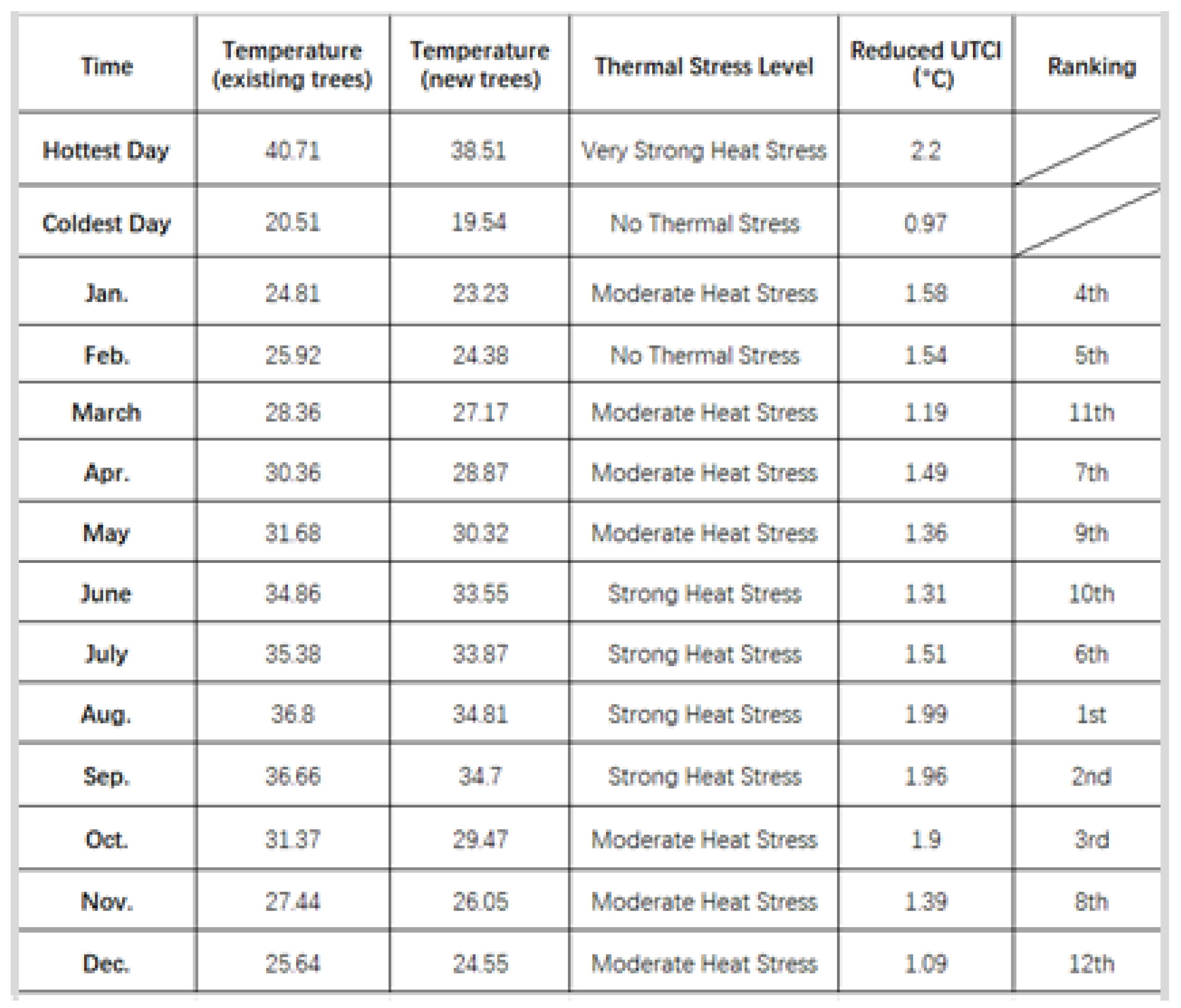
The new scheme, based on a strategic planting approach, effectively reduces the annual UTCI and lowers the average air temperature by 1.5°C. The cooling effect is stronger in summer than in winter, showing that the positive benefits outweigh the negative. While a small number of trees may not drastically change thermal comfort, their temperature impact is noticeable to pedestrians (Figure 39).
5. Discussion
5.1. Study’s Purpose and Hypotheses
The primary goal of this study is to optimize urban tree placement in downtown Los Angeles to enhance cooling effects, with the hypothesis that tree characteristics, spatial conditions, and local climate significantly influence cooling efficacy, while also comparing the positive cooling benefits in hot environments with potential adverse effects in cold environments.
5.2. Comparison with Previous Studies
Previous research indicated that trees provide the most cooling in autumn, followed by winter, with the least effect in spring, generally cooling the surrounding area by about 3.06°C [8]. However, our findings suggest that trees are most effective in summer due to increased shading, with an overall annual cooling capacity of about 1.5°C. This highlights the variability of tree cooling benefits across different seasons and environments.
Our results align with studies that identified shading as the primary cooling mechanism, with transpiration playing a secondary role, particularly during warmer seasons. Moreover, trees located on the south side of buildings and with well-spaced canopies provided the most effective cooling, supporting the importance of tree placement and canopy arrangement in maximizing cooling potential [15].
5.3. Implications of the Findings
The findings emphasize the need to integrate tree characteristics, spatial conditions, and local climate into urban greening strategies. Urban planners should prioritize species with dense canopies, ensure optimal placement to maximize shading, and consider proper spacing and orientation to achieve significant cooling benefits. Understanding local climate interactions with tree characteristics is essential for optimizing cooling throughout the year [24].
5.4. Limitations of the Study
The study’s reliance on ENVI-met simulations and its focus on evergreen species limit the generalizability of the findings. Future research should include on-site temperature measurements and explore a broader range of tree species, including deciduous trees, to validate and expand upon these results. Additionally, variations in local climate suggest that findings should be adapted to different urban contexts.
5.5. Future Research Directions
Future research should incorporate wind analysis and explore different climate zones to refine tree placement strategies [25]. On-site temperature measurements will enhance the applicability of these findings across diverse urban contexts, helping to generalize the study’s conclusions [26]. Sky View Factor (SVF) is also a key factor for subsequent research, aiming to explore the relationship between the cooling capacity of trees and the height of surrounding buildings along streets [27,28]. Expanding the scope of research is also a direction for deepening the study, such as exploring how many city blocks need to have their tree planting schemes altered to achieve a temperature reduction of over 1.5°C in the downtown area of Los Angeles [29,30].
5.6. Concluding Remarks
This study provides valuable insights into optimizing urban tree placement, emphasizing the importance of considering tree characteristics, spatial conditions, and local climate in urban greening strategies. By integrating these factors into urban planning, cities like Los Angeles can enhance thermal comfort and mitigate the urban heat island effect. The findings offer practical guidance for urban planners, highlighting the need for tailored tree placement strategies that account for seasonal variations and local environmental conditions.
6. Conclusions
This study highlights the significant cooling potential of urban trees, emphasizing the importance of tree characteristics, spatial conditions, and local climate in optimizing urban greening strategies. Unlike many other studies that focus on specific time points, this research provides a more comprehensive understanding of tree cooling patterns by examining their effects throughout all months of the year. This approach allows for a deeper and more thorough understanding of the cooling capacity of trees. Additionally, this study considers the potential drawbacks of tree cooling during winter and quantifies these against the positive cooling effects, offering a more balanced and complete assessment of trees’ impact on thermal comfort in the surrounding environment. The findings indicate that a well-designed tree planting scheme can reduce the surrounding area’s temperature by an additional 1.5°C throughout the year. In downtown Los Angeles, the positive cooling effects of trees during hot weather significantly outweigh the negative impacts during colder periods. By strategically placing trees to maximize shading and considering seasonal variations, cities like Los Angeles can effectively enhance thermal comfort and mitigate the urban heat island effect. The proposed tree-planting strategies offer practical guidance for urban planners and are broadly applicable, providing valuable insights for cities beyond Los Angeles.
Appendix
Figure A1.
Research area 3D model in ENVI-met.
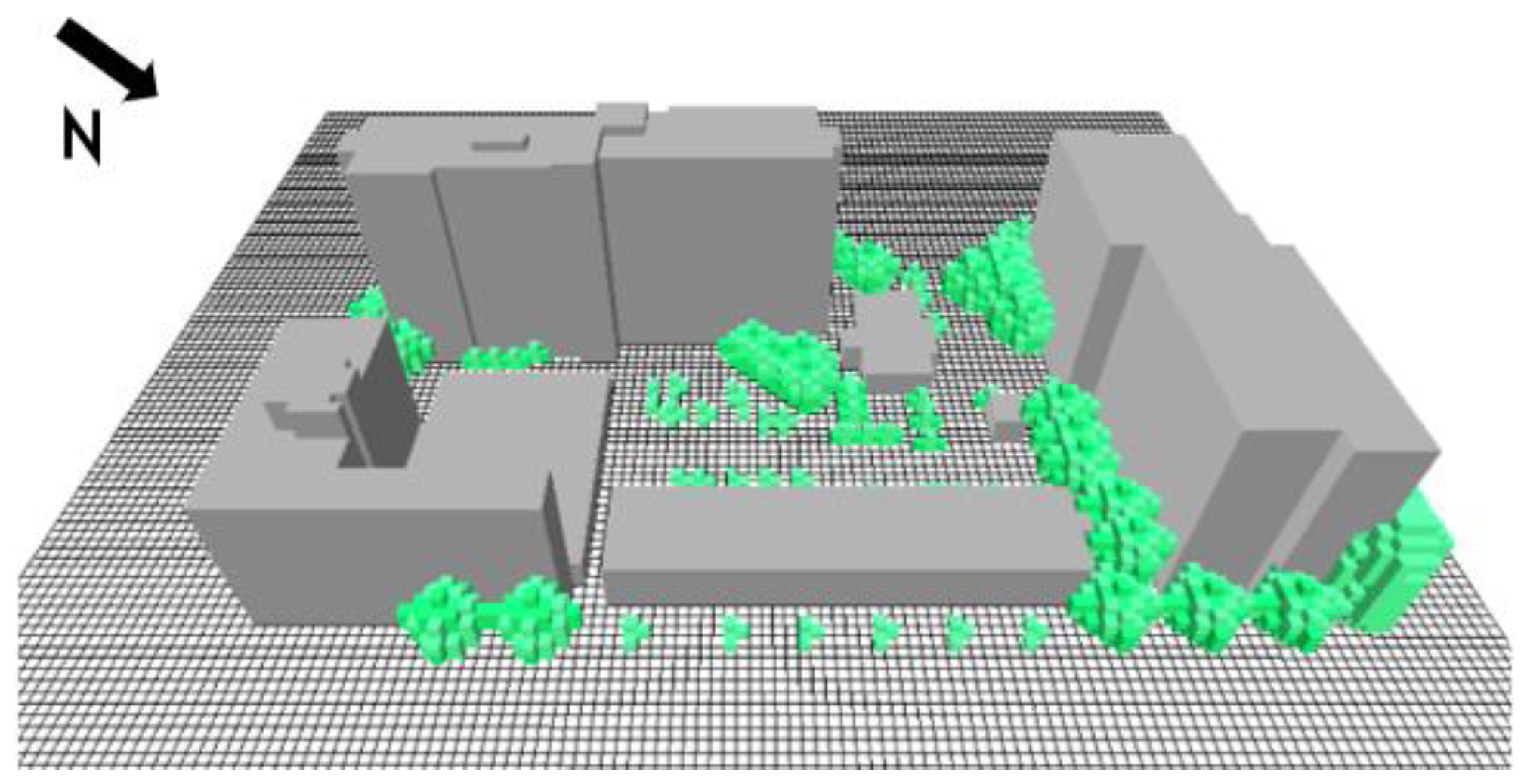
Figure A2.
Assign materials for building façade and road surface in ENVI-met.
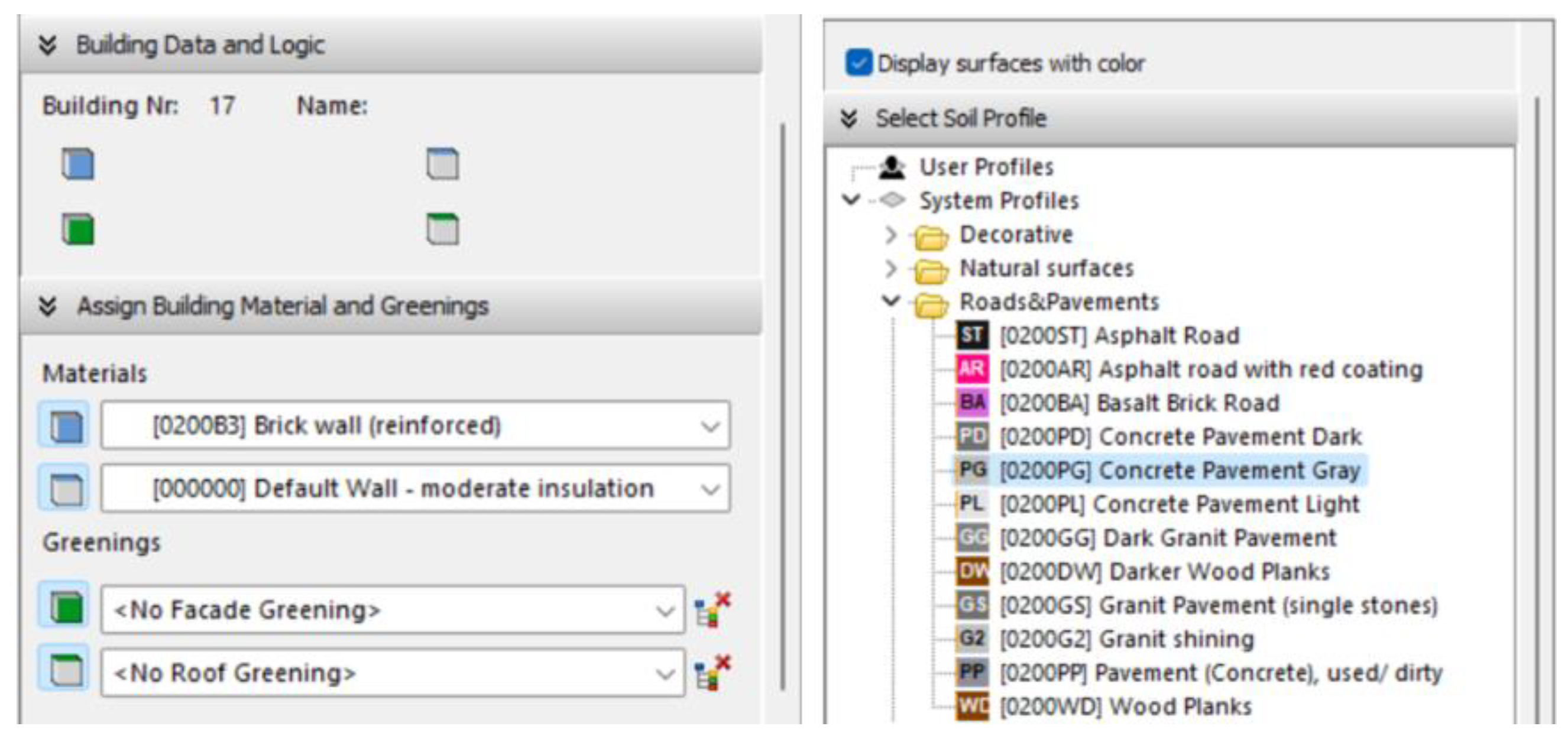
Figure A3.
Climate file setting in ENVI-met (hottest day).
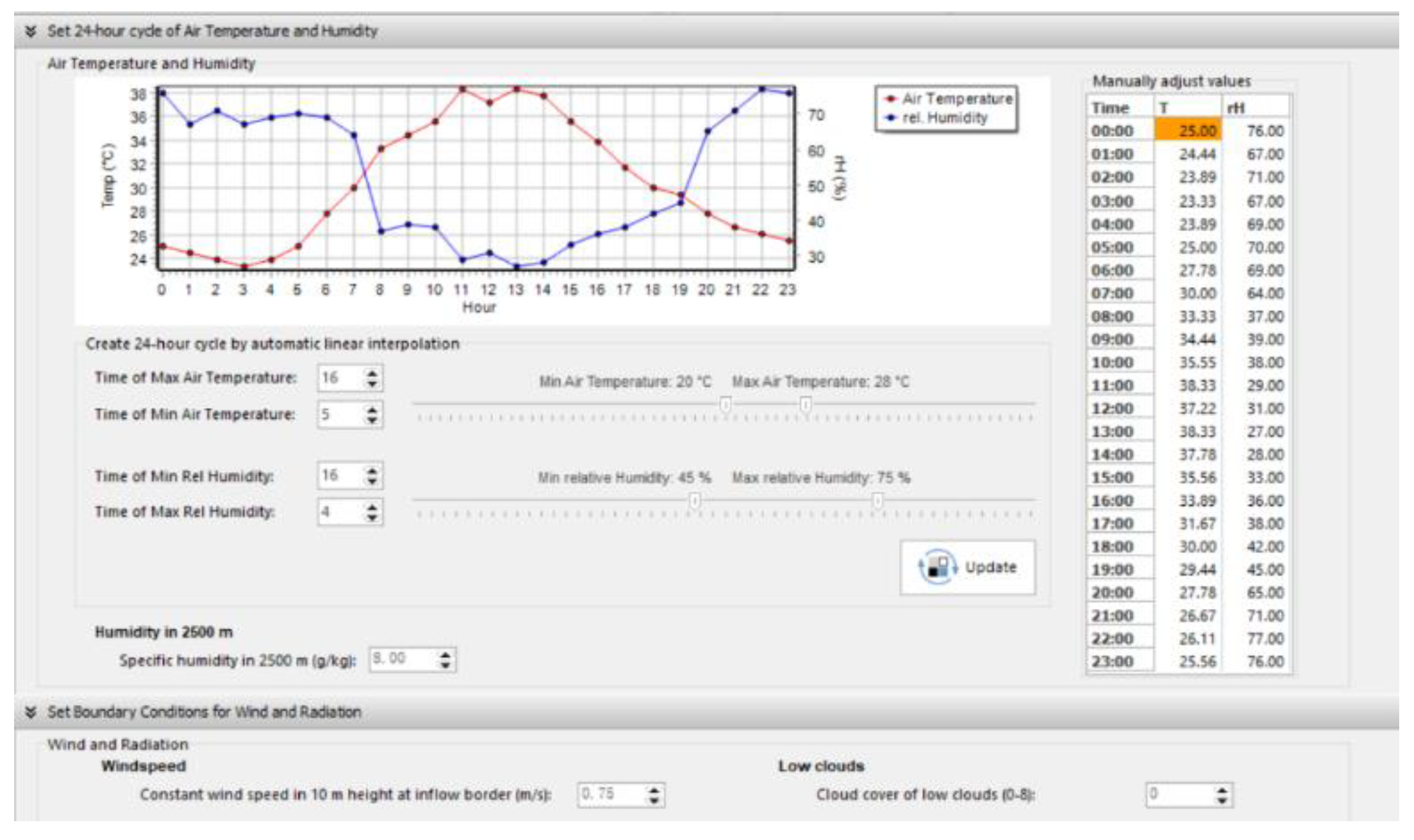
Figure A4.
Climate file setting in ENVI-met (coldest day).
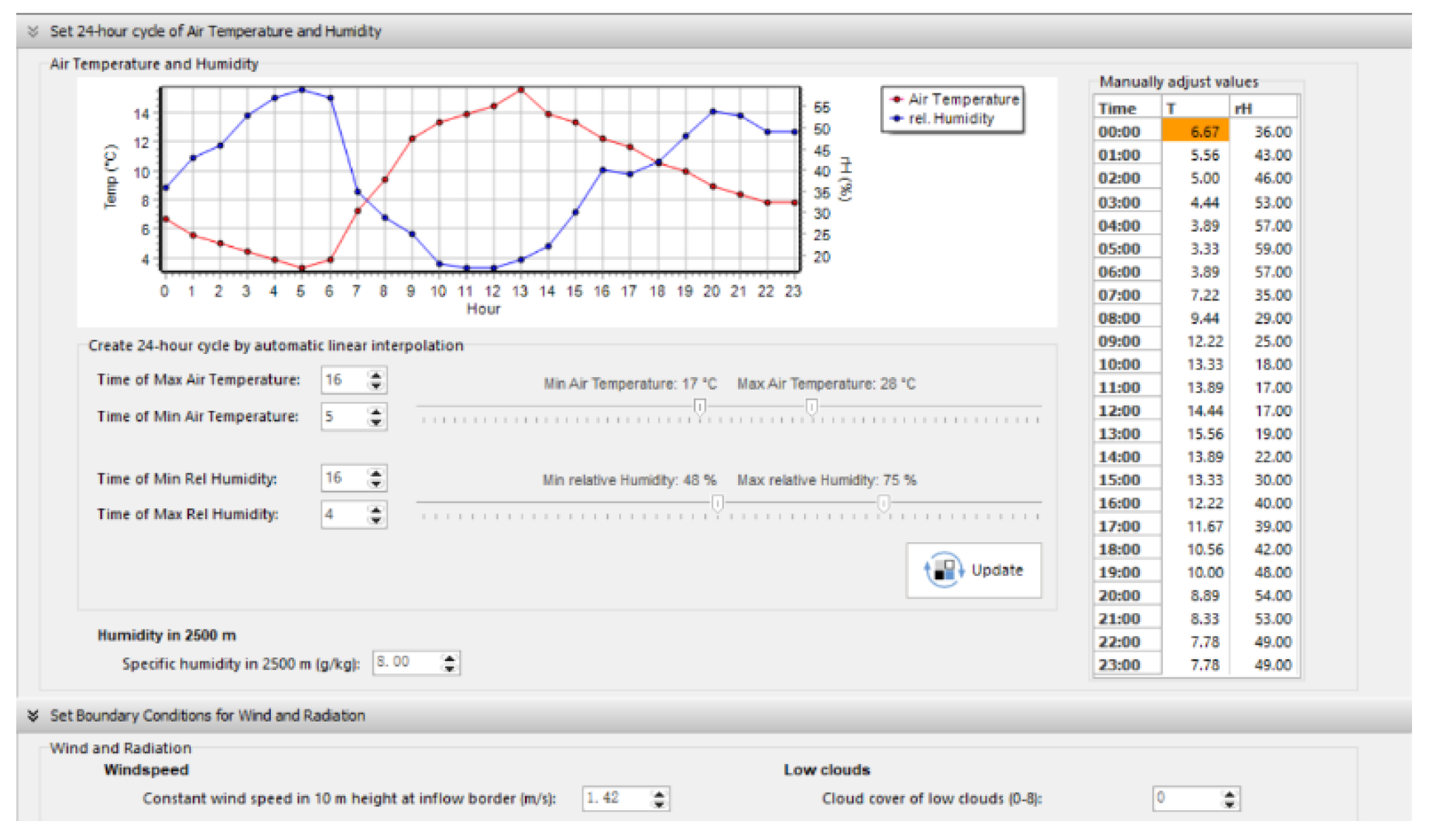
Figure A5.
Daily climate data of each month in downtown Los Angeles.
2.3.1. Monthly Average Climate Day Method
Take the climate data of February as a sample.
Figure A6.
February average climate data calculation.
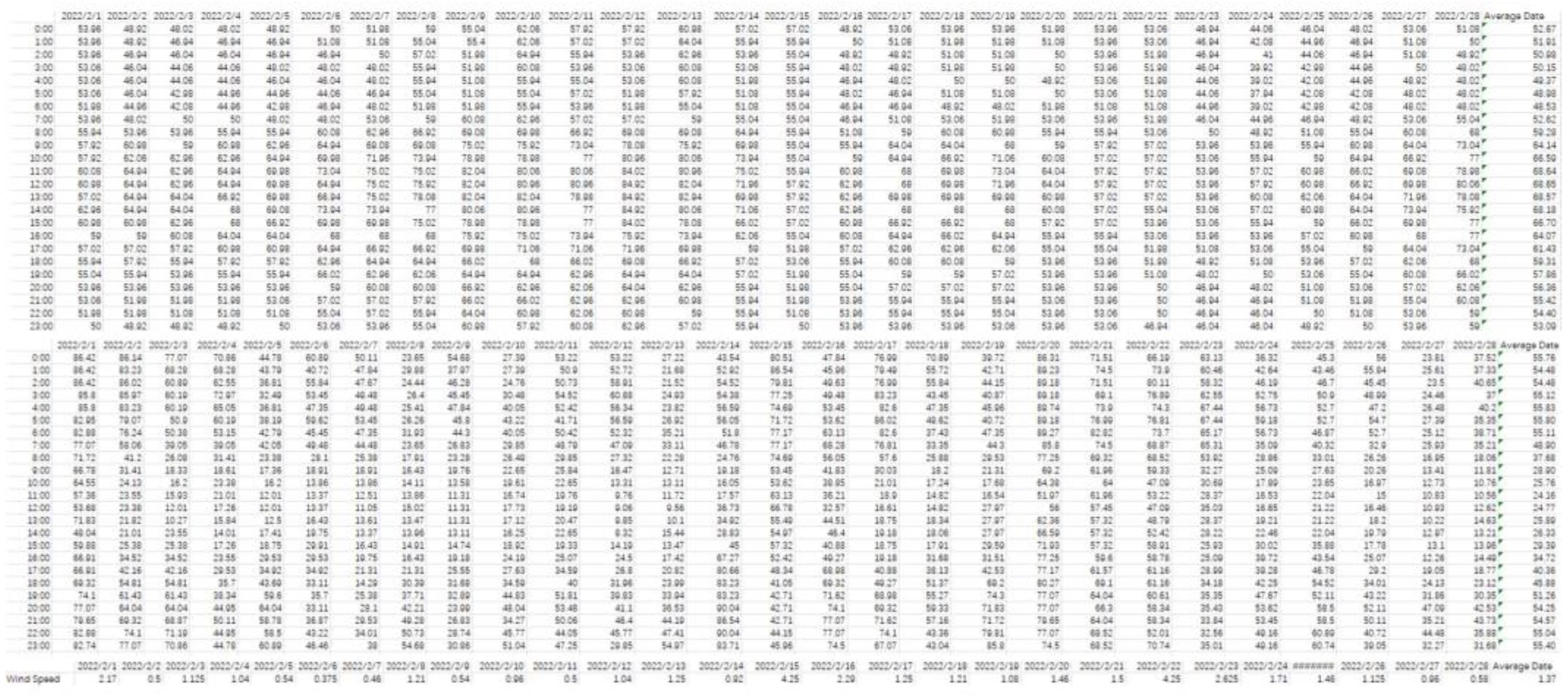
Figure A7.
February Air temperature average data calculation (part).
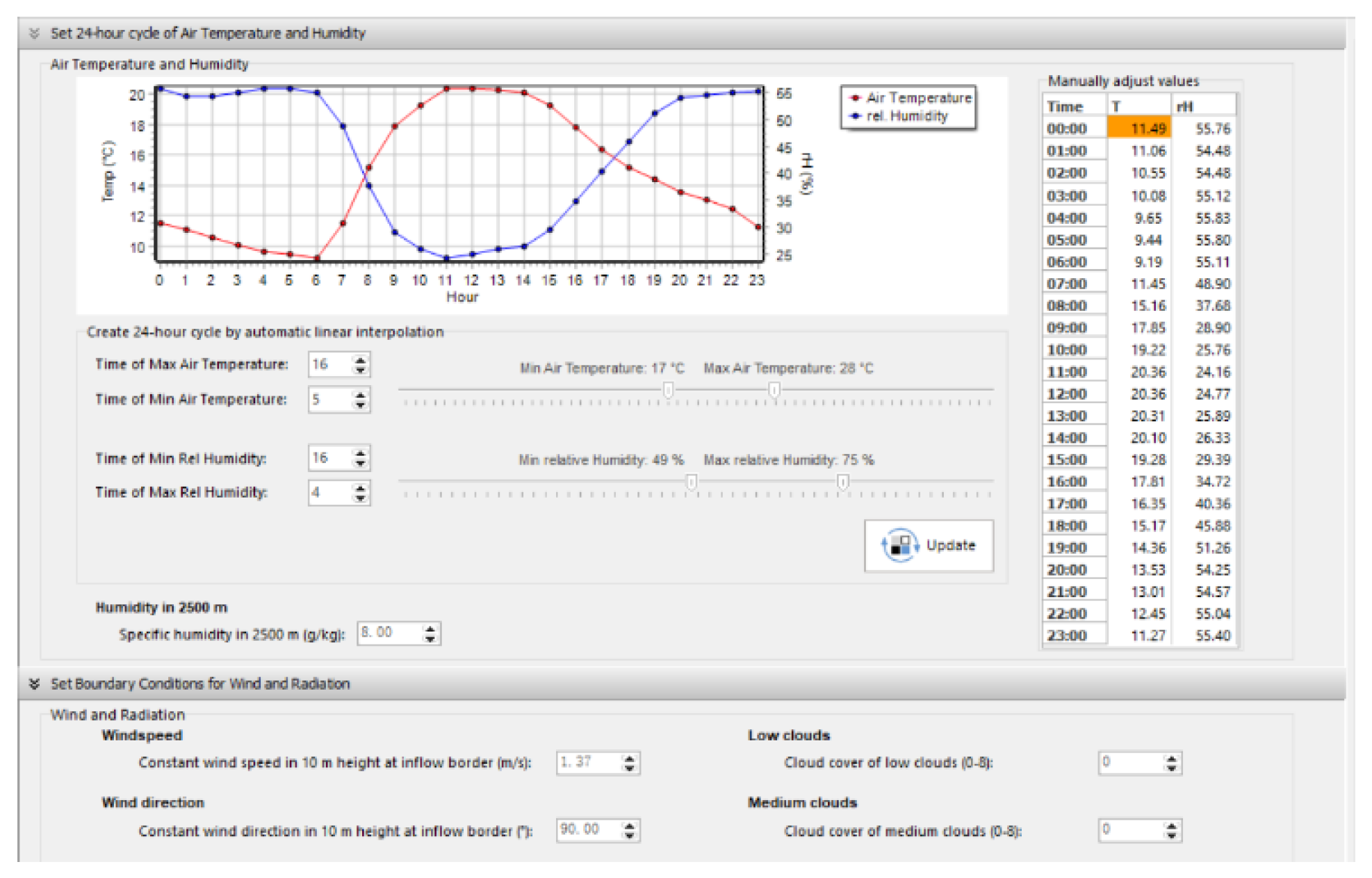
Then, the obtained average climate data for February can be input into ENVI-met. (Figure A8).
Figure A8.
February average climate data file in ENVI-met.
2.3.2. Pixel Counting Method
Figure A9.
Preliminary simulation UTCI diagram.
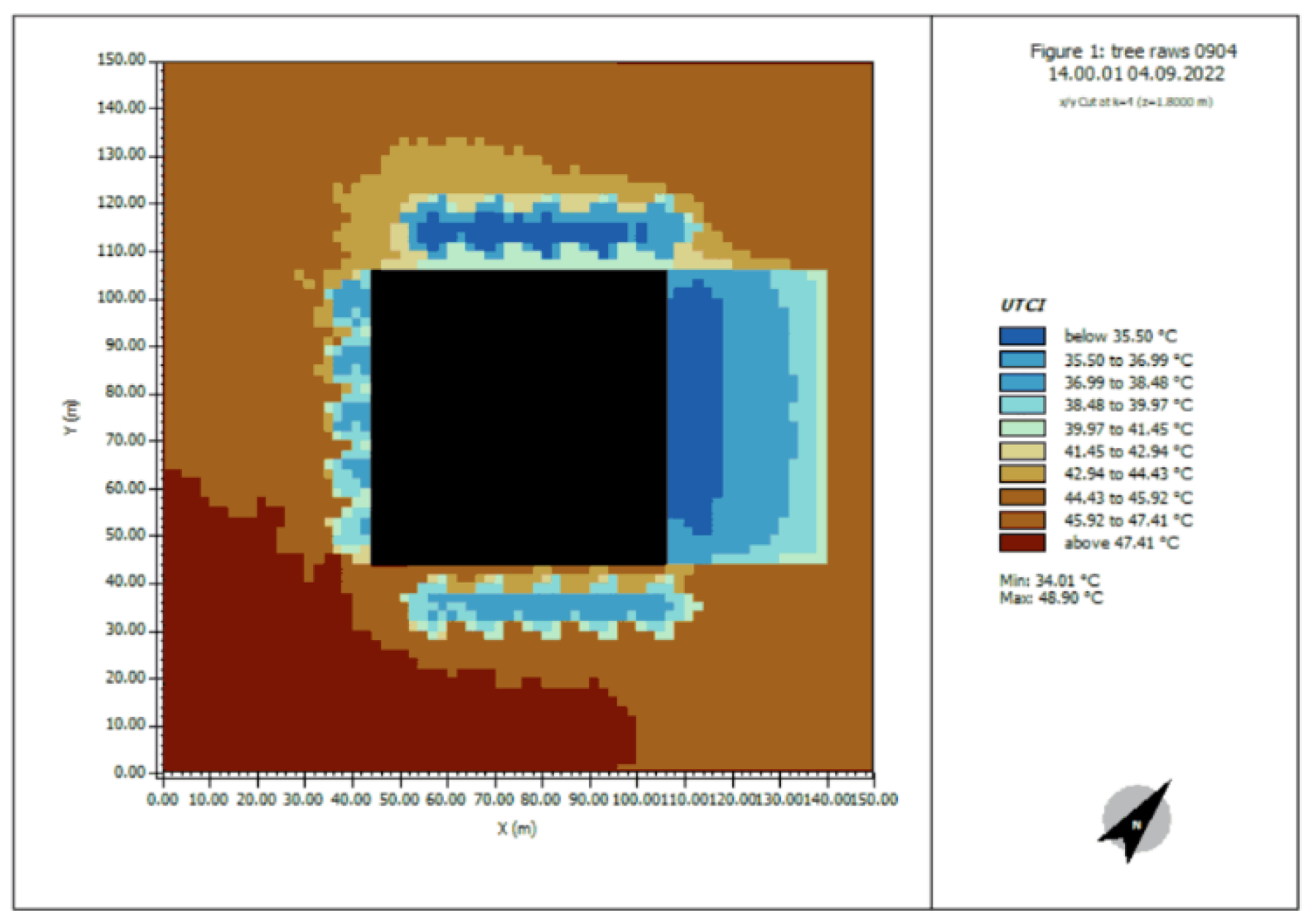
Figure A10.
Sidewalk area pixel counts image.
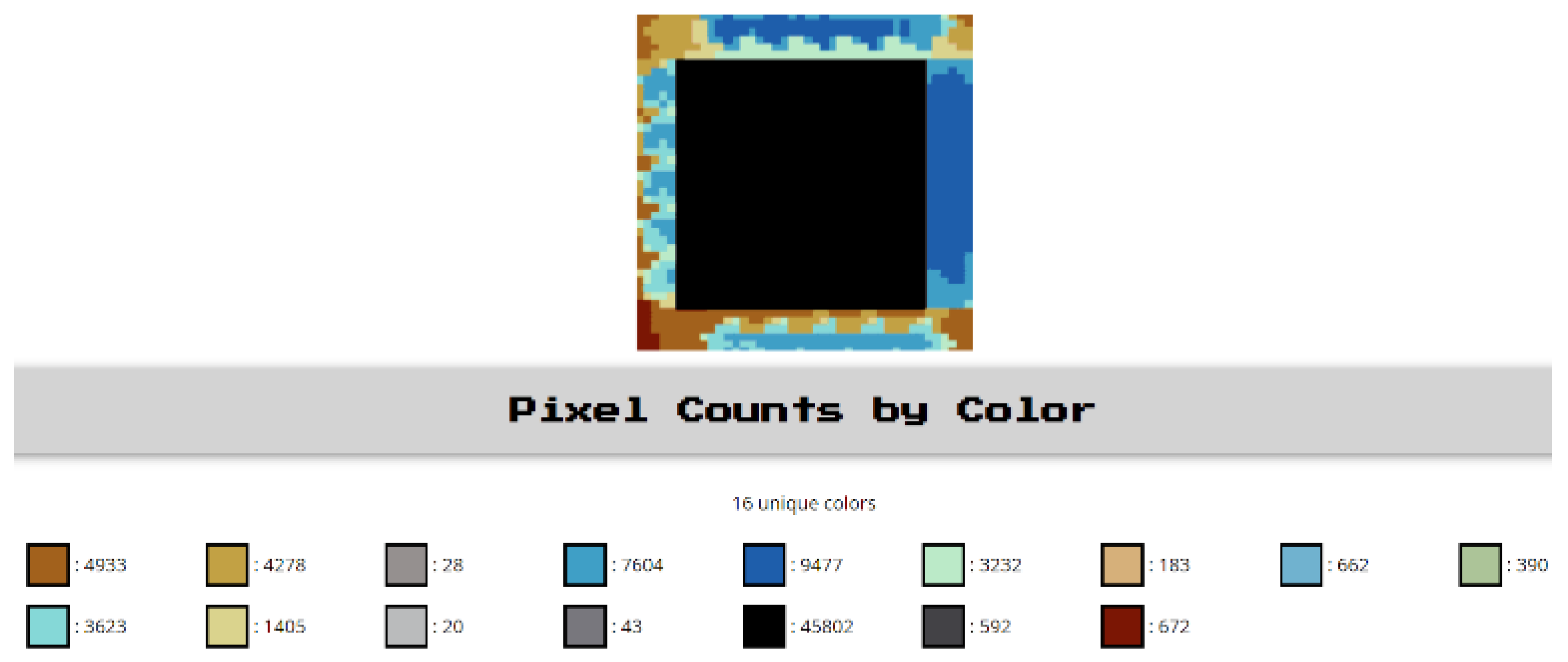
Figure A11.
Sidewalk area average UTCI calculation.
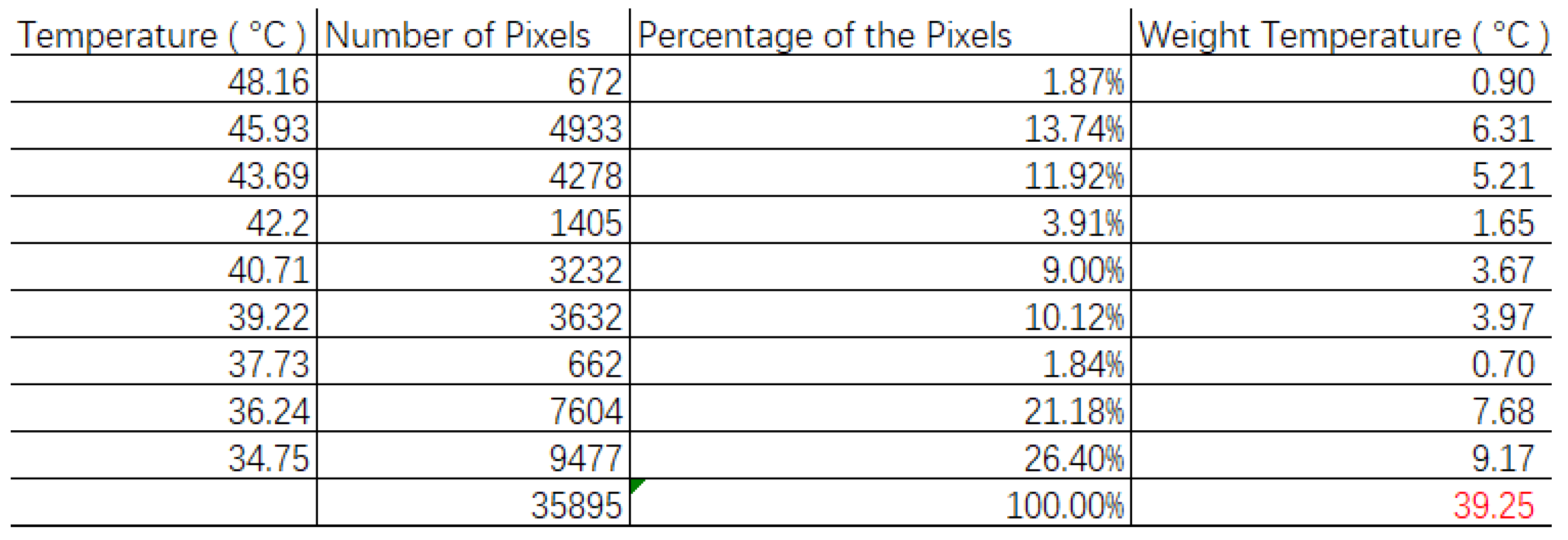
Figure A12.
Coldest day UTCI diagram comparison at 10am,12pm,2pm.
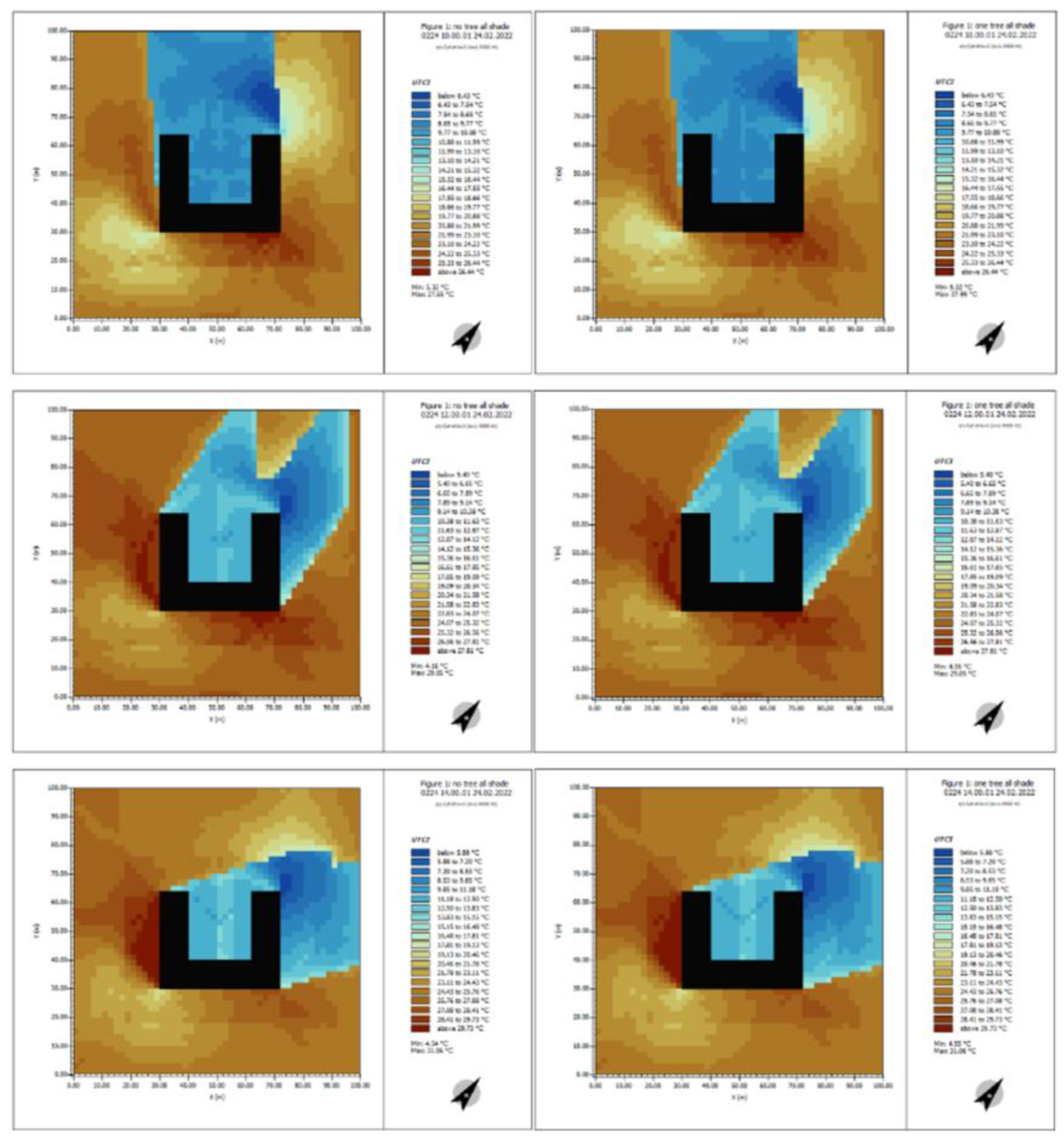
Figure A13.
Coldest day sunrise, noon, sun set time UTCI comparison (8am, 12pm, 17 am).
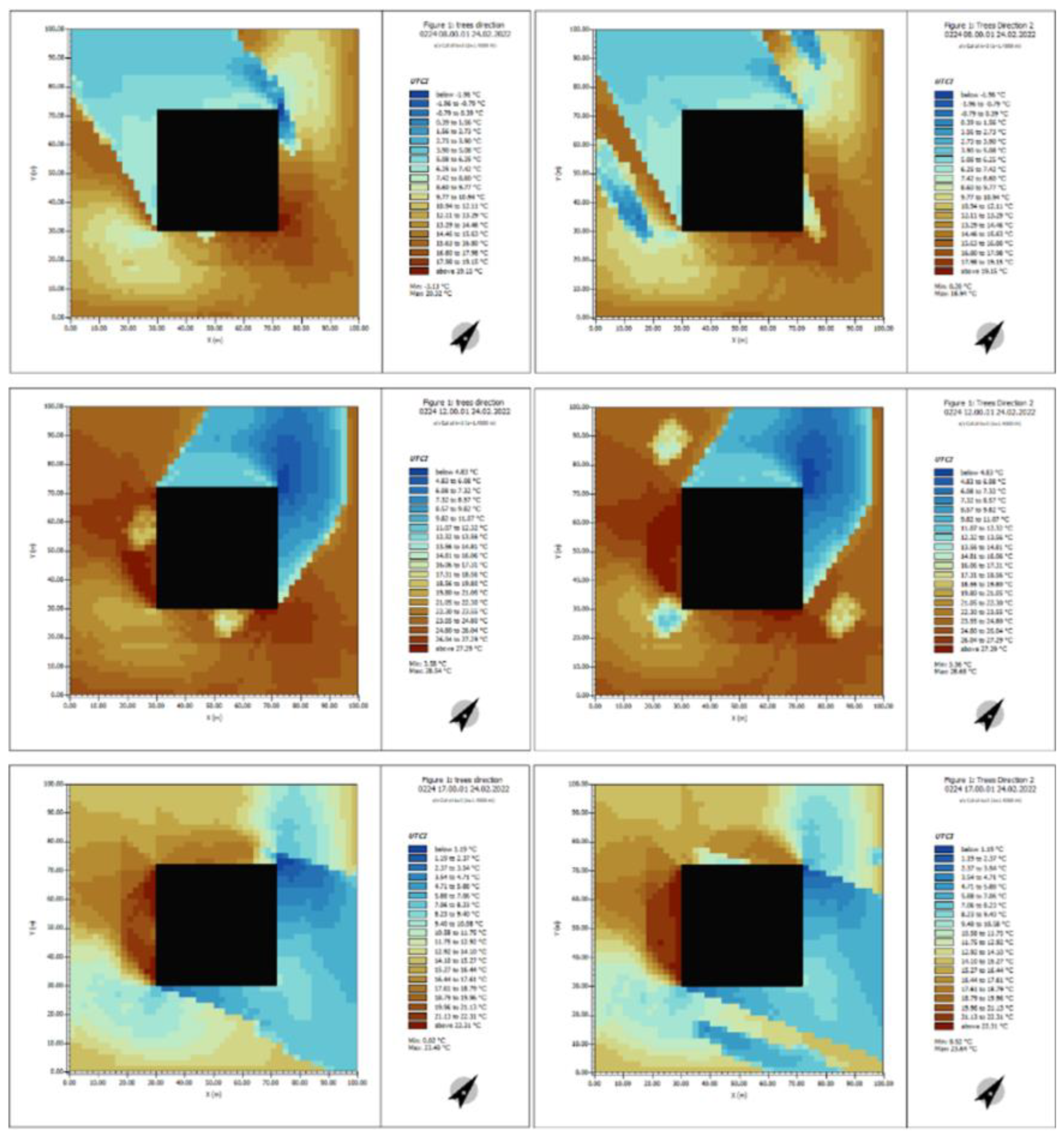
Figure A14.
New trees scheme layout 2D map.
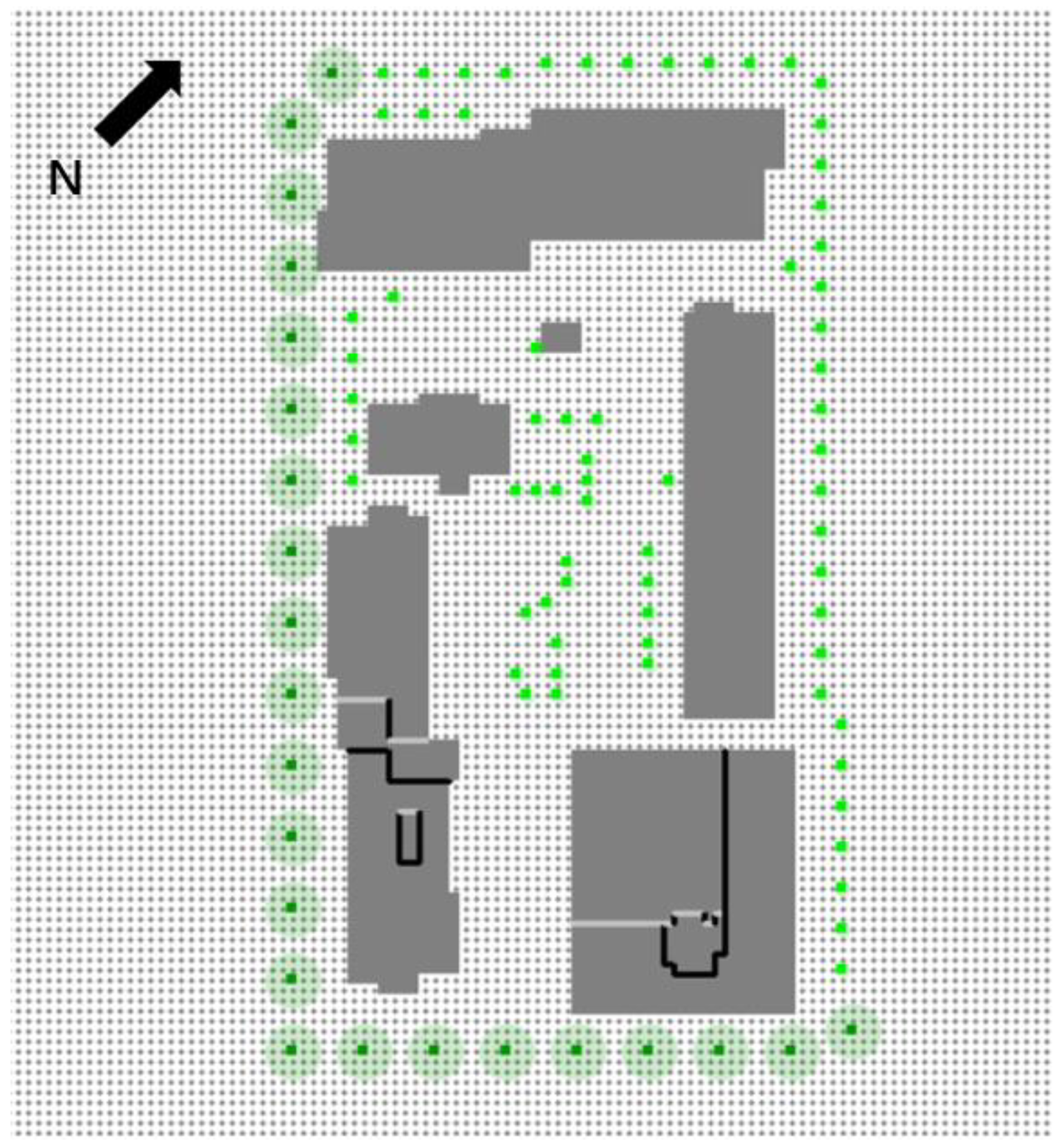
Figure A15.
Full site no tree 3D model in ENVI-met.
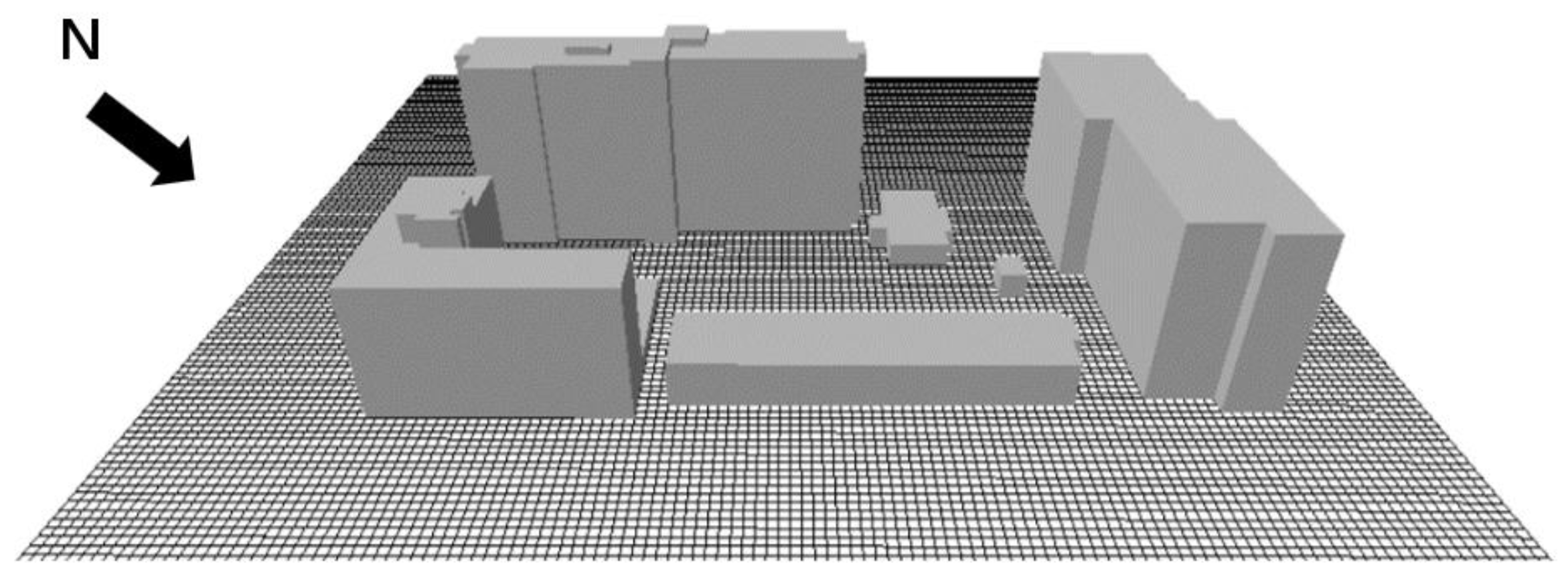
Figure A16.
Full site existing trees 3D model in ENVI-met.
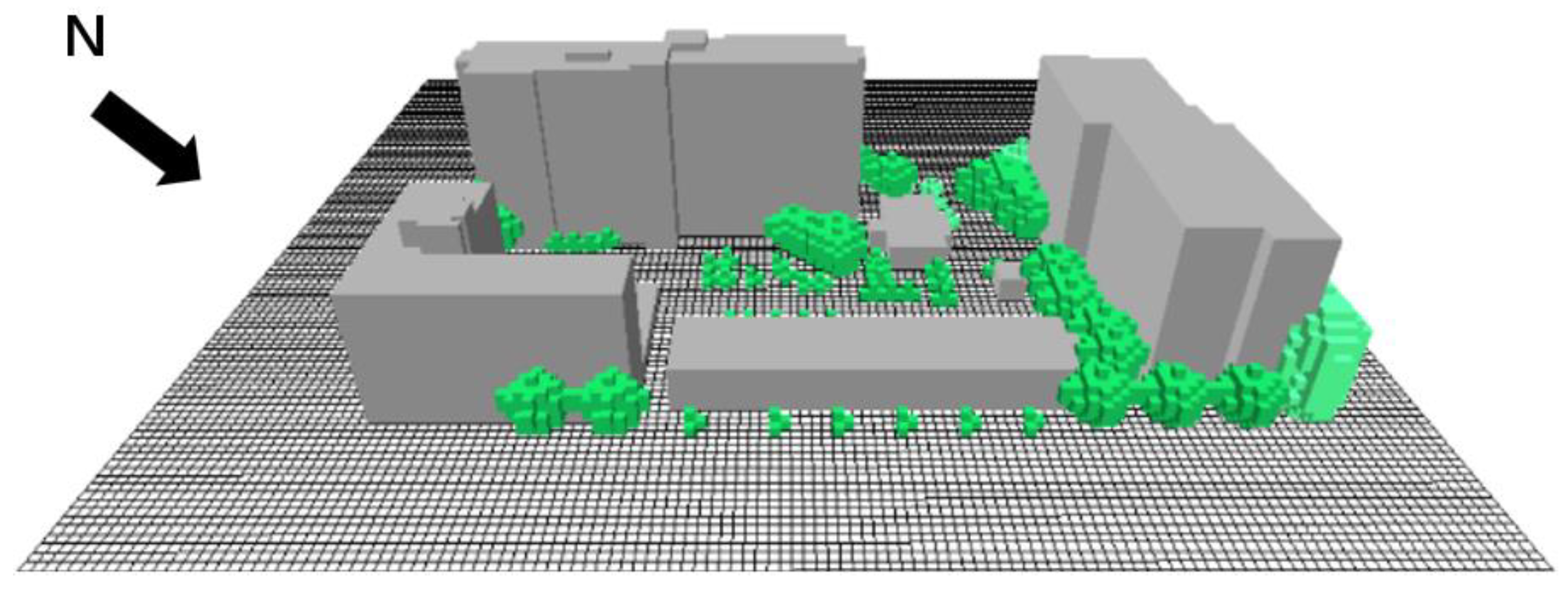
Figure A17.
Full site no trees average temperature at 12pm.
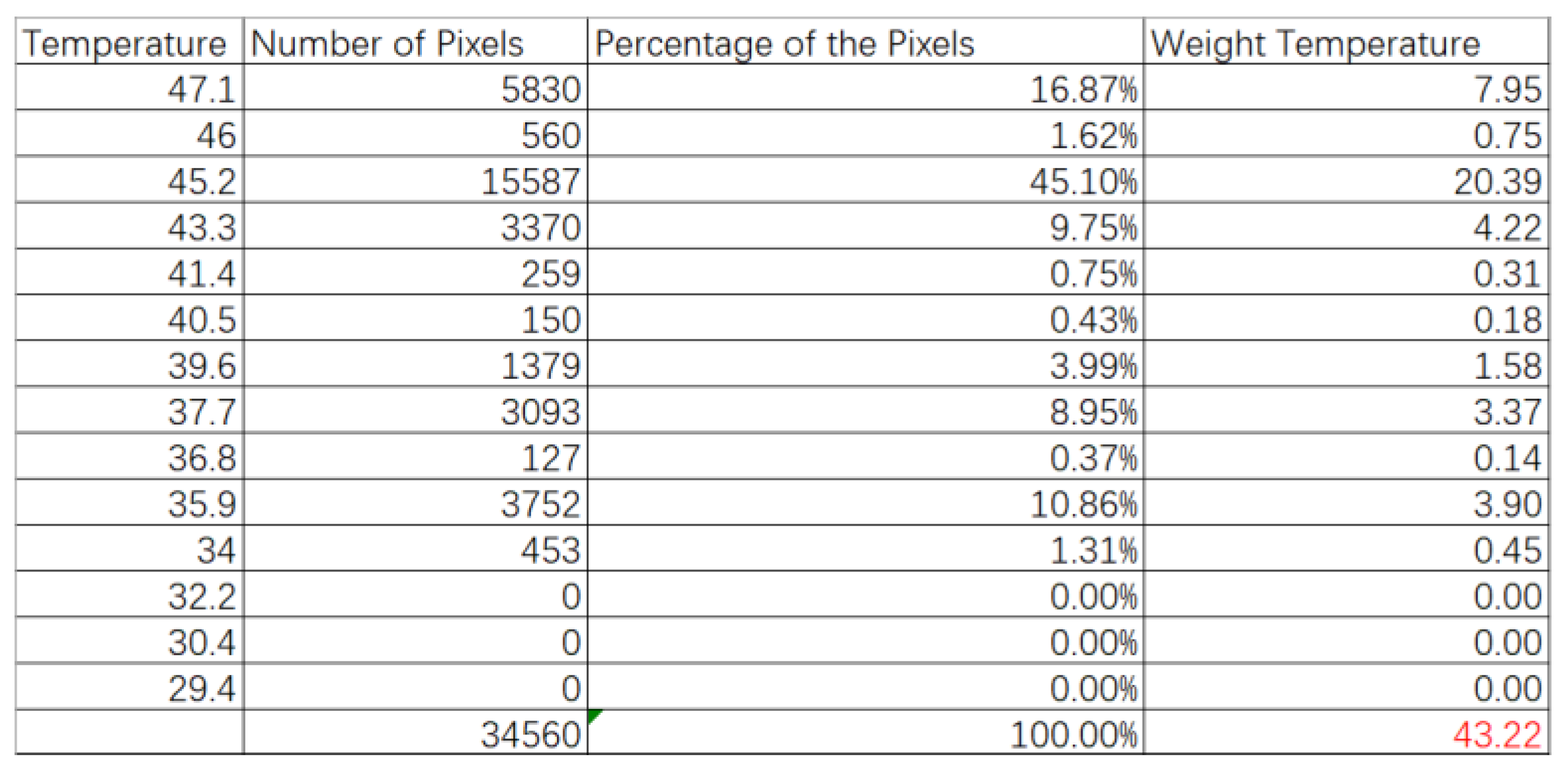
Figure A18.
Full site existing trees average temperature at 12pm.
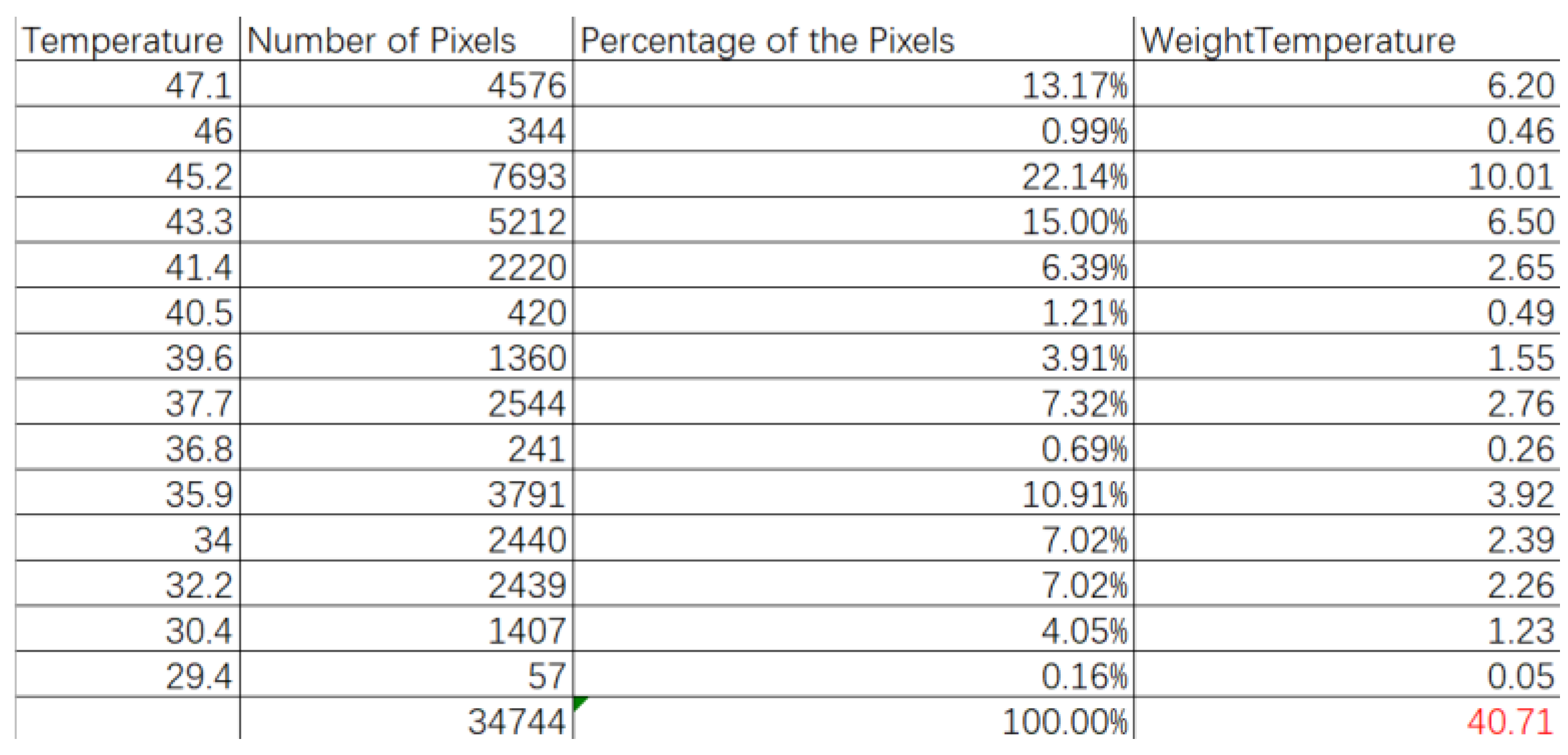
Figure A19.
Full site new trees average temperature at 12pm.
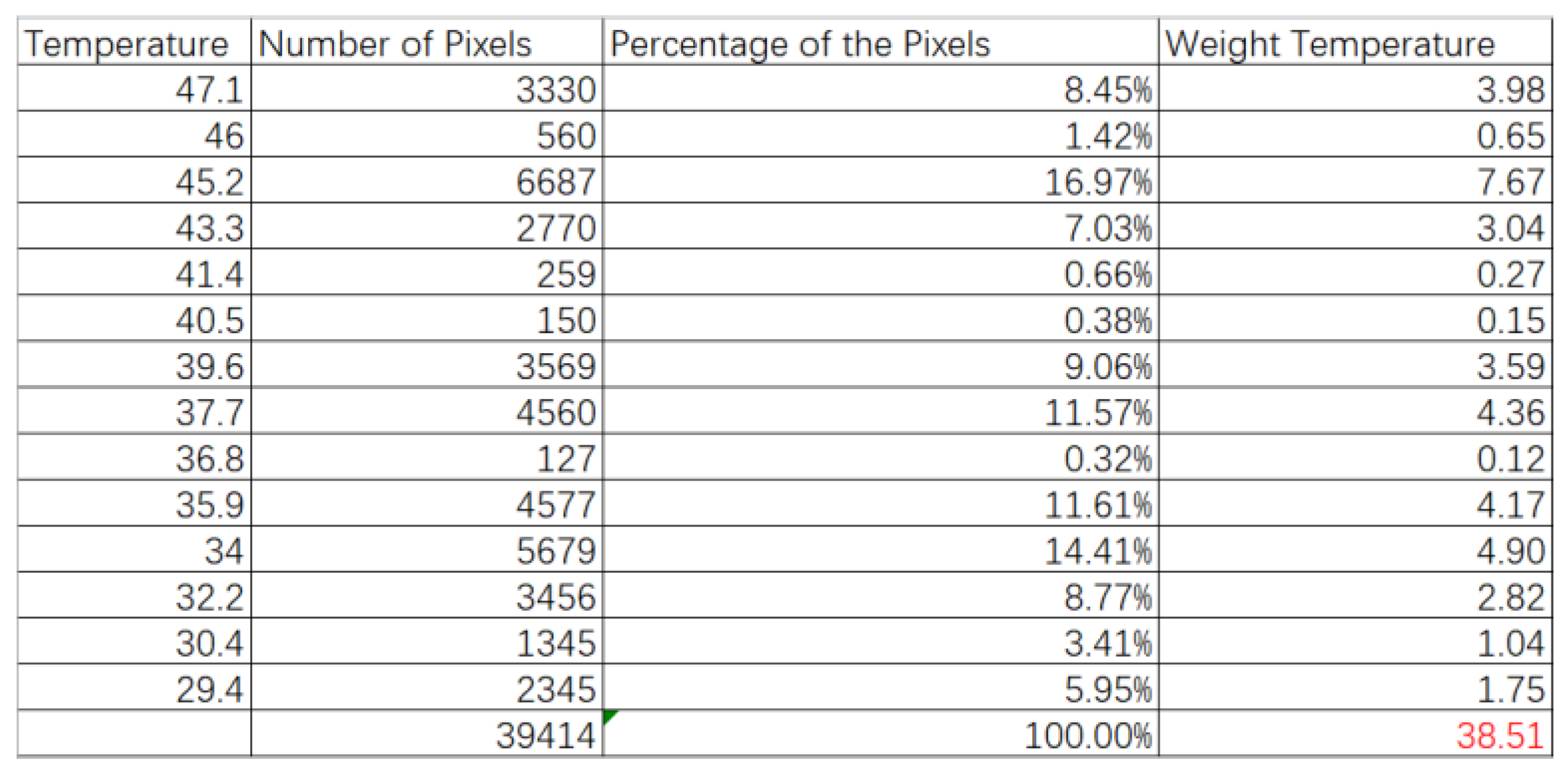
Figure A20.
No trees full site coldest day 12pm.
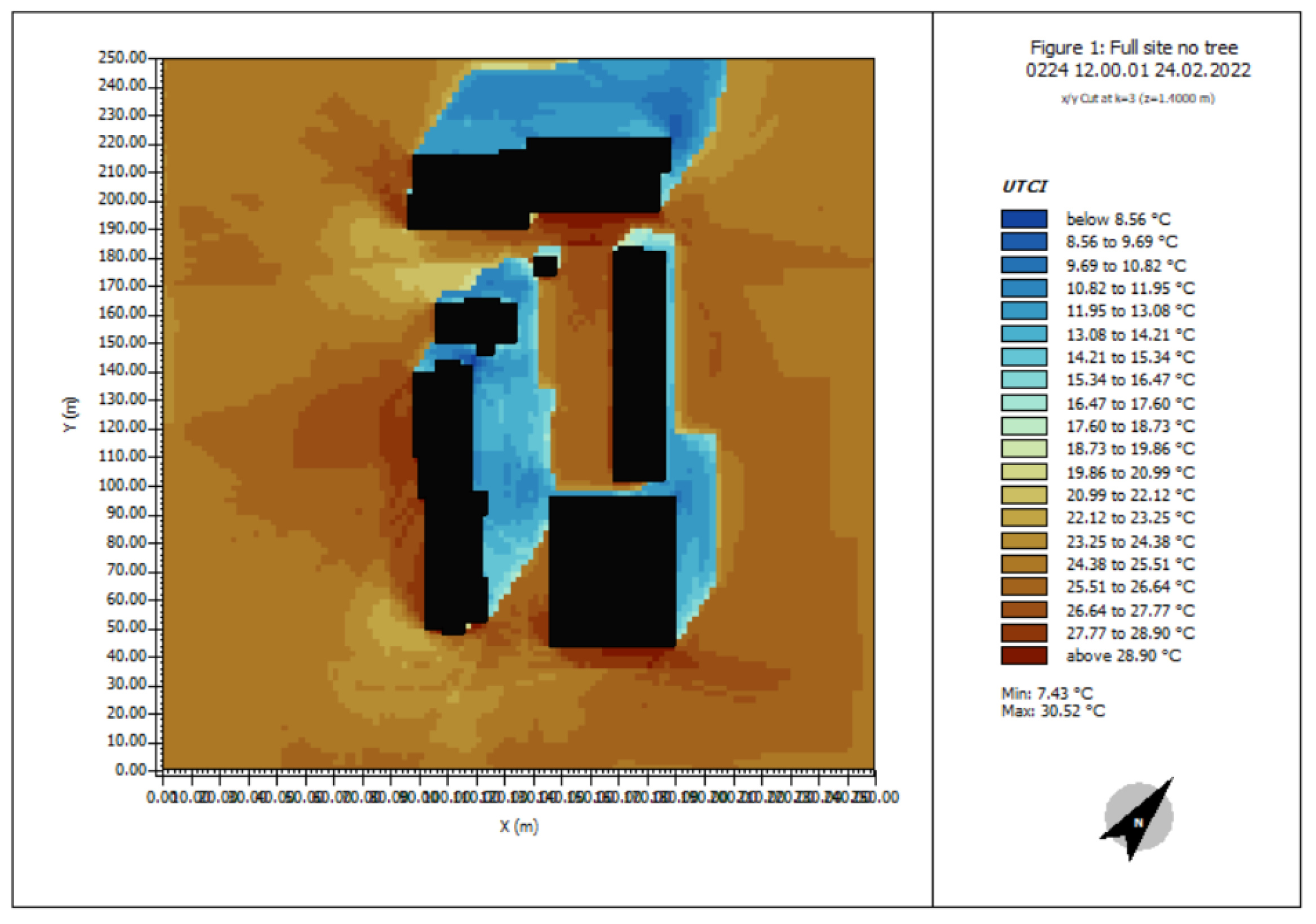
Figure A21.
Existing trees full site coldest day 12pm.
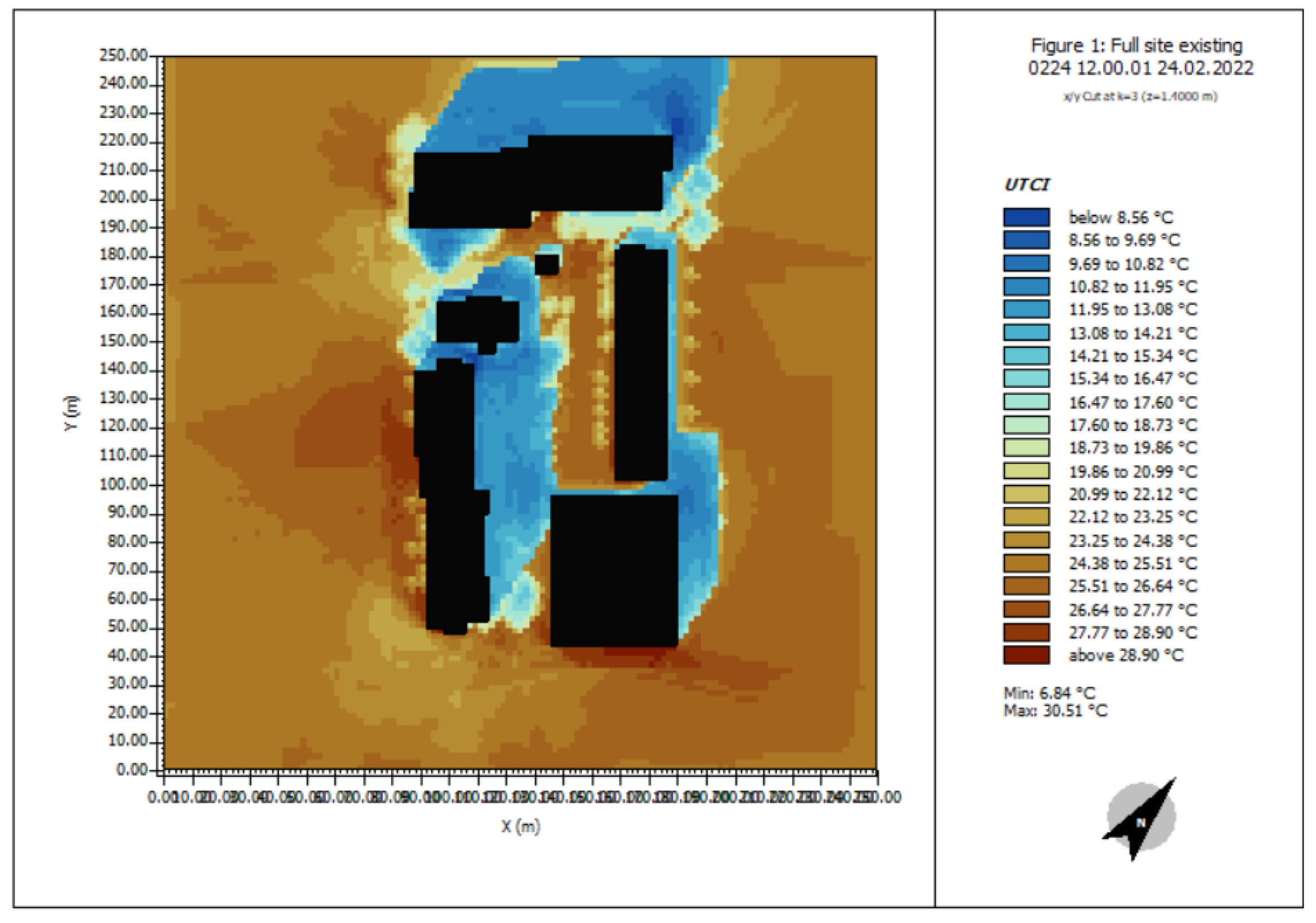
Figure A22.
New trees full site coldest day 12pm.
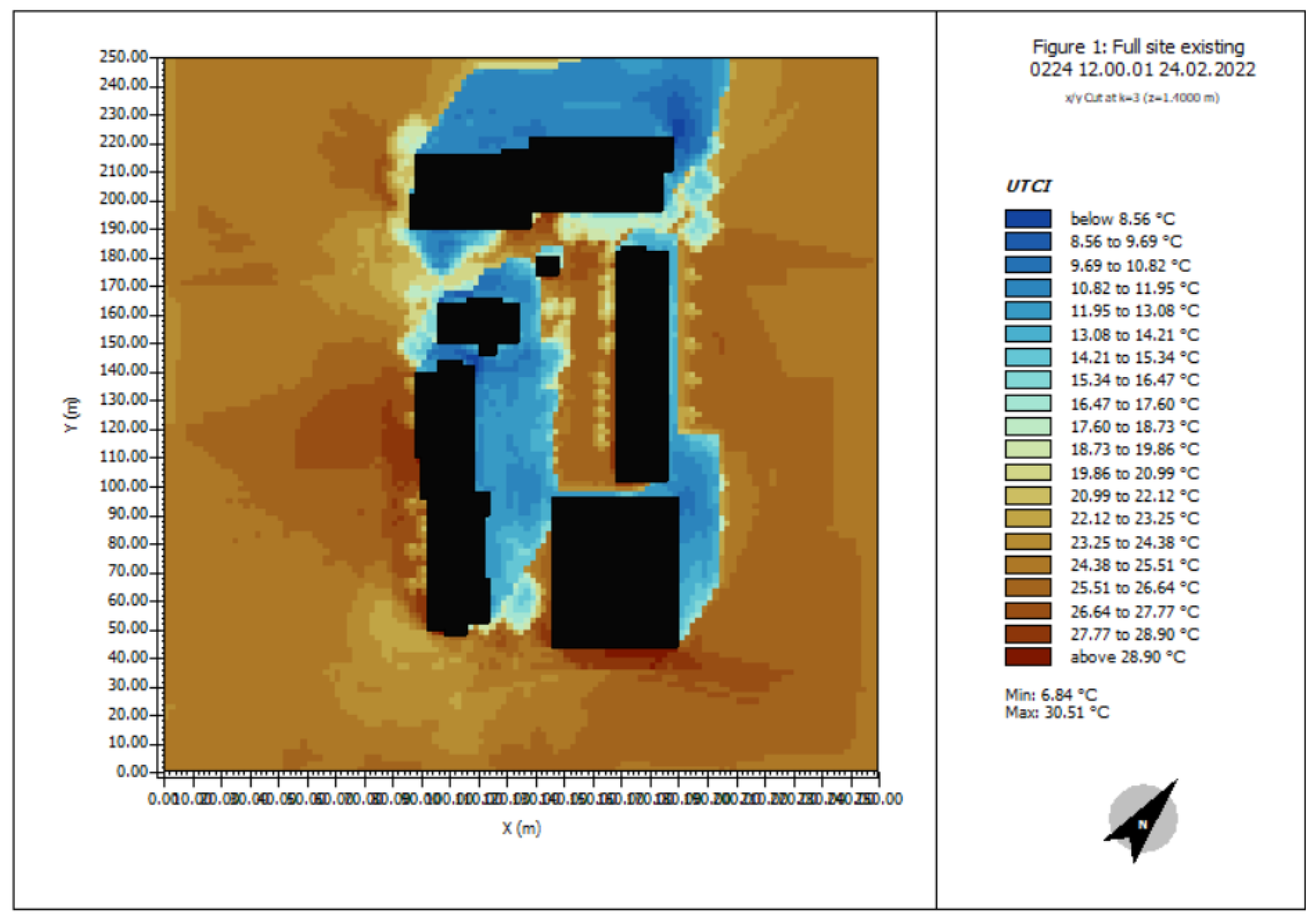
Figure A23.
Existing trees and new trees UTCI diagram 12pm. (Jan.)
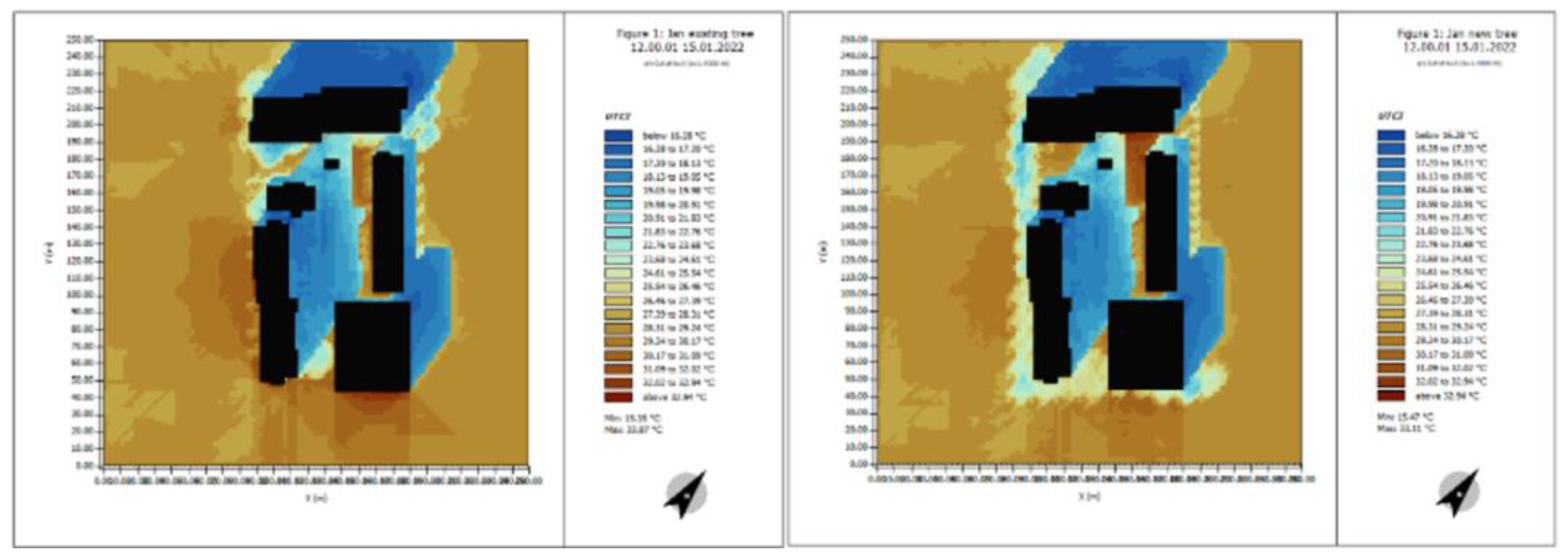
Figure A24.
Existing trees and new trees UTCI diagram 12pm. (Feb.).
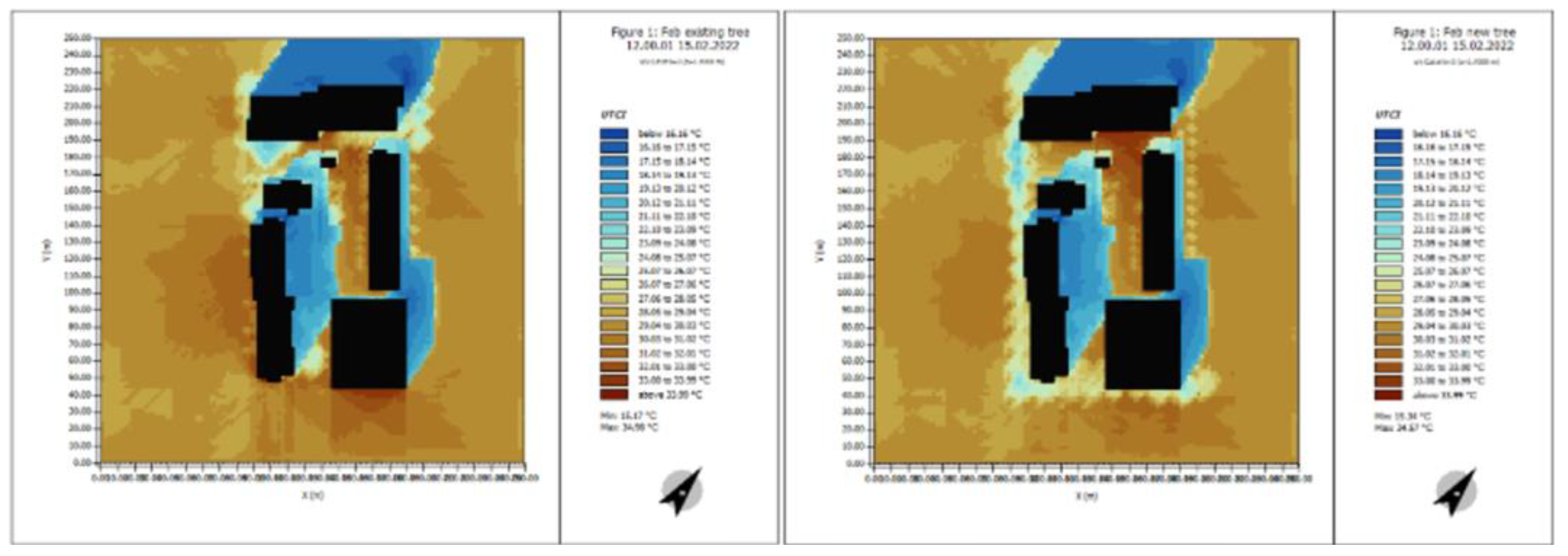
Figure A25.
Existing trees and new trees UTCI diagram 12pm. (Mar.).
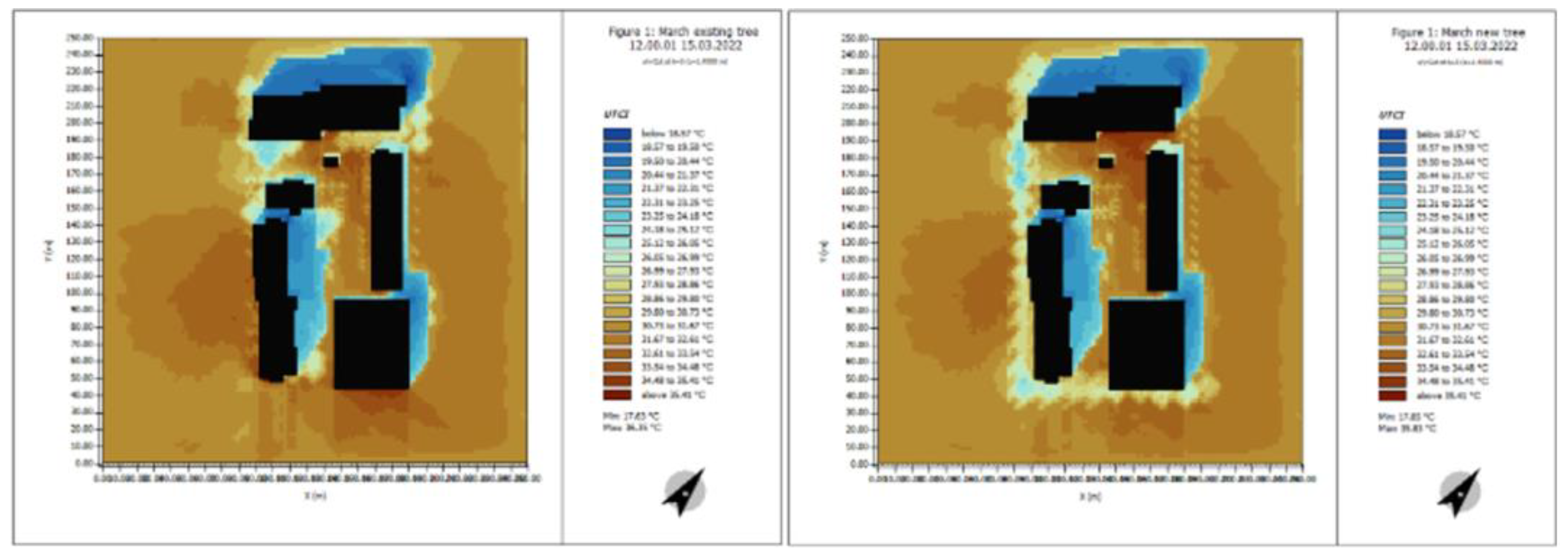
Figure A26.
Existing trees and new trees UTCI diagram 12pm. (Apr.).
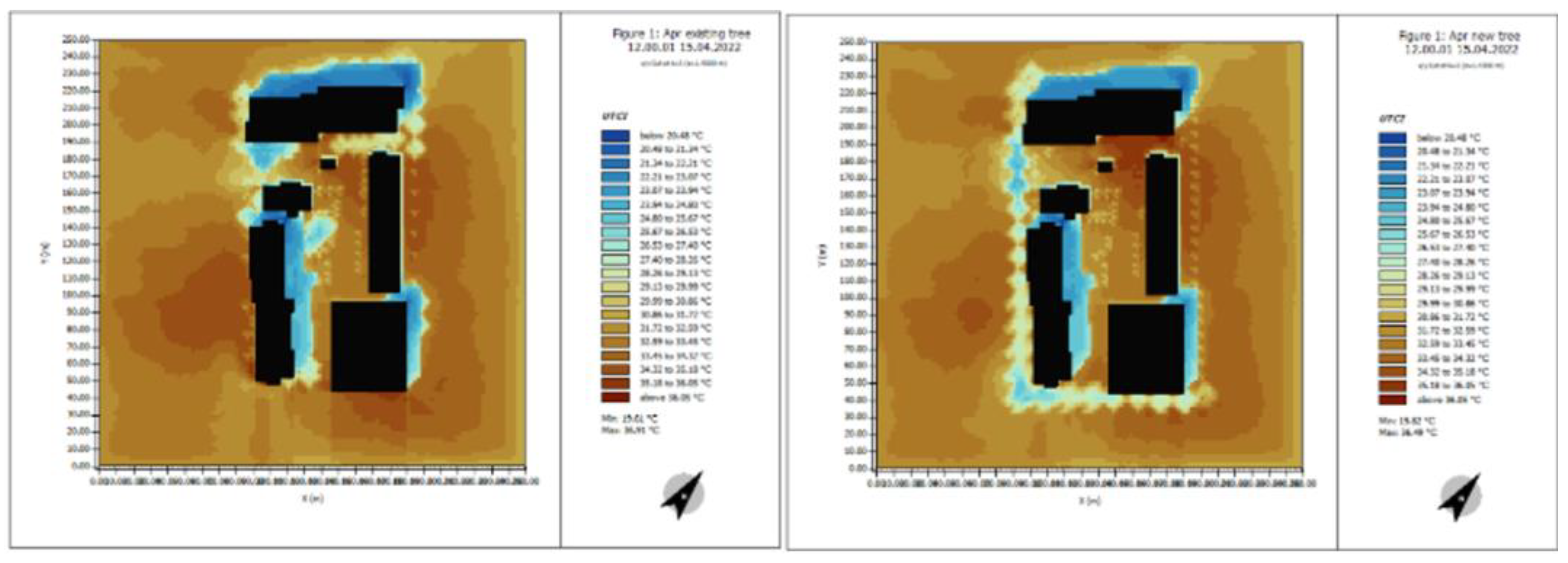
Figure A27.
Existing trees and new trees UTCI diagram 12pm. (May).
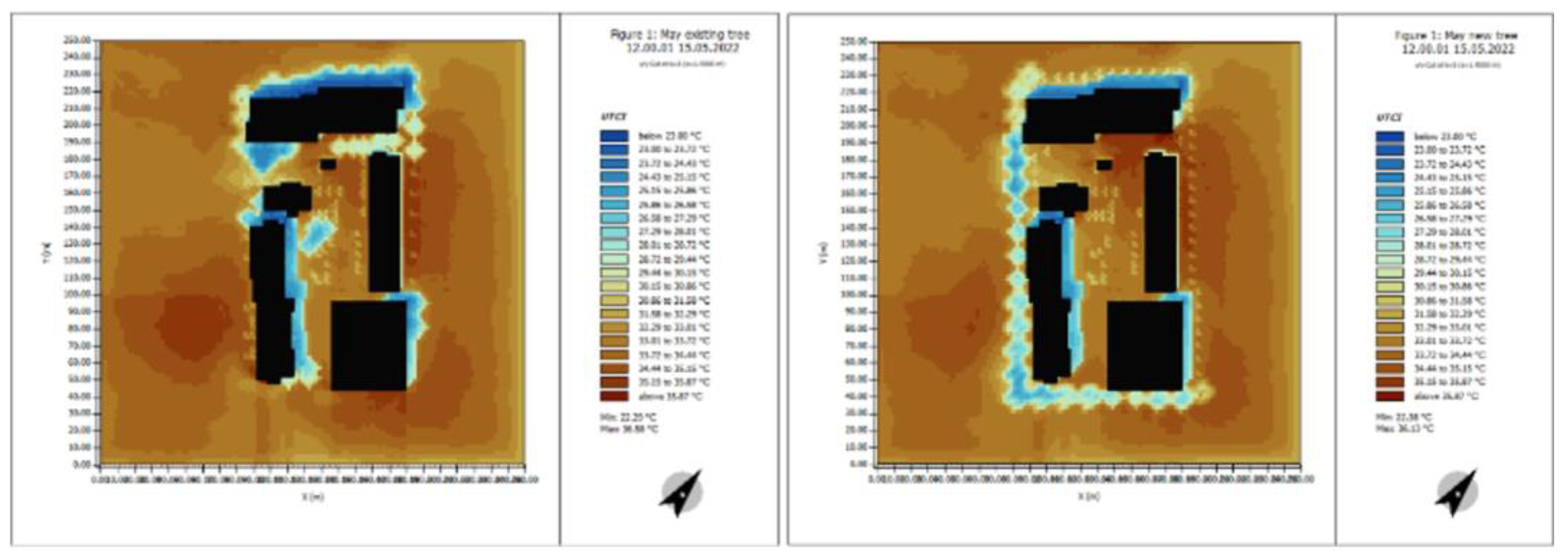
Figure A28.
Existing trees and new trees UTCI diagram 12pm. (Jun.).
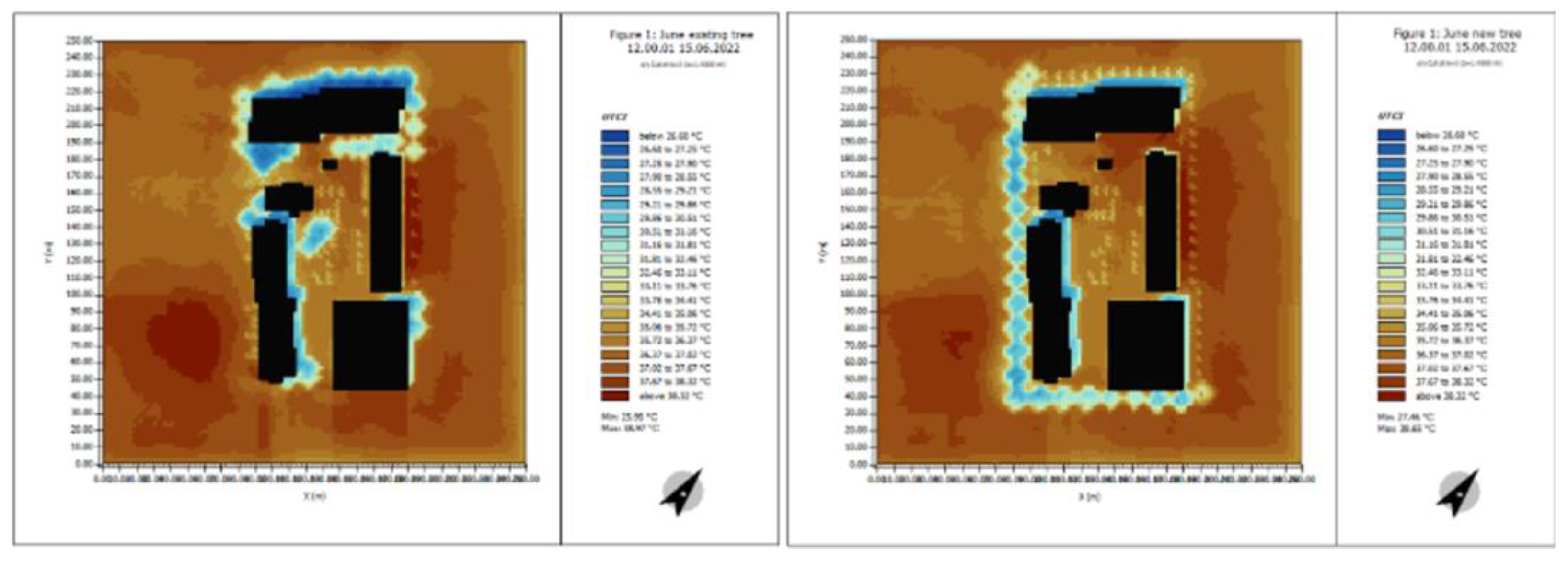
Figure A29.
Existing trees and new trees UTCI diagram 12pm. (Jul.).
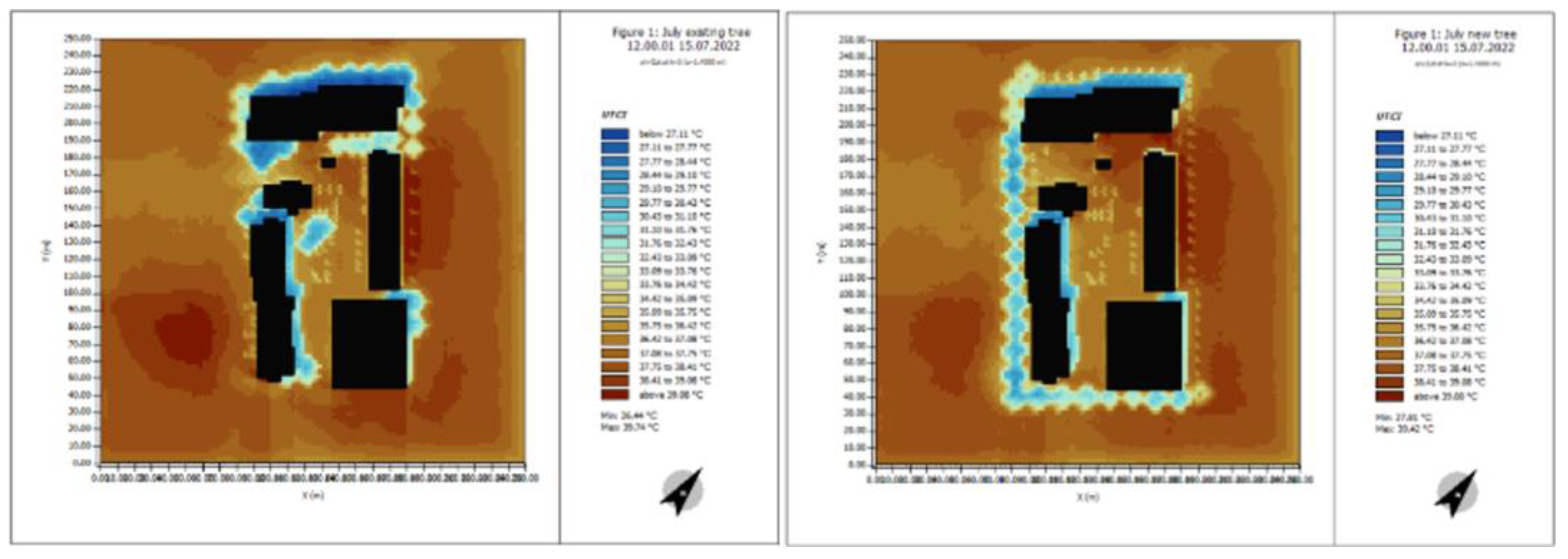
Figure A30.
Existing trees and new trees UTCI diagram 12pm. (Aug.).
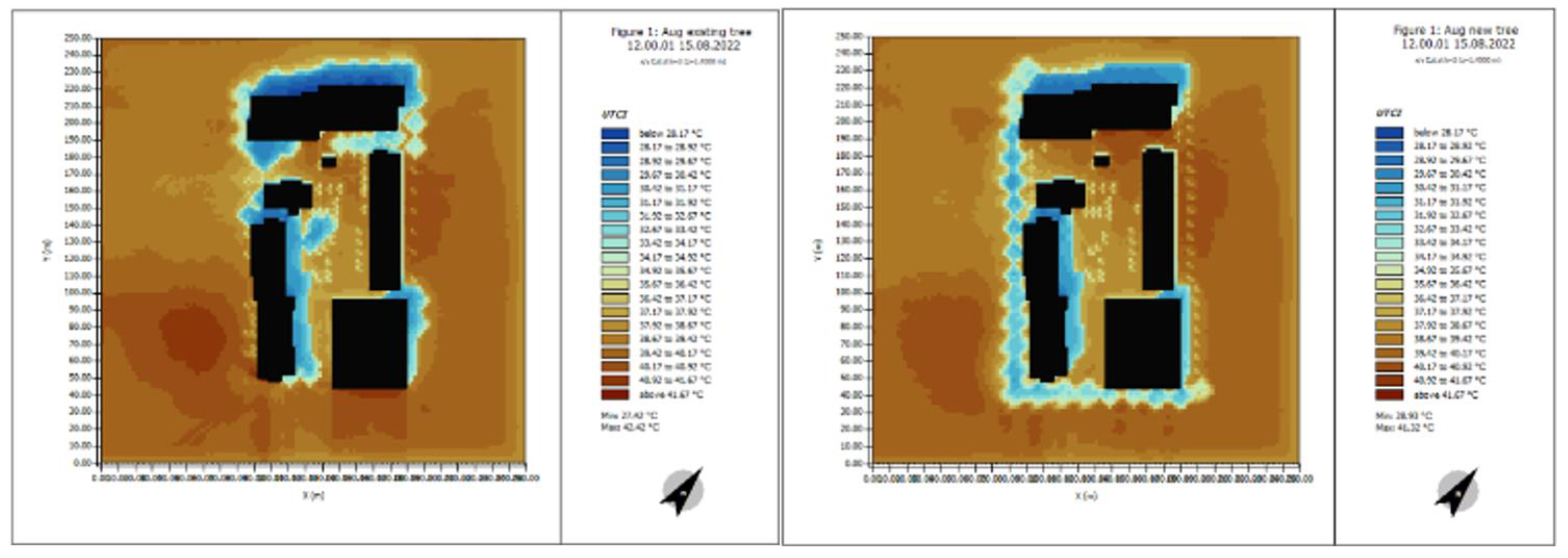
Figure A31.
Existing trees and new trees UTCI diagram 12pm. (Sep.).
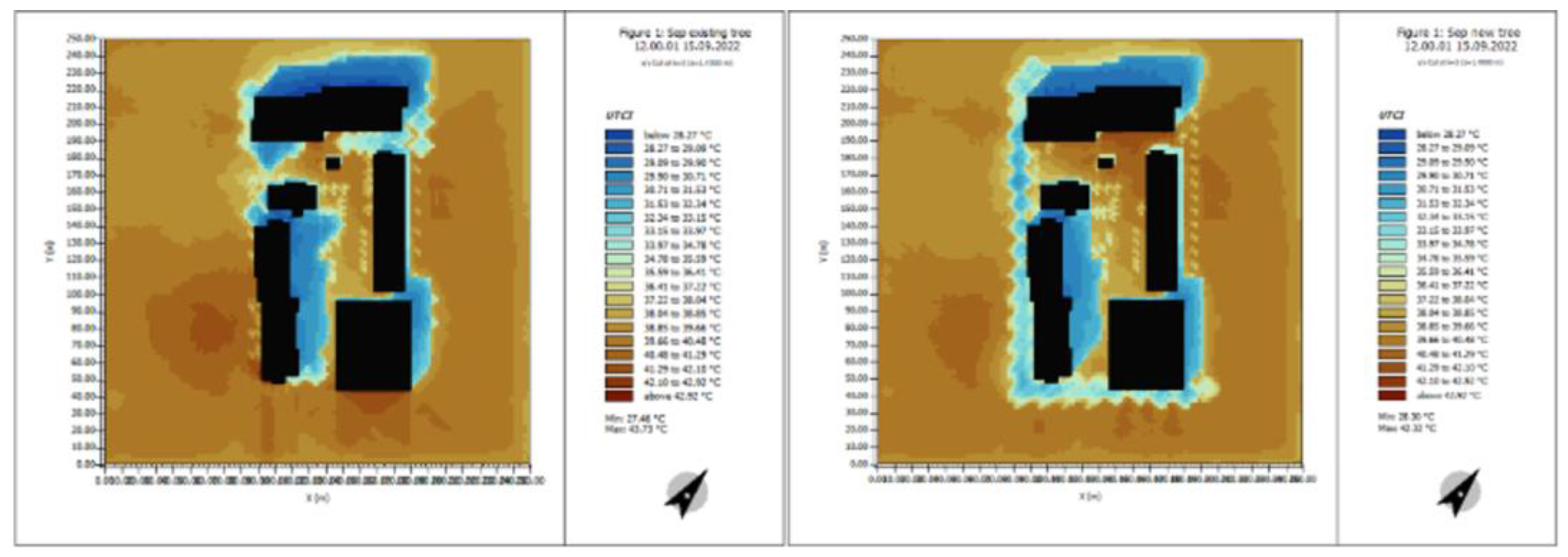
Figure A32.
Existing trees and new trees UTCI diagram 12pm. (Oct.).
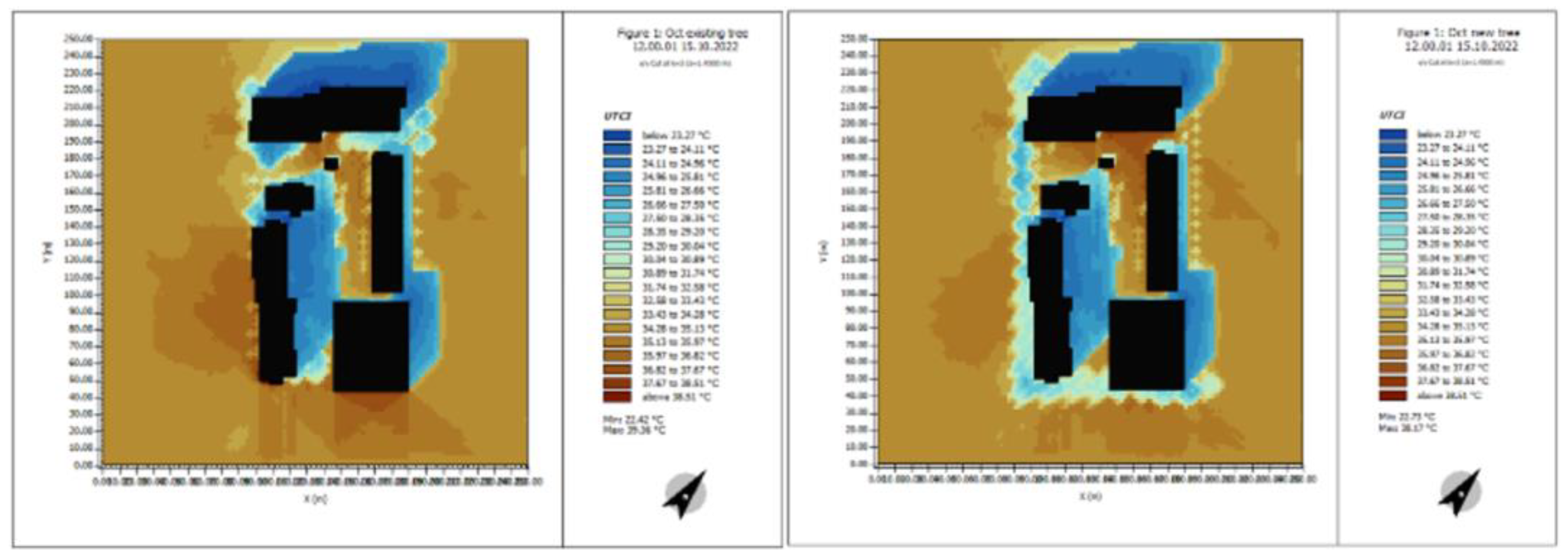
Figure A33.
Existing trees and new trees UTCI diagram 12pm. (Nov.).
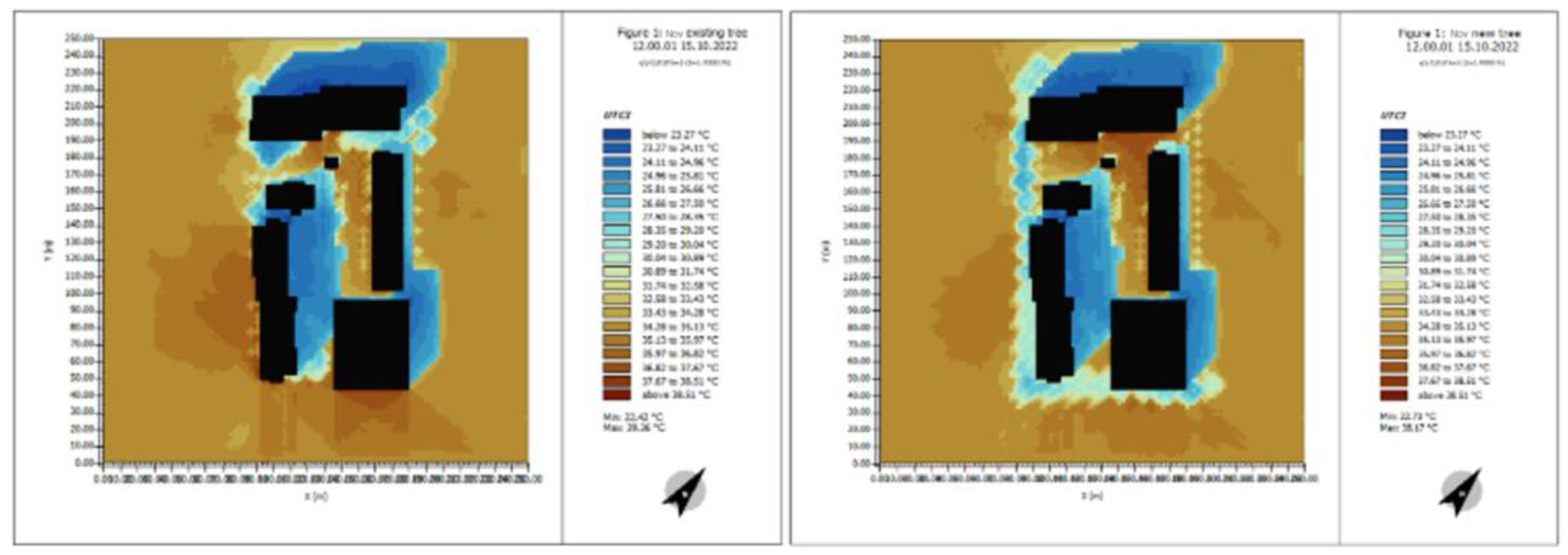
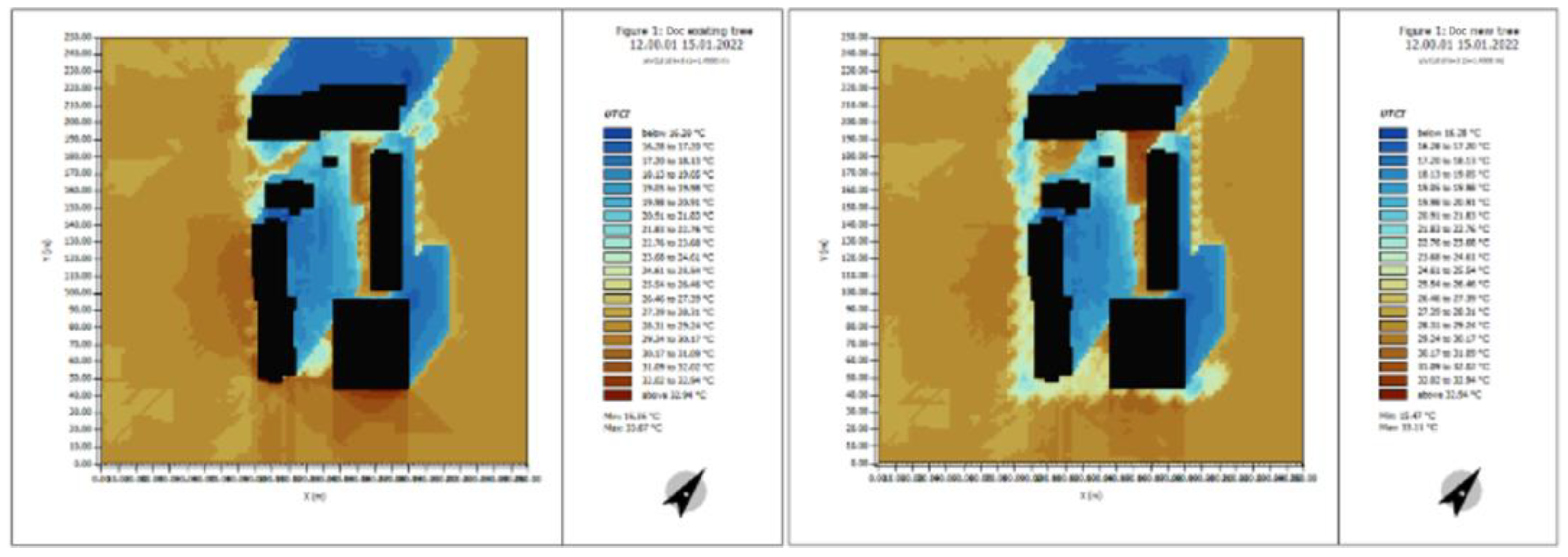
Figure A34.
Existing trees and new trees UTCI diagram 12pm. (Dec.).
References
- Zhao, T.; Fannon, D. Urban Heat Island in the Los Angeles Metropolitan Area: Urban Form, Land Cover, and Temperature. Sustain. Cities Soc. 2017, 32, 1–12. [Google Scholar]
- Garcia, B. Density and Demographics in Los Angeles Transit Oriented Development. ISUF 2020 Virtual Conference Proceedings 2021, 1, 1. [Google Scholar]
- Azevedo, J.A. Urban Heat and Energy Demand: Application of an Urban Meteorological Network. Unpublished Work 2016. submitted. [Google Scholar]
- Chan, E.Y.; Kim, J.H.; Lee, P.; Lin, C. Analysis of Health Risk Perception and Behavior Changes during Elevated Temperatures for an Urban Chinese Population. Prehosp. Disaster Med. 2011, 26, s24–s24. [Google Scholar] [CrossRef]
- Kang, H.; Zhu, B.; de Leeuw, G.; Yu, B.; van der A, R.J.; Lu, W. Impact of Urban Heat Island on Inorganic Aerosol in the Lower Free Troposphere: A Case Study in Hangzhou, China. Atmos. Chem. Phys. 2022, 22, 12345–12367. [Google Scholar] [CrossRef]
- Li, L.; Yu, Q.; Gao, L.; Yu, B.; Lu, Z. The Effect of Urban Land-Use Change on Runoff Water Quality: A Case Study in Hangzhou City. Int. J. Environ. Res. Public Health 2021, 18, 10748. [Google Scholar] [CrossRef] [PubMed]
- Ko, J.; Schlaerth, H.L.; Bruce, A.; Sanders, K.T.; Ban-Weiss, G.A. Measuring the Impacts of a Real-World Neighborhood-Scale Cool Pavement Deployment on Albedo and Temperatures in Los Angeles. Environ. Res. Lett. 2022, 17, 1–10. [Google Scholar] [CrossRef]
- Wang, Chenghao & Wang, Zhi-Hua & Yang, Jiachuan. (2018). Cooling Effect of Urban Trees on the Built Environment of Contiguous United States. Earth’s Future 2018, 6, 1066–1081.
- Ngao, J.; Cárdenas, M.L.; Améglio, T.; Colin, J.; Saudreau, M. Implications of Urban Land Management on the Cooling Properties of Urban Trees: Citizen Science and Laboratory Analysis. Sustainability 2021, 13, 12345. [Google Scholar] [CrossRef]
- Yun, S.H.; Park, C.Y.; Kim, E.S.; Lee, D.K. A Multi-Layer Model for Transpiration of Urban Trees Considering Vertical Structure. Forests 2020, 11, 1164. [Google Scholar] [CrossRef]
- Zhang, R.; Zhao, Z. Giant Trees Exhibited Great Cooling Effect in Residential Area Southwest of China. Forests 2022, 13, 1516. [Google Scholar] [CrossRef]
- Vo, T.T.; Hu, L. Diurnal Evolution of Urban Tree Temperature at a City Scale. Sci. Rep. 2021, 11, 10491. [Google Scholar] [CrossRef] [PubMed]
- Yan, S.; Zhang, T.; Wu, Y.; Lv, C.; Qi, F.; Chen, Y.; Wu, X.; Shen, Y. Cooling Effect of Trees with Different Attributes and Layouts on the Surface Heat Island of Urban Street Canyons in Summer. Atmosphere 2023, 14, 857. [Google Scholar] [CrossRef]
- Heat Island Effect. Available online: https://www.epa.gov/heatislands/ (accessed on 21 January 2024).
- Zhao, Q.; Wentz, E.A.; Murray, A.T. Tree Shade Coverage Optimization in an Urban Residential Environment. Build. Environ. 2017, 115, 269–280. [Google Scholar] [CrossRef]
- Learning Lesson: Leaf it to, Me. Available online: https://www.noaa.gov/jetstream/ll-leaf (accessed on 21 January 2024).
- Manickathan, L.; Defraeye, T.; Allegrini, J.; Derome, D.; Carmeliet, J. Parametric Study of the Influence of Environmental Factors and Tree Properties on the Transpirative Cooling Effect of Trees. Agric. For. Meteorol. 2018, 248, 259–274. [Google Scholar] [CrossRef]
- He, C.; Zhou, L.; Yao, Y.; Ma, W.; Kinney, P.L. Cooling Effect of Urban Trees and Its Spatiotemporal Characteristics: A Comparative Study. Build. Environ. 2021, 204, 108103. [Google Scholar] [CrossRef]
- Coutts, A.; White, E.; Tapper, N.; Beringer, J.; Livesley, S. Temperature and Human Thermal Comfort Effects of Street Trees across Three Contrasting Street Canyon Environments. Theor. Appl. Climatol. 2015, 121, 181–195. [Google Scholar]
- Thermal Comfort Indices. Available online: https://climateadapt.eea.europa.eu/en/metadata/indicators/thermal-comfort-indices-universal-thermal-climate-index-1979-2019 (accessed on 21 January 2024).
- Donovan, G.H.; Butry, D.T. The Value of Shade: Estimating the Effect of Urban Trees on Summertime Electricity Use. Energy Build. 2009, 41, 662–668. [Google Scholar] [CrossRef]
- Yin, Y.; Li, S.; Xing, X.; Zhou, X.; Kang, Y.; Hu, Q.; Li, Y. Cooling Benefits of Urban Tree Canopy: A Systematic Review. Sustainability 2024, 16, 4955. [Google Scholar] [CrossRef]
- Błażejczyk, K.; Matzarakis, A.; Baranowski, J. Geoecological Evaluation of Local Surroundings for the Purposes of Recreational Tourism. Misc. Geogr. 2014, 18, 5–12. [Google Scholar]
- Gill, S.E.; Handley, J.F.; Ennos, A.R.; Pauleit, S. Adapting Cities for Climate Change: The Role of the Green Infrastructure. Built Environ. 2007, 33, 115–133. [Google Scholar] [CrossRef]
- Morakinyo, T.E.; Kong, L.; Lau, K.K.-L.; Yuan, C.; Ng, E. Urban Tree Design Approaches for Mitigating Daytime Urban Heat Island Effects in a High-Density Urban Environment. Energy Build. 2017, 114, 379–386. [Google Scholar]
- Rahman, M.A.; Moser, A.; Gold, A.; Rötzer, T.; Pauleit, S. Vertical Air Temperature Gradients under the Shade of Two Contrasting Urban Tree Species during Different Types of Summer Days. Sci. Total Environ. 2017, 633, 100–111. [Google Scholar] [CrossRef] [PubMed]
- Morakinyo, T.E.; Lam, Y.F.; Ng, E. Right Tree, Right Place (Urban Canyon): Tree Species Selection Approach for Optimum Urban Heat Mitigation—Development and Evaluation. Urban For. Urban Green. 2018, 34, 251–262. [Google Scholar] [CrossRef] [PubMed]
- Morakinyo, T.E.; Kong, L.; Lau, K.K.-L.; Yuan, C.; Ng, E. A Study on the Impact of Shadow-Cast and Tree Species on In-Canyon and Neighborhood’s Thermal Comfort. Building and Environment 2016, 115, 1–17. [Google Scholar] [CrossRef]
- Zhang, Y.; Murray, A.T.; Turner, B.L. Optimizing Green Space Locations to Reduce Daytime and Nighttime Urban Heat Island Effects in Phoenix, Arizona. Landsc. Urban Plan. 2017, 165, 162–171. [Google Scholar] [CrossRef]
- Ng, E.; Chen, L.; Wang, Y.; Yuan, C. A Study on the Cooling Effects of Greening in a High-Density Urban Environment. Build. Environ. 2012, 47, 256–271. [Google Scholar] [CrossRef]
Figure 1.
The range of research area.
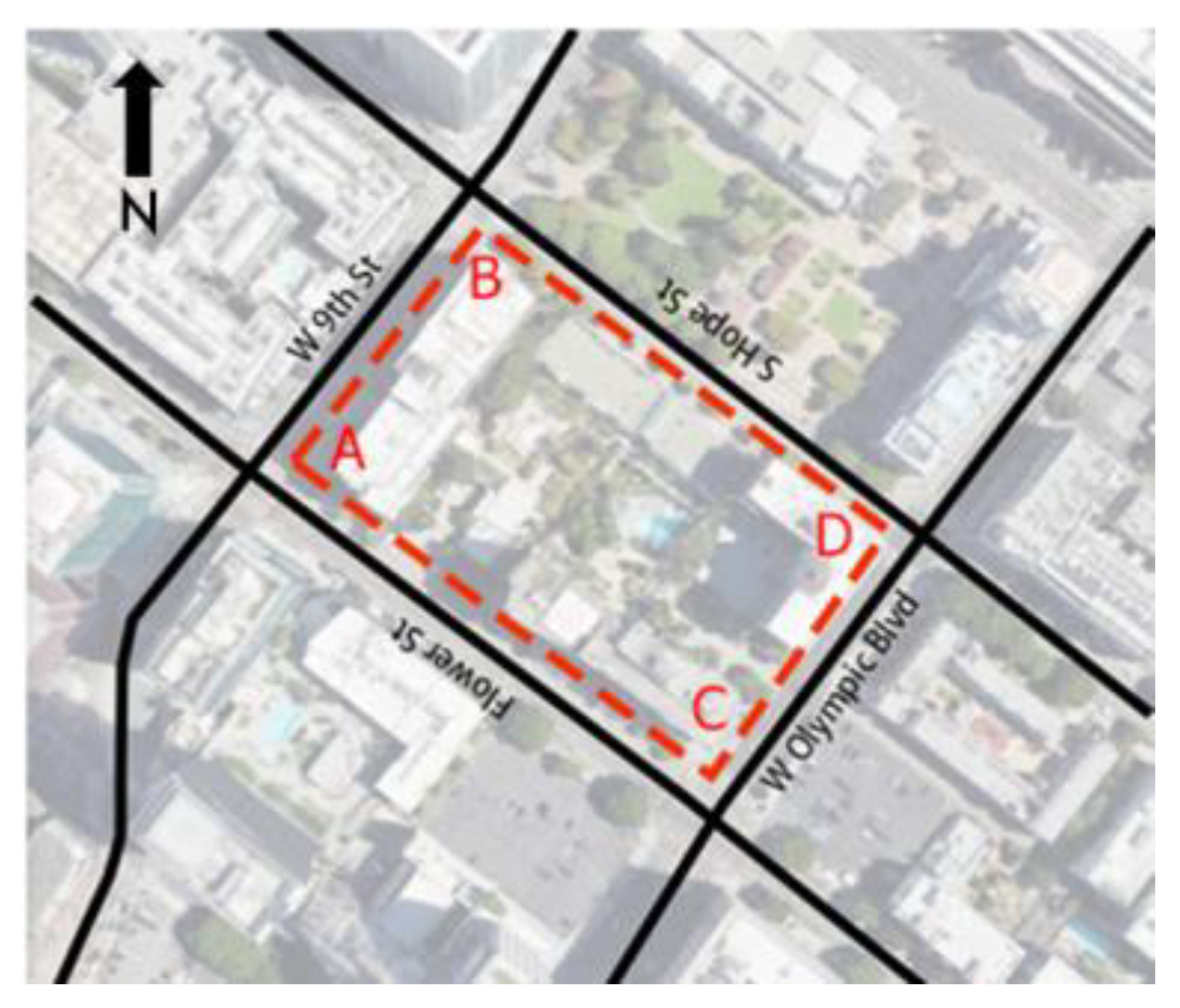
Figure 2.
Daily Temperature Data of Downtown Los Angeles in 2022.
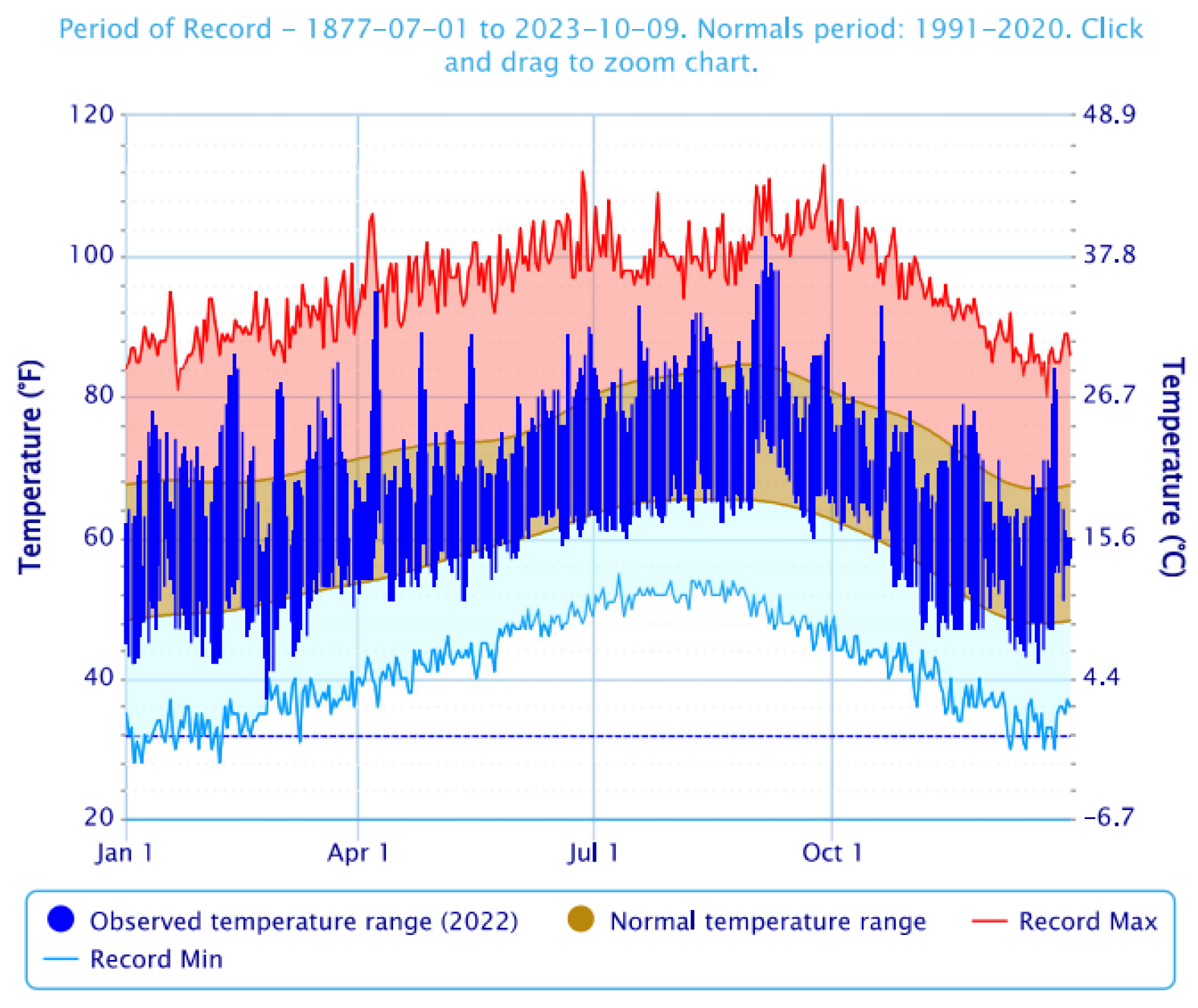
Figure 3.
Species of trees in the full site study area.
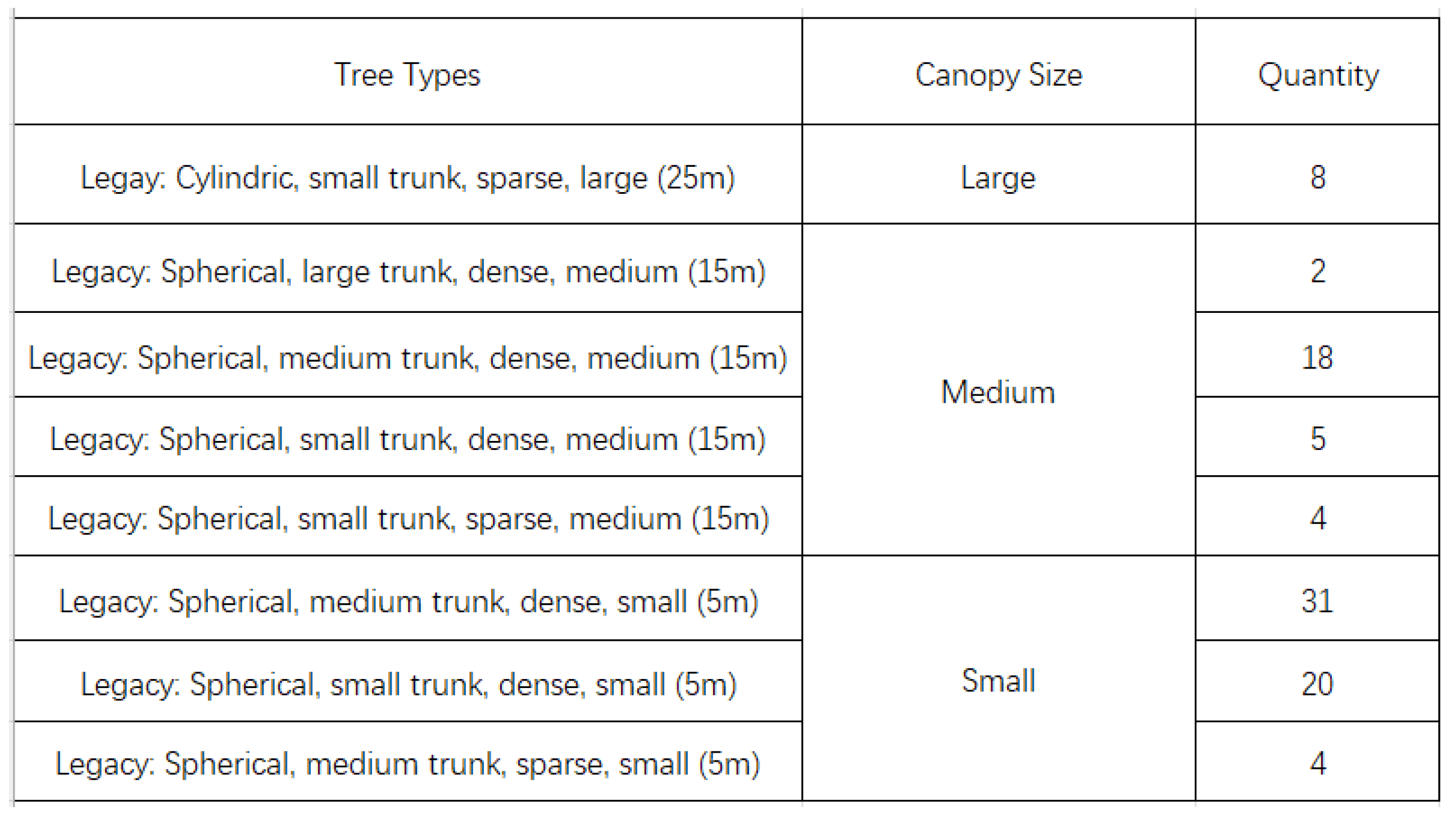
Figure 4.
With or without tree in date comparison diagram.
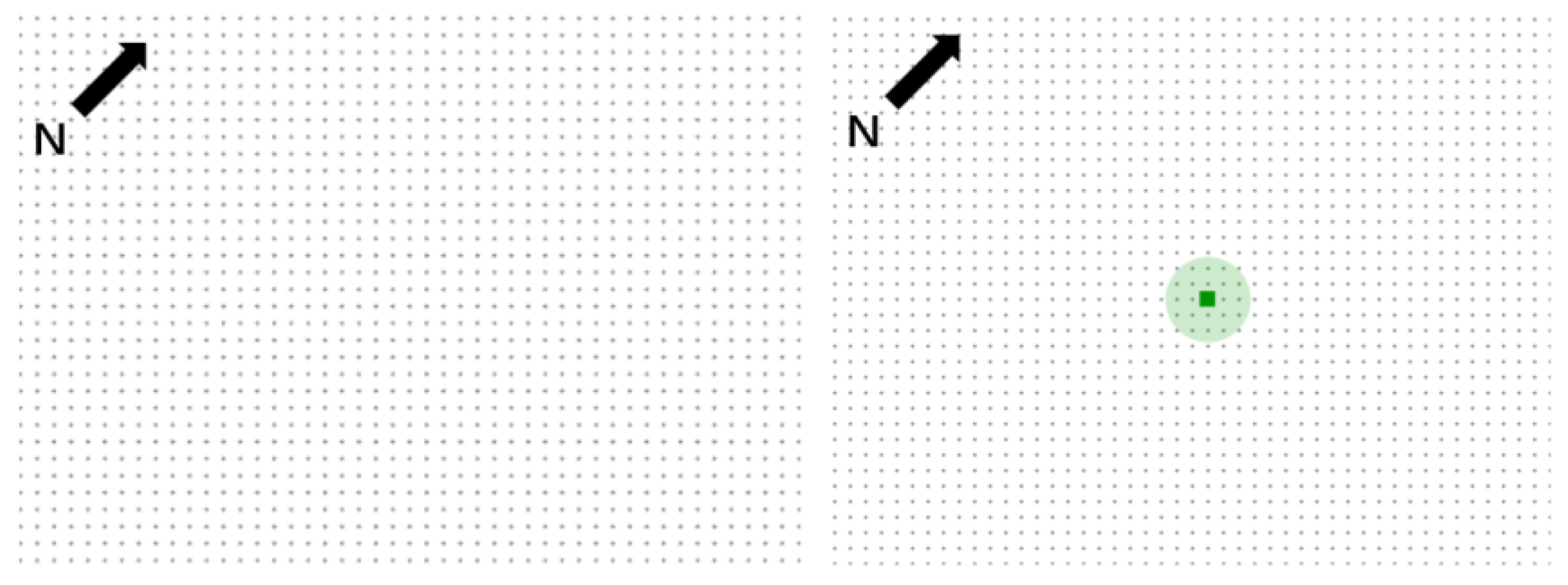
Figure 5.
Tree under the shade of buildings simulation diagram.
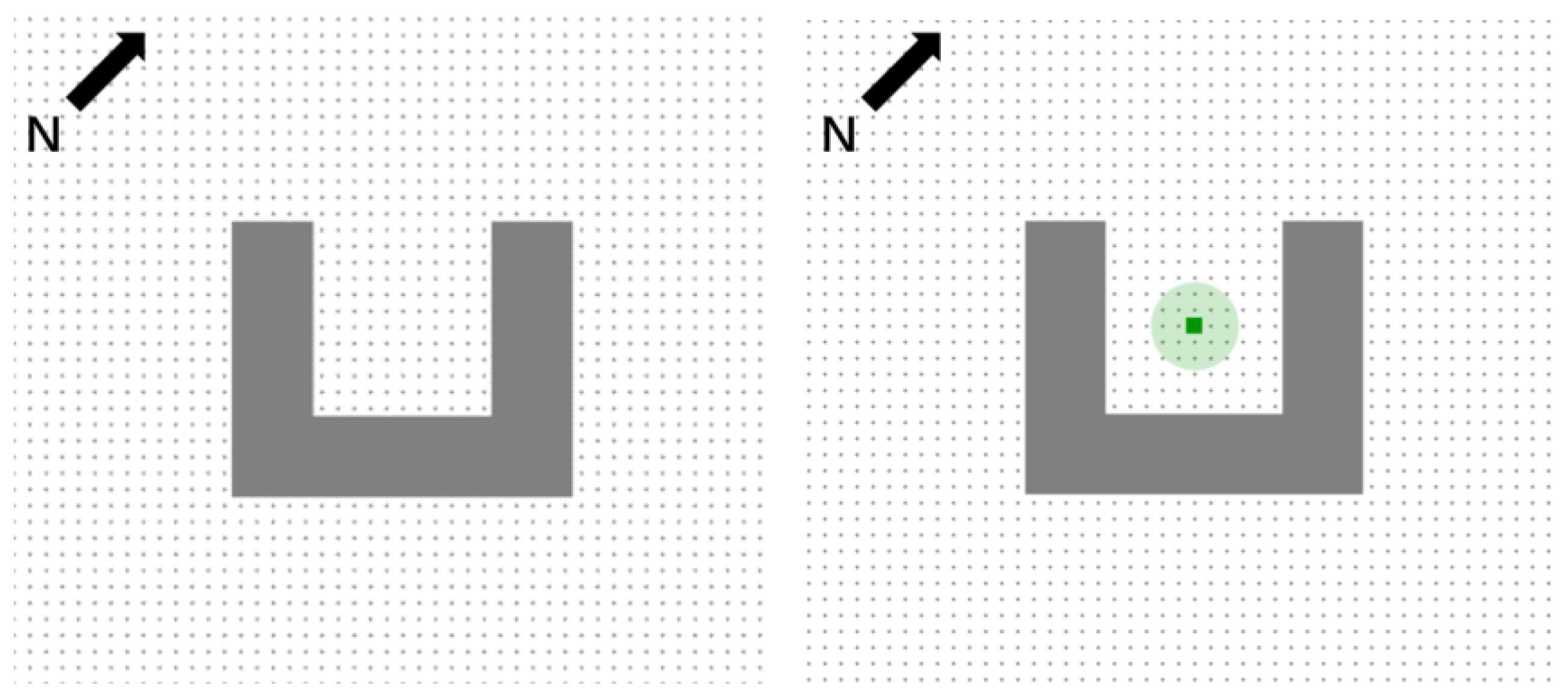
Figure 6.
Trees eight locations simulation diagram.
Figure 7.
Trees’ canopies separated by 15 feet diagram.
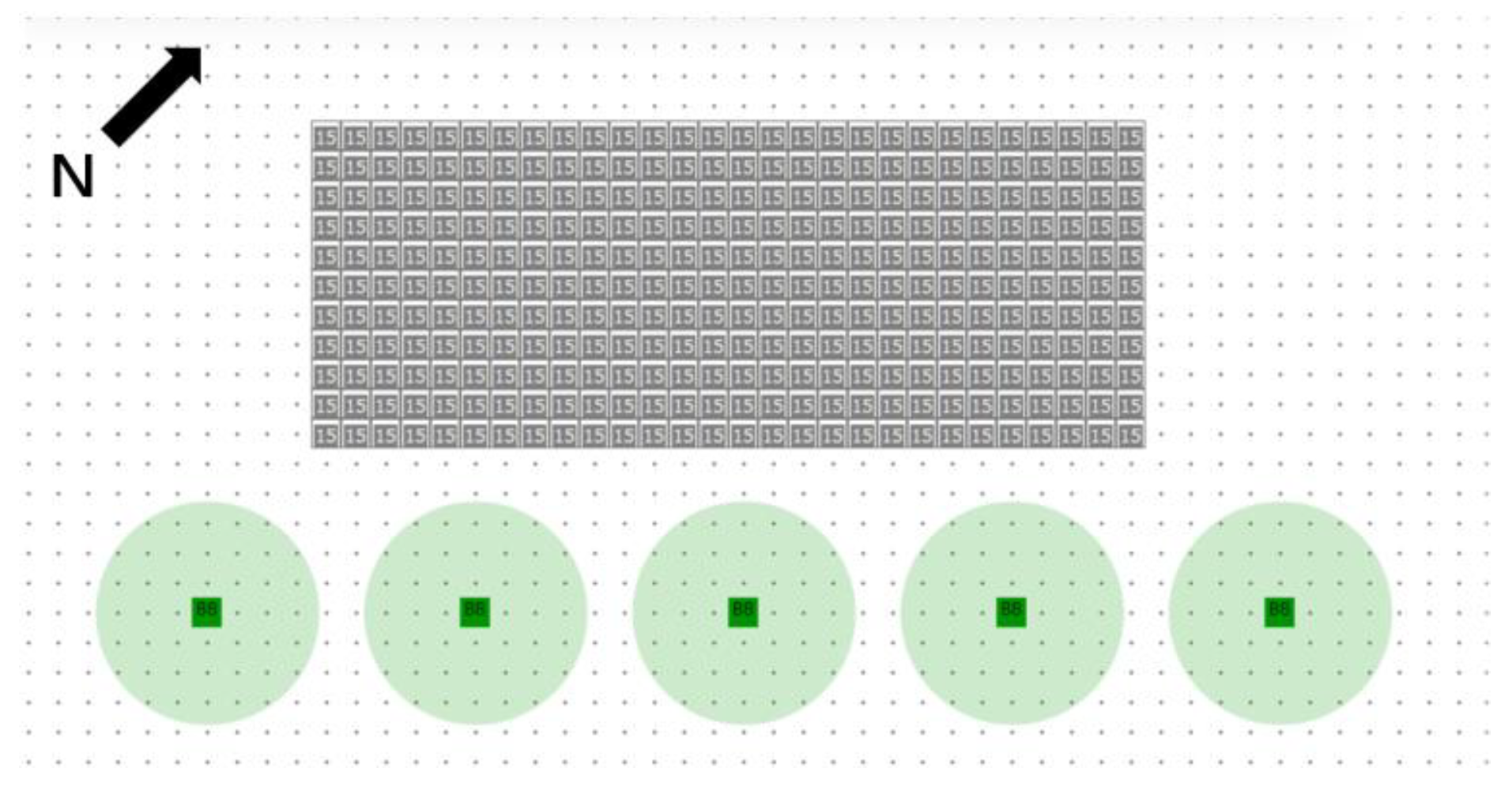
Figure 8.
Trees’ touching canopies diagram.
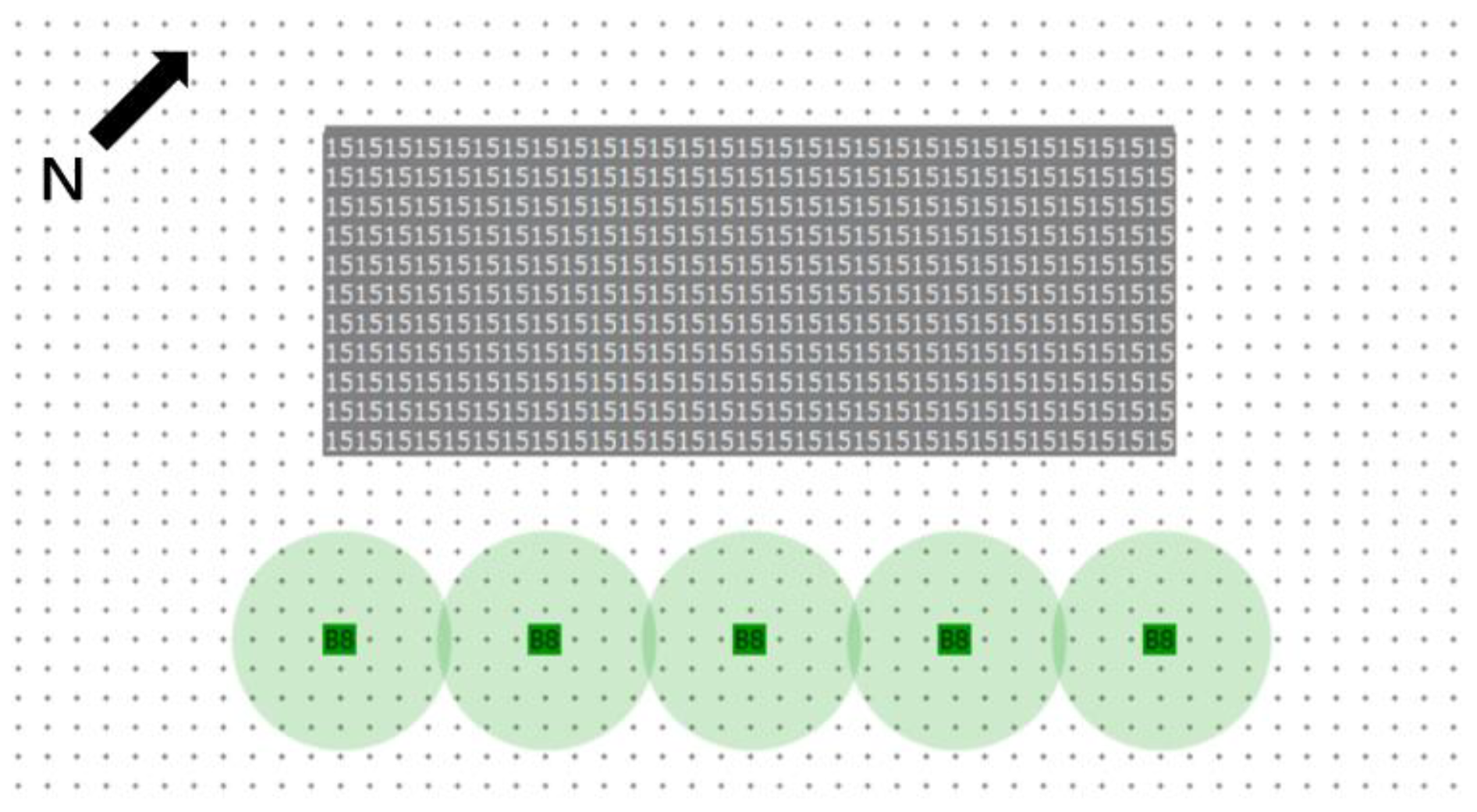
Figure 9.
Overlapping trees’ canopies diagram.
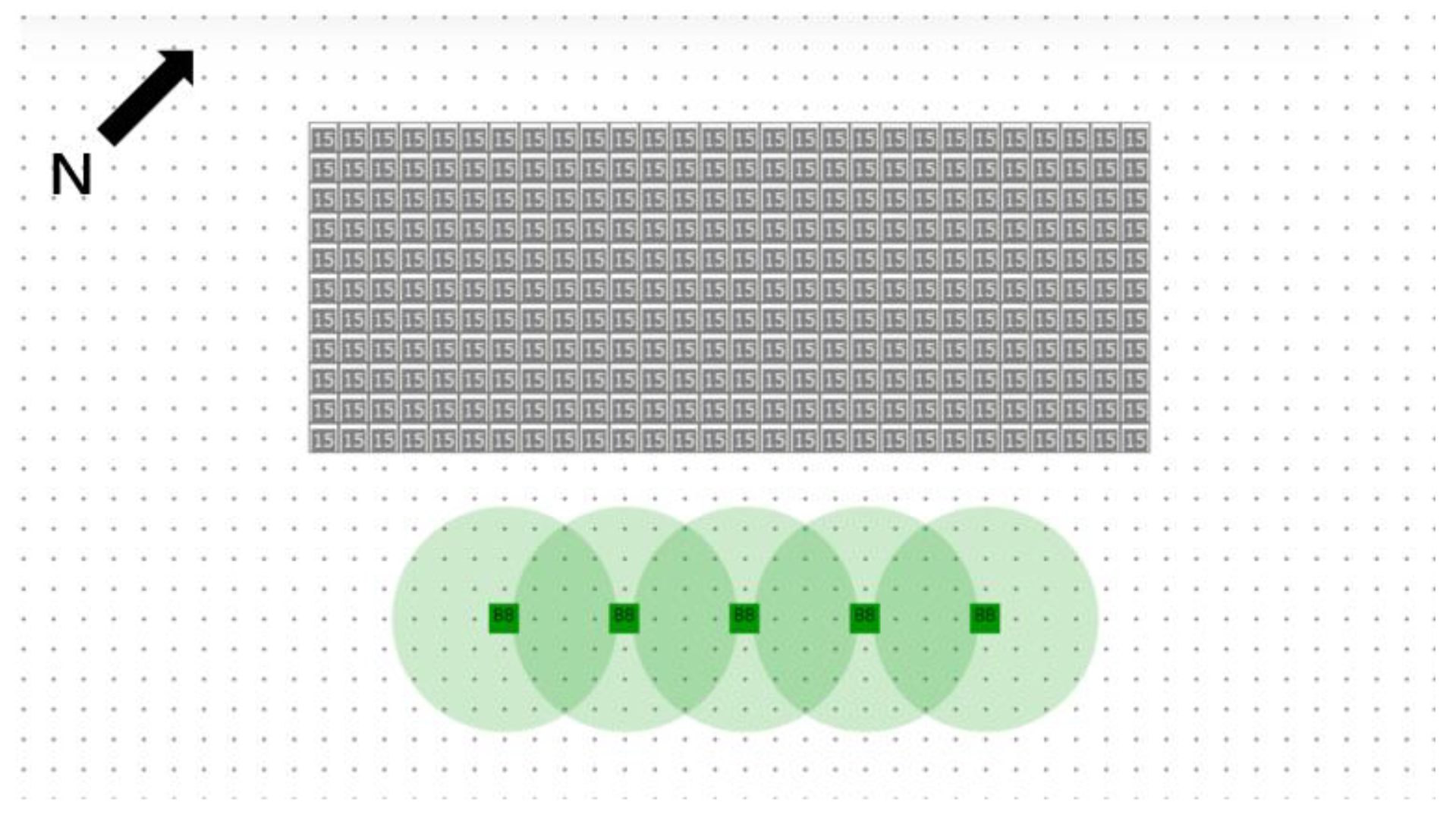
Figure 10.
No tree and one tree modeling in ENVI-met.
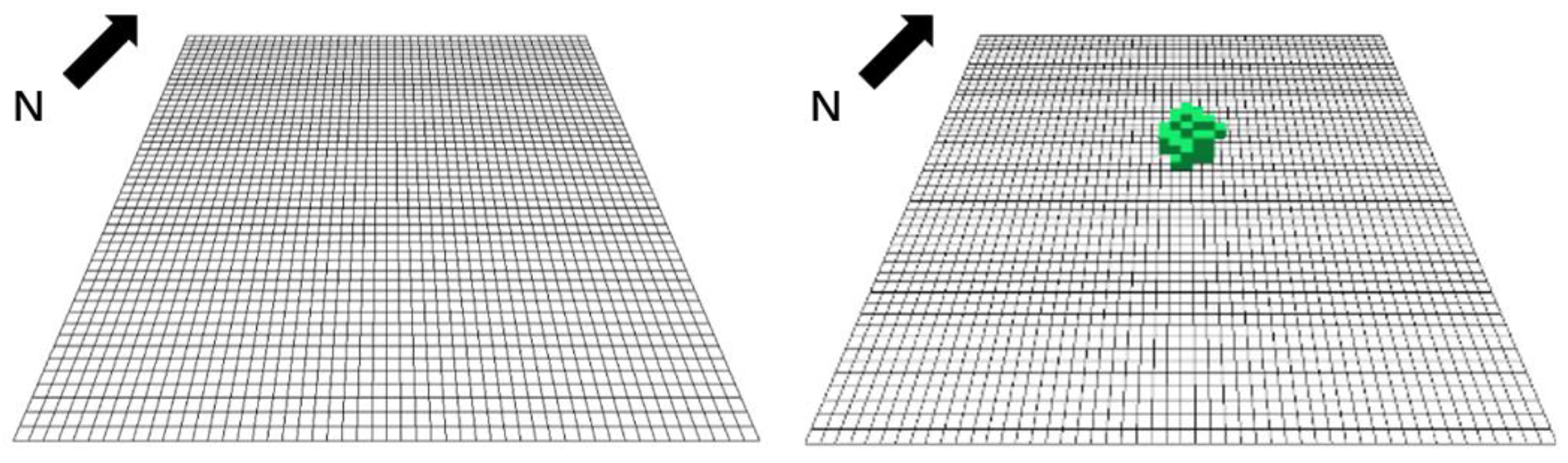
Figure 11.
Hottest day UTCI diagram comparison at 10am,12pm,2pm.
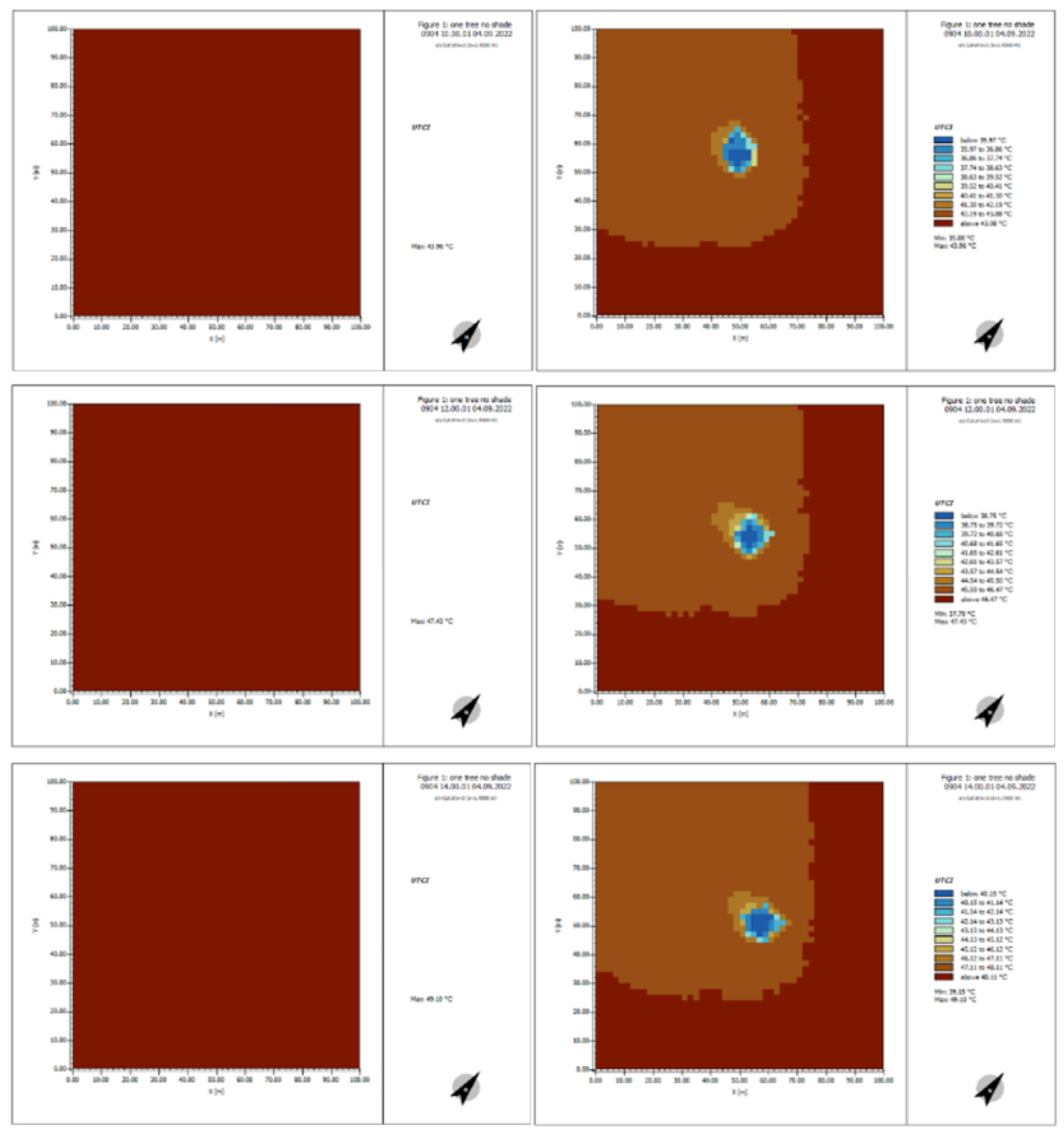
Figure 12.
Coldest day UTCI diagram comparison at 10am,12pm,2pm.
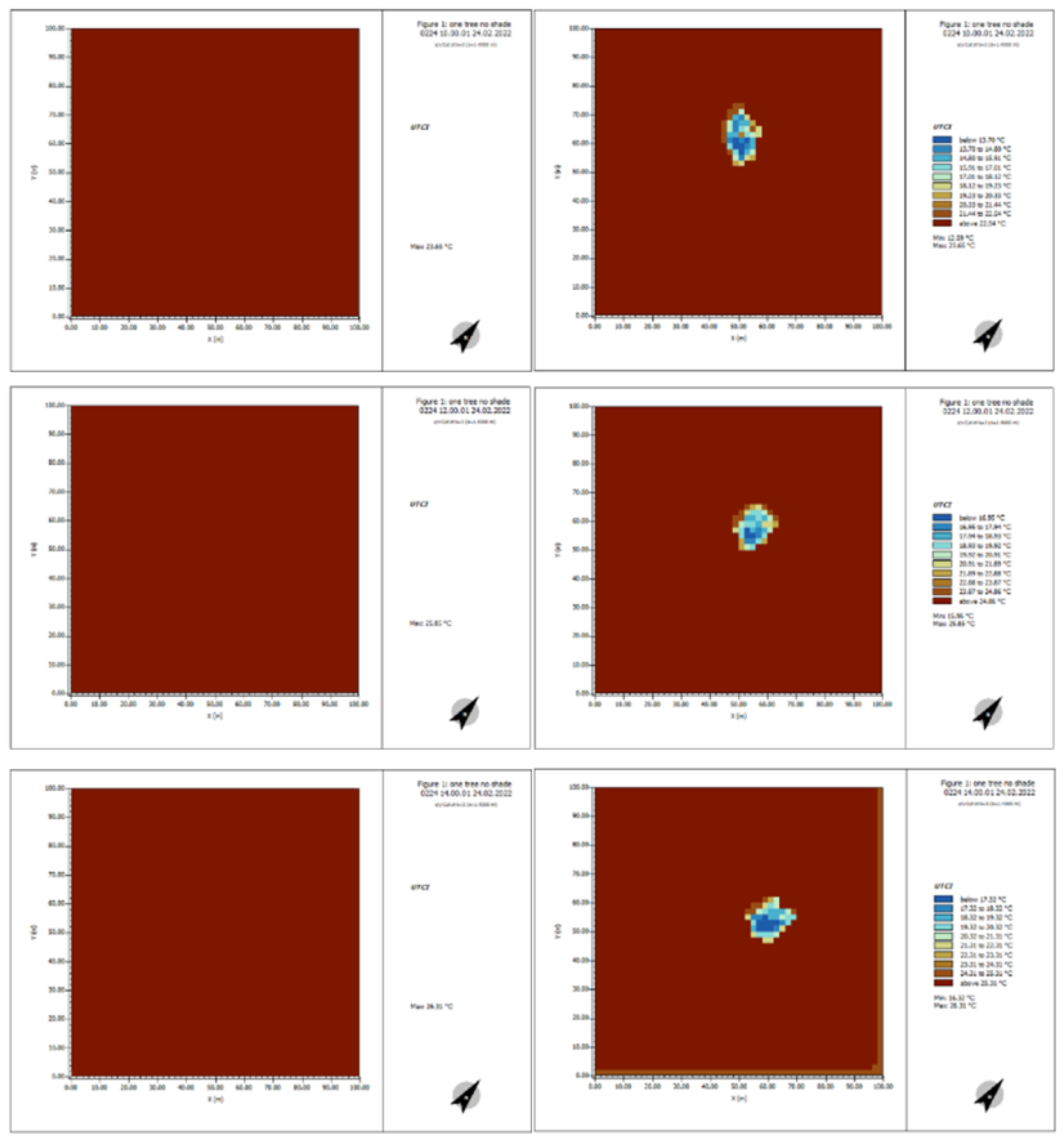
Figure 13.
Hottest, coldest day reduced UTCI comparison (center of the tree).
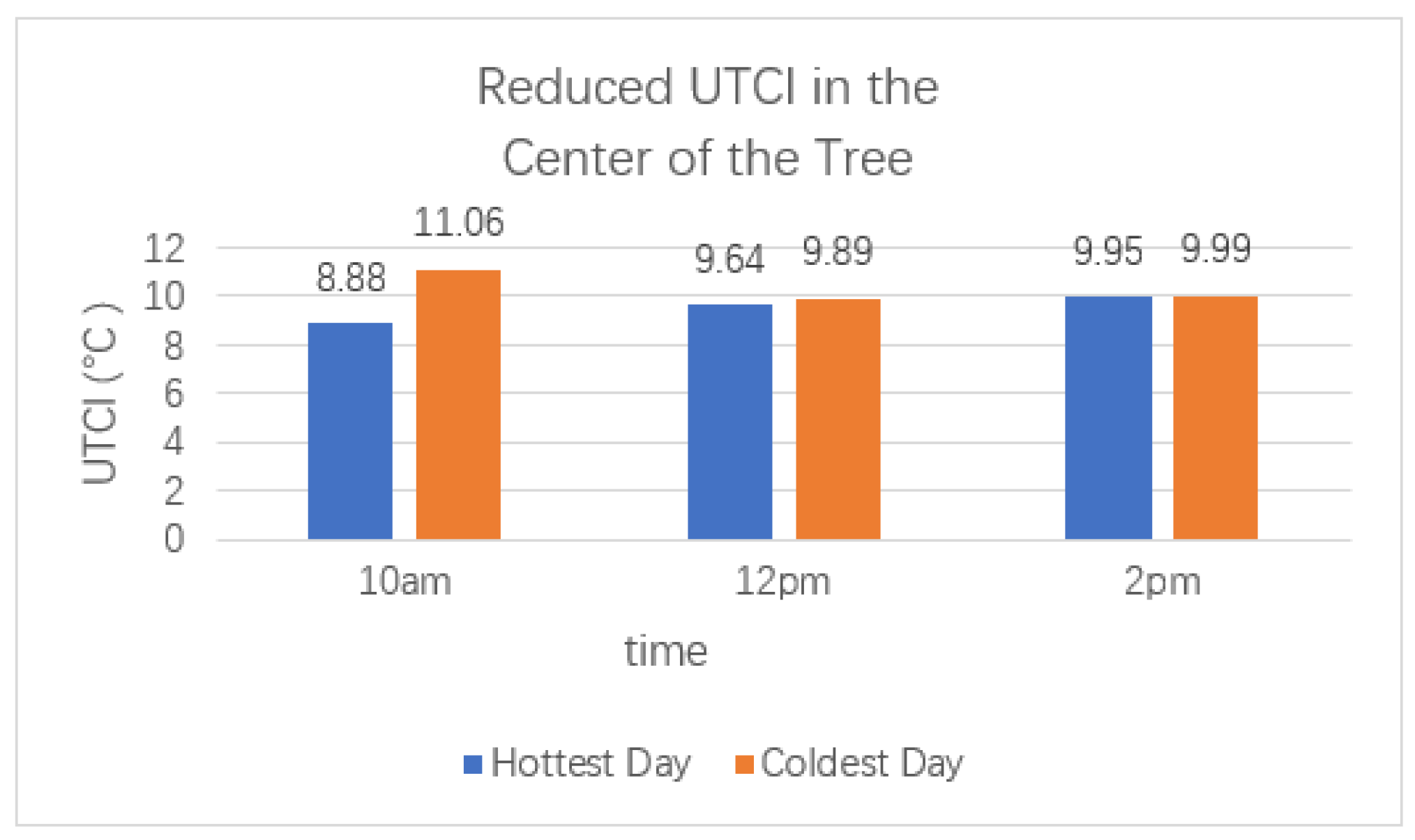
Figure 14.
Hottest, coldest day reduced UTCI comparison (shadow area of the tree).
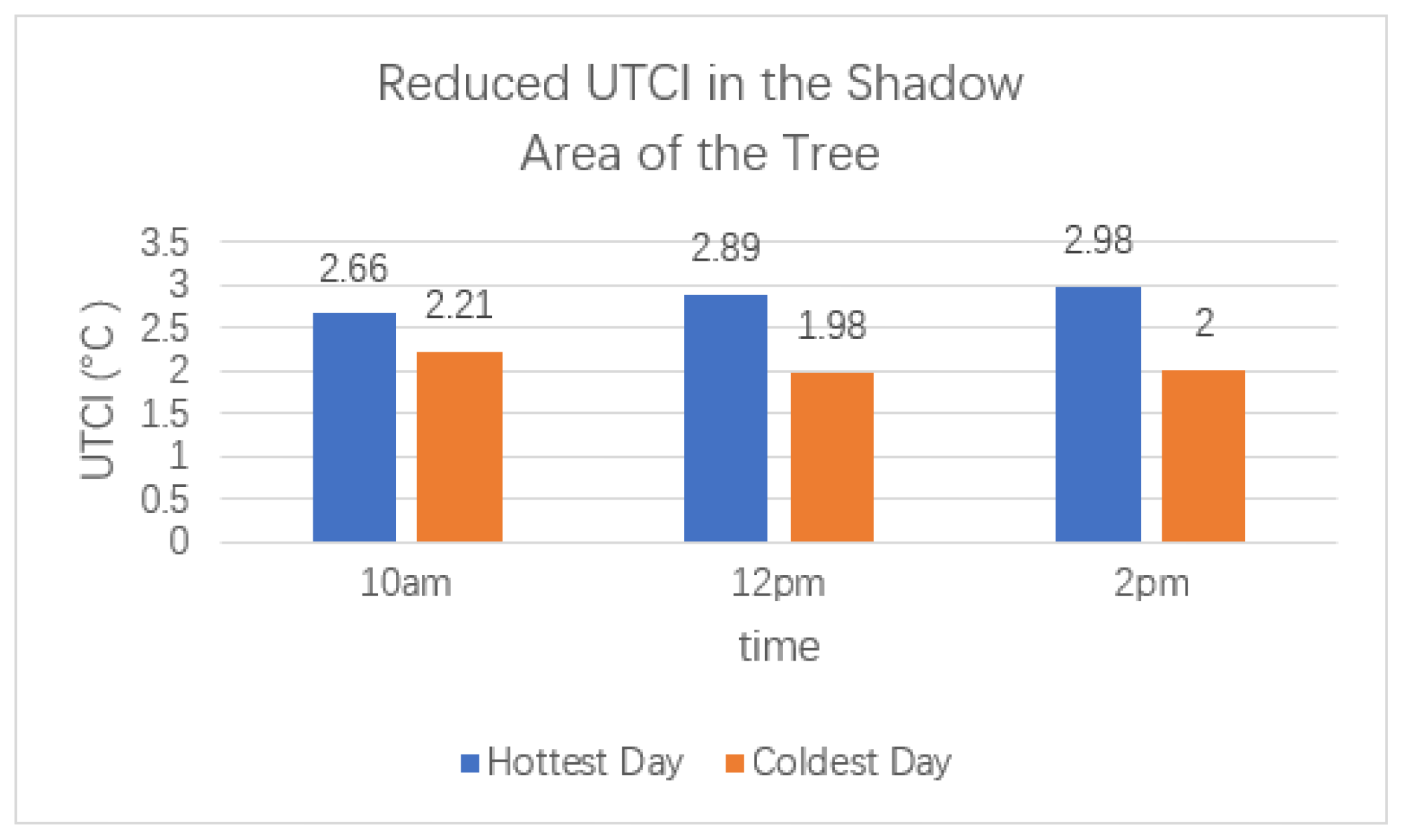
Figure 15.
Each month reduced UTCI comparison.
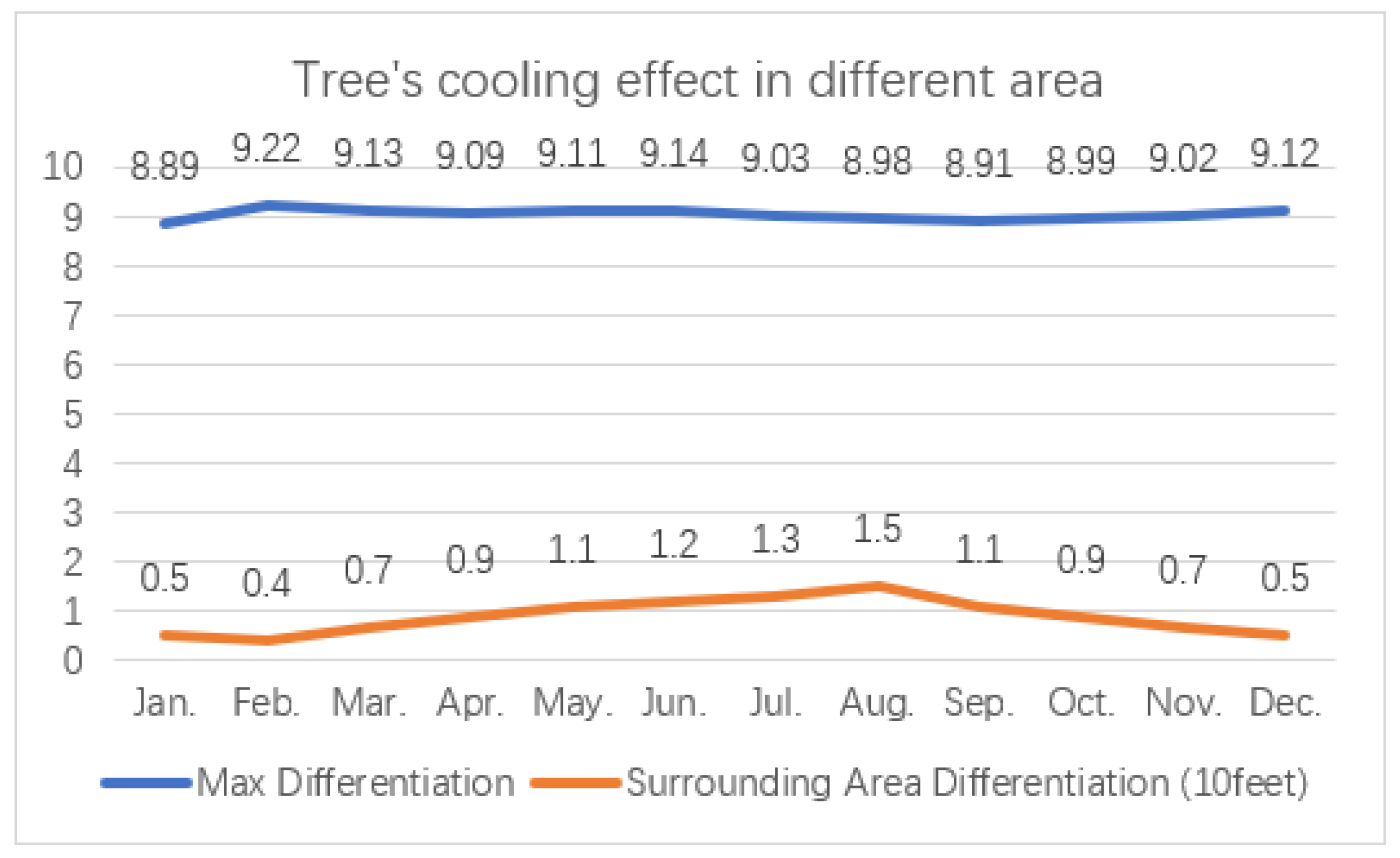
Figure 16.
Building shade without a tree and with a tree.
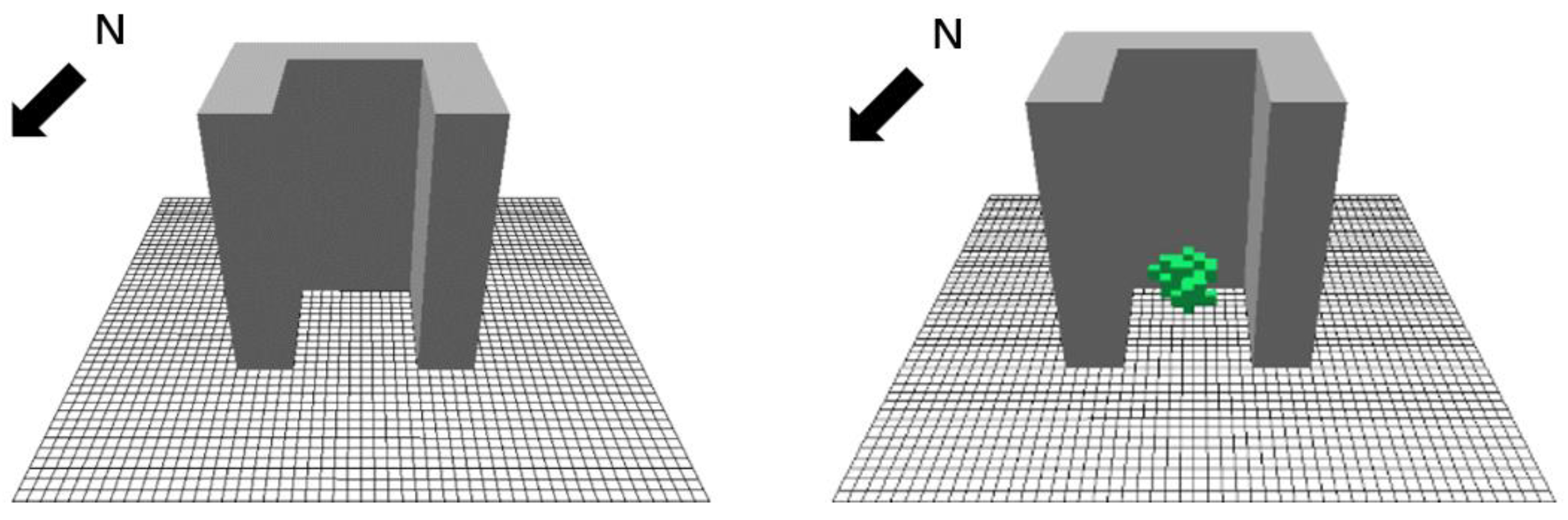
Figure 17.
Hottest day UTCI diagram comparison at 10am,12pm,2pm.
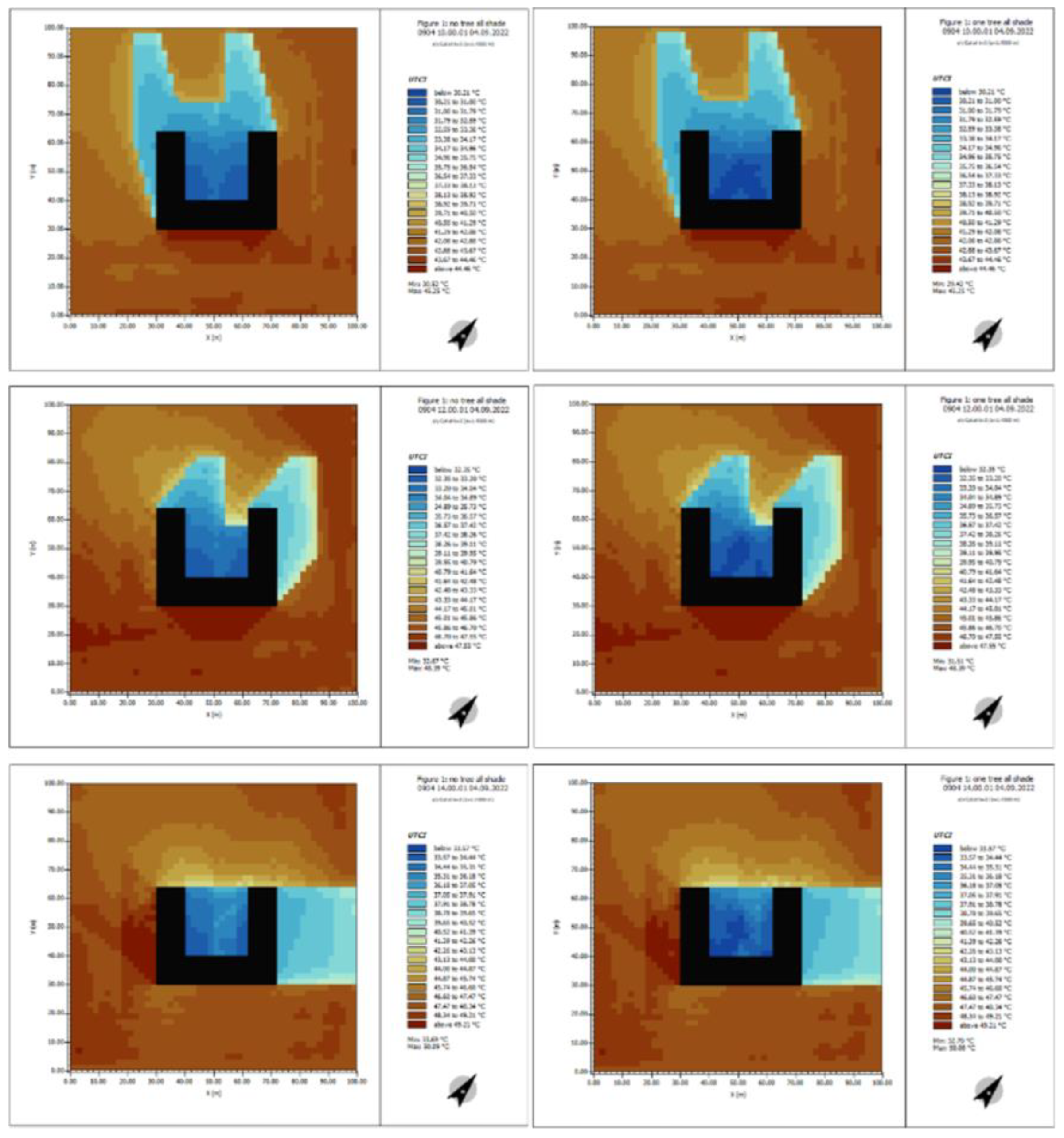
Figure 18.
Cooling ability reduction comparison.
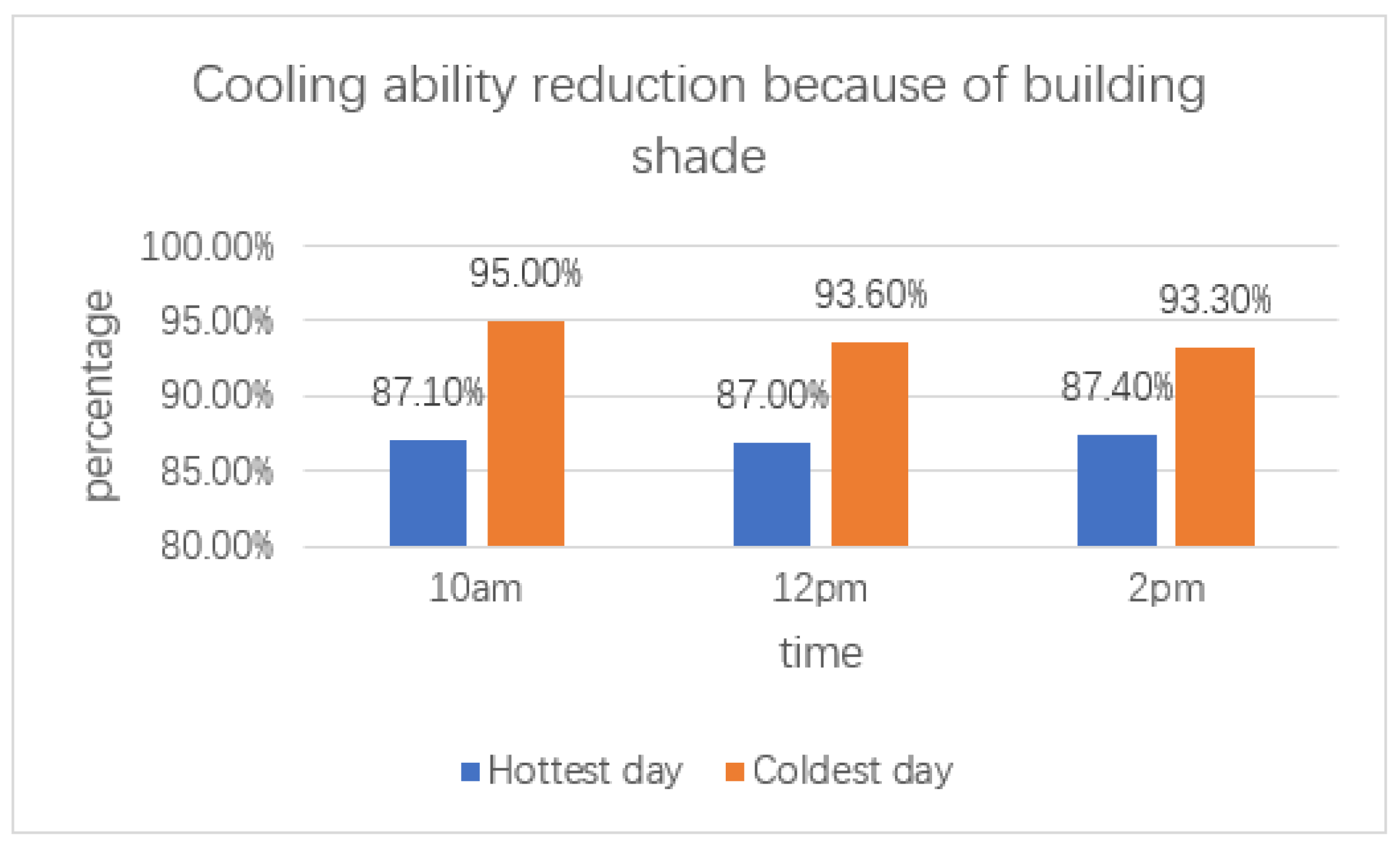
Figure 19.
Building shade without a tree and with a tree.
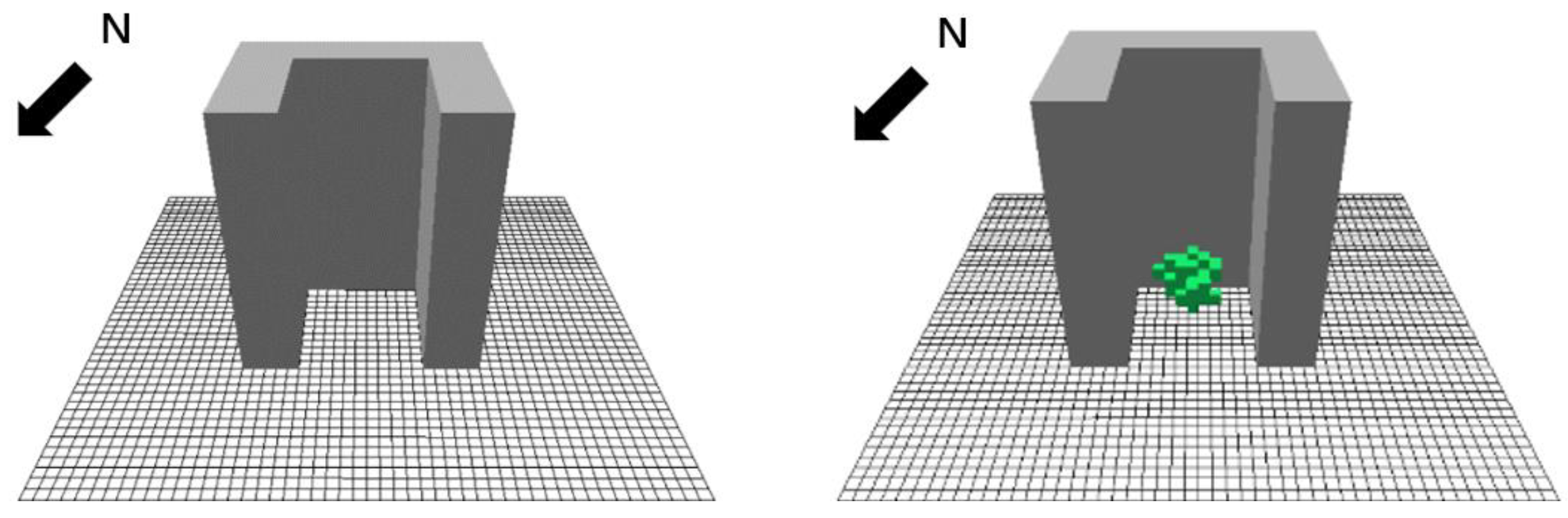
Figure 20.
Hottest day UTCI diagram comparison at 10am.
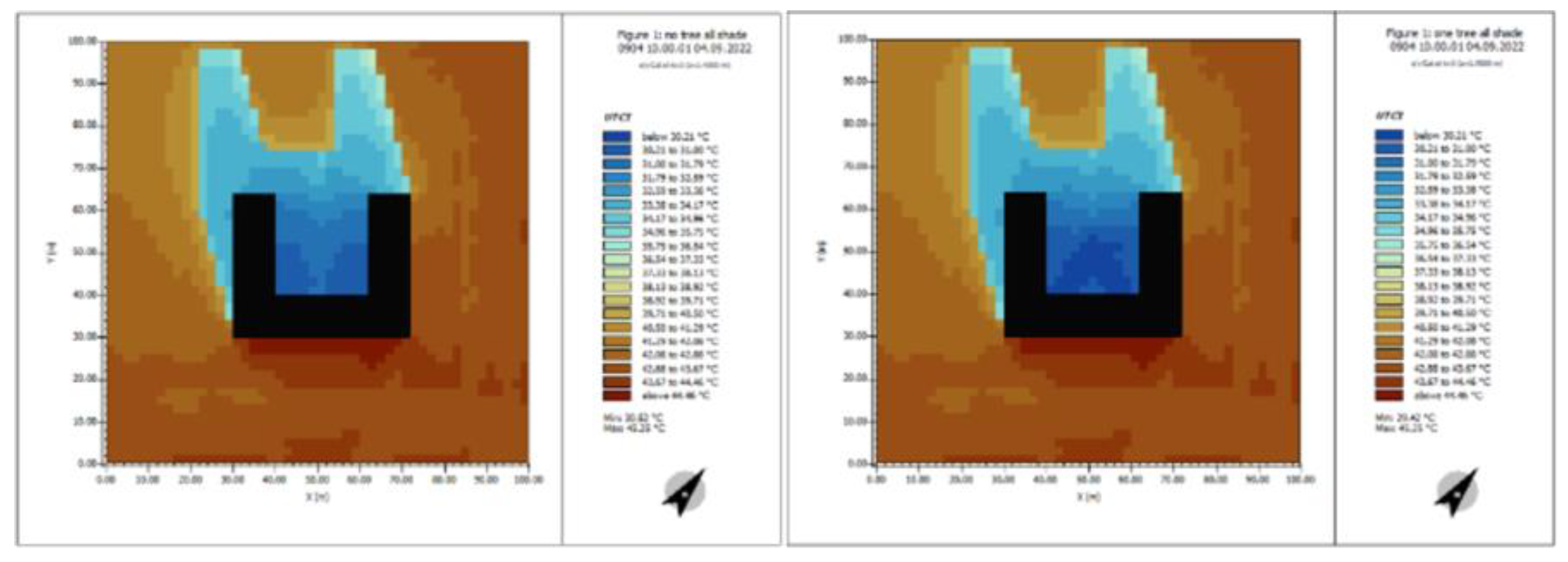
Figure 21.
Coldest day UTCI diagram comparison at 10am.
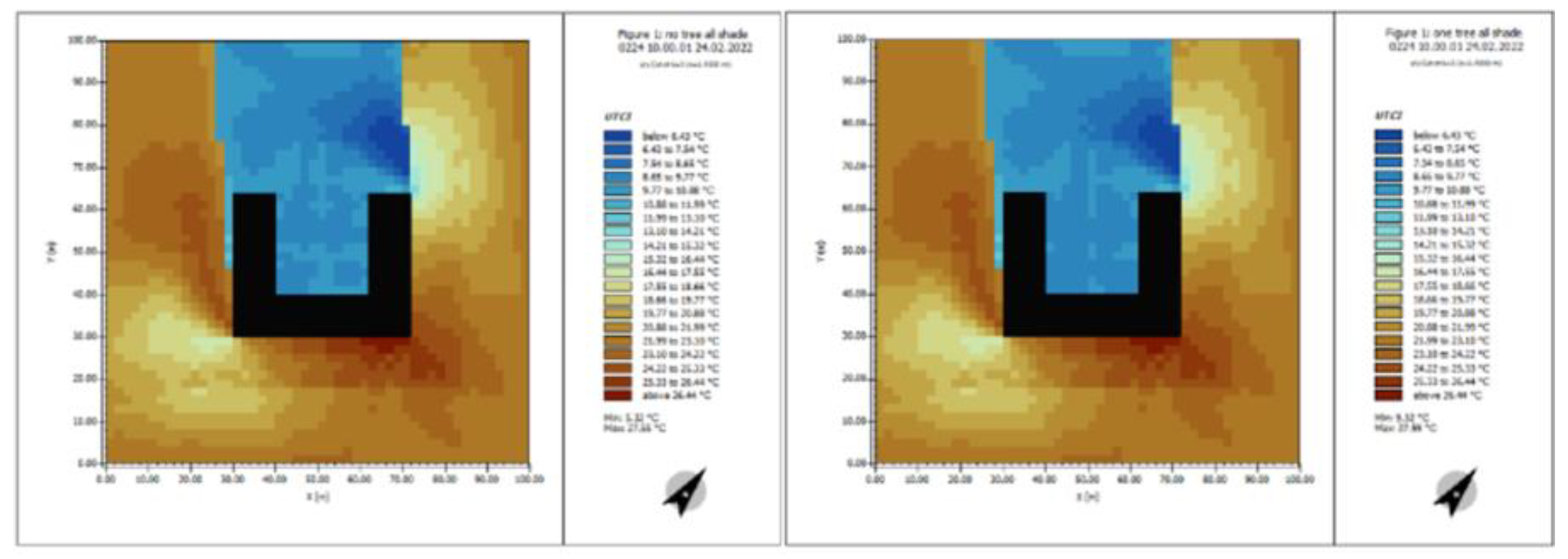
Figure 22.
Transpiration cooling effect on UTCI comparison.
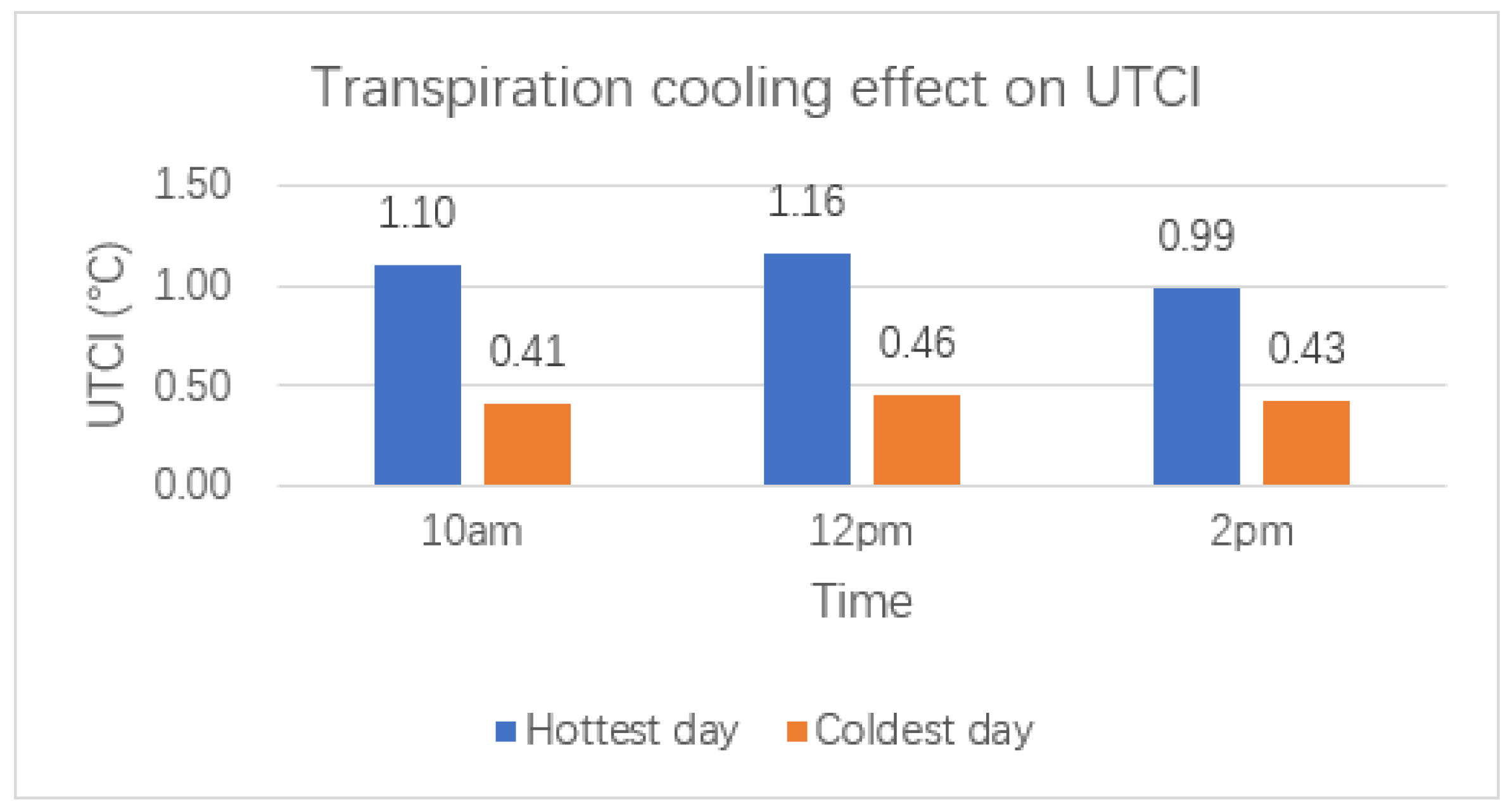
Figure 23.
Trees in different eight locations surrounding a building diagram.
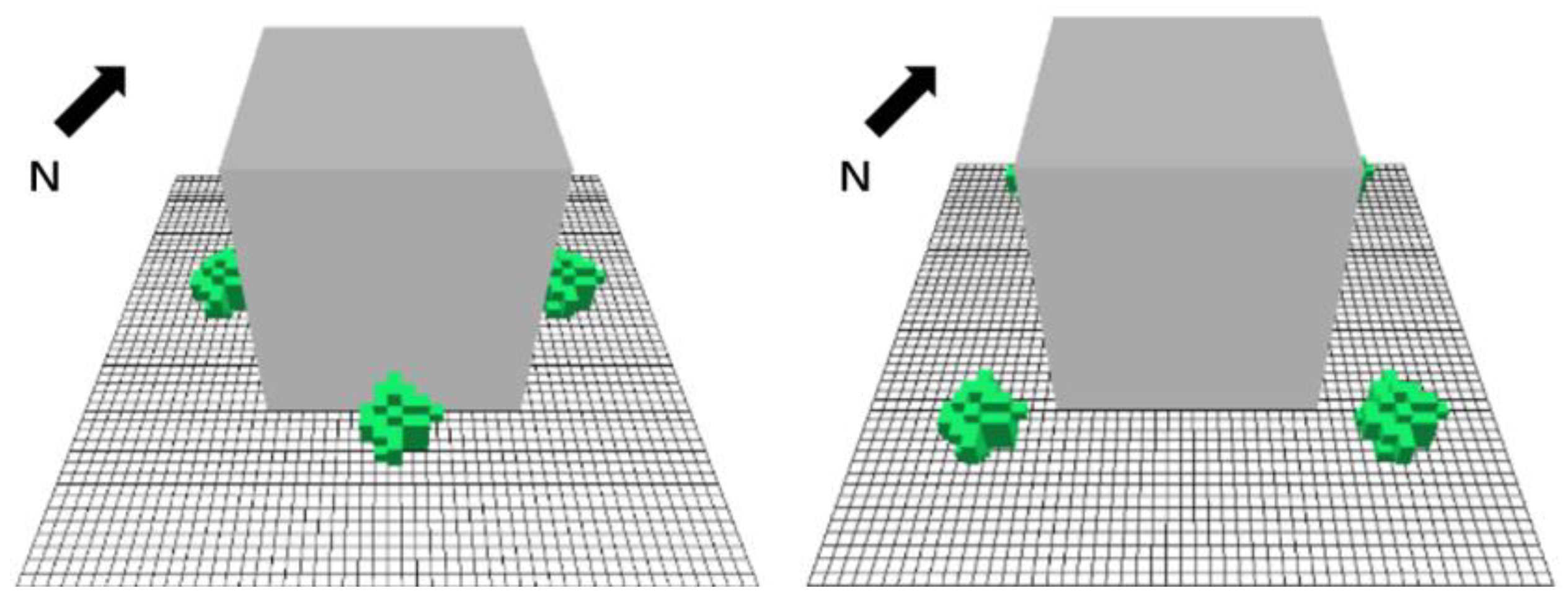
Figure 24.
Hottest day sunrise, noon, sun set time UTCI comparison (8am, 12pm, 17 am).
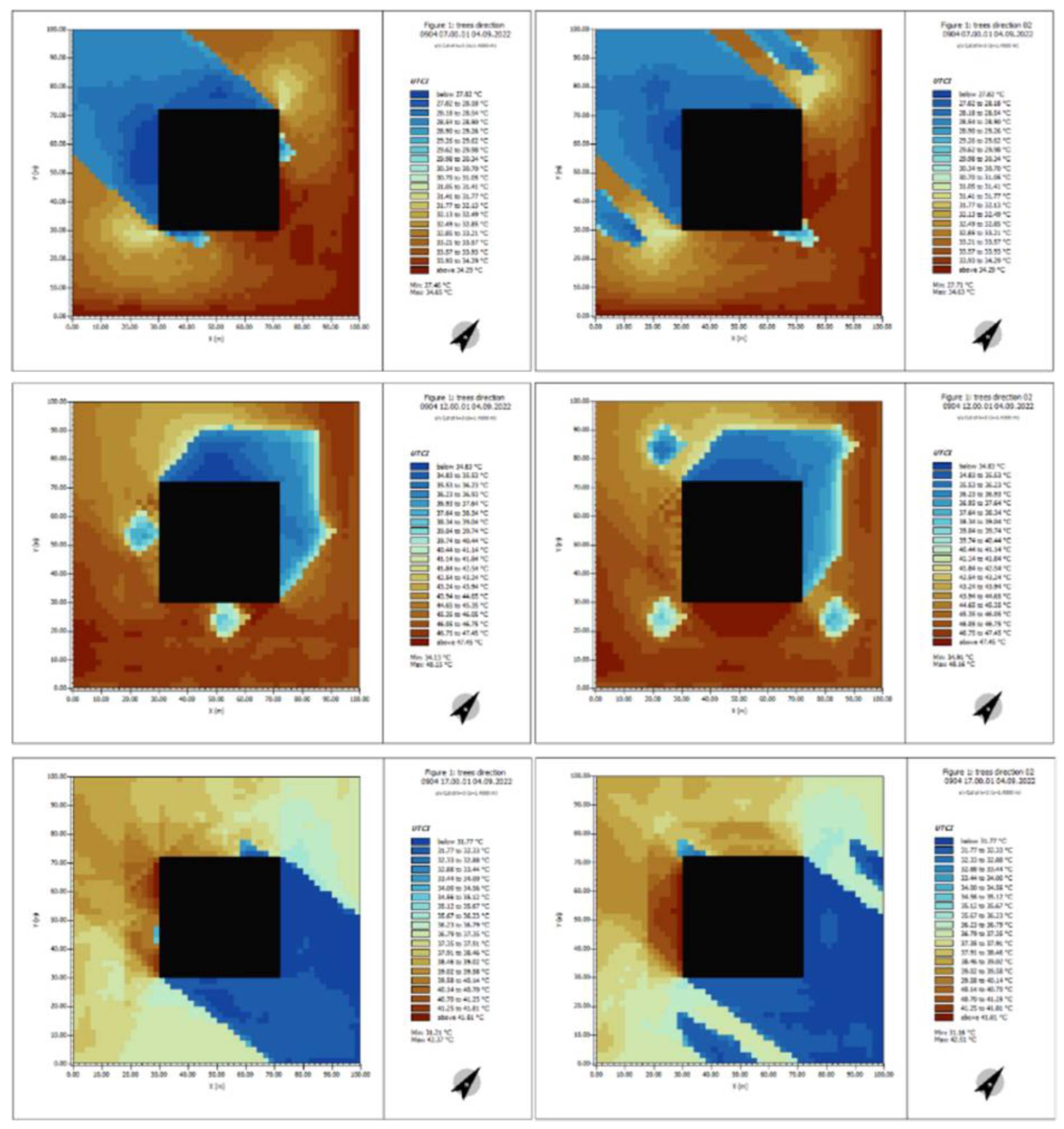
Figure 25.
Hottest day Building Shadow Analysis.
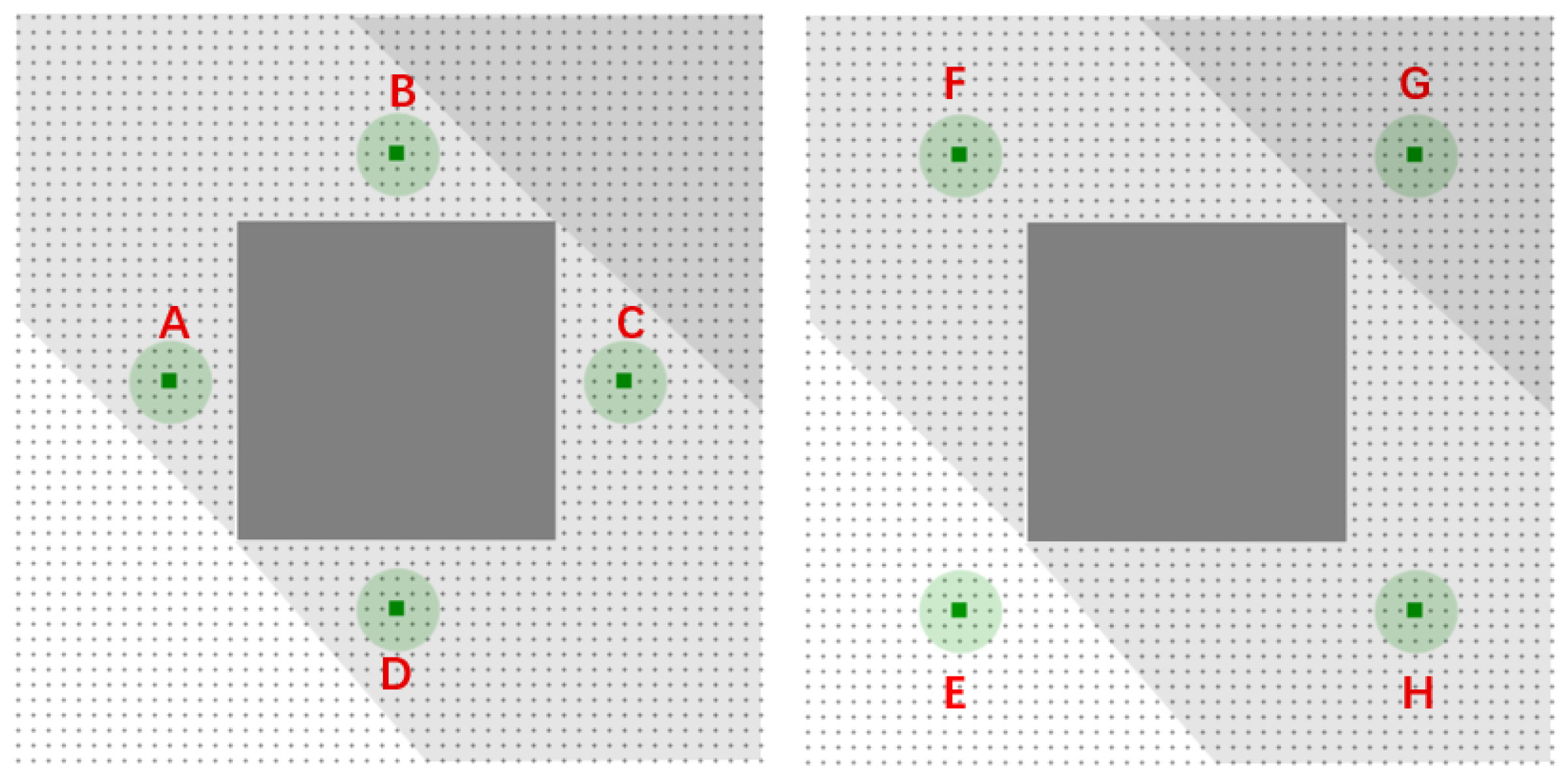
Figure 26.
Coldest day Building Shadow Analysis.
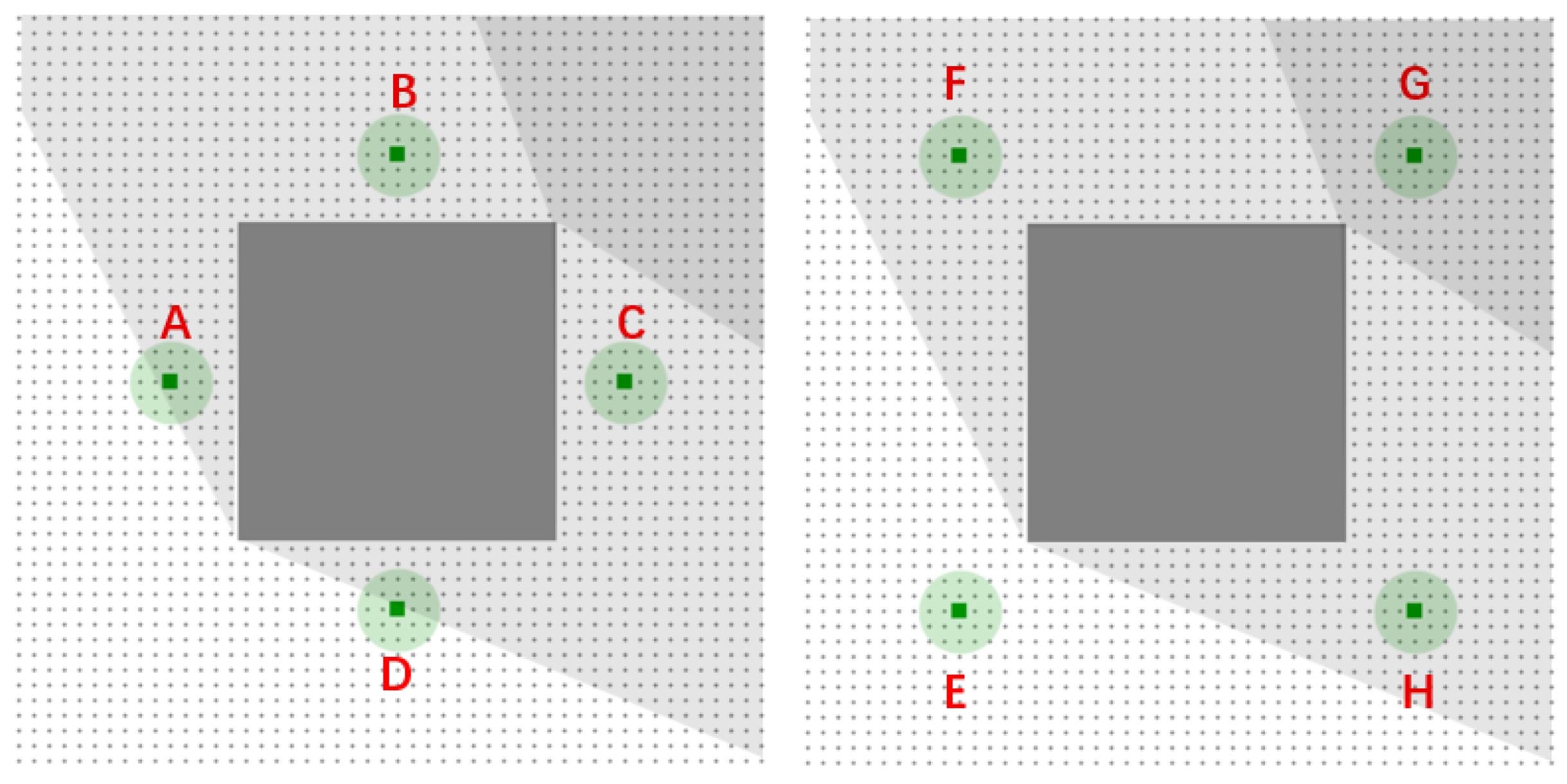
Figure 27.
Whole year Building Shadow Analysis.
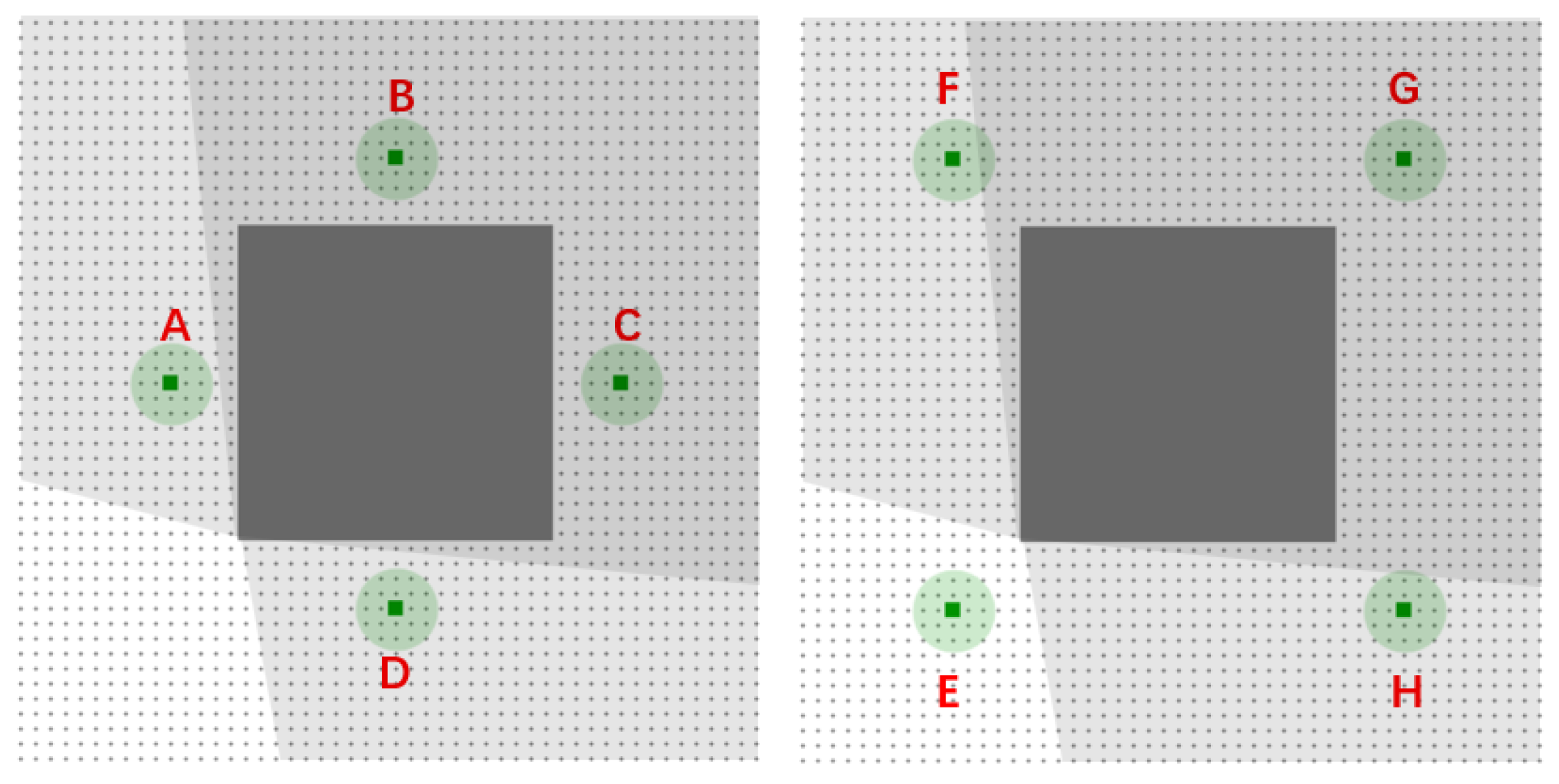
Figure 28.
Tree best cooling location ranking.

Figure 29.
Three types of trees spacing UTCI comparison at 12pm (hottest day).
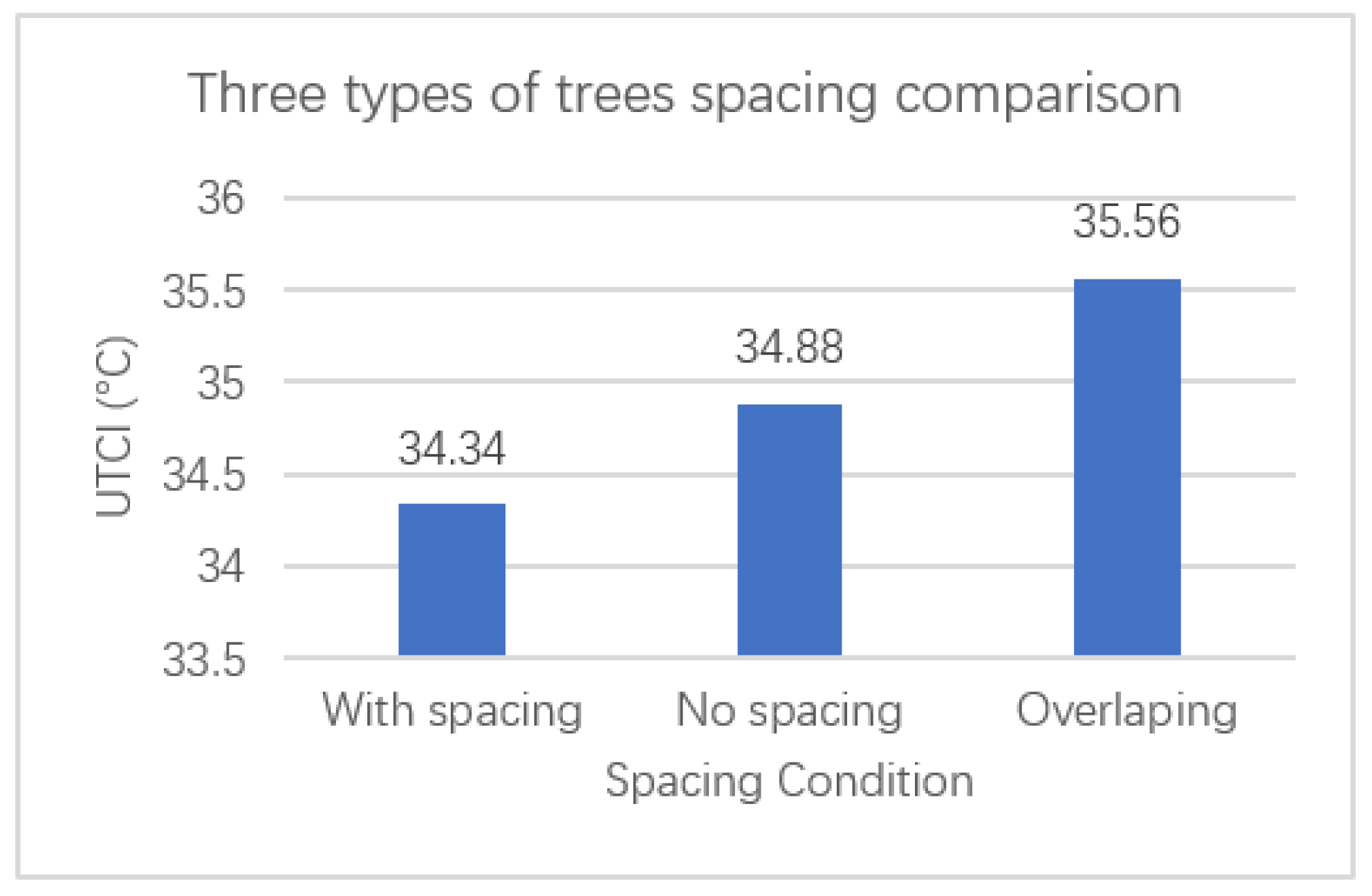
Figure 30.
New trees layout 3D map.
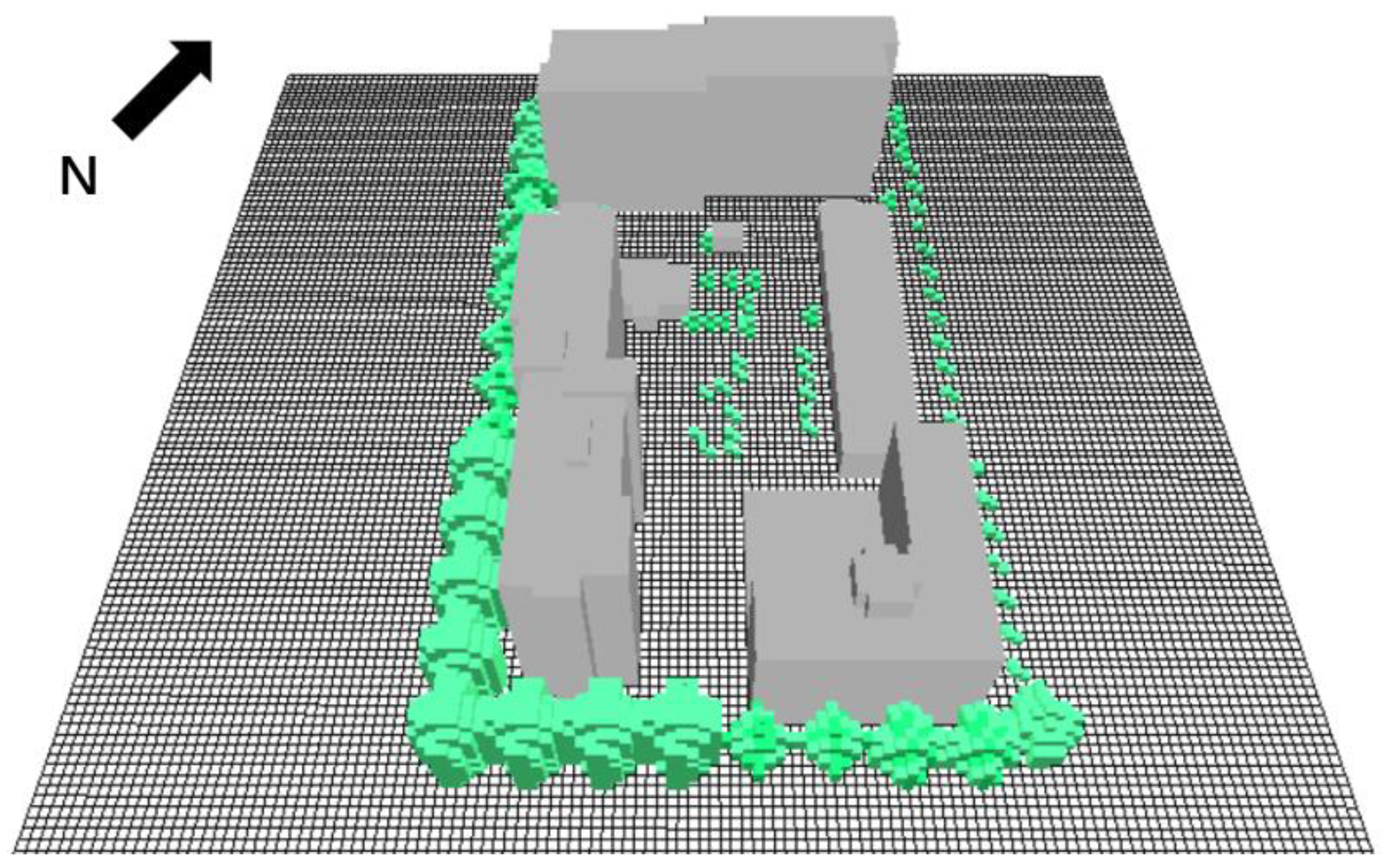
Figure 31.
Full site new trees 3D model in ENVI-met.
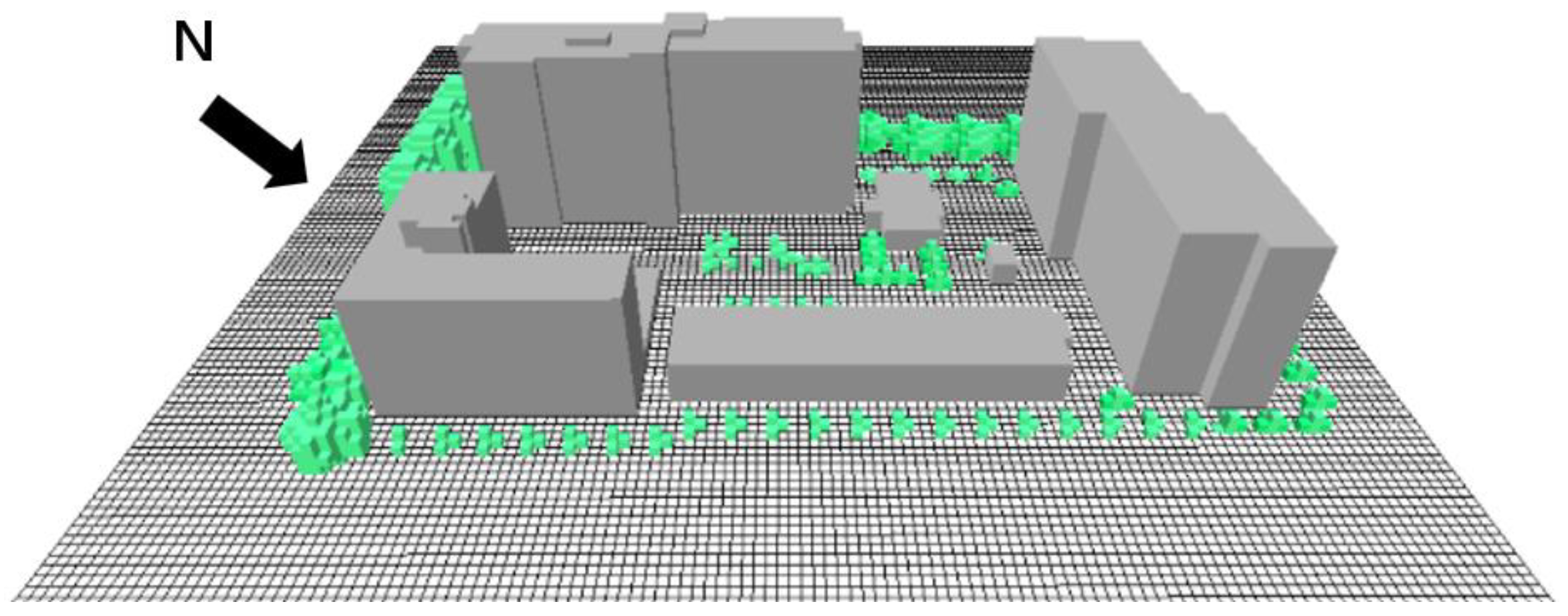
Figure 32.
UTCI thermal comfort standard.
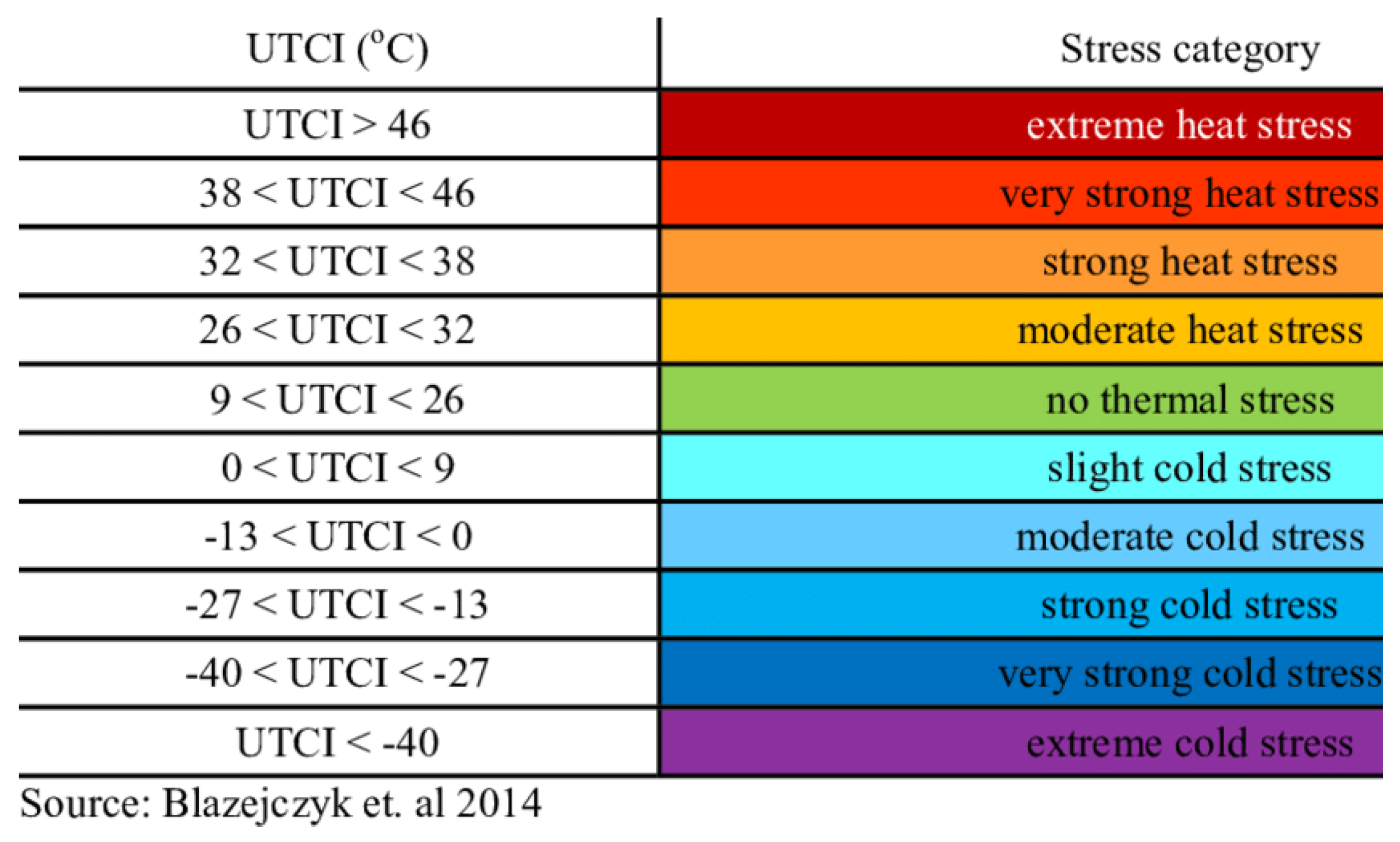
Figure 33.
Full site no trees UTCI diagram.
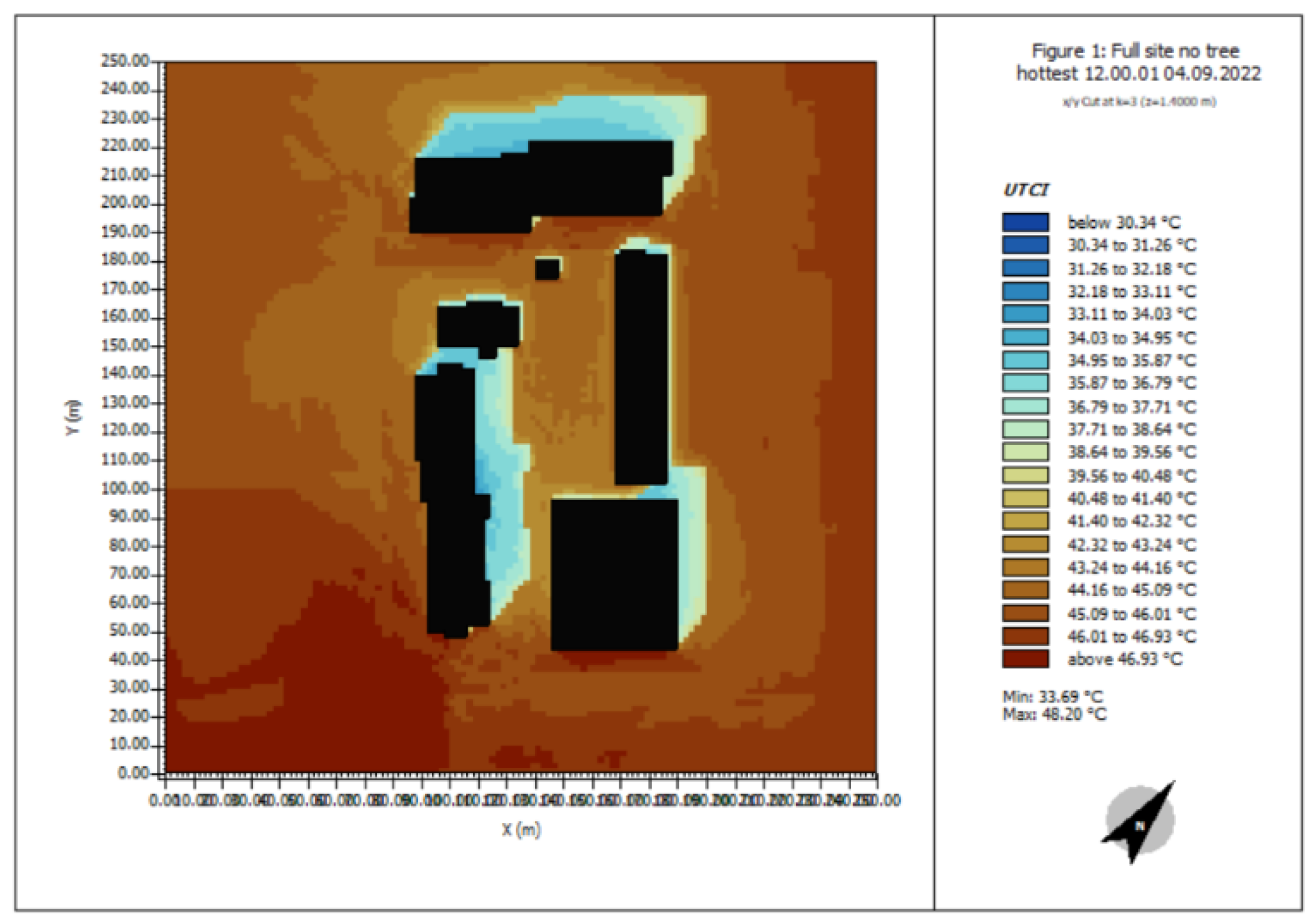
Figure 34.
Full site existing trees UTCI diagram.
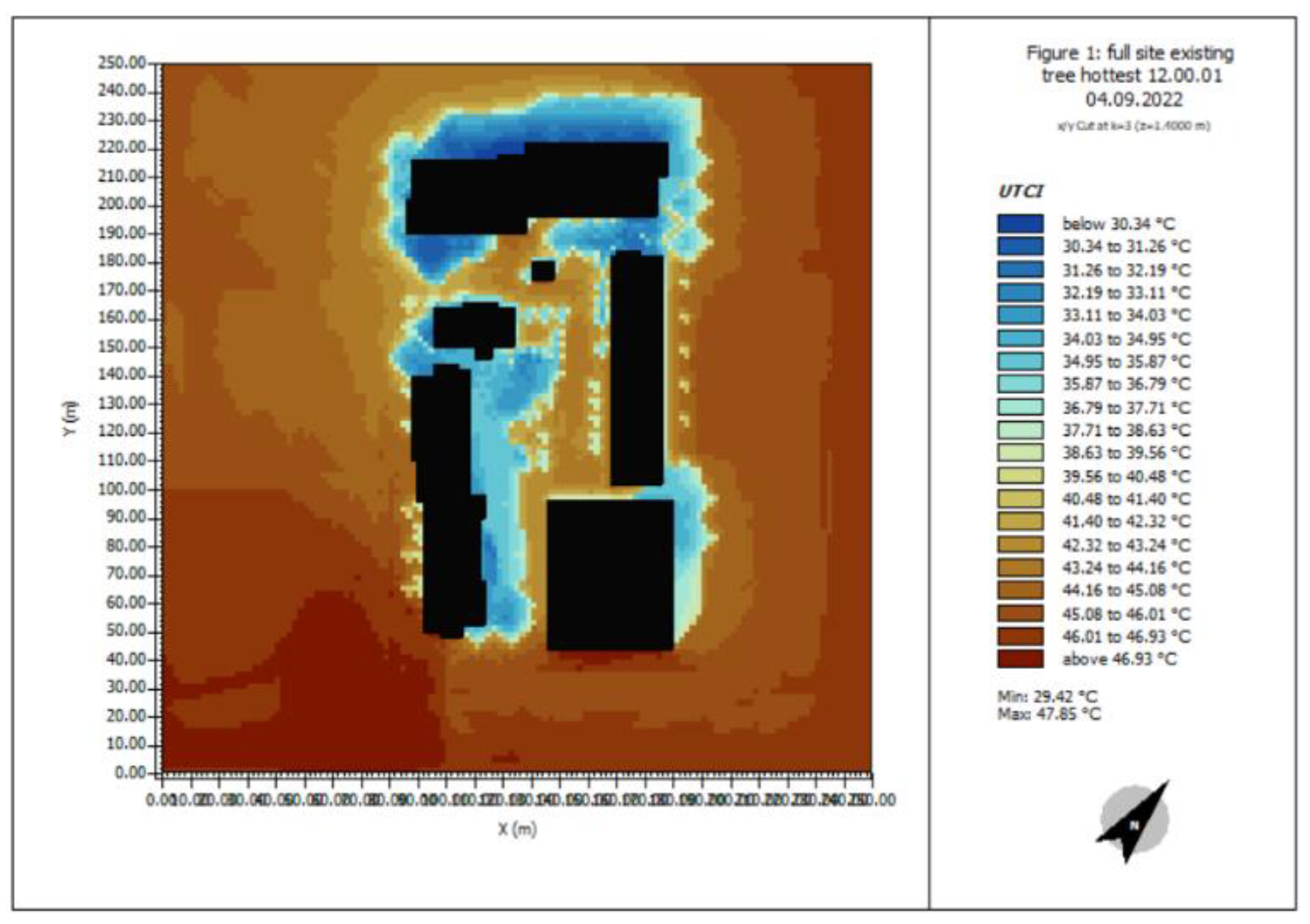
Figure 35.
Full site new trees UTCI diagram.
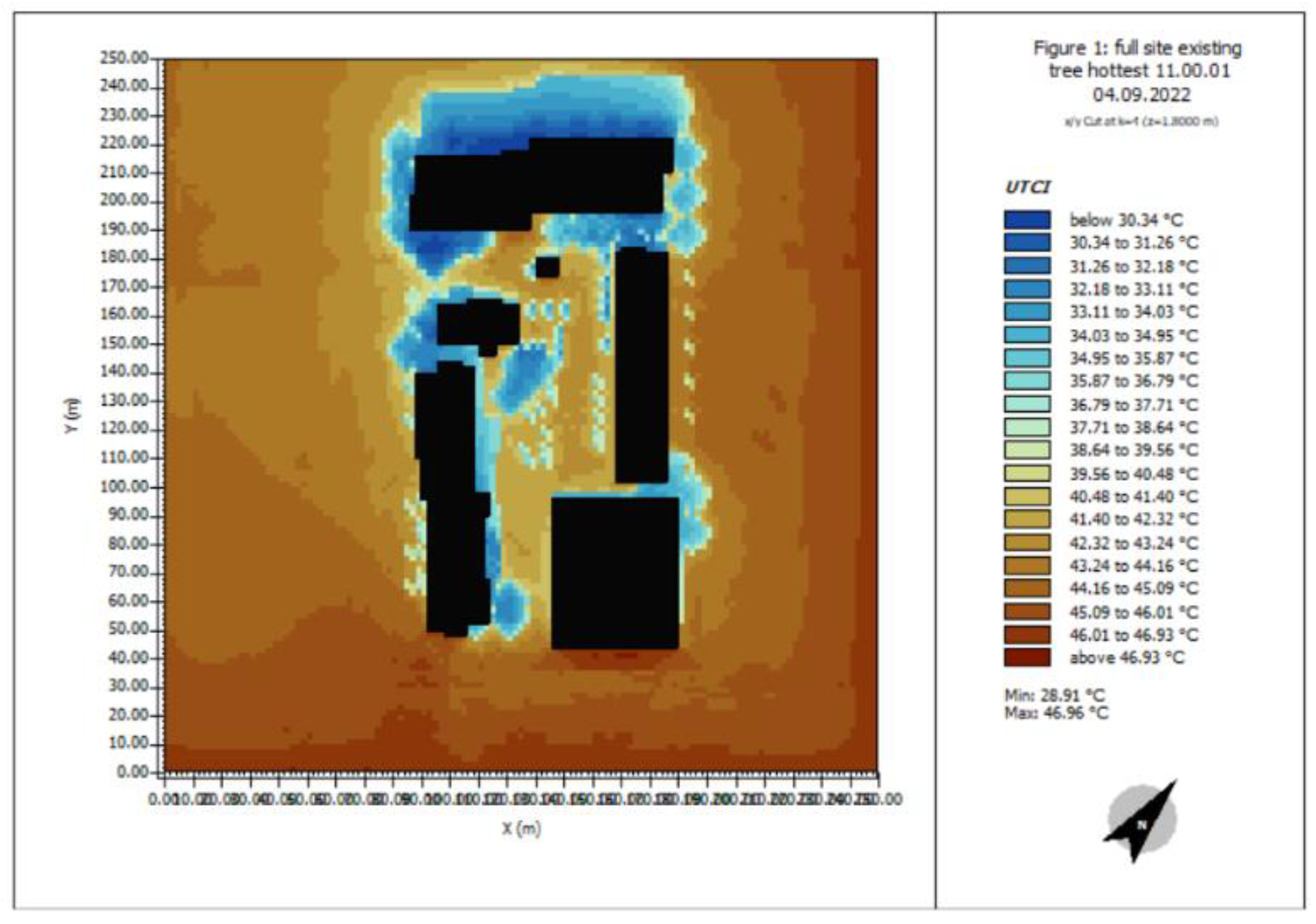
Figure 36.
Full site pedestrian area UTCI comparisons at 12pm.
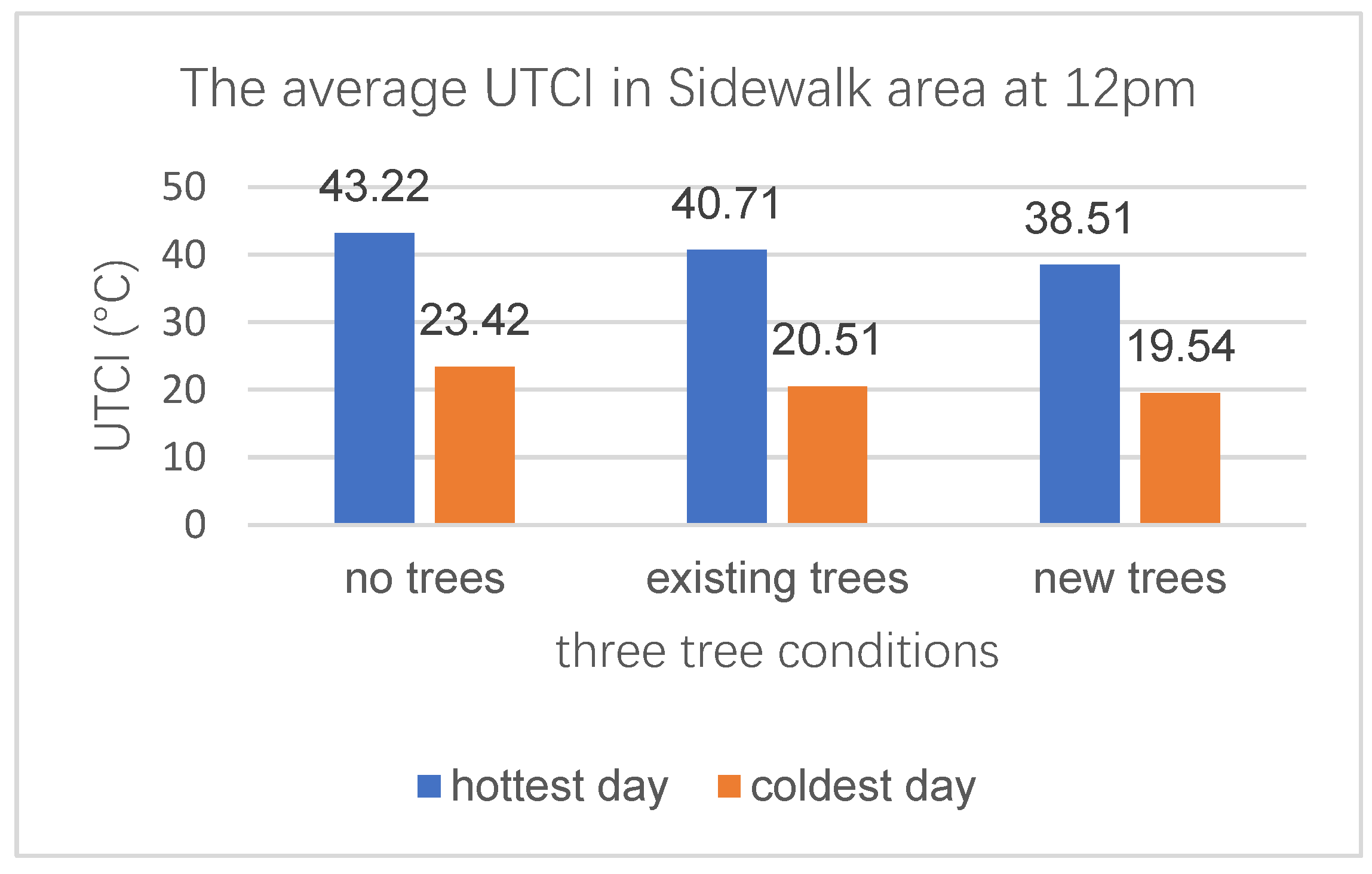
Figure 37.
Full site all year-round thermal comfort stress level.
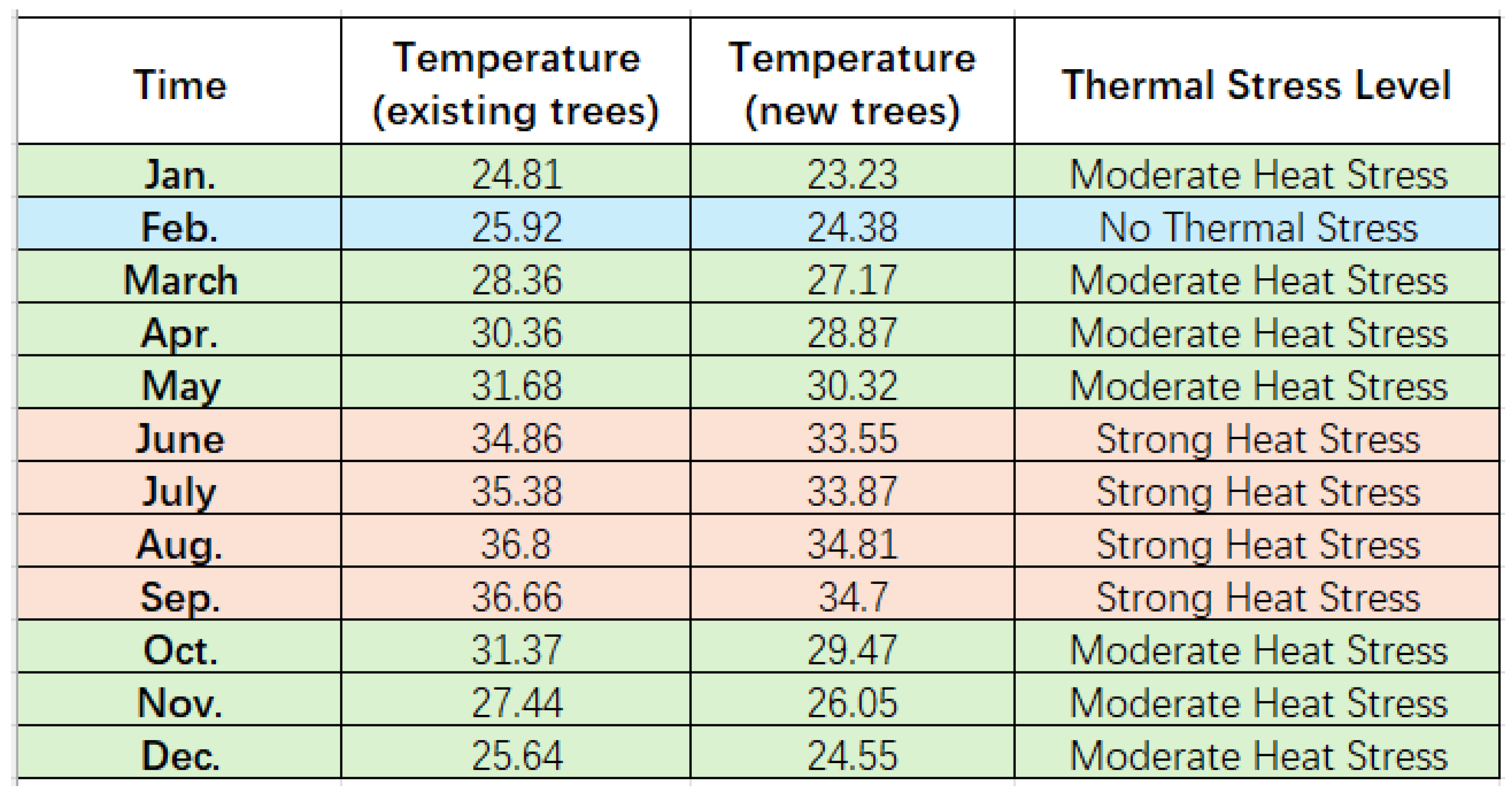
Figure 38.
Reduced UTCI for each month (new scheme).
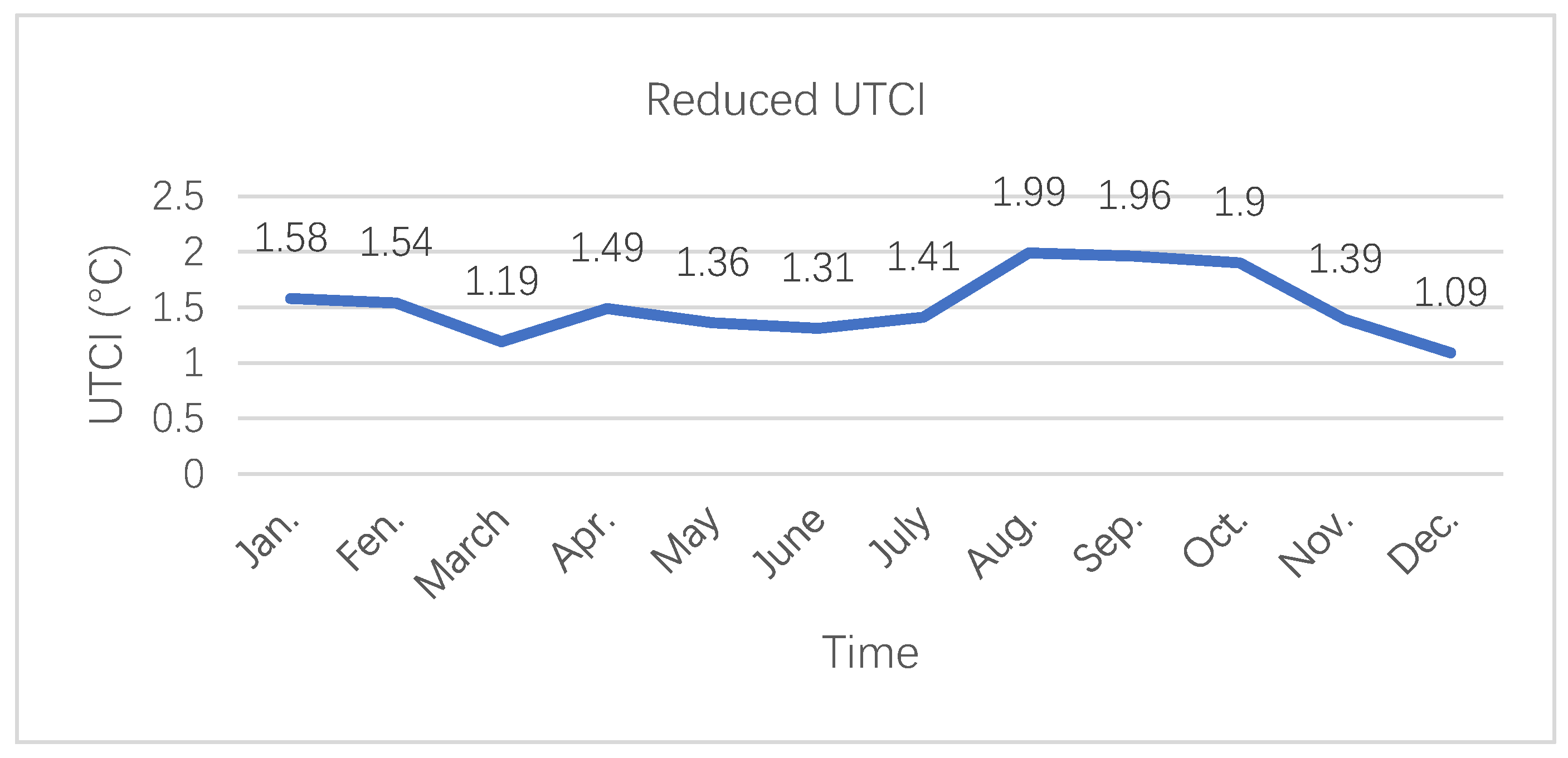
Figure 39.
Full site all year-round simulation result.
Disclaimer/Publisher’s Note: The statements, opinions and data contained in all publications are solely those of the individual author(s) and contributor(s) and not of MDPI and/or the editor(s). MDPI and/or the editor(s) disclaim responsibility for any injury to people or property resulting from any ideas, methods, instructions or products referred to in the content. |
© 2024 by the authors. Licensee MDPI, Basel, Switzerland. This article is an open access article distributed under the terms and conditions of the Creative Commons Attribution (CC BY) license (http://creativecommons.org/licenses/by/4.0/).
Copyright: This open access article is published under a Creative Commons CC BY 4.0 license, which permit the free download, distribution, and reuse, provided that the author and preprint are cited in any reuse.


