

Submitted:
15 July 2024
Posted:
16 July 2024
You are already at the latest version
Abstract
Background: This study aims to develop a research framework for the Social Life Cycle Assessment (S-LCA) of public services by conducting a systematic review of existing literature from 2013 to 2022. The research question focuses on how the results of the literature review can inform the advancement of S-LCA for public services. Methods: To answer this question, a qualitative and quantitative analysis of data from the Web of Science and Scopus databases was carried out. The quantitative analysis determined the total number of S-LCA and SO-LCA papers published by main journals, and main authors. The qualitative analysis highlighted the different themes and research objectives addressed in the work relating to the S-LCA of products/services and organizations. Results: The results show that 222 papers dealing with S-LCA were published in 94 journals and revealed a scarcity of work on public services, with most papers focusing on products/services and organizations. While there is a lack of direct scientific data, the study identified 17 actors, 74 impact sub-categories, and 178 indicators that could be considered for the S-LCA of public services. Conclusions: Due to the diverse nature of public services, it is crucial to develop specific stakeholder categories, sub-categories, and performance indicators for each public service. This will support the scientific community and S-LCA practitioners in applying assessing the social impacts of public services.
Keywords:
life cycle thinking
; social life cycle assessment
; public organizations
; public services
; Inventory of existing models
1. Introduction
With the Universal Declaration of Human Rights in 1948, the United Nations established the foundations of the organization of public services. Even if it does not explicitly define public services, there are nevertheless relevant articles referring to aspects of the public sector, such as article 21: “(2) Everyone has the right of access, under conditions of equality, to the public functions of his country” and article 17: “(1) Everyone has the right to own property, alone or in association with others; (2) No one may be arbitrarily deprived of his property” [1]. Based on this document, each service should include a social and territorial dimension guaranteeing equal access to essential goods at reasonable prices and a tariff redistribution for free access throughout the territory [2]. Although different perspectives and approaches exist, public service can be defined as an activity of general interest managed by a public body based on the rules of common law; in other words, it is a public activity that is essential for the satisfaction of basic needs, such as health, social security, education, communication, transport network, sanitation services, access to water and electricity, etc., excluding so-called sovereign activities which are linked to the sovereignty of the state [3].
Considering the evolving needs of citizens in a changing society, public bodies are asked to continuously improve the sustainability performance of public services [4,5]. To do this end, metrics capable of representing the impacts of such activities from an economic, environmental, and social perspective are needed [6]. The integration of sustainability into decision-making dates to the Brundtland report of 1987, which highlighted the three dimensions of sustainability: environmental, economic, and social. Recently, the European Union law on Corporate Sustainability Reporting Directive (CSRD) requires all large companies and all listed companies to disclose information on their risks and opportunities arising from social and environmental issues, as well as the impacts of their activities on people and the environment [7].
From a methodological perspective, the life cycle approach and specifically the Life cycle assessment (LCA) methodology has proved to be promising in the evaluation of the environmental sustainability of products, as well as the t the environmental impacts of public services [8]. However, the investigation of the social dimension of public services, also referred to as social life cycle assessment (S-LCA), is still in its infancy [9,10]. The United Nations Environment Program (UNEP), 2020 published a guideline that specifies the methodological framework for S-LCA; the document provides guidelines on the stakeholder categories for which the social impacts of a product or an organization must be assessed and the sub-categories of potential social impacts to be considered [11]. In these UNEP guidelines (2020), stakeholders are defined as groups or individuals who may be influenced by or have an interest in the operations of an organization, including employees, surrounding communities, partners of the supply chain, customers, children, and society in general. As for impact subcategories, they are described as socially relevant topics or characteristics, assessed using impact indicators. These subcategories are associated with stakeholder groups and are organized to simplify their implementation and ensure the completeness of the S-LCA framework. Finally, performance indicators are described as instruments used to measure the social effects of an organization’s activities over the entire life cycle of its products or services. They are directly linked to the product life cycle inventory and may differ depending on the context of the study. The assessment of each impact subcategory may require the use of multiple indicators, the choice of which depends on the specific issues and concerns highlighted by the S-LCA analysis.
In 2021, UNEP also published a second document that presents methodological guidance for the definition of inventory indicators to be potentially adopted in the evaluation of social performances [12]. Despite such documents, identifying stakeholder categories, defining sub-categories, and defining performance indicators is still an open field of research. This is confirmed by the remarkable increase in the number of S-LCA papers that deal with S-LCIA methodological approaches (hereafter methodological approaches) and case studies [10,13,14,15], relating to products, services, and organizations. Also, nine case studies, six related to the S-LCA of products, two to the Social organizational life cycle (S-OLCA) of organizations, and one S-LCA of a private service were published in the Pilot Projects [16]. Despite the growing interest, there is currently no paper dealing with the application of S-LCA to public services, except for a single case study on the social impacts of mobility services in Berlin [10].
This paper aims to define a research framework to support and guide future research on public service S-LCA through a systematic literature review. To achieve this objective, the literature review is divided into three parts, to better highlight aspects that could be useful for the S-LCA of public services.
- -
- Chapter 2 provides a detailed description of the methodology used in the process of developing a S-LCA research framework for public services. This includes an explanation of the research protocol, the software used, the data review process, and the analysis technique used.
- -
- Chapter 3 presents the qualitative and quantitative results obtained and the associated impact assessment methods. This also includes the stakeholder categories, impact subcategories, and indicators (hereafter referred to as components) identified for the case of public services.
- -
- Finally, Chapter 4 presents a discussion of the results obtained and the various conclusions on the research objectives as well as challenges or limitations identified in operationalizing S-LCA applications for public services.
2. Materials and Methods
2.1. Research Questions and Structure
To determine the research framework for S-LCA of public services, four questions are defined and addressed under specific sections of this paper, as presented in Table 1, indicating the method used to answer these questions.
2.2. Methodology
To answer Q1, Bibliometric analysis was chosen because the related software provides indicators tailored to analyze scientific publications, in very specific fields and very specific periods. The results from this analysis are based on information already described in the published literature, it is therefore a systematic method of identifying relevant studies to minimize bias and error [17,18]. It was therefore carried out by combining data from two databases, Web of Science and Scopus, related to all articles published during the years 2013 to 2022 [19]. These databases contain many peer-reviewed articles in the field of S-LCA [20]. Moreover, according to Huertas-Valdivia et al., the Web of Science is the database that has the most common source of bibliographic data because it contains sufficient data which are suitable for bibliometric analysis, it is accessible; it is most important in science and its records are more consistent, detailed, and standardized than others [15]. While others believe that Scopus contains a high-quality database and is becoming relevant given the increasing number of publications [21], this is why Morioka et al., think it is the largest database of peer-reviewed journals [22].
Data collection in the different databases took place on December 30, 2022, and the search string was carried out with all the keywords listed following: “S-LCA”, “social-LCA”, “SO-LCA” as well as “stakeholders”, “case studies”, “product/services “, “indicators “, “methodology” “public service “ “public transport”, “waste management/ municipal solid waste”, “water supply”, “health” and “education” coupled with the main word « S-LCA ». Each keyword was used only once in each database, as documented below.
In the Web of Science database, the above-mentioned keywords were searched in the topics while in Scopus, these were searched in the titles, abstracts, and keywords of the articles, by the objective of the literature review. A filter was applied to the type of document to obtain only articles published between 2013 and 2022. The introduction of all these keywords in the different databases made it possible to have a clear idea of the number of articles published in terms of author, year, source, type of document, case study, literature, and review [23]. Subsequently, the data were exported into the two databases in RIS format (saved-recs, Scopus) according to each keyword (14) and were merged (Web of Science and Scopus) into a single file using the RAYYAN software, to eliminate possible duplicates and outliers. The documents appearing more than once were detected and resolved for each batch of documents according to the different keywords which made it possible to have 11 data files. Subsequently, the 11 files were exported as Comma-Separated Values (CSV) files in a single folder and transferred back to the RYYAN software to merge all documents of the different keywords into a single batch of documents. In the end, only articles written in English were identified and selected.
To answer Q2, a qualitative analysis of the final data was carried out, through the examination of the titles and abstracts of the articles to identify the different application topics and the objectives of each. They were then classified by area of application and research objective. Finally, the identification of the different assessment methods was based on highlighting the type of impact assessment that was applied in the different works.
To answer Q3, a qualitative analysis of the content of the articles was carried out. This analysis consisted of highlighting the different methods applied in identifying stakeholder categories, impact subcategories, and performance indicators followed by a check on whether they all consider the same analyzed components. Finally, the stakeholder categories, the sub-categories of impacts, and the indicators that can be useful for the S-LCA of public services were highlighted. As indicated in Tables 6,7 and 8, three steps were carried out for stakeholder categories, impact subcategories, and performance indicators. In the case of stakeholder categories, the three steps are to identify which are common across articles, understand which are frequently used, and then identify which are not frequently used. Finally, depending on the results and the nature of the different public services provided, the identification of the actors likely to be used for the case of S-LCA of public services was carried out based on two criteria. Firstly, according to the number of reported complaints related to public services, and secondly according to the definition and main characteristics of public services [2]. the same three-step process was also applied for impact subcategories and performance indicators. The selection of the components specific to public services was therefore based on all related elements that could be relevant to all possible public services, such as water and electricity supply, waste management, public transportation, education, health, administrative services, etc. The results of the analysis provide a list of components applicable to public services provided in general without considering any specific study area.
To answer Q4, an in-depth critical analysis of the findings and highlighting of diverse perspectives is necessary, highlighting the inherent complexity of the data, which is essential for drawing meaningful conclusions and formulating strategies that address the identified challenges.
3. Results
3.1. Evolution of the Scientific Production of S-LCA in Terms of the Publication, Sources, and Main Authors
Concerning Q1 relating to publications, the bibliometric analysis identified 600 documents. After the resolution of the duplicates and consolidation, 378 articles were excluded including on one hand the duplicated documents, the documents that had no direct link with S-LCA but rather addressed LCA, and the dimensions of sustainability in general; as well as the articles written in French and Russian because the analysis focused exclusively on articles written in English. This resulted in a final sample of 222 documents containing all the keywords, as shown in Table 2. (all 222 articles representing the final sample, present for each article in Table 1 in the supplementary Materials, the title, year of publication, journal, and authors).
The analysis then highlighted the publication trends of the 222 articles in the final sample and their evolution over the last ten years, as shown in Figure 1.
Subsequently, a regression in the number of publications was observed in 2016, going from 8.1 % to 3.1 %. This period was characterized by reflections on the methodological stepsto be adopted for better analysis and interpretation of results. The most important period of growth in the number of articles published occurred on the one hand in 2018 (18.02%), on the other hand, in 2021 (19.8%) because of the special issue “Social LCA in Progress” of the International Journal of Life-Cycle Assessment (2018). Also, the publication of the UNEP Guidelines, and the related pilot projects, have played a major role in methodological advancements. These publications provided an analytical framework for the identification of stakeholder categories, impact categories, and examples of inventory indicators that guided the various works [11,16]. Subsequently, a slight regression of 17.57 % was observed in 2022 due to the presence of methodological sheets for the impact subcategories published in 2021. The slight decrease is likely due to the digestion period needed for the explicit and detailed nature of the impact subcategories and their inventory indicators.
The 222 papers representing the final sample were published in 94 journals between 2013 and 2022. Only 17 journals have at least two publications, and the remaining 77 have only one. Table 3 presents the top 10 journals in terms of publications in ascending order. The International Journal of Life Cycle Assessment published the only case study on S-LCA of public service probably because it is the first journal that focuses entirely on life cycle issues and methodological issues.
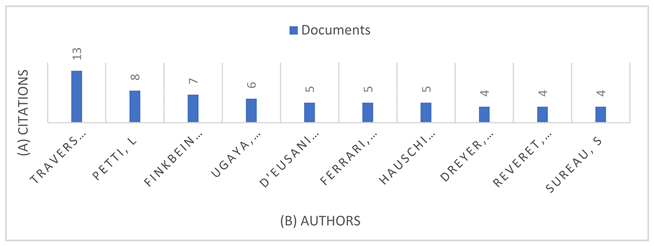
The follow-up made it possible to highlight the most important authors in terms of articles published and cited. Hence, the following section highlights the top 10 most cited authors in the various studies considering the 222 publications as illustrated in Figure 2 retained. The most cited author is Traverso, M (21.3%) she generally addresses life cycle sustainability assessment issues in various works. Followed by Petti, L (13.1%) whose work addresses issues of assessment of social impacts and positive impacts. Finkbeiner, M (11.4%) focuses on the life cycle approach in general, then Ugaya, CML (9.8%) focuses on life cycle sustainability issues and generally, impacts on development issues of sustainability. D’eusanio, M; Ferrari, AM, and Hauschild, M. have the same rating in terms of citations (8.2%) whose work generally focused on S-LCA, its evaluation, and its impacts. Finally, Dreyer, L.C; Reveret, JP. and Sureau, S close the classification with 6.5%, featuringwork on the evaluative approaches of S-LCA, for the most part.
3.2. Content Analysis
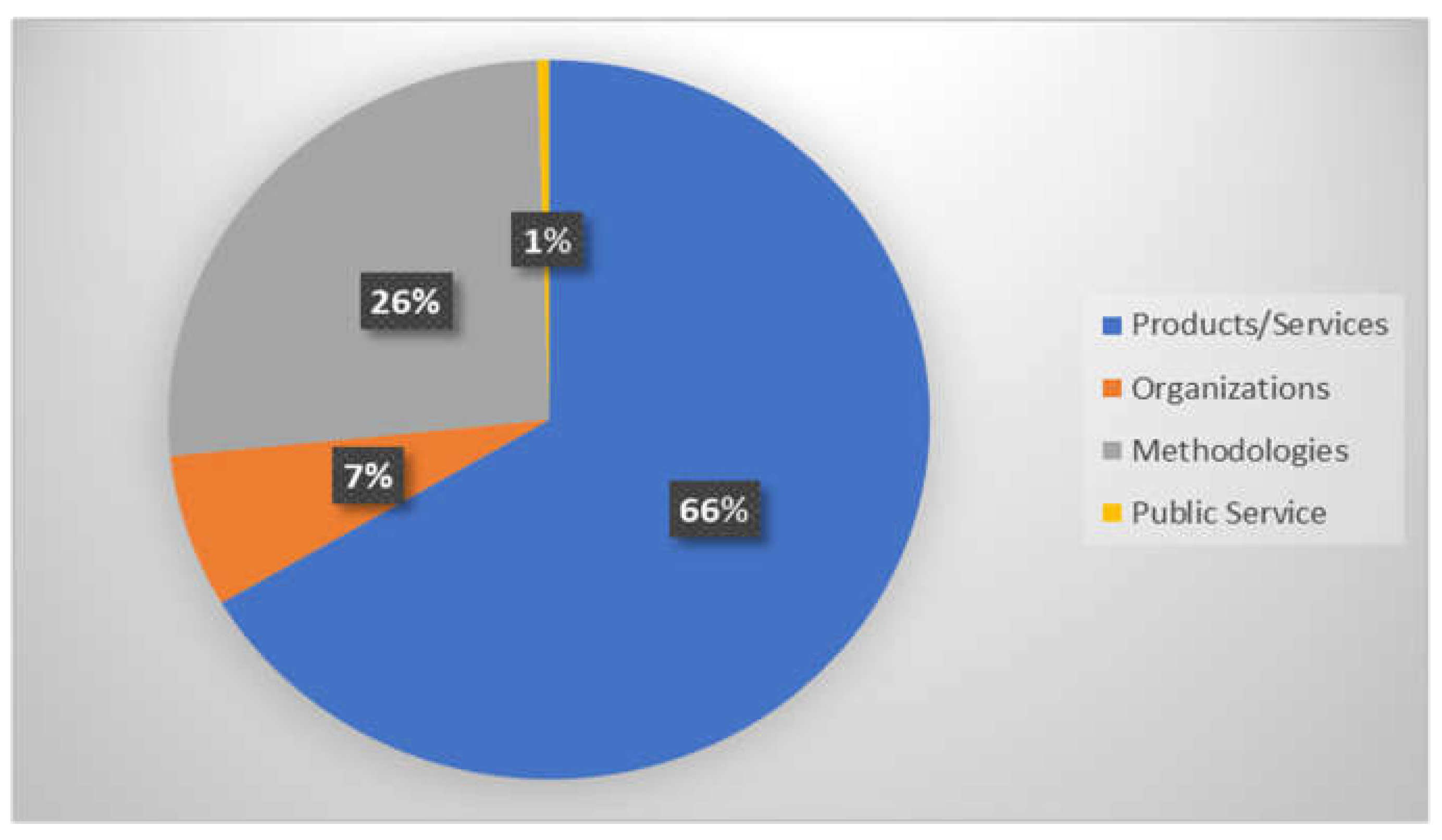
Concerning Q2, the results show that during the years 2013 to 2022, 169 articles addressed case studies, 67% on S-LCA of products/services, and 7% on organizations (SO-LCA), while 53 articles (26%) researched methodological issues, and the S-LCA articles include the only existing case study on public services.
Figure 3.
summarizes the percentage of the different areas of study over the last decade. Public services are almost non-existent with 1% despite the existence of methodological studies.
Figure 3.
summarizes the percentage of the different areas of study over the last decade. Public services are almost non-existent with 1% despite the existence of methodological studies.
To facilitate the analysis of this large number of articles, firstly, a sample of 10 articles per category (case studies on S-LCA excluding that on public services, case studies on SO-LCA, and research on methodological issues) was selected based on criteria such as the relevance of the content (notably titles, abstracts, and keywords), the quality of the research (prioritizing articles published in reputable journals and subject to a rigorous selection process), publication dates (limited to the years 2013-2022 to stay abreast of recent developments in S-LCA), number of citations (to favor articles with a significant scientific impact), the methodological approach used (to ensure that it is appropriate and rigorous) and the relevance of the results (to determine their usefulness in answering the research question). In addition, the sole case study on public services is analyzed leading to a first sample of 31 articles which specify, the year of publication, the titles, and the objective of each work, as well as the different journals that have published these works (Which are presented in Table 2 in the supplementary materials). Secondly, to be precise and concise, 10 articles out of the 31 preselected are then chosen as the final sample for content analysis. Depending on the objective of this study, the 10 articles were chosen based on those that defined the stakeholder’s categories, the subcategories of impacts, and the performance indicators in a perceptible, clear, and rapid manner.
3.2.1. Research Topics and Objectives
Table 4 identifies the 10 articles on which the final analysis will be based. The table specifies the authors, the year of publication, the titles, the research objective, and the different journals that have published these works. This identification is made to facilitate the stage of proposing the stakeholder’s categories, sub-categories of impacts, and indicators that are likely to be used for the case of public services, it also facilitates the identification of those which are frequently used or not.
The identification of the 10 articles according to the aforementioned criteria made it possible to have four articles relating to S-LCA (No. 2, 4, 5, 6), four relating to SO-LCA (No. 3, 8, 9, 10), one on methodological issues (No. 7) and one on public services (No. 1) (representing the only case study).
3.3. Methodological Analysis
To better understand the differences in terms of stakeholder categories, impact subcategories, indicators, and the type of impact assessment, are presented for each study identified as illustrated in Table 5 for the 10 selected articles (the complete list with detailed results is found in the supplementary Materials Table 3).
In the studies examined, the methodological analysis for identifying stakeholder categories, impact subcategories, and indicators was based firstly on identifying the specific context and the objective of the research. Some works, for example, consider incineration plants, energy, waste management [25,31], transport services [10], addressing on the one hand CO2 and GHG emissions; on the other hand, quality of life, employment, and human rights. This explains the involvement of different stakeholder categories, social aspects as well as indicators and specific to different cases, despite the overlap of certain articles in the field of transport [10], and in emissions management [25,31].
Second, the articles present different approaches that also influence the selection of stakeholder categories and social aspects to be considered for the development of indicators. These approaches are based on the quality and availability of data which can be either qualitative, based on in-depth interviews and case studies, quantitative or semi-quantitative oriented, or which integrates both qualitative and quantitative data [10,26,30]. The diversity of stakeholder categories, impact subcategories, and indicators involved in the different case studies therefore reflects the complexity of the social issues linked to each specific case.
In addition, on the type of impact assessment, the Reference scale approach (type I) and the Performance reference points (PRPs) method are the most used in the articles analysed. The studies also show high preference for the use of the Product Social Impact Life Cycle Assessment database PSILCA and Social Hotspots Database (SHDB) for social risk assessments.
3.3.1. Approach to Selecting Stakeholder Categories
Three steps were applied for the identification of stakeholders. they consisted of identifying those that are common to all the articles, understanding those that are frequently used, then identifying those that are not, and finally, based on the results, proposing those that can be useful for the S-LCA of public services. The stakeholder selection approach then highlighted 11 common stakeholder categories, 15 different ones while 17 stakeholder categories are identified that can be proposed for the case of public services (Table 6).
3.3.2. Approach to Selecting Impact Subcategories
The approach to selecting impact subcategories highlighted 28 common impact sub-categories, 46 different ones, and 74 impact sub-categories that can be proposed for the case of public services. The results show that the process of selecting impact sub-categories varies according to the specificity of each case study and the actors involved. Some of these impact subcategories are presented in Table 7 while the complete list is provided Table 3 of the Suplementary Materialsin)
3.3.3. Indicator Selection Approach
The indicator selection approach highlighted 34 common indicators, 152 different and 178 indicators that can be used for the case of public services. Some of these indicators are presented in Table 8 while the complete list is provided in Table 3 of the additional document)
The analysis of the 10 articles selected, made it possible to highlight and propose for the S-LCA of public services 17 stakeholder categories, 74 sub-categories of impacts, and 178 indicators.
4. Discussion
In this work, 222 articles on S-LCA published in 94 journals over the past decade (2013-2022) were identified. 169 articles addressed case studies, of which 67% were on S-LCA of products/services (including the only existing case study on public services), and 7% on organizations (SO-LCA), while 53 articles (26%) researched methodological issues. The results show that studies have mainly focused on case studies and methodological advancements, highlighting the continued interest in the topic as it remains a growing area of methodological inquiry. This growth is also justified by the collaboration among authors and various journals that are particularly interested in methodological advancements in S-LCA. While not directly related to public services, the fact that it is an open topic also leaves room for interest and further exploration in this area.
The detailed analysis highlighted only one public service-related study that applied S-LCA according to UNEP Guidelines [10]. The identified study addresses the use phase of the public transportation sector in the city of Berlin. Although this is the only real case to consider in the context of public services, it nonetheless provided a starting point for developing a framework for the S-LCA of public services. The information provided in this study was combined with that extracted from other public service-related studies focusing on different aspects of S-LCA. These include the identification of stakeholder categories, sub-categories of impacts, and performance indicators of public services by Erauskin-Tolosa et al., [26] and the systematic literature on the social evaluation of municipal solid waste management systems from a life cycle perspective [25]. Other studies analyzing public services without a focus on S-LCA also provided information on the type of direct actors and type of social aspects involved [31,32,33]
To begin with, the results of the analysis of the 10 selected articles show that the studies follow the key methodological elements necessary for the development of an S-LCA and SO-LCA [10,25,26,27,28,29,31,32,33], including data recommendations (UNEP (2020), SHDB, and PSILCA [30]. It is therefore important that the main framework of LCA, including the four phases, the definition of Goal and Scope, inventory analysis, impact assessment, and interpretation [10,11,25,26,27,28,29] is considered when using the results obtained in this study. Hence, Figure 4 provides a further breakdown and adaptation of the LCA Framework to ensure its correct application in the S-LCA of public services.
The results also highlighted 17 stakeholder categories, 74 sub-categories of impact, and 178 indicators that could be proposed in the case of public services, excluding those that do not have a direct link to public services. Although the identified components largely concern products/services and organizations, there is a high probability of their being linked to one of the numerous types of public services (health, social security, transportation network, education, waste management, etc.), essential to meet the fundamental social needs of citizens [3].
It is important to bear in mind that according to the proposed framework for the S-LCA of public services based on the results obtained, the public service is considered as the “product”, whereby the “product” is represented by the various services provided to the community. Hence, the proposed stakeholder categories, sub-categories of impacts, and performance indicators must be applied if and only if aligned with the goal and scope of the defined study, particularly the specific public service under consideration. On the methodological application, it is necessary to verify that the components proposed are also aligned with the specificities of the UNEP Guidelines (2020).
The function of a specific public service can help identify the specific actors involved starting from those identified in an S-LCA study on a product (not a public service) providing that same function. For example, in the analyzed S-LCA studies on waste management actors include formal and informal sector workers (recyclers, collectors, resellers, etc.) which can also be applicable for public service waste management. The same approach is true in the case of sub-categories and indicators.
4.1. Limit
As mentioned above, the main limitation of this study is the lack of scientific studies in the case of S-LCA of public services. This could call into question the reliability of the entire sample and related technical analysis for developing the framework for the S-LCA of public services. However, the results of several scientific studies [10,25,26,27,28,29,30,31,32,33] coupled with those of the only identified study on public service provide sufficient information on methodologies, and development steps and could significantly influence the validity of our approach. It is therefore essential that future studies in S-LCA also focus on specific cases of public services, which constitute, on a social level, a crucial lever for the well-being of populations. Because assessing the potential risks associated with these services could contribute to improving the living conditions of all stakeholders.
There is also a limitation regarding databases as those available were not designed bearing in mind the public service perspective. Hence, particular emphasis should be placed on the quality of the specific data collected in the field, because they reflect the reality of the public service provided. Subsequently, this data could be enriched using databases that also document the public sector, such as those of the ILO, the World Bank, UNICEF, etc.
5. Conclusions
This study systematically reviews the S-LCA literature and its methodological developments over the past decade (2013-2022). To address the question of how to link the results obtained to the case of public services, a qualitative and quantitative analysis of data was conducted using the Web of Science and Scopus databases. The quantitative analysis highlighted the temporal evolution of scientific publications, showing a significant progression from 2013 to 2022. The analysis also sheds light on authors and their collaborations on methodological issues as it is still an open topic. Finally, major specialized journals are also interested in new scientific trends in terms of subjects and methodologies. The qualitative analysis revealed the different areas of study in S-LCA over the past decade. It appears that most work has focused on S-LCA of products/services (154), SO-LCA (14), and methodological issues (53), with only one case on public services. This represented a limitation to achieving the objective in terms of the unavailability of scientific and field data, which play a key role in developing performance indicators for public services. However, after analyzing the methodological issues, it was found that 17 actors, 74 impact subcategories, and 178 indicators could be considered in the case of public services.
The analysis has highlighted a lack of specific research in this area, thus emphasizing the need to address this gap. However, key methodological aspects necessary for the development of a Social Life Cycle Assessment (S-LCA) of public services have been identified, particularly in terms of methodological approach, identification of stakeholder categories and impact sub-categories, as well as the development of indicators. Additionally, the use of databases such as ILO, the World Bank, UNICEF, or PSILCA could facilitate access to the data needed for assessing the social impact of public services, along with guidelines from UNEP that could serve as methodological references for developing a comprehensive approach within the framework of S-LCA of public services. Based on the above, future work aims to apply the S-LCA of public services in a specific case and develop performance indicators specific to that case.
Supplementary Materials
The following supporting information can be downloaded at the website of this paper posted on Preprints.org; Table S7: Identification of works presenting methodological analysis.
Author Contributions
Conceptualization, B.S.L, and A.M; methodology, B.S.L, M.T, R.N.M, and AM; data collection, B.S.L, and A.M; writing—original draft preparation, B.S.L; writing—review and editing B.S.L, M.T, R.N.M, and AM; supervision, M.T; project administration, A.M. All authors have read and agreed to the published version of the manuscript.
Funding
The present research has received no funding.
Institutional Review Board Statement
Not applicable.
Informed Consent Statement
Not applicable.
Data Availability Statement
The data that support the findings of this study are available upon request from the corresponding author (A.M.).
Conflicts of Interest
The authors declare no conflict of interest.
References
- Assembly, U. G, Universal declaration of human rights, UN General Assembly, 1948, 302(2), 14-25.
- Cohen, É. , Champsaur, P., Service public, secteur public. La Documentation Française, France, 1997, (Vol. 3).
- Fournier, J, l’économie des besoins : une nouvelle approche du service public Odile Jacob, 2013.
- DE Vries, H.; Bekkers, V.; Tummers, L. Innovation in the public sector: A systematic review and future research agenda. Public Adm. 2015, 94, 146–166. [Google Scholar] [CrossRef]
- Walker, R.M.; Boyne, G.A. Public management reform and organizational performance: An empirical assessment of the U.K. Labour government's public service improvement strategy. J. Policy Anal. Manag. 2006, 25, 371–393. [Google Scholar] [CrossRef]
- Dočekalová, M. Construction of corporate social performance indicators for Czech manufacturing industry. Acta Univ. Agric. et Silvic. Mendel. Brun. 2013, 61, 309–315. [Google Scholar] [CrossRef]
- Odobaša, R.; Marošević, K. Expected contributions of the European corporate sustainability reporting directive (CSRD) to the sustainable development of the European Union. ECLIC 2023, 7, 593–612. [Google Scholar]
- Finkbeiner, M.; Schau, E.M.; Lehmann, A.; Traverso, M. Towards Life Cycle Sustainability Assessment. Sustainability 2010, 2, 3309–3322. [Google Scholar] [CrossRef]
- Jørgensen, A.; Lai, L.C.H.; Hauschild, M.Z. Assessing the validity of impact pathways for child labour and well-being in social life cycle assessment. Int. J. Life Cycle Assess. 2009, 15, 5–16. [Google Scholar] [CrossRef]
- Gompf, K.; Traverso, M.; Hetterich, J. Applying social life cycle assessment to evaluate the use phase of mobility services: a case study in Berlin. Int. J. Life Cycle Assess. 2022, 27, 603–622. [Google Scholar] [CrossRef] [PubMed]
- UNEP (United Nations Environment Programme). Guidelines for Social Life Cycle Assessment of Products and Organizations 2020; Norris, C.B., Traverso, M., Neugebauer, S., Ekener, E., Schaubroeck, T., Garrido, S.R., Berger, M., Valdivia, S., Lehmann, A., Finkbeiner, M., et al., Eds.; United Nations Environment Programme (UNEP): Nairobi, Kenya, 2020.
- UNEP. Methodological Sheets for Subcategories in Social Life Cycle Assessment (S-LCA); Traverso, M.; Valdivia, S.; Luthin, A.; Roche, L.; Arcese, G.; Neugebauer, S.; Petti, L.; D’Eusanio, M.; Tragnone, B.M.; Mankaa, R.; et al. (Eds.) United Nations Environment Programme (UNEP): Nairobi, Kenya, 2021.
- Dubois-Iorgulescu, A.-M.; Saraiva, A.K.E.B.; Valle, R.; Rodrigues, L.M. How to define the system in social life cycle assessments? A critical review of the state of the art and identification of needed developments. Int. J. Life Cycle Assess. 2016, 23, 507–518. [Google Scholar] [CrossRef]
- Siebert, A.; Bezama, A.; O’keeffe, S.; Thrän, D. Social life cycle assessment: in pursuit of a framework for assessing wood-based products from bioeconomy regions in Germany. Int. J. Life Cycle Assess. 2016, 23, 651–662. [Google Scholar] [CrossRef]
- Huertas-Valdivia, I.; Ferrari, A.M.; Settembre-Blundo, D.; García-Muiña, F.E. Social Life-Cycle Assessment: A Review by Bibliometric Analysis. Sustainability 2020, 12, 6211. [Google Scholar] [CrossRef]
- Life Cycle Initiative and Social Life Cycle Alliance, 2022 Pilot Projects on Guidelines for Social Life Cycle Assessment of Products and Organizations 2022 Traverso, M., Mankaa, M. N., Valdivia, S., Roche, L., Luthin, A., Gar rido, S. R., Neugebauer, S., (eds). Life Cycle Initiative.
- Petti, L.; Serreli, M.; Di Cesare, S. Systematic literature review in social life cycle assessment. Int. J. Life Cycle Assess. 2018, 23, 422–431. [Google Scholar] [CrossRef]
- Jesson, J. K. , & Lacey, F. M. How to do (or not to do) a critical literature review. Pharm. Educ 2006, 6(2), 139-148.
- Meho, L.I.; Yang, K. Impact of data sources on citation counts and rankings of LIS faculty: Web of science versus scopus and google scholar. J. Am. Soc. Inf. Sci. Technol. 2007, 58, 2105–2125. [Google Scholar] [CrossRef]
- Homrich, A.S.; Galvão, G.; Abadia, L.G.; Carvalho, M.M. The circular economy umbrella: Trends and gaps on integrating pathways. J. Clean. Prod. 2018, 175, 525–543. [Google Scholar] [CrossRef]
- Wafa, W.; Sharaai, A.H.; Matthew, N.K.; Ho, S.A.J.; Akhundzada, N.A. Organizational Life Cycle Sustainability Assessment (OLCSA) for a Higher Education Institution as an Organization: A Systematic Review and Bibliometric Analysis. Sustainability 2022, 14, 2616. [Google Scholar] [CrossRef]
- Morioka, S.N.; de Carvalho, M.M. A systematic literature review towards a conceptual framework for integrating sustainability performance into business. J. Clean. Prod. 2016, 136, 134–146. [Google Scholar] [CrossRef]
- Camana, D.; Manzardo, A.; Toniolo, S.; Gallo, F.; Scipioni, A. Assessing environmental sustainability of local waste management policies in Italy from a circular economy perspective. An overview of existing tools. Sustain. Prod. Consum. 2021, 27, 613–629. [Google Scholar] [CrossRef]
- Macombe, C. , & Loeillet, D Social LCA in progress: 4th SocSem. In 4th International seminar in social LCA CIRAD 2014, (p. 207).
- Lu, Y.-T.; Lee, Y.-M.; Hong, C.-Y. Inventory Analysis and Social Life Cycle Assessment of Greenhouse Gas Emissions from Waste-to-Energy Incineration in Taiwan. Sustainability 2017, 9, 1959. [Google Scholar] [CrossRef]
- Erauskin-Tolosa, A.; Bueno, G.; Etxano, I.; Tamayo, U.; García, M.; de Blas, M.; Pérez-Iribarren, E.; Zuazo, I.; Torre-Pascual, E.; Akizu-Gardoki, O. Social organisational LCA for the academic activity of the University of the Basque Country UPV/EHU. Int. J. Life Cycle Assess. 2021, 26, 1648–1669. [Google Scholar] [CrossRef]
- D’Eusanio, M. , Tragnone, B. M., & Petti, L. Social organizational life cycle assessment and social life cycle assessment: Different twins? Correlations from a case study. Int J Life Cycle Assess 2022, 27(1), 173–187. [Google Scholar] [CrossRef]
- Haryati, Z. , Subramaniam, V., Noorb, Z. Z., Loha, S. K., & Abd Aziza, A. Complementing social life cycle assessment to reach sustainable development goals-A case study from the Malaysian oil palm industry. Chem. Eng. J. 2021, 83.
- Rafiaani, P.; Kuppens, T.; Thomassen, G.; Van Dael, M.; Azadi, H.; Lebailly, P.; Van Passel, S. A critical view on social performance assessment at company level: social life cycle analysis of an algae case. Int. J. Life Cycle Assess. 2019, 25, 363–381. [Google Scholar] [CrossRef]
- Pelletier, N.; Ustaoglu, E.; Benoit, C.; Norris, G.; Rosenbaum, E.; Vasta, A.; Sala, S. Social sustainability in trade and development policy. Int. J. Life Cycle Assess. 2016, 23, 629–639. [Google Scholar] [CrossRef]
- Pillain, B.; Viana, L.R.; Lefeuvre, A.; Jacquemin, L.; Sonnemann, G. Social life cycle assessment framework for evaluation of potential job creation with an application in the French carbon fiber aeronautical recycling sector. Int. J. Life Cycle Assess. 2019, 24, 1729–1742. [Google Scholar] [CrossRef]
- Osorio-Tejada, J.L.; Llera-Sastresa, E.; Scarpellini, S.; Morales-Pinzón, T. Social Organizational Life Cycle Assessment of Transport Services: Case Studies in Colombia, Spain, and Malaysia. Sustainability 2022, 14, 10060. [Google Scholar] [CrossRef]
- Martínez-Blanco, J.; Lehmann, A.; Chang, Y.-J.; Finkbeiner, M. Social organizational LCA (SOLCA)—a new approach for implementing social LCA. Int. J. Life Cycle Assess. 2015, 20, 1586–1599. [Google Scholar] [CrossRef]
Figure 1.
presents the Time trend of scientific studies from 2013 to 2022, it shows that during the years 2013 to 2015, there was an increase of 8.1 % in publications related to the scope defined likely due to the following important events. First, in 2013 there was the publication of the methodological sheets for the S-LCA impact sub-categories which were at the heart of the reflections, then the events of 2014 at the Society of Environmental Toxicology and Chemistry (SETAC) Europe 24th Annual Meeting in Basel and the 4th International Seminar on SLCA in Montpellier [24], many works were presented and subsequently published in scientific journals during this year, which formed the basis for an increase in research, discussions and hence an increase in publications from the first months of 2015 [17].
Figure 1.
presents the Time trend of scientific studies from 2013 to 2022, it shows that during the years 2013 to 2015, there was an increase of 8.1 % in publications related to the scope defined likely due to the following important events. First, in 2013 there was the publication of the methodological sheets for the S-LCA impact sub-categories which were at the heart of the reflections, then the events of 2014 at the Society of Environmental Toxicology and Chemistry (SETAC) Europe 24th Annual Meeting in Basel and the 4th International Seminar on SLCA in Montpellier [24], many works were presented and subsequently published in scientific journals during this year, which formed the basis for an increase in research, discussions and hence an increase in publications from the first months of 2015 [17].
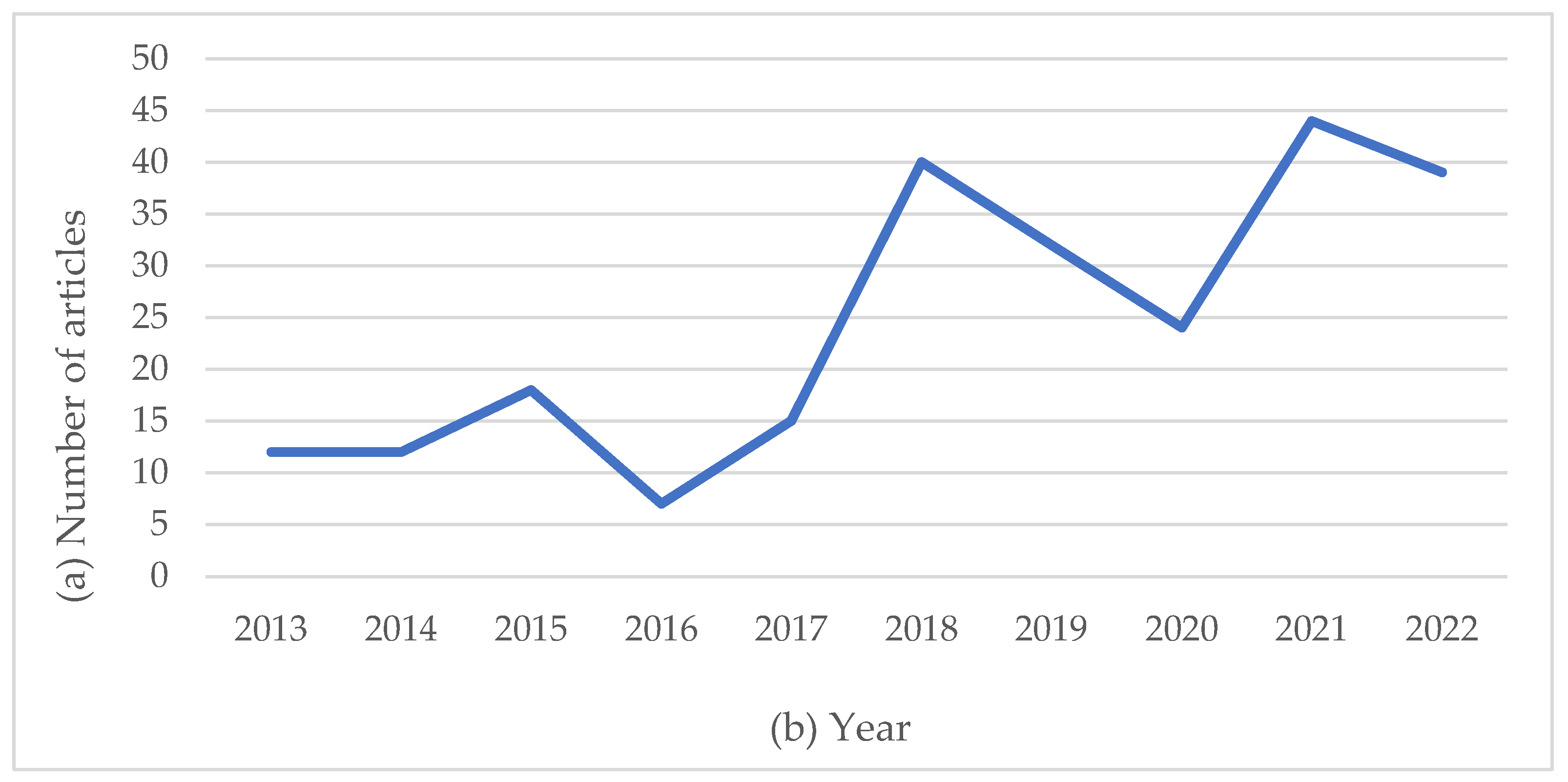
Figure 4.
presents the LCA methodological framework with a further breakdown of the four phases for implementation in the S-LCA of public services.
Figure 4.
presents the LCA methodological framework with a further breakdown of the four phases for implementation in the S-LCA of public services.
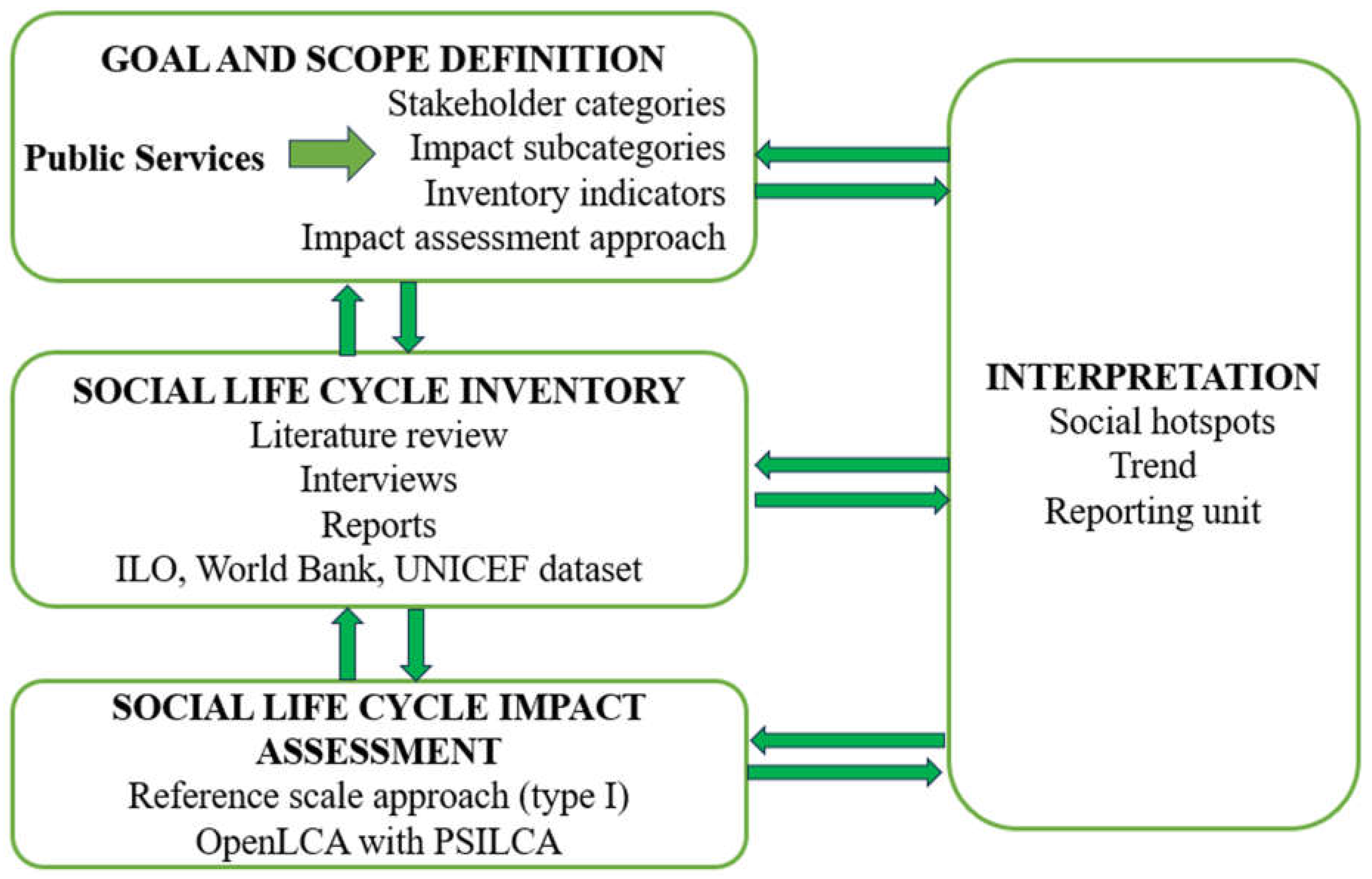

Table 1.
Research questions and structure of the research.
| Research Questions | Sections | Method of analysis |
|---|---|---|
| Q1: What is the evolution of research activities in S-LCA in general and S-LCA of public services in particular? What is the trend in terms of a number of publications, scientific journals, and main authors? | 3.1 | Bibliometric analysis of combined data from Web of Science and Scopus, and use of the RAYYAN software |
| Q2: What are the specific research themes and objectives related to the S-LCA of products/services, organizations, and public services? | 3.2 | Qualitative data analysis |
| Q3: What are the different methodologies adopted in S-LCA and S-OLCA studies and that can be applied in the identified study for public services? | 3.3 | Qualitative analysis of identified articles on S-LCA and S-OLCA |
| Q4: What are the limitations and shortcomings of the studies in general and what is the potential of the S-LCA methodology for the public service? | 4 | Critical analysis of the results, emerging issues, and different perspectives. |
Table 2.
Number of documents by data source and final sample.
|
Keywords |
Number of studies in Web of Science | Number of studies in Scopus | Total number of studies | Number of duplicates found | Number of documents after extracting duplicates |
|---|---|---|---|---|---|
| S-LCA | 159 | 163 | 322 | 266 | 189 |
| Social-LCA | 64 | 79 | 143 | 100 | 92 |
| S-LCA and Stakeholders | 64 | 69 | 133 | 104 | 81 |
| S-LCA and Case Studies | 81 | 79 | 160 | 134 | 93 |
| S-LCA of Products/services | 17 | 19 | 36 | 28 | 22 |
| Indicators of S-LCA | 83 | 78 | 161 | 132 | 95 |
| SO-LCA | 10 | 09 | 19 | 14 | 12 |
| Methodology of S-LCA | 80 | 76 | 156 | 124 | 94 |
| S-LCA and Public transport | 01 | 01 | 02 | 01 | 01 |
| S-LCA and Waste management/ municipal solid waste |
10 |
16 |
26 |
10 |
16 |
| S-LCA and water supply | 00 | 00 | 00 | 00 | 00 |
| S-LCA and education | 01 | 01 | 02 | 01 | 01 |
| S-LCA and heath | 00 | 00 | 00 | 00 | 00 |
| S-LCA and Public Service | 00 | 00 | 00 | 00 | 00 |
|
TOTAL |
600 |
||||
| Final sample after extraction of duplicates and intruded documents | 222 | ||||
Table 3.
Top 10 S-LCA scientific production journals from 2013 to 2022.
| Rank | Journal | No. Of documents |
|---|---|---|
| 1 | INTERNATIONAL JOURNAL OF LIFE CYCLE ASSESSMENT | 72 |
| 2 | SUSTAINABILITY | 26 |
| 3 | JOURNAL OF CLEANER PRODUCTION | 23 |
| 4 | RESOURCES-BASEL | 7 |
| 5 | SUSTAINABLE PRODUCTION AND CONSUMPTION | 6 |
| 6 | JOURNAL OF INDUSTRIAL ECOLOGY | 6 |
| 7 | RESOURCES CONSERVATION AND RECYCLING | 3 |
| 8 | SOCIAL LIFE CYCLE ASSESSMENT | 3 |
| 9 | CLEAN TECHNOLOGIES AND ENVIRONMENTAL POLICY | 2 |
| 10 | CHEMICAL ENGINEERING TRANSACTIONS | 2 |
Table 4.
Research topics and objective.
| Nº | Authors | Year | Title | Objective | Journal |
|---|---|---|---|---|---|
|
1 |
Gompf K et al. [10] | 2022 | Applying Social Life Cycle Assessment to Evaluate the Use Phase of Mobility Services: A Case Study in Berlin | Analyze the social impacts of the use phase of mobility services in a holistic manner, considering both positive and negative impacts | INTERNATIONAL JOURNAL OF LIFE CYCLE ASSESSMENT |
|
2 |
Lu, Y.-T et al. [25] |
2017 | Inventory analysis and social life cycle assessment of greenhouse gas emissions from waste-to-energy incineration in Taiwan | Identify or raise key issues to be promoted for WtE incineration plants due to existing management systems and complex issues mixed with GHG, energy, and solid waste treatment. |
SUSTAINABILITY |
|
3 |
Erauskin-Tolosa, A et al. [26] | 2022 | Social organizational LCA for the academic activity of the University of the Basque Country UPV/EHU | Estimate the social footprint of a higher education institution (HEI) and its potential contribution to Sustainable Development Goals (SDGs) under the life cycle assessment (LCA) perspective | INTERNATIONAL JOURNAL OF LIFE CYCLE ASSESSMENT |
|
4 |
D’Eusanio, M et al. [27] | 2022 | Social organizational life cycle assessment and social life cycle assessment: different twins? correlations from a case study | Attempt to implement SO-LCA and correlation analysis between social life cycle assessment (S-LCA) and SO-LCA | INTERNATIONAL JOURNAL OF LIFE CYCLE ASSESSMENT |
|
5 |
Haryati, Z et al. [28] | 2021 | Complementing social life cycle assessment to reach sustainable development goals - A case study from the Malaysian oil palm industry | Coping with the social impacts associated with the oil palm industry is through the social life cycle evaluation (ACV-S) | CHEMICAL ENGINEERING TRANSACTIONS |
|
6 |
Rafiaani, P et al. [29] | 2020 | A critical view on social performance assessment at company level: social life cycle analysis of an algae case | Assess the social impacts of a company working on algae production systems in Belgium through social life cycle analysis (SLCA | INTERNATIONAL JOURNAL OF LIFE CYCLE ASSESSMENT |
|
7 |
Pelletier, N et al. [30] | 2018 | Social sustainability in trade and development policy | Assess the social risks associated with trade-based consumption in EU Member States using a life-cycle approach versus a non-life-cycle approach | INTERNATIONAL JOURNAL OF LIFE CYCLE ASSESSMENT |
|
8 |
Pillain, B et al. [31] | 2019 |
Social life cycle assessment framework for evaluation of potential job creation with an application in the French carbon fiber aeronautical recycling sector | Bringing in a significant amount of carbon fiber reinforced plastic (CFRP) products in the coming years at the end of their life cycle | INTERNATIONAL JOURNAL OF LIFE CYCLE |
|
9 |
Osorio-Tejada, JL et al. [32] | 2022 | Social organizational life cycle assessment of transport services: case studies in Colombia, Spain, and Malaysia | Analyze the social performance of companies involved in the supply chain of road transport companies located in different contexts such as Latin America, Europe, and Asia. | SUSTAINABILITY |
|
10 |
Martinez-Blanco, J et al. [33] | 2015 | Social Organizational LCA (SOLCA) a new approach for implementing social LCA | Propose a new organizational perspective to energize the SLCA - the social organizational LCA (SOLCA) | INTERNATIONAL JOURNAL OF LIFE CYCLE ASSESSMENT |
Table 5.
Summary of methodological analysis for selected articles.
| Title & Authors | Type of impact evaluation | Stakeholders’ categories identified | sub-categories identified | Indicators identified |
|---|---|---|---|---|
| Applying social life cycle assessment to evaluate the use phase of mobility services: a case study in Berlin (Gompf, K et al. 2022) | Reference scale approach (type I) | 5 | 28 |
39 |
| Inventory Analysis and Social Life Cycle Assessment of Greenhouse Gas Emissions from Waste-to-Energy Incineration in Taiwan (Lu, Y.-T et al. 2017) | Risk assessments: Methods from the 2006 IPCC Guidelines to GHG |
8 | 9 |
18 |
| Social organizational LCA for the academic activity of the University of the Basque Country UPV/EHU (Erauskin-Tolosa, A et al. 2021) | Risk assessments: PSILCA-based Soca add-on for the Ecoinvent v3.3 database | 8 |
21 | 41 |
| Social Organizational Life Cycle Assessment and Social Life Cycle Assessment: Different Twins? Correlations from a case study (D’Eusanio, M et al. 2022) | Reference scale approach (type I) | 4 | 21 | 32 |
| Complementing social life cycle assessment to reach sustainable development goals - A case Study from the Malaysian oil palm industry (Haryati, Z et al. 2022) | Reference scale approach (type I) with performance reference point (PRP) approach. | 9 | 16 | 17 |
| A critical view on social performance assessment at company level: social life cycle analysis of an algae case (Rafiaani, P et al. 2020) | Performance reference points (PRPs) method | 3 | 10 | 10 |
| Social Sustainability in Trade and Development Policy (Pelletier, N et al. 2018) | Risk assessments: Eurostat ComEx import data at the HS06 level, Global Trade Analysis Project, sector codes, Social Hotspots Database (SHDB) | 5 | 10 | 4 |
| Social life cycle assessment framework for evaluation of potential job creation with an application in the French carbon fiber aeronautical recycling sector (Pillain, B et al. 2019) | Risk assessments: Social Hotspots Database (SHDB) | 8 | 2 | 8 |
| Social Organizational Life Cycle Assessment of Transport Services: Case Studies in Colombia, Spain, and Malaysia (Osorio-Tejada, JL et al. 2022) | Reference scale approach (type I) | 7 | 26 | 8 |
| Social organizational LCA (SOLCA)-a new approach for implementing social LCA (Martinez-Blanco, J et al. 2015) | Performance reference points (PRPs) method | 5 | 3 |
17 |
Table 6.
Identification of Stakeholder Categories.
| Common stakeholders categories | Different stakeholders categories | Stakeholders’ categories that can be used for public services |
|---|---|---|
| Local Communities, Consumers, Workers, Value Chain Actors, Society, Governmental Authorities, Producers, Suppliers, Ngos, Investors, Employees | Environmental Organizations, Waste-To-Energy Incineration Industry, International Organizations, Transport Service Providers, Shareholders, Commuters & Passengers, Private Sector Companies, Regulators, Citizens, Companies, Manufacturers of Transport-Related Goods and Services, Business Partners, Faculty Members Students, Administrative Staff, Researchers, And Academics. | Local Communities, Consumers, Workers, Society, Governmental Authorities, Producers, Suppliers, NGOs, Investors, Employees, International Organizations, Transport Service Providers, Shareholders, Citizens, Companies, Regulators, and Business Partners. |
Table 7.
Identification of impact subcategories.
| Common impact subcategories | Different impact subcategories | Impact Subcategories that can be used for public services |
|---|---|---|
| 28 such as Local employment, community engagement, Safety, Feedback mechanism, Fair salary, discrimination, Child labor, Freedom of association and collective bargaining, forced labor, fair competition, etc. | 46 such as public space, air quality, Noise pollution, Space occupancy, consumer Accessibility, Convenience, Inclusiveness, Affordability, Privacy, Work-life balance, Supplier relationships, Society Health, Tax income, urban development, etc. | 74 such as Local employment, community engagement, Safety, Feedback mechanism, Fair salary, discrimination, Child labor, Freedom of association and collective bargaining, forced labor, fair competition, Intellectual property rights, Promoting social responsibility, contribution to economic development, Health, and safety, Social benefits, access to immaterial resources, access to material resources, Safe and healthy living conditions, Migration, fair competition, Corruption, Equal Opportunities/Discrimination, Secure Living Conditions, etc. |
Table 8.
Identification of indicators.
| Common Indicators | Different Indicators | Indicators that can be used for public services |
|---|---|---|
|
34 such as Minimum wage paid, Minimum wage rate, late wage payment, paid below, schedule of wage paid, working hours, Average weekly working hour, working hours per week, Weekly hours of work per employee, Child labor female, Child labor male, Child labor total, frequency of forced labor, goods produced by forced, labor Presence of social benefits, etc. |
152 such as Green and open space per capita, the Emission intensity of NOx, Emission intensity of PM10, Emission intensity of PM2.5, Emission intensity of SO2, Percentage of employees hired, Percentage of employees hired locally, Noise pollution greater than 65 dB, Average emissions of noise, Degree of population participation, Infrastructure efficiency, Infrastructure space occupancy, Space occupancy about green and open space, Number of transport points Number of passengers, Fatal and non-fatal traffic accidents, Punctuality of delivery, etc. | 178 such as Minimum wage paid, Minimum wage rate, late wage payment, paid below, schedule of wage paid, working hours, Average weekly working hour, Working hours per week, Weekly hours of work per employee, Child labor female, Child labor male, Child labor total, frequency of forced labor, goods produced by forced, labor Presence of social benefits, Formal policy of safety and health, the average number of workdays lost per worker per year, Rate of female to male employees, Health and safety policies and records, culture and heritage, human rights, education and training, community involvement, labor rights and equal opportunities, greenhouse gas emissions, waste generation, Water consumption, etc. |
Disclaimer/Publisher’s Note: The statements, opinions and data contained in all publications are solely those of the individual author(s) and contributor(s) and not of MDPI and/or the editor(s). MDPI and/or the editor(s) disclaim responsibility for any injury to people or property resulting from any ideas, methods, instructions or products referred to in the content. |
© 2024 by the authors. Licensee MDPI, Basel, Switzerland. This article is an open access article distributed under the terms and conditions of the Creative Commons Attribution (CC BY) license (https://creativecommons.org/licenses/by/4.0/).
Copyright: This open access article is published under a Creative Commons CC BY 4.0 license, which permit the free download, distribution, and reuse, provided that the author and preprint are cited in any reuse.


