

Submitted:
18 May 2025
Posted:
19 May 2025
You are already at the latest version
Abstract
Public procurement (PP) helps promote sustainable development and plays a strategic role in the economy of countries. The general objective of this research is to analyze the main antecedents, their influences, and challenges in the sustainable acquisition and contracting of goods and services by public institutions, through a quantitative and statistical approach based on the development of improvement proposals. The methodological aspects of the paper permeate the conceptual stage on the frontier of knowledge of antecedents in sustainable public procurement (SPP), being actors, strategies, barriers, and purposes. A conceptual framework and hypotheses arising from theory were developed, and a survey was conducted among employees of higher education institutions (HEIs) in Brazil. With structural equation modeling (SEM), an integrated model in sustainable public procurement (SPP) was structured. The results of the research validate the constructs in SPP and highlight the causal relationships between them. It empirically validates an integrated model in SPP and the hypothesis tests. The constructs, actors, strategies, and purposes significantly influence sustainability improvements in PP, demonstrating their strategic importance, and barriers negatively influence purposes, demonstrating the importance of knowledge on the topic to mitigate its adverse effects. The research offers insights for managers, policymakers, and researchers in SPP, in the search for a more systemic view of the process and to improve sustainability indices in public procurement.
Keywords:
public procurement
; government procurement
; sustainability
; supply chain
; higher education institutions
; Brazil
1. Introduction
The discussion of public procurement (PP) has been gaining momentum in national and international scenarios, especially in recent years; the growing discussions on sustainable development goals stimulate this process. This growth makes it possible to perceive the strategic role of PP in the economies of countries so that they represent up to 12% of the gross domestic product (GDP) (Benchekroun et al., 2024; Calvacanti et al., 2017) [1,2].
Sustainable public procurement (SPP) has been using governments’ purchasing power to promote sustainable consumption and production (Santos et al., 2025) [3]. The education system has recently been identified as a key opportunity to drive social change towards more sustainable behaviors (Cruz et al., 2023) [4]. Higher Education Institutions (HEIs) are evaluated based on their contribution to achieving the Sustainable Development Goals (SDGs) in all their activities, not just in education and research, and thus seek practices to become leaders in sustainable development (Leal Filho et al., 2020) [5].
The mission and vision of HEIs are committed to sustainable development and influencing regional and global development, such as mitigating greenhouse gas emissions. Considering HEIs as a complex system, sustainable development must be based on holistic and systemic thinking and action, requiring the sharing of information among professors, students, and technical administrative staff (Daskalova-Karakasheva et al., 2024; Mendonça et al., 2021) [6,7].
SPP is an important means of promoting sustainability and encouraging ethics in public service through efficient spending and the preservation of institutional values, such as transparency, citizen participation, and the prevention of corruption (Mendonça et al., 2021) [7].
Public sector organizations are key players in the urgent transition to more sustainable societies. SPP is emphasized as a governance tool to address pressing social challenges and create value beyond the interests of the purchasing organization (Lagström and Ek Österberg, 2024) [8]. As a policy tool, SPP is market-based and demand-driven. Its potential to support the achievement of the SDGs depends on a regulatory framework that is attractive to both buyers and suppliers (Lagström and Ek Österberg, 2024) [8].
Although regulatory requirements emphasize the inclusion of sustainability in procurement, the adoption of such practices and measures is still slow. Strict legal frameworks are essential to ensure equity, but they conflict with internal sustainability initiatives that require more flexibility and innovation (Daskalova-Karakasheva et al., 2024) [6].
Despite its strategic importance, sustainability in PP remains an underexplored topic in academic research. Most studies focus on developed countries, particularly in Europe, and primarily address environmental issues (Lagström and Ek Österberg, 2024) [8]. There is a noted disparity in sustainability perspectives between developed countries, which tend to emphasize environmental issues, and developing countries, where the focus is often on social concerns (Ma et al., 2022; Stoffel et al., 2019) [9,10].
It has become clear that public HEIs face similar challenges to other public organizations in implementing SPP. With the right measures in place, many of the obstacles can be turned into opportunities, and this can increase the ability of HEIs to act as promoters of SPP. Given the impossibility of not being able to directly influence the external constraints imposed by PP law, HEIs need to find solutions that enable the introduction of sustainability into the procurement process through a SPP policy (Daskalova-Karakasheva et al., 2024) [6].
Given these considerations, this study aims to identify the main antecedents in SPP, their influences, and challenges in the sustainable procurement of goods and services in HEIs, through a quantitative and statistical approach based on the development of improvement proposals. As a result, the study presents a conceptual framework of the antecedents in SPP and the proposal of an integrated model, based on the structural equation modeling method, to overcome challenges and increase sustainability indices in the procurement of goods and services by HEIs.
The research contributes to the literature by considering the global importance of public procurement, and the importance of the theme for sustainable development, including that of HEIs. By identifying and analyzing the antecedents in SPP, their characteristics, and influences through the proposed model, it suggests improvement proposals to significantly increase sustainability criteria in public procurement and contracting.
2. Theoretical Framework and Research Hypotheses
Before presenting the research hypotheses, it is essential to understand the concept of SPP and the current scenario regarding the topic, with a special approach for HEIs. The term initially introduced was green purchasing, which was defined by the European Commission in 2008, focusing on environmentally sustainable purchasing and promoting a focus on the product life cycle. Europe’s primary focus remains this way (Ciumara and Lupu, 2020; Stoffel et al., 2019) [10,11].
The focus of SPP expands the previously exclusively environmental aspects to encompass social and economic factors. Despite the widespread use of the definition given by the European Commission, authors state that the concept is still vague (Uyarra et al., 2020) [12] , that it can vary between countries and organizations and, therefore, its use and impact cannot be easily measured (Morley, 2021) [13]. When considering the strategic role of procurement, research points to little academic attention in discussing the public sector, despite it representing a significant share of government spending (Lagström and Ek Österberg, 2024) [8]. This situation may occur due to the fear of discussing strategic and innovative practices under restrictive and conservative legislation (Guarnieri and Gomes, 2019) [14]. Although clear actions towards SPP procurement are still lacking, it is encouraging that the public universities analyzed have committed to the UN Sustainable Development Goal. Due to increasing government spending, SPP has become a crucial component of sustainable development (Cruz et al., 2023) [4].
The theoretical basis that underpins the research hypotheses for assessment between the constructs is presented below.
2.1. Actors and strategies in SPP
A systematic literature review was carried out, and three primary authors in SPP were identified: (i) buyers; (ii) suppliers, and (iii) promoters (Morley, 2021; Salvatore et al., 2021; ) [13,15]. In HEIs, additional stakeholders have been added, including academics and non-academics, who must possess a sustainable mindset, commitment, and in-depth knowledge to determine the sustainable characteristics of products and services, ensuring that they are not considered discriminatory or harmful in competition (Daskalova-Karakasheva et al., 2024) [6].
Researchers highlight strategies related to senior management support, the scale gains of collaborative purchasing, and the lowest price criterion evidenced in more than 70% of acquisitions (Braulio-Gonzalo and Bovea, 2020) [16]. Environmental concerns are evidenced in bidding notices with aspects that favor the circular economy (Braulio-Gonzalo and Bovea, 2020) [16].
In the social dimension, researchers highlight the quest to sustainably promote local production, encouraging the management of this specific chain, with a focus on fostering family farming and socially responsible contracting, with criteria that facilitate the participation of small and medium-sized enterprises (SMEs) (Cervantes-Zapana et al., 2020; Salvatore et al., 2021) [15,17].
Sustainable practices are identified in HEIs on their campuses, including concerns about transportation, energy, water, landscaping, and waste (Cruz et al., 2023) [4].
Suppliers and promoters positively influence PP strategies, as can be seen in the greater emphasis on environmental aspects linked to food purchases by European articles (Morley, 2021; Salvatore et al., 2021) [13,15].
Research indicates that the level of stakeholder engagement and skills influences the search for appropriate measures that can enhance the capacity of HEIs to act as promoters of SPP (Daskalova-Karakasheva et al., 2024) [6].
Research in HEIs shows that, by promoting school feeding programs, governments support strategies related to crop diversification, agroecological production, and improved market access (Wittman and Blesh, 2017) [18]. These programs also advance strategies related to gender equality by increasing women’s participation in agriculture, thereby contributing to the achievement of the SDGs (Valencia et al., 2021) [19]. Based on the literature, hypothesis 1 was developed.
H1.
Actors positively influence strategies in SPP
2.2. Strategies, Purposes, and Barriers in SPP
Main research does not indicate quantifiable and precise results on implementing SPP. It points to bottlenecks in measuring impacts. Researchers have identified purposes when implementing SPP, such as those focused on the economic dimension, such as managing the trade-off of sustainability costs with acquisitions (Lagström and Ek Österberg, 2024) [8]. In the environmental dimension, researchers have identified possibilities for reducing greenhouse gases with SPP, and countries are actively learning and developing strategies to enhance their carbon reduction ambitions. The authors pointed out the purpose of creating more circular business models, focusing on efficiency, preservation of natural resources, and mitigation of impacts (Alhola et al., 2019; Braulio-Gonzalo and Bovea, 2020; Daskalova-Karakasheva et al., 2024) [6,16,20].
Specific studies in HEIs indicate that leadership approach models increase economic benefits, mitigate risks, and create a transformative change in purchasing management processes, contributing to broader social and environmental objectives (Daskalova-Karakasheva et al., 2024) [6]. SPP has an important role in the agroecological transition based on local development initiatives, for the sustainable transformation of food systems, and for the achievement of the SDGs (Cruz et al., 2023) [4].
Strategies in SPP, such as support from senior management, shared purchases, and promotion of local production, are linked to the purposes, results, and improvements in sustainability indicators in PP. The search for purposes related to social aspects is present in various studies, with strategies associated with the participation of SMEs, including those owned by women, this being one of the UN’s Sustainable Development Goals (Etse et al., 2021) [21].
Strategies related to food purchasing and food services in HEIs represent an important opportunity to promote sustainable eating behaviors (Cruz et al., 2023) [4]. Awareness and educational efforts stem from HEI strategies such as sustainability plans, improvements in contract notices, monitoring of contract specifications, and waste management (Cruz et al., 2023) [4]. According to this context, the research highlights hypothesis 2.
H2.
Strategies positively influence purposes in SPP
SPP is still in the consolidation process. Public institutions implementing sustainable procurement practices can achieve significant advantages and benefits but face challenges and obstacles. For improvements in SPP, it is essential to adopt sustainability as an organizational strategy integrated across all levels of the organization (Daskalova-Karakasheva et al., 2024; Paes et al., 2020) [6,22].
Among the barriers or obstacles to implementing SPP, researchers highlight main challenges: (i) lack of information about sustainable products, (ii) financial constraints, and (iii) insufficient training and knowledge among employees involved in PP (Benchekroun et al., 2024; Paes et al., 2020) [1,22].
HEIs highlight that the cost of local and organic products, especially when compared to the globalized agribusiness, the profit margin in business throughout the production and distribution chain, and monitoring sustainability after the contract is awarded are important challenges for SPP in demonstrating concern for the environmental impact of the food system and commitment to the SDGs (Cruz et al., 2023) [4]. Cultural transformation is highlighted as the main challenge for changing the SPP paradigm, with a systemic, collaborative, and cooperative vision (Mendonça et al., 2021) [7]. According to this context, the research highlights hypothesis 3.
H3.
Strategies positively influence barriers in SPP
The main barrier pointed out in research on HEIs in Brazil is the investment in training, which is related to a deficient culture, unfavorable economic policy, and the need to improve the systemic vision throughout the process. Thus, this demonstrates the need to expand strategies on this topic (Mendonça et al., 2021) [7].
The concept of sustainability throughout the life cycle of contracts is applied in a systemic and integrated manner, optimizing resources. This model also includes shared purchasing, leveraging the expertise accumulated by different units and minimizing barriers related to procedural costs (Benchekroun et al., 2024; Da Silveira et al., 2022) [1,23].
Barriers related to economic issues consider that SPPs use intensive and expensive resources with uncertain tangible benefits, challenging implementation in terms of technical terms and strategic alignment, and, therefore, hindering SPP purposes (Oliveira et al., 2020) [24]. Issues related to the lack of long-term planning, difficulties in measuring social and environmental impacts, lack of training and organizational culture make it challenging to provide quantifiable results and foster new circular business models (Alhola et al., 2019; Braulio-Gonzalo and Bovea, 2020) [16,20].
Low public sector investments in distribution infrastructure, institutional complexity, and high costs for local producers hinder programs that assist in crop diversification, agroecological production, and increased access to markets to contribute to food security. In Brazil, this potential is limited to only 10% of family farmers nationwide (Wittman and Blesh, 2017) [18]. According to this context, the research highlights hypothesis 4.
H4.
Barriers negatively influence purposes in SPP
2.3. Purposes and Sustainability in PP
Studies indicate that the topic of SPP still receives little attention from researchers (Guarnieri and Gomes, 2019) [14] , and that there are challenges in measuring sustainability in PP and its impacts (Da Costa and Da Motta, 2019; Delmonico et al., 2018) [25,26]. Among the benefits of SPP, key research highlights aspects related to the external and internal motivations of organizations, including: (i) reduction of harmful emissions and waste generation; (ii) improvement in air and water quality; (iii) improvement in working conditions; (iv) improvement in the condition of disadvantaged groups; (v) improvement in the quality of life of society; (vi) improvement in the ethical behavior of suppliers/contractors.
Considering that practical purposes provide increased sustainability in PP, studies indicate that in the European Union, 38% of contracts include green criteria; for example, in the Tuscany region of Italy, the verification of 73% of green criteria in bids and 30% in contracts (Testa et al., 2016) [27]. To minimize barriers and increase the percentage of sustainability in acquisitions, a new governance model is proposed in the Federal Public Ministry (MPF), in Brazil, which results in a reduction of approximately 95% in procedural costs, a gain in scale of 30.38% about the estimated average price and actual savings of the first five contracts of the system of 11.76% (Da Silva et al., (2017) [28]. In Brazilian HEIs, studies indicate that the Federal University of Bahia (UFBA) stands out in the region, being the 1st in volume and 2nd in expenses with SPP. Researchers highlight the need for improvements in SPP to solve problems with failures in inspection and training forecasts, as well as a low percentage of sustainable bids, which are less than 1% of PP, in the case of Brazil (Jeireissati and Melo, 2020) [29]. According to this context, the research highlights hypothesis 5.
H5.
Purposes positively influence sustainability in PP
Figure 1 presents the conceptual framework based on the constructs and hypotheses of the research.
3. Method
This study can be characterized as descriptive and quantitative research, which aims to analyze the antecedents of SPP and its influences on higher education institutions and propose actions for improvement. For this, the structural equation modeling (SEM) technique was used, which allows the analysis of dependency relationships between observed and latent variables, as well as the interconnections between latent variables (constructs). Through confirmatory factor analysis (CFA), the technique allows the formation of relationships and influence paths between the constructs (Hair et al., 2010; De Guimarães et al., 2021) [30,31].
The research sample was obtained randomly and non-probably (Hair et al., 2010) [30] and the snowball technique was used for data collection. A quantitative methodology (survey) was used, with a descriptive approach, employing multivariate statistical techniques, with descriptive analysis, confirmatory factor analysis (CFA), with the SPSS software (v. 21), and covariance-based structural equation modeling (CB-SEM) with the AMOS software (v. 21), to test, confirm the theory and validate the conceptual framework (de Guimarães et al., 2021) [31].
We collected data between November 2023 and November 2024, using a non-probabilistic sample and the snowball technique to select buyers, managers, and main demanders of products and services from Federal Universities and Institutes of higher education in Brazil and to identify the opinions of a statistically relevant number of respondents (Hair et al., 2014) [32].
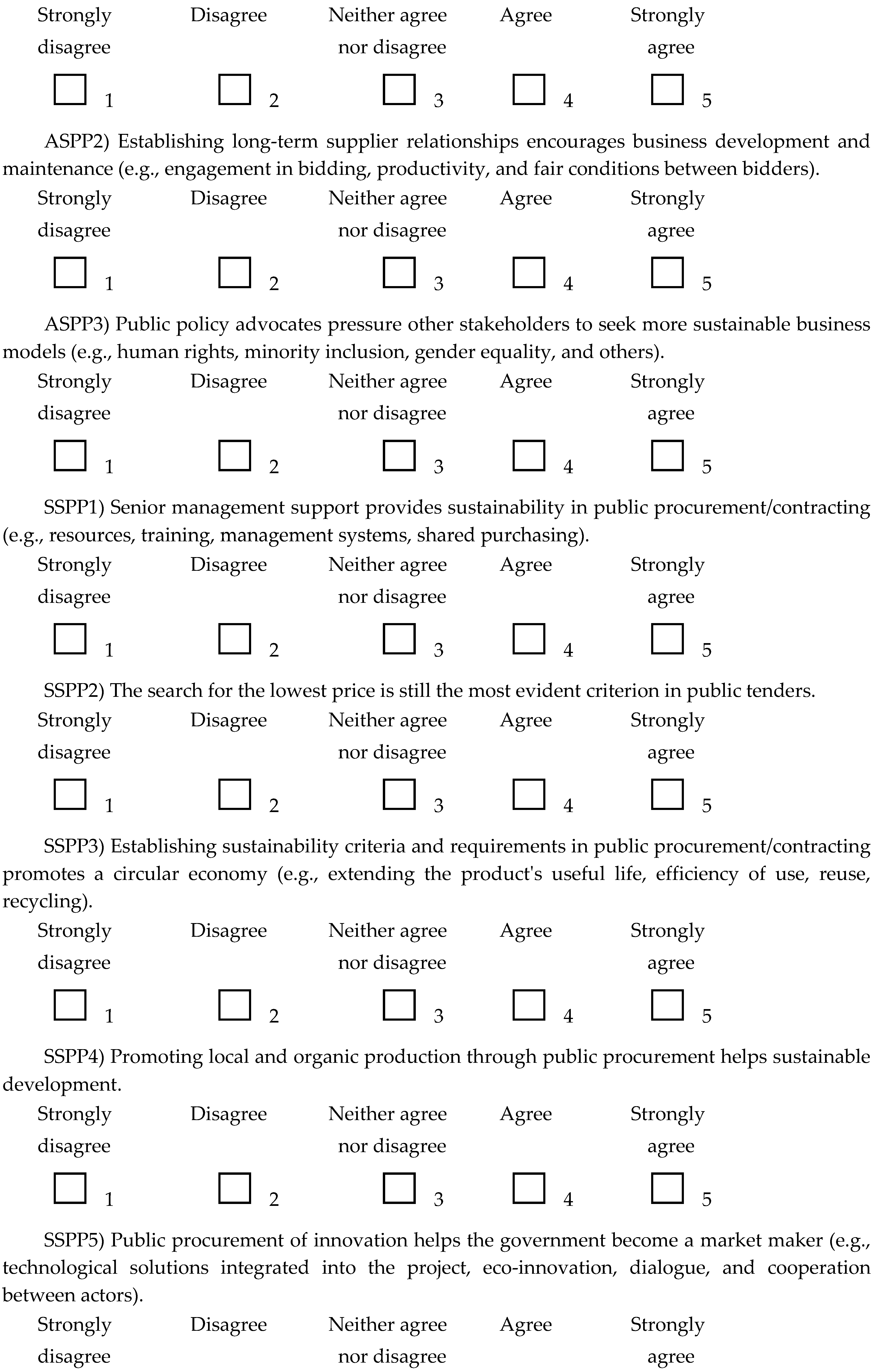
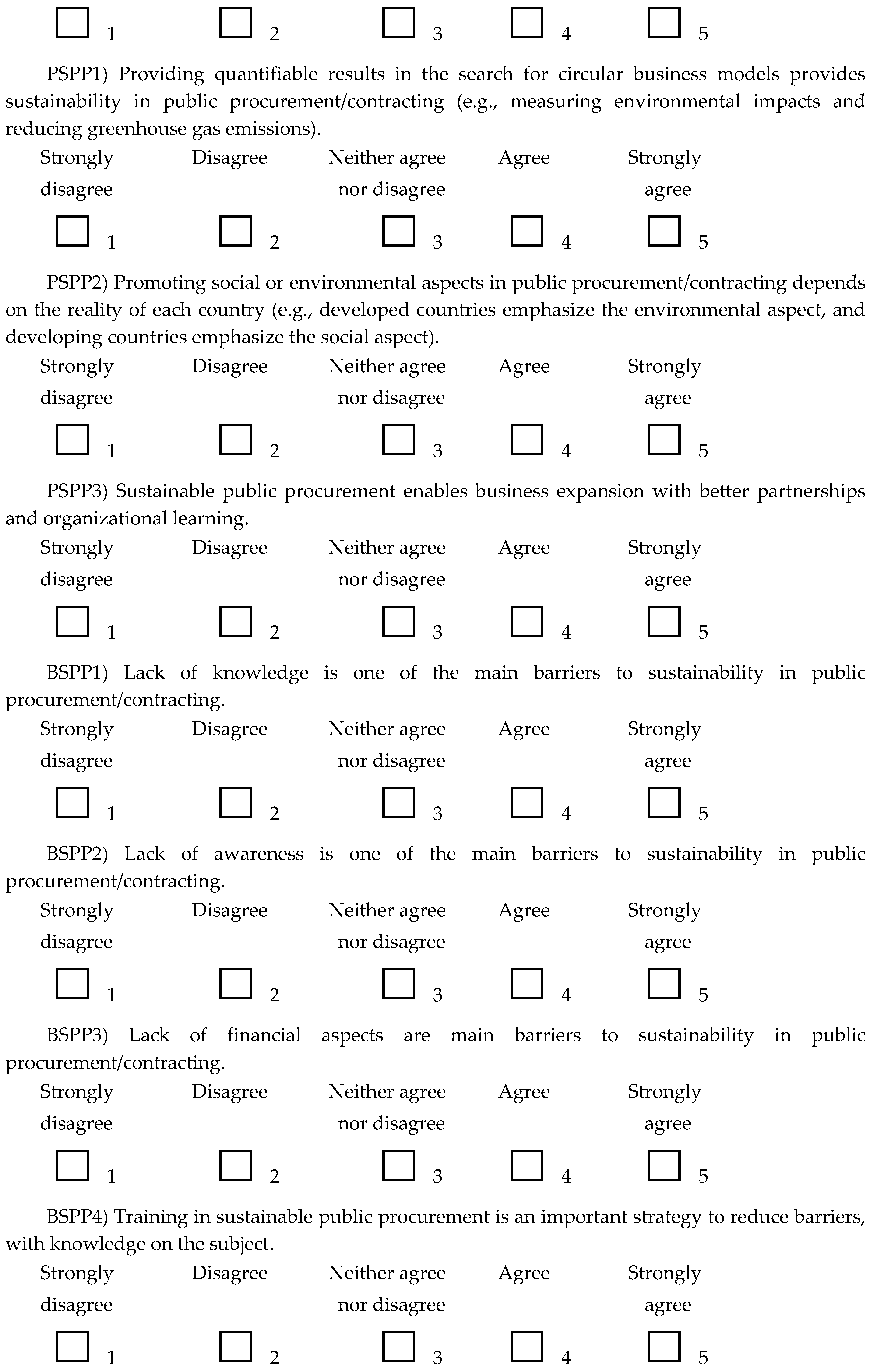
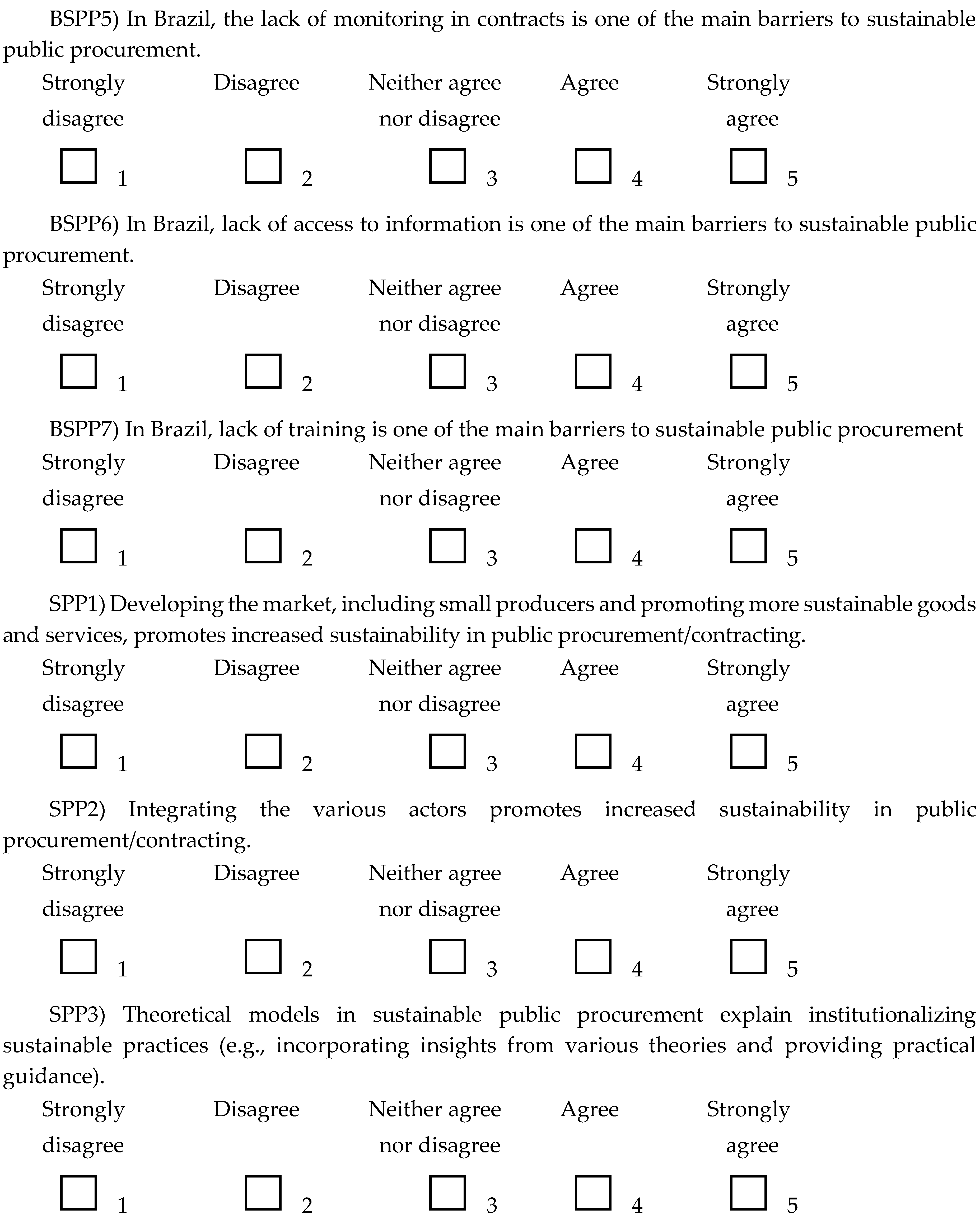
The questionnaires were sent by email to 26 offices of the pro-rectorates of administration of federal higher education institutions in Brazil, distributed among the five regions of the country, and requested that they be forwarded to buyers, managers, and main demanders. An electronic Google Forms form was created for the questionnaire. The questionnaire (Appendix A) consists of 4 open-ended questions to diagnose the profile of the respondents, including questions related to the institution, position, sector of activity, and length of experience in public service, and 17 closed-ended questions, based on the SPP theory, with examples, to facilitate the understanding of the respondents, on a 5-point Likert scale, with 1 for completely disagree and 5 for completely agree.
A pre-test was carried out in November 2023, with 43 respondents from HEI’s to assess the understanding of the questionnaire statements. The responses were incorporated into the final sample, as no difficulties or invalid responses were identified. During data cleaning, no null responses were identified, nor were any observations far from the centroid based on the Mahalanobis Distance parameters (De Maesschalck et al., 2000) [1,33]. The final sample consisted of 165 valid cases, and according to Hair et al. (2014) [32], the recommended minimum sample size is 50 for multivariate data analysis.
Initially, the combination of observable variables was constructed in their respective constructs, through the theoretical basis and Confirmatory Factor Analysis (CFA). The following validation criteria were followed (Hair et al., 2010; Marôco, 2010) [30,34]:
a) Index of normality and variability: i) Z Score [-3<Z<+3] (Hair et al., 2014; Kline, 2023) [32,35]; ii) Bartlett’s test of sphericity (Hair et al., 2014) [32], p<0.001 for each observable variable; iii) Kutosis index using the Mardia’s coefficient (>5) (Bentler, 1990; MARDIA, 1971) [36,37]; iv) Pearson’s Coefficient of Skewness (values close to zero) (Hair et al., 2014; Kline, 2023) [32,35]; v) Mean; vi) Standard deviation.
b) Confirmatory Factor Analysis (CFA) (Marôco, 2010; Hair. et al., 2014) [32,34]: i) Factor loadings (≥0,5); ii) communality (≥0,5); iii) Cronbach’s alpha (>0,7); iv) Kaiser-Meyer-Olkin (KMO) (>0,5); v) Composite reliability (>0,7) (Fornell and Larcker, 1981) [38].
c) Index of reliability: i) Multicollinearity observed in Pearson’s correlation (>0,7) (Hair et al., 2014) [32]; ii) Average Variance Extracted (AVE) – Convergent validity (CV) (>0,7) and Discriminant validity (DV) (Less than Convergent validity) (Fornell and Larcker, 1981) [38].
d) To evaluate the hypotheses H1, H2, H3, H4, and H5, the following indexes were used: i) Standardized Estimates (SE) (SE values: less than 0,3 – Low Intensity; between less than 0,3 and 0,5 – Moderate Intensity; more excellent than 0,5 – Hight Intensity) (de Guimarães et al., 2021; Severo et al., 2018) [31,39], ii) significance level (p) index.
e) We evaluate the model’s fit parameters to verify that the structural model aligns with the set of measured data (Bentler, 1990; BOLLEN, 1989; McDonald and Marsh, 1990; Tanaka and Huba, 1985; Hair et al., 2014) [36,40,41,42]: i) Chi-square value of the estimated divided by degrees of freedom (DF) (≤ 5); ii) Comparative Fit Index (CFI) (values close to 1,0), iii) Normed Fit Index (NFI) (≥ 0,9); iv) Root Mean Squared Error of Approximation (RMSEA) (between 0,05 and 0,08). It is worth noting that the mode adjustment indices assess the quality of the structural model and indicate possibilities for improvement, but should not be used as a parameter for evaluating hypotheses.
For the analysis of the constructs and their variables, see Table 1, which shows the references in the literature.
4. Results and Discussions
The questionnaire was addressed to buyers, managers, and main demanders of products and services from HEIs in Brazil and sent by email to the Vice-Rectories of Administration of the selected HEIs. The sample resulted from 165 complete responses. According to Hair et al. (2014) [32], the minimum recommended sample size is 50 for multivariate data analysis. The sample presented the following data divided by region of Brazil as descriptive statistics: 70.30% (116) from the Southeast, 10.91% (18) from the Northeast, 10.30% (17) from the Central-West, 4.24% (7) from the North and 4.24% (7) from the South. Regarding the positions of the employees, the survey indicates 46.67% (77) of buyers and support staff, 17.57% (29) managers, and 35.76% (59) demanders. The sample analysis considering the SEM technique is as follows:
a) To analyze normality and reliability, based on the following parameters: i) the Z Score test [-3<Z<+3], which demonstrates that the sample values are on a standard distribution curve; ii) Bartlett’s Sphericity Test showed a significant result at p<0.001 for each observable variable; iii) Mardia’s coefficient, we used it to verify the kurtosis index and did not identify any values greater than 5; iv) Pearson’s Asymmetry Coefficient, which did not identify values far from zero; v) the sample mean and standard deviation indices, which are close to 1, demonstrating that the dispersion of values around the mean is relatively low.
b) For the confirmatory factor analysis, verifying the data from the intra-block sample, the following normality and reliability parameters were verified: i) Factor loading ≥ 0.5 that explains the variability of the construct, in the sample only two variables had a lower value; ii) communality ≥ 0.5 that evaluates the correlation between the variables of the construct, in the small group sample it presented lower values; iii) Cronbach’s alpha >0.7, simple reliability in the exploratory sample, the alpha was 0.866, however, in the intra-block analysis, the values for two groups were lower than ideal; iv) Kaiser-Meyer-Olkin (KMO) >0.5, the sample showed internal consistency indices of the data; we analyzed composite reliability using the parameter recommended by Fornell and Larcker (1981) [38], >0.7 (Hair et al., 2014) [32]. In the total sample, the value was higher than 0.9, and in the intra-block analysis, two groups had a lower value
c) We identified the following for the reliability index: i) Multicollinearity observed in Pearson’s correlation (>0.7), in the sample, no multicollinearity values were identified, not demonstrating similar statistical behavior among the observable variables; ii) Average Variance Extracted (AVE) = Convergent validity (CV) (>0.7) and Discriminant validity (DV) (Less than Convergent Validity), the sample presents CV values lower than ideal, which may represent the need to expand observable variables in some constructs, which would possibly also improve values in Cronbach’s Alpha and composite reliability in the model.
Table 2 shows the data relating to the sample according to the validation scale.
Considering the conceptual framework represented in Figure 1, which presents the influence relationships between the constructs and the CB-SEM methodology (Hair et al., 2014) [32], the research hypotheses were tested to assess the intensity of their relationships. Table 3 presents the results of the hypothesis tests. In all hypotheses, the p-value was less than 0.001, demonstrating the significance of the relationships.
We confirmed the hypotheses as they present significant Standardized Estimates (SE) values (p < 0.001) and based on the Standardized Estimate (SE) parameters (SE values: Less than 0.3 – Low Intensity; between 0.3 and 0.5 – Moderate Intensity; Greater than 0.5 – High Intensity) (de Guimarães et al., 2021; Severo et al., 2018) [31,39]. Figure 2 presents the integrated model based on the standardized regression weights considering the correlations between the constructs and between the observable variables.
Hypotheses H1, H2, and H5 indicate a high intensity of the relationship, while hypothesis H3 indicates a moderate intensity, and hypothesis H4 indicates a low intensity, however, with a positive influence (p < 0.001).
Table 4 presents the model’s fit indices, indicating whether the constructs’ relationships are adequate. Column 3 is x²/df, the chi-square divided by the degrees of freedom, being less than 5, suggesting that it is a good model (Muduli et al., 2020) [43]. The CFI, which corresponds to the comparative fit index, and the NFI, the normalized fit index, are less than 0.9 and indicate that the model has room for improvement (Schumacker and Lomax 2010) [44]. The RMSEA is the root mean square error, and the model presents a good fit, with a value of less than 0.08 (Xia and Yang, 2019) [45].
We based this research on the analysis of the antecedents in SPP, their variables, how they relate to each other, and the influences that may contribute to improvements in the sustainable aspects of PP. As a main contribution, we proposed and empirically tested a conceptual framework, while validating an integrated model that can be applied in HEIs in Brazil, as a proposal to be implemented in the institutions’ purchasing policy and later replicated in other segments of public administration.
The research hypotheses were all confirmed, which indicates alignment with the theory. This is especially true considering the need to include and expand sustainability criteria in PP, which have a large volume and strategic role in the countries’ GDPs, as discussed in section 2. In addition, the statistical results of the research support the hypotheses and indicate the normality and reliability of the sample, but we highlight that variables need to be included to improve the model’s indicators.
The actor construct (ASPP) has a strong influence, with SE = 0.87, on the strategy construct (SSPP), indicating that the various roles of actors, such as (i) buyers increasing efficiency, reducing transaction costs, providing transparency in resources; (ii) suppliers establishing long-term relationships with fair conditions and improving productivity; (iii) promoters developing policies that promote more sustainable business models, strongly influence strategies in PP.
The strategy construct (SSPP) indicates a strong influence on purposes (PSPP), with this influence being SE = 0.88, which suggests that well-positioned strategies with the support of top management, such as training, shared purchasing, promotion of local production and supplier development, promote circular business models, quantifiable results on sustainability and promotion of labor rights (Alhola et al., 2019; Braulio-Gonzalo and Bovea, 2020; Etse et al., 2021) [16,20,21].
The strategy construct (SSPP) has a moderate influence on the barrier construct (BSPP), with SE = 0.39, and the construct (BSPP) has a low negative impact on purposes (PSPP), with SE = 0.29. The research sample indicates lower averages for the variables (BSPPS3), (BSPPS5), and (BSPPS6), with 3.87, 3.86, and 3.94, respectively, which indicates a perception of neither agree nor disagree for the barriers related to financial aspects, monitoring and access to information; however, the variable related to training (BSPP4) presented the highest agreement rate, with an average of 4.72. The data indicate the need for further studies on the subject, encouraging the multiplication of knowledge in SPP, providing new circular business models, with partnerships with suppliers, systemic solutions integrated into the project, having gained in sustainable development and achieving international development goals (Novaes das Virgens et al., 2020) [46].
The purpose construct (PSPP) strongly influences the sustainability construct (SPP), with EP=0.81, which indicates that practical purposes help improve sustainability indices and metrics in PP through market development, integration between stakeholders, and creation of theoretical models to assist in practical guidelines. Although studies indicate a solid legal framework in Brazil, it is still necessary to develop the market, including small producers, and promote more sustainable goods and services (Wittman and Blesh, 2017) [18].
The research indicates that the analysis of antecedents in SPP, together with their influences and integration, can provide an increase in sustainability indices in PP, by including criteria set out in the conceptual framework and in the model proposed in the purchasing policy of HEIs. The hypotheses that have the greatest influence, such as H1, H2, and H5, should be prioritized and those related to barriers should be better evaluated according to the specificity of each institution.
5. Conclusions
This research aimed to analyze antecedents in SPP, and their influences and develop proposals for improvements that can increase the sustainability index in the acquisition of products and services by HEIs. The results offered the following theoretical contributions and empirical evidence: i) development and validation of antecedent constructs in SPP; ii) evidence of causal relationships between the constructs; iii) empirical testing of a theoretical framework and validation of an integrated model in SPP; iv) antecedents in SPP, being actors, strategies and purposes, significantly influence sustainability improvements in PP, demonstrating their strategic importance; v) Barriers are an antecedent in SPP and negatively influence the purposes in SPP, demonstrating the importance of knowledge on the subject to mitigate their adverse effects;
The research offers insights for managers, policymakers, and researchers in SPP. It emphasizes the need to evaluate the characteristics of the main antecedents in SPP to have a more systematic view of the process and improve sustainability indices. This study addressed an important gap in the literature by defining the antecedents of SPP and measuring its influence on SPP.
As a limitation, the study theoretically analyzes SPP in a generalized way but empirically tests only one group, Brazilian HEIs. Future research could explore other segments of public administration, analyze differences between sustainable procurement in the public and private sectors, and adapt the model, considering the existence of other constructs and variables that may impact sustainability in PP.
Appendix A. Questionnaire: Research: Sustainable Public Procurement
Dear Sir/Madam: This research aims to study the aspects that promote sustainable public procurement.
Interviewee profile: public servant – buyers, managers, and main demanders of HEIs in Brazil
1. What is your institution?
2. What region is your institution located in? (North, Northeast, Midwest, Southeast, or South)
3. What is your position?
4. How long have you dedicated to public service, contributing your expertise and experience? Your years of service are a testament to your commitment to the public good.
Questionnaire observations
On a scale between (1) I completely disagree and (5) I agree, mark the number that best represents your opinion about the statement. You must answer all questions by marking only one alternative.
ASPP1) By improving the public procurement/contracting process, the buyer promotes sustainable development (e.g., cost reduction, transparency, increased efficiency).
References
- Benchekroun, H. , Benmamoun, Z. and Hachimi, H. (2024), “Sustainable public procurement for supply chain resilience and competitive advantage”, Acta Logistica, Vol. 11 No. 03, pp. 349–360. [CrossRef]
- Calvacanti, D. , Oliveira, G., d’ Avignon, A., Schneider, H. and Taboulchanas, K. (2017), “Compras públicas sustentáveis: diagnóstico, análise comparada e recomendações para o aperfeiçoamento do modelo brasileiro”, p. 68.
- Santos, F. , Hilletofth, P. and von Haartman, R. (2025), “Managing Organisational Changes for Collaboration Between Stakeholders in Sustainable Public Procurement”, Corporate Social Responsibility and Environmental Management. [CrossRef]
- Cruz, J.L. , Hewitt, R.J. and Hernández-Jiménez, V. (2023), “Can public food procurement drive agroecological transitions? Pathways and barriers to sustainable food procurement in higher education institutions in Spain”, Agroecology and Sustainable Food Systems, Vol. 47 No. 10, pp. 1488–1511. [CrossRef]
- Leal Filho, W. , Eustachio, J.H.P.P., Caldana, A.C.F., Will, M., Lange Salvia, A., Rampasso, I.S., Anholon, R., et al. (2020), “Sustainability Leadership in Higher Education Institutions: An Overview of Challenges”, Sustainability, Vol. 12 No. 9, p. 3761. [CrossRef]
- Daskalova-Karakasheva, M. , Zgureva-Filipova, D., Filipov, K. and Venkov, G. (2024), “Ensuring Sustainability: Leadership Approach Model for Tackling Procurement Challenges in Bulgarian Higher Education Institutions”, Administrative Sciences, Vol. 14 No. 9, p. 218. [CrossRef]
- Mendonça, R.C.A. , Pedrosa, I. V. and Camara, M.A.O.A. (2021), “Sustainable public procurement in a Brazilian higher education institution”, Environment, Development and Sustainability, Vol. 23 No. 11, pp. 17094–17125. [CrossRef]
- Lagström, C. and Ek Österberg, E. (2024), “Exploring Sustainable Public Procurement Through Regulatory Conversations”, Financial Accountability & Management. [CrossRef]
- Ma, L. , Umair Ashraf, R., Ahtisham ul Haq, M. and Fan, X. (2022), “Hurdles on the Way to Sustainable Development in the Education Sector of China”, Sustainability, Vol. 15 No. 1, p. 217. [CrossRef]
- Stoffel, T. , Cravero, C., La Chimia, A. and Quinot, G. (2019), “Multidimensionality of Sustainable Public Procurement (SPP)—Exploring Concepts and Effects in Sub-Saharan Africa and Europe”, Sustainability, Vol. 11 No. 22, p. 6352. [CrossRef]
- Ciumara, T. and Lupu, I. (2020), “Green Procurement Practices in Romania: Evidence from a Survey at the Level of Local Authorities”, Sustainability, Vol. 12 No. 23, p. 10169. [CrossRef]
- Uyarra, E. , Zabala-Iturriagagoitia, J.M., Flanagan, K. and Magro, E. (2020), “Public procurement, innovation and industrial policy: Rationales, roles, capabilities and implementation”, Research Policy, Vol. 49 No. 1, p. 103844. [CrossRef]
- Morley, A. (2021), “Procuring for change: An exploration of the innovation potential of sustainable food procurement”, Journal of Cleaner Production, Vol. 279, p. 123410. [CrossRef]
- Guarnieri, P. and Gomes, R.C. (2019), “Can public procurement be strategic? A future agenda proposition”, Journal of Public Procurement, Vol. ahead-of-p No. ahead-of-print. [CrossRef]
- Salvatore, F.P. , Fanelli, S., Lanza, G. and Milone, M. (2021), “Public food procurement for Italian schools: results from analytical and content analyses”, British Food Journal, Vol. 123 No. 8, pp. 2936–2951. [CrossRef]
- Braulio-Gonzalo, M. and Bovea, M.D. (2020), “Criteria analysis of green public procurement in the Spanish furniture sector”, Journal of Cleaner Production, Vol. 258, p. 120704. [CrossRef]
- Cervantes-Zapana, M. , Yagüe, J.L., De Nicolás, V.L. and Ramirez, A. (2020), “Benefits of public procurement from family farming in Latin-AMERICAN countries: Identification and prioritization”, Journal of Cleaner Production, Vol. 277, p. 123466. [CrossRef]
- Wittman, H. and Blesh, J. (2017), “Food Sovereignty and F ome Z ero : Connecting Public Food Procurement Programmes to Sustainable Rural Development in B razil”, Journal of Agrarian Change, Vol. 17 No. 1, pp. 81–105. [CrossRef]
- Valencia, V. , Wittman, H., Jones, A.D. and Blesh, J. (2021), “Public Policies for Agricultural Diversification: Implications for Gender Equity”, Frontiers in Sustainable Food Systems, Vol. 5. [CrossRef]
- Alhola, K. , Ryding, S.O., Salmenperä, H. and Busch, N.J. (2019), “Exploiting the Potential of Public Procurement: Opportunities for Circular Economy”, Journal of Industrial Ecology, Vol. 23 No. 1, pp. 96–109. [CrossRef]
- Etse, D. , McMurray, A. and Muenjohn, N. (2021), “Comparing sustainable public procurement in the education and health sectors”, Journal of Cleaner Production, Vol. 279, p. 123959. [CrossRef]
- Paes, C.O. , Zucoloto, I.E., Rosa, M. and Costa, L. (2020), “PRÁTICAS, BENEFÍCIOS E OBSTÁCULOS NAS COMPRAS PÚBLICAS SUSTENTÁVEIS: UMA REVISÃO SISTEMÁTICA DE LITERATURA”, Revista de Gestão Social e Ambiental, Vol. 13 No. 2, pp. 21–39. [CrossRef]
- Da Silveira, V.A. , Da Costa, S.R.R. and Resende, D. (2022), “Blockchain Technology in Innovation Ecosystems for Sustainable Purchases through the Perception of Public Managers”, WSEAS TRANSACTIONS ON BUSINESS AND ECONOMICS, Vol. 19, pp. 790–804. [CrossRef]
- Oliveira, M.V. de S.S., Simão, J. and Caeiro, S.S.F. da S. (2020), “Stakeholders’ categorization of the sustainable public procurement system: the case of Brazil”, Journal of Public Procurement, Vol. 20 No. 4, pp. 423–449. [CrossRef]
- Da Costa, B.B.F. and Da Motta, A.L.T.S. (2019), “Key factors hindering sustainable procurement in the Brazilian public sector: A Delphi study”, International Journal of Sustainable Development and Planning, Vol. 14 No. 02, pp. 152–171. [CrossRef]
- Delmonico, D. , Jabbour, C.J.C., Pereira, S.C.F., de Sousa Jabbour, A.B.L., Renwick, D.W.S. and Thomé, A.M.T. 2018. [Google Scholar]
- Testa, F. , Annunziata, E., Iraldo, F. and Frey, M. (2016), “Drawbacks and opportunities of green public procurement: an effective tool for sustainable production”, Journal of Cleaner Production, Vol. 112, pp. 1893–1900. [CrossRef]
- Jeireisssati, L.C. and Melo, A.J.M. Sustainable public procurement and implementation of goal 12.7 of sustainable development goals (SDGs) in Brazil: advances and backwards. Brazilian Journal of Public Policy, 2020; 3. [Google Scholar]
- Hair Jr., J. F., Black, W.C., Bardin, B.J., Anderson, R.E., 2010. Multivariate Data Analysis, 7 ed. Prentice Hall, New Jersey.
- de Guimarães, J.C.F. , Severo, E.A., Jabbour, C.J.C., de Sousa Jabbour, A.B.L. and Rosa, A.F.P. (2021), “The journey towards sustainable product development: why are some manufacturing companies better than others at product innovation?”, Technovation, Vol. 103, p. 102239. [CrossRef]
- Hair, J. F. Jr., W. C. Black, B. J. Bardin, and R. E. Anderson. 2014. Multivariate Data Analysis, P: New International Edition. 7th ed. New York.
- De Maesschalck, R. , Jouan-Rimbaud, D., Massart, D.L., 2000. The mahalanobis dis tance. Chemometr. Intell. Lab. Syst. 50 (1), 1e18.
- Marôco, J. (2010). Análise de equações estruturais: fundamentos teóricos, softwares & aplicações.
- Kline, R.B. 2023. Principles and practice of structural equation modeling. 5 ed. The Guilford Press. New York.
- Bentler, P.M. (1990), “Comparative fit indexes in structural models.”, Psychological Bulletin, Vol. 107 No. 2, pp. 238–246. [CrossRef]
- MARDIA, K. V. (1971), “The effect of nonnormality on some multivariate tests and robustness to nonnormality in the linear model”, Biometrika, Vol. 58 No. 1, pp. 105–121. [CrossRef]
- Fornell, C. & Larcker, D.F. (1981) Structural equation models with unobservable variables and measurement error. Journal of Marketing Research, Available at. [CrossRef]
- Severo, E.A. , de Guimarães, J.C.F. and Henri Dorion, E.C. (2018), “Cleaner production, social responsibility and eco-innovation: Generations’ perception for a sustainable future”, Journal of Cleaner Production, Vol. 186, pp. 91–103. [CrossRef]
- BOLLEN, K.A. (1989), “A New Incremental Fit Index for General Structural Equation Models”, Sociological Methods & Research, Vol. 17 No. 3, pp. 303–316. [CrossRef]
- McDonald, R.P. and Marsh, H.W. (1990), “Choosing a multivariate model: Noncentrality and goodness of fit.”, Psychological Bulletin, Vol. 107 No. 2, pp. 247–255. [CrossRef]
- Tanaka, J.S. and Huba, G.J. (1985), “A fit index for covariance structure models under arbitrary GLS estimation”, British Journal of Mathematical and Statistical Psychology, Vol. 38 No. 2, pp. 197–201. [CrossRef]
- Muduli, K. kanta, Luthra, S., Kumar Mangla, S., Jabbour, C.J.C., Aich, S. and de Guimarães, J.C.F. (2020), “Environmental management and the ‘soft side’ of organisations: Discovering the most relevant behavioural factors in green supply chains”, Business Strategy and the Environment, Vol. 29 No. 4, pp. 1647–1665. [CrossRef]
- Schumacker, R. E. , and R. G. Lomax. 2010. A Beginner’s Guide to Structural Equation Modeling. 3rd ed. New York, NY: Routledge Academic.
- Xia, Y. and Yang, Y. (2019), “RMSEA, CFI, and TLI in structural equation modeling with ordered categorical data: The story they tell depends on the estimation methods”, Behavior Research Methods, Vol. 51 No. 1, pp. 409–428. [CrossRef]
- Novaes das Virgens, T.A. , Andrade, J.C.S. and Hidalgo, S.L. (2020), “Carbon footprint of public agencies: The case of Brazilian prosecution service”, Journal of Cleaner Production, Vol. 251, p. 119551. [CrossRef]
Figure 1.
Conceptual framework. Source: Prepared by the authors.
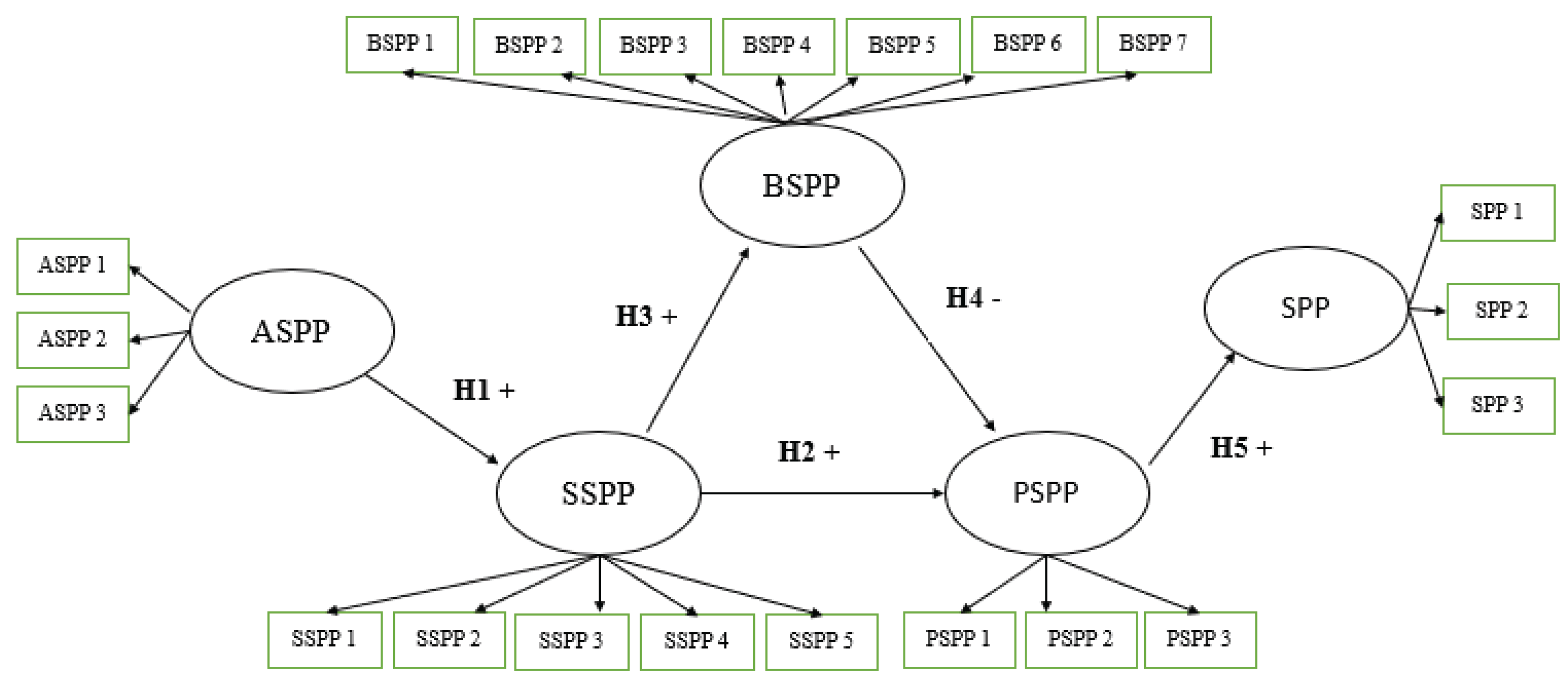
Figure 2.
Integrated model. Source: Prepared by the authors.
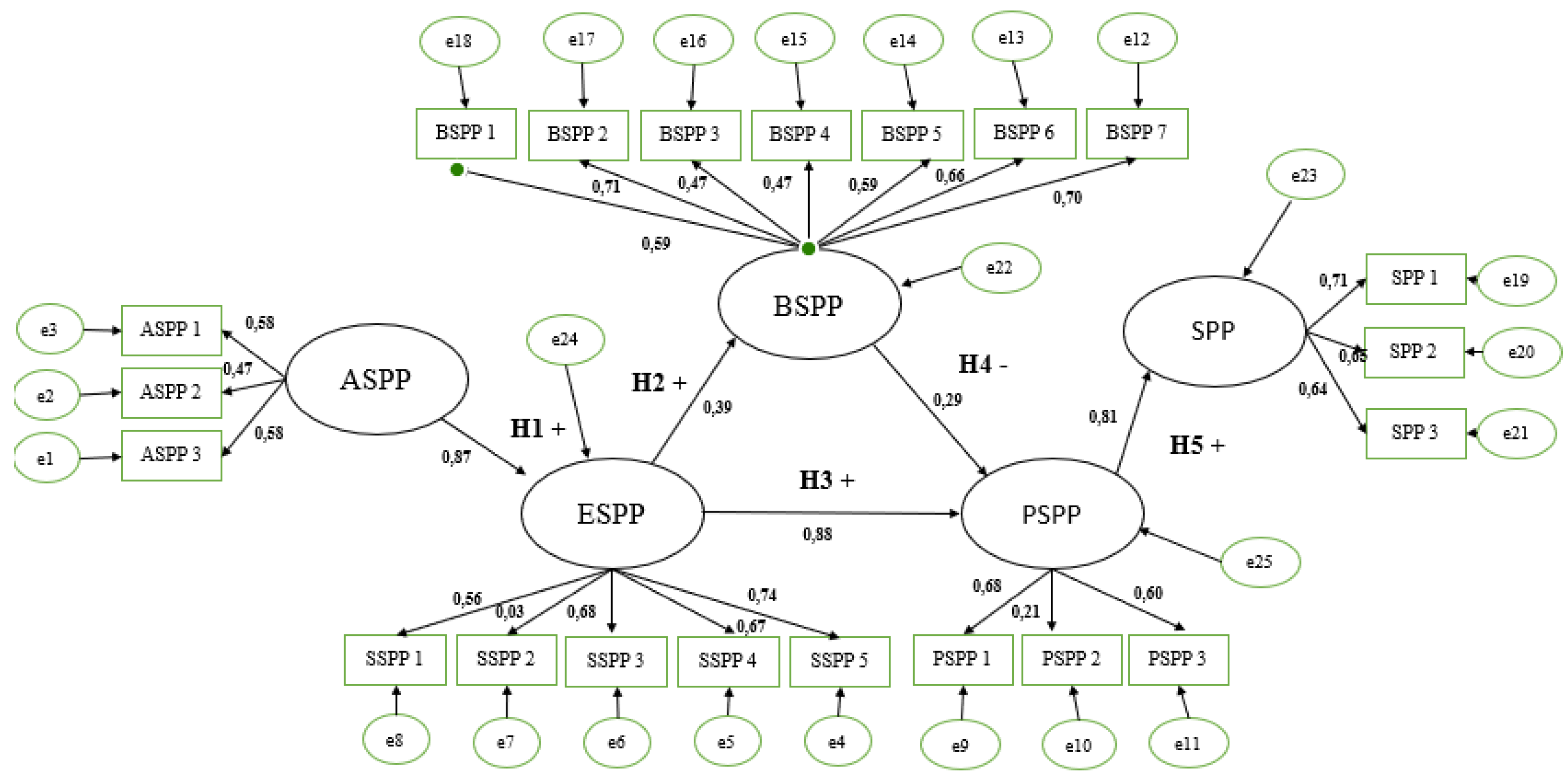

Table 1.
Constructs and observable variables.
| Constructs and observable variables (Appendix A) | References |
|---|---|
|
Actors in SPP (ASPP) ASPP1; ASPP2; ASPP3 |
(Alhola et al., 2019; Morley, 2021; Oliveira et al., 2020; Salvatore et al., 2021; Stoffel et al., 2019; Testa et al., 2016) |
|
Strategies in SPP (SSPP) SSPP1; SSPP2; SSPP3; SSPP4; SSPP5 |
(Alhola et al., 2019; Braulio-Gonzalo and Bovea, 2020; Cervantes-Zapana et al., 2020; Morley, 2021; Novaes das Virgens et al., 2020; Testa et al., 2016) |
|
Purposes in SPP (PSPP) PSPP1; PSPP2; PSPP3; |
(Alhola et al., 2019; Braulio-Gonzalo and Bovea, 2020; De Giacomo et al., 2019; c et al., 2021) |
|
Barriers in SPP (BSPP) BSPP1; BSPP2; BSPP3; BSPP4; BSPP5; BSPP6; BSPP7 |
( Da Costa and Da Motta, 2019; Paes et al., 2020) |
|
Sustainability in PP (SPP) SPP1; SPP2; SPP3 |
(Morley, 2021; Novaes das Virgens et al., 2020) |
Source: Prepared by the authors.
Table 2.
Normality and reliability tests.
| Constructs | Mean | SD* | Fator loading |
Communality | Cronbach’s Alpha |
KMO* | Composite Reliability |
Convergent Validity |
|---|---|---|---|---|---|---|---|---|
| All (EFA) | ,866 |
,835 |
0,941 |
0,5 |
||||
| ASPP1 | 4,321 |
0,969 |
0,582 |
,645 |
,564 | ,590 |
0,658 |
0,392 |
| ASPP2 | 3,921 |
0,963 |
0,468 |
,590 |
||||
| ASPP3 | 3,648 |
1,162 |
0,575 |
,378 |
||||
| SSPP1 | 4,297 |
0,995 |
0,560 |
,480 |
,633 |
0,740 | 0,755 | 0,43 |
| SSPP2 | 4,358 |
0,862 |
0,025 |
,995 |
||||
| SSPP3 | 4,424 |
0,828 |
0,681 |
,628 |
||||
| SSPP4 | 4,515 |
0,762 |
0,672 |
,630 |
||||
| SPP5 | 4,279 |
0,845 |
0,739 |
,588 |
||||
| PSPP1 | 4,303 |
0,768 |
0,679 |
,665 |
,563 |
0,578 | 0,594 | 0,36 |
| PSPP2 | 3,861 |
1,152 |
0,211 |
,354 |
||||
| PSPP3 | 4,194 |
0,903 |
0,597 |
,595 |
||||
| BSPP1 | 4,479 |
0,770 |
0,587 |
,430 |
,793 |
,828 |
0,862 | 0,48 |
| BSPP2 | 4,309 |
0,935 |
0,715 |
,574 |
||||
| BSPP3 | 3,873 |
1,127 |
0,465 |
,307 |
||||
| BSPP4 | 4,721 |
0,569 |
0,470 |
,295 |
||||
| BSPP5 | 3,867 |
1,102 |
0,591 |
,434 |
||||
| BSPP6 | 3,945 |
1,100 |
0,657 |
,534 |
||||
| BSPP7 | 4,242 |
0,970 |
0,700 |
,587 |
||||
| SPP1 | 4,467 |
0,761 |
0,714 |
,612 |
,711 |
0,672 |
0,802 | 0,57 |
| SPP2 | 4,576 |
0,606 |
0,648 |
,675 |
||||
| SPP3 | 4,164 |
0,857 |
0,643 |
,615 |
Notes: * SD (Standard deviation), KMO ( Kaiser-Meyer-Olkin ). Source: Prepared by the authors.
Table 3.
Research hypothesis.
| Hypotheses | Description | Standardised regression weights | Intensity | Results |
|---|---|---|---|---|
| H1 | The ASPP positively influences SSPP | 0,870 |
high intensity | confirmed |
| H2 | The SSPP positively influences PSPP | 0,882 |
high intensity | confirmed |
| H3 | The SSPP positively influences BSPP | 0,392 |
moderate intensity | confirmed |
| H4 | The BSPP negatively influences PSPP | 0,290 |
low intensity | confirmed |
| H5 | The PSPP positively influences SPP | 0,814 |
high intensity | confirmed |
Source: Prepared by the authors.
Table 4.
Model fitting parameters.
| x2 | df | x2/df | CFI | NFI | RMSEA |
|---|---|---|---|---|---|
| 360,193 |
184 | 1,958 | 0,828 |
0,708 |
0,076 |
Notes: x2/df (chi-square divided by the degrees of freedom), CFI (Comparative Fit Index), NFI (Normed Fit Index)and RMSEA (Root Mean Squared Error of Approximation). Source: Prepared by the authors.
Disclaimer/Publisher’s Note: The statements, opinions and data contained in all publications are solely those of the individual author(s) and contributor(s) and not of MDPI and/or the editor(s). MDPI and/or the editor(s) disclaim responsibility for any injury to people or property resulting from any ideas, methods, instructions or products referred to in the content. |
© 2025 by the authors. Licensee MDPI, Basel, Switzerland. This article is an open access article distributed under the terms and conditions of the Creative Commons Attribution (CC BY) license (http://creativecommons.org/licenses/by/4.0/).
Copyright: This open access article is published under a Creative Commons CC BY 4.0 license, which permit the free download, distribution, and reuse, provided that the author and preprint are cited in any reuse.


