

Submitted:
07 June 2024
Posted:
11 June 2024
You are already at the latest version
Abstract
The escalating global population and subsequent demand for agricultural products have led to a surge in agricultural waste generation, posing significant disposal challenges. Conventional disposal methods such as burning and dumping not only harm the environment but also jeopardize human health and safety. Recognizing the urgent need for sustainable waste management, researchers have increasingly focused on repurposing agricultural plant waste as a valuable resource. This paper presents a comprehensive review of the potential of agricultural plant waste in wealth creation and sustainable development. It highlights the detrimental impacts of current disposal methods and emphasizes the necessity for alternative approaches. By analyzing the physical, mechanical, and chemical properties of plant fibers, particularly cellulose, hemicellulose, and lignin, this review underscores their suitability for diverse applications. Moreover, it explores the emerging trend of utilizing pineapple leaf fiber, a sustainable and lightweight material, in structural applications such as UAV construction. With its exceptional mechanical properties and biodegradability, pineapple leaf fiber holds promise as a viable alternative to traditional materials, contributing to a more sustainable future. In conclusion, this review advocates for a paradigm shift towards embracing agricultural plant waste as a valuable asset for economic prosperity and environmental sustainability. It underscores the importance of continued research and technological advancements to unlock the full potential of agricultural waste in fostering a circular economy and driving sustainable development globally.
Keywords:
UAV
; aircraft airframe
; agricultural waste
; natural fiber composites
; waste composites
; pineapple
; reusing waste
; natural waste
1. Introduction
The growth of the agricultural sector highly affects human development and economic development. Due to the ever-increasing human population, awareness of increasing agricultural production has been growing. However, the growth of agricultural production comes with the increment of farming activities, which produce large amounts of agricultural waste.
One of the major problems with having an abundant supply of agricultural waste is the disposal method. Due to the massive amount of waste generated, it is not easy for farm owners to dispose of the accumulated waste. Moreover, these wastes are usually improperly managed in developing countries because little information is available on their potential and benefit as raw material if appropriately managed. Improper handling of agricultural wastes will lead to economic loss and threaten human health due to environmental and air pollution [1].
The current disposal method used by the farm owners is through burning. This method could quickly dispose of the waste without spending a large amount of expenses. However, the effect of this method is severely detrimental to the environment and society. One of the side effects due to open burning is air pollution. The burning of agricultural wastes will increase the emission of green gases, which contributes to global warming, increasing the particulate matter and smog that are detrimental to human health, as well as the deterioration of soil fertility. In addition, the contaminated soil that contains the smoke and dust residue may be channeled to the nearby water source, thus polluting the aquatic environment.
Another common method of disposal is by dumping. Although this method requires little labor and expenses, it increases the landfill area. Furthermore, indiscriminate dumping of agricultural wastes on the farm site will attract a lot of predators and pests, which could compromise the workers’ safety. The accumulation of agricultural wastes in the farms could provide ideal conditions for rodents and pests’ breeding grounds and adequate hiding spaces for snakes. Rodents are known to be a carrier for various diseases and crop destroyers. Meanwhile, snakes can attack workers and like to prey on farm animals.
Although having a balanced population of these creatures is incredibly beneficial on farms, an unhealthy population could also threaten workers’ safety. Another effect of indiscriminate dumping is flooding. Flooding occurs due to blocked waterways caused by solid agricultural wastes. Due to this, many lives and properties were lost during a high flood. Dumping at the landfill site is also another option for agricultural waste disposal. However, unlike indiscriminate dumping, this type is quite expensive due to the need for labor and transportation. This kind of dumping also requires a licensed pickup service, and each landfill needs to be checked earlier to ensure that the agricultural wastes match the landfill requirements.
Burying agricultural waste is also one of many common disposal methods. It is one of the easiest disposal methods depending on the soil condition. However, the problem with this method is that it is labor and energy intensive consumption. Thus it is much more expensive compared to the dumping and burning method. Furthermore, burying a massive amount of animal waste could negatively impact the soil and water quality near the burial site. Table 1 shows some of the disposal methods used for agricultural wastes.
Based on the Table 1, it can be concluded that the current disposal method significantly impacts the health of society and the environment. Thus, current researchers have studied various ways to change the existing forms of disposal that would lessen the negative impact on the economy, society, and environment. One such method is recycling agricultural waste and converting it into an alternative income for the locals [7,8]. Therefore, an alternative income generation could be established instead of losing money due to improper means of waste management. This will also keep the environment and society safer. Hence, this paper aims to review the significance of agricultural waste as a type of wealth and its potential as an alternative material in the composite field.
2. Converting Agricultural Waste to Wealth
In recent years, many researchers have explored the possibility of recycling agricultural waste instead of using the traditional disposal method. This effort is more prevalent in developing countries since it offers an alternative source of income for the population living below the poverty line [9]. Another reason is that there is still no organized waste management in third-world countries, contributing to uncontrolled waste in landfills [10]. Currently, three types of agricultural wastes identified could be utilized and converted into an alternative income generation, as shown in Figure 1. Thus, this section discusses the possibility of using agricultural wastes in different types of applications based on the type of agricultural waste.
2.1. Crop Waste
Crop wastes from plants consist of cellulose, hemicellulose, and lignin. Due to the advances in the manufacturing field, current technologies can extract these components into their pure structural form. Figure 2 shows the basic structure of plant fiber.
Cellulose is mainly used to produce textiles [11], papers [12], and pharmaceuticals [13]. Cellulose is mainly used in these industries due to the presence of fibrils, which are small thread-like structures that could be exposed by beating or refining to provide a large area for bonding. Therefore, cellulose fiber could develop physical and chemical bonding with other fibers when its condition changes from wet to dry. Biofuel is also one of the applications made from cellulose or lipids to replace gasoline and diesel, respectively. Many modern vehicles are designed to operate on biofuels developed from plants.
As for hemicellulose, it provides support and strength to the cellulose structure [14]. The unique characteristics of cellulose fibers are high tensile strength, flexible, water-insoluble, and chemically stable. Hemi-cellulose is also commonly used to ferment alcohol that can be applied in cosmetics, coatings, and pharmaceuticals [15]. Hemicellulose is biodegradable, non-toxic, and has a lower molecular weight than cellulose.
Lignin’s characteristics are similar to cellulose and hemicellulose, with good biocompatibility and low toxicity. However, lignin is unique because it has high carbon content [16]. Therefore, lignin can be transformed into a composite or carbon material by extracting the carbon in this construction. The materials made from lignin are not only cost-efficient, but it is also environmentally friendly. In the most recent studies, lignin is used to produce epoxy resin suitable for printed board circuits in the electrochemical industry [17], wound dressing in the medical industry [18], 3D printing lignin-polymer composite materials in the manufacturing industry [19], and much more.
Besides its structural form, crop wastes can be used in fiber form, which is widely used in the composites field as a reinforcement material. In composites, fibers are found in two primary forms: short and long. Composites with the long form of fibers are stronger, however usually have anisotropic properties, whereas the short form of fibers are isotropic, less expensive and easy to obtain. Some of the products that were made by using the powdered or short-fibered form are briquettes made from charred coconut husks and shells [20], bio-packaging made from bagasse [21], and biogas from rotting vegetables [22]. Meanwhile, for long fibers, there are products such as clothing or textiles made from corn husks [23], sanitary pads made from banana stems [24], and plastics made from avocado pits [25].
2.2. Animal Waste
Generally, animal waste means any substances emitted by animals in solid or liquid states. Some examples of animal solid wastes are feces, animal bedding, animal carcasses, and many others. Liquid wastes include urine, blood, and wastewater. Reusing animal waste is not new in agricultural management and is usually pre-treated before application. The most common ways solid waste was applied is as fertilizer and animal feeds [26]. Another method is converting them into energy [27] and biogas [28]. However, with the current technology, more applications are being proposed to utilize animal wastes in product manufacturing, especially in the form of fibers. One such example was using poultry feathers, hair, fur, and much more by extracting fibers from these materials [29]. These fibers are valuable as reinforcement material in composites or fabrics in textiles.
Cashmere fiber is a fine, soft hair collected while dehairing goats [30]. The fibers were obtained from goat hairs during its combing process during the spring season when the goats naturally shed their winter coat. It is composed of keratin, a protein with high sulfur content, which gives cashmere its softness and warmth. The cashmere is eight times warmer than ordinary wool. The fine texture of the fibers makes them softer than wool.
Chicken feathers are a waste product obtained when birds are molted during the molting season or after the chicken has been processed into meat [29]. The most interesting property of feathers that attracted much attention is their extremely low density and hydrophobic nature. Due to its hydrophobic nature, feather composites have high resistance to decay fungi and termites. This fiber also has high tensile strength, compressive strength, and impact resistance, with thermal and sound insulation properties, which are highly suitable for structural materials.
2.3. Processing Waste
Processing waste can be defined as the end products obtained from various processing industries, which were discarded and not utilized. These wastes could be turned into valuable products if the proposed utilization could generate revenues exceeding its cost for reprocessing. Processing waste is the main reason for the high accumulation of landfills and environmental pollution [31]. There are mainly two types of processing waste based on their properties, which are biodegradable and non-biodegradable. Biodegradable processing waste comprises rotting fruits and vegetables, papers, and wool waste, while non-biodegradable processing waste comprises plastics, bottles, cans, and much more.
In the lac processing industry, lac, the resinous secretion of the lac insect (Kerria lacca), was used to produce several types of products such as lac dye, lac mud, and gummy mass. The sticklac was converted into a seedlac with the lac resin (shellac) and the water-soluble lac dye [32]. The dye has a deep red color suitable for use as a coloring material, and due to its non-toxicity, it is also used as a food colorant [33]. As for the lac mud, it was produced from the primary processing of lac. Lac mud is usually discarded due to the lack of a proper disposal method. Currently, in India, lac mud is used as an organic manure for vegetable production [34]. It was reported that there was an increased yield rate for vegetable production. This shows that lac mud could improve soil fertility and help sustain the lac production system. The gummy mass produced in the lac industry is the by-product waste obtained from aleuritic acid production [35]. It is a sticky material that will not dry at ambient temperature. Therefore, this material was proposed as a coating material, gasket cement compound, and composite board.
Processing wastes could also be found significantly within the canned fruit processing industry. The pineapple processing factories produced many by-products from processing canned pineapple fruits. The factories usually discard around 80% of pineapple parts, including the fruit core, crown, peels, leaves, stems, and wastewater from washing fruit and juice production [36]. Most pineapple parts were pulverized into smaller bits for animal feeds, whereas the wastewater was processed into alcohol and sold to the pharmaceutical company to produce medicinal products.
Wool waste fibers are a by-product that comes from different steps in wool processing, which is unsuitable for textile use [37]. However, due to its unique properties, it is being applied in different applications. The chemical properties of wool waste fibers include a high nitrogen content, which makes them useful as a fertilizer. It is also composed of keratin, a protein with high sulfur content, which makes wool naturally flame resistant and resilient to stretching and compression. The mechanical properties of wool waste fibers include high elasticity and good resistance to compression. Meanwhile, the physical properties of wool waste fibers include a fine texture and a natural crimp, with a soft and fluffy feel that makes them helpful to act as thermal and sound insulators or as pillow stuffing.
Like wool, silk waste fibers refer to short silk fibers obtained during silk processing, which cannot be reeled due to technological constraints [38]. Due to its high protein content, silk waste fiber is usually processed into animal feeds. The silk waste fibers can be incorporated into composites to fabricate a high strain to failure composites with good deformability and resist impact. Silk waste fiber also contains amino acid structures most similar to human skin and has an antibacterial function. These features are a unique characteristic of silk waste fibers that are highly beneficial in cosmetic applications.
3. Agricultural Waste as Fiber Polymer-Reinforced Material
In recent years, the effort exerted by researchers to develop greener products has significantly increased. Ecological awareness has started to sprout and is a significant factor driving more sustainable and environmentally friendly research. One of the most significant growth and application is within the composites field as reinforced material. Due to the rapid growth of manufacturing technology, extracting fibers from agricultural waste and developing green products is now possible. These agricultural waste fibers have a range of chemical, mechanical, and physical properties that make them useful for various applications, such as clothing, textiles, composites, and packaging. This section will discuss the physical, mechanical, and chemical properties of agricultural waste in its fiber form.
3.1. Physical and Mechanical Properties of Fibers
Fiber reinforcement materials are generally used to add rigidity and restrain the propagation of cracks within composites. These fibers enforce the mechanical strength of the matrix while retaining or reducing the weight of the composites. Plant fibers from crop waste can be extracted in various ways, such as retting, scraping, decortication, or steam explosion after harvest season. Meanwhile, animal fibers are collected by shearing during the shedding season. As for processing waste fibers, it is collected from discarded materials due to plant or animal processing. The physical and mechanical properties of fibers extracted from agricultural waste are summarized in Table 2.
Table 2 shows that the mechanical strength of animal fibers and processing waste fibers are much lower compared to plant fibers. As for the fiber densities, plant-based fibers are much lower compared to animal-based fibers. Therefore, it can be concluded that plant fibers have a higher specific strength, which is highly significant in structural applications. This shows that plant fibers work better in composites than animal fibers and processing waste fibers. Therefore, to understand better how the fibers could affect the mechanical properties of the composites, knowing the fibers’ chemical composition is essential, which will be further discussed in Section 3.2.
3.2. Chemical Properties of Fibers
The chemical properties of fibers will differ from one to another. The chemical composition of the fibers will help determine the suitability of the fibers for their chosen application.
In structural applications, the amount of cellulose and hemicellulose in plant fibers and protein in animal fibers will determine the strength and stiffness of the fibers as a reinforcement material [73]. Fibers with more cellulose/hemicellulose or keratin will help reinforce and strengthen composites.
As for lignin in plant fibers, it provides rigidity to the fiber, further strengthening its tensile strength. In addition, lignin is also hydrophobic. This specific characteristic provides the water resistivity of composites. Therefore, a higher amount of lignin will have better water resistance. Thus, it can be used as a resin to produce printed board circuits or as a replacement for polymer films. Furthermore, lignin has high carbon content, which could be used to make carbon fibers.
Similar to lignin, pectin increases the mechanical properties of the composites. Due to its unique characteristic as an adhesive in plant cell walls, it is highly suitable for gel making or coating. In addition, pectin is well known for its biocompatibility and anti-microbial characteristics. Thus, it is highly applied in food, biomedicine, and drugs. Table 3 shows the chemical composition of agricultural waste fibers.
From Table 3, it can be seen that the difference between plant fibers and animal fibers is their main composition, where plant fibers are mainly made up of cellulose, whereas animal fibers are mainly made up of protein. Meanwhile, processing waste fibers are discarded products processed from their primary source or have fully served their purpose as packaging or fabrics.
Due to the increasing animal welfare awareness, current research is mainly directed toward plant fibers. Although there are several innovative ways to collect animal fibers that could avoid killing them (such as peace silk), the process requires complicated procedures that end up making the materials more expensive. Similar to animal fibers, innovations in converting processing waste into recycled fibers were also researched and proposed. However, the additional procedure to convert them into useful fibers also requires higher production costs. However, unlike animal fibers and recycled fibers, the extraction of plant fibers is much cheaper. The raw materials can be transformed directly into valuable fibers without undergoing complicated extraction procedures. Therefore, there is an increasing trend for the innovation of animal fibers using plant fibers such as wool (made from a blend of cotton and calotrope) and silk (made from lotus, agave, or aloe vera).
Plant fibers are renewable, cruelty-free, and have a lower carbon footprint. Therefore, it is much preferable, especially among vegan enthusiasts. Some plant fibers are derived from stems and leaves of a plant or tree that was harder to extract in high amount due to the absence of proper equipment. However, with the current technology, the extraction of these fibers has become possible. One such example is the pineapple leaf fibers.
4. Plant Fiber Composites for Structural Components
Over the years, various research was conducted using plant fibers in composites. As mentioned in the previous sections, plant fibers are abundantly available and renewable. Thus, its raw materials are incredibly cheap, making it ideal for low-income countries. Furthermore, many researchers have discovered that plant fibers have good mechanical properties, which could be applied to various applications. Table 4 summarizes the mechanical properties of the plant fiber composites and their structural application.
From Table 4, it can be seen that most of the research shows that natural fiber composites have enhanced the mechanical properties of conventional materials such as plastics. Furthermore, by optimizing the design of the products, the properties exhibited by the natural fiber composites could surpass steel and aluminum, as proven by Jain’s team [93]. Not only that, the lightweight of the natural fiber composites is also ideal for reducing the weight of the structural components.
5. Possibility of Pineapple Leaf Fiber-Reinforced Composite as an Alternative in UAV Construction
Pineapples are produced worldwide, and as the population increases each year, the amount of production also increases, as shown in Figure 3. The pineapple production and harvesting area has been increasing steadily since 2012 and peaked in 2018 with 1088.42k hectares of area harvested and 28.29M tonne of production. In 2019 and 2020, it decreases significantly due to the Covid-19 pandemic. Currently, the amount of pineapple produced is around 28.71M tonne with 1059.2k hectares of area harvested. The three top producers are the Philippines, Costa Rica, and Brazil, as shown in Figure 4.
Meanwhile, Figure 5 shows that Asia has the highest pineapple production. These data sets were obtained from the Food and Agriculture Organization of the United Nations [101]. From these data, a massive number of pineapples are produced each year. Thus, with the increasing pineapple production, it also shows an increasing amount of pineapple waste. Some of the wastes produced from pineapple plantations are the crown, stem, peels, and most of them are the leaves. These wastes will accumulate at the plantation site after each harvest.
In Malaysia especially, due to the lack of proper equipment, the pineapple leaf waste will usually end up being dumped or buried underground at the plantation site to degrade naturally. Figure 6 shows the accumulation of pineapple leaf waste. Over time, this will compromise the workers’ safety at the plantation site. Thus, instead of discarding these leaves, they can be turned into valuable fibers widely used in composites.
Pineapple leaf fiber is a natural textile fiber extracted from the leaves of the pineapple plant. It is a sustainable material that has been gaining attention in recent years for its potential applications in various industries, including fashion and textiles. The fiber is strong, flexible, and lightweight, making it a versatile material for various applications, including structural applications, due to its unique properties.
Pineapple leaf fiber can be used in structural applications in various ways, such as reinforcing material, building material, furniture, and textiles. In composites, pineapple leaf fiber can be used as a reinforcing material. When mixed with a resin matrix, the fiber can add strength and stiffness to the composite material. The resulting material can be used in various structural applications, such as building materials, automotive components, aerospace airframes and constructions formed by bolted connections [102,103,104,105]. As a building material, pineapple leaf fiber can be used to create eco-friendly building materials such as tiles, panels, and insulation. These materials can be used in construction and provide a sustainable alternative to traditional building materials. Pineapple leaf fiber can also be manufactured into chairs, tables, and lamps. The fiber can be woven into different patterns to create a unique look and strengthen the furniture. Finally, pineapple leaf fiber can be transformed into clothing, bags, and accessories in textiles. The fiber is lightweight, breathable, and has natural antibacterial properties, making it an attractive option for fashion designers.
Pineapple leaf fiber is a sustainable and environmentally friendly material that can be used in various structural applications. Its unique properties make it a versatile material that can be used in different ways to provide strength, durability, and style to various products. As the demand for sustainable materials increases, pineapple leaf fiber is likely to become an even more critical material for structural applications in the future.
Currently, studies have also been exploring the use of pineapple leaf fiber in UAV applications. One of the main advantages of using pineapple leaf fiber in drones manufacturing is its lightweight and high strength-to-weight ratio. This makes it an ideal material for constructing UAVs frames, which must be strong and lightweight to achieve optimal flight performance [106,107]. Additionally, pineapple leaf fiber has been shown to have good mechanical properties, such as high tensile strength, making it resistant to deformation and breakage. This is a crucial feature for multirotor copters frames, which must withstand flight stresses and potential crashes [108]. Another advantage of using pineapple leaf fiber is its biodegradability, which makes it an environmentally friendly option for many kinds of UAV construction. Pineapple leaf fiber can decompose naturally, unlike other synthetic materials commonly used in drones manufacturing, which can take hundreds of years to break down. Table 5 shows the mechanical properties of pineapple leaf fiber composites.
From Table 5, it can be seen that depending on the matrix, the mechanical properties of the composites will differ. By comparing composites of the same amount of composition (40%), epoxy yields better mechanical properties compared to polypropylene. Furthermore, with the addition of fiber treatment, the mechanical properties of the composites have been further enhanced. As for natural rubber and Polylactic acid with 25% fiber, it shows that Polylactic acid composite has better tensile strength, whereas natural rubber composite has better elasticity. In addition, with a proper fiber treatment and compatible matrix, the mechanical properties of the pineapple leaf fiber composites could exceed a pure polymer that is frequently used for UAVs manufacturing, as shown in Table 5.
Currently, there is no specific experimental study which uses pineapple leaf fiber composites to manufacture a UAV airframe. However, based on the study conducted by Balakrishnan et al., they investigate the fatigue and impact properties of hybrid composites reinforced with kenaf [115]. The research aims to assess the suitability of these composites for structural applications. The findings indicate that the kenaf hybrid composites exhibit the potential for a long term, low to moderate load bearing structure with reduced product weight and cost. The kenaf fiber used in this investigation is also a type of natural fiber which has an almost similar properties with pineapple leaf fibers. The tensile strength of a typical kenaf fibers is around 780 MPa [116], whereas pineapple leaf fiber is around 413 MPa up to 1627 MPa [117]. Therefore, using this comparison as a benchmark, it is possible to manufacture a UAV airframe with better mechanical strength that could bear moderate load with reduced airframe weight and production cost.
In conclusion, using pineapple leaf fiber in drones manufacturing shows promise as a sustainable and lightweight alternative to traditional materials. While further research and development are needed, this material has the potential to revolutionize the UAV’s industry and contribute to a more sustainable future.
6. Conclusions
The rapid growth of manufacturing technology has opened endless possibilities for using agricultural waste as another source of wealth. It can be said that there is no such thing as agricultural waste, but only things that science still has not found a way to utilize. Each of these materials has unique advantages that could help solve an existing problem. The review found that many agricultural wastes had been utilized in various production of ecological products. As manufacturing technology progresses, more waste can be converted into valuable products. The extracted waste fibers’ physical, mechanical, and chemical properties show that these agricultural wastes can produce better advanced composite materials suitable for structural applications. This also holds true for pineapple leaf fiber composites. Fiber extraction, done through scrapping, made the extraction tedious for farmers. Thus, plantation owners prefer to discard the leaves instead of utilizing them. However, acquiring a large amount of pineapple leaf fibers at a shorter time has become much easier with the emerging extraction technology. As studies on the utilization of agricultural waste progresses, more manufacturing and extracting technology are being developed. Thus, this will create a sustainable economy that will benefit a country’s development.
Author Contributions
Conceptualization, F.S.S.; methodology, F.S.S.; validation, R.G., A.Ł. and M.T.H.S.; investigation, F.S.S.; resources, F.S.S.; data curation, F.S.S.; writing—original draft preparation, F.S.S.; writing—review and editing, F.S.S., R.G., A.Ł., M.T.H.S., and R.R.K.; visualization, F.S.S. and R.G.; supervision, M.T.H.S., A.Ł. and R.R.K.; project administration, F.S.S., A.Ł. and R.G.; funding acquisition, A.Ł. and M.T.H.S. All authors have read and agreed to the published version of the manuscript.
Funding
The Malaysian Ministry of Higher Education funded this research through the PENJANA KPT–CAP (Career Advancement Programme). The authors are grateful for the financial support given by The Ministry of Higher Education Malaysia (MOHE) under the Higher Institution Centre of Excellence (HICOE2.0/5210004) at the Institute of Tropical Forestry and Forest Products.
Institutional Review Board Statement
Not applicable.
Informed Consent Statement
Not applicable.
Data Availability Statement
Data sharing does not apply to this article as no new data were created or analyzed in this study.
Acknowledgments
The authors would also like to express their gratitude to the Department of Aerospace Engineering, Faculty of Engineering, University Putra Malaysia, and the Laboratory of Biocomposite Technology, Institute of Tropical Forestry and Forest Product (INTROP), University Putra Malaysia for their close collaboration in this study.
Conflicts of Interest
The authors declare no conflict of interest.
References
- Adejumo, I.O.; Adebiyi, O.A. Agricultural Solid Wastes: Causes, Effects, and Effective Management. In Strategies of Sustainable Solid Waste Management; Saleh, H.M., Ed.; IntechOpen: London, UK, 2021; pp. 134–253. [Google Scholar]
- Ahmed, O.H.; Husni, M.H.A.; Awang Noor, A.G. The removal and burning of pineapple residue in pineapple cultivation on tropical peat: An economic viability comparison. PertanikaJ. Trop. Agric. Sci. 2002, 25, 47–51. [Google Scholar]
- Alzate Acevedo, S.; Díaz Carrillo, Á.J.; Flórez-López, E.; Grande-Tovar, C.D. Recovery of banana waste-loss from production and processing: A contribution to a circular economy. Molecules 2021, 26, 5282. [Google Scholar] [CrossRef] [PubMed]
- Malomo, G.A.; Madugu, A.S.; Bolu, S.A. Sustainable Animal Manure Management Strategies and Practices. In Agricultural Waste and Residues; Aladjadjiyan, A., Ed.; IntechOpen: London, UK, 2018; pp. 119–137. [Google Scholar]
- Fela, K.; Wieczorek-Ciurowa, K.; Konopka, M.; Woźny, Z. Present and prospective leather industry waste disposal. Polish J. Chem. Technol. 2011, 13, 53–55. [Google Scholar] [CrossRef]
- Singh, S.P.; Jawaid, M.; Chandrasekar, M.; Senthilkumar, K.; Yadav, B.; Saba, N.; Siengchin, S. Sugarcane wastes into commercial products: Processing methods, production optimization and challenges. J. Clean. Prod. 2021, 328, 129453. [Google Scholar] [CrossRef]
- Širá, E.; Kravčáková Vozárová, I.; Kotulič, R.; Dubravská, M. EU27 countries’ sustainable agricultural development toward the 2030 Agenda: The circular economy and waste management. Agronomy 2022, 12, 2270. [Google Scholar] [CrossRef]
- Peng, X.; Jiang, Y.; Chen, Z.; Osman, A.I.; Farghali, M.; Rooney, D.W.; Yap, P.S. Recycling municipal, agricultural and industrial waste into energy, fertilizers, food and construction materials, and economic feasibility: A review. Environ. Chem. Lett. 2023, 21, 765–801. [Google Scholar] [CrossRef]
- The World Bank, Agriculture and Food. Available online: https://www.worldbank.org/en/topic/agriculture/overview#:~:text=Growth in the agriculture sector,more than 25%25 of GDP (accessed on 6 June 2024).
- Ferronato, N.; Torretta, V. Waste mismanagement in developing countries: A review of global issues. Int. J. Environ. Res. Public Health 2019, 16, 1060. [Google Scholar] [CrossRef] [PubMed]
- Felgueiras, C.; Azoia, N.G.; Gonçalves, C.; Gama, M.; Dourado, F. Trends on the cellulose-based textiles: Raw materials and technologies. Front. Bioeng. Biotechnol. 2021, 9, 608826. [Google Scholar] [CrossRef] [PubMed]
- Sahin, H.T.; Arslan, M.B. A study on physical and chemical properties of cellulose paper immersed in various solvent mixtures. Int. J. Mol. Sci. 2008, 9, 78–88. [Google Scholar] [CrossRef]
- Hosny, K.M.; Alkhalidi, H.M.; Alharbi, W.S.; Md, S.; Sindi, A.M.; Ali, S.A.; Bakhaidar, R.B.; Almehmady, A.M.; Alfayez, E.; Kurakula, M. Recent trends in assessment of cellulose derivatives in designing novel and nanoparticulate-based drug delivery systems for improvement of oral health. Polymers 2022, 14, 92. [Google Scholar] [CrossRef]
- Scheller, H.V.; Ulvskov, P. Hemicelluloses. Annu. Rev. Plant Biol. 2010, 61, 263–289. [Google Scholar] [CrossRef] [PubMed]
- Sutay Kocabaş, D.; Köle, M.; Yağcı, S. Development and optimization of hemicellulose extraction bioprocess from poppy (Papaver somniferum L.) stalks assisted by instant controlled pressure drop (DIC) pretreatment. Biocatal. Agric. Biotechnol. 2020, 29, 101793. [Google Scholar] [CrossRef]
- Ma, C.; Kim, T.H.; Liu, K.; Ma, M.G.; Choi, S.E.; Si, C. Multifunctional lignin-based composite materials for emerging applications. Front. Bioeng. Biotechnol. 2021, 9, 708976. [Google Scholar] [CrossRef] [PubMed]
- Wu, X.; Jiang, J.; Wang, C.; Liu, J.; Pu, Y.; Ragauskas, A.; Li, S.; Yang, B. Lignin-derived electrochemical energy materials and systems. Biofuels, Bioprod. Biorefining 2020, 14, 650–672. [Google Scholar] [CrossRef]
- Zhang, Y.; Jiang, M.; Zhang, Y.; Cao, Q.; Wang, X.; Han, Y.; Sun, G.; Li, Y.; Zhou, J. Novel lignin–chitosan–PVA composite hydrogel for wound dressing. Mater. Sci. Eng. C 2019, 104, 110002. [Google Scholar] [CrossRef] [PubMed]
- Ebers, L.S.; Arya, A.; Bowland, C.C.; Glasser, W.G.; Chmely, S.C.; Naskar, A.K.; Laborie, M.P. 3D printing of lignin: Challenges, opportunities and roads onward. Biopolymers 2021, 112, e23431. [Google Scholar] [CrossRef] [PubMed]
- Yuliah, Y.; Kartawidjaja, M.; Suryaningsih, S.; Ulfi, K. Fabrication and characterization of rice husk and coconut shell charcoal based bio-briquettes as alternative energy source. Proc. IOP Conf. Ser. Earth Environ. Sci. 2017, 65, 012021. [Google Scholar] [CrossRef]
- Liu, C.; Luan, P.; Li, Q.; Cheng, Z.; Sun, X.; Cao, D.; Zhu, H. Biodegradable, hygienic, and compostable tableware from hybrid sugarcane and bamboo fibers as plastic alternative. Matter 2020, 3, 2066–2079. [Google Scholar] [CrossRef]
- Kabeyi, M.J.B.; Olanrewaju, O.A. Biogas production and applications in the sustainable energy transition. J. Energy 2022, 2022, 8750221. [Google Scholar] [CrossRef]
- Zheng, M.; Zhang, K.; Zhang, J.; Zhu, L.L.; Du, G.; Zheng, R. Cheap, high yield, and strong corn husk-based textile bio-fibers with low carbon footprint via green alkali retting-splicing-twisting strategy. Ind. Crops Prod. 2022, 188, 115699. [Google Scholar] [CrossRef]
- Achuthan, K.; Muthupalani, S.; Kolil, V.K.; Bist, A.; Sreesuthan, K.; Sreedevi, A. A novel banana fiber pad for menstrual hygiene in India: A feasibility and acceptability study. BMC Women’s Health 2021, 21, 129. [Google Scholar] [CrossRef] [PubMed]
- Merino, D.; Bertolacci, L.; Paul, U.C.; Simonutti, R.; Athanassiou, A. Avocado peels and seeds: Processing strategies for the development of highly antioxidant bioplastic films. ACS Appl. Mater. Interfaces 2021, 13, 38688–38699. [Google Scholar] [CrossRef]
- Raghuram, N. Recycling crop and animal waste is a win for green farming. Nature India 2022, Available online:. Available online: https://www.nature.com/articles/d44151-022-00121-6 (accessed on 6 June 2024).
- Abed, A.M.; Lafta, H.A.; Alayi, R.; Tamim, H.; Sharifpur, M.; Khalilpoor, N.; Bagheri, B. Utilization of animal solid waste for electricity generation in the Northwest of Iran 3E analysis for one-year simulation. Int. J. Chem. Eng. 2022, 2022, 4228483. [Google Scholar] [CrossRef]
- Arshad, M.; Ansari, A.R.; Qadir, R.; Tahir, M.H.; Nadeem, A.; Mehmood, T.; Alhumade, H.; Khan, N. Green electricity generation from biogas of cattle manure: An assessment of potential and feasibility in Pakistan. Front. Energy Res. 2022, 10, 911485. [Google Scholar] [CrossRef]
- Oladele, I. .; Omotoyimbo, J.A.; Ayemidejor, S.H. Mechanical properties of chicken feather and cow hair fibre reinforced high density polyethylene composites. Int. J. Sci. Technol. 2014, 3, 66–72. [Google Scholar]
- Patil, K.; Wang, X.; Lin, T. Electrostatic coating of cashmere guard hair powder to fabrics: Silver ion loading and antibacterial properties. Powder Technol. 2013, 245, 40–47. [Google Scholar] [CrossRef]
- Siddiqua, A.; Hahladakis, J.N.; Al-Attiya, W.A.K.A. An overview of the environmental pollution and health effects associated with waste landfilling and open dumping. Environ. Sci. Pollut. Res. 2022, 29, 58514–58536. [Google Scholar] [CrossRef] [PubMed]
- Tushar Uddin, M.; Abdur Razzaq, M.; Hai Quadery, A.; Jaman Chowdhury, M.; Al-Mizan; Moshrur Raihan, M. ; Ahmad, F. Extraction of dye from natural source (LAC) & its application on leather. Am. Sci. Res. J. Eng. Technol. Sci. 2017, 34, 1–7. [Google Scholar]
- Park, J.S.; Kim, S.H.; Kim, Y.S.; Kwon, E.; Lim, H.J.; Han, K.M.; Choi, Y.K.; Jung, C.W.; Kang, B.C. Nonclinical safety evaluation of food colorant lac dye via systematic toxicity profiling with assessment of in vivo antigenic potential. Front. Pharmacol. 2022, 13, 1020379. [Google Scholar] [CrossRef]
- Singh, A.K.; Ghosal, S.; Sinha, N.K.; Kumar, N. Utilization of lac factory waste for integrated nutrient management in brinjal and its effect on soil fertility. Multilogic Sci. 2018, 8, 246–249. [Google Scholar]
- Kimothi, S.P.; Panwar, S.; Khulbe, A. Creating Wealth from Agricultural Waste; Indian Council of Agricultural Research: New Delhi, India, 2020. [Google Scholar]
- Fazliyana, A.; Hamzah, A.; Hamzah, M.H.; Man, H.C.; Jamali, N.S.; Siajam, S.I.; Ismail, M.H. Recent updates on the conversion of pineapple waste (Ananas comosus) to value-added products, future perspectives and challenges. Agronomy 2021, 11, 2221. [Google Scholar] [CrossRef]
- Su, C.; Gong, J.S.; Qin, J.; He, J.M.; Zhou, Z.C.; Jiang, M.; Xu, Z.H.; Shi, J.S. Glutathione enables full utilization of wool wastes for keratin production and wastewater decolorization. J. Clean. Prod. 2020, 270, 122092. [Google Scholar] [CrossRef]
- The Council of Fashion Designers of America, Fiber Guide: Silk. Available online: https://cfda.com/resources-tools/materials-hub/article/fiber-guide-silk (accessed on 6 June 2024).
- Yves, O.R.; Christian, F.B.; Akum, O.B.; Theodore, T.; Bienvenu, K. Physical and mechanical properties of pineapple fibers (leaves, stems and roots) from awae Cameroon for the improvement of composite materials. J. Fiber Sci. Technol. 2018, 76, 378–386. [Google Scholar] [CrossRef]
- Thilagavathi, G.; Muthukumar, N.; Neela Krishnanan, S.; Senthilram, T. Development and characterization of pineapple fibre nonwovens for thermal and sound insulation applications. J. Nat. Fibers 2020, 17, 1391–1400. [Google Scholar] [CrossRef]
- Jain, J.; Sinha, S. Potential of pineapple leaf fibers and their modifications for development of tile composites. J. Nat. Fibers 2022, 19, 4822–4834. [Google Scholar] [CrossRef]
- Khan, G.M.A.; Sarkar, M.A.; Islam, M.M.; Alam, M.S. Wet processing of agro-residual fibres for potential application in fancy décor items. Adv. Mater. Process. Technol. 2022, 8, 3215–3230. [Google Scholar] [CrossRef]
- Xu, S.; Xiong, C.; Tan, W.; Zhang, Y. Microstructural, thermal, and tensile characterization of banana pseudo-stem fibers obtained with mechanical, chemical, and enzyme extraction. BioResources 2015, 10, 3724–3735. [Google Scholar] [CrossRef]
- Silva, F.S.; Ribeiro, C.E.G.; Demartini, T.J. da C.; Rodríguez, R.J.S. Physical, chemical, mechanical, and microstructural characterization of banana pseudostem fibers from Musa Sapientum. Macromol. Symp. 2020, 394, 2000052. [Google Scholar] [CrossRef]
- Pandit, P. Characteristics & properties of banana fibers. Available online: https://textilevaluechain.in/news-insights/characteristics-properties-of-banana-fibers/#:~:text=The chemical composition of banana,upon the extraction %26 spinning process (accessed on 6 June 2024).
- Patel, B.Y.; Patel, H.K. Retting of banana pseudostem fibre using Bacillus strains to get excellent mechanical properties as biomaterial in textile & fiber industry. Heliyon 2022, 8, e10652. [Google Scholar]
- Dessalegn, Y.; Singh, B.; Vuure, A.W. va.; Badruddin, I.A.; Beri, H.; Hussien, M.; Ahmed, G.M.S.; Hossain, N. Investigation of bamboo fibrous tensile strength using modified Weibull distribution. Materials 2022, 15, 5016. [Google Scholar] [CrossRef]
- Gao, X.; Zhu, D.; Fan, S.; Rahman, M.Z.; Guo, S.; Chen, F. Structural and mechanical properties of bamboo fiber bundle and fiber/bundle reinforced composites: a review. J. Mater. Res. Technol. 2022, 19, 1162–1190. [Google Scholar] [CrossRef]
- Nirmal Kumar, K.; Dinesh Babu, P.; Surakasi, R.; Kumar, P.M.; Ashokkumar, P.; Khan, R.; Alfozan, A.; Gebreyohannes, D.T. Mechanical and thermal properties of bamboo fiber-reinforced PLA polymer composites: A critical study. Int. J. Polym. Sci. 2022, 2022, 1332157. [Google Scholar] [CrossRef]
- Rini, D.S.; Ishiguri, F.; Nezu, I.; Ngadianto, A.; Irawati, D.; Otani, N.; Ohshima, J.; Yokota, S. Geographic and longitudinal variations of anatomical characteristics and mechanical properties in three bamboo species naturally grown in Lombok Island, Indonesia. Sci. Rep. 2023, 13, 2265. [Google Scholar] [CrossRef] [PubMed]
- De Carvalho Mendes, C.A.; De Oliveira Adnet, F.A.; Leite, M.C.A.M.; Furtado, C.R.G.; De Sousa, A.M.F. Chemical, physical, mechanical, thermal and morphological characterization of corn husk residue. Cellul. Chem. Technol. 2015, 49, 727–735. [Google Scholar]
- Sari, N.H.; Wardana, I.N.G.; Irawan, Y.S.; Siswanto, E. Physical and acoustical properties of corn husk fiber panels. Adv. Acoust. Vib. 2016, 2016, 5971814. [Google Scholar] [CrossRef]
- Ibrahim, M.I.J.; Sapuan, S.M.; Zainudin, E.S.; Zuhri, M.Y.M. Preparation and characterization of cornhusk/sugar palm fiber reinforced cornstarch-based hybrid composites. J. Mater. Res. Technol. 2020, 9, 200–211. [Google Scholar] [CrossRef]
- Anwar, S.I. Determination of moisture content of bagasse of jaggery unit using microwave oven. J. Eng. Sci. Technol. 2010, 5, 472–478. [Google Scholar]
- Yadav, S.; Gupta, G.K.; Kumar, R. A review on composition and properties of bagasse fibers. Proc. Int. J. Sci. Eng. Res. 2015, 6, 143–148. [Google Scholar]
- Jayamaui, E.; Rahman, M.R.; Benhur, D.A.; Bakri, M.K. Bin; Kakair, A.; Khan, A. Comparative study of fly ash/sugarcane fiber reinforced polymer composites properties. BioResources 2020, 15, 5514–5531. [Google Scholar] [CrossRef]
- Yang, Y.; Reddy, N. Properties and potential medical applications of regenerated casein fibers crosslinked with citric acid. Int. J. Biol. Macromol. 2012, 51, 37–44. [Google Scholar] [CrossRef]
- Thill, S.; Schmidt, T.; Wöll, D.; Gebhardt, R. A regenerated fiber from rennet-treated casein micelles. Colloid Polym. Sci. 2021, 299, 909–914. [Google Scholar] [CrossRef]
- Fematt-Flores, G.E.; Aguiló-Aguayo, I.; Marcos, B.; Camargo-Olivas, B.A.; Sánchez-Vega, R.; Soto-Caballero, M.C.; Salas-Salazar, N.A.; Flores-Córdova, M.A.; Rodríguez-Roque, M.J. Milk protein-based edible films: Influence on mechanical, hydrodynamic, optical and antioxidant properties. Coatings 2022, 12, 196. [Google Scholar] [CrossRef]
- Reddy, N.; Yang, Y. Structure and properties of chicken feather barbs as natural protein fibers. J. Polym. Environ. 2007, 15, 81–87. [Google Scholar] [CrossRef]
- Choudary, R.B.; Prasad, A.S.; Bhargava, N.R.M.R. Feather fiber reinforced polyester composites. Mater. Sci. Res. India 2007, 4, 487–492. [Google Scholar] [CrossRef]
- Zhan, M.; Wool, R.P. Mechanical properties of chicken feather fibers. Polym. Compos. 2011, 32, 937–944. [Google Scholar] [CrossRef]
- Tesfaye, T.; Sithole, B.; Ramjugernath, D.; Chunilall, V. Valorisation of chicken feathers: Characterisation of chemical properties. Waste Manag. 2017, 68, 626–635. [Google Scholar] [CrossRef] [PubMed]
- Mann, G.S.; Azum, N.; Khan, A.; Rub, M.A.; Hassan, M.I.; Fatima, K.; Asiri, A.M. Green composites based on animal fiber and their applications for a sustainable future. Polymers 2023, 15, 601. [Google Scholar] [CrossRef]
- Chong, E.J.; Phan, T.T.; Lim, I.J.; Zhang, Y.Z.; Bay, B.H.; Ramakrishna, S.; Lim, C.T. Evaluation of electrospun PCL/gelatin nanofibrous scaffold for wound healing and layered dermal reconstitution. Acta Biomater. 2007, 3, 321–330. [Google Scholar] [CrossRef] [PubMed]
- Fukae, R.; Midorikawa, T. Preparation of gelatin fiber by gel spinning and its mechanical properties. J. Appl. Polym. Sci. 2008, 110, 4011–4015. [Google Scholar] [CrossRef]
- Khan, R.A.; Khan, M.A.; Sarker, B.; Saha, S.; Das, A.K.; Noor, N.; Huq, T.; Khan, A.; Dey, K.; Saha, M. Fabrication and characterization of gelatin fiber-based linear low-density polyethylene foamed composite. J. Reinf. Plast. Compos. 2010, 29, 2438–2449. [Google Scholar] [CrossRef]
- Chaochai, T.; Imai, Y.; Furuike, T.; Tamura, H. Preparation and properties of gelatin fibers fabricated by dry spinning. Fibers 2016, 4, 2. [Google Scholar] [CrossRef]
- Czaplicki, Z. Properties and structure of polish alpaca wool. Fibres Text. East. Eur. 2012, 90, 8–12. [Google Scholar]
- Jankowska, D.; Wyrostek, A.; Patkowska–Sokoła, B.; Czyż, K. Comparison of physico-mechanical properties of fibre and yarn made of alpaca, sheep, and goat wool. J. Nat. Fibers 2019, 18, 1512–1517. [Google Scholar] [CrossRef]
- Cheung, H.Y.; Lau, K.T.; Ho, M.P.; Mosallam, A. Study on the mechanical properties of different silkworm silk fibers. J. Compos. Mater. 2009, 43, 2521–2531. [Google Scholar] [CrossRef]
- Asim, M.; Abdan, K.; Jawaid, M.; Nasir, M.; Dashtizadeh, Z.; Ishak, M.R.; Hoque, M.E.; Deng, Y. A review on pineapple leaves fibre and its composites. Int. J. Polym. Sci. 2015, 2015, 950567. [Google Scholar] [CrossRef]
- Chokshi, S.; Parmar, V.; Gohil, P.; Chaudhary, V. Chemical composition and mechanical properties of natural fibers. J. Nat. Fibers 2022, 19, 3942–3953. [Google Scholar] [CrossRef]
- Adeoye, M.D.; Lawal, A.T.; Jimoh, A.O.; Adelani, A.K.; Ojo, O.O.; Ndukwe, N.A.; Salaudeen, T.; Adewuyi, S. Fascinating physical-chemical properties and fiber morphology of selected waste plant leaves as potential pulp and paper making agents. Biomass Convers. Biorefinery 2021, 11, 3061–3070. [Google Scholar] [CrossRef]
- Zhang, M.; Liu, Q.; Twebaze, C.B.; Zhuang, X.; Kimani, M.; Zheng, G.; Wang, Z.; Zhao, J.; Zhu, R.; Wang, R. The effect of activated water degumming technique on alkali-pretreated banana fiber. BioResources 2022, 17, 6775–6788. [Google Scholar] [CrossRef]
- Bourmaud, A.; Beaugrand, J.; Shah, D.U.; Placet, V.; Baley, C. Towards the design of high-performance plant fibre composites. Prog. Mater. Sci. 2018, 97, 347–408. [Google Scholar] [CrossRef]
- Martijanti, M.; Juwono, A.L.; Sutarno, S. Investigation of characteristics of bamboo fiber for composite structures. Proc. IOP Conf. Ser. Materials Science and Engineering, 0120. [Google Scholar]
- Aziz, A.A.; Ismail, S.; Mahayuddin, S.A. a Review of the Factors Affecting the Properties of Bamboo Fiber Bio-Composite Materials. Malaysian J. Sustain. Environ. 2023, 10, 275–298. [Google Scholar] [CrossRef]
- Duong, N.T.; Satomi, T.; Takahashi, H. Potential of corn husk fiber for reinforcing cemented soil with high water content. Constr. Build. Mater. 2021, 271, 121848. [Google Scholar] [CrossRef]
- Prasad, L.; Kumar, S.; Patel, R.V.; Yadav, A.; Kumar, V.; Winczek, J. Physical and mechanical behaviour of sugarcane bagasse fibre-reinforced epoxy bio-composites. Materials 2020, 13, 5387. [Google Scholar] [CrossRef] [PubMed]
- Pavan, M.; Samant, L. Regenerated milk fiber: An approach towards green textiles. Just Agric. e-Newsletter 2022, 3, 43. [Google Scholar]
- Li, Z.; Reimer, C.; Picard, M.; Mohanty, A.K.; Misra, M. Characterization of chicken feather biocarbon for use in sustainable biocomposites. Front. Mater. 2020, 7, 3. [Google Scholar] [CrossRef]
- Mwanza, E.P.; van der Westhuizen, W.A.; Boucher, C.E.; Charimba, G.; Hugo, C. Heterologous expression and characterisation of a keratinase produced by Chryseobacterium carnipullorum. Protein Expr. Purif. 2021, 186, 105926. [Google Scholar] [CrossRef]
- Roy, A.N.; Samanta, K.K.; Patra, K. Physico-chemical properties of black yak fibre and its modification for blending with jute fibre. J. Nat. Fibers 2019, 16, 225–236. [Google Scholar] [CrossRef]
- Atav, R.; Ergünay, U.; Gürkan Ünal, P. Determining the effect of pigmentation on some physical and mechanical properties of yak and cashmere down fibers. J. Nat. Fibers 2023, 20, 2149939. [Google Scholar] [CrossRef]
- Gelatin Handbook; Gelatin Manufacturers Institute of America: Muscatine, USA. Available online: https://nitta-gelatin.com/wp-content/uploads/2018/02/GMIA_Gelatin-Handbook.pdf (accessed on 6 June 2024).
- Hegazy, E.M.; El-Sayed Khamis, N.H. Effect of fresh garlic and ginger on the shelf-life of gelatin waste used for improvement of plant growth. World Appl. Sci. J. 2014, 30, 83–88. [Google Scholar]
- Ulfa, M.; Trisunaryanti, W.; Falah, I.I.; Kartini, I.; Sutarno, S. Synthesis of mesoporous carbon using gelatin as source of carbon by hard template technique and its characterizations. IOSR J. Appl. Chem. 2014, 7, 30107. [Google Scholar] [CrossRef]
- Kiron, M.I. Chemical composition of natural fibers (cotton, jute, flax, hemp, ramie, sisal, coir, wool and silk). Available online: https://textilelearner.net/chemical-composition-of-natural-fibers/ (accessed on 6 June 2024).
- Parlato, M.C.M.; Valenti, F.; Midolo, G.; Porto, S.M.C. Livestock wastes sustainable use and management: Assessment of raw sheep wool reuse and valorization. Energies 2022, 15, 3008. [Google Scholar] [CrossRef]
- Lancashire, R.J. Unit - chemistry of garments: Animal fibres. Available online: http://wwwchem.uwimona.edu.jm/courses/CHEM2402/Textiles/Animal_Fibres.html (accessed on 6 June 2024).
- Kumar, P.; Ram, C.S.; Srivastava, J.P.; Behura, A.K.; Kumar, A. Synthesis of cotton fiber and its structure. In Natural and Synthetic Fiber Reinforced Composites: Synthesis, Properties and Applications; Siengchin, S., Rangappa, S., Rajak, D.K., Eds.; Wiley Online Books, 2022; pp. 17–36.
- Jain, V.; Mittal, M.; Chaudhary, R. Design optimization and analysis of car bumper with the implementation of hybrid biocomposite material. IOP Conf. Ser. Mater. Sci. Eng. 2020, 804, 012004. [Google Scholar] [CrossRef]
- Sarmin, S.N.; Jawaid, M.; Mahmoud, M.H.; Saba, N.; Fouad, H.; Alothman, O.Y.; Santulli, C. Mechanical and physical properties analysis of olive biomass and bamboo reinforced epoxy-based hybrid composites. Biomass Convers. Biorefinery 2024, 14, 7959–7969. [Google Scholar] [CrossRef]
- Prakash, V.R.A.; Bourchak, M.; Alshahrani, H.; Juhany, K.A. Development of cashew nut shell lignin-acrylonitrile butadiene styrene 3D printed core and industrial hemp/aluminized glass fiber epoxy biocomposite for morphing wing and unmanned aerial vehicle applications. Int. J. Biol. Macromol. 2023, 253, 127068. [Google Scholar] [CrossRef] [PubMed]
- Ramadoss, P.K.; Mayakrishnan, M.; Arockiasamy, F.S. Discarded custard apple seed powder waste-based polymer composites: an experimental study on mechanical, acoustic, thermal and moisture properties. Iran. Polym. J. 2024, 33, 461–479. [Google Scholar] [CrossRef]
- Shivayogi, B.H.; Manjunatha, T.S.; Shivakumar Gouda, P.S.; Maruthi Prashanth, B.H.; Prashanth Pai, M. Influence of layering sequence on performance of jute/wool epoxy hybrid composites: a comparative study with automotive plastic. Eng. Res. Express 2024, 6, 015522. [Google Scholar]
- Madgule, M.; Deshmukh, P.; Perveen, K.; Qamar, M.O.; Razak, A.; Wodajo, A.W. Experimental investigation on mechanical properties of novel polymer hybrid composite with reinforcement of banana fiber and sugarcane bagasse powder. Adv. Mech. Eng. 2023, 15, 1–13. [Google Scholar] [CrossRef]
- Han, S.; Xiang Zhao; Xinpu Li; Hanzhou Ye; Wang, G. Synergistic in-situ reinforcement of lignin and adhesive for high-performance aligned bamboo fibers composites. J. Mater. Res. Technol. 2024, 28, 879–890. [Google Scholar] [CrossRef]
- Baigh, T.A.; Nanzeeba, F.; Hamim, H.R.; Habib, M.A. A comprehensive study on the effect of hybridization and stacking sequence in fabricating cotton-blended jute and pineapple leaf fibre biocomposites. Heliyon 2023, 9, e19792. [Google Scholar] [CrossRef] [PubMed]
- Food and Agriculture Organization of the United Nations, Crops and livestock products. Available online: https://www.fao.org/faostat/en/#data/QCL/visualize (accessed on 6 June 2024).
- Łukaszewicz, A. Modelling of solid part using multibody techniques in parametric CAD systems. Solid State Phenom. 2009, 147–149, 924–929. [Google Scholar] [CrossRef]
- Grzejda, R. Modelling Nonlinear Multi-Bolted Connections: A Case of the Assembly Condition. In Proceedings of the 15th International Scientific Conference ‘Engineering for Rural Development 2016’, Jelgava, Latvia, 25–27 May 2016; pp. 329–335. [Google Scholar]
- Grzejda, R. Modelling Nonlinear Multi-Bolted Connections: A Case of Operational Condition. In Proceedings of the 15th International Scientific Conference ‘Engineering for Rural Development 2016’, Jelgava, Latvia, 25–27 May 2016; pp. 336–341. [Google Scholar]
- Grzejda, R. New method of modelling nonlinear multi-bolted systems. In Advances in Mechanics: Theoretical, Computational and Interdisciplinary Issues; Kleiber, M., Burczyński, T., Wilde, K., Górski, J., Winkelmann, K., Smakosz, Ł., Eds.; CRC Press: Leiden, The Netherlands, 2016; pp. 213–216. [Google Scholar]
- Grodzki, W.; Łukaszewicz, A. Design and manufacture of umanned aerial vehicles (UAV) wing structure using composite materials. Materwiss. Werksttech. 2015, 46, 269–278. [Google Scholar] [CrossRef]
- Mikołajczyk, T.; Mikołajewski, D.; Kłodowski, A.; Łukaszewicz, A.; Mikołajewska, E.; Paczkowski, T.; Macko, M.; Skornia, M. Energy sources of mobile robot power systems: A systematic review and comparison of efficiency. Appl. Sci. 2023, 13, 7547. [Google Scholar] [CrossRef]
- Šančić, T.; Brčić, M.; Kotarski, D.; Łukaszewicz, A. Experimental characterization of composite-printed materials for the production of multirotor UAV airframe parts. Materials 2023, 16, 5060. [Google Scholar] [CrossRef] [PubMed]
- Sayeed, M.M.A.; Sayem, A.S.M.; Haider, J.; Akter, S.; Habib, M.M.; Rahman, H.; Shahinur, S. Assessing mechanical properties of jute, kenaf, and pineapple leaf fiber-reinforced polypropylene composites: Experiment and modelling. Polymers 2023, 15, 830. [Google Scholar] [CrossRef] [PubMed]
- Afkari, A.S. .; Pratama, R.A..; Juwono, A.L..; Roseno, S. Mechanical properties of pineapple leaf fiber/epoxy composites with 0°/0°/0°/0° and 0°/90°/0°/90° fiber orientations. Indones. J. Mater. Sci. 2022, 23, 83–89. [Google Scholar]
- Jose, S.; Shanumon, P.S.; Paul, A.; Mathew, J.; Thomas, S. Physico-mechanical, thermal, morphological, and aging characteristics of green hybrid composites prepared from wool-sisal and wool-palf with natural rubber. Polymers 2022, 14, 4882. [Google Scholar] [CrossRef] [PubMed]
- Suteja, J.; Firmanto, H.; Soesanti, A.; Christian, C. Properties investigation of 3D printed continuous pineapple leaf fiber-reinforced PLA composite. J. Thermoplast. Compos. Mater. 2022, 35, 2052–2061. [Google Scholar] [CrossRef]
- Anand, P.B.; Lakshmikanthan, A.; Chandrashekarappa, M.P.G.; Selvan, C.P.; Pimenov, D.Y.; Giasin, K. Experimental investigation of effect of fiber length on mechanical, wear, and morphological behavior of silane-treated pineapple leaf fiber reinforced polymer composites. Fibers 2022, 10, 56. [Google Scholar] [CrossRef]
- Galatas, A.; Hassanin, H.; Zweiri, Y.; Seneviratne, L. Additive manufactured sandwich composite/ABS parts for unmanned aerial vehicle applications. Polymers 2018, 10, 1262. [Google Scholar] [CrossRef] [PubMed]
- Balakrishnan, T.S.; Sultan, M.T.H.; Shahar, F.S.; Basri, A.A.; Shah, A.U.M.; Sebaey, T.A.; Łukaszewicz, A.; Józwik, J.; Grzejda, R. Fatigue and impact properties of kenaf/glass-reinforced hybrid pultruded composites for structural applications. Materials 2024, 17, 302. [Google Scholar] [CrossRef]
- Mahjoub, R.; Yatim, J.M.; Mohd Sam, A.R.; Hashemi, S.H. Tensile properties of kenaf fiber due to various conditions of chemical fiber surface modifications. Constr. Build. Mater. 2014, 55, 103–113. [Google Scholar] [CrossRef]
- Das, S.; Rahman, M.; Hasan, M. Physico-mechanical properties of pineapple leaf and banana fiber reinforced hybrid polypropylene composites: Effect of fiber ratio and sodium hydroxide treatment. IOP Conf. Ser. Mater. Sci. Eng. 2018, 438, 012027. [Google Scholar] [CrossRef]
Figure 1.
Types of agricultural wastes and some examples of wastes that can be utilized to generate wealth.
Figure 1.
Types of agricultural wastes and some examples of wastes that can be utilized to generate wealth.
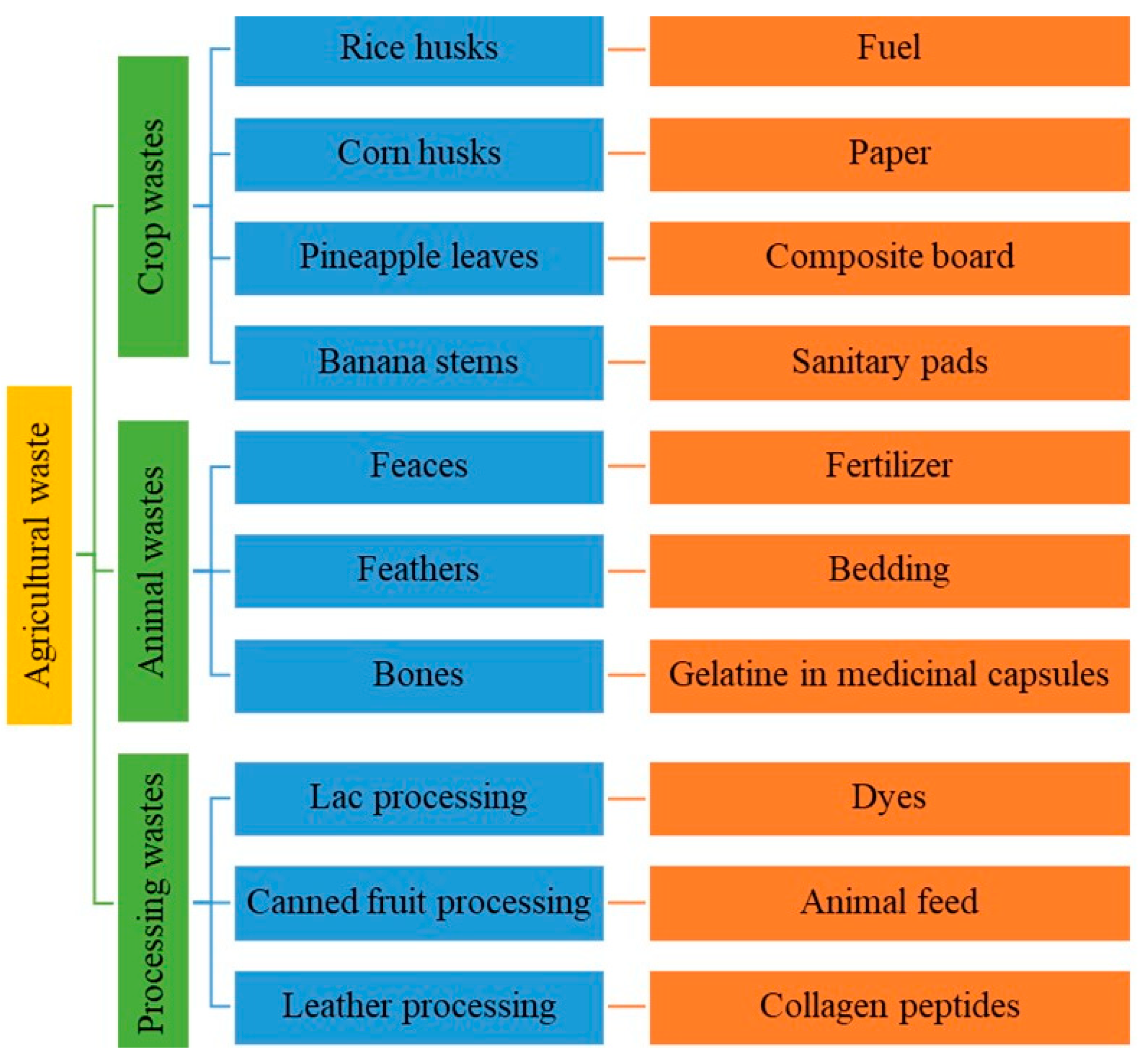
Figure 2.
Basic architecture of plant fiber.
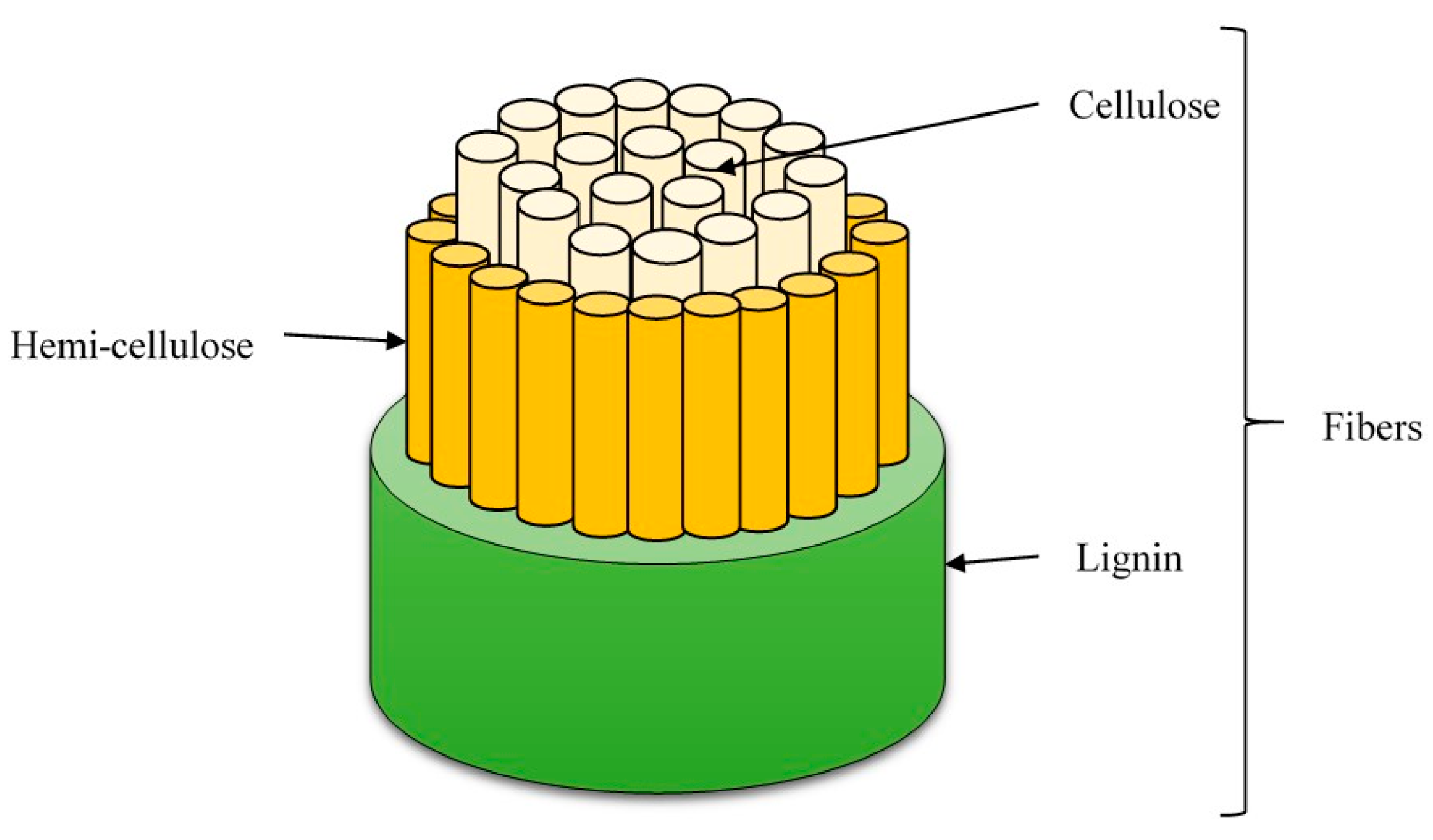
Figure 3.
Pineapple produced and area harvested per annual from 2012 until 2022.
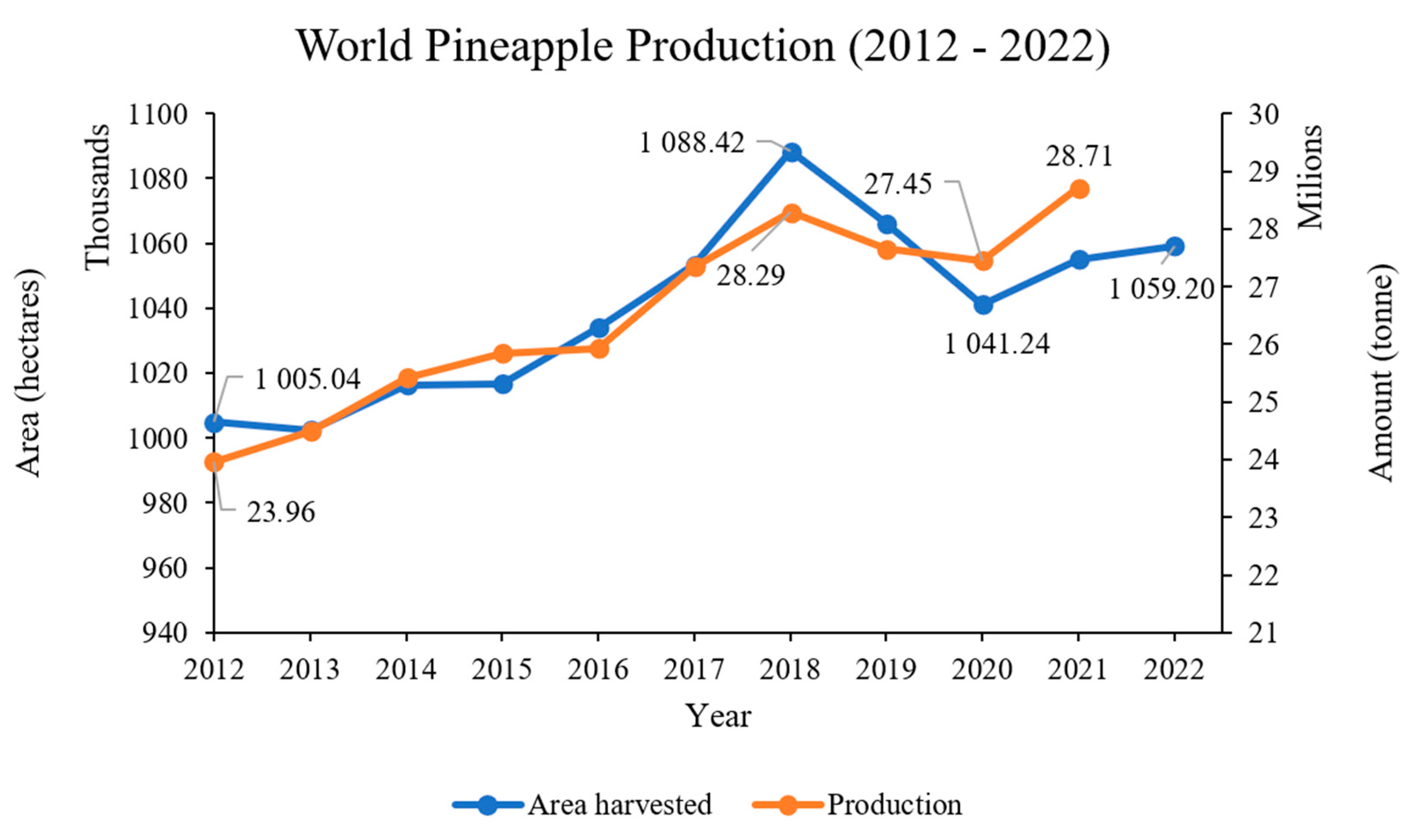
Figure 4.
The top 10 pineapple producers.
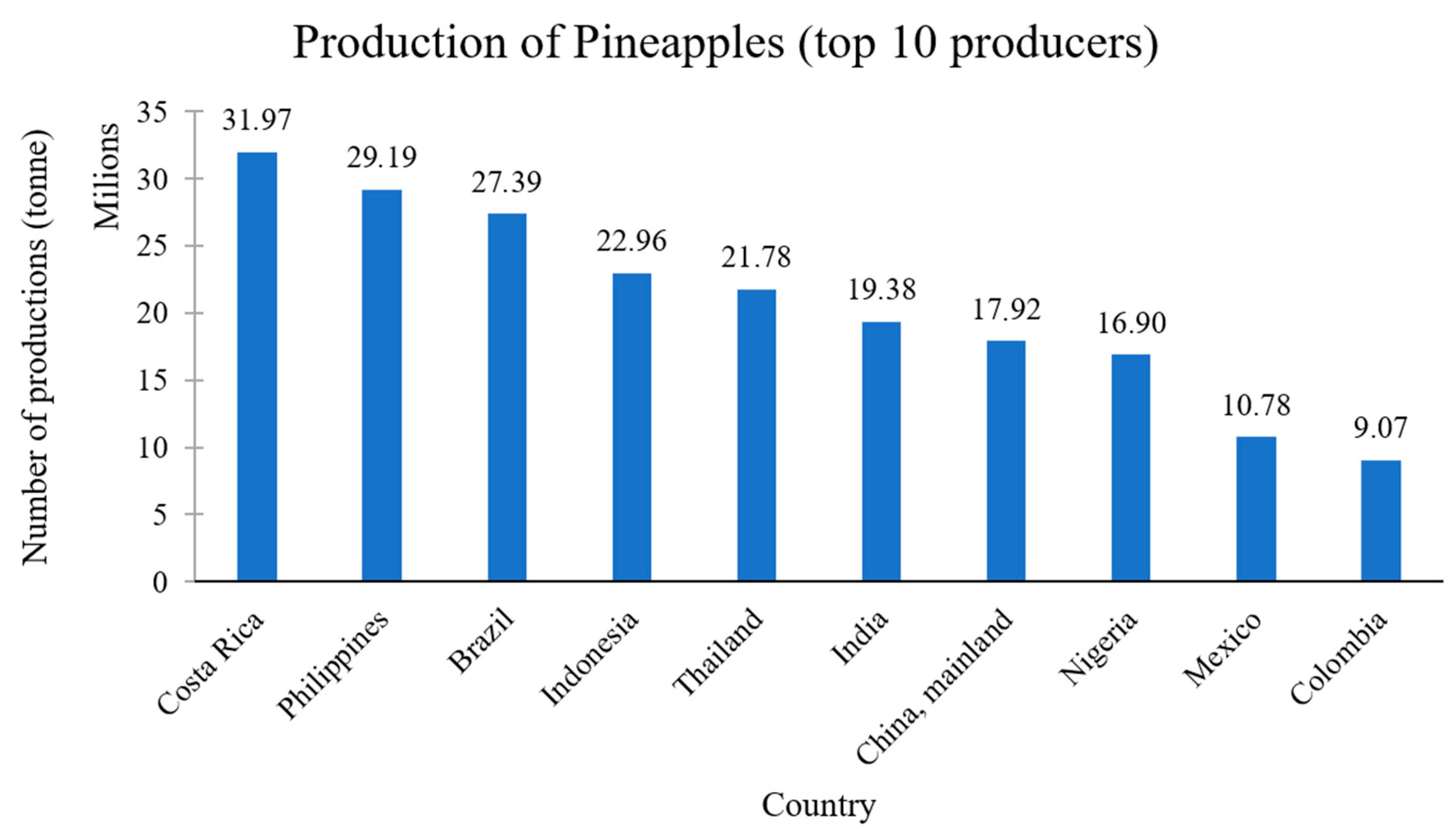
Figure 5.
Pineapple production by region.
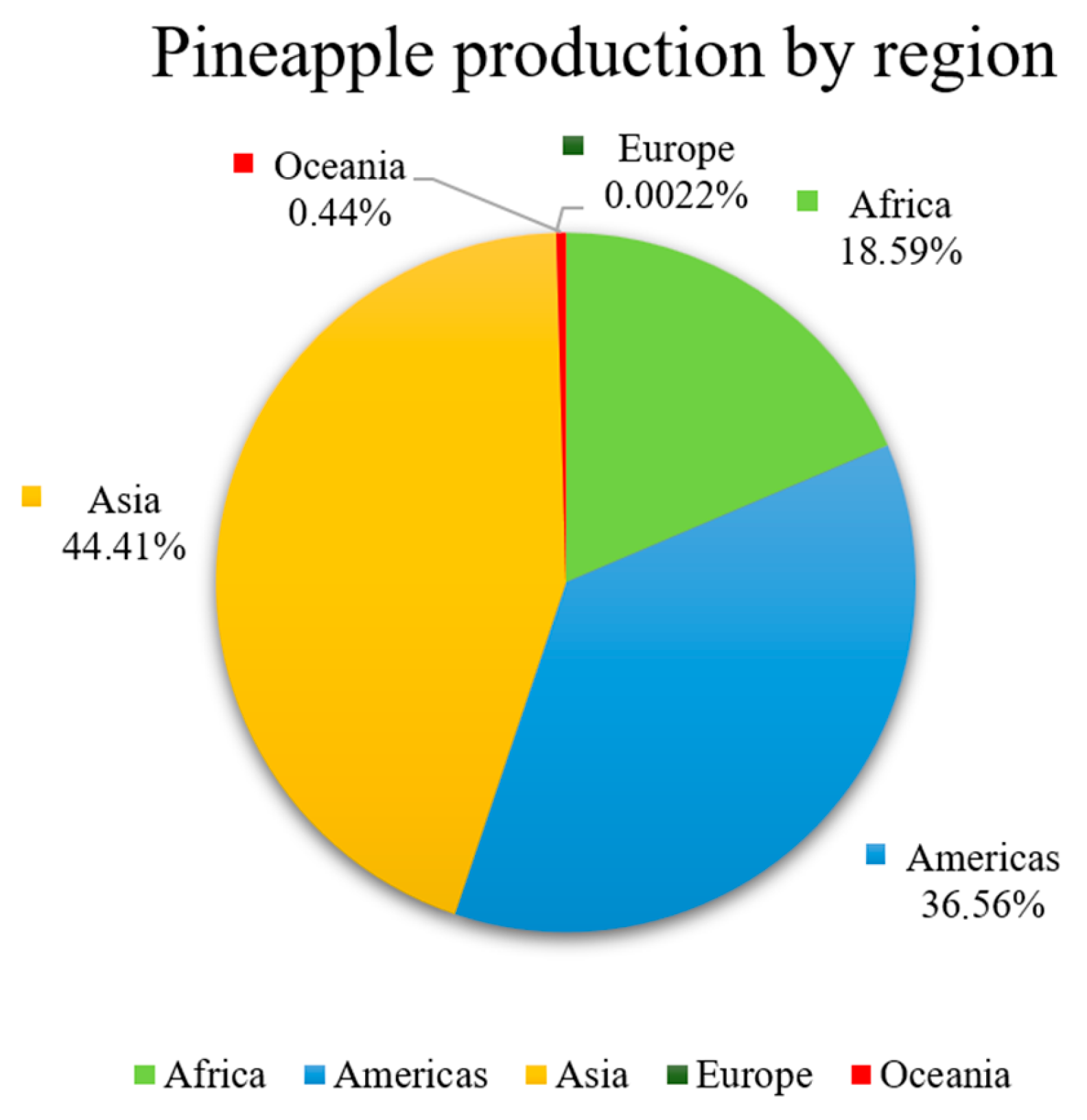
Figure 6.
Accumulation of pineapple leaves at the plantation site.
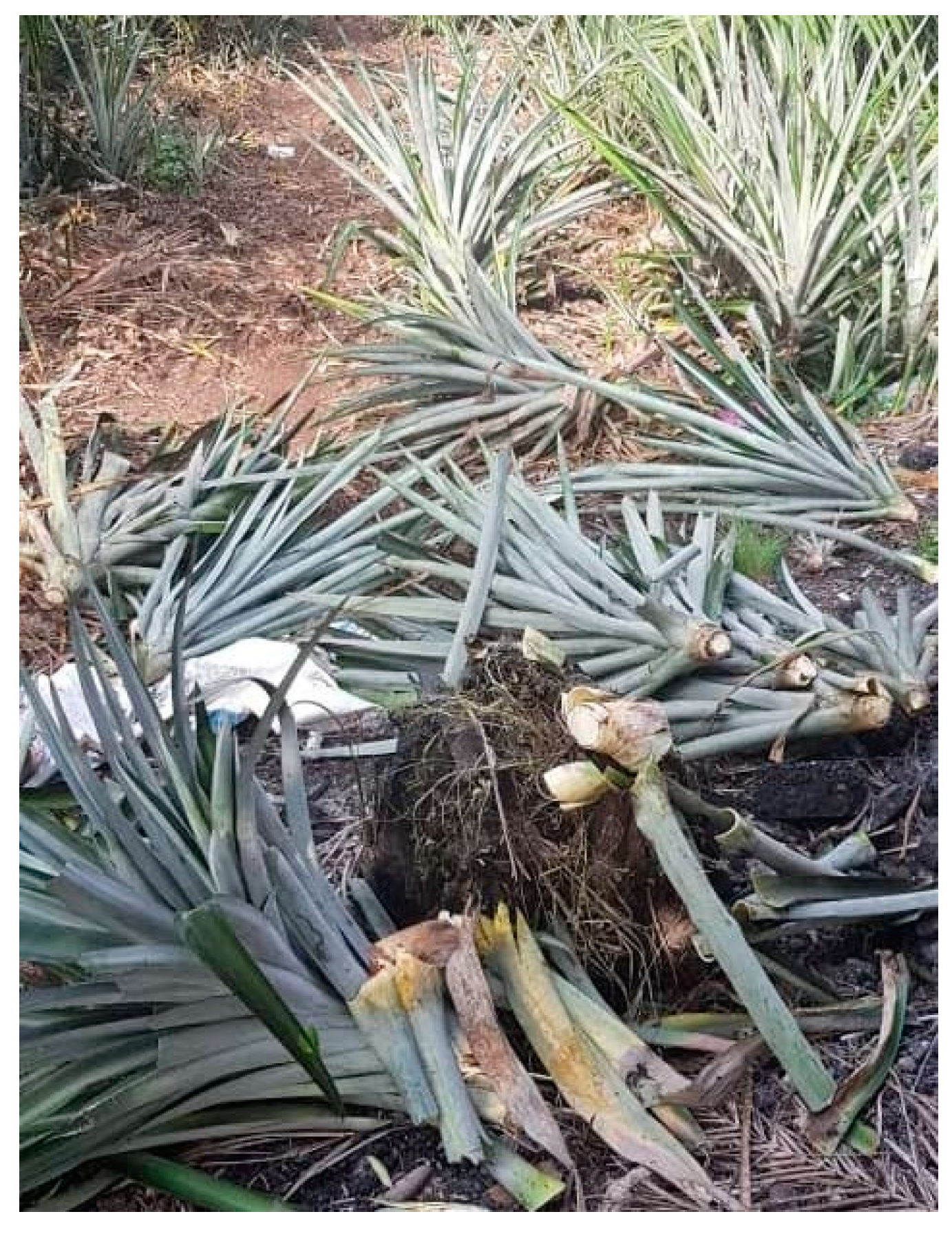

Table 1.
Agricultural waste disposal methods.
| Agricultural activity | Wastes produced | Disposal method |
| Pineapple production [2] | Leaves, crown, core, peels, stems | Dumping, burning, burying, decomposing |
| Banana production [3] | Peels, stems, trunks | Dumping, burning, burying, decomposing |
| Animal production [4] | Left-over feed, wastewater, hatchery wastes, manure, carcasses | Dumping, burning, burying |
| Leather tanning [5] | Hair, bristle, flesh side, splits, trimmings, fleshing, splits trimmings, shavings, sludge | Dumping |
| Sugar processing [6] | Bagasse, cane trash, press mud, molasses | Dumping, burning, burying |
Table 2.
Physical and mechanical properties of fibers extracted from agricultural waste.
| Types | Materials | Density (g/cm3) | Tensile strength (MPa) | Young’s Modulus (GPa) |
| Crop waste | Pineapple leaf fiber [39,40,41,42] | 0.95 – 1.53 | 460 – 1244 | 4.4 – 43 |
| Banana stem fiber [43,44,45,46] | 0.22 – 0.96 | 210 – 914 | 16.4 – 32 | |
| Bamboo fiber [47,48,49,50] | 0.6 – 1.4 | 206.5 – 630 | 17 – 36 | |
| Corn husk fiber [51,52,53] | 1.16 –1.49 | 180 – 256 | 4.6 – 15.9 | |
| Sugarcane bagasse fiber [54,55,56] | 0.88 – 1.2 | 20 – 290 | 3 – 27.1 | |
| Animal waste | Milk protein/casein fiber [57,58,59] | 1.3 | 37 – 116 | 2.1 – 7.4 |
| Chicken feather fiber [60,61,62,63] | 0.78 – 0.90 | 130 – 220 | 3.0 – 4.5 | |
| Yak fiber [64] | 1.32 – 3.41 | 270.05 | 45.09 | |
| Gelatin fiber [65,66,67,68] | 1.2 – 1.58 | 91 – 170 | 2.0 – 3.1 | |
| Processing waste | Wool waste fiber [60,69,70] | 1.29 – 1.31 | 130 – 210 | 2.6 – 3.6 |
| Silk waste fiber [71] | 1.32 – 1.33 | 165.3 – 248.8 | 3.8 – 6.1 | |
| Recycled cotton fiber [72] | 1.5 – 1.6 | 287 – 597 | 5.5 – 12.6 |
Table 3.
Chemical properties of agricultural waste fibers.
| Types | Materials | Chemical properties (%) | ||
| Crop waste | Pineapple leaf fiber [3,39,41,42,74] | Cellulose: 64.4 – 72.1 Hemicellulose: 4.9 – 21.7 |
Lignin: 4.3 –13.6 Pectin: 1.3 – 1.6 |
Ash: 0.8 – 5.0 |
| Banana stem fiber [43,44,45,46,75] | Cellulose: 39.2 – 64 Hemicellulose: 10.2 – 27.8 |
Lignin: 11.4 – 27.8 Pectin: 2.1 – 2.8 |
Ash: 3.9 | |
| Bamboo fiber [76,77,78] | Cellulose: 36.1 – 55.7 Hemicellulose: 11.4 – 19.2 |
Lignin: 16.9 – 28.5 Pectin: <1 |
||
| Corn husk fiber [51,53,79] | Cellulose: 43 – 45.7 Hemicellulose: 31 – 40 |
Lignin: 2 – 22 | Ash: 0.4 – 6.4 | |
| Sugarcane bagasse fiber [55,80] | Cellulose: 30 – 55 Hemicellulose: 20 – 28.3 |
Lignin:18 – 26 Pectin: 0.6 – 0.8 |
Ash: 3 – 10 | |
| Animal waste | Milk protein/ casein fiber [81] |
Carbon: 53 Hydrogen: 7.5 |
Oxygen: 23 Nitrogen: 15 |
Sulfur: 0.7 Phosphorous: 0.8 |
| Chicken feather fiber [63,82,83] | Protein: 82 – 91 Carbon: 64.5 |
Nitrogen: 10.4 Oxygen: 22.3 |
Sulfur: 2.6 | |
| Yak fiber [84,85] | Protein: 65–95 Carbon: 51.1 – 58.3 |
Nitrogen: 13.5 – 18.2 Oxygen: 20.7 – 32.1 |
Sulfur: 2.1 – 2.3 | |
| Gelatin fiber [86,87,88] | Protein: 98 – 99 Carbon: 48 – 50.5 |
Nitrogen: 14.4 – 17 Oxygen: 25.2 – 29.4 |
||
| Processing waste | Wool waste fiber [89,90] | Protein: 33 Carbon: 50 |
Nitrogen: 14 – 25 Oxygen: 10 |
Sulfur: 0.1 – 0.2 |
| Silk waste fiber [89,91] | Protein: 78 – 95 | Nitrogen: 16.4 | Sulfur: 3.7 | |
| Recycled cotton fiber [92] | Cellulose: 90 – 94 Moisture: 6 – 7 |
Protein: 1 – 1.5 Pectin: 0.9 |
Ash: 1.2 | |
Table 4.
Mechanical properties of plant fiber composites and its application.
| Type of composites 1 | Density (g/cm3) |
Tensile strength (MPa) |
Young’s Modulus (GPa) |
Flexural strength (MPa) |
Flexural Modulus (GPa) |
Application | Results |
| PALF + GF + Epoxy | 1.142 | 49.28 | 1.57 | 152.21 | 6.86 | Car bumper | After optimizing the car bumper design, the deformation of the hybrid composites is less than that of steel and aluminum [93]. |
| Olive + BF + Epoxy | 1.200 | 31.28–37.09 | - | 56.70–65.64 | - | Floor panels, automotive interior | The hybrid composite shows better mechanical strength compared to the non-hybrid composite [94]. |
| Cashew nut shell + hemp + Epoxy | - | 136.00 | - | 168.00 | - | Morphing wing UAV | The mechanical properties of the composites were enhanced with the addition of cashew nut shells and hemp [95]. |
| JF + SG + KF + CASP + Epoxy | - | 60.43 | - | - | - | Theather interior | The sound absorption and mechanical properties were enhanced after CASP addition [96]. |
| JF + Wool + Epoxy | - | 40.00 | - | 99.00 | - | Automobile interior | Hybrid composites have better mechanical properties than automotive thermoplastics [97]. |
| Banana + SGB + Epoxy | - | 73.48 | - | 77.50 | - | Automobile, aircraft, building, sports, and household applications | The properties were enhanced after the addition of fibers [98]. |
| BF + Phenolic | 1.080 | 421.50 | - | 211.19 | - | Drone wings, wind turbine blades | The bamboo fiber composites exhibit superior mechanical properties compared to aluminum, steel, and titanium alloy [99]. |
| PALF + JF + Epoxy | 1.074 | 32.16 | 1.32 | - | - | Brake and accelerator pedals, | Hybrid composites show better mechanical properties compared to non-hybrid composites [100]. |
1 PALF – Pineapple Leaf Fiber; GF – Glassfiber; RC – reinforced concrete; BF –Bamboo Fiber; UAV – unmanned aerial vehicle; JF – Jute fiber; SG – Snake grass; KF – Kenak fiber; CASP – custard apple seed powder; SGB – Sugarcane bagasse.
Table 5.
Mechanical properties of pineapple leaf fiber composites.
| Fiber | Matrix | Fiber treatment |
Composition of fiber (%) | Density (g/cm3) |
Tensile strength (MPa) | Young’s Modulus (GPa) |
| Pineapple leaf fiber | Polypropylene [109] | None | 40 | - | 58 | 1.7 |
| Epoxy [110] | Alkaline (NaOH) | 40 | 1.18 | 93.8 | 4.2 | |
| Natural rubber [111] | None | 25 | 1.09 | 11.1 | 0.3 | |
| Polylactic acid [112] | None | 25 | - | 96.8 | - | |
| Polyester [113] | Silane | - | - | 55 | 2.3 | |
| None | Polylactic acid [114] | None | 0 | 1.27 | 56 | 3.4 |
| Acrylonitrile-Butadiene-Styrene [114] | None | 0 | 1.05 | 26 – 31 | 2.18 – 2.23 |
Disclaimer/Publisher’s Note: The statements, opinions and data contained in all publications are solely those of the individual author(s) and contributor(s) and not of MDPI and/or the editor(s). MDPI and/or the editor(s) disclaim responsibility for any injury to people or property resulting from any ideas, methods, instructions or products referred to in the content. |
© 2024 by the authors. Licensee MDPI, Basel, Switzerland. This article is an open access article distributed under the terms and conditions of the Creative Commons Attribution (CC BY) license (http://creativecommons.org/licenses/by/4.0/).
Copyright: This open access article is published under a Creative Commons CC BY 4.0 license, which permit the free download, distribution, and reuse, provided that the author and preprint are cited in any reuse.


