

Submitted:
19 July 2023
Posted:
20 July 2023
You are already at the latest version
Abstract
As the demand for aromatic and medicinal herbs increases, so does the pressure to intensify production, increasing the risk of overexploitation of these natural resources. Sustainability corresponds to the preservation of something that exists in the present and must be maintained in the future, implying accountability and obligation. However, in order to maintain the conditions and essential goods for the survival of future generations, consumers and businesses must commit to sustainable practices. The circular economy is considered one of the solutions to promote a sustainable system and can be defined as a transition from a linear model, where resources are transformed, used and discarded, to a circular (regenerative) model, where materials are reused whenever possible. An ecologically correct approach to waste reuse avoids the negative impacts associated with improper disposal of agro-industrial wastes, such as mass proliferation of microorganisms, production of greenhouse gases, loss of energy potential, and other negative impacts on the environment or human health. The objective of this study is to provide a compilation of good agricultural practices that promote sustainability in the production of medicinal and aromatic herbs, particularly in the areas of cultivation, harvesting, drying, extraction, and packaging, and to highlight the potential for evaluating processing residues in medicinal and aromatic herbs.
Keywords:
Aromatic and medicinal herbs
; Risk
; sustainability
; Harvesting
; Shelf-life extension
; Wastes.
1. Introduction
The literature has been pointing out the significant value and potential of Aromatic and Medicinal Plants (AMP) all over the world, [1]. According to data from the International Trade Center, world trade in MAP resources is predicted to grow annually at a rate of 10 to 12% [2]. With the growth in demand comes the pressure to intensify production, increasing the risk of overexploitation of these natural resources.
Overexploitation, in turn, can generate changes in patterns in the structures and population dynamics of extracted species, which affects their growth and reproductive capacity [3], and may even lead to the loss of existing populations [4].
However, MAP overharvesting does not only generate harmful effects for these individual species. It can also adversely affect the wildlife population and result in the loss of multiple ecosystem services [5].
Given that agricultural activities exert influence on the natural environment such as loss of biodiversity, climate change and water pollution, it is crucial that companies in this sector develop sustainable strategies that allow increasing resource efficiency in production [6,7].
The term “sustainability” etymologically derives from the Latin verb “sustinere” which means to maintain and ensure that a certain thing lasts, as well as to assume a commitment in this sense. Thus, sustainability corresponds to the preservation of something that exists in the present and that must be maintained in the future, involving accountability and commitment [8]. However, in order to preserve the conditions and essential goods for the survival of future generations, it is necessary to commit to the adoption of sustainable practices by consumers and companies.
In particular, in the agricultural sector, the implementation of sustainable practices is essential to ensure global food security [7], combat climate change and reduce or eliminate risks associated with intensive agriculture, namely the overexploitation of natural resources, degradation of air quality and the emergence and development of various diseases [9].
The Circular Economy is seen as one of the solutions to promote a sustainable system [10], and can be defined as the transition from a linear model, where resources are transformed, used and discarded, to a circular model ( regenerative) in which materials are reused whenever possible [11]. An ecologically correct waste reuse approach avoids the negative impacts associated with the improper disposal of agro-industrial waste, such as the large-scale proliferation of microorganisms, production of greenhouse gases, loss of energy potential, among other harmful effects on the environment, or for human health [12].
Agro-industrial waste in the PAM sector has enormous potential for revaluation and can constitute a fundamental strategy for the development of sustainable industrial processes, while simultaneously generating economic gains [12,13].
The purpose of this document is to provide a compilation of good agricultural practices that promote sustainability in MAP production, namely in cultivation, harvesting, drying, extraction and packaging activities, and to highlight the potential for valuing MAP processing residues. Firstly, the herbs biodiversity are studied. Then, good practices are presented based on proposals published by the World Health Organization [14], by the European Herb Growers Association [15,16], by the European Medicines Agency (EMA) [17] and in scientific articles with complementary information .
After that, waste recovery strategies obtained from different stages of PAM processing are presented. Under a Circular Economy approach, the presented strategies promote economic advantages by converting waste into value-added products, reducing costs in the waste treatment process and preventing environmental pollution [13]. Thus, the research work makes a novel and significant contribution to the field of sustainable agriculture and medicinal plant production. By combining existing scientific and empirical knowledge and introducing circular economy principles, it highlights the importance of responsible practices for preserving the environment, safeguarding human health, and ensuring the continued availability of PAM. The integration of circular economy strategies enhances a promising and comprehensive framework for a sustainable future in the domain of MAP production.
2. Biodiversity
Felix, Houet et al. [18] carried out a study on the effects of intensification, extensification and abandonment of agricultural land on different dimensions of sustainability that differ spatially (Europe and United Kingdom). The study authors concluded that mapping impacts on biodiversity and ecosystem services can be an important tool for effectively managing trade-offs and synergies, as well as for exploring effective sustainable landscape solutions. Furthermore, neglecting biodiversity conservation may pose a risk of global conflict for world food security in the future [19]. Recently, the European Union presented its new Soil Strategy as part of the 2030 Biodiversity Strategy. The latter aims to help better protect the ecosystem. For the European Union Soil Protection Regulation, planned for 2023, it is proposed to link land management practices that benefit soil biodiversity with instruments based on incentives [20]. European forests provide a variety of ecosystem services to society, which includes providing MAP [21]. In the forests of Russia and Ukraine, rural communities have long been dependent on non-timber plant products [22].
Many publications provide growers with information to help them identify AMP for cultivation [23]. Some medicinal herbs are the main sources of medicines. Unfortunately, there is a lack of knowledge about its distribution, environmental conditions and protection. For this reason, a joint forecasting method was used to model the present and future global distribution of such plants, assess changes in suitable ranges on each continent under the influence of human activities and climate change, and determine the conservation status on each continent. continent in the corresponding period. The results for Artemisia annua L. show that the main distribution areas were concentrated in the middle latitudes of Western and Central Europe, Southeast Asia, Southeast North America and Southeast South America.
Currently, suitable ranges have greatly declined under the influence of climate change and human intervention, with suitable ranges in Europe being the most affected [24]. According to Vincent, Hole et al. [25], biodiversity hotspots overlap considerably with hotspots of wild cultivated plants of the same family, with greater agreement in the Mediterranean (91%) and in the Floristic Province of California (91%). In general, hotspots in the Mediterranean, Iran and Anatolia, the Caucasus and the tropical Andes offered the greatest potential for in situ conservation (conservation within native habitat) of wild cultivated plants of the same family and therefore for greater efficiency of investments. in conservation. Sustainable wildflower harvesting in South Africa focuses on the future, ethics and policy expectation in biodiversity conservation [26]. According to an ethnopharmacological survey of medicinal herbs in Jordan, northern Badia region, 73 species were collected; the vast majority of them are safe and used by local Bedouins [27]. Kazdag (Mountain Ida) forms a natural boundary between provinces in the northwestern part of Turkey. It houses about 189 specific and intraspecific taxa of vascular plants [28]. On the highest mountain in central Serbia, Kopaonik, about 83 species of wild herbs grow [29]. Based on experience gained in French Guiana, Dejouhanet, Assemat et al. [30] made recommendations for future value chains in general and specifically for the biodiversity area under study.
Examining human impacts on biodiversity is important, and contemporary solutions must incorporate decision-making by local communities, especially indigenous and traditional societies, to empower them to shape policies and achieve conservation goals [31]. In addition, it is important to identify the 'plant-directed' and soil microbe-mediated mechanisms used in plant diversification programs to maximize ecosystem function in agroecosystems. This can also have a positive impact on biodiversity and ecosystem functioning [32]. It is also important to carry out integrated transdisciplinary research for the sustainable management of all invasive alien plant species, considered as one of the main causes of biodiversity loss [33].
In the commercialization of PAM, the preservation of biodiversity, as a common heritage of humanity and the responsible use of Earth's resources are environmental aspects that must be taken into account [34].
According to the Triple Bottom Line theory, sustainable development is a complex and multidimensional problem, which combines efficiency and intergenerational equity, based on economic, social and environmental aspects [35]. Sustainability should not be assumed solely as business expansion in order to maintain the “sustainable growth of companies” [34]. A sustainable MAP trade considers economic, social and cultural aspects, namely fair trade, benefit sharing with local or indigenous communities or countries, employment and sustainable livelihood programs [34].
In summary, regarding PAM biodiversity, the following aspects stand out:
• It is important to map impacts on biodiversity and ecosystem services, since neglecting their conservation could represent a risk of global conflict for world food security in the future.
• Contemporary solutions for the preservation of biodiversity must incorporate decision-making by local communities, especially indigenous and traditional societies.
• Sustainable MAP trade must consider not only economic aspects, but also environmental aspects, namely the preservation of biodiversity, in addition to social and cultural aspects.
3. Productive Activities
In this part, good practices are presented that promote the sustainability of productive activities in the PAM sector, namely in cultivation, harvesting, drying, extraction and packaging.
3.1. Cultivation
Cultivation, i.e. MAP production in the field, must involve standardized practices to ensure high quality production [16].
The necessary growing conditions and duration will vary, depending on the quality of the plant materials. In the absence of published or documented scientific cultivation data, traditional cultivation methods should be followed whenever possible. Otherwise, producers should investigate which conditions and duration of cultivation are ideal [14].
Where appropriate, Conservation Agriculture techniques should be followed, which contribute to environmental conservation as well as improved and sustained agricultural production. Some Conservation Agriculture techniques are presented in the next subchapter.
3.1.1. Conservation Agriculture
Due to intensive agricultural production in many countries, soils have become depleted to the point of compromising future production in these areas. Maintaining soil health is critical to the development of sustainable and resilient agricultural production systems.
Conservation agriculture is 20 to 50% less labor intensive and implies lower energy consumption and greater nutrient use efficiency. This type of agriculture contributes to reducing greenhouse gas emissions and, at the same time, stabilizes and protects the soil from degrading and releasing carbon into the atmosphere.
Figure 1 presents the three interrelated principles of Conservation Agriculture: Minimization of soil mechanical disturbance; Effectiveness of permanent organic cover of the soil, and Diversification of species.
According to the first principle, mechanical soil disturbance (ie zero tillage) should be minimized by sowing and/or directly applying fertilizers. Following a “no-tillage” system where appropriate (WHO, 2003) reduces erosion and preserves soil organic matter [36].
The second principle is to make a permanent organic soil cover (at least 30%) with crop residues and/or cover crops. In conservation agriculture, green manure/cover crop residues are always left on the soil surface and are incorporated biologically, without using agricultural tools [37].
Vegetation cover, dead or alive, creates a microclimate that slows the decomposition of organic matter, favoring its accumulation in the soil, in addition to reducing the loss of organic matter through erosion [37].
Thus, maintaining a protective layer of vegetation on the soil surface, as shown in Figure 2, eliminates weeds, protects the soil from the impact of extreme weather patterns, helps preserve soil moisture and prevents soil compaction [36].
According to the Food and Agriculture Organization of the United Nations [37], some species suitable for vegetation cover are:
- Strigosa oat or Black oat (Avena strigosa Schreb),
- White lupine (Lupinus albus L.),
- Oleaginous radish (Raphanus sativus L. var. oleiferus Metzg),
- Hairy pea (Vicia villosa Roth),
- Rye (Secale cereale L.),
- Sunflower (Helianthus annuus L.),
- Cassamel or gorse (Spergula arvensis L.).
The third principle of Conservation Agriculture, depicted earlier in Figure 1, is species diversification through multiple crop sequences and associations involving at least three different crop species. A well-planned crop rotation promotes good soil structure, promotes a diverse range of soil flora and fauna, contributes to better nutrient utilization, and helps prevent pests and diseases [36].
In the following sections, important additional procedures in PAM cultivation are mentioned.
3.1.2. Site Selection
Due to the influence of soil, climate, and other factors, plant materials derived from the same PAM species can exhibit significant differences in quality when grown in different locations. Thus, external environmental conditions, including ecological and geographic variables, must be considered when choosing a planting site [14].
Risks of contamination resulting from soil, air or water pollution by harmful chemicals must be avoided. The impact of previous land uses on the growing site, including planting of previous crops and any applications of plant protection products, should be assessed [14].
3.1.3. Ambient Ecological and Social Impact
The quality and growth of PAM can be affected by the presence of other plants, other organisms, and human activities. On the other hand, PAM agriculture can affect the ecological balance especially the genetic diversity of plants and animals in the surrounding area. For example, the introduction of cultivation of non-native medicinal plant species could have a negative impact on the biological and ecological balance in the area. Therefore, the ecological impact of agricultural activities over time should be monitored whenever possible [14].
In addition, the social impact of agriculture on local communities should be considered to ensure that negative impacts on local livelihoods are avoided. In terms of profit opportunities locally, small farming is often better than large production, especially if small farmers are organized to market their produce together. If the cultivation of medicinal plants is to take place on a large scale, care must be taken to ensure that local communities benefit directly from, for example, fair wages, equal employment opportunities, and capital reinvestment [14].
3.1.4. Climate
Climatic conditions greatly affect the physical, chemical, and biological traits of plants. Thus, the duration of sunlight, average precipitation, and average temperature, including diurnal and nocturnal temperature differences, must be known in advance [14].
3.1.5. Soil and Fertilization
The soil must contain adequate amounts of nutrients, organic matter, and other elements to ensure optimal growth and quality of the plants grown. Optimal soil conditions, including soil type, drainage, moisture retention, fertility, and pH, vary according to the PAM species selected and/or the target plant part [14]. However, the precautions mentioned below contribute to maintaining the quality of soil and vegetation in general.
- It is necessary to ensure the use of appropriate types and amounts of fertilizers (both organic and chemical) through agricultural research [14]. Obtaining documented information about the type and amount of fertilizer used and the results obtained can help determine the appropriate amount to use.
Producers should implement practices that contribute to soil conservation and reduce erosion, for example:
- ○
- By creating buffer zones, or buffer zones next to a watercourse (a downstream buffer zone). In these areas, trees, shrubs, and perennial plants are used to filter runoff water before it reaches the watercourse/watercourse. Buffers capture sediment, nutrients, and pathogens and reduce soil erosion by creating a dense root system that holds soil in place. In addition, these areas allow native plants, animals, and insects to thrive, which enhances the area's ecosystem (Leavell and Turpin, undated). To create a buffer next to a stream, install a group of trees, shrubs, and perennials that thrive with varying amounts of water, with sometimes the buffer zone flooding and flooding the plants, while other times the area dries up (Leavell and Turpin, n/d).
- ○
- By growing cover crops and “green manure” such as alfalfa [14].
3.1.6. Irrigation and Drainage
It must be considered that:
- Irrigation should be controlled and implemented according to the needs of the plants [38].
- Water used for irrigation should comply with regional/national quality standards [38].
- The farmer should pay attention to the quality of irrigation water. Irrigation water must comply with established quality standards and be as free as possible from pollutants [39].
3.1.7. Field Maintenance and Plant Protection
To promote correct field maintenance, and at the same time protect plants, the following should be considered:
- The crop must be adapted to the growth and needs of the plants [38].
- Insecticides and herbicides should be avoided as much as possible. If application of approved plant protection products is required, the following should be considered
Products should be applied at the minimum effective level in accordance with the manufacturer's and authority's recommendations [38].
- ○
- The order should only be performed by qualified personnel, using approved equipment [38].
- ○
- Information about the order and the pesticide should be documented and made available to the purchaser, if requested [39].
- ○
- The organization/company carrying out the cultivation must assign a person to check compliance with the processing and sign the documents necessary to accept responsibility [39].
- ○
- The minimum time interval between this treatment and the time of harvest must be specified by the purchaser or as recommended by the manufacturer of the plant protection product.
- ○
- Regional and/or national regulations on remaining maximum limits must be adhered to. If the product is intended for the European market, compliance must be ensured, for example with European Pharmacopoeia regulations, EU pesticide database and other European directives, Codex Alimentarius, etc.) [38,39].
- ○
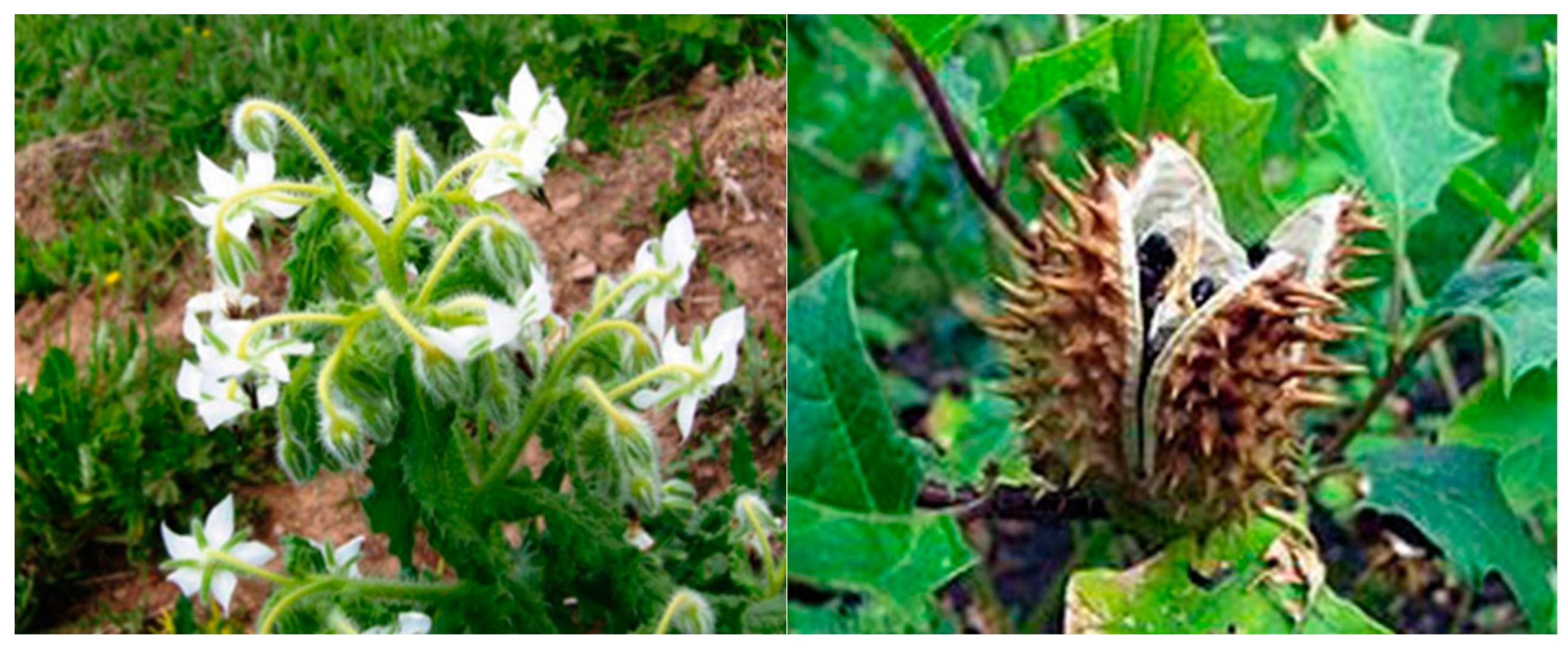
- Particular attention should be paid to monitoring and removal of toxic herbs (eg herbs containing pyrrolizidine and tropane alkaloid) [39].
Figure 3.
Examples of toxic herbs Source.
3.1.8. Seeds and Propagation Material
To ensure the healthy growth of plants, the following must be considered:
- Seeds and vegetative propagating material must be identified botanically and, to be traceable, the species and, whenever necessary and possible, the subspecies of the plant variety, chemotype and origin, must be documented. Recording these characteristics allows the control and identification of incompatible plants, especially incompatible toxic ones, which should be eliminated as much as possible (EUROPAM, 2022).
- Seeds should have an appropriate degree of purity, vigor, and germination rate so that they are, as far as possible, free from pests, diseases and (poisonous) weed seeds [39]
In summary, the following sustainable farming practices stand out: Follow standard practices or traditional methods. Agriculture favors conservation of resources.
- Consider permanent organic soil cover and species diversification to promote soil health and prevent pests and diseases.
- Considering the external environmental conditions and avoiding the risks of pollution.
- Consider the environmental and social impact on local communities and monitor the impact over time.
- Know in advance the duration of sunlight, average precipitation, and average temperature, including temperature differences during the day and night.
- The crop must be adapted to the needs of the plants and the use of pesticides and herbicides should be avoided. Particular attention should be paid to weeding.
Seeds and vegetative propagating materials must be identified botanically and have an appropriate degree of purity and vitality.
3.2. Harvest
In the first part of this sub-chapter, the importance, challenges, and measures inherent in maintaining the integrity of plant varieties are addressed. In the second part, recommended practices for a sustainable harvesting system are presented.
3.2.1. Conservation
The demand for health solutions based on natural remedies is increasing every day, which may have a negative impact on ecosystems [40]. It is therefore recommended to balance the conservation of medicinal plants with control of demand and price on the one hand (Group, 2016; Quality Assurance (Hmpc), 2006) and control of quality, safety and possibility of fraud on the other hand. [41]. In addition, it is recommended that the forest be preserved as a PAM planting area. According to a study conducted in Nigeria, which has one of the highest rates of deforestation in the world, conservation policies and programs are based on three core values: 1) economic values, 2) cultural values, and 3) environmental and management values [42].
The literature evaluates weed harvesting in terms of its sustainability. He concluded that in harvests previously considered sustainable, the herbs were harvested in large quantities and were plentiful. Currently, sustainable harvesting means that the herbs are still found in national and regional protected areas, as well as small-scale cultivation using wild harvested pseudobulbs. Conversely, in unsustainable harvesting, grasses are harvested so heavily in some areas that they are critically endangered and considered to be “critically endangered” [43]. Asian countries account for the highest value of medicinal plant trade in the world [41].
Agro-ecological farms have provided empirical evidence that good agricultural practices improve horticultural ecosystem services and generate agro-ecosystems that are sustainable and resilient compared to traditional horticulture, which is very important for expanding agro-ecology in the current context of ongoing policy reforms in Europe [44], where several good agricultural practices are mentioned as guidelines [14]. It is recommended to better integrate environmental conservation in rural areas to achieve inclusive development and allow the adoption of good agricultural practices [45]. Several initiatives, including a project funded by the European Community, are being used to support the conservation of the species through “in situ conservation of wild plant species through improved information management and field application” and “design, testing and evaluation of best practices for the conservation of wild plant species.” terrestrial plants that are economically important to the site” [46].
In some developing countries (South Africa), it is difficult to protect some of the PAMs listed in the appendices as endangered species. There are more than 30,000 species not found in protected areas, because wild species management capabilities are limited. Countries often rely on incentive-based conservation as a solution [47]. Moreover, although some governments (Ukraine, Russia, and some developing countries) restrict the extraction of non-timber forest products such as PAM, local governments tend to ignore these guidelines for local communities, as the products are generally used for subsistence. support [22,48].
However, the PAM, which is classified as critically endangered, is protected by the Convention on International Trade in Endangered Species of Fauna and Flora (CITES), which sets important conditions for dealing with these plants, such as prohibiting international trade, banning, or restricting wild harvesting, legally allowing trade organization based on safety record [43].
In general, current protocols for sustainable harvesting often lack scientific justification. However, the literature does not provide adequate decision support for professionals, and licensing procedures are often unrealistic [43].
For endangered plants, though, complementary long-term and short-term conservation actions, such as assisted migration or population enhancements accompanied by ex situ conservation (ex situ conservation) should be implemented [4,49].
Urgent conservation actions should also include effective regulation of harvesting from wild populations, enhancement of existing natural populations, appropriate germplasm collection strategies, and establishment of specific protected areas, such as micro servers [49]..
3.2.2. Recommended Practices
A sustainable PAM harvesting system is one in which fruits, seeds, or other plant parts can be harvested indefinitely from a given area without detrimental effect on the structure and dynamics of harvested plant populations [50].
- The following are some recommendations for the sustainable management of the MAP crop.
- To limit the PAM harvest to a sustainable level, an effective management system must be established that considers annual harvest quotas, seasonal or geographic restrictions, and harvest restriction to certain plant parts or size classes [51].
- Harvest time depends on the part of the plant that will be used. Detailed information on the appropriate timing of sample collection should be consulted, which is often available in national pharmacopoeia, published standards, formal studies, and major reference books [14].
The best harvest time should be determined according to the quality and quantity of the bioactive components, and not according to the total vegetative yield of the target parts of the medicinal plant [14].
Harvest date has a significant impact on volatile compound content and can be optimized to obtain a higher concentration of essential oils. Harvest dates corresponding to the maximum value of the total concentration of volatile compounds, according to the study of El-Zaeddi, Calín-Sánchez et al. [53], for four types of PAM shown in Table 1.
Continuous monitoring and evaluation of harvesting practices should be undertaken to adapt the management strategy as necessary [54].
- Continuous improvement of harvesting techniques should be sought to reduce waste at this stage, avoid loss of quality and reduce yield [55].
- Harvesting should take place when the plants are of the best possible quality, according to the different uses [16].
- Plants should be harvested in the best possible conditions, avoiding wet soil, dew, rain, or exceptionally high air humidity. If harvesting takes place in humid conditions, the potential adverse effects on the plant should be neutralized [16].
- During harvesting, care must be taken to ensure that toxic herbs do not mix with the harvested crop [16].
- Materials from decaying medicinal plants must be identified and disposed of during harvesting, post-harvest inspections and treatment processes, to avoid microbial contamination and loss of product quality [14].
- When necessary, large fabrics, preferably made of clean cotton cloth, can be used as an interface between the harvested plants and the soil [14].
- Equipment used for harvesting must be kept clean and in perfect working order. Parts of equipment/machinery that have direct contact with the harvested crop should be cleaned regularly and kept free of oils and other contaminations, including plant residues [16].
- Cutting devices should be modified so that aggregation of soil particles can be minimized [16].
- All containers used for collection must be kept clean and free from contamination from previously harvested medicinal plants and other foreign matter. When not in use, containers should be kept in a dry place and should be protected from insects, rodents, birds, pests, livestock, and pets [14].
- Harvested plants should be collected and transported immediately in dry, clean conditions and in a way that prevents overheating [16].
- Mechanical damage and compaction of the harvested plant, which may result in undesirable changes in quality, should be avoided. In this sense, attention should be paid to cyst overfilling or overcrowding [17].
- The collection organization must appoint a person to verify the compliance of the processing with the rules established in the management system [16].
In summary, the following sustainable harvesting practices stand out:
Harvest PAM in such a way that the amount harvested does not affect environmental processes or the welfare of local communities.
- ●
- Create an effective management system that considers:
- ○
- spoon quantity,
- ○
- harvest season,
- ○
- status of the plant community.
- ●
- Promote continuous improvement of harvesting techniques to reduce waste at this stage, avoid loss of quality and reduce yield.
- ●
- Keep all containers and tools used in harvesting clean and free from contamination.
- ●
- Avoid unwanted alterations in plant quality during collection and post-harvest transportation.
- ●
- Checking the compatibility of processing with the established effective management system.
3.3. Drying
Drying consists in reducing water activity to a level that prevents the growth and development of microorganisms that would cause plant deterioration and prevents unwanted chemical reactions from occurring [56].
This processing stage aims to extend the shelf life and preserve the properties of the plants in their fresh state [56]. In addition, drying leads to a lower density of plant material, and thus lower transportation costs [57].
For this, natural (in the shade) or mechanical drying methods can be used, depending on the heat source used. Among the most common processes are natural drying, hot air drying, freeze drying, and spray drying [58,59].
Solar dryers are recommended for drying medicinal herbs when it is necessary to reduce or remove moisture from herbs and other medicinal plant parts without affecting their quality for medicinal use [57].
Drying is one of the most important and important processes in post-harvest processing of PAM, due to its significant impact on product quality and energy consumption [58].
The energy consumption, quantity, and quality of the active ingredients contained in PAM are affected by the drying method, speed, drying air temperature, and exposure time [58,60]. Thus, the choices of these criteria are an essential economic and environmental criterion.
A few recommendations are listed below:
- Freshly harvested material should be transported in clean, dry, and well-ventilated containers as soon as possible to the drying site [16].
- In the case of natural drying in the open air, the crop should be spread in a thin layer. To ensure adequate air circulation, drying racks should be placed at a sufficient distance from the floor. An attempt must be made to obtain uniform drying of the crop and thus avoid mold formation. When drying with oil, the gases released for drying must not be reused. Direct drying should not be allowed, except with butane, propane or natural gas [17].
- In the drying room, the fresh material should be spread in thin layers on a clean surface (for example, drying racks or plastic cloths), avoiding direct contact with the ground, and in order to protect the material from rain and moisture, the material (such as other plants in the surrounding area, stones, dust, plastics, etc.), pollutants (detergents, smoke, allergens, etc.), pests and pets [16].
- Harvested material that has been spoiled or damaged (which can be identified by bite marks and/or unusual color, texture and/or smell) should be excluded [16].
- When PAM materials are prepared for use in a dry form, the moisture content of the material should be kept as low as possible to minimize damage from mold and other microbial infections [14].
- When possible, temperature and humidity should be controlled to avoid spoilage of active chemical ingredients [14].
- It must be considered that drying by traditional methods, such as an open-air dryer, reduces the quality of the product while increasing the cost and time of the drying process [61].
- The drying process is characterized by an ideal relative humidity level of 50 to 60% [61].
- Information on the appropriate moisture content of some herbal substances may be available in pharmacopoeia or other formal monographs and should be consulted [14].
To calculate the residual moisture content, after drying, and compare with recommended values, producers can use the gravimetric method “Loss on Drying”. Following this method, a sample of material is weighed, dried under defined conditions for an appropriate period, refrigerated and then weighed again. The residual moisture content (MCf) can be calculated using the following equation [16]:
where W is the mass of the original sample and D is the mass of the dry sample.
Table 2 presents the maximum final moisture content (MCf) for different types of medicinal plants as prescribed by the European Pharmacopoeia [62].
Achieving the desired final moisture content prevents over-drying and reduces drying time, energy costs, mass loss, and risk of quality deterioration [61].
The correct choice of drying temperature is also an essential economic and environmental criterion to be determined in the drying of medicinal plants, as it influences the herb's energy-saving properties [60].
Although the required temperature varies for different MAP species, dry air temperatures between 50 and 60 °C appear feasible for drying many medicinal plants [60,61].
Table 3 presents recommended values of drying temperature, moisture content and air velocity for some PAM species.
The study by [56] presents a phased drying method, that is, using two temperature values. For drying lemon balm (Melissa officinalis), a value of 40°C was chosen initially, and when the moisture content became 20%, the chosen temperature value became 50°C until the final moisture content (10%) was reached. This staged drying method provided a 10% reduction in energy consumption and 28.5% in drying time compared to the common method (use a constant temperature value of 40 °C). In terms of quality, this blend contained almost no color change and showed the same essential oil content as standard drying.
Thus, phased drying methods can be tested to assess whether they are a valid option for reducing energy consumption and drying time.
In summary, the following sustainable drying practices stand out:
- ●
- Determination, control, and verification of the criteria of basic economic and environmental criteria in the drying process that affect energy consumption and the quantity and quality of the active ingredients of the plants, namely:
- ○
- drying method,
- ○
- air speed,
- ○
- air temperature
- ○
- exposure time.
- ●
- Ensure optimal final moisture content to avoid over-drying and reduce drying time, energy costs, mass loss and risk of quality degradation.
3.4. Extraction
In processes for extracting therapeutically desirable active ingredients from plants, the appropriate choice of solvent to be used for the extraction, as well as the application of a compatible method, is of great importance [63].
3.4.1. Solvents
Conventional organic solvents such as hexane, ethyl acetate, chloroform, acetone, or methanol, among others, are widely used due to their solubility and extraction power. However, these solvents, in addition to being environmentally hazardous, have direct acute and chronic toxicity, in addition to having carcinogenic potential [63].
To improve health and protect the environment against the risks associated with the use of hazardous volatile organic solvents, alternative means of extraction have been developed.
For example, natural eutectic solvents have been recognized as environmentally friendly alternatives to conventional solvents. These new green solvents consist of metabolites that are naturally present in all types of cells and organisms, namely sugars (glucose, sucrose, fructose, etc.), organic acids (lactic, malic acid, citric, etc.), urea, and chloride Choline [64].
In addition to their low environmental impact, they have other advantages such as biodegradability, low cost, simple preparation methods and the fact that the precursors used are renewable, non-toxic, and natural compounds [63,64].
It should be noted that the green extraction of bioactive compounds from plants using natural eutectic solvents opens interesting possibilities for the development of new drugs, functional foods and food additives, since eutectic mixtures consist of food ingredients that can be applied directly without purification steps [63].
Ionic liquids are also green solvents and have residual vapor pressures over a wide temperature range, high thermal stability, and high viscosity. In addition to being used to provide better profit levels and better processes, these solvents can also be recovered, making it possible to obtain final products with only trace amounts of solvent [63].
However, although they are considered environmentally friendly solvents, attention should be paid to the possibility of ionic liquids reaching soil, surface and groundwater through spills or accidental effluents [63].
In addition, water, one of the most widely used solvents in extraction processes, is a "green solvent" that, in addition to being environmentally friendly, is inexpensive, technologically acceptable and offers net advantages in terms of environmental impact, selectivity, run-time and energy. Introduction and preservation of thermogenic compounds [65,66].
In conclusion, for more environmental and quality procedures, it is important to choose non-toxic solvents.
3.4.2. Methods
In addition to the choice of solvent that has implications for the environmental level and the quality of the obtained product, the selection of an appropriate extraction methodology is also important.
The importance of choosing the most appropriate extraction methodology is evident from the fact that when different methods are applied to the same plant material using the same solvent, the extraction efficiencies can vary greatly. The method chosen as most appropriate to reach an acceptable degree of reproducibility must also be standardized [63].
Extraction methods can be categorized into two main types: traditional and unconventional, or modern. Conventional extraction methods require the use of toxic organic solvents, long stirring times and high temperatures (i.e., maceration and distillation processes). The long extraction times and energy consumption associated with processes such as Soxhlet, maceration, boiling, and infusion make them environmentally harmful [63].
On the other hand, modern extraction methods, that is, ultrasound and ultrasound-assisted extraction techniques, are procedures that reduce the consumption of toxic organic solvents and the extraction time. In addition, these methods, which are environmentally correct, minimize sample degradation, and allow the elimination of unwanted and insoluble components, resulting in higher quality extracts [63].
Other newer methods, such as microwave solventless extraction, subcritical fluid extraction, and supercritical fluid extraction, are inexpensive, require less solvents, and save time and energy expended on extraction [67].
A study comparing the energy efficiency, carbon dioxide emissions, and cost of extraction techniques related to eight plants (Physalis angulata; Croton heliotropiifolius; Quercus robur L; Psidium guajava Linn and Smilax china; Salvia fructicosa; Mentha piperita; Arctium lapa; Hovinia dulcis), concluded that wave-assisted methods Ultrasonic and enzymatic extraction are low cost, both technically and economically, in addition to being considered more environmentally sound, when factoring in energy consumption and CO2 emissions, especially in comparison to microwave, supercritical and pressurized fluid extraction [63].
To attempt to measure the environmental impacts associated with extraction methods, parameters associated with energy efficiency can be used, that is, electricity consumption (EC) in kWh and relative electrical consumption (C*E) in kWh g-1. These parameters can be calculated using Equations 2 and 3 [68].
where P is energy consumption (W), t is time (h) and m is the mass of essential oil obtained (g).
CO2 emission (ECO2) and relative CO2 emission (E*CO2) are important additional parameters to evaluate different extraction techniques, whose calculation is done according to equations 4 and 5.
The calculation of these parameters allows comparing different extraction methods and estimating the one that involves the lowest relative electrical consumption (C*E) and the lowest relative CO2 emission.
In conclusion, the choice of both the solvent and the extraction method has an impact on the quality of the extraction, on energy consumption and, consequently, on environmental performance. Thus, the following sustainable extraction practices stand out:
- Choose non-toxic solvents.
- Estimate relative CO2 emissions associated with extraction methods and prefer methods with greater energy efficiency, lower CO2 emissions and lower cost.
3.5. Packaging
After processing, the following precautions should be taken:
- Medicinal plant materials should be packaged as quickly as possible to prevent damage to the product and to protect it from potential pest attacks and other sources of contamination [14].
- To eliminate unwanted materials before and during the final stages of packaging, continuous process quality control procedures must be implemented [14].
- Batch packing records must be kept for three years, or as required by national and/or regional authorities, which include product name, place of origin, batch number, weight, job number and date [14].
In addition, precautions must be taken regarding packaging materials and labels, as described in the following subchapters.
3.5.1. Packing Materials
- After final inspection and disposal of any foreign matter, the product should be packed in clean and dry bags, sacks, bales or cans, suitable for food, preferably new [39].
- Packaging materials should be stored in a clean, dry, pest-free place, inaccessible to livestock, pets, and other sources of contamination. Also, it must be ensured that the product is not contaminated with the packaging material (especially in the case of a fiber bag) due to lose plastic fibers, chemical residues, strange odors, or any kind of household waste [16,17,39].
- When packaging, adhere to standard operating procedures and national and/or regional regulations of the producing countries and the end user [14].
- It is recommended that fragile medicinal plant materials be packed in rigid containers [14].
- Whenever possible, the packaging used should be agreed upon between the supplier and the purchaser [14].
3.5.2. Label
- ●
- The label must be clearly visible and permanently attached and must be made of a non-toxic material [39].
- ●
- ○
- The common and scientific name of the plant,
- ○
- used parts of the plant,
- ○
- The name and address of the product.
- ○
- production batch number,
- ○
- quantitative information (eg package weight),
- ○
- preservation techniques (if any),
- ○
- place of origin, i.e., place of cultivation or assembly,
- ○
- date of cultivation or collection,
- ○
- Hazard information (if any),
- ○
- packing and moving arrangements (if any),
- ○
- In the case of organic products: the organic certificate control number,
- ○
- Information indicating quality approval and compliance with other national and/or regional labeling requirements,
- ○
- Additional information on production standards and quality of medicinal plant materials can be added in a separate certificate attached to the package with the same batch number.
3.5.3. Life Cycle Extension
To extend the shelf life of herbs, it is recommended to follow the instructions available online on the EUROPAM website (EUROPAM, 2006). For example, experience shows that incorporating kinetin encapsulation pretreatment measures can improve the minimal shelf life of treated coriander leaves [69]. In addition, ozone treatment is recommended, in addition to the use of electron beam radiation, as the effect of the latter on microbial populations and organoleptic properties increases the shelf life of the sample [70,71].
For dried spices and herbs, an analysis by [72] determined the following classification of bacterial contamination: imported samples had the lowest percentage, followed by samples packaged locally in companies with food safety management systems, followed by samples packaged locally in companies without food safety management systems and unpackaged samples had the highest percentage.
Moreover, after using some aromatic herb samples (freshly harvested products) to evaluate the quality characteristics, stored for 10 days in refrigerated conditions (3 °C ± 1), it was found that during storage, the samples maintained their appearance and color. throughout the shelf life [73]. However, a comparative study of herbs, with and without open packaging, at storage temperatures of 3 to 10°C concluded that packaging with a storage temperature of 10°C is recommended to extend the shelf life of herbs [74]. Generally, essential oils or compounds made from them are incorporated into edible coatings to extend the shelf life of the food product [75].
In summary, the following sustainable packaging practices stand out:
- Keep packaging materials and storage areas clean and dry.
- Uncontaminated packaging materials are preferred.
- Ensure that re-use does not cause contamination of the product.
- The label must be made of non-toxic material and must clearly contain the relevant information.
- If appropriate, integrate packaging pre-treatment measures that extend its shelf life.
- Follow food safety management system standards applicable to packaging.
- Maintain proper storage temperature (10°C is a recommended value) to prolong the shelf life of herbs.
4. Waste Recovery
This chapter presents the applications proposed by scientific articles for the recovery of residues obtained in the distillation process and at other stages of processing. Waste recovery technologies promote the use of environmentally friendly and scalable materials for industrial use, with a relatively low cost of raw materials, which contributes to their economic viability [76]. Several products/outputs including energy, soil amendments and chemicals can be generated from the treatment and use of MAP residues. The waste management strategies described in this chapter also reveal the great potential for waste from MAP production in applications in the food, pharmaceutical, cosmetic, and other industries.
4.1. Distillation
Essential oils can be obtained from the hydro-distillation process, whereby the essential oil is separated from plant biomass [77]. In the process of hydrodistillation, an aqueous phase (hydrolate) arises, which is distilled with the essential oil, and is physically separated from the essential oil due to its increased polarity and density [78]. Hydrodistillation can also result in an undistilled aqueous phase (decoction), resulting from the boiling of plant biomass. Although aqueous is often disposed with the non-distilled aqueous phase and plant residues [78], residues from the distillation process have been increasingly considered, as they have interesting bioactivities and add additional value under a circular economy approach. [79]. In hydrodistillation, the residue shown in Figure 4 is generated.
Some strategies for reusing these wastes are presented in this subchapter.
4.1.1. Solid Waste
The solid residue of plant biomass from the hydro-distillation process can be directly used for power generation through direct combustion, making briquettes after drying, pelletizing and gasification (fuel gas production).
Indirectly, these residues can be used for energy purposes in the methanolization and pyrolysis processes, to obtain biodiesel and biochar [77,81].
The treated biomass, free from oil, can be composted, which contributes to restoring and maintaining soil fertility and to controlling soil diseases caused by microorganisms or to cellulose production [77,81].
Solid waste can also be used as an absorbent, animal feed or food supplement, as a mulch for microorganisms or to control weed growth, to produce bioaggregates for building materials and in biotechnology applications, i.e., enzyme production [80,81,82].
Since the solid waste is free of volatile compounds, it can be considered as a low-cost, odorless material. Because odorous ingredients can impair the sensory properties of a product, or lead to rejection problems when provided in animal feed, solid waste has beneficial potential in the food industry [80].
Other potential industrial applications for the solid residue from PAM distillation are represented in Figure 5, which are listed below.
- The solid residue from the water distillation of rosemary (Rosmarinus officinalis L.) can be used as an antioxidant supplement for pregnant ewes to reduce fat oxidation in meat. Furthermore, the European Commission considers this residue as a semi-natural food preservative additive (regulated under code E-392) [80].
- Solid residues from the distillation of lavender (Lavandula angustifolia) and lavandin (sterile mixture of L. angustifolia × L. latifolia), i.e., straw, are cheap, readily available and useful industrial by-products for the production of high-value compounds, as platform particles (such as antibiotics). oxidants) and fungal enzymes involved in the decomposition of lignocellulosic biomass, which have potential as raw materials for the green chemistry industry [83].
In short, solid waste can be used to:
- ●
- Energy purposes through direct combustion, making briquettes after drying, pelletizing, gasification, and in methanol and pyrolysis processes, to obtain biodiesel and biochar,
- ●
- Fertilizer,
- ○
- Pulp production,
- ●
- Biosorbents,
- ●
- Vital aggregates for building materials,
- ●
- Fodder or nutritional supplements for animals,
- ●
- Food industries as preservatives,
4.1.2. Liquid Waste
The liquid residue generated during the hydrolate process is a good source of active compounds which in turn can be profitably used to make environmentally friendly bio-insecticides because they contain ketone alcohols, phenolethers, and methylether groups that can be recovered to increase yield [80].
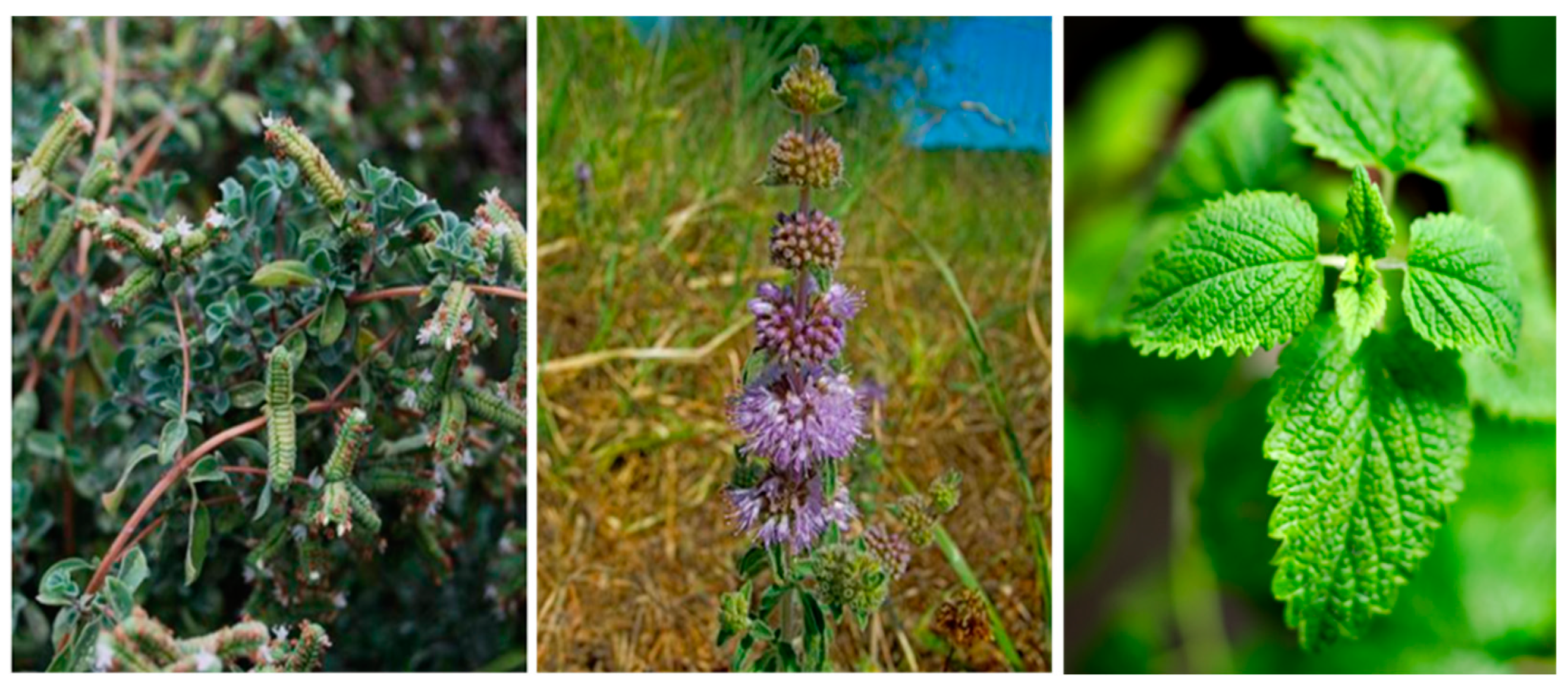
For example, one study found that marjoram (Origanum majorana), pennyroyal (Mentha pulegium), and lemon balm (Melissa officinalis) hydrosols [82]
Figure 6.
Aromatic medicinal plants: A) Oregano marjoram, B) Mentha pulegium e C) Melissa officinalis Source: https://jb.utad.pt/.
Figure 6.
Aromatic medicinal plants: A) Oregano marjoram, B) Mentha pulegium e C) Melissa officinalis Source: https://jb.utad.pt/.
Moreover, since this residue is a rich source of nutrients for plants, it can be used as a liquid fertilizer in agriculture [80].
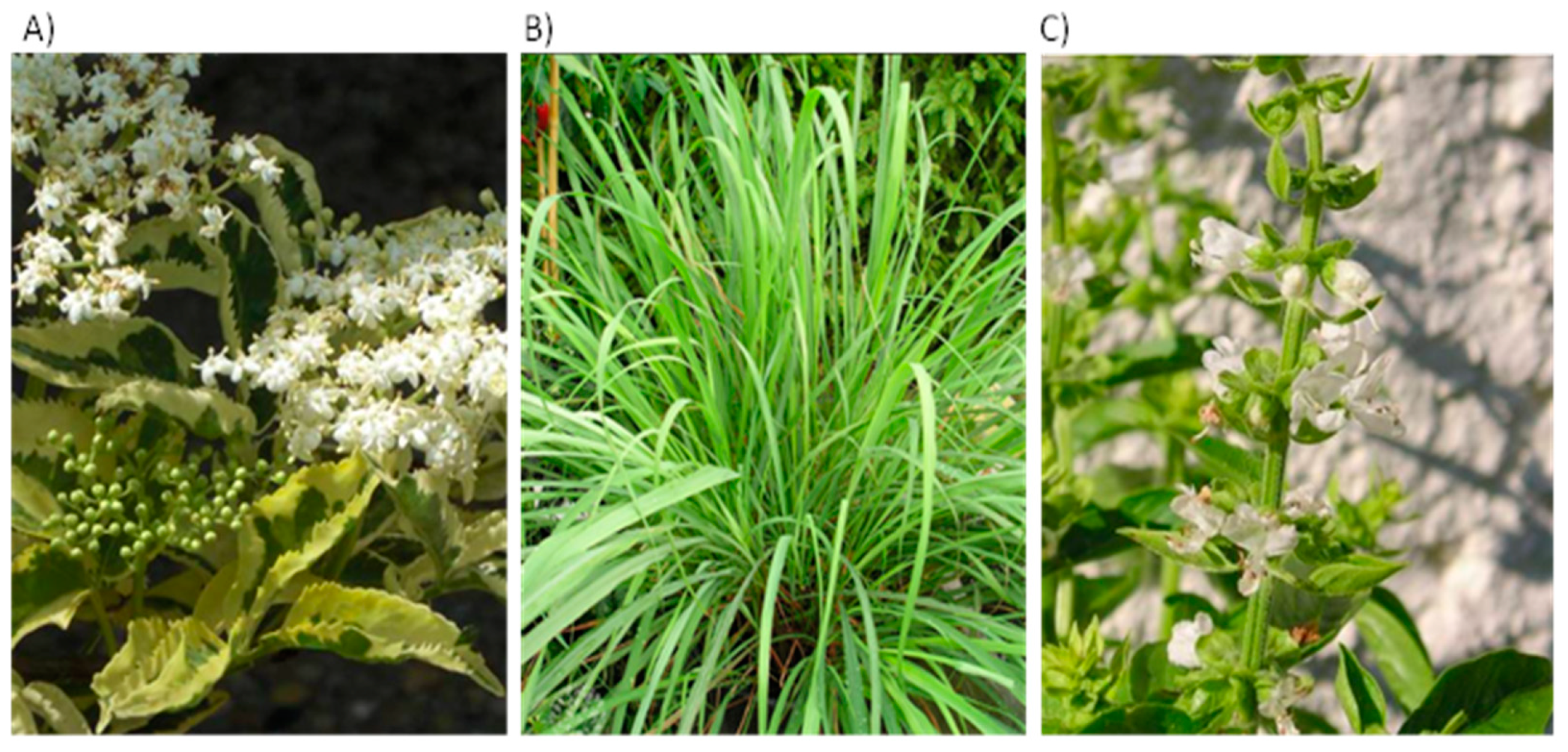
Other uses of these residues associated with specific types of AMP shown in Figure 7 are listed below.
- Hydrates from different parts of the Elderberry (Sambucus nigra) can be used in therapeutic applications due to the pH and trace amounts of the oils. The hydrosols obtained are milder therapeutic agents than essential oils, they are mild and non-toxic and therefore ideal for use as a skin tonic or for therapeutic baths [84].
- Water from the hydro-distillation of lemongrass or lemongrass (Sympopogon citrate) consists of an essential oil rich in emulsified citral, making it a suitable ingredient for food applications. This hydrosol can be used as a functional ingredient in formulations of matcha tea in compliance with beverage safety regulations [78].
In addition, through the aqueous distillation of lemongrass or lemongrass (Cymbopogon citrate), it is possible to obtain a non-distilled aqueous phase resulting from the boiling of plant biomass (decoction), with antioxidant and anti-inflammatory properties, phenolic compounds and polysaccharides rich in glucose. These properties make it possible to apply this by-product as a functional dietary fiber in the food industry [78].
- The liquid distillation residue of basil (Ocimum basilicum L.) contains phenolic compounds, such as rosmarinic acid and caffeic acid, and can be used in the cosmetic and pharmaceutical industry [82].
Figure 7.
Aromatic and Medicinal Plants: A) Sambucus nigra, B) Cymbopogon citrates and C) Ocimum basilicum L. Source: https://jb.utad.pt/.
Figure 7.
Aromatic and Medicinal Plants: A) Sambucus nigra, B) Cymbopogon citrates and C) Ocimum basilicum L. Source: https://jb.utad.pt/.
The various applications mentioned so far contribute to waste reduction, climate change mitigation, soil carbon sequestration, soil stabilization, soil quality improvement, provision of a range of ecosystem services, and remediation of areas contaminated by heavy metals. Many aromatic plants can be used to restore and remediate degraded and polluted lands with low energy consumption and the reuse of their residues can prolong these benefits [77].
In short, the effluent can be used as follows:
- Eco-friendly bio-pesticides,
- Liquid fertilizers,
- Functional dietary fiber and functional ingredient in matcha tea formulations in the food industry,
- Sources of phenolic compounds such as rosmarinic acid and caffeic acid in the cosmetic and pharmaceutical industry.
4.1.3. Waste Extraction
Re-extraction of the active ingredients is another method that can increase the economic value of PAM and reduce the entry of chemicals into the environment during waste disposal. Since many bioactive compounds remain in the waste, even after decoction or extraction, it is important and necessary to perform a new extraction process [12,85].
Different solids extracts showed germination-stimulating, antioxidant, antifungal, antibacterial and anti-inflammatory properties. Extracts from these by-products have also been suggested as food preservatives [80].
By extracting these biomasses using food solvents (ethanol and water), it is possible to recover the polyphenols. Moreover, antioxidant and anti-tyrosinase activities can be exploited in the food and cosmetic industries to prevent browning and degradation of the active compounds and to improve the preservation of the final products [80].
Due to their anti-enzyme properties, some biomass extracts are suitable for various applications in the food, cosmetic, and pharmaceutical industries [86].
Below are examples of the potential for evaluation of waste extracts from the species represented in Figure 8 and others shown previously.
By extracting post-distillation residues from thyme (Thymbra capitata L.) with methanol, including plant residues and liquids, it is concluded that these residues are an effective potential source of polyphenols, as natural antioxidants with properties beneficial to human health and can be useful in substituting or even reducing synthetic antioxidants in foods, cosmetics, and pharmaceuticals [87].
In the next sub-chapter, potential uses for other types of waste obtained from PAM processing are presented.
In summary, regarding the recovery of waste extracts, the following aspects stand out:
- Solid residue extracts showed antioxidant, anti-fungal, anti-bacterial, anti-inflammatory, and germination-stimulating properties as food preservatives, suitable for various applications in the food, cosmetic and pharmaceutical industries.
- Hydrosol extracts contain biological properties such as nematocidal, insecticidal, antibacterial, antifungal, antioxidant, and anti-inflammatory, favoring their use as a medical treatment for hyperlipidemia and cardiovascular diseases.
- Wastewater extracts contain many antioxidants, antifungal, bacterial, enzymatic, and anti-inflammatory biological activities, which favor their use in food additives, cosmetics, or even medical treatments.
4.2. Other Waste
In addition to residues from distillation, residues generated in the harvesting, drying and processing stages have the potential for recovery. Some species, whose processing residues can be evaluated, are represented in Figure 9.
One study found that in corn crop, Chinese herbal medicine residue can be used as an effective organic fertilizer and replace up to 50% of the amount of chemical fertilizer usually applied. The application of these residues in crops is an effective recycling strategy and allows for the management of nutrients that improve soil fertility and reduce the use of chemical fertilizers. The use of these residues has contributed to protecting the environment, reducing soil nutrient loss, and enhancing crop yields [88]. In addition, the use of industrial PAM by-products in agricultural practices is a possible way to prevent the growth of major plant pathogens in soil [89].
The conversion of organic waste from the harvesting, production and processing of medicinal plants can constitute a high-quality organic fertilizer. One study showed that the application of organic fertilizer to calendula (Calendula officinalis L.) improved the yield and quality characteristics of the plants as if they were fertilized with commercial fertilizers [90].
Another study showed that it is possible to evaluate all residues of rosemary (Rosmarinus officinalis L.), common sage (Salvia officinalis L.) and basil (Ocimum basilicum L.) obtained in cultivation and processing. These residues include whole basil plants at the end of the cycle, rosemary pruning residues and all prepackaged green residues (leaves, stems, and inflorescences) from basil, rosemary, and sage [81].
The fresh biomass of the aromatic residue was cut into small pieces and then subjected to hydrodistillation. Essential oils recovered from waste retained all the positive properties of the specific aromatic plants used in the study, although they were not collected at the balsamic stage [81].
The study also concluded that the aromatic water recovered at the end of steam distillation of these plants is an easy-to-use product, as it has a species-specific aroma, confirming the high antioxidant activity of basil [81].
In contrast, the solid residues from steam distillation of the three species were introduced to compost [81]. In this way, all farming and processing residues were valued, according to the principles of circular economy.
Additional options for recovering residues from processing different types of PAM are listed below.
- Although the roots of Levisticus (Levisticum officinale W.D.J. Koch) are generally discarded, they can be a source of valuable bioactive compounds, such as phthalides and phenolic acids, and offer biological properties worth exploring, which can lead to a circular economy in the food and/or pharmaceutical industry [91].
- The alcoholic extract of Elderflower (Sambucus nigra) has good antioxidant activity, and the glycerin extract contains appreciable amounts of anthocyanins and other nutrients. Evaluation of the antimicrobial activity of the extract reveals the great potential of bioactive compounds such as nutraceuticals, drugs, and cosmetics for therapeutic purposes [84].
- Tobacco processing waste (Nicotiana tabacum) can be transformed into new raw materials. Compounds are found in tobacco that exhibit important biological activities, including resistance to many diseases, human health regulation, sterilization, and pest control. The wide range of application scenarios gives by-products of the tobacco processing industry a high potential for recovery [92].
- The use of residual hemp (Cannabis sativa L.) biomass as an alternative and renewable lignocellulosic raw material in the manufacture of lightweight board products is a fundamental principle of the circular economy and an environmentally sound strategy to deal with the increasing scarcity of resources in the wood-based board industry [93]. In addition, hemp residue can be used for composting, incineration, and anaerobic digestion [94].
- Pine bark and buds, previously considered inappropriate waste, have been identified as a rich source of natural polyphenols, which have beneficial nutritional, medicinal and health properties [95].
Pine (Pinus pinaster) bark extracts exhibit pharmacological properties, i.e., photoprotective and anti-photoaging activities. In food applications, studies have revealed that pine bark extract significantly improved the oxidative stability of cooked meat and inhibited bacterial growth when used as a supplement to fruit juice, acting as a shelf-life extender. Pine buds can also be a valuable raw material for preparing nutritional infusions. Products based on pine buds, such as juices, beer and tea are already on the market [95].
- The roots of the aloe vera plant (Aloe barbadensis Miller), due to its quinone content, have pharmacological significance and antiviral activity [82].
- A study suggests including the ethanolic extract of the solid remains of female Abrótano (Santolina chamaecyparissus) as a natural ingredient for the development of natural coatings to preserve cheese and prevent oxidation and fungal development [80].
- The use of ethanolic extracts from solid residues of lavender (Lavandula angustifolia) and lemongrass (Melissa officinalis) has the potential to extend the shelf life of bread [80].
After extraction of essential oils from the aerial parts of Lavandula angustifolia and Lavandula x intermedia, a biomass is obtained which, although frequently used for vegetation in other crops, or for energy production through combustion, is still rich in polyphenols and represents an interesting source Interesting bioactive compound, although they may have been partially lost during the steam distillation process. Due to their anti-enzyme properties, the biomass extracts used to extract the essential oils may represent a valid therapeutic alternative for the prevention and treatment of Alzheimer's disease, hyperpigmentation, and other chronic diseases where the roots play a major role. Thus, since they are important sources of bioactive compounds, these extracts are suitable for various applications in the food, cosmetic, and pharmaceutical industries [86].
In short, about the recovery of waste from other processing steps, other than distillation, the following aspects stand out:
- Parts of plants that are often considered waste products (roots, bark and buds) can be a source of valuable bioactive compounds useful in the food, pharmaceutical and cosmetic industries.
- Residues resulting from harvesting, drying and processing can be used in composting to obtain organic fertilizers.
5. Conclusions
With the increase in demand for agricultural products and the consequent pressures to increase production, there is a risk of resource over-exploitation, which can have negative environmental and health effects [9]. To reduce these risks, it is critical that producers implement sustainable practices, optimizing the exploitation of these natural resources, without compromising their conservation.
This document has compiled a set of Good Agricultural Practices applicable to planting, harvesting, drying, extraction and packaging activities. In addition, the possibility of recovering PAM residues was introduced. This residue can be used for energy purposes, through direct combustion, to make briquettes, pellets, gasifiers or to obtain biodiesel and biochar. The residues can be used for animal feed, composting, mulching, as adsorbents, environmentally friendly biological insecticides the effluent from hydro distillation can be used as liquid fertilizer.
In addition, there are residues derived from PAM processing that can be used in the production of cellulose, bio-aggregates for building materials, in biotechnology applications, in the green chemical, food, pharmaceutical and cosmetic industries.
The environmentally correct application of strategies based on waste recovery makes it possible to obtain value-added products and reduce waste treatment costs, enhance economic benefits and, at the same time, contribute to the well-being of the planet [12,13].
It is hoped that the information gathered in this guide will help MAP producers to move to more sustainable production methods, which allow to reconcile the economic benefits of exploiting natural resources and preserving ecosystems [1], after aiming at environmental sustainability. social and economic.
References
- Taghouti, I., R. Cristobal, A. Brenko, K. Stara, N. Markos, B. Chapelet, L. Hamrouni, D. Buršić and J.A. Bonet, The Market Evolution of Medicinal and Aromatic Plants: A Global Supply Chain Analysis and an Application of the Delphi Method in the Mediterranean Area. Forests, 2022. 13(5). [CrossRef]
- Chandra, P. and V. Sharma, Marketing information system and strategies for sustainable and competitive medicinal and aromatic plants trade. Information Development, 2019. 35(5): p. 806-818. [CrossRef]
- Campos, J.L.A. and U.P. Albuquerque, Indicators of conservation priorities for medicinal plants from seasonal dry forests of northeastern Brazil. Ecological Indicators, 2021. 121(September 2020): p. 106993-106993. [CrossRef]
- Kumar, R., Anticancer Medicinal Plants: Opportunities and Challenges For Conservation and Sustainable Use. Ambient Science, 2019. 06H & 06Sp(2 & 1): p. 1-3. [CrossRef]
- Sharma, N. and C.P. Kala, Harvesting and management of medicinal and aromatic plants in the Himalaya. Journal of Applied Research on Medicinal and Aromatic Plants, 2018. 8(February 2017): p. 1-9. [CrossRef]
- Pata, U.K., Linking renewable energy, globalization, agriculture, CO2 emissions and ecological footprint in BRIC countries: A sustainability perspective. Renewable Energy, 2021. 173: p. 197-208. [CrossRef]
- Yu, S. and Y. Mu, Sustainable Agricultural Development Assessment: A Comprehensive Review and Bibliometric Analysis. Sustainability (Switzerland), 2022. 14(19). [CrossRef]
- Bandinelli, R., D. Acuti, V. Fani, B. Bindi and G. Aiello, Environmental practices in the wine industry: an overview of the Italian market. British Food Journal, 2020. 122(5): p. 1625-1646. [CrossRef]
- Trabelsi, M., E. Mandart, P. Le Grusse and J.P. Bord, ESSIMAGE: a tool for the assessment of the agroecological performance of agricultural production systems. Environmental Science and Pollution Research, 2019. 26(9): p. 9257-9280. [CrossRef]
- Geissdoerfer, M., P. Savaget, N.M.P. Bocken and E.J. Hultink, The Circular Economy – A new sustainability paradigm? Journal of Cleaner Production, 2017. 143: p. 757-768.
- Braga, F.C., Paving New Roads Towards Biodiversity-Based Drug Development in Brazil: Lessons from the Past and Future Perspectives. Revista Brasileira de Farmacognosia, 2021. 31(5): p. 505-518. [CrossRef]
- Freitas, L.C., J.R. Barbosa, A.L.C. da Costa, F.W.F. Bezerra, R.H.H. Pinto and R.N.d. Carvalho Junior, From waste to sustainable industry: How can agro-industrial wastes help in the development of new products? Resources, Conservation and Recycling, 2021. 169(December 2020).
- Yaashikaa, P.R., P. Senthil Kumar and S. Varjani, Valorization of agro-industrial wastes for biorefinery process and circular bioeconomy: A critical review. Bioresource Technology, 2022. 343(October 2021): p. 126126-126126. [CrossRef]
- WHO, WHO guidelines on good agricultural and collection practices (GACP) for medicinal plants. World Health Organization, 2003: p. 80-80.
- Europam, Guidelines for Good Agricultural and Wild Collection Practice ( GACP ) of Medicinal and Aromatic Plants. 2006(7): p. 1-12.
- Europam, European Herb Growers Association (EUROPAM) GACP Working Group A Practical Implementation Guide to Good Agricultural and Wild Collection Practices (GACP). 2016. 1-47.
- European Medicines Agency (EMA), Guideline on Good Agricultural and Collection Practice (GACP) for Starting Materials of Herbal Origin. EMEA, 2006(February): p. 1-11.
- Felix, L., T. Houet and P.H. Verburg, Mapping biodiversity and ecosystem service trade-offs and synergies of agricultural change trajectories in Europe. Environmental Science and Policy, 2022. 136(July): p. 387-399. [CrossRef]
- Zhao, J., Y. Cao, L. Yu, X. Liu, R. Yang and P. Gong, Future global conflict risk hotspots between biodiversity conservation and food security: 10 countries and 7 Biodiversity Hotspots. Global Ecology and Conservation, 2022. 34(June 2021). [CrossRef]
- Köninger, J., P. Panagos, A. Jones, M.J.I. Briones and A. Orgiazzi, In defence of soil biodiversity: Towards an inclusive protection in the European Union. Biological Conservation, 2022. 268(March). [CrossRef]
- Winkel, G., M. Lovrić, B. Muys, P. Katila, T. Lundhede, M. Pecurul, D. Pettenella, N. Pipart, T. Plieninger, I. Prokofieva, C. Parra, H. Pülzl, D. Roitsch, J.L. Roux, B.J. Thorsen, L. Tyrväinen, M. Torralba, H. Vacik, G. Weiss and S. Wunder, Governing Europe's forests for multiple ecosystem services: Opportunities, challenges, and policy options. Forest Policy and Economics, 2022. 145(May).
- Stryamets, N., M. Elbakidze, J. Chamberlain and P. Angelstam, Governance of non-wood forest products in Russia and Ukraine: Institutional rules, stakeholder arrangements, and decision-making processes. Land Use Policy, 2020. 94(November 2017): p. 104289-104289. [CrossRef]
- Lubbe, A. and R. Verpoorte, Cultivation of medicinal and aromatic plants for specialty industrial materials. Industrial Crops and Products, 2011. 34(1): p. 785-801. [CrossRef]
- Wang, D., C. Shi, K. Alamgir, S.M. Kwon, L. Pan, Y. Zhu and X. Yang, Global assessment of the distribution and conservation status of a key medicinal plant (Artemisia annua L.): The roles of climate and anthropogenic activities. Science of the Total Environment, 2022. 821: p. 153378-153378. [CrossRef]
- Vincent, H., D. Hole and N. Maxted, Congruence between global crop wild relative hotspots and biodiversity hotspots. Biological Conservation, 2022. 265: p. 109432-109432. [CrossRef]
- McEwan, C., A. Hughes and D. Bek, Futures, ethics and the politics of expectation in biodiversity conservation: A case study of South African sustainable wildflower harvesting. Geoforum, 2014. 52: p. 206-215. [CrossRef]
- Alzweiri, M., A.A. Sarhan, K. Mansi, M. Hudaib and T. Aburjai, Ethnopharmacological survey of medicinal herbs in Jordan, the Northern Badia region. Journal of Ethnopharmacology, 2011. 137(1): p. 27-35. [CrossRef]
- Ozturk, M., I. Uysal, E. Karabacak and S. Celik, Plant species microendemism, rarity and conservation of pseudo - Alpine zone of Kazdaǧi (Mt. Ida) national park - Turkey. Procedia - Social and Behavioral Sciences, 2011. 19: p. 778-786.
- Jarić, S., Z. Popović, M. Mačukanović-Jocić, L. Djurdjević, M. Mijatović, B. Karadžić, M. Mitrović and P. Pavlović, An ethnobotanical study on the usage of wild medicinal herbs from Kopaonik Mountain (Central Serbia). Journal of Ethnopharmacology, 2007. 111(1): p. 160-175. [CrossRef]
- Dejouhanet, L., S. Assemat, M.A. Tareau and C. Tareau, Building a value chain with a wild plant: Lessons to be learned from an experiment in French Guiana. Environmental Science and Policy, 2022. 138(October): p. 162-170. [CrossRef]
- Millhauser, J.K. and T.K. Earle, Biodiversity and the human past: Lessons for conservation biology. Biological Conservation, 2022. 272(May): p. 109599-109599. [CrossRef]
- Cappelli, S.L., L.A. Domeignoz-Horta, V. Loaiza and A.L. Laine, Plant biodiversity promotes sustainable agriculture directly and via belowground effects. Trends in Plant Science, 2022. 27(7): p. 674-687. [CrossRef]
- Kumar Rai, P. and J.S. Singh, Invasive alien plant species: Their impact on environment, ecosystem services and human health. Ecological Indicators, 2020. 111(January): p. 106020-106020. [CrossRef]
- Kurnaz, M.L. and I. Aksan Kurnaz, Commercialization of medicinal bioeconomy resources and sustainability. Sustainable Chemistry and Pharmacy, 2021. 22(February): p. 100484-100484. [CrossRef]
- Srivastava, A.K., S. Dixit and A.A. Srivastava, Criticism of Triple Bottom Line: TBL (With Special Reference to Sustainability). Corporate Reputation Review, 2022. 25(1): p. 50-61.
- FAO, Conservation Agriculture Principles. Plant Production and Protection Division, 2022: p. 2-3.
- Florentín, M.A., M. Peñalva, A. Calegari, R.D. Translated and M.J. McDonald, Green Manure/Cover Crops and Crop Rotation in Conservation Agriculture on Small Farms. Vol. 12. 2010. 12-2010.
- EMEA, Guideline on Good Agricultural and Collection Practice (GACP) for Starting Materials of Herbal Origin. EMEA, 2006(February): p. 1-11.
- Europam, Guidelines for Good Agricultural and Wild Collection Practice ( GACP ) of Medicinal and Aromatic Plants. 2022(7): p. 1-12.
- Volenzo, T. and J. Odiyo, Integrating endemic medicinal plants into the global value chains: the ecological degradation challenges and opportunities. Heliyon, 2020. 6(9): p. e04970-e04970. [CrossRef]
- Cunningham, A.B., J.A. Brinckmann, X. Yang and J. He, Introduction to the special issue: Saving plants, saving lives: Trade, sustainable harvest and conservation of traditional medicinals in Asia. Journal of Ethnopharmacology, 2019. 229(August 2018): p. 288-292. [CrossRef]
- Ihemezie, E.J., L.C. Stringer and M. Dallimer, Understanding the diversity of values underpinning forest conservation. Biological Conservation, 2022. 274(July): p. 109734-109734. [CrossRef]
- Ticktin, T., M. Charitonidou, J. Douglas, J.M. Halley, M. Hernández-Apolinar, H. Liu, D. Mondragón, E.A. Pérez-García, R.L. Tremblay and J. Phelps, Wild orchids: A framework for identifying and improving sustainable harvest. Biological Conservation, 2023. 277(July 2022).
- Palomo-Campesino, S., M. García-Llorente, V. Hevia, F. Boeraeve, N. Dendoncker and J.A. González, Do agroecological practices enhance the supply of ecosystem services? A comparison between agroecological and conventional horticultural farms. Ecosystem Services, 2022. 57(June).
- Šumrada, T., B. Vreš, T. Čelik, U. Šilc, I. Rac, A. Udovč and E. Erjavec, Are result-based schemes a superior approach to the conservation of High Nature Value grasslands? Evidence from Slovenia. Land Use Policy, 2021. 111(February).
- Heywood, V., A. Casas, B. Ford-Lloyd, S. Kell and N. Maxted, Conservation and sustainable use of crop wild relatives. Agriculture, Ecosystems and Environment, 2007. 121(3): p. 245-255. [CrossRef]
- Abensperg-Traun, M., CITES, sustainable use of wild species and incentive-driven conservation in developing countries, with an emphasis on southern Africa. Biological Conservation, 2009. 142(5): p. 948-963. [CrossRef]
- Barata, A.M., F. Rocha, V. Lopes and A.M. Carvalho, Conservation and sustainable uses of medicinal and aromatic plants genetic resources on the worldwide for human welfare. Industrial Crops and Products, 2016. 88: p. 8-11. [CrossRef]
- Draper Munt, D., P. Muñoz-Rodríguez, I. Marques and J.C. Moreno Saiz, Effects of climate change on threatened Spanish medicinal and aromatic species: predicting future trends and defining conservation guidelines. Israel Journal of Plant Sciences, 2016. 63(4): p. 309-319. [CrossRef]
- Schippmann, U., D. Leaman and A.B. Cunningham, A Comparison of Cultivation and Wild Collection of Medicinal and Aromatic Plants Under Sustainability Aspects. Medicinal and Aromatic Plants, 2007: p. 75-95. [CrossRef]
- Cetinkaya, G., A. Kambu and K. Nakamura, Sustainable development and natural resource management: An example from Köprülü kanyon National Park, Turkey. Sustainable Development, 2014. 22(1): p. 63-72.
- Li, X., Y. Chen, Y. Lai, Q. Yang, H. Hu and Y. Wang, Sustainable utilization of traditional chinese medicine resources: Systematic evaluation on different production modes. Evidence-based Complementary and Alternative Medicine, 2015. 2015. [CrossRef]
- El-Zaeddi, H., Á. Calín-Sánchez, L. Noguera-Artiaga, J. Martínez-Tomé and Á.A. Carbonell-Barrachina, Optimization of harvest date according to the volatile composition of Mediterranean aromatic herbs at different vegetative stages. Scientia Horticulturae, 2020. 267(February): p. 109336-109336.
- Schippmann, U., D.J. Leaman and a.B. Cunningham, Impact of Cultivation and Gathering of Medicinal Plants on Biodiversity : Global Trends and Issues. FAO. 2002. Biodiversity and the Ecosystem Approach in Agriculture, Forestry and Fisheries. Satellite event on the occasion of the Ninth Regular Session of the Commission on Genetic Resources for Food and Agriculture. Rome, 12-13 October 2002. Inter-Depart, 2002. 676(October): p. 1-21.
- Máthé, Á., A New Look at Medicinal and Aromatic Plants. Acta Horticulturae, 2011. 925(March): p. 13-20. [CrossRef]
- Cuervo-Andrade, S.P. and O. Hensel, Stepwise drying of medicinal plants as alternative to reduce time and energy processing. IOP Conference Series: Materials Science and Engineering, 2016. 138(1). [CrossRef]
- Bhaskara Rao, T.S.S. and S. Murugan, Solar drying of medicinal herbs: A review. Solar Energy, 2021. 223(May): p. 415-436. [CrossRef]
- Mahapatra, A.K. and C.N. Nguyen, Drying of medicinal plants. Acta Horticulturae, 2007. 756: p. 47-54. [CrossRef]
- Khosravi, H., A. Rashidi and M.A. Shourkaei, Life cycle assessment of medicinal plant extract drying methods. Environment, Development and Sustainability, 2023(0123456789). [CrossRef]
- Rocha, R.P., E.C. Melo and L.L. Radünz, Influence of drying process on the quality of medicinal plants: A review. Journal of Medicinal Plant Research, 2011. 5(33): p. 7076-7084.
- Khallaf, A.E.M. and A. El-Sebaii, Review on drying of the medicinal plants (herbs) using solar energy applications. Heat and Mass Transfer/Waerme- und Stoffuebertragung, 2022. 58(8): p. 1411-1428. [CrossRef]
- Europe, C.o. European Pharmacopoeia. 2004 2005; 5th Edition. [: 2004 2005; 5th Edition.
- da Silva, R.F., C.N. Carneiro, C.B. Cheila, F. J. V. Gomez, M. Espino, J. Boiteux, M. de los Á. Fernández, M.F. Silva and F. de S. Dias, Sustainable extraction bioactive compounds procedures in medicinal plants based on the principles of green analytical chemistry: A review. Microchemical Journal, 2022. 175(October 2021). [CrossRef]
- Espino, M., M.d.l.Á. Fernández, F.J.V. Gomez, J. Boiteux and M.F. Silva, Green analytical chemistry metrics: Towards a sustainable phenolics extraction from medicinal plants. Microchemical Journal, 2018. 141(March): p. 438-443. [CrossRef]
- Petigny, L., M.Z. Özel, S. Périno, J. Wajsman and F. Chemat, Water as Green Solvent for Extraction of Natural Products. Green Extraction of Natural Products: Theory and Practice, 2014: p. 237-264. [CrossRef]
- Dukić, J., M. Hunić, M. Nutrizio and A. Režek Jambrak, Influence of High-Power Ultrasound on Yield of Proteins and Specialized Plant Metabolites from Sugar Beet Leaves (Beta vulgaris subsp. vulgaris var. altissima). Applied Sciences (Switzerland), 2022. 12(18).
- Kant, R. and A. Kumar, Review on essential oil extraction from aromatic and medicinal plants: Techniques, performance and economic analysis. Sustainable Chemistry and Pharmacy, 2022. 30(August): p. 100829-100829. [CrossRef]
- Kusuma, H.S., D.K.Y. Putri, I. Triesty and M. Mahfud, Comparison of microwave hydrodistillation and solvent-free microwave extraction for extraction of agarwood oil. Chiang Mai Journal of Science, 2019. 46(4): p. 741-755.
- Ranjitha, K., K.S. Shivashankara, D.V. Sudhakar Rao, H.S. Oberoi, T.K. Roy and H. Bharathamma, Improvement in shelf life of minimally processed cilantro leaves through integration of kinetin pretreatment and packaging interventions: Studies on microbial population dynamics, biochemical characteristics and flavour retention. Food Chemistry, 2017. 221: p. 844-854. [CrossRef]
- Rivera, C.S., D. Blanco, P. Marco, R. Oria and M.E. Venturini, Effects of electron-beam irradiation on the shelf life, microbial populations and sensory characteristics of summer truffles (Tuber aestivum) packaged under modified atmospheres. Food Microbiology, 2011. 28(1): p. 141-148. [CrossRef]
- Ouf, S.A. and E.M. Ali, Does the treatment of dried herbs with ozone as a fungal decontaminating agent affect the active constituents? Environmental Pollution, 2021. 277: p. 116715-116715.
- Karam, L., T. Salloum, R. El Hage, H. Hassan and H.F. Hassan, How can packaging, source and food safety management system affect the microbiological quality of spices and dried herbs? The case of a developing country. International Journal of Food Microbiology, 2021. 353(May): p. 109295-109295. [CrossRef]
- Santos, J., M. Herrero, J.A. Mendiola, M.T. Oliva-Teles, E. Ibáñez, C. Delerue-Matos and M.B.P.P. Oliveira, Fresh-cut aromatic herbs: Nutritional quality stability during shelf-life. Lwt, 2014. 59(1): p. 101-107.
- Sankat, C.K. and V. Maharaj, Shelf life of the green herb 'shado beni' (Eryngium foetidum L.) stored under refrigerated conditions. Postharvest Biology and Technology, 1996. 7(1-2): p. 109-118.
- Yousuf, B., S. Wu and M.W. Siddiqui, Incorporating essential oils or compounds derived thereof into edible coatings: Effect on quality and shelf life of fresh/fresh-cut produce. Trends in Food Science and Technology, 2021. 108(March 2020): p. 245-257. [CrossRef]
- Luo, X., W. Dessie, M. Wang, G.J. Duns, N. Rong, L. Feng, J. Zeng, Z. Qin and Y. Tan, Comprehensive utilization of residues of Magnolia officinalis based on fiber characteristics. Journal of Material Cycles and Waste Management, 2021. 23(2): p. 548-556. [CrossRef]
- Gupta, A.K., J.M.S. Tomar, R. Kaushal, D.M. Kadam, A.C. Rathore, H. Mehta and P.R. Ojasvi, Aromatic plants based environmental sustainability with special reference to degraded land management. Journal of Applied Research on Medicinal and Aromatic Plants, 2021. 22(January): p. 100298-100298. [CrossRef]
- Rodrigues, L., E. Coelho, R. Madeira, P. Teixeira, I. Henriques and M.A. Coimbra, Food Ingredients Derived from Lemongrass Byproduct Hydrodistillation: Essential Oil, Hydrolate, and Decoction. Molecules, 2022. 27(8). [CrossRef]
- Ferraz, C.A., A.C.A. Sousa, D. Caramelo, F. Delgado, A.P. de Oliveira and M.R. Pastorinho, Chemical profile and eco-safety evaluation of essential oils and hydrolates from Cistus ladanifer, Helichrysum italicum, Ocimum basilicum and Thymbra capitata. Industrial Crops and Products, 2022. 175(November 2021). [CrossRef]
- de Elguea-Culebras, G.O., E.M. Bravo and R. Sánchez-Vioque, Potential sources and methodologies for the recovery of phenolic compounds from distillation residues of Mediterranean aromatic plants. An approach to the valuation of by-products of the essential oil market – A review. Industrial Crops and Products, 2022. 175(November 2021). [CrossRef]
- Zaccardelli, M., G. Roscigno, C. Pane, G. Celano, M. Di Matteo, M. Mainente, A. Vuotto, T. Mencherini, T. Esposito, A. Vitti and E. De Falco, Essential oils and quality composts sourced by recycling vegetable residues from the aromatic plant supply chain. Industrial Crops and Products, 2021. 162(January): p. 113255-113255. [CrossRef]
- Saha, A. and B.B. Basak, Scope of value addition and utilization of residual biomass from medicinal and aromatic plants. Industrial Crops and Products, 2020. 145(November 2019): p. 111979-111979. [CrossRef]
- Lesage-Meessen, L., M. Bou, C. Ginies, D. Chevret, D. Navarro, E. Drula, E. Bonnin, J.C. Del Río, E. Odinot, A. Bisotto, J.G. Berrin, J.C. Sigoillot, C.B. Faulds and A. Lomascolo, Lavender- and lavandin-distilled straws: An untapped feedstock with great potential for the production of high-added value compounds and fungal enzymes. Biotechnology for Biofuels, 2018. 11(1): p. 1-13. [CrossRef]
- Sanchez, A., C. Míguez, A. Iglesias and L. Saborido, Value-Added Products by Solvent Extraction and Steam Distillation from Elderberry (Sambucus nigra L.). Applied Sciences (Switzerland), 2022. 12(6). [CrossRef]
- Huang, C., Z.X. Li, Y. Wu, Z.Y. Huang, Y. Hu and J. Gao, Treatment and bioresources utilization of traditional Chinese medicinal herb residues: Recent technological advances and industrial prospect. Journal of Environmental Management, 2021. 299(9). [CrossRef]
- Truzzi, E., M.A. Chaouch, G. Rossi, L. Tagliazucchi, D. Bertelli and S. Benvenuti, Characterization and Valorization of the Agricultural Waste Obtained from Lavandula Steam Distillation for Its Reuse in the Food and Pharmaceutical Fields. Molecules, 2022. 27(5). [CrossRef]
- Hcini, K., A. Bahi, M.B. Zarroug, M.B. Farhat, A.A. Lozano-Pérez, J.L. Cenis, M. Quílez, S. Stambouli-Essassi and M.J. Jordán, Polyphenolic Profile of Tunisian Thyme (Thymbra capitata L.) Post-Distilled Residues: Evaluation of Total Phenolic Content and Phenolic Compounds and Their Contribution to Antioxidant Activity. Molecules, 2022. 27(24). [CrossRef]
- Ma, J., Y. Chen, K. Wang, Y. Huang and H. Wang, Re-utilization of Chinese medicinal herbal residues improved soil fertility and maintained maize yield under chemical fertilizer reduction. Chemosphere, 2021. 283(December 2020): p. 131262-131262. [CrossRef]
- Greff, B., A. Sáhó, E. Lakatos and L. Varga, Biocontrol Activity of Aromatic and Medicinal Plants and Their Bioactive Components against Soil-Borne Pathogens. Plants, 2023. 12(4).
- Filipović, V., V. Ugrenović, V. Popović, S. Dimitrijević, S. Popović, M. Aćimović, A. Dragumilo and L. Pezo, Productivity and flower quality of different pot marigold (Calendula officinalis L.) varieties on the compost produced from medicinal plant waste. Industrial Crops and Products, 2023. 192(December 2022). [CrossRef]
- Mascoloti, R., Â. Fernandes, T.C. Finimundy, C. Pereira, M. Jos, R.C. Calhelha, C. Canan, L. Barros, J.S. Amaral and I.C.F.R. Ferreira, resources Lovage ( Levisticum o ffi cinale W . D . J . Koch ) Roots : Circular Economy. 2020.
- Zou, X., A. Bk, T. Abu-Izneid, A. Aziz, P. Devnath, A. Rauf, S. Mitra, T.B. Emran, A.A.H. Mujawah, J.M. Lorenzo, M.S. Mubarak, P. Wilairatana and H.A.R. Suleria, Current advances of functional phytochemicals in Nicotiana plant and related potential value of tobacco processing waste: A review. Biomedicine and Pharmacotherapy, 2021. 143(August): p. 112191-112191. [CrossRef]
- Fehrmann, J., B. Belleville and B. Ozarska, Effects of Particle Dimension and Constituent Proportions on Internal Bond Strength of Ultra-Low-Density Hemp Hurd Particleboard. Forests, 2022. 13(11). [CrossRef]
- Robertson, K.J., R. Brar, P. Randhawa, C. Stark and S. Baroutian, Opportunities and challenges in waste management within the medicinal cannabis sector. Industrial Crops and Products, 2023. 197(March): p. 116639-116639. [CrossRef]
- Dziedziński, M., J. Kobus-Cisowska and B. Stachowiak, Pinus species as prospective reserves of bioactive compounds with potential use in functional food—current state of knowledge. Plants, 2021. 10(7). [CrossRef]
Figure 1.
Principles of Conservation Agriculture. Source: FAO (2022).
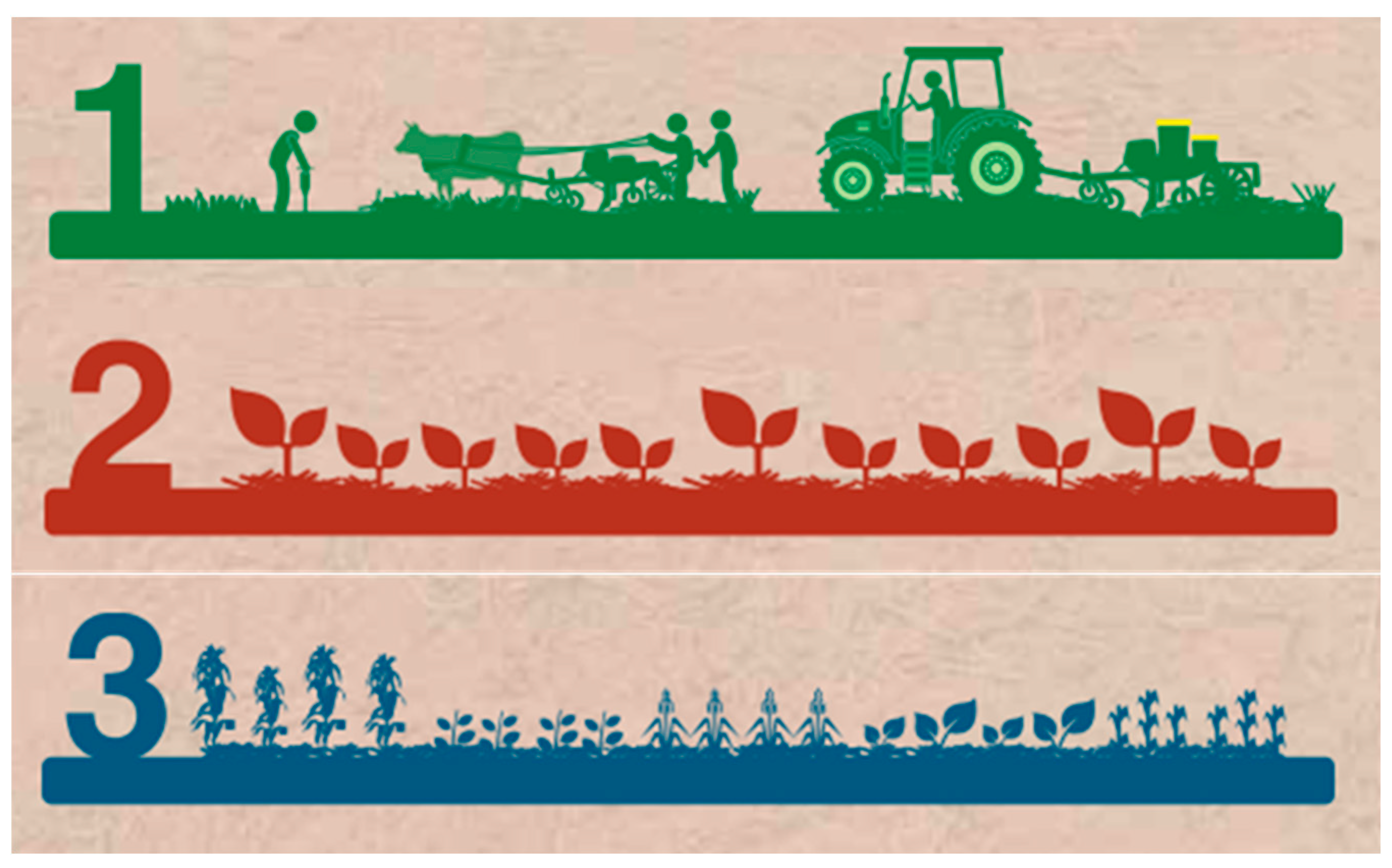
Figure 2.
Cobertura Orgânica do Solo. Fonte: https://www.fao.org/conservation-agriculture/in-practice/soil-organic-cover/en/.
Figure 2.
Cobertura Orgânica do Solo. Fonte: https://www.fao.org/conservation-agriculture/in-practice/soil-organic-cover/en/.
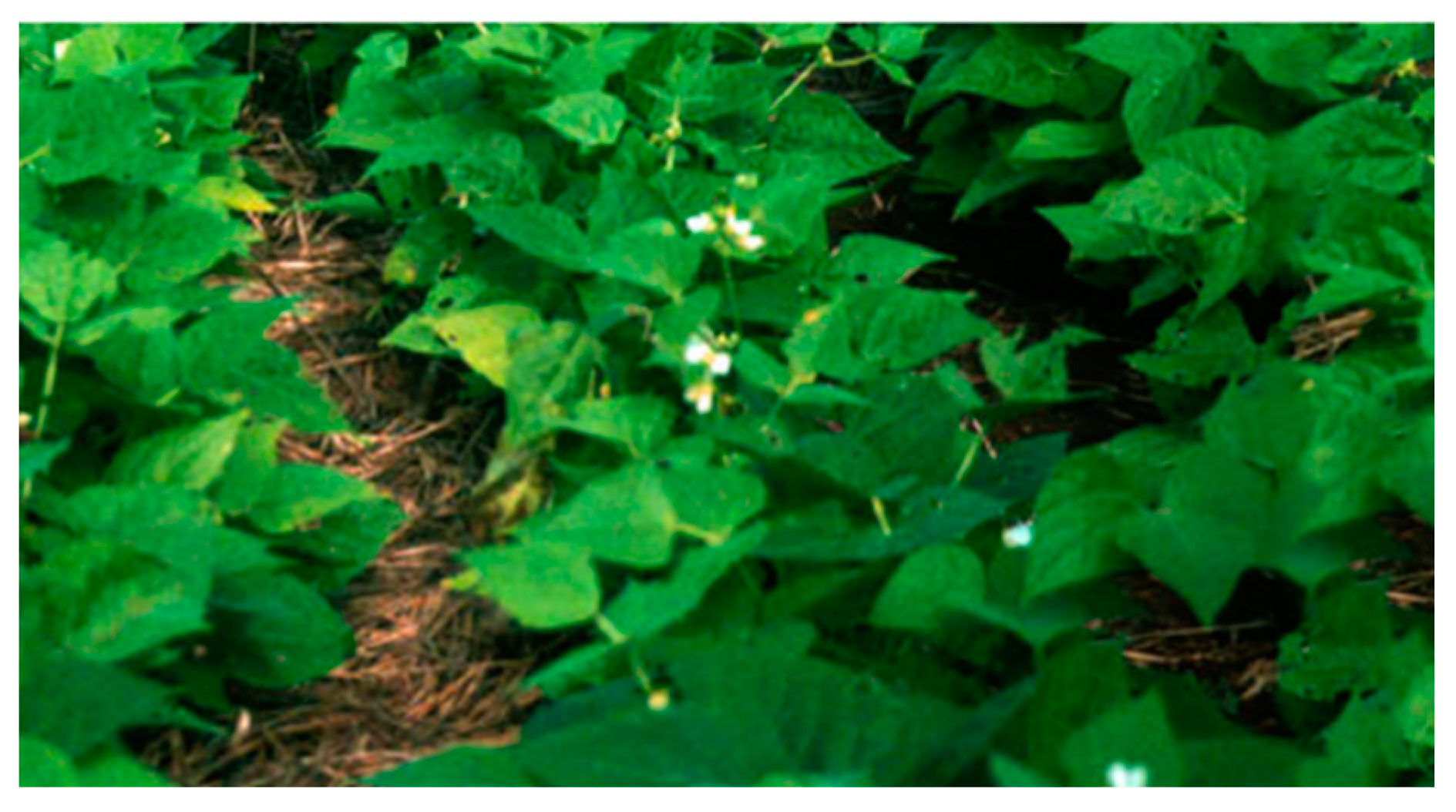
Figure 4.
Hydrodistillation Residues of Aromatic and Medicinal Plants Source: by [80].
Figure 4.
Hydrodistillation Residues of Aromatic and Medicinal Plants Source: by [80].
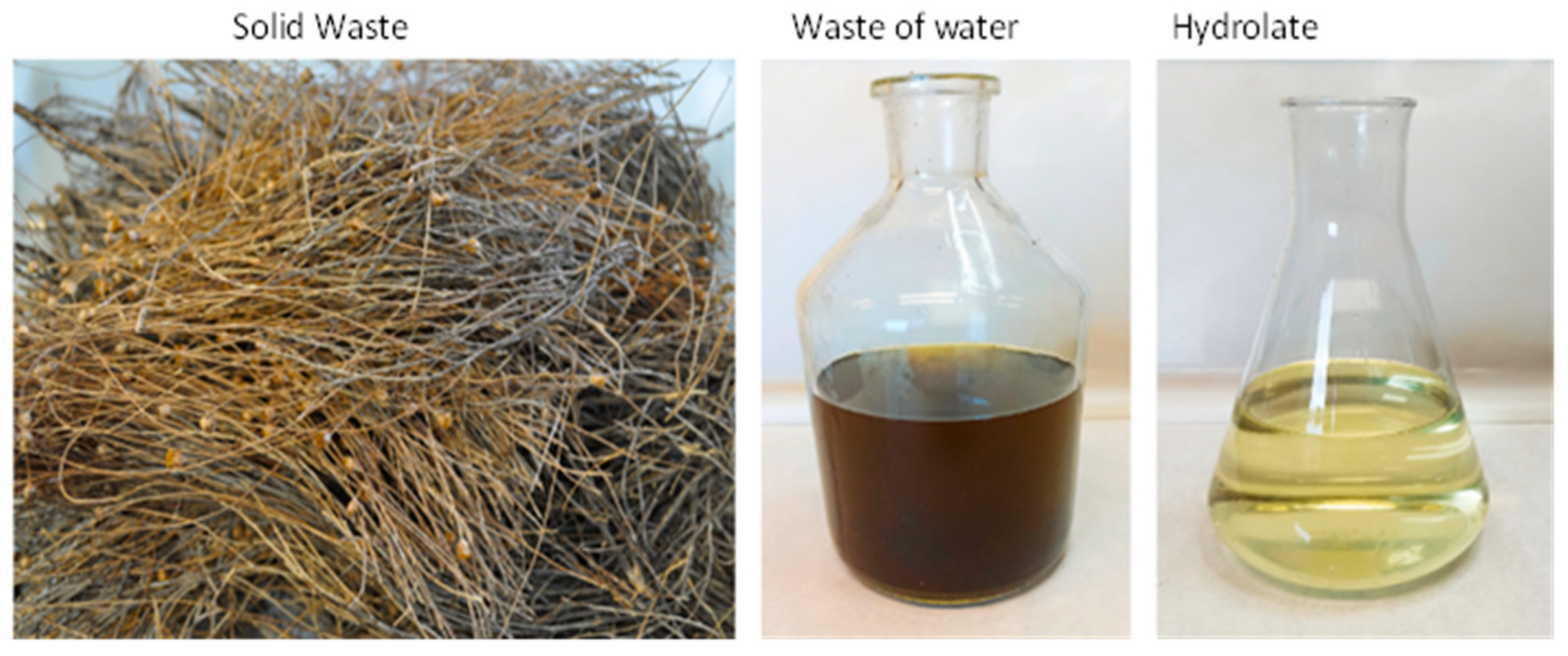
Figure 5.
Aromatic and Medicinal Plants: A) Rosmarinus officinalis L., B) L. angustifolia and C) L. latifólia Source: https://jb.utad.pt/.
Figure 5.
Aromatic and Medicinal Plants: A) Rosmarinus officinalis L., B) L. angustifolia and C) L. latifólia Source: https://jb.utad.pt/.
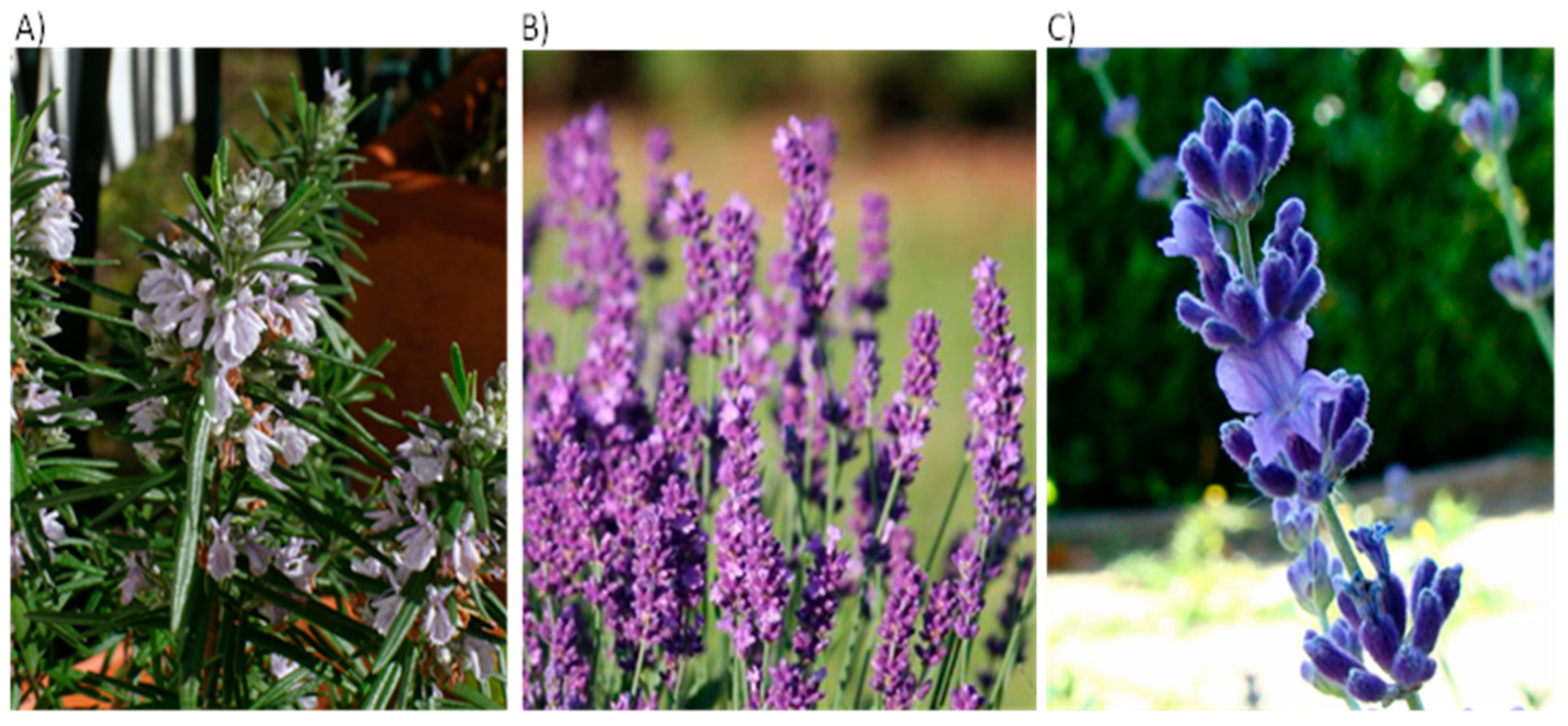
Figure 8.
Aromatic Medicinal Plants: A) Salvia fruticosa L., B) Mentha spicata L., C) Origanum vulgare var. golden, D) Thymus vulgaris, var. Doone Valley, E) Sophora flavescens e F) Thymbra capitata L. Source: https://www.nparks.gov.sg/florafaunaweb/, https://jb.utad.pt/ e https://powo.science kew.org/taxon.
Figure 8.
Aromatic Medicinal Plants: A) Salvia fruticosa L., B) Mentha spicata L., C) Origanum vulgare var. golden, D) Thymus vulgaris, var. Doone Valley, E) Sophora flavescens e F) Thymbra capitata L. Source: https://www.nparks.gov.sg/florafaunaweb/, https://jb.utad.pt/ e https://powo.science kew.org/taxon.
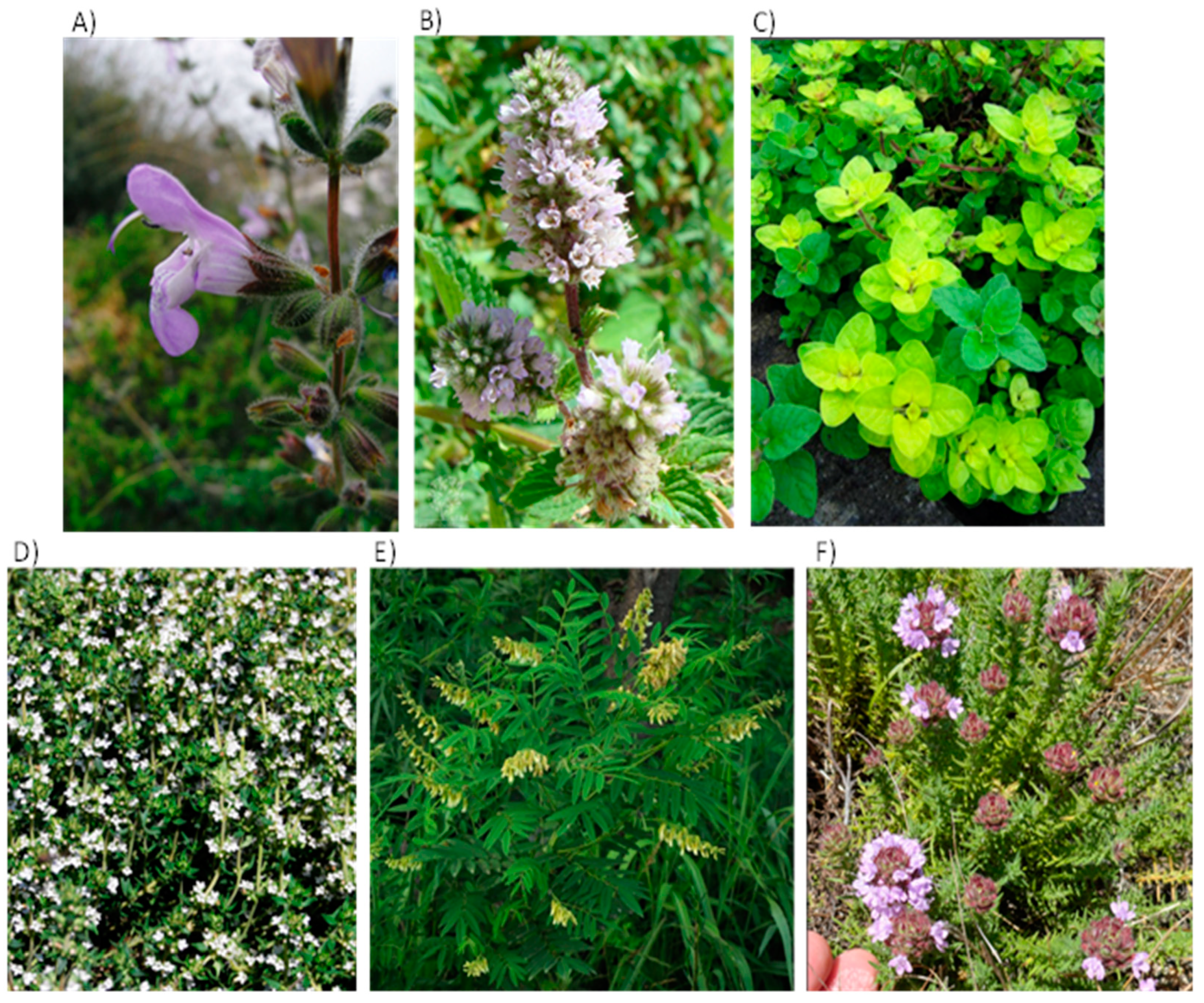
Figure 9.
Aromatic medicinal plants: A) Calendula officinalis L., B) Salvia officinalis L., C) Livesticum officinalis W. D. G. Koch, D) Nicotiana tabacum, E) Cannabis sativa L., F) Pinus pinaster, G) Aloe barbadensis Miller and H) Santolina chamaecyparissus Source:https://jb.utad.pt/.
Figure 9.
Aromatic medicinal plants: A) Calendula officinalis L., B) Salvia officinalis L., C) Livesticum officinalis W. D. G. Koch, D) Nicotiana tabacum, E) Cannabis sativa L., F) Pinus pinaster, G) Aloe barbadensis Miller and H) Santolina chamaecyparissus Source:https://jb.utad.pt/.
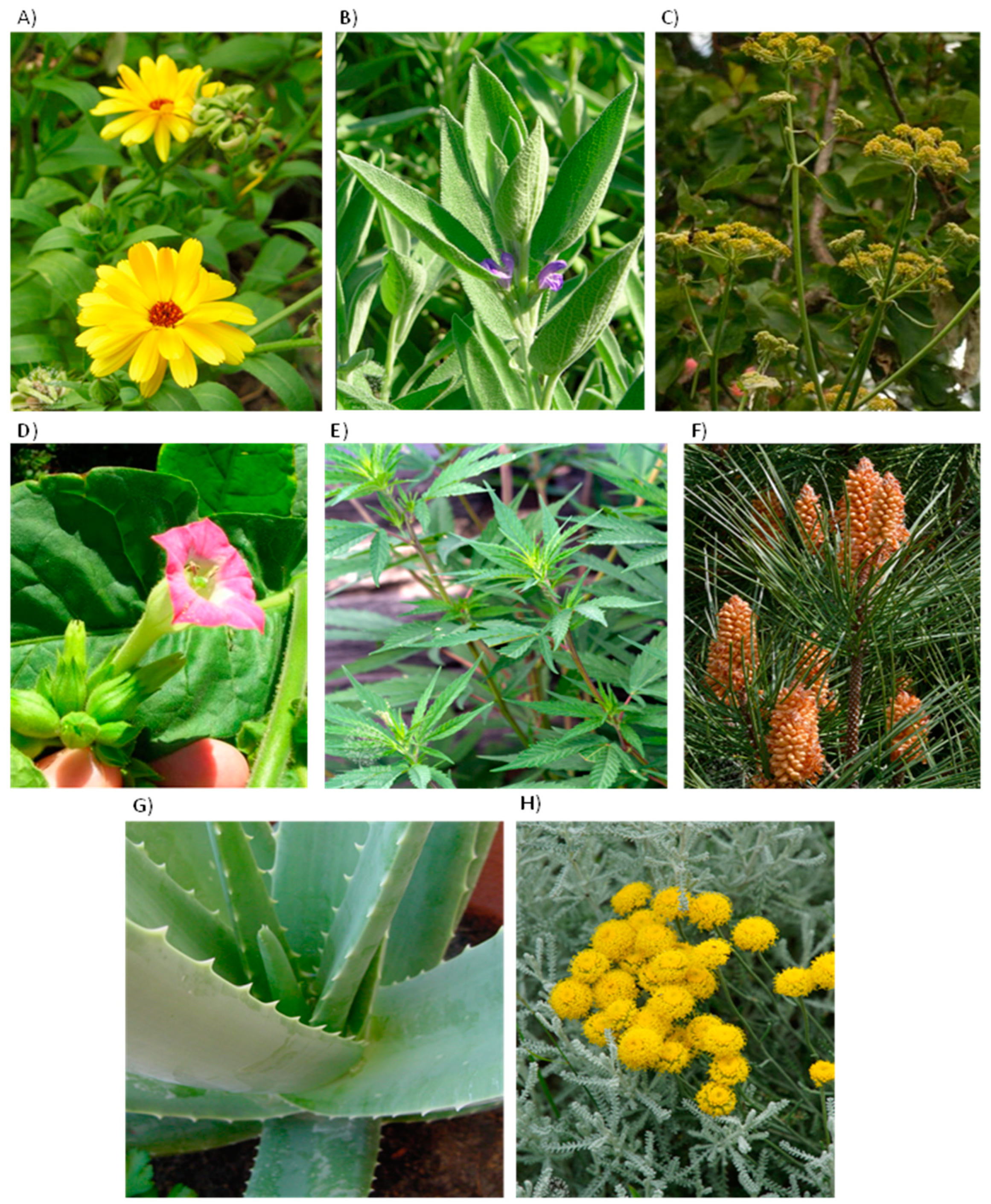

Table 1.
Optimum harvest date according to the total concentration of volatile compounds..
| Species | Nº of weeks after planting date |
|---|---|
| Parsley (Petroselinum crispum) | 9 |
| Dill (Anethum graveolens) | 14 |
| Coriander (Coriandrum sativum) | 3 |
| Peppermint (Mentha × piperita) | 6 |
Table 2.
Maximum final moisture content (MCf) for some medicinal plants, as described in the European Pharmacopoeia.
Table 2.
Maximum final moisture content (MCf) for some medicinal plants, as described in the European Pharmacopoeia.
| Species | Ingredients | MCf (%) |
| Althaea officinalis L. | Raízes | 10 |
| Arnica montana L. | Flores | 10 |
| Calendula officinalis | Flores | 12 |
| Chamomile (Matricaria chamomilla L.) | Flores | 12 |
| Coriander | Sementes | 10 |
| Fennel | Sementes | 8 |
| Hypericum perforatum | Ervas | 10 |
| Lovage | Folhas | 12 |
| Malva sylvestris | Folhas | 12 |
| Lemon balm | Folhas | 10 |
| Peppermint | Folhas | 11 |
| Plantago lanceolata | Erva | 10 |
| Valerian | Raízes | 12 |
| Verbascum phlomoides | Erva | 12 |
Source: Rocha, Melo et al. [60]
Table 3.
Characteristics recommended for drying some medicinal plants.
| Species | Drying Temperature (°C) | MCf (%) | Air Speed (m/s) |
| Echinacea (Echinacea Angustifolia) | 50 | 0 | |
| Bay leaf | 60 | 10 | 15 |
| Andrographic | 7 | ||
| Spearmint (Mentha x villosa Huds) | 50 | 0 | |
| Ginger | 47.2 | 10 | |
| Pistachio | 21.32 | 0.8 | |
| Coconut copra | 7.8 | ||
| Hibiscus | 32.24 | 9.2 | |
| Gourd | 9 | ||
| Garlic | 55-75 | 6.5 | 0.2 |
| Pepper | 55, 60 e 70 | 10 | 1.5 |
| Turmeric (Curcuma zeduaria) | 6.86 | ||
| Spinach | 230 | ||
| Pear | 50-60 | ||
| Bitter orange (Citrus Aurantium) | 50-60 | ||
| Tarragon | 60 | 10 | |
| Longan | 31-58 | ||
| Saffron (Crocus sativus L.) | 45 ± 5 | ||
| Cymbopogon nardus | 60 | ||
| Cymbopogon citratus | 40 | ||
| Summer savory | 45 |
Disclaimer/Publisher’s Note: The statements, opinions and data contained in all publications are solely those of the individual author(s) and contributor(s) and not of MDPI and/or the editor(s). MDPI and/or the editor(s) disclaim responsibility for any injury to people or property resulting from any ideas, methods, instructions or products referred to in the content. |
© 2023 by the authors. Licensee MDPI, Basel, Switzerland. This article is an open access article distributed under the terms and conditions of the Creative Commons Attribution (CC BY) license (http://creativecommons.org/licenses/by/4.0/).
Copyright: This open access article is published under a Creative Commons CC BY 4.0 license, which permit the free download, distribution, and reuse, provided that the author and preprint are cited in any reuse.


