

Submitted:
18 January 2025
Posted:
20 January 2025
You are already at the latest version
Abstract
The objective of this study is to demonstrate that there are significant differences between mountainous and lowland products, particularly concerning polyphenols and phenolic compounds. The research aims to establish the importance of certain agronomic practices in ensuring the agricultural management applicable to the development of mountain and lowland value chains. The reasons for addressing the importance of polyphenols and phenolic compounds in vegetables for the development of agriculture are multiple, one of the most relevant being the complexity of the health benefits of polyphenols. This is a class of pigments widely distributed in nature, contributing vibrant tastes to various fruits and vegetables. The results provide insight into the polyphenols content of different vegetables, as well as phenolic compounds, highlighting their nutritional significance. The synthesis of these findings serves as a foundation for understanding the far-reaching implications on the economic viability, environmental sustainability and strategic positioning of individual agricultural producers from lowland and mountain areas.
Keywords:
Lowland food
; Mountain products
; Phenolic compounds
; Polyphenols
1. Introduction
The current research is highly relevant in the context of food security and safety. As the global population seeks more effective solutions to these challenges, mountain regions offer a promising opportunity. Mountain products are highly valued compared to lowland counterparts due to their distinct physicochemical properties, including the presence of bioactive compounds such as polyphenols and phenolic compounds found in mountain-sourced foods.
Beyond their role as natural colorants, carotenoids and polyphenols play a crucial role in human nutrition, providing a number of health benefits. Two prominent examples of carotenoid-rich crops are tomatoes and corn, where these compounds contribute not only to the visual appeal but also to the nutritional profile of these staple foods. In photosynthetic systems, carotenoids are essential for photoprotection against excess light and contribute to light harvesting, but are perhaps best known for their properties as natural pigments in the yellow to red range (Rodriguez-Concepcion et al., 2018; Covaci et al., 2024).
Clinical studies suggest that the use of carotenoids and polyphenols is associated with a lower risk of cardiovascular disease, cancer and eye disease. Another issue discussed is the role of carotenoids in animals and their feed, with emphasis on birds, fish and crustaceans, livestock and poultry. (Langi et al., 2018; Covaci et al., 2024)
Appropriate conditions and methods of growing, storing, and processing fruits and vegetables to help delay carotenoid degradation and enhance carotenoid biosynthesis are also reviewed and identified. (Ngamwonglumlert et al., 2020; Covaci et al., 2024)
Some of the health benefits are antioxidant protection, anti-inflammatory effects, etc. Carotenoses are of critical importance to humans as precursors of vitamin A synthesis and as dietary antioxidants. The vital roles of carotenoids in plants and humans have led to significant advances in our understanding of carotenoid metabolism and regulation. (Sun et al., 2022; Covaci et al., 2024)
From an agronomic point of view, it was observed that the results are improved qualitatively and quantitatively by applying appropriate irrigation techniques. During the three years of application of agronomic treatments, carotenoids and phenolic compounds in tomatoes, corn, beans and wheat increased through water stress, high water quality, appropriate soil selection for each crop and appropriate irrigation system. (Ciotea et al., 2023; Covaci et al., 2024)
Good water supply practice provides benefits such as water and energy conservation, but also changes the quality of production, especially in the mountain area (Covaci B et al., 2024). In tomatoes it can positively affect the content of soluble solids together with a slight reduction in the amount of production, as confirmed by many studies. There are results in the specialized literature regarding its effect on the composition of carotenoids, polyphenols, and on the lycopene content. A two-year open field irrigation experiment with a center pivot capable of variable rate irrigation was conducted on tomatoes. Water supply levels were 100%, 75% and 50% ETc until the beginning of the ripening stage, calculated by the AquaCrop software compared to the control without regular irrigation. The results suggested that 75% of the ETc supplied to the onset of ripening was a balanced level of water supply in terms of production quantity, soluble solids content, and lycopene concentration and yields, such as the higher concentration and ratio of total carotenoids. (Takács et al., 2020; Covaci et al., 2024)
Tomatoes are one of the most nutritionally and economically important crops in New Zealand and around the world. Tomatoes require large amounts of water to grow well and are adversely affected by drought stress. (Klunklin and Savage, 2017; Covaci et al., 2024)
Heat and moisture treatment on carotenoids, phenolic content and antioxidant capacity of corn is indisputable. (Beta and Hwang 2018; Covaci et al., 2024)
A study on carotenoids and phenolic compounds in maize shows that under water deficit conditions, growth traits, relative water content, total chlorophyll and carotenoids, and grain yield were significantly decreased in both lines compared to control conditions. (Moharramnejad et al., 2019; Covaci et al., 2024)
Water supply is a major factor contributing to the growth and phytonutrient composition of peppers, especially hot ones. Several physiological stress factors can influence phytonutrients in chili peppers, resulting in their differential synthesis. Maintaining the correct and accurate amount of water through a drip system can promote efficient harvesting and crop quality. An investigation carried out in Hungary on four pepper varieties under different water supply treatments demonstrates this. The two-year experiment was conducted in May 2018 and 2019 under open field conditions. Physiological parameters (relative chlorophyll content, chlorophyll fluorescence and tree temperature) were measured during the growth stage and phytonutrients (vitamin C, capsaicinoids and carotenoids) were analyzed by HPLC at harvest in September. The study showed that due to higher rainfall and rainfall interruption, increased water supply affected the physiological response and phytonutrients in the cultivars. As the water supply increased, the measured individual concentration of carotenoids increased in some cultivars. As the water supply decreased, the concentration of vitamin C and capsaicinoids increased. (Agyemang Duah et al., 2021; Covaci et al., 2024)
Durum wheat is a staple crop for the temperate-continental and Mediterranean diet due to its adaptation to environmental pressure and its wide use in cereal-based foods such as pasta and bread as a source of calories and protein. Whole durum wheat grains are also highly valued for their particular amount of dietary fiber and minerals, as well as bioactive compounds of particular interest for their purported health-beneficial properties, including polyphenols, carotenoids, tocopherols, tocotrienols and phytosterols. In Mediterranean area, durum wheat is mostly grown under rain fed conditions, where the crop often faces environmental stresses, especially water deficit and soil salinity that can induce hyperosmotic stress. Recent advances in the influence of water deficit and salinity stress on defining durum wheat. (De Santis et al., 2021; Covaci et al., 2024)
2. Materials and Methods
The study employed various physico-chemical methods in conjunction with agronomic investigations as part of the Research and Consultancy Agreement titled ”Development and Optimization of Probiotic Bacteria Production”, issued by the University of Agricultural Sciences and Veterinary Medicine in Cluj-Napoca, Romania. Products from the plain area (Chesa) versus products from the adjacent mountain area (Dumbravita) were analyzed. All figures and tables presented in the work were created and processed by the author in alignment with the terms of the research and consultancy agreement. The research was carried out in compliance with the standard rules for physical-chemical analysis of vegetable products (Abedi et al. 2022; Lalithamba et al. 2023; Loghmanifar et al. 2022)
For mountain vegetable products (Solanum lycopersicum - tomatoes, Zea mays – maize/corn, Capsicum annuum - peppers), phenolic compounds and polyphenols were assessed using the Folin-Ciocalteu method, similar to related research (Adebo et al. 2022; Fibiani et al. 2022; Majkowska-Gadomska et al. 2021). Polyphenols for these products were determined through the HPLC-DAD-ESI+ Method.
Laboratory analyses pertaining to phenolic compounds in Solanum lycopersicum (tomatoes) were conducted using the aforementioned methodology, comparing tomatoes from mountainous and lowland areas. Calibration curves were established for quantifying phenolic compounds using standard substances dissolved in methanol, including Gallic acid, Chlorogenic acid, and Rutin. The quantitative calculation for each phenolic compound was performed using the equations derived from these calibration curves, specifying hydroxybenzoic acid as gallic acid equivalent, hydroxycinnamic acids as chlorogenic acid equivalent, and flavonols as rutin equivalent (Figure 1 – USAMV-CJ 2023; Covaci et al. 2024).
3. Results and Discussions
The chromatograms, analyzed at the frequency λ=280 nm, related to the Dumbravita mountain tomatoes (2925 mAU) show values of phenolic compounds superior to those of the Chesa lowland (2904 mAU) (Figure 2a,b). (USAMV-CJ, 2023)
The comparative analysis extends to the chromatograms scrutinized at the wavelength λ=340 nm, concerning Dumbravita mountain tomatoes (15491 mAU - Figure 2c). These chromatograms distinctly manifest elevated levels of phenolic compounds when juxtaposed with the counterparts from the Chesa lowland (15471 mAU - Figure 2d). The discernible divergence in phenolic content underscores the potential influence of geographic and edaphic factors on the chemical composition of tomatoes, accentuating the distinctiveness in phytochemical profiles between mountainous and lowland cultivation environments. (USAMV-CJ, 2023)
The spectrum of analyzes for phenolic compounds in tomato samples showed superior values for many tomatoes originating from the mountain area. (Table 1 - USAMV-CJ, 2023)
Evidently, it is apparent that mountain tomatoes exhibit an augmented presence of phenolic compounds in comparison to their lowland counterparts. Noteworthy constituents among these compounds include Caffeic acid-glucosides, 3-Caffeoylquinic acid (Neochlorogenic acid), 5-Caffeoylquinic acid (Chlorogenic acid), Caffeic acid, Quercetin-triglucosides, and Ferulic acid, as elucidated in detail in Table 1. This divergence in phenolic profiles between mountain and lowland tomatoes underscores the substantial impact of environmental factors on the phytochemical composition of tomatoes. (USAMV-CJ, 2023)
In the case of Zea mays (maize), the chromatograms scrutinized at the wavelength λ=280 nm, specifically focusing on the phenolic compounds in mountain maize (19960 mAU, Figure 3a), distinctly reveal elevated values in comparison to their lowland maize counterparts (14691 mAU, Figure 3b).
This discernible disparity accentuates the potential influence of cultivation environment on the phenolic content of maize, emphasizing the significance of geographic and edaphic conditions in shaping the phytochemical profiles of agricultural produce. (USAMV-CJ, 2023)
The species is also preserved in the analysis at the frequency λ=340 nm, the chromatograms for the phenolic compounds of the mountain corn show higher values compared to the lowland one (Figure 3c–d). (USAMV-CJ, 2023)
Within the realm of phenolic compounds, it is discernible that mountain maize manifests augmented quantities of specific entities. Notably, the phenolic compounds exhibiting higher values in mountain corn include 2-Hydroxybenzoic acid, Caffeic acid, Syringic acid, p-Coumaric acid, Ferulic acid, and Di-Caffeoylquinic acid, as meticulously detailed in Table 2 (USAMV-CJ, 2023). This distinctiveness in the phenolic composition highlights the potential superiority of mountain corn in augmenting various physiological functions, such as antioxidant and anti-inflammatory effects.
The observation that a solitary phenolic compound exhibits lower values in mountain corn accentuates the comprehensive and nuanced impact of the cultivation environment on the phytochemical makeup of agricultural produce.
The implication of these findings extends beyond mere compositional disparities, suggesting that the consumption of mountain products is not only a preference for those seeking a wholesome lifestyle but also a pragmatic necessity for bolstering the body's immunity. The interplay of diverse phenolic compounds in mountain maize underscores the multifaceted benefits of incorporating such produce into dietary regimens, emphasizing the intricate relationship between agricultural cultivation practices and the potential health-enhancing properties of the resultant food products.
The ascendancy of mountain agricultural products is further substantiated through the examination of the aggregate phenolic compound content. In this context, the corn, tomatoes, and mountain peppers cultivated in the Dumbravita region exhibit conspicuously elevated levels of phenolic compounds in comparison to their counterparts from the Chesa lowland, as meticulously detailed in Table 3 (USAMV-CJ, 2023). This discernible disparity underscores the pivotal role that geographical and environmental factors play in influencing the phytochemical composition of agricultural yields.
The heightened concentration of phenolic compounds in mountain produce stands as a testament to the intricate interplay between altitude, soil characteristics, and climate, which collectively contribute to the distinctive chemical profile observed in these crops. Such empirical findings not only accentuate the intrinsic value of mountainous cultivation but also underscore the potential health-related advantages associated with the consumption of these phenolic-rich agricultural products. This elucidation aligns with broader scholarly discourse on the impact of geographical origin on the nutritional and bioactive attributes of food commodities.
4. Conclusions
The results underscore the significance of developing tomato, corn, and pepper crops, given consumer behavior in both lowland and mountainous areas, where these vegetables are preferred over others. It is important to note that the health benefits of polyphenols and phenolic compounds are often maximized when these foods are consumed as part of a balanced and varied diet. Incorporating a wide range of colorful fruits and vegetables, such as tomatoes and corn, ensures a diverse intake of polyphenols and phenolic compounds, contributing to overall health and well-being.
Mountain regions play a pivotal role in the global agricultural landscape, characterized by well-distributed terrain and considerable potential for mountain-based production. However, some mountainous areas face challenges related to biodiversity pollution, necessitating a careful balance between agricultural practices and environmental sustainability. On the other hand, these regions emerge as rich in biodiversity, making a substantial contribution to European mountain productivity. The complex relationship between diverse landscapes, flora, and fauna positions these regions as vital ecological reservoirs.
As we examine individual agricultural enterprises in mountain areas, the challenges faced by farmers highlight the intricate navigation required between market dynamics and environmental sustainability. These insights provide a foundation for strategic interventions to ensure the sustainable development of these regions and the prosperity of individual agricultural producers. Moreover, the analysis of polyphenols and phenolic compounds in tomatoes, corn, and pepper emphasizes the nutritional importance of these crops, underscoring the value of diverse and balanced dietary choices for overall health and well-being.
Abbreviations
- ETc - crop evapotranspiration under standard conditions
- GAE - gallic acid equivalents
- HCl - Hydrochloric acid
- HPLC - high-performance liquid chromatography
- HPLC-DAD-ESI - high-performance liquid chromatography with diode-array detection, electrospray ionisation process
- UV - ultraviolet
References
- Abedi, M. , Mikani, M., Rahmanian, R. (2022) Simultaneous spectrofluorometric analysis of caffeic and ellagic acids through inclusion complex formation with γ-Cyclodextrin. Scientia Iranica. [CrossRef]
- Adebo, J.A. , Njobeh, P.B., Gbashi, S., Oyedeji, A.B., Ogundele, O.M., Oyeyinka, S.A., Adebo, O.A. (2022). Fermentation of cereals and legumes: Impact on nutritional constituents and nutrient bioavailability. Fermentation. [CrossRef]
- Agyemang Duah, S., Silva e Souza, C., Nagy, Z., Pék, Z., Neményi, A., Daood, H.G., Helyes, L. (2021). Effect of Water Supply on Physiological Response and Phytonutrients Composition of Chili Peppers. Water, 13(9), 1284. [CrossRef]
- Beta, T., Hwang, T. (2018). Influence of heat and moisture treatment on carotenoids, phenolic content, and antioxidant capacity of orange maize fluoride. Food chemistry, 246, 58-64. [CrossRef]
- Ciotea, A. , Covaci, B., Brejea, R.P., Covaci, M., Necula, D., Catuna, C. (2023). Enhancing Sustainability in Regional Low-Land and Mountain Agriculture: An Analysis of Farmers, and Consumers Significance. Annals of Oradea University - Fascicle: Environment Protection. [CrossRef]
- Covaci, B. , Antonescu, D., Rey, R., Apetrei, M., Covaci, M., Brejea, R., Ciotea, A., Catuna, C. (2024). Mountain Economy and Models.
- De Santis, M.A. , Soccio, M., Laus, M.N. and Flagella, Z. (2021). Influence of drought and jump stress on hard wheat grain quality and composition: A review. Plants, 2599. [Google Scholar] [CrossRef]
- Fibiani, M., Paolo, D., Leteo, F., Campanelli, G., Picchi, V., Bianchi, G., Scalzo, R.L. (2022). Influence of year, genotype and cultivation system on nutritional values and bioactive compounds in tomato (Solanum lycopersicum L.). Food Chemistry, 389, 133090. [CrossRef]
- Klunklin, W. , Savage, G. (2017). Effect on quality characteristics of tomatoes grown under well-watered and drought stress conditions. Foods. [CrossRef]
- Lalithamba, H.S. , BR, O., Siddekha, A., Anasuya, K.V. (2023). A facile plant-mediated green synthesis of Magnesium oxide nanoparticles by combustion method using Terminalia Chebula seed and their applications in the synthesis of selenoesters and biodiesel from used cooking oil. Scientia Iranica. [CrossRef]
- Langi, P. , Kiokias, S., Varzakas, T., Proestos, C. (2018). Carotenoids: From planted to food and feed industries. Microbes carotenoids: Methods and protocols. [CrossRef]
- Loghmanifar, S. , Roozbeh Nasiraie, L., Nouri, H., Jafarian, S. (2022). Optimization of ultrasound-assisted garlic extraction using response surface methodology. Scientia Iranica. [CrossRef]
- Moharramnejad, S. , Sofalian, O., Valizadeh, M., Asghari, A., Shiri, M., Ashraf, M. (2019). Response of maize to field drought stress: oxidative defense system, osmolytes' accumulation and photosynthetic pigments. Pakistan Journal of Botany. [CrossRef]
- Majkowska-Gadomska, J. , Dobrowolski, A., Jadwisieńczak, K.K., Kaliniewicz, Z., Francke, A. (2021). Effect of biostimulants on the growth, yield and nutritional value of Capsicum annuum grown in an unheated plastic tunnel. Scientific Reports. [CrossRef]
- Ngamwonglumlert, L. , Devahastin, S., Chiewchan, N., Raghavan, V. (2020). Plant carotenoids evolution during cultivation, postharvest storage, and food processing: A review. Comprehensive Reviews in Food Science and Food Safety. [CrossRef]
- Rodriguez-Concepcion, M. , Avalos, J., Bonet, M.L., Boronat, A., Gomez-Gomez, L., Hornero-Mendez, D., Zhu, C. (2018). A global perspective on carotenoids: Metabolism, biotechnology, and benefits for nutrition and health. Progress in lipid research. [CrossRef]
- Sun, T. , Rao, S., Zhou, X., Li, L. (2022). Plant carotenoids: Recent advances and future perspectives. Molecular Horticulture. [CrossRef]
- Takács, S. , Pék, Z., Csányi, D., Daood, H.G., Szuvandzsiev, P., Palotás, G., Helyes, L. (2020). Influence of water stress levels on the yields and lycopene content of tomatoes. Water. [CrossRef]
- Research and Consultancy Contract „Development and optimization of the production of probiotic bacteria” no. 28469/ 31.10.2023, University of Agricultural Sciences and Veterinary Medicine of Cluj-Napoca, Romania.
Figure 1.
Calibration curve for tomato phenolic compounds – gallic / chlorogenic acid, rutine.
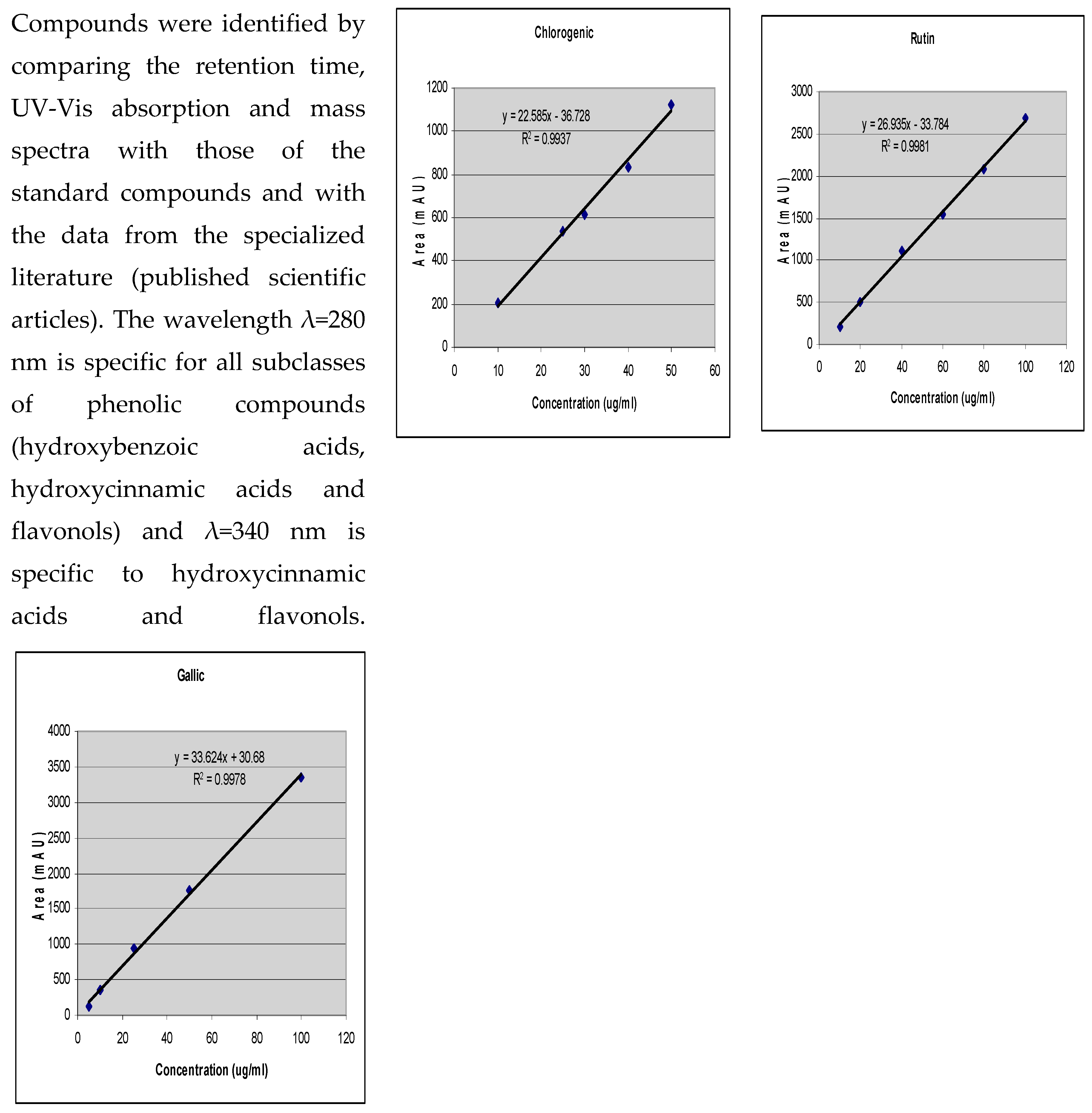
Figure 2.
Chromatogram of phenolic compounds for Dumbravita tomatoes – 280 nm (a), Chesa tomatoes – 280 nm (b), Dumbravita tomatoes – 340 nm (c), Chesa tomatoes – 340 nm (d).
Figure 2.
Chromatogram of phenolic compounds for Dumbravita tomatoes – 280 nm (a), Chesa tomatoes – 280 nm (b), Dumbravita tomatoes – 340 nm (c), Chesa tomatoes – 340 nm (d).
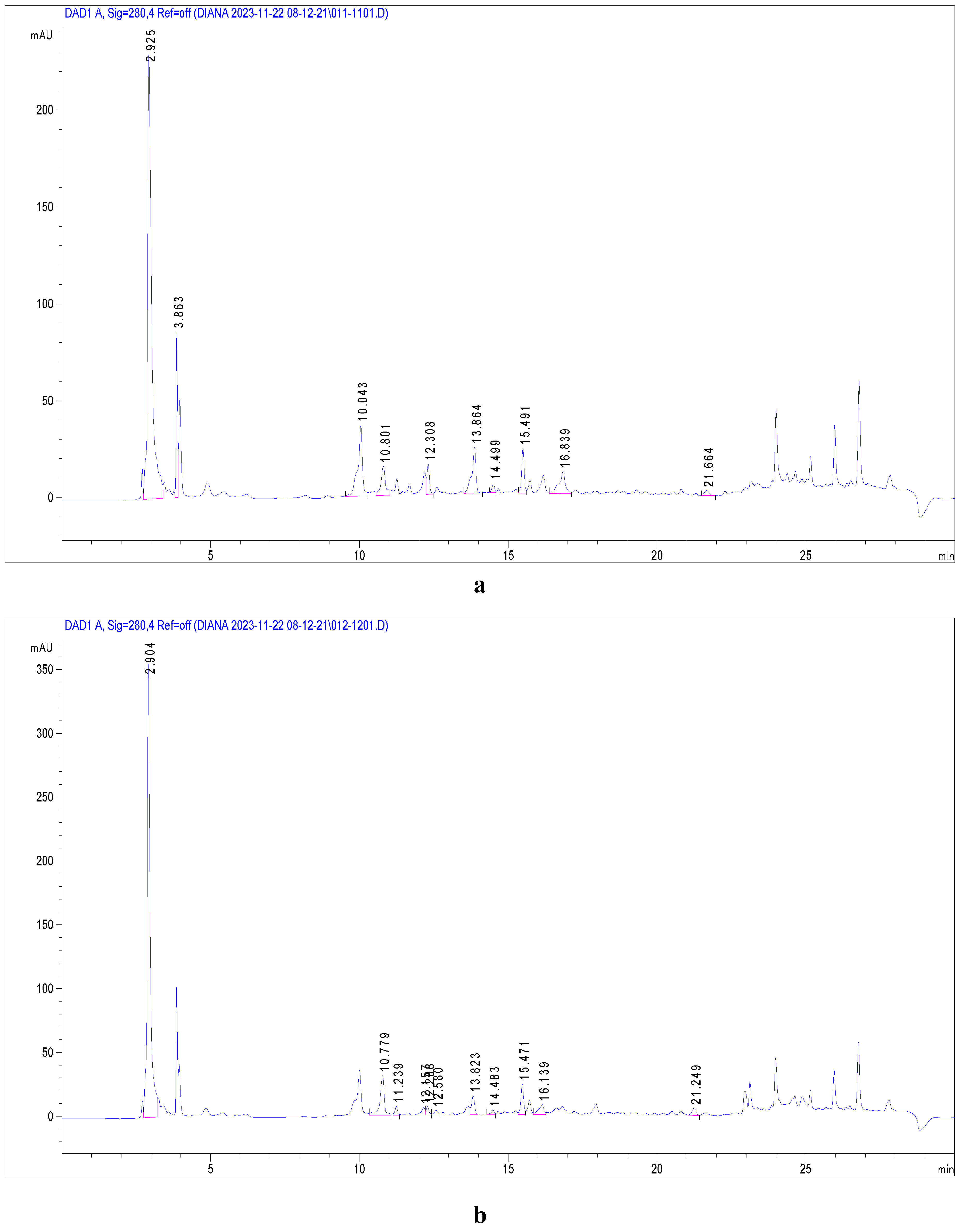
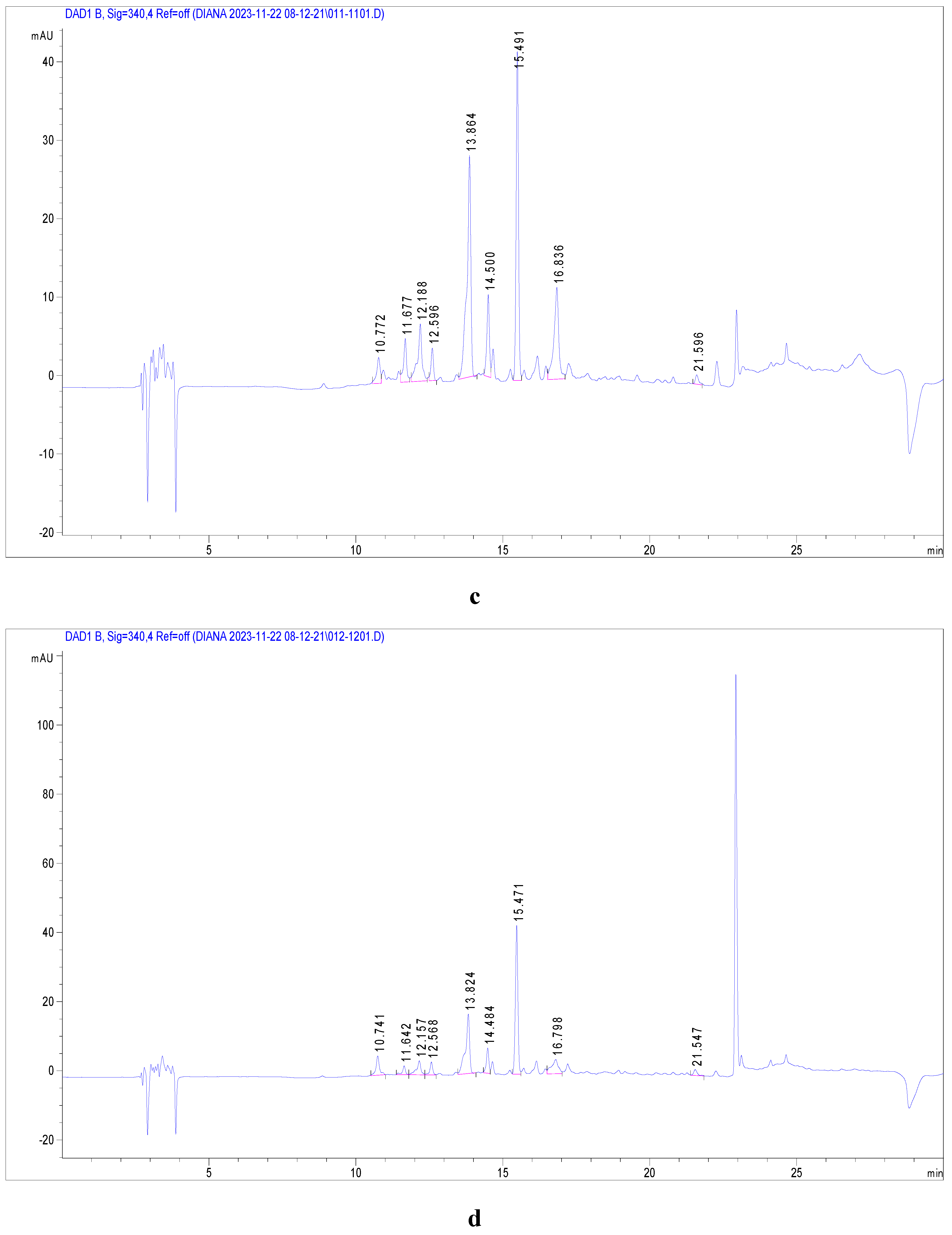
Figure 3.
Phenolic compounds chromatogram for Dumbravita corn - 280 nm (a), Chesa corn - 280 nm (b), Dumbravita corn -340 nm (c), Chesa corn – 340 nm (d).
Figure 3.
Phenolic compounds chromatogram for Dumbravita corn - 280 nm (a), Chesa corn - 280 nm (b), Dumbravita corn -340 nm (c), Chesa corn – 340 nm (d).
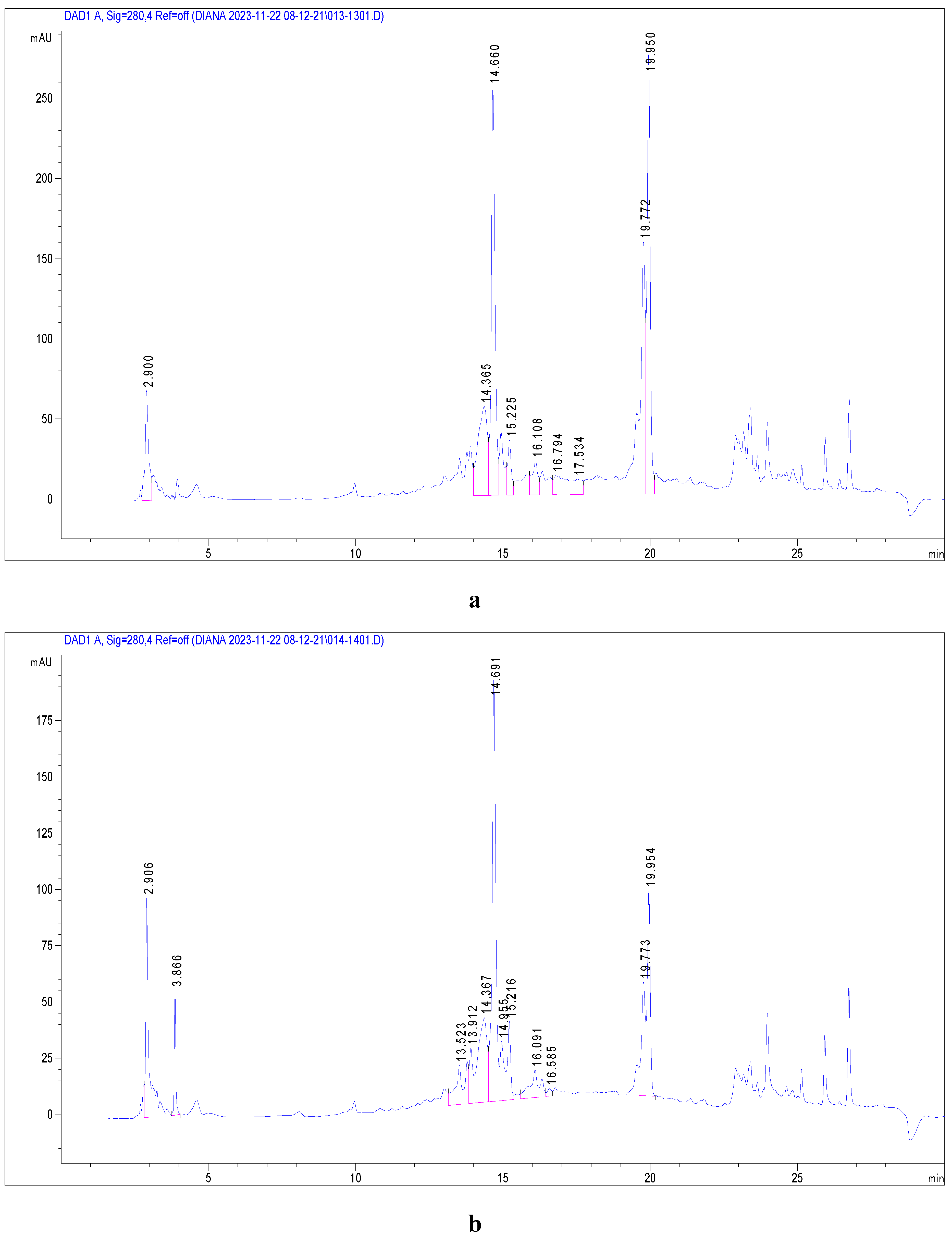
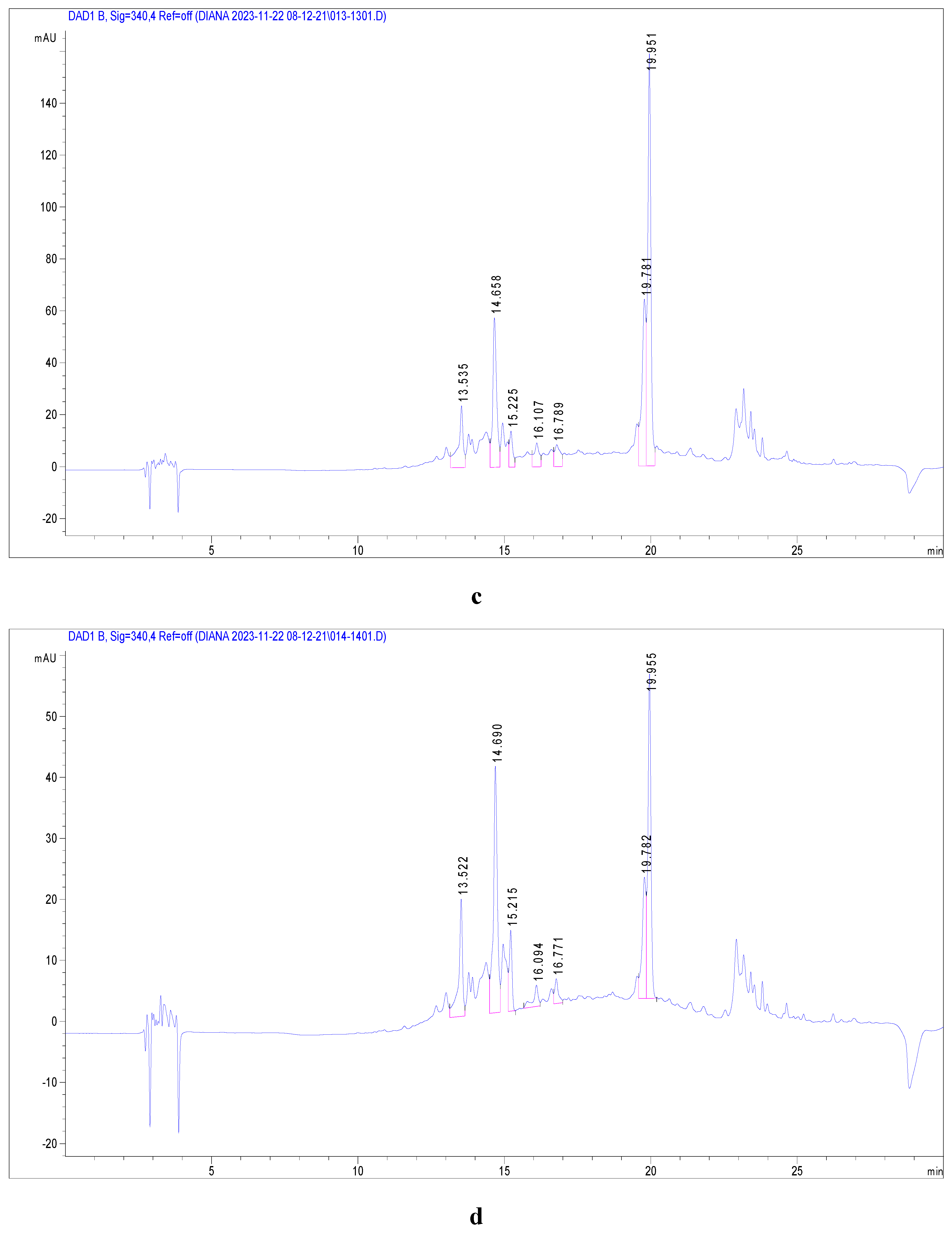

Table 1.
Identification and quantification of phenolic compounds in tomato samples, quantity expressed in mg/100g sample.
Table 1.
Identification and quantification of phenolic compounds in tomato samples, quantity expressed in mg/100g sample.
| Peak | R t (minute) |
λ max (nm) |
[M+H] + (m/z) | Phenolic compound | Subclass | Tomato Dumbravita |
Tomato Chesa |
|---|---|---|---|---|---|---|---|
| 1 | 2.93 | 265 | 139 | 2-Hydroxybenzoic acid | Hydroxybenzoic | 34,675 | 37,731 |
| 2 | 10.07 | 270 | 139 | 4-Hydroxybenzoic acid | Hydroxybenzoic | 1,433 | 1,876 |
| 3 | 11.68 | 312, 248 | 343 | Caffeic acid- glucosides | Hydroxycinnamic acid | 1,721 | 1,256 |
| 4 | 12.11 | 326, 248 | 355 | 3-Caffeoylquinic acid(Neochlorogenic acid) | Hydroxycinnamic | 2,496 | 1,765 |
| 5 | 12.59 | 326, 248 | 355 | 5-Caffeoylquinic acid(chlorogenic acid) | Hydroxycinnamic | 1,344 | 1,367 |
| 6 | 13.86 | 324, 248 | 181 | Caffeic acid | Hydroxycinnamic | 6,613 | 4,532 |
| 7 | 14.50 | 355, 255 | 743 | Quercetin-triglucosides | Flavonols | 1,815 | 1,444 |
| 8 | 15.49 | 354, 256 | 611 | Quercetin-rutinosides (Routine) | Flavonols | 5,045 | 5,379 |
| 9 | 16.83 | 326, 248 | 195 | Ferulic acid | Hydroxycinnamic | 3,780 | 2,319 |
| 10 | 21.58 | 355, 255 | 303 | Quercetin | Flavonols | 0.813 | 0.924 |
| Total phenolics | 59,735 | 58,592 |
Table 2.
Identification and quantification of phenolic compounds in corn samples, amount expressed in mg/100g sample.
Table 2.
Identification and quantification of phenolic compounds in corn samples, amount expressed in mg/100g sample.
| Peak | R t (minute) |
λ max (nm) |
[M+H] + (m/z) |
Phenolic compound | Subclass | Maize Dumbravita |
Maize Chesa |
|---|---|---|---|---|---|---|---|
| 1 | 2.93 | 265 | 139 | 2-Hydroxybenzoic acid | Hydroxybenzoic | 8,347 | 7,886 |
| 2 | 3.86 | 265 | 139 | 3-Hydroxybenzoic acid | Hydroxybenzoic | 0.719 | 2,622 |
| 3 | 13.54 | 322 | 181 | Caffeic acid | Hydroxycinnamic | 33,359 | 24,050 |
| 4 | 14.69 | 280 | 199 | Syringic acid | Hydoxybenzoic | 6,990 | 4,754 |
| 5 | 16.12 | 300 | 165 | p-Coumaric acid | Hydroxycinnamic | 3,359 | 1,743 |
| 6 | 16.69 | 323 | 195 | Ferulic acid | Hydroxycinnamic | 3,381 | 1,610 |
| 7 | 19.95 | 322 | 517 | Di-Caffeoylquinic acid | Hydroxycinnamic | 41,327 | 13,786 |
| Total phenolics | 97,481 | 56,451 |
Table 3.
Quantification of the total content of phenolic compounds in corn, tomato and pepper samples, amount expressed in mg/100g sample.
Table 3.
Quantification of the total content of phenolic compounds in corn, tomato and pepper samples, amount expressed in mg/100g sample.
| Sample | Total content of phenolic compounds mg/100g |
|---|---|
| Chesa corns | 77,395 |
| Dumbravita corns | 99,663 |
| Chesa tomatoes | 65,446 |
| Dumbravita tomatoes | 69,248 |
| Chesa peppers | 134,966 |
| Dumbravita peppers | 176,787 |
Disclaimer/Publisher’s Note: The statements, opinions and data contained in all publications are solely those of the individual author(s) and contributor(s) and not of MDPI and/or the editor(s). MDPI and/or the editor(s) disclaim responsibility for any injury to people or property resulting from any ideas, methods, instructions or products referred to in the content. |
© 2025 by the authors. Licensee MDPI, Basel, Switzerland. This article is an open access article distributed under the terms and conditions of the Creative Commons Attribution (CC BY) license (http://creativecommons.org/licenses/by/4.0/).
Copyright: This open access article is published under a Creative Commons CC BY 4.0 license, which permit the free download, distribution, and reuse, provided that the author and preprint are cited in any reuse.


