

Submitted:
24 May 2024
Posted:
27 May 2024
You are already at the latest version
Abstract
Faced with increasing climate challenges, this pioneering study introduces groundbreaking approaches to ensure the resilience of potato crops in east-central Poland. Our research aimed to develop an innovative, cost-effective system tailored to the diverse local conditions of this region. Conducted between 2018 and 2020, the study analyzed integrated and organic production systems across different soil types and potato varieties. The experiment was conducted using a randomized block design with three replications in two locations. Integrated practices, enhanced by mineral fertilization and chemical protection, notably delayed the onset of late blight by 16 days and extended the critical infection period by 17% compared to their organic counterparts. Remarkably, the integrated systems resulted in a 49% increase in total production and a 52% increase in commercial yields, demonstrating their effectiveness in enhancing crop resilience. Different potato varieties exhibit varied responses to cultivation systems, influencing both yield and disease resistance. Further investigation into these varietal responses can help optimize cultivation practices, leading to improved efficiency and sustainability in potato farming. Location and soil conditions have a significant impact on potato yield and the spread of potato blight. Further research into specific soil properties and the adaptation of varieties to local conditions can contribute to increased productivity and stability in potato production. This study not only paves the way towards sustainable agriculture but also highlights the crucial role of soil diversity in shaping resilient farming practices.
Keywords:
potato blight
; integrated production
; ecological farming
; soil diversity
; crop resilience
; sustainable agriculture
1. Introduction
Potatoes are a vital global food crop, but their production faces threats from both abiotic and biotic factors. Late blight, caused by the oomycete Phytophthora infestans, is particularly devastating, capable of causing losses ranging from 20-80%. This pathogen’s rapid evolution and adaptability make it highly destructive, capable of decimating entire potato plantations in just 10-15 days under favorable weather conditions. Late blight remains the most economically damaging potato disease worldwide, with annual losses exceeding $10 billion [1].
Current disease control relies heavily on fungicide use, which has negative environmental impacts. The excessive use of mineral fertilizers and chemical plant protection products exacerbates environmental degradation, highlighting the urgent need for sustainable agricultural practices. Harmonized world development, integrating economic growth with environmental preservation, is emerging as a solution to combat these threats [2]. The results of González-Jiménez et al. [3] also underscore the influence of disease development rate and infection timing on yield losses, with relatively low incidence and early onset of epidemics causing significant yield reductions. Additionally, simulations were conducted to assess the impact of temperature increase induced by climate change on both potato crops and P. infestans development, suggesting that higher temperatures may be more detrimental to the pathogen than to the crops.
Research emphasizes the importance of disease development rate and infection timing on yield losses, with low incidence and early epidemics causing significant reductions. Simulations suggest that climate change-induced temperature increases may be more detrimental to the pathogen than to potato crops [2]. The results of González-Jiménez et al. [3] also underscore the influence of disease development rate and infection timing on yield losses, with relatively low incidence and early onset of epidemics causing significant yield reductions. Additionally, simulations were conducted to assess the impact of temperature increase induced by climate change on both potato crops and P. infestans development, suggesting that higher temperatures may be more detrimental to the pathogen than to the crops.
Recent focus on the exploitation of agricultural lands and the necessity for sustainable agricultural practices has centered on several key areas:
- -
- Innovations in sustainable agriculture: Companies, research institutions, and farmers are working on developing and implementing innovative solutions to reduce the negative environmental impact of agriculture. Technologies such as precision agriculture, smart sensor utilization, and data analysis can optimize water, fertilizer, and pesticide usage [4].
- -
- Education and societal awareness: Increasing societal awareness about the issues associated with intensive agriculture can lead to greater support for environmentally friendly farming practices. Information campaigns, educational programs, and local community actions can enhance understanding and acceptance of such practices.
- -
- -
- Continued scientific research: Continued research on the impact of agriculture on the natural environment and the quest for new methods and technologies can contribute to finding more effective solutions. Studies on plant disease resistance, resource utilization optimization, and adaptation to changing climate conditions are crucial [7].
- -
- International cooperation: Exchange of knowledge, experiences, and best practices among countries can accelerate progress in the field of sustainable agriculture. Initiatives such as exchange programs, international conferences, and partnerships can be effective ways to promote global cooperation [3,7,8].
Finally, there is a need for an integrated approach to agriculture that considers economic, social, and environmental aspects. Actions taken in each of these areas can contribute to achieving the goal of sustainable agricultural development.
In the agricultural domain, three primary farming systems have come to prominence: conventional, integrated, and ecological. The integrated system harnesses advancements in both technology and biology to strike a balance between economic profitability and ecological sustainability. Conversely, the ecological system abstains from using chemically modified industrial production methods, instead relying on agrotechnical practices such as crop rotations, organic fertilization, and careful variety selection to bolster soil fertility and maintain a favorable sanitary environment [9].
Central-Eastern Poland’s diverse soil conditions and temperate climate provide favorable conditions for potato cultivation. However, variations in soil types and microclimates across the region can significantly influence crop health and productivity. Understanding this interplay is crucial for developing effective strategies to manage potato blight and ensure sustainable crop production [3].
Recent research highlights the economic impact of potato blight, causing significant yield reductions and financial losses for farmers. Developing comprehensive disease management strategies, including research on resistant varieties and international cooperation, is crucial for protecting farmers and ensuring food security [8,9,10,11,12].
This work delves into the complex nature of P. infestans, reviews the effectiveness of current integrated pest management (IPM) strategies, and analyzes the potential of innovative, sustainable approaches for controlling this disease within both ecological and inte-grated potato cultivation systems [13].
While the macroeconomic implications of farming systems and soil conditions have been extensively explored, their influence on crop quality, especially potato health, remains relatively understudied. Therefore, this paper aims to fill this gap by evaluating the impact of cultivation systems on the health status and yielding of potatoes in Central-Eastern Poland.
2. Materials and Methods
The field experiment was carried out in central-eastern Poland at the experimental station in Parczew and ZDOO in Uhnin. The experiment was located on the Parczew Plain covering the north-eastern part of the Parczew district, which is part of the Western Polesie macroregion (Parczew - 22°55′E, 51°38′N, H = 155) and Uhnin (51°34’ E, 23°02’N, H = 157 m above sea level) (Figure 1) [14].
2.1. Field Experiment
The study conducted a field experiment from 2018 to 2020 at the experimental station in Parczew, focusing on a good rye complex soil. The experiment involved two main factors: crop production systems (integrated and ecological) and six potato cultivars (‘Amarant’, ‘Boryna’, ‘Irga’, ‘Jurek’, ‘Jelly’, ‘Mila’). The experiments were conducted using the split-split-plot design in 3 replications, where the first-order factor was the cultivation systems: a) organic system, without blight protection and mineral fertilization; b) integrated system with organic and mineral fertilization and chemical protection against potato blight, with an appropriately early (prophylactic) protection scheme. The second-order factor was potato varieties with different levels of leaf blight resistance (‘Irga’, ‘Jurek’, ‘Boryna’, ‘Jelly’, and ‘Amarant’).
Potato tubers were planted with a spacing of 70 × 35 cm on 25-27 April. The propagation material used in the experiment was classified as Class A according to European Union standards. No pro-emergence process was conducted before planting the seed potatoes. The seed potatoes were stored under appropriate conditions for potato seed tubers. Different crop rotations and production technologies were implemented in both systems:
Integrated System: Crop Rotation: potato → spring barley → red clover → winter wheat + after-crop (consisted of white mustard and spring vetch).
Fertilization: Phosphorus-potassium fertilization was applied to compensate for the intake, with the following rates: 128 kg N, 60 kg P2O5, 60 kg K2O.
Compost Application: Compost was applied at a rate of 35 t.ha-1 once during the rotation cycle, specifically under the potato.
Chemical Plant Protection: Agrophage harm thresholds were used for chemical plant protection operations.
Ecological System: Crop Rotation: potato → spring barley → red clover with grass performed for 2 years → winter wheat + after-crop (consisted of white mustard and spring vetch).
Fertilization: No mineral fertilizers were applied. Pesticide: Novodor was used against potato beetle. Compost Application: only 2-year-old compost (stalks + red clover + hay) was introduced under the potato at the rate of 35 t.ha-1.
Weed Control: Weed control in this system involved harrowing using a harrow before shooting, triple hilling, and once manual hoeing just before the last hilling.
The experiment was conducted in one replication on fields where all plants were growing simultaneously, each covering about 1 hectare.
All plant care and protection treatments were applied in accordance with the IHAR methodology [15]. The first spraying took place preventive measures, performed before the plague occurred, based on the analysis of meteorological data; the second one was performed when the first plague spots appeared on the plants, and the next ones were carried out at regular intervals from 7 to n-days, in the integrated cultivation system. Depending on the year and weather conditions, fungicides were applied from 3 to 9 times until the leaves were completely destroyed in the organic cultivation system. Fungicides containing the following active substances were used to protect against Phytophthora infestans: propamocarb hydrochloride + chlorothalonil; metalaxyl + mancozeb; dimethomorph + mancozeb (or cymoxanil + mancozeb); zoxamide + mancozeb; chlorothalonil + Zn; mancozeb; fluazinam; fentin hydroxide; in recommended doses. Fungicides used to protect against late blight are characterized by high selectivity, as they usually act on one link in the life process of selected mushroom species. The development of resistance of fungi to a given chemical compound or group of compounds necessitates the use of multi-component preparations containing fungicides with different mechanisms of action, or the alternating use of single-component preparations [16,17]. This treatment was aimed at destroying the leaves and preventing the movement of Phytophthora infestans spores from the leaves to the tubers. The main criteria for assessing the effectiveness of the studied protection strategies were: the rate of development of the blight and the percentage increase in the total and marketable yield of tubers [18].
Potato tubers were collected after achieving the full maturity according to earliness groups from 13 September till 6 October using elevator potato digger. Tuber yield and its structure was estimated in 3 repetitions. The assessment of tuber yield and its structure was made according to the COBORU methodology [19]. During harvest, the total and commercial yield of tubers (yield of tubers with a diameter >3.5 cm (transverse diameter), excluding cracked and deformed tubers, as well as initial symptoms of rot) was determined.
2.2. Characteristic of Potato Varieties
The characteristics of the examined varieties are presented in Table 1. Among the varieties examined, four belonged to the moderately early group, with three varieties (‘Irga’, ‘Jurek’, and ‘Mila’) being edible and one (‘Boryna’) being a starch variety. Two varieties were classified as medium-late varieties: one edible variety (‘Jelly’) and one starch variety (‘Amarant’). The resistance of the examined varieties to potato leaf blight varied: ‘Irga’, with a resistance of 2°; ‘Jurek’, with a resistance of 4.5°; ‘Mila’, with a resistance of 5°; ‘Boryna’ with a resistance of 5.5°; and two medium-late varieties: the edible ‘Jelly’, with a resistance of 5°, and the high-starch variety ‘Amarant’, with a resistance of 6.5° on a scale of 9° Nowacki [20]. Moreover, the examined varieties differed in starch content: ‘Irga’ and ‘Jurek’ were characterized by lower starch content (approximately 13.9%), while ‘Amarant’ had a higher content at approximately 19.9%, and ‘Boryna’ at approximately 20.2% [19,20].
2.3. Observations of Potato Blight
Observations on the plant’s development stages and their health state were made throughout the vegetation period. Evaluation of plant infection by Phytophthora infestans was conducted every 10 days from the first disease symptoms observed until the end of the vegetation period using a 9-degree scale. This scale is based on observing disease symptoms on the plants and assigns a rating from 1 to 9, where: 9° signifies no symptoms of the disease; 8° indicates slight symptoms on individual leaves or plant units, 7° signifies the spread of the disease to several leaves; 6° indicates moderate infection of the plant, but without clear symptoms on the tubers; 5° signifies significant leaf infection and the appearance of initial symptoms on the tubers; 4° indicates moderately advanced infection, with visible symptoms on the tubers; 3° signifies significant infection of both potato leaves and tubers; 2° indicates severe infection of the potato plant with visible symptoms on most leaves and tubers; 1° signifies total destruction of the potato plant [21]. This scale helps monitor and assess the level of potato plant infection by potato blight to take appropriate disease control actions, such as using plant protection products, changing cultivation practices, or selecting more resistant potato varieties [4,21].
2.4. Natural Conditions
Poland is located in the central part of Europe and is affected by the climatic conditions of both the Atlantic Ocean and the Eurasian continent. Therefore, the area is characterized by air crises with different characteristics of heat and humidity, which contribute to a high variability of the climate each year. Therefore, the area is distinguished by air advection with different thermal and moisture characteristics, which contribute to a high variability of weather types annually. Large-scale atmospheric circulation is an important factor, the occurrence of extreme rainfall in Poland [22,23]. Precipitation is of great importance for the functioning of the natural environment and in a number of areas for human activity. Heavy rains increase the risk of flooding, which often leads to significant deaths and financial losses [24]. It is assumed that an increase in global air temperature correlates with the intensity of precipitation events. This has also been observed recently in areas with decreasing annual rainfall [22]
2.5. Soil Conditions
The results of soil granulometric and analysis of some physicochemical properties of soil are presented in Table 6. The experiment was carried out on soil type sandy loam. According to percentage content of sand, silt and loam fraction, this is a granulometric subgroup – clay sand (light soil). Soil granulometric composition, the experience was determined by means of the aerometric method of Prószyński [25]. The fraction of sand was 66.97%, the dust fraction was 30.58% and the loam was 2.45% (Table 2). This proportion of individual fractions corresponds to the composition of clayey dust. In terms of agricultural suitability, these soils belong to the good rye complex, the slightly acidic class. This soil is classified as agronomic category, light mineral [26].
In Table 5, the granulometric composition of soils for the years 2018-2020 in two locations, Parczew and Uhnin, is presented. The table illustrates the percentage composition of various granulometric fractions in the soil, ranging from sand through silt to clay, across different size categories. Soil Classification: Each entry in the table corresponds to a specific soil classification based on the dominant granulometric fraction. Classifications include “sandy clay” and “sandy dust.” Comparison between Parczew and Uhnin: For each year in the table, data are provided for both Parczew and Uhnin, allowing for a comparison of the granulometric composition between the two locations. Generally, in both locations, the classification of soils as sandy clay predominates, with varying percentage compositions of different granulometric fractions.
In summary, Table 5 presents the mean values of individual granulometric fractions over the years for both Parczew and Uhnin, providing an overview of the average soil composition in each location from 2018 to 2020.
The soil content in assimilable components was as follows: in phosphorus and magnesium very high (21.0 mg P2O5.100 g-1 soil, 7.03 mg Mg.100 g-1 soil), medium in potassium (11.9 mg K2O.100 g-1 soil), in the medium copper (7.02 mg Cu.kg-1 soil), in manganese, iron and zinc also medium and was respectively 273.8 mg Mn.kg-1 of soil, 3761.7 mg Fe.kg-1 of soil, and zinc the average was 45.96 mg Zn. kg-1 of soil. In case of boron, the average was high about 6.17 B.kg-1 of soil (Table. 3). The average acidity of the soil, in a slurry of KCL, in 2015 and 2016 was (5.92 pH - 5.77 pH); these values allowed the classification of the experimental soil as slightly acidic soil. While was natural acid soils in 2017 (6.6 pH). The humus content in the arable layer was low and formed at 0.94 - 1.06% (Table 3) [26,27].
Micronutrients such as copper (Cu), manganese (Mn), zinc (Zn), iron (Fe), and boron (B) are necessary for plant growth in small amounts. The content of these micronutrients differs between the two locations, with the average values generally being lower in Parczew compared to Uhnin (Table 3).
In general, the comparison of soil content in these micronutrients reveals that although Parczew tends to have lower levels of available macro and micronutrients compared to Uhnin, it boasts a higher humus content. Additionally, pH levels are similar in both locations. These disparities in soil characteristics can significantly impact agricultural productivity and necessitate different soil management practices in each location.
2.6. Meteorological Conditions
Table 4 presents the distribution of rainfall, air temperature, and the Sielianinov hydrothermal coefficient during the potato growing season in the years 2018-2020, according to meteorological data from the station in Uhnin.
In the successive months of the potato growing season in the years 2018-2020, various levels of rainfall and their distribution over time, as well as diverse air temperatures, were observed. This had an impact on the overall classification of these months in terms of humidity, according to the classification by Sielianinov modified by Skowera [28].
In 2018, April and May were characterized by moderate rainfall and relatively cool air temperatures, resulting in their classification as humid and optimal, respectively. In contrast, June and July were drier months, with low rainfall and higher air temperatures, classified as very dry and dry. August was exceptionally dry with very low rainfall. In 2019, April and June were classified as optimal, with moderate rainfall and air temperatures, while May and July were dry months with lower rainfall. August and September were very dry months with very low rainfall. In 2020, April and July were humid, while June and August were exceptionally dry. September was classified as moderately humid.
The rising air temperature may increase evaporation and intensify meteorological droughts, even though annual rainfall trends don’t fully explain yearly rainfall variability [29,30,31].
where: P - The sum of the monthly precipitation in mm, Σt - monthly total of air temperature > 0ºC Ranges of values of this index were classified according to Selianinov* as: extremely dry − k ≤ 0.4; very dry − 0,4 < k ≤ 0,7; dry − 0,7 < k ≤ 1,0; fairly dry − 1,0 < k ≤ 1.3; optimum − 1,3 < k ≤ 1.6; fairly humid − 1,6 < k ≤ 2.0; wet − 2,0 < k ≤ 2.5; very humid − 2,5 < k ≤ 3.0; extremely humid − k >3,0. Ranges of values of this index were classified according to Kubiak-Wójcicka et al. [31]** as: Wet – 126 to 150 of the standard; Normal – 75 to 125%; dry – 50 to 74%; very dry – 25 to 45%; extremely dry precipitation below 25%.
The Sielianinov hydrothermal coefficient, which considers the ratio of rainfall to average air temperatures, fluctuated between different humidity classes in individual months and years, which had significant implications for plant growth conditions and the rate of potato blight spread. Hydrothermal coefficients (k) indicate the balance between precipitation and temperature during specific months, specifically June, July, and August. The index values categorize the conditions into different moisture levels ranging from extremely dry to extremely humid (Table 4).
2.7. Statistical Calculations
Study results were statistically worked out applying variance analysis ANOVA. Significance of variability sources was testes using Fisher-Snedecor’s “F” test and difference significance by means of Tukey’s test. Regression equations were estimated classical least squares method (KMNK) [32,33].
Rate of potato blight spreading depending on observation date was calculated using regression calculus. For calculations, observation terms were encoded accepting the first date as “0”, second as “10”, third as “20” etc. Leaf infection was expressed in logarithmic values corresponding to 9° grade and using the formula [34]:
where: x – values expressed in hundred parts. They make possible to express the percentage of leaf surface damage in a form of straight line. The rate of potato blight spreading was regarded as unitary increase of infection in time.
3. Results
3.1. The Rate of Spread of Potato Blight
The rate of spread of potato blight refers to the speed at which the fungal pathogen Phytophthora infestans, which causes late blight disease, spreads within a potato crop (Figure 1).
Several factors influence the rate of spread of potato blight, including environmental conditions such as temperature, humidity, and rainfall, as well as agronomic practices, host plant resistance, and the presence of the pathogen in the vicinity. Warm, humid conditions are particularly conducive to the rapid spread of the disease, as they promote the growth and dispersal of the pathogen’s spores. Table 5 presents the coefficients of the rate of late blight spread for the years 2018-2020, dependent by location (Parczew and Uhnin) and cultivation systems (Ecological and Integrated).
In 2018, the rate of late blight spread in Parczew was 0.192 under the Ecological system and 0.200 under the Integrated system. In Uhnin, the rates were 0.140 and 0.132, respectively. In 2019, the rates in Parczew were 0.201 (Ecological) and 0.224 (Integrated), while in Uhnin, they were 0.165 (Ecological) and 0.142 (Integrated). In 2020, the rates in Parczew were 0.138 (Ecological) and 0.132 (Integrated), and in Uhnin, they were 0.114 (Ecological) and 0.120 (Integrated).
These coefficients serve as indicators of the rate at which late blight spreads under different conditions, providing valuable insights for disease management and agricultural practices.
Hydrothermal coefficients (k) indicate the balance between precipitation and temperature during specific months, specifically June, July, and August. The index values categorize the conditions into different moisture levels ranging from extremely dry to extremely humid.
Coefficients of the rate of potato blight spread were higher in Parczew than in Uhnin in all years of the study (Table 5). This could be attributed to different weather conditions favoring the faster emergence and spread of the pathogen (Table 4), as well as soil conditions, as the soils in Parczew exhibited significantly higher humus content and higher soil pH (Table 2 and Table 3).
Table 5 provides insight into meteorological conditions and their impact on the development of Ph. infestans over a three-year period, which may be valuable for understanding disease dynamics and optimizing crop management strategies. The infection of 50% of the potato leaf blade surface is an indicator of the degree of plant infection by the pathogen known as Ph. infestans, which causes the disease commonly known as potato blight. This is a significant criterion because it indicates the point at which the infection reaches a level that has a significant impact on yield. When the infection covers 50% of the leaf blade surface, it negatively affects the plant’s ability to photosynthesize and produce tubers, ultimately leading to a reduction in yield. Therefore, this moment is crucial for assessing the effectiveness of disease management strategies and making decisions regarding further disease control actions.
Plant production systems and the resistance of potato varieties had a significant impact on the rate of pathogen spread in plants (Figure 2, Figure 3, Figure 4, Figure 5, Figure 6, Figure 7 and Figure 8). Ph infestans spread the fastest over time. infestans on the medium-early potato variety ‘Irga’, not resistant to late blight, with resistance 2 on a 9-point scale.
In the ecological system, 50% of potato leaf blade infection occurred on average 43 days after the appearance of the first late blight spots, which determine the accumulation of tuber yield, while in the integrated system, this moment occurred 15 days later (Figure 2).
Potato was infected sooner in the ecological system. The average infection of 50% of the leaf blade surface, determining yield accumulation, occurred 44 days after the first infection symptoms (spots) were observed. In the integrated cultivation system, where protective measures against potato blight were applied, plant infection by Ph. infestans occurred, on average, 16 days later than in the ecological system. The effectiveness of plant protection against the blight depended on the plant’s resistance to the pathogen and their reaction to fungicide application (Figure 2).
Leaf blight developed the slowest in the medium-early variety ‘Boryna’ with resistance of 5.5° on a scale of 9°. Infection of 50% of leaf blades of medium early, quite resistant to Ph. infestans of the ‘Boryna’ variety (5.5° on a scale of 9°) occurred 90 days after the first plague spots appeared in the organic system, and 6 days later in the integrated system (Figure 3).
Figure 4 depicts the rate of potato blight spread on plants of the moderately early, edible variety ‘Irga’ in both ecological and integrated cultivation systems. Critical infection, affecting 50% of leaf blades for this variety, occurred after 36 days from the first observation of late blight spots in the ecological system and 3 days later in the integrated cultivation system.
Figure 5 depicts the rate of potato blight spread on plants of the moderately early, edible variety ‘Jurek’ in both ecological and integrated cultivation systems. Critical infection, affecting 50% of leaf blades for this variety, occurred after 41 days from the first observation of late blight spots in the ecological system and 7 days later in the integrated cultivation system.
Figure 6 illustrates the impact of resistance characteristics of the moderately early, edible variety ‘Mila’ and cultivation systems on the timing of infection of 50% of potato leaf blade surface. For this variety with a resistance rating of 5 on a 9-degree scale, critical leaf blade surface infection occurred as early as 34 days after the first observation of late blight spots in the ecological system, and due to full protection against potato blight in the integrated system, it occurred 21 days later (Figure 6).
The effect of resistance characteristics of the moderately late, starch variety ‘Amarant’ and potato cultivation systems is presented in Figure 7. Critical infection, affecting 50% of the leaf blade surface of this variety, occurred after 54 days from the appearance of the first late blight spots in the ecological system. However, the integrated system, utilizing organic and mineral fertilization along with full protection against potato blight, contributed to extending this period by 45 days (Figure 7).
The response of the moderately late, edible variety ‘Jelly’ to the applied cultivation systems is presented in Figure 8.
In the ecological cultivation system, infection of 50% of the leaf blade surface of the ‘Jelly’ variety was observed after just 34 days from the appearance of the first late blight spots, while the integrated cultivation system extended this period by 30 days (Figure 8).
Table 6 presents the results regarding the regression coefficient of the spread rate of Ph. infestans for the examined potato varieties and two production systems. For each variety, resistance to late blight is provided on a 9-degree scale, where a higher number indicates greater resistance to late blight. The regression coefficients determine how quickly the pathogen spreads for each variety and production system. Lower coefficient values suggest slower pathogen spread, indicating greater resistance of the variety or more effective disease control strategies in the specific production system. Variability in the regression coefficient values across varieties and production systems suggests that the effectiveness of variety resistance or disease prevention strategies may depend on specific growing conditions.
Resistance Levels: Varieties with higher resistance levels, such as ‘Amarant’ (6.5) and ‘Boryna’ (5.5), generally exhibit lower infection coefficients compared to those with lower resistance levels, like ‘Irga’ (2.0). Crop Production Systems: Across all varieties, the ecological crop production system tends to result in slightly lower infection coefficients compared to the integrated crop production system. Varietal Performance: ‘Jelly’ and ‘Mila’, both with a resistance level of 5.0, show relatively high infection coefficients compared to varieties with similar resistance levels. This suggests that factors beyond resistance level, such as environmental conditions or cultivation practices, may influence varietal performance in terms of late blight resistance (Table 6).
Overall, the table underscores the importance of both varietal resistance and crop production practices in managing late blight infection. Additionally, it highlights the need for further investigation into factors influencing varietal performance under different production systems to optimize disease management strategies.
Overall, these results underscore the importance of both variety resistance and the implementation of effective crop management strategies, including plant protection, fertilization, and pest control, in minimizing the risk of potato blight occurrence and spread, as well as ensuring high yield productivity. This indicates that the integrated production system contributed to delaying the onset of infection on the leaf blade surface for all varieties compared to other cultivation methods. The longer delay observed for certain varieties, such as ‘Jelly’ and ‘Amarant’, suggests that these varieties may possess inherent traits or characteristics that make them more resilient to infection under integrated production conditions. Conversely, varieties with shorter delays, like ‘Irga’ and ‘Jurek’, may require additional management practices or interventions to mitigate the risk of early infection. These findings emphasize the importance of considering both the cultivation system and varietal characteristics when implementing strategies to manage potato late blight effectively.
3.2. Total and Commercial Yield of Tubers
Total and marketable yields of potatoes differed significantly depending on the potato varieties and production systems (Table 7). In the ecological system, the total yield of tubers was lower by 49.1% and the marketable yield by 52.3% compared to the integrated system. Moreover, it was calculated that extending the potato vegetation period by 1 day in the integrated cultivation system, due to the combined application of fertilization and plant protection measures, contributed to an increase in tuber yield by 795.9 kg per hectare (Table 7).
Medium-early variety ‘Jurek’ had the lowest yields. The ‘Amarant’ variety followed closely behind ‘Jurek’. In terms of total yield, the ‘Irga’ and ‘Jurek’ varieties were homogeneous, whereas for marketable yield, the ‘Jurek’ and ‘Mila’ varieties were homogeneous in this trait (Table 7).
The integrated cultivation system generally resulted in higher total and marketable yields compared to the ecological system for most varieties, indicating the effectiveness of the integrated approach in increasing potato productivity. In this system, the ‘Boryna’ variety exhibited the highest yield, while the ‘Jurek’ and ‘Irga’ varieties had the lowest total yields, and the ‘Irga’ and ‘Mila’ varieties had the lowest marketable yields. Additionally, the ‘Amarant’ and ‘Jelly’ varieties were homogeneous in terms of these traits (Table 7).
In the ecological system, the ‘Boryna’ variety also produced the highest total yield, while the ‘Jurek’ variety had the lowest yield. The ‘Irga,’ ‘Jelly,’ and ‘Mila’ varieties were homogeneous in terms of this trait. For marketable yield, the response of the varieties to the cultivation systems was also varied. The ‘Boryna’ variety responded best to the ecological system, followed by the ‘Amarant’ variety, while the remaining varieties were in the same homogeneous group (Table 7). Significant differences in yields between varieties and between the ecological and integrated systems highlight the importance of variety selection and production system management in optimizing potato yields.
Table 8 presents the impact of the experiment locations (Parczew and Uhnin) and potato varieties on total and marketable yields from 2018 to 2020. In both Parczew and Uhnin, the ‘Boryna’ variety achieved the highest total and marketable yields, followed by the ‘Amarant’ and ‘Jelly’ varieties. The variety with the lowest marketable yield was ‘Jurek,’ with homogeneous traits observed in several varieties.
Generally, most varieties yielded higher in Uhnin compared to Parczew, suggesting potential differences in soil and climate conditions between the two locations. Significant differences in yields between varieties and locations were also observed, as indicated by LSD values. For total yield, the ‘Boryna’ variety achieved the highest yield regardless of location, while the ‘Jurek’ variety had the lowest yield in Parczew, and the ‘Irga’ variety had the lowest yield in Uhnin. A similar varietal response to location conditions was observed for marketable yield. The interaction effect between location and variety underscores that the impact of a variety on yield can vary significantly depending on the location (Table 8).
The analysis of total and marketable tuber yields of the studied potato varieties, depending on the years of research and varieties, showed significant differences in productivity both between years and between varieties (Table 9). The highest yields, both total and marketable, were obtained in 2020, which had favorable weather conditions for potatoes, while the lowest total and marketable tuber yields were obtained in 2019, which experienced a shortage of rainfall and unfavorable distribution during the potato growing season. The ‘Boryna’ variety consistently showed the highest total and marketable yields across all three years, with an average total yield of 47.0 t ha-1 and an average marketable yield of 45.7 t ha-1. Conversely, the medium-early variety ‘Irga’ had the lowest yields compared to other varieties, with an average total yield of 25.0 t ha-1 and an average marketable yield of 22.8 t ha-1. Varieties with LSD values at p<0.05 that did not differ significantly from each other are considered to produce homogeneous yields. For total yield, the ‘Boryna’ and ‘Amarant’ varieties produced homogeneous yields in 2018 and 2019, indicating no significant differences between these varieties. Homogeneous total tuber yields were also observed for the ‘Irga,’ ‘Jelly,’ ‘Jurek,’ and ‘Mila’ varieties in the dry year of 2018, and for the ‘Irga,’ ‘Jurek,’ and ‘Mila’ varieties in 2019 (Table 9).
For marketable yield, the ‘Boryna’ and ‘Amarant’ varieties also showed homogeneous yields in 2018 and 2019. Additionally, the ‘Irga’ and ‘Jurek’ varieties achieved homogeneous marketable yields in 2018 and 2020 (Table 9).
Additionally, an interaction between years and varieties was observed for both total and marketable yields. This interaction is evident in the yield fluctuations. Some varieties consistently produced stable yields throughout the years of the study, while others showed variability in this trait. For example, while the ‘Boryna’ variety consistently maintained a high yield level, the ‘Irga’ and ‘Jelly’ varieties exhibited different yield levels over the years 2018-2020.
4. Discussion
4.1. The Impact of Cultivation Systems on the Spread Rate of Potato Blight and Yield
Analysis of the results regarding the rate of spread of Ph. infestans on potato plants presented in this study confirms the significant impact of plant production systems and the resistance of potato varieties on the spread of this pathogen. The results demonstrate that differences in variety resistance and applied protective measures can significantly influence disease development and crop yield.
Potatoes were significantly earlier infected by Ph. infestans in the ecological system compared to the integrated system. The infection of 50% of the leaf blade area, which determines the ability to accumulate yield, occurred on average 43 days after the first symptoms of infection by this pathogen were observed. In the integrated cultivation system, where chemical protection against potato late blight was applied, the infection of plants occurred on average 15 days later than in the ecological system (Figure 2).
Recent studies confirm that integrated pest management (IPM) practices, including the use of resistant varieties, optimized planting times, and targeted fungicide applications, can effectively delay the onset of late blight and reduce its impact on yield. IPM strategies are crucial for sustainable agriculture, balancing the need for crop protection with environmental and economic considerations. These practices are continually evolving with advances in plant breeding, precision agriculture, and fungicide development, offering new tools and techniques to manage late blight more effectively [2,8,18,35]. Mujica & Kroschel [36] and Kroschel et al. [37] evaluated integrated pest management (IPM) versus farmer practices for controlling pests and diseases in potatoes (Solanum tuberosum L.) on the central coast of Peru. IPM technologies included seed treatment, pest and disease detection using action thresholds for pesticide application, and the use of trapping devices and selective insecticides compared to farmers’ chemical controls. An ecological, environmental, and economic analysis was conducted using biodiversity indices, environmental impact indicators, and partial budget analysis. Farmers applied nearly twice as many pesticide treatments (16.7 applications) compared to IPM plots (9.7 applications). Total pesticide use was higher in farms (4614.3 g a.i. ha-1) versus IPM plots (2042.6 g a.i. per ha), with insecticides accounting for most of this difference. Metamidophos and chlorpyrifos made up 65% of the environmental impact (EI) value of 137 per ha on farmer fields, while IPM reduced EI to 42.4 per ha (a 69.2% reduction). Additionally, IPM resulted in a 35% higher marketable potato yield than farmer practices. Partial budget analysis showed higher net profits on all IPM plots, with an average increase of $1410 per ha. Field trials demonstrated the environmental and economic viability of IPM for potatoes on the central coast of Peru. However, there is a need to develop and integrate more sustainable and ecological strategies for managing other significant pests.
In the ecological system, the total yield of tubers was 49.1% lower, and the commercial yield was 52.3% lower compared to the integrated system. Additionally, it was determined that for each day of extended potato vegetation in the integrated cultivation system, resulting from the combined application of fertilization and plant protection measures, there was an increase in tuber yield of around 796 kg per hectare.
Recent research emphasizes the benefits of integrated systems in enhancing crop productivity and sustainability [36,37,38,39,40]. Integrated systems not only improve yield but also support soil health and biodiversity by reducing the dependency on chemical inputs. The use of precision agriculture techniques, such as real-time soil and plant monitoring, has further optimized the timing and application rates of fertilizers and pesticides, leading to more efficient resource use. Advances in biopesticides and organic fertilizers are also contributing to the effectiveness of integrated systems, providing more environmentally friendly options for plant protection and nutrition. Moreover, integrated systems are increasingly incorporating climate-smart practices, which help to mitigate the effects of climate variability and enhance the resilience of crops against extreme weather conditions. These holistic approaches underscore the potential of integrated farming systems to achieve high productivity while maintaining ecological balance. This data underscores the significant impact of integrated cultivation practices on potato yield. By combining fertilization and plant protection methods, farmers can effectively extend the growth period of potato plants, leading to substantial improvements in yield. The stark contrast in yields between the ecological and integrated systems highlights the importance of adopting comprehensive cultivation approaches to maximize productivity and optimize resource utilization in agriculture. Therefore, implementing integrated cultivation practices can significantly enhance potato production efficiency and contribute to sustainable farming practices.
4.2. Influence of Varieties on Potato Blight Infection and Yield
The conducted studies revealed that varieties with higher resistance levels to potato blight generally exhibited lower infection rates. However, it was also found that some varieties with similar resistance levels differed in their response to plant protection measures. This suggests that resistance level is not the only factor affecting the effectiveness of plant protection, warranting further investigation.
The integrated cultivation systems had an impact on delaying the development of infections across all potato varieties. Some varieties exhibited longer delays in the outbreak of potato blight, indicating that they might possess traits making them more resistant to infections under integrated cultivation conditions. This finding is supported by research from other authors [7,12,40,41,42,43]. This aspect warrants deeper analysis to better understand how different cultivation systems affect varietal resistance.
The results indicate too the importance of considering both varietal resistance and cultivation practices in managing potato blight infections. Further research into optimizing disease management strategies could lead to better methods of preventing the spread of plant diseases, thereby improving the yield and sustainability of potato crops.
The effectiveness of plant protection against potato blight depended on the varieties’ resistance to the pathogen and their response to fungicide use. The extension of the infection period for 50% of the leaf blade surface, caused by the implementation of the integrated production system, averaged 3 days for the ‘Irga’ variety, 6 days for ‘Boryna,’ 7 days for ‘Jurek,’ 21 days for ‘Mila,’ 30 days for ‘Jelly,’ and 45 days for ‘Amarant’ (Figure 3, Figure 4, Figure 5, Figure 6, Figure 7 and Figure 8). The ‘Irga’ variety exhibited the biggest spread rate of Ph. infestans over time, correlated with the lowest resistance to P. infestans, while the moderately early ‘Boryna’ variety had the slowest spread rate with a resistance of 5.5° in a 9° scale. However, the ‘Amarant’ variety showed the most positive response to plant protection in the integrated cultivation system combined with full fertilization, while the ‘Boryna’ variety had the least response. Similar varietal responses to potato blight were observed by Sawicka et al. [9], Blossei et al. [43], Amin et al. [44].
The diverse response of potato varieties to cultivation systems can be attributed to differences in their genetic resistance to pathogens and their reaction to plant protection measures, including fungicides. Several factors may influence this varied response. Additionally, each potato variety has different genetic resistance to pathogens, including Ph. infestans. Varieties that are more resistant may exhibit lower susceptibility to infection even without fungicide application. Hence, varieties like ‘Irga’ may display a faster spread rate of Ph. infestans over time with lower resistance. Sawicka et al. [9] and Kołodziejczyk [45] demonstrated that within integrated production systems, where fungicides are used, different varieties may vary in their response to these protection measures. Some varieties may be more effective in utilizing fungicides to combat infections, leading to delayed or limited disease development. In this context, the ‘Jelly’ variety may have shown a positive response to plant protection in the integrated system, resulting in lower infection rates.
Environmental conditions, such as temperature, humidity, rainfall, and even wind, can also affect the effectiveness of plant protection against diseases [31]. Some varieties may be better suited to specific environmental conditions, influencing their response to cultivation systems. In addition to pathogen resistance, potato varieties may differ in other genetic traits that affect their growth, development, and response to protection measures. These additional genetic factors can also contribute to the varied response of varieties to potato cultivation systems [41,42,43]. The greatest positive response to the application of plant protection measures against P. infestans in the integrated system combined with fertilization was observed in the ‘Jelly’ variety, while the ‘Boryna’ variety showed the least response.
In summary, the varied response of potato varieties to cultivation systems can result from differences in their genetic resistance to pathogens, response to plant protection measures, environmental conditions, and other genetic traits. Therefore, it is important to conduct further research on the differences between varieties and their response to different potato cultivation systems to better understand and utilize these differences in agricultural practice.
4.3. Environmental Factors and the Rate of Potato Blight Spread and Potato Yield
The conducted studies observed significant differences in both the spread rate of P. infestans and the total and marketable yields of tubers. This is partly related to the type of reproduction of the potato blight. Sexual reproduction in P. infestans occurs under specific conditions when both mating types, A1 and A2, are present. This process begins with meiosis in the gametangia, followed by the fusion of the male antheridium nucleus with the female oogonium nucleus (karyogamy). This fusion results in the formation of a thick-walled, diploid oospore capable of long-term dormancy [8,46]. The coexistence of both mating types increased the potential for sexual reproduction and oospore formation in P. infestans, posing a serious threat to potato and tomato production worldwide [35].
The environmental factors that influence P. infestans development underscore the need for targeted strategies in disease management. For instance, cool and wet conditions favor the rapid spread and infection of crops by zoospores, while dry and sunny conditions can limit the spread of sporangia [8,12,43,46,47]. Therefore, understanding and monitoring these environmental conditions are essential for effective disease control measures. Implementing practices such as crop rotation, resistant varieties, and timely application of fungicides can help mitigate the impact of P. infestans on potato crops.
Environmental factors influencing the development of P. infestans highlight the need to develop targeted disease management strategies. Temperature, humidity and rainfall are key to determining the severity and spread of late blight. High humidity and moderate temperatures create ideal conditions for spore germination and infection, and wet leaves facilitate the spread of the pathogen [12,48,49].
Based on the research of Kubiak-Wójcicka et al. [31], it can be suggested that the variability of precipitation and the increase in air temperature observed in 2018-2020 are consistent with long-term trends in climate variability in northern Poland, especially in the region we study. In their opinion, an increase in air temperature may lead to increased evaporation, which in turn may intensify the occurrence of meteorological droughts, even though annual rainfall trends alone do not fully explain the variability of rainfall throughout the year. These observations confirm the need for further research on climate change and its impact on water resources in the region [29,30].
Climate change is leading to higher temperatures, which may change the life cycle of P. infestans. Warmer and wetter conditions may increase the frequency and severity of late blight outbreaks. Longer growing seasons due to climate change may lead to more generations of the pathogen in one season, increasing disease pressure on potato crops. Advanced monitoring and predictive models such as:
- -
- Remote sensing and GIS: The use of remote sensing and geographic information systems (GIS) enables real-time monitoring of environmental conditions favorable to the development of P. infestans. These technologies allow us to predict epidemics and take appropriate interventions [50].
- -
- Predictive modeling: Advanced models that take into account weather data, crop growth stages and pathogen biology can predict late blight risk, helping farmers apply fungicides more effectively and efficiently. Ibrahim et al. [2024] reported that potato blight forecast models predicted 72-96% field infection rates. The MCC model identified June’s spatiotemporal frequency of P. infestans susceptibility as a key infestation indicator. A five-day exposure period, considering temperature, precipitation, and humidity, was most effective for developing a spray system. This led to an early warning system for potato diseases in Africa’s tropical highlands, incorporating spatial hazards for a balanced approach [37].
- -
- -
- Resistant varieties: A key strategy is to grow and plant potato varieties that are resistant to P. infestans. Advances in genetic engineering and traditional breeding have led to the creation of new varieties with increased resistance [51].
- -
- -
- -
- Sustainable practices: Reduced chemical dependency: Integrated pest and disease management (IPM) emphasizes reduced use of chemical fungicides, relying more on biological control and resistant varieties for sustainable control of late blight [51].
- -
- Soil health: maintaining healthy soil through organic amendments and proper nutrient management can improve plant resistance to P. infestans [39].
Thus, the growing understanding of environmental factors influencing the development of P. infestans requires a multifaceted approach to disease management. Implementing the latest technologies and sustainable practices will be essential to mitigate the effects of late blight and ensure stable potato production in the face of changing climatic conditions.
4.4. Interaction of Varieties and Growing Years
Overall, the interaction between varieties and growing years highlights the complexity of agricultural systems, where multiple factors influence yields. Understanding these interactions is crucial for developing effective management strategies to optimize yield stability and productivity over time (Table 10).
Uniform tuber yields across different varieties typically indicate that these varieties achieve consistent yields under various conditions or years. Sawicka et al. [52,53] suggest that varieties with uniform yields tend to produce similar quantities of tubers regardless of external factors such as weather conditions or farming practices. Such consistency is desirable for farmers as it provides yield predictability. Uniform yields also indicate that the varieties are stable in production. This stability is crucial for ensuring food security and maintaining farmers’ profitability, as they can rely on consistent yields for planning and management purposes.
When varieties exhibit uniform yields, it becomes easier to compare their overall performance and make informed decisions regarding variety selection for cultivation. Farmers can choose varieties based on other desirable traits such as disease resistance, taste, or market demand without sacrificing yield stability. Uniform yields also reduce the risks associated with crop production. Farmers can mitigate the effects of adverse conditions or unforeseen events by selecting varieties that consistently perform well, thereby securing their investments and livelihoods [44].
In summary, uniform tuber yields of selected varieties indicate consistency, stability, and reduced risk in potato production, benefiting both farmers and consumers. These findings underscore the importance of variety selection in maximizing the yield potential of potatoes. Growers can benefit from prioritizing the cultivation of varieties like ‘Boryna’ or ‘Amarant’ due to their consistently high yields, considering factors such as market demand and specific growing conditions. Further research could investigate the underlying factors contributing to yield differences among potato varieties and develop strategies to enhance overall productivity and profitability of crops.
4.5. Influence of Location on the Spread of Late Blight and Potato Yields
In the years 2018-2020, the spread rate of potato late blight was studied in Parczew and Uhnin under both ecological and integrated farming systems. In Parczew, potato blight spread rate coefficients under the ecological system were 0.192, 0.201, and 0.138, respectively, while under the integrated system, they were 0.200, 0.224, and 0.132. In Uhnin, the rates for the ecological system were 0.140, 0.165, and 0.114, and for the integrated system, they were 0.132, 0.142, and 0.120. These coefficients indicate the rate at which late blight spreads under different conditions, providing valuable insights for disease management and agricultural practices. The data also highlight the impact of location on the spread of the disease.
The location of the research also had a significant impact on potato yields. Generally, higher yields were obtained in Uhnin than in Parczew, suggesting more favorable soil and climatic conditions in Uhnin. The ‘Boryna’ cultivar consistently performed best at both locations, while the ‘Jurek’ and ‘Irga’ cultivars had the lowest yields, showing a location-specific response. The significant interaction effect between location and variety highlights the importance of matching potato varieties to specific environmental conditions for optimal performance.
Recent research [12,44] continues to emphasize the importance of environmental factors such as soil type, moisture level, and temperature on potato yield. Advances in precision agriculture enable more detailed monitoring of soil and climate, which can help tailor growing practices to specific locations. Techniques such as remote sensing and soil mapping are increasingly being used to optimize input use and improve crop performance.
Additionally, climate change necessitates a better understanding of local environmental conditions. Varieties that are resistant to temperature fluctuations, drought, and other stressors are being developed to ensure consistent yields under a variety of conditions [9,43]. Integrated pest management (IPM) and sustainable agricultural practices are also being more broadly integrated to increase crop yields while maintaining environmental health.
In summary, the interaction between location and farming system plays a critical role in the management of late blight and the optimization of potato yields. Continuous research and the adoption of advanced agricultural technologies are essential to address the challenges posed by varying environmental conditions and climate change.
In 2018-2020, the spread rate of potato late blight was studied in Parczew and Uhnin under ecological and integrated systems. In Parczew, the rates under the ecological system were 0.192, 0.201, and 0.138, respectively, while under the integrated system, they were 0.200, 0.224, and 0.132. In Uhnin, the rates for the ecological system were 0.140, 0.165, and 0.114, and for the integrated system, they were 0.132, 0.142, and 0.120. These coefficients indicate the rate at which late blight spreads under different conditions, providing valuable insights for disease management and agricultural practices. The data also highlight the impact of location on the spread of the disease.
The location of the research also had a significant impact on potato yields. Generally, higher yields were obtained in Uhnin than in Parczew, which suggests more favorable soil and climatic conditions in Uhnin.
The ‘Boryna’ cultivar consistently performed best at both locations, while the ‘Jurek’ and ‘Irga’ cultivars had the lowest yields, showing a location-specific response. The significant interaction effect between location and variety highlights the importance of matching potato varieties to specific environmental conditions for optimal performance.
Recent research [12,44,48] continues to emphasize the importance of environmental factors such as soil type, moisture level and temperature on potato yield. Advances in precision agriculture enable more detailed monitoring of soil and climate, which can help tailor growing practices to specific locations. Techniques such as remote sensing and soil mapping are increasingly being used to optimize input use and improve crop performance [54,55,56,57].
In addition, climate change makes it necessary to better understand local environmental conditions. Varieties that are resistant to temperature fluctuations, drought and other stressors are being developed to ensure consistent yields under a variety of conditions [9,43]. Integrated pest management (IPM) and sustainable agricultural practices are also being more broadly integrated to increase crop yields while maintaining environmental health [13,16,36,37].
5. Conclusions
The rate of spread of potato blight can vary depending on the stage of the growing season, with certain periods being more favorable for disease development than others. Early detection and timely intervention through appropriate fungicide applications and cultural practices are essential for managing the disease and limiting its spread.
Monitoring the rate of spread of potato blight is crucial for farmers and agricultural authorities to implement effective disease management strategies, such as crop rotation, use of resistant potato varieties, and integrated pest management approaches.
The plant production systems and the resistance of potato varieties have a significant impact on the rate of pathogen spread in plants. Varieties with lower resistance to potato blight, such as ‘Irga’, were more susceptible to infection and exhibited faster disease spread. Implementing plant protection measures in the integrated system extended the time required for infection, which may be crucial for achieving higher yields. The full plant protection, including the use of organic and mineral fertilizers, as well as measures against potato blight, can effectively delay disease development, especially for varieties with lower resistance. This suggests that implementing sustainable agricultural practices may be crucial for increasing crop resistance to pathogens and ensuring yield stability.
The medium-early potato variety ‘Boryna’ is perfect for organic cultivation without the use of mineral fertilizers and chemical protection against Ph. infestans. The slower development of infection of this pathogen in an organic system compared to an integrated system indicates natural resistance to Ph. infestans. Therefore, potato growers opting for organic farming methods could benefit from selecting the ‘Boryna’ variety to minimize dependence on synthetic inputs while maintaining plant health and yields. This finding highlights the importance of selecting appropriate potato varieties adapted to specific growing practices to achieve sustainable goals.
Integrated systems can lead to higher yields compared to organic systems. Higher average total and commercial yields in integrated systems suggest that appropriate use of plant protection products and fertilization can increase yields.
Location: Yield analysis shows differences between Parczew and Uhnin, with higher yields in Uhnin. This may be due to more favorable soil conditions, climate, or management practices in Uhnin. Farmers should tailor their cultivation strategies to local conditions.
The medium-early variety ‘Boryna’ showed the highest yields, while ‘Irga’ and ‘Jurek’ had lower yields. Choosing the right potato variety is crucial for achieving high yields.
The conducted studies emphasize the importance of various factors, such as production system, location, and variety, for achieving optimal results in potato cultivation. Therefore, farmers should carefully analyze these factors and adjust their farming practices according to specific conditions and production goals.
Author Contributions
Conceptualization, B.S., P.B., A.H.N. and D.S.; methodology, P.B., P.P. B.S, A.H.N.; software, D.S., A.H.N,; validation, A.H.N., D.S., P.P. and P.B.; formal analysis, P.B., D.S., A.H.N.; investigation, B.S., P.P.; resources, P.B., D.S., P.P., A.H.N.; data curation, D.S. P.P., A.H.N., writing—original draft preparation, B.S., P.B., A.H.N., D.S., P.P.; writing—review and editing, A.H.N., D.S., B.S.; visualization, A.H.N., P.B.; supervision, B.S., P.P.; project administration, B.S., P.B., P.P.; funding acquisition, B.S. All authors have read and agreed to the published version of the manuscript.
Funding
This research received no external funding.
Data Availability Statement
No new data were created or analyzed in this study. Data sharing is not applicable to this article.
Acknowledgments
We would like to thank the University of Life Sciences in Lublin and the COBORU Management in Słupia Wielka for administrative and technical support
Conflicts of Interest
The authors declare no conflicts of interest.
References
- The State of Food and Agriculture 2023. Revealing the true cost of food to transform agrifood systems. https://openknowledge.fao.org/items/ca815d26-c876-4d54-9e90-f34432442bf2.
- Pandit R. Bahatta R., Bhusal, P., Acharya B., Subedi, S., Shrestha J. Response of Local Potato Cultivars to Late Blight Disease (Phytophthora infestans (Mont.) de Bary) under field conditions. Agro Bali Agricultural Journal 2020, 3: 28-37. [CrossRef]
- González-Jiménez, J., Andersson, B., Wiik, L., Zhan J. Modelling potato yield losses caused by Phytophthora infestans: Aspects of disease growth rate, infection time and temperature under climate change. Field Crops Research, 2023, 299, 108977, ISSN 0378-4290; [CrossRef]
- Bordens, K.S., Abbott, B.B. Research Design and Methods. A Process Approach, Seventh Edition, McGraw-Hill, New York, 2008, pp. 432.
- Duan, Y., Duan, S., Armstrong, M. R., Xu, J., Zheng, J., Hu, J., Chen, X., Hein, I., Li, G., Jin, L. Comparative transcriptome profiling reveals compatible and incompatible patterns of potato toward Phytophthora infestans. G3. Genes, Genomes, Genetics, 2020, 10(2), 623-634. [CrossRef]
- Duan Y., Duan S., Xu J., Zheng J., Hu J., Li X., Li B., Li G., Jin L. Late blight resistance evaluation and genome-wide assessment of genetic diversity in wild and cultivated potato species. Frontiers in Plant Science, 2021, 12, 710468. [CrossRef]
- Haverkort A.J., Boonekamp P.M., Hutten R., Jacobsen E., Lotz L.A.P., Kessel G.J.T., Vossen J.H., Visser R.G.F. Durable late blight resistance in potato through dynamic varieties obtained by CIS genesis: scientific and societal advances in the DuRPh project // Potato Research, 2016. 59: 35–66. [CrossRef]
- Rhouma, A., Hajji-Hedfi, L., & Atallaoui, K. Potato late blight: the pathogen, the menace, the sustainable control. DYSONA - Life Science, 2024, 5(1), 37-51. [CrossRef]
- Sawicka B., Barbaś P., Kuś J. The influence of weed infestation on the total and marketable yield of potato tubers in the conditions of an ecological and integrated production system. Puławski Diary, 2006, 142, 429-443. (in Polish).
- Czyżewski B., Brelik A. Sustainable development of agriculture – case of Poland, association of agriculture and agrobusiness economists. Roczniki Naukowe, 2015, 14(2): 38-43.
- Czyżewski B., Brelik A, Public Goods and Intrinsic Land Productivity – Deliberations in the Context of the Paradigm of Sustainable Agriculture, Acta Steint. Polon., Oeconomia, 2013, 12(4), 31-40.
- Koroleva, K.A., Konstantinovna, D.M., Бирюкoва, В.А. Borisovna P.O., Gennad’evich, K.O. Resistance Assessment of Promising Colored Potato Hybrids to Late Blight. Agrarian Bulletin of the, 2024, 24(03):319-337. [CrossRef]
- Amon-Armah F., Domfeh, O., Baah F., Dzahini-Obiatey H.K. Effectiveness of the eradication campaign of cocoa swollen shoot virus disease in Ghana: the extension and implementation problem. International Journal of Pest Management 2021: 1-14. [CrossRef]
- Kondracki J. Regional geography of Poland. Scientific Publishing House National Scientific Publishing House. Edition: 3, Warsaw, pp.: 444, 2023, ISBN: 9788301160227 (in Polish).
- Roztropowicz S. Methodology of Observation, Measurements and Sampling in Agricultural Experiments with Potatoes; Plant Breeding and Acclimatization Institute: Section: Jadwisin, Poland, 1999;1-50. (In Polish).
- Gierz, Ł. Modeling and optimization of a system for applying liquid pesticides to the surfaces of tubers and seeds during sowing and planting processes. Start PhD - Institute of Work Machines and Motor Vehicles, Poznań University of Technology, 2016 (in Polish).
- Gierz, Ł., Przybył, K., Koszela, K., Semkło, Ł., Kwiecień, S. An assessment of the functional and ecological aspect of novel intermittent stream valves for spraying seed potatoes. Agronomy, 2020, 10(4), 541. [CrossRef]
- Qin, CF., He, MH., Chen, FP. et al. Comparative analyses of fungicide sensitivity and SSR marker variations indicate a low risk of developing azoxystrobin resistance in Phytophthora infestans. Sci Rep 2016, 6, 20483. [CrossRef]
- Lenartowicz T, Erlichowski T. New potato varieties 2017. Polish Potato, 2017;27(2). (in Polish).
- Nowacki, W. (Ed.). Characteristics of the National Register of Potato Cultivars, 22nd ed.; IHAR-PIB: Jadwisin, Poland, 45p. 2020, (In Polish).
- Pietkiewicz J., 1985. Methodology for assessing the infection of aerial parts of potatoes by late blight (Phytophthora infestans). Biul. Inst. Ziemn., 32, 51–62, 1985.
- Marosz M, Wójcik R, Pilecki M, Miętus M. Extreme daily precipitation totals in Poland during summer: the role of regional atmospheric circulation, Climate Research, 2013, 58: 245-259. [CrossRef]
- Bartoszek K., Łachowski W., Matuszko D., 2023: The Increase in the Proportion of Impervious Surfaces and Changes in Air Temperature, Relative Humidity and Cloud Cover in Poland. Quaestiones Geographicae, 42(1), 25-41. [CrossRef]
- Łupikasza E.B. Seasonal patterns and consistency of extreme precipitation trends in Europe, Climate Research, 2017, 72: 217–237. [CrossRef]
- Ryżak M., Bartminski P., Bieganowski A. Methods for determination of particle size distribution of mineral soils. Acta Agroph. Theses and Monographs, 2009, 175(4): 1-97. ISSN 1234-4125. (in Polish).
- Mocek, A. Soil science, 1st ed.; PWN Scientific Publishing House: Warsaw, Poland, 589 pp, 2015, 978-83-01-18795-8. (In Polish).
- WRB. 2014. World reference database for soil resources <http://www.fao.org/3/a-i3794e.pdf.
- Skowera, B., Kopcińska, J., Kopeć, B. Changes in thermal and precipitation conditions in Poland in 1971–2010. Ann. Wars. Univ. Life Sci. Land Reclam. 2014, 46: 153–162. [CrossRef]
- Kalbarczyk, R.; Kalbarczyk, E. Research into Meteorological Drought in Poland during the Growing Season from 1951 to 2020. Using the Standardized Precipitation Index. Agronomy 2022, 12, 35. [CrossRef]
- Pszczółkowski P, Sawicka B, Lenartowicz T, Pszczółkowski M. The Dependence of Crop Potatoes on the Level of Irrigation under Polish Conditions. Agriculture, 2021, 11(2):84. [CrossRef]
- Kubiak-Wójcicka, K.; Owczarek, M.; Chlost, I.; Olszewska, A.; Nagy, P. Assessment of Meteorological Drought Trends in a Selected Coastal Basin Area in Poland—A Case Study. Water 2023, 15, 2836. [CrossRef]
- SAS Institute Inc. SAS/STAT®9.2 User’s Guide; SAS Institute Inc.: Cary, NC, USA, 2008.
- Ross M.S., Introduction To Probability And Statistics For Engineers And Scientists. University of Southern California, Los Angeles, USA, Publisher: Amsterdam, Boston, Heidelberg, London New York, Oxford, Paris, San Diego San Francisco, Singapore, Sydney, Tokyo Academic Press is an imprint of Elsevier, Fifth Edition, 2014, Elsevier Inc., pp. 670. ISBN: 978-0-12-394811-3,.
- Van der Plank J.E. Plant diseases. Epidemics and control. Academic Press, New York, 1963.
- Al Harethi, A.A., Abdullah, Q.Y.M., Al Jobory, H.J. et al. First report of molecular identification of Phytophthora infestans causing potato late blight in Yemen. Sci Rep 13, 16365 (2023). [CrossRef]
- Mujica N., Kroschel J. Ecological, economic, and environmental assessments of integrated pest management in potato: A case study from the Cañete Valley, Peru, Food Energy Security, 2019; 8:e00153. [CrossRef]
- Kroschel J., Mujica N., Okonya J., Alyokhin A. Insect Pests Affecting Potatoes in Tropical, Subtropical, and Temperate Regions. [in:] The Potato Crop, 2020, ISBN: 978-3-030-28682-8. [CrossRef]
- Kuś J. The preliminary comparison of their farming systems (conventional, integrated, ecological). Annals of Agricult. Univ. Poznań, 1998, 307 (2), 119-126.
- Kuś J., Stalenga J. Yielding of some varieties of potato cultivated in integrated and ecological crop production systems. Annals of Agricult. Univ. Poznan, 1998, 307 (1), 169-174.
- Reust W., Neyroud J.A., Dutoid J.P. Potato fertilization in integrated farming system. 14th Triennial Conference of the EAPR. Sorrento, Italy, 02-07.05, 1999, pp. 259-260.
- Kieu N.P., Lenman M., Wang E.S., Petersen B.L., Andreasson E. Mutations introduced in susceptibility genes through CRISPR/Cas9 genome editing confer increased late blight resistance in potatoes. Scientific Reports, 2021, 11: 4487. [CrossRef]
- Tiwari J. K., Rawat S., Luthra S. K., Zinta R., Sahu S., Varshney S., Kumar V., Dalamu D., Mandadi N., Kumar M., Chakrabarti S. K., Rao A. R., Rai A. Genome sequence analysis provides insights on genomic variation and late blight resistance genes in potato somatic hybrid (parents and progeny). Molecular Biology Reports, 2021, 48 (1): 623–635. [CrossRef]
- Blossei, J., Gäbelein, R., Uptmoor, R., Hammann, T. Superior resistance to Phytophthora infestans in new pre-breeding potato clones under different nitrogen fertilization regimes used in organic agriculture. Biological Agriculture & Horticulture, 2023, 1-9. [CrossRef]
- Amin, M. N., Islam, M. M., Rahman, M. M., Naznin, S., Naznin, A., Sandhi, A., & Hossain, A. Evaluation of Late Blight (Phytophthora infestans L.) Tolerant Potato Varieties for Northern Bangladesh. Gesunde Pflanzen, 2023, 75(6), 2269-2279. [CrossRef]
- Kołodziejczyk, M. Phenotypic variability of yield of medium-early edible potato varieties, Bulletin of the Institute of Plant Breeding and Acclimatization, 2021, (294): 27–33. (in Polish) . [CrossRef]
- Alvarez-Morezuelas A., Alor N., Barandalla L., Ritter E., Ruiz de Galarreta J.I. Virulence of Phytophthora infestans isolates from potato in Spain. Plant Protect. Sci., 2021, 57: 279–288. [CrossRef]
- Wojdyła T. Effect of fungicides applied against Phytophthora infestans and nitrogen fertilization on the storage of the tubers of studied potato varieties. Fragm. Agronom., 1996, 1, 20-27.
- Kołodziejczyk M. An effect of biological, chemical and integrated potato protection against Phytophthora infestans (Mont.) De Bary on the quality of tubers. Fragm. Agron. 2018, 35(4), 17–28. [CrossRef]
- Kapsa J. 2007. Effect of climatic conditions on infection pressure of Phytophthora infestans and harmfulness of the pathogen to potato crops. J. Plant Prot. Res. 2007, 7: 357–366.
- Munnaf M.A., Haesaert G., Mouazen A.M. Map-based site-specific seeding of seed potato production by fusion of proximal and remote sensing data, Soil and Tillage Research, 2021, 206, 104801, ISSN 0167-1987. [CrossRef]
- Kumar, S., Biswas, S.K., Kumar, A. et al. Effect of Integrated Disease Management (IDM) Practices on Disease Severity and Incidence of Common Scab of Potato. Potato Res. 67, 271–292 (2024). [CrossRef]
- Sawicka B., Michałek, W., Pszczółkowski, P. Determinants of yield potential of medium-late and late potato cultivars in central-eastern Poland. Bulletin IHAR, 2011, 259: 219–228.
- Pszczółkowski, P., Sawicka, B. Phenotypic variability of the yield and structure of mid-early potato cultivars. Acta Sci. Pol. Agricultura, 2017, 16(3), 147–16.
- Angmo D., Sharma S. P., Kalia A. Breeding strategies for late blight resistance in potato crop: recent developments. Molecular Biology Reports, 2023, 50(9): 7879–7891. [CrossRef]
- Appeltans, S., Pieters, J.G., Mouazen, A.M. Potential of laboratory hyperspectral data for in-field detection of Phytophthora infestans on potato. Precision Agriculture, 2022, 23(3), 876-893. [CrossRef]
- Ibrahim E.S., Nendela C., Kamali C., Efrona B. Gajere E.N., Hostert P. Predicting potato diseases in smallholder agricultural areas in Nigeria using machine learning and remote sensing-based climate data, 2024. https://apsjournals.apsnet. org/doi/10.1094/PHYTOFR-10-22-0105-R.
- Jennings, S.A., Koehler, A.K., Nicklin, K.J., Deva, C., Sait, S. M., Challinor, A.J. Global potato yields increase under climate change with adaptation and CO2 fertilization. Front. Sustain. Food Syst. 2020, 4, 248.
Figure 1.
Physiographic map of the Parczew commune; http://parczew.geoportal2.pl/map/geoportal/wms.php. location of the field experiment.
Figure 1.
Physiographic map of the Parczew commune; http://parczew.geoportal2.pl/map/geoportal/wms.php. location of the field experiment.
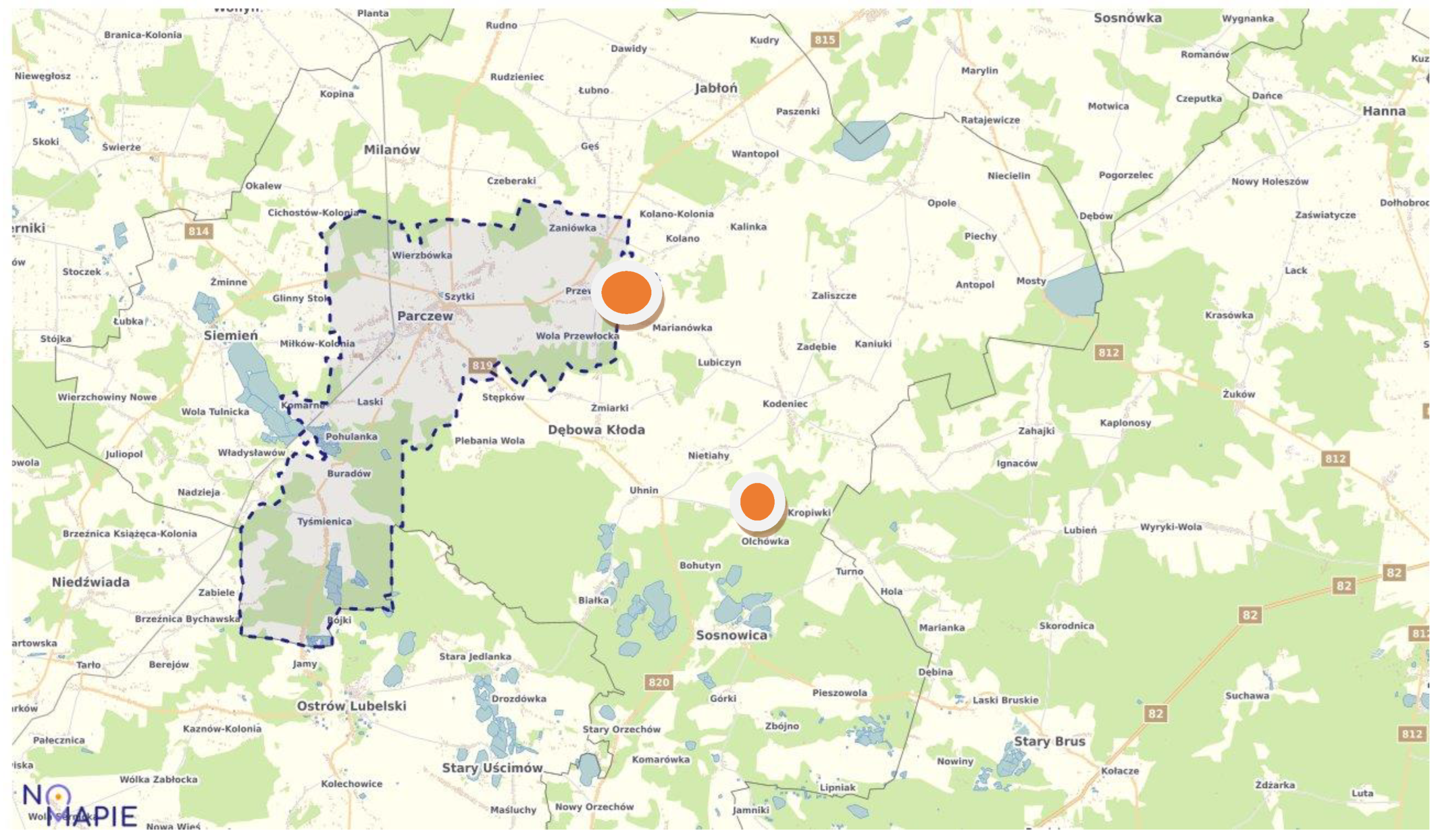
Figure 1.
Phytophthora infestans [Mont] De Barry – potato late blight: (a) Potato late blight leaf inoculant; (b) Potato late blight - stem form; (c) Potato blight on leaves, stems and tubers, (d) Potato blight on an organic field in Uhnin.
Figure 1.
Phytophthora infestans [Mont] De Barry – potato late blight: (a) Potato late blight leaf inoculant; (b) Potato late blight - stem form; (c) Potato blight on leaves, stems and tubers, (d) Potato blight on an organic field in Uhnin.
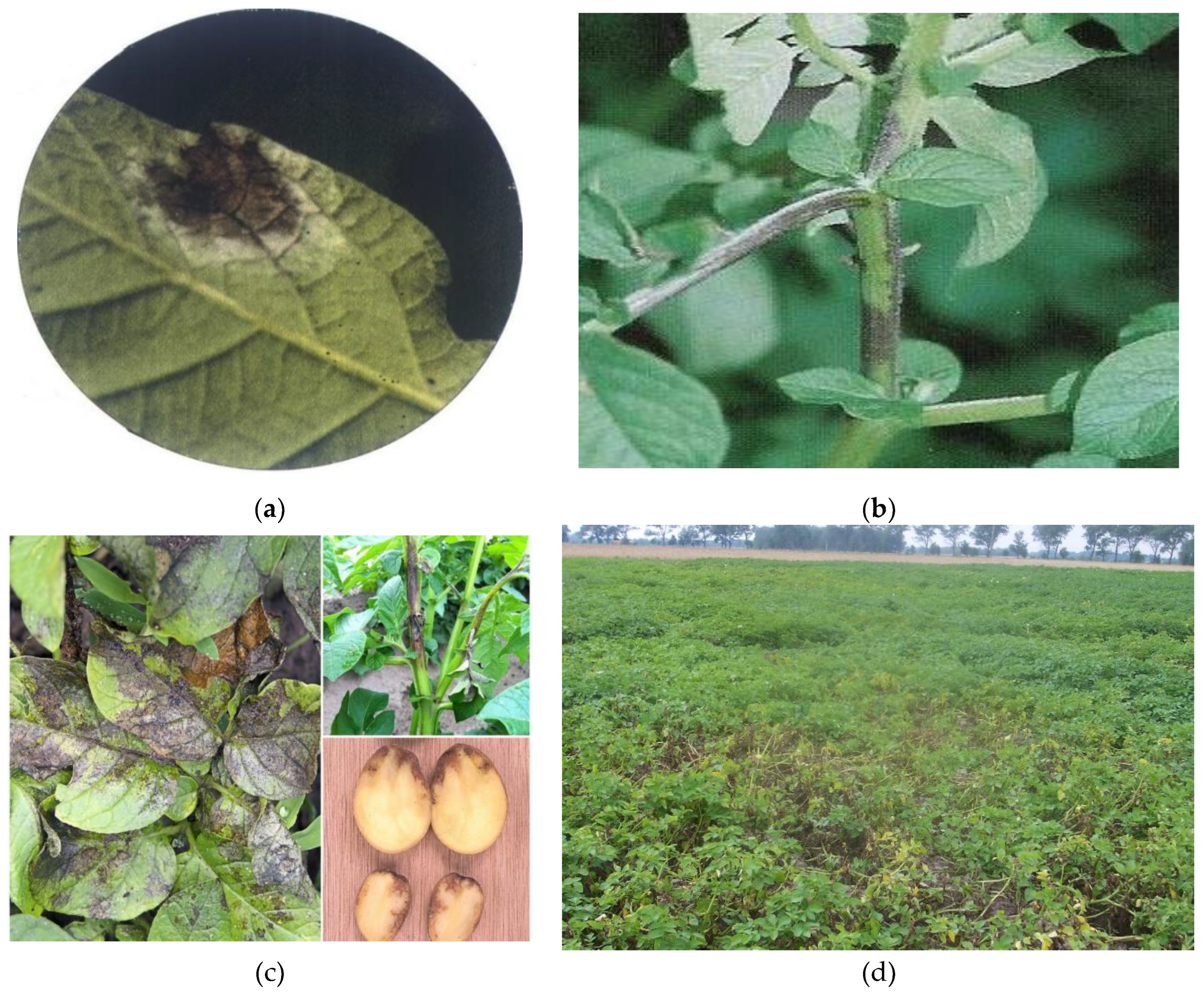
Figure 2.
Potato late blight in the ecological and integrated crop system (Mean for the years 2018-2020).
Figure 2.
Potato late blight in the ecological and integrated crop system (Mean for the years 2018-2020).
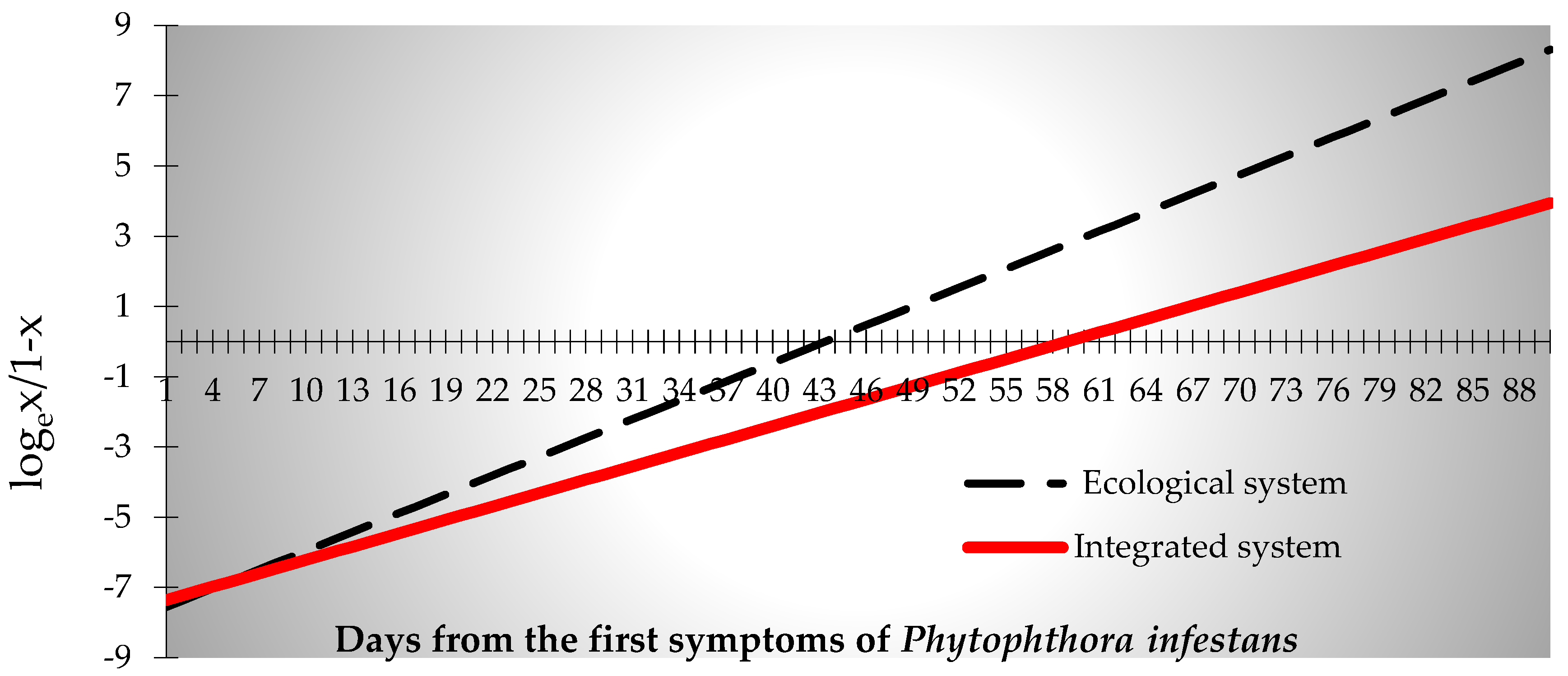
Figure 3.
Late blight rate of infection on variety ‘Boryna’ in the ecological and integrated system.
Figure 3.
Late blight rate of infection on variety ‘Boryna’ in the ecological and integrated system.
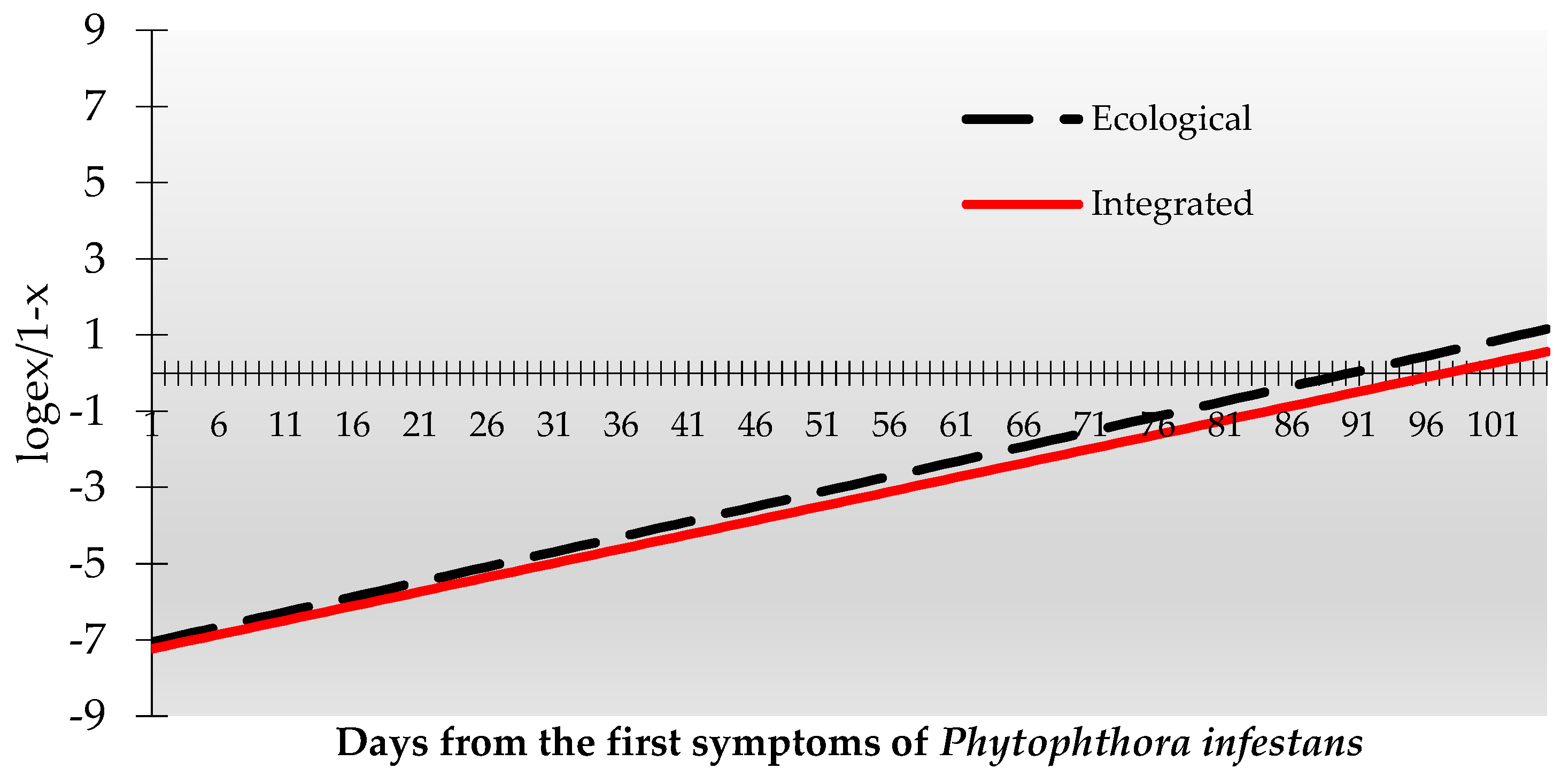
Figure 4.
Late blight rate of infection on variety ‘Irga’ in the ecological and integrated system.
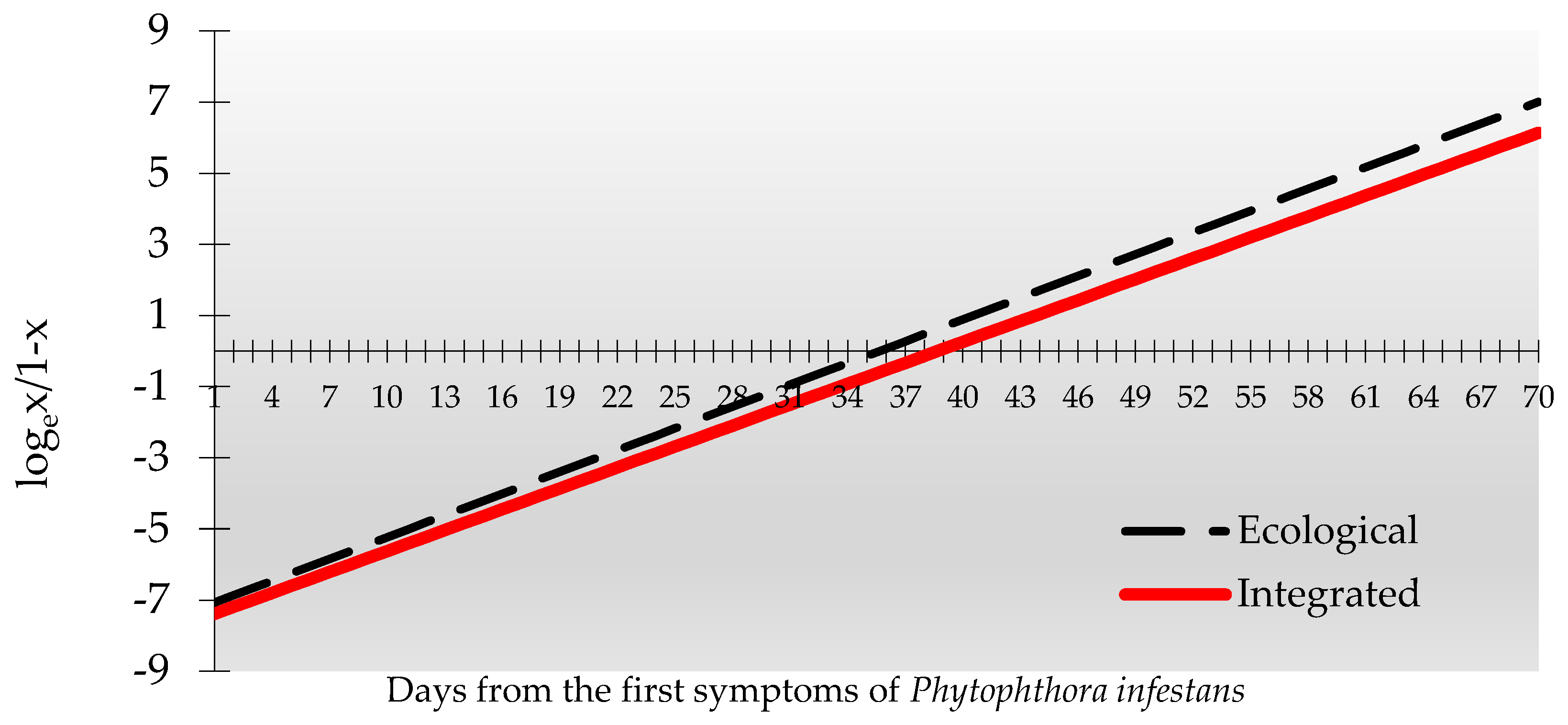
Figure 5.
Late blight rate of infection on variety ‘Jurek’ in the ecological and integrated system.
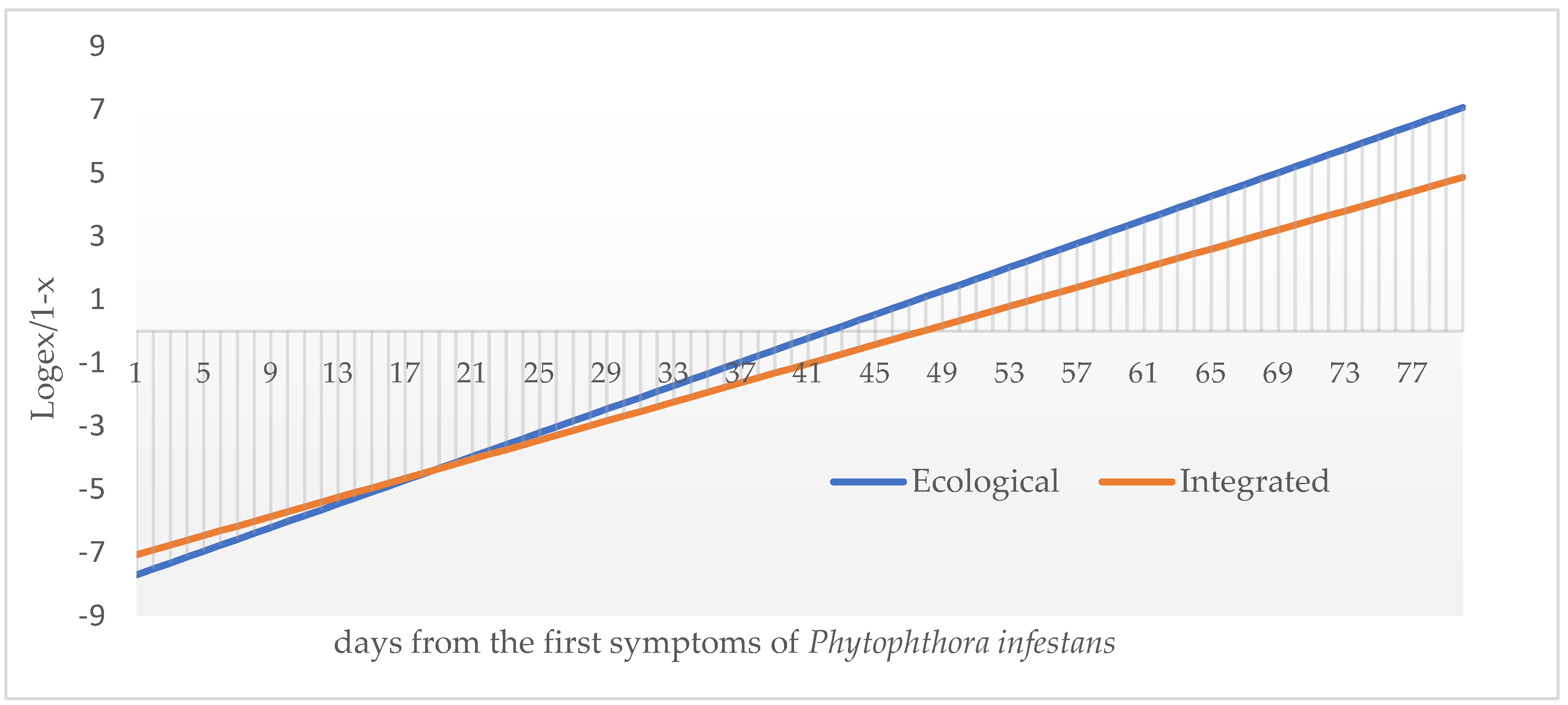
Figure 6.
Late blight rate of infection on variety ‘Mila’ in the ecological and integrated system.
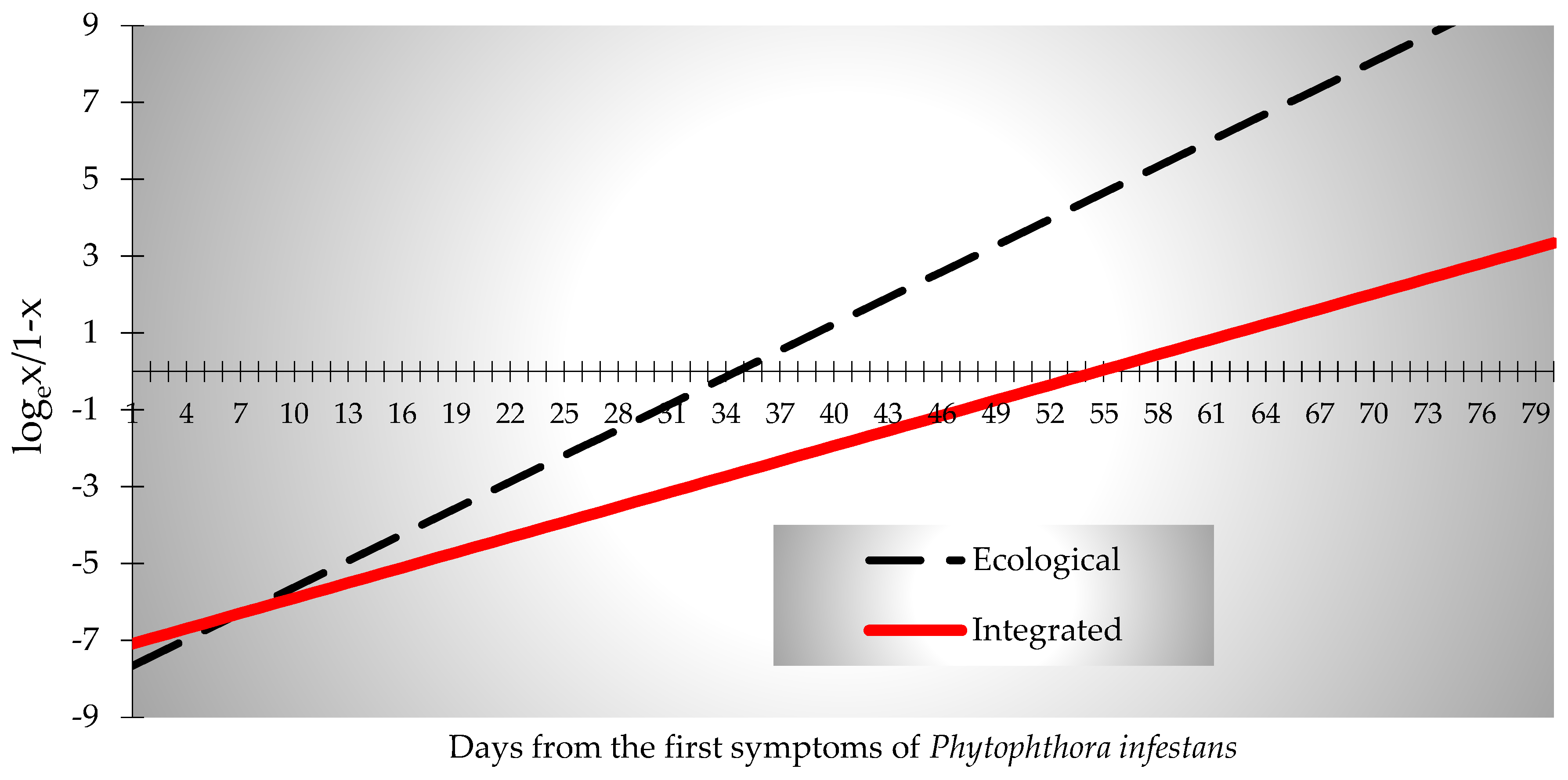
Figure 7.
Late blight rate of infection on variety ‘Amarant’ in the ecological and integrated system.
Figure 7.
Late blight rate of infection on variety ‘Amarant’ in the ecological and integrated system.
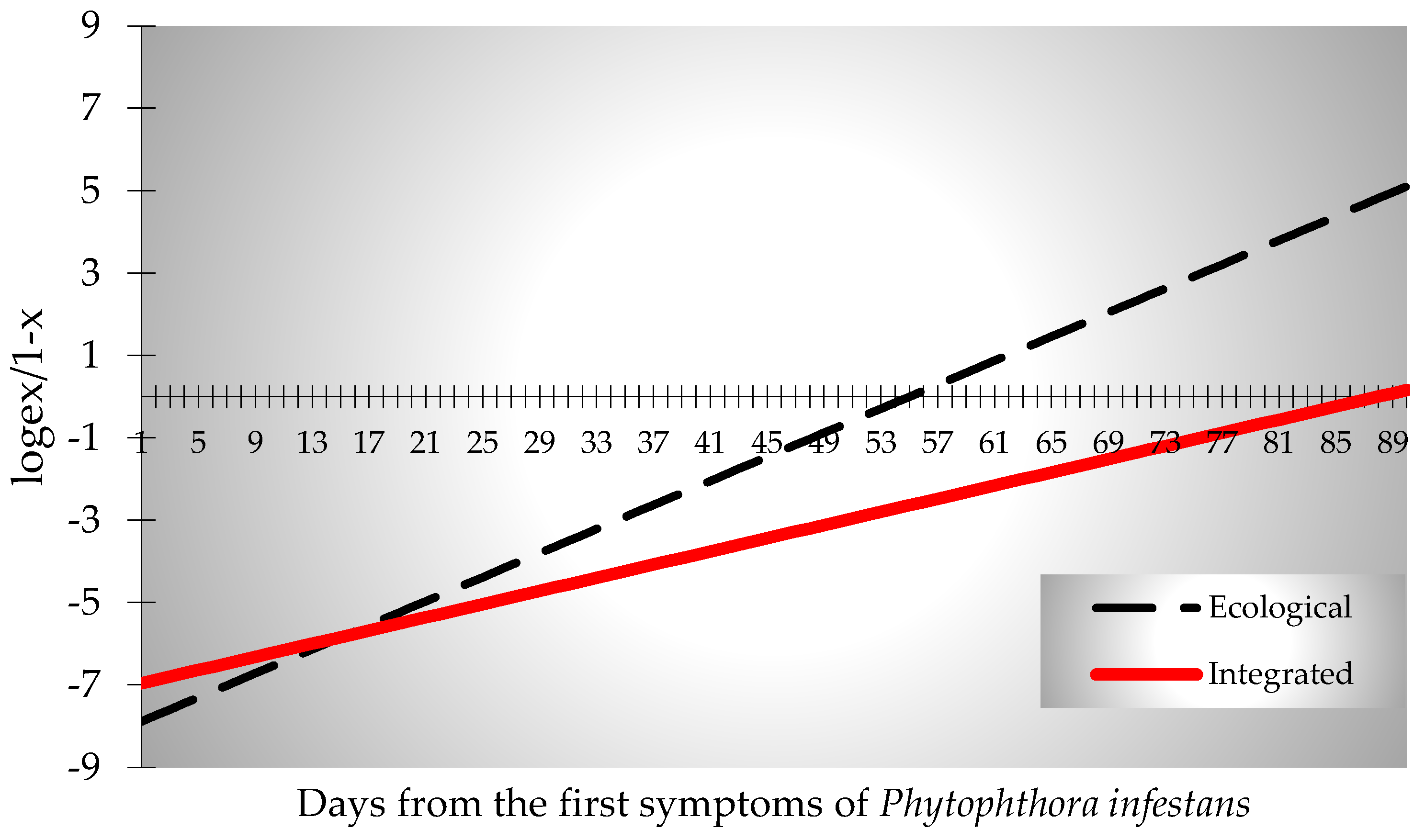
Figure 8.
Late blight rate of infection on variety ‘Jelly’ in the ecological and integrated system.
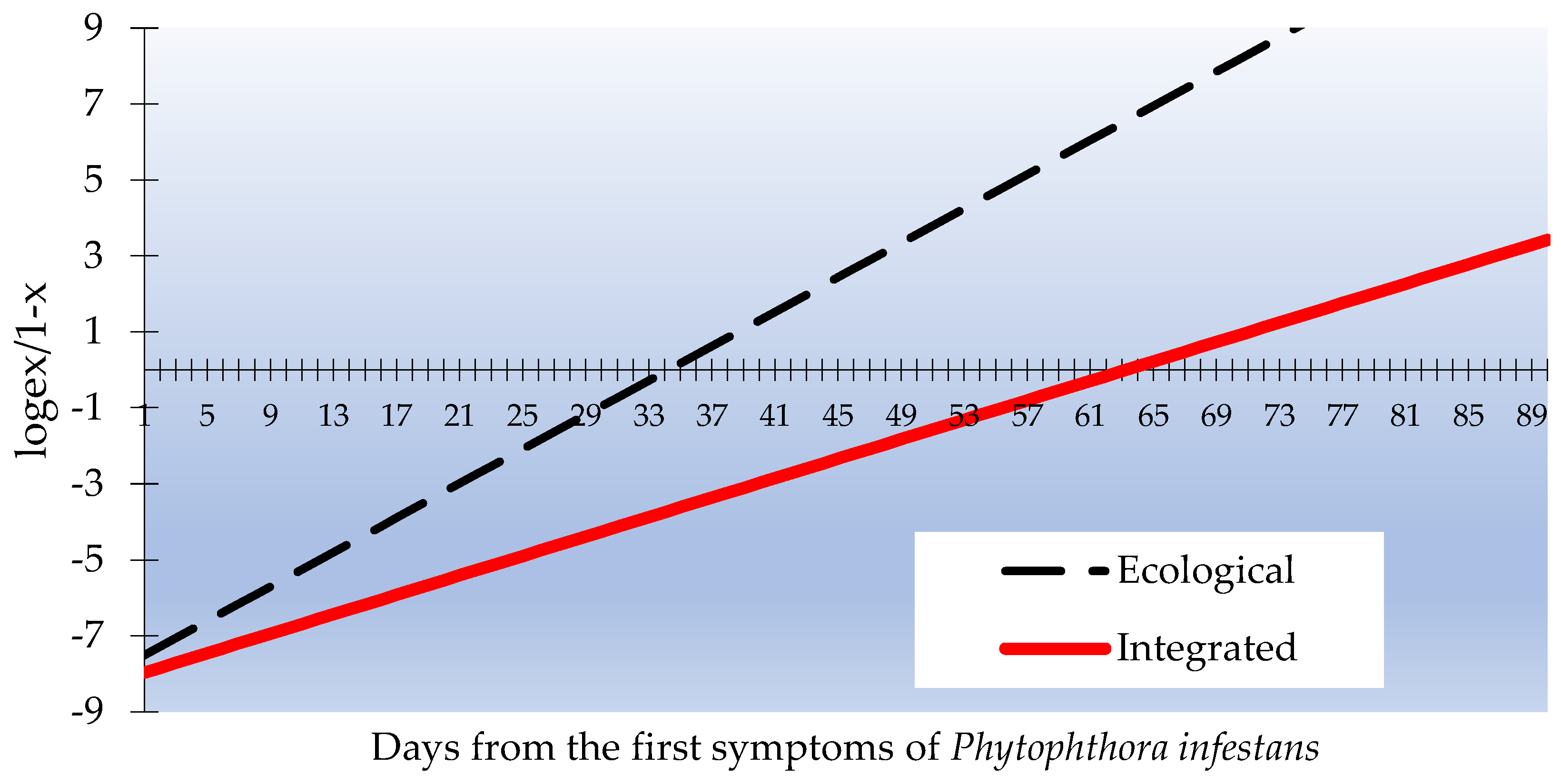

Table 1.
Characteristics of the tested potato varieties.
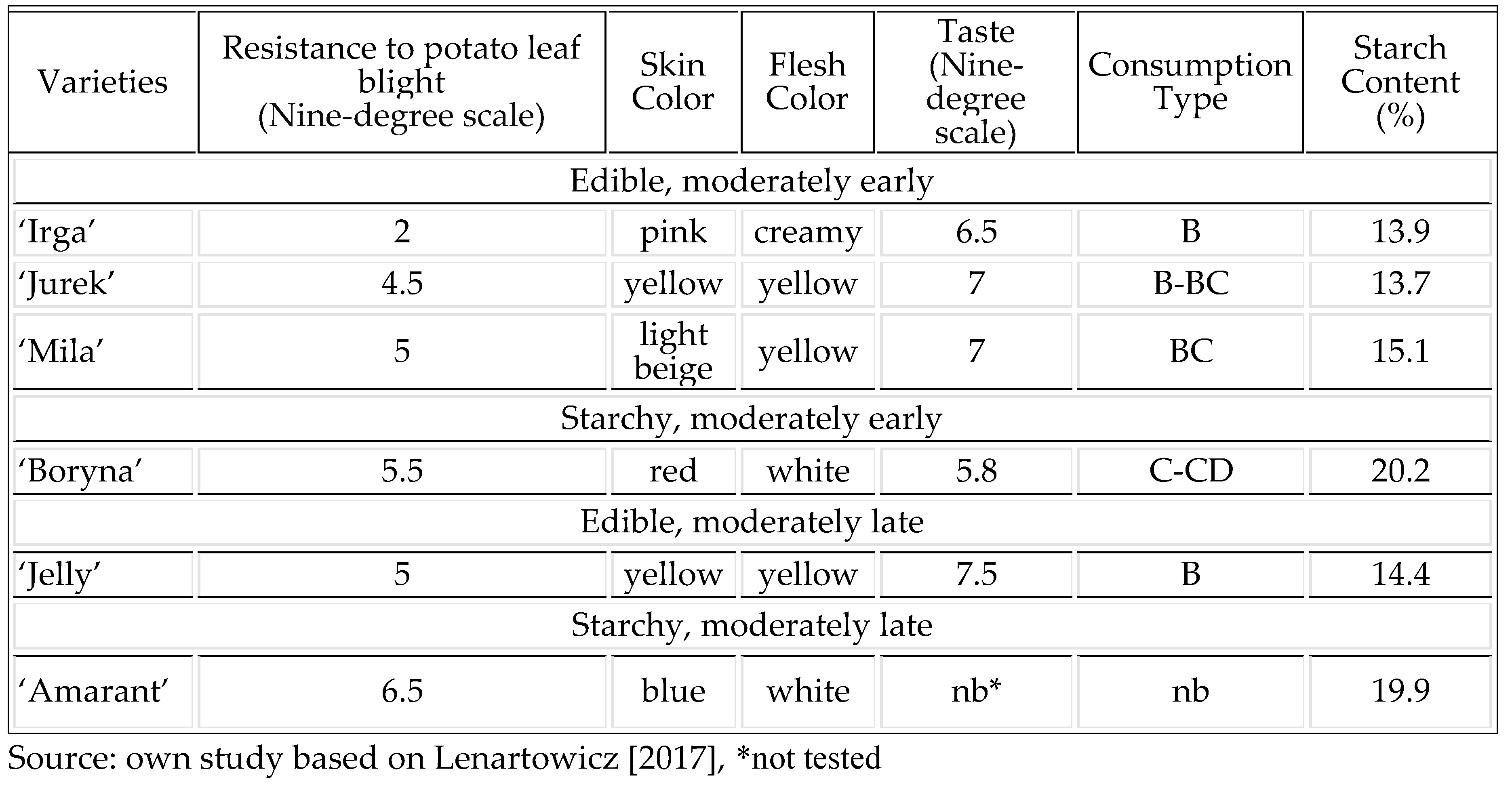
Table 2.
The granulometric composition of soil.
| Year | Composition content of the granulometric fractions [%] | Soil classification | ||||||||
| Sand | Silt | Loam | ||||||||
| 2.0-1.0 mm |
1.0-0.5 mm |
0.5-0.25 mm |
0.25-0.10 mm |
0.10-0.05 mm |
0.05-0.02 mm |
0.02-0.005 mm |
0.005-0.002 mm |
< 0.002 mm |
||
| Parczew | ||||||||||
| 2018 | 0.87 | 11.89 | 28.11 | 11.10 | 12.75 | 18.28 | 7.20 | 6.86 | 2.94 | Sandy loam |
| 2019 | 0.09 | 2.66 | 11.64 | 7.76 | 17.38 | 32.25 | 17.10 | 6.26 | 4.86 | Sand dust |
| 2020 | 1.00 | 19.92 | 32.08 | 14.00 | 8.00 | 15.00 | 6.04 | 2.96 | 1.00 | Sandy loam |
| Mean | 0.65 | 11.49 | 23.94 | 10.95 | 12.71 | 21.84 | 10.11 | 5.36 | 2,93 | Sandy loam |
| Uhnin | ||||||||||
| 2018 | 0.10 | 16.58 | 29.56 | 12.05 | 8.61 | 16.02 | 11.17 | 3.30 | 2.61 | Sandy loam |
| 2019 | 0.98 | 17.86 | 28.27 | 11.75 | 8.33 | 15.40 | 11.16 | 3.56 | 2.69 | Sandy loam |
| 2020 | 0.71 | 15.09 | 25.39 | 13.59 | 21.05 | 18.48 | 10.27 | 2.37 | 2.05 | Sandy loam |
| Mean | 0.60 | 16.51 | 27.74 | 12.50 | 12.66 | 16.63 | 10.87 | 3.08 | 2.45 | |
Source: of my own experiment results, which made in the chemical and agricultural station in Lublin
Table 3.
Physical and chemical properties of soil in Uhnin, (2018 – 2020).
| Year | Content of assimilable Macronutrients [mg.100 g-1 soil] | Humus content [%] | pH [KCL] | Micronutrients content [ mg.100 kg-1 soil] | ||||||
| P2O5 | K2O | Mg | Cu | Mn | Zn | Fe | B | |||
| Parczew | ||||||||||
| 2018 | 10.5 | 11.0 | 10.4 | 1.28 | 5.95 | 1.10 | 103.23 | 2.41 | 410.04 | 0.45 |
| 2019 | 19.4 | 20.8 | 10.6 | 1.61 | 6.32 | 1.11 | 140.80 | 7.66 | 392.01 | 0.49 |
| 2020 | 22.00 | 9.0 | 11.3 | 1.63 | 6.77 | 3.14 | 114.0 | 5.77 | 846.12 | 0.47 |
| Mean | 17.15 | 13.60 | 10.77 | 1.51 | 6.35 | 1.78 | 119.34 | 5.28 | 549.99 | 0.47 |
| Uhnin | ||||||||||
| 2015 | 20.1 | 13.1 | 7.8 | 0.94 | 5.92 | 7.51 | 318 | 40.1 | 3760 | 7.24 |
| 2016 | 18.9 | 10.9 | 7.0 | 1.06 | 5.77 | 4.92 | 337 | 56.7 | 3925 | 5.28 |
| 2017 | 24.0 | 11.8 | 6.3 | 1.03 | 6.6 | 8.99 | 166 | 41.1 | 3600 | 6.04 |
| Mean | 21.0 | 11.9 | 7.03 | 1.02 | 6.09 | 7.02 | 273.8 | 45.96 | 3761.7 | 6.17 |
Source: of own experiment results, which made in the Laboratory Central of Agro-Ecological (CLA), the University of Life Science in Lublin
Table 4.
Rainfalls, air temperature and the hydrothermal of coefficient of Sielianinov, during the growing season of potato, according to the meteorological station in Uhnin 2018-2020.
Table 4.
Rainfalls, air temperature and the hydrothermal of coefficient of Sielianinov, during the growing season of potato, according to the meteorological station in Uhnin 2018-2020.
| Year | Month | Sum of Rainfall (mm) | Average temperature (°C) | Hydrothermal coefficient of Sielianinov* | Classification of the month according to Sielianinov with modification by Skowera [2014]. | Classification of the month according to Radomski** |
| 2018 | April | 61.8 | 8.8 | 2.3 | Wet | Dry |
| May | 120.3 | 12.8 | 3.0 | very humid | Normal | |
| June | 46.7 | 16.7 | 0.9 | Dry | very dry | |
| July | 45.2 | 19.4 | 0.8 | Dry | very dry | |
| August | 6.1 | 21.4 | 0.1 | extremely dry | Extremely dry | |
| September | 130.2 | 15.5 | 2.8 | very humid | Wet | |
| Mean 1.7 | ||||||
| 2017 | April | 47.1 | 10.0 | 1.6 | Optimum | Very dry |
| May | 46.3 | 15.3 | 1.0 | Dry | Very dry | |
| June | 87.3 | 19.1 | 1.5 | Optimum | Normal | |
| July | 114.1 | 20.5 | 1.8 | fairly humid | Normal | |
| August | 41.0 | 19.5 | 0.7 | very dry | Very dry | |
| September | 11.8 | 15.5 | 0.3 | extremely dry | Extremely dry | |
| Mean 1.2 | ||||||
| 2020 | April | 51.8 | 8.1 | 2.1 | Wet | Dry |
| May | 65.5 | 13.7 | 1.5 | Optimum | Dry | |
| June | 23.1 | 18.3 | 0.4 | extremely dry | Extremely dry | |
| July | 132.0 | 19.4 | 2.2 | Wet | Wet | |
| August | 27.0 | 20.3 | 0.4 | extremely dry | Very dry | |
| September | 83.3 | 14.8 | 1.9 | fairly humid | Normal | |
| Mean 1.4 | ||||||
Source: the meteorological station in Uhnin; *The hydrothermal coefficient was calculated according to the formula Skowera [28]:
Table 5.
Coefficients of rate of late blight spread (2018-2020).
| Specificalities | Years | |||
| 2018 | 2019 | 2020 | ||
| Locations | Parczew Uhnin |
0.192 0.140 |
0.201 0.165 |
0.138 0.114 |
| Cultivation systems | A* B** |
0.200 0.132 |
0.224 0.142 |
0.132 0.120 |
| Mean | 0,166 | 0.166 | 0.183 | 0.126 |
* Ecological crop production system; ** Integrated crop production system
Table 6.
Infection coefficients of Ph. infestans in the time (mean for years and localities).
| Varieties | Resistance of potato varieties to late blight on a 9-degree scale | Crop production systems | Mean | |
| ecological | integrated | |||
| ‘Amarant’ | 6.5 | 0.146 | 0.080 | 0.113 |
| ‘Boryna’ | 5.5 | 0.079 | 0.075 | 0.077 |
| ‘Irga’ | 2.0 | 0.204 | 0.196 | 0.200 |
| ‘Jelly’ | 5.0 | 0.226 | 0.128 | 0.177 |
| ‘Jurek’ | 4.5 | 0.187 | 0.151 | 0.169 |
| ‘Mila’ | 5.0 | 0.228 | 0.132 | 0.180 |
Table 7.
The influence of crop production systems and varieties on total and trade yield (t.ha-1) (2018-2020).
Table 7.
The influence of crop production systems and varieties on total and trade yield (t.ha-1) (2018-2020).
| Varieties | Total yield | Trade yield | ||||
| Crop production systems | ||||||
| ecological | integrated | mean | Ecological | integrated | mean | |
| ‘Amarant’ | 29.1b* | 41.1b | 35.1b | 27.3b | 38.1b | 32.7b |
| ‘Boryna’ | 41.8a | 52.3a | 47.0a | 40.8a | 50.6a | 45.7a |
| ‘Irga’ | 21.4bc | 29.0c | 25.2cd | 18.6bc | 26.8c | 22.7cd |
| ‘Jelly’ | 23.1bc | 42.6b | 32.9bc | 20.1bc | 38.6b | 29.4bc |
| ‘Jurek’ | 17.4c | 32.7c | 25.1cd | 16.5d | 31.8bc | 24.1c |
| ‘Mila’ | 22.9bc | 34.0bc | 28.4c | 19.1bc | 30.5c | 24.8c |
| LSD p0.05 | 8.4 | 4.8 | 7.7 | 4.5 | ||
| Mean | 25.9b | 38.6a | 32.3 | 23.7b | 36.1a | 29.9 |
| LSD p0.05 | 1.6 | 1.5 | ||||
*Equal letter notations indicate that the mean values for different groups do not differ significantly from each other. This means that there is no significant statistical difference between the groups, indicating that we cannot reject the null hypothesis, which assumes no differences between the groups.
Table 8.
The influence of locations and varieties on total and trade yield (t.ha-1) (2018-2020).
| Varieties | Total yield | Trade yield | ||||
| Localizations | ||||||
| Parczew | Uhnin | Mean | Parczew | Uhnin | Mean | |
| Amarant | 32.9b* | 37.2b | 35.1b | 30.7b | 34.6ab | 32.7b |
| Boryna | 43.9a | 50.1a | 47.0a | 42.1a | 49.3a | 45.7a |
| Irga | 26.9c | 23.0d | 25.0d | 24.9c | 20.5c | 22.7d |
| Jelly | 28.1bc | 37.6b | 32.9bc | 24.6c | 34.1ab | 29.4bc |
| Jurek | 19.9c | 30.3c | 25.1d | 18.0d | 30.1b | 24.1c |
| Mila | 25.7c | 31.1c | 28.4c | 22.6dc | 27.0bc | 24.8c |
| LSD p0.05 | 8.4 | 7.7 | ||||
| Mean | 25.9b | 38.6a | 32.3 | 23.7b | 36.1a | 29.9 |
| LSD p0.05 | 1.6 | 4.8 | 1.5 | 4.5 | ||
*Equal letter notations indicate that the mean values for different groups do not differ significantly from each other. This means that there is no significant statistical difference between the groups, indicating that we cannot reject the null hypothesis, which assumes no differences between the groups.
Table 9.
The influence of years and varieties on total and trade yield (t.ha-1) (2018-2020).
| Varieties | Total yield | Trade yield | ||||||
| Years | ||||||||
| 2018 | 2019 | 2020 | mean | 2018 | 2019 | 2020 | mean | |
| ‘Amarant’ | 34.0a* | 31.1a | 40.1b | 35.1b | 31.5a | 29.4a | 37.1b | 32.7b |
| ‘Boryna’ | 45.7a | 40.0a | 55.2a | 47.0a | 44.3a | 38.8a | 54.0a | 45.7a |
| ‘Irga’ | 30.4b | 21.7b | 23.4c | 25.2d | 27.1b | 19.8bc | 21.3c | 22.7d |
| ‘Jelly’ | 29.4b | 26.0ab | 43.2ab | 32.9bc | 26.8b | 23.3b | 38.2b | 29.4bc |
| ‘Jurek’ | 29.0b | 19.4b | 26.8c | 25.1c | 28.0b | 18.3bc | 26.2c | 24.2cd |
| ‘Mila’ | 25.4b | 24.6b | 35.1bc | 28.4c | 22.1bc | 21.0b | 31.4bc | 24.8c |
| LSD p0.05 | 14.4 | 13.5 | ||||||
| Mean | 32.3b | 27.1c | 37.3a | 32.2 | 30.0b | 25.1c | 34.7a | 29.9 |
| LSD p0.05 | 2.5 | 4.8 | 2.3 | 4.5 | ||||
*Equal letter notations indicate that the mean values for different groups do not differ significantly from each other. This means that there is no significant statistical difference between the groups, indicating that we cannot reject the null hypothesis, which assumes no differences between the groups.
Disclaimer/Publisher’s Note: The statements, opinions and data contained in all publications are solely those of the individual author(s) and contributor(s) and not of MDPI and/or the editor(s). MDPI and/or the editor(s) disclaim responsibility for any injury to people or property resulting from any ideas, methods, instructions or products referred to in the content. |
© 2024 by the authors. Licensee MDPI, Basel, Switzerland. This article is an open access article distributed under the terms and conditions of the Creative Commons Attribution (CC BY) license (http://creativecommons.org/licenses/by/4.0/).
Copyright: This open access article is published under a Creative Commons CC BY 4.0 license, which permit the free download, distribution, and reuse, provided that the author and preprint are cited in any reuse.


