

Submitted:
10 May 2024
Posted:
13 May 2024
You are already at the latest version
Abstract
CO2 geological sequestration in coal seams can achieve the dual objectives of CO2 emission reduction and enhanced coalbed methane production, making it a highly promising carbon capture and storage technology. However, the injection of CO2 into coal reservoirs in the form of supercritical fluid (ScCO2) leads to complex physicochemical reactions with the coal seam, altering the properties of the coal reservoir and impacting the effectiveness of CO2 sequestration and methane production enhancement.In this paper, theoretical calculations based on ReaxFF-MD were conducted to study the interaction mechanism between ScCO2 and the macromolecular structure of both low-rank and high-rank coal, to address the limitations of experimental methods. The reaction of ScCO2 with low-rank coal and high-rank coal exhibits significant differences. At swelling stage, the low-rank coal experiences a decrease in aromatic structure and aliphatic structure, high-rank coal shows an increase in aromatic structure and a decrease in aliphatic structure, while swelling phenomenon is more pronounced in high-rank coal. At dissolution stage, low-rank coal is initially decomposed into two secondary molecular fragments, and then recombine to form new molecular structure, the aromatic structure increased and the aliphatic structure decreased. In contrast, high-rank coal occurs stretches-breakage-movement-reconnection, a reduction in aromatic structure and an increase in aliphatic structure.The primary reasons for these variations lie in distinct molecular structure compositions and the properties of ScCO2, leading to different reaction pathways of functional group and aromatic structure. The reaction pathways of functional groups and aromatic structures in coal can be summarized as follows: the breakage of the O-H bond in hydroxyl groups, the breakage of the C-OH bond in carboxyl groups, transformation of aliphatic structures into smaller hydrocarbon compounds or formation of long-chain alkenes, and various pathways involving broken, rearrangement, recombination of aromatic structures. In low-rank coal, there is a higher abundance of oxygen-containing functional groups and aliphatic structures. The breakage of O-H and C-OH chemical bonds results in the formation of free radical ions, while some aliphatic structures detach to produce hydrocarbons. Additionally, some of these aliphatic structures combine with carbonyl groups and free radical ions to generate new aromatic structures. Conversely, in high-rank coal, the lower content of oxygen-containing functional groups and aliphatic structures, along with stronger intramolecular forces, results in fewer chemical bond breakages and makes it less conducive to the formation of new aromatic structures.These results elucidate the specific deformations of different chemical groups, offering a molecular-level understanding of the interaction between CO2 and coal.
Keywords:
ScCO2
; Low/High-rank coal
; Coal structure
; Nano-molecular scale
; Response mechinasm
1. Introduction
Environmental protection and energy scarcity stand as the two major challenges faced today. The growing awareness of CO2 as a greenhouse gas has attracted increasing attention. The CO2-enhanced coal bed methane (CO2-ECBM) projects not only enhances coal bed gas recovery rates but also facilitates the geological sequestration of CO2 [1,2,3]. The injected CO2 into coal reservoirs exists in a supercritical fluid state (ScCO2) [4,5], leading to intricate physicochemical reactions with the coal, resulting in changes of coal structure and properties [6,7,8,9]. The nanoscale pores within coal serve as the primary space for coalbed methane accumulation [10,11]. Alterations in these nanoscale pores can affect the adsorption/desorption capabilities of coal, thereby influencing coalbed methane production and the safety of CO2 storage. The interaction between coal and ScCO2 is fundamentally a molecular phenomenon [12,13]. The alterations in coal pore structure arise from changes in the molecular structure of coal [14,15]. Hence, it is imperative to undertake research on coal structure at the nanoscale and molecular level to understand the response characteristics and mechanisms of coal structure to ScCO2. To provide an effective theoretical basis for the widespread application of CO2-ECBM technology.
Currently, scholars have conducted numerous studies on the changes in coal pore structure after ScCO2 exposure. Zhang et al found that after ScCO2 treatment, micropores in coal transform into mesopores, leading to a reduction in micropores and an increase in mesopores in different ranks of coal [16]. Chen et al found that the only mesopore volume increases in medium-rank coal, while both micropore and mesopore volumes increase in high-rank coal [17]. Liu et al found that minimal changes in micropores, with an increase in mesopore volume in both low-rank and high-rank coal, while medium-rank coal exhibited a decrease in mesopore volume [18]. Cheng et al found that both micropore and mesopore volumes increase in medium-rank coal [19].
The modifications in coal pore structure induced by ScCO2 primarily arise from the interaction between ScCO2 and coal molecules, resulting in the removal, aggregation, and rearrangement of aromatic structures and functional groups. Wang et al, Sampath et al, and Cao et al shown that following the interaction of ScCO2 with low-rank coal, there is an increase in the content of aromatic structures and oxygen-containing functional groups within the coal, after interaction with medium- to high-rank coal, there is a decrease in the content of aromatic structures and oxygen-containing functional groups within the coal [20,21,22]. However, there are also different research conclusions. Wang et al suggest that following the interaction with ScCO2, there is an increase of aliphatic structures and a decrease of aromatic structures in high-rank coal, with almost no change observed in low-rank coal [23]. Li et al propose that following the interaction with ScCO2, partial aliphatic branches detach in low-rank coal, oxygen-containing functional groups break, forming more C=C bonds, leading to a decrease in aliphatic content and an increase in aromatic content in low-rank coal [24].
It is evident that the impact of ScCO2 on the changes in pore structure and macromolecular structure in coals of different ranks is not consistent. Experimental methods cannot precisely analyze the essence of ScCO2 on coals of different ranks. The reaction mechanism of ScCO2 with coals of different ranks should be established through theoretical methods. Currently, methods such as Molecular Dynamics (MD), Grand Canonical Monte Carlo (GCMC), and Density Functional Theory (DFT) are widely employed to investigate the adsorption and diffusion characteristics of CO2 in coal, as well as the structural changes of coal pores and fractures after CO2 injection [25,26,27,28]. The results shown that, after CO2 adsorption, not only does the non-covalent bond energy decrease, but changes also occur in bond angle energy, torsion energy, etc., leading to alterations in the macromolecular structure of coal, thereby inducing changes in pore structure [29,30,31,32].
In addition, the reactive force field molecular dynamics (ReaxFF-MD) theoretical method can simulate the in-situ reaction process of molecular structures, with clear identification of its reaction pathways under extreme conditions (such as high temperature and high pressure), coupled with low cost and short processing time. Currently, the ReaxFF-MD method is widely used to investigate the pyrolysis mechanism of coal. Zhang et al demonstrated that there are three predominant pathways for the initial decomposition of TAGP: the breakage of the C-N bond, the scission of the N-N bond, and the rupture of another N-N bond [33]. Liu et al shown that the pyrolysis process of low-rank coal was divided into three critical stages: First, the initial pyrolysis process where weak-bridge bonds and macromolecular-network; Second, some tar undergoing cracking reactions to generate gaseous products and other tar undergoing condensation and polymerization reactions to generate coke; Third, the pyrolysis process basically ended [34]. However, there has been no analysis of the interaction mechanism between ScCO2 and coal.
Therefore, this study employs the ReaxFF-MD method to calculate the kinetic behavior of low-rank coal (YZ) and high-rank coal (CZ) interacting with ScCO2, obtaining the reaction pathways and changes in chemical bonds during the reaction process between coal and ScCO2, analyzing the reaction mechanisms of ScCO2 with low-rank coal and high-rank coal. The objective of this research is to provide a theoretical basis to advance the sustainable development of CO2-ECBM technology and enhance the efficiency of energy reserves and utilization.
2. Simulation Process
The simulation process can be summarized as follows: Selecting YZ [35] and CZ [36] coal molecular structures as research models (Figure 1), the coal industry analysis and elemental analysis are shown in Table S1. Next, optimizing the coal macromolecular structure model is performed, followed by the construction of supramolecular structures, then ScCO2 is adsorption into the system. Finally, the ReaxFF-MD force field is applied to calculate the changes in small molecule products, reaction pathways, and chemical bond dynamics following the injection of ScCO2. The flowchart is shown in Figure 2.
2.1. Simulation Details
2.1.1. Model Construction
(1) Coal macromolecular structure optimization
Both the model construction and energy optimization of YZ and CZ molecules were performed using Materials Studio software. The geometry optimization task in the Forcite module was employed to optimize the structure of the model. The final configuration was an optimized coal model with the lowest energy. Based on energy fluctuations, Metropolis operation rules were employed to either accept or reject changes, thereby facilitating the formation of a new configuration (Figure 2a).
(2) Construction of Supramolecular Structure Models
The simulation parameter contained 50 YZ or CZ molecules are built by Amorphous Cell module. These super molecule models should be optimized before calculations, which can be performed by Forcite Module, the simulation parameter are COMPASS II force field [37], temperature of 298 K and NVT ensemble [38]. The size of the box is 6.77 nm×6.77 nm×6.77 nm. The optimized models are shown in Figure 2b.
2.1.2. ScCO2 Injection Process
The Adsorption Locator module from Materials Studio was used to place some CO2 molecules in the super cells, according to the average adsorption in 8MPa pressure adsorption, shown in Figure 2. The simulation used the isothermal isobaric ensemble (NPT), selecting Andersen temperature control method (50℃) and Berendsen pressure control method. The total time period of the simulation was 250 ps, the step size was 1 fs, and the sampling interval was 100 fs. The last 50 ps of data were collected for analysis [39] (Figure 2c).
2.2. ReaxFF Force Field Calculate
The ReaxFF force field employs distance-dependent bond order functions to characterize the contribution of chemical bonds to the potential energy. The calculation formula for the original bond order function is shown in Equation (1) [40]:
In the equation, , and represent the bond orders for single, double, and triple bonds, respectively. , and are the equilibrium distances for single, double, and triple bonds, respectively. The symbol - denotes the regression empirical parameters for the ReaxFF force field.
In the ReaxFF force field, the total system energy is represented by Equation (2) [41]:
In the equation, is bond energ, is over-coordination energy, is under-coordination energy, is bond angle energy, is loss energy, is torsional energy, is van der Waals forces, is Coulombic forces.
The Reaxff force field is used in MAPS program to describe bond formation/breaking and reaction path of coal and ScCO2 interaction(Figure 2e,f).
3. Results and Discussion
3.1. The Deformation Characteristics of Coal Molecular Structure
The changes in the coal supramolecular structure before and after the interaction with ScCO2 are show in Figure 3. At 0-70 ps, the entanglement between coal molecules gradually loosens, leading to a decrease in intermolecular distance, while CO2 molecules diffuse from the outside to the inside. At 70-200ps, chemical bonds within the molecules break, leading to the formation of more small radicals (·H, ·OH, ·CH3, etc.), and the coal molecular structure gradually diffuses towards the edges. At 200-250ps, there is no significant alteration in the supramolecular structure of the coal. The main difference between high-rank coal and low-rank coal lies in the degree of molecular structural looseness and the quantity of chemical bonds broken. In high-rank coal, the degree of molecular looseness is greater. In low-rank coal, there is a greater occurrence of chemical bond fractures and the generation of small molecular compounds.
To further analyze the changes in coal structure after ScCO2 adsorption, coal macromolecular structures were isolated from the supramolecular structure to observe their deformation characteristics. The coal macromolecular structures before and after the reaction are shown in Figure 4, and the deformation characteristics of coal macromolecular structures at different reaction times are shown in Figures S1 and S2. During the reaction process, both low-rank coal and high-rank coal molecules tend to flatten, which is consistent with a previous study on high-volatile bituminous coal [24]. However, molecular simulation methods enable the observation of intermediate processes in the reaction.
For low-rank coal (Figure 4a,b): At 0.00 to 36.00 ps, some thiophene, oxygen-containing functional group and aliphatic structures are broken, leading to H+ ions are released, the deformation of the molecular structure is subtly(Figure S1.(b)). From 36 to 48 ps, more aliphatic structures detach from the macromolecular structure, leading to an increase in small molecular products, and the deformation of the molecular structure is obviously(Figure S1.(c)). From 48 to 69.75 ps, the anthracene in the molecules is broken, leading to the decomposition of the macromolecular structure into two secondary molecular structures (Fragment 1: C104H80O7S, Fragment 2: C76H59O7N3)(Figure S1.(d)). From 69.24 to 204.00 picoseconds, the two secondary molecular structures continue to react with ScCO2 independently(Figure S1.(e),(f)). At 204.75 ps, the two secondary molecular fragments recombine into a macromolecular structure(Figure S1.(g)). From 204.75 to 250 picoseconds, there is no significantly change in the coal molecular structure.
For high-rank coal (Figure 4c,d): From 0 to 31 ps, the aromatic rings connected to oxygen atoms occur deformation, and some aliphatic structures transform into aromatic structures due to the dehydrogenation of cyclohexane(Figure S2(b)). From 64.25 ps, aromatic structures in the coal undergo twisting-breakage-movement-reconnection(Figure S2(c),(d),(e),(f),(g)). At 116.25 ps, the flattening of the coal molecular structure reaches its maximum(Figure S2(e)), and by 142.25 ps, the mobile aromatic structures return to their original positions, then there is no further movement of the aromatic structure within the coal molecule(Figure S2(f)). At 202.25ps, only a minority of chemical bonds break and form in the molecular structure, with no significant changes occurring.
3.2. The Pathways of Functional Groups and Aromatic Structures
The functional groups in coal can be classified into four types: hydrocarbon structures, aliphatic structures, oxygen-containing functional groups, and aromatic structures. The action of CO2 on coal molecular structure can be categorized into two main types: Firstly, CO2 directly react with functional groups; Secondly, during the reaction process, H+ and CO generated from decomposition react with functional groups.
3.2.1. The Pathways of Functional Groups
Hydroxyl groups pathway (-OH): The CO2 attacks the H+ atom in the hydroxyl group, inducing a dehydrogenation reaction. The remaining oxygen-containing groups subsequently break, releasing CO molecules(Figure 5: Pathway 1).
Carbonyl groups pathways (-C=O-): (1) Hydrogenation: Carbonyl groups combine with free H+ ions to form hydroxyl groups(Figure 5: Pathway 2). (2) Aromatization: The H+ reacts with CO2 to produce CO, which replaces the oxygen in the carbonyl group, subsequently forming aromatic rings with surrounding aliphatic structures(Figure 5: Pathway 3).
Carboxyl groups pathways (-COOH): The H+ attacks the oxygen atom in the carboxyl group (C-OH), causing the detachment of the OH- and the formation of a H2O molecular. Additionally, the C-C bond breaks, resulting in the formation of CO molecules(Figure 5: Pathway 4).
Aliphatic structures pathways(-CH3): (1) Decomposition reactions: The breaking of Cal-Cal or Cal-H bonds in coal results in the formation of free radical ions such as H+ and C4+ or smaller hydrocarbon compounds(Figure 5: Pathway 5).(2) Condensation reaction: The free -CH3/-CH2 groups detached from the coal macromolecular structure, occur condensation reactions with carbonyl groups or other aliphatic structures in the coal to form long chain alkenes. From the reaction process diagram, it can be observed that aliphatic structures at the edges of coal macromolecules are more prone to occur decomposition reactions: reactions, while aliphatic structures connected to aromatic structures or oxygen functional groups are more prone to occur addition reactions(Figure 5: Pathway 6).
3.2.2. The Pathways of Aromatic Structures
During the interaction between ScCO2 and coal, not all aromatic structures in coal changed. Overall, aromatic rings at the edges of macromolecular structures and those connected to side chains are more susceptible to deformation. The changes in aromatic structures mainly include the following forms: (1) Aromatic rings are directly broken, gradually changing from cyclic to linear or irregular shapes(Figure 6: Pathway 7); (2)Aromatic structures polymerize with free C4+ and H+ ions to form Car-Car bonds(Figure 6: Pathway 8). (3) Aromatic rings change from a six-membered aromatic ring to seven-membered ring, and then be damaged(Figure 6: Pathway 9); (4) During the reaction, aromatic rings first break and then recombine. At the end of the reaction, there is no change in the aromatic rings(Figure 6: Pathway 10);
3.2.3. The Reaction Pathways of Low-Rank and High-Rank Coal
In low-rank coal(Figure 7): hydroxyl groups (A, B) occur dehydrogenation(Pathway 1). Aliphatic structures (F, G) aromatize to form aromatic structures(Pathway 6), while aliphatic structures (D, E) decompose to form small hydrocarbon compounds(Pathway 5). The decomposed aliphatic structures combine with carbonyl groups (D, E) to form aromatic structures(Pathway 3). Carbonyl groups (C) occur substitution reactions only. Carboxyl groups (F, G) break to form carbonyl groups. In aromatic structures, benzene and naphthalene (C, D, F) occur Pathways 7 and 8, while polycyclic aromatic hydrocarbons (A, B) occur Pathways 9 and 10.
In high-rank coal(Figure 8): carbonyl groups (③, ④, ⑦ Pathway 2) occur hydrogenation to form hydroxyl groups, while a small amount of aliphatic structures (① Pathway 5) broken. Similar to low-rank coal, benzene and naphthalene in aromatic structures (②, ③, ⑤) occur Pathways 7 and 8. Polycyclic aromatic hydrocarbons (①, ④, ⑥, ⑦) occur Pathways 9 and 10.
The molecular fragments located at the edges of the molecular structure and those connected to side chains in both low-rank and high-rank coal are prone to deformation. Compared to high-rank coal, low-rank coal exhibits some differences in reaction pathways. Low-rank coal occurs more decomposition of aliphatic structures, resulting in the generation of new aromatic structures. High-rank coal occurs only a small amount of decomposition of aliphatic structures, and there is no generation of new aromatic structures.
3.3. Chemical Bond Change Characteristics
The changes in the coal molecular structure are primarily caused by the breaking and formation of crosslinks and aromatic rings. Crosslinks in coal can be primarily categorized into Cal-Cal bonds constituting aliphatic side chains, C-O bonds in oxygen-containing functional groups, and C-H bonds. The aromatic structures are primarily composed of Car-Car bonds.
3.3.1. Low-Rank Coal Chemical Bond Change Characteristics
The curve of chemical bond changes in low-rank and high-rank coal are shown in Figure 9. At 0-48 ps, there is a significant decrease in C-H bonds, Car-Car bonds rapidly decrease initially and then decrease at a slower rate, Cal-Cal bonds initially increase followed by stabilization, and a small decrease in C-O bonds. The reduction in aromatic bonds in low-rank coal is main due to the breakage of aromatic rings such as thiophene and pyridine. The increase in Cal-Cal bonds is due to the loosening of the molecular structure in low-rank coal, which stretches the Car-Car bonds in the aromatic ring, transforming them into Cal-Cal bonds.
At 48-69.75 ps, the reduction in C-H bonds accelerates, and there is a slight decrease in Car-Car bonds and Cal-Cal bonds. This indicates that the coal molecular structure no longer continues to loosen, leading to the fragmentation of aromatic structures. The breakage of the C-H bonds around the aromatic structure, forming more free radical ions, and some aromatic structures are decomposed. At 69.25-204 ps, the decrease in C-H bonds continues rapidly, and the reduction in aliphatic structures as well as the increase in aromatic structures both intensify. This is because during this stage, the condensation effect strengthens, some aliphatic structures transform into aromatic structures, and aromatic structures that fragmented in the previous stage recombine. After 204.75 ps, C-H bonds remain essentially unchanged, and the rate of decrease in aliphatic bonds as well as the rate of increase in aromatic bonds slow down.
3.3.2. High-Rank Coal Chemical Bond Change Characteristics
The curve of chemical bond changes in low-rank and high-rank coal are shown in Figure 10. At 0-31 ps, the increase in Car-Car bonds and the decrease in Cal-Cal and C-H bonds are attributed to the dehydrogenation of cyclohexane in high-rank coal, resulting in the formation of aromatic structures. Due to the low sulfur content in high-rank coal, more CO2 can reacts with oxygen-containing functional groups in the coal, resulting in a faster decrease in C-O bonds compared to low-rank coal.
At 31-116.25 ps, more CO2 diffuses into the interior of high-rank coal, leading to a stronger decomposition effect on high-rank coal and the formation of numerous free radical ions. These free radical ions then disrupt the coal molecular structure through chain reactions. As high-rank coal contains a higher proportion of aromatic structures and a lower proportion of aliphatic structures, more aromatic structures are disrupted, leading to the formation of aliphatic structures.
At116.25-250 ps, although there is movement and reconnection of aromatic structures, the decomposition effect of CO2 on coal molecules weakens, there is not a significant change in chemical bond variations.
3.4. Reaction Mechanism of Low and High Rank Coal
Based on the previous discussion, it is evident that there are significant differences in the structural changes, functional group transformation pathways and chemical bond broken during the reaction process of high-rank and low-rank coal reaction with ScCO2. The main reasons for these differences are related to the reaction mechanisms between ScCO2 and coal molecular structures, and the differences in the molecular structures of low and high rank coal. The interaction between ScCO2 and coal can be divided into two processes: swelling and dissolution.
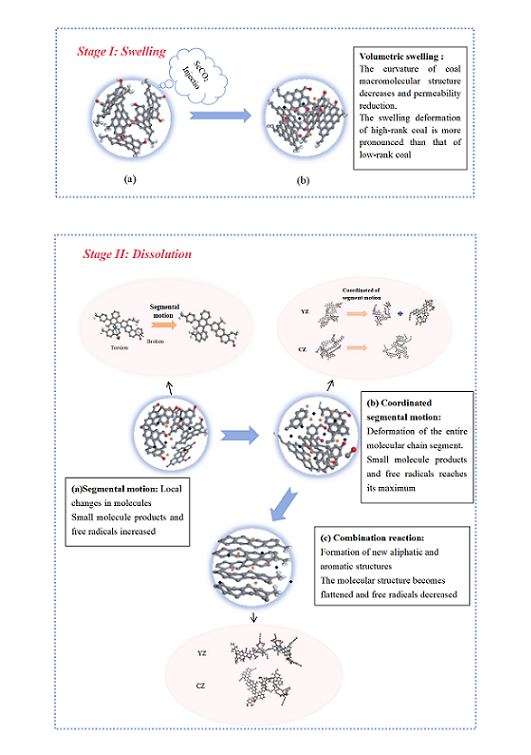
Stage I Swelling (Figure 11): During the swelling process, the molecular structure to expand, and the entanglement between molecules becomes looser. The main phenomenon involves the breakage of non-covalent bonds between molecules, accompanied by the breaking of weak bridging bonds within the macromolecular network. Hydrogen bonds, π...π stacking, Cal-O, Cal-Cal, and Cal-H bonds broken, leading to the dissociation of complex system structures and the release of small molecular gases. At this process, the molecular center remains unchanged. Although ScCO2, as a nonpolar solvent, exhibits slightly inferior swelling effects compared to polar solvents, the aromatic structures within coal possess strong adsorption capabilities for nonpolar solvents. Highly aromatic high-rank coals can adsorb more CO2. Therefore, the swelling phenomenon of high-rank coal molecules is more pronounced. High-rank coal contains fewer aliphatic structures and aromatic structure stability, with only a partial breaking of C-H bonds in some cyclohexane molecules, leading to the formation of aromatic Car-Car bonds. Low-rank coal contains more aliphatic structures, and its aromatic structures are unstable. Therefore, during the swelling stage, both Cal-Cal and Car-Car decrease.
Stage II Dissolution(Figure 12):The first stage(Figure 12(a)): the chain segments of coal macromolecules exhibit enhanced mobility. Due to the internal rotation of the main chain σ bonds, certain segments of the molecule can move relative to others while the molecular center of mass remains unchanged (no plastic deformation occurs). This leads to a reduction in side chains and the fracture of aromatic structures linked to oxygen functional groups in the macromolecular structure of coal. The second stage (Figure 12(b)): the movement of chain segments reaches the movement of the entire macromolecular chain (also known as coordinated segmental motion). This stage is primarily characterized by decomposition and condensation reactions, including the breakage of Car-O, Car-Cal, Car-H, and Car-Car bonds. During the coordinated segmental motion, the impact of ScCO2 on the coal molecular structure is most pronounced. The original functional groups and aromatic structures in coal are broken, leading to the detachment of free radical ions, which occur addition or substitution reactions with the coal macromolecular structure. Due to the weak intra-molecular forces in low-rank coal molecules, they are more prone to broken and decomposition into smaller molecular units. At this stage, the low-rank coal is decomposed into two second-order molecular fragments, and the aromatic structure of the high-rank coal is migration. The third stage (Figure 12(c)): under supercritical conditions, along with an increase in molecular collision frequency, coupled with the weak acidity of ScCO2, the fragmentation of coal molecules could interact with free radical ions, so the combination reaction occurs and resulting in the formation of new bonds, molecular structural reorganization. Hence, the phenomenon of molecular recombine in low-rank coal and the reconnection of aromatic structures in high-rank coal are observed in the later stages of the reaction. After the dissolution reaction concludes, both low-rank coal and high-rank coal show no significant changes.
4. Conclusion
- (1)
- The interaction between coal and ScCO2 leads to various chemical reactions, including the breakage of aliphatic side chains and oxygen-containing functional group side chains, removal of heteroatoms, and ring-opening and polymerization reactions between aliphatic and aromatic structures. The process of structural changes in low-rank coal molecules can be summarized as stretches-breakage-recombine, while in high-rank coal be summarized as stretches-migration-reconnection.
- (2)
- Functional groups and aromatic structures in coal exhibit various reaction pathways. The O-H bond in hydroxyl groups and the C-OH bond in carboxyl groups break. The carbonyl group may occur hydrogenation to form a hydroxyl group or aromatization with surrounding aliphatic structures to create aromatic ring structures. Aliphatic structures can decompose to form smaller hydrocarbon compounds or condensate to form long-chain alkenes. The reaction pathways of aromatic structures are more complex and involve processes such as breakage, rearrangement, and recombination.
- (3)
- The transformation of coal molecular structure is governed by changes in chemical bonds within the coal. The content of C-H bonds and C-O bonds decreases in both low-rank and high-rank coals. In low-rank coal, the Car-Car bonds initially decrease and then increase, while the Cal-Cal bonds initially increase and then decrease. Conversely, in high-rank coal, the Car-Car bonds initially increase and then decrease, while the Cal-Cal bonds initially decrease and then increase. Overall, in high-rank coal, both Car-Car and Cal-Cal bonds decrease, while in low-rank coal, Car-Car bonds increase and Cal-Cal bonds decrease.
- (4)
- The responses of high-rank and low-rank coal are related to the structural differences and the interaction mechanisms between ScCO2 and coal molecules. Due to the stronger adsorption affinity of aromatic structures for CO2, the changes in high-rank coal during the swelling stage are more pronounced compared to low-rank coal. At dissolution stage, chemical bonds in low-rank coal are weaker, the bonds are more prone to breaking after exposure to ScCO2, the disrupted aromatic structures or carbonyl groups combine with detached aliphatic side chains to form larger aromatic structures in low-rank coal. Conversely, in high-rank coal, there are stronger intramolecular forces, with fewer aliphatic structures and carbonyl groups, new aromatic structures are not formed, leading to a reduction in aromatic structure content.
Supplementary Materials
The following supporting information can be downloaded at the website of this paper posted on Preprints.org. Table S1. Proximate and ultimate analyses of coal sample from YZ; Table S2. Proximate and ultimate analyses of coal sample from CZ; Figure S1. The low-rank coal macromolecular structures reaction process with ScCO2;Figure S2. The high-rank coal macromolecular structures reaction process with ScCO2.
Author Contributions
Validation, S.Q.; Formal analysis, B.J.; Investigation, B.J. and Y.N.; Resources, K.D.; Writing—original draft, K.D. All authors have read and agreed to the published version of the manuscript. All authors have read and agreed to the published version of the manuscript.
Funding
This work received funding from the National Natural Science Foundation of China (42103047) and the Applied Basic Research Project of Shanxi Province (20210302124644).
Institutional Review Board Statement
Not applicable.
Informed Consent Statement
Not applicable.
Data Availability Statement
Data are contained within the article and Supplementary Materials.
Acknowledgments
In this section, you can acknowledge any support given which is not covered by the author contribution or funding sections. This may include administrative and technical support, or donations in kind (e.g., materials used for experiments).
Conflicts of Interest
The authors declare no conflict of interest.
References
- Xu, Y.; Lun, Z.; Hu, Z.; Guo, J.; Zhou, X.; Wang, H.; Zhao, C.; Zhang, G.; Zhang, D. Alterations in pore and fracture structure of coal matrix and its surrounding rocks due to long-term CO2-H2O-rock interaction: Implications for CO2-ECBM. Fuel 2023, 352. [Google Scholar] [CrossRef]
- Yang, W.; Wang, L.; Yang, K.; Fu, S.; Tian, C.; Pan, R. Molecular insights on influence of CO2 on CH4 adsorption and diffusion behaviour in coal under ultrasonic excitation. Fuel 2024, 355. [Google Scholar] [CrossRef]
- Maram, A.; Sivachidambaram, S.; Chen, M.; Shakil, M.; Hywel, R.T. Experimental investigation of CO2-CH4 core flooding in large intact bituminous coal cores using bespoke hydrostatic core holder. INT J COAL GEOL. 2023; 279: 104376.
- Han, S.; Wang, S.; Guo, C.; Sang, S.; Xu, A.; Gao, W.; Zhou, P. Distribution of the adsorbed density of supercritical CO2 onto the anthracite and its implication for CO2 geologic storage in deep coal. Geoenergy Sci. Eng. 2024, 234. [Google Scholar] [CrossRef]
- Wang, F.; Wu, C.; Zhang, X.; Gao, B. Mechanism of SC-CO2 extraction-induced changes to adsorption heat of tectonic coal. Energy 2024, 294. [Google Scholar] [CrossRef]
- Du, X.; Cheng, Y.; Liu, Z.; Yin, H.; Wu, T.; Huo, L.; Shu, C. CO2 and CH4 adsorption on different rank coals: A thermodynamics study of surface potential, Gibbs free energy change and entropy loss. Fuel 2020, 283, 118886. [Google Scholar] [CrossRef]
- Asif, M.; Wang, L.; Naveen, P.; Longinos, S.N.; Hazlett, R.; Ojha, K.; Panigrahi, D. Influence of competitive adsorption, diffusion, and dispersion of CH4 and CO2 gases during the CO2-ECBM process. Fuel 2024, 358. [Google Scholar] [CrossRef]
- Ghashghaee, M.; Karimzadeh, R. Microporous and Mesoporous Materials Evolutionary model for computation of pore-size distribution in microporous solids of cylindrical pore structure. Microporous Mesoporous Mater. 2011, 138, 22–31. [Google Scholar] [CrossRef]
- Fan, C.; Elsworth, D.; Li, S.; Zhou, L.; Yang, Z.; Song, Y. Thermo-hydro-mechanical-chemical couplings controlling CH4 production and CO2 sequestration in enhanced coalbed methane recovery. Energy 2019, 173, 1054–1077. [Google Scholar] [CrossRef]
- Yan, J.; Meng, Z.; Zhang, K.; Yao, H.; Hao, H. Pore distribution characteristics of various rank coals matrix and their influences on gas adsorption. J. Pet. Sci. Eng. 2020, 189, 107041. [Google Scholar] [CrossRef]
- Kang, J.; Wan, R.; Zhou, F.; Liu, Y.; Li, Z.; Yin, Y. Effects of supercritical CO2 extraction on adsorption characteristics of methane on different types of coals. Chem. Eng. J. 2019, 388, 123449. [Google Scholar] [CrossRef]
- Guan, Y.; Zhou, Z.; Ge, Z.; Deng, Q.; Jia, Y.; Huang, S.; Chen, C.; Gong, S. Effect of ScCO2-H2O treatment duration on the microscopic structure of coal reservoirs: Implications for CO2 geological sequestration in coal. Int. J. Coal Geol. 2024, 282. [Google Scholar] [CrossRef]
- Kang, Y.; Ning, Z.; Lyu, F.; Jia, Z. Nanoscale profiling of the relationship between in-situ organic matter roughness, adhesion, and wettability under ScCO2 based on contact mechanics. Fuel 2024, 362. [Google Scholar] [CrossRef]
- Gan, Q.; Xu, J.; Peng, S.; Yan, F.; Wang, R.; Cai, G. Effect of molecular carbon structures on the evolution of the pores and strength of lignite briquette coal with different heating rates. Fuel 2022, 307. [Google Scholar] [CrossRef]
- Wang, H.; Wang, L.; Zheng, S.; Sun, Y.; Shen, S.; Zhang, X. Research on coal matrix pore structure evolution and adsorption behavior characteristics under different thermal stimulation. Energy 2024, 287. [Google Scholar] [CrossRef]
- Zhang, K.; Cheng, Y.; Jin, K.; Guo, H.; Liu, Q.; Dong, J.; Li, W. Effects of Supercritical CO2 Fluids on Pore Morphology of Coal: Implications for CO2 Geological Sequestration. Energy Fuels 2017, 31, 4731–4741. [Google Scholar] [CrossRef]
- Chen, K.; Liu, X.; Nie, B.; Zhang, C.; Song, D.; Wang, L.; Yang, T. Mineral dissolution and pore alteration of coal induced by interactions with supercritical CO2. Energy 2022, 248. [Google Scholar] [CrossRef]
- Cheng, Y.; Zhang, X.; Lu, Z.; Pan, Z.J.; Zeng, M.; Du, X.; Xiao, S. The effect of subcritical and supercritical CO2 on the pore structure of bituminous coals. J. Nat. Gas Sci. Eng. 2021, 94, 104132. [Google Scholar] [CrossRef]
- Liu S, Wang H, Sang S, et al. Effects of pore structure changes on the CH4 adsorption capacity of coal during CO2-ECBM[J].Fuel, 2022, 330.Fuels. 2017, 31, 4731–4741.
- Wang, K.; Du, F.; Wang, G. The influence of methane and CO 2 adsorption on the functional groups of coals: Insights from a Fourier transform infrared investigation. J. Nat. Gas Sci. Eng. 2017, 45, 358–367. [Google Scholar] [CrossRef]
- Sampath, K.; Sin, I.; Perera, M.; Matthai, S. K, Ranjith, P. G., Li, D. Effect of supercritical-CO2 interaction time on the alterations in coalpore structure.J Nat Gas Sci Eng. 2017, 76, 103214. [Google Scholar]
- Cao, X.; Mark, A.; Arndt, S.; Maria, M.; Li, Y.; Hu, W.; Mao, J. Chemical structure changes in kerogen from bituminous coal in response to dike intrusions as investigated by advanced solid-state 13C-NMR spectroscopy. Int J Coal Geol. 2013, 108, 53–64. [Google Scholar] [CrossRef]
- Wang, X.; Liu, H.; Zhang, D.; Yuan, X.; Zeng, P.; Zhang, H. Effects of CO2 adsorption on molecular structure characteristics of coal: Implications for CO2 geological sequestration. Fuel 2022, 321, 124155. [Google Scholar] [CrossRef]
- Li, Y.; Ji, H.; Li, G.; Hu, S.; Liu, X. Effect of supercritical CO2 transient high-pressure fracturing on bituminous coal microstructure. Energy 2023, 282. [Google Scholar] [CrossRef]
- Jia, J.; Xing, Y.; Li, B.; Jia, P.; Wu, Y.; Yang, Q.; Wang, D. Molecular simulations of multivariate competitive adsorption of CH4, CO2 and H2O in gas-fat coal. Colloids Surfaces A: Physicochem. Eng. Asp. 2024, 683. [Google Scholar] [CrossRef]
- Zhang, Q.; Zhu, H.Q.; Kang, R.X. Influence of uniaxial strain loading on the adsorption-diffusion properties of binary components of CH4/CO2 in micropores of bituminous coal by macromolecular simulation. Powder Technol. 2023, 427, 118715. [Google Scholar] [CrossRef]
- Zhang, S.; Zhang, X.; Wang, Z.; Liu, X.; Heng, S.; Li, Y.; Sun, Z. Molecular simulation of CH4 and CO2 adsorption behavior in coal physicochemical structure model and its control mechanism. Energy 2023, 285. [Google Scholar] [CrossRef]
- Wang, H.; Xiang, J.; Deng, X.; Gao, W. Molecular simulation of the adsorption and diffusion properties of CH4 and CO2 in the microporous system of coal. Fuel 2024, 360. [Google Scholar] [CrossRef]
- Long, H.; Lin, H.; Yan, M.; Chang, P.; Li, S.G.; Bai, Y. Molecular simulation of the competitive adsorption characteristics of CH4, CO2, N2, and multicomponent gases in coal. Powder Technol. 2021, 385, 348–356. [Google Scholar] [CrossRef]
- Dang, Y.; Zhao, L.M.; Lu, X.Q.; Xu, J.; Sang, P.P.; Guo, S. Molecular simulation of CO2/CH4 adsorption in brown coal: Effect of oxygen-, nitrogen-, and sulfur-containing functional groups. Appl Surf Sc. 2017, 423, 33–42. [Google Scholar] [CrossRef]
- Liu, X.Q.; He, X.; Qiu, N.X.; Yang, X.; Tian, Z.Y.; Li, M.J. Molecular simulation of CH4, CO2, H2O and N2 molecules adsorptionon heterogeneous surface models of coal. Appl Surf Sc. 2016, 389, 894–905. [Google Scholar] [CrossRef]
- Yang, W.; Wang, L.; Yang, K.; Fu, S.; Tian, C.; Pan, R. Molecular insights on influence of CO2 on CH4 adsorption and diffusion behaviour in coal under ultrasonic excitation. Fuel 2024, 355. [Google Scholar] [CrossRef]
- Zhang, H.R.; Zhang, X.X.; Fu, X.L.; Liu, J.P.; Qi, X.F.; Yan, Q.L. Decomposition mechanisms of insensitive 2D energetic polymer TAGPusing ReaxFF molecular dynamics simulation combined with Pyro-GC/MS experiments. J Anal Appl Pyrol. 2022, 162, 105453. [Google Scholar] [CrossRef]
- Liu, C.; Lu, J.; Zheng, F.; Lyu, W. Molecular structure model construction and pyrolysis mechanism study on low-rank coal by experiments and ReaxFF simulations. J. Anal. Appl. Pyrolysis 2024. [Google Scholar] [CrossRef]
- Song Y, Jiang B, Li W.Molecular Simulation of CH4/CO2/H2O Competitive Adsorption on Low Rank Coal Vitrinite[J].Phys. Chem. Chem. Phys, 2017:10.1039.
- Dong, K.; Zhai, Z.; Jia, B. Swelling Characteristics and Interaction Mechanism of High-Rank Coal during CO2 Injection: A Molecular Simulation Study. ACS Omega 2022, 7, 6911–6923. [Google Scholar] [CrossRef] [PubMed]
- Xiang, J.-H.; Zeng, F.-G.; Li, B.; Zhang, L.; Li, M.-F.; Liang, H.-Z. Construction of macromolecular structural model of anthracite from Chengzhuang coal mine and its molecular simulation. J. Fuel Chem. Technol. 2013, 41, 391–400. [Google Scholar] [CrossRef]
- Liu, Y.; Zhu, Y.; Li, W.; Xiang, J.; Wang, Y.; Li, J.; Zeng, F. Molecular simulation of methane adsorption in shale based on grand canonical Monte Carlo method and pore size distribution. J. Nat. Gas Sci. Eng. 2016, 30, 119–126. [Google Scholar] [CrossRef]
- Wang, K.; Pan, J.N.; Wang, E.L.; Hou, Q.L; Yang, Y.; Wang, X. Potential impact of CO2 injection into coal matrix in molecular terms. Chem. Eng. J. 2020, 401, 126071. [Google Scholar] [CrossRef]
- Xu, T.; Wang, C.; Hong, D. Programmable heating and quenching for enhancing coal pyrolysis tar yield: A ReaxFF molecular dynamics study. Energy 2023, 285. [Google Scholar] [CrossRef]
- Qiu, Y.; Zhong, W.Q.; Yu, A.B. The molecular dynamics simulation of lignite combustion process in O2/CO2 atmosphere with ReaxFF force field. Powder Technol. 2022, 410, 117837. [Google Scholar] [CrossRef]
Figure 1.
Macromolecular structure of coal: (a) Low- rank coal YZ; (b) High- rank coal CZ(C:gray; H: white; O: red; S: yellow; N: blue).
Figure 1.
Macromolecular structure of coal: (a) Low- rank coal YZ; (b) High- rank coal CZ(C:gray; H: white; O: red; S: yellow; N: blue).
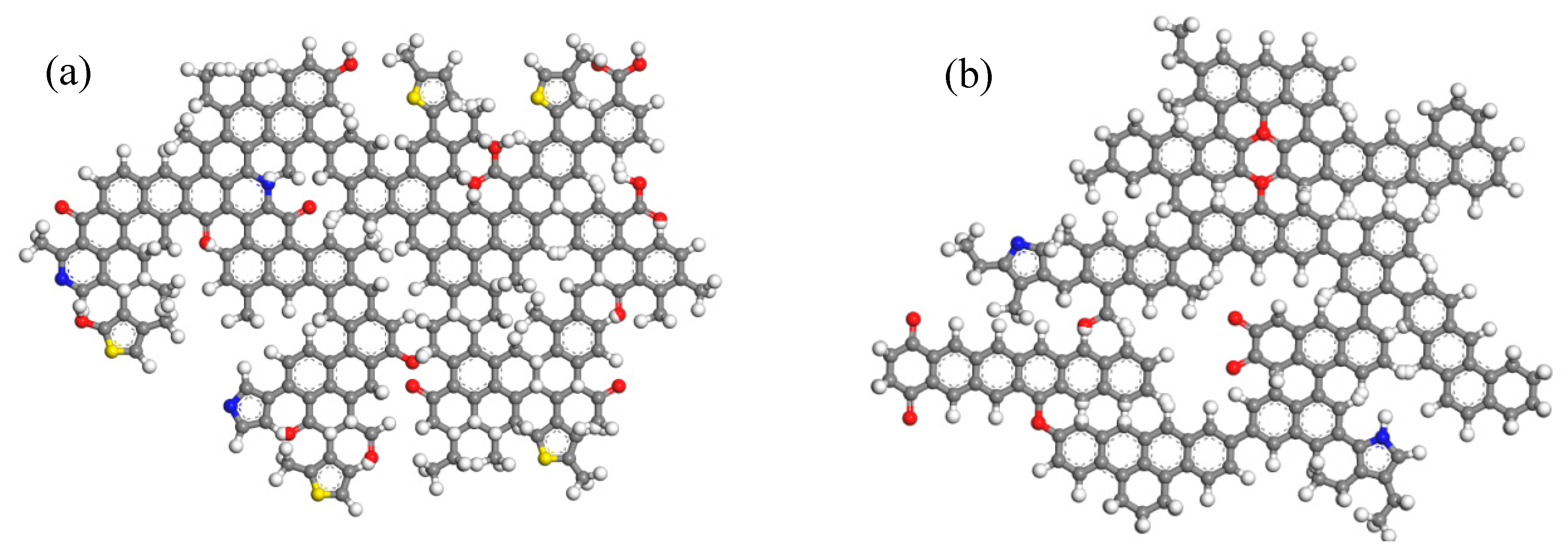
Figure 2.
The flowchart of research on the reaction mechanisms between ScCO2 and low-rank/ high- rank coal.
Figure 2.
The flowchart of research on the reaction mechanisms between ScCO2 and low-rank/ high- rank coal.
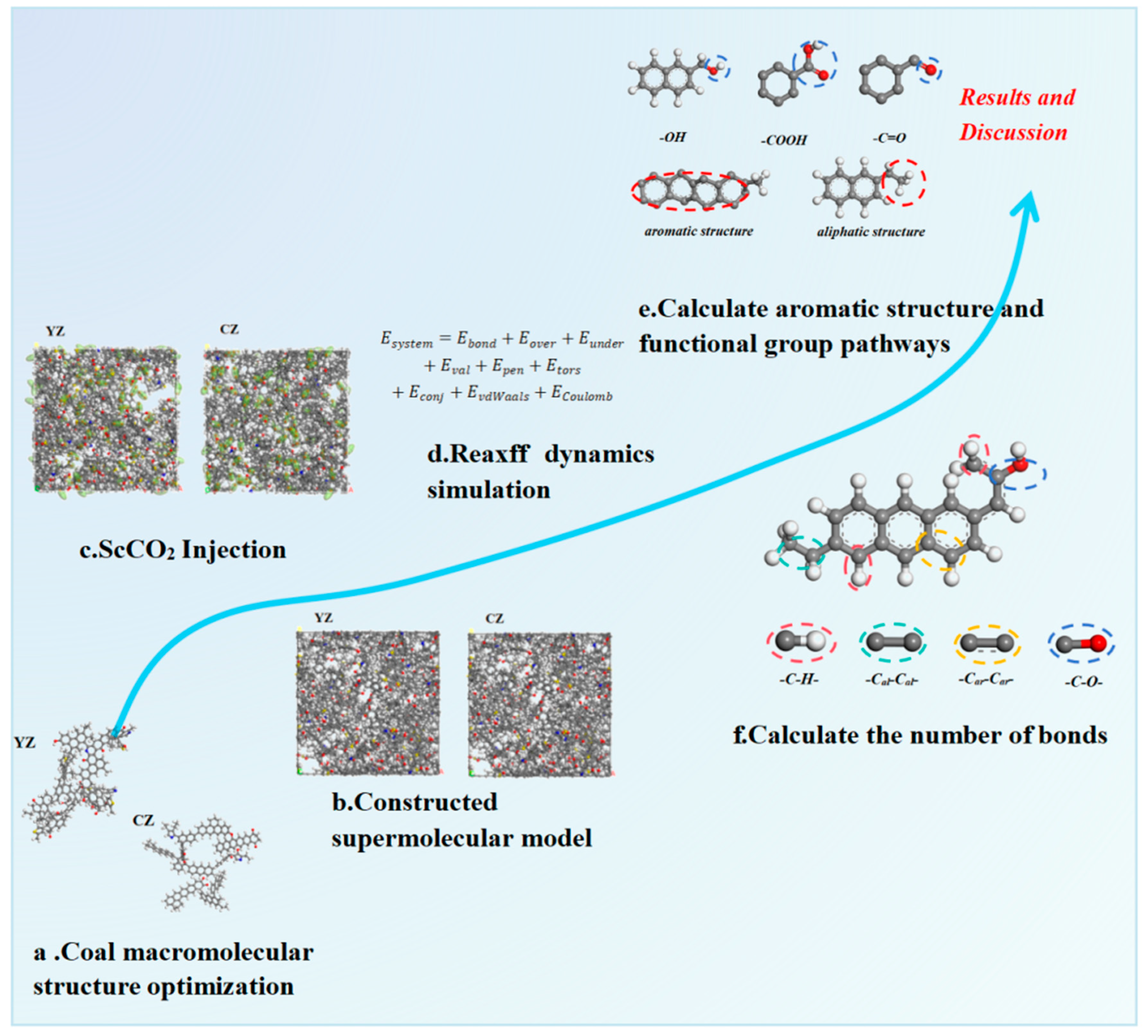
Figure 3.
The changes in low/high rank coal supermolucular structure.
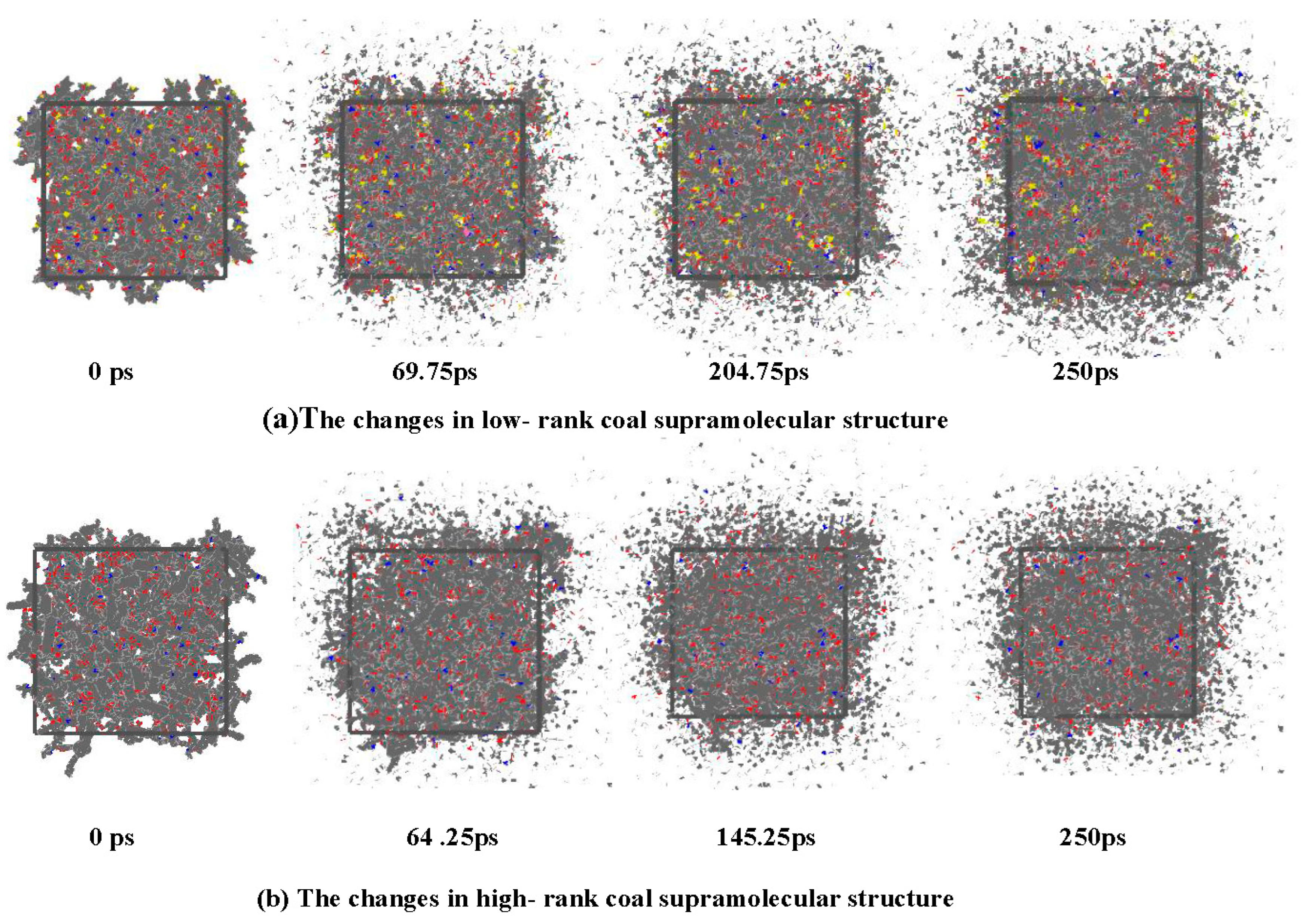
Figure 4.
The coal macromolecular structures before and after the reaction with ScCO2. (a:Before reaction structure of low rank coal; b:After reaction structure of low rank coal; c:Before reaction structure of high rank coal; b:After reaction structure of high rank coal).
Figure 4.
The coal macromolecular structures before and after the reaction with ScCO2. (a:Before reaction structure of low rank coal; b:After reaction structure of low rank coal; c:Before reaction structure of high rank coal; b:After reaction structure of high rank coal).
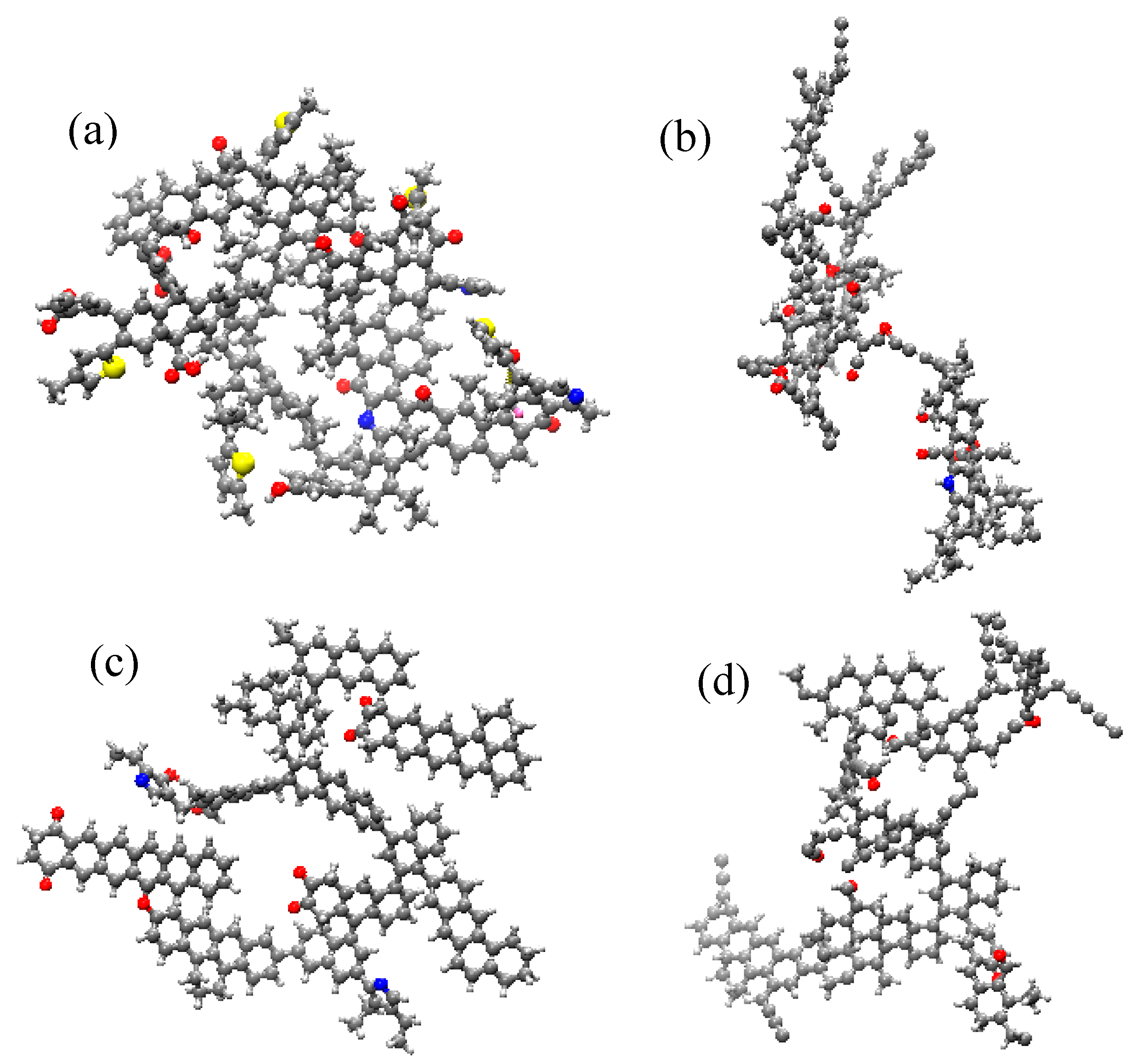
Figure 5.
Functional group reaction pathways in coal.
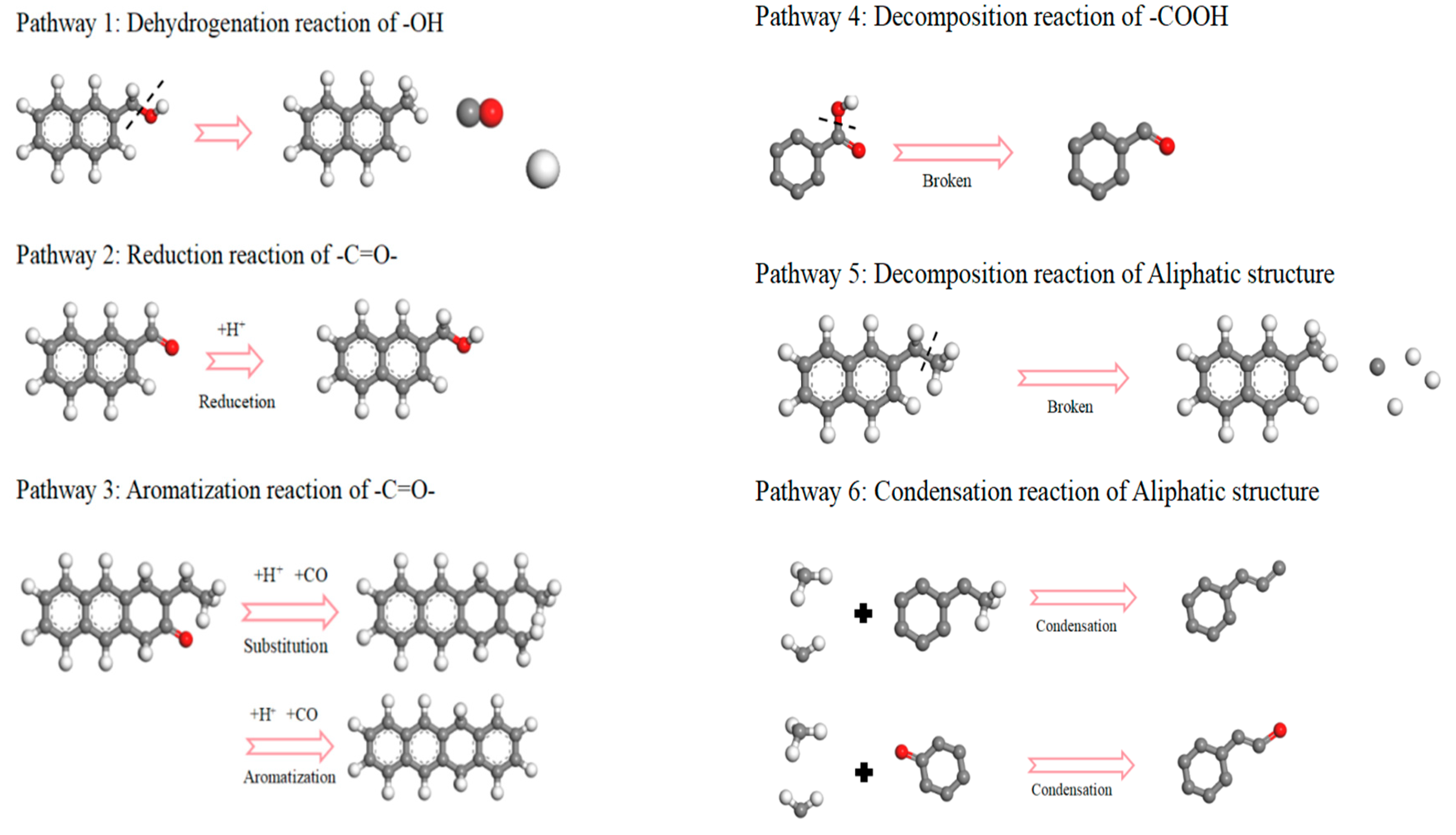
Figure 6.
Aromatic structure reaction pathways in coal.
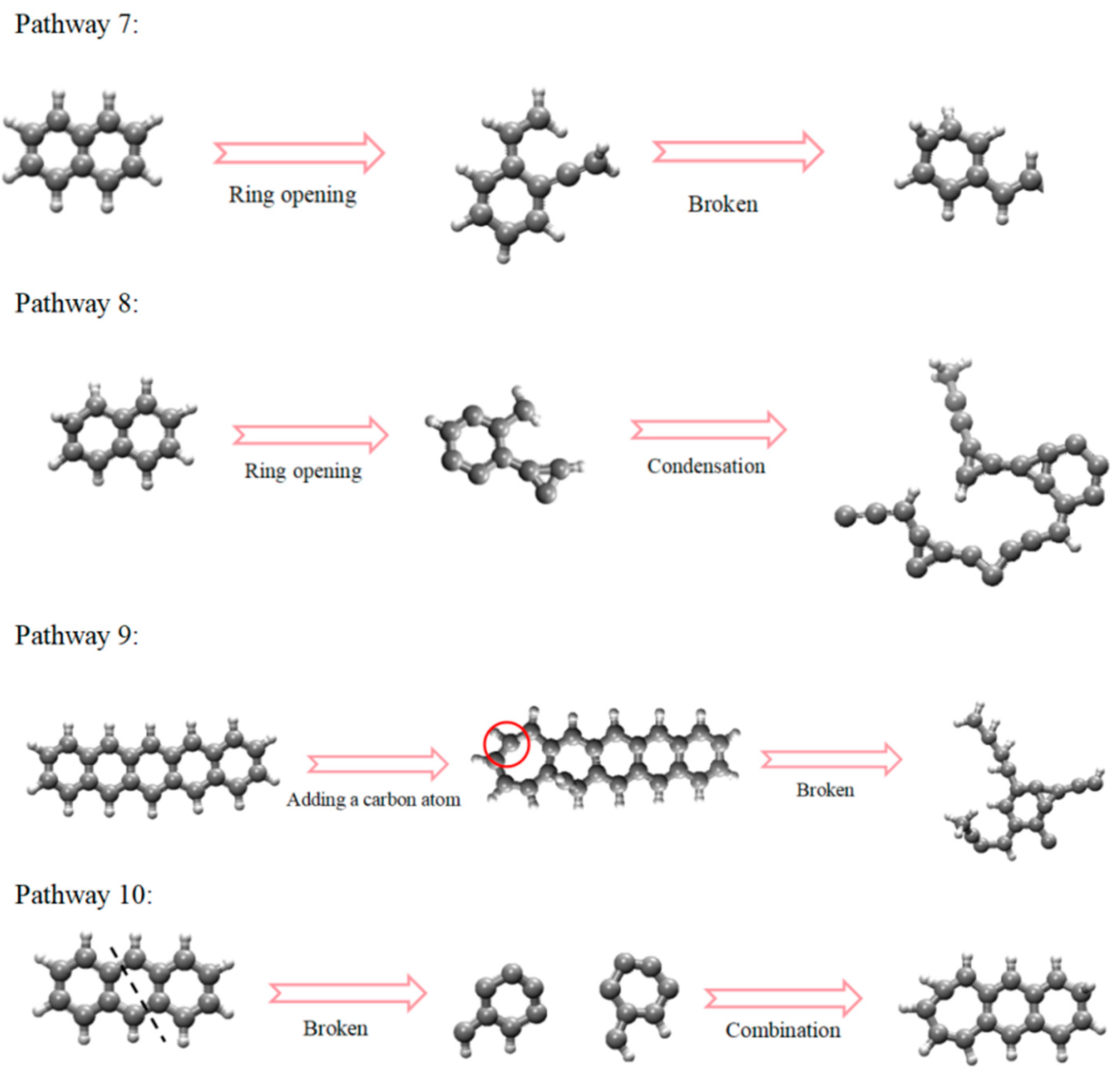
Figure 7.
The reaction pathway of low rank coal.
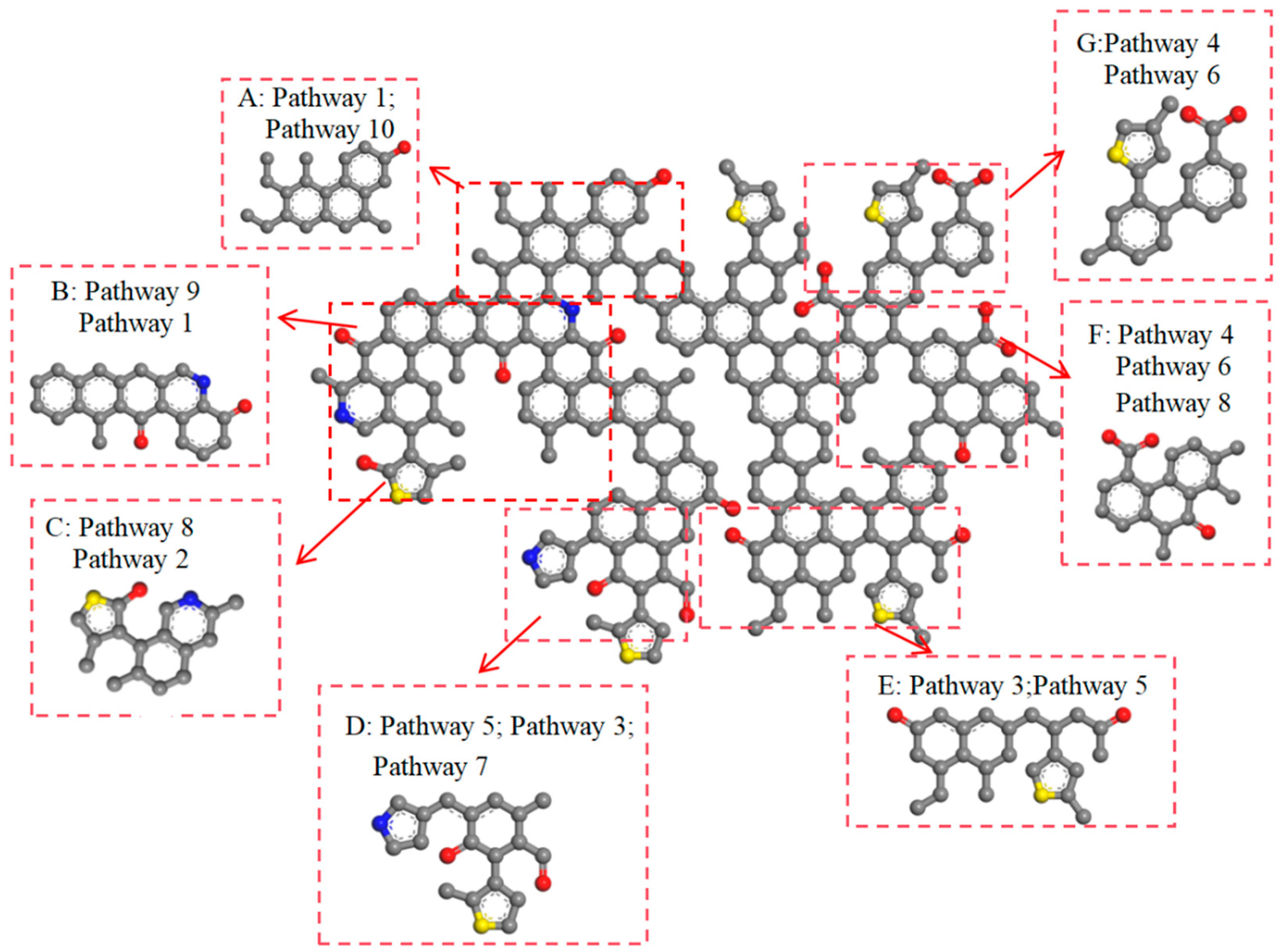
Figure 8.
The reaction pathway of high rank coal.
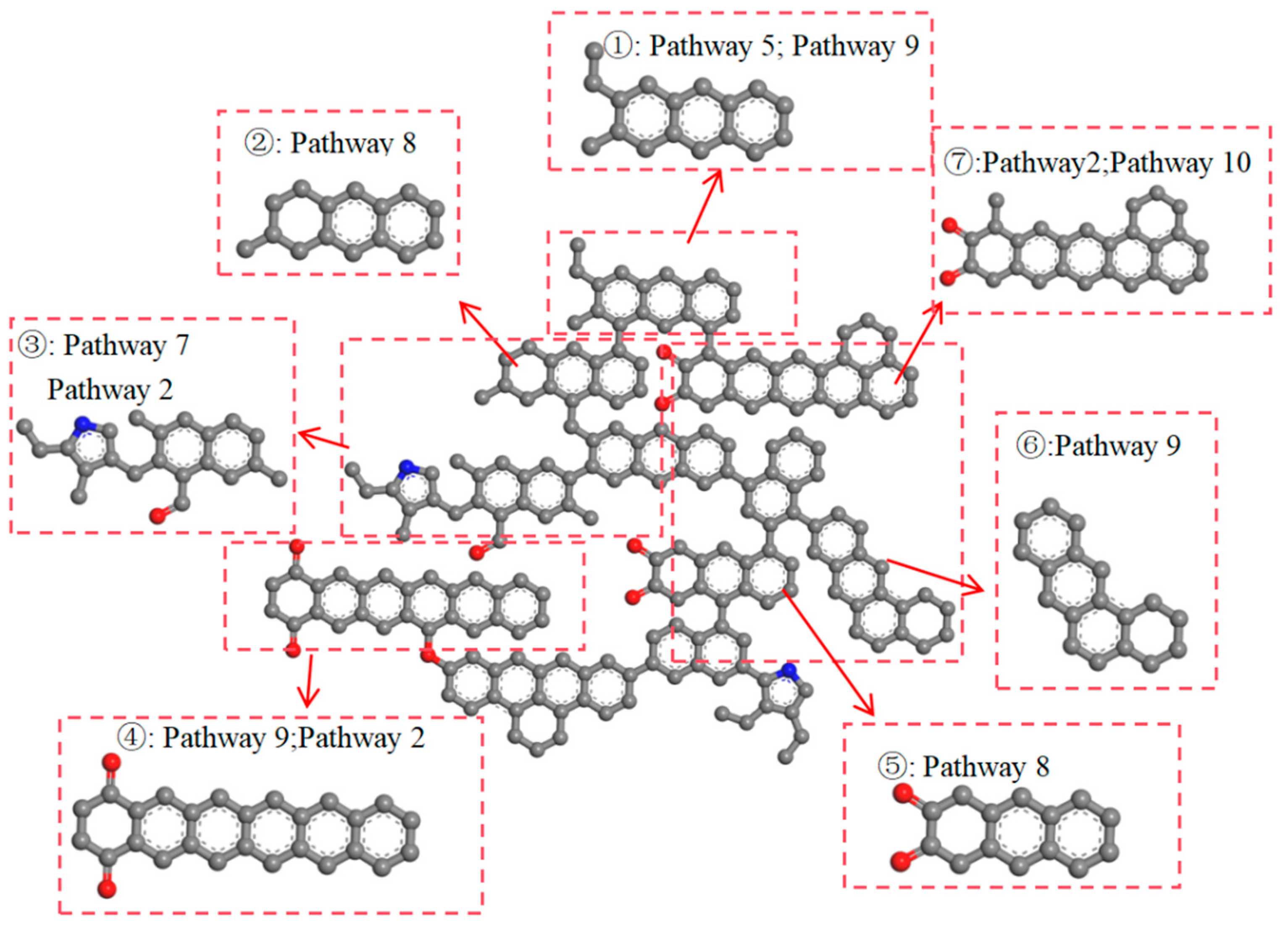
Figure 9.
Chemical bond change characteristics of low rank coal.
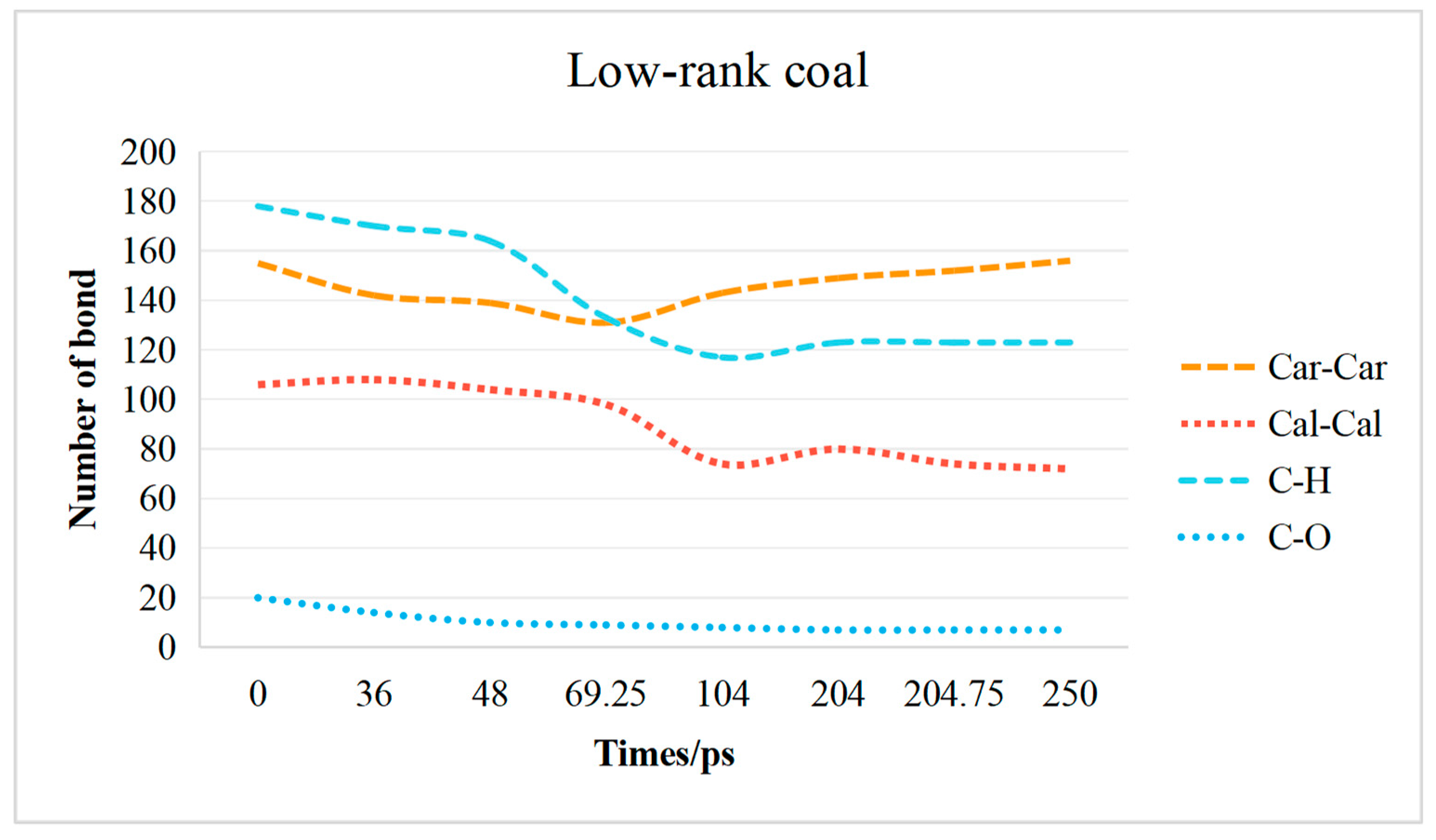
Figure 10.
Chemical bond change characteristics of high rank coal.
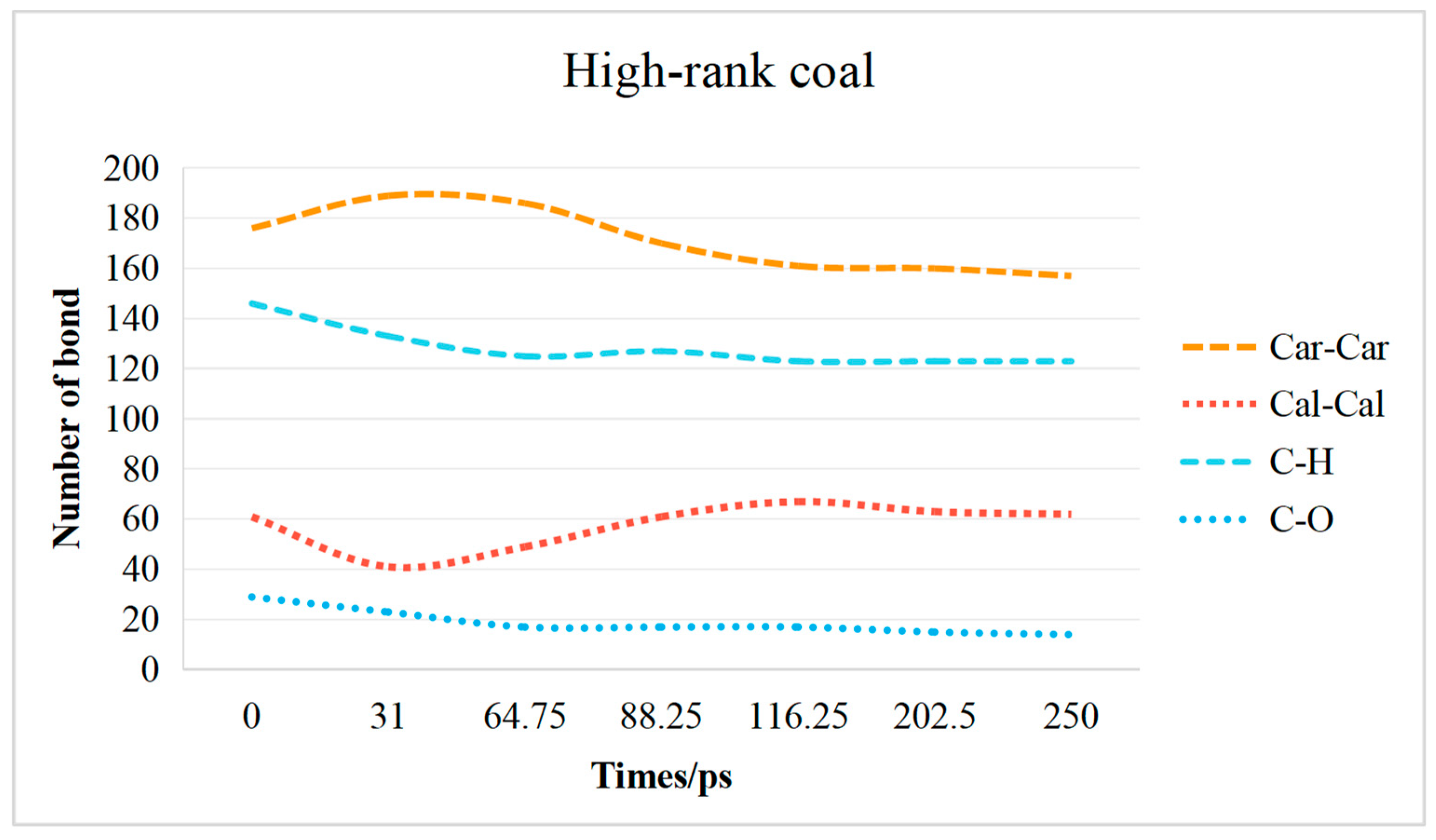
Figure 11.
The diagram of coal swelling process after ScCO2 injection.
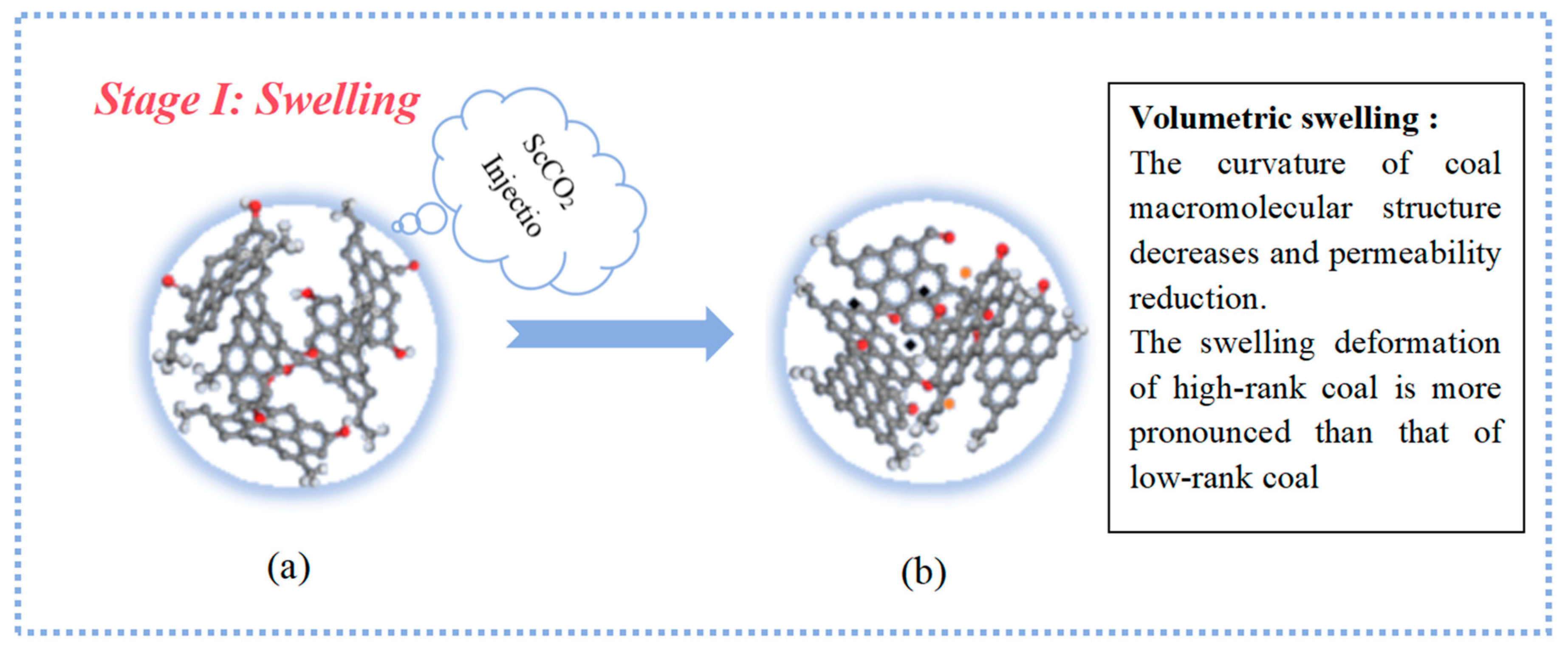
Figure 12.
The diagram of coal dissolution process after ScCO2 injection.

Disclaimer/Publisher’s Note: The statements, opinions and data contained in all publications are solely those of the individual author(s) and contributor(s) and not of MDPI and/or the editor(s). MDPI and/or the editor(s) disclaim responsibility for any injury to people or property resulting from any ideas, methods, instructions or products referred to in the content. |
© 2024 by the authors. Licensee MDPI, Basel, Switzerland. This article is an open access article distributed under the terms and conditions of the Creative Commons Attribution (CC BY) license (http://creativecommons.org/licenses/by/4.0/).
Copyright: This open access article is published under a Creative Commons CC BY 4.0 license, which permit the free download, distribution, and reuse, provided that the author and preprint are cited in any reuse.


