

Submitted:
17 April 2024
Posted:
23 April 2024
You are already at the latest version
Abstract
The seismic events of 2015 in Nepal exposed the challenges associated with constructing earthquake-resistant 2-story self-built stone masonry structures in high-elevation rural regions, especially post-disaster. The Department of Urban Development and Building Construction (DUDBC) provided designs that failed to preserve the local architectural landscape and craftsmanship while adding unfamiliar knowledge and technology. To address the challenges related to architecture, structure, and socio-economic concerns in designing and implementing post-earthquake houses, a need-based building development framework is required for standardized practice. This study presents a novel framework to assess, design, and implement a self-built house after a disaster, consisting of five stages: 1) post-disaster problem assessment, 2) need identification, 3) material selection, 4) design development, and 5) validation and implementation. Based on this framework, we proposed a novel gabions building construction technology for two-story stone masonry structures that effectively mitigate post-disaster challenges such as logistic, resilience, and socioeconomic aspects while improving disaster resiliency specifically in the high-elevation rural areas of Nepal. The proposed two-story gabion building preserves architectural values, enhances structural integrity, and provides cost-effectiveness when compared with its DUDBC peer models while providing much-needed relief to the vulnerable community. The proposed resilient house, G- 2.1, utilizes locally sourced materials and craftsmanship, and innovative gabion technology that ensures affordability and facilitates knowledge transfer. The contribution of this study includes a development framework and a two-story gabions house that is most suitable for self-built post-disaster reconstruction and resilient to local architecture and socio-economic conditions while providing structural integrity and safety.
Keywords:
Post-Disaster Housing
; Build Back Better Framework
; Gabions Technology
; Earthquake Resilience
; Finite Element Analysis
; Integrative Planning
1. Introduction
Nepal is situated within the Himalayan range and is one of the most seismically active regions in the world due to the Indian plate plunging beneath the Eurasian plate along the 2400-kilometer Himalayan range, spanning Bhutan, China, India, Nepal, and Pakistan [1,2]. Two massive earthquakes of magnitude 7.8 and 7.3 hit Nepal on 25 April 2015 and 12 May 2015 [3] with epicenters being in the mountainous Gorkha region as shown in Figure 1. These two major earthquakes turned many self-built houses into rubble by exposing the structural vulnerability of self-built homes. Per the UN statistics, approximately 9000 lives were lost, thousands of people were injured, and over 800,000 buildings and monuments were destroyed or damaged with an estimated loss of $7 billion [4]. The full cost associated with the damages of these earthquakes is yet to be known, especially since the long-term socio-economic impacts are difficult to quantify. In the mountain regions of Nepal, most of the houses are self-built by local craftsmen with local materials and technology based on vernacular knowledge and the majority of the time without proper engineering analysis. Although architectural and construction processes have been advanced with technologies such as artificial intelligence [5,6],building information modeling (BIM) [7], and advanced seismic engineering on a global level, allowing for sophisticated earthquake-resilient design, Nepal still lacks widespread access to or adoption of these modern capabilities [8]. The vernacular approach to home building, characterized by a lack of involvement from architects and engineers during the design and construction phases, poses challenges in assuring earthquake resilience, as seismic resistance is primarily reliant on local knowledge. This type of construction practice comes with its shortcoming of no formal engineering analysis but is rather based on the experience of local masons [9,10]following the requirements of the house owners without government regulations, specifications, or proper engineering analysis [11,12,13]. The last recorded major earthquake was in 1934 with a magnitude of 8.0. This relatively calm period of more than 80 years created a knowledge gap for community-based disaster mitigation knowledge transfer amongst the communities for their resilient built environment infrastructure, more specifically on their self-built s [14]. A major earthquake occurs approximately every 80 years, large earthquakes are more frequent in mountain regions of Nepal. Documenting current conditions, learning from past disasters, and sharing earthquake knowledge should thus be top priorities nationally so that it could help mitigate future destruction by bridging the multi-generational earthquake knowledge gap.
Disasters disproportionately impact low- and middle-income countries, even though much of the research is centered on high-income nations [15]. Global disasters are a growing concern for sustainable development, and efforts often fail to address the implications of urbanization and the growth of assets in hazardous areas [16]. The aftermath of the 2015 earthquakes in Nepal exemplifies the challenges of post-disaster recovery in rural settings. The focus on short-term measures often neglects the need for holistic, long-term resilience strategies [17,18]. Many traditional 2-story houses, vital for the rural agricultural lifestyle, were destroyed and subsequently replaced with single-story structures, changing the traditional architectural and social fabric of mountain communities [19,20].
Post-disaster reconstruction should not only rebuild but also enhance resilience and retain cultural values. The Nepal National Building Codes 105-2020, although detailed for Reinforced Cement Concrete buildings, doesn't extensively cover rural housing [21,22,23]. The opportunity to "build back better" was missed, as the rebuilding strategy neither incorporated vernacular designs nor prioritized hazard resilience [26]. There's a pressing need to fuse traditional construction methods with disaster-resistant designs, coupled with community education on earthquake-safe structures [13]. However, introducing modern materials in rural areas can erode vernacular designs and sustainability [24,25]. A comprehensive approach is vital, one that respects local culture and architecture while emphasizing safety, potentially employing economical solutions like gabions for earthquake resilience. Gabion walls offer a range of advantages, encompassing high flexibility, low permeability, eco-friendliness, cost-effectiveness, and an appealing appearance, making them an excellent solution for reusing construction waste [26]. The seismic performance of buildings is significantly affected by material selection, where the stone's shape directly impacts wall friction and shearing. In terms of safety, the use of lightweight roofing materials is recommended to mitigate casualties during earthquakes [9].
Much of the initial focus in disaster management goes into the short-term management of the scenario [17,18] or only addresses the humanitarian aspect or structural [27,28,29] or economic aspects [30,31] rather than considering the holistic and long term approaches. The ineffective post-disaster housing reconstruction in Nepal arises from the absence of a comprehensive and long-term resilience framework. This deficiency results in various shortcomings, including the unavailability of acceptable house models, inadequate human resources, challenges in the supply chain, and ultimately delays in reconstruction. The failure to incorporate a community need-based approach further hampers the development of context-specific housing recovery models that integrate traditional architecture with disaster-resilient features. To address these issues requires the establishment of a comprehensive framework for the development and implementation of earthquake-resilient traditional houses, along with an economically viable approach. Table 1 shows the existing research coverage related to the post-disaster housing reconstruction.
With this background, to address the significant gap arising from the absence of a development and implementation framework for resilient self-built houses, we identified an opportunity to create a comprehensive need-based framework for post-disaster housing reconstruction. This study aims to achieve two primary objectives: 1) the development of the framework, and 2) the implementation of the framework to result in the development of a novel self-built house. The case study for this implementation is conducted in a highly earthquake-affected rural community located in upper Gorkha, Nepal. This study was conceptualized, and the base architectural model was developed during the year 2015-2017 by People in Need (PIN) Nepal, Engineers Without Boarders USA, and Seismic Nepal to provide immediate housing reconstruction relief. This study is a further exploration of the base model from 2017 to make it comprehensive and incorporate lessons learned into the framework. The proposed model provides architectural, structural, and economic resiliency and its usefulness as a framework to contribute to reconstruction efforts in the aftermath of future earthquake disasters across Nepal. The proposed building technology utilizes gabions technology which provides a simple structural enhancement that can be applied by local crafts without much supervision from professional architects and engineers. Gabions technology integrated with a traditional craft does not just provide structural resiliency but also financial resiliency in local communities. A comprehensive approach towards the social, economic, architectural, and structural aspects of a two-story gabion house provides an enhancement to the structural aspects, preserves architectural & cultural characteristics, and provides a suitable, sound, and affordable alternative while maintaining resilience.
2. Methodology
This study implemented a research methodology including an in-depth literature review, a framework development, a case study, and framework implementation. Figure 2 illustrates the research methodology applied in our study. The literature review was focused on the current reconstruction landscape, gaps, and opportunities for innovative building construction technologies. Subsequently, a framework for the development and implementation of self-built houses was created to address the identified gaps in the literature. The framework was put into practice through a case study conducted in the earthquake-affected region of remote Gorkha, Nepal. Four site assessments and a focus group discussion involving 21 local participants were conducted, and the collected information was synthesized to obtain complete insights into socio-economic, structural, and architectural challenges and needs. In response to the identified needs and issues in our case study, we developed an architectural model and structural components and then applied them to numerical analysis. The architectural model was designed to preserve traditional architecture while optimizing functionality, and structural analysis was performed to enhance earthquake resilience. To further validate the model and assess aspects of affordability, feasibility, and suitability, we conducted a comparative cost analysis, comparing the cost of our model with that of 17 different models proposed by the Nepal government.
3. The Proposed Framework
The proposed framework to develop and implement the earthquake-resilient residential building is illustrated in Figure 3. The framework consists of five major steps: 1) post-disaster problem assessment, 2) need identification, 3) material selection, 4) design development, and 5) validation and implementation. In the initial phase, post-disaster problem assessment, the central question revolves around identifying the issues prevalent in existing or damaged buildings after the earthquake event. To achieve this, appropriate research assessment methods must be selected through an informed literature review. Commonly used methods include site assessments, surveys, interviews, focus groups, and expert opinions, however, other suitable measurement tools could also be utilized. Assessing problems presents opportunities for improvement in new building design. This framework focuses on three major assessment components: i) existing architectural problems such as limited space, poor space flow, insufficient roof slope, low building height, suboptimal orientation, etc. Identifying these issues allows architectural improvements in new buildings. ii) Existing structural deficiencies that caused earthquake damage such as weak gables, out-of-plane (OOP) damage, OOP corner collapses, in-plane shear failures, lack of bands, missing keystones, etc. Identifying these vulnerabilities enables structural enhancements in new construction. iii) The understanding of socio-economic difficulties such as low income, poor market accessibility, labor shortages, building material challenges, geographical/climate challenges, etc. allows the design to consider affordability, constructability, and sustainability.
Once the problems are assessed, the second stage is to identify needs based on the issues analyzed in the previous stage. Specific architectural needs are formulated including functional improvements and aesthetic priorities. This process determines whether the new building will retain its original architectural heritage. Defining architectural needs is critical to create a building layout that improves upon identified deficiencies. Also, the major structural improvements are formulated based on lessons learned and best practices. As structural integrity is key for the new building, identifying structural enhancements is essential to develop an optimally resilient system that addresses vulnerabilities discovered during assessment. To meet the socio-economic needs of the community, reconstruction priorities regarding cost, materials, labor, technology, and knowledge transfer are identified based on stage one findings. The careful formulation of socio-economic needs allows the design to consider affordability, constructability, sustainability, and capacity building, providing the best solution for the population's constraints. Moreover, clearly outlining architectural, structural, and socioeconomic needs from the assessments’ conclusions focuses the design on resolving identified problems through targeted improvements.
In the third step of the framework, after formulating needs, appropriate building materials are selected to meet the defined goals. The criteria for selection include locally available materials to reduce transportation emissions and costs, re-used materials from earthquake debris to decrease waste and provide cost savings, structural and durability properties that satisfy performance needs, traditional materials that maintain local architectural heritage, low-cost materials to increase affordability, and renewable/recyclable materials to improve sustainability. The materials are chosen for each main component - sub-structure, superstructure, and roof - from the available options. A building designed with over 80% local materials is considered improved vernacular, between 50-80% as hybrid, and less than 20% as modern. The percentage of local materials consists of the total local materials divided by the total materials used. A careful evidence-based selection of appropriate materials is important to achieve an efficient, resilient, and affordable building design that fulfills the defined needs. The choices determine environmental impact, constructability, cost-effectiveness, architectural consistency, and structural performance.
The fourth step in the framework involves developing an architectural model based on the requirements defined in Step II, the materials selected in Step III, and local building code provisions. Structural analysis is then conducted through methods like finite element modeling or load testing to evaluate the design's resilience and integrity. Before constructing the building, rigorous validation is required in the fifth step. Recommended validation techniques include cost analysis to confirm affordability; supply chain analysis to verify constructability; benefit analysis comparing the proposed model to peers on metrics like resilience, sustainability, and affordability; and any other relevant analyses to ensure performance meets requirements. Expert validation is also critical, involving reviews from architects, engineers, contractors, and owners to validate the satisfaction of the defined criteria. Once comprehensively validated both through technical analyses and expert reviews, supporting tools can enable successful execution, including detailed construction manuals, mobile apps, and guidebooks to assist local builders, plus training programs to transfer construction knowledge. With proper planning, a pilot project can then be constructed to assess real-world feasibility and identify areas for refinement before launching mass production of the validated design. Methodically replicating the tested prototype can accelerate community-wide reconstruction to replace damaged buildings with optimized structures fulfilling the identified architectural, structural, and socioeconomic goals. It is important to note that the framework stages and items listed are based on literature and lessons learned from past earthquakes. However, they are provided as examples and can be customized to suit the specific needs and findings of a project. The framework offers flexibility to modify to the context.
To demonstrate the utility of this comprehensive framework, the following section conducts a case study for post-disaster reconstruction in Nepal. The framework is systematically implemented, including thorough problem assessment, identification of context-specific needs, optimal material selection, design development, detailed structural analysis, and validation. This step-by-step application results in a novel building solution focused on the unique requirements of high-elevation rural Nepali communities recovering from the 2015 earthquakes. The case study highlights the value of the structured yet adaptable framework to produce customized and resilient rebuilding outcomes despite challenges like remote locations, limited resources, and socio-economic constraints. By methodically executing the framework's phases, the project achieves the overarching goal of affordable, and culturally appropriate disaster reconstruction that strengthens community resilience to future seismic events.
4. Case Study and Framework Implementation
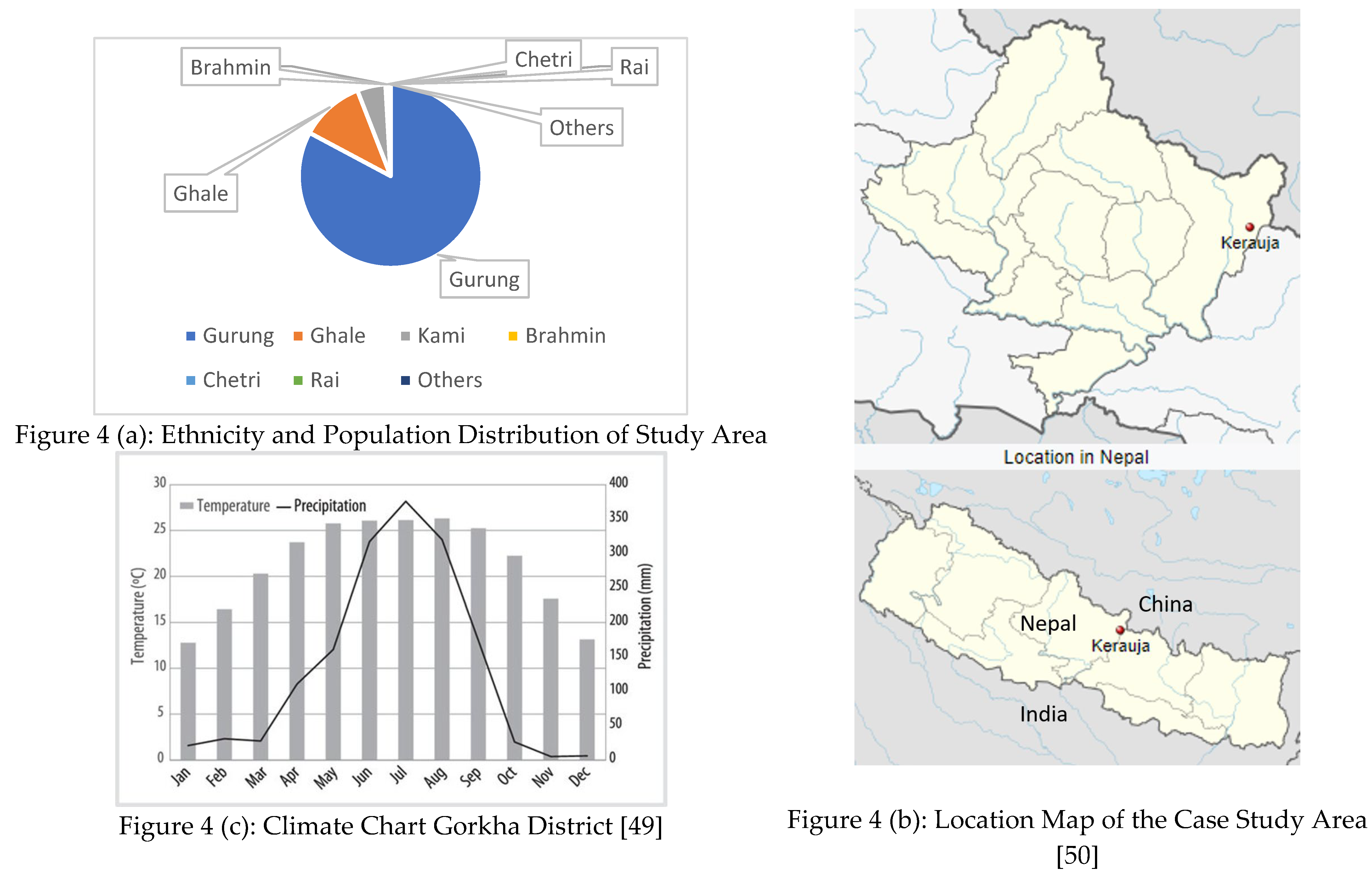
The focus of our case study is Upper Kerauja in the Gorkha district of Nepal, situated at an elevation of approximately 12,000 ft. This region is a two-day walk away from the nearest road and market, as illustrated in Figure 4(b). We selected this area due to its remoteness and the challenges associated with sourcing building materials for self-built houses following the earthquakes in 2015. We aim to develop an innovative solution for the region while implementing the proposed framework. In our case study, we implemented two research methods: researcher site assessments and focused group discussions. Focused group discussion is commonly used as a qualitative approach to acquire a deep comprehension of complex social matters [44,44]. The primary objective was to evaluate existing challenges and identify the reconstruction needs for self-built houses in the area. The information gathered from four distinct site assessments and a focus group discussion involving 21 voluntary participants were integrated and thematically formulated in section 4.4. These findings serve as the main guidance for model development and analysis in the following steps of our study. The following is the focus group instrument.
- 1)
- What are the social and economic challenges for reconstructing self-built houses in your area?
Prompt: access to market, labor, materials, income, etc.
- 2)
- What were the major structural failures observed in your buildings during the 2015 earthquakes?
Prompt: gable damage, full collapse, corner damage, etc.
- 3)
- How would you describe the architecture of pre-earthquake houses, and were there any limitations?
- 4)
- How would you imagine the architecture of new houses based on your preferences?
Prompt: traditional façade, larger spaces, space flow, and allocation, etc.
4.1. Socio-economic Assessment
The majority of the population in the study area, Upper Kerauja, 82.8% are identified as Gurung, followed by Ghale at 11.3%; mostly minorities (about 92%) [45] as shown in Figure 4(a). This indicates that social equity and equitable response need to be a priority. The climate of Upper Kerauja is characterized by extended periods of cold and harsh winter conditions, with temperatures dropping significantly below the freezing point. Conversely, the summer months are relatively brief and mild as shown in Figure 4(c). Due to the high altitude and steep topography of the area, temperatures in Upper Kerauja can experience rapid and unpredictable fluctuations, even within the same day. The climate of this region can be classified as sub-alpine [46]. The monsoon season from June to September, can be accompanied by heavy precipitation which can result in landslides and flooding in the mountainous terrain of the region. The resilient house solution should provide needed thermal comfort and a good response to weather variation. The average hold income was approximately USD 2,000. Compared to other regions in Nepal, this district has a relatively low-income level, and poverty remains a continuous concern [47,48].
The focus group discussions revealed how local topography, climate, steep slopes, heavy snowfall, and strong winds heavily influenced pre-earthquake house design. Features like sloped roofs, thick walls, and minimal openings reflected adaptations to the site and weather conditions. Buildings utilized locally available materials such as stone, mud, and timber. The majority of households own land traditionally used to cultivate crops and livestock for both personal consumption and commercial sale. However, the remote location and lack of market access result in low and inconsistent income from these activities. A recent study indicates the convergence of poverty and disasters has severely impaired the resilience of mountain communities, hindering their capacity to respond to crises [51]. Transporting construction materials to this location presents additional significant challenges due to the area's isolation from markets and no road transportation infrastructure. The nearest market is a two-day walk away, and the only affordable means of transportation are humans or pack animals. Helicopters are another viable means of transport but are too expensive for day-to-day needs. Moreover, the trail between the market and the village is prone to heavy landslides during the monsoon season, which further hinders access to the market. Many young members of the community have migrated to urban areas in search of employment opportunities, leaving a shortage of skilled labor for construction projects in the area. Based on the discussions, locals were interested in building their post-disaster housing that still represents their culture, architectural style, and agricultural-based economy.
4.2. Damage Assessment
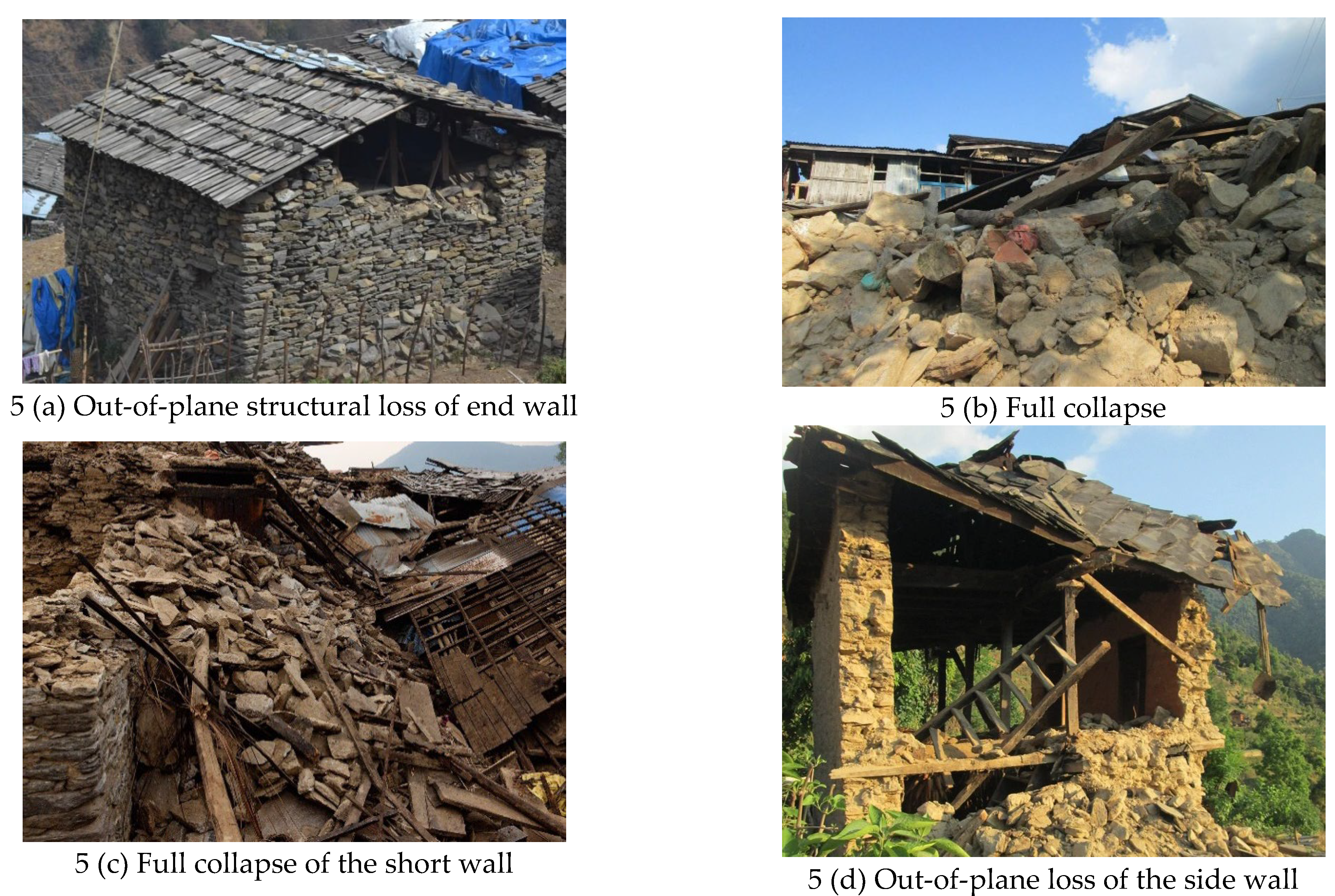
The common types of damage observed in stone masonry buildings in this area included out-of-plane wall damage, out-of-plane corner collapse, and gable damage due in large part to lack of restraint provided by the floor or roof diaphragms as shown in Figure 5(a) to 5(d). Additionally, significant in-plane shear damage to short walls was identified as a primary form of structural failure. The key causes of damage were attributed to the absence of adequate wall-to-horizontal diaphragm connections, the lack of horizontal seismic bands & keystones, as well as the lack of an effective lateral load resistance system. Other factors, such as excessive load on the roof from heavy wooden planks or stone slates and inadequate vertical load transfer connections, also contributed to the observed damage. The majority of the damage was concentrated at locations of discontinuity, i.e., at building corners and openings, leading to shear failures and, in some instances, complete collapse of walls or the entire structure.
Based on the focus group discussion, it is identified that self-built houses in this region were not intentionally designed to resist seismic lateral forces. Additionally, the prescriptive building codes guiding reinforced concrete buildings have limited applicability to traditional rural construction. These codes cater to urban contexts and do not adequately cover seismic provisions for non-engineered houses in remote areas. As a result, the studied village's self-built stone and mud houses lacked intentional earthquake-resistant features, making them highly vulnerable to tremors. This was evidenced by the significant damage observed in the community from the 2015 earthquakes. The disconnection between informal vernacular construction evolved for local conditions and formal building codes developed without rural contexts in mind contributed to the seismic deficiencies.
4.3. Architectural Assessment
In our assessment of the typical house designs existing in the area before the 2015 earthquake, it became evident that these structures were adapted to the local environment, topography, and climate. Situated in an area characterized by steep slopes, heavy snowfall, and strong winds, these houses were constructed utilizing indigenous materials such as stone, mud, and timber. In their resilience to the harsh climatic conditions, these houses featured distinctive attributes, including low ceilings, small windows, and thick walls that served as effective thermal insulation against cold weather. The roofs were crafted from layered wooden shingles to withstand heavy snowfall and prevent water leakage, and the houses were commonly heated by wood-burning fireplaces. Beyond their practical purpose, a Gurung house symbolized more than just a dwelling; it encapsulated the essence of Gurung culture, identity, and way of life. The design not only addressed functional necessities but also showcased aesthetic appeal through intricate carvings and decorations, echoing the community's rich cultural heritage. The overall architectural concept aided as evidence of the Gurung community's deep connection to nature and their respect for traditional practices and beliefs.
The insights derived from the focus group discussion highlighted the community's desire for a new house that would represent maximum adherence to local architectural aesthetics. Residents expressed a preference for employing local materials, primarily stone and wood, in the construction process. They envisioned more expansive spaces, with distinct areas for kitchen, dining, and food storage on the ground floor, while reserving bedrooms for the upper floor with attic space. They were concerned about the structural load on roofs led to a desire for lightweight roofing with sufficient slope. Additionally, participants emphasized the importance of preserving key interacting spaces, such as pidi (traditional seating space) and balconies, in the new design. The discussions underlined the community's active participation in shaping a vision for post-disaster housing that not only meets their practical needs but also remains deeply rooted in their cultural identity and architectural preferences.
4.4. Identified Needs from Assessments and Focus Group Discussion
Table 2 summarizes the needs for new buildings based on our assessments and focus group discussions. Identified needs were summarized based on: 1) directly expressed participants’ interests from the focus group, and 2) analysis of identified problems from assessments and proposed solutions based on lessons learned from literature. This grounded approach formulated requirements balancing traditional architectural heritage and pragmatic disaster resilience with socioeconomic realities. The architectural needs involved adaptive, flexible designs that repurpose and integrate traditional styles showing historic resilience. And, structural needs focus on physical durability and the ability to withstand, adapt, and rapidly recover from disasters. The socioeconomic needs concerned affordability, local labor, and the use of local materials, knowledge, and climate-responsive techniques.
In the next sections, we develop an architectural model, undertake structural analysis, and perform materials and cost analyses to fulfill the identified needs outlined in this section. Guided by our research findings, we are primarily employing local materials, specifically wood and stone, while incorporating gabions to enhance structural integrity. This approach aligns with an improved vernacular strategy of our proposed framework. The decision to incorporate gabions is motivated by several factors, including affordability, ease of transportation using human and animal resources, structural strength, flexibility, resistance to weather conditions, pressure-holding capacity, and the community's familiarity with gabion retaining wall systems in construction. Despite gabions being a new construction technology for buildings, locals are familiar with them due to the practice of using gabion retaining walls in the area.
4.5. Architectural Resilience
4.5.1. Building Layout and Function
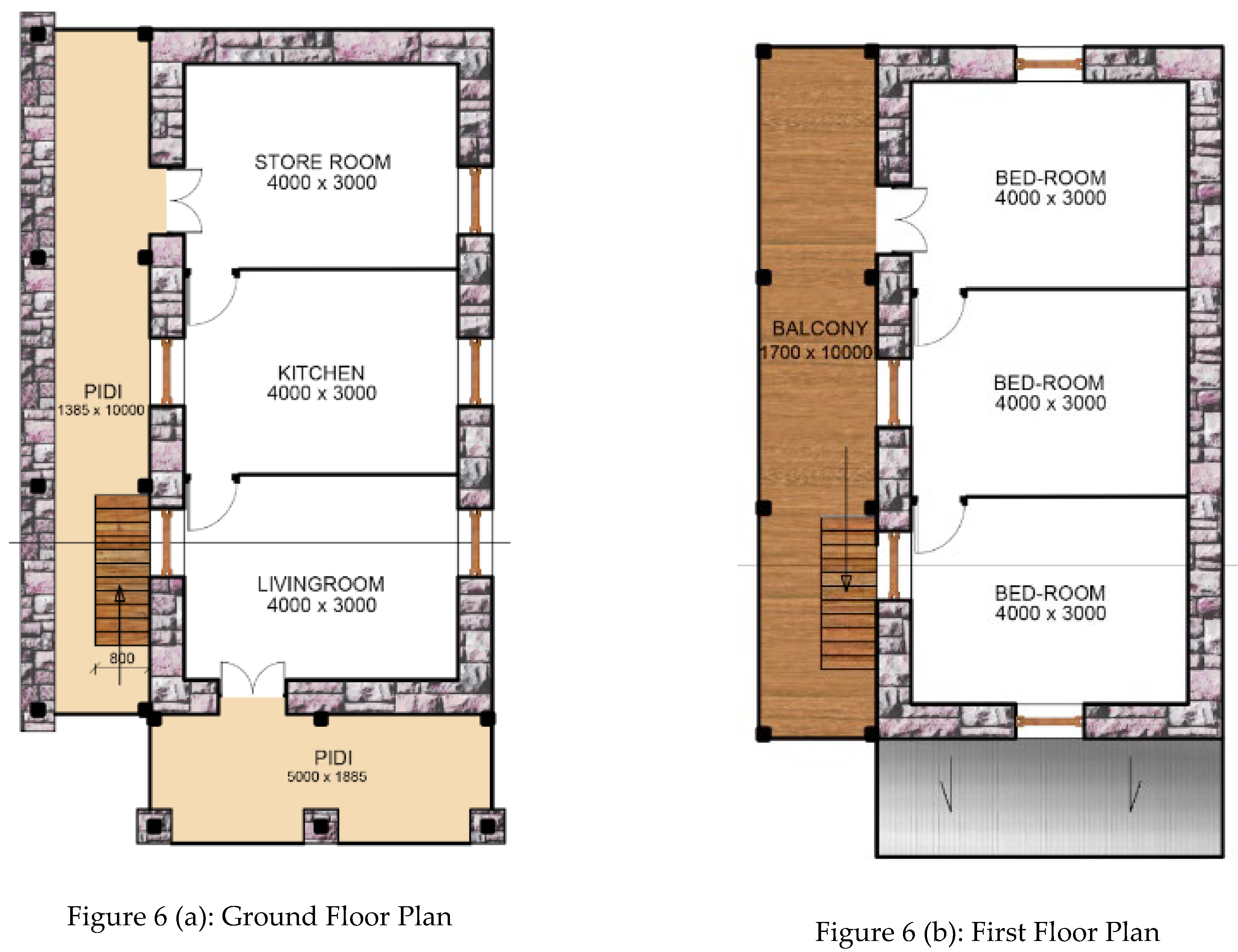
The primary goal of the proposed architectural design is to meet the identified needs outlined in Section 4.4. The proposed design incorporates an optimized layout from spatial analysis to maximize usable area, workflow, accessibility, and aesthetics. A designed layout was carried out from in-depth spatial analysis to ensure optimal space utilization, fluidity, and accessibility. Following Nepal's guidelines for earthquake-resistant stone masonry buildings, our design embraces a rectangular shape. The building's spatial planning is divided horizontally and vertically. On the ground floor, two patios are positioned, enhancing functional use while upholding traditional norms as shown in Figure 6(a). To counter previous upper-floor storage challenges, a storage area is conveniently located near the kitchen. This floor also features a central kitchen and living space, promoting family interaction—a basis of the Gurung community. And, the strategic door placements ensure connectivity. Accessed via a wooden staircase leading to a balcony, the first floor contains three bedrooms as shown in Figure 6(b). An attic, vital for buffering against extreme weather and long-term storage, connects to the primary bedroom through a stair log, or "lisno." To enhance seismic resilience by creating a rigid box system, the first-floor rooms are interconnected through internal doorways. Also, the customizable partition walls allow flexibility for owners to configure spaces to suit their needs and preferences.
4.5.2. Wall, Façade, and Roof
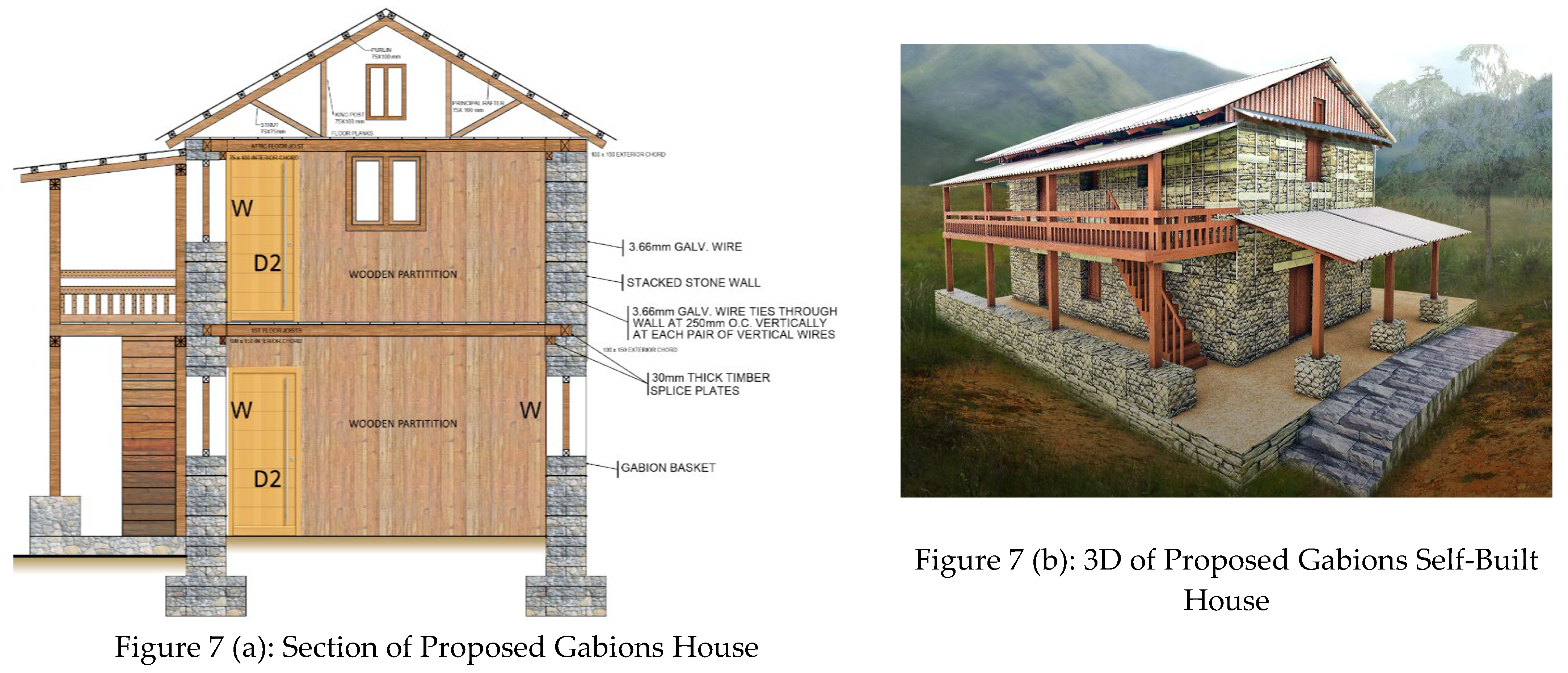
The proposed design incorporates dry stacked stone masonry walls in the structure, bringing numerous advantages such as durability, weather resistance, and seamless integration with the natural landscape. The proposed roof design includes the use of corrugated galvanized iron (CGI) sheets, a lightweight and weather-resistant material, supported by wooden beams, and sloped to allow rainwater to drain off. The roof overhangs the walls, providing shade and protection from the sun and rain. The two-way roof design offers a sustainable solution for preserving the cultural heritage of vernacular architecture while adapting to changing environmental conditions. The section and 3D model of proposed building are shown in Figures 7(a), and 7(b) respectively.
4.6. Structural Resilience
The primary objective of implementing gabions in this proposed building is to ensure structural strength and integrity for enhanced earthquake resilience while addressing identified needs in section 4.4. Locally constructed structures often lack implementation of Nepal's building codes and seismic engineering standards and rely solely reliance on local masons' experience. This non-compliance poses a significant challenge for rural houses at higher elevations in Nepal. Therefore, introducing structural enhancements through minor interventions has the potential to evolve into a resilient solution at the national scale, especially for high-elevation houses with limited resources. Even minor improvements in the structural components can lead to enhanced safety and substantial reductions in losses during earthquake events. The proposed gabion structure is not only structurally strong but can also be constructed by local masons with minimal training. The following sub-sections provide the structural details associated with the proposed gabions house.
4.6.1. Foundations and Ground Floor Walls
The foundations and ground floor walls are constructed using 1000mm long x 500mm wide x 500mm tall gabion baskets. Starting at the corners, they are laid one course at a time. From the foundation up to the second-to-last course of gabions, the gabions are typically installed, with shaped stones tightly packed into each gabion basket. Individual gabions are connected to each other with a 2.25mm galvanized iron (GI) lacing wire. The first course of gabions on the foundation are situated perpendicular to the wall system gabions as shown in Figure 8 (a). This improves overall foundation designs and provides the stability and stiffness needed to provide resilience against earthquake events.
4.6.2. Openings
Damage assessments identified openings as weak spots from the seismic perspective. To improve this, additional lateral stiffeners are required in both horizontal and vertical directions as shown in Figure 8(b). The gabion openings are spanned by a series of cantilevered ~750mm stones embedded in the openings to provide lateral stiffness. In addition, vertical and horizontal wires across the opening dimensions provide continuity of the seismic force-resisting system.
4.6.3. First Floor Diaphragm
At the top course of the ground floor gabion wall, inlaid timber chords, known as bands in Nepal, are embedded in the gabions, which, along with wire trusses, connect the ground floor wall system to the first-floor diaphragm. To help support the stone weight above the openings, the splices of the inlaid chords are positioned away from the opening, allowing the splicing members to assist the chords in spanning the opening. Critical to stabilizing the wall systems, the 1st floor and attic floor flexible diaphragms are built with joist sizes typical to remote areas (4” X 6”), and spanning the 4000mm width of the room. We chose this joist size to avoid requiring an interior dropped girder or a structural wall to reduce the span. A structural wall or girder would increase material and labor costs and would require additional foundation work, resulting in increased excavation and masonry costs.
An important part of the design is the connection of the diaphragms to the walls. For our design, these connections consist of tying the timber floor joists to the perimeter timber diaphragm banding members with GI wires wrapped around nails in the joists and wrapped around the inlaid timber chords as shown in Figure 8 (c). In addition, a horizontal wire truss at the top of the gabion basket walls, and again at the top of the first floor walls, has been included to provide a tension-only type truss to resist out-of-plane seismic forces. To accommodate the 4m joist span between gabion walls, the joist spacing is reduced from the typical 750mm to 400mm. Timber floor planks 30mm thick provide the decking surface for the floors, with the number of nails determined by horizontal shears in the diaphragms.
4.6.4. First Floor Wall System
To keep costs down, gabion baskets are only used for the ground floor walls as shown in Figure 8 (d). The first-floor walls are built using dry-laid masonry with keystones, which are reinforced with vertical 3.66 mm GI wire loops up and over each wall face. The loops act as tension reinforcing to resist out-of-plane seismic forces associated with the walls. These loops, spaced 250mm O.C. along the walls, are also tied together with wires going through the thickness of the wall, at 250mm O.C. vertically. Keeping costs down was not the only reason we designed a separate wall system for the first floor. If the house owner wants to build a one-story building using dry-laid keystone masonry but does not have the funds to install proper concrete or wood banding, the wire-loop reinforcement of the first-floor wall system will provide an economical solution, yet one which will not compromise the structural integrity.
4.6.5. Attic Roof Diaphragm
The attic floor diaphragm is constructed in the same way as the first-floor diaphragm and is tied into the wall system in the same manner as well as shown in Figure 9(a). The GI wire loop reinforcement ties to the timber chords embedded in the first-floor wall system.
4.6.6. Roof System
The roof system is constructed with 5 primary timber trusses supported on the exterior masonry walls, and with timber purlins attached to the truss top chords. 30mm thick pine plates serve as gusset plates to connect the truss members as shown in Figure 9(b). This paper presents only the general concepts for the gabion structure. It is beyond the scope of this paper to provide analysis and detailing of specific construction details.
4.6.7. Numerical Analysis
The proposed building structural features were analyzed in RAM Elements, a 3D structural analysis and design software that performs 3D finite element analysis, to confirm their structural performance for earthquake events particular to the site. Some of the outcomes of the numerical analysis of seismic actions are shown in Figure 10(a) through (f). The numerical analysis carefully looked at the impacts that seismic forces have at vulnerable structure points such as corners, openings, out-of-plane bending, diaphragm connections, continuous load paths, and confinement.
The proposed ground-floor gabions and first-floor wire loop system provide structural resilience against lateral seismic forces through the application of principles used in reinforced masonry – tension forces resisted by steel and compression forces resisted by stone. In-plane wall shear forces are resisted through the interlocking of the stones and aided by the confinement provided by the gabion wires and loop wires. These simple improvements combine with existing technology and construction methodologies to provide unique solutions by building stacked stone structures. The numerical analysis confirmed that gabion technology provides an effective solution for post-disaster housing reconstruction in the rural regions of Nepal that utilizes existing materials and labor resources.
4.7. Socio-Economic Resilience
As a key validation component in our proposed framework, cost analysis verified the model addresses identified needs while providing the best economic solution. To further validate the proposed gabion house design G-2.1, materials were quantified to inform construction planning and costs were analyzed relative to 17 building models from Nepal's Department of Urban Development and Building Construction. By maximizing local materials, techniques, and labor, the design promotes resilience through affordability and self-reliance. Stones and wood salvaged from damaged buildings reduce new material demands. The only material required beyond a traditional are coils of GI wire, which can be brought in on donkeys, and woven into gabion baskets on site, providing income to villagers doing the weaving. This strategic use of accessible resources makes the improved vernacular design socio-economically suitable for vulnerable mountain communities to construct seismic-resilient homes aligned with their needs.
4.7.1. Materials and Quantities
It is recommended that the skilled labors oversee critical structural steps in gabion assembly to ensure proper technical execution, while also educating and mentoring unskilled labors who can assist with tasks matched to their expertise like gabion filling and wire weaving. As shown in Figure 11, building the superstructure is the most time-intensive phase compared to the foundation and roofing. This is attributed to the stone masonry walls and additional labor required for gabion installation.
The construction of G-2.1 needs specific material quantities, and their local availability plays an important role in ensuring the feasibility of the building process. Table 3 provides a detailed breakdown of the materials required for constructing the gabion house at different building levels, highlighting that the majority of these materials are locally sourced.
4.7.2. Cost Analysis
The cost analysis was done for two key purposes. First, it evaluates affordability for the community. Second, it benchmarks the proposed model's cost against DUDBC government models intended for nationwide implementation. If our design proves significantly more affordable, it could provide a better alternative not only in Kerauja but also for national-scale rebuilding. We compared the cost of our gabions model-G-2.1- with models developed by the DUDBC, Nepal in 2015. The DUDBC models cover four different structure types: stone masonry in cement mortar (SMC), brick masonry in cement mortar (BMC), brick masonry in mud mortar (BMM), and stone masonry in mud mortar (SMM). The numbering convention indicates the number of building stories before the decimal point, followed by a unique identifier. When compared to the SMC 2.2 model, which has the lowest per-square-foot (PSF) cost, our model costs 1.5 times less. When compared to the BMC 2.4 model, which has a similar area, our model costs 3 times less. And, when compared to the BMC 1.1 model, which has the highest PSF cost, our model costs approximately 12 times less.
Several factors contribute to the lower cost of the G-2.1 model. Firstly, we consciously avoided the use of materials commonly employed in DUDBC models that require importation from distant markets, such as cement, sand, aggregate, and reinforcement rods. By eliminating the need for these materials, which often involve transportation over one or two days, we significantly reduce costs. Secondly, apart from gabion panels, wires, and CGI sheets, we source our materials locally. This strategic sourcing enables us to maintain affordable costs. Lastly, our model relies predominantly on locally available materials such as stone, and wood, thereby minimizing waste resulting from demolition activities. All of these factors save unnecessary costs and make the model affordable. The cost comparison analysis demonstrates that our G-2.1 model excels in terms of cost efficiency, offering a substantially lower cost per square foot in comparison to the other models. These findings validate the competitive advantage of our model and highlight its potential for cost-effective earthquake-resistant residential construction. Figure 12 illustrates the cost comparisons with 17 earthquake-resistant building models developed by DUDBC after the 2015 Gorkha, Nepal earthquake.
The construction costs per square foot rise proportionally with distance from source markets. Therefore, maximizing local materials not only provides the most suitable option but also enhances affordability for post-disaster rebuilding in remote areas far from supply chains.
5. Discussions and Recommendations
The presented framework addresses a crucial gap in post-disaster housing development by offering a systematic approach to assess architectural, structural, and socio-economic aspects, and develop the desired solution. This study created an innovative earthquake-resistant housing model, G-2.1, based on gabion technology. To align with the context of high-elevation regions in Nepal, the model presents comprehensive resilience incorporating architectural, structural, and socio-economic dimensions. Architecturally, G-2.1 prioritizes efficient space utilization, fluidity, and accessibility, following earthquake-resistant guidelines with a rectangular layout that blends modern planning and traditional norms. The Important features, like the central kitchen, embody the cultural significance of communal spaces, particularly within the Gurung community. The structural design, utilizing gabion baskets, timber bands, wire trusses, and flexible timber diaphragms, ensures earthquake resilience and structural integrity, which was validated by numerical analysis in RAM Elements. The socio-economic benefits from local resources and labor support economic resilience and promote a sustainable circular economy. Some strategic decisions, such as excluding imported materials, minimize costs, while local sourcing, minimal waste, and reduced transportation expenses support economic feasibility. Major recommendations for the implementation and future research include:
- i.
- Further Validation and Community Engagements: It is recommended to validate the proposed model through additional community engagement before the construction phase. It is essential to involve the community in decision-making to cross-verify that the proposed design meets changing needs while preserving traditional values.
- ii.
- Training: Workshops and training programs are recommended to enhance local craftsmen’s expertise in gabion technology and associated construction methodologies.
- iii.
- Future Research on Framework: Consider further expansion of each section of the proposed five-step framework, adding detailed criteria and metrics-based quantitative and qualitative decision tools. This has the potential to improve the framework and contribute to its better implementation.
- iv.
- Future Research on G-2.1: It is encouraged that future research works explore further iterations and improvements on the G-2.1 model, making it adaptable for diverse terrains and climates.
6. Conclusion
This study presented a framework for guiding the development and implementation of post-disaster self-built houses. The framework promotes a systematic approach to assessing architectural, structural, and socio-economic issues through appropriate research methods by emphasizing the importance of understanding community-specific problems, needs, and interests before proposing a suitable building solution. Following a detailed needs identification process, the framework synthesizes community requirements, interests, lessons learned, and best practices to start developing a resilient building solution. A selected approach for materials directs the development of an architectural model. Structural analysis and model validation using various analyses prepare for the construction of the building. The proposed framework holds significant potential to provide quick and systematic guidance in future post-disaster recoveries.
The implementation of the framework was based on our case study in the upper Gorkha district of Nepal, specifically Upper Kerauja. This region is marked by a challenging socio-economic environment and harsh climatic conditions. The average household income in this region is relatively low, and the remote location poses significant challenges to transportation and access to markets. These factors highlight the importance of developing affordable and locally sourced materials and labor to develop a viable, seismically resilient housing solution. The architectural parameters of our model were carefully developed to address the specific needs of the community while preserving the traditional architectural features and cultural heritage of the Gurung people. The layout of the building was optimized for functionality and efficient use of space, considering the cultural values of family bonding and shared living spaces. Additionally, the use of locally sourced materials, such as stone and wood, aligns with the community's expressed desire. The structural parameters of our model were developed to ensure earthquake resilience and structural integrity. Gabion baskets were used for the foundation and ground floor walls, providing stability and strength. The inclusion of timber bands, wire trusses, and flexible timber diaphragms at critical points in the structure ties the structure together for reliable seismic performance. The separate wall system for the first-floor walls, using stacked-stone masonry with wire loops and through-the-wall tie reinforcement, offers a cost-effective solution without compromising structural integrity.
Moreover, it is noteworthy that approximately two-thirds of Nepal comprises mountainous regions, including hills and mountains, where a significant population resides without access to proper roads. This geographical challenge poses a unique problem, as traditional modes of transportation, like donkeys, are limited to carrying loads up to 4 feet in length. Therefore, the transportation of modern building materials such as reinforcements becomes impractical. Given this context, our proposed building model, G-2.1, presents a suitable solution not only for Gorkha, Nepal but also for similar regions worldwide that face similar infrastructural limitations, even in the absence of road connectivity. While our framework provides flexibility and customization options, it is crucial to recognize specific limitations associated with the gabion building developed in our case study. Firstly, the cultural context may not transfer universally, as norms and preferences differ across regions. Secondly, building code changes could necessitate design adaptations over time. Lastly, the performance of locally sourced materials may exhibit variations depending on geographic locations and environmental conditions.
Data Availability Statement
The details about structural analysis & calculations of wall components, vertical and transverse seismic force development, stability of the short wall, floor diaphragm forces and connections, in-plane and out-of-plane seismic forces, roof truss load calculation, beam joint, seismic reactions, architectural details, material lab test reports, and other supporting documents and details can be made available upon request.
Conflict of Interest Statement
The authors declare no conflicts of interest related to this study.
References
- . Bothara, J. Ingham, and D. Dizhur, “Qualifying the earthquake resilience of vernacular masonry buildings along the Himalayan arc,” Journal of Building Engineering, vol. 52, p. 104339, Jul. 2022. [CrossRef]
- R. Bilham, “Earthquakes in India and the Himalaya: tectonics, geodesy and history,” 2004, Accessed: Sep. 01, 2023. [Online]. Available: https://www.earth-prints.org/handle/2122/798.
- “Magnitude 7.8 Earthquake in Nepal Aftershocks | U.S. Geological Survey.” Accessed: Mar. 05, 2023. [Online]. Available: https://www.usgs.gov/news/featured-story/magnitude-78-earthquake-nepal-aftershocks Authors.
- U. Nations, “The Humanitarian Response to the 2015 Nepal Earthquake,” United Nations. Accessed: Mar. 05, 2023. [Online]. Available: https://www.un.org/en/chronicle/article/humanitarian-response-2015-nepal-earthquake.
- P. Ghimire, K. Kim, and M. Acharya, “Generative AI in the Construction Industry: Opportunities & Challenges.” arXiv, Sep. 19, 2023. [CrossRef]
- P. Ghimire, K. Kim, and M. Acharya, “Opportunities and Challenges of Generative AI in Construction Industry: Focusing on Adoption of Text-Based Models,” Buildings, vol. 14, no. 1, Art. no. 1, Jan. 2024. [CrossRef]
- J. Kim, J. Liu, and P. Ghimire, The Categorization of Virtual Design and Construction Services. 2019.
- S. Paneru, P. Ghimire, A. Kandel, S. Thapa, N. Koirala, and M. Karki, “An Exploratory Investigation of Implementation of Building Information Modeling in Nepalese Architecture–Engineering–Construction Industry,” Buildings, vol. 13, no. 2, Art. no. 2, Feb. 2023. [CrossRef]
- E. Hendriks and A. Opdyke, “Adoption of seismic-resistant techniques in reconstructed housing in the aftermath of Nepal’s 2015 Gorkha earthquake,” Earthquake Spectra, vol. 37, no. 4, pp. 2662–2686, Nov. 2021. [CrossRef]
- . L. Halder, S. Chandra Dutta, and R. P. Sharma, “Damage study and seismic vulnerability assessment of existing masonry buildings in Northeast India,” Journal of Building Engineering, vol. 29, p. 101190, May 2020. [CrossRef]
- C. Liu, D. Fang, and L. Zhao, “Reflection on earthquake damage of buildings in 2015 Nepal earthquake and seismic measures for post-earthquake reconstruction,” Structures, vol. 30, pp. 647–658, Apr. 2021. [CrossRef]
- B. Yön, “Identification of failure mechanisms in existing unreinforced masonry buildings in rural areas after April 4, 2019 earthquake in Turkey,” Journal of Building Engineering, vol. 43, p. 102586, Nov. 2021. [CrossRef]
- B. Ray, “Response of a Resilient Community to Natural Disasters: The Gorkha Earthquake in Nepal, 2015,” The Professional Geographer, vol. 69, no. 4, pp. 644–654, Oct. 2017. [CrossRef]
- “CEA - Earthquake Measurements: Magnitude vs Intensity.” Accessed: Mar. 06, 2023. [Online]. Available: https://www.earthquakeauthority.com/Blog/2020/Earthquake-Measurements-Magnitude-vs-Intensity.
- Kharb, S. Bhandari, M. Moitinho de Almeida, R. Castro Delgado, P. Arcos González, and S. Tubeuf, “Valuing Human Impact of Natural Disasters: A Review of Methods,” Int J Environ Res Public Health, vol. 19, no. 18, p. 11486, Sep. 2022. [CrossRef]
- Keating et al., “Disaster resilience: what it is and how it can engender a meaningful change in development policy,” Dev Policy Rev, vol. 35, no. 1, pp. 65–91, Jan. 2017. [CrossRef]
- F. Cavdur, M. Kose-Kucuk, and A. Sebatli, “Allocation of temporary disaster response facilities under demand uncertainty: An earthquake case study,” International Journal of Disaster Risk Reduction, vol. 19, pp. 159–166, Oct. 2016. [CrossRef]
- G. Rawls and M. A. Turnquist, “Pre-positioning and dynamic delivery planning for short-term response following a natural disaster,” Socio-Economic Planning Sciences, vol. 46, no. 1, pp. 46–54, Mar. 2012. [CrossRef]
- G. R. Joshi and N. B. Joshi, “Economic Loss from Earthquake in Nepal and Strategies for Recovery and Resilience Building,” in Living Under the Threat of Earthquakes, J. H. Kruhl, R. Adhikari, and U. E. Dorka, Eds., in Springer Natural Hazards. Cham: Springer International Publishing, 2018, pp. 195–209. [CrossRef]
- Rouhanizadeh, S. Kermanshachi, and T. J. Nipa, “Exploratory analysis of barriers to effective post-disaster recovery,” International Journal of Disaster Risk Reduction, vol. 50, p. 101735, Nov. 2020. [CrossRef]
- “Nepal National Building Code - Ministry of Urban Development.” Accessed: Jun. 12, 2023. [Online]. Available: https://www.moud.gov.np/pages/nepal-national-building-code.
- C. Rai, V. Singhal, B. Raj S., and S. L. Sagar, “Reconnaissance of the effects of the M7.8 Gorkha (Nepal) earthquake of April 25, 2015,” Geomatics, Natural Hazards and Risk, vol. 7, no. 1, pp. 1–17, Jan. 2016. [CrossRef]
- Acharya, A. Dahal, and K. C. Shrestha, “Confined masonry in seismic regions: Application to a prototype building in nepal,” Structures, vol. 47, pp. 2281–2299, Jan. 2023. [CrossRef]
- C. L. Mahesh Kumar, K. G. Shwetha, B. Sah, and P. Bajracharya, “Chapter 13 - An extensive study on damage assessment of earthquake-affected buildings in Nepal,” in Multi-Hazard Vulnerability and Resilience Building, I. Pal and R. Shaw, Eds., Elsevier, 2023, pp. 195–204. [CrossRef]
- P. Daly, S. Ninglekhu, P. Hollenbach, J. W. McCaughey, D. Lallemant, and B. P. Horton, “Rebuilding historic urban neighborhoods after disasters: Balancing disaster risk reduction and heritage conservation after the 2015 earthquakes in Nepal,” International Journal of Disaster Risk Reduction, vol. 86, p. 103564, Feb. 2023. [CrossRef]
- V. Patil, N. Chopade, and G. Nadkarni, “A Review Paper on Gabion Walls,” vol. 06, no. 01, 2019.
- Gautam and H. Chaulagain, “Structural performance and associated lessons to be learned from world earthquakes in Nepal after 25 April 2015 (MW 7.8) Gorkha earthquake,” Engineering Failure Analysis, vol. 68, pp. 222–243, Oct. 2016. [CrossRef]
- D. Gautam, H. Rodrigues, K. K. Bhetwal, P. Neupane, and Y. Sanada, “Common structural and construction deficiencies of Nepalese buildings,” Innov. Infrastruct. Solut., vol. 1, no. 1, p. 1, Mar. 2016. [CrossRef]
- M. M. Kassem, F. Mohamed Nazri, E. N. Farsangi, and B. Ozturk, “Development of a uniform seismic vulnerability index framework for reinforced concrete building typology,” Journal of Building Engineering, vol. 47, p. 103838, Apr. 2022. [CrossRef]
- . Z. A. Auzzir, R. P. Haigh, and D. Amaratunga, “Public-private Partnerships (PPP) in Disaster Management in Developing Countries: A Conceptual Framework,” Procedia Economics and Finance, vol. 18, pp. 807–814, Jan. 2014. [CrossRef]
- V. Ingham, J. Hicks, M. R. Islam, I. Manock, and R. Sappey, “An Interdisciplinary Approach to Disaster Management, Incorporating Economics and Social Psychology,” The International Journal of Interdisciplinary Social Sciences: Annual Review, vol. 6, no. 5, pp. 93–106, 2012. [CrossRef]
- J. Kumar Bothara, N. Ahmad, J. M. Ingham, and D. Dizhur, “Mechanical properties of stone masonry set in mud mortar and contained by steel wire mesh,” Construction and Building Materials, vol. 405, p. 133348, Nov. 2023. [CrossRef]
- Nejat and I. Damnjanovic, “Agent-based modeling of behavioral housing recovery following disasters,” Computer-Aided Civil and Infrastructure Engineering, vol. 27, no. 10, pp. 748–63, Nov. 2012. [CrossRef]
- J. Talbot, C. Poleacovschi, and J. Rongerude, “Barriers to Postdisaster Housing Reconstruction: Issues of Place and Power Mismatch,” Natural Hazards Review, vol. 24, no. 2, 2023. [CrossRef]
- Hendriks and A. Opdyke, “The influence of technical assistance and funding on perceptions of post-disaster housing safety after the 2015 Gorkha earthquakes in Nepal,” International Journal of Disaster Risk Reduction, vol. 73, p. 102906, Apr. 2022. [CrossRef]
- E. Hendriks and M. Stokmans, “Drivers and barriers for the adoption of hazard-resistant construction knowledge in Nepal: Applying the motivation, ability, opportunity (MAO) theory,” International Journal of Disaster Risk Reduction, vol. 51, p. 101778, Dec. 2020. [CrossRef]
- S. Arlikatti and S. A. Andrew, “Housing design and long-term recovery processes in the aftermath of the 2004 indian ocean tsunami,” Natural Hazards Review, vol. 13, no. 1, pp. 34–44, 2012. [CrossRef]
- B. Goldwyn, C. Venable, A. Javernick-Will, and A. Liel, “Influence of Reconstruction Modality, Social Capital, and Community Satisfaction on Willingness to Participate in Resilience-Building Activities,” in Construction Research Congress 2020 - Project Management and Controls, Materials, and Contracts, 8-10 March 2020, in Construction Research Congress 2020 - Project Management and Controls, Materials, and Contracts. Selected Papers from the Construction, Research Congress 2020. Reston, VA, USA: American Society of Civil Engineers, 2020, pp. 125–33.
- T. Gunarto, N. R. Kusuma, E. Arvanda, and H. Isnaeni, “An Analysis of Architectural Approach Towards the Efficiency of RISHA as Post-Disaster Housing Response in Indonesia,” in 5th Friendly City International Conference: “Enhancing Culture, Community and Environment”, 12 Sept. 2019, in IOP Conf. Ser., Earth Environ. Sci. (UK), vol. 452. UK: IOP Publishing, 2020, p. 012029 (8 pp.). [CrossRef]
- P. Ghannad and Y.-C. Lee, “Optimizing Modularization of Residential Housing Designs for Rapid Postdisaster Mass Production of Housing,” Journal of Construction Engineering and Management, p. 04023046 (18 pp.), Jul. 2023. [CrossRef]
- K. Koshiyama, “Problems in Housing Restoration After the 1995 Great Hanshin-Awaji Earthquake,” Journal of Disaster Research, vol. 2, no. 5, pp. 335–348, 2007. [CrossRef]
- D. Gautam, J. Prajapati, K. V. Paterno, K. K. Bhetwal, and P. Neupane, “Disaster resilient vernacular housing technology in Nepal,” Geoenvironmental Disasters, vol. 3, no. 1, p. 1, Feb. 2016. [CrossRef]
- J. Talbot, C. Poleacovschi, S. Hamideh, and C. Santos-Rivera, “Informality in Postdisaster Reconstruction: The Role of Social Capital in Reconstruction Management in Post-Hurricane Maria Puerto Rico,” Journal of Management in Engineering, p. 04020074 (14 pp.), Nov. 2020. [CrossRef]
- T. O.Nyumba, K. Wilson, C. J. Derrick, and N. Mukherjee, “The use of focus group discussion methodology: Insights from two decades of application in conservation,” Methods in Ecology and Evolution, vol. 9, no. 1, pp. 20–32, 2018. [CrossRef]
- “Dharche Rural Municipality,” Wikipedia. Mar. 09, 2023. Accessed: Aug. 18, 2023. [Online]. Available: https://en.wikipedia.org/w/index.php?title=Dharche_Rural_Municipality&oldid=1143776203.
- B. Paudel, D. Panday, and K. Dhakal, “Climate,” in The Soils of Nepal, R. B. Ojha and D. Panday, Eds., in World Soils Book Series. , Cham: Springer International Publishing, 2021, pp. 15–27. [CrossRef]
- M. Kummu, M. Taka, and J. H. A. Guillaume, “Gridded global datasets for Gross Domestic Product and Human Development Index over 1990–2015,” Sci Data, vol. 5, no. 1, p. 180004, Feb. 2018. [CrossRef]
- C. Corbane, A. Florczyk, M. Pesaresi, P. Politis, and V. Syrris, “GHS-BUILT R2018A - GHS built-up grid, derived from Landsat, multitemporal (1975-1990-2000-2014) - OBSOLETE RELEASE,” Jul. 2018. [CrossRef]
- J. Mainali, J. All, P. Jha, and D. Bhuju, “Responses of Montane Forest to Climate Variability in the Central Himalayas of Nepal,” Mountain Research and Development, vol. 35, pp. 66–77, Feb. 2015. [CrossRef]
- “Kerauja,” Wikipedia. Feb. 25, 2023. Accessed: Jun. 12, 2023. [Online]. Available: https://en.wikipedia.org/w/index.php?title=Kerauja&oldid=1141532493.
- . Mishra, R. Ghate, A. Maharjan, J. Gurung, G. Pathak, and A. N. Upraity, “Building ex ante resilience of disaster-exposed mountain communities: Drawing insights from the Nepal earthquake recovery,” International Journal of Disaster Risk Reduction, vol. 22, pp. 167–178, Jun. 2017. [CrossRef]
Figure 1.
Location of Seismic Epicenters during 2015 Earthquakes.
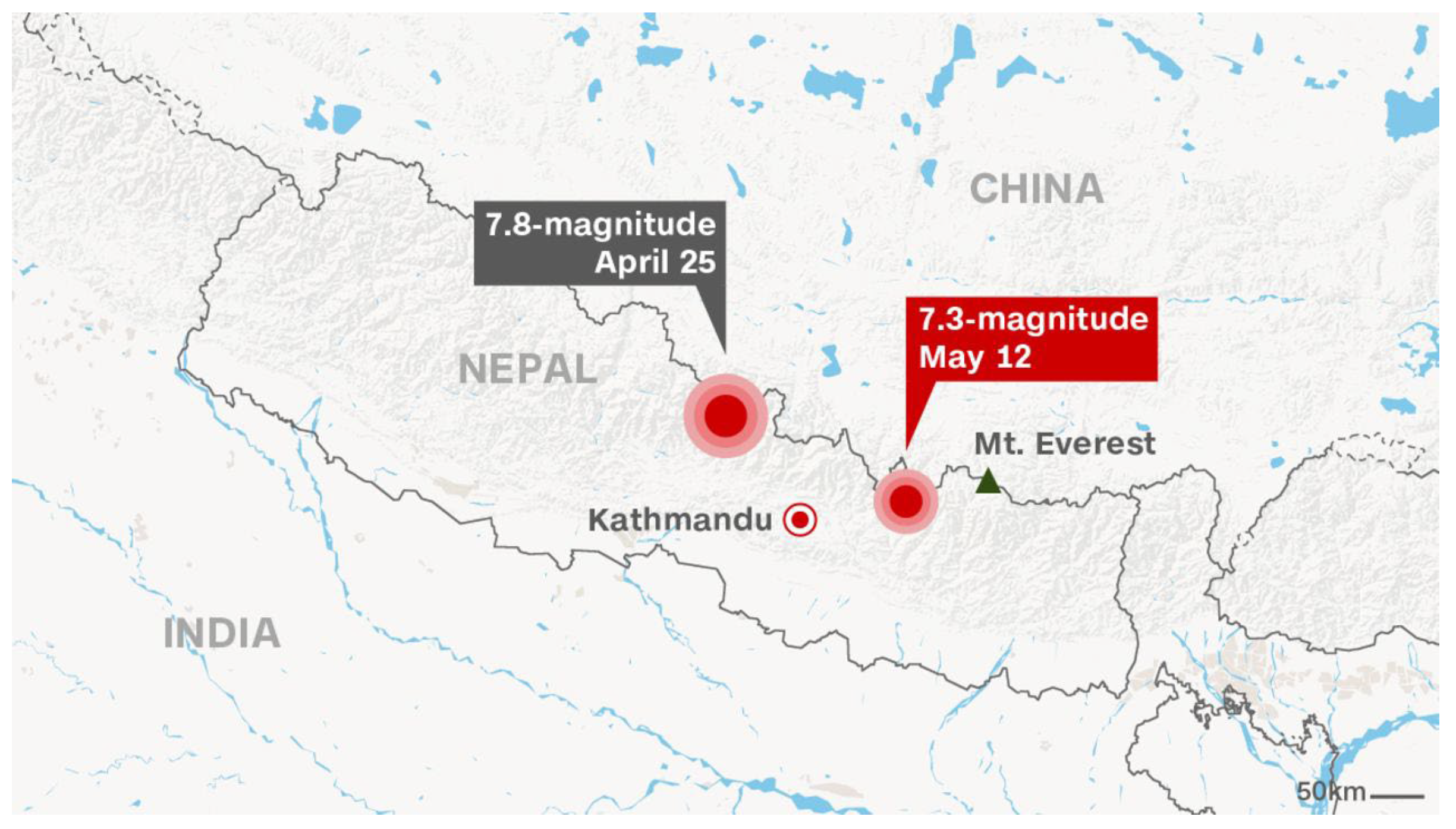
Figure 2.
Research Methodology Implemented in this Study.
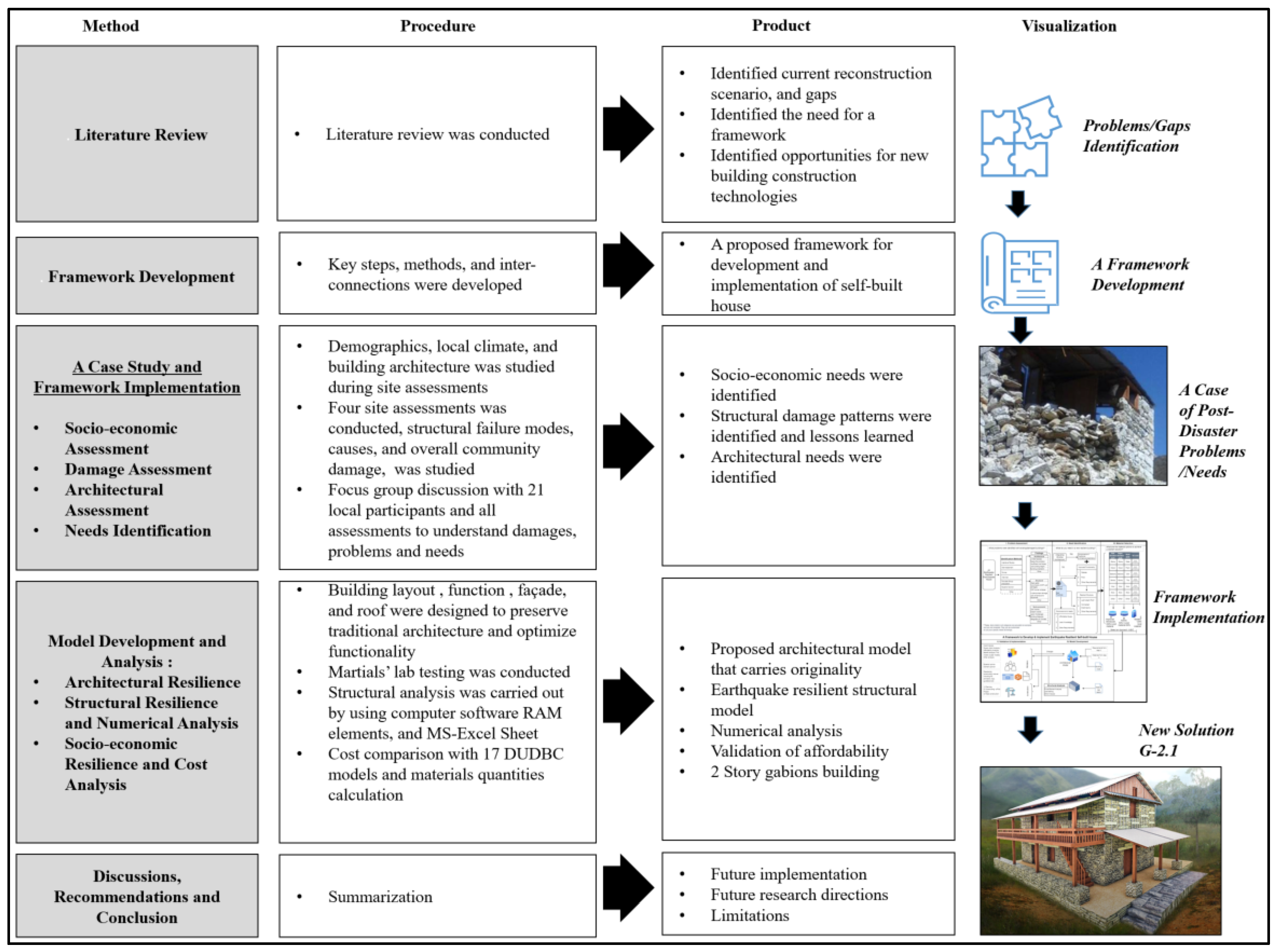
Figure 3.
The Proposed Framework for Developing and Implementing Earthquake Resilient House.
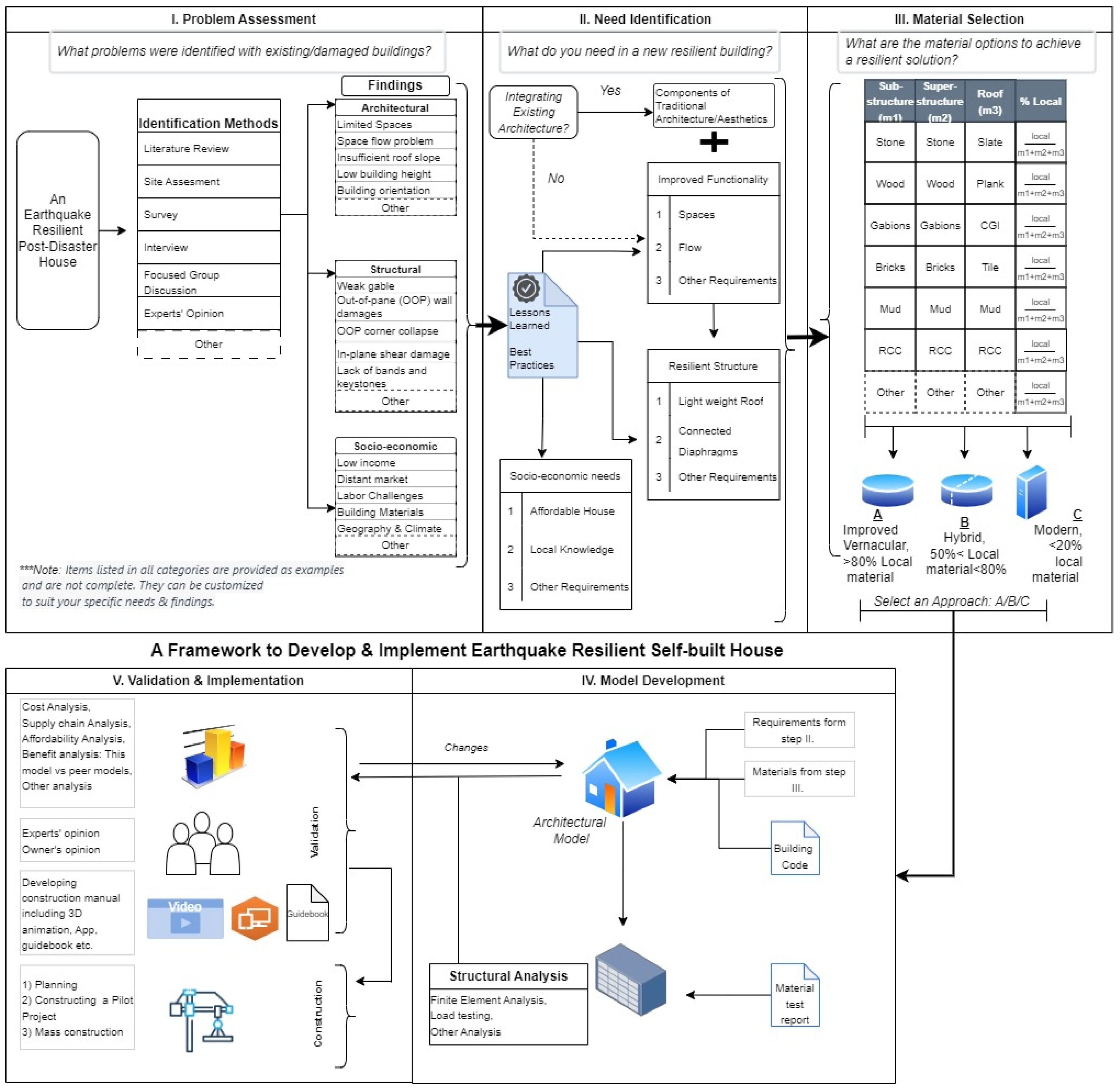
Figure 8.
Structural Details of Proposed Gabion House.
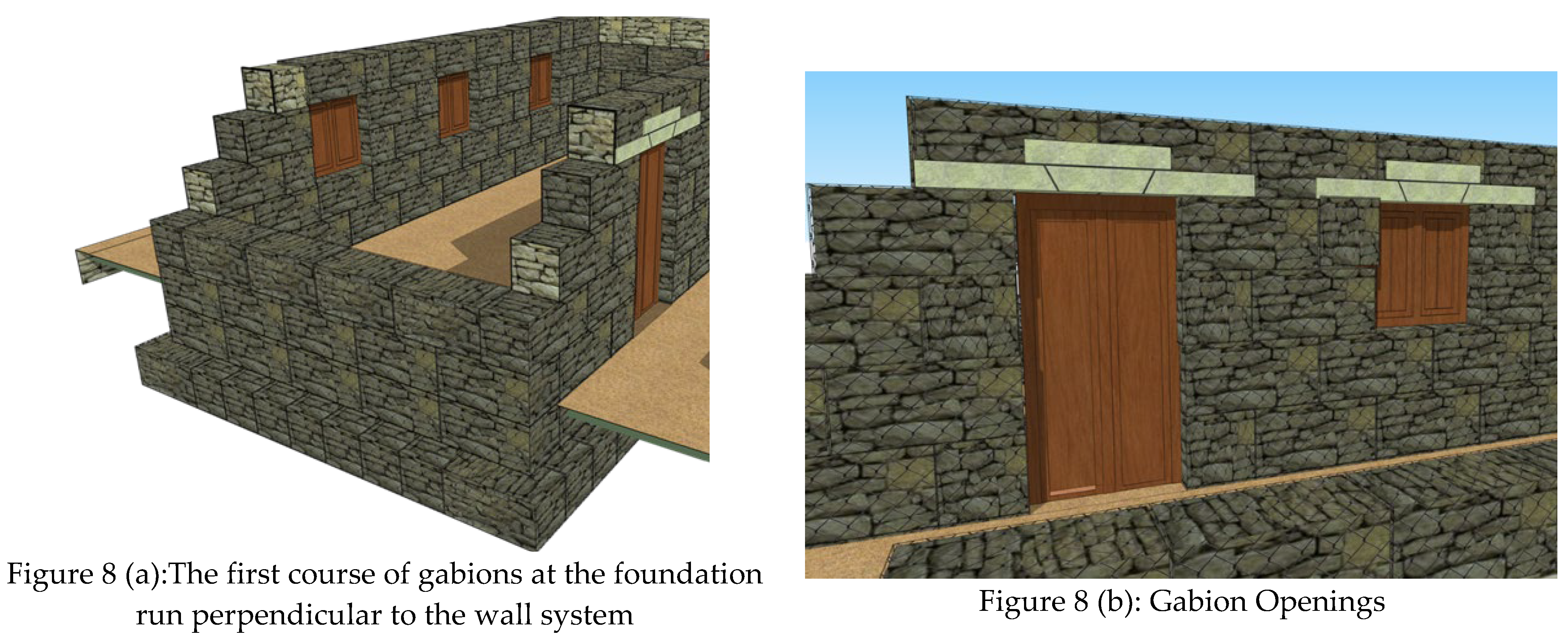
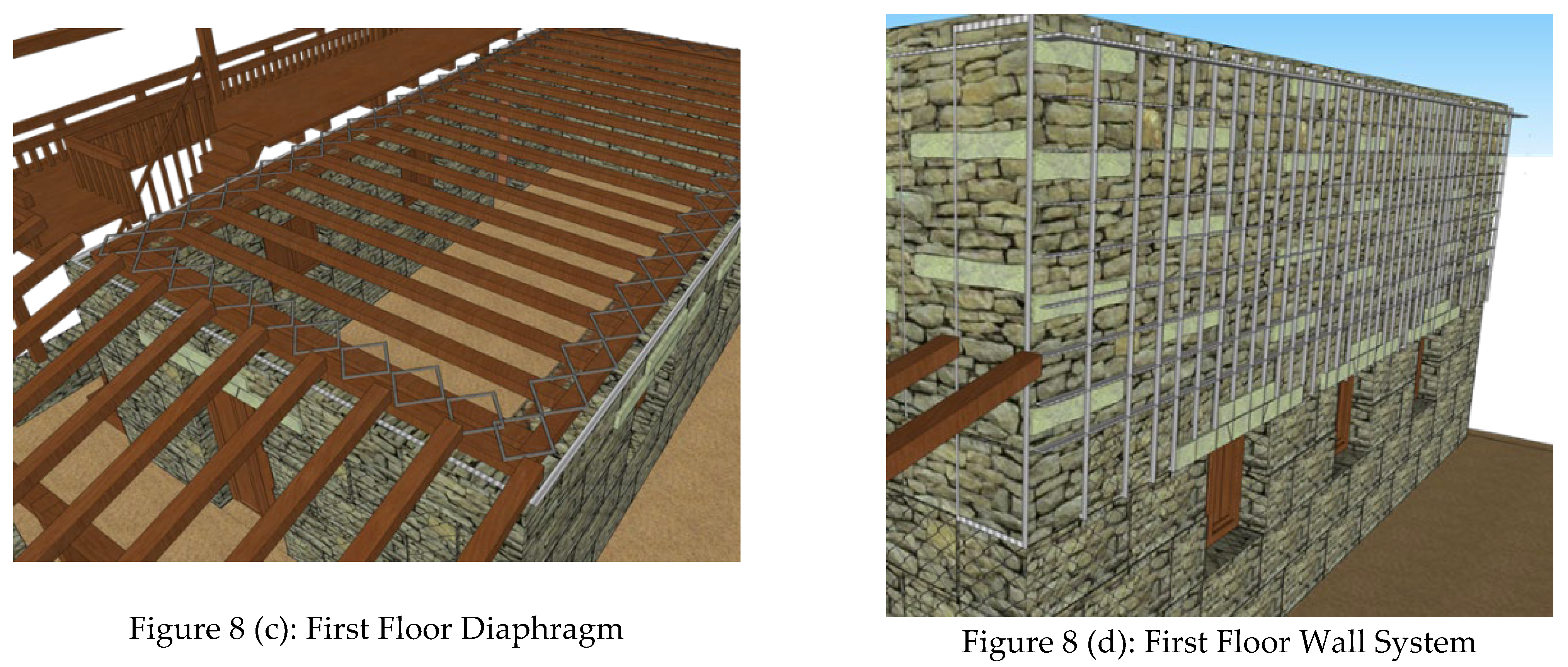
Figure 9.
Attic Floor and Roof Details of Proposed Gabion House.
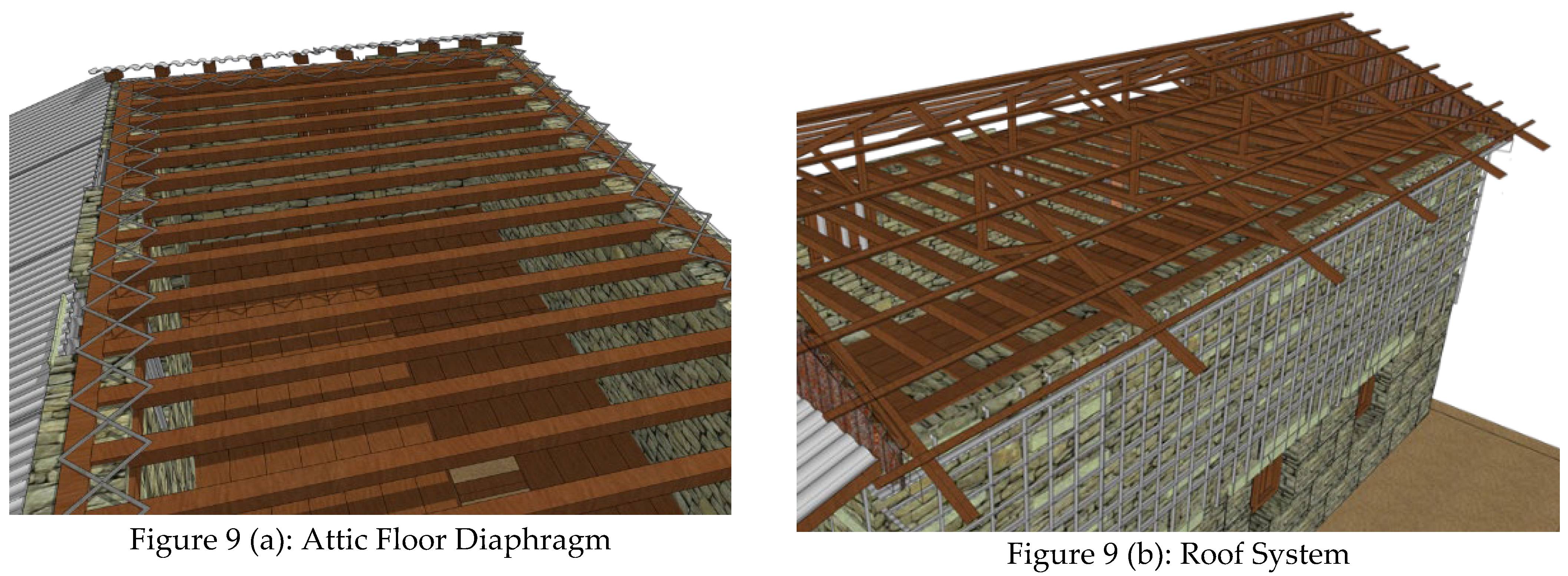
Figure 10.
Out-of-plane Seismic Force Induced Bending Moment Diagrams.
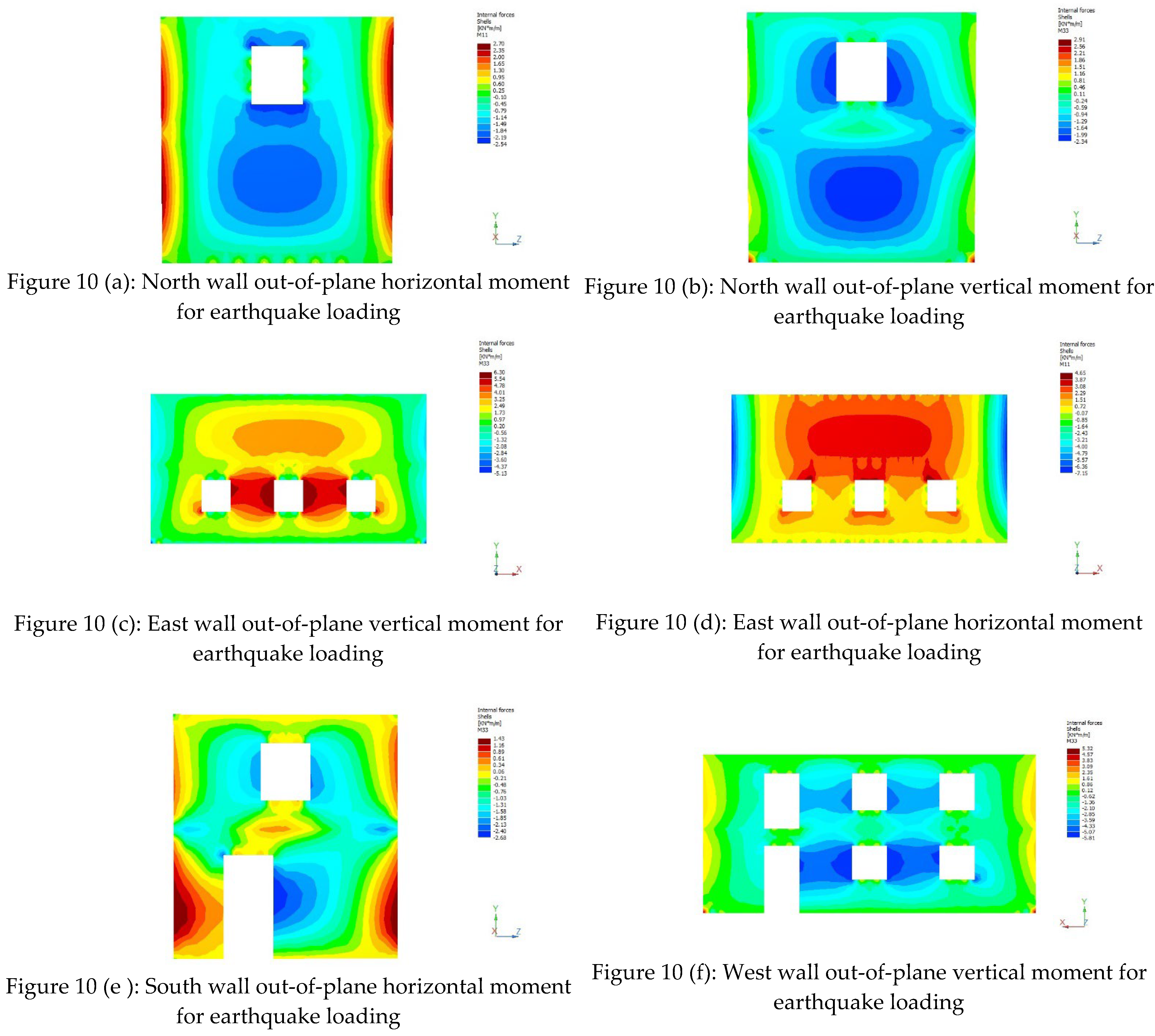
Figure 11.
Labors needed in the construction of G-2.1.
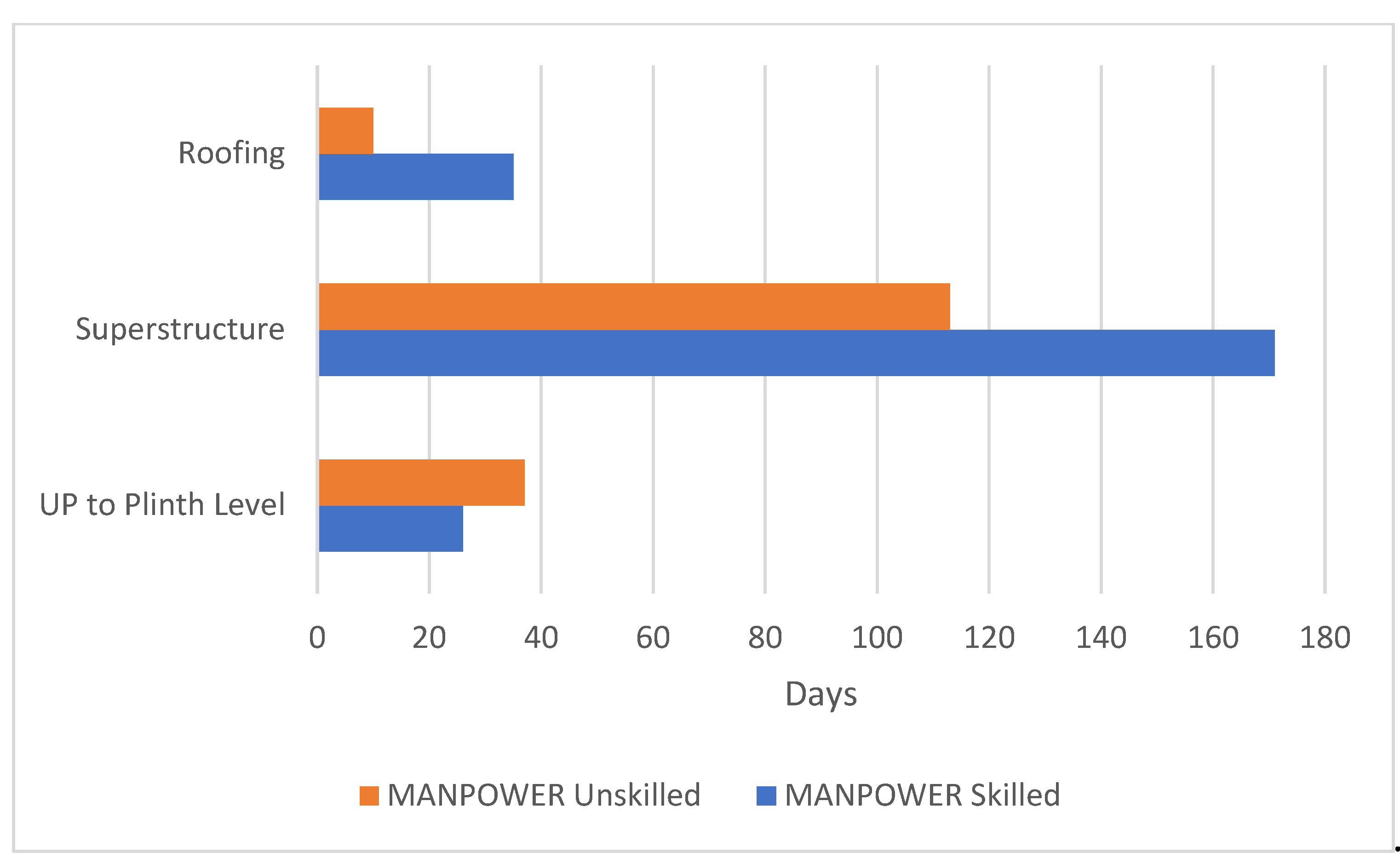
Figure 12.
Cost comparisons with 17 earthquake-resistant building models developed by DUDBC.
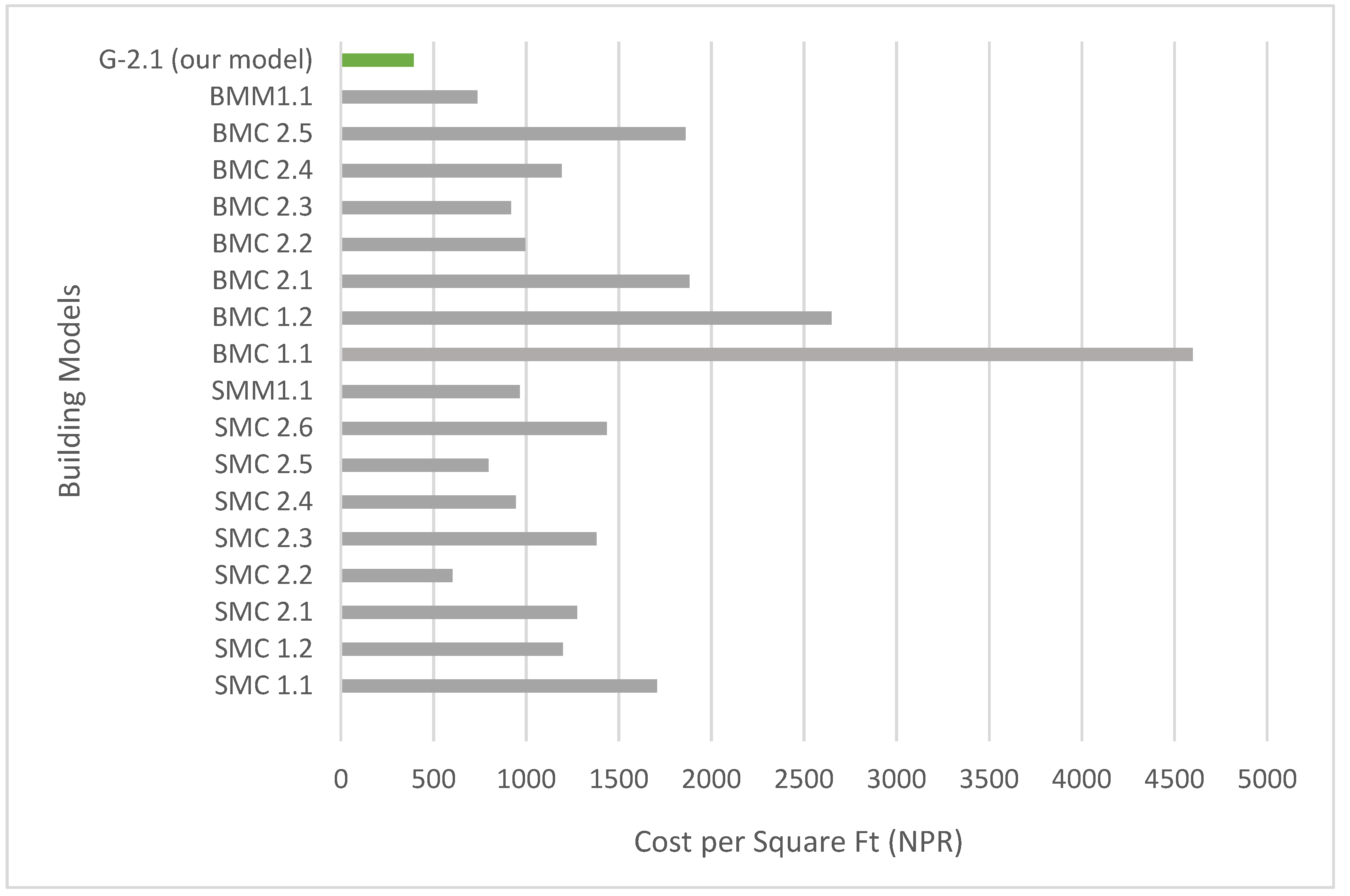

Table 1.
Existing Studies and Their Research Themes.
| Study focus | Geographic Region | Architectural Aspects | Structural Aspects | Socio-Economic Aspects | References |
|---|---|---|---|---|---|
| Improving the behavior and mechanical properties of stone masonry set in mud mortar | Nepal | X | [32] | ||
| Develop a preliminary temporospatial agent-based model that can account for homeowners’ dynamic interactions with their neighbors | USA | X | [33] | ||
| Investigated how place and power mismatches have created barriers to the housing reconstruction process | USA (Porto Rico) | X | [34] | ||
| influence of technical assistance and sources of funding on household perceptions of housing safety | Nepal | X | [35] | ||
| Understand how affected households interpret and intend to act upon hazard-resistant construction knowledge | Nepal | X | [36] | ||
| Discusses structural recovery to the built form as well as households' perceptions of recovery at the individual and community levels | India | X | [37] | ||
| Promotes or impedes willingness to participate in community resilience-building activities | China | X | [38] | ||
| Evaluation of healthy, modest, instantaneous house | Indonesia | X | [39] | ||
| modularization of housing recovery projects considering manufacturing, transportation, and assembly factors for a cost-efficient and sustainable implication | USA | X | X | [40] | |
| Studies housing recovery problems in areas stricken by the 1995 Great Hanshin-Awaji earthquake | Japan | X | [41] | ||
| Structural performance and associated lessons to be learned | Global | X | [27] | ||
| Disaster-resilient vernacular housing technology | Nepal | X | X | [42] | |
| The role of social capital in reconstruction | USA (Porto Rico ) | X | [43] | ||
| |||||
Table 2.
Identified Needs from Assessments and Focused Group Discussion.
| Key Area | Key Themes | Identified Needs |
|---|---|---|
| Architecture | Traditional Design and Cultural Significance | Preserve traditional architectural aesthetics and cultural identity in new design |
| Architectural Features | Incorporate local materials such as wood, and stone, retain traditional spaces such as pidi and balcony, lightweight roofing, improved spaces and connection between them, two-story house | |
| Structural | Structural Integrity | Cornerstones, keystones, integration of wall systems, earthquake resilience |
| Diaphragm Connection | Wall to horizontal diaphragm connection, diaphragm to roof connection | |
| Lightweight Roof and Gable | CGI roofing, CGI, or wooden gable | |
| Socio-economic | Self-built House | Local knowledge based technology, local labor |
| Affordable | Local materials, affordable new technology | |
| Climate Responsive | Consider climate conditions- rain, snow, and wind |
Table 3.
Material quantities needed for G-2.1.
| LEVEL | MATERIALS | |||||
| STONE (m3) | WOOD (m3) | GABION PANELS (numbers) | GABION WIRES (kg) | CGI SHEET (bundles) | GI SHEET (Running meter) | |
| UP to Plinth Level | 21.96 | 0 | 100 | 10 | 0 | 0 |
| Super Structure | 73.07 | 6.4 | 160 | 35 | 5 | 0 |
| Roofing | 0 | 1.94 | 0 | 0 | 6 | 12 |
| Total | 95.03 | 8.34 | 260 | 45 | 11 | 12 |
| Locally Available | Yes | Yes | Yes | No | No | No |
Disclaimer/Publisher’s Note: The statements, opinions and data contained in all publications are solely those of the individual author(s) and contributor(s) and not of MDPI and/or the editor(s). MDPI and/or the editor(s) disclaim responsibility for any injury to people or property resulting from any ideas, methods, instructions or products referred to in the content. |
© 2024 by the authors. Licensee MDPI, Basel, Switzerland. This article is an open access article distributed under the terms and conditions of the Creative Commons Attribution (CC BY) license (http://creativecommons.org/licenses/by/4.0/).
Copyright: This open access article is published under a Creative Commons CC BY 4.0 license, which permit the free download, distribution, and reuse, provided that the author and preprint are cited in any reuse.


