

Submitted:
25 February 2024
Posted:
26 February 2024
You are already at the latest version
Abstract
The construction industry is a resource and energy intensive industry and thus, has been criti-cized due to rising environmental concerns. As a result of that it has gained heightened interest in the concept of Circular Economy (CE) over the last decade to its ability to promote the slowing, reducing, and closing production and consumption cycles of materials and products used in the construction practices. Digital technologies hold potential to enhance the construction industry's ability to integrate the concept of CE in its practices. However, a clear understanding of digital technology (DT) related barriers that hinder practical implementation of CE, appears to be lacking within the sector. In light of this, this study aims to identify the barriers to adopting DTs to im-plement CE practices in the construction industry. To achieve this aim, a systematic literature review was conducted by reviewing twenty-three (23) relevant papers published until January 2024 in Scopus database. The VOS viewer software was used to perform a co-occurrence analysis of keywords to identify new and popular study areas in the field and content analysis was used to analyse the major barriers to adapt DTs to implement CE in the construction industry. The study identified thirty-four (34) barriers to use DTs to implement CE and these were categorized into nine areas such as: infrastructure, organizational, regulatory, standardization, investment, nature of the construction industry, technological, stakeholder and data related barriers. These findings will be beneficial for construction practitioners and policy makers to adopt DTs to integrate CE practices in the construction industry.
Keywords:
Barriers
; Circular Economy
; Construction Industry
; Digital Technologies
1. Introduction
The construction industry is highly resource-intensive, depleting vast amounts of natural resources and producing massive amounts of waste; it is also incredibly energy-intensive, causing major environmental effects by raising carbon emissions [1,2,3,4,5,6,7,8,9,10]. The status quo of the industry further exacerbates ecological problems and compromises the environment's capacity for sustaining future generations [8]. Thus, addressing these concerns has become imperative in the construction industry to achieve goals related to sustainability [1,4]. Researchers have highlighted that to ensure the sustainable use of resources and energy, the linear economic model must be rethought in terms of Circular Economy (CE) [4,6,11]. Similarly, [2] highlighted the environmental and economic restrictions on the existing linear model which accelerate the swift of ecological and circular transformation.
The concept of the circular economy (CE) has transcended into this domain to solve the needs of construction amid resource constraints [4]. The concept of CE provides an opportunity to enhance values of resources by slowing, reducing, and closing production and consumption cycles [12]. Moreover, CE enhances resource lifespan and durability by incorporating them in the loop for as long as feasible [4]. Similarly, the fundamental objective of systemic circularity in the construction entails making sure that the product system for buildings is well-planned, circularly designed, and has the essential reverse cycles, system conditions, and business models to ensure the seamless reusability of building materials at the end of life [6]. Thus, various CE initiatives such as building information modelling, urban mining, secondary materials markets, deconstruction design, and construction and demolition waste (CDW) hierarchy are progressing in distinct directions [5].
The building and construction sector uses a great deal of materials that are created and operated in a linear economy [12]. The majority of pre-existing buildings and civil infrastructure adhere the conventional cradle-to-grave paradigm and are not generally intended to be "deconstructed" or "disassembled" to eventually enable the reuse or recycling of their materials, subsystems, or components [13]. Hence, a comprehensive redesign of systems, processes, and products is required to move towards the ideal economy; yet this kind of transformation can only be accomplished with the right technology and approaches [1]. This demands innovation in the construction industry's production and consumption with their associated technologies [11].
Thus, construction companies have begun to re-evaluate their strategies considering the volume of waste produced by the industry [4]. In contrast to conventional linear models, which involve the fabrication, building, use, and demolition of components, CE approaches have surfaced as viable substitutes by adhering to the closed-loop strategy, wherein material components undergo fabrication, building, use, disassembly, reworking, and reuse [14]. Furthermore, utilizing spatial reversibility (leasing, renting and renovating) in construction could be a challenging task even though they are extremely beneficial circular strategies [4]. Thus, the construction sector is facing new obstacles in its efforts to boost productivity by adhering to more sustainable, circular, and technologically sophisticated principles [15]. Furthermore, the increasing complexity of projects and project-based organizations in the construction industry with respect to the quantity of stakeholders and establishments, technological or digital domain-specific prerequisites, supply chains and production processes, service outsourcing, policy regulations have brought platforms (digital ecosystems) to the forefront as comprehensive solutions for cooperation and joint added value generation [16]. However, it is challenging for construction organizations and other important stakeholders to integrate strategies that ease the shift to CE [1].
Digital technologies are revolutionizing the value of co-creation and collaboration beyond historical industry boundaries with the potential to significantly impact the construction industry's ability to realize the importance of applying circular economy principles [2,3,4,6,9,11,13,14,15,16,17,18,19,20]. Advanced digital tools are being implemented across industries owing to the boost given by the fourth industrial revolution [4]. However, DTs that help with the transition to CE are challenging for construction companies and other important stakeholders to integrate [1]. Switching from a linear to a circular flow for materials and components will be a lengthy process that requires significant contributions from a range of stakeholders [13,15]. Furthermore, [3] reinforced that collaboration amongst a range of stakeholders, including governments, researchers, designers, manufacturers, construction companies, recyclers, and suppliers, is necessary to build a new circular economy business model for the built environment. Thus, the construction sector is undergoing a gradual yet continuous transformation to adopt novel technologies like Artificial Intelligence (AI), Digital Twins, BIM (Building Information Modelling), Material Passport (MP), IoT (Internet of Thing), Digital Market Place (DMP), Big data analytics, Blockchain [3,4,9,11,17,20,23],Radio Frequency Identification (RFID) [2,20], 3D printing [4,15], Cloud computing and Augmented and Virtual Reality [4], Object detection and Computer Vision [9] and Geographic Information System (GIS) and Modelling and simulation [20] to commit on the built environments' circularity, efficiency, productivity, precision and safety. As a result, to facilitate this digital transformation, enormous amounts of data are generated and systematic data analysis and predictive modelling can be used to produce creative structural and architectural designs, increase construction speeds, improve payback periods, lower construction and operational costs, and reduce embodied and operational energy requirements [17]. However, the construction industry attempts to apply new technologies within the conventional processes, so it does not fully achieve the expected economic, technical, and processual benefits that new technologies offer, even with the extensive integration of digital tools and technologies, which would require innovation of practices [16].
Thus, the idea of the CE as an alternate route to move towards a sustainable economy has drawn increasing attention from numerous governments, organizations, and scholars [23]. Some authors argued that even though the circular shift in the construction industry is complex, challenging and highly multidisciplinary, it can be greatly aided by emerging Industry 4.0 technologies [2]. As a result, the prevailing debate in academia asserts that DTs serve as crucial facilitators of the CE in the construction industry [23]. Information and Communication Technologies (ICT) are acknowledged as possible solutions to facilitate CE oriented decision-making in the construction industry [20]. By utilizing a multiple case study with three social housing organizations at the forefront of circularity implementation in the Netherlands, [23] investigated how large-scale social housing organizations use DTs in their circular new build, renovation, maintenance, and demolition projects, as well as the barriers they encounter. Some authors argued that the incorporation of the circular economy in the built environment is expected to be made achievable by DTs [23]. However, it is apparent that there is a dearth of knowledge on the practical use of DTs and their potential benefits for industry stakeholders [23]. Thus, a thorough awareness of the barriers, risks, enablers, and accelerators associated with the socioeconomic structure of the construction sector is necessary for the real-world application of CE [1,5]. Even if DTs have a promising future, there are still several important implementation-related issues that need to be further researched [23]. Moreover, it provided an impetus to the industry's digitalization for a CE as an emerging research area.
A robust literature review reveals that the studies on DTs enabled CE in the construction industry focus more on how DTs can facilitate CE adoption. However, the topic of how different barriers hinder the DTs enabled CE adoption in the construction sector is still undiscovered. Therefore, the present study addresses this research gap by identifying barriers impeding the implementation of DTs enabled CE in the construction industry. Thus, the aim of this study is to identify the barriers to adopting DTs to implement CE practices in the construction industry. To achieve this aim, a systematic literature review was conducted by reviewing relevant papers published until January 2024. Consequently, this research takes an in-depth approach that incorporates bibliometric analysis and content analysis to investigate the body of knowledge that exists regarding the barriers to the adoption of digital technology enabled CE in the construction sector. The rest of the paper is structured as follows: Section 2 describes the research methodology; Section 3 deduces significant findings considering a systematic and sequential review of the literature to spotlight the barriers hindering the adoption of DTs enabled CE in the construction industry; and finally, Section 4 discusses the results and reveals future directions for the adoption of DTs enabled CE in the construction industry.
2. Materials and Methods
This research adhered to the detailed protocol specified in the checklist provided by Preferred Reporting Items for Systematic Reviews and Meta-Analyses (PRISMA, 2018). The criteria for choosing publications, the search plan, the metadata, the extraction process, and the data analysis steps were all outlined in the review protocol. Numerous databases, including Scopus, Web of Science, Google Scholar, and ScienceDirect can be used to retrieve data to carry out systematic literature reviews. Scopus was selected in this research to undertake the systematic literature review and the following search query was used to retrieve the data focusing on study titles, abstracts, and keywords.
(TITLE-ABS-KEY (“Construction”) AND TITLE-ABS-KEY (“Circular Economy”) AND TITLE-ABS-KEY (“Technolog*” OR “Digital technolog*” OR “Digitalisation” OR “Industry 4.0”) AND TITLE-ABS-KEY (“Barrier*” OR "Hindrance*” OR “Constraint*” OR “Obstacle*” OR “Challenge*”)) AND (LIMIT-TO (LANGUAGE , “English”))
An outline of the complete process that directed this systematic literature review is presented in Figure 1.
A total of 209 articles were screened using the initial search query as shown in Figure 1. The selection of literature was benchmarked using the inclusion and exclusion criteria. The inclusion criteria in this research covers studies that are strongly connected to DTs enabled CE in the construction industry. This inclusion criterion was created to identify the barriers to CE from a substantial body of research as DTs enable CE in the built environment is still in its early stages. The non-English-language study is deemed to meet the exclusion criteria and is not included in the review analysis. To ensure that no relevant research was missed, the selection of literature was not limited by article types, publication years, or nations.
Eighty-four (84) papers were excluded in the first screening process based on titles, abstracts, and keywords. This left a total of 125 articles, which were further shortlisted after reading the full text as they were not in line with the focus area. Finally, 23 papers were included in the full-text review to identify barriers related to DTs that enabled CE uptake of the construction industry. Table 1 provides an overview of the 23 studies that were selected for inclusion in the study.
A yearly trend analysis was conducted to comprehend the field’s evolutionary progress. Subsequently, these chosen articles were exported to VOS viewer (1.6.18 version) for additional processing to obtain valuable insights. The investigations of "co-authorship," "citation," "bibliographic coupling," and "co-citation" did not reveal any relationships between the selected articles. Thus, keyword co-occurrence analysis was carried out via VOS viewer software to discover novel and trending research hotspots in the field. Content analysis is utilized in this systematic review to provide novel perspectives derived from the synthesis of chosen studies and to summarize the data currently available. Considering this, contents of articles were qualitatively analyzed to identify barriers to the adoption of digital technology enabled CE in the construction industry. Finally, a barrier frequency analysis was undertaken to find the barriers which frequently popped up from the chosen articles.
3. Results
3.1. Yearly distribution of the retrieved articles
The yearly trend of publications in DTs enabled CE in construction is shown in Figure 2.
As shown on Figure 2, twenty-three (23) articles were included in this study, which were published between January 2011 to January 2024 (Publication years were not included in the search query). It is evident that scholarly attention to the challenges associated with adopting DTs to enable implementation of CE in buildings began in 2019. There has been a discernible rise in attention and awareness on barriers to uptake DTs to implement CE in the construction industry. The search date was limited until January 2024, hence the number of publications in 2024 is modest. Comparatively, a significant number of studies focused on the challenges associated with the implementation of DTs enabled CE in the building sector in 2023.
3.2. Keyword Co-Occurrence Analysis
Keyword co-occurring analysis in databases helps researchers to identify hotspots in a field and obtain a deep understanding of study themes and subtopics within a certain area. Thus, keyword co-occurrence analysis was performed on 23 articles in this study using the VOS viewer software. Additionally, a thesaurus file was made to make the process of cleaning data easier by combining phrases that refer to similar ideas (for example, building information modelling and BIM are synonymous, thus they were combined and presented as BIM). The result of this analysis is illustrated in Figure 3 for a minimum threshold of two keywords, with the intention to include all the selected papers of this study.
The figure illustrates the frequency of co-occurring terms based on the size of nodes, the relationship between nodes based on node proximity, and the strength of connection based on the thickness of connecting lines. Nodes labelled as "construction industry", "circular economy" and "barriers" are the most frequently appeared co-occurring keywords from the chosen research papers. Moreover, their proximity and thickness of the lines reflect their strong interrelated connection. Strong links to other keywords indicate that these keywords represent prominent study fields that have drawn significant attention.
The term "resource scarcity" is noteworthy since it appears in the figure which refers to the current resource-constrained state of the construction industry. The illustration depicts various DTs, such as "artificial intelligence", "3d-printing", "machine-learning", "IoT", “digital twin”, "radio frequency identification," and "BIM," as nodes which were applied to implement CE in the construction industry from the selected research articles. Additional indication that the process of incorporating digital technology into the construction business has begun is provided by the nodes designated "digitalization," "digital transformation," "digital technology," "technology adoption," and "information communication tech”. These relationships are further demonstrated in Figure 4 as shown below. In Figure 4c, the term "technology adoption" can be seen with the terms "circular economy," "barriers," and "construction industry" indicates that there is an increasing academic demand for steering the construction sector towards adopting a digital technology enabled CE approach. Figure 4d and 4e clearly shows how the existing relationships of DTs and digitalization process along with circular economy and construction industry. The construction industry is encouraged to embrace CE practices when digital technology and digitalization processes approach their innovative level.
3.3. Barriers to uptake DTs to implement CE in the construction industry
A total of 34 different barriers to adopt DTs to implement CE in the construction industry were identified from the literature, which was further subdivided into nine (09) categories based on their characteristics. Barriers are placed in an order where frequency of each barrier category positioned in ascending order.

Table 2.
Barriers to implement DTs enabled CE.
| Barrier Category | Code | Barrier | Reference | Frequency |
|---|---|---|---|---|
| Infrastructure | A1 | Inadequate capacities for infrastructure | [12] | 1 |
| Organizational | B1 | Lack of commitment from Construction Organizations | [21] | 2 |
| B2 | Need for new organizational role and training | [11] | ||
| Regulatory | C1 | Lack of CE regulations | [1,3,4,9,18] | 5 |
| Standardization | D1 | Lack of standardization for DTs | [3,9,18] | 5 |
| D2 | Lack of standardization for recovered and reused materials | [1,8] | ||
| Investment | E1 | Lack of financial resources | [4,21] | 9 |
| E2 | Lack of financial incentives | [21] | ||
| E3 | High implementation costs | [3,9,11,18,22,23] | ||
| Nature of the Construction Industry | F1 | Slow uptake of new technologies in the construction industry | [3,4,6,7,9,10,12,14,16,18,19,23] | 21 |
| F2 | Involvement of fragmented parties | [14,15,19,23] | ||
| F3 | Lack of trained workforce | [7,11,12,22] | ||
| F4 | Lack of CE-based knowledge management | [6] | ||
| Technological | G1 | Disposal of devices (Technology Disposal) | [3] | 21 |
| G2 | Elevated power consumption | [3] | ||
| G3 | Sustaining the use of technology | [2,3,17,23] | ||
| G4 | Lack of recognition for DTs | [10,18,20,22] | ||
| G5 | Lack of integrated CDW processes, tools, and practices | [5] | ||
| G6 | Lack of circularity in product design | [1,5,10] | ||
| G7 | Absence of sufficient technologies for reusable, recycled & recovered materials | [1,5,8] | ||
| G8 | Lack of proper information management systems | [2,5,7,10] | ||
| Stakeholder | H1 | Resistance to change | [3,4,9,11,20,23] | 23 |
| H2 | Lack of skills | [3,9,11,18] | ||
| H3 | Lack of awareness | [4,7,11] | ||
| H4 | Lack of commitment from stakeholders | [3,13,14,16,18,21] | ||
| H5 | Cultural Resistance | [18,23] | ||
| H6 | Reluctance to adopt DTs | [18,23] | ||
| Data Related | I1 | Lack of built-environment related Data | [3,5,6,7,9,13,20,21] | 31 |
| I2 | Lack of clarity on the required data | [22,23] | ||
| I3 | Data handling and management | [3,16,17,21,23] | ||
| I4 | Poor quality data | [3,5] | ||
| I5 | Unavailability of web-based database for secondary products | [5,12] | ||
| I6 | Lack of data interoperability | [9,18,20,21,23] | ||
| I7 | Absence of data standardization | [11,16,23] | ||
| I8 | Data security barriers | [3,4,9,18] |
3.3.1. Infrastructure Barriers
Infrastructure related barriers which impede the adoption of DTs enabled CE in the construction industry are discussed below.
Inadequate capacities for infrastructure: The main obstacles to CE adoption in the construction industry are infrastructure and logistics-related ones, which are, a lack of tracking mechanisms, a lack of expert circular networks, and inadequate facilities for sorting and monitoring systems [12]. Furthermore, the authors added that it is difficult with these barriers in place to control the pattern and product flow of the materials throughout their lifetime, apparently making efficient CE adoption challenging. Also, inadequate capacities for the waste segregation and recycling infrastructure development appears as an apparent barrier which impedes the circular practices in the construction industry.
3.3.2. Organizational Barriers
These barriers are associated with lack of commitment and collaboration from construction organizations, and they hinder the adoption of DTs enabled CE practices. These barriers are discussed below in a detailed manner.
Lack of commitment from construction organizations: Organizational harmonized protocols and processes for data management throughout the value chain in the context of the circular economy are still lacking [21]. The authors also stressed that the lack of regular organizational procedures and data management practices hinders information sharing among stakeholders, which makes the actual application of the CE and material reuse difficult. A lack of harmonization throughout the value chain is hindering the adoption of DTs enabled CE in the construction industry.
Need for new organizational role and training: There is a tremendous need for new professional figures with competency in both information technology and building to aid the development of a suitable path for the uptake of DTs enabled CE in the construction industry [11]. Additionally, to support the professionals in reaching CE, new positions and operators with a variety of responsibilities are required. Specialized training programs are needed to raise the skill levels of operators to the required level for dealing with DTs enabled CE and it is essential for the different supply chain stakeholders to have transversal synergy [11]. There is an urgent need to hire new professionals for new technological-related roles within the organization or provide existing professionals with the necessary training to meet the demands of technology.
3.3.3. Regulatory Barriers
The lack of CE regulations, laws and rules for the adoption of DTs to enable CE in the construction industry are discussed below.
Lack of CE regulations: There are several laws, rules, and conventions that apply to the construction sector, and they differ depending on the jurisdiction. The attainment of circularity in the building industry is impeded by the absence of government involvement in the revision of regulations and norms [4]. Inadequate laws for CE adoption and insufficient CE standards and guidance may be the root cause of regulatory obstacles. The [9] study also added that the construction industry may face regulatory challenges while utilizing modern technologies for CE, including zoning laws, building codes, environmental restrictions, and other regulations. Further the authors have provided additional evidence to bolster their claims by referencing building codes that prohibit the use of specific recycled materials or restrict the application of specific construction techniques, as well as zoning laws that prohibit the construction of specific building types or place restrictions on the location of recycling facilities. Furthermore, there are insufficient markers to plan, execute, and assess CE in construction from an all-encompassing perspective [1]. Regulatory obstacles may need to be addressed in the blockchain's application and execution for circular construction [3,18]. To truly adopt CE principles with the aid of DTs in the construction industry, the government must get involved in revising or amending existing building regulations and norms to comply with CE regulations. Otherwise, the contradictions and inconsistencies in these building regulations and norms could lead to misunderstandings and hinder the adoption of circular practices.
3.3.4. Standardization Barriers
These barriers are related to the lack of standardization which hinders the application of DTs for the CE in the construction industry and they are described below in a detailed manner.
Lack of standardization for DTs: The readiness for change will always provide an underlying conflict between the opposing demands of innovation and standardization. Finding the ideal balance between the competing needs of innovation and standardization can be critical to the construction industry's success in achieving circularity. A lack of standardization has the potential to impede the advancement of DTs by undermining interoperability efforts and creating compatibility, security, and functionality problems. The introduction of DTs, such as Material Passport, Material Databank, and Digital Twin, is being slowed down in the construction industry due to a lack of standardization, as noted by [3]. Integrating CE and BC in construction waste management is hampered by a lack of appropriate standards [18]. Inconsistencies and inefficiencies in the construction value chain may result from the lack of standardization for adopting these technologies, which may ultimately impede their adoption [9]. The construction industry must collaborate with industry organizations to develop and implement standardized protocols covering various aspects of advanced technology adoption [9].
Lack of standardization for recovered and reused materials: Recycled materials may provide uncertainties and practical issues if their performance is not guaranteed to be as intended [8], which may discourage stakeholders from utilizing them in construction projects. Uncertainties among stakeholders may arise from a lack of standards and limited practical guidance regarding the application, efficacy, and durability of recycled materials. Further, the absence of standards for recovered materials is one challenge the building industry faces, making it challenging to modify existing designs [1].
3.3.5. Investment Barriers
These challenges related to the cost, financing, incentives and investment and they are explored below.
Lack of Financial resources: The primary rationale mentioned by construction companies for rejecting new implementations or improvements is a lack of financial resources and support. The primary obstacle to the adoption of digital technology in the building sector is the dearth of green finance and regulations at the corporate and governmental levels [4]. There is no denying that price is the primary factor when purchasing building materials. So, the high cost of retrieving and preserving the materials' residual value at the end of their useful lives obviously makes virgin materials desirable for the new projects [4].
Lack of financial incentives: Efficient reuse of construction materials and a CE will require large-scale data management. Data from existing structures and materials can be labor- and cost-intensive to gather, digitize, and manage [21]. Further the authors underlined that a major obstacle to enabling efficient data management is the absence of financial incentives. It is challenging to develop a business plan for the large-scale reuse of construction materials with the absence of financial incentives from the government or the industry [21].
High Implementation Costs: Using cutting-edge technology for CE in the construction sector can be costly and necessitate large infrastructural, software, and hardware investments. Aside from the cost of hardware and software, there is also a significant financial cost associated with the workforce's lack of knowledge and proficiency with digital technology [22]. The authors have drawn attention to the significant implementation costs associated with the use of BIM, Blockchain, IoT, Artificial Intelligence (AI), Big Data Analytics (BDA), Material Passports, and Extended Reality [3,9,18,22]. Moreover, these knowledge-intensive enabling technologies are associated with high R&D intensity, rapid innovation cycles, and high-skilled employment, all of which result in substantial capital expenditures [11]. Moreover, DTs are becoming a niche area that necessitates convincing a significant number of organizational stakeholders to make investment decisions [23]. The construction industry is burdened by the upfront expenditures associated with its adoption [9,23]. However, the construction industry needs to carefully weigh the implementation's costs and expected advantages to make sure the investment is worthwhile. In the opinion of [11], choosing the truly effective technologies in an assessment of their whole life cycle necessitates the use of life cycle assessment procedures that emphasize the advantages (e.g. material savings) along with the drawbacks (e.g. the high energy consumption of DTs) of employing advanced technologies.
3.3.6. Barriers Associated with Nature of the Construction Industry
These barriers examine the traits of the construction sector, including its lack of labor training, fragmented stakeholder involvement, poor adoption of DTs, and CE-based knowledge management.
Slow uptake of new technologies in the Construction Industry: The construction sector is well known for its slow acceptance of new technologies [12,19,23] and has been the least digitalized in recent decades [7]. Industry appears to be opposing technological advancement rather than waiting for an appropriate application of DTs. Also, the way that existing construction organizations function towards the CE implementation reveals a lack of progress in digitalization [4]. Thus, the construction industry may undergo a radical change if current organizations make a strong transition to digital circularity and encourage digitization across all organizational levels [4,12]. Similarly, as discussed by [6], the construction industry lacks clearly defined indicators for the integration of digital technology and CE. The authors also noted that circularity technologies are still in their infancy within the industry. However, some authors argued that even though DTs have enormous potential, there are not sufficient validated technologies and tools for construction-related CE [10]. The scalability challenges related to the application of blockchain technology for CE in the construction sector were also revealed by [18]. Although several cutting-edge technologies have demonstrated potential in promoting circularity, their scalability and applicability for larger projects or wider adoption may be limited as well [9]. Thus, a thorough approach in terms of both technical and economic factors must be taken into account in order to design scalable solutions to apply CE in the construction industry [9].
Involvement of fragmented parties: Researchers argued that the enormous number and dispersed nature of stakeholders involved in the construction industry act as obstacles to improve construction industry practices [14,15,19,23]. The industry's split structure creates a fragmentation among stakeholders at various project stages and this increases the likelihood of errors and poor interaction among these stakeholders which directly hinders the adoption of DTs enabled CE within the industry.
Lack of trained workforce: The adoption of DTs enabled CE implementation in the construction industry is severely hampered by the lack of skilled people onsite [6,11,22]. Further, stakeholders involved in enabling technologies for the CE implementation need to be highly knowledgeable and qualified [11]. The existing challenge for the organizations is to find extremely skilled and knowledgeable stakeholders to collaborate on DTs enabled CE projects.
Lack of CE-based knowledge management: In their study, [6] found that the industry lacks efficient CE-based knowledge management systems, which makes deployment of DTs enabled CE in the construction industry difficult. It is clear that an organization suffers greatly when CE based knowledge is lacking, and significant time is lost looking for pertinent information rather than finishing tasks with an established goal.
3.3.7. Technological Barriers
These are the barriers caused by technological constraints that restrict the appropriate application of digital technology for the implementation of CE in the construction industry.
isposal of devices (Technology Disposal): Disposal of technology raises issues as it may have a negative effect on sustainability goals and the environment, either directly or indirectly. There are concerns regarding the technology disposal which will directly or indirectly impact the environment and cause negative achievements in sustainability. The effects that IoT devices have during their disposal raise concerns, even though their deployment helps to enable circularity in construction [3]. Further the authors also emphasized the issues with sustainability caused by the manufacture and disposal of Extended Reality technology.
Elevated Power Consumption: The utilization of digital technology to promote circularity raises questions because of the high-power consumption it requires to operate. Blockchain usage necessitates a large computational power [3]. Further, the high electricity consumption of IoT has been highlighted by authors as another negative impact on the environment.
Sustaining the use of technology: These barriers are associated with MPs, BIM, AI, digital twins, IoT, BDA and RFID. MPs are intended to monitor material flows throughout the life cycle of buildings and to record material documentation that will facilitate the recovery of materials for reuse during renovation and demolition phases. However, there is a requirement for manual updates each time a building undergoes modification remains a major barrier to the practical implementation of MPs [23]. Initially, BIM was used to enhance design quality by combining all pertinent data from several disciplines into a single model whereas today, BIM provides a means of smoothly incorporating circular economy concepts into building projects. Concerns have been raised about BIM software's frequent updates and changes to newer file formats, which could eventually render BIM models incompatible [23]. The success of every AI model or project heavily depends on the labelled data known as training data, which is used to teach machine learning algorithms or models to make the right decisions. The AI models are highly susceptible to biases resulting from the training data [23]. Further the authors highlighted that the complexity of the code makes it very challenging to create a rule-based program [17]. Circularity in the construction is expected to be made feasible by DT, which connects real-world data with digital data. Even though, the combination of the DT and CE makes it valuable for the building industry, but the development of DT models is a complex task [3]. The capacity of a system to carry out its intended function over an extended period consistently and without failure is referred to as reliability. Reliability is an important consideration in the context of the IoT, as problems with malfunctioning devices may have serious consequences [3]. BDA has become a key component in producing insightful information for circular construction decision-making. To extract valuable information from a vast amount of data, BDA calls for intensive analysis [3]. One of the existing obstacles in utilizing RFID is the lack of technological and functional knowledge, which determines where the RFID tag should be installed [2]. Further the authors highlighted that RFID tags have shorter service life (15-20 years), when comparing with other construction components. It is also clear that a major gap exists since stakeholders have a limited time on how long they must manage an asset during its useful life. Stakeholders' interest in RFID is significantly curtailed when an asset is transferred to the user after it has been sold or the warranty has ended. Even though DTs pave way for the circularity in the construction, aforementioned issues related to those technologies make it difficult to sustain the benefits from those technologies.
Lack of recognition for DTs: A new paradigm can be adopted more quickly and easily if the necessary technology and information are accessible to advance it [7] DTs were not recognized in the circular construction due to the lack of knowledge and understanding [22]. Further the absence of a strong ICT infrastructure in the construction sector prevents DTs from being used with diligence [20]. Construction organizations are currently rushing to embrace DTs to demonstrate their social responsibility without having a firm grasp and awareness of it. The adoption of CE is hampered by the construction industry's poor ability for technological and eco-innovation as well as its immaturity in enabling DTs and solutions [10,18]. In addition, the authors emphasized that the lack of maturity of CE in the construction industry led to a dearth of investment in tools and technologies necessary for CE adoption. The underappreciation of DTs reflects the double-barreled impact of change aversion on CE adoption [10]. In the modern digital age, being able to recognize the opportunities presented by digital technology has become essential for competitive survival. It is imperative to acknowledge the role of DTs in the construction industry to enable circularity in the construction.
Lack of integrated CDW processes, tools, and practices: Despite the fact that a number of studies have highlighted the potential for digital technology to support integrated construction and demolition waste management (CDW), there are still insufficient integrated CDW procedures, tools, and practices in use. The industry still lacks tools for detecting, categorizing, and certifying salvaged materials [5]. Further the authors added another obstacle to effective CDW management as the complexity of the materials and the composition of the structure (many layers and adjustments throughout its lifecycle).
Lack of circularity in product design: Lack of material alternatives available in the industry inhibits circularity in product design [1]. Further increased supply chain complexity lessens the circularity of product design. Construction circularity is delayed by ineffective green building design development [5]. The practical use of design for deconstruction (DfD) is hindered by a lack of standard spatial geometries and limited visualization in this context [5]. [10] emphasized that there are insufficient technologies available to design for a building materials’ end of life.
Absence of sufficient technologies for reusable, recycled & recovered materials: The current state of recycling technology is immature and stems from a lack of advancement in technology which is necessary for the appropriate recycling of materials [8]. Inadequate material separation, administrative obstacles, and a deficiency in the process for making readily disassembled goods hinder recycling procedures [5]. Complications with material recovery at end of life are another technological barrier to the implementation of CE [1]. Insufficient technological capabilities on the side of managers to recover and reuse resources is a major barrier impeding the circularity [8].
Lack of proper information management system: The absence of an information management system was linked to the lack of transparency and availability of technical data on construction elements which extends the gap to the current modelling tools and material database [5]. Furthermore, there are still insufficient databases and information on constructing, particularly at end of life, due to the restricted number of CE-oriented databases that exist [6]. The limited availability of information that aligns with the end of life has impeded the adoption of digital technology for circular building. A significantly larger quantity of data and information may be needed for circular solutions pertaining to inventory, management, and asset end-of-life [2]. Still, it is difficult to track the recycled materials using trustworthy information systems [10].
3.3.8. Stakeholder Barriers
This set of barriers delves into the stakeholders' unwillingness to adapt, as well as their inadequate engagement, knowledge, and understanding of the use of DTs to enable CE.
Resistance to change: The resistance to change mindset among the stakeholders who are used to traditional construction processes is one of the greatest barriers to the adoption of new technologies for CE in the construction industry [3,4,9,11,20,23]. Construction stakeholders are typically conservative in the context of early acceptance and diffusion of technological innovation [20]. Stakeholders' perceptions are influenced by ease of use and technology acceptance, which discourages them from adopting DTs at this early stage [4]. There is a common problem faced by stakeholders is figuring out how DTs enabled CE may help the construction industry by cutting waste and increasing productivity [9,11]. BIM, GIS and RFID are the contemporary ICT-based decision-making tools which are currently utilized in the construction industry [20]. However, industry stakeholders have not yet widely used IoT, Big data, and blockchain, which are potential means of boosting the practice of CE in the construction sector. [3] also highlighted the extremely low adoption rate of Material Passport and Material Databank among industry stakeholders. As per [23], respondents acknowledged that even if they get BIM models from architects, they still prefer to utilize 2D drawings for their job. Furthermore, some participants in the [23] study highlighted that although new technologies have been implemented in their organization, some colleagues might be hesitant to use them since they have been using the same programs and processes for a long time. In the [11] study, participants highlighted the possibility of losing their professional identity because of the industrialization process made possible by certain technologies. Moreover, with the introduction of digital technology, stakeholders believe that they will be integrated into the industry as technicians, which frequently offers less flexibility and income than the free profession. Stakeholders prefer to adhere with the status quo, as the greater penalties and lack of high-tech expertise associated with project delivery failure [20]. Even though several ICT-based decision support tools have been developed to aid in the implementation of CE, it is difficult to persuade stakeholders that developing innovative CE business models is essential to surviving in the resource-intensive market of the future [20]. A change in the attitudes and behaviors of the participants is necessary for the transition from linear building to DTs enabling circular construction.
Lack of Skills: The advent of digital technology may have created a skills gap in the industry, which could restrict the use of these resources to advance CE in the construction industry [9]. Utilizing DTs for CE in the construction industry demands stakeholders with specific expertise in areas like data handling, programming, and data analysis. The research by [3] makes note of the fact that stakeholders in the construction industry lack the technical know-how knowledge required to create and apply AI models. In addition, the authors confirmed that specific equipment and stakeholder skills are required to reap the full benefits from extended reality technology. Inadequate expertise with digital technology leads to a lack of competency required for managing the technological implementation like blockchain [18]. Further a lack of experience among stakeholders raises concerns about the practical commitments that come with technological progress [11]. Thus, the industry is facing a significant skills gap that needs to be addressed with appropriate solutions.
Lack of Awareness among stakeholders, clients and public: Stakeholder awareness and engagement are the key factors which facilitates a seamless transition from linear construction into a circular one. Lack of understanding among stakeholders and clients is the most significant obstacle impeding the shift to DTs enabled circular construction [4,6]. Stakeholders must become conscious of the environmental impacts created by the construction industry and urge circular principles by changing their disposal-focused and cost-driven perspective. The study conducted by [7] highlighted that public ignores the advantages and practices of CE without sufficient knowledge. Hence, inadequate client and public awareness of CE processes & benefits is one of the reasons why constructions are still adhering to linear construction processes. A lack of awareness about DTs enabled CE in the construction industry can be also interpreted as a kind of deliberate ignorance or a failure to learn or change. It is imperative to raise awareness of DTs enabled CE and demonstrate its advantages for the economy and environment to encourage stakeholders, clients and public to embrace DTs enabled CE practices. Stakeholders, clients and public may lose the chance to produce more circular results if they lack the necessary knowledge and comprehension. It is necessary for the public, clients, and stakeholders to change their viewpoint and admit that they are hindering the implementation of CE. Additionally, stakeholders in the construction industry are not even aware of the advantages that new technologies can provide [7,11].
Lack of commitment from stakeholders: Stakeholders are groups of individuals who have the potential to influence the objectives of an organization, progress, and even its existence. A major obstacle remains to be the absence of cooperation and communication across stakeholders [3,14,18]. Further it is challenging to gather project-related data to support circular construction as the construction industry is so dispersed [3,13]. The inability of many stakeholders to gather, handle, share, and manage data regarding building materials as well as to recognize information's worth in embracing circular principles is an additional barrier to data management [21]. Demanding the construction community's shared commitment in data integration throughout the value chain is one of the greatest barriers [16]. Stakeholders' unwillingness to exchange information amongst themselves and with other parties in the value chain hampers data management and material reuse in the AEC industry [21]. Due to their unwillingness to cooperate, the stakeholders in the AEC industry are unable to support the circular economy. It is obvious that there is a substantial chance of failure when implementing any CE program without significant collaboration from the key stakeholders.
Cultural Resistance: The common values, beliefs, and norms that shape stakeholder's behavior and their work process are referred to as culture. The adoption of new technology within organizations is hampered by existing cultural behavior, which necessitating systemic transformation [23]. Stakeholders must adopt new attitudes and behaviors that modify the construction industry's culture to enable the transition from linear to circular construction. However, such a significant change is challenging to implement, though, in an industry of the economy where supply chain fragmentation and hesitant technology adoption are typical [23]. According to [18], cultural variations in the construction industry also have an impact on the adoption of new technologies like blockchain. It is evident that cultural variances and technological advancements influence one another's growth.
Reluctance to adopt DTs: Employees are unlikely to embrace new technology unless their work environment encourages creativity, cooperation, and a readiness to change. [23] made clear in their study that a full implementation of DTs in daily operations is needed for both digitalization and CE, which are currently limited to pilot projects and the company's corporate vision. [18] state that organizations typically oppose the use of DTs in favor of maintaining the status quo. Organizational resistance makes a company rigid and unable to adjust to internal or external demands for change.
3.3.9. Data Related Barriers
These are the barriers related to lack of quality, quantity, nature and management of construction data. The most significant data related barriers found in the literature are lack of built-environment related data, lack of clarity on the required data, poor data handling & management, poor quality data, unavailability of web-based database for secondary products, lack of data interoperability, absence of data standardization and data security barriers which are discussed below.
Lack of built-environment related data: One of the main concerns regarding the adoption of the DTs enabled CE is the absence of the relevant data from the construction industry. Large volumes of data are required for the efficient operation of advanced technologies like deep learning, BDA, and machine learning [3,5,7,9]. The paucity of datasets makes it challenging to enable AI models for systemic circularity in the construction industry [6]. Further there is still a lack of technology application specifically focused on CE due to the dearth of comprehensive database [7,20]. It is a difficult endeavor to gather project lifecycle data to support circular construction [13]. [6] pointed out that there is still a dearth of data about the end-of-life stage and emphasized how little focus is placed on it. Further the authors stated that data and information for prediction in a CE are not easily accessible everywhere in the world for appropriate demolition auditing. However, lack of documentation of the materials used in construction is a typical occurrence in the industry, but this begs the question of the materials' reusability in the future [5,21]. Additionally, industry lacks critical information for prediction and disassembly, which is imperative for an effective deconstruction process [7]. Data about building materials and supplies are frequently absent, incomplete, inaccessible, or not digitalized, which is one of the major issues of the modern industry [21]. The absence of defined methods for collecting and storing data in the construction sector leads to a lack of data availability, which complicates the adoption of cutting-edge technology [9]. Moreover, ownership, access, privacy, and trust related problems within the industry contribute to dearth of data [5]. There is still plenty of work to be carried out in terms of data collection, data processing and reprocessing to create meaningful information, and ongoing data recording to support decision making [13]. Data is crucial to the application of circular practices throughout the whole life cycle of each construction project. Lack of any kind of data from the project may miss the opportunity to create more circular and profitable outcomes. [7] pointed out that if efforts are not taken to address the data issue, future research on DTs enabled CE may be misdirected.
Lack of clarity on the required data: Uncertainty about the data requirements for circular strategies is another factor contributing to the paucity of built-environment data [22,23]. BIM provides a database for MP generation and facilitates data sharing between project stakeholders to allow CE. However, there are uncertainties regarding data requirements for generating MPs [23]. Due to the lack of completely defined DT standards, data requirements cannot be appropriately specified [22]. More efforts need to be undertaken to critically assess stakeholder’s data requirements to enable them to make informed decisions on CE [23]. Stakeholders lack the expertise required to assess what technologies should be developed and what sort of data they might need to promote circularity in the construction sector. Lack of clarity on the required data barrier must settled down as soon as possible to reap the benefits from the DTs enabled CE implementation.
Data Handling & Management: Data Handling and management of collected data appears to be a prominent barrier to the CE implementation as technologies such as AI, IoT and BDA require and relies on large quantities of data for their functioning. BDA offers a variety of solutions and forecasts for the future by combining all other technologies, including BIM, AI, and IoT [3]. Enabling circularity requires the management of varied data over the whole life cycle. A significant quantity of data is produced at each phase of construction from a broad range of sources, such as sensors, monitoring equipment, and BIM [3]. This leads to challenges in data handling related to accessibility and assessment, which necessitates a substantial time and financial commitment [16–18]. DTs and solutions facilitate the open, transparent, and standardized sharing and connecting of data across the various stakeholders in the supply chain. So, the absence of a proper data management mechanism is a critical problem with DT adoption, especially for MPs [23]. Also, coordinating data management for material reuse without clear standards is challenging in the construction industry [21].
Poor quality data: Data of poor quality is unable to meet the purposes for which it is being used. Low-quality data can erode trust in the information shared due to insufficient coverage, disparate data formats, random collection practices, and monitoring [5]. Additionally, the writers stressed that issues with ownership, access, privacy, and trust in the sector could potentially hinder the acquisition of high-quality data [3] highlighted the need for vast quantities of high-quality data for DTs to operate as intended. The quality of data input influences the BIM outcome [3]. The authors also highlighted how poor construction data quality impedes the use of BDA. Poor quality data leads to inefficiencies in decision making and reduced opportunities for maximizing CE.
Unavailability of web-based database for secondary products: According to circular principles, it is imperative that secondary products have an extended life until they reach a point at which they can no longer be utilized. There is a lack of documentation in the management of used building materials, which raises concerns about their ultimate circularity [5]. Further, inadequate material property information of materials listed on a web-marketplace typically discourages stakeholders from purchasing them. The exchange of usable secondary materials and products is hampered by the lack of an efficient CE web-based waste exchange system [6]. Moreover, reusing secondary materials through marketplaces raises the issue of meeting quality requirements as measuring the physical quality of secondary products is a tedious task and requires expert inquiry [6]. As a result, lack of a web-based database for secondary products deters potential users from considering them for further purposes.
Lack of data interoperability: The transmission of information between the stakeholders along the value chain is hampered by the simple fact that data are frequently kept in disparate repositories, in disparate forms, with differing degrees of ownership and accessibility [21]. It is believed that data transparency is necessary to facilitate interoperability [21]. Naturally, integrating advanced CE technologies with current systems or technologies might be challenging. It is difficult to configure these technologies in a way that ensures process and data interoperability for diverse stakeholders within the industry [9,20].
Additionally, authors pointed out that BIM model versions vary since software is frequently updated and that future compatibility issues may arise with newer file formats [23]. As per [18], a major hindrance to amalgamating concepts such as CE, blockchain, and construction waste management could be their incompatibility. Further the authors added that there is an urging need for a proper system conversion to reap the benefits of blockchain enabled CE [18]. Interoperability and data sharing are difficult to achieve while using various DTs based on disparate languages and standards [23]. Moreover, the authors emphasize how crucial it is to incorporate digital technology into existing systems. A multifaceted strategy involving technical solutions, teamwork, and a long-term outlook is needed to address the issue of lack of interoperability [9]. Ineffective data management can be caused by a lack of technical interoperability, which in turn can slow down the construction industry's practices of reusing materials [21].
Absence of Data Standardization: Inconsistencies and inefficiencies in the construction value chain may result from the lack of standardization for adopting these technologies, which may ultimately impede their adoption [9,11]. The absence of standardization presents a significant obstacle to the construction industry's adoption of cutting-edge technologies for CE. The authors noted that the absence of a national standard for data exchange is becoming an issue for stakeholders [23]. Consequently, these issues with data sharing and administration may be resolved by international data standardization. These requirement for standardization and open interfaces is a major barrier to the construction community's commitment to data availability [16]. The construction industry must collaborate with industry organizations to develop and implement standardized protocols covering various aspects of advanced technology adoption [9].
Data security Barriers: Digitization presents a complicated cyberspace network, making industries vulnerable to cyberattacks despite its apparent benefits. The fragmented nature of the construction sector, where different stakeholders have varying levels of requirements for data privacy and security, has always presented significant hurdles in this regard [9]. The construction industry has witnessed a surge in cyber risks, making the infrastructure for cyber security imperative for all organizations [4]. Nowadays, blockchain is frequently utilized in the construction sector for CE-related solutions, which creates privacy or security concerns as well as legal liabilities [3,18]. Further, [3] stated that high data security is required as complete building data is included in material passports and data banks. Additionally, DT are highly susceptible to privacy issues caused by cyberattacks [3]. Given that these technologies include collecting, storing and exchanging sensitive data, implementing them to promote CE in the construction sector may present significant difficulties [9]. Formulating data privacy and security guidelines and measures to safeguard sensitive data are key areas for future growth in this discipline [9].
3.4. Frequency Analysis
A graphical representation of how frequently specific barriers have been discussed in the literature is provided in Figure 5.
Slow uptake of new technologies in the construction industry (F1) is the most referenced barrier in literature. The lack of built-environment related data (I1) was another prominent barrier mentioned eight times, with emphasis on how this can lead to ambiguity when implementing DTs for the CE adoption. Both stakeholders’ resistance to change (H1) and high implementation costs (E3) appearing six times indicate they are inevitable. Data handling and management (I3), Lack of commitment from stakeholders on data management (H4), Lack of data interoperability (I6) and Lack of CE regulations (C1) figured out five times from the selected research papers.
4. Discussion
The study aimed to determine the barriers to adopt DTs to implement CE practices in the construction industry. The long existence of construction industry, which is a highly resource and energy intensive sector, has resulted in the depletion of natural resources and the vast production of waste, both of which cause greenhouse gas emissions, which are unquestionably the primary cause of climate change. Furthermore, the current state of the industry endangers the ability of the ecosystem to support future generations and exacerbates ecological issues [8]. Studies like [4,6,11] reveal that the linear economic model being followed by the construction industry and it must shift into a circular economy, to ensure the sustainable use of resources and energy.
CE became a catalyst for addressing issues like biodiversity loss and climate change, as well as improving the use of limited resources and reducing emissions. The findings from [6] have revealed the fundamental objective of systemic circularity in the construction entails making sure that the product system for buildings is well-planned, circularly designed, and has the essential reverse cycles, system conditions, and business models to ensure the seamless reusability of building materials at the end of life. Thus, different CE initiatives such as building information modelling, urban mining, secondary materials markets, deconstruction design, and construction and demolition waste (CDW) hierarchy are moving in distinct directions [5], which requires to innovate its production, consumption along with DTs [11].
It is challenging for construction organizations and other important stakeholders to integrate strategies that ease the shift to CE [1]. The construction industry's initial adoption of CE has exposed implementation difficulties, prompting the search for an enabler to facilitate the proper adoption of CE practices throughout the industry. With the dawn of DTs with the fourth industrial revolution shows its potential to enable CE in other industries. This attracted the attention of academics to explore the potential of DTs in the CE implementation for the construction industry. Similarly, DTs have been identified by [2–4,6,9,11,13–20,22,23] as value-creating and collaborative tools that have the potential to greatly influence the construction industry's capacity to realize CE.
Information and Communication Technologies (ICT) are acknowledged as possible solutions to address wicked CE concerns as they can assist with decision-making that is CE-oriented [20]. By utilizing a multiple case study with three social housing organizations at the forefront of circularity implementation in the Netherlands, [23] investigated how large-scale social housing organizations use DTs in their circular new build, renovation, maintenance, and demolition projects, as well as the barriers they encounter. [23] validated that even if DTs have a promising future, there are still several important implementation-related issues that need to be further researched. However, the problem of how various obstacles impeding the use of DTs that enable CE in the construction industry is still unexplored.
The current study fills this gap by identifying the barriers which are getting in the way of the digital technology enabled CE adoption in the construction industry. Therefore, a specific search string was utilized in the Scopus database to find pertinent publications by adhering to the Preferred Reporting Items for Systematic Reviews and Meta-Analyses. A total of 209 articles were extracted from the database and subsequently subjected to a full-text review following an initial screening of the titles, abstracts, and keywords. Ultimately, a total of twenty-three papers were incorporated to identify barriers affecting the adoption of DTs that enabled CE within the building sector. Thirty-four barriers hindering the adoption of DTs enabled CE in the construction industry were identified and grouped into nine broad categories such as Infrastructure, organizational, regulatory, standardization, investment, nature of the construction industry, technological, stakeholder and data related barriers.
Inadequacy of the industry towards developing proper infrastructure for recycling and waste separation impedes the adoption of DTs enabled CE. Furthermore, the construction organizations’ lack of commitment and their insistence on new organizational roles and training demonstrates their inattention in embracing DTs that enable CE. The industry's adoption level of DTs and CE is severely hampered by the absence of clear regulations. Even though, industry accepts the use of digital technology and recovered and reusable materials, absence of standardization is delaying the development CE. Implementing DTs for the better application of CE in the construction industry requires higher implementation costs, while industries struggle with lack of financial resources and incentives. Moreover, the construction industry’ s slow uptake of new technologies with fragmented and lack of trained workforce limits the proper adoptions of DTs for the uptake of CE.
Disposal of devices, elevated power consumption, sustaining the use of technology, lack of recognition for DTs, lack of integrated CDW processes, tools, and practices, lack of circularity in product design, absence of sufficient technologies for reusable, recycled & recovered materials and Lack of proper information management systems are the technological implications arise with the implementation of DTs enabled CE in the construction industry. Further, the barriers limiting implementation from the stakeholder perspective include a lack of skills, awareness, and commitment; cultural resistance; unwillingness to embrace digital technology; and resistance to change. Finally, data related barriers which interrupt the uptake of DTs enabled CE are, lack of built-environment related data, lack of clarity on the required data, data handling and management, poor quality data, unavailability of web-based database for secondary products, lack of data interoperability, absence of data standardization and existence of data security. Determining suitable strategies to the existing barriers in the construction industry that impede the adoption of DTs that facilitate CE execution is crucial.
The primary knowledge gained from this study was in identifying several types of barriers hindering the implementation of DTs enabled CE in the construction industry. Due to the broad application of DTs, the researcher managed to find various insights for the next research projects. Firstly, the study could be carried out with specific DTs. The data gathered from the literature is the only source of information used in this study; expert opinions from CE experts were not solicited for validation. A second worthwhile study for future scholars would be to incorporate experts’ opinions and discussions to illustrate the various barriers identified for the progression of DTs enabled CE. Furthermore, future works would consider identifying proper strategies to overcome these identified barriers to successfully implement DTs enabled CE in the construction industry.
5. Conclusions
The study conducted a comprehensive investigation into the barriers associated with the adoption of the DTs enabled CE in the construction industry. The aim of this study is to identify the barriers to adopting DTs to implement CE practices in the building sector. It employed a systematic literature review using the PRISMA protocol to search, evaluate, and extract metadata. This study includes twenty-three (23) papers (2019 - 2024) that were all obtained from Scopus. A thorough understanding of the barriers to the adoption of DTs enabling CE in the construction industry was achieved via the review of these research. The study identified thirty-four (34) barriers categorized into nine areas: infrastructure, organizational, regulatory, standardization, investment, nature of the construction industry, technological, stakeholder and data related barriers.
This study has identified eight major barriers hindering progress in CE in the building sector. These barriers include the slow uptake of new technologies in the construction industry (F1), lack of built-environment related data (I1), stakeholders’ resistance to change (H1), high implementation costs (E3), data handling and management (I3), lack of commitment from stakeholders on data management (H4), lack of data interoperability (I6) and lack of CE regulations (C1). Addressing these barriers is essential for fostering more DTs enabled circular practices. Still, there are infrastructure, organizational, regulatory, standardization, investment, nature of the construction industry, technological, stakeholder and data related barriers in implementing DTs enabled CE in the construction industry, which requires proper solutions.
The research outcomes offer significant perspectives that aid in identifying barriers, enabling interested parties to formulate more efficient approaches for the successful integration DTs enabled CE. Moreover, the findings of the study contribute to the development of more circular built environments. The study's scope is limited to data collected from the literature, and expert opinions from CE experts were not consulted for validation.
Author Contributions
Conceptualization, S. Thirumal, N. Udawatta, G. Karunasena and R. Al-Ameri; methodology, S. Thirumal and N. Udawatta; software, S. Thirumal; formal analysis, S. Thirumal and N. Udawatta; writing—original draft preparation, S. Thirumal; writing—review and editing, S. Thirumal, N. Udawatta, G. Karunasena and R. Al-Ameri; visualization, S. Thirumal; supervision, N. Udawatta. All authors have read and agreed to the published version of the manuscript.
Funding
This research received no external funding.
Conflicts of Interest
The authors declare no conflicts of interest.
References
- Ababio, B. K., & Lu, W. (2023). Barriers and enablers of circular economy in construction: a multi-system perspective towards the development of a practical framework. Construction Management and Economics, 41(1), 3–21. [CrossRef]
- Giovanardi, M. (2024). RFId for Construction Sector. Technological Innovation in Circular Economy Perspective. In Lecture Notes in Mechanical Engineering: Vol. Part F1562 (pp. 315–329). Springer Science and Business Media Deutschland GmbH. [CrossRef]
- Harichandran, A., Wandahl, S., & Andersen, L. V. (n.d.). State of the art Technologies that Facilitate Transition of Built Environment into Circular Economy.
- Jemal, K. M., Kabzhassarova, M., Shaimkhanov, R., Dikhanbayeva, D., Turkyilmaz, A., Durdyev, S., & Karaca, F. (2023). Facilitating Circular Economy Strategies Using Digital Construction Tools: Framework Development. Sustainability (Switzerland), 15(1). [CrossRef]
- Munaro, M. R., & Tavares, S. F. (2023). A review on barriers, drivers, and stakeholders towards the circular economy: The construction sector perspective. Cleaner and Responsible Consumption, 8. [CrossRef]
- Oluleye, B. I., Chan, D. W. M., & Antwi-Afari, P. (2023). Adopting Artificial Intelligence for enhancing the implementation of systemic circularity in the construction industry: A critical review. In Sustainable Production and Consumption (Vol. 35, pp. 509–524). Elsevier B.V. [CrossRef]
- Oluleye, B. I., Chan, D. W. M., & Olawumi, T. O. (2022). Barriers to circular economy adoption and concomitant implementation strategies in building construction and demolition waste management: A PRISMA and interpretive structural modeling approach. In Habitat International (Vol. 126). Elsevier Ltd. [CrossRef]
- Osei-Tutu, S., Ayarkwa, J., Osei-Asibey, D., Nani, G., & Afful, A. E. (2023). Barriers impeding circular economy (CE) uptake in the construction industry. In Smart and Sustainable Built Environment (Vol. 12, Issue 4, pp. 892–918). Emerald Publishing. [CrossRef]
- Rodrigo, N., Omrany, H., Chang, R., & Zuo, J. (2023). Leveraging digital technologies for circular economy in construction industry: a way forward. In Smart and Sustainable Built Environment (Vol. 13, Issue 1, pp. 85–116). Emerald Publishing. [CrossRef]
- Wuni, I. Y. (2022). Mapping the barriers to circular economy adoption in the construction industry: A systematic review, Pareto analysis, and mitigation strategy map. In Building and Environment (Vol. 223). Elsevier Ltd. [CrossRef]
- Lavagna, M., Giorgi, S., Pimponi, D., & Porcari, A. (2023). Enabling technologies for circular economy in the construction sector. TECHNE, 25, 214–224. [CrossRef]
- Oluleye, B. I., Chan, D. W. M., Olawumi, T. O., & Saka, A. B. (2023). Assessment of symmetries and asymmetries on barriers to circular economy adoption in the construction industry towards zero waste: A survey of international experts. Building and Environment, 228. [CrossRef]
- Nik-Bakht, M., An, C., Ouf, M., Hafeez, G., Dziedzic, R., Han, S. H., Nasiri, F., Eicker, U., Hammad, A., & Moselhi, O. (n.d.). Value Stream Mapping of Project Lifecycle Data for Circular Construction.
- Atta, N. (2023). Remanufacturing Towards Circularity in the Construction Sector: The Role of Digital Technologies. In Urban Book Series: Vol. Part F813 (pp. 493–503). Springer Science and Business Media Deutschland GmbH. [CrossRef]
- Fonseca, M., & Matos, A. M. (2023). 3D Construction Printing Standing for Sustainability and Circularity: Material-Level Opportunities. In Materials (Vol. 16, Issue 6). MDPI. [CrossRef]
- Kovacic, I., Honic, M., & Sreckovic, M. (2020). Digital Platform for Circular Economy in AEC Industry. In Engineering Project Organization Journal (Vol. 9). [CrossRef]
- Baduge, S. K., Thilakarathna, S., Perera, J. S., Arashpour, M., Sharafi, P., Teodosio, B., Shringi, A., & Mendis, P. (2022). Artificial intelligence and smart vision for building and construction 4.0: Machine and deep learning methods and applications. In Automation in Construction (Vol. 141). Elsevier B.V. [CrossRef]
- Jayarathna, H. S. N. M., Perera, B. A. K. S., Atapattu, A. M. D. S., & Rodrigo, M. N. N. (2023). SYNERGY BETWEEN BLOCKCHAIN AND CIRCULAR ECONOMY IN IMPROVING CONSTRUCTION WASTE MANAGEMENT: A LITERATURE REVIEW. World Construction Symposium, 1, 1024–1038. [CrossRef]
- Shojaei, A. (2019). Interdependence between Structural Engineering and Construction Management Edited by Ozevin EXPLORING APPLICATIONS OF BLOCKCHAIN TECHNOLOGY IN THE CONSTRUCTION INDUSTRY.
- Yu, Y., Yazan, D. M., Junjan, V., & Iacob, M. E. (2022). Circular economy in the construction industry: A review of decision support tools based on Information & Communication Technologies. In Journal of Cleaner Production (Vol. 349). Elsevier Ltd. [CrossRef]
- Bellini, A., & Bang, S. (2022). Barriers for data management as an enabler of circular economy: an exploratory study of the Norwegian AEC-industry. IOP Conference Series: Earth and Environmental Science, 1122(1). [CrossRef]
- Geoghegan, H. J., Jensen, F. W., Kershaw, T., & Codinhoto, R. (n.d.). Innovation Realisation for Dutch Small Architecture Practices’ Digitalisation: state of the art review. [CrossRef]
- Çetin, S., Gruis, V., & Straub, A. (2022). Digitalization for a circular economy in the building industry: Multiple-case study of Dutch social housing organizations. Resources, Conservation and Recycling Advances, 15. [CrossRef]
Figure 1.
Flow diagram of literature selection for review.
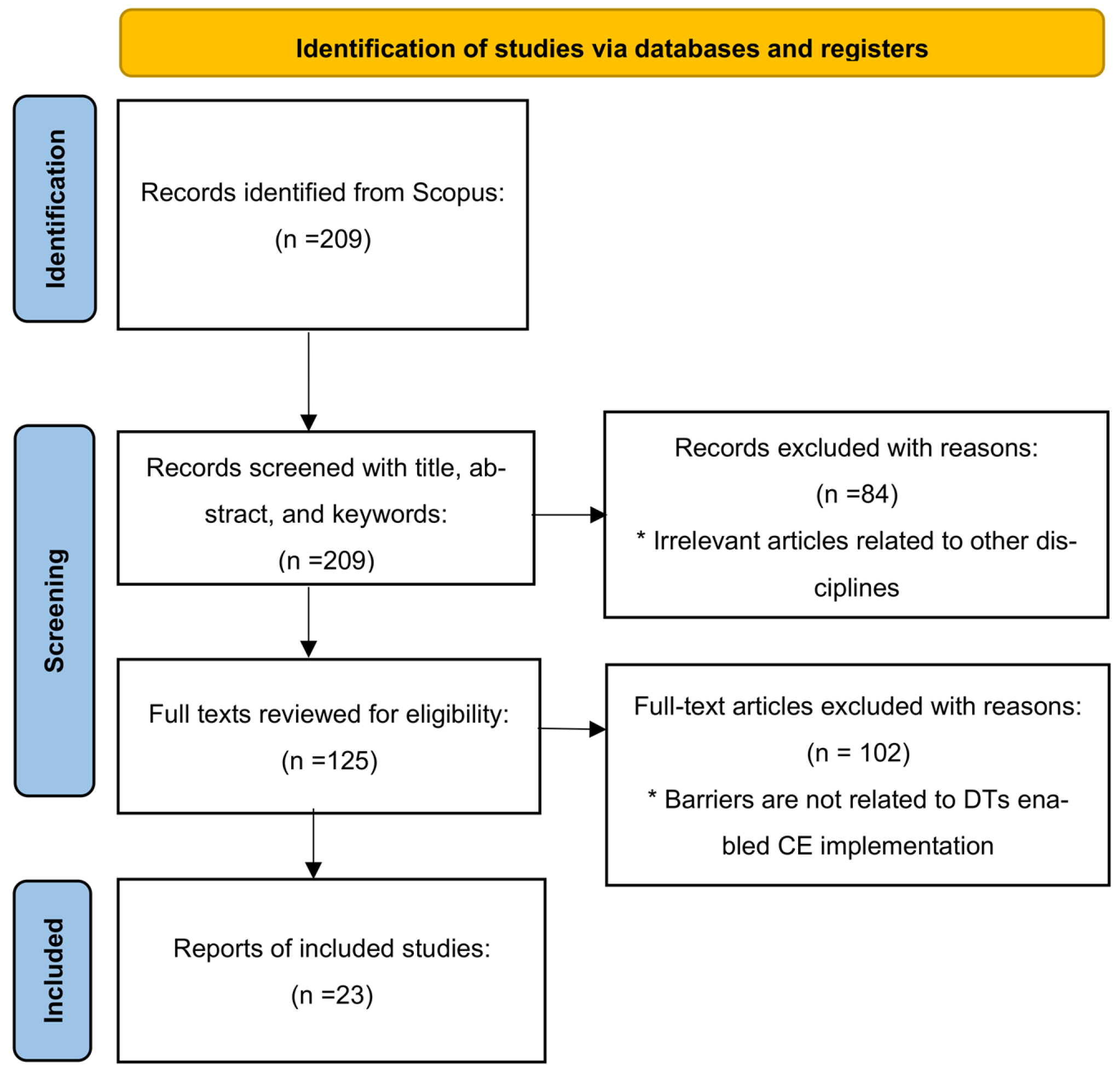
Figure 2.
Trend of publications in DTs enabled CE barriers in construction.
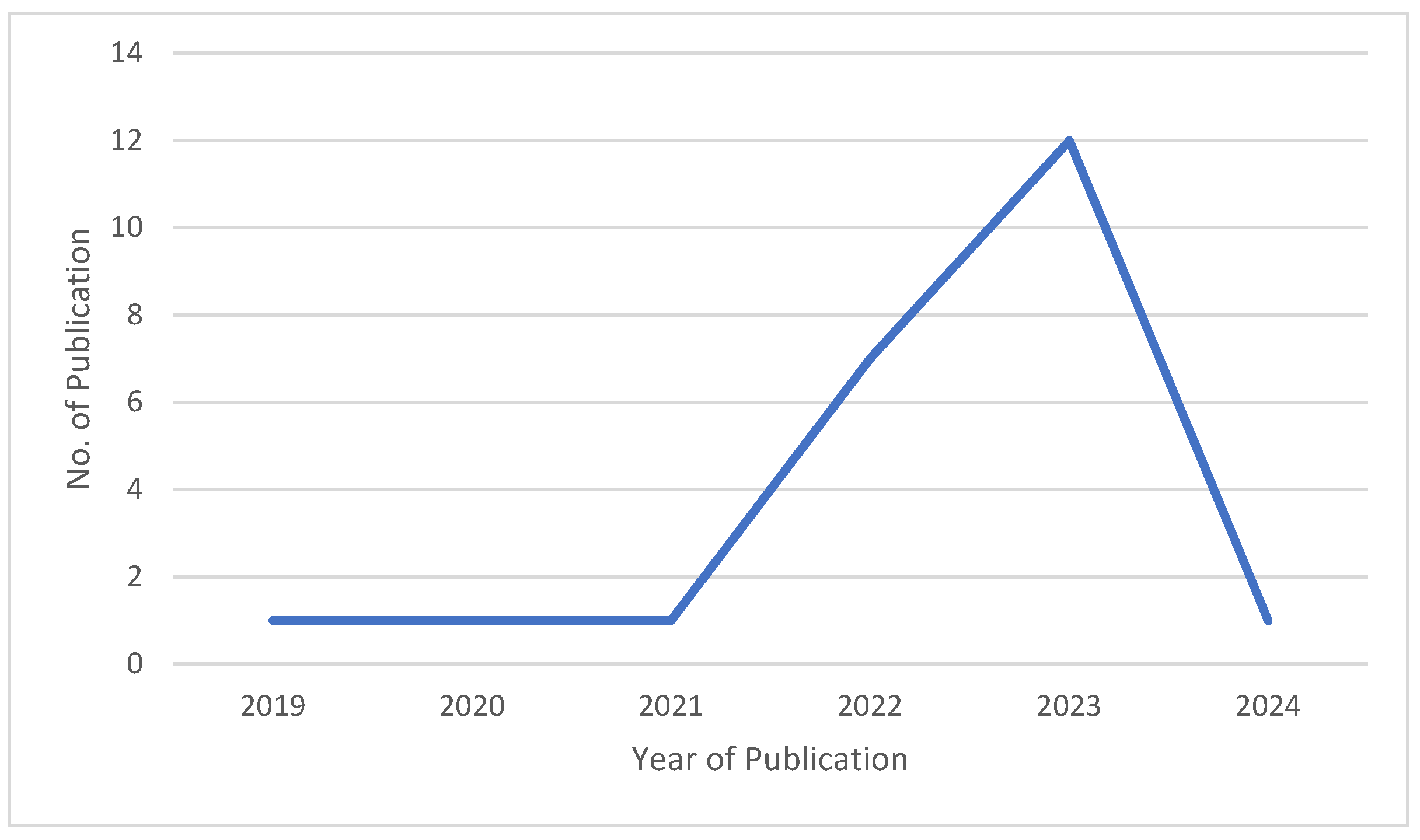
Figure 3.
Map based on co-occurrence of keywords.
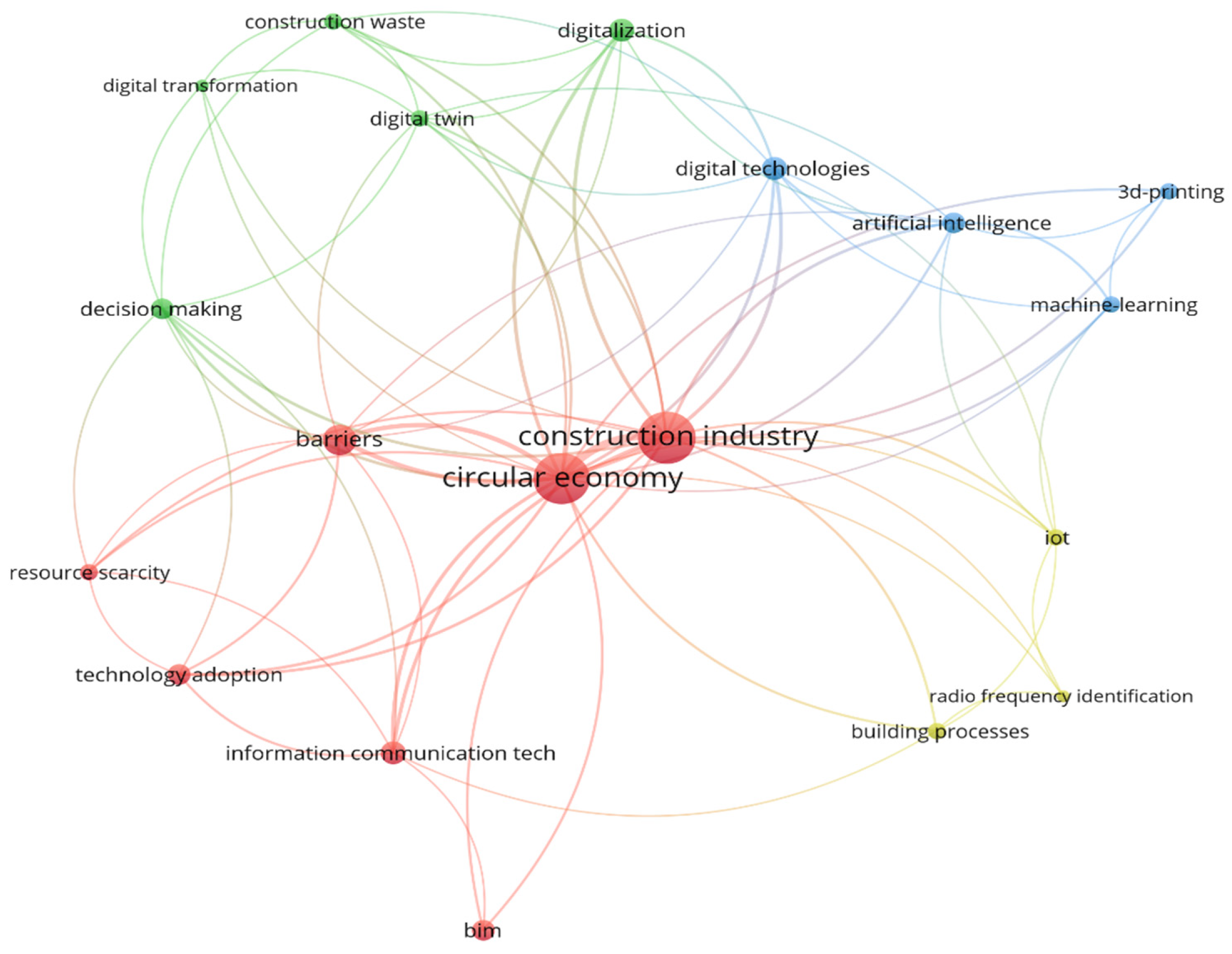
Figure 4.
Illustration of interrelationships of (a) "circular economy and construction industry", (b) "barriers", (c) "technology adoption", (d) "digital technologies", (e) "digitalization" and (f) "information communication tech".
Figure 4.
Illustration of interrelationships of (a) "circular economy and construction industry", (b) "barriers", (c) "technology adoption", (d) "digital technologies", (e) "digitalization" and (f) "information communication tech".
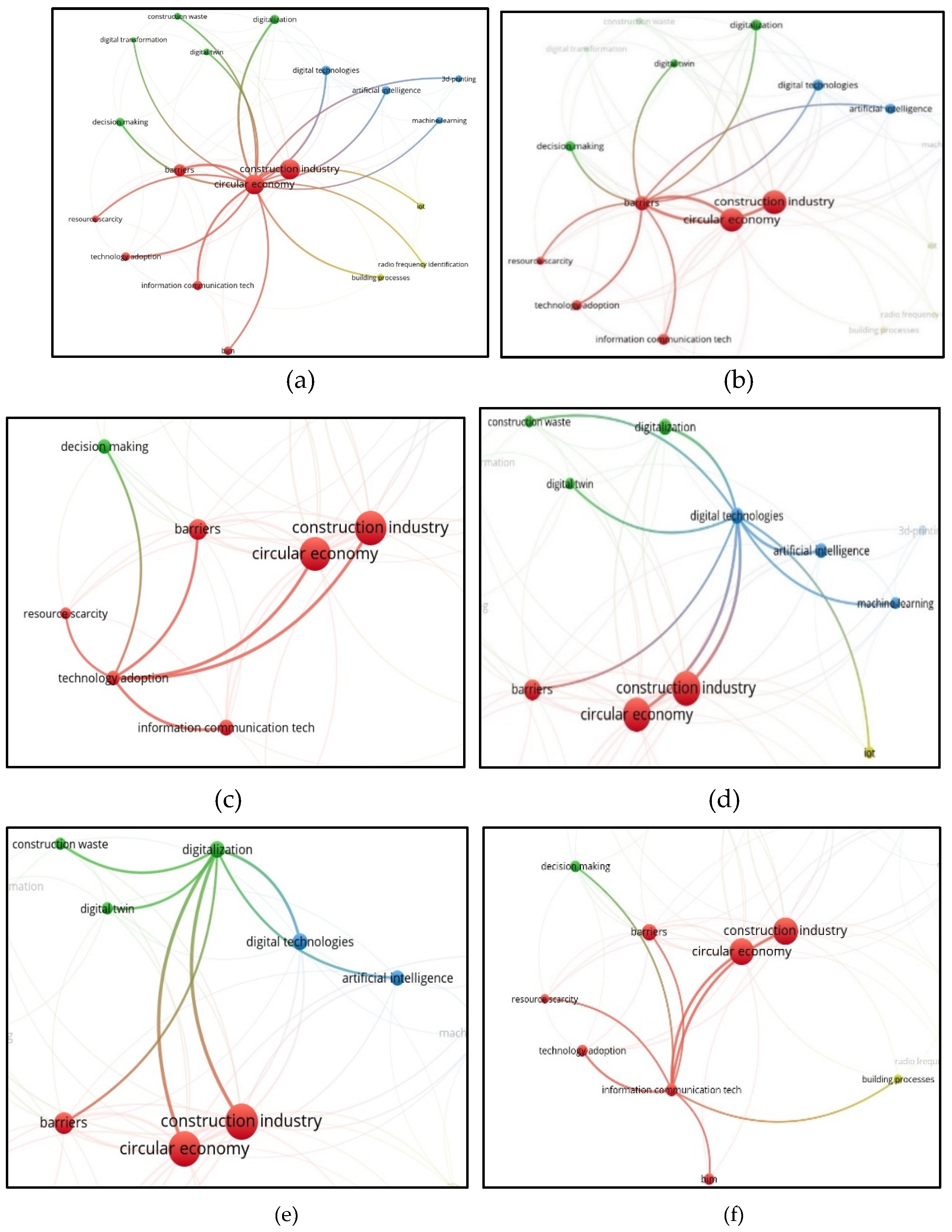
Figure 5.
Digital technologies enabled CE barrier frequency.
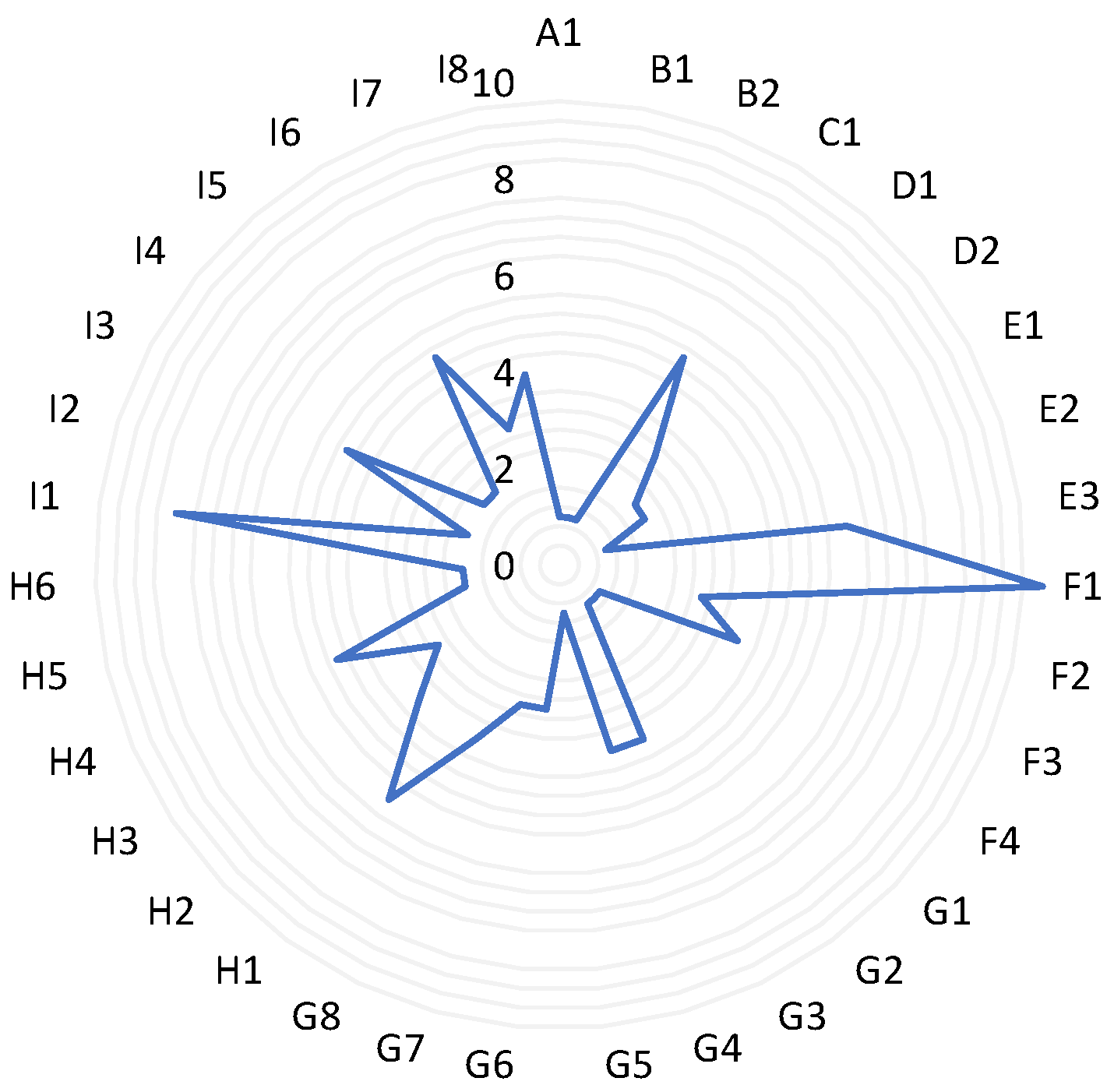
Table 1.
List of the eligible studies.
| No | Reference | Year | No | Reference | Year |
|---|---|---|---|---|---|
| 1 | Oluleye et al. | 2023 | 13 | Oluleye et al. | 2023 |
| 2 | Cetin et al. | 2022 | 14 | Jayarathna et al. | 2023 |
| 3 | Ababio, 2023 | 2023 | 15 | Baduge et al. | 2022 |
| 4 | Harichandran et al. | 2023 | 16 | Kovacic et al. | 2020 |
| 5 | Munaro and Tavares | 2023 | 17 | Nik-Bakht et al. | 2021 |
| 6 | Yu et al. | 2022 | 18 | Shojaei | 2019 |
| 7 | Atta | 2023 | 19 | Bellini and Bang | 2022 |
| 8 | Geoghegan et al. | 2022 | 20 | Fonseca and Matos | 2023 |
| 9 | Lavagna et al. | 2023 | 21 | Oluleye et al. | 2022 |
| 10 | Giovanardi | 2024 | 22 | Wuni | 2022 |
| 11 | Jemal et al. | 2023 | 23 | Osei-Tutu et al | 2023 |
| 12 | Rodrigo et al. | 2023 |
Disclaimer/Publisher’s Note: The statements, opinions and data contained in all publications are solely those of the individual author(s) and contributor(s) and not of MDPI and/or the editor(s). MDPI and/or the editor(s) disclaim responsibility for any injury to people or property resulting from any ideas, methods, instructions or products referred to in the content. |
© 2024 by the authors. Licensee MDPI, Basel, Switzerland. This article is an open access article distributed under the terms and conditions of the Creative Commons Attribution (CC BY) license (http://creativecommons.org/licenses/by/4.0/).
Copyright: This open access article is published under a Creative Commons CC BY 4.0 license, which permit the free download, distribution, and reuse, provided that the author and preprint are cited in any reuse.


