
Preprint
Article

This version is not peer-reviewed.

The Future of Construction: Integrating Innovative Technologies for Smarter Project Management

Submitted:

05 March 2025

Posted:

07 March 2025

You are already at the latest version

Abstract

The construction industry is experiencing a sweeping transformation as innovative technologies revolutionize project management, enhancing efficiency, sustainability, and safety. This study examines the integration and impact of these technologies in Chad’s construction sector, leveraging data from 79 industry participants. The research demonstrated strong reliability and validity using exploratory factor analysis, with a KMO value exceeding 0.75, statistical significance below 0.001, and a Cronbach’s Alpha above 0.8. The analysis, supported by Promax rotation, identified 15 significant factors, providing a deeper understanding of how tools like Building Information Modeling (BIM), Artificial Intelligence (AI), Internet of Things (IoT), and Digital Twin technology are reshaping construction processes. These advancements facilitate improved design accuracy, real-time decision-making, and reduced material waste while aligning with global sustainability goals such as the United Nations' SDGs. Adopting these technologies presents a crucial opportunity for Chad to modernize its construction industry and address challenges like resource inefficiency and environmental sustainability. However, significant barriers, including high implementation costs, restricted access to advanced tools, and a shortage of skilled professionals, hinder broader adoption. Overcoming these obstacles will require strategic investments in education, infrastructure, and supportive policies. By fully embracing innovation, Chad can develop a more resilient and sustainable construction sector, contributing to national growth and aligning with international sustainability efforts.

Keywords: 
;  ;  ;  ;  

1. Introduction

1.1. Integrating Innovative Technologies

The construction industry is undergoing a remarkable transformation, driven by the integration of cutting-edge technologies that reshape how projects are managed, executed, and maintained on national and global scales. These advancements are unlocking new levels of efficiency, enhancing safety, and promoting sustainability, addressing many of the long-standing challenges the sector faces. Tools like Building Information Modeling (BIM) revolutionize collaboration, providing precise 3D models that streamline planning and decision-making. Artificial intelligence (AI) and machine learning are optimizing workflows, offering predictive insights to manage risks, allocate resources, and prevent costly delay[1, 2]s. Robotics and automation are stepping in to perform repetitive and high-risk tasks, alleviating labor shortages and improving workplace safety. Meanwhile, drones and IoT-enabled devices enable real-time monitoring and site analysis, fostering more competent project oversight[3].
Technologies like virtual and augmented reality (VR and AR) redefine project visualization, helping stakeholders immerse themselves in designs and enabling construction teams to execute more accurately. Prefabrication and modular construction methods are cutting down timelines, reducing material waste, and improving the consistency of finished projects[4]. As sustainability becomes a critical focus, eco-friendly materials and energy-efficient practices are gaining traction, paving the way for greener construction. Additionally, innovations like digital twin technology and blockchain are introducing new levels of transparency, predictive capabilities, and operational efficiency[5, 6]. From self-healing concrete to 3D printing, advanced materials are extending the lifespan of structures while minimizing resource consumption[7,8,9].
Together, these technologies are not just addressing inefficiencies but setting new benchmarks for conceptualizing and realizing infrastructure. Adopting these tools is reshaping the construction landscape, enabling faster, safer, and more cost-effective projects that align with the demands of a rapidly evolving world.

1.2. Smart Technologies for Sustainable Construction

Innovative technologies are revolutionizing the construction industry, driving sustainability, addressing environmental challenges, and raising social consciousness[10, 11]. Among the most impactful innovations is Building Information Modeling (BIM), a powerful digital tool that enables architects and engineers to develop precise, data-driven 3D models[12]. This technology enhances energy efficiency, reduces material waste, and optimizes a building’s entire lifecycle. Similarly, the Internet of Things (IoT) plays a pivotal role in sustainable construction by enabling real-time tracking of energy consumption, air quality, and water usage[13]. This data-driven approach helps streamline maintenance strategies and significantly reduces resource wastage.
Another game-changing advancement is prefabrication and modular construction, where building components are precisely manufactured off-site, reducing material waste, speeding up assembly, and lowering on-site emissions[14]. Additionally, self-healing concrete, which contains bacteria that automatically seal cracks, extends the lifespan of structures while minimizing the need for resource-heavy repairs. Meanwhile, Artificial Intelligence (AI) and machine learning are being utilized to process vast amounts of data, fine-tune energy efficiency, anticipate structural weaknesses, and enhance material selection to reduce environmental impact[15, 16].
The integration of renewable energy solutions is another cornerstone of sustainable construction. Bright solar panels, energy-efficient HVAC systems, and dynamic glass windows are helping buildings significantly cut energy consumption. Likewise, 3D printing technology is reshaping the industry by enabling rapid, cost-effective construction using recycled materials, reducing labor demands and carbon footprints. Moreover, green roofs and intelligent irrigation systems contribute to sustainability by improving insulation and promoting efficient water management[17].
As construction evolves, these cutting-edge technologies pave the way for more intelligent, greener, and more sustainable infrastructure, ensuring that future urban developments are eco-friendly and efficient.

1.3. Challenges and Best Practices for Adopting New Technologies

Embracing new technologies has immense potential but presents several challenges for businesses and industries. One of the primary obstacles is the high initial investment, as implementing advanced systems often requires substantial spending on infrastructure, employee training, and ongoing maintenance[18]. Additionally, resistance to change is a common issue, particularly among employees and stakeholders who may be unfamiliar with the technology or concerned about job security[19, 20]. Another significant challenge is system integration, as new technologies must seamlessly connect with existing workflows and software to prevent operational disruptions[21]. Furthermore, cybersecurity threats become more pronounced with digital transformation, making data protection a top priority[22]. Lastly, the fast-paced nature of technological advancements means organizations must continuously upgrade their systems to remain competitive, which can be costly and time-consuming[23, 24].
To navigate these challenges effectively, businesses can adopt several best practices to ensure a smooth transition. Conducting thorough needs assessment helps select the most suitable technology that aligns with business objectives. Encouraging employee engagement and comprehensive training programs can ease resistance and foster a culture of innovation[25, 26]. Implementing new technology in phases allows for gradual adaptation, reducing risks and minimizing workflow disruptions. Strengthening cybersecurity protocols, such as encryption and routine audits, is essential for safeguarding sensitive information[27,28,29]. Additionally, maintaining a continuous improvement mindset, where businesses regularly evaluate and refine their technological strategies, helps them stay ahead without making rushed, costly decisions[30].

1.4. The Role of Innovative Technologies in Modern Construction Project Management

The integration of cutting-edge technologies into construction project management has revolutionized the industry, driving greater efficiency, precision, and overall project success[31, 32]. There is a strong link between technological advancements and positive project outcomes, particularly in terms of cost control, time management, and quality assurance[33, 34]. Tools such as Building Information Modeling (BIM) promote real-time collaboration between stakeholders, leading to improved design coordination and early issue detection[35]. Additionally, artificial intelligence (AI) and machine learning algorithms analyze vast datasets to optimize resource allocation, anticipate risks, and enhance overall decision-making, all of which contribute to smoother project execution[36].
When it comes to decision-making in construction, various factors come into play, including budget limitations, regulatory requirements, labor availability, and environmental considerations[37, 38]. Innovative technology supports decision-makers by providing predictive insights, automation, and real-time monitoring. Cloud-based project management platforms grant instant access to essential data, ensuring that project leaders can make informed, data-driven choices[36, 39]. Meanwhile, the Internet of Things (IoT), through smart sensors and drones, enables constant site monitoring, improving efficiency and oversight[40, 41]. By utilizing these technological advancements, decision-makers can reduce uncertainty, optimize workflows, and improve project outcomes.
Another transformative aspect of construction management is the use of specialized project management software[42, 43]. Platforms like Procore, Autodesk Construction Cloud, and Primavera P6 streamline project tracking, documentation, cost estimation, and communication[44]. The effectiveness of these software solutions is measured by their scalability, ease of integration, user-friendliness, and cost-efficiency[45, 46]. A well-implemented project management system centralizes all relevant data, eliminating miscommunication and fostering seamless collaboration[47]. Moreover, automation reduces human error by handling repetitive tasks, boosting productivity, and ensuring better time management. Customizable dashboards and detailed reporting features further empower managers to track key performance indicators (KPIs) effectively[48, 49].
The role of technology in improving safety and risk management in construction cannot be overstated[50]. Wearable devices such as smart helmets and vests continuously monitor workers’ health and detect hazardous conditions, reducing on-site accidents[51]. AI-powered risk assessment tools analyze historical data to predict potential hazards, allowing proactive mitigation strategies[52]. Virtual Reality (VR) and Augmented Reality (AR) offer immersive, hands-on safety training, equipping workers with practical experience before stepping onto the job site[53]. Additionally, drones have become invaluable for site inspections, minimizing the need for personnel to enter potentially dangerous areas[54]. By incorporating these advancements, construction firms can significantly lower accident rates and strengthen compliance with safety standards.
Beyond operational improvements, technology also plays a vital role in environmental and social impact assessments[55, 56]. BIM and Geographic Information Systems (GIS) help construction teams analyze and minimize their ecological footprint, ensuring projects align with sustainability goals[57, 58]. AI-driven simulations assess the potential social impact of a development, allowing companies to make adjustments that reduce disruptions to local communities[59]. Furthermore, green construction practices supported by innovative technology, such as self-healing concrete and energy-efficient materials, contribute to more sustainable building methods[60]. By leveraging these innovations, firms can build more responsibly while adhering to environmental regulations.
Looking ahead, emerging technologies are set to transform construction project management further[61]. AI, blockchain, and 3D printing are expected to shape the industry's future majorly. Blockchain technology improves transparency in contracts and transactions, reducing disputes and enhancing accountability[62, 63]. Meanwhile, 3D printing accelerates the construction process while minimizing material waste. Automation and robotics will continue to take over labor-intensive tasks, improving precision and efficiency[64, 65]. Embracing these cutting-edge solutions allows construction companies to stay ahead of the competition, streamline project execution, and contribute to a more innovative and sustainable future for the industry.

1.5. Barriers to Innovative Technologies Integration

While the transformative potential of innovative technologies in construction is undeniable, their widespread adoption faces significant obstacles. These challenges are felt globally but are particularly pronounced in developing nations such as Chad, where resource constraints and infrastructural limitations amplify the hurdles. One of the most prominent barriers is financial, as the steep costs of acquiring, implementing, and maintaining advanced tools like BIM, drones, or AI systems often deter both small firms and large enterprises. In countries with limited access to funding, this challenge is even more pronounced[66].
Additionally, the construction industry faces a persistent skills gap, with many professionals lacking the technical expertise to use advanced technologies effectively[67]. This issue is compounded in developing regions, where educational and training opportunities tailored to emerging construction innovations are scarce. Infrastructure, a backbone for technology integration, is another critical roadblock[68, 69]. Globally, unstable internet connectivity or outdated facilities can hinder progress, but in Chad, deficits in electricity, reliable internet, and modern equipment create a particularly challenging environment.
Cultural resistance to change is another factor slowing down adoption[70, 71]. Many stakeholders prefer familiar, traditional methods over new, untested approaches, driven by skepticism about technology's return on investment or fear of job displacement[72]. In countries like Chad, this resistance is magnified by limited awareness and deep-rooted reliance on manual techniques. Moreover, the physical availability of cutting-edge technologies remains a global concern, with logistical barriers in rural areas making access difficult[73]. Import restrictions and high tariffs further exacerbate this issue in developing economies.
Weak regulatory frameworks also impede progress[74]. Globally, unclear policies surrounding technology adoption create uncertainty, while in Chad, the absence of government-led initiatives promoting innovation in construction significantly limits growth. Language and communication barriers, especially in multilingual regions, add another layer of complexity, as the lack of localized training resources hinders knowledge transfer[75]. Maintenance costs for advanced systems, cybersecurity concerns, and environmental challenges like harsh climates further deter the adoption of digital tools[76].
These interconnected challenges underscore the importance of targeted solutions, such as increased investment in training, financial incentives, and policy reforms. In regions like Chad, international partnerships and knowledge-sharing initiatives can play a pivotal role in overcoming these barriers and unlocking the full potential of technology in construction.

1.6. Sustainable Construction Project Management through Innovative Technologies

The integration of innovative technologies in construction project management plays a crucial role in advancing various Sustainable Development Goals (SDGs), particularly in fostering sustainability and efficiency [77]. Industry innovation and infrastructure development (SDG 9) are being revolutionized through Building Information Modeling (BIM), digital twin technology, and modular construction, all of which streamline operations, reduce costs, and enhance the durability of built environments[78]. Similarly, sustainable urbanization (SDG 11) is gaining momentum with the rise of innovative city solutions, green architecture, and IoT-driven systems, which optimize energy efficiency, waste management, and urban mobility [79].
The push for resource efficiency and responsible consumption (SDGs 7 and 12) has led to the widespread adoption of renewable energy sources, circular economy strategies, and sustainable building materials like recycled concrete and bio-based composites [80]. Additionally, 3D printing technology is transforming construction by minimizing material waste and significantly lowering costs [81]. At the same time, these advancements align with climate action and environmental conservation (SDGs 13, 14, and 15) by curbing carbon emissions, protecting ecosystems, and integrating biodiversity-conscious design[82]. Features like green roofs, permeable pavements, and nature-based solutions help mitigate climate risks while preserving land and water resources[83, 84].
On the social and economic front, equity and inclusive growth (SDGs 5, 8, and 10) are being championed through diverse workforce policies, gender-inclusive employment opportunities, and automation that enhances job creation rather than replacing workers[85]. Moreover, AI-driven analytics and digital collaboration tools improve transparency, facilitate data-driven decision-making, and empower stakeholders[86]. Lastly, strong governance and institutional support (SDGs 16 and 17) are bolstered by robust regulatory frameworks, strategic public-private partnerships, and blockchain-enabled smart contracts, ensuring ethical business practices, legal compliance, and risk management[87, 88].
These advanced solutions enable construction project management to drive sustainable development while shaping resilient, inclusive, and economically prosperous communities for the future.

1.7. Objective of the study

This article examined the impact of integrating innovative technologies within Chad's construction industry. As the global construction sector continues to embrace advanced tools and methodologies to boost efficiency, sustainability, and overall project outcomes, it becomes crucial to understand how these technologies are adopted in Chad, where challenges such as limited resources and underdeveloped infrastructure can hinder progress.
The study focused on understanding these technologies' effects on various stakeholders within the construction industry in Chad, including contractors, engineers, laborers, and project managers. It explored how these tools influence daily operations, decision-making processes, and skill development, highlighting the opportunities and obstacles they present.
In addition, the article investigated how these technological advancements align with the United Nations’ Sustainable Development Goals (SDGs), particularly in terms of fostering environmentally friendly, efficient, and economically viable construction practices. Innovative technologies have the potential to reshape Chad’s construction sector by promoting more sustainable building methods, reducing environmental impact, and enhancing resource efficiency.
By achieving these objectives, the article seeks to provide valuable insights for policymakers, industry professionals, and international organizations. It offers practical recommendations for overcoming current barriers and leveraging technology to foster sustainable development in Chad’s construction industry.
The article is structured as follows: Section 2 outlines the study’s materials and methodology. Section 3 presents the research findings. In Section 4, the results are analyzed and discussed in depth, offering key insights. Finally, Section 5 concludes the article, emphasizing the significant impact of innovative technologies on construction project management. This section also highlights how these technologies contribute to more sustainable projects and promote smarter, more efficient management approaches within the construction industry.

2. Materials and Methods

2.1. Research Design
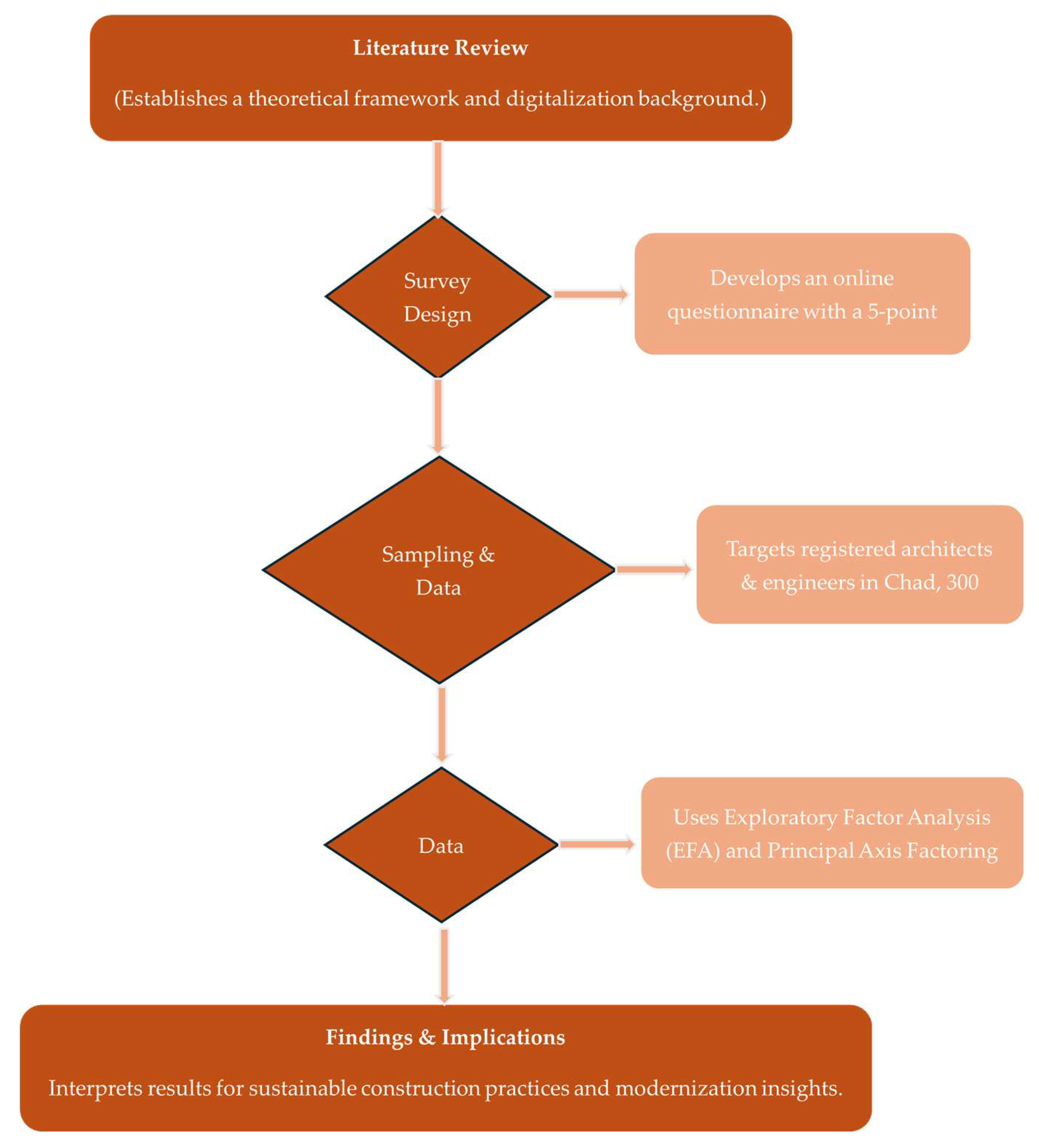
This work examines the impacts of integrating innovative technologies into construction project management in Chad, focusing on their contribution to achieving sustainable development goals. A quantitative approach was adopted for this study, enabling a rigorous analysis of the collected data.
The first stage of the research involved a literature review, which provided a theoretical and contextual framework essential for understanding the dynamics of digitalization in the construction sector. This foundation facilitated the design of an online questionnaire to capture key stakeholders' perceptions and experiences, including companies, engineers, architects, and other professionals.
The online data collection method, particularly suited to the post-COVID-19 context, was chosen for its efficiency and ability to reach a wide range of respondents. Digital tools, now indispensable, greatly facilitated the distribution and return of the questionnaires.
The study employed exploratory factor analysis, specifically the principal axis factoring method for data analysis. This approach enabled the identification of underlying structures in the responses, offering a deeper understanding of the impacts of innovative technologies on construction project management in Chad.
The findings of this research provide valuable insights for modernizing Chad’s construction sector while promoting more sustainable and efficient practices.
Figure 1. Research Design.
Preprints 151382 g001

2.2. Population and Sampling Techniques

In research, sampling techniques are crucial as they enable the study of a representative subset of a population, thereby saving time and resources. Nabila Amir et al. [89] presented an overview of sampling methods, highlighting their importance in decision-making and data analysis across various fields. There are two main categories of sampling techniques, probability and nonprobability, for researchers, as they impact the quality and validity of their findings.
Rahi [90] in his work, he defines a population as the set or group of all individuals, entities, or items one seeks to understand. In this context, architects and engineers regularly registered with the Order of Architects and Engineers of Chad are the primary targets of this study.
The construction industry in Chad comprises tens of thousands of engineers and architects, most of whom have historically operated informally within the sector. This informal practice has made it difficult, if not impossible, to identify and formalize their professional roles. To address this issue, the Order of Architects and Engineers of Chad was established approximately five years ago, providing a sustainable structure and supervision for the professions of engineers and architects. Today, around 150 architects and 200 engineers are registered with their respective orders, marking significant progress toward professional regulation within the industry.
Given the sector's size, the challenges of managing it, and the constraints related to data accessibility, studying the entire industry was impractical. Consequently, this research focuses solely on engineers and architects who are officially registered with the order, adopting a more targeted and manageable approach to analyzing the regulated sector.
To ensure the quality of the quantitative survey, it was important to obtain an adequate number of questionnaire responses. Of the 300 online surveys sent to industry decision-makers, 79 responses were received. This response rate is crucial for effective data analysis and for drawing meaningful conclusions. The primary objective was to gather information that reflects the perspectives and experiences of professionals within the sector.

2.3. Survey Design and Data Analysis

A comprehensive 5-point Likert scale questionnaire was designed to gather valuable insights from respondents. It was organized into three main sections to ensure a clear and focused approach.
The first section collected information about the organization and respondents, including their roles, areas of expertise, and work environments. This provided essential context and a foundational understanding of the participants.
The second section delved into key topics relevant to the study, such as the adoption of innovative technologies, sustainability in construction, and the challenges and solutions linked to project success. It also examined decision-making factors, environmental and social impact assessments, and trends in emerging technologies. As presented in Table 1 below, this section aims to comprehensively view current industry practices and perspectives.
The third section centered on Sustainable Development Goals (SDGs), with a focus on infrastructure development and innovation, sustainable urbanization, resource efficiency, and environmental conservation. It further addressed climate action, social equity, economic growth, governance, and institutional support. The goal was to assess how these SDGs influence sustainable practices within respondents’ roles.
With 98 thoughtfully crafted questions, the questionnaire was strategically designed to explore industry challenges, identify effective solutions, and uncover opportunities, contributing to the advancement of sustainable and innovative practices.
This study utilized exploratory factor analysis (EFA), specifically the principal axis factoring (PAF) method, to analyze the data. Factor analysis is a statistical technique to uncover underlying relationships or structures among a large set of observed variables. Grouping common variables into smaller sets of factors reduces data complexity and highlights common dimensions or constructs, offering a clearer understanding of the data’s structure[91, 92].
We apply principal axis factoring (PAF), a widely used exploratory factor analysis (EFA) method. PAF is particularly effective in identifying latent variables or factors that explain the shared variance among observed variables. Unlike other methods, it focuses on common variance while excluding unique and error variance, ensuring that the analysis reveals the core dimensions driving the correlations within the dataset[93]. This approach allows us to simplify and interpret complex data, facilitating the identification of meaningful patterns and relationships essential to the study’s objectives.

3. Results

3.1. Participant Sociodemographic

The study gathered insights from 79 construction professionals in Chad, examining key demographic aspects such as gender, age, education, job roles, experience, and company size, as shown in Table 2 below. The findings highlight a significant gender disparity, with men making up 85% of respondents while women account for only 15%. The industry predominantly comprises young professionals, with 39% falling within the 26–33 age bracket and 52% between 34–41 years old, whereas none participants were over 50. Engineers overwhelmingly dominate the sector, representing 81% of respondents, whereas architects and construction managers are significantly underrepresented, comprising just 4% and 5%, respectively. Regarding job roles, construction engineers form the majority at 56%, followed by project managers (22%), sustainability experts (6%), and architects, who make up a mere 1%. Regarding experience levels, most professionals (53%) have worked in the field for 6–10 years, while only 5% have more than 15 years of experience. Additionally, the study reveals that small enterprises are the backbone of the industry, employing nearly half (48%) of those surveyed, underscoring the early-stage industrialization and economic realities of Chad’s construction sector.

3.2. Factor Analysis

Factor analysis is a statistical technique to uncover hidden relationships or structures among observed variables. Identifying correlation patterns reduces data complexity by clustering related variables into smaller sets of factors. These factors represent standard dimensions or constructs, simplifying analysis and interpretation [94].
The questionnaire was structured into three distinct parts. The first part focused on gathering information about the respondents’ sociodemographic characteristics, providing a foundation for understanding their backgrounds. The second part was dedicated to key topics, encompassing nine essential areas central to the study. The third part addressed sustainable development goals, organized into three main groups, each representing a specific aspect of sustainability.

3.2.1. Key Themes

Following an in-depth literature review, we pinpointed key thematic areas while ensuring that essential Sustainable Development Goals (SDGs) related to sustainability, construction, infrastructure, environmental considerations, and governance remained at the forefront of our study. These critical topics and their corresponding SDGs served as the foundation for structuring our survey. Each primary theme was translated into a dedicated section, with carefully formulated statements designed to allow respondents to express their perspectives freely.
Ultimately, we established 15 main sections, nine focused on fundamental research topics and six derived from the SDGs, resulting in two separate datasets. In this subsection, we employed principal axis factoring to examine the first dataset, which is structured around the following key topics:
Integration of Innovative Technologies (IIT)
Sustainability in Construction (SC)
Challenges and Solutions (CS)
Correlation with Project Success (CPS)
Decision-Making Factors (DMF)
Evaluation of Project Management Software (EPMS)
Safety and Risk Management Improvement (SRMI)
Environmental and Social Impact Assessment (ESIA)
Forecasting Emerging Technologies (FET)
These topics were consolidated into three broader categories to derive meaningful insights while considering the number of items to be processed in SPSS. This approach allowed for a more structured analysis, enabling a deeper exploration of respondents’ perspectives on the statements provided.

Reliability and Internal Consistency of the Dataset

The Kaiser-Meyer-Olkin (KMO) measure ranges from 0 to 1 and evaluates the sampling adequacy for factor analysis. A KMO value above 0.5 is considered acceptable by some authors [95], while Pallant (2011) [96] recommends a minimum of 0.6. Kaiser (1974) [97] defines 0.5 as the minimum, categorizing values between 0.6 and 0.69 as mediocre, 0.7 to 0.79 as middling, and 0.8 to 1 as excellent [98]. On the other hand, Bartlett's Test assesses whether the dataset’s variables are sufficiently correlated for factor analysis. Based on these criteria, our dataset is suitable for factor analysis, as shown in Table 3. It reports a KMO value of 0.81 with statistical significance 0f p < 0.001.

Key Topics Analysis

To enhance the depth of our analysis, we categorized 62 items representing the statements formulated under the key topics into nine distinct factors corresponding to the main sections of the survey. These factors were then grouped into three broader categories for separate analysis. The first group consists of Decision-Making Factors (DMF), Forecasting Emerging Technologies (FET), and Environmental and Social Impact Assessment (ESIA). The second group includes Safety and Risk Management Improvement (SRMI), Evaluation of Project Management Software (EPMS), and Integration of Innovative Technologies (IIT). Finally, the third category encompasses Correlation with Project Success (CPS), Challenges and Solutions (CS), and Sustainability in Construction (SC).
We conducted analyses for each set of factors to generate the following: KMO and Bartlett’s Test, Communalities, Total Variance Explained, Scree Plot, Factor Matrix, Pattern Matrix, Structure Matrix, and Factor Correlation. These outputs were essential for assessing the suitability of the data for factor analysis, evaluating variable contributions, and identifying underlying dimensions: the KMO and Bartlett’s Test provided measures of sampling adequacy and overall significance of the correlation matrix. Communalities highlighted shared variance among variables, while the scree plot and variance explained helped determine the optimal number of factors. The matrices and correlations guided interpretation and validation.
Table 4 presents the Total Variance Explained of the first set of factors, showing that Factor 1 accounts for 57.881% of the variance, Factor 2 for 8.219%, and Factor 3 for 7.521%. Combined, these factors explain 73.622% of the total variance in the dataset, which is considered satisfactory and indicates a strong representation of the underlying data structure [99]Factor 1 emerges as the dominant factor, capturing most of the variance and representing this group's primary construct. While Factors 2 and 3 explain less variance individually, they still contribute significantly to the overall data structure.

3.2.1.2.1. Total Variance Explained

Table 5 summarizes the Total Variance Explained of the second set of factors, with Factor 1 accounting for 56.298% of the total variance, Factor 2 accounting for 8.943%, and Factor 3 adding 5.911%. Together, these three factors explain 71.51% of the total variance. Indicating that three underlying dimensions effectively represent the dataset.
Table 6 below shows the Total Variance Explained of the third set of factors after the extraction. Factor 1 accounts for 62.287% of the variance, Factor 2 explains an additional 3.850%, and Factor 3 contributes 2.852%. Together, these three factors explain a cumulative 68.989% of the total variance, highlighting the key dimensions represented in the data.

3.2.1.2.2. KMO, Pattern Matrix, and Cronbach’s Alpha of the three first factors

Table 7 presents the KMO and Cronbach’s Alpha values for Decision Making Factors (DMF), Forecasting Emerging Technologies (FET), and Environmental and Social Impact Assessment (ESIA), indicating the adequacy of the sample for factor analysis. The KMO value of 0.893 reflects excellent sampling adequacy, while Cronbach’s Alpha values of 0.939, 0.906, and o.818 demonstrate strong internal consistency for DMF, FET, and SIA, respectively.
The pattern matrix, derived from Promax rotation (an oblique method assuming factor correlation), reveals the rotated factor loadings. Factor 1 exhibits strong loadings of DMF variables, including DMF4 (0.925), DMF5 (0.873), DMF1 (0.755), DMF2 (0.744), DMF6 (0.736), DMF3 (0.699), and DMF7 (0.670), highlighting its association with decision-making constructs.
Factor 2 loads strongly on ESIA variables, specifically ESIA2 (0.938), ESIA1 (0.876), ESIA3 (0.662), ESIA7 (0.657), and ESIA4 (0.640), emphasizing its focus on environmental and social impact assessment.
Factor 3 shows high loadings on FET variables, notably FET6 (0.956) and FET4 (0.759), underscoring its alignment with forecasting emerging technologies. These results confirm a well-structured and interpretable factor solution.
The high KMO value (0.912) and Cronbach’s Alpha scores of 0.926, 0878, and 0.847, as shown in Table 8, indicate that the dataset is suitable for factor analysis and has strong internal consistency. Table 8 also presents the pattern matrix, identifying three factors: Factor 1 primarily relates to SRMI, Factor 2 to IIT, and Factor 3 to EPMS. However, EPMS6 and EPMS2 do not exhibit significant loadings on the three factors.
Factor 1 demonstrates strong correlations with SRMI5 (0.947), SRMI2 (0.902), SRMI6 (0.886), SRMI4 (0.728), and SRMI3 (0.726), suggesting it represents the SRMI construct. Factor 2 shows strong correlations with IIT5 (0.810), IIT6 (0.780), IIT3 (0.732), IIT1 (0.701), and IIT2 (0.692), aligning it with the IIT construct.
Some variables exhibit moderate to high correlations with multiple factors. For example, EPMS6 correlates with all three factors (0.771, 0.620, 0.739) but aligns most strongly with Factor 3. Similarly, EPMS2 correlates with all three factors (0.636, 0.665, 0.734), primarily aligning with Factor 3. Notably, SRMI3 and SRMI4 show correlations with Factors 1 and 3, suggesting some overlap or shared variance across constructs.
The high KMO value and significant Cronbach’s Alpha scores of 0.920 and 0.887 in Table 9 below indicate that the dataset is appropriate for factor analysis and exhibits strong internal consistency.
The pattern matrix below identifies three factors: Factor 1 primarily relates to CPS, Factor 2 to CS, and Factor 3 to SC. However, CS5, CS6, and CS7 do not show significant loadings on any of the three factors.
Factor 1 demonstrates strong loadings on CPS6 (0.791), CPS2 (0.786), CPS5 (0.694), CPS1 (0.691), and CPS3 (0.591), indicating its alignment with the CPS construct. Factor 2 strongly loads on CS3 (0.803) and CS4 (0.610), suggesting its association with the CS construct. Similarly, Factor 3 has strong loadings on SC5 (0.865), SC6 (0.716), and SC3 (0.569), aligning it with the SC construct.
Despite this structure, variables such as CS5, CS6, and CS7 fail to exhibit significant loadings on any factor, indicating potential issues with their alignment or relevance to the identified constructs. These findings provide a clear basis for understanding the dataset’s factor structure and the relationships among the variables.

3.2.2. Sustainable Development Goals

Building on insights from an extensive literature review, the Sustainable Development Goals were systematically grouped into six key factors, each comprising five items. This classification was based on their connection to critical areas such as sustainability, construction, infrastructure, environmental management, and governance. The resulting factors include Infrastructure Development and Innovation (IDI), Sustainable Urbanization and Habitat Development (SUHD), Resource Efficiency and Sustainable Practices (RESP), Environmental Conservation and Climate Action (ECCA), Social Equity and Economic Development (SEED), and Governance and Institutional Support (GIS).
For analytical purposes, these six factors are further grouped into two overarching categories, each containing three factors. Group 1 includes Infrastructure Development and Innovation (IDI), Resource Efficiency and Sustainable Practices (RESP), and Environmental Conservation and Climate Action (ECCA). Group 2 encompasses Sustainable Urbanization and Habitat Development (SUHD), Social Equity and Economic Development (SEED), and Governance and Institutional Support (GIS).
This grouping reflects a strategic approach to organizing Sustainable Development Goals, enabling a clearer focus on related domains and their associated objectives. Group 1 emphasizes innovation, resource management, and environmental conservation, highlighting efforts toward sustainable infrastructure, efficient resource use, and climate action. Meanwhile, group 2 centers on urban development, social equity, and governance, addressing broader societal and institutional priorities. This framework provides a structured lens for assessing progress and interconnections across key sustainable development dimensions.
Total Variance Explained
Table 10, showing the total variance explained, reveals that Factor 1 accounts for 64.52% of the variance, while Factor 2 adds 8.47%, resulting in a cumulative variance of 72.99%. Factor 3, with an eigenvalue below 1, contributes an additional 4.97%.
After extraction, only the first two factors are retained, as their eigenvalues exceed 1. These factors explain 62.38% and 6.48% of the variance, respectively, accounting for a combined total of 68.86%.
Following rotation, the variance explained is redistributed: Factor 1 contributes 7.17 units, Factor 2 accounts for 6.15 units, and Factor 3 now explains 6.41 units. This adjustment ensures a more balanced distribution of variance among the factors.
According to the eigenvalue criterion, the first three factors are retained, collectively explaining over 70% of the variance (Table 11). Factors beyond the third are excluded due to their eigenvalues falling below 1, indicating minimal contribution to the variance.

KMO, Pattern Matrix, and Cronbach’s Alpha of the Two Last Factors

Table 12 highlights a high KMO value and significant Cronbach’s Alpha, indicating that the dataset is well-suited for factor analysis and strong internal consistency. The pattern matrix, presented in the same table, reveals a clear factor structure, demonstrating that the rotation effectively separated the variables into three distinct and meaningful clusters.
Factor 1 corresponds to Resource Efficiency and Sustainable Practices (RESP), Factor 2 aligns with Infrastructure Development and Innovation (IDI), and Factor 3 represents Environmental Conservation and Climate Action (ECCA). This categorization emphasizes the alignment of variables with their respective constructs, providing a robust framework for interpreting the data.
The KMO value (0.883) and significant Cronbach’s Alpha scores (0.907, 0.888, 0.866) indicate that the data is highly suitable for factor analysis and exhibits excellent internal consistency. These metrics confirm the reliability of the extracted factors, validating the use of the factor solution for further analysis and interpretation.
In the pattern matrix (Table 13), several items show strong loadings on distinct factors. Factor 1, SUHD3 (0.944), SUHD5 (0.778), and SUHD1 (0.653) load prominently indicating alignment with Sustainable Urbanization and Habitat Development (SUHD). For Factor 2, GIS1 (0.937) and GIS2 (0.697) exhibit strong loadings, aligning with Governance and Institutional Support (GIS). Lastly, Factor 3 features high loadings for SEED3 (0.770), SEED5 (0.688), and SEED1 (0.557), corresponding to Social Equity and Economic Development (SEED). This structure affirms the robustness and clarity of the factor solution.

4. Discussion

Integrating innovative technologies in construction project management has become a defining feature of the modern construction industry. As the sector continues to evolve, new tools and techniques such as Building Information Modeling (BIM), Artificial Intelligence (AI), the Internet of Things (IoT), and Digital Twin technology are driving significant transformations. These technologies are reshaping how projects are planned, executed, and maintained, enhancing efficiency, safety, sustainability, and overall project outcomes[100, 101]. Adopting these technologies presents promising opportunities and significant challenges in Chad's construction industry.

4.1. Technological Advancements in Construction Project Management

The rapid advancements in construction technologies are redefining traditional project workflow[102]. BIM, for example, provides a digital representation of a project's physical and functional characteristics, allowing for seamless collaboration among project stakeholders. This collaborative platform reduces errors, improves design accuracy, and enhances communication between architects, engineers, and contractors, thereby ensuring that projects are completed on time and within budget[101]. Similarly, AI and IoT enable real-time data collection and predictive analytics, which helps in better decision-making, resource management, and risk mitigation. These technologies allow project managers to make informed decisions, anticipate potential issues, and address them before they escalate, optimizing overall project performance[39].
Moreover, technologies like Digital Twins and Augmented Reality (AR) have introduced new project visualization and coordination possibilities. Digital Twins provides a detailed, real-time view of a construction project by creating digital replicas of physical structures, allowing for continuous monitoring and more effective coordination between various teams. Similarly, AR technologies allow project managers to conduct virtual walkthroughs, ensuring that design and construction processes align with the initial vision[103,104,105]. These technological innovations are critical for ensuring smoother workflows, improved productivity, and better project outcomes.
However, while these technologies promise significant benefits, their integration into Chad’s construction sector faces several obstacles. Limited access to technology, high costs, and a shortage of skilled professionals are among the primary barriers hindering the broader adoption of these tools. Overcoming these challenges will require significant investment in infrastructure, training programs, and government support to ensure that the benefits of innovative technologies can be fully realized.

4.2. Sustainability in Construction and the Role of Innovative Technologies

Sustainability has emerged as a central focus in the construction industry, with a growing emphasis on reducing environmental impact and promoting social responsibility. Innovations such as eco-friendly materials, 3D printing, and energy-efficient designs are playing a key role in mitigating the environmental footprint of construction projects. These technologies not only minimize waste but also promote the use of renewable energy and sustainable building practices[106]. For example, smart energy systems allow for better energy management, while sustainable building techniques ensure that projects contribute to global climate action goals[107].
In Chad, integrating innovative technologies has helped advance sustainability within the construction sector. The Sustainability in Construction (SC) cluster highlights the role of technologies in waste management, which is essential for meeting environmental standards. Technologies that enable real-time monitoring of construction activities are improving worker safety and contributing to social sustainability[108]. Furthermore, advancements in technology are enhancing the integration of cost, quality, and risk management, further supporting sustainability goals[109]However, achieving the full potential of these technologies will require addressing challenges related to technology access and expertise, which are critical to building a more sustainable construction sector in Chad.

4.3. Challenges and Solutions in Technology Integration

The integration of innovative technologies into Chad's construction sector is not without its challenges. The Challenges and Solutions (CS) cluster emphasizes the obstacles when adopting new technologies, including high upfront costs, limited access to technology, and a lack of skilled professionals. Despite these hurdles, innovative technologies have proven to be instrumental in overcoming many traditional challenges in construction project management. For example, technologies like BIM and AI have significantly improved communication and collaboration among project stakeholders, leading to fewer delays and smoother coordination[2, 110, 111]. Furthermore, real-time monitoring technologies have enhanced safety on construction sites by allowing project managers to track worker activities and site conditions in real time, reducing the risk of accidents[112].
While these advancements have proven effective in overcoming common project management challenges, addressing the barriers to technology adoption is essential to fully leveraging these tools[113]Ensuring widespread access to technology, providing adequate workforce training, and reducing the costs associated with these technologies will be crucial for maximizing their impact on Chad’s construction industry.

4.5. The Correlation Between Technology and Project Success

There is a strong correlation between adopting innovative technologies and the success of construction projects in Chad’s construction industry. The Correlation with Project Success (CPS) cluster emphasizes how advanced technologies contribute to improved project outcomes. The integration of tools like BIM, AI, and IoT has been shown to increase productivity, help projects stay within budget, and ensure timely completion[2]. These technologies reduce the risks of miscommunication, errors, and disruptions, enhancing project efficiency. By facilitating better decision-making and offering real-time insights, these technologies also contribute to improved quality and performance[2].
Data-driven approaches powered by AI and IoT enable project managers to make more informed decisions confidently. Real-time dashboards and scenario modeling tools provide actionable insights, helping to reduce uncertainties and enhance strategic planning[114, 115]. The ability to monitor project progress in real-time, combined with the ability to make data-driven adjustments, significantly improves the likelihood of project success.

4.6. Project Management Software and Its Role in Technological Integration

As the construction industry in Chad continues to modernize, the importance of project management software has become increasingly evident. Platforms such as Procore, Primavera, and PlanGrid offer robust solutions tailored to the needs of the construction industry, allowing for more efficient project tracking, resource allocation, and communication[116]. The Evaluation of Project Management Software (EPMS) cluster highlights the importance of choosing software that is both customizable and scalable, ensuring that it can be adapted to the unique needs of each project.
For Chad’s construction industry, overcoming barriers to access and expertise is critical to fully leveraging these software tools. Customization allows project managers to tailor software to their specific requirements, while scalability ensures that the software can grow and evolve with the project. Additionally, the focus on optimizing resource allocation is helping to improve productivity and streamline workflows[117].

4.7. Safety and Risk Management Improvements

Safety is a critical concern in the construction industry, and technological advancements are playing a pivotal role in improving safety standards[108]. Wearable devices, drones, and AI-driven hazard assessments have made significant strides in reducing workplace accidents and ensuring compliance with safety regulations[118]. The Safety and Risk Management Improvement (SRMI) cluster highlights how predictive analytics, real-time monitoring, and advanced tools improve construction site safety protocols. Drones, IoT sensors, and AI technologies can monitor worker activity, detect potential hazards, and ensure timely interventions, significantly reducing the risk of accident[119].
Moreover, Virtual Reality (VR) and Augmented Reality (AR) enhance safety training, helping workers better understand potential risks in a controlled, immersive environment. These technologies enable more proactive safety management and contribute to creating safer work environments[120].

4.8. Environmental and Social Impact Assessments

Technological advancements are also improving the accuracy and efficiency of environmental and social impact assessments (ESIA). GIS, remote sensing, and community mapping technologies allow project managers to assess construction projects' environmental and social implications in greater detail. These tools help to streamline workflows, ensure projects align with sustainability goals, and address the needs of local communities[121, 122]. In Chad, integrating these technologies in ESIA processes improves the ability to monitor and manage environmental factors, supporting responsible construction practices.
While these technologies offer significant benefits, challenges related to access to technology, expertise, and financial resources remain. Overcoming these challenges is essential for ensuring that Chad’s construction industry can fully capitalize on the benefits of these innovations and contribute to global sustainability efforts[123].

4.9. The Future of Construction: Emerging Technologies

The construction industry is poised for further transformation with the advent of emerging technologies such as autonomous construction equipment, blockchain for contract management, and robotics. These technologies promise to enhance efficiency, reduce costs, minimize environmental impact, further reshaping the industry[124]. The Forecasting Emerging Technologies (FET) cluster emphasizes embracing these technologies to drive continued innovation in Chad's construction sector.
By collaborating with external partners, industry stakeholders in Chad can bridge technological gaps, promote knowledge sharing, and accelerate the adoption of these cutting-edge tools. However, challenges such as limited expertise, financial constraints, and resistance to change may slow the process. Despite these obstacles, the growing interest in these emerging technologies signals a forward-thinking approach that could further improve the efficiency and sustainability of construction projects in Chad.

4.10. Smart Infrastructure and Sustainable Urbanization

Integrating IoT and AI also contributes to developing smart infrastructure, which enhances connectivity, energy efficiency, and overall functionality. Furthermore, adopting prefabrication and modular construction methods accelerates project timelines and reduces resource waste, particularly in urban areas[125]. The Infrastructure Development and Innovation (IDI) cluster reflects Chad's commitment to adopting cutting-edge technologies that improve infrastructure project efficiency while promoting sustainability and resilience.
Similarly, the Sustainable Urbanization and Habitat Development (SUHD) cluster emphasizes the importance of sustainable urban planning and habitat development in Chad. This includes preserving green spaces, promoting inclusive growth, and adopting eco-friendly building standards. Technologies like GIS and BIM play a crucial role in advancing these objectives, enabling efficient planning, enhancing sustainability, and fostering community participation in urban development projects[126].
Integrating innovative technologies in Chad's construction sector presents opportunities and challenges. While these technologies can potentially improve efficiency, safety, sustainability, and project outcomes, the industry must overcome barriers such as limited access to technology, high costs, and a lack of technical expertise. Government support, strategic collaborations, and ongoing education are essential to overcoming these challenges and ensuring that Chad’s construction sector can fully embrace the benefits of technological innovation. With the right investments and a commitment to modernization, Chad’s construction industry can lead the way in adopting cutting-edge technologies that support sustainable development and economic growth.

5. Conclusions

Integrating innovative technologies into construction project management has revolutionized the industry, bringing significant improvements in efficiency, sustainability, and safety. Tools like BIM, AI, IoT, and Digital Twin technology have transformed how projects are designed, executed, and maintained, addressing traditional challenges and paving the way for more streamlined processes. For Chad, embracing these advancements presents a unique opportunity to modernize its construction sector while contributing to broader sustainability goals. However, realizing the full potential of these innovations requires overcoming several key obstacles.
One major challenge is the limited access to advanced technologies and the expertise needed to implement them effectively. Many of these tools come with high costs and require specialized training, which may not be readily available in Chad. Addressing this issue will demand strategic investments in infrastructure, workforce development, and education. Government intervention will be pivotal in establishing policies and funding programs that encourage technology adoption and skill-building initiatives. Partnering with international organizations can also facilitate knowledge exchange, helping Chad bridge the gap and harness the full potential of these technologies.
Future research should prioritize exploring ways to make these technologies more affordable and easier to implement. For instance, identifying cost-effective solutions like open-source platforms or simplified modular tools could make advanced technologies more accessible to smaller firms. Developing training programs tailored to Chad's specific needs could also help cultivate a skilled workforce capable of driving innovation in the construction sector.
The intersection of technology and sustainability is another promising area for further investigation. Research into how AI and IoT can minimize resource waste, optimize energy use, and promote environmentally friendly construction practices could offer valuable insights for building a greener industry. Studies could also examine how prefabrication, modular construction, and renewable energy integration impact urban development and environmental conservation over time.
Emerging technologies, such as autonomous construction equipment, robotics, and blockchain-based contract management, also hold immense potential for transforming the industry. Exploring their feasibility and scalability within Chad’s context could help identify opportunities for adoption while highlighting potential risks and challenges. Additionally, integrating innovative infrastructure solutions, such as IoT-driven energy management systems and sustainable urban planning tools, could support Chad’s efforts to address urbanization challenges and promote inclusive, eco-conscious development.

Author Contributions

All the authors contributed to the study's conception and design. H.H.D. devised the idea for the article, the literature search, and the data analysis. H.H.D. wrote the first draft of the manuscript, and A.P.G., K.K., and C.B. performed critical revision of the work. All the authors have read and agreed to the published version of the manuscript.

Funding

This research received no external funding.

Conflicts of Interest

The authors declare no conflicts of interest.

References

  1. Salzano, A. , Cascone, S., Zitiello, E.P., Nicolella, M.: Construction Safety and Efficiency: Integrating Building Information Modeling into Risk Management and Project Execution. Sustainability (Switzerland). 16, (2024). [CrossRef]
  2. Abdelalim, A.M. , Essawy, A., Alnaser, A.A., Shibeika, A., Sherif, A.: Digital Trio: Integration of BIM–EIR–IoT for Facilities Management of Mega Construction Projects. Sustainability (Switzerland). 16, (2024). [CrossRef]
  3. Kumar, V. : Digital Enablers. Management for Professionals. Part F1470, 1–110 (2023). [CrossRef]
  4. Montazeri, S. , Odo, N., Naqvi, S.A.W., Lei, Z.: Integrating Design for Manufacturing and Assembly Principles in Modular Home Construction: A Comprehensive Framework for Enhanced Efficiency and Sustainability. Buildings. 15, 103 (2024). [CrossRef]
  5. Zhang, Z., Wei, Z., Court, S., Yang, L., Wang, S., Thirunavukarasu, A., Zhao, Y.: A Review of Digital Twin Technologies for Enhanced Sustainability in the Construction Industry, (2024).
  6. Bragança, L., Griffiths, P., Askar, R., Salles, A., Ungureanu, V., Tsikaloudaki, K., Bajare, D., Zsembinszki, G., Cvetkovska, M. eds: Circular Economy Design and Management in the Built Environment. Springer Nature Switzerland, Cham (2025).
  7. Huseien, G.F. , Nehdi, M.L., Faridmehr, I., Ghoshal, S.K., Hamzah, H.K., Benjeddou, O., Alrshoudi, F.: Smart Bio-Agents-Activated Sustainable Self-Healing Cementitious Materials: An All-Inclusive Overview on Progress, Benefits and Challenges. Sustainability (Switzerland). 14, (2022). [CrossRef]
  8. Panza Uguzzoni, A.M. , Fregonara, E., Ferrando, D.G., Anglani, G., Antonaci, P., Tulliani, J.M.: Concrete Self-Healing for Sustainable Buildings: A Focus on the Economic Evaluation from a Life-Cycle Perspective. Sustainability (Switzerland). 15, (2023). [CrossRef]
  9. Albuhairi, D., Di Sarno, L.: Low-Carbon Self-Healing Concrete: State-of-the-Art, Challenges and Opportunities, (2022).
  10. Alhassan, M. , Alkhawaldeh, A., Betoush, N., Sawalha, A., Amaireh, L., Onaizi, A.: Harmonizing smart technologies with building resilience and sustainable built environment systems. Results in Engineering. 22, (2024). [CrossRef]
  11. Nilimaa, J. : Smart materials and technologies for sustainable concrete construction. Developments in the Built Environment. 15, (2023). [CrossRef]
  12. Mohammed Alshehri, A. , Hajj, F. Al, Waqar, A., Bageis, A.S., Houda, M., Benjeddou, O.: Building information modeling (BIM) driven performance-based construction for the optimization of sustainable and smart structures development. Environmental Challenges. 16, (2024). [CrossRef]
  13. Poyyamozhi, M., Murugesan, B., Rajamanickam, N., Shorfuzzaman, M., Aboelmagd, Y.: IoT—A Promising Solution to Energy Management in Smart Buildings: A Systematic Review, Applications, Barriers, and Future Scope, (2024).
  14. Wasim, M. , Han, T.M., Huang, H., Madiyev, M., Ngo, T.D.: An approach for sustainable, cost-effective and optimised material design for the prefabricated non-structural components of residential buildings. Journal of Building Engineering. 32, (2020). [CrossRef]
  15. Recent, D., Liao, C.-Y., Zhang, L., Hu, S.-Y., Xia, S.-J., Li, D.M.: Citation: Recent Advances of Self-Healing Materials for Civil Engineering: Models and Simulations. (2024). [CrossRef]
  16. Sun, X. , Chen, J., Lu, S., Liu, M., Chen, S., Nan, Y., Wang, Y., Feng, J.: Ureolytic micp-based self-healing mortar under artificial seawater incubation. Sustainability (Switzerland). 13, (2021). [CrossRef]
  17. Reddy, V.J., Hariram, N.P., Ghazali, M.F., Kumarasamy, S.: Pathway to Sustainability: An Overview of Renewable Energy Integration in Building Systems, (2024).
  18. Bello, S.A., Oyedele, L.O., Akinade, O.O., Bilal, M., Davila Delgado, J.M., Akanbi, L.A., Ajayi, A.O., Owolabi, H.A.: Cloud computing in construction industry: Use cases, benefits and challenges, (2021).
  19. Jalo, H. , Pirkkalainen, H.: Effect of user resistance on the organizational adoption of extended reality technologies: A mixed methods study. Int J Inf Manage. 75, (2024). [CrossRef]
  20. Hubbart, J.A. : Organizational Change: The Challenge of Change Aversion. Adm Sci. 13, (2023). [CrossRef]
  21. Irani, Z. , Abril, R.M., Weerakkody, V., Omar, A., Sivarajah, U.: The impact of legacy systems on digital transformation in European public administration: Lesson learned from a multi case analysis. Gov Inf Q. 40, (2023). [CrossRef]
  22. Dillon, R. , Lothian, P., Grewal, S., Pereira, D.: Cyber Security : Evolving Threats in an Ever-Changing World. Digital Transformation in a Post-COVID World. 129–154 (2021). [CrossRef]
  23. Alqarni, K. , Agina, M.F., Khairy, H.A., Al-Romeedy, B.S., Farrag, D.A., Abdallah, R.M.: The Effect of Electronic Human Resource Management Systems on Sustainable Competitive Advantages: The Roles of Sustainable Innovation and Organizational Agility. Sustainability (Switzerland). 15, (2023). [CrossRef]
  24. Sun, Y. , Jung, H.: Machine Learning (ML) Modeling, IoT, and Optimizing Organizational Operations through Integrated Strategies: The Role of Technology and Human Resource Management. Sustainability (Switzerland). 16, (2024). [CrossRef]
  25. Garrido-Moreno, A. , Martín-Rojas, R., García-Morales, V.J.: The key role of innovation and organizational resilience in improving business performance: A mixed-methods approach. Int J Inf Manage. 77, (2024). [CrossRef]
  26. Rikala, P. , Braun, G., Järvinen, M., Stahre, J., Hämäläinen, R.: Understanding and measuring skill gaps in Industry 4.0 — A review. Technol Forecast Soc Change. 201, (2024). [CrossRef]
  27. Safitra, M.F. , Lubis, M., Fakhrurroja, H.: Counterattacking Cyber Threats: A Framework for the Future of Cybersecurity. Sustainability (Switzerland). 15, (2023). [CrossRef]
  28. Sasi, T., Lashkari, A.H., Lu, R., Xiong, P., Iqbal, S.: A comprehensive survey on IoT attacks: Taxonomy, detection mechanisms and challenges. Journal of Information and Intelligence. (2023). [CrossRef]
  29. Alawida, M., Omolara, A.E., Abiodun, O.I., Al-Rajab, M.: A deeper look into cybersecurity issues in the wake of Covid-19: A survey, (2022).
  30. How to Become a More Effective Leader: Discover What It Takes to Excel - Johnny Hunt - Google Books, https://books.google.td/books?hl=en&lr=&id=jzNaEAAAQBAJ&oi=fnd&pg=PP1&dq=Additionally,+maintaining+a+continuous+improvement+mindset,+where+businesses+reg-ularly+evaluate+and+refine+their+technological+strategies,+helps+them+stay+ahead+with-out+making+rushed,+costly+decisions+in+construction&ots=8ZeaovcPEF&sig=xKKy_ug9n5TL9kMDyF1gJ5Ra79c&redir_esc=y#v=onepage&q&f=false.
  31. Nenni, M.E., De Felice, F., De Luca, C., Forcina, A.: How artificial intelligence will transform project management in the age of digitization: a systematic literature review. Management Review Quarterly. (2024). [CrossRef]
  32. Kineber, A.F. , Elshaboury, N., Oke, A.E., Aliu, J., Abunada, Z., Alhusban, M.: Revolutionizing construction: A cutting-edge decision-making model for artificial intelligence implementation in sustainable building projects. Heliyon. 10, (2024). [CrossRef]
  33. Ahi, A.A. , Sinkovics, N., Shildibekov, Y., Sinkovics, R.R., Mehandjiev, N.: Advanced technologies and international business: A multidisciplinary analysis of the literature. International Business Review. 31, (2022). [CrossRef]
  34. Sanchez, O.P. , Terlizzi, M.A., de Moraes, H.R. de O.C.: Cost and time project management success factors for information systems development projects. International Journal of Project Management. 35, 1608–1626 (2017). [CrossRef]
  35. Morin, X. , Romero-Torres, A.: How does building information modeling influence decision-making process in the project design? An input, process and output analysis. Project Leadership and Society. 5, (2024). [CrossRef]
  36. Prasetyo, M.L., Peranginangin, R.A., Martinovic, N., Ichsan, M., Wicaksono, H.: Artificial intelligence in open innovation project management: A systematic literature review on technologies, applications, and integration requirements, (2025).
  37. Moshood, T.D., Rotimi, J.O.B., Shahzad, W.: Enhancing sustainability considerations in construction industry projects, (2024).
  38. Binshakir, O. , AlGhanim, L., Fathaq, A., AlHarith, A.M., Ahmed, S., El-Sayegh, S.: Factors Affecting the Bidding Decision in Sustainable Construction. Sustainability (Switzerland). 15, (2023). [CrossRef]
  39. Pantović, V. , Vidojević, D., Vujičić, S., Sofijanić, S., Jovanović-Milenković, M.: Data-Driven Decision Making for Sustainable IT Project Management Excellence. Sustainability (Switzerland). 16, (2024). [CrossRef]
  40. Essamlali, I., Nhaila, H., El Khaili, M.: Advances in machine learning and IoT for water quality monitoring: A comprehensive review, (2024).
  41. Narayana, T.L. , Venkatesh, C., Kiran, A., J, C.B., Kumar, A., Khan, S.B., Almusharraf, A., Quasim, M.T.: Advances in real time smart monitoring of environmental parameters using IoT and sensors. Heliyon. 10, (2024). [CrossRef]
  42. Datta, S.D., Islam, M., Rahman Sobuz, M.H., Ahmed, S., Kar, M.: Artificial intelligence and machine learning applications in the project lifecycle of the construction industry: A comprehensive review, (2024).
  43. Keshk, A.M. , Maarouf, I., Annany, Y.: Special studies in management of construction project risks, risk concept, plan building, risk quantitative and qualitative analysis, risk response strategies. Alexandria Engineering Journal. 57, 3179–3187 (2018). [CrossRef]
  44. Building for Success: Understanding Software in Construction. Available online: https://blog.emb.global/software-in-construction/.
  45. Al-Sharafi, M.A. , Iranmanesh, M., Al-Emran, M., Alzahrani, A.I., Herzallah, F., Jamil, N.: Determinants of cloud computing integration and its impact on sustainable performance in SMEs: An empirical investigation using the SEM-ANN approach. Heliyon. 9, (2023). [CrossRef]
  46. Sreejith, R. , Sinimole, K.R.: User-centric evaluation of EHR software through NLP-driven investigation: Implications for product development and user experience. Journal of Open Innovation: Technology, Market, and Complexity. 10, (2024). [CrossRef]
  47. Ștefan, A.M. , Rusu, N.R., Ovreiu, E., Ciuc, M.: Empowering Healthcare: A Comprehensive Guide to Implementing a Robust Medical Information System—Components, Benefits, Objectives, Evaluation Criteria, and Seamless Deployment Strategies. Applied System Innovation. 7, (2024). [CrossRef]
  48. Kumar, V. , Ashraf, A.R., Nadeem, W.: AI-powered marketing: What, where, and how? Int J Inf Manage. 77, (2024). [CrossRef]
  49. Kamal Ola Al-Amin, Chikezie Paul-Mikki Ewim, Abbey Ngochindo Igwe, Onyeka Chrisanctus Ofodile: AI-Driven end-to-end workflow optimization and automation system for SMEs. International Journal of Management & Entrepreneurship Research. 6, 3666–3684 (2024). [CrossRef]
  50. Daniel, E.I., Oshodi, O.S., Nwankwo, N., Emuze, F.A., Chinyio, E.: Barriers to the Application of Digital Technologies in Construction Health and Safety: A Systematic Review, (2024).
  51. Aksüt, G. , EREN, T., ALAKAŞ, H.M.: Using wearable technological devices to improve workplace health and safety: An assessment on a sector base with multi-criteria decision-making methods. Ain Shams Engineering Journal. 15, (2024). [CrossRef]
  52. Ghaffarian, S. , Taghikhah, F.R., Maier, H.R.: Explainable artificial intelligence in disaster risk management: Achievements and prospective futures. International Journal of Disaster Risk Reduction. 98, (2023). [CrossRef]
  53. Dodoo, J.E. , Al-Samarraie, H., Alzahrani, A.I., Tang, T.: XR and Workers’ safety in High-Risk Industries: A comprehensive review. Saf Sci. 185, (2025). [CrossRef]
  54. Kumar, S. , Poyyamozhi, M., Murugesan, B., Rajamanickam, N., Alroobaea, R., Nureldeen, W.: Investigation of Unsafe Construction Site Conditions Using Deep Learning Algorithms Using Unmanned Aerial Vehicles. Sensors. 24, (2024). [CrossRef]
  55. Vacchi, M. , Siligardi, C., Settembre-Blundo, D.: Driving Manufacturing Companies toward Industry 5.0: A Strategic Framework for Process Technological Sustainability Assessment (P-TSA). Sustainability (Switzerland). 16, (2024). [CrossRef]
  56. Olalekan, R.M. , Adindu, I.B., Udensi, E.O., Funmilayo, A.A., Tarekebi, O., Nimisingha Sanchez, D., Adekunle, A.P., Olusola, A.A.: Cronicon EC EMERGENCY MEDICINE AND CRITICAL CARE EC EMERGENCY MEDICINE AND CRITICAL CARE Research Article Health Impact Assessment: Expanding Public Policy Tools for Promoting Sustainable Development Goals (SDGs) in Nigeria Health Impact Assessment: Expanding Public Policy Tools for Promoting Sustainable Development Goals (SDGs) in Nigeria.
  57. Sepasgozar, S.M.E., Hui, F.K.P., Shirowzhan, S., Foroozanfar, M., Yang, L., Aye, L.: Lean practices using building information modeling (Bim) and digital twinning for sustainable construction, (2021).
  58. Celeste, G., Lazoi, M., Mangia, M., Mangialardi, G.: Innovating the Construction Life Cycle through BIM/GIS Integration: A Review, (2022).
  59. Yigitcanlar, T., Desouza, K.C., Butler, L., Roozkhosh, F.: Contributions and risks of artificial intelligence (AI) in building smarter cities: Insights from a systematic review of the literature, (2020). I.
  60. Shah, K.W., Huseien, G.F.: Biomimetic self-healing cementitious construction materials for smart buildings, (2020).
  61. You, Z. , Feng, L.: Integration of Industry 4.0 Related Technologies in Construction Industry: A Framework of Cyber-Physical System. IEEE Access. 8, 122908–122922 (2020). [CrossRef]
  62. Duan, K., Pang, G., Lin, Y.: Exploring the current status and future opportunities of blockchain technology adoption and application in supply chain management, (2023).
  63. Balcıoğlu, Y.S. , Çelik, A.A., Altındağ, E.: Integrating Blockchain Technology in Supply Chain Management: A Bibliometric Analysis of Theme Extraction via Text Mining. Sustainability (Switzerland). 16, (2024). [CrossRef]
  64. Khan, M., McNally, C.: Recent developments on low carbon 3D printing concrete: Revolutionizing construction through innovative technology, (2024).
  65. Tu, H., Wei, Z., Bahrami, A., Ben Kahla, N., Ahmad, A., Özkılıç, Y.O.: Recent advancements and future trends in 3D concrete printing using waste materials, (2023).
  66. Chen, S. , Zeng, Y., Majdi, A., Salameh, A.A., Alkhalifah, T., Alturise, F., Ali, H.E.: Potential features of building information modelling for application of project management knowledge areas as advances modeling tools. Advances in Engineering Software. 176, 103372 (2023). [CrossRef]
  67. Juricic, B.B., Galic, M., Marenjak, S.: Review of the construction labour demand and shortages in the EU, (2021).
  68. Khurshid, K., Danish, A., Salim, M.U., Bayram, M., Ozbakkaloglu, T., Mosaberpanah, M.A.: An In-Depth Survey Demystifying the Internet of Things (IoT) in the Construction Industry: Unfolding New Dimensions, (2023).
  69. Kaiser, N., Barstow, C.K.: Rural Transportation Infrastructure in Low-and Middle-Income Countries: A Review of Impacts, Implications, and Interventions, (2022).
  70. Hofman, B. , de Vries, G., van de Kaa, G.: Keeping Things as They Are: How Status Quo Biases and Traditions along with a Lack of Information Transparency in the Building Industry Slow Down the Adoption of Innovative Sustainable Technologies. Sustainability (Switzerland). 14, (2022). [CrossRef]
  71. Evans, M.I. , Britt, D.W.: Resistance to Change. Reproductive Sciences. 30, 835–853 (2023). [CrossRef]
  72. Morić, Z. , Dakic, V., Djekic, D., Regvart, D.: Protection of Personal Data in the Context of E-Commerce. Journal of Cybersecurity and Privacy. 4, 731–761 (2024). [CrossRef]
  73. Sindakis, S. , Showkat, G.: The digital revolution in India: bridging the gap in rural technology adoption. J Innov Entrep. 13, (2024). [CrossRef]
  74. Wuni, I.Y.: Mapping the barriers to circular economy adoption in the construction industry: A systematic review, Pareto analysis, and mitigation strategy map, (2022).
  75. Forray, A.I. , Oltean, O., Hanft-Robert, S., Madzamba, R., Liem, A., Schouten, B., Anthonissen, C., Swartz, L., Cherecheș, R.M., Higgen, S., Hall, B.J., Mösko, M.: Uncovering multi-level mental healthcare barriers for migrants: a qualitative analysis across China, Germany, Netherlands, Romania, and South Africa. BMC Public Health. 24, (2024). [CrossRef]
  76. Aghahadi, M., Bosisio, A., Merlo, M., Berizzi, A., Pegoiani, A., Forciniti, S.: Digitalization Processes in Distribution Grids: A Comprehensive Review of Strategies and Challenges, (2024).
  77. Dzhunushalieva, G. , Teuber, R.: Roles of innovation in achieving the Sustainable Development Goals: A bibliometric analysis. Journal of Innovation and Knowledge. 9, (2024). [CrossRef]
  78. Sánchez-García, E. , Martínez-Falcó, J., Marco-Lajara, B., Manresa-Marhuenda, E.: Revolutionizing the circular economy through new technologies: A new era of sustainable progress. Environ Technol Innov. 33, (2024). [CrossRef]
  79. Ordóñez de Pablos, P., Almunawar, M.N., Anshari, M. eds: Strengthening Sustainable Digitalization of Asian Economy and Society. (2024). [CrossRef]
  80. Igugu, H.O. , Laubscher, J., Mapossa, A.B., Popoola, P.A., Dada, M.: Energy Efficiency in Buildings: Performance Gaps and Sustainable Materials. Encyclopedia. 4, 1411–1432 (2024). [CrossRef]
  81. Kalinke, C., Crapnell, R.D., de Oliveira, P.R., Janegitz, B.C., Bonacin, J.A., Banks, C.E.: How to Improve Sustainability in Fused Filament Fabrication (3D Printing) Research?, (2024).
  82. Regona, M., Yigitcanlar, T., Hon, C., Teo, M.: Artificial intelligence and sustainable development goals: Systematic literature review of the construction industry, (2024).
  83. Basu, A.S. , Pilla, F., Sannigrahi, S., Gengembre, R., Guilland, A., Basu, B.: Theoretical framework to assess green roof performance in mitigating urban flooding as a potential nature-based solution. Sustainability (Switzerland). 13, (2021). [CrossRef]
  84. Monteiro, C.M., Mendes, A.M., Santos, C.: Green Roofs as an Urban NbS Strategy for Rainwater Retention: Influencing Factors—A Review, (2023).
  85. Singh, H.P. , Singh, A., Alam, F., Agrawal, V.: Impact of Sustainable Development Goals on Economic Growth in Saudi Arabia: Role of Education and Training. Sustainability (Switzerland). 14, (2022). [CrossRef]
  86. Charles, V., Rana, N.P., Carter, L.: Artificial Intelligence for data-driven decision-making and governance in public affairs, (2022).
  87. Alotaibi, E.M. , Khallaf, A., Abdallah, A.A.N., Zoubi, T., Alnesafi, A.: Blockchain-Driven Carbon Accountability in Supply Chains. Sustainability (Switzerland). 16, (2024). [CrossRef]
  88. Zhang, X. , Sheng, Y., Liu, Z.: Using expertise as an intermediary: Unleashing the power of blockchain technology to drive future sustainable management using hidden champions. Heliyon. 10, (2024). [CrossRef]
  89. Amir, N., Jabeen, F., Niaz, S.: A Brief Review of Conditions, Circumstances and Applicability of Sampling Techniques in Computer Science Domain. In: Proceedings - 2020 23rd IEEE International Multi-Topic Conference, INMIC 2020. Institute of Electrical and Electronics Engineers Inc. (2020).
  90. NOOR, S.R.M.: CRITICAL SUCCESS FACTOR MODEL FRAMEWORK FOR LEAN. (2020).
  91. Chou, Y.F. , Hsieh, S.I., Tseng, Y.P., Yeh, S.L., Chiang, M.C., Hsiao, C.C., Lin, C.T., Hu, S.T., Chen, S.H., Liao, M.N.: Development and Validation of the Interprofessional Collaboration Practice Competency Scale (IPCPCS) for Clinical Nurses. Healthcare (Switzerland). 12, (2024). [CrossRef]
  92. Espina-Romero, L. , Ríos Parra, D., Gutiérrez Hurtado, H., Peixoto Rodriguez, E., Arias-Montoya, F., Noroño-Sánchez, J.G., Talavera-Aguirre, R., Ramírez Corzo, J., Vilchez Pirela, R.A.: The Role of Digital Transformation and Digital Competencies in Organizational Sustainability: A Study of SMEs in Lima, Peru. Sustainability (Switzerland). 16, (2024). [CrossRef]
  93. Lesia, M.P. , Aigbavboa, C.O., Thwala, W.D.: Factors influencing residential location choice in South Africa: exploratory factor analysis (EFA) and confirmatory factor analysis (CFA). Journal of Housing and the Built Environment. 39, 133–160 (2024). [CrossRef]
  94. Gie Yong, A., Pearce, S.: A Beginner’s Guide to Factor Analysis: Focusing on Exploratory Factor Analysis. (2013).
  95. Using SPSS for Windows: Data Analysis and Graphics - Susan B. Gerber, Kristin Voelkl Finn - Google Books. Available online: https://books.google.com.tr/books?hl=en&lr=&id=zIHSBwAAQBAJ&oi=fnd&pg=PA3&dq=related:a9e8XydAF-MJ:scholar.google.com/&ots=jGOga18Pb1&sig=3C_8_eWF6agKvA5cxbRIhsqchOA&redir_esc=y#v=onepage&q&f=false.
  96. Pallant, J.: SPSS Survival Manual : A step by step guide to data analysis using IBM SPSS. (2020). [CrossRef]
  97. Kaiser, H.F.: AN INDEX OF FACTORIAL SIMPLICITY*. (1974).
  98. Shrestha, N. : Factor Analysis as a Tool for Survey Analysis. Am J Appl Math Stat. 9, 4–11 (2021). [CrossRef]
  99. Jafari, E. , Asghari-Jafarabadi, M., Mirghafourvand, M., Mohammad-Alizadeh-Charandabi, S.: Psychometric properties of the experiences of maternity care scale among Iranian women. BMC Health Serv Res. 24, (2024). [CrossRef]
  100. Chen, L., Zhang, Y., Chen, Z., Dong, Y., Jiang, Y., Hua, J., Liu, Y., Osman, A.I., Farghali, M., Huang, L., Rooney, D.W., Yap, P.S.: Biomaterials technology and policies in the building sector: a review, (2024).
  101. Abdullah, R., Najat, Z.: A Review on Feasibility of Web Technology and Cloud Computing for Sustainable ES: Leveraging AI, IoT, and Security for Green Operations. (2024).
  102. Papuraj, X. , Izadyar, N., Vrcelj, Z.: Integrating Building Information Modelling into Construction Project Management Education in Australia: A Comprehensive Review of Industry Needs and Academic Gaps. Buildings. 15, 130 (2025). [CrossRef]
  103. Torres, J. , San-Mateos, R., Lasarte, N., Mediavilla, A., Sagarna, M., León, I.: Building Digital Twins to Overcome Digitalization Barriers for Automating Construction Site Management. Buildings. 14, (2024). [CrossRef]
  104. Ellul, C. , Hamilton, N., Pieri, A., Floros, G.: Exploring Data for Construction Digital Twins: Building Health and Safety and Progress Monitoring Twins Using the Unreal Gaming Engine. Buildings. 14, (2024). [CrossRef]
  105. Salem, T. , Dragomir, M., Chatelet, E.: Strategic Integration of Drone Technology and Digital Twins for Optimal Construction Project Management. Applied Sciences (Switzerland). 14, (2024). [CrossRef]
  106. Piras, G. , Muzi, F., Tiburcio, V.A.: Digital Management Methodology for Building Production Optimization through Digital Twin and Artificial Intelligence Integration. Buildings. 14, (2024). [CrossRef]
  107. Mishra, P., Singh, G.: Energy Management Systems in Sustainable Smart Cities Based on the Internet of Energy: A Technical Review, (2023).
  108. Omrany, H., Al-Obaidi, K.M., Husain, A., Ghaffarianhoseini, A.: Digital Twins in the Construction Industry: A Comprehensive Review of Current Implementations, Enabling Technologies, and Future Directions, (2023).
  109. Martínez-Peláez, R. , Ochoa-Brust, A., Rivera, S., Félix, V.G., Ostos, R., Brito, H., Félix, R.A., Mena, L.J.: Role of Digital Transformation for Achieving Sustainability: Mediated Role of Stakeholders, Key Capabilities, and Technology. Sustainability (Switzerland). 15, (2023). [CrossRef]
  110. Alizadehsalehi, S. , Hadavi, A.: Synergies of Lean, BIM, and Extended Reality (LBX) for Project Delivery Management. Sustainability (Switzerland). 15, (2023). [CrossRef]
  111. Yi, B. , Nie, N.L.S.: Effects of Contractual and Relational Governance on Project Performance: The Role of BIM Application Level. Buildings. 14, (2024). [CrossRef]
  112. Hong, Y. , Cho, J.: Enhancing Individual Worker Risk Awareness: A Location-Based Safety Check System for Real-Time Hazard Warnings in Work-Zones. Buildings. 14, (2024). [CrossRef]
  113. Al-Raqeb, H. , Ghaffar, S.H., Haitherali, H., Gopakumar, A.: Overcoming Barriers to Implementing Building Information Modelling in Kuwait’s Ministry of Public Works: A Framework for Sustainable Construction. Buildings. 14, (2024). [CrossRef]
  114. Adeyeye, O.J. , Akanbi, I.: A REVIEW OF DATA-DRIVEN DECISION MAKING IN ENGINEERING MANAGEMENT. Engineering Science & Technology Journal. 5, (2024). [CrossRef]
  115. Cloud-Based Virtual Technologies in the Context of Project Management - Zack Harvey - Google Books. Available online: https://books.google.com.tr/books?hl=en&lr=&id=6iI0EQAAQBAJ&oi=fnd&pg=PR8&dq=The+connection+between+technology+and+project+success+is+undeniable.+Advanced+tools+like+project+management+software+streamline+scheduling,+budgeting,+and+communication,+ensuring+that+objectives+are+met+efficiently+while+fostering+trust+among+stakeholders.&ots=FiIED7SkWX&sig=mCzb5zDZtlPemOR7ubkZj3eiY3c&redir_esc=y#v=onepage&q&f=false.
  116. Bhogayata, A. , Sata, A.: Generations of Technological Transformations. Introduction to Internet of Things in Civil Engineering. 1–45 (2025). [CrossRef]
  117. Prasad, V.K. , Dansana, D., Bhavsar, M.D., Acharya, B., Gerogiannis, V.C., Kanavos, A.: Efficient Resource Utilization in IoT and Cloud Computing. Information (Switzerland). 14, (2023). [CrossRef]
  118. Park, J., Kang, D.: Artificial Intelligence and Smart Technologies in Safety Management: A Comprehensive Analysis Across Multiple Industries, (2024).
  119. Flor-Unda, O., Fuentes, M., Dávila, D., Rivera, M., Llano, G., Izurieta, C., Acosta-Vargas, P.: Innovative Technologies for Occupational Health and Safety: A Scoping Review, (2023).
  120. Lewczuk, K. , Żuchowicz, P.: Virtual Reality Application for the Safety Improvement of Intralogistics Systems. Sustainability (Switzerland). 16, (2024). [CrossRef]
  121. sedaghati, N., ardebili, S., Ghaffari, A.: Application of human activity/action recognition: a review. Multimed Tools Appl. (2025). [CrossRef]
  122. Corsi, A., Pagani, R.N., Kovaleski, J.L., Luiz da Silva, V.: Technology transfer for sustainable development: Social impacts depicted and some other answers to a few questions, (2020).
  123. Haou, E. , Allarané, N., Aholou, C.C., Bondoro, O.: Stakeholder-Based Optimal Indicators for Urban Sustainability Assessment in Sub-Saharan Africa: A Case Study from the City of Moundou in Chad. Sustainability (Switzerland). 16, (2024). [CrossRef]
  124. Yetunde Adenike Adebayo, Augusta Heavens Ikevuje, Jephta Mensah Kwakye, Andrew Emuobosa Esiri: Balancing Stakeholder Interests in Sustainable Project Management: A Circular Economy Approach. GSC Advanced Research and Reviews. 20, 286–297 (2024). [CrossRef]
  125. Musarat, M.A., Irfan, M., Alaloul, W.S., Maqsoom, A., Ghufran, M.: A Review on the Way Forward in Construction through Industrial Revolution 5.0, (2023).
  126. Liu, Z. , Liu, Y., Osmani, M.: Integration of Smart Cities and Building Information Modeling (BIM) for a Sustainability Oriented Business Model to Address Sustainable Development Goals. Buildings. 14, (2024). [CrossRef]

Table 1. Key areas and SDGs.
Section Topic Number of Statements
Key Topics
1 Integration of Innovative Technologies (IIT) 7
2 Sustainability in Construction (SC) 6
3 Challenges and Solutions (CS) 7
4 Correlation with Project Success (CPS) 7
5 Decision-Making Factors (DMF) 7
6 Evaluation of Project Management Software (EPMS) 7
7 Safety and Risk Management Improvement (SRMI) 7
8 Environmental and Social Impact Assessment (ESIA) 7
9 Forecasting Emerging Technologies (FET) 7
SDG Themes
10 Infrastructure Development and Innovation (IDI) 5
11 Sustainable Urbanization and Habitat Development (SUHD) 5
12 Resource Efficiency and Sustainable Practices (RESP) 5
13 Environmental Conservation and Climate Action (ECCA) 5
14 Social Equity and Economic Development (SEED) 5
15 Governance and Institutional Support (GIS) 5
Table 2. Participant Sociodemographic.
Category Codes & Groups Percentage (%)
Gender Male (1) / Female (2) 85 / 15
Age Group 18–25 (1) / 26–33 (2) / 34–41 (3) / 42–49 (4) / 50+ (5) 0 / 39 / 52 / 9 / 0
Education Level Architect (1) / Engineer (2) / Construction Manager (3) / Surveyor (4) / Other (5) 4 / 81 / 5 / - / 10
Role in Construction Architect (1) / Project Manager (2) / Construction Engineer (3) / Sustainability Expert (4) / Other (5) 1 / 22 / 56 / 6 / 15
Years of Experience <1 year (1) / 1–5 years (2) / 6–10 years (3) / 11–15 years (4) / 15+ years (5) 10 / 15 / 53 / 16 / 5
Company Size Small (1) / Medium (2) / Large (3) / Very Large (4) / Other (5) 48 / 24 / 9 / 10 / 9
Table 3. KMO and Bartlett's Test for the 9 Factors.
KMO and Bartlett's Test
Kaiser-Meyer-Olkin Measure of Sampling Adequacy. .810
Bartlett's Test of Sphericity Approx. Chi-Square 5755.040
df 1891
Sig. <.001
Table 4. Total Variance Explained of the first set of factors.
Total Variance Explained
Factor Initial Eigenvalues Extraction Sums of Squared Loadings Rotation Sums of Squared Loadings
Total % of Variance Cumulative % Total % of Variance Cumulative % Total
1 9.261 57.881 57.881 8.952 55.948 55.948 8.110
2 1.315 8.219 66.100 1.025 6.404 62.352 7.260
3 1.203 7.521 73.622 .891 5.568 67.920 5.161
4 .681 4.255 77.877
5 .634 3.964 81.841
6 .517 3.231 85.072
7 .435 2.719 87.792
8 .362 2.265 90.056
9 .342 2.136 92.192
10 .288 1.797 93.989
11 .229 1.432 95.421
12 .196 1.223 96.644
13 .172 1.074 97.719
14 .164 1.028 98.747
15 .120 .749 99.495
16 .081 .505 100.000
Extraction Method: Principal Axis Factoring.
a. When factors are correlated, sums of squared loadings cannot be added to obtain a total variance.
Table 5. Total Variance Explained of the second set of factors.
Total Variance Explained
Factor Initial Eigenvalues Extraction Sums of Squared Loadings Rotation Sums of Squared Loadings
Total % of Variance Cumulative % Total % of Variance Cumulative % Total
1 9.571 56.298 56.298 9.239 54.345 54.345 7.788
2 1.520 8.943 65.240 1.152 6.775 61.121 6.972
3 1.005 5.911 71.151 .723 4.252 65.372 7.657
4 .757 4.456 75.607
5 .697 4.100 79.707
6 .597 3.514 83.221
7 .467 2.745 85.965
8 .403 2.370 88.335
9 .383 2.256 90.591
10 .320 1.881 92.472
11 .283 1.664 94.136
12 .225 1.321 95.457
13 .205 1.209 96.665
14 .177 1.044 97.709
15 .175 1.032 98.741
16 .126 .744 99.485
17 .088 .515 100.000
Extraction Method: Principal Axis Factoring.
a. When factors are correlated, sums of squared loadings cannot be added to obtain a total variance.
Table 6. Total Variance Explained of the third set of factors.
Total Variance Explained
Factor Initial Eigenvalues Extraction Sums of Squared Loadings Rotation Sums of Squared Loadings
Total % of Variance Cumulative % Total % of Variance Cumulative % Total
1 8.393 64.562 64.562 8.097 62.287 62.287 7.134
2 .809 6.220 70.782 .501 3.850 66.137 6.596
3 .678 5.216 75.999 .371 2.852 68.989 6.504
4 .618 4.753 80.751
5 .520 4.000 84.751
6 .392 3.014 87.765
7 .375 2.887 90.651
8 .298 2.295 92.947
9 .231 1.776 94.722
10 .204 1.567 96.289
11 .194 1.492 97.781
12 .163 1.251 99.032
13 .126 .968 100.000
Extraction Method: Principal Axis Factoring.
a. When factors are correlated, sums of squared loadings cannot be added to obtain a total variance.
Table 7. KMO, Pattern Matrix, and Cronbach’s Alpha of the first set of factors.
Item KMO Factor Cronbach’s Alpha
1 2 3
DMF4 .893 .925 .939
DMF5 .873
DMF1 .755
DMF2 .744
DMF6 .736
DMF3 .699
DMF7 .670
FET7 .619
ESIA2 .938 .906
ESIA1 .876
ESIA3 .662
ESIA7 .657
ESIA4 .640
FET1 .818
FET6 .956
FET4 .759
Table 8. KMO, Pattern Matrix, and Cronbach’s Alpha of the second set of factors.
Item KMO Factor Cronbach’s Alpha
1 2 3
SRMI5 .912 .985 .926
SRMI2 .969
SRMI6 .816
SRMI4 .549
SRMI3 .515
EPMS6
IIT5 .800 .878
IIT3 .784
IIT2 .776
IIT7 .638
IIT6 .630
IIT1 .514
EPMS4 .910 .847
EPMS5 .814
Table 9. KMO, Pattern Matrix, and Cronbach’s Alpha of the third set of factors.
Item KMO Factor Cronbach’s Alpha
1 2 3
CPS6 .931 .791 .920
CPS2 .786
CPS5 .694
CPS1 .691
CPS3 .591
CS3 .803 .887
CS4 .610
CS6
CS5
CS7
SC5 .865 .887
SC6 .716
SC3 .569
Table 10. Total Variance Explained of the fourth set of factors.
Total Variance Explained
Factor Initial Eigenvalues Extraction Sums of Squared Loadings Rotation Sums of Squared Loadings
Total % of Variance Cumulative % Total % of Variance Cumulative % Total
1 8.388 64.523 64.523 8.110 62.383 62.383 7.167
2 1.101 8.467 72.989 .842 6.476 68.859 6.150
3 .646 4.971 77.960 .380 2.923 71.782 6.406
4 .547 4.207 82.167
5 .475 3.651 85.818
6 .447 3.436 89.254
7 .298 2.290 91.544
8 .291 2.239 93.783
9 .253 1.946 95.729
10 .189 1.456 97.185
11 .143 1.099 98.284
12 .128 .982 99.266
13 .095 .734 100.000
Extraction Method: Principal Axis Factoring.
a. When factors are correlated, sums of squared loadings cannot be added to obtain a total variance.
Table 11. Total Variance Explained of the fifth set of factors.
Total Variance Explained
Factor Initial Eigenvalues Extraction Sums of Squared Loadings Rotation Sums of Squared Loadings
Total % of Variance Cumulative % Total % of Variance Cumulative % Total
1 6.322 63.225 63.225 6.069 60.694 60.694 4.787
2 1.058 10.580 73.805 .836 8.359 69.053 4.829
3 .743 7.425 81.230 .379 3.790 72.843 4.944
4 .502 5.016 86.246
5 .379 3.785 90.031
6 .297 2.966 92.998
7 .270 2.695 95.693
8 .181 1.811 97.504
9 .130 1.296 98.800
10 .120 1.200 100.000
Extraction Method: Principal Axis Factoring.
a. When factors are correlated, sums of squared loadings cannot be added to obtain a total variance.
Table 12. KMO, Pattern Matrix, and Cronbach’s Alpha of the fourth set of factors.
Item KMO Factor Cronbach’s Alpha
1 2 3
RESP1 .901 .877 .920
RESP3 .828
RESP2 .749
RESP4 .655
RESP5 .640
IDI2 .954 .887
IDI1 .863
IDI4 .552
IDI3
ECCA2 .785 .895
ECCA3 .627
IDI5 .550
ECCA1
Table 13. KMO, Pattern Matrix, and Cronbach’s Alpha of the fifth set of factors.
Item KMO Factor Cronbach’s Alpha
1 2 3
SUHD3 .883 .944 .907
SUHD5 .778
SUHD4 .667
SUHD1 .653
GIS1 .937 .888
GIS2 .697
SEED3 .770 .866
SEED5 .688
SEED1 .557
GIS3
Disclaimer/Publisher’s Note: The statements, opinions and data contained in all publications are solely those of the individual author(s) and contributor(s) and not of MDPI and/or the editor(s). MDPI and/or the editor(s) disclaim responsibility for any injury to people or property resulting from any ideas, methods, instructions or products referred to in the content.
Copyright: This open access article is published under a Creative Commons CC BY 4.0 license, which permit the free download, distribution, and reuse, provided that the author and preprint are cited in any reuse.
Prerpints.org logo

Preprints.org is a free preprint server supported by MDPI in Basel, Switzerland.

Subscribe

Disclaimer

Terms of Use

Privacy Policy

Privacy Settings

© 2025 MDPI (Basel, Switzerland) unless otherwise stated