
Submitted:
22 April 2024
Posted:
23 April 2024
You are already at the latest version
Abstract
The fourth industrial revolution (4IR) can offer significant benefits to the construction sector, improving productivity, efficiency, collaborative efforts, and product quality while promoting safety and sustainability. However, research on the application of 4IR technologies in construction is scarce in developing countries. It is crucial to understand the ability of construction companies to adopt new technologies and identify factors influencing the success of technology implementation. In this study, a questionnaire-based survey was conducted with construction professionals to evaluate the level of technological development of the construction market in an emerging economy, assess the potential for innovation implementation, and identify factors that might influence technological development. Although respondents recognized the importance of digital transformation, the results showed that most innovations are in the early stages of implementation in the construction sector, particularly technologies that are essential for the consolidation of the 4IR. Understanding the factors underlying this reality can support the development of strategies to foster innovation and harness the advantages of the 4IR in the construction industry in developing countries.
Keywords:
Industry 4.0
; Construction 4.0
; New technology
; Digital transformation
; Developing country
1. Introduction
Contemporary society is in the midst of the fourth industrial revolution (4IR), opening new venues for industrial relations [1]. Based on the digital revolution and the Internet of Things (IoT), 4IR, which started at the beginning of the 21st century in the manufacturing industry under the name of Industry 4.0, has since then spread to several other fields [2,3]. Focused on creating smart processes, procedures, and products [3], the 4IR, once consolidated, has the potential to generate diverse economic, environmental, and social benefits [4]. Like many other fields, the construction industry can benefit greatly from 4IR technologies, which allow process integration and automation along the entire value chain, increasing productivity, efficiency, collaboration, and final product quality while improving key parameters of the sector, such as safety and sustainability [5].
In view of the benefits associated with 4IR technologies, researchers have expressed a growing interest in the theme. Most studies, however, were conducted in developed countries [6], whose socioeconomic panorama differs greatly from that of developing countries. Findings [6,7,8] indicate that research efforts dedicated to understanding 4IR technology adoption are scarce in Brazil, particularly in the field of construction. A report from the National Confederation of Industry (CNI) [9] revealed that, although considered a subject of great importance, the adoption of innovative technologies is scant in most Brazilian industries. PwC Consulting [10] pointed out that Brazil is lagging behind the global industrial scenario in terms of digitization and integration. In agreement with these observations, Brazilian studies [11,12] concluded that the national industry is still transitioning from the second to the third IR, suggesting that there is still a large technological gap to be bridged. Technologies that are well-consolidated or under consolidation in developed countries are likely to be incipient in the Brazilian market. Thus, the Brazilian manufacturing industry is missing the opportunity to harness the advantages of current technologies [13].
Understanding how prepared construction companies are to adopt existing technologies and which factors influence the success of technology implementation is crucial for advancing research on the theme [5]. In view of this and of the need to achieve practical consolidation of emerging concepts in developing countries, this study sought to examine the capacity of the local industry to absorb 4IR technologies and understand the perspectives and objectives of those involved in innovation adoption. The following question was raised: What is the current state of the Brazilian construction market in terms of 4IR technologies and what factors influence technology adoption? To answer this question, we conducted a quantitative exploratory study using structured questionnaires. The aims were to describe the current reality of the Brazilian construction market in order to identify the implementation potential of 4.0 solutions and examine intervening factors that might influence the future scenario. Responses of professionals working in the Brazilian construction industry were analyzed using descriptive and inferential statistical techniques.
First, this article presents and discusses a literature review exploring 4IR concepts and technologies, as well as their potential benefits, barriers, and impacts on the construction sector. The next section provides an analysis of the technological maturity of the construction market, the knowledge of construction professionals on the 4IR, and the expected benefits associated with the adoption of novel technologies. The potential for technology adoption was assessed based on the responses of participants about current technology use, interest in technology adoption, and perceptions of time, cost, and market readiness for technology absorption. Cluster analyses were applied to identify patterns in technology use. Finally, the barriers cited by construction professionals were analyzed and inferences were made about critical factors for 4IR technology adoption in the local construction industry. This greater understanding of the current scenario can support the development of strategies to foster and disseminate current innovations, so that construction industries in developing countries can benefit from the ongoing IR.
2. Industry and Construction 4.0
2.1. Industry 4.0
Coined in Germany, the term Industry 4.0 alludes to a new version of industry and the ensuing changes in industrial production. This paradigm shift emerged from the combination of the so-called futuristic technologies and the widespread use of the internet, empowering common physical objects with autonomy and “intelligence” [1]. Many of the technologies that form the pillars of the new industrial paradigm have been evolving since the creation of the first computers and have long been used, in isolation, in manufacturing [4,14]. It is, however, in the interaction between physical and digital media that lies the transformative power of Industry 4.0 [4,14], as it allows various devices to interact through an internet network [7], collect information, and assist in decision-making. Thus, existing technologies form an integrated system that has the potential to revolutionize relations between suppliers, manufacturers, and customers and improve the efficiency of the production chain [2].
In addition to technology-driven changes, the new industrial scenario also brings forth a multitude of social, economic, and organizational changes, such as greater focus on consumers, information integration, decentralized decision-making, and new business possibilities. Consumers are the greatest beneficiaries of this paradigm shift, as they are provided with new internet-based products and services that promote efficiency in everyday activities [2]. Additionally, the 4IR is modifying the role of human beings within productive systems, requiring workers to develop new skills so as to perform tasks of greater complexity assisted by novel technologies [15].
2.1.1. 4IR Technologies and Principles
According to the Boston Consulting Group (BCG), Industry 4.0 is supported by the following nine pillars [14]: additive manufacturing, augmented reality, autonomous robotics, big data and analytics, cloud computing, cybersecurity, vertical and horizontal integration, IoT, and simulation. Additive manufacturing, exemplified by three-dimensional (3D) printing, is the opposite of subtractive manufacturing. Whereas subtractive manufacturing removes surplus materials to shape parts and objects, additive manufacturing builds objects layer-by-layer according to a pre-existing 3D model [7]. Its main advantage lies in the ability to produce small batches of customized products in a rapid and efficient manner [13,14].
As for augmented reality, one of its major benefits is the possibility of assisting workers in their activities. The technology integrates information from computer models into the real environment, representing a valuable tool to guide teams during the execution of familiar and unfamiliar tasks alike. Data, graphics, and virtual images can be reproduced in a user’s field of view, allowing them to interact with information projected onto their surroundings [7,16]. A wide variety of activities can be facilitated by augmented reality, such as maintenance services, wherein workers can receive instructions and remote support during task execution and stock selection, and virtual training for emergency situations, wherein practitioners can receive specific instructions in a controlled environment [14].
Robotics has long been used in manufacturing, having evolved and becoming increasingly useful over the years [14]. Autonomy, flexibility, and cooperation are some of the characteristics attributed to the new generation of autonomous robots [14]. Given their ability to self-configure and negotiate with each other to adjust to changing needs [4], autonomous robots are expected to play a key role in smart manufacturing. Collaborative robots have been developed to interact with humans and provide support during work activities [17]. Safe and collaborative human–machine interactions have been envisioned and are expected to become widespread when the cost of such equipment decreases [14].
Arising from the various data acquisition and storage technologies that emerged with the ubiquitous use of the internet, big data and analytics became an important pillar of Industry 4.0. This comes as no surprise, given that the capacity to analyze large amounts of data is essential for the digital transformation of companies [7]. Big data technologies can be used to process and select data quickly and efficiently, separating relevant from less important information [18] amidst the gigantic realm of available data—a task beyond the capacity of any other method, especially human processing. Algorithms based on correlations and probabilities can be used to mine the data, evaluate patterns, and generate information for knowledge building [4]. Big data-derived knowledge has the potential to improve production quality, reduce energy consumption, assist in rapid decision-making, and improve equipment operation [14].
Most of the analyzed data is stored in the cloud, which represents another pillar of the 4IR. Possibly one of the most widespread tools nowadays, cloud computing allows the creation of a network connecting people, data, services, and objects through the internet [7]. With the ability to store data in remote databases [19], cloud services provide easy access to information [17] and make it financially affordable to store the exponential amount of data generated over time [4].
This plethora of data sharing and connectivity technologies explains the importance of cybersecurity for the diffusion of Industry 4.0. The need to protect industrial systems and information from cyberattacks is fundamental and expanding [14]. Malicious software can spread through interconnected machines to modify processes, destroy data [7], or steal inside information. Therefore, technologies that reduce concerns about cyberattacks have a strong appeal in the new industrial reality. Security requirements vary according to the needs of each networked system. It should be recognized, however, that the complex reality of interconnected environments makes it unfeasible to attain complete security [4]. Nevertheless, it is possible to create means for real-time detection of atypical behaviors and generate quick responses to keep network-connected equipment and users safe [4].
Another principle of the new IR is production chain integration, both horizontally and vertically. Vertical integration is defined as integration of information systems along the hierarchical levels of a company [3], which results in more flexible and faster communication between levels [20]. Such an integration model encompasses from product development and purchase to manufacturing, logistics, and services [10]. Horizontal integration, on the other hand, refers to the connection between different phases of production and design processes that involve the exchange of materials, energy, or information, and between the different companies participating in a value chain [3]. The purpose of integration is to connect both ends of the value chain. This represents an important innovation in that it fully interconnects information technologies, culminating in an extraordinary level of association between companies, suppliers, and clients, as well as between departments within companies [14].
At the heart of information exchange and storage lies another key concept of the 4IR—IoT. Objects enriched with sensors and actuators are able to communicate in real time at high speeds with each other and with controllers, creating an intelligent and interconnected environment [4,14]. Ultimately, products will be able to communicate with other products and systems in a manner that amplifies their performance and offers novel and improved solutions before and after sale [13], altering the course of business strategies [19]. IoT-based solutions play a key role in increasing efficiency in the field of logistics and mobility, as they allow real-time monitoring of objects and goods in transport and urban mobility services [4,18]. Three characteristics make IoT a revolutionary technology [18]: (i) context, objects can provide information on location, weather, and physical conditions; (ii) ubiquity, capacity for large-scale communication between objects; and (iii) optimization, whereby objects can acquire multiple functionalities. The smart ecosystem formed by interconnected objects supports decentralized decision-making and real-time responsivity to changes and needs [14].
Finally, the last pillar is simulation, considered the cornerstone of Industry 4.0 by BCG. Although its use was common in modeling before the current IR, simulation technology has gained new uses and applications. Current models are able to mirror the real environment, including not only geometric but also behavioral characteristics in real time [3,14]. Simulation tests and optimizations carried out using virtual models improve the quality of final products and the rate of introduction of new products into the market [9]. Logistics and transport alternatives can be tested, relevant risks associated with production processes can be assessed, and costs and environmental impacts can be compared between suppliers through simulations [3].
The different technologies of Industry 4.0 can be classified into two types, frontend and base technologies [17]. Technologies that connect and smarten existing technologies are called base and form the foundation upon which Industry 4.0 resides. Examples include IoT, cloud computing, and big data and analytics. Frontend technologies, on the other hand, are linked to operational activities and market needs and can be divided into four dimensions: smart manufacturing, smart products, smart working, and smart supply chain. Smart production technologies are at the core of research on Industry 4.0, whereas smart working has received less attention [21]. However, it is the implementation of base technologies that sets apart the new paradigm from previous stages of industrial development, ultimately transforming a conventional company into a smart one [21].
From a theoretical point of view, the implementation of 4IR technologies can be conducted in one, a few, or all four dimensions, depending on the objectives of digitization. Nevertheless, it should be noted that, in practice, 4IR technologies are considered complementary and tend to be implemented progressively, with new technologies being added as the maturity of the company increases [17]. As stated by Schwab [2], innovations “build on and amplify each other,” and integration between different dimensions leverages the benefits of Industry 4.0 [21].
Consumers’ decision to adopt or not innovations was shown to be influenced by the following five factors [22]: (i) perception of economic advantage, social prestige, convenience, or increased satisfaction in comparison with the current state; (ii) perception of compatible values, experiences, and needs; (iii) level of complexity of technology use; (iv) ability to test or experiment technologies for a period of time; and (v) observation of the results of peers who used the innovation. As for organizations, a cautious attitude and a lack of trained professionals represent structural challenges that may delay technology adoption in medium and small companies [3]. There are also concerns related to the high initial financial investment required to implement technologies, which can be intimidating for smaller companies, especially on a return basis [23]. In line with these observations, studies conducted in the manufacturing industry indicate that larger organizations tend to be at more advanced stages of Industry 4.0 implementation [17].
2.1.2. Industry 4.0 Trends in the Construction Sector
Compared to other industrial sectors, the construction industry lags significantly behind in adopting 4IR technologies, potentially because of its conservative nature [24,25]. Despite this, there is great potential for digitization of the sector, which can provide cost and time savings to projects [24], among other benefits.Oesterreich and Teuteberg [5] identified several Industry 4.0 technologies and concepts that are key to the construction sector and enable process digitization, automation, and integration. A previous study [6] classified some of these concepts into five groups according to their similarity of application in the construction sector, as shown in Table 1.
4IR technologies can play significant roles in different phases of the lifecycle of a construction project [25], often serving different purposes in each of them. Because of the fragmented and dynamic nature of the construction industry, innovation needs differ between phases. There is a tendency toward a more organic approach to innovation in the initial phases of a project (e.g., planning and design) and toward a more systematic approach during subsequent phases, which typically require greater discipline as a result of stricter deadlines [26]. Such differences in approach may indicate the need for different technologies. Industry 4.0 concepts have been most explored in the planning and management phases, during which the main focus of technologies lies on task execution, smart manufacturing, and smart working [6], that is, dimensions related to internal processes of companies [21]. Technologies applied to external processes (smart products and smart supply chain), as well as those based on Industry 4.0, remain little explored in the construction sector [6].
The potential applications of Industry 4.0 principles and technologies in construction are summarized in Table 2, which was constructed based on a previous literature review [6]. IoT, sensors, and cyber-physical system (CPS) technologies were grouped under a single concept, given their similarity and interrelatedness.
2.1.3. Impact of New Technologies
The ongoing technological revolution is expected to have a prominent impact on the economic, social, and cultural spheres of societies worldwide, particularly on economic development and the labor market [2]. Current innovations may dramatically affect skill profiles and workplace activities [3], potentially exerting some negative effects in the short term owing to the rapid replacement of human labor by computers [2]. Schwab [2] argued that, in the long term, however, new demands for services and products are likely to catalyze the emergence of new professions, which eventually absorb the available workforce. With the new IR, workers will be more focused on creative and added-value activities and dedicate less time to routine and repetitive activities [3], as the latter can be easily replaced by machines. There is a prospect that there will be an increased supply of high-salary positions with high cognitive and creative demands, just as there will be a reduced need for low-paid, fundamentally manual occupations [2].
The expected benefits of the 4IR can be classified into three main categories [13]: (i) product-related benefits, including those directly linked to the performance, quality, and release timing of final products; (ii) operation-related benefits, which refer to improvements in internal production activities, such as increased yields and reduced operating costs; and (iii) side benefits, which are not directly linked to products or productivity but can be equally advantageous to companies [13]. Table 3 describes some of the benefits that new technologies can provide to the construction industry, stratified into categories.
In the context of Brazilian manufacturing, certain 4IR technologies can be associated with different benefits; that is, by adopting a certain technology, there is a greater probability of achieving the benefits related to it [13]. Such an association, if well established, would allow users to direct technology adoption efforts according to the desired goals.
Despite the countless gains that can be achieved with the Industry 4.0 model, many difficulties still have to be addressed for the full development of this industrial age. Some of the barriers that may hamper the progress of the 4IR include lack of regulations and standards [9,12,52,53,54,55], job cuts [2,12], information security risk [9,12,23], insufficient infrastructure [9,12], lack of customer demand [23,53,55], limited clarity of returns and benefits [9,12,53], difficulty and lack of time for implementation [9,12,53], lack of knowledge or insufficient information [12,53,55,56], lack of trained professionals [9,12,53], resistance to change [9,12,52,53,55], and high implementation costs [9,12,23,53,54].
Consideration should also be given to the structural challenges that emerging economies need to overcome to achieve a satisfactory level of technological implementation [13]. Many emerging countries differ greatly from developed countries in terms of technological, scientific, and social barriers and market peculiarities that interfere with the acceptance of innovations [57]. For this reason, in order for adaptation to occur in a satisfactory manner, it is “important to understand the results of the 4IR in the context of each specific industry and country” [2]. It is expected that, with the satisfactory implementation of Industry 4.0, Brazilian companies will experience renewed growth, increased efficiency, and reduced costs [10]. Such results may stem from new products and services that generate additional revenue, as well as from improvement of operational factors, such as process digitization, real-time quality control, inventory management, and production flexibility [10].
3. Methods
In view of the foregoing and based on a literature review, we developed the following hypotheses:
H1.
Larger companies make greater use of 4IR technologies;
H2.
There is a difference in expected benefits and observed barriers to 4IR implementation between companies of different sizes;
H3.
Professionals working at different stages of the construction lifecycle have a preference for different technologies; and
H4.
The type of expected benefits influences the choice of technologies.
Structured questionnaires were administered to professionals of the construction industry, mainly engineers and architects, to test the above-mentioned hypotheses and understand the perceptions of participants on promising technologies. This type of questionnaire, with a strict sequence of questions and predetermined response options, facilitates statistical analysis of the results [58]. The aim was to understand the current state of the Brazilian construction sector, assess future expectations regarding the adoption of innovations, and evaluate the potential of the sector to adhere to new technologies. Additionally, critical factors and barriers to the success of technology adoption were identified. Questionnaire data were analyzed using descriptive and inferential statistical techniques to identify behavioral patterns among respondent groups.
Questionnaire results were then analyzed to determine the degree of technological maturity of companies in the Brazilian construction industry. Companies were classified according to the following criterion: low technology use (1 ≤ mean < 2), traditional; intermediate technology use (2 ≤ average use < 3), undergoing development; high technology use (3 ≤ average use < 4), sophisticated; and very high technology use (4 ≤ average use < 5), innovative.
3.1. Data Collection Instrument
The structured questionnaire used for data collection contained 24 items divided into 5 sections. In the first section, questions assessed the characteristics of construction professionals. The second session sought to characterize the company where professionals worked. The third section included questions related to respondents’ perceptions about the technological development of the construction sector. Section four investigated the use, interest, preparation, and perceptions of cost and implementation time of the various technologies and concepts that emerged during the 4IR, as identified in the literature review. In section four, questions were rated on a 5-item ordinal scale. Finally, the fifth section investigated preferences for innovation adoption and the main barriers to technology diffusion in construction. There was also a final open-ended question for additional comments. The instrument was developed using Google Forms. A link was sent to participants through social and professional networks and through institutions such as the Rio Grande do Sul Construction Industry Union (SINDUSCON-RS) and the Santa Catarina Association of Technology (ACATE). A total of 104 valid responses were obtained, representing a relevant sample for this exploratory study. Statistical techniques were used to group variables and respondents according to similarities. Linear regression, Poisson regression, and chi-square tests were used to identify correlations between variables.
3.2. Sample Characterization
Different phases of the construction industry can be impacted by the use of new technologies. Thus, this study sought to include individuals with different professional profiles who participate in different phases of the construction lifecycle. Respondents were classified based on their professional training, experience, and field of expertise within the construction industry. A description of the sample is shown in Table 4.
Most participants (85%) had a degree in Civil Engineering and a smaller proportion (11%) had a degree in Architecture and Urbanism. Only 4% of respondents had training in other areas, including other fields of engineering. The question about continuing education showed that 69% of participants had some graduate degree, either stricto or lato sensu. As for professional experience, it was found that 53% of respondents had more than 7 years of experience in construction, whereas the other 47% had worked in the field for a shorter time.
Most of the research participants stated that they worked in private companies (74%). The area with the highest proportion of respondents was that of project management (32%). The sample also included professionals who worked in academic research and/or teaching (7%). Finally, 32% of respondents reported that they worked in areas directly related to the construction phase, such as construction and supervision, and 53% of respondents worked in pre-construction phases, such as project management, budget, and planning.
3.3. Characterization of Construction Companies
The second section of the questionnaire assessed the characteristics of the companies where participants worked. Most responses were concentrated in one of two extremes: companies were either micro (37%) or large (40%) in size (Figure 1). This distribution revealed an interesting comparison of the technology implementation profile of companies of different sizes. Given the lower frequency of respondents in medium-sized companies, the results were grouped into two groups for statistical analysis purposes (micro and small companies were grouped into smaller companies and medium and large companies were grouped into larger companies).
The last question of the questionnaire assessed the degree of technological maturity of companies in terms of digital transformation. The majority of respondents (56%) rated the maturity of their organization as “undergoing development,” indicating that they were at the beginning of the digital journey, with leaders showing an understanding of the importance of digital transformation but without a clear implementation strategy. It should be noted that 27% of respondents classified their organization as “sophisticated.” This means that just over a quarter of companies already reap the benefits of digital transformation, with a clear implementation strategy and a high level of employee engagement. On the other hand, only 5% of companies were classified as “innovative,” which represents the maximum degree of technological maturity. Furthermore, 12% of companies were described as “traditional,” with no strategy or plan for digital transformation. Overall, the results suggest that the construction industry is moving toward digitization but implementation strategies are not yet consolidated (Figure 2).
When comparing technological maturity between company sizes, it was found that larger companies have a greater level of innovation adoption. Large companies were more frequently evaluated as sophisticated than micro and small companies and were considered innovative more than twice as frequently as micro enterprises (Figure 3). It should be noted, however, that smaller companies are moving toward technological maturity, even if slowly. Given the low number of respondents from medium-sized companies, the results of this group were considered unrepresentative.
4. Results
4.1. Technological Advancement in Construction
After characterization of respondents and companies, we sought to evaluate the perceptions of actors of the construction industry about the level of technological advancement of the sector. The first question was related to the role of new technologies in fostering the development of construction activities. Responses were rated on a scale ranging from 1 to 5. The majority of respondents (79%) regarded technological innovation as extremely important for the construction sector, assigning the maximum score to the question, and no respondents considered it unimportant.
Although the value of technological innovation was widely recognized by the study sample, the pace of innovation adoption over the previous five years was perceived as insufficient, with 39% of respondents reporting a moderate level of innovation adoption (score 3 out of 5) and 36% reporting a below average level (<3). Only 3% of construction professionals observed a significant evolution in the construction sector, attributing it a score of 5. These findings show that there is a growing movement in search of innovation, but adoption is still slow.
When asked about the level of development expected for the sector in the following five years, respondents were reasonably optimistic about the future, with 46% of valuations above the intermediate value, tending toward a “rapid and significant advancement.” As for the current level of technological development, almost half of participants (49%) considered it below average, indicating that the industry is still more focused on traditional methods (Figure 4).
Comparison of the expectations of respondents from companies of different sizes (Figure 5) revealed a greater degree of optimism about the near future in smaller companies, with 54% of respondents expecting an above-average pace of advance, compared to 37% of respondents from larger companies. This expectation may indicate a more optimistic perspective and greater interest of small and micro enterprises in adopting new technologies in the coming years.
In order to understand the permeability of 4IR ideas, concepts, and technologies among agents of the construction industry, we asked participants about their knowledge of the terms Construction 4.0, Fourth Industrial Revolution, and Industry 4.0. As shown in Figure 6, 57% of respondents said they had no knowledge about these topics and, of these, 13% reported not even having heard these terms before. Those with advanced knowledge comprised 6% of the sample, and 37% considered they had only basic knowledge. These results evidence the need to disseminate knowledge about the 4IR among construction professionals and raise awareness about the current movements of the industry in general.
Analysis of knowledge level according to company size (Table 5) showed, as expected, that professionals with advanced knowledge about Industry 4.0 terms are more frequent in large companies (12%) than in microenterprises (3%). Surprisingly, however, individuals who had never heard of the terms were also more common in large companies. The fact may indicate that knowledge in larger companies might be concentrated in some agents, without vertical dissemination. Additionally, it can be inferred that smaller companies are aware of the new IR but still lag behind in terms of learning and knowledge consolidation. For medium-sized companies, the number of respondents was not significant to identify general behavioral trends.
4.2. Expected Benefits of Technology Use
User expectations on the adoption of innovative technologies in construction were assessed by asking respondents to mention five benefits that they would expect from technology adoption. The result showed that gains in productivity (74%) and final product quality (68%) were the most expected benefits, followed by reduced rework (60%) and production costs (59%) (Figure 7). The least frequent expectation indicated by the respondents was an increase in employee safety. This perception may be related to the large number of participants who work in pre-construction phases, where safety concerns are not as evident.
It is surprising that preventive maintenance support was one of the least expected benefits. One of the great advantages of using emerging technologies is the possibility of end-to-end integration of production chain information and asset monitoring through sensors and models, which would greatly benefit use and maintenance phases. This finding indicates that the potential of new technologies in construction may not be sufficiently clear and that professionals still have little interest in the lifecycle management of buildings. It underscores, therefore, the need for training and awareness-raising of professionals about the applications of new technologies.
In comparing the perceptions of professionals from large and small companies about the benefits of technologies, we found that reduction in release time was significantly more expected among workers from small companies (p < 0.05). A similar result was observed for private company workers as compared with public employees (p = 0.05), explained by the fact that release times are usually less rigid in the public sector. On the other hand, increased productivity and better allocation of resources were more important for larger organizations. Cost reduction was more relevant for large companies than for small ones. Small organizations valued more rework reduction and final product quality. Small companies also emphasized the reduction in repetitive work.
These differences in perceptions between companies of different sizes are expected, given that they have different objectives. The results support and validate the second hypothesis of this study (H2) about the expected benefits of using emerging technologies. Whereas larger companies seek to optimize processes to reduce production costs and increase productivity, smaller companies are more focused on growth and market gain. To do this, smaller companies need to overcome obstacles that, in general, have already been overcome by larger companies, such as those related to repetitive work, rework, and release time. Larger companies seek to improve resource allocation, productivity, and exchange of information between stakeholders to remain competitive.
Operational benefits, those associated with productivity and efficiency, were the most expected. The expectation of benefits related to products was, however, somewhat lower. Although there is strong potential for increasing quality with the introduction of innovations, reduction of release time and support for preventive maintenance remained in the background. On the other hand, side benefits were the least expected among respondents, which might be related to a lack of interest in these benefits or limited understanding of the potential of technologies.
Hierarchical linear regression was performed to identify factors influencing the importance given to the different types of benefits. It was inferred that benefits related to products increase in importance with increasing experience in the activity. On the other hand, workers with less experience tend to value more operational and side benefits of emerging technologies, particularly the latter. Such a trend became evident when plotting expectation of benefits as a function of years of experience (Figure 8).
4.3. Potential of Industry 4.0 Technologies in Construction
We sought to investigate the development potential of concepts and technologies considered promising in the construction industry by understanding the level of current use and future interest. We also assessed the perceptions about the cost and time involved in their implementation. The concepts described in Table 2 were presented to the respondents, aiming to provide a brief elucidation of their application in the sector.
4.3.1. Use and Interest
Respondents were presented with a list of different concepts and asked to rate the level of application of each concept within organizations on a 5-point scale (very low/absent, scarce, reasonable, good, and high). These levels were assigned integer values ranging from 1 to 5 for quantification. The same scale and items were used to measure respondents’ degree of interest in adopting the concepts over a 5-year period.
The mean level of use of Industry 4.0 technologies by construction professionals is shown in Figure 9. Cloud computing was the technology with the highest degree of implementation. However, in line with what was observed among manufacturing companies [19], cloud computing is mostly applied in the form of remote servers for data storage or online software. IoT, sensors, and CPS, which depend on the use of clouds, were second-to-last in terms of current application. This finding demonstrates that construction equipment and products are not yet connected to the cloud; this would enable communication between objects and servers or controllers. In addition to cloud computing, only mobile devices exceeded the average usage level. Even building information modeling (BIM), which has shown great impact potential and is a topic of wide visibility in discussions concerning the construction industry, is not yet consolidated in emerging markets.
Additive manufacturing, represented by 3D printing, had the lowest level of adoption among respondents, reflecting its incipient development in the construction sector. This reality contrasts with international literature showing vast interest in additive manufacturing [6]. In Brazil, this technology remains at the academic level, without practical application.
No significant differences in the degree of technology use were observed between small and large companies. Therefore, it was not possible to confirm the first hypothesis of this study (H1) through descriptive analysis. Among small companies, we observed a slight trend toward the use of innovations related to virtual environments (BIM, simulation and modeling, and virtual and augmented reality) and mobile devices. Large companies, on the other hand, made more use of concepts related to advanced manufacturing, data intelligence, and automation. The identified pattern might be related to the focus of action of small companies, that is, pre-construction phases, such as design, planning, and budgeting.
In view of the current level of technology use, we investigated the degree of development of innovations in the Brazilian construction sector. Although Oesterreich and Teutberg [5] stated that “several digitization and automation technologies for construction have reached market maturity and thus are currently available”, the vast majority of technologies are not in an advanced state of use. Furthermore, those that are fundamental for the consolidation of emerging technologies in construction (base technologies) are not yet developed (Figure 10).
Cluster analysis was performed to identify similarities between respondents and technologies. First, the sample was grouped according to similarities in technology use by hierarchical and non-hierarchical clustering [59]. A hierarchical method was applied to determine the appropriate number of clusters. As suggested by the dendrogram, respondents were classified into three groups, thereby avoiding dispersion of the sample across several groups with little representativeness or concentration of heterogeneous respondents in the same group. Subsequently, the sample was divided into three groups by using non-hierarchical K-means clustering. Three different usage profiles were obtained, namely (i) high technology use, composed of professionals who use practically all emerging technologies more frequently than the other groups, except cloud computing; (ii) moderate technology use, comprising professionals whose average use of technologies is higher than that of the low group and who frequently use mobile devices and cloud computing; and (iii) low technology use, comprising professionals who have a low degree of technology use (mean < 1.5).
Table 6 shows the technology use results (mean and standard deviation) of each group. Application of concepts differed significantly among respondents, allowing the use of this parameter for classification into groups.
In agreement with what has been observed in manufacturing [19], construction professionals tended to increase technology use in a homogeneous and progressive way. In other words, professionals who used one technology more frequently tended to adopt other technologies over time. Therefore, technology use increases with the increase in the technological maturity of the company. This inference is corroborated by the degree of technological maturity of professionals from different groups: in the high technology use group, 54% of professionals reported working in a company with sophisticated or innovative characteristics, whereas, in the low technology use group, this number dropped to 14%.
Another interesting result is that there was no proportional relationship between company size and adoption of technologies, different from that observed in the manufacturing industry [17]. The cited study found that there were more small and medium-sized companies in the high technology use group than large and medium-sized companies. Again, the first hypothesis of the current study (H1) could not be confirmed.
Factor analysis was used to reduce the number of variables of the dataset with the aim of grouping technologies with similar patterns of use. The adequacy of the sample was tested by the Kaiser–Meyer–Olkin (KMO) test, Bartlett’s sphericity test, and measures of sample adequacy (MSA). The results showed that the sample was adequate, with a KMO value of 0.852, a significant Bartlett’s test result (p < 0.001), and an MSA greater than 0.50 [59]. Varimax orthogonal rotation was applied to facilitate data interpretation, affording the categorization shown in Table 7.
The analysis revealed three clusters, and IoT/sensors/CPS was not included in any of the three. In Table 7, factor loadings greater than 0.50, considered significant [59], are highlighted in bold, showing the items that make up each factor. The internal consistency of the first two factors, as measured by Cronbach’s alpha, was high. The consistency of the third group was low, but the cluster was maintained given the exploratory nature of the study and the low number of variables involved.
The first cluster (C1, Virtualization) comprised mobile devices, cloud computing, and virtual environment technologies (BIM, simulation and modeling, and virtual and augmented reality). This cluster had the highest mean utilization score. It is understood, therefore, that this cluster represents the first innovations absorbed by the market, either because they are more consolidated or because they are perceived to provide more benefits. The second cluster (C2, Automation) had intermediate adoption among respondents. The cluster includes technologies related to data intelligence, such as big data and product lifecycle management, as well as automation technologies, robots, and drones.
Cluster 3 (C3, Manufacture) includes prefabrication/modularization and 3D printing, both related to the advancement of construction techniques. The cluster had the lowest degree of use among research participants. However, prefabrication was more applied than 3D printing, particularly among group 1 professionals, who have greater technological maturity. This result shows that most companies still adopt traditional construction techniques, although prefabrication has been gaining ground in companies with greater technological maturity.
Respondents showed willingness to expand the use of all technologies in the coming years (Figure 11). The highest levels of interest were in mobile devices, cloud computing, and BIM. The industry is closer to achieving the desired development in the first two technologies, as shown by our results. The other technologies are still far from being consolidated in the construction sector, particularly virtual and augmented reality, BIM, and automation. The group of professionals with high technology use showed greater interest in future applications, demonstrating that those who already use innovative technologies intend to further expand their application in the coming years.
4.3.2. Perception of Cost, Time, and Preparedness of Companies to Adopt Emerging Technologies
With the aim of analyzing the perception of construction professionals about the cost and time required for adopting technologies, participants were asked to rank the cost and time needed to apply technologies/concepts on a 5-point scale (very low, low, reasonable, high, and very high). The items were assigned scores ranging from 1 to 5. Workers’ perception of the preparedness of companies to adopt technologies was assessed using a 5-point numerical scale, with 1 representing unpreparedness to adopt technologies and 5 representing complete preparedness to adopt technologies.
As shown in Figure 12, robots and drones were perceived to have the highest implementation costs, followed by automation and 3D printing. The perception of cost seems to be strongly linked to the acquisition of technologies, not to the actual implementation process. It should be noted that practically all technologies exceeded the average value in terms of cost, with the exception of mobile devices and cloud computing, explaining their high degree of use.
The same pattern was observed for implementation time: mobile devices and cloud computing were perceived to have the shortest time of implementation. Automation and IoT/sensors/CPS, by contrast, were perceived to require more time for implementation, probably because these technologies are believed to have greater complexity. In general, the perception of implementation time was lower than that of implementation costs, indicating that the latter might be more important in the decision to adopt technologies.
Also, according to the respondents, the industry is unprepared to adopt the vast majority of technologies. The technologies with scores higher than the average were mobile devices and cloud computing, followed by prefabrication and modularization (intermediate scores). This finding suggests a market that is still insecure and has low capacity to modernize itself. In this scenario, there is a greater need for qualified professionals to assist in the transition to modernization and technological maturity.
By analyzing the results for technology use, interest, and preparedness, it can be concluded that the technologies with the highest potential for absorption are mobile devices and cloud computing, followed by BIM, simulation and modeling, and prefabrication and modularization (Figure 13).
Multiple linear regression was performed to identify factors influencing the absorption of technologies. Each cluster was subjected to regression using two models. The first model included characteristics of professionals (area of activity, years of experience, and knowledge of 4IR) and the second also included characteristics of companies (size and technological maturity) (Table 8). Both models were significant (p < 0.05), and the significance increased with the inclusion of company characteristics. For manufacture technologies and IoT/sensors/CPS, significance was only observed for the model that included company characteristics.
The adoption potential of Virtualization (C1) technologies was greater than that of the other clusters, also being higher among smaller companies than among larger companies. C3, composed of smart manufacture technologies, had higher adoption potential among large companies, but this difference was not significant. The adoption potential of Automation (C2) technologies was significantly higher among professionals working in the most advanced lifecycle phases, such as supervision, construction, and preparation of technical reports, as well as among professionals with greater knowledge of Industry 4.0.
For all technology clusters, there was a positive correlation between absorption potential and technological maturity of companies, further corroborating that companies that are more mature are more likely to absorb any Industry 4.0 concept. The experience of professionals was inversely proportional to technology absorption potential, with significant differences in C1 and C2. This finding suggests that more experienced professionals have greater skepticism toward emerging technologies.
On the basis of the results, it can be inferred that there is a relationship between the lifecycle phase of construction projects and the choice of certain technologies, confirming the third hypothesis (H3) of this study. Figure 14 shows which concepts are more interesting for each lifecycle stage. The design phase can make use of technologies related to virtualization. Supervision, technical report, and performance assessment phases may benefit from technologies related to both virtualization and automation. Manufacture technologies are applied mainly in the construction phase, which may also benefit from automation concepts and use of IoT/sensors/CPS. The budget and planning phase could benefit from all concepts analyzed here. IoT, sensors, and CPS, which were not included in any cluster, are depicted to transverse the three groups, as they provide integration between emerging technologies.
4.3.3. Factors Influencing Use and Interest in Technologies
With the aim of identifying factors influencing the interest in using technologies, we applied Poisson regression with robust error variance for each technology. A binary variable was created for low use and interest and another for high use and interest. The technological maturity of companies was once again found to be a fundamental factor for technology use. For all innovations, there was a significant increase in the level of use with increasing technological maturity. The same was observed for interest. Professionals working in companies that had already begun the transition to digital technologies showed more interest in new technologies, even if such technologies were not yet used. The only technologies for which this increase in interest was not significant were IoT/sensors/CPS and product lifecycle management. These results indicate that traditional companies, in addition to not having yet started the digital transformation process, have less interest in adopting technologies in the next five years.
Another factor strongly related to reduced interest was the perception of time of implementation. In several cases, respondents who perceived a technology as more time-consuming to implement also showed a low use intention in the coming years. The perception of market preparedness was related to interest in adopting technologies. Professionals who perceived the market to be well prepared to receive innovations tended to be more interested in adopting new technologies. Such a factor might be related to confidence in technologies that have already been tested and approved by peers, as noted by Rogers [22].
There was not enough statistical power to identify differences in the use of technologies between public and private companies. However, the interest of professionals in the public sector was significantly lower than that of private sector employees. This result denotes greater disinterest in digitization among public workers. Regarding the influence of respondents’ area of expertise, the use of robots and drones proved to be superior among professionals working in phases related to construction. On the other hand, simulation and modeling were more predominant in preconstruction phases. The intention to adopt BIM in the coming years was higher among participants working in project design, planning, and budgeting. These observations are in line with previous results.
4.4. Preference of Respondents
In the next phase of the research, participants were asked to choose three technologies to be adopted in the day-to-day of the company/organization in which they work. The most chosen technology was BIM, reported by 63% of respondents (Figure 15). The second most chosen technology was cloud computing (52%). Simulation and modeling were chosen by 27% of professionals. The remaining technologies were selected by less than a quarter of participants.
It is noteworthy that mobile devices, which had great adoption interest in the previous survey, were chosen by only 22% of respondents. This finding shows that, although there is interest in this technology, it is not considered a priority or that respondents already feel satisfied with the current level of use of the technology, in agreement with the results presented in Figure 11. IoT/sensors/CPS and 3D printing ranked last, being selected by only 8% of participants. The dissociation between IoT and cloud computing, as previously mentioned, corroborates the focus on file storage and use of cloud software and not on integration between objects via devices and sensors. The finding also highlights the distance between construction and 4IR, given that the basis of the revolution is the connectivity promoted by sensors.
We did not identify statistically significant relationships between respondents’ choice of technologies and the objectives indicated by them. Thus, the fourth hypothesis (H4) of this research was rejected, and it can be inferred that professionals are not yet able to associate the available innovations with the objectives they are aiming for.
4.5. Barriers to Technology Adoption
As the final part of this research, we sought to identify factors hindering the adoption of Industry 4.0 technologies in the construction sector according to the opinion of participants. To this end, participants were invited to report the three main barriers that prevent or hinder technology adoption, in order of importance.
Figure 16 shows that the most chosen barrier, regardless of priority, was high cost of implementation (56%), followed by resistance to change (53%), which is characteristic of the sector. The third most cited factor (45%) was lack of qualified professionals to lead the necessary changes, underscoring the need for training. The factors considered less important were lack of regulation and standards, reduction of jobs, and risks to information security.
We stratified results according to company size. Implementation cost was cited as the major barrier by medium and large companies. For smaller companies, however, the biggest difficulty to be overcome is the culture of resistance to change. High costs were also perceived as a barrier. Larger companies showed more concern about data security, available infrastructure, and lack of regulations, although these factors were not considered of great relevance. Professionals from small and micro companies have lower demands from customers and therefore may feel less inclined to adopt new technologies.
The results indicate that organizations of different sizes encounter different barriers to the adoption of emerging technologies, supporting the second hypothesis of this study (H2). Larger companies are more concerned about operational factors, such as costs and benefits, data security, infrastructure, and regulation, whereas smaller companies are concerned about initial barriers, such as resistance to change, difficulty of implementation, and low customer demand.
Barriers differed according to groups of degree of technology use, grouped in Table 6 (Figure 17). Lack of clarity of benefits and difficulty of implementation were less important for professionals who already made use of innovative technologies, whereas resistance to change and lack of customer demand gained prominence. For respondents who were in the low technology use group, ignorance and lack of information about innovations was the third most important barrier. This finding indicates that knowledge dissemination may contribute to introducing innovations in traditional companies.
Understanding the obstacles perceived by construction professionals is crucial for guiding the development of actions in research and development. Figure 18 summarizes significant results, listing factors considered barriers or promoters of innovation in the construction industry of emerging countries.
5. Discussion
The results of this study allowed identifying trends in the current interest of adopting innovative solutions by the construction sector. First, it was found that construction professionals perceive the importance of emerging technologies and show interest in expanding their use, acknowledging the value of digital transformation of the sector. However, construction companies still have little knowledge about the characteristics, applicability, and potential of technological solutions, having a low degree of technological maturity. These factors, combined with lack of qualified workers and high implementation costs, hinder, delay, or prevent the incorporation and use of innovative technologies.
A large part of respondents, when asked about the degree of technological maturity of their organizations, stated that companies are evolving, with a growing perception of the need for transformation. Nevertheless, professionals stated that companies do not have clear strategies for the acquisition, training, or implementation of new technologies and innovative solutions. The majority of respondents claimed to have no knowledge about 4IR concepts.
These observations indicate that the most important step in promoting the adoption of innovations in the construction sector involves dissemination of knowledge and development of strategies to support acculturation and incorporation of new technologies and processes. Companies with greater technological maturity showed greater potential for the adoption of new technologies. This finding was corroborated by participants’ perceptions of barriers to technological development, mainly culture of resistance to change, lack of knowledge, and lack of qualification. Companies and associations should seek to train construction professionals, for instance in partnerships with academic institutions, to reduce resistance to change, facilitate implementation, and accelerate the consolidation of innovative technologies. Exchange of experiences between peers can also foster the adoption of innovations, as the decision may be influenced by communication and discussions with companies and professionals in the sector who have already opted for the adoption or rejection of innovations [22].
Another factor possibly hindering the adoption of innovative solutions in the construction sector is the perception of implementation and training costs. The lack of clarity about the returns associated with new technologies hinders cost–benefit assessment, contributing to a sense of risk in investing in innovations. Furthermore, investments are often made errantly, given the lack of a clear strategy for the adoption and use of new technologies and solutions. Many companies, for example, invest first in the acquisition of software and equipment. However, without adequate training and acculturation, the return of isolated investments in technological acquisition will be scarce and limited, and the overall results of changes may not meet the expectations [60]. Investment in technology must therefore take place after objectives have been defined and strategies outlined.
In the present study, no statistical relationship was found between professionals’ interest in certain technologies and the expected benefits. This finding may indicate that professionals are not yet able to identify which of the innovations can best help them achieve the results they are seeking. It would be a good practice to conduct initial pilot projects, with reduced investments and expectations, to help understand the results, implications, demands, and costs associated with the adoption of Industry 4.0 solutions. This strategy could also promote experimentation with technologies, which tends to facilitate their adoption [22]. Practical visualization of the benefits and costs of technologies could reduce uncertainties, allowing to adjust plans and expectations and encouraging a more directed and effective financial investment, both internally and by third parties. PwC Consulting [10] suggested starting discreet pilot projects and selecting a specific and accurate scope. In this way, the first positive results obtained can generate confidence for larger and more complex projects. Technologies with greater consolidation and maturity in the academic environment might represent safer starting points.
Larger companies usually take the lead in digitization initiatives, given their greater investment capacity. The findings of this study, however, do not corroborate this assumption in the context of the construction industry. Larger companies did not tend to adopt new technologies more than smaller companies or, at least, not in such a way that engineers and architects were aware of the strategy. Technologies with greater application in the sector (e.g., mobile devices, cloud computing, simulation and modeling, BIM, and virtual and augmented reality) were more applied in smaller companies.
Technologies considered a basis for the implementation of Industry 4.0 by Frank et al. [17], namely cloud computing, big data, and IoT, are not yet consolidated in the construction industry, similarly to what occurs in other sectors of the Brazilian industry [13,17]. Cloud computing was the most used technology by professionals, but IoT, sensors, and CPS had low application. This indicates that cloud computing is likely directed toward data storage only, without real-time analysis for decision support. In other words, the technology is adopted in its most basic form, constituting an alternative form of remote data archiving. The low maturity of these base technologies places the construction industry of developing countries still far from the 4IR. Although the interest and importance of construction 4.0 is growing, the level of maturity and ability to incorporate and promote changes in this direction is still limited.
It is crucial for the construction industry to maintain a broad and holistic view of the possibilities emerging from new technologies. Innovation may impact not only production activities but also relationships and ways of working, integration of the supply chain, and quality and variety of products offered by the sector [17]. Otherwise, it is possible that the focus of technological development in the construction industry remains centered on smart manufacturing, leaving aside the other equally important dimensions of 4IR, as has occurred in other sectors [21]. It is precisely innovations in products and services that may be the key for companies to remain competitive in the face of new industrial paradigms [2].
For rapid development of technologies, a sectoral effort and involvement of several actors are necessary. This is a fundamental issue that requires attention to prevent companies from falling behind in the rapidly advancing technological landscape. Acculturation, adoption, and use of new solutions within the field of construction 4.0 are fundamental to ensure the competitiveness of companies. Those that adapt more quickly can make use of this competitive advantage in important ways in the coming years.
6. Conclusions
This study aimed to evaluate the implementation potential of Industry 4.0 solutions in the construction market of an emerging country by mapping the current reality of the sector. The factors influencing the adoption of innovations were identified. Three groups of technologies with a similar level of use among professionals were observed: virtualization, automation, and manufacture. Virtualization technologies showed a higher level of use among professionals, and, therefore, there is a tendency for these to be adopted first. Manufacture technologies, on the other hand, had lower use and will likely take longer to be absorbed by the industry.
It was possible to observe that most Industry 4.0 innovations are poorly developed in the construction sector of emerging countries, especially some technologies that are fundamental for the consolidation of the 4IR in the sector. Furthermore, it was observed that professionals and companies tend to absorb innovations progressively; that is, the adoption of one innovation leads to the adoption of others over time.
Two of our hypotheses were confirmed and two were rejected. The benefits and barriers to technology use differed according to company size, demonstrating that companies face distinct challenges in innovation. These factors should be taken into account during implementation. However, it was not possible to associate company size with the level of technology use. Thus, smaller companies are also attentive to the industrial transformation process. It was also not possible to identify a relationship between the benefits expected by professionals and the technologies chosen by them, which may indicate that there are still considerable uncertainties among agents of the sector regarding the benefits of innovations.
Professionals working at different stages of the building lifecycle had different preferences for technologies. Some innovations are more useful at certain phases than others. We developed a framework relating the different stages of the construction lifecycle to the types of technologies available, which may assist in decision-making. Finally, we identified the critical barriers and promoters of 4IR technology adoption in developing countries. This analysis is important to enhance the absorption capacity of these technologies by the local industry, as it allows actions to be conducted in a targeted manner.
It should be noted that the results of the current study are limited by the sample, which comprises a restricted portion of agents working in the Brazilian construction sector. Extrapolation of results to other developing countries should be made with caution, given the peculiarities of local markets. Additional studies are needed to validate the findings and the proposed framework. Nevertheless, in line with its exploratory purpose, this study was able to elucidate several relevant points for the progress of research in the area, representing a starting point to expand the knowledge of the implementation of Industry 4.0 technologies in the construction sector of emerging countries.
Author Contributions
Conceptualization, Julia Menegon-Lopes; Formal analysis, Julia Menegon-Lopes; Investigation, Julia Menegon-Lopes; Methodology, Luiz Carlos Silva Filho; Supervision, Luiz Carlos Silva Filho; Writing – original draft, Julia Menegon-Lopes; Writing – review & editing, Luiz Carlos Silva Filho.
Funding
This research received no external funding.
Data Availability Statement
The data presented in this study are available on request from the corresponding author.
Conflicts of Interest
The authors declare no conflicts of interest.
References
- H. Lasi, P. Fettke, H.-G. Kemper, T. Feld, M. Hoffmann, Industry 4.0, Business & Information Systems Engineering. 6 (2014) 239–242. [CrossRef]
- K. Schwab, A Quarta Revolução Industrial, 1st ed., São Paulo, 2016.
- H. Kagermann, W. Wahlster, J. Helbig, Recommendations for implementing the strategic initiative INDUSTRIE 4.0 - Final report of the Industrie 4.0 Working Group, Frankfurt, 2013.
- H. Kagermann, Change Through Digitization—Value Creation in the Age of Industry 4.0, in: Management of Permanent Change, 2015: pp. 23–45. [CrossRef]
- T.D. Oesterreich, F. Teuteberg, Understanding the implications of digitisation and automation in the context of Industry 4.0: A triangulation approach and elements of a research agenda for the construction industry, Comput Ind. 83 (2016) 121–139. [CrossRef]
- J. Menegon, L.C.P. da Silva Filho, The Impact of Industry 4.0 Concepts and Technologies on Different Phases of Construction Project Lifecycle: A Literature Review, Iranian Journal of Science and Technology, Transactions of Civil Engineering. (2022). [CrossRef]
- S.S. Kamble, A. Gunasekaran, S.A. Gawankar, Sustainable Industry 4.0 framework: Asystematic literature review identifying the current trends and future perspectives, Process Safety and Environmental Protection. 117 (2018) 408–425. [CrossRef]
- G.D.B.P. Porto, T.M.D.M. Kadlec, Mapeamento de estudosprospectivos de tecnologianarevolução 4.0: Um olhar para aindústria da construção civil., (2018) 70.
- CNI, SPECIAL SURVEY: Industry 4.0, 2016.
- P.B.L. PwC, Indústria 4.0: Digitizaçãocomovantagemcompetitiva no Brasil, 2016.
- F. Federação das Indústrias do Estado do Rio de Janeiro, indústria 4.0, 2016.
- A.S. Firmino, G.X. Perles, J.V. Mendes, J.E.A.R. da Silva, D.A.L. Silva, Towards Industry 4.0: a SWOT-based analysis for companies located in the Sorocaba Metropolitan Region (São Paulo State, Brazil), Gestão&Produção. 27 (2020) 1–21. [CrossRef]
- L.S. Dalenogare, G.B. Benitez, N.F. Ayala, A.G. Frank, The expected contribution of Industry 4.0 technologies for industrial performance, Int J Prod Econ. 204 (2018) 383–394. [CrossRef]
- M. Rubmann, M. Lorenz, P. Gerbert, M. Waldner, J. Justus, P. Engel, M. Harnisch, Industry 4.0: The Future of Productivity and Growth in Manufacturing Industries, 2015. [CrossRef]
- F. Longo, L. Nicoletti, A. Padovano, Smart operators in industry 4.0: A human-centered approach to enhance operators’ capabilities and competencies within the new smart factory context, Comput Ind Eng. 113 (2017) 144–159. [CrossRef]
- V. Paelke, Augmented Reality in the Smart Factory: Supporting Workers in an Industry 4.0. Environment, in: IEEE Emerging Technology and Factory Automation (ETFA), IEEE, 2014.
- A.G. Frank, L.S. Dalenogare, N.F. Ayala, Industry 4.0 technologies: Implementation patterns in manufacturing companies, Int J Prod Econ. 210 (2019) 15–26. [CrossRef]
- K. Witkowski, Internet of Things, Big Data, Industry 4.0 – Innovative Solutions in Logistics and Supply Chains Management, Procedia Eng. 182 (2017) 763–769. [CrossRef]
- ABIMAQ, NEO, Indústria 4.0: Mapeamento das tecnologias. Relatório Geral, 2018.
- T. Gerber, H. Bosch, C. Johnsson, Service Orientation in Holonic and Multi Agent Manufacturing and Robotics, Springer Berlin Heidelberg, Berlin, Heidelberg, 2013. [CrossRef]
- B. Meindl, N.F. Ayala, J. Mendonça, A.G. Frank, The four smarts of Industry 4.0: Evolution of ten years of research and future perspectives, Technol Forecast Soc Change. 168 (2021) 120784. [CrossRef]
- E.M. Rogers, Diffusion of innovations, Free Press, 1983.
- J.M. Müller, O. Buliga, K.I. Voigt, Fortune favors the prepared: How SMEs approach business model innovations in Industry 4.0, Technol Forecast Soc Change. 132 (2018) 2–17. [CrossRef]
- Keith Barrow, Pierre Verzat, Construction 4.0: delivering an infrastructure revolution, The Railway. (2018) 23–24.
- Karmakar, V.S.K. Delhi, Construction 4.0: what we know and where we are headed?, Journal of Information Technology in Construction. 26 (2021) 526–545. [CrossRef]
- M. Loosemore, Construction Innovation: Fifth Generation Perspective, Journal of Management in Engineering. 31 (2015) 04015012. [CrossRef]
- C. Merschbrock, B.E. Munkvold, Effective digital collaboration in the construction industry - A case study of BIM deployment in a hospital construction project, Comput Ind. 73 (2015) 1–7. [CrossRef]
- T. Dounas, D. Lombardi, W. Jabi, Framework for decentralised architectural design BIM and Blockchain integration, International Journal of Architectural Computing. 19 (2021) 157–173. [CrossRef]
- F. Bianconi, M. Filippucci, A. Buffi, Automated design and modeling for mass-customized housing. A web-based design space catalog for timber structures, Autom Constr. 103 (2019) 13–25. [CrossRef]
- S. Perera, S. Nanayakkara, M.N.N. Rodrigo, S. Senaratne, R. Weinand, Blockchain Technology: Is it Hype or Real in the Construction Industry?, J Ind Inf Integr. (2020) 100125. [CrossRef]
- Q. Meng, Y. Zhang, Z. Li, W. Shi, J. Wang, Y. Sun, L. Xu, X. Wang, A review of integrated applications of BIM and related technologies in whole building life cycle, Engineering, Construction and Architectural Management. 27 (2020) 1647–1677. [CrossRef]
- Z. Ma, J. Ma, Formulating the application functional requirements of a BIM-based collaboration platform to support IPD projects, KSCE Journal of Civil Engineering. 21 (2017) 2011–2026. [CrossRef]
- S.M. Hassan, M. Azab, A. Mokhtar, Smart concrete transportation in semi-automated construction sites, 2019 IEEE 10th Annual Information Technology, Electronics and Mobile Communication Conference, IEMCON 2019. (2019) 661–667. [CrossRef]
- T. Feucht, J. Lange, M. Erven, C.B. Costanzi, U. Knaack, B. Waldschmitt, Additive manufacturing by means of parametric robot programming, Construction Robotics. 4 (2020) 31–48. [CrossRef]
- P. Martinez, M. Al-Hussein, R. Ahmad, Intelligent vision-based online inspection system of screw-fastening operations in light-gauge steel frame manufacturing, International Journal of Advanced Manufacturing Technology. 109 (2020) 645–657. [CrossRef]
- M.B. Jensen, I.W. Foged, H.J. Andersen, A framework for interactive human–robot design exploration, International Journal of Architectural Computing. 18 (2020) 235–253. [CrossRef]
- R. Dai, E. Kerber, F. Reuter, S. Stumm, S. Brell-Cokcan, The digitization of the automated steel construction through the application of microcontrollers and MQTT, Construction Robotics. 4 (2020) 251–259. [CrossRef]
- C.P. Schimanski, G.P. Monizza, C. Marcher, D.T. Matt, Pushing digital automation of configure-to-order services in small and medium enterprises of the construction equipment industry: A design science research approach, Applied Sciences (Switzerland). 9 (2019) 1–22. [CrossRef]
- S. Moon, N. Ham, S. Kim, L. Hou, J.H. Kim, J.J. Kim, Fourth industrialization-oriented offsite construction: case study of an application to an irregular commercial building, Engineering, Construction and Architectural Management. 27 (2020) 2271–2286. [CrossRef]
- M. Ramsgaard Thomsen, P. Nicholas, M. Tamke, S. Gatz, Y. Sinke, G. Rossi, Towards machine learning for architectural fabrication in the age of industry 4.0, International Journal of Architectural Computing. 18 (2020) 335–352. [CrossRef]
- R. Bogue, What are the prospects for robots in the construction industry?, Industrial Robot. 45 (2018) 1–6. [CrossRef]
- J. Siwiec, Comparison of Airborne Laser Scanning of Low and High Above Ground Level for Selected Infrastructure Objects, Journal of Applied Engineering Sciences. 8 (2019) 89–96. [CrossRef]
- B. Chan, H. Guan, L. Hou, J. Jo, M. Blumenstein, J. Wang, Defining a conceptual framework for the integration of modelling and advanced imaging for improving the reliability and efficiency of bridge assessments, J Civ Struct Health Monit. 6 (2016) 703–714. [CrossRef]
- Z. Zhou, J. Irizarry, Y. Lu, A Multidimensional Framework for Unmanned Aerial System Applications in Construction Project Management, Journal of Management in Engineering. 34 (2018). [CrossRef]
- D. Heesom, P. Boden, A. Hatfield, A. de Los Santos Melo, F. Czarska-Chukwurah, Implementing a HBIM approach to manage the translocation of heritage buildings, Engineering, Construction and Architectural Management. (2020). [CrossRef]
- D. Reinhardt, M.H. Haeusler, K. London, L. Loke, Y. Feng, E. de Oliveira Barata, C. Firth, K. Dunn, N. Khean, A. Fabbri, D. Wozniak-O’Connor, R. Masuda, CoBuilt 4.0: Investigating the potential of collaborative robotics for subject matter experts, International Journal of Architectural Computing. 18 (2020) 353–370. [CrossRef]
- S. Sun, X. Zheng, J. Villalba-Díez, J. Ordieres-Meré, Data handling in industry 4.0: Interoperability based on distributed ledger technology, Sensors (Switzerland). 20 (2020) 1–22. [CrossRef]
- Tezel, E. Papadonikolaki, I. Yitmen, P. Hilletofth, Preparing construction supply chains for blockchain technology: An investigation of its potential and future directions, Frontiers of Engineering Management. 7 (2020) 547–563. [CrossRef]
- F. Elghaish, S. Abrishami, M.R. Hosseini, Integrated project delivery with blockchain: An automated financial system, Autom Constr. 114 (2020) 103182. [CrossRef]
- M. Hilal, T. Maqsood, A. Abdekhodaee, A hybrid conceptual model for BIM in FM, Construction Innovation. 19 (2019) 531–549. [CrossRef]
- W. Gao, Q. Su, J. Zhang, H. Xie, F. Wen, F. Li, J. Liu, Steel Bridge Construction of Hong Kong–Zhuhai–Macao Bridge, International Journal of Steel Structures. 20 (2020) 1498–1508. [CrossRef]
- D.W.M. Chan, T.O. Olawumi, A.M.L. Ho, Critical success factors for building information modelling (BIM) implementation in Hong Kong, Engineering, Construction and Architectural Management. 26 (2019) 1838–1854. [CrossRef]
- Marefat, H. Toosi, R. Mahmoudi Hasankhanlo, A BIM approach for construction safety: applications, barriers and solutions, Engineering, Construction and Architectural Management. 26 (2019) 1855–1877. [CrossRef]
- Banawi, Barriers to Implement Building Information Modeling (BIM) in Public Projects in Saudi Arabia, in: Advances in Intelligent Systems and Computing, 2018: pp. 119–125. [CrossRef]
- E. v. Suprun, R.A. Stewart, Construction innovation diffusion in the Russian Federation barriers, drivers and coping strategies, Construction Innovation. 15 (2015) 278–312. [CrossRef]
- M.A. Silverio-Fernandez, S. Renukappa, S. Suresh, Evaluating critical success factors for implementing smart devices in the construction industry: An empirical study in the Dominican Republic, Engineering, Construction and Architectural Management. 26 (2019) 1625–1640. [CrossRef]
- S. v. Ramani, A. Thutupalli, E. Urias, High-value hi-tech product introduction in emerging countries: The role and construction of legitimacy, Qualitative Market Research. 20 (2017) 208–225. [CrossRef]
- F. Bechhofer, L. Peterson, To interview or not to interview, in: Principles of Research Design in the Social Sciences, 1st ed., Routledge, 2012: p. 192.
- J.F. Hair, W.C. Black, B.J. Babin, R.E. Anderson, R.L. Tatham, Análisemultivariada de dados, 6th ed., 2009.
- A.G. Frank, M.N. Cortimiglia, J.L.D. Ribeiro, L.S. de Oliveira, The effect of innovation activities on innovation outputs in the Brazilian industry: Market-orientation vs. technology-acquisition strategies, Res Policy. 45 (2016) 577–592.
Figure 1.
Size characterization of construction companies.

Figure 2.
Level of technological maturity of construction companies.
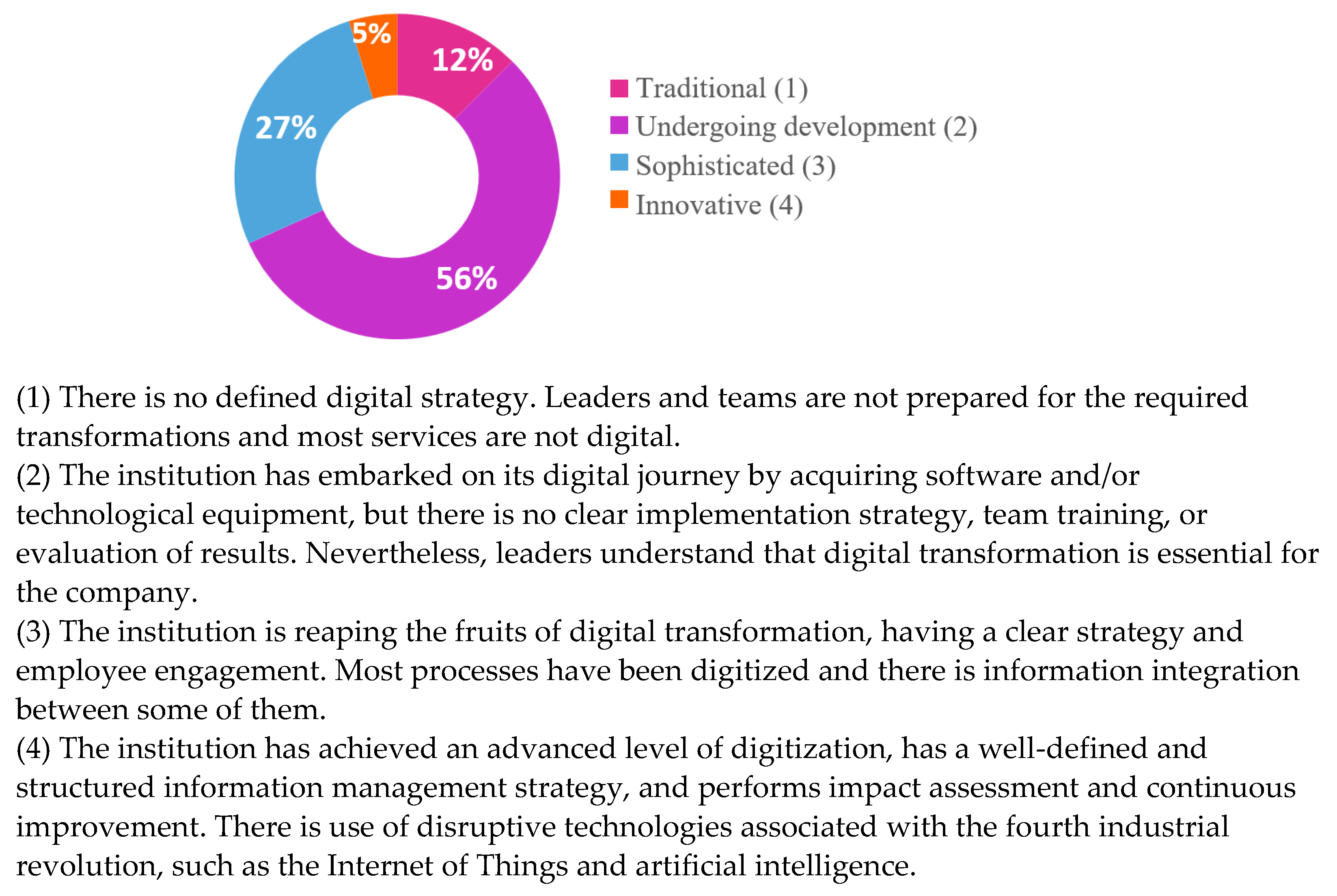
Figure 3.
Technological maturity according to company size.
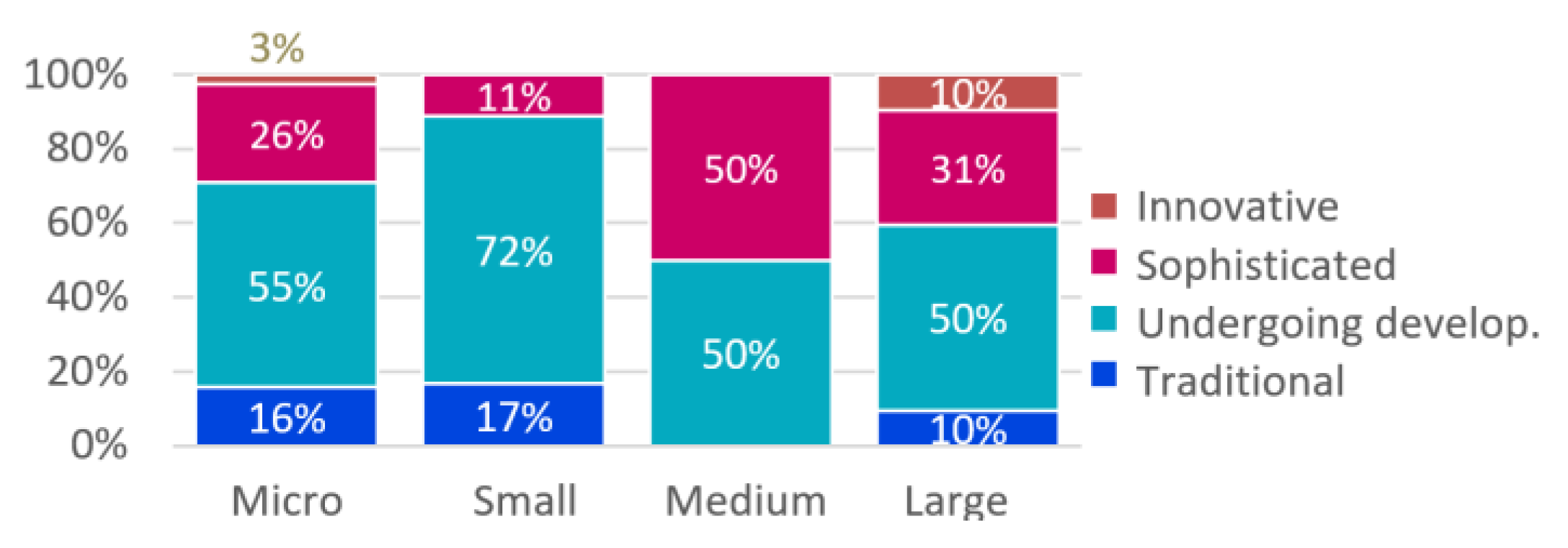
Figure 4.
Level of technological development of the construction industry.
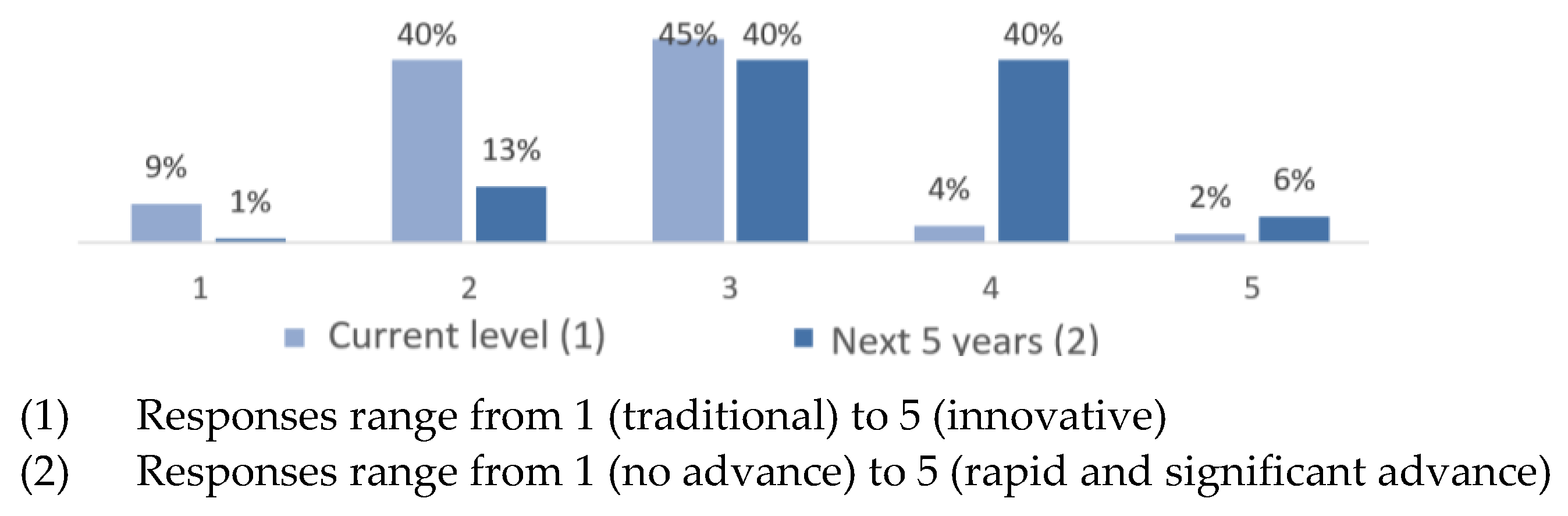
Figure 5.
Level of technological development expected over the next 5 years according to company size.
Figure 5.
Level of technological development expected over the next 5 years according to company size.
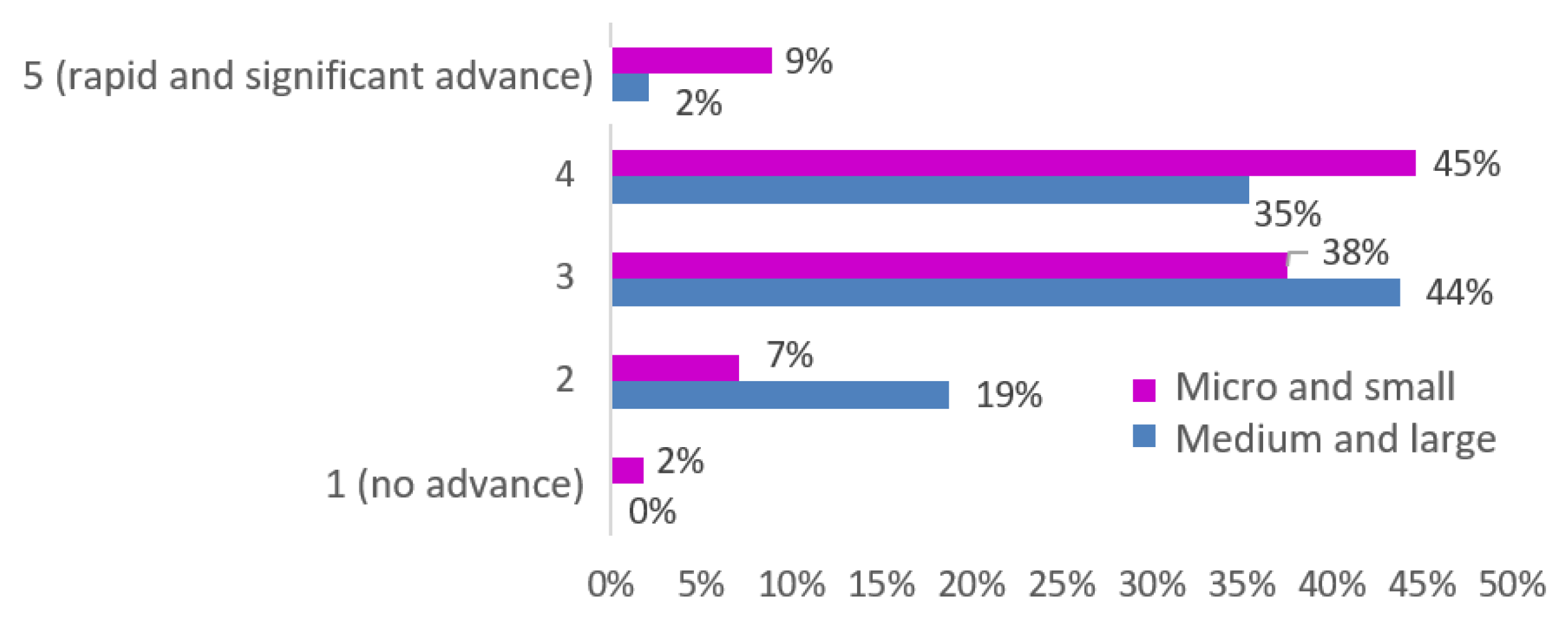
Figure 6.
Knowledge of terms related to Industry 4.0.
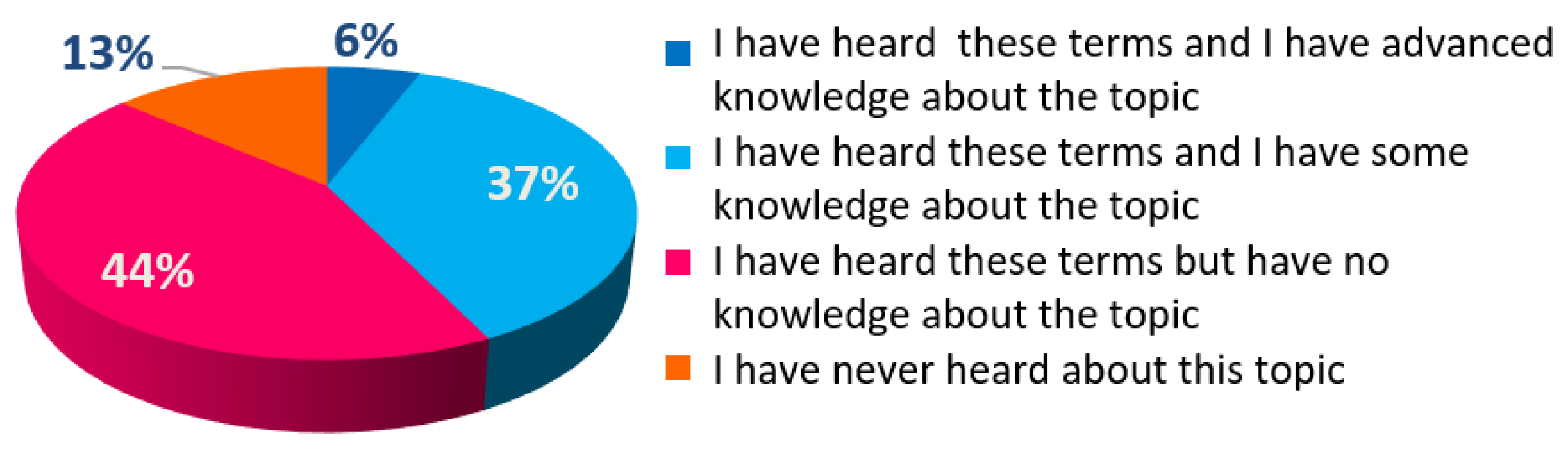
Figure 7.
Expected benefits from using new technologies.
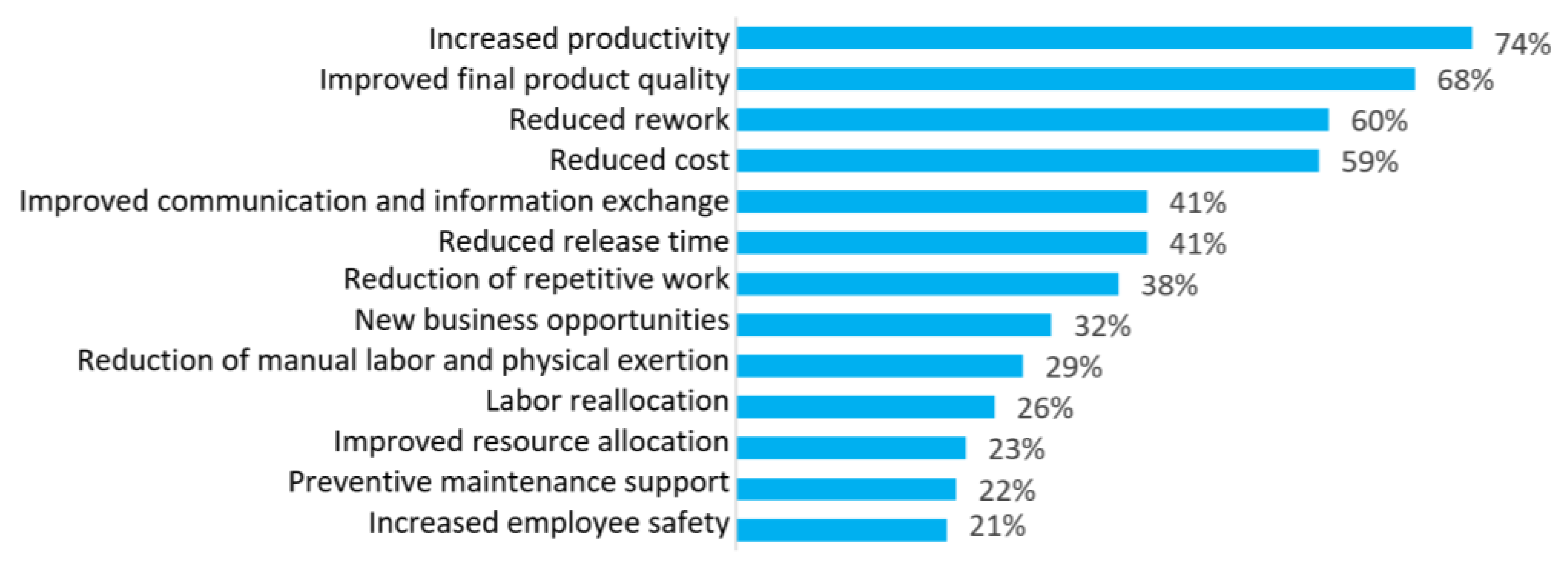
Figure 8.
Expectation of benefits from Industry 4.0 technologies according to professionals’ years of experience in construction. (a) Product benefits, (b) operational benefits, and (c) side benefits.
Figure 8.
Expectation of benefits from Industry 4.0 technologies according to professionals’ years of experience in construction. (a) Product benefits, (b) operational benefits, and (c) side benefits.
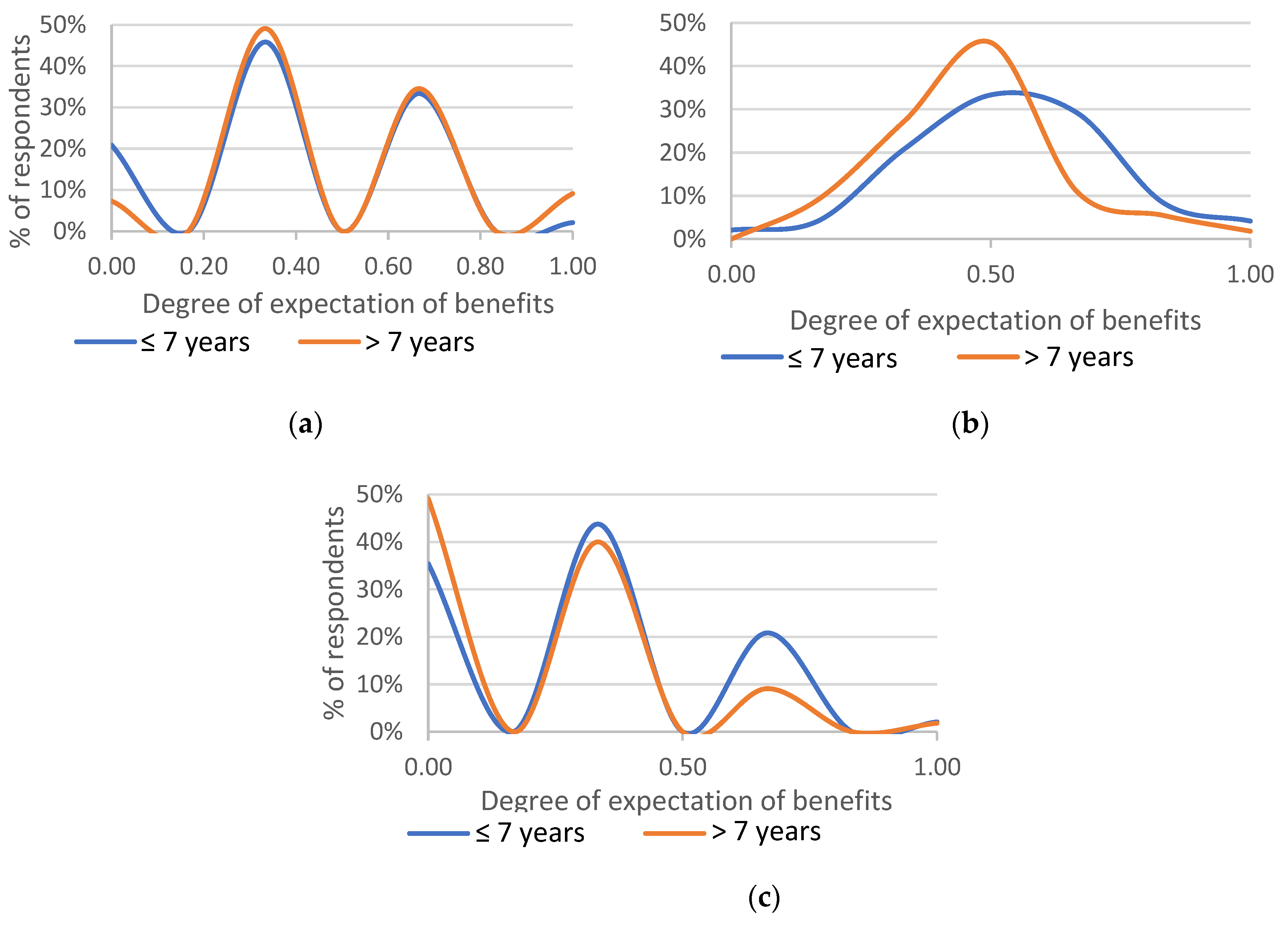
Figure 9.
Use of Industry 4.0 technologies in the construction sector.
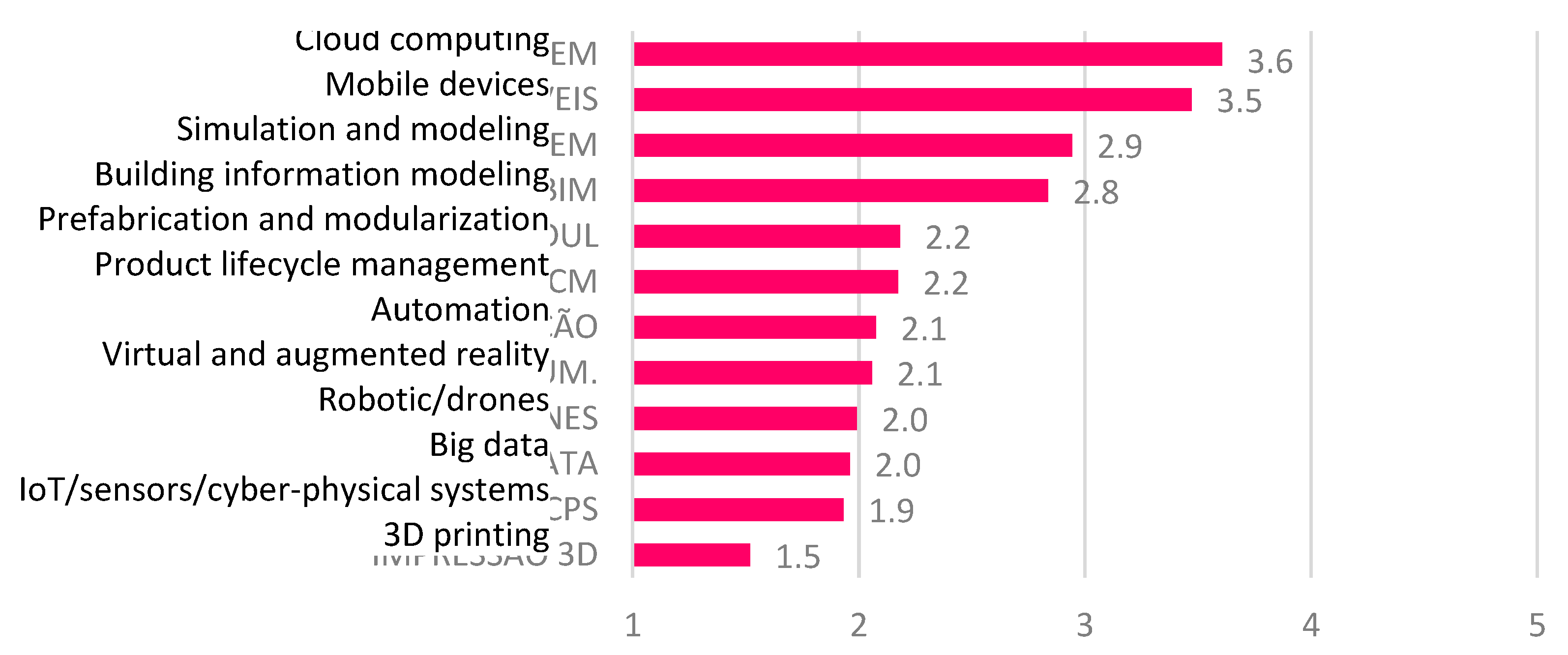
Figure 10.
Level of development of technologies/concepts in the construction industry of an emerging country.
Figure 10.
Level of development of technologies/concepts in the construction industry of an emerging country.
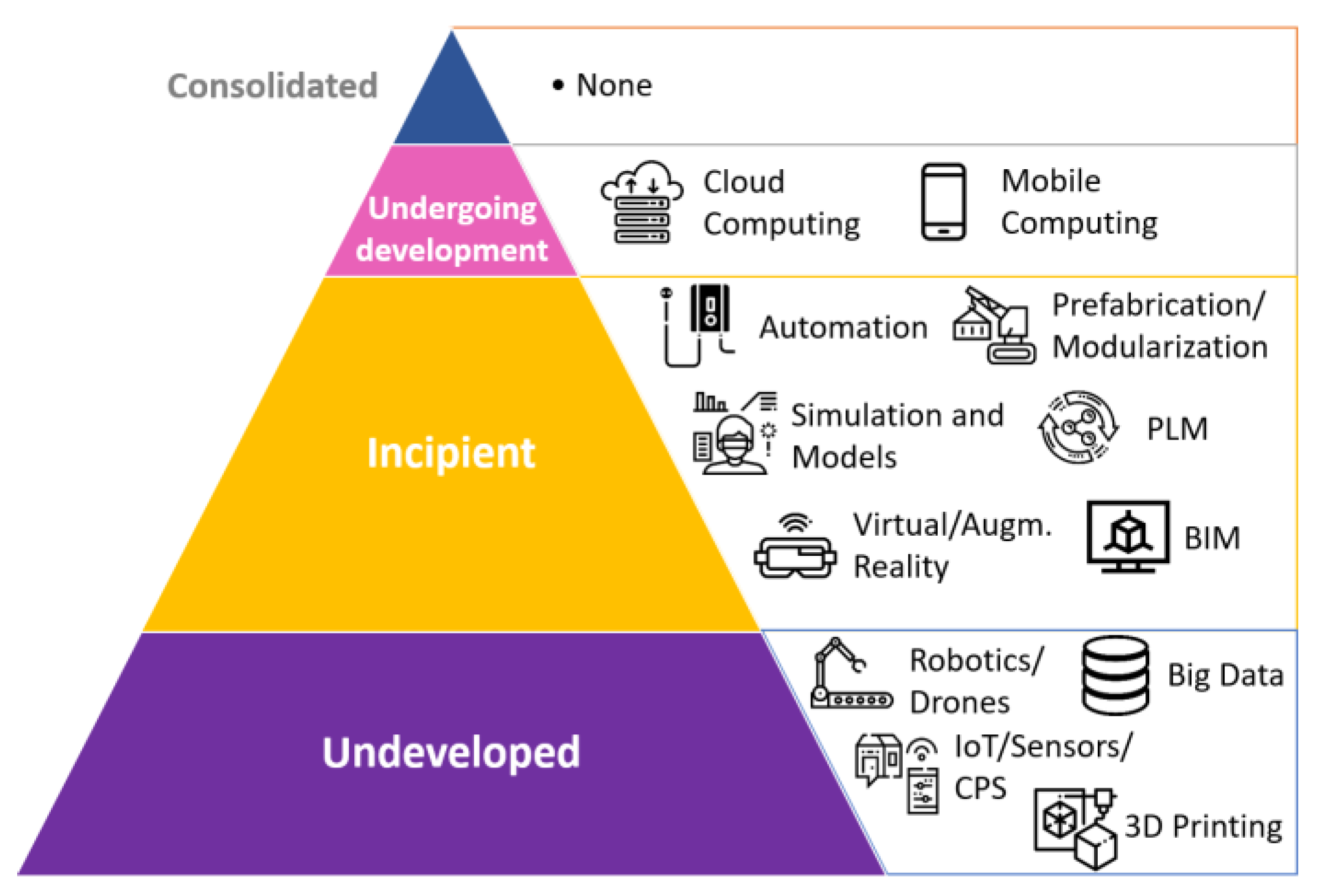
Figure 11.
Current use and interest in adopting Industry 4.0 technologies in the construction sector.
Figure 11.
Current use and interest in adopting Industry 4.0 technologies in the construction sector.
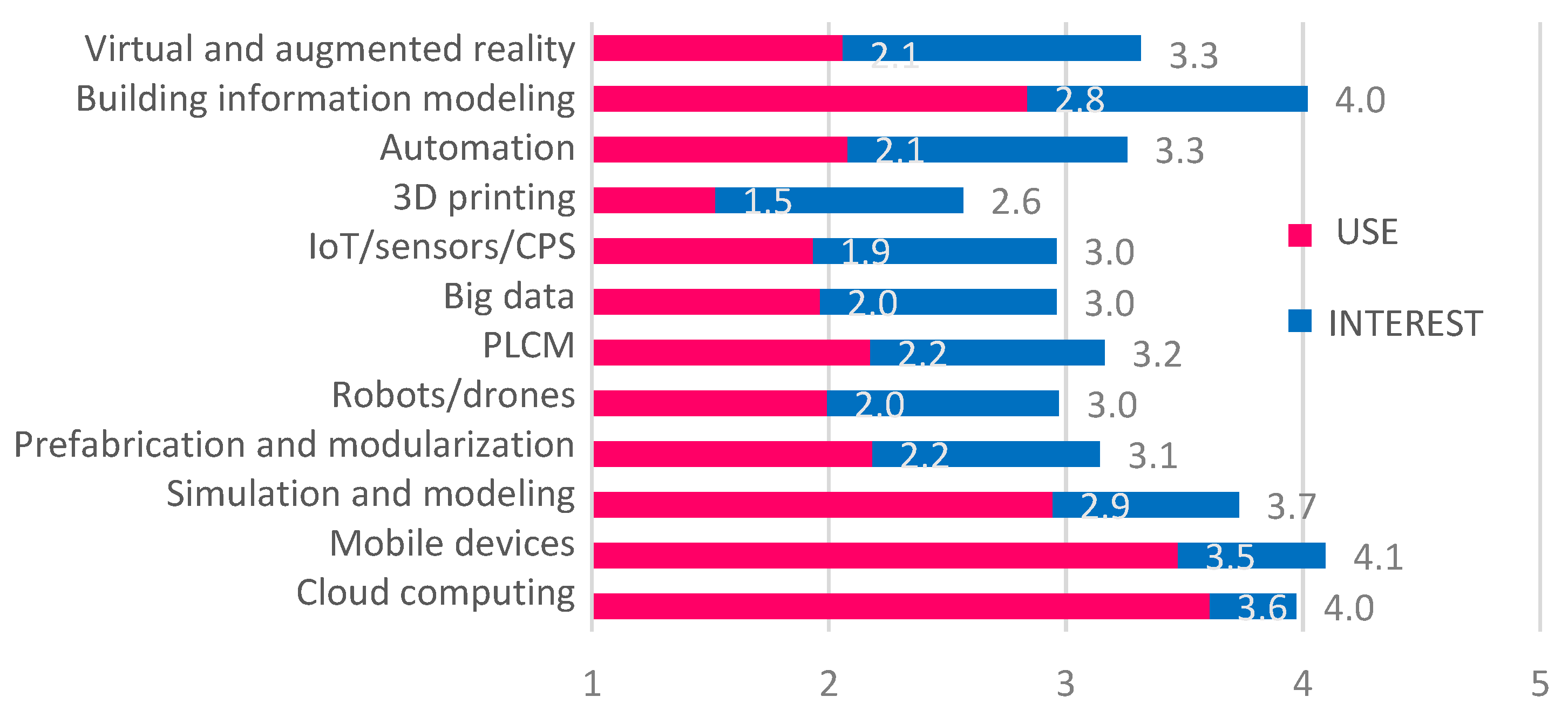
Figure 12.
Perception about the cost and time to adopt Industry 4.0 technologies.
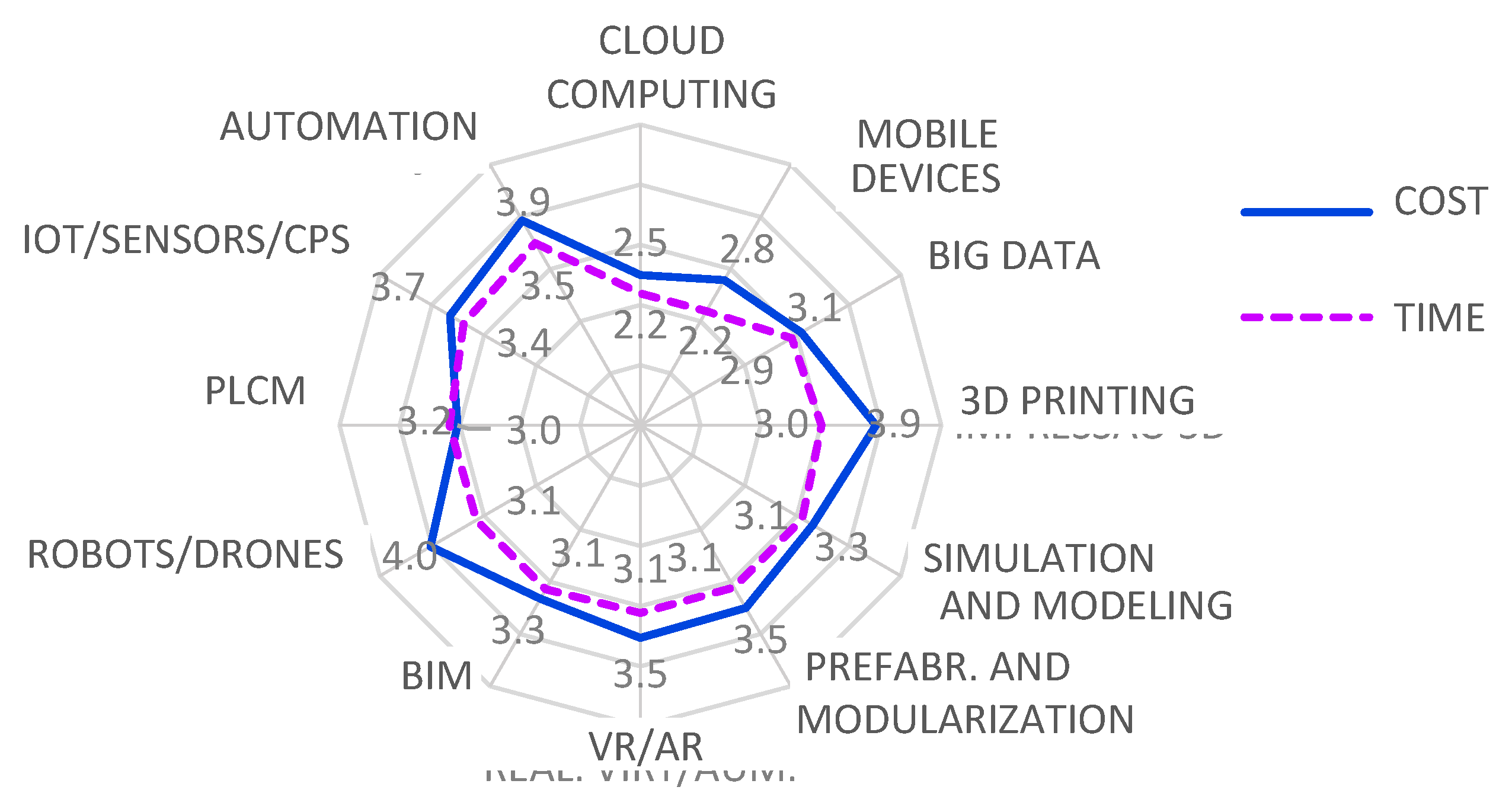
Figure 13.
Absorption potential of Industry 4.0 technologies in the construction sector.
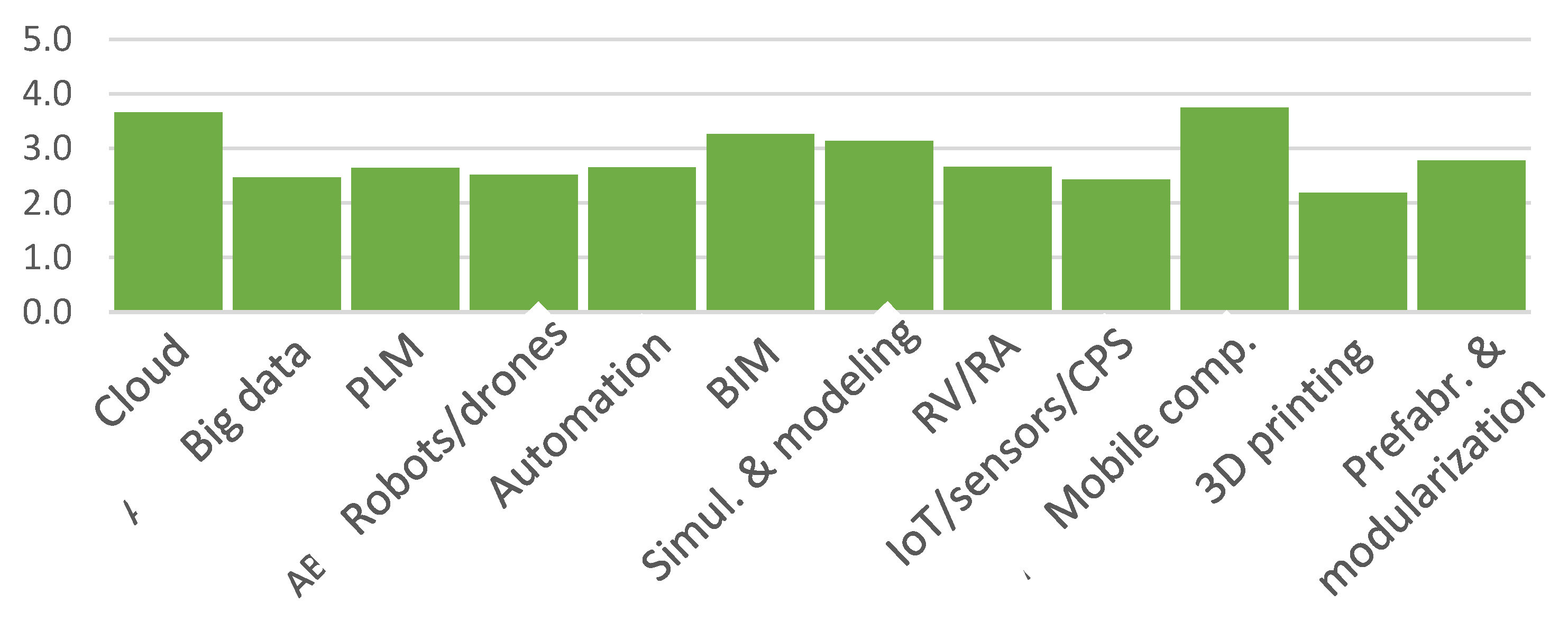
Figure 14.
Adoption of Industry 4.0 technologies in different lifecycle phases of construction.
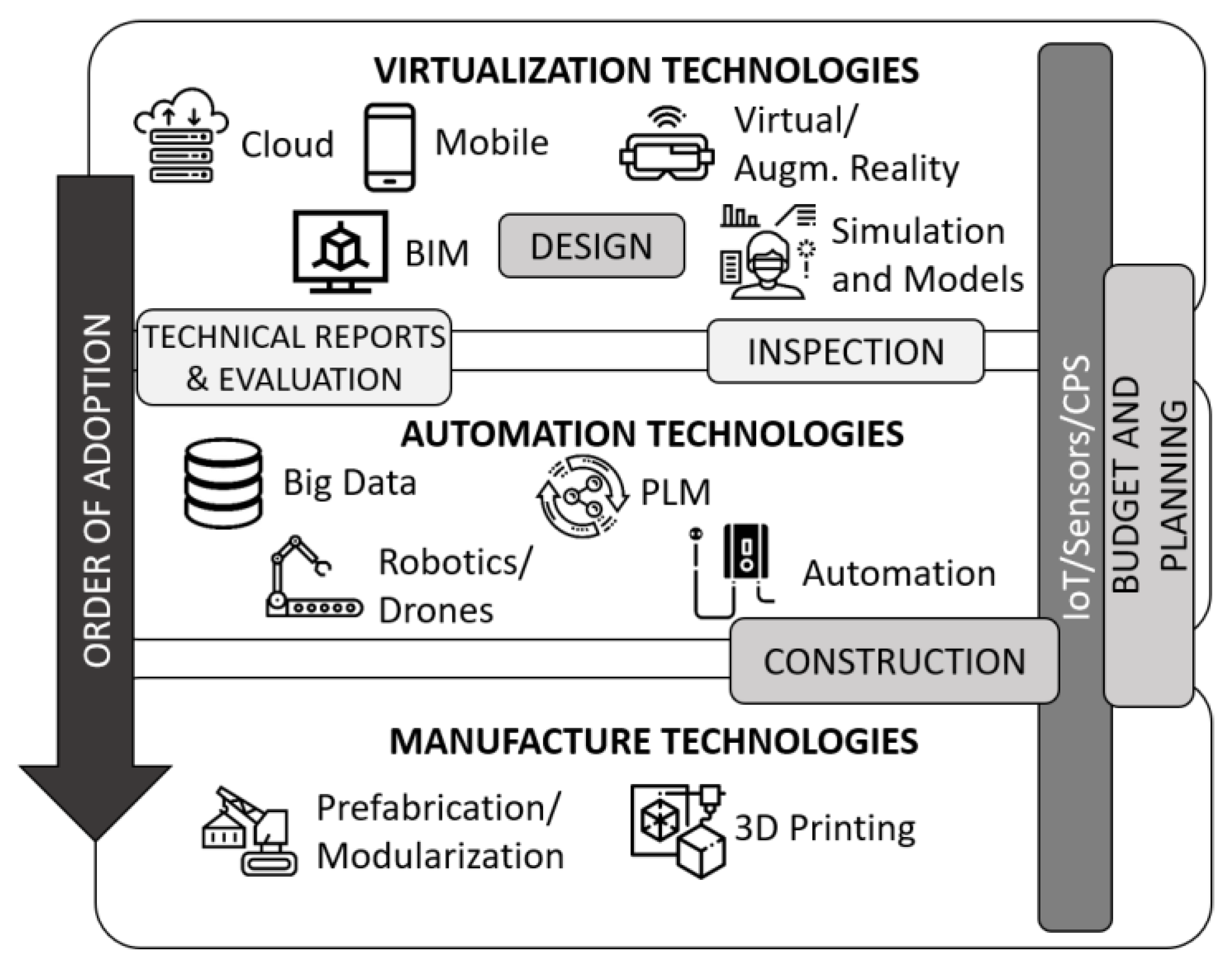
Figure 15.
Choice of Industry 4.0 technologies among construction professionals.
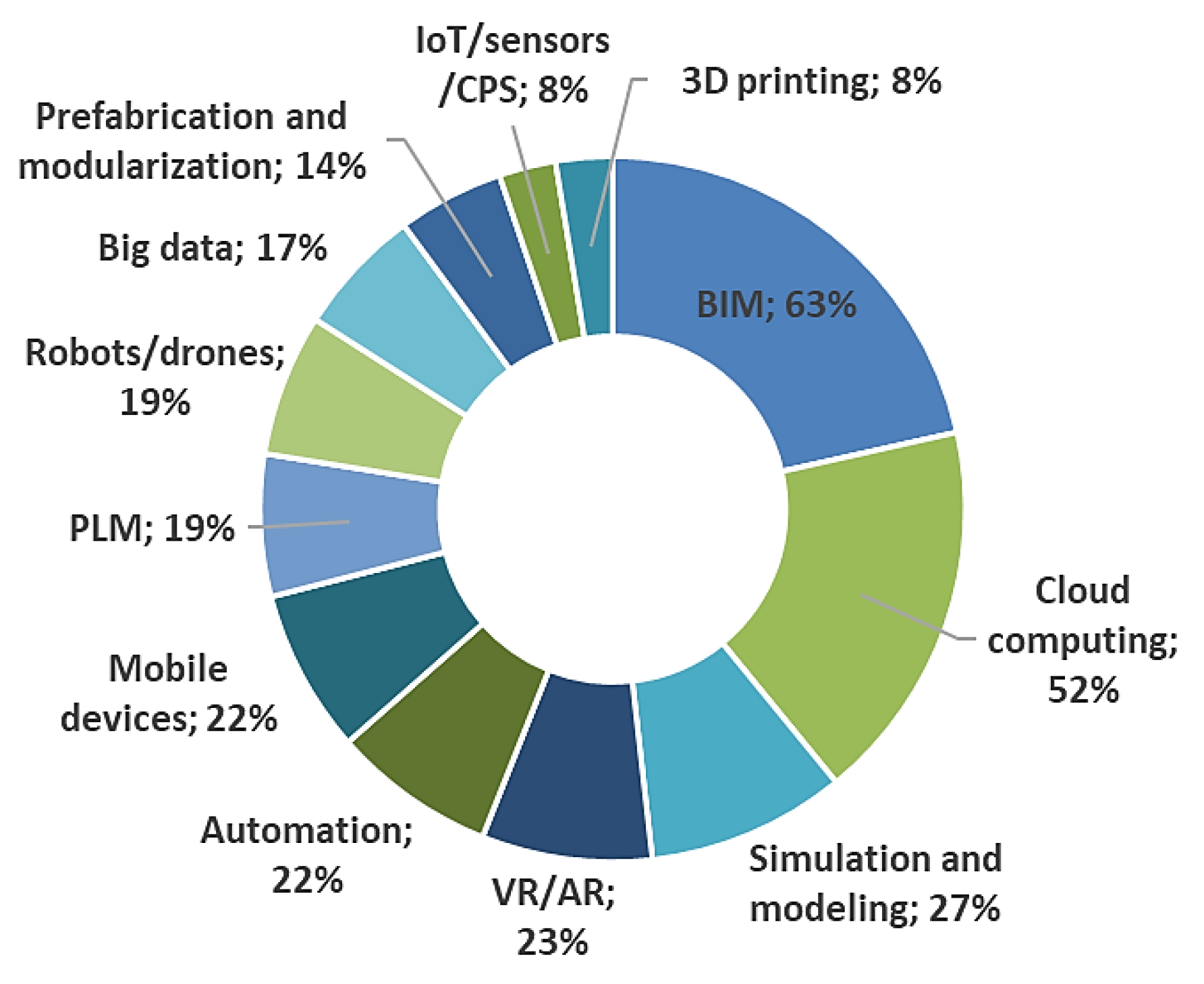
Figure 16.
Barriers to the adoption of Industry 4.0 technologies in the construction sector.
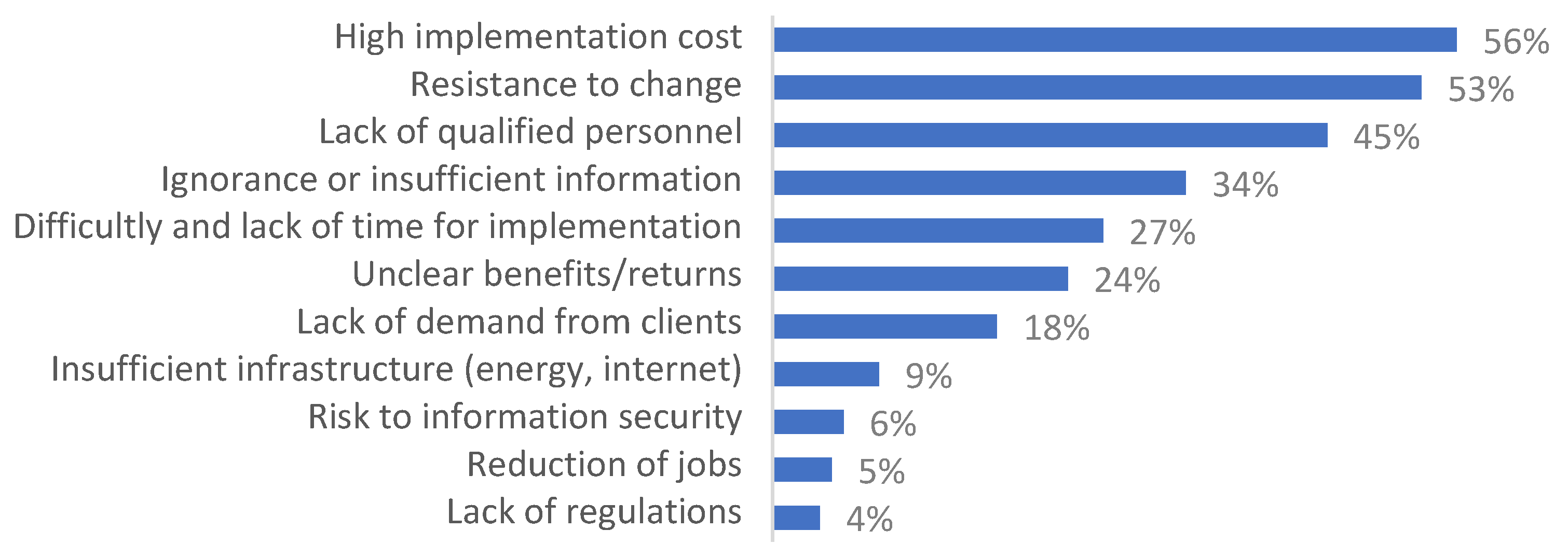
Figure 17.
Important barriers according to the degree of innovation use.
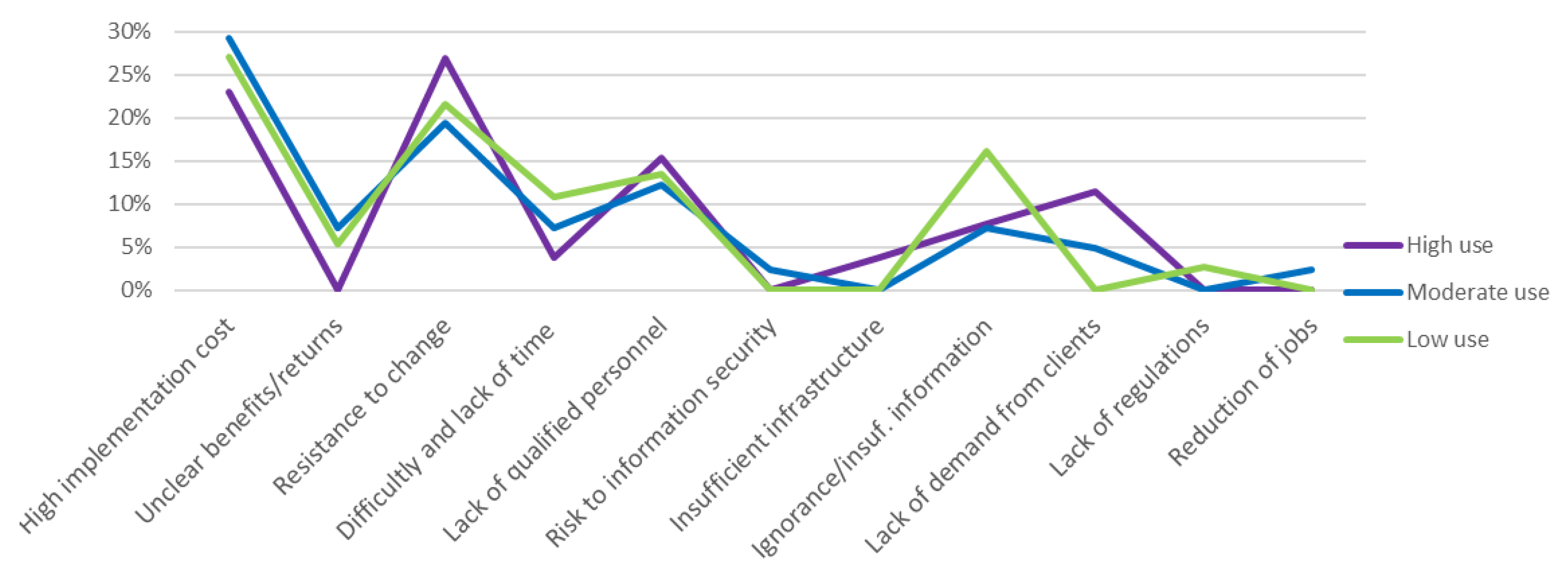
Figure 18.
Critical factors for innovation in the construction sector of developing countries.
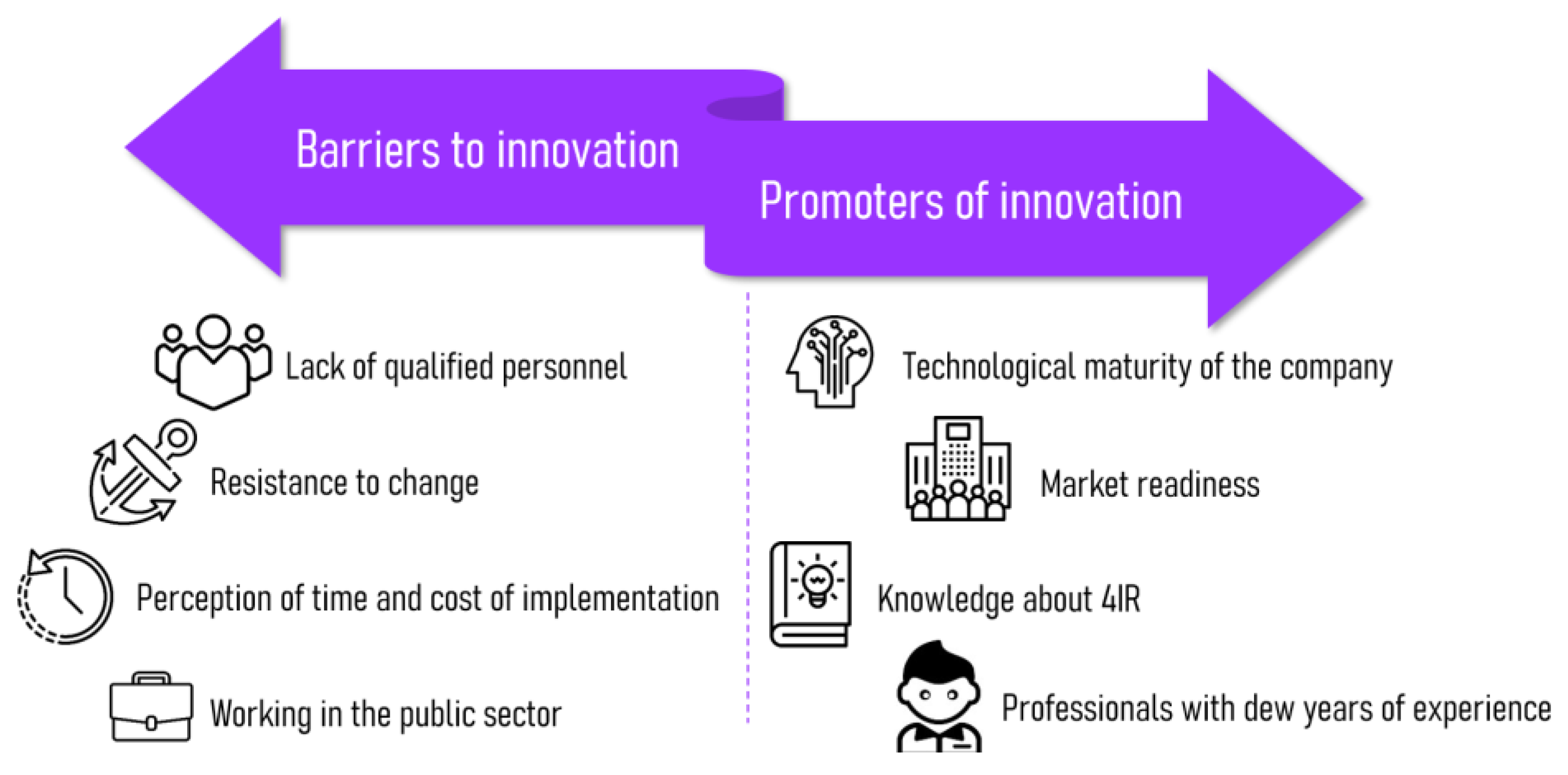

Table 1.
Industry 4.0 principles and technologies with prevalent applications in construction [6].
Table 1.
Industry 4.0 principles and technologies with prevalent applications in construction [6].
| Cluster | Concept/technology |
|---|---|
| Data intelligence | Cloud computing Big data Product lifecycle management |
| Robotics and automation | Robots/drones Automation |
| Virtual environments | Building information modeling Simulation/modeling Virtual and augmented reality |
| Smart technologies and objects | Internet of Things Mobile devices Embedded sensors/cyber-physical systems Digitization |
| Advanced manufacturing | Additive manufacturing Prefabrication and modularization |
Table 2.
Application of Industry 4.0 principles and technologies in construction.
| Technology | Applications |
|---|---|
| Cloud computing | A large amount of data can be stored and accessed from the cloud, facilitating information sharing between design team members and assisting in the development of designs collaboratively and simultaneously between individuals in different geographical locations. |
| Big data | Assists in the collection and selection of relevant information from the universe of available data. Has the potential to simplify database searches and assist in choosing between different alternatives of engineering designs and evaluating parameters, such as cost and energy efficiency, for each design alternative in a rapid and automated way. |
| Product lifecycle management | Data collected and stored are used to integrate and manage product information from the design to the manufacture and use phases until the end of a product’s useful life. |
| Robots and drones | Has the potential to replace human labor in everyday tasks. Drones can capture aerial images that enable and facilitate services such as construction and asset management, inspection, and maintenance. |
| Automation | Potential applications encompass several areas, such as quality monitoring of concrete trucks, soil compaction, parameter control during concreting, design automation, and building monitoring in the use phase. |
| Building information modeling | Tool for centralization of the information generated and accumulated at each stage of the construction process. |
| Simulation and modeling | Modeling and simulation of reality to foresee behaviors and characteristics of the final product and production stages. Can be used for simulation of construction processes, conflict identification, resource allocation, assessment of energy efficiency and flows of people, among others. |
| Virtual reality and augmented reality | Virtual environments that mimic reality and allow interaction and visualization of situations in real dimensions. |
| Internet of Things, sensors, and cyber-physical systems | Common physical systems equipped with sensors and devices that interact and exchange information among themselves and/or with an operator. Can be used to automate processes, control inventory, machinery, and human resources, track material transportation, and monitor the behavior of existing buildings and their facilities. |
| Mobile devices | Use of smartphones, tablets, and applications as tools to support communication and collaboration throughout the production cycle. |
| 3D printing | Printing of objects in three dimensions, comprising either entire buildings or individual parts for subsequent assemblage. |
| Prefabrication and modularization | Construction industrialization, mass production, and off-site parts production for later installation at the final destination. |
Source: adapted from Menegon and Silva Filho [6].
Table 3.
Expected benefits of the adoption of Construction 4.0 technologies.
| Product benefits | Operational benefits | Side benefits |
|---|---|---|
| Improved final product quality [27,28,29,30,31,32,33,34,35,36,37] Reduced release time [34,38,39,40,41] Preventive maintenance support [31,42,43,44,45] |
Increased productivity [31,39,43,44] Reduced rework [32] Reduced cost [33,41,43,45,46] Improved communication and information exchange [27,28,32,47,48,49,50] Reduction of repetitive work [29,32,39,40,46] Reduction of manual labor and physical exertion [36,37,39,44,45,46,51] |
New business opportunities [28,31,43] Labor reallocation [38,39] Increased employee safety [31,41,46] |
| Reduced rework [32] |
Table 4.
Characterization of the sample of construction professionals.
| Variable | Description | Absolute frequency | Relative frequency |
|---|---|---|---|
| Academic degree | Architecture/Urban Planning | 12 | 12% |
| Civil Engineering | 88 | 85% | |
| Other | 4 | 4% | |
| Level of education | Doctoral degree | 5 | 5% |
| Undergraduate degree | 32 | 31% | |
| Master’s degree | 26 | 25% | |
| Specialization (postgraduate degree lato sensu) | 41 | 39% | |
| Field of expertise | Academic research/teaching | 7 | 7% |
| Project management | 33 | 32% | |
| Budget/planning | 22 | 21% | |
| Supervision | 14 | 13% | |
| Construction | 20 | 19% | |
| Technical evaluation | 2 | 2% | |
| Other | 6 | 6% | |
| Professional experience | 1 to 3 years | 28 | 27% |
| 4 to 6 years | 21 | 20% | |
| 7 to 10 years | 15 | 14% | |
| 11 to 15 years | 11 | 11% | |
| 16 to 20 years | 5 | 5% | |
| More than 20 years | 24 | 23% | |
| Sector | Private | 77 | 74% |
| Public | 27 | 26% |
Table 5.
Knowledge of Industry 4.0 terms according to company size.
| Response | Company size | |||
|---|---|---|---|---|
| Micro | Small | Medium | Large | |
| I have never heard about this topic | 11% | 11% | 0% | 19% |
| I have heard these terms but have no knowledge about the topic | 50% | 28% | 33% | 45% |
| I have heard these terms and I have some knowledge about the topic | 37% | 56% | 67% | 24% |
| I have heard these terms and I have advanced knowledge about the topic | 3% | 6% | 0% | 12% |
| Total number of responses | 38 | 18 | 6 | 42 |
Table 6.
Grouping of construction professionals according to degree of technology use.
| Technology | High use | Moderate use | Low use | F-value | |||
|---|---|---|---|---|---|---|---|
| Mean | SD | Mean | SD | Mean | SD | ||
| Mobile devices | 4.19 | 0.75 | 4.02 | 1.06 | 2.35 | 1.30 | 30.64*** |
| Cloud computing | 3.96 | 0.96 | 4.39 | 0.83 | 2.49 | 1.39 | 31.52*** |
| Simulation and modeling | 3.96 | 1.00 | 3.56 | 1.21 | 1.54 | 1.07 | 46.91*** |
| Building information modeling | 3.92 | 0.80 | 3.27 | 1.18 | 1.59 | 0.64 | 55.50*** |
| Virtual and augmented reality | 3.35 | 1.06 | 2.02 | 0.91 | 1.22 | 0.53 | 49.27*** |
| Product lifecycle management | 3.27 | 1.34 | 2.32 | 1.06 | 1.27 | 0.65 | 29.85*** |
| Automation | 3.15 | 0.73 | 2.24 | 1.20 | 1.16 | 0.50 | 39.31*** |
| Robots and drones | 3.04 | 1.04 | 1.85 | 1.01 | 1.41 | 0.76 | 23.82*** |
| Big data | 2.73 | 1.15 | 2.20 | 1.03 | 1.19 | 0.62 | 22.46*** |
| IoT, sensors, and CPS | 3.31 | 1.05 | 1.85 | 0.96 | 1.08 | 0.28 | 57.11*** |
| Prefabrication/modularization | 3.42 | 1.03 | 1.68 | 0.96 | 1.86 | 1.32 | 21.71*** |
| 3D printing | 2.65 | 1.02 | 1.24 | 0.54 | 1.05 | 0.23 | 57.22*** |
| % of respondents in each group | 25% | 39% | 36% | ||||
| Large and medium companies | 42% | 44% | 51% | ||||
| Micro and small companies | 58% | 56% | 49% | ||||
IoT, Internet of Things; CPS, cyber-physical system; *** p < 0.001.
Table 7.
Grouping of similar technologies.
| Technology | Factor | Commonality | ||
|---|---|---|---|---|
| Virtualization | Automation | Manufacture | ||
| Cloud computing | 0.629 | 0.475 | −0.361 | 0.751 |
| Big data | 0.143 | 0.756 | 0.243 | 0.651 |
| PLM | 0.312 | 0.543 | 0.402 | 0.554 |
| Robots and drones | 0.053 | 0.721 | 0.217 | 0.570 |
| Automation | 0.383 | 0.608 | 0.199 | 0.556 |
| BIM | 0.861 | 0.137 | 0.234 | 0.815 |
| Simulation and modeling | 0.843 | 0.114 | 0.221 | 0.772 |
| VR and AR | 0.642 | 0.210 | 0.491 | 0.697 |
| IoT, sensors, CPS | 0.492 | 0.446 | 0.354 | 0.566 |
| Mobile devices | 0.540 | 0.489 | −0.117 | 0.544 |
| 3D printing | 0.205 | 0.279 | 0.686 | 0.591 |
| Prefabrication and modularization | 0.065 | 0.173 | 0.761 | 0.613 |
| Eigenvalue | 5.29 | 1.37 | 1.02 | |
| Cumulative variance (%) | 44.09 | 55.52 | 64.00 | |
| Cronbach’s alpha | 0.76 | 0.86 | 0.54 | |
PLM, product lifecycle management; IoT, Internet of Things; CPS, cyber-physical system.
Table 8.
Factors influencing the adoption of Industry 4.0 technologies in the construction sector.
| Factor | Virtualization | Automation | Manufacture | IoT | ||||
|---|---|---|---|---|---|---|---|---|
| Area | 0.075 | 0.072 | 0.285*** | 0.302* | 0.088 | 0.050 | 0.109 | 0.119 |
| Experience | −0.104** | −0.092** | −0.046 | −0.061* | −0.044 | −0.037 | −0.004 | −0.012 |
| Knowledge | 0.138 | 0.109 | 0.152* | 0.113 | 0.056 | 0.061 | −0.050 | −0.091 |
| Maturity | 0.538*** | 0.392*** | 0.283*** | 0.440*** | ||||
| Size | −0.151*** | −0.070 | 0.037 | −0.099 | ||||
| F-value | 2.711** | 8.518*** | 4.069*** | 5.919*** | 0.659 | 2.142* | 0.328 | 2.547** |
Disclaimer/Publisher’s Note: The statements, opinions and data contained in all publications are solely those of the individual author(s) and contributor(s) and not of MDPI and/or the editor(s). MDPI and/or the editor(s) disclaim responsibility for any injury to people or property resulting from any ideas, methods, instructions or products referred to in the content. |
© 2024 by the authors. Licensee MDPI, Basel, Switzerland. This article is an open access article distributed under the terms and conditions of the Creative Commons Attribution (CC BY) license (http://creativecommons.org/licenses/by/4.0/).
Copyright: This open access article is published under a Creative Commons CC BY 4.0 license, which permit the free download, distribution, and reuse, provided that the author and preprint are cited in any reuse.


