

Submitted:
31 October 2023
Posted:
01 November 2023
You are already at the latest version
Abstract
Enhanced food and nutrition security remains a primary goal for every community. Several interventions have been promoted in dry areas to improve issues on food and nutrition security. However, studies on the level of knowledge, cultural norms, perceptions and attitudes that are key drivers in adoption and uptake to highlight gaps and provide evidence for improvement are limited. This study investigated variables influencing the adoption and implementation of an integrated crop-dairy goat farming system in Elgeyo Marakwet. A descriptive cross-sectional survey entailing qualitative and quantitative approaches among farmers practicing integrated farming was undertaken. A thematic questionnaire was used to collect quantitative data, while key informant interviews and focus groups discussions were used in qualitative research. This study utilized the multi-stage sampling procedure to sample the farmers and sample size was calculated based on Krejcie and Morgan table. Data analysis for quantitative data was done using SPSS software while qualitative data utilized N-vivo software The findings show that farmers have knowledge on the integrated farming system. Age, level of education, land size, gender, perceptions and attitudes influence adoption. Small animals like dairy goats are associated to women in this community hence increasing their participation in access, control and decision making of agricultural resources. The key findings of this study provide baseline data that can form evidence to help inform policy on the indicators contributing to adoption of integrated crop-dairy goat systems to enhance food and nutrition security
Keywords:
Climate-smart Agriculture
; quantitative data
; qualitative data
; multi-stage sampling
; Key informant interviews
; Focus group discussions
; Elgeyo Marakwet County
; cross-sectional survey
1. Introduction
Globally, it is impossible to overstate the importance of the agriculture sector to both human and economic development[1]. Agriculture continues to contribute significantly to Kenya’s economic growth, accounting for 20 % of the country’s Gross Domestic Product (GDP), and an additional 27 % indirectly through its links [2]. In Kenya, agronomy employs more than 40% of the total labour force and more than 70% of the rural population[2] contributing 65% of the country’s total export revenues[3]. The agricultural GDP is largely comprised of the crop, livestock, and fishing sub-sectors, which each contribute about 78%, 20%, and 2%, respectively [3]. However, due to the negative impacts of climate change on the production of crops, pastures, and cattle, agriculture has significantly declined in contribution. Reduced agricultural output, crop losses, and infrastructural damage are some of the most detrimental effects of climate change in Africa, including Kenya. [4]. Kenya’s most vulnerable areas to climate change are the drier regions where effects of climate change are huge. Thirty-eight percent of Kenya’s population lives in this dry region popularly known as arid and semi-arid lands (ASAL), which account for 89 % of the Kenya’s land area [5]. The ASALs are characterized by droughts, weather shocks, poverty, flooding, soil degradation and overgrazing which in turn compromise food and nutrition security and livelihoods[4,6,7]. Recurrent drought, food insecurity and undernutrition, changed patterns of diseases and environmental degradation are further undermining the people’s way of life [4,7].
These changes have a particularly negative impact on smallholder farmers in this dry region, who frequently experience livestock losses, crop failures, and other losses of income and livelihood. [2,3,6]. Tot division in Elgeyo Marakwet county is ranked as one of the ASAL zones in Kenya. The area is prone to cattle rustling, low livestock production, low crop production and patriarchy systems. Livestock and subsistence farming are the main sources of livelihoods to most households. However, food insecurity and malnutrition still remain a major challenge. The climate-change response of agri-food systems toward food security, adaptation, and mitigation depends critically on climate smart crops. Goats (Capra hircus) are a good example because of their ability to produce meat, leather, milk and manure that is used as fertilizer in arid and semi-arid regions [8]. As stated by the FAO (2015), building resilience of agricultural systems by implementing measures that are very system and local-specific is very important [9]. It is critical to keep in mind that growing forage and feed crops is a crucial part of developing resistance to climate change[9]. Crops like pigeon pea and orange flesh sweet potatoes provide a range of adaptation options as human foods, animals feed and soil enhancement [10].
To address the competing demands for water, food, land and nutrition, there was need of promoting famine intervention projects with the intention of reducing food and nutritional insecurities. One of the identified projects was an integrated climate smart crop-dairy goat farming system. Pigeon pea and sweet potato are good cover crops that fix nitrogen into the soil and minimize soil erosion respectively [11,12]. On the other hand, dairy goats occupy little space, mature early and have a high survival rate in drought environments [13]. To improve climate change adaptation, it is important to comprehend smallholder farmers’ knowledge, perspectives, cultural norms and attitudes toward novel interventions like climate smart agriculture, including its indicators, causes, impacts, and challenges [6]. The information may highlight shortcoming in agronomic intervention and practices [14], and provide evidence to improve community-based climate change adaptation programs [15]. Using a mixed-methods approach, this article evaluates farmers’ knowledge, attitudes, and practices in the adoption of climate smart crops-dairy goat farming system among small holders in Elgeyo Marakwet County, Kenya.
2. Materials and Methods
2.1. Study Site
The study was undertaken in Tot Division, Elgeyo Marakwet County, which is one of Kenya’s 47 counties. It is located in the former Rift Valley Province with its capital and largest town at Iten. It borders the counties of West Pokot to the North, Baringo County to the East, Uasin Gishu to the southwest and Trans Nzoia to the Northwest (Figure 1). Tot Division is ranked as one of the ASAL zones in Kenya. The area is prone to cattle rustling, low livestock production, low crop production and patriarchy systems. Livestock and subsistence farming are the main sources of livelihoods to most households.
2.2. Study Design
This study uses a mixed-methods approach to evaluate the influence of knowledge, attitudes, and practices in the adoption of climate smart crops-dairy goat farming system among small holder farmers in Tot Division, Elgeyo Marakwet County, Kenya in 2023. The qualitative and quantitative approaches are important for triangulation purposes and assists to generate holistic evidence for improvement of uptake of the integrated program and overcomes the inherent drawbacks brought on by using a single method.
2.3. Sampling Procedure and Sample Size Calculation
Farmers who had implemented the integrated farming system were chosen using a multi-stage sampling technique to participate in the survey. A purposeful selection of the sub-County was done in the initial phase. About 201 farmers were chosen at random from a list created with the assistance of sub-County livestock and agricultural officers from four locations (Mokoro, Murkutwo, Ketut, and Chechan) based on Krejcie and Morgan table. A thematic questionnaire was used to collect data on farmers’ demographics, household characteristics, knowledge, perception and attitude on adoption of integrated crop-goat dairy farming. The knowledge, perception and attitude were quantified using Likert-like scale questions.
Key informant interviews (KII) and focus groups discussions (FGDs) were conducted to contribute to the qualitative data. A total of eight independent focus group discussions for each gender were conducted. The FGDs were stratified by gender and age into two sessions each for men over 35, women over 35, mixed youth groups between 18 and 35 years old, and two mixed sessions of men and women over 35 years. The FGDs were spread cross the four locations and each group had a minimum of 10 participants. Groups and participants were selected in consultation with group leaders and agricultural extension officers. The FGD guide focused on the understanding of the integrated crop-dairy goat production system, farming experience, benefits, push and pull factors, extension officer support, value addition approaches, constraints and opportunities. Six key interviews were undertaken with informants knowledgeable and willing to share information related to the study with bias to farming model relevance, coherence, coverage, effectiveness, sustainability and potential impact. Discussions and interviews were conducted in local dialects by a trained team of facilitators and interviewers. Notes and recordings were made following consent from the participants, then transcribed and translated into English.
2.4. Data Analysis
The data were collected and entered into Kobo and then exported to SPSS for descriptive, inferential and factor analysis, and composite scores were calculated. Quantitative data was analyzed using SPSS software and subjected to descriptive and inferential statistics factor analysis, and composite scores were calculated while qualitative data was analyzed in N-vivo software through the Framework Analysis method.
3. Results
3.1. Socio Demographic Characteristics of the Respondents
The socio demographic characteristics of the farmers is presented in Table 1. The majority of the respondents were female (83.1%), married (91%), lived in a permanent house (63.2%), and had a diverse education background. Most respondents had attained secondary education (36.3%), primary (33.8%), and tertiary (20.4%) with less people having no formal education (5.0%) and adult education (4.5%). The average family size was 6.39 ± 2.408 with an average number of under 5 years old of 0.78 ± 0.850. The main source of water for farming was from the river (58%). The majority of the respondent (92.5%) farmed less than one hectare of land that was mainly inherited (98.5%).
3.2. Dairy Goat Production System
3.2.1. Dairy Goat Farming Practices
All the respondents kept 1-5 dairy goats; the average was 1.70 ±0.901. The dairy goats were either donated by an NGO (49.3%), farmer purchased (23.4%), group exchanged (18.4%) or government supplied (9.0%). The average milk production per farmer was 1.5 liters per day and was sold out at an average price of Ksh 100.23±0.642. The majority of the farmers had practiced dairy farming for one year (40.8%) and some two years (37.8%). These farmers identified that the improved breeds are profitable despite the challenge of being susceptible to pests and diseases like East coast fever.
“The improved goats are susceptible to diseases hence needs very close management. This has resulted to a decrease in the number of goats that we have currently from the previous number” Embok and Chamkau group.
3.2.2. Income Generation
The majority of the farmers generated income through selling manure (52.2%), culling male goats (47.8%) and selling milk (44.8%; Figure 1). However, the market for male goats was poor due to oversupply. This was shared by Cherugus group during focus group discussions.
The male goats do really well, but where to sell them is a problem’. This is due to over production in the markets when every group produces the same. One may even end up selling at a loss. The number produced exceed the consuming population. This now calls for formation of cooperatives to negotiate the market price. The female goat is fetching good price at a minimum of Kshs. 10,000” Cherugus FGD.
Figure 2.
Range of prices of generated income from diverse products per month.
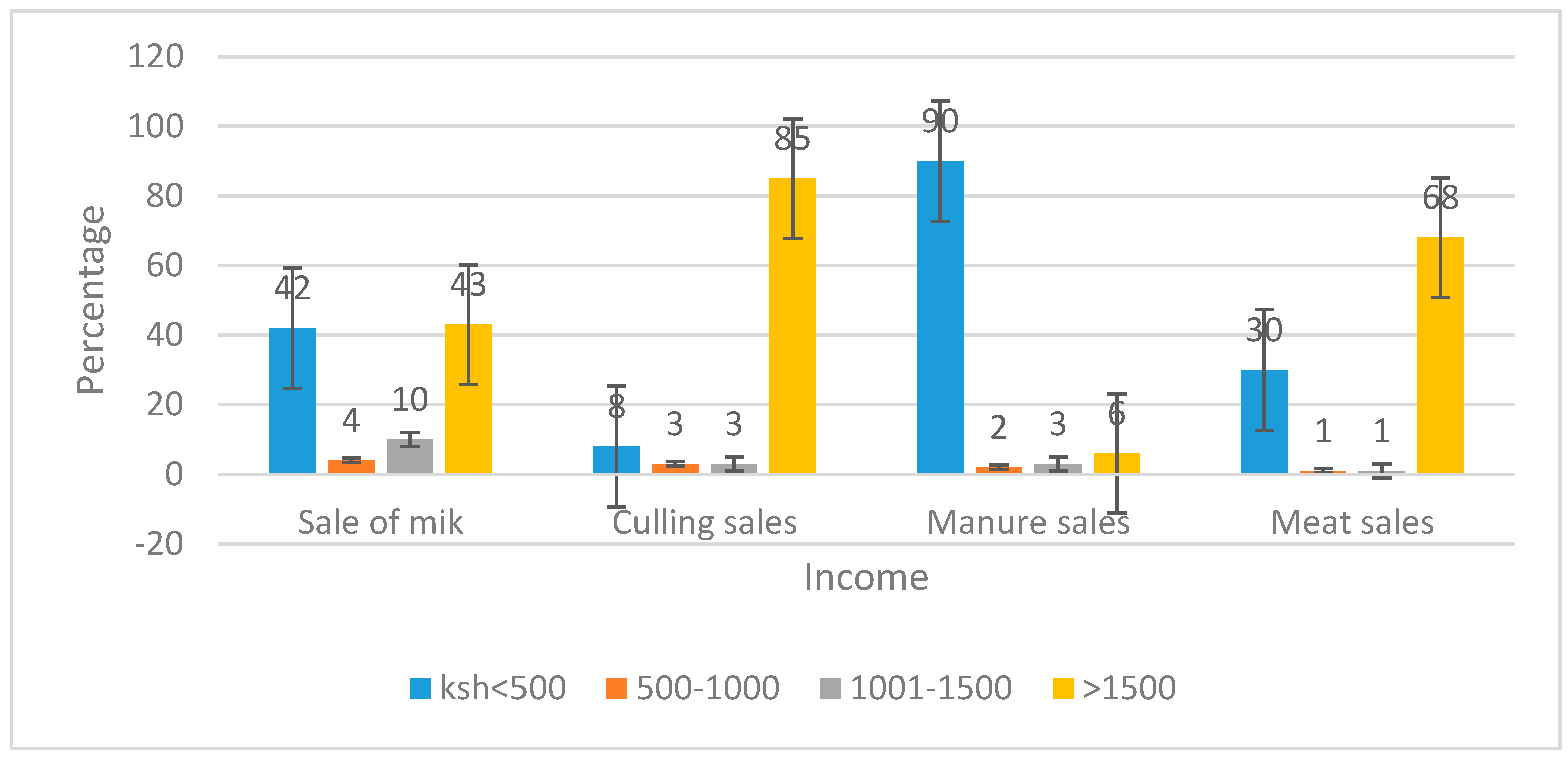
Income utilization varied as tabulated in Table 2. Food (32.7%) is bought very frequently with the income while 37.8% is used frequently to pay school fees.
This was emphasized by most groups in the focus group discussions:
“This project has really helped us. We have managed to pay school fees for our children, pay medical bills and provide milk to our children hence reducing the malnutrition rate” (Chemir, Kamtolim and Kutos women group FGD).
3.2.3. Breeds of Goats Kept
A total of three dairy goat breeds were reported to have been donated to farmers (Toggenburg, Alpine and Saanen) in the community. In addition to the dairy goats, 46.3% still kept local goats primarily for home consumptions (96.8%), income (89.2%) and for social prestige (9.7%). The average price for a mature dairy goat was Ksh 10,826.37 ± 1923.06 compared to Ksh 5000 for a local breed. The dairy goats were reported to be higher yielding (92.5%), more profitable (82.3%), but costlier to keep (51.2%) than the local breeds. This was expressed by one of the farmers who said:
“The improved breeds have really helped us by improving our livelihood and has solved hunger issues. These breeds can give an average of two litres of milk per day which one can sell at Kshs.100 per litre while the local breed can yield a half a litre” (Kamtolim women group FGD).
3.2.4. Production Systems
The farmers employed diverse production systems (Figure 3). Semi zero grazing (45%) was the commonly used dairy production systems. Other methods included zero grazing 39%, tethering 12% and free range 4%. Owning improved goats and practicing the integrated farming system appeared to enhance the safety of humans and animals given that people do not have to look for pasture away from the homestead, unlike the traditional animals who are characterized to be browsers and kept in a free-range system, hence reducing the risk of encountering bandits as reported by one of the respondents.
“Our area is a cattle rustling zone therefore, does not allow us to own a large number of goats because there is risk of losing them to bandits but with these few improved breeds you can own about five of them with easy management and high milk production” (Embok youth group FGD).
3.3. Pigeonpea Farming
Types of Pigeonpea grown and traits of preference:
The study revealed that few (17.9%) of the respondents in Endo ward grow Pigeonpea. However, medium duration variety (63.9%) is the commonly grown followed by long duration (27.8%), and the least being short duration (1.5%). The medium duration varieties were preferred as they are high yielding (97.1%), early maturing (82.4%) and cook fast (67%). Long duration was preferred due to their tolerance to pests & diseases (100; Table 3). Adoption of Pigeonpea would improve production, consumption and healthy diets. The negative drivers across the three varieties are lack of good taste and long cooking time as explained by some respondents.
“These Pigeonpea have a very bad smell, taste and take the whole day cooking consuming our firewood and charcoal. However, our animals love the leaves and pods and when they feed on them, they produce a lot of milk. They also survive with little water” (Chemir women group, FGD)
3.4. Sweet Potatoes Production
A total of three sweet potato varieties were identified to be cultivated in the study area (white, yellow, and orange fleshed). Sweet potato was grown by 10% of the study respondents and the universally grown cultivar was red skin-white fleshed sweet potatoes. Good taste (80%), tolerance to pest and diseases (60%), early maturity (60%), high yielding (50%) and cooking time (45%) were the key drivers to its preference. The average area under sweet potatoes was 0.30 ± 0.041hacters with average production of 106.05 ± 160.12 kg/ha. The small area under production is due to limited seed source. Some respondents explained that:
“We don’t have specific source of seed. Majority of us obtained it from friends, we also recycle the seed more than 6 years. A new variety called orange fleshed was recently introduced by the County government but because of drought the crop did not survive and we lost the seed material. Training farmers on seed sourcing and preservation is more likely to increase adoption” (Chamkau youth group, FGD)
3.4.1. Benefits of the Integrated Crop-Dairy Goat Farming System
Farmers embraced the integrated crop-dairy goat farming system as per the evidence from the survey data, key informant interviews and focus group discussions. One of the key informants (livestock extension officer) said “Farmers have embraced integrated crop-dairy goat farming system. This is because if you compared goats to cows, a dairy goat is a very small animal and you can take care of it within a small space, less feed and shorter gestation period, whereas a cow you will have to look for a lot of feeds that can cost you the whole day. Additionally, the climate smart crops were introduced and truly people adopted them. Its adoption is partial because of extreme drought and the change in the climatic conditions”. However, sweet potatoes do not appear to have been fully embraced partly because of climate related issues and limited seed source as narrated by the livestock extension officer. “When it is rainy you find that people are growing it, but when there is drought, they just disappear on their own”.
Participants understanding of the integrated crop-dairy goat system were grounded on the integrated crop-dairy goat farming goals and process, community benefits, and diverse cohort of beneficiaries. The evidence from key informant interviews and focus group discussions suggests that the integrated crop-dairy goat system was aimed at improving livelihoods of the community through introduction of adaptable dairy goat breeds and drought resistant crops that are highly nutritional, and environmentally beneficial as explained by two participants from Chamkau (youth group) and Kamtolim (women group) during focus group discussions.
‘We understand integrated crop-dairy goat farming system that is one of the modern agricultures that involves planting of improved seeds and keeping improved goats” (Chamkau youth group FGD).
“In addition, integrated crop-dairy goat system was introduced by the county government to women and youth groups with an intention of creating employment and empowering them in this community through formation of farmer’s groups” (Embok youth group FGD)
“The project has truly improved our living and farming standards. We received five modern goats and diverse seeds for improved sweet potatoes and Pigeonpea” (Kamtolim women group FGD).
The preposition was supported by one of the key informants who explained that “The Pigeonpeas are drought tolerant and require little amount of water to survive. Since its introduction to this community, the crop has offered diverse benefits. Its leaves and empty pods are utilized as animal feeds and the grains are for human consumption” (extension officer-livestock, KII).
The majority of the respondents practiced the integrated farming system at group level and only 26.4% had cascaded the practice to individual level. The key benefits from integrated crop- dairy farming included improved nutritional status, increased income, reduced dependency, and reduction in idleness/engagement in vices such as alcohol brewing and consumption as reported by the participants.
“Integrated farming has really helped us by improving our livelihood and reducing hunger issues”. It has also solved malnutrition issues among our children. It enabled us to form groups which reduced idleness among our members. We have also gained knowledge on how to prepare Kitchen gardening utilizing the goat manure. This has enabled us to continuously supply our homesteads with vegetables hence saving time and money. Additionally, our men stopped drinking alcohol and playing pools” (Chamkau youth group)
Similar narrations were reported by farmers from Cherugus women group. “Life was a little hard (before integrated farming) because we used to buy almost everything but after we planted the improved crops our nutritional status improved, we got more ways of generating income for example selling grains and milk”.
One of the respondents from Chamkau youth group reported that “Integrated project has enhanced family, clan and group bonding and reduced social economy gaps within the community. It has reduced the social class gaps since we started having continuous production in terms of food and milk access”.
Another respondent from, Kamtolim women Group explained that “Integrated crop dairy farming has improved our economy and health of our families. The newly introduced goats are good source of milk. As a result, the rate of malnutrition has greatly reduced. In addition, the crop varieties give a good yield and fetches good money in comparison to the indigenous variety”.
3.4.2. Farmers’ Knowledge on Pigeon Pea and Sweet Potatoes
The findings revealed that farmers held varied and specific knowledge regarding the importance, use and farming of pigeon pea and sweet potatoes. Against the 201 respondents, 80.1% agreed that pigeon pea and sweet potatoes are easier to grow in comparison to other crops due to their good adaptability (82.6%) to harsh climatic conditions and resistance to disease infestation. Eighty-six percent and 79.1% of the farmers agreed with propositions that Pigeonpea and sweet potatoes are important commodities for feed supplementation in dairy goat farming and household food security. This is due to their high content of essential vitamins and protein (54.2%) as reported by 63.7% and 54.2% of the farmers respectively. The proteins and vitamins can provide calories and eliminate nutrient deficiencies among children, pregnant women and the elderly. Pigeonpea and sweet potatoes contain essential vitamins as well as supplementary protein and calories for animal healthy (61.7%). The two crops also improve soil fertility (84.1%) and provide employment opportunities (52.7%) and generate income for the rural population (68.7%; Table 4).
Variations in farmer’s knowledge in the adoption of integrated crops-dairy goat farming is summarized into two-factor solutions in Table 4. Factor loadings explains the knowledge and answer preferences. Factor loading that were greater than 0.3 were considered in interpreting the results. The two-knowledge score explained 72.1 % of the variation in farmers ’knowledge.
3.4.3. Perception of Farmers in the Adoption of Integrated Climate Smart Crops-Dairy Goat Farming
Drought (84.6%), change in rainfall pattern (77.6%), diseases (69.7%), pest severity (68.7%), farm size (57.2%), fodder acreage (58.7%) and unavailability of quality seeds (52.2%) were strongly perceived to influence the level of adoption of the integrated crop-dairy goat production system (Table 5). The respondents also agreed that land ownership in the community favours young men 65.2%), but not women (65.7%). Cultural norms and traditions have positively impacted adoption of the project by women. As explained by one of the key informants, “The improved dairy goats are perceived by men to be exotic in the community and cannot be used in celebrating cultural activities” (Extension officer-livestock, KII).
This was also supported by Cherugus women group who reported that, “These improved goats are not used in tradition ceremonies such as ancestor appease because they are believed not to have the value needed according to our elders”. This formed an opportunity for women to take up the project with an intension of producing milk and improving their income, hence empowering their financial power as reported by Kutos women group, “Nowadays, people have come to know that the improved dairy goats can help the entire family by providing milk and selling the surplus to increase income. We have no problem with women owning the improved dairy goats since they are exotic to the community. The milk production from these goats are quite amazing. This has led to reduction in malnutrition rate” (Kutos women group, FGD).
Significant variations in farmers’ perception in the adoption of integrated farming system was reported, as summarized into two-factor loadings (Table 5). Seventy-two percent of the variance in the variables is explained by the corresponding factors for adoption of integrated (scale of reliability). Kaiser-Meyer-Olkin measure of sampling adequacy was 0.751, which is greater than the recommended minimum of 0.6. This implies there is inter-correlation among the variables selected. Therefore, an unbiased inference can be made from the perception scores generated. Factors loadings that were greater than 0.3 were considered in interpreting the results. The two-perception score combined explained 62.8 % of the variation in farmers’ perception.
3.4.4. Attitudes of Farmers in the Adoption of Integrated Climate Smart Crops-Dairy Goat Farming
The study reported several disagreements and agreements on some of the attitude parameters contributing to adoption of the integrated system The participants disagreed that integrated crop-dairy goat farming is a women’s activity (48.8%), a poor people’s farming activity (51.2%), a cumbersome activity (44.3%), not a profitable farming venture (45.3%) and village elders disapprove adoption of crop-dairy goat integrated farming system (53.7%) (Table 6).
The significant variations in farmers’ attitude in the adoption of integrated farming is summarized into three-factor solutions (Table 6). Fifty-seven percent % of the variance in the variables is explained by the corresponding factors for adoption of integrated (scale of reliability). Kaiser-Meyer-Olkin measure of sampling adequacy was 0.516, which is lower than the recommended minimum of 0.6. This implies that there is inadequate inter-correlation among the variables selected. Therefore, an unbiased inference can be made from the attitude scores generated. Factors loadings that were greater than 0.3 were considered in interpreting the results. The three-attitude scores explain 60.7 % of the variation in farmers’ attitude.
4. Discussion
4.1. Socio Demographic Characteristics of the Respondents
The findings of this study may be skewed because the integrated farming was modeled through organized women and youth groups. Nevertheless, the finding suggest that women are receptive to integrated crop-dairy goat farming. This is supportive of the need of empowering women groups as champions of change particularly in male centric communities and conflict prone regions. Our preposition supports the call by the Food and Agriculture Organization (FAO) that increased female empowerment by enhancing the role of women in agricultural activities[16]. Most of the respondents were married and educated suggesting that level of education, marital status and families’ responsibility entice people to agricultural innovation. This is supported by a finding that marital status has a beneficial influence on the capacity of smallholder women to innovate in agriculture[17]. Furthermost lands in this community are owned by clans and handed down through hereditary, a phenomenon that may explain the two hectares’ average farm size cultivated by the farmers. The handing over from one generation to next may explain why farms are small and fragmented. The two hectares farm size is synonymous with small scale farmers globally[18]. Water for irrigation was sourced predominantly from rivers, channeled through water furrows owned and managed by clans. The water furrow management system operates on non-bureaucratic principles that water is distributed based on rights to a particular furrow and each clan decides how to divide the water among the members. Women are not allowed to take part in directing and diverting the water from the furrows to their fields [19].
4.2. Knowledge of Farmers in the Adoption of Integrated Climate Smart Crops-Dairy Goat Farming
Integrated crop-dairy goat farming was embraced with less enthusiasm on sweet potatoes due to less access to seed source. The integrated system was adopted because the dairy goats are easy to manage and produce more milk compared to the local breeds. The medium duration Pigeonpea was commonly adopted cultivar due to its good taste and tolerance to pest and diseases, early maturity, high yields and requires less cooking time. Likewise, the red sweet potatoe variety was commonly adopted due to its high yields and drought resilience. The goal to enhance household income, nutritional status, dependency and reduced idleness were the driving forces behind the adoption of integrated farming. The drivers are supported by the available literatures[20,21,22]. Adoption of integrated farming is high at group level but low at household levels. This may be attributed to the economy of scale theory, stable labour force, more investible talents and increased synergistic power [23]. The goats have however not been incorporated into use in cultural practices such as wedding cultural ceremonies.
The study revealed that farmers were knowledgeable that Pigeonpea and sweet potatoes are easier to grow in comparison to other crops due to their well adaptability to harsh climatic conditions and resistance to disease infestation. Because of their high levels of protein and critical vitamins, which can offer calories and eradicate deficiency among youngsters, pregnant women, and the elderly, the crops also provide significant feed supplementation for dairy goats. These attributes are key indicators for adoption. The respondents agreed to a statement that Pigeonpea and sweet potatoes production provide employment opportunities for the house hold members and improve soil fertility. However, there is inadequate knowledge on value addition and record keeping. Low value addition contribute to significant post-harvest loses in Africa[24]. Training on value addition is a worthwhile venture to increase farm returns and extend product shelf life. As a result of training a significant positive correlation was noted in farmer’s knowledge on integrated farming approaches among the adopters. The results agree with [25] who revealed significant and positive correlations between knowledge, and farmers adoption behavior.
4.3. Perception of Farmers in the Adoption of Integrated Climate Smart Crops-Dairy Goat Farming
Respondents perceived drought, change in rainfall pattern, diseases and pest severity as the principal drivers for adoption of the integrated crop- dairy goat production system. Additionally, farmers perceived land ownership and managements as reasons for women not adopting the crop- dairy goat production system. The qualitative study revealed ownership of property was mostly the domain of men in Marakwet. The finding agrees with early studies who reported ownership of land, cattle stock and rights of disposal were vested in old males[26]. Given land is a key resource in agriculture, enhancing the rights of women to land ownership and its management is paramount. This is supported by [27] who wrote that women who own land will participate in a greater number of agricultural decisions.
Farm size, unavailability of quality seeds, prices of fodder seeds and fodder acreage were perceived to be key challenges in adoption of the integrated crop- dairy goat production system. Similarly, Wambugu et al., 2011 reported ineffective delivery of seeds, extension and research services, inhibitive policies, political interferences and frequent droughts hinder the scaling of adoption practice in East Africa. However, cultural practice, labour and plant weeds were rarely perceived to influence the level of adoption. Cultural norms were reported to positively correlate to adoption, suggesting culture plays a significant role in adoption and people behaviors.
4.4. Attitudes of Farmers in the Adoption of Integrated Climate Smart Crops-Dairy Goat Farming
The taste, appearance and quality of Pigeonpea grains are not as good as that of other legumes like common beans. The results contradict with findings reported by Saxena that Pigeonpea are preferred because of good taste, attractive green colour and good appearance[29]. These attributes depend on the variety, and type of grains utilized green or dry. Nevertheless, pigeon peas are cheap to produce and maintain compared to other legumes. This is because Pigeonpea is among the crops that can survive and yield grains during dry spells when other crops have died due to its osmotic adjustments[29]. Integrated crop-dairy goat farming is a profitable farming venture and neither cumbersome nor a poor person farming activity. However, it is time-consuming process compared to free range rearing of goats.
5. Conclusions
Designing pathways for adoption and assessing farmers’ knowledge, attitudes, and practices regarding a new technology are crucial. This study provides the evidence that existing groups in society are critical entry points for the introduction and scaling up the adoption practices. The current study revealed that knowledge, attitudes, and perception of farmers are critical drivers in adoption of the integrated climate smart crops-dairy goat farming system as they influence decision making. Farm size, unavailability of quality seeds, prices of fodder seeds and fodder acreage are major constraints in adoption of integrated crop- dairy goat production system. In order to entice more groups and enhance production and consumption, there is need to upscale efforts to inform farmers about the nutritional benefits of the dairy goat milk, orange fleshed sweet potatoe and pigeon pea. The Elgeyo Marakwet County administration must include the initiative in their County Integrated Development Plan in order to encourage the sustainable production and consumption of the crops and milk products for better nutrition and livelihoods.
Author Contributions
Conceptualization, J.C., H.G., T.N and M.K.; methodology, J.C., H.G., T.N.; software, J.C.; validation, J.C., H.G., T.N and M.K formal analysis, J.C; investigation, J.C.; resources, J.C.; data curation, J.C and H. G.; writing—original draft preparation, J.C., H.G., T.N and M.K.; writing—review and editing, J.C., H.G and T.N.; visualization, J.C. and H.G.; supervision, J.C project administration, J.C.; funding acquisition, J.C. All authors have read and agreed to the published version of the manuscript.
Funding
The research was funded by the Food Systems Research Network for Africa (FSNet-Africa). FSNet-Africa is funded by the Global Challenges Research Fund (GCRF) as a Research Excellence project under the partnership between UK Research and Innovation (UKRI) and the African Research Universities Alliance (ARUA). FSNet-Africa is a flagship project in the ARUA Centre of Excellence in Sustainable Food Systems (ARUA-SFS), which is hosted by the University of Pretoria (South Africa)
Institutional Review Board Statement
The study protocol was reviewed and approved by the KNH-UoN Ethics and Research Committee. Then research permit to undertake the research was provided by The National Council of Science, Technology, and Innovations (NACOSTI-Kenya).
Informed Consent Statement
All study participants gave their freely informed consent to participate in the study. Principles of respect and confidentiality were maintained throughout the study.
Data Availability Statement
The data presented in this study are available on request from the corresponding author
Acknowledgments
The authors acknowledge FSNET-Africa for the fellowship and technical support from the County government of Elgeyo Marakwet, Agricultural extension officers, chiefs and village elders. We also thank the farmers from Endo ward, Tot division for participating in the survey.
Conflicts of Interest
The authors declare no conflict of interest. The funders had no role in the design of the study; in the collection, analyses, or interpretation of data; in the writing of the manuscript; or in the decision to publish the results.
References
- I. O. Adejumo and O., A. Adebiyi, ‘Agricultural Solid Wastes: Causes, Effects, and Effective Management’, 2021. [CrossRef]
- Central Bank of Kenya, ‘Agriculture Sector Survey’, 2023.
- World Bank, ‘Climate-Smart Agriculture in Kenya’, 2015.
- E. Whitaker, L. Destrijcker, J. C. Dieffenbacher, and H. E. Kurnoth, ‘Climate Security Study: Kenya’, 2023.
- Government of the Republic of Kenya, ‘Vision 2030 Development Strategy for Northern Kenya and other Arid Lands Final’, 2012.
- C. M. Musafiri et al., ‘Smallholders’ adaptation to climate change in Western Kenya: Considering socioeconomic, institutional and biophysical determinants’, Environmental Challenges, vol. 7, Apr. 2022. [CrossRef]
- T. M. V. N. M. M. L. S. Tilly Alcayna, ‘Climate Change Impacts on Health: Kenya Assessment on Health and Livelihoods April 2021’, 2021.
- V. Sejian, J. V. Sejian, J. Gaughan, L. Baumgard, and C. Prasad, Climate change impact on livestock: Adaptation and mitigation, no. June. 2015. [CrossRef]
- Food and Agriculture Organization of the United Nations (FAO), ‘Climate change and food security: risks and responses’, 2015.
- Food and Agriculture Organization of the United Nations (FAO), The state of food and agriculture. Climate change, agriculture and food security. 2016.
- A. ABEL Akingbade et al., ‘Olabode Abiola Monsurat. Seed Yield and Proximate Composition of Pigeon Pea (Cajanus cajan) Seeds from Varying Planting Distances’, 2017. [Online]. Available: http://www.openscienceonline.com/journal/ijaes.
- Tim Motis, ‘Factors to Consider when Selecting a Pigeon Pea Variety’, 2019. [Online]. Available: http://edn.link/2mg7y4.
- L. Iñiguez, ‘Goats in resource-poor systems in the dry environments of West Asia, Central Asia and the Inter-Andean valleys’, in Small Ruminant Research, Elsevier, 2004, pp. 137–144. [CrossRef]
- C. Felix Amuji, ‘The Future of Rain-Fed Horticultural Crops Production in a Changing West African Climate’, Reviews in Agricultural Science, 2021, vol. 9, no. 0, pp. 206–220. [CrossRef]
- C. M. Musafiri et al., ‘Adoption of climate-smart agricultural practices among smallholder farmers in Western Kenya: Do socioeconomic, institutional, and biophysical factors matter?’, Heliyon, vol. 8, no. 1, Jan. 2022.
- Food and Agriculture Organization of the United Nations, The status of women in agrifood systems. FAO, 2023. [CrossRef]
- L. Badstue, P. L. Badstue, P. Petesch, C. R. Farnworth, L. Roeven, and M. Hailemariam, ‘Women farmers and agricultural innovation: Marital status and normative expectations in rural Ethiopia’, Sustainability (Switzerland), 2020 vol. 12, no. 23, pp. 1–22. [CrossRef]
- U. W. and W. FAO, The status of women in agrifood systems. FAO, 2022. [CrossRef]
- W. M. Adams, E. E. W. M. Adams, E. E. Watson, and S. K. Mutiso, ‘Water, Rules and Gender: Water Rights in an Indigenous Irrigation System, Marakwet, Kenya’, 1997.
- J. Layek et al., ‘An integrated organic farming system: innovations for farm diversification, sustainability, and livelihood improvement of hill farmers’, Front Sustain Food Syst, vol. 7, 2023. [CrossRef]
- Schneider and M., K. Gugerty, ‘Agricultural Productivity and Poverty Reduction: Linkages and Pathways’, 2011.
- J. Dixon, J.-M. J. Dixon, J.-M. Boffa, T. O. Williams, J. De Leeuw, G. Fischer, and H. Van Velthuizen, ‘Farming Systems and Food Security in Africa: Priorities for Science and Policy under Global Change’, 2015.
- B. Agarwal, ‘Can group farms outperform individual family farms? Empirical insights from India’, World Dev, 2018, vol. 108, pp. 57–73. [CrossRef]
- Victor Kiaya, ‘Post-Harvest Losses and Strategies to reduce them’, 2014.
- J. H. Chuang, J. H. J. H. Chuang, J. H. Wang, and Y. C. Liou, ‘Farmers’ knowledge, attitude, and adoption of smart agriculture technology in Taiwan’, Int J Environ Res Public Health, 2020, vol. 17, no. 19, pp. 1–8. [CrossRef]
- L. A. Wily, ‘The community land act in Kenya opportunities and challenges for communities’, Land (Basel), 2018 vol. 7, no. 1, Mar. [CrossRef]
- P. Yokying and I. Lambrecht, ‘Landownership and the gender gap in agriculture: Insights from northern Ghana’, Land use policy, 2020 vol. 99. [CrossRef]
- C. Wambugu, F. C. Wambugu, F. Place, and S. Franzel, ‘Research, development and scaling up the adoption of fodder shrub innovations in East Africa’, Int J Agric Sustain, 2011 vol. 9, no. 1, pp. 100–109. [CrossRef]
- r. v. K. and c. l. l. G. K. b. Saxena, ‘Vegetable pigeonpea – a review’, Journal of Food Legumes 2010.23(2): 91-98.
Figure 1.
Map of Kenya showing the study site; Tot division; Elgeyo Marakwet County.
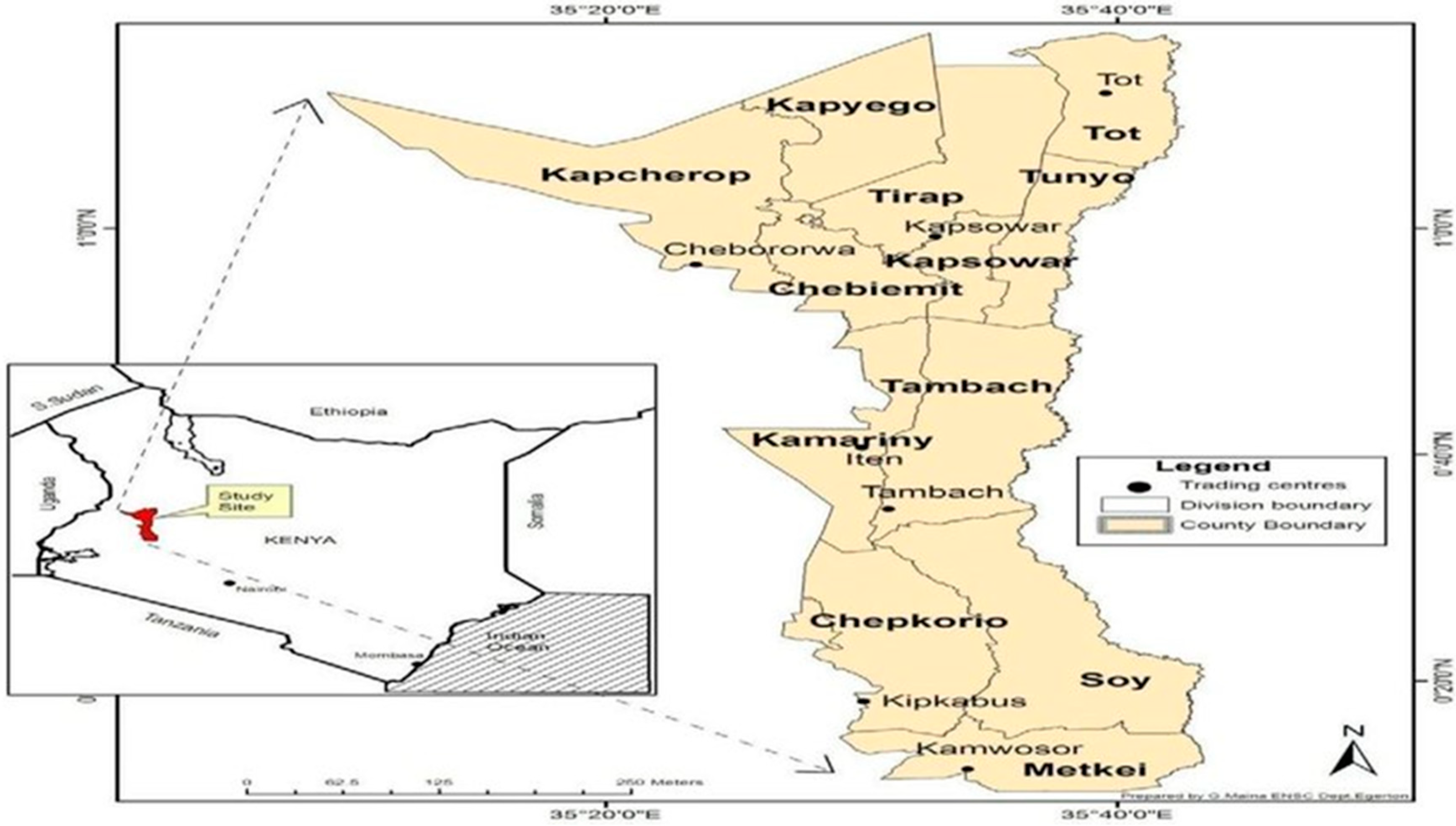
Figure 3.
Varied types of dairy goat production systems.
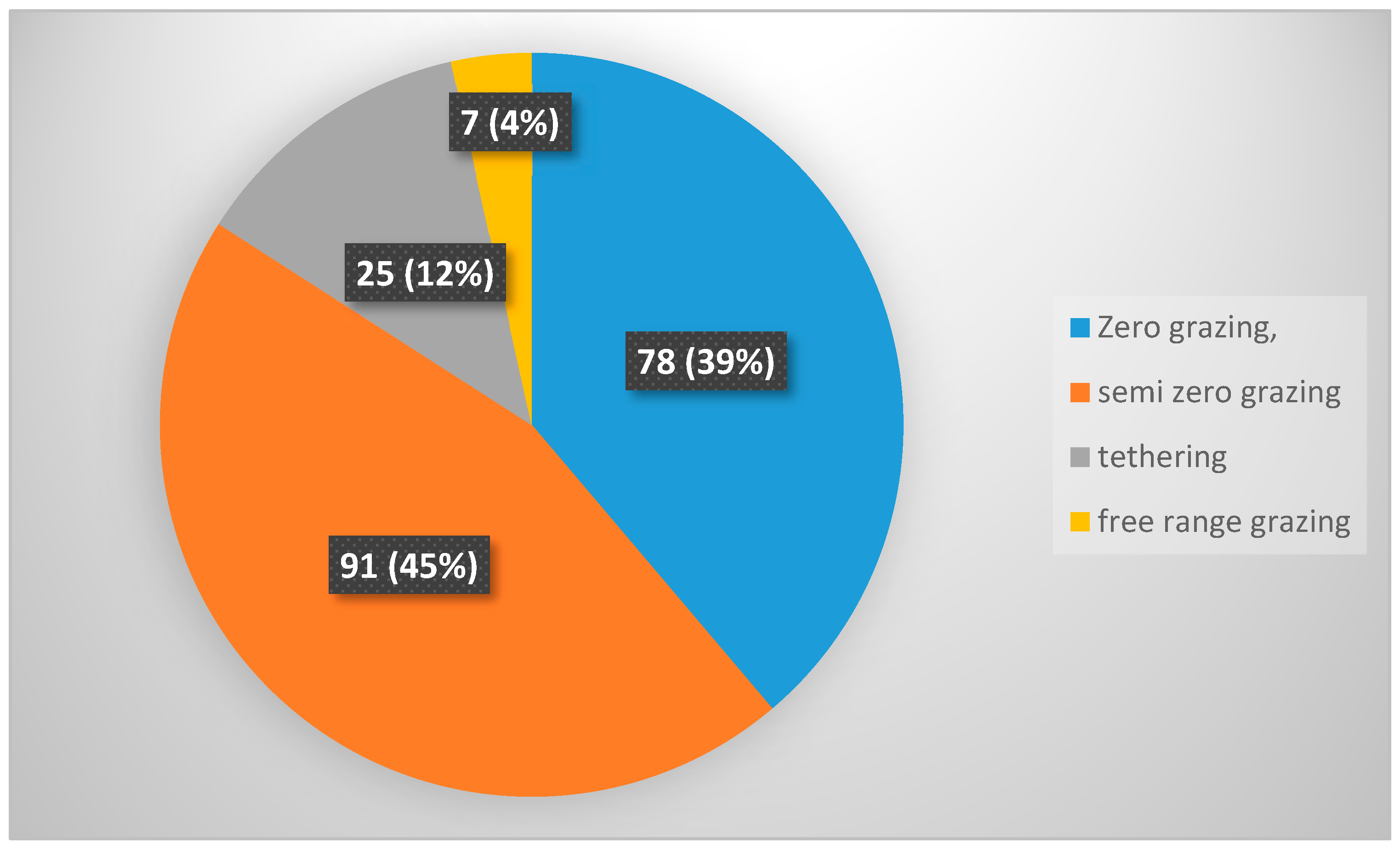

Table 1.
Socio demographic and economic characteristics of the respondents.
| Socio demographic and economic characteristics of the respondents | |
|---|---|
| Parameter | Frequency; %(n=201) |
|
Gender Female Male |
167 (83.1%) 34 (16.9%) |
|
Relationship to the Household head Self Wife Family member |
41 (20.4%) 146 (72.6%) 14 (7.0%) |
|
Level of education No formal education Adult education Primary school Secondary school Tertiary |
10 (5.0%) 9 (4.5%) 68 (33.8%) 73 (36.3%) 41 (20.4%) |
|
Marital status Single Married Widowed |
8 (4.0%) 183 (91.0%) 10 (5.0%) |
|
Main occupation Food Crop farming Livestock farming Trader/Service Formal salaried employee |
89 (44.3%) 50 (24.9%) 46 (22.9%) 16 (8.0%) |
|
Type of house Permanent Semi-permanent |
127 (63.2%) 74 (36.8%) |
|
Source of water for farming Piped River Rainfall |
77 (38.3%) 118 (58.7%) 6 (3.0%) |
|
Water accessibility Always Very often Sometimes Rarely |
33 (16.4%) 27 (13.4%) 116 (57.7%) 25 (12.4%) |
| Average family size | 6.39 ± 2.408 |
| Average number of under 5 years old | 0.78 ± 0.850 |
| Average land size of integrated farming (hectares) | 0.72 ±1.402 |
Table 2.
Distribution of utilization of income sourced from dairy goat farming.
| Income use %(n=201) | ||||
|---|---|---|---|---|
| Not frequently (%) | Frequently (%) | Very frequently (%) | Total (%) | |
| Purchase food | 41.8 | 25.5 | 32.7 | 100 |
| Purchase of clothes | 98.2 | 0 | 1.8 | 100 |
| Paying fees | 45 | 37.8 | 17.1 | 100 |
| Medical purpose | 66.7 | 19.8 | 13.5 | 100 |
Table 3.
Types of Pigeonpea preferred by the farmers and traits of preference.
| Early maturing | High yielding | Good taste | Pest and disease tolerance | Cooks very fast | |
|---|---|---|---|---|---|
| Short duration | 96 | 83 | 22 | 70 | 39 |
| Medium duration | 82.4 | 97.1 | 133 | 67 | 67 |
| Long duration | 10 | 20 | 0 | 100 | 30 |
The numbers indicate the percentage of farmers preferring a particular type of pigeonpea based on the respective trait.
Table 4.
Level of knowledge on pigeonpea and sweet potatoe production based on the responses to the questions.
Table 4.
Level of knowledge on pigeonpea and sweet potatoe production based on the responses to the questions.
| Knowledge levels | True(%) | Factor loading 1a | Factor loading 2b |
| Pigeonpea and sweet potatoes are well adapted to harsh climatic conditions and disease infestation | 82.6 | .936 | |
| Pigeonpea and sweet potatoes are easier to grow in comparison to other crops | 80.1 | .902 | |
| Pigeonpea and sweet potatoes are important commodities for household food security | 79.1 | . 697 | |
| Pigeonpea and sweet potatoes are important commodities for feed supplementation in dairy goat farming | 86.1 | .782 | |
| Pigeonpea and sweet potatoes production provide employment opportunities for the HH members | 52.7 | .729 | |
| Pigeonpea and sweet potatoes production generate income for the rural population | 68.7 | .727 | |
| Pigeonpea and sweet potatoes production improve soil fertility | 84.1 | .707 | |
| Pigeonpea and sweet potatoes contain essential vitamins as well as supplementary protein and calories for human healthy | 61.7 | .929 | |
| The high protein and vitamin contents in Pigeonpea and sweet potatoes can eliminate deficiencies among children, pregnant women and the elderly | 54.2 | .889 | |
| Pigeonpea and sweet potatoes contain essential vitamins as well as supplementary protein and calories for animal healthy | 63.7 | .926 | |
| Eigenvalues | 5.49 | 1.720 | |
| Eigenvalues percentage contribution | 54.95 | 17.220 | |
| Cumulative percentage of variance explained | 54.95 | 72.160 | |
| Kaiser-Meyer-Olkin Measure of Sampling Adequacy | 0.881 | ||
| Determinant | 0.109 | ||
| Scale of reliability | 0.906 | ||
| Bartlett’s Test of Sphericity Chi-Square (degrees of freedom) | 1354.97*** (45) |
∗∗∗represent significance at 1% level. (a) Factor 1; represents high preference of variables relating to SMART crop nutritional and economic importance. (b)Factor 2; represents high factor loadings on variables relating to SMART crops adaptability and inputs.
Table 5.
Perceptions scoring and factor loading on integrated crop-dairy goat farming system.
|
Perception on integrated crop-dairy goat farming (%) |
To a great extent | Factor loading 1a | Factor loading 2b |
| What extent does the farm size influence the adoption of integrated crop- dairy goat production system | 57.2 | .698 | |
| What extent does the fodder acreage influence the dairy goat production | 58.7 | .816 | |
| What extent does the unavailability of seeds influence integrated crop- dairy goat production system | 52.2 | .637 | |
| What extent does the gender norms in this community influence the implementing integrated crop- dairy goat production system | 29.4 | .609 | |
| What extent does land ownership in this community hinder youth from adopting integrated crop- dairy goat production system | 34.8 | .857 | |
| What extent does drought influence the level of adopting integrated crop- dairy goat production system | 84.6 | .814 | |
| What extent does change in rainfall pattern in the community influence the level of adopting integrated crop- dairy goat production system | 77.6 | 21.4 | .813 |
| What extent does the severity of pest in the community influences the level of adopting integrated crop- dairy goat production system | 68.7 | .815 | |
| What extent does the diseases in the community influence the level of adopting integrated crop- dairy goat production system | 69.7 | .661 |
(a) Factor 1: represents high factor loadings of variables relating to asset influence. (b) Factor 2: represents high factor loadings on variables relating to impact of climate change.
Table 6.
Attitude levels and factor loading in the adoption of integrated farming system.
| Attitudes | Disagree (100%) |
Strongly agree (100%) |
Factor loading 1a |
Factor loading 2b | Factor loading 3c |
| Integrated crop-dairy goat farming is a women’s activities/business | 48.8 | .624 | |||
| Integrated crop-dairy goat is a poor people’s farming activity | 51.2 | .760 | |||
| Integrated crop-dairy goat is a cumbersome activity | 44.3 | -.803 | |||
| Integrated crop-dairy goat is not a profitable farming venture | 45.3 | .824 | |||
| Gatekeepers disapprove your adoption of crop-dairy goat integrated farming system | 53.7 | .749 | |||
| Adoption of integrated crop- dairy goat production system on your farm has/will protect the environment | 79.6 | .716 | |||
| Eigenvalues | 1.43 | 1.198 | 1.012 | ||
| Eigenvalues percentage contribution | 23.75 | 19.970 | 16.87 | ||
| Cumulative percentage of variance explained | 23.85 | 43.820 | 60.69 | ||
| Kaiser-Meyer-Olkin Measure of Sampling Adequacy | 0.516 | ||||
| Determinant | 0.817 | ||||
| Scale of reliability | 0.56 | ||||
| Bartlett’s Test of Sphericity Chi-Square (degrees of freedom) | 39.818*** (15) |
∗∗∗represent significance at 1% level. (a) Factor 1: may represents high factor loadings of variables relating to an increased farming workload. (b) Factor 2: may presents high factor loadings on variables relating to crop-dairy goat integration benefits. (c) Factor 3: may presents high factor loadings on variables relating to crop-dairy goat integration acceptability.
Disclaimer/Publisher’s Note: The statements, opinions and data contained in all publications are solely those of the individual author(s) and contributor(s) and not of MDPI and/or the editor(s). MDPI and/or the editor(s) disclaim responsibility for any injury to people or property resulting from any ideas, methods, instructions or products referred to in the content. |
© 2023 by the authors. Licensee MDPI, Basel, Switzerland. This article is an open access article distributed under the terms and conditions of the Creative Commons Attribution (CC BY) license (http://creativecommons.org/licenses/by/4.0/).
Copyright: This open access article is published under a Creative Commons CC BY 4.0 license, which permit the free download, distribution, and reuse, provided that the author and preprint are cited in any reuse.


