

Submitted:
20 October 2023
Posted:
23 October 2023
You are already at the latest version
Abstract
Rammed earth in a built environment has vapor diffusion characteristics and humidity control ability each of which are respectively attributed to the porous structures and the hydrophilic properties. Indeed, these structures and properties, which allows easily absorbing water parti-cles, hence, affecting the durability of a rammed earth wall. This paper presents the water repel-lency method for rammed earth walls which synthesizes siloxane copolymers containing fluo-rine. The water-repellent properties are investigated by measuring the contact angle, water ab-sorption rate, and compressive strength after spray coating with the synthesized siloxane co-polymers on the surface of the rammed earth specimens under study. The water contact angle of the specimen coated with a siloxane copolymer containing 10 mol.% of a silane monomer with a fluorine group is about 140o. The water absorption of the specimen obtained after immersing in water for 24 hours is low at about 3.5 wt.%. In addition, the compressive strength is remained more than 80% of the corresponding strength of the specimen which is not immersed into water. It is confirmed that the use of a 10% by volume of the siloxane copolymer containing the fluo-rine group may assure the water-repellent performance and the economic competitiveness.
Keywords:
water repellency
; siloxane copolymer
; rammed earth wall
1. Introduction
Rammed earth construction is used for building walls using natural raw materials such as earth, chalk, lime, or gravel. The more the construction society pursue sustainable natural building materials and economical construction methods, the more intensive the interest to use rammed earth construction in recent years. Indeed, rammed earth construction provides an easily accessible method to construct noncombustible, strong, and durable walls with excellent thermal properties [1].
However, the method encounters eroding issues when the air contact surface areas of rammed earth walls are frequently exposed to weather elements (i.e., rain, snow, fog, dew, and sleet, etc.) which continuously alternate wetting and drying. The issue causes the earth particles to retain a high amount of moisture, hence, leading to destructive effects [2]. The vapor diffusion properties and humidity control ability of rammed earth, which is commendable for the wall building materials, may be earned only when the permeability and hydrophilic properties of the rammed earth materials are controlled appropriately because moisture particles can easily penetrate through the walls [2]. Indeed, the porous structure of the rammed earth wall causes high sensitivity to moisture absorption through capillary tubes in the wall. For sure, controlling moisture absorption is an important contributor to the reduction of various water-induced damages such as stains, scaling attributed to freeze thaw cycles, chemical attacks, and corrosion to reinforcing steel [3].
Since moisture penetration is the major contributor that influences the durability of the rammed earth wall, a recent series of methods focus on improving the durability of rammed earth structures using stabilizers such as cement. Soil stabilization binds soil particles together, improves soil strength, and increases softening resistance to water by means of waterproofing [4]. Noteworthy is that cement neither does lend itself to water penetration, because it is also a hydrophilic material, nor to solve eco-friendliness because it allows damage to the insulation of the rammed earth buildings.
The recent representative methods, which improve the durability of rammed earth buildings against natural weathering, are twofold, internal admixtures treatment and post-surface treatment [5]. The ones, internal admixture treatments using mainly a silicone water repellent, minimize effectively the movement of moisture in the capillaries in the first step of rammed earth construction. The others, post-surface treatments, block the inlets of capillaries on the surface of the rammed earth wall after when the wall is built and cured. Silicone-based repellents are useful for rammed earth constructions against existing post-surface treatments, because the sealer penetrates the capillary system and reacts with the substrate via strong bonding, hence providing long-term protection against natural weathering. The post-surface treatment using water repellents has been well accepted as a reliable long-lasting solution to minimize water penetration within inorganic construction materials [5]. In the last decades, silane, siloxane, or silicone resin-based emulsions or powders of have been used as water repellents in mortar and concrete. Indeed, the treatment using these compounds is now an established technology with well-accepted benefits [6,7]. However, these compounds have been rarely used for rammed earth walls.
Siloxane polymer-based repellents offer permanent water-repellent layers on various types of construction materials composed of soil, aggregate, and inorganic [7,8]. The reaction leads to the monolayer of the surfaces by converting the water-like silanol groups to water-repellent siloxane bonds. These siloxane polymers react with soil particles, hence, forming hydrophobic layers on the surface of the soil particles.
Most siloxane-based polymer water repellents consist of alkyl groups such as octyl or dodecyl groups. Siloxane polymers substituted with these long-chain alkyls have a good water repellency effect. However, fluoroalkyls outperform in hydrophobicity rather than alkyl groups. Note that few studies on siloxane polymer water repellents are made of fluoroalkyl, and only a few studies report on water-repellent properties according to the composition and type of fluoroalkyl as well.
This study develops a water repellent, which may increase the durability of rammed earth walls, by copolymerizing various siloxane monomers. The water repellent is produced by performing the hydrolysis and condensation copolymerization of alkyl groups or fluoroalkyl groups that are substituted by trialkoxysilane and tetraethoxysilane compounds. The performance of repellent is investigated according to polymerization conditions, composition ratios, and solution concentrations.
A siloxane copolymer with a low molecular weight is prepared for post-surface treatment using spray surface coatings. The water-repellent characteristics are identified by the contact angle depending on the composition ratio of the copolymer. In addition, the moisture content and the compressive strength obtained after immersing a specimen in water are measured to confirm the durability of the rammed earth wall against moisture penetration.
2. Experimental
2.1. Materials
n-Octyltriethoxysilane (OTES, Aldrich Co. USA), 1H,1H,2H,2H-perfluorodecyltriethoxy-silane (PFTES, Aldrich Co. USA), (3,3,3-trifluoropropyl) trimethoxysilane (TFTMS, Thermo Scientific, USA), and tetraethoxysilane (TEOS, Aldrich Co. USA) are used without purification for the synthesis of siloxane copolymers. Water repellents from Masonry Defender (IN, USA) and epoxy resin from Kukdo Chemical (Seoul, Korea) in commercial are used for comparison with the synthesized siloxane copolymer.
2.2. Synthesis of siloxane copolymers for water repellents
Siloxane copolymers are synthesized using sol-gel hydrolysis and a condensation reaction of various silane precursors containing alkyl and fluoroalkyl groups. Alkoxy groups are hydrolyzed under acidic aqueous conditions, and hydroxyl groups (-OH) are then condensed with other hydroxyl and alkoxy groups in processes referred to as water and alcohol condensations, respectively [9,10]. Siloxane copolymers are synthesized from OTES, PFTES, TFTMS, and TEOS. Ethanol is used as a co-solvent in the ethanol:siloxane mole ratio of 1.3:1 to ensure a miscible solution of the silane precursors. A relatively high quantity of HCL (0.5 mol/L) is used as a catalyst in the HCl:siloxane mole ratio of 0.1:1 to improve the stabilization in an aqueous medium. The mixture is stirred at 80 oC for 6 hrs. Finally, a clear transparent solution is obtained. The chemical structure of the obtained siloxane copolymers is shown in Figure 1.
2.3. Preparations of specimens
Rammed earth specimens are prepared to measure the compressive strength by using cylindrical molds of which the height and the diameter are 950 and 50 mm, respectively, by taking the approach of the existing study [1]. After pouring the mixtures into the cylindrical mold, compaction is applied using a mechanical rammer by exerting an impact force of ~20 kN. Each specimen is made by placing four compaction layers sequentially. Each layer is poured with an equal amount of soil mixture. Each layer is cast in the mold in three consecutive iterations of compaction using the mechanical rammer, hence, producing the specimen.
The water repellents of 5 to 50 vol.% ethanol/water solution are produced. After spray-coating each repellent on the surface of rammed earth specimens, the specimens are cured using natural drying followed by 12 hours drying in an 80 °C oven. It takes more than two weeks for the natural drying to arrive at the full maturity of curing. Therefore, some specimens are dried in an oven at 80 °C for 12 hours to quantify the difference between the contact angles obtained by the oven drying method and those obtained by the natural drying one. It is found that the difference in the contact angles is trivial which is within 2°. That is why the curing for experiments are conducted using oven drying only.
2.4. Characterizations
The contact angle is measured by the sessile-drop method using a contact-angle goniometer (SEO Ind., Pheonix-150/Tilting, Korea). The angle value is obtained by averaging at least five measurement points on various parts of each sample. Each angle point is measured given identical droplets of distilled water of which the volume is 8 μL at room temperature.
The strength is measured by performing the unconfined compression test which is the approach of ASTM D 2166 [11] and KS F 2314 [12]. The specimens are pressed with a loading rate of 1 mm/min by moving upward a bottom plate while recording the compression distance and stress. The values of the compressive strength are obtained by averaging three specimens with an error of less than 5%.
3. Results and Discussions
Soils become solidified when they are dry but lose their strength completely when they are wet. To complement this issue, the surface treatments are used to improve the weather resistance, hence, acquiring the long-term performance of the rammed earth materials. The quality requirements for the surface treatment performance include allowing vapor transmission, controlling carbonation, reducing moisture penetration, and improving sufficient drywall, etc. Silane-based hydrophobic admixtures obtained by mixing with concrete and water repellents have been used to protect the surface of the concrete [13]. However, the surface coating method of rammed earth walls, which makes use of a spray, is more favorable than the mixing with soils and water repellents. It facilitates enclosing only the surfaces of the rammed earth walls, which are vulnerable areas to weather erosion, by applying water-repellents after completing the rammed earth walls. Siloxane polymers consist of hydrophilic and hydrophobic groups. The active group Si-OH, which is a hydrophilic group, easily reacts with the surface of the rammed earth walls, hence, forming a chemically bonded layer. The outside of such a coat is composed of a water-repellent group, which consists of alkyl groups. This study synthesizes siloxane copolymers, which is specialized to coat the surface of rammed earth walls. A silane with an octyl group that is commonly used as a water repellent and a silane monomer in which a perfluorodecyl group and a trifluoro propyl group are substituted are copolymerized. The copolymerization outputs obtained by performing the hydrolysis and condensation [14] of four types of monomers: OTES, PFTES, TFTMS, and TEOS are shown in Table 1.
The molecular weight of OTES homopolymer (R1) is the highest among other copolymers (i.e., PF1 and TF1), given the monomer feed ratios of 8,000 g/mol. Those of PF1 and TF1 using PFTES and TFTMS substituted with fluorine, respectively, are relatively lower than R1, given the monomer feed ratio of 5,000 g/mol and that of 4,000 g/mol. It is confirmed that PF1 and TF1 are the most favorable for spray-coated water repellents because of their low molecular weights.
The water-repellent performance is evaluated by drying the rammed earth specimen followed by spray the siloxane copolymer solution to coat the surface of the rammed earth specimen followed by drying the coat, and followed by measuring the water contact angle. Water droplet is performed to measure each of which of the contact angle of a specimen which is coated with the siloxane copolymer PF1 and that which is not coated with it as shown in Figure 2.
The shape of the droplet on the surface of PF1 remains intact even 5 minutes time lapse passes after dropping the droplet as shown in (a) of Figure 2. However, that on the surface of the specimen, which is not coated, disappears completely within 10 seconds, hence, being unable to measure even a minimal contact angle. It is confirmed that the siloxane copolymer with an alkyl group and a fluoroalkyl group is promising for the water-repellent of rammed earth walls. The surface properties of the coated layer are generally dictated by the functional groups and are affected by the variations in the chain flexibility as well [15]. A silane monomer having an octyl group and a perfluoro decyl group as a substituent is used because the hydrophobicity of C-F is much higher than that of C-H is. In addition, the copolymer is prepared using a monomer with a perfluoro decyl group and a trifluoro propyl group to examine the effect of the chain length, chain flexibility, and amount of fluorine. The contact angles of water droplets on the surface of rammed earth specimens, which are coated by the spray with siloxane copolymer of FP1, siloxane copolymer of TF1, commercial repellent, and commercial epoxy resin, are measured after natural drying as shown in (a), (b), (c), and (e) of Figure 3, respectively.
The contact angle of the water repellent using the siloxane copolymer containing a fluorine group outperforms that of the commercial water repellent. The contact angle of PF1 having a high fluorine content outperforms that of TF1 having a low fluorine content in proportion to the hydrophobicity. In addition, the contact angle of the specimen coated twice is approximately 2 to 3 degrees higher than that of the specimen coated once.
Impregnation is widely used to treat masonry materials to make them water-repellent [16]. After immersing the rammed earth specimens that are coated with siloxane copolymers and those that are not coated with them into water, the water absorption amount is measured to evaluate the water resistance and the water-repellent performance. After elapsing the predefined time, the specimens emerge from the water followed by removing the surface moisture quickly with a towel and followed by weighing the specimens. The weight increase is indicated by the wt.% of water absorption against to the initial dry weight. The increase of water absorption obtained by the specimens as the function of immersion time in water is shown in Figure 4.
The specimen that is not coated with the copolymer absorbs about 18 wt.% of water after immersing into water for 1 hour. The water absorption becomes almost constant at about 20 wt.% after immersing in water for 3 hours. The surface of the specimen swells, hence, detaching soil particles on the edge part after immersing the specimens into water for 5 hours. The specimen swells in water but does not completely release the soil particles because the stabilizers bind the soil particles strongly, hence, increasing the apparent density as confirmed by existing study [1]. The specimen that is not coated with the copolymer absorbs about 18 wt.% of water after immersing in water for 1 hour. The water absorption becomes almost constant at about 20 wt.% after immersing in water for 3 hours. The surface of the specimen swells, hence, detaching soil particles on the edge part after immersing the specimens into water for 5 hours. The specimen swells in water but does not completely release the soil particles because the stabilizers bind the soil particles strongly, hence, increasing the apparent density as confirmed by existing study [1]. However, the specimen coated with the copolymer PF1 of which the contact angle is the highest absorbs 3.5 wt.% or less even after 24 hours of immersion time, hence, hardly water absorption. In addition, the specimen coated with the copolymer TF1 of which the contact angle is lower than that with PF1 absorbs 14 wt.% or less after 5 hours of immersion time, hence, occurring at a higher absorption rate rather than PF1 does. The outputs of the contact angle and the water absorption rate over time lapse provide admissible that the siloxane copolymer invented in the study has excellent characteristics as a water-repellent.
The compressive strength of the specimens used for the water absorption experiment, which are coated with the water-repellent developed to complement the vulnerable hydrophilic of rammed earth walls exposed to rainfall in this study, are shown in Figure 5.
Being immersed in water for 24 hours the specimens coated with the siloxane copolymer, the water absorption values of PF1 and that of TF1 are 3.5 wt.% and 17 wt.%, respectively. However, their shape and appearance before immersion in water remain intact. The compressive strength of the specimen PF1 absorbing a little moisture and that of the specimen that does not immerse in water are 6.1 MPa and 6.7 MPa, respectively, hence, reducing the strength by about 10%. However, the strength of the specimen PF1 remains sufficient enough for use in rammed earth walls. The compressive strength of the specimens TF1 absorbing more moisture than PF1 is 5.1 MPa, hence, reducing the strength by more than 25%. It confirms that the rammed earth walls coated with TF1 are more vulnerable to moisture attributed climates because it absorbs 17 wt.% of water more rather than PF1 does. The compressive strength of the specimen being not coated with siloxane copolymers absorbs 20 wt.% of water, hence, decreasing the strength rapidly by more than 60% to 2.5 MPa. For sure, the compressive strength of it does not meet the intended use of a rammed earth wall, because it is too low. The series of experiments provide a piece of admissible evidence that the developed siloxane-based copolymer containing fluorine has a sufficient effect as a water repellent along with and contributes to keeping intact the durability of the rammed earth wall.
The price competitiveness of either PF1 or TF1 is unfavorable to that of a water-repellent made of silane composed of conventional alkyl groups, even if only 10 mol% of the siloxane monomer with a high-price fluorine group is used. That is why, the water-repellent effect depending on the solution concentration of siloxane copolymers is investigated. PF1 and TF1, which are siloxane copolymers containing 10 mol% fluorosiloxane monomers, are mixed in ethanol/water at 50, 25, 10, and 5 vol.%. The contact angle of water droplets on the rammed earth specimens each of which is coated with different concentrations of siloxane copolymers by spray coating is measured. The variation of contact angles attributed to the concentration of siloxane copolymer is shown in Figure 6.
The contact angle keeps intact above 130 o regardless of the type and concentration of the siloxane copolymer. Indeed, the contact angle of the rammed earth specimen that is coated by the siloxane copolymer solution diluted to 10 vol.% concentration keeps intact almost to that coated by it having 50 vol.% concentration. It is found that the water-repellent effect is sufficient, even if the siloxane copolymer containing the fluorine group is used in the amount of 10 vol.% or less, hence, being favorable to the price competitiveness, even when the fluorine group is used.
4. Conclusions
The water-repellent, which is developed in this study, provides the special enhancement of water repellency in the surface of rammed earth walls. The repellent is obtained by copolymerizing a siloxane monomer substituted with a highly hydrophobic fluoroalkyl group and a conventional alkyl siloxane by reacting a hydrolysis and condensation. The contact angle of the water droplet on the surface of the rammed earth specimen, which is coated with the siloxane copolymer containing 10 mol.% of the siloxane monomer with a fluorine group, is about 140 o. Less than 3.5% by weight of water is absorbed when this specimen is immersed in water for 24 hours. The compressive strength of the specimen immersed remains 80% or more of it that is not immersed. The contact angle of it, which is coated with a solution produced by 10 vol.% of a siloxane copolymer containing a small amount of a fluorine group, is 130 o or more, hence, being excellent in water repellency. The post-treatment water repellent keeps the surface of the rammed earth walls dry, reduces water absorption, prevents liquefaction, and increases thermal performance, hence, delivering admissible performance accommodating various applications.
Author Contributions
Conceptualization, Keun-Byoung Yoon and Moo Jin Kim; Data curation, Keun-Byoung Yoon and Moo Jin Kim; Formal analysis, Dong-Eun Lee and Hee Seon Kim; Funding acquisition, Dong-Eun Lee and Hee Seon Kim; Investigation, Dong-Eun Lee and Hee Seon Kim; Methodology, Keun-Byoung Yoon and Moo Jin Kim; Project administration, Dong-Eun Lee and Hee Seon Kim; Resources, Keun-Byoung Yoon and Moo Jin Kim; Software, Keun-Byoung Yoon and Moo Jin Kim; Supervision, Dong-Eun Lee and Hee Seon Kim; Validation, Keun-Byoung Yoon and Moo Jin Kim; Visualization, Keun-Byoung Yoon and Moo Jin Kim; Writing—original draft, Keun-Byoung Yoon and Moo Jin Kim; Writing—review & editing, Dong-Eun Lee and Hee Seon Kim.
Funding
This work was supported by the National Research Foundation of Korea (NRF) grant funded by the Korea government (MSIT) (No. NRF-2019R1A2C3003890 and No. NRF-2022R1F1A1069977).
Institutional Review Board Statement
Not applicable.
Informed Consent Statement
Not applicable.
Data Availability Statement
Not applicable.
Conflicts of Interest
The authors declare no conflict of interest.
References
- Yoon, K.-B.; Ryu, H.M.; Lee, G.H.; Gopalan, A.I.; Sai-anand, G.; Lee, D.-E. Enhanced Compressive Strength of Rammed Earth Walls Stabilized with Eco-Friendly Multi-Functional Polymeric System. Renewable and Sustainable Energy Reviews 2021, 152, 111681. [Google Scholar] [CrossRef]
- Aderinola, O.S.; Nnochiri, E.S. Stabilizing Lateritic Soil Using Terrasil Solution. Selected Scientific Papers-Journal of Civil Engineering 2017, 12, 19–28. [Google Scholar] [CrossRef]
- Lecomte, J.P.; Weichold, O. Silane-Based Water Repellents for Inorganic Construction Materials; Taylor & Francis Group, 2017. [Google Scholar]
- Lekla, B.M.; Goutham, S.; Ravi Shankar, R.S. Laboratory Investigation of Soil Stabilized with Nano Chemical. In Proceedings of the Indian Geotechnical Conference; India, Rookie, December 22-24 2013; pp. 18–25. [Google Scholar]
- Hassan, K.; Cabrera, J.G. Short and Long Term Performance of Silane Treated Concrete. In Proceedings of the Proceedings of the First Int. Symposium on Surface Treatment of Building Materials with Water-Repellent Agents, Delft University of Technology, Delft; 1995; pp. 9–10.
- Felekoğlu, B. A Method for Improving the Early Strength of Pumice Concrete Blocks by Using Alkyl Alkoxy Silane (AAS). Constr Build Mater 2012, 28, 305–310. [Google Scholar] [CrossRef]
- Lecomte, J.P.; Llado, D.; Salvali, S.; Rodrigues, G.; Riberio, M. New Silicone Resin-Based Hydrophobic Powder for the Dry Mix Market. European Coatings Journal 2013, 88–91. [Google Scholar]
- Zhu, Y.-G.; Kou, S.-C.; Poon, C.-S.; Dai, J.-G.; Li, Q.-Y. Influence of Silane-Based Water Repellent on the Durability Properties of Recycled Aggregate Concrete. Cem Concr Compos 2013, 35, 32–38. [Google Scholar] [CrossRef]
- Jin, J.; Ko, J.; Yang, S.; Bae, B. Rollable Transparent Glass-fabric Reinforced Composite Substrate for Flexible Devices. Advanced Materials 2010, 22, 4510–4515. [Google Scholar] [CrossRef] [PubMed]
- Lee, H.; Lee, H.E.; Wang, H.S.; Kang, S.; Lee, D.; Kim, Y.H.; Shin, J.H.; Lim, Y.; Lee, K.J.; Bae, B. Hierarchically Surface-Textured Ultrastable Hybrid Film for Large-Scale Triboelectric Nanogenerators. Adv Funct Mater 2020, 30, 2005610. [Google Scholar] [CrossRef]
- ASTM D 2166; Standard Test Method for Unconfined Compressive Strength of Cohesive Soil; West Conshohocken, PA, USA, 2000.
- KS F 2314; Standard Test Method for Unconfined Compression Test of Soils; Maengdong-myeon, Korea, 2018.
- Herb, H.; Gerdes, A.; Brenner-Weiß, G. Characterization of Silane-Based Hydrophobic Admixtures in Concrete Using TOF-MS. Cem Concr Res 2015, 70, 77–82. [Google Scholar] [CrossRef]
- Sanchez, C.; Julián, B.; Belleville, P.; Popall, M. Applications of Hybrid Organic–Inorganic Nanocomposites. J Mater Chem 2005, 15, 3559–3592. [Google Scholar] [CrossRef]
- Yadav, H.O.S.; Kuo, A.-T.; Urata, S.; Shinoda, W. Effect of the Packing Density on the Surface Hydrophobicity of ω-Functionalized (− CF3,− CH3,− OCH3, And− OH) Self-Assembled Monolayers: A Molecular Dynamics Study. The Journal of Physical Chemistry C 2020, 124, 14237–14244. [Google Scholar] [CrossRef]
- Ren, K.; Kagi, D.A. Study of Water Repellent Effect of Earth Substrates Impregnated with Water-based Silicones. Journal of Chemical Technology & Biotechnology: International Research in Process, Environmental and Clean Technology 1995, 63, 237–246. [Google Scholar]
Figure 1.
The siloxane copolymer chemical structures obtained by hydrolysis and condensation reactions.
Figure 1.
The siloxane copolymer chemical structures obtained by hydrolysis and condensation reactions.
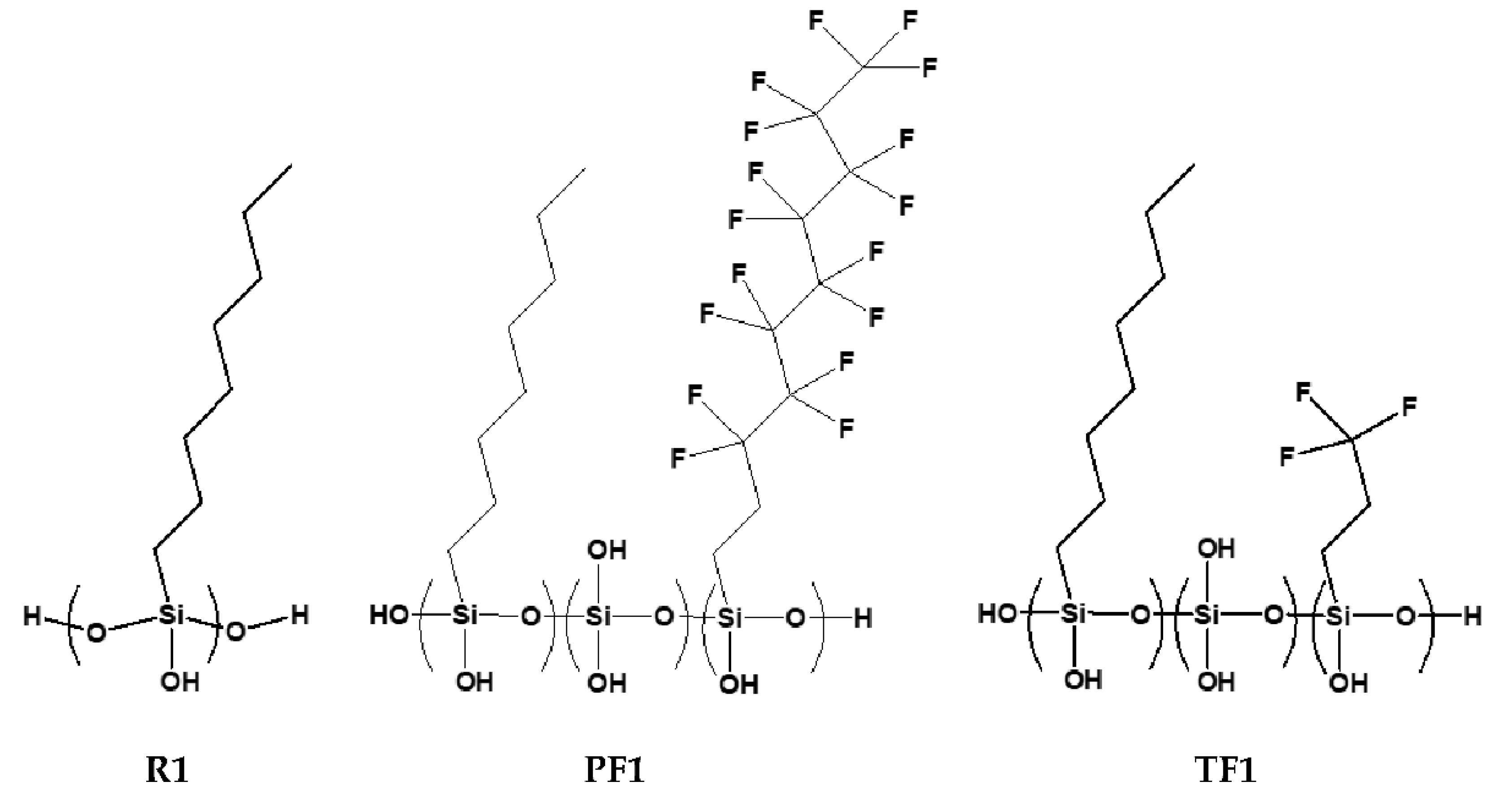
Figure 2.
Time lapse photograph of the water droplet on the surface of a rammed earth specimen coated with copolymer PF1 (a) and time lapse of that which is not coated (b).
Figure 2.
Time lapse photograph of the water droplet on the surface of a rammed earth specimen coated with copolymer PF1 (a) and time lapse of that which is not coated (b).

Figure 3.
Contact angles of water droplets on the rammed earth specimens coated with the synthesized siloxane copolymers (PF1 and TF1) and commercial water repellents; (a) PF1, (b) TF1, (c) commercial repellent, and (d) commercial epoxy resin.
Figure 3.
Contact angles of water droplets on the rammed earth specimens coated with the synthesized siloxane copolymers (PF1 and TF1) and commercial water repellents; (a) PF1, (b) TF1, (c) commercial repellent, and (d) commercial epoxy resin.
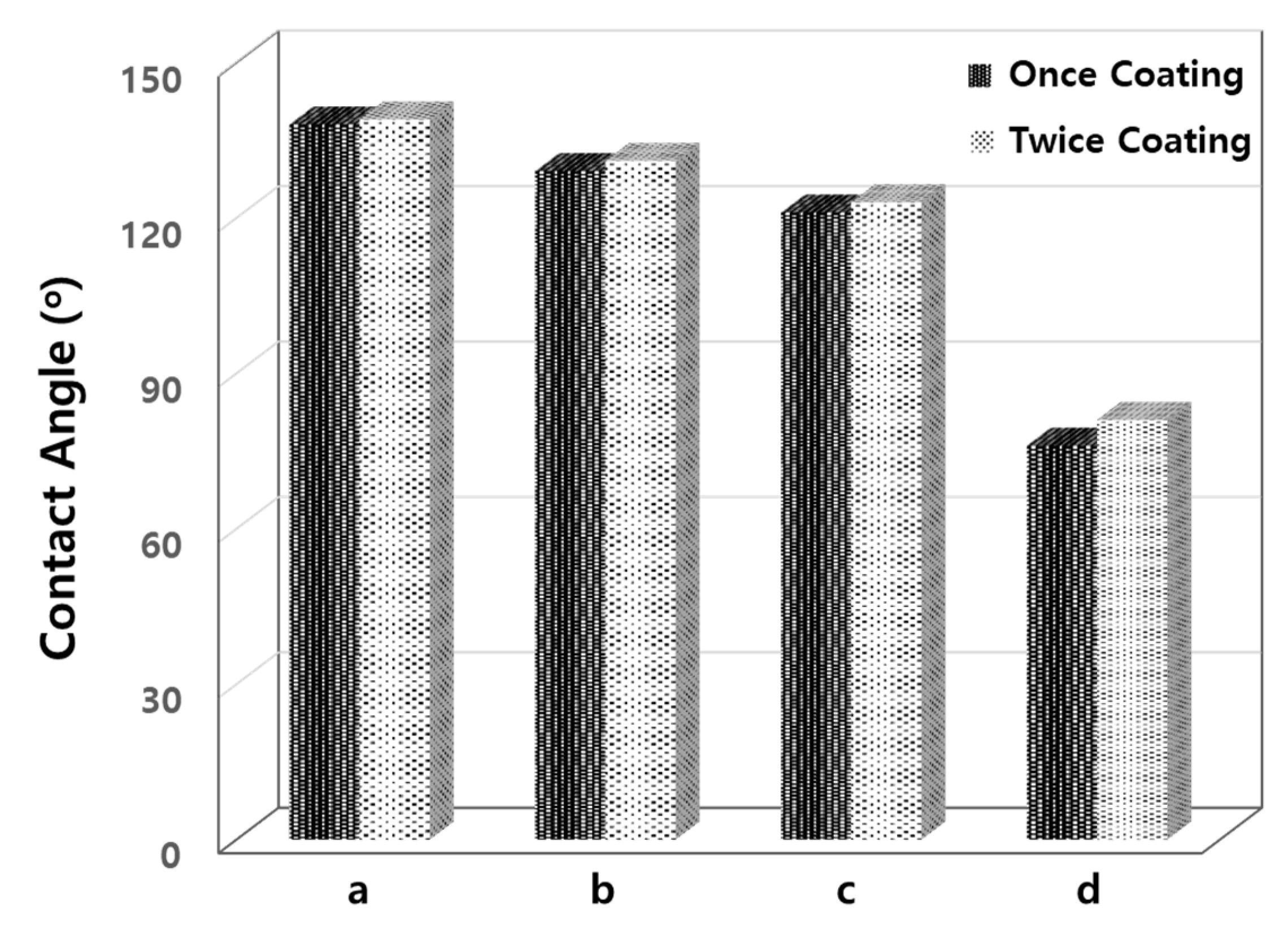
Figure 4.
Water absorption obtained by the specimens coated with and not coated with siloxane copolymer.
Figure 4.
Water absorption obtained by the specimens coated with and not coated with siloxane copolymer.
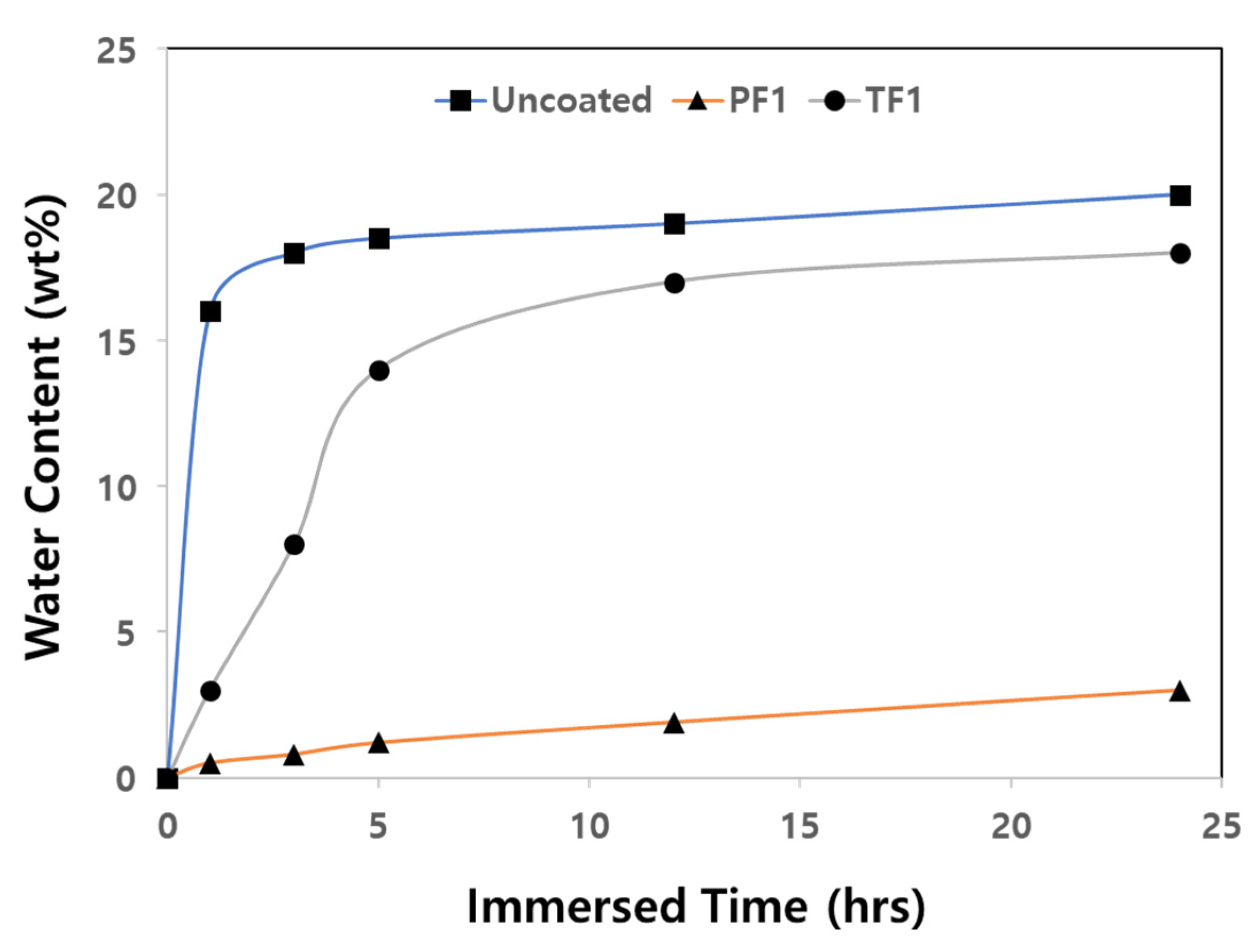
Figure 5.
Rammed earth specimens (PF1 and TF1) coated and immersed; The compressive strengths of (a) not immersed, (b) not coated and immersed, (c) coated and immersed PF1, and (d) coated and immersed TF1 specimens.
Figure 5.
Rammed earth specimens (PF1 and TF1) coated and immersed; The compressive strengths of (a) not immersed, (b) not coated and immersed, (c) coated and immersed PF1, and (d) coated and immersed TF1 specimens.
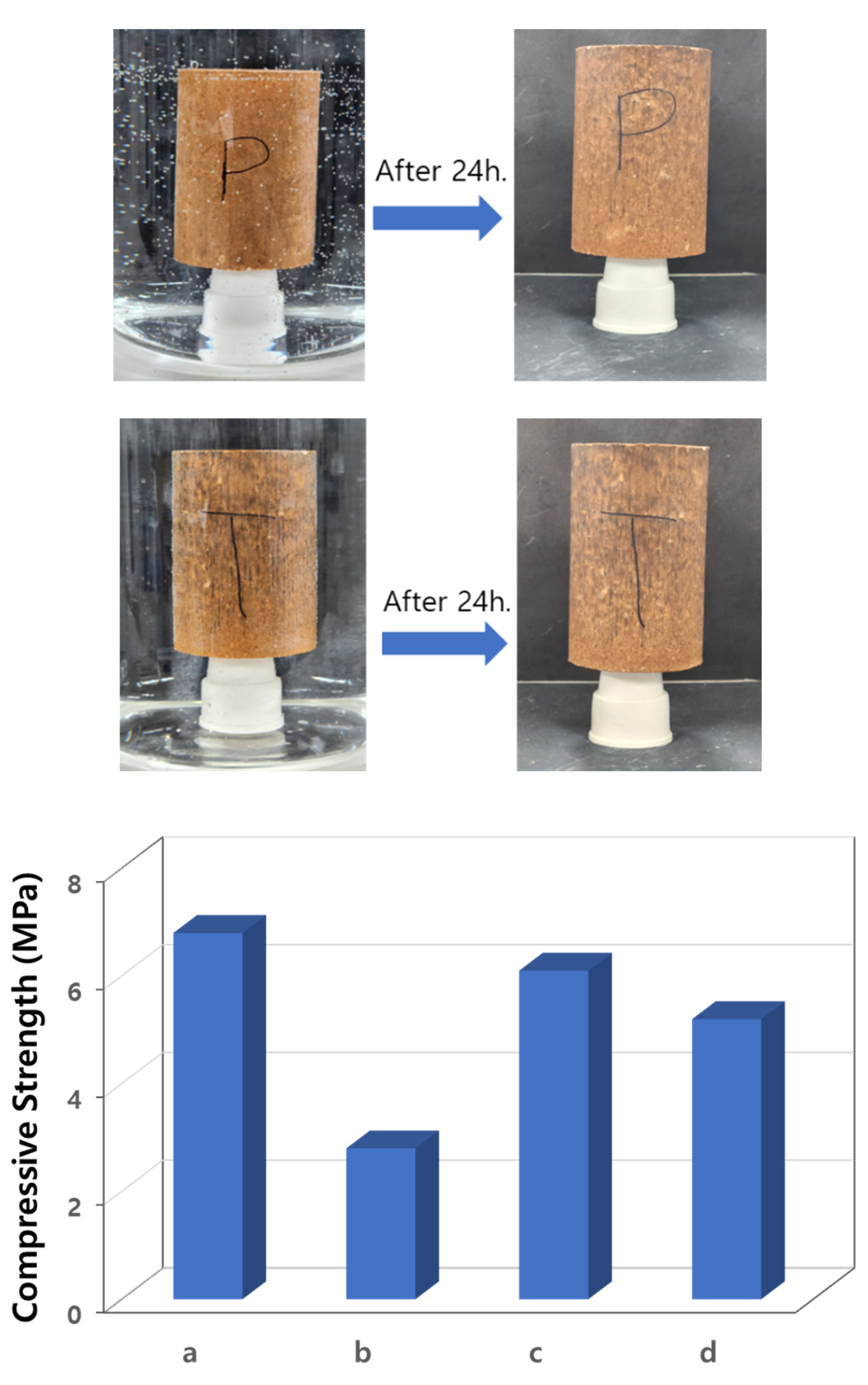
Figure 6.
Contact angles, given different concentrations of PF1 and TF1.
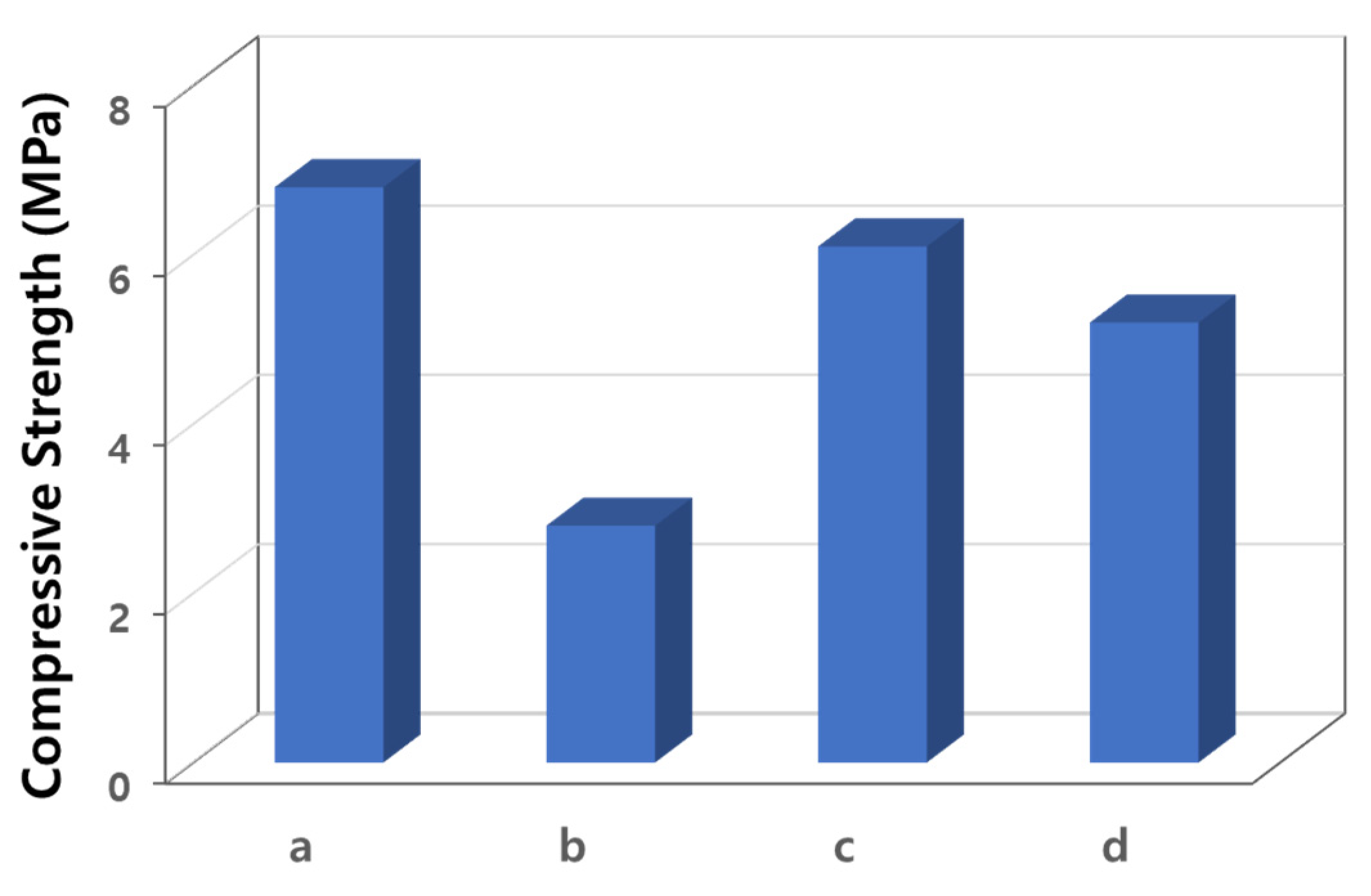

Table 1.
The molecular weight of copolymers at different monomer feed ratios.
| Monomer feed ratio [OTES]/[PFTES]/[TFTMS]/[TEOS] |
Mz | |
|---|---|---|
| R1 | 10/0/0/0 | 8,000 |
| PF1 | 8/1/0/1 | 5,000 |
| TF1 | 8/0/1/1 | 4,000 |
Copolymerization condition: [Monomer]/[EtOH]=1/2, [Monomer]/[H2O]=1/10, [Monomer]/[HCl]= 1/0.01, 80 °C, 6 hrs.
Disclaimer/Publisher’s Note: The statements, opinions and data contained in all publications are solely those of the individual author(s) and contributor(s) and not of MDPI and/or the editor(s). MDPI and/or the editor(s) disclaim responsibility for any injury to people or property resulting from any ideas, methods, instructions or products referred to in the content. |
© 2023 by the authors. Licensee MDPI, Basel, Switzerland. This article is an open access article distributed under the terms and conditions of the Creative Commons Attribution (CC BY) license (http://creativecommons.org/licenses/by/4.0/).
Copyright: This open access article is published under a Creative Commons CC BY 4.0 license, which permit the free download, distribution, and reuse, provided that the author and preprint are cited in any reuse.


