

Submitted:
10 October 2023
Posted:
12 October 2023
You are already at the latest version
Abstract
Basketball playing entails the repetitive performance of short intense actions using lower limb explosive power. As such, it is important to measure this capability in basketball players, especially among young players, and to optimize training programs and game plans. After presenting an in-depth understanding of the specific physiological requirements when playing basketball, as well as the type of movements required, The aim of this review is to better understand the importance of the physiological energy systems in basketball, to examine the contribution of each energy system and, accordingly, to heighten awareness of the importance and dominance of the alactic anaerobic physiological system in basketball, for actions requiring high level explosive power. This review of the literature depicts the horizontal and vertical physical movements and physiological requirements entailed in playing basketball, and presents eight standardized anaerobic alactic measurement tools relevant to the game. As some of these tests suit a number of ball games, the findings of this review article are important for making order of the elements unique to basketball as well as additional parameters to consider when testing basketball players. By reliably and validly testing the anaerobic alactic capabilities of basketball players, test results can be used for training purposes and for improving game outcomes. Despite the fact that much of the information in this review is familiar to coaches, highlighting the specific needs of basketball may help them to choose the most suitable tools, and may also shed light on new directions for developing basketball-specific assessment tests.
Keywords:
physiology
; basketball
; testing
; explosive
; unique
; specific movements
1. Introduction
In sports in general and in competitive team sports in particular, it is important to frequently assess players’ physiological capabilities in order to design, implement, and evaluate training programs and track players’ progress throughout the season, especially in young players, [1,2]. Among team sports, basketball is characterized by short, intense, anaerobic actions that are performed throughout the game [1,3,4] using anaerobic power, i.e., explosive power for up to 10 seconds [5]. In other words, the main energy source that contributes to these alactic anaerobic activities are adenosine triphosphate (ATP) / creatine phosphate (CP), referred to as ATP-CP, that are stored in the muscles and are easily accessible [6]. In addition, the glycolysis system also contributes to anaerobic activities. For actions that last more than 10 seconds and up to three minutes, the body’s anaerobic glycolysis is required [7].
Although in basketball the more dominant source is anaerobic alactic energy [3,5], it is also characterized by specific anaerobic actions, such as jumps, sudden stops, short sprints, and change of direction [2,8]. The body’s aerobic system also plays a key role in players’ recovery, to ensure successful frequent repetition of high intensity anaerobic actions [9,10]. Moreover, the introduction of new rules to the game of basketball in May 2000 (e.g., reduced attack time from 30 to 24 seconds and reduced time on the backcourt from 10 to 8 seconds) are believed to have altered the demands of basketball – both tactical and physical – increasing the speed and intensity of the game [11,12]. In turn, these changes also impact the players’ physiological characteristics, resulting in higher physical demands on the players and expected improved athletic abilities. Such new demands mainly relate to the players’ need to recruit their explosive power for performing and maintaining the rapid anaerobic pace of the game [13,14].
These physical activities place a heavy load on players’ muscles and joints, which must be developed to withstand such physical pressures [4,5]. This is not an easy feat, especially as the skeletal muscular and the nervous systems must be improved simultaneously. For example, scientific research indicates that the greater the load on muscles, the slower their rate of contraction [3,15]. To determine the necessary ratio between the strength and agility required to enhance explosive power, specific aspects of the sport must be examined [2,16]. For example, while ball game players and sprinters must perform fast movements with their relatively low body mass, body builders and weightlifters must overcome high resistance from external objects [17]. Specifically in basketball, the relationship between body mass and the performance of jumping and running varies according to age [5,11,13,18].
The main aim of this review is to better understand the importance of the physiological energy systems in basketball, to examine the contribution of each energy system and, accordingly, to heighten awareness of the importance and dominance of the alactic anaerobic physiological system in basketball, for actions requiring high level explosive power. In addition, the review clarifies the specific movements of basketball players in the various movement planes, including more complex movements that combine both horizontal and vertical movement such as penetrating for a layup. The review also offers the most relevant specific tests found in the literature. At the same time, it sheds light on the need for more designated field tests to assess players' explosive power abilities, because today, many such tests serve for a variety of ball games. It is important to take additional parameters into consideration when tests are conducted for basketball players. Although many of these issues are known to coaches and researchers, it is important to make order of all the elements unique to basketball.
The review will begin with the physiological energy systems activated in basketball. In most basketball related activities, both the aerobic and the anaerobic energy systems are involved, yet the ratio between the two energy sources varies according to the demands of the specific activity [2,3,5], including its intensity and duration (Table 1).
1.1. The physiological anaerobic alactic system that is dominant in basketball
The body’s energetic potential is utilized by breaking down ATP which is adenosine triphosphate [19]. Energy is released from the molecule when one of the three phosphate groups is degraded through a rapid chemical process by the ATPase enzyme [6,19]. As a result, two new molecules are created: adenosine diphosphate (ADP), with only two phosphate bonds, and the free phosphate (P), as seen in Figure 1.
ATP, often referred to as the body’s “energy currency”, enables the body to perform a range of biological activities [7]. These include complex and rapid actions needed for performing, completing, and recovering from actions performed in basketball [2]. Despite their vast importance, ATP resources in muscles are relatively small. With only 5-7 millimoles per kg of muscle during rest, this energy source is only sufficient for very short periods of time [7]. The fastest and simplest way to renew ATP is by also utilizing the body’s CP resources, which offer about 3-5 times more energy (about 20-25 millimoles per kg of muscle) than the ATP [5,7]. As such, CP resources are an important and immediate energy resource for the body’s cells, transferring their phosphate to the ADP to create new ATP molecules [7,20], as seen in Figure 2.
This rapid process takes place within the cell through a reaction that is enhanced by the creatine phosphokinase (CPK) enzyme. As CP is readily available in the body’s cells and this chemical process is extremely fast, this anaerobic means for renewing muscle energy is referred to as the “immediate anaerobic system” [20,21]. However, as the quantity of CP in the muscle is also relatively small, it too is limited to only providing energy for a number of seconds. The combined ATP-CP resources in the muscles provide immediate energy for quickly contracting the muscle. Without the intervention of CP, the ATP resources would suffice for a maximum of 1-2 seconds of activity [3,5,7]. In addition, the optimal anaerobic supply reflects the ability of the immediate anaerobic system (ATP-CP) to release energy and activate muscles at maximum pace for short periods, of up to 10 seconds [3,5]. Greater efficacy of the ATP-CP enzyme activity is seen among athletes and people with a high percentage of fast twitch (FT) muscle fibers [19,20].
As such, athletes with greater anaerobic capabilities will have a clear advantage when participating in a sport such as basketball that requires explosive power [2,5]. Yet being able to measure players’ anaerobic abilities consistently and accurately requires uniform and relevant measurement tests. The aim of this article, therefore, was to review the existing anaerobic alactic measurement tests that can be specifically used in relation to basketball, as a means for providing basketball trainers, researchers, and physiologists with important information about optimal testing.
1.2. Explosive power and anaerobic alactic demands in basketball
Analysis of the physiological requirements of basketball players over the past few decades indicates great reliance on the body’s anaerobic metabolism to perform sprints and jumps throughout a game [22]. Moreover, the relatively high blood lactate concentration values recorded during games indicate the central involvement of the player’s anaerobic capacity [2,5]. As evaluating these factors during basketball practices and games is important, researchers and coaches have developed a range of tests for assessing anaerobic alactic system, and the effectiveness of the players’ physical conditioning. For example, Abdelkrim et al. [3] found that in elite male basketball players under 19, the new rules of basketball meant longer time periods performing high-intensity activities and an increased number of actions per game. Despite this, blood lactate concentration values were found to be slightly lower than those reported in earlier studies [3,4,5]. Such changes to the players’ metabolic load during basketball games must be addressed when developing and applying suitable physical conditioning programs and tests.
In a review that assessed the most important and relevant measurement tests for basketball players, researchers found that following the introduction of the new rules of the game, basketball playing is mainly dependent on anaerobic power rather than on anaerobic capacity [5,15]. To assess the effectiveness of basketball training programs, tests should therefore specifically address players’ lower limbs, through tests such as vertical jump (VJ), agility T tests, and short distance sprints (5-meter), rather than tests like the suicide run that lasts about 30 seconds [5]. These tests all assess anaerobic alactic capabilities and explosive power of the players' lower limbs - as seen in basketball training and games.
1.3. Specific movements in basketball
As explained, basketball players’ successful performance depends greatly on their anaerobic alactic systems, with shorter, more intense actions that require greater explosive power [1,2]. As such, training and tests should be developed in line with this important factor. However, it is also important to understand the more frequent movements required of basketball players in each situation. During practices and games, key actions include vertical movements (rebounds and jump shots), horizontal actions (change of direction and sprints), and a combination of the two (usually during shot blocking or when penetrating the basket) [22]. As these high-intensity actions are continuously performed throughout the game [2,10], professionals in the field seek optimal training methods for developing these physical capabilities among basketball players, especially their explosive power [2].
2. Explosive capability assessments
The ability to produce great power in short periods of time is of the utmost importance in basketball. As such, an emphasis is placed on enhancing explosive power among players of all levels and ages [5,22]. Doing so is not solely a theoretical exercise in fitness training and physiological principles; it requires the developing of reliable and valid measuring techniques that offer accurate and consistent outcomes [23,24]. Moreover, to provide coaches with applicable rather than theoretical outcomes, measurement protocols must accurately replicate movements that athletes perform in practices and games, while also offering consistent tools to enable comparisons and generalizations [25,26]. Doing so will ensure that differences in results over time are attributed to changes in the athlete’s performance rather than to differences in measuring systems. In addition, when applying measurement protocols, external factors should be controlled (such as time of day, the surface on which the test is conducted, and pre-test requirements), to avoid these environmental conditions and timeframes from impacting the test results. For example, in basketball, tests for explosive power should be conducted at three different points-in-time (immediately prior to the training program, about halfway through the program, and immediately after the training program), to gather maximum relevant data about the efficacy of the training program and its outcomes [1,6].
Basketball is unique in that it requires players to perform both horizontal and VJ. As such, the literature offers a range of tests for measuring horizontal, vertical, and combined explosive power in basketball players [1,22,28]. This article addresses those tests that specifically examine players’ lower limb explosive power, which plays a central role in most basketball actions (Table 2).
Following are details of these eight basketball-specific tests.
2.1. 5/10-meter sprint speed test
The 5/10-meter sprint speed test is used to evaluate players’ horizontal explosive power through cyclical movement (i.e., sprinting from a standing starting point). The athlete is asked to perform two sprints from a standing starting point, with 3-5 minutes’ rest between the two sprints. The best time out of the two is recorded. The advantage of using photo-electric cells is threefold, as it provides athletes with an external “start” signal, automatically stops the measurement upon sprint completion, and if required, can record intermediate times during the sprint with modular systems [2,29,30].
2.2. Standing broad jump test
The standing broad jump assessment is also used to assess basketball players’ anaerobic alactic capabilities. For this test, the athletes are instructed to stand with both feet together by the starting line. They then create momentum for the jump by bending their knees and moving their arms forward. The recorded measurement is the best jump out of three, measured with a standard measuring tape. If the athlete falls backwards during any of the jumps, the jump is disqualified, and the athlete is asked to repeat the jump. From 1900 to 1912, the standing broad jump was part of the Olympic competitions. However, it has not been part of regular global competitions for over a century. In most cases, this test is used for assessing explosive power among basketball players in clubs that do not have access to advanced equipment [2,31,32].
2.3. Drop jump test
The drop jump test, which can be conducted as a horizontal drop jump (HDJ) or as a vertical drop jump (VDJ) test, is used for measuring and developing athletes’ stretch-shortening cycle ability [33]. The athletes are instructed to stand on a pre-set box (at a height of 0.30-0.40 meters). The athletes then drop down to the ground, quickly bend their knees, and immediately perform a rebound jump as quickly as possible (< 0.25 seconds), minimizing their contact time with the ground. For the HDJ, they must jump as far forward as possible, while for the VDJ, they must jump up as high as possible. The test ends with their controlled landing on the ground [34,35].
2.4. 2x5-meter change of direction ability test
The 2x5-meter change of direction ability (CODA) test is especially suitable for measuring basketball players’ anaerobic alactic capabilities. The test measures sprinting time, turning, and changing direction. The athletes are instructed to perform a 5-meter run in one direction, turning around as quickly as possible, and then perform the same 5-meter run back to the starting point (a 10-meter run in total). Basketball players must possess strong agility capabilities to cope with the multiple stimuli and instantaneous decision making involved in the dynamic environment in which the game is played. In most cases, the T-test and pro-agility test are the gold standard for assessing agility among athletes [1,16,36]. However, in light of this review of the anaerobic alactic tests that are most suitable and specific for basketball players, the 2 x 5-meter CODA test should be conducted when examining the players’ anaerobic alactic and change of direction capabilities [37,38,39,40].
2.5. Countermovement jump test
The countermovement jump (CMJ) test assesses explosive power in a VJ, with athletes standing up straight, then bending their knees and quickly extending them to leave the ground and rise up as high as possible. The athletes are usually instructed to place their hands on their hips during the jump, to minimize upper limb momentum. Players perform up to three jumps in total, with about two minutes’ rest between jumps. Jumps can be performed using one or both legs and a transmitting and receiving bar is employed that enables the accurate measurement of flight and contact times during jumps [2,24].
2.6. Squat jump test
The sixth test reviewed in this article is the squat jump test, which also offers a tool for specifically measuring basketball players’ vertical explosive power. For this measurement assessment, the athletes assume a low squat position, refrain from any movement, then jump as up as high as possible. During the test, the players are usually asked to place their hands on their hips or behind their back, to prevent momentum from their upper limbs that could impact this assessment [2,18].
2.7. Bounding power test
The bounding power test also examines basketball players' anaerobic alactic abilities. The athletes are asked to stand on one leg and jump horizontally as far forward as they can, six consecutive times. Alternating the jumping legs after each jump means that a total of three jumps are performed with each leg. This test combines both horizontal and vertical capability assessments. In most tests, the athlete performs the final jump using both legs, into a sand box. This test is performed twice, with the longer distance being recorded. Results are measured manually using a tape measure [1,41].
2.8. Spike jump test
Finally, the eighth test presented in this review is the spike jump test, which examines the horizontal and vertical explosive power of basketball players, using what is considered a specific volleyball jump. First, upstretched arm length is measured. Next, they are asked to jump up as high as possible (after taking three or four steps forward, or not). Their upstretched arm length is then measured at the height of their jump. Their static upstretched arm length is then subtracted from their jump arm length, to achieve the relative height of the jump. A standing jump test can also be conducted for this assessment test [42]. These tests are specific for assessing explosive power in ball games and especially for professional basketball players who are required to manifest high levels of explosive power. Elite players will exhibit significantly higher levels in these tests than amateurs or players from lower leagues [5,43].
3. Discussion
This article reviews the existing lower-limb anaerobic alactic tests that are suitable for measuring professional basketball players’ abilities, in all levels and ages, a total of eight assessment tests. The modern game of basketball has become more intensive following the introduction of new rules in 2000. As such, basketball players’ agility and anaerobic alactic [3,5] abilities, rather than aerobic capabilities, play a more central role in their performance. Basketball players today are highly conditioned athletes, which is necessary for achieving consistent high-level performance throughout the season [12,44,45]. Moreover, the game is unique as it requires players to perform horizontal movements, vertical ones, and a combination of the two [2,46]. These high-intensity movements are intermittently performed throughout the game, at different time intervals and from different positions on the court [5,28]. As such, sports researchers, trainers, and strength and conditioning coaches continue to strive to identify optimal measurements tests that are specific to basketball [18,22].
Trainers and researchers often use 20 or 27-meter tests for assessing players’ abilities, as this is similar to the length of a basketball court [6]. However, video analysis indicates that basketball players rarely have to sprint across the entire court. Rather, they mainly perform high intensity runs lasting 1.7-2.1 seconds, which is more similar to the 5/10-meter run [3,22]. To the best of our knowledge, both theoretical and practical field tests are lacking that examine both horizontal and vertical capabilities specifically for basketball players. For example, one study has developed a new unique test for assessing the explosive power of basketball players with a ball [47]. This test is highly important and sheds light on the significance of unique tests in basketball. We chose not to present this test in the article because it needs to be further examined in additional studies, including differences by gender, age groups, and playing positions [2,47,48,49,50]. However, it is definitely a significant step forward. The need for additional unique tests to measure the variety of movements presented in this article regarding explosive power is required on the basketball court, as well as for the uniqueness of the agility component that incorporates elements of explosive power within it [2,16]. Furthermore, the need for unique tests in basketball is also relevant for assessing the aerobic physiological system, which received less focus in this review. Researchers in this field have started to develop additional unique tests in this area as well [2,51], and their use is also important, including continued thinking and development of additional unique tests [47,51]. Moreover, a number of tests assess athletes’ upper body explosive strength (such as the 1-RM bench press test). These were not reviewed in this article as these skills are less frequently used in basketball.
Efforts have been made to create tests that specifically assess lower limb explosive power among basketball players [2,5]. Although studies indicate correlations between vertical and horizontal power [42,47,52], the scientific literature lacks specific tests for examining this power in combined vertical and horizontal movements [1,39,53]. In a study on handball players [46], no association was observed between the CMJ tests and the players’ time in the air – an action that entails both horizontal and vertical movements. As such, CMJ may not be a reliable tool for predicting jumping ability specific to handball players. On the other hand, a different study revealed a strong connection between CMJ outcomes and the volleyball jump serve, which also combines both horizontal and vertical components, similar to the spike jump in basketball [42]. As such, connections among these variables seem to differ from sport to sport, and perhaps even among athletes with different levels of development. Moreover, it is unclear as to whether CMJ test protocols and others can reliably predict specific basketball jumping abilities (e.g., jumping time when leaping up towards the basket on one leg in various specific jumping styles while holding the ball).
Additional examples of inadequate tests can be seen in a number of intervention studies relating to ball games. While the outcomes of these studies indicate improvements in maximal sprint, strength, plyometric, and complex training, as seen in CMJ performance assessments [1,54,55,56], it is unclear whether these improvements can be transferred to additional game situations, such basket penetrating and layups. Indeed, transferring physical improvements seen in training to actual ball games is not easy to assess – as additional factors must be addressed, such as players’ technical abilities and complex interactions.
Since the main factor for assessing basketball players’ capabilities is their anaerobic alactic system, tests that examine their anaerobic glycolytic energy system are less relevant. Tests should specifically focus on players’ lower limb explosive power, such as the 5/10-meter sprint test rather than the 20-meter test. Moreover, it seems that while multiple tests exist, there is no standardization of these assessment tools – national or international. For example, while the horizontal and vertical drop jump tests may offer important tools for assessing basketball players’ plyometric and jump height abilities, drop height and jump height are not always identical and as such, could result in different measurements [33,34]. Additional limitations of the existing tests can be seen in tests such as the spike jump that combines both horizontal and VJ capabilities, as differences in players’ shoulder joint flexibility may impact the outcomes of the test and hinder the ability to reliably compare athletes’ measurements [42].
Finally, the issue of upper-limb momentum should be addressed, as biomechanical and physiological tools used to study the VJ often attempt to neutralize the athletes’ arm movement (by performing the test with their hands on their hips or behind their back). This is done in an attempt to isolate the effect of leg muscle power as a means for seeking causal relationships between improved lower body muscular power and jump height. However, this does not replicate the exact jump movements that athletes in general and basketball players in particular perform during practice and games – especially as jumping without arm momentum is not an action that is performed in competitive sports [18].
4. Conclusions and Practical Applications
Based on the literature review presented in this paper, it seems that specific tests for basketball players are lacking, especially tests for examining agility [16,35] a skill that requires lower-limb explosive power. The literature also lacks measurement tests for examining lower limb explosive power that requires both horizontal and vertical movements combined, as required in penetration of the basket [5,18]. It is especially difficult to replicate the dynamic, constantly changing environment that is typical of basketball games – an environment filled with simultaneous multiple stimuli in which players must make split-second decisions that could impact the outcome of the game. Future studies could benefit from developing and researching basketball specific tools for assessing players’ anaerobic alactic energy systems in relation to their lower-limb explosive power. Developing such tools could significantly enhance research and performance in basketball.
Assessment tests must provide useful input and insights that trainers and coaches can utilize in the field. As such, it is important to comply with the principle of specificity in training, whereby a given motor skill is improved (and tested) as it is performed during actual games [2,5,9]. Indeed, with specific respect to basketball, developing an applicable, reliable, and valid field-specific test for assessing players’ anaerobic capabilities is important. As such, this article helps to make order regarding the specific demands made on the players’ physiological energy systems – especially the alactic anaerobic system – and the role they play during a basketball game, as well as the specific patterns of movements. Despite the fact that much of the information in this review article is familiar to coaches and trainers, highlighting the specific needs of basketball may help them to choose the most suitable tools, and may also shed light on new directions for developing basketball-specific and unique assessment tests.
Author Contributions
Conceptualization, AS had the original idea of the paper and wrote the paper, RG main collaborator, JC and PA directors and final approvals of the text. All authors have read and agreed to the published version of the manuscript Asaf Shalom (AS) Roni Gottlieb (RG) Julio Calleja-Gonzalez (JC) Pedro E. Alcaraz (PA).
Funding
No sources of funding were used to assist in the preparation of this article.
Institutional Review Board Statement
Not applicable.
Informed Consent Statement
Not applicable.
Data Availability Statement
No new data were created or analyzed in this article.
Conflicts of Interest
The authors declare no conflict of interest.
References
- Gottlieb, R.; Eliakim, A.; Shalom, A.; Iacono, A.; Meckel, Y. Improving Anaerobic Fitness in Young Basketball Players: Plyometric vs. Specific Sprint Training. Journal of Athletic Enhancementer. 2014, 3. [Google Scholar]
- Gottlieb, R.; Shalom, A.; Calleja-Gonzalez, J. Physiology of Basketball – Field Tests. Review Article. J Hum Kinet. 2021, 77, 159–67. [Google Scholar] [CrossRef]
- Abdelkrim, N.; El Fazaa, S.; El Ati, J.; Tabka, Z. Time-motion analysis and physiological data of elite under-19-year-old basketball players during competition * Commentary. Br J Sports Med. 2007, 41, 69–75. [Google Scholar] [CrossRef] [PubMed]
- Stojanović, E.; Stojiljković, N.; Scanlan, A.T.; Dalbo, V.J.; Berkelmans, D.M.; Milanović, Z. The Activity Demands and Physiological Responses Encountered During Basketball Match-Play: A Systematic Review. Sports Medicine. 2018, 48, 111–35. [Google Scholar] [CrossRef]
- Delextrat, A.; Cohen, D. Physiological Testing of Basketball Players: Toward a Standard Evaluation of Anaerobic Fitness. J Strength Cond Res. 2008, 22, 1066–72. [Google Scholar] [CrossRef]
- Burke, E.J. Physiological considerations and suggestions for the training of elite basketball players. In Toward an Understanding of Human Performance; Movement: Ithaca, NY, 1980. [Google Scholar]
- Fox, E.L.; Mathews, D.K. The Physiological Basis of Physical Education and Athletics; WB Saunders: Philadelphia, 1996. [Google Scholar]
- Aksović, N.; Bjelica, B.; Milanović, F.; Milanovic, L.; Jovanović, N. Development of Explosive Power in Basketball Players. Turkish Journal of Kinesiology. 2021. [CrossRef]
- Mancha-Triguero, D.; García-Rubio, J.; Antúnez, A.; Ibáñez, S.J. Physical and Physiological Profiles of Aerobic and Anaerobic Capacities in Young Basketball Players. Int J Environ Res Public Health. 2020, 17, 1409. [Google Scholar] [CrossRef] [PubMed]
- Stojanovic, M.D.; Ostojic, S.M.; Calleja-González, J.; Milosevic, Z.; Mikic, M. Correlation between explosive strength, aerobic power and repeated sprint ability in elite basketball players. J Sports Med Phys Fitness. 2012, 52, 375–81. [Google Scholar]
- Edwards, T.; Spiteri, T.; Piggott, B.; Bonhotal, J.; Haff, G.G.; Joyce, C. Monitoring and Managing Fatigue in Basketball. Sports (Basel) 2018, 6. [Google Scholar] [CrossRef]
- Apostolidis, N.; Nassis, G.P.; Bolatoglou, T.; Geladas, N.D. Physiological and technical characteristics of elite young basketball players. J Sports Med Phys Fitness. 2004, 44, 157–63. [Google Scholar]
- Alemdaroğlu, U. The Relationship Between Muscle Strength, Anaerobic Performance, Agility, Sprint Ability and Vertical Jump Performance in Professional Basketball Players. J Hum Kinet. 2012, 31, 149–58. [Google Scholar] [CrossRef] [PubMed]
- Balčiūnas, M.; Stonkus, S.; Abrantes, C.; Sampaio, J. Long term effects of different training modalities on power, speed, skill and anaerobic capacity in young male basketball players. J Sports Sci Med. 2006, 5, 163–70. [Google Scholar] [PubMed]
- McInnes, S.E.; Carlson, J.S.; Jones, C.J.; McKenna, M.J. The physiological load imposed on basketball players during competition. J Sports Sci. 1995, 13, 387–97. [Google Scholar] [CrossRef] [PubMed]
- Sheppard, J.M.; Young, W.B. Agility literature review: Classifications, training and testing. J Sports Sci. 2006, 24, 919–32. [Google Scholar] [CrossRef]
- Shalfawi, S.A.I.; Sabbah, A.; Kailani, G.; Tønnessen, E.; Enoksen, E. The relationship between running speed and measures of vertical jump in professional basketball players: a field-test approach. J Strength Cond Res. 2011, 25, 3088–92. [Google Scholar] [CrossRef] [PubMed]
- Mancha-Triguero, D.; García-Rubio, J.; Calleja-González, J.; Ibáñez, S.J. Physical fitness in basketball players: a systematic review. J Sports Med Phys Fitness. 2019, 59. [Google Scholar] [CrossRef] [PubMed]
- Fox, E.; Bowers, R.; Foss, M. The Physiological Basis of Physical Education and Athletics; WB Saunders: Philadelphiam, 1988. [Google Scholar]
- Gillam, G.M. Basketball energetics: physiological basis. Nat Strength Cond Assoc. J 6 1985. [Google Scholar]
- Hoare, D.G. Predicting success in junior elite basketball players--the contribution of anthropometic and physiological attributes. J Sci Med Sport. 2000, 3, 391–405. [Google Scholar] [CrossRef]
- Ostojic, S.M.; Mazic, S.; Dikic, N. Profiling in Basketball: Physical and Physiological Characteristics of Elite Players. The Journal of Strength and Conditioning Research. 2006, 20, 740. [Google Scholar] [CrossRef]
- Wragg, C.B.; Maxwell, N.S.; Doust, J.H. Evaluation of the reliability and validity of a soccer-specific field test of repeated sprint ability. Eur J Appl Physiol. 2000, 83, 77–83. [Google Scholar] [CrossRef]
- Markovic, G.; Dizdar, D.; Jukic, I.; Cardinale, M. Reliability and Factorial Validity of Squat and Countermovement Jump Tests. The Journal of Strength and Conditioning Research. 2004, 18, 551. [Google Scholar] [PubMed]
- García-López, J.; Peleteiro, J.; Rodgríguez-Marroyo, J.A.; Morante, J.C.; Herrero, J.A.; Villa, J.G. The Validation of a New Method that Measures Contact and Flight Times During Vertical Jump. Int J Sports Med. 2005, 26, 294–302. [Google Scholar] [CrossRef] [PubMed]
- Bosco, C.; Luhtanen, P.; Komi, P.V. A simple method for measurement of mechanical power in jumping. Eur J Appl Physiol Occup Physiol. 1983, 50, 273–82. [Google Scholar] [CrossRef]
- Huyghe, T.; Scanlan, A.; Dalbo, V.; Calleja-González, J. The Negative Influence of Air Travel on Health and Performance in the National Basketball Association: A Narrative Review. Sports. 2018, 6, 89. [Google Scholar] [CrossRef] [PubMed]
- Ferioli, D.; Rampinini, E.; Martin, M.; Rucco, D.; la Torre, A.; Petway, A.; et al. Influence of ball possession and playing position on the physical demands encountered during professional basketball games. Biol Sport. 2020, 37, 269–76. [Google Scholar] [CrossRef] [PubMed]
- Meckel, Y.; Machnai, O.; Eliakim, A. Relationship Among Repeated Sprint Tests, Aerobic Fitness, and Anaerobic Fitness in Elite Adolescent Soccer Players. J Strength Cond Res. 2009, 23, 163–9. [Google Scholar] [CrossRef] [PubMed]
- Mujika, I.; Santisteban, J.; Castagna, C. In-season effect of short-term sprint and power training programs on elite junior soccer players. J Strength Cond Res. 2009, 23, 2581–7. [Google Scholar] [CrossRef] [PubMed]
- Hardy, L.L.; Merom, D.; Thomas, M.; Peralta, L. 30-year changes in Australian children’s standing broad jump: 1985–2015. J Sci Med Sport. 2018, 21, 1057–61. [Google Scholar] [CrossRef]
- Glencross, D.J. The nature of the vertical jump test and the standing broad jump. Res Q. 1966, 37, 353–9. [Google Scholar] [CrossRef]
- Pedley, J.S.; Lloyd, R.S.; Read, P.; Moore, I.S.; Oliver, J.L. Drop Jump: A Technical Model for Scientific Application. Strength Cond J. 2017, 39, 36–44. [Google Scholar] [CrossRef]
- Laffaye, G.; Bardy, B.; Taiar, R. Upper-limb motion and drop jump: effect of expertise. J Sports Med Phys Fitness. 2006, 46, 238–47. [Google Scholar] [PubMed]
- Baca, A. A comparison of methods for analyzing drop jump performance. Med Sci Sports Exerc. 1999, 31, 437–42. [Google Scholar] [CrossRef]
- Freitas, T.T.; Alcaraz, P.E.; Bishop, C.; Calleja-González, J.; Arruda, A.F.S.; Guerriero, A.; et al. Change of Direction Deficit in National Team Rugby Union Players: Is There an Influence of Playing Position? Sports (Basel) 2018, 7. [Google Scholar] [CrossRef] [PubMed]
- Young, W.B.; McDowell, M.H.; Scarlett, B.J. Specificity of sprint and agility training methods. J Strength Cond Res. 2001, 15, 315–9. [Google Scholar] [PubMed]
- Sayers, M. Does the 5-0-5 test measure change of direction speed? J Sci Med Sport. 2014, 18, e60. [Google Scholar] [CrossRef]
- Vescovi, J.D.; Mcguigan, M.R. Relationships between sprinting, agility, and jump ability in female athletes. J Sports Sci. 2008, 26, 97–107. [Google Scholar] [CrossRef] [PubMed]
- Scanlan, A.T.; Madueno, M.C.; Guy, J.H.; Giamarelos, K.; Spiteri, T.; Dalbo, V.J. Measuring Decrement in Change-of-Direction Speed Across Repeated Sprints in Basketball: Novel vs. Traditional Approaches. J Strength Cond Res. 2021, 35, 841–5. [Google Scholar] [CrossRef]
- Chu, D.A. Jumping into plyometrics; Human Kinetics: Champaign, IL., 1998. [Google Scholar]
- Sheppard, J.M.; Cronin, J.B.; Gabbett, T.J.; McGuigan, M.R.; Etxebarria, N.; Newton, R.U. Relative importance of strength, power, and anthropometric measures to jump performance of elite volleyball players. J Strength Cond Res. 2008, 22, 758–65. [Google Scholar] [CrossRef]
- Pehar, M.; Sekulic, D.; Sisic, N.; Spasic, M.; Uljevic, O.; Krolo, A.; et al. Evaluation of different jumping tests in defining position-specific and performance-level differences in high level basketball players. Biol Sport. 2017, 3, 263–72. [Google Scholar] [CrossRef]
- Spencer, M.; Bishop, D.; Dawson, B.; Goodman, C. Physiological and metabolic responses of repeated-sprint activities:specific to field-based team sports. Sports Med. 2005, 35, 1025–44. [Google Scholar] [CrossRef] [PubMed]
- Davis, J.K.; Oikawa, S.Y.; Halson, S.; Stephens, J.; O’Riordan, S.; Luhrs, K.; et al. In-Season Nutrition Strategies and Recovery Modalities to Enhance Recovery for Basketball Players: A Narrative Review. Sports Medicine. 2022, 52, 971–93. [Google Scholar] [CrossRef]
- Karcher, C.; Buchheit, M. Shooting Performance and Fly Time in Highly Trained Wing Handball Players: Not Everything Is as It Seems. Int J Sports Physiol Perform. 2017, 12, 322–8. [Google Scholar] [CrossRef] [PubMed]
- Shalom, A.; Gottlieb, R.; Alcaraz, P.E.; Calleja-Gonzalez, J. A Unique Specific Jumping Test for Measuring Explosive Power in Basketball Players: Validity and Reliability. Applied Sciences. 2023, 13, 7567. [Google Scholar] [CrossRef]
- Ferioli, D.; Rampinini, E.; Bosio, A.; La Torre, A.; Azzolini, M.; Coutts, A.J. The physical profile of adult male basketball players: Differences between competitive levels and playing positions. J Sports Sci. 2018, 36, 2567–74. [Google Scholar] [CrossRef]
- Buchanan, P.A.; Vardaxis, V.G. Lower-Extremity Strength Profiles and Gender-Based Classification of Basketball Players Ages 9-22 Years. J Strength Cond Res. 2009, 23, 406–19. [Google Scholar] [CrossRef]
- Sartorio, A.; Agosti, F.; De Col, A.; Lafortuna, C.L. Age-and gender-related variations of leg power output and body composition in severely obese children and adolescents. J Endocrinol Invest. 2006, 29, 48–54. [Google Scholar] [CrossRef]
- Gottlieb, R.; Shalom, A.; Alcaraz, P.E.; Calleja-González, J. Validity and reliability of a unique aerobic field test for estimating VO2max among basketball players. Scientific Journal of Sport and Performance. 2022, 1, 112–23. [Google Scholar] [CrossRef]
- Hori, N.; Newton, R.U.; Andrews, W.A.; Kawamori, N.; McGuigan, M.R.; Nosaka, K. Does performance of hang power clean differentiate performance of jumping, sprinting, and changing of direction? J Strength Cond Res. 2008, 22, 412–8. [Google Scholar] [CrossRef] [PubMed]
- Meylan, C.; McMaster, T.; Cronin, J.; Mohammad, N.I.; Rogers, C.; deKlerk, M. Single-Leg Lateral, Horizontal, and Vertical Jump Assessment: Reliability, Interrelationships, and Ability to Predict Sprint and Change-of-Direction Performance. J Strength Cond Res. 2009, 23, 1140–7. [Google Scholar] [CrossRef] [PubMed]
- Freitas, T.T.; Martinez-Rodriguez, A.; Calleja-González, J.; Alcaraz, P.E. Short-term adaptations following Complex Training in team-sports: A meta-analysis. PLoS One. 2017, 12, e0180223. [Google Scholar] [CrossRef] [PubMed]
- DiFiori, J.P.; Güllich, A.; Brenner, J.S.; Côté, J.; Hainline, B.; Ryan, E.; et al. The NBA and Youth Basketball: Recommendations for Promoting a Healthy and Positive Experience. Sports Med. 2018, 48, 2053–65. [Google Scholar] [CrossRef] [PubMed]
- Ramirez-Campillo, R.; Garcia-Hermoso, A.; Moran, J.; Chaabene, H.; Negra, Y.; Scanlan, A.T. The effects of plyometric jump training on physical fitness attributes in basketball players: A meta-analysis. J Sport Health Sci. 2020. [Google Scholar] [CrossRef] [PubMed]
- Garcia-Gil, M.; Torres-Unda, J.; Esain, I.; Duñabeitia, I.; Gil, S.M.; Gil, J.; et al. Anthropometric Parameters, Age, and Agility as Performance Predictors in Elite Female Basketball Players. J Strength Cond Res. 2018, 32, 1723–30. [Google Scholar] [CrossRef] [PubMed]
Figure 1.
Flowchart, Energy potential from ATP molecules.

Figure 2.
Flowchart, ATP-CP energy system.
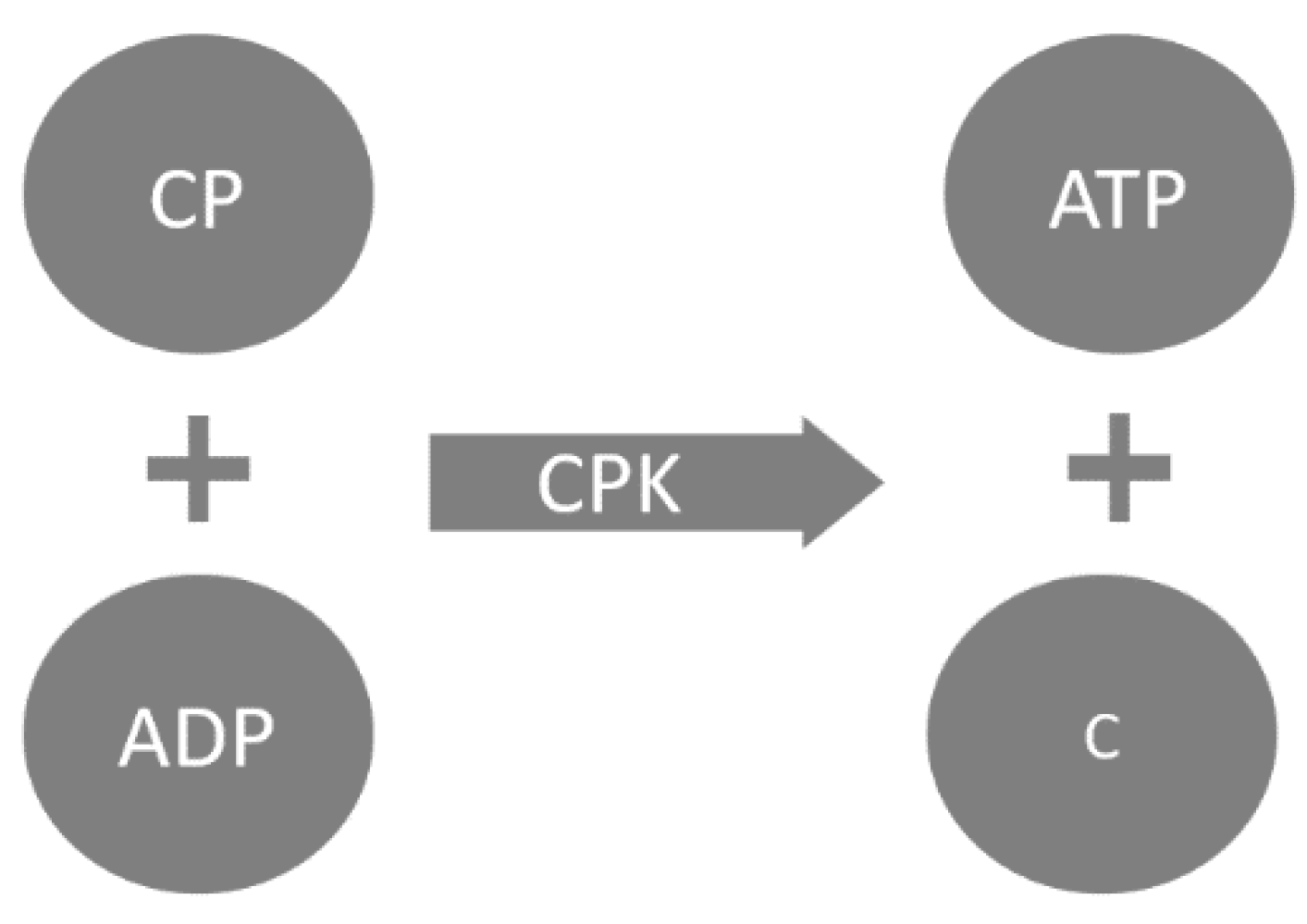

Table 1.
Physiological Energy Systems.
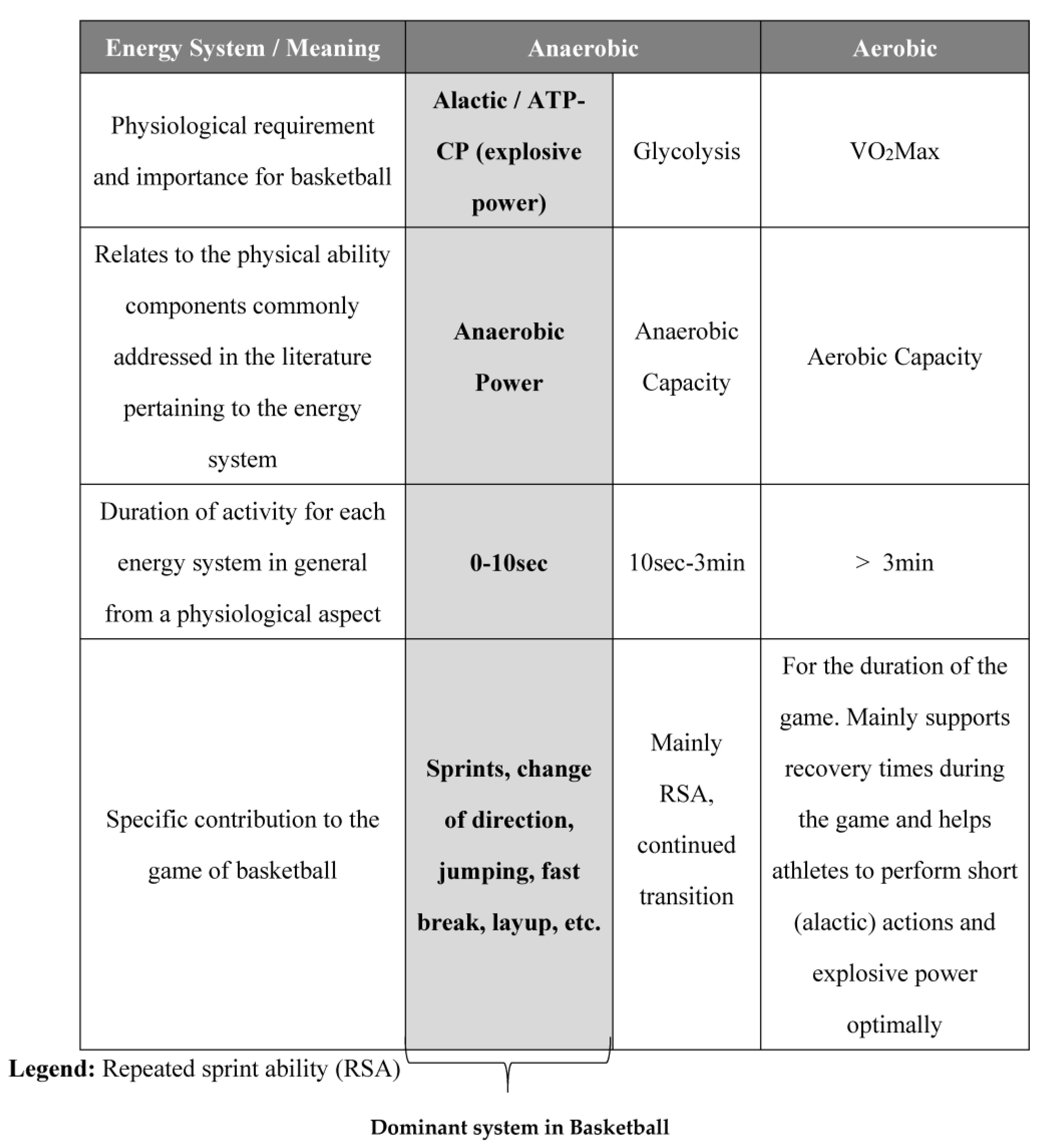
Table 2.
Specific Anaerobic Alactic Tests for Basketball Players.
| Horizontal | Vertical | Combined |
|---|---|---|
| 5/10-meter sprint (speed test) | Countermovement jump | Bounding power |
| Standing broad jump | Squat jump | Spike jump |
| Horizontal drop jump | Vertical drop jump | |
| 2 x 5-meter change of direction ability |
Disclaimer/Publisher’s Note: The statements, opinions and data contained in all publications are solely those of the individual author(s) and contributor(s) and not of MDPI and/or the editor(s). MDPI and/or the editor(s) disclaim responsibility for any injury to people or property resulting from any ideas, methods, instructions or products referred to in the content. |
© 2023 by the authors. Licensee MDPI, Basel, Switzerland. This article is an open access article distributed under the terms and conditions of the Creative Commons Attribution (CC BY) license (http://creativecommons.org/licenses/by/4.0/).
Copyright: This open access article is published under a Creative Commons CC BY 4.0 license, which permit the free download, distribution, and reuse, provided that the author and preprint are cited in any reuse.


