

Submitted:
04 May 2023
Posted:
05 May 2023
You are already at the latest version
Abstract
The aim of this study was to develop and assess the reliability and validity of an innovative field test that measures lower limb explosive power in basketball players (i.e., alactic anaerobic capacity) for the dominant and non-dominant leg. The test examines the performance of vertical, horizontal, and combined movements while holding the ball – similar to penetration of the basket or layup. Such capabilities are required throughout basketball practice and games, combined with upper and lower body coordination. The study included 22 male basketball players, ages 16-18, members of an elite youth league team in Israel. To assess validity, the participants performed the test for each leg, followed by nine standardized tests that were developed for a range of ball games, including basketball. To assess reliability, the participants performed a retest of the unique test 72-hours later. Our findings indicate the validity and reliability of the proposed anaerobic alactic field test for basketball players, for the dominant and non-dominant leg. Moreover, strong correlations were seen between the novel test and the standardized tests, with a high correlation for horizontal explosive power (0.5<r<0.7), a very high correlation for vertical explosive power (0.7<r<0.9), and a nearly perfect correlation for the two combined (r>0.9). In conclusion, this unique field test for basketball players could assist coaches in developing and applying optimal training programs and game plans, for players individually, and for the team as a whole. As the test measures each leg separately, it could also offer an assessment tool following players’ injuries.
Keywords:
Performance analysis of sport
; fitness field test
; explosive power
; jumping
; basketball.
1. Introduction
The game of basketball is far from new, yet over time certain rules have been added, removed, or altered [1,2]. In today’s era of the more modern game of basketball, players must develop and apply lower limb explosive power, to ensure optimal performance throughout the game [3,4]. The ability to produce such intense actions within extremely short periods of time is largely dependent on the players’ anaerobic alactic system [5]. In general, the game of basketball is comprised of many anaerobic actions – short forceful moves that are frequently carried out throughout practices and games, such as short sprints, jumps, and change of direction [1,6]. The capacity to perform anaerobic activities, such as those that require lower limb explosive power, is based on the players’ anaerobic alactic energy resources [1,7], the adenosine tri-phosphate – creatine phosphate system (ATP-CP) that is easily accessible through stores in the muscles. The players’ glycolysis system also contributes to such anaerobic activities, especially those that last more than just a number of seconds. In addition to employing the anaerobic system, the players’ aerobic energy system also plays an important role, as it enables fast recovery from, and repetition of, high intensity anaerobic actions [8,9,10].
Many key actions that are performed during a basketball practice or game are based on vertical movements (e.g., rebounds and jump shots), horizontal movements (e.g., change of direction and sprints), or a combination of the two (e.g., layups) – all of which are intermittently performed throughout the game while employing lower limb explosive power [1,11,12,13]. Due to its important, coaches place an emphasis on improving players’ explosive power for players of all ages, level of performance, and years of experience in the game of basketball [14,15,16]. To examine and assess the players’ development and improvement of their explosive power – as a means for creating and adjusting training programs and game plans – measurement tools are needed for assessing these abilities in a consistent, accurate, and reliable manner, and in a form that suits the specific field of basketball [5].
The aim of such fitness tests is to assess the condition of athletes in terms of the relevant fitness component that is being tracked, to determine what needs to be improved and worked on during training programs [3]. These tests are especially important among children and teenagers so that coaches can see whether players are developing in terms of physical fitness as they get older [3,17] However, to the best of our knowledge, no test has been developed and validated specifically for assessing lower limb explosive power among basketball players. While existing tests are often applied to players from a variety of sports [1,2], they entail certain limitations when employing them in basketball players [5].
The literature offers several protocols for measuring players' explosive power, yet different protocols may lead to different results, rendering comparisons between outcomes of different tests inaccurate or incomplete [4,5]. As such, coaches from different clubs who wish to confer with one another on explosive power training issues must ensure they have employed the same protocol in order to compare notes. Similarly, when comparing the performance of the same basketball players over time, the same test must be used consistently [18] despite changes such as different professional staff (trainers and coaches) and different team members [17]. Without a consistent testing protocol, differences in results cannot necessarily be attributed to changes in performance, as they may simply stem from differences in the measurement systems or from the person who is conducting the test [1,2,17].
Measurement protocols should be as similar as possible to the actual movements that athletes perform when playing, and should take into account a range of environmental and other factors [1,17]. Tests for measuring explosive power should be administered at the onset of the training program, halfway through, and then again at the end – to maximize the relevance and accuracy of the data received with regards to the efficacy of the training program and its contribution to the seen achievements [3,5]. In some cases, existing tests do not provide necessary field tests for assessing specific basketball movements. To the best of our knowledge, no relevant test currently exists for actions that combine both vertical and horizontal movements, coordination, and using only one leg – all of which are specific to the game of basketball.
The main aim of this study, therefore, was to develop and assess the reliability and validity of a unique new test that optimally measures lower limb explosive power (i.e., alactic anaerobic capacity) in basketball players, through a combination of specific vertical and horizontal movements that replicate actions performed during the game of basketball, similar to penetration to the basket and layups.
2. Methodology
2.1. Participants
The study included 22 male basketball players, ages 16-18, members of an elite youth league team in Israel (mean age 16.8 ± 0.5 years; body mass 78.2 ± 5.9 kg; height 185.3 ± 4.0 cm; and body fat 11.1 ± 3.1%). The participants had been members of the club and had participated in professional training and competitions for at least eight consecutive years. Their weekly routine included five basketball practices, two fitness practices, and one league game. Four inclusion criteria were applied in this study, whereby each participant had: (a) participated in at least 90% of the weekly trainings during the season (10-months) prior to the research: (b) regularly participated in the previous season; (c) not incurred any injuries, were not in any pain, and were not taking any medication; and (d) a clean bill of health.
To reduce interference in the research outcomes, the participants were instructed to refrain from consuming depressants (such as alcohol) or stimulants (such as caffeine) for 24 hours following up to the testing; they were asked not to eat for about three hours as well; and were instructed not to conduct strenuous physical activity for at least 24 hours leading up to the testing. The parents of the participants (who were minors) signed and submitted an informed written consent form. Anonymity could not be assured, in light of the nature of the research, yet all obtained data were treated with scientific rigor and maximum confidentiality, and the data obtained were used solely for this research project. The research study was approved by the Ethics Committee at the authors’ affiliated academic institution and was performed in line with the December 13 Organic Law 15/1999 on the Protection of Personal Data and the 2008 Helsinki Statement, updated in Fortaleza [19].
2.2. Procedure
To examine lower limb explosive power among basketball players, we developed a unique jumping test specifically for examining lower limb explosive power in basketball players. This capability was measured through the jump movement of the layup following the penetration to the basket, which combines both horizontal and vertical movements that replicate real time basketball movements on the court. Flight time was used as the measurement indicator of this test – before and after contact with the ground. This was measured using the Optojump system by MicroGate (Italy), an optical measurement system that is comprised of a receiving and transmitting bar. This system offers high accuracy compared to alternative measuring methods and enables tests and measurements in real sports environments, such as basketball courts and soccer fields [18,20,21]. Each jump was also recorded on two separate video recordings. Using the Optojump system enabled the real time documenting of numerical and graphic measures, thereby providing an objective tool. The gathered data was then transmitted directly onto an Excel file, enabling fast and simple documentation and access [21]. The complementary video recordings allowed us to examine and verify the recorded data as needed.
The participants performed the tests assessed in this study at about 4 pm, with indoor temperatures of about 20.4 ±0.5°C and humidity of about 60.3% ±3.5%. The participants wore basketball shoes and appropriate sportswear. Prior to the tests, the participants warmed up for about 20 minutes on their home basketball court. The warmup included six minutes of layups (right/left), eight minutes of mobility movements and dynamic stretches, and six minutes of accelerations.
After warmups, each participant performed the unique test twice, which included two layups and penetrations of the basket, once for their dominant leg (U1D) and once for their non-dominant leg (U1ND). These were repeated 72 hours later, for their dominant leg (U2D) and for their non-dominant leg (U2ND). The test/retest results were then compared to assess the reliability of the new test). During Day 1 of the testing, after performing the U1D and U1ND tests, the participants also performed nine additional standardized tests. A recovery period of at least five minutes between each test was provided. All tests were carried out on the basketball court where the participants regularly practiced and played, to ensure familiarity with the testing environment. The unique test/standardized test results were then compared to the assess the validity of the new test.
In addition to the new test, the participants also completed a 5 and 10 m sprint, the bounding power test (BP), and the following six versions of the countermovement jump (CMJ): countermovement jump both legs, hands free (CMJF); countermovement jump both legs, with hands on hips (CMJWH); countermovement jump dominant leg, hands free (CMJDF); countermovement jump dominant leg, with hands on hips (CMJDWH); countermovement jump non-dominant leg, hands free (CMJNDF); and countermovement jump non-dominant leg, with hands on hips (CMJNDWH). The results of these tests were compared to those of the unique new test to assess validity. The participants were able to achieve complete recovery following a five-minute rest between tests, allowing the participants to perform a number of tests on the same day. However, the unique test was performed first, for both the dominant and the non-dominant leg, we chose to conduct this test first, prior to performing the additional nine standardized tests – to ensure similar conditions 72-hours later during the retest.
2.2.1. Stage 1: The New Unique Test for Basketball Players
As seen in Figure 1, the novel test requires players to perform a penetration and layout, once using their dominant leg and once using their non-dominant leg. The test incorporates running, jumping, and landing, as well as shooting the ball into the basket, and is performed on the regular basketball court.
More specifically, the participants began the test outside the detection area of the Optojump system, which was placed on the floor in the painted area. They began in the standing position, while holding the ball in both hands, followed by a layup into the testing zone, and then a combined horizontal-vertical jump as they threw the ball towards the basket using only one hand. They released the ball at the zenith of their jump, shooting towards the basket with the one hand. They then landed within the measuring area no more than 1.5 m from their last point of contact prior to their flight. Figure 2 provides a detailed explanation of the flow of the test.
In this study, two basketball coaches and two fitness coaches conducted the test while ensuring the following: (1) The leg (dominant/non-dominant) was behind the foul line without crossing it; (2) Two steps were taken before the jump; (3) Push off was performed with one leg (dominant/non-dominant); (4) The ball was held with both hands when starting and with only one hand when releasing it; (5) The ball entered the basket, or at least touch the rim, after the ball was released from the player’s hand; (6) Players landed on the balls of their feet without excessive bending of the knees, and landed only on their feet; (7) Players landed with both feet within the measurement zone; (8) Players did not touch the basket rim or net with the hand during the jump, either before or after releasing the ball; and (9) The ball did not fall onto the measurement units of the Optojump before the player landed. Players who did not meet all of these guidelines were asked to repeat the jump.
In summary, when performing the layup for the test, the players were asked to jump as high as they can, i.e., a horizontal run followed by a vertical jump that also comprises horizontal elements. They were also instructed to land on both feet up to 1.5 m from the last point of contact with the ground after holding the ball in just one hand, to replicate a real time penetration of the basket.
2.2.2. Stage 2: Comparison of the Unique Test to Standardized Tests
To assess and validate this new field tool, the data achieved from the novel test were compared to results from nine standardized tests, as detailed in the following section.
5/10-Meter Sprint Speed Test. This speed test was used to evaluate players’ horizontal explosive power through cyclical movement (i.e., sprinting from a standing starting point). The participants were asked to perform two 10 m sprints from a high starting point, with 3-5 minutes’ rest between the two sprints. The best result of the two was recorded [1,3]. In this study, the participants only completed two 10 m sprints, as the measuring tool recorded their results after completing both 5 m and 10 m in the same sprint.
BP Test. This test was used to evaluate players’ horizontal and vertical explosive power. In the study, the participants were instructed to stand on one leg and jump as far forward as they can, six consecutive times, each time landing on the alternating leg [22,23]. The recorded results were the final distance reached by the participants after bounding forward six times. This test was also performed twice, with the greater distance being recorded. Distances were measured manually using a tape measure [23].
CMJ Tests. In the study, the participants completed six types of CMJ tests, to assess their vertical explosive power in a single jump. The participants began in the straight standing position, then bent their knees and quickly extended their legs to leave the ground into a flight movement, rising up as high as possible [18,24]. This was performed once using both legs, once using the dominant leg, and once using the non-dominant leg – all with hands on hips to neutralize upper limb momentum. These three jumps were then repeated while hands were in a free position – resulting in a total of six tests. Recovery time was about two minutes between jumps [9]. The jump heights were also recorded using the Optojump which converts flight time to jump height [1,3,5,25].
3. Statistical Analysis
Mean ±SD were calculated and presented for describing a range of participant characteristics as well as the results of their physical tests. Normality was tested using Shapiro-Wilk W statistics. Reliability of the new test was measured via Intra-class Correlation (ICC) and Bland Altman plot [26,27]. Correlations between the standardized jump tests and the unique test were calculated using Hopkins et al. [28] to consider their strength: trivial (r < 0.1; small (0.1 < r < 0.3); moderate (0.3 < r < 0.5), high (0.5 < r < 0.7); very high (0.7 < r < 0.9), nearly perfect (r > 0.9), and perfect (r=1)). Significance levels were set at p < 0.05. SPSS v.26.0 (IBM) was used for conducting statistical analyses.
4. Results
In order to assess the validity and reliability of the new proposed test, measurements were conducted twice, with a 72-hour gap between the two. For the dominant leg, internal consistency (α Cronbach) was 0.992 and ICC was 0.984 (p<0.001). For the non-dominant leg, internal consistency was 0.994 and ICC was 0.978 (p<0.001).
For the dominant leg, Figure 3 presents the Bland-Altman plot [mean = -0.354, 95% CI (-3.577, 2.868)]. Only one point was outside the CI, thereby enhancing the validity and reliability of the new test for the dominant leg.
For the non-dominant leg, Figure 4 presents the Bland-Altman plot [mean = -1.268, 95% CI (-3.959, 1.423)]. Again, only one point was outside the CI, thereby enhancing the validity and reliability of the new test for the dominant leg. In addition, test/retest correlations were calculated, indicating a very high correlation for both the dominant and non-dominant leg [R = 0.985 (P < 0.001); R = 0.988 (P < 0.001), respectively]. Moreover, differences between U1D and U2D mean scores, examined through t-tests, were not found to be significant [t21=-0.101, p=0.323], while differences between U1ND and U2ND were found to be significant [t21=-4.331, p<0.001].
Table 1 presents mean ± SD of the new and standardized explosive power tests conducted in this study. The highest scores achieved in the novel test were U1D = 53.90 cm and U2ND = 45.50 cm. Table 2 presents strong correlations between results of the novel test and the standardized tests. The results indicate a high magnitude of correlations (Hopkins) for the new test with all standardized tests was high (0.5 < r < 0.7), very high (0.7 < r < 0.9), and nearly perfect (r > 0.9). Correlations between U1D/U1ND and both horizontal tests (5/10 m sprint) were high; correlations between U1D/U1ND and all CMJ vertical tests was very high. Finally, especially high correlations were seen between the U1D/U1ND scores and the BP test (r > 0.9) [R = 0.956 and R = 0.933, respectively].
Magnitude of correlation: *high, **very high, ***nearly perfect.
5. Discussion
The aim of the current study was to develop a unique test for assessing lower limb explosive power in basketball players in the field, and assess its reliability and validity. Indeed, the game of basketball requires players to use lower limb explosive power for performing horizontal and vertical movements, as well as complex jumps that require a combination of the two [1,23]. Players also need to have strong coordination capabilities between their upper and lower limbs, for performing actions such as penetration to the basket through layups, while continuously maintaining control of the ball [1,3].
In 2017, Rodríguez-Rosell et al. [29] examined the reliability and validity of two standardized tests for vertical jumps (CMJ and the Abalakov jump) and two specific jump tests that combine both horizontal and vertical abilities (run-up and 2-LEGS or 1-LEG take-off jump). The researchers examined these tests as predictors of sprint and strength performance among soccer and basketball players. All four tests presented high intraclass correlation coefficients, regardless of the players’ age or sport. The 1-LEG test presented slightly greater variability than the other three tests, as well as the least validity. The researchers explained these findings as the result of the more complex motor structure of this jump. Indeed, assessing the 1-LEG test among both soccer and basketball players may have created a limitation, as these two ball games require different physical abilities [6,30]. Rodríguez-Rosell et al.’s [29] findings, combined with a range of additional reasons, led us to create a more unique 1-LEG test specifically for basketball players, assessing a basic movement that is learned and acquired when first embarking on basketball, yet one that is constantly repeated during practice and games at all levels and ages while holding a ball. As such, the use of the ball during tests should not perceived as a limitation and may even be advantageous when assessing the jump specifically among basketball players [1,12].
The skills exhibited in the novel test are relatively complex, requiring explosive power on two plains (horizontal and vertical) while holding a ball. However, for professional basketball players, these are basic, frequently used skills in both warmups, practice, and games [11]. For this reason, we chose to only assess highly experienced basketball players from professional clubs – to ensure that they possess very good control of the examined movement, and as a means for decreasing the limitation of a learning curve (i.e., learning a new skill specifically for the test) between the test and the retest. Moreover, unlike previous studies, we assessed a combination of a horizontal jump of up to 1.5 m forward – as the jump in the test was performed after a horizontal run with the ball and as a natural continuation of this action [12,29].
The main findings of the study indicate a high correlation between the test/retesting results for both legs, with mean scores remaining very similar. The magnitude of correlation of the new test was nearly perfect (r > 0.9) for both legs. Moreover, as only one point was found to be outside the confidence interval (CI), our findings enhance the reliability and validity of the new test for both legs.
Although the new test was found to be valid for both legs, differences were seen in the mean scores when comparing between the test/retest results. For the dominant leg, better scores were seen in the test (U1D), while for the non-dominant leg, better scores were seen in the retest, conducted 72 hours after the initial test (U2ND). This finding could stem from the ongoing need for strong coordination skills with the dominant leg when playing basketball – as no differences were seen in the test-retest scores for this leg. Although the test was performed on one leg, it was performed after a layup – which could explain the large differences in means scores compared to the CMJ tests that were performed on one leg without accelerating beforehand.
For the horizontal tests, the highest correlation was seen for the 10 m sprint test (R > 0.670), which required greater acceleration than the 5 m sprint, as well as greater combination of horizontal and vertical movements. In the vertical tests, the CMJ presented very high correlations for all assessments, with the highest correlation being between the CMJF and the CMJDF (R > 0.8). As in these tests the participants were required to jump with their hands free, not on their hips, this could explain the higher significance of the results.
The highest correlation was seen for the BP test (R > 0.9), where both horizontal and vertical skills were combined. As this is a typical requirement when playing basketball, this finding enhances the importance and relevance of the newly developed test. As with the novel testing protocol, the BP test requires strong capabilities of both vertical and horizontal lower limb explosive power [23]. The participants possessed a strong foundation for doing so, based on their training in plyometrics and in explosive power – which is why we compared between the BP test and our newly proposed test. Yet despite the combination of movements, the BP test is not as specific as the new test in replicating and assessing basketball players’ explosive power. As such, our findings indicate the significance of the newly proposed test for assessing lower limb explosive power among basketball players in the field.
The findings of this research are in line with those of previous studies that assessed standardized tests for measuring lower limb explosive power and complex coordination (that require both horizontal and vertical capabilities) for a range of ball games [12,29,31,32]. Yet to the best of our knowledge, this is the first research study to examine a unique test for the game of basketball, compared to other standardized tests that could be relevant to a number of fields of sport.
The current study has important value for research and assessments in sports in general, and in basketball in particular. However, the research does entail a number of limitations. First, the participants only included male basketball players from an elite youth league team in Israel. As such, future studies could benefit from employing the test on a more varied sample, to include a larger range of positions and ages, as well as both male and female players. In addition, it would be interesting to examine the new test for jumps using both legs, such as penetration to the basket, as well as assessing the test on non-professional basketball players who have not been trained to develop the necessary coordination and control.
6. Conclusions and Practical Applications
The game of basketball is unique as it requires lower limb explosive power combined with high coordination capabilities. Professional basketball teams of all ages are committed to a tight and strenuous schedule. As a result, trainers and coaches may encounter difficulties in assessing the players’ physical abilities, especially during the game’s season [1,33,34,35]. In addition, although a number of validated tests assess explosive power and players of ball games, none are specifically suited to the game of basketball, thereby making the assessment task more difficult [1].
The novel test that we developed, which is specific for the game of basketball, could provide trainers and coaches with a unique and applicable field tool for assessing players’ lower limb explosive power – especially during busy schedules [36]. Doing so will save time, as only the one test will be needed, rather than having to employ a range of tests. In addition to saving resources, using this novel test could enhance results, assessments, and comparisons as it is suited to the game of basketball with its unique and specific movements. Moreover, as the new test is performed on one leg, it can be used to assess players’ dominant and non-dominant leg individually – offering insights into symmetry and differences between the legs, as well as the ability to return to playing after an injury. As such, the test could also be helpful for strength and conditioning coaches and physiotherapists.
It is important to note that the standardized tests that assess explosive power, as presented in this study, remain relevant and important – and may offer additional insights and conclusions. However, when seeking a more focused and specific test for the game of basketball, the unique test presented in this article offers added value to the field of basketball and its assessments.
Author Contributions
Conceptualization, AS had the original idea of the paper and wrote the paper, RG main collaborator, PA and JC directors and final approvals of the text. All authors have read and agreed to the published version of the manuscript.
Funding
No sources of funding were used to assist in the preparation of this article.
Acknowledgments
We thank the participants of the study for their commitment and efforts. We would also like to thank the individual players and coaches for taking part in this research.
Conflicts of Interest
Asaf Shalom, Roni Gottlieb, Julio Calleja-Gonzalez and Pedro E. Alcaraz have no conflicts of interest relevant to the content of this research.
References
- Gottlieb, R.; Shalom, A.; Calleja-Gonzalez, J. Physiology of Basketball – Field Tests. Review Article. J Hum Kinet. 2021, 77, 159–67. [Google Scholar] [CrossRef] [PubMed]
- Gál-Pottyondy, A.; Petró, B.; Czétényi, A.; Négyesi, J.; Nagatomi, R.; Kiss, R.M. Collection and Advice on Basketball Field Tests—A Literature Review. Applied Sciences. 2021, 11, 8855. [Google Scholar] [CrossRef]
- Mancha-Triguero, D.; García-Rubio, J.; Calleja-González, J.; Ibáñez, S.J. Physical fitness in basketball players: a systematic review. J Sports Med Phys Fitness. 2019, 59, 1513–25. [Google Scholar] [CrossRef] [PubMed]
- AKSOVIĆ, N.; BJELİCAB; MİLANOVİĆ, F.; MİLANOVİCL; JOVANOVİĆ, N. Development of Explosive Power in Basketball Players. Turkish Journal of Kinesiology. 2021. [CrossRef]
- Delextrat, A.; Cohen, D. Physiological Testing of Basketball Players: Toward a Standard Evaluation of Anaerobic Fitness. J Strength Cond Res. 2008, 22, 1066–72. [Google Scholar] [CrossRef] [PubMed]
- Sheppard, J.M.; Young, W.B. Agility literature review: Classifications, training and testing. J Sports Sci. 2006, 24, 919–32. [Google Scholar] [CrossRef]
- Chaouachi A, Brughelli M, Chamari K, Levin GT, Abdelkrim N ben, Laurencelle L, et al. Lower Limb Maximal Dynamic Strength and Agility Determinants in Elite Basketball Players. J Strength Cond Res. 2009, 23, 1570–7. [CrossRef]
- McInnes, S.E.; Carlson, J.S.; Jones, C.J.; McKenna, M.J. The physiological load imposed on basketball players during competition. J Sports Sci. 1995, 13, 387–97. [Google Scholar] [CrossRef]
- Abdelkrim, N.; El Fazaa, S.; El Ati, J.; Tabka, Z. Time-motion analysis and physiological data of elite under-19-year-old basketball players during competition * Commentary. Br J Sports Med. 2007, 41, 69–75. [Google Scholar] [CrossRef]
- Stojanovic, M.D.; Ostojic, S.M.; Calleja-González, J.; Milosevic, Z.; Mikic, M. Correlation between explosive strength, aerobic power and repeated sprint ability in elite basketball players. J Sports Med Phys Fitness. 2012, 52, 375–81. [Google Scholar]
- Apostolidis, N.; Nassis, G.P.; Bolatoglou, T.; Geladas, N.D. Physiological and technical characteristics of elite young basketball players. J Sports Med Phys Fitness. 2004, 44, 157–63. [Google Scholar] [PubMed]
- Karcher, C.; Buchheit, M. Shooting Performance and Fly Time in Highly Trained Wing Handball Players: Not Everything Is as It Seems. Int J Sports Physiol Perform. 2017, 12, 322–8. [Google Scholar] [CrossRef] [PubMed]
- Gómez-Carmona, C.D.; Feu, S.; Pino-Ortega, J.; Ibáñez, S.J. Assessment of the Multi-Location External Workload Profile in the Most Common Movements in Basketball. Sensors. 2021, 21, 3441. [Google Scholar] [CrossRef]
- Ferioli D, Rampinini E, Martin M, Rucco D, la Torre A, Petway A, et al. Influence of ball possession and playing position on the physical demands encountered during professional basketball games. Biol Sport. 2020, 37, 269–76. [CrossRef] [PubMed]
- Hoare, D.G. Predicting success in junior elite basketball players--the contribution of anthropometic and physiological attributes. J Sci Med Sport. 2000, 3, 391–405. [Google Scholar] [CrossRef] [PubMed]
- Fragoso, I.; Ramos, S.; Teles, J.; Volossovitch, A.; Ferreira, A.P.; Massuça, L.M. The Study of Maturational Timing Effect in Elite Portuguese Adolescent Basketball Players: Anthropometric, Functional and Game Performance Implications. Applied Sciences. 2021, 11, 9894. [Google Scholar] [CrossRef]
- Currell, K.; Jeukendrup, A.E. Validity, Reliability and Sensitivity of Measures of Sporting Performance. Sports Medicine. 2008, 38, 297–316. [Google Scholar] [CrossRef]
- García-López, J.; Peleteiro, J.; Rodgríguez-Marroyo, J.A.; Morante, J.C.; Herrero, J.A.; Villa, J.G. The validation of a new method that measures contact and flight times during vertical jump. Int J Sports Med. 2005, 26, 294–302. [Google Scholar] [CrossRef]
- World Medical Association Declaration of Helsinki. JAMA. 2013, 310, 2191. [CrossRef]
- Bosquet, L.; Berryman, N.; Dupuy, O. A Comparison of 2 Optical Timing Systems Designed to Measure Flight Time and Contact Time During Jumping and Hopping. J Strength Cond Res. 2009, 23, 2660–5. [Google Scholar] [CrossRef]
- Glatthorn, J.F.; Gouge, S.; Nussbaumer, S.; Stauffacher, S.; Impellizzeri, F.M.; Maffiuletti, N.A. Validity and Reliability of Optojump Photoelectric Cells for Estimating Vertical Jump Height. J Strength Cond Res. 2011, 25, 556–60. [Google Scholar] [CrossRef] [PubMed]
- Chu, D.A. Jumping into plyometrics. Human Kinetics, Champaign, IL. 1998.
- Gottlieb, R.; Eliakim, A.; Shalom, A.; Iacono, A.; Meckel, Y. Improving Anaerobic Fitness in Young Basketball Players: Plyometric vs. Specific Sprint Training. Journal of Athletic Enhancementer. 2014, 03. [Google Scholar]
- Markovic, G.; Dizdar, D.; Jukic, I.; Cardinale, M. Reliability and Factorial Validity of Squat and Countermovement Jump Tests. The Journal of Strength and Conditioning Research. 2004, 18, 551. [Google Scholar] [PubMed]
- Freitas, T.T.; Martinez-Rodriguez, A.; Calleja-González, J.; Alcaraz, P.E. Short-term adaptations following Complex Training in team-sports: A meta-analysis. PLoS One. 2017, 12, e0180223. [Google Scholar] [CrossRef] [PubMed]
- Myles, P.S.; Cui, J.I. Using the Bland–Altman method to measure agreement with repeated measures. Br J Anaesth. 2007, 99, 309–11. [Google Scholar] [CrossRef] [PubMed]
- Giavarina, D. Understanding Bland Altman analysis. Biochem Med (Zagreb). 2015, 25, 141–51. [Google Scholar] [CrossRef]
- HOPKINSWG; MARSHALLSW; BATTERHAMAM; HANINJ Progressive Statistics for Studies in Sports Medicine and Exercise Science. Med Sci Sports Exerc. 2009, 41, 3–12.
- Rodríguez-Rosell, D.; Mora-Custodio, R.; Franco-Márquez, F.; Yáñez-García, J.M.; González-Badillo, J.J. Traditional vs. Sport-Specific Vertical Jump Tests: Reliability, Validity, and Relationship With the Legs Strength and Sprint Performance in Adult and Teen Soccer and Basketball Players. J Strength Cond Res. 2017, 31, 196–206. [Google Scholar] [CrossRef]
- Young, W.B.; McDowell, M.H.; Scarlett, B.J. Specificity of sprint and agility training methods. J Strength Cond Res. 2001, 15, 315–9. [Google Scholar]
- Sheppard, J.M.; Cronin, J.B.; Gabbett, T.J.; McGuigan, M.R.; Etxebarria, N.; Newton, R.U. Relative importance of strength, power, and anthropometric measures to jump performance of elite volleyball players. J Strength Cond Res. 2008, 22, 758–65. [Google Scholar] [CrossRef]
- Shalfawi, S.A.I.; Sabbah, A.; Kailani, G.; Tønnessen, E.; Enoksen, E. The relationship between running speed and measures of vertical jump in professional basketball players: a field-test approach. J Strength Cond Res. 2011, 25, 3088–92. [Google Scholar] [CrossRef] [PubMed]
- Huyghe, T.; Alcaraz, P.E.; Calleja-González, J.; Bird, S.P. The underpinning factors of NBA game-play performance: a systematic review (2001–2020). Phys Sportsmed. 2022, 50, 94–122. [Google Scholar] [CrossRef] [PubMed]
- Edwards, T.; Spiteri, T.; Piggott, B.; Bonhotal, J.; Haff, G.G.; Joyce, C. Monitoring and Managing Fatigue in Basketball. Sports (Basel). 2018, 6. [Google Scholar] [CrossRef] [PubMed]
- Davis JK, Oikawa SY, Halson S, Stephens J, O’Riordan S, Luhrs K, et al. In-Season Nutrition Strategies and Recovery Modalities to Enhance Recovery for Basketball Players: A Narrative Review. Sports Medicine. 2022, 52, 971–93. [CrossRef]
- Huyghe, T.; Scanlan, A.; Dalbo, V.; Calleja-González, J. The Negative Influence of Air Travel on Health and Performance in the National Basketball Association: A Narrative Review. Sports. 2018, 6, 89. [Google Scholar] [CrossRef]
Figure 1.
Performance of the novel jumping test for basketball players.
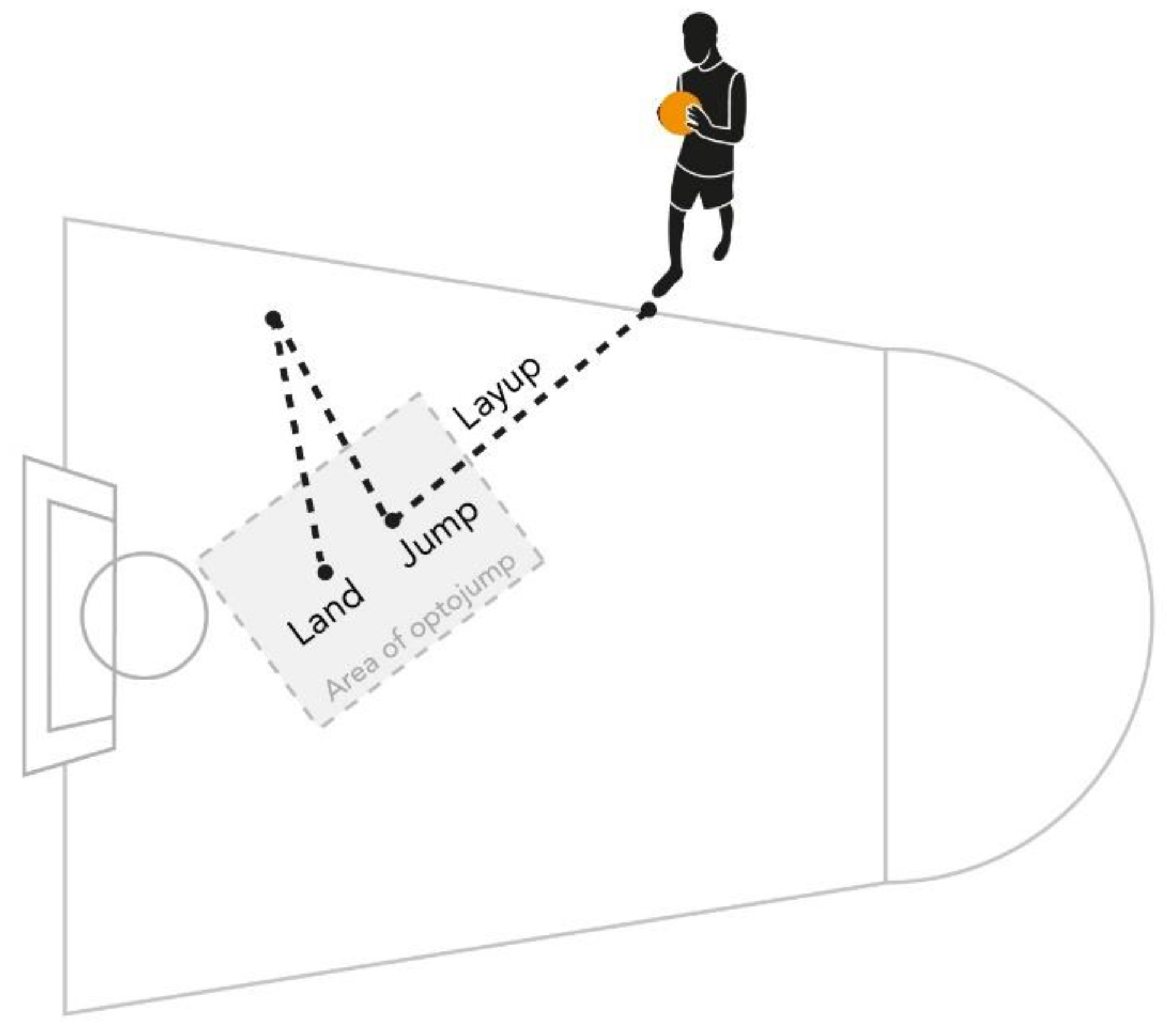
Figure 2.
Flow chart of the novel jumping test for basketball players.
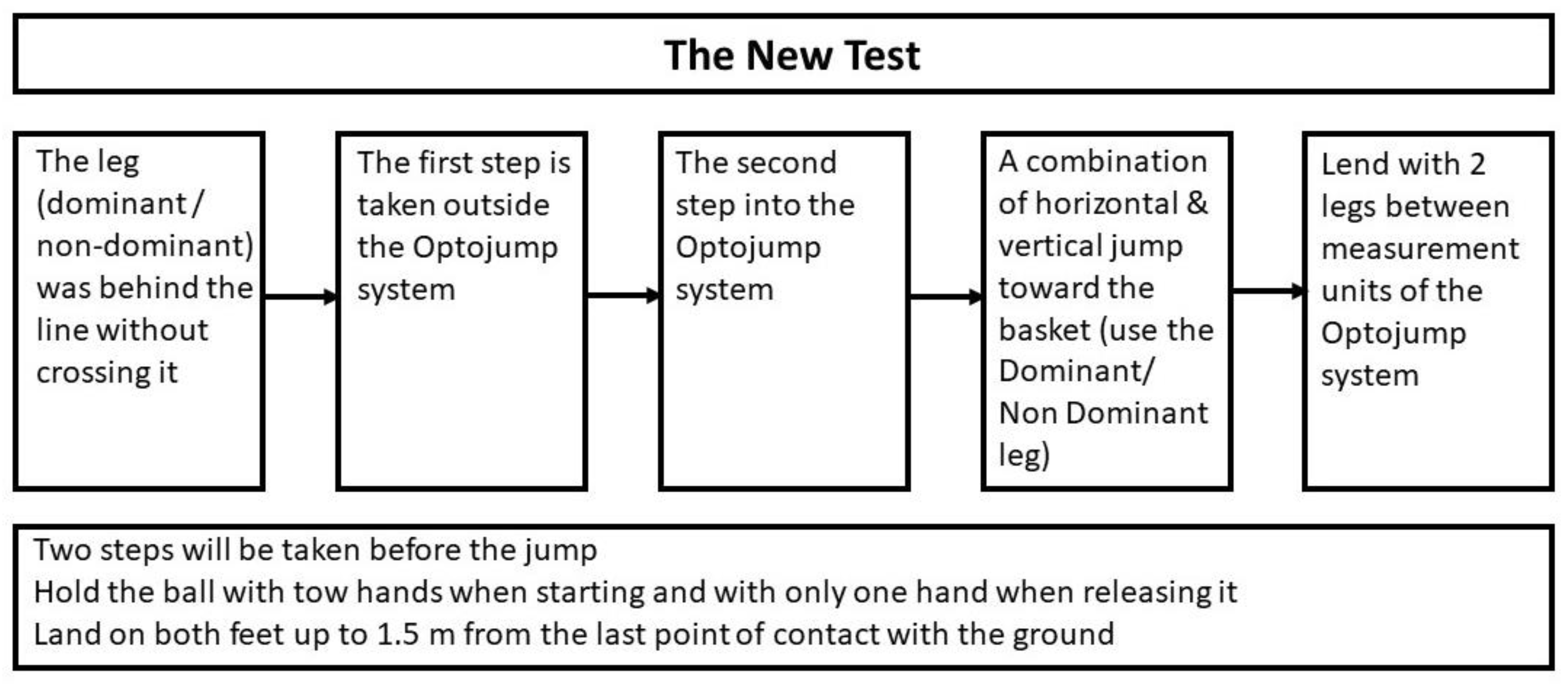
Figure 3.
Bland Altman Plot U1D, U2D.
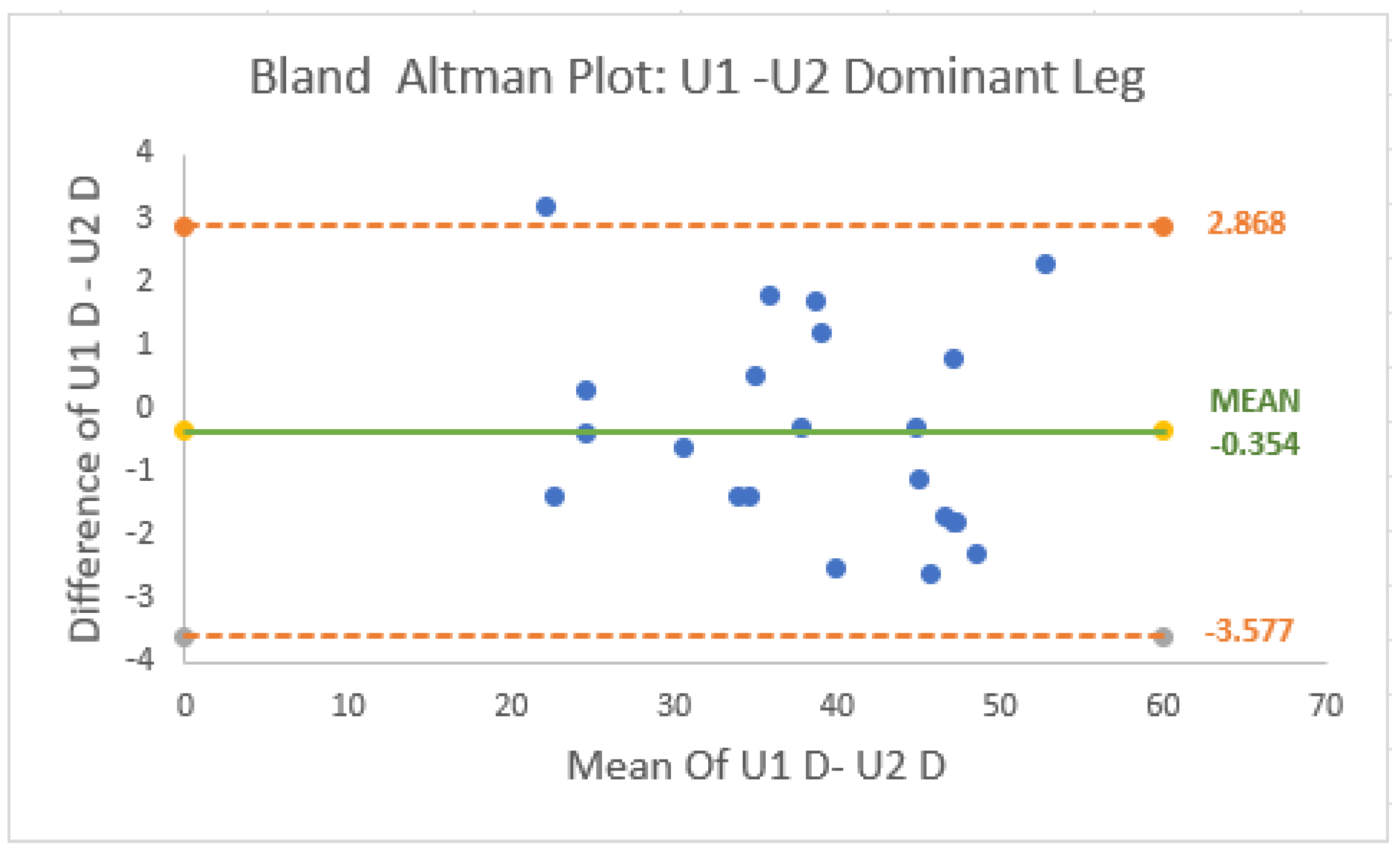
Figure 4.
Bland Altman Plot U1ND, U2ND.
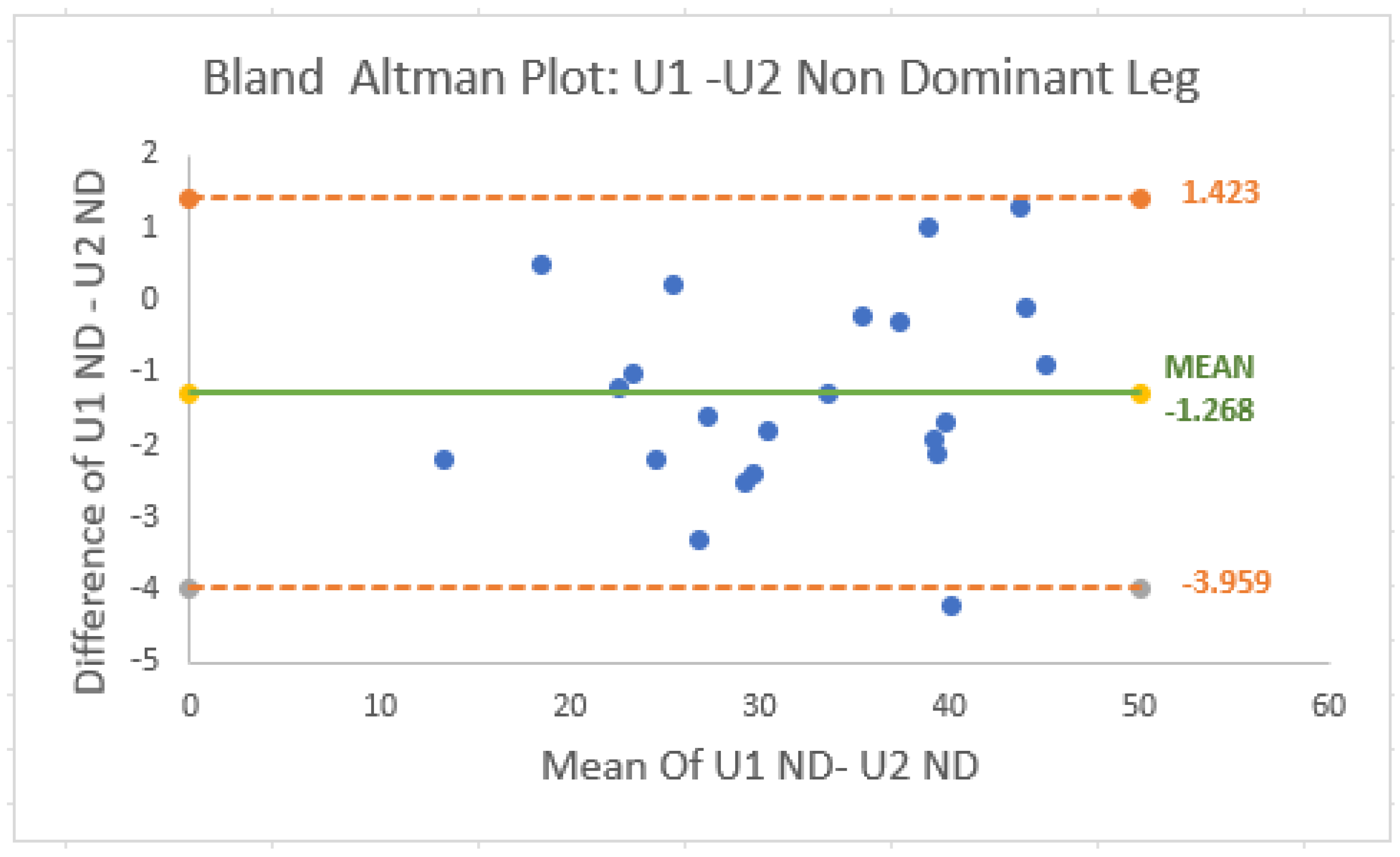

Table 1.
Results of Lower Limb Explosive Power Tests.
| Basketball Players (N=22) | M±SD | |
|---|---|---|
| 5 m Sprint (s) | 1.08 ± 0.07 | |
| 10m Sprint (s) | 1.84 ± 0.09 | |
| BP (m) | 13.2 ± 1.73 | |
| CMJF (cm) | 43.8 ± 8.6 | |
| CMJWH (cm) | 35.8 ± 7.6 | |
| CMJDF (cm) | 24.40 ± 5.45 | |
| CMJDWH (cm) | 19.90± 4.20 | |
| CMJNDF (cm) | 23.20 ± 5.51 | |
| CMJNDWH (cm) | 19.72 ± 4.72 | |
| U1D (cm) | 38.21 ± 9.00 | |
| U2D (cm) | 38.56 ± 9.41 | |
| U1ND (cm) | 31.55 ± 8.95 | |
| U2ND (cm) | 32.82 ± 8.73 | |
Table 2.
Correlations between Novel Test and Standardized Tests.
| Basketball Players (N=22) | ||||
|---|---|---|---|---|
| U1D (CI 95%) | U1ND (CI 95%) | |||
| 5 m Sprint (s) | -0.571* | (-1.099, -0.199) | -0.535* | (-1.047, -0.147) |
| 10m Sprint (s) | -0.670* | (-1.260, -0.361) | -0.637* | (-1.203, -0.303) |
| BP (m) | 0.956*** | (1.448, 2.347) | 0.933*** | (1.231, 2.131) |
| CMJF (cm) | 0.848** | (0.799, 1.699) | 0.851** | (0.810, 1.709) |
| CMJWH (cm) | 0.856** | (0.829, 1.728) | 0.827** | (0.729, 1.628) |
| CMJDF (cm) | 0.859** | (0.840, 1.739) | 0.888** | (0.963, 1.862) |
| CMJDWH (cm) | 0.811** | (0.680, 1.580) | 0.780** | (0.596, 1.495) |
| CMJNDF (cm) | 0.775** | (0.583, 1.482) | 0.860** | (0.844, 1.743) |
| CMJNDWH (cm) | 0.706** | (0.430, 1.329) | 0.775** | (0.583, 1.482) |
Magnitude of correlation: *high, **very high, ***nearly perfect.
Disclaimer/Publisher’s Note: The statements, opinions and data contained in all publications are solely those of the individual author(s) and contributor(s) and not of MDPI and/or the editor(s). MDPI and/or the editor(s) disclaim responsibility for any injury to people or property resulting from any ideas, methods, instructions or products referred to in the content. |
© 2023 by the authors. Licensee MDPI, Basel, Switzerland. This article is an open access article distributed under the terms and conditions of the Creative Commons Attribution (CC BY) license (https://creativecommons.org/licenses/by/4.0/).
Copyright: This open access article is published under a Creative Commons CC BY 4.0 license, which permit the free download, distribution, and reuse, provided that the author and preprint are cited in any reuse.


