

Submitted:
10 October 2023
Posted:
11 October 2023
You are already at the latest version
Abstract
Keywords: AI Readiness Assessment; Business Processes; and Data Infrastructure.
Keywords:
AI Readiness Assessment
; Business Processes
; Data Infrastructure
1. Introduction
In today's fast-paced and interconnected world, organizations are constantly seeking ways to innovate, stay competitive, and deliver value to their customers. One of the key drivers of innovation and transformation is the integration of Artificial Intelligence (AI) into business processes, leading to what is known as AI-based digital transformation [1]. AI-based digital transformation is a strategic approach that leverages AI technologies to revolutionize how organizations operate, make decisions, and interact with their stakeholders [2], extract valuable insights from vast amounts of data and automate complex tasks, optimize operations, enhance customer experiences, and drive innovation [3,4].
Digital transformation refers to the integration of digital technologies into all aspects of an organization, fundamentally changing how it operates and delivers value [4]. It involves rethinking business models, processes, products, and services to leverage the power of digital technologies, such as cloud computing, data analytics, Internet of Things (IoT), and AI [5]. AI-based digital transformation takes this concept a step further by specifically focusing on harnessing the full potential of AI technologies to drive organizational change and achieve strategic objectives [6]. AI-based digital transformation represents a strategic approach that harnesses the power of AI to drive organizational change and deliver transformative outcomes and to revolutionize how organizations operate, make decisions, and interact with customers, leading to enhanced productivity, agility, and innovation [6]. By integrating AI technologies into business processes and systems, organizations can augment human capabilities, automate tasks, derive valuable insights from data, and make data-driven decisions [7] This empowers organizations to streamline operations, enhance efficiency, optimize resource allocation, and create personalized experiences for their customers [8].
By leveraging AI capabilities, organizations can gain valuable insights from their data, automate repetitive tasks, and make more informed decisions [9]. This can lead to improved operational efficiency, increased productivity, enhanced customer experiences, and the ability to identify new business opportunities [10]. Moreover, AI-based digital transformation enables organizations to stay ahead of the curve, adapt to changing market dynamics, and drive innovation in their respective industries [11]. AI-based digital transformation presents organizations with unprecedented opportunities to revolutionize their operations, drive innovation, and deliver exceptional value to their stakeholders [12]. By leveraging AI technologies, organizations can unlock new insights, automate tasks, and make data-driven decisions [13]. However, successful AI-based digital transformation requires a holistic and strategic approach that considers technology infrastructure, data management, talent acquisition, cultural readiness, ethical considerations, and change management [14].
With careful planning, the right tools and infrastructure, and strong leadership, organizations can embark on a transformative journey that propels them into the era of AI-driven innovation and competitive advantage [15]. However, successful AI-based digital transformation requires careful consideration of strategy, data infrastructure, talent, ethics, change management, partnerships, infrastructure scalability, and continuous evaluation [16]. Implementing AI-based digital transformation is not without its challenges. Organizations need to carefully plan and execute their transformation journeys to ensure success [17]. They must consider several key aspects, including technology infrastructure, data management, talent acquisition, cultural readiness, ethical considerations, and change management [18]. The integration of AI technologies requires a strategic and systematic approach, involving multiple stakeholders across the organization [14].
This paper comprehensively addresses the first step in AI-based digital transformation, which is assessing the organization's current state. This involves evaluating the processes, existing technology infrastructure, data management capabilities, and organizational readiness for AI adoption [19]. Organizations need to identify any gaps or constraints that need to be addressed before implementing AI solutions [20]. They must also examine their data assets, data quality, and data accessibility to ensure they have the necessary foundation for AI-based initiatives [21]. Assessing the organization's current state is a critical step in AI-based digital transformation. It provides valuable insights into the organization's strengths, weaknesses, and readiness for adopting AI technologies [22]. Through this assessment, organizations can identify gaps, develop a strategic roadmap, and allocate resources effectively [23]. By understanding the technological infrastructure, data availability, organizational culture, talent pool, business processes, and regulatory considerations, organizations can make informed decisions and embark on a successful AI-driven digital transformation journey [23].
Up to the author’s knowledge, no systematic and comprehensive approach to assess an organization’s current status for AI-based digital transformation is available in the literature. This paper is devoted to bridge the existing gap in the literature by providing a structured and holistic approach for conducting this critical assessment.
In the following sections, we will delve into each element of the current status assessment. By utilizing this comprehensive guideline, organizations can confidently embark on their AI journey, positioning themselves to success in the dynamic and data-driven future of business.
2. Materials and Methods
- 1.
- Introduction
In today's fast-paced and interconnected world, organizations are constantly seeking ways to innovate, stay competitive, and deliver value to their customers. One of the key drivers of innovation and transformation is the integration of Artificial Intelligence (AI) into business processes, leading to what is known as AI-based digital transformation [1]. AI-based digital transformation is a strategic approach that leverages AI technologies to revolutionize how organizations operate, make decisions, and interact with their stakeholders [2], extract valuable insights from vast amounts of data and automate complex tasks, optimize operations, enhance customer experiences, and drive innovation [3,4].
Digital transformation refers to the integration of digital technologies into all aspects of an organization, fundamentally changing how it operates and delivers value [4]. It involves rethinking business models, processes, products, and services to leverage the power of digital technologies, such as cloud computing, data analytics, Internet of Things (IoT), and AI [5]. AI-based digital transformation takes this concept a step further by specifically focusing on harnessing the full potential of AI technologies to drive organizational change and achieve strategic objectives [6]. AI-based digital transformation represents a strategic approach that harnesses the power of AI to drive organizational change and deliver transformative outcomes and to revolutionize how organizations operate, make decisions, and interact with customers, leading to enhanced productivity, agility, and innovation [6]. By integrating AI technologies into business processes and systems, organizations can augment human capabilities, automate tasks, derive valuable insights from data, and make data-driven decisions [7] This empowers organizations to streamline operations, enhance efficiency, optimize resource allocation, and create personalized experiences for their customers [8].
By leveraging AI capabilities, organizations can gain valuable insights from their data, automate repetitive tasks, and make more informed decisions [9]. This can lead to improved operational efficiency, increased productivity, enhanced customer experiences, and the ability to identify new business opportunities [10]. Moreover, AI-based digital transformation enables organizations to stay ahead of the curve, adapt to changing market dynamics, and drive innovation in their respective industries [11]. AI-based digital transformation presents organizations with unprecedented opportunities to revolutionize their operations, drive innovation, and deliver exceptional value to their stakeholders [12]. By leveraging AI technologies, organizations can unlock new insights, automate tasks, and make data-driven decisions [13]. However, successful AI-based digital transformation requires a holistic and strategic approach that considers technology infrastructure, data management, talent acquisition, cultural readiness, ethical considerations, and change management [14].
With careful planning, the right tools and infrastructure, and strong leadership, organizations can embark on a transformative journey that propels them into the era of AI-driven innovation and competitive advantage [15]. However, successful AI-based digital transformation requires careful consideration of strategy, data infrastructure, talent, ethics, change management, partnerships, infrastructure scalability, and continuous evaluation [16]. Implementing AI-based digital transformation is not without its challenges. Organizations need to carefully plan and execute their transformation journeys to ensure success [17]. They must consider several key aspects, including technology infrastructure, data management, talent acquisition, cultural readiness, ethical considerations, and change management [18]. The integration of AI technologies requires a strategic and systematic approach, involving multiple stakeholders across the organization [14].
This paper comprehensively addresses the first step in AI-based digital transformation, which is assessing the organization's current state. This involves evaluating the processes, existing technology infrastructure, data management capabilities, and organizational readiness for AI adoption [19]. Organizations need to identify any gaps or constraints that need to be addressed before implementing AI solutions [20]. They must also examine their data assets, data quality, and data accessibility to ensure they have the necessary foundation for AI-based initiatives [21]. Assessing the organization's current state is a critical step in AI-based digital transformation. It provides valuable insights into the organization's strengths, weaknesses, and readiness for adopting AI technologies [22]. Through this assessment, organizations can identify gaps, develop a strategic roadmap, and allocate resources effectively [23]. By understanding the technological infrastructure, data availability, organizational culture, talent pool, business processes, and regulatory considerations, organizations can make informed decisions and embark on a successful AI-driven digital transformation journey [23].
Up to the author’s knowledge, no systematic and comprehensive approach to assess an organization’s current status for AI-based digital transformation is available in the literature. This paper is devoted to bridge the existing gap in the literature by providing a structured and holistic approach for conducting this critical assessment.
In the following sections, we will delve into each element of the current status assessment. By utilizing this comprehensive guideline, organizations can confidently embark on their AI journey, positioning themselves to success in the dynamic and data-driven future of business.
- 2.
- Assessment Elements of Current State
As the transformative potential of AI becomes increasingly evident, organizations across various industries are seeking to harness its power to drive innovation, efficiency, and competitive advantage. However, successful AI-based transformation requires a comprehensive understanding of the organization's current state and readiness for such a significant shift. It is essential to povide a baseline to comprehend the organization's readiness for transformation, ensuring effective planning and execution of AI strategies [24,25].
Figure 1 depicts the elements of current state assessment. It allows organizations to assess their AI readiness, thus enabling strategic allocation of resources for AI initiatives [26]. By conducting a thorough assessment, organizations can identify gaps, constraints, and areas of improvement that need to be addressed before implementing AI solutions.
Elements of current state assessment include the following:
2.1. Current Processes
Current processes are the business operations and workflows that form the backbone of an organization's functioning. An in-depth understanding of current operations, workflows, and systems is essential for the successful application of AI. The work in [27] affirms that understanding the nuances of business operations and identifying areas that can benefit from AI is fundamental for enhancing operational efficiency. Understanding current processes require at least the following steps:
2.1.1. Process Documentation:
The first step towards understanding current processes is to have them thoroughly documented. This can be achieved by creating a process map or workflow diagram to visualize the steps involved, the roles accountable, the decisions made, and the systems used in each process. This documentation helps in identifying potential bottlenecks, inefficiencies, redundancies, and opportunities for process improvement or automation [26]. It outlines the sequential tasks required to perform the operational activities within a business. These tasks, once defined, provide an invaluable resource for understanding how work is carried out, who does it, the tools they use, and the outcomes they achieve [28]. It aids in the identification of inefficient processes and potential areas for automation or improvement with AI technologies. Furthermore, it is essential for regulatory and compliance needs, as well as in business process reengineering where the focus is on redesigning the existing processes for more efficiency or effectiveness [29]. The success of these AI-based tools heavily depends on the richness and quality of the data, as well as how accurately it reflects the business processes.
2.1.2. Process Performance Measurement:
It's essential to have measures in place that accurately reflect the performance of the current processes. Key Performance Indicators (KPIs) should be defined for each process, capturing aspects like processing time, error rate, cost, and customer satisfaction. Tracking these metrics over time provides a performance baseline and can highlight areas where AI could add value [30]. It involves the identification and tracking of KPIs for individual processes, offering a quantifiable means to assess their operational performance and quality [30]. It can help identify areas of inefficiency, bottlenecks, or underperformance that could be addressed through automation, optimization, or redesign. Furthermore, it serves as a basis for comparison post-implementation of the AI solutions, making it possible to quantify the benefits of digital transformation in operational terms [31]. Various metrics may be employed. Common metrics include cycle time, error rate, cost per transaction, process velocity, and customer satisfaction, among others. It's increasingly common for businesses to use AI and data analytics tools for real-time process performance monitoring and analysis [32]. However, it's important to use relevant and balanced metrics to avoid creating unintended consequences. For instance, an overemphasis on speed might lead to a compromise in quality. Therefore, organizations need to select metrics that provide a balanced view of process performance [33].
Defining Process KPIs is an essential part of performance measurement and management. KPIs are quantifiable measurements that help organizations track their performance over time and achieve their strategic goals. Here are some steps to define process KPIs as illustrated in Figure 2 [34,35]:
- 1)
- Understand the Process: The first step is to fully understand the process the organization is tracking. The organization needs to know what the process involves, what its objectives are, and how it contributes to the organization's overall business goals [36].
- 2)
- 3)
- 4)
- Make them S.M.A.R.T: The KPIs should be Specific, Measurable, Attainable, Relevant, and Time-bound. This means each KPI should precisely state what it measures, be quantifiable, be realistically achievable, have a clear link to the strategic objectives of the business, and be bound by a specific time frame [34].
- 5)
- Set Targets: Decide on targets for each KPI. These should be challenging but achievable. The targets serve as a benchmark for assessing the process's performance [35].
- 6)
- Regular Review: KPIs should be regularly reviewed to ensure they remain relevant and reflect any changes in business objectives or operating conditions. If a KPI is consistently being met, it may be time to set a more ambitious target. Conversely, if a KPI is consistently missed, it might be time to reassess whether the target is realistic [34,35].
- 7)
Process performance measurement, like process documentation, should be a continuous activity, with regular monitoring and updating to reflect changes in the business environment, organizational objectives, or process redesign.
2.1.3. Process Automation Opportunities:
A careful analysis of the current processes can reveal tasks that are repetitive, time-consuming, and prone to human error, which are ideal candidates for automation. The use of AI can automate these tasks and improve process efficiency. Moreover, AI can be applied to more complex tasks, such as decision-making or pattern recognition, further enhancing process effectiveness [37]. Identifying opportunities for process automation is a critical step in leveraging AI for digital transformation. Figure 3 illustrate steps that could be used for business process automation as follow:
- 1)
- Identify the Process: The first step in automating a business process is identifying which processes could and should be automated. Typically, processes that are repetitive, prone to human error, time-consuming, or important for compliance are good candidates for automation. By automating such processes, businesses can reduce the burden of mundane tasks on employees, leading to increased productivity and efficiency [38].
- 2)
- Define the Goals: Determine what you want to achieve through automation. It could be improving efficiency, reducing errors, improving customer satisfaction, or other business objectives [39].
- 3)
- Process Mapping: Understand and document the existing process from start to end. This step involves outlining each stage of the process, identifying who is involved, and what tools are used. This gives you a complete picture of the current process and helps identify areas of improvement [40].
- 4)
- Identify the Automation Opportunities: Once the process has been mapped, identify which parts can be automated. It's important to consider which steps will yield the most benefit from automation, as not all steps may be suitable or beneficial to automate [41].
- 5)
- Choose the Right Automation Tools: Depending on the complexity of the process and the business needs, the automation tool can vary. Tools could range from simple task automation software to more complex Business Process Management (BPM) or Robotic Process Automation (RPA) tools [42].
- 6)
- Design the Automated Process: Redesign the process incorporating the automation tools. Ensure to make provision for exceptions or error handling. It's crucial to have a clear process flow diagram so that everyone can understand [43].
- 7)
- Development and Testing: Once the process is designed, the next step is to build and test the automated process. This stage often involves IT professionals or consultants who have the skills to set up the automation and ensure it works as expected [44].
- 8)
- Training: Before fully implementing the automated process, make sure all involved parties understand how it works and their role in it. They need to know how to interact with the automation tool, how to manage exceptions, and who to contact if something goes wrong [45].
- 9)
- Implementation: After successful testing, roll out the automated process. It's often a good idea to do this gradually, starting with a pilot phase before full implementation [46].
- 10)
- Monitoring and Continuous Improvement: After the process has been automated, it's important to monitor its performance to ensure it meets its intended goals. Use the data from the automated process to identify areas for improvement, and continually refine the process as needed [47].
The assessment of process automation opportunities needs to be carried out carefully, considering several factors. The complexity, frequency, and volume of the process are some of the aspects to be evaluated. It's also important to consider the cost, potential return on investment, and the impact on customer service or other business functions [48]. Additionally, organizations need to bear in mind that not all processes are suitable for automation. Processes that require human judgement, creativity, or complex decision-making may not be ideal candidates for automation. Therefore, the assessment of automation opportunities should not only be based on the potential for efficiency gains but also on the strategic fit with organizational goals and values [49].
In recent years, AI-driven process mining tools have emerged as powerful aids to identify automation opportunities. They can automatically analyze event logs from different IT systems to discover, monitor, and improve real-world business processes [50]. AI-powered technologies such as Robotic Process Automation (RPA) [51] and Intelligent Process Automation (IPA) [52] are increasingly being used to automate business processes. RPA involves the use of software robots or 'bots' to mimic human actions and perform repetitive tasks, while IPA incorporates machine learning and cognitive technology to automate and optimize more complex processes [53].
It is important to note that this assessment will require a multi-disciplinary approach, incorporating technical expertise, business acumen, and strategic thinking. Moreover, as AI technologies evolve and become more capable, the scope for automation is likely to increase, making continuous re-evaluation of automation opportunities a necessity in the digital transformation journey.
2.1.4. AI Alignment:
Finally, current processes should be assessed for their alignment with potential AI capabilities. For instance, tasks involving large volumes of data, or those requiring real-time decision making, can particularly benefit from AI. This step requires a good understanding of both the business processes and the possibilities offered by AI [54]. AI alignment is a critical aspect of AI-based digital transformation, warranting careful attention and planning. It involves aligning AI applications and initiatives with the strategic objectives and values of the organization [55]. A successful digital transformation is not merely about implementing advanced technologies, but about leveraging these technologies to achieve business goals and create value [56]. Thus, assessing the alignment of AI initiatives with business strategy is essential to ensure that the adoption of AI is purposeful and effective. AI alignment can be viewed in multiple dimensions:
- 1)
- Strategic Alignment: AI initiatives should be in line with the organization's strategic objectives and should contribute to the achievement of these objectives. For example, if an organization's strategic objective is to enhance customer service, AI initiatives could include the implementation of AI-powered chatbots or customer analytics systems [57].
- 2)
- Cultural Alignment: AI initiatives should be aligned with the organization's culture and values. This includes considerations of ethical implications of AI, transparency, and the impact on employees. For example, if an organization values transparency, its AI systems should be designed to be interpretable and explainable [58].
- 3)
- Operational Alignment: AI initiatives should be aligned with the organization's operational needs and workflows. The AI systems should be integrated seamlessly into existing processes, and the organization should have the necessary infrastructure and skills to support these systems [59].
Assessing AI alignment is not a one-time activity but needs to be an ongoing process as business strategies, technologies, and market conditions evolve. Furthermore, AI alignment is not solely the responsibility of the IT department but should involve all key stakeholders, including business leaders, employees, and even customers [55]. AI alignment plays a key role in ensuring the success of AI-based digital transformation. Organizations need to carefully consider and continuously monitor the alignment of their AI initiatives with strategic objectives, cultural values, and operational needs. To achieve AI alignment, organizations may follow these key practices:
- 1)
- Clearly define goals and objectives for AI-based digital transformation, ensuring they are aligned with the organization's overall strategy.
- 2)
- Establish ethical guidelines and principles for AI adoption and develop processes to ensure ethical considerations are integrated into AI system design and deployment.
- 3)
- Foster cross-functional collaboration between business, IT, data, and ethics teams to ensure alignment across different areas of the organization.
- 4)
- Continuously monitor and evaluate AI systems' performance, impact, and alignment with the organization's goals, adjusting and improvements as needed.
By prioritizing AI alignment throughout the digital transformation process, organizations can maximize the value and impact of AI technologies while ensuring ethical, responsible, and successful implementation.
2.2. Existing Systems:
Examining the existing technology infrastructure is critical to gauge the organization's technological readiness for AI deployment [60]. This understanding can help identify the required changes in the IT infrastructure and guide the strategic selection of AI tools and technologies. It serves as the foundation for understanding the current technology landscape, which includes hardware, software, data storage, and processing systems.
2.2.1. System Identification:
Begin by identifying all existing systems currently in use. These might range from customer relationship management (CRM) and enterprise resource planning (ERP) systems to more specific software tools such as inventory management, payroll systems, or content management systems. Don't forget about informal systems or legacy systems that might still be in operation. When identifying systems for AI-based digital transformation, the organization shall consider the following steps:
- 1)
- Categorize systems and processes: Group the identified systems and processes into functional categories, such as customer management, finance, supply chain, operations, HR, marketing, and sales. This categorization helps to identify the areas where AI can have the most significant impact.
- 2)
- Evaluate system suitability for AI: Assess each system's suitability for AI integration. Consider factors such as the availability of data, system architecture, scalability, flexibility, and compatibility with AI technologies and tools. Prioritize systems that have the potential for AI-driven improvements.
- 3)
- Identify pain points and inefficiencies: Engage with system users and stakeholders to gather insights into pain points, inefficiencies, and areas where improvements are needed. Understand their perspectives on how AI can help address these challenges and enhance system performance.
- 4)
- Assess system readiness for AI integration: Evaluate the technical readiness of the systems for AI integration. Consider factors such as system architecture, data format compatibility, and the ability to integrate with AI frameworks, tools, and libraries. Assess if any system modifications or upgrades are required for smooth AI integration.
- 5)
- Evaluate system scalability: Assess the scalability of the identified systems. Consider if they can handle increased data volume, user load, and computational demands that come with AI integration. Determine if the systems can scale up or down effectively to accommodate the evolving needs of AI initiatives.
- 6)
- Consider system interoperability: Evaluate the interoperability of the identified systems. Assess if they can seamlessly exchange data and integrate with each other. Determine if there are existing APIs, connectors, or integration frameworks that facilitate data flow and communication between systems.
- 7)
- Develop an implementation roadmap: Create a roadmap that outlines the order and timeline for integrating AI capabilities into the identified systems. Define the necessary steps, resources required, and milestones for each system integration. Consider dependencies between systems and prioritize initiatives accordingly.
- 8)
- Continuous evaluation and iteration: Remember that the identification process is not a one-time event. Continuously evaluate and refine organization’s system identification as the organization progresses through the AI-based digital transformation journey. Adapt organization’s roadmap based on insights gained from implementation and feedback loops.
2.2.2. Functional Analysis:
For each system, conduct a detailed functional analysis. Understand what purpose each system serves, who uses it, what data it handles, and how it interacts with other systems. Document any known issues, limitations, or inefficiencies in the systems. This analysis involves evaluating different functional areas within an organization to identify opportunities for AI integration and transformation. Here are some key functional areas to consider:
- 1)
- Customer Experience: Analyze customer-facing processes and touchpoints to identify opportunities for AI-driven enhancements. This may include personalized recommendations, chatbots for customer support, sentiment analysis, and predictive modeling to improve customer satisfaction and engagement.
- 2)
- Sales and Marketing: Evaluate sales and marketing processes to identify areas where AI can enhance lead generation, customer segmentation, targeting, and campaign optimization. Consider AI applications for pricing optimization, demand forecasting, customer behavior analysis, and recommendation engines to drive sales growth.
- 3)
- Operations and Supply Chain: Assess operational processes, supply chain management, and logistics to identify areas where AI can streamline operations, improve forecasting accuracy, optimize inventory management, and enhance production planning. Consider AI applications for predictive maintenance, demand forecasting, and real-time monitoring of operational efficiency.
- 4)
- Data and Analytics: Evaluate data management and analytics processes to ensure a solid foundation for AI implementation. Assess data governance, data quality, data integration, and data infrastructure to support AI initiatives effectively. Consider AI applications for data discovery, data cleansing, and advanced analytics to extract actionable insights.
- 5)
- Strategic Decision-Making: Analyze strategic decision-making processes and executive-level activities to identify areas where AI can support data-driven decision-making. Consider AI applications for predictive analytics, scenario modeling, and intelligent decision support systems to improve strategic planning and execution.
- 6)
- Quality Assurance and Testing: Evaluate quality assurance and testing processes to identify opportunities for AI integration. Consider AI applications for automated testing, anomaly detection, and quality control to improve product or service quality, reduce defects, and enhance testing efficiency.
- 7)
- Continuous Improvement and Optimization: Consider opportunities for AI applications in continuous improvement and optimization efforts across all functional areas. Evaluate areas where AI can be used for process automation, optimization, and performance monitoring to drive operational efficiency and continuous improvement initiatives.
2.2.3. Technical Analysis:
Perform a technical evaluation of the systems. Consider factors such as system architecture, compatibility, scalability, security, and performance. Consider the age of the systems and their ability to support newer technologies, including AI. This can further be identified and elaborated in terms of hardware and software as follows:
- 1)
- Hardware capabilities: Evaluate the computing power and hardware infrastructure available within the organization. Assess whether the existing hardware is capable of handling the computational requirements of AI algorithms and models. Consider factors such as processing speed, memory capacity, and parallel processing capabilities.
- 2)
- Software environment: Review the software environment and tools currently used within the organization. Identify if the organization has the necessary software and development frameworks to support AI initiatives. Consider whether an organization’s software ecosystem is compatible with popular AI platforms, libraries, and frameworks.
- 3)
- Network infrastructure: Evaluate the network infrastructure, including bandwidth capacity and latency. Assess whether an organization’s network can handle the increased data traffic associated with AI applications. Consider if any network upgrades or optimizations are necessary to ensure smooth data transfer and communication between AI systems and data sources.
- 4)
- Integration capabilities: Assess how well an organization’s existing technology infrastructure integrates with AI systems and tools. Consider if there are any limitations or challenges in integrating AI solutions with the organization’s current systems, databases, and applications. Evaluate compatibility with APIs, data formats, and protocols for seamless data exchange.
2.2.4. Data Evaluation:
Since AI relies heavily on data, take a close look at the type and quality of data each system handles. Evaluate the data's structure, quality, availability, and relevance for potential AI use cases. This can be further explained as follows:
- 1)
- Data processing capabilities: Assess the processing capabilities of an organization’s infrastructure in relation to AI workloads. Consider factors such as the ability to handle large-scale data processing, parallel processing, and distributed computing. Evaluate if an organization’s infrastructure can efficiently handle the computational demands of AI algorithms and models.
- 2)
- Storage architecture: Evaluate organization’s storage architecture in terms of scalability, performance, and data access. Consider if the organization has a suitable storage solution, such as distributed file systems or object storage, that can handle the volume, variety, and velocity of data required for AI applications. Assess if an organization’s storage architecture supports efficient data retrieval and processing.
- 3)
- Integration with existing systems: Consider how well an organization’s current technology infrastructure integrates with existing systems, applications, and workflows. Assess the compatibility of organization’s infrastructure with legacy systems and third-party applications that may need to interact with AI solutions. Evaluate if there are any limitations or constraints in integrating AI with the organization’s existing technology stack.
- 4)
- Real-time processing capabilities: Determine if organization’s infrastructure supports real-time data processing and analytics. Assess if the organization has the necessary components, such as stream processing frameworks or event-driven architectures, to enable real-time decision-making and AI-driven insights. Consider the ability to handle high-velocity data streams for real-time AI applications.
- 5)
- High availability and reliability: Evaluate the availability and reliability of organization’s infrastructure. Consider if the organization has redundant systems, failover mechanisms, or load balancing capabilities to ensure high availability of AI applications. Assess if organization’s infrastructure can deliver the required uptime and reliability for critical AI-driven processes.
- 6)
- Automation and orchestration: Evaluate if the organization has automation and orchestration capabilities to manage AI workflows and processes efficiently. Consider if the organization has tools or platforms that enable workflow automation, job scheduling, and resource provisioning for AI tasks. Assess if the organization can streamline the deployment and management of AI models and algorithms.
2.2.5. Vendor Evaluation:
If the systems are provided by external vendors, review the terms of these relationships. Assess the level of vendor support, maintenance, and potential for integration with new AI technologies. Tools like Enterprise Architecture Software (like MEGA, BiZZdesign, or Software AG) can assist in documenting and visualizing the existing system landscape, making it easier to identify gaps, redundancies, and opportunities for improvement [61]. Challenges in this process may include resistance from staff accustomed to legacy systems, uncovering hidden or informal systems, and assessing systems that are poorly documented. Overcoming these challenges requires a systematic approach, stakeholder involvement, and sometimes expert assistance. Evaluating vendors for AI-based digital transformation is a crucial step to ensure the organization selects the right partners who can support the organization's goals. Here are some key considerations and steps for vendor evaluation:
- 1)
- Define organization’s requirements: Clearly outline organization’s requirements and objectives for AI-based digital transformation. Identify the specific AI technologies, tools, or solutions the organization is seeking, as well as the desired outcomes and key performance indicators (KPIs) the organization aims to achieve.
- 2)
- Evaluate technology capabilities: Assess the technology capabilities and offerings of each vendor. Consider factors such as the breadth and depth of their AI solutions, the scalability and performance of their technologies, compatibility with the organization’s existing infrastructure, and their ability to support organization’s specific use cases.
- 3)
- Consider AI expertise and experience: Evaluate the vendor's expertise in AI technologies and their experience in implementing AI-based digital transformation projects. Assess their knowledge of machine learning, data science, and relevant AI frameworks. Consider if they have successfully delivered similar projects in the organization’s industry or with similar use cases.
- 4)
- Evaluate integration capabilities: Assess the vendor's ability to integrate their AI solutions with organization’s existing systems, applications, and data sources. Consider their expertise in data integration, API availability, and compatibility with the organization’s current technology stack. Evaluate if they can seamlessly connect their AI solutions to the organization's workflows and processes.
- 5)
- Check for customization and scalability: Consider the vendor's ability to customize their AI solutions to organization’s specific needs. Assess if they can tailor their solutions to align with the organization's unique requirements and workflows. Evaluate their scalability, ensuring they can handle the growth and evolving demands of organization’s AI initiatives.
- 6)
- Assess implementation and support services: Evaluate the vendor's implementation process and support services. Consider their project management approach, training and onboarding programs, and ongoing technical support. Assess if they provide comprehensive documentation, user training, and post-implementation support to ensure a smooth transition and effective utilization of their AI solutions.
- 7)
- Review and analyze AI model development and deployment process: Evaluate the vendor's approach to AI model development and deployment. Consider their methodology for model training, validation, and deployment. Assess if they follow best practices for model explainability, interpretability, and ethical considerations.
- 8)
- Scalability and future growth potential: Assess the vendor's ability to scale their AI solutions as the organization's needs evolve. Consider their infrastructure capacity, cloud integration capabilities, and their vision for future AI advancements. Ensure that the vendor can support the organization’s long-term growth and digital transformation goals.
- 9)
- Vendor's change management and organizational readiness support: Assess the vendor's change management processes and their ability to support the organization's readiness for AI-based digital transformation. Consider if they provide guidance on change management strategies, organizational restructuring, and cultural adaptation to ensure successful adoption of AI technologies.
- 10)
- Evaluate vendor's post-implementation support: Assess the vendor's post-implementation support services. Consider the availability of technical support, service-level agreements, and response times for issue resolution. Evaluate if they offer regular system updates, bug fixes, and enhancements to their AI solutions.
- 11)
- Conduct a risk assessment: Evaluate potential risks associated with each vendor. Consider factors such as vendor stability, financial health, and their ability to ensure data security and privacy. Assess if they have proper risk mitigation measures in place and if they comply with relevant industry regulations and standards.
- 12)
- Total cost of ownership: Evaluate the total cost of ownership (TCO) for the vendor's AI solutions. Consider not only the initial implementation costs but also ongoing maintenance, licensing fees, and any additional costs associated with scaling or customization. Conduct a comprehensive cost-benefit analysis to ensure the vendor’s solution aligns with organization’s budget and provides a favorable ROI.
2.3. Data Landscape:
Data is the lifeblood of AI. Understanding the type of data that is collected, how it's stored and managed, and its usage in decision-making is a crucial part of the current state assessment [62]. Data quality, governance, privacy, and security are key considerations in this aspect. The assessment of an organization's data landscape is a complex process, encompassing several key facets:
2.3.1. Data Quality
This involves an assessment of the data's accuracy, integrity, timeliness, completeness, relevancy, and consistency as illustrated in Figure 4. Poor data quality could potentially lead to incorrect conclusions or faulty machine learning models [63]. Quality issues can arise from various sources such as data entry errors, missing data, inconsistent data formats, or outdated information. Tools like IBM's InfoSphere Information Analyzer [64], Informatica Data Quality [65], and Talend Data Quality [66] can help in assessing and improving data quality.
Data quality is a critical factor in the success of AI-based digital transformation initiatives. Here are some key considerations for ensuring data quality in AI-based digital transformation:
- 1)
- Data Governance: Establish robust data governance practices to ensure data quality throughout its lifecycle. Define data ownership, responsibilities, and processes for data collection, storage, cleaning, and maintenance. Implement data quality standards, data validation rules, and data access controls.
- 2)
- Data Cleaning and Preprocessing: Implement data cleaning and preprocessing techniques to address data quality issues. This may involve removing duplicate records, handling missing values, standardizing data formats, and correcting inconsistencies. Utilize data cleansing tools and algorithms to automate these processes where possible.
- 3)
- Data Context and Relevance: Evaluate the context and relevance of data for AI applications. Ensure that the data used for training AI models is representative, unbiased, and relevant to the desired outcomes. Consider factors such as data source credibility, data sampling techniques, and the representativeness of data for the target population or problem domain.
- 4)
- Data Quality Metrics: Define data quality metrics that align with organization’s specific AI use cases and objectives. Establish key performance indicators (KPIs) to measure data quality, such as accuracy, completeness, timeliness, consistency, and relevancy. Regularly monitor these metrics and establish thresholds for acceptable data quality levels.
- 5)
- Data Monitoring and Validation: Establish data monitoring and validation processes to continuously assess data quality. Implement data quality monitoring tools and techniques to identify anomalies, errors, and data inconsistencies. Regularly validate data against predefined quality metrics and perform data audits to maintain high-quality data.
2.3.2. Data Accessibility:
It's not enough to have good quality data; it must also be accessible to those who need it. This includes evaluating the existing data architecture, understanding where the data resides (on-premises or cloud), how it's stored (in databases, data warehouses, or data lakes), and how it can be accessed (APIs, SQL queries, etc.) [67]. Data accessibility is a critical aspect of AI-based digital transformation as it enables organizations to effectively leverage their data assets for AI initiatives. Here are some considerations for ensuring data accessibility:
- 1)
- Data Inventory: Conduct a comprehensive inventory of the organization's data assets. Identify the types of data available, their sources, formats, and locations. Document metadata such as data definitions, data owners, and data access permissions.
- 2)
- Data Accessibility Governance: Establish data accessibility governance processes to ensure compliance and adherence to data policies and regulations. Define data accessibility guidelines, data access approval processes, and data usage policies. Regularly monitor data access patterns, review access privileges, and update data accessibility policies as needed.
- 3)
- Data Documentation and Data Lineage: Maintain comprehensive documentation of data assets, including their source, transformation processes, and usage history. Document data lineage to track the origin and transformations applied to data. This documentation ensures transparency and enables users to understand the data's context and reliability.
- 4)
- Performance and Scalability: Ensure that data accessibility platforms and infrastructure can handle the performance and scalability requirements of AI-based digital transformation. Evaluate system performance, response times, and scalability under different data access scenarios. Scale resources as needed to accommodate increasing data accessibility demands.
2.3.3. Data Governance:
Data governance involves the management of the availability, usability, integrity, and security of the data. It encompasses data policies, procedures, and standards, roles and responsibilities related to data management, and data privacy and compliance issues [68]. Tools such as Collibra [69] and Informatica Axon [70] can support an organization's data governance efforts. Data governance is crucial for AI-based digital transformation initiatives to ensure the availability, integrity, and privacy of data. Here are key considerations for implementing data governance in AI-based digital transformation:
- 1)
- Data Governance Framework: Establish a data governance framework that outlines the policies, processes, roles, and responsibilities for managing data throughout its lifecycle. Define data governance objectives, data stewardship roles, and cross-functional data governance committees to oversee data-related activities.
- 2)
- Data Ownership and Accountability: Assign clear data ownership and accountability to individuals or teams within the organization. Define roles and responsibilities for data stewards who are responsible for ensuring data quality, integrity, and compliance. Encourage a culture of accountability for data management across the organization.
- 3)
- Data Governance Audits and Reviews: Conduct regular audits and reviews of data governance practices to assess compliance, effectiveness, and identify areas for improvement. Perform data governance assessments to evaluate adherence to policies and identify gaps or areas of non-compliance. Use audit findings to refine data governance processes.
- 4)
- Data Governance for AI Models: Apply data governance principles to AI models and algorithms. Establish guidelines for model development, training data selection, model validation, and ongoing monitoring. Ensure transparency and documentation of AI model development processes to address ethical considerations and interpretability requirements.
- 5)
- Data Governance Metrics and Reporting: Define data governance metrics to measure the effectiveness of data governance initiatives. Establish key performance indicators (KPIs) to track data quality, data compliance, data accessibility, and data governance process maturity. Develop regular reporting mechanisms to provide visibility into data governance activities and progress.
- 6)
- Data Governance and Change Management: Recognize that data governance involves significant change management efforts. Communicate the importance of data governance to stakeholders and foster a data-driven culture. Provide training and support to employees to ensure they understand and embrace data governance practices. Address resistance to change and continuously communicate the benefits of data governance.
2.3.4. Data Volume and Variety:
The amount and types of data an organization collects can influence the types of AI techniques that can be applied. Large volumes of data can support more complex models such as deep learning. Figure 5 summarized the challenge of the data volume elements as follow:
- 1)
- Data deluge: a double-edged sword: Exponential data growth is the driving force behind the success of artificial intelligence, especially in the field of deep learning techniques. However, such a large amount of data poses several challenges, including storing, processing, and managing the data.
- 2)
- Storage challenges: The massive amounts of data generated today require more efficient storage solutions to support AI applications. Traditional storage architectures may not be able to meet the scalability, performance, and cost requirements of AI workloads. New storage technologies such as non-volatile memory (NVM) and distributed storage systems have been proposed as possible solutions.
- 3)
- Processing challenges: AI models, especially deep learning algorithms, require massive computing resources to process large datasets. This has led to increased demand for specialized hardware such as GPUs and TPUs to accelerate AI training and inference. Additionally, new techniques such as model compression, cleaning, and quantization are explored to optimize AI models for more efficient processing.
- 4)
- Data management: From a big data volume perspective, effective data management is crucial for AI systems to be able to handle large amounts of data. This includes data cleaning, preprocessing, labeling, and tidying. Techniques such as active learning, weak supervision, and transfer learning have been proposed to lighten the difficulty of human data labeling.
- 5)
- Data heterogeneity: large datasets may contain data from multiple sources, which can be difficult to integrate and reconcile, especially when the data is in different formats or structures.
- 6)
- Privacy and Security: Large amounts of data increase the risk of data breaches and data breaches, especially sensitive data. These issues need to be addressed as the amount of data increases.
- 7)
- Bias and representativeness: Massive amounts of data do not necessarily guarantee representativeness or the absence of bias, as they can still contain demographic, cultural, or other biases that can affect the accuracy of AI models.
- 8)
- Data Access: In some cases, organizations may have access to large data sets, but may not be able to use them due to legal or regulatory restrictions. Organizations must ensure they possess the required permissions and licenses to access and use data.
Moreover, the variety of data – structured (like databases), semi-structured (like XML files), and unstructured (like text or images) – can also affect the choice of AI models and preprocessing techniques [71].
Data volume and variety are significant considerations in AI-based digital transformation. Here are key points to address when dealing with data volume and variety:
- 1)
- Scalable Infrastructure: Ensure that the organization has a scalable infrastructure that can handle the volume and variety of data required for AI initiatives. Consider cloud-based solutions that provide flexibility and scalability to accommodate growing data needs. Implement technologies like distributed storage systems and parallel processing frameworks to handle large data volumes efficiently.
- 2)
- Data Storage and Management: Evaluate organization’s data storage and management capabilities to handle the increased volume and variety of data. Implement data management systems that can handle diverse data types, including structured, unstructured, and semi-structured data. Consider technologies like data lakes or data warehouses that enable centralized storage and efficient data retrieval.
- 3)
- Data Processing and Analytics: Utilize big data processing frameworks and analytics tools to handle the volume and variety of data. Implement technologies like Apache Hadoop, Apache Spark, or other distributed computing platforms that enable parallel processing and analysis of large datasets. Leverage machine learning and AI algorithms to derive insights from diverse data sources.
- 4)
- Data Preparation Automation: Automate data preparation processes to handle the volume and variety of data efficiently. Utilize data preparation tools and technologies that streamline data ingestion, cleansing, and transformation. Implement automated data pipelines and workflows to reduce manual effort and ensure consistency in data preparation.
- 5)
- Data Monitoring and Adaptation: Continuously monitor data volume and variety to ensure that the organization’s infrastructure and processes can handle evolving requirements. Implement monitoring mechanisms to detect shifts in data volume, variety, or data source patterns. Regularly assess and adapt organization’s data management strategies to accommodate changing data characteristics.
By deeply understanding these elements of the data landscape, an organization can effectively assess its data readiness for AI, identify gaps, and create a plan to address them. Data usage is a critical aspect of AI-based digital transformation. Here are key considerations for effectively utilizing data in AI initiatives:
- 1)
- Define Clear Objectives: Clearly define the objectives and use cases for data usage in AI-based digital transformation. Determine how data will be leveraged to achieve specific business goals, improve processes, or drive innovation. Align data usage with strategic objectives to ensure focused and targeted utilization [72].
- 2)
- Data-driven Decision Making: Promote a data-driven decision-making culture within the organization. Encourage stakeholders to rely on data and insights generated by AI models to support decision-making processes. Foster trust in data and AI by demonstrating the value and impact of data-driven decision-making [73].
- 3)
- Identify Relevant Data Sources: Identify and assess the relevant data sources that can contribute to the desired outcomes of AI initiatives. Consider both internal and external data sources, including structured and unstructured data. Explore diverse data sources, such as customer data, operational data, social media data, or IoT-generated data, depending on the specific use case [74].
- 4)
- Feature Engineering: Perform feature engineering to extract meaningful and relevant features from raw data. Identify and transform data attributes that are most predictive or informative for the AI models. Apply domain knowledge and data analytics techniques to derive new features that enhance the performance and accuracy of AI models [75].
- 5)
- Ethical Data Usage: Ensure ethical considerations in data usage for AI initiatives. Adhere to privacy regulations, data protection policies, and ethical guidelines. Protect sensitive or personal data through proper anonymization, encryption, or de-identification techniques. Safeguard data privacy and ensure responsible and ethical use of data throughout the AI lifecycle [76].
- 6)
- ROI and Value Measurement: Establish mechanisms to measure the return on investment (ROI) and value generated from data usage in AI initiatives. Define key performance indicators (KPIs) that align with business objectives and track the impact of data-driven initiatives. Continuously evaluate and assess the value and effectiveness of data usage in achieving desired outcomes [77].
- 7)
- Predictive and Prescriptive Analytics: Utilize data to drive predictive and prescriptive analytics. Use historical and real-time data to build predictive models that forecast future trends, outcomes, or behaviors. Apply prescriptive analytics techniques to generate actionable recommendations or optimize business processes based on data insights [78].
- 8)
- Personalization and Customer Experience: Leverage data to deliver personalized experiences and enhance customer engagement. Utilize customer data to understand preferences, behaviors, and needs. Apply AI models to create personalized recommendations, targeted marketing campaigns, or customized product offerings [79].
- 9)
- Risk Management and Fraud Detection: Leverage data to mitigate risks and detect fraudulent activities. Utilize AI models to analyze patterns, anomalies, or deviations that may indicate potential risks or fraudulent behavior. Implement real-time monitoring and alerts to proactively detect and address risks or fraudulent activities [80].
- 10)
- Continuous Improvement and Learning: Establish mechanisms for continuous improvement and learning from data. Capture feedback, user interactions, and outcomes to refine AI models, algorithms, or strategies. Implement feedback loops that allow continuous learning and adaptation based on new data and changing business requirements [81].
2.4. AI Capabilities:
An organization's AI capabilities, including the existing AI or machine learning initiatives, skills, tools, and infrastructure, need to be evaluated [26]. This step can provide insights into the organization's capacity to embark on AI-based digital transformation. This assessment is multi-faceted and encompasses the following key components:
2.4.1. Existing AI Initiatives:
Understanding any AI or machine learning projects already underway provides insight into the organization's experience with AI technologies, as well as any recurring issues or challenges faced during these initiatives. It can be helpful to look at the scope of these projects, their outcomes, and the lessons learned. This understanding of past and ongoing AI initiatives can provide invaluable insights into potential pitfalls and best practices to adopt in future projects [53]. When assessing existing AI initiatives in the context of AI-based digital transformation, consider the following:
- 1)
- Project Objectives: Evaluate the objectives of each existing AI initiative. Understand the intended outcomes, such as improving operational efficiency, enhancing customer experience, or driving innovation. Align the objectives with the overall AI strategy and assess their relevance to the organization's digital transformation goals.
- 2)
- Data Utilization: Analyze how data is being utilized in existing AI initiatives. Assess the types of data being used, such as structured, unstructured, or streaming data. Consider the quality, volume, and variety of data being processed. Evaluate the effectiveness of data preprocessing, feature engineering, and data integration techniques used in the initiatives.
- 3)
- Model Development: Evaluate the development process of AI models within existing initiatives. Assess the algorithms, techniques, and frameworks used for model development. Consider the level of automation, model selection, and hyperparameter tuning techniques employed. Evaluate the model performance, accuracy, and generalization capability.
- 4)
- Model Deployment and Integration: Assess how AI models are deployed and integrated into existing systems or processes. Evaluate the scalability, reliability, and availability of the deployed models. Consider the level of integration with other IT systems, such as CRM, ERP, or IoT platforms. Assess the efficiency of model monitoring and feedback loops for continuous improvement.
- 5)
- Impact and Value: Evaluate the impact and value generated by existing AI initiatives. Assess the measurable outcomes, such as cost savings, revenue growth, or improved customer satisfaction. Analyze the effectiveness of AI solutions in achieving the desired objectives and driving business value. Consider feedback from stakeholders and end-users regarding the perceived benefits and limitations of the initiatives.
- 6)
- Continuous Improvement: Analyze the mechanisms for continuous improvement and learning from existing AI initiatives. Evaluate the feedback loops, monitoring processes, and adaptation strategies in place. Assess the utilization of user feedback, data-driven insights, and emerging technologies to refine and enhance the existing AI solutions.
- 7)
- Change Management and Organizational Impact: Evaluate the organizational impact of existing AI initiatives. Assess the level of change management required to integrate AI solutions into existing processes, workflows, or organizational structures. Consider the cultural shift, skill development, and organizational readiness for embracing AI-driven changes. Identify any challenges related to change management and plan for mitigating resistance or barriers.
2.4.2. Skills and Expertise:
Assessing the technical skills and expertise within the organization is crucial. It involves identifying staff members with skills in data science, machine learning, or related fields, as well as pinpointing gaps in expertise that may need to be filled through recruitment, training, or external partnerships. This is vital for effective planning and execution of AI initiatives, as a deficiency in necessary skills can hinder the success of these projects [72]. Assessing the technical skills and expertise within the organization is crucial for AI-based digital transformation. Here are key steps to evaluate the technical skills and expertise:
- 1)
- Identify AI and Data Science Skills: Identify the specific technical skills required for AI-based digital transformation initiatives. These skills may include programming languages (such as Python or R), machine learning algorithms, statistical analysis, data manipulation, and data visualization. Create a list of relevant skills that align with the organization's AI strategy.
- 2)
- Employee Skills Inventory: Conduct an inventory of the skills and expertise of the organization’s employees. Assess their proficiency in the identified technical skills and their experience in AI-related projects or initiatives. This can be done through self-assessments, surveys, interviews, or performance evaluations.
- 3)
- Skill Gap Analysis: Compare the identified skills inventory with the skills required for AI-based digital transformation. Identify skill gaps where the current capabilities of employees do not align with the organization's AI objectives. Determine the critical skills that need to be developed or acquired to bridge these gaps.
- 4)
- Training and Upskilling Programs: Develop training and upskilling programs to enhance the technical skills of employees. Offer workshops, online courses, or specialized training programs in AI, machine learning, data science, or relevant technical areas. Leverage internal or external experts to deliver training sessions or mentor employees.
- 5)
- External Expertise: Evaluate the need to bring in external expertise to supplement the organization's technical skills. Consider hiring data scientists, AI specialists, or consultants with expertise in AI and data science. Collaborate with external partners, research institutions, or industry experts to access additional technical skills and knowledge.
- 6)
- Career Development and Growth Opportunities: Create career development paths and growth opportunities for employees interested in AI and data science. Offer mentorship programs, job rotations, or project assignments that enable employees to apply their technical skills in AI initiatives. Support employees in pursuing certifications or advanced degrees in relevant fields.
- 7)
- Hands-on Experience: Evaluate employees' hands-on experience with AI technologies and tools. Assess their involvement in AI projects, including data preprocessing, model development, and deployment. Look for individuals who have practical experience in implementing AI solutions and have worked with real-world datasets.
2.4.3. Tools and Infrastructure:
An evaluation of the current AI infrastructure can reveal whether the organization has the necessary hardware and software to support AI projects. This includes assessing the data storage capacity, computing power, and networking capabilities. Furthermore, understanding the available and suitable AI tools and platforms, such as cloud-based AI services and AI development tools, is essential for effective strategic planning [53]. So, when it comes to AI-based digital transformation, having the right tools and infrastructure is essential. Here are key considerations for tools and infrastructure in AI-based digital transformation:
- 1)
- Data Preprocessing and Cleaning: Use tools that assist in data preprocessing and cleaning tasks. These tools help with tasks like handling missing data, outlier detection, data normalization, or feature scaling. Popular tools for data preprocessing include pandas [82], scikit-learn [83], or Apache Spark [84].
- 2)
- Machine Learning and AI Development: Select tools and frameworks for machine learning and AI development. Popular choices include Python libraries like TensorFlow, PyTorch, or scikit-learn [85]. These tools provide a wide range of algorithms, models, and development frameworks to build, train, and deploy AI models.
- 3)
- 4)
- Model Deployment and Serving: Choose tools for deploying and serving AI models in production. These tools help expose trained models as APIs or microservices for integration with other applications or systems. Consider tools like TensorFlow Serving [89], Amazon SageMaker [90], or Microsoft Azure ML Deployment [91].
- 5)
- Automated Machine Learning (AutoML): Explore AutoML tools that automate the machine learning process, from data preprocessing to model selection and hyperparameter tuning. These tools help streamline and accelerate the model development process, even for users with limited machine learning expertise. Examples include Google Cloud AutoML [92], H2O.ai's Driverless AI [93], or DataRobot [94].
- 6)
- Data Visualization and Reporting: Utilize data visualization and reporting tools to communicate insights and results effectively. These tools enable the creation of interactive dashboards, charts, or reports for data exploration and decision-making. Popular choices include Tableau [95], Power BI [96], or matplotlib/seaborn in Python [97].
- 7)
- Natural Language Processing (NLP) and Text Analytics: If dealing with textual data, consider tools for NLP and text analytics. These tools help with tasks like sentiment analysis, named entity recognition, or text classification. Examples include Natural Language Toolkit (NLTK) [98], spaCy [99], or Google Cloud NLP API [100].
- 8)
- Computer Vision and Image Processing: For image or video data, utilize tools for computer vision and image processing. These tools enable tasks like object detection, image classification, or image segmentation. Popular options include OpenCV [101], TensorFlow's Object Detection API [102], or Microsoft Azure Computer Vision [103].
- 9)
- Cloud Infrastructure: Consider leveraging cloud infrastructure for AI-based digital transformation. Cloud platforms like Amazon Web Services (AWS), Google Cloud Platform (GCP), or Microsoft Azure provide scalable and cost-effective solutions for storing data, training models, and deploying AI applications.
- 10)
- Edge Computing: Explore edge computing capabilities for AI-based digital transformation. Edge devices enable processing and inference at the edge of the network, reducing latency and enabling real-time AI applications. Consider platforms like NVIDIA Jetson [104], Intel Movidius, or Google Coral for edge AI deployments [105].
- 11)
- DevOps and MLOps: Implement DevOps and MLOps practices to streamline AI model development, deployment, and maintenance. Use tools that facilitate version control, continuous integration, continuous deployment, and model monitoring. Examples include Git, Jenkins, Docker, or Kubeflow.
- 12)
- Explainability and Interpretability: Consider tools and techniques that provide explainability and interpretability of AI models. These tools help understand the decision-making process of AI models and address concerns related to bias, fairness, and transparency. Libraries like SHAP [106], Lime [107], or IBM AI Explainability 360 [108] can assist with model interpretability.
- 13)
- Automated Data Pipelines: Utilize tools for building automated data pipelines that streamline data ingestion, transformation, and integration. These tools enable the efficient movement of data from various sources to AI systems. Consider tools like Apache Airflow [109], AWS Glue [110], or Google Cloud Dataflow [111].
- 14)
2.4.4. Culture and Leadership:
The role of organizational culture and leadership is pivotal in AI adoption. Supportive leadership and an open, collaborative, and innovative culture can greatly enhance the success rate of AI projects. Conversely, resistance to change, lack of leadership commitment, and inadequate collaboration can pose significant challenges to AI adoption [72]. Culture and leadership play a crucial role in AI-based digital transformation. Here are key considerations for fostering the right culture and leadership:
- 1)
- Leadership Buy-In and Support: Ensure leadership buy-in and support for AI-based digital transformation. Leadership should champion the adoption of AI, communicate its importance, and allocate necessary resources. Leaders should actively participate and demonstrate their commitment to AI initiatives.
- 2)
- Change Management: Recognize that AI-based digital transformation requires organizational change. Develop change management strategies to address employee concerns, resistance, or fear of job displacement. Foster a culture that embraces change and continuous learning.
- 3)
- Learning Culture: Foster a learning culture that encourages experimentation, innovation, and continuous improvement. Promote ongoing training and development opportunities for employees to enhance their AI skills and knowledge. Encourage employees to explore new AI techniques, technologies, and best practices.
- 4)
- Data-Driven Decision-Making: Foster a data-driven decision-making culture. Encourage employees to leverage data and insights from AI initiatives to make informed decisions. Develop processes and frameworks for data-driven decision-making at all levels of the organization.
- 5)
- Continuous Leadership Development: Invest in leadership development programs specific to AI-based digital transformation. Equip leaders with the necessary knowledge and skills to effectively guide and support AI initiatives. Provide opportunities for leaders to stay updated with AI advancements and industry trends.
- 6)
- Measure and Celebrate Success: Establish metrics to measure the success and impact of AI-based digital transformation initiatives. Celebrate achievements and recognize employees' contributions to AI projects. Provide a feedback loop that acknowledges and rewards individuals and teams for their efforts.
This framework of an organization’s current status assessment for AI-based digital transformation to evaluate various aspects of the organization’s readiness and capabilities is shown in Figure 6.
3. Results
This section may be divided by subheadings. It should provide a concise and precise description of the experimental results, their interpretation, as well as the experimental conclusions that can be drawn.
4. Discussion
- 3.
- Discussions
Assessing an organization’s current state is a critical step in AI-based digital transformation. It provides valuable insights into the organization's strengths, weaknesses, and readiness for adopting AI technologies. Through this assessment, organizations can identify gaps, develop a strategic roadmap, and allocate resources effectively. By understanding the technological infrastructure, data availability, organizational culture, talent pool, business processes, and regulatory considerations, organizations can make informed decisions and embark on a successful AI-driven digital transformation journey.
The process starts with assessing organizational needs and objectives by understanding the organization's strategic goals, challenges, and areas where AI can bring value. This leads to identifying the specific business processes, decision-making, or customer experience aspects that could benefit from AI. The success of AI-based digital transformation requires engaging and involving key stakeholders, including department heads, process owners, and subject matter experts. The project success requires collaboration with them to identify the systems they rely on for their operations, decision-making, and customer interactions. It includes a step to map business processes by analyzing an organization’s core business processes and workflows and identifying the systems and tools used at each step to facilitate these processes. This leads to paying attention to both formal systems (such as ERP, CRM, and human resources information system (HRIS)) and informal systems (such as spreadsheets or manual processes) that are critical to daily operations.
Assessment of current state of an organization for AI-based digital transformation includes evaluation of the potential for automation within the identified systems through AI. Process optimization and automation utilize data to optimize and automate business processes. It is based on analysis of operational data to identify bottlenecks, inefficiencies, or areas for improvement in order to implement AI-driven process automation to streamline operations, reduce costs, and enhance productivity. This identification process may require to engage system users and stakeholders. This involvement seeks their input and feedback on the systems' strengths, weaknesses, and areas for improvement by understanding their requirements and expectations to ensure that AI integration aligns with their needs. Additionally, assessing the involvement and engagement includes evaluation of collaboration and communication processes within the organization to identify opportunities for AI-driven enhancements in applications for natural language processing, virtual assistants, and knowledge management systems to facilitate efficient collaboration and communication.
AI is a technology that heavily depends on data, which must be of high quality, in proper format, available and accessible. Hence, it is essential to assess data quality, availability, and accessibility within each system. It is of importance to identify the data required for AI initiatives and assess if it is captured, stored, and structured effectively. This has to cover consideration of data gaps, inconsistencies, and data integration challenges that need to be addressed for AI implementation. Therefore, it is essential to determine the data sources feeding into each system and the flow of data between systems. This naturally leads to identification of the critical data points and processes that contribute to the functioning of the systems such any data gaps or bottlenecks that need to be addressed to ensure comprehensive AI implementation. The assessment of current state covers evaluation of strategies for data integration and consolidation from various sources and formats with existing and implementing integration tools and techniques that can handle different data formats, APIs, and data protocols in order to establish data integration pipelines that can handle diverse data sources and ensure data consistency and quality. Furthermore, deep assessment is required for data cleansing and preprocessing techniques to ensure data quality and consistency. This cleanses and preprocess data to address missing values, inconsistencies, and errors. Implement data normalization, standardization, and deduplication techniques to ensure accurate and reliable data for AI models and analysis.
Assessment of current state covers capability of the organization to handle huge growing size of data. This requires assessment of data compression and storage optimization within the organization. Advanced capability to implement data compression techniques to reduce storage requirements for large volumes of data. Use compression algorithms such as gzip, zlib, or Snappy to compress data files without sacrificing data integrity. Additionally, explore storage optimization techniques like data deduplication or data archival strategies to efficiently manage and store large volumes of data. This may include data lake architecture that allows the storage of diverse data types in their raw form to provide a centralized repository for storing structured and unstructured data, enabling easy access for AI-based analysis and processing. Leverage data lake architectures to support the variety and scalability of data. This allows handling with data be taken to a further step related to data integration and data fusion from multiple sources to create a comprehensive and holistic view to combine data from disparate systems or departments to gain insights that may not be apparent when analyzing individual data sources in isolation as a result of data integration techniques to ensure seamless data connectivity and interoperability. There are tools that that facilitate data integration and Extract, Transform, Load (ETL) processes [115]. These tools enable seamless extraction of data from various sources, transformation into a usable format, and loading into the target systems. The organization may consider tools like Apache Kafka [116], Talend [117], or Informatica [118] for efficient data integration. This helps in data quality assurance to ensure the quality and reliability of data used in AI initiatives by implementing data quality assurance measures, such as data cleansing, data validation, and data normalization, to address issues such as duplicates, missing values, or inconsistencies by validating and verifying the accuracy, completeness, and integrity of data before using it for AI analysis or model training. In order to maintain and improve performance a further step is required related to continuous data monitoring by establishing mechanisms for continuous data monitoring to ensure that the data used in AI initiatives remains relevant and up-to-date. This mandates to regularly assess data quality, freshness, and relevancy to maintain the accuracy and effectiveness of AI models. Implement alerts or triggers to notify stakeholders of any significant changes or deviations in data patterns. Human cannot deal with data in any format by require data exploration and visualization techniques to gain insights from the data by using exploratory data analysis (EDA) [119] to understand the characteristics, patterns, and relationships within the data. It is practical and time saving to visualize data through interactive dashboards, charts, and graphs to communicate insights effectively to stakeholders. It provides deep insight to utilize data visualization and storytelling techniques to effectively communicate insights derived from data. Present data-driven narratives in a visually engaging manner to facilitate understanding and decision-making. Leverage interactive dashboards, infographics, or storytelling tools to convey complex data insights.
Such a project requires analysis of compliance process and risk management activities to identify areas where AI can improve efficiency, accuracy, and risk assessment, where AI applications for regulatory compliance monitoring, fraud detection, anomaly detection, and automated compliance reporting can be used across different functional areas. The assessment of current state includes evaluation of risk assessment and fraud detection processes to identify opportunities for AI applications to automate risk analysis, identify patterns of fraudulent activities, and enhance fraud detection capabilities. Furthermore, It has to assess compliance and ethics processes to identify areas where AI can ensure adherence to regulatory requirements and ethical standards. This promotes AI applications for automated compliance monitoring, audit trail analysis, and ethical decision support systems.
Furthermore, recognizing that AI-based digital transformation requires organizational change, it further requires to develop change management strategies to address employee concerns, resistance, or fear of job displacement to foster a culture that embraces change and continuous learning, to foster a learning culture that encourages experimentation, innovation, and continuous improvement. This requires to promote ongoing training and development opportunities for employees to enhance their AI skills and knowledge and to encourage employees to explore new AI techniques, technologies, and best practices.
So, the other dimension in AI-based digital transformation is related to expertise and knowledge transfer and upskilling. Adoption of such technology requires promoting knowledge transfer and upskilling initiatives to empower employees with the skills and knowledge to effectively utilize data. The success can be maintained by providing training programs on data analysis, AI techniques, and data visualization tools and how to foster a data-literate workforce that can leverage data insights for informed decision-making. This promotes to encourage risk-taking and innovation in AI initiatives as it create an environment where employees feel empowered to experiment, learn from failures, and propose new ideas to recognize and reward innovation and creative problem-solving. This leads to developing an agile and adaptive mindset to respond to the rapidly changing AI landscape, to encourage flexibility, agility, and adaptability in AI projects, to foster an environment that embraces iteration, feedback, and continuous improvement. This creates environment to encourage knowledge sharing and collaboration among employees to establish communities of practice or internal forums where employees can share their expertise, best practices, and lessons learned in AI-related projects, to foster a culture of continuous learning and peer-to-peer knowledge exchange. The AI-based digital transformation require continuous Learning and Adaptation in order to recognize that technical skills in AI and data science are continuously evolving. This require encouraging employees to stay updated with the latest advancements, trends, and technologies in AI through participation in conferences, webinars, or industry events. Foster a culture of continuous learning and adaptation to keep pace with the fast-changing AI landscape. As technology keeps advancement and high level skills are needed, the issue of cross-functional collaboration rises up to assess employees' ability to collaborate across different functions and domains in order to look for individuals who can effectively communicate and work with stakeholders from various backgrounds, such as business teams, domain experts, or data scientists, to bridge the gap between technical expertise and business requirements. To keep following the technology advancement, this makes the employees be updated industry knowledge and awareness. Hence, it is essential to evaluate employees' knowledge of industry-specific AI applications, trends, and challenges in order to look for individuals who stay updated with the latest developments in AI within organization’s industry, follow industry-specific AI use cases, and understand the unique considerations and opportunities for AI-based digital transformation in the organization's sector. This takes employees to a higher level of continuous integration and deployment (CI/CD) [120] evaluation of employees' knowledge of CI/CD practices for AI model development and deployment. This indicates to determine if they understand version control, automated testing, and continuous integration processes, which are crucial for maintaining code quality and ensuring smooth deployment of AI models. Furthermore, external certifications and achievements has to consider employees' external certifications, accomplishments, or contributions in the field of AI in order to look for individuals who have achieved relevant certifications, completed AI-related courses, or contributed to open-source projects, demonstrating their commitment to continuous learning and professional development.
The AI skills of employees has to cover comprehensively technology that includes: 1) NLP: Evaluate employees' expertise in NLP techniques, especially if the organization deals with textual data. It is recommended to look for individuals who have worked on tasks such as sentiment analysis, named entity recognition, text classification, or language generation using NLP libraries like NLTK or spaCy, 2) Deep Learning and Neural Networks: Assess the proficiency of employees in deep learning techniques and neural networks, which are fundamental to many AI applications. Determine if employees have experience in building and training deep learning models using frameworks like TensorFlow or PyTorch, 3) Computer Vision: Assess employees' skills in computer vision if the organization deals with image or video data; the organization should look for experience in tasks like object detection, image classification, or image segmentation using computer vision libraries like OpenCV or TensorFlow, 4) Big Data Technologies: Evaluate employees' proficiency in big data technologies like Apache Hadoop or Apache Spark, which are commonly used for processing large volumes of data. The organization should determine if employees have experience in distributed computing, parallel processing, and data processing frameworks, 5) Cloud Platforms: Assess employees' familiarity with cloud platforms such as Amazon Web Services (AWS), Google Cloud Platform (GCP), or Microsoft Azure. The organization is recommended to look for experience in deploying AI models on cloud infrastructure, utilizing cloud-based machine learning services, and managing data in cloud environments, 6) DevOps and ML Ops: Evaluate employees' knowledge of DevOps practices and ML Ops (Machine Learning Operations) principles. Look for individuals who understand the deployment, monitoring, and maintenance of AI models in production environments and assess their familiarity with tools like Docker, Kubernetes, or automated model deployment pipelines, 7) Data Engineering: Assess employees' skills in data engineering, including data integration, data preprocessing, and data pipeline development. The organizations should determine if employees have experience in working with relational databases, NoSQL databases, or data integration frameworks like Apache Kafka, 8) Data Visualization: Evaluate employees' proficiency in data visualization tools and techniques. Look for individuals who can effectively communicate data insights through charts, graphs, and interactive dashboards using tools like Tableau, Power BI, or matplotlib in Python.
To meet future growth of the organization and more usage and dependency on AI-based digital transformation, the organization has to assess the current state of the scalability and flexibility of existing AI initiatives to accommodate future growth and evolving business needs and assess the ability of the AI solutions to handle increasing data volumes, user demands, or changing market dynamics. The organization may consider the extensibility and adaptability of the AI infrastructure, models, and algorithms to support scalability and flexibility.
5. Conclusions
The assessment elements presented in this research provide organizations with comprehensive guidelines to evaluate their current state in preparation for AI-based digital transformation. By conducting a thorough assessment, organizations can gain valuable insights into their strengths, weaknesses, and areas for improvement, enabling them to make informed decisions and successfully navigate the complexities of AI adoption. Furthermore, assessing data infrastructure and governance practices is crucial for leveraging the full potential of AI. Organizations must ensure they have robust data management systems in place, including quality assurance, security, and compliance measures. This enables organizations to harness the power of their data assets and make informed decisions based on accurate, reliable information. The evaluation of existing AI capabilities and talent within the organization provides insights into the readiness for AI adoption. Identifying skill gaps and addressing training needs is essential to develop a workforce that can effectively leverage AI technologies. Additionally, organizations should consider collaborations with external partners or vendors to access specialized expertise and accelerate their AI initiatives. The analysis of industry benchmarks and best practices serves as a valuable source of knowledge and inspiration for organizations embarking on AI-based digital transformation. It allows organizations to learn from successful implementations and adapt strategies that align with their unique requirements and industry context. Developing a comprehensive roadmap based on the assessment findings is crucial for effective implementation. Regular monitoring of progress, measurement of key performance indicators, and iterative adjustments ensure that the organization stays on track and realizes the expected benefits of AI-based transformation.
In conclusion, by carefully considering and implementing the assessment elements outlined in this research, organizations can lay a solid foundation for successful AI-based digital transformation. This can enable organizations to harness the transformative power of AI, enhance efficiency, drive innovation, and stay competitive in the rapidly evolving digital landscape.
Author Contributions
A. A. and A.M.H; Conceptual idea; writing initial draft preparation, A.A., A.M.H and K.N.A.; writing and editing final draft, K.N.A and A.M.H; Supervision. All authors have read and agreed to the published version of the manuscript.
Funding
This research received no external funding.
Data Availability Statement
Data sharing is not applicable..
Acknowledgments
The authors would like to acknowledge the Qatar National Library for the support provided to complete and publish this research paper.
Conflicts of Interest
The authors declare no conflict of interest.
References
- Gołąb-Andrzejak, Edyta. AI-powered Digital Transformation: Tools, Benefits and Challenges for Marketers–Case Study of LPP. Procedia Computer Science 2023, 219, 397–404. [Google Scholar] [CrossRef]
- Kim, Kyungtae, and Boyoung Kim. Decision-making model for reinforcing digital transformation strategies based on artificial intelligence technology. Information 2022, 13, 253. [Google Scholar] [CrossRef]
- Gill, Sukhpal Singh, Minxian Xu, Carlo Ottaviani, Panos Patros, Rami Bahsoon, Arash Shaghaghi, Muhammed Golec et al. AI for next generation computing: Emerging trends and future directions. Internet of Things 2022, 19, 100514. [Google Scholar] [CrossRef]
- Bogers, Marcel LAM, Raghu Garud, Llewellyn DW Thomas, Philipp Tuertscher, and Youngjin Yoo. Digital innovation: transforming research and practice. Innovation 2022, 24, 4–12. [Google Scholar] [CrossRef]
- Ancillai, Chiara, Andrea Sabatini, Marco Gatti, and Andrea Perna. Digital technology and business model innovation: A systematic literature review and future research agenda. Technological Forecasting and Social Change 2023, 188, 122307. [Google Scholar] [CrossRef]
- Jarrahi, Mohammad Hossein, Sarah Kenyon, Ashley Brown, Chelsea Donahue, and Chris Wicher. Artificial intelligence: A strategy to harness its power through organizational learning. Journal of Business Strategy 2023, 44, 126–135. [Google Scholar] [CrossRef]
- Rožman, Maja, Dijana Oreški, and Polona Tominc. Artificial-Intelligence-Supported Reduction of Employees’ Workload to Increase the Company’s Performance in Today’s VUCA Environment. Sustainability 2023, 15, 5019. [Google Scholar] [CrossRef]
- Raffey, Mohammed Abdul, and Sandeep B. Gaikwad. The Impact Of Artificial Intelligence On Business Operations: Investigating The Current State And Future Implications Of AI Technologies. Journal of Pharmaceutical Negative Results 2022, 5577-5580. [CrossRef]
- Mihai, Florin, Ofelia Ema Aleca, and Mirela Gheorghe. Digital Transformation Based on AI Technologies in European Union Organizations. Electronics 2023, 12, 2386. [Google Scholar] [CrossRef]
- Khanom, Musammat Tahmina. Business Strategies in The Age of Digital Transformation. Journal of Business 2023, 8, 28–35. [Google Scholar]
- Perifanis, Nikolaos-Alexandros, and Fotis Kitsios. Investigating the influence of artificial intelligence on business value in the digital era of strategy: A literature review. Information 2023, 14, 85. [Google Scholar] [CrossRef]
- Fan, Qiuyan, and Nipa Ouppara. Surviving disruption and uncertainty through digital transformation: A case study on small to medium-sized enterprises (SME). In Moving businesses online and embracing e-commerce: Impact and opportunities caused by COVID-19, pp. 1–22. IGI Global, 2022.
- ŞİŞCİ, MERVE, YUNUS EMRE TORKUL, and İHSAN HAKAN SELVİ. MACHINE LEARNING AS A TOOL FOR ACHIEVING DIGITAL TRANSFORMATION. Knowledge Management and Digital Transformation Power 2022, 55. [Google Scholar]
- O'Callaghan, Miriam. Decision Intelligence: Human–Machine Integration for Decision-Making; CRC Press: Boca Raton, FL, USA, 2023. [Google Scholar]
- King, Katie. Using Artificial Intelligence in Marketing: How to harness AI and maintain the competitive edge; Kogan Page Publishers: London, UK, 2019. [Google Scholar]
- Brunetti, Federico, Dominik T. Matt, Angelo Bonfanti, Alberto De Longhi, Giulio Pedrini, and Guido Orzes. Digital transformation challenges: strategies emerging from a multi-stakeholder approach. The TQM Journal 2020, 32, 697–724. [Google Scholar] [CrossRef]
- Brock, Jürgen Kai-Uwe, and Florian Von Wangenheim. Demystifying AI: What digital transformation leaders can teach you about realistic artificial intelligence. California management review 2019, 61, 110–134. [Google Scholar] [CrossRef]
- Holmström, Jonny. From AI to digital transformation: The AI readiness framework. Business Horizons 2022, 65, 329–339. [Google Scholar] [CrossRef]
- Davenport, T.H. The AI advantage: How to put the artificial intelligence revolution to work; MIT Press: Cambridge, MA, USA, 2018. [Google Scholar]
- Kitsios, Fotis, and Maria Kamariotou. Artificial intelligence and business strategy towards digital transformation: A research agenda. Sustainability 2021, 13, 2025. [Google Scholar] [CrossRef]
- Vidu, Cristian-Mihai, Florina Pinzaru, and Andreea Mitan. "What managers of SMEs in the CEE region should know about challenges of artificial intelligence’s adoption?–an introductive discussion Co menedżerowie MŚP w regionie Europy Środkowo-Wschodniej powinni wiedzieć o wyzwaniach związanych z wprowadzeniem.
- Cayirtepe, Zuhal, and Figen Cizmeci Senel. "The future of quality and accreditation surveys: Digital transformation and artificial intelligence. International journal for quality in health care 2022, 34, mzac025. [Google Scholar] [CrossRef]
- Ross, J.W.; Beath, C.M.; Mocker, M. Designing a digital organization. MIT Sloan Management Review 2018, 59, 57–65. [Google Scholar]
- Smith, Daniel Reed. Creation of a Unified Cloud Readiness Assessment Model to Improve Digital Transformation Strategy. International Journal of Data Science and Analysis 2022, 8, 11. [Google Scholar] [CrossRef]
- Ahlberg, Joel, and Cecilia Eriksson. To measure organizational wellness with AI-A future competitive advantage? 2021.
- Davenport, T. , Guha, A., Grewal, D., & Bressgott, T. How artificial intelligence will change the future of marketing. Journal of the Academy of Marketing Science 2020, 48, 24–42. [Google Scholar]
- Bughin, J.; Chui, M.; Manyika, J. Artificial intelligence: The next digital frontier? McKinsey Global Institute, 2018. [Google Scholar]
- Scheer, A.W. Architecture of integrated information systems: foundations of enterprise modelling; Springer Vieweg: Berlin/Heidelberg, Germany, 2018. [Google Scholar]
- Jaheer Mukthar, K. P., K. Sivasubramanian, Edwin Hernan Ramirez Asis, and Martha Esther Guerra-Munoz. Redesigning and Reinvention of Retail Industry Through Artificial Intelligence (AI). In Future of Organizations and Work After the 4th Industrial Revolution: The Role of Artificial Intelligence, Big Data, Automation, and Robotics; Springer International Publishing: Cham, Switzerland, 2022; pp. 41–56. [Google Scholar]
- Melville, N.; Kraemer, K.; Gurbaxani, V. Review: Information technology and organizational performance: An integrative model of IT business value. MIS Quarterly 2018, 28, 283–322. [Google Scholar] [CrossRef]
- Jeston, J. Business process management: Practical guidelines to successful implementations; Routledge, 2018. [Google Scholar]
- Van Der Aalst, W.M.; Bichler, M.; Heinzl, A. Data-Driven Process Discovery and Analysis; Springer Nature: Berlin/Heidelberg, Germany, 2020. [Google Scholar]
- Wamba-Taguimdje, Serge-Lopez, Samuel Fosso Wamba, Jean Robert Kala Kamdjoug, and Chris Emmanuel Tchatchouang Wanko. Influence of artificial intelligence (AI) on firm performance: the business value of AI-based transformation projects. Business Process Management Journal 2020, 26, 1893–1924. [Google Scholar] [CrossRef]
- Bisbe, J.; Malagueño, R. How to design a successful KPI system. MIT Sloan Management Review 2018, 59, 45–51. [Google Scholar]
- Parmenter, D. Key performance indicators: Developing, implementing, and using winning KPIs, 4th ed.; John Wiley & Sons: Hoboken, NJ, USA, 2015. [Google Scholar]
- Bititci, U.S.; Carrie, A.S.; McDevitt, L.; Turner, T. Creating and managing value in collaborative networks. International Journal of Operations & Production Management 2017, 37, 87–102. [Google Scholar]
- Lacity, M.; Willcocks, L. Nine keys to unlocking digital transformation in business operations. MIS Quarterly Executive 2016, 15, 135–149. [Google Scholar]
- Fischer, T. Robotic Process Automation; Springer Vieweg: Wiesbaden, Germany, 2018. [Google Scholar]
- Hammer, M.; Stanton, S. Reengineering the corporation: A manifesto for business revolution; Harper Business: Manhattan, NY, USA, 2019. [Google Scholar]
- Dumas, M.; La Rosa, M.; Mendling, J.; Reijers, H.A. Fundamentals of Business Process Management; Springer: Berlin/Heidelberg, Germany, 2018. [Google Scholar]
- Lee, J.; Lapira, E.; Bagheri, B.; Kao, H.A. Recent advances and trends in predictive manufacturing systems in big data environment. Manufacturing Letters 2017, 11, 113–120. [Google Scholar] [CrossRef]
- Ramaswamy, R.; Gou, Y.; Wu, D.J.; Bush, D.; Grover, P. Organizing for digital innovation: The division of innovation labor between upstream and downstream teams. Journal of Management Information Systems 2018, 35, 169–204. [Google Scholar]
- Smith, H.A.; Fingar, P. Business process management: The third wave; Meghan-Kiffer Press.
- Lacity, M.; Willcocks, L.; Craig, A. Robotic process automation at Telefónica O2. MIS Quarterly Executive 2017, 17, 99–108. [Google Scholar]
- Alavi, M.; Leidner, D.E. Knowledge management and knowledge management systems: Conceptual foundations and research issues. MIS Quarterly 2001, 25, 107–136. [Google Scholar] [CrossRef]
- Davenport, T.H.; Short, J.E. The new industrial engineering: Information technology and business process redesign. Sloan Management Review 2018, 29, 11–27. [Google Scholar]
- Power, D.J. Decision support systems: Concepts and resources for managers; Business Expert Press: Hampton, NJ, USA, 2017. [Google Scholar]
- Willcocks, L.; Lacity, M.; Craig, A. Robotic Process Automation and Risk Mitigation: The Definitive Guide; SB Publishing, 2017. [Google Scholar]
- Schwartz, J. Workforce of the future: The competing forces shaping 2030. Strategy & Leadership 2019, 47, 16–22. [Google Scholar]
- Van Der Aalst, W. Process Mining: Data Science in Action; Springer: Berlin/Heidelberg, Germany, 2016. [Google Scholar]
- Martínez-Rojas, Antonio, J. Sánchez-Oliva, J. M. López-Carnicer, and Andrés Jiménez-Ramírez. Airpa: An architecture to support the execution and maintenance of AI-powered RPA robots. In International Conference on Business Process Management; Springer International Publishing: Cham, Switzerland, 2021; pp. 38–48. [Google Scholar]
- Kholiya, Pankaj Singh, Akshat Kapoor, Meghavi Rana, and Megha Bhushan. Intelligent process automation: The future of digital transformation. In 2021 10th International Conference on System Modeling & Advancement in Research Trends (SMART), pp. 185–190. IEEE, 2021.
- Davenport, T.H.; Ronanki, R. Artificial intelligence for the real world. Harvard Business Review 2018, 96, 108–116. [Google Scholar]
- Brynjolfsson, E.; McAfee, A. The second machine age: Work, progress, and prosperity in a time of brilliant technologies; WW Norton & Company: New York, NY, USA, 2014. [Google Scholar]
- Kolbjørnsrud, V. How artificial intelligence will redefine management. Harvard business review 2018, 96, 62–69. [Google Scholar]
- Brynjolfsson, E.; McAfee, A. The business of artificial intelligence. Harvard business review 2018, 96, 108–116. [Google Scholar]
- Nguyen, Tuyet-Mai, and Ashish Malik. Cognitive processes, rewards and online knowledge sharing behaviour: the moderating effect of organizational innovation. Journal of Knowledge Management 2020, 24, 1241–1261. [Google Scholar]
- Bryson, J.; Winfield, A. Standardizing ethical design for artificial intelligence and autonomous systems. Computer 2017, 50, 116–119. [Google Scholar] [CrossRef]
- Bughin, J.; Chui, M.; Manyika, J. Artificial intelligence: The next digital frontier? McKinsey Global Institute: New York, NY, USA, 2018. [Google Scholar]
- Raguseo, E. Big data technologies: An empirical investigation on their adoption, benefits and risks for companies. International Journal of Information Management 2018, 38, 187–195. [Google Scholar] [CrossRef]
- Guo, Hong, Jingyue Li, Shang Gao, and Darja Smite. Boost the potential of EA: essential practices. In Proceedings of the 23rd International Conference on Enterprise Information Systems. SciTePress, 2021.
- Kiron, D.; Unruh, G. Is Organization’s Business Ready for a Digital Future? MIT Sloan Management Review 2018, 59, 21–25. [Google Scholar]
- Aldoseri, Abdulaziz, Khalifa N. Al-Khalifa, and Abdel Magid Hamouda. Re-Thinking Data Strategy and Integration for Artificial Intelligence: Concepts, Opportunities, and Challenges. Applied Sciences 2023, 13, 7082. [Google Scholar] [CrossRef]
- https://www.ibm.com/products/infosphere-information-analyzer.
- https://www.informatica.com/gb/products/data-quality/informatica-data-quality.html.
- https://www.talend.com/uk/products/data-quality/.
- Li, Rui, Jing Rao, and Liangyong Wan. The digital economy, enterprise digital transformation, and enterprise innovation. Managerial and Decision Economics 2022, 43, 2875–2886. [Google Scholar] [CrossRef]
- Karkošková, Soňa. Data governance model to enhance data quality in financial institutions. Information Systems Management 2023, 40, 90–110. [Google Scholar] [CrossRef]
- https://www.collibra.com/us/en/products/data-governance.
- https://www.informatica.com/gb/products/data-quality/axon-data-governance.
- Mahalle, P.N.; Hujare, P.P.; Shinde, G.R. Data Acquisition and Preparation. In Predictive Analytics for Mechanical Engineering: A Beginners Guide (pp. 11-38); Springer Nature Singapore: Singapore, 2023. [Google Scholar]
- Marchand, D.A.; Kettinger, W.J.; Rollins, J.D. Information orientation, business agility, and digital transformation. MIS Quarterly 2018, 42, 591–616. [Google Scholar]
- Gandomi, A.; Haider, M. Beyond the hype: Big data concepts, methods, and analytics. International Journal of Information Management 2015, 35, 137–144. [Google Scholar] [CrossRef]
- Almeida, F.; Bacao, F.; Santos, M.F. Data-driven innovation: Concepts, approaches, and empirical evidence. Information Systems Management 2019, 36, 99–114. [Google Scholar]
- Kelleher, J.D.; Mac Namee, B.; D'Arcy, A. Fundamentals of machine learning for predictive data analytics: Algorithms, worked examples, and case studies; MIT Press: Cambridge, MA, USA, 2015. [Google Scholar]
- Floridi, L. , Cowls, J., Beltrametti, M., Chatila, R., Chazerand, P., Dignum, V.,... & Luetge, C. AI4People—An ethical framework for a good AI society: Opportunities, risks, principles, and recommendations. Minds and Machines 2018, 28, 689–707. [Google Scholar]
- Marr, B. Artificial intelligence in practice: How 50 successful companies used AI and machine learning to solve problems; Wiley: Hoboken, NJ, USA, 2019. [Google Scholar]
- Davenport, T.H. Process innovation: Reengineering work through information technology; Harvard Business Review Press, 2013. [Google Scholar]
- Xiong, J.; Qin, G.; Liu, X.; Sun, X. Deep learning in personalized recommendation: A survey. In Proceedings of the IEEE 2019, 107, 15–37. [Google Scholar]
- Phua, C.; Lee, V.; Smith, K.; Gayler, R. A comprehensive survey of data mining-based fraud detection research. The Journal of Machine Learning Research 2010, 11, 1–54. [Google Scholar]
- Zhu, X.; Zheng, Y.; Zhang, Z.; Li, J.; Yu, P.S. Deep learning for online advertising: A comprehensive review. ACM SIGKDD Explorations Newsletter 2020, 22, 5–20. [Google Scholar]
- Priya, K. Yoga, A. S. Akshara, and J. Venkatesh. Instinctive Data Analysis in Machine Learning and Summary Exhibitor. In Intelligent and Fuzzy Systems: Digital Acceleration and The New Normal-Proceedings of the INFUS 2022 Conference, Volume 2, vol. 505, p. 156. Springer Nature, 2022.
- Rajamani, Santhosh Kumar, and Radha Srinivasan Iyer. Machine Learning-Based Mobile Applications Using Python and Scikit-Learn. In Designing and Developing Innovative Mobile Applications, pp. 282–306. IGI Global, 2023.
- https://spark.apache.org/.
- 85. Liu, Yuxi Hayden. Python Machine Learning By Example: Build intelligent systems using Python, TensorFlow 2, PyTorch, and scikit-learn, 2020.
- Zeng, Yan, and Jinmiao Zhang. A machine learning model for detecting invasive ductal carcinoma with Google Cloud AutoML Vision. Computers in biology and medicine 2020, 122, 103861. [Google Scholar]
- Daugėla, Kęstutis, and Evaldas Vaičiukynas. Real-Time Anomaly Detection for Distributed Systems Logs Using Apache Kafka and H2O. ai. In International Conference on Information and Software Technologies, pp. 33–42. Cham: Springer International Publishing, 2022.
- Etaati, Leila, and Leila Etaati. Azure machine learning studio. Machine Learning with Microsoft Technologies: Selecting the Right Architecture and Tools for Your Project (2019): 201-223.
- https://www.tensorflow.org/tfx/guide/serving.
- https://aws.amazon.com/sagemaker/.
- Klaffenbach, Florian, Oliver Michalski, Markus Klein, Mohamed Wali, Namit Tanasseri, and Rahul Rai. Implementing Azure: Putting Modern DevOps to Use: Transform Your Software Deployment Process with Microsoft Azure. Packt Publishing Ltd., 2019.
- https://cloud.google.com/automl.
- https://h2o.ai/platform/ai-cloud/make/h2o-driverless-ai/.
- https://www.datarobot.com/.
- https://www.tableau.com/.
- https://powerbi.microsoft.com/en-gb/.
- https://seaborn.pydata.org/.
- https://seaborn.pydata.org/.
- https://seaborn.pydata.org/.
- https://console.cloud.google.com/apis/library/language.googleapis.com.
- https://www.opencv.ai/.
- https://tensorflow-object-detection-api-tutorial.readthedocs.io/en/latest/.
- https://azure.microsoft.com/en-gb/products/cognitive-services/computer-vision.
- https://www.run.ai/guides/nvidia-a100/nvidia-jetson.
- https://coral.ai/.
- https://shap.readthedocs.io/en/latest/.
- https://www.steadforce.com/blog/explainable-ai-with-lime.
- https://www.ibm.com/opensource/open/projects/ai-explainability/.
- https://airflow.apache.org/.
- https://aws.amazon.com/glue/.
- https://cloud.google.com/dataflow.
- https://mlflow.org/.
- https://dvc.org/.
- https://git-lfs.com/.
- Seenivasan, Dhamotharan. ETL (Extract, Transform, Load) Best Practices. International Journal of Computer Trends and Technology 2023, 71, 40–44. [Google Scholar] [CrossRef]
- https://kafka.apache.org/.
- https://www.talend.com/.
- https://www.informatica.com/.
- Milo, Tova, and Amit Somech. Automating exploratory data analysis via machine learning: An overview. In Proceedings of the 2020 ACM SIGMOD International Conference on Management of Data, pp. 2617–2622. 2020.
- Singh, Charanjot, Nikita Seth Gaba, Manjot Kaur, and Bhavleen Kaur. Comparison of different CI/CD tools integrated with cloud platform. In 2019 9th International Conference on Cloud Computing, Data Science & Engineering (Confluence), pp. 7–12. IEEE, 2019.
Figure 1.
Element of Current State Assessment.
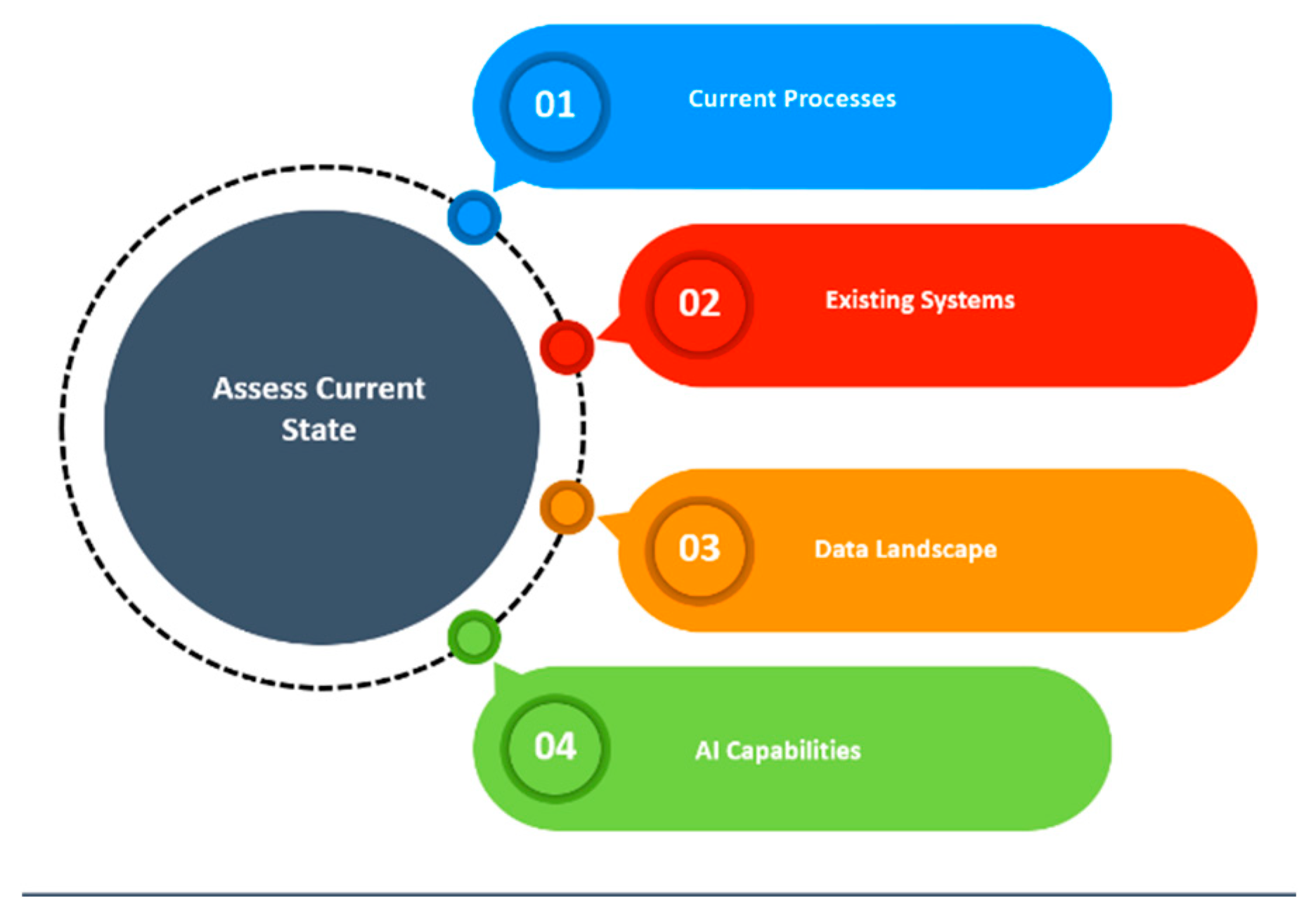
Figure 2.
Defining Process KPIs.
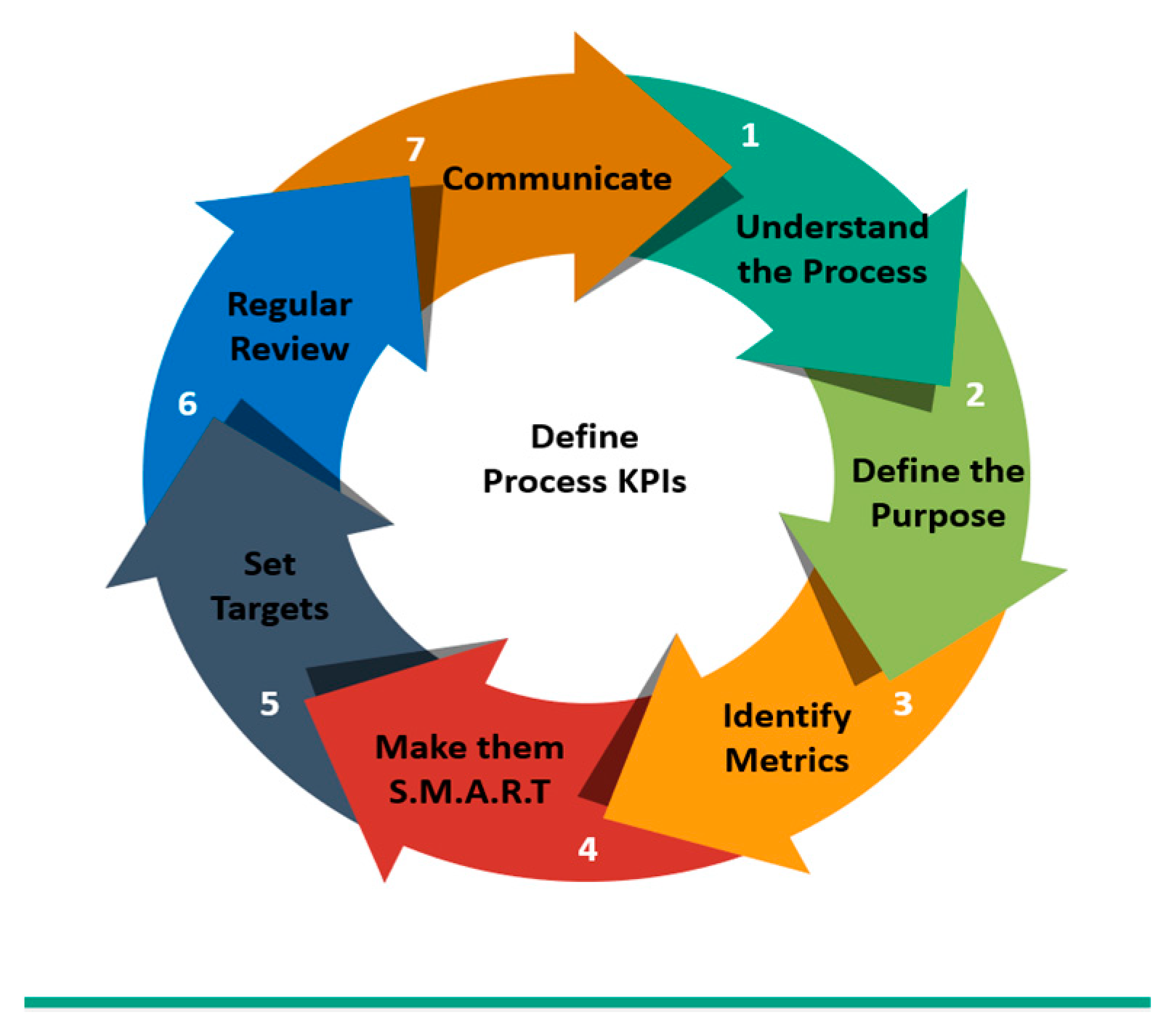
Figure 3.
Steps to Automate Business.
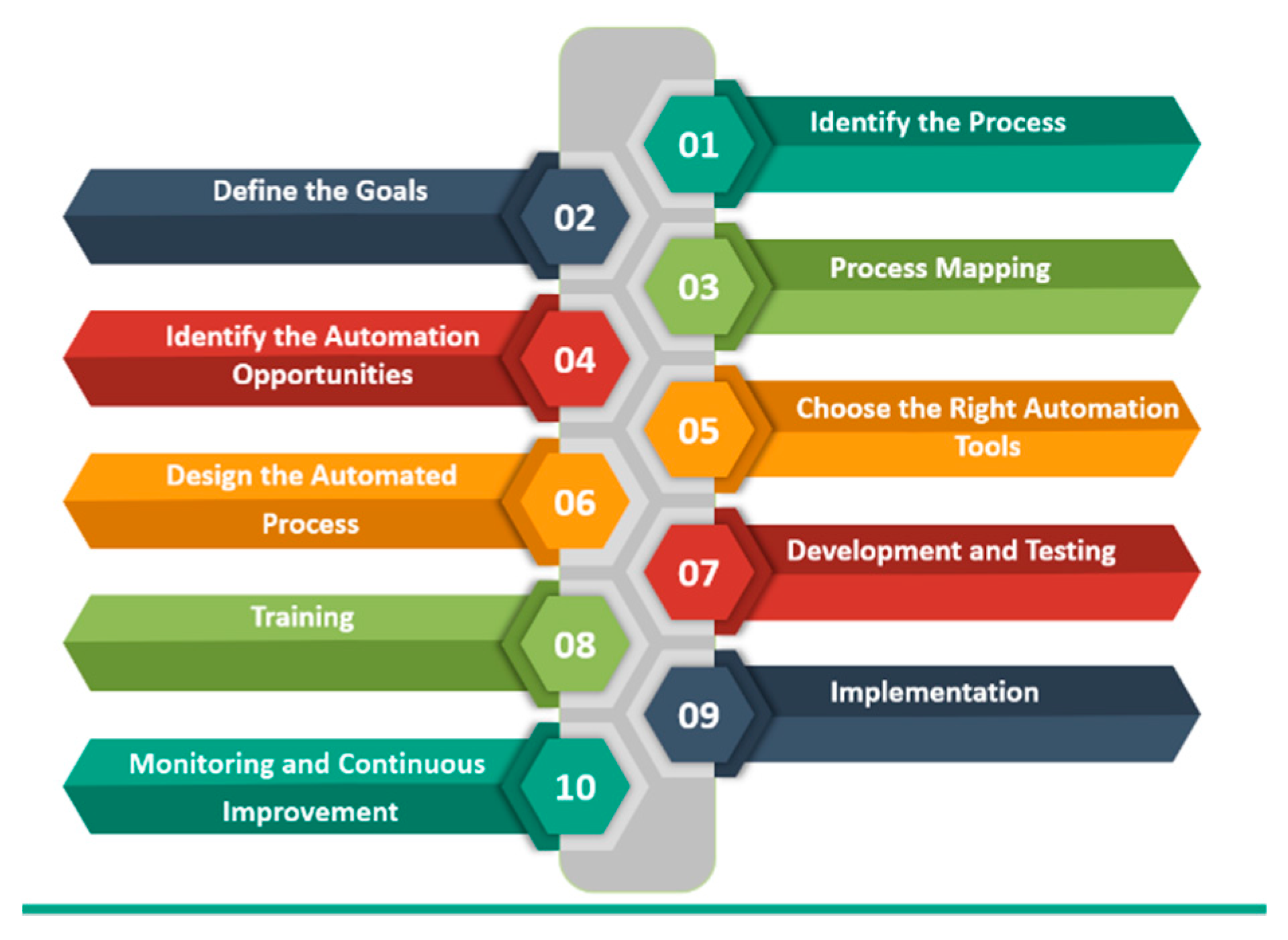
Figure 4.
Data Quality.
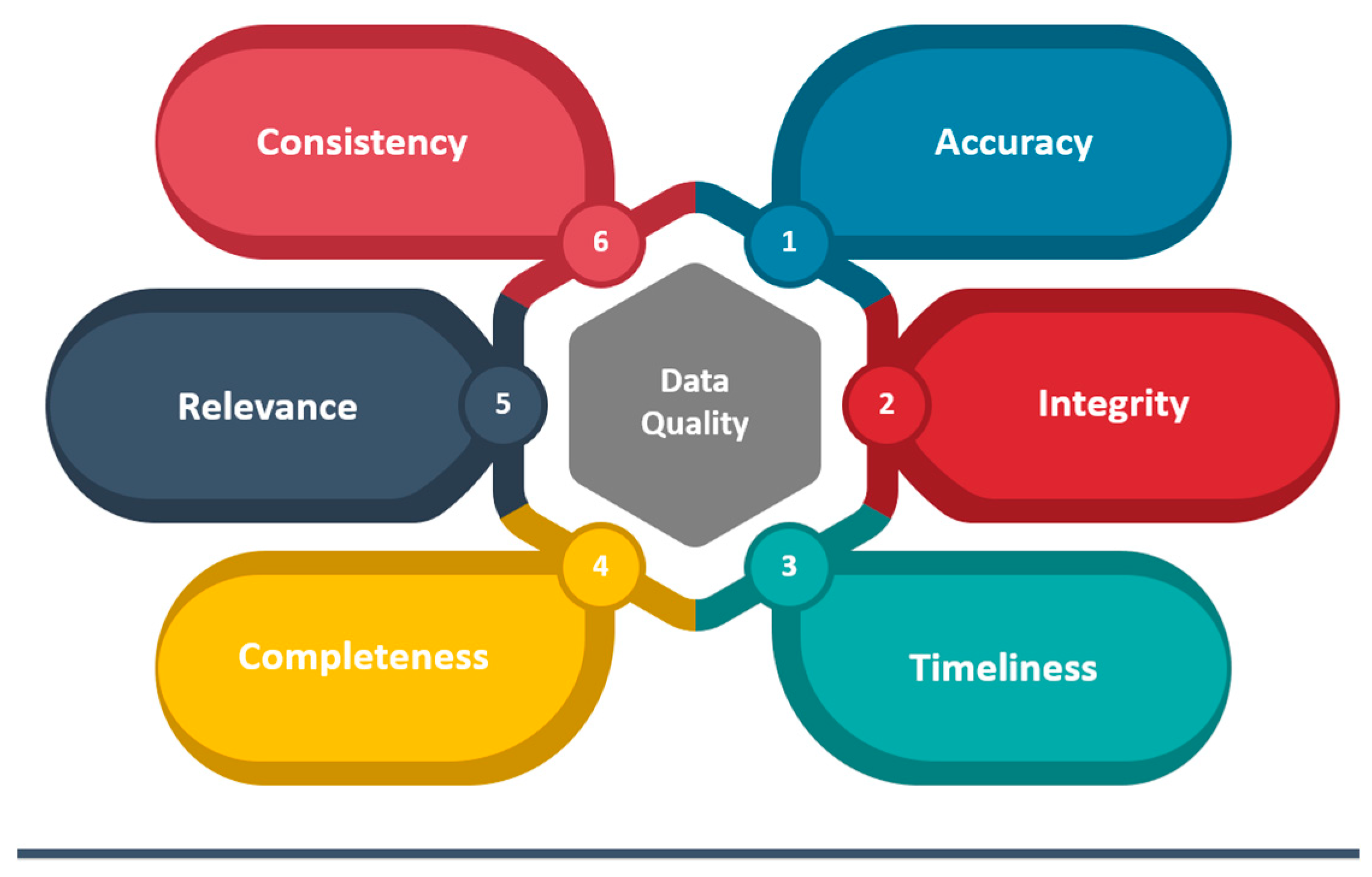
Figure 5.
Challenging Elements of Data Volume.
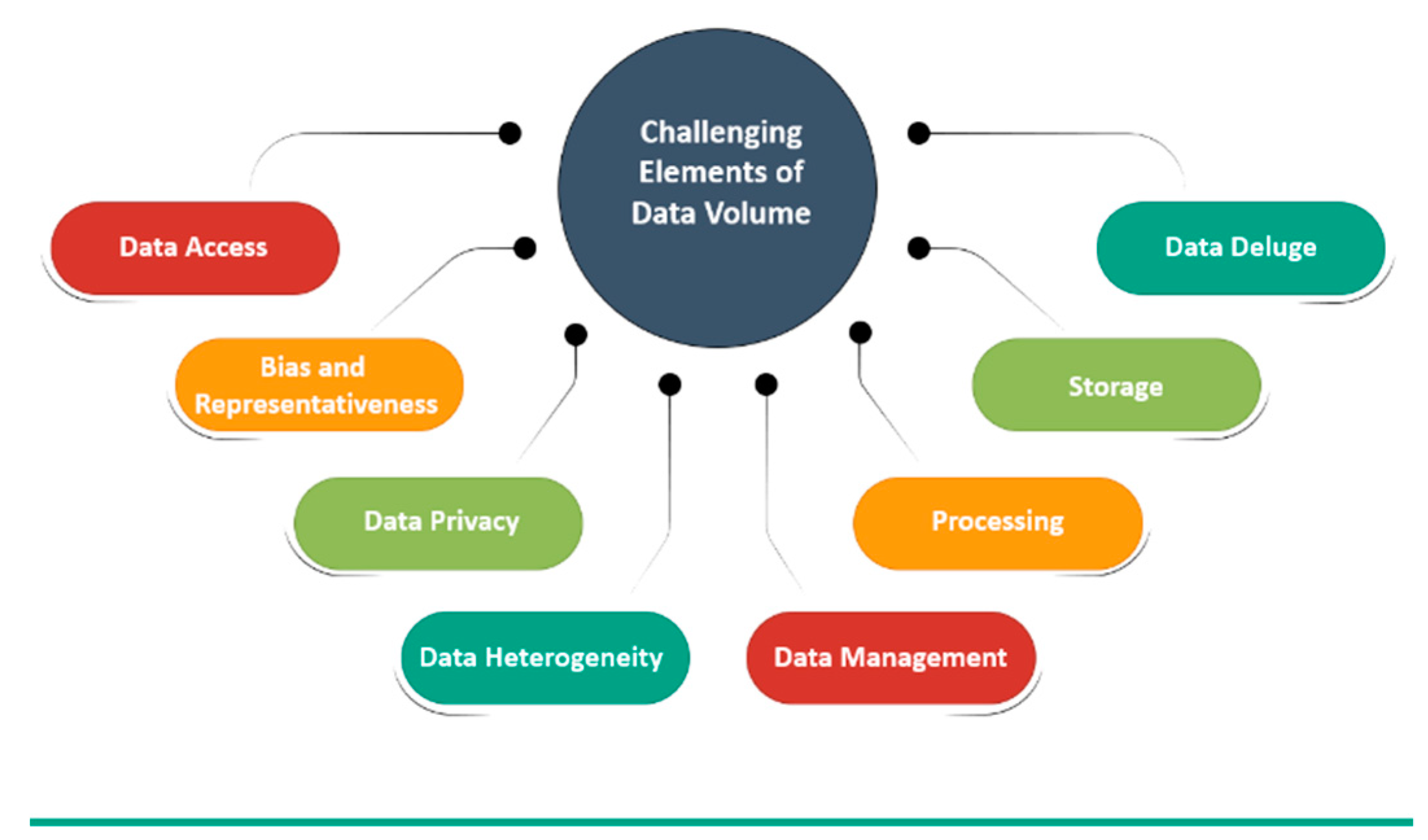
Figure 6.
Elements of current status assessment structure.
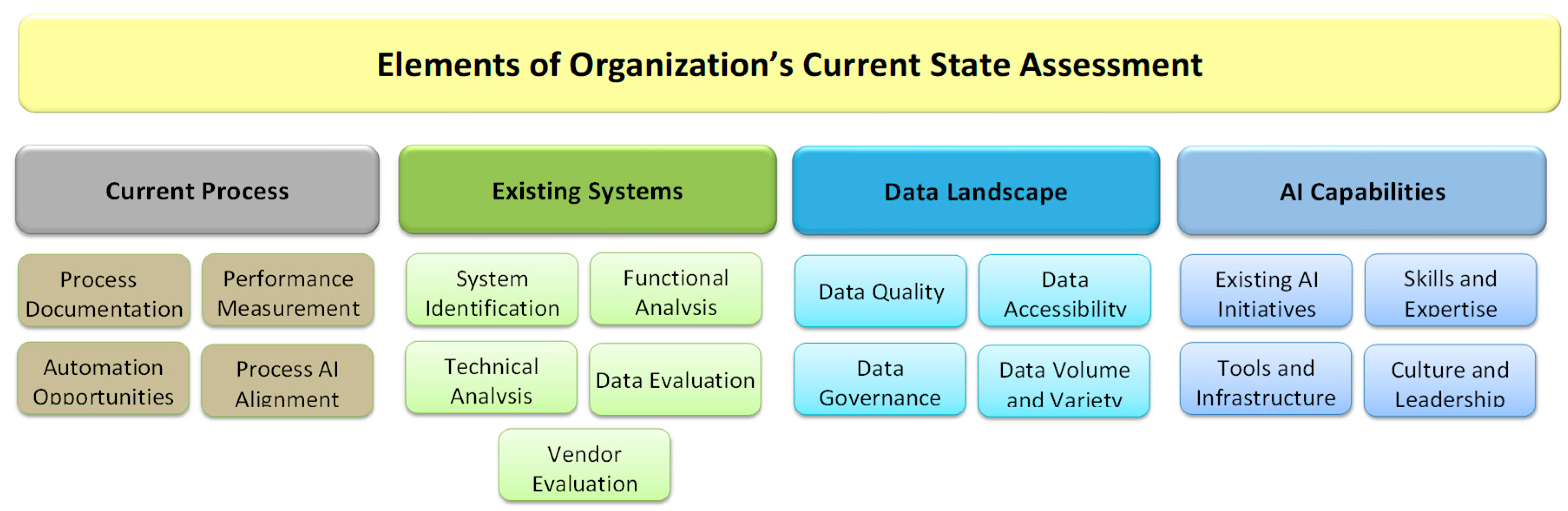
Disclaimer/Publisher’s Note: The statements, opinions and data contained in all publications are solely those of the individual author(s) and contributor(s) and not of MDPI and/or the editor(s). MDPI and/or the editor(s) disclaim responsibility for any injury to people or property resulting from any ideas, methods, instructions or products referred to in the content. |
© 2023 by the authors. Licensee MDPI, Basel, Switzerland. This article is an open access article distributed under the terms and conditions of the Creative Commons Attribution (CC BY) license (http://creativecommons.org/licenses/by/4.0/).
Copyright: This open access article is published under a Creative Commons CC BY 4.0 license, which permit the free download, distribution, and reuse, provided that the author and preprint are cited in any reuse.


