

Submitted:
27 October 2025
Posted:
27 October 2025
You are already at the latest version
Abstract
Digital transformation is crucial for SMEs as it enhances organizational efficiency, productivity, and competitiveness by enabling process automation, cost reduction, and faster decision-making. It also allows SMEs to leverage emerging technologies, improve customer engagement, and access new markets, thereby fostering innovation and sus-tainable growth. The proposed study aims to reveal the most significant aspects regarding digital transformation in SMEs’ business environment. Even though the concept of digital transformation has gained research interest, SMEs still face significant obstacles, includ-ing limited financial resources, a shortage of skilled personnel, and resistance to change within organizational culture. A systematic literature review (SLR) on the digital trans-formation of Small and Medium Enterprises (SMEs) was conducted to reveal enablers and obstacles encountered by these businesses in their pursuit of digital maturity. The review underscores the importance of human resources and digital maturity, emphasizing the need for a digitally skilled workforce and a culture of continuous learning. Results can enforce future research on the aspect and could focus on the relationship between digital transformation and organizational performance, the role of digital entrepreneurship, and the long-term effects of digital transformation, providing valuable insights to help SMEs navigate the complexities of digital transformation and achieve sustainable growth.
Keywords:
digital transformation
; SMEs
; Systematic Literature Review
1. Introduction
In the contemporary era of pervasive digitization and advanced technology, digital transformation of business processes is a crucial and innovative imperative for organizations. Digital transformation is more than just implementing technologies across the various business operations and designing digital strategies [1], but moreover it encompasses a wholistic restructuring of organizational frameworks to enhance agility and flexibility and to adopt new business models [2,3,4].
Digital transformation involves redesigning conventional processes into sophisticated systems, profoundly impacting organizational functions and interactions with the public, collaborators, and workforce [5]. Such a complex systemic endeavor [4,6] is regarded by both scholars and practitioners as a key source to achieve organizational efficiency and business competitiveness [7]. Existing research demonstrates that digital transformation can foster business innovation, enhance customer experience, improve organizational performance, and strengthen market competitiveness [11,12,13,14]. It has also significant impacts on promoting technological innovation [8,9,10], improving financial performance [11,12], reinforcing organizational resilience [13], and enhancing the quality of relationships with the customer community [14]. It is a shift beyond traditional technical progress mechanisms [15], revolutionizing literature creation, dissemination, and consumption, and challenging traditional paradigms [16].
As far as small and medium-sized enterprises (SMEs) are concerned, existing literature reveals that they face difficulties, while the overall level of digital adaptation among SMEs remains low, and they significantly lag behind large enterprises [17,18,19,20,21]. The smaller the company, the lower the likelihood of adopting new digital solutions [19]. Moreover, SMEs are often more vulnerable to external crises that threaten market stability compared to larger firms, due to their limited resources—a phenomenon known as the “liability of smallness”. However, the adoption of digital technologies by SMEs to support sustainability outcomes remains poorly understood [22,23].
Even though there exist research on the drivers and the barriers for SMEs’ digital transformation, more theoretical and empirical research in needed [24,25] in order to reduce uncertainty risks when implementing digital strategies [26]. A primary driver of digital transformation is the pursuit of increased organizational efficiency and productivity, alongside with factors such as technology and human capital [6,27,28]. It enables process automation, cost reduction, and faster decision-making, while its landscape is complex, involving multiple systems across the enterprise. Effective implementation requires developing digital capabilities aligned with organizational policies and structures. However, limited financial resources, implementation’s complexity, shortage of skilled personnel and competing priorities, often lead companies to neglect the digitization process [29].
At the same time, the business environment is changing due to the various digital technologies. Consumers now have access to multiple media channels, facilitating active interaction with companies and other consumers. They navigate various touchpoints, presenting businesses with opportunities to engage potential customers. At the organizational level, small, innovative, and rapidly growing digital entities have surpassed many traditional companies [28]. Such an environment is rather challenging especially when it comes to Small and Medium Enterprises (SMEs) who also face limited access to financial, organizational, and cognitive resources [30], resulting in a growing digital gap between SMEs and large corporations [31,32].
Existing research on entrepreneurship mainly puts emphasis on skills and capabilities [33], behavior of entrepreneurs [34] and their operating context [35], trying to indicate the factors that can lead them to business success [36,37]. Even though such a research progress exists, there is still a research gap regarding the interrelationship between digital transformation and entrepreneurship, especially when it comes in the ways the former changed or the reshaped from the scratch the latter [38].
Moreover, there exist research gaps related to digital transformation and its relationship with companies’ age, size and revenues. As far as companies’ size is concerned large firms have an advantage related with opportunities to reach easier financial, technological and human resources [39], while digital transformation for small and medium enterprises gathers research interest from both academics and businessmen as well [40]. It should not be neglected that SMEs are usually structured in a more agile way, an issue highly related with easiness to conduct changes when needed [41]. Moreover, small and medium sized companies are more eager to adapt to digital, business environment in order to ensure their viability and to achieve higher success and growth rates [42]. For example, during the COVID–19 pandemia many SMEs adopted various digital tools and developed digital applications to face the challenges occurred to reach their clients and to address their needs [43]. On the other hand, companies’ age may directly affect their digital transformation maturity, especially when we refer to start ups or digital narrative companies [44]. The company’s age issue is still under research to answer whether or not startups beside their small business experience are more digitally mature compared to older and well–established companies [45].
Another issue with controversial opinions is the relationship between digital transformation and business revenues. Even though there exists a theoretical link connecting digital transformation with increased revenues [46], empirical results do not support it, providing insight that expected revenues are lower than expected after major investments in digital transformation [47]. This evidence suggests that an indirect relationship may occur coming from cost minimization [48] and efficient resource usage [49] that are both related with digital transformation process, while researchers suggest that further empirical analysis in needed [50].
Current research aims to enlight the relationship between digital transformation and several aspects of SMEs business life. A systematic literature review (SLR) on the digital transformation of Small and Medium Enterprises (SMEs) was conducted to better understand how SMEs adopt digital transformation strategies and the most promising elements according to bibliography. The study examines key dimensions of digital transformation, providing valuable insights to help SMEs navigate the complexities of digital transformation and achieve sustainable growth.
2. Materials and Methods
A Systematic Literature Review (SLR) approach was applied to reveal how digital transformation is implemented in SMEs business environment in relation with enables and obstacles they may face. Even though the methodology originates from the medical field [51] while it soon passed to many other scientific fields including business studies (i.e., [52,53]. It aims to provide a systematic review of evidence on a specific topic, by using both qualitative and quantitative analysis of content [54,55]. It aims to provide a well-established knowledge base on a proposed topic of analysis by providing transparent protocols of research [56], in order to enhance future research [57].
The whole research process consists of three main stages [58], including (a) planning, (b) conducting the review and finally (c) reporting results. Of course, each one of the proposed stages can be further analyzed in several methodological steps such as collecting the research material, providing descriptive analysis of this material, categorize material according to several topics and of course evaluating the quality of the material and its relevance with the topic under research [59].
Researchers spent significant time finalizing the review question, following instructions of De Menezes and Kelliher [55]. Their aim was to have a broad, but focused vision of the research domain, so that to reach the exact nature of the research topic and to set appropriate objectives. In order to clarify all these aspects and the theoretical context of the subject area as well, researchers reviewed several seminal papers and agreed to follow five of them when developing their research focus. The choice was based on research relevance and papers’ impact in terms of citations.
The first paper was written in 2015 [60] and was putting emphasis on a specific sectional (manufacturing SMEs) and regional (Germany) era. The SLR conducted for a period between 2013–2015 and included 9 articles, aiming to examine SMEs’ awareness, readiness, and capability to adopt digital transformation needs and challenges. Results were mainly related to firms’ size as an obstacle to effective adaptation to digital conditions. A few years later, Tarute et al. [61] conducted literature review for the period 2003–2018 and used 13 articles to identify internal and external factors that play critical role to the SMEs effective digital transformation. Results indicate that capabilities fit, resource fit and changes in the business model are the core internal factors, while as far as external factors are concerned these included governmental regulation, industry related factors (such as industry maturity, needs and expectations) and external factors including opportunities for collaboration / customization / strategic alternatives / embedded trust with other firms or organizations.
Zaheer et al. [62] conducted a structured literature review until 2019 and used 133 articles to provide research guidance related with digital entrepreneurship, putting emphasis on digital startups. Results indicate that there exists a lack of cohesive frameworks in the field of digital entrepreneurship, while existing knowledge is quite fragmented and disjointed. Isensee et al. [63] provided insight about the relationships between organisational culture, environmental sustainability, and digitalisation of SMEs by conducting a systematic literature review, for the period 2009–2019. They used 80 articles to propose thirteen key dimensions and to identify ten links between the key constructs. Finally, Meier [64] conducted a systematic literature review for the period 2000–2019 and used 77 articles to synthesize the heterogenous enablers and obstacles of SME digitalization. Results indicate 10 different technological foci and 38 enablers that affect all SMEs even though differently as a result of the heterogeneity between SMEs.
Using the above - mentioned seminal papers (that cover the period up to 2019) the research focus targeted on conducting a systematic literature review for the period after 2020, up to 2024 to reveal internal and external drivers (enablers and obstacles) of digital transformation when it comes to SMEs., in order to answer the question “where research should go from this point and after”. So the objectives set were to map research conducted on the topic of SMEs digital transformation, to enlight enablers and obstacles occurred and to recognize research gaps so that to propose a future research agenda. From that point after, the research strategy followed, aimed to minimize bias, to determine the exact terms of research, to select databases to conduct research and to apply the necessary inclusion and exclusion criteria.
As far as search strings are concerned, researchers selected generic terms to reach a broad view of the topic and to avoid excluding relevant studies. The search strings used, included “digital transformation” AND “SMEs” AND “enablers” OR “Obstacles”, while the research was conducted on
- titles, abstracts and keywords for “digital transformation” AND “SMEs”
- all content for “enablers” OR “Obstacles”.
Databases used were (a) EBSCO Business Source Complete, (b) Emerald, (c) Scopus-Elsevier and (d) Science Direct. The above–mentioned databases are considered as some of the most reliable, most used and with large coverage in business aspects databases [52,55,65,66], while researchers had access to full articles.
As far as inclusion / exclusion criteria are concerned, these were related with taking into consideration only (a) peer-review papers, (b) published in international papers and (c) written in English language. Such criteria were adopted so that ensure the validity of the scientific content [65], the higher possible impact [67,68] and the scientific acceptance of the academic and business communities [53]. Following such a research approach, excluded papers in other languages and scientific works such as conference papers and proceedings, book chapters, monographs and press articles [58]. Researchers avoided excluding papers based on journals’ ranking, since such an approach could exclude significant studies coming from less prominent journals or different scientific disciplines.
Initial results provided a significant number of scientific articles, indicating an increased interest regarding SMEs’ digital transformation during the pandemia and in the post–COVID 19 era. Researchers spent significant time removing irrelevant studies based on title screening, while the team adopted as principal not to exclude papers at this stage, when there was uncertainty about their relevance with the main research question. The same principle was adopted when the title did not provide enough evidence about the field or focus of the study. Each paper was evaluated from three independent researchers, to ensure that at least two out of three agree about its relevance. The whole approach ensured that only non-relevant articles would be excluded during this first, preliminary phase.
After this phase, the remaining papers were then reviewed by three researchers, different than the initial ones. During the second phase of inclusion / exclusion, researchers read all abstracts to verify papers relevance to the proposed research. The research team included papers with both quantitative and qualitative approaches to include every possible empirical evidence. Since enablers / obstacles’ stings were located in main text, researchers decided to expand their review to full text as well, following the critical appraisal methodology as presented by Jones and Evans [69] in order to assess the validity of the selected studies.
Finally, selected papers were evaluated from another three academic researchers, not being involved in the review procedure at any stage, to assure papers’ relevance with the research, alongside with the robustness of the criteria adopted to the whole process. Out of a mutual agreement, the total number of manuscripts was reduced to 81 as presented in Table 1.
After the end of the above–mentioned procedure, the list of studies to be included was released, while the data extraction process began. This process is described in the next section, while it should be mentioned that this phase was done with digital means to reduce human error and to document this process [58,70].
3. Results
The corpus of this study included more than 81 documents (academic papers). Based on these papers we cleaned (e.g. remove numbers), transformed (e.g. lowercase the words) and stem the words. The corpus is tokenized into bigrams because they provide a more accurate view of the factors related to digital transformation. In total we acquired 87.000 different bigrams and Figure 1 illustrates the frequency distribution of the 20 top bigrams.
Taking into account that we utilized three different sources of academic papers; we found it interesting to visualize the relative frequency of the top bigrams based on the source. As Figure 2 depicts [digit transform] is the most frequent across the sources as expected. Moreover, Emerald and Science Direct share the same four top bigrams [digit transform], [digit technologi], [dynam capabl] and [busi model].
Various approaches have been proposed to measure keyness between corpora, like the Ratio metric [71] and the Odds Ratio [72]. Our keyness analysis revealed some differences and two main factors may possibly explain these differences. First, the journals’ thematic focus varies, while many journals from Emerald tend to address technology-driven topics, such as digital performance and digital strategy, within a firm’s context. Second, different research types require the utilization of different linguistic styles. In our corpus, two key terms (“western balkan” and “welsh gover”) appeared because of case studies with a regional focus. This suggests that some key terms may be influenced by specific linguistic or contextual features [73].
Keyness analysis was helpful because it revealed some characteristics of frequent bigrams and the role of abbreviations in our study. Keywords are linguistic markers which encode the essence or topical focus of a corpus. Therefore, it could potentially uncover a factor depending on how they connected to a document with other key term. As a consequence, the frequency of a term within a (sub)corpus might not be enough to reveal a factor and we suggest that a factor is a mixture of different key terms consistently found between different documents. From such point of view, it is possible to incorporate topic modeling and further study thoroughly examine the relationship between keywords within a document / corpus and (2) qualitatively assess the formation of different topics, to identify factors associated with the digital transformation of SMEs.
LDA analyzes words and documents to identify common aspects (topics) with the assumption that one document might covers different topics, and one word could be used simultaneously across different topics. We examined using expert opinion different results based on the experimentation few variables. First, the number of topics (k) is determined by research, and it is an important requirement by the LDA. Second, the number of bigrams we take into account. In this work we exclude bigrams with low frequency (less than 0.001%). Third, how many different documents (>3) include the bigram is another criterion we employed in order to avoid hapaxes. The results of LDA are presented in Table 2.
Results presented in a word cloud in Figure 3. A word cloud is a visual representation of text data, where the frequency of each word is depicted by its size. This tool is particularly useful in academic research for identifying prominent themes, trends, and patterns within large datasets, thereby facilitating qualitative analysis. Additionally, word clouds can enhance the interpretability of textual information, making it easier to communicate complex data insights.
Figure 4 presents the bigram collocations from the above–mentioned analysis. Collocations are combinations of words that frequently co-occur in a language, appearing together more often than would be expected by chance. In our corpus. We examined the collocations of bigrams based on different grouping variable like the year of publication (e.g. 2021, 2022) and the origin of the first author (Europe, Asia and Other). We represented the collocation between the bigrams using a network representation. Each node of the network is a bigram and the edge represents the frequency of occurrence. In all cases, we used a window of five bigrams (before and after) to calculate the frequency,
4. Discuss and Conclusions
The systematic literature review (SLR) on the digital transformation of Small and Medium Enterprises (SMEs) provides a comprehensive understanding of the core elements that may accelerate and prevent SMEs from reaching a desirable level of digital maturity. Results support existing findings indicating that technological readiness is not a stand - alone aspect capable of guaranteeing successful digital transformation [74]. Several business - oriented aspects can facilitate or retard the whole procedure including leadership, resistance to change, organizational culture [75] and digital soft skills [76]. Of course, all these elements should be tailored to SMEs’ specific conditions and restrictions taking into account industry specific characteristics, resource constraints and national differences [77,78].
The review identifies several enablers that facilitate the digital transformation of SMEs. A significant enabler that arise for the research is the support needed from external stakeholders, such as government policies and academic institutions. The role of supporting environments has been highlighted from previous researchers that described the consulting and practical role of public / governmental agencies and innovation laboratories [79,80]. Government initiatives can reduce financial barriers and provide the necessary infrastructure for digital transformation. Academic institutions play a crucial role in developing the skills and competencies required for digital transformation, thereby enhancing the capabilities of future employees and entrepreneurs. The adoption of emerging technologies is also pivotal in driving digital transformation. These technologies offer new opportunities for innovation and growth, enabling SMEs to stay competitive in a rapidly evolving market. These technologies offer tools and applications but moreover create a series of new digital channels disrupting traditional distribution boundaries [81], while providing new paths to extract information form customers and employees [82].
The review also highlights the importance of a digitally aligned strategy. A clear roadmap that outlines how and when to implement digital changes can provide all stakeholders with a shared vision and direction [83]. This strategy should prioritize investments not only in technology but also in people and processes, ensuring that the digital transformation efforts are holistic, agile and integrated [84]. The success of management’s transformation to agile methodologies is crucial in this context, as it allows SMEs to respond quickly to market changes and customer needs, fostering a culture of continuous improvement and innovation.
Despite the numerous enablers, SMEs face several obstacles that hinder their digital transformation efforts. Limited financial resources are a significant barrier, as many SMEs struggle to afford the necessary investments in digital technologies. Additionally, a shortage of skilled personnel and competing priorities often lead to the neglect of digitization processes. Organizational culture is another critical obstacle. Resistance to change and a lack of digital skills among employees can impede the adoption of digital technologies. The complexity of digital transformation, which involves multiple interconnected systems across the enterprise, further compounds these challenges. SMEs often lack the expertise to manage this complexity, leading to implementation failures. Results support existing research that indicate as main barriers for digital transformation resource limitations, technical hurdles due to limited digital skills, lack of expertise to implement technologies and higher risk aversion [85,86,87,88]. These challenges can slow down the pace of digital transformation and limit the ability of SMEs to compete in global markets. Improving external connections and opportunities, such as forming strategic partnerships and expanding into new markets, can help SMEs overcome these barriers and enhance their digital capabilities.
The role of human resources and digital maturity is also emphasized in the review. Developing a digitally skilled workforce and fostering a culture of continuous learning are essential for successful digital transformation [89]. This includes providing training and development opportunities for employees, as well as creating an environment that encourages innovation and experimentation. The dynamic and digital capabilities of an organization, such as its ability to adapt to new technologies and processes, are critical for achieving digital maturity and sustaining competitive advantage.
In conclusion, the systematic literature review provides a comprehensive overview of the enablers and obstacles of digital transformation in SMEs. While there are numerous drivers that facilitate this process, significant barriers remain that need to be addressed. The COVID-19 pandemic has underscored the importance of digital resilience and highlighted the disparities in digital capabilities among SMEs. Future research should focus on providing empirical evidence on the relationship between digital transformation and organizational performance, exploring the role of digital entrepreneurship, and examining the long-term effects of digital transformation. By addressing these gaps, researchers can provide valuable insights that can help SMEs navigate the complexities of digital transformation and achieve sustainable growth.
Supplementary Materials
The information needed is included in the paper.
Author Contributions
Conceptualization, A.K. and D.D.; methodology, E.C.; investigation, A.K. and D.Ka.; data curation, E.C.; writing—original draft preparation, F.K., D.Ka., T.R., A.A., V.A., S.P., G.L., K.A. and D.Ko.; writing—review and editing, A.K. and D.D.; visualization, E.C.; project administration, A.K.; funding acquisition, A.K. All authors have read and agreed to the published version of the manuscript. Antonios Kargas1, Dimitrios Drosos1, Dimitrios Katsianis2, Theodoros Rokkas1, Athanasios Andriopoulos1, Vasileios Argiroulis1, Spyridon Filios1, Georgios Loumos1, Konstantinos Alver-tos3, Dimitrios Kokkinis3
Funding
The research project is implemented in the framework of H.F.R.I Call “Basic research Financing (Horizontal support of all Sciences)” under the National Recovery and Resilience Plan “Greece 2.0” funded by the European Union –NextGenerationEU (H.F.R.I. Project Number: 15088).
Data Availability Statement
Data is contained within the article.
Conflicts of Interest
The authors declare no conflicts of interest.
References
- Matt C., Hess T. and Benlian A., Digital transformation strategies, Business & Information Systems Engineering, 2015, Vol. 57 No.5, pp. 339-343.
- Verhoef, P.C.; Broekhuizen, T.; Bart, Y.; Bhattacharya, A.; Dong, J.Q.; Fabian, N.; Haenlein, M. Digital transformation: A multidisciplinary reflection and research agenda. J. Bus. Res. 2021, 122, 889–901. [CrossRef]
- Fischer, M.; Imgrund, F.; Janiesch, C.; Winkelmann, A. Strategy archetypes for digital transformation: Defining meta objectives using business process management. Inf. Manag. 2020, 57. [CrossRef]
- Vial, G. Understanding digital transformation: A review and a research agenda. J. Strateg. Inf. Syst. 2019, 28, 118–144. [CrossRef]
- Favoretto, C.; Mendes, G.H.; Oliveira, M.G.; Cauchick-Miguel, P.A.; Coreynen, W. From servitization to digital servitization: How digitalization transforms companies' transition towards services. Ind. Mark. Manag. 2022, 102, 104–121. [CrossRef]
- Chen, H.; Tian, Z. Environmental uncertainty, resource orchestration and digital transformation: A fuzzy-set QCA approach. J. Bus. Res. 2022, 139, 184–193. [CrossRef]
- Parviainen, P.; Tihinen, M.; Kääriäinen, J.; Teppola, S. Tackling the digitalization challenge: how to benefit from digitalization in practice. Int. J. Inf. Syst. Proj. Manag. 2017, 5, 63–77. [CrossRef]
- Li, F.; Trappey, A.J.; Lee, C.-H.; Li, L. Immersive technology-enabled digital transformation in transportation fields: A literature overview. Expert Syst. Appl. 2022, 202. [CrossRef]
- Xue, L.; Zhang, Q.; Zhang, X.; Li, C. Can Digital Transformation Promote Green Technology Innovation?. Sustainability 2022, 14, 7497. [CrossRef]
- Jafari-Sadeghi, V.; Garcia-Perez, A.; Candelo, E.; Couturier, J. Exploring the impact of digital transformation on technology entrepreneurship and technological market expansion: The role of technology readiness, exploration and exploitation. J. Bus. Res. 2021, 124, 100–111. [CrossRef]
- Peng, Y.; Tao, C. Can digital transformation promote enterprise performance? —From the perspective of public policy and innovation. J. Innov. Knowl. 2022, 7. [CrossRef]
- Ji, H.; Miao, Z.; Wan, J.; Lin, L. Digital transformation and financial performance: the moderating role of entrepreneurs’ social capital. Technol. Anal. Strat. Manag. 2022, 36, 1978–1995. [CrossRef]
- Zhang, J.; Long, J.; von Schaewen, A.M.E. How Does Digital Transformation Improve Organizational Resilience?—Findings from PLS-SEM and fsQCA. Sustainability 2021, 13, 11487. [CrossRef]
- Matarazzo, M.; Penco, L.; Profumo, G.; Quaglia, R. Digital transformation and customer value creation in Made in Italy SMEs: A dynamic capabilities perspective. J. Bus. Res. 2021, 123, 642–656. [CrossRef]
- Rymarczyk, J. Technologies, Opportunities and Challenges of the Industrial Revolution 4.0: Theoretical Considerations. Entrep. Bus. Econ. Rev. 2020, 8, 185–198. [CrossRef]
- Matt, D. T., Modrák, V. and Zsifkovits, H. 2020 Industry 4.0 for SMEs: Challenges, Opportunities and Requirements. Cham, Switzerland: Springer, pp. 1–401.
- OECD, Organisation for Economic Co-operation and Development, “The digital transformation of SMEs and Entrepreneurship”. Paris, France: OECD, 2021, ISBN 978-92-64-39245-8.
- European Investment Bank, “Building a Smart and Green Europe in the COVID-19 Era”, EIB Investment Report 2020/2021, Luxembourg, 2021, ISBN 978-92-861-4811-8.
- OECD, Organisation for Economic Co-operation and Development, “Measuring the digital transformation: A roadmap for the future”. Paris, France: OECD, 2019, ISBM 978-92-64-31199-.
- European Investment Bank, “Evidence from the EIB Investment Survey”, EIB Digitalisation in Europe 2020/2021, Luxembourg, 2021, ISBN 978-92-861-5041-8, p. 98.
- Zaidi, S.H.; Rupeika-Apoga, R. Liquidity Synchronization, Its Determinants and Outcomes under Economic Growth Volatility: Evidence from Emerging Asian Economies. Risks 2021, 9, 43. [CrossRef]
- Philbin, S.; Viswanathan, R.; Telukdarie, A. Understanding how digital transformation can enable SMEs to achieve sustainable development: A systematic literature review. Small Bus. Int. Rev. 2022, 6, e473. [CrossRef]
- Mago, S.; Modiba, F.S. Does informal finance matter for micro and small businesses in Africa?. Small Bus. Int. Rev. 2022, 6, e415. [CrossRef]
- Martínez-Caro, E.; Cegarra-Navarro, J.G.; Alfonso-Ruiz, F.J. Digital technologies and firm performance: The role of digital organisational culture. Technol. Forecast. Soc. Chang. 2020, 154. [CrossRef]
- Truant, E.; Broccardo, L.; Dana, L.-P. Digitalisation boosts company performance: an overview of Italian listed companies. Technol. Forecast. Soc. Chang. 2021, 173. [CrossRef]
- Paul, J.; Alhassan, I.; Binsaif, N.; Singh, P. Digital entrepreneurship research: A systematic review. J. Bus. Res. 2022, 156. [CrossRef]
- Porfírio, J.A.; Carrilho, T.; Felício, J.A.; Jardim, J. Leadership characteristics and digital transformation. J. Bus. Res. 2021, 124, 610–619. [CrossRef]
- Verhoef, P.C.; Broekhuizen, T.; Bart, Y.; Bhattacharya, A.; Dong, J.Q.; Fabian, N.; Haenlein, M. Digital transformation: A multidisciplinary reflection and research agenda. J. Bus. Res. 2021, 122, 889–901. [CrossRef]
- Kiron, D., Kane, G.C., Palmer, D., Phillips, A.N. and Buckley, N. 2016 Aligning the organization for its digital future, MIT Sloan Manag. Rev., vol. 58, no. 1, pp. 1–4.
- Skare, M.; Obesso, M.d.L.M.d.; Ribeiro-Navarrete, S. Digital transformation and European small and medium enterprises (SMEs): A comparative study using digital economy and society index data. Int. J. Inf. Manag. 2022, 68. [CrossRef]
- McAdam, M.; Crowley, C.; Harrison, R.T. Digital girl: cyberfeminism and the emancipatory potential of digital entrepreneurship in emerging economies. Small Bus. Econ. 2020, 55, 349–362. [CrossRef]
- Giones, F.; Brem, A. 2017. Digital technology entrepreneurship: A definition and research agenda. Technol. Innov. Manag. Rev. 2017, 7, 44–51.
- Kimmitt, J.; Dimov, D. The recursive interplay of capabilities and constraints amongst microfinance entrepreneurs. Int. J. Entrep. Behav. Res. 2020, 27, 600–628. [CrossRef]
- Contin-Pilart, I., Larraza-Kintana, M. and Martin-Sanchez, V. 2020, “Entrepreneurs’ planning behavior and new firm performance”, Management Research, Vol. 18 No. 3, pp. 307-334.
- Ruiz-Palomino, P.; Martínez-Cañas, R. From opportunity recognition to the start-up phase: the moderating role of family and friends-based entrepreneurial social networks. Int. Entrep. Manag. J. 2021, 17, 1159–1182. [CrossRef]
- Watson, A.; Dada, O.(.; López-Fernández, B.; Perrigot, R. The influence of entrepreneurial personality on franchisee performance: A cross-cultural analysis. Int. Small Bus. Journal: Res. Entrep. 2020, 38, 605–628. [CrossRef]
- Donbesuur, F.; Boso, N.; Hultman, M. The effect of entrepreneurial orientation on new venture performance: Contingency roles of entrepreneurial actions. J. Bus. Res. 2020, 118, 150–161. [CrossRef]
- Corvello, V.; De Carolis, M.; Verteramo, S.; Steiber, A. The digital transformation of entrepreneurial work. Int. J. Entrep. Behav. Res. 2021, 28, 1167–1183. [CrossRef]
- Westerman, G. & McAfee, A. 2012. The digital advantage: How digital leaders outperform their peers in every industry. The MIT Center for Digital Business, A major research initiative at the MIT Sloan School of Management, November 2012. Available at: http://ide.mit.edu/sites/default/files/publications/TheDigitalAdvantage.pdf (Accessed January 2025).
- Eller, R.; Alford, P.; Kallmünzer, A.; Peters, M. Antecedents, consequences, and challenges of small and medium-sized enterprise digitalization. J. Bus. Res. 2020, 112, 119–127. [CrossRef]
- Moeuf, A.; Lamouri, S.; Pellerin, R.; Tamayo-Giraldo, S.; Tobon-Valencia, E.; Eburdy, R. Identification of critical success factors, risks and opportunities of Industry 4.0 in SMEs. Int. J. Prod. Res. 2020, 58, 1384–1400. [CrossRef]
- Ardito, L.; Raby, S.; Albino, V.; Bertoldi, B. The duality of digital and environmental orientations in the context of SMEs: Implications for innovation performance. J. Bus. Res. 2021, 123, 44–56. [CrossRef]
- Dua A., Cheng W.-L., Lund S., De Smet A., Robinson O., Sanghvi S., 2021. 90 Digital transformation statistics: How businesses are using digital to drive growth in 2021 and beyond. McKinsey & Company, New York. Available at: https://www.pipartners.com/digital-transformation-statistics/ (Accessed 20 October 2021).
- Sreenivasan, A.; Suresh, M. Digital transformation in start-ups: a bibliometric analysis. Digit. Transform. Soc. 2023, 2, 276–292. [CrossRef]
- Ribeiro-Navarrete, B.; Martín, J.M.M.; Guaita-Martínez, J.M.; Simón-Moya, V. Analysing cooperatives’ digital maturity using a synthetic indicator. Int. J. Inf. Manag. 2023, 72. [CrossRef]
- Iansiti, M., & Lakhani, K. R. 2014. Digital Ubiquity. How Connections, Sensors, and Data Are Revolutionizing Business. Harvard Business Review, 92(11), 90–99.
- Gebauer, H.; Fleisch, E.; Lamprecht, C.; Wortmann, F. Growth paths for overcoming the digitalization paradox. Bus. Horizons 2020, 63, 313–323. [CrossRef]
- Kasperovica L. & Lace N., 2021. "Factors influencing companies’ positive financial performance in digital age: a meta-analysis," Entrepreneurship and Sustainability Issues, VsI Entrepreneurship and Sustainability Center, vol. 8(4), pages 291-311, June.
- Clauss, T. Measuring business model innovation: Conceptualization, scale development, and proof of performance. R&D Manag. 2017, 47, 385–403.
- da Costa, L.S.; Munhoz, I.P.; Pereira, L.; Akkari, A.C.S. Assessing the digital maturity of micro and small enterprises: a focus on an emerging market. Procedia Comput. Sci. 2022, 200, 175–184. [CrossRef]
- Cook, D.J.; Mulrow, C.D.; Haynes, R.B. Systematic Reviews: Synthesis of Best Evidence for Clinical Decisions. Ann. Intern. Med. 1997, 126, 376–380. [CrossRef]
- Abatecola, G.; Mandarelli, G.; Poggesi, S. The personality factor: how top management teams make decisions. A literature review. J. Manag. Gov. 2011, 17, 1073–1100. [CrossRef]
- Aquilani, B.; Piccarozzi, M.; Abbate, T.; Codini, A. The Role of Open Innovation and Value Co-creation in the Challenging Transition from Industry 4.0 to Society 5.0: Toward a Theoretical Framework. Sustainability 2020, 12, 8943. [CrossRef]
- De Menezes, L.M. and Kelliher, C. (2011), “Flexible working and performance: a systematic review of the evidence for a business case”, International Journal of Management Reviews, Vol. 13 No. 4, pp. 452-474.
- Merli, R.; Preziosi, M.; Acampora, A. How do scholars approach the circular economy? A systematic literature review. J. Clean. Prod. 2018, 178, 703–722. [CrossRef]
- Crossan, M.M.; Apaydin, M. A Multi-Dimensional Framework of Organizational Innovation: A Systematic Review of the Literature. J. Manag. Stud. 2010, 47, 1154–1191. [CrossRef]
- Macpherson, A.; Holt, R. Knowledge, learning and small firm growth: A systematic review of the evidence. Res. Policy 2007, 36, 172–192. [CrossRef]
- Tranfield, D.; Denyer, D.; Smart, P. Towards a Methodology for Developing Evidence-Informed Management Knowledge by Means of Systematic Review. Br. J. Manag. 2003, 14, 207–222. [CrossRef]
- Denyer, D., Tranfield, D., (2009). Producing a systematic review. In: Buchanan, Bryman (Ed.), The Sage Handbook of Organization Research Methods. Sage Publications Ltd, Cornwall, pp. 671–689.
- Sommer, L. Industrial revolution - industry 4.0: Are German manufacturing SMEs the first victims of this revolution?. J. Ind. Eng. Manag. 2015, 8, 1512-1532. [CrossRef]
- Tarutė, A., Duobienė, J., Klovienė, L., Vitkauskaitė, E. and Varaniūtė, V., (2018). Identifying factors affecting digital transformation of SMEs.
- Zaheer, H.; Breyer, Y.; Dumay, J. Digital entrepreneurship: An interdisciplinary structured literature review and research agenda. Technol. Forecast. Soc. Chang. 2019, 148. [CrossRef]
- Isensee, C.; Teuteberg, F.; Griese, K.-M.; Topi, C. The relationship between organizational culture, sustainability, and digitalization in SMEs: A systematic review. J. Clean. Prod. 2020, 275. [CrossRef]
- Meier, A., (2021). Systematic review of the literature on SME digitalization: multi-sided pressure on existing SMEs. Digitalization: Approaches, Case Studies, and Tools for Strategy, Transformation and Implementation, pp.257-276. [CrossRef]
- Newbert, S.L. Empirical research on the resource-based view of the firm: an assessment and suggestions for future research. Strat. Manag. J. 2006, 28, 121–146. [CrossRef]
- Sassanelli, C.; Rosa, P.; Rocca, R.; Terzi, S. Circular economy performance assessment methods: A systematic literature review. J. Clean. Prod. 2019, 229, 440–453. [CrossRef]
- Ordanini, A.; Rubera, G.; DeFillippi, R. The many moods of inter-organizational imitation: A critical review. Int. J. Manag. Rev. 2008, 10, 375–398. [CrossRef]
- Keupp, M.M.; Palmié, M.; Gassmann, O. The Strategic Management of Innovation: A Systematic Review and Paths for Future Research. Int. J. Manag. Rev. 2011, 14, 367–390. [CrossRef]
- Jones, T. and Evans, D. (2000), “Conducting a systematic review”, Australian Critical Care, Vol. 13 No. 2, pp. 66-71.
- White A., Schmidt K., Systematic literature reviews, Complementary Therapies in Medicine, Volume 13, Issue 1, 2005, Pages 54-60.
- Kilgarriff, A. (2009). Simple Maths for Keywords.
- Pojanapunya P., Todd R. W., The influence of the benchmark corpus on keyword analysis, Register Studies, Volume 3, Issue 1, 2021, p. 88 - 114.
- Gabrielatos C., Keyness analysis Nature, metrics and techniques, in Corpus Approaches to Discourse, 1st Edition, Routledge, 2018, Pages 34.
- Garzoni, A.; De Turi, I.; Secundo, G.; Del Vecchio, P. Fostering digital transformation of SMEs: a four levels approach. Manag. Decis. 2020, 58, 1543–1562. [CrossRef]
- Kargas, A.; Gialeris, E.; Komisopoulos, F.; Lymperiou, A.; Salmon, I. Digital Maturity and Digital Transformation Strategy among Greek Small and Medium Enterprises. Adm. Sci. 2023, 13, 236. [CrossRef]
- Kargas, A.; Giannakis, A.; Foukas, I. 2022. Recognizing Skills and Competencies Required Under Industry 4.00s Framework for Achieving Business Digital Transformation. In Management Strategies for Sustainability, New Knowledge Innovation, and Personalized Products and Services; Pejic-Bach, M., Dogru, Ç., Eds.; IGI Global: Hershey, PA, USA; pp. 1–34. [CrossRef]
- Frank, A.G.; Mendes, G.H.S.; Ayala, N.F.; Ghezzi, A. Servitization and Industry 4.0 convergence in the digital transformation of product firms: A business model innovation perspective. Technol. Forecast. Soc. Chang. 2019, 141, 341–351. [CrossRef]
- Li, L.; Su, F.; Zhang, W.; Mao, J. Digital transformation by SME entrepreneurs: A capability perspective. Inf. Syst. J. 2017, 28, 1129–1157. [CrossRef]
- Barann Benjamin, Cordes Ann-Kristin, Hermann Andreas, Chasin Friedrich (2019), “Supporting Digital Transformation in Small and Medium-sized Enterprises: A Procedure Model Involving Publicly Funded Support Units” Proceedings of the 52nd Hawaii International Conference on System Sciences, 4977-4986. https://scholarspace.manoa.hawaii.edu/handle/10125/59935.
- Schallmo Daniel, Willams Christopher A.; Boardman Luke (2018) “Digital Transformation of Business Models-Best Practice, Enabler, and Roadmap”, International Journal of Innovation Management, Vol. 21, No. 8 (December 2017).
- 2022; 81. Gouveia Fernando Diogo, Mamede Henrique São, Digital Transformation for SMES in the Retail Industry, Procedia Computer Science, Volume 204, 2022, Pages 671-681.
- Kostakis, P.; Kargas, A. Big-Data Management: A Driver for Digital Transformation?. Information 2021, 12, 411. [CrossRef]
- Ghobakhloo, M.; Iranmanesh, M. Digital transformation success under Industry 4.0: a strategic guideline for manufacturing SMEs. J. Manuf. Technol. Manag. 2021, 32, 1533–1556. [CrossRef]
- Kargas, A.; Aretos, A. 2023. Transforming Strategic Management Using Agile Methodologies. In New Perspectives and Possibilities in Strategic Management in the 21st Century: Between Tradition and Modernity; IGI Global: Hershey, PA, USA. [CrossRef]
- Moeuf, A.; Pellerin, R.; Lamouri, S.; Tamayo-Giraldo, S.; Barbaray, R. The industrial management of SMEs in the era of Industry 4.0. Int. J. Prod. Res. 2017, 56, 1118–1136. [CrossRef]
- Moeuf, A.; Lamouri, S.; Pellerin, R.; Tamayo-Giraldo, S.; Tobon-Valencia, E.; Eburdy, R. Identification of critical success factors, risks and opportunities of Industry 4.0 in SMEs. Int. J. Prod. Res. 2020, 58, 1384–1400. [CrossRef]
- Frank, A.G.; Dalenogare, L.S.; Ayala, N.F. Industry 4.0 technologies: Implementation patterns in manufacturing companies. Int. J. Prod. Econ. 2019, 210, 15–26. [CrossRef]
- Agostini, L.; Nosella, A. The adoption of Industry 4.0 technologies in SMEs: results of an international study. Manag. Decis. 2019, 58, 625–643. [CrossRef]
- Kargas, A., Gkika, E., Papakyriakopoulos, D., Komisopoulos, F., Psaromiligkos, Y. 2024. Interplay of Skills in the Digital Era: A European Perspective. In: Prastacos, G., Pouloudi, N. (eds) Leading and Managing in the Digital Era. LMDE 2023. Lecture Notes in Information Systems and Organisation, vol 69. Springer, Cham. [CrossRef]
Figure 1.
Bigram frequency distribution (top 20 terms).
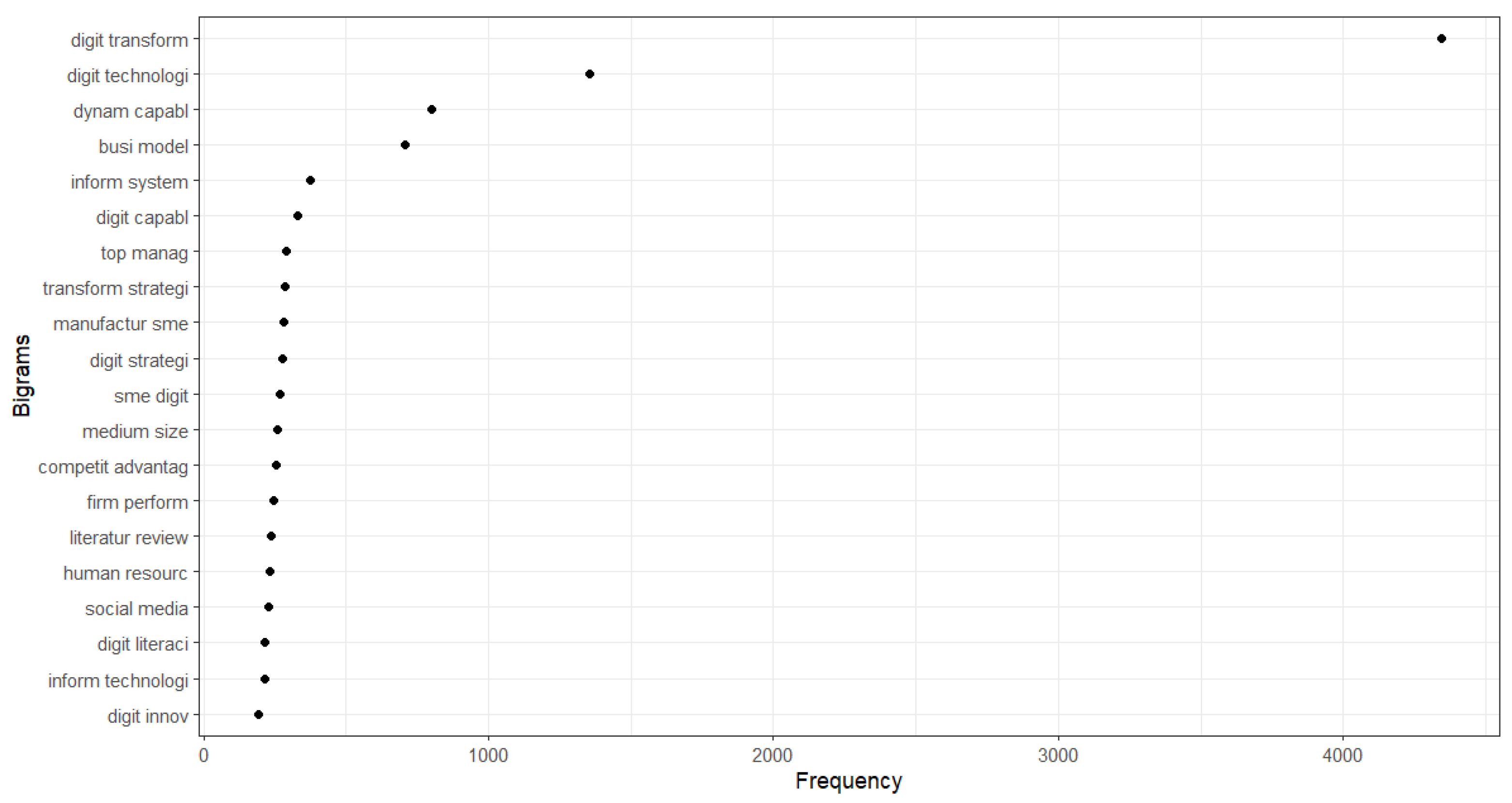
Figure 2.
Bigram relative frequency distribution per source.
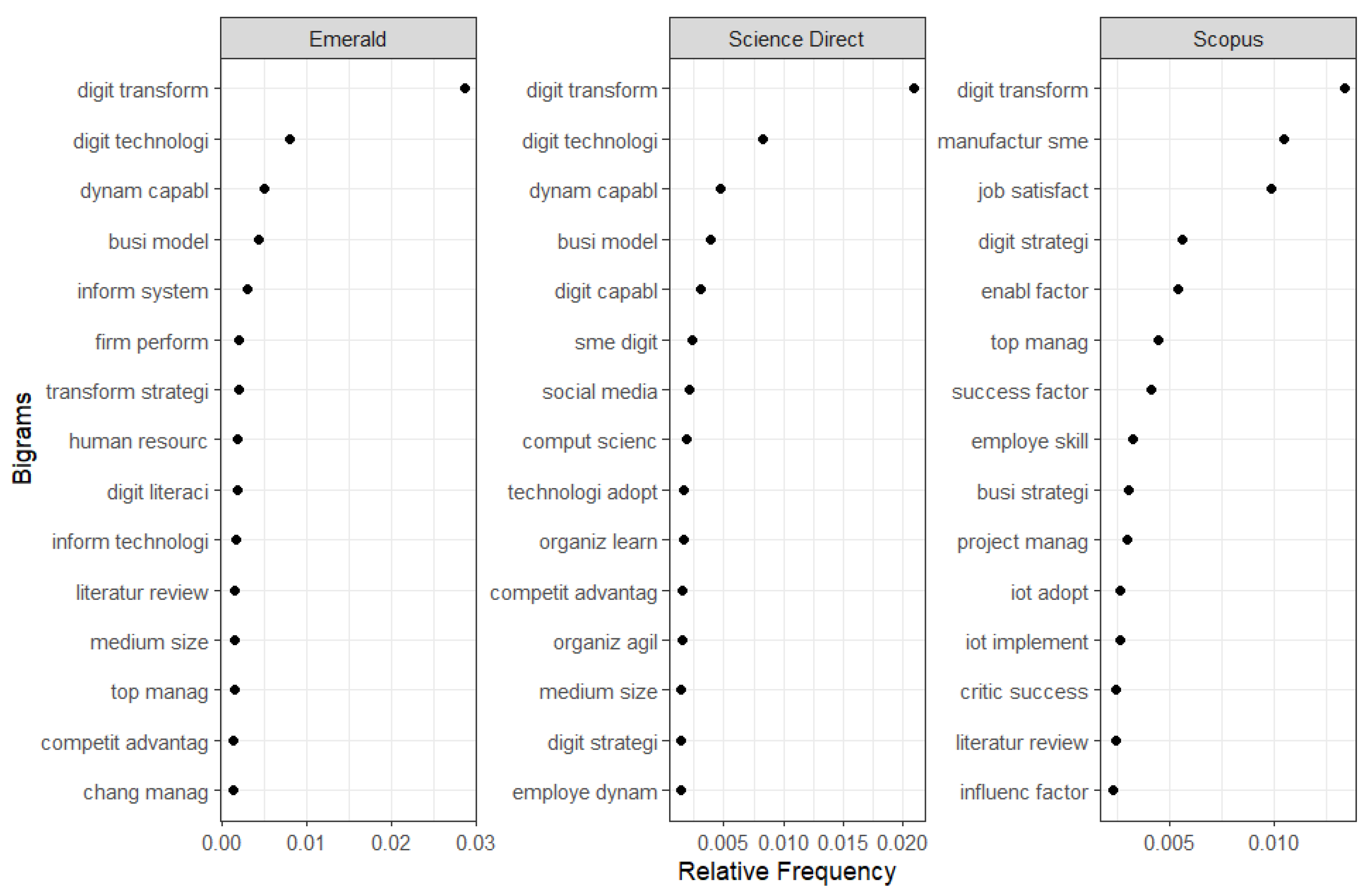
Figure 3.
Word cloud.
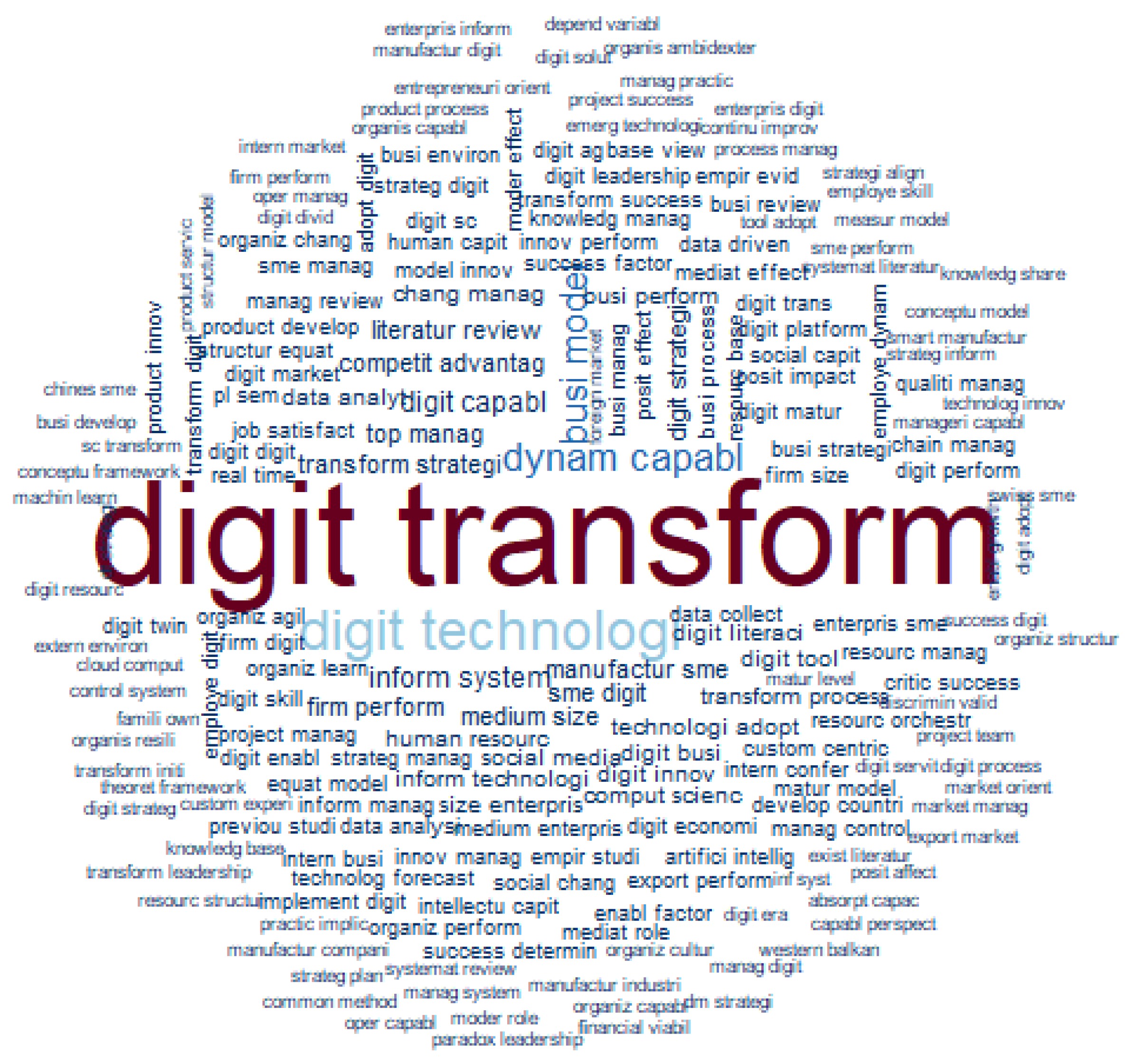
Figure 4.
Collocation of bigrams for different publication years.
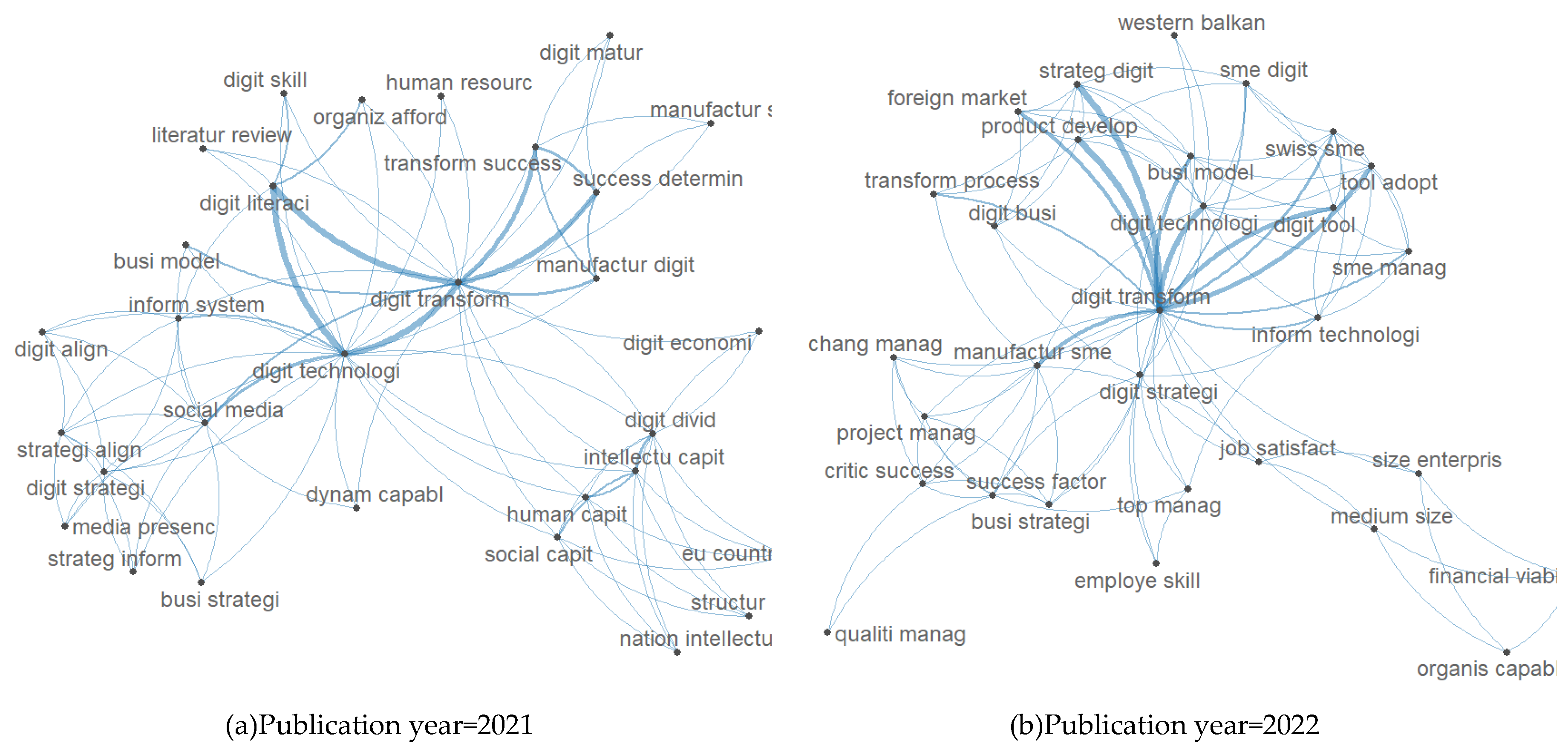
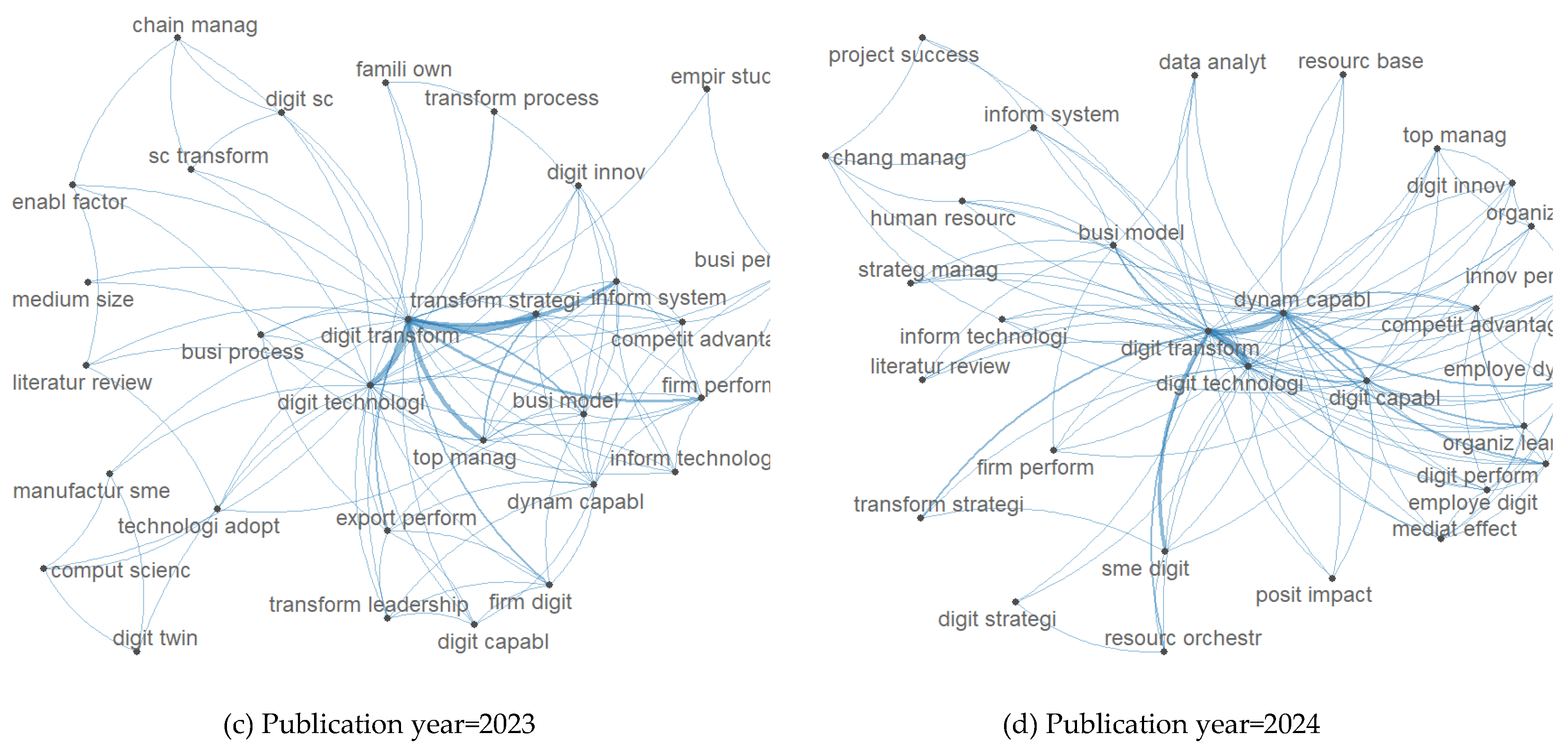

Table 1.
Table 1. Results from databases search.
| Results from Initial research |
Results after title and keywords analysis | Results after Abstract and full text analysis | |
|---|---|---|---|
| EBSCO | 130 | 3 | 0 |
| Emerald | 1 542 | 286 | 42 |
| Scopus-Elsevier | 36 | 8 | 6 |
| Science Direct | 1 949 | 342 | 33 |
Source: elaboration on the dataset
Table 2.
Extracted topics.
| Topic number | Five top terms | Label | Description |
| Topic 1 | social media, inform system, transform process, product develop, digit strategi | Digital Processes Implemented | Suggest a focus on how businesses reshape processes by using digital tools and strategies |
| Topic 2 | technologi adopt, comput scienc, medium enterpris, digit twin, develop countri | Emerging Tech Adoption | Discuss technology adoption and relevant emerging tech trends |
| Topic 3 | manufactur sme, chang manag, project manag, success factor, project success | Success of management’s transformation to agile | Highlight the effort to implement digital management and departmental agility within the SMEs |
| Topic 4 | busi perform, innov perform, competit advantag, organis capabl, firm perform | Performance and Capabilities | Elaborate with the focus on business outcome |
| Topic 5 | digit tool, intellectu capit, digit divid, tool adopt, digit busi | Digital Vision and Digital Orientation | Combination of various business elements as a result of an existing digital vision and / or an existing digital orientation |
| Topic 6 | dynam capabl, digit capabl, digit literacy, job satisfact, organiz learn | Dynamic and Digital Capabilities | Skills and capabilities related to digital transformation |
| Topic 7 | firm perform, export perform, firm digit, data analyt, intern busi | Extrovert opportunities | Improve external connections and opportunities, related to business external environment |
| Topic 8 | transform strategi, top manag, sme digit, digit strategi, digit innov | Strategic Transformation intensity | Discuss the existence of a transformation strategy from the management’s side |
| Topic 9 | human resourc, transform success, success determine, enabl factor,digit matur | Human Resource and Digital Maturity | Highlight the role of HR and maturity in digital evolution |
Disclaimer/Publisher’s Note: The statements, opinions and data contained in all publications are solely those of the individual author(s) and contributor(s) and not of MDPI and/or the editor(s). MDPI and/or the editor(s) disclaim responsibility for any injury to people or property resulting from any ideas, methods, instructions or products referred to in the content. |
© 2025 by the authors. Licensee MDPI, Basel, Switzerland. This article is an open access article distributed under the terms and conditions of the Creative Commons Attribution (CC BY) license (http://creativecommons.org/licenses/by/4.0/).
Copyright: This open access article is published under a Creative Commons CC BY 4.0 license, which permit the free download, distribution, and reuse, provided that the author and preprint are cited in any reuse.


