

Submitted:
26 July 2023
Posted:
27 July 2023
You are already at the latest version
Abstract
Fire safety is a critical concern in various industries necessitating the development of sustainable and effective fire-resistant materials. Sustainable fire-resistant polysaccharide-based composite aerogels are regarded as innovative solutions in fire safety applications, and as such, research in this field has increased consistently over the past few years. Despite the plethora of literature on this important subject, only a few studies have attempted to map the global research of sustainable fire-resistant polysaccharide-based composite aerogels to identify the geospatial collaborative network and trend of research. This study utilizes a scientometric review of global trends in sustainable fire-resistant polysaccharide-based composite aerogels research between 2003–2023 by VOSviewer and biblioshiny to analyze co-author, co-word, co-citation, clusters, and geospatial map. A total of 234 bibliographic records from the Scopus database were analyzed to generate the study's research power networks and geospatial map. The most significant contributions in sustainable fire-resistant polysaccharide-based composite aerogels comes from China, the United States, Australia, Canada, and India with records of 194, 20, 11, 9, and 8 respectively. The top five sources for articles in this area of research include ACS Applied Materials and Interfaces, Chemical Engineering Journal, Composite Engineering, ACS Sustainable Chemistry and Engineering, and Carbohydrate Polymers. The application of sustainable fire-resistant polysaccharide-based composite aerogels spans the engineering and construction fields. The versatility in the fabrication and customization allows for seamless integration into diverse applications. The article concludes by emphasizing the significance of sustainable fire-resistant polysaccharide-based composite aerogels as a promising advancement in fire safety technology, combining sustainability, fire resistance, versatility, and mechanical strength to address critical challenges in the field. This study provides readers with an extensive understanding of the salient research themes, trends, and patterns of sustainable fire-resistant polysaccharide-based composite aerogel research worldwide.
Keywords:
polysaccharides
; flame retardants
; sustainability
; aerogels
; fire-resistant composites
1. Introduction
Fire safety is a top priority in a variety of sectors and applications, from building construction to transportation and aircraft [1,2]. Traditional fire-resistant materials (mostly halogen-based such as tris(2-chloroethyl) phosphate, tris(1,3-dichloroisopropyl) phosphate, pentabromobenzyl acrylate, and tris(1-chloro-2-propyl) phosphate) frequently rely on non-renewable resources and can have negative environmental consequences. More especially, fire retardant materials derived from petrochemical sources raise significant concerns related to environmental sustainability, health, and long-term impacts [3,4]. Due to these obvious challenges with traditional flame retardants have spurred the demand for sustainable and eco-friendly alternatives [5,6], and this has
driven significant advancements in fire safety technology. One such breakthrough is the development of sustainable fire-resistant polysaccharide-based composite aerogels. These composite aerogels derived from renewable sources such as cellulose, chitosan, starch, or other polysaccharides, offer a unique combination of fire resistance, sustainability, versatility, and mechanical strength suitable for various applications. Polysaccharide aerogels may not naturally possess a high level of fire resistance, this characteristic can be enhanced because of their adaptability to changes in the aerogel preparation process. Therefore, numerous strategies have been used, including the addition of additives, the use of coatings and coating materials, the insertion of nanoparticles, and the use of metal and silicate oxides Polysaccharide-based composite aerogels offer an effective and versatile solution for improving fire safety in various applications, such as building construction, transportation, and electronics [7]. Their ability to withstand high temperatures, slow down the spread of fire, and reduce smoke production makes them an essential component of modern fire safety strategies. [8]
The utilization of polysaccharides in the production of fire-resistant composite aerogels addresses two critical aspects such as environmental sustainability and fire safety [9]. Polysaccharides are abundant in nature and derived from sources like plants, fungi, and crustacean shells. By utilizing these naturally occurring materials, the need for non-renewable resources is reduced, thereby mitigating the environmental impact associated with conventional fire-resistant materials [10,11]. The potential of polysaccharide-based aerogels to replace conventional petrochemical-based fire retardants is mainly due to their environmentally friendly nature and the fact that these polysaccharides are renewable compared to petrochemical-based flame retardants. More so, the use of such renewable sources aligns with the global shift towards sustainable practices and the pursuit of a greener future. The fire-resistant properties of these composite aerogels are exceptional and surpass most of the conventional alternatives [11,12,13,14]. Through careful material design and composition, these aerogels can exhibit outstanding flame retardancy [15,16,17], effectively preventing the spread of fire and reducing the risk of combustion. Most of the composite aerogels have gone through rigorous testing and evaluation and have demonstrated their ability to withstand high temperatures and resist ignition, making them ideal for enhancing fire safety in a wide range of applications [18,19].
Another key advantage of sustainable fire-resistant polysaccharide-based composite aerogels lies in their lightweight and versatile nature [14]. The unique porous structure of aerogels, combined with their low density (approximately 0.001 to 0.5 grams per cubic centimeter (g/cm3) depending on the material), makes them highly efficient thermal insulators [19]. The inimitable nanoporous structure of aerogels, composed of interconnected particles, creates a sponge-like material with a vast surface area and a high percentage of air-filled voids. These air-filled pores contribute to the low density, exceptional thermal insulation properties, and other unique characteristics of aerogels These aerogels can effectively reduce heat transfer and provide excellent insulation, resulting in energy conservation and improved overall energy efficiency [20,21]. Their lightweight nature also contributes to their ease of use, enabling seamless integration into various products, systems, and structures without compromising performance or adding excessive weight [22,23]. The fabrication and customization of these composite aerogels are relatively straightforward. They can be manufactured in different shapes and sizes tailored to specific application requirements. This adaptability allows for their seamless integration into existing materials or systems, as well as their incorporation into new construction projects or retrofitting applications. The versatility of these aerogels extends their potential use across diverse industries, ranging from building construction to automotive, aerospace, and beyond [24,25,26].
Furthermore, the improved thermal conductivity (range of 0.015 to 0.035 watts per meter kelvin (W/m·K) compared to the thermal conductivity of air is around 0.025 W/m·K at room temperature), the compressive mechanical strength (approximately 10 to 30 MPa depending on the composite design and reinforcement material) of sustainable fire-resistant polysaccharide-based composite aerogels has improved over the years and that has helped extend their durability in some typical applications [27]. They can withstand demanding environments, maintaining their fire-resistant properties over extended periods. This reliability and robustness make them suitable for critical applications where safety and long-term performance are paramount [28,29,30]. Sustainable fire-resistant polysaccharide-based composite aerogels represent a significant advancement in fire safety technology. Despite the breakthrough in this field, few studies have attempted to map the global research of sustainable fire-resistant polysaccharide-based composite aerogels.
This scientometric review aims to map the global research of sustainable fire-resistant polysaccharide-based composite aerogels to provide researchers in this innovative field with an extensive understanding of the salient research themes, trends, and patterns of sustainable fire-resistant composite aerogel research worldwide. This research will provide an in-depth understanding of the field and help researchers harness renewable sources and combine exceptional fire resistance with sustainability and versatility. Their potential applications span across industries, making them a promising choice for enhancing fire safety in diverse settings. As the world embraces sustainable practices, these composite aerogels serve as a testament to the power of innovation and the quest for safer, greener solutions in fire safety.
1.1. Research Significance
Sustainability is a wide and complex research field with several applications in different disciplines and industries. This scientometric review on sustainable fire-resistant polysaccharide-based composite aerogels will help consolidate the existing knowledge on the subject by systematically collecting, organizing, and analyzing the published research. The article will provide an overview of the research landscape, highlighting key concepts, trends, and knowledge gaps, which can serve as a valuable resource for researchers, policymakers, and industry professionals working in this field, aiding them in making informed decisions and advancing the development and applications of these innovative materials - a gap the current study intends to bridge.
Furthermore, researchers from various geographical areas may profit from the graphical depiction based on a scientometric evaluation when forging research alliances, developing joint ventures, and exchanging revolutionary technologies and ideas. The scientometric analyses use measures like citation counts and h-index to assess the influence of specific publications, authors, and organizations. This evaluation can assist in identifying significant academics, institutions, or research groups in the subject of polysaccharide-based composite aerogels, as well as providing insights into the most influential papers and their contributions. By analyzing the publication trends, citation patterns, and collaborations among researchers, this scientometric review identifies the emerging research trends in polysaccharide-based composite aerogels. This information is valuable for researchers, policymakers, and funding agencies to understand the current focus of research and allocate resources effectively. Furthermore, this study discusses the most active research areas and sustainability aspects related to polysaccharide-based composite aerogels systems and their possible commercialization. The study further discusses the challenges associated with synthesis and the application of polysaccharide-based composite aerogels.
2. Methodology
The bibliometric data on recent advancements in polysaccharide-based composite aerogels are examined scientometrically in this research. The major basis for developing a scientometric review approach is the evidence that subjective evaluations of engineering studies conducted by researchers are prone to error [31]. When used alone, scientometrics produces results that are more rational and less skewed since it is not influenced by any one person's perspective [30]. This study provides a quantitative as well as a qualitative evaluation of the research that has been done over the previous two decades by measuring research progress using maps and links between bibliometric data. In conducting such an important review, selecting the most correct database is crucial because many papers have been published. Scopus and Web of Science are the two most efficient, thorough, and objective databases for doing literature searches.
Compared to Web of Science (WoS), Scopus has wider bibliometric coverage and more recent data [32,33]. For several reasons, Scopus is more effective for carrying out daily research tasks and assessing research findings. First, Scopus offers more comprehensive coverage of content. Secondly, Scopus is easier to use because of the availability of personalized profiles for all authors, institutions, and serial sources as well as the connected database (DB) interface. Thirdly, the research analysis metrics and impact indicators are superior to the metrics offered by WoS [34,35], and also less prone to manipulation, and are accessible for all serial sources across all disciplines [35]. More crucially, Scopus is subscribed as a single DB, removing any ambiguity or extra limitations on the accessibility of the content [35]. Additionally, Scopus offers free access to authors and source information, including metrics, and it’s more open to society [34,36]. Based on these obvious advantages, Scopus was used to compile the bibliometric data for the current analysis of sustainable fire-resistant polysaccharide-based composite aerogels. The methodology used for this research is shown in Figure 1. The bibliometric data search in the Scopus database was conducted in June 2023.
The search strings was “flame AND retardant AND aerogel”. The search string resulted in 261 initial documents and a final 234 documents as shown in S. Table 1after applying all filters. Data refinement options were used to eliminate irrelevant articles. Only "articles" and "review" were selected from the "document type" drop-down menu. Also, only "journal" was chosen as the "source type", while "English" was chosen as the "language". This study limited the "publication year" from 2003 to 2023. After applying these filters, the resulting documents shown in S. Table 1 were saved and manual screening of article titles was done to ensure duplicates are removed. Data was exported from Scopus in the Comma Separated Values (CSV) format for analysis using VOSviewer developed by Nees Jan van Eck and Ludo Waltman [37], and biblioshiny by Massimo Aria and Corrado Cuccurullo [38] for scientific mapping and visualizations. The free and open-source visualization tools are used in a wide range of industries and are endorsed by academic literature [39,40,41]. With the "type of data" option set to "create a map from bibliographic data" and the "data source" parameter set to "read data from bibliographic database files," the analysis in the VOSviewer was performed. Data was imported into VOSviewer and biblioshiny, and reliably analyzed while retaining consistency. Regions' involvement, the most popular authors and articles, the most frequently appearing keywords, and the sources of articles were all examined as part of the science mapping review. Tables provide a numerical summary of the results, while maps show the different parameter correlations and co-occurrence.
3. Results and Discussion
3.1. Annual Publication Sources and Impacts
Polysaccharide-based aerogels have emerged as a fascinating class of materials with unique properties and numerous potential applications. As a result, research in this field has witnessed a significant surge, leading to a wealth of knowledge being disseminated through various publication sources by different authors and institutions around the globe. To understand the trend of publication on this subject and appreciate the contribution of various institutions and authors, descriptive statistics have been used to determine the phenomena in terms of the number of articles, the trajectory of their growth, and the geographical distribution of authors [42]. An analysis of the number of papers produced year indicates a notable output of scholarly works, followed by a reasonably steady and exponential rise during the past 10 years. (Figure 2). The interest in aerogels, derived from renewable sources such as cellulose, chitosan, starch, or other polysaccharides that have unique combinations of fire resistance, sustainability, versatility, and mechanical strength is influenced by the continuous reports on fire safety challenges. The increasing research interest in this area provides an in-depth understanding of the field and helps researchers harness renewable sources, and combine exceptional fire resistance functionality with sustainability and versatility. Sustainable fire-resistant polysaccharide-based composite aerogels usually possess excellent mechanical strength and offer a compelling solution to address fire safety challenges making them a promising choice for enhancing fire safety in diverse settings. As the world embraces sustainable practices, these composite aerogels serve as a testament to the power of innovation and the quest for safer, and greener solutions in fire safety.
As can be seen in Figure 2, the examination of the primary sources reveals that between 2003 and 2016, there were a total of 16 publications, making this time frame suitable for the label of an emerging phase. Following that, a gradual rise in the number of publications was seen from 2017 to 2020 (a total of 86 publications), and this time may be referred to as the pick-up and tempo phase. Notably, the last three years (2021–2023) have witnessed an exponential rise of 133 total publications and this can be termed a rapid growth period. Considering the total number of publications as of June 2023 on the subject, it is anticipated research in sustainable fire-resistant polysaccharides will increase astronomically in light of the global shift towards sustainability. It is, therefore, not surprising to see how academics are increasingly focusing their research on sustainable fire-resistant polysaccharides. The sharp increase in publications on sustainable fire-resistant polysaccharides can be attributed to a combination of environmental concerns, advancements in material science, changing regulations, industry demands, and collaborative efforts. It suffices to indicate that as the field continues to evolve, the insights gained from these publications are likely to lead to the development of more effective, eco-friendly, and fire-safe materials in various industries.
Top publication sources were analyzed with the VOSviewer using the bibliometric data generated from Scopus. A source’s minimum number of documents was set at 2, and 40 of the 103 sources met this condition. Table 1 shows the top 10 primary sources (a list of the 40 sources can be found in S. Table 2) that have published at least 2 papers on sustainable fire-resistant polysaccharide aerogels, as well as their citation counts and total link strength.
The top five sources in terms of published documents are ACS Applied Materials and Interfaces, Chemical Engineering Journal, Composites Part B: Engineering, ACS Sustainable Chemistry and Engineering, and Carbohydrate Polymers with respective documents of 16, 14, 10, 9, and 9. However, the top three journals with respect to citation count are ACS Applied Materials and Interfaces having 1054, Chemical Engineering Journal with 614, and ACS Sustainable Chemistry and Engineering with 565 citations. The network visualization of journals with at least 2 articles published is shown in Figure 3. The node size corresponds to the contribution of the journal’s article count, where a bigger node size suggests a greater contribution. Typically, ACS Applied Materials and Interfaces has the bigger node, indicating their higher impact in the research area and connecting the other sources, with much collaboration with Composites Part B: Engineering. Furthermore, nodes (sources/journals) of the same color show clusters of connected journals detected using VOSviewer. Five clusters have been observed shown by red, green, blue, yellow, and purple. Cluster 1 (red) comprised 14 items, cluster 2 (green) contained 9 items, cluster 3 (blue) has 8 items, cluster 4 (yellow) comprised 6 items and cluster 5 (purple) has 3 items. From the publication sources visualization, it can be concluded that ACS Applied Materials and Interfaces, Chemical Engineering Journal, Composites Part B: Engineering, ACS Sustainable Chemistry and Engineering, and Carbohydrate Polymers published a relatively higher number of papers within the analyzed dataset, suggesting their prominence in the field of sustainable polysaccharide-based flame retardant composite aerogels.
Additionally, the top contributing authors in sustainable fir-retardant polysaccharide-base composite aerogels were analyzed as in Figure 4. Once again, a document's minimum number of citations was set at 2, and 180 of the 234 documents met this condition. Of the 180 cited documents, the largest set of connecting items was 173. The visualization as presented by the VOSviewer software is grouped into 7 different clusters represented by Figure 4, and made of colors; cluster 1 (red) comprising of 44 items, cluster 2 (green) contains 35 items, cluster 3 (blue) has 35 items, cluster 4 (yellow) contains 31 items, cluster 5 (purple) has 18 items, cluster 6 (yellow) has 7 items and cluster 7 (orange) has 3 items. As shown in Figure 4, a bigger node indicates the number of times a document has been referenced by other scholars in the field. From this translation, Wicklen B, author of “thermally insulating and fire-retardant lightweight anisotropic foams based on nanocellulose and graphene oxide (2015) published in the Journal of Nature Nanotechnology is most influential with 975 citations. It is worth noting and mentioning, the influence of Wicklen B, concluding from the size of the node, he is the most linked to numerous other papers. Wicklen B. influenced the direction and advancements of research in sustainable fir-retardant polysaccharide-base composite aerogels. This phenomenon suggests that the findings, theories, and methodologies developed by Wicklen B. have influenced subsequent studies and shaped the scientific discourse in their domains. The top cited documents are presented in S. Table 3 with their citation counts and total link strength. The "total link strength of citations" is the sum of all the weights of the citation links for a particular document. It indicates the cumulative strength or importance of the citation connections that a document has with other documents in the network. Liang C. (2020) and Wang N.-N. (2019) had 299 and 162 citations with total link strengths of 13 and 60 respectively, indicating that highly cited documents may not be necessarily interrelated with each other in terms of citation. It is observed that some of the recently published articles, for instance, Zuo B. (2021) “Flame-retardant cellulose nanofiber aerogel modified with graphene oxide and sodium montmorillonite and its fire-alarm application” and Wang L. (2021) “Metal-graphene-synergized melamine aerogel with robust elasticity and flame-retardancy for thermal-insulated-packaging industry” had relatively low citations of 23 and 7 but high total link strength of 198 apiece. Compared to other documents published earlier with relatively higher citations, it suffices to state that these documents possess significant influence/centrality for some of the most recently published documents within the citation network. More importantly, the visual closeness of the recently published documents, with the exception Wang X. (2016) shows how interrelated these documents are with each other in terms of citation. It's important to note that while high citation counts are indicative of research impact and influence, they should not be the sole measure of an author's contributions. It's essential to consider other factors such as the quality of the publications, the breadth and depth of the research portfolio, and the overall impact on the scientific community.
To obtain information on the most cited authors and top cited organizations, under the publication source category, "Bibliographic coupling" was chosen as the "analysis type," and "authors" was chosen as the "analysis unit". A researcher’s influence in an area is measured by the number of citations according to their names [43]. It has been established that the knowledge base of a field is the set of articles most cited by the current research - also known as the intellectual base [42]. An author’s minimum number of documents was set at 2, and 270 of the 847 authors met this condition as shown in Figure 5a, in 12 varying clusters. From the analysis, the powerhouse connecting items are Wang X., Zhang X., Wang J., and Zhang L., serving as the bridge to the other authors in the research domain. Being the most cited authors as shown by the size of the nod in Figure 5a can be an indication of several factors, including the quality, originality, and significance of their research contributions. It suggests that their work has made a notable impact on the scholarly community and is often considered influential in this field.
A visualization network between organizations was established to provide researchers in the area the opportunity to visualize the organizations that are committed and spearheading the research in sustainable fire-resistant polysaccharide-based aerogels. On the count of organization, "bibliographic coupling" was chosen as the "analysis type," and "organization" was chosen as the "analysis unit". An organization’s minimum number of documents was set at 2, and 49 of the 510 organizations met this condition. The list of most active organizations in terms of the number of publications and citations is presented in S. Table 4. The total number of documents, citations, and connections demonstrates the impact of an organization. Out of the total 49 organizations making the list, the largest set of connecting items was proven to be 48 by transcribes from the software and are summarized into 7 clusters. These clusters are however, elaborated as; cluster 1 (red) consists of 26 items, cluster 2 (green) consists of 2 items, cluster 3 (blue) made of 5 items, cluster 4 (yellow) comprises 4 items, cluster 5 (purple) consists of 4 items, cluster 6 (sea blue) has 2 items and cluster 7 (orange) with 2 items (refer to Figure 5b). Additionally, there exists much collaboration between the School of Science, Xihua University, Department of Macromolecular Science and Engineering, and the Institute of Nuclear Physics and Chemistry, China. Similarly, constant collaboration between Civil and Infrastructure Engineering and the School of Resource and Safety is identifiable. Finally, under the last set of criteria for Bibliographic coupling analysis, the " analysis type," was set to bibliographic coupling" and "country" was chosen as the "analysis unit". The network visualization of VOSviewer on the citations by country gives an immediate indication of the main national clusters (the size of a circle and its label is proportional to its weight, the lines between circles represent their links, and the distance between two circles shows their relatedness) [42].
The geospatial analysis provides useful information relating to leading nations throughout the years. In this regard, the minimum number of documents for a country was set at 2, and 22 out of 29 countries met the threshold as presented in Table 2. By dividing the total number of citations by the total number of articles indexed, the mean citation for the relevant nation can be calculated.
The total number of citations and connections demonstrates the impact of a country on the present research field, and the total link strength indicates how much a country’s papers influence other countries in this study field. The links and density of countries based on citations are shown in Figure 6. The size of the nodes indicates how much a country has contributed to the field of study. From the analysis, based on citations is a predominance of China ranking first with 5932, Sweden in second position with 1520, Germany ranks third with 1215, Italy in fourth position with 1136, and the United States fifth with 991, all making it into the top list. As shown in Figure 6, it is evident that China has been the major contributor to sustainable fire-resistant polysaccharide-based aerogels and again serves as the powerhouse for collaboration with most significantly, Australia, the United States, Sweden, Canada, Spain, France, Germany, Italy, Slovenia, United Kingdom, Switzerland, etc. In the Asia pacific region, the most significant collaboration exists between China and Singapore, South Korea, India, and Hong Kong. Also, Outside the Asia pacific region, a significant link is noticed between Australia and Finland, the USA, Sweden, France, and Spain. This finding suggests that researchers from these countries have been actively collaborating on research projects, highlighting the transfer of knowledge and expertise across borders leading to the exchange of ideas, joint publications, and mutual acknowledgment of each other's work. This phenomenon is very important for advancing the frontiers of knowledge in sustainable fire-resistant polysaccharide-based composite aerogels.
Keywords are important research matrics because they identify and represent the research domain’s fundamental field [43]. For this analysis, "co-occurrence" was chosen as the "kind of analysis," and "index keywords" was chosen as the "unit of analysis" in VOSviewer. The minimum number of repetitions for an indexed keyword was set to 2, and 603 of the 1975 keywords met the requirement (see Figure 7a and the top 10 indexed keywords in Table 3). In the case of connecting links to the index keywords, the network visualization in VOSviewer provided visuals on the interconnectivity (see Figure 7b) of the used keywords in varying colors grouped into clusters of 14 namely cluster 1 red (77 items), cluster 2 green (75 items), cluster 3 blue (53 items), cluster 4 yellow (53), cluster 5 (purple) consists of 51 items, cluster 6 (sea blue) has 48 items, cluster 7 (orange) has 44 items, cluster 8 (wine) has 41 items, cluster 9 (pale purple) has 40 items, cluster 10 (tinted red) has 38 items, cluster 11 (yellow) has 31 items, cluster 12 (light blue) comprises of 25 items, cluster 13 (light yellow) consists of 24 items and cluster 14 (light purple) has 18 items. It is worthy of mention that on the premise of link strength, it is evident that within the scope of the study, the emphasis of researchers has been on aerogels and their flame and fire-retardant abilities. It is not surprising that aerogels, flame retardant, and flame retardancy have the largest nodes across the last two decades as can be seen from Figure 7b,b. The most frequently occurring keyword indicates the dominant research theme or topic within the field and reflects the primary area of interest and focus among researchers in sustainable fire-resistant polysaccharide-based composite aerogels. This also suggests that the topic is of significant interest to the scientific community and its particular relevance in these times. The associated big nodes could also indicate an emerging trend within the field which may reflect new research directions, technologies, or methodologies gaining traction among researchers. Generally, comparing the most repeated indexed keywords to the least repeated ones in VOSviewer analysis provides a comprehensive view of the research landscape. It offers valuable information about the dominant research areas, potential collaborations, emerging trends, and knowledge gaps, guiding researchers in navigating the literature and identifying research opportunities within their domain of interest.
A researcher’s influence in an area is measured by the number of citations according to their names [43,44]. To obtain a better-defined picture, the study of the number of articles per author needs to be integrated with other types of analysis, like citations, co-authorship, or network visualization. The research question intends to reveal the knowledge base of sustainable fire-resistant polysaccharides through the identification of key authors. The minimum number of documents for an author was set to 2 and 270 of the 847 total authors met the requirement (see Table 4 for top 10 influencers). The full table can be found in S. Table 6), with 263 authors largely connected. The connecting network is between Zhang L., Zang X., and Wang X, bridging all other authors together as shown in Figure 8a, into fifteen (15) different cluster units. The total number of citations was divided by each author’s total number of publications (documents) in attaining the mean citation count per paper. In terms of co-citation, an author’s minimum citation count was set at 50, and 145 of the 15,276 authors met this requirement (refer to Figure 8b). The visualization is categorized into four clusters, thus; cluster 1 (red) comprising 70 items, cluster 2 (green) with 34 items, cluster 3 (blue) has 32 items, and cluster 4 (yellow) also has 9 items. From the VOSviewer translation, it is apparent that over the last two decades, co-authors, Schiraldi D.A have been cited the most with 363 citations, followed by Wang X. with 345 citations, Zhang X. ranking third with 339 citations to his name, Hu Y. and Wang Y. ranking fourth and fifth respectively with 294 and 280 citations each. These stronger links indicate a higher level of collaboration and interaction between researchers within the scientific community as it provides insights into collaborative networks, research clusters, and research communities within the scientific domain. The stronger links are an indication of knowledge sharing and accelerated scientific progress, which resulted in impactful research outcomes. Additionally, collaborative efforts could result in increased visibility and recognition for individual authors and their institutions.
Additionally, a second analysis was conducted under the general theme “top cited co-authors”. Here, the "type of analysis" was set to "co-citation" and the "unit of analysis" to "cited sources" in the VOSviewer. A source’s minimum citation was set at 50 and 42 of the total 1901 sources met the criteria. The detailed detailed quantitative data is provided in S. Table 2 whereas Figure 9 represents a visualization of the discussion in four clusters. Cluster 1 (red) has 17 items, cluster 2 (green) with 11 items, cluster 3 (blue) with 9 items and cluster 4 (yellow) has 5 items. The discussion concludes that the top five co-cited sources are ACS Appl. Mater. Interfaces with 536 citations, Chem. Eng. J. with 330 citations, ACS Nano in third place with 246 citations, Carbohydr. Polym. in fourth place with 211 citations, and the Journal of Material Chemistry ranked fifth with 204 citations. In the case of Total Link Strength (TLS), ACS Applied Material Interfaces ranked first with 13471, Chemical Engineering Journal in second position with 7869, ACS Nano in third place with 5829, Journal of Material Chemistry A in fourth position with 5359, and Carbohydrate Polymers in fifth position with 5153 total link strength. The presence of certain publications among the top co-cited sources indicates that they are considered landmark or foundational works in the field. These publications have significantly influenced subsequent research and are commonly referenced together. Also, the top co-cited sources are likely related to specific research themes or topics that are of great interest within the field and thus represent core literature that provides a foundation for ongoing research in those areas. Moreover, the co-cited sources can reveal clusters of related research papers that are frequently cited together, which could be an indication of areas of specialization or research subfields within the broader domain. Lastly, top co-cited sources may be authored by researchers who are part of intellectual networks, collaborating closely or sharing similar research interests. These intellectual networks can drive knowledge exchange and mutual influence.
Globally, many countries have been involved in the studies of sustainable fire-resistant polysaccharide-based aerogels. Over the last two decades, the following countries (see S. Table 5) China, United States, Australia, Canada, India, Sweden, Spain, France, South Korea, and Singapore spanning four continents have engaged in many publications with China recording the highest number of publications and citations. A world collaboration map analysis (Figure 10, and S. Table 6) indicates significant collaboration between China and other countries such as Canada, the United States, Spain, Italy, France, Australia, Malaysia, Finland, and Sweden, with China serving as the country from which these collaborations emanate. It is interesting to note the importance of Spain as the mid-point of the collaboration between European countries and authors in the Asia-Pacific region although Sweden boasts of significant publication in this field. On the issue of cross-continent collaborations, key alliances happened between Australia and China and then Hong Kong (though Hong Kong is considered a Special Administrative Region (SAR) of China but regarded as a country by the Biblitex software,). It is worth noting that Canada collaborates most with the Scandinavian countries (Sweden, Switzerland, and Finland) than its closest neighbors in this field of research. Additionally, the powerhouse, China collaborates more with countries such as Australia, the United States, Canada, and Hong Kong (SAR), with minimal involvement with others such as France, Germany, Singapore, and Italy, to mention a few.
Interestingly, although the United States of America and Canada are neighboring countries, there appears to be no collaboration between authors researching sustainable fire-resistant polysaccharide-based aerogels. Likewise, Russia and China are border countries, however, there appears to be no collaboration at the moment between these neighboring countries specifically on sustainable fire-resistant polysaccharide-based aerogels. Similarly, Australia is quite close to Indonesia but there seems to be no collaboration between authors of these countries. This phenomenon calls for a close collaboration between authors of neighboring countries to engage across borders to advance the field of sustainable fire-resistant polysaccharide-based aerogels. Similarly, in Africa, no country has been involved in research on sustainable fire-resistant polysaccharide-based aerogels according to this finding.
The scientific production is based on corresponding authors from diverse countries regarding publication and multi-country collaboration in research (Figure 11 SCP is the abbreviation for Single Country Publications and MCP for Multiple Country Publications. From these results, it is shown that China has the highest list of corresponding authors in the research domain in both SCP and MCP areas and covers the largest set of analysis ratios. This is followed by India with moderate involvement on both local and global scales before South Korea’s fair involvement on the local level and little collaboration globally. However, some observations can be made regarding the MCP of the USA, decreasing by an average rate to that of following countries like Spain and France. This highlights Spain’s fair involvement single-country-wise to that of multi collaborations with other nations. Meanwhile, countries such as Canada are recognized for their contributions, however, it cannot boast of any local collaboration that will promote knowledge sharing and expand the frontiers of sustainable flame-resistant polysaccharide-based aerogels. However, worth mentioning that, Canada has significant international collaborations with many countries on different continents. It is important to state that MCPs often cover diverse research topics and methodologies and therefore, such collaborations bring together researchers with complementary expertise, leading to multidisciplinary and cross-disciplinary research contributions, which is very important for driving research innovations and providing practical solutions to the issue of fire safety while prioritizing sustainability. Again, the geographic distribution of countries involved in MCPs revealed patterns of regional collaboration on sustainable polysaccharide-based composites showing that neighboring or geographically close countries are not collaborating more frequently despite the convenience of proximity and possible shared research interests. The pattern of MCPs analysis on sustainable polysaccharide-based composites shows that researchers from different countries need to collaborate effectively by creating future partnership initiatives that will further expand the frontiers of knowledge on the subject.
To understand trends in top cited institutions and appreciate the most contributing institution to the body of knowledge over the years, biblioshiny was used based on the data obtained from Scopus. As presented in Figure 12, it is evident that over the past 18 years, Central South University has been the frontrunner in the relevant field of study, followed closely by Donghua University, Lanzhou University of Technology, Qingdao University of Science and Technology, Sichuan University and the University of Science and Technology of China, all serving as notable institutions in driving forward the future of research in sustainable polysaccharide-based composites.
Three-fields plot analysis was conducted using biblioshiny to investigate the interconnections between journals, top authors, and countries. The interaction between top institutions (left), journals (middle), and countries (right) are illustrated in a three-field plot (Figure 13). The visualization demonstrates that most publications for aerogels and flame retardants originate from China and are mostly published in the top four journals in this field, namely, ACS Applied Materials and Interfaces, Chemical Engineering Journal, ACS Sustainable Chemistry and Engineering, and Composites Part B: Engineering. Again, the three top authors in this field are Chen Y., Zhang L., and Liu Y., with the majority of these publications coming from China, illustrating their lead in this field. The topmost institutions in sustainable fire-retardant polysaccharide-based aerogels are Qingdao University of Science and Technology, Huazhong University of Science and Technology, and the Wuhan University of Technology. On the country level, it is obvious that China, Australia, and the United States of America are the leading countries with a majority of these publications coming from China. It is fair to conclude that China is the powerhouse of research in Asia and globally in sustainable fire-resistant polysaccharide-based aerogels.
In the keyword thematic map (Figure 14), the keywords “aerogel, thermal insulation, and thermal conductivity” are placed in the lower-right quadrant representing a basic theme that has a high centrality and low density and is considered important and not yet developed for the research field. Similarly, “phase change materials, heat storage, and phosphorus” are niche themes with high density and low centrality, considered as well-researched with marginal importance in the study area. In the upper-right quadrant are the motor themes with high centrality and density considered well-researched and important. In this quadrant, are “flame retardant, article, and hydrophobicity” illustrating the authors' attribution and are believed to have evolved from the basic themes.
Finally, themes emerging in the lower left quadrant are declining or emerging themes with low centrality and density and are considered not well-developed with marginal importance and are made of words “electromagnetic interference shielding, electromagnetic pulse, and electromagnetic shielding”. Based on the importance of the basic theme, the technological advancements in sustainable fire-resistant polysaccharide-based aerogels were identified and a comprehensive qualitative review was conducted.
3.2. Technological Advancements in Sustainable Fire-resistant Polysaccharide-based Aerogels
The frequent occurrence of fire outbreaks in structures, industries, and other sectors has sped up the development of creative and strategic management techniques for slowing or reducing burn rates while maintaining sustainability over the course of their lifecycles. It is imperative to state that efforts aimed at improving fire resistance will remain palpably ineffective unless preferences, costs, and environmental impacts are taken into account [45]. The manufacturing of sustainable fire-resistant polysaccharide-based composite aerogels made from renewable sources, such as cellulose, chitosan, starch, or other polysaccharides, represents a breakthrough since it combines fire resistance with sustainability, adaptability, and mechanical strength in a novel way [46,47]. Therefore, the creation of renewable raw materials for housing and construction is essential for the accomplishment of the twelfth Sustainable Development Goal ("Ensure sustainable consumption and production patterns") agreed to by more than 150 UN member states [47]. Aerogel is a unique class of solid that is synthesized using the sol-gel technique with branching, and porous nanostructures. Aerogel exhibits little shrinking because the liquid-vapor phase is absent and has an intact structure since there is no surface tension on the gel. The sol-gel process remains a highly versatile and effective method for synthesizing functional aerogels [48]. This technique enables the production of aerogels with tailored properties, making them suitable for a wide range of applications. Unlike conventional gels, where the liquid is evaporated to produce a solid material, aerogels are dried using a unique process called supercritical drying or freeze-drying. In supercritical drying, the liquid solvent is removed under carefully controlled conditions, transforming the gel into an aerogel without causing significant shrinkage or structural collapse [49]. This process preserves the highly porous structure of the aerogel, ensuring its exceptional properties, such as low density and high surface area.
Thanks to Steven Kistler ingenuity in 1932, composite aerogel was first produced using the supercritical drying method [50]. These composite materials have outstanding fire resistance qualities that compare with the traditional flame retardants due to meticulous material design and composition, which successfully stops the propagation of fire and lowers the risk of combustion [51]. As observed from the keyword thematic analysis, aerogel, thermal insulation, and thermal conductivity” are the basic themes with high centrality and low density – which are considered important and not yet fully developed for the research field. Polysaccharide-based aerogel composites under this theme include chitin (CT)/chitosan (CS), hyaluronic acid (HA), chondroitin sulfate (CRS), cellulose (Cel), starch (St), pectin (Pec), pullulan (Pul), dextran (Dex), salecan (SL), xanthan gum (XG) [52]. It is important to state that aerogels have not been developed based on all these varieties of polysaccharides, hence, a brief qualitative study of available polysaccharide-based aerogels has been reviewed.
Cellulose-based aerogels have been the front-runners in replacing the conventional petro-polymers in most applications due to their high porosity, wide specific surface area, low density, high insulation, low thermal conductivity, sustainability, biocompatibility, biodegradability, and low price. [50,53]. As a result, cellulose at the nanoscale level, is a great option for replacing synthetic materials like steel, Kevlar, poly (vinyl alcohol) (PVA), and polyurethane (PU) [53]. These nano cellulose-based aerogel composites are used in a variety of industries, including aerospace, lightweight construction, automotive interiors, packaging, insulation, flexible devices, effluent treatment, etc. [46]. The polysaccharide portion of -D-glucopyranose units, which is connected by -1,4-linkages, constitutes cellulose makeup as shown in Figure 15a. Sugar molecules that are both reducing and non-reducing stabilize the end terminal of cellulose polymer chains. The cellulose's C-2, C-3, and C-6 positions have the -OH active side, which is responsible for the chemical alteration and cellulose characteristics with each unit having three hydroxyl groups [53]. However, cellulose also has a limiting oxygen index (LOI) of 18%, making it a combustible substance [53]. Because of this, efforts to improve the flame retardancy of cellulose aerogels while preserving their distinctive characteristics have increased over the years.
Mostly, the use of materials like clay, organic/inorganic materials [46], MOFs, and nanofillers [53] composites have become the surest way to improve their flame resistance due to their smoke suppression, sustainability, as well as their structure and chemical composition. In this regard, the application of cellulose-aerogel composites with a sandwich-like structure was fabricated by in-situ polymerization of aniline and PDMS/CNT after freeze-drying. The fire retardancy of the composite aerogel was subjected to an open flame-retardant test and the results showed outstanding synergistic effects between the PDMS/CNT/PANI cellulose aerogel with the other flame-retardant properties improving by ca 84% [54]. Similarly, a cellulose-based MgAl-layered double hydroxide (MgAl-LDH) aerogel was fabricated and freeze-dried as shown in Figure 15b. The flame-retardant properties of the cellulose-based MgAl-LDH aerogel improved significantly with a reduction in the peak heat release rate (PHRR) by 50% and total smoke produced by 75%. The composite aerogel could not be ignited easily and the burning could not be sustained once it is moved away from the flame. The excellent flame retardancy of the composite was attributed principally to the physical barrier and carbonization impact of LDH, or dual gas-phase and condensed phase flame retardant processes.
Additionally, bacterial cellulose (BC) aerogel flame retardants have become a focus of research in the search for sustainable flame-retardant options because BC is a type of maintainable material that combines the exceptional properties of extremely porous aerogels, such as ultralight, high specific surface area, and insulation, low density, and thermal conductivity, as well as advantages in biodegradability and biocompatibility. In this regard, Wang and co-workers [55] fabricated a sustainable bacterial cellulose-based retardant composite aerogel (Figure 15c) possessing heat-insulating properties by introducing zinc borate (ZB) particles into BC via an ultrasound-assistant deposition process and achieved a significant reduction in the heat release capacity (only 8 J·g=1 k=1), exhibiting excellent flame retardancy. The plausible mechanism was the dehydration of ZB particles lowering the surface temperature by releasing the bound water and simultaneously producing metallic oxides (ZnO and B2O3) for retarding the spread of heat and isolating the flammable fibrils within the combustion area. A list of other cellulose-based flame retardant composite aerogels, their fabrication method, and flame-retardant evaluation results are presented in Table 5.
Starch is also an interesting material for preparing aerogels because it is biobased and biodegradable [64,65]. Additionally, it is widely used owing to its excellent mechanical properties, low density, environmentally friendly, biodegradability, and abundantly available from bioresources [53]. Starch is the main storage carbohydrate in higher plants. Starch contains two D-glucan biopolymers, i.e., amylose, a relatively linear 1,4-α-D-glucan with a small number of long branches; and amylopectin, mainly a 1,4-α-D-glucan containing high-density branches (ca. 5% of glycosidic bonds are α-1,6) [66,67] as shown in Figure 16 a.
The performance of starch differs greatly depending on the composition of amylose and amylopectin. Because the heterogeneous structure of pure amylose cannot withstand the pressure during the freezing process, it cannot form aerogels. However, the inclusion of amylose can enhance the specific surface area of the aerogel while decreasing its density. Furthermore, the kind of starch and amylose/amylopectin ratio is critical for the microstructure of aerogels, resulting in varied characteristics. The amylose content of starch, for example, might influence the mechanical characteristics of aerogels [68]. Starch, on the other hand, is typically regarded as a naturally flame-retardant substance due to its good char-forming characteristic, which emits CO2, CO, and creates a carbon layer upon combustion, hence limiting the spread of heat and oxygen [69]. Despite the outstanding advantages of starch aerogel, there remain some drawbacks, such as low hardness. However, the mechanical property can be improved through start materials modified in the preparation process of aerogels [69,70]. Hence, different modification techniques have been used to alter starch-based products to be good as flame retardant materials. Therefore, Glenn and Irving [64] reported the preparation of unmodified wheat starch (B28% amylose and B72% amylopectin), corn starch (B28% amylose and B72% amylopectin), and high-amylose corn starch (B70% amylose and B30% amylopectin) based aerogels. These aerogels were conditioned at 50% relative humidity for at least 48 h before analysis. Among these starch-based aerogels, the corn starch with a high-amylose content aerogel had a nanostructured morphology, whereas corn starch and wheat starch-based aerogels showed 2D sheet-like morphology with macropores and flame-retardant property and thermal insulation property. In general, starch-based aerogel can be fabricated in two steps, starch-based hydrogel formation and drying [71]. The supercritical CO2 drying-based technique is commonly used for production [68] similar to the freeze-drying technique. However, the information regarding the production, processing, properties, and uses of starch-based aerogels is rather scattered.
In a recent study, the use of starch as an intumescent flame-retardant synergist for replacing petroleum-based char-forming agents through modifications with expandable graphite (EG) and H3PO4 for the preparation of aerogel by hot vacuum drying has been reported [72]. A portentous decline in peak heat release rate (PHRR) (33.5%) was achieved - attributable to the conjunct physicochemical action of EG and H3PO4 as shown in the quality of the charring layer in Figure 16b.
Similarly, a porous bio-based flame-retardant coating via an esterification interaction designed from starch modified with phytic acid (PA) (see Figure 16c) for reducing the flammability of expanded polystyrene aerogel that acts as both a flame retardant and an adhesive was reported [73]. The resultant FR coated aerogel showed an 83.3% reduction in peak heat release and smoke production, indicating its excellent fire retardancy. It also exhibited excellent self-extinguishing behavior in the vertical burning tests with an LOI of 35.5%. Equally, eco-friendly aerogels with high mechanics and fire resistance from naturally-occurring pea starch were used to fabricate composite aerogels via freeze–drying method resulting in the formation of a multi-cross-linked hybrid network and the application of borax and polyvinyl alcohol (PVA) as an additive in enhancing its performance [69]. The peak heat release rate decreased by 74.5%. Not only did the experiment result in the formation of borate ester bonds acting as covalent linkages, but also, the multi-cross-linked hybrid network structure resulted in high mechanics and good thermal insulation. It is important to indicate that research on starch-based materials for the fabrication of sustainable fire-resistant aerogel is still in the infant stages and more research will be needed in this direction to realize the full potential of this important polysaccharide-based resource.
Chitosan-based flame-retardant composite aerogels have emerged as a promising and innovative fire safety solution at the molecular scale [74]. Chitosan, a biopolymer derived from chitin found in the exoskeletons of crustaceans and insects, possesses inherent flame-retardant properties [75]. When combined with other additives and engineered into an aerogel form, chitosan-based composites exhibit enhanced flame retardancy and mechanical strength, making them suitable for diverse applications, including thermal insulation, protective coatings, and fire-resistant barriers [76,77]. This aspect of the review provides a snippet of the properties, production methods, and applications of chitosan as great promise in mitigating fire hazards and advancing the realm of flame-retardant technology. Chitin/chitosan is a family of linear polysaccharides made up of different proportions of N-acetyl-2 amino-2-deoxy-D-glucose (glucosamine, GlcN) and 2-amino-2-deoxy-D-glucose (N-acetyl-glucosamine, GlcNAc) residues known as chitin and its deacetylated derivative, chitosan [78,79,80] (See Figure 17a). Chitosan is soluble in aqueous acidic conditions by primary amine protonation as well as in several crustacean derivatives.
Because of the presence of abundant hydroxyl and amino groups, carboxymethyl chitosan (CCS) is a promising alternative to conventional flame retardants. This gives CCS aerogel superior charring and thermal insulation properties. Additionally, when exposed to a flame, CCS can more securely connect with different 2D nanomaterials to create compact char layers, which will shield the aerogel from burning easily [82]. Biopolymer aerogels, such as CCS aerogel, are typically more plastically bendable and less brittle than inorganic aerogels. To achieve this objective, an ultrasensitive fire-warning and high fire-resistance chitosan/montmorillonite/carbon was fabricated via a freeze-drying method at a temperature of 45°C [81]. The PHRR was reduced by ca 73% and a V=0 rating with the composite aerogel serving as a heat sink as shown in Figure 17b.
Similarly, Zhu et al [75] prepared a sustainable novel porous, yet, mechanically tough vertical directional channel composite aerogel by incorporating Mg (OH)2 coated hollow glass microspheres (HGM) into chitosan (CSA) matrix and cross-linked it with glutaraldehyde as shown in Figure 17c. The composite aerogel obtained a V=0 rating with a substantial reduction in PHRR with the potential for scaling up for large-scale production. To expand the application possibilities of these sustainable aerogels, Du et al [58] developed flame-retardant and form-stable phase change composites based on black phosphorus nanosheets/cellulose nanofiber aerogels (See Figure 17d) with extremely high energy storage density and superior solar-thermal conversion efficiency. The form-stable phase change composites aerogel had extremely high n-alkane loading capacity and thermal storage density of ca 247.0 –251.6 J g−1. The thermal conductivity and the solar-thermal conversion and storage efficiency of the composite aerogel increased by 89.0% and 87.6%, respectively, whereas the PHRR decreased considerably with a marginal improvement in the LOI value. Further, Yang and co-workers [83] designed and synthesized intrinsic flame-retardant and thermal-conductive vanillin-based epoxy/graphene aerogel (GA) composites with excellent flexural strength and modulus in addition to excellent flame retardancy. Table 6 provides summarized works by other scholars on chitosan/chitin-based flame-retardant composite aerogels.
3.3. Processing Conditions for Drying of Polysaccharide-Based Composite Aerogels and the Structural Properties
In the fabrication of polysaccharides-based composite aerogels, material drying plays a crucial role in the achievement of structurally tough and functional composite aerogel. The wet gel's solvent is eliminated during the drying phase leaving a highly porous solid structure with a low-density aerogel behind [92,93]. For the aerogel to stay intact and retain its desirable qualities, the drying process must be controlled properly [92,94]. Gel formation is usually obtained through a simple process, but the solvent exchange and drying processes are more challenging, time-consuming, and can cause structural damages. Typically, the is supercritical CO2 drying process requires careful alteration of experimental process to ensure the aerogels' rheological behavior can be managed such that the dryed aerogel will be structurally intact [95]. The drying conditions for polysaccharide-based aerogels must be carefully controlled to minimize structural collapse, cracking, or shrinking due to sensitivity [96]. Typically, polar solvents with high surface tension are employed to dissolve polymers; and as a result, direct drying of these solvents results in significant shrinkage due to capillary pressure during the drying process [97]. The most effective and widely adopted method for solving this problem is supercritical CO2 drying (SCD) [98,99,100] where the solvent within the gel is converted into a supercritical fluid by adjusting temperature and pressure conditions above its critical point. The drawbacks of this process include expensive prices and potential safety hazards, as well as the need for extremely harsh drying conditions. The freeze-drying approach is another regularly used method that involves freezing a wet gel to create a solid ice matrix and then sublimating that ice directly into vapor under reduced pressure, by skipping the liquid phase [101,102]. Lyphilization and pre-freezing are two categories of freeze drying. The liquid in the wet gel is either swiftly frozen using liquid at 196°C for 10 s or slowly frozen over the course of 24 h using a freezer at 18°C in the pre-freezing process. The next process is lyophilization, which involves desorption and reduction in moisture content from 7% to between 0.5 and 2.0%. The generated aerogels tend to be fragile due to the rearrangement of water molecules during freeze drying, and the drying period is typically very long even though the technique preserves the porous structure of the gel, and produces a lightweight aerogel with minimum shrinkage [101,102]. Vacuum drying (VD) and ambient pressure drying (APD) are the most practical and economical choices [103,104]. These techniques are difficult to apply because wet gel pores typically can not withstand the strong capillary forces created when solvents are evaporated inside of them. This causes significant shrinkage and the loss of the pores' porous structure. To lessen the effects of the solid-solvent interaction and meniscus force of deformation during drying, APD, and VD procedures often rely on surface modification and/or solvent exchange by a liquid with low surface tension.
Structurally, most aerogels contains 99% air, making it the lightest substance known to man [105,106]. The density of aerogel can be as low as 0.004–0.5 g/cm3 with a high porosity of up to 99.8% and a large specific surface area of 100–1600 m2/g [92]. To view the network structure and pore morphologies in the aerogel, SEM is mostly utilized. The drying process and the aerogel component concentrations are two examples of variables that affect the properties of pore size and distribution. The crucial network structure that connects the components and creates the porous structure is critically examined [107]. By observing the evolving morphology across several works, it is possible to determine the effectiveness of drying during aerogel creation. The morphological structure of most aerogels can be damaged during the drying-adsorption cycle, particularly when the free-drying techniques are employed, because of the quick transition from liquid to crystal form. Network structural changes may also result from the addition of additives to the aerogel structure. Lately, a variety of cross-linking chemicals, including aldehydes, divinylsulfone, cellulose nanofibrils, borax, CaCl2, and bio-based gelatin, are used to improve the mechanical properties of polymer aerogels [108]. For instance, Jaafar et al. found that the viscosity of the XG/CNC colloidal dispersion increased when xyloglucan (XG) was added to a cellulose nanocrystal (CNC) aerogel, causing the morphology to change from a lamellar to an alveolar form [109].
Common characteristics of flame retardant polysaccharide composite aerogels is their enhanced porosity, which is closely related to their morphologies and mechanical properties, thermal stability, flame retardant performance, dimensional stability, and moisture resistance rate [110]. Hence, the mechanical properties of aerogels are improved using additives. The compressive stress of ZIF-8@cellulose composite aerogel, showed significant improvement due to the dense structure of ZIF-8 with NC serving as ellulose skeleton. The ZIF-8 reinforcement protects the porous structures from collapsing, thereby improving the mechanical properties [57]. Also, the addition of inorganic clay fillers as additives is claimed to improve aerogel’s compressive modulus and also improves the FR performance aerogels [63]. A tubular composite aerogel morphology with enhanced compressive strength, high density, thermal-insulating and flame-retardant properties has been reported by the incoporation of NC and nanoparticles [64]. Similarly, silica is reported to significantly improve the compressive strength of aerogels when combined with NC and other flame retardant materials [13]. Typically, composite aerogels with high silica content have outstanding toughness because they can be crushed without rupturing more than 50%. Generally, aerogels with honeycomb-like structure enhances low-frequency sound absorption capabilities with anisotropic structure that supports the mechanical, thermal, and heat-resistant properties of aerogels.
3.4. Challenges and Opportunities in Sustainable Fire-Resistant Polysaccharide-Based Aerogels
Polysaccharide aerogels made of cellulose, chitosan, and starch have a lot of potential as environmentally friendly substitutes for fire-resistant materials. These materials provide several benefits, including their accessibility, biodegradability, and inherent non-toxicity [111]. However, some obstacles reduce their full potential from being realized as fire-resistance aerogels for many applications. The poor mechanical strength of polysaccharide aerogels has been identified as one of the main development concerns. These aerogels frequently show brittleness and fragility when compared to conventional insulation materials [111,112]. Crosslinking and composite creation are two strengthening techniques that are being investigated and used more frequently to improve materials' mechanical strength to make them suitable for real-world applications. Also, the extended thermal stability of polysaccharides aerogels presents a substantial additional obstacle. As a result, these materials are less useful in fire-resistant applications at extremely high temperatures due to their susceptibility to thermal degradation. For this reason, material additives found extensive application in composite aerogel matrixes to help them tolerate extended heat (temperature) exposure.
More so, many polysaccharide aerogels are hygroscopic, making them capable of absorbing and holding onto moisture from their surroundings, as shown by numerous research [113,114]. Their moisture sensitivity adversely affects their fire resistance qualities, causing them to lower their ignition point and hasten to burn. Research must thus overcome this obstacle by creating moisture-resistant coatings or adding hydrophobic chemicals to the aerogel matrices. The most often employed compounds for increasing the hydrophobicity of hydrophilic surfaces are silanes [115].
Large-scale manufacturing of polysaccharide aerogels has proven challenging, despite the encouraging results of laboratory-scale production. For these materials to be used commercially, the scalability of manufacturing techniques and the accompanying cost-effectiveness must be addressed. To make polysaccharide aerogels commercially feasible, efforts should be directed at streamlining the manufacturing process, lowering the cost of raw materials, and improving production techniques.
With regards to the opportunities, most polysaccharides are readily accessible renewable resources that can be used to meet the demands of sustainability and the public's urge to practice climate justice. The abundance of these raw minerals offers a great chance to lessen reliance on fossil fuels and help create a more sustainable future. By exploiting leftover biomass or agricultural byproducts fire resistance aerogels, one can contribute to the development of a circular economy. Compared to conventional insulation materials, polysaccharide aerogels have significant environmental benefits. They are produced using renewable resources, biodegrade, and do not produce or burn toxic volatile organic compounds (VOCs). Utilizing polysaccharide aerogels can help foster a greener, more sustainable construction sector by reducing the environmental effect of insulation materials [116]. Although polysaccharide aerogels may not naturally have a high level of fire resistance; however, this property can be improved due to their versatility for modifications. Their fire-resistant performance can be improved chemically through surface functionalization or nanoparticle doping. The use of flame-retardant chemicals can also improve the materials' fire resistance. Beyond insulation and fire resistance, polysaccharide aerogels offer the potential for multifunctionality that can be of use in a variety of industrial applications with the proper adjustments. Their adaptability creates a variety of opportunities for many businesses and enables the creation of effective and sustainable solutions in fire science in numerous fields.
3.5. Limitations of the Study
Although we (the authors) put in place a mechanism to address the possible limitations of this sciento-qualitative review, we acknowledge the fact that the literature included in this work may be subject to publication bias where positive or significant findings related to the effectiveness or advantages of aerogel-based fire retardants are more likely to be published, while negative or inconclusive results may be underrepresented. More so, assessing the quality and reliability of the included publications was quite challenging because the review includes articles with varying levels of rigor, such as peer-reviewed journal papers, conference proceedings, and sometimes gray literature. Also, the use of different terminologies and descriptors across publications made it challenging to accurately capture and analyze the relevant literature. Variations in terminology and indexing keywords (although rigorous manual screening was done) could still lead to missed or duplicated studies, which could affect the completeness and accuracy of the results. The issue of time lag and knowledge cut-off is acknowledged as a possible limitation because this sciento-qualitative review was based on existing literature captured from the Scopus database on 12th June 2023, and there could be a possible time lag between the publication of research findings and their inclusion in bibliographic databases. Therefore, depending on the currency of the Scopus database and the knowledge cut-off we chose, recent publications and emerging trends may not be adequately captured. It is also important to state that the findings from this sciento-qualitative review may or may not necessarily be directly applicable or generalizable to real-world situations. This is so because the studies included in the review may have been conducted under specific conditions or in laboratory settings, which may not fully represent practical applications of sustainable fire-resistant polysaccharide-based aerogels in different industries or environments.
4. Conclusions
The development of sustainable, fire-resistant polysaccharide-based composite aerogels has attracted increasing interest due to their potential for use in a variety of applications as observed from the annual publication trends on fire-resistant polysaccharide-based composite aerogels. The increase is attributable to the global shift towards a sustainable world in addressing environmental issues. A total of 234 articles obtained from the Scopus database were analyzed scientometrically with the aid of VOSviewer and biblioshiny software to generate clusters, maps, and research trends after which a mini qualitative review was done to provide a complete perspective on the subject. China emerged as the global powerhouse for research in fire-retardant polysaccharide-based aerogels in terms of the total number of publications and citations in the field of fire-resistant polysaccharide-based composite aerogels, followed by the USA, Australia, Canada, India, Sweden, Spain, France, South Korea, and Singapore.
In terms of institution’s production under the time in review, Central South University has been the frontrunner in the relevant field of study, followed closely by Donghua University, Lanzhou University of Technology, Qingdao University of Science and Technology, Sichuan University, and the University of Science and Technology of China, driving the frontier of knowledge in this field. The basic research theme identified in this study is the thermal insulation and conductivity of flame-resistant polysaccharide-based aerogels. The usage of polysaccharides in fire-resistant aerogels has the potential to lower energy usage and waste creation, which have important environmental implications. The adoption of environmentally friendly materials in these applications also helps many sectors reduce their carbon footprints. The significance of interdisciplinary cooperation in the creation of long-lasting fire-resistant aerogels cannot be overemphasized and the discovery of new materials and the optimization of already existing ones may result from the multidisciplinary approach necessary to make research discoveries that can more easily be converted into useful applications with the help of industry-academia collaboration. The investigation revealed some gaps in the existing body of knowledge on sustainable fire-resistant polysaccharide-based composite aerogels. These restrictions include a lack of standardization in the manufacture (fabrication) and characterization of these materials, a dearth of knowledge of the unique mechanisms underlying fire-resistant polysaccharide-based composite aerogels, and the requirement for more thorough life cycle analyses to assess the environmental impact of these materials.
To fully realize the potential of polysaccharide aerogels derived from starch, chitosan, cellulose, and other auxiliary polysaccharides as sustainable fire-resistant materials, the issues related to mechanical strength, thermal stability, moisture sensitivity, and cost-effectiveness must be resolved. However, there are several potentials for the development of sustainable solutions across numerous industries due to the availability of raw materials, environmental friendliness, fire resistance, and multi-functionality. Polysaccharide aerogels can significantly contribute to the development of a safer and more ecologically friendly future by addressing these difficulties.
Supplementary Materials
he following supporting information can be downloaded at the website of this paper posted on Preprints.org., S Table 1: document search in Scopus database and resulting documents as of June 2023; S Table 2: list of the primary sources in the relevant field of study; S Table 3: list of the top cited documents; S Table 4: list of the most involved organization involved in the relevant field based on documents; S Table 5: list of the top influential countries based on the number of documents; S Table 6: full list of the top contributing authors in the relevant field of study; and S Table 7: World collaboration map of country involvements “From” and “To”.
Author Contributions
Conceptualization and the initial draft were written by B.T. Subsequent writing and data curation were done by O.A.E and B.T. and B.F. supervised the work.
Funding
This research was supported by the Hong Kong Polytechnique University (Project number ITP/023/22TP), Hong Kong SAR.
Data Availability Statement
CSV dataset generated from the Scopus database and analyzed for this study is available upon request. No new data were created besides the data generated from the Scopus database.
Acknowledgments
In this section, you can acknowledge any support given which is not covered by the author contribution or funding sections. This may include administrative and technical support, or donations in kind (e.g., materials used for experiments).
Conflicts of Interest
The authors declare no conflict of interest for this research work.
References
- Shafique, M.; Luo, X. Nanotechnology in Transportation Vehicles: An Overview of Its Applications, Environmental, Health and Safety Concerns. Materials 2019, 12, 2493. [Google Scholar] [CrossRef]
- Mouritz, A. and A. Gibson, Fire safety regulations. Fire Properties of Polymer Composite Materials, 2006: p. 313-323.
- North, E.J.; Halden, R.U. Plastics and environmental health: the road ahead. Rev. Environ. Heal. 2013, 28, 1–8. [Google Scholar] [CrossRef] [PubMed]
- Proshad, R.; Kormoker, T.; Islam, S.; Haque, M.A.; Rahman, M.; Mithu, M.R. Toxic effects of plastic on human health and environment : A consequences of health risk assessment in Bangladesh. Int. J. Heal. 2018, 6, 1–5. [Google Scholar] [CrossRef]
- Horrocks, A.R. The Potential for Bio-Sustainable Organobromine-Containing Flame Retardant Formulations for Textile Applications—A Review. Polymers 2020, 12, 2160. [Google Scholar] [CrossRef] [PubMed]
- Bhoyate, S.; Ionescu, M.; Kahol, P.; Gupta, R.K. Sustainable flame-retardant polyurethanes using renewable resources. Ind. Crop. Prod. 2018, 123, 480–488. [Google Scholar] [CrossRef]
- Wang Y, Su Y, Wang W, Fang Y, Riffat SB, Jiang F: The advances of polysaccharide-based aerogels: Preparation and potential application. Carbohydrate polymers 2019;226:115242.
- Biswal T, Sahoo PK: Fire Retardancy of Polysaccharide-Based Polyurethane Foams; Materials and Chemistry of Flame-Retardant Polyurethanes Volume 2: Green Flame Retardants, ACS Publications, 2021.
- Zhao, H.-B.; Guo, M.-L.; Degracia, K.; Sun, H.; Sun, M.-Z.; Zhao, Z.-Y.; Schiraldi, D.A.; Wang, Y.-Z. Rigid and Fire-Resistant All-Biomass Aerogels. ACS Sustain. Chem. Eng. 2022, 10, 12117–12126. [Google Scholar] [CrossRef]
- Liu, C.; Ye, S.; Feng, J. The Preparation of Compressible and Fire-Resistant Sponge-Supported Reduced Graphene Oxide Aerogel for Electromagnetic Interference Shielding. Chem. – Asian J. 2016, 11, 2586–2593. [Google Scholar] [CrossRef]
- Madyaratri, E.W.; Ridho, M.R.; Aristri, M.A.; Lubis, M.A.R.; Iswanto, A.H.; Nawawi, D.S.; Antov, P.; Kristak, L.; Majlingová, A.; Fatriasari, W. Recent Advances in the Development of Fire-Resistant Biocomposites—A Review. Polymers 2022, 14, 362. [Google Scholar] [CrossRef]
- Yu, Z.-L.; Ma, Z.-Y.; Yao, H.-X.; Qin, B.; Gao, Y.-C.; Xia, Z.-J.; Huang, Z.-H.; Yin, Y.-C.; Tu, H.; Ye, H.; et al. Economical Architected Foamy Aerogel Coating for Energy Conservation and Flame Resistance. ACS Mater. Lett. 2022, 4, 1453–1461. [Google Scholar] [CrossRef]
- Yuan, B.; Zhang, J.; Mi, Q.; Yu, J.; Song, R.; Zhang, J. Transparent Cellulose–Silica Composite Aerogels with Excellent Flame Retardancy via an in Situ Sol–Gel Process. ACS Sustain. Chem. Eng. 2017, 5, 11117–11123. [Google Scholar] [CrossRef]
- Huang, J.; Wang, X.; Guo, W.; Niu, H.; Song, L.; Hu, Y. Eco-friendly thermally insulating cellulose aerogels with exceptional flame retardancy, mechanical property and thermal stability. J. Taiwan Inst. Chem. Eng. 2022, 131, 104159. [Google Scholar] [CrossRef]
- Wang, D.; Peng, H.; Yu, B.; Zhou, K.; Pan, H.; Zhang, L.; Li, M.; Liu, M.; Tian, A.; Fu, S. Biomimetic structural cellulose nanofiber aerogels with exceptional mechanical, flame-retardant and thermal-insulating properties. Chem. Eng. J. 2020, 389, 124449. [Google Scholar] [CrossRef]
- Cao, M.; Liu, B.-W.; Zhang, L.; Peng, Z.-C.; Zhang, Y.-Y.; Wang, H.; Zhao, H.-B.; Wang, Y.-Z. Fully biomass-based aerogels with ultrahigh mechanical modulus, enhanced flame retardancy, and great thermal insulation applications. Compos. Part B: Eng. 2021, 225. [Google Scholar] [CrossRef]
- Tian, J.; Yang, Y.; Xue, T.; Chao, G.; Fan, W.; Liu, T. Highly flexible and compressible polyimide/silica aerogels with integrated double network for thermal insulation and fire-retardancy. J. Mater. Sci. Technol. 2022, 105, 194–202. [Google Scholar] [CrossRef]
- Xue, T.; Fan, W.; Zhang, X.; Zhao, X.; Yang, F.; Liu, T. Layered double hydroxide/graphene oxide synergistically enhanced polyimide aerogels for thermal insulation and fire-retardancy. Compos. Part B: Eng. 2021, 219, 108963. [Google Scholar] [CrossRef]
- De France, K.J.; Hoare, T.; Cranston, E.D. Review of Hydrogels and Aerogels Containing Nanocellulose. Chem. Mater. 2017, 29, 4609–4631. [Google Scholar] [CrossRef]
- Adhikary, S.K.; Ashish, D.K.; Rudžionis. Aerogel based thermal insulating cementitious composites: A review. Energy Build. 2021, 245, 111058. [Google Scholar] [CrossRef]
- Thapliyal, P.C.; Singh, K. Aerogels as Promising Thermal Insulating Materials: An Overview. J. Mater. 2014, 2014, 1–10. [Google Scholar] [CrossRef]
- Guo, J.; Fu, S.; Deng, Y.; Xu, X.; Laima, S.; Liu, D.; Zhang, P.; Zhou, J.; Zhao, H.; Yu, H.; et al. Hypocrystalline ceramic aerogels for thermal insulation at extreme conditions. Nature 2022, 606, 909–916. [Google Scholar] [CrossRef]
- Ramesh, M.; Kumar, L.R. Aerogels for Insulation Applications. Mater. Res. Found 2021, 98, 57–76. [Google Scholar] [CrossRef]
- Geng, H. , A facile approach to light weight, high porosity cellulose aerogels. International journal of biological macromolecules, 2018. 118: p. 921-931.
- Hrubesh, L.W. , Aerogel applications. Journal of Non-Crystalline Solids, 1998. 225: p. 335-342.
- Maleki, H.; Durães, L.; García-González, C.A.; del Gaudio, P.; Portugal, A.; Mahmoudi, M. Synthesis and biomedical applications of aerogels: Possibilities and challenges. Adv. Colloid Interface Sci. 2016, 236, 1–27. [Google Scholar] [CrossRef]
- Akimov, Y.K. , Fields of application of aerogels. Instruments and experimental techniques, 2003. 46: p. 287-299.
- He, H.; Wang, Y.; Yu, Z.; Liu, J.; Zhao, Y.; Ke, Y. Ecofriendly flame-retardant composite aerogel derived from polysaccharide: Preparation, flammability, thermal kinetics, and mechanism. Carbohydr. Polym. 2021, 269, 118291. [Google Scholar] [CrossRef]
- Cruz, L.G.D.L. and D.A. Schiraldi, Thermal, electrical, insulation and fire resistance properties of polysaccharide and protein-based aerogels. Biobased Aerogels: Polysaccharide and Protein-based Materials, 2018. 58: p. 158.
- Wei, P., J. Cai, and L. Zhang, High-strength and tough crystalline polysaccharide-based materials. Chinese Journal of Chemistry, 2020. 38(7): p. 761-771.
- Zhang, H.; Babar, M.A.; Tell, P. Identifying relevant studies in software engineering. Inf. Softw. Technol. 2011, 53, 625–637. [Google Scholar] [CrossRef]
- Mingers, J.; Leydesdorff, L. A review of theory and practice in scientometrics. Eur. J. Oper. Res. 2015, 246, 1–19. [Google Scholar] [CrossRef]
- Caputo, A.; Kargina, M. A user-friendly method to merge Scopus and Web of Science data during bibliometric analysis. J. Mark. Anal. 2022, 10, 82–88. [Google Scholar] [CrossRef]
- Stahlschmidt, S. and D. Stephen, Comparison of web of science, scopus and dimensions databases. KB forschungspoolprojekt, 2020: p. 1-37.
- Bakhmat, N. , et al., Application of international scientometric databases in the process of training competitive research and teaching staff: opportunities of Web of Science (WoS), Scopus, Google Scholar. Journal of Theoretical and Applied Information Technology, 2022. 100(13): p. 4914-4924.
- Pranckutė, R. Web of Science (WoS) and Scopus: The Titans of Bibliographic Information in Today’s Academic World. Publications 2021, 9, 12. [Google Scholar] [CrossRef]
- Mongeon, P.; Paul-Hus, A. The journal coverage of Web of Science and Scopus: A comparative analysis. Scientometrics 2016, 106, 213–228. [Google Scholar] [CrossRef]
- Van Eck, N.J.; Waltman, L. Software survey: VOSviewer, a computer program for bibliometric mapping. Scientometrics 2010, 84, 523–538. [Google Scholar] [CrossRef]
- Aria, M.; Cuccurullo, C. bibliometrix: An R-tool for comprehensive science mapping analysis. J. Informetr. 2017, 11, 959–975. [Google Scholar] [CrossRef]
- van Eck, N.J.; Waltman, L. Citation-based clustering of publications using CitNetExplorer and VOSviewer. Scientometrics 2017, 111, 1053–1070. [Google Scholar] [CrossRef]
- Arruda, H. , et al., VOSviewer and bibliometrix. Journal of the Medical Library Association: JMLA, 2022. 110(3): p. 392.
- Finandhita, A. , et al., VOSviewer application analysis: computational physical chemistry case study. Moroccan Journal of Chemistry, 2022. 10(1): p. 10-1 (2022) 091-101.
- Concari, A.; Kok, G.; Martens, P. Recycling behaviour: Mapping knowledge domain through bibliometrics and text mining. J. Environ. Manag. 2022, 303, 114160. [Google Scholar] [CrossRef]
- Ahmad, W.; Ahmad, A.; Ostrowski, K.A.; Aslam, F.; Joyklad, P. A scientometric review of waste material utilization in concrete for sustainable construction. Case Stud. Constr. Mater. 2021, 15, e00683. [Google Scholar] [CrossRef]
- Storesund, K.; Amon, F.; Steen-Hansen, A.; Haghighatpanah, S.; Larsson, I. Fire safe, sustainable loose furnishing. Fire Mater. 2021, 45, 181–190. [Google Scholar] [CrossRef]
- Luo, X.; Shen, J.; Ma, Y.; Liu, L.; Meng, R.; Yao, J. Robust, sustainable cellulose composite aerogels with outstanding flame retardancy and thermal insulation. Carbohydr. Polym. 2019, 230, 115623. [Google Scholar] [CrossRef]
- Moreno, P.; Villamizar, N.; Perez, J.; Bayona, A.; Roman, J.; Moreno, N.; Cardozo, N.S.M. Fire-resistant cellulose boards from waste newspaper, boric acid salts, and protein binders. Clean Technol. Environ. Policy 2021, 23, 1537–1546. [Google Scholar] [CrossRef]
- Frenzer G, Maier WF: Amorphous porous mixed oxides: Sol-gel ways to a highly versatile class of materials and catalysts. Annu Rev Mater Res 2006;36:281-331.
- Yang H, Zhu M, Li Y: Sol–gel research in China: a brief history and recent research trends in synthesis of sol–gel derived materials and their applications. Journal of Sol-Gel Science and Technology 2023;106: 406-421.
- Gupta, P.; Verma, C.; Maji, P.K. Flame retardant and thermally insulating clay based aerogel facilitated by cellulose nanofibers. J. Supercrit. Fluids 2019, 152, 104537. [Google Scholar] [CrossRef]
- Farooq, M.; Sipponen, M.H.; Seppälä, A.; Österberg, M. Eco-friendly Flame-Retardant Cellulose Nanofibril Aerogels by Incorporating Sodium Bicarbonate. ACS Appl. Mater. Interfaces 2018, 10, 27407–27415. [Google Scholar] [CrossRef]
- Ghiorghita, C.-A.; Dinu, M.V.; Lazar, M.M.; Dragan, E.S. Polysaccharide-Based Composite Hydrogels as Sustainable Materials for Removal of Pollutants from Wastewater. Molecules 2022, 27, 8574. [Google Scholar] [CrossRef]
- Taib, M.N.A.M.; Hamidon, T.S.; Garba, Z.N.; Trache, D.; Uyama, H.; Hussin, M.H. Recent progress in cellulose-based composites towards flame retardancy applications. Polymer 2022, 244, 124677. [Google Scholar] [CrossRef]
- Chen, J.; Zhu, Z.; Zhang, H.; Fu, S. Sustainable cellulose-based multifunctional material for electromagnetic shielding, flame retardancy and antibacterial. Int. J. Biol. Macromol. 2023, 230, 123295. [Google Scholar] [CrossRef]
- Zhixin Wang, Y.E. Zhixin Wang, Y.E., Jie Li, Tingting Du, Kun Wang, Xi Yao, Jianxin Jiang, Meng Wang Sustainable Bacterial Cellulose-Based Composite Aerogels with Excellent Flame Retardant and Heat Insulation available at Research Square. Cellulose, 22 September 2022, PREPRINT (Version 1). [CrossRef]
- Zhao, Y. , et al., Multifunctional cellulose-based aerogel for intelligent fire fighting. Carbohydrate Polymers, 2023. 316: p. 121060.
- Nabipour, H.; Nie, S.; Wang, X.; Song, L.; Hu, Y. Highly flame retardant zeolitic imidazole framework-8@cellulose composite aerogels as absorption materials for organic pollutants. Cellulose 2020, 27, 2237–2251. [Google Scholar] [CrossRef]
- Du, X.; Qiu, J.; Deng, S.; Du, Z.; Cheng, X.; Wang, H. Flame-retardant and form-stable phase change composites based on black phosphorus nanosheets/cellulose nanofiber aerogels with extremely high energy storage density and superior solar-thermal conversion efficiency. J. Mater. Chem. A 2020, 8, 14126–14134. [Google Scholar] [CrossRef]
- Yue, X.; Zhang, S.; He, J.; Wang, Z. Fabrication of Flame Retarded Cellulose Aerogel with Hydrophobicity via MF/MTMS Double Cross-Linking. J. Nat. Fibers 2023, 20, 2133053. [Google Scholar] [CrossRef]
- Jiang, S.; Zhang, M.; Li, M.; Zhu, J.; Ge, A.; Liu, L.; Yu, J. Cellulose-based composite thermal-insulating foams toward eco-friendly, flexible and flame-retardant. Carbohydr. Polym. 2021, 273, 118544. [Google Scholar] [CrossRef]
- Huang, Y.; Zhou, T.; He, S.; Xiao, H.; Dai, H.; Yuan, B.; Chen, X.; Yang, X. Flame-retardant polyvinyl alcohol/cellulose nanofibers hybrid carbon aerogel by freeze drying with ultra-low phosphorus. Appl. Surf. Sci. 2019, 497, 143775. [Google Scholar] [CrossRef]
- Shang, K.; Liao, W.; Wang, J.; Wang, Y.-Z.; Schiraldi, D.A. Nonflammable Alginate Nanocomposite Aerogels Prepared by a Simple Freeze-Drying and Post-Cross-Linking Method. ACS Appl. Mater. Interfaces 2016, 8, 643–650. [Google Scholar] [CrossRef]
- Sun, J.; Wu, Z.; An, B.; Ma, C.; Xu, L.; Zhang, Z.; Luo, S.; Li, W.; Liu, S. Thermal-insulating, flame-retardant and mechanically resistant aerogel based on bio-inspired tubular cellulose. Compos. Part B: Eng. 2021, 220, 108997. [Google Scholar] [CrossRef]
- Muthuraj, R.; Jimenez-Saelices, C.; Grohens, Y.; Seantier, B. Chapter 15. Applications of Polysaccharide and Protein Based Aerogels in Thermal Insulation. 2018, 261–294. [Google Scholar] [CrossRef]
- Zheng, Z.; Liao, C.; Xia, Y.; Liu, Y.; Dai, B.; Li, A. Co-microencapsulation of biomass-based char source and melamine polyphosphate and investigation for their synergistic action in flame-retarding polypropylene. Polym. Test. 2020, 90, 106741. [Google Scholar] [CrossRef]
- Maningat, C.C. , et al., Chapter 10 - Wheat Starch: Production, Properties, Modification and Uses, in Starch (Third Edition), J. BeMiller and R. Whistler, Editors. 2009, Academic Press: San Diego. p. 441-510.
- Villa Zabala, C.C. , An Overview on Starch Structure and Chemical Nature, in Starch-based Nanomaterials, C.C. Villa Zabala, Editor. 2020, Springer International Publishing: Cham. p. 3-9.
- Zhu, F. , Starch based aerogels: Production, properties and applications. Trends in Food Science & Technology, 2019. 89: p. 1-10.
- Shi, S. , et al., Multi-crosslinked, ecofriendly flame-retardant starch-based composite aerogels with high compression-resistance. Polymer Engineering & Science, 2022. 63.
- Abhari, N.; Madadlou, A.; Dini, A. Structure of starch aerogel as affected by crosslinking and feasibility assessment of the aerogel for an anti-fungal volatile release. Food Chem. 2017, 221, 147–152. [Google Scholar] [CrossRef]
- Zheng, Q.; Tian, Y.; Ye, F.; Zhou, Y.; Zhao, G. Fabrication and application of starch-based aerogel: Technical strategies. Trends Food Sci. Technol. 2020, 99, 608–620. [Google Scholar] [CrossRef]
- Xia, Y.; Chai, W.; Liu, Y.; Su, X.; Liao, C.; Gao, M.; Li, Y.; Zheng, Z. Facile fabrication of starch-based, synergistic intumescent and halogen-free flame retardant strategy with expandable graphite in enhancing the fire safety of polypropylene. Ind. Crop. Prod. 2022, 184. [Google Scholar] [CrossRef]
- Li, M.-E.; Zhao, H.-B.; Cheng, J.-B.; Wang, T.; Fu, T.; Zhang, A.-N.; Wang, Y.-Z. An Effective Green Porous Structural Adhesive for Thermal Insulating, Flame-Retardant, and Smoke-Suppressant Expandable Polystyrene Foam. Engineering 2022, 17, 151–160. [Google Scholar] [CrossRef]
- Chang, X.; Chen, D.; Jiao, X. Chitosan-Based Aerogels with High Adsorption Performance. J. Phys. Chem. B 2008, 112, 7721–7725. [Google Scholar] [CrossRef]
- Zhu, Z.; Niu, Y.; Wang, S.; Su, M.; Long, Y.; Sun, H.; Liang, W.; Li, A. Magnesium hydroxide coated hollow glass microspheres/chitosan composite aerogels with excellent thermal insulation and flame retardancy. J. Colloid Interface Sci. 2022, 612, 35–42. [Google Scholar] [CrossRef] [PubMed]
- Tang, W.; Zhang, A.; Cheng, Y.; Dessie, W.; Liao, Y.; Chen, H.; Qin, Z.; Wang, X.; Jin, X. Fabrication and application of chitosan-based biomass composites with fire safety, water treatment and antibacterial properties. Int. J. Biol. Macromol. 2023, 225, 266–276. [Google Scholar] [CrossRef] [PubMed]
- Sun, Y.; Chu, Y.; Deng, C.; Xiao, H.; Wu, W. High-strength and superamphiphobic chitosan-based aerogels for thermal insulation and flame retardant applications. Colloids Surfaces A: Physicochem. Eng. Asp. 2022, 651. [Google Scholar] [CrossRef]
- Younes, I.; Rinaudo, M. Chitin and Chitosan Preparation from Marine Sources. Structure, Properties and Applications. Mar. Drugs 2015, 13, 1133–1174. [Google Scholar] [CrossRef]
- Takeshita, S.; Zhao, S.; Malfait, W.J.; Koebel, M.M. Chemistry of Chitosan Aerogels: Three-Dimensional Pore Control for Tailored Applications. Angew. Chem. Int. Ed. 2021, 60, 9828–9851. [Google Scholar] [CrossRef]
- Aranaz, I.; Alcántara, A.R.; Civera, M.C.; Arias, C.; Elorza, B.; Caballero, A.H.; Acosta, N. Chitosan: An Overview of Its Properties and Applications. Polymers 2021, 13, 3256. [Google Scholar] [CrossRef]
- Chen, J.; Xie, H.; Lai, X.; Li, H.; Gao, J.; Zeng, X. An ultrasensitive fire-warning chitosan/montmorillonite/carbon nanotube composite aerogel with high fire-resistance. Chem. Eng. J. 2020, 399, 125729. [Google Scholar] [CrossRef]
- Xiao, Y.; Zheng, Y.; Wang, X.; Chen, Z.; Xu, Z. Preparation of a chitosan-based flame-retardant synergist and its application in flame-retardant polypropylene. J. Appl. Polym. Sci. 2014, 131. [Google Scholar] [CrossRef]
- Yang, W.; Ding, H.; Liu, T.; Ou, R.; Lin, J.; Puglia, D.; Xu, P.; Wang, Q.; Dong, W.; Du, M.; et al. Design of Intrinsically Flame-Retardant Vanillin-Based Epoxy Resin for Thermal-Conductive Epoxy/Graphene Aerogel Composites. ACS Appl. Mater. Interfaces 2021, 13, 59341–59351. [Google Scholar] [CrossRef]
- Cui, H.; Wu, N.; Ma, X.; Niu, F. Superior intrinsic flame-retardant phosphorylated chitosan aerogel as fully sustainable thermal insulation bio-based material. Polym. Degrad. Stab. 2023, 207. [Google Scholar] [CrossRef]
- Jiang, X.; Zhang, J.; You, F.; Yao, C.; Yang, H.; Chen, R.; Yu, P. Chitosan/clay aerogel: Microstructural evolution, flame resistance and sound absorption. Appl. Clay Sci. 2022, 228. [Google Scholar] [CrossRef]
- Yang, Z.; Li, H.; Niu, G.; Wang, J.; Zhu, D. Poly(vinylalcohol)/chitosan-based high-strength, fire-retardant and smoke-suppressant composite aerogels incorporating aluminum species via freeze drying. Compos. Part B: Eng. 2021, 219, 108919. [Google Scholar] [CrossRef]
- Gong, Y.L. and B. Jiang, Mechanically flexible and flame-retardant cellulose nanofibril-based films integrated with MXene and chitosan. 2022.
- Luo, M.; Xu, J.; Lv, S.; Yuan, X.; Liang, X. Enhanced Thermal Insulation and Flame-Retardant Properties of Polyvinyl Alcohol-Based Aerogels Composited with Ammonium Polyphosphate and Chitosan. Int. J. Polym. Sci. 2021, 2021, 1–11. [Google Scholar] [CrossRef]
- Deng, S.-B.; Liao, W.; Yang, J.-C.; Cao, Z.-J.; Wang, Y.-Z. Flame-Retardant and Smoke-Suppressed Silicone Foams with Chitosan-Based Nanocoatings. Ind. Eng. Chem. Res. 2016, 55, 7239–7248. [Google Scholar] [CrossRef]
- Zhu, J.; Xiong, R.; Zhao, F.; Peng, T.; Hu, J.; Xie, L.; Xie, H.; Wang, K.; Jiang, C. Lightweight, High-Strength, and Anisotropic Structure Composite Aerogel Based on Hydroxyapatite Nanocrystal and Chitosan with Thermal Insulation and Flame Retardant Properties. ACS Sustain. Chem. Eng. 2020, 8, 71–83. [Google Scholar] [CrossRef]
- Chen, J.; Huang, W.; Chen, Y.; Zhou, Z.; Liu, H.; Zhang, W.; Huang, J. Facile Preparation of Chitosan-Based Composite Film with Good Mechanical Strength and Flame Retardancy. Polymers 2022, 14, 1337. [Google Scholar] [CrossRef]
- Muhammad, A.; Lee, D.; Shin, Y.; Park, J. Recent Progress in Polysaccharide Aerogels: Their Synthesis, Application, and Future Outlook. Polymers 2021, 13, 1347. [Google Scholar] [CrossRef] [PubMed]
- Lee DH, Jo MJ, Han SW, Yu S, Park H: Polyimide aerogel with controlled porosity: Solvent-induced synergistic pore development during solvent exchange process. Polymer 2020;205:122879.
- Zou F, Budtova T: Polysaccharide-based aerogels for thermal insulation and superinsulation: An overview. Carbohydrate Polymers 2021;266:118130.
- Tabernero A, Baldino L, Misol A, Cardea S, del Valle EMM: Role of rheological properties on physical chitosan aerogels obtained by supercritical drying. Carbohydrate Polymers 2020;233:115850.
- El-Naggar, M.E.; Othman, S.I.; Allam, A.A.; Morsy, O.M. Synthesis, drying process and medical application of polysaccharide-based aerogels. Int. J. Biol. Macromol. 2019, 145, 1115–1128. [Google Scholar] [CrossRef]
- Leventis N, Palczer A, McCorkle L, Zhang G, Sotiriou-Leventis C: Nanoengineered Silica-Polymer Composite Aerogels with No Need for Supercritical Fluid Drying. Journal of Sol-Gel Science and Technology 2005;35:99-105.
- Maleki H, Durães L, Portugal A: Synthesis of lightweight polymer-reinforced silica aerogels with improved mechanical and thermal insulation properties for space applications. Microporous and Mesoporous Materials 2014;197:116-129.
- Guo H, Dewey OS, McCorkle LS, Meador MAB, Pasquali M: Polyimide Aerogels as Lightweight Dielectric Insulators for Carbon Nanotube Cables. ACS Applied Polymer Materials 2019;1:1680-1688.
- Mosanenzadeh SG, Saadatnia Z, Shi F, Park CB, Naguib HE: Structure to properties relations of BPDA and PMDA backbone hybrid diamine polyimide aerogels. Polymer 2019;176:213-226.
- Zhang X, Li W, Song P, You B, Sun G: Double-cross-linking strategy for preparing flexible, robust, and multifunctional polyimide aerogel. Chemical Engineering Journal 2020;381:122784.
- Simón-Herrero C, Chen X-Y, Ortiz ML, Romero A, Valverde JL, Sánchez-Silva L: Linear and crosslinked polyimide aerogels: synthesis and characterization. Journal of Materials Research and Technology 2019;8:2638-2648.
- Chen, D.; Dong, K.; Gao, H.; Zhuang, T.; Huang, X.; Wang, G. Vacuum-dried flexible hydrophobic aerogels using bridged methylsiloxane as reinforcement: performance regulation with alkylorthosilicate or alkyltrimethoxysilane co-precursors. New J. Chem. 2018, 43, 2204–2212. [Google Scholar] [CrossRef]
- Hasegawa G, Shimizu T, Kanamori K, Maeno A, Kaji H, Nakanishi K: Highly Flexible Hybrid Polymer Aerogels and Xerogels Based on Resorcinol-Formaldehyde with Enhanced Elastic Stiffness and Recoverability: Insights into the Origin of Their Mechanical Properties. Chemistry of Materials 2017;29:2122-2134.
- Zu G, Kanamori K, Maeno A, Kaji H, Nakanishi K, Shen J: Ambient-dried highly flexible copolymer aerogels and their nanocomposites with polypyrrole for thermal insulation, separation, and pressure sensing. Polymer Chemistry 2019;10:4980-4990.
- El-Naggar, M.E.; Othman, S.I.; Allam, A.A.; Morsy, O.M. Synthesis, drying process and medical application of polysaccharide-based aerogels. Int. J. Biol. Macromol. 2020, 145, 1115–1128. [Google Scholar] [CrossRef]
- Zhang, H.; Wang, J.; Xu, G.; Xu, Y.; Wang, F.; Shen, H. Ultralight, hydrophobic, sustainable, cost-effective and floating kapok/microfibrillated cellulose aerogels as speedy and recyclable oil superabsorbents. J. Hazard. Mater. 2021, 406, 124758. [Google Scholar] [CrossRef] [PubMed]
- Batista MP, Gonçalves VSS, Gaspar FB, Nogueira ID, Matias AA, Gurikov P: Novel alginate-chitosan aerogel fibres for potential wound healing applications. International Journal of Biological Macromolecules 2020;156:773-782.
- Jaafar Z, Quelennec B, Moreau C, Lourdin D, Maigret JE, Pontoire B, D’orlando A, Coradin T, Duchemin B, Fernandes FM, Cathala B: Plant cell wall inspired xyloglucan/cellulose nanocrystals aerogels produced by freeze-casting. Carbohydrate Polymers 2020;247:116642.
- Wu, N.; Deng, S.; Wang, F.; Wang, M.; Xia, M.; Cui, H.; Jia, H. Highly Efficient Flame-Retardant and Enhanced PVA-Based Composite Aerogels through Interpenetrating Cross-Linking Networks. Polymers 2023, 15, 657. [Google Scholar] [CrossRef]
- Fu, Y.; Guo, Z. Natural polysaccharide-based aerogels and their applications in oil–water separations: a review. J. Mater. Chem. A 2022, 10, 8129–8158. [Google Scholar] [CrossRef]
- Illera D, Mesa J, Gomez H, Maury H: Cellulose aerogels for thermal insulation in buildings: trends and challenges. Coatings 2018;8:345.
- Chang, K.-J.; Wang, Y.-Z.; Peng, K.-C.; Tsai, H.-S.; Chen, J.-R.; Huang, C.-T.; Ho, K.-S.; Lien, W.-F. Preparation of silica aerogel/polyurethane composites for the application of thermal insulation. J. Polym. Res. 2014, 21, 1–9. [Google Scholar] [CrossRef]
- Wu, K.; Wu, H.; Wang, R.; Yan, X.; Sun, W.; Liu, Y.; Kuang, Y.; Jiang, F.; Chen, S. The use of cellulose fiber from office waste paper to improve the thermal insulation-related property of konjac glucomannan/starch aerogel. Ind. Crop. Prod. 2022, 177, 114424. [Google Scholar] [CrossRef]
- Sanz-Moral, L.M.; Rueda, M.; Nieto, A.; Novak, Z.; Knez. ; Martín,. Gradual hydrophobic surface functionalization of dry silica aerogels by reaction with silane precursors dissolved in supercritical carbon dioxide. J. Supercrit. Fluids 2013, 84, 74–79. [Google Scholar] [CrossRef]
- Lizundia, E.; Luzi, F.; Puglia, D. Organic waste valorisation towards circular and sustainable biocomposites. Green Chem. 2022, 24, 5429–5459. [Google Scholar] [CrossRef]
Figure 1.
Research Methodology.
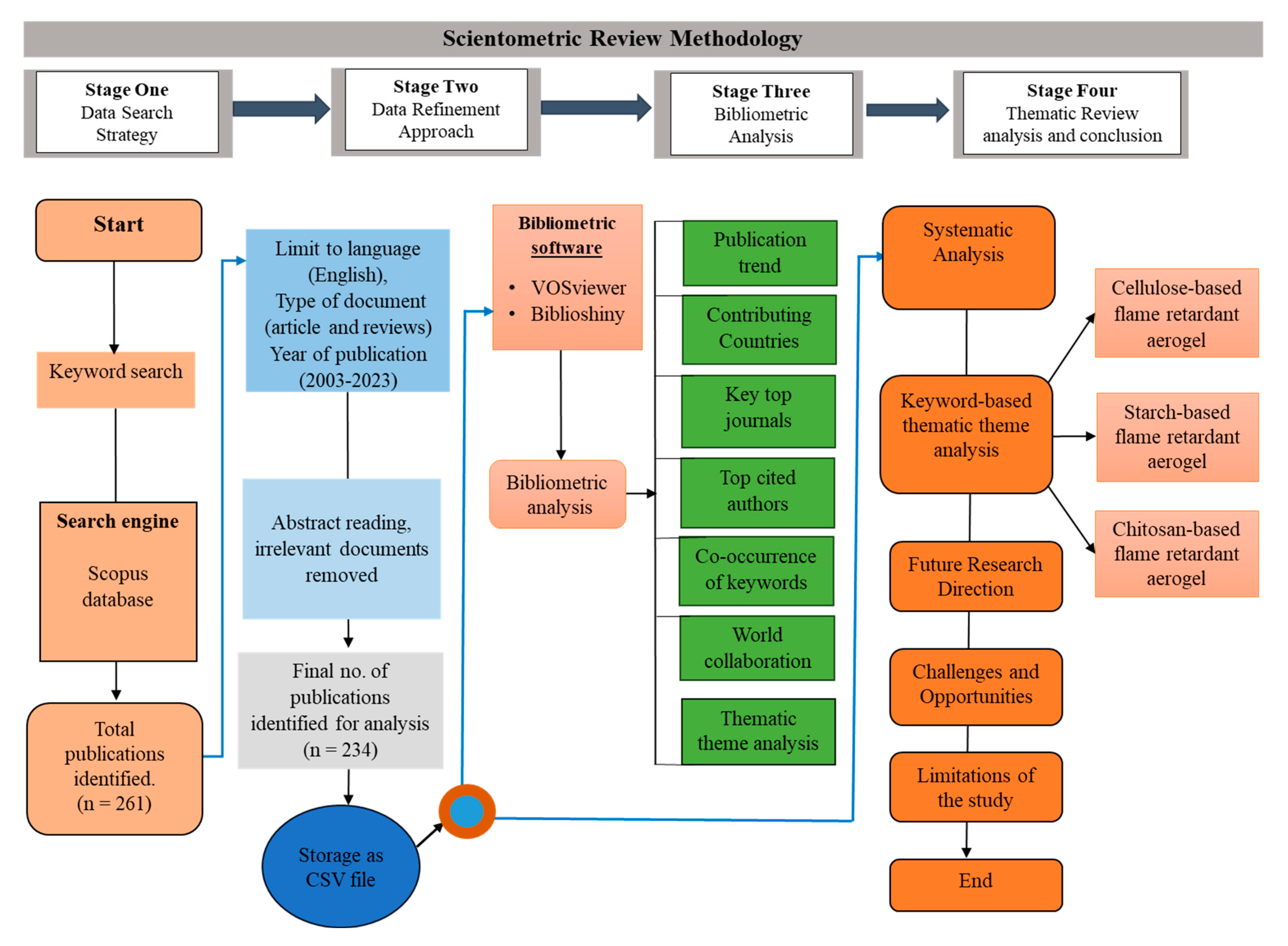
Figure 2.
Annual publication trends of articles.
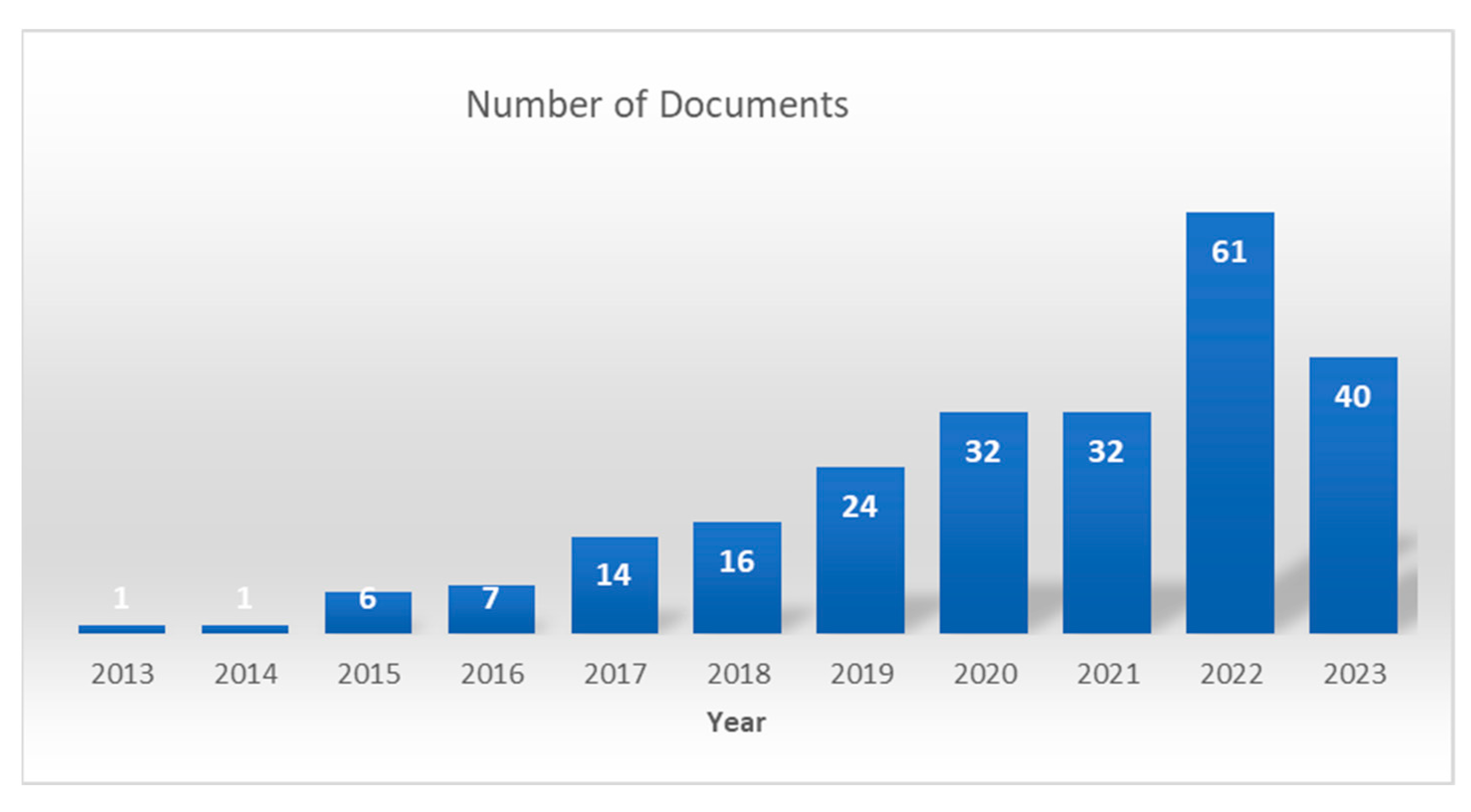
Figure 3.
Science mapping of the Journals with at least 2 articles published based on citation.
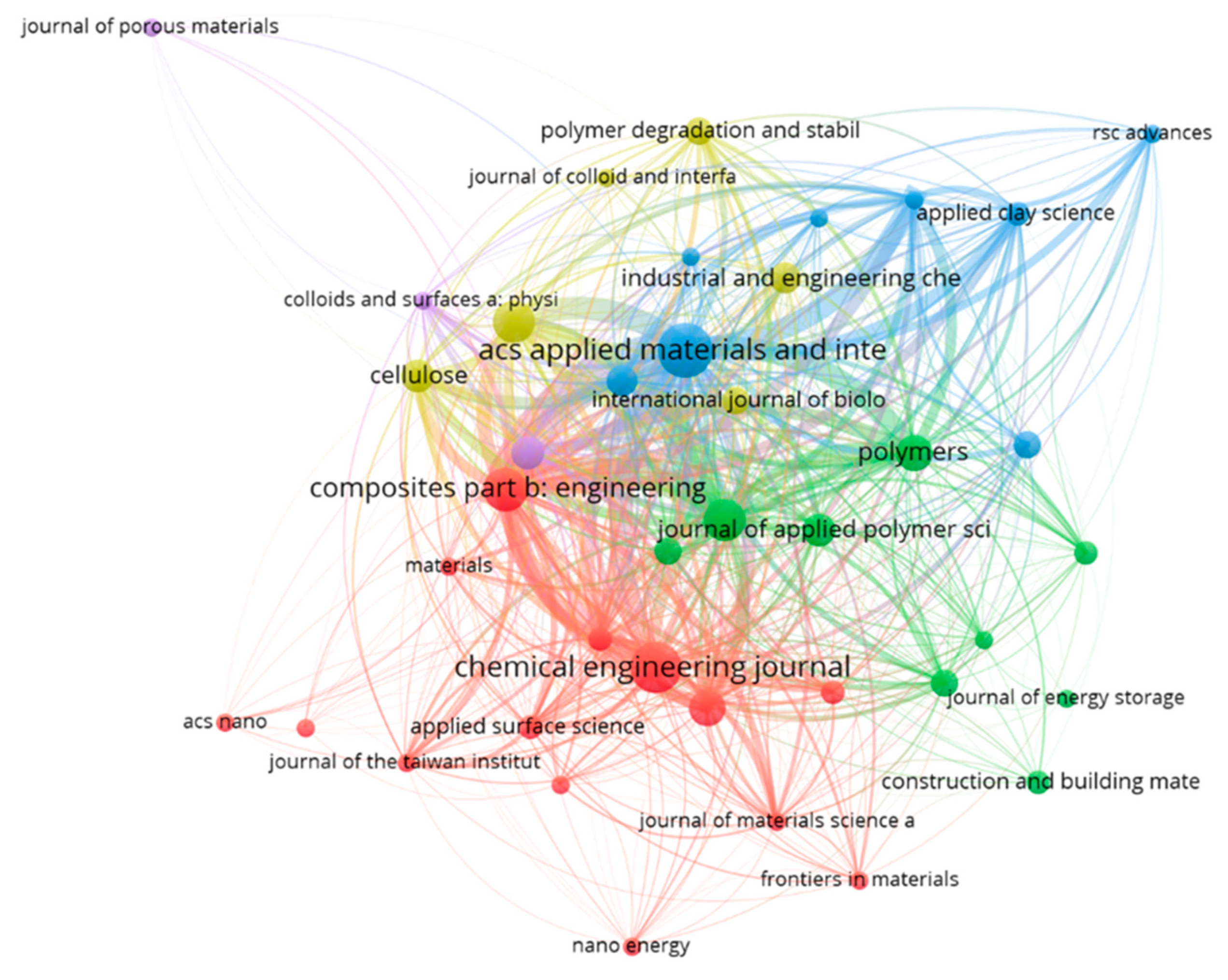
Figure 4.
Science mapping (network visualization) of the top-cited documents.
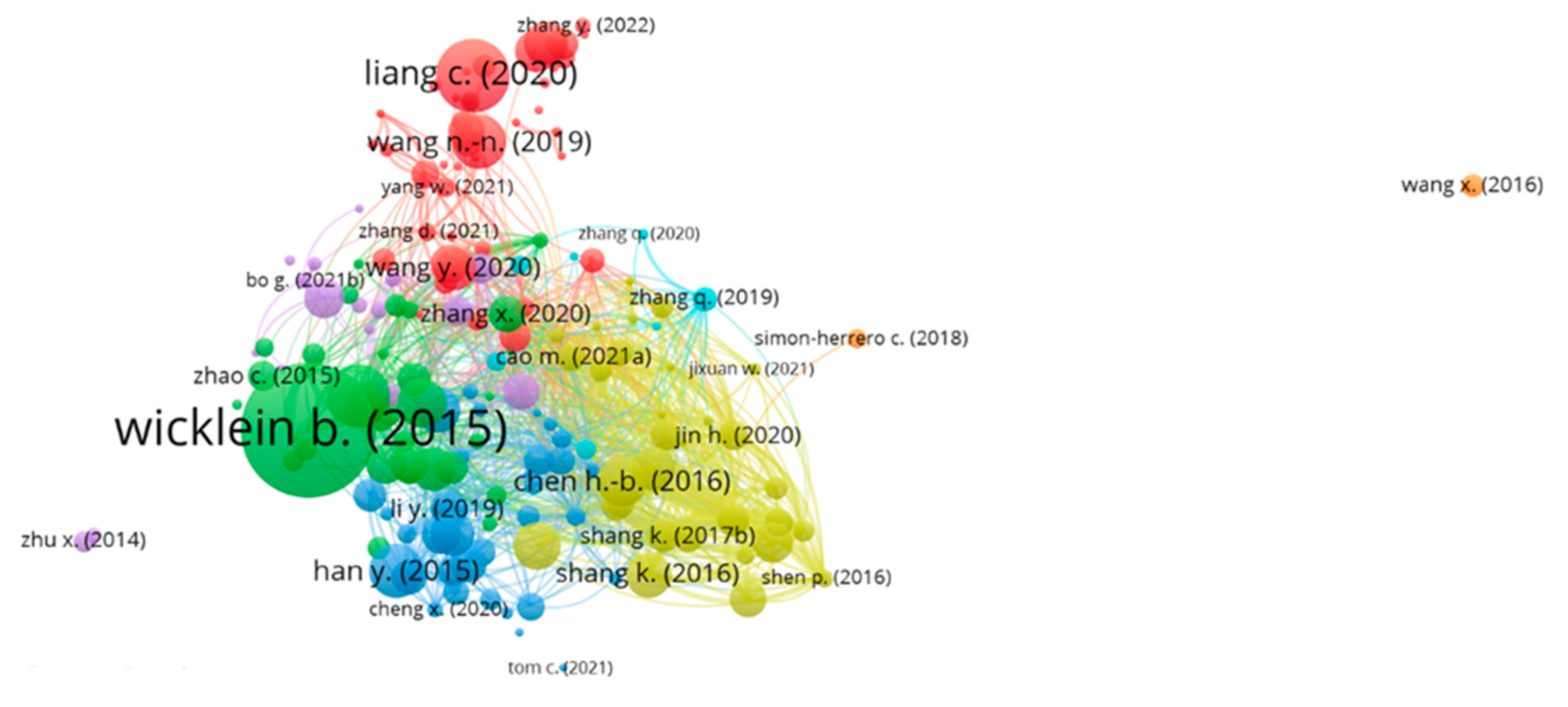
Figure 5.
(a). Science mapping (network visualization) of the most cited authors (b) Science mapping (network visualization) of the top-cited organizations.
Figure 5.
(a). Science mapping (network visualization) of the most cited authors (b) Science mapping (network visualization) of the top-cited organizations.
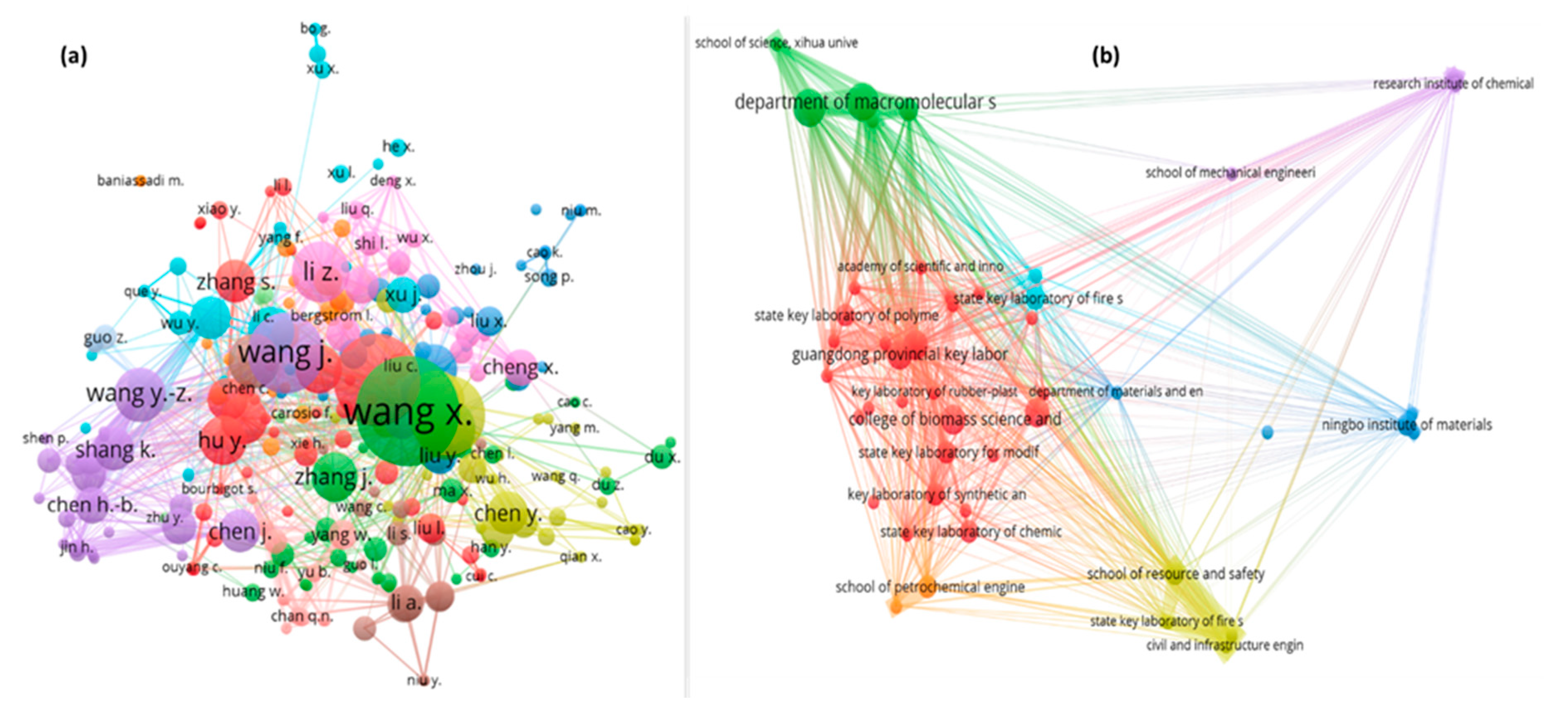
Figure 6.
Network visualization of countries indicating their involvement in the relevant field of study.
Figure 6.
Network visualization of countries indicating their involvement in the relevant field of study.
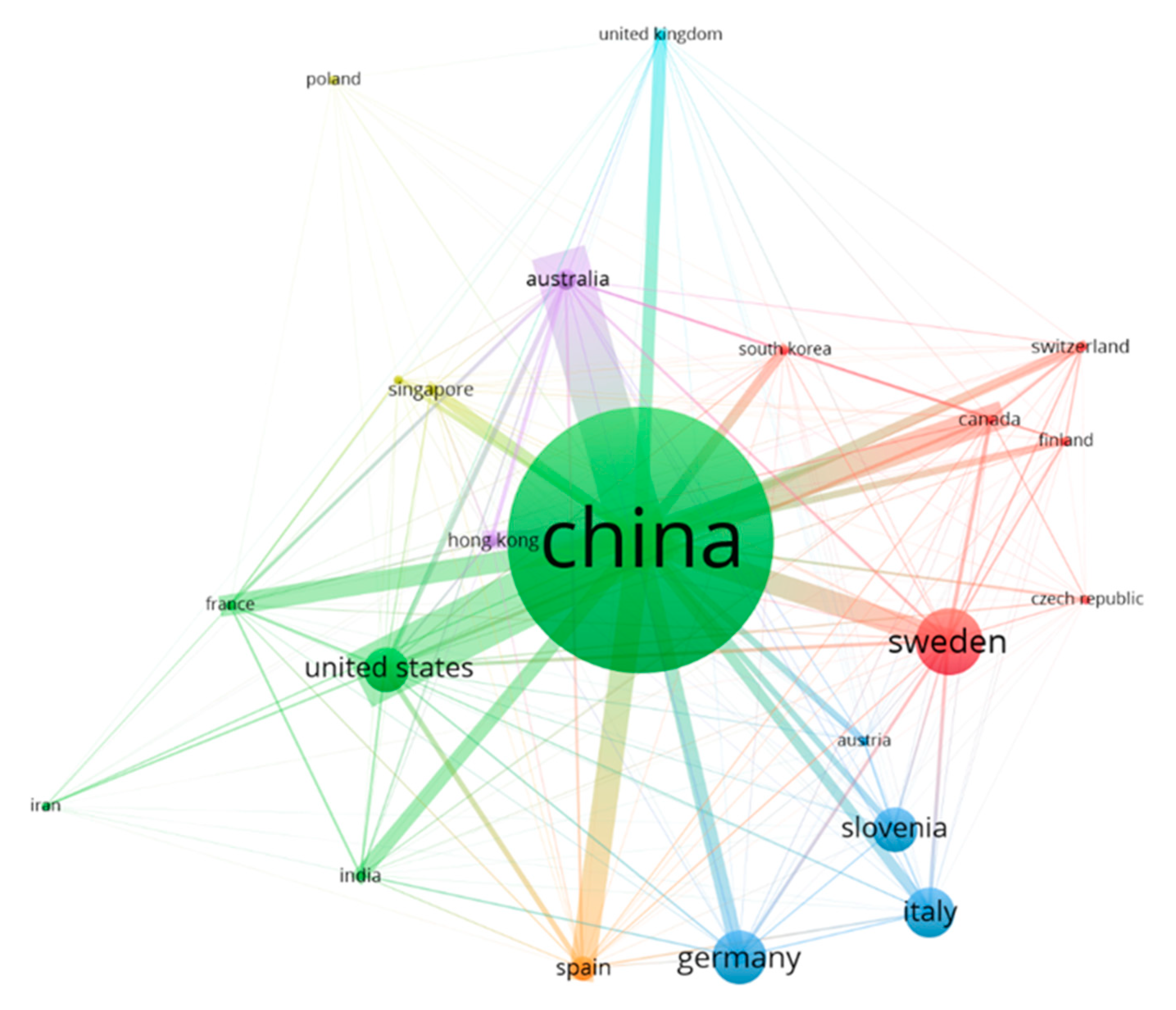
Figure 7.
(a) Science mapping of the index author keywords; (b) Science mapping of keywords based on link strength.
Figure 7.
(a) Science mapping of the index author keywords; (b) Science mapping of keywords based on link strength.
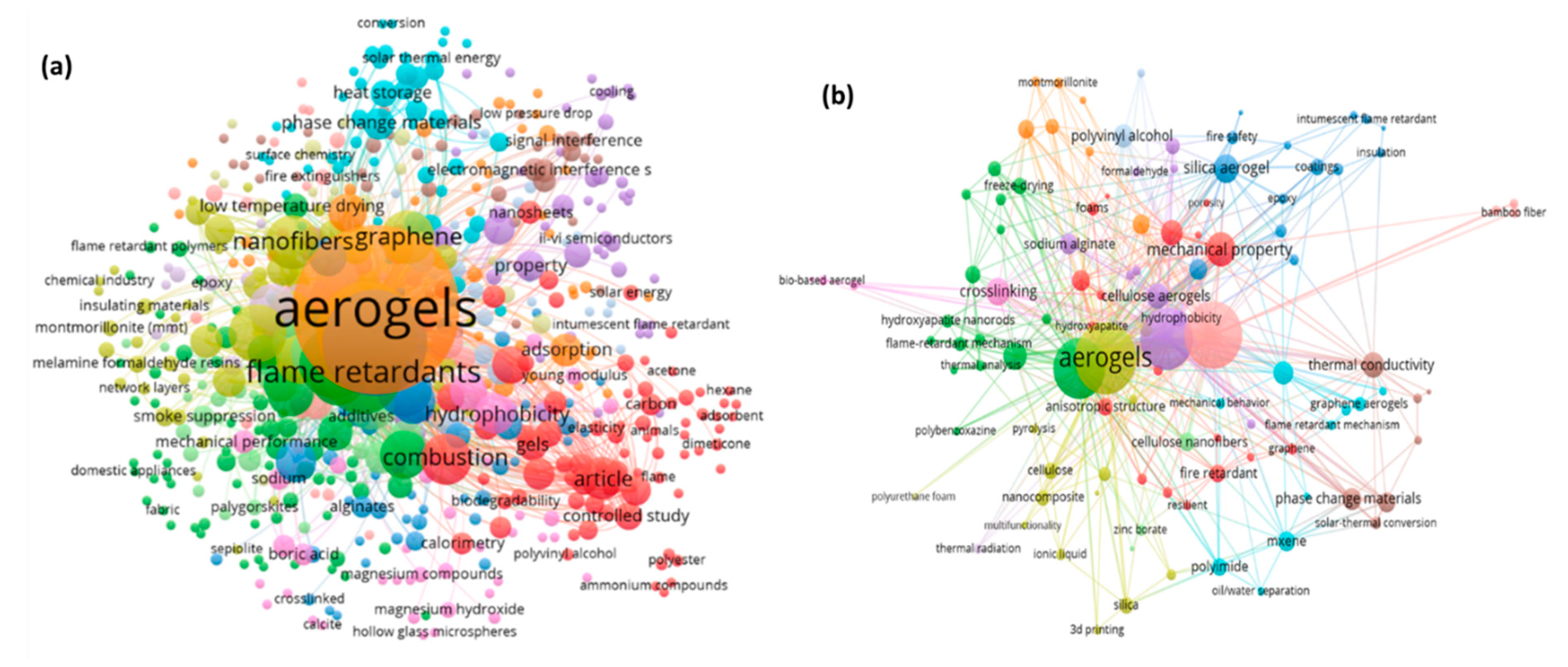
Figure 8.
a) Science mapping of top contributing authors based on citation; (b) Network visualization of cited co-authors.
Figure 8.
a) Science mapping of top contributing authors based on citation; (b) Network visualization of cited co-authors.
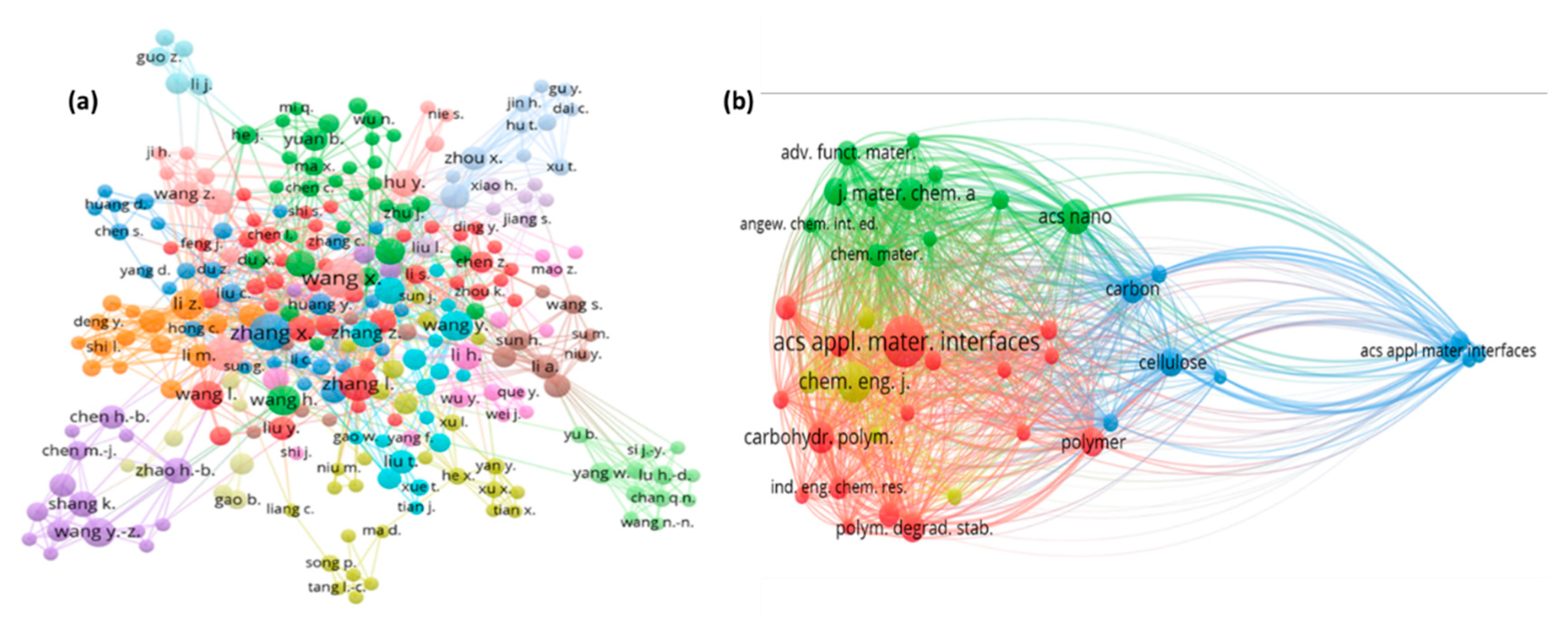
Figure 9.
Network visualization of the top co-cited sources in the relevant field of study.
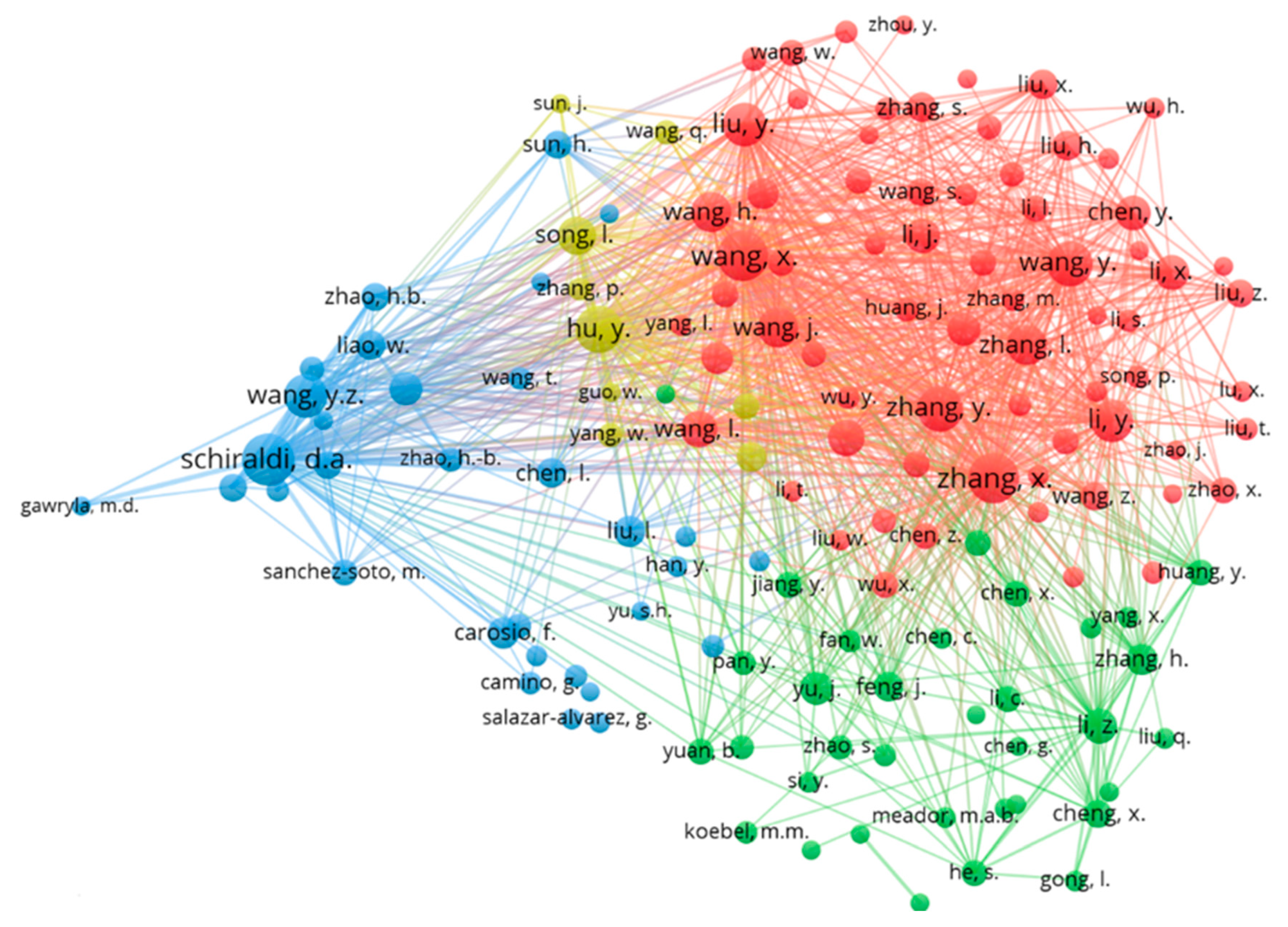
Figure 10.
Biblioshiny country collaboration map.
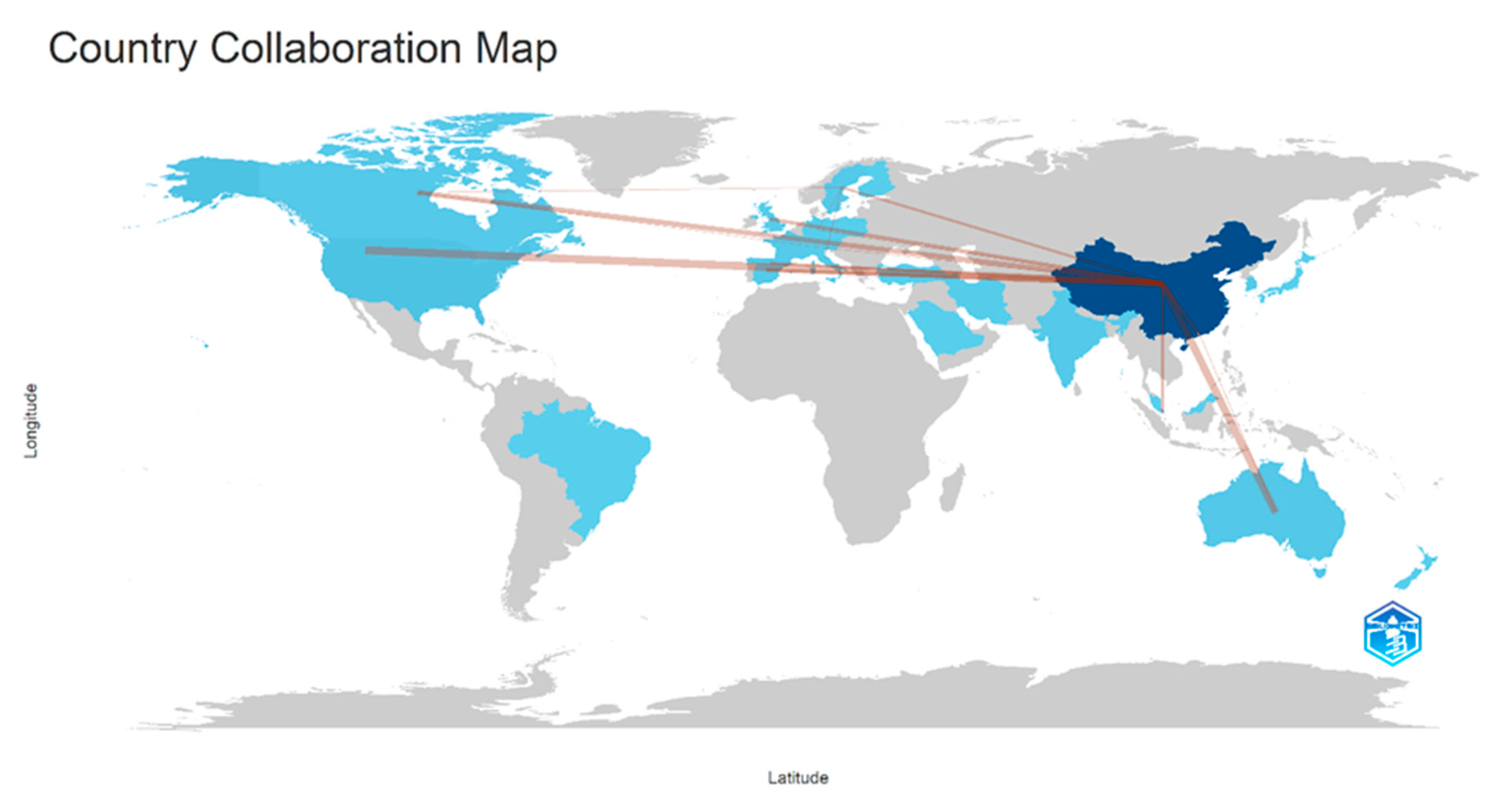
Figure 11.
Biblioshiny of corresponding authors from various countries. SCP= Single Country Publications, MCP= Multi Country Publications.
Figure 11.
Biblioshiny of corresponding authors from various countries. SCP= Single Country Publications, MCP= Multi Country Publications.
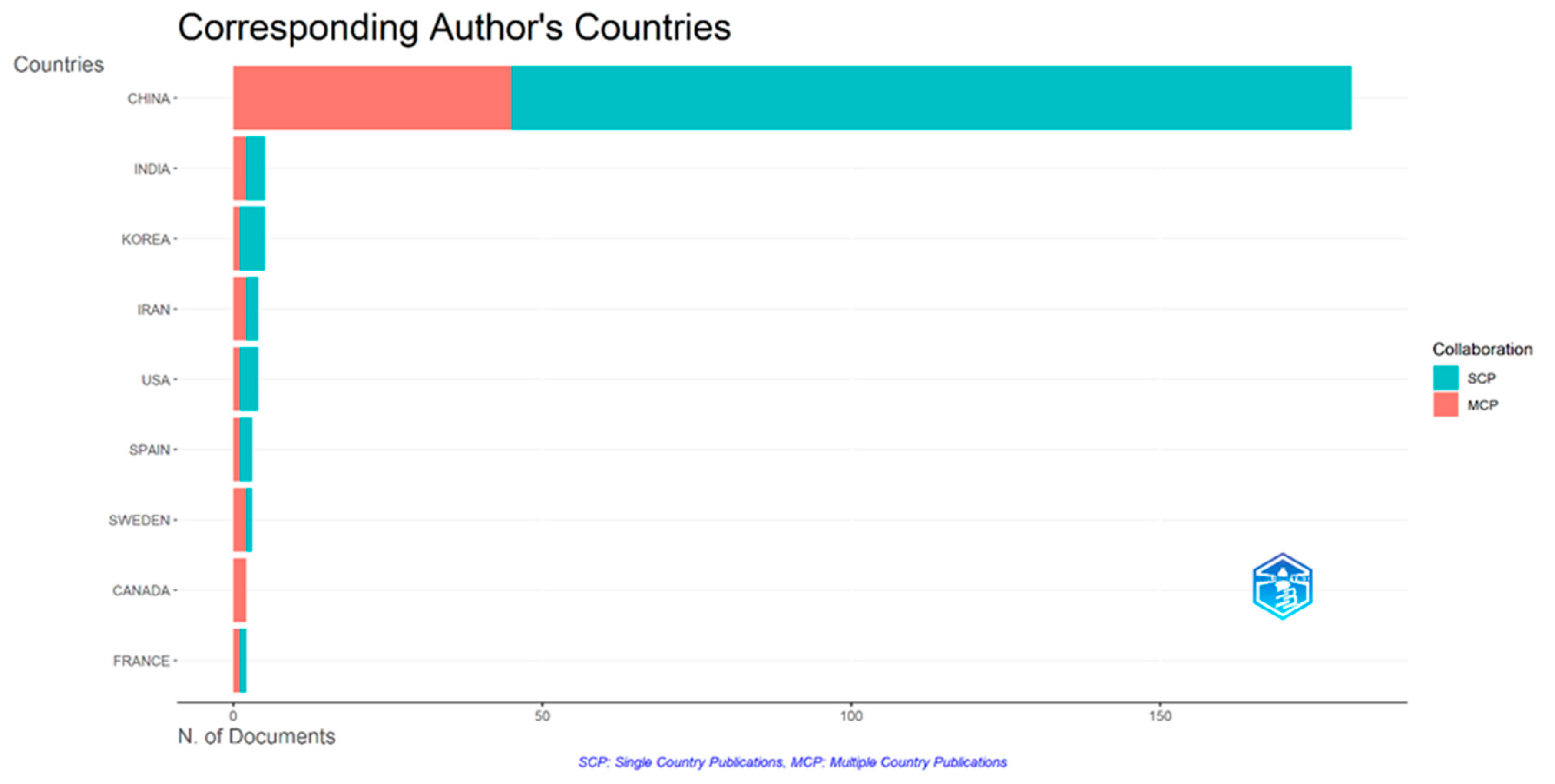
Figure 12.
Biblioshiny visualization of Affiliation production over time.
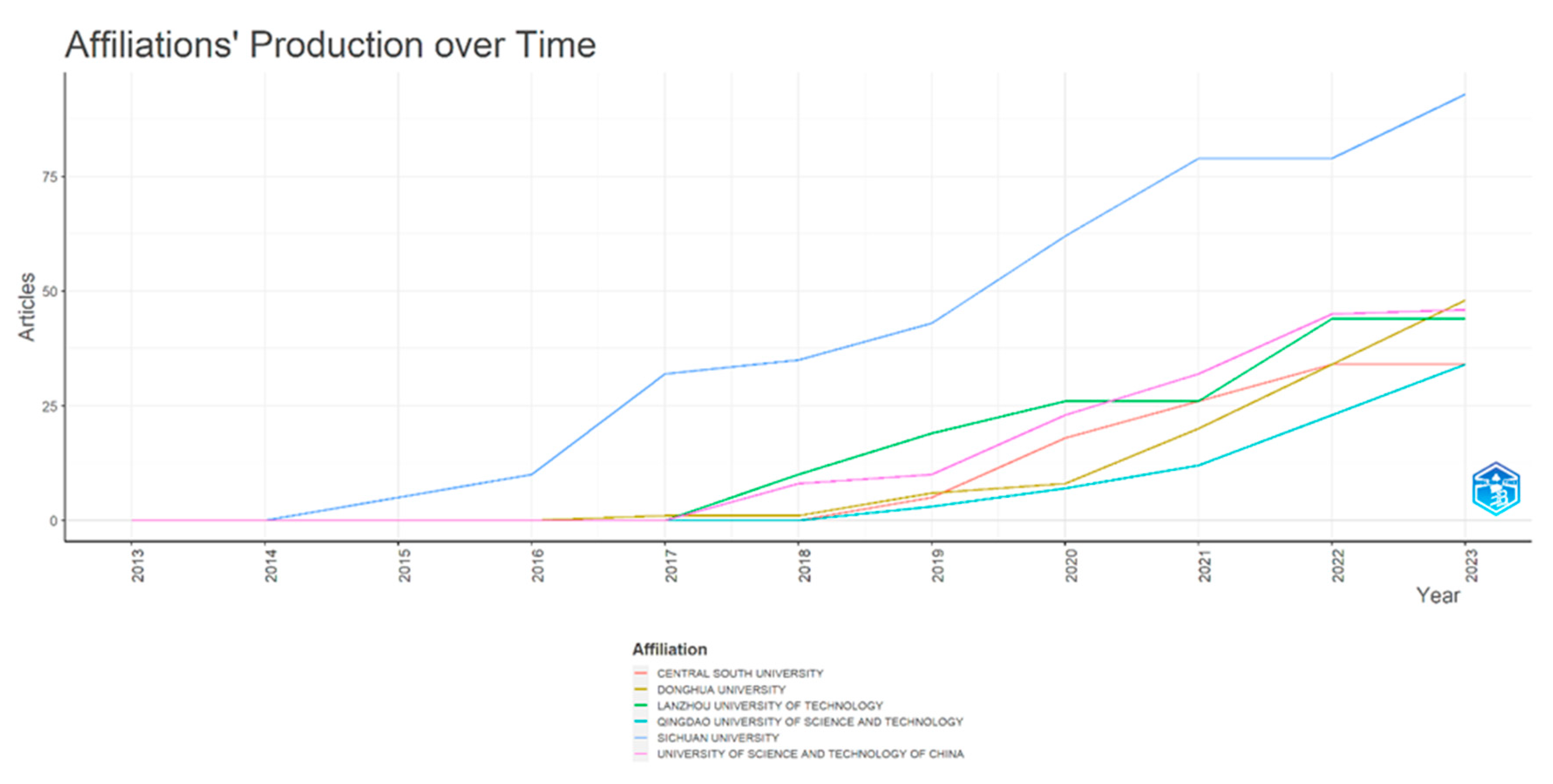
Figure 13.
The three-fields plot for the study based on institutions (left), journals (middle), and country (right).
Figure 13.
The three-fields plot for the study based on institutions (left), journals (middle), and country (right).
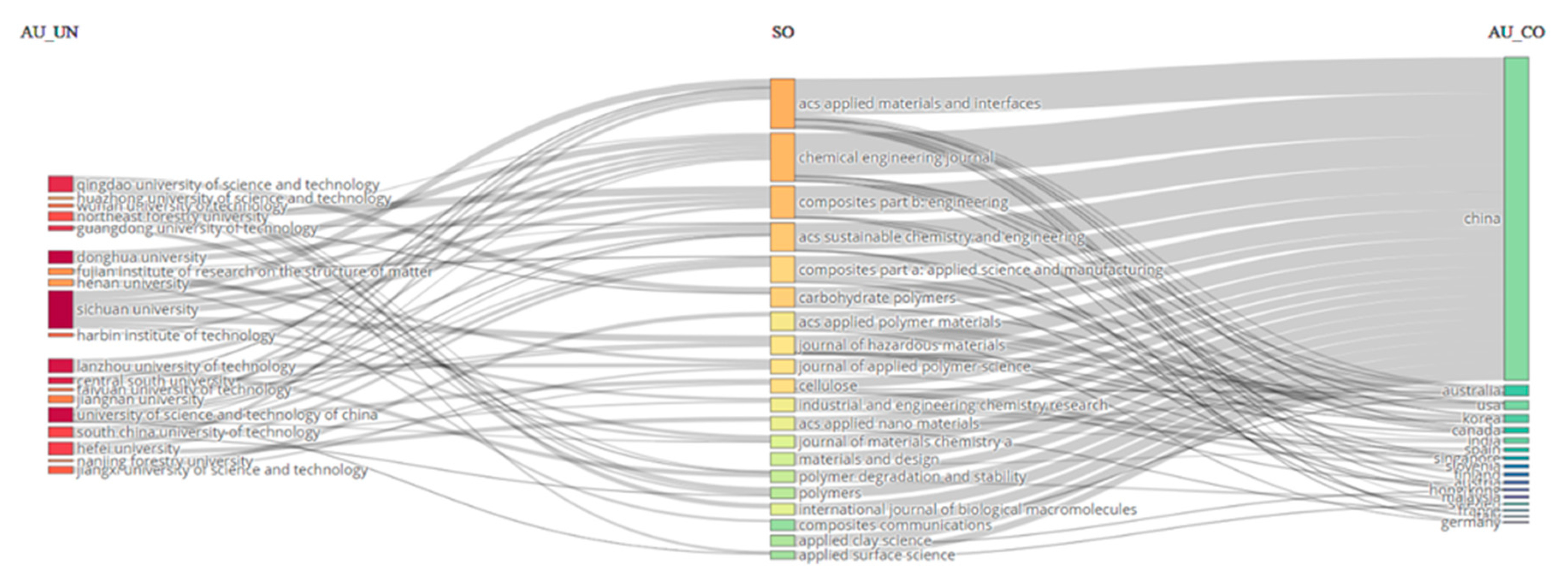
Figure 14.
Biblioshiny visualization of keyword thematic map.
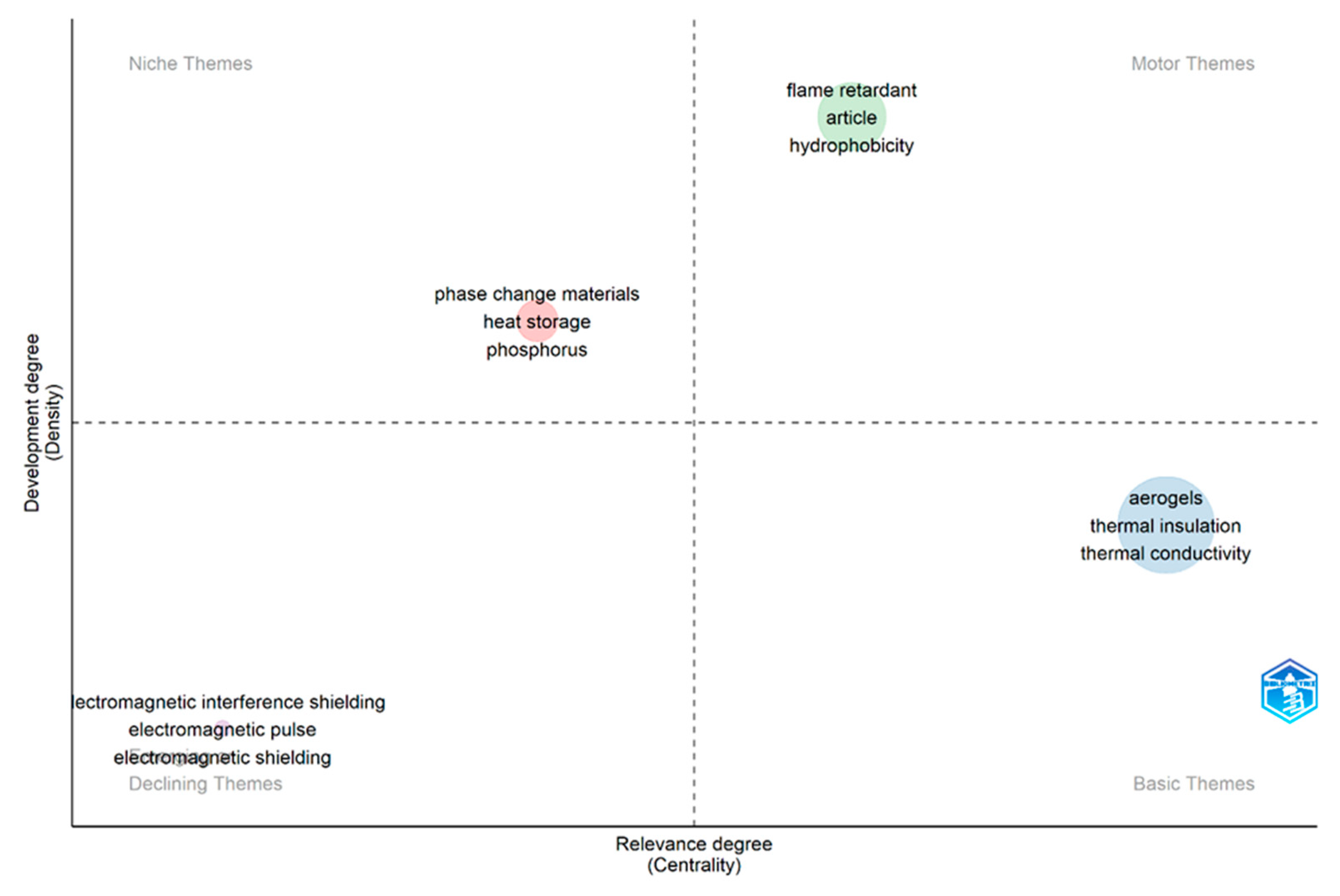
Figure 15.
(a) chemical structure of cellulose [55] (b) Schematic illustrations of the fabrication of flame retardants cellulose/LDH composite aerogel [47] (c) In-situ synthesis of the BC/ZB composite aerogels [56].
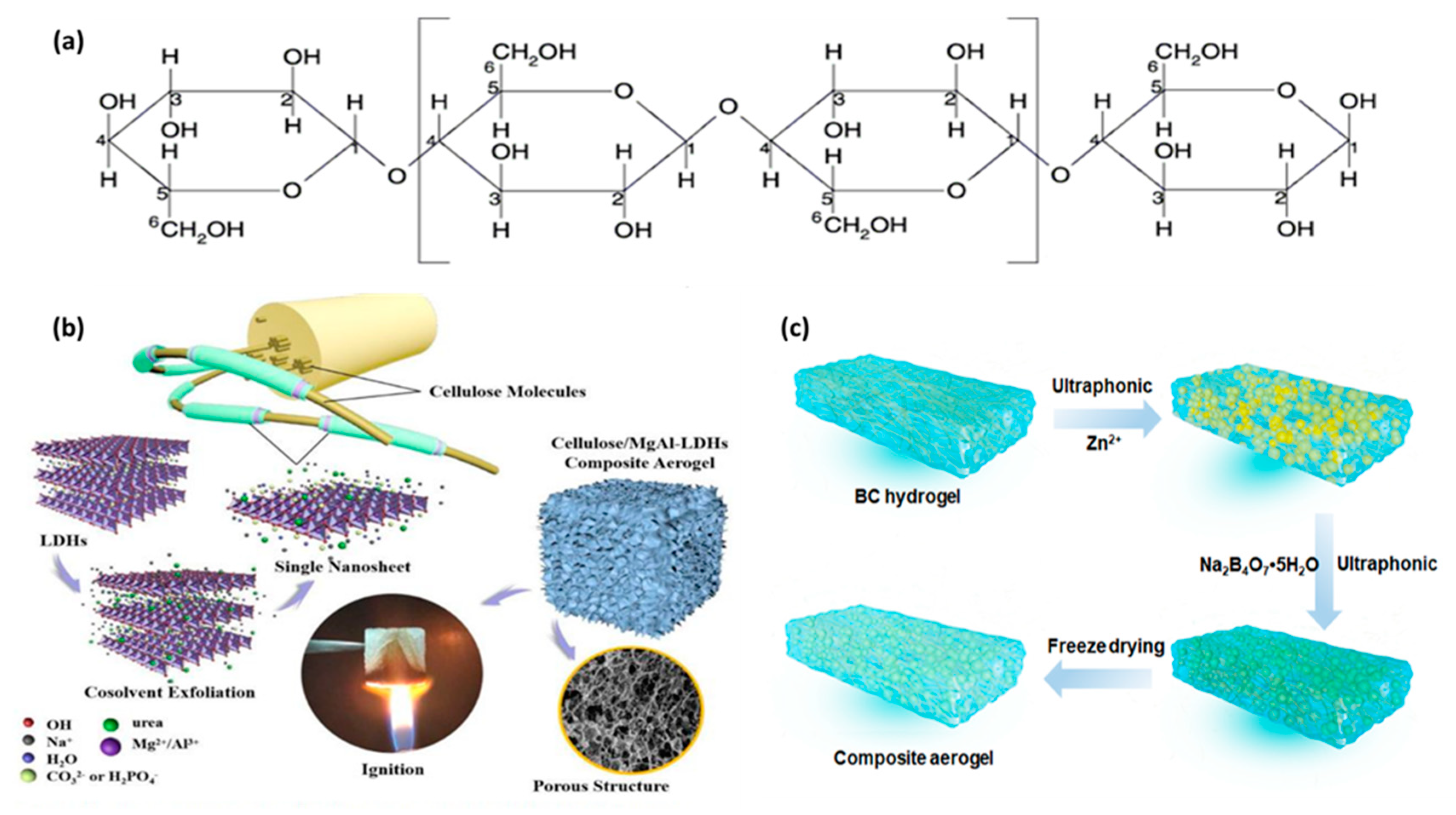
Figure 16.
(a) Structure of starch [67] (b) Starch-based Synergistic EG and H3PO4 intumescent flame-retardant aerogel [72], (c) Porous bio-based flame-retardant coating via esterification from starch modified with phytic acid (PA) [73].
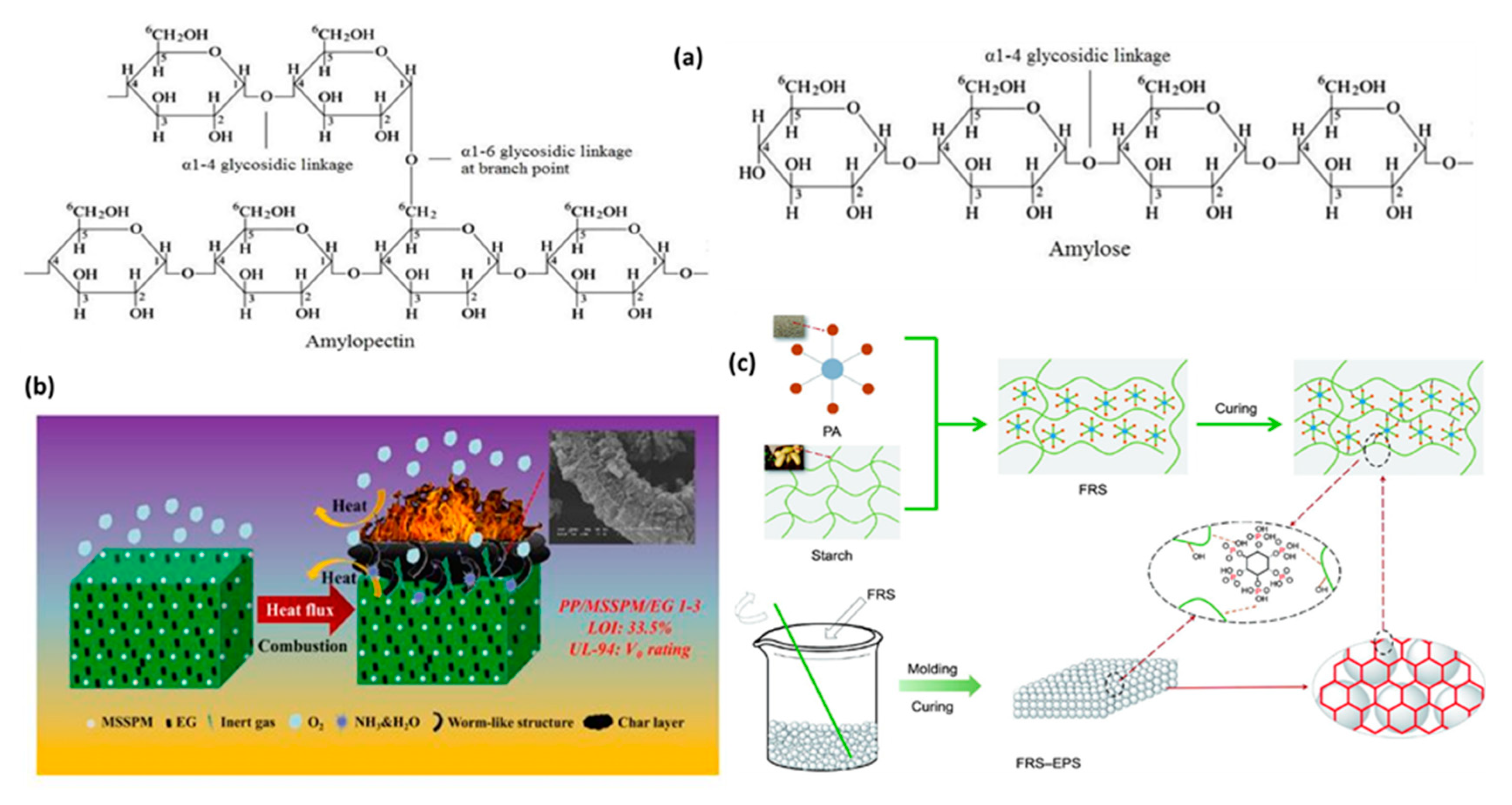
Figure 17.
(a) Functional groups in chitosan structure [80] (b) Results of fire-resistance chitosan/montmorillonite/carbon [81] (c) Fabrication of magnesium-coated chitosan aerogel with HGM component [75] (d) Fabrication process of form-stable Phase change material (PCM) composites (PBPCMs) [58].
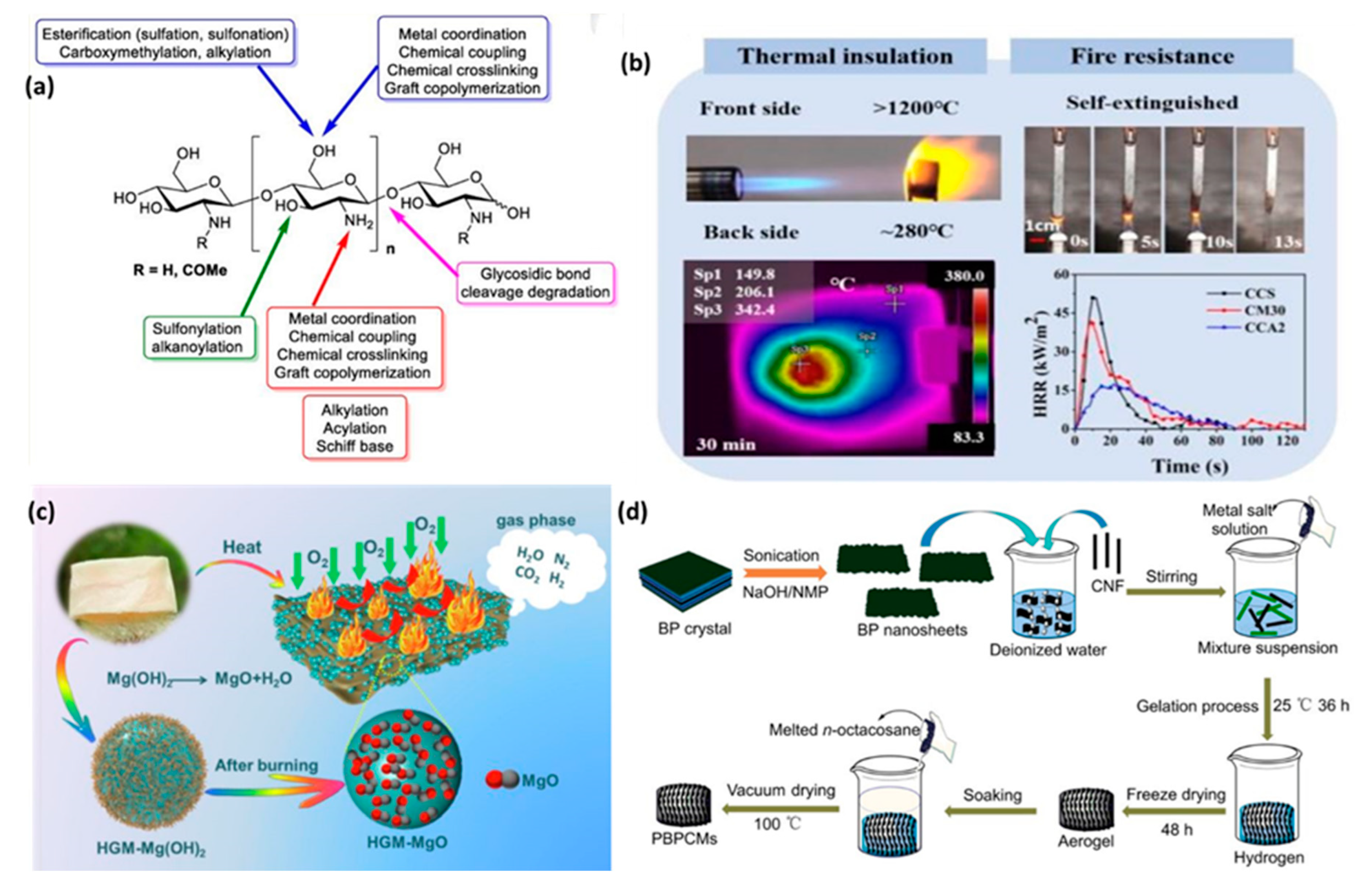

Table 1.
List of the primary sources in the relevant field of study.
| S/N | Source | Documents | Citations | Total Link Strength |
|---|---|---|---|---|
| 1 | ACS Applied Materials and Inter-faces | 16 | 1054 | 1163 |
| 2 | Chemical Engineering Journal | 14 | 614 | 599 |
| 3 | Composites Part B: Engineering | 10 | 238 | 992 |
| 4 | ACS Sustainable Chemistry and Engineering | 9 | 565 | 817 |
| 5 | Carbohydrate Polymers | 9 | 469 | 569 |
| 6 | Composites Part A: Applied Science and Manufacturing | 7 | 149 | 404 |
| 7 | Cellulose | 6 | 74 | 368 |
| 8 | Journal of Applied Polymer Science | 6 | 87 | 180 |
| 9 | Journal of Hazardous Materials | 6 | 266 | 332 |
| 10 | ACS Applied Polymer Materials | 5 | 36 | 317 |
Table 2.
List of top 10 influential countries based on the number of documents.
| S/N | Country | Documents | Citations | Mean citations | Total link strength |
|---|---|---|---|---|---|
| 1 | China | 194 | 5932 | 30.57 | 16432 |
| 2 | United States | 20 | 991 | 49.55 | 4596 |
| 3 | Australia | 11 | 461 | 41.9 | 4177 |
| 4 | Canada | 9 | 209 | 23 | 2329 |
| 5 | India | 8 | 165 | 20.62 | 1166 |
| 6 | Sweden | 8 | 1520 | 190 | 2341 |
| 7 | Spain | 7 | 542 | 77.42 | 1972 |
| 8 | France | 6 | 68 | 11.3 | 1674 |
| 9 | South Korea | 6 | 124 | 20.6 | 812 |
| 10 | Singapore | 5 | 180 | 36 | 883 |
Table 3.
List of the top 10 index keywords in the relevant field of study.
| S/N | Keyword | Occurrences | Total link strength |
|---|---|---|---|
| 1 | Aerogels | 207 | 3036 |
| 2 | Thermal Insulation | 96 | 1493 |
| 3 | Thermal Conductivity | 91 | 1502 |
| 4 | Flame Retardants | 61 | 943 |
| 5 | Cellulose | 48 | 751 |
| 6 | Low Thermal Conductivity | 36 | 579 |
| 7 | Composite Aerogel | 33 | 467 |
| 8 | Silica | 33 | 487 |
| 9 | Graphene | 31 | 474 |
| 10 | Nanofibers | 31 | 460 |
Table 4.
List of the top 10 authors with a minimum of two (2) documents.
| S/N | Author | Documents | Citations | Mean citations | Total link strength |
|---|---|---|---|---|---|
| 1 | Wang X. | 18 | 687 | 38.16 | 67 |
| 2 | Zhang X. | 15 | 442 | 29.46 | 42 |
| 3 | Wang J. | 13 | 239 | 18.38 | 60 |
| 4 | Zhang L. | 13 | 684 | 52.61 | 65 |
| 5 | Li Z. | 10 | 142 | 14.2 | 53 |
| 6 | Wang H. | 10 | 380 | 38 | 48 |
| 7 | Wang Y. | 10 | 137 | 13.7 | 38 |
| 8 | Wang L. | 9 | 177 | 19.6 | 29 |
| 9 | Wang Y.-Z. | 9 | 583 | 64.7 | 37 |
| 10 | Hu Y. | 8 | 107 | 13.37 | 38 |
Table 5.
Summarized cellulose-based composite flame-retardant aerogels.
| Type of cellulose-based Aerogel |
Flame retardant additive |
Fabrication method | Drying method | FR mechanism | PHRR Reduction (%) |
LOI (%) | VBT/HBT Rating |
Ref |
|---|---|---|---|---|---|---|---|---|
| PolyMXene (PCM) | Phosphorus and Mxene | Ice-induced assembly and in-situ mineralization | Freeze drying | Gas phase flame inhibition and intumescence effect | - | 45.3 | N/A | [56] |
| Cellulose nanofibers/Sepiolite clay | MTMS (Methyltrimethoxysilane), Sepiolite nanoclay |
Chemo-mechanical means | Freeze drying | Barrier effect | N/A | N/A | VBT= V-0 HBT= HB |
[50] |
| Cellulose nanofibers | Phosphorus-containing flame-retardant modifier agent (DOPO-IA) |
Simple esterification | Freeze drying | Gas phase inhibition, intumescence effect | 67.8 | 27 | VBT= V-2 |
[12] |
| ZIF-8@cellulose compositeaerogels | 2-methylimidazole, ZIF-8 | In-situ polymerization | Freeze drying | Barrier effect by | 49.36 | 49.36 | VBT= V-0 |
[57] |
| Cellulose nanofiber(CNF)/boron phosphate (BP) hybrid aerogels | Boron phosphorus | Cation-induced gelation | Freeze drying | Gas phase flame inhibition and intumescent effect | 73 | 23.9 | N/A | [58] |
| Cellulose nanofibrils(CNF) | Melamine Formaldehyde (MF) and Methyltrimethoxysilane (MTMS) | Simple crosslinking reaction | Freeze drying | Gas phase flame inhibition and barrier effect | 50.6 | 37.1 | VBT= V-0 |
[59] |
| Cellulose nanofibrils (CNFs) | Sodium alginate, boric acid | Divalent cation cross-linking | Freeze drying | Gas phase flame inhibition and barrier effect | 44.6 | 39.5 | VBT= V-1 |
[60] |
| Polyvinyl alcohol/cellulose nanofibers hybrid aerogel | Microencapsulated ammonium polyphosphate (MCAPP) | Crosslinking reaction | Freeze drying | Intumescent effect | 48.48 | 37.5 | VBT= V-0 |
[61] |
| Alginate-based | Magnesium hydroxide | Post-cross-linking method | Simple freeze drying | Barrier effect | 28.91 | 60 | VBT= V-0 |
[62] |
| Tubular celluloseaerogels (kapok) | (NH4)2HPO4and MMT | Hydrogen bonding and crosslinking | Oven drying | Gas phase flame inhibition and intumescent effect | 26.64 |
43 | N/A | [63] |
| Cellulose-silica | 1-allyl-methylimidazole chloride (AmimCl), silica | In situ formation | Supercritical CO2 drying | Barrier effect and gas phase inhibition | 15.51 | 34 | N/A | [13] |
Note: LOI = Limiting Oxygen Index, VBT= Vertical Burning Test, HBT= Horizontal Burning Test.
Table 6.
Summarized works by other scholars on chitosan/chitin-based flame-retardant composite aerogels.
Table 6.
Summarized works by other scholars on chitosan/chitin-based flame-retardant composite aerogels.
| Chitosan/Chitin-based Aerogel | Flame retardant additives | Fabrication method | Drying method | FR mechanism | PHRR Reduction (%) |
LOI (%) | UL-94 Rating (VBT/HBT) |
Ref. |
|---|---|---|---|---|---|---|---|---|
| Phosphorylatedchitosan (PCS) | H3PO4, Chitosan |
Freeze thawing | Freeze-drying and Freeze thawing | Gas phase fame inbition and barrier effect | 91 | 80 | VBT= V-0 | [84] |
| Sodium alginate chitosan, sodium carboxymethylcellulose | Sodium hypophosphite Alginate, chitosan |
Post-cross-linking | Freeze drying | Gas phase fame inbition and barrier effect | 19.94 | 37.7 | VBT= V-0 | [28] |
| Carboxymethylchitosan (CCS) | Montmorillonite (MMT), carbon nanotubes | Ionic interaction | Freeze drying | Barrier effect | - | 85 | VBT= V-0 |
[85] |
| Chitosan nanofiller (CNF) | Montmorillonite (MMT) powder | Chemicalcross-linking via Schiff base reaction | Directional freezing, and Freeze drying | Barrier effect, slightly gas phase phenomenon | - | 43 | N/A | [77] |
| Chitosan-aluminum/PVA | Aluminum, chitosan | Cross-linking and chemical vapor deposition | Freeze-drying | Gas phase dilution and barrier effect |
77.68 | 41 | VBT= V-0 | [86] |
| Chitosan (CS) hydrogels | MXene, CS | Facile water evaporation-induced self-assembly | Freeze-drying | Barrier effect | 25.6 | N/A | N/A | [87] |
| Biopolymer chitosan (CS) and ammonium polyphosphate (APP) | Boric acid, APP, CS | Crosslinking | Freeze-drying | Gas phase inhibition, barrier effect | 23.0 | N/A | VBT= V-0 | [88] |
| Chitosan (CS)/APP | APP, CS | Layer-by-Layer (LbL) assembly | Vacuum oven drying | Gas phase, barrier effect | 27.6 | 23.8 | N/A | [89] |
| Hydroxyapatite (HAP) and chitosan (CS) | HAP | Chemical cross-linking | Unidirectionalfreeze-drying methods | Barrier effect | - | - | - | [90] |
| Chitosan (CS) | APP and polyethyleneimine (BPEI) | Strong hydrogenbonding | Simple drying | Gas phase flame inhibition, barrier effect | 28.87 | 32.7 | N/A | [91] |
Note: LOI = Limiting Oxygen Index, VBT= Vertical Burning Test, HBT= Horizontal Burning Test.
Disclaimer/Publisher’s Note: The statements, opinions and data contained in all publications are solely those of the individual author(s) and contributor(s) and not of MDPI and/or the editor(s). MDPI and/or the editor(s) disclaim responsibility for any injury to people or property resulting from any ideas, methods, instructions or products referred to in the content. |
© 2023 by the authors. Licensee MDPI, Basel, Switzerland. This article is an open access article distributed under the terms and conditions of the Creative Commons Attribution (CC BY) license (http://creativecommons.org/licenses/by/4.0/).
Copyright: This open access article is published under a Creative Commons CC BY 4.0 license, which permit the free download, distribution, and reuse, provided that the author and preprint are cited in any reuse.


