
Submitted:
03 July 2023
Posted:
06 July 2023
You are already at the latest version
Abstract
Residential satisfaction with post-disaster housing is crucial for the success and sustainability of a resettlement project. However, little attention has been given to this aspect in the permanent houses developed after the 2015 Gorkha earthquake. To bridge this gap, the study examined factors affecting residential satisfaction among poor displaced households resettled in the Panipokhari Integrated Settlement of Nepal. Data were collected through a questionnaire survey, interviews, and field observation. Internal consistency and reliability were assessed using Cronbach's Alpha test, while satisfaction was measured by mean satisfaction scores. The relative importance index ranked the factors, and Spearman's rank correlation coefficient analyzed their relationship with overall residential satisfaction. The study identified several crucial fac-tors influencing residential satisfaction, including the design and layout of the house, space for modification, provision of a kitchen garden and cattle shed, thermal comfort, completeness of the house, provision of a hearth, and spaces for rituals and cultural events. These findings shed light on the resettlement decisions of affected populations and provide valuable insights for policymakers, implementers, and researchers aiming for successful and sustainable resettlement outcomes.
Keywords:
Factor
; Housing
; Post-disaster resettlement
; Residential satisfaction
1. Introduction
The recent decade has witnessed a drastic increase in the number and size of disasters, often resulting in devastation to the built environment. Out of the total 38 million displacements worldwide, a significant 23.7 million internal displacements were triggered by disasters in 2021 alone [1]. Among the various measures adopted by disaster-affected countries to manage such displacement, one of the most widely discussed and practiced is resettlement. Resettlement can be defined as the planned, assisted, and permanent relocation of a displaced population. It is a very complex process that goes beyond the mere rehousing but rather an introduction of a new built environment for the displaced community [2,3]. The sustainability of the resettlement depends on creating enabling positive conditions for people to adapt to the new built environment [3] by increasing their satisfaction. However, the sense of urgency to provide housing within a limited time and the collective desire of displaced households to settle back as quickly as possible [2] often results in the ignorance of the long-term needs of the households [3].
The post-disaster resettlement literature has also highlighted housing satisfaction as the most challenging component of resettlement [4]. Further, Dikmen & Elias-Ozkan [5] stressed the importance of satisfaction for a family affected by a disaster as they have only a few options. While the implementing agencies often assume the resettlement project to be successful, the resettlement in a new location is always an undesirable affair for displaced households [4]. Despite the risk of facing disaster in the original location, the resettlers, in most cases, have left their new settlement and returned back to their previous places [6,7]. A host of studies [4,7,8] has identified long-term residential satisfaction with permanent housing as a major reason in determining the choice to remain in a resettlement site or return back to the original area.
Nepal is one of the most disaster-prone countries in the world, with its ranking 11th in terms of seismic risk, 30th in terms of flood risks, and 4th in climate change vulnerability [9]. The Gorkha earthquake of magnitude 7.6 Richter scale that struck Nepal in 2015 resulted in massive human losses and physical damage across 32 hilly districts of Nepal. The National Reconstruction Authority [10] identified housing as the hardest hit sector, requiring a need to reconstruct about 609,938 houses damaged by the earthquake [11]. With the majority of attention on the in situ housing reconstruction, the resettlement was only given scant attention. The Gorkha earthquake triggered more than 20,000 landslides and displaced about 4079 families from 21 districts and 99 local governments of Nepal, requiring relocation to a safer place [12]. The government of Nepal responded to this need to relocate the displaced households and provide planned infrastructure provision with the development of “Integrated Settlement” in Nepal. Despite the successful completion of the resettlement projects, only about 30% of households have permanently moved to the case study area “Panipokhari Integrated Settlement.” The mismatch between the housing provided and the actual needs of the affected household has burdened the public finances in Nepal. With the evidence on modification, rejection, and abandonment of permanent housing provided after the Gorkha earthquake, residential satisfaction is of paramount importance in the success of post-disaster resettlement projects. This issue has established the research question regarding residential satisfaction that will further guide the decision and choice for successful resettlement.
While the reconstruction of in-situ housing has been widely researched [8], relatively lesser studies have been conducted in post-disaster resettlement. Despite the presence of a large collection of case studies in the international context [4,8,13,14], very limited study has been carried out to identify the factors influencing user satisfaction with converting a post-disaster permanent house into a home [15]. In addition, researchers [4,14] have reported that evaluations of post-disaster permanent housing were absent in the literature related to user satisfaction. The satisfaction of the end user plays a major role in the success of resettlement, and thus this study was perceived from the standpoint of the resettled households [3]. In fact, every post-disaster situation is unique, and thus, there is a need for continuous research to create a comprehensive body of knowledge [16]. Mohit & Raja [13] also highlighted the need for further studies on residential satisfaction in a culture-specific context to guide public policies. In the Nepalese context, a little discussion has been carried out on the factors influencing long-term user satisfaction with permanent housing. Considering the decisive role of user satisfaction in judging the success or failure of post-disaster resettlement [8], the study aims to examine the factors influencing the residential satisfaction of the poor indigenous Thami community with permanent housing following the 2015 Gorkha earthquake. The findings from the study will have practical implications and thus provide insight to policymakers, implementers, and researchers facing difficulty in leading the resettlement.
1.1. Housing
Housing is usually the most valuable asset owned by an individual or a family [17,18] and has social and economic value. It is a process, and not the end, as people tend to constantly improve and adapt their dwellings to better accommodate their changing needs. Rather than just four walls and a roof, housing requires it to be a safe and secure place to live in with peace and dignity for physical comfort and mental well-being. The right to adequate housing was recognized in article 25 of the 1948 Universal Declaration of Human Rights and article 11.1 of the 1966 International Covenant on Economic, Social, and Cultural Rights [19]. According to United Nations [19], the right to adequate housing has provisions such as protection against forced evictions, and right to choose one’s residence to determine where to live, and freedom of movement. Likewise, SDG 11.1 sets a target to ensure access for all to adequate, safe, and affordable housing and basic services by 2030 [20]. For a house to be adequate, the required criteria include – (i) security of tenure; (ii) availability of services such as drinking water, adequate sanitation, energy for cooking, heating, lighting, food storage, or refuse disposal; (iii) affordability; (iv) habitability; (v) accessibility; (vi) location; and (vii) cultural adequacy (United Nations, 2009). In Nepal, the Constitution, followed by the Right to Housing Act (2018), also guarantees the right to appropriate housing to all citizens.
The hazard literature has established housing as the most affected sector [18,21] and also often the most challenging sector of the entire reconstruction program. Compared to conventional houses, post-disaster resettlement houses encompass considerable and unavoidable differences in the layout, house design, building materials, and construction processes [22]. The Sphere standard [23] provides minimum humanitarian standards, which include – the provision of living space that accommodates the diverse needs of members of the household for sleeping, respecting local culture and lifestyles; provision of optimal lighting conditions, ventilation, and thermal comfort; inclusion of appropriate cooking, toilets, laundry, bathing, livelihoods activities, socializing and play areas; and promotion of the use of shelter solutions, construction techniques and materials that are culturally and socially acceptable and environmentally sustainable. The standard also recommends 4.5–5.5 square meters of living space per person in cold climates where internal cooking space and bathing or sanitation facilities are included.
1.2. Residential Satisfaction
Residential satisfaction can be defined as the degree to which an individual’s expectations or requirements are met in their housing or residential surroundings. Mohit & Raja [13] defines residential satisfaction as the ‘feeling of contentment when one has or achieves what one needs or desires in a house.’ In post-disaster contexts, residential satisfaction can be referred to as the degree of contentment that residents feel toward their new house and the built environment. Since displaced households are the long-term users, the satisfaction of the built environment and housing is largely perceived from the standpoint of the resettled community [3]. Rather than the number of permanent houses constructed following a disaster, the success of the post-disaster resettlement is largely affected by the residential satisfaction with the housing and the resulting outcome of whether they will actually inhabit the houses in the long term [8]. The post-disaster resettlement studies [4,14] have focussed on the consideration of the perceptions and needs of the users for their long-term residential satisfaction. If the needs and expectations of the affected people are not addressed in terms of comfort, building material, construction quality, and sensitivity to cultural and community practices, then the households respond by making decisions, either by refusing to accept or occupy the house or attempting to modify it [4,24]. Successful resettlement is inevitable for the sustainable recovery of disaster-affected communities [25]. Thus, the satisfaction of the resettled households plays a crucial role in the resettlement decisions and lies at the core of the sustainability of the resettlement.
1.3. Factors Influencing Residential Satisfaction in Post-Disaster Resettlement
Housing has been recognized as a decisive factor for the long-term satisfaction of affected households in post-disaster resettlement [4,14,15,26,27]. Rather than only meeting the basic accommodation need, permanent housing requires providing the psychologically, socially, and economically disturbed displaced households with various expectations from the built environment where they will leave their lives for a long time [14]. Previous empirical studies on post-disaster resettlement have identified several factors pertaining to post-disaster housing influencing the satisfaction of the resettled households.
Housing design is one of the major determinants influencing residential satisfaction in the post-disaster resettlement context [14,15,27,28,29,30]. As a result of dissatisfaction due to the inappropriate housing design, a host of researchers [3,31] pointed it to be a major reason for the failure of the resettlement projects. The post-disaster resettlement literature mostly cites typical monotype design, which fails to consider the need and lifestyle of the household as an important factor influencing residential satisfaction. The monotonous uniform design was preferred mainly to reduce the cost of building a large number of houses [26], ease of construction, and imposition of urban middle-class values on rural populations [32]. Traditional houses have evolved over time as functional to the needs of the household unit [32]. However, [26] argued that the uniform post-disaster housing design resulted in the ignorance of the individual need and lifestyle, such as plot size, the distance between houses, arrangement of houses, important spaces required for rural households such as space for expansion, and modification; space for additional structures such as animal sheds, storage area of farm products and traditional bread baking areas. Baniya [33], in his study of Nepal, also revealed that the strict technical restrictions on the design and choice of construction materials affected the resettlement projects. Likewise, Aysan & Oliver [34] also highlighted that the four-roomed single-story prefabricated houses built after the 1970 Gediz earthquake were incompatible with the lifestyles of displaced households having extended families and depending on agriculture and animal husbandry for livelihood. In a similar way, other studies [35,36] considered the failure of the layout to provide sufficient space around dwellings for tool sheds, animal pens, and other agricultural needs as a reason for the abandonment of resettlement sites. Also, Coburn et al. [35] added that the housing design lack spaces for domestic activities, which require different space for different uses as per the seasons. He [37], in his study of the post-disaster resettled communities after the Gorkha earthquake, highlighted that the resettled communities preferred the availability of farmland and house-building training for their sustainable recovery. Likewise, Rieger [38], in a study carried out in Nepal, also highlighted that rather than only houses, the displaced households demanded farmland to continue their traditional livelihood. Also, he revealed that the households were under psychological stress due to the heavy loan for the construction of the small house that could only fit in their small plot of land. In a similar vein, Spoon et al. [39] revealed that agricultural land was the main issue for households reliant on place-based agropastoralism.
While Danquah et al. [28], in their study in Ghana, revealed that the residents were unsatisfied with the size of the land and the number and size of the rooms, in Turkey [40] found that users were highly satisfied with the size of the rooms but were unsatisfied with the storage facilities on the ground floor and sound insulation. Tas et al. [14] identified that residential satisfaction is also determined by the aesthetics of the housing. Another frequent complain is the loss of privacy attributed to the new layout. One of the problems identified by Ozden [30] is the inadequate design of the number of chimneys for wood and coal-burning stoves in houses designed for the gas heating system. The sustainability of the resettlement project is greatly constrained by the house designs that failed to recognize occupants’ needs and desire to transform and extend them [41]. Kurum Varolgunes [26] explains that if the houses were not designed flexibly, reducing the opportunity to make changes can result in dissatisfaction in the household and abandonment. With the gap in the housing provided and the actual need of the community, the empirical case studies have described the cases in which post-disaster houses were modified following the earthquake. For example, Carrasco et al. [42] explained that lofts were constructed in the village to respond to the need for additional sleeping space for larger family sizes and the extension of buildings inside and outside the lot to provide space for cooking and laundry. Dikmen & Elias-Ozkan [5] argued that the consultation of the families forced to take on the burden of a loan for housing construction before the housing design could increase satisfaction with their spatial needs.
Previous studies highlight building construction quality as one of the factors affecting long-term satisfaction [8,30]. Several empirical studies have reported cases where the resettled households have rejected or moved out from the provided housing for several reasons, such as poor quality work, use of technology, and design that were unsuitable for local weather and cultural sensitivities [8]. Oo et al. [8] emphasized that users abandoned the provided housing due to poor quality work. Likewise, Ozden [30] identified water installation systems, low-quality building materials, windows, doors, paintings, water leakage, and humidity as the major construction problems of post-disaster housing. Sey & Tapan [7] in their study found that the houses remained empty since they were completed on time. Likewise, researchers [35,36] have also highlighted that the faulty construction and use of inferior materials also create difficult living conditions, particularly regarding thermal protection in different seasons. Kurum Varolgunes [26] pointed out that the local materials ensured fast and economical procurement of materials and laborers.
Researchers have also identified building performance as an important determinant influencing residential satisfaction. Dikmen & Elias-ozkan [43] in his paper emphasized that the preference for concrete as a building material for the post-1970 Gediz earthquake resulted in houses that were considered cold and damp by the users. In the study carried out in the aftermath of the 1995 Dinar earthquake, Enginoz [44] revealed that the households complained that the brick masonry houses were cold in winter and hot in summer, unlike the old mud brick house. Kurum Varolgunes [26] recommended the design of the sustainable housing samples by considering the culture, climate, topography, etc., and the consideration of the climatic data in the layout plans of post-disaster housing.
The socio-cultural context is also an important yet ignored determinant of residential satisfaction. The housing design is influenced by social and cultural issues [40]. Kronenberger [36] states that the resettled village lacks the culturally important ritual spaces required by people in their environments. The village design that does not consider the clustering of kin and old neighborhood groups is also considered a potential reason for failure [35]. Perera et al. [31] explained that the rate of satisfaction is higher for the households participating in the design and arranging of the layout of the houses, owing to the fact that the house is more a sociocultural estate than just a dwelling in Sri Lanka. According to Onder et al. [40], the satisfaction of the users depends on a number of variables such as ‘the meaning they place on their housing, their view of it, its design, their background, lifestyles, and expectations.’ Houses constructed without considering the different psycho-social conditions of the permanent house users will remain uninhabited for many years [40].
The previous housing experience is also one of the major factors influencing satisfaction. Kurum Varolgunes [26] revealed that the physical, economic, social, cultural, and psychological features of the existing settlement were not considered in a holistic manner while designing permanent housing settlements and structures after the earthquake. The previous studies also highlighted that the resettlement projects fail due to housing that does not respond to the needs of relocatees, such as loss of livelihood and disruption of daily routine [18]. Wagner [45] explained that as the households start to compare their old and new environments and changes in daily life habits due to the layout of the new house and the location of the settlement, they may arrive at a conclusion to abandon their rebuilt dwelling.
2. Materials and Methods
A case study methodology was adopted to investigate the factors influencing the residential satisfaction of the displaced households resettled in Panipokhari Integrated Settlement. The data were collected using mixed methods, which included the questionnaire survey, and interviews of the households, along with the observation and measurement of houses. A comprehensive literature review of more than 50 journals pertaining to post-disaster residential satisfaction was carried out, which identified several factors grouped under the four determinants of housing satisfaction (i) sustainable housing, (ii) building construction, (iii) building performance and (iv) sociocultural context.
Residential satisfaction is a measure of residents’ subjective assessment of the adequacy of their living environment to satisfy their needs, expectations, and ambitions [46]. The perception of the displaced households is crucial, and thus a questionnaire survey was administered among the 46 households. As indicated by Huizenga et al. [47] that a post-occupancy assessment should be performed at least 6 months after moving to the new settlement; the questionnaire survey was conducted between 4th to 10th January 2023, nearly eight years after the 2015 earthquake and almost four, years after their resettlement to the permanent housing.
The factors of residential satisfaction were selected based on the literature review and pilot survey carried out in 2021 (Figure 1). Among the two main sections in the questionnaire, section 1 included questions related to socio-demographic information, while section 2 comprised thirty-two (32) items on residents’ perceptions of their satisfaction with housing characteristics. The households responded with their level of satisfaction on a five-point Likert-type scale ranging from ‘1 highly unsatisfied’; ‘2′ unsatisfied; ‘3 neutral’; ‘4 satisfied’, to ‘5′ highly satisfied. The face-to-face survey questionnaire was administered mostly to the head of each house or the family members aged 15 years or above. The survey was conducted in the local Nepalese language.
To ensure reliability and validity, the questionnaire designed in a rating scale was pretested in the pilot survey. Subsequently, Cronbach’s Alpha test was conducted to assess the internal consistency and reliability of the scale of measurement used. The result of Cronbach’s Alpha showed a value of 0.939, higher than the 0.7 acceptable reliability coefficient as recommended by Pallant [48], and thus indicates that the responses were consistent between the items. The collected data were analyzed by calculating the Mean satisfaction score and Mean attribute score. Likewise, Spearman’s rank correlation coefficient analysis was used to measure the strength and direction of association between the variables of housing satisfaction and overall residential satisfaction. Moreover, the study utilized the relative importance index (RII) method to rank the factors that influence the satisfaction of the residents. The RII is a non-parametric technique used to analyze the most important satisfaction and dissatisfaction factors based on the perception of the respondents and has been used in several previous studies. The descriptive analysis helped to obtain the percentage and frequencies of respondents’ socio-demographic characteristics, which are presented in the table.
2.1. Case Study Area
Panipokhari Integrated Settlement is located in Bhimeshwor municipality of the Dolakha district of Nepal. Dolakha district was selected for the study as it was one of the 14 worst affected districts by the 2015 Gorkha earthquake, with about 170 deaths, 56293 houses completely destroyed, and 4346 houses partially damaged [49]. The earthquake, followed by subsequent aftershocks and landslides, displaced the indigenous Thami community living traditionally in a dispersed settlement facing southeast on a hilly terrain of Bosimpa and Buma village. In this regard, the geo-hazard assessment by the National Reconstruction Authority in February 2017 classified the land as CAT 31. Following this, the government of Nepal planned the Panipokhari Integrated Settlement (Figure 2) to relocate 56 households from vulnerable Buma and Boshimpa villages located at 5 mins walk and an hour’s walk, respectively. Although Buma is at the same elevation as the Panipokhari (1765 m above sea level), Bosimpa is located at a higher altitude (1845 m). The displaced households first stayed in the temporary shelters in the Panipokhari and then built temporary houses before the resettlement planning. It was only in 2019 the first household decided to relocate to Panipokhari Integrated Settlement. While only 30% of households have completely relocated to Panipokhari Integrated Settlement, the other households stay in both Panipokhari and old villages. Figure 1 shows the houses occupied by the displaced households at the time of the survey. Even after 8 years of disaster events, only 30% (17) of households have moved to the resettlement sit at present.
2.1.1. Pre-Disaster Settlement and Housing
The Panipokhari Integrated Settlement was developed for the displaced community ‘Thami’ community, the indigenous Tibeto-Burman ethnic group found mostly in the rural hilly villages of two districts – Dolakha and Sindhupalchok of Nepal. They practice a unique syncretic combination of indigenous shamanism rituals mixed with Hinduism and Buddhism [50]. Prior to the earthquake, the Thami settlement was scattered in the hilly terraces facing the south, with houses surrounded by agricultural fields. Each residential complex had a dwelling along with other structures required for rural life, such as storage space, cattle sheds, and other spaces dedicated to other animals such as chickens, goats, etc.
A typical vernacular house was two-storied, rectangular in plan, with its longer axis facing towards the south. The ground floor plan consisted of a large single room without any partition functioning as a kitchen, living and also a bedroom (Figure 3a). Shneiderman [51] reports that the single, distinctive feature of the Thami house design was the hearth marked by “bampa”. Bampa was a large piece of flat rock rammed vertically into the floor, which was not only used as a windbreak to protect the central hearth but also had many cultural and religious significance linked to important birth, death, and marriage rituals. Although the hearth was placed centrally in the earlier houses, later, the houses started constructing it in the left corner of the room to vent out the smoke from the ventilation. The stairs led to the first floor, which was used for sleeping and storing food grains (Figure 3b). The semi-open space in front of the house “veranda” covered by the roof, served multiple functions depending upon time and season, from sun basking to taking rest and entertaining guests, among others. The houses were constructed of locally available climate-responsive building materials such as stone in mud mortar with medium-sized openings. Although roofs in most of the vernacular houses were either made up of slate or thatch, however, the trend of CGI started increasing before the earthquake.
2.1.2. Post-Disaster Settlement and Housing
Panipokhari Integrated Settlement was planned in a 39,642 sq.m (9.8 acres) of undulating public government land. The master plans and housing design was prepared by the National Reconstruction Authority of Nepal, while the houses were constructed by the house owners with the government tranche of 2310 USD. The overall resettlement planning was carried out respecting the natural contour with a layout of mostly two-storied row housing. The settlement is provided with different community infrastructures such as community buildings, open-air theatres, children’s parks, playgrounds, schools, temples, etc. One of the striking features of the settlement is the allocation of space for future expansion and the provision of schools for children in the area. Each household received the land of the plot area of an average of 160 sq.m.
The architect-designed prototype houses constructed for the displaced households adopted a “one size fits all” approach with similar dimensions and layouts (Figure 5). All the houses are detached, and as a part of the bylaws of the Bhimeshwor municipality, a setback of 0.9 meters and 1.5 meters were left on the two sides of the house. The house form is square-shaped and two-storied, facing towards the east. The ground floor consists of one kitchen, two bedrooms with a veranda (Figure 4a), and a single-flight staircase leading to the first floor, which is used as a bedroom and store (Figure 4b). Houses are load-bearing structures constructed of bricks in cement mortar with single-glazing windows and CGI roofing. Unlike the old houses, the post-disaster permanent houses lack space for animal sheds and kitchen gardens.
3. Results
3.1. Respondents of the Survey
The resettlement decision is primarily influenced by socio-demographic characteristics [52]. The socio-demographic information of the respondents is presented in Table 1. Out of the total surveyed respondents, 71.7% are male, while only 28.3% are female. This was mainly due to the fact that Panipokhari predominantly had male-headed households while females were less active compared to male members. The highest share, nearly a third (32.6%) of the households, were between the age group 30-44 years and above 59 years, which suggests that the settlement had older people with the migration of the younger generation to bigger cities and abroad for education and employment opportunities. The ethnic composition of the resettled household consists of about 95% poor indigenous Thami community and 5% of the people from the Dalit community, who are considered untouchable and lowest in the stratum of the caste in Nepal. Although the average household size is 4 persons, about 45.6% of households had a family size of less than three members, while 15% had more than seven family members. The status of education is very poor, with 46% illiterate and another 43.4% having basic education up to only grade eight.
Subsistence agriculture and livestock are the mainstays of the economy for more than 50% of the households, while 13% of households are also involved in labor wages. About 13% of the houses have at least one member abroad for foreign employment. This indicates that, like other rural areas, the trend of young generations going abroad for foreign employment in Gulf countries is also increasing in Panipokhari. Although households found it difficult to disclose their income and expenditure, the household average income was reported as low as, only 155 USD, while the expenditure was reported as about 117 USD per month. Almost all the families have cattle in their old village, such as goats, cows, buffalo, etc. The settlement had 4.4% of single women of old age living without any family members. About 19.6% of households have people with disabilities, mostly physical disabilities and blindness. A significant (95.7%) of households have at least one school-going child. Out of the surveyed households, 65.2% were from Bosimpa village, and 32.6% were from Buma village. Almost all the respondents reported having cattle in their old village. As of now, only one household has received the land ownership certificate, while the remaining households are desperately waiting for the certificate from the Government.
3.2. Satisfaction with the Housing
The residential satisfaction of the households in Panipokhari Integrated Settlement was examined by the analysis of the twenty-five factors of housing characteristics. The result of the mean satisfaction score and Relative Importance Index for 30 factors calculated to investigate the factors influencing the satisfaction of the resettled households of Panipokhari Integrated Settlement is presented in Table 2. The factor which received the lowest score was the provision of a kitchen garden, with a mean satisfaction score of only 1.46. The households were also unsatisfied with the size of their plot (mean = 1.76). This was followed by space for addition/ modification of the house, with a mean score of 1.78. Likewise, the provision of space for a traditional hearth also received less score, with a mean score of only 1.83. In a similar vein, the residents were unsatisfied with the thermal comfort (1.87); level of completeness of the house (1.91), and provision of the cattle shed (1.96). Likewise, the residents expressed medium satisfaction with the factors such as spaces for social and cultural events; spaces for performing religious practices and festivals; spaces for everyday activities; thermal comfort in summer; the number of sleeping rooms; spaces for birth and death rituals; the size of bedroom and kitchen; typical design as per need; layout of house; and provision of drinking water. Conversely, the residents were most satisfied with the permanent or earthquake-resistant houses, with a mean satisfaction score of 4.3. Likewise, other factors that received high satisfaction were permanent/earthquake-resistant houses; modern uniform house style; quality of construction material; new construction material; provision of sanitation; feeling of privacy; daylight inside the room; and ventilation.
3.3. Factors of Residential Satisfaction
Table 3 presents the result of Spearman’s rank correlation coefficient analysis. The housing satisfaction factors such as modern houses; permanent/ earthquake resistant houses; use of new construction material; ventilation in the room; water leakage in the house; moisture; daylight inside the room were found to be statistically insignificant (p ≤0.05) with the overall housing satisfaction. The p-value was less than 0.05 for other variables, thus showing a statistically significant relationship with housing satisfaction. There was a strong positive correlation between the level of completeness of the house and housing satisfaction (r = 0.803; p = 0.000). Likewise, the correlation between housing satisfaction and provision for space in the interior of the housing for different rituals such as birth and death was found to be 0.775 (p=0.000), which indicates a strong positive correlation between the two variables. Likewise, there was a strong relation between housing satisfaction with the other variables such as typical design as per the need of the residents (r = 0.708), layout of the house (r = 0.748), space for addition/ modification (r = 0.709); provision for traditional hearth (r = 0.729); provision of kitchen garden (r = 0.674); provision of cattle shed (r = 0.671); thermal comfort in summer (0.683); thermal comfort in winter (0.632); spaces for performing religious practices and festivals (r = 0.605); spaces for performing social and cultural events (r = 0.651). The analysis illustrated that there was an intermediate, positive correlation between the housing satisfaction of the resettled families with the plot size; the size of bedrooms and kitchens; the number of sleeping rooms; spaces for everyday activities; quality of construction material; feeling of privacy; and provision of drinking water.
The residents expressed significant dissatisfaction with the typical designs pro-vided by the implementing agencies. While they appreciated the uniform appearance of the houses, they found that these standardized structures did not meet the specific needs of individual families. In Panipokhari, beneficiaries believed that traditional houses were more suitable for their lifestyle, whereas households in Jillu preferred custom-designed houses for their current circumstances [5]. The residents lamented the lack of consultation and explanation regarding the housing design, expressing that they would have altered the floor plans and opted for reinforced concrete construction if given the opportunity. Despite the substantial in-vestment and the burden of heavy loans, they would have built houses that aligned with their requirements. Additionally, the households struggled to comprehend the provided architectural drawings. Kürüm Varolgüneş [26] explained that uniform permanent houses constructed without considering local conditions and occupant satisfaction give rise to various problems. The study observed that all the monotype houses underwent modifications by the occupants, including changes in floor plans, room functions, and the addition or removal of spaces to align with their lifestyle. These modifications reflected the residents’ dissatisfaction with the housing provided. Numerous studies [53] have highlighted the challenges faced by communities during relocation and their resulting discontentment with their new living environments and livelihoods.
3.3.1. Typical Design as per Need
The analysis showed a strong positive correlation of the uniform housing design with overall housing satisfaction. In Panipokhari Integrated Settlement, the Government designed the uniform prototype permanent houses so as to give it a look of an ideal model settlement. The two storied gable roofed houses are claimed to reflect the vernacular houses of the rural hilly areas of Nepal. All 56 houses have similar floor plans, with three rooms on the ground floor and the upper floor used as a bedroom and storage. As explained by Barenstein [41], the typical prototype housing approach was also governed by other considerations of time constraints, cost-effectiveness, and safety. At first glance, monotype houses looked aesthetically pleasing, but the houses were not functional to the needs of the individual households. As indicated by the mean satisfaction score of only 2.11, the residents were dissatisfied with the uniform housing design that was unable to meet their needs. The design largely neglected the lifestyle of the individual households and their socio-demographic characters. The vernacular houses prior to the earthquake had evolved over time and were very functional to their everyday needs. However, the new houses were inappropriate to cater to the seasonal spatial needs of the households. For example – the houses lack spaces for storing the grains in the harvesting season and additional rooms for guests in the festive months. One of the resettled households living in Buma village expressed:
“In the time of festivals, we have to go back to our old house as the new house has only a limited number of rooms to accommodate our extended family.”
Rather than indoor, Thamis usually spend most of their time outdoors or in immediate space. In the absence of design reflecting everyday life, the Thami households were very dissatisfied with the space immediately outside the house. The households also complained that the 0.3-meter space between the two houses was too less, and thus this hindered the privacy of the Thami community, who earlier lived in the sparsely dispersed settlements. Thus, the study showed that the residents were dissatisfied with the typical designs provided by the implementing agencies, which is consistent with the findings of Dikmen & Elias-Ozkan [5]. The most important problem faced by the households is the housing design not compatible with their lifestyles, needs, expectations, and habits. In the absence of consideration of their lifestyle, the households have changed or abandoned their dwellings.
3.3.2. Layout of Housing
The result of the correlation of the layout with housing satisfaction was strong and positive (r = 0.748), suggesting it as an important factor for housing satisfaction. However, the resettled households expressed dissatisfaction (2.09) with the layout of their new houses. Although the households were satisfied in the initial phases, later, they expressed high dissatisfaction (2.09) with the layout of their new houses. Many households reported that the layout of the new house was not functional, indicating several faults that they had realized after using the building for more than four years. One of the households reported:
“We could have improved the layout of the house by including a passage. In the absence of the passage, we have to pass through a room to go to the inner room, and this has created a difficulty for us.”
In Panipokhari, the architects and expert team initially showed different ideas and designs to the community. In most cases, the respondents reported that they were not involved in the planning and design of the house. Further, they elaborated that only the user’s committee was informed and thus was part of the decision of design selection of the prototype houses. Although few respondents reported that they got to see the drawings, the poor, illiterate Thami households could not understand the two-dimensional drawings. A male respondent from Bosimpa complained:
“If I could have visualized the drawing, I would have made several corrections in the existing layout. Out of many, one thing that I would have swapped is the position of the kitchen and room. We were used to the old houses, but this house is different than our old house in Bosimpa.”
The spatial planning of the prototype house was completely different than the vernacular houses, which were modified over time considering their need. Thus, the households were not satisfied with the layout of their new houses.
3.3.3. Space for Addition/Modification
The space for addition or modification was found to have a positive correlation with housing satisfaction (r = 0.709), suggesting it as a crucial factor in housing satisfaction. However, the respondents were less satisfied with the space for addition and modification of the houses, as indicated by the mean satisfaction score of only 1.78. In most cases, the dissatisfaction was attributed to the small plot size, which was unable to accommodate their rural livelihood needs. For instance, the respondents were mostly dissatisfied due to the lack of space for the addition of the external kitchen and extension of the attic floor, among others. Only a few households having a larger plot have added an external kitchen for the use of firewood. In addition, the implementing agency initially had only designed single-storied prototype houses and strictly restricted the construction of up to a 0.3-meter wall for the attic floor. Considering the extended family’s needs and their rural way of life, the households increased the wall height to use the designed attic floor as bedrooms. However, the houses constructed in the earlier phases complained that, unlike their neighbors, they could not make the house two-storied. The empirical study showed that the households were dissatisfied with the inability to make changes in the house despite their desire to extend due to strict restrictions by the implementing agencies.
3.3.4. Provision of the Kitchen Garden
The households that are reliant on place-based agropastoralism were severely affected after the displacement from their indigenous homeland [39]. Although farming was the main source of livelihood for the poor Thami community, the resettlement site lacked the provision of a kitchen garden. The analysis showed a positive correlation with housing satisfaction (r = 0.674), indicating it is one of the major factors influencing housing satisfaction. In Panipokhari, the households are given a plot size of about 160 sq.m, which is far less for a rural family depending on agriculture. The adequate plot size required for the rural household was largely ignored during the planning. One of the respondents reported,
“In the absence of a kitchen garden, it is difficult even to get the vegetables. We don’t have a market nearby, and thus, we have to go to Bosimpa every day for the vegetables…even to get the chilies.”
Thus, the result demonstrated space for kitchen gardens as one of the important factors influencing housing satisfaction.
3.3.5. Provision of Cattle Shed
A traditional hilly Thami house usually consisted of a dwelling with other structures around in the residential complex, such as animal sheds. However, in the name of creating a model settlement, the resettlement site lacks spaces for cattle sheds. The design ignored the previous lifestyle and livelihood of the Thami communities, who were mostly involved in agriculture and animal husbandry. In the absence of the cattle shed, the households have left their cattle in their old village and thus are forced to travel every day to their old village. Moreover, few even expressed that they mostly stayed in the old village and only used the new houses only in the rainy seasons in the month of July and August. Thus, the respondents were dissatisfied with the mean satisfaction score of only 1.96. The correlation between the provision of cattle sheds and housing satisfaction was found to be 0.671, indicating a strong positive correlation. Thus, it is noted that cattle shed was the most crucial factor identified affecting housing satisfaction.
3.3.6. Thermal Comfort
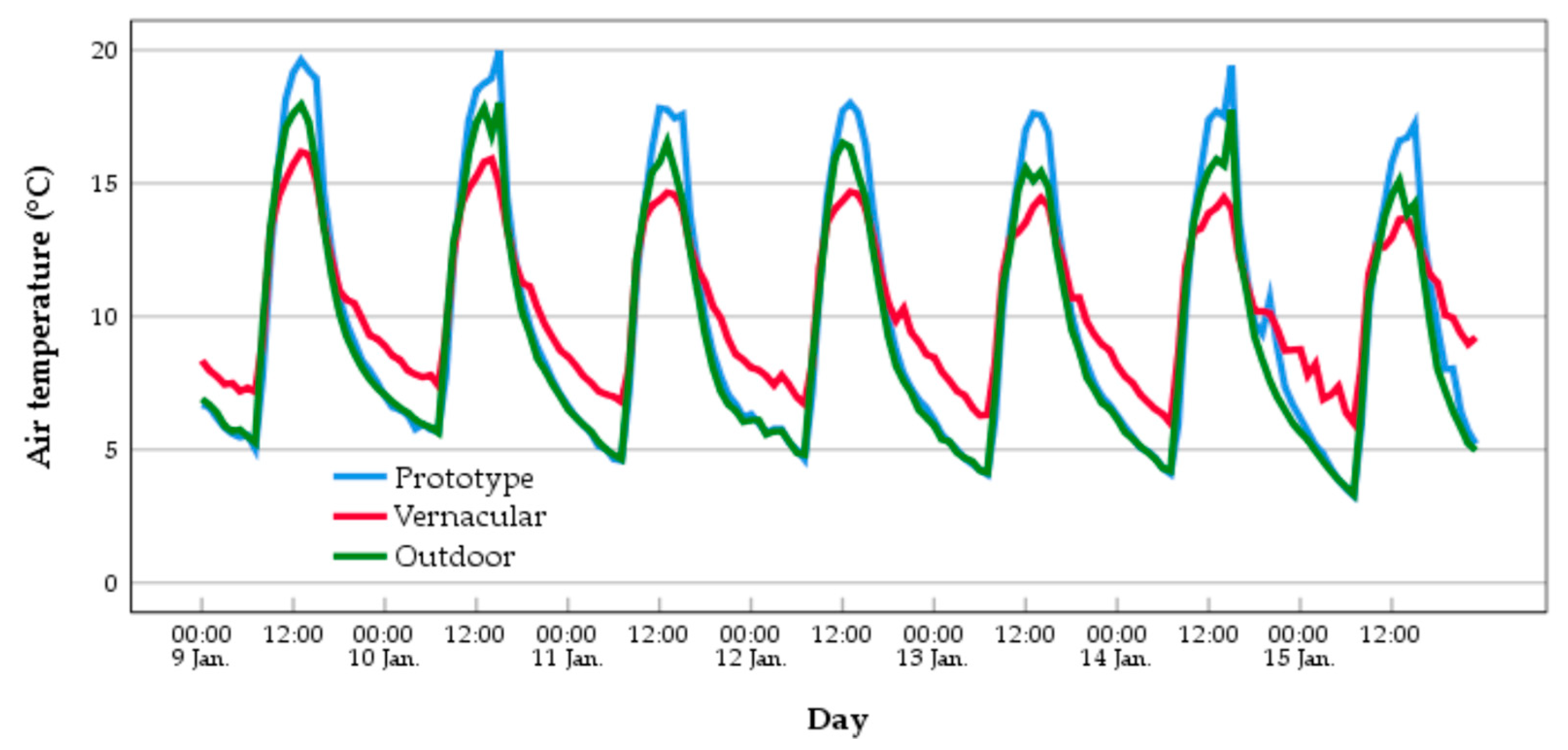
The correlation of thermal comfort with housing satisfaction was found to be 0.632, suggesting thermal comfort as an important factor influencing housing satisfaction. One of the major problems faced by the households is the poor thermal performance of the houses, as indicated by the mean satisfaction score of only 1.87. The investigation of the indoor thermal environment showed that the indoor air temperature of the vernacular house has less fluctuation compared to the post-disaster prototype houses in both morning and nighttime (Figure 4). Also, the air temperature of the prototype house was 2.1°C low than the vernacular house at night, thus causing thermal discomfort to the displaced households. This demonstrates that the climatic conditions were not taken into consideration while designing the houses. In fact, the bedrooms in most of the houses were located towards the north and west side. In addition, the local materials and techniques were not used in the construction of the houses. Although stone was locally available and traditionally used in the houses, the new prototype houses were designed with bricks procured from other regions of Nepal. In a typical house in a temperate climate, the heating was carried out by the centrally located hearth. In the new houses, heating the room with firewood was not permitted by the implementing agencies arguing that the smoke may damage the paint. However, the households have poor economic conditions and thus cannot afford active heating systems.
Figure 4.
Variation of indoor and outdoor air temperature in the prototype and vernacular houses.
3.1.7. Level of Completeness of the House
The result showed a strong positive correlation (r = 0.803) between the level of completeness of the house and housing satisfaction. This suggested the level of completeness as a significant factor influencing the affected households in the post-disaster resettlement. Even after eight years of the Gorkha earthquake, the construction of houses has not been completed, mostly attributed to the low economic status, high construction cost, and the heavy loan. The majority of the respondents reported that they had taken a loan to construct the house in 9125 USD, which was much higher than the government tranche of 2310 USD. Kumar Thami, the president of the Panipokhari Users Committee, opined:
“The grant of 2310 USD was not sufficient for housing construction, so we were forced to take a loan for the construction. In the lack of financial capacity and lack of collateral to take a loan, many households could not complete the construction in time.”
However, the labor cost was saved with the construction of houses using the “Perma system,” in which the households helped one another construct their houses and has been reported as successful in several studies. Since the new construction technique, which was unfamiliar to the locals, were used, and thus households had to hire contractors to build their house. The respondents even complained that if they knew that the construction cost would be high, they would have rather constructed an RCC house than a masonry house. Despite the dissatisfaction with the building material, the households were highly burdened with heavy bank loans, which further pushed them to poverty and also to the gulf countries seeking employment. Due to the lack of financial capacity to complete the houses, the affected households in Panipokhari have not been able to complete their houses, and thus their satisfaction was highly affected.
3.3.8. Provision of a Traditional Hearth
The result showed that the provision of the traditional hearth has a strong positive correlation with housing satisfaction (r = 0.729). The households largely depend on firewood for cooking purposes and space heating, which is locally available from the farmland and forest. Instead of space for a hearth in the design, the floor plans resemble the urban space layout with the provision of a kitchen counter for the use of liquefied petroleum gas (LPG). The LPG is neither easily available nor affordable to the households, and thus the community is in a dilemma in using their new kitchen. Additionally, the implementing agency strictly prohibited the use of firewood in the new kitchen to prevent respiratory diseases and also to maintain the aesthetics of the house. This has forced the households to make a separate outdoor kitchen, either attached to the house or in front of it. However, the plot sizes for many houses were small to accommodate a separate outdoor kitchen. This demonstrates a clear mismatch between the housing design and the actual need and lifestyle of the rural Thami community.
3.3.9. Ritual Spaces
In Nepal, a house is more than a dwelling and has a deeper socio-cultural meaning. Shneiderman & Turin [54] reported that - a central hearth marked by ‘bamba’ was one of the single characteristic features of a typical Thami house having socio-cultural and religious value. More specifically, the hearth, king post, and ‘bampa’ had meanings and practices associated with the cultural beliefs in the times of the birth and death rituals. Kumar Thami emotionally expressed:
“The hearth is very important to conduct our birth and death ritual. We don’t have it in our house. In the absence of it, we have to perform our rituals differently, and we may lose our culture.”
In the absence of these important elements in the housing, the affected households were dissatisfied, as suggested by the low mean satisfaction score of 2.24. The correlation coefficient of 0.775 shows a strong positive relationship with residential satisfaction. One of the respondents even expressed:
“I might someday use the central column for performing the rituals we carried out in our king post and ‘bampa’ that had a cultural and religious significance in our life. For that, I will have to remove some walls to make space for circumambulation around the central column.”
Thus, it is evident from the analysis that interior space planning has not considered the spaces for different birth and death rituals, which has resulted in dissatisfaction among the house users.
3.3.10. Spaces for Social and Cultural Events
The analysis showed a strong positive correlation between the spaces for social and cultural events with housing satisfaction (r = 0.651). The result of the satisfaction survey showed that the households were satisfied with the spaces for social and cultural events in the housing, as indicated by the mean satisfaction score of 2.57. The residents expressed that they were very satisfied with the spaces for social and cultural events. One of the main reasons for the satisfaction was the use of the community center constructed by the implementing agencies after the earthquake for organizing social and cultural events. The households reported that they have already organized more than three wedding events in the hall of the community center. One of the women happily expressed:
“We are happy with the community center…I gave the party of my son’s wedding in the hall, where I invited all my relatives from this village and also neighboring places….. As the guests were not required to be invited to the house, so the rooms were also not messed up by the event.”
In contrast to the findings of other factors, the study found that the households were satisfied with the spaces for social and cultural events in Panipokhari Integrated Settlement.
4. Discussion
The sustainability of resettlement projects depends largely on the satisfaction of displaced households with post-disaster housing. While the implementing agency prioritizes speed, cost-effectiveness, and limited time [22,41], various factors significantly influence the satisfaction levels of affected households. Based on the literature review and pilot study, the empirical study conducted nearly eight years after the 2015 Gorkha earthquake in Panipokhari’s resettlement site revealed that the resettled community was least satisfied with the provision of a kitchen garden, space for the addition/modification of houses, space for a traditional hearth, thermal comfort, house completeness, provision of a cattle shed, and the layout of houses, among other factors. However, satisfaction was higher for permanent houses, quality of construction materials, daylight, natural ventilation, privacy in the new houses, and space for social and cultural events. This indicates that the prototype houses have prioritized structural strength at the expense of meeting the social, eco-nomic, and cultural needs of the community.
The study found that the typical uniform design of the houses significantly influenced residential satisfaction. Similar to the study by Barenstein [41] in India and Baniya [33] in Nepal, the settlement layout and house designs were drastically different from the traditional villages. The houses resembled modern urban layouts with a flat system, disregarding the needs and lifestyle of the households. Consequently, dissatisfaction arose from the standard monotype housing that failed to meet the resettled households’ needs, as highlighted in various scholarly works [14,26,28,32,33,55,56,57,58,59].
Furthermore, in line with multiple studies [4,14,18,33,57,61,62,63], the study identified dissatisfaction among resettled households regarding the layout of permanent houses. Additionally, the study aligns with the findings of [26,33,64], highlighting that the houses in Panipokhari also overlooked the need for space for addition and modification, a crucial factor for housing satisfaction.
Although the houses were designed by trained experts with academic knowledge and experience, they neglected not only the lifestyle and needs of the rural Thami households but also their livelihood and socio-cultural aspects, as well as the local climate. This was evident from the absence of animal sheds and kitchen gardens in the housing design, which are integral to rural livelihoods. The study confirms the findings of previous research [18,41,60,65] that the presence of a kitchen garden is an important factor influencing residential satisfaction. Similarly, as observed in numerous studies [5,26,41,65,66], the affected households in Panipokhari were dissatisfied with the lack of space for an animal shed. This dissatisfaction has even led households in Bosimpa village to return to their original settlements, as explained by Capell & Ahmed [58].
Similarly, consistent with the results observed by several researchers [5,14,26,30,42,65], thermal comfort emerged as a ma-jor factor affecting housing satisfaction. The houses were reported to be very cold due to the selection of materials that were not responsive to the local climate. Additionally, the absence of a fireplace in houses equipped with a kitchen counter for liquefied petroleum gas (LPG) further contributed to the dissatisfaction. Thus, the study highlights the importance of providing a traditional hearth for housing satisfaction, as also identified by Dikmen & Elias-Ozkan [5] in Turkey and Snarr & Brown [67] in Honduras. The lack of provisions for firewood usage also imposed an economic burden on poor households with limited resources. Incomplete houses, due to the households’ inability to complete construction as a result of financial constraints, further exacerbated dissatisfaction among resettled households, aligning with the findings of other studies [3,8,65,67]. Consequently, these houses remain unoccupied and empty, as they were not completed on time, as also pointed out by [7].
The implementing agencies prioritized technical standards while giving little attention to the crucial social and cultural needs [42]. Houses hold significant cultural and symbolic value for Thami clan lineages and their relationship with divine entities and territorial deities [51]. As highlighted by Pasupuleti [68], the introduction of uniform and standardized dwelling units has altered the meanings and practices associated with cultural beliefs. This study rein-forces the findings of several studies [4,28,57,69,70] by demonstrating that cultural appropriateness is a critical factor influencing housing satisfaction. The households also expressed concerns about losing their culture and rituals, aligning with the findings of Spoon et al. [71]. Despite the emphasis on cultural adequacy in the Sustainable Development Goals and Sphere Standard, the new prototype houses inadequately provide spaces for social and cultural rituals. The limited involvement and participation of the community in the decision-making process, as explained by Baniya [33] and Barenstein, contributed to the ignorance of socio-economic and cultural aspects. Considering resettlement as a multi-stakeholder process, it is essential to value the satisfaction and voices of the resettled households.
Rather than solely focusing on technical and physical standards, post-disaster re-settlement should consider social, economic, and cultural aspects. The new houses, de-signed as model integrated settlements, have disregarded crucial structures such as animal sheds, kitchen gardens, and traditional hearths, which are integral to rural daily life. As revealed by Baniya [33], the study clearly demonstrates that the prototype houses with standard designs failed to meet the socio-cultural and economic needs of the poor rural Thami community. For instance, the use of traditional firewood for cooking, the prohibition of firewood in the kitchen, and the limited space for separate outdoor kitchens were clear mismatches between the housing design and the actual needs of the community. The incompatibility between the houses and residents’ needs and lifestyle is a major cause of dissatisfaction, leading households to either modify their houses according to their needs (Figure 2a) or abandon the houses and return to their old village to continue their rural livelihood (Figure 2b). A similar response to dissatisfaction was reported by Carrasco et al. [42] in the Philippines and Pasupuleti [72] in India, where resettled households either modified or returned to the original settlement or began living in both the new and old houses simultaneously to sustain their livelihoods. The dissatisfaction among households has prompted several families to return to the old village, potentially impacting the success and overall sustainability of the resettlement project. Given the substantial investment and re-sources involved in post-disaster resettlement, the project’s sustainability relies not only on the successful reconstruction of damaged houses [25] but also on the occupancy of households in the resettlement projects.
Although, post-disaster resettlement was an opportunity to build back better and improve the socio-economic lives of more than 20,000 vulnerable households, the important factors influencing the residential satisfaction were given very scant attention as evident from the case study of Panipokhari Integrated Settlement. The housing provided by the Government led top-down approach has limitedly considered the security of tenure, affordability, cultural adequacy, thermal comfort etc which are essential indicators of the adequate housing as recognized by the Sustainable Development Goals. The post-disaster resettlement planning developed as Integrated Settlement in Nepal only considered physical aspects and largely ignored the social, economic and environmental sustainability.
5. Conclusions
The increasing trend of disaster-induced displacement has led to the need for post-disaster resettlement studies. However, the urgency to provide permanent housing often overlooks factors affecting the satisfaction of affected households. An empirical study conducted in Panipokhari Integrated Settlement found that despite sincere planning efforts, the resettlement outcome was unsatisfactory. The study identified crucial factors influencing housing satisfaction, such as design based on needs, layout, space for modification, kitchen garden, cattle shed, thermal comfort, house complete-ness, hearth provision, and spaces for rituals and events. Positive correlations were found between these factors and residential satisfaction. Notably, post-disaster houses neglected socio-economic and cultural needs essential for adequate housing. Dissatisfied households made various choices, including modifying or using both old and new houses or abandoning the resettlement sites. The study concludes that socio-economic and cultural aspects were disregarded in post-disaster resettlement policies, affecting displaced households’ satisfaction. It further emphasizes the need for continued research on post-disaster resettlement planning in Nepal, considering socio-economic and cultural factors. Such research is crucial for international and local stakeholders, including policymakers, implementers, and researchers, struggling to achieve successful resettlement outcomes. By addressing these issues, the research contributes to the sustainability of post-disaster resettlement projects.
Author Contributions
Conceptualization, B.S. and S.U.; methodology, B.S. and S.U..; software, B.S.; validation, B.S. and S.U.; formal analysis, B.S.; investigation, B.S. and S.U.; resources, B.S. and S.U.; writing—original draft preparation, B.S.; writing—review and editing, S.U.; visualization, B.S.; supervision, S.U. and J.R.P.; project administration, B.S., S.U., and J.R.P; funding acquisition, B.S. All authors have read and agreed to the published version of the manuscript.
Funding
This research was funded by UNIVERSITY GRANTS COMMISSION, grant number PhD-77/78-Engg-03.
Institutional Review Board Statement
Not applicable.
Informed Consent Statement
Informed consent was obtained from all subjects involved in the study.
Data Availability Statement
The data are not publicly available due to the legal vulnerability of the resettled households.
Acknowledgments
We would like to thank the household survey respondents of the Panipokhari Integrated Settlement for their cooperation during the survey, despite their legal vulnerability and suspicion. Finally, we would like to thank all others for helping us with our fieldwork and data collection.
Conflicts of Interest
The authors declare no conflict of interest.”
| 1 | The geo hazard assessment by NRA categorized land into CAT 1, 2 and 3. CAT 3 refers to land category which were assessed as unsafe for settlement and thus the households required to be relocated to safer areas.. |
References
- IDMC. Grid 2022; Geneva, 2022.
- Gaillard, J. C. Post-Disaster Resettlement. In People’s response to disasters in the Philippines; 2015.
- Sridarran, P.; Keraminiyage, K.; Amaratunga, D. Enablers and barriers of adapting post-disaster resettlements. In Procedia Engineering; 2018; Vol. 212. [CrossRef]
- Manatunge, J. M. A.; Abeysinghe, U. Factors Affecting the Satisfaction of Post-Disaster Resettlers in the Long Term: A Case Study on the Resettlement Sites of Tsunami-Affected Communities in Sri Lanka. Journal of Asian Development 2017, 3(1), 94. [Google Scholar] [CrossRef]
- Dikmen, N.; Elias-Ozkan, S. T. Housing after disaster: A post occupancy evaluation of a reconstruction project. International Journal of Disaster Risk Reduction 2016, 19, 167–178. [Google Scholar] [CrossRef]
- Hettige, S.; Haigh, R.; Amaratunga, D. Community level indicators of long term disaster recovery. Procedia Engineering 2018, 212, 1287–1294. [Google Scholar] [CrossRef]
- Sey, Y.; Tapan, M. Report on Shelter and Temporary Housing Problem after Disaster; 1987.
- Oo, B. L.; Sunindijo, R.; Lestari, F. Users’ Long-Term Satisfaction with Post-Disaster Permanent Housing Programs: A Conceptual Model. International Journal of Innovation, Management and Technology 2018, 9(1), 28–32. [CrossRef]
- Ministry of Home Affairs; Disaster Preparedness Network-Nepal. Nepal Disaster Report 2015; 2015. http://reliefweb.int/sites/reliefweb.int/files/resources/1293600-World-Disasters-Report-2015_en.pdf.
- NRA. Post Disaster Needs Assessment; 2015.
- National Planning Commission. Post Disaster Needs Assessment Vol A: Key Findings; Kathmandu, 2015. 2015. [CrossRef]
- NRA. Geological Survey Report/ Data Base; Kathmandu, 2020.
- Mohit, M. A.; Raja, A. M. M. A. K. Residential satisfaction-Concept, theories and empirical studies. Planning Malaysia 2014, 12(September), 47–66. [Google Scholar] [CrossRef]
- Tas, N.; Cosgun, N.; Tas, M. A qualitative evaluation of the after earthquake permanent housings in Turkey in terms of user satisfaction-Kocaeli, Gundogdu Permanent Housing model. Building and Environment 2007, 42(9), 3418–3431. [Google Scholar] [CrossRef]
- Dias, N. T.; Keraminiyage, K.; DeSilva, K. K. Long-term satisfaction of post disaster resettled communities: The case of post tsunami – Sri Lanka. Disaster Prevention and Management 2016, 25(5), 581–594. [Google Scholar] [CrossRef]
- Silva, J. da. Lessons from Aceh: Key Considerations in Post-Disaster Reconstruction. Practical Action Publishing 2010, No. January, 98. [Google Scholar]
- Tafti, M. T.; Tomlinson, R. Best practice post-disaster housing and livelihood recovery interventions: Winners and losers. International Development Planning Review 2015, 37(2), 165–185. [Google Scholar] [CrossRef]
- Wijegunarathna, E. E.; Wedawatta, G.; Prasanna, L. J.; Ingirige, B. Long-term satisfaction of resettled communities: An assessment of physical performance of post-disaster housing. Procedia Engineering 2018, 212(2017), 1147–1154. [Google Scholar] [CrossRef]
- United Nations. The human right to adequate housing. https://www.ohchr.org/en/special-procedures/sr-housing/human-right-adequate-housing#:~:text=Adequate housing must provide more,supply and availability of housing.
- United Nations Development Programme. What are teh Sustainable Development Goals? https://www.undp.org/sustainable-development-goals#:~:text=The Sustainable Development Goals (SDGs)%2C also known as the,people enjoy peace and prosperity.
- Ophiyandri, T.; Amaratunga, D.; Pathirage, C.; Keraminiyage, K. Critical success factors for community-based post-disaster housing reconstruction projects in the pre-construction stage in Indonesia. International Journal of Disaster Resilience in the Built Environment 2013, 4(2), 236–249. [Google Scholar] [CrossRef]
- Jigyasu, R.; Upadhyay, N. Continuity, adaptation, and change following the 1993 earthquake in Marathwada, India. Rebuilding Asia Following Natural Disasters: Approaches to Reconstruction in the Asia-Pacific Region 2016, 81–107. [CrossRef]
- Sphere Association. The Sphere Handbook: Humanitarian Charter and Minimum Standards in Humanitarian Response; 2018; Vol. 1.
- Miyata, S.; Manatunge, J. Knowledge sharing and other decision factors influencing adoption of aquaculture in Indonesia. International Journal of Water Resources Development 2004, 20(4), 523–536. [Google Scholar] [CrossRef]
- Anilkumar, S.; Banerji, H. An Inquiry into Success Factors for Post-disaster Housing Reconstruction Projects: A Case of Kerala, South India. International Journal of Disaster Risk Science 2021, 12(1), 24–39. [Google Scholar] [CrossRef]
- Kurum Varolgunes, F. Success Factors for Post-Disaster Permanent Housing: Example of Turkish Earthquakes. Turkish Online Journal of Design Art and Communication 2021, 11(1), 115–130. [Google Scholar] [CrossRef] [PubMed]
- Steinberg, F. Housing reconstruction and rehabilitation in Aceh and Nias, Indonesia-Rebuilding lives. Habitat International 2007, 31(1), 150–166. [Google Scholar] [CrossRef]
- Danquah, J.; Attippoe, A. J.; Ankrah, J. Assessment of Residential Satisfaction in the Resettlement Towns of the Keta Basin in Ghana. International Journal Civil Engineering. Construction and Estate Management 2014, 2(3), 26–45. [Google Scholar]
- Day, L. L. Choosing a house: The relationship between dwelling type, perception of privacy, and residential satisfaction. Journal of Planning Education and Research 2000, 19(3), 265–275. [Google Scholar] [CrossRef]
- Ozden, A. T. Evaluation and Comparison of Post-Disaster Housing in Turkey: Lessons From Ikitelli and Senirkent. The Second Scottish Conference for Postgraduate Researchers of the Built and Natural Environment 2005, 561–571. [Google Scholar]
- Perera, T.; Weerasoori, I.; Karunarathne, H. An Evaluation of Success and Failures in Hambantota, Siribopura Resettlement Housing Program : Lessons Learned. Sri Lankan Journal of Real Estate 2011, No. 06, 1–15. [Google Scholar]
- Oliver-Smith, A. Successes and Failures in Post-Disaster Resettlement. Disasters 1991, 15(1), 12–23. [Google Scholar] [CrossRef]
- Baniya, J. Disaster, Deceptions, Dislocations: Reflections from an Integrated Settlement Project in Nepal; 2021; pp 111–132.
- Aysan, Y.; Oliver, P. Housing and Culture After Earthquakes A Guide for Future Policy Making on Housing in Seismic Areas; Oxford Polytechnic, 1987.
- Coburn, A. W.; Leslie, J. D. L.; Tabban, A. Reconstruction and Resettlement 11 Years Later: A Case Study of Bingo1 Province, Eastern Turkey. Earthquake Relief in Less Industrialized Areas 1984, 49–58. [Google Scholar]
- Kronenberger, J. The German Red Cross in the earthquake zone of Turkey: regions of Van and Erzurum. In Earthquake relief in less industrialized areas. International symposium; 1984; pp 29–42.
- He, L. Identifying local needs for post-disaster recovery in Nepal. World Development 2019, 118, 52–62. [Google Scholar] [CrossRef]
- Rieger, K. Multi-hazards, displaced people’s vulnerability and resettlement: Post-earthquake experiences from Rasuwa district in Nepal and their connections to policy loopholes and reconstruction practices. Progress in Disaster Science 2021, 11. [Google Scholar] [CrossRef]
- Spoon, J.; Gerkey, D.; Chhetri, R. B.; Rai, A.; Basnet, U. Navigating multidimensional household recoveries following the 2015 Nepal earthquakes. World Development 2020, 135, 105041. [Google Scholar] [CrossRef]
- Onder, D. E.; Koseoglu, E.; Bilen, O.; Der, V. The effect of user participation in satisfaction: Beyciler after-earthquake houses in Düzce. A|Z ITU Journal of Faculty of Architecture 2010, 7(1), 18–37.
- Barenstein, J. E. D. Continuity and change in housing and settlement patterns in post-earthquake Gujarat, India. International Journal of Disaster Resilience in the Built Environment 2015, 6(2), 140–155. [Google Scholar] [CrossRef]
- Carrasco, S.; Ochiai, C.; Okazaki, K. Residential satisfaction and housing modifications: A study in disaster-induced resettlement sites in Cagayan de Oro, Philippines. International Journal of Disaster Resilience in the Built Environment 2017, 8(2), 175–189. [Google Scholar] [CrossRef]
- Dikmen, N.; Elias-ozkan, S. T. Post-Disaster Housing in Rural Areas of Turkey Based on. Graduate School of Natural and Applied Sciences 2005, No. September.
- Enginoz, E. A Model For Post-Disaster Reconstruction: The Case Study in Dinar-Turkey. International Conference and Student Competition on post-disaster reconstruction 2006, No. January.
- Wagner, W. E. Using IBM SPSS Statistics for Research Methods and Social Science Statistics; SAGE Publications, Inc., 2015.
- Ibem, E. O.; Aduwo, E. B. Assessment of residential satisfaction in public housing in Ogun State, Nigeria. Habitat International 2013, 40, 163–175. [Google Scholar] [CrossRef]
- Huizenga, C.; Zagreus, L.; Arens, E.; Lehrer, D. UC Berkeley Indoor Environmental Quality (IEQ) Title Measuring indoor environmental quality: a web-based occupant satisfaction survey Publication Date Measuring Indoor Environmental Quality: A Web-based Occupant Satisfaction Survey. 2003.
- Pallant, J. SPSS Survival. 2001, p 295.
- DLPIU-Dolakha. Reconstruction Progress Report of Dolakha Distrct Upto April 2022; Dolakha, 2022. 20 April.
- Shneiderman, S.; Turin, M. Revisiting Ethnography, Recognizing a Forgotten People: The Thangmi of Nepal and India. Studies in Nepali History and Society 2006, 11(1), 97–181. [Google Scholar]
- Shneiderman, S. B. Rituals of ethnicity: Migration, mixture, and the making of Thangmi identity across Himalayan borders. Dissertation Abstracts International Section A: Humanities and Social Sciences 2009, 123(10), 2114. 2114.
- Bukvic, A.; Smith, A.; Zhang, A. Evaluating drivers of coastal relocation in Hurricane Sandy affected communities. International Journal of Disaster Risk Reduction 2015, 13, 215–228. [Google Scholar] [CrossRef]
- Manatunge, J.; Takesada, N. Long-term perceptions of project-affected persons: A case study of the Kotmale Dam in Sri Lanka. International Journal of Water Resources Development 2013, 29(1), 87–100. [Google Scholar] [CrossRef]
- Shneiderman, S.; Turin, M. Thangmi, Thami, Thani? Remembering A Forgotten People. Niko Bacinte Smarika 1993, No. January 2004, 82–100. [Google Scholar]
- Boen, T.; Jigyasu, R. Cultural Considerations for Post Disaster Reconstruction Post-Tsunami Challenges. UNDP Conferences 2005 2005, 1–10. [Google Scholar]
- Bouraoui, D.; Lizarralde, G. Centralized decision making, users’ participation and satisfaction in post-disaster reconstruction: The cas of Tunisia. International Journal of Disaster Resilience in the Built Environment 2013, 4(2), 145–167. [Google Scholar] [CrossRef]
- Capell, T.; Ahmed, I. Improving post-disaster housing reconstruction outcomes in the global south: A framework for achieving greater beneficiary satisfaction through effective community consultation. Buildings 2021, 11(4). [CrossRef]
- KamacI-Karahan, E.; Kemeç, S. Residents’ satisfaction in post-disaster permanent housing: Beneficiaries vs. non-beneficiaries. International Journal of Disaster Risk Reduction 2022, 73(August 2021), 102901. 20 August. [CrossRef]
- Li, Y.; Feng, X. Influence of housing resettlement on the subjective well-being of disaster-forced migrants: An empirical study in yancheng city. Sustainability (Switzerland) 2021, 13(15). [CrossRef]
- Peng, Y.; Shen, L.; Tan, C.; Tan, D.; Wang, H. Critical determinant factors (CDFs) for developing concentrated rural settlement in post-disaster reconstruction: A China study. Natural Hazards 2013, 66(2), 355–373. [Google Scholar] [CrossRef]
- Ao, Y.; Zhong, J.; Zhang, Z.; Han, L.; Wang, Y.; Chen, Y.; et al. Determinants of villagers’ satisfaction with post-disaster reconstruction: Evidence from surveys ten years after the Wenchuan earthquake. Frontiers in Environmental Science 2022, 10(September), 1–14. [Google Scholar] [CrossRef]
- Prasanna, J.; Wijegunarathne, E.; Wedawatta, G. Study on key performance indicators to investigate long-term performance of post-disaster housing. 2016, 226–234.
- Setiadi, A.; Andriessen, A.; Anisa, R. Post-occupancy evaluation of Pagerjurang permanent housing after the Merapi volcanic eruption. Journal of Architecture and Urbanism 2020, 44(2), 145–151. [Google Scholar] [CrossRef]
- Sararit, T.; Tamiyo, K.; Maly, E. Resident’s satisfaction to relocated Houses after 2004 Indian Ocean Tsunami, Thailand. Procedia Engineering 2018, 212(2017), 637–642. [Google Scholar] [CrossRef]
- Bang, H. N.; Few, R. Social risks and challenges in post-disaster resettlement: The case of Lake Nyos, Cameroon. Journal of Risk Research 2012, 15(9). [CrossRef]
- Badri, S. A.; Asgary, A.; Eftekhari, A. R.; Levy, J. Post-disaster resettlement, development and change: A case study of the 1990 Manjil earthquake in Iran. Disasters 2006, 30(4), 451–468. [Google Scholar] [CrossRef]
- Snarr, D. N.; Brown, E. L. User Satisfaction With Permanent Post-Disaster Housing: Two Years After Hurricane Fifi in Honduras. Disasters 1980, 4(1), 83–91. [Google Scholar] [CrossRef]
- Pasupuleti, R. S. Designing culturally responsive built environments in post disaster contexts: Tsunami affected fishing settlements in Tamilnadu, India. International Journal of Disaster Risk Reduction 2013, 6, 28–39. [Google Scholar] [CrossRef]
- Hidayat, B.; Egbu, C. POST-DISASTER RECONSTRUCTION PROJECTS. 2011, No. September, 889–898.
- Sina, D.; Chang-Richards, A. Y.; Wilkinson, S.; Potangaroa, R. What does the future hold for relocated communities post-disaster? Factors affecting livelihood resilience. International Journal of Disaster Risk Reduction 2019, 34, 173–183. [Google Scholar] [CrossRef]
- Spoon, J.; Hunter, C. E.; Gerkey, D.; Chhetri, R. B.; Rai, A.; Basnet, U.; et al. Anatomy of disaster recoveries: Tangible and intangible short-term recovery dynamics following the 2015 Nepal earthquakes. International Journal of Disaster Risk Reduction 2020, 51, 101879. [Google Scholar] [CrossRef]
- Pasupuleti, R. S. Understanding the role of culture in the post disaster reconstruction process The Case of Tsunami Reconstruction in Tamilnadu, Southern India, University of Leading the Way Westminster, 2011.
Figure 1.
Factors influencing the Residential satisfaction.
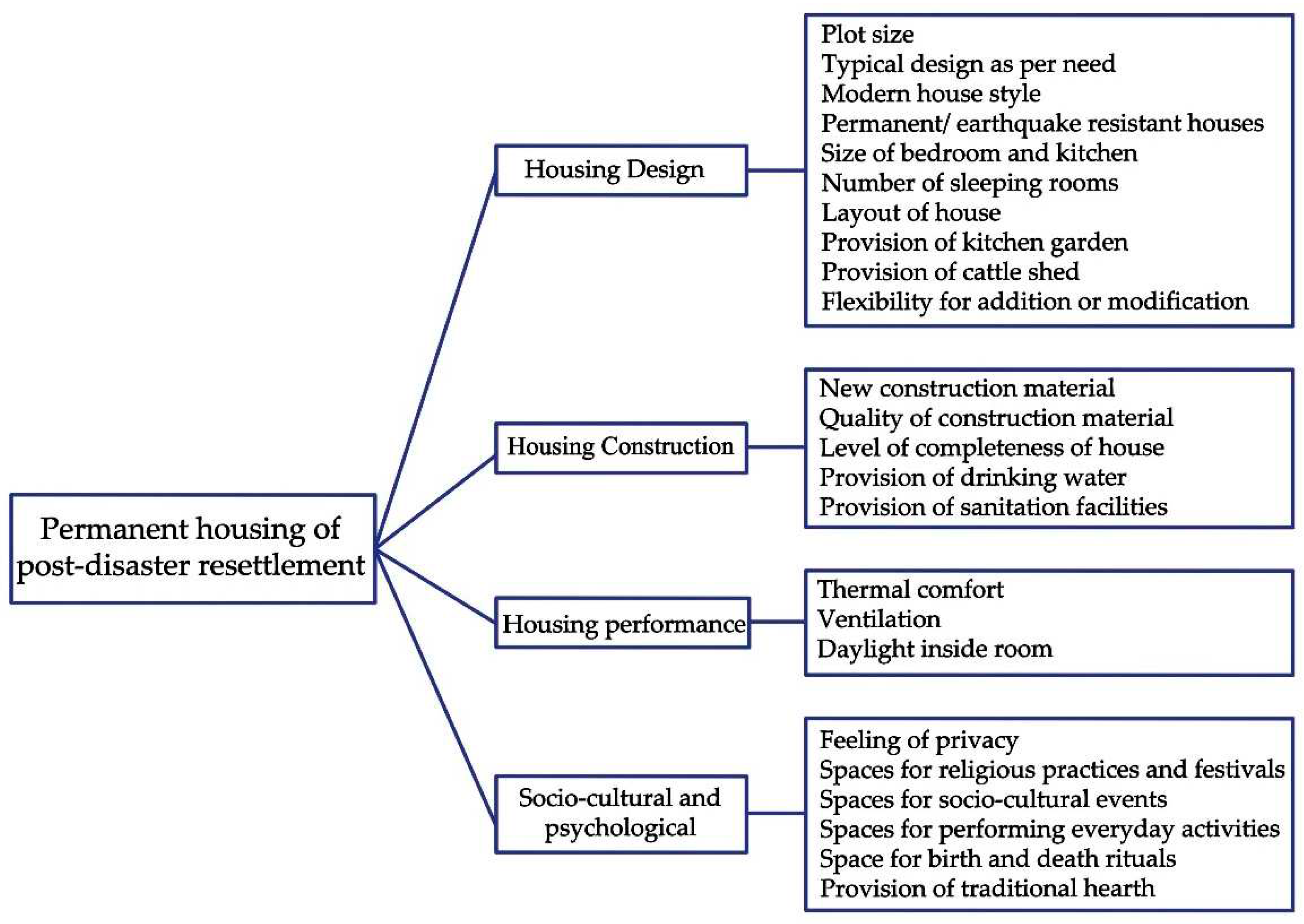
Figure 2.
Master plan of Panipokhari Integrated Settlement: (a) House modification; (b) House abandonment.
Figure 2.
Master plan of Panipokhari Integrated Settlement: (a) House modification; (b) House abandonment.
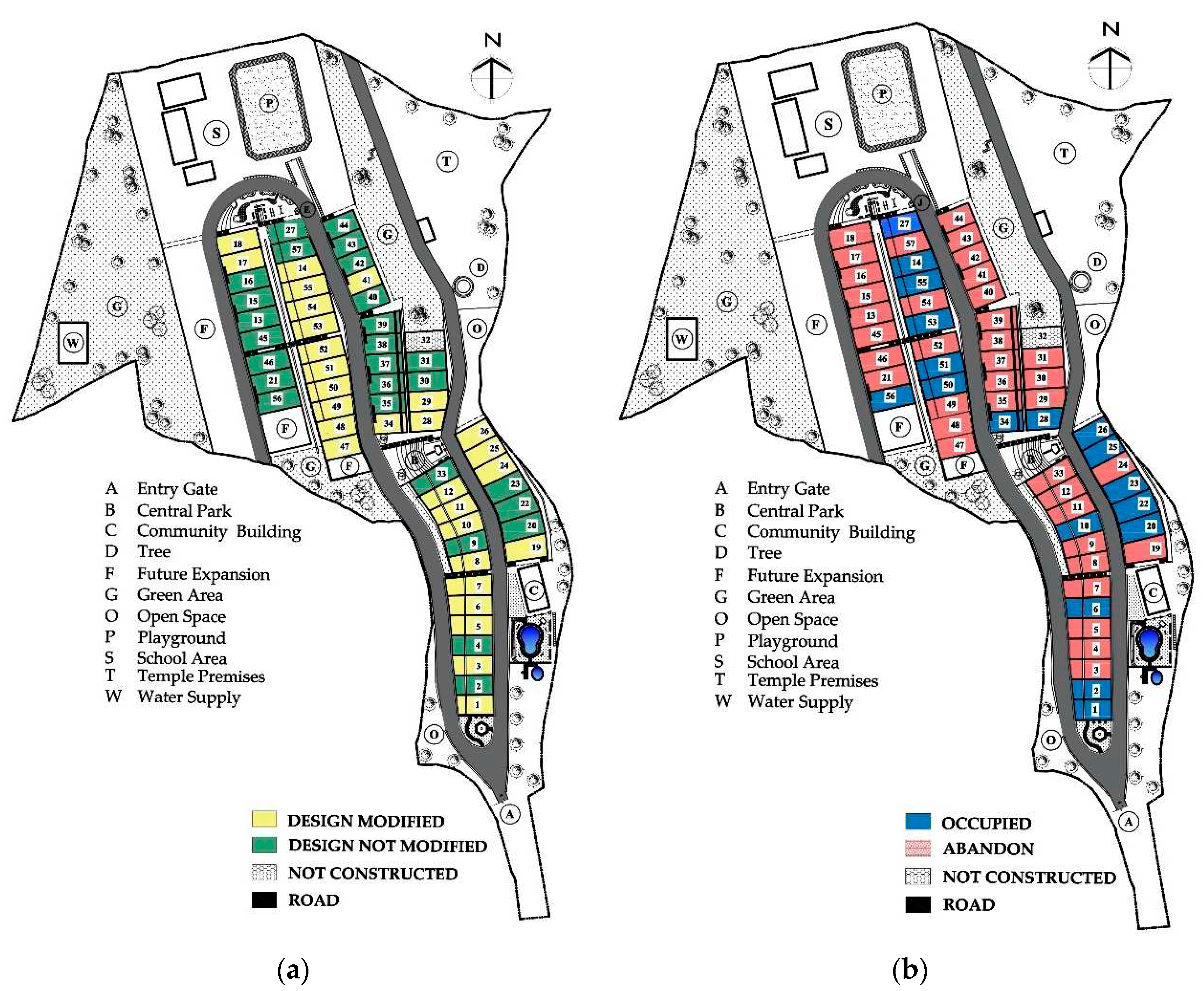
Figure 3.
Floor plans of a typical vernacular house: (a) Ground floor plan; (b) First-floor plan.
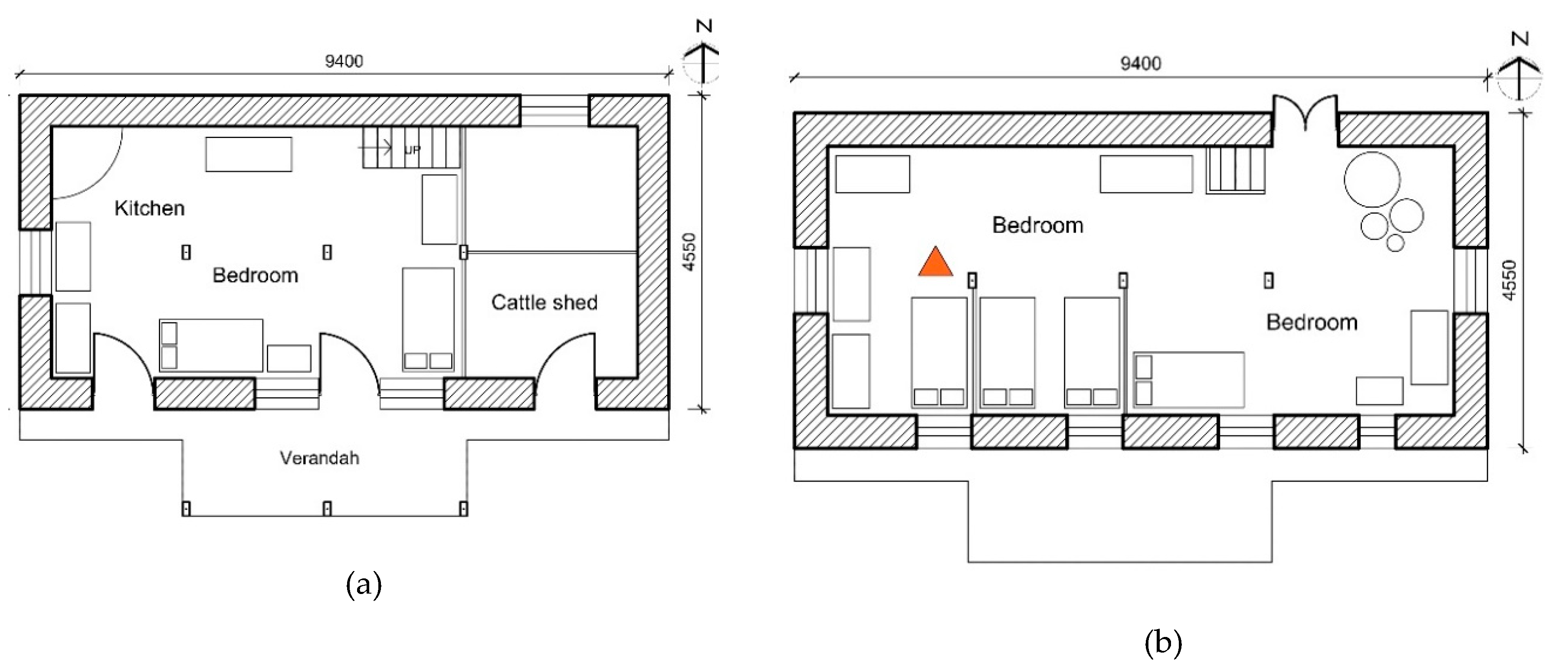
Figure 3.
Floor plans of a post-disaster permanent house: (a) Ground floor plan; (b) First-floor plan.
Figure 3.
Floor plans of a post-disaster permanent house: (a) Ground floor plan; (b) First-floor plan.
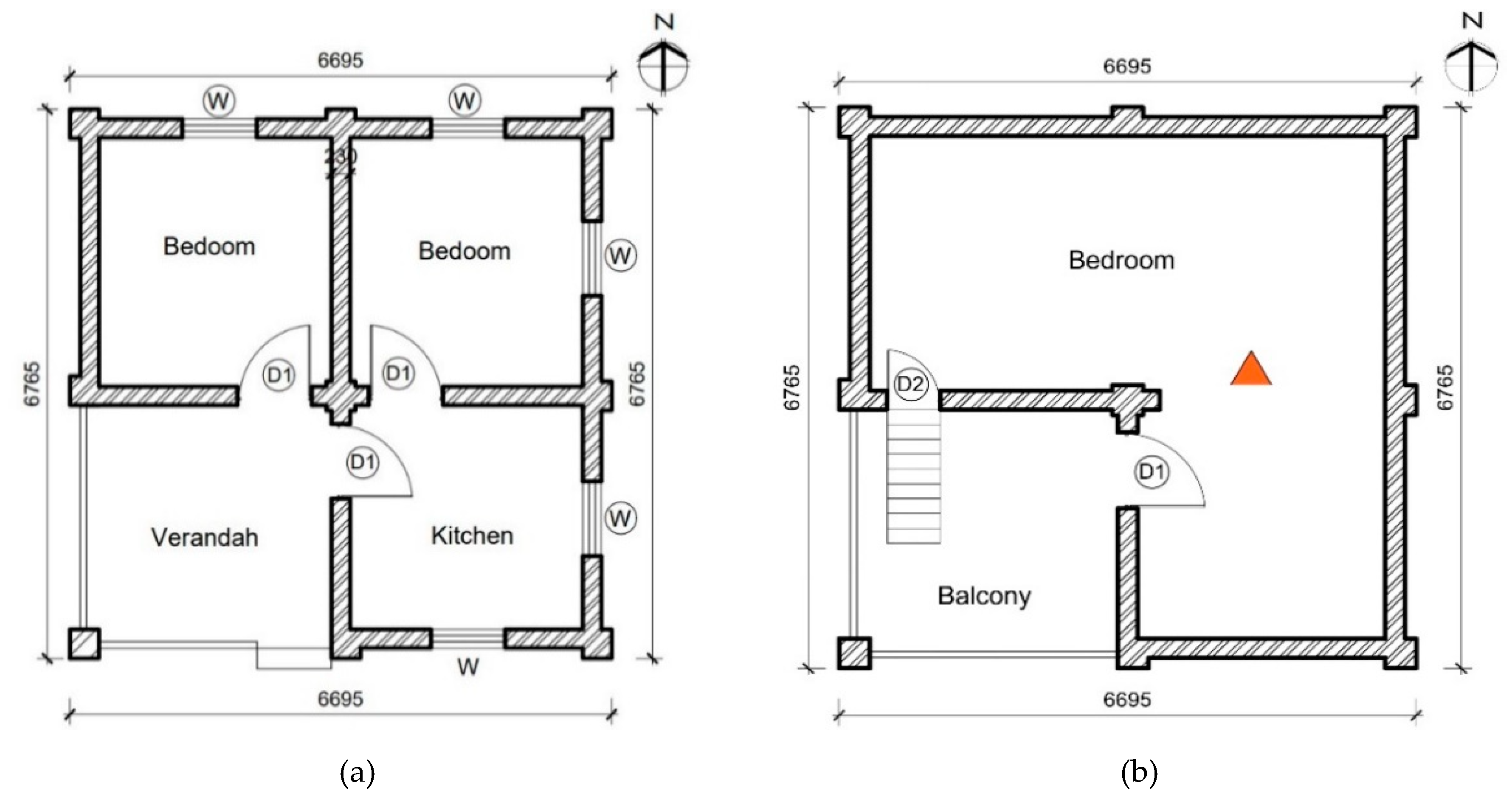

Table 1.
Socio-demographic information.
| Personal Factor | Number | Proportion | |
|---|---|---|---|
| Gender | Male | 33 | 71.7% |
| Female | 13 | 28.3% | |
| Age | 15-29 years | 3 | 6.5% |
| 30-44 years | 15 | 32.6% | |
| 45-59 years | 13 | 28.3% | |
| Above 59 years | 15 | 32.6% | |
| Marital status | Married | 44 | 95.7% |
| Unmarried | 1 | 2.2% | |
| Widowed | 1 | 2.2% | |
| Family size | 4.07 | ||
| Education level | Illiterate | 20 | 43.5% |
| Basic (I-VIII) | 21 | 45.6% | |
| Secondary (IX-XII) | 5 | 10.9% | |
| Occupation | Agriculture/ Livestock | 24 | 52.2% |
| Labor | 6 | 13.0% | |
| Business | 5 | 10.9% | |
| Service | 1 | 2.2% | |
| Masons/ carpenter | 1 | 2.2% | |
| Remittance | 2 | 4.3% | |
| Others | 7 | 15.2% | |
| Household expenditure per month (NPR) | 15000 | ||
| Household income per month (NPR) | 20000 | ||
| Single women | Yes | 6 | 13.0% |
| Person with disability | Yes | 9 | 19.6% |
| Number of school-going children | 44 | 95.7% | |
| Foreign employment | Yes | 6 | 13.0% |
| Cattle | Yes | 31 | 67.4% |
| The original place of settlement | Bosimpa | 30 | 65.2% |
| Buma | 15 | 32.6% | |
| Others | 1 | 2.2% |
Table 2.
Residential Satisfaction of the factors of housing characteristics.
| Factors | Mean | N | RII | Rank |
|---|---|---|---|---|
| Permanent/earthquake-resistant house | 4.30 | 46 | 0.86 | 1 |
| Modern house style | 3.85 | 46 | 0.77 | 2 |
| Quality of construction material | 3.50 | 46 | 0.70 | 3 |
| New construction material | 3.37 | 46 | 0.67 | 4 |
| Provision of sanitation facilities | 3.26 | 46 | 0.65 | 5 |
| Feeling of privacy | 3.22 | 46 | 0.64 | 6 |
| Daylight inside room | 3.20 | 46 | 0.64 | 7 |
| Ventilation | 3.09 | 46 | 0.62 | 8 |
| Spaces for social and cultural events | 2.57 | 46 | 0.51 | 9 |
| Spaces for performing religious practices and festivals | 2.52 | 46 | 0.50 | 10 |
| Spaces for everyday activities | 2.37 | 46 | 0.47 | 11 |
| Number of sleeping rooms | 2.26 | 46 | 0.45 | 13 |
| Spaces for birth and death rituals | 2.24 | 46 | 0.45 | 14 |
| Size of bedroom and kitchen | 2.22 | 46 | 0.44 | 15 |
| Typical design as per need | 2.11 | 46 | 0.42 | 16 |
| Layout of house | 2.09 | 46 | 0.42 | 17 |
| Provision of drinking water | 2.00 | 46 | 0.40 | 18 |
| Provision of cattle shed | 1.96 | 46 | 0.39 | 19 |
| Level of completeness of the house | 1.91 | 46 | 0.38 | 20 |
| Thermal comfort | 1.87 | 46 | 0.37 | 21 |
| Provision of space for a traditional hearth | 1.83 | 46 | 0.37 | 22 |
| Space for addition/ modification of house | 1.78 | 46 | 0.36 | 23 |
| Plot size | 1.76 | 46 | 0.35 | 24 |
| Provision of the kitchen garden | 1.46 | 46 | 0.29 | 25 |
Table 3.
Factors of housing satisfaction.
| Factors | Housing Satisfaction | ||
|---|---|---|---|
| N | Correlation Coefficient | Sig. | |
| Plot size | 46 | .538** | 0.000 |
| Typical design as per need | 46 | .708** | 0.000 |
| Modern house style | 46 | -0.036 | 0.812 |
| Permanent/earthquake-resistant houses | 46 | -0.089 | 0.557 |
| Size of bedroom and kitchen | 46 | .474** | 0.001 |
| Number of sleeping rooms | 46 | .442** | 0.002 |
| Layout of house | 46 | .748** | 0.000 |
| Spaces for everyday activities | 46 | .594** | 0.000 |
| Addition/ modification of house | 46 | .709** | 0.000 |
| Provision of the kitchen garden | 46 | .674** | 0.000 |
| Provision of cattle shed | 46 | .671** | 0.000 |
| New construction material | 46 | 0.280 | 0.060 |
| Quality of construction material | 46 | .323* | 0.029 |
| Level of completeness of the house | 46 | .803** | 0.000 |
| Thermal comfort | 46 | .632** | 0.000 |
| Ventilation | 46 | 0.108 | 0.474 |
| Daylight inside room | 46 | -0.228 | 0.128 |
| Feeling of privacy | 46 | .379** | 0.009 |
| Provision of a traditional hearth | 46 | .729** | 0.000 |
| Spaces for birth and death rituals | 46 | .775** | 0.000 |
| Spaces for performing religious practices and festivals | 46 | .605** | 0.000 |
| Spaces for social and cultural events | 46 | .651** | 0.000 |
| Provision of drinking water | 46 | .434** | 0.003 |
| Provision of sanitation | 46 | 0.208 | 0.166 |
* Correlation is significant at the 0.01 level.
Disclaimer/Publisher’s Note: The statements, opinions and data contained in all publications are solely those of the individual author(s) and contributor(s) and not of MDPI and/or the editor(s). MDPI and/or the editor(s) disclaim responsibility for any injury to people or property resulting from any ideas, methods, instructions or products referred to in the content. |
© 2023 by the authors. Licensee MDPI, Basel, Switzerland. This article is an open access article distributed under the terms and conditions of the Creative Commons Attribution (CC BY) license (http://creativecommons.org/licenses/by/4.0/).
Copyright: This open access article is published under a Creative Commons CC BY 4.0 license, which permit the free download, distribution, and reuse, provided that the author and preprint are cited in any reuse.


