

Submitted:
29 May 2023
Posted:
31 May 2023
You are already at the latest version
Abstract
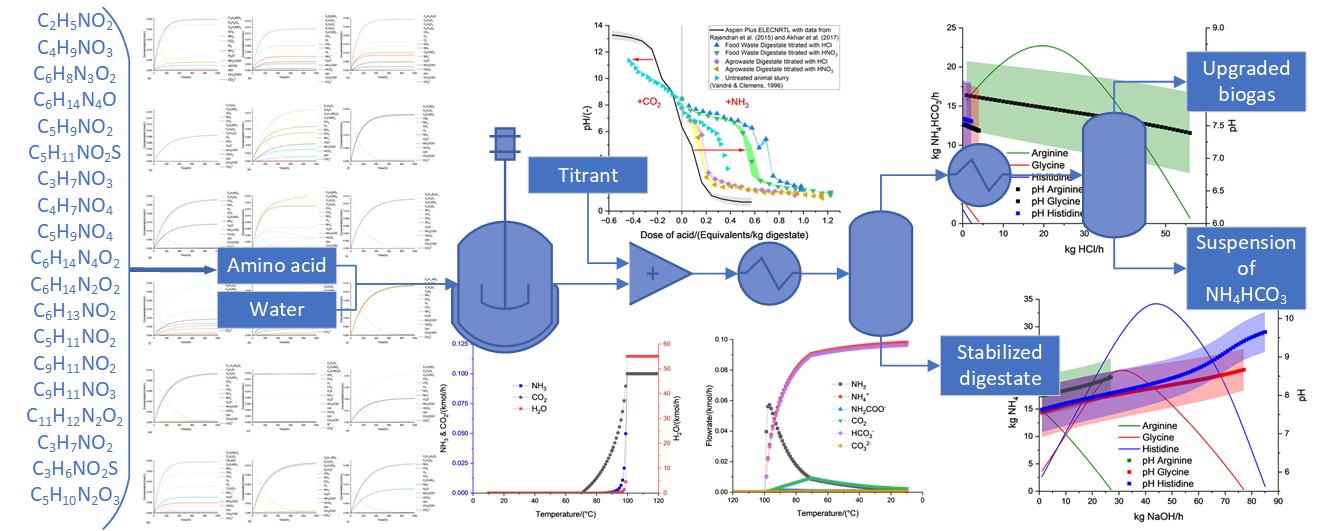
With the current increase in the demand from animal and agricultural products, management of agrowaste has become critical to avoid greenhouse gas emissions. The present article investigates the applicability of ammonium bicarbonate synthesis via flash distillation to valorize and stabilize several types of anaerobic digestate produced from individual fermentations of amino acids. Prior to the development of the model in Aspen Plus v12, the description of the system aqua-ammonia-carbon dioxide provided by the electrolyte non-random two-liquid property method was validated with empirical data available in the literature. The content of CO2 in the digestate was found to be responsible of the OH alkalinity (0.4 equivalents of acid/kg digestate), while the partial and total alkalinities (0.8 eq/kg digestate) were essentially derived from the content of NH3. The most suitable conditions for the flash distillation were 95 ⁰C and 1 bar with the condensation occurring at 25 ⁰C. However, in order to attain the precipitation of NH4HCO3 in the distillate, it was necessary to consider digestates with a moisture content of 50 wt.%, since the minimum levels of inorganic nitrogen and inorganic carbon were not attained otherwise. Even under these conditions, few amino acids (i.e. arginine, glycine, and histidine) were able to provide an anaerobic digestate, upon fermentation, that would be suitable for NH4HCO3 stabilization. Despite alanine digestate and glutamine digestate presented sufficient concentrations of inorganic nitrogen and inorganic carbon, the NH4HCO3-stabilization was not feasible due to the limited volatilization of NH3. The process of stabilization with a capacity of a tonne of digestate per hour was improved by adding hydrochloric acid or sodium hydroxide at rates 44 kg/h, leading to production of 34 kg NH4HCO3/h. The economic viability of this process needs to be investigated considering not only the market value of the isolated inorganic fertilizer but the carbon credits saved, resulting from handling a more stabilized organic manure. Furthermore, given the role of the volatile elements of the biogas as endogenous stripping agents, it is recommended to use a fresh and saturated digestate as feed for the flash distillation.
Keywords:
Circular economy
; greenhouse gas
; carbon capture
; endogenous striping agents
; biogas upgrading
; slow-release fertilizer
1. Introduction
The anaerobic digestion (AD) is one the most promising technologies for reliable production of clean energy [1]. The valorization of waste by means of this fermentative process enhances the circular economy because most of the nutrients required for cultivation of crops end up in the organic residue (i.e. anaerobic digestate), which is mainly applied to land as organic soil amendment and reduces the consumption of industry-based inorganic fertilizers [2]. The mineralization of organic nutrients during the AD implies that these become more readily available to plants but also that they can be easily lost via volatilization and leaching during the management of organic manures. Current regulations in force prescribe closing the slurry stores and the use of low emission spreading techniques at the time of land application, which should be done at specific locations and during the right season [3]. It is also possible to carry out the isolation of the nutrients, for example, by precipitating the struvite (i.e. magnesium ammonium phosphate). Although this open-loop management strategy requires of prior solid-liquid separation of the anaerobic digestate, an external source of magnesium [4], and often additional phosphate to be able to deplete the ammoniacal nitrogen (NH4+-N) initially contained in the aqueous solution [5,6]. The formation of ammonium carbonate in the anaerobic digestate has been traditionally reported as one of the phenomena that increases and regulates the pH during the anaerobic fermentation [7], thereby this could be among the most efficient routes for the isolation of NH4+-N.
The ammonium bicarbonate process (ABC) [8,9] is, thereby, considered a more sustainable alternative for recovering ammonia, compared to other processes involving the use of exogenous scrubbing agents, such as sulfuric acid [10], and the operation of expensive equipment with high energy demand, such as an air blower [11]. Hence, the stabilization of anaerobic digestate by means of NH4HCO3 synthesis has gained attention as a promising profitable technology [11]. Unlike the open-loop processes, the patented ABC [8] offers a synergistic approach in which the biogas with a composition of 65 vol.% methane and 35 vol.% carbon dioxide [12] is efficiently used as scrubbing agent of the stripped gas. In this process, the pH of the liquid fraction of the anaerobic digestate is adjusted to 11.5 via addition of NaOH to reduce 10 times its content of total ammonia (from 800 to 80 mg/L), using the NH3&CO2-depleted biogas (i.e. biomethane grade or 99 vol.% CH4) as stripping gas. Subsequently, the resulting stripped gas is mixed with 58 vol.% of the fresh biogas, originally produced in the anaerobic digestion, to promote the precipitation of NH4HCO3 and produce the biomethane stream. In addition to the NH3&CO2-depleted/stabilized liquid digestate and the solid crystals of NH4HCO3, the purges of 42 vol.% fresh biogas and the 1 vol.% biomethane (these percentages refer to the total volume of the streams generated in the steps of anaerobic digestion and NH4HCO3 precipitation, respectively) could be regarded as valuable outputs of the ABC. The 99 vol.% of the biomethane generated in the step of NH4HCO3 precipitation is recirculated and employed as stripping gas. It is not clear the role of the CH4 in the ABC [8] and whether the use of the biomethane as stripping gas affects (a) the volatilization of NH3 from the alkalinized liquid digestate and (b) the following NH4HCO3 precipitation during the contact of the stripped gas with the fresh biogas.
In the distillation process engineered by Drapanauskaite et al. [11] for the production of NH4HCO3 from the liquid fraction of an anaerobic digestate, the release of CH4 was not accounted in the liquid distillate stream obtained at the top of the column at 3 bar and 49 ⁰C (89.0 vol.% H2O, 5.0 vol.% HCO3-, 5.0 vol.% NH4+, 0.3 vol.% CO2, 0.1 vol.% NH3, 0.3 vol.% NH2COO-, and 0.1 vol.% CO32-). It is noteworthy that the Henry’s volatility constant of methane (71.43·103 Pa·m3·mol−1) is greater than those of ammonia (1.69 Pa·m3·mol−1) and carbon dioxide (3.03·103 Pa·m3·mol−1) in an aqueous solution [13]. This agrees with the fact that less than 1 % of the NH4+-N is volatilized as part of the biogas release during the AD [7]. In the condensed distillate at 3 bar and 49 ⁰C and in the uncondensed purge there were shares of 0.2 vol.% and 0.3 vol.%, respectively, that were not identified and could be attributed to methane [11]. It is important to account the release of any gas during the NH4HCO3 synthesis because this can have a significant effect on the residual biogas potential of the stabilized digestate, for which an upper limit of 250 – 450 mL/g volatile solids is considered [14,15,16].
The present article investigates whether the NH4HCO3 manufacturing technology via flash distillation is suitable for any composition of anaerobic digestate or whether some requirements need to be introduced at the stage of selecting the feedstock for AD. It is proposed to further expand the process simulation model of Rajendran et al. [17] for AD while minimizing the heat requirements for the flash distillation, in agreement with the approach followed by Centorcelli et al. [18,19]. Therefore, this investigation supports and advances the 7th (affordable and clean energy) and 13th (climate action) Sustainable Development Goals of the United Nations. The closed-loop process, where the CO2 is valorized as absorbent of the NH3 for synthesis of NH4HCO3, is relevant for the agroindustry and the chemical fertilizer industry.
2. Materials and methods
Following the methodology of Drapanauskaite et al. [11], prior to the development of the models in Aspen Plus v12, the simulation was validated by comparing the empirical data available in the literature to the values provided by the software for the partial pressures of NH3 and CO2 in an aqueous system at the bubble point. Similarly, the supersaturation of the aqueous system in NH4HCO3, NH4COONH2, NaHCO3, and NH4Cl was also tested to ensure that the formation of solid phases is closely monitored in the flash distillation process. A model digestate was elaborated (Table S1) with the description of Rajendran et al. [17] and Akhiar et al. [20] to verify the simulation of adding acids or bases to shift the chemical equilibria, following the titration methodology of Moure Abelenda et al. [21]. Once confirmed that the system CO2-NH3-H2O was modelled correctly, the minimum conditions for the production of NH4HCO3 were investigated with the calculation block of the flash tank and using the Electrolyte Non-Random Two-Liquid (ELECNRTL) property method. The ELECNRT method is defined by Aspen Plus as versatile and capable of handling both very low and high concentrations of solutes in aqueous systems and other solvents. The first step was to determine the optimum temperatures for flash separation and condensation, to handle a tonne of digestate per hour with the typical composition of 2 g/L of NH3 and 3 g/L of CO2 [20]. This processing capacity was selected based on the subsidies available for covering 40 % of the total cost of the equipment dealing with slurry separation [22], hence a wider adoption by the stakeholders of the agroindustry can be expected. The synthesis of NH4HCO3 was subsequently confirmed by a parametric study and the minimum feasible conditions (i.e. concentration of NH3 and CO2 and temperature of the flash distillation) were readjusted. In order to select the most suitable types of anaerobic digestates for the manufacturing of NH4HCO3, the minimum concentration of NH3 and CO2 were matched to streams coming out of the anaerobic digestions of amino acids. These amino acids were set as the lower limit for the composition of the feedstock employed for the anaerobic digestion, as the presence of any other type of molecule would result in a diluted stream with lower concentrations of inorganic nitrogen and carbon, which constrains the production of NH4HCO3 by the flash distillation process. The stoichiometry and the kinetics for amino acid anaerobic fermentation were mostly taken from the previous investigation of Rajendran et al. [17], except for the fermentation of glutamine (Equation (1)) which was proposed in a similar fashion to the degradation of the other amino acids. The production of oxygen in some of these reactions implies that are only spontaneous under strongly reducing conditions and they would be very limited under aerobic conditions (Le Chatelier's principle). It is important to mention that the type of model that was used for the AD was unstructured and unsegregated, which implies that it did not involve the metabolism of the microorganisms nor differentiate the species that degrade the biomass [23].
As in the simulation of Rajendran et al. [17], thermophilic conditions (55 ⁰C) were considered to simulate the AD of amino acids. The hydrolysis of all amino acids followed the first order reaction, with the kinetic constant (s−1) described in Equation (23) as function of the temperature (K):
The subsequent methanogenic stage [24] was also included as part of the anaerobic fermentation of all amino acids by considering the stoichiometry of Equations (24)-(25) and the first order kinetic constant (s−1) following equation (26) with the temperature in (K) [17]. Equation (25) was only considered if there was production of hydrogen in the previous acetogenic stage of degradation of amino acids. The modelling of the fermentation was confirmed by monitoring a constant value for Henry’s parameter of each volatile compound.
Finally, a comprehensive model was developed to confirm the synthesis of NH4HCO3 with particular types of feedstock for AD. The model included the stages of amino acid fermentation and extraction of NH4HCO3 for stabilization of the resulting anaerobic digestate (Figure 1). The titrations of amino acid digestates were investigated by adding NaOH or HCl before the flash distillation, with the purpose of tuning the ratio of NH4+ to HCO3- in the distillate. A discussion is offered on which other parameters would need to be considered, besides the molar ratio inorganic nitrogen (NH4++NH3+NH2COO-) to inorganic carbon (CO2+HCO3-+CO32-+NH2COO-) of the anaerobic digestate, to facilitate the stabilization of this organic material by means of isolating the NH4HCO3.
3. Results
3.1. Preliminary validation of the Aspen Plus v12 ELECNRTL methodology
Figure 2a shows that the results of the simulation follows the trends of the experimental data of Goppert and Maurer (1988), which were reported by Darde [25] in Figure 5-12 and Figure 5-13. The greatest volatility of the CO2 corresponds to the greater partial pressure (at least 2 orders of magnitude) greater than that exerted by the NH3 for any of the compositions of the anaerobic digestate investigated in Figure 2a at the bubble point. The chemistry of this blend also plays a crucial role in determining the volatility of these compounds as partial pressure of the CO2 started to increase at a greater rate when the moles of this compound in the anaerobic digestate were greater than the moles of NH3 (Figure 2a), which was set to 0.6 mol/kg H2O for the whole test to comply with the experimental data available in Figure 5-12 and Figure 5-13 of Darde [25]. Typical concentrations of CO2 and NH3 in the anaerobic digestate are around 0.12 mol NH3/kg H2O and 0.07 mol CO2/kg H2O [20], which are milder concentrations than those tested by Darde et al. [26] for the development of a carbon capture process. However, given the wide scope of the ELECNRTL property method, the validation could be done at the lower end of the concentration investigated by Darde et al. [26]. Figure 2b shows the calibration carried out with a concentration of 0.13 mol NH3/kg H2O with the experimental data of Pexton & Badger (1938), which is reported in Figure 2 and Figure 3 of Darde et al. [26]. Figure 2c validates the precipitation of the NH4HCO3, which is less soluble than the NH4COONH2 and it has similar solubility to NH4Cl and higher solubility than NaHCO3. Contrary to the explanation of Möller & Müller [7] on the formation of ammonium carbonate in the anaerobic digestate, Aspen Plus v12 ELECNRTL does not consider the formation of this compound. Modelling the solubilities of NH4Cl and NaHCO3 were considered because the HCl and NaOH were tested as titrants of the anaerobic digestate, to assist the flash distillation, tune the ratio inorganic nitrogen to inorganic carbon in the distillate, and promote the precipitation of NH4HCO3. Therefore, NH4Cl and NaHCO3 might precipitate in the residual stabilized digestate and they are not expected in the distillate despite having similar or lower solubility to NH4HCO3. The big difference in the solubility of NH4HCO3 modelled above 60 ⁰C with regard to the experimental data available in the literature [27,28] is because this compound is not very stable and easily undergoes decomposition [29]. Figure 2d shows the modelling of the titration of the manure digestate resulting from the process of Rajendran et al. [17] and considering some of the alkaline elements identified in the comprehensive characterization of various anaerobic digestates, performed by Akhiar et al. [20]: NaHCO3, CaCl2, NaCl, and KHCO3 (Table S1). The validation of the simulation of the effect of HCl and NaOH on the proposed anaerobic digestate was done by comparing to experimental data of titrations available in the literature. Particularly, the study of Vandré & Clemens [30] handling raw animal slurry and the previous work of Moure Abelenda et al. [21] with agrowaste digestate and food waste digestate. The results showed that the amount of CO2 and carbonates in the anaerobic digestate was responsible of the OH alkalinity at pH > 10. The content of ammonia was found to be the main responsible of the partial (P) alkalinity and the total (M) alkalinity. This means that the volatile fatty acids (i.e. acetic acid and propionic acid) and other components (e.g. hydrogen sulfide; Table S1) previously reported with a role in regulating the pH of the anaerobic digestate [31], did not have a significant buffer effect in the present model. Simply tuning the ratio CO2 to NH3 in the digestate will affect the pH as can be seen in Figure S1, which shows the how pH depends on the composition of the anaerobic digestates and the remaining stabilized digestates (Figure 1) after the flash separations performed for Figure 2b.
3.2. Optimization of the conditions of the flash distillation to produce NH4HCO3
For the initial stage of development of the flash distillation process for stabilization of anaerobic digestate and manufacturing of NH4HCO3, the target processing capacity was set at 1 tonne per hour (i.e. proposed organic slurry with a composition of 55 kmol H2O/hour, 0.1 kmol NH3/h, and 0.1 kmol CO2/h). The optimum temperatures for evaporation and condensation were investigated with this simplified digestate. Figure 3a shows the volatilization of NH3, CO2, and H2O as function of the temperature. In order to appreciate significant release of CO2 from the anaerobic digestate, the temperature of the flash tank should be greater than 75 ⁰C. There is not a big difference (i.e. around 0.2 ⁰C) between the minimum temperature to obtain the maximum volatilization of NH3 and that of H2O (Figure 3a). However, is this small difference that needs to be taken into account in the next stages of the design of the process to maximize the overall heat integration and profitability of the flash distillation process (Figure S2). Figure 3b represents the concentration of the different species in the distillate as function of the condensation temperature. The condensation at a temperature below 70 ⁰C maximizes the concentration of NH4+ and HCO3- (Figure 2b), which is necessary for the precipitation of NH4HCO3 when supersaturation is attained in the aqueous solution. In order to precipitate NH4HCO3 in the distillate cooled at 1 bar and 25 ⁰C, the minimum temperature of the flash tank should be between 85 and 95 ⁰C and the composition of the anaerobic digestate was found to be around 10 g NH3/L and 13 g CO2/L. This corresponds to a stream of anaerobic digestate fed to the flash distillation process at a rate of 55 kmol H2O/h, 0.6 kmol NH3/h, and 0.3 kmol CO2/h. Under these conditions, the maximum production of NH4HCO3, at a rate of 35.4 mol/h or 2.8 kg/h, was found when the temperature of the flash tank was 95 ⁰C (Figure S2).
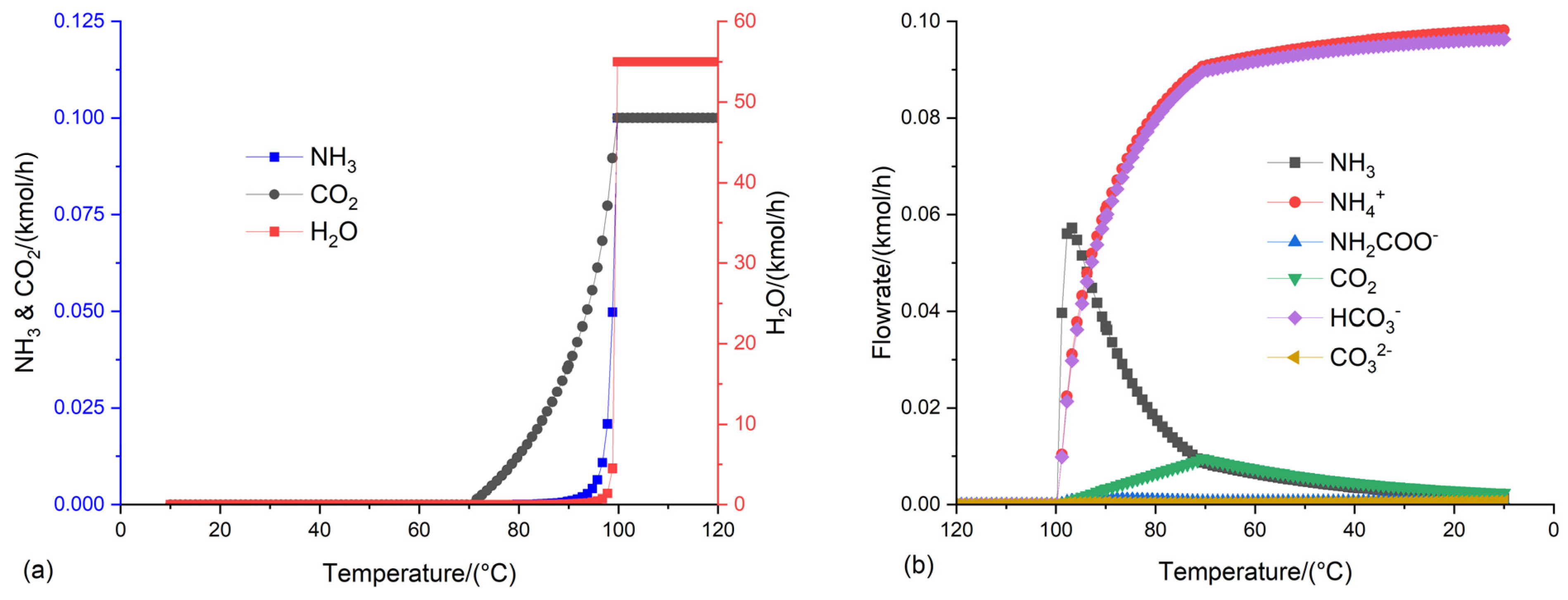
Figure 3.
Optimization of the steps of evaporation and condensation that comprise the flash distillation process for stabilization of anaerobic digestate and isolation of NH4HCO3: (a) determination of the optimum flash-heating temperature to achieve a vapor stream with the greatest concentration of CO2 and NH3. (b) determination of the optimum condensation temperature to attain the maximum concentration of NH4+ and HCO3- in the distillate.
Figure 3.
Optimization of the steps of evaporation and condensation that comprise the flash distillation process for stabilization of anaerobic digestate and isolation of NH4HCO3: (a) determination of the optimum flash-heating temperature to achieve a vapor stream with the greatest concentration of CO2 and NH3. (b) determination of the optimum condensation temperature to attain the maximum concentration of NH4+ and HCO3- in the distillate.
3.3. Anaerobic fermentation of amino acids
As this minimum composition of the digestate to attain the stabilization via manufacturing of NH4HCO3 is not in agreement with the typical composition of anaerobic digestate [20], the next step in defining the specifications of the flash process would be to find a source of anaerobic digestate that provides a concentration of 10 g NH3/L and 13 g CO2/L. Since amino acids are ultimately responsible to the content of NH4+-N in the anaerobic digestate, the composition of the feedstock of AD was investigated by starting with these organic molecules. The concentration profile of all chemical species was elucidated for the fermentation of 18 amino acids (Figure S3), considering the stoichiometry and kinetics defined by Rajendran et al. [17], which are shown in Equation (1) to Equation (26). In all cases, the feed of the anaerobic digester was considered to have 90 wt.% moisture [33] and the remaining 10 wt.% of the feedstock corresponded to the mass of amino acids. The discontinuous fermenters were operated under thermophilic conditions (i.e. 55 ⁰C and 1 bar) for 1000 hours (i.e. 42 days) in order to be able to see the constant profile of all chemical species, with the exception of glutamic acid that required a longer residence time (Figure S3h). Most amino acids required at least 500 hours in the bioreactor, with the exception of cysteine (Figure S3n) that was rapidly converted in less than 100 hours. The concentrations of inorganic nitrogen and inorganic carbon that were found in the anaerobic digestates of amino acids (Figure 4) are similar to those reported by Akhiar et al. [20].
3.4. Suitable conditions for NH4HCO3-stabilization of anaerobic digestate
As it was expected by the molecular formulas and stoichiometries of the amino acids’ fermentations, arginine provided the greatest amount of mineralized nitrogen (Figure 4), but this corresponded to only 0.6 g/L. The arginine digestate was also considered for the study of Drapanauskaite et al. [11]. This means that it would be necessary to consider at least a feedstock for AD with 3.5 times less water, in relation to arginine for the development of the process. In this way, the overall process of fermentation and stabilization via synthesis of NH4HCO3 (Figure 1) was found to be only feasible for arginine (C6H14N4O), glycine (C2H5NO2), and histidine (C6H9N3O2), when the feedstocks of these amino acids were prepared with a moisture content lower than 90 wt.%. For example, NH4HCO3 production rates were 15.16, 3.00, and 1.82 kg/h when processing 1 tonne/h of digestates resulting from the individual AD of arginine, glycine, and histidine, with 50 wt.% moisture. The results of the titrations showed that the extent of stabilization of the anaerobic digestates coming from these amino acids can be greatly improved via acidification (in the case of arginine digestate; Figure 5a) and alkalization (for glycine and histidine; Figure 5b). The rate of addition of HCl was not enough to deplete the partial and total alkalinities of arginine, glycine, and histidine digestates (Figure 5a), as the pH never dropped below a level of 7 (Figure 2d). Similarly, the addition of NaOH was not enough to overcome the OH alkalinity (Figure 2d), except for the alkalization of histidine digestate, which reached a pH above 9.5 (Figure 5b)The greatest NH4HCO3 rates of extraction were 22.71 kg/h from arginine digestate (50 wt.% moisture) with 20 kg HCl/h (Figure 5a), 22.08 kg/h from glycine digestate (50 wt.% moisture) with 31 kg NaOH/h, and 34.18 kg/h from histidine digestate (50 wt.% moisture) with 44 kg NaOH/h (Figure 5b). It should be noted the detrimental effect that acidification of glycine digestate and histidine digestate have on the production rate of NH4HCO3 (Figure 5a). Similarly, any addition of NaOH to the arginine digestate reduces the amount of NH4HCO3 that can be recovered. This is important to be considered when elaborating a more complex digestate (i.e. coming from the blend of several amino acids). The maximum tolerances observed for the anaerobic digestates with 50 wt.% moisture were: 27 kg NaOH/h applied to arginine digestate yielded 327.96 g NH4HCO3/h, 4 kg HCl/h applied to the glycine digestate yielded 245.54 g NH4HCO3/h, and 2 kg HCl/h applied to histidine digestate yielded 146.34 g NH4HCO3/h. However, these trends changed when anaerobic digestate with greater moisture content were considered for the NH4HCO3-stabilization. The highest moisture content of amino acid digestates that was suitable for production of NH4HCO3 was dependent on the dose of acid and base. The NaOH was more effective titrant than the HCl in the case of arginine digestate (>50 wt.% moisture) and the HCl was more effective titrant than NaOH for cysteine and histidine digestates (>50 wt.% moisture). The models developed in Aspen Plus v12 ELECNRTL show the feasibility of: (a) extraction of 142.30 g NH4HCO3/h from arginine digestate (62 wt.% moisture) by adding a dose of 1 kg NaOH/h, (b) extraction of 23.16 g NH4HCO3/h from arginine digestate (65 wt.% moisture) by adding a dose of 14 kg HCl/h, (c) extraction of 21.94 g NH4HCO3/h from glycine digestate (82 wt.% moisture) by adding a dose of 26 kg NaOH/h, (d) extraction of 469.01 g NH4HCO3/h from glycine digestate (53 wt.% moisture) by adding a dose of 1 kg HCl/h, (e) extraction of 72.70 g NH4HCO3/h from histidine digestate (81 wt.% moisture) by adding a dose of 34 kg NaOH/h, and (f) extraction of 109.21 g NH4HCO3/h from histidine digestate (51 wt.% moisture) by adding a dose of 1 kg HCl/h.
4. Discussion
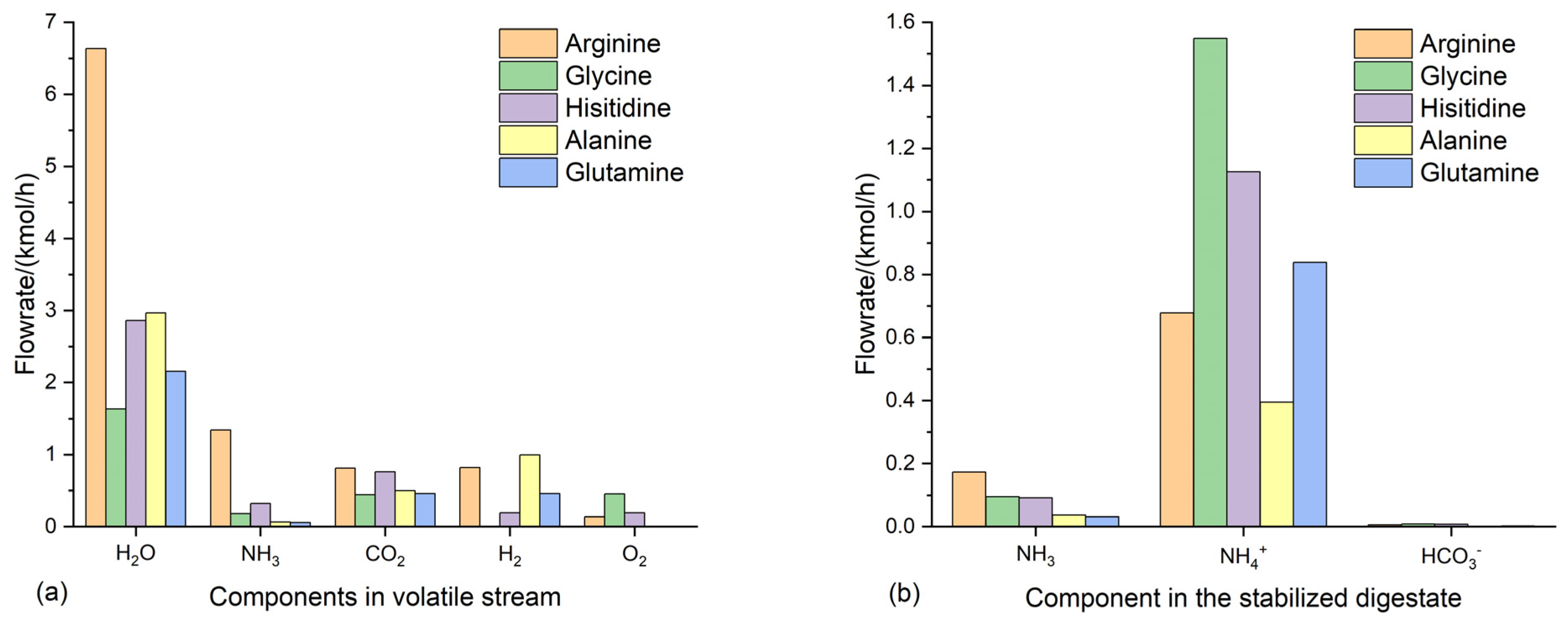
The present study questions the reliability of the measurements of nitrogen in the anaerobic digestate [20,34,35], since stoichiometric calculations show that the nitrogen content is expected to be lower than 0.63 g/L when moisture is 90 wt.% (Figure S3). Modeling of AD resulted in almost the complete consumption of amino acids by the end of the 42 days of residence time (Figure S3), and this could be regarded as a very favorable scenario for the production of white ammonia [36]. However, the content of organic nitrogen in anaerobic digestate is never less than 30 % of the total nitrogen [20]. Still considering all the conversion of organic nitrogen to inorganic forms, the amino acid digestate with 90 wt.% moisture was found not to be enough for the stabilization via synthesis of NH4HCO3. It was necessary to reduce the moisture content of the feedstock of AD to 50 wt.% to enable the synthesis of NH4HCO3 from arginine digestate, glycine digestate, and histidine digestate. The fermentation of alanine (C3H7NO2; Figure S3o) and that of glutamine (C5H10N2O3; Figure S3r) also provided anaerobic digestates (50 wt.% moisture) with sufficient concentration of inorganic nitrogen and inorganic carbon (Figure 4) but the manufacturing of NH4HCO3 was not possible for these cases. The threshold values 0.02 mol N/L and 0.005 mol C/L, which were stablished based on the profile of glycine (Figure 4), explain why the NH4HCO3 valorization was not attained with the proline (C5H9NO2) and the lysine (C6H14N2O2), despite their anaerobic digestates had the greatest inorganic nitrogen to inorganic carbon ratio. A difference of the alanine digestate and glutamine digestate from the arginine digestate, glycine digestate, and histidine digestate is the presence of oxygen among the volatile compounds (Figure 6). Looking at the volatility of these gases, the use of the components of the residual biogas as stripping agent is appropriate because the volatility of the H2 (129.87∙103 Pa·m3·mol−1) and O2 (76.92∙103 Pa·m3·mol−1) is greater than that of NH3 (1.69 Pa·m3·mol−1) and CO2 (3.03·103 Pa·m3·mol−1). The effect of these endogenous stripping agents could be the reason for which the manufacturing of NH4HCO3 was possible with arginine, glycine, and histidine digestates, even when these had lower concentrations than 0.5 mol NH3/L and 0.3 mol CO2/L (Fig S2). The most intuitive reason for the lack of formation of NH4HCO3 in the distillate of the alanine and glutamine digestates (50 wt.% moisture) could be the low flowrate of NH3 in the stream of volatiles leaving the top of the flash tank at 95 ⁰C (0.06 kmol NH3/h; Figure 6a). From a broader perspective, there are resemblances among the H2O and NH3 trends of the streams of volatile elements leaving the top of the flash tank during the processing of the 5 untreated amino acid digestates with 50 % moisture (Figure 6a). Together with the pH of the digestate, this could be an explanation for why the volatilization of NH3 was the greatest in the arginine digestate (Figure 6a) and more NH4+ leaves the bottoms of the flash tank when processing glycine, histidine, and glutamine digestates (Figure 6b). The pH that were found in the stabilized digestates (50 wt.% moisture) leaving the bottom of the flash tank (Figure 1) were: 7.98±0.52 (arginine); 7.53±0.65 (glycine); 7.61±0.59 (histidine); 7.12±0.23 (alanine); and 7.14±1.42 (glutamine).
According to Ukwuani & Tao [37], at the high pH employed for the NH3 stripping, H2S and VFAs are largely dissociated in the aqueous phase and render little volatilization. This could explain the fact that Ukwuani & Tao [37] did not found the acetic acid in the sulfuric acid solution, upon absorption of the stripped ammonia under vacuum pressure at different boiling point temperatures. However, other volatile organic compounds (VOCs) can end up in the distillate stream depending on the operating conditions. For example, working at low pressures (i.e. under vacuum conditions) contributes more than operating at high temperatures to increase the emissions of VOCs [37]. Ukwuani & Tao [37] reported cyclohexene, 4-methylphenol, 4-ethylphenol, trichloromethane and (p-hydroxyphenyl)-phosphoric acid as the most common VOCs in the acid NH3 absorbent solution. The analysis of volatility that Ukwuani & Tao [37] carried out was based, primarily, on the concentration of these compounds in the absorbent solution at the different boiling points of the anaerobic digestate (ranging from 50 to 100 ºC) under vacuum conditions and, secondly, on the vapor pressure of the compound at 25 ºC. Only for cyclohexene and chloroform the Henry’s volatility constants are greater than that of ammonia. It is important to highlight that Henry’s volatility constants are often reported as the ratio of vapor pressure and aqueous solubility [13]. Without considering the much greater solubility of NH3 in the aqueous solution, since the vapor pressure of the of NH3 (1002 kPa at 25 ºC) is much greater than that of cyclohexane and chloroform (12 and 26 kPa, respectively), the VOC mass transfer is much slower. The cyclohexene (3.45·103 Pa·m3·mol−1) has a volatility even greater than that of carbon dioxide but lower than that of methane. Ukwuani & Tao [37] explained the presence of (p-hydroxyphenyl)-phosphoric acid in the absorbent solution by the excessive foam formation in the anaerobic digestate at a pH 9, in a way that the foam reached the sulfuric acid solution. This was the reason for which Drapanauskaite et al. [11] used defoaming agents based on silicon for the operation of the distillation and stripping processes. Hence in addition to the titrant, the need of a antifoaming agent needs to be assessed experimentally [33,38,39,40,41]. Alternatively, the use of exogenous stripping agents, such as the nitrogen (156.25∙103 Pa·m3·mol−1) of air, which has even greater volatility than oxygen, is interesting but makes more difficult the subsequent upgrading of the biogas [42], as this gaseous stream will be diluted. Ideally, the synthesis of NH4HCO3 will be coupled with the biogas upgrading [43] but the purity of the crystals according to the specifications of the chemical fertilizers needs to be confirmed [37].
5. Conclusions
The present study confirms the suitability of the conditions of the flash distillation (95 ⁰C at 1 bar) for manufacturing NH4HCO3 from anaerobic digestates coming from the fermentation of arginine, glycine, and histidine. The use of HCl and NaOH was found necessary to attain the maximum stabilization of the anaerobic digestates, although the rates of application of these titrants need to be further assessed from an economic point of view as well. This investigation elucidated an important role carried out by the most volatile compounds of biogas in the process of stabilization of anaerobic digestate. Thereby, it is recommended the carry out the NH4HCO3 synthesis with anaerobic digestates saturated in biogas to maximize the endogenous stripping effect during the flash distillation. This process needs to be done at the beginning of the storage of anerobic digestate to minimize the loss of the residual biogas.
Data Availability Statement
The models of titration, anaerobic digestion, and subsequent flash distillation process for amino acids can be found at: https://zenodo.org/record/7738947, hosted by ZENODO [44].
Acknowledgements
The authors would like to acknowledge the support received from the Doctoral Prize of the Engineering and Physical Sciences Research Council (EPSRC) of the United Kingdom (Award ref 1945857).
References
- C. Da Costa Gomez, Biogas as an energy option: an overview, in: A. Wellinger, J.D. Murphy, D. Baxter (Eds.), Biogas Handb., 1st ed., Elsevier, Cambridge, UK, 2013: pp. 1–16. [CrossRef]
- T. Al Seadi, C. Lukehurst, Quality management of digestate from biogas plants used as fertiliser, 2012. http://www.iea-biogas.net/files/daten-redaktion/download/publi-task37/digestate_quality_web_new.pdf (accessed 29 May 2023).
- C. Lukehurst, P. Frost, T. Al Seadi, Utilisation of digestate from biogas plants as biofertiliser, 2010. https://task37.ieabioenergy.com/wp-content/uploads/sites/32/2022/02/Digestate_Brochure_Revised_12-2010.pdf (accessed 29 May 2023).
- S. Astals, M. Martínez-Martorell, S. Huete-Hernández, V.B. Aguilar-Pozo, J. Dosta, J.M. Chimenos, Nitrogen recovery from pig slurry by struvite precipitation using a low-cost magnesium oxide, Sci. Total Environ. 768 (2021) 144284. [CrossRef]
- B. Drosg, W. Fuchs, T. Al Seadi, M. Madsen, B. Linke, Nutrient Recovery by Biogas Digestate Processing, (2015). https://task37.ieabioenergy.com/wp-content/uploads/sites/32/2022/02/NUTRIENT_RECOVERY_RZ_web2.pdf (accessed 29 May 2023).
- W. Fuchs, B. Drosg, Assessment of the state of the art of technologies for the processing of digestate residue from anaerobic digesters, Waster Sci. Technol. 67 (2013) 1984–1993. [CrossRef]
- K. Möller, T. Müller, Effects of anaerobic digestion on digestate nutrient availability an crop growth: A review, Eng. Life Sci. 12 (2012) 242–257. [CrossRef]
- D.A. Burke, Removal of Ammonia from Fermentation Effluent and Sequestration as Ammonium Bicarbonate and/or Carbonate, 2010. https://patents.google.com/patent/US7811455B2/en (accessed 29 May 2023).
- D.A. Burke, Reclaiming Ammonia From Anaerobic Digestate As A Profitable Product, Proc. Water Environ. Fed. 2015 (2015) 1–12. [CrossRef]
- Z. Jamaludin, S. Rollings-Scattergood, K. Lutes, C. Vaneeckhaute, Evaluation of sustainable scrubbing agents for ammonia recovery from anaerobic digestate, Bioresour. Technol. 270 (2018) 596–602. [CrossRef]
- D. Drapanauskaite, R.M. Handler, N. Fox, J. Baltrusaitis, Transformation of Liquid Digestate from the Solid-Separated Biogas Digestion Reactor Effluent into a Solid NH4HCO3 Fertilizer: Sustainable Process Engineering and Life Cycle Assessment, ACS Sustain. Chem. Eng. 9 (2021) 580–588. [CrossRef]
- W.M. Budzianowski, Benefits of biogas upgrading to biomethane by high-pressure reactive solvent scrubbing, Biofuels, Bioprod. Biorefining. 6 (2012) 12–20. [CrossRef]
- R. Sander, Compilation of Henry’s law constants (version 4.0) for water as solvent, Atmos. Chem. Phys. 15 (2015) 4399–4981. [CrossRef]
- M. Walker, C. Banks, S. Heaven, J. Frederickson, Residual biogas potential test for digestates, 2010. https://www.ktbl.de/fileadmin/user_upload/Allgemeines/Download/Ringversuch-Biogas/Residual-Biogas-Potential.pdf (accessed 29 May 2023).
- H. Saveyn, P. Eder, End-of-waste criteria for biodegradable waste subjected to biological treatment (compost & digestate): Technical proposals, 2014. https://publications.jrc.ec.europa.eu/repository/handle/JRC87124 (accessed 29 May 2023).
- WRAP, BSI PAS 110:2014 Specification for whole digestate, separated liquor and separated fibre derived from the anaerobic digestion of source-segregated biodegradable materials, 2014. https://wrap.org.uk/sites/default/files/2021-03/PAS110_2014.pdf (accessed 29 May 2023).
- K. Rajendran, H.R. Kankanala, M. Lundin, M.J. Taherzadeh, A novel process simulation model (PSM) for anaerobic digestion using Aspen Plus, Bioresour. Technol. 168 (2014) 7–13. [CrossRef]
- J.C. Centorcelli, D. Drapanauskaite, R.M. Handler, J. Baltrusaitis, Solar Steam Generation Integration into the Ammonium Bicarbonate Recovery from Liquid Biomass Digestate: Process Modeling and Life Cycle Assessment, ACS Sustain. Chem. Eng. 9 (2021) 15278–15286. [CrossRef]
- J.C. Centorcelli, W.L. Luyben, C.E. Romero, J. Baltrusaitis, Dynamic Control of Liquid Biomass Digestate Distillation Combined with an Integrated Solar Concentrator Cycle for Sustainable Nitrogen Fertilizer Production, ACS Sustain. Chem. Eng. 10 (2022) 7409–7417. [CrossRef]
- Akhiar, A. Battimelli, M. Torrijos, H. Carrere, Comprehensive characterization of the liquid fraction of digestates from full-scale anaerobic co-digestion, Waste Manag. 59 (2017) 118–128. [CrossRef]
- Moure Abelenda, K.T. Semple, A.J. Lag-Brotons, B.M.J. Herbert, G. Aggidis, F. Aiouache, Strategies for the production of a stable blended fertilizer of anaerobic digestates and wood ashes, Nature-Based Solut. 2 (2022) 100014. [CrossRef]
- UK Government, Annex 3: FETF 2023 Productivity and Slurry eligible Items, Guidance. (2023). https://www.gov.uk/government/publications/farming-equipment-and-technology-fund-fetf-2023/annex-3-fetf-2023-productivity-and-slurry-eligible-items (accessed 29 May 2023).
- F. García-Ochoa, V.E. Santos, L. Naval, E. Guardiola, B. López, Kinetic model for anaerobic digestion of livestock manure, Enzyme Microb. Technol. 25 (1999) 55–60. [CrossRef]
- P. Canu, M. Pagin, Biogas upgrading by 2-steps methanation of its CO2 – Thermodynamics analysis, J. CO2 Util. 63 (2022) 102123. [CrossRef]
- V. Darde, CO₂ capture using aqueous ammonia, PhD Thesis, Technical University of Denmark, 2011. https://www.cere.dtu.dk/-/media/centre/cere/publications/phd-thesis/2011/victor_darde_phd.pdf?la=da&hash=8A67D4D04AFF063B772D6A90CC6D88B9BEBAEABD (accessed 29 May 2023).
- V. Darde, W.J.M. van Well, E.H. Stenby, K. Thomsen, Modeling of Carbon Dioxide Absorption by Aqueous Ammonia Solutions Using the Extended UNIQUAC Model, Ind. Eng. Chem. Res. 49 (2010) 12663–12674. [CrossRef]
- J.W. Mullin, Crystallization, 4th ed., Butterworth-Heinemann, Oxford ; Boston, 2001, pp. 478–535. [CrossRef]
- W.M. Haynes, CRC handbook of chemistry and physics : a ready-reference book of chemical and physical data, 91st ed., CRC Press, Boca Raton, Fla., 2010, pp. 8-121–8-126.
- M. Brondi, M. Eisa, R. Bortoletto-Santos, D. Drapanauskaite, T. Reddington, C. Williams, C. Ribeiro, J. Baltrusaitis, Recovering, Stabilizing, and Reusing Nitrogen and Carbon from Nutrient-Containing Liquid Waste as Ammonium Carbonate Fertilizer, Agriculture. 13 (2023) 909. [CrossRef]
- R. Vandré, J. Clemens, Studies on the relationship between slurry pH, volatilization processes and the influence of acidifying additives, Nutr. Cycl. Agroecosystems. 47 (1996) 157–165. [CrossRef]
- Z.X. Mu, C.S. He, J.K. Jiang, J. Zhang, H.Y. Yang, Y. Mu, A modified two-point titration method for the determination of volatile fatty acids in anaerobic systems, Chemosphere. 204 (2018) 251–256. [CrossRef]
- D.W. Green, R.H. Perry, Perry’s chemical engineers’ handbook., 8th ed./, McGraw-Hill, New York ; London, 2008, pp. 2-125–2-129.
- Limoli, M. Langone, G. Andreottola, Ammonia removal from raw manure digestate by means of a turbulent mixing stripping process, J. Environ. Manage. 176 (2016) 1–10. [CrossRef]
- S. Astals, V. Nolla-Ardèvol, J. Mata-Alvarez, Anaerobic co-digestion of pig manure and crude glycerol at mesophilic conditions: Biogas and digestate, Bioresour. Technol. 110 (2012) 63–70. [CrossRef]
- S. Astals, V. Nolla-Ardèvol, J. Mata-Alvarez, Thermophilic co-digestion of pig manure and crude glycerol: Process performance and digestate stability, J. Biotechnol. 166 (2013) 97–104. [CrossRef]
- European Sustainable Phosphorus Platform, 1st White Ammonia Research Meeting (WARM) - 7th June 2023, N-Recovery. (2023). https://www.phosphorusplatform.eu/activities/conference/n-recovery (accessed 29 May 2023).
- A.T. Ukwuani, W. Tao, Developing a vacuum thermal stripping – acid absorption process for ammonia recovery from anaerobic digester effluent, Water Res. 106 (2016) 108–115. [CrossRef]
- E. Martín-Hernández, A.M. Sampat, V.M. Zavala, M. Martín, Optimal integrated facility for waste processing, Chem. Eng. Res. Des. 131 (2018) 160–182. [CrossRef]
- L. Morey, B. Fernández, L. Tey, C. Biel, A. Robles-Aguilar, E. Meers, J. Soler, R. Porta, M. Cots, V. Riau, Acidification and solar drying of manure-based digestate to produce improved fertilizing products, J. Environ. Manage. 336 (2023) 117664. [CrossRef]
- Moure Abelenda, K.T. Semple, G. Aggidis, F. Aiouache, Dataset on the solid-liquid separation of anaerobic digestate by means of wood ash-based treatment, Data Br. 44 (2022) 108536. [CrossRef]
- K. Meixner, W. Fuchs, T. Valkova, K. Svardal, C. Loderer, M. Neureiter, G. Bochmann, B. Drosg, Effect of precipitating agents on centrifugation and ultrafiltration performance of thin stillage digestate, Sep. Purif. Technol. 145 (2015) 154–160. [CrossRef]
- F.M. Baena-Moreno, E. Le Saché, C.A. Hurd Price, T.R. Reina, B. Navarrete, From biogas upgrading to CO2 utilization and waste recycling: A novel circular economy approach, J. CO2 Util. 47 (2021) 101496. [CrossRef]
- Moure Abelenda, A. Ali, K.T. Semple, F. Aiouache, Aspen Plus® Process Simulation Model of the Biomass Ash-Based Treatment of Anaerobic Digestate for Production of Fertilizer and Upgradation of Biogas, Energies. 16 (2023) 3039. [CrossRef]
- [dataset] A. Moure Abelenda, Aspen Plus models of the flash distillation process for stabilization of anaerobic digestate and synthesis of ammonium bicarbonate, (2023). [CrossRef]
Figure 1.
Process flow diagram with capacity of handling 1 tonne of feedstock per hour, to evaluate the feasibility of producing NH4HCO3 from different types of anaerobic digestate.
Figure 1.
Process flow diagram with capacity of handling 1 tonne of feedstock per hour, to evaluate the feasibility of producing NH4HCO3 from different types of anaerobic digestate.
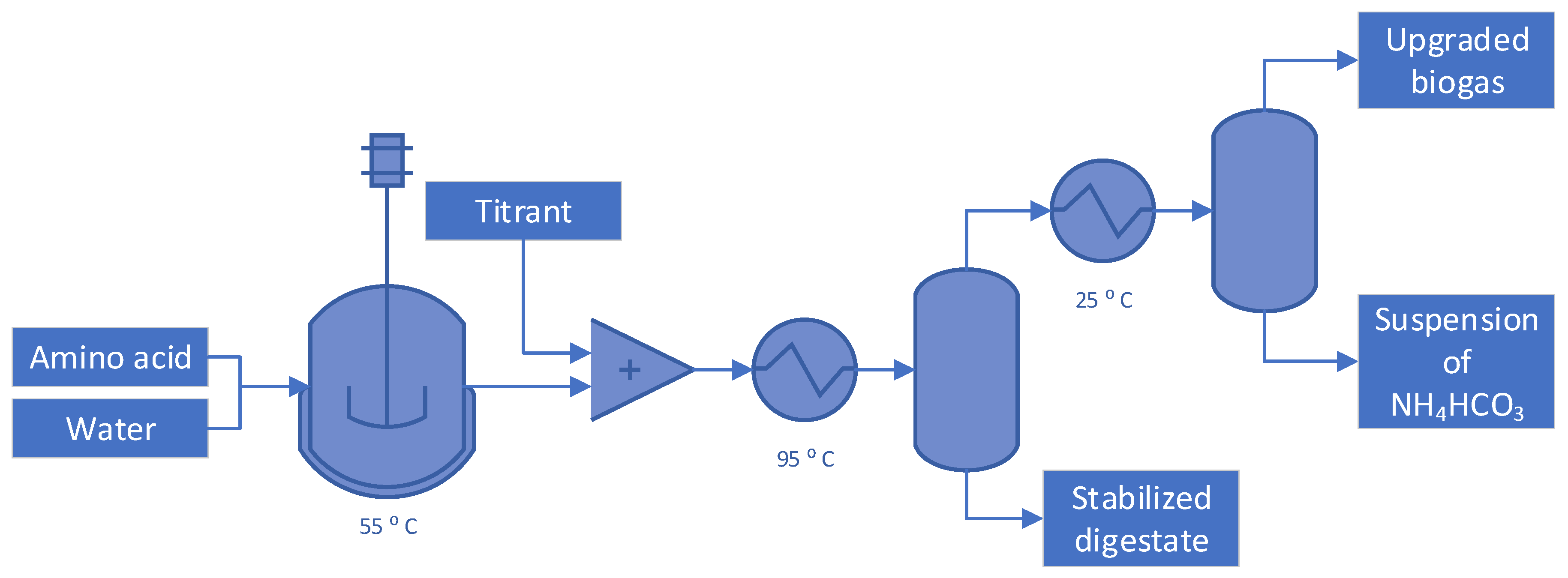
Figure 2.
Validation of the modelling of the system NH3-CO2-H2O with Aspen Plus v12. (a) Comparison of the partial pressures of CO2 and NH3 calculated with ELECNRT property method and the experimental data available in Figure 5-12 and Figure 5-13 of Darde [25]. (b) Validation of the flash distillation by comparing the results of the simulation to the experimental data available in Figure 2 and Figure 3 of Darde et al. [26]. (c) Validation of the solid formation by comparing the results of the simulation to the experimental data reported by Mullin [27], Green & Perry [32], and Haynes [28]. (d) Validation of the processing of manure digestate [17,20] with the addition of NaOH and HCl by comparing to the empirical titration of agrowaste digestate, food waste digestate [21], and animal slurry [30].
Figure 2.
Validation of the modelling of the system NH3-CO2-H2O with Aspen Plus v12. (a) Comparison of the partial pressures of CO2 and NH3 calculated with ELECNRT property method and the experimental data available in Figure 5-12 and Figure 5-13 of Darde [25]. (b) Validation of the flash distillation by comparing the results of the simulation to the experimental data available in Figure 2 and Figure 3 of Darde et al. [26]. (c) Validation of the solid formation by comparing the results of the simulation to the experimental data reported by Mullin [27], Green & Perry [32], and Haynes [28]. (d) Validation of the processing of manure digestate [17,20] with the addition of NaOH and HCl by comparing to the empirical titration of agrowaste digestate, food waste digestate [21], and animal slurry [30].
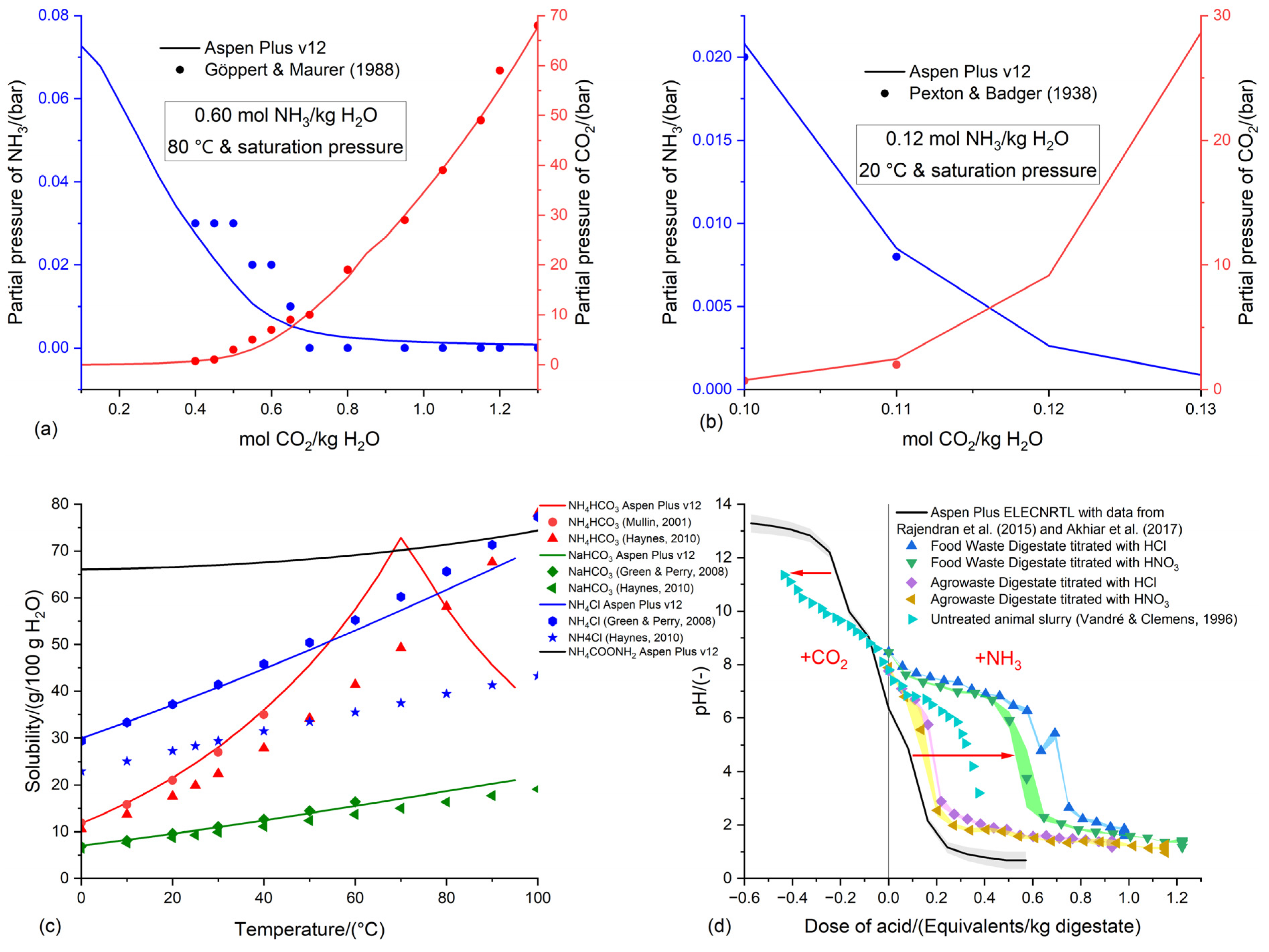
Figure 4.
Inorganic nitrogen (NH4++NH3+NH2COO-) to inorganic carbon (CO2+HCO3-+CO32-+NH2COO-) ratio in the anaerobic digestate that resulted from the fermentation of each of the 18 amino acids. The feed of each individual fermentation was composed of 90 wt.% moisture and 10 wt.% amino acid.
Figure 4.
Inorganic nitrogen (NH4++NH3+NH2COO-) to inorganic carbon (CO2+HCO3-+CO32-+NH2COO-) ratio in the anaerobic digestate that resulted from the fermentation of each of the 18 amino acids. The feed of each individual fermentation was composed of 90 wt.% moisture and 10 wt.% amino acid.
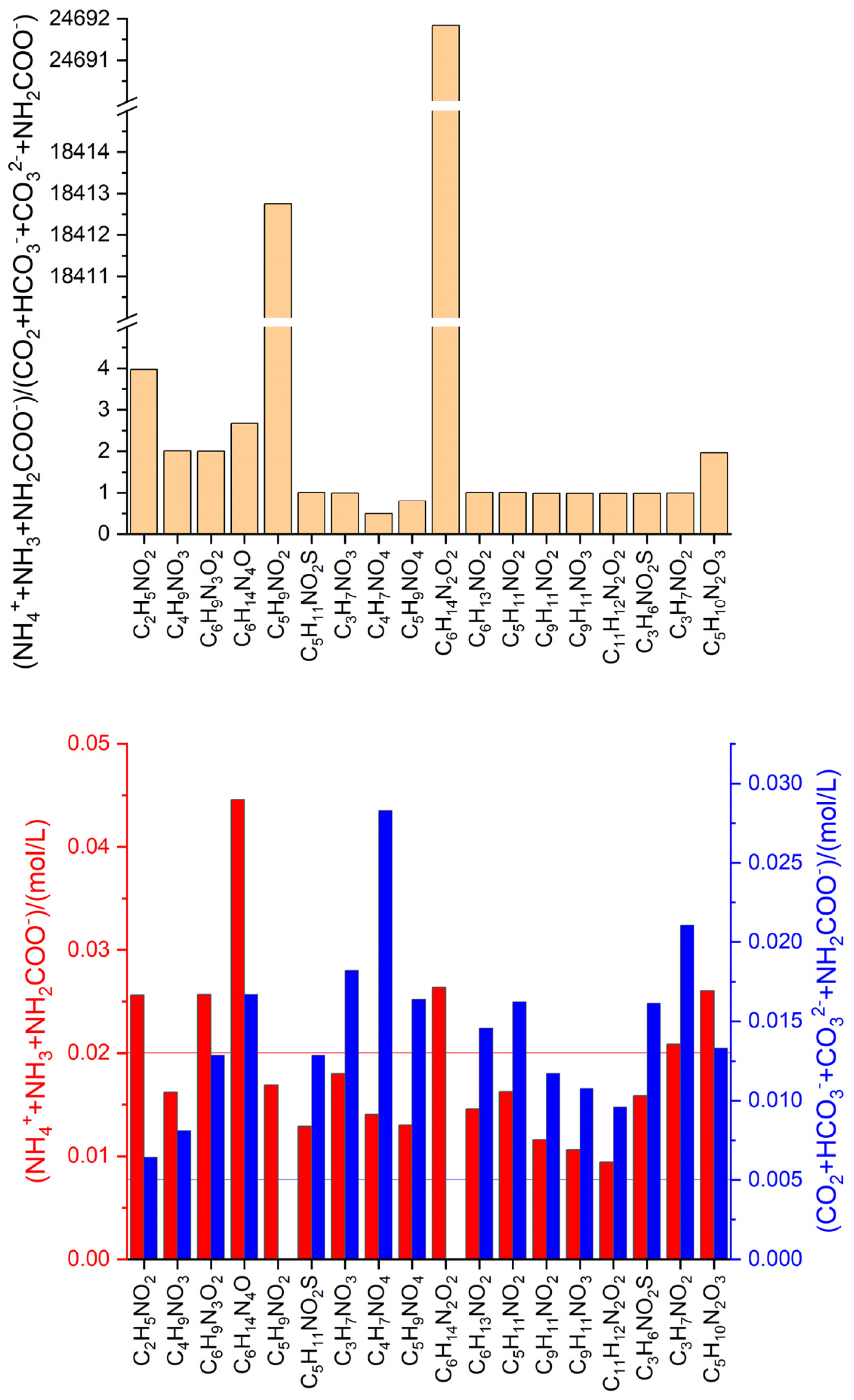
Figure 5.
Optimization of the NH4HCO3-stabilization via addition of HCl and NaOH to enhanced the flash distillation of amino acid digestates produced with a feedstock of 50 wt.% moisture. The square symbols represent the pH of the stabilized digestates that left the bottom of the flash tank (Figure 1).
Figure 5.
Optimization of the NH4HCO3-stabilization via addition of HCl and NaOH to enhanced the flash distillation of amino acid digestates produced with a feedstock of 50 wt.% moisture. The square symbols represent the pH of the stabilized digestates that left the bottom of the flash tank (Figure 1).
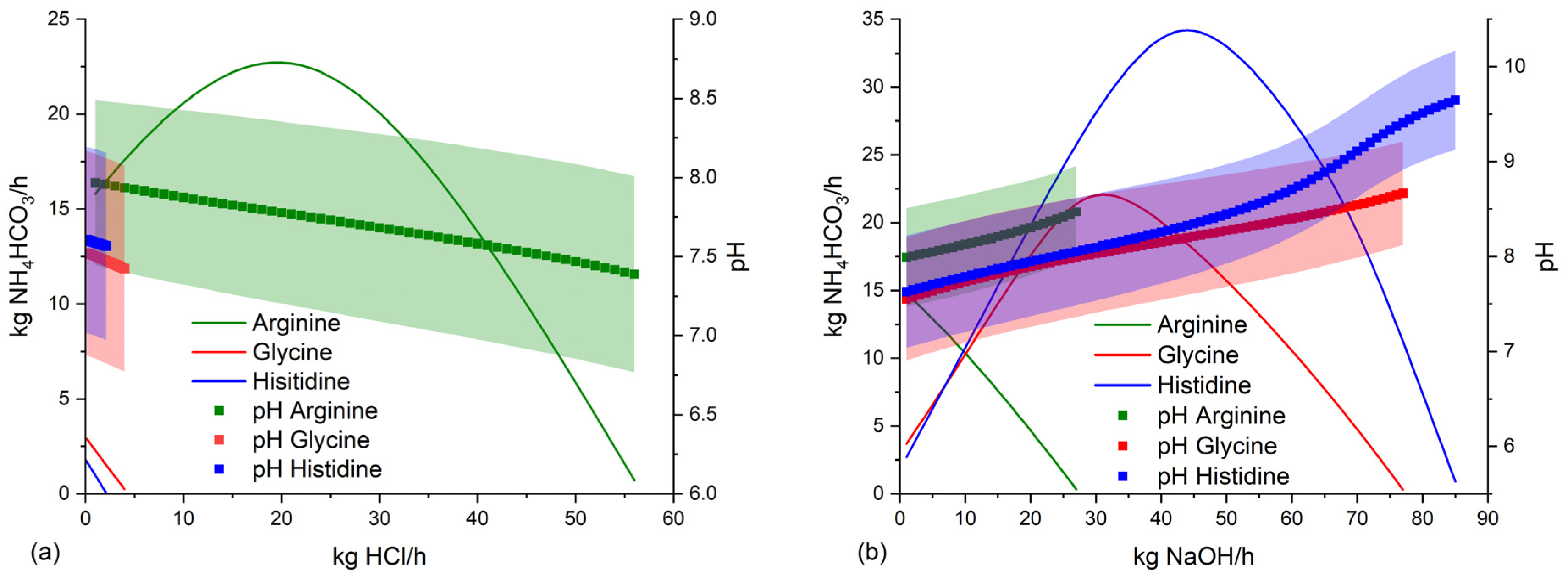
Figure 6.
Flowrate of the most relevant chemical species for the manufacturing of NH4HCO3 leaving (a) the top and (b) the bottom of the flash distillation of 5 untreated amino acid digestates (50 wt.% moisture). The flowrate of water in the stabilized digestate was omitted to have a clear picture of the most relevant species of inorganic nitrogen and inorganic carbon.
Figure 6.
Flowrate of the most relevant chemical species for the manufacturing of NH4HCO3 leaving (a) the top and (b) the bottom of the flash distillation of 5 untreated amino acid digestates (50 wt.% moisture). The flowrate of water in the stabilized digestate was omitted to have a clear picture of the most relevant species of inorganic nitrogen and inorganic carbon.
Disclaimer/Publisher’s Note: The statements, opinions and data contained in all publications are solely those of the individual author(s) and contributor(s) and not of MDPI and/or the editor(s). MDPI and/or the editor(s) disclaim responsibility for any injury to people or property resulting from any ideas, methods, instructions or products referred to in the content. |
© 2023 by the authors. Licensee MDPI, Basel, Switzerland. This article is an open access article distributed under the terms and conditions of the Creative Commons Attribution (CC BY) license (http://creativecommons.org/licenses/by/4.0/).
Copyright: This open access article is published under a Creative Commons CC BY 4.0 license, which permit the free download, distribution, and reuse, provided that the author and preprint are cited in any reuse.


