

Submitted:
22 May 2023
Posted:
23 May 2023
You are already at the latest version
Preprints on COVID-19 and SARS-CoV-2
Abstract
The years 2019 to 2022 are being marked by the pandemic resulting from a viral infection, COVID-19. The demand and use of PPE has never been so high and it is often discarded without considering the correct disposal route and the environmental impact that this type and volume of waste can generate. The aim of this study was to analyze the increased demand for PPE used during the pandemic and, consequently, the generation of these wastes. In addition to this analysis, it is extremely important to raise the discussion about the treatment of these residues and the possibilities of more ecological personal protection equipment, such as biodegradable or reusable ones. The extensive use of PPE, which is mostly plastics and is not easily degraded, mainly leads to its accumulation in landfills but, if disposed of incorrectly, it could reach marine environments, contributing to the formation of microplastics in the oceans. Therefore, this article also aims to relate these themes to the Sustainable Development Goals, as efficient management aligned with sustainable development goals is essential to mitigate these anticipated problems and ensure a more sustainable future.
Keywords:
COVID-19
; Personal Protective Equipment (PPE)
; Plastics wastes.
1. Introduction
The years 2019 to 2022 will go down in history because of the number of human lives lost during the COVID-19 pandemic, caused by the SARS-COV-2 virus. The chaotic situation caused by COVID-19 not only affects the health system but also the economic, political and environmental systems, leading nations to implement suppression and mitigation strategies to control the spread in the population. These include mandatory social distancing, restrictions on non-urgent medical assistance, the closing of non-essential businesses and the use of personal protective equipment (PPE) [1,2].
According to Hopman (2020) [3], countries with robust health systems and strong economies were quickly overwhelmed by the pandemic, and attention is beginning to focus on more vulnerable areas of the world, such as low and middle-income countries (LMICs). A large number of people in poor communities, as in low-income countries, are dependent on an already congested health system, with a lack of staff and supplies, for instance, in the favelas (slums). Preventive measures, such as social distancing, frequent hand sanitizing and care with waste disposal, are difficult to establish in these cases [4].
Despite the intense efforts of the scientific community in the production of vaccines like Coronavac of Chinese origin, AstraZeneca produced by the University of Oxford and BioNTech produced by Pfizer, precautionary measures in relation to human contact must remain to reduce the risk of transmission of SARS-COV virus - 2 [5], including its new variants. Thus, since COVID-19 was declared a public health emergency on an international scale by the World Health Organization (WHO), several recommendations have been established, including the use of PPE, such as masks and gloves, by health professionals and also for the rest of the population [6].
Governments have advised the population to use fabric masks, made at home, which can be washed after each use. This is consistent with the objective of reducing the spread of the COVID-19, since the use of a mask hinders the dispersion of droplets and aerosols of the mucous membranes, especially during speech, coughing or sneezing. Thus, disposable masks are used exclusively for the front-line workers, to avoid contact with this virus. However, a problem that has arisen is the scarcity of personal protective equipment, since this is being constantly replaced to prevent proliferation within hospitals and mitigate the risk of contamination of patients and, importantly, the health professionals [2,6,7].
Thus, the PPE used by all health professionals as well as by other citizens, has been overloading landfills and the environment, given the amount of waste generated, and the inappropriate disposal of masks and gloves is creating environmental problems [9]. The disposal of PPE in nature, as verified by Ocean Asia - Ocean conservation in Asia for Asia, results in the direct contamination of ecosystems (soil, surface and underground water) by SARC-COV-2 and, indirectly, the death of microorganisms beneficial to the environment can occur [10]. In addition, the formation of microplastics through weathering is currently an issue of great concern, resulting from the inappropriate disposal of plastic material. This causes serious problems in terrestrial and aquatic environments, notably in rivers, lakes and oceans [10,11]. The recent appearance of face masks and gloves as environmental waste is evidence that the global pandemic has contributed to the challenge of reducing plastic pollution in the environment.
According to Nzediegwu and Chang (2020) [6], in addition to the environmental problems related to an increase in the generation of solid waste, inadequate waste management increases the potential for the spread of COVID-19 in developing countries. Thus, this global emergency has social and economic aspects that extend to environmental issues, such as municipal solid waste (MSW) management, the management of hazardous biomedical waste and the treatment and disposal of MSW [9,12].
The problem of the increasing generation of waste is also one of the concerns of the millennium set out by world leaders and was foreseen in the objectives of the sustainable development goals (SDGs) proposed by the UN, which are based on a set of widely accepted values, seeking to improve human living standards, improve the planet and promote prosperity. One of the aims of SDG 12 (in target 12.5) is, by 2030, to substantially reduce the generation of waste through prevention, reduction, recycling and reuse.
With regard to the problem of waste generated during the fight against COVID-19, the aim of this study was to compile studies on the generation of PPE waste during the COVID-19 pandemic and to include a discussion on the possibility of their being biodegradable or reusable, the treatment of these residues and their possible impacts on the fulfillment of the Sustainable Development Goals (SDGs), established in the UN 2030 agenda.
2. Personal protective equipment – PPE
Personal protective equipment (PPE), as the name implies, is comprised of essential items for protecting life in the workplace. In the health area, gloves, masks, white (lab) coats and glasses play a fundamental role in combating the spread of diseases, whether transmitted by salivary and mucous droplets and aerosols or by other body fluids, such as blood [13,14].
N95 masks are recommended as single use products and are currently used mainly by healthcare professionals who treat patients with COVID-19, due to the efficient filter, which removes up to 95% of particles with a diameter of 3-5 micrometers (Eyre et al, 2016). The filter consists of microfibers arranged in electrostatically-charged polypropylene layers and thus is able to filter out microorganisms [16].
Its medical use is recent, beginning in the 1990s to protect health workers from the drug-resistant microorganisms of patients infected with the human immunodeficiency virus (HIV). It was subsequently used during the SARS outbreak in 2003. These masks are now being widely used by healthcare professionals to combat COVID-19 and, although they are not designed to be reused, it is known that in the face of a pandemic such materials can become scarce. When reused, there is a risk that their filtering capacity or tight fit on the face will be lost, resulting in less protection [15,16].
Sterilization methods for masks have been studied, mainly dry and steam sterilization (autoclaving), vaporized hydrogen peroxide and ultraviolet germicidal irradiation [17,18]. Some of these approaches are promising, but with limitations such as wear or alteration of the filter, deteriorating the filtering properties of the mask. Thus, technologies for sterilization without causing major damage to the mask are urgently needed.
Another type of mask used is the surgical mask, with three layers, where the innermost layer in direct contact with the face absorbs the moisture from the user's breath, the intermediate layer acts as a filter, while the outer layer repels liquid fluids. Although the outer layer is hydrophobic, dangerous viruses can remain on it, so it is recommended to be used for a few hours and immediately discarded [16].
These surgical masks are predominantly composed of non-woven fabric (NWF) and polypropylene, being resistant for a maximum of 4 h, after which they lose their filtering effectiveness. Since they cannot be washed or sterilized, their reuse is impracticable [16]. Although this is a medical item that needs to be disposed within a short time of use, there is a high demand for its production.
Regarding the use of disposable gloves, there are no recommendations for the population to use them in daily chores, prioritizing the use for health professionals. Latex, nitrile and vinyl gloves benefit the patient and the health professional, avoiding direct contact with microorganisms, mucous membranes, blood and other fluids, whether contaminated or not [20]. The reuse of this PPE is expressly not recommended by the World Health Organization, since there are still no fast technologies for effective sterilization [21]. Therefore, the ideal scenario is that for each patient the gloves are replaced, as in the case of surgical masks, resulting in the demand for high production and very fast disposal.
As in the case of masks, it is also important to consider the materials used to produce gloves, since their performance is mainly dependent on the nature of the materials used. Gloves with a higher percentage of elongation, for example, are more likely to stretch than tear when pulled, those with higher tensile strength are more rigid and are more suitable for delicate procedures [22]. In the case of a pandemic, the ideal practice is to use highly resistant gloves, mainly to avoid breakage, perforation or tears.
The white coats commonly used by health professionals help to avoid contamination through clothes, serving as a shield between the professional and the patient. This prevents fluids from accidentally reaching the clothes of the health worker and microorganisms cannot be transferred along the home - work translocation route of contamination. Thus, it is important to keep these white coats properly cleaned. Industrial washing is an excellent option, since this process eliminates any microorganisms [8]. When they are cleaned at home, they is a risk of contaminating the white coat with other non-medical clothing.
In one study, white coats washed at home showed an increase in contamination of 54% at the end of the day, mainly in the region of wrists and pockets. Thus, there is a need to change white coats within short time intervals. In the face of this pandemic, disposable white coats are replaced for each patient, avoiding cross-contamination. In this context, researches are looking for efficient textile technologies, mainly to repel fluids and with antimicrobial agents incorporated in the fabric, but further discussion and studies regarding the price of these uniforms and their total health efficacy are needed [8].
Another essential type of PPE used in hospitals, but little discussed, is goggles. Pedrosa et al. (2010) [23] notes the importance of using this piece of protective equipment as it avoids the splashing of liquids directly into the eyes or contamination through touch. However, the goggle design must guarantee excellent peripheral vision, with a safe and comfortable fit [23]. There are also professionals who use a facial protector, but this must be very well adjusted to the face.
Most of these goggles and face protectors are made of petroleum products, such as polyethylene. When discarded, they generate residues that are difficult to break down. Although the replacement this type of PPE is not as frequent compared with others, there has certainly been an increase in its use due to the current pandemic [23]. As with all PPE, goggles need to be reused safely and efficient management strategies are required for this waste.
Finally, the importance of correctly removing PPE is emphasized, since professionals can end up being contaminated with pathogens that are found on the outside of the equipment. Thus, all health professionals must receive effective training to perform the removal of equipment [24]. The disposal site must also be safe, preferably labeled and sealed, avoiding the contamination of third parties, such as hospital/clinic cleaning staff and waste collection workers.
Currently, in the COVID-19 pandemic, according to government recommendations, many people have become adept at fabricating masks, and this piece of personal protective equipment is now being used every day, worldwide. Mueller et al. (2020) [25] analyzed the effectiveness of this type of mask in terms of protection from nanoparticles and demonstrated that masks made with traditional fabrics had very different particle sizes. The degree of protection ranged from 30% to almost 90%, with some cloth masks offering particle barrier properties similar to that of commercial surgical masks.
Although they guarantee protection against the virus, most masks consist of non-renewable polymers derived from petrochemicals, such as polypropylene, polystyrene, polycarbonate, polyethylene and polyester, contributing to environmental pollution and the subsequent secondary health challenges. In light of the aforementioned discussion, there is an urgent need to quickly develop fully biodegradable facial masks that fulfill the objectives, presenting low-cost along with light and comfortable characteristics [7].
Das et al. (2020) [7] highlighted the importance of carrying out studies to contribute to the effort to curb the adverse effects of the current pandemic, such as the present and future environmental impacts. The authors noted the need for research to develop biodegradable facial masks, derived from natural materials, in order to guarantee improved quality of life and the protection of marine and terrestrial ecosystems during this global health crisis.
3. Personal Protective Equipment and the generation of solid waste during the COVID-19 pandemic
The COVID-19 pandemic has triggered global emergencies in relation to social and economic aspects, which extend to environmental issues, such as solid urban waste management (MSW), management of hazardous biomedical waste and the treatment and disposal of MSW [25; 26]. Although some positive environmental improvements have occurred due to the lockdown, such as cleaner aquatic ecosystems and reduced air pollution, this is not the case with regard to solid waste management [25; 27].
The pandemic has altered the dynamics of waste generation, creating problems for policy makers and workers involved in sanitation [9; 27]. According to the World Health Organization (WHO), an increase in the volume of infectious waste is expected during the outbreak of COVID 19, and they state that it is necessary to acquire additional treatment capacity, through employing alternative technologies, such as autoclaves and high-temperature incinerators [29].
Challenges to municipal waste management practices and procedures have arisen, including updating health and safety measures for employees, waste treatment requirements and general procedures for the waste sector [9; 12]. The situation tends to be more critical in developing countries, as waste management workers are often not adequately equipped with personal protective equipment (PPE) [9].
The countries of Thailand, China, Singapore, and the USA have all encountered a noteworthy escalation in the generation of plastic waste, encompassing various items such as face masks, personal protective equipment (PPE), and packaging materials. Specifically, Thailand witnessed a substantial threefold increase in plastic waste production. Furthermore, Hubei, China, observed an alarming surge of 370% in medical waste, which predominantly consisted of plastic materials. These statistics underscore the growing concern of heightened plastic waste generation in different regions, highlighting the urgent need for effective waste management strategies and sustainable practices to mitigate the environmental impact of such waste [30].
The research conducted by Thind et al. (2021) highlights the surge in yellow category biomedical waste (Y-BMW) generation in India during the COVID-19 pandemic. The sudden influx of COVID-infected patients seeking healthcare services placed a substantial burden on the existing incineration units dedicated to biomedical waste disposal. On average, each COVID-infected patient in India was found to generate approximately 3.41 kg of biomedical waste per day, with Y-BMW accounting for around 50.44% of the total waste generated [31].
Notably, on July 13, 2020, the combined Y-BMW generated by both regular patients and COVID-infected individuals exceeded the incineration capacity of India's biomedical waste management system. These findings emphasize the urgent need for effective strategies to address the escalating volume of Y-BMW, as it poses significant environmental and public health concerns in the country [31].
Singh and Mishra (2021) underscore the significant impact of COVID-19 on India, positioning it as the second most affected country following the United States. A comprehensive report published on September 18, 2020, shed light on the staggering daily production of biomedical waste in India, surpassing 180 tons. Notably, the state of Maharashtra emerged as a major contributor, accounting for approximately 17% of the total biomedical waste generated nationwide [32].
The period from June to September 2020 witnessed a substantial surge in the volume of biomedical waste generated in India solely due to the COVID-19 pandemic. In June, the country generated an estimated 3025 tonnes of biomedical waste, followed by approximately 4253 tonnes in July. August recorded an even higher volume, with an approximate generation of 5238 tonnes, while September marked a further increase, reaching around 5490 tonnes. These statistics highlight the unprecedented scale of biomedical waste generation during the specified timeframe, emphasizing the pressing need for robust waste management strategies and infrastructure to mitigate potential environmental and public health hazards [32].
During the COVID-19 outbreak in China, there was a significant 30% reduction in municipal solid waste (MSW) in large and medium-sized cities due to lockdown measures. However, in the Hubei province, the epicenter of the outbreak, there was a concerning 370% increase in medical waste generation, including infectious and non-infectious waste. This highlights the challenges faced by healthcare facilities and the importance of adapting waste management strategies to handle the surge in medical waste effectively [13].
China experienced a significant surge in demand for personal protective equipment (PPE), particularly masks, during a specific period. Mask production increased by 450% within one month to meet the heightened demand due to the COVID-19 pandemic. Additionally, the demand for N95 respirators rose from 200,000 to 1.6 million units, underscoring the crucial need for effective respiratory protection among healthcare workers and the general population [27].
These statistics highlight the rapid adaptation of PPE manufacturing and distribution systems in China to address the growing demand during the pandemic. The significant increase in mask production and the surge in demand for N95 respirators illustrate the urgent necessity for adequate PPE supplies to ensure the safety and protection of frontline workers and the general public [27].
The WHO has estimated the need for 89 million medical masks each month, 76 million exam gloves and an international demand for goggles of 1.6 million per month [32,33].
Improper disposal practices of biomedical waste and healthcare waste (BMW) can lead to environmental contamination, the destruction of beneficial microbes in septic systems, and the risk of physical injuries from sharp objects. Contaminated soil and groundwater, disrupted septic systems, and potential harm from sharp waste items are key concerns associated with improper BMW disposal. Implementing proper disposal protocols, comprehensive waste management systems, training, and public awareness are vital for mitigating these risks [10].
It should be noted that infectious waste is not limited to hospitals and health centers, as people with minor symptoms or who are asymptomatic also generate contaminated waste, such as disposable masks and gloves [26; 33]. The World Health Organization (WHO) recommends, due to the pandemic, that solid household and commercial waste, generated in homes and businesses in general, be collected and disposed of according to usual practices, with no need for any additional treatment. However, the hygiene care and the use of safety equipment by collection professionals should be doubled [29].
Even prior to the pandemic, projections had already indicated a worrisome estimate of approximately 12 billion metric tons of plastic waste accumulating in landfills and the natural environment by the year 2050. Due to this context, the authors point out that efforts must be made to promote recycling, reduce single-use plastics, and implement comprehensive waste management systems to address this growing concern [27]. Bown (2019) [35] pointed out that the increased use and consumption of single-use-plastics (SUPs), not only during the COVID-19 pandemic but mostly after this period, will result in an increased demand from plastic suppliers (e.g., China and US).
Chen et al. (2021) [26] highlighted that the pandemic has resulted in shifts in behavior, leading to increased reliance on disposable plastic utensils such as cutlery. Unfortunately, the existing waste management systems are ill-equipped to handle the influx of plastic waste effectively. As a consequence, this poses a significant danger to both natural ecosystems and human health, sparking considerable deliberation on the topic of medical waste disposal systems [26].
Thus, there has been a threat of pollution from plastic waste since the World Health Organization declared coronavirus infection as a pandemic, leading to an increase in household and hospital waste.
Benson et al. (2021) reported that plastic-based personal protective equipment (PPE) has been extensively employed as a means to mitigate the risk of Severe Acute Respiratory Syndrome Coronavirus 2 (SARS-CoV-2) exposure. This includes the widespread utilization of millions of surgical masks, medical gowns, face shields, safety glasses, protective gowns, disinfectant containers, plastic shoes, and gloves, all aimed at minimizing the potential for encountering the virus [36].
According to Dudek et al. (2019) [34] and Patrício Silva et al. (2020) [27], plastic items made of non-woven materials (such as some masks), usually incorporating polypropylene and polyethylene, degrade into smaller microplastic pieces. Therefore, the use of these facial masks by non-professionals leads to a serious problem in the environment, increasing the microplastic pollution in marine and freshwater ecosystems [34].
Dozens of disposable masks have been found on a beach in the Soko Islands in Hong Kong, according to the NGO Oceans Asia. Also, in the Magdalena River, in Columbia, the degradation of non-woven synthetic fabrics was the predominant origin of microplastic microfibers found in samples of water and sediments [26; 36]. The Organization for Economic Cooperation and Development (OECD) countries must ensure that all cities guarantee the collection of waste, but not necessarily separated into specific types of waste and it has proposed the closure of some recycling centers [10].
Changes were made to MSW management services during the COVID-19 pandemic in developed countries such as the United Kingdom, USA, Singapore and Japan, as well as in developing countries such as India, Malaysia, Brazil, Indonesia and Vietnam [13; 38–41]. It should be noted that most of the MSW generated in countries belonging to the latter group is disposed of in landfills and dumps, due to a lack of incinerators [10]. Developing countries also lack the necessary infrastructure, such as sealed trash bins and plastic bags, which leads to the inappropriate dumping of infected or hazardous waste, along with municipal solid waste [10].
Therefore, the COVID-19 pandemic can bring serious environmental pollution problems with the production and generation of microplastics (MPs), as noted by Fadare and Okoffo (2020) [12]. MPs are classified into primary and secondary. Primary MPs are those manufactured to be small, including microspheres, while secondary MPs originate from larger fragments that have been degraded and decomposed by physical, chemical and biological effects in the environment over time [42].
The most common MPs found in the environment are polyethylene (PE), polyethylene terephthalate (PET), polypropylene (PP), polystyrene (PS), polyvinyl chloride (PVC), nylon - polyamide (PA), acrylonitrile butadiene styrene (ABS), copolymers and mixtures of plastics. These materials can take hundreds of years to degrade when discarded in the natural environment [38; 39]. Environmental pollution caused by plastic waste is a growing global problem. Discarded plastic products and plastic debris (MPs) in different environments end up in water bodies and oceans, negatively affecting marine ecosystems.
Thus, the practices that save lives today may contribute to the destruction of the planet tomorrow, highlighting the importance of the correct disposal of the above-mentioned materials, applying proper waste management and treatment in order to avoid a new problem arising from the current pandemic. The introduction of millions of items of PPE to meet the needs associated with the COVID-19 pandemic, produced from synthetic materials (PE, ABS, PCV, among others) is of concern to environmental agencies.
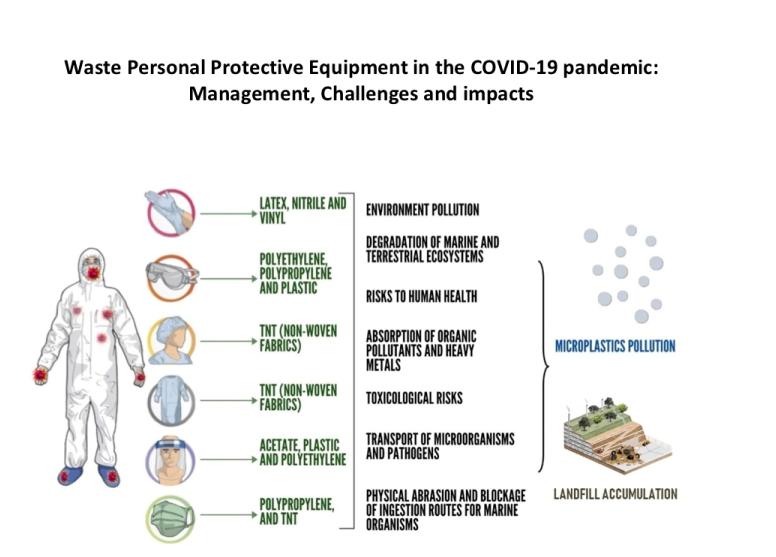
According to a survey conducted by PlasticsEurope (2018) [45], the global production of plastics has increased considerably in the last 60 years, reaching 359 million tons in 2018, with the largest generators being in Asia (51%, with China alone accounting for 30%), and the countries of the North American Free Trade Agreement - NAFTA (18%) and Europe with 17% [45]. Plastics of a wide variety of sizes and origins, including industrial [46], domestic [47] and medical, are present in the environment. Figure 1 shows the main types of PPE used, the material and the impact on the environment.
The items used as PPE are largely made up of NWF, polyethylene and plastics, that is, materials derived from petroleum that do not degrade easily. They are commonly used for a short time and, according to the method of disposal, the accumulation of this residue may generate major environmental impacts, particularly with regard to their accumulation in landfills and the bioaccumulation of microplastics.
As noted in an article by Prata et al. (2020) [48], plastic reduction policies and plastic waste management strategies have recently been reversed or temporarily postponed due to COVID-19, since human health is being prioritized over environmental protection. The monthly use of PPE has reached 129 billion masks, 65 billion gloves and 1.6 million goggles [49] worldwide, generating a significant increase in plastics on the planet, which end up being transformed into MPs. Microplastic contamination in the marine environments is serious and has become a global concern due to its wide and growing distribution.
Gall and Thompson (2015) [50] pointed out that the potential environmental risks associated with MPs include physical abrasion and the blockage of ingestion routes in marine organisms. Other hazards arise from the leaching of toxic additives and MP monomers [51], from the absorption of persistent hydrophobic organic pollutants and heavy metals present in MPs [47; 48] and from the transport of microorganisms and pathogens associated to MPs [54]; 50]. The toxicological risks of microplastics are further amplified by the process of bioaccumulation (transference through the food chain), whereby aquatic organisms at higher trophic levels can be exposed to stronger adverse effects [51; 52].
Human beings are exposed to plastic debris through the consumption of seafood and drinking water and via contact with food and beverage packaging and other materials, such as PPE. The accumulation of MPs in humans presents potential health risks, including cytotoxicity, hypersensitivity, unwanted immune response and acute response, such as hemolysis. In a study by Hwang et al. (2019) [58], experiments were conducted to investigate cellular responses to contact with PP microplastics (primary and secondary) of approximately ~ 20 μm and 25–200 μm.
The results showed that the presence of PP particles in the medium, especially those below 20 μm, were cytotoxic, and that this toxicity was caused by an increase in ROS (reactive oxygen species) and occurred as a function of size and concentration. However, larger PP particles and PP powder particles showed less cytotoxicity. The authors concluded that cells that come into direct contact with PP particles pose a potential health risk by inducing the production of cytokines from immune cells, rather than direct toxicity to cells. They noted that there are thousands of other types of plastic in various concentrations and size configurations that should be studied [58].
It should be noted that, according to the studies by Chen et al. (2021) [26], Wuhan's lived and successful experiences suggest that improving the emergency management system for medical waste in several aspects is vital to minimize the risks to human health. Therefore, four steps can be followed: 1) A sophisticated medical data system must be implemented; 2) Hospitals' medical waste storage capacity needs to be improved to cope with dramatic increases in medical waste during emergencies; 3) Emergency plans should be developed to coordinate resources for disposal capacity across the region; and 4) Wuhan's emergency response capacity has been increased through collaboration and support across the country.
3.1. Sustainable personal protective equipment to mitigate environmental impacts
Life cycle assessment (LCA) studies environmental aspects and possible impacts on the environment. Throughout the life cycle of a product, that is, from the cradle to the grave, from the acquisition of the raw material, through the production system, the use, until the final disposal. Through analysis of environmental impacts such as: climate change, depletion of fossil fuel, depletion of water, marine and freshwater ecotoxicity, marine and freshwater eutrophication, it is possible to measure how much something will harm the environment since the extraction of raw materials raw materials until conception and final disposition [59].
When it comes to Personal Protective Equipment, it is important to discuss, since its use in the face of the pandemic of the COVID-19 has become essential. A study by Lee et al. (2021) [60] using life cycle assessment, measured emissions and waste generated from locally produced reusable face masks and single-use surgical face masks. The results of the ACL of both show that the use of the reusable embedded filtration layer (EFL) face mask will generate less waste and will have a less impact of at least 30% among the impact categories considered in comparison with the use of single-use surgical mask, pointing as a popular alternative , the use of reusable masks to mitigate environmental impacts [60].
3.1.1. Biodegradable materials
Biopolymers are polymers produced from raw materials from renewable sources, such as corn, cassava, cellulose and others, and have a shorter life cycle when compared to those of fossil origin, such as polyurethane. Biopolymers are factors of environmental and socioeconomic interest, due to the mitigation of the environmental impacts of oil extraction and refining. Biopolymers have some technical limitations studied due to their properties, such as thermal resistance, mechanical, rheological and applicability properties on an industrial scale [61].
Regarding the development of personal protective equipment with biodegradable materials, the market for biopolymers stands out, in it are derived from plants, biomasses, celluloses and even microorganisms, many of which stand out for their excellent properties, such as poly (lactic acid) (PLA), which is a kind of aliphatic polyester, produced by fermentation. of sugar, which presents biodegradability, biocompatibility, non-toxicity, high mechanical resistance and cost-benefit. PLA has been widely studied and used for food packaging, tissue engineering applications, and can be an attractive line to be studied for the construction of biodegradable PPE [62]. In particular, PLA is known as a radiation degradable polymer, there are records of complete degradation from six months to one year [63].
Another very widespread polymer, such as PLA, is polybutylene succinate (PBS), obtained from the condensation polymerization of succinic acid (AS) and butanediol, which draws attention for its thermal, mechanical properties [64]. Bacterial cellulose derived from several microorganisms is also attractive in the manufacture of numerous materials, including for PPE, given its wide applicability and commercial advantages [65]. Associating several polymers to make personal protective equipment is attractive in view of the life cycle analysis, from the extraction of raw materials to the final disposal. Contributing to mitigate environmental impacts caused by polymers derived from petrochemicals.
Foresti et al. (2021) and collaborators discussed in their research about the production of 3D printed safety protection devices, focusing on the production of respiratory masks in response to the COVID-19 pandemic. Topics such as material selection, assessment of mechanical strength and biological safety, as well as analysis of the mechanical and safety characteristics of masks are covered. The study concludes that 3D-printed masks with home-grade printing equipment have similar performances to industrial-grade ones, and develops new approaches for the post-processing phases of additive manufacturing, aiming to ensure human safety in the production of personalized medical devices 3D printed [66].
The use of 3D printers can be observed in several studies. An example of this was research reported by Jiang et al. (2023), who designed a fibrous mask filter made with polybutylene succinate, microfiber and nanofiber blankets, and coated with chitosan nano-hiskers. The authors cite wheat gluten biopolymer that was used as a filter medium in face masks and an air-permeable mask that was developed using electrocuted licorice roots. A biodegradable mask filter was made using electrospinning and 3D printing polylactic acid, which filtered 79% of the air at a particle size of 500-600 nm, superior to standard face masks. Polylactic acid was suggested as suitable for reusable respirators, and its microstructure was not affected after efficient disinfection of bacteria, fungi and viruses [67].
3.2. Waste treatment and management systems
One of the biggest environmental problems caused by the pandemic is municipal solid waste (MSW) and hazardous biomedical waste. The proportion of non-infectious waste, which is more than 80% of the total amount of health waste generated, needs to be collected and disposed of as municipal waste [29].
Widespread use of protective equipment worldwide in conjunction with the pandemic leads to massive waste management difficulties and improper disposal practices worldwide. The plastic products used are correspondingly pathogenic and should be regarded as hazardous wastes as landfill manage it promoting biodegradation of plastics. Plastic waste management was considered a primary environmental concern before the beginning of the COVID-19 pandemic due to increasing concerns about pollution in marine and terrestrial ecosystems [68].
According to the World Health Organization (2020) [29], the use of masks by ordinary citizens quickly became controversial due to the lack of correct handling and disposal, and the shortage of this material in healthcare facilities. Guidelines for the disposal of infectious and non-infectious health wastes were established during the outbreak of COVID-19 by the WHO. Procedures for the treatment and disposal of waste at health facilities, recommended by WHO, involve heat treatment and the use of traditional biocidal agents with proven effectiveness in the destruction of the COVID-19 [17].
However, the major factors associated with managing MSW outside the health facilities also need to be addressed, such as virus resistance, differences in waste management systems and the climatic conditions in each affected region [69]. Also, the PPE items generated in large quantities, such as protective masks, currently used by the vast majority of the population and most of the time incorrectly disposed of as common waste without undergoing any type of treatment, require special attention.
Lack of proper waste management strategies and uncontrolled combustion of medical plastic waste has accelerated the release of greenhouse gases (GHGs) and other potentially dangerous compounds, such as dioxins, PCBs, furans, and heavy metals creating significant environmental concerns. The COVID-19 pandemic has pulled out this issue in the frontline environmental research through the increase of single-use plastics. Besides increasing the use of personal protective equipment (PPEs), plastic packaging of foods and groceries for home deliveries during the lockdown and home quarantine period [68].
Integration of waste management in disaster management planning will result in inclusive response measures and guidelines to better operate in the dynamics of a future pandemic, prioritizing the formulation and implementation of homogenous plastics, eco-friendly bio-plastics, and circular technologies while phasing out single-use plastic through taxation. To safely manage biomedical wastes, an automated system of waste storage, collection, treatment, and disposal should be developed using advanced technologies and the internet of things [30].
The US Occupational Safety and Health Administration (OSHA) [70] has established predefined safety guidelines for personnel involved in health waste management, recognizing it as an essential service and requiring employees to take appropriate precautions [70]. The European Commission has formulated a document that emphasizes the importance of continuing adequate MSW management services, including separate collection and recycling in accordance with EU law, further specifying the need for proper sorting for the separation of recyclables and biodegradables [71]. However, there is greater concern regarding the handling of medical waste and waste generated in infected homes in less developed countries, such as India and Malaysia, where little attention is given to the management of MSW [13].
In Spain, the regulations currently allow infectious waste to be co-incinerate with other waste for use in cement factories. Norway has temporarily authorized landfills for the final disposal of infectious waste, as well as the transport of waste to other disposal sites, due to the increase in the generation of this type of waste [72].
In Brazil, the Brazilian Association of Sanitary Engineering (ABES - Local acronym) [73] has prepared a document advising contaminated patients who are in home isolation to pack the waste generated in double bags, up to 2/3 full, tightly closed, and to leave them out for conventional collection. Regarding recyclable waste, this is to be stored at home during quarantine, for an undefined period, paralyzing the activities of many recycling associations [73].
The Brazilian Association of Public Cleaning and Special Waste Companies (ABRELPE - Local acronym) [74] has a different position and recommends the continued separation of recyclable waste for those individuals who are not infected by the virus [74]. The two entities agree on the orientation of waste management in environments with a high concentration of people, such as buses, subways, trains, hotels, highway service stations, ports and airports, among others, where waste must be disposed of as health waste, classified, according to Brazilian Health Regulatory Agency (ANVISA - Local acronym) Resolution 222, as biohazardous waste - Group A1 [75].
The United Nations Environment Program (UNEP) [76] has prepared nine technical sheets with information that can help individuals, companies and government authorities to manage the waste generated during the pandemic, namely:
- ▪
- Sheet 1 - Introduction to COVID-19 waste management;
- ▪
- Sheet 2 - National medical waste capacity assessment;
- ▪
- Sheet 3 - How to choose your waste management technology to treat COVID-19 waste;
- ▪
- Sheet 4 - Policy and legislation linked to COVID-19 pandemic;
- ▪
- Sheet 5 – Links with the circularity of non-hospital waste;
- ▪
- Sheet 6 – Linkages of air quality and COVID-19;
- ▪
- Sheet 7 – Household medical waste management strategies;
- ▪
- Sheet 8 - Disaster and conflict; and Sheet 9 - COVID-19, wastewater, and sanitation [76].
The great challenge pointed out by UNEP is the objective of avoiding possible long-term impacts on the environment, using the available waste management solutions. To this end, within its short-term recommendations are: i) Manage the increase in waste production, maximizing the use of existing facilities; ii) Ensure that operations respect emission limits and thus avoid secondary health impacts; iii) In the absence of appropriate technology, consider adopting the 3S methodology (Sorting, Segregation, and Storage - Classification, Segregation and Storage) and install temporary / palliative solutions [76].
Incorrectly managing and disposing of waste during the pandemic can further spread the virus, especially in developing countries, due to poor waste handling conditions associated with the inappropriate use of personal protective equipment and poor sanitation conditions [69]. Klemeš et al., 2020) [77], in a study on plastic waste management produced during the pandemic, provides some ideas on the handling of MSW. Zambrano-Monserrate et al. (2020) [78] reviewed the positive and negative effects of the pandemic on the environment, highlighting concerns such as an increase in the volume of health waste and a delay in waste recycling activities, which can negatively affect the environment.
Hospital waste is usually incinerated, turned into energy or disposed of in landfills [79]. In more developed countries, this waste often goes through a sterilization process before any disposal strategy, preventing the proliferation of diseases. However, large disparities still exist globally, and in developing countries achieving the correct disposal of hospital waste is problematic, resulting in much of it being dumped in landfills.
While some countries or municipalities are able to properly manage this waste, others are being forced to apply inadequate management strategies, such as direct landfilling or burning [27]. The significant contribution of PPE during the pandemic period constitutes a logistical challenge in relation to the provision of waste management services. Even in countries with significant recycling rates, like India with 60% [80], it has been noted that inadequate waste disposal procedures, and even burning, have increased substantially in some municipalities in an attempt to avoid spreading the virus [81].
On the other hand, countries with larger economies managed to overcome the adversities of COVID-19 in the management of plastic waste. Wuhan was a city that demonstrated efficiency in the disposal of medical waste during this pandemic, even with an increase of almost six times more than normal, reaching almost 247 tons/day. The technology designed by the waste management authority in this city of 11 million people was the distribution of mobile incinerators to safely dispose of the extremely high amount of potentially contaminated PPE waste generated [82].
According to Chen et al. (2021) [26], Wuhan's medical waste management experience, in the context of the COVID-19 pandemic, can be presented as a valuable example of an emergency response that can inform cities around the world about the formulation of environmental policies that occur simultaneously with pandemic control and other urgent environmental stressors. Despite the lack of capacity to dispose of medical waste in the early stage of the COVID-19 pandemic, Wuhan employed three emergency measures in response to the rapid spread of COVID-19: the use of facilities disposal furniture, expropriation of municipal waste incinerators and the implementation of external disposal [26].
Singh et al. (2020) [83] highlight lessons learned from the pandemic in some municipalities regarding the management of hospital waste. They highlighted the importance of adopting automated systems, where there is no need for human contact for the treatment of this highly contaminating waste, based on the Internet of Things technology, which enabled the tracking of waste information. Also, the authors noted the need to maintain larger facilities for medical waste in emergencies such as the COVID-19 pandemic [83].
Due to the COVID-19 pandemic, health and safety recommendations have been expanded, prioritizing the treatment of solid waste, especially plastics, through incinerator systems and final disposal in landfills. This has resulted in waste management strategies that lead to an increased use of natural resources, for the production of plastics, and higher emissions of greenhouse gases and other compounds that pose a risk to the environment [84].
According to Singh and Mishra (2021) [32], in order to make positive changes in the environment, individuals and Governments may follow the following strategies:
- ▪
- regular maintenance of vehicles;
- ▪
- well-organized public transport system;
- ▪
- improved traffic management system;
- ▪
- reduced emission of chlorofluorocarbons (CFCs);
- ▪
- use of eco-friendly products;
- ▪
- well organized and effective waste management system;
- ▪
- promotion of reused and recycled waste materials; and
- ▪
- proper treatment of wastewater before discharging in the environment.
3.2.1. Solutions, approaches and technologies for PPE recycling
According to Gunasekaran et al. (2022) and Jiang et al., 2023, the huge amount of PPE can cause harmful impacts to several ecosystems, especially marine wildlife, as PPE debris in marine environments is considered an emerging form of plastic debris and an addition to the existing microplastics crisis. It should be noted here that numerous studies have already documented the impacts of COVID-19 litter on wildlife through entanglement, entrapment and in-management [85].
A survey carried out on the Indian coast on waste monitoring assessments carried out at various points along the coast pointed to ineffective waste management, citing the behavior of the population (social responsibility and public awareness of the disposal of PPE) as one of the fundamental causes. pollution from marine litter. Approximately 60 to 85% of plastic waste in India has been mismanaged with a tendency to enter the environmental matrix, including surface water systems [85].
In recent years, several studies have been published on micro-plastic ingestion by marine animals in India. The bioaccumulation of microplastics in mesopelagic and epipelagic fish, Indian edible oyster, Indian white shrimp, bivalves and in some commercially important fish and other marine wildlife has been documented very recently [85]. The presence of MPs PMs along terrestrial and marine food chains suggests that humans are exposed through consumption of contaminated seafood and food products [86].
It should be noted that the problem is not found only in marine environments, but on land as well. Jiang et al. (2023) and collaborators point out in their research that protective masks abandoned in the terrestrial system can block the urban sewage system and influence the aeration and percolation of water from agricultural soils. Incorrect disposal of masks can also threaten fauna through entanglement or being mistaken for food, as in the reported case of a bird entangled in masks and killed in Colombia. The authors include reports of the accumulation and translocation of small plastic particles in plant tissues, which influence plant growth and agricultural productivity [67].
PMs as emerging pollutants have received global attention due to their wide distribution, high abundance, toxic substance enrichment, and potential threats. Researchers point to protective masks as new sources of microplastic pollution and proposed the need to take measures to prevent the problem of microplastics derived from PPE [67].
Gunasekaran et al. (2022) point out that more coordinated engagement is needed for circular economy approaches, especially PPE recycling policies and practices. Various methods such as glycolysis, aminolysis, hydrogenation, hydrolysis, gasification and pyrolysis are now focused in the pursuit of advanced technologies to convert bedding PPE into value-added products. Recent studies show that the pyrolysis of COVID-19 related PPE waste is the most effective method and the eco-friendly solution with great application potential [85,86].
PPE recycling can generate value-added products and mitigate disposal issues while providing energy sources [86]. For example, Eco Eclectic Technologies created “Brick 2.0” made from recycled PPE face masks FMs (MFs) that can contribute to solving waste disposal issues and provide a value-added product. The composition of the brick is made up of 52% crushed EPI materials, 45% waste paper and 3% binding [85]. Jiang et al. (2023) point out that masks have great potential to be applied in the construction of road and rail embankments, landfills or recovery constructions.
The reuse of face masks after decontamination is also a strategy to reduce their use and disposal. Efforts were made to decontaminate and reuse FMs MFs to address product shortages and the environmental burden produced. Various methods such as ultraviolet germicidal irradiation, dry and wet heat treatment, vaporized hydrogen peroxide, and ethanol treatment have been developed for mask decontamination. Most decontamination methods are tested and proposed for reuse of N95 masks [67,87].
Proper management of used FMs is imperative to decrease the release of MPs PMs into the environment. In addition, the plastics in protective masks can be recycled by mechanical recycling. Direct recycling of masks can be achieved through injection molding or improving mechanical performance with additives from industrial waste [67]. Direct conversion of face masks into functional materials, particularly carbon-based materials, is also an alternative management strategy. Due to the unique fibrous structure and simple composition, discarded FMs MFs are good raw materials for manufacturing carbon materials for various applications [67].
Patrício Silva et al. (2021) and colleagues reaffirm that certain solutions should receive more attention and further research, which include:
- ▪
- Improvements in design, such as reducing the amount of plastic used or replacing it with more eco-friendly alternatives whenever possible;
- ▪
- In the case of personal protective equipment (PPE), opting for reusable alternatives like cotton masks or treating disposable PPE to enable the reuse of N95 masks that can be decontaminated by steam; and
- ▪
- Substituting disposable plastics with bio-based solutions (as indicated in section 3.1.1).
4. Sustainable development goals and solid waste in the COVID-19 pandemic context
In the current context, although a large part of the world population aspires to reach the SDGs by 2030, there was a setback after the COVID-19 pandemic, as investors are more concerned with the rate of return and investment risk than with the environment and SDG indicators [78; 79]. The impact of the pandemic on several SDGs is evident [80; 81].
According to Singh and Mishra (2021) [32], learning from current COVID-19 related experiences, shows the importance of paying more attention to the management system and policies for dealing with the climate and environmental issues. Therefore, 2030 agenda of SDGs for environmental sustainable development, which covers sustainability in all forms, can be a useful agenda to form guidelines for sustainable post-pandemic ecological future.
This pandemic, caused by a single virus, has paralyzed nations irrespective of their socio-economic and technological status. The pandemic exposed inefficacies of contemporary frameworks for sustainability which did not consider global crises of this extent in their design. One such instrument for environmental sustainability, the Sustainable Development Goals (SDGs) framework has suffered an existential blow due to these new circumstances, exemplifying how the environment truly encompasses every aspect of existence to synergistically benefit human and nature, and cannot be compromised especially from a policy perspective [30].
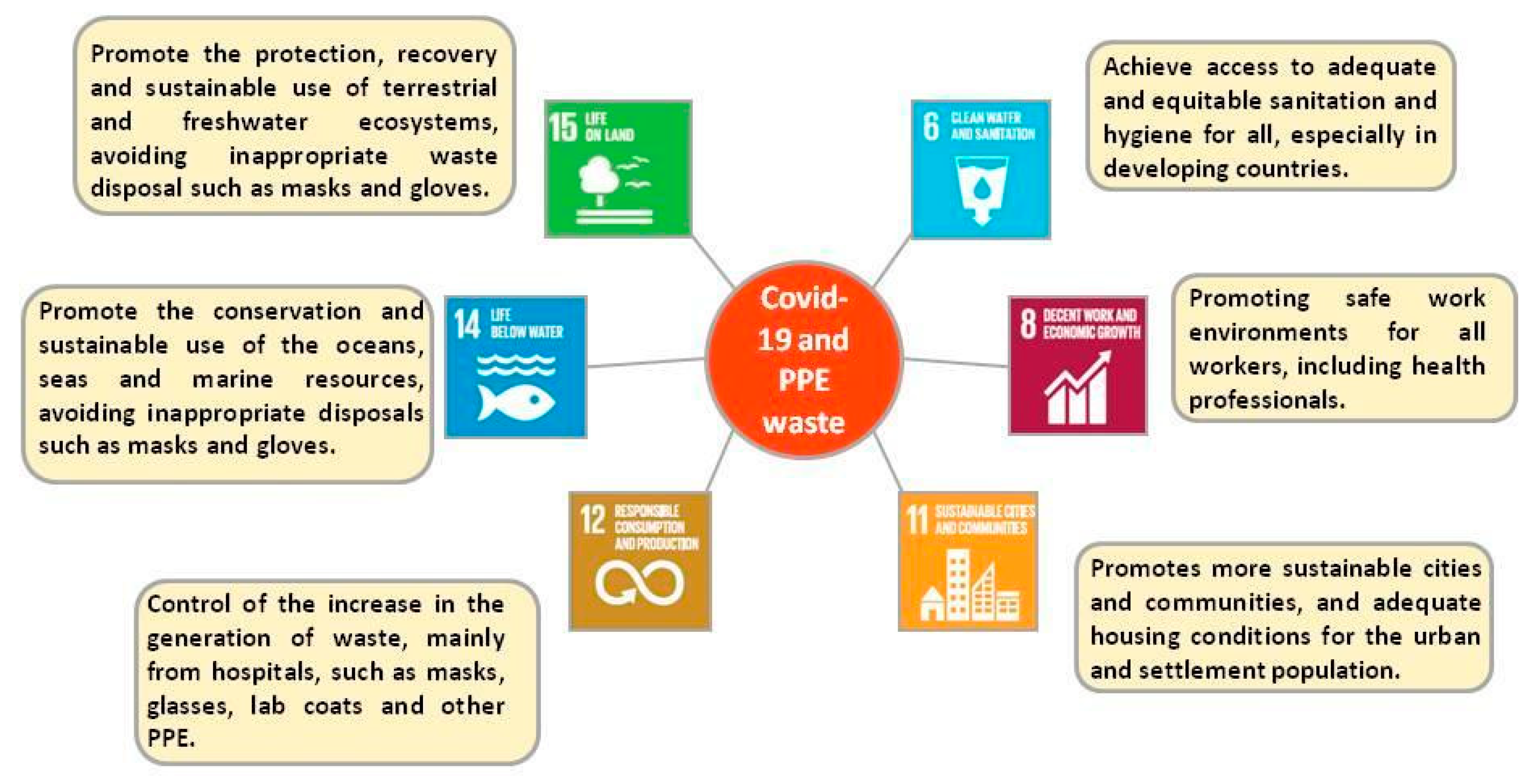
In this section, the relationship between COVID-19 and the SDGs is discussed, more specifically, the waste generated from PPE used in hospital environments. Leal Filho et al. (2020) [92] discuss, in their article “COVID-19 and the UN Sustainable Development Goals: Threat to Solidarity or an Opportunity?”, The importance of the pandemic impacts caused by COVID-19 in relation to the SDGs 1, 2, 3, 4, 5, 8, 10 and 16. However, in this study, the focus is on SDGs 8 and 12 as objectives directly achieved, due to the protection of health professionals and the generation of solid waste , respectively. Subsequently, SDGs 6, 11, 14 and 15 will be addressed, considered in this study as indirectly achieved objectives.
In the case of SDG 8, in the context of the study, the effect of COVID-19 in promoting safer work environments for all workers, including health professionals, is added here. Goal 8.8, for example, aims at safe and protected work environments for all workers, including healthcare workers, through the use of personal protective equipment (ie masks, gloves, glasses, lab coat, etc.).
The solutions need to be directed both to the protection of health professionals involved in the pandemic and to the proper management of hospital solid waste. According to Goh et al. (2020) [16] and Patrício Silva et al. (2020) [27], surgical masks should not be used for more than a few hours and should be properly discarded to avoid cross-contamination, since with the incorrect disposal of the PPE the virus can spread quickly in various public places and in the environment Natural. Thus, it is observed that at the same time that health professionals need protection, accumulations of solid hospital waste are multiplying.
In this way, COVID-19 also impacted SDG ODS 12, by increasing the generation of waste, mainly from hospitals, such as masks, glasses, white coats and other PPE. However, due to the rapid progression of the COVID-19 pandemic, the preventive measures implemented to control and mitigate its high transmission demanded a sudden increase in the demand and consumption of plastic products by the general public, health professionals and service providers [27].
In this sense, SDG 12 is aimed at ensuring sustainable standards of production and consumption, and goal 12.5 aims to substantially reduce the generation of waste through prevention, reduction, recycling and reuse by 2030 (UNDP, 2015). The consequences of COVID-19 have seriously disrupted waste management policies, especially on plastic reduction at the regional and national levels [5; 26].
It is also of great importance to highlight SDGs 6, 11, 14 and 15 which are indirectly related to the current pandemic context. The objective of SDG 6, goal 6.2, is to achieve access to adequate and equitable sanitation and hygiene for all. During this global health crisis, many people in developing countries, like Brazil, do not have access to clean water and basic sanitation. Thus, it is necessary to contemplate SDG 11, which deals with Sustainable Cities and Communities.
The goal 1.1 of SDG 11 stands out, aiming until 2030, to guarantee access for all to safe, adequate and affordable housing, and to basic services and to urbanize the favelas; target 11.5 that aims by 2030, significantly reduce the number of deaths and the number of people affected by disasters and substantially decrease the direct economic losses caused by them in relation to the global gross domestic product, including water-related disasters, with a focus to protect the poor and vulnerable people; and goal 11.6, which aims until 2030, to reduce the negative environmental impact per capita of cities, including paying special attention to air quality, municipal waste management and others.
The targets mentioned above cite issues that were very evident in this pandemic, especially in developing countries, after all, many locations do not have basic services such as sanitation and running water, millions of people are unprotected because they do not have adequate housing, among other facts that impair the effectiveness of the 2030 Agenda goals. According to Leal Filho et al. (2020) [92] had mentioned in the year 2020, these impacts are already negative for rich countries, they will probably be felt more strongly in developing countries, which do not have the capacity or resources to face the many economic and social challenges imposed by the disease. After all, the COVID-19 pandemic reveals the need for urgent action in terms of security, employment, social and public health, the environment, among others.
Consequently, the indirect negative impacts in relation to compliance with SDGs 14 and 15, resulting from the inadequate disposal of solid waste during the pandemic, are also highlighted. As mentioned in section 4, the dozens of disposable masks found on a beach on the islands of Soko in Hong Kong and on the Magdalena River in Columbia illustrate the risks to the conservation and sustainable use of the oceans, seas and marine resources (SDG 14) and the protection, recovery and promotion of sustainable use of terrestrial and freshwater ecosystems (SDG 15).
Figure 3, from the article published by Leal Filho et al. (2020) [92], was adapted to the context of this study, expanding it to include other important impacts of COVID-19 in SDGs 6, 8, 11, 12, 14 and 15, related to the management and treatment of PPE waste.
Figure 2.
Impacts of COVID-19 on the SDGs. Source: adapted from Leal Filho (2020) [92].
Figure 2.
Impacts of COVID-19 on the SDGs. Source: adapted from Leal Filho (2020) [92].
According to Chowdhury et al. (2021) [30], the importance of prioritizing environmental goals still applies in a postpandemic scenario. Few of the goal targets proved to be especially significant from a pandemic context; lockdowns helped achieve and/or prevent future environmental disasters.
Apparently, the COVID-19 outbreak has brought several positive and negative effects on the environment globally. During this outbreak, the GHGs emission, pollutants in the water, noise pollution, etcetera, have suddenly dropped due to travel restrictions and closed down industries and companies. On the other hand, plastic use increased for the food and groceries' home delivery service to maintain social distancing, hygiene, and cleanliness to reduce the spreading of the COVID-19 virus [68].
According to Mallick et al. (2021) [68] this COVID-19 pandemic seems to be preserving the UN sustainable development goals (SDGs) 2030 (namely 3, 6, 11, 12, 14, and 15) by reducing pollutants in the air and water [27]. However, the increasing use of SUPs, PPE, medical waste, and household waste has directly violated the UN-SDGs (namely, 3.3, 12.3, 12.4, and 12.5).
Finally, after analyzing and studying the literature, Table 1 summarizes the possible relationships between the Sustainable Development Goals and the COVID-19 pandemic. This table was intended to detect issues raised during the pandemic period and, thus, this article suggests the continuation of future research and possible solutions for meeting the goals of the SDG.
5. Trends, future prospects and conclusions
The COVID-19 pandemic has brought to light the dependence on plastic disposables and the fragility of solid waste management systems. Among these disposables, highlight items used as personal protective equipment (PPE), the main line of defense of health professionals, preventing them from becoming contaminated and spreading the virus among patients. PPE must be changed several times a day, as it can carry the COVID-19. Therefore, hospital waste has multiplied in the face of the pandemic, raising questions about the management of this hazardous material.
Studying the impact of this waste in the world is now an issue of extreme importance, with tons of PPE being produced and discarded daily. In addition to research on better ways to manage hospital waste, investment aimed at producing PPE with biodegradable materials has never been more important, in order to achieve a more sustainable life cycle compared with the use of petrochemical components.
In addition to the attention given to the safety of workers in the handling of PPE waste, especially at the present time, the devices adopted through the application of policies such as the shared responsibility for the life cycle of these products, reverse logistics, sectoral agreements, economic instruments, goals for reuse, recycling and the final disposal of these residues, contributes to minimizing the environmental impacts of PPE waste on the environment, as well as to reducing the use of natural resources.
Thus, it should be emphasized that, in view of the COVID-19 pandemic, it is essential to reinforce the search for concrete actions and strategies at the federal to the institutional level, in an articulated manner, among all sectors, for the implementation of guidelines aimed at the improvement of solid waste management practices. In particular, this should address the huge increase in PPE waste, which can contribute to the generation of micro and nanoplastics in the environment with adverse impacts on ecosystems.
It was noted that the Wuhan medical waste management experience, in the context of the COVID-19 pandemic, can be presented as a valuable example of an emergency response that can inform cities around the world about the formulation of environmental policies that occur simultaneously with pandemic control and other urgent environmental stressors.
It is of great concern that the pandemic presents a concrete threat to the commitment made by nations regarding the achievement of the UN sustainable development goals (SDGs), especially with regard to the environment, health and well-being, notably the much needed reduction in the generation of waste. This study provided an in-depth theoretical insight into the impacts of the use, in large volumes, of PPE in hospital environments, necessary for the direct protection of workers and indirect protection of patients, but which is generating a serious problem in the form of waste, as well as showed the possibility of using biodegradable personal protective equipment to mitigate environmental impacts.
The discussions presented in this article, based on the extensive literature, highlight the adverse effects of PPE, due to the materials from which it is produced and its intensive use, with serious consequences in relation to the reach of the UN SDGs 6, 8, 11, 12 , 14 and 15. From the importance of sanitation and access to water for the hygiene of people, the conditions of protection and safety for health professionals, the influence of management in sustainable cities, responsible production and consumption, waste management, even the impacts caused on soils and water resources were addressed in this article.
Thus, it is suggested to encourage new research related to the management of solid waste and treatments during the pandemic, be it regarding hospital or domestic waste, as well as, the importance and need to address topics such as new textiles, smart textiles for the manufacture of PPE.
Author Contributions
Conceptualization, validation, resources and preparation A.L.V.C.; methodology, formal analysis and investigation, A.P.P.; data curation and writing—review and editing, I.G.;. All authors have read and agreed to the published version of the manuscript.
Funding
This research received no external funding.
Data Availability Statement
Not applicable.
Acknowledgments
We thank the Ânima Institute and the Government of the state of Santa Catarina for the scholarship.
Conflicts of Interest
The authors declare no conflict of interest.
Abbreviations
| ABES | Brazilian Association of Sanitary Engineering |
| ABRELPE | Brazilian Association of Public Cleaning and Special Waste Companies |
| ANVISA | Brazilian Health Regulatory Agency |
| ABS | acrylonitrile butadiene styrene |
| BMW | Bio-medical waste |
| EFL | embedded filtration layer |
| FMs | face masks |
| GHGs | greenhouse gases |
| LCA | Life cycle assessment |
| LMICs | low and middle-income countries |
| MPs | microplastics |
| MSW | municipal solid waste |
| NWF | non-woven fabric |
| PA | nylon - polyamide |
| PCB | printed circuit board |
| PET | polyethylene terephthalate |
| PE | polyethylene |
| PLA | poly (lactic acid) |
| PP | polypropylene |
| PPE | personal protective equipment |
| PS | polystyrene |
| PVC | polyvinyl chloride |
| SUPs | single |
| use | plastics |
| Y | BMW |
| yellow category bio | medical waste |
References
- Segars, J.; Katler, Q.; McQueen, D.B.; Kotlyar, A.; Glenn, T.; Knight, Z.; Feinberg, E.C.; Taylor, H.S.; Toner, J.P.; Kawwass, J.F. Prior and Novel Coronaviruses, Coronavirus Disease 2019 (COVID-19), and Human Reproduction: What Is Known? Fertil. Steril. 2020, 113, 1140–1149. [Google Scholar] [CrossRef] [PubMed]
- Rahman, M.Z.; Hoque, M.E.; Alam, M.R.; Rouf, M.A.; Khan, S.I.; Xu, H.; Ramakrishna, S. Face Masks to Combat Coronavirus (COVID-19)—Processing, Roles, Requirements, Efficacy, Risk and Sustainability. Polymers (Basel). 2022, 14. [Google Scholar] [CrossRef]
- Hopman, J. Managing COVID-19 in Low- and Middle-Income Countries Joost. N. Engl. J. Med. 2020, 382, 1677–1679. [Google Scholar] [CrossRef]
- Bong, C.L.; Brasher, C.; Chikumba, E.; McDougall, R.; Mellin-Olsen, J.; Enright, A. The COVID-19 Pandemic: Effects on Low- and Middle-Income Countries. Anesth. Analg. 2020, 131, 86–92. [Google Scholar] [CrossRef]
- Pradhan, D.; Biswasroy, P.; Kumar naik, P.; Ghosh, G.; Rath, G. A Review of Current Interventions for COVID-19 Prevention. Arch. Med. Res. 2020, 51, 363–374. [Google Scholar] [CrossRef]
- Nzediegwu, C.; Chang, S.X. Improper Solid Waste Management Increases Potential for COVID-19 Spread in Developing Countries. Resour. Conserv. Recycl. 2020, 161, 104947. [Google Scholar] [CrossRef] [PubMed]
- Das, O.; Neisiany, R.E.; Capezza, A.J.; Hedenqvist, M.S.; Försth, M.; Xu, Q.; Jiang, L.; Ramakrishna, S. The Need for Fully Bio-Based Facemasks to Counter Coronavirus Outbreaks: A Perspective. Sci. Total Environ. 2020, 139611. [Google Scholar] [CrossRef]
- Mitchell, A.; Spencer, M.; Edmiston, C. Role of Healthcare Apparel and Other Healthcare Textiles in the Transmission of Pathogens: A Review of the Literature. J. Hosp. Infect. 2015. [Google Scholar] [CrossRef]
- Ragazzi, M.; Rada, E.C.; Schiavon, M. Municipal Solid Waste Management during the SARS-COV-2 Outbreak and Lockdown Ease: Lessons from Italy. Sci. Total Environ. 2020, 745, 141159. [Google Scholar] [CrossRef]
- Sharma, H.B.; Vanapalli, K.R.; Cheela, V.S.; Ranjan, V.P.; Jaglan, A.K.; Dubey, B.; Goel, S.; Bhattacharya, J. Challenges, Opportunities, and Innovations for Effective Solid Waste Management during and Post COVID-19 Pandemic. Resour. Conserv. Recycl. 2020, 162, 105052. [Google Scholar] [CrossRef]
- Boots, B.; Russell, C.W.; Green, D.S. Effects of Microplastics in Soil Ecosystems: Above and below Ground. Environ. Sci. Technol. 2019, 53, 11496–11506. [Google Scholar] [CrossRef] [PubMed]
- Fadare, O.O.; Okoffo, E.D. Covid-19 Face Masks: A Potential Source of Microplastic Fibers in the Environment. Sci. Total Environ. 2020, 737, 140279. [Google Scholar] [CrossRef]
- Kulkarni, B.N.; Anantharama, V. Repercussions of COVID-19 Pandemic on Municipal Solid Waste Management: Challenges and Opportunities. Sci. Total Environ. 2020, 743, 140693. [Google Scholar] [CrossRef]
- Herron, J.B.T.; Dennis, J.; Brennan, P.A. Coronavirus Antibody Positive Tests and Continued Use of Personal Protective Equipment throughout the Pandemic. Br. J. Oral Maxillofac. Surg. 2020, 1–9. [Google Scholar] [CrossRef]
- Woolley, K.; Smith, R.; Arumugam, S. Personal Protective Equipment (PPE) Guidelines, Adaptations and Lessons during the COVID-19 Pandemic. Ethics, Med. Public Heal. 2020, 14, 100546. [Google Scholar] [CrossRef]
- Goh, Y.; Tan, B.Y.Q.; Bhartendu, C.; Ong, J.J.Y.; Sharma, V.K. The Face Mask : How a Real Protection Becomes a Psychological Symbol during Covid-19 ? Brain Behav. Immun. 2020, 0–1. [Google Scholar] [CrossRef]
- Kampf, G.; Scheithauer, S.; Lemmen, S.; Saliou, P.; Suchomel, M. COVID-19-Associated Shortage of Alcohol-Based Hand Rubs, Face Masks, Medical Gloves, and Gowns : Proposal for a Risk-Adapted Approach to Ensure Patient and Healthcare Worker Safety. J. Hosp. Infect. 2020, 105, 424–427. [Google Scholar] [CrossRef] [PubMed]
- Man, P. De; Straten, B. Van; Dobbelsteen, J. Van Den; Eijk, A. Van Der; Horeman, T.; Koeleman, H. Sterilization of Disposable Face Masks by Means of Standardized Dry and Steam Sterilization Processes ; an Alternative in the Fight against Mask Shortages Due to COVID-19. J. Hosp. Infect. 2020, 105, 356–357. [Google Scholar] [CrossRef] [PubMed]
- Grinshpun, S.A.; Yermakov, M.; Khodoun, M. Autoclave Sterilization and Ethanol Treatment of Re-Used Surgical Masks and N95 Respirators during COVID-19: Impact on Their Performance and Integrity. J. Hosp. Infect. 2020, 105, 608–614. [Google Scholar] [CrossRef] [PubMed]
- Gnaneswaran, V.; Mudhunuri, B.; Bishu, R.R.A. A Study of Latex and Vinyl Gloves: Performance versus Allergy Protection Properties. Int. J. Ind. Ergon. 2008, 38, 171–181. [Google Scholar] [CrossRef]
- Kampf, G.; Todt, D.; Pfaender, S.; Steinmann, E. Persistence of Coronaviruses on Inanimate Surfaces and Their Inactivation with Biocidal Agents. J. Hosp. Infect. 2020, 104, 246–251. [Google Scholar] [CrossRef] [PubMed]
- Jones, R.M.; Bleasdale, S.C.; Maita, D.; Brosseau, L.M. A Systematic Risk-Based Strategy to Select Personal Protective Equipment for Infectious Diseases. Am. J. Infect. Control 2019, 000, 1–6. [Google Scholar] [CrossRef]
- Pedrosa, M.C.; Farraye, F.A.; Shergill, A.K.; Banerjee, S.; Desilets, D.; Diehl, D.L.; Kaul, V.; Kwon, R.S.; Mamula, P.; Rodriguez, S.A.; et al. Minimizing Occupational Hazards in Endoscopy: Personal Protective Equipment, Radiation Safety, and Ergonomics. Gatrointestinal Endosc. 2010, 72, 227–235. [Google Scholar] [CrossRef]
- Chughtai, A.A.; Chen, X.; Macintyre, C.R.; M App, E. Risk of Self-Contamination during Doffing of Personal Protective Equipment. Am. J. Infect. Control 2018. [Google Scholar] [CrossRef]
- Mueller, A. V.; Eden, M.J.; Oakes, J.M.; Bellini, C.; Fernandez, L.A. Quantitative Method for Comparative Assessment of Particle Removal Efficiency of Fabric Masks as Alternatives to Standard Surgical Masks for PPE. Matter 2020, 3, 950–962. [Google Scholar] [CrossRef]
- Chen, C.; Chen, J.; Fang, R.; Ye, F.; Yang, Z.; Wang, Z.; Shi, F.; Tan, W. What Medical Waste Management System May Cope With COVID-19 Pandemic: Lessons from Wuhan. Resour. Conserv. Recycl. 2021, 170, 105600. [Google Scholar] [CrossRef] [PubMed]
- Patrício Silva, A.L.; Prata, J.C.; Walker, T.R.; Campos, D.; Duarte, A.C.; Soares, A.M.V.M.; Barcelò, D.; Rocha-Santos, T. Rethinking and Optimising Plastic Waste Management under COVID-19 Pandemic: Policy Solutions Based on Redesign and Reduction of Single-Use Plastics and Personal Protective Equipment. Sci. Total Environ. 2020, 742, 140565. [Google Scholar] [CrossRef] [PubMed]
- Shakil, M.H.; Munim, Z.H.; Tasnia, M.; Sarowar, S. COVID-19 and the Environment: A Critical Review and Research Agenda. Sci. Total Environ. 2020, 745, 141022. [Google Scholar] [CrossRef] [PubMed]
- WHO Interim Guidance April 2020: Water, Sanitation, Hygiene and Waste Management for the COVID-19 VirusInterim Guidance April 2020. World Heal. Organ. 2020, 1–9.
- Chowdhury, R.B.; Khan, A.; Mahiat, T.; Dutta, H.; Tasmeea, T.; Binth Arman, A.B.; Fardu, F.; Roy, B.B.; Hossain, M.M.; Khan, N.A.; et al. Environmental Externalities of the COVID-19 Lockdown: Insights for Sustainability Planning in the Anthropocene. Sci. Total Environ. 2021, 783, 1–16. [Google Scholar] [CrossRef]
- Thind, P.S.; Sareen, A.; Singh, D.D.; Singh, S.; John, S. Compromising Situation of India’s Bio-Medical Waste Incineration Units during Pandemic Outbreak of COVID-19: Associated Environmental-Health Impacts and Mitigation Measures. Environ. Pollut. 2021, 276, 116621. [Google Scholar] [CrossRef]
- Singh, V.; Mishra, V. Environmental Impacts of Coronavirus Disease 2019 (COVID-19). Bioresour. Technol. Reports 2021, 15, 100744. [Google Scholar] [CrossRef]
- Sharma, V.; De Beni, D.; Sachs Robertson, A.; Maurizio, F. Why the Promotion of Family Planning Makes More Sense Now Than Ever Before? J. Health Manag. 2020, 22, 206–214. [Google Scholar] [CrossRef]
- Dudek, K.K.; Gatt, R.; Grima, J.N. Surgical Face Masks as a Potential Source for Microplastic Pollution in the COVID-19 Scenario Tadele. Mar. Pollut. Bull. 2019, 111517. [Google Scholar] [CrossRef]
- Bown, C.P. COVID-19_ As Exportações Chinesas de Suprimentos Médicos Oferecem Um Raio de Esperança _ PIIE Available online: https://www.piie.com/blogs/trade-and-investment-policy-watch/covid-19-chinas-exports-medical-supplies-provide-ray-hope.
- Benson, N.U.; Fred-Ahmadu, O.H.; Bassey, D.E.; Atayero, A.A. COVID-19 Pandemic and Emerging Plastic-Based Personal Protective Equipment Waste Pollution and Management in Africa. J. Environ. Chem. Eng. 2021, 9, 105222. [Google Scholar] [CrossRef] [PubMed]
- Kalina, M.; Tilley, E. “This Is Our next Problem”: Cleaning up from the COVID-19 Response. Waste Manag. 2020, 108, 202–205. [Google Scholar] [CrossRef]
- Mangindaan, D.; Adib, A.; Febrianta, H.; Hutabarat, D.J.C. Systematic Literature Review and Bibliometric Study of Waste Management in Indonesia in the COVID-19 Pandemic Era. Sustain. 2022, 14. [Google Scholar] [CrossRef]
- Kothari, R.; Sahab, S.; Singh, H.M.; Singh, R.P.; Singh, B.; Pathania, D.; Singh, A.; Yadav, S.; Allen, T.; Singh, S.; et al. COVID-19 and Waste Management in Indian Scenario: Challenges and Possible Solutions. Environ. Sci. Pollut. Res. 2021, 28, 52702–52723. [Google Scholar] [CrossRef] [PubMed]
- Agamuthu, P.; Barasarathi, J. Clinical Waste Management under COVID-19 Scenario in Malaysia. Waste Manag. Res. 2021, 39, 18–26. [Google Scholar] [CrossRef] [PubMed]
- Shammi, M.; Rahman, M.M.; Ali, M.L.; Khan, A.S.M.; Siddique, M.A.B.; Ashadudzaman, M.; Bodrud-Doza, M.; Alam, G.M.M.; Tareq, S.M. Application of Short and Rapid Strategic Environmental Assessment (SEA) for Biomedical Waste Management in Bangladesh. Case Stud. Chem. Environ. Eng. 2022, 5, 100177. [Google Scholar] [CrossRef]
- Yu, J.; Wang, P.; Ni, F.; Cizdziel, J.; Wu, D.; Zhao, Q.; Zhou, Y. Characterization of Microplastics in Environment by Thermal Gravimetric Analysis Coupled with Fourier Transform Infrared Spectroscopy. Mar. Pollut. Bull. 2019, 145, 153–160. [Google Scholar] [CrossRef]
- Eriksen, M.; Mason, S.; Wilson, S.; Box, C.; Zellers, A.; Edwards, W.; Farley, H.; Amato, S. Microplastic Pollution in the Surface Waters of the Laurentian Great Lakes. Mar. Pollut. Bull. 2013, 77, 177–182. [Google Scholar] [CrossRef]
- Geyer, R.; Jambeck, J.R.; Law, K.L. Production, Use, and Fate of All Plastics Ever Made - Supplementary Information. Sci. Adv. 2017, 3, 19–24. [Google Scholar] [CrossRef] [PubMed]
- Plastics Europe PlasticsEurope Operation Clean Sweep. 2018, 1–28.
- Karlsson, T.M.; Arneborg, L.; Broström, G.; Almroth, B.C.; Gipperth, L.; Hassellöv, M. The Unaccountability Case of Plastic Pellet Pollution. Mar. Pollut. Bull. 2018, 129, 52–60. [Google Scholar] [CrossRef]
- Browne, M.A.; Crump, P.; Niven, S.J.; Teuten, E.; Tonkin, A.; Galloway, T.; Thompson, R. Accumulation of Microplastic on Shorelines Woldwide: Sources and Sinks. Environ. Sci. Technol. 2011, 45, 9175–9179. [Google Scholar] [CrossRef] [PubMed]
- Prata, J.C.; Silva, A.L.P.; Walker, T.R.; Duarte, A.C.; Rocha-Santos, T. COVID-19 Pandemic Repercussions on the Use and Management of Plastics. Environ. Sci. Technol. 2020. [Google Scholar] [CrossRef] [PubMed]
- Adhanom, T. WHO Director-General’s Opening Remarks at the Media Briefing on COVID-19 Available online: https://www.who.int/dg/speeches/detail/who-director-general-s-opening-remarks-at-the-media-briefing-on-covid-19---11-march-2020.
- Gall, S.C.; Thompson, R.C. The Impact of Debris on Marine Life. Mar. Pollut. Bull. 2015, 92, 170–179. [Google Scholar] [CrossRef]
- Suhrhoff, T.J.; Scholz-Böttcher, B.M. Qualitative Impact of Salinity, UV Radiation and Turbulence on Leaching of Organic Plastic Additives from Four Common Plastics - A Lab Experiment. Mar. Pollut. Bull. 2016, 102, 84–94. [Google Scholar] [CrossRef] [PubMed]
- Andrady, A.L. Microplastics in the Marine Environment. Mar. Pollut. Bull. 2011, 62, 1596–1605. [Google Scholar] [CrossRef] [PubMed]
- Zhang, K.; Shi, H.; Peng, J.; Wang, Y.; Xiong, X.; Wu, C.; Lam, P.K.S. Microplastic Pollution in China’s Inland Water Systems: A Review of Findings, Methods, Characteristics, Effects, and Management. Sci. Total Environ. 2018, 630, 1641–1653. [Google Scholar] [CrossRef] [PubMed]
- Jiang, P.; Zhao, S.; Zhu, L.; Li, D. Microplastic-Associated Bacterial Assemblages in the Intertidal Zone of the Yangtze Estuary. Sci. Total Environ. 2018, 624, 48–54. [Google Scholar] [CrossRef] [PubMed]
- Oberbeckmann, S.; Löder, M.G.J.; Labrenz, M. Marine Microplastic-Associated Biofilms - A Review. Environ. Chem. 2015, 12, 551–562. [Google Scholar] [CrossRef]
- da Costa, J.P.; Santos, P.S.M.; Duarte, A.C.; Rocha-Santos, T. (Nano)Plastics in the Environment - Sources, Fates and Effects. Sci. Total Environ. 2016, 566–567, 15–26. [Google Scholar] [CrossRef]
- Windsor, F.M.; Durance, I.; Horton, A.A.; Thompson, R.C.; Tyler, C.R.; Ormerod, S.J. A Catchment-Scale Perspective of Plastic Pollution. Glob. Chang. Biol. 2019, 25, 1207–1221. [Google Scholar] [CrossRef] [PubMed]
- Hwang, J.; Choi, D.; Han, S.; Choi, J.; Hong, J. An Assessment of the Toxicity of Polypropylene Microplastics in Human Derived Cells. Sci. Total Environ. 2019, 684, 657–669. [Google Scholar] [CrossRef] [PubMed]
- Yellishetty, M.; Mudd, G.M.; Ranjith, P.G.; Tharumarajah, A. Environmental Life-Cycle Comparisons of Steel Production and Recycling: Sustainability Issues, Problems and Prospects. Environ. Sci. Policy 2011, 14, 650–663. [Google Scholar] [CrossRef]
- Lee, A.W.L.; Neo, E.R.K.; Khoo, Z.-Y.; Yeo, Z.; Tan, Y.S.; Chng, S.; Yan, W.; Lok, B.K.; Low, J.S.C. Life Cycle Assessment of Single-Use Surgical and Embedded Filtration Layer (EFL) Reusable Face Mask. Resour. Conserv. Recycl. 2021, 170, 105580. [Google Scholar] [CrossRef]
- Boa Vista, H.; Santos, M.; Shibao, F. Produto Sustentável: Equipamento de Proteção Individual Fabricado Com Plástico Verde. Rev. Gestão Ambient. e Sustentabilidade 2015, 4, 59–71. [Google Scholar] [CrossRef]
- Sin, L.T.; Tueen, B.S. Overview of Biodegradable Polymers and Poly(Lactic Acid); 2019; ISBN 9780128144725.
- Amulya, K.; Katakojwala, R.; Ramakrishna, S.; Venkata Mohan, S. Low Carbon Biodegradable Polymer Matrices for Sustainable Future. Compos. Part C Open Access 2021, 4, 100111. [Google Scholar] [CrossRef]
- Salazar-Sánchez, M.D.R.; Cañas-Montoya, J.A.; Villada-Castillo, H.S.; Solanilla-Duque, J.F.; Rodríguez-Herrera, R.; Ávalos-Belmontes, F. Biogenerated Polymers: An Enviromental Alternative. DYNA 2020, 87, 75–84. [Google Scholar] [CrossRef]
- Pang, M.; Huang, Y.; Meng, F.; Zhuang, Y.; Liu, H.; Du, M.; Ma, Q.; Wang, Q.; Chen, Z.; Chen, L.; et al. Application of Bacterial Cellulose in Skin and Bone Tissue Engineering. Eur. Polym. J. 2020, 122, 109365. [Google Scholar] [CrossRef]
- Foresti, R.; Ghezzi, B.; Vettori, M.; Bergonzi, L.; Attolino, S.; Rossi, S.; Tarabella, G.; Vurro, D.; Zeppelin, D. von; Iannotta, S.; et al. 3D Printed Masks for Powders and Viruses Safety Protection Using Food Grade Polymers: Empirical Tests. Polymers (Basel). 2021, 13, 1–13. [Google Scholar] [CrossRef]
- Jiang, H.; Luo, D.; Wang, L.; Zhang, Y.; Wang, H.; Wang, C. A Review of Disposable Facemasks during the COVID-19 Pandemic: A Focus on Microplastics Release. Chemosphere 2023, 312, 137178. [Google Scholar] [CrossRef] [PubMed]
- Mallick, S.K.; Pramanik, M.; Maity, B.; Das, P.; Sahana, M. Plastic Waste Footprint in the Context of COVID-19: Reduction Challenges and Policy Recommendations towards Sustainable Development Goals. Sci. Total Environ. 2021, 796, 1–22. [Google Scholar] [CrossRef] [PubMed]
- Moland, M.P.G.; Caldas, S. Can the Human Coronavirus Epidemic Also Spread through Solid Waste? Waste Manag. Res. 2020, 38, 485–486. [Google Scholar] [CrossRef]
- OSHA Solid Waste and Wastewater Management Workers and Employers | Occupational Safety and Health Administration Available online: https://www.osha.gov/coronavirus/control-prevention/solid-waste-wastewater-mgmt.
- Comission, E. European Commission Waste Management in the Context of the Coronavirus Crisis. 2020, 1–5. [Google Scholar]
- ACRPLUS; Management, A. of C. and R. for sustainable R. Municipal Waste Management and Covid-19 Available online: https://www.acrplus.org/en/municipal-waste-management-covid-19.
- ABES Recomendações Para a Gestão de Resíduos Em Situação de Pandemia Por Coronavírus (COVID-19). 2020, 3–9.
- ABRELPE RECOMENDAÇÕES PARA A GESTÃO DE RESÍDUOS SÓLIDOS DURANTE A PANDEMIA DE CORONAVÍRUS (COVID-19). 2020, 1–5.
- Brasil Ministério Da Saúde RESOLUÇÃO DA DIRETORIA COLEGIADA – RDC No 15 , DE 28 DE MARÇO. Ministério da Saúde. Agência Nac. Vigilância Sanitária 2014, 8.
- UNEP UNEP - UN Environment Programme Available online: https://www.unenvironment.org/.
- Klemeš, J.J.; Fan, Y. Van; Tan, R.R.; Jiang, P. Minimising the Present and Future Plastic Waste, Energy and Environmental Footprints Related to COVID-19. Renew. Sustain. Energy Rev. 2020, 127. [Google Scholar] [CrossRef]
- Zambrano-Monserrate, M.A.; Ruano, M.A.; Sanchez-Alcalde, L. Indirect Effects of COVID-19 on the Environment. Sci. Total Environ. 2020, 728, 138813. [Google Scholar] [CrossRef] [PubMed]
- Windfeld, E.S.; Brooks, M.S.L. Medical Waste Management - A Review. J. Environ. Manage. 2015, 163, 98–108. [Google Scholar] [CrossRef]
- Alpizar, F.; Carlsson, F.; Lanza, G.; Carney, B.; Daniels, R.C.; Jaime, M.; Ho, T.; Nie, Z.; Salazar, C.; Tibesigwa, B.; et al. A Framework for Selecting and Designing Policies to Reduce Marine Plastic Pollution in Developing Countries. Environ. Sci. Policy 2020, 109, 25–35. [Google Scholar] [CrossRef]
- Corburn, J.; Vlahov, D.; Mberu, B.; Riley, L.; Caiaffa, W.T.; Rashid, S.F.; Ko, A.; Patel, S.; Jukur, S.; Martínez-Herrera, E.; et al. Slum Health: Arresting COVID-19 and Improving Well-Being in Urban Informal Settlements. J. Urban Heal. 2020, 97, 348–357. [Google Scholar] [CrossRef]
- Singh, N.; Tang, Y.; Zhang, Z.; Zheng, C. COVID-19 Waste Management: Effective and Successful Measures in Wuhan, China. Resour. Conserv. Recycl. 2020, 163, 10–11. [Google Scholar] [CrossRef]
- Singh, N.; Tang, Y.; Ogunseitan, O.A. Environmentally Sustainable Management of Used Personal Protective Equipment. Environ. Sci. Technol. 2020, 54, 8500–8502. [Google Scholar] [CrossRef] [PubMed]
- Heidari, M.; Garnaik, P.P.; Dutta, A. The Valorization of Plastic via Thermal Means: Industrial Scale Combustion Methods; Elsevier Inc., 2018; ISBN 9780128131404.
- Gunasekaran, K.; Mghili, B.; Saravanakumar, A. Personal Protective Equipment (PPE) Pollution Driven by the COVID-19 Pandemic in Coastal Environment, Southeast Coast of India. Mar. Pollut. Bull. 2022, 180, 113769. [Google Scholar] [CrossRef] [PubMed]
- Haddad, M. Ben; De-la-Torre, G.E.; Abelouah, M.R.; Hajji, S.; Alla, A.A. Personal Protective Equipment (PPE) Pollution Associated with the COVID-19 Pandemic along the Coastline of Agadir, Morocco. Sci. Total Environ. 2021, 798, 149282. [Google Scholar] [CrossRef]
- Patrício Silva, A.L.; Prata, J.C.; Duarte, A.C.; Barcelò, D.; Rocha-Santos, T. An Urgent Call to Think Globally and Act Locally on Landfill Disposable Plastics under and after Covid-19 Pandemic: Pollution Prevention and Technological (Bio) Remediation Solutions. Chem. Eng. J. 2021, 426. [Google Scholar] [CrossRef]
- Oldekop, J.A.; Horner, R.; Hulme, D.; Adhikari, R.; Agarwal, B.; Alford, M.; Bakewell, O.; Banks, N.; Barrientos, S.; Bastia, T.; et al. COVID-19 and the Case for Global Development. World Dev. 2020, 134, 105044. [Google Scholar] [CrossRef]
- Yoshino, N.; Taghizadeh-Hesary, F.; Otsuka, M. Covid-19 and Optimal Portfolio Selection for Investment in Sustainable Development Goals. Financ. Res. Lett. 2021, 38, 101695. [Google Scholar] [CrossRef]
- Chabbott, C.; Sinclair, M. SDG 4 and the COVID-19 Emergency: Textbooks, Tutoring, and Teachers. Prospects 2020, 49, 51–57. [Google Scholar] [CrossRef] [PubMed]
- Pan, S.L.; Zhang, S. From Fighting COVID-19 Pandemic to Tackling Sustainable Development Goals: An Opportunity for Responsible Information Systems Research. Int. J. Inf. Manage. 2020, 55, 102196. [Google Scholar] [CrossRef] [PubMed]
- Leal Filho, W.; Brandli, L.L.; Salvia, A.L.; Rayman-Bacchus, L.; Platje, J. COVID-19 and the UN Sustainable Development Goals: Threat to Solidarity or an Opportunity? Sustain. 2020, 12, 1–14. [Google Scholar] [CrossRef]
Figure 1.
PPE and its impact on the environment 2020. Source: authors, 2022.
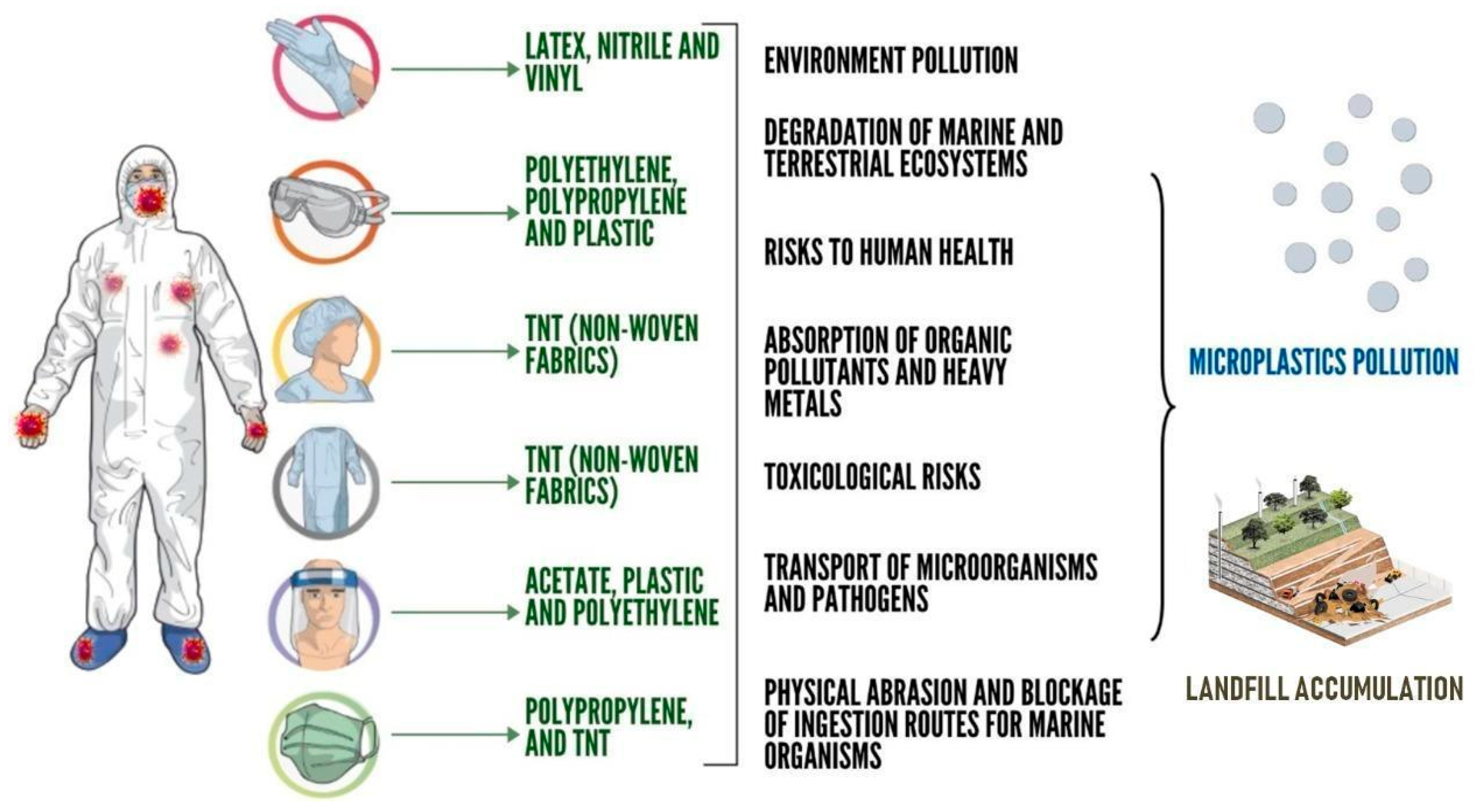

Table 1.
Relationships between the Sustainable Development Goals and the COVID-19 pandemic.
| SDG | Target | Relation to the COVID-19 pandemic |
|---|---|---|
|
6.2 6.3 6.6 |
Many countries do not have access to basic sanitation and adequate hygiene. In this way, it contributed to the dissemination of the COVID-19 pandemic. To improve water quality, care is needed such as reducing pollution, eliminating waste and minimizing the release of chemicals and hazardous materials. For the protection of aquatic ecosystems, good waste management is necessary. The COVID-19 pandemic showed a significant increase in the inappropriate disposal of PPE. Highlighting that many PPEs were located in water resources. |
 |
8.8 |
COVID-19 pandemic affected the lives of many workers, especially health professionals. Some health professionals were left vulnerable without adequate protection, especially in developing countries. |
|
11.1 11.5 11.6 |
COVID-19 pandemic showed the vulnerability of thousands of people without basic housing conditions. In this way, aggravating the spread of the virus. COVID-19 pandemic highlighted vulnerability and social, economic and environmental unpreparedness at a global level. Protection policies against this type of disaster, especially for people in situations of vulnerability and poverty, must be urgently rethought. During the lockdown, a decrease in pollution was observed in some locations. In this way, rethinking post-pandemic social behavior is inevitable. |
 |
12.4 12.5 |
Through the COVID-19 pandemic, the importance of achieving the environmentally correct management of chemical products and all waste throughout their life cycle was observed. This includes biomedical waste. Through the COVID-19 pandemic, the importance of substantially reducing the generation of waste through prevention, reduction, recycling and reuse was observed. In addition to thinking about the proper disposal of waste such as PPE and household waste, it is necessary to explore environmentally correct materials, such as upcycling techniques and biodegradable products. |
 |
14.1 | Highlighting again the protection of aquatic ecosystems and correct waste management. In order to significantly prevent and reduce marine pollution of all kinds, in particular from land-based activities, including marine debris and nutrient pollution. |
 |
15.2 15.5 |
In addition to the concern with terrestrial pollution through inappropriate waste disposal, the concern with the conservation of natural habitats, wild animals, deforestation, among others, was evident. In this way, the proliferation of new viruses is also avoided. |
Source: authors, 2022.
Disclaimer/Publisher’s Note: The statements, opinions and data contained in all publications are solely those of the individual author(s) and contributor(s) and not of MDPI and/or the editor(s). MDPI and/or the editor(s) disclaim responsibility for any injury to people or property resulting from any ideas, methods, instructions or products referred to in the content. |
© 2023 by the authors. Licensee MDPI, Basel, Switzerland. This article is an open access article distributed under the terms and conditions of the Creative Commons Attribution (CC BY) license (http://creativecommons.org/licenses/by/4.0/).
Copyright: This open access article is published under a Creative Commons CC BY 4.0 license, which permit the free download, distribution, and reuse, provided that the author and preprint are cited in any reuse.


