

Submitted:
21 April 2023
Posted:
23 April 2023
You are already at the latest version
Abstract
Poverty alleviation must be carried out in a planned and sustainable manner by the central government and regional governments, the private sector, and the entire community to achieve a prosperous society by getting special attention from the government. This study aims to analyze the impact of the non-cash food assistance program on poverty alleviation, stunting and economic problems using a public private partnership (PPP) approach that involves the role of the government, the private sector and the community. This study uses a qualitative-explorative research method to examine Indonesia's non-cash food assistance program as a national initiative to fight poverty in the form of food. Data were collected from interviews, field observations, and relevant literature, then Nvivo 12 Pro was used to analyze the results. The location of this research is in Indonesia, namely Takalar Regency. The results of the study show that the implementation of the non-cash basic food assistance program has been effective. The involvement of the government, the private sector, and the community shows this. The success factors for the basic food assistance program are alleviating poverty in Indonesia, reducing stunting rates, and increasing economic growth because people are given a place to be part of small businesses. From the results of this analysis it was concluded that the non-cash basic food assistance program is a special program that can overcome various social problems in society. So that poverty alleviation programs are expected to be sustainable and improved to provide benefits for people's welfare. The implementation of the food aid program also involved several cross-sectoral efforts to channel government assistance.
Keywords:
Poverty: Non-Cash Food Assistance
; Stunting
; Economic Growth
; Public Private Partnership
1. Introduction
To make the community more prosperous, efforts must be made to end poverty. This program requires the involvement of the government, the private sector, and the community in sustainably achieving development goals (KC et al., 2021; Toerien, 2022). The involvement of all sectors is needed as an effort to pay more attention to the community's welfare through government policies or initiatives (Dowling, 2017). The Government of Indonesia's efforts, under President Joko Widodo, in responding to the United Nations program related to poverty reduction are described in Presidential Regulation 15 of 2010 of the Republic of Indonesia concerning the Acceleration of Poverty Reduction. This policy becomes the basis for all existing government structures at the central level and even in the regions to design programs as a follow-up to existing policies. Every citizen must be empowered, given services, and guaranteed a decent life by the government (Roalkvam, 2014). One of the government's programs to overcome poverty is non-cash food assistance (Bantuan Pangan Non-Tunai, BPNT), originating from the Indonesian state revenue and expenditure budget. The program is implemented by Presidential Regulation Number 63 of 2017 concerning the distribution of non-cash social assistance, which forms the basis and mechanism for implementing the program. The program focuses on assisting people experiencing poverty in Indonesia through food assistance. It is intended that people can meet their daily needs by paying attention to nutrition and vitamins so that this non-cash food assistance program can impact poverty and address the problem of stunting in Indonesia.
The main goal of the non-cash food assistance program (Bantuan Pangan Non-Tunai, BPNT) in Indonesia is to help people who are considered poor fulfill their fundamental rights, lower their living costs, and improve their quality of life. In this case, poverty alleviation is a priority target for the government, which is targeting 2024 and has committed to efforts to accelerate poverty reduction by increasing the budget. To carry out this policy, the critical thing that needs to be considered is the role of all elements in the state (Muleya et al., 2020). There is a need to increase the efficiency of non-cash food assistance programs in fighting poverty; it is necessary to involve several actors: the government, the private sector, and the community. (McKague et al., 2015). The collaborative role of the government, the private sector, and the community are significant in overcoming Indonesia's poverty (Manaf et al., 2018). The involvement of elements other than the government in implementing the Indonesian government's program to overcome poverty is urgently needed. So that collaboration between the government, the private sector, and the community in implementing non-cash food assistance programs (Bantuan Pangan Non-Tunai i, BPNT) can provide positive things for the actors involved.
Research related to non-cash food assistance programs (Bantuan Pangan Non-Tunai, BPNT) in overcoming poverty has been carried out by Fadlurrohim et al. (2020); from the results of the research, food assistance will then be distributed in a non-cash method provided by the government and intended for beneficiary families. Distribution of this assistance is carried out every month via electronic money in collaboration with the Channeling Bank. In this study, it was shown that its implementation with the banking system in order to bring transparency and accountability to a program. The research was conducted in Cimahi City, West Java. Then research Julianto (2020) conducted in Sitinjau Laut District, Kerinci Regency. In this study, implementing the non-cash food assistance program (Bantuan Pangan Non-Tunai, BPNT) was structured, was right on target at the right time, reduced the burden on people experiencing poverty, and could help food security for the poor/underprivileged. Other research from (Pramesti et al., 2019) found that implementing the non-cash food assistance program (Bantuan Pangan Non-Tunai, BPNT) in Tanjungpinang City through E-Warong in Tanjungpinang City has been optimal, but there are empty balances from beneficiaries.
Based on previous research, a gap was found. A form of non-maximum can be seen from previous research on implementing the basic food assistance program (Bantuan Pangan Non-Tunai, BPNT) in overcoming poverty, only looking at the benefits and constraints when implementing the program. However, previous research has not paid attention to how involved the government, the private sector, and the community are in trying to overcome poverty with a non-cash food assistance program (Bantuan Pangan Non-Tunai, BPNT) when viewed from its implementation.
This research will use a collaborative approach from the government, private sector, and community regarding implementing non-cash food assistance programs (Bantuan Pangan Non-Tunai, BPNT) in Indonesia. For poverty alleviation efforts to be successful, the government must play a good role and involve various institutional elements outside the government. Collaboration between the government, the private sector, and the public will improve targeting accuracy and coordination. So that all elements can contribute to their respective roles. The government designs, compiles, and issues regulations and carries out supervision. The private sector can assist with implementation, and business actors can increase their sales productivity with this non-cash food assistance program (Bantuan Pangan Non-Tunai, BPNT). So that the impact of the collaboration of the government, the private sector, and the community can be mutually beneficial to each other and significantly impact poverty and stunting while also increasing the economy of business actors. The research results sought to provide contributions and recommendations for the government in Indonesia and other countries to further maximize poverty alleviation efforts by providing food assistance and involving the private sector and the community in its distribution. With such a program, it can reduce poverty through food, meet nutritional needs as a basic need, and increase micro-entrepreneurs productivity in the community.
2. Literatur Review
Poverty alleviation is a program that must be carried out by all countries to provide the welfare of their people (Roalkvam, 2014). Then one of the indicators related to poverty is the non-fulfillment of the basic daily needs felt by the community (Musango et al., 2020). So it becomes the government's responsibility to create a prosperous situation through the food program (Musango et al., 2020). The non-cash food assistance program is one of the efforts to improve people's welfare in overcoming poverty (Joseph, 2019; Pak, 2020). Therefore, an implementation process requires the involvement of various elements within the state. Utilizing various elements within the state, such as the government, the private sector, and the community, can positively impact each element (Kumi et al., 2020; Musango et al., 2020). In addition, implementing the non-cash food assistance program is the government's responsibility (Pollard & Booth, 2019). So that in its implementation, it is necessary to be participatory between the private sector and the community to provide input and aspirations so that problems can be resolved quickly (Widianingsih & Morrell, 2007).
Various countries have implemented programs to overcome poverty in food or food (Carruth & Freeman, 2021; Otekunrin et al., 2019). Poverty alleviation is the main program carried out by various countries (Liu et al., 2020). Sehingga untuk mengurangi kemiskinan yang terjadi, pemerintah perlu membangun sebuah mitra dalam mencapai tujuan bersama (Eweje et al., 2020). As in paying attention to the quality of development resources in achieving prosperity (Costa, 2021). Involve the private sector, the community, and other potential resources needed to implement poverty alleviation programs through food aid (Galli et al., 2019; Kumi et al., 2020). Involving the private sector and the community in poverty alleviation based on food assistance programs is very important because the people know more about what is needed (Fan & Cho, 2021). Meanwhile, the role of the private sector is no less important because they play a role in preparing goods or food from their business products. So that there is a beneficial relationship between the government, the private sector, and the community in carrying out the program, this is considered very effective in responding to the challenge of low public consumption resulting in malnutrition which causes poverty (Adeyeye et al., 2023; Siddiqui et al., 2020). The private sector, in this case, business actors, can be assisted in increasing sales. So that people are free to buy their needs to the nutritional requirements of the government.
Efforts to alleviate poverty through non-cash food assistance programs in the community are essential in improving people's welfare (Purbadharmaja et al., 2019). On the other hand, the program can reduce public expenditure on purchasing necessities (Swinnen & McDermott, 2020) and reduce the incidence of malnutrition (Keats et al., 2021). In addition, the food assistance program in overcoming poverty must also pay attention to the quality of the availability of staple foods provided by the government and the private sector so that the cooperation between the government and the private sector in implementing non-cash food assistance programs must be transparent and have responsibility.
It was based on previous research from search results in the Scopus database using VosViewer to visualize the linkages between the studies they carried out. The mapping of previous research results can be seen in Figure 1 below.
Based Figure 1 above, related to the keywords "food aid program," "poverty alleviation," and "country," shows that there are 4 clusters in the visualization. The first cluster (a) shows that in this cluster, the research issues that are the primary concern are economic factors, demographic factors, childhood mortality, developed country, developing country, employment, family planning, health, low-income population, Latin America, population dynamics, social care, united nations, public assistance, and social security. The second cluster (b) further shows issues related to the coronavirus, educational status, food assistance, food availability, food banks, household, human immunodeficiency, hunger, lowest income group, middle-aged, nutrition, public health, urban population, and public policy. The third cluster (c) shows results related to cash transfer issues, child nutrition, dietary supplements, government, healthy policy, health education, nutrition policy, preschool child, and low-income country. Finally, the fourth cluster (d) shows that the issues relate to poverty in Asia, Africa, child health, food, fruit, health care, India, poverty alleviation, and vegetables. In each existing cluster, it can be seen that the research development discusses a lot related to poverty, the role of government, issues of food needs, programs that provide the impoverished with food, and babies and nutrition fulfillment. However, based on the visualization results, researchers did not find topics that discussed collaboration between the government and the private sector in overcoming poverty regarding food assistance. So that will be one of the topics of this research so that the effectiveness of the non-cash food assistance program can be carried out effectively.
3. Materials and Methods
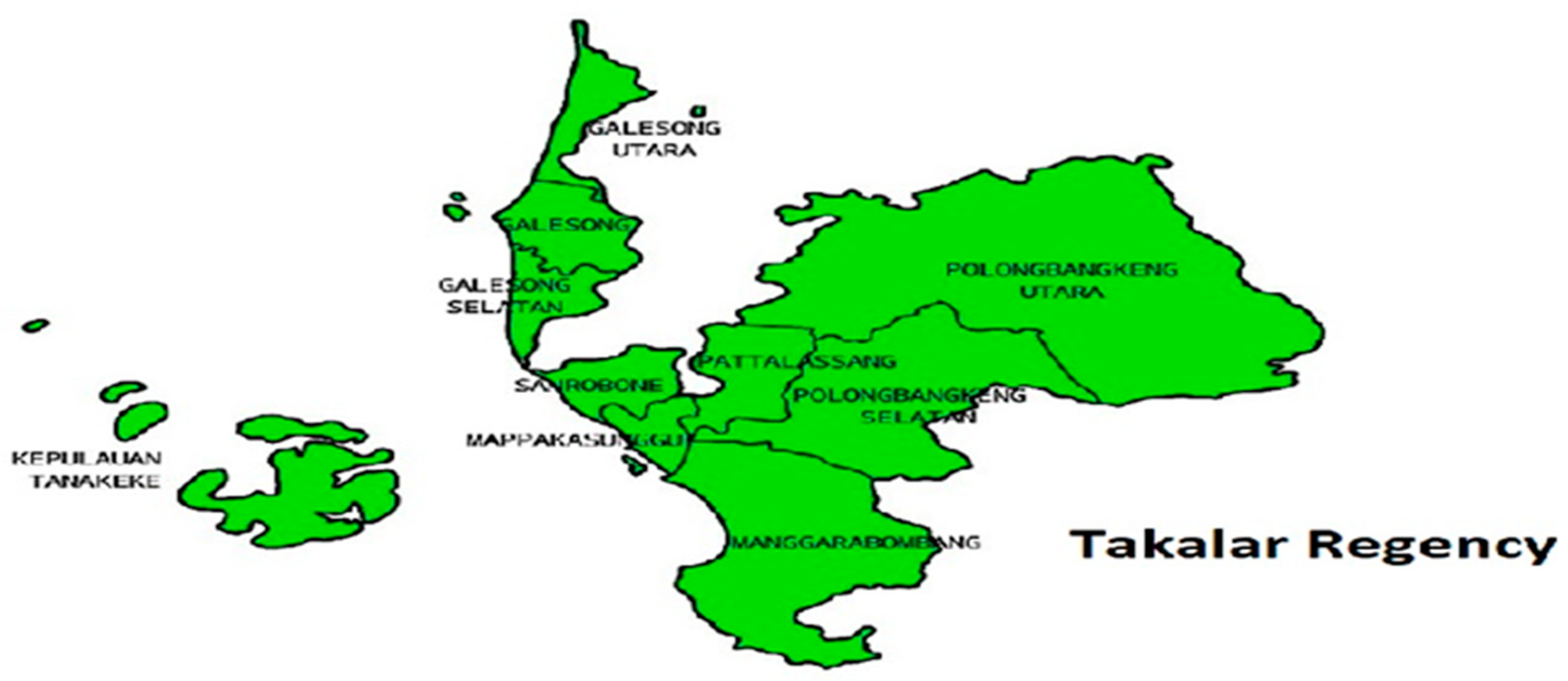
This research was conducted in one of the districts in Indonesia, namely Takalar Regency in South Sulawesi Province, which was selected purposively. If in the form of a case study, it is done by studying the case to gain a complete understanding (Baskarada, 2014). In other words, cases are constructed to show an in-depth explanation and understanding of something different from what is usually described. With the help of the cases studied, researchers try to show that from these cases, you can discover something new, different from explanations of other objects. The choice of Takalar Regency research location is in South Sulawesi Province because it is one of the representative districts/cities in Indonesia.
Figure 2.
Regional Layout on the Takalar Regency Map
This study uses primary and secondary data to support identifying the implementation of non-cash food assistance programs in Indonesia. Primary data were obtained from interviews and mapping of research locations. While the secondary data used was obtained from the Indonesian Central Bureau of Statistics, the Central Bureau of Statistics for Takalar Regency, related agencies, and various other sources deemed relevant to this research, both in field research and library research, which were obtained directly or indirectly from parties that manage data, such as statistical offices, specialized agencies, and research institutes.
This research uses qualitative methods. The qualitative method was chosen as a way of analyzing, understanding, exploring, and explaining not only theoretically but with facts in the field (Creswell, 2016) regarding how the non-cash food assistance program is implemented in the implementation of the non-cash food assistance program in Indonesia, namely Takalar Regency. After the data is obtained, the data is then analyzed and interpreted as developed (Miles & Huberman, 2014), with the stages of data reduction, data presentation, and data verification to get conclusions in the form of useful new findings for future researchers and then analyzed with the Nvivo 12 Pro qualitative research tool in Figure 3.
As shown in Figure 3, the techniques used in analyzing the data include three stages: data import, data processing, and data categorization. Then the second stage is observing the data and making field notes, divided into data categorization, coding, matrix coding, matrix coding queries, data visualization, and preview results. Then the third stage is the documentation stage, which has four stages: coding, data analysis, project map creation, and data visualization. This study will be assisted by using Nvivo 12 Pro as a qualitative data analysis tool to obtain findings that can be recommended for further research through matrix coding analysis (Woolf & Silver, 2018).
4. Results
4.1. Description of Research Locations
Takalar Regency is a regency in South Sulawesi Province with a thousand cities in Pattallassang. In the national spatial planning policy, Government Regulation Number 13 of 2017 concerning National Spatial Plans, the entire area of Takalar Regency is included in the Mamminasata Urban Metropolitan Area together with the urban area of Maros, Makassar City, Sungguminasa urban area and Takalar urban area (the capital city of Pattalasang district). Takalar Regency has the nickname "Butta Panrannuangku," which is the land that brings happiness or the land of hope. Takalar Regency has 10 Districts, 100 sub-districts/villages, an area of 566.51 Km2, and a population of 307,445 (Sulsel.bps.go.id, 2023). Astronomically, Takalar Regency is located between 5030' - 5038' South Latitude and 119022' - 119039' East Longitude. Due to its geographical location, it is bounded to the east by the districts of Gowa and Jeneponto. In the north, it is bordered by Gowa Regency and Makassar City. Di sebelah barat dan selatan dibatasi oleh Selat Makassar dan Danau Flores. According to Permendagri Number 56 of 2015 concerning Administrative Areas, the total area of Takalar Regency and the capital city of Pattallassang is 56,651 ha or 566.61 km2 or around 1.24% of the area of South Sulawesi Province, which is 45,764.53 km2. The distance between the capital of Takalar Regency and South Sulawesi Province is 45 km.
4.2. Implementation of the Non-Cash Food Assistance Program
Various countries have implemented programs in the form of food to overcome poverty in their countries (Hawkes et al., 2020). Because one of the factors for the occurrence of poverty is not meeting basic needs in terms of food (Abdullah et al., 2019). Therefore the state must design and issue policies in the form of programs to overcome this. So that government or private organizations can provide food assistance to disadvantaged people (Sadraei et al., 2022). The program agenda is in line with the United Nations program, which is a reference for countries in the world (Lakner et al., 2022). The programs in the form of food assistance carried out by countries in the world are as follows:

Table 1.
Existing food aid programs in various countries
| Program name | Modality | Year | |
|---|---|---|---|
| Egypt | Baladi Bread | Food Subsidies | 1941 |
| Indonesia | Non-Cash Food Aid (Bantuan Pangan Non Tunai, BPNT) | e-vouchers to spend on food needs | 2017 |
| India | Targeted public distribution system (TPdS) |
Food Subsidies | 1943 |
| Mexico | Programa de Apoyo Alimentario (PAL, food Support Program) |
Food subsidies, in-kind food | 2003 |
| Sri Lanka | Samurdhi food stamp program |
Food subsidies/in-kind food vouchers | 1995 |
| United States of America | Supplemental Nutrition Assistance Program (SNAP), formerly "food Stamp |
Voucher | 1964 |
Source: processed by researchers from various sources. 2023.
Based on the table above, it can be seen that various countries have done the same thing in dealing with poverty by presenting programs in the form of food. Even though they have different program names, these programs' goals and targets are almost the same. The Indonesian state has issued a policy on food aid for a long time, namely in 1998(Susilo et al., 2021). However, at that time, the system that was in effect was that the community immediately received food assistance. In contrast, in the current program, the system is more of an e-voucher system that the community can use to buy whatever they need as long as it complies with the provisions for fulfilling nutrition. The countries that have the same system as Indonesia in the food aid program are Mexico and Sri Lanka (Susilo et al., 2021).
They are implementing non-cash food assistance programs in Indonesia based on Presidential Regulation Number 63 of 2017 concerning the Distribution of Non-Cash Social Assistance. In the past, this program was called Rice for the Poor (Beras Miskin, Raskin). It was replaced with electronic cards issued directly to targeted households to channel cash assistance and subsidies through the banking system. Livelihood benefits in kind are provided through anti-poverty programs, including social security, social security, social empowerment, social reintegration, and essential services. This program aims to increase public access to formal banking financial services to accelerate financial inclusion programs. The distribution of in-kind life assistance to the community is considered more effective, with the proper purpose, amount, time, quality, and management. With this electric card, beneficiaries can buy rice, eggs, and other needs at markets, kiosks, and shops at current prices so that people can also get a more balanced diet, not only carbohydrates but protein, such as eggs. Apart from that, sharing in-kind benefits can also get the community used to saving because they can distribute aid funds according to their needs. The distribution of in-kind benefits begins with registering the Beneficiary Family participants by the Ministry of Social Affairs.
4.2.1 Implementer of the Non-Cash Food Assistance Program
Therefore, to implement the program effectively and end poverty (Bednar & Reames, 2020), there needs to be solid cooperation between the government and the private sector (Sondang Siagian et al., 2019; Spoann et al., 2019). Along with increasing awareness of the importance of improving people's welfare (Spoann et al., 2019), Extensive monitoring is also in place to ensure that information is open and transparent when implementing initiatives to reduce poverty (Matheus & Janssen, 2019). It aims to promote adopting policies that ensure sustainable development (Matheus & Janssen, 2019) and welfare innovation in Indonesia (McLaren et al., 2022). In implementing a policy or a program, it is necessary to have an executor responsible for managing the program. Implementing a non-cash program in Indonesia, several parts are involved in implementing the food assistance program. Therefore, more details can be seen in Figure 4.
In Figure 4 with the visualization results using the Nvivo 12 Pro "Mind Map," it can be seen that in the implementation of the Non-Cash Food Assistance Program (Bantuan Pangan Non-Tunai, BPNT) The program involves the role of the government and the private sector. The government makes regulations by involving several ministries, in this case, the Ministry of Finance, which discusses the allocation of the State Revenue and Expenditure Budget (Anggaran Pendapatan Belanja Negara, APBN). The Ministry of Economy and Ministry of Social Affairs will then be tasked with registering beneficiaries using the information provided by the Regional Government and coordinating laws related to distributing aid. For this matter to be consulted adequately with regional apparatus organizations, the Ministry of Social Affairs conducted outreach to the Social Service. It is then forwarded to the District and structure in program implementation. Then the banks that are members of the Association of State-Owned Banks (Himpunan Bank Milik Negara, HIMBARA) have a role in carrying out assistance transfers through each beneficiary's account cards for distribution. Research also submitted by Biancone et al. (2020) found that using the banking system can generate profits and sustainable development.
Meanwhile, the role of the private sector is to prepare goods to be purchased by beneficiaries by the provisions of the goods set by the government. The type of E-Warong that existed before has been verified by the association of state-owned banks (Himpunan Bank Milik Negara, HIMBARA) so that it can serve the beneficiaries. So that beneficiaries only need to come to the e-warong to make buying and selling transactions according to their needs. The supplier's role is to ensure that the basic needs determined by the Ministry of Social Affairs are met in quantity, price, and quality. So that this collaboration can have a positive impact on the government, and the private sector, in this case, micro-businesses from the community, and beneficiaries can freely choose what staples they need.
4.2.2 Impact of the Non-Cash Food Assistance Program (Bantuan Pangan Non-Tunai, BPNT) in Poverty Alleviation
Following Presidential Regulation Number 63 of 2017 concerning Distribution of Non-Cash Social Assistance, this is the basis for the presence of this food assistance program. Non-cash social assistance is provided through anti-poverty programs, which include social security, social empowerment, social reintegration, and essential services. This program aims to facilitate public access to formal banking financial services to accelerate financial inclusion programs. Meanwhile, the number of poverty data in 2022 decreased nationally, namely as many as 26.36 million people because in 2021, there were 26.50 million people, and in 2020 27.54 million people. For more details, see Figure 5 below. Indonesia ranks 91st as the poorest country in the world in 2022, and 1 to 10 are inhabited by countries on the African continent (Ventura, 2022). The poverty rates in Indonesia every year can be seen in the figure below.
Based on Figure 5, the non-cash food assistance program implemented in 2017 following Presidential Regulation Number 63 of 2017 concerning the Distribution of Non-Cash Social Assistance has a sizable influence on the poverty rate in Indonesia. In 2017 the poverty rate reached 26.58 million people or around 10.12 percent and decreased in 2018 to 25.67 million people or around 9.66 percent. This is one of the positive impacts made by the government with the existence of a non-cash food assistance program in reducing poverty. Furthermore, the poverty rate decreased again in 2019, namely 24.78 million people, with 9.22 percent. This achievement is also one form of the success of the government's program to reduce poverty in Indonesia. Then in 2020, the poverty rate increased due to the impact of the coronavirus, which made the poverty rate in Indonesia stand at 27.54 million people or increase to 10.19 percent. So that the government increases the number of beneficiaries and the budget to overcome this. Finally, in 2021 the poverty rate has decreased again, unlike in 2017-2019, while the poverty rate in 2021 is 26.50 million people or around 9.71 percent. Furthermore, in 2022 this number will decrease again to 26.36 million people or around 9.57 percent (Badan Pusat Statistik Indonesia, 2023). Based on these data, it can be said that the presence of government programs is a solution to reducing the poverty rate in Indonesia.
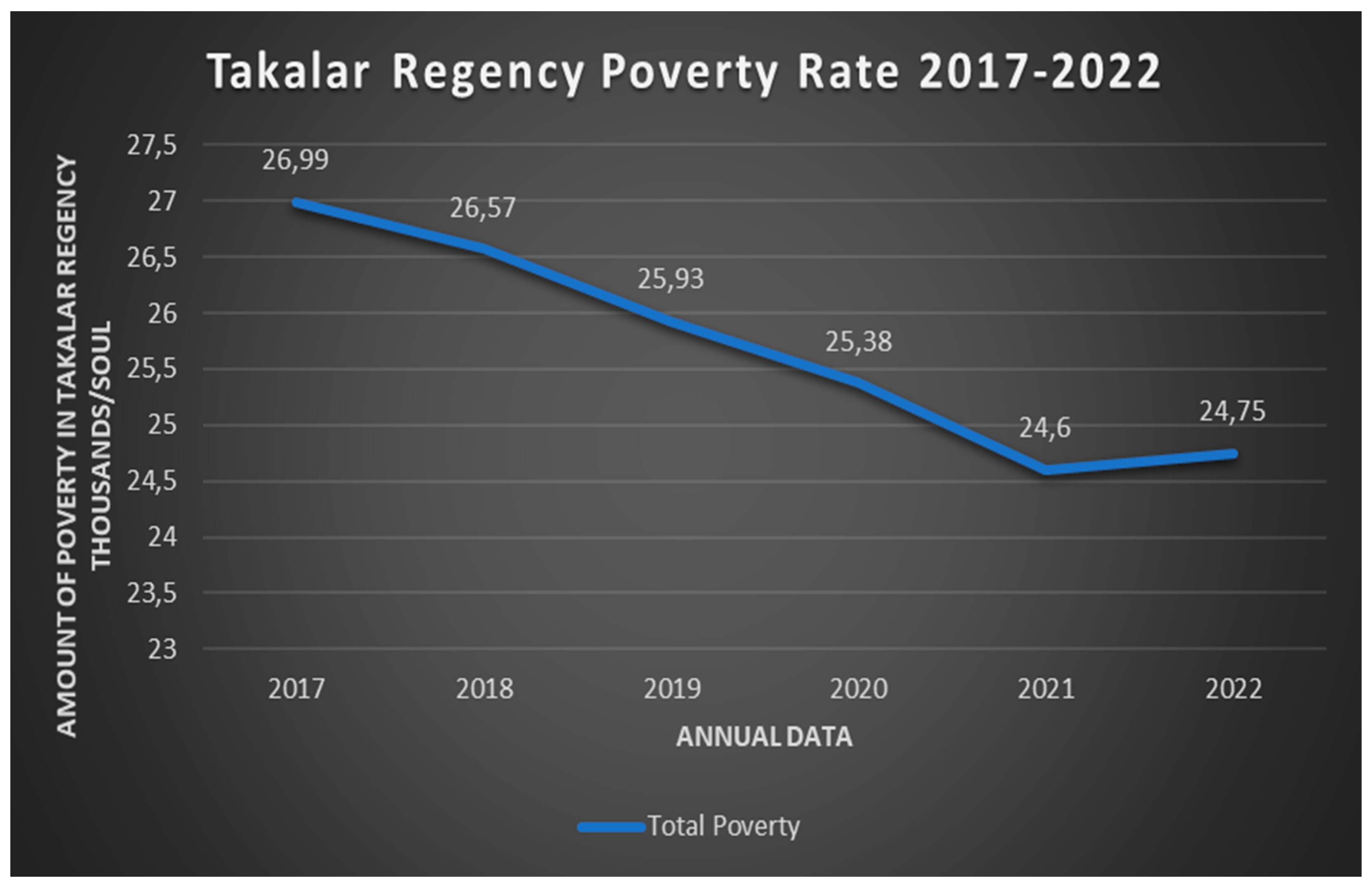
Meanwhile, one of the areas in Indonesia which is a case study in this research is Takalar Regency. It is one of the areas that has implemented government programs to overcome poverty, including non-cash food assistance programs (Bantuan Pangan Non-Tunai, BPNT), which have been running since 2017 until now. Adapun jumlah penerima manfaat bantuan pangan non tunai (Bantuan Pangan Non-Tunai, BPNT) namely 31,321 families receiving food social assistance in Takalar Regency out of a total of 647,865 families receiving food assistance in South Sulawesi Province. The number of recipients of non-cash food assistance (Bantuan Pangan Non-Tunai, BPNT) in Takalar Regency is the fifth highest number of 24 Regencies/Cities in South Sulawesi. Meanwhile, the poverty rate in Takalar Regency has also experienced a significant change since the non-cash food assistance program was implemented in 2017. The picture of changes in the poverty rate in Takalar Regency can be seen in the picture below.
Then, if seen in Figure 6, it can be explained that since the existence of a non-cash food assistance program (Bantuan Pangan Non-Tunai, BPNT) in 2017, based on regulations from the government, it has shown significant results. The Takalar Regency area in 2017 had a poverty rate of 26.99 thousand people or around 9.24 percent. This figure decreased in 2018 to 26.57 thousand people or decreased by around 9 percent. This achievement is considered quite positive because the first year the non-cash food assistance program was implemented (Bantuan Pangan Non Tunai, BPNT) has had a positive impact. This positive trend continued in 2019, which again experienced a decline of 25.93 thousand people or around 8.7 percent. Again, Takalar Regency recorded a reduction in the poverty rate in 2020, at which time other regions experienced an increase in poverty rates due to the coronavirus 19. However, Takalar Regency has decreased the poverty rate by 25.38 thousand people, or around 8.44 percent.
Furthermore, in 2021 it will again show positive things, and there will be 24.6 thousand people in poverty, or around 8.25 percent. However, in 2022 the positive trend of reducing the poverty rate will stop, and the poverty rate will increase slightly to 24.75 thousand people and remain at 8.25 percent (Badan Pusat Statistik Sulawesi Selatan, 2023). Based on this, the effort to overcome poverty in Indonesia, especially the Takalar Regency area, can be considered adequate. The impact has been a yearly reduction in the poverty rate since Indonesia's non-cash food assistance program. However, in practice, there is still something that needs to be improved by the government in the implementation of the non-cash food assistance program. The community needs government programs to meet their basic needs to avoid poverty. So it needs a fast effort from the government to solve problems in the community environment. The concept of program implementation will not only determine the success of a program. However, it is necessary to evaluate what are the obstacles in the implementation of the program that has been implemented. The goal is that the implementation of a program can run more optimally. These efforts can have a positive impact so that the poverty rate is reduced and the budget can be diverted to other development programs. Some of the obstacles in the implementation of non-cash food assistance programs in Indonesia, especially Takalar Regency, are as follows:
Table 2.
Obstacles in Implementing the Non-Cash Food Assistance Program
| Regency/City | Obstacles to the Implementation of the Non-Cash Food Assistance Program |
|---|---|
| Takalar Regency |
|
Source: Processed by researchers from various sources. 2023.
Based on the problems that occur in implementing the non-cash food assistance program above, it is a form of the government's lack of supervision. As in Takalar District, several executors corrupted the implementation of the non-cash food assistance program (Liputan 6, 2022). So that it makes people less get the optimization of the policy. In the end, efforts to eradicate poverty and reduce the poverty that occurs will be less than optimal. So that the problems that arise due to the lack of socialization and delays in printing a prosperous family card as a condition and tool for disbursing assistance obtained from the government. Therefore every government in their respective regions in Indonesia, especially those in Takalar Regency, to be more aggressive in carrying out their duties. The private sector also needs guidance, direction, and supervision in aid distribution. The government must also create a complaint center that is distributed to the public and can be accessed easily. So that problems that occur in the community can be conveyed quickly and resolved responsively.
4.2.3 Impact of the Non-Cash Food Assistance Program (Bantuan Pangan Non-Tunai, BPNT) Against Entrepreneurial Economic Growth
Non-Cash Food Assistance Program (Bantuan Pangan Non-Tunai, BPNT) This is a program of the Ministry of Social Affairs that is channeled through Electronic-Warung Gotong Royong (Elektronik Warung Gotong Royong, E-Warong) and aims to facilitate financial transactions for beneficiaries, through E-Warong beneficiaries can convert their assistance into several basic needs. This assistance was distributed on an ongoing basis. Initially, the assistance was only given in the amount of Rp. 150,000/month, but the amount has increased to IDR 200.00/month since the coronavirus 19 arrived in Indonesia.
The government's efforts to maintain economic growth are empowerment programs such as financing micro-enterprises and increasing the capacity of human resources and micro, small, and medium enterprises (Usaha Mikro Kecil Dan Menengah, UMKM) (Surya et al., 2021). Development of personal skills and Micro, Small, and Medium Enterprises (Usaha Mikro Kecil Dan Menengah, UMKM) is also carried out to develop a digital economic ecosystem and encourage people's productivity (Ridwan Maksum et al., 2020). Various strategies have been carried out to develop a digital economic ecosystem: the Digital Literacy National Movement (Yanti & Yusnaini, 2018), Digital Talent Scholarship (Sukma et al., 2020), and Digital Leadership Academy (Weber et al., 2019), thereby supporting the increase in digital talent and digitalization of Micro, Small and Medium Enterprises (Usaha Mikro Kecil Dan Menengah, UMKM) (Nguyen et al., 2022).
One of the Micro, Small, and Medium Enterprises (Usaha Mikro Kecil Dan Menengah, UMKM) that contributed to the non-cash food assistance program starting in 2017 is E-Warong (Roziqin et al., 2021). E-Warongs develop their business to increase their income differently, as legally as possible. The government succeeded in providing a container or market, namely E-Warong KUBE, to help support the distribution of Non-Cash Food Assistance (Bantuan Pangan Non-Tunai, BPNT with assistance from Himbara, Bulog, cooperatives, providers, food assistants, District Social Worker (Tenaga Kerja Sosial Kecamatan, TKSK), Social Services and others. Hopefully, this program will be able to provide stable funding without interest. The burden on low-income people is lightened with this program, and there is no need to borrow funds from banks, moneylenders, or online loans. KUBE can create an independent society. The addition of this E-Warong makes it easier for beneficiary families (Keluarga Penerima Manfaaat, KPM) so that at the time of disbursement, they do not have to wait in long queues, the economic growth in E-Warong KUBE is more widespread, besides that the distance between the recipient and the E-Warong is easier to reach.
The Indonesian government is implementing a national economic stimulus program expected to take effect in the third quarter. The program consists of 3 (three) central policies, namely increasing domestic consumption (demand), increasing business activity (supply), and maintaining economic stability and monetary growth. These three policy areas must be supported by ministries/agencies and local governments, State-Owned Enterprises (Badan Usaha Milik Negara, BUMN), economic actors, and society. The number of operators, according to 2018 data from the Ministry of Cooperatives, Small and Medium Enterprises, Micro, Small, and Medium Enterprises (Usaha Mikro Kecil Dan Menengah, UMKM) as many as 64.2 million or 99.99% of the total business actors in Indonesia. The labor absorption capacity of Micro, Small, and Medium Enterprises (Usaha Mikro Kecil Dan Menengah, UMKM is as many as 117 million workers or 97% of the absorption capacity of the business world. Meanwhile, the contribution of MSMEs to the national economy is Gross Domestic Product (Produk Domestic Bruto, PDB) 61.1%, and the remaining 38.9% was contributed by significant business actors whose number was only 5,550 or 0.01% of the total business actors. MSMEs are dominated by micro-entrepreneurs, amounting to 98.68%, with a workforce absorption of around 89%. Meanwhile, micro-enterprises' contribution to Gross Domestic Product (Produk Domestik Bruto, GDP) is only around 37.8%. Micro, Small and Medium Enterprises (Usaha Mikro Kecil Dan Menengah, UMKM) have played a significant role in Indonesia's economic growth so far (Tambunan, 2008), with a size of 99% of all business units. The contribution of Micro, Small, and Medium Enterprises (Usaha Mikro Kecil Dan Menengah, UMKM) to Gross Domestic Product (Produk Domestik Bruto, PDB) also reached 60.5%, and to employment was 96.9% of the total national employment absorption.
Therefore the presence of E-warong can improve the Indonesian economy by contributing to becoming business actors in Micro, Small, and Medium Enterprises (Usaha Mikro Kecil Dan Menengah, UMKM). So this is one of the positive points of the community's non-cash food assistance program (Bantuan Pangan Non-Tunai, BPNT) related to economic aspects through micro-enterprises so that the impact on the community's economy and national economic growth can run well. Micro, small, and Medium Enterprises (Usaha Mikro Kecil Dan Menengah, UMKM) have also proven to be able to increase a larger workforce in the national economy. With so many workers absorbed, the Micro, Small, and Medium Enterprises sector (Usaha Mikro Kecil Dan Menengah, UMKM) can increase people's income. Thus Micro, Small and Medium Enterprises (Usaha Mikro Kecil Dan Menengah, UMKM) are considered to have a strategic role in reducing unemployment and poverty.
4.2.4 Impact of the Non-Cash Food Assistance Program (Bantuan Pangan Non-Tunai, BPNT) Against Reducing Stunting
Stunting is one of the targets of the Sustainable Development Goals (SDGs), which are included in sustainable development goals (Heidkamp et al., 2021). The program aims to eliminate hunger and all forms of malnutrition by 2030 and achieve food security to achieve social equality (Arora & Mishra, 2022; McLaren et al., 2022). The target is to reduce the stunting rate by 40% by 2025 (Dake et al., 2019; Quamme & Iversen, 2022). The impacts caused by stunting can be divided into short-term and long-term impacts, as follows:
-
Short term effect
- Increased morbidity and mortality;
- Children's cognitive, motor, and verbal development is not optimal; And
- Rising healthcare costs
-
Long term effect
- Posture that is not optimal as an adult (shorter than this in general);
- Increased risk of obesity and other diseases;
- Decline in reproductive health;
- Less than optimal learning abilities and performance during school time;
- Productivity and workability are not optimal.
Several studies suggest that various factors result in the incidence of stunting in children, such as parenting style (Saleh et al., 2021), exclusive breastfeeding practice (Hadi et al., 2021), psychosocial stimulation (Bogin, 2021), poor environmental hygiene and sanitation (Rah et al., 2020), especially in densely populated areas (Ali, 2021), as well as remote and demographic factors (Seiler et al., 2021). Another essential factor is economic influence (Islam et al., 2020), the mother's education (Anggraini & Romadona, 2020), as well as intermediary factors such as the number of family members, the mother's height and age, as well as the number of children, proximal factors such as exclusive breastfeeding, age, and babies with low birth weight (Chowdhury et al., 2020). The poverty rate has a relatively high contribution to the increase in stunting cases in various countries in the world (Lestari et al., 2022). The impact of rising poverty rates will result in the birth of stunted babies. Based on the results of previous research on the causes of stunting, it will provide suggestions for effective stunting prevention strategies in Indonesia.
One of the objectives of Indonesia's non-cash food assistance program is to prevent and reduce stunting in Indonesia. The nutrition improvement program for the treatment of stunting is targeted at pregnant women and nursing mothers under five who are recipients of the Non-Cash Food Assistance program (Bantuan Pangan Non-Tunai, BPNT). Because the Non-Cash Food Assistance program (Bantuan Pangan Non-Tunai, BPNT) can get more balanced nutrition, not only carbohydrates but protein, such as eggs so this non-cash food assistance program can be a solution in dealing with the problem of stunting in the community (Yeni Huriani, Erni Haryanti, 2022). In addition, this non-cash food assistance program can change less supportive behavior and improve the welfare of the poorest groups so that stunting can be suppressed.
Programs with high hopes to provide food and nutrition for underprivileged families are known as Beneficiary Families. The critical task of saving a generation that does not grow with age is closely related to food security, physical growth, brain growth, and intelligence. The deformity is a chronic nutritional problem caused by inadequate nutritional intake over a long period. Community food security is provided through Social Food Assistance for Beneficiary Families (Keluarga Penerima Manfaat, KPM) from underprivileged families. Food income assistance aims to reduce the cost of meeting the food needs of poor and vulnerable families. Based on data from Statistics Finland, the food poverty line significantly impacts poverty line formation, and the stabilization of staple food prices affects poverty reduction. The staple food program reduces the food expenditure of underprivileged families and guarantees a portion of the fulfillment of the basic needs of the underprivileged family.
The state aims to prevent stunting by providing access to beneficiary families (Keluarga Penerima Manfaat, KPM) to staple foods with varying nutrition levels. Food purchased by the Beneficiary Families (Keluarga Penerima Manfaat, KPM) at E-Warong agents with assistance funds from the Sembako Program is the first source of carbohydrates, rice or local food ingredients such as; shelled corn, and sago. Second, animal protein, eggs, beef, chicken, fish. Third, sources of vegetable protein and legumes, including tempeh and tofu. Fourth, vitamins and minerals, vegetables and fruits. Fifth, E-Warong does not have to provide all types of food ingredients specified for the Sembako program. However, it must at least provide food that contains sources of carbohydrates, animal protein, and other types of food that contain vegetable protein or sources of vitamins and minerals. Sixth, assistance from the primary food program may not be used to buy cooking oil, sugar, flour, processed MP-ASI, canned food, instant noodles, and other food ingredients. This assistance also cannot be used for nuts and cigarettes.
This assistance also cannot be used for nuts and cigarettes. The government's way of reducing stunting through the Sembako program is by providing various food choices that can be purchased by beneficiary families (Keluarga Penerima Manfaat, KPM) following the needs and conditions with attention to nutrition. The Ministry of Health of the Republic of Indonesia report said that the prevalence of stunting in Indonesia fell from 24.4% in 2021 to 21.6% in 2022 (SehatNegeriku, 2023). This achievement is a very positive thing in overcoming stunting in Indonesia. This achievement is inseparable from the role and contribution of the non-cash food assistance program provided to the community. The food aid program not only plays a role in overcoming poverty but is a solution to the problem of stunting.
Takalar Regency has also experienced a reduction in the stunting rate; this was obtained based on measurement data of Community-Based Electronic Recording and Reporting of Nutrition (Elektronik-Pencatatan Dan Pelaporan Gizi Berbasis Masyarakat, E-PPGBM) which in 2021 is at 11.41%. That number decreased in 2022 to 9.94%. While data from measurements based on the Indonesian Nutrition Status Survey (Survey Status Gizi Indonesia, SSGI) in 2021 will be at 34.7%. That figure also decreased in 2022 to 31.1% (Abata. news, 2023). On this basis, Takalar Regency won 19th place, previously ranked 32nd out of 24 Regencies/Cities in South Sulawesi. This achievement is one of the achievements of the collaboration between the government and the private sector in reducing the stunting rate in the Takalar Regency. In addition, the role of the non-cash food assistance program is one of the programs that have an essential contribution to Takalar Regency. Because since the existence of a program that focuses on fulfilling food assistance to the poor, social inequalities, including the problem of stunting, can also be reduced
5. Discussion
The analysis of the non-cash food assistance program in overcoming poverty in Indonesia involved several stakeholders. Government involvement comprises the Ministry of Social Affairs, Ministry of Finance, Takalar District Office, District Governments throughout Takalar Regency, Health Office, District TKSK Facilitators, Village Government, and Bank Mandiri. While the private sector consists of entrepreneurs or food suppliers and traders, and the community plays a very positive role in implementing a program. On the other hand, involving the private sector and the community can solve other problems. It can impact poverty alleviation, stunting prevention, and reducing and increasing the country's economy. So that one program can solve several problems that exist in society. The existing distribution of non-cash food assistance has been proven to reduce stunting nationally. In addition, this basic food assistance program also makes agricultural products easy to sell because suppliers buy them directly to be distributed to existing e-warongs, so the economic aspect also runs. Micro businesses, in this case, e-warongs, also get income from the results of the distribution of food assistance received by beneficiaries. Therefore, the collaboration of the government, the private sector, and the community play a significant role in the success of a program if it is carried out correctly (Siagian et al., 2019). In line with research conducted by Harrison & Schipani (2007), who said that to be able to alleviate poverty, the private sector also has an essential role in poverty alleviation. According to Nugraha et al. (2022), the private sector and the community are not only placed as development objects but also must be played as executors from the planning stage to the implementation stage of a program. This collaboration can be carried out because the socio-cultural conditions in Indonesia are still closely related to the culture of gotong royong in carrying out life (Yuhertiana et al., 2022).
Efforts in collaboration between the government, the private sector, and the community in implementing non-cash food assistance programs will impact the accuracy of targeting and the speed of aid distribution. In addition, there are mutual benefits to implementing the program. Cooperation in implementing non-cash food assistance programs in sustainable development by involving the private sector and the community is the best solution to overcoming poverty and stunting problems. It can improve the economy through Micro, Small, and Medium Enterprises (Usaha Mikro Kecil dan Menengah, UMKM) that exist in society. The emergence of forms of partnership between the private sector and the state to support business, including services, is determined by the fact that the state does not always have sufficient funds and executors available to implement the program. Research conducted by Chen et al. (2021) said the government could change current policies and programs to support digital transformation in small service businesses. In addition to research, Baxter & Casady (2020) state that the government cannot maximally solve an existing problem, so the government needs to cooperate and attract the private sector. Thus, it can positively impact welfare, the economy, health, and society. The reliability of non-cash food assistance is also estimated to be relatively high because it combines several complementary programs.
On the other hand, in implementing the non-cash food assistance program, the distribution is processed through banks, namely the involvement of the Association of State-Owned Banks (Himpunan Bank Milik Negara, HIMBARA) in transferring aid funds from the government to beneficiary accounts. This is in accordance with research conducted by Secinaro et al. (2020) on social impact, social and sustainable finance, and ethical banking. Therefore, the banking and financial systems must get involved and create valuable tools for sustainable development, such as social and environmental projects.
A comprehensive and sustainable non-cash food assistance program is the duty and responsibility of all parties, starting from the government, the private sector, and the community involved in technical and non-technical matters, according to research from Gelli et al. (2020) benefits of applying a food systems-based strategic approach to identify specific and complementary actions for the public and private sectors that can improve the diets of low-income populations. Efforts to implement the non-cash food assistance program were carried out by several parties, namely the Ministry of Social Affairs of the Republic of Indonesia, District/City Social Services, District Social Welfare Workers (Tenaga Kesejahteraan Sosial Kecamatan, TKSK), Association of State-Owned Banks (Himpunan Bank Milik Negara, HIMBARA), District Government, Village Government, Supplier of Goods, E-Warong Owners who are in this research location, collaboration and collaboration certainly need to be carried out in order to achieve maximum goals and involve all parties related to the implementation of non-cash food assistance programs following the Public Private Partnership concept. In the concept of Public Private Partnership, elements of the government, the private sector, in this case, business entities or actors, and the community must maximize coordination and commitment in implementing non-cash food assistance programs so that the impact of this collaboration can have impacts and results that are mutually beneficial to one another.
6. Conclusions
Based on the analysis results of implementing non-cash food assistance programs in regions throughout Indonesia, there are several obstacles to achieving prosperity. The background of community poverty is still the cause of the common welfare of the community. However, the presence of the non-cash food assistance program has had a significant impact on reducing the poverty rate, which is considered to have been effective. In addition, the non-cash food assistance program has positively impacted suppressing stunting cases in Indonesia. Based on this, the non-cash food assistance program from the government was issued to address the problem of poverty and, at the same time to address the fulfillment of community nutrition to avoid stunting. The non-cash food assistance program in its implementation has involved several parties from the private sector and the community.
Furthermore, from the program, the government formed community micro-enterprises with the name e-warong, which will be a place to carry out transactions for purchasing necessities for the community from the assistance they receive. The results of the Indonesian government's policy significantly reduced the poverty rate and the stunting rate in the community. On the other hand, the economy has also increased because many people have become small business actors, boosting their income.
The limitation of the results of this study is that there is still a lack of supervision regarding the implementation of the non-cash food assistance program (Bantuan Pangan Non-Tunai, BPNT). It is hoped that future researchers will examine more closely related to how the process of supervision and transparency in the implementation of this non-cash food assistance program can be maximized.
Author Contributions
“Conceptualization, R.R, I.D, and R.A.B; methodology, R.R.; software, I.D.; validation, R.A.B.; formal analysis, R,R.; investigation, I.D.; resources,R.A.B ; data curation, R.A.B.; writing—original draft preparation, R.R.; writing—review and editing, R.R.; visualization, I.D.; supervision, I.D.; project administration, R.A.B.; funding acquisition, R.R. All authors have read and agreed to the published version of the manuscript.”
Funding
This research received no external funding.
Institutional Review Board Statement
Not Applicable
Informed Consent Statement
Not Applicable
Data Availability Statement
Not Applicable
Acknowledgments
We thank the Faculty of Social and Political Sciences, Padjadjaran University, for supporting this research so that it can be published.
References
- Abata.news. (2023). Takalar Berhasil Turunkan Angka Stunting di Tahun 2022. AbataNews.Com. https://abatanews.com/takalar-berhasil-turunkan-angka-stunting-di-tahun-2022/.
- Abdullah, Zhou, D., Shah, T., Ali, S., Ahmad, W., Din, I. U., & Ilyas, A. (2019). Factors affecting household food security in rural northern hinterland of Pakistan. Journal of the Saudi Society of Agricultural Sciences, 18(2), 201–210. [CrossRef]
- Adeyeye, S. A. O., Ashaolu, T. J., Bolaji, O. T., Abegunde, T. A., & Omoyajowo, A. O. (2023). Africa and the Nexus of poverty, malnutrition and diseases. Critical Reviews in Food Science and Nutrition, 63(5), 641–656. [CrossRef]
- Ali, A. (2021). Current Status of Malnutrition and Stunting in Pakistani Children: What Needs to Be Done? Journal of the American College of Nutrition, 40(2), 180–192. [CrossRef]
- Anggraini, Y., & Romadona, N. F. (2020). Review of Stunting in Indonesia. Proceedings of the International Conference on Early Childhood Education and Parenting 2019 (ECEP 2019). [CrossRef]
- Arora, N. K., & Mishra, I. (2022). Current scenario and future directions for sustainable development goal 2: a roadmap to zero hunger. Environmental Sustainability, 5(2), 129–133. [CrossRef]
- Badan Pusat Statistik Indonesia. (2023). Persentase Penduduk Miskin (P0) Menurut Provinsi dan Daerah 2021-2022. https://www.bps.go.id/indicator/23/192/1/persentase-penduduk-miskin-p0-menurut-provinsi-dan-daerah.html.
- Badan Pusat Statistik Sulawesi Selatan. (2023). Jumlah Penduduk Miskin (Ribu Jiwa) Menurut Kabupaten/Kota se-Sulawesi Selatan (Ribu Jiwa), 2020-2022. https://sulsel.bps.go.id/indicator/23/454/1/jumlah-penduduk-miskin-ribu-jiwa-menurut-kabupaten-kota-se-sulawesi-selatan.html.
- Baskarada, S. (2014). Qualitative case study guidelines. Baškarada, S.(2014). Qualitative case studies guidelines. The Qualitative Report, 19(40), 1–25.
- Baxter, D., & Casady, C. B. (2020). Proactive and Strategic Healthcare Public-Private Partnerships (PPPs) in the Coronavirus (Covid-19) Epoch. Sustainability, 12(12), 5097. [CrossRef]
- Bednar, D. J., & Reames, T. G. (2020). Recognition of and response to energy poverty in the United States. Nature Energy, 5(6), 432–439. [CrossRef]
- Biancone, P. Pietro, Saiti, B., Petricean, D., & Chmet, F. (2020). The bibliometric analysis of Islamic banking and finance. Journal of Islamic Accounting and Business Research, 11(9), 2069–2086. [CrossRef]
- Bogin, B. (2021). Fear, violence, inequality, and stunting in Guatemala. American Journal of Human Biology. [CrossRef]
- Carruth, L., & Freeman, S. (2021). Aid or exploitation?: Food-for-work, cash-for-work, and the production of "beneficiary-workers" in Ethiopia and Haiti. World Development, 140, 105283. [CrossRef]
- Chen, C.-L., Lin, Y.-C., Chen, W.-H., Chao, C.-F., & Pandia, H. (2021). Role of Government to Enhance Digital Transformation in Small Service Business. Sustainability, 13(3), 1028. [CrossRef]
- Chowdhury, T. R., Chakrabarty, S., Rakib, M., Afrin, S., Saltmarsh, S., & Winn, S. (2020). Factors associated with stunting and wasting in children under 2 years in Bangladesh. Heliyon, 6(9), e04849. [CrossRef]
- Costa, J. (2021). Carrots or Sticks: Which Policies Matter the Most in Sustainable Resource Management? Resources, 10(2), 12. [CrossRef]
- Creswell, J. W. (2016). “Research Design. Pendekatan Metode Kualitatif, Kuantitatif, dan Campuran. Edisi keempat.”. Pustaka Pelajar.
- Dake, S. K., Solomon, F. B., Bobe, T. M., Tekle, H. A., & Tufa, E. G. (2019). Predictors of stunting among children 6–59 months of age in Sodo Zuria District, South Ethiopia: a community based cross-sectional study. BMC Nutrition, 5(1), 23. [CrossRef]
- Eweje, G., Sajjad, A., Nath, S. D., & Kobayashi, K. (2020). Multi-stakeholder partnerships: a catalyst to achieve sustainable development goals. Marketing Intelligence & Planning, 39(2), 186–212. [CrossRef]
- Fadlurrohim, I., Nulhaqim, S. A., & Sulastri, S. (2020). IMPLEMENTASI PROGRAM BANTUAN PANGAN NON TUNAI (STUDI KASUS DI KOTA CIMAHI). Share : Social Work Journal, 9(2), 122. [CrossRef]
- Galli, F., Cavicchi, A., & Brunori, G. (2019). Food waste reduction and food poverty alleviation: a system dynamics conceptual model. Agriculture and Human Values, 36(2), 289–300. [CrossRef]
- Gelli, A., Donovan, J., Margolies, A., Aberman, N., Santacroce, M., Chirwa, E., Henson, S., & Hawkes, C. (2020). Value chains to improve diets: Diagnostics to support intervention design in Malawi. Global Food Security, 25, 100321. [CrossRef]
- Hadi, H., Fatimatasari, F., Irwanti, W., Kusuma, C., Alfiana, R. D., Asshiddiqi, M. I. N., Nugroho, S., Lewis, E. C., & Gittelsohn, J. (2021). Exclusive Breastfeeding Protects Young Children from Stunting in a Low-Income Population: A Study from Eastern Indonesia. Nutrients, 13(12), 4264. [CrossRef]
- Harrison, D., & Schipani, S. (2007). Lao Tourism and Poverty Alleviation: Community-Based Tourism and the Private Sector. Current Issues in Tourism, 10(2–3), 194–230. [CrossRef]
- Hawkes, C., Ruel, M. T., Salm, L., Sinclair, B., & Branca, F. (2020). Double-duty actions: seizing programme and policy opportunities to address malnutrition in all its forms. The Lancet, 395(10218), 142–155. [CrossRef]
- Heidkamp, R. A., Piwoz, E., Gillespie, S., Keats, E. C., D'Alimonte, M. R., Menon, P., Das, J. K., Flory, A., Clift, J. W., Ruel, M. T., Vosti, S., Akuoku, J. K., & Bhutta, Z. A. (2021). Mobilising evidence, data, and resources to achieve global maternal and child undernutrition targets and the Sustainable Development Goals: an agenda for action. The Lancet, 397(10282), 1400–1418. [CrossRef]
- Islam, M. S., Zafar Ullah, A. N., Mainali, S., Imam, M. A., & Hasan, M. I. (2020). Determinants of stunting during the first 1,000 days of life in Bangladesh: A review. Food Science & Nutrition, 8(9), 4685–4695. [CrossRef]
- Joseph, R. (2019). Poverty, Welfare, and Self-Sufficiency: Implications for the Social Work Profession. Journal of Poverty, 23(6), 505–520. [CrossRef]
- Julianto, P. (2020). Implementasi Program Bantuan Pangan Non Tunai (Bpnt) Di Kecamatan Sitinjau Laut Kabupaten Kerinci. Qawwam : The Leader’s Writing, 1(1), 38–43. [CrossRef]
- Keats, E. C., Das, J. K., Salam, R. A., Lassi, Z. S., Imdad, A., Black, R. E., & Bhutta, Z. A. (2021). Effective interventions to address maternal and child malnutrition: an update of the evidence. The Lancet Child & Adolescent Health, 5(5), 367–384. [CrossRef]
- Kumi, E., Yeboah, T., & Kumi, Y. A. (2020). Private sector participation in advancing the Sustainable Development Goals (SDGs) in Ghana: Experiences from the mining and telecommunications sectors. The Extractive Industries and Society, 7(1), 181–190. [CrossRef]
- Lakner, C., Mahler, D. G., Negre, M., & Prydz, E. B. (2022). How much does reducing inequality matter for global poverty? The Journal of Economic Inequality, 20(3), 559–585. [CrossRef]
- Lestari, D., Rochaida, E., Suharto, R. B., Mixila, S., & Sutapa, I. N. (2022). In the Era of Digitization, Government's Role in Alleviating Stunting. Webology, 19(1), 4925–4941. [CrossRef]
- Liputan 6. (2022). Jadi yang Pertama Ungkap Korupsi BPNT di Indonesia, Mensos Beri Penghargaan Kepada Polda Sulsel. Liputan6.com. https://www.liputan6.com/regional/read/5164250/jadi-yang-pertama-ungkap-korupsi-bpnt-di-indonesia-mensos-beri-penghargaan-kepada-polda-sulsel. Accessed on January 2023.
- Liu, M., Feng, X., Wang, S., & Qiu, H. (2020). China's poverty alleviation over the last 40 years: successes and challenges. Australian Journal of Agricultural and Resource Economics, 64(1), 209–228. [CrossRef]
- Manaf, A., Purbasari, N., Damayanti, M., Aprilia, N., & Astuti, W. (2018). Community-Based Rural Tourism in Inter-Organizational Collaboration: How Does It Work Sustainably? Lessons Learned from Nglanggeran Tourism Village, Gunungkidul Regency, Yogyakarta, Indonesia. Sustainability, 10(7), 2142. [CrossRef]
- Matheus, R., & Janssen, M. (2019). A Systematic Literature Study to Unravel Transparency Enabled by Open Government Data: The Window Theory. Public Performance & Management Review, 1–32. [CrossRef]
- McKague, K., Wheeler, D., & Karnani, A. (2015). An Integrated Approach to Poverty Alleviation: Roles of the Private Sector, Government and Civil Society. In The Business of Social and Environmental Innovation (hal. 129–145). Springer International Publishing. [CrossRef]
- McLaren, H. J., Qonitah, N., & Widianingsih, I. (2022). Incentive-based Social Welfare Administration in Indonesia: Implications for sustainable development in Women's and Children's Protection. International Social Work, 65(3), 510–524. [CrossRef]
- Miles, Huberman, S. (2014). Qualitative data analysis: a methods sourcebook. Qualitative Data Analysis: A Methods Sourcebook.
- Muleya, F., Zulu, S., & Nanchengwa, P. C. (2020). Investigating the role of the public private partnership act on private sector participation in PPP projects: a case of Zambia. International Journal of Construction Management, 20(6), 598–612. [CrossRef]
- Musango, J. K., Smit, S., Ceschin, F., Ambole, A., Batinge, B., Anditi, C., Petrulaityte, A., & Mukama, M. (2020). Mainstreaming gender to achieve security of energy services in poor urban environments. Energy Research & Social Science, 70, 101715. [CrossRef]
- Nguyen, T. D. M., Mondal, S. R., & Das, S. (2022). Digital Entrepreunerial Transformation (DET) Powered by New Normal Sustainable Developmental Goals (n-SDGs): Elixir for Growth of Country's Economy. In Sustainable Development and Innovation of Digital Enterprises for Living with COVID-19 (hal. 69–84). Springer Nature Singapore. [CrossRef]
- Nugraha, L. F., Sulistyowati, L., Setiawan, I., & Noor, T. I. (2022). Alternative Community-Based Village Development Strategies in Indonesia: Using Multicriteria Decision Analysis. Agriculture, 12(11), 1903. [CrossRef]
- Otekunrin, O. A., Otekunrin, O. A., Momoh, S., & Ayinde, I. A. (2019). How far has Africa gone in achieving the zero hunger target? Evidence from Nigeria. Global Food Security, 22, 1–12. [CrossRef]
- Pak, T.-Y. (2020). Welfare stigma as a risk factor for major depressive disorder: Evidence from the Supplemental Nutrition Assistance Program. Journal of Affective Disorders, 260, 53–60. [CrossRef]
- Pollard, C. M., & Booth, S. (2019). Food Insecurity and Hunger in Rich Countries—It Is Time for Action against Inequality. International Journal of Environmental Research and Public Health, 16(10), 1804. [CrossRef]
- Pramesti, R., Muhammad, A. S., & Safitri, D. P. (2019). IMPELEMENTASI BANTUAN PANGAN NON TUNAI MELALUI ELEKTRONIK GOTONG ROYONG DI KOTA TANJUNGPINANG. Spirit Publik: Jurnal Administrasi Publik, 14(1), 81. [CrossRef]
- Purbadharmaja, I. B. P., Maryunani, Ananda, C. F., & Santoso, D. B. (2019). The implications of fiscal decentralization and budget governance on economic capacity and community welfare. foresight, 21(2), 227–249. [CrossRef]
- Quamme, S. H., & Iversen, P. O. (2022). Prevalence of child stunting in Sub-Saharan Africa and its risk factors. Clinical Nutrition Open Science, 42, 49–61. [CrossRef]
- Rah, J. H., Sukotjo, S., Badgaiyan, N., Cronin, A. A., & Torlesse, H. (2020). Improved sanitation is associated with reduced child stunting amongst Indonesian children under 3 years of age. Maternal & Child Nutrition, 16(S2). [CrossRef]
- Ridwan Maksum, I., Yayuk Sri Rahayu, A., & Kusumawardhani, D. (2020). A Social Enterprise Approach to Empowering Micro, Small and Medium Enterprises (SMEs) in Indonesia. Journal of Open Innovation: Technology, Market, and Complexity, 6(3), 50. [CrossRef]
- Roalkvam, S. (2014). Health governance in India: Citizenship as situated practice. Global Public Health, 9(8), 910–926. [CrossRef]
- Roziqin, A., Mas’udi, S. Y. F., & Sihidi, I. T. (2021). An analysis of Indonesian government policies against COVID-19. Public Administration and Policy, 24(1), 92–107. [CrossRef]
- Sadraei, R., Biancone, P., Lanzalonga, F., Jafari-Sadeghi, V., & Chmet, F. (2022). How to increase sustainable production in the food sector? Mapping industrial and business strategies and providing future research agenda. Business Strategy and the Environment. [CrossRef]
- Saleh, A., Syahrul, S., Hadju, V., Andriani, I., & Restika, I. (2021). Role of Maternal in Preventing Stunting: a Systematic Review. Gaceta Sanitaria, 35, S576–S582. [CrossRef]
- Secinaro, S., Calandra, D., Petricean, D., & Chmet, F. (2020). Social Finance and Banking Research as a Driver for Sustainable Development: A Bibliometric Analysis. Sustainability, 13(1), 330. [CrossRef]
- SehatNegeriku. (2023). Prevalensi Stunting di Indonesia Turun ke 21,6% dari 24,4%. SehatNegeriku. https://sehatnegeriku.kemkes.go.id/.
- Seiler, J., Harttgen, K., Kneib, T., & Lang, S. (2021). Modeling children's anthropometric status using Bayesian distributional regression merging socio-economic and remote sensed data from South Asia and sub-Saharan Africa. Economics & Human Biology, 40, 100950. [CrossRef]
- Siagian, E. S., Sumaryana, A., Widianingsih, I., & Nurasa, H. (2019). Public-private partnerships in solid waste management: arrangements in Indonesia. Asia Pacific Journal of Public Administration, 41(1), 56–62. [CrossRef]
- Siddiqui, F., Salam, R. A., Lassi, Z. S., & Das, J. K. (2020). The Intertwined Relationship Between Malnutrition and Poverty. Frontiers in Public Health, 8. [CrossRef]
- Sondang Siagian, E., Sumaryana, A., Widianingsih, I., & Nurasa, H. (2019). Public-private partnerships in solid waste management in Indonesia: the need for technical regulation. Asia Pacific Journal of Public Administration, 41(4), 246–250. [CrossRef]
- Spoann, V., Fujiwara, T., Seng, B., Lay, C., & Yim, M. (2019). Assessment of Public–Private Partnership in Municipal Solid Waste Management in Phnom Penh, Cambodia. Sustainability, 11(5), 1228. [CrossRef]
- Sukma, Y. A. A., Kusumawardani, Q. D., & Wijaya, F. P. (2020). The Influence of Satisfaction Using Learning Management System on the Competencies of Digital Talent Scholarship Thematic Academy Participants. Proceedings of the 2nd International Conference Innovation in Education (ICoIE 2020). [CrossRef]
- sulsel.bps.go.id. (2023). Jumlah Penduduk Menurut Kabupaten/Kota (Jiwa), 2021-2023. https://sulsel.bps.go.id/indicator/12/83/1/jumlah-penduduk-menurut-kabupaten-kota.html.
- Surya, B., Menne, F., Sabhan, H., Suriani, S., Abubakar, H., & Idris, M. (2021). Economic Growth, Increasing Productivity of SMEs, and Open Innovation. Journal of Open Innovation: Technology, Market, and Complexity, 7(1), 20. [CrossRef]
- Susilo, D., Hidayat, E., & Marta, R. F. (2021). Village public innovations during COVID19 pandemic in rural areas: Phenomena in Madura, Indonesia. Cogent Social Sciences, 7(1). [CrossRef]
- Swinnen, J., & McDermott, J. (2020). Covid-19 and Global Food Security. EuroChoices, 19(3), 26–33. [CrossRef]
- Tambunan, T. (2008). SME development, economic growth, and government intervention in a developing country: The Indonesian story. Journal of International Entrepreneurship, 6(4), 147–167. [CrossRef]
- Ventura, L. (2022). Poorest Countries in the World 2022. Global Finance. https://www.gfmag.com/global-data/economic-data/the-poorest-countries-in-the-world.
- Weber, E., Krehl, E.-H., Buettgen, M., & Schweikert, K. (2019). The digital leadership framework: insights into new leadership roles facing digital transformation. Academy of Management Proceedings, 2019(1), 13650.
- Widianingsih, I., & Morrell, E. (2007). PARTICIPATORY PLANNING IN INDONESIA. Policy Studies, 28(1), 1–15. [CrossRef]
- Woolf, N. H., & Silver, C. (2018). Qualitative Analysis Using Nvivo, The Five Level QDA Method. In Routledge. New York and London: Routledge.
- Yanti, M., & Yusnaini, Y. (2018). THE NARRATION OF DIGITAL LITERACY MOVEMENT IN INDONESIA. INFORMASI, 48(2), 243–255. [CrossRef]
- Yeni Huriani, Erni Haryanti, E. Z. & M. Z. H. (2022). Women religious congregation as driving force behind alleviation of urban poor nutrition. Cogent Social Sciences, 8(1). https://doi.org/https://doi.org/10.1080/23311886.2022.2113599.
- Yuhertiana, I., Zakaria, M., Suhartini, D., & Sukiswo, H. W. (2022). Cooperative Resilience during the Pandemic: Indonesia and Malaysia Evidence. Sustainability, 14(10), 5839. [CrossRef]
Figure 1.
Visualization of Vosviewer (Co-occurrence network) regarding food assistance in overcoming poverty. Source: Processed from Scopus database, 2023.
Figure 1.
Visualization of Vosviewer (Co-occurrence network) regarding food assistance in overcoming poverty. Source: Processed from Scopus database, 2023.
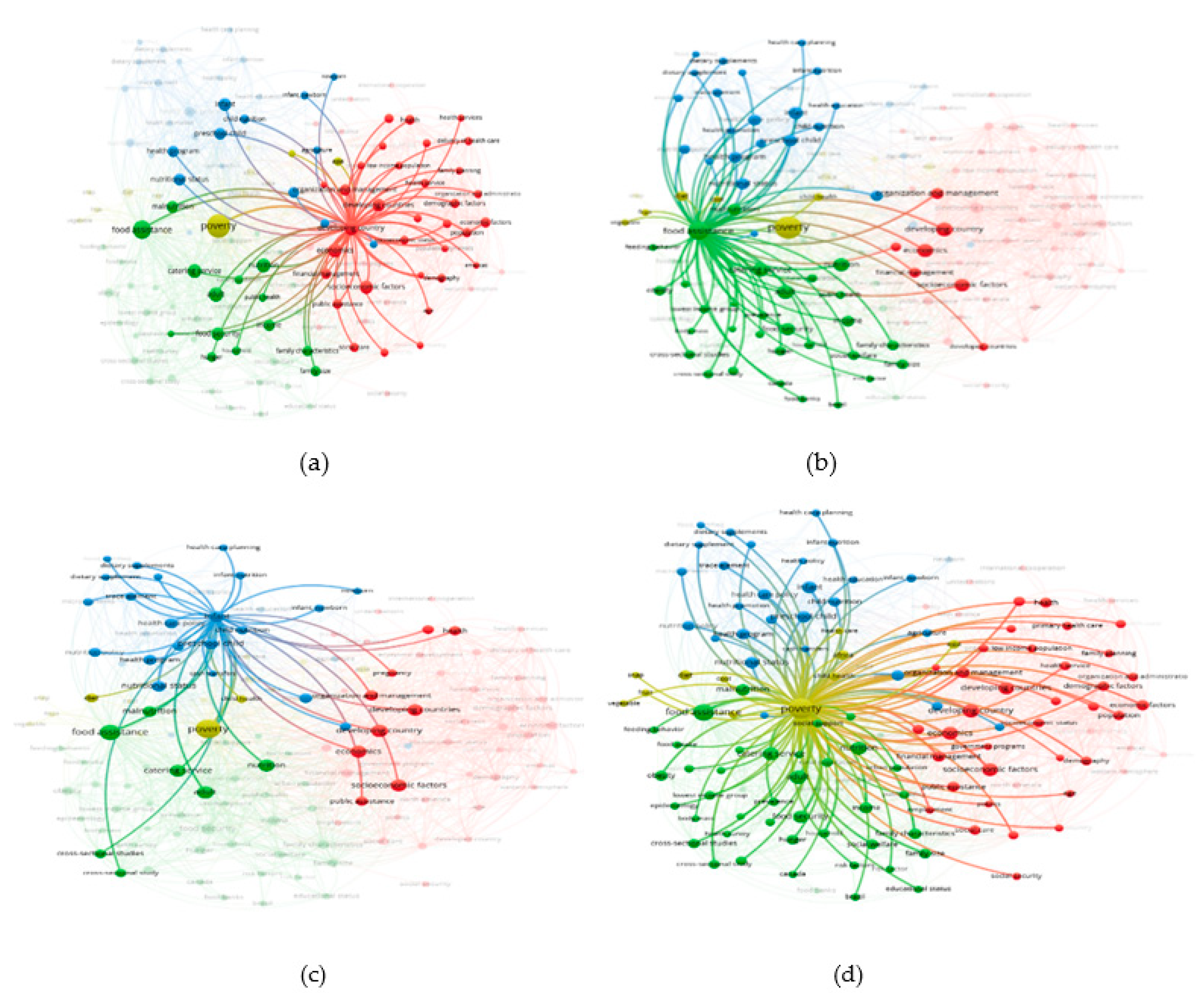
Figure 3.
Data collection and analysis techniques with NVivo 12 Pro. Source: Processed by researchers, 2023.
Figure 3.
Data collection and analysis techniques with NVivo 12 Pro. Source: Processed by researchers, 2023.

Figure 4.
Visualization using the Nvivo 12 Pro Mind Map, Implementing non-cash food assistance programs (Bantuan Pangan Non-Tunai, BPNT). Source: Processed by researchers, 2023.
Figure 4.
Visualization using the Nvivo 12 Pro Mind Map, Implementing non-cash food assistance programs (Bantuan Pangan Non-Tunai, BPNT). Source: Processed by researchers, 2023.
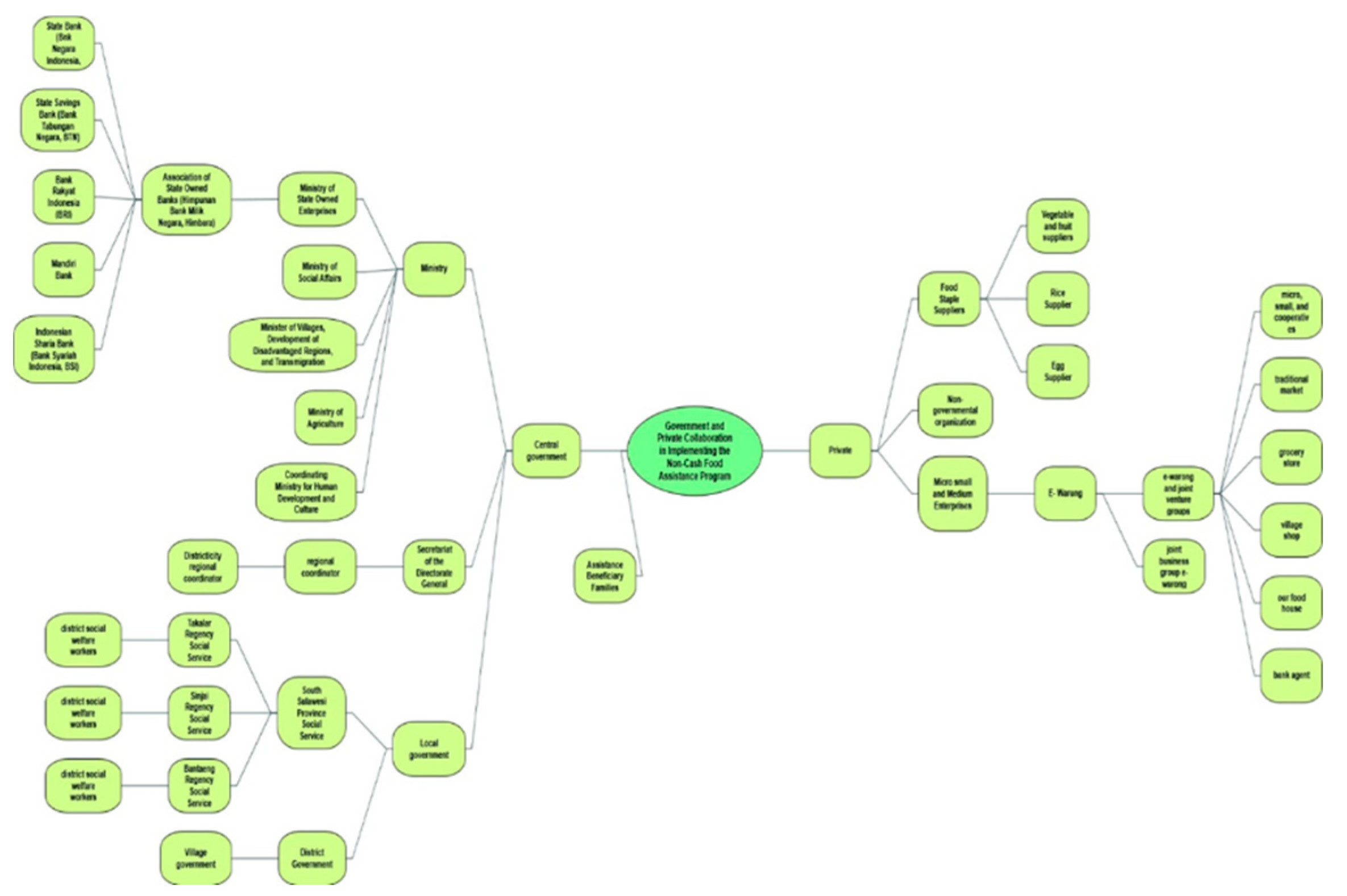
Figure 5.
Number of Poor Population in Indonesia in 2017-2022. Source: Processed by researchers from data from the Indonesian Central Bureau of Statistics, 2023.
Figure 5.
Number of Poor Population in Indonesia in 2017-2022. Source: Processed by researchers from data from the Indonesian Central Bureau of Statistics, 2023.
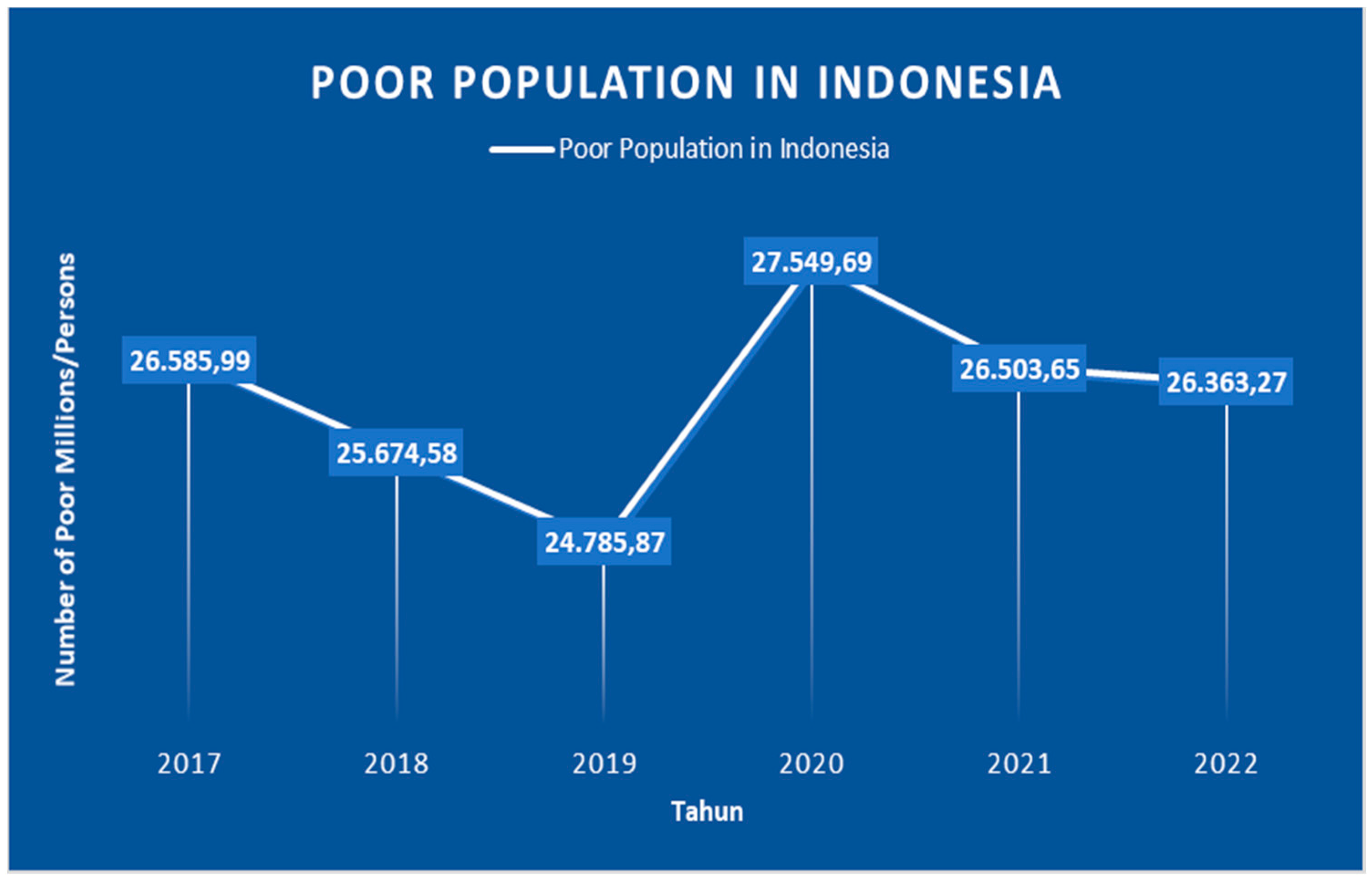
Figure 6.
Total Poverty Rate in Takalar Regency in 2017-2022. Source: Processed by researchers from data from the Central Bureau of Statistics of South Sulawesi. 2023.
Figure 6.
Total Poverty Rate in Takalar Regency in 2017-2022. Source: Processed by researchers from data from the Central Bureau of Statistics of South Sulawesi. 2023.
Disclaimer/Publisher’s Note: The statements, opinions and data contained in all publications are solely those of the individual author(s) and contributor(s) and not of MDPI and/or the editor(s). MDPI and/or the editor(s) disclaim responsibility for any injury to people or property resulting from any ideas, methods, instructions or products referred to in the content. |
© 2023 by the authors. Licensee MDPI, Basel, Switzerland. This article is an open access article distributed under the terms and conditions of the Creative Commons Attribution (CC BY) license (http://creativecommons.org/licenses/by/4.0/).
Copyright: This open access article is published under a Creative Commons CC BY 4.0 license, which permit the free download, distribution, and reuse, provided that the author and preprint are cited in any reuse.


