

Submitted:
17 April 2023
Posted:
17 April 2023
You are already at the latest version
Abstract
In this study, by employing the think-aloud model, schema theory and the perceptual cycle model (PCM) from the perspective of vulnerable road traffic participants, the current traffic imperfections of a target section in Wudaokou were analyzed to explore potential improvement measures to enhance safety. Specifically, the present study recruited 30 local volunteers, which were equally divided into a pedestrian group, bicyclist group and E-cyclist group. The research procedure was mainly divided into three steps. By using the think-aloud method, we analyzed and recorded the contents of oral reports of the experimental road section. Then, through translation, segmentation, coding, analysis and other techniques, we sorted and studied the report data and drew a conclusion that was universal in improving the current road traffic conditions. It is hoped that through this study, on the one hand, the applicability of the oral report method, schema theory and perceptual cycle model in road traffic safety can be verified, and, on the other hand, some better improvement measures can be extracted for the road traffic state of the Wudaokou section.
Keywords:
road safety
; think aloud
; the perceptual cycle model
; schema theory
1. Introduction
Road safety is a serious problem worldwide. In 2019, there were 62,763 deaths and 256,101 injuries due to traffic accidents in China. In 2018, the World Health Organization’s Report on the Status of Global Road Safety stated that 1.35 million people die from road traffic accidents every year around the world, and more than half of all road traffic deaths are among vulnerable road users: pedestrians, cyclists and motorcyclists [1]. In China, vulnerable road users contributed to 66 percent of all road traffic injuries and deaths from 2001 to 2015. Therefore, it is very important to understand the perceptions, behaviors and decision-making processes of vulnerable road users.
Many factors affect road traffic accidents in China. Road surface conditions, road alignment, traffic saturation, the mixture degree of traffic with automobiles, cyclists and pedestrians, etc., have important impacts on urban road safety, among which traffic participants have the greatest influence on traffic safety. The bicycle lane width, motor vehicle parking, isolation degree, motor vehicle running speed, etc., affect the level of bicycle road service in urban sections. Thus, it is essential to explore and identify road safety indicators.
In China, many scholars have focused on road safety research. Typically, their fields of research can be divided into the following three categories.
Accident prevention: This type of research focuses on traffic accident avoidance and the reduction in traffic conflicts. It is the main measure used to improve traffic safety. This method focuses on the people–car–road system and the relationship between the three, including vehicle safety design, vehicle repair and maintenance, road design, road safety facilities and safety education for transportation participants. Cui and his colleagues, using a negative binomial regression model, analyzed the data of the Shijiazhuang–Taiyuan expressway to study the relationship between traffic safety and road conditions [2].
Damage reduction: This type of research focuses on how to mitigate the damage caused by traffic accidents. It involves safety measures in vehicle design and road traffic control, including airbags, cab design and road emergency management system design. Wang and his colleagues studied the effect of airbags and the harm brought to passengers, and they suggested that the airbag system be comprehensively reconstructed using the seat belt, enhancing the airbag threshold and fire control system reliability, and improving the airbag system structure and the reliability of the design to avoid serious injury to passengers while deploying the other parts as the airbag expands [3].
Accident investigation and analysis: This type of research involves both macro- and microanalysis methods. The former is used for a macroanalysis of traffic accidents in a group of people, a city or an area. The latter is used for the accident analysis of specific traffic facilities or a section (such as a road crossing). Wang and his colleagues conducted a survey that focused on children’s traffic safety awareness in three cities in China (Nanjing, Changzhou and Nantong). Three dimensions were examined in the survey, including traffic safety knowledge, traffic safety attitudes and traffic safety behavior. The results indicated that the characteristic of children’s traffic safety awareness level was influenced by gender, where the males’ traffic safety awareness level was lower than that of females, and age had no significant effects on levels, though the traffic safety knowledge level developed slightly with age [3].
However, road users are indispensable to traffic improvement. They are not only the most important participants that should not be overlooked but are also the most affected by road safety. Different road users have different needs when interacting with the road system, and thus, they have different views on the system. There are few studies on road user behaviors and attitudes in China. Most of the research in China focused on infrastructure design, traffic management and statistical data analysis. There has been no comprehensive survey study of general road users in China in the past decade. The “Think aloud” method is a new approach to road safety research in China. The data collected in this way reflect what people think and how they make decisions. The method can be used for general users, without any restrictions on personal attributes. This paper discusses the perceptions and decision-making processes of road users by using schema theory and the PCM model to construct an information-processing framework for road traffic safety study.
2. Schema Theory
The concept of a schema can be traced back to the early 19th century [4-6]. German philosopher Kant regarded a schema as a specific form or rule of “productive imagination”. Piaget, a renowned Swiss child psychologist, explored the role of schemas in children’s growth in the 1920s. In addition, it is generally believed that the research on memory carried out by British experimental psychologist Bartlett in 1930s laid a solid foundation for the establishment of schema theory [6], where the research showed that the interaction between existing knowledge and new information caused the distortion of the latter; this research brought the word “schema” into mainstream psychology. This study revealed, for the first time, the role of past experience in guiding cognitive processes and changing the information about the world. Bartlett believed that a schema is the active organization of past experience and responses, which can be combined with the information of the new world to guide behaviors. After decades of development, schema theory has been continuously enriched and improved.
The modern schema theory came into being after the rise of cognitive psychology in the mid-1970s. In 1976, Neisser described a schema as a mental template of thoughts and behaviors, and our cognition and understanding of our world are organized by schemas [7]. He believed that many schemas are interrelated and have a hierarchical arrangement, referred to as schemata. This view is recognized by Plant and Stanton, who believe that one’s knowledge should be regarded as an information network that is activated by one’s experience of the world [8]. When an individual is performing a task, schemata not only affect the way that an individual perceives useful information in the world and guide them to take appropriate actions to deal with the world but also affect the storage mode of the acquired information [9]. This means that schemata can enable individuals to actively adapt to the received environmental stimuli based on previous experience, and they guide them to formulate appropriate behavioral responses [6]. If the schemata are suitable for the situation, they will produce appropriate behavioral responses. However, if the stimulus information received from the world is misunderstood, it may lead to maladjustment [10]. These eventually lead to slips of action or lapses in attention. Neisser put forward two types of schemata in 1976: the genotype and phenotype [7]. The genotype reflects the residential structure in the mind, which can continue to guide one’s behaviors in the world. Therefore, the genotype schemata serve as a template for the basis of our action response. It is possible for these templates to continue to develop, but a key determinant of their development is their interaction with the world [11]. In contrast, the phenotype schemata reflect the “present” behaviors, which are manifested by our actions in the world [12]. According to Norman, there are three basic errors related to genotype schemata that can be used to explain most errors: activating the wrong schemata, failing to activate the proper schemata and triggering the active schemata by mistake. All these types of errors are common in road traffic environments [10]. So far, schema theory has been widely used in cross-cultural communication, road traffic, aviation, the military and other fields [13,14].
3. The Perceptual Cycle Model
In 1976, Neisser put forward the concept of the perceptual cycle model (as shown in Figure 1). Its key components are the world, the schema and the action, and it is believed that there are reciprocal and cyclical relationships between them that profoundly reveal the interaction mechanism between people and their environment or a larger system. Based on the model of schema theory, this model emphasizes the role of schemas. Similarly, schema theory plays a greater role when it is incorporated into the perceptual cycle model. Specifically, the PCM model constructs the operational mode of information interaction between individuals and their environment. According to the introduction of the above schema theory, all individuals form a schema tower based on experience. When individuals receive interactive information from the world, they trigger the corresponding schema, thus realizing the expectation of the current environment. In this process, the previous experience is combined with the currently received information to guide the generation of corresponding behaviors. These behaviors try to explain the information available to them in the environment to realize the experience generated in the current environment, revise and update the existing schema, and influence their future interactions with the environment. As shown in the figure, the information flow processing mechanism proposed by the PCM includes both the top-down schema-driven process on the left and the bottom-up environmentally driven process on the right, and the behavior of individuals determines the specific local environment that they face, i.e., the sampling process from the action to the world.
In the field of ergonomics, the PCM model is helpful for further understanding the complex interactions between human beings and their environments. By considering the psychological and situational factors that dominate behavior, this method helps to bridge the gap between the current ecological and information processing perspectives, thus providing a systematic explanation of decision-making and action. As stated by [12], PCM, together with schema theory, provides a theory of everything, which can explain the interaction between people and the environment and acknowledge the decision-making and action processes rather than merely offering a description of what has happened. The PCM model allows for analysis and interpretation to transcend all levels of the system so that it can describe all levels of a distributed control system and their interactions. As simulated by the PCM model, human beings are not linear information processors. On the contrary, human behavior is the product of data-driven (world) and knowledge-driven (schema) information fusion [8]. With the gradual development and perfection of the perceptual cycle model, many scholars have begun to pay attention to the validity of the model. By using the perceptual cycle model to analyze the data of critical decision-making methods, Plant et al. showed that the perceptual cycle model can be used to analyze the decision-making process and emphasized the important influence of schemata on this process. The reliability of this method was verified, and its general applicability was discussed [15]. In 2015, Plant et al. attempted to explore the structural validity of the perceptual cycle model in aviation decision-making by analyzing the critical decision-making of 20 helicopter pilots [16].
In the 1980s, Donald Norman continued to apply schema theory, especially in his error classification work. He described how the inappropriate activation of schemas led to unexpected behavior (errors). The application of schema theory and the PCM model in SA, NDM and error analysis has attracted much attention.
The pattern of information flow of the PCM is helpful for understanding the decision-making and behavior processes of road users. The application of schema theory and the PCM model to study road safety has attracted more and more attention. According to [17], the application of schema theory and the perceptual cycle model in the 1989 Kegworth accident provides a systematic human explanation, which can help to explain the incorrect causality. They believed that schema theory and the PCM explain why the actions and evaluations of operators at that time were meaningful to them. [18] used the PCM model to analyze an accident in which a semi-trailer truck collided with a train at the intersection of a railway and a road in Northern Victoria, Australia. The investigation results showed that the main cause of the incident was the apparent but invisible error caused by the incorrect activation of the mode error, which led the truck driver to initially assume that the intersection was inactive and no train was present. In addition, various system-wide factors affecting the accidents of railway-grade crossings were determined. When analyzing Tesla’s serious car accident in May 2016, Banks et al. used the perceptual cycle model to analyze the driver’s environmental factors at the time of the accident, and they suggested that the cause of the accident was not only related to the driver’s mistakes but also to the problems existing in the automatic driving function design [19]. In the Dhaka Metropolitan Area in Bangladesh, the perceptual cycle model (PCM) was used to analyze 46 pedestrians’ oral reports to study how the pedestrians interacted with different road users and the factors that affected the pedestrians’ decision-making and crossing behavior in different road sections [20]. It was found that many external factors affected the use of roads, leading to more dangerous crossings. To effectively integrate user information input in the early stage of the design process of new aviation application technology and better improve the current system, Parnell et al. interviewed airline pilots in depth and analyzed their responses to different engine failure events caused by birds striking the engine by using the perceptual cycle model (PCM) [21]. Based on this research, through in-depth interviews with eight experienced airline pilots, Parnell et al. performed a comparative analysis of pilots’ decisions when they encountered twin engine failures during take-off, applying the recognition primed decision model, decision ladders and the perceptual cycle model [22]. In a study of railway crossing accidents in Bangladesh, as a cognitive method, the perceptual cycle model (PCM), Accimaps, and a systems theoretical incident model and process-causal analysis were separately used to analyze the impact factors of collisions, and different intervention measures were put forward for accidents with different risk management frameworks [23]. The three methods complemented each other and the analysis was more comprehensive. With the development of autonomous driving technology, many semi-autonomous cars are gradually arriving on the road. In the UK, the perceptual cycle model (PCM) was used to analyze how six British drivers interacted with semi-autonomous cars while driving, explore the existing problems and put forward seven key design considerations to promote more active and safer interactions between drivers and autonomous vehicles [24]. Lynch et al. explored the basic decision-making processes of unmanned aerial vehicle operators by applying the perceptual cycle model to UAV flight accident analysis [25]. In order to expand the application scope of the perceptual cycle model, Plant et al. interviewed and analyzed the responses of four crew members of a helicopter search and rescue team regarding an engine oil temperature accident, and then explored the application of the model in distributed team decision-making [26].
In China, the PCM model was used in the understanding of language learning mechanisms, but it has not been found in road safety research. In this context, the purpose of this research was to use the PCM model to help to understand the behavior of urban road participants in China, and the importance of the cognitions and actions of the participants in designing traffic safety interventions. The research of behavior and decision-making phenomena in complex road traffic environments will help to enhance urban road characteristics to improve traffic safety, especially in developing countries.
4. The Experiment
4.1. Participants
To use the think-aloud and PCM model analysis methods to identify the current road traffic safety problems and improve road safety in Beijing, ten participants for each group, i.e., pedestrians, cyclists and E-cyclists, were selected for this project as test subjects. The selection was performed via an internet advertisement and through emails and personal contacts. Most of the test subjects were students (Masters, PhD) enrolled at Tsinghua University and some were the university’s alumni. The subjects’ educational qualifications ranged from high school to a doctoral degree. Although the sample cannot represent the wider urban population in Beijing, there are many educational institutions near the study area, and thus, the sample reflects the reality of the daily use of roads to a great extent. The male-to-female ratio of the three groups of subjects was 1: 1, and the male-to-female ratio of permanent residents in Beijing in 2020 was 51.14: 48.86[27]; therefore, our sample approximately reflected the male-to-female ratio in Beijing. Among them, the age distribution of the pedestrian group was 19 to 28 (mean = 24.2, SD = 2.66). The age distribution of the cyclist group was 20 to 34 (mean = 24.7, SD = 4.03). The age distribution of the E-cyclist group was 21 to 32 (mean = 25.5, SD = 3.10).
4.2. The Survey Site
The area chosen to conduct the think-aloud test was located in the Haidian district of Beijing named Wudaokou. This location was on the northwest side of Beijing, within the Haidian district and near Tsinghua University. The reason for selecting this area for the study was that it was a heavily populated area in terms of traffic and people. Wudaokou is an important transportation hub in the Haidian district, which integrates universities, businesses and residential areas. During peak hours, the traffic delays are large, the travel efficiency is low, and there are serious potential safety hazards. The test route ABCDEF, shown in Figure 1, was linked by five sections. The test route started from point A (southeast gate of Tsinghua University), passed through Chengfu Road (section BC) and Heqing Road (sections CD, DE), and ended at Shuangqing Road (section EF) near Tsinghua Science Park’s parking lot.
For the pedestrian group, the test road section was between point B and point C. We asked all the test subjects to start from point B, travel to point C and travel back to point B. As the map shows, the distance between point B and C was around 344 m. We also asked them to cross the pedestrian crossing on two sides of the B–C route. The time to finish this route was around 10 min. During the test process, volunteers could encounter other pedestrians, cyclists, E-cyclists and left-/right-turning vehicles. Compared with the other two groups (cyclists, E-cyclists), the test task of this group was tedious but relaxed. All the volunteers found it difficult to produce new sentences. The advantage of a less versatile environment is that test subjects produce more focused words, which could highlight the traits and problems of this test route.
The test routes of the cyclist group and E-cyclist group started from point A; passed through points B, C and D; and finally returned to point A. The total length was 1.8 km, of which the distance between points A and B was approximately 300 m, that between points B and C was approximately 344 m, that between points C and D was approximately 225 m, that between points D and E was approximately 430 m and that between points E and A was approximately 501 m. It took approximately 11 min to ride a bicycle and 6.5 min to ride an electric bicycle along the route.
4.3. Data Collection and Analysis
4.3.1. Training of Test Subjects
In order to conduct the tests successfully and collect accurate data, all the test subjects received comprehensive training before running the test and were also briefed again on the day of the test. Sample videos were prepared by our team for each test group (pedestrians, cyclists and E-cyclists). These videos were shown to the test subjects and the procedure was explained regarding how they had to perform the test. Moreover, along with the videos, theoretical information about the perceptual cycle model (PCM) was also provided to them, explaining how they were required to think and speak during the test. This was the main theme during the running of these tests. Lastly, trial tests were performed onsite to check the participants’ understanding and performance. We attached one GoPro camera to the strip of a backpack and placed the backpack on the participants one by one. The camera recorded each participant’s voice and lines clearly during the test.
4.3.2. Data Collection
The tests were performed once the participants were successfully trained and willing to perform the experiment. Ten experiments for each road user group (pedestrians, cyclists and E-cyclists) were performed. Data were collected with the help of a GoPro camera attached to the strip of a backpack worn by each participant. During the experiment, the participants traveled through the test route and spoke about the different scenarios they faced and how they reacted to them. The GoPro camera recorded the voice of each participant very clearly.
4.3.3. Data Analysis
Once the data were collected, the next step was to analyze them. First, the videos were transcribed in Chinese by using a transcription app named Xunfei. The team listened to the recordings and repeated them into a phone while looking at the phone’s screen. The Xunfei app transcribed the sentences with 100% accuracy. Each transcribed sentence was then uploaded to a laptop and cleaned to obtain a readable document.
Once the transcription of the videos was finished, the next step was to translate the scripts from Chinese to English. Two undergraduate students from Tsinghua University with excellent English were hired as translators for this. They helped with translating the scripts into English. The original scripts were also translated using Google Translate to cross-check the translations performed by translators. The results found were accurate.
In the next step, after the translation of the Chinese scripts into English, we applied the perceptual cycle model (PCM). The long sentences were dissected into shorter sentences that contained one basic kernel (for example, running red light, people in front and car passing). Then, the sentence was marked with either world (W), schema (S) or action (A) for the PCM. For each sentence, the PCM data generated were of the form shown below in Figure 2.
To organize the data more conveniently and to make them more useful, we introduced another term, known as concepts. Concepts included the terms that were most commonly used, such as “traffic lights” (representing all the kernels related to traffic lights, such as “lights”, “green”, “red”, “amber/yellow”, “arrow”, “turning arrow”, “long” and “short”) because there were so many different kernels for the different road user groups. The other terms used as concepts are shown below in Table 1. In this way, the whole database was generated separately for each road user group, i.e., pedestrians, cyclists and E-cyclists.
5. Results and Analysis
5.1. Code Frequencies
The number and proportion of fragments of the three categories, namely, schema, action and world, in 10 texts are shown in the Table 2. As can be seen from Table 2, the category with the most text fragments was world, followed by action, with schema accounting for the least. This quantity ratio was also reflected in the previous findings of PCM research [28].
5.2. Perceptual Cycle Insights into Participants’ Behaviors
The results obtained after the data analysis showed that in all three road-user groups (pedestrians, cyclists and E-cyclists), the test subjects talked more about their surrounding environments. They talked more about the world (W) in terms of PCM, followed by action (A), whereas the percentage of schema terms was very low in all three road user groups, as shown in Figure 3 below. The main reason for this imbalance was that the environment for the test route was stable and provided short encounters; thus, the participants were not required to generate many judgements or actions. Alternatively, the participants may have mainly focused on what was happening in front of them rather than making decisions and taking actions.
Similar results were obtained when the comparison between the concepts used and the PCM for all three road user groups was performed, as shown below in Figure 4. The percentage of concepts used for genotype world (W) was significantly higher compared with the genotypes action (A) and schema (S), which shows that participants mostly discussed the events happening in front of them or in their surroundings rather than discussing their reactions and thoughts. This trend can also be seen in the graph shown below in Figure 4, where the green bar represents the concepts/kernels used for world (W), as well s blue for schema (S) and yellow for action (A). The participants from all three road user groups (i.e., pedestrians, cyclists and E-cyclists) paid more attention to the traffic around them, the locations around them and the traffic lights compared with other concepts/kernels.
PCM analysis was performed on the oral reports of the three groups of road users, i.e., pedestrians, cyclists and E-cyclists, to show the perception, schemata and action processes. The raw potential conflict data were sorted as shown in the figure 5-7. By calculating the frequency of data, including the number of text fragments, the number of words and the number of words spoken per minute, and adopting an inclusion/exclusion criterion—for example, including text fragments higher than the average—representative text fragments were selected for inclusion in the PCM model diagram.
In this section, we mainly discuss the analysis of the pedestrian group using the PCM model. Distribution of key situation awareness/concepts in the pedestrian group is shown in Table 4. Generally speaking, there are still many negative interference factors when pedestrians are walking. The dense traffic flow on the road, barriers in front of the road and road signs attract the attention of most pedestrians. In this case, some imperfect locations on the road, such as damaged roads and steps without obvious signs, may carry a potential risk of falling, which needs to be paid attention to by relevant management departments. The PCM model analysis (as shown in Figure 5) indicated that there were many traffic violations in pedestrians’ vision, such as “many pedestrians or non-motor vehicles run red lights”, “many bicycles, especially in bike-sharing, park illegally, occupying sidewalks, making pedestrians have to walk on non-motor vehicle lanes” and “many pedestrians play mobile phones while walking”. Undoubtedly, these all increase the complexity of the traffic flow and the road traffic safety risks, and the phenomenon of illegal parking also provides information about the reasons that many pedestrians walk in non-motor-vehicle lanes. At the intersection at the southeast gate of Tsinghua University, the bus lane is long and the intersection is narrow. When a bus turns, sometimes the conductor has to remind pedestrians to stand back repeatedly to prevent the bus from touching them.
In this section, the PCM model (as shown in Figure 6) was mainly used to analyze the bicyclist group, which showed the interactions between cyclists’ schemata, the available environmental information and their actions. Distribution of key situation awareness/concepts in the bicyclist group is shown in Table 5. There is no definitive partition between auxiliary roads and non-motor vehicle lanes in some sections, and cyclists generally showed a more cautious attitude in this section. E-cycles are mixed with bicycles, and sometimes the excessive speed of E-cycles will also affect cyclists’ riding experiences. Meanwhile, when parking temporarily, taxi vehicles sometimes stop in front of cyclists, which means that cyclists have to ride on the motorway temporarily, increasing the mixing and the road safety risks of different road users. In addition, the illegal parking situation regarding bike sharing also has an impact on cyclists. Bicycle retrograde motion is also a common phenomenon. Many people choose retrograde motion for convenience while shopping.
In this section, the PCM model (as shown in Figure 7) was mainly used to analyze the situation of the E-cyclist group. Distribution of key situation awareness/concepts in the bicyclist group is shown in Table 6. The E-cyclist travels faster, and the E-cyclist’s focus on the road environment is somewhat different from that of pedestrians and cyclists. One participant noted, “There’s a pedestrian standing in the middle of the road.” E-cyclists are also concerned that pedestrians sometimes appear in the non-motor vehicle lanes in the road ahead, and E-cyclists are more responsive to pedestrians entering the non-motor-vehicle lanes, paying more attention. One participant noted, “Just a lot of people started to rush before the green light.” At the intersection, E-cyclists also noticed the phenomenon of running red lights. In addition, some oral reports of E-cyclists also mentioned that most E-cyclists do not turn with turn signals, and some motor vehicles even forget to turn with turn signals. One participant noted, “You can see the motor vehicle parked on the side affecting the non-motorized users who are forced to walk in the motor vehicle lane.” The phenomena of speeding, retrograde motion and the illegal parking of takeaway vehicles were quite common, and there were also many illegal parking phenomena regarding bike sharing. One participant noted, “Two people riding bike-sharing coming roads me side by side.” The retrograde motion phenomenon of non-motor vehicles is also common. One participant stated, “A car passed me quickly.” They paid more attention to the speed of vehicles, probably because E-cyclists travel at a fast speed. To reduce obstacles, they may tend to pull over in non-motor vehicle lanes.
According to the situations of the three types of road users, all three groups of road users paid more attention to the road users who were moving ahead with similar or higher speeds and paid less attention to road users with lower speeds. In addition, illegal parking is a major safety hazard, and the design of road traffic infrastructure can be further improved; for example, some steps need to be marked more prominently. Traffic regulation needs more publicity regarding the emphasis on and management of punishment measures. The phenomenon of playing on mobile phones exists in all three types of road users, but the frequency of playing on mobile phones decreases with the increase in speed.
6. Discussion
According to the statistics of word frequency in the texts, it was found that problems such as illegal parking, running a red light, retrograde motion and delivery vehicles were common, which were recognized as the main problems in the Wudaokou district under the current study.
The above behavior of other road users is one of the most important factors that lead to the downgrading of road safety among the three groups of road users. Since the subjects were all strict observers of traffic rules, the others’ traffic disruptions could increase their anxiety and antipathy. The Wudaokou district is close to the entrance and exit of a subway station, and there are many large-scale restaurants and shopping centers, with a relatively closed office area. Thus, the phenomenon of pedestrians gathering in groups is obvious, and commuters are sensitive to commuting times; therefore, there is a widespread phenomenon of rushing through red lights, and this violation is gradually becoming more common, with a great impact on traffic safety at intersections. In addition, the retrograde movement of electric bicycles and bicycles is also common, attracting more participants’ attention during the course of the participants’ travel. To some extent, the retrograde movement of non-motor vehicles leads to confusion in the traffic flow in non-motor vehicle lanes, which reduces the driving speed and increases the traffic risk.
From the perspective of road infrastructure in the target area, the main reason for these traffic disturbances can be analyzed from two perspectives. On the one hand, the road that we studied lacked punishment measures for the retrograde motion phenomenon. On the other hand, there were more merchants on both sides of the Chengfu Road section, and long isolation facilities on the road, and thus, retrograde motion also increased the convenience for road users to a certain extent. Road users did not travel on the prescribed lanes, which was mainly manifested in the fact that some pedestrians walk in non-motor vehicle lanes and non-motor vehicles occupy motor vehicle lanes. The reasons behind this phenomenon may be that there was a certain randomness in the traffic behavior of road users and the supervision was lax; moreover, it may also be strongly related to parking occupancy. It is very common for motor vehicles to occupy non-motor vehicle lanes, especially on non-main roads, and the occupation of non-motor vehicles on the road section under study was also very common. Most lane space in the studied road was occupied, and this sometimes even forced non-motor vehicles to temporarily change direction and drive in motor vehicle lanes. These behaviors greatly increase the risk of traffic accidents. This illegal and disordered condition is closely related to the imbalance between the supply and demand of parking spaces.
Imperfections in infrastructure design also have a certain impact on current road safety. Many people report that parking space is very limited, and the existing non-motor vehicle parking lots cannot meet the demand and, therefore, are quite inconvenient. At present, bike sharing, which is developing rapidly, lacks a corresponding standard parking area and occupies the existing sidewalks and non-motor vehicle lanes instead. There are many college students and office workers who mostly use bicycles near Wudaokou and who rely on bike sharing in connecting the “last mile”. When Chengfu Road approaches the intersection near the subway station, the road width narrows and the narrowed non-motor vehicle lanes often become temporary parking places for motor vehicles and non-motor vehicles, which take up the most space in the non-motor vehicle lanes, forcing non-motor vehicles to turn to drive on motor vehicle lanes frequently, thus increasing the risk of road traffic accidents. In the case of heavy traffic, many pedestrians pay more attention to the traffic flow environment, and it is often near the road steps that they suddenly discover the existence of the steps, increasing their likelihood of falling.
Delivery/takeaway workers need to be paid more attention to in the future. With the rapid development of the delivery industry, more and more people favor takeaways. As the main gathering place for universities, business districts and SOHO offices, the vicinity of Wudaokou Research Road resembles an amalgam of several traffic hubs for takeaway transportation. More and more delivery motorcycles and electric bicycles shuttle through the busy daily traffic. They have a definite time limit, and their performance is closely related to the number of bills received. Therefore, to earn more money, many of them violate traffic rules, such as overspeeding, retrograde motion and running a red light. Even when they are not working, random parking is often seen in non-motor vehicle lanes on the roadside, which may further lead to the retrograde motion of other road users. The proper solution to this problem needs to be considered from a systematic point of view, involving the cooperation of the government, merchants, users and riders from all walks of life.
Appropriate publicity and mandatory requirements are necessary measures to improve traffic safety. Following the present PCM analysis, the study found that it was very common for people to play on mobile phones while riding and while walking, which also caused great interference with other road users. These are phubbers, which are becoming more and more popular nowadays with the rapid development of mobile technologies. Phubbers, staring at their screens, wearing earbuds or headphones, tend to be indifferent to the approaching dangers. Some motor vehicles turn without using a turn signal, which will cause a certain risk to other road users when passing through intersections. Most motorcycles and electric cars do not regularly use turn signals. The existence of police officers at the intersection near the subway and the intersection near the southeast gate of Tsinghua plays a significant role in regulating the behavior of road users and reducing the unstable factors causing traffic risks.
It is necessary to analyze the actual behavior of vulnerable road users and the expected behaviors in terms of observing traffic rules and regulations from a systematic point of view to understand and consider their violations. In the analysis of many problems, such as parking, running a red light, delivery vehicles and moving backwards, we often attribute them to people’s mistakes due to not following the rules. In fact, we should pay more attention to the motivation behind them by means of PCM analysis, and we need to use systematic analysis thinking.
Slow speed is an important reason for the low incidence of traffic accidents in Wudaokou. Speed has an important influence on the traffic accident rate and fatality rate [1]. Traffic saturation in Wudaokou is high. Given this, a reduction in speed has a great influence on the incidence of traffic accidents. In other words, when the traffic saturation is greater than 0.5, the incident rate is negatively correlated with the traffic volume. When the traffic volume increases, the frequency of overtaking decreases. For every 1% increase in the average vehicle speed, the risk of a fatal collision increases by 4%, and the risk of accidents resulting in injury increases by 3% (Mayang, 2021). Low speed guarantees safe travel.
In sum, the present work conducted relevant experiments by employing three groups of road users: pedestrians, cyclists and E-cyclists. From their perspectives, we were able to examine their thoughts and attitudes toward the different factors encountered while using the road in Wudaokou by transcribing their words while thinking aloud during their trips in or around the Wudaokou district, which is a central business and education district. From the viewpoints of real road users, the real problems and potential dangers for vulnerable road users were identified accordingly. The present work determined three main influencing factors. First, the traffic disturbance behaviors of other road participants increased the risk of accidents. Second, the imperfections of the traffic infrastructure were also a major cause. As is known, takeaway delivery services and co-sharing bikes are products of modern innovations that were introduced much later than the urban infrastructure. Therefore, infrastructure must keep up with the pace of development. The third factor was a social phenomenon, namely, phubbers. Since the invention of smartphones, this has always been a concerning issue regarding not only human well-being but also traffic accidents. Solutions can be found in the promotion and redesign of city infrastructures according to the present research results.
7. Conclusions
7.1. Summary of the Findings
This study used the PCM model to investigate the environmental perceptions, schemata and action processes of pedestrians, cyclists and E-cyclists in the Wudaokou area through the oral report analysis method to analyze the current situation of road traffic safety and the improvements that can be focused on in the future. Through sorting and coding the oral report contents of 30 respondents according to the world, schema and action, a chart was drawn. The proportions of world segments, schema segments and action segments among the different road traffic participants were similar, and there were far more statements about the world than about schemas and actions, which indicated that the existence of automatic cognition and behavior can lead to incorrect decisions as long as conscious attention is lacking. In the Wudaokou area, the traffic flow is busy due to factors such as developed commerce, numerous universities, and the proximity to subway station entrances and exits. Sometimes, unconscious decisions and behaviors may lead to insufficient perceptions of the real situation in the environment, or the incorrect identification of environmental characteristics, resulting in traffic accidents.
At present, there are many violations of traffic rules, and the behaviors of all types of road traffic participants are influenced by the environment and by experience. The oral reports collected in the present research showed that many road traffic participants habitually violated traffic rules, such as retrograde motion, running red lights and carrying people on electric bicycles. At present, takeaway vehicles and bike sharing do bring convenience to life, on the one hand, but the illegal parking of vehicles, on the other hand, has also increased, forcing pedestrians and non-motor vehicles to temporarily occupy other lanes, increasing the risk of accidents. In the design of road networks, it is necessary to take into account the decisions and behaviors of all types of road traffic participants, improve our understanding through PCM analysis and research, minimize the risk of road safety accidents and put forward intervention measures to promote the awareness of compatibility among different road users. The results can provide a reference for road design, traffic management and traffic accident prevention from the perspective of actual vulnerable road users, better focusing on practical needs.
7.2. Limitations and Future Scope of Study
The translation may have influenced the overall analysis. For the translation, we relied on the assistance of two undergraduates fluent in English. They managed to translate all paragraphs from Chinese to English. During the text analysis phase, we made some adjustments, such as changing “bikes” to “bicycles”, to maintain consistency among all documents. (1) From the perspective of all Chinese collaborators, the translation was correct. We attempted to translate the English version back to Chinese and adjusted the paragraphs based on a one-to-one correspondence. The factor of word choices exerted a great influence on this work. (2) We tried to be as accurate as possible in the translation, but we believe that there are still some parts that need additional consideration. The subject factors caused by translation could have undermined the accuracy of this analysis model.
The limitations of the present study lay in two aspects. First, the participants were limited to a group of young Chinese individuals. Although their educational backgrounds and living conditions were similar, this group still could not cover all types of participants in the Wudaokou area’s traffic network and conditions. Second, the search methods were largely quantitative, and few qualitative methods were used. The analysis of the participants’ oral reports lacked close reasoning due to the length limit of the present study.
For future studies, from the perspective of the participants, comparisons can be made between the performance of individuals with different degrees of familiarity with the road environment. Comparisons between experienced and novice cyclists or E-cyclists could bring a further understanding of how to reduce the probability of users being involved in accidents. There was research on the differences in the eye movement of experienced and novice drivers, which could reveal what people notice when driving that could help them the most in avoiding accidents. More cognitive methods similar to think-aloud and eye movements can be employed to study road users’ behavior with a broader view.
Author Contributions
Conceptualization, Z.L., R.C.M., K.L.P., N.A.S. and J.W.; methodology, Z.L., L.W., and K.L.P.; formal analysis, Z.L. and A.Y.; resourses, J.W.; data curation, Z.L. L.W. and A.Y.; writing, Z.L. and J.W.; visualization, Z.L.; project administration, R.C.M., K.L.P. and N.A.S.; funding acquisition, R.C.M., K.L.P. and N.A.S. All authors have read and agreed to the published version of the manuscript.
Funding
This research was funded by the National Institute for Health Research(NIHR; 16/137/122) using UK aid from the UK Government to support global health research. The views expressed in this publication are those of the authors and not necessarily those of the NIHR or the UK Department of Health and Social Care.
Institutional Review Board Statement
All participants provided fully informed consent, and ethical approval was sought from, and granted by the University of Southampton’s ethics board(ID: 40682).
Informed Consent Statement
Informed consent was obtained from all subjects involved in the study.
Data Availability Statement
The data presented in this study are available on request from the corresponding author.
Conflicts of Interest
The authors declare no conflict of interest.
References
- Banks, V.A.; Plant, K.L.; Stanton, N.A. Driver error or designer error: Using the Perceptual Cycle Model to explore the circumstances surrounding the fatal Tesla crash on 7th May 2016. Saf. Sci. 2018, 108, 278–285. [Google Scholar] [CrossRef]
- Bartlett, F.C.; Bartlett, F.C. Remembering: A Study in Experimental and Social Psychology; Cambridge University Press: Cambridge, UK, 1932. [Google Scholar]
- Debnath, M.; Hasanat-E-Rabbi, S.; Hamim, O.F.; Hoque, S.; McIlroy, R.C.; Plant, K.L.; Stanton, N.A. An investigation of urban pedestrian behaviour in Bangladesh using the Perceptual Cycle Model. Saf. Sci. 2021, 138, 105214. [Google Scholar] [CrossRef] [PubMed]
- Hamim, O.F.; Hasanat-E-Rabbi, S.; Debnath, M.; Hoque, S.; McIlroy, R.C.; Plant, K.L.; Stanton, N.A. Taking a mixed-methods approach to collision investigation: AcciMap, STAMP-CAST and PCM. Appl. Ergon. 2021, 100, 103650. [Google Scholar] [CrossRef] [PubMed]
- Head, H.; Rivers WH, R.; Sherren, J.C.; Holmes, G.C.; Thompson, T.C.; Riddoch, G.C. Studies in Neurology, in Two Volumes; APA PsycBooks: Washington, DC, USA, 1920; Volume 1. [Google Scholar]
- WHO. Global Status Report on Road Safety, 2018. Available online: https://www.who.int/publications/i/item/9789241565684 (accessed on 3 May 2022).
- Hole, G.J. The Psychology of Driving; Psychology Press: London, UK, 2006. [Google Scholar]
- Hongjun, C.; Lianyu, W.; Jianxun, P. Research Method of Road Condition and Traffic Accident. J. Xi’an Highw. Univ. 2001, 21, 36–39. [Google Scholar]
- Wang, H.R.; Shi, L.C.; Tan, D.L. Preparation and Application of Children Traffic Safety Awareness Ques-tionnaire. China Saf. Sci. J. 2013, 23, 10–15. [Google Scholar]
- Lynch, K.M.; Banks, V.A.; Roberts, A.P.; Radcliffe, S.; Plant, K.L. Maritime autonomous surface ships: can we learn from unmanned aerial vehicle incidents using the perceptual cycle model? Ergonomics 2022, 1–19. [Google Scholar] [CrossRef] [PubMed]
- Mandler, J. M. Stories, Scripts, and Scenes: Aspects of Schema Theory; Psychology Press: London, UK, 1984. [Google Scholar]
- Neisser, U. Cognition and Reality: Principles and Implications of Cognitive Psychology; W. H. Freeman and Company: New York, NY, USA, 1976. [Google Scholar]
- Norman, D.A. Categorization of action slips. Psychol. Rev. 1981, 88, 1. [Google Scholar] [CrossRef]
- Parnell, K.J.; Wynne, R.A.; Griffin, T.G.C.; Plant, K.L.; Stanton, N.A. Generating Design Requirements for Flight Deck Applications: Applying the Perceptual Cycle Model to Engine Failures on Take-off. Int. J. Human–Computer Interact. 2021, 37, 611–629. [Google Scholar] [CrossRef]
- Parnell, K.J.; Wynne, R.A.; Plant, K.L.; Banks, V.A.; Thomas, G.G.; Stanton, N.A. Pilot decision-making during a dual engine failure on take-off: Insights from three different decision-making models. Hum. Factors Ergon. Manuf. 2022, 32, 268–285. [Google Scholar] [CrossRef]
- Piaget, J. The Child’s Conception of the World; London Kegan Paul, Trench & Trubner: London, UK, 1929. [Google Scholar]
- Plant, K.L.; Stanton, N.A. The Use of the Critical Decision Method to Elicit Schematic Processing in the Cockpit: A Pilot Study; CRC Press: Boca Raton, FL, USA, 2011. [Google Scholar]
- Plant, K.L.; Stanton, N.A. Why did the pilots shut down the wrong engine? Explaining errors in context using Schema Theory and the Perceptual Cycle Model. Saf. Sci. 2012, 50, 300–315. [Google Scholar] [CrossRef]
- Plant, K.L.; Stanton, N. The explanatory power of Schema Theory: theoretical foundations and future applications in Ergonomics. Ergonomics 2013, 56, 1–15. [Google Scholar] [CrossRef] [PubMed]
- Plant, K.L.; Stanton, N. What is on your mind? Using the perceptual cycle model and critical decision method to understand the decision-making process in the cockpit. Ergonomics 2013, 56, 1232–1250. [Google Scholar] [CrossRef] [PubMed]
- Plant, K.L.; Stanton, N.A. All for one and one for all: Representing teams as a collection of individuals and an individual collective using a network perceptual cycle approach. Int. J. Ind. Ergon. 2014, 44, 777–792. [Google Scholar] [CrossRef]
- Plant, K.L.; Stanton, N. The process of processing: exploring the validity of Neisser's perceptual cycle model with accounts from critical decision-making in the cockpit. Ergonomics 2015, 58, 909–923. [Google Scholar] [CrossRef] [PubMed]
- Plant, K.L.; Stanton, N.A. The development of the Schema World Action Research Method (SWARM) for the elicitation of perceptual cycle data. Theor. Issues Ergon. Sci. 2016, 17, 376–401. [Google Scholar] [CrossRef]
- Revell, K.M.; Richardson, J.; Langdon, P.; Bradley, M.; Politis, I.; Thompson, S.; Skrypchuck, L.; O'Donoghue, J.; Mouzakitis, A.; Stanton, N.A. Breaking the cycle of frustration: Applying Neisser's Perceptual Cycle Model to drivers of semi-autonomous vehicles. Appl. Ergon. 2020, 85, 103037. [Google Scholar] [CrossRef] [PubMed]
- Salmon, P.M.; Stanton, N.; Young, K. Situation awareness on the road: review, theoretical and methodological issues, and future directions. Theor. Issues Ergon. Sci. 2012, 13, 472–492. [Google Scholar] [CrossRef]
- Stanton, N.A.; Salmon, P.M.; Walker, G.H.; Jenkins, D. Genotype and phenotype schemata and their role in distributed situation awareness in collaborative systems. Theor. Issues Ergon. Sci. 2009, 10, 43–68. [Google Scholar] [CrossRef]
- Beijing Municipal Bureau of Statistics. Available online: https://nj.tjj.beijing.gov.cn/nj/main/2021-tjnj/zk/indexch.htm (accessed on 3 May 2022).
- Walker, G.H.; Stanton, N.A.; Salmon, P.M. Cognitive compatibility of motorcyclists and car drivers. Accid. Anal. Prev. 2011, 43, 878–888. [Google Scholar] [CrossRef] [PubMed]
Figure 1.
Perceptual cycle model.
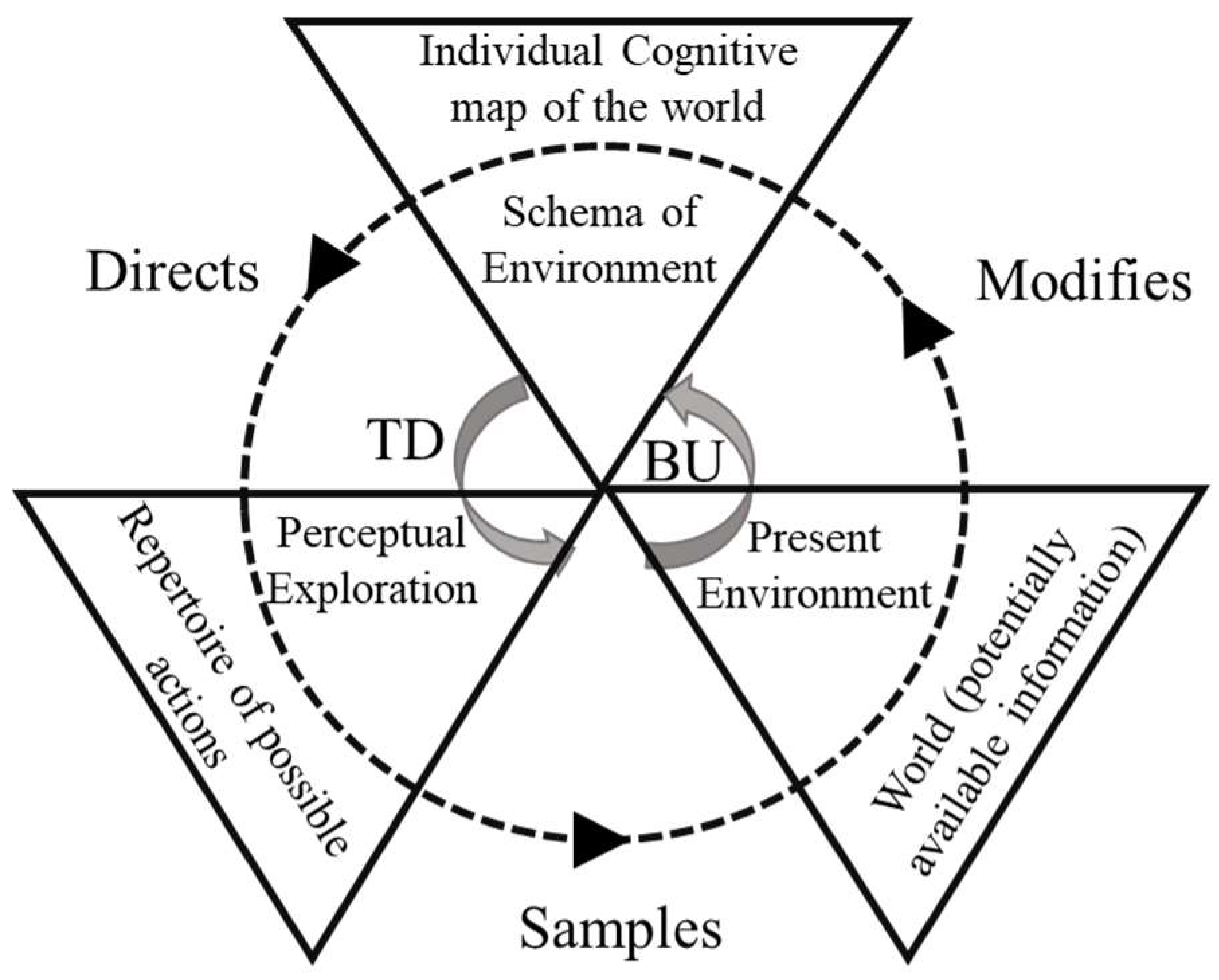
Figure 2.
The survey site in google map.
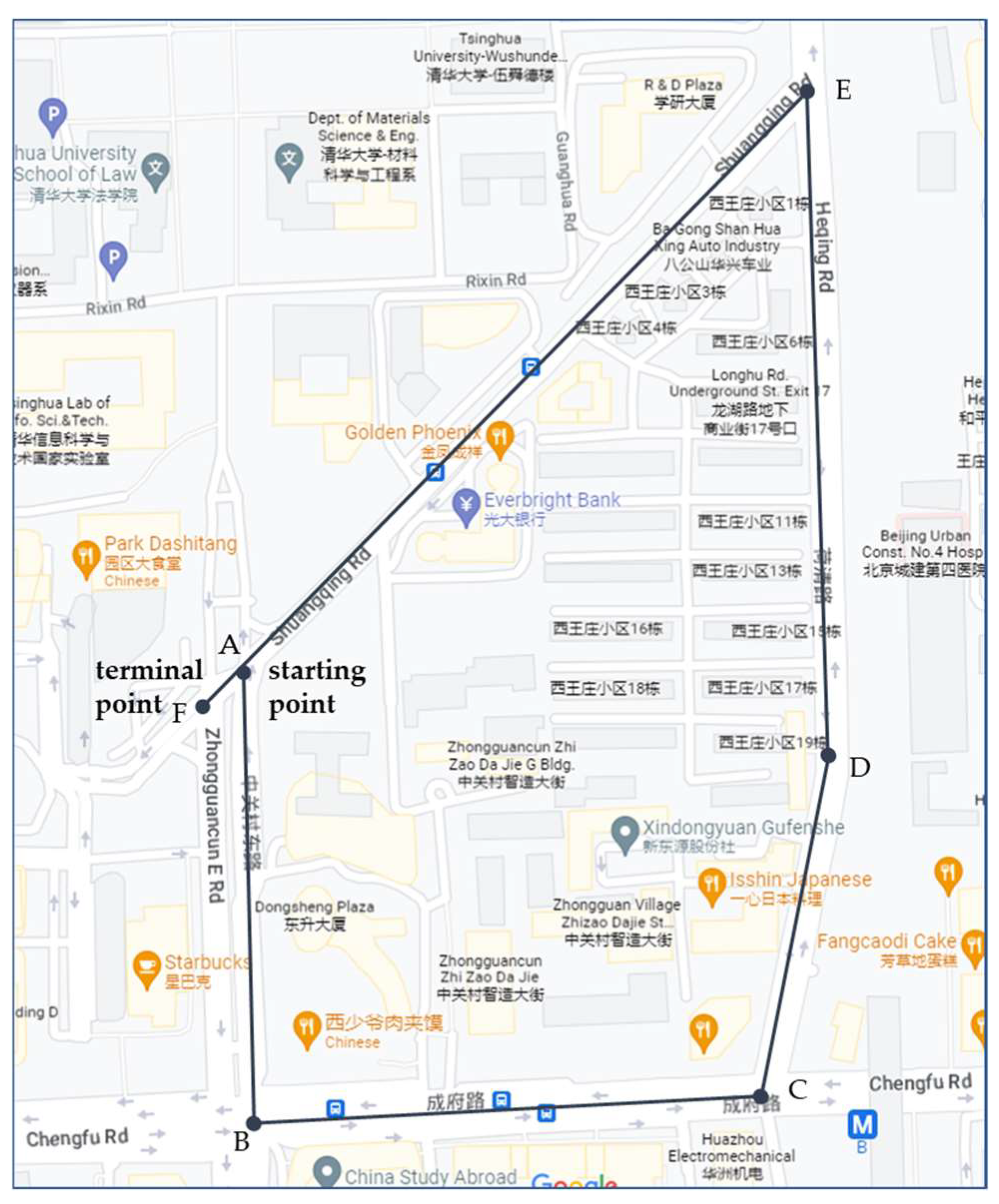
Figure 3.
PCM category comparison between the cyclist, pedestrian and E-cyclist groups.
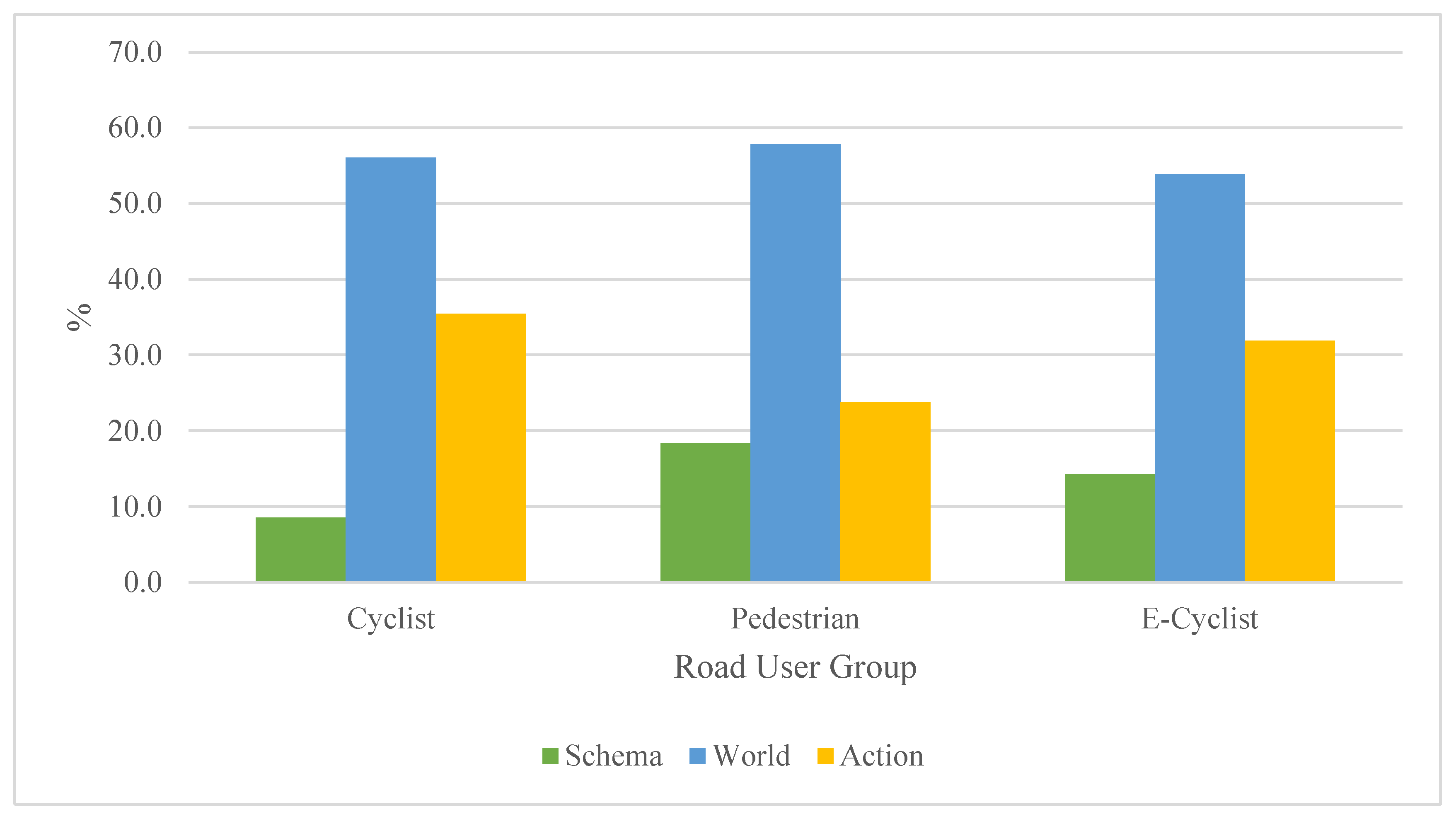
Figure 4.
Comparison between concepts in terms of the PCM for pedestrians, cyclists and E-cyclists.
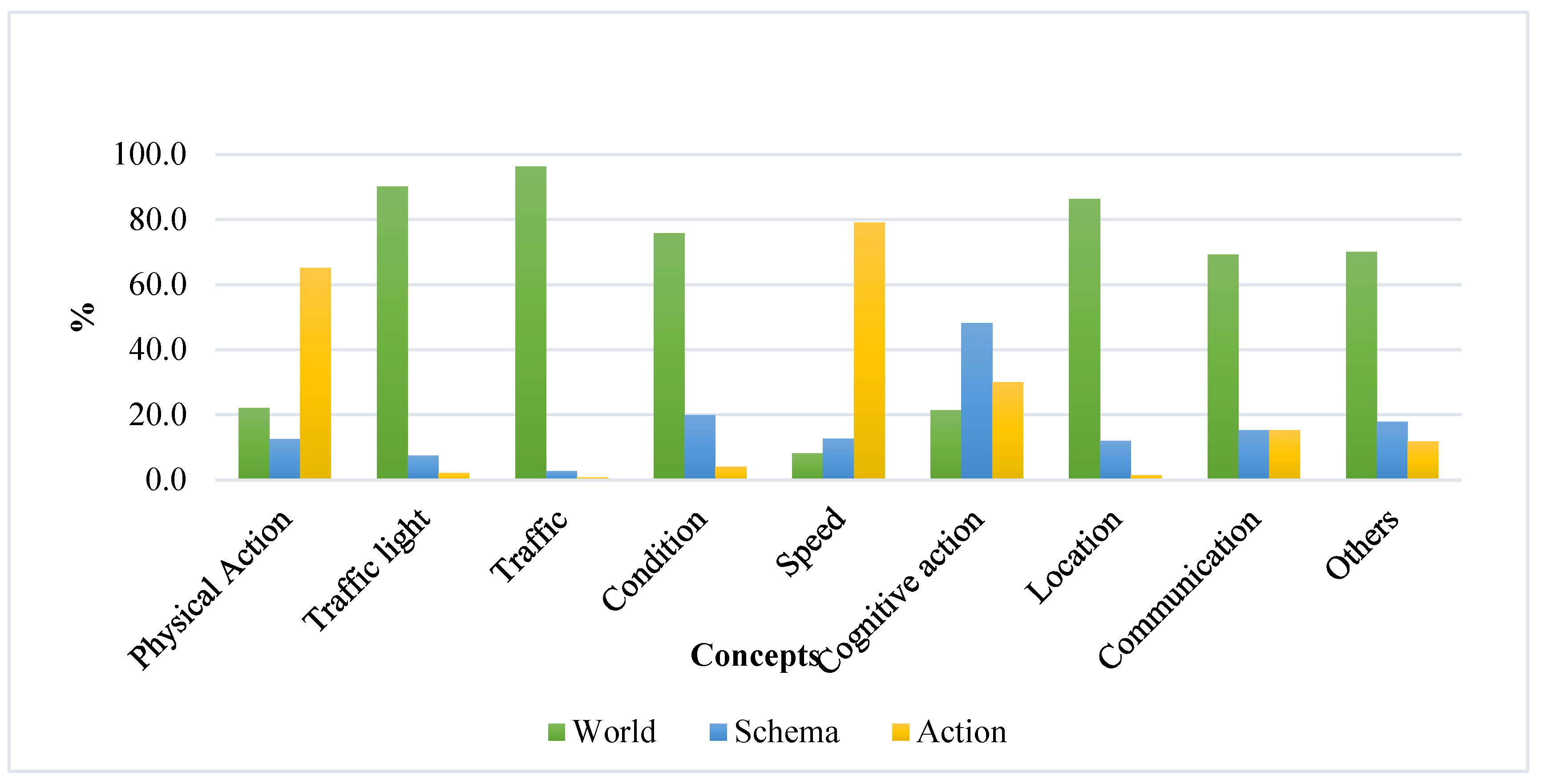
Figure 5.
Amalgamated perceptual cycle model of the pedestrian group.
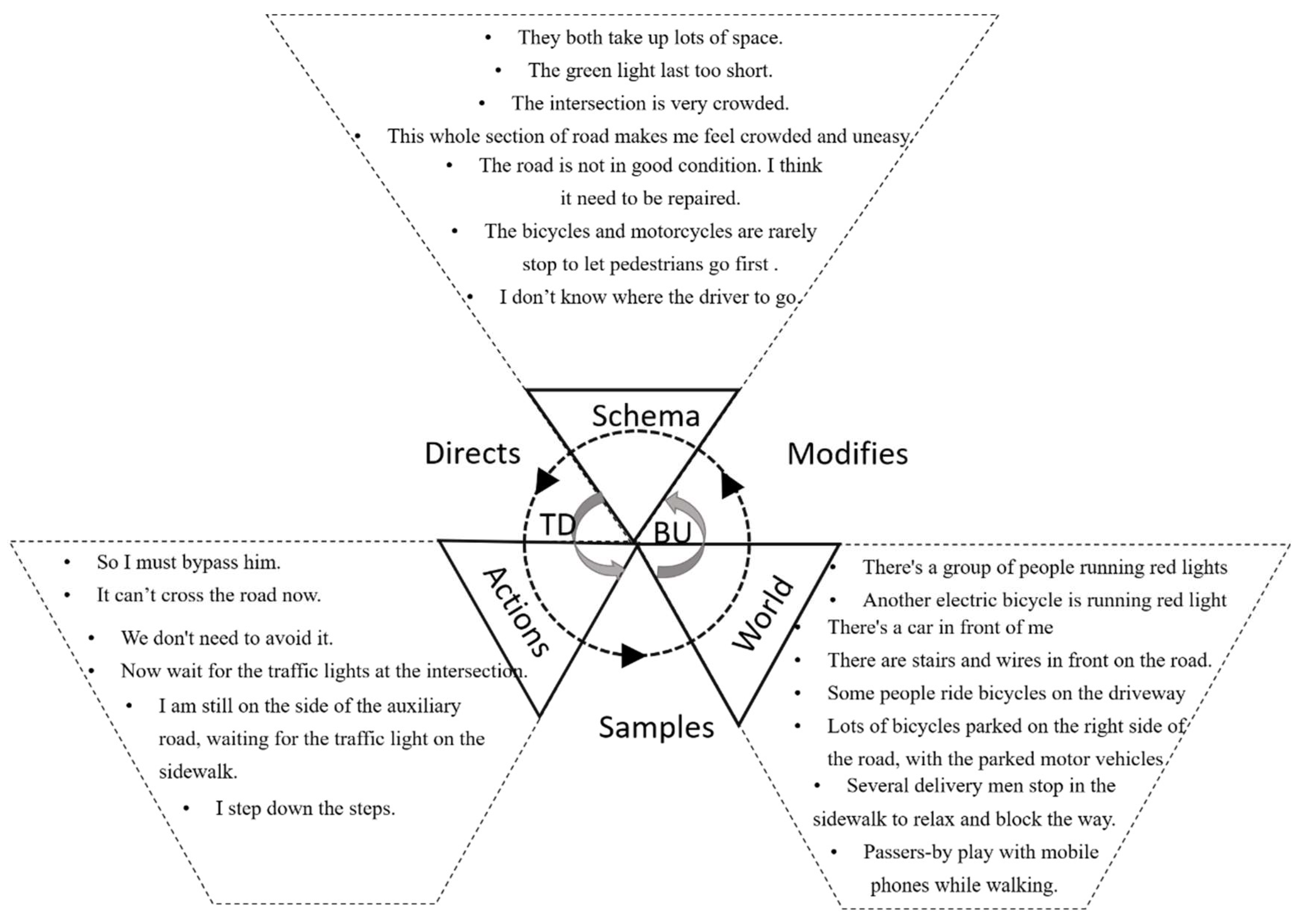
Figure 6.
Amalgamated perceptual cycle model of the bicyclist group.
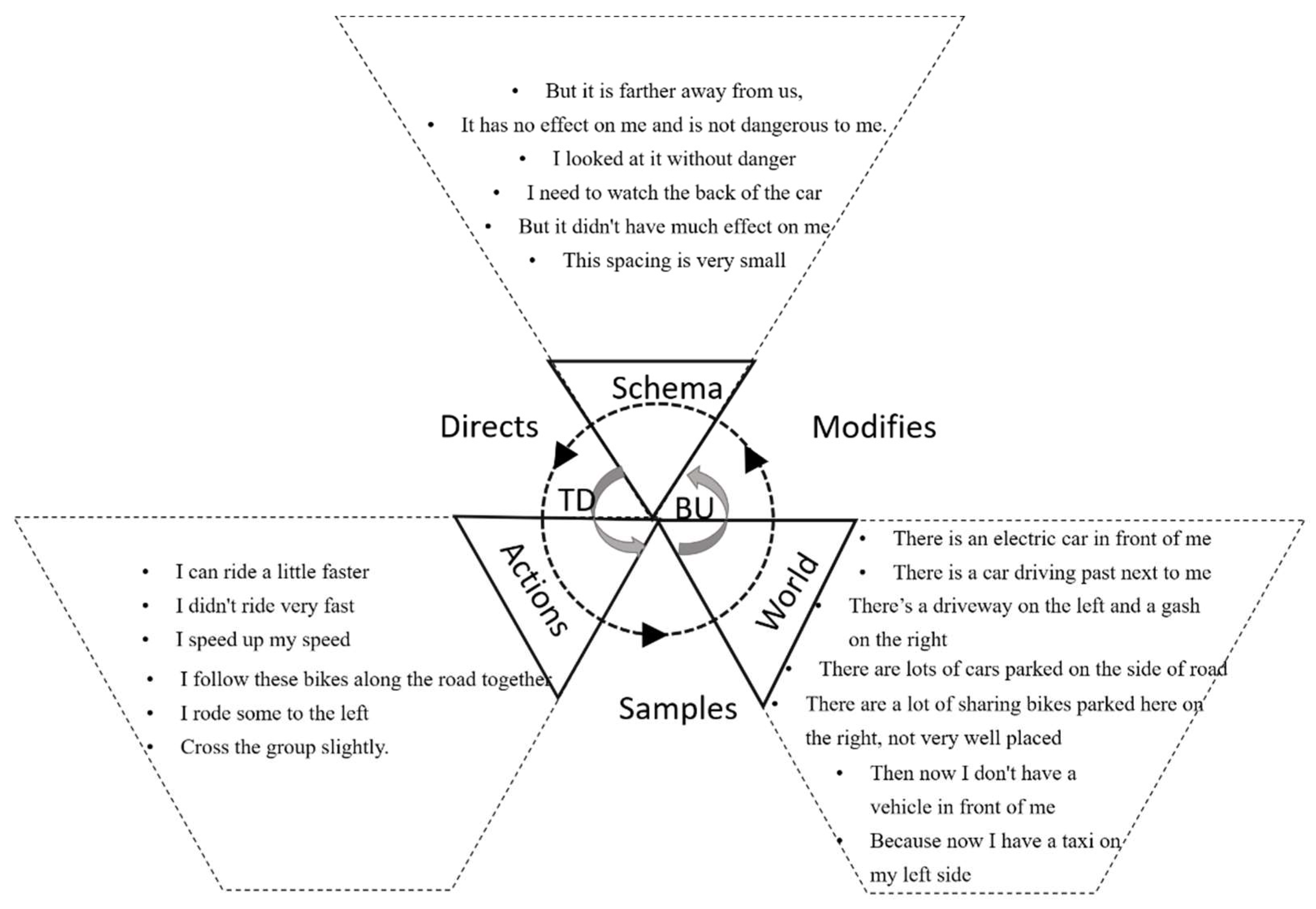
Figure 7.
Amalgamated perceptual cycle model of the E-cyclist group.
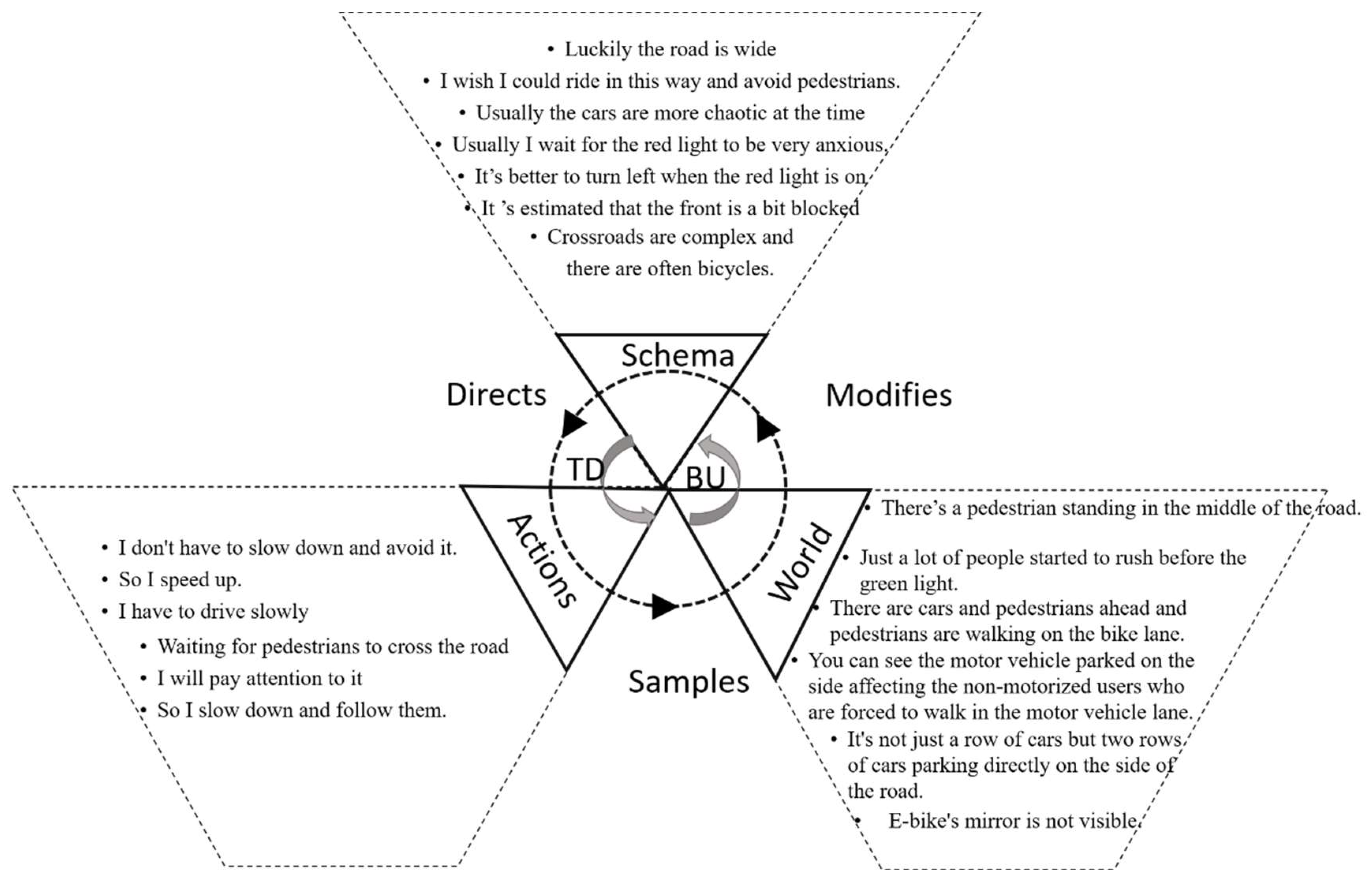

Table 1.
The concepts and the corresponding kernels in the database.
| Concepts | Kernels Included |
|---|---|
| Traffic lights | Included concepts related to traffic lights and their status, such as “lights”, “green”, “red”, amber/yellow, “arrow”, “turning arrow”, “long” and “short” |
| Physical action | Included concepts relating to physical actions performed by the participants or other road users, such as “change”, “speed up/accelerate”, “break”, “move”, “go”, “walk”, “step on”, “slowing/ decelerating”, “stop”, “wait”, “pass”, “turn”; gear”, “horn”, “beep”, “following”, “avoid”, “ reduce” and “indicate” |
| Traffic | Included concepts related to other traffic in the surrounding environment, such as “traffic”, “motorbike”, “tricycle, “e-bike”, “pedestrian”, “motorcyclist”, “bicyclist”, “car”, “vehicle”, “electric vehicle”, “children”, “people” and “students” |
| Location | Included concepts referring to a location on the road, such as “behind”, “rear”, “close to”, “next to”, “parallel”, “side”, “encroach”, “bike lane”, “car lane”, “in front”, “ahead”, “side walk”, “road”, “intersection”, “forward”, “opposite”, “right side”, “left side” and “driveway” |
| Cognitive action | Included concepts relating to the visual and cognitive processes undertaken by participants, such as “checking”, “looking”, “observing” and “thinking” |
| Communication | Included concepts relating to communications between road users, such as “indicating”, “signalising”, “raising the hand” and “signal” |
| Conditions | Included concepts that refer to the current road and traffic conditions, such as “few/ light traffic”, “crowded”, “difficult”, “many”, “dangerous”, “clear”, “safe”, “normal”, “a lot” and “far away” |
| Speed | Included concepts relating to the participants and other road users’ speeds, such as, “speed”, “fast”, “slow”, “speed up” and “reduce speed” |
| Others | Included other concepts not covered by the categories above, such as “stupid”, “hot”, “cool”, “idiot”, “tired”, “dangerous”, “afraid”, “God”, “Oh” and “wow” |
Table 2.
Total and average frequency of schema, action and world segments across 10 transcripts.
| Schema | Action | World | ||||
|---|---|---|---|---|---|---|
| Frequency | Average per Transcript |
Frequency | Average per Transcript |
Frequency | Average per Transcript |
|
| Pedestrian | 201 | 18.4 | 294 | 23.9 | 632 | 57.8 |
| Cyclist | 101 | 8.5 | 420 | 35.4 | 665 | 56.1 |
| E-cyclist | 142 | 14.2 | 318 | 31.9 | 537 | 53.9 |
Table 3.
Distribution of key situation awareness/concepts in the pedestrian group.
| Concept | World (W) | Schema (S) | Action (A) | Sum | |||
|---|---|---|---|---|---|---|---|
| Count | % | Count | % | Count | % | ||
| Physical action | 81 | 21.2 | 57 | 14.9 | 244 | 63.8 | 382 |
| Traffic light | 58 | 79.4 | 12 | 16.4 | 3 | 4.1 | 73 |
| Traffic | 307 | 94.7 | 16 | 4.9 | 1 | 0.3 | 324 |
| Condition | 99 | 66.4 | 48 | 32.2 | 2 | 1.3 | 149 |
| Speed | 3 | 15.7 | 7 | 36.8 | 9 | 47.4 | 19 |
| Cognitive action | 23 | 31.9 | 48 | 66.7 | 1 | 1.4 | 72 |
| Location | 40 | 75.4 | 13 | 24.5 | 0 | 0 | 53 |
| Communication | 3 | 100 | 0 | 0.0 | 0 | 0 | 3 |
| Others | 18 | 62.1 | 11 | 37.93 | 0 | 0 | 29 |
Table 4.
Distribution of key situation awareness/concepts in the bicyclist group.
| Concept | World (W) | Schema (S) | Action (A) | Sum | |||
|---|---|---|---|---|---|---|---|
| Count | % | Count | % | Count | % | ||
| Physical action | 92 | 20.2 | 42 | 9.2 | 321 | 70.5 | 455 |
| Traffic light | 65 | 95.6 | 3 | 4.4 | 0 | 0 | 68 |
| Traffic | 251 | 99.6 | 1 | 0.4 | 0 | 0 | 252 |
| Condition | 163 | 80.2 | 33 | 16.3 | 7 | 3.4 | 203 |
| Speed | 3 | 3.6 | 4 | 4.9 | 75 | 91.5 | 82 |
| Cognitive action | 29 | 70.7 | 12 | 29.3 | 0 | 0 | 41 |
| Location | 44 | 95.6 | 1 | 2.2 | 1 | 2.8 | 46 |
| Communication | 4 | 66.7 | 1 | 16.7 | 1 | 16.7 | 6 |
| Others | 14 | 77.8 | 4 | 22.2 | 0 | 0 | 18 |
Table 5.
Distribution of key situation awareness/concepts in the E-cyclist group.
| Concept | World | Schema | Action | Sum | |||
|---|---|---|---|---|---|---|---|
| Count | % | Count | % | Count | % | ||
| Physical action | 24 | 4.47 | 13 | 9.2 | 282 | 88.68 | 319 |
| Traffic light | 80 | 14.90 | 2 | 1.4 | 9 | 2.83 | 91 |
| Traffic | 287 | 53.45 | 7 | 4.9 | 2 | 0.63 | 296 |
| Condition | 84 | 15.64 | 10 | 7.0 | 0 | 0.00 | 94 |
| Speed | 3 | 0.56 | 3 | 2.1 | 18 | 5.66 | 24 |
| Cognitive action | 18 | 3.35 | 97 | 68.3 | 4 | 1.26 | 119 |
| Location | 24 | 4.47 | 1 | 0.7 | 2 | 0.63 | 27 |
| Communication | 2 | 0.37 | 1 | 0.7 | 1 | 0.31 | 4 |
| Others | 15 | 2.79 | 8 | 5.6 | 0 | 0.0 | 23 |
Disclaimer/Publisher’s Note: The statements, opinions and data contained in all publications are solely those of the individual author(s) and contributor(s) and not of MDPI and/or the editor(s). MDPI and/or the editor(s) disclaim responsibility for any injury to people or property resulting from any ideas, methods, instructions or products referred to in the content. |
© 2023 by the authors. Licensee MDPI, Basel, Switzerland. This article is an open access article distributed under the terms and conditions of the Creative Commons Attribution (CC BY) license (http://creativecommons.org/licenses/by/4.0/).
Copyright: This open access article is published under a Creative Commons CC BY 4.0 license, which permit the free download, distribution, and reuse, provided that the author and preprint are cited in any reuse.


