

Submitted:
30 March 2023
Posted:
04 April 2023
You are already at the latest version
Abstract
Siam weed, scientifically known as Chromolaena odorata and belonging to the Asteraceae family, is a fast-growing plant with prolific seed production. Although it is a traditional medicinal plant, it has become an agricultural weed in Africa and Asia, posing a threat to biodiversity and causing environmental damage. Despite this, C. odorata is highly regarded as a medicinal herb in tropical Africa, with anticancer effects on breast, liver, and colorectal cancer. However, it is important to regulate the intake of the plant extract as it can have a hepatotoxic effect on liver cells at higher doses. Further research needs to be conducted on the plant extract, and proper orientation and knowledge of its oral daily administration are necessary. This review summarizes current scientific investigations using ethanolic and methanolic aqueous extracts of C. odorata leaves on various cancer cells, to uncover its potential as an anticancer agent. The investigations were sourced from online databases like Google Scholar, PubMed, and other online-based journals.
Keywords:
Chromolaena odorata
; liver
; breast
; cancer
; plant
1. Introduction
According to statistics, cancer is the second biggest killer worldwide. In low- and middle-income nations, cancer deaths account for about 70% of all fatalities. By 2030, it is predicted that there will be 13.1 million cancer deaths worldwide (Jones et al., 2017) Cancer is consistently the third-highest cause of mortality in low-income nations and the second-leading cause of death in high-income countries. Although the anti-inflammatory and anticancer properties of several plants have been trado-medically established, there is still no scientific evidence for these claims.
The World Health Organization (WHO) (2018) states that both internal and environmental variables, including hormonal changes, obesity, smoking habits, and exposure to radiation, viruses, and toxins, can contribute to the development of cancer. The nature and location of tumour affect how quickly cancer spreads. About 90–95% of cancer cases are caused by genetic changes impacted by environmental and lifestyle factors, with the remaining 5–10% being caused by hereditary genetic factors. (International Agency for Research on Cancer, 2018). In more than 50% of people who go on to develop cancer and die from it, acquired resistance to anticancer medicines causes the disease to return (Zahreddine & Borden, 2013)
The finding of bioactive chemicals in medicinal plants and growing interest in alternative treatments have led to an increase in the use of plants in primary healthcare and phytotherapeutic research in recent years (Dias, D.A.; Urban, S.; Roessner, 2012). 80 per cent of people rely on plant-based traditional remedies for primary healthcare, according to the World Health Organization (International Agency for Research on Cancer, 2018).More than 50% of the anticancer medications utilized in clinical trials were found to be derived from plant-based natural sources (Desai et al., 2008). A substantial source of synthetic and herbal medications is also medicinal herbs. Herbs have the potential to be extremely beneficial as well as harmful, thus the issue of toxicity requires careful consideration (C et al., 2015)
A member of the Asteraceae herb family and a traditional medicinal plant, Chromolaena odorata (L.) R.M. King & H. Robinson is also known as Siam Weed. Chromolaena odorata L. is also known as "Siam weed" in some circles. It is cultivated as a decorative plant and as a herb. Among the worst tropical weeds in the world, the Siam weed is well known. C. odorata L. is also regarded as a major weed in plantation crops around the world, including citrus, palm oil, coconut, and rubber trees. As it reduces nearby plants, it is highly allelopathic. The stem is dry and easily ignites during the dry season, but the stumps are still alive and grow very quickly, covering the following rainy season (Prawiradiputra, 2007). This plant has an impact. Small farms, agricultural production generally, and natural ecosystems are all impacted by this weed.
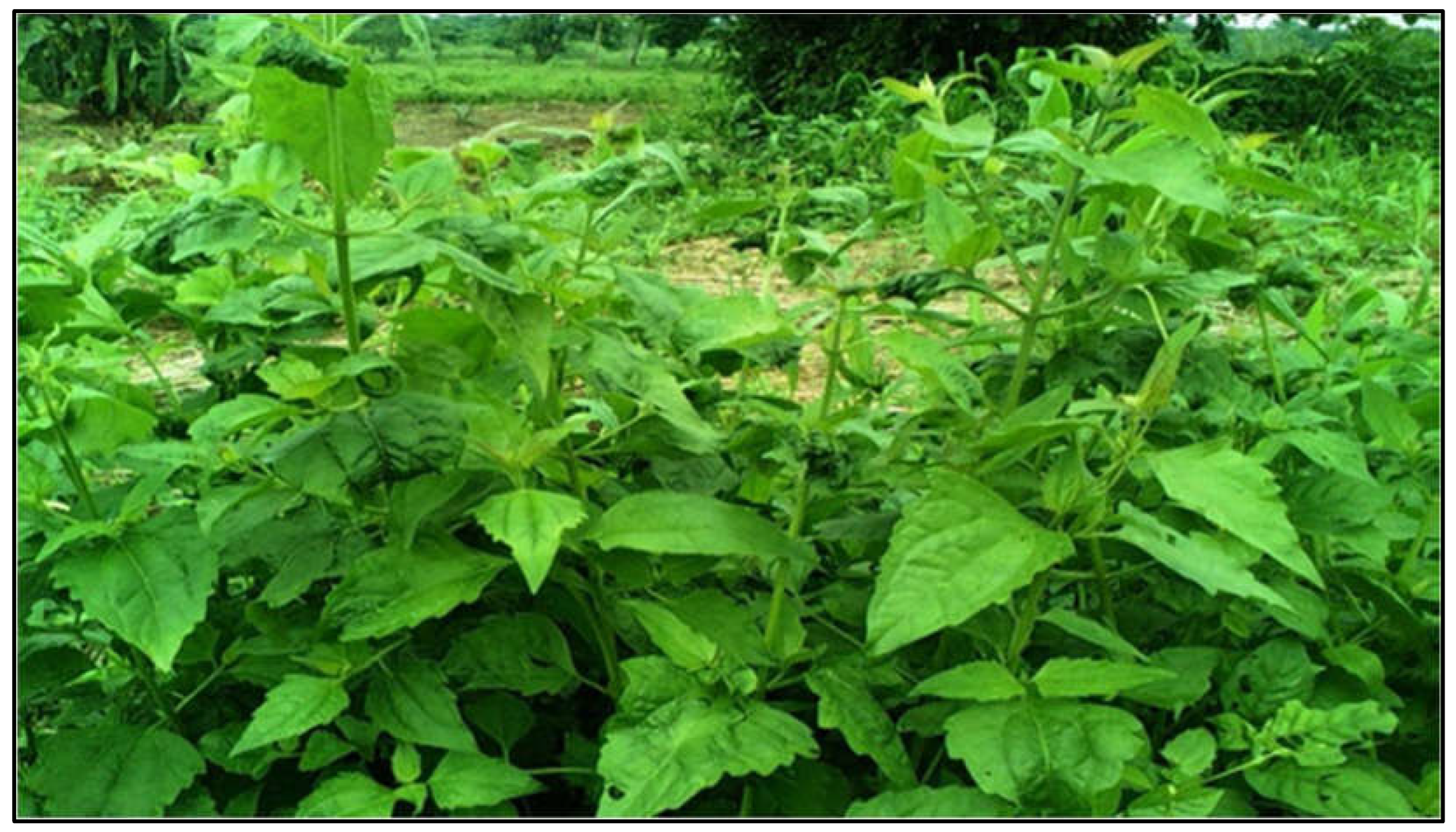
Figure 1.
Chromolaena odorata (Siam Weed). Source: (Tiamiyu & Okunlade, n.d.) 20.20
Phytochemical constituents
Flavonoid aglycones (flavanones, flavonols, flavones) such as acacetin, chalcones, Eupatilin, Luteolin, Kaempferol, Quercetin, Quercetagetin, and Sinensetin; ((Heiss et al., 2014; Suksamrarn et al., 2004; Wollenweber et al., 1995).

Table 1.
Phytochemical analysis of aqueous and ethanolic leaf extract of C. odorata.
| Bioactive compounds | Relative Abundance | |
| Aqueous | Ethanolic | |
| Terpenoids | - | ++ |
| Tannin | + | ++ |
| Saponin | ++ | + |
| Phlobatannin | ++ | - |
| Cardiac Glycoside | - | ++ |
| Flavonoids | - | - |
| Cardenolides | - | - |
| Anthraquinones | - | + |
| Phenol | ++ | + |
| Alkaloids | ++ | - |
| Volatile Oil | - | - |
Observation Remarks: ++ = abundant + = trace - = absent. Source: (Anyasor et al., 2011)
Methoxyflavones, a phytochemical included in the ethanolic extract of the n-hexane fraction of C. odorata leaves, exhibit a wide range of pharmacological properties, including the ability to inhibit cancer cell proliferation and induce apoptosis.
With an IC50 value of 23.44 g/ml, the crude ethanolic extract of C. odorata leaves is more effective than n-hexane, ethyl acetate, and ethanol fractions against the cancer cell line Hep G2 ((YUSUF & FAHRIANI, 2022).
Due to their antioxidant activity against oxidative stress, modulation of gene expression on oncogenes and tumour suppressor genes in cell proliferation and differentiation, and other factors, flavonoids from C. odorata have some preventative and therapeutic mechanisms against cancer cells. They also control the metabolism of carcinogens.
Wound Healing Properties
According to the physiology of wound healing, wounds can be categorized as "open" or "closed" depending on the underlying cause and as "acute" or "chronic" depending on the severity (Nagori & Solanki, 2011; Singh et al., 2006). According to Ayyanar and Ignacimuthu (2009), Chromolaena odorata is one of the plants that may heal wounds and has been studied for its range of health benefits. Several portions of this herb have been used to treat skin infections, burns, and wounds. The plant demonstrates its ability to heal wounds through a variety of processes. Its extract includes numerous antioxidant chemicals that boost this ability, and it also shortens the time needed for bleeding and clotting, which may be the first step in the physiology of wound healing (Vaisakh & Pandey, 2012). By preventing the inflammatory mediators, it can defend the cells from being destroyed. Gram-positive and Gram-negative bacteria are both susceptible to their antimicrobial effects, which raises the possibility that they could lessen wound infections. In a study, animals given C. odorata extract experienced shorter bleeding and clotting times. This demonstrates that it continues to be a potent hemostatic.
Medicinal uses
C. odorata leaves are used in decoctions to treat a variety of diseases (Inta et al., 2013). In addition to treating dyspepsia, C. odorata leaf extracts are used to treat skin conditions (Thang et al., 2001). In northern Africa, liquid extracts from C. odorata are used to relieve stomach pain, coagulate blood, and abort fetuses in the first trimester of pregnancy (Anning & Yeboah-Gyan, 2007) Extracts can also be used to treat patients with malaria and jaundice as well as to disinfect old wounds and boils (Iwu et al., 1999, Vital & Rivera, 2009 ). Extracts from the C. odorata plant have been used to embalm bodies in remote African settlements (Anning & Yeboah-Gyan, 2007). Vietnamese people use C. odorata weed extracts to clean their teeth and treat some eye conditions (Thang et al., 2001) The drug is utilized to treat diabetes in India (Onkaramurthy et al., 2013). Insects are also repelled by the leaves (Nong et al., 2013).
According to (Iwu et al., 1999), C. odorata was effective in treating inflammation, hypertension, spasmodic diarrhoea, and spasms. Additionally, traditional uses for the treatment of burns, wound healing, skin infections, postpartum wounds, and antimalarial medications were mentioned (Amirah Aziz et al., 2020). In many tropical countries, fresh leaves or a decoction of C. odorata have long been used to treat leech bites, soft tissue wounds, burn wounds, skin infections, and liver illnesses (Alisi, 2011)In traditional medicine, a decoction of the leaf is used as a cough suppressant and as a malaria therapy ingredient along with lemon grass and guava leaf. Its leaf water extract is frequently used as a medication for diabetes, malaria, and diarrhoea. Recent studies have demonstrated the plant's larvicidal effects against all significant mosquito vectors (Nong et al., 2013). To stop bleeding and speed up healing, the leaves are historically applied as a poultice to cuts and wounds. The roots are used to make an aqueous decoction that is both antipyretic and analgesic. As a gargle for colds and sore throats, the leaf extract mixed with salt can also be utilized (Amirah Aziz et al., 2020)
Last but not least, local herbalists in Nigeria have demonstrated through its use that it treats peptic ulcers, prevents cervical cancer, lowers cholesterol, encourages a healthy heart, lowers blood pressure, relieves pain, heals ulcers, and lessens foot rot. Although this plant is an invasive weed, research has been done on it to see if it has any therapeutic qualities and to see if it has any anticancer capabilities.
2. Biology of Cancer and Metastasis
Cancer
The condition known as metastasis, which is the uncontrolled spread of cells from one area of the body to another, is the cause of cancer. Normally, the body develops by cell division. After a while, it dies through the process of apoptosis (programmed cell death), and new cells are created to replace the deceased ones. However, in the case of cancer, there is a modification in the process of cell proliferation, resulting in aberrant or damaged cells that form Tumours. These tumours are immune system and tumour suppressor gene resistant. Tumours can be malignant or not (Benign). Malignant tumours, which are known to be cancerous, can spread to different regions of the body through metastatic growth. (D.M. Vasudevan et al., 2011)
Three major genes are involved in cancer development; proto-oncogenes (they are involved in normal cell growth and division. Upon alteration, they become oncogenes, that is, cancer-causing genes), tumour suppressor genes (the genes control the growth and division of cells but due to mutation, these genes can be altered and divide in an uncontrolled manner) and lastly, the DNA repair genes(the help in the repair of damaged genes, if there is a mutation in these genes, they can cause deletions and mutation in the chromosomes). (D.M. Vasudevan et al., 2011).
3. The Anti-cancer activity of Chromolaena odorata on Breast Cancer
The anti-cancer efficacy of C. odorata leaves extract was assessed in a study (Yusuf et al., 2021) in rats with breast cancer brought on by DMBA. The purpose of the study was to examine the cytotoxic properties and potential anticancer mechanisms of an ethanol extract of C. odorata in Wistar rats that had been given DMBA to cause breast cancer. Seven Rattus Copernicus groups were employed, including a normal control, a breast cancer control, and a doxorubicin treatment group. Four treatment groups using C. odorata extract (500, 1000, 2000, and 4000 mg/kg BW) were also used. Except for the acclimatization phase, the treatments lasted 17 days. We evaluated across groups the number, volume, and weight of the nodules as well as the body weight of the rats. The findings revealed that the therapy group saw a significant gain in body weight that was dose-dependent (p 0.05 in all comparisons), along with a significant decrease in the number, volume, and weight of cancer nodules (p 0.001). When compared to Gdoxo, the weight of the cancer nodule at week 16 was likewise significantly lower in GCo2000 (p 0.0001).
Through a series of mechanisms, including metabolic activation in the mammary gland (Lin et al., 2012), carcinogenic metabolites interact with rapidly proliferating cells in the terminal end buds to form DNA adducts and mutations that lead to malignant cell transformation, breast cancer was induced in experimental animals by oral administration of DMBA (Lee et al., 2008). The study effectively created breast cancer by feeding 20 mg/kg of DMBA orally three times per week for five weeks. This was similar to another study that created mammary tumours by repeatedly giving modest doses of DMBA orally (Qing et al., 1997). The anticancer efficacy of C. odorata on breast cancer cell lines has been investigated in the past, according to the authors (Harun et al., 2012; Kouamé et al., 2013; Yusuf et al., 2020). By examining the cytotoxic effect and anticancer mechanism of an ethanol extract of the C. odorata plant in vivo on DMBA-induced breast cancer in Wistar rats, this work attempted to close this gap in the literature.
4. The action of C.odorata on Breast and Colorectal cancer
To assess the quantity and calibre of its antioxidants as well as its cytotoxicity, (Yusuf et al., 2020) examined the bioactivity of C. odorata against colorectal and breast cancer cell lines. According to earlier studies, C. odorata may be able to suppress colon, tissue, and mammary cancer cells. GC-MS, DPPH, flavonoids and phenolic, multi-tester meter, and MTT assays were just a few of the techniques employed in the study to look at C. odorata's chemical composition and antioxidant abilities. Alpha-amyrin had the highest retention period, and the results showed that C. odorata contains six antioxidant components with quality above 80%. The total flavonoids were higher than the total phenolic, and C. odorata's IC50 was higher than vitamin C's. The 4TI and HTB cells in breast cancer responded more negatively to C. odorata's cytotoxicity than the WiDr cancer cells in colorectal cancer. According to the study, C. odorata has significant antioxidant quality and quantity along with a stable ionic value, which can increase the level of cytotoxicity to cancer cells like WIDR, HTB, and 4T1. This study also demonstrates the depth of research into identifying compounds that are toxic to colorectal and breast cancer cell lines.
5. Anticancer activity of C. odorata on Liver Cancer (Hepatocellular Carcinoma)
The functionality of liver cells(hepatocytes) can be known through tests of liver biomarkers. In the presence of liver disease, the membrane of the hepatocyte becomes porous and allows some enzymes ‘percolate’ into the blood circulatory system which in turn leads to the elevation of transaminases in the blood. That is, there is an increase in the porosity of the cell membrane thereby causing an outflow of liver enzymes from the hepatocytes. (C et al., 2015)
Hepatoprotective effects of ethanol and an aqueous extract of C. odorata leaves at 1ml/kg of rifampicin and carbon tetrachloride (CCl4) (Muthu Ramu & Rajasekaran, 2021) Below is a discussion of the outcome:
Table 2.
Acute toxicity of Chromolaena odorata extracts in rats.
| Extract | Dose (mg/kg) | Observed toxic effects |
| Aqueous | 2000 | None |
| Ethanol | 2000 | None |
| Chloroform | 2000 | None |
Chromolaena odorata extracts were examined for acute toxicity in rats, and the results revealed that none of the extracts had any measurable harmful effects at the levels employed in the tests, indicating that they are safe for use in subsequent research.
The findings of acute toxicity testing of different Chromolaena odorata extracts in rats are shown in Table 2 of the article "Hepatoprotective Activity of Different Extracts of Chromolaena Odorata Against CCL4 and Rifampicin-Induced Hepatic Injuries in Rats: A Randomized Controlled Preclinical Trial" by Ramu and Rajasekaran (2021). All of the extracts were deemed to be safe for use in subsequent trials because the study discovered that none of them had any major harmful effects at the assessed dosages.
Table 3.
Hepatoprotective effects of Chromolaena odorata extracts in rats.
| Extract Dose (mg/kg) CCL4-induced liver injury Rifampicin-induced liver injury |
| Aqueous 250 p < 0.001 p < 0.001 |
| Ethanol 250 p < 0.05 p < 0.05 |
| Chloroform 250 p < 0.05 p < 0.05 |
The outcomes demonstrated that all of the extracts had hepatoprotective effects by considerably lowering the levels of liver enzymes and indicators of liver injury. However, the aqueous extract, ethanol extract, and chloroform extract all showed a significant amount of hepatoprotective action. The p-values show the statistical significance of the differences between the groups, with lower p-values suggesting more importance.
Summary: The study's primary experiment tested the hepatoprotective effects of several Chromolaena odorata extracts against liver damage caused by carbon tetrachloride (CCL4) and Rifampicin in rats. The results are presented in Table 3 in the same paper. The outcomes demonstrated that all of the extracts had hepatoprotective effects by considerably lowering the levels of liver enzymes and indicators of liver injury. However, the aqueous extract, ethanol extract, and chloroform extract all showed a significant amount of hepatoprotective action.
6. Anti-Cancer Activity of C. odorata extract on Induced Salmonella typhi
The mean levels of Aspartate Aminotransferase (AST), Alanine Amino Transferase (ALT), Alkaline Phosphatase (ALP), Total Bilirubin (TB), Albumin, and Total Protein (TP) all increased significantly when Salmonella typhi was administered to rat subjects to cause hepatotoxicity and examine the histopathology, but the level of conjugated Bilirubin did not statistically differ. There was a discernible decrease in AST throughout the course of the 16 days following administration of the C. odorata extract. ALT levels dropped in all test groups as a result of the extract. The same information was equally recorded by TP, TB, and ALP (Charles & Minakiri, 2018a)
Even at low doses of the extract, the liver's histoarchitecture was recovered after 16 days in the diseased mice after treatment with it at varied levels (Charles & Minakiri, 2018b)
This must have occurred as a result of liver damage brought on by endotoxins, generalized inflammatory responses brought on by Salmonella typhi-produced and released cytotoxins that have damaged Kuffer cells. Damilola et al. (2014); Adeyi et al. (2013); Sallie et al. (1991).
Generally, C. odorata might cause hepatotoxic action since it contains pyrrolizidine alkaloids. Both a modest amount consumed over an extended period of time and a large amount consumed quickly can be harmful to the liver. (C et al., 2015)
Table 4.
Phytochemical screening of Chromolaena odorata.
| Bioactive compounds | Presence in Chromolaena odorata |
| Alkaloids | Yes |
| Flavonoids | Yes |
| Tannins | Yes |
| Saponins | Yes |
| Phenols | Yes |
The study found that the plant contains several important bioactive compounds, including alkaloids, flavonoids, tannins, saponins, and phenols. These compounds are known to possess a wide range of biological activities and may contribute to the plant's therapeutic properties.
Table 5.
Liver function tests of Wistar rats infected with Salmonella Typhi and treated with Chromolaena odorata extract or ciprofloxacin.
Table 5.
Liver function tests of Wistar rats infected with Salmonella Typhi and treated with Chromolaena odorata extract or ciprofloxacin.
| Parameters | Control Group | Infected Group | Ciprofloxacin-treated Group | Chromolaena Odorata-treated Group |
| ALT (U/L) | 29.60±0.72 | 65.40±1.04 | 47.00±1.45 | 32.80±0.96 |
| AST (U/L) | 99.80±1.08 | 207.00±1.21 | 167.00±0.80 | 110.00±1.48 |
| ALP (U/L) | 178.00±0.95 | 295.80±1.21 | 238.00±1.31 | 193.40±1.09 |
| Total bilirubin (µmol/L) | 2.28±0.11 | 8.03±0.20 | 5.35±0.12 | 3.15±0.07 |
| Albumin (g/L) | 29.60±0.85 | 14.80±0.72 | 22.20±1.07 | 28.60±0.83 |
Note: Values are expressed as mean ± SEM (n=6 rats per group).
The outcomes of the tests done on the Wistar rats used in the study's liver function are shown in Table 6. Salmonella Typhi infection was followed by either Chromolaena odorata extract or the common antibiotic ciprofloxacin being administered to the rats. Alanine aminotransferase (ALT), aspartate aminotransferase (AST), alkaline phosphatase (ALP), total bilirubin, and albumin levels in the serum were tested as part of the liver function tests. Comparing the rats treated with Chromolaena odorata extract and those treated with ciprofloxacin, the results revealed that the rats treated with the extract had considerably lower levels of ALT, AST, ALP, and total bilirubin, indicating a lesser degree of liver injury.
Table 6.
Histopathological findings of liver tissues of Wistar rats infected with Salmonella Typhi and treated with Chromolaena odorata extract or ciprofloxacin.
Table 6.
Histopathological findings of liver tissues of Wistar rats infected with Salmonella Typhi and treated with Chromolaena odorata extract or ciprofloxacin.
| Parameters | Control Group | Infected Group | Ciprofloxacin-treated Group | Chromolaena Odorata-treated Group |
| Hepatic necrosis score | 0 | 4.00±0.28 | 2.17±0.17 | 1.50±0.23 |
| Inflammatory cell infiltration score | 0 | 3.17±0.26 | 2.00±0.28 | 1.33±0.21 |
| Congestion score | 0 | 3.33±0.29 | 2.17±0.17 | 1.50±0.23 |
| Regeneration score | 0 | 1.33±0.21 | 2.00±0.28 | 2.67±0.32 |
Note: Scores were obtained on a scale of 0-4, where 0 indicates no damage or inflammation, and 4 indicates severe damage or inflammation.
Table 6 lists the histological results of the liver tissues from the study's rat subjects. The liver tissues were inspected under a microscope to determine the extent of the infection with Salmonella Typhi and to assess how the Chromolaena odorata extract affected liver regeneration. According to lower scores on a number of histopathological measures, the rats treated with Chromolaena odorata extract had much less liver damage than those treated with ciprofloxacin, according to the study's findings. The researchers came to the conclusion that Chromolaena odorata extract may protect liver function and be effective in treating liver disorders.
7. Effect of C. odorata on Colorectal Cell lines
Additionally, using phase-contrast microscopy, the researchers investigated how the extract affected the shape of the cancer cells. The results of the microscope study revealed that the extract caused the cancer cells to undergo morphological changes such as shrinking, rounding, and separation from the surface of the culture dish (Oloyede et al., 2021). Finally, the researchers used flow cytometry analysis to look into how the extract affected the cancer cells' cell cycle. The extract caused cell cycle arrest in the G0/G1 phase, which suggests that it may prevent the proliferation of cancer cells, according to the results of the flow cytometry examination (Oloyede et al., 2021)
As a result, the research shows that Chromolaena odorata's methanol leaf extract may possess anticancer characteristics and represent a possible source of fresh chemotherapeutic chemicals for the treatment of lung cancer (Oloyede et al., 2021)
8. Conclusion and Recommendation
The facts and information included in this review of C. odorata's anticancer properties were gathered from a variety of publications. It has been demonstrated that C. odorata is a useful traditional medicine. The effects of the ethanolic and methanolic extracts on breast, liver, colon, and rectum cell lines are suppressive of cancer, according to publishable evidence. It has been demonstrated that the extract has a hepatotoxic impact on the liver cells at larger concentrations. We come to the conclusion that controlled measures must be put in place to restrict the consumption of plant extract as a result of this understanding. The oral daily dosage of Chromolaena odorata's aqueous leaf extract requires proper instruction and education.
The anticancer efficacy of C. odorata extract on various cancers such prostate, thyroid, melanoma, and blood cancer hasn't been well-documented, if at all, at the time this review was being written. Additionally, there was little to no proof that the in-silico study employing plant extract from C. odorata caused an up- or down-regulation in a sick condition. Therefore, it is advised that additional scientific research be conducted utilizing this readily available plant extract.
References
- Alisi, C. (2011). Evaluation of the Protective Potential of Chromolaena odorata Linn. Extract on Carbon Tetrachloride-Induced Oxidative Liver Damage. International Journal of Biochemistry Research & Review, 1(3). [CrossRef]
- Amirah Aziz, N., Mohamad, M., Mohsin, H. F., Aqmar, N., Hazalin, M. N., & Hamid, K. A. (2020). The Pharmacological Properties and Medicinal Potential of Chromolaena odorata: A Review. In International Journal of Pharmaceuticals, Nutraceuticals and Cosmetic Science (Vol. 2).
- Anning, A. K., & Yeboah-Gyan, K. (2007). Diversity and distribution of invasive weeds in Ashanti Region, Ghana. African Journal of Ecology, 45(3). [CrossRef]
- Anyasor, G. N., Aina, D. A., Olushola M 1, & Aniyikaye A F. (2011). Phytochemical constituent, proximate analysis, antioxidant, antibacterial and wound healing properties of leaf extracts of Chromolaena Odorata. Scholars Research Library Annals of Biological Research, 2(2).
- C, N. F., Christian Emeka, O., & O, I. G. (2015). EFFECTS OF REPEATED ADMINISTRATION OF CHROMOLAENA ODORATA ON SELECTED LIVER FUNCTION PARAMETERS OF APPARENTLY HEALTHY WISTAR RATS. In European Journal of Biology and Medical Science Research (Vol. 3, Issue 2). www.eajournals.org.
- Charles, I. J., & Minakiri, S. I. (2018a). Effect of Chromolaena Odorata on Hepatotoxicology and Histopathology in the Liver Induced by Salmonella Typhi in Wistar Rats. European Scientific Journal, ESJ, 14(12), 421. [CrossRef]
- Charles, I. J., & Minakiri, S. I. (2018b). Effect of Chromolaena Odorata on Hepatotoxicology and Histopathology in the Liver Induced by Salmonella Typhi in Wistar Rats. European Scientific Journal, ESJ, 14(12), 421. [CrossRef]
- Desai, A., Qazi, G., Ganju, R., El-Tamer, M., Singh, J., Saxena, A., Bedi, Y., Taneja, S., & Bhat, H. (2008). Medicinal Plants and Cancer Chemoprevention. Current Drug Metabolism, 9(7). [CrossRef]
- Dias, D.A.; Urban, S.; Roessner, U. (2012). A historical overview of natural products in drug discovery. Metabolites 2012, 2, 303–336. In A historical overview of natural products in drug discovery. Metabolites 2012, 2, 303–336.
- D.M. Vasudevan,., Kannan Vaidyanathan, & Sreekumari S. (2011). Textbook of biochemistry for medical students (ed.6). (6th ed.). Jaypee Bros. Medical Publishers,.
- Harun, F. Bt., Syed Sahil Jamalullail, S. M., Yin, K. B., Othman, Z., Tilwari, A., & Balaram, P. (2012). Autophagic Cell Death Is Induced by Acetone and Ethyl Acetate Extracts from Eupatorium odoratum In Vitro: Effects on MCF-7 and Vero Cell Lines. The Scientific World Journal, 2012, 439479. [CrossRef]
- Heiss, E. H., Tran, T. V. A., Zimmermann, K., Schwaiger, S., Vouk, C., Mayerhofer, B., Malainer, C., Atanasov, A. G., Stuppner, H., & Dirsch, V. M. (2014). Identification of chromomoric acid C-I as an Nrf2 activator in Chromolaena odorata. Journal of Natural Products, 77(3). [CrossRef]
- Inta, A., Trisonthi, P., & Trisonthi, C. (2013). Analysis of traditional knowledge in medicinal plants used by Yuan in Thailand. Journal of Ethnopharmacology, 149(1). [CrossRef]
- International Agency for Research on Cancer. (2018). All Cancers - WHO 2018. All Cancers 2018, 876.
- Iwu, M. W., Duncan, A. R., & Okunji, C. O. (1999). New antimicrobials of plant origin. Perspectives on new crops and new uses. ASHS Press, Alexandria, 03(01).
- Jones, M. E., Schoemaker, M. J., Wright, L. B., Ashworth, A., & Swerdlow, A. J. (2017). Smoking and risk of breast cancer in the Generations Study cohort. Breast Cancer Research, 19(1). [CrossRef]
- Kouamé, P. B. K., Jacques, C., Bedi, G., Silvestre, V., Loquet, D., Barillé-Nion, S., Robins, R. J., & Tea, I. (2013). Phytochemicals isolated from leaves of chromolaena odorata: Impact on viability and clonogenicity of cancer cell lines. Phytotherapy Research, 27(6). [CrossRef]
- Lee, H. J., Lee, Y. J., Kang, C. M., Bae, S., Jeoung, D., Jang, J. J., Lee, S. S., Cho, C. K., & Lee, Y. S. (2008). Differential gene signatures in rat mammary tumors induced by DMBA and those induced by fractionated γ radiation. Radiation Research, 170(5). [CrossRef]
- Lin, Y., Yao, Y., Liu, S., Wang, L., Moorthy, B., Xiong, D., Cheng, T., Ding, X., & Gu, J. (2012). Role of mammary epithelial and stromal P450 enzymes in the clearance and metabolic activation of 7,12-dimethylbenz(a)anthracene in mice. Toxicology Letters, 212(2), 97–105. [CrossRef]
- Muthu Ramu, T., & Rajasekaran, S. (2021). Hepatoprotective activity of different extract of chromolaena odorata against CCl4 and rifampicin– induced hepatic injuries in rats: A randomized controlled preclinical trial. International Journal of Current Research and Review, 13(3), 6–10. [CrossRef]
- Nagori, B. P., & Solanki, R. (2011). Role of medicinal plants in wound healing. Research Journal of Medicinal Plant, 5(4). [CrossRef]
- Nong, X., Tan, Y. J., Wang, J. H., Xie, Y., Fang, C. L., Chen, L., Liu, T. F., Yang, D. Y., Gu, X. Bin, Peng, X. R., Wang, S. X., & Yang, G. Y. (2013). Evaluation acaricidal efficacy of botanical extract from Eupatorium adenophorum against the hard tick Haemaphysalis longicornis (Acari: Ixodidae). Experimental Parasitology, 135(3). [CrossRef]
- Oloyede, O. B., Akintoye, F. A., & Omotayo, F. O. (2021). Oloyede, O.B., AkiEvaluation of the anticancer properties of the methanol leaf extract of Chromolaena odorata on HT29 lung cancer cell line. Heliyon.
- Onkaramurthy, M., Veerapur, V. P., Thippeswamy, B. S., Madhusudana Reddy, T. N., Rayappa, H., & Badami, S. (2013). Anti-diabetic and anti-cataract effects of Chromolaena odorata Linn.; In streptozotocin-induced diabetic rats. Journal of Ethnopharmacology, 145(1). [CrossRef]
- Prawiradiputra, B. R. (2007). Ki Rinyuh (Chromolaena odorata (L) R.M. KING Dan H. ROBINSON): Gulma Padang Rumput Yang Merugikan. WARTAZOA, 17(1).
- Qing, W. G., Conti, C. J., LaBate, M., Johnston, D., Slaga, T. J., & MacLeod, M. C. (1997). Induction of mammary cancer and lymphoma by multiple, low oral doses of 7,12-dimethylbenz[a]anthracene in SENCAR mice. Carcinogenesis, 18(3), 553–559. [CrossRef]
- Singh, M., Govindarajan, R., Nath, V., Rawat, A. K. S., & Mehrotra, S. (2006). Antimicrobial, wound healing and antioxidant activity of Plagiochasma appendiculatum Lehm. et Lind. Journal of Ethnopharmacology, 107(1). [CrossRef]
- Suksamrarn, A., Chotipong, A., Suavansri, T., Boongird, S., Timsuksai, P., Vimuttipong, S., & Chuaynugul, A. (2004). Antimycobacterial activity and cytotoxicity of flavonoids from the flowers of Chromolaena odorata. Archives of Pharmacal Research, 27(5). [CrossRef]
- Thang, P. T., Patrick, S., Teik, L. S., & Yung, C. S. (2001). Anti-oxidant effects of the extracts from the leaves of Chromolaena odorata on human dermal fibroblasts and epidermal keratinocytes against hydrogen peroxide and hypoxanthine-xanthine oxidase induced damage. Burns, 27(4). [CrossRef]
- Tiamiyu, A. M., & Okunlade, O. A. (n.d.). Benefits and detriments of Siam weed (Chromolaena odorata): A review.
- Vaisakh, M. N., & Pandey, A. (2012). The invasive weed with healing properties: A review on chromolaena odorata. In International Journal of Pharmaceutical Sciences (Vol. 3, Issue 1).
- Wollenweber, E., Dörr, M., & Muniappan, R. (1995). Exudate flavonoids in a tropical weed, Chromolaena odorata (L.) R. M. King et H. Robinson. Biochemical Systematics and Ecology, 23(7–8). [CrossRef]
- YUSUF, H., & FAHRIANI, M. (2022). Anticancer activity and apoptotic induction of Chromolaena odorata Linn leaves extract and fractions on hepatocellular carcinoma cell lines (HepG2). Jurnal Natural, 22(1), 57–67. [CrossRef]
- Yusuf, H., Kamarlis, R. K., & Yusni, Y. (2020). GROWTH INHIBITION AND INDUCTION OF APOPTOSIS IN MCF-7 AND T47D BREAST CANCER CELL LINES BY ETHANOL EXTRACT OF SEURAPOH (Chromolaena odorata) LEAVES. Jurnal Kedokteran Hewan - Indonesian Journal of Veterinary Sciences, 14(3). [CrossRef]
- Yusuf, H., Kamarlis, R. K., Yusni, Y., & Fahriani, M. (2021). The anticancer activity of ethanol extract of Chromolaena odorata leaves in 7,12-Dimethylbenz[a]anthracene in (DMBA) induced breast cancer Wistar rats (Rattus novergicus). Pharmacia, 68(2), 493–499. [CrossRef]
- Zahreddine, H., & Borden, K. L. B. (2013). Mechanisms and insights into drug resistance in cancer. In Frontiers in Pharmacology: Vol. 4 MAR. [CrossRef]
Disclaimer/Publisher’s Note: The statements, opinions and data contained in all publications are solely those of the individual author(s) and contributor(s) and not of MDPI and/or the editor(s). MDPI and/or the editor(s) disclaim responsibility for any injury to people or property resulting from any ideas, methods, instructions or products referred to in the content. |
© 2023 by the authors. Licensee MDPI, Basel, Switzerland. This article is an open access article distributed under the terms and conditions of the Creative Commons Attribution (CC BY) license (http://creativecommons.org/licenses/by/4.0/).
Copyright: This open access article is published under a Creative Commons CC BY 4.0 license, which permit the free download, distribution, and reuse, provided that the author and preprint are cited in any reuse.


