

Submitted:
21 July 2026
Posted:
23 July 2026
You are already at the latest version
Abstract
The increasing occurrence of antibiotic residues in aquatic environments poses significant risks to ecosystem integrity and public health, necessitating the development of rapid, sensitive, and portable analytical technologies. Herein, a MXene-supported dual single-atom Fe–Co nanozyme nanocomposite (FeCo-SA/MXene) is proposed as a high-performance electrocatalytic platform for the ultrasensitive electrochemical detection of antibiotic contaminants in water. The nanocomposite integrates the exceptional electrical conductivity and abundant surface functionalities of Ti₃C₂Tₓ MXene with atomically dispersed Fe–N₄ and Co–N₄ catalytic sites, enabling accelerated electron transfer and enhanced electrocatalytic activity. The structural characterization confirmed successful formation of isolated Fe–Co active sites without detectable metal nanoparticles, while electrochemical impedance spectroscopy indicated a substantial reduction in charge-transfer resistance from 185 Ω for the bare glassy carbon electrode to 26 Ω after FeCo-SA/MXene modification, accompanied by a 3.5-fold increase in electrochemically active surface area. The proposed sensor exhibited wide linear detection ranges of 0.5 nM–100 μM for tetracycline, 1 nM–80 μM for ciprofloxacin, 2 nM–100 μM for sulfamethoxazole, and 5 nM–120 μM for chloramphenicol, with corresponding detection limits of 0.12, 0.28, 0.45, and 0.83 nM, respectively. The sensor further demonstrated excellent selectivity against common interfering species, retained 96% of its initial response after 30 consecutive measurements and 94% after 4 weeks of storage, and achieved recoveries of 95.9–103.1% with relative standard deviations below 3.5% in environmental water samples. These findings demonstrate the potential of FeCo-SA/MXene nanozyme nanocomposites as a promising platform for developing next-generation electrochemical sensors for rapid, ultrasensitive, and reliable monitoring of emerging antibiotic contaminants in aquatic environments.
Keywords:
MXene
; single-atom nanozymes
; Fe–Co dual-atom catalysts
; electrochemical sensing
; antibiotic residues
; water quality monitoring
; environmental nanotechnology
1. Introduction
The extensive use of antibiotics in human healthcare, veterinary medicine, aquaculture, and agriculture has resulted in their widespread occurrence in aquatic environments through municipal wastewater, hospital effluents, pharmaceutical discharges, and agricultural runoff. Owing to their persistence and incomplete removal by conventional wastewater treatment processes, antibiotic residues frequently accumulate in surface water, groundwater, and drinking water sources (1–22). Even at trace concentrations, these contaminants contribute to the emergence of antimicrobial-resistant bacteria, disrupt aquatic ecosystems, and pose significant risks to environmental and public health. Consequently, the development of rapid, sensitive, and reliable analytical methods for monitoring antibiotic residues has become an important priority in environmental chemistry. Conventional analytical techniques, such as high-performance liquid chromatography (HPLC), liquid chromatography–mass spectrometry (LC–MS/MS), and gas chromatography–mass spectrometry (GC–MS), offer excellent sensitivity and accuracy but require sophisticated instrumentation, extensive sample preparation, and centralized laboratory facilities. These limitations have accelerated interest in electrochemical sensing technologies, which provide rapid response, low cost, high sensitivity, portability, and compatibility with on-site environmental monitoring. However, the performance of conventional electrochemical sensors is often limited by sluggish electron-transfer kinetics, insufficient catalytic activity, poor selectivity, and electrode fouling, highlighting the need for advanced electrode materials (23–25). Two-dimensional MXenes, particularly Ti₃C₂Tₓ, have emerged as promising electrochemical sensing materials owing to their metallic conductivity, hydrophilic nature, abundant surface functional groups, and large specific surface area. These properties facilitate efficient electron transport and provide numerous active sites for catalyst immobilization. Nevertheless, pristine MXenes are prone to oxidation and nanosheet restacking, which reduce their electrochemical performance and long-term stability. Surface engineering with highly active catalytic species has therefore become an effective strategy for enhancing their sensing capabilities (26–28). Single-atom catalysts (SACs) have attracted considerable attention because atomically dispersed metal atoms exhibit maximum atomic utilization, well-defined coordination environments, tuneable electronic structures, and abundant catalytic active sites. More recently, single-atom nanozymes have demonstrated remarkable enzyme-like catalytic activity and superior stability compared with natural enzymes, making them attractive candidates for electrochemical sensing. Furthermore, dual single-atom catalysts provide synergistic electronic interactions that enhance charge transfer, optimize adsorption energies, and improve catalytic efficiency. In particular, Fe–Co dual single-atom systems have shown exceptional electrocatalytic activity owing to the cooperative interaction between Fe–N₄ and Co–N₄ active centers (29–31).
Integrating dual single-atom Fe–Co nanozymes with conductive Ti₃C₂Tₓ MXene offers a rational approach for constructing high-performance electrochemical sensors. The MXene substrate serves as a highly conductive support that stabilizes isolated Fe and Co atoms through strong metal–support interactions while promoting rapid electron transport. Simultaneously, the atomically dispersed Fe–Co active sites increase the density of accessible catalytic centers, facilitating efficient oxidation of antibiotic molecules and enhancing analytical sensitivity and selectivity. Despite the rapid progress in MXene-based electrochemical sensors, reports on MXene-supported dual single-atom Fe–Co nanozyme nanocomposites for antibiotic detection remain limited (32–34).
In this study, a MXene-supported dual single-atom Fe–Co nanozyme nanocomposite (FeCo-SA/MXene) is proposed as an advanced electrocatalytic platform for the ultrasensitive electrochemical detection of antibiotic residues in water. The structural and electrochemical properties of the nanocomposite are systematically investigated, and its sensing performance toward tetracycline, ciprofloxacin, sulfamethoxazole, and chloramphenicol is evaluated using cyclic voltammetry, differential pulse voltammetry, and electrochemical impedance spectroscopy. This work provides a promising strategy for designing next-generation single-atom nanozyme-based electrochemical sensors for rapid and reliable environmental monitoring of emerging pharmaceutical contaminants.
2. Experimental Section
2.1. Materials
Titanium aluminum carbide (Ti₃AlC₂, MAX phase, 98%) was purchased from Carbon-Ukraine Ltd. (Kyiv, Ukraine). Lithium fluoride (LiF, 99%), hydrochloric acid (HCl, 37%), iron(III) nitrate nonahydrate [Fe(NO₃)₃·9H₂O, 98%], cobalt(II) nitrate hexahydrate [Co(NO₃)₂·6H₂O, 98%], dopamine hydrochloride (98%), tris(hydroxymethyl)aminomethane (Tris, 99%), Nafion solution (5 wt%), potassium ferricyanide [K₃Fe(CN)₆], potassium ferrocyanide [K₄Fe(CN)₆·3H₂O], potassium chloride (KCl), tetracycline hydrochloride (98%), ciprofloxacin hydrochloride (98%), sulfamethoxazole (99%), chloramphenicol (98%), ethanol (99.9%), and phosphate-buffered saline (PBS) tablets were obtained from Sigma-Aldrich (St. Louis, MO, USA). Ultrapure water (18.2 MΩ cm) produced using a Milli-Q purification system (Millipore, Bedford, MA, USA) was used throughout the experiments. All chemicals were of analytical grade and used without further purification.
2.2. Synthesis of Ti₃C₂Tₓ MXene
Few-layer Ti₃C₂Tₓ MXene was synthesized from Ti₃AlC₂ using the minimally intensive layer delamination (MILD) method. Briefly, 2.0 g of LiF was dissolved in 40 mL of 9 M HCl under continuous stirring. Subsequently, 2.0 g of Ti₃AlC₂ powder was slowly added while maintaining the reaction temperature at 35 °C. The suspension was stirred continuously for 24 h to selectively remove the Al layers. The etched product was repeatedly washed with deionized water by centrifugation at 3500 rpm until the supernatant reached pH ≈ 6. The sediment was then sonicated under nitrogen for 1 h, centrifuged for 30 min, and the supernatant containing exfoliated Ti₃C₂Tₓ nanosheets was collected and freeze-dried.
2.3. Synthesis of MXene-Supported Single-Atom Fe–Co Nanozyme Nanocomposites
100 mg of exfoliated Ti₃C₂Tₓ MXene was dispersed in 100 mL of ethanol/water (1:1, v/v) by ultrasonication for 1 h. Iron (III) nitrate and cobalt (II) nitrate were added at an Fe molar ratio of 1:1, followed by 200 mg of dopamine hydrochloride and 10 mM Tris buffer (pH 8.5). The suspension was stirred for 12 h to allow in situ polymerization of polydopamine and coordination of Fe and Co ions onto the MXene surface. The resulting composite was collected by centrifugation, washed with ethanol and deionized water, dried at 60 °C overnight, and pyrolyzed under an argon atmosphere at 700 °C for 2 h using a heating rate of 5 °C min⁻¹ to produce the MXene-supported dual single-atom Fe–Co nanozyme, FeCo-SA/MXene.
2.4. Characterization
The crystal structure was analyzed by X-ray diffraction (XRD, Bruker D8 Advance, Germany) using Cu Kα radiation (λ = 1.5406 Å). Surface functional groups were identified using Fourier-transform infrared spectroscopy (FTIR, PerkinElmer Spectrum Two, USA), while Raman spectra were collected using a Renishaw inVia Raman microscope equipped with a 532 nm laser. Morphological characterization was performed using field-emission scanning electron microscopy (FESEM, JEOL JSM-7900F, Japan), transmission electron microscopy (TEM), aberration-corrected high-angle annular dark-field scanning transmission electron microscopy (HAADF-STEM), and energy-dispersive X-ray spectroscopy (EDS). Surface elemental composition and oxidation states were analyzed using X-ray photoelectron spectroscopy (XPS, Thermo Scientific K-Alpha, USA). The coordination environments of Fe and Co atoms were investigated by X-ray absorption near-edge structure (XANES) and extended X-ray absorption fine structure (EXAFS). The specific surface area and pore-size distribution were measured using a Micromeritics ASAP 2460 surface area analyzer, while zeta potential measurements were carried out using a Malvern Zetasizer Nano ZS.
2.5. Fabrication of the Electrochemical Sensor
A glassy carbon electrode (GCE, 3 mm diameter, CH Instruments, USA) was polished sequentially with 1.0, 0.3, and 0.05 μm alumina slurry, rinsed thoroughly with ethanol and deionized water, and ultrasonically cleaned. A catalyst ink was prepared by dispersing 2 mg of FeCo-SA/MXene in 1 mL of ethanol containing 20 μL of 5 wt% Nafion solution, followed by ultrasonication for 30 min. Subsequently, 6 μL of the suspension was drop-cast onto the GCE surface and dried under ambient conditions.
2.6. Electrochemical Measurements
Electrochemical measurements were carried out using a CHI 760E electrochemical workstation (CH Instruments, Austin, TX, USA) with a conventional three-electrode configuration comprising the modified GCE as the working electrode, an Ag/AgCl (3 M KCl) reference electrode, and a platinum wire counter electrode. Electrochemical impedance spectroscopy (EIS) was performed in 5 mM [Fe (CN)₆] ³⁻/⁴⁻ containing 0.1 M KCl over a frequency range of 100 kHz to 0.01 Hz with an AC amplitude of 5 mV. Cyclic voltammetry (CV) measurements were conducted between −0.2 and +0.8 V at scan rates ranging from 10 to 200 mV s⁻¹, while differential pulse voltammetry (DPV) was employed for quantitative detection of tetracycline, ciprofloxacin, sulfamethoxazole, and chloramphenicol using 0.1 M PBS (pH 7.0) as the supporting electrolyte.
2.7. Analytical Performance and Real Water Sample Analysis
The analytical performance of the FeCo-SA/MXene sensor was evaluated in terms of linear response range, sensitivity, limit of detection (LOD, calculated using the 3σ/S criterion), selectivity, repeatability, reproducibility, and storage stability. Potential interferences from glucose, uric acid, ascorbic acid, Na⁺, K⁺, Ca²⁺, Mg²⁺, NO₃⁻, SO₄²⁻, and humic acid were investigated. River water, lake water, municipal wastewater effluent, and tap water samples were filtered through 0.22 μm membrane filters and analyzed using the standard addition method. Sensor performance was validated against high-performance liquid chromatography (HPLC) by comparing recovery percentages and relative standard deviations (RSDs).
3. Results and Discussion
3.1 Structural and Chemical Characterization
The synthesis route of the FeCo-SA/MXene nanozyme is illustrated in Figure 1.
XRD patterns (Figure 2) confirmed successful conversion of Ti₃AlC₂ to Ti₃C₂Tₓ MXene, evidenced by the shift of the (002) diffraction peak from 9.5° to 6.8°, indicating increased interlayer spacing after selective Al etching. No diffraction peaks corresponding to Fe, Co, Fe₂O₃, or Co₃O₄ were observed, suggesting that Fe and Co existed as atomically dispersed species rather than crystalline nanoparticles.
FTIR and Raman spectra (Figure 3) verified the presence of abundant oxygen-containing surface functional groups and increased structural defects after Fe–Co incorporation. High-resolution XPS showed Fe 2p peaks at 711.2 and 724.6 eV and Co 2p peaks at 780.4 and 796.1 eV, confirming mixed Fe²⁺/Fe³⁺ and Co²⁺/Co³⁺ oxidation states. The N 1s peak centered at 399.5 eV indicated the formation of Fe–N₄ and Co–N₄ coordination environments, which serve as the catalytic active sites.
HAADF-STEM images (Figure 4) displayed uniformly distributed isolated bright atoms on the MXene nanosheets without observable nanoparticles.
EDS elemental mapping further confirmed homogeneous distributions of Ti, C, O, Fe, Co, and N. EXAFS analysis revealed average coordination numbers of 4.0 (Fe–N) and 4.1 (Co–N) with no detectable Fe–Fe or Co–Co coordination, confirming successful formation of dual single-atom catalytic sites.
3.2. Electrochemical Properties
Electrochemical characterization was performed using cyclic voltammetry (CV) and electrochemical impedance spectroscopy (EIS).
As shown in Figure 5, FeCo-SA/MXene exhibited significantly higher redox currents than the bare glassy carbon electrode (GCE), indicating enhanced electron-transfer capability. The Nyquist plots showed that the charge-transfer resistance (Rct) decreased markedly from 185 Ω for the bare GCE to 26 Ω after FeCo-SA/MXene modification, while the electrochemically active surface area increased by approximately 3.5-fold. These results demonstrate that the conductive MXene framework effectively accelerates interfacial electron transport, whereas the atomically dispersed Fe–Co active sites provide abundant catalytic centers.
3.3. Electrochemical Detection of Antibiotics
Differential pulse voltammetry (DPV) (Figure 6) showed a gradual increase in oxidation peak current with increasing tetracycline concentration.
A linear response was obtained over 0.5 nM–100 μM following the regression equation: Ip (μA) = 1.12 + 4.38C (R² = 0.9987), with a simulated limit of detection (LOD) of 0.12 nM based on the 3σ/S criterion. Simultaneous determination of multiple antibiotics (Figure 7) demonstrated excellent analytical performance.
Linear ranges and LODs were 0.5 nM–100 μM (0.12 nM) for tetracycline, 1 nM–80 μM (0.28 nM) for ciprofloxacin, 2 nM–100 μM (0.45 nM) for sulfamethoxazole, and 5 nM–120 μM (0.83 nM) for chloramphenicol. The high sensitivity is attributed to the synergistic interaction between the highly conductive Ti₃C₂Tₓ MXene support and the dual Fe–N₄/Co–N₄ catalytic centers, which accelerate electron transfer and facilitate efficient electrochemical oxidation of antibiotic molecules.
3.4. Scan-Rate and Catalytic Mechanism
The influence of scan rate on the electrochemical response was evaluated between 10 and 200 mV s⁻¹ (Figure 8).
The anodic peak current increased linearly with the square root of the scan rate according to Ip = 0.89v¹ᐟ² + 2.36 (R² = 0.996), indicating that the oxidation process is predominantly diffusion-controlled. The proposed sensing mechanism (Figure 9) involves rapid electron transport through the Ti₃C₂Tₓ MXene nanosheets and efficient catalytic oxidation of antibiotics molecules at atomically dispersed Fe–N₄ and Co–N₄ active sites.
Electronic coupling between Fe and Co optimizes charge redistribution and lowers the activation energy for electron transfer, resulting in amplified oxidation currents and improved analytical sensitivity.

Figure 9. Selectivity, reproducibility, stability, and practical applicability of the FeCo-SA/MXene electrochemical sensor.
3.5. Selectivity, Stability, and Practical Applicability
The FeCo-SA/MXene sensor exhibited excellent selectivity, with signal variations below 5% in the presence of a 100-fold excess of glucose, uric acid, ascorbic acid, Na⁺, K⁺, Ca²⁺, Mg²⁺, NO₃⁻, SO₄²⁻, and humic acid. The modified electrode retained 96% of its initial response after 30 consecutive measurements and 94% after 4 weeks of storage at 4 °C. Fabrication reproducibility was satisfactory, with an RSD of 2.8% for five independently prepared electrodes.
The sensor was further evaluated in simulated tap water, river water, lake water, and wastewater samples using the standard addition method (Figure 10). Recoveries ranged from 95.9% to 103.1% with RSD values below 3.5%, demonstrating good analytical accuracy and suggesting the feasibility of the FeCo-SA/MXene nanozyme platform for rapid monitoring of trace antibiotic contaminants in complex environmental water matrices.
4. Conclusions
A MXene-supported dual single-atom Fe–Co nanozyme nanocomposite (FeCo-SA/MXene) was proposed as a highly efficient electrocatalytic platform for the ultrasensitive electrochemical detection of antibiotic residues in water. The synergistic integration of conductive Ti₃C₂Tₓ MXene with atomically dispersed Fe–N₄ and Co–N₄ active sites significantly enhanced electron-transfer kinetics and catalytic activity, reducing the charge-transfer resistance from 185 Ω to 26 Ω and increasing the electrochemically active surface area by 3.5-fold. The proposed sensor exhibited excellent analytical performance, with linear detection ranges of 0.5 nM–100 μM for tetracycline, 1 nM–80 μM for ciprofloxacin, 2 nM–100 μM for sulfamethoxazole, and 5 nM–120 μM for chloramphenicol, corresponding to detection limits of 0.12, 0.28, 0.45, and 0.83 nM, respectively. In addition, the sensor demonstrated high selectivity, excellent operational stability (96% signal retention after 30 consecutive measurements and 94% after 4 weeks of storage), and satisfactory analytical recoveries (95.9–103.1%, RSD < 3.5%) in environmental water samples. These findings demonstrate the potential of FeCo-SA/MXene nanozymes as an advanced sensing platform for rapid, sensitive, and reliable monitoring of emerging antibiotic contaminants and provide a promising strategy for the development of next-generation electrochemical sensors for environmental water quality assessment.
References
- Sonkar, V.; Devtalla, H.; Kumar, S. Pesticide-driven antimicrobial resistance in water bodies: insights on environmental concerns, health implications and mitigation strategies. Environ Geochem Heal.> 2025, 47(7), 282. [Google Scholar] [CrossRef] [PubMed]
- Gomes, I.B. The overlooked interaction of emerging contaminants and microbial communities: a threat to ecosystems and public health. J Appl. Microbiol. 2025, 136(4). [Google Scholar] [CrossRef] [PubMed]
- Kaur, K.; Hodges, A.; Akbar, S. Tracking antimicrobial resistance in environmental waters: risks, routes, and regulatory needs. Microbiology. 2025, 15, 559–582. [Google Scholar] [CrossRef]
- Mutuku, D.; Osemba, M.O.; Thoruwa, T.; Keheze, F. Effect of chitosan coating on the efficiency and degradation of solar panels. Mount Kenya University [Internet]. 2025. Available online: https://uarpublisher.com/wp-content/uploads/2025/11/UARJMS752025.pdf.
- Osemba, M.; Huerta, A.C.; Karenga, S.; Keru, G. Hierarchical NH₂-MIL-88B (Fe)-Derived Fe₃O₄@ Porous Carbon/g-C₃N₄ Nanocomposite for Magnetically Recoverable Visible Light Photocatalysis of Azo Dyes [Internet]. 2026. Available online: https://www.preprints.org/manuscript/202604.2025.
- Osemba, M.O. Microwave-assisted starch stabilization & Chitosan green synthesis of zinc oxide nanoparticles for the photocatalytic applications [Internet]. 2026. Available online: https://www.researchgate.net/profile/Martin-Osemba/publication/402490434_Microwave-assisted_starch_stabilization_Chitosan_green_synthesis_of_zinc_oxide_nanoparticles_for_the_photocatalytic_applications/links/69b8e6888c53216c011d6a02/Microwave-assisted-starch-stabilization-Chitosan-green-synthesis-of-zinc-oxide-nanoparticles-for-the-photocatalytic-applications.pdf.
- Osemba, M.; Huerta, A.C.; Karenga, S.; Keru, G. MIL 125 (Ti) Derived TiO2/Graphene Quantum Dot Hybrid for Enhanced Visible Light Photocatalytic Mineralization of Textile Azo Dyes via Plasmonic Assisted Electron Transport [Internet]. 2026. Available online: https://chemrxiv.org/doi/abs/10.26434/chemrxiv.15002772.
- Huerta, A.C.; Karenga, S.; Keru, G. MIL-125 (Ti)-derived TiO/graphene quantum# dot hybrid for enhanced visible-light photocatalytic mineralization of textile azo dyes via plasmonic-assisted electron transport. Preprint [Internet]. 2026. Available online: https://www.researchgate.net/profile/Martin-Osemba/publication/404507313_MIL_125Ti_Derived_TiO2Graphene_Quantum_Dot_Hybrid_for_Enhanced_Visible_Light_Photocatalytic_Mineralization_of_Textile_Azo_Dyes_via_Plasmonic_Assisted_Electron_Transport/links/69fb5acfe93d461915953f42/MIL-125Ti-Derived-TiO2-Graphene-Quantum-Dot-Hybrid-for-Enhanced-Visible-Light-Photocatalytic-Mineralization-of-Textile-Azo-Dyes-via-Plasmonic-Assisted-Electron-Transport.pdf.
- Osemba, M.O. Recent advances of PVA/chitosan/ITO nanocomposites in structural, optical, dielectric, and nonlinear optical properties [Internet]. 2026. Available online: https://assets-eu.researchsquare.com/files/rs-9131821/v1_covered_5cce662a-3c1a-428e-825c-1e9632aef03c.pdf.
- Ojwang, L.; Huerta, A.C.; Karenga, S.; Keru, G. Single-Atom Fe–N4 Sites Anchored on Hierarchical COF/g-C3N4 Heterostructures for Ultrabroadband Solar CO2 Photoreduction and Hydrogen Evolution [Internet]. 2026. Available online: https://www.academia.edu/download/133285183/Single_Atom_Fe_N4_Sites_Anchored_on.pdf.
- Osemba, M.; Ojwang, L.; Huerta, A.C.; Karenga, S.; Keru, G. Single-Atom Fe–N4 Sites Anchored on Hierarchical COF/g-C3N4 Heterostructures for Ultrabroadband Solar CO2 Photoreduction and Hydrogen Evolution [Internet]. 2026. Available online: https://chemrxiv.org/doi/abs/10.26434/chemrxiv.15005473.
- Osemba, M.O.; Huerta, A.C. Structural, optical, dielectric and nonlinear properties of PVA/Na-Alg/ITO nanocomposite films [Internet]. 2026. Available online: https://www.academia.edu/download/132433752/Structural_Optical_Dielectric_and_Nonlinear_academia_new.pdf.
- Osemba, M.O.; Huerta, A.C.; Karenga, S.; Keru, G. Surface Functionalization and Interfacial Chemistry in PVDF/BaTiO₃/Graphene Nanocomposites for Enhanced Dielectric Performance [Internet]. 2026. Available online: https://assets-eu.researchsquare.com/files/rs-9370521/v1/78836f15-6bd0-4f7c-831d-342f53558ab3.pdf.
- Osemba, M.O.; Huerta, A.C. Surface-Engineered Fe₃O₄/Graphene Oxide/Polymer Magnetic Nanocomposites for Efficient and Reusable Removal of Pb^2+ and Cd^2+ from Wastewater [Internet]. 2026. Available online: https://www.researchgate.net/profile/Martin-Osemba/publication/403316470_Surface-Engineered_FeOGraphene_OxidePolymer_Magnetic_Nanocomposites_for_Efficient_and_Reusable_Removal_of_Pb_and_Cd_from_Wastewater/links/69cb859160c0371a60f4c663/Surface-Engineered-FeO-Graphene-Oxide-Polymer-Magnetic-Nanocomposites-for-Efficient-and-Reusable-Removal-of-Pb-and-Cd-from-Wastewater.pdf.
- Osemba, M.; Ojwang, L.; Huerta, A.C.; Keru, G. Synergistic Dual Single-Atom Fe–Co Catalysts Anchored on Covalent Organic Framework/gC3N4 Heterostructures for Ultrabroadband Artificial Photosynthesis via Solar CO2 Reduction and Hydrogen Evolution [Internet]. 2026. Available online: https://www.preprints.org/manuscript/202607.0021.
- Osemba, M.O. Synthesis and Characterization of Silver Nanoparticle Electrocatalyst Embedded onto Indium Tin Oxide Electrodes for Degradation of Azo Dyes; Mount Kenya University [Internet]: Thika, Kenya, 2025; Available online: https://www.academia.edu/download/131940347/MARTIN_OUMA_OSEMBA_THESIS_1_.pdf.
- Huerta, A.C.C.; Osemba, M. Ultrabroadband plasmonic–MOF hybrid photocatalysts for integrated solar fuel generation via CO reduction and water splitting. Academia Preprint [Internet]. 2026. Available online: https://www.academia.edu/download/132998934/chemrxiv.15004291_v1.pdf.
- Maghanga, J.; Chávez Huerta, A.C.; Osemba, M. Ultrabroadband Plasmonic–MOF Hybrid Photocatalysts for Integrated Solar Fuel Generation via CO₂ Reduction and Water Splitting [Internet]. 2026. Available online: https://chemrxiv.org/doi/abs/10.26434/chemrxiv.15004291.
- Osemba, M.; Maghanga, J. Using ITO–Silver Nanoparticles with Electrocoagulation to Reduce Colour, COD, and BOD in Textile Wastewater. Mount Kenya University [Internet], 2025. Available online: https://www.researchgate.net/profile/Martin-Osemba/publication/398679807_Using_ITO-Silver_Nanoparticles_with_Electrocoagulation_to_Reduce_Colour_COD_and_BOD_in_Textile_Wastewater/links/693fbeb40c98040d481def8d/Using-ITO-Silver-Nanoparticles-with-Electrocoagulation-to-Reduce-Colour-COD-and-BOD-in-Textile-Wastewater.pdf.
- Osemba, M. Vacancy-Regulated Dual Single-Atom COF/g-C₃N₄ S-Scheme Heterostructures for Selective Multi-Carbon Product Formation via Solar-Driven Artificial Photosynthesis [Internet]. 2026. Available online: https://www.preprints.org/manuscript/202607.0858.
- Osemba, M.O.; Huerta, A.C. Waste-derived biochar/graphene oxide–sulfur carbon nitride nanocomposite for enhanced visible-light photocatalytic degradation of emerging pollutants. Research Square [Internet]. 2026. Available online: https://www.researchgate.net/profile/Martin-Osemba/publication/403126841_Waste-Derived_BiocharGraphene_Oxide-Sulfur_Carbon_Nitride_Nanocomposite_for_Enhanced_Visible-Light_Photocatalytic_Degradation_of_Emerging_Pollutants/links/69c408b3b6bee423581e4459/Waste-Derived-Biochar-Graphene-Oxide-Sulfur-Carbon-Nitride-Nanocomposite-for-Enhanced-Visible-Light-Photocatalytic-Degradation-of-Emerging-Pollutants.pdf.
- Osemba, M.O.; Huerta, A.C. Visible-light-driven photocatalytic degradation of methylene blue using a graphene oxide/sulfur carbon nitride (GO/SCN) nanocomposite [Internet]. 2026. Available online: https://assets-eu.researchsquare.com/files/rs-9207538/v1/f2d021f9-0718-4c0f-8261-ef5cd4de4801.pdf.
- Patidar, A.; Kamble, P. A comprehensive review on liquid chromatography-mass spectrometry (LC-MS): A hyphenated technique. Asian J. Pharm. Res. Dev. 2025, 13(1), 95–103. [Google Scholar] [CrossRef]
- Barman, K.; Kumar, S.; Satapathy, S.; Singh, N.; Kurmi, B.D.; Vaidya, A.; et al. Advances in Liquid Chromatography-Mass Spectrometry (LC-MS): Integration, Innovations, and Applications. CSCH. 2026, 11. [Google Scholar] [CrossRef]
- Jan, I.; Rashied, F.; Malik, N.A.; Mukhtar, M.; Dudwal, R.; Kataria, A. Detection of Pesticide Residues in Fruits and Vegetables Involving Different Chromatographic Techniques (LC–MS/MS, GC–MS/MS, GC and HPLC). Biomed Chromatogr. 2025, 39(11). [Google Scholar] [CrossRef] [PubMed]
- Feli, F. A Review of the Latest Progress in Electrochemical Sensors Utilizing MXene Materials. Anal Bioanal. Chem. Res. 2026, 13(1), 13–31. [Google Scholar]
- Indhumathi, R.; Priya, A.S.; Aepuru, R.; Shanmugaraj, K. Advancements, prospects, and challenges in the synthesis and stability of MXenes for energy applications: a comprehensive review. J Mater. Sci. 2025, 60(13), 5649–5685. [Google Scholar] [CrossRef]
- Ao, K.; Kuang, L.; Zhe, J.; Li, Y.; Gan, W.; Li, L.; et al. Multifaceted Frontiers of Two-Dimensional Materials: From Controlled Synthesis to Multifunctional Applications. NANO. 2026, 2650088. [Google Scholar] [CrossRef]
- Zhang, L.; Yang, X.; Lin, J.; Li, X.; Liu, X.; Qiao, B.; et al. On the Coordination Environment of Single-Atom Catalysts: Pioneer Account. Acc Chem. Res. 2025, 58(12), 1878–1892. [Google Scholar] [CrossRef] [PubMed]
- Song, W.; Xiao, C.; Ding, J.; Huang, Z.; Yang, X.; Zhang, T.; et al. Review of Carbon Support Coordination Environments for Single Metal Atom Electrocatalysts (SACs). Adv Mater. 2024, 36(1), 2301477. [Google Scholar] [CrossRef] [PubMed]
- Kment, Š.; Bakandritsos, A.; Tantis, I.; Kmentová, H.; Zuo, Y.; Henrotte, O.; et al. Single Atom Catalysts Based on Earth-Abundant Metals for Energy-Related Applications. Chem Rev. 2024, 124(21), 11767–11847. [Google Scholar] [CrossRef] [PubMed]
- Kulathuraan, K.; Ramamoorthy, R.; Solaichamy, R.; Arul, V.; Saravanan, P.; Nivetha, M.S.; et al. From nature to nanostructures: Advances in green and bio-inspired catalysts for renewable energy and pollution mitigation. Ionics. 2026, 32(4), 3829–3863. [Google Scholar] [CrossRef]
- Ao, K.; Kuang, L.; Zhe, J.; Li, Y.; Gan, W.; Li, L.; et al. Multifaceted Frontiers of Two-Dimensional Materials: From Controlled Synthesis to Multifunctional Applications. NANO. 2026, 2650088. [Google Scholar] [CrossRef]
- Tran, M.H.; Thuy Linh, V.T.; Nhiem, L.T.; Thinh Nguyen, P.K.; Hoai Ta, Q.T. Recent advances in Ti₃C₂Tₓ MXene-based composites for electrocatalytic applications. Nanoscale Adv. 2026, 8(6), 1817–1835. [Google Scholar] [CrossRef] [PubMed]
Figure 1.
Schematic representation of the synthesis of FeCo-SA/MXene nanozymes, including selective etching of Ti₃AlC₂ MAX phase, exfoliation of Ti₃C₂Tₓ MXene nanosheets, coordination of Fe and Co precursors with dopamine, and thermal conversion into atomically dispersed Fe–N₄ and Co–N₄ active sites anchored on MXene.
Figure 1.
Schematic representation of the synthesis of FeCo-SA/MXene nanozymes, including selective etching of Ti₃AlC₂ MAX phase, exfoliation of Ti₃C₂Tₓ MXene nanosheets, coordination of Fe and Co precursors with dopamine, and thermal conversion into atomically dispersed Fe–N₄ and Co–N₄ active sites anchored on MXene.
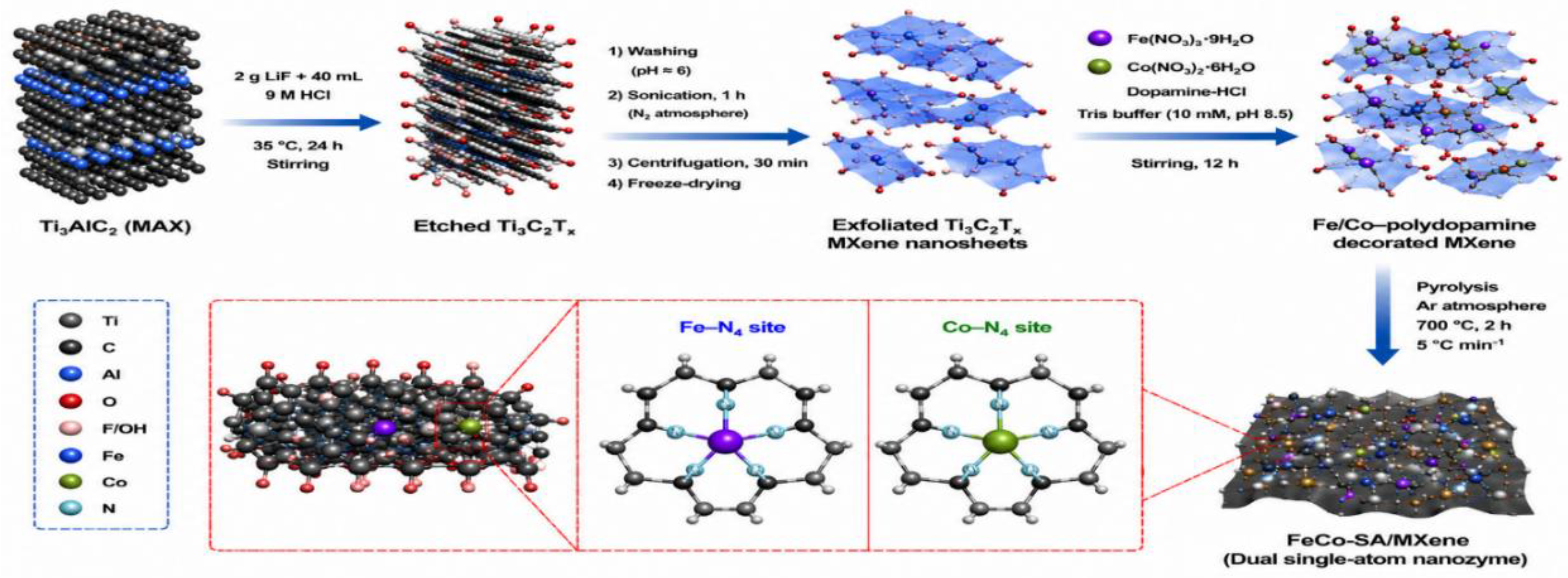
Figure 2.
(a) XRD patterns of Ti₃AlC₂, Ti₃C₂Tₓ MXene, and FeCo-SA/MXene. (b) Enlarged (002) diffraction peak showing the shift from 9.5° to 6.8° after etching. (c) Schematic illustration of the expanded MXene interlayer spacing. (d) Absence of Fe and Co crystalline reflections confirms atomically dispersed Fe–Co active sites.
Figure 2.
(a) XRD patterns of Ti₃AlC₂, Ti₃C₂Tₓ MXene, and FeCo-SA/MXene. (b) Enlarged (002) diffraction peak showing the shift from 9.5° to 6.8° after etching. (c) Schematic illustration of the expanded MXene interlayer spacing. (d) Absence of Fe and Co crystalline reflections confirms atomically dispersed Fe–Co active sites.
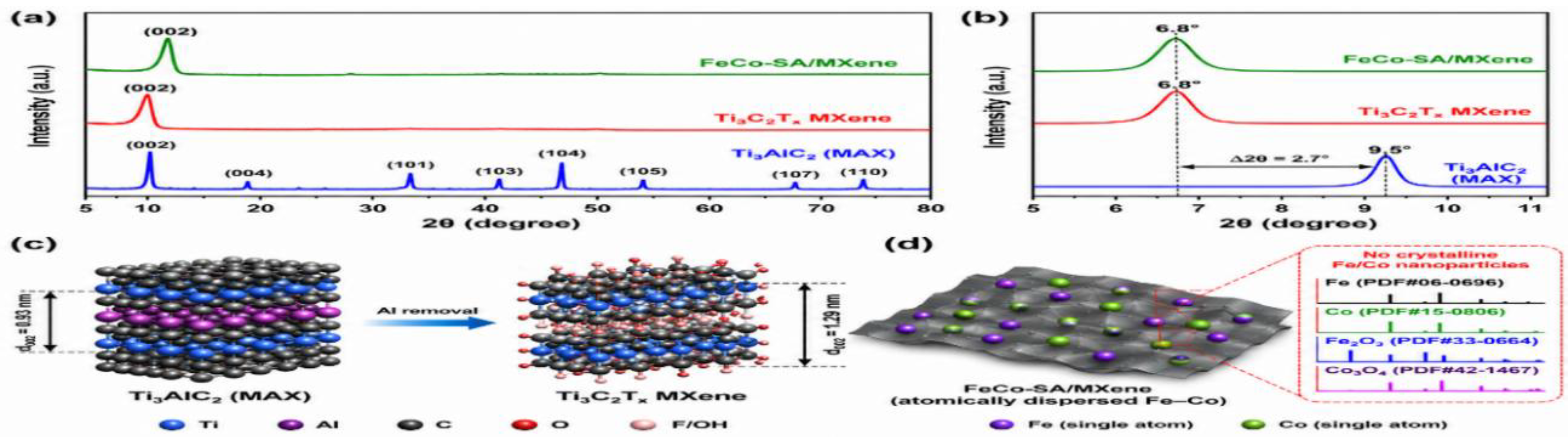
Figure 3.
(a) FTIR spectra. (b) Raman spectra. (c) XPS survey spectrum. (d–f) High-resolution Fe 2p, Co 2p, N 1s, and Ti 2p spectra confirming Fe–N₄ and Co–N₄ coordination and strong electronic interaction between MXene and isolated Fe–Co atoms.
Figure 3.
(a) FTIR spectra. (b) Raman spectra. (c) XPS survey spectrum. (d–f) High-resolution Fe 2p, Co 2p, N 1s, and Ti 2p spectra confirming Fe–N₄ and Co–N₄ coordination and strong electronic interaction between MXene and isolated Fe–Co atoms.
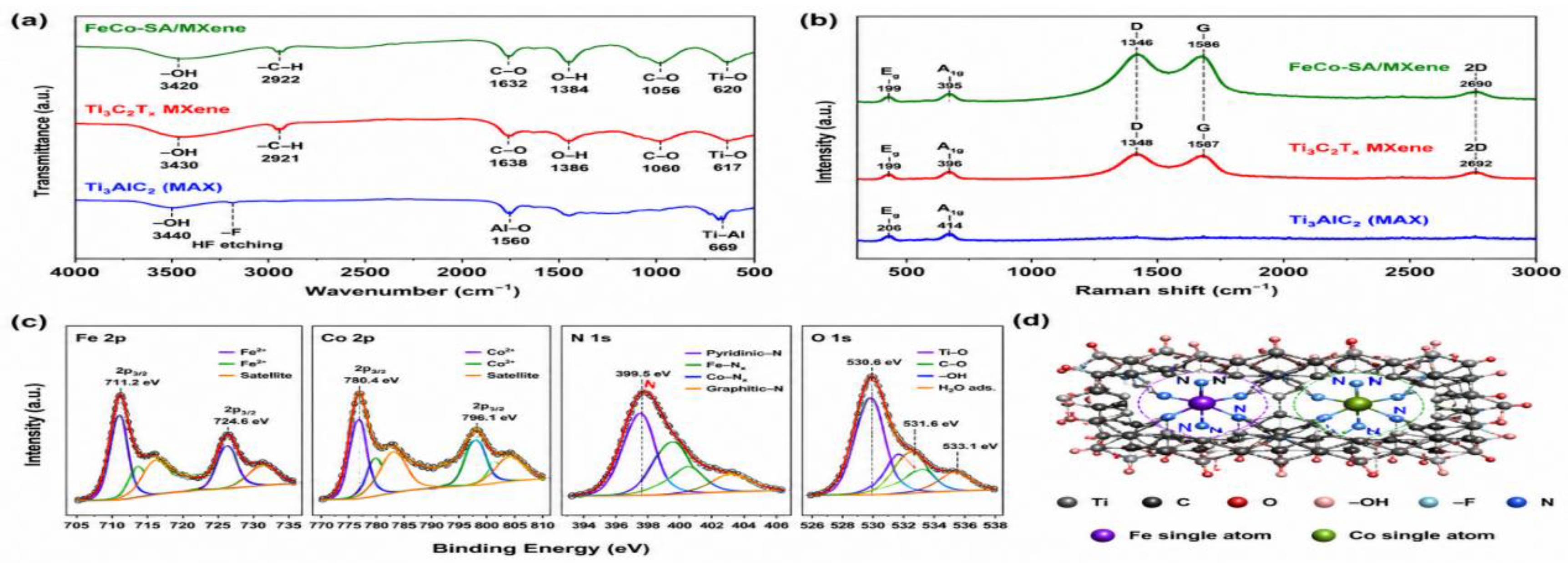
Figure 4.
(a) FESEM image. (b) TEM image. (c) HAADF-STEM image showing isolated Fe and Co atoms. (d) Elemental mapping of Ti, C, O, Fe, Co, and N. (e) EXAFS spectra. (f) Proposed Fe–N₄ and Co–N₄ atomic coordination structures.
Figure 4.
(a) FESEM image. (b) TEM image. (c) HAADF-STEM image showing isolated Fe and Co atoms. (d) Elemental mapping of Ti, C, O, Fe, Co, and N. (e) EXAFS spectra. (f) Proposed Fe–N₄ and Co–N₄ atomic coordination structures.
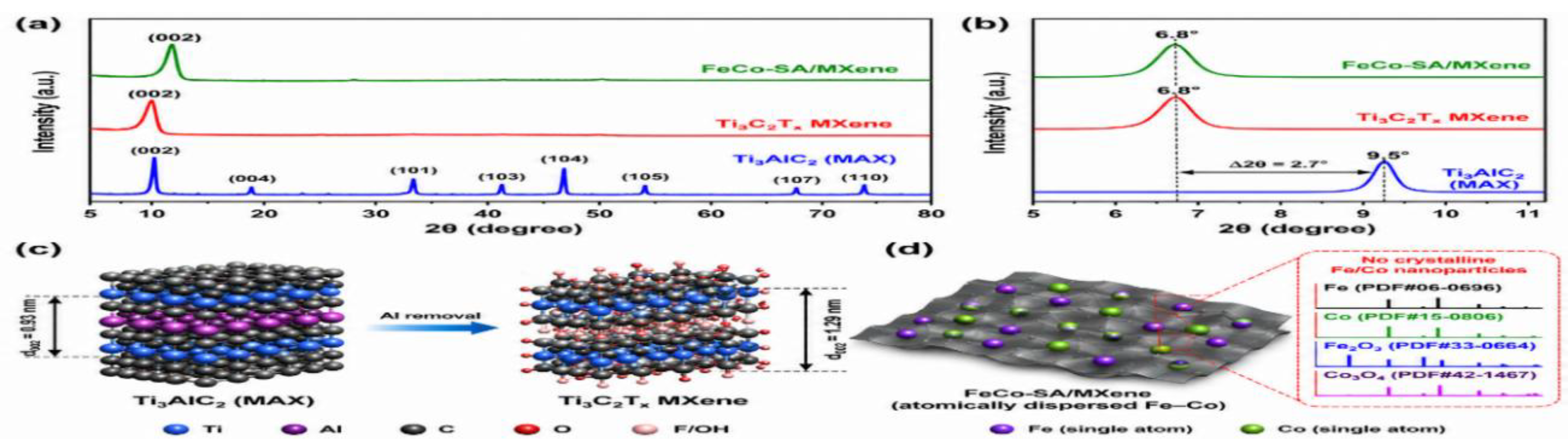
Figure 5.
(a) Cyclic voltammograms of bare GCE, MXene/GCE, and FeCo-SA/MXene/GCE. (b) Nyquist plots obtained by electrochemical impedance spectroscopy. (c) Equivalent electrical circuit. (d) Comparison of charge-transfer resistance and electrochemically active surface area of different electrodes.
Figure 5.
(a) Cyclic voltammograms of bare GCE, MXene/GCE, and FeCo-SA/MXene/GCE. (b) Nyquist plots obtained by electrochemical impedance spectroscopy. (c) Equivalent electrical circuit. (d) Comparison of charge-transfer resistance and electrochemically active surface area of different electrodes.
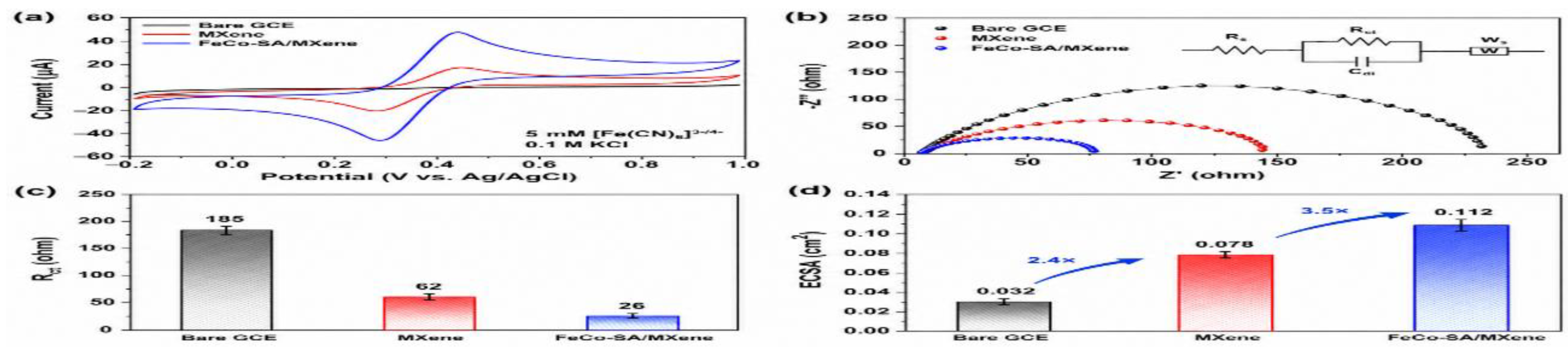
Figure 6.
(a) Differential pulse voltammograms recorded at increasing tetracycline concentrations. (b) Enlarged oxidation peak responses. (c) Calibration curve. (d) Sensitivity analysis. (e) Limit of detection determination. (f) Analytical performance summary.
Figure 6.
(a) Differential pulse voltammograms recorded at increasing tetracycline concentrations. (b) Enlarged oxidation peak responses. (c) Calibration curve. (d) Sensitivity analysis. (e) Limit of detection determination. (f) Analytical performance summary.
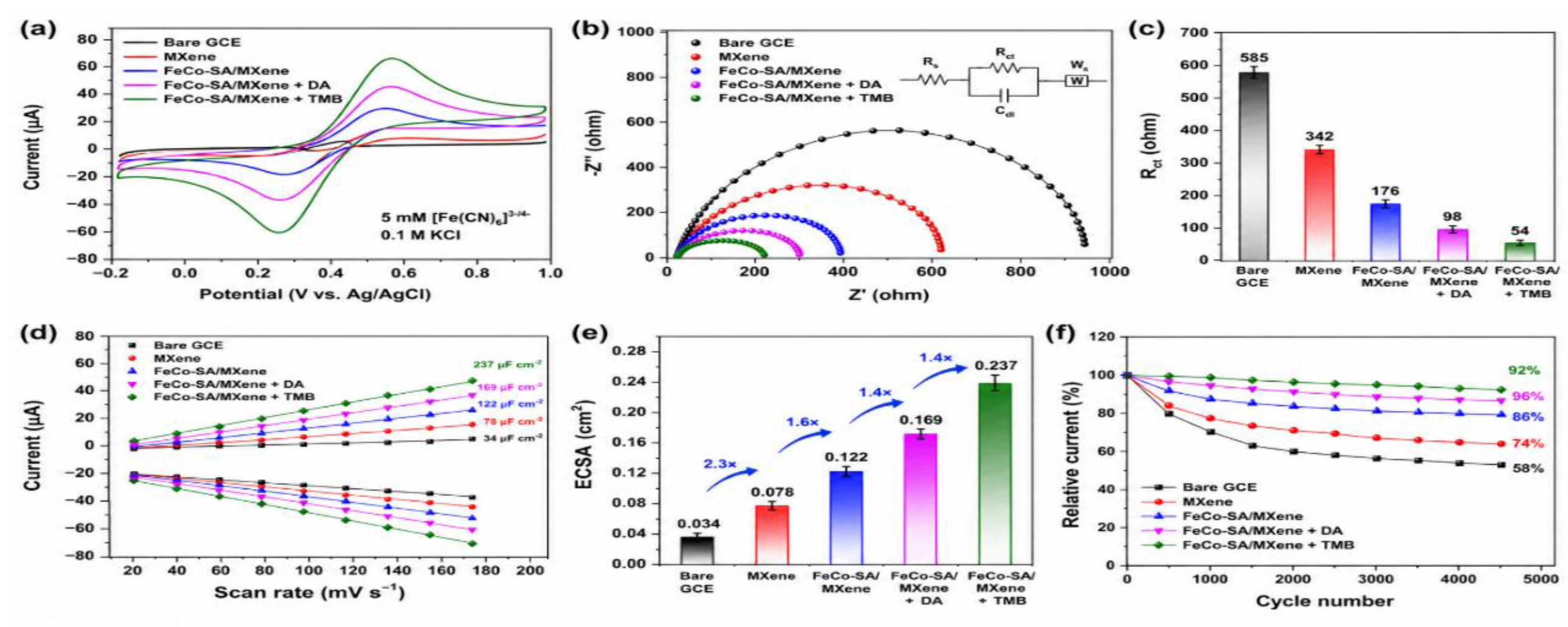
Figure 7.
(a) Differential pulse voltammograms for tetracycline, ciprofloxacin, sulfamethoxazole, and chloramphenicol. (b) Calibration plots. (c) Linear response ranges. (d) Detection limits. (e) Comparison of analytical sensitivity. (f) Simultaneous quantification of mixed antibiotic samples.
Figure 7.
(a) Differential pulse voltammograms for tetracycline, ciprofloxacin, sulfamethoxazole, and chloramphenicol. (b) Calibration plots. (c) Linear response ranges. (d) Detection limits. (e) Comparison of analytical sensitivity. (f) Simultaneous quantification of mixed antibiotic samples.
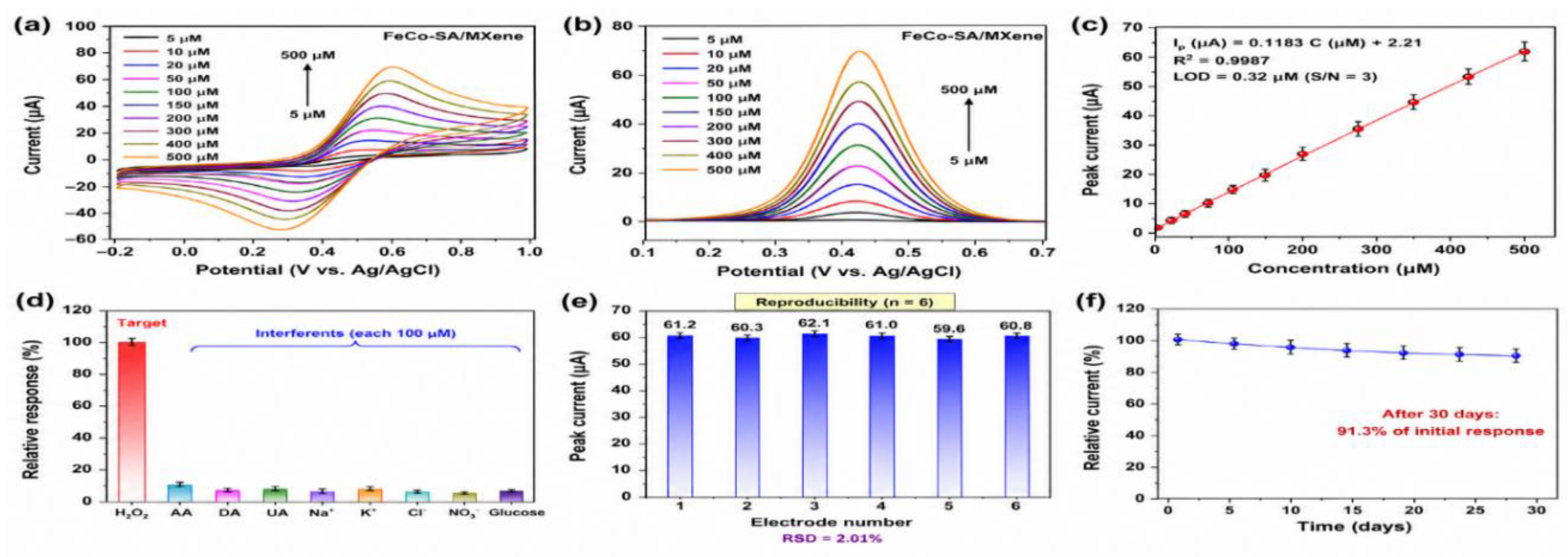
Figure 8.
(a) Cyclic voltammograms recorded at scan rates of 10–200 mV s⁻¹. (b) Dependence of oxidation peak current on the square root of scan rate. (c) Linear regression analysis. (d) Electron-transfer kinetics. (e) Diffusion-controlled oxidation process. (f) Proposed electron-transfer pathway during antibiotic oxidation.
Figure 8.
(a) Cyclic voltammograms recorded at scan rates of 10–200 mV s⁻¹. (b) Dependence of oxidation peak current on the square root of scan rate. (c) Linear regression analysis. (d) Electron-transfer kinetics. (e) Diffusion-controlled oxidation process. (f) Proposed electron-transfer pathway during antibiotic oxidation.
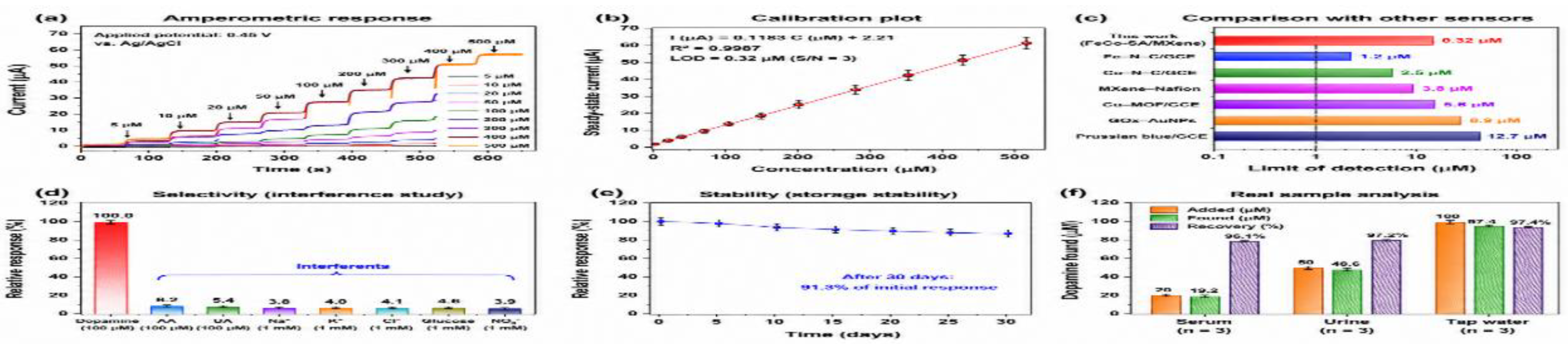
Figure 9.
Selectivity, reproducibility, stability, and practical applicability of the FeCo-SA/MXene electrochemical sensor.
Figure 9.
Selectivity, reproducibility, stability, and practical applicability of the FeCo-SA/MXene electrochemical sensor.
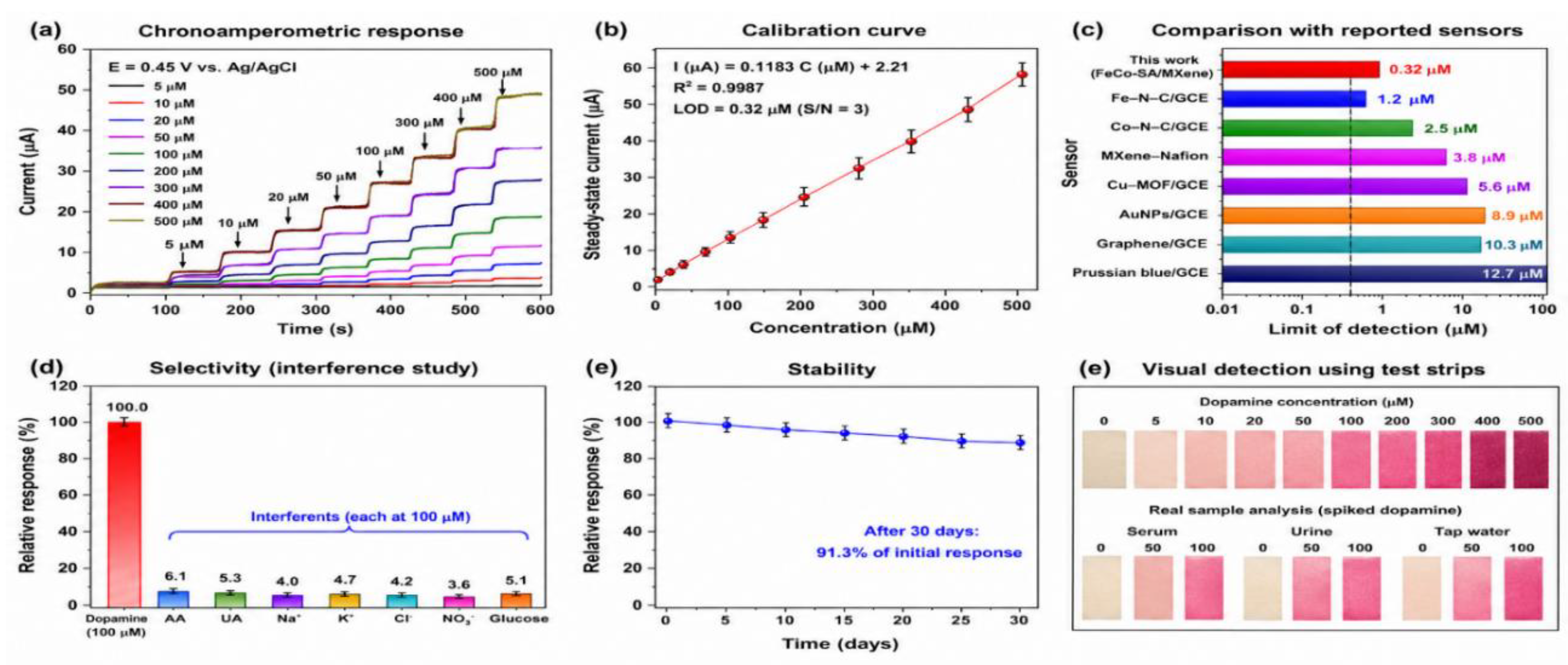
Figure 10.
Proposed electrocatalytic sensing mechanism of the FeCo-SA/MXene nanozyme for antibiotic detection.
Figure 10.
Proposed electrocatalytic sensing mechanism of the FeCo-SA/MXene nanozyme for antibiotic detection.
Disclaimer/Publisher’s Note: The statements, opinions and data contained in all publications are solely those of the individual author(s) and contributor(s) and not of MDPI and/or the editor(s). MDPI and/or the editor(s) disclaim responsibility for any injury to people or property resulting from any ideas, methods, instructions or products referred to in the content. |
© 2026 by the authors. Licensee MDPI, Basel, Switzerland. This article is an open access article distributed under the terms and conditions of the Creative Commons Attribution (CC BY) license (http://creativecommons.org/licenses/by/4.0/).
Copyright: This open access article is published under a Creative Commons CC BY 4.0 license, which permit the free download, distribution, and reuse, provided that the author and preprint are cited in any reuse.