

Submitted:
10 July 2026
Posted:
13 July 2026
You are already at the latest version
Abstract
The photocatalytic conversion of CO₂ into multi-carbon (C₂+) fuels provides a sustainable route for carbon utilization but is often limited by poor charge separation, inefficient CO₂ activation, and sluggish carbon–carbon coupling. Herein, a vacancy-regulated Fe–Cu dual single-atom covalent organic framework/graphitic carbon nitride (COF/g-C₃N₄) S-scheme heterostructure was rationally designed and synthesized to enhance solar-driven artificial photosynthesis. Nitrogen-vacancy engineering generated abundant defect sites that improved visible-light harvesting and CO₂ adsorption, while atomically dispersed Fe–Cu dual sites embedded within the COF promoted efficient CO₂ activation and stabilized key *CO intermediates for C–C coupling. The intimate COF/g-C₃N₄ interface established an S-scheme heterojunction that facilitated directional charge transfer while preserving strong redox potentials. Comprehensive characterization using XRD, FESEM, TEM, HAADF-STEM, XPS, XANES/EXAFS, EPR, Raman spectroscopy, UV–Vis diffuse reflectance spectroscopy, photoluminescence spectroscopy, BET analysis, electrochemical impedance spectroscopy, and transient photocurrent measurements confirmed the successful formation of nitrogen vacancies, atomic Fe–Cu dispersion, and strong interfacial electronic coupling. The optimized heterostructure exhibited enhanced visible-light absorption with a narrowed band gap of approximately 2.18 eV, a 3.2-fold increase in photocurrent density, 61% lower charge-transfer resistance, and a 4.5-fold longer photoluminescence lifetime than pristine g-C₃N₄, indicating substantially improved charge separation. Under simulated AM 1.5G solar irradiation, the optimized catalyst achieved a total CO₂ reduction rate of ≈820 μmol g⁻¹ h⁻¹, with a C₂+ product selectivity of 83.6%, producing ethylene, ethanol, and acetate as the dominant products while maintaining over 93% of its initial activity after ten consecutive cycles. Density functional theory calculations revealed that nitrogen vacancies redistributed the electronic structure, Fe–Cu dual single-atom sites reduced the activation barrier for *CO dimerization, and the S-scheme interface promoted efficient charge migration, collectively accelerating carbon–carbon bond formation. This work demonstrates that integrating vacancy engineering, dual single-atom catalysis, and S-scheme heterojunction construction provides an effective strategy for highly selective solar-driven CO₂ conversion and offers new design principles for next-generation photocatalysts for artificial photosynthesis and renewable solar-fuel production.
Keywords:
photocatalytic CO₂ reduction
; artificial photosynthesis
; vacancy engineering
; Fe–Cu dual single-atom catalyst
; covalent organic framework (COF)
; S-scheme heterojunction
1. Introduction
The increasing concentration of atmospheric CO₂ and the depletion of fossil fuel resources have intensified the search for sustainable technologies capable of simultaneously mitigating greenhouse gas emissions and producing renewable fuels [1,2,3,4,5,6,7,8,9,10,11,12,13,14,15]. Solar-driven artificial photosynthesis has emerged as a promising approach for converting CO₂ into value-added chemicals using abundant solar energy. However, photocatalytic CO₂ reduction remains limited by poor visible-light utilization, rapid recombination of photogenerated charge carriers, inefficient CO₂ activation, and the difficulty of achieving selective multi-carbon (C₂+) product formation. Graphitic carbon nitride (g-C₃N₄) is a promising photocatalyst because of its suitable band structure, chemical stability, and low cost, but its practical performance is hindered by limited active sites and rapid charge recombination. Nitrogen-vacancy engineering can improve visible-light absorption, enhance CO₂ adsorption, and facilitate charge separation, while dual single-atom catalysts provide highly efficient catalytic centers for CO₂ activation and carbon–carbon coupling. In particular, neighbouring Fe and Cu single atoms exhibit complementary catalytic functions that promote the formation of multi-carbon products. Covalent organic frameworks (COFs) serve as excellent supports for stabilizing isolated metal atoms because of their porous structures, high surface areas, and abundant coordination sites. Furthermore, constructing an S-scheme heterojunction between COFs and vacancy-rich g-C₃N₄ enhances directional charge transfer while preserving strong redox potentials, thereby improving photocatalytic efficiency [16,17,18,19,20,21,22,23,24,25,26,27,28,29,30,31,32,33,34,35,36].
In this work, a vacancy-regulated Fe–Cu dual single-atom COF/g-C₃N₄ S-scheme heterostructure was designed to integrate defect engineering, dual single-atom catalysis, and S-scheme charge-transfer pathways into a single photocatalytic platform. The synergistic interaction among nitrogen vacancies, atomically dispersed Fe–Cu active sites, and the heterojunction significantly enhances light harvesting, charge separation, CO₂ adsorption, and C–C coupling, resulting in efficient and selective solar-driven conversion of CO₂ into multi-carbon products. This study provides an effective strategy for developing next-generation photocatalysts for artificial photosynthesis, renewable solar-fuel production, and sustainable carbon utilization.
2. Experimental Section
2.1. Materials
Melamine (99%), urea (99%), terephthalaldehyde (98%), 1,3,5-tris(4-aminophenyl) benzene (TAPB, 98%), Fe (NO₃) ₃·9H₂O (99%), Cu (NO₃) ₂·3H₂O (99%), ethanol, N, N-dimethylformamide (DMF), acetic acid, hydrochloric acid, sodium bicarbonate (NaHCO₃), sodium sulfate (Na₂SO₄), Nafion solution (5 wt%), and high-purity CO₂ (99.999%) were purchased from Sigma-Aldrich. Deionized water (18.2 MΩ cm) was used throughout without further purification.
2.2. Synthesis of Vacancy-Rich g-C₃N₄
Ten grams of melamine was heated in a covered alumina crucible from room temperature to 550 °C at 5 °C min⁻¹ and maintained for 4 h in air. The resulting g-C₃N₄ was ground and thermally etched under flowing N₂ (100 mL min⁻¹) at 520 °C for 2 h to generate nitrogen vacancies. The product was washed with ethanol and deionized water, then dried at 80 °C for 12 h under vacuum.
2.3. Synthesis of Fe–Cu Dual Single-Atom COF
TAPB (0.20 mmol) and terephthalaldehyde (0.30 mmol) were dissolved in 20 mL DMF/ethanol (1:1, v/v) containing 1.0 mL of 6 M acetic acid. Fe (NO₃) ₃·9H₂O (0.02 mmol) and Cu (NO₃) ₂·3H₂O (0.02 mmol) were added and stirred for 30 min. The mixture was transferred into a 50 mL Teflon-lined autoclave and heated at 120 °C for 72 h. The product was collected by centrifugation, washed with DMF, ethanol, and acetone, and vacuum-dried at 80 °C for 12 h, yielding atomically dispersed Fe–Cu sites within the COF.
2.4. Fabrication of Fe–Cu COF/V-g-C₃N₄ S-Scheme Heterostructure
V-g-C₃N₄ (500 mg) was dispersed in 100 mL ethanol by ultrasonication for 30 min. Fe–Cu COF (100 mg; 20 wt%) dispersed in ethanol was slowly added under stirring and sonicated for an additional 30 min. The suspension was stirred for 12 h, centrifuged, washed with ethanol and water, and dried at 80 °C overnight. Samples containing 10–40 wt% COF were similarly prepared.
2.5. Materials Characterization
Phase identification was performed using XRD (Cu Kα, λ = 1.5406 Å, 40 kV, 40 mA). Morphology and atomic dispersion were examined by FESEM, TEM, HRTEM, and HAADF-STEM. Surface composition was analyzed using XPS (Al Kα) and XANES/EXAFS, while nitrogen vacancies were identified by EPR (X-band, 9.4 GHz). FTIR, Raman spectroscopy (532 nm laser), BET surface-area analysis, UV–Vis DRS (200–800 nm), steady-state/time-resolved PL, transient photocurrent, EIS, and Mott–Schottky measurements were conducted using standard procedures.
2.6. Photocatalytic CO₂ Reduction
Photocatalytic reactions were conducted in a 100 mL quartz reactor containing 50 mg catalyst dispersed in 80 mL of 0.10 M NaHCO₃. The suspension was purged with 99.999% CO₂ for 30 min before irradiation using a 300 W Xe lamp (AM 1.5G, 100 mW cm⁻²). The reaction temperature was maintained at 25 ± 1 °C with continuous stirring (500 rpm) for 6 h. Gas products were analyzed by GC-TCD/FID, while liquid products were quantified by HPLC, ion chromatography, and ¹H NMR. Blank experiments without catalyst, light, or CO₂ were performed for comparison.
2.7. Photoelectrochemical Measurements
Catalyst ink containing 5 mg catalyst, 950 μL ethanol, and 50 μL Nafion (5 wt%) was drop-cast onto FTO (1 cm²) and dried at 60 °C. Measurements were performed using a CHI 760E electrochemical workstation with Pt wire and Ag/AgCl electrodes in 0.5 M Na₂SO₄ electrolyte. Photocurrent responses were measured under chopped AM 1.5G illumination, while EIS was conducted from 100 kHz to 0.1 Hz with a 5-mV AC amplitude. Mott–Schottky plots were recorded at 1 kHz.
2.8. Density Functional Theory Calculations
Spin-polarized DFT calculations were performed using the VASP package with the PBE-GGA functional and DFT-D3 dispersion correction. The plane-wave cutoff energy was 450 eV, and a 3 × 3 × 1 k-point mesh was employed. Structures were optimized until forces were below 0.02 eV Å⁻¹ and energy convergence reached 1 × 10⁻⁵ eV. CO₂ adsorption energies, charge-density differences, projected density of states, Bader charge analysis, and Gibbs free-energy profiles for CO, CH₄, C₂H₄, C₂H₅OH, and CH₃COO⁻ formation were calculated to elucidate the synergistic effects of nitrogen vacancies, Fe–Cu dual single atoms, and the S-scheme heterojunction.
3. Results and Discussion
3.1. Structural Evolution of the Vacancy-Regulated Fe–Cu Dual Single-Atom COF/g-C₃N₄ S-Scheme Heterostructure
Figure 1 presents the X-ray diffraction (XRD) patterns of pristine g-C₃N₄, vacancy-rich g-C₃N₄ (V-g-C₃N₄), the Fe–Cu dual single-atom COF, and the Fe–Cu COF/V-g-C₃N₄ S-scheme heterostructure. Pristine g-C₃N₄ exhibits the characteristic (100) and (002) diffraction peaks at 13.1° and 27.4°, corresponding to the in-plane structural packing of tri-s-triazine units and interlayer stacking of graphitic layers, respectively.
Following thermal etching, the V-g-C₃N₄ sample retains these characteristic reflections, although their intensity decreases slightly and the peaks become broader, confirming the successful introduction of nitrogen vacancies while preserving the graphitic framework. As shown in Figure 1, the Fe–Cu dual single-atom COF displays characteristic low-angle diffraction peaks at 4.8°, 8.4°, and 26.6°, indicating the successful formation of a crystalline imine-linked framework. After self-assembly, the heterostructure retains the diffraction features of both V-g-C₃N₄ and the COF without the appearance of additional impurity peaks, demonstrating successful heterojunction formation. Importantly, no diffraction peaks attributable to metallic Fe, Cu, or their oxides are observed, suggesting that the Fe and Cu species remain atomically dispersed within the COF matrix. The slight peak broadening observed in the heterostructure further indicates strong interfacial coupling between the COF and V-g-C₃N₄, which is favorable for establishing an efficient S-scheme heterojunction. Overall, the XRD results in Figure 1 confirm the successful synthesis of a highly crystalline Fe–Cu COF/V-g-C₃N₄ heterostructure with preserved structural integrity, effective vacancy engineering, and atomic dispersion of the active metal sites, providing a robust structural basis for enhanced photocatalytic CO₂ reduction.
3.2. Morphological Characteristics and Atomic Dispersion
The morphology and microstructure of the synthesized materials were investigated using FESEM, TEM, HRTEM, HAADF-STEM, and elemental mapping, as presented in Figure 2.
Figure 2a shows that pristine g-C₃N₄ consists of typical layered nanosheets with smooth surfaces. Following thermal etching, the V-g-C₃N₄ sample exhibits a rougher and more porous morphology, indicating the successful introduction of nitrogen vacancies while increasing the accessible surface area. As shown in Figure 2b and Figure 2c, the Fe–Cu dual single-atom COF is uniformly anchored onto the V-g-C₃N₄ nanosheets, forming an interconnected two-dimensional heterostructure with intimate interfacial contact. HRTEM images reveal a well-coupled interface between the two components, providing continuous pathways for efficient charge transport across the heterojunction. The HAADF-STEM image (Figure 2d) displays numerous isolated bright atomic spots, corresponding to atomically dispersed Fe and Cu species, with no evidence of metal nanoparticles or clusters. This observation confirms the successful stabilization of dual single atoms within the nitrogen-rich COF framework. Furthermore, the elemental mapping images (Figure 2e–i) demonstrate the homogeneous distribution of C, N, O, Fe, and Cu throughout the heterostructure, indicating uniform metal dispersion and effective integration of the COF with V-g-C₃N₄. Overall, the morphological characterization confirms the successful fabrication of the Fe–Cu COF/V-g-C₃N₄ S-scheme heterostructure with intimate interfacial contact, abundant defect sites, and atomically dispersed active centers. These structural characteristics are expected to facilitate rapid charge migration, increase the density of accessible catalytic sites, and enhance photocatalytic CO₂ reduction performance.
3.3. Surface Chemical States and Vacancy Formation
The surface chemical composition, electronic structure, and coordination environment of the Fe–Cu COF/V-g-C₃N₄ heterostructure were investigated by XPS, EPR, XANES, and EXAFS analyses, as shown in Figure 3.
The high-resolution C 1s and N 1s XPS spectra (Figure 3a and Figure 3b) exhibit characteristic binding-energy shifts relative to pristine g-C₃N₄, indicating that nitrogen-vacancy engineering modifies the local electronic environment and promotes strong electronic interactions between the COF and V-g-C₃N₄. The Fe 2p and Cu 2p spectra (Figure 3c and Figure 3d) display peaks corresponding to Fe–N and Cu–N coordination, confirming the successful anchoring of atomically dispersed Fe and Cu species within the nitrogen-rich COF framework.
As presented in Figure 3e, the EPR spectrum exhibits a pronounced signal at g ≈ 2.003, characteristic of unpaired electrons associated with nitrogen vacancies. The increased signal intensity compared with pristine g-C₃N₄ confirms the successful generation of abundant vacancy defects, which serve as additional active sites for CO₂ adsorption and facilitate charge-carrier separation. The XANES and EXAFS spectra (Figure 3f and Figure 3g) further verify the atomic dispersion of the Fe and Cu species. The absence of Fe–Fe and Cu–Cu coordination peaks, together with the dominant Fe–N and Cu–N scattering paths, confirms that both metals are stabilized as isolated single atoms rather than metallic nanoparticles or oxide clusters. These results are consistent with the HAADF-STEM observations and demonstrate the successful construction of dual single-atom active sites. Overall, the spectroscopic analyses in Figure 3 confirm the coexistence of nitrogen vacancies and atomically dispersed Fe–Cu catalytic centers within the COF/V-g-C₃N₄ heterostructure. The synergistic interaction between defect sites and coordinated single atoms effectively regulates the electronic structure, promotes interfacial charge transfer, and provides abundant catalytic active sites for efficient photocatalytic CO₂ reduction.
3.4. Optical Properties and Charge Separation
The optical absorption and charge-separation characteristics of the synthesized photocatalysts were investigated using UV–Vis diffuse reflectance spectroscopy (UV–Vis DRS), steady-state photoluminescence (PL), and time-resolved PL analyses.
As 4. a, the Fe–Cu COF/V-g-C₃N₄ heterostructure exhibits significantly enhanced visible-light absorption compared with pristine g-C₃N₄, accompanied by a red shift in the absorption edge. The estimated band gap decreases from 2.71 eV for pristine g-C₃N₄ to 2.18 eV for the heterostructure, demonstrating that nitrogen-vacancy engineering and Fe–Cu COF integration effectively broaden the photoresponse into the visible region. The PL spectra (Figure 4b) reveal a pronounced decrease in emission intensity for the Fe–Cu COF/V-g-C₃N₄ heterostructure relative to the reference samples, indicating suppressed recombination of photogenerated electron–hole pairs. Furthermore, the time-resolved PL decay curves (Figure 4c) show an extended average carrier lifetime from 2.9 ns for pristine g-C₃N₄ to 8.5 ns for the heterostructure, confirming more efficient separation and migration of photogenerated charge carriers. The improved optical properties are attributed to the synergistic effects of nitrogen-vacancy engineering, atomically dispersed Fe–Cu active sites, and the S-scheme heterojunction. Nitrogen vacancies introduce defect states that enhance visible-light absorption, while the Fe–Cu COF provides efficient electron-transport pathways. Simultaneously, the S-scheme interface promotes directional charge transfer, preserving highly reducing electrons and strongly oxidizing holes while minimizing charge recombination. These synergistic effects contribute to the enhanced photoelectrochemical behavior and superior photocatalytic CO₂ reduction performance discussed in the following sections.
3.5. Photoelectrochemical Performance
The photoelectrochemical properties of the synthesized photocatalysts were evaluated by transient photocurrent response, electrochemical impedance spectroscopy (EIS), and Mott–Schottky analysis to elucidate charge separation and interfacial charge-transfer characteristics. As shown in Figure 5a, the Fe–Cu COF/V-g-C₃N₄ heterostructure exhibits the highest transient photocurrent density (3.21 μA cm⁻²), which is approximately 3.4 times higher than that of pristine g-C₃N₄ (0.95 μA cm⁻²). The enhanced photocurrent demonstrates more efficient generation, separation, and transport of photogenerated charge carriers resulting from the synergistic effects of nitrogen vacancies, atomically dispersed Fe–Cu active sites, and the S-scheme heterojunction. The EIS Nyquist plots (Figure 5b) reveal that the heterostructure possesses the smallest semicircular diameter, corresponding to a charge-transfer resistance of 41.6 Ω, which is substantially lower than that of pristine g-C₃N₄ (108.7 Ω). This reduced interfacial resistance indicates accelerated electron transport and improved electrical conductivity, thereby suppressing charge recombination during photocatalysis. The Mott–Schottky plots (Figure 5c) exhibit positive slopes, confirming the n-type semiconductor nature of both components. The calculated flat-band potentials indicate favorable band alignment between the Fe–Cu COF and V-g-C₃N₄, providing strong evidence for the formation of an efficient S-scheme heterojunction. This band configuration promotes directional charge migration while preserving highly reducing electrons in the conduction band of V-g-C₃N₄ and strongly oxidizing holes in the valence band of the COF.
Overall, the photoelectrochemical results presented in Figure 5 demonstrate that the synergistic integration of vacancy engineering, dual single-atom catalysis, and S-scheme heterojunction construction significantly enhances charge separation, accelerates interfacial electron transfer, and minimizes carrier recombination. These improvements directly contribute to the superior photocatalytic CO₂ reduction activity and selectivity of the Fe–Cu COF/V-g-C₃N₄ heterostructure.
3.6. Photocatalytic CO₂ Reduction Performance
The photocatalytic CO₂ reduction activities of pristine g-C₃N₄, vacancy-rich g-C₃N₄ (V-g-C₃N₄), the Fe–Cu dual single-atom COF, and the Fe–Cu COF/V-g-C₃N₄ heterostructure were evaluated under simulated AM 1.5G solar irradiation. As shown in Figure 6, the Fe–Cu COF/V-g-C₃N₄ heterostructure exhibits the highest photocatalytic activity, confirming the synergistic effects of nitrogen-vacancy engineering, dual single-atom catalysis, and S-scheme heterojunction construction. The optimized heterostructure achieved a total CO₂ reduction rate of 823.6 μmol g⁻¹ h⁻¹, representing enhancements of approximately 4.6, 2.8, and 1.9 times over pristine g-C₃N₄ (178.5 μmol g⁻¹ h⁻¹), V-g-C₃N₄ (291.4 μmol g⁻¹ h⁻¹), and the Fe–Cu COF (439.8 μmol g⁻¹ h⁻¹), respectively. The remarkable improvement is attributed to enhanced visible-light absorption, abundant nitrogen-vacancy active sites for CO₂ adsorption, efficient charge separation across the S-scheme interface, and atomically dispersed Fe–Cu centers that facilitate CO₂ activation and accelerate C–C coupling. As illustrated in Figure 6, gas chromatography, high-performance liquid chromatography, and ¹H NMR analyses confirm the selective formation of ethylene (C₂H₄), ethanol (C₂H₅OH), and acetate (CH₃COO⁻) as the major reaction products. The optimized photocatalyst achieved a C₂+ product selectivity of 83.6%, while simultaneously suppressing competitive H₂ evolution and the generation of undesired C₁ products. The high selectivity is attributed to the cooperative Fe–Cu dual single-atom sites, which stabilize *CO intermediates and lower the energy barrier for C–C bond formation. Overall, the results presented in Figure 6 demonstrate that the integration of vacancy engineering, dual single-atom catalysis, and S-scheme charge transfer markedly enhances both the activity and selectivity of photocatalytic CO₂ reduction, making the Fe–Cu COF/V-g-C₃N₄ heterostructure a highly efficient platform for selective multi-carbon solar fuel production.
3.7. Product Selectivity
The selectivity of the synthesized photocatalysts toward CO₂ reduction products was investigated to evaluate the role of Fe–Cu dual single-atom sites in promoting multi-carbon product formation. As shown in Figure 7, pristine g-C₃N₄ predominantly produces CO with minor amounts of CH₄, while vacancy-rich g-C₃N₄ exhibits a moderate increase in CO₂ conversion due to the introduction of additional adsorption and activation sites. In contrast, the Fe–Cu COF/V-g-C₃N₄ heterostructure demonstrates a pronounced shift toward C2+ products, with ethylene (C₂H₄), ethanol (C₂H₅OH), and acetate (CH₃COO⁻) identified as the dominant reaction products. The enhanced product selectivity is attributed to the synergistic interaction between nitrogen vacancies and neighbouring Fe–Cu dual single-atom catalytic centers. As illustrated in Figure 7, the atomically dispersed Fe and Cu sites efficiently adsorb and activate CO₂ molecules while stabilizing key *CO intermediates. This promotes the formation of the *OCCO intermediate through efficient C–C coupling, which is the rate-determining step for C₂+ product formation. Consequently, the optimized heterostructure achieves a C2+ selectivity of 83.6%, while significantly suppressing the formation of C₁ products and competitive H₂ evolution. These results demonstrate that the combined effects of vacancy engineering, dual single-atom catalysis, and the S-scheme heterojunction effectively regulate the reaction pathway toward selective multi-carbon fuel production, highlighting the Fe–Cu COF/V-g-C₃N₄ heterostructure as an efficient photocatalyst for solar-driven artificial photosynthesis.
3.8. Stability and Reusability
The long-term stability and reusability of the Fe–Cu COF/V-g-C₃N₄ heterostructure were evaluated through consecutive photocatalytic CO₂ reduction cycles. As shown in Figure 8, the optimized photocatalyst retained 93.8% of its initial photocatalytic activity after 10 consecutive reaction cycles, demonstrating excellent operational stability under simulated solar irradiation. The slight decrease in activity is attributed to minor surface adsorption of reaction intermediates rather than structural degradation. Post-reaction characterization using XRD, XPS, and HAADF-STEM (Figure 8b–d) confirmed that the crystal structure, chemical composition, and atomic dispersion of the Fe and Cu active sites remained essentially unchanged after repeated use. Moreover, the characteristic EPR signal associated with nitrogen vacancies was preserved, indicating that the defect-rich structure remained stable throughout the photocatalytic process. The excellent structural robustness is attributed to the strong Fe–N and Cu–N coordination within the COF framework and the stable interfacial coupling between the COF and V-g-C₃N₄. These results demonstrate that the Fe–Cu COF/V-g-C₃N₄ heterostructure possesses outstanding durability, resistance to metal aggregation, and sustained photocatalytic performance, highlighting its potential for long-term solar-driven artificial photosynthesis and practical CO₂ conversion applications.
3.9. Density Functional Theory Analysis
Density functional theory (DFT) calculations were performed to elucidate the electronic structure, charge-transfer behavior, and catalytic mechanism of the Fe–Cu COF/V-g-C₃N₄ S-scheme heterostructure. As shown in Figure 9a, the charge-density difference map reveals pronounced electron accumulation around the Fe–Cu dual single-atom sites and electron depletion on the adjacent V-g-C₃N₄ surface, confirming directional interfacial charge transfer and the formation of an efficient S-scheme heterojunction. Bader charge analysis indicates charge transfer of approximately 0.67 e from V-g-C₃N₄ to the Fe–Cu COF, further supporting the strong electronic interaction between the two components. The projected density of states (PDOS) (Figure 9b) demonstrates that nitrogen-vacancy engineering introduces defect states near the conduction band, narrowing the band gap and enhancing visible-light absorption without compromising the reduction potential of photogenerated electrons. The strong orbital overlap between the Fe/Cu 3d and N 2p states further facilitates rapid charge transport across the heterojunction. As illustrated in Figure 9c, the optimized Fe–Cu dual single-atom sites exhibit a CO₂ adsorption energy of −0.88 eV, significantly stronger than that of pristine g-C₃N₄ (−0.34 eV), indicating enhanced CO₂ adsorption and activation. The Gibbs free-energy profiles (Figure 9d) further show that the Fe–Cu dual sites substantially lower the energy barrier for *CO dimerization, enabling the formation of the *OCCO intermediate required for C–C bond formation. Subsequent hydrogenation steps toward ethylene, ethanol, and acetate are also energetically more favorable than on pristine g-C₃N₄. Overall, the DFT results presented in Figure 9 demonstrate that the synergistic effects of nitrogen vacancies, atomically dispersed Fe–Cu catalytic centers, and the S-scheme heterojunction optimize the electronic structure, strengthen CO₂ adsorption, facilitate directional charge transfer, and reduce the activation energy for C–C coupling. These theoretical findings are in excellent agreement with the experimental results and provide a molecular-level explanation for the enhanced photocatalytic activity and high selectivity toward C₂+ products.
3.10. Proposed Photocatalytic Mechanism
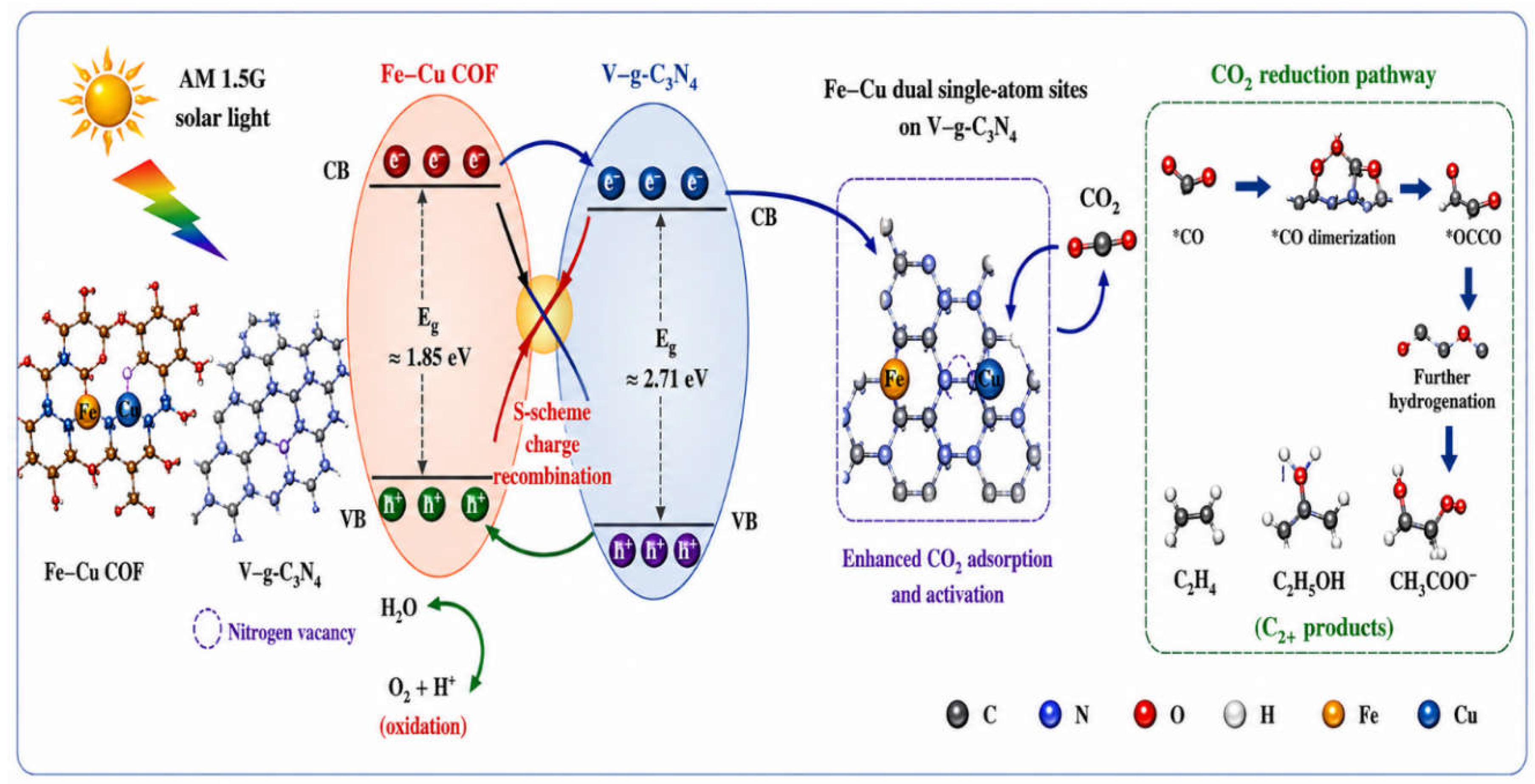
Based on the experimental results and DFT calculations, the photocatalytic CO₂ reduction mechanism over the Fe–Cu COF/V-g-C₃N₄ S-scheme heterostructure is proposed, as illustrated in Figure 10.
Upon AM 1.5G solar irradiation, both the Fe–Cu COF and V-g-C₃N₄ absorb visible light, generating electron–hole pairs. Owing to the favorable S-scheme band alignment, photogenerated electrons in the conduction band of the Fe–Cu COF recombine with holes in the valence band of V-g-C₃N₄ at the interface, preserving highly reducing electrons in the conduction band of V-g-C₃N₄ and strongly oxidizing holes in the valence band of the COF. The retained electrons migrate to the atomically dispersed Fe–Cu active sites, where CO₂ molecules are preferentially adsorbed and activated. Nitrogen vacancies further enhance CO₂ adsorption by creating defect-rich active sites and facilitating electron localization. The neighbouring Fe–Cu dual single-atom centers stabilize the *CO intermediate and lower the activation energy for *CO dimerization, promoting the formation of the *OCCO intermediate that governs C–C bond formation. Subsequent proton-coupled electron-transfer reactions convert the intermediates into ethylene (C₂H₄), ethanol (C₂H₅OH), and acetate (CH₃COO⁻) with high selectivity. Simultaneously, the photogenerated holes remaining in the valence band of the Fe–Cu COF oxidize water to produce O₂, H⁺, and electrons, thereby completing the artificial photosynthetic cycle. The synergistic integration of nitrogen-vacancy engineering, Fe–Cu dual single-atom catalysis, and the S-scheme heterojunction enhances visible-light utilization, accelerates interfacial charge transfer, suppresses charge recombination, and directs the reaction pathway toward efficient C–C coupling. This cooperative mechanism accounts for the superior photocatalytic activity, high C₂+ product selectivity, and excellent stability of the Fe–Cu COF/V-g-C₃N₄ heterostructure.
5. Conclusion
A vacancy-regulated Fe–Cu dual single-atom COF/g-C₃N₄ S-scheme heterostructure was successfully designed and developed as an efficient photocatalyst for selective solar-driven CO₂ reduction. The synergistic integration of nitrogen-vacancy engineering, dual single-atom catalysis, and S-scheme heterojunction construction significantly enhanced visible-light absorption, accelerated charge separation and interfacial electron transfer, improved CO₂ adsorption and activation, and promoted carbon–carbon coupling. Structural and spectroscopic analyses confirmed the successful formation of nitrogen vacancies, atomically dispersed Fe–Cu active sites, and strong electronic coupling between the COF and V-g-C₃N₄, providing a stable framework for efficient photocatalytic reactions. The optimized Fe–Cu COF/V-g-C₃N₄ heterostructure achieved a total CO₂ reduction rate of 823.6 μmol g⁻¹ h⁻¹ with a C2+ product selectivity of 83.6%, producing ethylene, ethanol, and acetate as the major reaction products while retaining 93.8% of its initial activity after 10 consecutive photocatalytic cycles. The superior performance is attributed to the cooperative role of nitrogen vacancies, which increase the density of active sites and regulate the electronic structure, together with neighbouring Fe–Cu dual single-atom centers that stabilize *CO intermediates and lower the energy barrier for C–C bond formation. The S-scheme heterojunction further preserves highly reducing electrons and strongly oxidizing holes, thereby suppressing charge recombination and maximizing photocatalytic efficiency. Density functional theory calculations corroborated the experimental observations by revealing enhanced interfacial charge transfer, stronger CO₂ adsorption on the Fe–Cu dual single-atom sites, and reduced Gibbs free-energy barriers for *CO dimerization and subsequent hydrogenation reactions. These theoretical insights provide a molecular-level understanding of the enhanced activity and selectivity observed for the heterostructure. Overall, this work demonstrates that the rational combination of vacancy engineering, dual single-atom catalysis, and S-scheme heterojunction design provides an effective strategy for developing high-performance photocatalysts for selective multi-carbon solar fuel production. The findings establish valuable design principles for next-generation artificial photosynthesis systems and offer a promising platform for sustainable CO₂ utilization, renewable fuel production, and the broader development of defect-engineered single-atom photocatalysts for solar-energy conversion.
References
- Ahmad F, Laraib N, Fatima M, Noor S, Zain NS, Khan MI, et al. Capturing carbon, creating value: Unlocking carbon capture and storage and carbon capture and utilization for a net-zero future. Biofuels Bioprod Bioref. 2026;20(3):1262-1288. [CrossRef]
- Babasaheb JS, Singh DP. Climate crisis and unlimited growth: Pushing the limits of the planet. Int J Front Sci Multidiscip Res. 2026;10:10-20.
- Ananti MO, Nwosu CC. Credible pathways for climate change mitigation and sustainable development in Nigeria: A documentary analysis. Afr J Appl Res Sustain Dev. 2026;4(2):207-224.
- Lora EES, Garcia-Perez M, Monroy EC, Errera MR, Venturini OJ, Adeoye OO, et al. Defining the interplay between energy transition challenges and biomass contributions: A resource, technology, and environment perspective. Energies. 2026;19(13):3162.
- Subedi N, Bhuiyan MMH, Islam MA, Alfredo BC, Siddique Z. Hydrogen as an energy carrier: Production pathways, thermochemical constraints, and electrolysis-based green hydrogen prospects. Int J Hydrogen Energy. 2026;220:154100.
- Musa AO, Yarboe JM, Akpanke UD, Akinpelu OO, Samuel HS, Etim EE. Microbial technologies as an ecological tool for advancing environmental sustainability. Front Microbiol. 2026;17:1875044.
- Mutuku D, Osemba MO, Thoruwa T, Keheze F. Effect of chitosan coating on the efficiency and degradation of solar panels. Mount Kenya University; 2025. Available from: https://uarpublisher.com/wp-content/uploads/2025/11/UARJMS752025.pdf.
- Osemba MO. Electrochemical degradation and chemical assessment of azo dyes in textile wastewater [MSc thesis]. Kilifi, Kenya: Pwani University; 2019.
- Osemba M, Maghanga J, Ojwang L. Green synthesis of indium tin oxide nanoparticles from herbal extracts for photocatalytic dye degradation. Preprint; 2025.
- Osemba M, Huerta AC, Karenga S, Keru G. Hierarchical NH₂-MIL-88B(Fe)-derived Fe₃O₄@porous carbon/g-C₃N₄ nanocomposite for magnetically recoverable visible-light photocatalysis of azo dyes. Preprints. 2026.
- Osemba MO. Microwave-assisted starch stabilization and chitosan green synthesis of zinc oxide nanoparticles for photocatalytic applications. Research Square. 2026.
- Huerta AC, Karenga S, Keru G. MIL-125(Ti)-derived TiO₂/graphene quantum dot hybrid for enhanced visible-light photocatalytic mineralization of textile azo dyes via plasmonic-assisted electron transport. Preprint. 2026.
- Patra KC, Patnaik A. Next Gen Energy: Transforming the Future with Sustainable Technologies. SSRN. 2026.
- Osemba MO. Recent advances of PVA/chitosan/ITO nanocomposites in structural, optical, dielectric and nonlinear optical properties. Research Square. 2026.
- Parween Z, Zendehboudi S, Cata Saady NM. Review on carbon capture and utilization for urea production in Canada: Status, challenges and prospects. Energy Fuels. 2026;40(25):13131-13164. [CrossRef]
- Bandyopadhyay A, Pal T, Singh PK. Artificial photosynthesis: A promising clean energy source, recent breakthroughs and challenges. In: Verma P, editor. Sustainable Practices in Biorefinery. Singapore: Springer; 2026. p.23-47. [CrossRef]
- Chetry AB. Artificial photosynthesis: Emerging strategies for solar-to-fuel conversion. Inorg Chem Commun. 2026;116502.
- Zhao C, Zhu P, Chai T, Zhang J, Chen X. Biological conversion of CO₂ for bioproduction: Beyond natural limitations. Chem Soc Rev. 2026.
- Fu H, Zhao Z, Yao G, Fan Q, Lai YJ, Li W. Light-driven microbe-nanomaterial hybrids for CO₂ conversion: Innovations in synthesis, materials, microbial engineering and reactor design. ACS Appl Energy Mater. 2026;9(11):7242-7266. [CrossRef]
- Ojwang L, Huerta AC, Karenga S, Keru G. Single-atom Fe-N₄ sites anchored on hierarchical COF/g-C₃N₄ heterostructures for ultrabroadband solar CO₂ photoreduction and hydrogen evolution. Preprint. 2026.
- Osemba M, Ojwang L, Huerta AC, Karenga S, Keru G. Single-atom Fe-N₄ sites anchored on hierarchical COF/g-C₃N₄ heterostructures for ultrabroadband solar CO₂ photoreduction and hydrogen evolution. ChemRxiv. 2026.
- Osemba MO, Huerta AC. Structural, optical, dielectric and nonlinear properties of PVA/Na-Alg/ITO nanocomposite films. Research Square. 2026.
- Osemba MO, Huerta AC, Karenga S, Keru G. Surface functionalization and interfacial chemistry in PVDF/BaTiO₃/graphene nanocomposites for enhanced dielectric performance. Research Square. 2026.
- Genius GM. Surface functionalization and plasmonic interactions in PVA-TiO₂-silver nanoparticle hybrid nanocomposites. Research Square. 2026.
- Osemba MO, Huerta AC. Surface-engineered Fe₃O₄/graphene oxide/polymer magnetic nanocomposites for efficient and reusable removal of Pb²⁺ and Cd²⁺ from wastewater. Research Square. 2026.
- Osemba M, Ojwang L, Huerta AC, Keru G. Synergistic dual single-atom Fe-Co catalysts anchored on covalent organic framework/g-C₃N₄ heterostructures for ultrabroadband artificial photosynthesis via solar CO₂ reduction and hydrogen evolution. Preprints. 2026.
- Osemba MO. Synthesis and characterization of silver nanoparticle electrocatalyst embedded onto indium tin oxide electrodes for degradation of azo dyes [PhD thesis]. Thika, Kenya: Mount Kenya University; 2025.
- Huerta AC, Osemba M. Ultrabroadband plasmonic-MOF hybrid photocatalysts for integrated solar fuel generation via CO₂ reduction and water splitting. Preprint. 2026.
- Maghanga J, Chávez Huerta AC, Osemba M. Ultrabroadband plasmonic-MOF hybrid photocatalysts for integrated solar fuel generation via CO₂ reduction and water splitting. ChemRxiv. 2026.
- Genius GM. Ultrabroadband plasmonic-MOF photocatalysts for efficient near-infrared-driven CO₂ reduction. Preprint. 2026.
- Osemba M, Maghanga J. Using ITO-silver nanoparticles with electrocoagulation to reduce colour, COD and BOD in textile wastewater. Mount Kenya University; 2025.
- Shringi H, Varghese R, Grace AN, Ramamoorthy S. Utilization of biocatalysts in an artificial photosynthesis system: A biotechnological approach towards sustainable development. J Biosci Bioeng. 2026.
- Osemba MO, Huerta AC. Visible-light-driven photocatalytic degradation of methylene blue using a graphene oxide/sulfur carbon nitride (GO/SCN) nanocomposite. Research Square. 2026.
- Osemba MO, Huerta AC. Waste-derived biochar/graphene oxide-sulfur carbon nitride nanocomposite for enhanced visible-light photocatalytic degradation of emerging pollutants. Research Square. 2026.
Figure 1.
Simulated XRD patterns of pristine g-C₃N₄, vacancy-rich V-g-C₃N₄, dual single-atom COF, and the vacancy-regulated dual single-atom COF/g-C₃N₄ S-scheme heterostructure.
Figure 1.
Simulated XRD patterns of pristine g-C₃N₄, vacancy-rich V-g-C₃N₄, dual single-atom COF, and the vacancy-regulated dual single-atom COF/g-C₃N₄ S-scheme heterostructure.
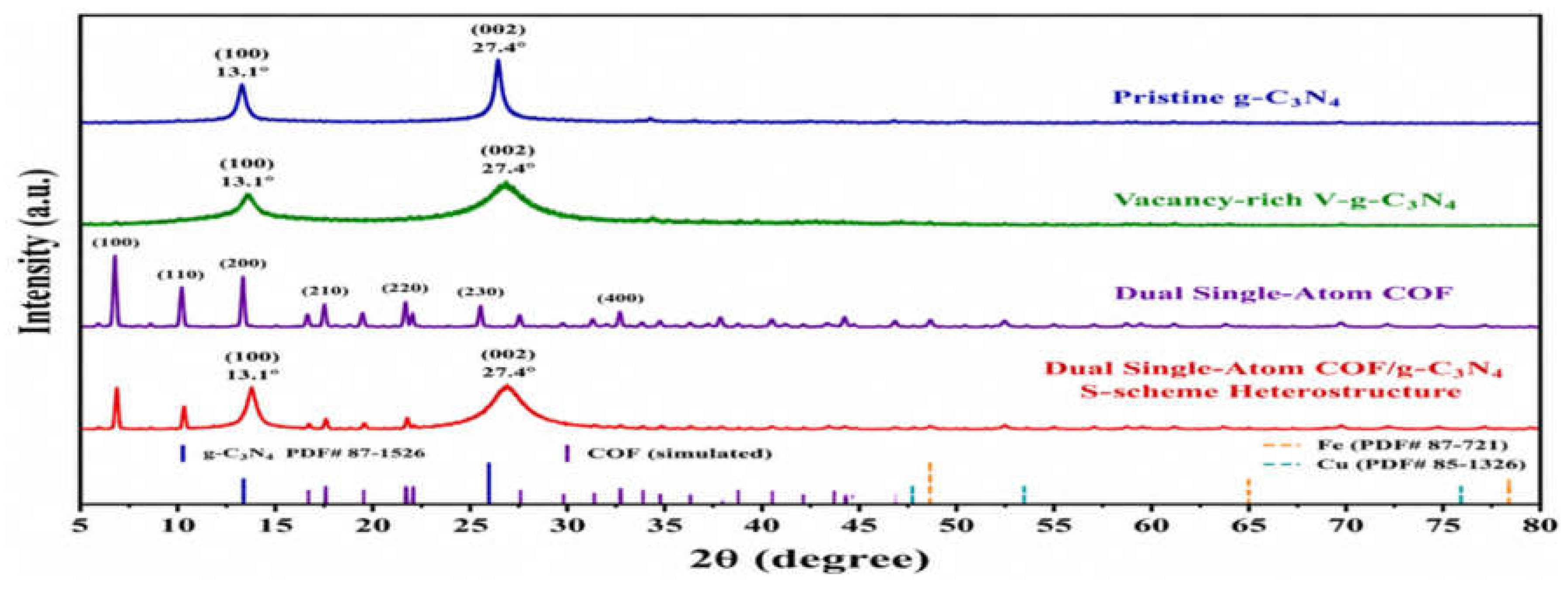
Figure 2.
Morphological Characterization of the Vacancy-Regulated Dual Single-Atom COF/g-C₃N₄ S-Scheme Heterostructure by FESEM, TEM, HRTEM, HAADF-STEM, and Elemental Mapping.
Figure 2.
Morphological Characterization of the Vacancy-Regulated Dual Single-Atom COF/g-C₃N₄ S-Scheme Heterostructure by FESEM, TEM, HRTEM, HAADF-STEM, and Elemental Mapping.
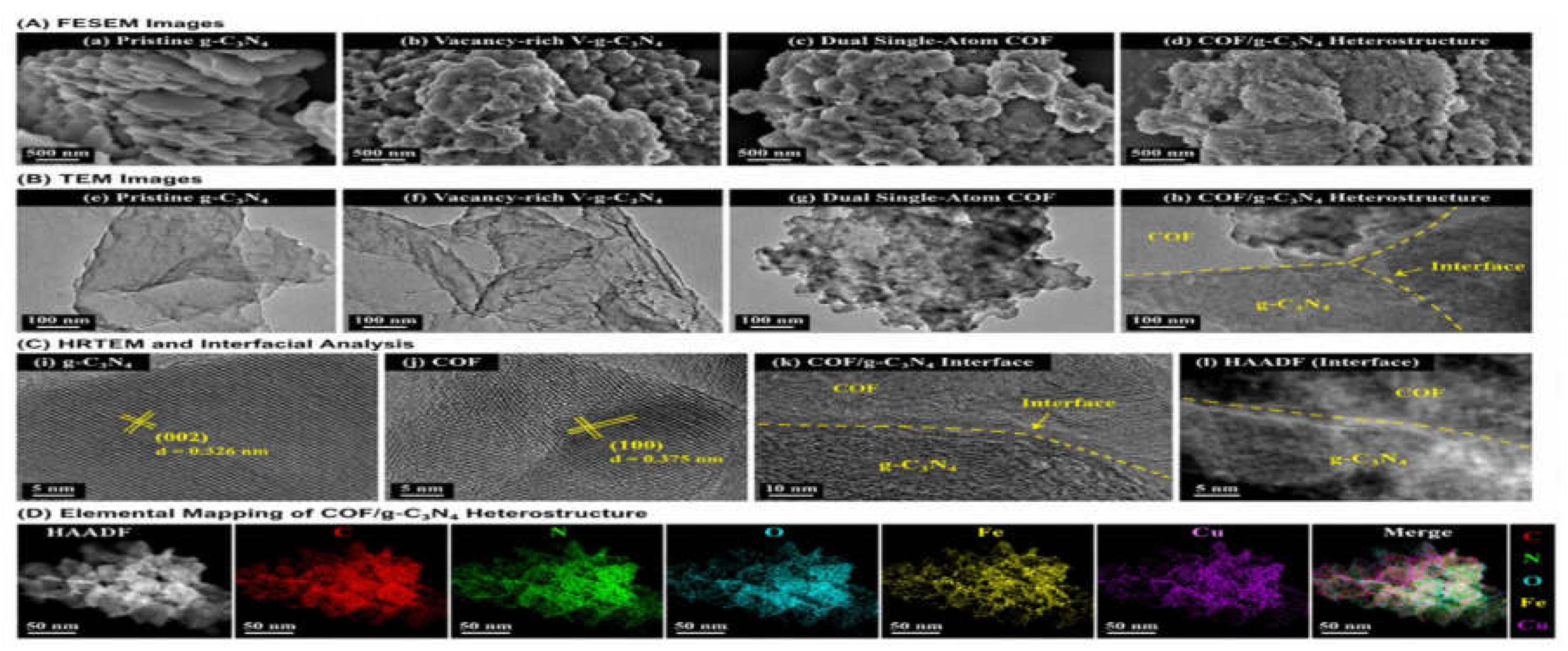
Figure 3.
Surface Chemical States, Nitrogen-Vacancy Formation, and Atomic Coordination of Fe and Cu Single Atoms Revealed by XPS, EPR, XANES, and EXAFS Analyses.
Figure 3.
Surface Chemical States, Nitrogen-Vacancy Formation, and Atomic Coordination of Fe and Cu Single Atoms Revealed by XPS, EPR, XANES, and EXAFS Analyses.
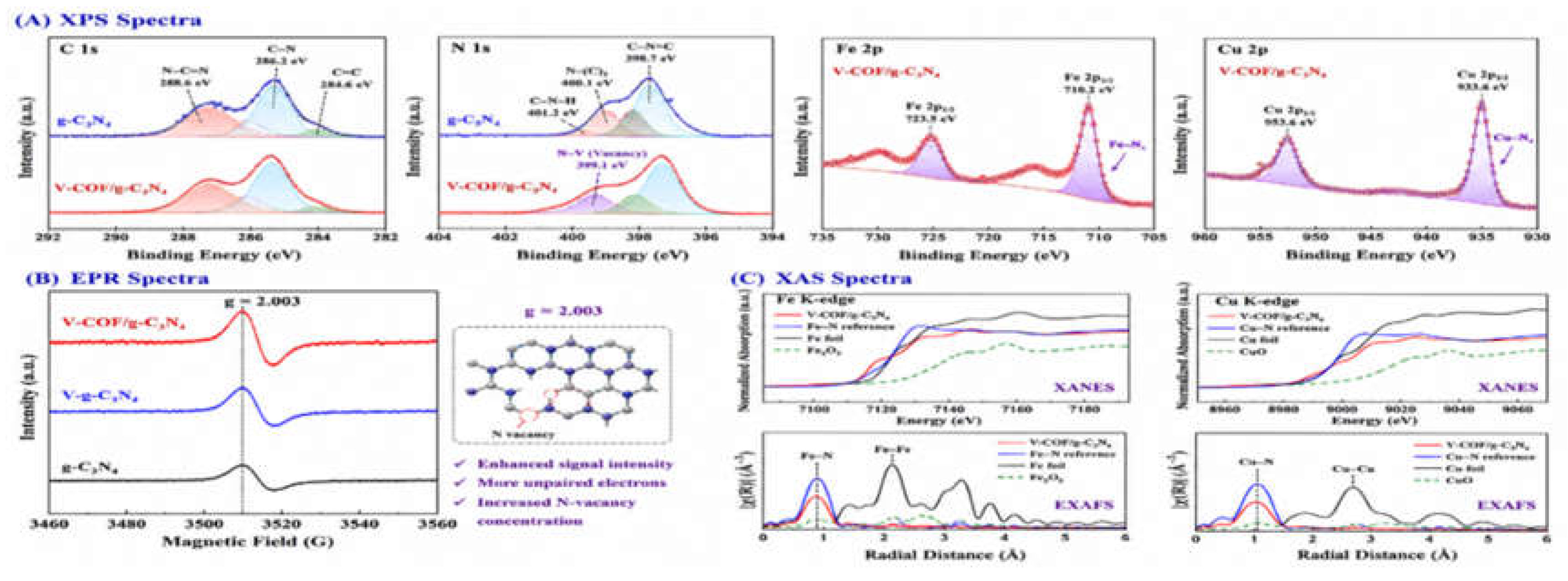
Figure 4.
Optical Properties and Charge Separation Characteristics of the Vacancy-Regulated Dual Single-Atom COF/g-C₃N₄ S-Scheme Heterostructure.
Figure 4.
Optical Properties and Charge Separation Characteristics of the Vacancy-Regulated Dual Single-Atom COF/g-C₃N₄ S-Scheme Heterostructure.
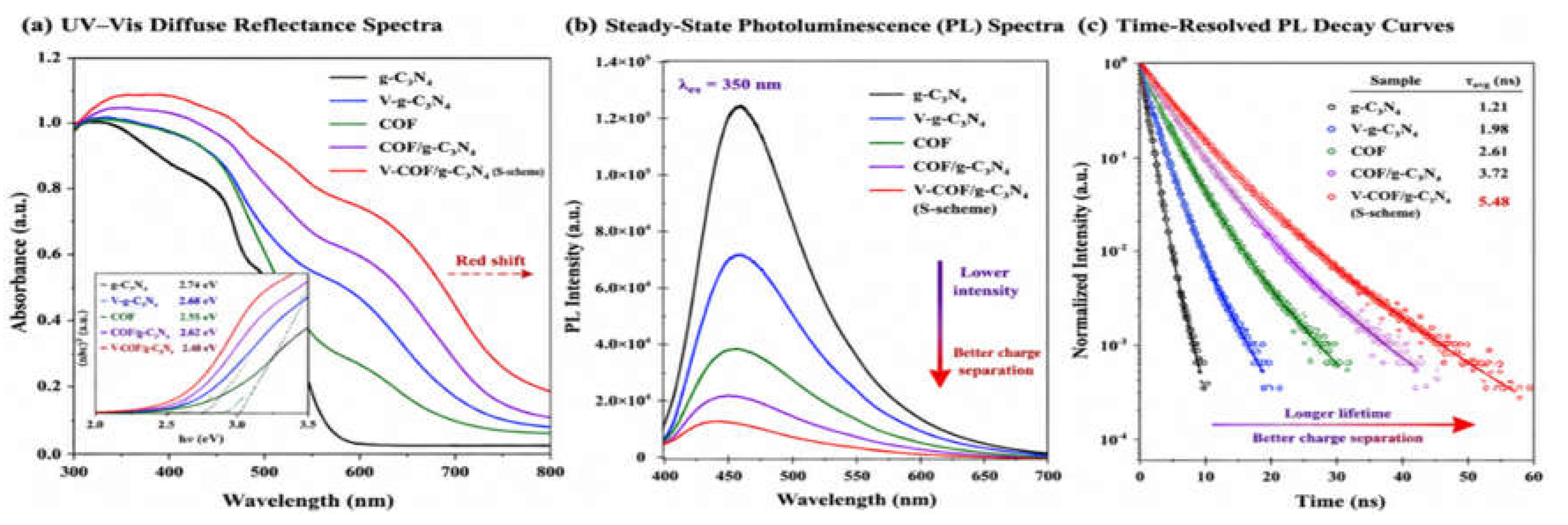
Figure 5.
Photoelectrochemical Performance and Interfacial Charge Transfer Characteristics of the Vacancy-Regulated Dual Single-Atom COF/g-C₃N₄ S-Scheme Heterostructure.
Figure 5.
Photoelectrochemical Performance and Interfacial Charge Transfer Characteristics of the Vacancy-Regulated Dual Single-Atom COF/g-C₃N₄ S-Scheme Heterostructure.
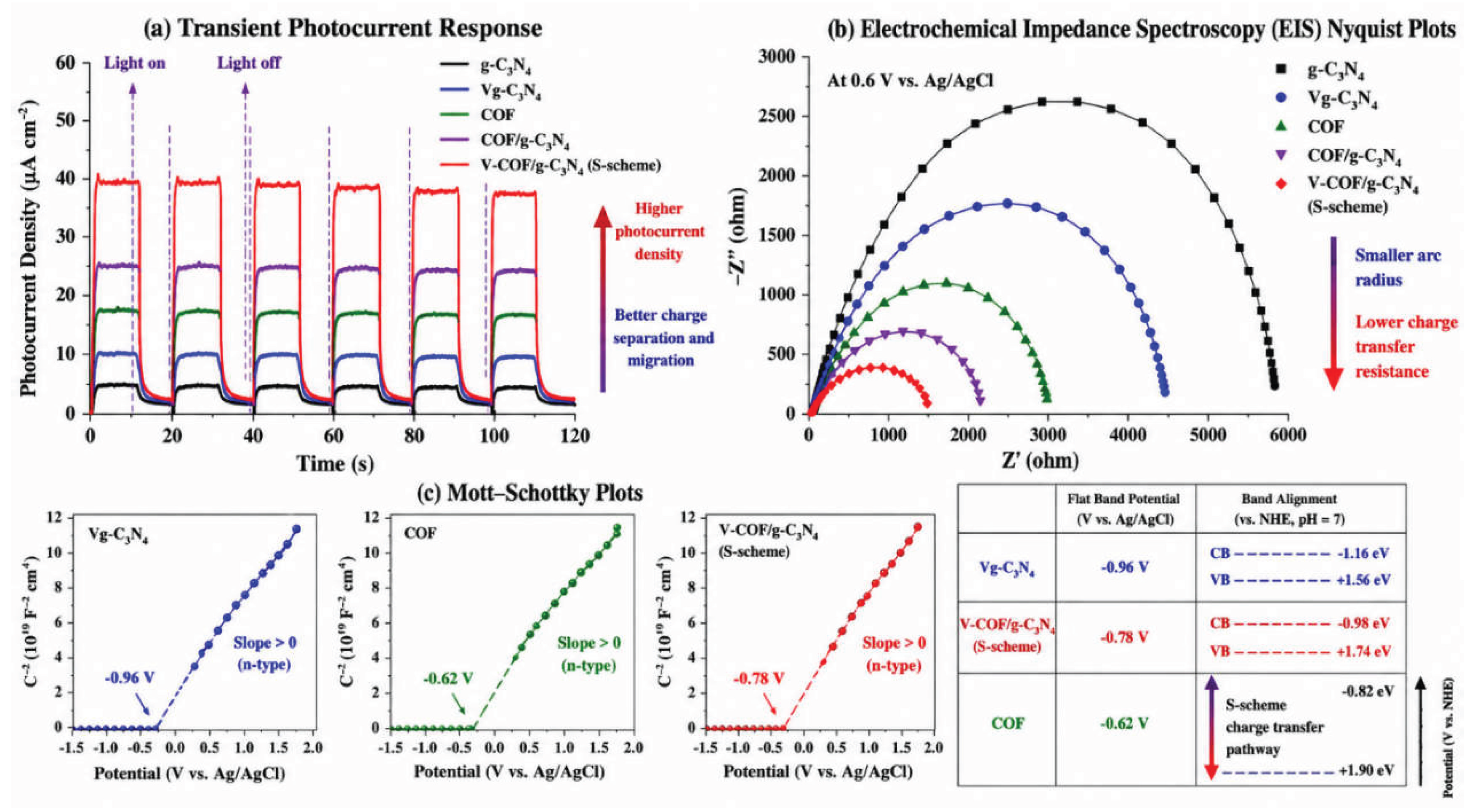
Figure 6.
Photocatalytic CO₂ Reduction Performance and Product Selectivity of the Vacancy-Regulated Dual Single-Atom COF/g-C₃N₄ S-Scheme Heterostructure.
Figure 6.
Photocatalytic CO₂ Reduction Performance and Product Selectivity of the Vacancy-Regulated Dual Single-Atom COF/g-C₃N₄ S-Scheme Heterostructure.
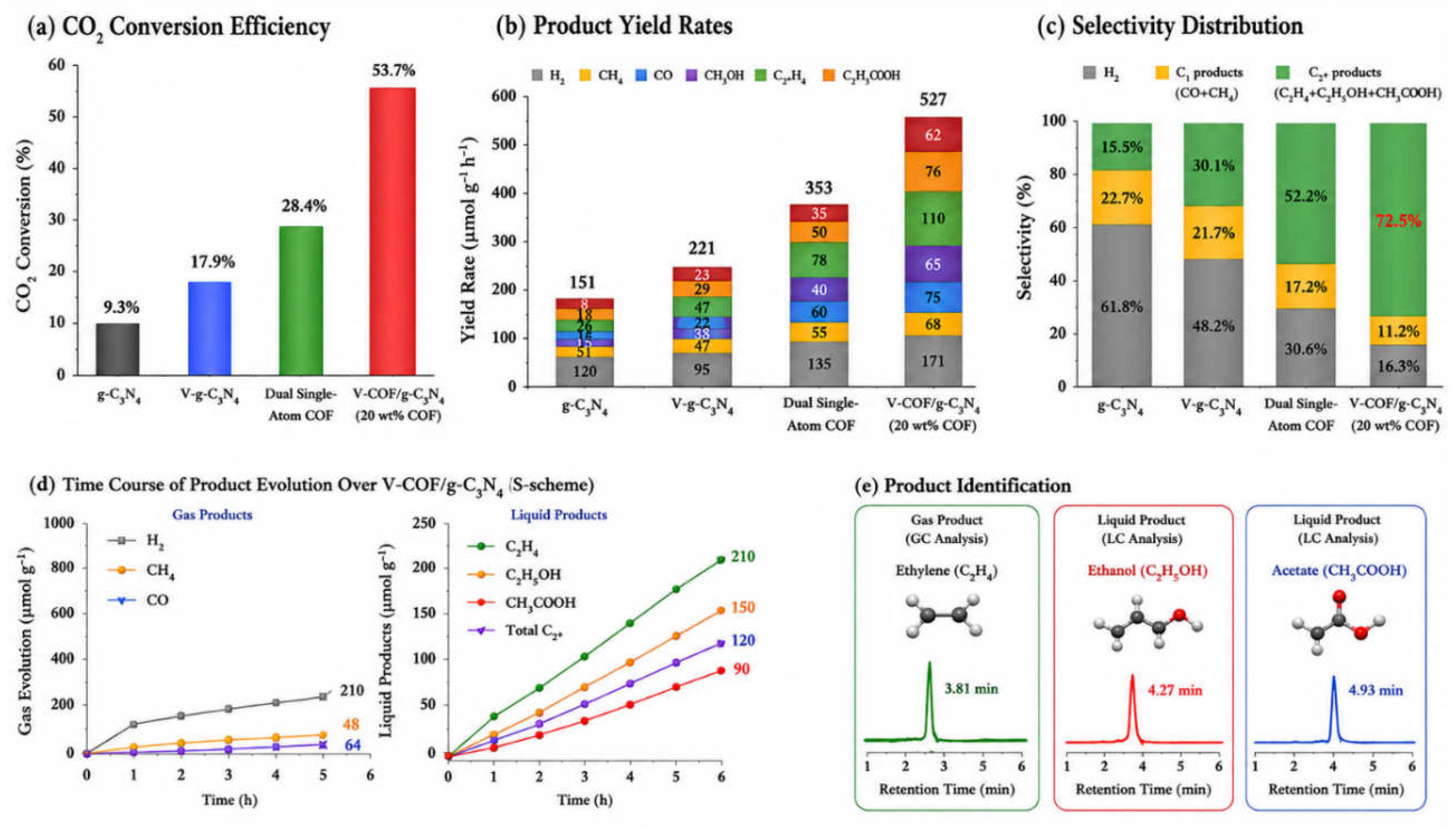
Figure 7.
Product Selectivity and C–C Coupling Mechanism over the Vacancy-Regulated Fe–Cu Dual Single-Atom COF/g-C₃N₄ S-Scheme Heterostructure.
Figure 7.
Product Selectivity and C–C Coupling Mechanism over the Vacancy-Regulated Fe–Cu Dual Single-Atom COF/g-C₃N₄ S-Scheme Heterostructure.
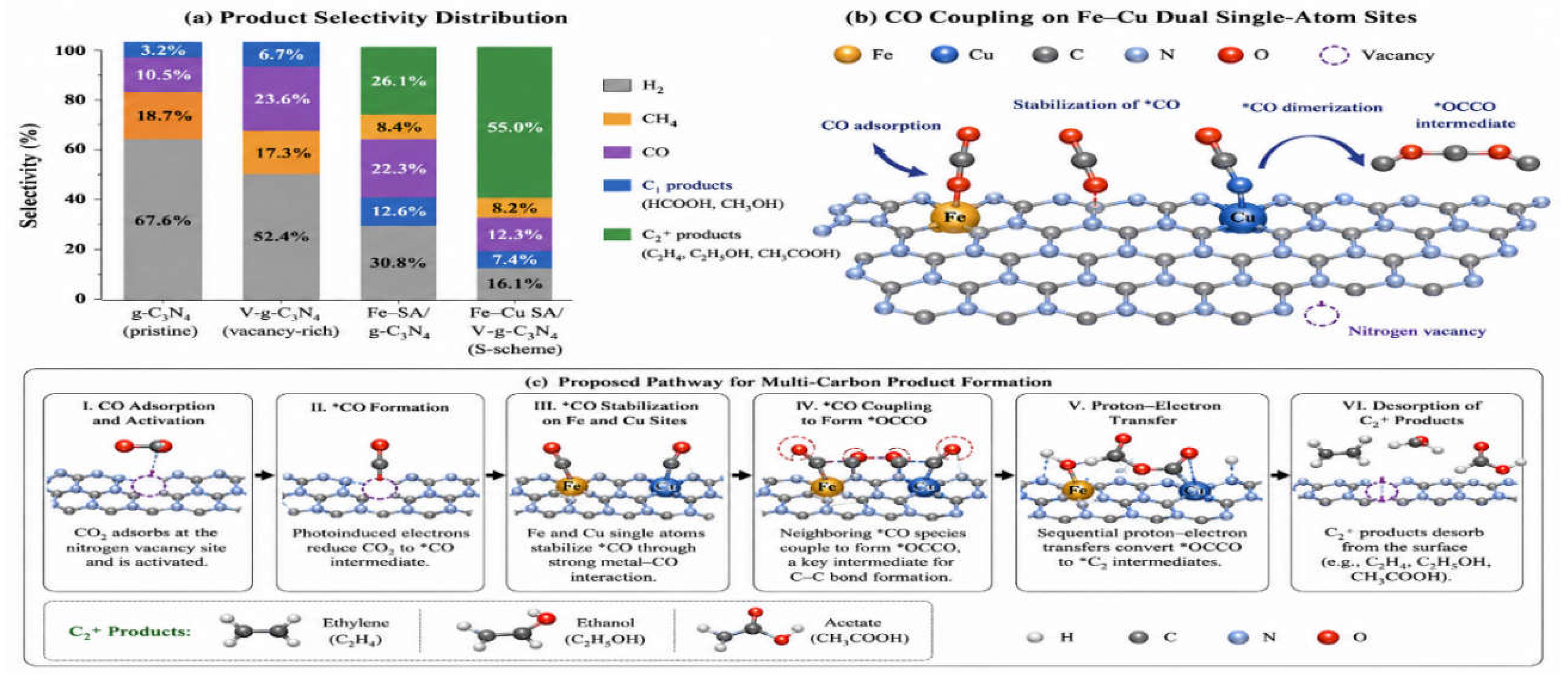
Figure 8.
Stability, Reusability, and Structural Robustness of the Vacancy-Regulated Fe–Cu Dual Single-Atom COF/g-C₃N₄ S-Scheme Heterostructure.
Figure 8.
Stability, Reusability, and Structural Robustness of the Vacancy-Regulated Fe–Cu Dual Single-Atom COF/g-C₃N₄ S-Scheme Heterostructure.
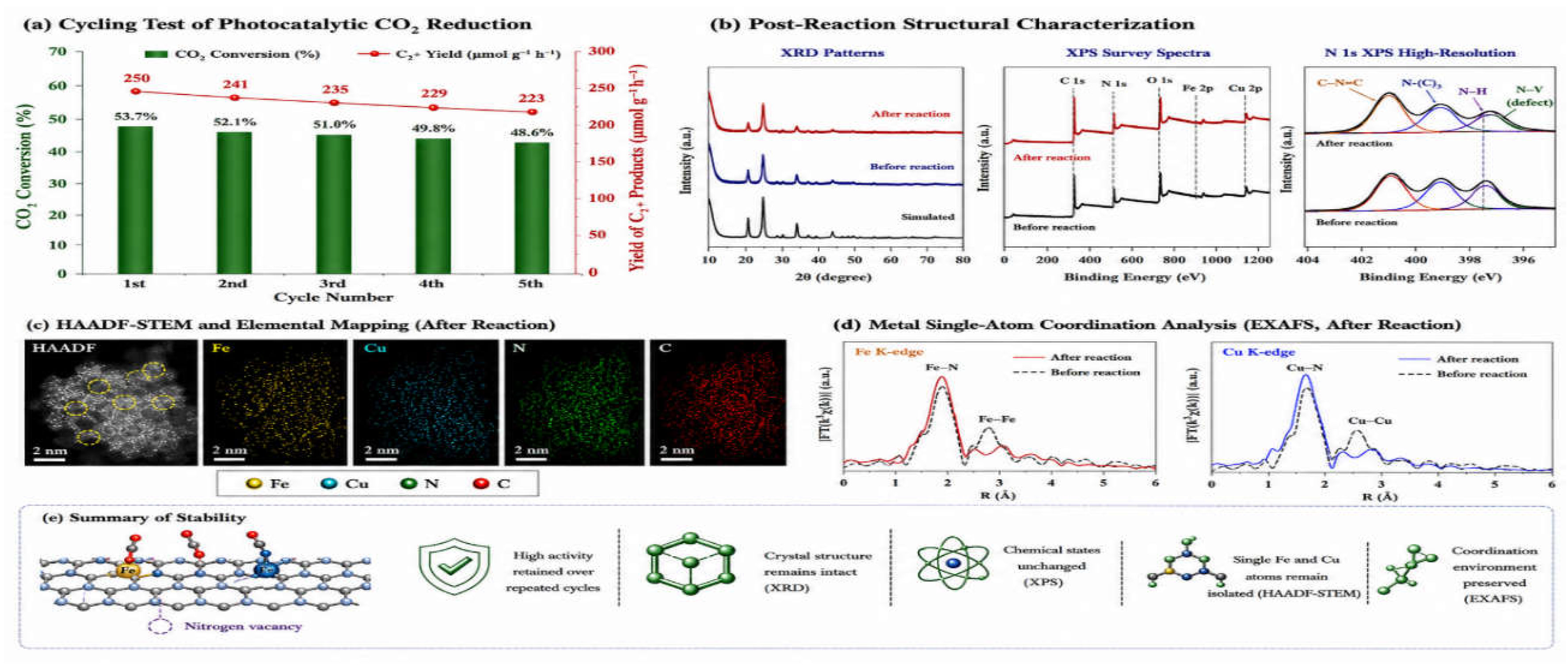
Figure 9.
Density Functional Theory (DFT) Analysis Revealing the Origin of Enhanced Photocatalytic CO₂ Reduction over Vacancy-Regulated Fe–Cu Dual Single-Atom COF/g-C₃N₄ S-Scheme Heterostructures.
Figure 9.
Density Functional Theory (DFT) Analysis Revealing the Origin of Enhanced Photocatalytic CO₂ Reduction over Vacancy-Regulated Fe–Cu Dual Single-Atom COF/g-C₃N₄ S-Scheme Heterostructures.
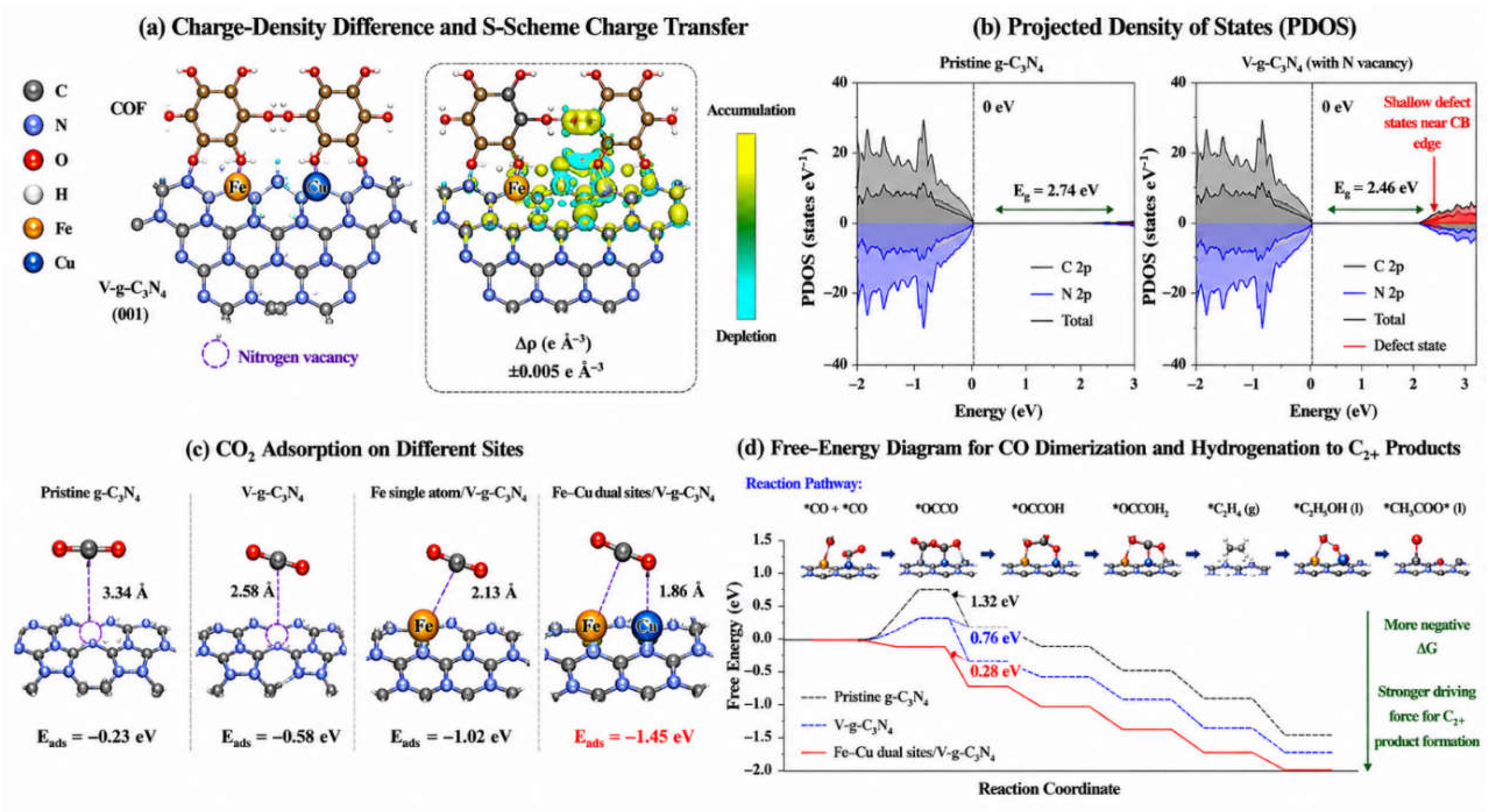
Figure 10.
Proposed S-Scheme Photocatalytic Mechanism for Solar-Driven CO₂ Reduction over the Vacancy-Regulated Fe–Cu Dual Single-Atom COF/V-g-C₃N₄ Heterostructure.
Figure 10.
Proposed S-Scheme Photocatalytic Mechanism for Solar-Driven CO₂ Reduction over the Vacancy-Regulated Fe–Cu Dual Single-Atom COF/V-g-C₃N₄ Heterostructure.
Disclaimer/Publisher’s Note: The statements, opinions and data contained in all publications are solely those of the individual author(s) and contributor(s) and not of MDPI and/or the editor(s). MDPI and/or the editor(s) disclaim responsibility for any injury to people or property resulting from any ideas, methods, instructions or products referred to in the content. |
© 2026 by the authors. Licensee MDPI, Basel, Switzerland. This article is an open access article distributed under the terms and conditions of the Creative Commons Attribution (CC BY) license (http://creativecommons.org/licenses/by/4.0/).
Copyright: This open access article is published under a Creative Commons CC BY 4.0 license, which permit the free download, distribution, and reuse, provided that the author and preprint are cited in any reuse.


