

Submitted:
18 March 2026
Posted:
18 March 2026
You are already at the latest version
Abstract
Cheese production generates large volumes of whey, high-strength wastewater with elevated organic load, salinity, and nutrient content. Although whey contains valuable components including lactose, proteins, and minerals, approximately half of global production remains underutilized, contributing to eutrophication and oxygen depletion in aquatic ecosystems. Conventional physicochemical and biological treatment methods are limited by high operational costs, energy demands, and secondary waste generation. Microalgae-based bioremediation has emerged as a promising sustainable strategy for whey valorization, enabling simultaneous nutrient removal and biomass production. Through a focused review of current literature, this study analyzes microalgal strains commonly applied in whey remediation, their cultivation modes (photoautotrophic, heterotrophic, and mixotrophic), nutrient uptake mechanisms, and operational conditions. The review highlights cultivation systems, biomass recovery techniques, and potential conversion of microalgal biomass into high value bioproducts, including biofuels, pigments, proteins, and biofertilizers. Critically, a major research gap exists: no studies systematically examine whey-grown microalgal biomass for bioplastic or film production, despite its elevated polysaccharide and protein content. Future development requires integrated biorefinery approaches, optimized cultivation strategies, and supportive policy frameworks to enable large-scale circular economy implementation within the dairy industry.
Keywords:
cheese whey
; circular economy
; microalgae
; water treatment
1. Introduction
Cheese production, a major segment of the dairy industry, stands out as one of the most resource-intensive processes, generating substantial volumes of high-strength wastewater with significant environmental implications. Whey, the liquid byproduct of cheese production, constitutes a major fraction of dairy wastewater. It is estimated that the global dairy industry produces over 10 billion tons of whey annually. Despite the potential for whey valorization, only approximately 50% of this byproduct is utilized for the production of whey protein, lactose, and other derivatives, leaving a substantial volume unprocessed and contributing to serious environmental challenges [1].
Cheese whey is composed primarily of water, lactose, proteins, lipids, and various dissolved minerals (Table 1). The composition of whey is influenced by factors including the type of milk, processing parameters, and the method of casein coagulation. Whey is generally categorized into two types according to the coagulation process: sweet whey and acid whey, also known as sour whey [2].
Sweet whey is produced when rennet or other proteolytic enzymes are used to induce casein precipitation, resulting in a final pH ranging between 6.0 and 7.0 [3]. This type of whey is typically obtained from the production of rennet-coagulated cheeses such as cheddar, mozzarella, and Swiss cheese. Due to its relatively neutral pH and higher lactose content, sweet whey is often considered more suitable for further processing and utilization in food and pharmaceutical applications [3].
In contrast, acid whey is generated through acid-induced milk coagulation, which leads to a lower pH, typically below 5.0, due to the accumulation of organic acids, particularly lactic acid [4]. Acid whey is predominantly produced during the manufacture of fresh cheeses such as cottage cheese, ricotta, and Greek yogurt. The higher acid content and the presence of residual casein fragments can limit its reuse potential compared to sweet whey [4].
In industrial cheese production, sweet whey is frequently repurposed for secondary applications, including the formulation of whey-based beverages, the production of whey protein concentrates and isolates, and the development of food-grade lactose [4]. Figure 1 illustrates the generation of whey, secondary whey, and their by-products throughout the cheese production process. Despite these advancements, a substantial proportion of whey remains underutilized, often being discarded as waste. The improper disposal of whey, particularly in large-scale dairy industries, poses significant environmental challenges, primarily due to its high organic load, which can contribute to oxygen depletion in water bodies if discharged untreated.
Table 1 not only highlights the compositional differences between sweet and acid whey but also reveals characteristics that directly determine the feasibility of microalgal cultivation. The higher lactose content of sweet whey contributes to elevated chemical oxygen demand (COD) yet remains largely unusable by most microalgal strains without pretreatment [5]. Conversely, acid whey exhibits lower protein content and a more acidic pH, conditions that may impede photosynthetic growth unless corrected. Importantly, the concentrations of nitrogen, phosphorus, and minerals present in both whey types align with the macro- and micronutrient requirements of microalgae, positioning whey as a potentially valuable growth medium after proper conditioning [6]. These observations emphasize the bioprocessing challenges inherent to raw whey and justify the need for substrate modification strategies such as enzymatic lactose hydrolysis, bacterial co-culturing, or dilution protocols to unlock its full potential as an algal cultivation medium.

Table 1.
Composition (g·L⁻¹) of sweet and acid whey reproduced from. [7] licensed under CC BY 4.0.
Table 1.
Composition (g·L⁻¹) of sweet and acid whey reproduced from. [7] licensed under CC BY 4.0.
| Composition (g·L⁻¹) | Sweet Whey | Acid Whey |
|---|---|---|
| Total solids | 5.72–8.50 | 5.20–5.90 |
| Ash | 0.50–0.65 | 0.60–0.80 |
| Lactose | 3.06–5.02 | 3.00–4.60 |
| Total protein | 0.60–1.20 | 0.20–0.50 |
| Fat | 0.05–0.40 | 0.01–0.32 |
| Lactic acid | 0.14–0.28 | 0.50–0.60 |
| Ca | 0.03–0.06 | 0.09–0.14 |
| K | 0.08–0.16 | 0.10–0.14 |
| Mg | 0.01–0.02 | 0.01–0.02 |
| Na | 0.02–0.32 | 0.02–0.05 |
| Citrate | 0.06–0.07 | 0.07–0.09 |
| Phosphate | 0.06–0.07 | 0.06–0.10 |
The amount of whey generated is directly proportional to cheese production, with approximately 9 liters of whey produced per kilogram of cheese [8]. In Portugal, cheese production reached approximately 86,078 tons in 2023, yielding around 775 million liters of whey. Alarmingly, nearly 50% of this whey remains unprocessed [9], exacerbating environmental concerns. Due to its high organic load, whey poses a significant pollution risk, particularly for wastewater treatment facilities, as its components are difficult to degrade. Whey contains high levels of organic matter, mineral salts, salinity, acidity, nutrients, and total suspended solids (TSS). A significant environmental concern related to whey disposal is its exceptionally high biological oxygen demand (BOD) and COD. The high lactose content significantly contributes to these values, with BOD levels ranging between 40 and 60 g/L and COD levels between 50 and 80 g/L [8]. Elevated COD and BOD levels in cheese effluents are primarily attributed to the high concentrations of lactose and fat. These organic components contribute to excessive consumption of dissolved oxygen in aquatic environments, leading to oxygen depletion. The presence of significant amounts of total nitrogen and phosphorus in the effluents further exacerbates the risk of eutrophication, which can result in water quality deterioration, including toxic algal blooms, increased purification costs, and potential livestock mortality. Additionally, the high concentrations of ammonium nitrogen (NH₄⁺-N) in cheese whey pose a toxic threat to aquatic life [4,10,11].
Cheese whey represents the primary pollutant in dairy wastewater, primarily because of its high organic load and the considerable volumes produced. The amount of whey generated is directly proportional to cheese production levels, which are determined by the type of milk processed (Table 2) [4].
The growing environmental impact of whey has underscored the urgent need for innovative and sustainable treatment technologies. Conventional treatment methods, including physicochemical and biological processes, have demonstrated efficacy in managing whey; however, they are often associated with significant drawbacks. These drawbacks include high operational costs, substantial energy consumption, and the potential generation of secondary pollutants, which can further contribute to environmental degradation (Table 3) [12,13]. Table 3 illustrates that conventional whey treatment technologies, while established, are limited by high operational costs, energy intensity, and secondary pollution potential. This comparative analysis provides a clear rationale for investigating biotechnological alternatives. Algal systems emerge as uniquely positioned to overcome these limitations, offering simultaneous nutrient removal, CO₂ sequestration, and biomass valorization. The comparison therefore provides the conceptual foundation for the microalgae-based strategies explored in the following sections, highlighting why these biological systems merit deeper investigation within a circular economy framework.
Treatment methods differ considerably in cost-effectiveness and sustainability. Thermal approaches, such as thermocoagulation, are moderately to highly effective but energy-intensive, making their sustainability dependent on energy sources. Chemical methods, though moderately cost-effective, generate waste and thus offer low to moderate sustainability. Physico-chemical techniques like reverse osmosis and ultrafiltration are highly effective but costly and limited by energy use and membrane waste. By contrast, biotechnological strategies microbial, enzymatic, and algal treatments combine high cost-effectiveness with strong sustainability due to low energy needs, carbon capture, and biomass valorization. Electro-physical processes, including electrodialysis and electro activation, are effective but constrained by high electricity demands and associated waste, resulting in only moderate sustainability.[13]
The increasing environmental burden associated with cheese whey requires the development of advanced and sustainable treatment strategies that enhance pollutant removal while maximizing resource recovery. Conventional treatment methods often involve high energy inputs and generate secondary waste, underscoring the need for more efficient and eco-friendly alternatives [12].
Algae-based bioremediation has emerged as a promising approach, offering multiple advantages, including improved nutrient removal efficiency, reduced energy consumption, and the bioconversion of waste streams into high-value bioproducts [15].
The valorization of cheese whey aligns with the principles of the circular economy and plays a crucial role in advancing the United Nations Sustainable Development Goals (SDGs), particularly SDG 2 (Zero Hunger), SDG 6 (Clean Water and Sanitation), SDG 7 (Affordable and Clean Energy), and SDG 12 (Responsible Consumption and Production) [16]. Emerging strategies and technological advancements provide a promising outlook for transforming cheese whey into valuable products, reducing environmental impact, and promoting sustainability in the dairy industry.
Efforts to enhance the sustainability of the dairy and whey industries include improving waste management practices, optimizing processing technologies, and developing innovative approaches for whey utilization. The integration of circular economy principles within the dairy sector can help reduce waste generation and promote the transformation of whey into high-value products, ultimately contributing to a more sustainable and economically viable industry.
2. Methodology
A targeted literature review combined with a bibliometric analysis was conducted to identify, compare and synthesize recent scientific advances in the treatment and valorization of cheese whey using microalgae within a circular economy framework. The methodological workflow comprised database searching, eligibility screening and structured data extraction, followed by comparative and bibliometric analysis.
2.1. Database Search Strategy
Scientific literature was retrieved from the Scopus and Web of Science (WoS) databases, selected due to their broad multidisciplinary coverage and rigorous peer-review indexing standards. The search covered the period from 2016 to 2025 to capture recent developments and emerging research trends. Search queries were constructed using combinations of relevant keywords and Boolean operators, including “cheese whey”, “dairy wastewater”, “microalgae”, “water treatment” and “circular economy”. Searches were applied to the title, abstract and keyword fields, and only peer-reviewed publications written in English were considered.
The initial dataset obtained from the database search was subsequently subjected to a bibliometric assessment to characterize publication trends, thematic focus and research evolution within the field.
2.2. Eligibility Criteria
Studies were selected based on predefined inclusion and exclusion criteria. Eligible publications focused on cheese whey, whey permeate or other dairy wastewater streams and involved the application of microalgal strains, consortia or mixed cultures for wastewater treatment, nutrient removal or biomass valorization. Studies conducted at laboratory, pilot or outdoor scale were included, provided that they reported quantitative treatment or productivity outcomes. Only peer-reviewed journal articles and review papers indexed in Scopus or WoS were considered.
Publications were excluded if they were unrelated to dairy wastewater treatment, investigated microalgae without a direct link to whey-based substrates, lacked quantitative performance indicators or originated from non-indexed or non-peer-reviewed sources.
2.3. Data Extraction and Comparative Table Construction
For each eligible study, detailed technical and operational information was systematically extracted and organized into a structured comparative table. Extracted variables included the microalgal strain or culture type, type of whey or dairy wastewater treated, cultivation or treatment method, initial substrate concentration or dilution strategy, experimental duration, recovered bioproducts and key performance indicators such as chemical oxygen demand removal, nutrient uptake and biomass productivity.
This standardized data organization enabled direct cross-study comparison and facilitated the identification of similarities and differences across microalgal species, cultivation strategies and treatment conditions. The comparative table included representative studies such as Acutodesmus dimorphus cultivated in raw dairy wastewater, polyculture systems treating whey permeate, Arthrospira platensis grown in diluted whey and Chlorella species applied to primary and secondary whey streams.
2.4. Analytical Approach
The compiled dataset was analysed using a qualitative comparative approach supported by bibliometric indicators. The analysis focused on identifying recurring operational conditions, treatment efficiencies and biomass valorisation pathways across the selected studies. Particular emphasis was placed on wastewater treatment performance, including chemical oxygen demand and nutrient removal, biomass yield and biochemical composition, and the potential integration of microalgal systems within circular economy frameworks.
This combined analytical approach enabled the identification of technological gaps, dominant research trends and emerging opportunities for sustainable cheese whey valorisation using microalgae.
3. Microalgae in Cheese Whey Treatment
Algae are a diverse and versatile group of photosynthetic organisms that play a vital role in both natural ecosystems and industrial applications. They range from unicellular microalgae to large multicellular macroalgae, such as seaweed [17]. These organisms contribute significantly to global oxygen production and carbon sequestration while also serving as a foundation for aquatic food chains [18]. Due to their rapid growth rates, adaptability, and ability to capture carbon dioxide, algae have been extensively studied for applications in biofuels, pharmaceuticals, water treatment, and bioplastic production [19].
Algae are broadly classified into microalgae and macroalgae, each with distinct bio-logical and industrial significance. Microalgae are microscopic, unicellular algae, including genera like Chlorella, Scenedesmus, and Spirulina, are widely utilized in biotechnology due to their ability to rapidly accumulate biomass and valuable bioproducts. On the other hand, macroalgae are larger, multicellular algae, such as kelp and seaweed that play essential roles in marine ecosystems and are used in food, fertilizers, and bioactive compound extraction.
Microalgae have gained significant attention in cheese whey treatment due to their high nutrient uptake efficiency, adaptability to diverse environmental conditions, and ability to assimilate pollutants while generating valuable biomass. These microorganisms play a crucial role in bioremediation by removing excess nitrogen, phosphorus, and organic matter from industrial and municipal effluents, thereby improving water quality. Additionally, microalgae contribute to sustainable resource recovery by producing bio-based compounds such as proteins, lipids, pigments, and biopolymers [20]. Among the various microalgal species employed in cheese whey treatment the most representative examples are illustrated in Figure 2.
Chlorella, Scenedesmus, and Spirulina are among the most widely studied due to their rapid growth rates, resilience to variable water compositions, and efficiency in pollutant removal [21]. These species exhibit robust mechanisms for nutrient assimilation, including ammonium and nitrate uptake, phosphate sequestration, and organic carbon metabolism. Furthermore, their biomass can be valorized into bioproducts such as biofuels, bioplastics, animal feed, and biofertilizers, aligning with circular economy principles [22].
In the context of cheese whey valorization, microalgae serve as promising candidates for bioremediation due to the high organic load and nutrient richness of dairy effluents. A wide range of microalgal and cyanobacterial strains have been investigated for their potential in dairy and cheese whey wastewater treatment, with notable variations in treatment conditions, biomass productivity, nutrient removal efficiency, and bioproduct recovery. Table 4 presents a comprehensive overview of the various microalgae species utilized in the treatment of cheese whey.
Across the dataset, wastewater remediation efficiencies remained consistently high with COD reductions above 80–90% for several microalgae. For example, Acutodesmus dimorphus demonstrated over 90% COD reduction within four days of cultivation in raw dairy wastewater, generating biomass suitable for subsequent biodiesel and bioethanol production [23], while Tetradesmus sp. SVMIICT4 achieved 95.5% COD removal and significant nutrient uptake under mixotrophic conditions in a flat-panel photobioreactor [24]. Similarly, Monoraphidium sp. KMC4 cultivated in simulated wastewater produced biocrude with biomass yields of 3.69 g/L and COD removal exceeding 90% [25]. Arthrospira platensis (Spirulina) used diluted cheese whey, resulting in biomass production of 1.06 g/L with COD removals of approximately 85% [26]. Also Chlorella sorokiniana achieved consistently high COD removal across all wastewater types, reaching 93% in raw dairy wastewater, 93% in anaerobically treated dairy wastewater, and 91% when cultivated in cheese whey[27]. The Euglena gracilis WZSL mutant exhibited strong remediation capability, achieving 91% COD removal in undiluted raw dairy wastewater over 11 days [28] while Nannochloris sp. reduced COD by up to 96% when grown mixotrophically in lactose-supplemented whey wastewater [29] Other cyanobacteria, including Oscillatoria spp. and Lyngbya ceylanica, demonstrated nutrient reduction capabilities suitable for biofertilizer and biofuel applications [30].
BOD removal data were less frequently reported, indicating a recurring knowledge gap. Where available, results demonstrate strong performance, such as the 92% BOD reduction achieved by the Euglena gracilis WZSL mutant in undiluted raw dairy wastewater [28] and the 85.61% BOD removal observed for Chlorella vulgaris in dairy effluent [31]. The limited reporting of BOD, despite its relevance for regulatory compliance, suggests the need for more standardized wastewater characterization to improve comparability across studies.
Nitrogen removal performance also varied across species and cultivation configurations. Removal by Chlorella sorokiniana ranged from 80% to 94% depending on wastewater type [27], while Euglena gracilis removed 88% NH₃–N in raw dairy wastewater [28]. Nitrate removal was particularly efficient in sequential systems; for example, Chlorella sp. and Scenedesmus sp. achieved 98.36% and 99.39% NO₃⁻ removal, respectively, when integrated with Lemna minor pretreatment [15]. Other strains demonstrated substantial nitrogen uptake through biomass composition, such as Monoraphidium sp. KMC4, which accumulated 48.5 wt% protein alongside 90.54% COD removal [25]. While these results indicate excellent nitrogen assimilation, the lack of consistent reporting of nitrogen speciation (NH₄⁺, NO₃⁻, TKN) limits the ability to identify strain-specific preferences or metabolic constraints.
Phosphorus removal also showed high variability. Chlorella sorokiniana removed between 20% and 84% of total phosphorus depending on the wastewater matrix [27], while Chlorella vulgaris achieved 65.96% total phosphorus (TP) removal in dairy effluent and up to 46% in coagulated whey [31,32]. High phosphorus (P) removal was observed in integrated systems such as Lemna–Chlorella/Scenedesmus, which reached 84–88% PO₄³⁻ removal [15], and in Scenedesmus sp., which achieved 97.07% P removal in cheese-processing wastewater [33]. The disparity in phosphorus removal results may reflect differences in wastewater pretreatment and solubility rather than purely biological performance, highlighting the need for more detailed reporting on phosphorus speciation.
Biomass production differed substantially across strains and cultivation designs. Acutodesmus dimorphus produced 840 mg/L within eight days [23], whereas Arthrospira platensis reached 1.06 g/L in diluted whey [26]. High productivities were achieved by Chlorella sp. in mixed whey streams (~1552 mg/L in Pre-treated Cheese Whey – Secondary Clarified Wastewater (PCW–SCW) and >900 mg/L in undiluted whey under sequential cultivation) [34,35], and by Chlorella vulgaris, which produced up to 0.38 g L⁻¹ day⁻¹ in coagulated whey at high inoculum densities [32]. The highest biomass values were reported for Euglena gracilis, reaching 3.2 g/L [28], and for Monoraphidium sp. KMC4, which reached 3.69 g/L in synthetic dairy wastewater [25]. These results suggest that strains capable of strong mixotrophic metabolism, particularly Euglena and Monoraphidium, may be better suited for high-organic-load effluents. Still, wide variations in inoculum size, reactor configuration, and reporting conventions complicate cross-study comparisons.
Additional bioproduct profiles further illustrate strain-specific advantages. Chlorella species produced valuable pigments (lutein, chlorophylls, carotenoids) and proteins [36] [27], while Euglena gracilis generated high-value paramylon (2.6 g/L) [28]. Scenedesmus sp. reached lipid contents as high as 51%, reinforcing its suitability for biofuel applications [33] , whereas Nannochloris sp. and Monoraphidium sp. demonstrated strong potential for antioxidant and biocrude production, respectively [25,29]. Despite these promising results, the lack of standardized reporting for biochemical yields (e.g., dry-weight normalization, extraction methods) remains a barrier to evaluating biorefinery potential across strains.
Despite these successes, several critical biochemical and physicochemical constraints inherent to whey-based wastewaters complicate microalgal cultivation. Lactose, the dominant carbohydrate in whey (up to 80% of dissolved solids), presents a complex substrate requiring β-galactosidase enzyme production by microalgae for hydrolysis into metabolizable monosaccharides, creating an intricate assimilation bottleneck compared to simpler carbon sources [37]. Osmotic stress induced by elevated salt concentrations, particularly in second cheese whey containing up to 2.4% (w/v) NaCl, severely inhibits microalgal growth and photosynthetic performance, with studies demonstrating that osmotic and ionic stress from high mineral content creates critical barriers limiting cell proliferation despite organic carbon availability [34]. Additionally, lactic acid accumulation and other fermentation byproducts in whey wastewater can exert toxic effects on microalgal cultures, while the presence of residual dairy contaminants including detergents, sterilizing agents, and heavy metals further compounds treatment challenges [38]. The substrate complexity is exacerbated by high organic loading rates (COD values ranging from 40 to 95 g/L) and extreme pH fluctuations (4-11) characteristic of dairy effluents, necessitating careful operational control to maintain viable microalgal consortia [38]. Successful treatment strategies require mixotrophic cultivation conditions rather than purely heterotrophic regimes, as photosynthetic activity proves mandatory for effective lactose assimilation, with recent investigations showing fourfold biomass increases under mixotrophic versus heterotrophic conditions [37].
Table 4.
Comprehensive overview of the various microalgae species utilized in the treatment of whey wastewater.
Table 4.
Comprehensive overview of the various microalgae species utilized in the treatment of whey wastewater.
| Strain/Culture | Treatment | Methods Used | Concentration | Duration | Bioproducts | Results | References |
|---|---|---|---|---|---|---|---|
|
Acutodesmus dimorphus |
Raw dairy wastewater | Cultivation without pre-treatment or dilution | Not specified | 8 days | Biodiesel, Bioethanol | COD Reduction: >90% after 4 days; Biomass: 840 mg/L; Lipid: ~25%; Carbohydrate: ~30% | [23] |
| Algal polyculture (Scenedesmus, Monoraphidium) | Cheese Whey Permeate & Landfill Leachate | Mixotrophic, outdoor ponds | 1% (v/v) | 8 cycles (spring/autumn) | Biomass (Lipids, Proteins, Carbohydrates) | Biomass Productivity: 183.8 mg L⁻¹ d⁻¹; TN: 21.71 mg L⁻¹ d⁻¹; TP: 3.05 mg L⁻¹ d⁻¹ | [39] |
|
Arthrospira platensis (Spirulina) |
Cheese whey | Batch experiments with dilutions & irradiation | 10% (v/v) cheese whey | 14 days | Biomass | COD Removal: ~85%; Nitrate removal 70%; Biomass: 1.06 g/L | [26] |
| Chlorella sp. | Primary & Second Cheese Whey | Mixotrophic, whey mixing | 1:1 PCW:SCW | 7 days | Biomass, Pigments | COD Removal Rate: 11,390 mg L⁻¹; BOD:n.d.; NO₃⁻:n.d.; PO₄³⁻: 167 mg L⁻¹; Biomass: ~1552 mg/L (standard); ~1183 mg/L (permeate) | [34] |
| Second Cheese Whey | Sequential design | Undiluted | 14 days | Protein, PUFAs, Pigments | Biomass: >900 mg/L; COD: >14 g/L; TKN: >460 mg/L | [35] | |
| Chlorella sorokiniana | Raw Dairy Wastewater (DWW) | SBR, no pH adjustment | 50% (v/v) | 35 days (5 cycles) | Protein, Starch, Lipids, Lutein, β-carotene, Phenolic compounds, Amino acids | Biomass: 354 mg L⁻¹; COD Removal: 93%; NH₄-N: 80%; TP: 84% | [27] |
| Anaerobically treated DWW | Biomass: 110 mg L⁻¹; COD: 93%; NH₄-N: 94%; TP: 20% | ||||||
| Cheese Whey | Biomass: 229 mg L⁻¹; COD: 91%; NH₄-N: 83%; TP: 69% | ||||||
| Chlorella vulgaris | Dairy effluent | Cultivation in dairy effluent | Not specified | 10 days | Biodiesel | BOD: 85.61%; COD: 80.62%; TN: 85.47%; TP: 65.96%; Biomass: 1.23 g/L (7 days) | [31] |
| Coagulated Cheese Whey | Batch with varying inoculum | 1, 10, 25, 50, and 100% v/v | 6 days | Protein, Chlorophyll | Carbon: up to 56%; Nitrogen: up to 71%; Phosphorus: up to 46%; 0.17, 0.21, 0.26 and 0.38 g L−1.d−1 for cultivation with inoculum of 0.1, 0.2, 0.4 and 1.0 g L−1 | [32] | |
| Desmodesmus sp. | Cheese whey | Mixotrophic in CW + Bold's Basal Medium (BBM) | 15% CW + 50% BBM | 14 days | Lipids, Carbohydrates | Growth: +303%; Productivity: +325%; Lipids: 3.89%; Carbs: 1.95% | [40] |
| Euglena gracilis WZSL mutant | Raw Dairy Wastewater | Dialysis tubing cultivation in a bench-scale fermenter. | Without dilution | 11 days | Biomass, Paramylon (β-1,3-glucan) | Biomass: 3.2 g L⁻¹ Paramylon: 2.6 g L⁻¹ BOD₅ Removal: 92% (from 2680 to 226 mg L⁻¹) COD Removal: 91% (from 4464 to 397 mg L⁻¹) NH₃-N Removal: 88% (from 58 to 7 mg L⁻¹) PO₄³⁻-P Removal: 85% (from 39 to 6 mg L⁻¹) | [28] |
| Lemna minor then Chlorella sp. MC18 or Scenedesmus sp. MJ23-R | Raw Cheese Whey | Sequential system (macrophytes then microalgae) | 20% v/v | 13 days | Biomass, Carbohydrates, Lipids, Proteins | Chlorella sp.: COD: 76.58%; BOD: n.d.;NO₃⁻: 98.36%; PO₄³⁻: 84.48%; Biomass: 91.10 ± 1.50 mg L⁻¹ d⁻¹ Scenedemus sp. COD: 47.83%; BOD:n.d.; NO₃⁻: 99.39%; PO₄³⁻: 87.89%; Biomass: 108.67±1.57 mg L⁻¹ d⁻¹ | [15] |
| Monoraphidium sp. KMC4 | Simulated synthetic dairy wastewater | Mixotrophic cultivation in various strengths | 50% SSDW | 16 days | Biocrude | COD Removal: 90.54%; Biomass: 3.69 g/L; Carbohydrate: 28.73 wt%; Protein: 48.50 wt%; Lipid: 20.29 wt% | [25] |
| Nannochloris sp. | Dairy wastewater (cheese whey) | Mixotrophic with whey + light regimes | 0–10 g/L lactose | 7 days | Lipids, Antioxidants | Lactose: 99–100%; COD: up to 96%; N: up to 91%; P: up to 70% | [29] |
| Oscillatoria spp., L. ceylanica | Dairy wastewater | Laboratory uptake capability studies | Not specified | 15 days | Biofertilizers, Biofuels | Nutrient Reduction (L. ceylanica): ~70%; | [30] |
| Scenedesmus sp. | Cheese processing wastewater | Cultivation with nutritional correction | 100% DIWW | 11 days | Lipids, Carbohydrates | N Removal: 88.41%; P Removal: 97.07%; COD: 89.31%; Lipids: 51% | [33] |
| T. obliquus & C. echinulata | Cheese Whey Effluent | Semicontinuous co-cultivation | 40%-60% | 3 days VRT | Microbial Sludge | COD: 75–77%; TN: 70–74%; TP: 66–70%; Biomass: 778 mg L⁻¹ | [36] |
| Tetradesmus sp. SVMIICT4 | Synthetic dairy wastewater | Mixotrophic cultivation in flat-panel photobioreactor (FP-PBR) | Not specified | 12 days | Value-added products | COD Reduction: 95.5%; Biomass: 2.38 g/L; nitrate and phosphate removal of 65.2% and 57.35%. | [24] |
Overall, the dataset demonstrates strong remediation potential and high-value biomass generation across multiple microalgal species. However, persistent gaps including inconsistent reporting of operational variables, heterogeneity in wastewater composition, missing biomass or yield data, and limited direct comparison between cultivation strategies limit meaningful quantitative integration. Future research should focus on harmonizing reporting standards, characterizing wastewater more consistently, and conducting controlled comparative studies to identify optimal strain–wastewater combinations and scalable process configurations. The most significant limitation is the lack of standardized reporting across studies, with key operational parameters, such as inoculum density, light intensity, wastewater composition, cultivation duration, dry-weight biomass, and absolute yields of lipids, carbohydrates, or proteins are often missing or inconsistently documented. This heterogeneity prevents meaningful quantitative comparisons and limits the ability to identify the true drivers of productivity. In addition, the metabolic responses of specific strains to different dairy wastewater types remain poorly understood, despite clear performance differences among substrates such as raw effluent, permeate, and cheese whey. Furthermore, promising strategies like mixotrophy, co-cultivation, and hybrid macrophyte–microalgae systems are not directly compared under uniform conditions, leaving their relative advantages unresolved. Most studies also remain at laboratory scale, with minimal evidence on scale-up feasibility, long-term operational stability, and integrated biorefinery performance. Together, these gaps highlight the need for harmonized reporting standards and more controlled, comparative studies to enable robust meta-analysis and guide the design of optimized, scalable microalgal systems for dairy wastewater valorization.
4. Mechanisms of Nutrient Removal from Cheese Whey
Carbon, accounting for approximately 50% of microalgal dry weight, is central to cell structure and metabolism. Microalgae assimilate both inorganic carbon (e.g., CO₂, HCO₃⁻) and organic carbon (e.g., glucose, glycerol). In photoautotrophic systems, CO₂ fixation occurs via the Calvin cycle, facilitated by ribulose-1,5-bisphosphate carboxylase/oxygenase (Rubisco). Under heterotrophic or mixotrophic conditions, organic carbon compounds in wastewater are internalized and metabolized through glycolysis and the hexose monophosphate pathway, ultimately contributing to triacylglyceride (TAG) synthesis. Because cheese whey is rich in lactose and other fermentable sugars, its high organic carbon load strongly favors heterotrophic and mixotrophic pathways, enabling rapid carbon assimilation and enhancing biomass and lipid accumulation beyond levels typically observed in low-carbon wastewaters [41].
Nitrogen is essential for the synthesis of nucleic acids, proteins, and chlorophyll. Microalgae assimilate various nitrogen sources in wastewater, including ammonia (NH₄⁺), nitrate (NO₃⁻), nitrite (NO₂⁻), urea, and amino acids. Nitrate is reduced to nitrite and then to ammonia via nitrate reductase and nitrite reductase, respectively. Subsequently, ammonia is assimilated into amino acids through the glutamine synthetase–glutamate synthase pathway. NH₄⁺ is generally the preferred nitrogen source due to lower energy requirements for assimilation. Cheese whey, however, is typically characterized by low nitrogen concentration relative to carbon (high C/N ratio), which can constrain protein synthesis and limit microalgal growth unless supplemented or co-treated with nitrogen-rich streams. This imbalance directly influences nitrogen uptake pathways and often leads to rapid nitrogen depletion, triggering stress responses such as enhanced lipid accumulation [38]. Phosphorus is involved in vital cellular functions, including energy transfer (ATP), nucleic acid synthesis, and membrane structure. Inorganic phosphate (e.g., PO₄³⁻, H₂PO₄⁻) is the primary form absorbed by microalgae. In conditions of phosphate deficiency, extracellular phosphatases facilitate the mineralization of organic phosphorus. Under phosphate-rich conditions, excess phosphorus is stored intracellularly as polyphosphate granules, serving as a reserve to support cellular functions during nutrient-limited periods. Cheese whey generally contains moderate phosphorus concentrations but often displays a low N/P ratio. This imbalance can lead to incomplete phosphorus uptake because nitrogen becomes limiting before microalgae fully assimilate available phosphate [42] .
Species such as Chlorella spp. and Scenedesmus spp. are frequently employed due to their robust growth and high removal efficiency. The choice of strain depends on the wastewater composition and target pollutants. In cheese whey specifically, strains capable of metabolizing lactose-derived carbon and tolerating high organic loads (e.g., Chlorella vulgaris and Scenedesmus obliquus) are preferred due to their metabolic flexibility under mixotrophic conditions [43].
The physicochemical properties of wastewater, including pH, chromaticity, and nutrient ratios (C/N and N/P), significantly influence treatment outcomes. For example, low nitrogen levels can limit phosphorus removal. Co-treatment of different wastewaters (e.g., mixing brewery and swine effluents) can balance nutrient ratios and improve microalgal performance. Cheese whey typically exhibits acidic pH (around 4.5–6.0), high turbidity, and an unbalanced C/N ratio, all of which directly affect nutrient assimilation. Acidic pH may inhibit certain microalgal species unless neutralized, and high turbidity can reduce light penetration, favoring heterotrophic uptake routes over phototrophic ones [43].
Light intensity, photoperiod, and spectral quality directly affect photosynthesis and nutrient uptake. Red and blue light spectra are particularly effective in promoting algal growth. Temperature is another critical parameter; metabolic activity and nutrient removal rates generally increase with temperature until an optimal threshold is reached [44]. Microalgae-based cheese whey treatment integrates environmental remediation with valuable biomass production. Through complex physiological pathways, microalgae assimilate carbon, nitrogen, and phosphorus. However, the efficiency of this process is influenced by numerous factors, including strain selection, wastewater characteristics, and environmental conditions. Continued research into optimizing these parameters and understanding pollutant-specific removal mechanisms will be essential to scaling up microalgae-based treatment systems for practical applications [38,43].
Because cheese whey often contains high organic loads that support heterotrophic metabolism, the dependence on light may be reduced in mixotrophic systems, allowing nutrient removal even under suboptimal illumination [45].
Microalgae-based cheese whey treatment integrates environmental remediation with valuable biomass production. Through complex physiological pathways, microalgae assimilate carbon, nitrogen, and phosphorus. The unique chemical profile of cheese whey high carbon content, low nitrogen availability, moderate phosphorus levels, and acidic pH dictates which metabolic pathways dominate and directly shape nutrient removal efficiency. However, the efficiency of this process is influenced by numerous factors, including strain selection, wastewater characteristics, and environmental conditions. Continued research into optimizing these parameters and understanding pollutant-specific removal mechanisms will be essential to scaling up microalgae-based treatment systems for practical applications [38,43].
4.1. Photoautotrophic Growth
Photoautotrophic cultivation is the most natural and widely recognized growth mode for microalgae, mimicking the process of photosynthesis in plants. In this mode, microalgae utilize light as an energy source and carbon dioxide (CO2) as a carbon source to synthesize organic compounds. This process is crucial for reducing greenhouse gases and is often applied in outdoor ponds. However, a significant challenge in photoautotrophic cultivation is its generally low biomass productivity, typically around 0.2 g·L⁻¹·d⁻¹ [46]. Recent research highlights the potential of photoautotrophic microalgae as efficient converters of CO2 into valuable products like biodiesel. For instance, a study by Pekkoh et al. [47] investigated the feasibility of utilizing atmospheric (0.04% CO2) and simulated industrial CO2 sources (20–40% CO2) for the cultivation and biodiesel feedstock production of microalgae species, including Chlorella sp. AARL G049, Tetradesmus obliquus AARL G090, and Desmodesmus opoliensis AARL G085. The results indicated that these microalgae serve as effective CO2-to-fuel converters, efficiently transforming CO2 into lipid-rich biomass. The study reported notable biomass productivity (0.011 to 0.040 g/L/day) and lipid accumulation (0.22 to 3.39 mg/L/day), with optimal outcomes at a 20% CO2 concentration [47]. Changes in CO₂ levels altered fatty acid profiles, increasing C16–C18 fatty acids, while biodiesel quality remained within global standards. Although photoautotrophic cultivation is environmentally beneficial, its low energy-use efficiency and limited yields restrict commercial use to high-value products. Strategies to enhance photosynthetic efficiency include strain improvement, genetic modification, and advanced technologies such as spectral light conversion, nanomaterials, and innovative cultivation systems. In the context of cheese whey treatment, photoautotrophic cultivation is constrained by the intrinsic characteristics of whey, particularly its high turbidity and colour, which reduce light penetration and limit photosynthetic efficiency. Additionally, because cheese whey contains abundant organic carbon, photoautotrophy alone does not fully exploit its biochemical composition, making this mode less effective for maximizing nutrient and COD removal compared to mixotrophic or heterotrophic strategies [48].
4.2. Heterotrophic Growth
Heterotrophic growth depends entirely on organic carbon sources as both energy and carbon supply, in the absence of light. Under these conditions, microorganisms metabolize compounds such as glucose, acetate, or other organics to support growth and biosynthesis. This mode generally results in high biomass concentrations and rapid growth rates but requires continuous supplementation of organic substrates, which can increase production costs. The use of wastewater as a substrate can help mitigate these expenses. A comprehensive review by Lu et al. [45] highlights the increasing interest in heterotrophic microalgae for producing bioactive compounds, including photosynthetic pigments and polyunsaturated fatty acids (PUFAs). While many microalgae species primarily grow autotrophically, leading to lower yields and higher production costs for these compounds, heterotrophic microalgae like Chromochloris zofingiensis and Nitzschia laevis have shown superior capabilities in synthesizing target compounds such as astaxanthin and eicosapentaenoic acid (EPA). The review delves into the metabolic pathways involved, the impact of cultivation conditions, and practical applications, emphasizing how optimizing heterotrophic cultivation strategies can enhance bioactive compound yields. Another study by Kurniawan et al. [49] compared autotrophic and heterotrophic cultures for treating organic-rich wastewater. Heterotrophic cultures demonstrated superior performance in removing carbon-related and nitrogen-related compounds and resulted in higher biomass yield with increased phosphorus content compared to autotrophic cultures. Despite these advantages, the continuous requirement for additional carbon sources in heterotrophic regimes poses a cost related limitation. Cheese whey is highly suitable for heterotrophic cultivation due to its elevated lactose concentration and overall high COD, providing abundant organic carbon without the need for supplemental substrates. Its naturally low nitrogen content also influences heterotrophic metabolism, often accelerating carbon uptake while triggering nitrogen-limited conditions that can stimulate lipid accumulation. Therefore, heterotrophy effectively exploits the biochemical composition of cheese whey and supports high rates of COD, nitrogen, and phosphorus removal [49].
4.3. Mixotrophic Growth
Mixotrophic cultivation combines both photoautotrophic and heterotrophic strategies, allowing microalgae to simultaneously utilize light and organic carbon sources. This dual approach typically leads to increased productivity compared to either photoautotrophic or heterotrophic modes alone. However, like heterotrophic cultivation, it also carries higher risks of contamination, making it more suitable for controlled environments like enclosed photobioreactors. Research by Lacroux et al. [50] explored mixotrophic cultivation of microalgae bacteria consortia to enhance dark fermentation effluent treatment. The study found that bacteria in organic-rich effluents significantly aided substrate removal while supporting microalgal growth. Three microalgal strains (Chlorella sorokiniana, Euglena gracilis and Ochromonas danica) were cultivated on dark fermentation effluent. The presence of bacteria did not negatively impact the biomass production of C. sorokiniana or E. gracilis and notably accelerated butyrate removal rates of 2- to 10- fold. This highlights the potential of mixotrophic systems to couple waste treatment with valuable biomass production [50]. Another study by Licata et al. [51] emphasizes the value of mixotrophic cultivation in enhancing the productivity and bioactivity of marine microalgae. This mode allows microalgae to leverage both light energy and external organic carbon, leading to improved growth and metabolite synthesis. The ability to utilize diverse carbon sources and light makes mixotrophy a flexible and often more productive cultivation strategy, particularly for specific applications requiring high biomass or metabolite yields. Mixotrophic cultivation is particularly advantageous for cheese whey because it allows microalgae to simultaneously use the abundant organic carbon (mainly lactose) while still performing photosynthesis when light is available. This dual metabolism enhances nutrient removal under the typical operational limitations of whey such as low nitrogen concentration, fluctuating pH, and high turbidity while improving biomass productivity and stability. Consequently, mixotrophy often provides the most efficient integration of whey’s chemical characteristics into microalgal metabolism [51].
5. Microalgae Cultivation Systems
Microalgae can be cultivated using two main approaches: open systems and closed systems, each characterized by distinct design features, operational principles, and levels of control over environmental conditions. When applied to dairy effluents such as whey, these systems must additionally account for challenges arising from high turbidity, elevated organic loads, and rapid microbial growth, all of which directly affect light penetration, culture stability, and contamination risk [52] .
Open cultivation systems, such as raceway ponds, circular ponds, and unstirred ponds, are the most traditional and economically accessible methods for large-scale algal production. In these systems, cultures are exposed directly to the atmosphere and natural light. Raceway ponds typically consist of shallow, looped channels in which water is continuously circulated by paddlewheels to maintain mixing, nutrient distribution, and light exposure. Circular ponds operate under similar principles but with a radial mixing pattern. Unstirred ponds, representing the simplest form of open cultivation, are essentially shallow basins where microalgae are cultured without active mechanical mixing [53]. While being the most economical to construct and operate, their lack of mixing leads to poor light utilization, nutrient gradients, and increased sedimentation, resulting in lower productivity and higher susceptibility to contamination compared to stirred open systems [53]. Open systems are advantageous due to their relatively low construction and operational costs, scalability, and suitability for mass biomass production. However, they are limited by challenges such as contamination from unwanted microorganisms, water evaporation, fluctuating environmental conditions, and reduced productivity compared to more controlled systems. In whey-based cultures, these limitations are further amplified as the naturally high turbidity and suspended solids intensify light attenuation, reducing photosynthetic efficiency in shallow ponds. In addition, the high organic content of whey promotes bacterial proliferation and foam formation, increasing competition for nutrients and destabilizing open cultures. As a result, the applicability of open systems to whey treatment remains highly dependent on dilution strategies and frequent operational control [38].
Closed cultivation systems, commonly referred to as photobioreactors (PBRs), include designs such as tubular, flat-plate, and bubble column configurations [54]. Tubular photobioreactors consist of transparent pipes or tubes through which algal cultures are circulated, while flat-plate systems use thin, flat chambers that optimize surface area for light penetration. Bubble column photobioreactors (BCPRs) are vertical cylindrical vessels where gas (typically air enriched with CO2) is sparged from the bottom, creating bubbles that provide mixing, CO2 supply, and oxygen removal. This design offers excellent gas-liquid mass transfer, good light distribution (especially with internal or external illumination), and a relatively simple structure, making them effective for high-density algal cultures. Despite their superior efficiency, closed PBRs involve higher capital and operational costs, complex maintenance requirements, and scalability limitations compared to open systems. In the context of whey processing, PBRs offer distinct advantages, as their enclosed design mitigates contamination from fast-growing bacteria, while enhanced mixing compensates for the strong light attenuation caused by whey turbidity. However, increased foaming common in whey due to proteins and surfactant-like compounds can impair gas exchange in aerated PBRs, requiring antifoam strategies or altered aeration regimes. Moreover, the accumulation of organic matter in closed systems can exacerbate biofilm formation, warranting more frequent cleaning compared to mineral-based media [53].
Overall, the choice between open and closed cultivation systems depends on the intended application. Open systems are generally more suitable for bulk, low-value products (e.g., biofuels), while closed photobioreactors are favored for high-value applications (e.g., pharmaceuticals, nutraceuticals, and specialty bioproducts) where purity and productivity are critical. For whey wastewater valorization, closed systems tend to outperform open systems due to improved control over contamination, mixing, and optical conditions, although cost considerations remain significant [55].
5.1. Microalgae Biomass Recovery Methods
Efficient recovery of microalgal biomass is a critical step in the downstream processing of algal-based products. Several harvesting techniques have been developed, each with distinct advantages, limitations, and efficiencies depending on the microalgae species and processing scale. The advantages and disadvantages of different algae harvesting techniques are presented in Table 5. However, when biomass originates from whey-based cultivation, additional factors become relevant, including the presence of proteins, fats, lactose residues, and potentially filamentous or mucilaginous microalgal morphologies, all of which influence separation efficiency, fouling propensity, and the suitability of harvesting technologies.
Centrifugation is a highly effective technique for recovering microalgal biomass, using centrifugal force to separate cells from the growth medium. Its efficiency depends on rotational speed, operation time, and cell size and density, and—when optimized—it can achieve up to 90% biomass recovery. However, the process is energy-intensive, involves substantial capital and operational costs, and may cause cell damage, which limits its suitability for sensitive downstream applications. In whey-based cultures, centrifugation is generally more effective than in mineral media because proteins and lipids enhance the density contrast between cells and the liquid phase. Nevertheless, these organic components can also lead to rotor fouling, increase cleaning requirements, and promote foam carry-over, thereby raising operational costs [56].
Sedimentation is a cost-effective and well-established method for harvesting large microalgae, relying on gravitational settling and requiring no chemical additives, with very low energy consumption and good environmental sustainability. However, it presents low separation efficiencies (10–50%) and long settling times without flocculants. Its performance depends on pH, ionic strength, gas exchange, column height, culture properties, and microalgal strain, which is why it is often combined with other harvesting methods. In whey-based systems, efficiency decreases due to suspended solids, colloidal proteins, and lipids that hinder settling or promote flotation. Additionally, some strains grown on whey form mucilaginous or filamentous structures, further slowing sedimentation and requiring pre-conditioning such as pH adjustment or flocculant addition [57].
Flotation is a separation technique that relies on air bubbles interacting with the surface properties of microalgal cells and is particularly effective for recovering low-density or hydrophobic species. Its large-scale application is constrained by high operational costs and substantial infrastructure requirements. Three main flotation systems differ in their bubble-generation mechanisms: dissolved air flotation, where compressed air is dissolved in the medium and released by depressurization, achieving high separation performance but requiring significant energy and chemical inputs; dispersed air flotation, which generates bubbles via a sparger with lower energy demand; and electro-flotation, which produces microbubbles through electrolysis, enhancing the capture of free-floating cells. In whey-based cultures, flotation performance may improve due to amphiphilic whey proteins that naturally stabilize bubbles; however, this also promotes excessive and difficult-to-control foaming, complicating air injection and bubble–cell interactions. Additionally, the organic-rich matrix increases surfactant-like behavior, alters flotation efficiency, and necessitates enhanced foam-management measures [52].
Filtration, including microfiltration and ultrafiltration, is widely used for large-scale microalgal biomass recovery. It separates cells from the culture medium through porous materials—such as mesh, ceramic, or membrane filters—whose pore sizes are selected according to cell dimensions. The method is effective for larger microalgal species and can achieve high separation efficiency under optimized flow conditions. However, performance is species-dependent, and challenges such as membrane fouling, clogging, energy demand, and maintenance limit large-scale implementation, particularly for small-cell cultures or those containing fine particulates. In whey-based systems, the presence of proteins, fats, and organic colloids markedly increases membrane fouling. In addition, filamentous or mucilaginous microalgae frequently grown on whey can form thick cake layers, rapidly decreasing permeate flux. Consequently, filtration in whey media typically requires pre-treatment steps—such as flocculation, dilution, or coarse screening—to maintain operational feasibility and reduce fouling frequency [58].
Coagulation–flocculation is a widely used microalgal harvesting method in which unicellular cells aggregate into larger flocs through agents that neutralize surface charges. Flocculants may be chemical or biobased. Chemical flocculants, such as aluminum and iron salts, are cost-effective and can recover up to 95% of biomass, but their toxicity and the need for removal increase environmental and economic burdens. In contrast, bio-flocculants like chitosan and acrylic acid derivatives are biodegradable, environmentally benign, and facilitate downstream processing. Chitosan can achieve up to 90% recovery at lower dosages than aluminum sulfate, supporting its use as a sustainable alternative. In whey-based systems, flocculation is often more efficient because whey proteins synergize with added flocculants, enhancing charge neutralization and bridging; however, fats and lactose may hinder floc formation in some cases. Additionally, the organic-rich nature of whey complicates medium recycling after chemical flocculation, potentially limiting its integration into circular processing schemes [52].
Electrolytic harvesting relies on electrostatic interactions between negatively charged microalgal cells and the surrounding medium, using techniques such as electrophoresis, electroflocculation, and electrocoagulation to enhance biomass recovery through electric field–induced aggregation and migration. In electrophoresis, cells migrate toward the oppositely charged electrode, enabling efficient separation of small-sized microalgae. Electroflocculation promotes floc formation, often assisted by coagulants, whereas electrocoagulation releases metal ions from sacrificial electrodes that destabilize cell surfaces and induce coagulation. Although these methods offer high efficiency and reduced chemical requirements compared with conventional approaches, large-scale implementation is limited by high operational and energy costs. In whey-based systems, the high ionic strength and conductivity can improve electric field distribution and enhance electrolytic harvesting performance; however, the substantial organic content accelerates electrode fouling and corrosion, decreasing process stability, shortening electrode lifespan, and increasing operating costs, ultimately restricting long-term applicability in whey-rich environments [58].
Overall, whey-derived biomass introduces additional operational constraints such as increased fouling, altered surface chemistry, and variability in cell morphology that influence the effectiveness of conventional harvesting methods. Consequently, downstream processing strategies for whey-grown microalgae require tailored optimization that accounts for whey-specific physicochemical properties, rather than relying on general microalgal harvesting principles.
Table 5.
Advantages and disadvantages of algae harvesting techniques [59].
Table 5.
Advantages and disadvantages of algae harvesting techniques [59].
| Method | Advantages | Disadvantages |
|---|---|---|
| Centrifugation | - Rapid and highly efficient separation method. - Provides high biomass recovery across most microalgal species. - Widely used at laboratory and small-scale operations. - High density contrast in whey-based media due to proteins and lipids enhances separation efficiency. |
- Capital- and energy-intensive, resulting in high operational costs. - Not economically feasible for large-scale processes. - Potential for mechanical cell damage due to high shear forces. - Whey proteins and fats increase rotor fouling, requiring frequent cleaning and elevating maintenance costs. |
| Sedimentation |
-Low energy requirement and minimal operational complexity. - Cost-effective and suitable for large processing volumes. - Naturally occurring flocculation may be enhanced in whey media, particularly for filamentous species. |
- Poor performance for small or non-flocculating microalgae. - Long settling times reduce throughput. - Often requires chemical additives (coagulants/flocculants). - High turbidity, colloidal proteins, and lipids in whey impede settling and may induce biomass flotation. - High turbidity, colloidal proteins, and lipids in whey impede settling and may induce biomass flotation. |
| Flotation | - Scalable and requires relatively low space and capital investment. - Short operation time. - Whey proteins enhance bubble–cell adhesion, improving flotation efficiency. |
- Requires surfactants; ozoflotation variants are costly. - Whey’s inherent foaming tendency complicates operational stability and may reduce recovery efficiency. |
| Filtration |
- High recovery efficiency with minimal shear stress. - Low energy consumption relative to other mechanical methods. - No chemical inputs required. - Effective for filamentous or aggregated microalgae frequently found in whey-based cultures. - Facilitates water recycling. |
- Low flux rates and need for pressure/vacuum systems prolong processing time. - Inefficient for small unicellular microalgae. - Membrane fouling is severe and frequent, especially due to whey proteins, fats, and colloidal solids. - High maintenance and cleaning demands. |
| Coagulation/Flocculation | - Rapid, operationally simple, and widely used at industrial scale. - Low energy demand and minimal shear stress. - Applicable to a broad range of microalgal taxa. - Auto- and bioflocculation offer low-cost alternatives. - Whey proteins may synergistically enhance charge neutralization and floc stability. |
- Cost depends on coagulant type and dosage. - Strongly pH-dependent process. - Residual coagulants complicate biomass purity and limit downstream applications. - Medium recycling is restricted due to high organic load and chemical residues. - Potential for mineral or microbial contamination. |
| Electrolytic Techniques | - Effective for most microalgal species. - No chemical additives required. - Elevated conductivity of whey enhances the electrical field, increasing harvesting efficiency. |
- Requires metal electrodes and specialized equipment. - High energy consumption. - Risk of metal ion contamination. - Whey’s high organic content accelerates electrode fouling and corrosion, shortening equipment lifetime. |
6. Applications of Microalgal Biomass Derived from Cheese Whey
The comparative analysis of microalgal strains cultivated in cheese whey and dairy wastewater streams revealed significant diversity in terms of the types and distribution of bioproducts obtained.
Lipids represent the most consistently reported bioproduct, being synthesized by at least seven distinct strains or culture systems. These include Nannochloris sp., [29], Scenedesmus sp., [33], Desmodesmus sp., [40] and Chlorella sorokiniana [27], in addition to mixed consortia such as Lemna minor with Chlorella sp. MC18 or Scenedesmus sp., [15] as well as polycultures of Scenedesmus and Monoraphidium [39]. The prevalence of lipid accumulation across both monocultures and consortia systems underscores the suitability of these strains for biodiesel production, particularly under mixotrophic conditions wherein organic carbon sources such as lactose present in cheese whey stimulate lipid biosynthesis. This widespread lipogenic potential highlights the considerable promise of dairy effluents as a substrate for biofuel-oriented valorization.
Protein production also emerges as a dominant category, being associated with Chlorella sp., [35],Chlorella sorokiniana [27], Chlorella vulgaris [32], and algal polycultures. The significance of protein yields is amplified by their applicability in animal feed, aquaculture, and nutraceutical sectors, where algal proteins are increasingly recognized as sustainable alternatives to conventional protein sources. Sequential and consortia cultivation approaches, such as those involving Lemna minor with microalgae, enhance protein accumulation relative to monocultures [15]. This observation suggests the presence of synergistic interactions that optimize nutrient uptake and metabolic conversion under complex wastewater conditions.
Carbohydrate accumulation frequently associates with Scenedesmus sp., [33], Desmodesmus sp., [40] and Lemna minor–microalgae consortia [15]. These strains demonstrate notable potential for carbohydrate synthesis, which is further valorized into bioethanol or biopolymeric materials. The concurrent presence of carbohydrate and lipid production in strains such as Scenedesmus sp. [33] and Desmodesmus sp. [40] highlights their multifunctionality within biorefinery contexts, particularly for dual fuel and biopolymer applications.
Beyond these major categories, several strains exhibit distinctive or high-value metabolites. Euglena gracilis (WZSL mutant) produces paramylon (β-1,3-glucan), a polysaccharide of pharmaceutical importance due to its immunomodulatory properties [28]. Chlorella sorokiniana displays the broadest metabolic versatility, generating starch, lipids, proteins, lutein, β-carotene, phenolic compounds, and amino acids, thereby positioning this strain as a robust candidate for multiproduct biorefinery configurations [27]. Likewise, Nannochloris sp. produces both lipids and antioxidant compounds, indicating further applicability in nutraceutical and cosmetic markets. Mixed cultivation strategies also expand the product portfolio; for example, the consortium of T. obliquus and C. echinulata yields microbial sludge, which is amenable to valorization either as biofertilizer or through anaerobic digestion [36].
Several bioproducts of industrial significance appear less frequently but remain important within niche applications. Pigments such as chlorophyll and carotenoids derive primarily from Chlorella sp., [35], Chlorella vulgaris [32] and Chlorella sorokiniana [27]. These compounds hold established roles in the nutraceutical, cosmetic, and food industries due to their antioxidant activity and natural coloring properties. The production of chlorophyll by Chlorella vulgaris further strengthens its dual role in both biofuel precursors and pigment markets [32]. Lutein and β-carotene, reported exclusively in Chlorella sorokiniana, emphasize the high-value potential of this strain for pigment extraction [27]. Similarly, phenolic compounds and amino acids, also unique to Chlorella sorokiniana, open pathways for functional food and health-related applications, reflecting the biochemical richness of this species.
Biofuel-related outputs extend beyond lipids and carbohydrates. Acutodesmus dimorphus yields biomass suitable for both biodiesel and bioethanol production through downstream processing [23], while Monoraphidium sp. is associates with biocrude production [25], and Leptolyngbya ceylanica with general biofuels outputs [30]. Oscillatoria spp. contributes to biofertilizer production [30], illustrating direct agricultural valorization potential, whereas Tetradesmus sp. SVMIICT4 is linked to value-added metabolites, highlighting the breadth of possible end-uses [24].
The dataset further demonstrates that whereas certain strains are metabolically specialized, producing a narrow range of compounds (e.g., Monoraphidium sp. for biocrude [25], Oscillatoria spp. for biofertilizers [30], Arthrospira platensis primarily for biomass [26], while others display broad metabolic plasticity, generating multiple metabolite classes simultaneously. Such heterogeneity is particularly advantageous from a circular economy perspective, enabling wastewater valorization systems to be tailored to desired end-products. For instance, energy-focused applications prioritize lipid- or carbohydrate-accumulating strains, whereas nutraceutical-oriented processes benefit from high-value metabolite producers such as Chlorella sorokiniana [27] or Euglena gracilis [28].
Overall, the findings confirm that lipid and protein biosynthesis constitute the predominant metabolic traits across microalgal strains cultivated in cheese whey and dairy wastewater. At the same time, the detection of unique and chemically diverse metabolites across individual strains underscores the potential for establishing integrated microalgal biorefineries, wherein specific strains or carefully designed consortia can be strategically combined to simultaneously achieve effective wastewater remediation and the generation of a diverse portfolio of high-value bioproducts, including biofuels, nutraceuticals, pigments, and specialty biochemicals. The two-dimensional representation of metabolite distribution further highlights this metabolic heterogeneity, illustrating that no single strain possesses the full spectrum of desired compounds and reinforcing the advantages of consortia or sequential cultivation approaches for the holistic valorization of dairy effluents. Notably, despite the substantial body of research focused on lipid, protein, carbohydrate, and pigment production from microalgae, there exists a significant and underexplored gap in the literature concerning the direct utilization of microalgal biomass derived from dairy wastewater for the fabrication of bioplastic films or other bio-based polymeric materials. To date, no systematic studies have examined the transformation of such microalgal biomass into sustainable biopolymeric matrices or functional biofilms, representing a critical frontier for future research aimed at integrating circular economy principles, advanced wastewater valorization strategies, and the development of environmentally sustainable bioplastics.
7. Challenges and Future Perspectives
The reviewed literature collectively demonstrates that microalgae-based treatment systems are capable of achieving pollutant removal efficiencies comparable to, and in some cases exceeding, those of conventional whey wastewater treatment technologies, while simultaneously enabling biomass production for downstream valorization. Robust strains such as Chlorella, Scenedesmus, and Spirulina consistently show high adaptability to whey-derived effluents, with COD and BOD removal frequently exceeding 80–90% under optimized conditions. In particular, mixotrophic cultivation using whey lactose as an organic carbon source enhances biomass productivity and organic matter removal by combining phototrophic and heterotrophic metabolisms, although this strategy may increase susceptibility to microbial contamination [60]. Sequential systems, polycultures, and consortia-based configurations further improve nutrient recovery and biomass yields, underscoring the advantages of integrated process designs.
A key strength of microalgae-based systems lies in their capacity for direct nutrient assimilation. Whey wastewater typically contains elevated nitrogen and phosphorus concentrations, posing a risk of eutrophication if discharged untreated. Microalgae effectively assimilate these nutrients into cellular biomass, achieving high removal efficiencies while converting pollutants into valuable biological material [61,62]. In contrast, conventional activated sludge processes primarily target organic matter degradation and generally require additional, energy- and chemical-intensive steps, such as nitrification–denitrification or chemical precipitation, to meet nutrient discharge limits.
Microalgae–bacteria consortia further enhance organic load reduction by exploiting metabolic complementarity. Bacteria degrade organic substrates, while microalgae supply oxygen through photosynthesis, reducing or eliminating the need for mechanical aeration [63]. This characteristic represents a significant advantage over conventional aerobic treatments, where aeration is a major contributor to energy demand and operational costs. When compared with advanced physicochemical treatments, including membrane filtration, advanced oxidation processes, and electrochemical methods, microalgae-based bioremediation offers superior environmental sustainability. Although advanced technologies can deliver high removal efficiencies, they are often associated with substantial capital investment, membrane fouling, chemical consumption, and secondary waste generation. By contrast, microalgal systems rely on sunlight-driven biological processes and CO₂ assimilation, making them particularly attractive for treating large volumes of dilute whey effluents with reduced chemical and energy inputs.
Beyond treatment performance, the literature emphasizes the resource recovery potential of microalgal biomass, which can be converted into biodiesel, proteins, pigments, and other bioproducts, thereby supporting circular bioeconomy models within the dairy sector [29,64,65]. Microalgae are also frequently proposed as tertiary polishing units following anaerobic or aerobic treatment, where they improve final effluent quality and overall system efficiency [65]. Ecological benefits, such as reduced chemical usage and potential CO₂ fixation, are widely acknowledged, although quantitative assessments of these benefits remain limited.
Despite these advantages, several challenges constrain large-scale implementation. Treatment performance is sensitive to strain selection, wastewater pre-treatment, inoculum density, and influent variability; suboptimal conditions can result in only moderate removal efficiencies [27]. Biomass harvesting remains a critical bottleneck, with membrane-based separation frequently proposed as a promising but still evolving solution for cost-effective recovery and process intensification [65]. Scale-up challenges are consistently highlighted, particularly regarding strain robustness, fluctuating wastewater composition, and regulatory and safety constraints related to biomass reuse [32,65]. Moreover, phototrophic systems face operational limitations associated with light availability, land footprint, and mixing energy requirements. Recent studies increasingly focus on integrated and hybrid solutions to address these constraints. These include two-step systems combining coagulation pre-treatment with algal cultivation to manage high-strength whey and enhance lipid productivity [29], microalga–fungus consortia that improve process stability and reduce hydraulic retention times [66], and membrane-coupled photobioreactors that enable simultaneous cultivation and harvesting [65]. Mixotrophic systems using whey lactose have demonstrated near-complete lactose removal (99–100%) while substantially increasing biomass yields [60], and microalgae–yeast co-cultures have been explored under very high COD conditions for combined wastewater treatment and energy or biomass recovery [67].
Across reviews and experimental studies, there is strong consensus on future research needs. These include standardized techno-economic and life-cycle assessments under comparable influent conditions [32,65], pilot- and demonstration-scale validation of membrane photobioreactors and consortium-based systems [65,66], and optimization of inoculation strategies, pre-treatment, and operational controls to reduce hydraulic retention times without compromising removal efficiency [60,66]. Regulatory and safety assessments are also required to enable the use of wastewater-derived biomass in food, feed, or high-value applications [32].
Importantly, the literature reveals a critical and largely unexplored opportunity in the production of bioplastics and biofilms from microalgae cultivated on cheese whey. While most studies focus on biofuels, pigments, and proteins, there is a lack of systematic investigation into the use of whey-grown microalgal biomass for biodegradable materials. This gap is significant, as whey’s high C/N ratio often promotes the accumulation of carbohydrates, proteins, and extracellular polymeric substances that are key precursors for bioplastics and functional biofilms. Developing such materials could substantially improve the economic viability of microalgae-based whey treatment while addressing plastic pollution, creating a high-value outlet for biomass unsuitable for food or feed applications.
Overall, microalgae-based whey wastewater treatment offers a dual benefit of environmental remediation and resource recovery. While strong laboratory- and bench-scale evidence supports its technical feasibility, the transition to industrial-scale deployment requires integrated process optimization, economic validation, and regulatory alignment. Addressing the bioplastics research gap represents a strategic opportunity to position microalgae-based systems as comprehensive, circular solutions for sustainable dairy wastewater management [29,32,65].
8. Conclusions
Cheese whey remains a problematic effluent for the dairy sector due to its exceptionally high organic load, nutrient density, and associated ecological impacts. While established physicochemical and biological treatments can reduce pollutant concentrations, their reliance on energy-intensive operations and their tendency to generate secondary waste constrain their long-term sustainability. Microalgae offer a compelling alternative, combining efficient nutrient removal with the simultaneous production of biomass rich in lipids, carbohydrates, proteins and pigments, thereby enabling both remediation and resource valorization.
Across the studies assessed, diverse microalgal strains—including Chlorella, Scenedesmus, Arthrospira, Acutodesmus, Euglena and Tetradesmus—consistently achieved high COD, nitrogen and phosphorus removal in whey-derived media. Their metabolic versatility under photoautotrophic, heterotrophic and mixotrophic conditions underscores their suitability for treating variable and complex dairy wastewaters. However, scale-up remains limited by operational constraints such as light attenuation in turbid substrates, high harvesting costs, contamination risks and a lack of harmonized methodological reporting that would enable robust inter-study comparison.
A critical research gap identified in this review concerns the virtually unexplored potential of whey-grown microalgal biomass for bioplastic and biofilm production. This is particularly notable given the biochemical profile of whey-derived biomass—characterized by elevated carbohydrate and protein levels and abundant extracellular polymeric substances which is intrinsically favorable for polymer formulation. Addressing this gap represents a strategic opportunity to expand the economic viability of microalgae-based systems, create higher-value bioproducts and accelerate the transition toward a circular bioeconomy within the dairy sector.
Future research should therefore focus on targeted strain development for enhanced biopolymer accumulation, integrated cultivation–harvesting strategies adapted to whey characteristics, and systematic evaluation of material properties of whey-derived biopolymers. Pilot-scale demonstrations, techno-economic analyses and life-cycle assessments will be essential to validate process feasibility and guide industrial adoption. Supportive regulatory frameworks and alignment with sustainability policies could further catalyze implementation.
Overall, microalgae-based treatment of cheese whey offers a scientifically credible and operationally promising pathway for simultaneously mitigating environmental impacts and enabling high-value resource recovery. Unlocking the untapped potential of whey-grown biomass for bioplastic production may prove pivotal for establishing a regenerative, circular and economically competitive dairy bioeconomy.
Author Contributions
For research articles with several authors, a short paragraph specifying their individual contributions must be provided. The following statements should be used “Conceptualization, T.A.-G.; methodology, T.A.-G., B.E. and L.C.-L.; software, T.A.-G., B.E. and L.C.-L; investigation, T.A.-G.; writing—original draft preparation, T.A.-G; writing—review and editing, T.A.-G., B.E. and L.C.-L..; visualization, T.A.-G., B.E. and L.C.-L.; supervision, B.E. and L.C.-L. All authors have read and agreed to the published version of the manuscript.
Funding
This work was funded by national funds through the FCT—Foundation for Science and Technology, I.P., within the scope of the CERNAS–IPV Research Centre project (UIDB/00681/2025, https://doi.org/10.54499/UID/00681/2025).
Data Availability Statement
The original contributions presented in this study are included in the article. Further inquiries can be directed to the corresponding authors.
Acknowledgments
The authors would like to thank the Polytechnic Institute of Viseu for their support.
Conflicts of Interest
The authors declare no conflict of interest.
References
- V. Besediuk, M. Yatskov, N. Korchyk, A. Kucherova, and Z. Maletskyi, “Whey - From waste to a valuable resource,” J. Agric. Food Res., vol. 18, p. 101280, Dec. 2024. [CrossRef]
- T. Sar et al., “Potential utilization of dairy industries by-products and wastes through microbial processes: A critical review,” Sci. Total Environ., vol. 810, p. 152253, Mar. 2022. [CrossRef]
- S. Estikomah A., . S., A. Susilowati, and M. Masykuri, “Cheese Whey Wastewater: Characterization and Value,” KnE Soc. Sci., Aug. 2023. [CrossRef]
- F. Carvalho, A. R. Prazeres, and J. Rivas, “Cheese whey wastewater: Characterization and treatment,” Sci. Total Environ., vol. 445–446, pp. 385–396, Feb. 2013. [CrossRef]
- S. Kolesovs and P. Semjonovs, “Microalgal conversion of whey and lactose containing substrates: current state and challenges,” Biodegradation, vol. 34, no. 5, pp. 405–416, Oct. 2023. [CrossRef]
- R. J. Delgado-Macuil, B. Perez-Armendariz, G. A. Cardoso-Ugarte, S. E. M. Tolibia, and A. C. Benítez-Rojas, “Recent Biotechnological Applications of Whey: Review and Perspectives,” Fermentation, vol. 11, no. 4, p. 217, Apr. 2025. [CrossRef]
- Rejdlová, E. Lorencová, Z. Míšková, and R. N. Salek, “Techno-Functional Properties and Recent Advances in the Manufacturing of Whey Beverages: A Review,” Appl. Sci., vol. 15, no. 4, p. 1846, Jan. 2025. [CrossRef]
- K. Lappa et al., “Cheese Whey Processing: Integrated Biorefinery Concepts and Emerging Food Applications,” Foods, vol. 8, no. 8, Art. no. 8, Aug. 2019. [CrossRef]
- 25 Mar 2025. Available online: https://www.ine.pt/xportal/xmain?xpid=INE&xpgid=ine_main.
- M. P. Giulianetti de Almeida, G. Mockaitis, and D. G. Weissbrodt, “Got Whey? Sustainability Endpoints for the Dairy Industry through Resource Biorecovery,” Fermentation, vol. 9, no. 10, Art. no. 10, Oct. 2023. [CrossRef]
- Poništ, V. Dubšíková, M. Schwarz, and D. Samešová, “Methods of processing whey waste from dairies. A review,” Environ. Prot. Eng., vol. Vol. 47, no. nr 4, 2021. [CrossRef]
- X. Liu and Y. Hong, “Microalgae-Based Wastewater Treatment and Recovery with Biomass and Value-Added Products: a Brief Review,” Curr. Pollut. Rep., vol. 7, no. 2, pp. 227–245, Jun. 2021. [CrossRef]
- V. Paladii, E. G. Vrabie, K. G. Sprinchan, and M. K. Bologa, “Whey: Review. Part 2. Treatment Processes and Methods,” Surf. Eng. Appl. Electrochem., vol. 57, no. 6, pp. 651–666, Nov. 2021. [CrossRef]
- S. Kato and Y. Kansha, “Comprehensive review of industrial wastewater treatment techniques,” Environ. Sci. Pollut. Res., vol. 31, no. 39, pp. 51064–51097, Aug. 2024. [CrossRef]
- M. A. Mamani Condori et al., “An Environmentally Sustainable Approach for Raw Whey Treatment through Sequential Cultivation of Macrophytes and Microalgae,” Appl. Sci., vol. 14, no. 18, Art. no. 18, Jan. 2024. [CrossRef]
- 02 Apr 2025. Available online: https://sdgs.un.org/goals.
- F. Menaa et al., “Marine Algae-Derived Bioactive Compounds: A New Wave of Nanodrugs?,” Mar. Drugs, vol. 19, no. 9, p. 484, Aug. 2021. [CrossRef]
- Sarwer et al., “Algal biomass valorization for biofuel production and carbon sequestration: a review,” Environ. Chem. Lett., vol. 20, no. 5, pp. 2797–2851, Oct. 2022. [CrossRef]
- Q. Lu, “A State-of-the-Art Review of Microalgae-Based Food Processing Wastewater Treatment: Progress, Problems, and Prospects.” Accessed: Mar. 20, 2025. [Online]. Available: https://www.mdpi.com/2073-4441/17/4/536.
- B. Koul, K. Sharma, and M. P. Shah, “Phycoremediation: A sustainable alternative in wastewater treatment (WWT) regime,” Environ. Technol. Innov., vol. 25, p. 102040, Feb. 2022. [CrossRef]
- S. Dayana Priyadharshini, P. Suresh Babu, S. Manikandan, R. Subbaiya, M. Govarthanan, and N. Karmegam, “Phycoremediation of wastewater for pollutant removal: A green approach to environmental protection and long-term remediation,” Environ. Pollut., vol. 290, p. 117989, Dec. 2021. [CrossRef]
- P. Bhatt, G. Bhandari, K. Bhatt, and H. Simsek, “Microalgae-based removal of pollutants from wastewaters: Occurrence, toxicity and circular economy - ScienceDirect.” Accessed: Apr. 04, 2025. [Online]. Available: https://www.sciencedirect.com/science/article/abs/pii/S0045653522020690.
- Chokshi, I. Pancha, A. Ghosh, and S. Mishra, “Microalgal biomass generation by phycoremediation of dairy industry wastewater: An integrated approach towards sustainable biofuel production,” Bioresour. Technol., vol. 221, pp. 455–460, Dec. 2016. [CrossRef]
- B. Ravi Kiran and S. Venkata Mohan, “Phycoremediation potential of Tetradesmus sp. SVMIICT4 in treating dairy wastewater using Flat-Panel photobioreactor,” Bioresour. Technol., vol. 345, p. 126446, Feb. 2022. [CrossRef]
- P. Singh, S. Venkata Mohan, and K. Mohanty, “Dairy wastewater treatment using Monoraphidium sp. KMC4 and its potential as hydrothermal liquefaction feedstock,” Bioresour. Technol., vol. 376, p. 128877, May 2023. [CrossRef]
- V. Athanasiadou, E. E. Klontza, P. Dimitriou-Christidis, M. Fountoulakis, and D. F. Lekkas, “Evaluation of Arthrospira (Spirulina) platensis growth on cheese whey in the context of circular economy,” Sustain. Chem. Pharm., vol. 34, p. 101173, Sep. 2023. [CrossRef]
- Iliopoulou et al., “Treatment of different dairy wastewater with Chlorella sorokiniana: removal of pollutants and biomass characterization,” J. Chem. Technol. Biotechnol., vol. 97, no. 11, pp. 3193–3201, 2022. [CrossRef]
- Barsanti, A. Ciurli, L. Birindelli, and P. Gualtieri, “Remediation of dairy wastewater by Euglena gracilis WZSL mutant and β-glucan production,” J. Appl. Phycol., vol. 33, no. 1, pp. 431–441, Feb. 2021. [CrossRef]
- Paulenco, A. C. N. Vintila, A. Vlaicu, M. Ciltea-Udrescu, and A.-M. Galan, “Nannochloris sp. Microalgae Strain for Treatment of Dairy Wastewaters,” Microorganisms, vol. 11, no. 6, Art. no. 6, Jun. 2023. [CrossRef]
- S. Chahal and R. Bhandari, “Cyanobacterial phycoremediation: a sustainable approach to dairy wastewater management,” Environ. Technol., vol. 46, no. 16, pp. 3077–3089, Jul. 2025. [CrossRef]
- H.-J. Choi, “Dairy wastewater treatment using microalgae for potential biodiesel application.” Accessed: Mar. 25, 2025. [Online]. Available: https://www.eeer.org/journal/view.php?number=802.
- T. De Almeida Pires, V. L. Cardoso, and F. R. X. Batista, “Feasibility of Chlorella vulgaris to waste products removal from cheese whey,” Int. J. Environ. Sci. Technol., vol. 19, no. 6, pp. 4713–4722, Jun. 2022. [CrossRef]
- Mercado, X. Álvarez, M.-E. Verduga, and A. Cruz, “Enhancement of Biomass and Lipid Productivities of Scenedesmus sp. Cultivated in the Wastewater of the Dairy Industry,” Processes, vol. 8, no. 11, Art. no. 11, Nov. 2020. [CrossRef]
- N. C. Stratigakis et al., “Growth performance and adaptability of an EPS-producing Chlorella strain in cheese whey with high and low salinity: prospects for the sustainable production of microalgal biomass,” J. Appl. Phycol., vol. 37, no. 3, pp. 1777–1794, Jun. 2025. [CrossRef]
- N. C. Stratigakis et al., “Cultivation of a naturally resilient Chlorella sp.: A bioenergetic strategy for valorization of cheese whey for high nutritional biomass production,” Algal Res., vol. 82, p. 103616, Aug. 2024. [CrossRef]
- Monteiro dos Santos et al., “Co-Cultivation between the Microalga Tetradesmus obliquus and Filamentous Fungus Cunninghamella echinulata Improves Tertiary Treatment of Cheese Whey Effluent in Semicontinuous Mode,” Processes, vol. 12, no. 8, Art. no. 8, Aug. 2024. [CrossRef]
- Y. Li et al., “Mechanism of lactose assimilation in microalgae for the bioremediation of dairy processing side-streams and co-production of valuable food products,” J. Appl. Phycol., vol. 35, pp. 1–13, Jun. 2023. [CrossRef]
- P. Singh, S. S. Mohanty, and K. Mohanty, “Comprehensive assessment of microalgal-based treatment processes for dairy wastewater,” Front. Bioeng. Biotechnol., vol. 12, Aug. 2024. [CrossRef]
- Q. Nham, C. Legrand, and E. Lindehoff, “Microalgal production and nutrient recovery under mixotrophic mode using cheese whey permeate,” Bioresour. Technol., vol. 410, p. 131250, Oct. 2024. [CrossRef]
- A.Salah, H. Sany, A. E.-K. B. El-Sayed, R. M. El-Bahbohy, H. I. Mohamed, and A. Amin, “Growth Performance and Biochemical Composition of Desmodesmus sp. Green Alga Grown on Agricultural Industries Waste (Cheese Whey),” Water. Air. Soil Pollut., vol. 234, no. 12, p. 770, Dec. 2023. [CrossRef]
- Beardall and J. A. Raven, “Acquisition of Inorganic Carbon by Microalgae and Cyanobacteria,” in Microbial Photosynthesis, Q. Wang, Ed., Singapore: Springer Singapore, 2020, pp. 151–168. [CrossRef]
- R. Bossa, M. Di Colandrea, G. Salbitani, and S. Carfagna, “Phosphorous Utilization in Microalgae: Physiological Aspects and Applied Implications,” Plants, vol. 13, no. 15, p. 2127, Aug. 2024. [CrossRef]
- S. Rani, N. Gunjyal, C. S. P. Ojha, and R. P. Singh, “Review of Challenges for Algae-Based Wastewater Treatment: Strain Selection, Wastewater Characteristics, Abiotic, and Biotic Factors,” J. Hazard. Toxic Radioact. Waste, vol. 25, no. 2, p. 03120004, Apr. 2021. [CrossRef]
- N. Metsoviti, G. Papapolymerou, I. T. Karapanagiotidis, and N. Katsoulas, “Effect of Light Intensity and Quality on Growth Rate and Composition of Chlorella vulgaris,” Plants, vol. 9, no. 1, p. 31, Dec. 2019. [CrossRef]
- X. Lu, W. Zhao, J. Wang, Y. He, S. Yang, and H. Sun, “A comprehensive review on the heterotrophic production of bioactive compounds by microalgae,” World J. Microbiol. Biotechnol., vol. 40, no. 7, p. 210, May 2024. [CrossRef]
- Dias, J. A. L. Santos, A. Reis, and T. Lopes Da Silva, “The Use of Oleaginous Yeasts and Microalgae Grown in Brewery Wastewater for Lipid Production and Nutrient Removal: A Review,” Waste Biomass Valorization, vol. 14, no. 6, pp. 1799–1822, Jun. 2023. [CrossRef]
- Pekkoh et al., “CO2 to green fuel converter: Photoautotrophic-cultivation of microalgae and its lipids conversion to biodiesel,” Renew. Energy, vol. 222, p. 119919, Feb. 2024. [CrossRef]
- Hu, W. Meng, Y. Su, C. Qian, and W. Fu, “Emerging technologies for advancing microalgal photosynthesis and metabolism toward sustainable production,” Front. Mar. Sci., vol. 10, Oct. 2023. [CrossRef]
- S. B. Kurniawan et al., “Autotrophic vs. heterotrophic microalgae: Juxtaposition of performances in treating organic-rich effluent,” Desalination Water Treat., vol. 322, p. 101159, Apr. 2025. [CrossRef]
- J. Lacroux et al., “Mixotrophic cultivation of microalgae-bacteria consortia enhances dark fermentation effluent treatment,” Bioresour. Technol., vol. 414, p. 131616, Dec. 2024. [CrossRef]
- G. Licata, C. Galasso, F. Palma Esposito, A. Palumbo Piccionello, and V. Villanova, “Mixotrophy in Marine Microalgae to Enhance Their Bioactivity,” Microorganisms, vol. 13, no. 2, p. 338, Feb. 2025. [CrossRef]
- J. S. Tan et al., “A review on microalgae cultivation and harvesting, and their biomass extraction processing using ionic liquids,” Bioengineered, vol. 11, no. 1, pp. 116–129, Jan. 2020. [CrossRef]
- S. Abdur Razzak et al., “Microalgae cultivation in photobioreactors: sustainable solutions for a greener future,” Green Chem. Eng., vol. 5, no. 4, pp. 418–439, Dec. 2024. [CrossRef]
- P. Gururani, P. Bhatnagar, V. Kumar, M. S. Vlaskin, and A. V. Grigorenko, “Algal Consortiums: A Novel and Integrated Approach for Wastewater Treatment,” Water, vol. 14, no. 22, p. 3784, Jan. 2022. [CrossRef]
- S. S. Ali et al., “Microalgae-mediated wastewater treatment for biofuels production: A comprehensive review,” Microbiol. Res., vol. 265, p. 127187, Dec. 2022. [CrossRef]
- A.S. Ahmed et al., “Microalgae to Biofuel: Cutting-Edge Harvesting and Extraction Methods for Sustainable Energy Solution,” Energy Sci. Eng., vol. 13, no. 7, pp. 3525–3540, 2025. [CrossRef]
- M. Ayyad, E. G. Eltanahy, M. H. Hussien, and D. A. Refaay, “Response surface optimization of sedimentation efficiency for sustainable green microalgae harvesting using automated non-invasive methods,” Microb. Cell Factories, vol. 24, no. 1, p. 165, Jul. 2025. [CrossRef]
- Gaurav, K. Neeti, and R. Singh, “Microalgae-based biodiesel production and its challenges and future opportunities: A review,” Green Technol. Sustain., vol. 2, no. 1, p. 100060, Jan. 2024. [CrossRef]
- B. Culaba, A. T. Ubando, P. M. L. Ching, W.-H. Chen, and J.-S. Chang, “Biofuel from Microalgae: Sustainable Pathways,” Sustainability, vol. 12, no. 19, p. 8009, Jan. 2020. [CrossRef]
- S. Chen, E. Radican, H. Zhu, Z. Xiao, M. Qiao, and Y. Luo, “Toward a circular economy: Integrative approaches to microalgae-based bioremediation of whey wastewater and challenges to industrial scale-up,” Bioresour. Technol., p. 133032, 2025.
- Abdel-Raouf, A. A. Al-Homaidan, and I. Ibraheem, “Microalgae and wastewater treatment,” Saudi J. Biol. Sci., vol. 19, no. 3, pp. 257–275, 2012.
- G. Markou and D. Georgakakis, “Cultivation of filamentous cyanobacteria (blue-green algae) in agro-industrial wastes and wastewaters: a review,” Appl. Energy, vol. 88, no. 10, pp. 3389–3401, 2011.
- R. Muñoz and B. Guieysse, “Algal–bacterial processes for the treatment of hazardous contaminants: a review,” Water Res., vol. 40, no. 15, pp. 2799–2815, 2006.
- G. Sciuto, N. Russo, C. L. Randazzo, and C. Caggia, “Valorization of Second Cheese Whey Through Microalgae-Based Treatments: Advantages, Limits, and Opportunities,” BioTech, vol. 14, no. 4, p. 79, 2025.
- F. Marazzi, M. Bellucci, T. Fantasia, E. Ficara, and V. Mezzanotte, “Interactions between microalgae and bacteria in the treatment of wastewater from milk whey processing,” Water, vol. 12, no. 1, p. 297, 2020.
- S. Talha, M. E. Elshobary, H. M. Khairy, and A. E. Alprol, “Phycoremediation of dairy industry wastewater using Chlorella sorokiniana: a cost-effective strategy for biodiesel production,” Environ. Sci. Pollut. Res., vol. 32, no. 29, pp. 17407–17424, May 2025. [CrossRef]
- V. Kumar et al., “Dairy Industry wastewater and stormwater energy valorization: effect of wastewater nutrients on microalgae-yeast biomass,” Biomass Convers. Biorefinery, vol. 13, no. 15, pp. 13563–13572, Oct. 2023. [CrossRef]
Figure 1.
Generation of whey, secondary whey and their by-products during the cheese production process reproduced from [2] licensed under CC BY 4.0.
Figure 1.
Generation of whey, secondary whey and their by-products during the cheese production process reproduced from [2] licensed under CC BY 4.0.
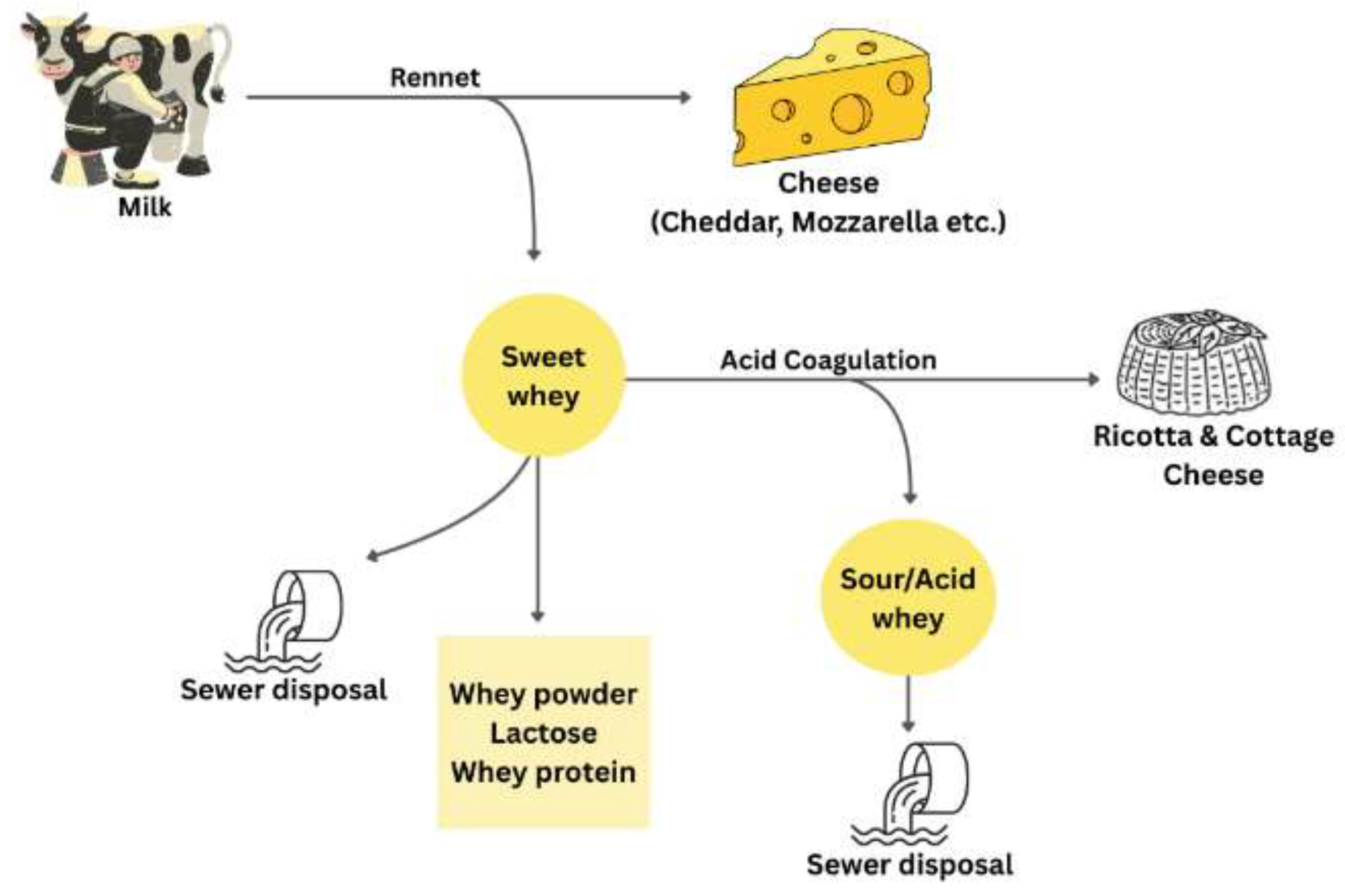
Figure 2.
Microalgal species deployed in cheese whey treatment: (A) Acutodesmus dimorphus, (B) Arthrospira platensis (Spirulina), (C) Chlorella sorokiniana, (D) Chlorella vulgaris, (E) Desmodesmus sp., (F) Euglena gracilis, (G) Monoraphidium sp, (H) Nannochloris sp., (I) Oscillatoria spp., (J) Scenedesmus sp., (K) Tetradesmus obliquus.
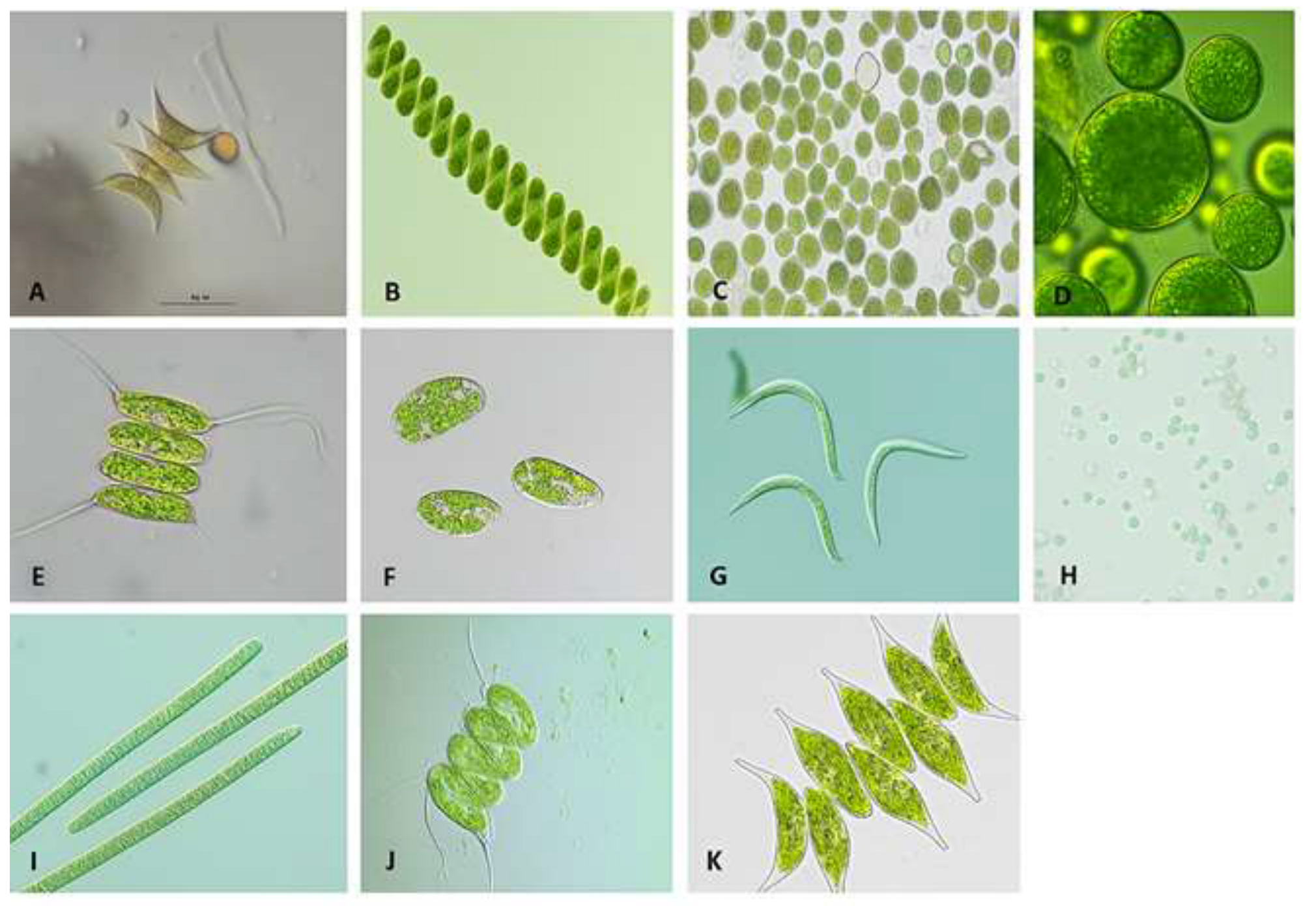
Table 2.
Production of whey volume, according to yield of cheese, by type of milk labored reproduced from [4] licensed under CC BY 4.0.
Table 2.
Production of whey volume, according to yield of cheese, by type of milk labored reproduced from [4] licensed under CC BY 4.0.
| Type of Milk Labored | Average Density of Milk (g/cm³) | Cheese Yield (kg/100 kg milk) | Volume of Whey Produced (L/L) |
|---|---|---|---|
| Cow | 1.032 | 9.86 | 0.85-0.90 |
| Sheep | 1.036 | 14.78 | 0.82-0.90 |
| Goat | 1.034 | 9.84 | 0.85-0.90 |
Table 3.
Comparative Analysis of Whey Treatment Methods Based on Cost-Effectiveness and Sustainability [14].
Table 3.
Comparative Analysis of Whey Treatment Methods Based on Cost-Effectiveness and Sustainability [14].
| Method | Process | Cost-Effectiveness | Sustainability |
|---|---|---|---|
| Thermal | Thermocoagulation | Moderate to High (Energy-intensive) |
Moderately sustainable (depends on energy source) |
| Chemical | Use of reagents (salts, acids, coagulants) | Moderate (Cost depends on reagent type) | Low to moderate (Chemical waste generation) |
| Physicochemical | Reverse osmosis, ultrafiltration, ion exchange | High (High energy and membrane costs) | Moderately sustainable (Membrane waste, energy use) |
| Biotechnological | Microbial, enzymatic, and algal (phycoremediation) treatment | High cost-effectiveness (Low operational cost) | Highly sustainable (Low energy, CO₂ capture, biomass valorization) |
| Electrophysical | Electrodialysis, electroactivation | High (Significant energy requirements) | Low to moderate (High electricity use, waste generation) |
Disclaimer/Publisher’s Note: The statements, opinions and data contained in all publications are solely those of the individual author(s) and contributor(s) and not of MDPI and/or the editor(s). MDPI and/or the editor(s) disclaim responsibility for any injury to people or property resulting from any ideas, methods, instructions or products referred to in the content. |
© 2026 by the authors. Licensee MDPI, Basel, Switzerland. This article is an open access article distributed under the terms and conditions of the Creative Commons Attribution (CC BY) license (http://creativecommons.org/licenses/by/4.0/).
Copyright: This open access article is published under a Creative Commons CC BY 4.0 license, which permit the free download, distribution, and reuse, provided that the author and preprint are cited in any reuse.